
Samsung 30Q Lithium-Ion Cell Review
Liionwholesale.com offers the Samsung 30Q Lithium-Ion Cell, which is my go-to high-current 18650. These are reliable and available!
Official Specs
That’s a PDF link. It includes all the important info, so I won’t paste it here.
Price
These start at $4.73 at LiionWholesale.com, and there are volume discounts starting after 2 cells.
Short Review
These are great cells. We knew that. But it’s nice to have data that confirms these cells from LiionWholesale.com are legit.
Long Review
Package
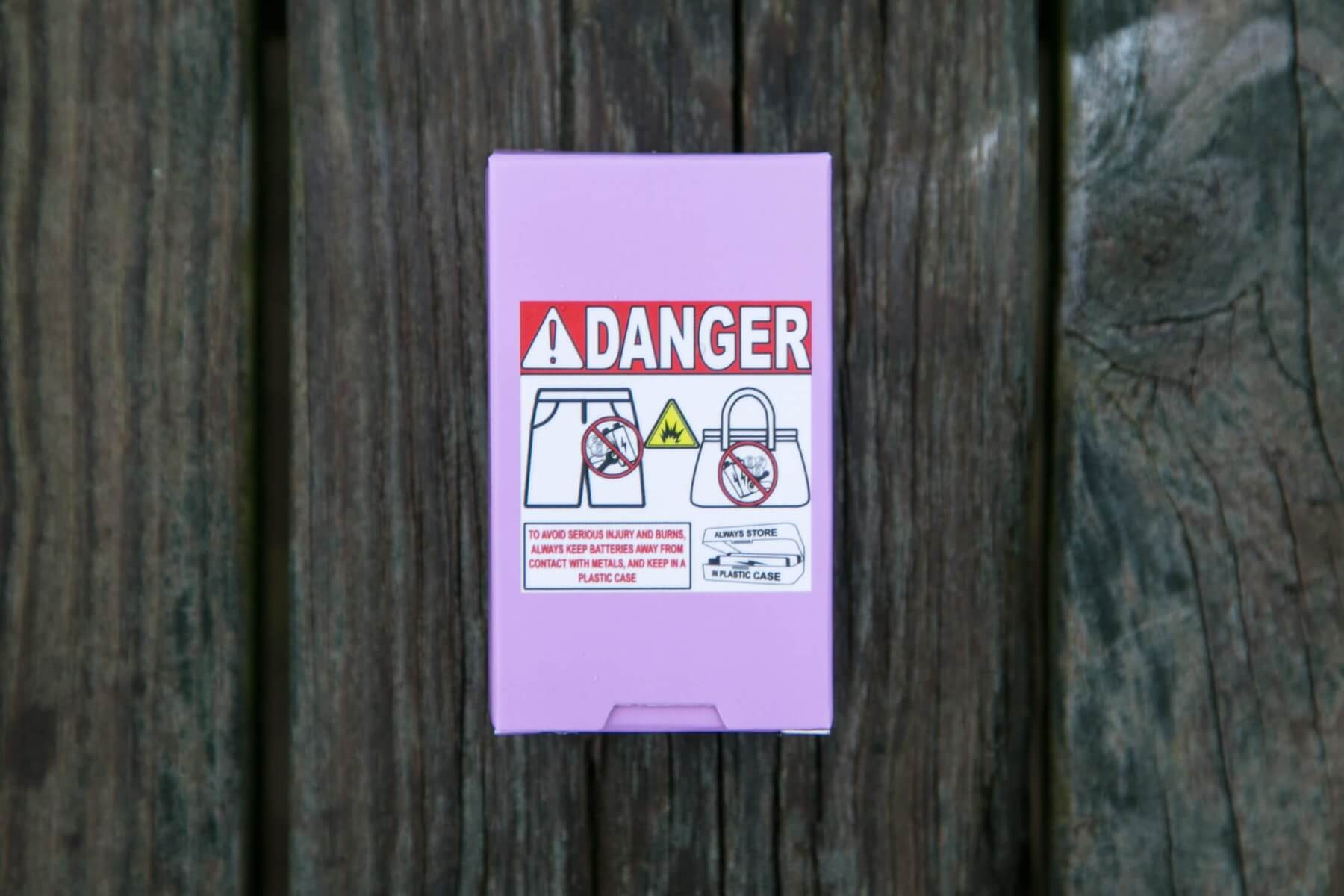
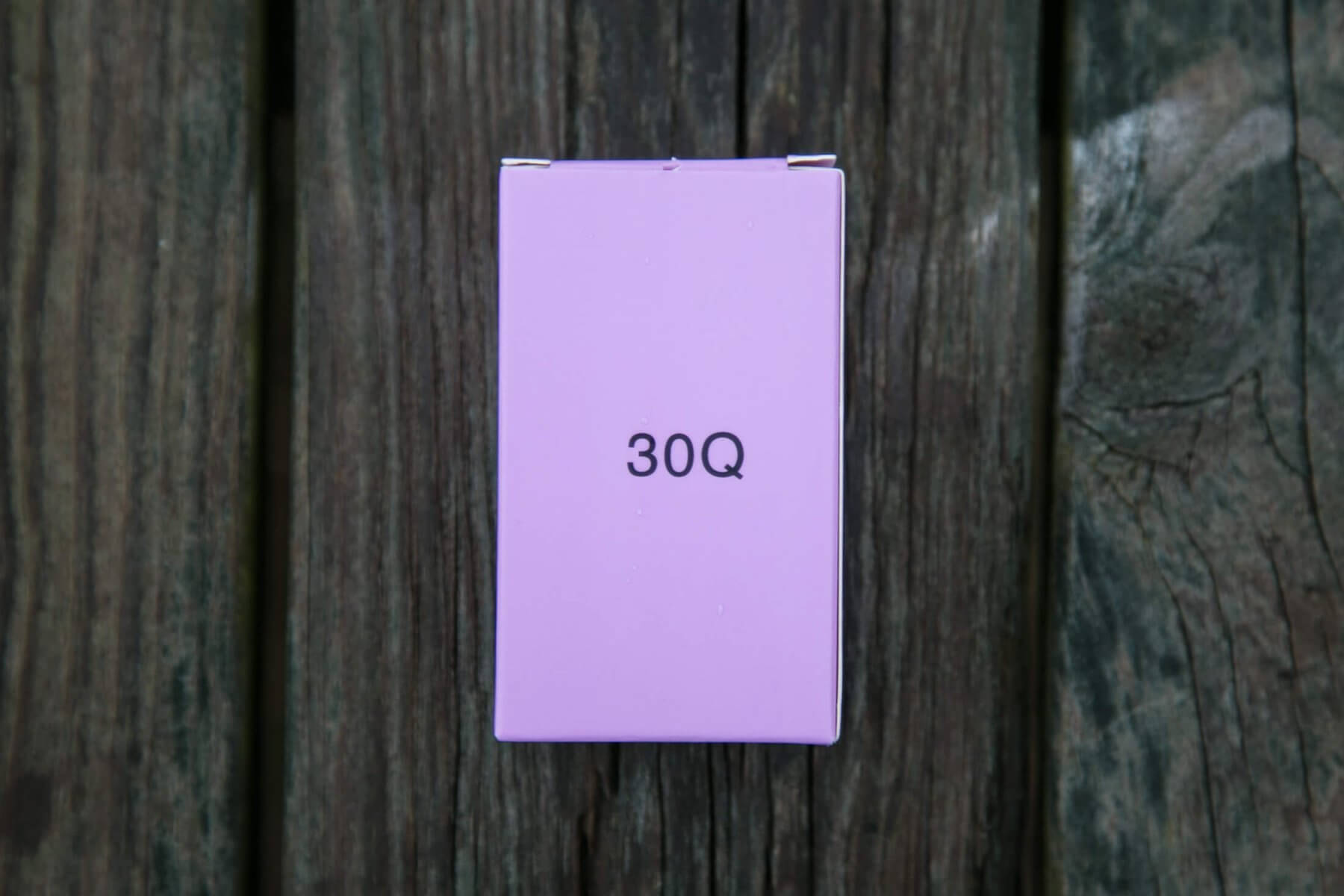
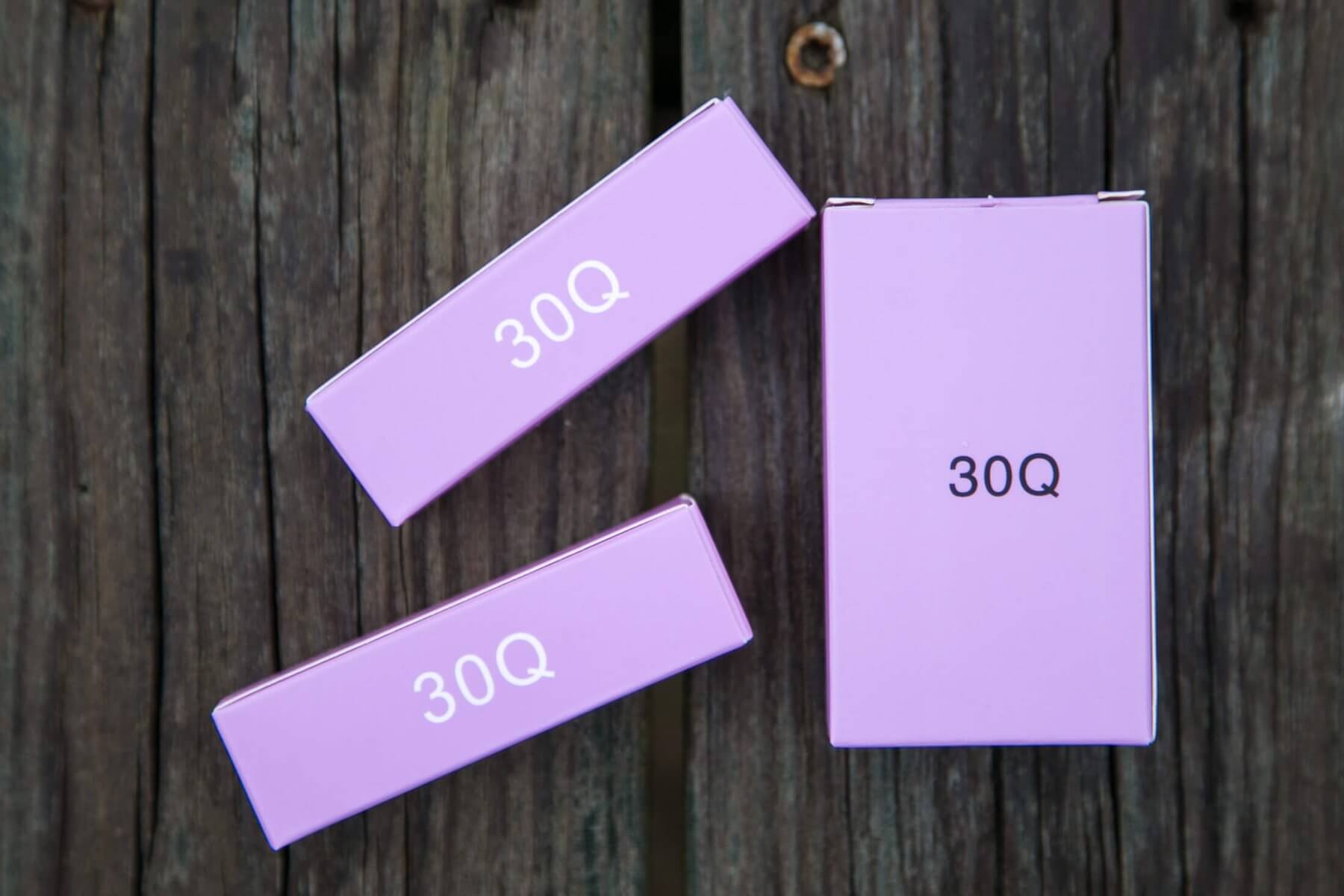
A set of 2 cells ships in the box above. Inside that 2-cell box are smaller single-cell boxes. The cells are individually well isolated!
Build Quality
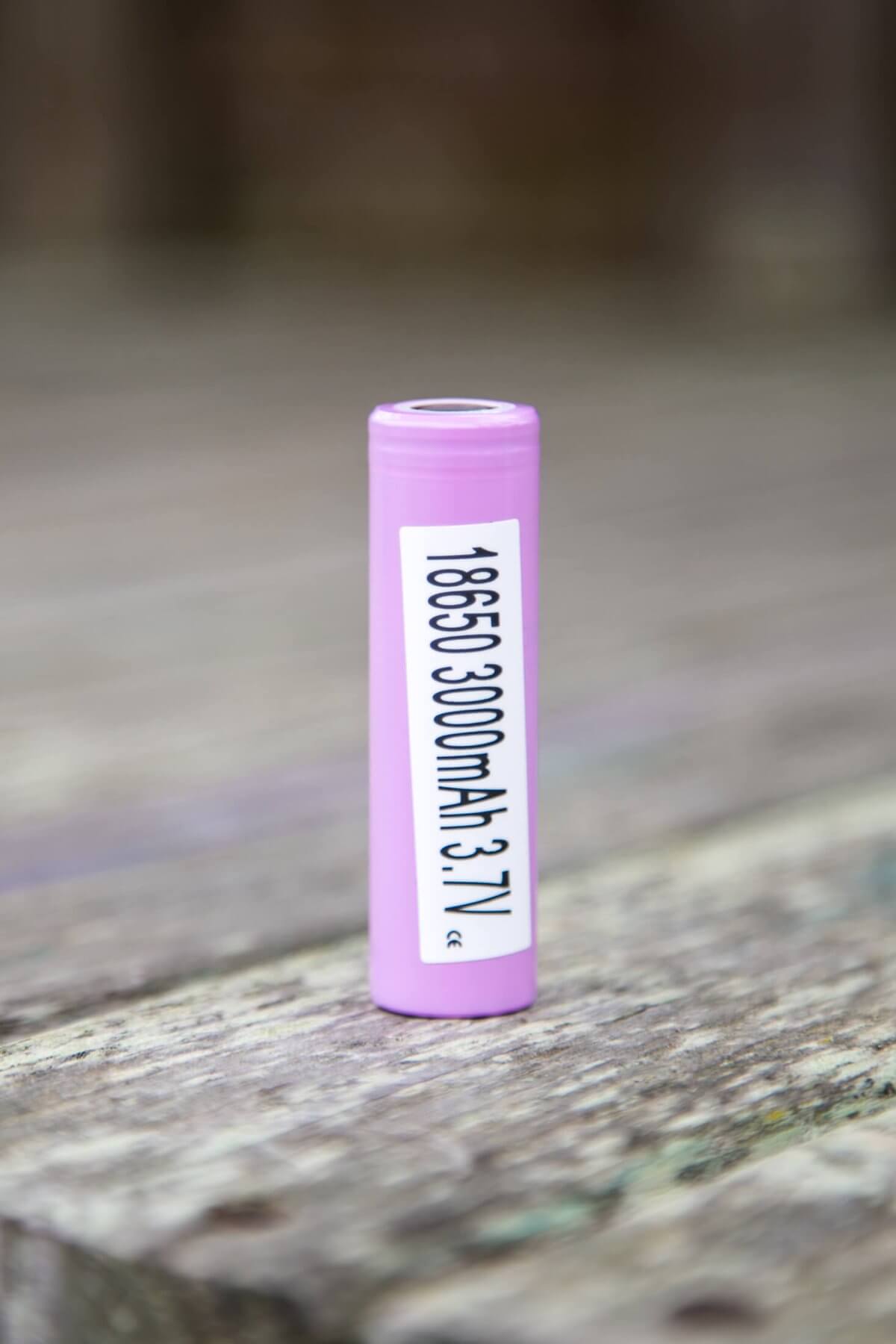
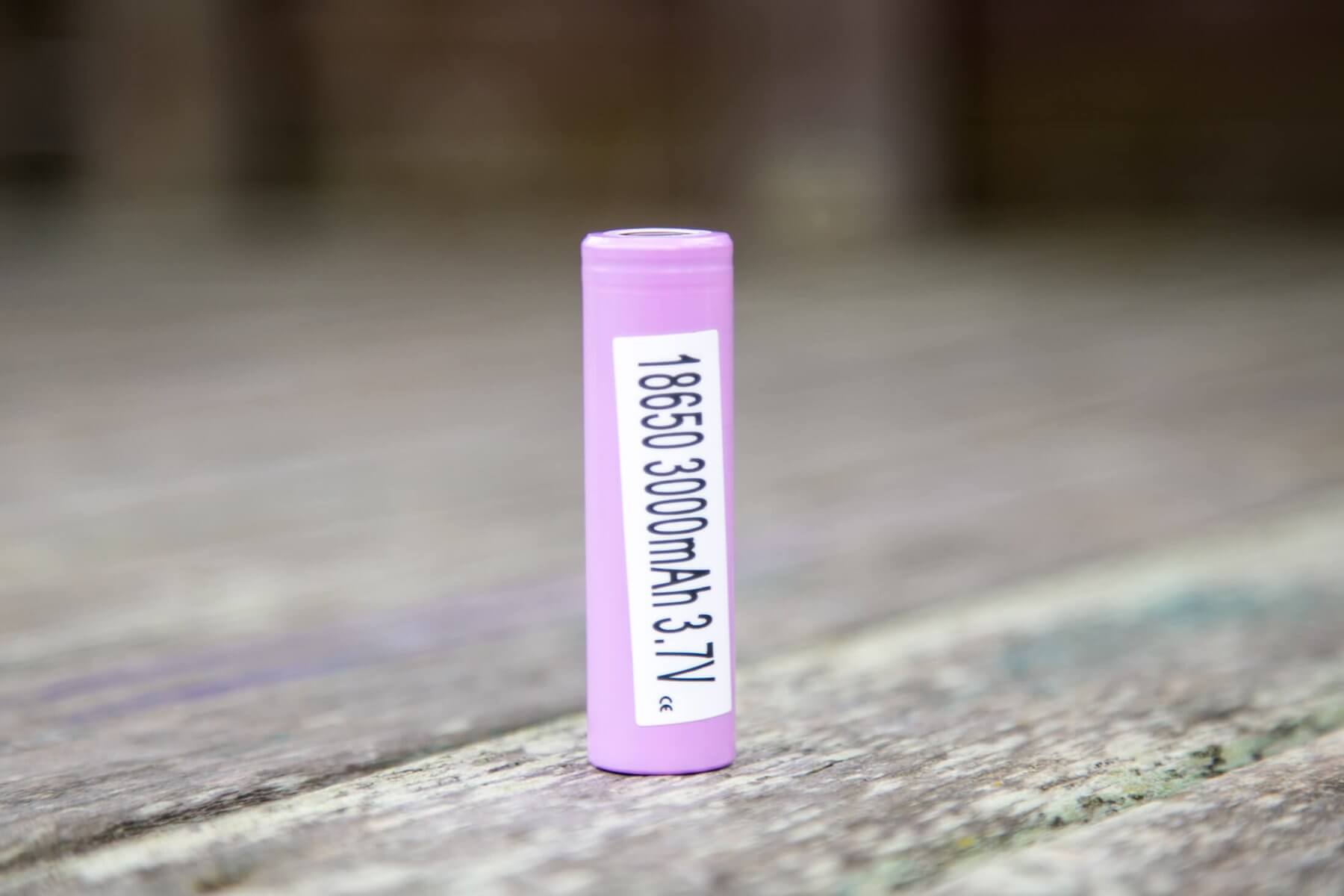
As expected, these Samsung 30q cells have a bright pink wrapper. There’s a big white sticker with some specifications on the side of each cell – I don’t think this is a standard sticker, but it’s still very common. (To wit: your 30q’s might not have this exact sticker – I think this sticker has to do with shipping regulations and might be put on by different companies along the way.)
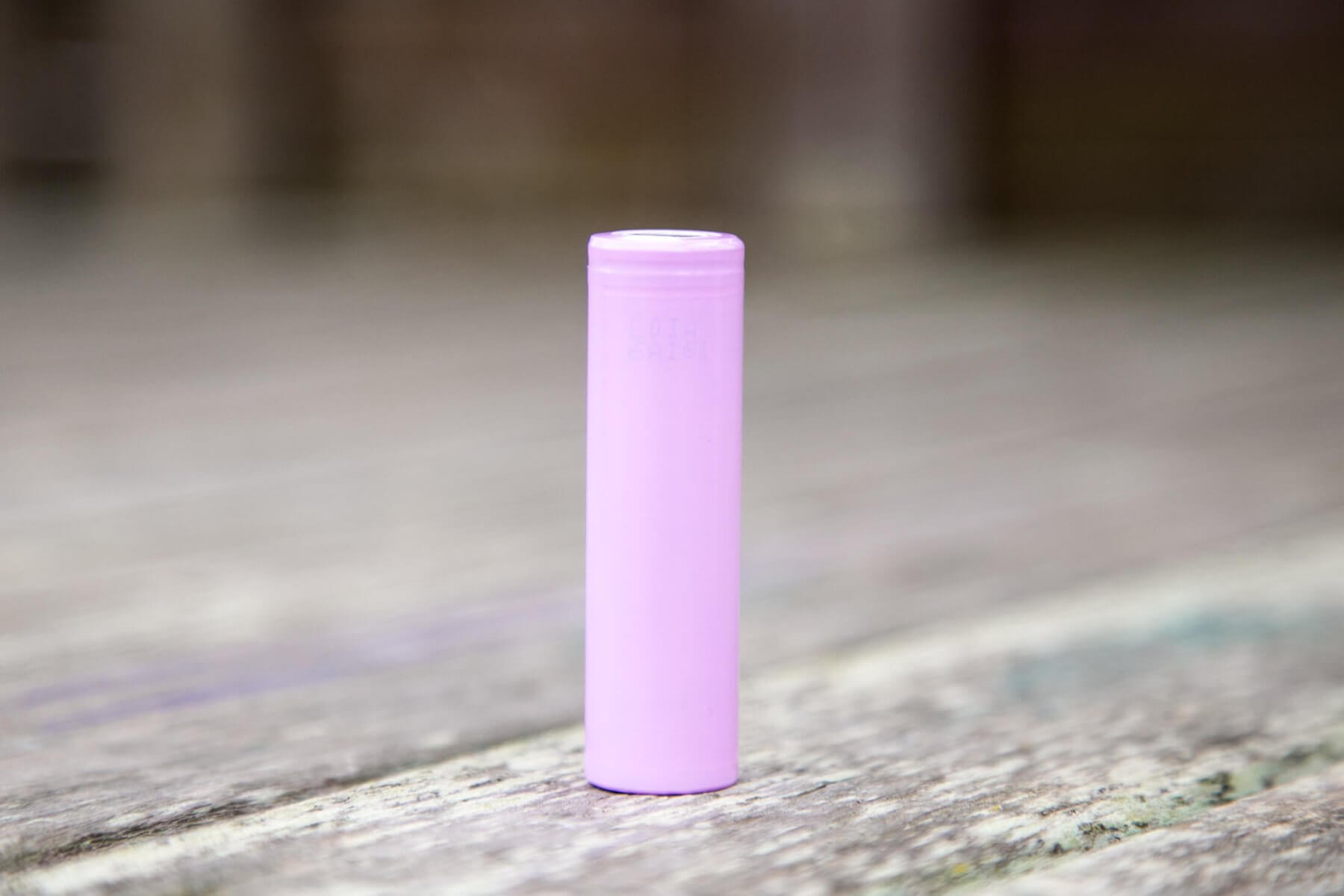
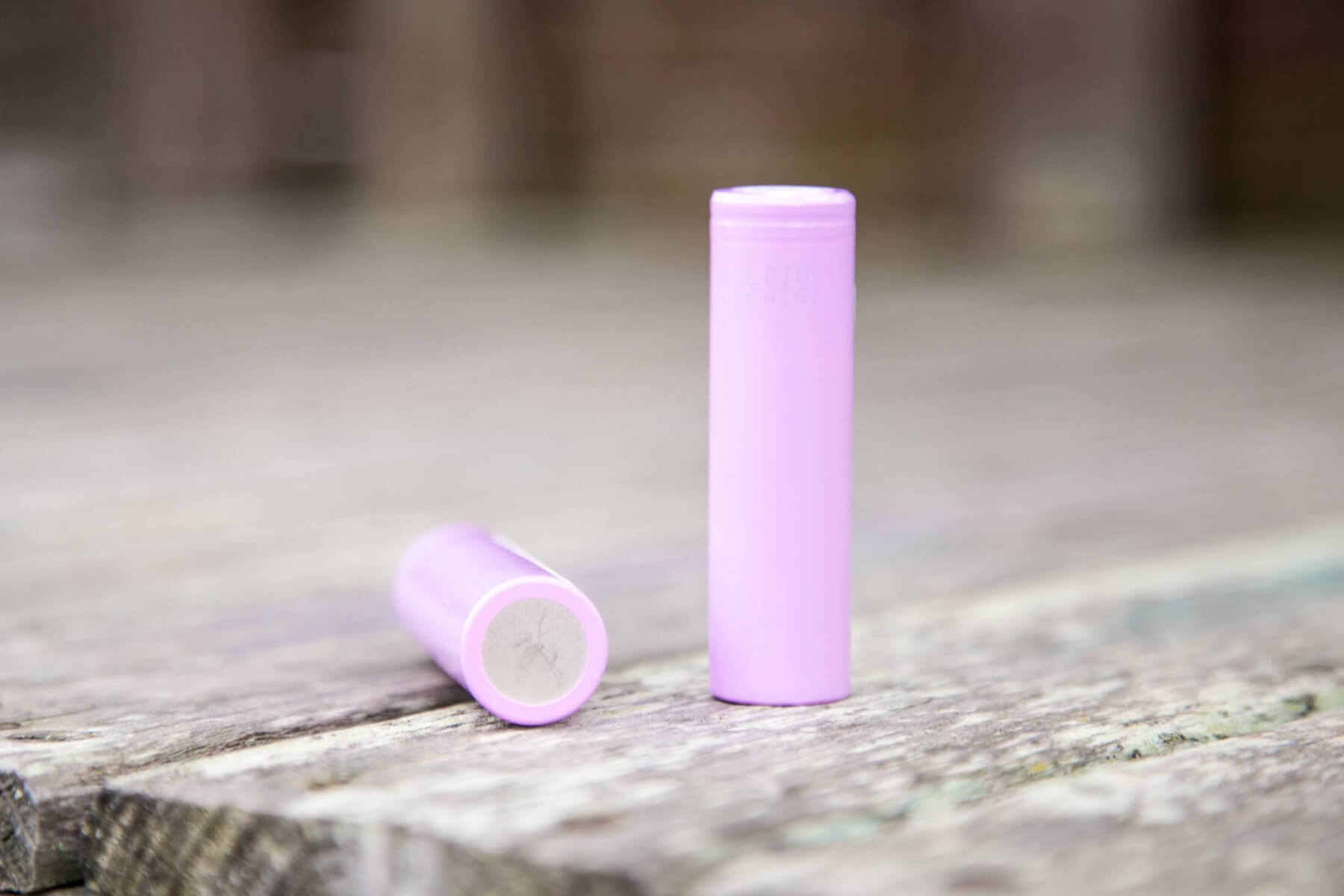
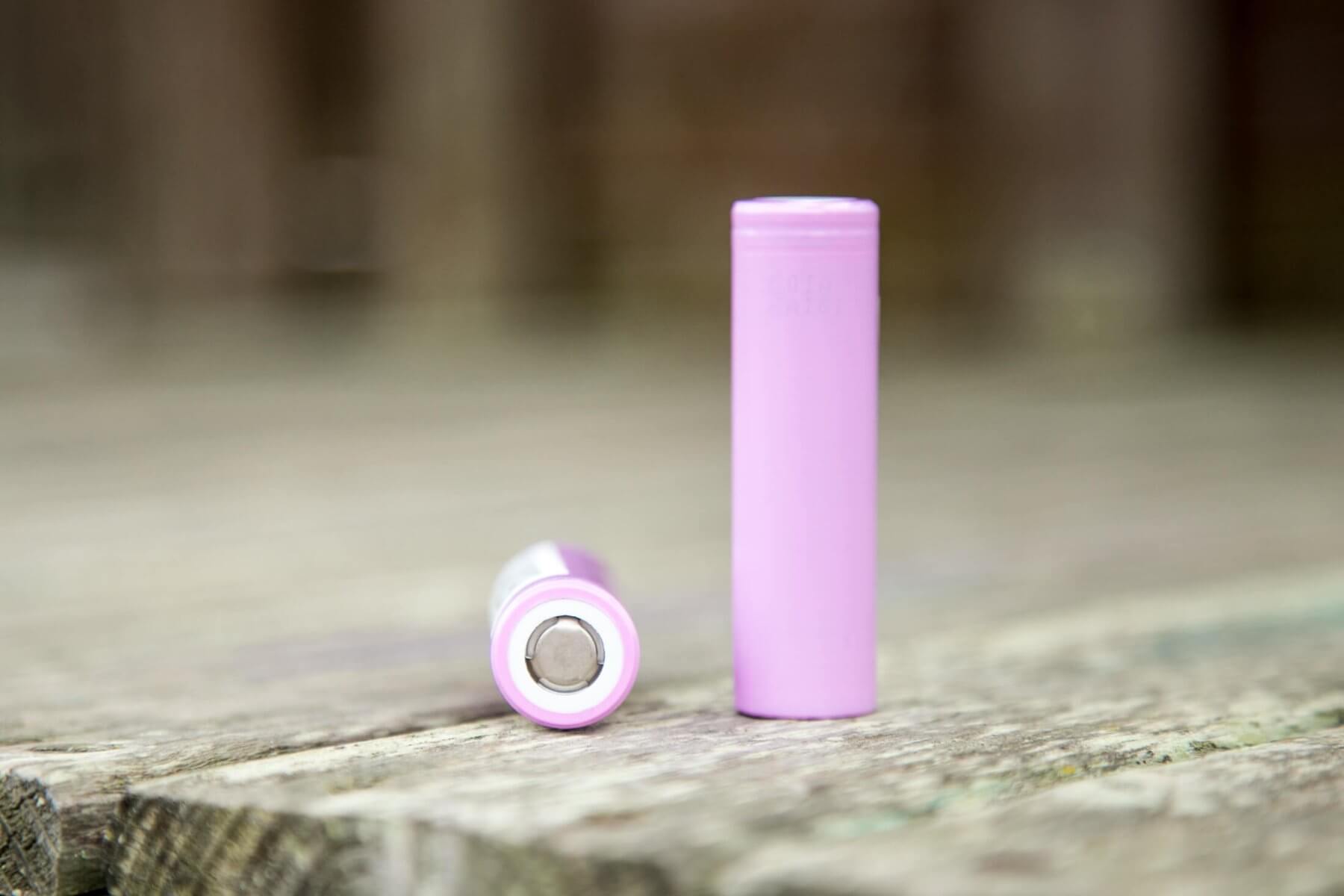
The wrapper has a white insulator above the positive terminal.
Size
These are 18650 cells: 18mm in diameter, and 65mm in length.
Officially:
Height : 64.85 ± 0.15mm
Diameter : 18.33 ± 0.07mm

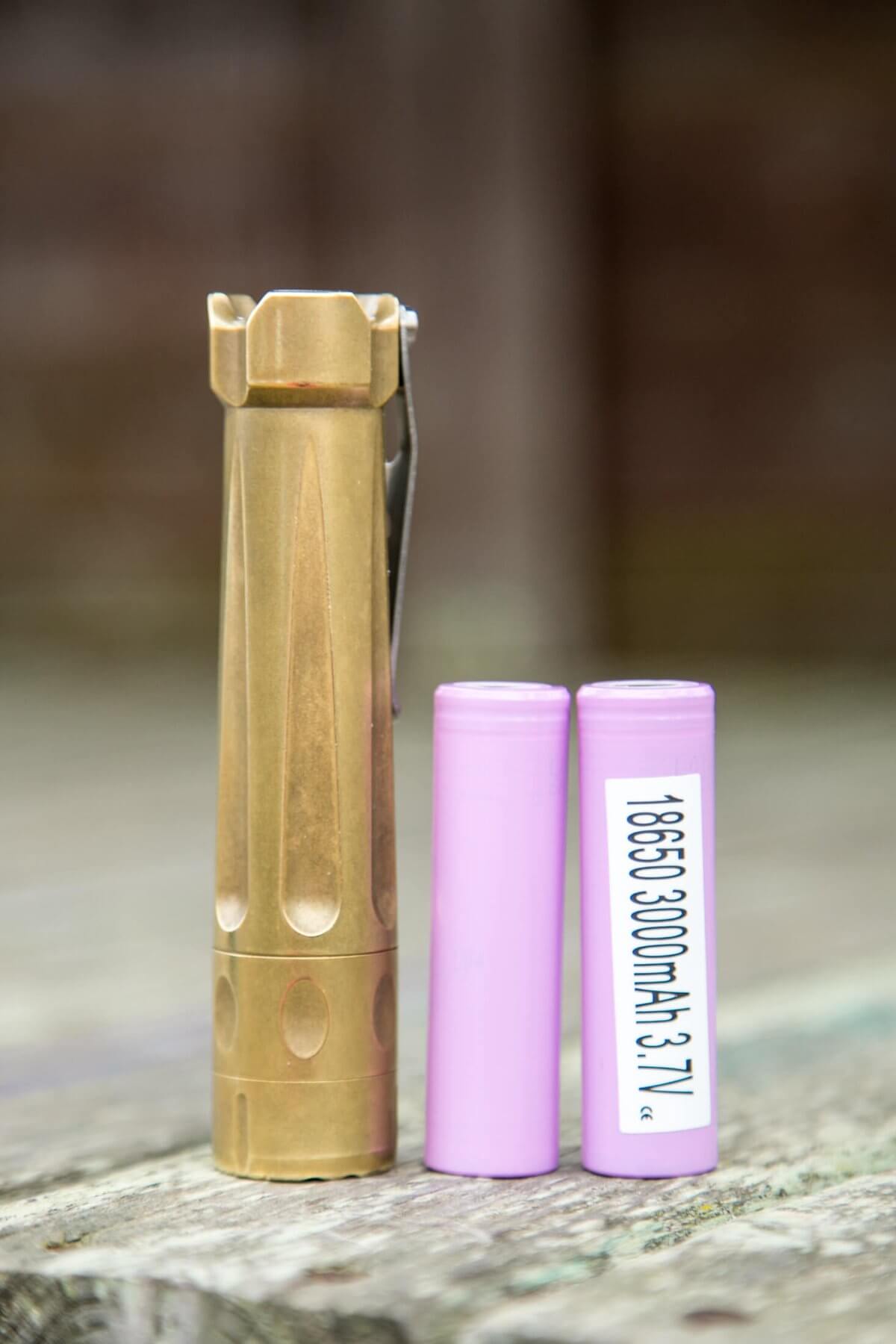
Great cells for a brass TorchLAB BOSS!!
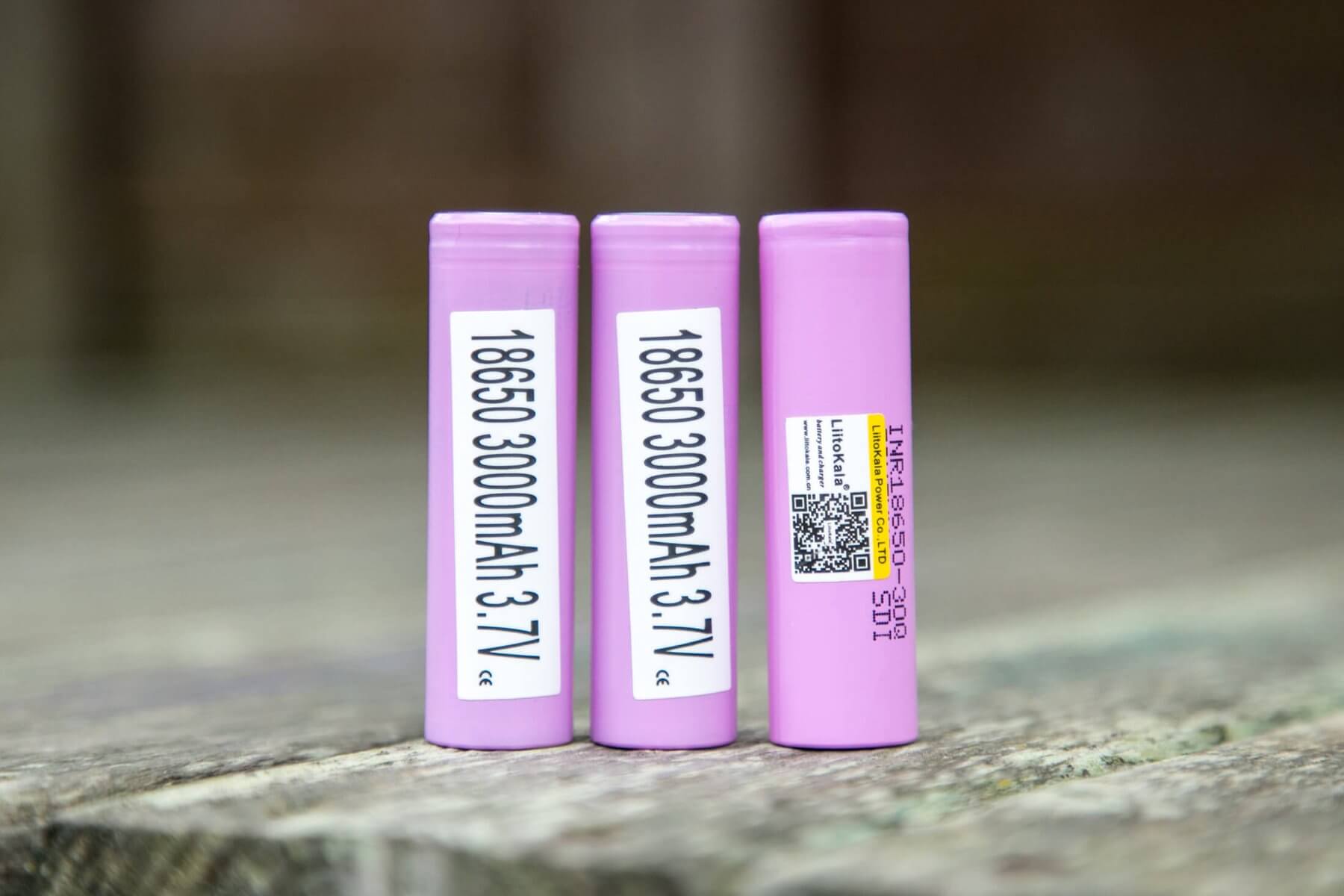
And below, see the two authentic 30q cells beside one fake 30q tagged with a LiitoKala sticker, from Aliexpress. Decently convincing, but differences can certainly be seen.
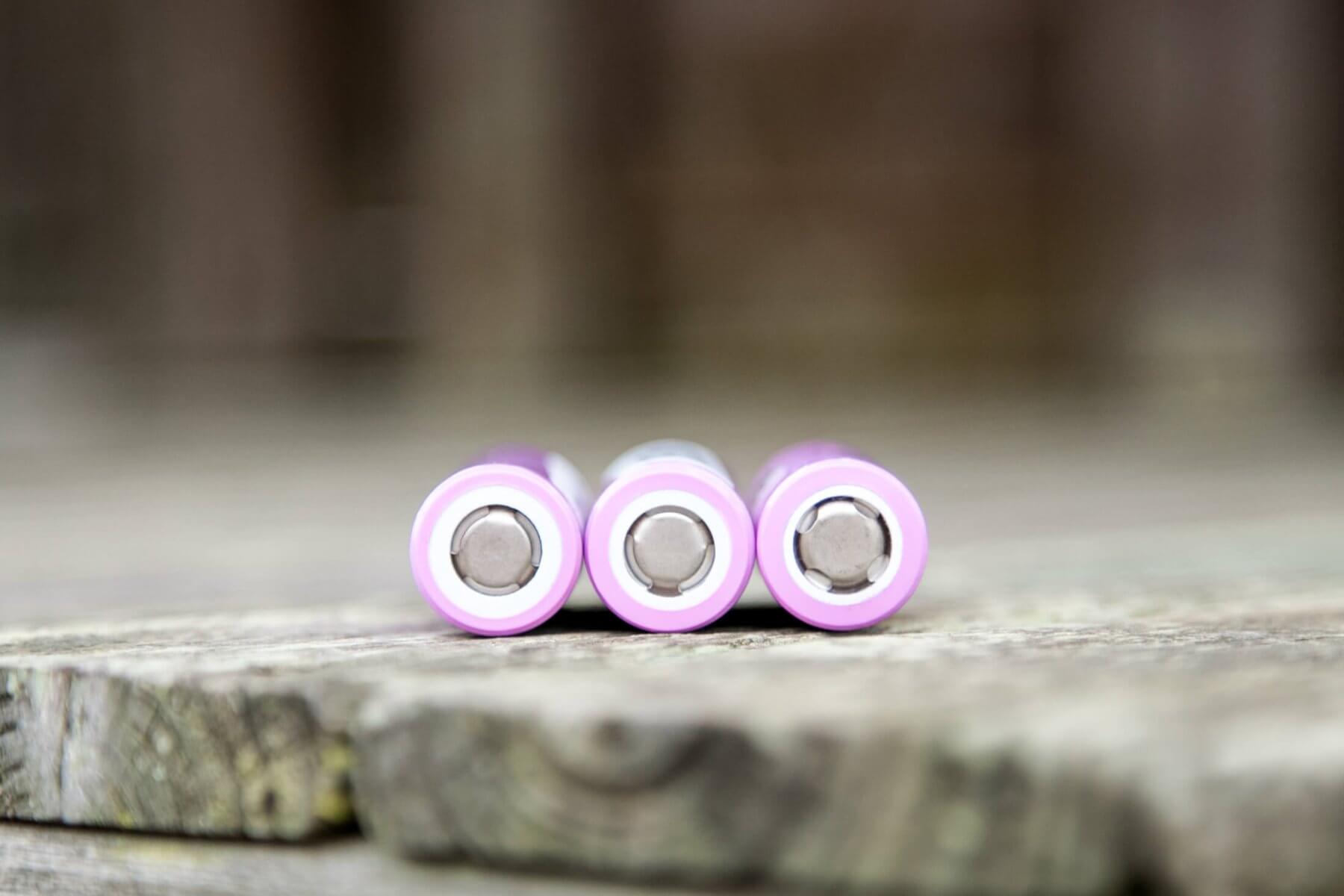
Particularly on the top of the cell, the authentic cells have a three-prong terminal, and this fake 30q has a four-prong terminal.
Testing
I’ve tried to keep the scales similar, so over time the charts will be generally comparable.
One thing about these tests is that this cell is only rated to 15A continuous! I tested it up to 20A, though. I did that with the fake 30q as well, so the charts are completely comparable.
Here’s a friendly reminder of the link to the fakies. There are a bunch of things you should look at – the voltage drop under high load. The much lower Bounce of the authentic cells. The consistency between cells (even under high discharge). Unfortunately, I don’t have temperature data for the fake cells, though.
Discharge tests
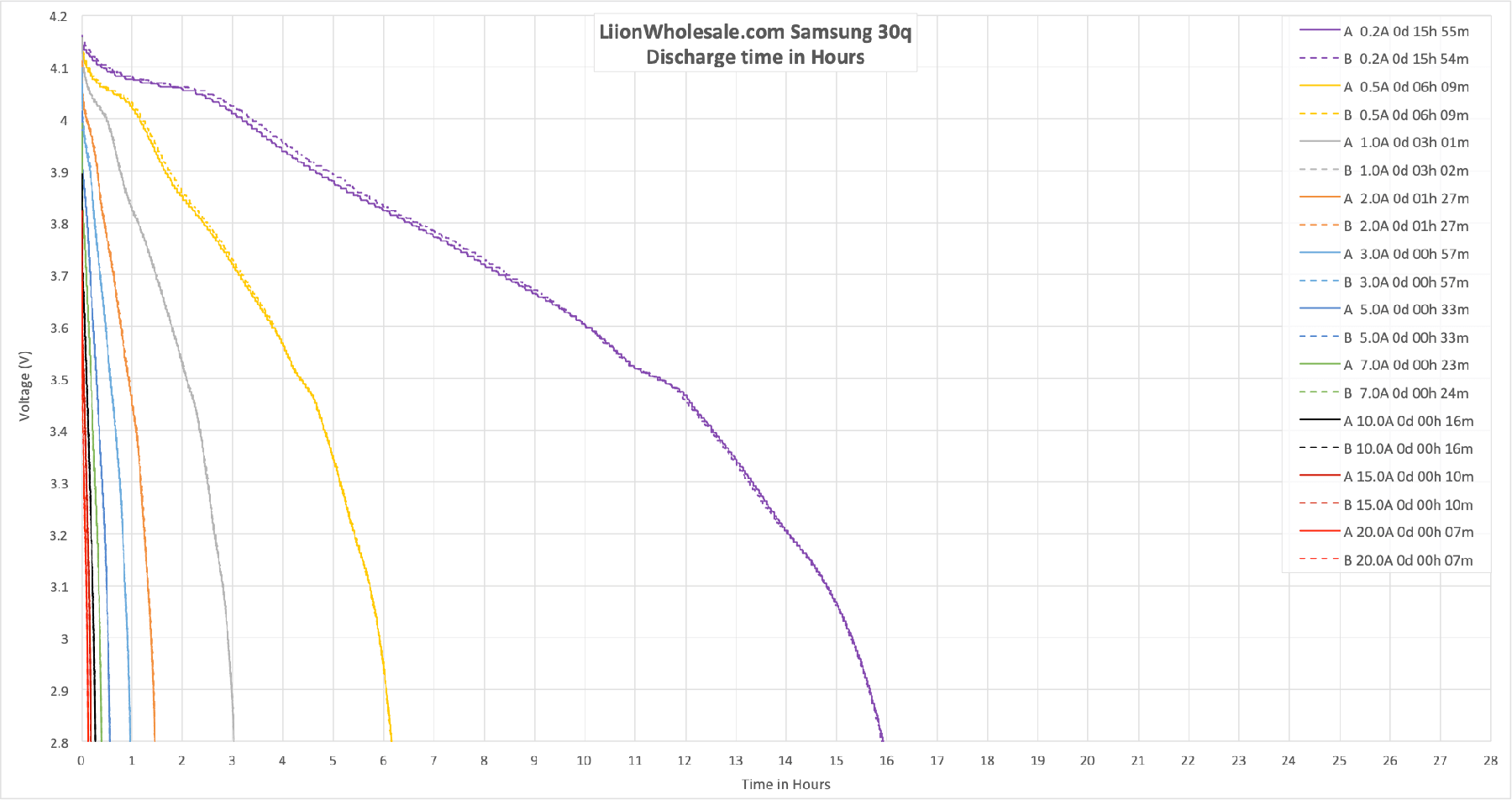
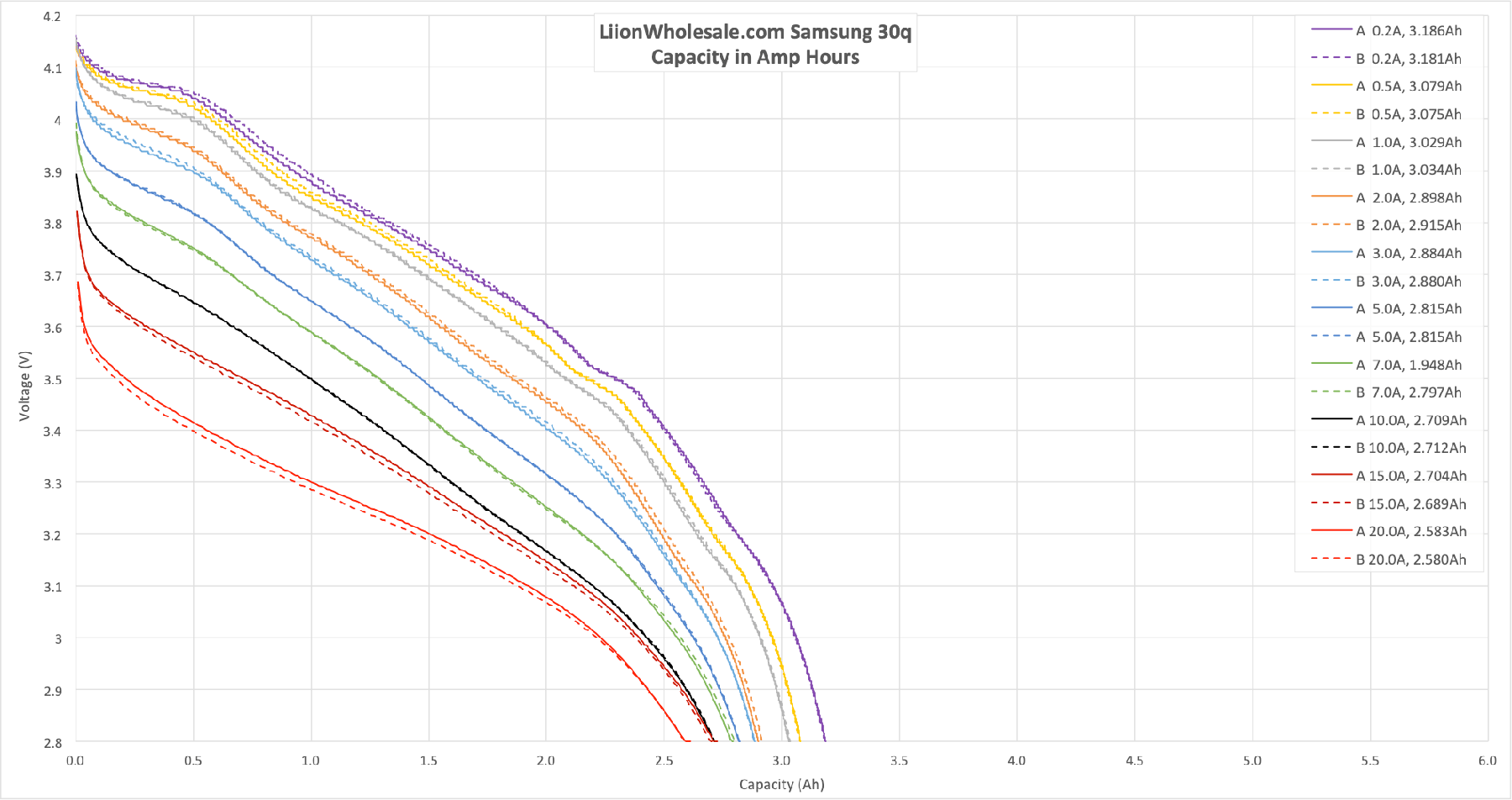
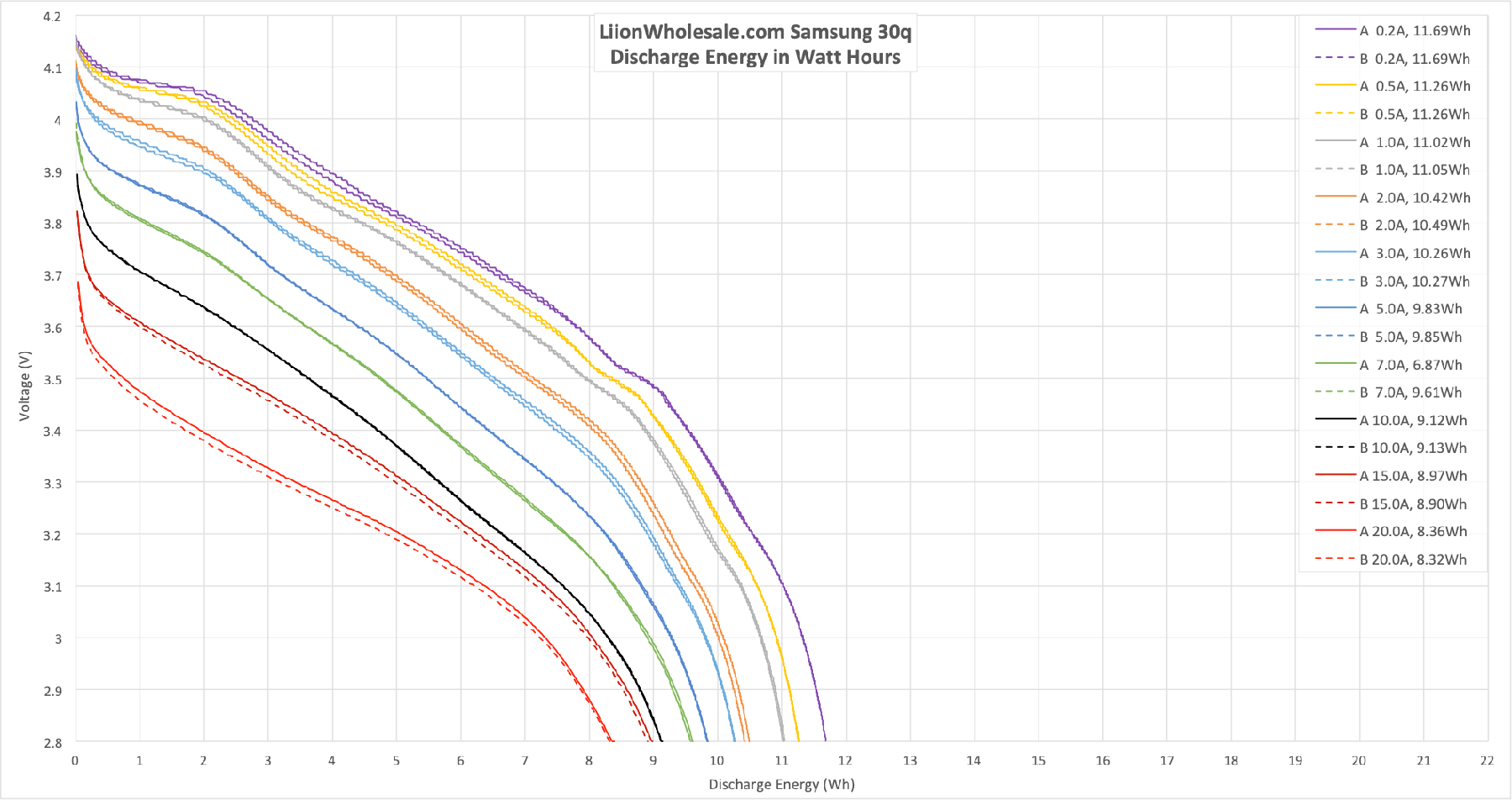
Please make a note of how absolutely consistent the A and B cells were!!
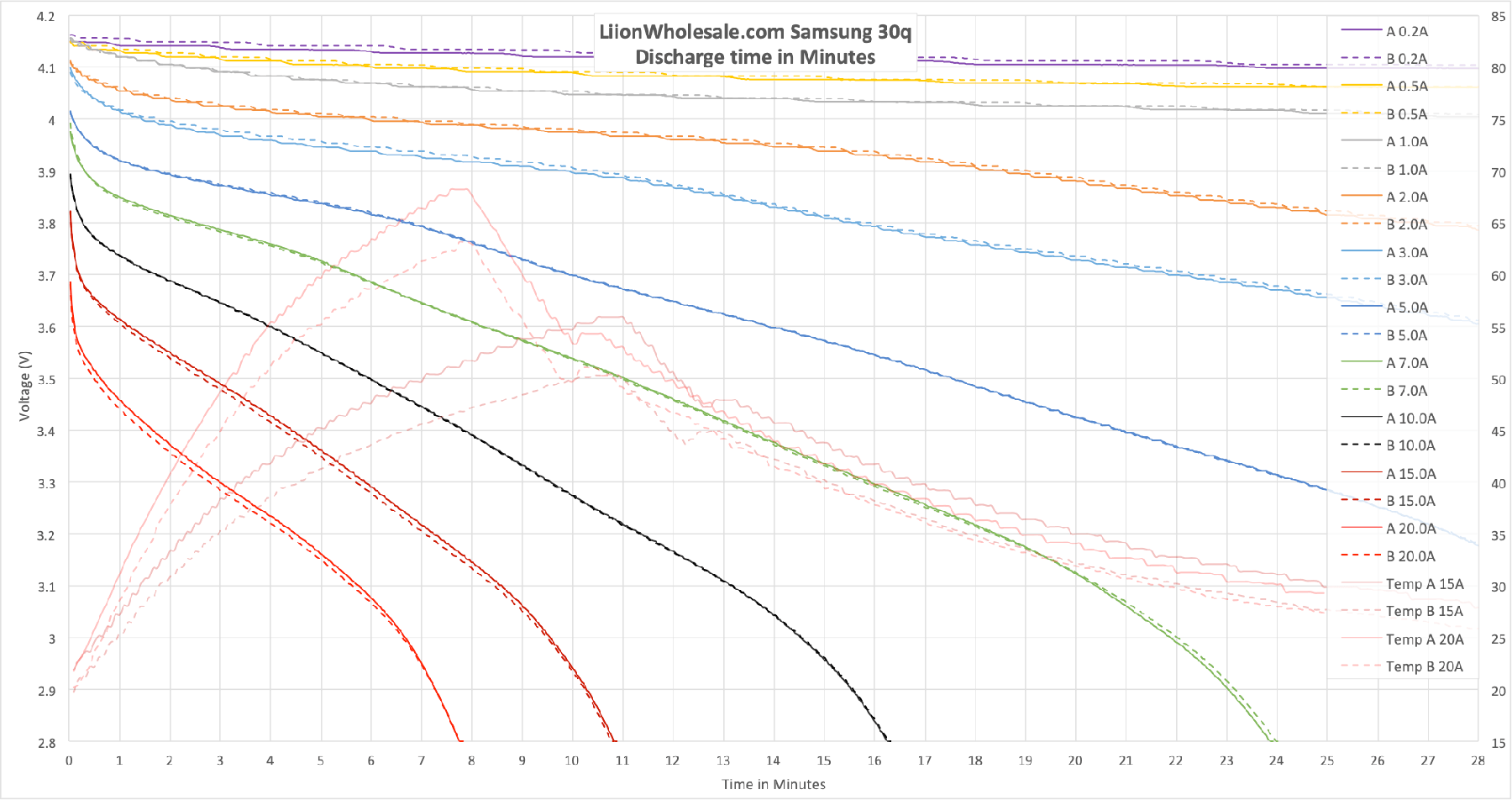
Sidenote, how do you all like the temp on the background of this chart?
Capacity
Energy
Temperature Tests
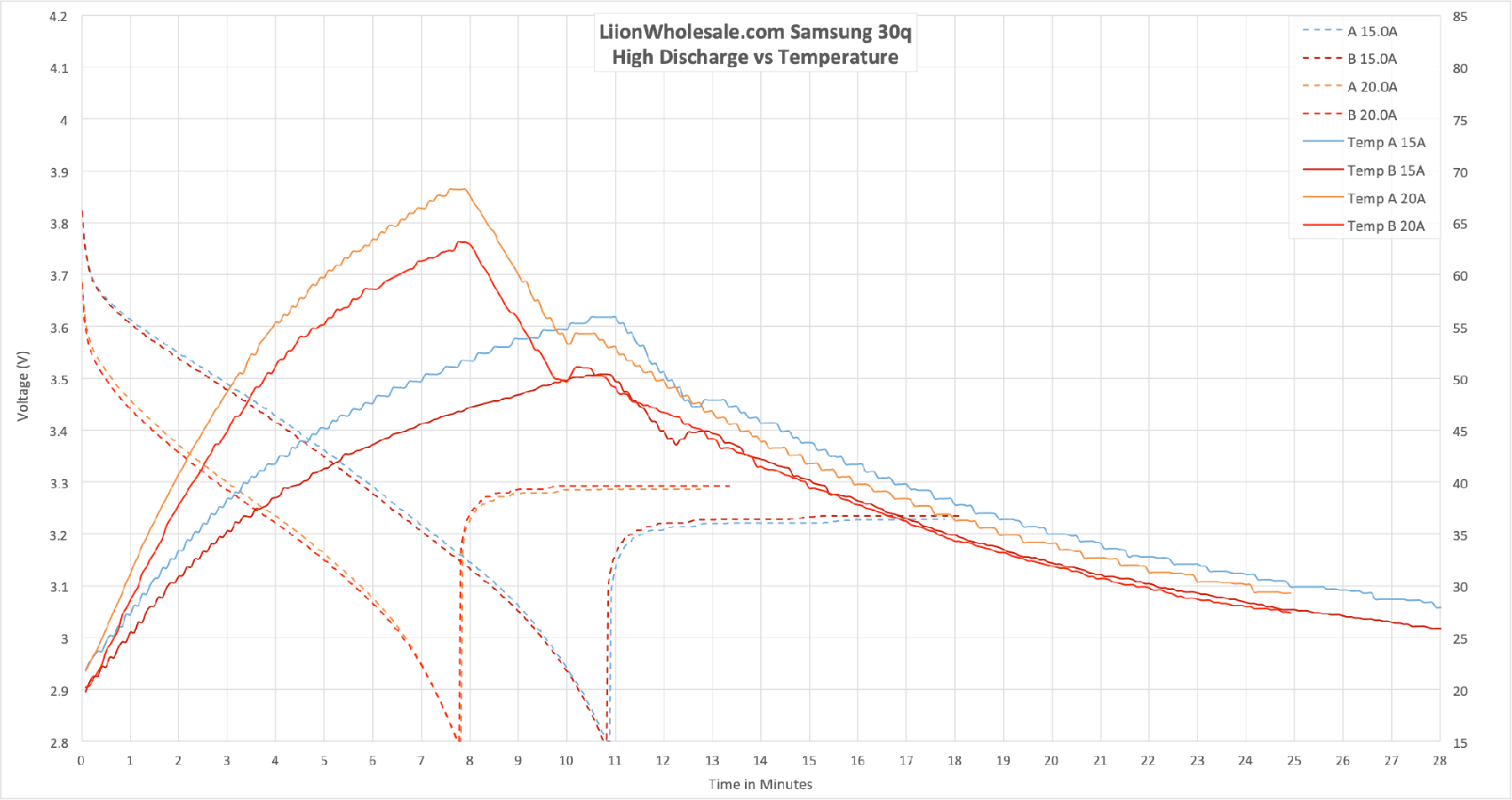
Note that the max temp this cell is rated for is 75 degrees Celsius. Even under much higher than rated current (20A, vs a rating of 15A), the cell stayed within the temp specification (barely, but it did). (However, that’s not to say 20A is ok, or an acceptable use case for these cells, but it’s nice to know that 15A isn’t a hard max, and the cells have headroom past that.)
Bounce
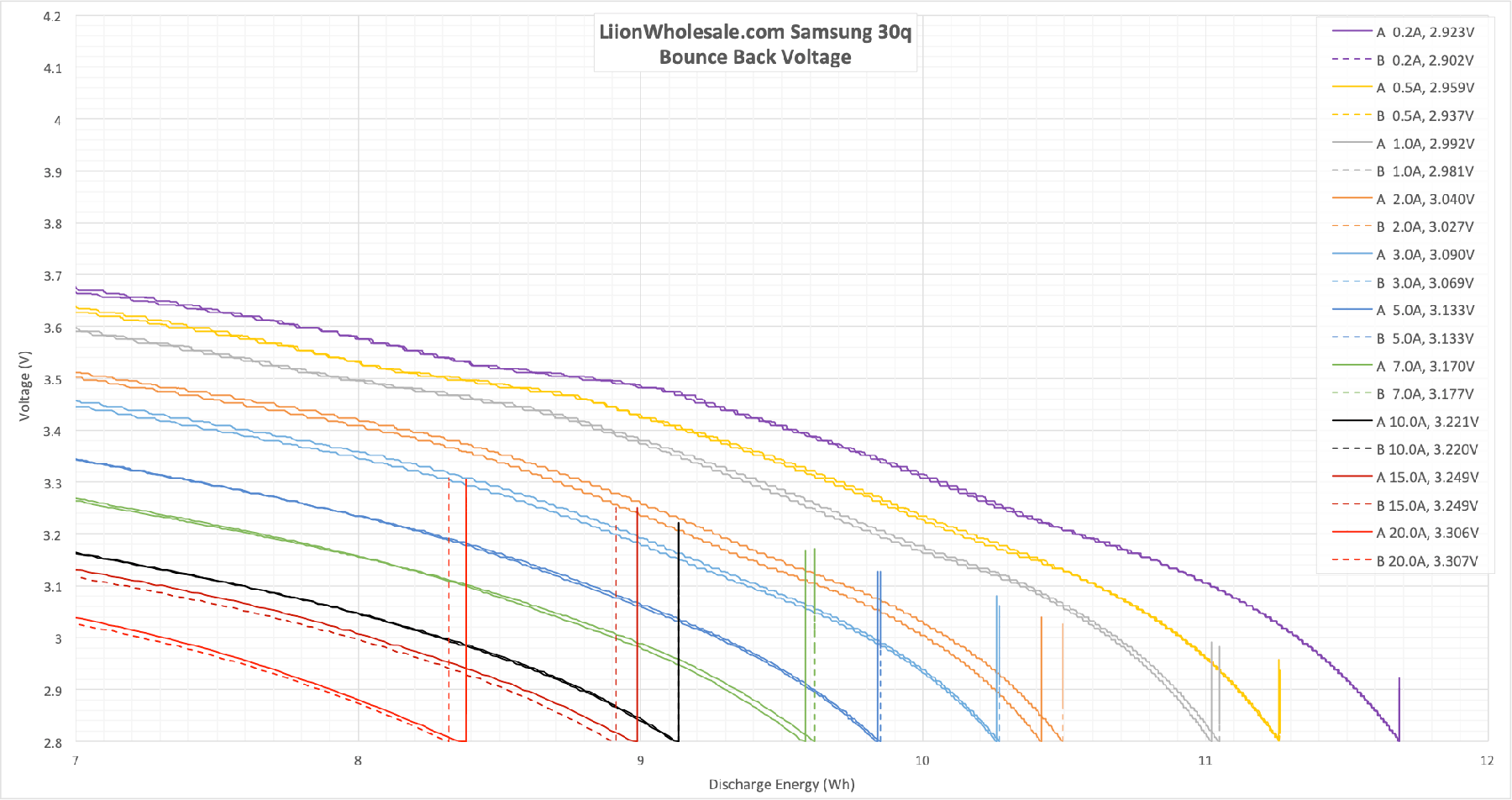
“Bounce back” is what the cell voltage does when the cell rests after a discharge. After heavy discharge rates, the cell voltage bounces back higher when discharge is stopped. This corresponds to a discharge amount of less energy and does mean that there’s energy left in the cell. So if I selected the cell with the highest bounce back voltage (i.e., the cell that was discharged at the highest current), then discharged it to 2.8V at 0.2A, I’d still find that there was a lot of energy still in the cell.
Here is why I think it is so interesting about “Bounce.” A poorly performing cell will bounce back higher after high discharges. That’s because the IR is higher, and because the cell performs much worse under high loads. So a good-performing cell (like this one) will bounce back much less because it’s much more capable of high discharge. And we can see that here. At high discharge on a capable cell, more of the energy makes its way out of the cell! Hence, less bounce.
I more or less figured this out on my own, so I welcome discourse about this topic. Until I hear it’s wrong, I propose this as a new metric for cell quality!
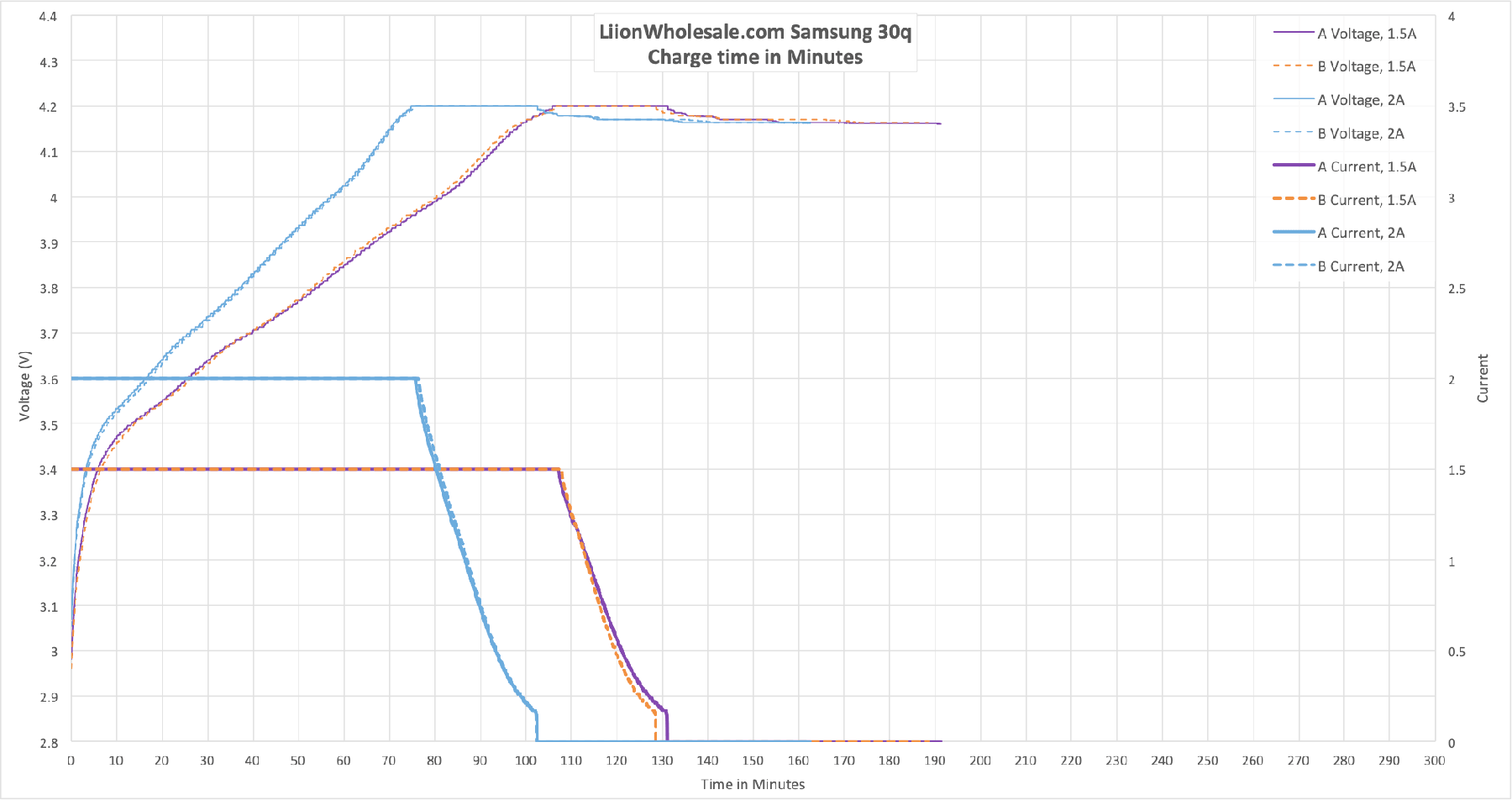
Charge test
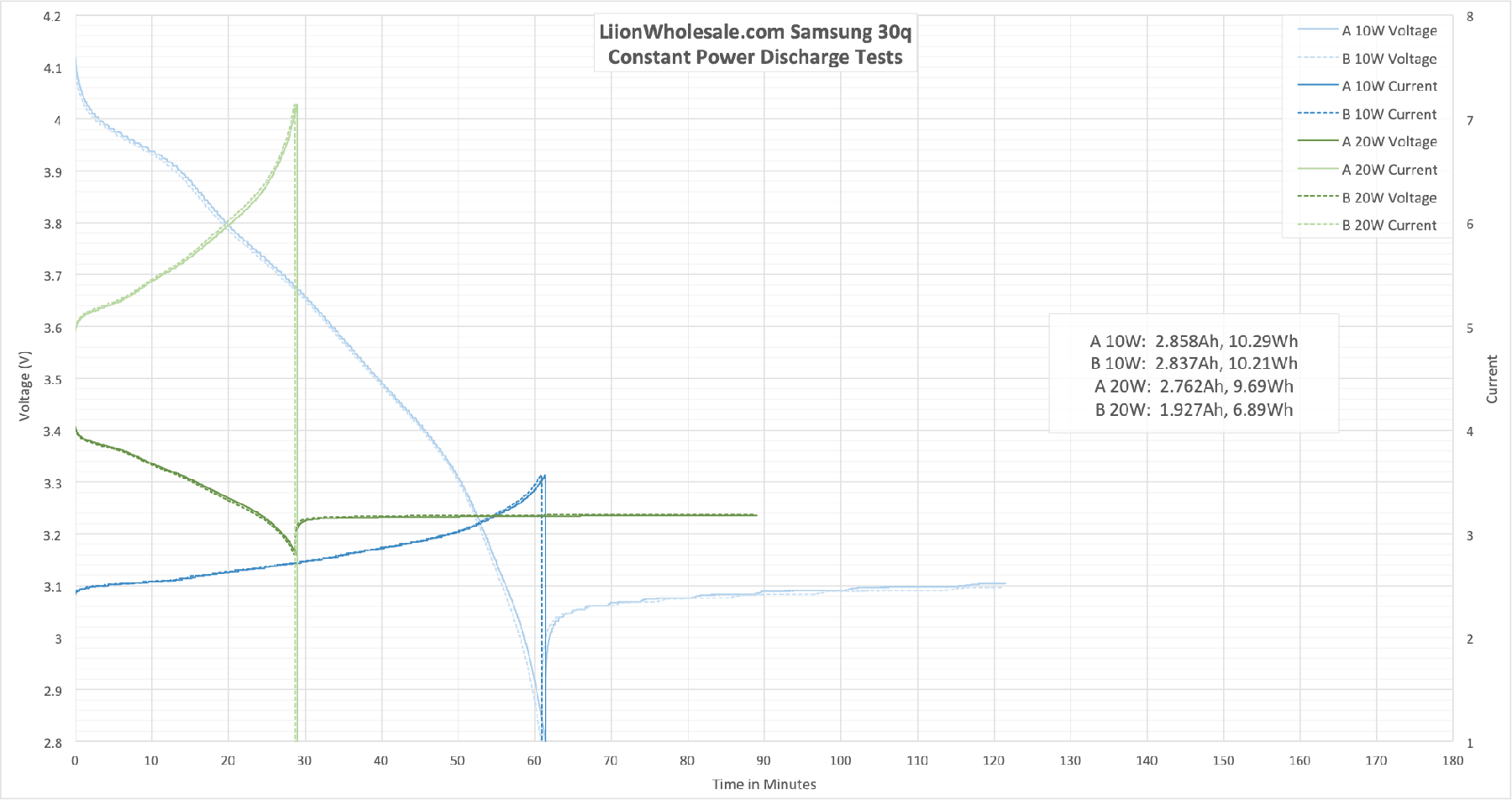
Power, Constant
Internal Resistance
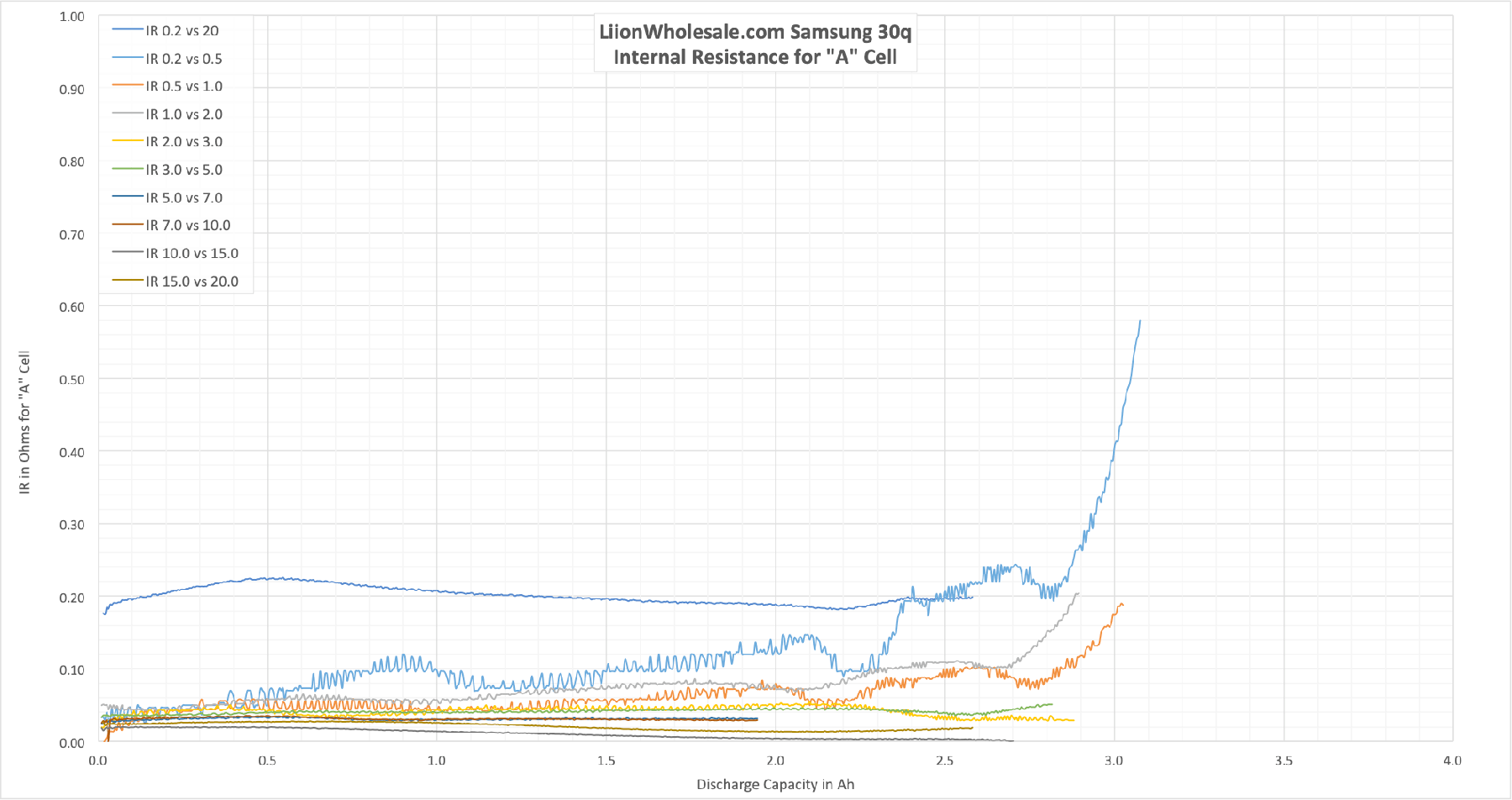
Most often (read: always), internal resistance is mentioned as a spot value. In truth, the IR changes over time. Due to cell age, cell heat, and current capacity, among other things. A graph of IR is interesting because it can show, for example, when a cell begins to “die,” at which point the remaining energy will be “harder” to extract. This is when the IR spikes. These graphs are also useful for determining if a cell would be good for a hot-rod flashlight, for example.
Conclusion
The conclusion here isn’t that 30q cells are awesome. We already knew that! The conclusion here is that LiionWholesale sells authentic Samsung 30q cells.
Buy them here for $4.73 at LiionWholesale.com, but buy 4 or more to get them at $4.64 per cell!
Notes
- These cells were provided by LiionWholesale.com for review. I was not paid to write this review.
- This content originally appeared at zeroair.org. Please visit there for the best experience!
- Use my amazon.com referral link if you’re willing to help support making more reviews like this one!
- Please support me on Patreon! I deeply appreciate your support!
Discover more from ZeroAir Reviews
Subscribe to get the latest posts sent to your email.
Hello, can you tell me how to do the test? How to get that graphs
This is something I will consider doing in an upcoming “How do I…” post.
Main point is that I use an EBC-A20 – you can probably figure out the rest from there.
Hi! Did you notice any marks under the pink wrap (in the cell body)?