
Nitecore UT32 Headlamp Review
Nitecore has released the Nitecore UT32 Headlamp, which incorporates some now-common features in unusual ways. It’s a dual emitter headlamp. Read on!
Official Specs and Features
Here’s a link to the Nitecore UT32 Headlamp product page.
Versions
There’s only one version!
Price and Coupon
These are going for $74.95 on NitecoreStore (referral link). They’re on pre-order still, but will begin shipping soon. They’re available on Amazon for around $90 with a cell (referral link).
Short Review
This light is very unusual in a number of ways, with the most notable probably not being its design. Most unusual for me in this light is that the WW emitter is the thrower. And it has nearly the same output as the CW, too. That’s fairly remarkable. Otherwise, it’s a pretty good design, with a good interface, too.
Long Review
The Big Table
| Nitecore UT32 | |
|---|---|
| Emitter: | Cree XP-L2 V6 (5700K, CW) |
| Price in USD at publication time: | $74.95 on Amazon |
| Cell: | 1×18650 |
| Turbo Runtime | High Runtime |
| LVP? | Yes |
| Switch Type: | E-Switch |
| Quiescent Current (A): | ? |
| On-Board Charging? | No |
| Claimed Lumens (lm) | 1100 |
| Measured Lumens (at 30s) | 1220 (110.9% of claim)^ |
| Claimed Throw (m) | 80 |
| Candela (Calculated) in cd (at 30s) | 120lux @ 4.478m = 2406cd |
| Throw (Calculated) (m) | 98.1 (122.6% of claim)^ |
| Emitter: | Cree XP-L V6 (3000, WW) |
| Cell: | 1×18650 |
| Turbo Runtime | High Runtime |
| LVP? | Yes |
| Switch Type: | E-Switch |
| Quiescent Current (A): | ? |
| On-Board Charging? | No |
| Claimed Lumens (lm) | 920 |
| Measured Lumens (at 30s) | 1122 (122% of claim)^^ |
| Claimed Throw (m) | 117 |
| Candela (Calculated) in cd (at 30s) | 263lux @ 4.125m = 4475cd |
| Throw (Calculated) (m) | 133.8 (114.4% of claim)^ |
| All my Nitecore reviews! | |
^ Measurement disclaimer: Testing flashlights is my hobby. I use hobbyist-level equipment for testing, including some I made myself. Try not to get buried in the details of manufacturer specifications versus measurements recorded here; A certain amount of difference (say, 10 or 15%) is perfectly reasonable.
^^ The light had just stepped down at this point. At 15s it was around 1100 lumens!
What’s Included

- Nitecore UT32 Headlamp
- Headband
- Spare switch covers (two, one for each side)
- Spare o-ring
- Pocket clip
- Nitecore cell (depends on package purchased, not a default item.)
Package and Manual
I didn’t actually get a package with this light, but I don’t expect it to be any different from any other Nitecore item of late.
The manual is fairly typical Nitecore, too, with the user interface section looking a bit different than normal. Still fine though.

Build Quality and Disassembly

Nothing surprising here. The light is well built. The appointments are good too.


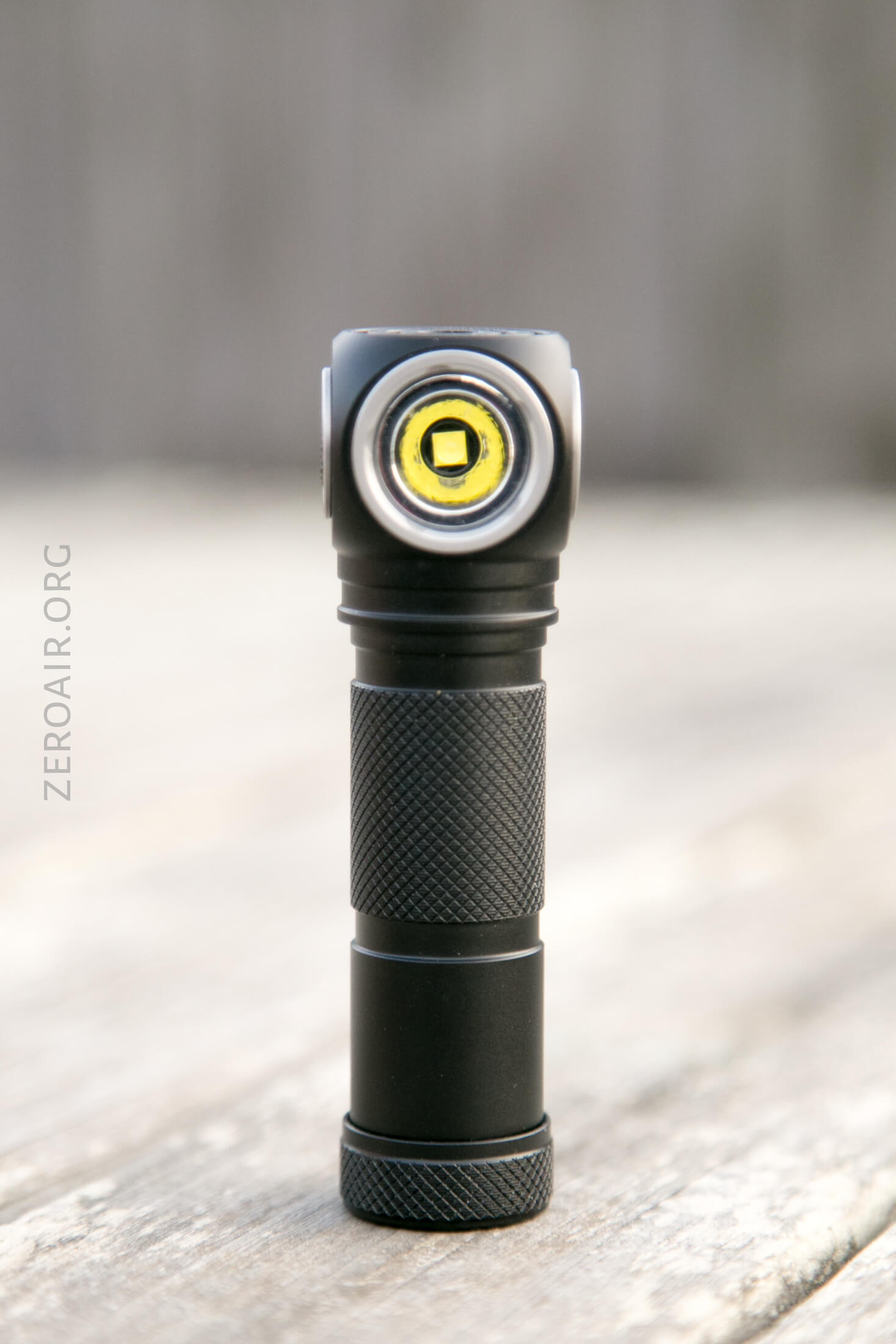
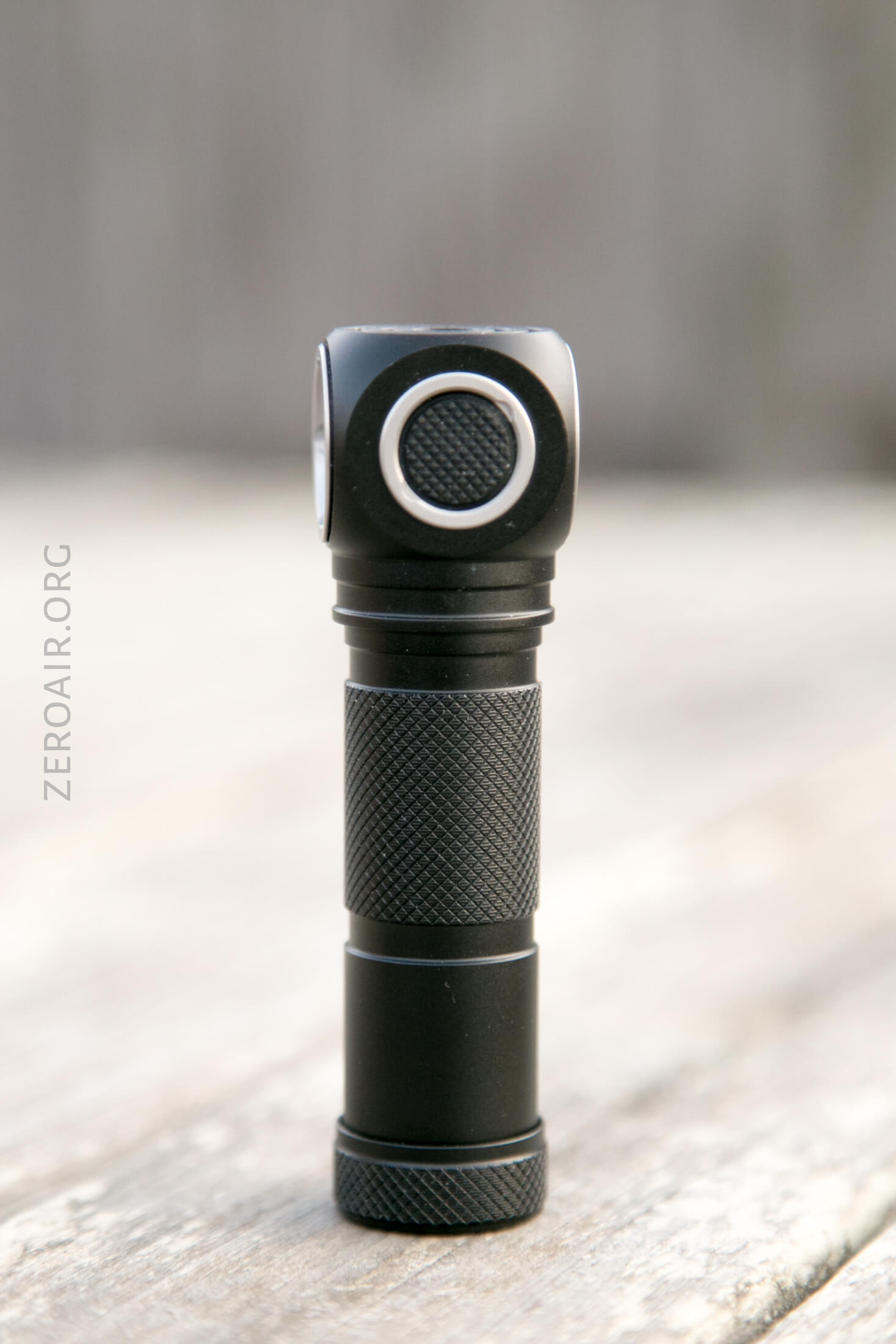
The tailcap has most of the branding.

The head reminds me a bit of Thor’s hammer. These circular rings are what I suppose translates to cooling fins in this format.

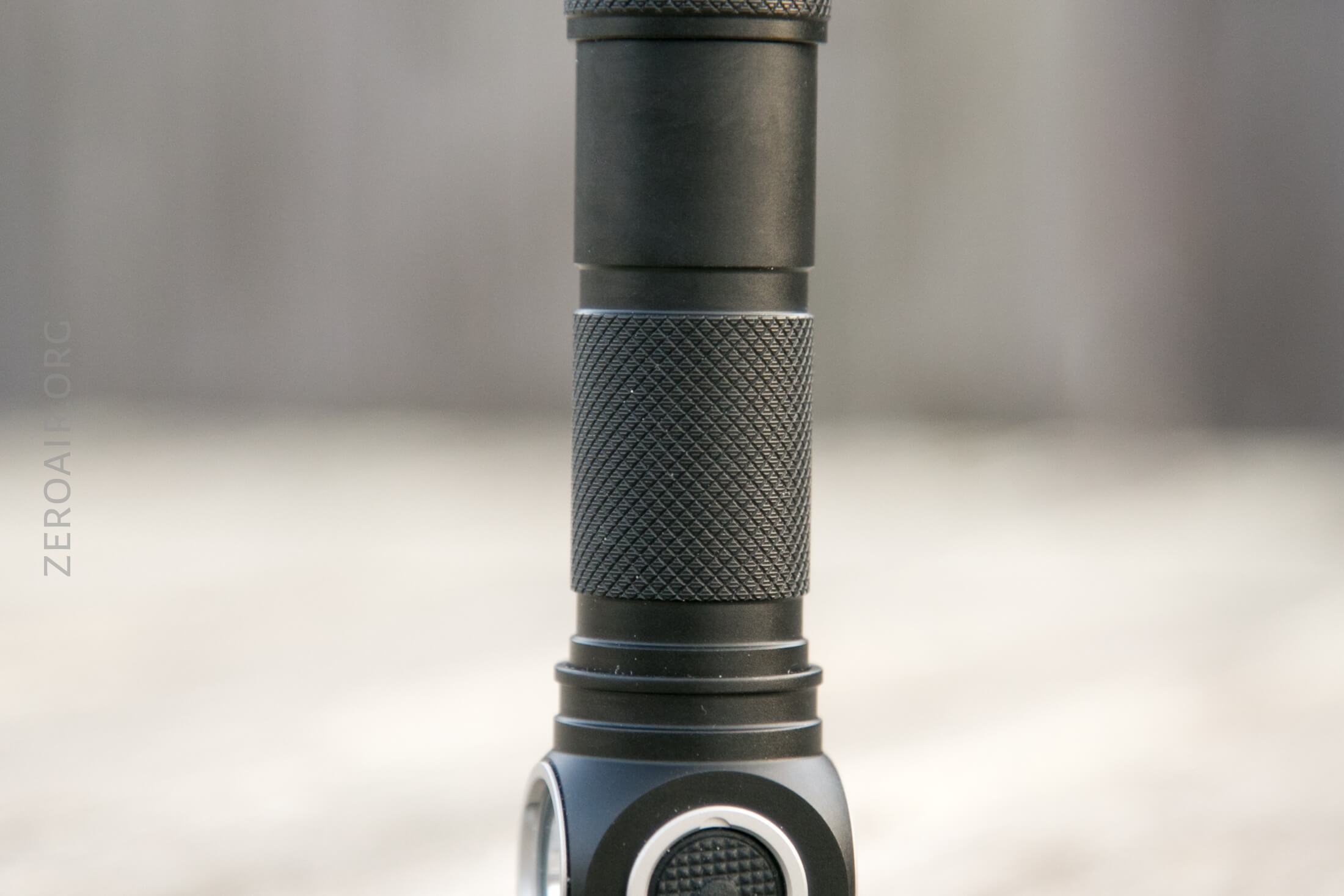
The knurling is fantastic – my favorite kind.

The tailcap and body both have a bit of knurling, but it’s not overly grippy and doesn’t get in the way.
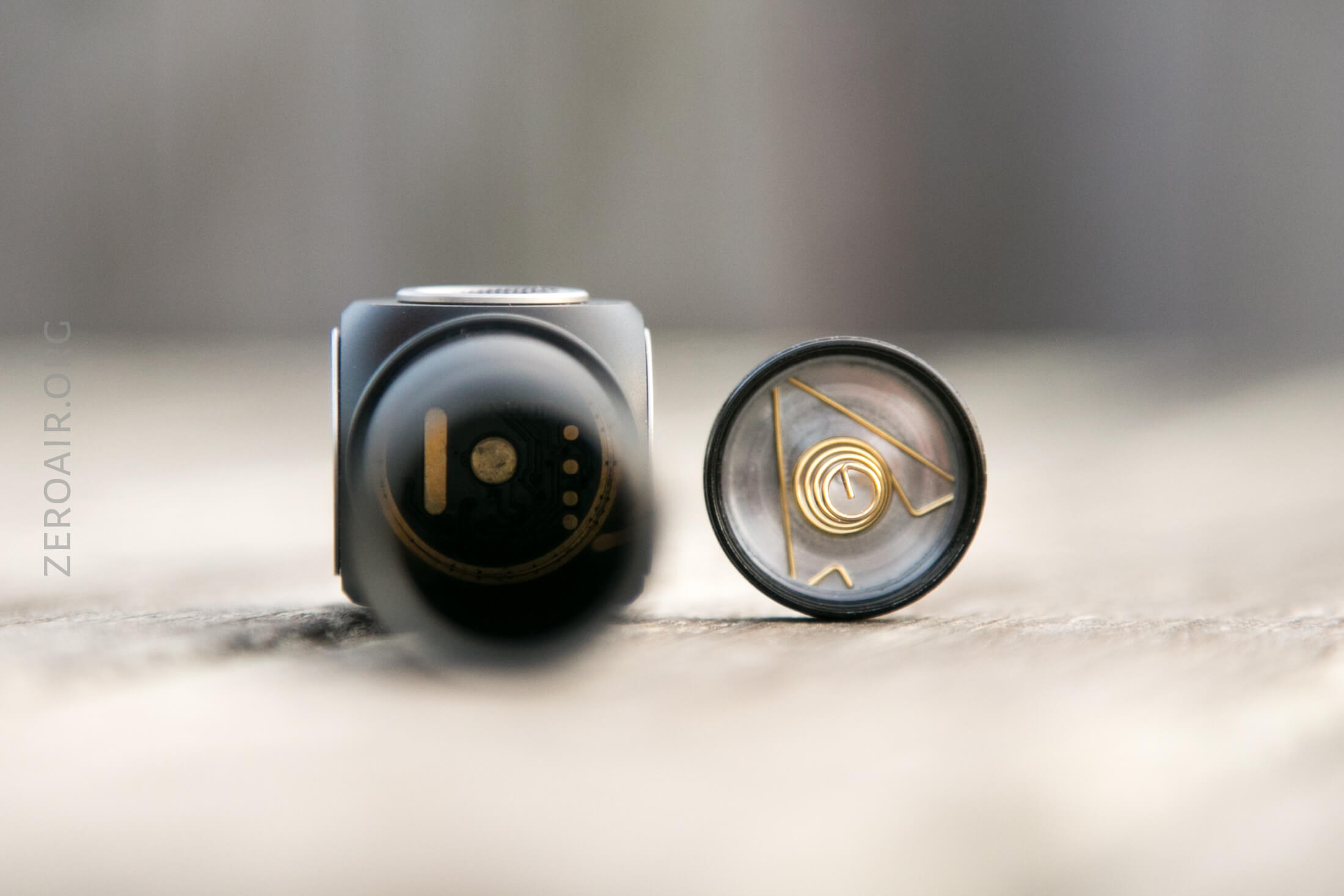
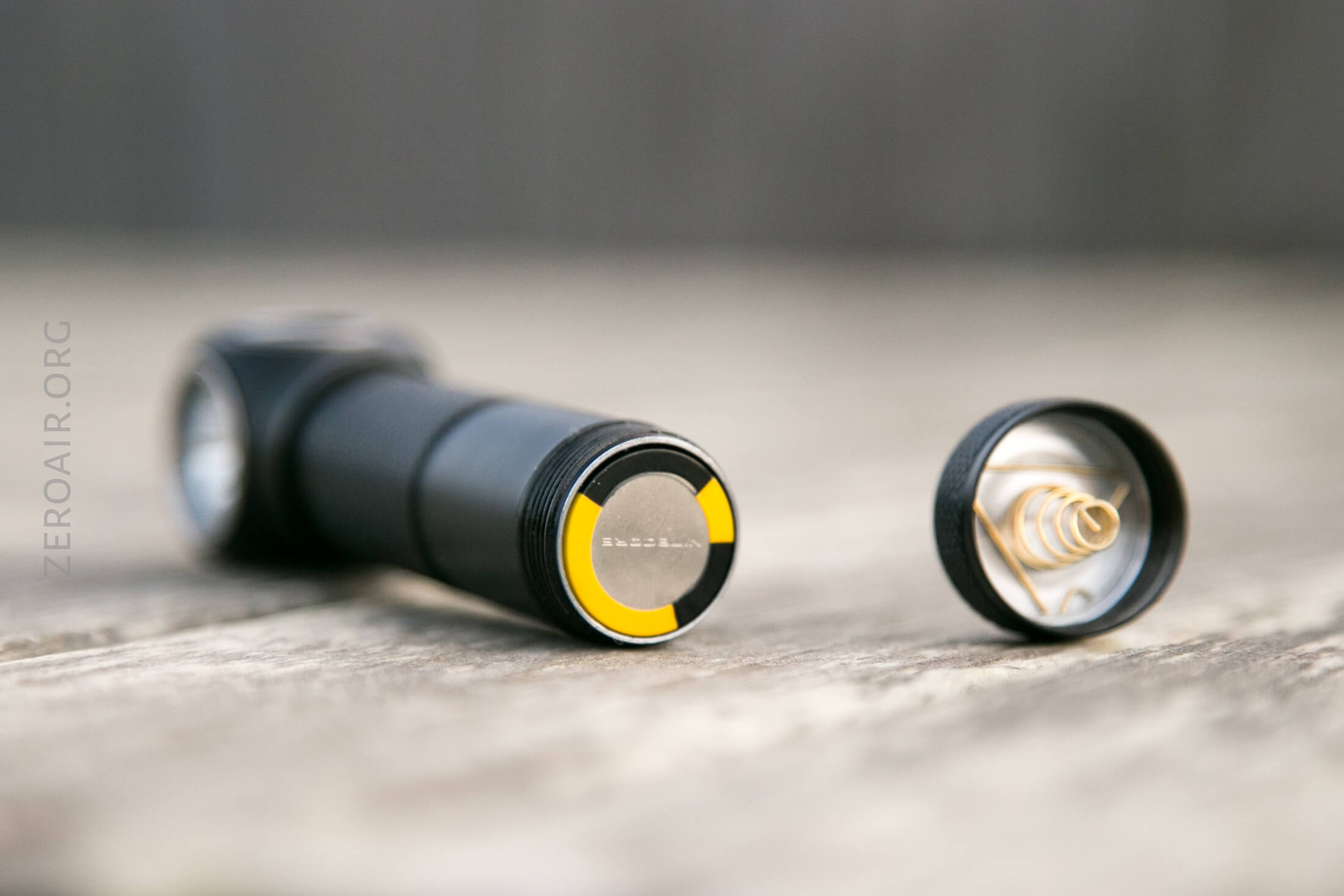
The tail has a removable spring but no magnet. The head has only a brass button.

The threads are well-lubed, anodized, fine, and square-cut.

Size and Comps
Length 95.9 mm
Head Size 27.6 mm
Weight 82.5 g
My weights are:
Light weight: 48g without battery.
Headband weight: 34g.
Pocket clip weight: 3g.


Retention and Carry
The primary use for this light is the headband. It’s a nice, comfortable headband. Stretchy, and also surprisingly, meshy.

The top strap is removable (fairly easily removable, that is, not hard and semi-permanent like the Wizard Pro).


Also, much to my surprise, the silicone strap is directional. The light goes into the connector as seen below. When being worn, the head is on the right side of your body, making right-handed use the preferred use.

I don’t really like that this is directional, and I would much rather it not be. However, doing it this way means the light is very well balanced, and so it rides better.


I didn’t find the forehead piece to be very comfortable. It needs a bigger, flatter area.
A pocket clip is also included. The clip fits into either of two ridges in the cell tube, but not the bigger of the two headband connectors. This means the clip allows up or down carry.


Neither direction is particularly deep.

Power and Runtime
Nitecore included a cell with my package, but you’ll need to order a package with a cell or obtain a cell separately. What they sent is a Cold-Resistant cell, which is a nice thing to have (my first one).
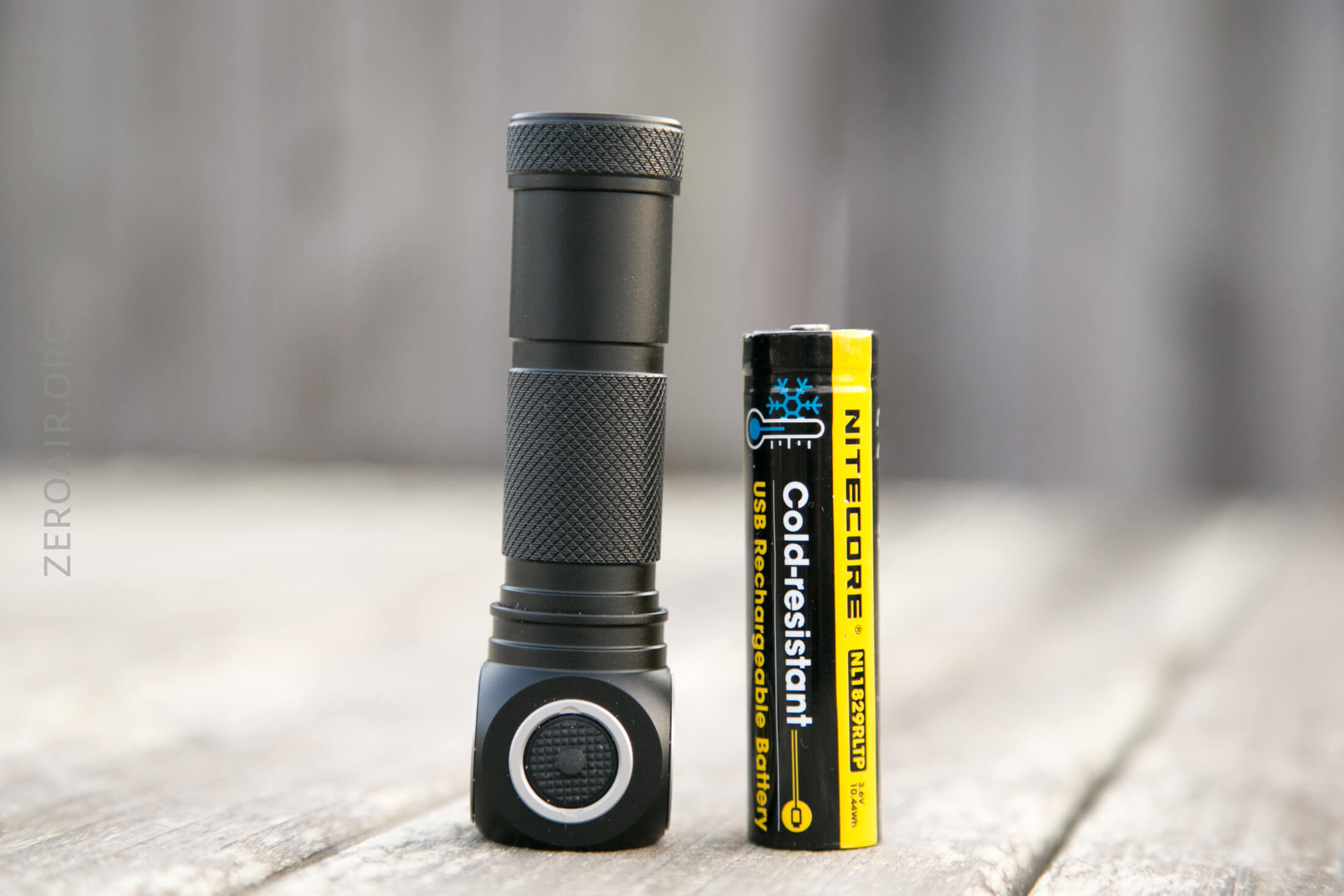
This cell has built-in charging, but since this review is a headlamp review, I didn’t test that aspect of the cell in this light.
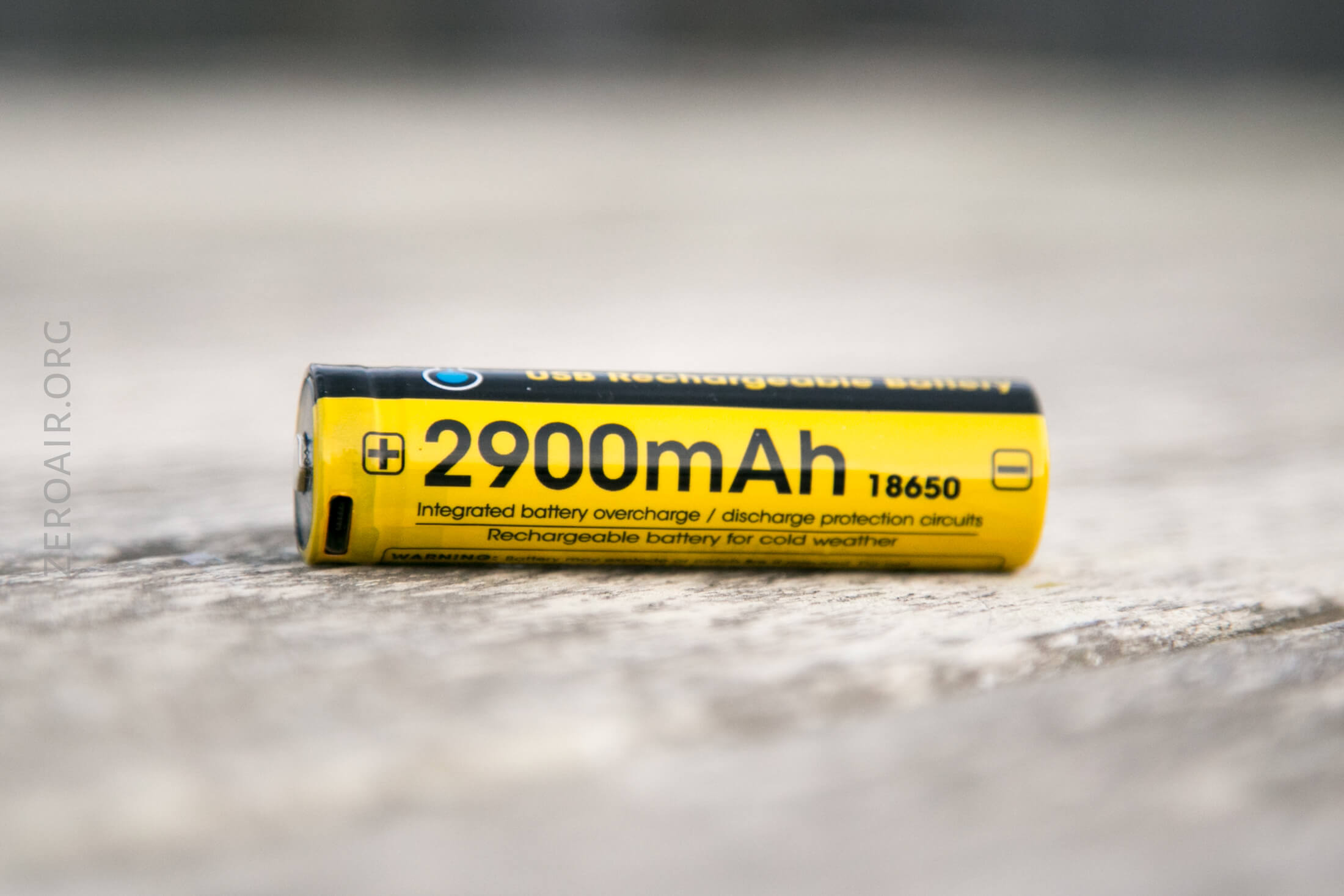
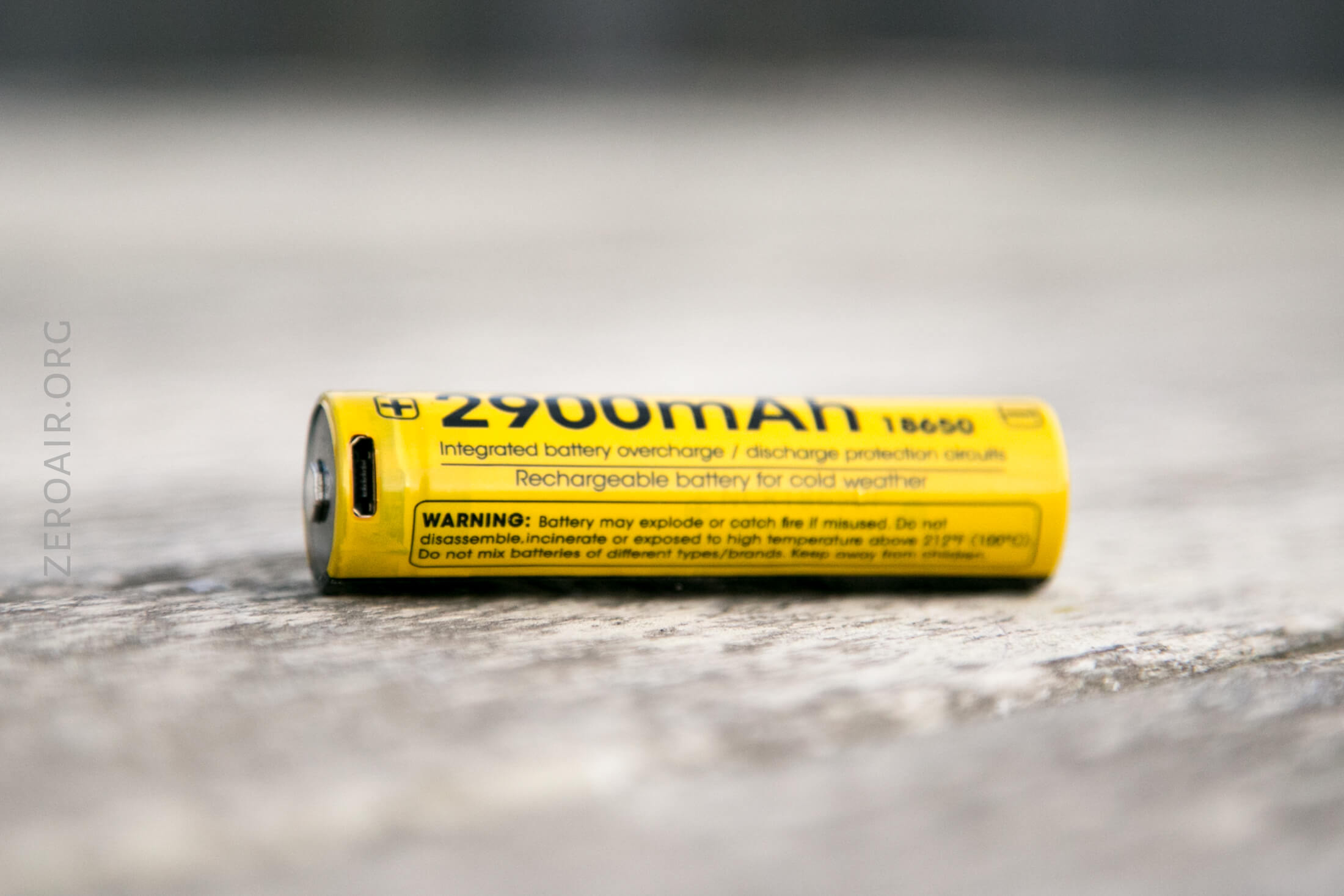
The cell is a button-top protected cell, again with the micro-USB charging. i.e., it’s about as long as 18650 cells get. Maybe 5mm longer than an unprotected flat top.
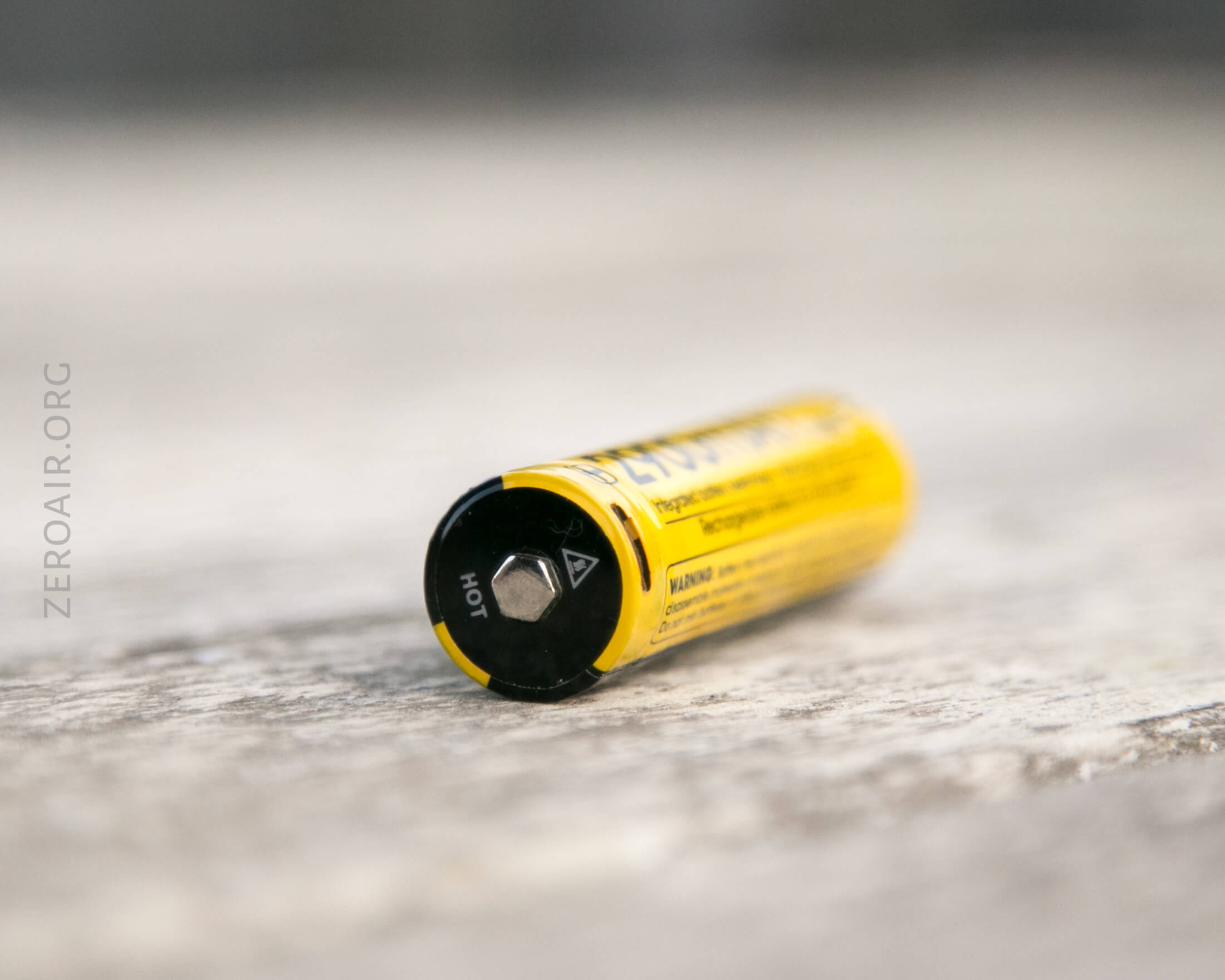
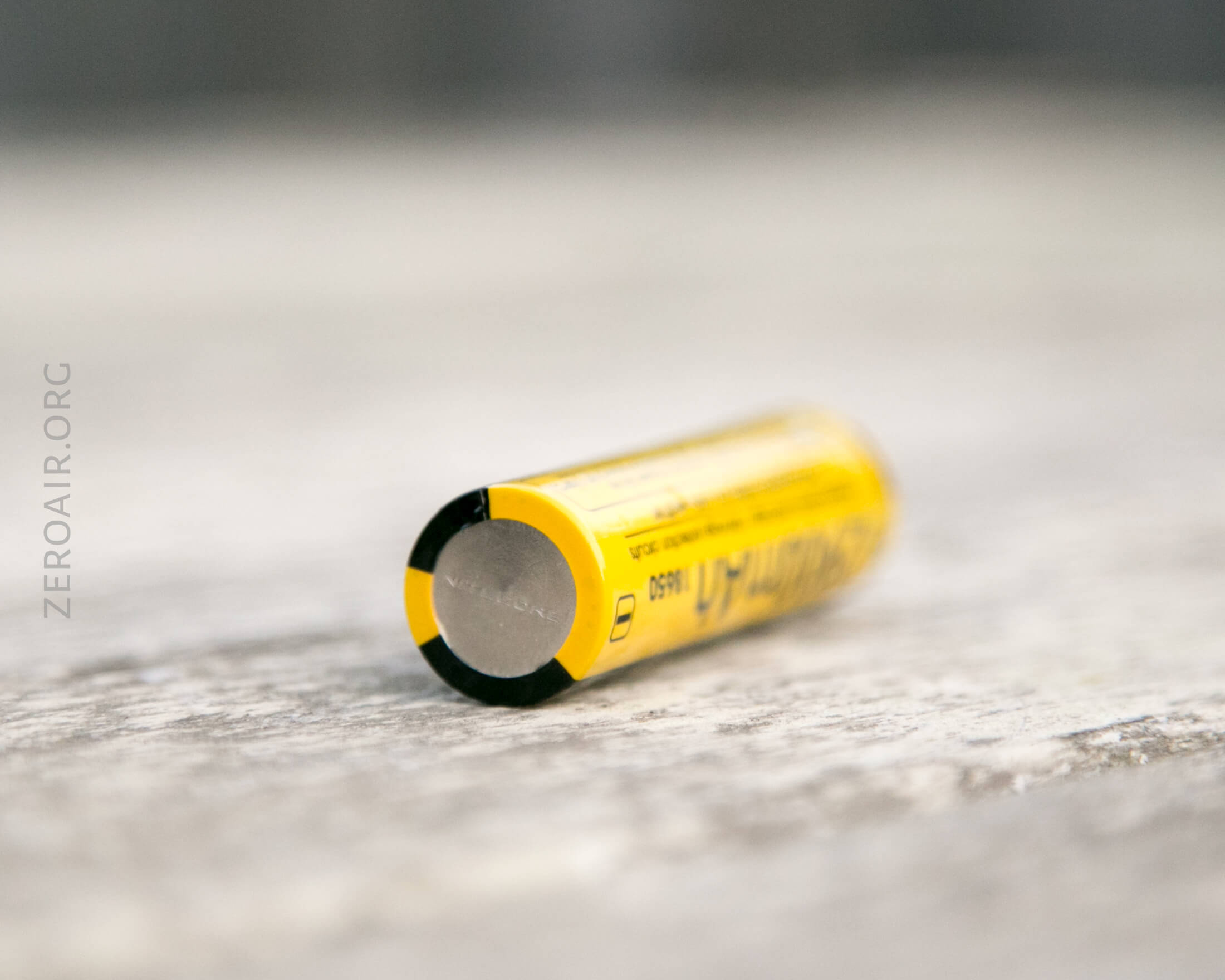
But any type 18650 will work in here. Button top, flat top, protected, unprotected – doesn’t matter.
The UT32 will also run on 2x CR123.
When the tailcap is tightened, the emitters (both) indicate the cell voltage by blinking the actual cell voltage (except with 2-up cells, in which case it blinks the average voltage). Four blinks then pause, followed by two blinks = 4.2V.
Two run times for each emitter – Turbo and High. LVP was observed in all cases. Also observed were some small and also gigantic stepdowns….

The CW emitter on High is very pleasantly well-regulated for almost 3 hours.
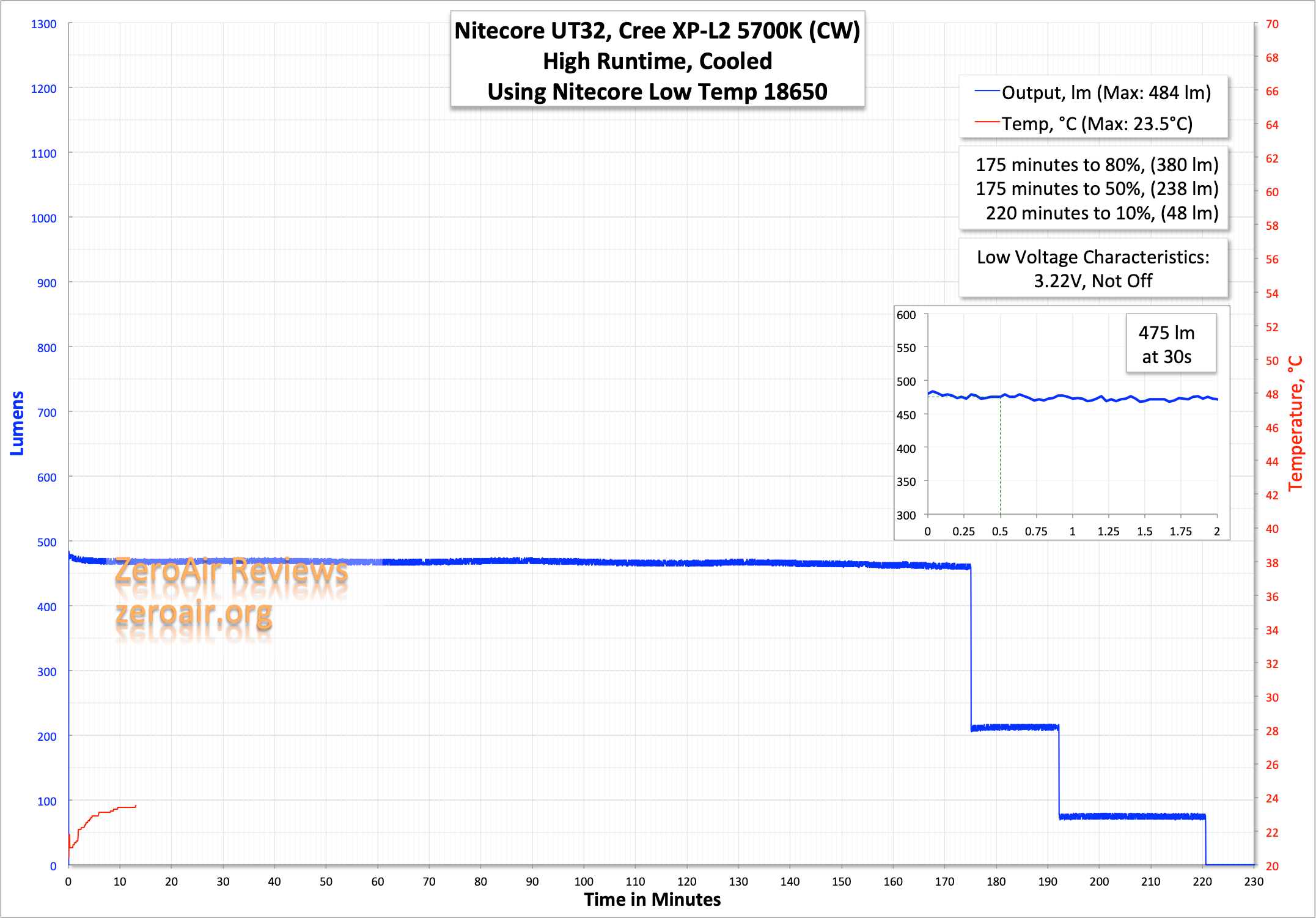
Turns out the WW emitter can be run constantly, unlike what the manual says. (The manual only implies that it’s possible.) Anyway, here’s a corrected runtime for steady Turbo on the WW emitter!

High output for the WW emitter is also remarkably flat and well-regulated.

On bench power, both emitters switch to low around 2.9-3.0V. The CW emitter shut off entirely at 2.9V, but the WW emitter didn’t ever seem to have a proper electrical “off.”
Modes and Currents
| Mode | Mode Claimed Output (lm) | Claimed Runtime | Measured Lumens | Tailcap Amps |
|---|---|---|---|---|
| CW Turbo | 1100 | 1h30m | 1220 | 2.52 |
| CW High | 410 | 3h45m | 475 | 0.64 |
| CW Mid | 200 | 8h | 224 | 0.26 |
| CW Low | 70 | 18h | 74 | 0.09 |
| WW Turbo | 920 | 1h30m | 1122 | 2.42 |
| WW High | 370 | 3h45m | 480 | 0.71 |
| WW Mid | 170 | 8h | 222 | 0.28 |
| WW Low | 60 | 18h | 77 | 0.09 |
Pulse Width Modulation
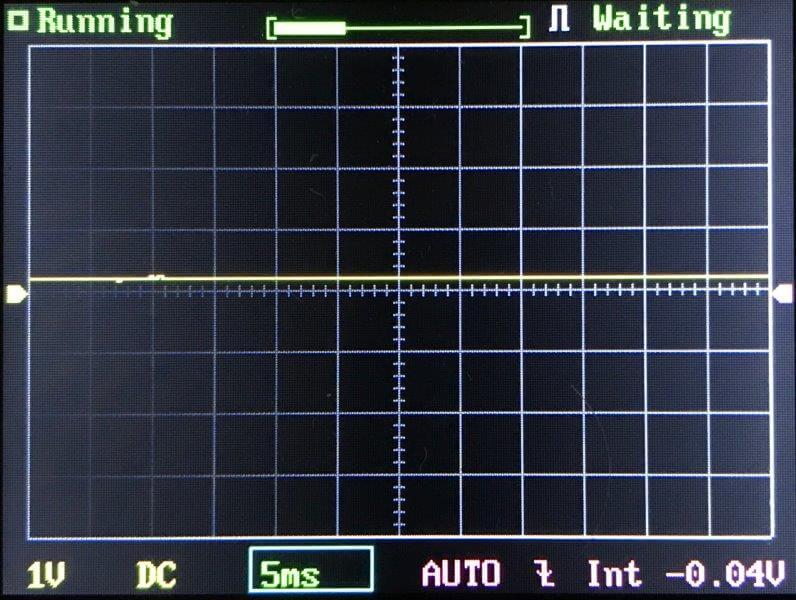
No PWM is noted.
CW modes first:

WW modes last:

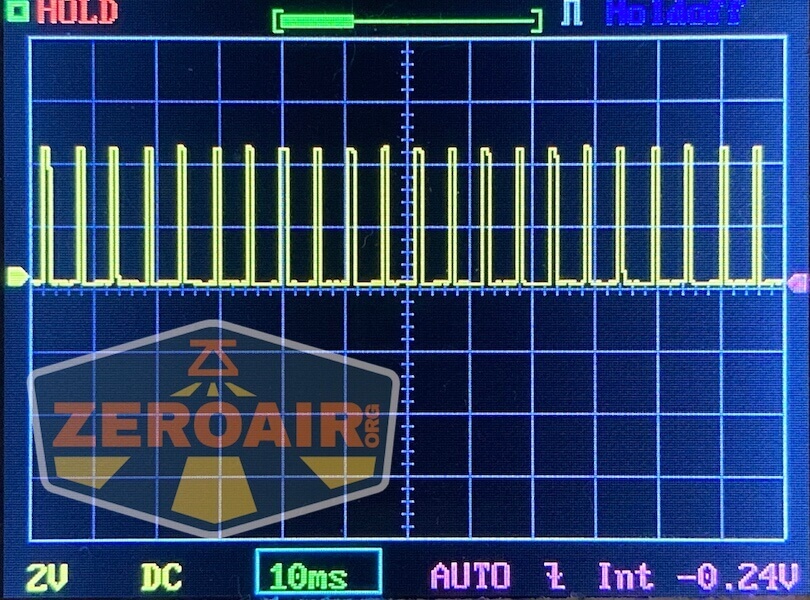
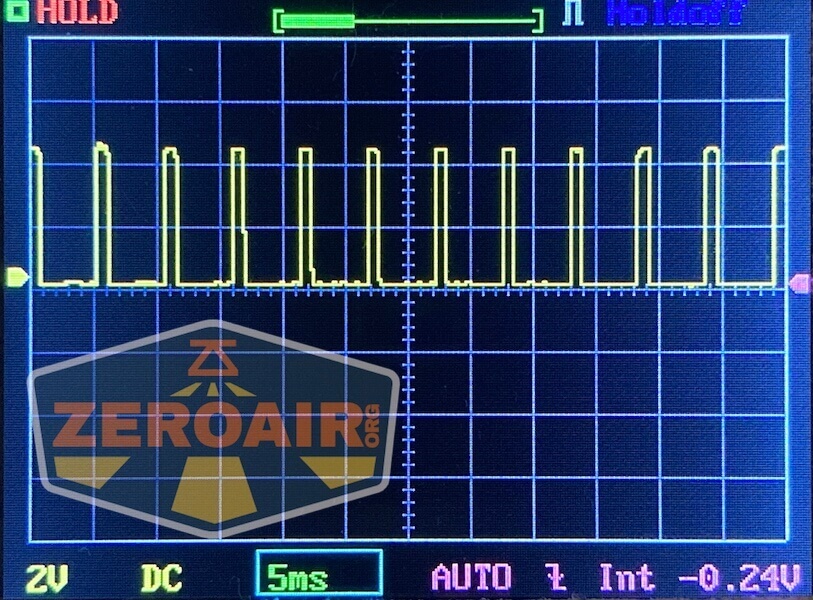
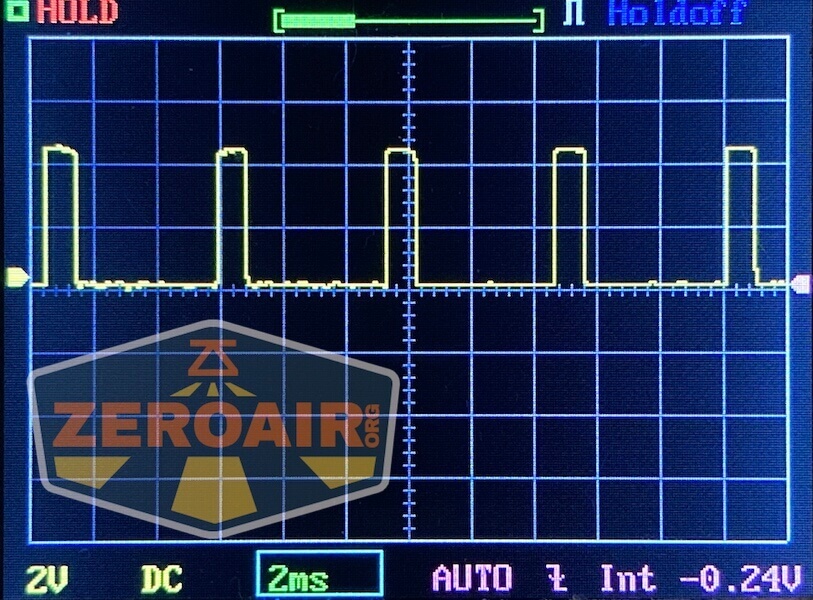
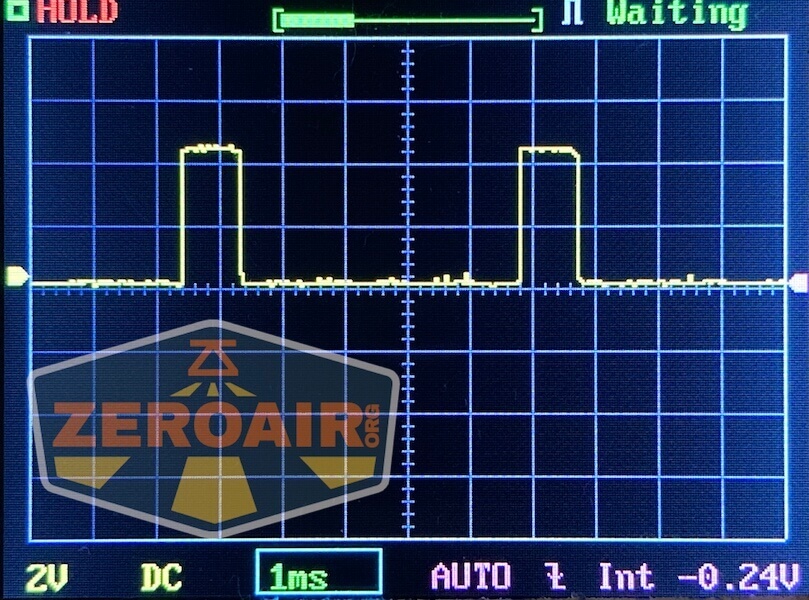
Here you can see a “baseline” – a chart with almost no light hitting the sensor.
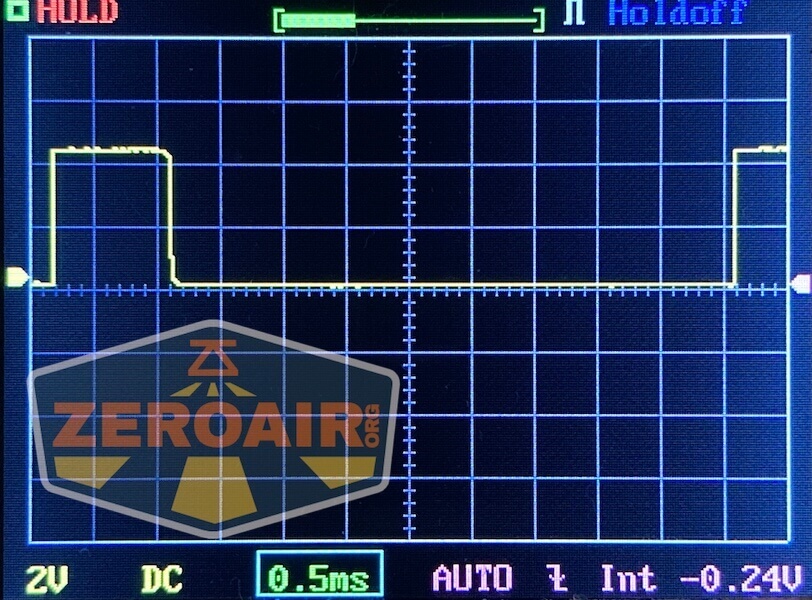
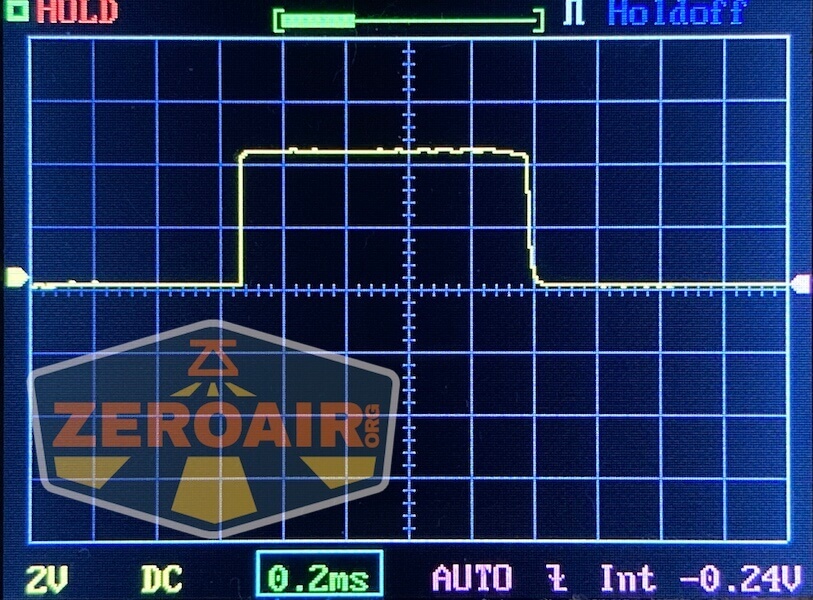
Then there’s the Ultrafire WF-602C flashlight, which has some of the worst PWM I’ve seen. It’s so bad that I used a post about it to explain PWM! Here are multiple timescales (10ms, 5ms, 2ms, 1ms, 0.5ms, 0.2ms) to make comparing this “worst” PWM light to the test light easier. That post also explains why I didn’t test the WF-602C at the usual 50us scale.
User Interface and Operation
There are two switches on the UT32. And they’re both needed for operation – a pinching motion. One has a bump in the center, and the other has typical knurling. The manual calls the bump button “Button A” and the non-bump button “Button B.” I’ll call them BA and BB.


Here’s a user interface table!
| State | Action | Result |
|---|---|---|
| Off | Hold Both | Low – CW |
| On | Hold Both | Off |
| On CW | Any BB | On WW same mode as CW |
| On WW | Any BA | On CW same mode as WW |
| On Either | Click Respective Either (BB for WW, BA for CW) | Mode advance (LMH) |
| On Either | Hold Respective Either | Turbo (30s only) |
| On CW | Hold Both | Turbo CW |
| Steady Turbo CW | Click BB | Turbo WW |
| Off | Triple Click Respective Either | SOS Respective to switch |
| SOS | Click Respective Either | Beacon respective to switch |
| Strobe group | Hold Switch respective to on emitter | Off |
I think that’s the full UI, but it’s a bit unusual because of all that the light has going on. One nice thing about the head strap being directional is that it’ll be easier to memorize the user interface this way
LED and Beam
There are two emitters on the UT32. First (below) is the Cool White Cree XP-L2, at 5700K. On the right below is the Warm White emitter, a Cree XP-L HD at 3000K.
The CW emitter is under a light orange peel reflector, and the reflector for the WW is very smooth.


This makes the CW a flood option, and the WW a throw option – another thing that’s quite unusual about the UT32!


Beamshots
These beamshots always have the following settings: f8, ISO100, 0.3s shutter, and manual 5000K exposure. These photos are taken at floor level, and the beam hits the ceiling around 9 feet away.


Tint vs BLF-348 (KillzoneFlashlights.com 219b version) (affiliate link)
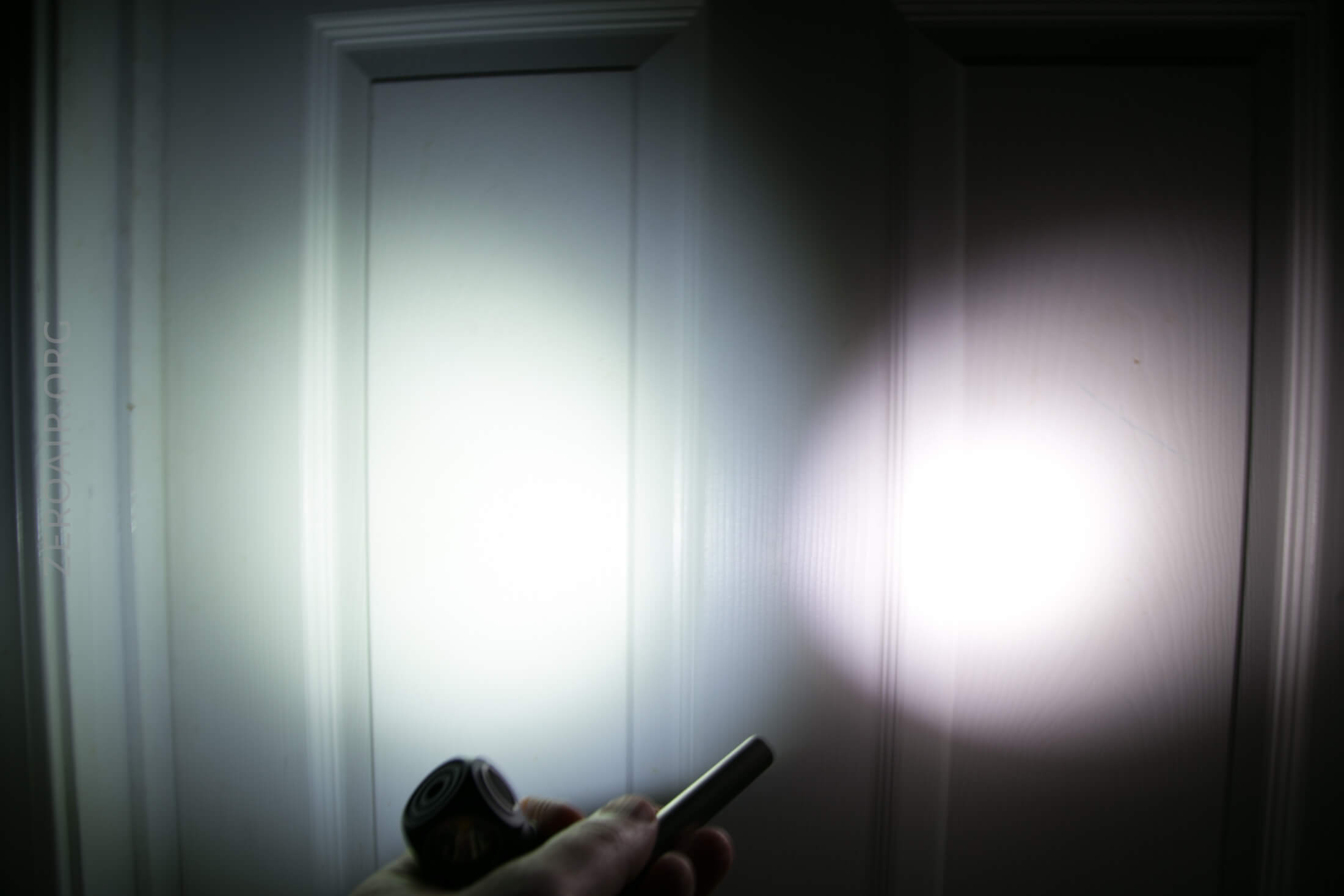

I compare everything to the Killzone 219b BLF-348 because it’s inexpensive and has the best tint!
Conclusion
What I like
- Good build quality
- High output WW emitter
- WW emitter is the “throw” emitter
- Dual switch user interface is good, once it’s ben
What I don’t like
- user interface can really take some work to get down. You will likely blind yourself in the process.
Notes
- This light was provided by Nitecore for review. I was not paid to write this review.
- This content originally appeared at zeroair.org. Please visit there for the best experience!
- Use my amazon.com referral link if you’re willing to help support making more reviews like this one!
- Please support me on Patreon! I deeply appreciate your support!
Discover more from ZeroAir Reviews
Subscribe to get the latest posts sent to your email.
Hi! Thanks for the detailed review!
The dual beam seems to be a key feature for trail running, as a wide white beam is generally the best to run in the forest, but is very annoying under the rain or in the fog. For hiking under the rain at night, I sometimes bring a warm white thrower.
The only thing that I’m not sure about this lamp for running is the silicone attachment (compared to the hard plastic of the Nu20/Nu25). I can’t run with my Zebralights because they move up and down at each step. Question: have you tried running with the UT32? How steady is it on the head?
Thanks!
In general I don’t think I’d want to use an 18650 light as a running light anyway…. I don’t think this one would be any *worse* than others, but still I’d likely not use it for that.
I haven’t tried running with it, though. The top strap would certainly help with stability.
Thanks for your honnest reply! So this light remains a hiking lamp rather ran than a running lamp, although Nitecore introduce it as for runners.
So the UT32 must always be turn on CW first before can proceed to other modes? Can i turn on mid mode of WW first?