

Nightwatch NS59v2 Chaos Flashlight Review
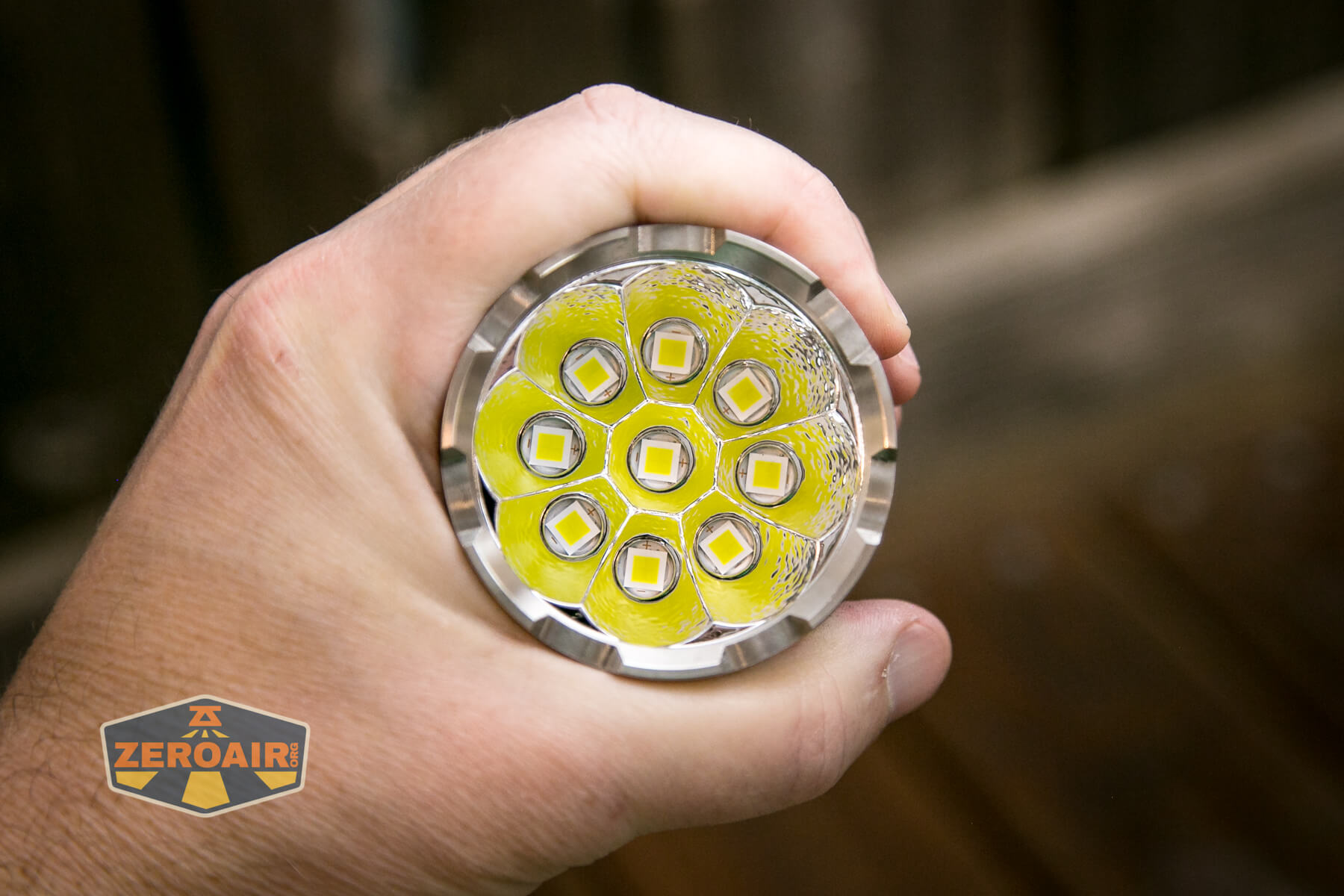
The Nightwatch NS59v2 Chaos flashlight is a 2×21700 cell flashlight using a completely new emitter: SFQ60.3. These provide great output and throw, too!
Official Specs and Features
Here’s an affiliate link to the Nightwatch NS59v2 Chaos flashlight product page.
Versions
There’s only one version, but it’s possible to get a matching black aluminum bezel (seemingly unavailable right now) or a stainless steel bezel (seen here).
Price
With two 21700 cells, this light runs $128.95. I fully recommend including the cells, but more on that later. Here’s my referral link to the Nightwatch NS59v2 Chaos flashlight at nealsgadgets.com.
Short Review
I’ve never had these emitters before, but they’re quite something! The output is incredible, and the CCT is respectable (not too cool). The Nightwatch NS59v2 Chaos flashlight is solid and robust, and the stainless bezel really sets it off!
Long Review
The Big Table
| Nightwatch NS59v2 Chaos | |
|---|---|
| Emitter: | SFQ60.3 (9) (5700K) |
| Price in USD at publication time: | $128.95 |
| Cell: | 2×21700 |
| Turbo Runtime Graph | High Runtime Graph |
| LVP? | Yes |
| Switch Type: | Mechanical |
| On-Board Charging? | No |
| Claimed Lumens (lm) | 32000 |
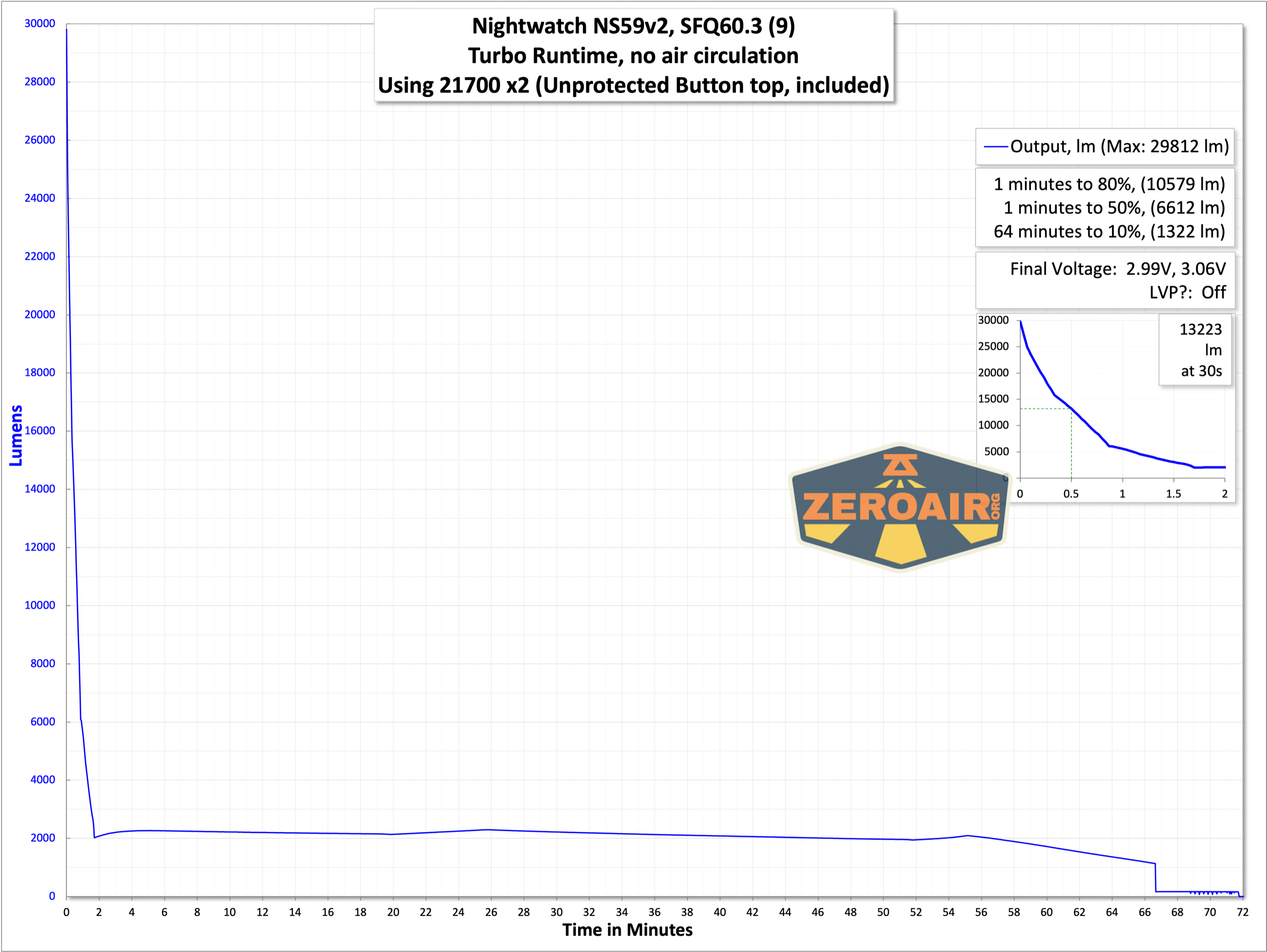
| Measured Lumens (at 30s) | 13223 (41.3% of claim)^ |
| Candela per Lumen | 4.4 |
| Claimed Throw (m) | – |
| Candela (Calculated) in cd (at 30s) | 2210lux @ 5.818m = 74807cd |
| Throw (Calculated) (m) | 547.0 |
| Claimed CCT | 5700 |
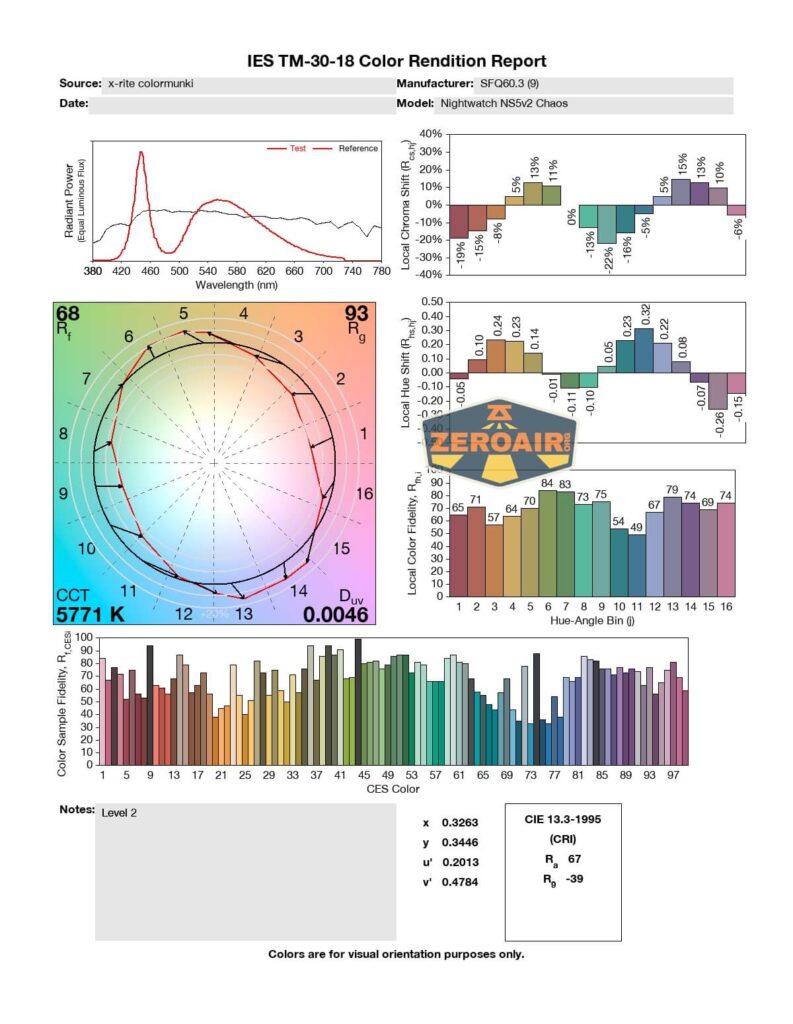
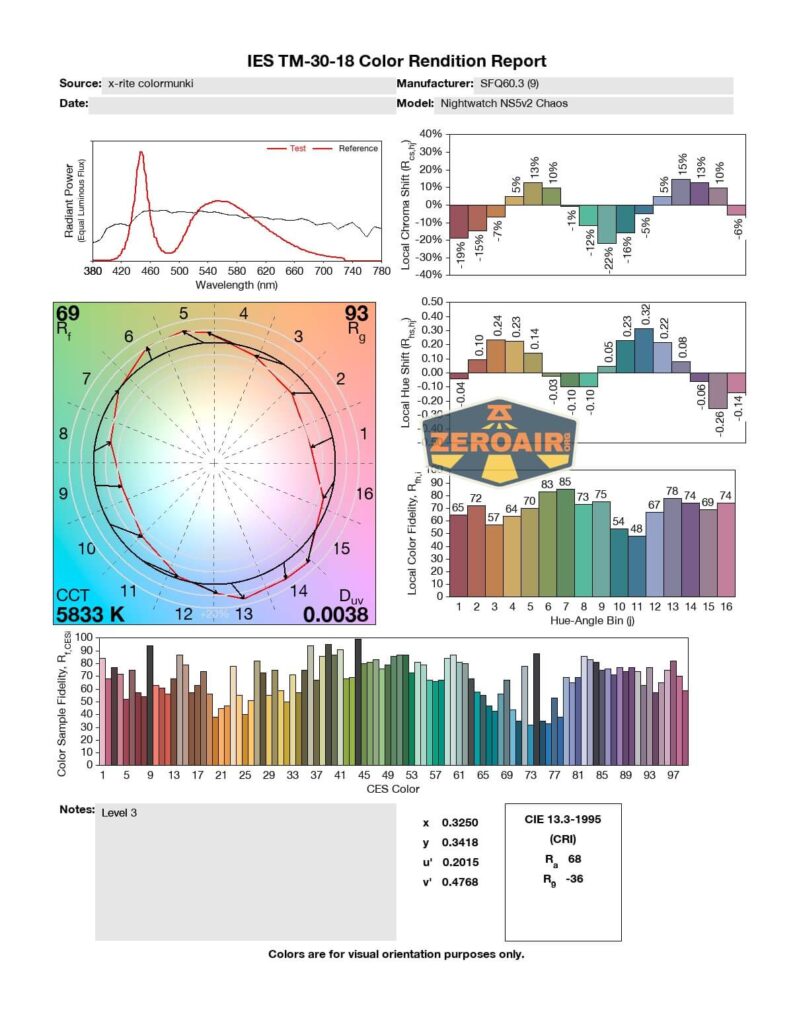
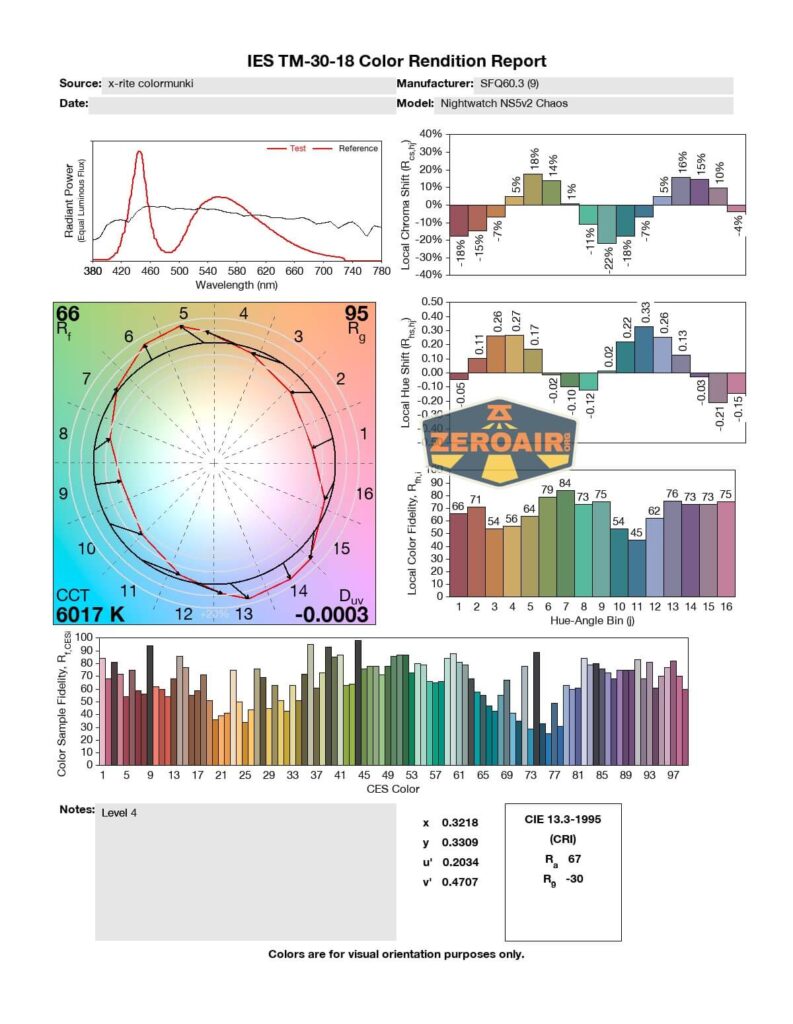
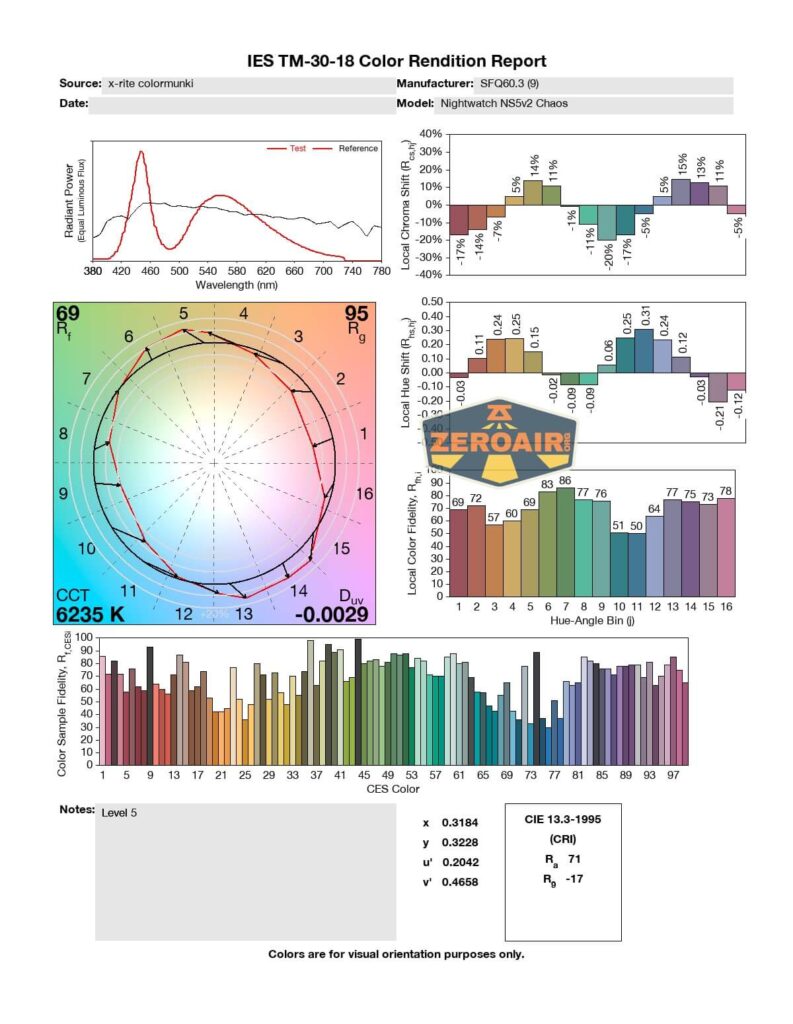
| Measured CCT Range (K) | 5700-6200 |
| Item provided for review by: | NealsGadgets |
| All my Nightwatch reviews! | |
^ Measurement disclaimer: Testing flashlights is my hobby. I use hobbyist-level equipment for testing, including some I made myself. Try not to get buried in the details of manufacturer specifications versus measurements recorded here; A certain amount of difference (say, 10 or 15%) is perfectly reasonable.
What’s Included
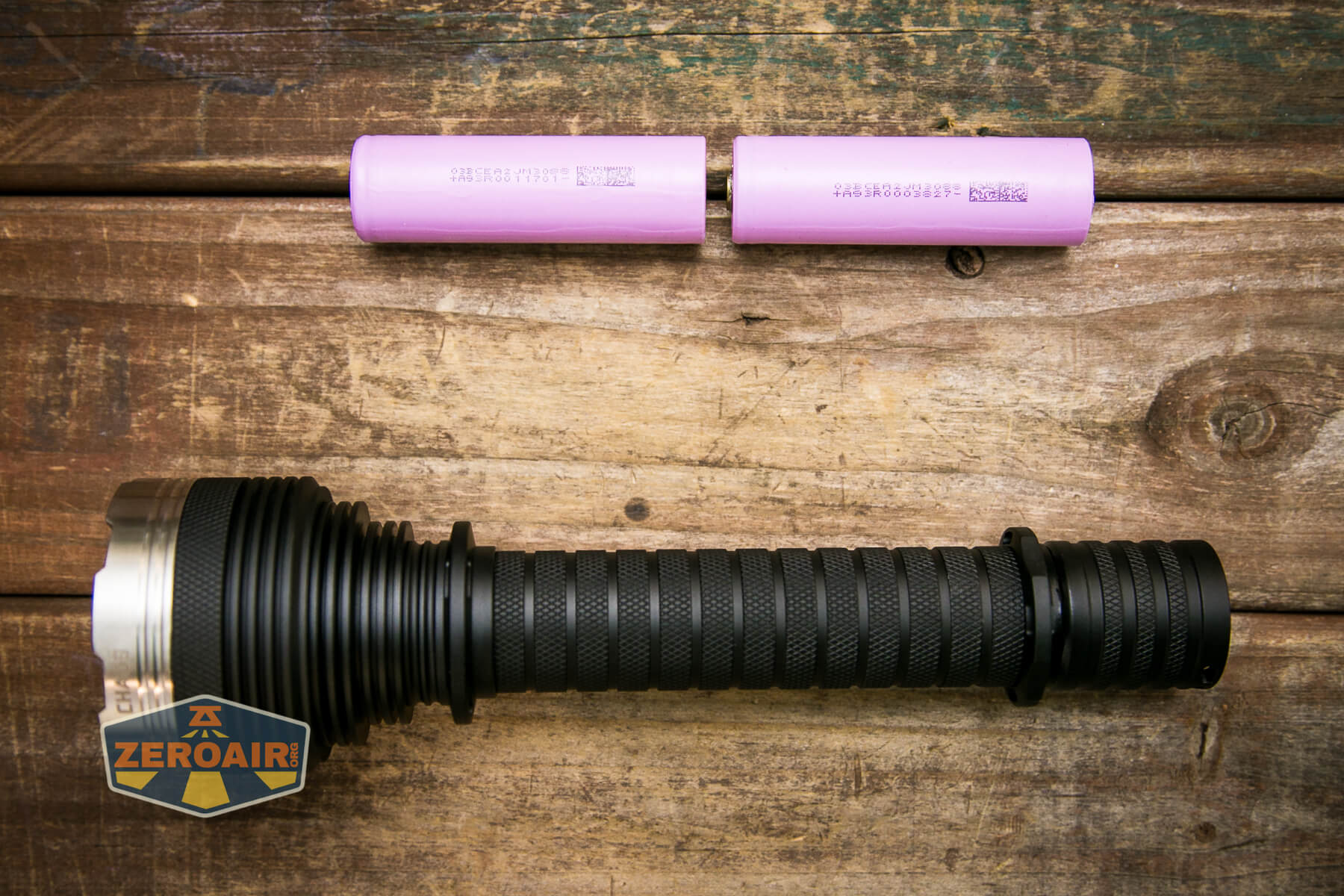
- Nightwatch NS59v2 Chaos flashlight
- Stainless bezel (seen above) (if you select that option)
- 2×21700 cells with added button (if you select that option)
Package and Manual
I did not receive a manual.
Build Quality and Disassembly

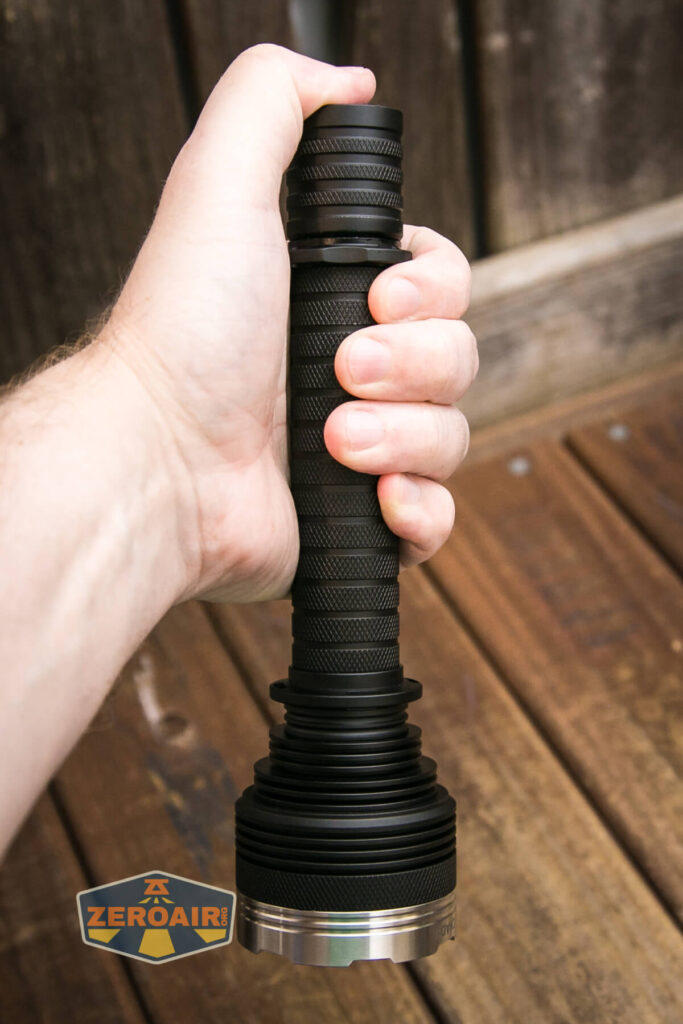
This light is robust. With the size and shape of it (aka Maglite-ish) you’d want it to be robust. There are two ways I’m judging that: 1) the mass – there’s a bunch of mass in the head that will make this a great swinger. Two: there’s absolutely no rattle in the battery compartment.
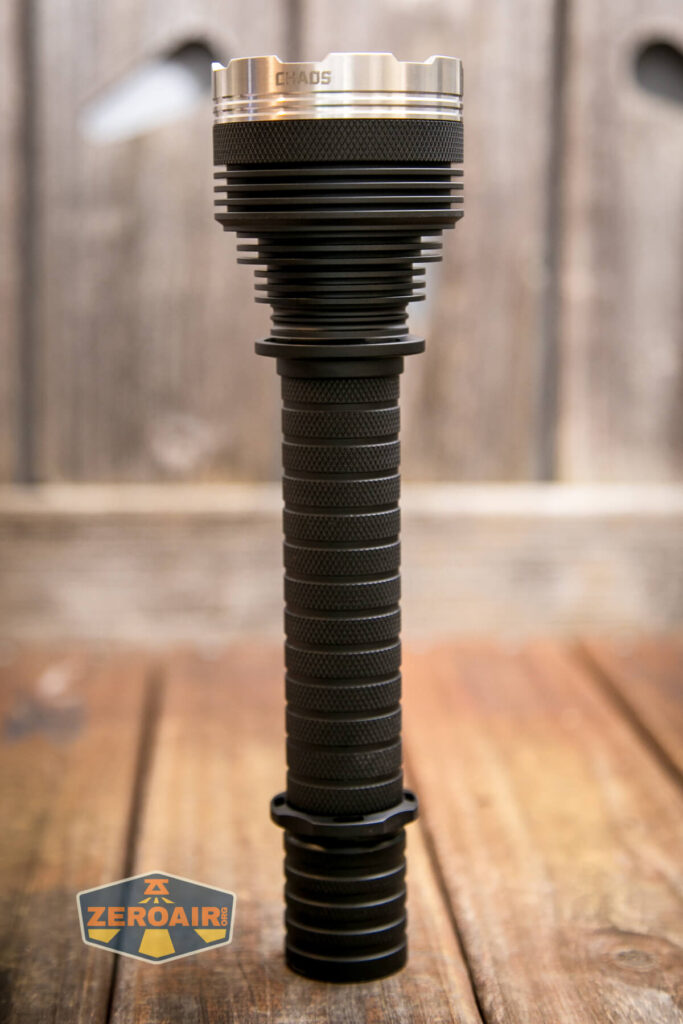
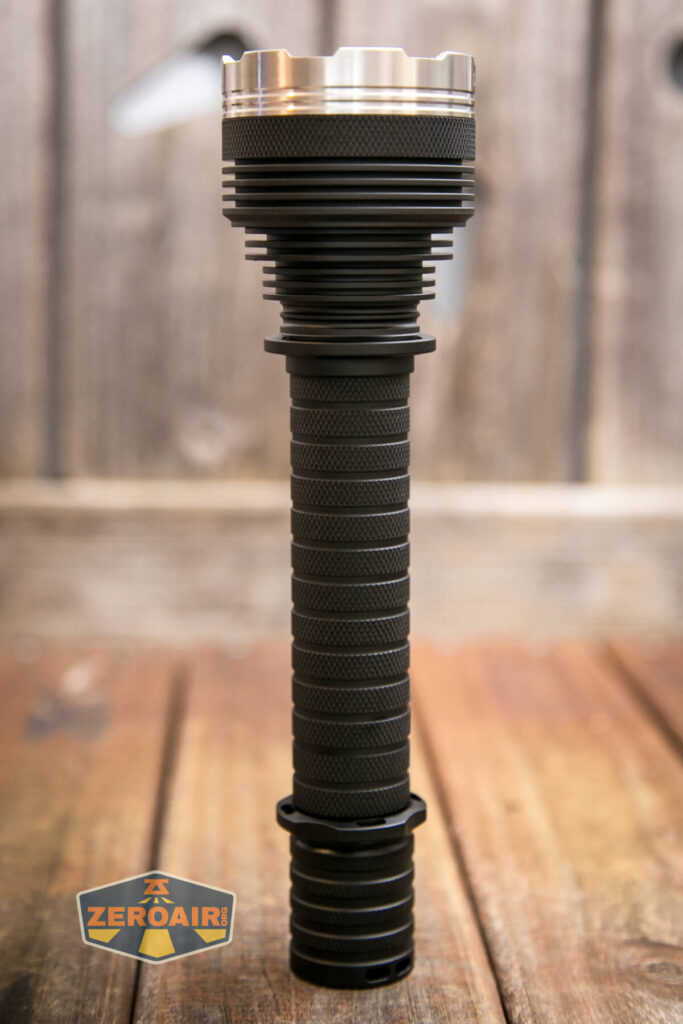
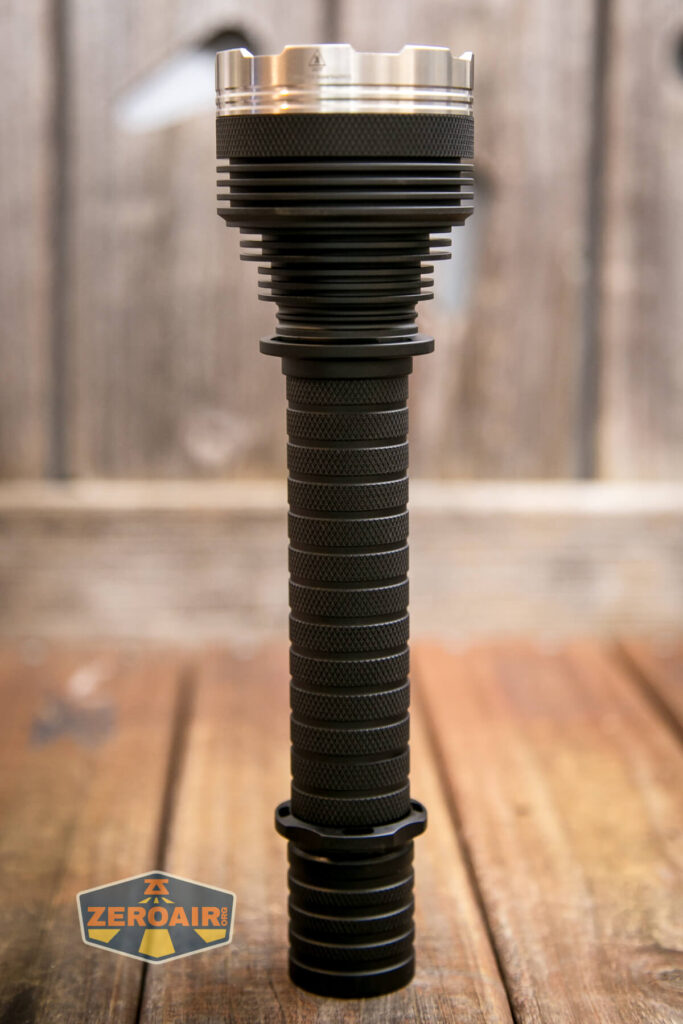
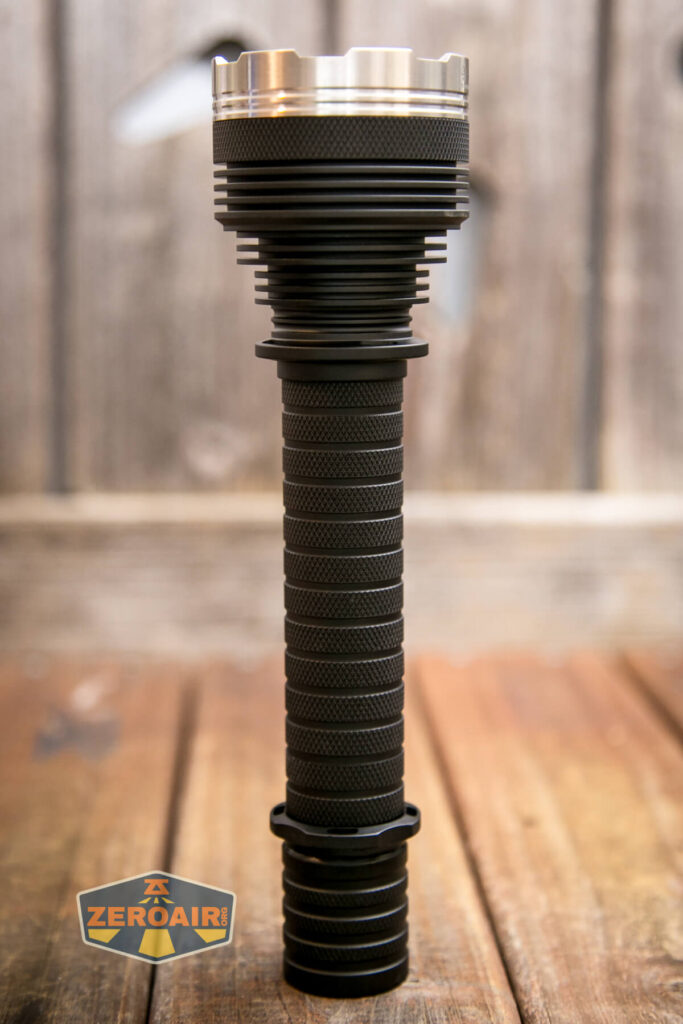
Thus, you can comfortably grab this light by the tactical tail ring on the tail end and swing it around as needed. It’s very pleasant in that way.
Both the head and tail come off the cell tube.

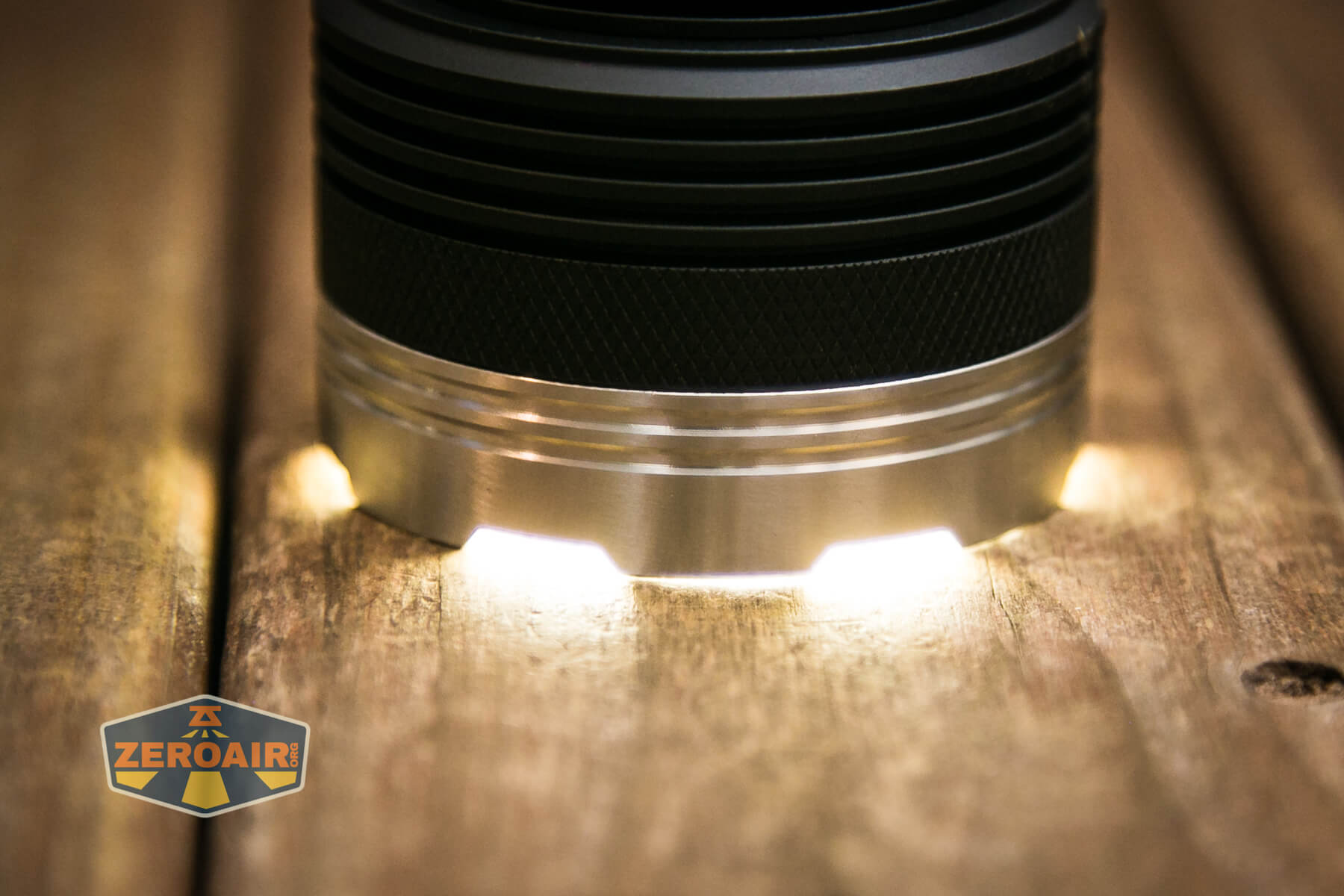
While the product page lists an aluminum bezel, I think this stainless maybe the only real option. And it should be – it looks great and serves a great purpose on this light! It’s very toothy, and I’d want those teeth to be stainless (not aluminum). So this is a great bezel.


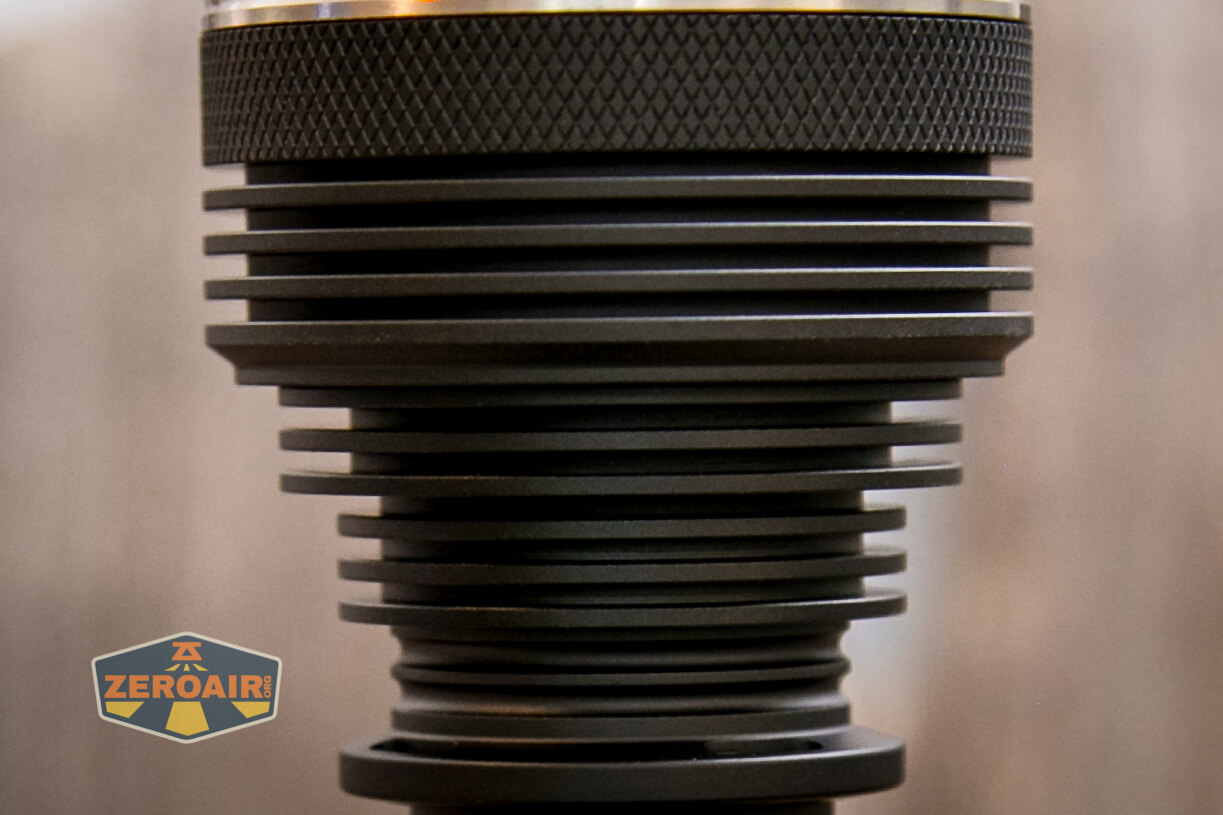
There are a ton of cooling fins, too. That’s needed because this light really draws a ton of amps!
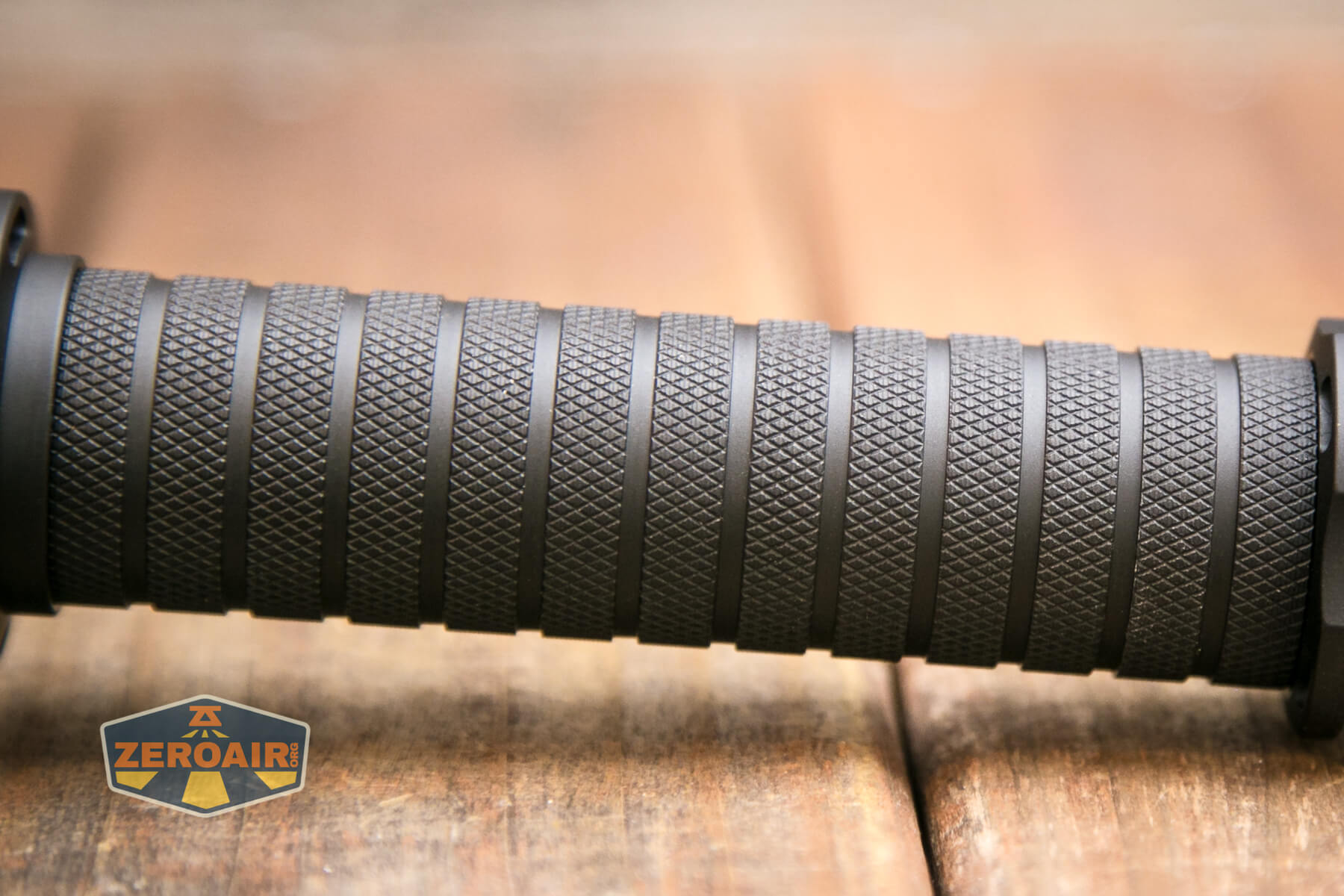
Grip is fantastic due to the knulring along the cell tube.

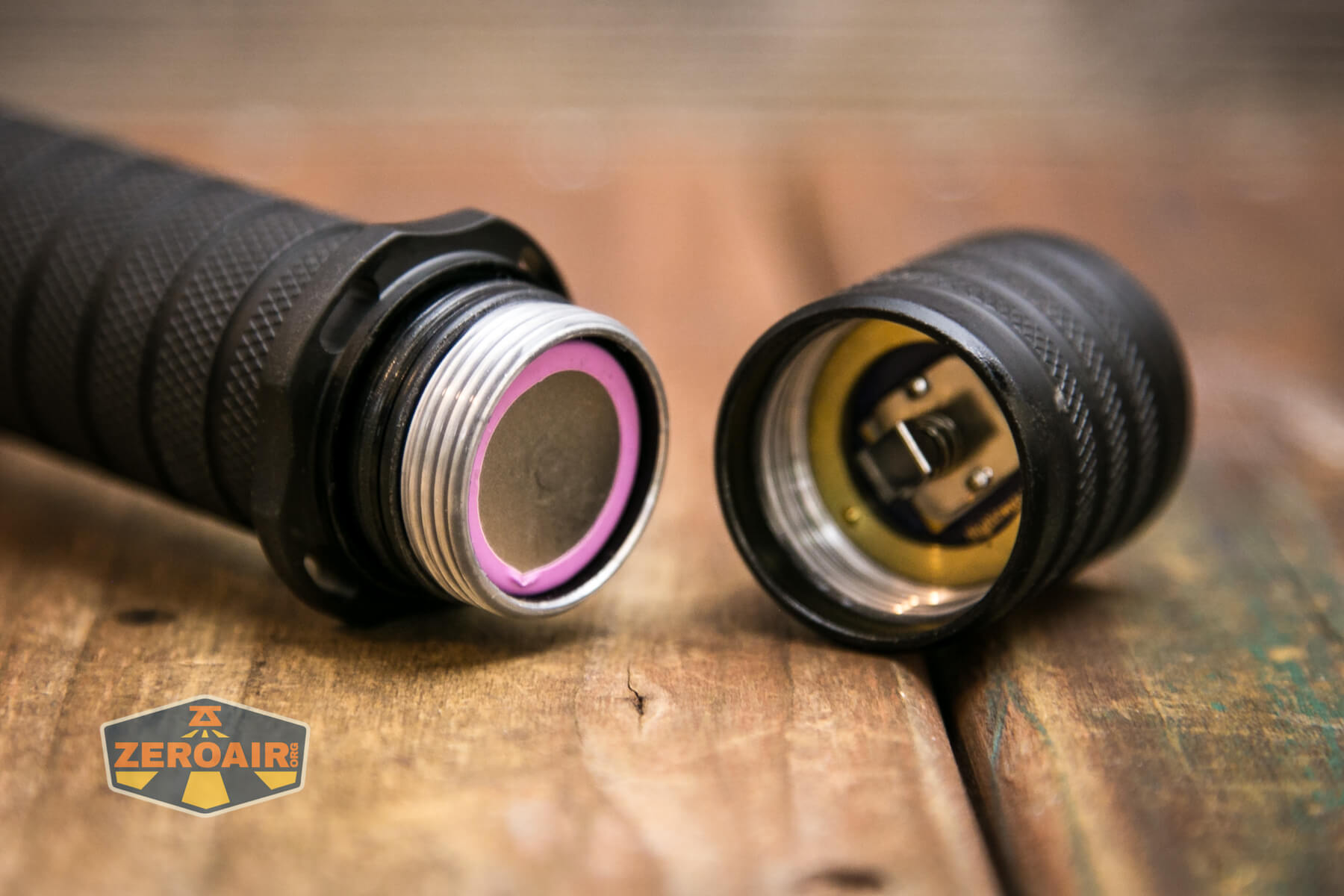
The tail end has a spring. You can see the brass retaining ring holding the whole switch mechanism in, too.
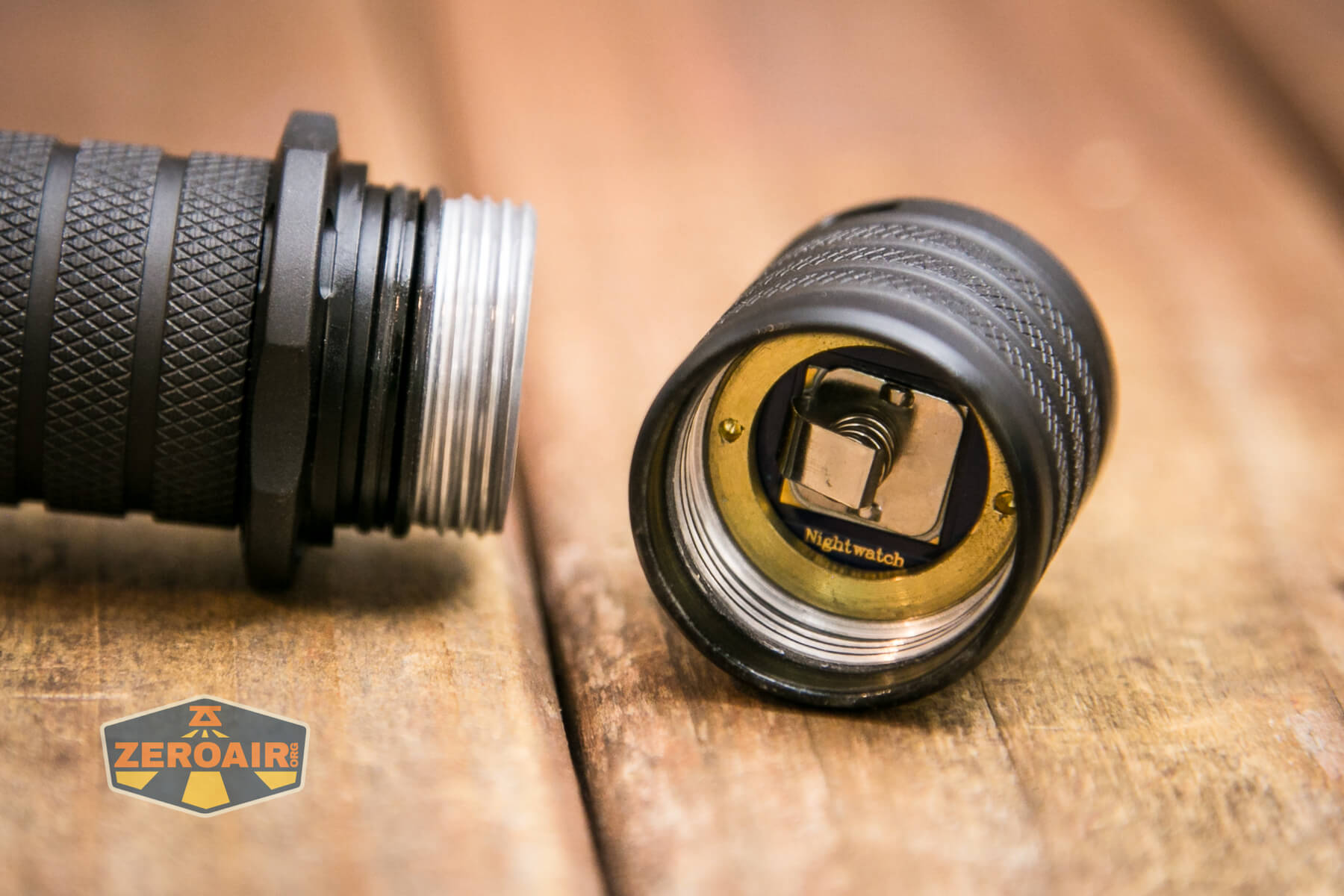
Threads on both head and tail are unanodized and square cut. They seem robust. Check out that brass contact point in the head. More on this later, but these parts all carry very high current, so it’s sensible that they’d be beefy.
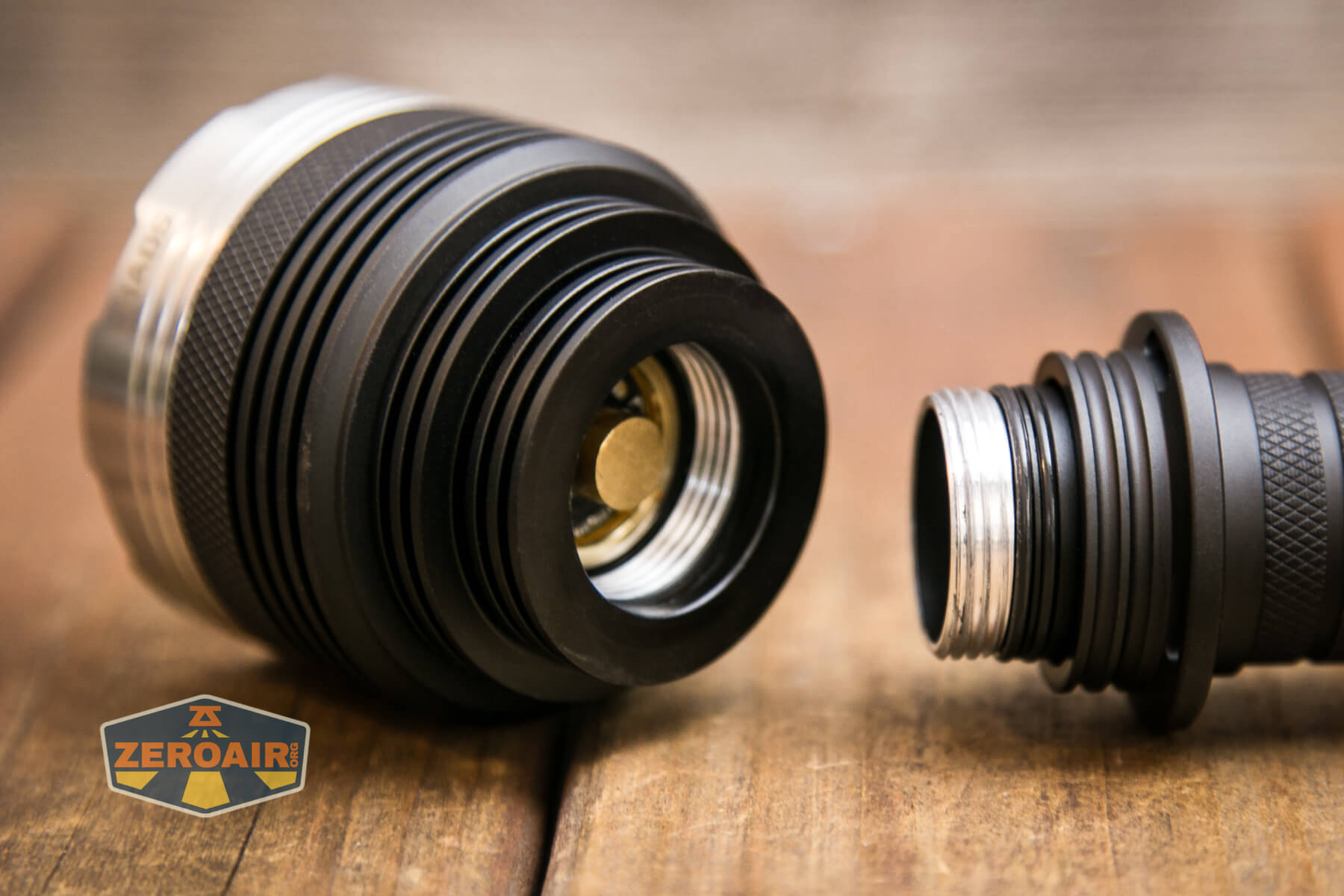
Size and Comps
Dimensions: 58mm head x215mm length
Weight: 338g without cells

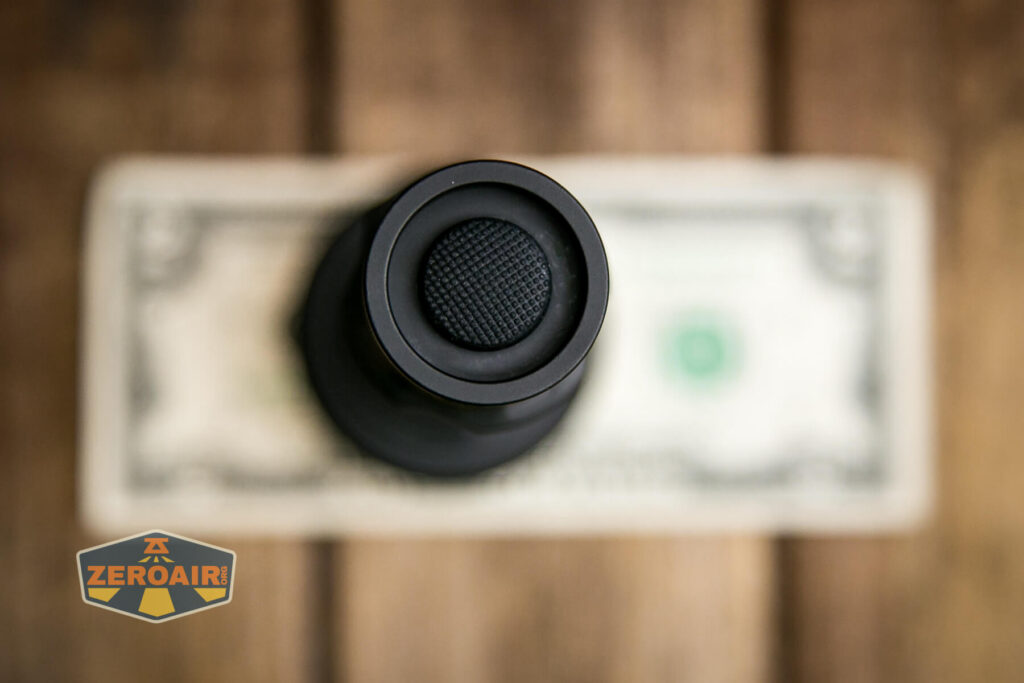

If the flashlight will headstand, I’ll show it here (usually the third photo). If the flashlight will tailstand, I’ll show that here, too (usually the fourth photo).

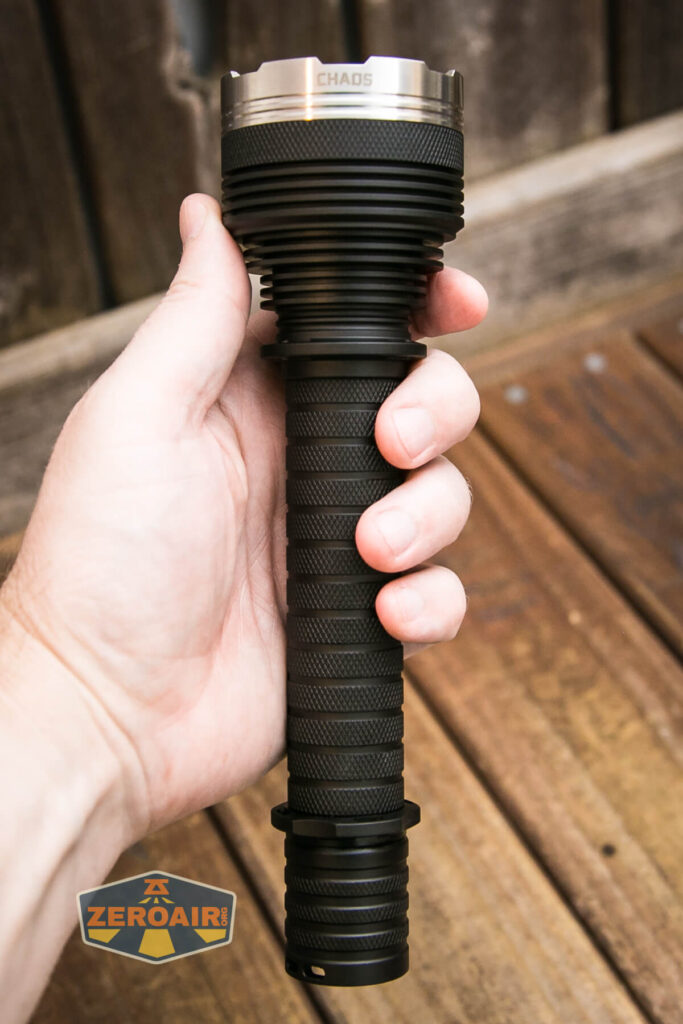
Here’s the test light with the venerable Convoy S2+. Mine’s a custom “baked” edition Nichia 219b triple. A very nice 18650 light.
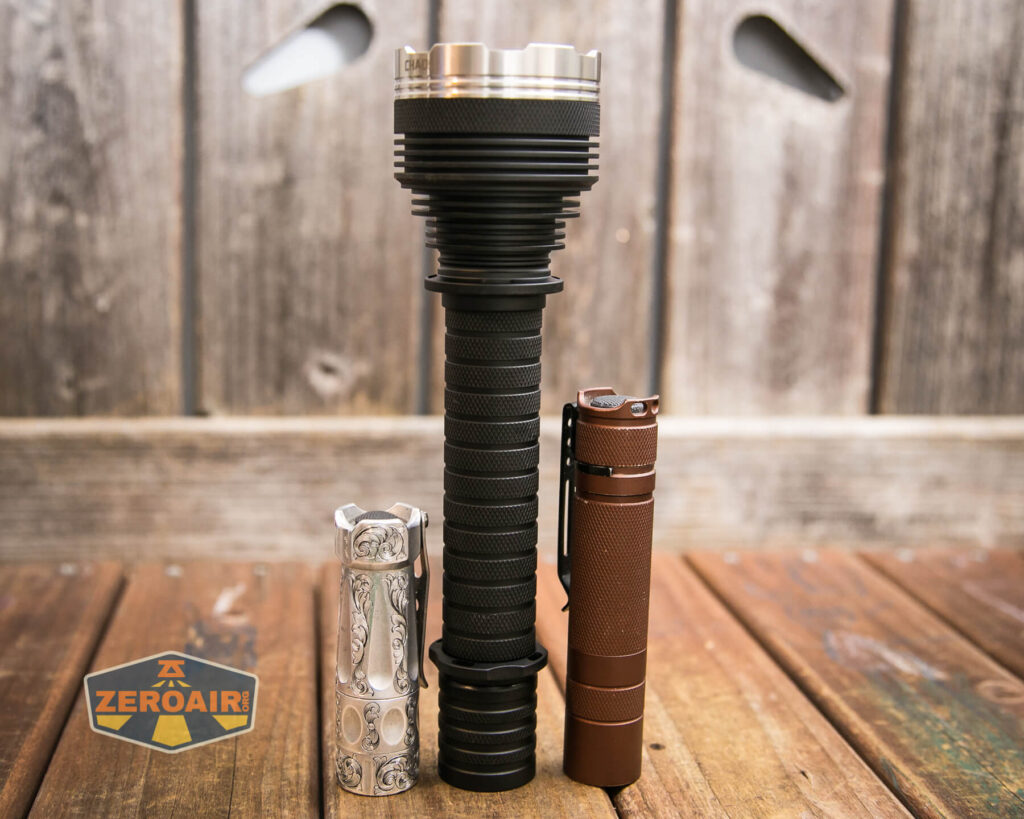
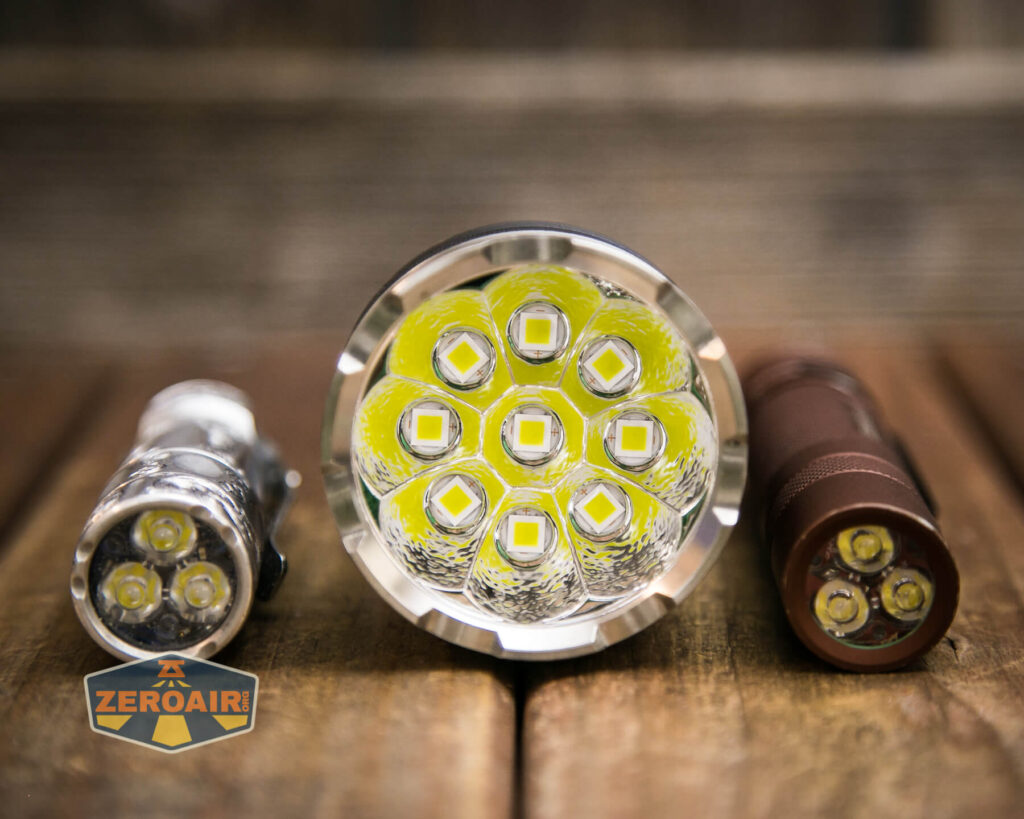
Also seen above is the light beside my custom-engraved TorchLAB BOSS 35, an 18350 light. I reviewed the aluminum version of that light in both 35 and 70 formats.

Retention and Carry
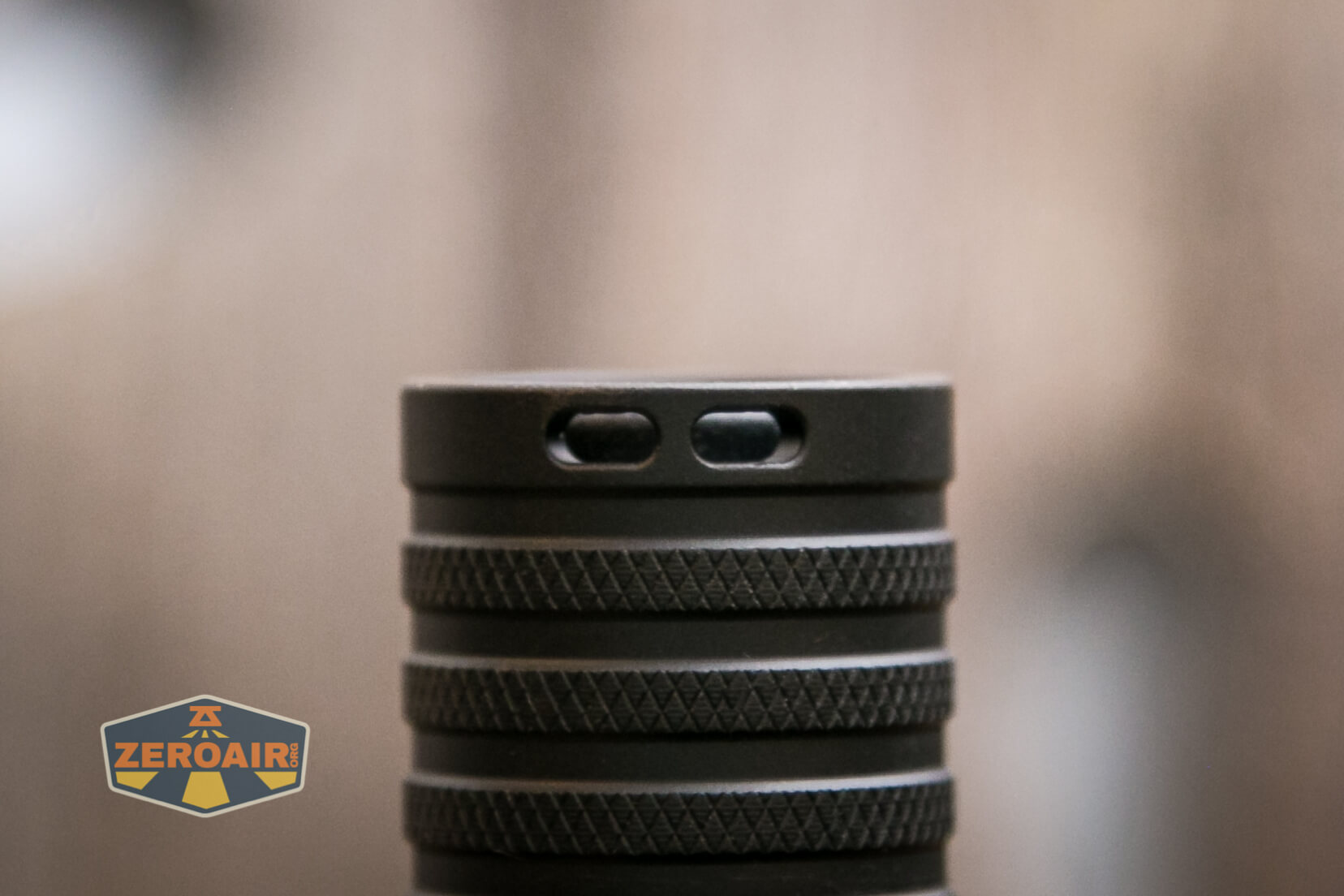
First, there’s a tactical ring on the tail end. This tactical ring ships installed but can be removed easily when the tailcap is off.

Also included is this lanyard attachment point in the tailcap. No lanyard is included.
Power and Runtime
The Nightwatch NS59v2 Chaos flashlight requires two 21700 cells to power this 9-emitter array of SFQ60.3 emitters. You’ll need button top unprotected cells, which may be hard to find in the 21700 format. That’s why you should just buy these two cells from Neal directly – they only add around $15 and for the added buttons to already be included, it’s worth that cost.

The cells are installed in the usual way – button toward the head.
Here are a few runtime graphs

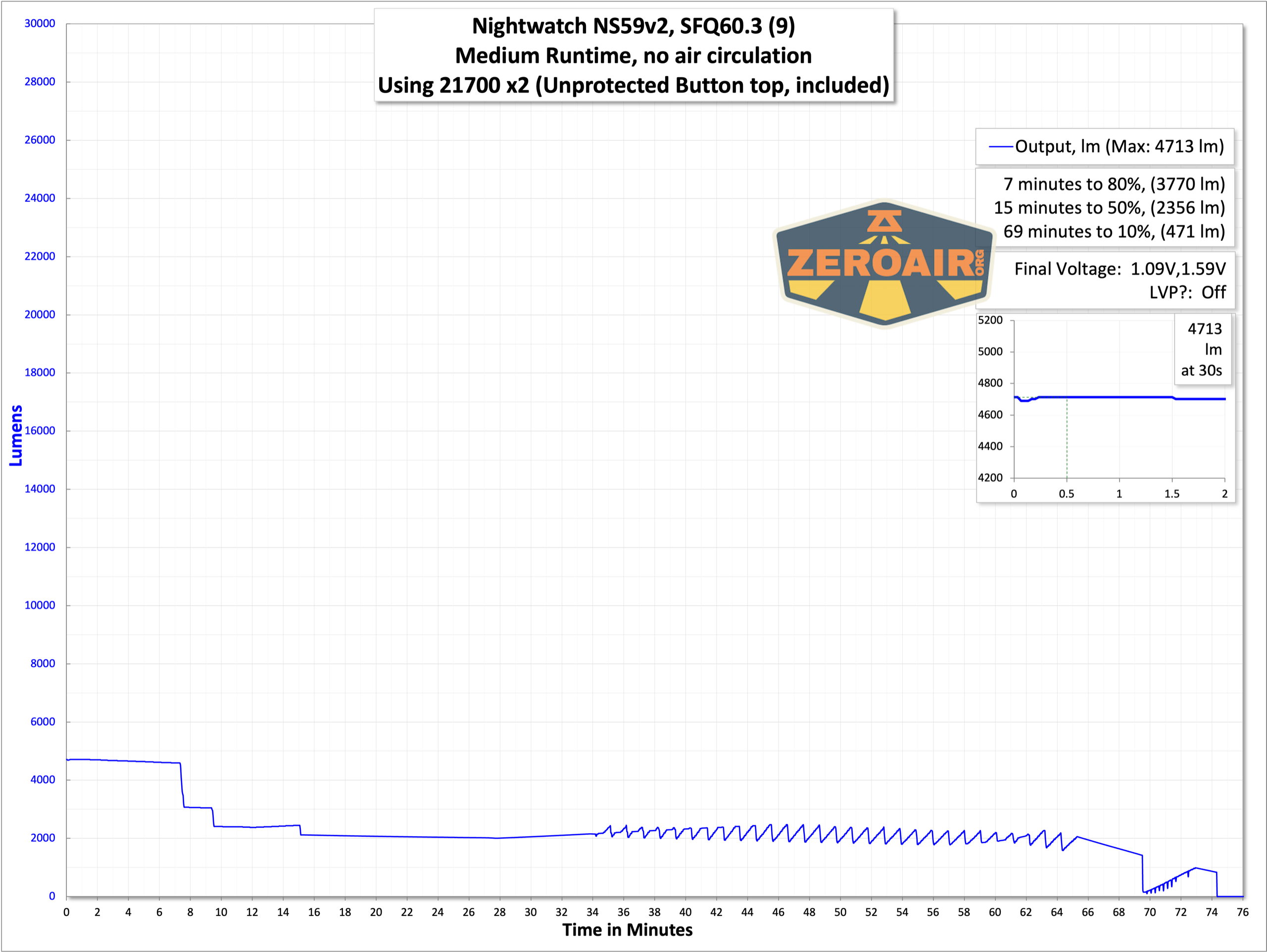
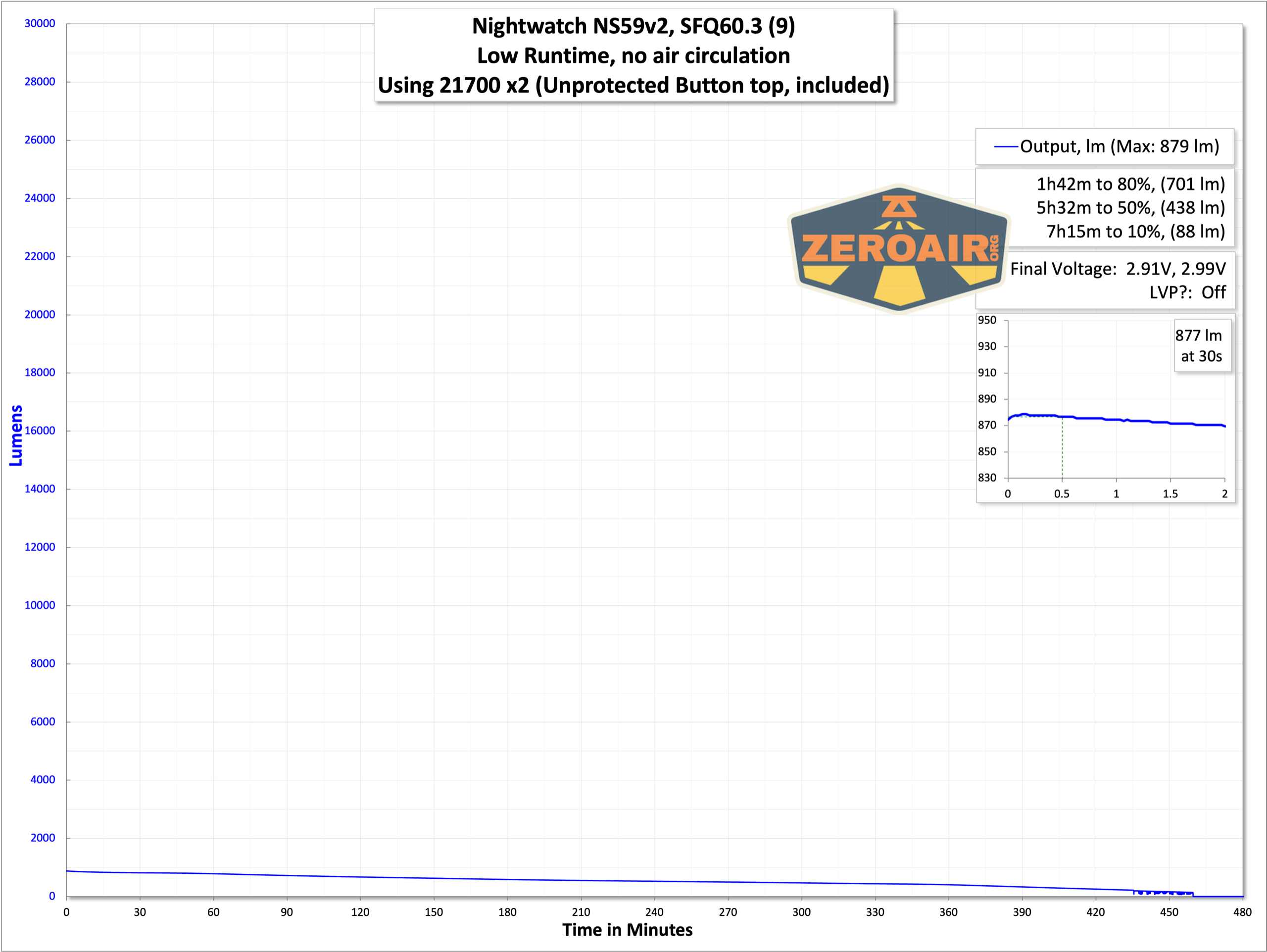
Modes and Currents
| Mode | Mode Claimed Output (lm) | Claimed Runtime | Measured Lumens | Tailcap Amps @8.4V |
|---|---|---|---|---|
| 5 | 32000 | – | 29812 (0s) 13223 (30s) |
>> |
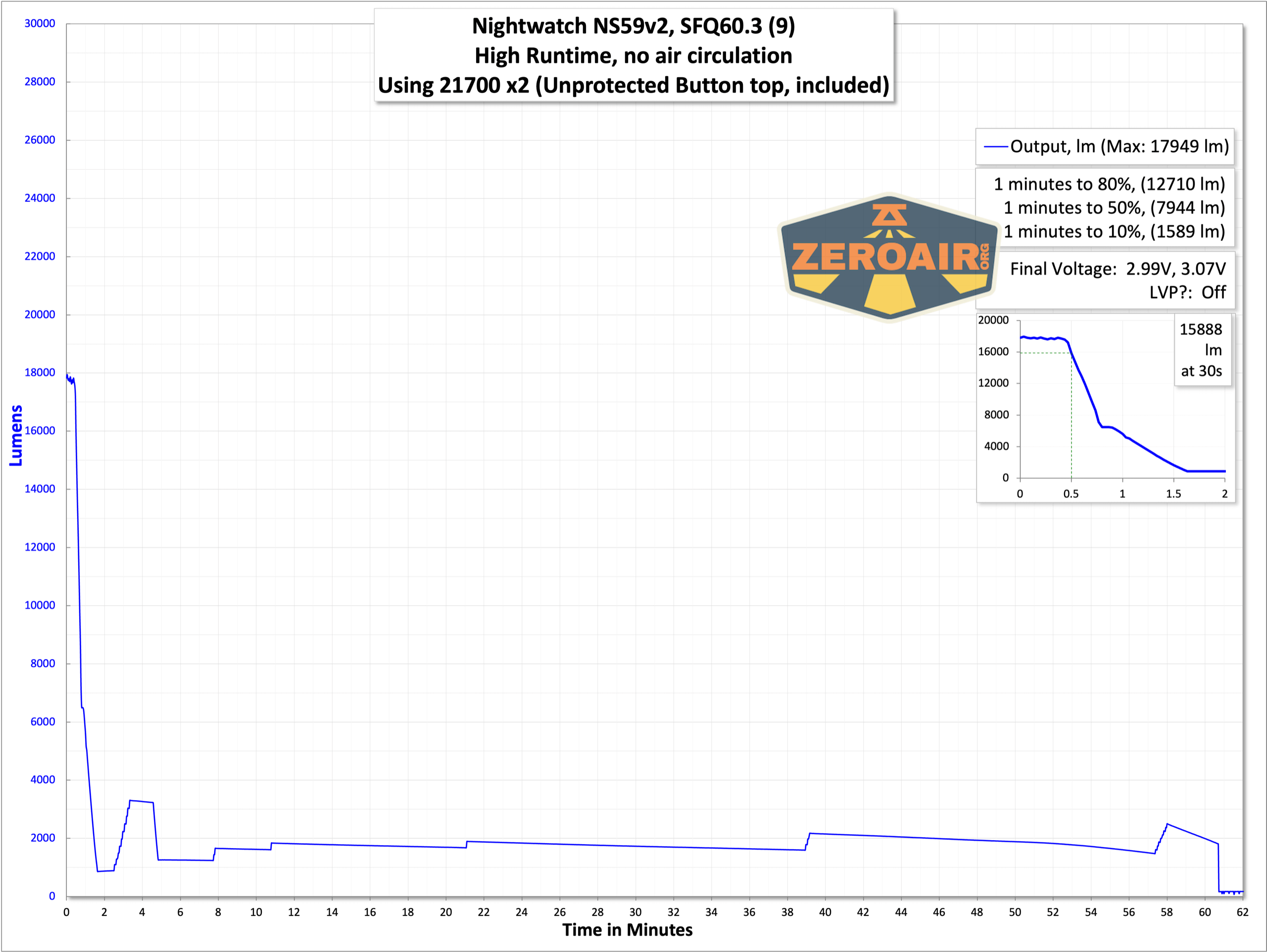
| 4 | – | – | 15888 | >12A |
| 3 | – | – | 4848 | 4.00 |
| 2 | – | – | 2373 | 1.96 |
| 1 | – | – | 687 | 0.60 |
Pulse Width Modulation
Three of the lower four modes use PWM. The highest output level does not.
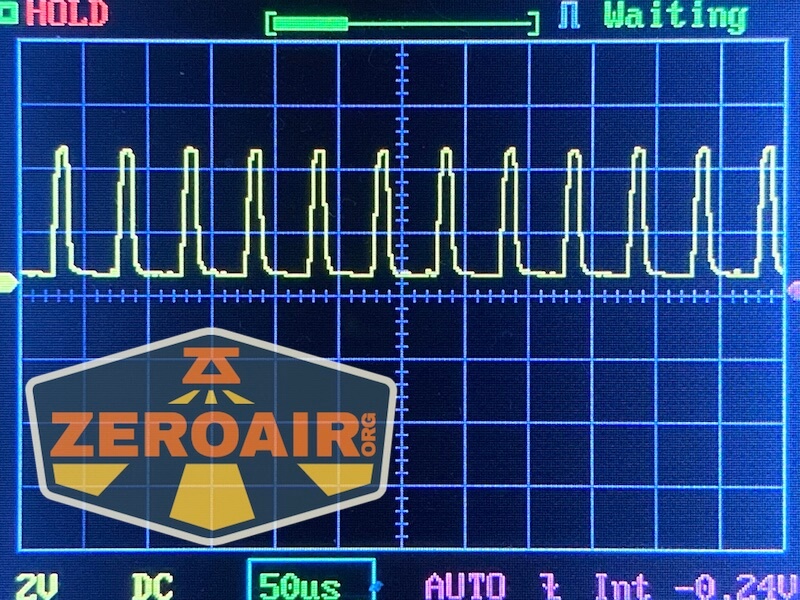
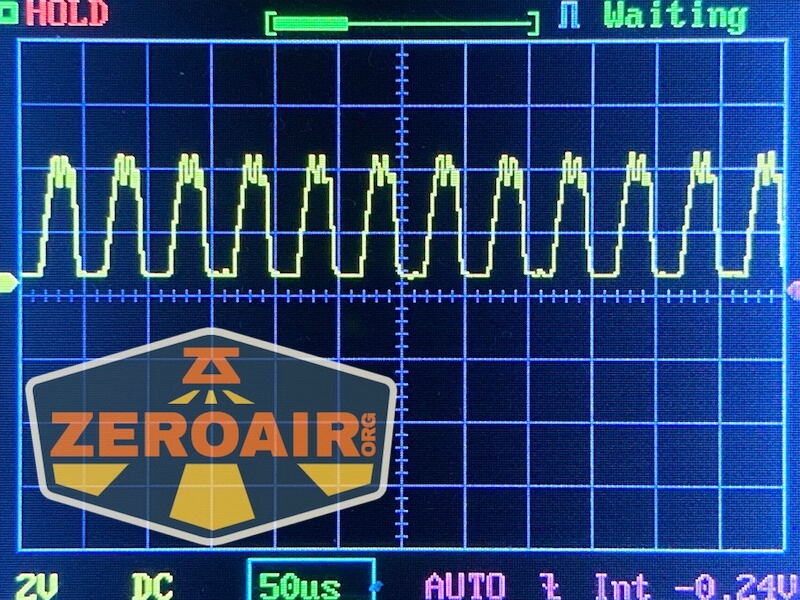
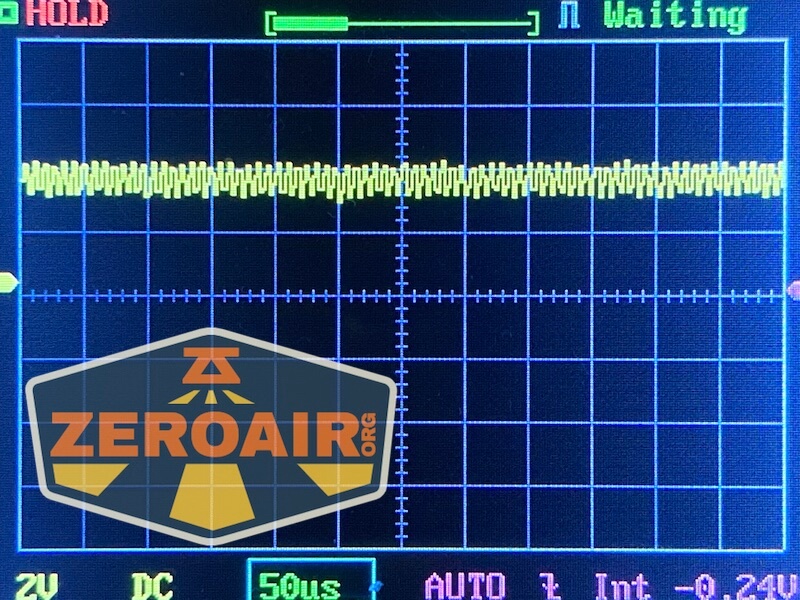
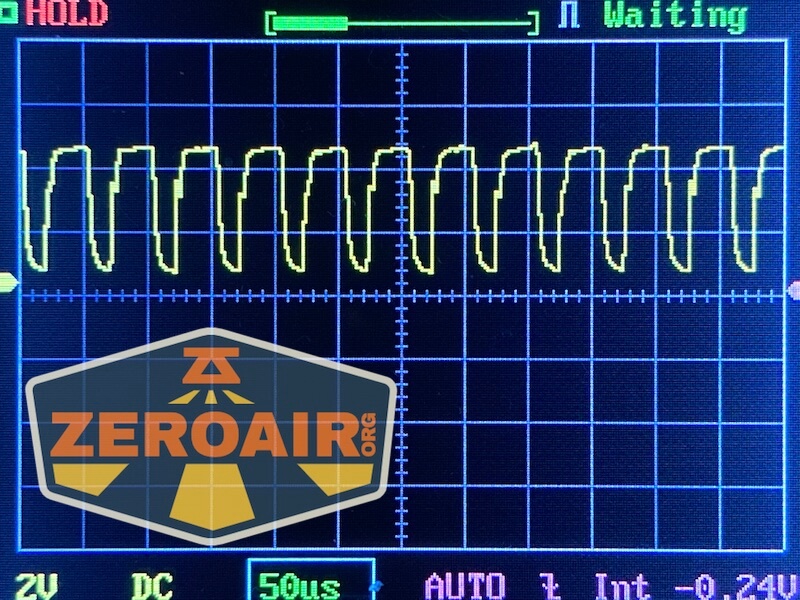
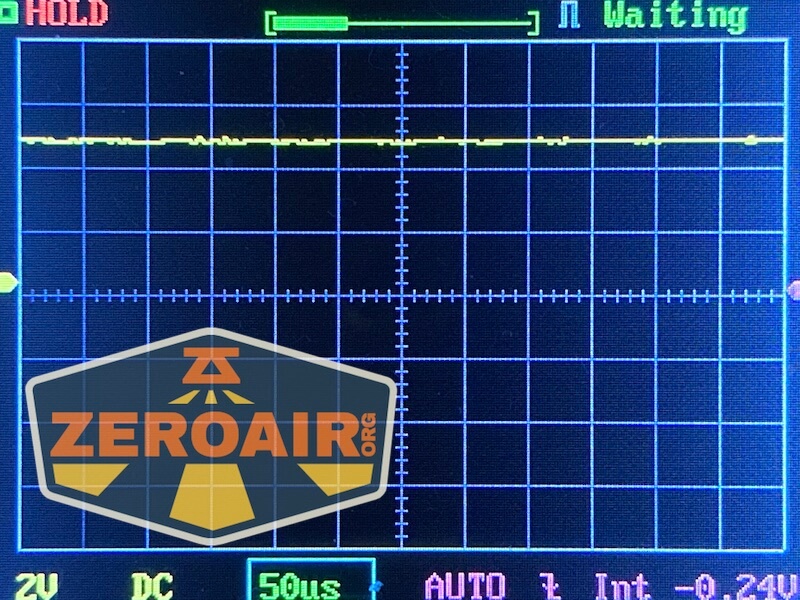
Here you can see a “baseline” – a chart with almost no light hitting the sensor.

Then there’s the Ultrafire WF-602C flashlight, which has some of the worst PWM I’ve seen. It’s so bad that I used a post about it to explain PWM! Here are multiple timescales (10ms, 5ms, 2ms, 1ms, 0.5ms, 0.2ms) to make comparing this “worst” PWM light to the test light easier. That post also explains why I didn’t test the WF-602C at the usual 50us scale.


User Interface and Operation
Nightwatch uses a single reverse mechanical clicky here. This tailswitch allows mode changes with the light on.
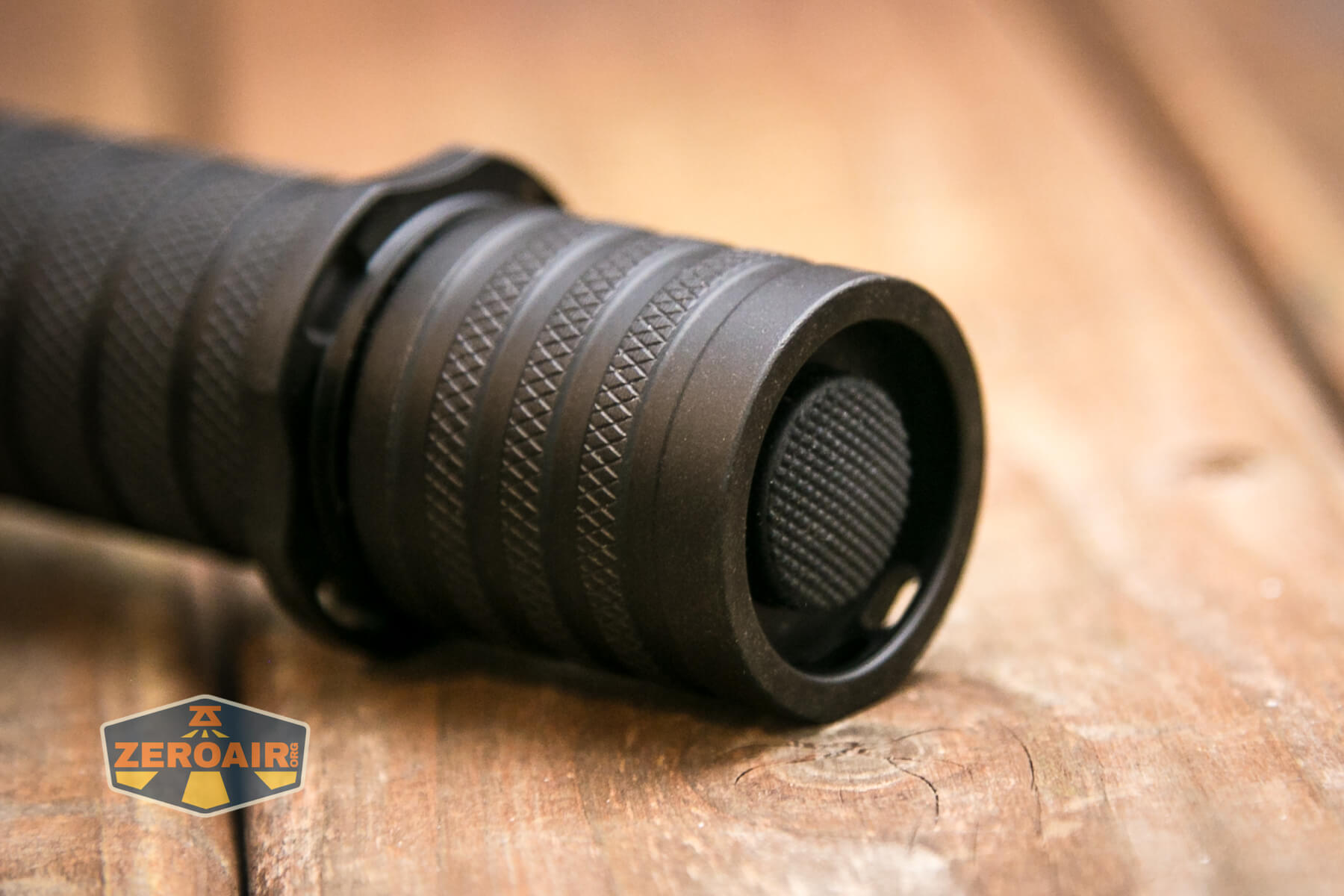
The action is great and fairly deep. Also notice that the tailcap covers the switch – tailstanding is possible.
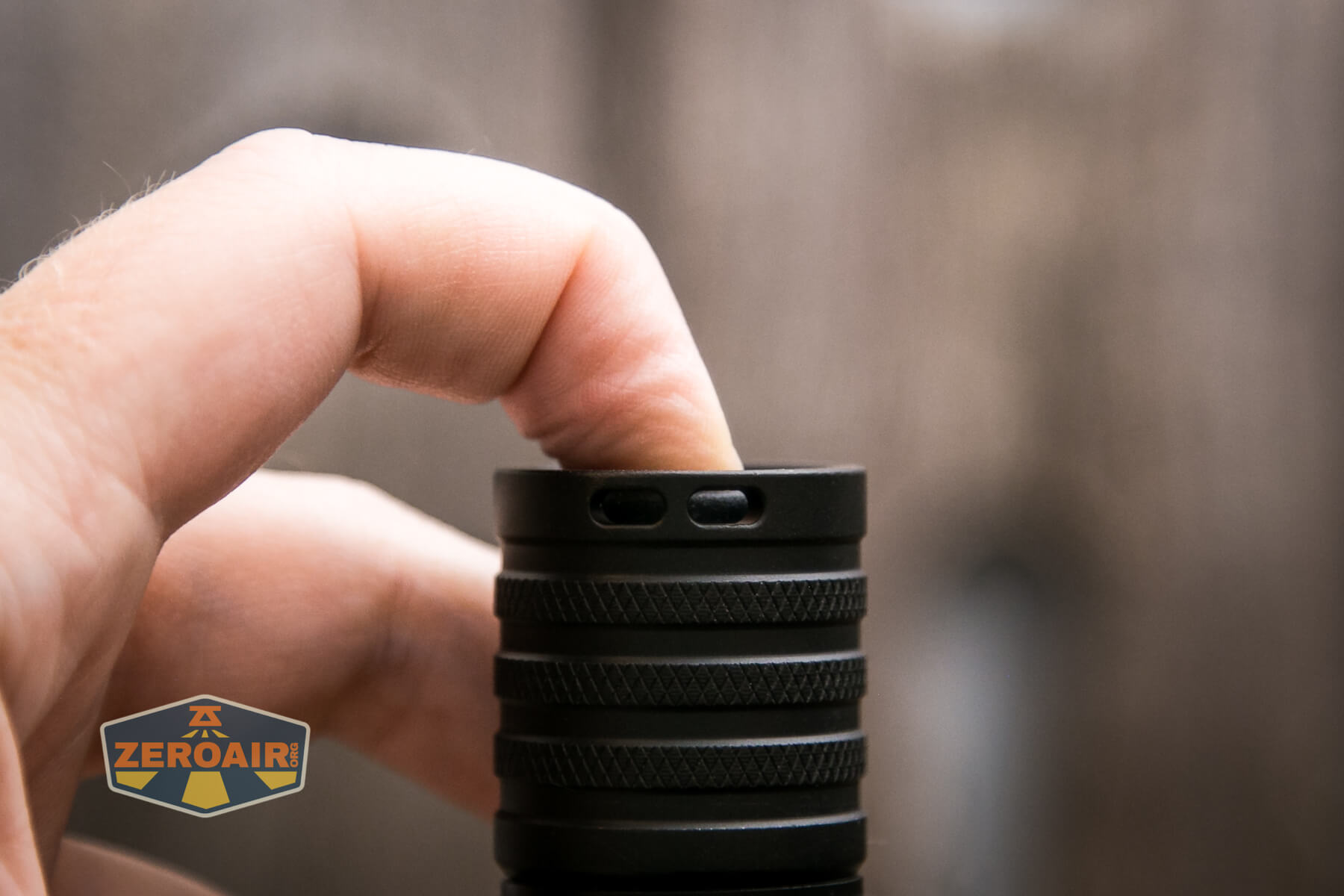
Here’s a user interface table!
| State | Action | Result |
|---|---|---|
| Off | Click | On (Mode Memory) |
| On | Tap | Mode advance |
| On | Double tap | Turbo |
| On | Click | Off |
| On | Tap 3x | Strobe |
LED and Beam
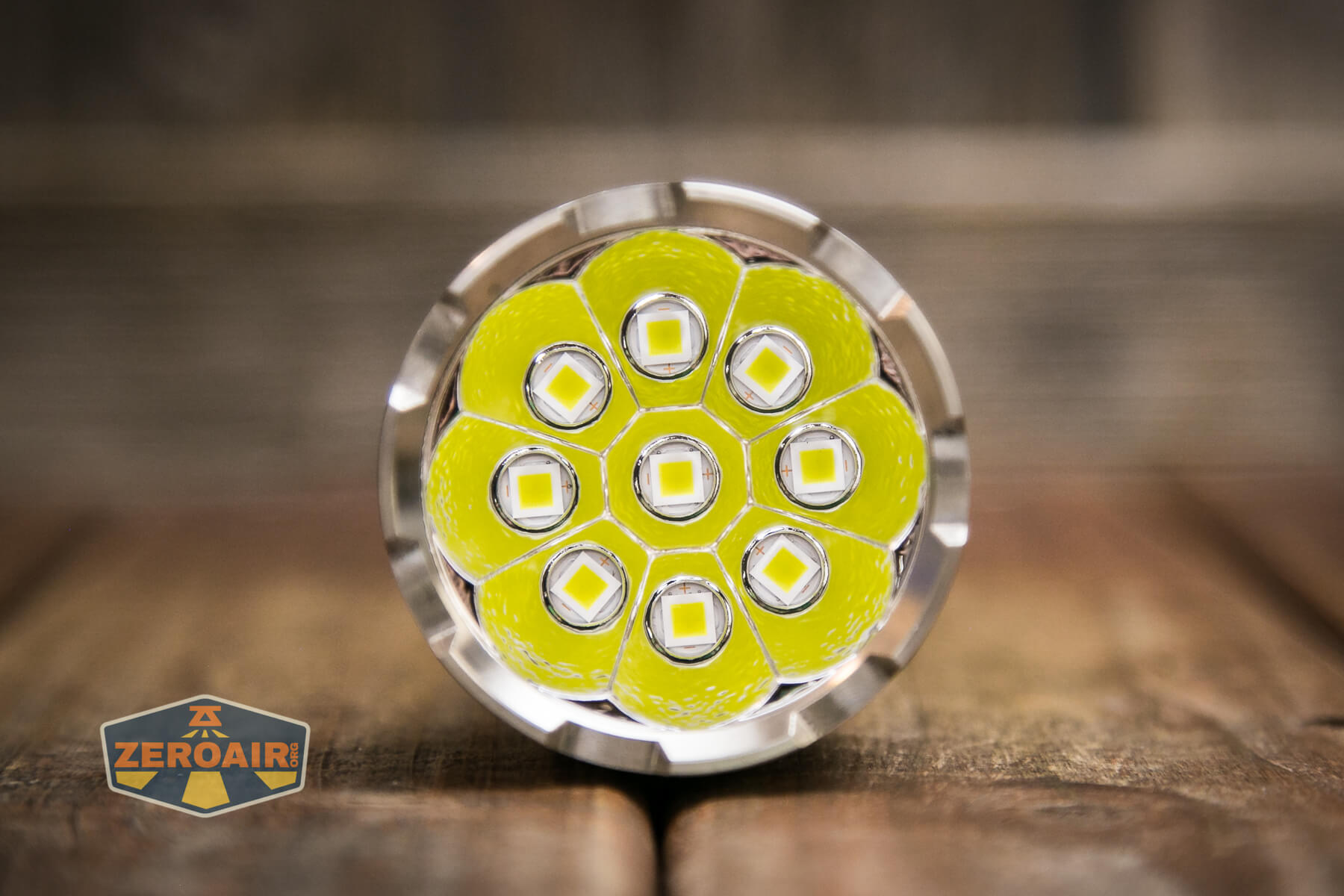
The Nightwatch NS59v2 Chaos flashlight uses nine emitters I’ve never had before! These are SFQ60.3 emitters. They’re domeless, which usually means good throw. But they also have a fairly large emitting surface, which reduces throw a bit. Either way, they’re great performers.
The bezel is shaped, so light will escape when headstanding.

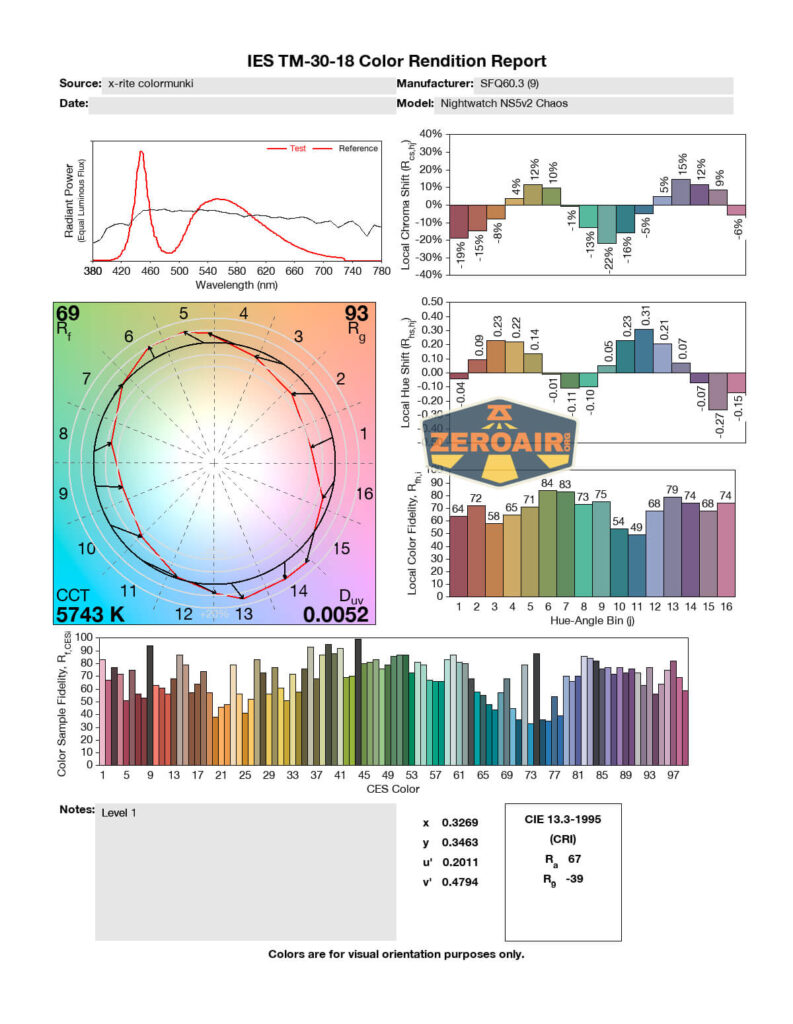
LED Color Report (CRI and CCT)
CRI and CCT are good for such a high-output light. The CCT ranges from upper 5000K’s to upper 6000K’s, and the CRI is low (but not too low) at around 70.
Beamshots
These beamshots always have the following settings: f8, ISO100, 0.3s shutter, and manual 5000K exposure. These photos are taken at floor level, and the beam hits the ceiling around 9 feet away.
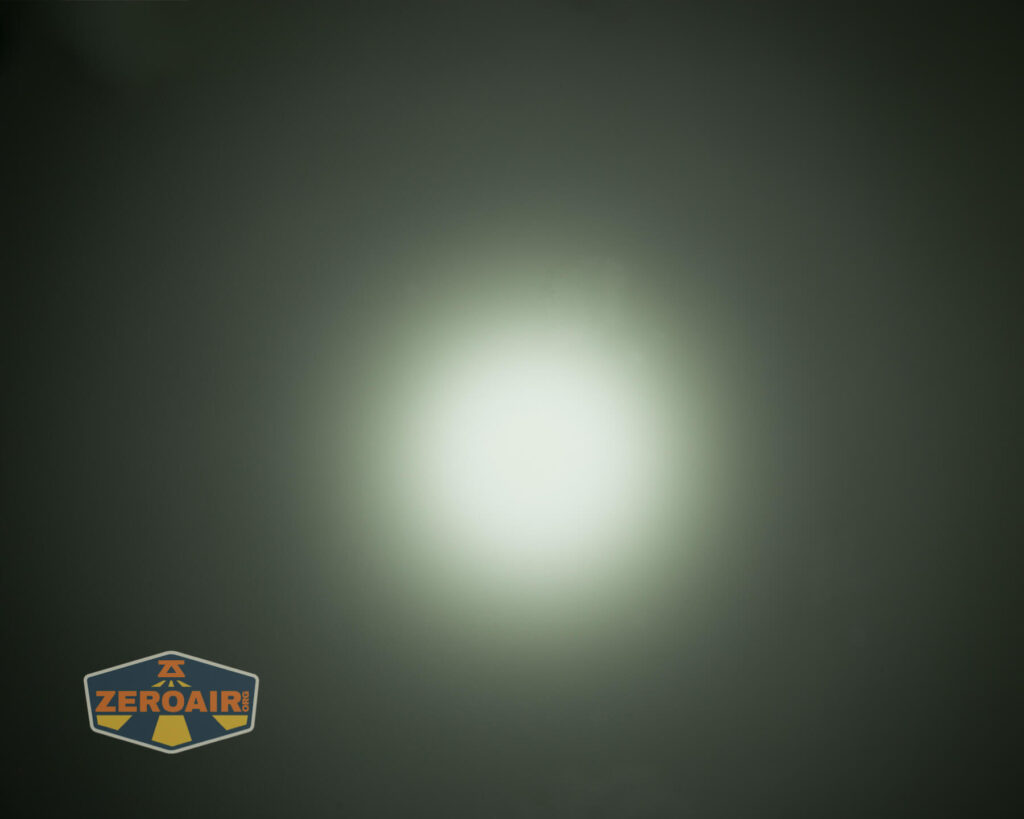
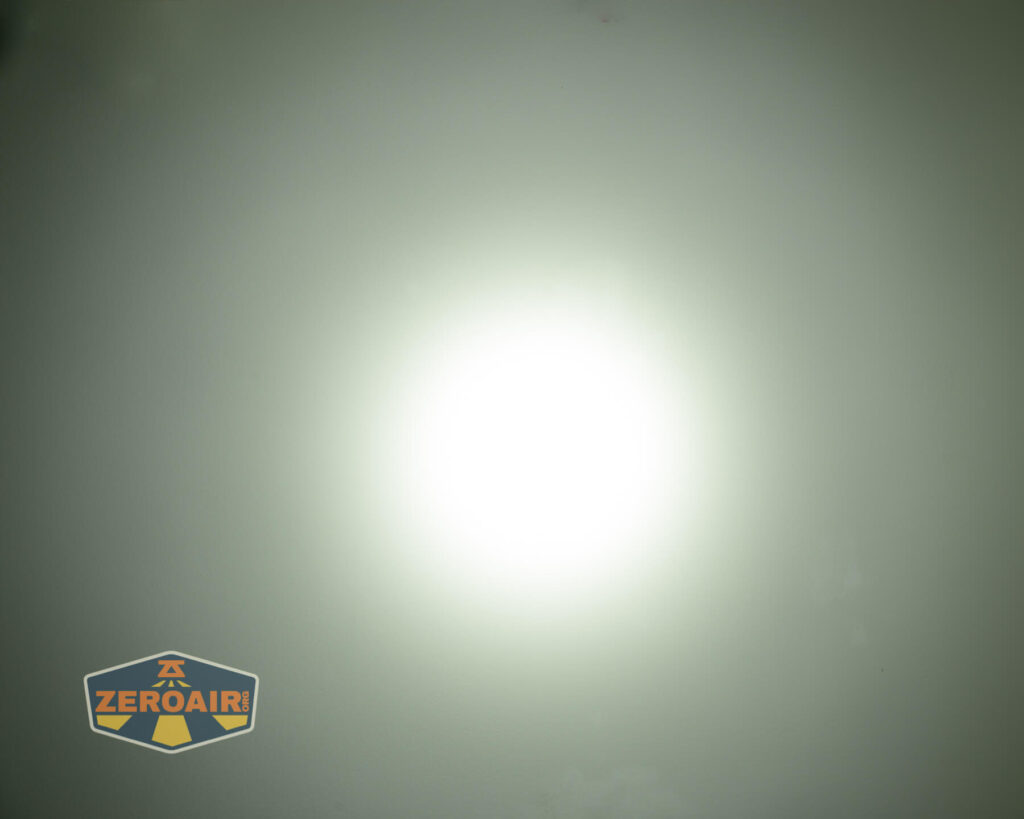
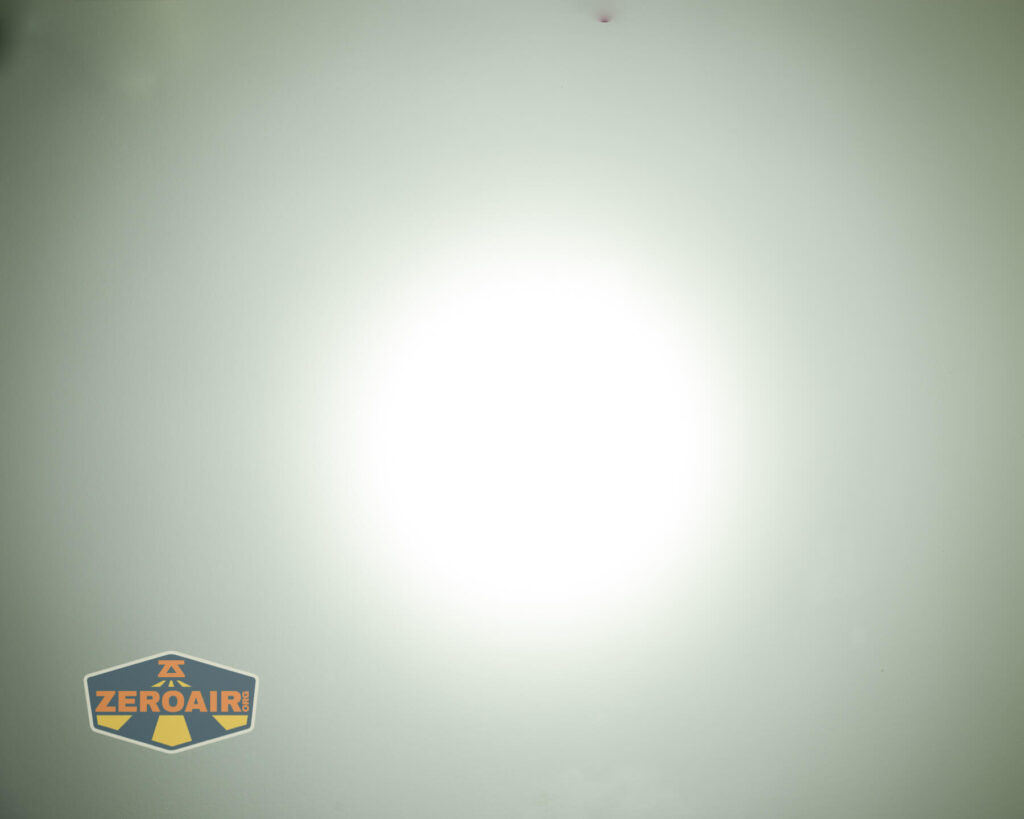


Tint vs BLF-348 (KillzoneFlashlights.com 219b version) (affiliate link)
I keep the test flashlight on the left and the BLF-348 reference flashlight on the right.
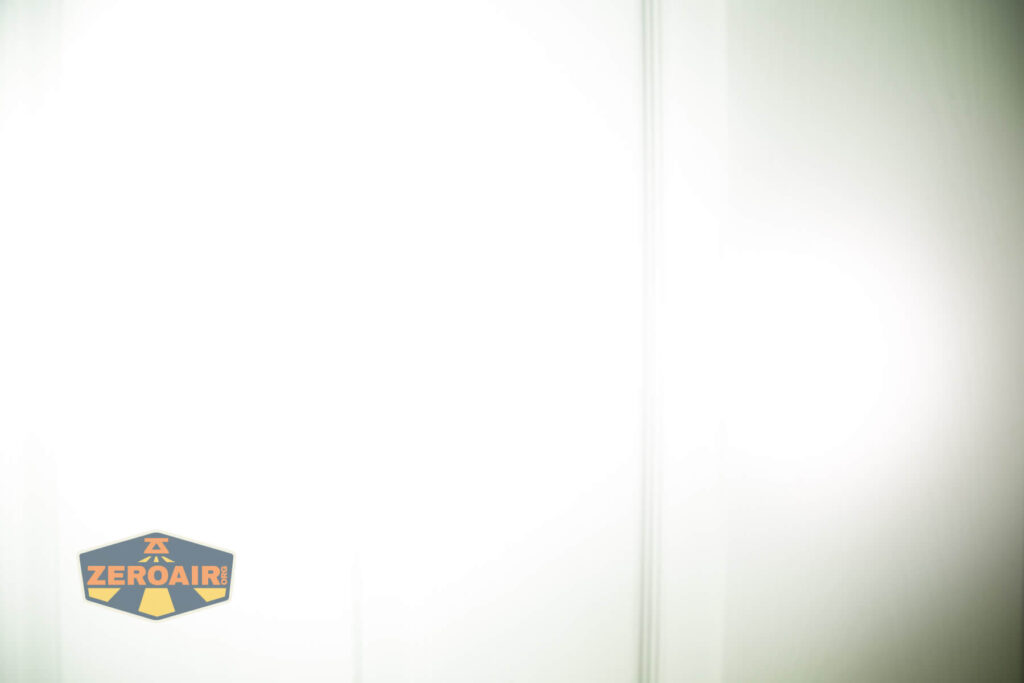




I compare everything to the KillzoneFlashlights.com 219b BLF-348 because it’s inexpensive and has the best tint!
Conclusion
What I like
- Great output!
- Good throw for this type of light
- CCT is still respectable (not too cool) despite being driven quite hard
- Fun “flashlighty” size, shape, and weight
What I don’t like
- Heavy stepdowns on highest two modes
- Picky about cells (again, just buy the optional cells and don’t worry about this)
Notes
- This content originally appeared at zeroair.org. Please visit there for the best experience!
- Please use my Amazon.com referral link to help support zeroair.org!
- Please support me on Patreon! I deeply appreciate your support!
I’m sure the graph for mid level is wrong – it would never last nearly 8 hours @ that brightness on 2 21700 cells. If the brightnes is correct I believe that the time would be 10 times shorter – approx 46min.