

Skilhunt H200 18650 Charging Headlamp Review
The Skilhunt H200 18650 charging headlamp uses a Nichia 519a emitter. Seen here in 4500K, it’s available with other options, too! Now with a new user interface!
Official Specs and Features
Here’s a link to the Skilhunt H200 18650 charging headlamp product page.
Versions
Three body colors are available: orange, green, and black. Those are available with two emitter choices: Cree XP-L2 HD in 6500K, as well as a Nichia 519a emitter. That Nichia option is broken down even further into 4500K (seen here) and 3000K options. Two kits are available too, and they vary only in that an 18650 is included (or not).
Price
Pricing on the Skilhunt H200 18650 charging headlamp starts at $59.90 but based on the options you select, it might go up to $75.90. Nichia and with 18650 are the most costly. The package as seen here is $73.90.
What’s Included

- Skilhunt H200 18650 charging headlamp
- Skilhunt 3500mAh 18650
- Charging cable (USB to proprietary magnetic)
- Headband and headmount
- Spare o-rings (2)
- Pocket clip
- Lanyard
- Rubber magnet blank (replacement)
- Manual
Package and Manual


First is the user manual for this new version. I’m adding the user manual for the old version so you can most easily compare the user interface since the user interface is the major difference here!


Build Quality and Disassembly

This “H” series from Skilhunt is fairly familiar by now. For example, the H300R is just about the same light with just one emitter. I like that one a lot (in fact I love Skilhunt lights in general). The H150 is another “H” option too – a 14500/AA light with just one emitter.
This one gets a new user interface, but that will be covered more later. For now, it’s just about the build and parts and things!


As seen in some of these photos – I have all three emitter options and all body colors. Those are with the old user interface but the bodies are the same as far as I can tell!
And to not have a TON of repetitive photo editing, photos like this will be reused. The data is what’s important. ¯_(ツ)_/¯

The tailcap has a big spring as well as a strong magnet. These threads are quite smooth, too.

There’s a spring in the head, too.

We could talk about the brand name change from Skilhunt to Eskte; I still don’t know why they needed to do that! “Skillhunt” works just fine for me and plenty of perfectly reasonable reasons for not switching to ESKTE were brought up. But that’s what Skilhunt did, so here we are. I will say, in this post, I’ll freely refer to this as the Skilhunt H200, because there’s clear Skilhunt branding on this light. When the change is complete I suppose I’ll start calling the brand “ESKTE.”
Size and Comps
103.7mm x 23.5mm x 23.5mm and 49g without the cell.


If the flashlight will headstand, I’ll show it here (usually the third photo). If the flashlight will tailstand, I’ll also show that (usually in the fourth photo).

Here’s the test light with the venerable Convoy S2+. The version below is a custom laser-engraved Convoy S2+ host by GadgetConnections.com. I did a full post on an engraved orange host right here! Or go straight to GadgetConnections.com to buy your Convoy S2+ now!

Also above is the light beside a TorchLAB BOSS 35, an 18350 light. I reviewed the aluminum version of that light in both 35 and 70 formats. I also reviewed that specific edition, the “Oveready BOSS FT Collector Vintage Brass” 35. I love it!
Retention and Carry
The Skilhunt H200 18650 charging headlamp is primarily a headlamp, so let’s cover that first. The headband is standard Skilhunt, and that’s good.

The plastic attachment that connects to the headband has a clip-in slot for the H200. It’s very easy to use.

As you can see below, there are three band slots, including one that allows an over-the-head band.

Skilhunt has adequately covered how to build this headband, so I’ll just link their video.
The second option is, of course, the pocket clip. It’s a good clip (despite being a two-way clip?). Flexible, and deep carry, and the fitment is very snug.

It’ll go on the head or tail but the best option is the tail, as seen below.


Also included is a lanyard, which attaches through this little hole in the tailcap.


You can use the lanyard while the Skilhunt H200 18650 charging headlamp is in the headmout, too! I don’t know why you would but…

Skilhunt also (separately) included these mesh bags. I think you’d get one of these with an order, but mine did ship outside the flashlight box!


The removable magnet in the tailcap is also perfectly sufficient to hold the H200 (but not pictured!).
Power and Runtime
The Skilhunt H200 18650 charging headlamp runs on a single lithium-ion cell. It’s sized for a 18650 and an appropriate cell is included.


The 18650 fits into the H200 with the positive terminal toward the head, as seen below. Unlike some other 18650 Skilhunts, this one has a max voltage of 4.2V, so no doubling cells in here!


Here are a few runtime tests. I wouldn’t say there’s anything super surprising here. Output is very stable once a stepdown has happened, and low voltage protection is observed. There’s also a low voltage warning in the indicating e-switch.


The switch also indicates the power level upon turning the H200 on. The indication it gives indicates the power level as follows:
Blue constant: 100-80% power
Blue blinking: 80-50% power
Red constant: 50-20% power
Red blinking: 20-0% power
This is the runtime with the highest output of the secondary emitter. The performance is approximately the same as how the driver for the two white emitters works. That’s good! I’m not calibrated for red so this is only an approximation of output, but you can see the driver performance, anyway.

Charging
The Skilhunt H200 18650 charging headlamp also has built-in charging, just like other “H” Skilhunt headlamps. This charging is by way of a magnetic charge port at the top of the light.

A proprietary cable is included. This is the same type as is used on other Skilhunt lights, so if you’ve “bought in,” you’ll be all set to use this on your other Skilhunts, too. This is the “MC-20” version charging cable

The charger also has a little indicator as well – while charging, the indicator is red. When complete, it’s blue. Again, the shot below is the black body, but the charger works the same way for both.
You might think that the MC-20 charges this 18650 too fast – faster than you probably usually charge your 18650 cells. But this is a 3500mAh cell, so even charging at 2A is just barely over 0.5C (where “C” is charging current/capacity, or 1.91/3.5). That is to say, the max measured of 1.91A is around 0.55C. Around 1C is often regarded as the “faster side” of charging and 0.5C is regarded as “extends cell life” charging rate (the slower rate). So don’t worry!
I would LOVE for Skilhunt to upgrade the H200 to use the same charging as the new EC200 (which I love!). USB-C on the H200 would be a welcome change!
Modes and Currents
| Mode | Mode Claimed Output (lm) | Claimed Runtime | Measured Lumens | Tailcap Amps |
|---|---|---|---|---|
| T1 | 1100-330-110 | 1m/180m/30m | 1070 (0s) 995 (30s) |
4.94 |
| T2 | 580-330-110 | 5m/175m/30m | 532 (0s) 500 (30s) |
1.84 |
| H1 | 330-110 | 185m/30m | 292 | 0.82 |
| M1 | 110 | 10.5h | 99 | 0.25 |
| M2 | 33 | 30h | 29.5 | 0.08 |
| L1 | 3.5 | 100h | 2.4 | 0.02 |
| L2 | 0.5 | – | 0.3 | [low] |
| R1 (Turbo) | 135 | 250m | [140] | 0.56 |
| R2 (High) | 30 | 23h | [31] | 0.10 |
| R3 (Med) | 7 | 65h | [7.1] | 0.03 |
| R4 (Low) | 1.5 | – | [1.6] | 0.02 |
Pulse Width Modulation
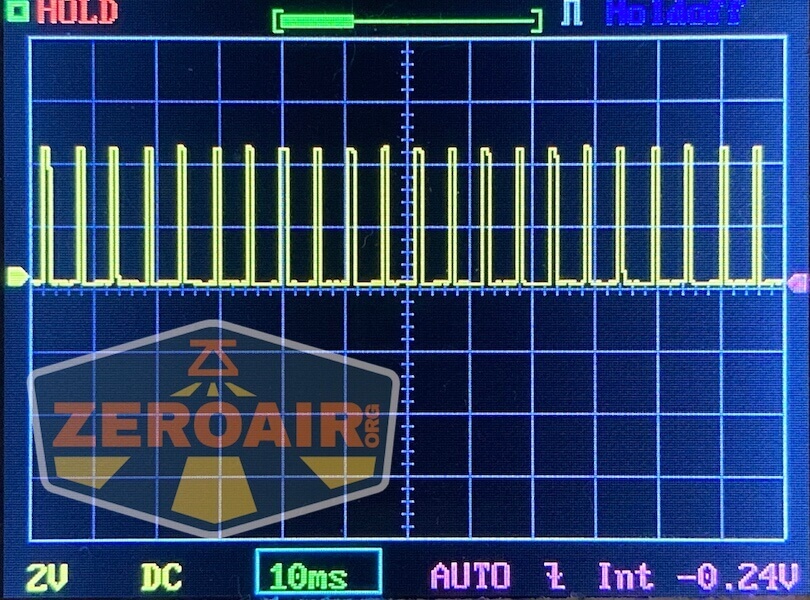
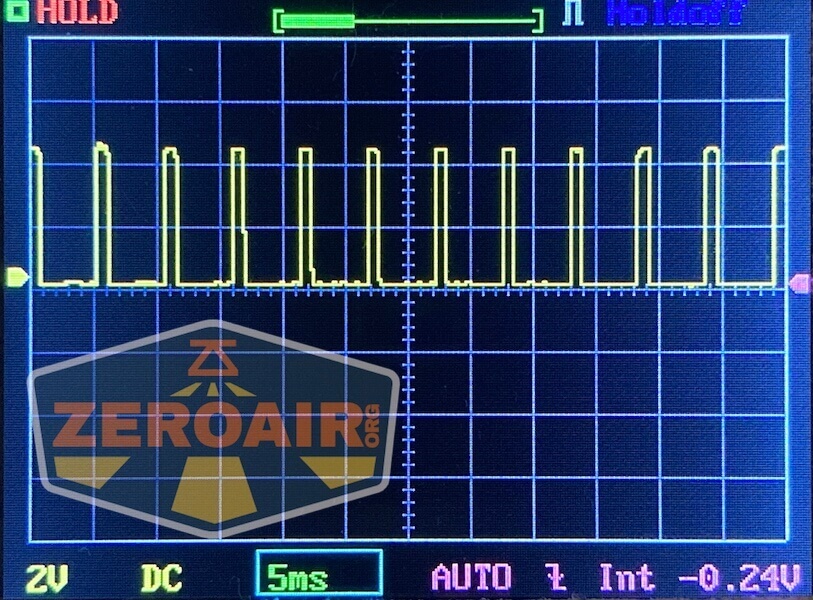
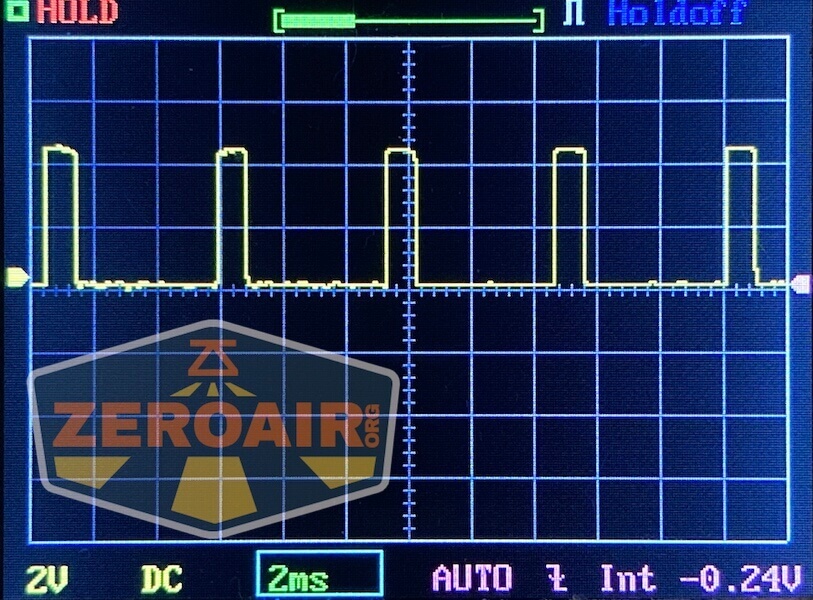
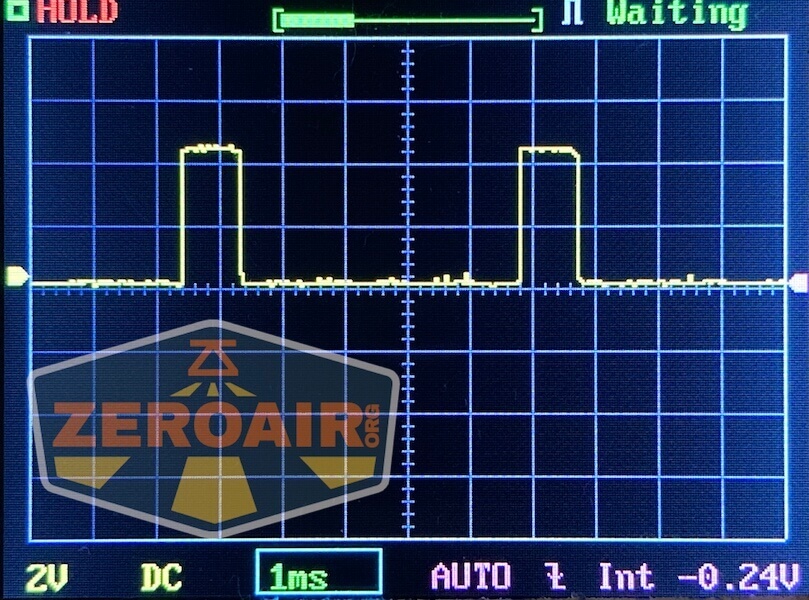
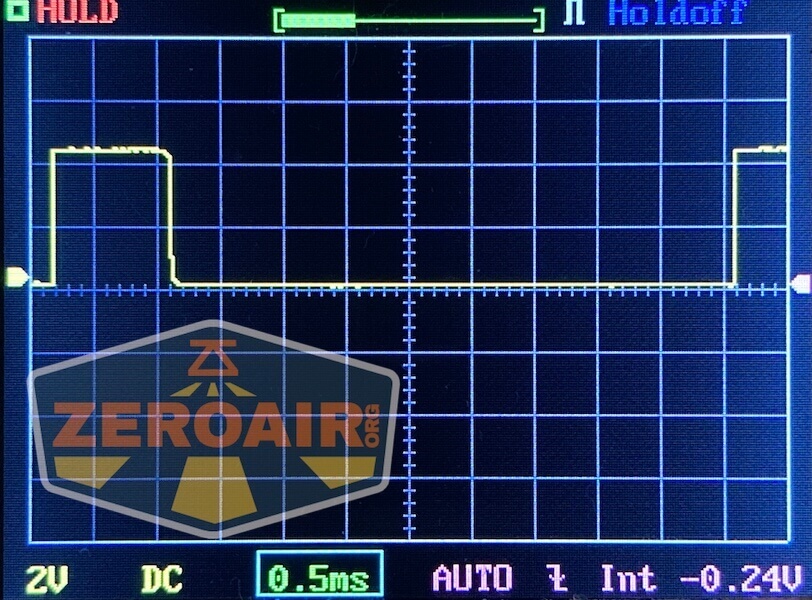
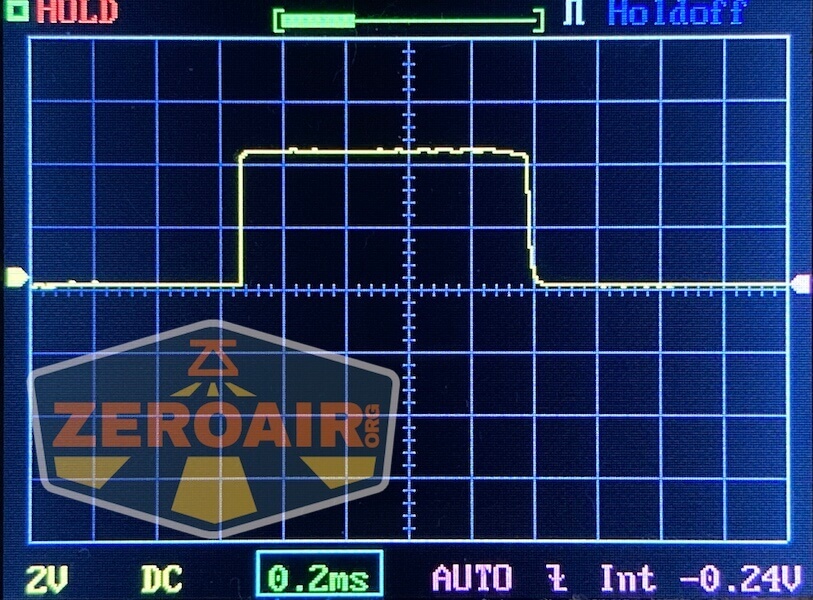
One thing to love about these lights is the lack of PWM.


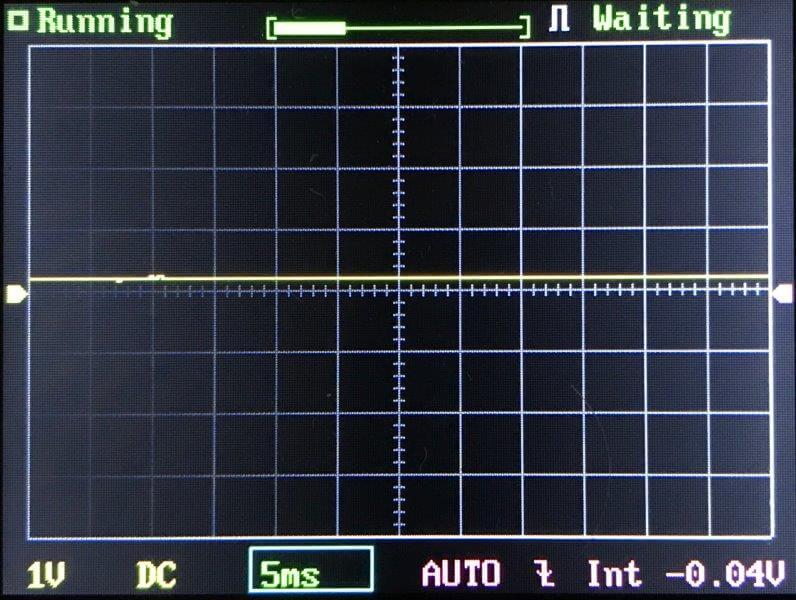
Here you can see a “baseline” – a chart with almost no light hitting the sensor. Then there’s the Ultrafire WF-602C flashlight, which has some of the worst PWM I’ve seen. It’s so bad that I used a post about it to explain PWM! Here are multiple timescales (10ms, 5ms, 2ms, 1ms, 0.5ms, 0.2ms) to make comparing this “worst” PWM light to the test light easier. That post also explains why I didn’t test the WF-602C at the usual 50us scale.
User Interface and Operation
The Skilhunt H200 18650 charging headlamp is operated by a single switch. It’s an indicating e-switch on the head. The switch has a silicone cover and is black but still translucent. It requires minimal force and has a positive, quiet actuation. If you’ve had other Skilhunt headlamps, you’ll be very comfortable with this switch.

The user interface could be a bit daunting, but it’s very straightforward when you get used to it. It’s also very logical and provides access to low from off, which is as close to a requirement from a user interface as I have.
Here’s a user interface table! Note that this user interface is nearly the same as other Skilhunt lights with a switch that looks like this but there’s the wrinkle of that red emitter. Even though this H200 doesn’t get the USB-C charging of the new EC200, it does get the great user interface!
| State | Action | Result |
|---|---|---|
| Off | Hold | Low (Mode memory between L1 and L2) |
| L1 or L2 | Hold | Iterate between L1 and L2 |
| L1 or L2 | Click + Hold | Main group (mode memory) |
| L1 or L2 | Click 2x | No result |
| Off | Long hold (2s) | Memory between L1 and L2 then R4 (specifically R4, not just “red group” or “red memory”) |
| Off | Click 4x | Lockout (Three blinks of main emitters to confirm) |
| Lockout | Click 4x | Unlock to Low group (Mode memory between L1 or L2) |
| Lockout | Click 2x | Iterate lockout indicator^ |
| Lockout | Hold | Momentary Output (Appears to be approximately L1) |
| L1/L2 or Red Group | Click | Off |
| Off | Click | On in “Main Group” (Mode memory between M2/M1/H) |
| Main Group | Hold | Mode advance (M2 > M1 > H) |
| Main Group | Click | Off |
| L1/L2 or Main Group | 2 clicks + hold | Mode memory Red Group |
| Main Group or Off | Click 2x | Turbo Group (Mode memory between T1 and T2) |
| T1/T2 | Hold | Iterate between T1 (higher) and T2 (lower) output |
| T1/T2 | Click | Off |
| T1/T2 | Click 2x | Main Group (memory output) |
| Main Group, Off, or Turbo Group | Click 3x | Strobe Group (with memory) |
| Strobe Group | Click 3x | Previous Group (T1/T2 or M2/M1/H, depending on how you accessed Strobe Group)^^ |
| Strobe Group | Click 2x^^^ | Strobe Advance (S1 > S2 > S3)† |
| Strobe Group | Hold | No result |
| Strobe Group | 2 clicks + hold | Red strobe group |
| Red Strobe Group | Click 2x | Red Strobe Advance (S1 > S2 > S3)† (same strobes, just red) |
^ The lockout indicator blinks a red switch every 2-3 seconds.
^^ Aside from just general mode memory (which you know I don’t like) this seems to me to be the only place where you may need to immediately remember what mode you were in so you have the experience you expect. However, the difference is getting the two highest white outputs or the three main white outputs – it won’t be that dramatic even if you don’t remember. Also note that if you access the strobe group from off, triple-clicking will not return it to off. For continuity, it should! If you access the strobe from an off-state, a triple-click sends the light to the Main group!
^^^ Seems like the strobe group is the only group that isn’t advanced by a hold. Since there’s no hold anywhere else into or out of Strobe, I am not sure why that user interface continuity wasn’t maintained here.
† Strobes are like this:
S1: Disorienting strobe (turbo, ish)
S2: SOS (main white, some mid-High output)
S3: Simple blinking
It’s not really covered in the user interface table, but the switch does indicate the power level. It does this for around 5 seconds after you turn the light on. The indicators are as follows:
Blue steady: 100-80%
Blue blinking: 80-50%
Red steady: 50-20%
Red blinking: 20-0%
LED and Beam
To achieve the High CRI claim, Skilhunt has used a Nichia 519a and it’s rated at 4500K. The light uses a triple TIR (I do not know if it’s a standard Carclo optic).


If you’re interested in comparing the new H200 directly to the new EC200, I’ll note that the red from the H200 is not quite as bright as that from the EC200.

LED Color Report (CRI and CCT)
The CCT is around what Skilhunt states – warmer than, but around 4500K. CRI is very high, at around 96.


As usual, the red is too intense for testing.
Beamshots
These beamshots always have the following settings: f8, ISO100, 0.3s shutter, and manual 5000K exposure. These photos are taken at floor level, and the beam hits the ceiling around 9 feet away.


Tint vs BLF-348 (KillzoneFlashlights.com 219b version) (affiliate link)
I keep the test flashlight on the left and the BLF-348 reference flashlight on the right.


I compare everything to the KillzoneFlashlights.com 219b BLF-348 because it’s inexpensive and has the best tint!
Summary and Conclusion
I love the emitter, the body color, the user interface, that there’s a red secondary emitter, the levels – everything. I don’t love the proprietary charging but you don’t even have to use that! You can charge the cell in a bay charger. The Skilhunt H200 18650 charging headlamp is a great light, particularly with this new user interface!
The Big Table
| Skilhunt H200 18650 charging headlamp | |
|---|---|
| Emitter: | (High CRI) |
| Price in USD at publication time: | $73.90 |
| Cell: | 1×18650 |
| Runtime Graphs | |
| LVP? | Yes |
| Switch Type: | E-Switch |
| Quiescent Current (mA): | ? |
| On-Board Charging? | Yes |
| Charge Port Type: | Proprietary Magnetic |
| Charge Graph | |
| Power off Charge Port | with cell: all modes without cell or tailcap: all modes except T1 |
| Claimed Lumens (lm) | 1100 |
| Measured Lumens (at 30s) | 995 (90.5% of claim)^ |
| Candela per Lumen | 2.06 |
| Claimed Throw (m) | 93 |
| Candela (Calculated) in cd (at 30s) | 137lux @ 4.422m = 2679cd |
| Throw (Calculated) (m) | 103.5 (111.3% of claim)^ |
| Claimed CCT | 4500 |
| Measured CCT Range (K) | 4300-4500 Kelvin |
| Item provided for review by: | Skilhunt |
| All my Skilhunt reviews! | |
^ Measurement disclaimer: Testing flashlights is my hobby. I use hobbyist-level equipment for testing, including some I made myself. Try not to get buried in the details of manufacturer specifications versus measurements recorded here; A certain amount of difference (say, 10 or 15%) is perfectly reasonable.
What I like
- Great build quality
- New user interface (matches EC200!)
- Cell is available with the purchase
- User interface allows access to many options from off
- Good headband and connector
- Many carry options
- Many (3) emitter options!
What I don’t like
- Price creep from the original Skilhunt headlamps
- Proprietary magnetic charging (but the cell can still charge in slot chargers!)
Notes
- This content originally appeared at zeroair.org. Please visit there for the best experience!
- Please use my Amazon.com referral link to help support zeroair.org!
- Please support me on Patreon! I deeply appreciate your support!
Discover more from ZeroAir Reviews
Subscribe to get the latest posts sent to your email.