
Nitecore MT22A Flashlight Review
The Nitecore MT22A flashlight is unusual because it has a polycarbonate body with side-by-side AA cells and a Cree XP-G2 emitter. Read on!
Official Specs and Features
Here’s a link to the Nitecore MT22A flashlight product page.
Versions
One emitter option but three body colors are available: Carbon black (reviewed here), Fluorescent Yellow, and Sandy Brown.
MSRP
The price of this little light is $29.95.
Short Review
This light is not too bad, but I’ll probably say I won’t use it much. The strobe is in the main UI, and unavoidable – that’s too bad. For someone married to AA lights, this wouldn’t be a bad choice.
Long Review
The Big Table
| Nitecore MT22A | |
|---|---|
| Emitter: | Cree XP-G2 (S3) |
| Price in USD at publication time: | |
| Cell: | 2xAA |
| Turbo Runtime | |
| LVP? | Soft |
| Switch Type: | Mechanical |
| On-Board Charging? | No |
| Claimed Lumens (lm) | 260 |
| Claimed Throw (m) | 98 |
| Candela (Calculated) in cd (at 30s) | 207lux @ 3.768m = 2939cd |
| Throw (Calculated) (m) | 108.4 (110.6% of claim)^ |
| All my Nitecore reviews! | |
^ Measurement disclaimer: Testing flashlights is my hobby. I use hobbyist-level equipment for testing, including some I made myself. Try not to get buried in the details of manufacturer specifications versus measurements recorded here; A certain amount of difference (say, 10 or 15%) is perfectly reasonable.
What’s Included

- Nitecore MT22A
- Lanyard
- Spare O-Ring
- Manual
- Warranty card
Package and Manual
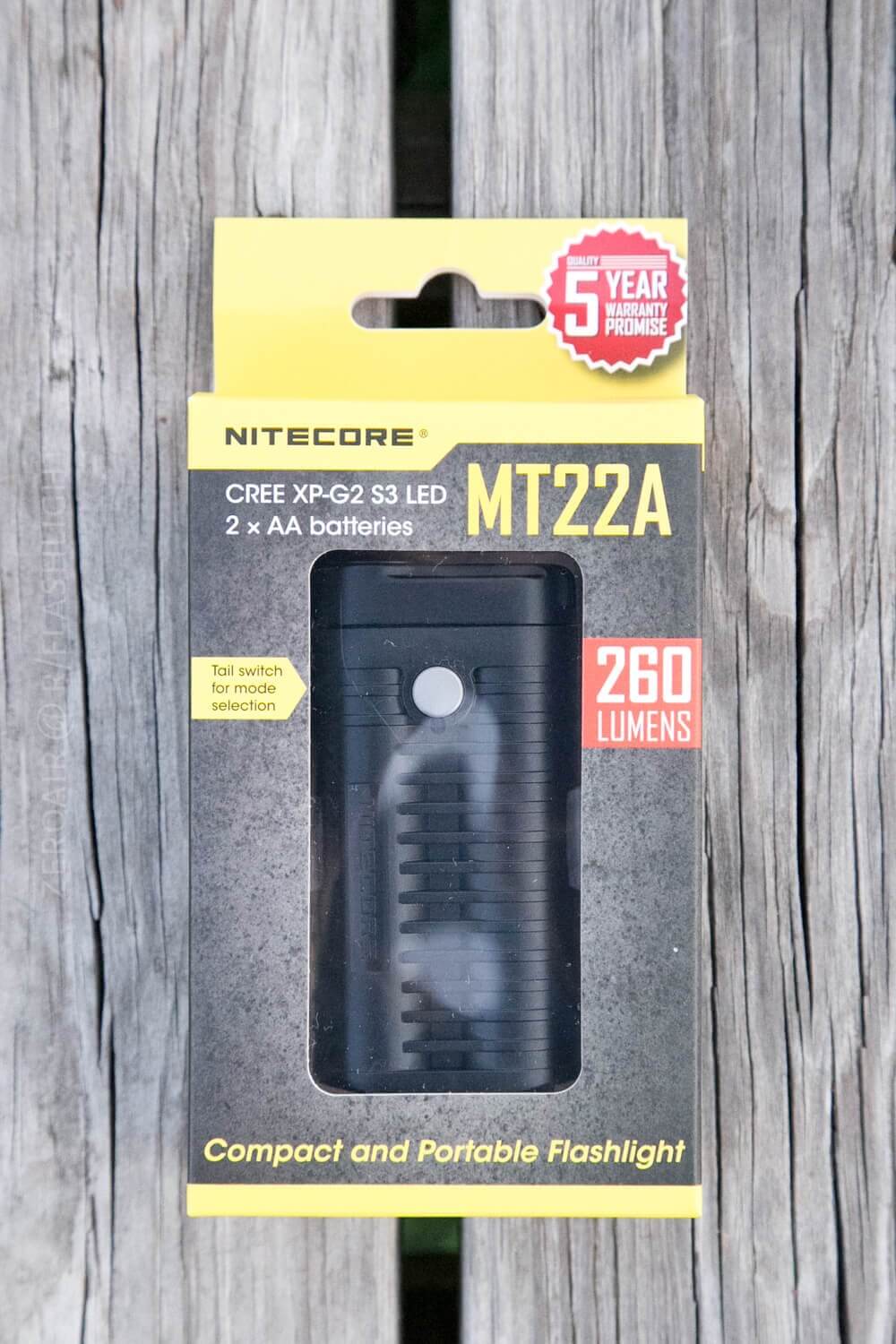
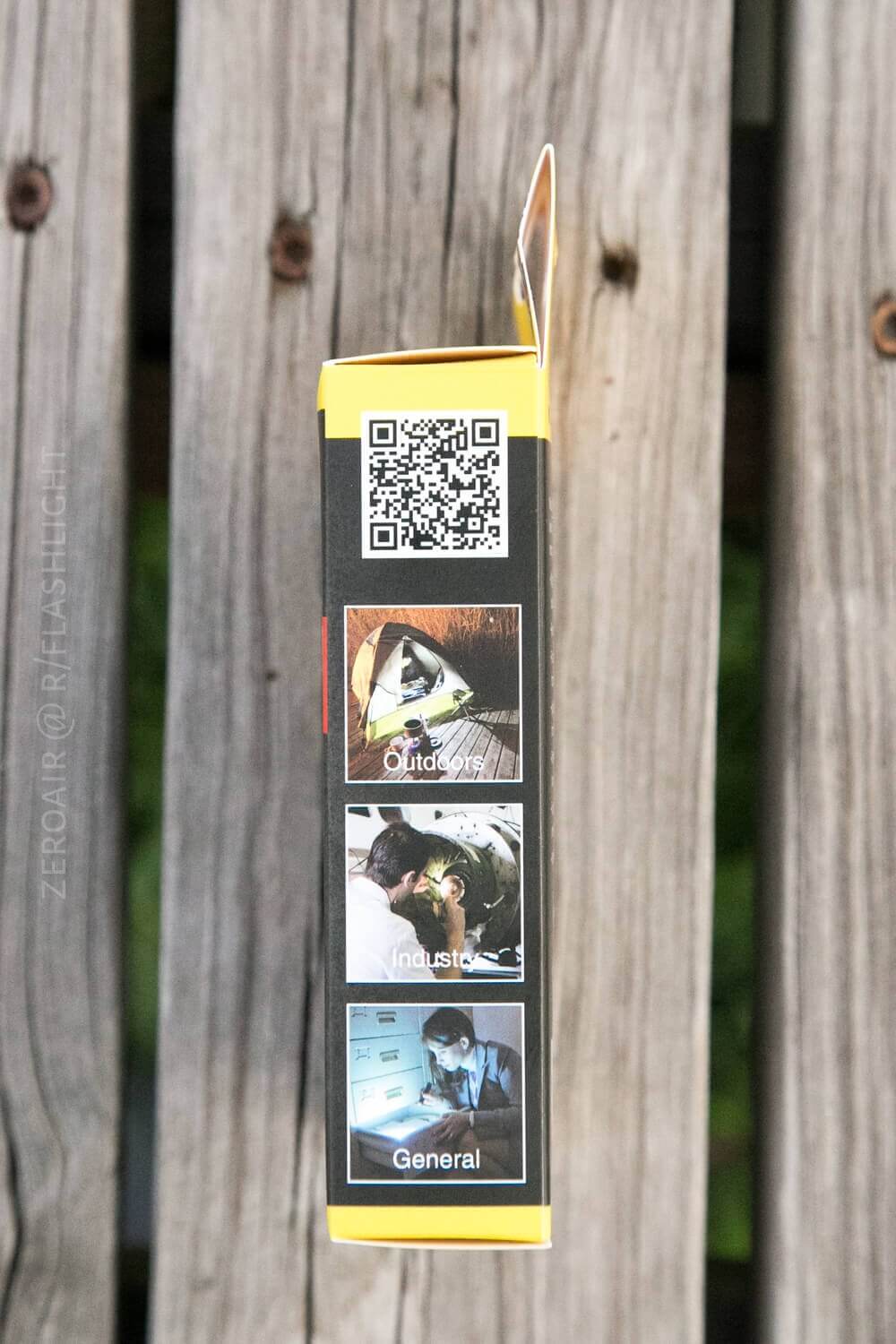
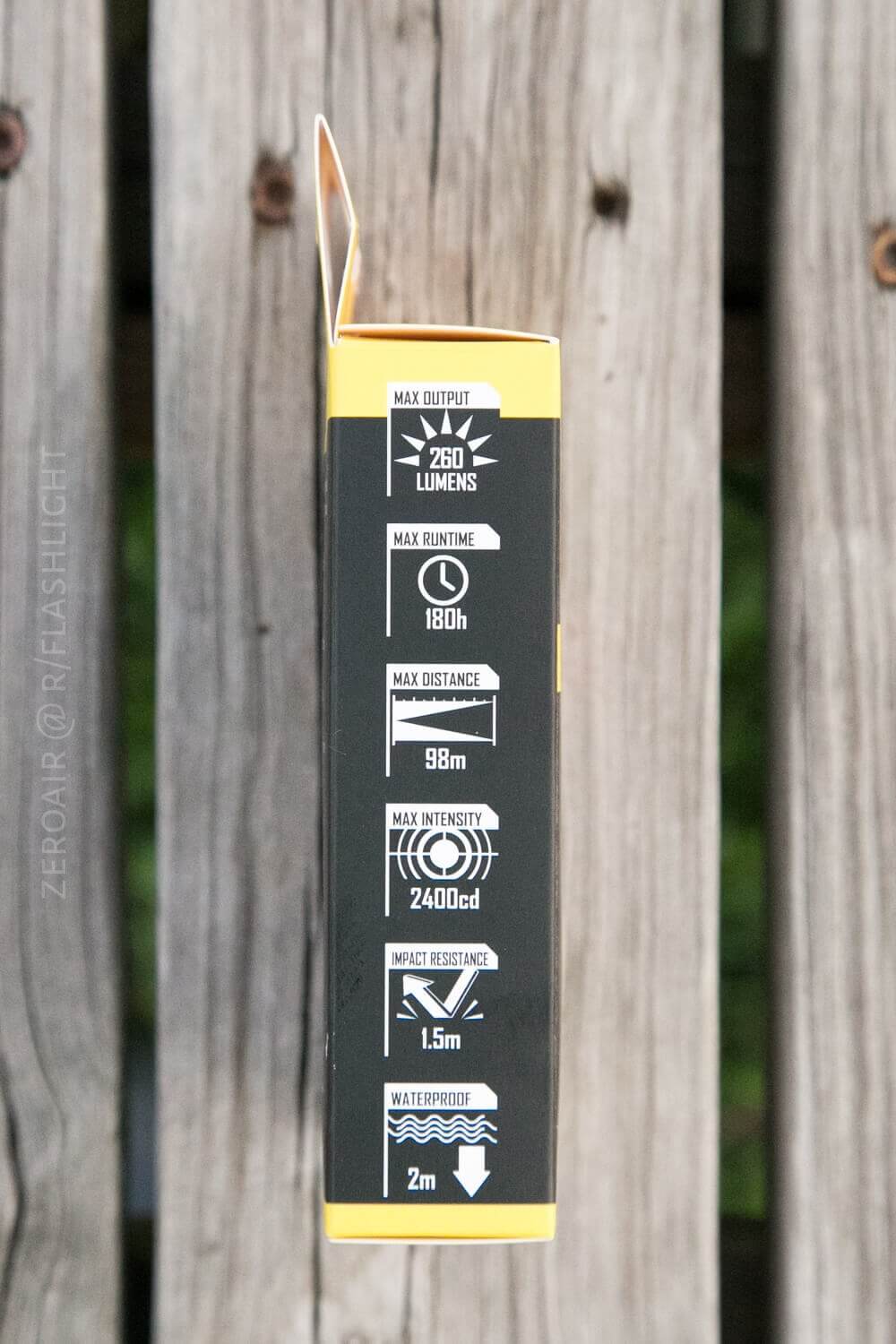
The yellow and black of Nitecore. Very ‘branded’. The package has a window, so you can see the light you’re about to open. The box has tons of wording and promises and such, and even a QR code for that guy out there who uses QR codes.

The manual is a large fold-out paper with many languages. I don’t really love these manuals, because it’s hard to fold them in such a way to see only what you want and nothing else. (I’d love Nitecore to improve these manuals physically.) But they’re fine manuals as far as descriptiveness.

Build Quality and Disassembly
The body of this little light is polycarbonate – supposedly tougher than aluminum, I guess? – and the head is cast aluminum. I believe this is intended to make a stronger light. I can’t really speak to that, but it’s a sturdy little light. The one-piece cast head with big fins is for great heat dissipation.
The individual parts are well-built. Unfortunately, simply based on the way the light fits together, they don’t fit together too well. I think the light is still waterproof, but the head and body are just not as snug as I’d like.
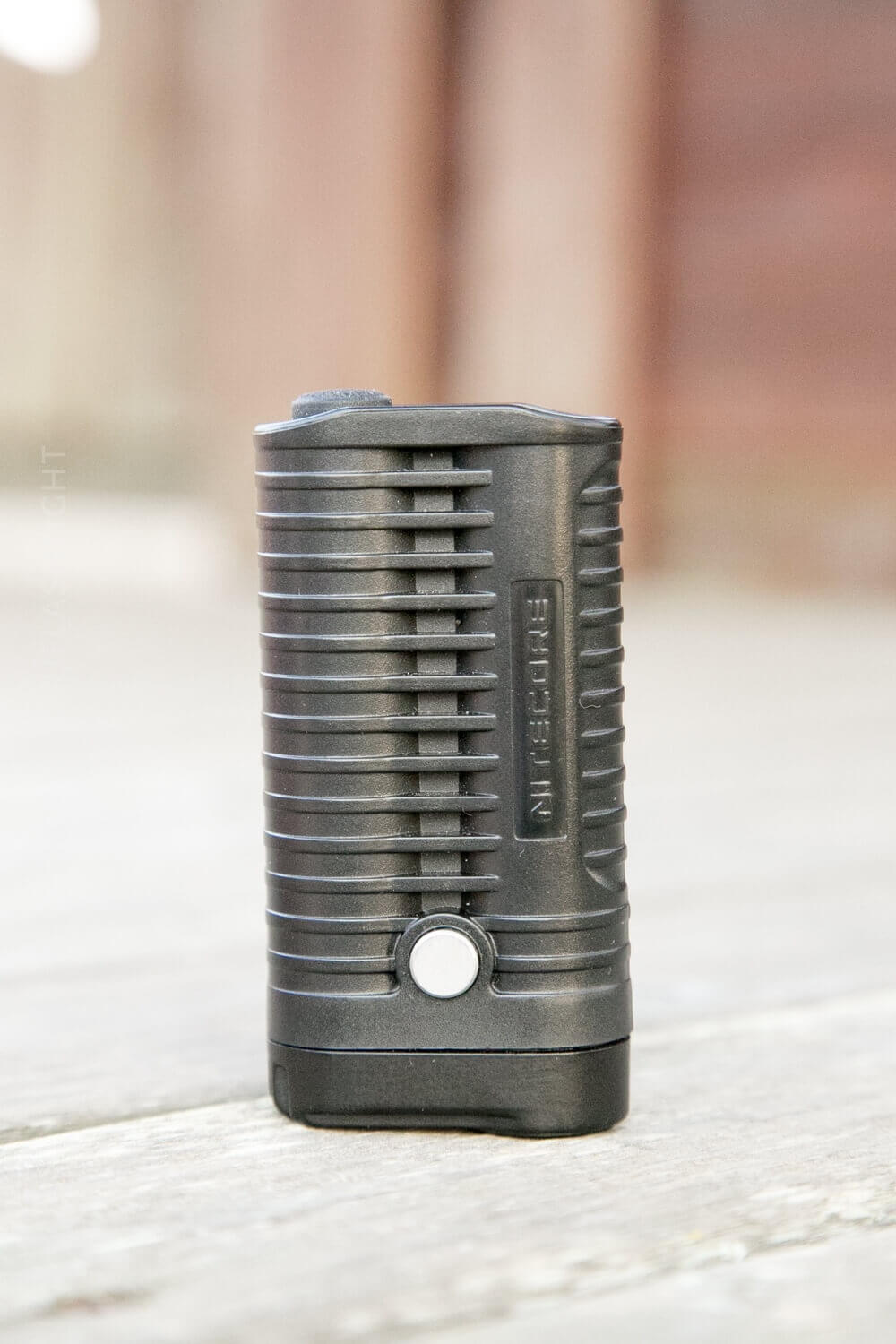
And a minor annoyance – neither the head nor the tail allows the light to sit vertically. The light will headstand, but as you can see below, it’s off-axis just a little. The pronounced button prevents tailstanding nicely, but it can be done. The light will just be off vertical by about 15 degrees.
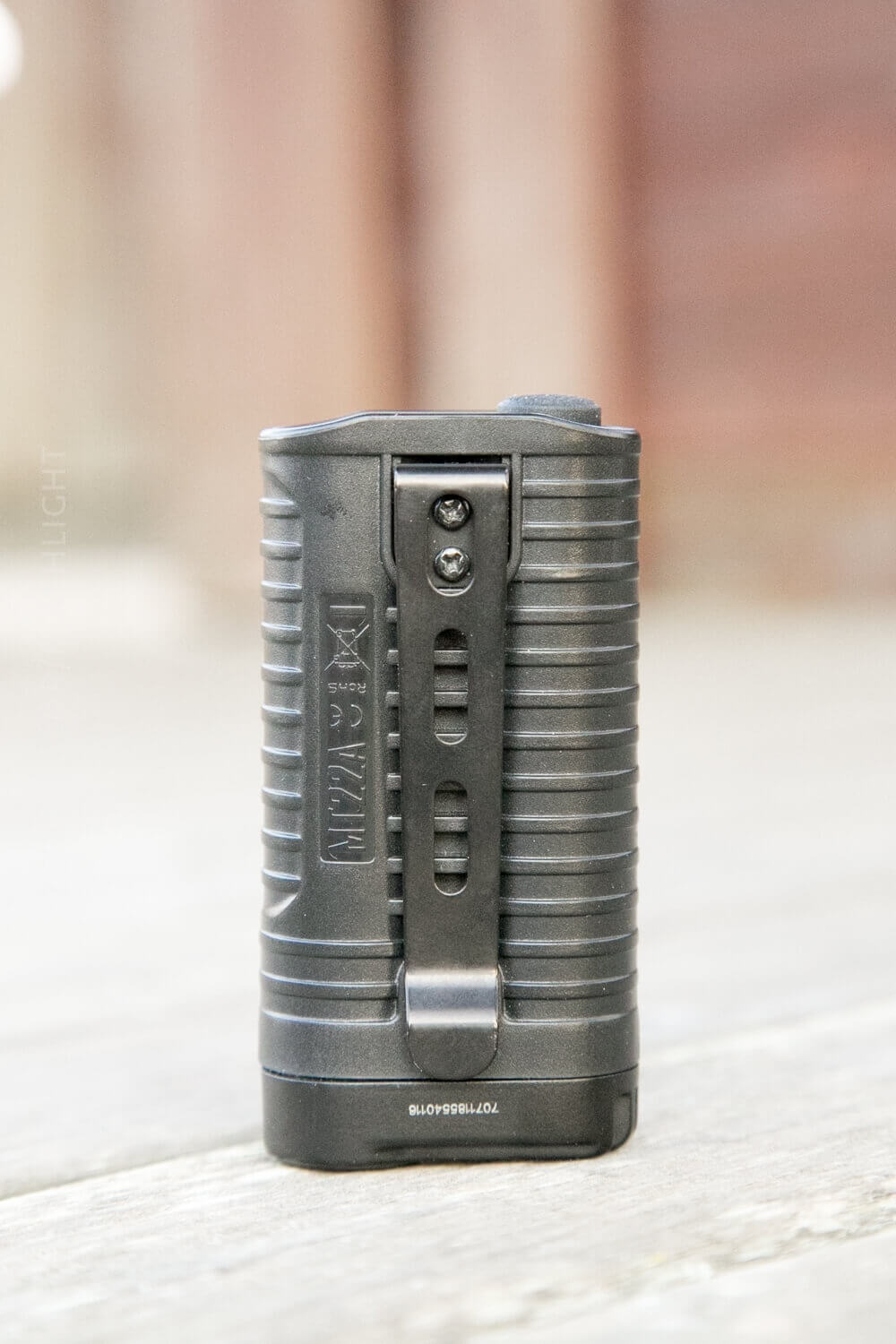
The back of the light has a removable pocket clip. More about the pocket clip later


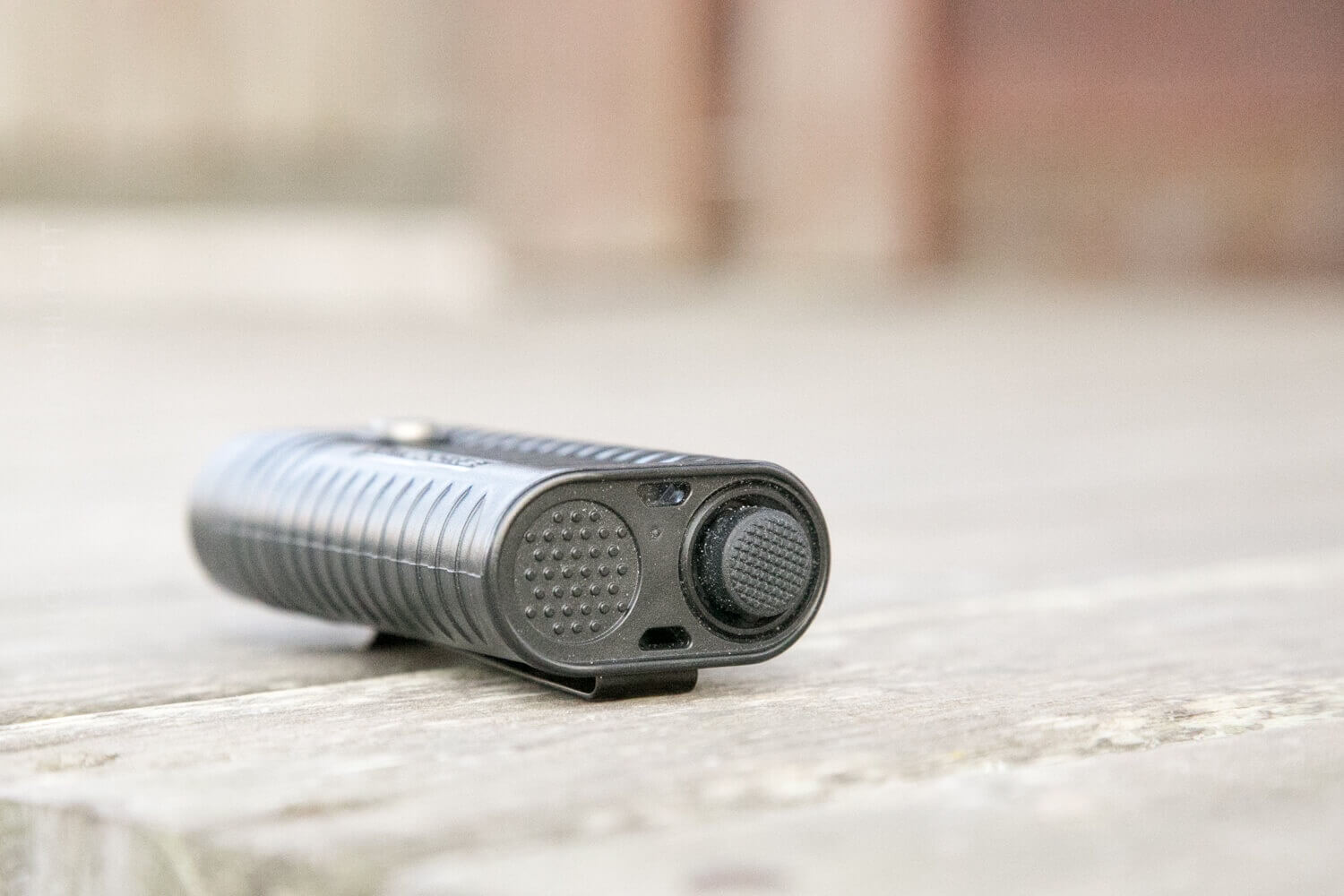
The switch and the emitter are on opposite sides of the body (and opposite ends too). This could be a positive or negative, depending on how you hold the light. But I was fairly neutral about it.

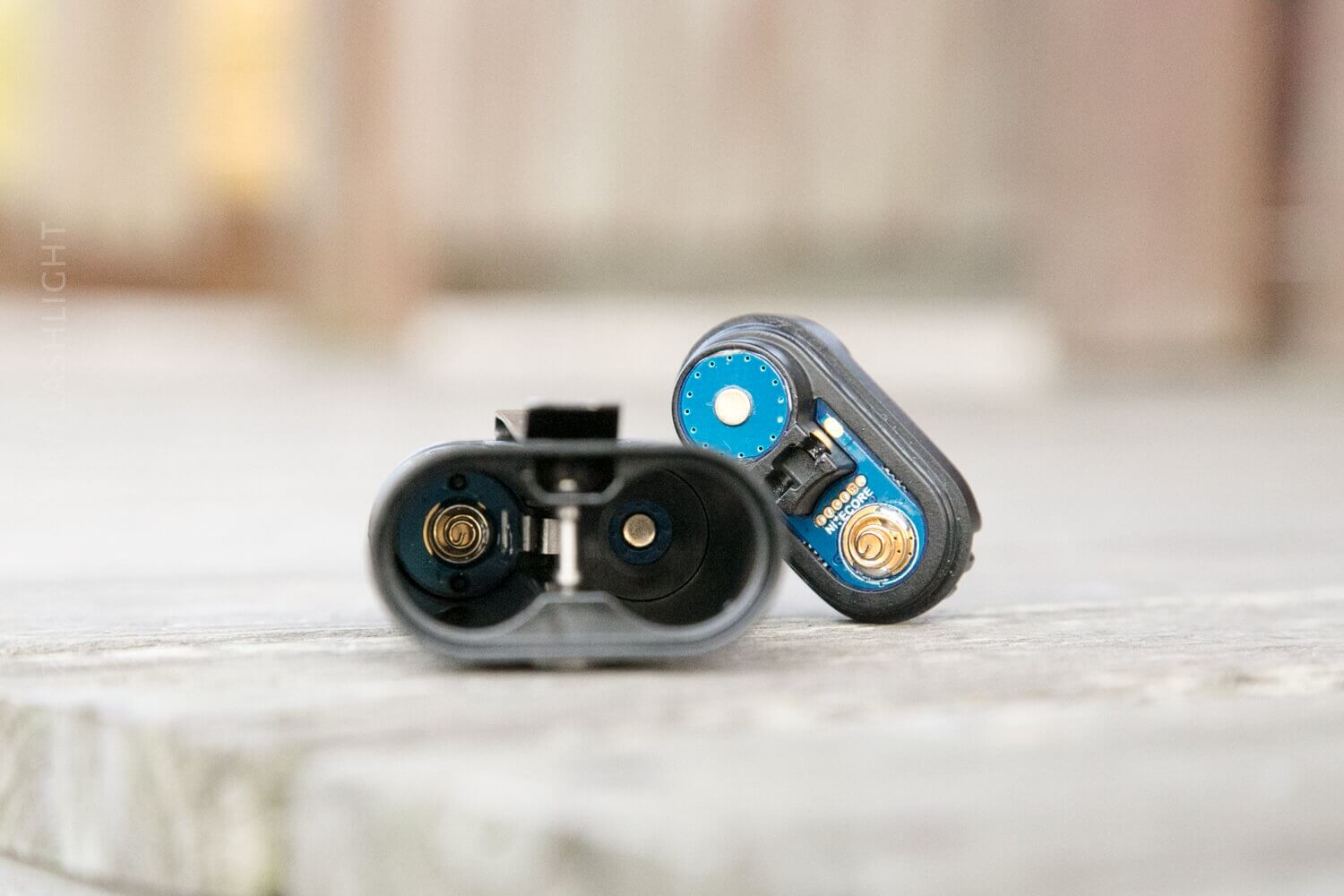
As for disassembly, the head obviously comes right off the body – this is how cells are changed. But past that, I can’t say too much about driver access. The lens is held down by a screwed-in bezel ring. The tailcap is probably serviceable too – the rubber switch looks to be held in place by a screw-in ring too.

Size
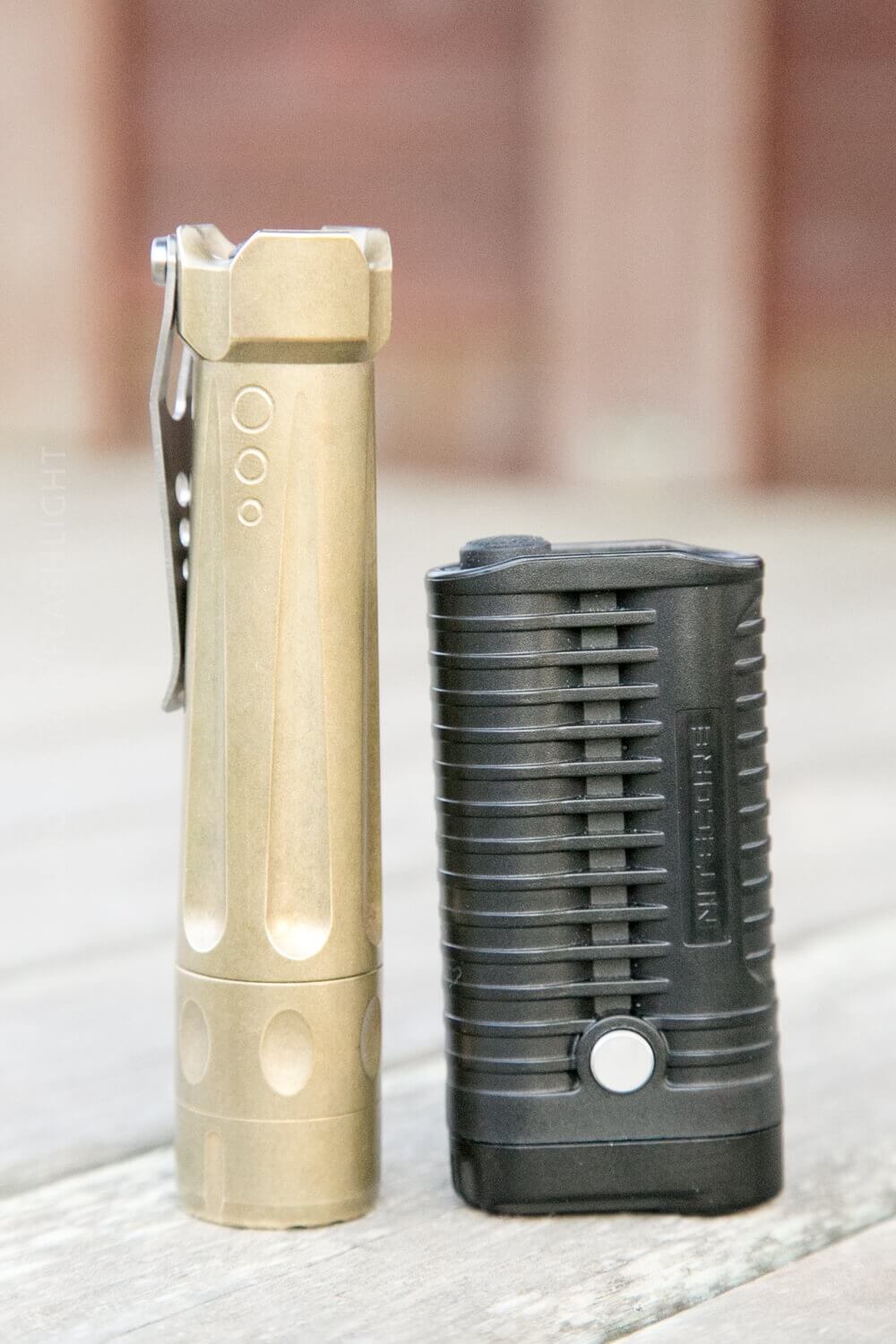
As I said above, this light is very reminiscent of a pager. Maybe a little longer? But who even knows what that is now anyway… sorry.
The dimensions are as follows: Length: 3.19″, Width: 1.6″, Height: 0.83″.

It’s not a big light, but I will say it seems more suited to belt-clip-wear than pocket-clip-wear. It just usually felt a bit big in my pocket, owing to the 1.6″ width.


Retention
A pocket clip is provided and installed, and is directional. It can be removed and will leave almost no evidence, except a tiny spot where the screw holes are and where the clip touches the light.
The clip is cleverly designed so that the “mouth” end provides a little foot – and the light will rest on the clip side, fully supported by the clip, just fine.
Also provided is a lanyard, which attaches on the tail end, through the actual body of the light.
Power
The MT22A is powered by two AA cells. The manual does not mention Li-ion support, but primary AA and rechargeable AA are good to go. All my testing was done with Eneloops. The tubes are directional, with mechanical reverse polarity protection; the cells will only work in the correct direction. That is, they work with the positive terminal toward the button, and the negative terminal toward the spring, on both sides. The cells will be opposing each other. I find that when putting the head back on the light, one must depress the ‘release’ button. I expect that’s by design, which means the head is essentially locked on. It also means that the head doesn’t “click” into place (and this is one of my complaints about the light).
I performed a runtime test on High. After this runtime on High (which was shut off at around 10 lux), the cell voltage was 1.152 and 1.139V.

The light does drop from turbo, but the drop is 1) not too fast) and 2) makes it to 90% over the course of 10 minutes, which is respectable. Then the stepdown is very stable at around 70% for almost 2 hours, which is again, respectable.
User Interface and Operation
There is a single reverse clicky tail cap switch, with a rubber boot. The click is very clicky. The light can be mode cycled while it’s on, and do so in a H>M>L>Strobe. That’s right, strobe is in the main group, and can’t be avoided. Although technically that’s not true: The light will reset after 2 seconds (when off), and the next mode will be High. This means it’s possible to avoid strobe altogether. I won’t say that’s ideal, but it does seem purposeful and intended this way. Here’s a little user interface table:
| State | Action | Result |
|---|---|---|
| Off | Full click | High (if light was off >2s) |
| Off | Half press | No Action |
| On | Half press | Mode cycle (H>M>L>Strobe) |
| On | Full click | Off |
It’s a very simple UI, really.
Note that the big gray button on the side is only the release for the head, to swap the cells. It will be tempting to press that to change the modes. That’ll be wrong, and your head will probably come loose. It won’t fly off, however.

The head really reminds me of Johnny 5.

(Though in reality it probably looks more like Wall-E.)
Modes
| Mode | Mode Claimed Output (lm) | Claimed Runtime | Tailcap Amps |
|---|---|---|---|
| Standby | – | – | – |
| Low | 1 | 180h | 0.008 |
| Medium | 45 | 18h | 0.15 |
| High | 260 | 2h15m | 1.08 |
| Strobe | – | – | 0.31 |
LED and Beam
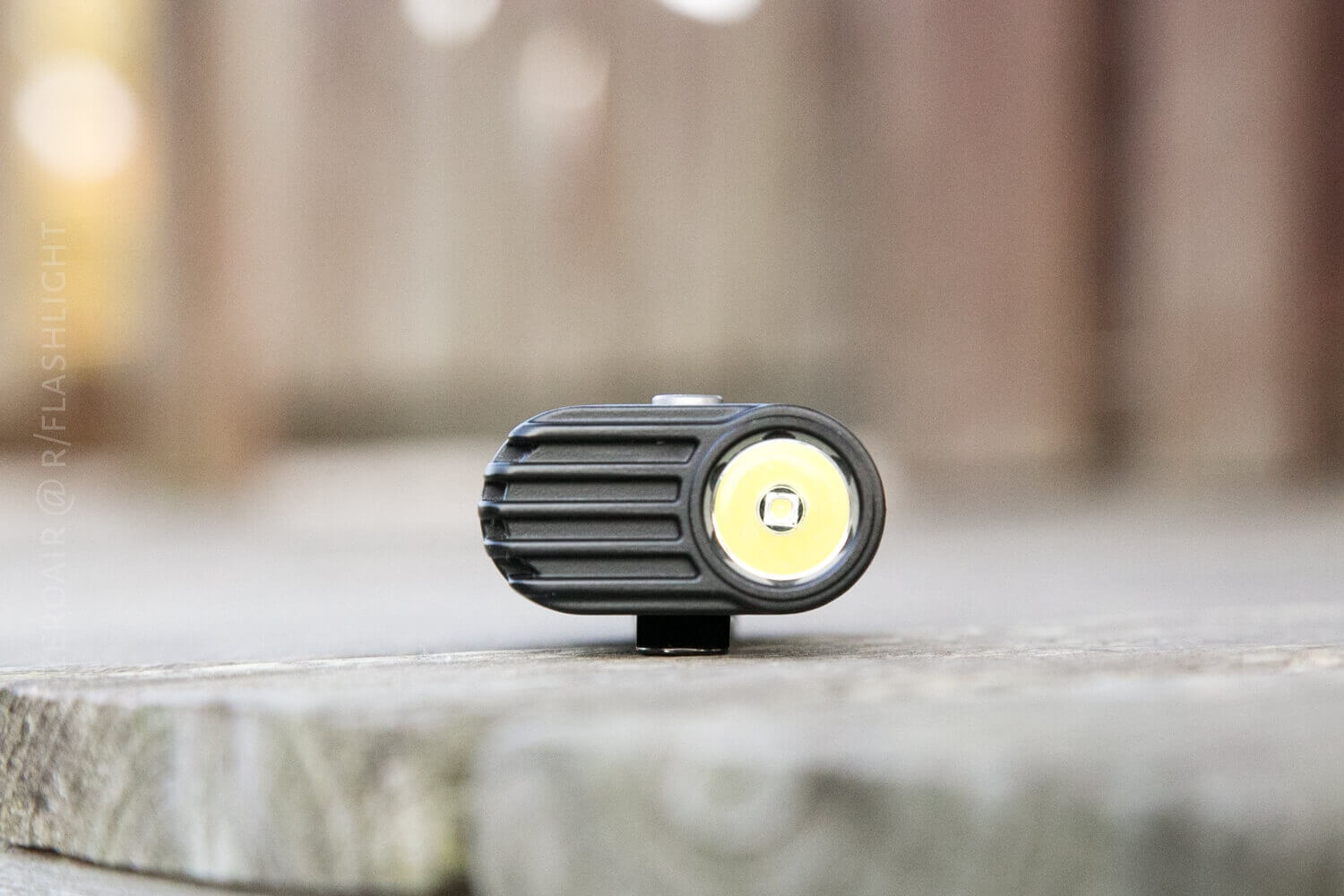
Nitecore chose a Cree XP-G2 S3 for the MT22A. The reflector is small (dime-sized, or less), but is surprisingly deep. It’s also smooth (surprise?), which means the light has much more spot than one might expect. In M or L, for example, the spill is hardly visible at any distance.
Beamshots
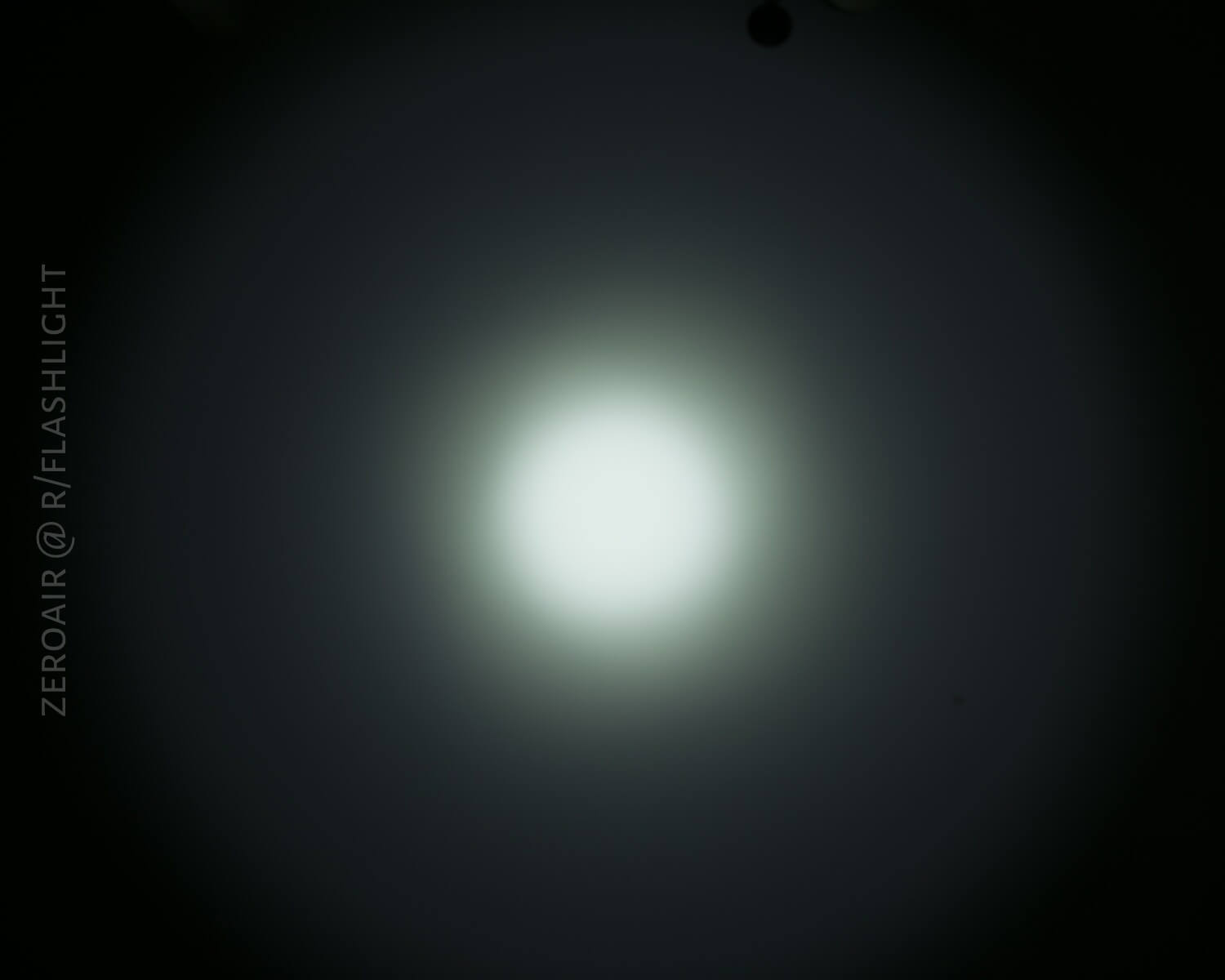
These beamshots always have the following settings: f8, ISO100, 0.3s shutter, and manual 5000K exposure. These photos are taken at floor level, and the beam hits the ceiling around 9 feet away.


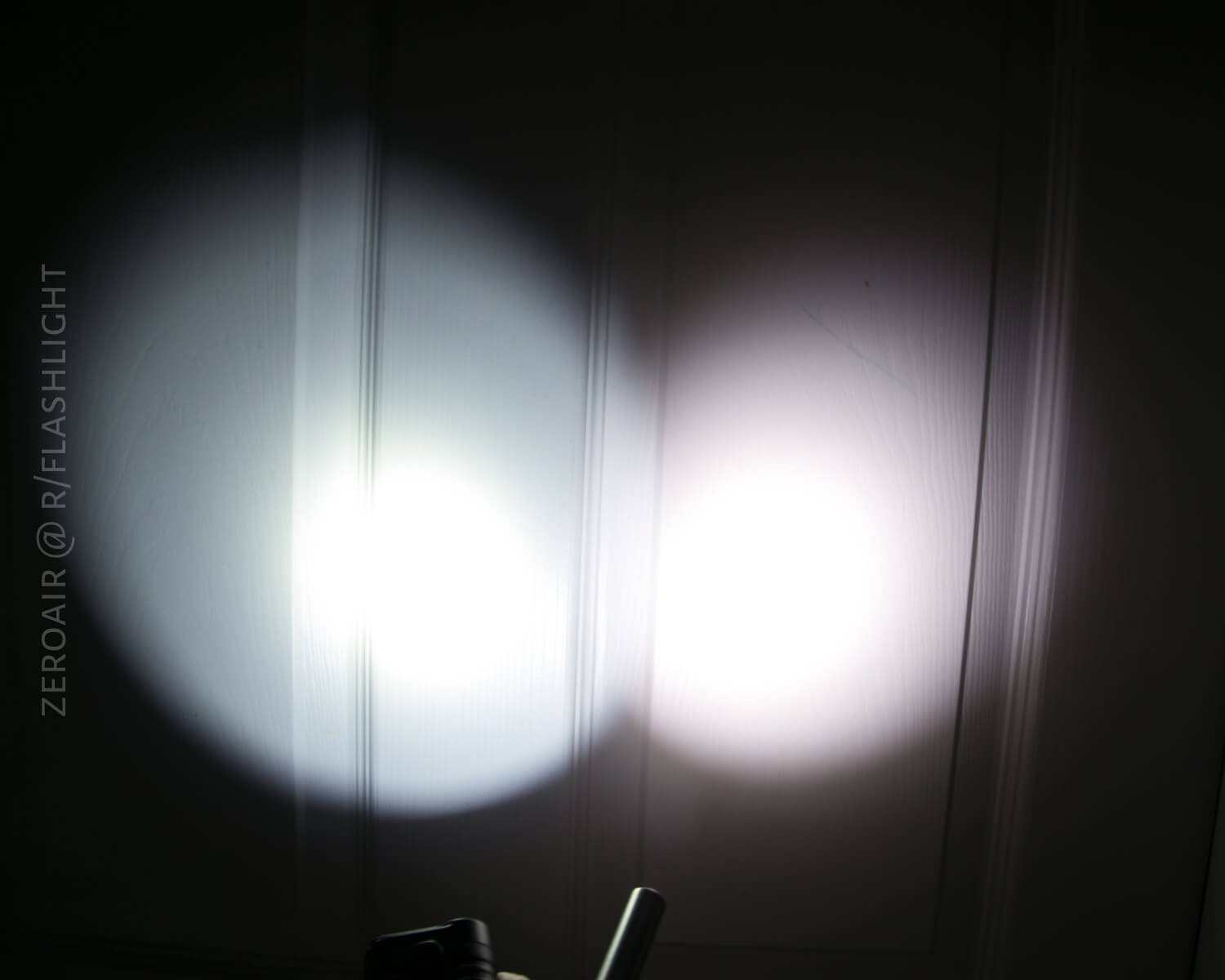
Tint vs BLF-348 (KillzoneFlashlights.com 219b version) (affiliate link)
I keep the test flashlight on the left and the BLF-348 reference flashlight on the right.
Random Comparisons and Competitive Options
There are a couple of (basically irrelevant) comparable lights. The Streamlight Sidewinder and the Sunwayman D20A. Neither really compares, but both have side-by-side AA cells. The Sunwayman looks interesting because it has two emitters and a side clicky. But it is likely unavailable. That means the MT22A is your best bet in this format.
Conclusion
What I like
- Stable output for a long time after stepdown
- Tough polycarbonate body
- Uses common cells (great for backup use)
What I don’t like
- The pocket clip makes this light seem meant for lefties
- Inability to head or tailstand completely vertically
- Head release button is too much like a mode button – will get pressed accidentally.
Notes
- This light was provided by Nitecore.com for review. I was not paid to write this review.
- This content originally appeared at zeroair.org. Please visit there for the best experience!
- Use my amazon.com referral link if you’re willing to help support making more reviews like this one!
- Please support me on Patreon! I deeply appreciate your support!