
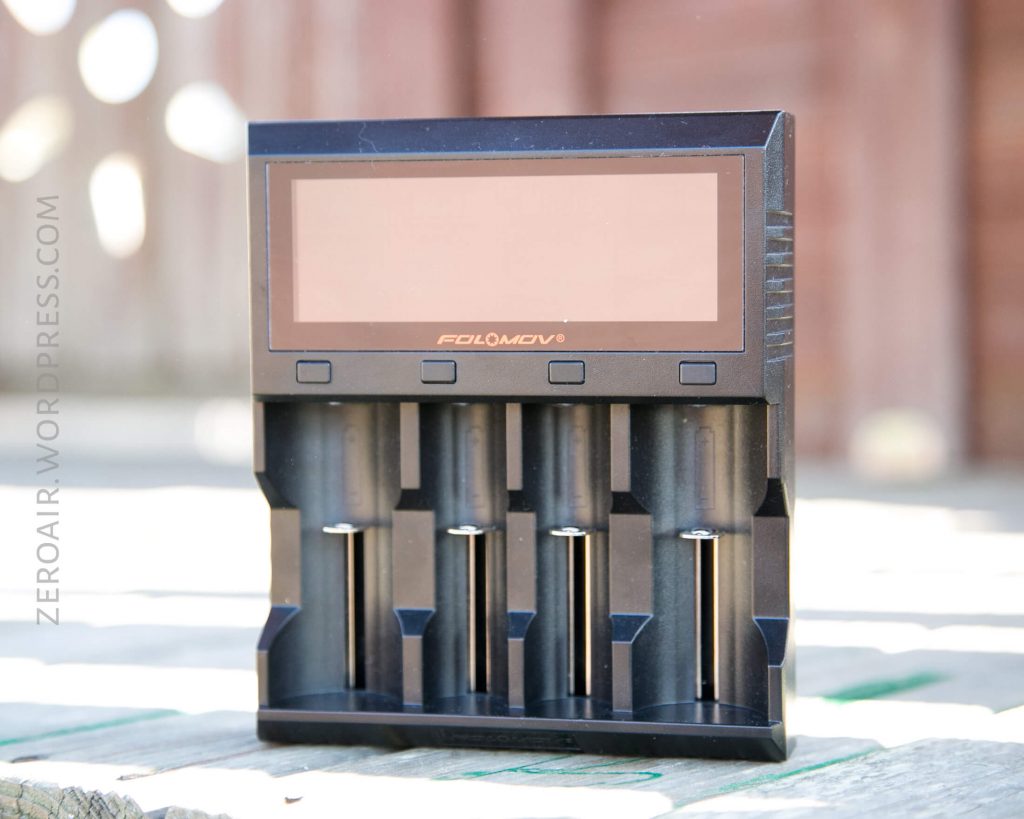
Folomov A4 Charger Review
The Folomov A4 is a four-bay charger powered by DC power (barrel plug!) and capable of charging all common chemistries. Read on!
Official Specs
Here’s a link to the Folomov A4 Charger product page.
Features
- Capable of charging 4 batteries simultaneously
- Up to 2A for all 4 slots simultaneously, up to 3A in slots 1 and 4 (when fewer than 4 total batteries)
- Charge speed selection of 250mA, 500mA, 1000mA, 2000mA, 3000mA (Slot 1 and Slot 4)
- Each of the four battery slots monitors and charges independently
- Compatible with and identifies Li-ion (32650, 26650, 25500, 22650, 22500, 21700, 20700,18700, 18650, 18500, 18490, 17670, 17500, 18350, 16340(RCR123), 14500, 10440), Ni-MH and Ni-Cd (AA, AAA, SC, CD) rechargeable batteries
- Integrated STN panel shows battery type, charge progress, charge percentage, and voltage.
- Compatible with LiFePO4 batteries
- Compatible with small capacity batteries
- Automatically stops charging when complete
- Features over-charge prevention to protect batteries
- Made from durable ABS (fire retardant / flame resistant)
- Features reverse polarity protection
- Designed for optimal heat dissipation
- 0V Activation Feature
Specifications
Adapter input: AC100-265V
Charger input: 12V 5A
Voltage: 1.48V +- 1% / 3.7V +- 1% / 4.2V +- 1%
Compatible with: Li-ion/LiFePO4/IMR, NiMH/NiCd
32650, 26650, 25500, 22650, 18700, 18650, 18500, 18490, 18350, 17670, 17500, 17335, 16340(RCR123), 14650, 14500, 10440
Short Review
This is a fairly simple charger, but it does charge quite fast with the 3A setting. I like that. I also like the properly sized 26650 bays (2).
Long Review
Manual and Packaging
I like the theme Folomov has going here – black and orange. The package is nice, with plenty of descriptions printed.

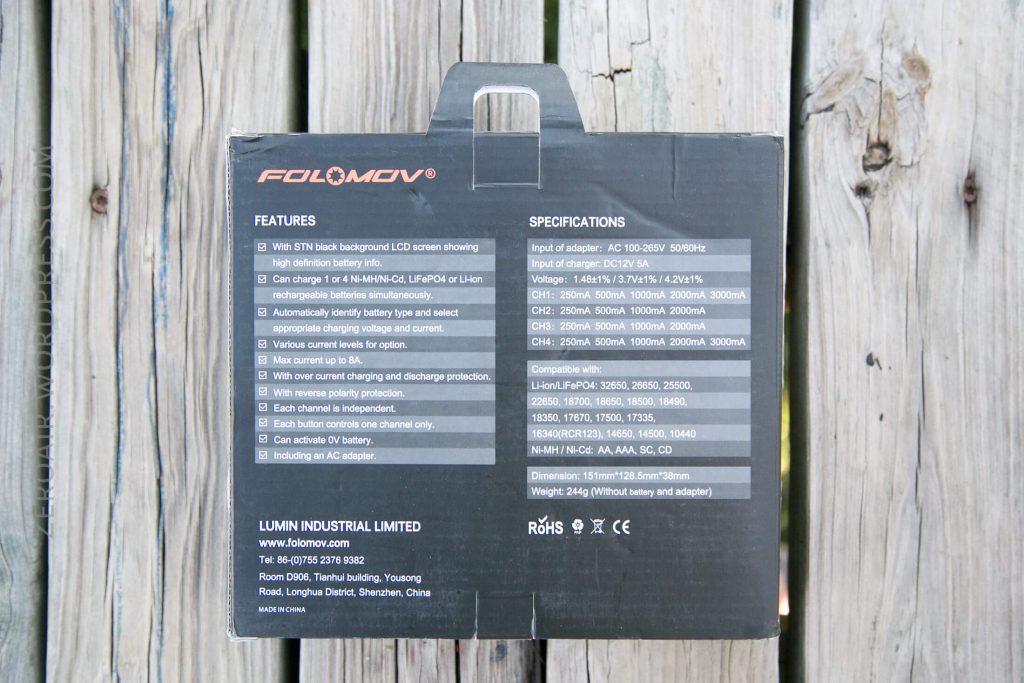


I’m sorry to say I didn’t get a scan of the manual, and there doesn’t seem to be a pdf version available. I’ll try to add this back in later. The manufacturer site does cover the usage, anyway. (Here – unfortunately, it’s in photo format.)
What’s Included

- Folomov A4 4 bay charger
- Manual
- Wall wart AC adapter (12V 5A, with a barrel plug)
Build Quality and Durability
The A4 feels solid, and the buttons are responsive and don’t feel cheap. The metal slides are nice and springy and hold the cells snugly. The screen is quite nice, too.

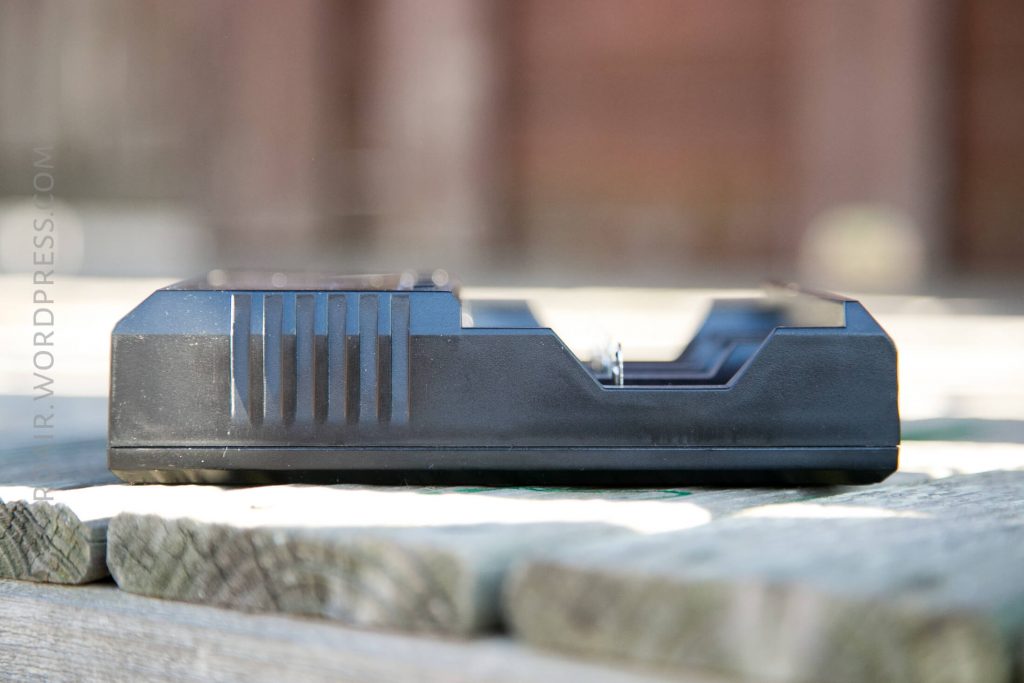
Not much to see on the sides – no branding or anything else.
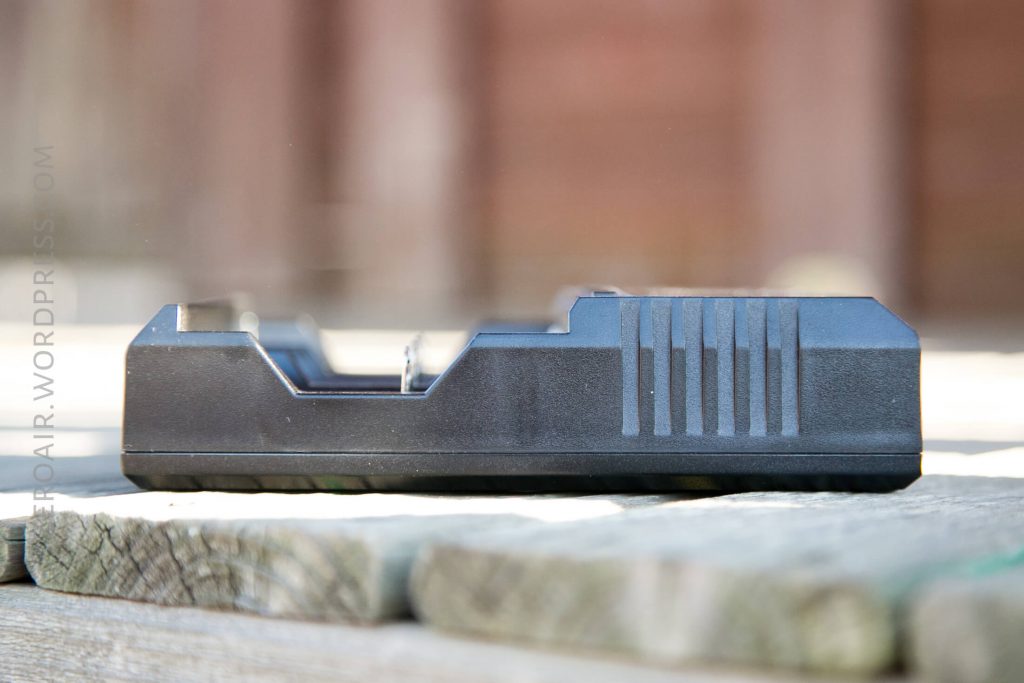
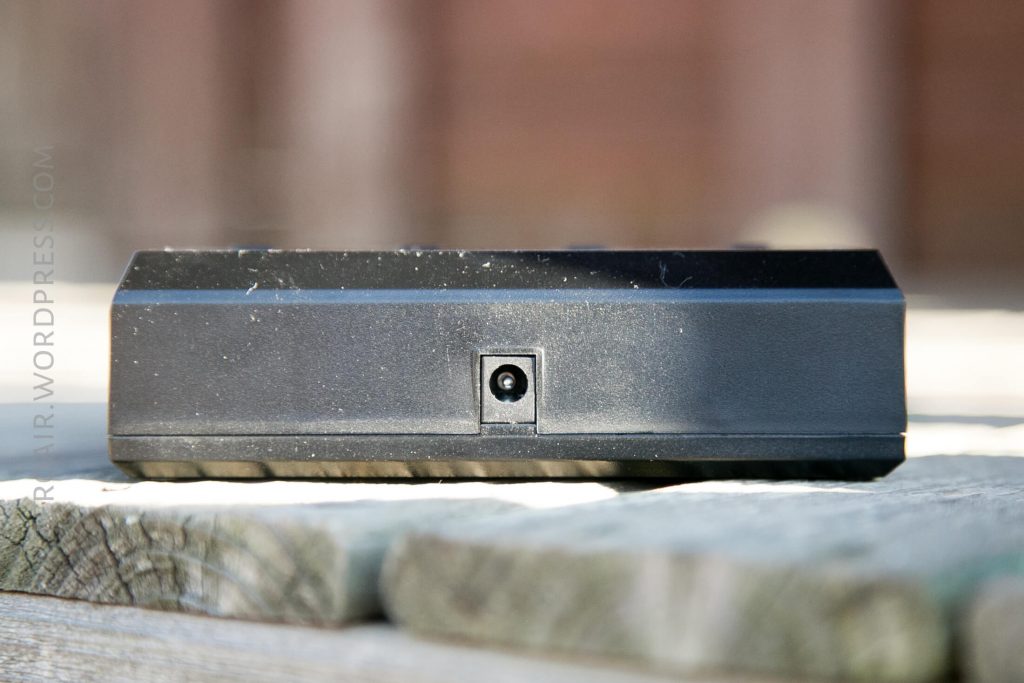
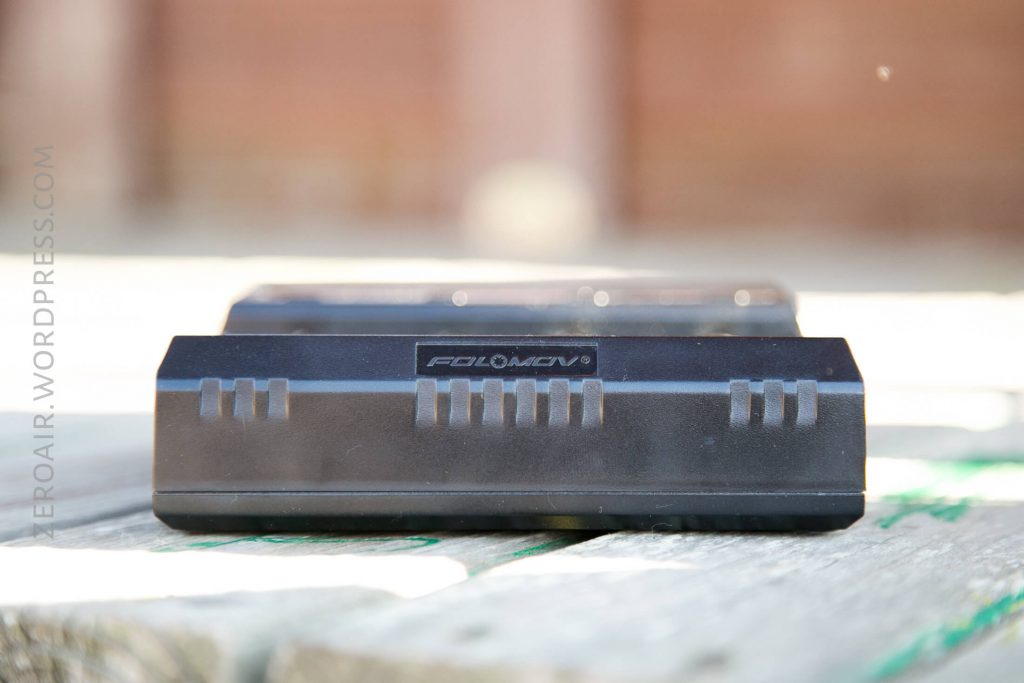
The back has some heat exhausts (though there’s not a fan in this unit), and also lists the specs/features, which is convenient.

Power
Power is provided to the unit by a barrel plug. The included wall wart is a 12V 5A power brick. The total length allowed by this setup is quite long. I do wish the AC/DC adapter was built-in to the unit itself, but that’s an issue I can deal with.

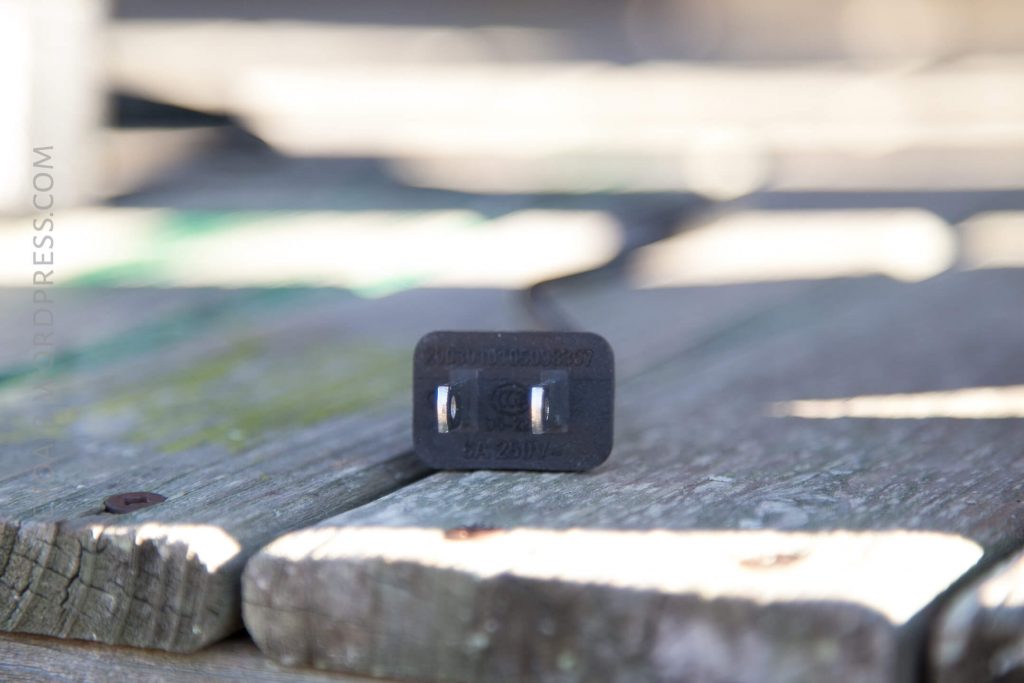
The wall plug isn’t grounded. I don’t know enough to know if that’s required, but I feel like it’d be a good addition.
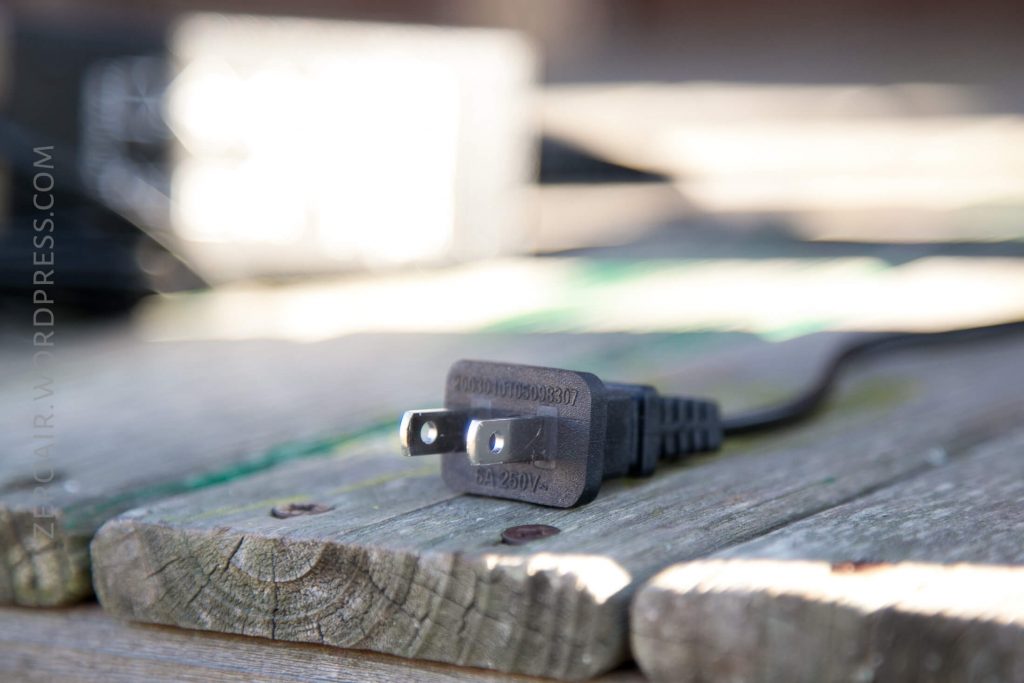
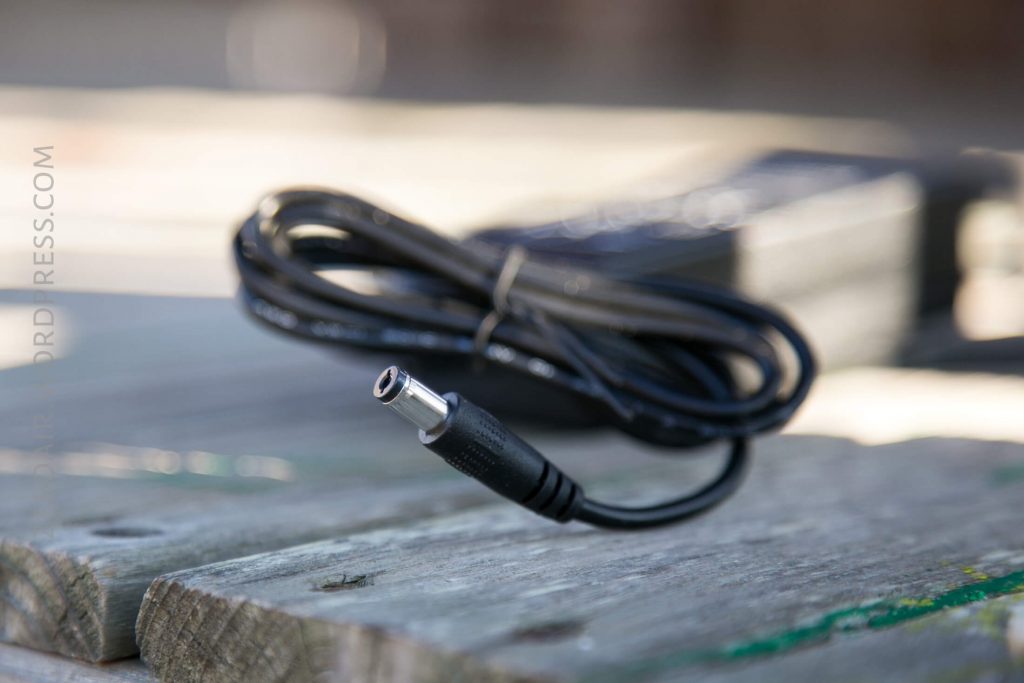
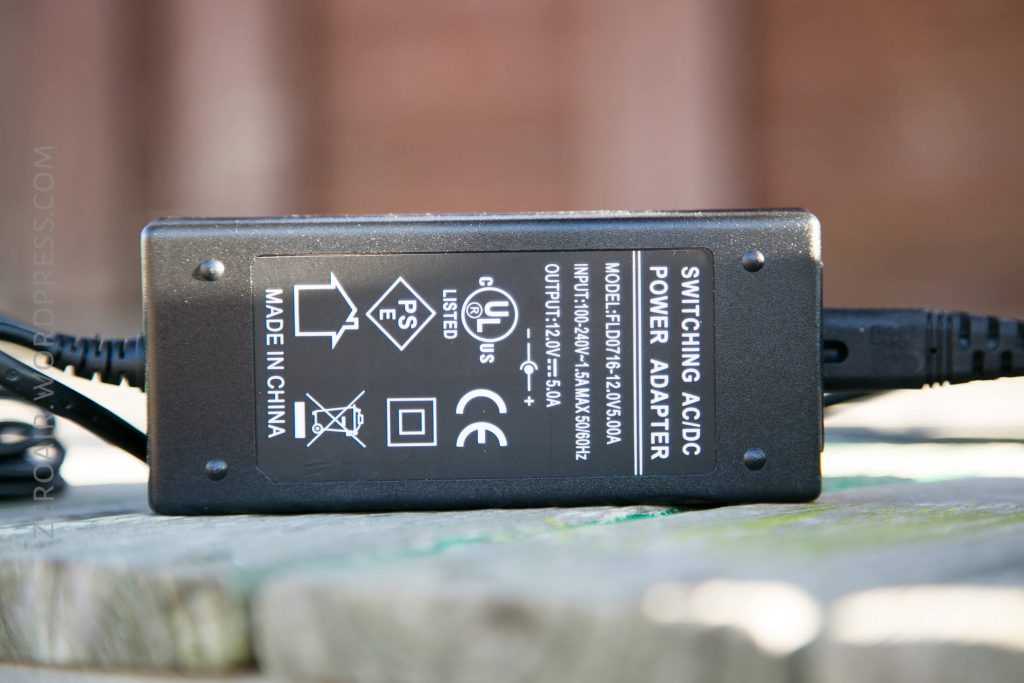

As you can see in the last photo above, when the wall wart is powered, there’s a small blue LED. It’s not very bright, and not obtrusive at all.
I tested two charging rates: 2A and 3A. At the time of this review, I didn’t measure the current over the cells, but in upcoming reviews, I hope to add that as well. You can clearly see that the 3A charging is quite a bit faster (over 20 minutes faster on the same cell, approximately 25% faster). So whether this is true 3A charging or not, it’s certainly faster! (And yes other reviewers do record this as actual 3A charging.)
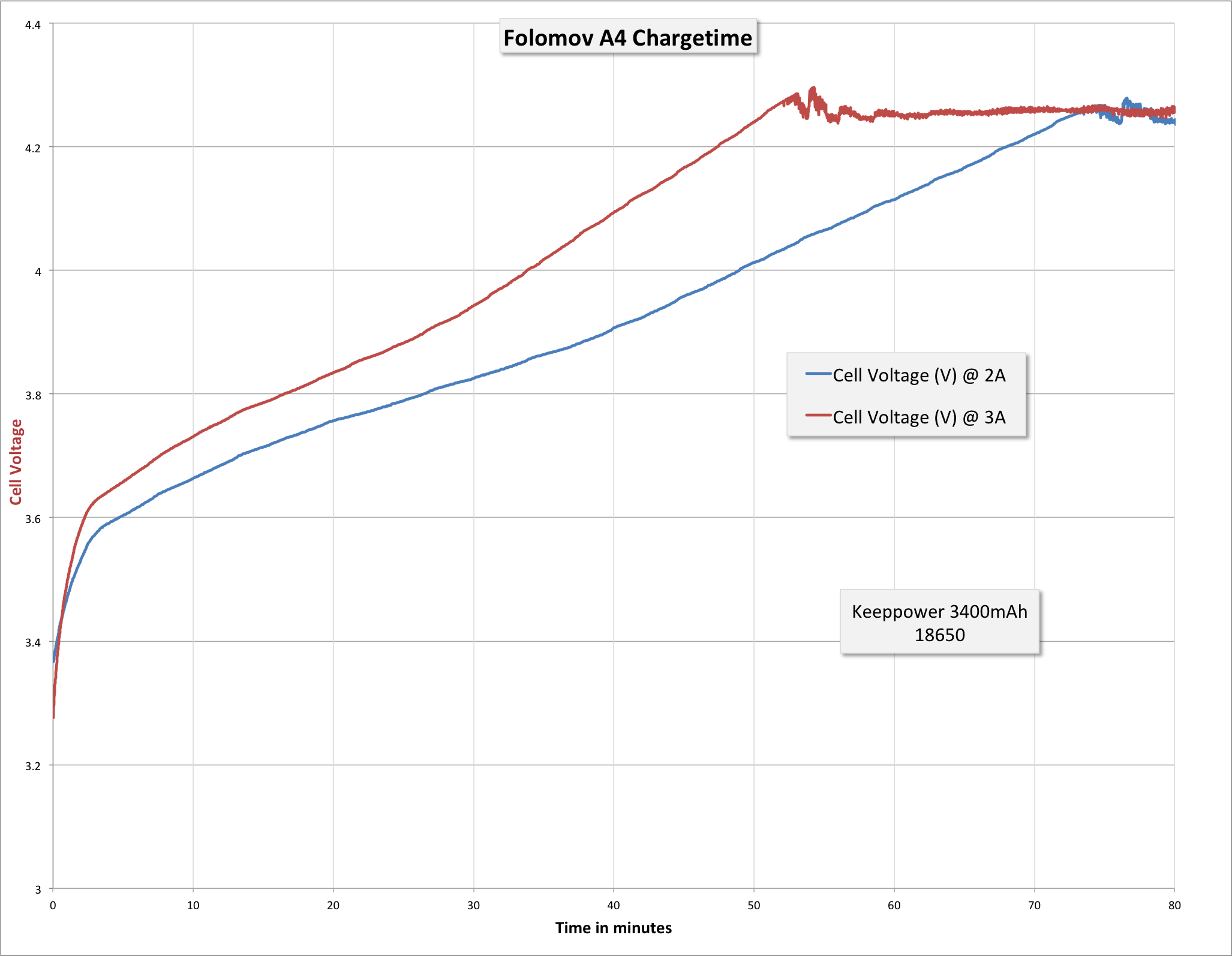
The product description states that the fastest charging can be (per bay, concurrently) 2A|2A|2A|2A for a total amperage of 8A. That’s a very high rate and a lot of current into this small plastic unit! It’ll get hot, but should be safe.
Note from the chart that the final voltage of these two tests was just north of 4.2V.
User Interface and Operation
Each bay has its own (single) switch. This switch can be used before (“Setting” mode) or after (“Working” mode) charging has started.
In Setting mode, click the button to select current for the bay. The ramp is 250mA>500mA>1000mA>2000mA (continuing to 3000mA on the outer bays). Each time you pause for a few seconds, the ramp goes in the other direction. That’s convenient once you’re accustomed to it; cumbersome when you aren’t. Current can be selected individually, and a user has around 10s to select the desired current. Pressing and holding the button for a bay will enter the cell chemistry selection. They cycle as follows: NiMH/NiCD>Li-ion>LiFePO4. Multiple chemistries can be selected across the bays.
In Working mode, clicking the button simply reports what current is being used. Double-clicking will enter Setting mode, which is as above.
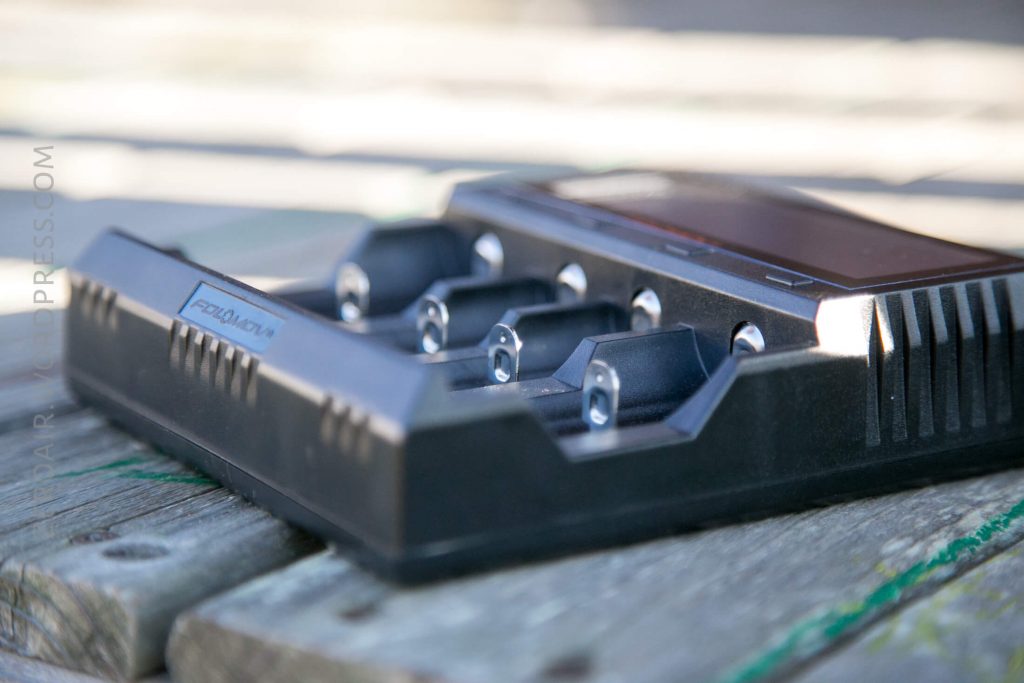
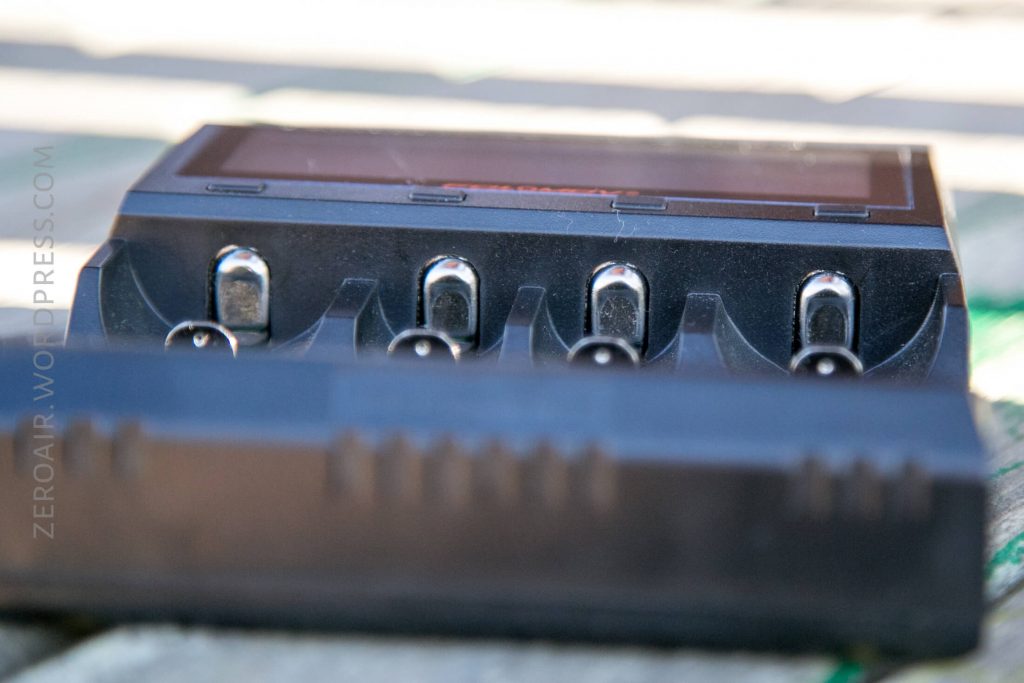
The positive terminal of the cell goes “up,” or toward the display side of the unit. There’s an icon in every bay indicating this, too.

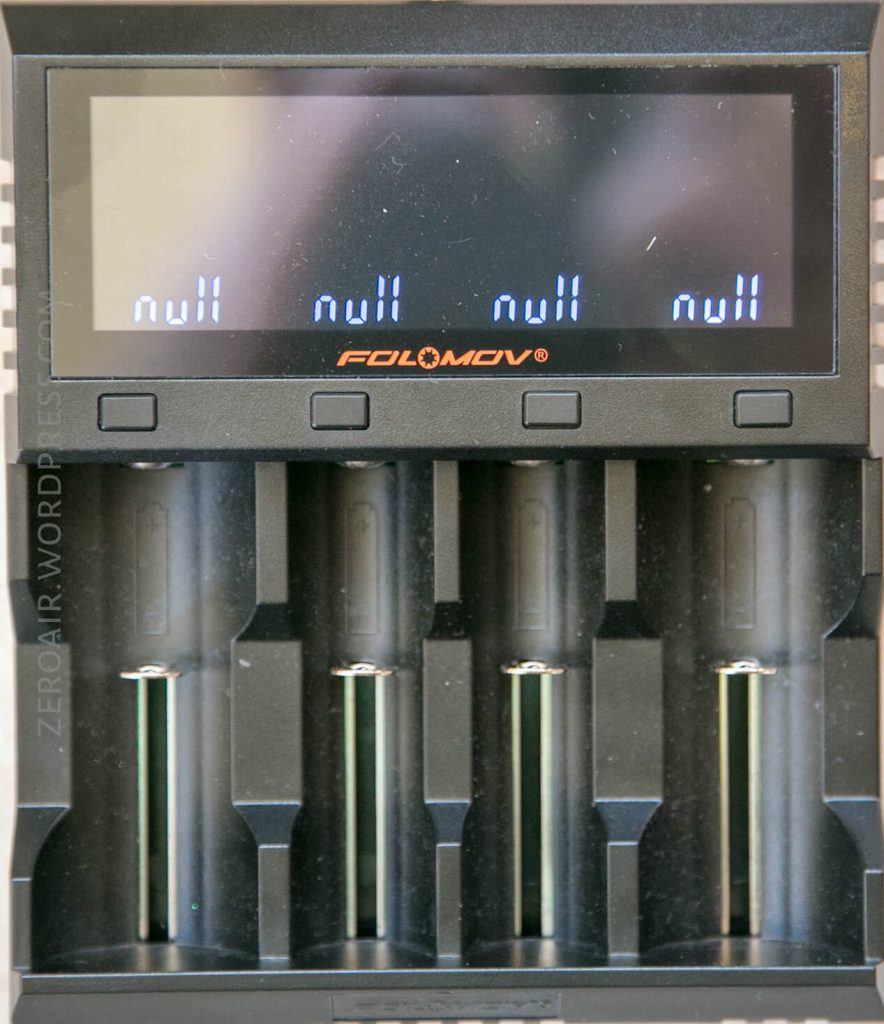
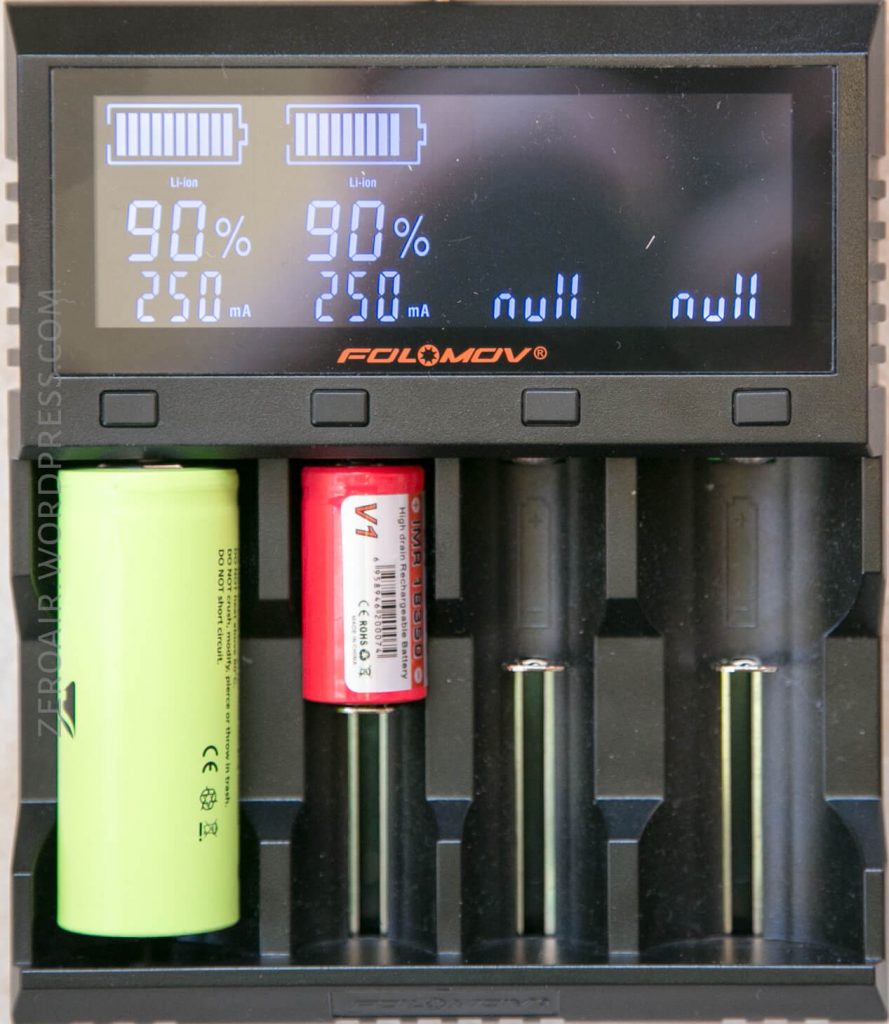
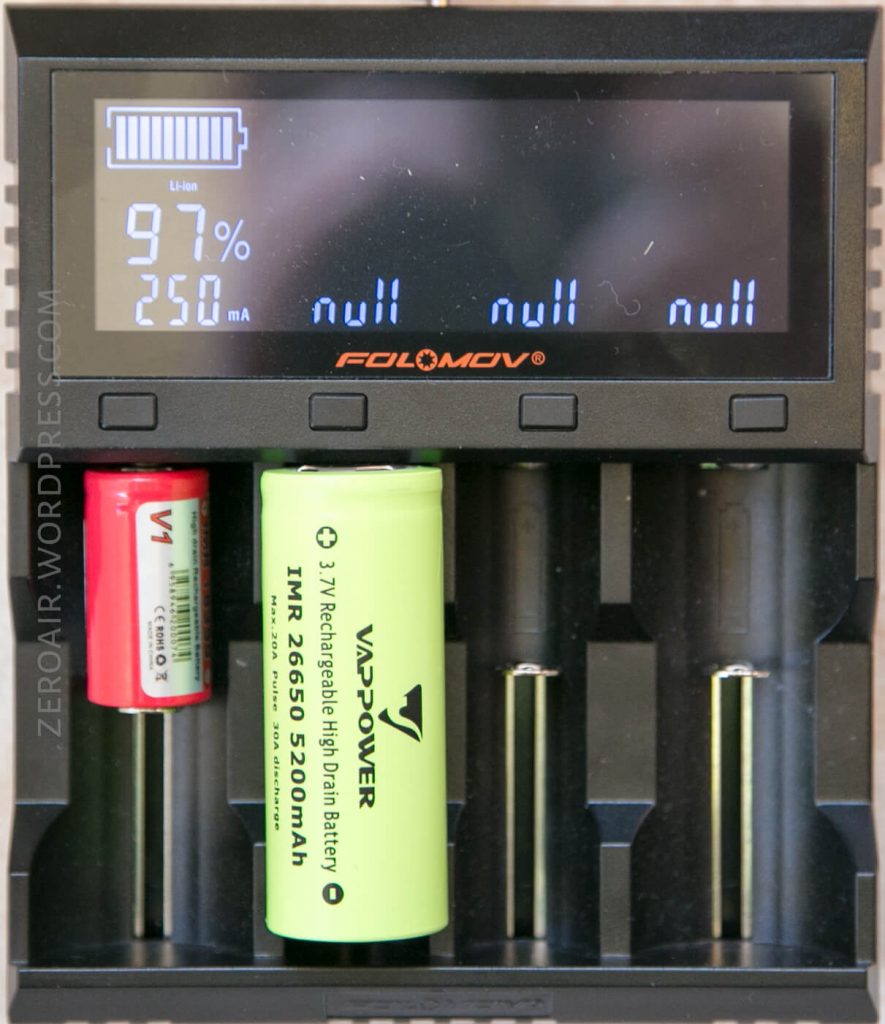
Below are some in-use photos of the A4. You can see that the unit displays “fullness” as a percentage, and “null” when the bay isn’t in use. There is no variation in screen brightness, though overall it’s not TOO bright for a dark space like a bedroom (in fact, that’s where mine has been).



Size
Officially 151mm x 128.5mm x 38mm, and 244g (without battery or adapter).
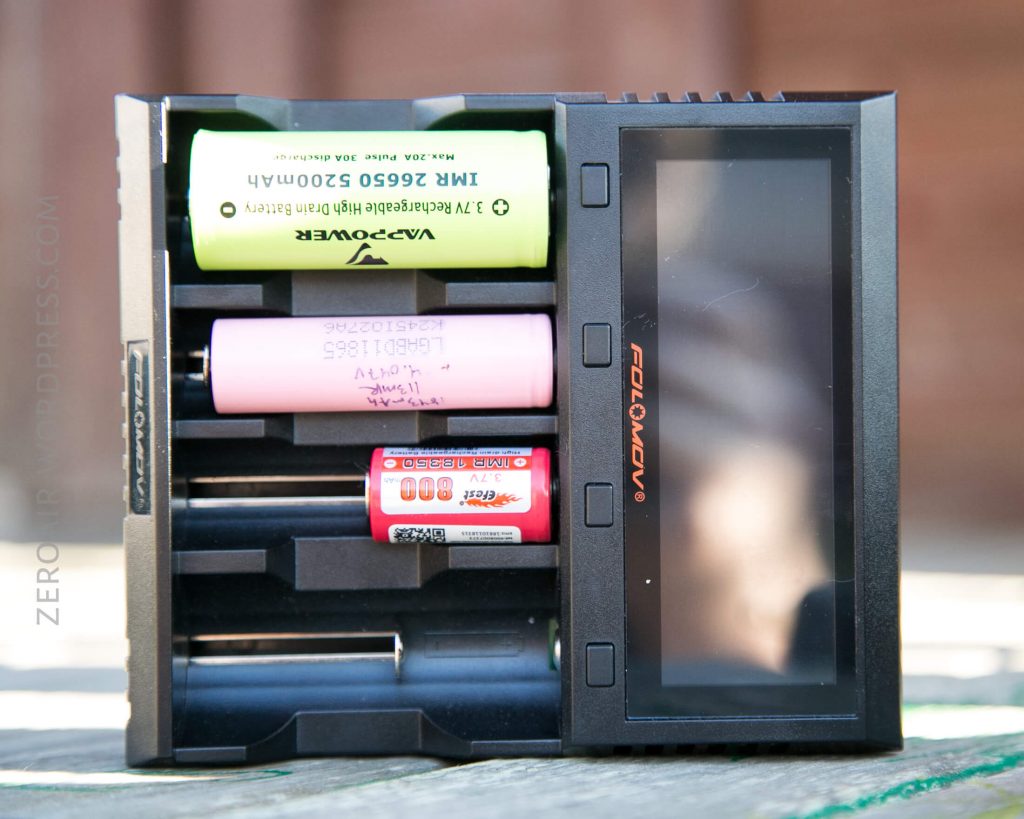
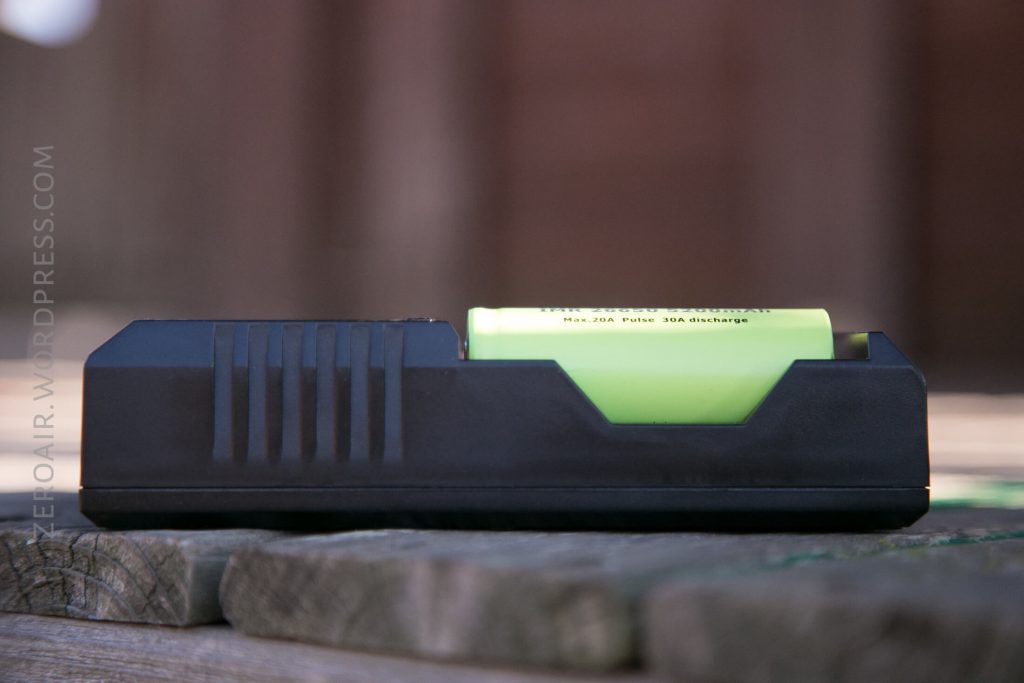
The outside two bays are specifically designed to fit 26650 cells. The inside two bays will absolutely not fit 26650 cells.
Conclusion
What I like
- Useful 3A charging. Also, 2A charging, which is where I’d land if I was looking to “fast charge” something.
- Simple UI
- Ramping current selection is handy
- Multiple chemistry support
What I don’t like
- I just don’t like that there’s an external wall wart. The unit seems large enough to contain it, as other similar devices do.
- No analysis capability
- No USB out
Notes
- This item was provided by Illumn.com for review. I was not paid to write this review.
- This content originally appeared at zeroair.org. Please visit there for the best experience!
- For flashlight-related patches, stickers, and gear, head over to PhotonPhreaks.com!
- Use my amazon.com referral link if you’re willing to help support making more reviews like this one!
- Please support me on Patreon! I deeply appreciate your support!
Pingback: SkyRC MC3000 Analyzing, Programmable Charger Review – ZeroAir Reviews
Pingback: Adeaska VC4 Plus Charger Review – ZeroAir Reviews
Pingback: SkyRC MC3000 Analyzing, Programmable Charger Review - ZeroAir Reviews