
Lumintop Ant Brass Flashlight Review
The Lumintop Ant Brass flashlight has a single Cree XP-G2 emitter and a shallow orange peel reflector. This brass light uses an AAA cell.
Official Specs and Features
Here’s a link to the Lumintop Ant Brass Flashlight product page.
Versions
There are a few versions of this light. Two bodies: Stainless steel and brass (seen here). I was fairly sure there was a Nichia version, but I can’t see that now. What I have is a Cree.
Price
Going price looks to be $35.95.
Short Review
I like brass, I like AAA, and I like side switch lights. This one hits a bunch of checkmarks for me. I do wish the Nichia version manifest, and the user interface could probably be a little better, but I’m very happy with this light!
Long Review
The Big Table
| Lumintop Ant Brass | |
|---|---|
| Emitter: | Cree XP-G2 (R5) |
| Price in USD at publication time: | $35.95 |
| Cell: | 1xAAA |
| Turbo Runtime | |
| LVP? | Warning |
| Switch Type: | E-Switch |
| Quiescent Current (A): | ? |
| On-Board Charging? | No |
| Claimed Lumens (lm) | 120 |
| Claimed Throw (m) | 46 |
| Candela (Calculated) in cd (at 30s) | 122lux @ 2.623m = 839cd |
| Throw (Calculated) (m) | 57.9 (125.9% of claim)^ |
| All my Lumintop reviews! | |
^ Measurement disclaimer: Testing flashlights is my hobby. I use hobbyist-level equipment for testing, including some I made myself. Try not to get buried in the details of manufacturer specifications versus measurements recorded here; A certain amount of difference (say, 10 or 15%) is perfectly reasonable.
What’s Included
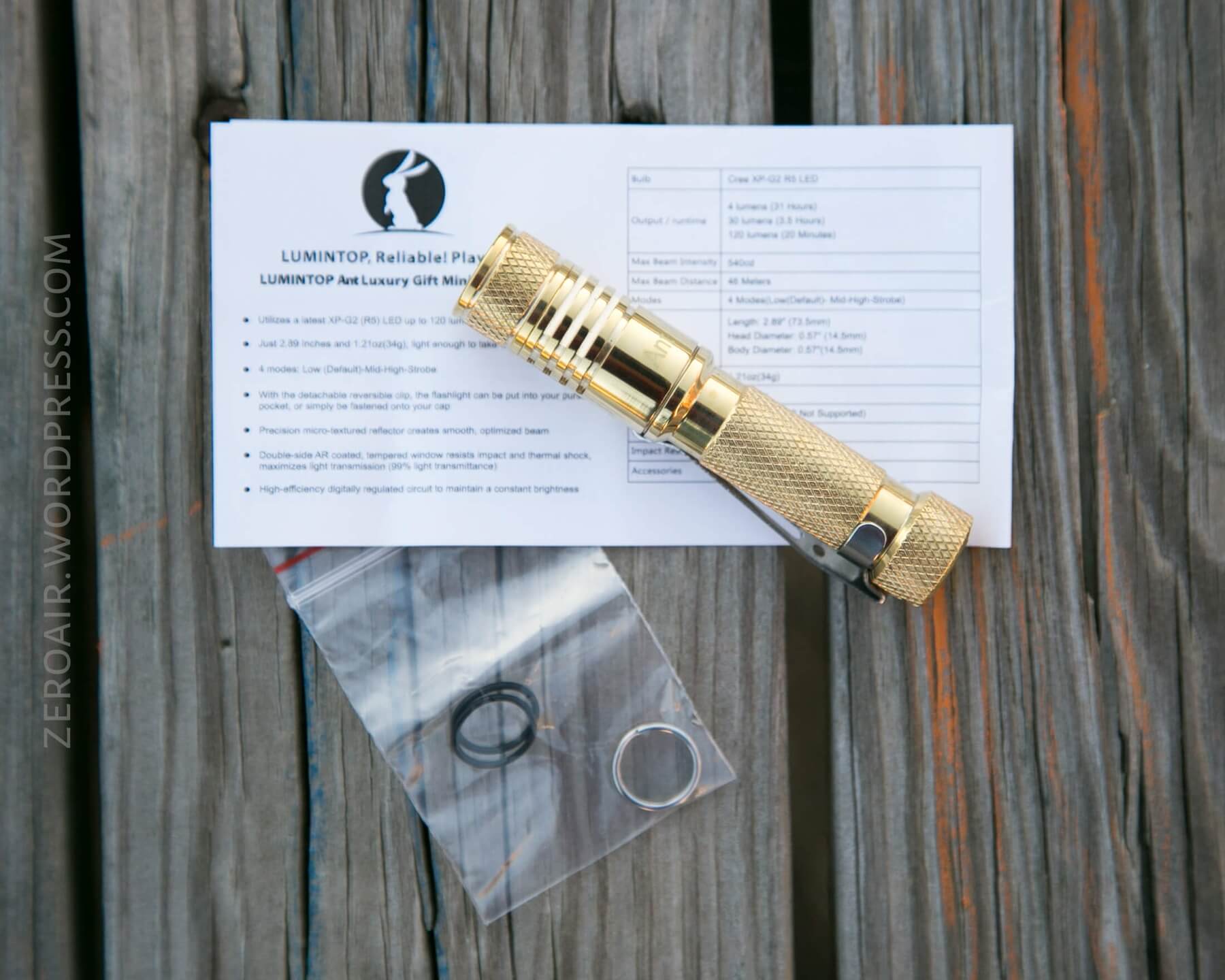
- Lumintop Ant Brass
- Spare o-ring (2)
- Split ring
- Manual
Package and Manual
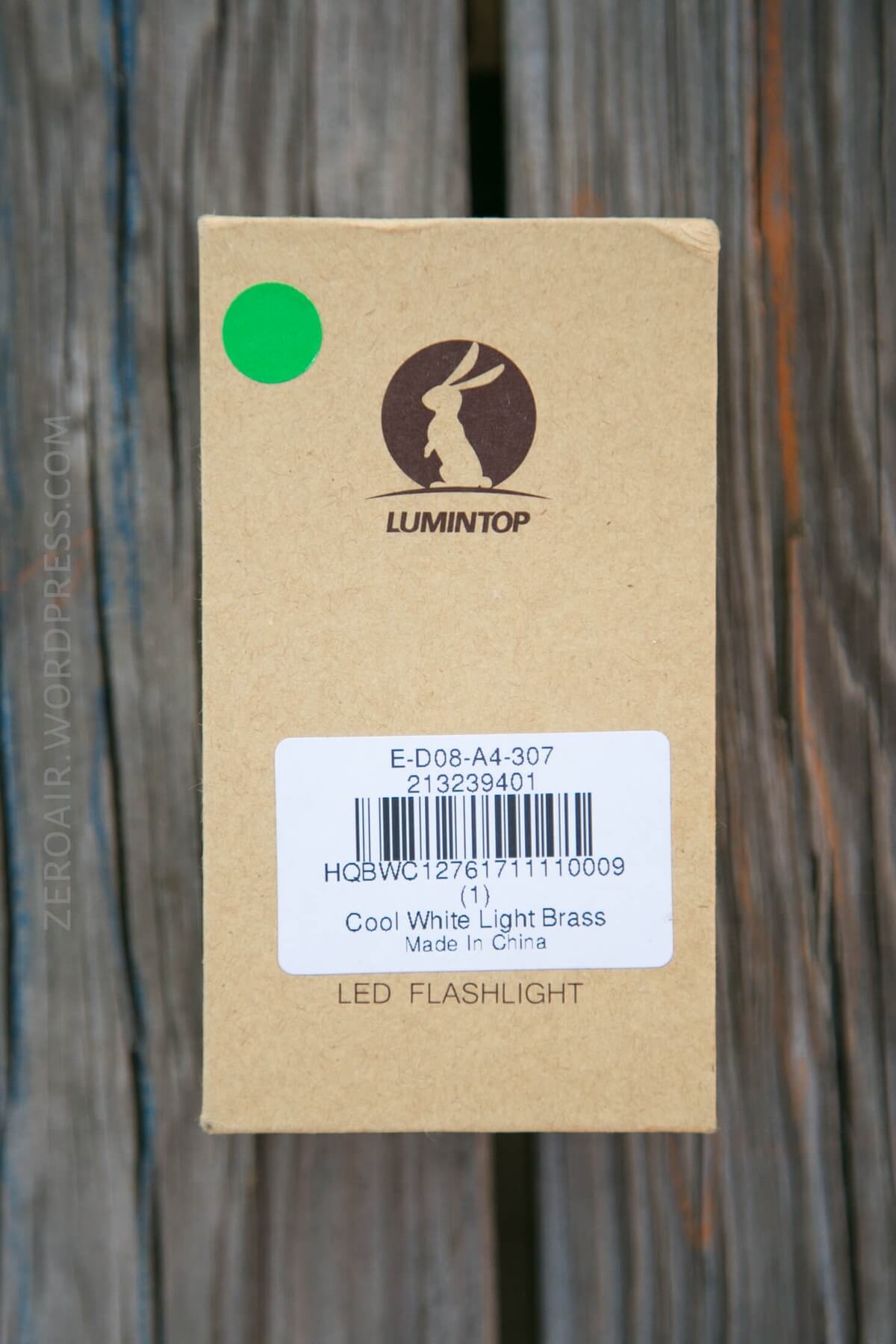
The Ant ships in a Lumintop-standard cardboard box. There are reliefs that make opening the box very easy.
Inside, and to my surprise, the raw brass light is in a sealed foil pouch to prevent oxidation of the light before it reaches the end-user. This is a nice tough! I can say that after a while of using the light, the finish is still basically pristine.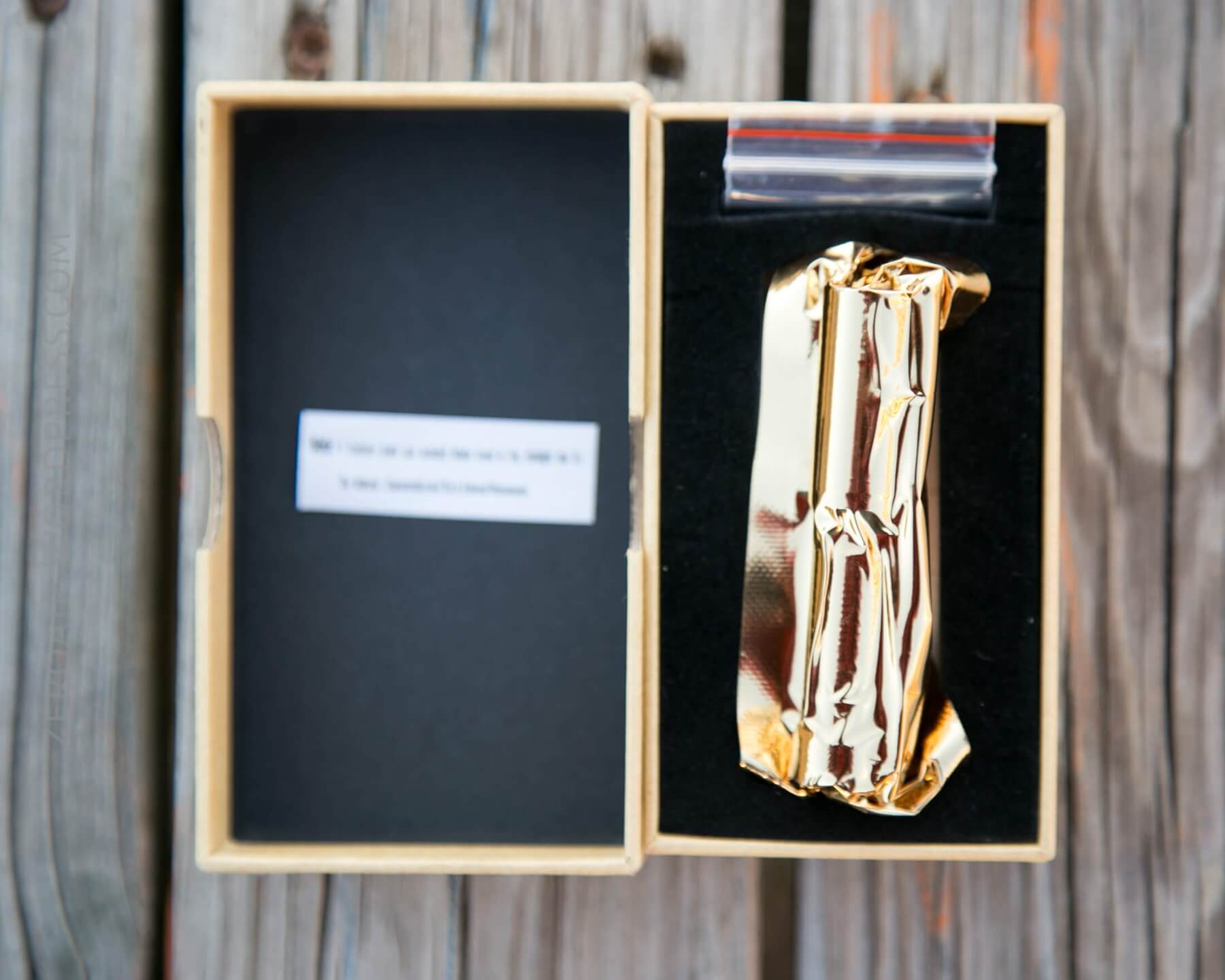
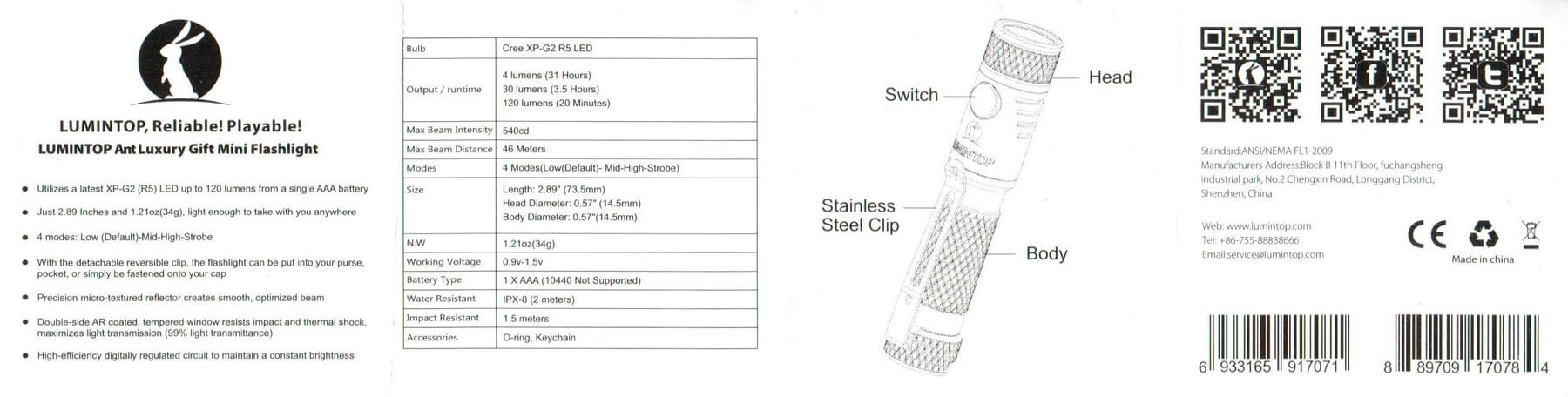
The manual is a long slip of paper in English and Chinese. It’s not a bad manual. Descriptive and to the point.
Build Quality and Disassembly
I’m very pleased and a little surprised at the build quality of the Ant. I hadn’t handled a Lumintop Tool, but I got the impression they lacked a bit in build quality. This Ant does not – it’s great. Great finish, smooth threads, a nice big spring on the negative end, great cell fitment. Just overall nice quality light.
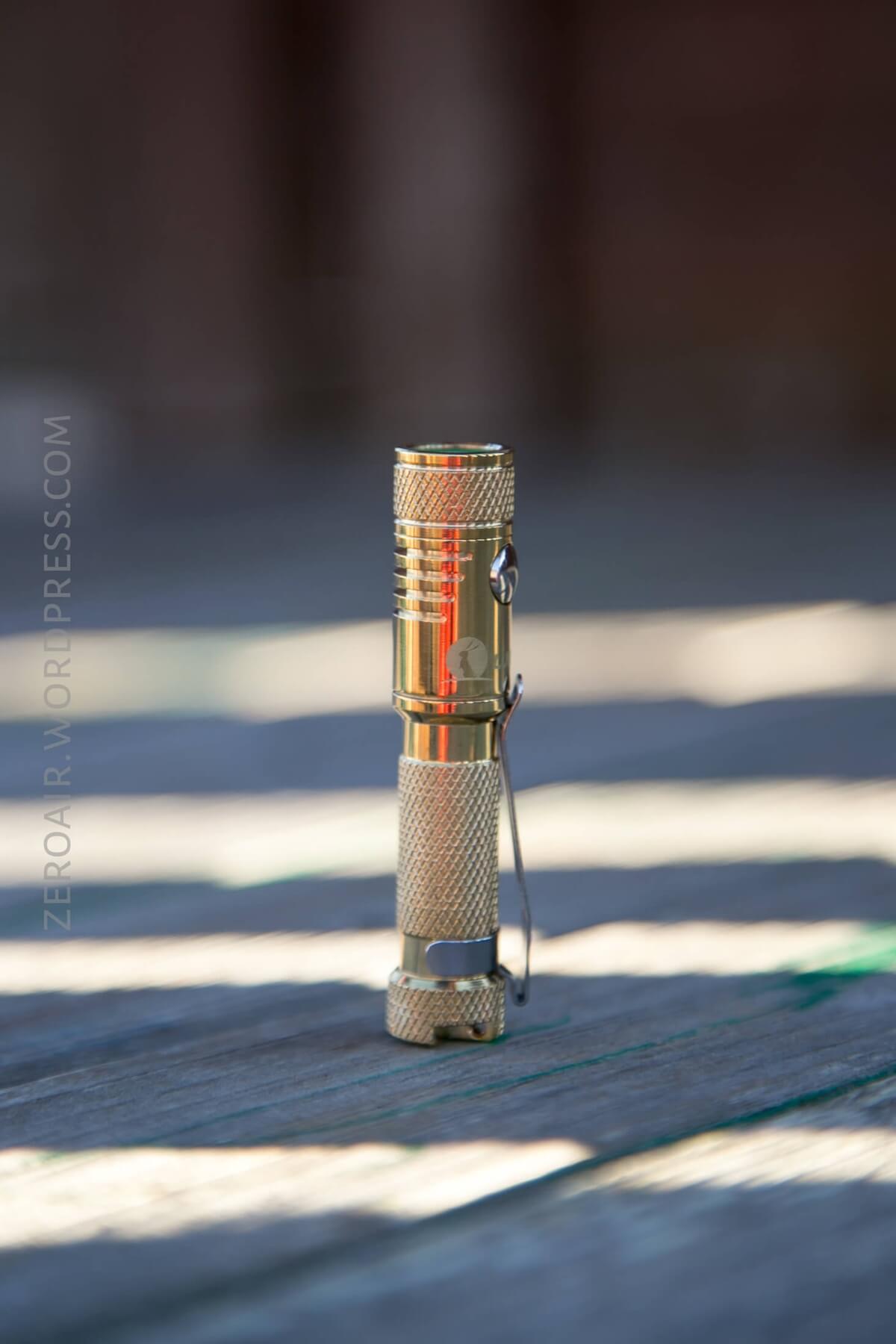
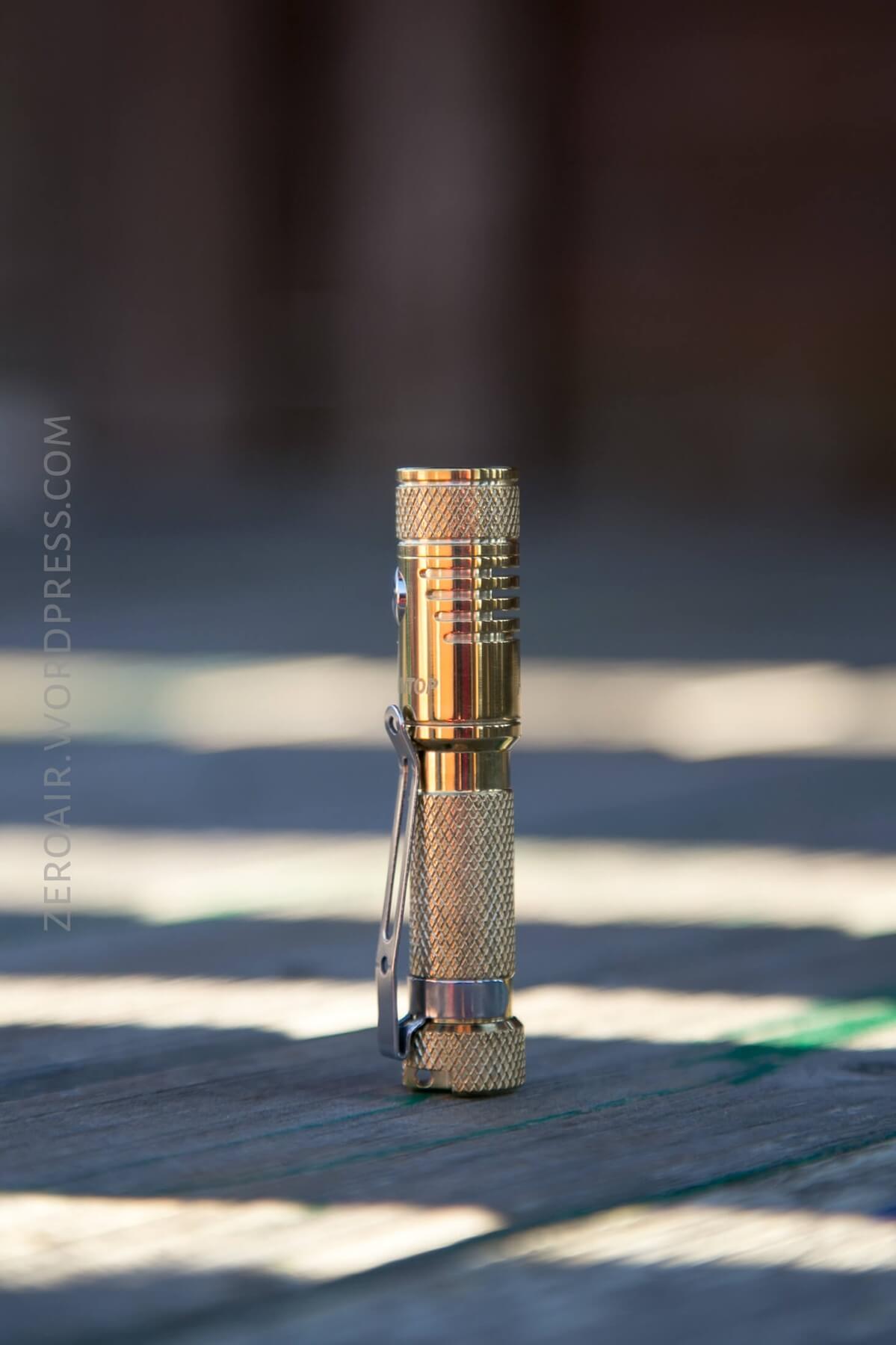
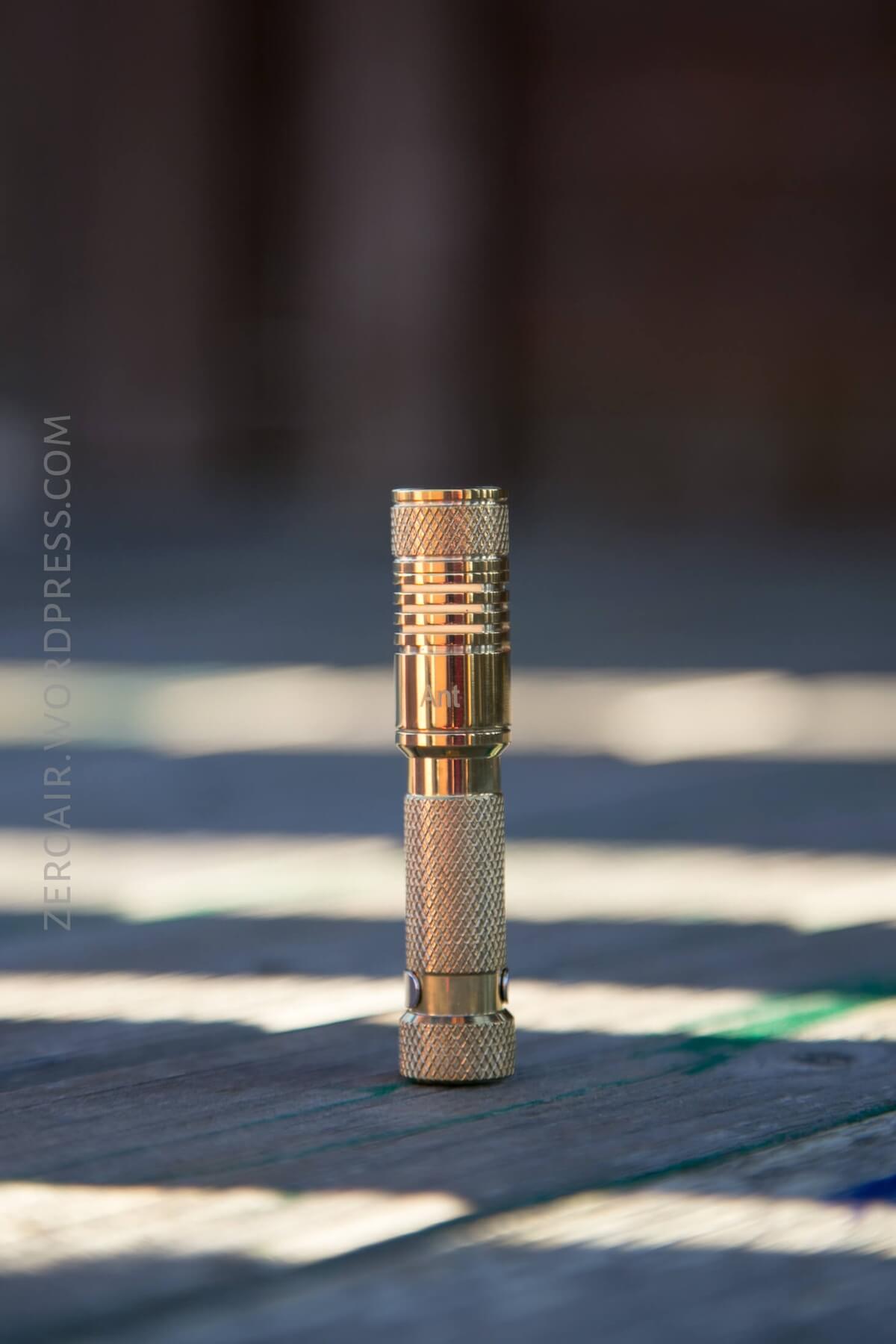
The tritium vial is nicely fit, too. There isn’t a sealing layer of Norland over it, but the slot the tritium fits in is perfect.
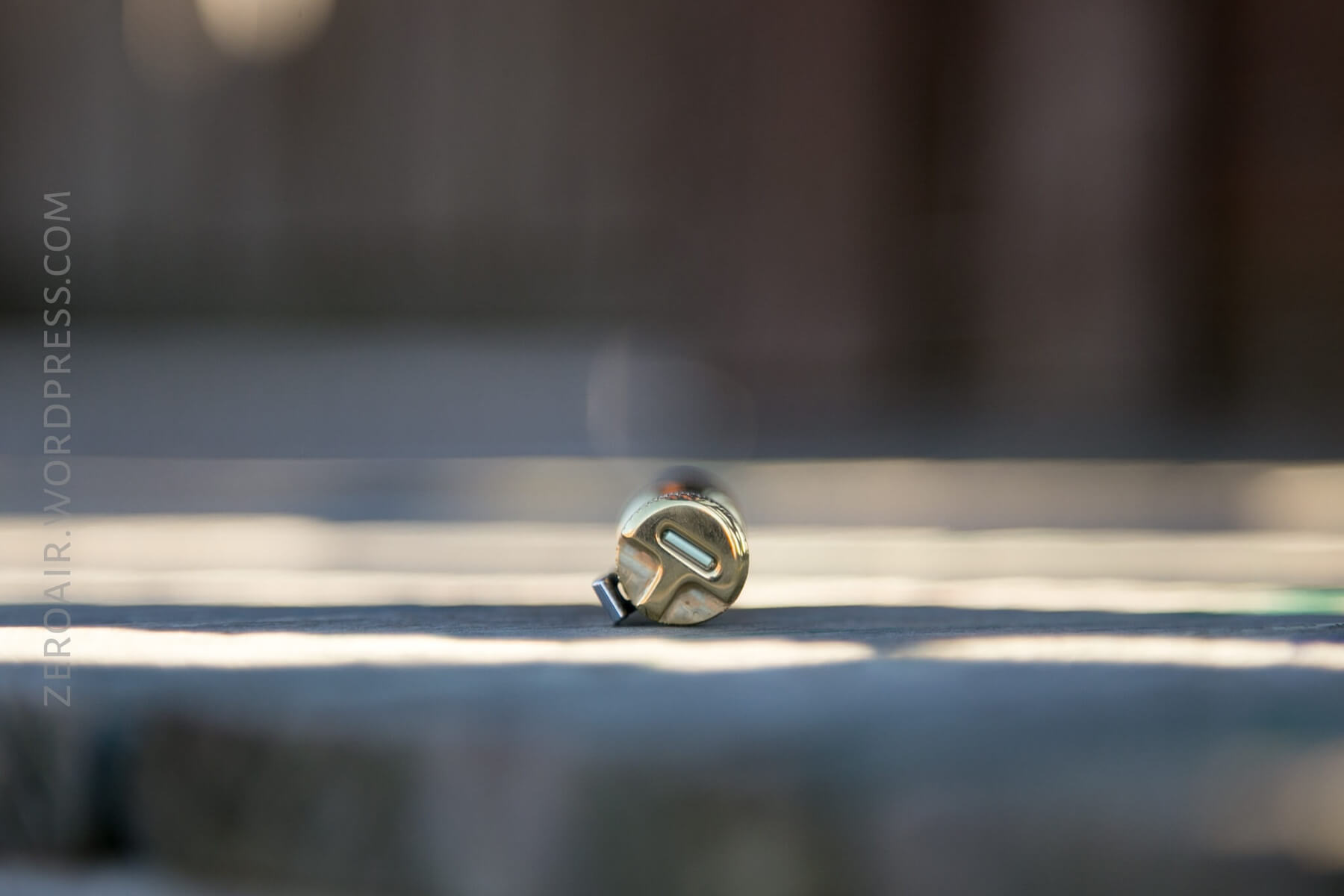
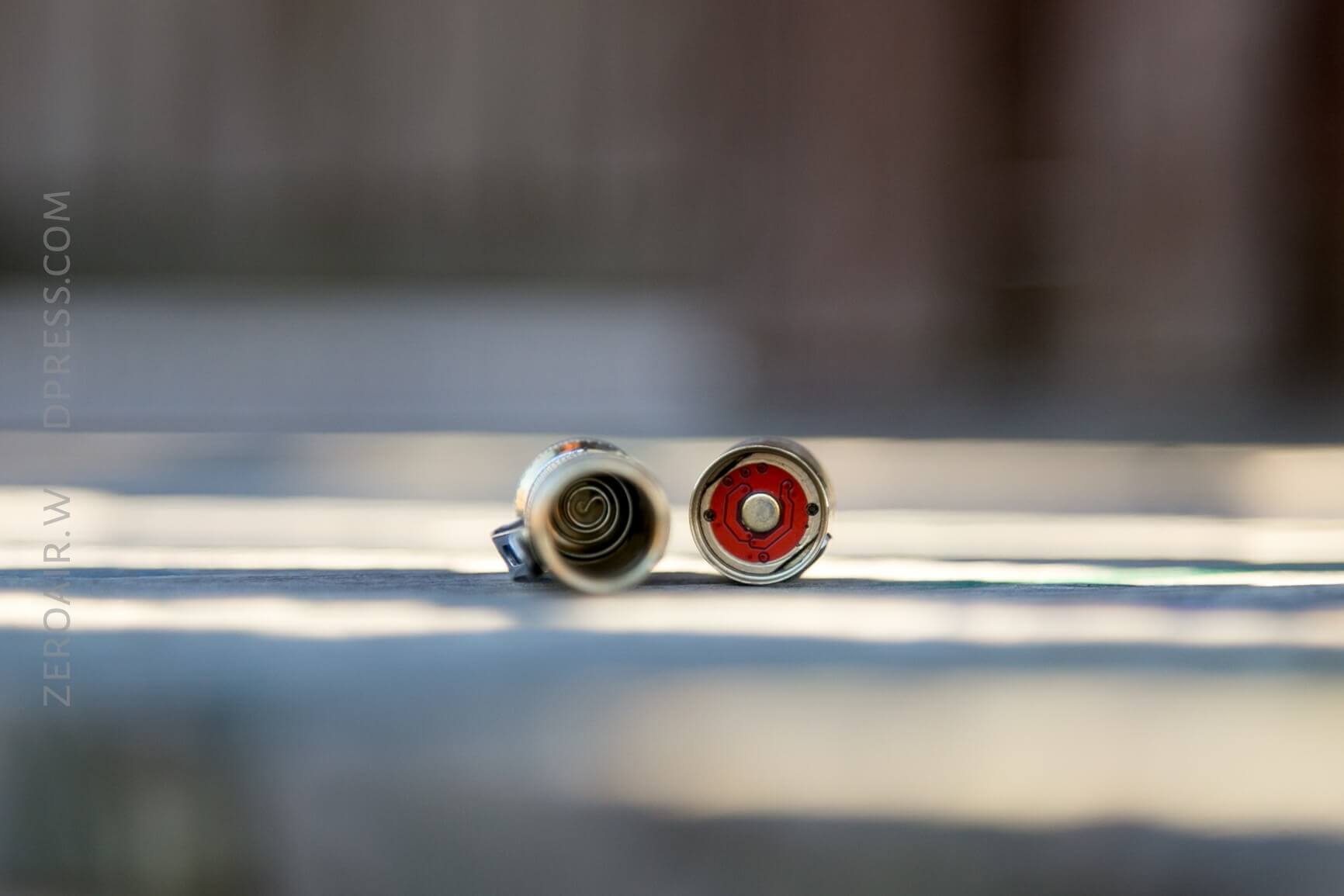
The light unscrews as follows. The driver looks to be threaded in, but I didn’t attempt to remove it. There appear to be two holes perfect for tweezers placement, for removing that driver. It would be a worthwhile effort in this little light, being that it’s Cree (and not Nichia…)


Size
14.5mm x 73.5mm is the official size of the Ant Brass. It’s a small light indeed!
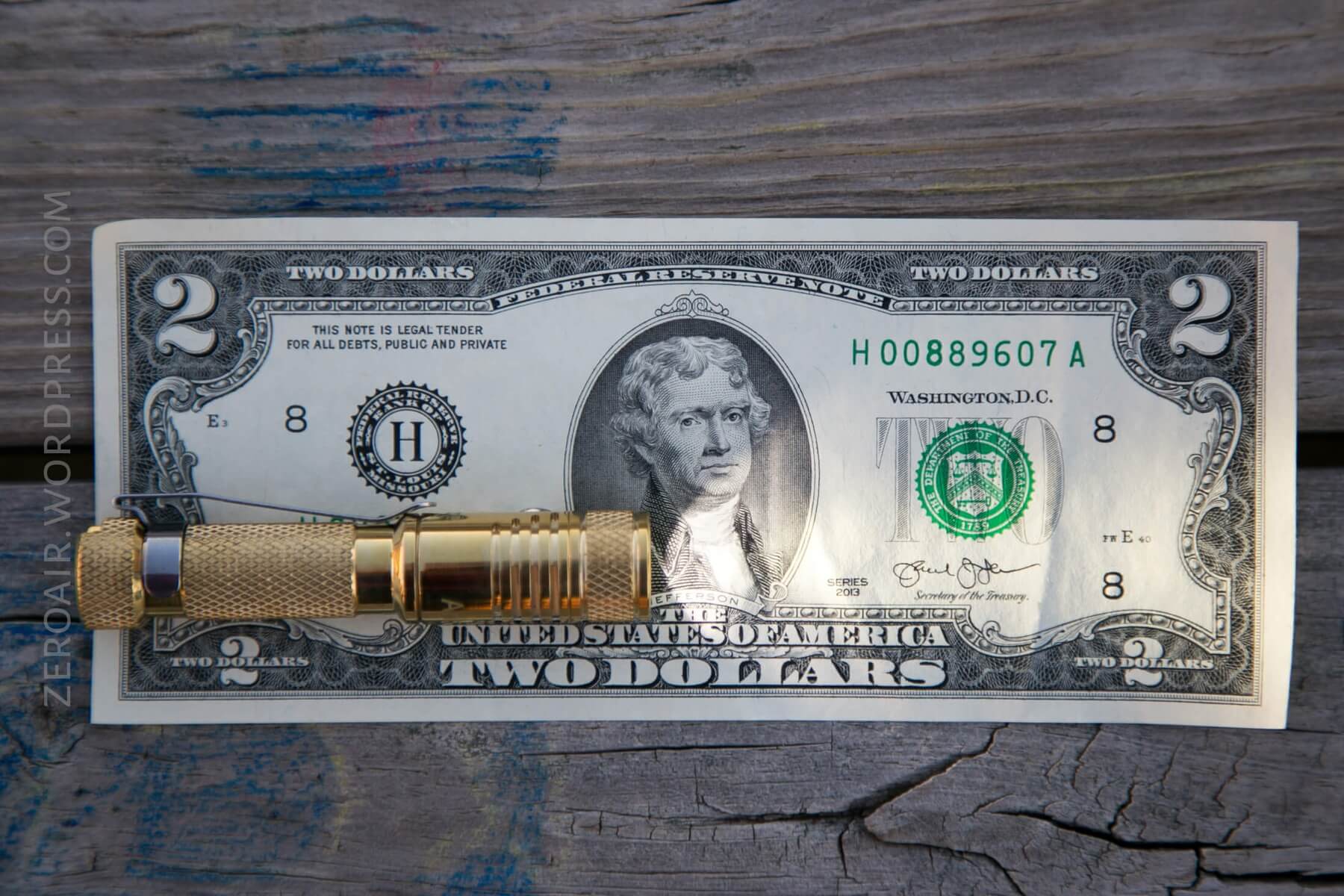
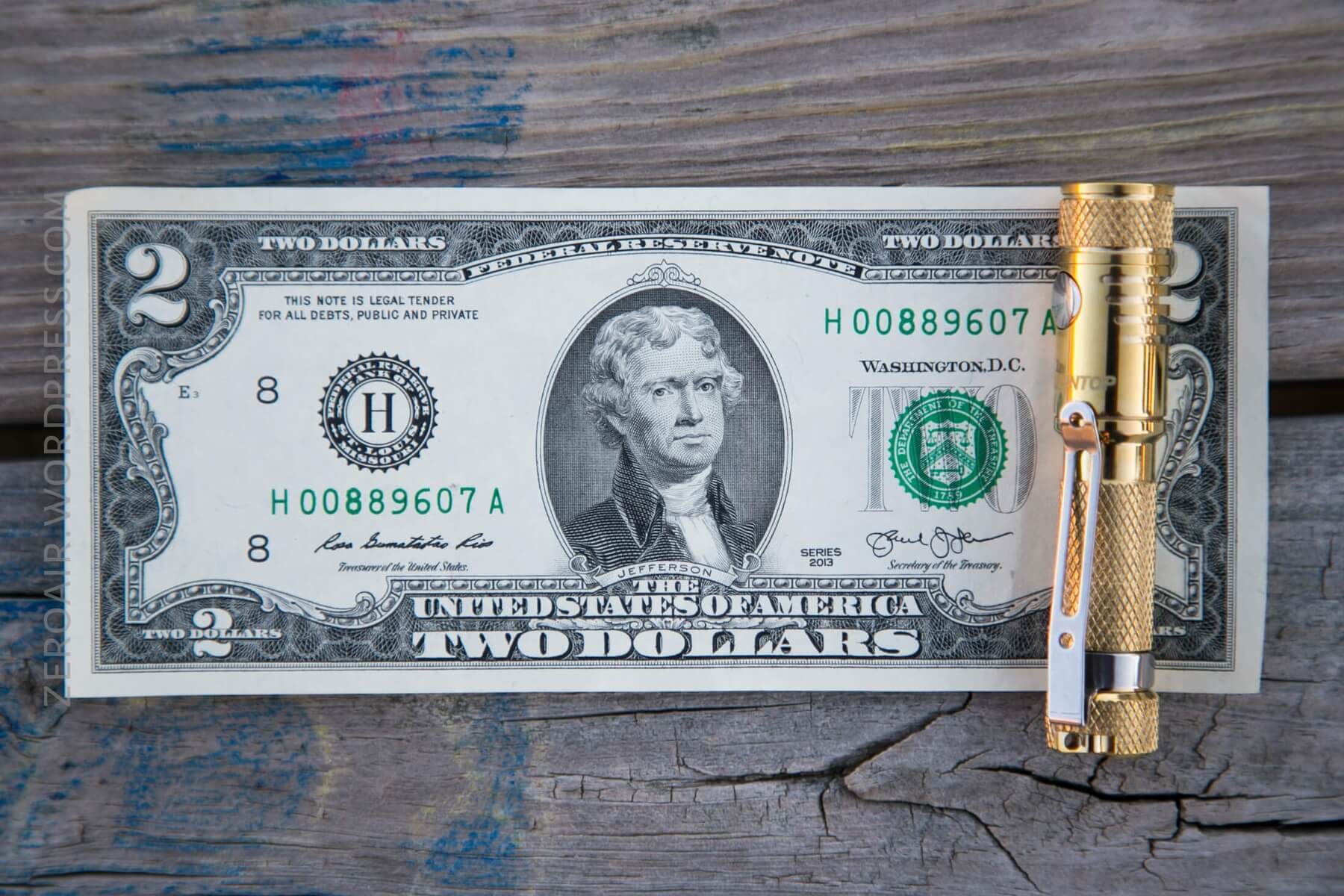
Not the smallest AAA light I have, though. Here it is beside the Olight I3E Brass.
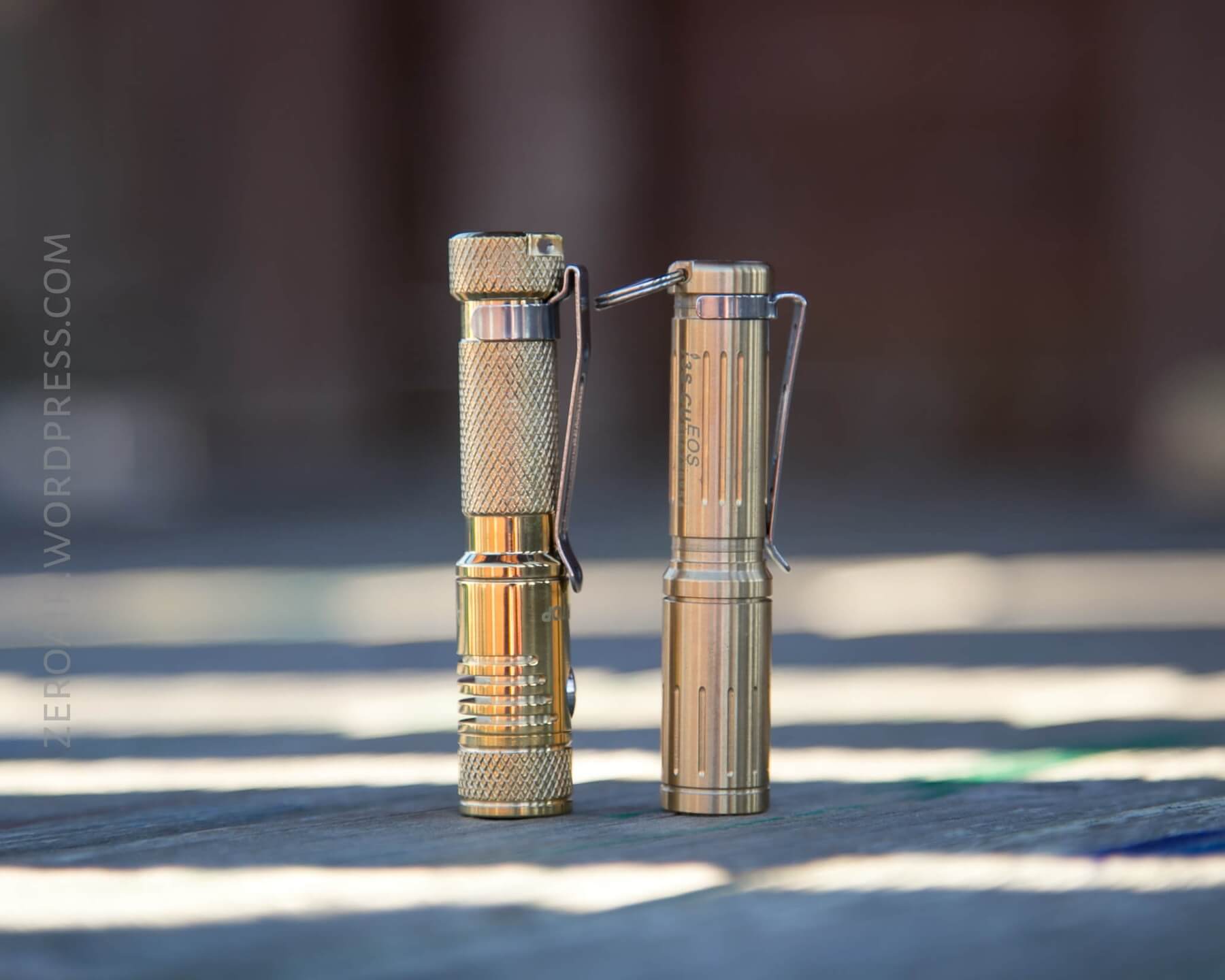
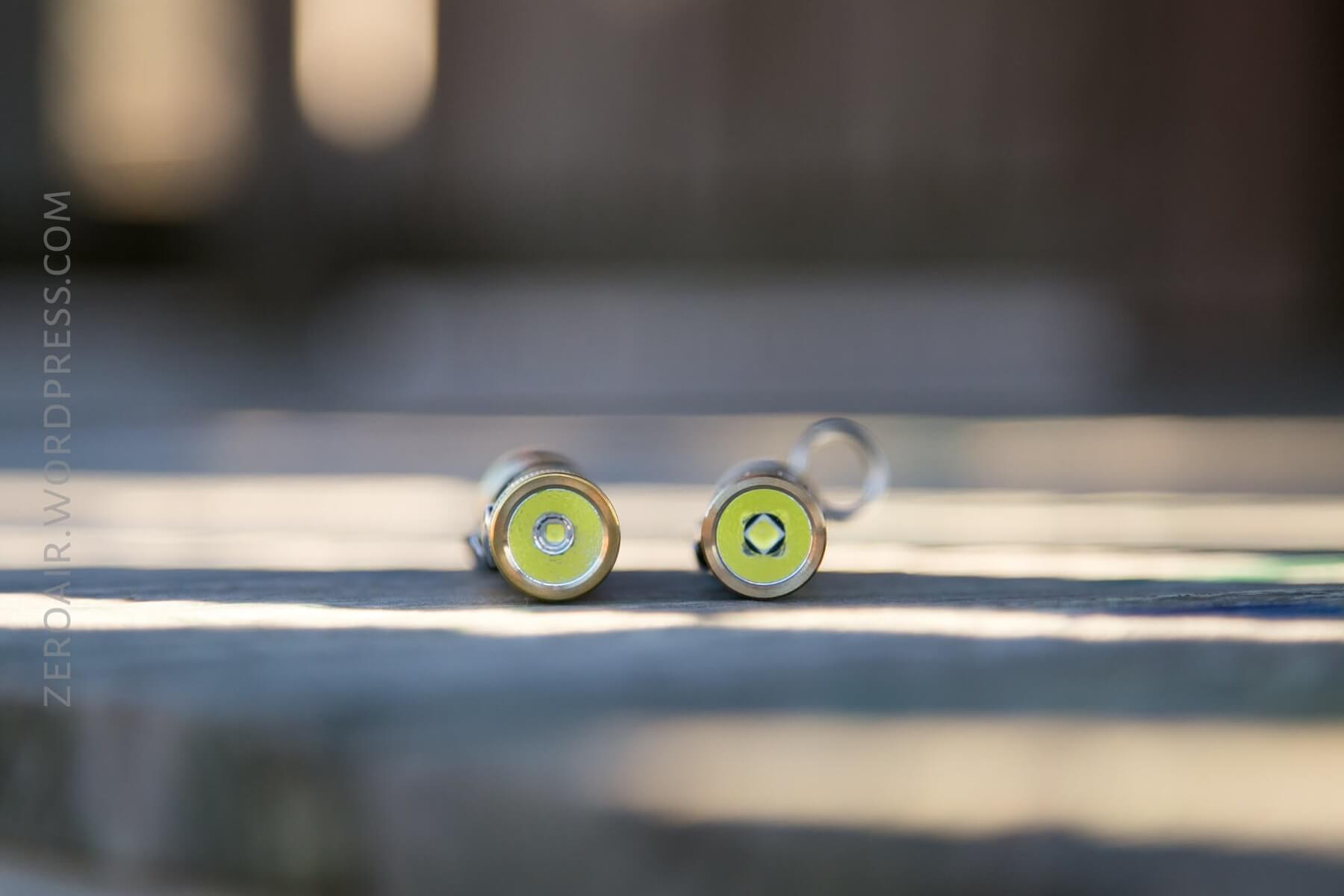
Retention
There’s a friction-fit stainless clip on the tail end of the Ant. That clip may be reversed to the head end, but that affords a much shallower carry. The clip is very sturdy and snug, but the mouth isn’t quite big enough for my taste. That is to say, I have to help it into my pocket when I’m clipping it.
No other means of carry are provided for the Ant.
Power
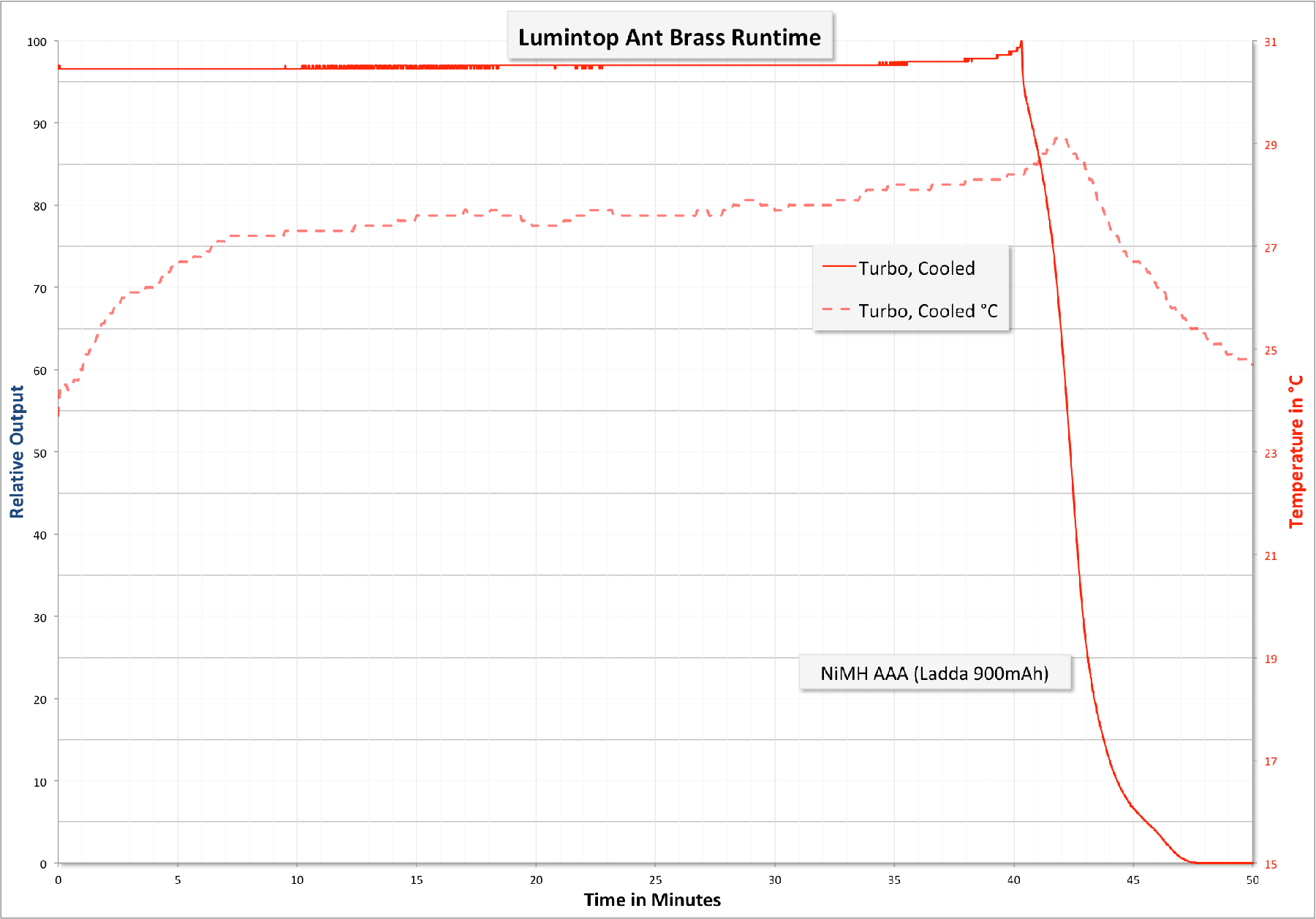
Testing was done with a single AAA, a Ladda 900mAh from Ikea. (Sidenote: I love these cells. Buy them.)
Output can be seen below, on high. The light is ridiculously stable – in fact, the most stable I can recall.
User Interface and Operation
There’s a switch on the light – a side e-switch. The button is big, especially for this small light. The user interface is simple (but unusual), too, with just four modes. The e-switch is a little weird. It mimics a forward clicky from off, but a reverse clicky if the light is on. The user interface is as follows:
Click for on (always low). Click to advance modes (L>M>H>Off). Yes, the modes must be cycled to reach off. To reach Strobe, enter Low, and hold the switch. Click to revert to low. Strobe may only be entered from Low (!!). There are no more options for the user interface. (IE double click does nothing, long press does nothing except in low, etc).
Modes
| Mode | Mode Claimed Output (lm) | Claimed Runtime | Mode Measured Lux | Tailcap Amps |
|---|---|---|---|---|
| Low | 4 | 31h | 66 | 0.01 |
| Medium | 30 | 3.5h | 566 | 0.13 |
| High | 120 | 20m | 2270 | 0.64 |
LED and Beam
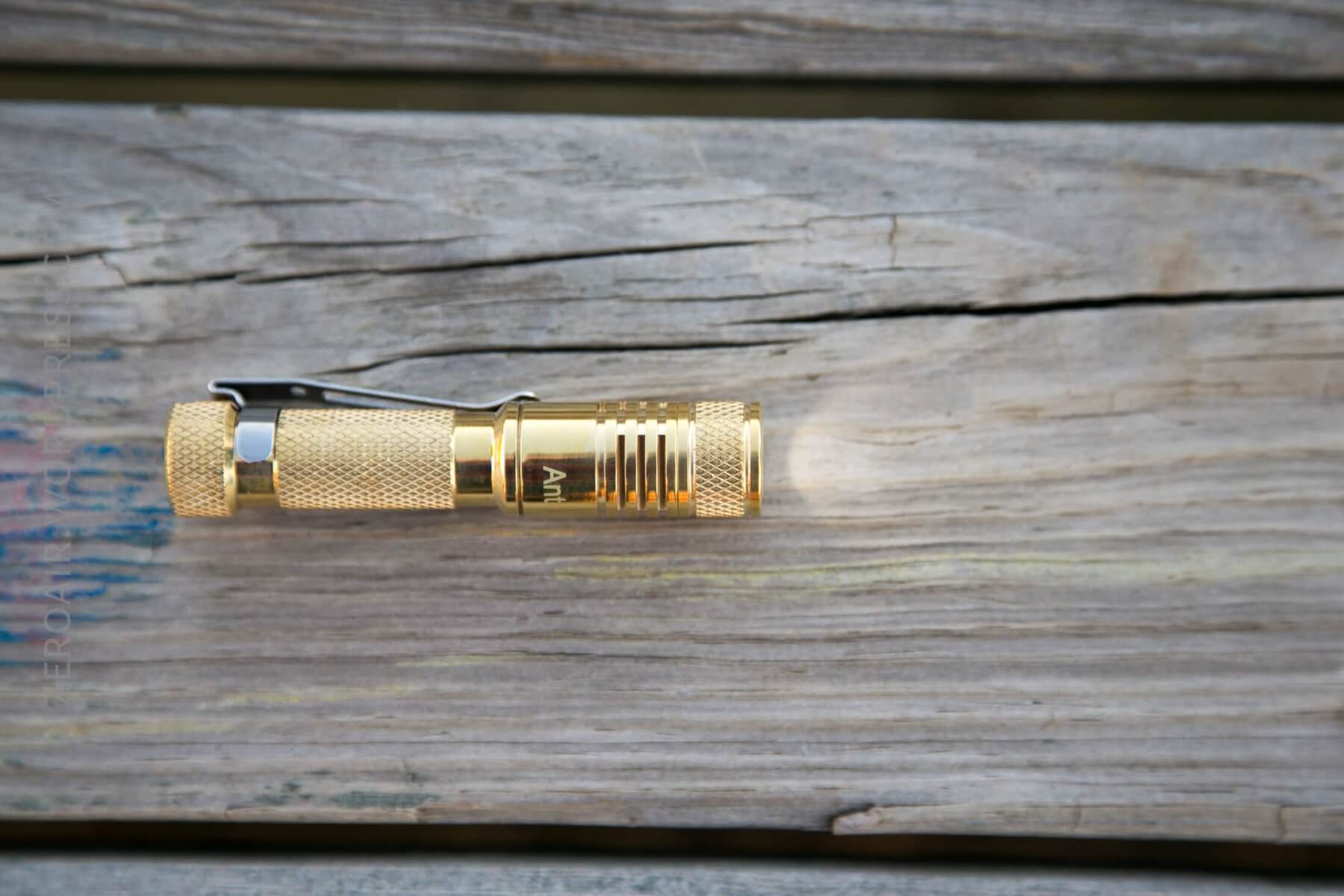
Lumintop put a Cree XP-G2 in this light. I strongly prefer very warm emitters in brass lights, so maybe one day we’ll see this light with a 3500K Nichia or something similar, but this is ok. The reflector is orange peel, but the beam pattern is surprisingly spotty (very much a TIR type profile, which I do love).

Beamshots
These beamshots always have the following settings: f8, ISO100, 0.3s shutter, and manual 5000K exposure. These photos are taken at floor level, and the beam hits the ceiling around 9 feet away.
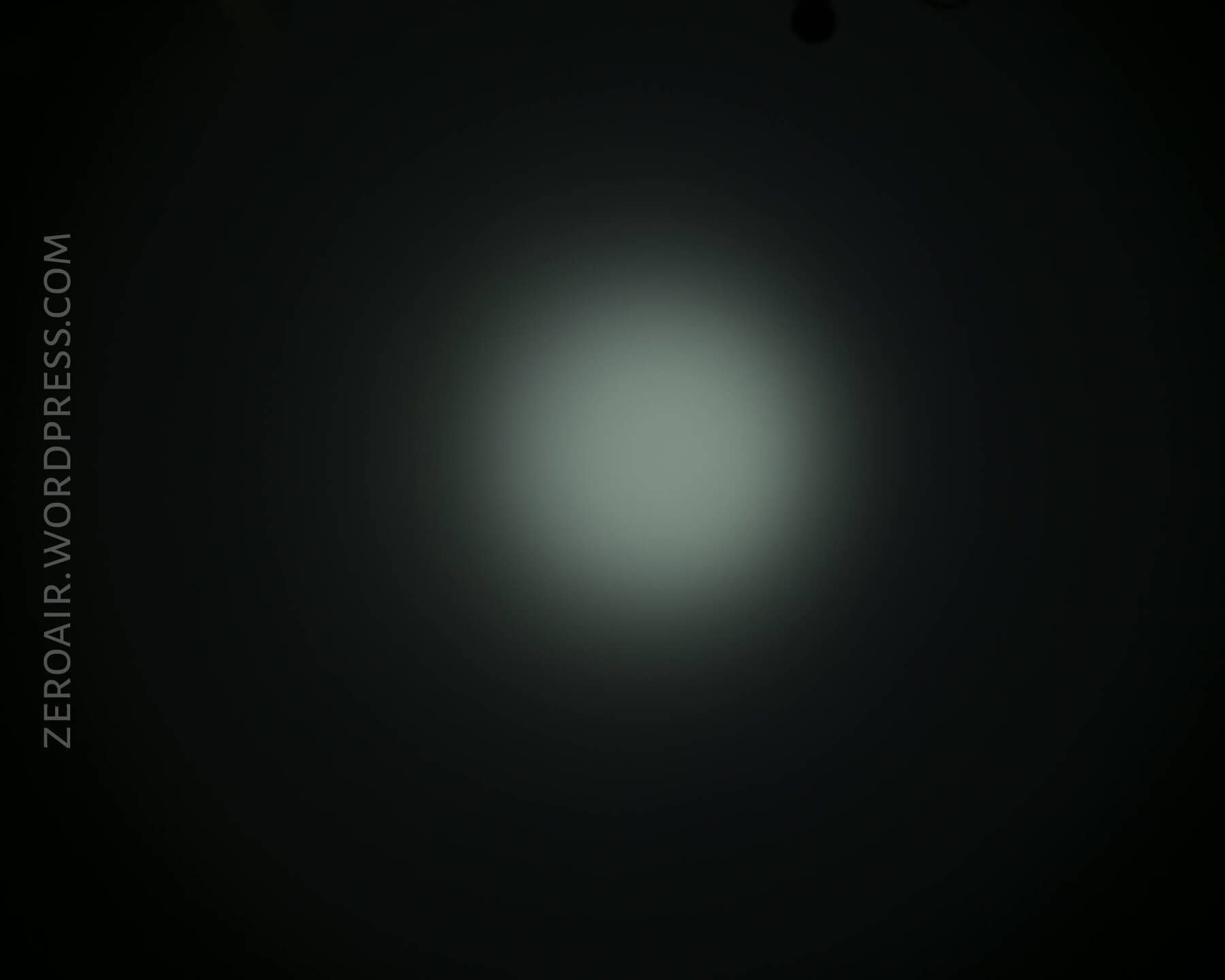
Tint vs BLF-348 (KillzoneFlashlights.com 219b version) (affiliate link)
I keep the test flashlight on the left and the BLF-348 reference flashlight on the right.

Random Comparisons and Competitive Options
Here’s a relevantly filtered page on parametrek.com. There are really quite a few options in this class. A good example would be the JETBeam E01R. I haven’t tested this light, but I did test the E10R version, and I was generally impressed. It’s not available in brass, but it does come with onboard charging, which is a great addition. And I generally like JETBeams. Same emitter too, but that one’s behind a TIR. Either would be a great choice.
Conclusion
What I like
- Brass (and raw brass, too!)
- The side switch is nice and big, and easy to find and press
- Great build quality
- Tritium
- Stupidly stable output on high.
What I don’t like
- Really don’t care for the UI. But I like how hidden the strobe is.
- Cree XP-G2. Would be better with Nichia 219b/c.
- I’m not actually sure how raw the brass is. It looks verrrrry shiny.
Notes
- This light was provided by GearBest for review. I was not paid to write this review.
- This content originally appeared at zeroair.org. Please visit there for the best experience!
- Use my amazon.com referral link if you’re willing to help support making more reviews like this one!
- Please support me on Patreon! I deeply appreciate your support!