
Nitecore MT21C Flashlight Review
The Nitecore MT21C flashlight is a swivel-head flashlight, offering 18650 support and good output from the Cree XP-L HD. Read on for testing!
Official Specs and Features
Here’s a link to the Nitecore MT21C Flashlight product page.
Versions
There’s just one version of this light.
Price
Currently $59.95 at NitecoreStore.com.
Short Review
The angle head is a neat addition, and the loop holder to make this into a sort of lantern is neat. I like the magnet strength, but otherwise, this is a fairly basic light that fits into a niche that I’m not sure a lot of people would need.
Long Review
The Big Table
| Nitecore MT21C | |
|---|---|
| Emitter: | Cree XP-L HD (V6) |
| Price in USD at publication time: | $59.95 |
| Cell: | 1×18650 |
| Turbo Runtime | High Runtime |
| LVP? | No (Switch Warning) |
| Switch Type: | E-Switch |
| Quiescent Current (A): | ? |
| On-Board Charging? | No |
| Claimed Lumens (lm) | 1000 |
| Measured Lumens (at 30s) | 979 (97.9% of claim)^ |
| Claimed Throw (m) | 184 |
| Candela (Calculated) in cd (at 30s) | 305lux @ 5.679m = 9837cd |
| Throw (Calculated) (m) | 198.4 (107.8% of claim)^ |
| All my Nitecore reviews! | |
^ Measurement disclaimer: Testing flashlights is my hobby. I use hobbyist-level equipment for testing, including some I made myself. Try not to get buried in the details of manufacturer specifications versus measurements recorded here; A certain amount of difference (say, 10 or 15%) is perfectly reasonable.
What’s Included

- Nitecore MT21C
- Lanyard
- Nylon Pouch
- Pocket Clip
- Spare o-rings (2)
- Paperwork
Package and Manual

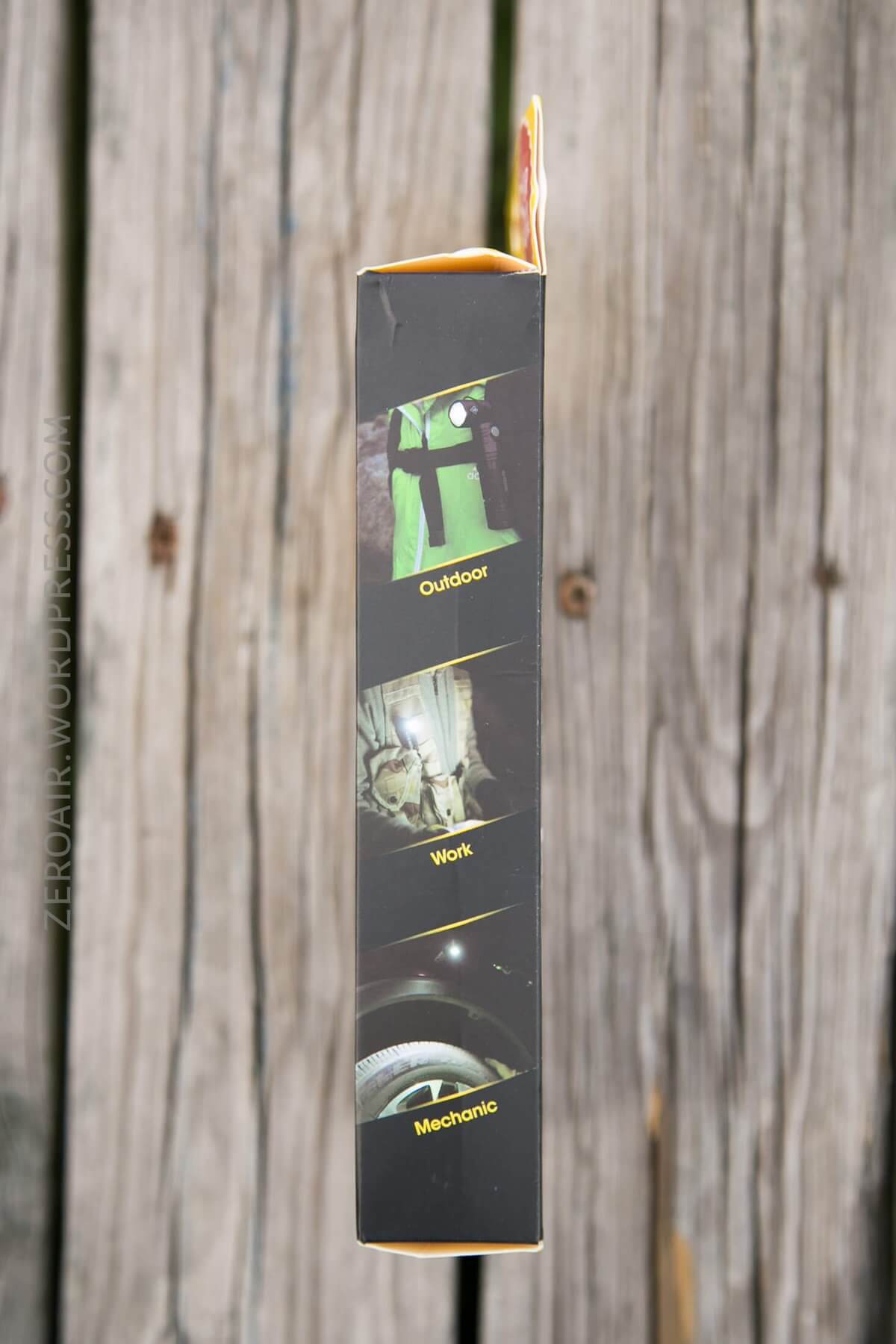
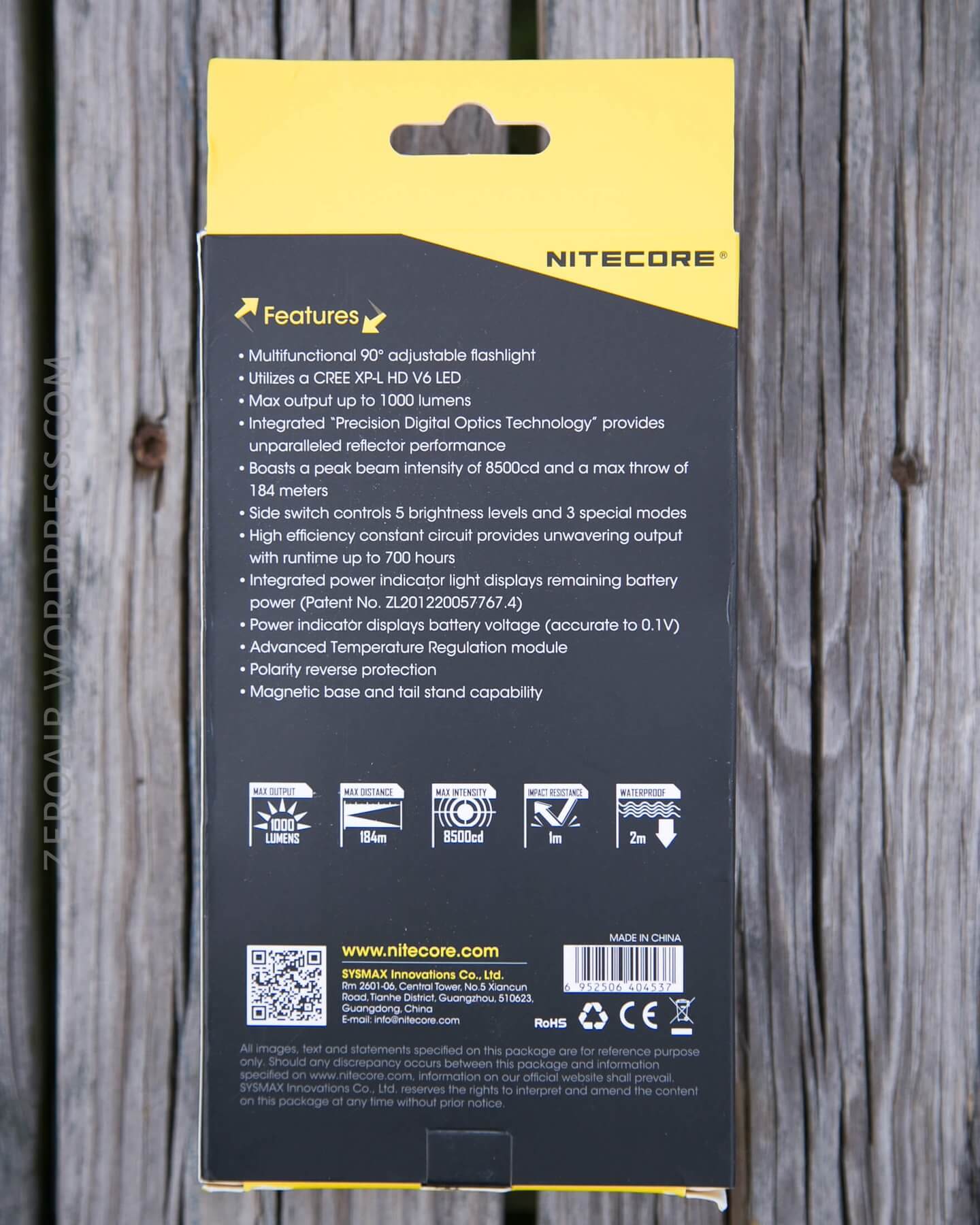
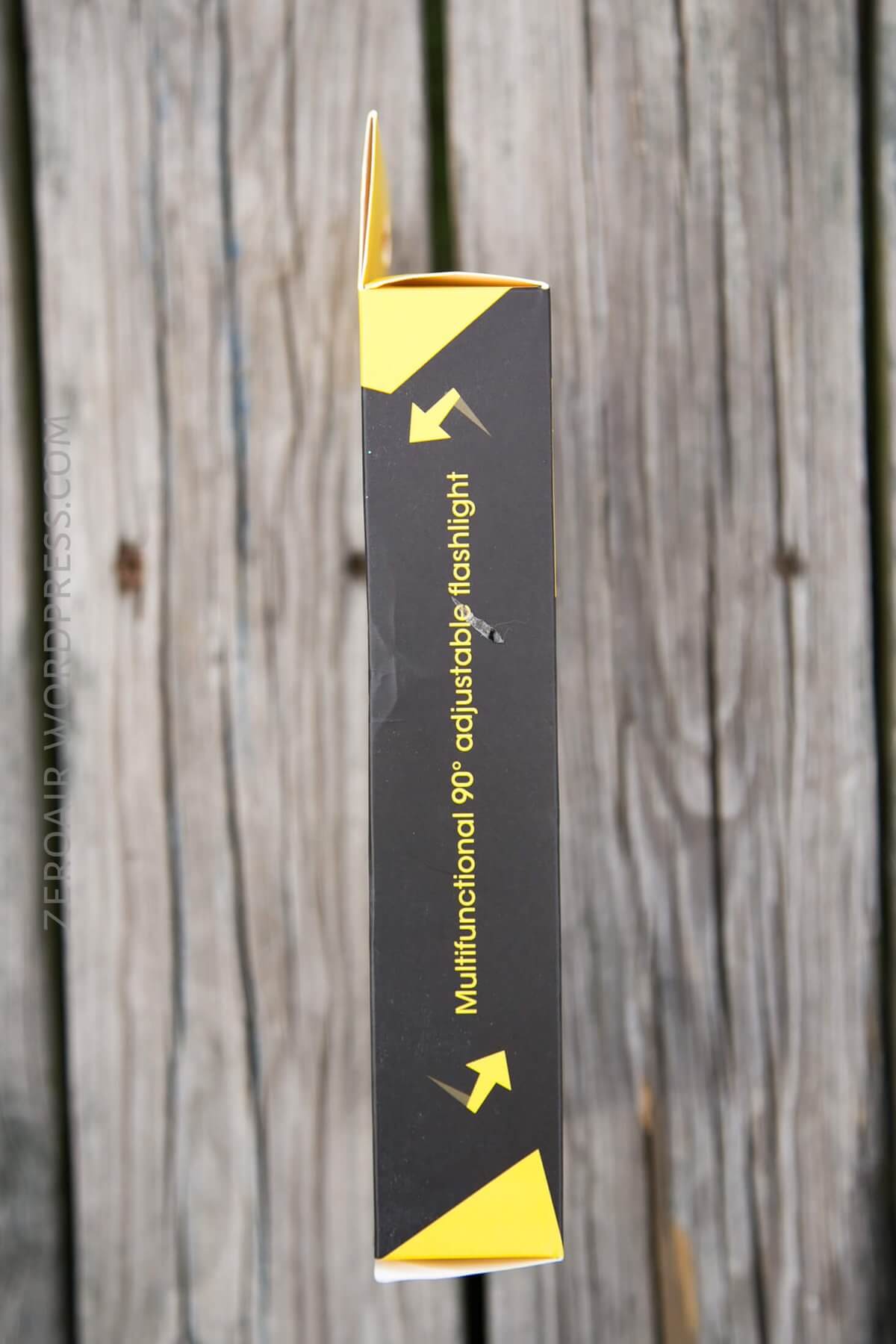
The manual is similarly good.
Build Quality and Disassembly
Build quality is good, as with most Nitecore lights. I like the knurling (flat diamond) in particular.

Generally, of course, it’s a black tube light. Pretty standard fare. I also really like that there’s no tailswitch. I like tailswitch lights (hello: BOSS), but just not in the “this light is so tactical here’s a tailswitch” kind of way. This light is a great answer to that.

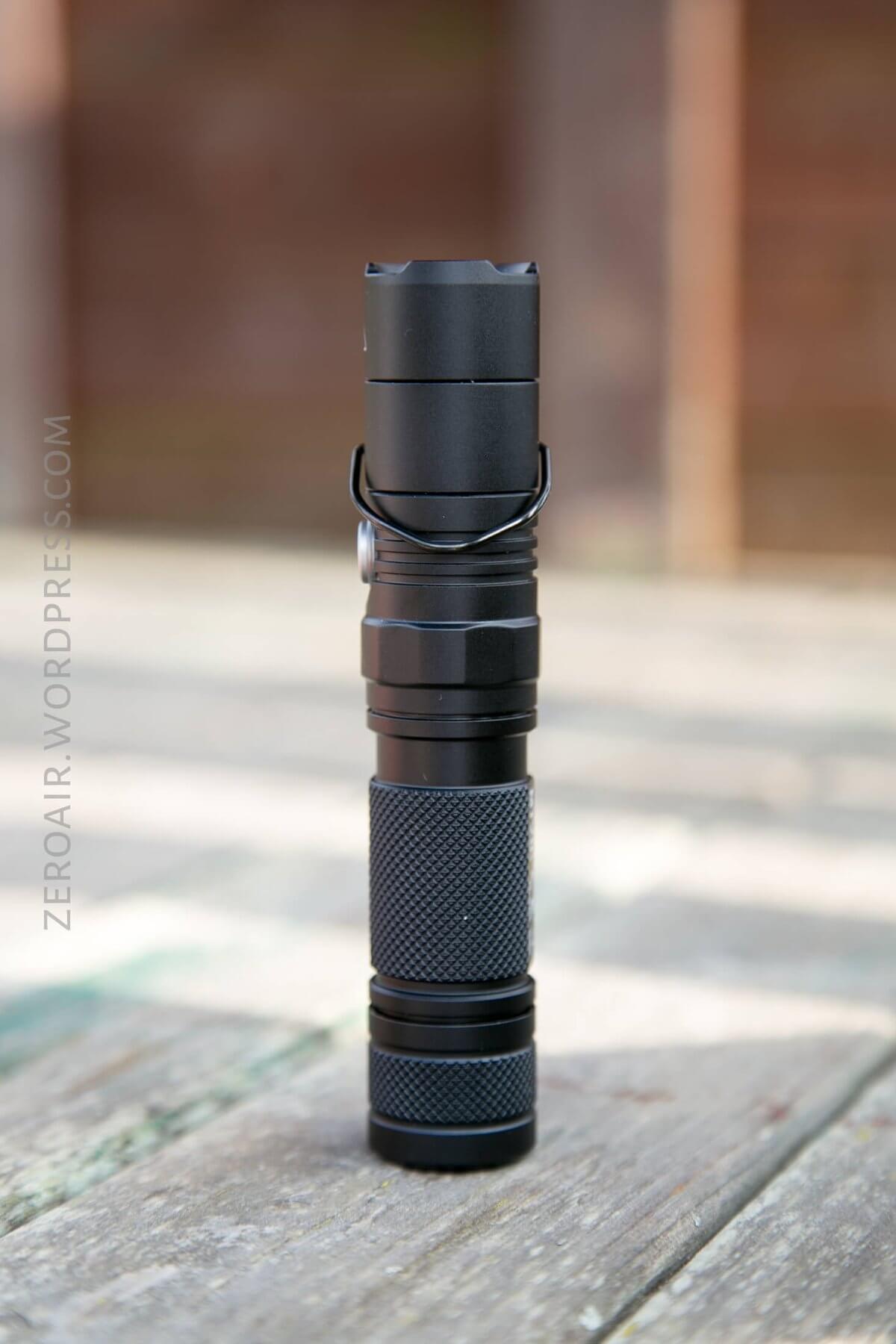
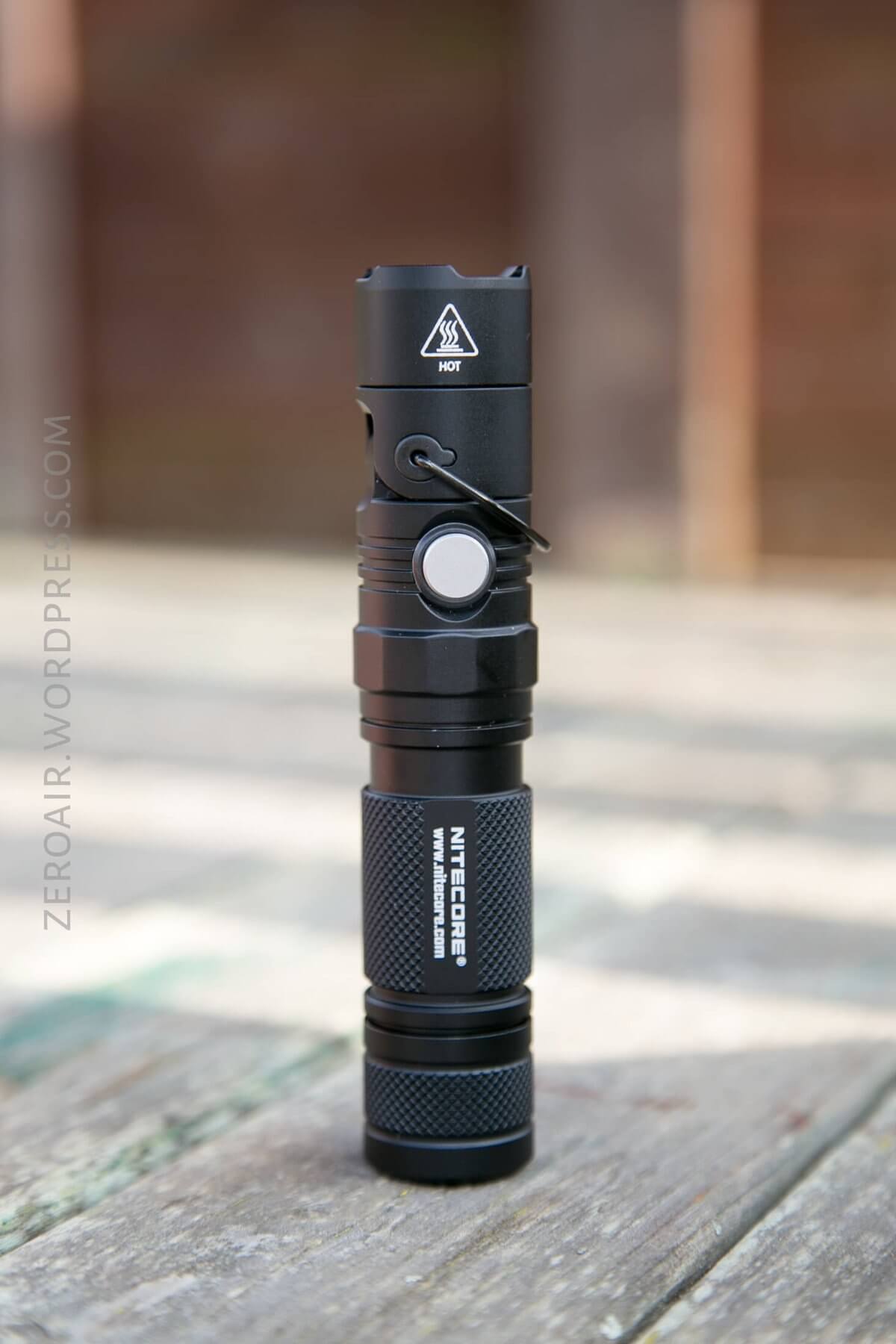

The lantern loop seems attached well, and furthermore, is easily removable. It’s just a spring fit attachment.

Of course, the real draw of this light is the angle head. It angles in 5 positions, from fully 90 degrees to fully 180 degrees (that is, straightforward). There are detents for each of these positions, and the light will reliably stay in any of them.
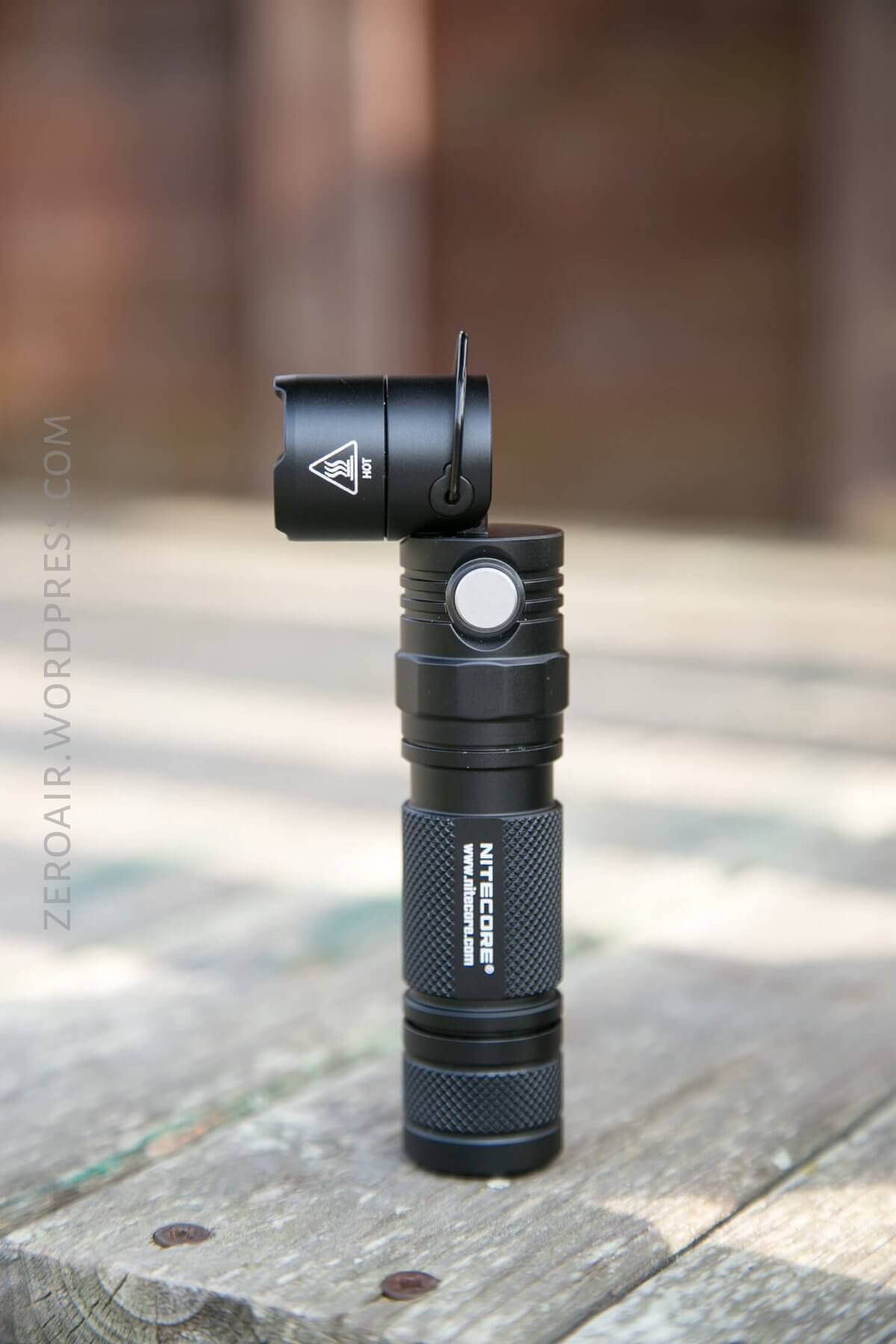
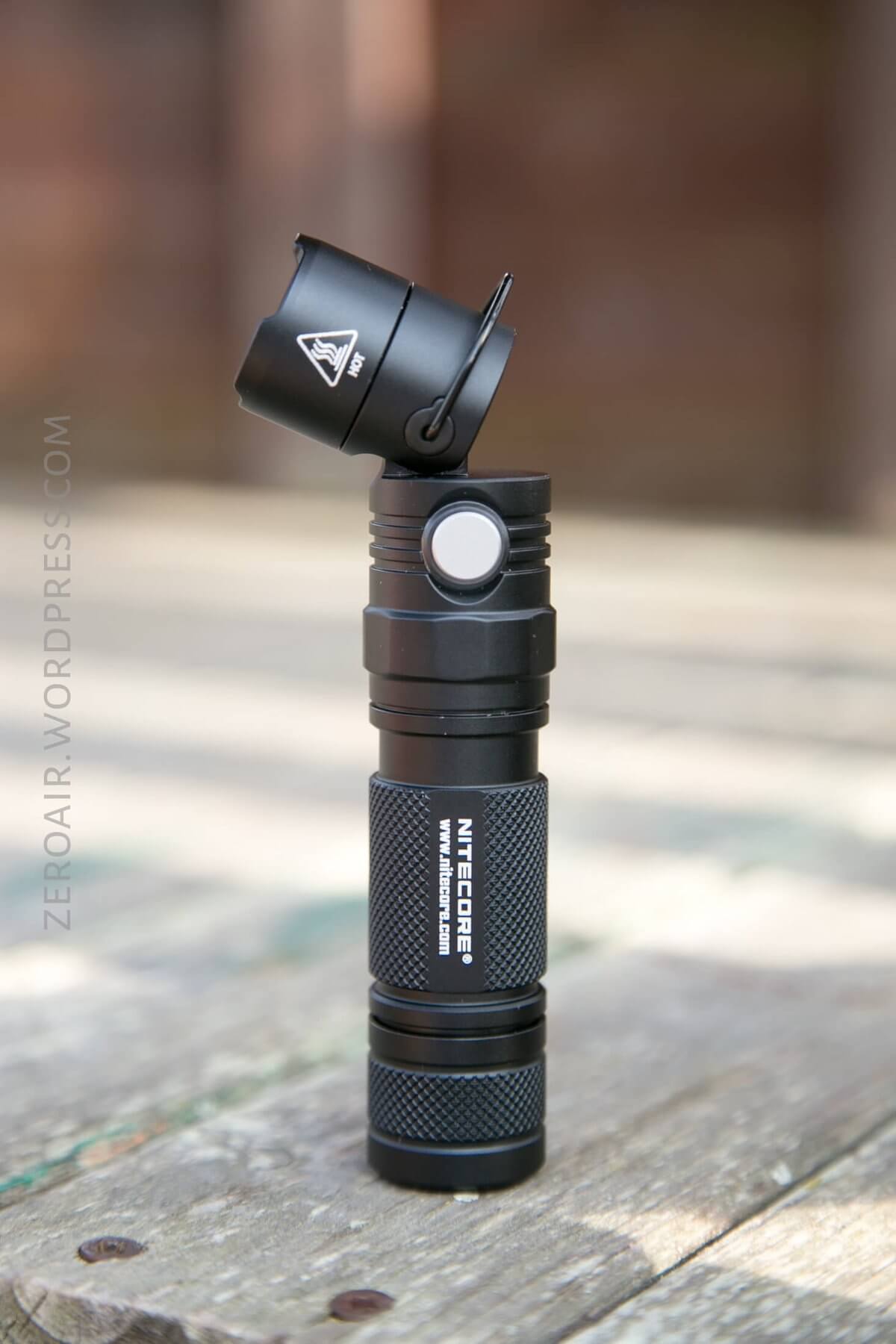

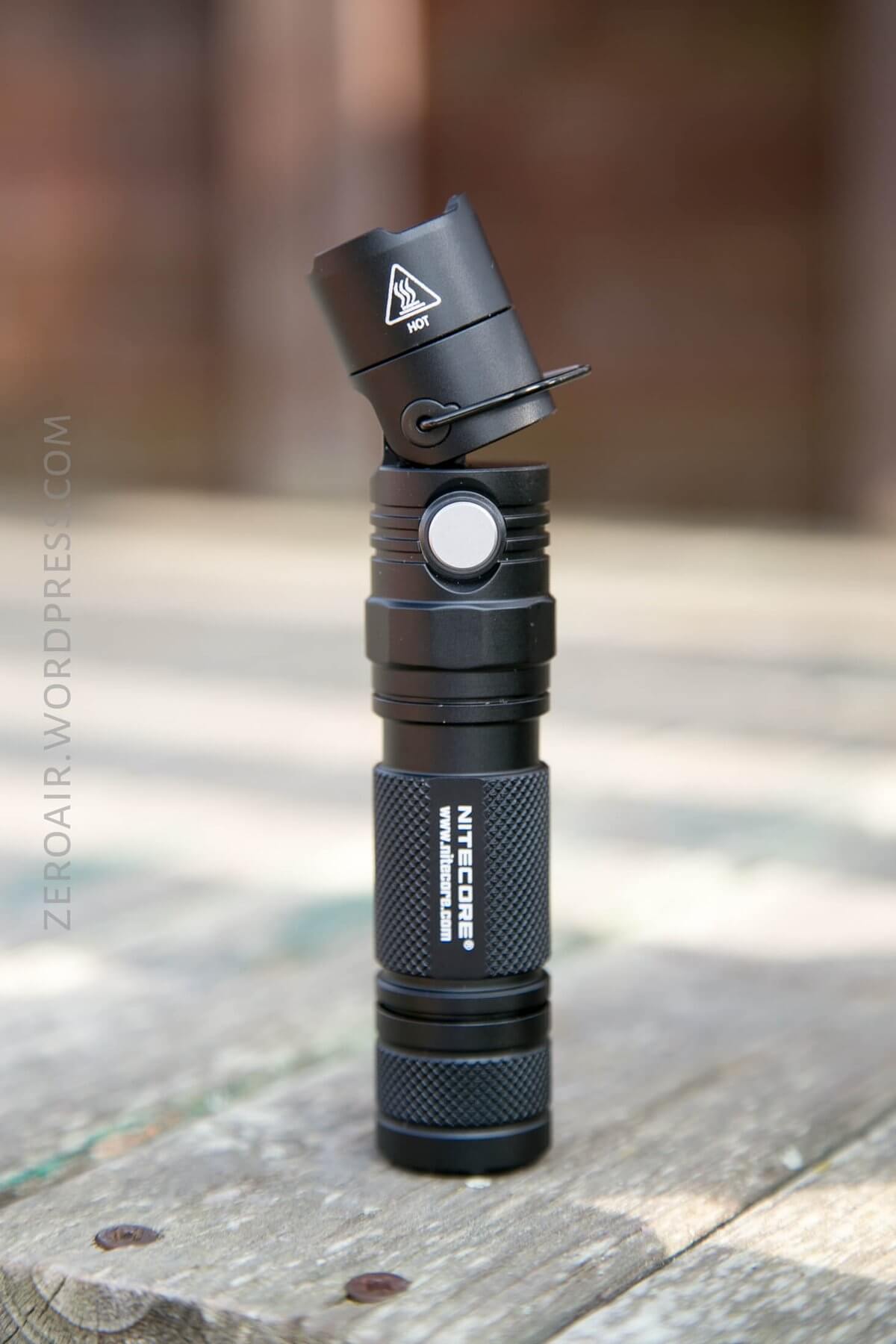
The angle head does complicate disassembly, since it requires specific torque to get the bezel off (something I didn’t actually achieve). The body comes apart in the usual way, with the cell tube being its own (directional) piece. Note that the threads on this tube are beefy square-cut anodized threads, and I love them. The tailcap has a very strong magnet that does not seem to be removable. The driver side has only a brass button, which means any type cell should work fine.


Size
Officially 131 mm x 25.4 mm, and 103.5 g.
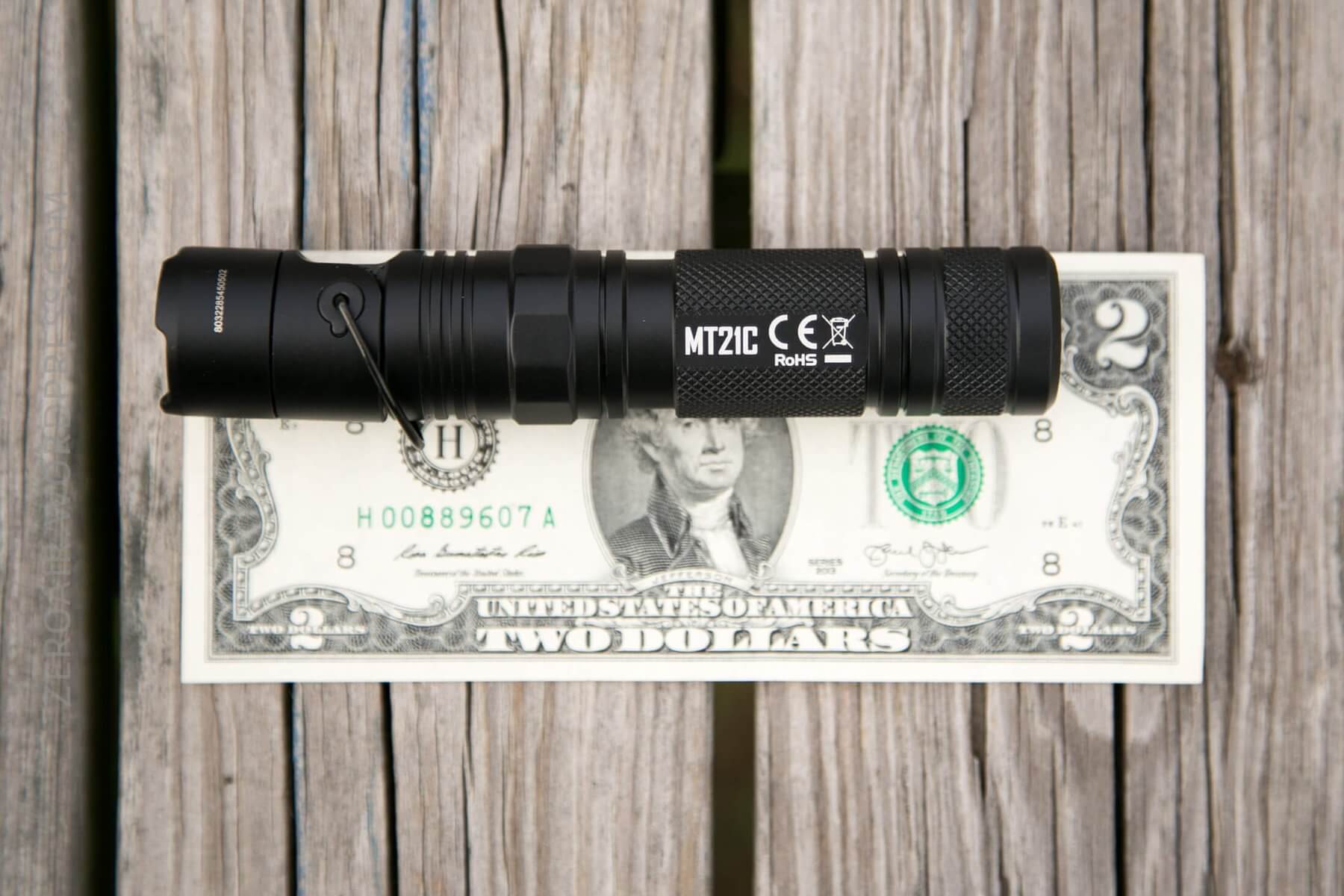
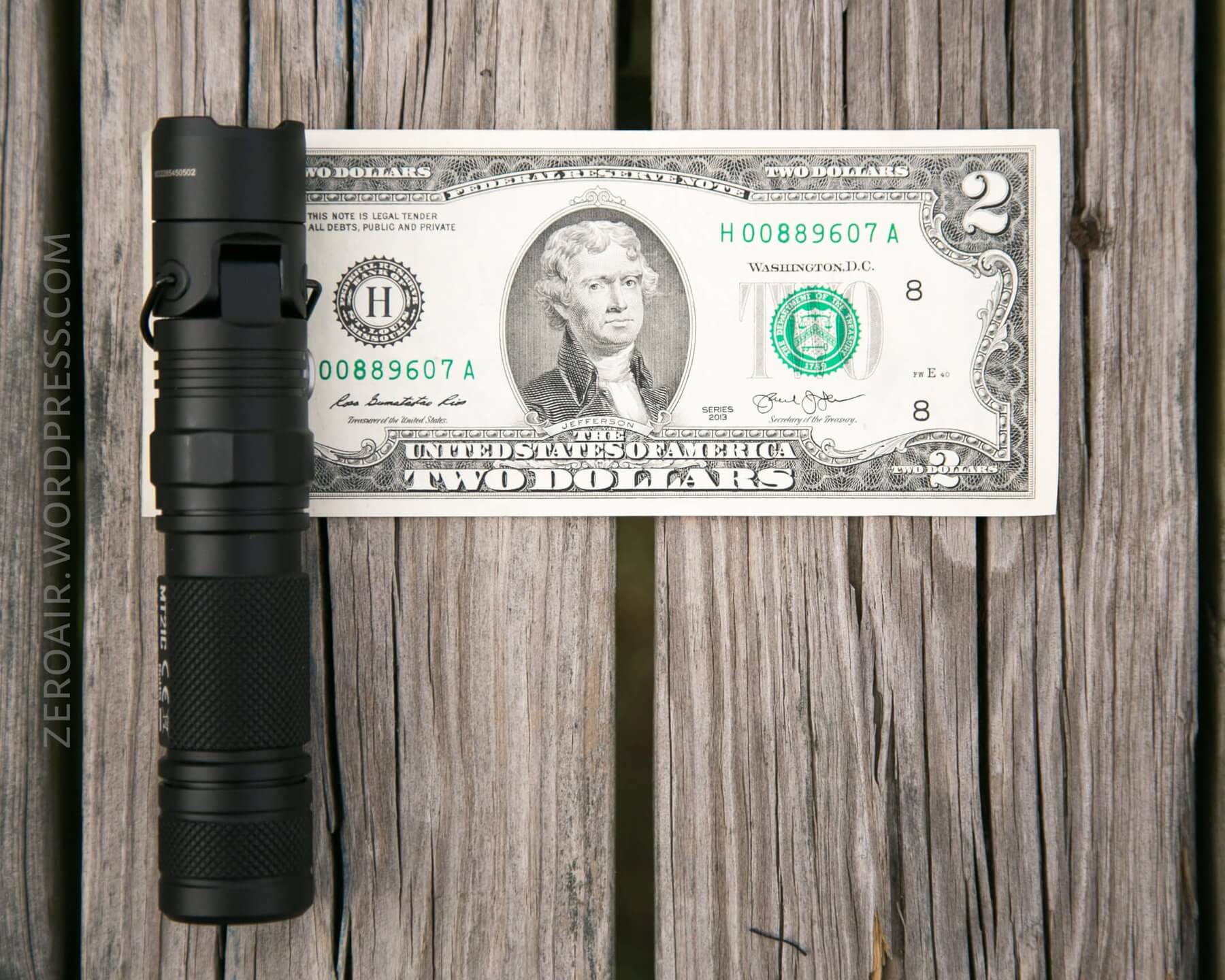
Clearly a tried-and-true format for Nitecore, since it’s extremely similar to the MT22C.


Below, with the Convoy S2+.

Retention
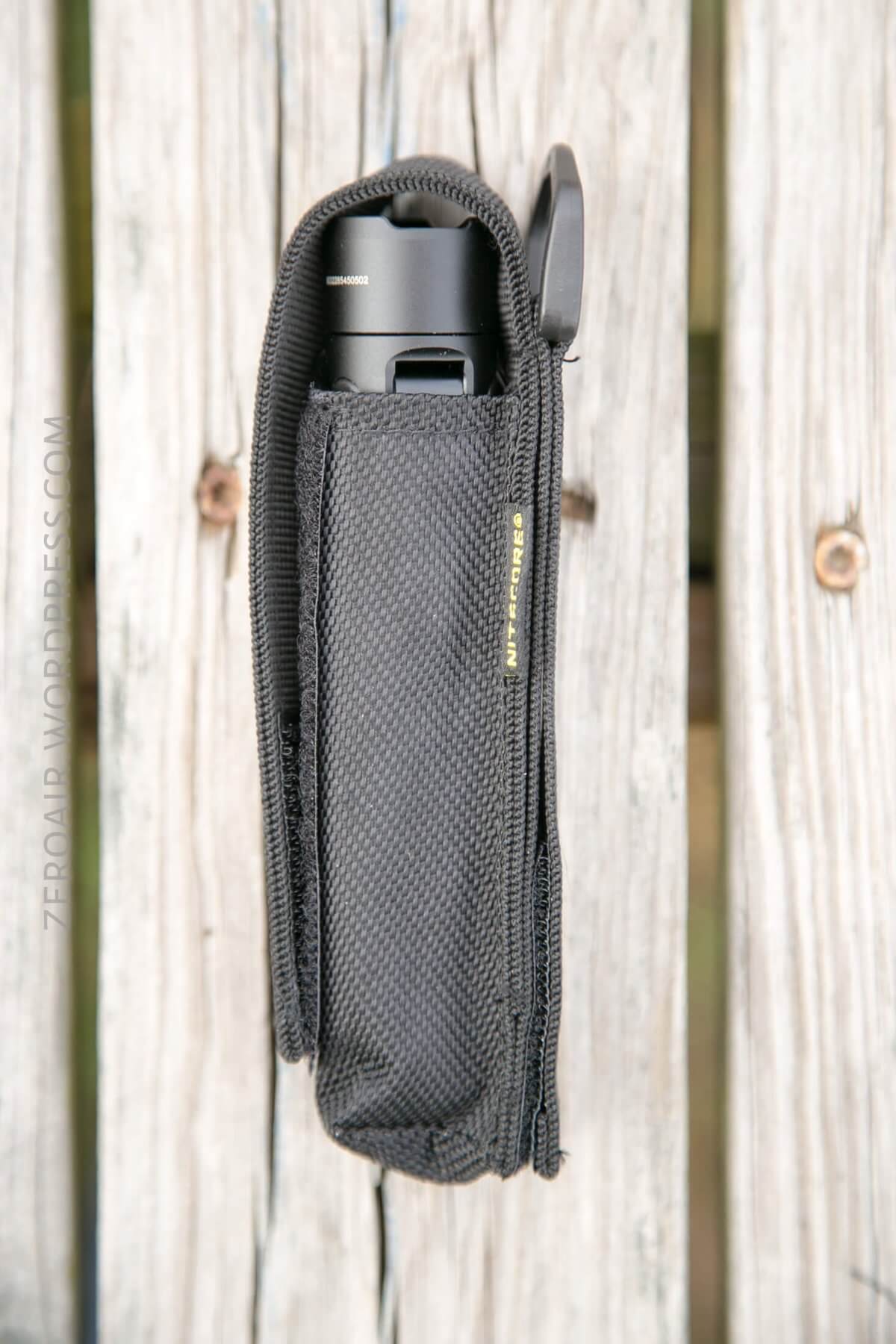
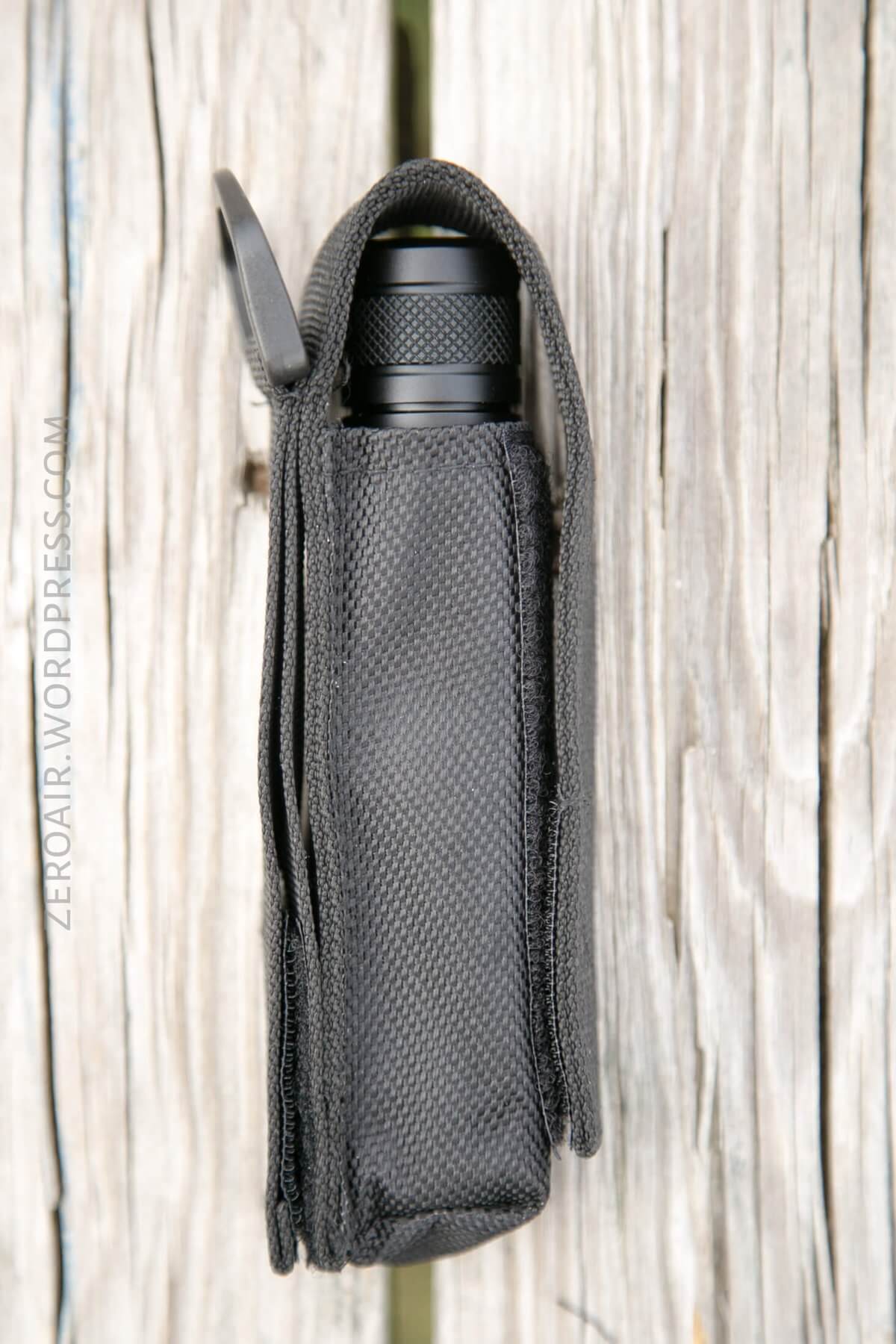
There’s a standard Nitecore nylon pouch, which has two belt loops, one of which is velcro. The light will go in either direction, and the bezel can be pointed outward, so (on lower modes) the light will be usable in the pouch.

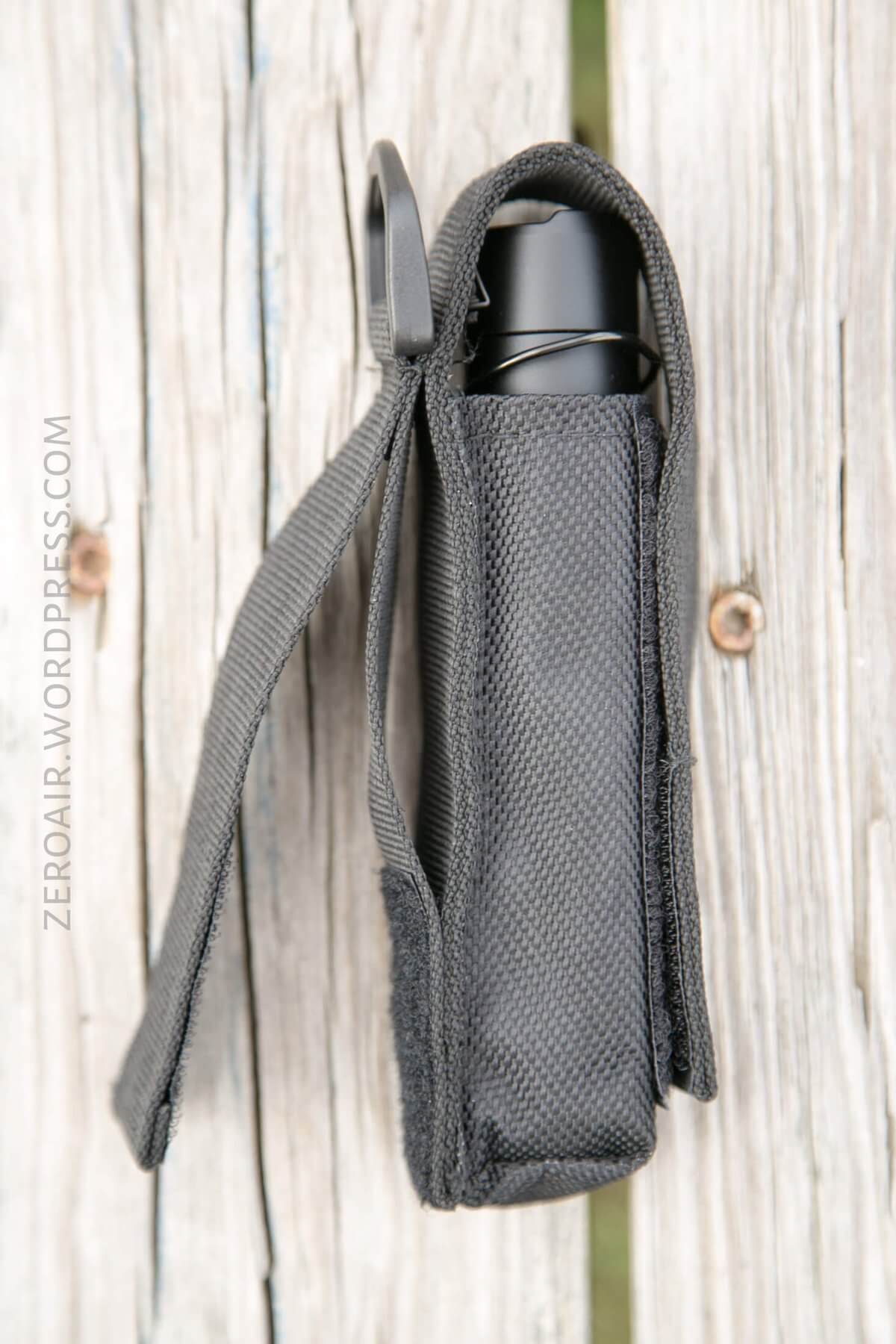

Also included is a pocket clip, which connects at only one point on the body, leaving >1″ out of the pocket, but will connect in either direction. There are also holes in the clip, which could connect a lanyard. Otherwise, the lanyard would connect on the loop around the head – there is no hole in the tailcap for a lanyard. To be honest, even though the clip is friction-fit, it’s probably fine as a lanyard connection point.
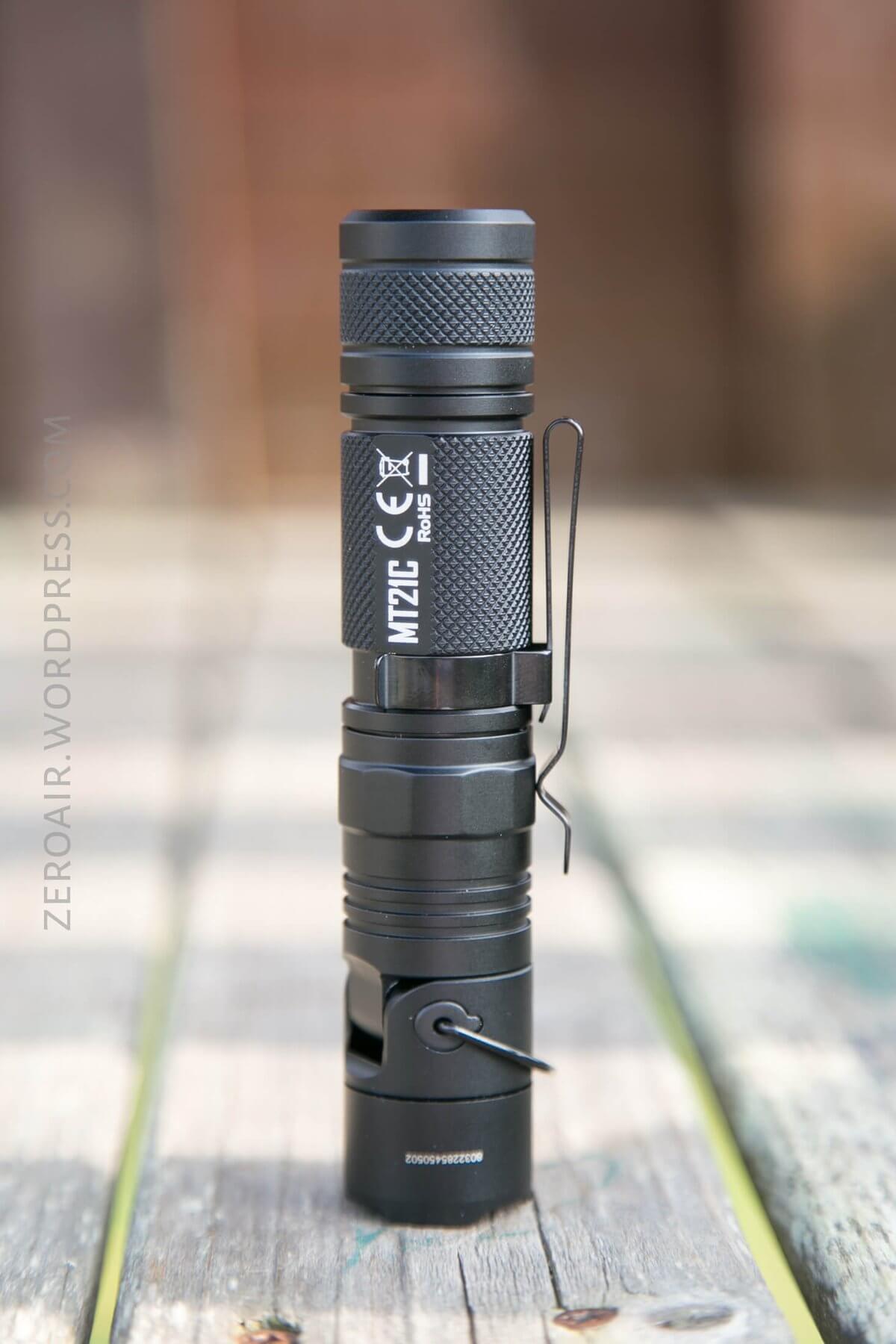
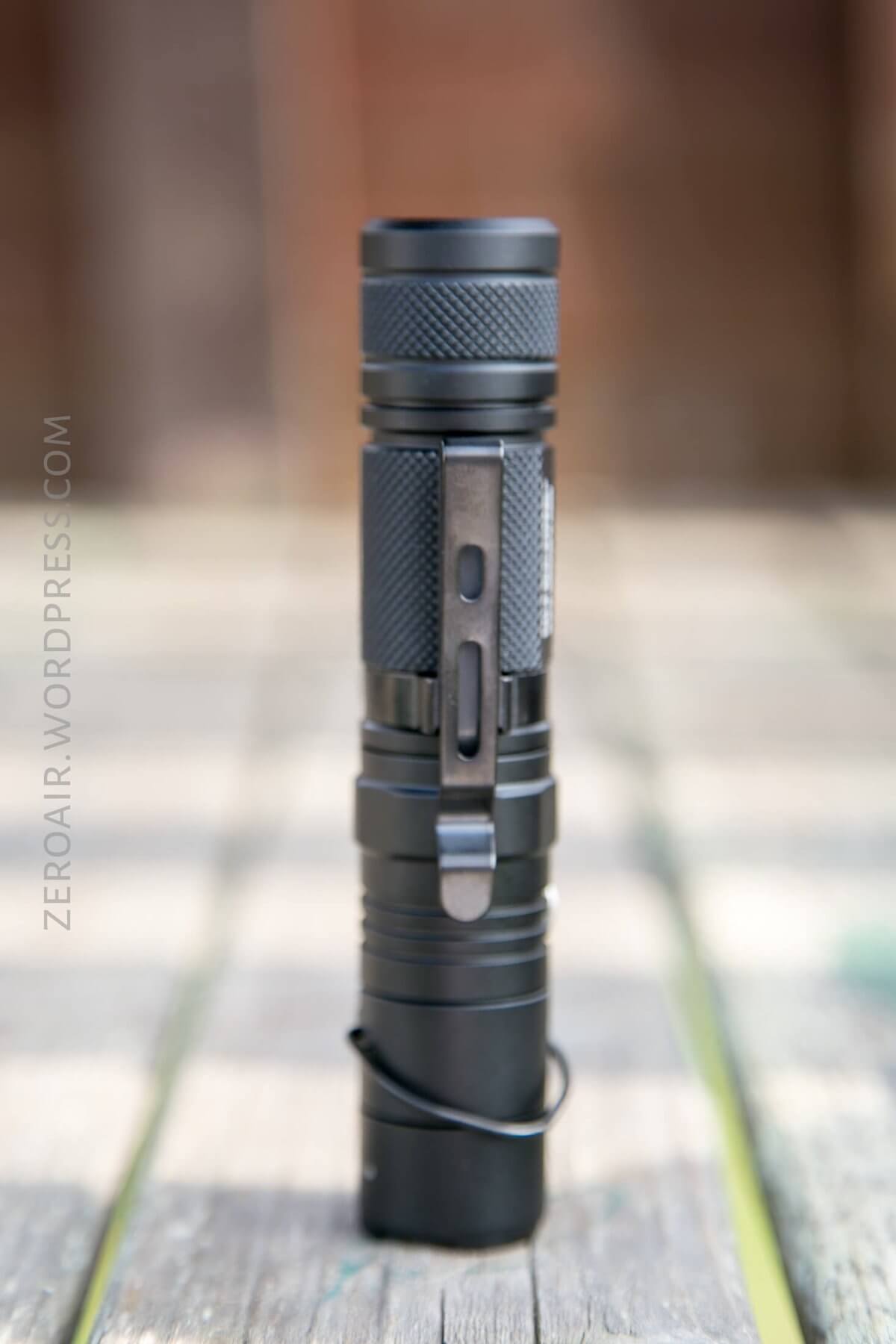
And finally, the tailcap magnet. It’s surprisingly strong, and it’d need to be for the length of the light.

Power
The MT21C is powered by a single 18650, and as I said above, any type will work. In testing, I’ve used a high-drain Nitecore 3100 mAh cell, which works well.
I measured the output just above Nitecore’s claim at 30 seconds, but bear in mind a few things. 1) This is my first runtime with “Lumens,” not “Relative Output.” So I’m still dialing things in. 2) My approximate 1100 lumens at 30 seconds is 10% over the claim, which is approximately in line with emitter binning differences. 3) And 1100 from a Cree XP-L HD is reasonable, with turbo being 2.8A, according to djozz from BLF. So while my numbers might not be perfect, they’re reasonable, and for now reasonable is what I’m aiming for. Note also that I’ve added an inset graph for the first 2 minutes of the runtime, so you can see exactly and more clearly how the driver works right after startup.

Also, a runtime on “High.” Note when comparing this with the above, that Turbo doesn’t step down to high, it steps down higher than the High mode and maintains it until around an hour.

I actually let this runtime go overnight, and in the morning, I found the light still outputting light at approximately the “Ultra-Low” level, and the cell voltage at 2.47V. The light does not have LVP, but it does have a switch warning.
The manual states CR123a x2 support as well, but I do not usually have this cell setup available, and so I did not test output with those cells.
Also, regarding power (and transitioning into the user interface): the switch will indicate the power available in the cells being used. And finally, it’s the “good” kind of power indicator. When the light is off, click the switch once, and it blinks the one’s position, then the tenth position. So 4 blinks pause 1 blink is 4.1V. So nice vs the “3 blinks =75% power” or whatever. When using 2-up cells, the light reports the average voltage between the two.
User Interface and Operation
There’s a single switch on the MT21C. It’s a side-indicating e-switch with a metal button and is quite proud. I like the illumination, which is a clear plastic surrounding the metal switch. As stated, there’s no tailswitch, so all the user interface goes through this side switch.

Here’s a user interface table!
| State | Action | Result |
|---|---|---|
| Off | Click | Battery Check |
| Off | Hold | Ultra-Low |
| On | Click | Mode cycle (ULMHT) |
| Off | Long Hold (past Ultra-Low) | Momentary Turbo |
| Any | Triple Click | Strobe |
| Strobe Group | Click | Strobe Advance |
| On | Hold | Off |
Modes
| Mode | Mode Claimed Output (lm) | Claimed Runtime | Mode Measured Lux | Tailcap Amps |
|---|---|---|---|---|
| Turbo | 1000 | 1h | 979 | 2.86 |
| High | 400 | 3h45m | 436 | 0.88 |
| Mid | 190 | 7h30m | 200 | 0.36 |
| Low | 50 | 25h | 51 | 0.08 |
| Ultra-Low | 1 | 700h | 1 | 0.00 |
LED and Beam
Nitecore has chosen the Cree XP-L HD for this light. It’s a good middle ground choice. The reflector is smooth and shallow, providing a beam with a hotspot that has little spill.

Beamshots
These beamshots always have the following settings: f8, ISO100, 0.3s shutter, and manual 5000K exposure. These photos are taken at floor level, and the beam hits the ceiling around 9 feet away.

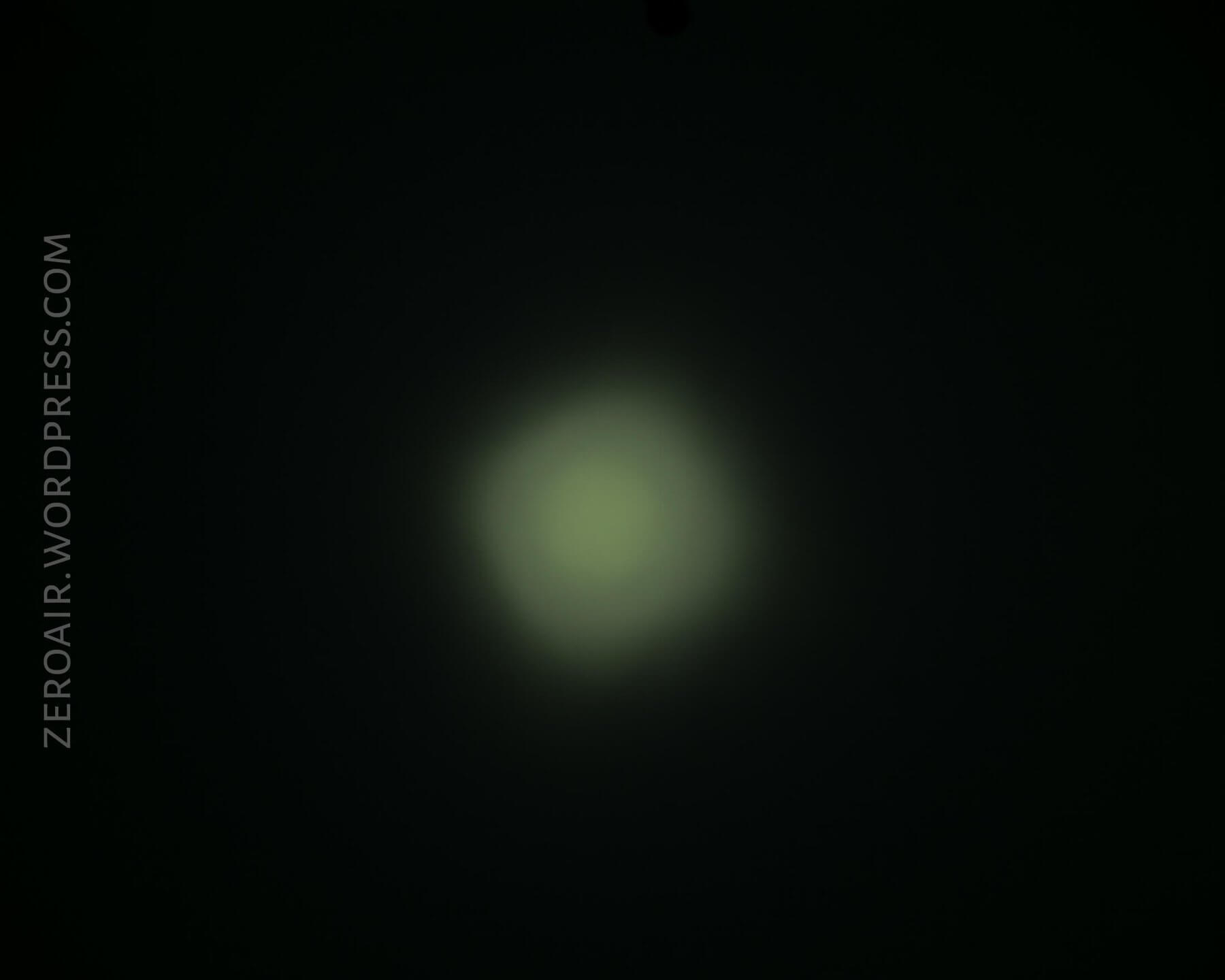
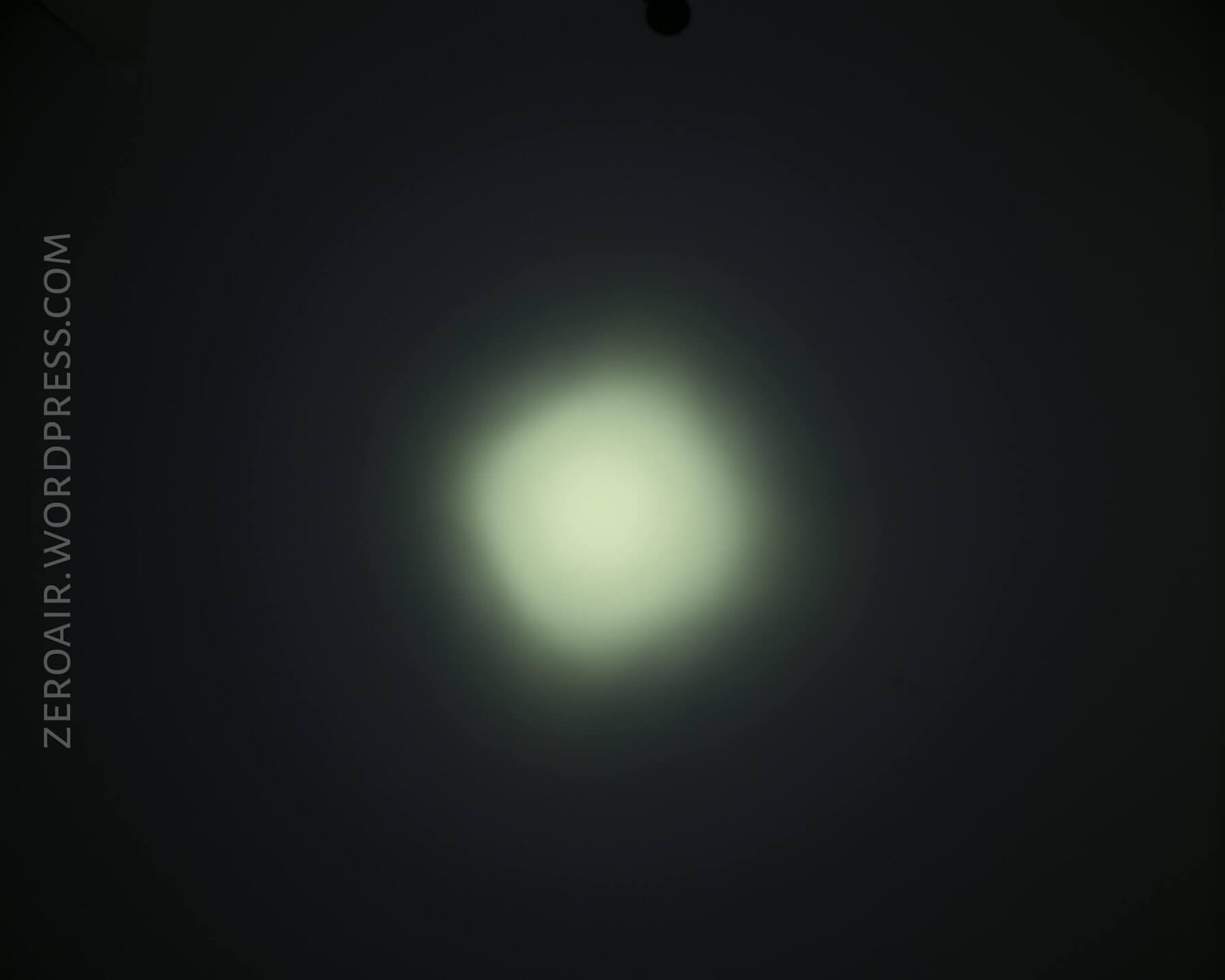
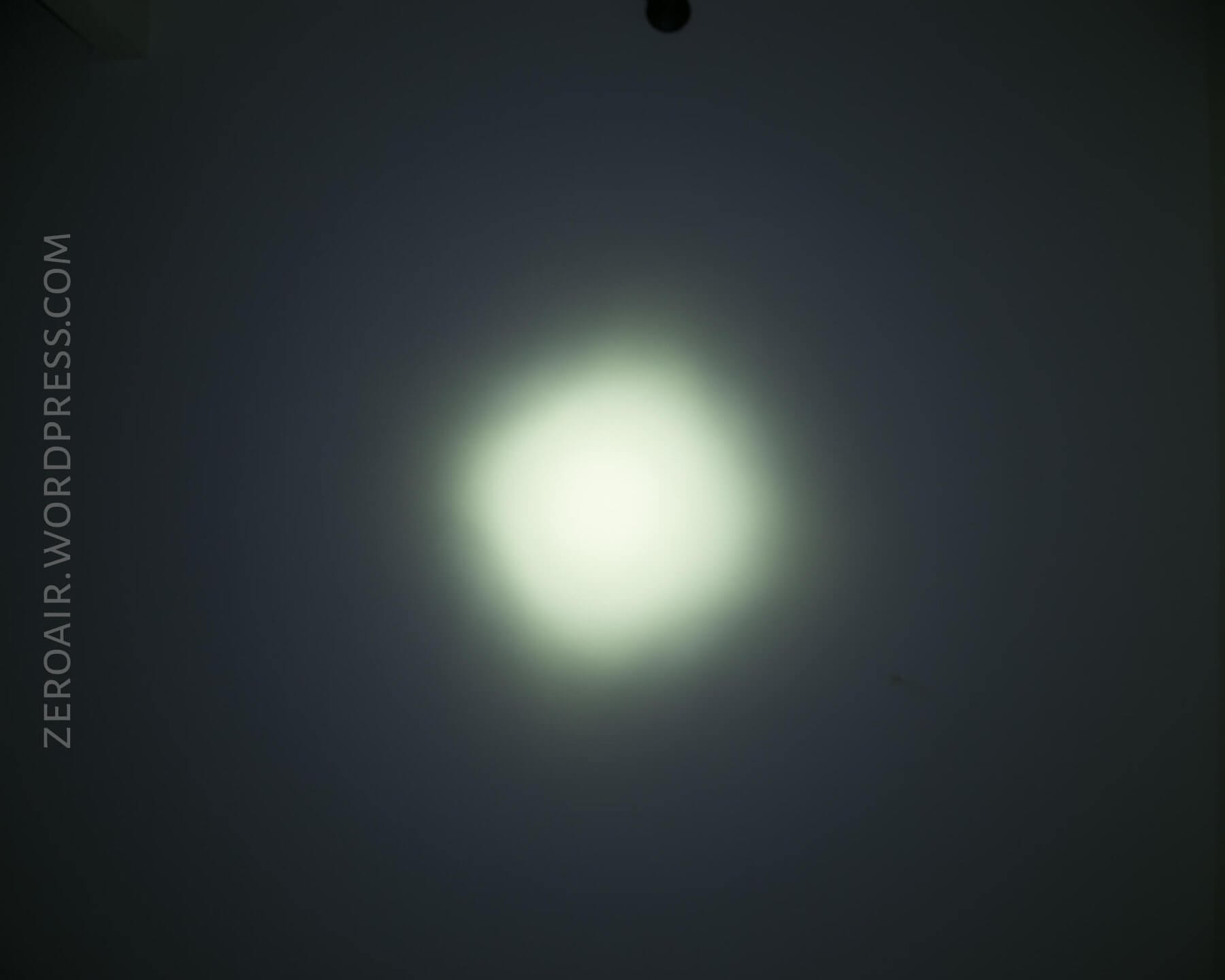

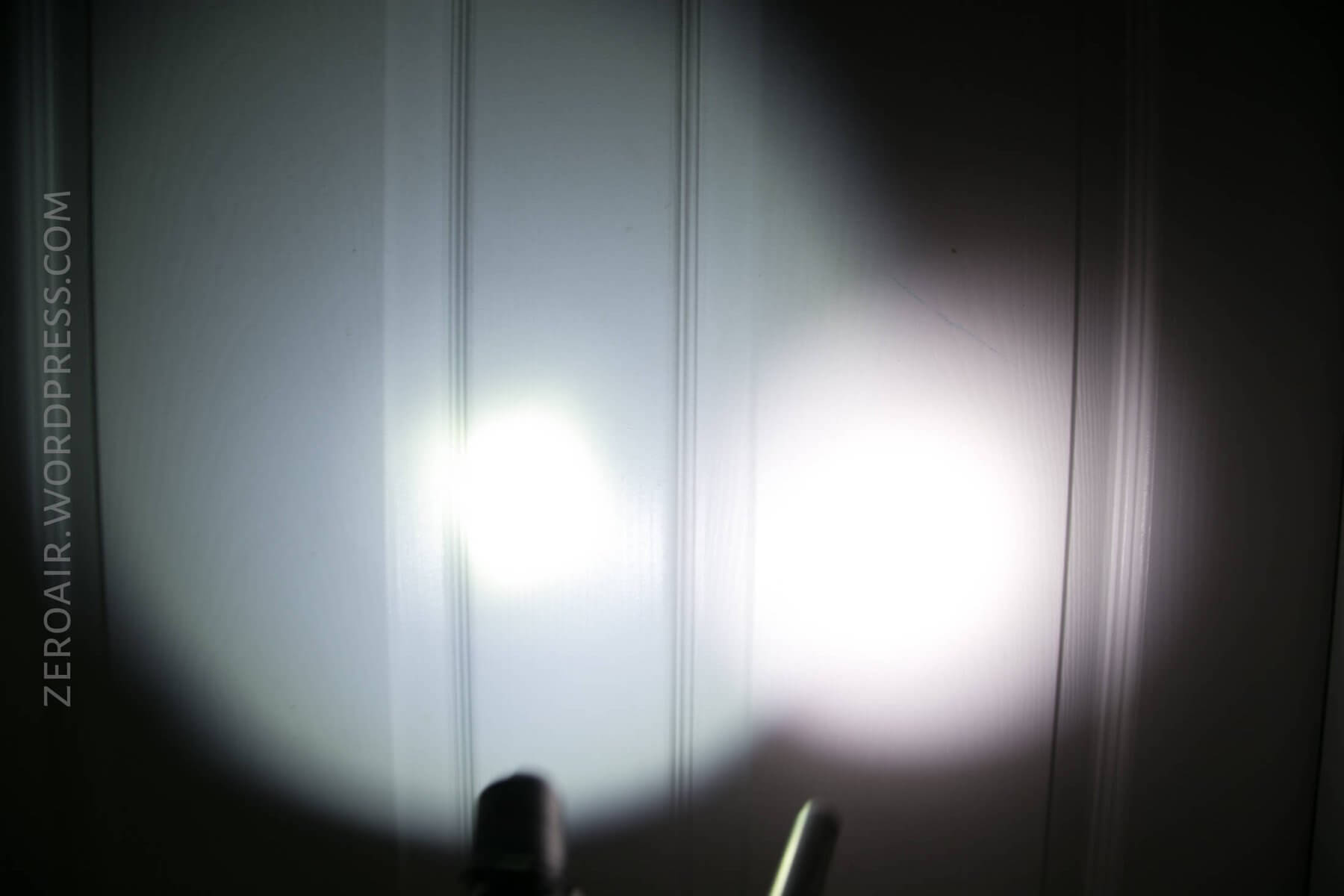
Tint vs BLF-348 (KillzoneFlashlights.com 219b version) (affiliate link)
I keep the test flashlight on the left and the BLF-348 reference flashlight on the right.
Random Comparisons and Competitive Options
Here’s a relevantly filtered page on parametrek.com. The MT21C has what I’d have described as a fairly common set of features, but there aren’t actually that many competitive lights. Especially when one considers the angle head, this is a unique package.
Conclusion
What I like
- Outthrows its specs
- Interesting angled head feature
- Magnet in tail
What I don’t like
- Overall, the size is too big for this category of light.
- No proper lanyard attachment point
Notes
- This light was provided by Nitecore for review. I was not paid to write this review.
- This content originally appeared at zeroair.org. Please visit there for the best experience!
- Use my amazon.com referral link if you’re willing to help support making more reviews like this one!
- Please support me on Patreon! I deeply appreciate your support!