

BLF A6 Flashlight Review
The BLF A6 is an 18650 tube light developed by budgetlightforum, so it’s a great enthusiast flashlight. Read on for thoughts and testing!
Official Specs and Features
Here’s a link to the BLF A6 Flashlight product page.
Versions
As far as I can tell, there’s just one body style of this light, but it has three temperature options. 3D (5000K, seen here), 1A (6500K), and 5A(4000K).
Price and Coupon
The price for this light is $21.99 at BangGood, which is where I’d recommend buying it. Even if you don’t decide to buy it, clicking this link helps me (and I appreciate it!)!
Short Review
This is a solid light, and at $22 it’s not a bad deal at all. It could serve as a good EDC light, or as a well-built host for modding. It would make a great first-mod light since everything is easy to disassemble.
Long Review
The Big Table
| BLF A6 | |
|---|---|
| Emitter: | Cree XP-L HD (3D) |
| Price in USD at publication time: | $21.99 Buy yours at BangGood! |
| Cell: | 1×18650 |
| Turbo Runtime | High Runtime |
| LVP? | Yes, 2.6V |
| Switch Type: | Mechanical |
| On-Board Charging? | No |
| Claimed Lumens (lm) | 1600 |
| Measured Lumens (at 30s) | 1512 (94.5% of claim)^ |
| Claimed Throw (m) | |
| Candela (Calculated) in cd (at 30s) | 593lux @ 4.549m = 12271cd |
| Throw (Calculated) (m) | 221.6^ |
| All my BLF reviews! | |
^ Measurement disclaimer: Testing flashlights is my hobby. I use hobbyist-level equipment for testing, including some I made myself. Try not to get buried in the details of manufacturer specifications versus measurements recorded here; A certain amount of difference (say, 10 or 15%) is perfectly reasonable.
What’s Included

- BLF A6
- Lanyard
- Spare switch cover
- Spare o-rings (2)
Package and Manual
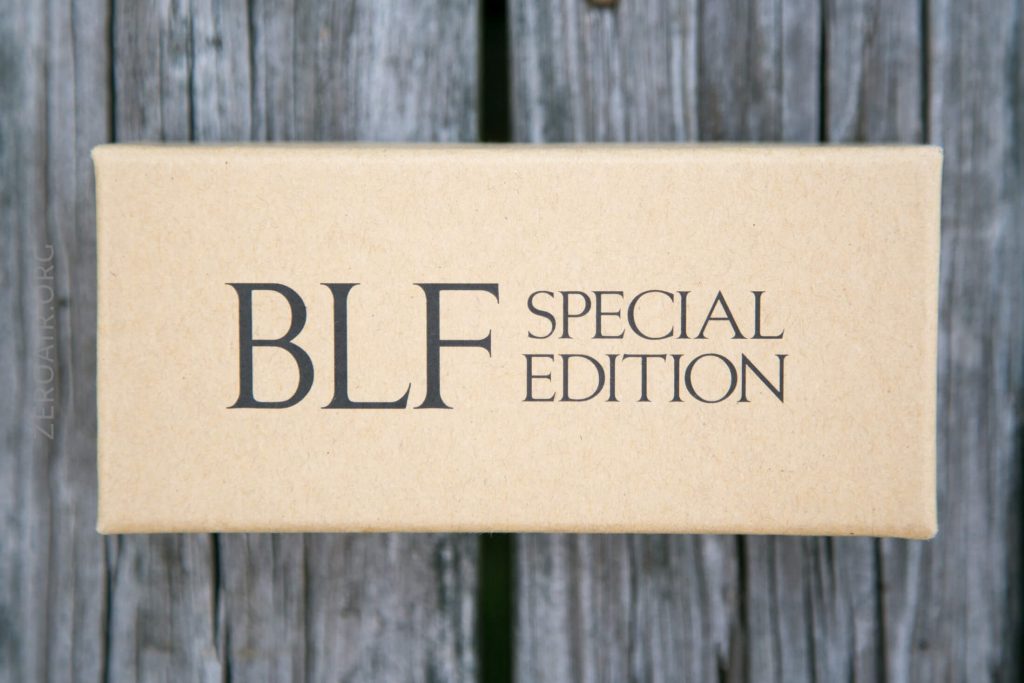

The box is a fancy “BLF Special Edition” labeled box, with an inventory sticker on the bottom.

The box also includes the Temp of the emitter. In my case, 3D (5000K).
Build Quality and Disassembly

Right up front, it has to be noted whether the A6 differentiates itself from other lights like the Convoy S2+. In my opinion, the build quality is better than that light. The anodizing feels better, the threads feel smoother, the parts inside seem higher quality. Overall this is a well-built $22 light.

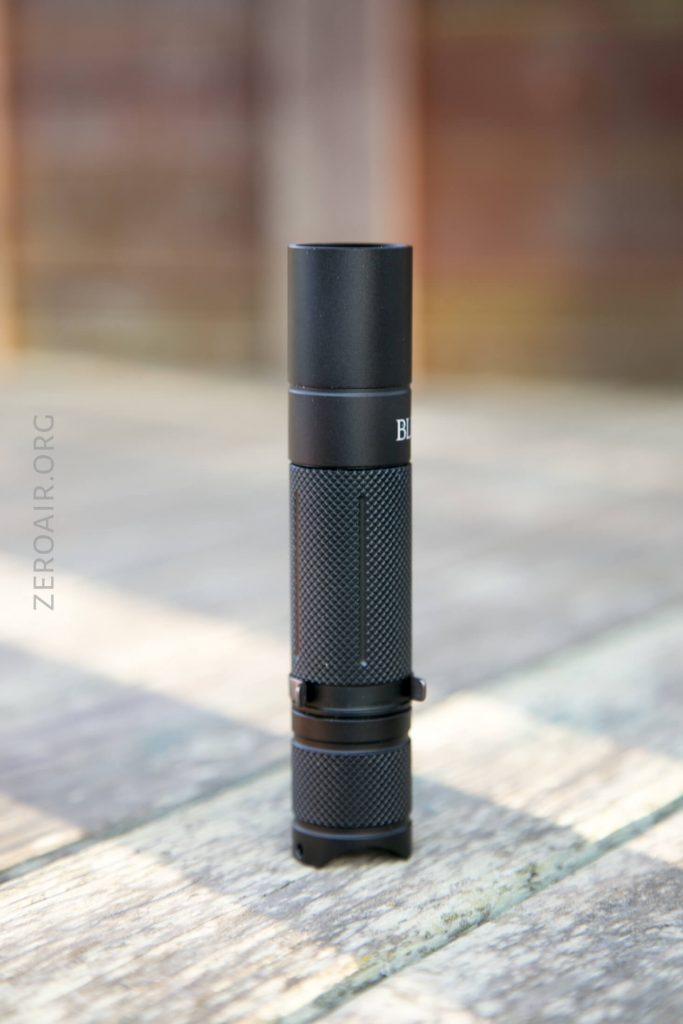


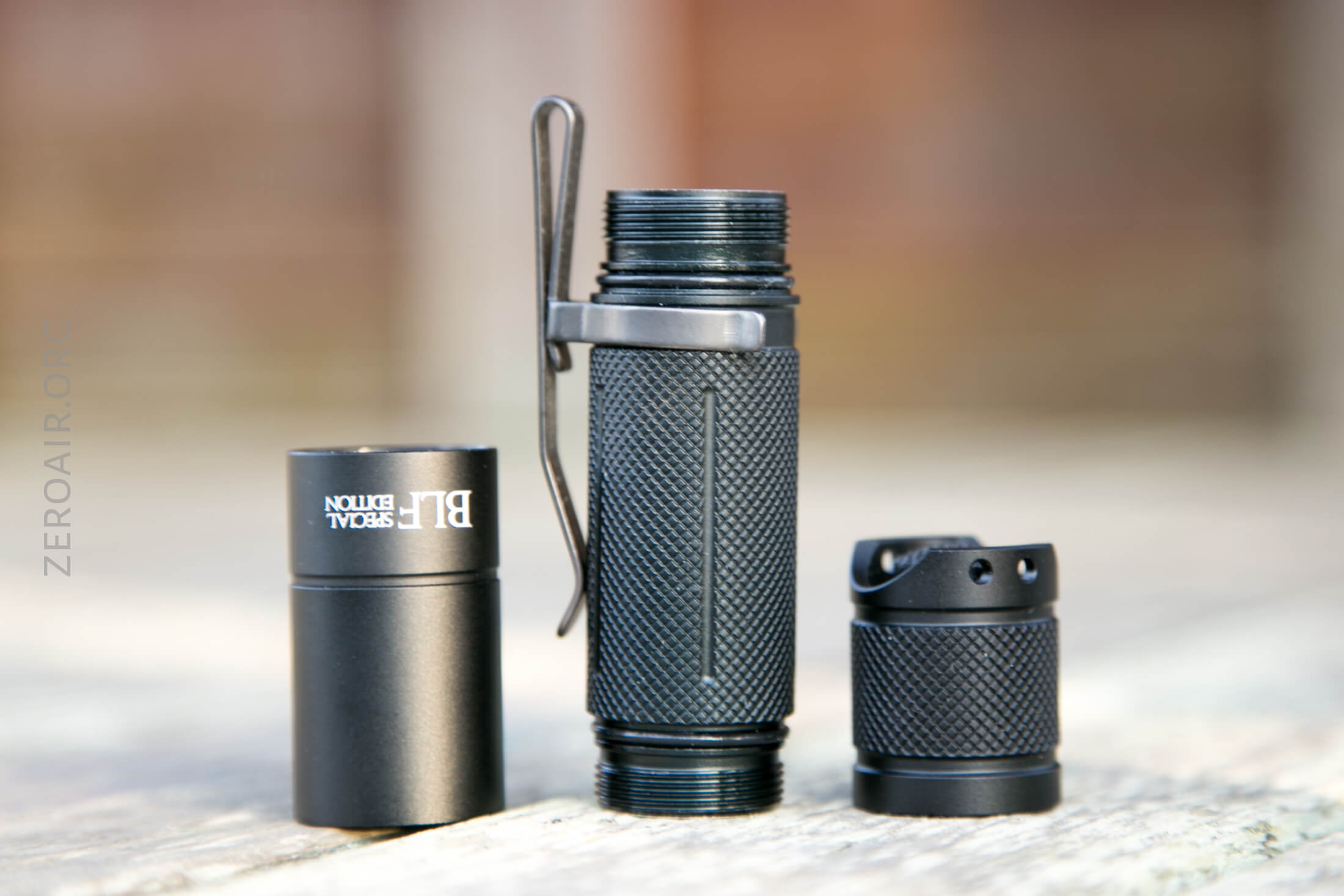
The cell tube isn’t reversible, and the clip only fits on the tail end. That means this is a bezel down only light, which is my preferred carry anyway.
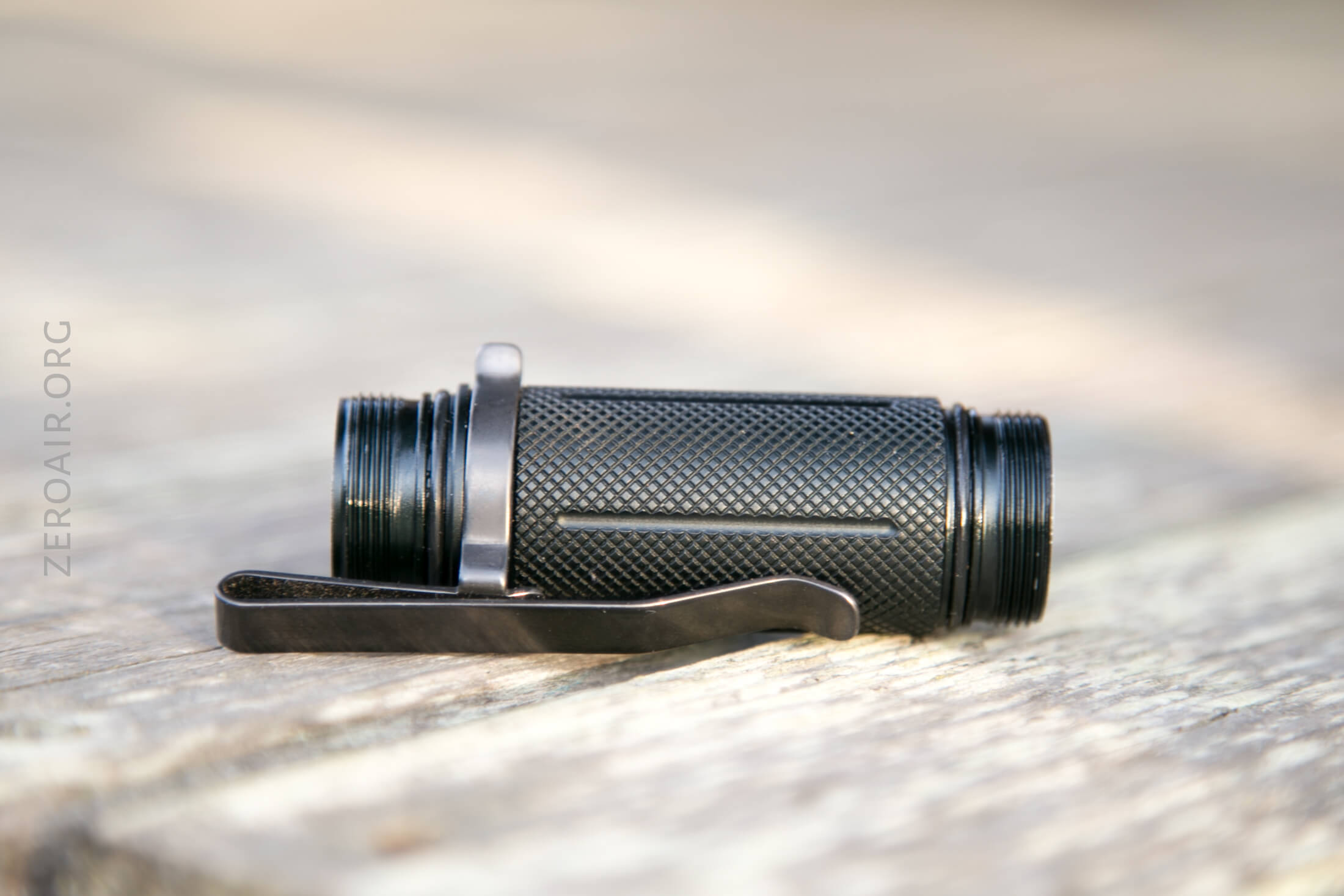
The threads on both ends are anodized, appropriately lubed, and very smooth.

Note the parts here in the head and tail – brass retaining rings with big dimples for easy access. Big thick screws, and on the tail end, a double sprung spring. Great for carrying 6A or so, for turbo!
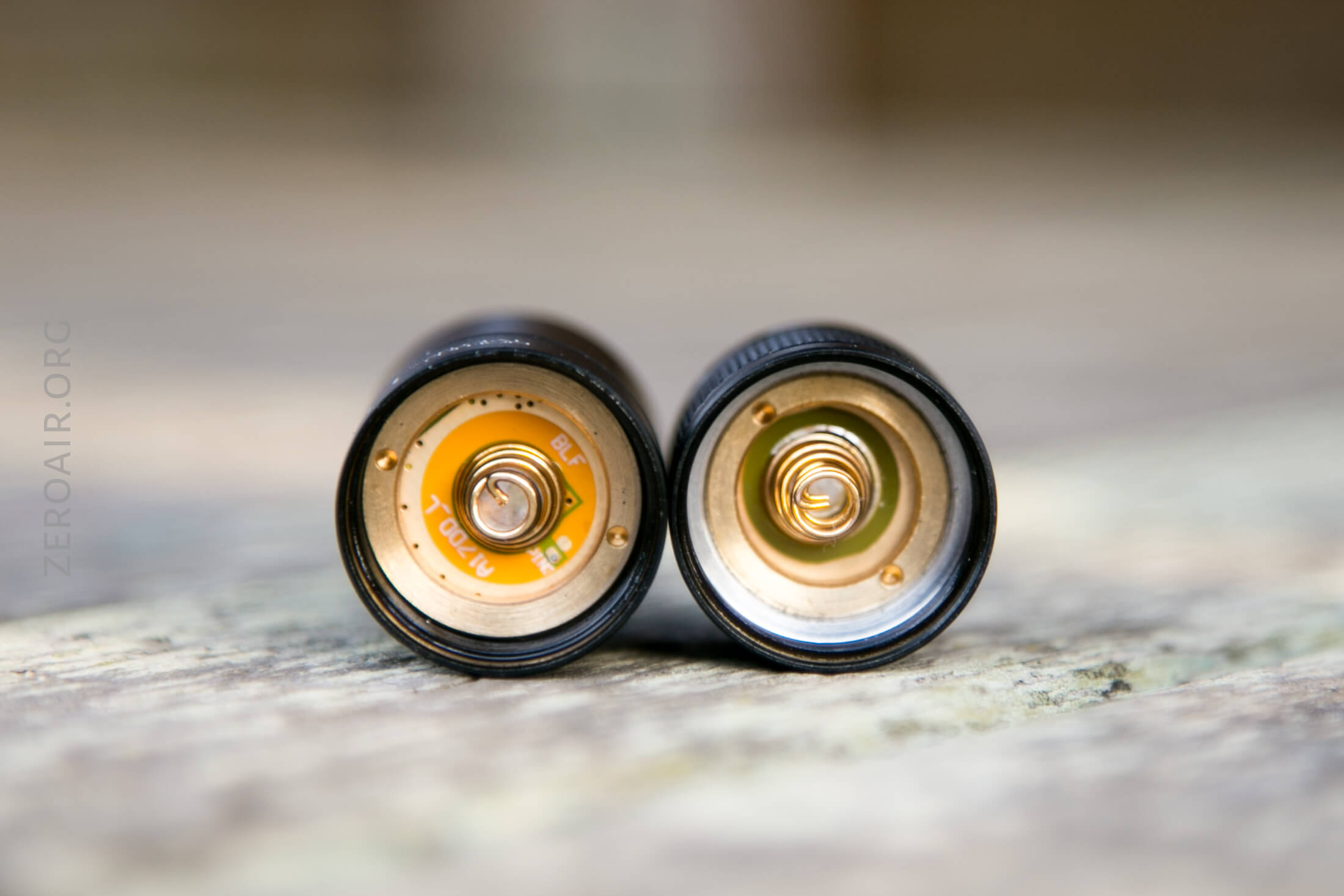
All of these parts unscrew easily, so if modding is your thing, this is a good light for you.
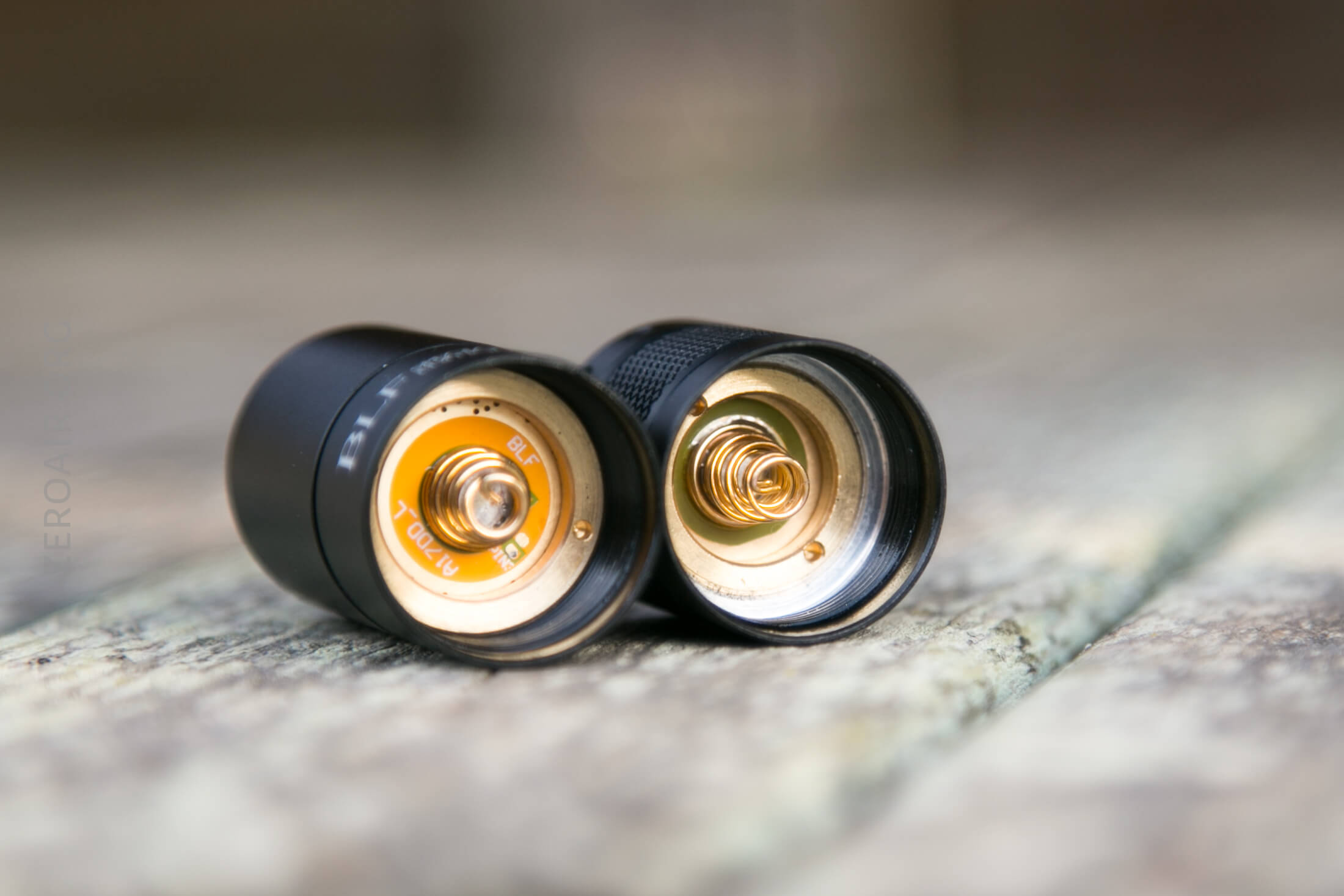
Here’s the bezel removed. Note how the bezel is long, so when remove the MCPCB is right up front and easily accessible, too.

Size and Comps
Officially: 120mm x 24mm (length x body diameter)

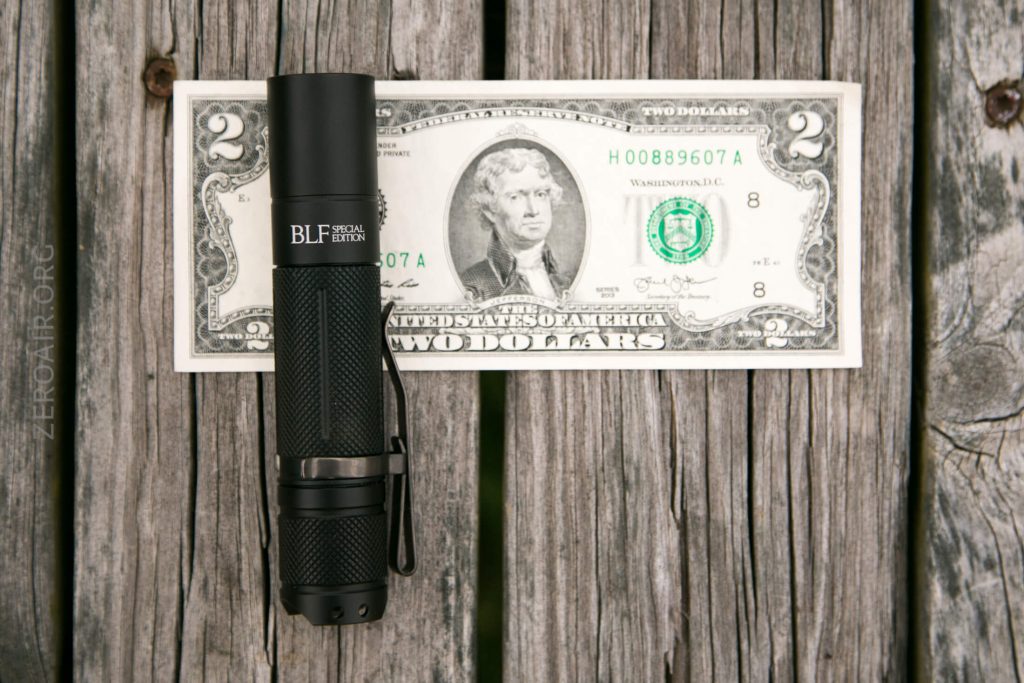
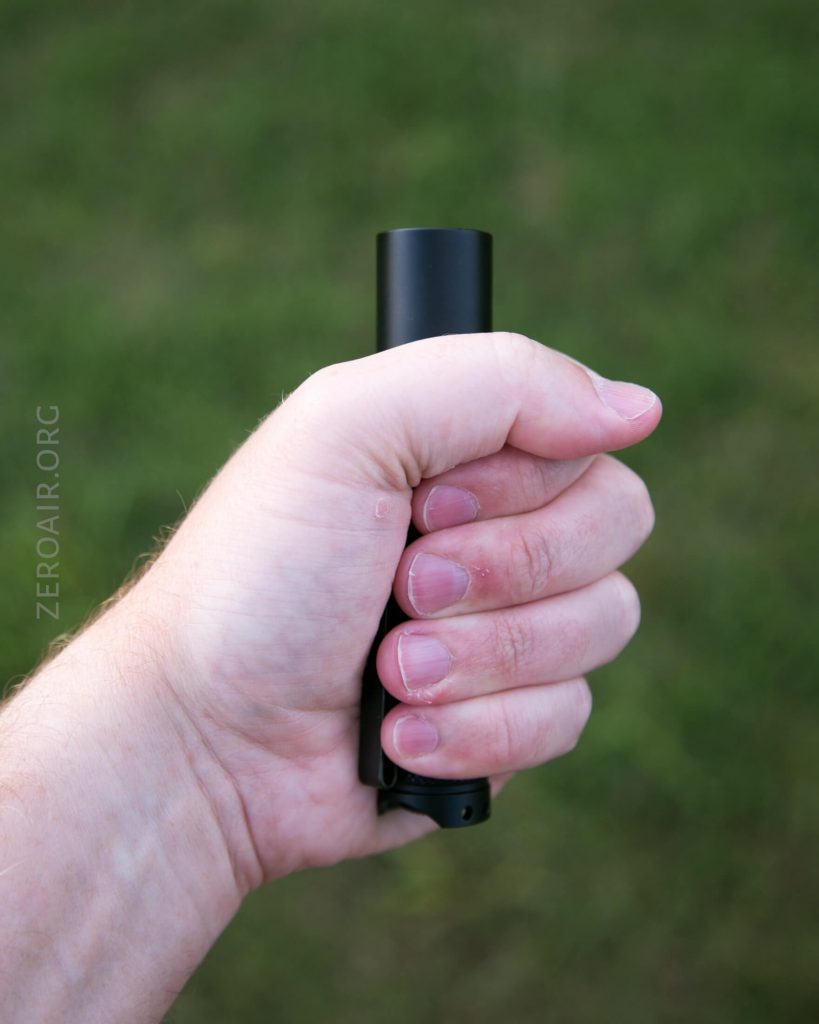


Here’s the test light with the venerable Convoy S2+. A very nice 18650 light.
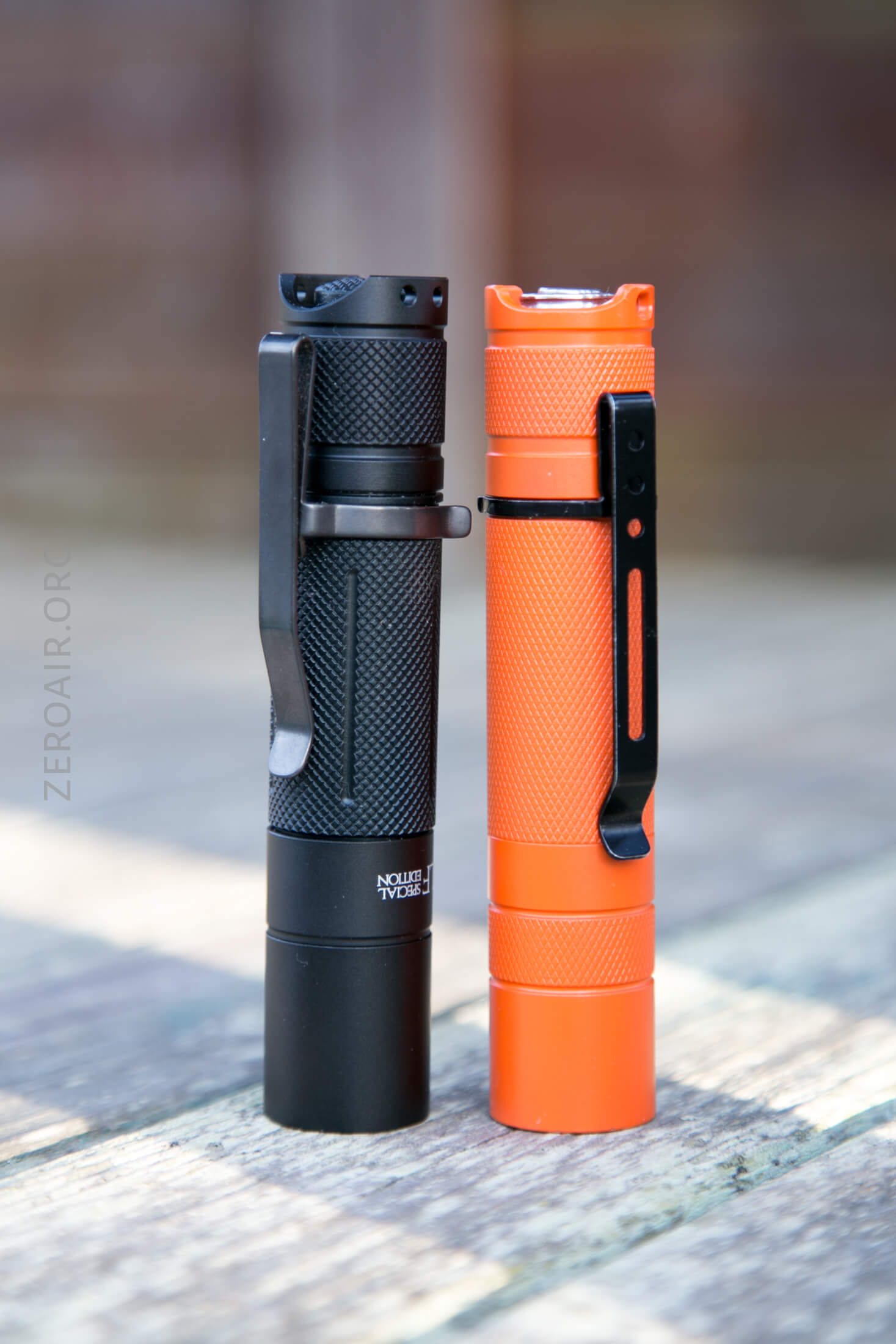
And here’s the light beside my custom-engraved TorchLAB BOSS 35, an 18350 light. I reviewed the aluminum version of that light in both 35 and 70 formats.

Retention and Carry
The primary carry for the A6 is the pocket clip. It’s a friction fit, deep carry-ish clip, and I haven’t gotten along with it all that well. The point where it attaches to the body is designed to stick out a bit, and there’s a sort of … angle to help the clip slide all the way onto a pocket, but I didn’t find that it worked well. So it’ll deep carry, but probably require both hands to get it on properly.
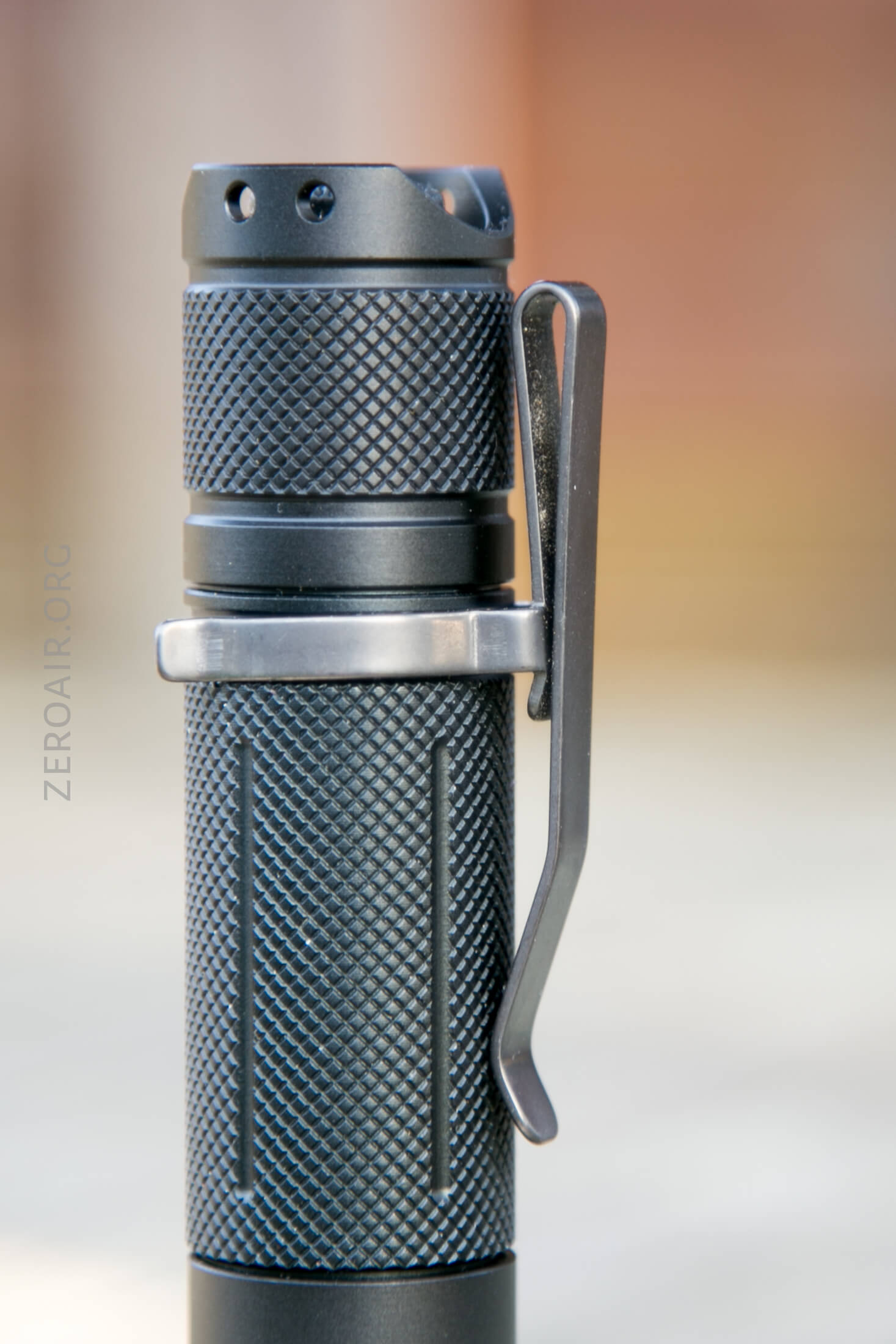
Also, the arms that are grabbing the light have these parts that stick out quite a lot.

Another option is the lanyard, which attaches to the tailcap. There are two sets of two holes.

Power and Runtime
I tested the light with two different, capable cells. First, turbo with a Molicel P26A, which should easily provide the current needed for Turbo. BangGood states:
Up to 1600 lumens from a single emitter in a small tube light (with the right battery, and a spring bypass mod). Closer to 1400 lumens with no mods and lower-amp batteries.
I didn’t do any mods, and as you can see the light performs to max-specs already. With a spring bypass, you might squeeze even more lumens out.

High looks about like Turbo. “High” in this case is “output level 6” of the 7 output group. Ie the second-highest output.

The light has LVP. On bench power, the light shuts off electronically at 2.6V or so, but in the test, the output is very low some time before 2.6V.
Modes and Currents
| Mode | Mode Claimed Output (lm) | Claimed Runtime | Measured Lumens | Tailcap Amps |
|---|---|---|---|---|
| 7 | 1600 | – | 1512 | 6.17 |
| 6 | – | – | 1008 | 2.76 |
| 5 | – | – | 502 | 0.97 |
| 4 | – | – | 203 | 0.47 |
| 3 | – | – | 66 | 0.13 |
| 2 | – | – | 2 | 0.01 |
| 1 | – | – | 0 | ~ |
Something worth mentioning that I can’t find anywhere better to say – when cycling through modes, and advancing from Turbo to Low, there’s a significant preflash on Low. When accessing Low from off, there doesn’t seem to be a preflash.
Pulse Width Modulation
The product documentation indicates PWM, and I too see it on the lower two modes. Past that looks free of PWM. Even on the lower two modes, (and like the documentation says), the PWM is fast, so not noticeable.


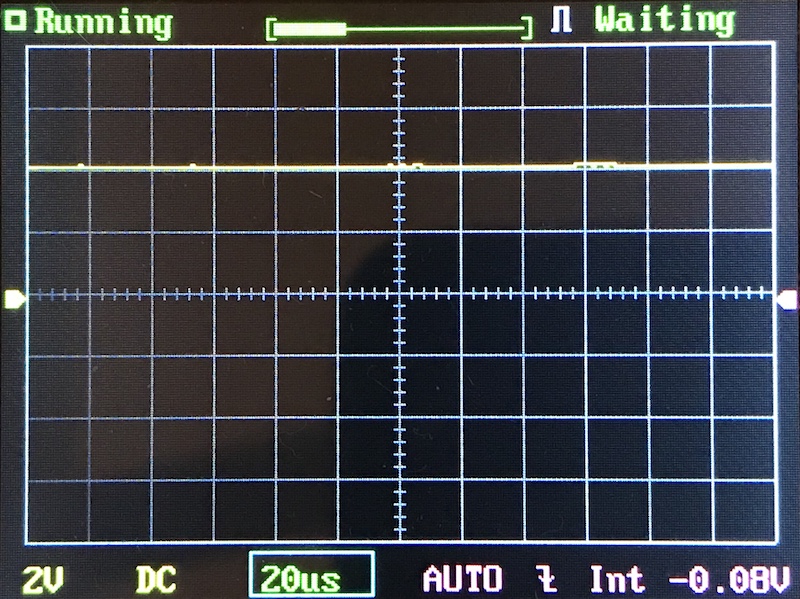


Here you can see a “baseline” – a chart with almost no light hitting the sensor.

Then there’s the Ultrafire WF-602C flashlight, which has some of the worst PWM I’ve seen. It’s so bad that I used a post about it to explain PWM! Here are multiple timescales (10ms, 5ms, 2ms, 1ms, 0.5ms, 0.2ms) to make comparing this “worst” PWM light to the test light easier. That post also explains why I didn’t test the WF-602C at the usual 50us scale.


User Interface and Operation
The switch is a reverse mechanical clicky. It’s very clicky. There’s a large (replaceable) button cover, too.

The best thing to understand the user interface will be this chart:

The user interface is by ToyKeeper and is quite versatile. I don’t know if I should call it “some of her earlier work” but as this light was released maybe 2014, I think that’s fair. It’s not an insult – this user interface was way ahead of others then and is still much more advanced than many of the UI’s available even now.
Even though the user interface isn’t really suited to a table, let’s give it a shot. Here’s the user interface table!
| State | Action | Result |
|---|---|---|
| Off | Click | On (Mode Memory if enabled, Low if disabled) |
| Off | Anything other than click | No action |
| On | Click | Off |
| On | Press (short, and not click) | Mode advance (LMH direction) |
| On (Normal Modes) | Longer Press (0.5s or more) | Mode retreat |
| Low | Longer Press (0.5s or more) | Turbo^ |
| On | Tap a bunch of times (19ish^^) | Config Mode for Mode Group, then Mode Memory& |
^ Special modes are accessed by reversing through Turbo. Successive long presses from Low gets, in this order, Turbo > Tactical Strobe > Battery check > Bike flash. Any successive short press goes back to low. Battery check: each flash represents ~25% battery capacity. Five flashes indicate the cell is fully charged.
^^ Tap until the light starts responding with only low.
& When in config mode, the light blinks twice, then pauses, then blinks twice again. Click between the first two blinks to switch between the 7 and 4 output groups. Click between the second two blinks to switch between mode memory and no mode memory. My sample was set to 7 outputs and mode memory.
One of the things I love about this user interface is the ability to go backward in modes.
LED and Beam
The stock emitter in the A6 is a Cree XP-L HD, and in my case, the 3D tint, which is 5000K. The reflector is very lightly orange peeled.

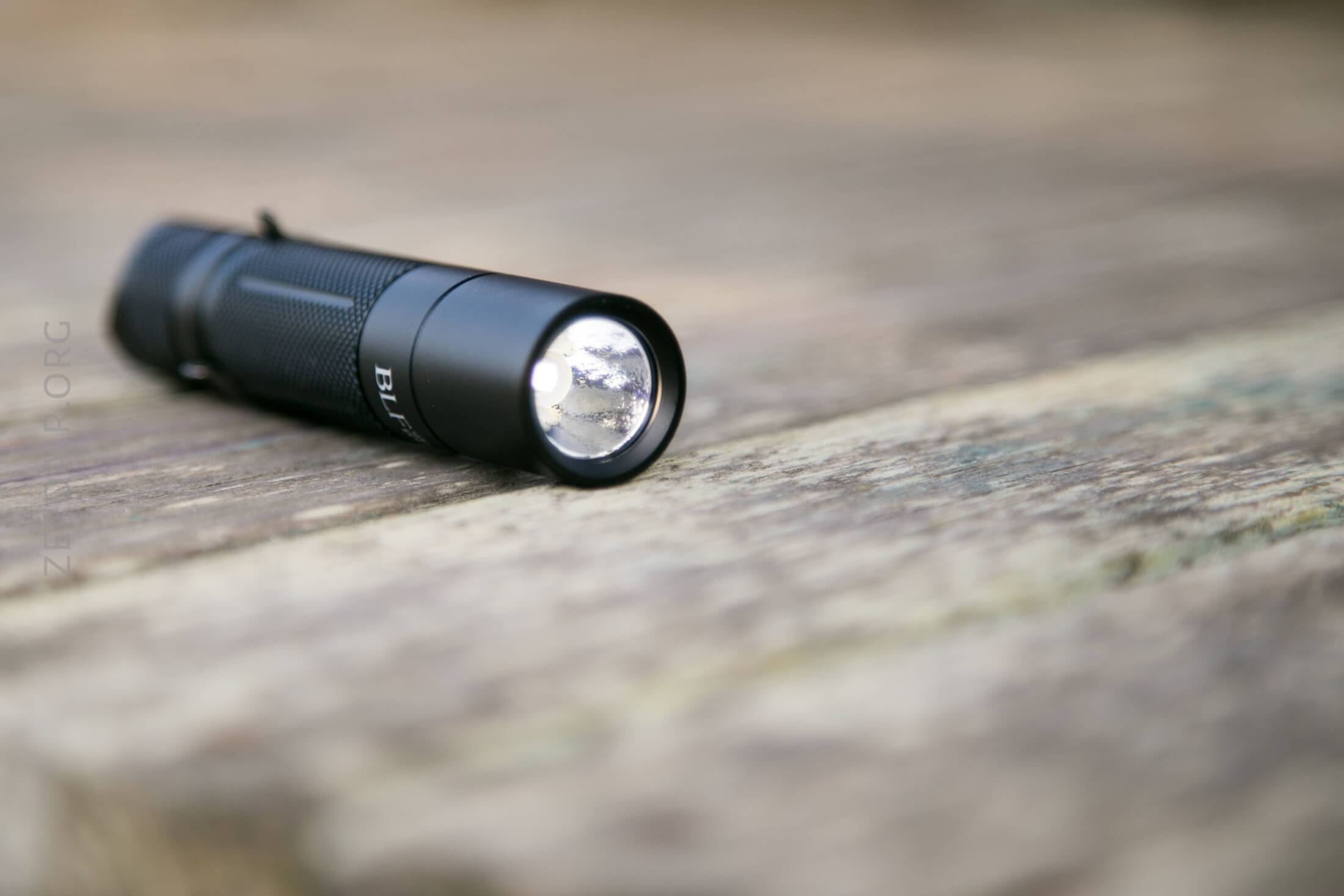
These beamshots always have the following settings: f8, ISO100, 0.3s shutter, and manual 5000K exposure. These photos are taken at floor level, and the beam hits the ceiling around 9 feet away.


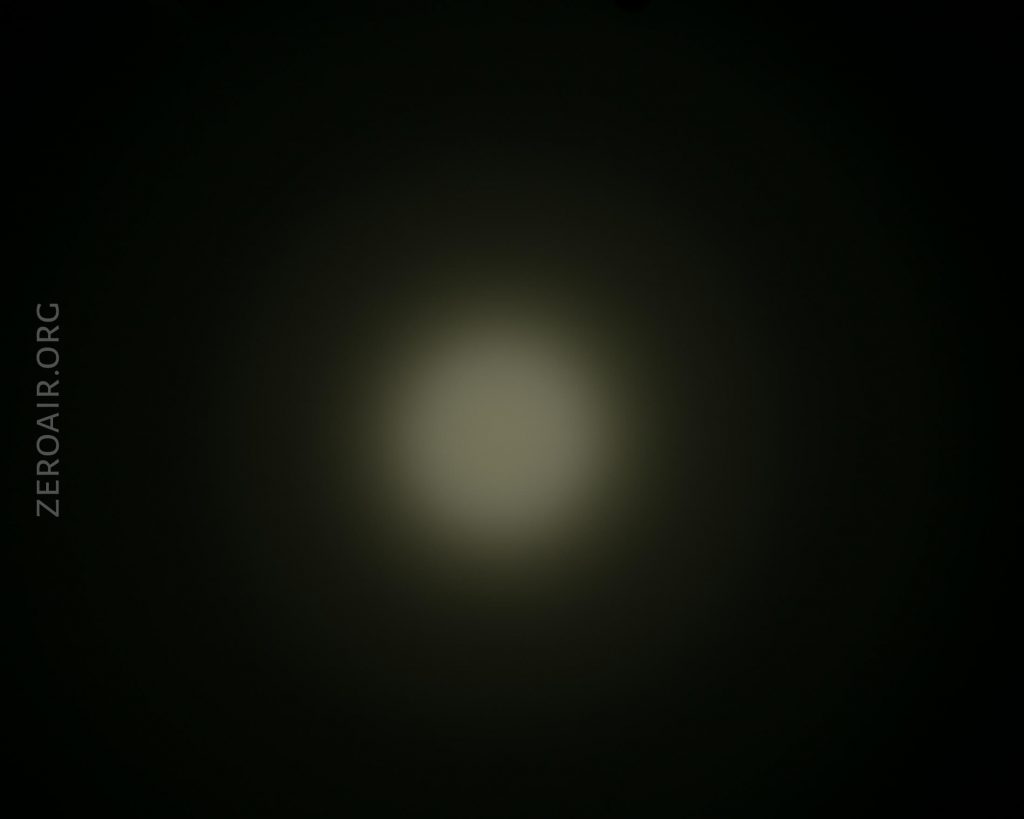


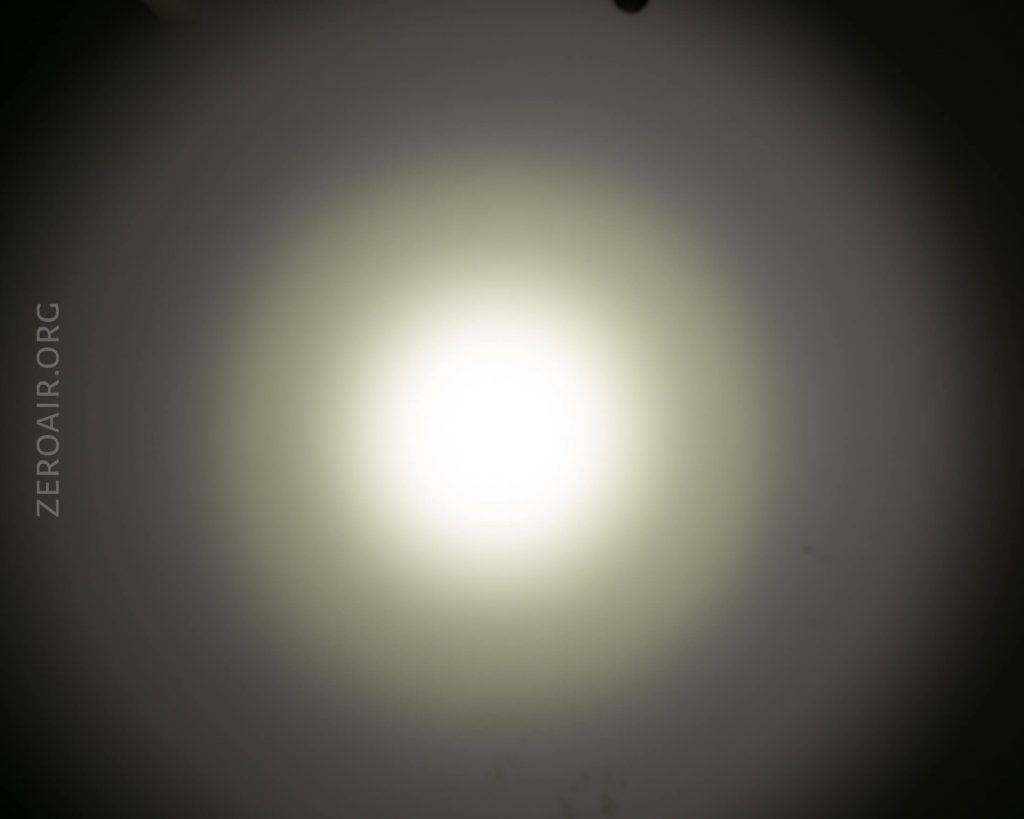

Tint vs BLF-348 (KillzoneFlashlights.com 219b version) (affiliate link)
This photo, like many of these photos, sort of kills the test light. It’s really quite a decent temperature and tint, and not all that green.

I compare everything to the Killzone 219b BLF-348 because it’s inexpensive and has the best tint!
Random Comparisons and Competitive Options
Here’s a link to a relevantly filtered page on parametrek.com. I use that site a lot! Basically buy this light for modding, if you want a better quality host than the Convoy S2+, which is still inexpensive.
Conclusion
What I like
- Excellent build quality
- Easy to mod
- Ability to go backward in the regular modes
- Useful accessory modes aren’t in the way in normal use
What I don’t like
- Preflash on moonlight
- An updated version with the Samsung LH351d would be fantastic
- PWM on lowest two modes in 7 output group
So does this review make you think the A6 is still relevant? Or that the A6 is showing it’s age? Let me know in the comments!!
Notes
- This light was provided by BangGood for review. I was not paid to write this review.
- This content originally appeared at zeroair.org. Please visit there for the best experience!
- Use my amazon.com referral link if you’re willing to help support making more reviews like this one!
- Please support me on Patreon! I deeply appreciate your support!
Nice review. I agree with it 100% but prefer new batteries and turbo when needed and I have no pre-flash on any mode.
I carry an original A6 BLF SE XP-L/5A, Samsung 30Q (good capacity, throughput and price).
non-anodized in an original model (elastic inside tube) Ultrafire 360 swivel holster on my belt swiveled 45 degrees down for my walks at night.
Moonlight – level 2 normally but turbo if needed.
Only mods are springs bypassed with solder wick and a lighted tailcap.
Just bought a new one from Bangood for a friend who I gave a Convoy S2+ 5 X 7135 a while back.
Bangood had the A6 for $13.99 which is a ridiculously low price and I couldn’t resist.
I have Astrolux S2 and S3s but for everyday use prefer the A6/S1.
Too bad it was black and not the non-anodized on sale.
EDCs are a Sofirn S10S/LH351D/14500 daytime, Astrolux S43S/XP-G3/30Q 18650 night time, and BLF-348/10440/219 when in formal clothes.
There is always a Nitecore tube light on my home keyring.
Nicron N7/14500, Ultrafire CB 02, Sofrin SP36/LH351D, Acebeam K40M, Astrolux FT03/XHP50.2, a no name 2X 18650 3X XM-L2 dive light and JKK36/XHP70.2 powerbank (modded driver) and 4 bay USB charger in the car for SAR activities.
Guess I’m a flashaholic.
Thanks for the comment!
Yes, 13.99 is a great price for this light!!
I’ve had a couple of these lights for a couple of years. Other than my older Zebralights, these are the only old lights I still use fairly often. Simple, bright, and well constructed. Cheap enough I don’t care if I lose them (okay, maybe a little).
My only complaint is that of every FET-driven light: the output drops a lot by the time the battery is half-drained. You really have to keep your cells topped up to get good performance out of this light.
A thermal-controlled step-down would be a nice modern addition to this light.
still a great light
anduril is a more advanced UI with ramping the the A6 is still very useable
wle