

Fenix HT18 Flashlight Review
Fenix released the HT18 Flashlight, a thrower in 21700 format. It’s a dual-switch light, includes the cell, and that cell has USB-C charging!
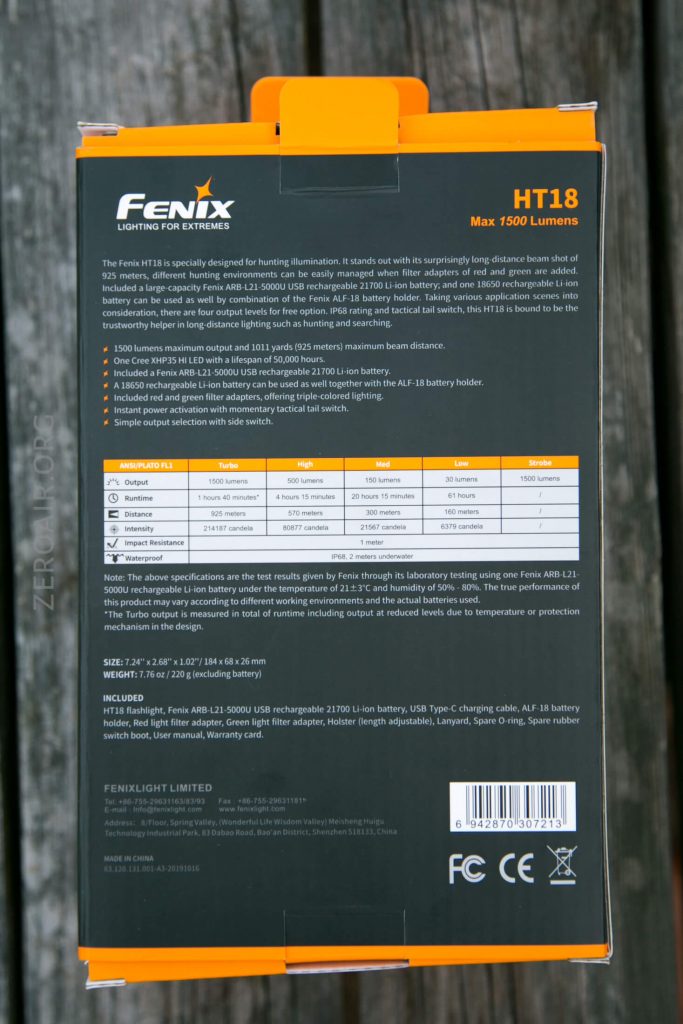
Official Specs and Features
Here’s a link to the Fenix HT18 Flashlight product page.
Versions
There’s just one version of the HT18.
Price
The going price for this light is $129.95. It’s available for purchase at Fenix Lighting.
Short Review
This is a quite capable light that hits its specs and is nice to use. It’s pretty simple, and won’t be overwhelming. But it packs some nice features.
Long Review
The Big Table
| Fenix HT18 Flashlight | |
|---|---|
| Emitter: | Cree XHP35 HI |
| Price in USD at publication time: | $129.95 |
| Cell: | 1×21700 (included, with USB-C charging) |
| Turbo Runtime | High Runtime |
| LVP? | Switch to low |
| Switch Type: | Dual |
| On-Board Charging? | Yes |
| Chargetime | |
| Power off Charge Port with no Cell? | n/a (charging is on the cell) |
| Claimed Lumens (lm) | 1500 |
| Measured Lumens (at 30s) | 1413 (94.2% of claim)^ |
| Candela per Lumen | 132.1 |
| Claimed Throw (m) | 925 |
| Candela (Calculated) in cd (at 30s) | 5320lux @ 6.134m = 200170cd |
| Throw (Calculated) (m) | 894.8 (96.7% of claim)^ |
| All my Fenix reviews! | |
^ Measurement disclaimer: Testing flashlights is my hobby. I use hobbyist-level equipment for testing, including some I made myself. Try not to get buried in the details of manufacturer specifications versus measurements recorded here; A certain amount of difference (say, 10 or 15%) is perfectly reasonable.
What’s Included

- Fenix HT18 Flashlight
- Fenix 5000mAh 21700 cell
- Lanyard
- Spare o-rings (2)
- Spare switch cover
- Charge cable (USB to USB-C)
- 21700 to 18650 adapter
- Lens covers (red and green)
- Nylon pouch
- Manual and paperwork
Package and Manual


Build Quality and Disassembly

The build quality on the HT18 is great. I like the anodizing. It’s a bit glossy – in a tactical situation that could possibly pose some problems but probably not. I also like the button cover, which is metal (or hard plastic anyway), and has an indicating LED in the middle.

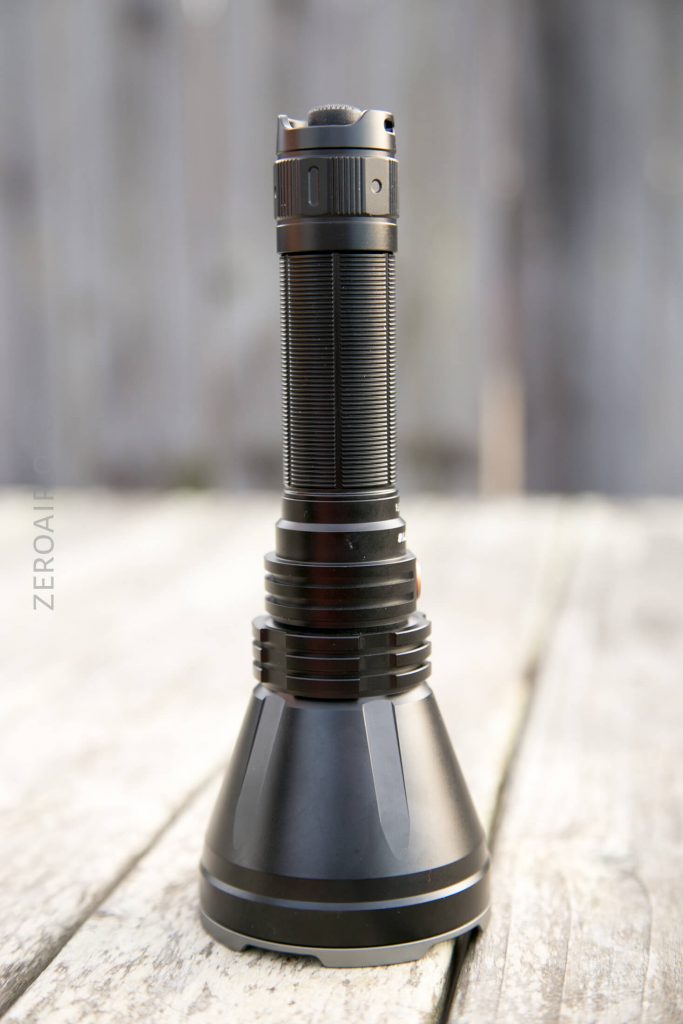
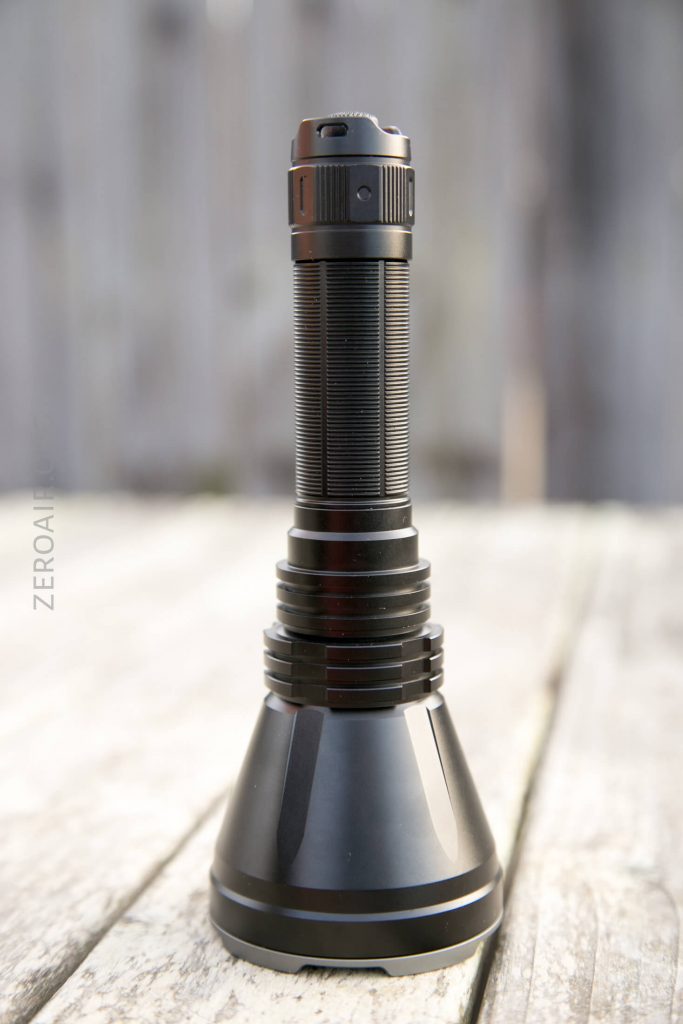
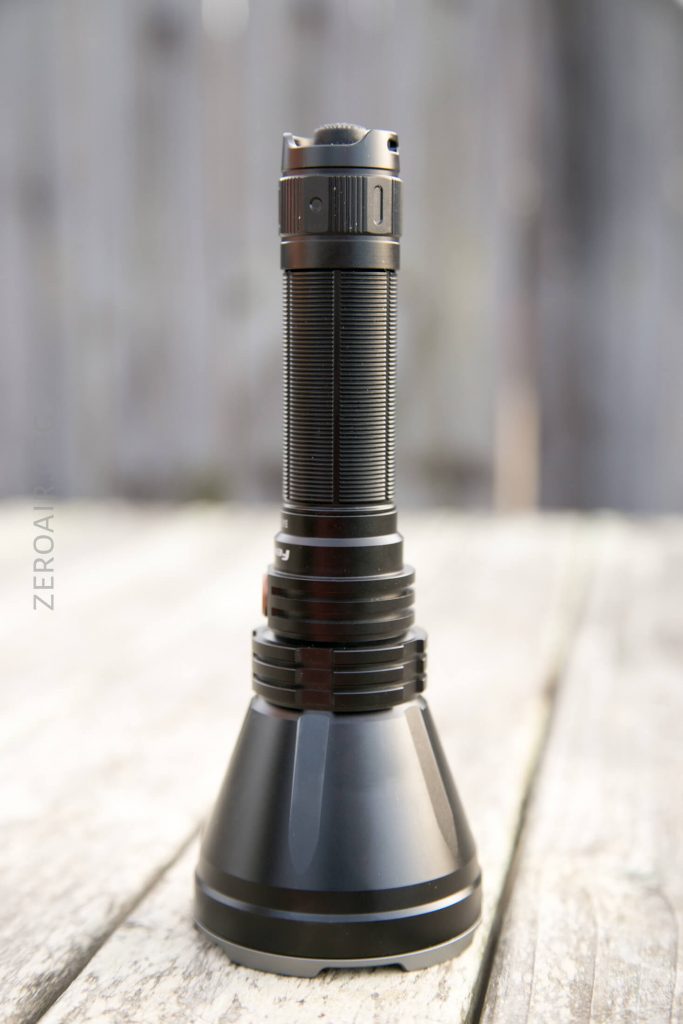
The switch – well both switches – are easy to find without looking.
There’s a bit of finning on the head and around the switch. That’s a good thing for Turbo since the light pulls 4A on Turbo.

The body/cell tube has these textured ridges.

The tailcap, which is what you’ll remove to take the cell out, has some reeding which really aids in removal.


The light will not tailstand because of the proud switch. And only might without the proud switch, since the tailcap has just the two loops.

The threads, as on all Fenix lights I’ve had recently, are nice threads. Anodized (so mechanical lockout is easy), square-cut, well lubed. They’re very long threads though so you’ll have to turn the tailcap a bunch to remove it.

The head end has a spring.
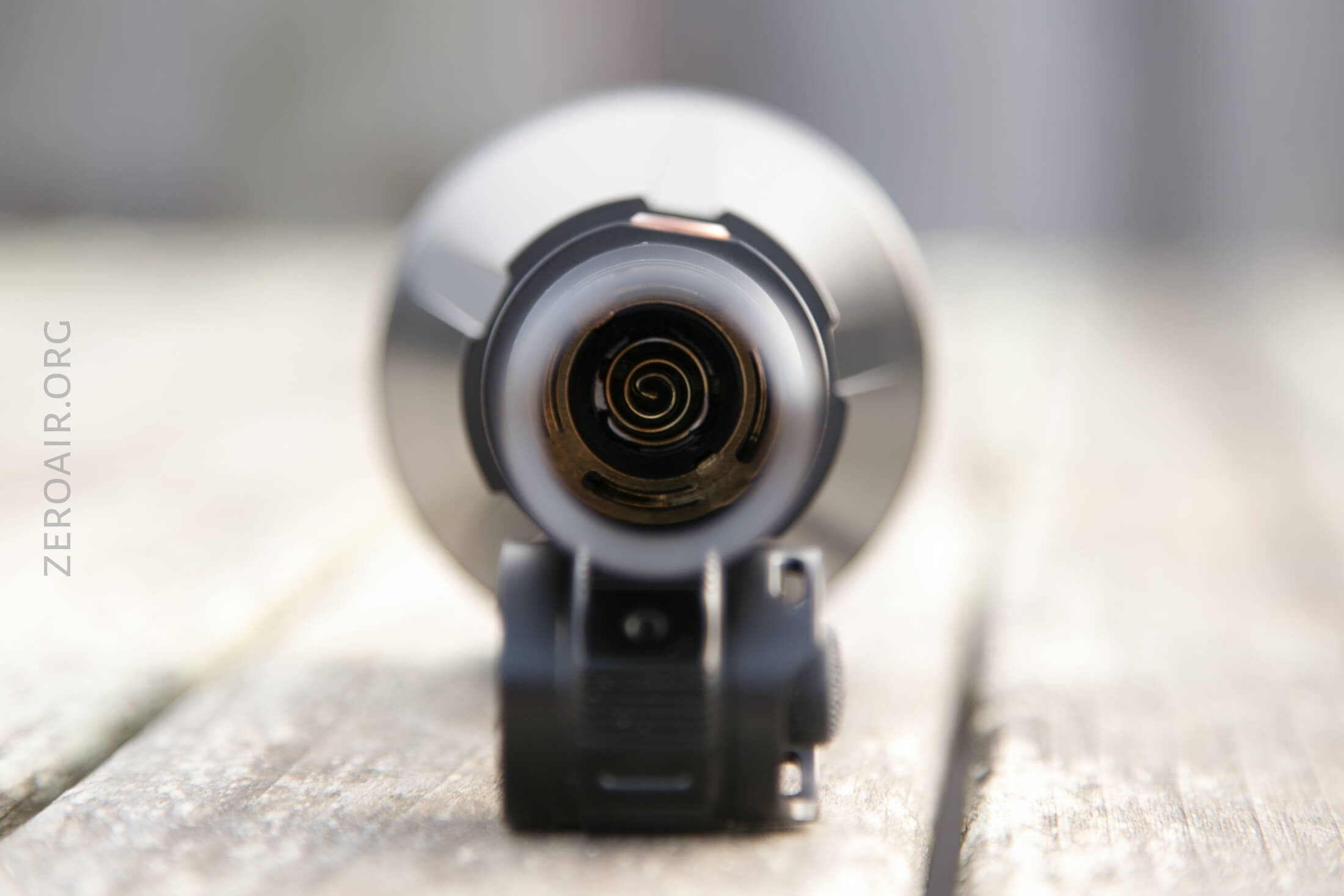
The tailcap has a spring too. Both these springs are quite stiff and should hold the cell very securely.

Below see the switch indicating red.


The bezel is crenelated, so some light will show through in this orientation.

Size and Comps
Officially
Length: 7.2” (184mm)
Body: 1.0” (26mm)
Head: 2.7” (68mm)
Weight: 7.8 oz (220g) excluding battery
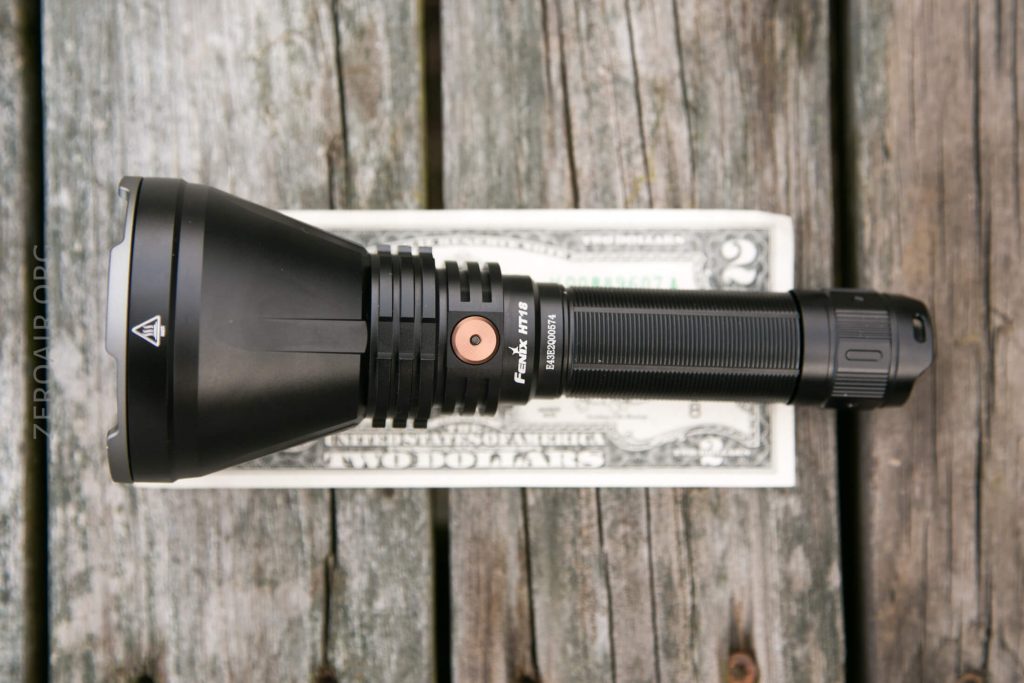
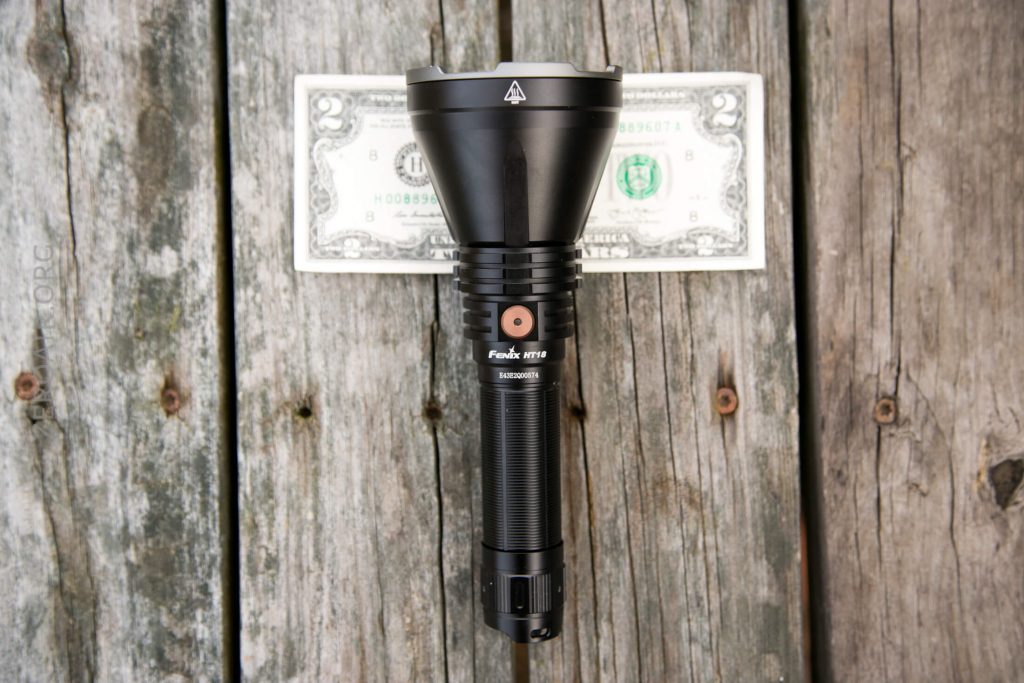
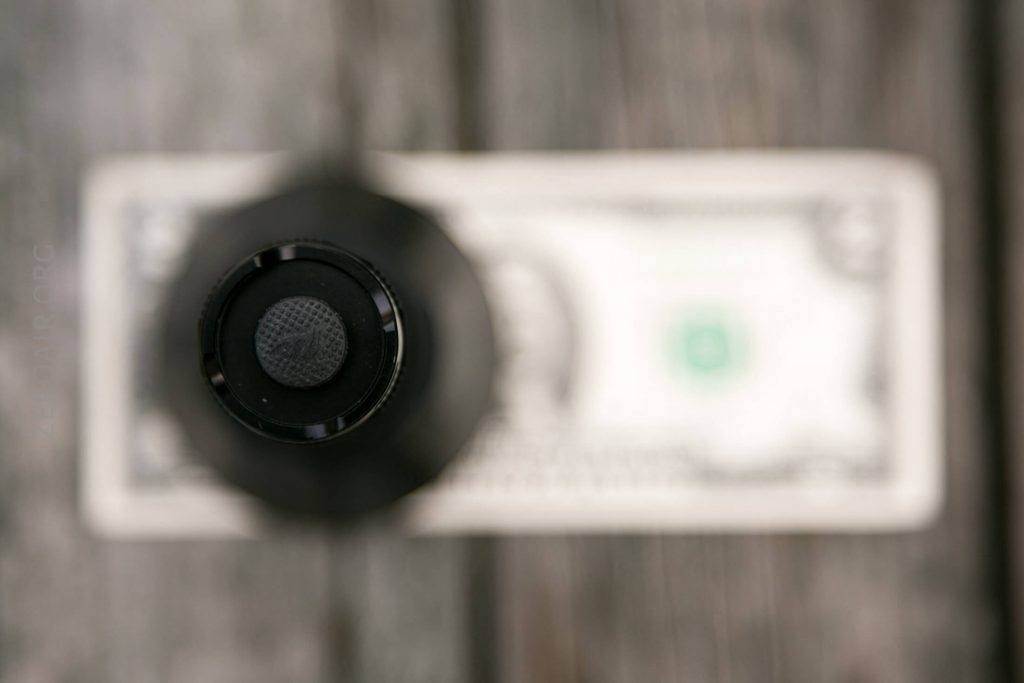


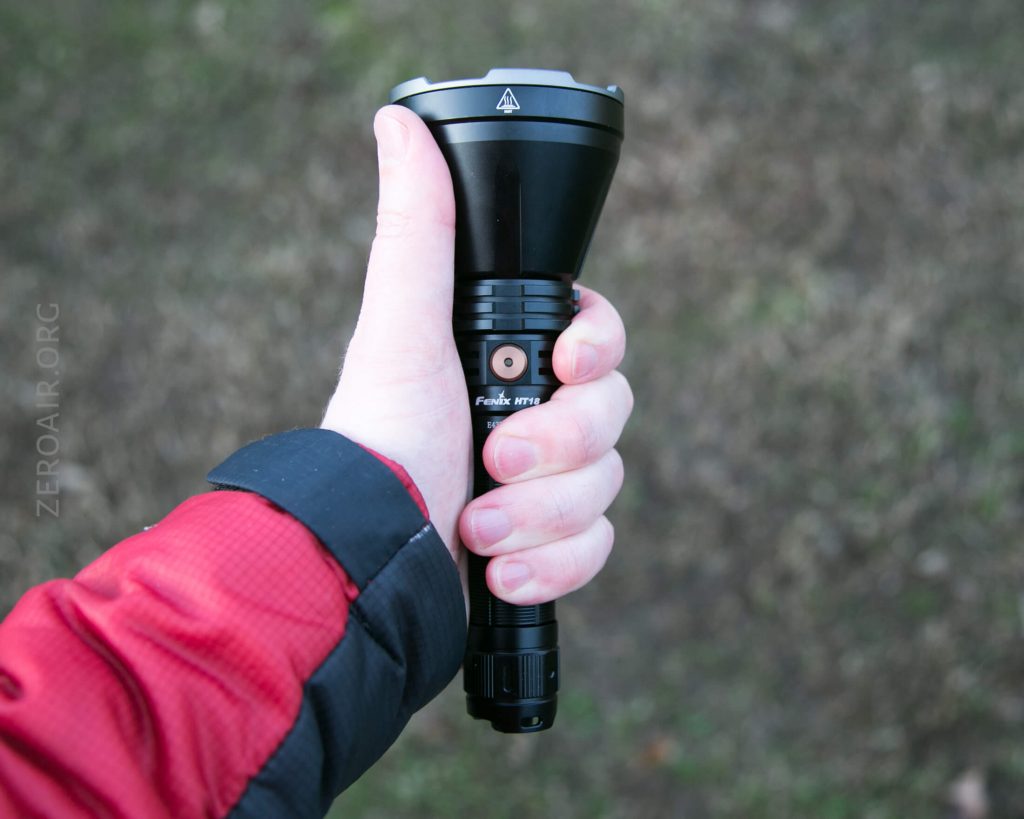
Not really a small light, but you wouldn’t really expect it to be.
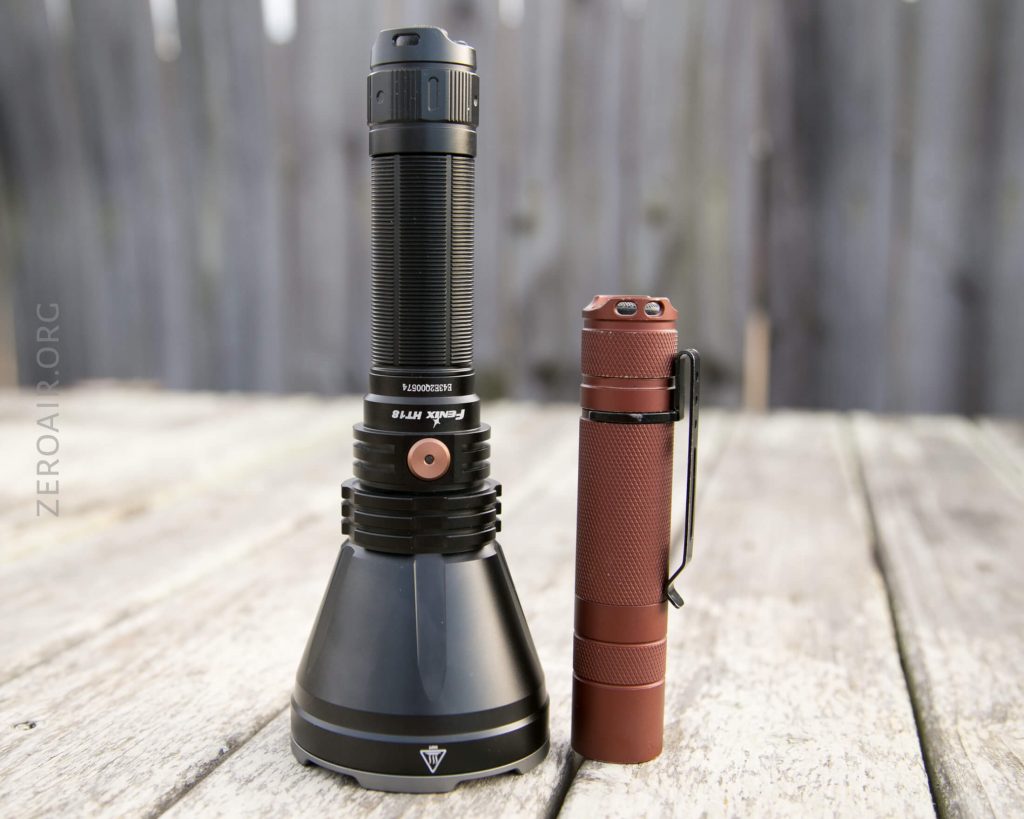
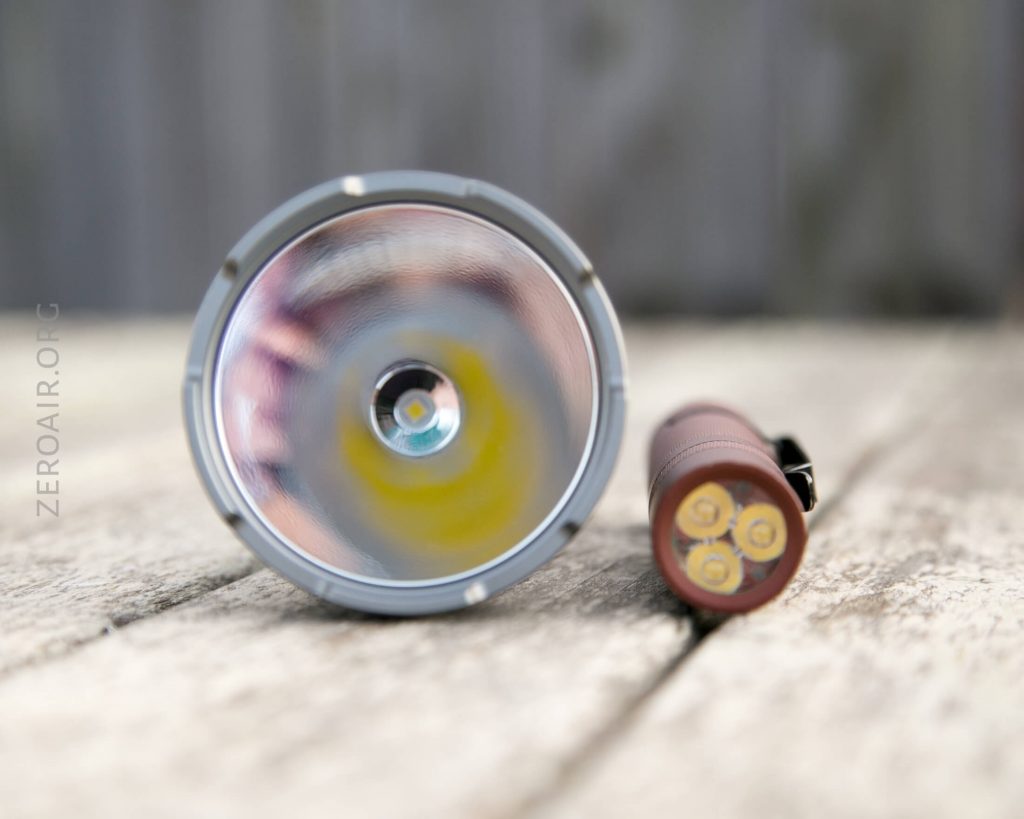


The original PhotonPhreaks patch!

Retention and Carry
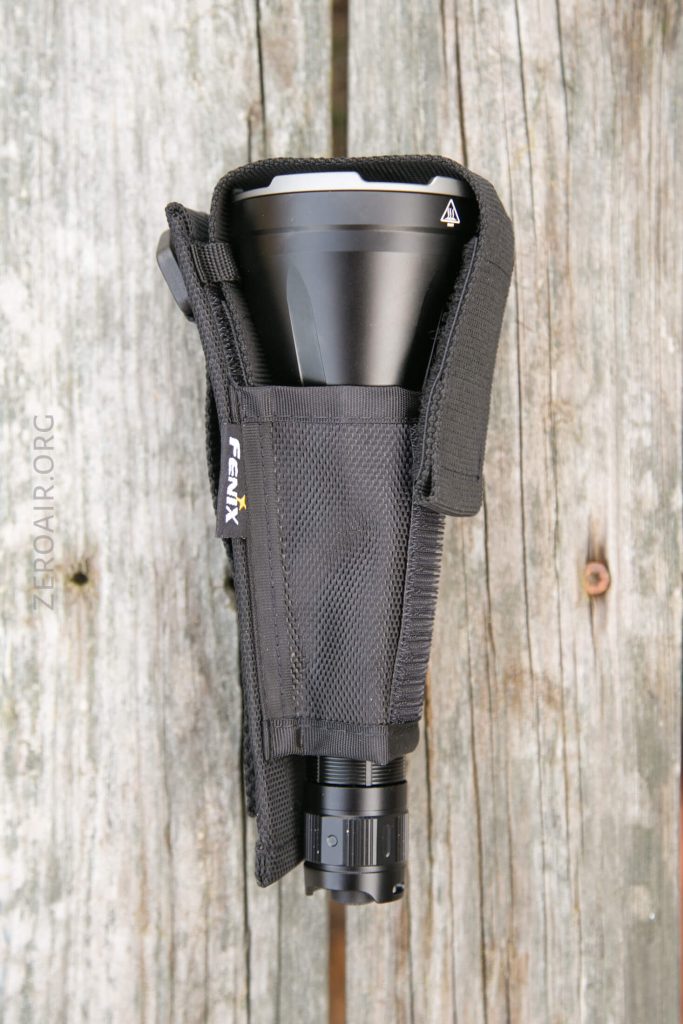
The main way you’ll want to carry this light is with the nylon belt pouch. The light fits only in this bezel-up orientation and is very snug.


Also included is a lanyard, which would attach to the tailcap. The lanyard and pouch can be used at the same time with no issues.
There is no pocket clip.
Power and Runtime
The HT18 is powered by a single 21700 li-ion cell. Fortunately, a cell is included; a 5000mAh 21700 cell, which has built-in USB-C charging!

The cell is a button top, and that button…. look at it below. That button has a charge indicator right in the center.
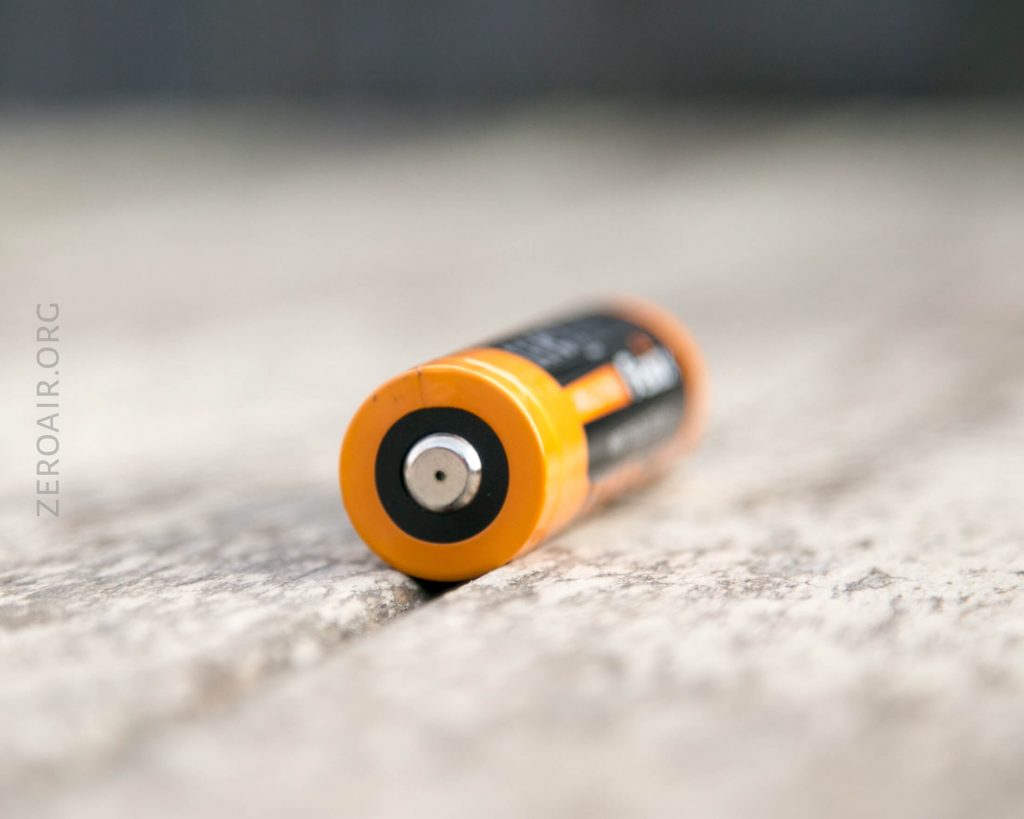
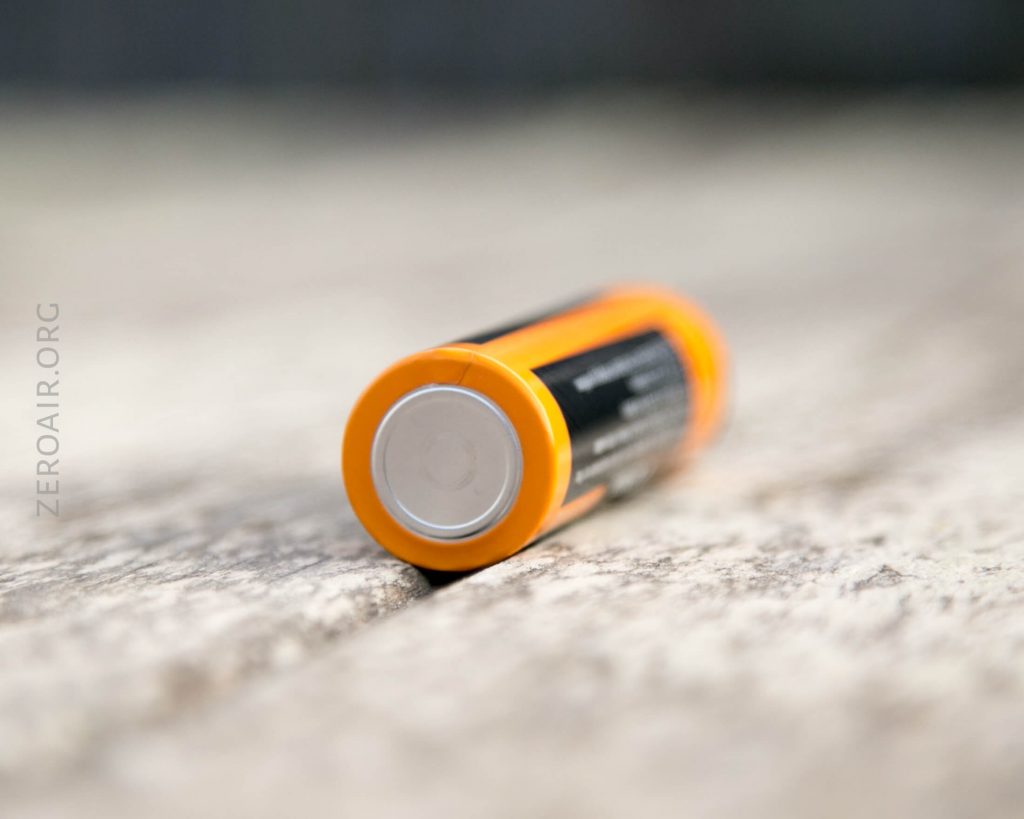
Also included is this 21700 to 18650 adapter. It’s a “dumb” adapter but has a spring and a metal contact point on the positive end.


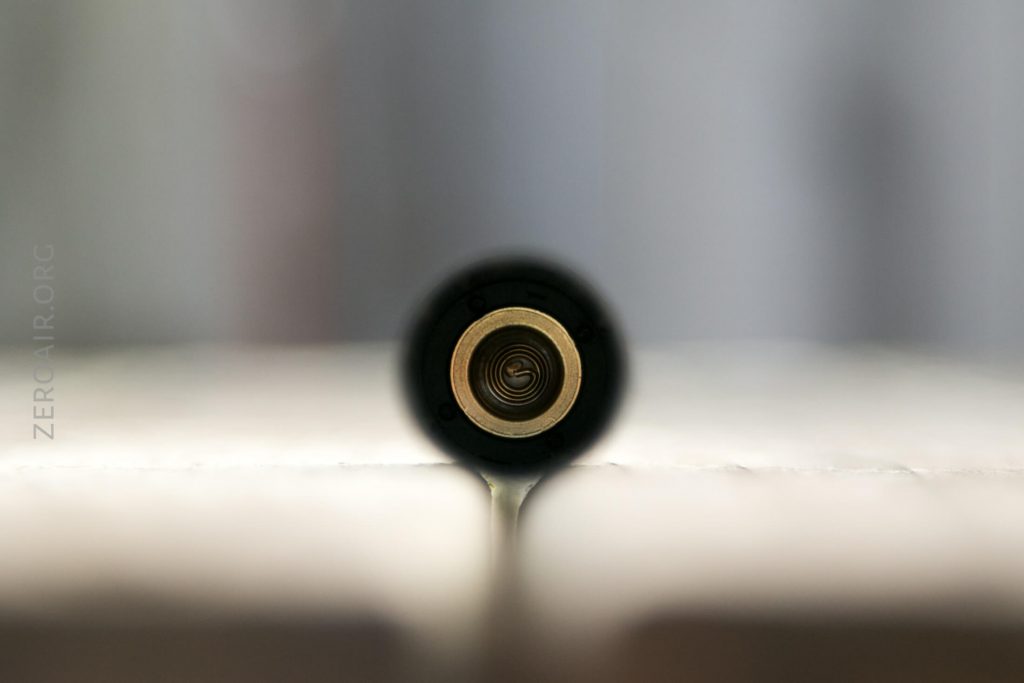
The cell goes in the light as seen below. The positive end toward the head.
Here are a couple of runtimes. Once the light has finished stepping down, it’ll stay on the Low output for a long while. This happens in both tested modes, and probably Med too. Once the light switches to Low, I believe it only shuts off when the forward voltage is longer reached for the emitter. To wit: there doesn’t seem to be LVP.

The light is very steady on High for a good long while. This amount of lumens in such a reflector is quite useful, too.

Testing with the bench power, the red switch warning starts about 2.8V, and the light fully shuts off at around 2.3V.
Charging
The cell has built-in charging, by way of USB-C. I can’t think of any other USB-C onboard charging; it’s enough of a feat to see it in lights right now, much less to see it on a cell.

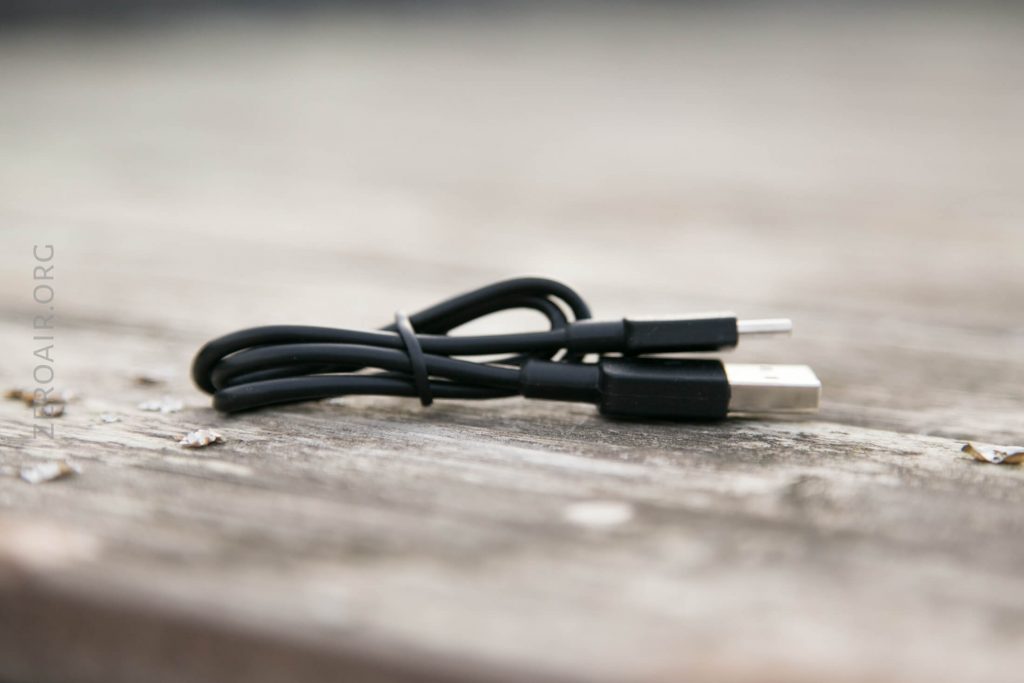
A suitable cable is included; USB to USB-C. I don’t know about power delivery with USB-C to USB-C (my tester is still dead).
Here’s a chargetime. It’s consistent (depending on how long you took the cell). In the case where the cell was at 2.82V after the High run, there’s a sort of a “soft start” on charging. That’s probably very good for the cell, but as you can see (test 2) it does lengthen the charge time.

Modes and Currents
| Mode | Mode Claimed Output (lm) | Claimed Runtime | Measured Lumens | Tailcap Amps |
|---|---|---|---|---|
| Turbo | 1500 | 1h40m | 1413 | 4.00 |
| High | 500 | 4h15m | 543 | 1.02 |
| Med | 150 | 20h15m | 157 | 0.24 |
| Low | 30 | 61h | 28 | 0.05 |
Pulse Width Modulation
Low to Turbo. No PWM to be seen.
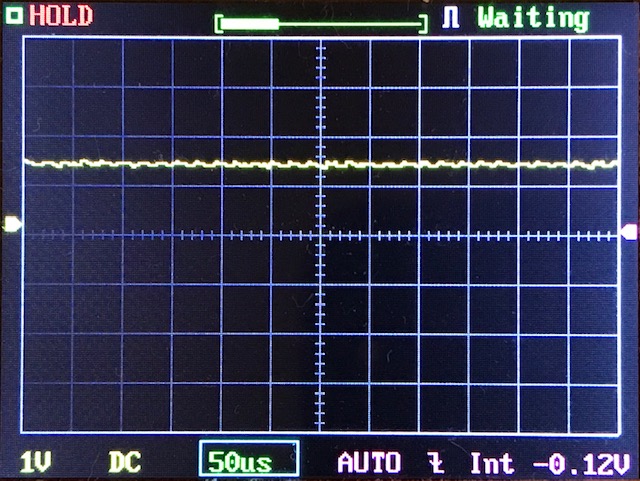
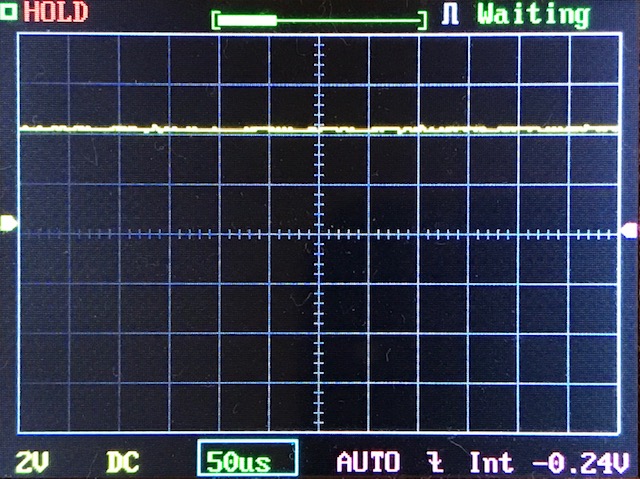
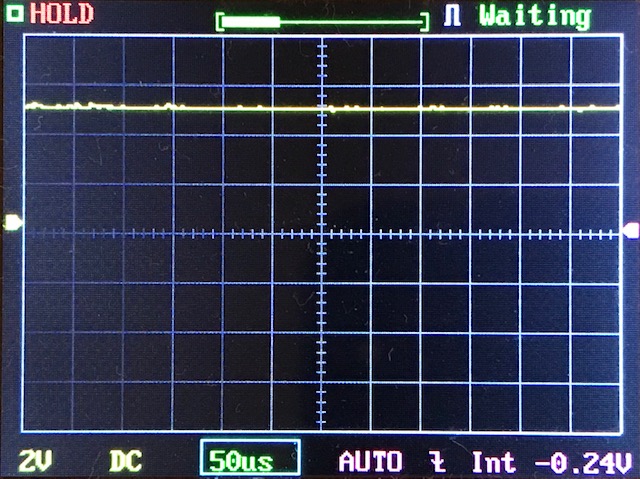
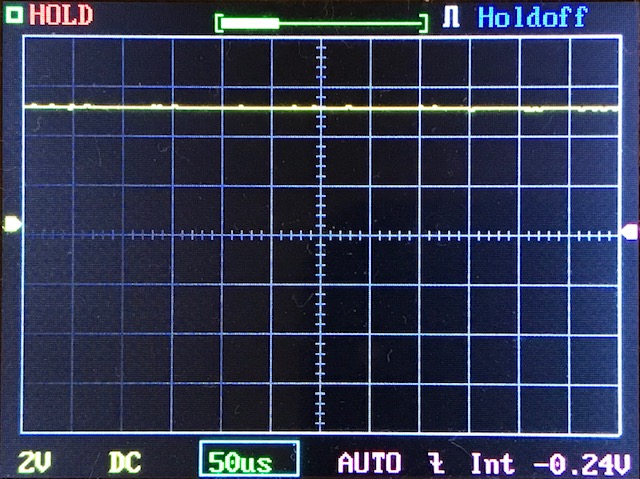
Here you can see a “baseline” – a chart with almost no light hitting the sensor.

Then there’s the Ultrafire WF-602C flashlight, which has some of the worst PWM I’ve seen. It’s so bad that I used a post about it to explain PWM! Here are multiple timescales (10ms, 5ms, 2ms, 1ms, 0.5ms, 0.2ms) to make comparing this “worst” PWM light to the test light easier. That post also explains why I didn’t test the WF-602C at the usual 50us scale.


User Interface and Operation
There are two switches on the HT18. First is a mechanical forward clicky tailswitch.

Next is an indicating e-switch on the head.

That switch indicates for a few seconds right after the light is turned on, to tell a user the charge state of the cell that’s inside.
Green Steady = 100%-85%
Green Flashing = 85%-50%
Red Steady = 50%-25%
Red Flashing = 25%-1%
The manual states that this indication works only with Fenix branded cells. I tested with non-Fenix cells and I found them to indicate just fine.

Here’s a user interface table! Any “on” action requires the Tail Switch to be in the “on” position – it’s a mechanical switch. Without it being on, the light won’t work.
| State | Action | Result |
|---|---|---|
| Off | Click Tail Switch (TS) | On (Last used mode) |
| Off | Click Side Switch (SS) | No action |
| On | Click TS | Off |
| Off | Hold TS | Momentary (last used mode) |
| On | Click SS | Mode advance (LMHT) |
| On | Hold SS | Strobe |
| Strobe | Click SS | Last used mode |
LED and Beam
The emitter here is a Cree XHP35 HI. The temperature isn’t mentioned, and overall the 219b seen below makes the beam look a big green. But this emitter is a great choice for the throwier lights. There’s also a very smooth reflector.

Also included are these two lens covers. One’s green, and one’s red. There’s no way to carry these (in the pouch for example) but they do have a little tab with a hole through which something could be used to hold them.
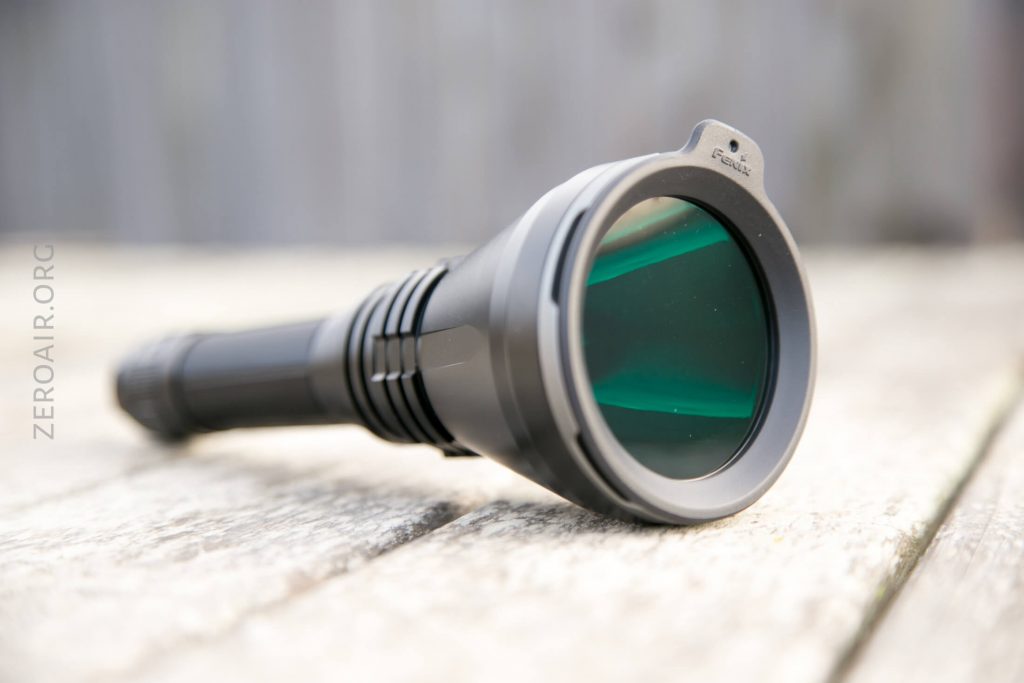
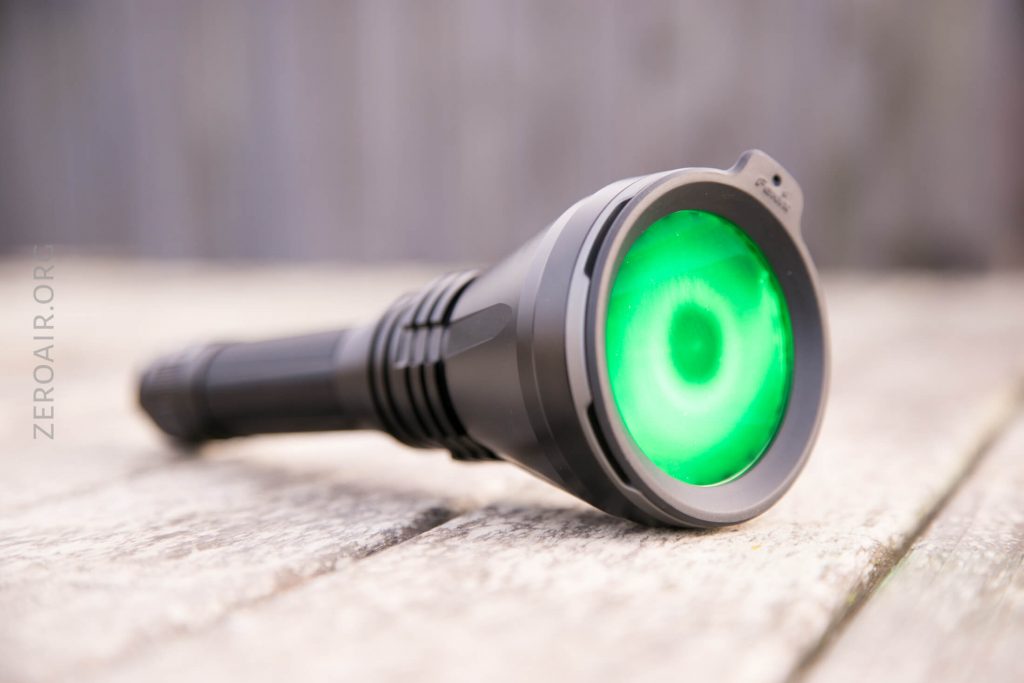
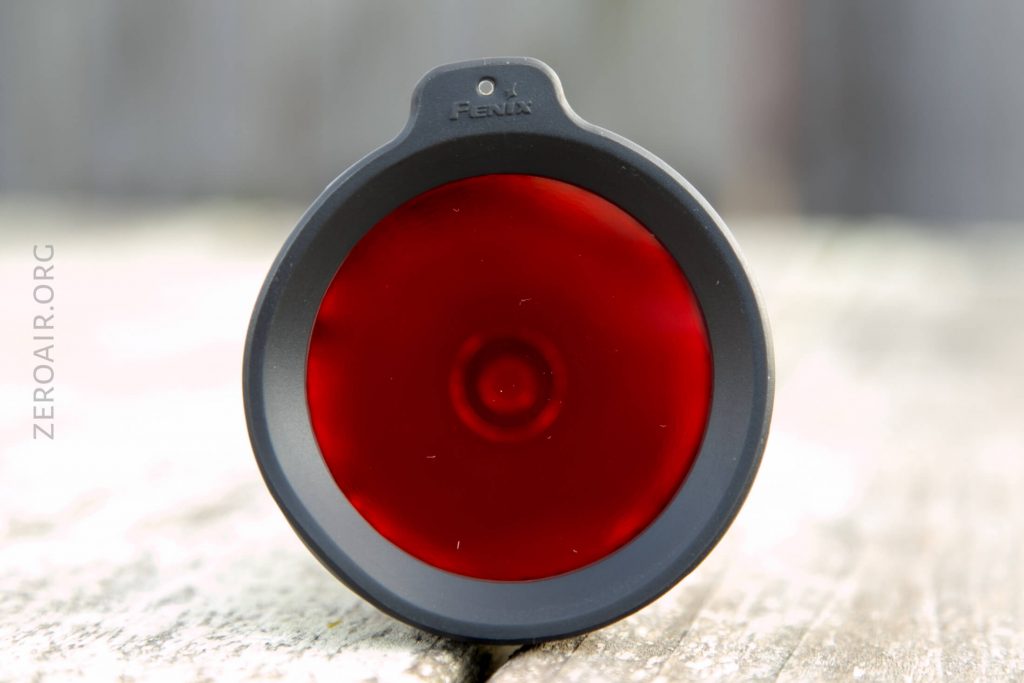
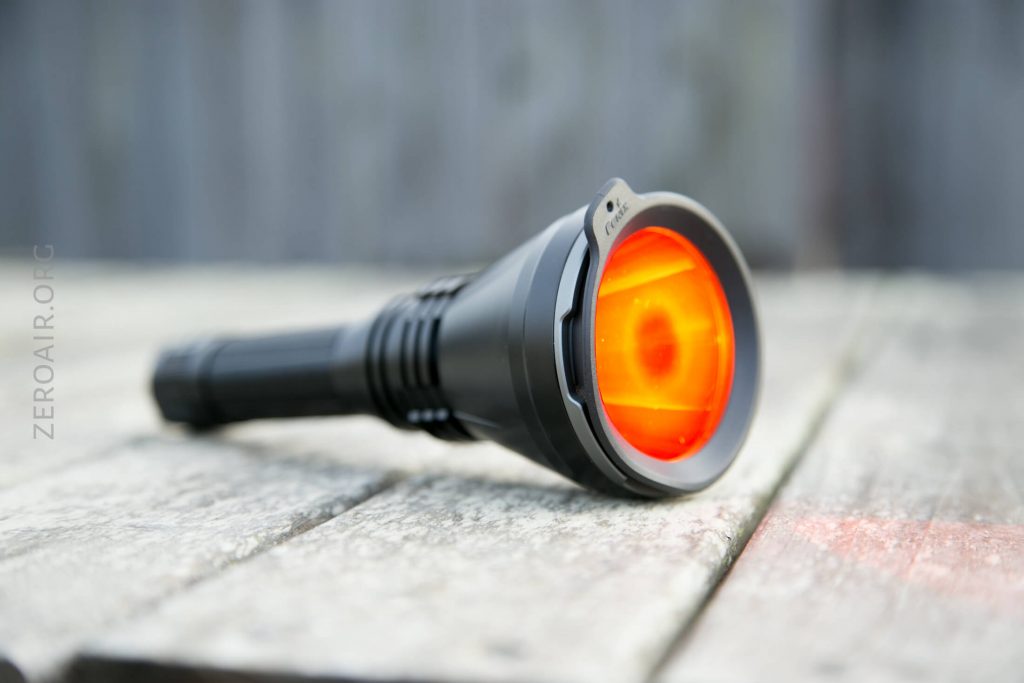
These covers just press in. The edges are rubbery.


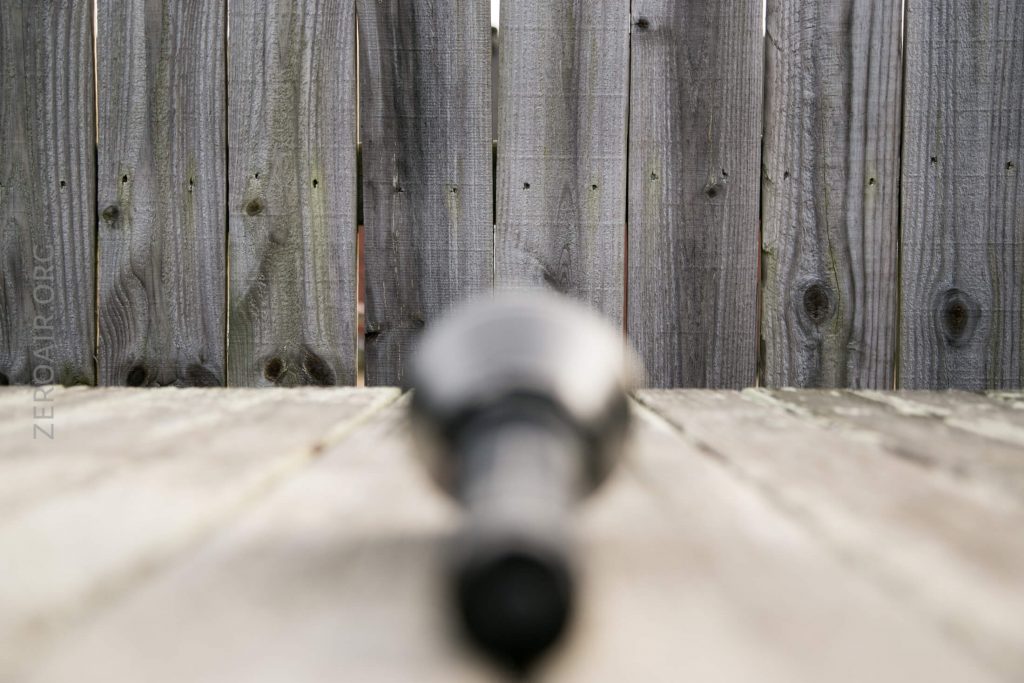
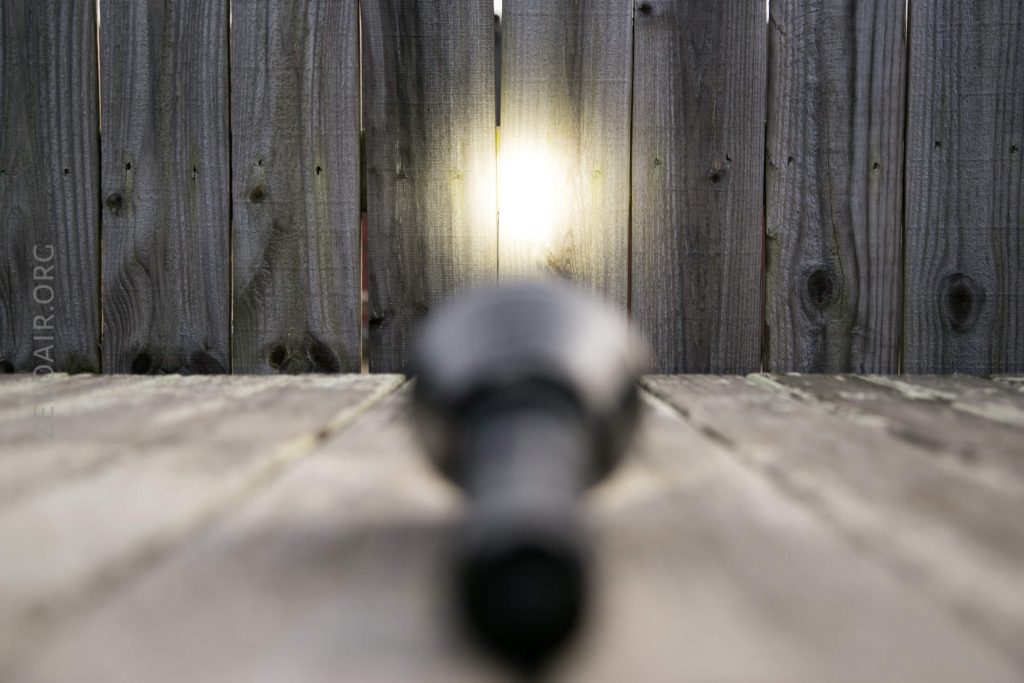

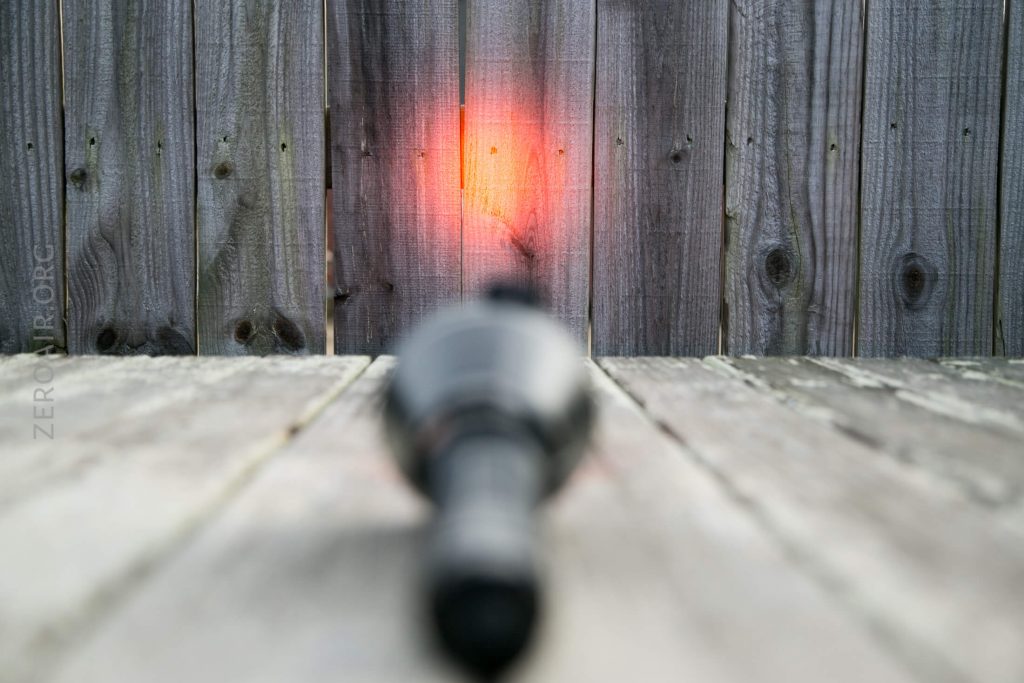
These beamshots always have the following settings: f8, ISO100, 0.3s shutter, and manual 5000K exposure. These photos are taken at floor level, and the beam hits the ceiling around 9 feet away.
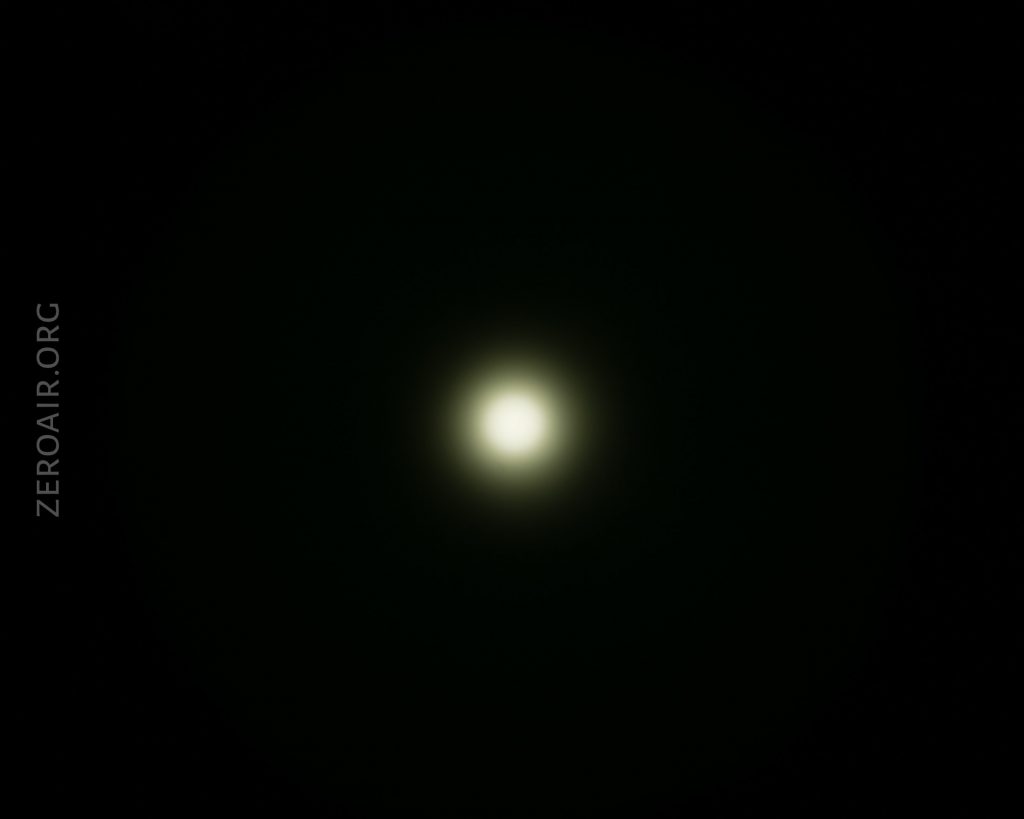

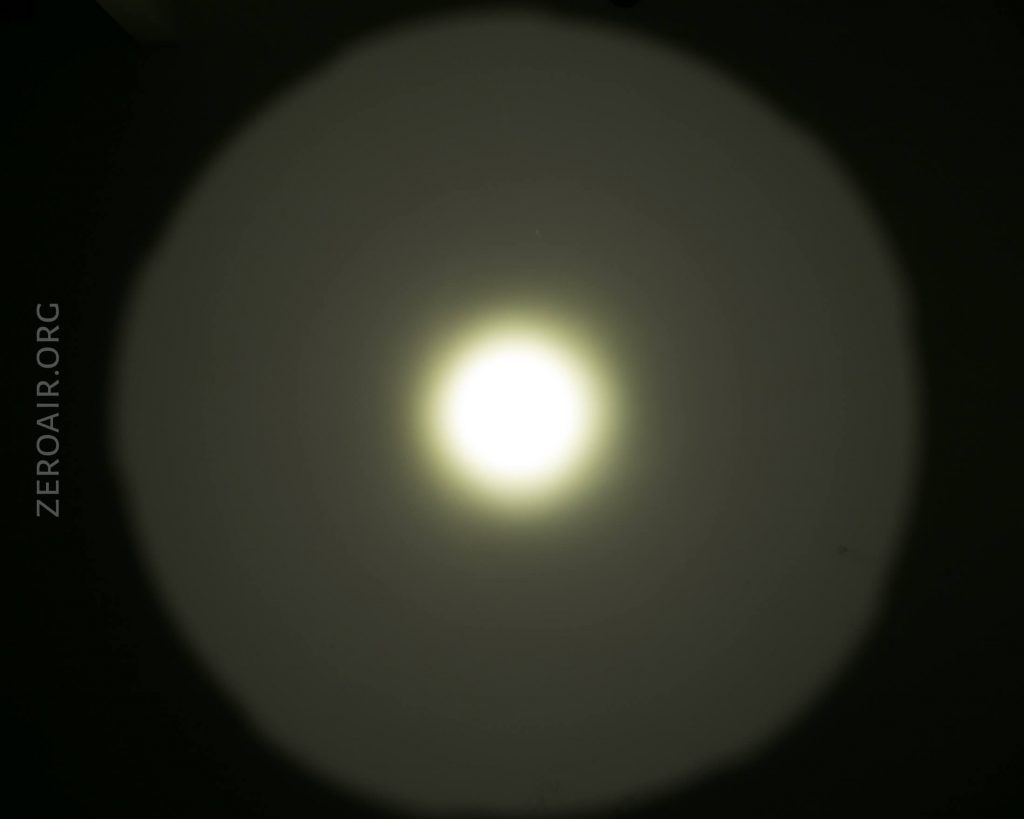
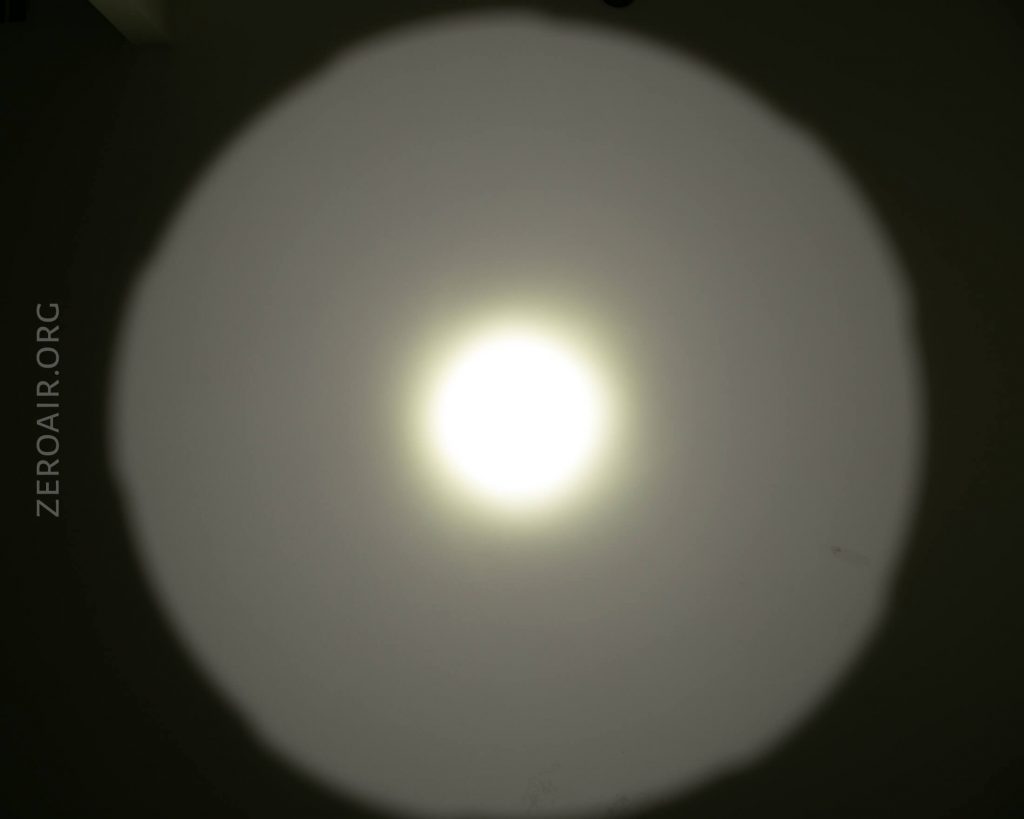
Tint vs BLF-348 (KillzoneFlashlights.com 219b version) (affiliate link)

I compare everything to the Killzone 219b BLF-348 because it’s inexpensive and has the best tint!
Conclusion
What I like
- Complete package, with a 5000mAh cell
- The USB-C charging on the cell works great, charging at well over 1A.
- Indicating switch
- Dual switch with “last used” memory is useful for those “one mode light” scenarios
- Metal switch cover on the e-switch
- Easy to lockout
What I don’t like
- Green tint on the XHP35 HI
Notes
- This light was provided by Fenix for review. I was not paid to write this review.
- This content originally appeared at zeroair.org. Please visit there for the best experience!
- For flashlight-related patches, stickers, and gear, head over to PhotonPhreaks.com!
- Use my amazon.com referral link if you’re willing to help support making more reviews like this one!
- Please support me on Patreon! I deeply appreciate your support!
Thanks for the fantastic detailed review!
I was wondering if you knew whether this light runs at full output on turbo with non-Fenix branded protected 21700 cells (providing they’re able to deliver the 4A current)? I suspect that it does, but the fact that it detects when an 18650 is installed and reduces the turbo brightness accordingly got me wondering. My suspicion is that it senses the 18650 through voltage drop rather than some proprietary feature of the Fenix-branded cells, but I wondered if you were able to confirm that it’s fine/full power with other 21700 cells. It’s quite an important aspect for me, as I’m fed up with proprietary cells in lights becoming obsolete/discontinued and rendering them useless (most recently Olight R50 Pro), so I’ve decided to only buy lights that can use standard batteries now.
Many thanks!
Alex.
Thank you Alex!
I don’t expect this Fenix light cares at all what branded cell is used. But you’re right, it’s surprising that the output is different for 21700 and 18650. I don’t know why Fenix plans for the light to be that way – again I’d be surprised if there was any cell-sensing going on there. Voltage sag would be a logical reason!
Thanks.
Yeah, it is a bit odd. Maybe it is just sag due to the current as you say. Although I wouldn’t have thought that 4A was pushing an 18650 all that hard (I’m no expert however!).
Thanks for the reply btw!
Pingback: Goodbye 2020, Welcome 2021! - ZeroAir Reviews