
Fraz Labs Gold Nugget Flashlight Review
Thanks to Friend Fund Friday, I got my hands on this Fraz Labs Gold Nugget. It’s brass, which I love, and has a great emitter. Read on!
Official Specs and Features of the Fraz Labs Gold Nugget
Here’s a link to the Fraz Labs Gold Nugget product page.
Fraz Labs Gold Nugget Versions
Fraz Labs makes a few lights, but of the Gold Nugget in particular, there are just two versions – Matte (seen here) and Shiny.
Price
The going price on these when they are available is $200. As far as I can tell, that either includes “any” emitter option or a couple of specific emitter options. Either way, most of the main point of this light is the ability to swap emitters easily. But read on for that info.
Short Review
I’ll start this part by saying this light is fantastic. It’s just right in all the ways it should be just right. It’s chunky. It’s brass, so it’s positively heavy. It’s neat. It works very well for what it’s designed to do. But I don’t love it. Most of my “don’t love” things are personal preferences, so read on with that in mind. I’m not a fan of twisties (in general) and historically have not liked QTC lights. In this case, the QTC is implemented differently, so we’ll have to see how that pans out.
But as a light you’re going to leave on your desk (since there’s no good way to carry it), for use as a paperweight that also functions as a flashlight, this is perfect.
OR, if you’re a judge and need a palm gavel, well then, this would be perfect. (Like the most perfect, even though those look to be universally wooden. Whatever.)
Fraz Labs Gold Nugget Long Review
The Big Table
| Fraz Labs Gold Nugget | |
|---|---|
| Emitter: | Samsung LH351d (5000K, 90CRI) |
| Price in USD at publication time: | $200 |
| Cell: | 1×18350 |
| Highest Runtime Graph | Mediumest Runtime Graph |
| LVP? | No |
| Switch Type: | Twisty |
| On-Board Charging? | No |
| Claimed Lumens (lm) | – |
| Measured Lumens (at 30s) | 438 |
| Candela per Lumen | 15.8 |
| Claimed Throw (m) | – |
| Candela (Calculated) in cd (at 30s) | 260lux @ 4.509m = 5286cd |
| Throw (Calculated) (m) | 145.4 |
| All my FrazLabs reviews! | |
^ Measurement disclaimer: Testing flashlights is my hobby. I use hobbyist-level equipment for testing, including some I made myself. Try not to get buried in the details of manufacturer specifications versus measurements recorded here; A certain amount of difference (say, 10 or 15%) is perfectly reasonable.
What’s Included
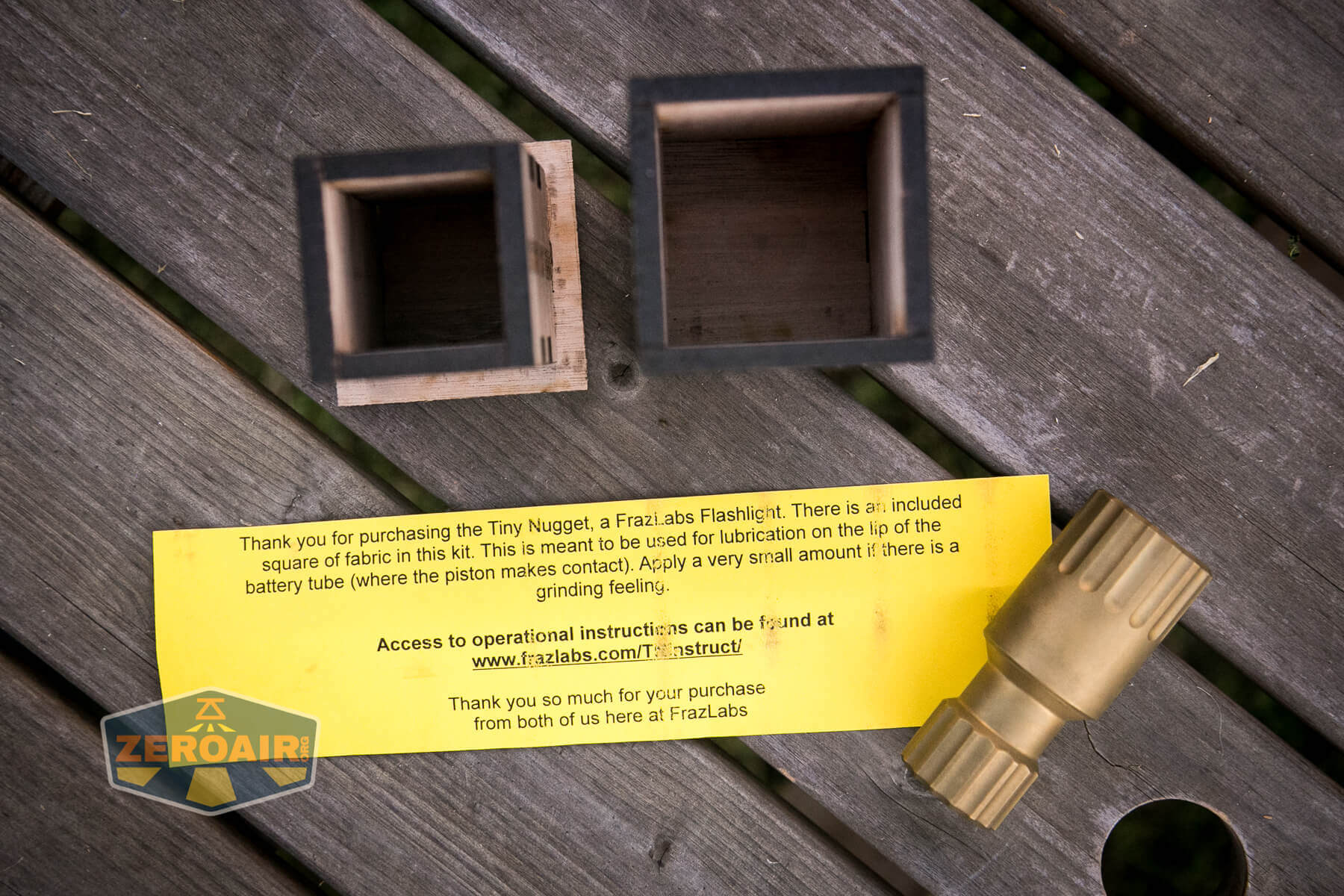
- Fraz Labs Gold Nugget
- Yellow paper
- Laser-cut wooden box
Package and Manual
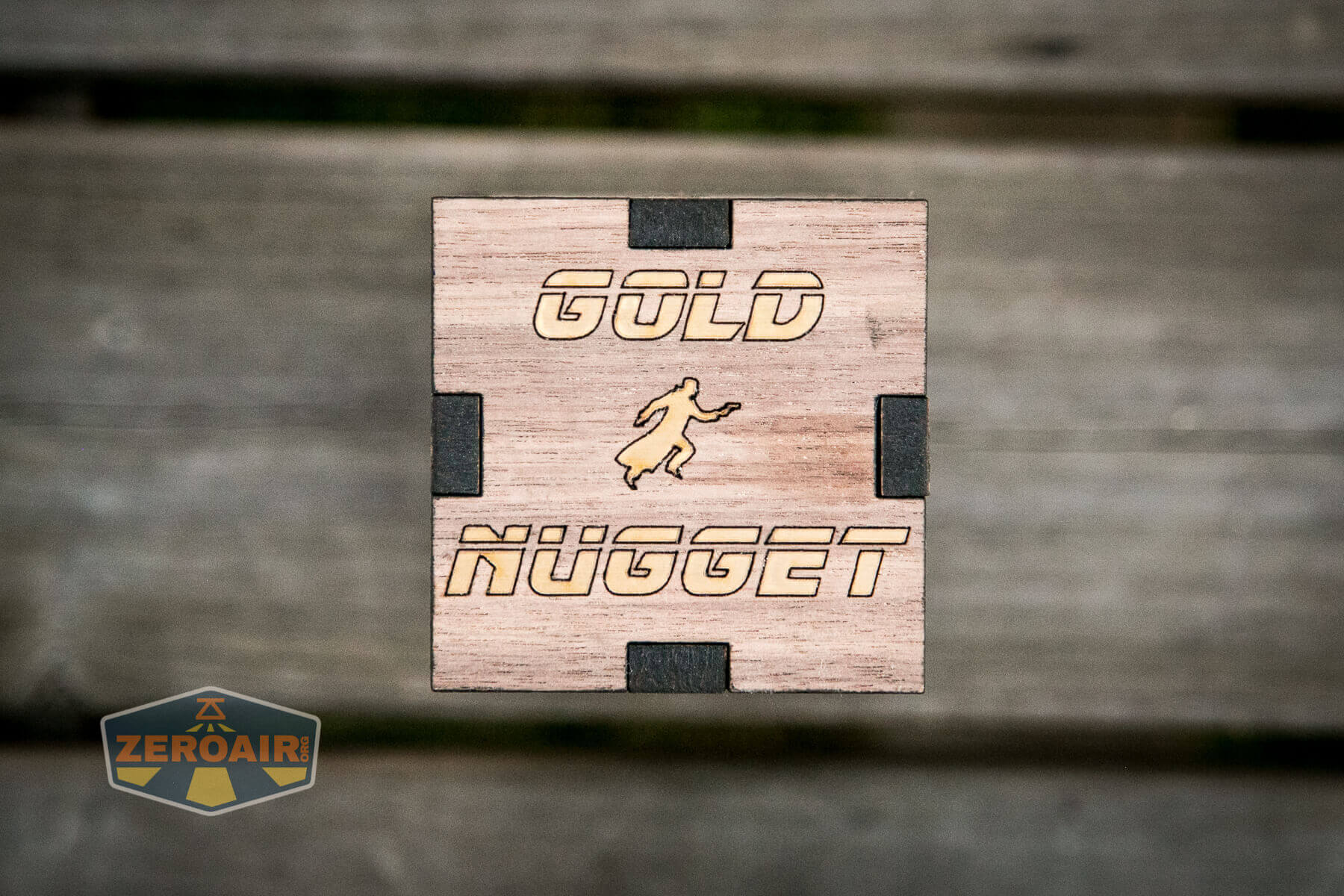
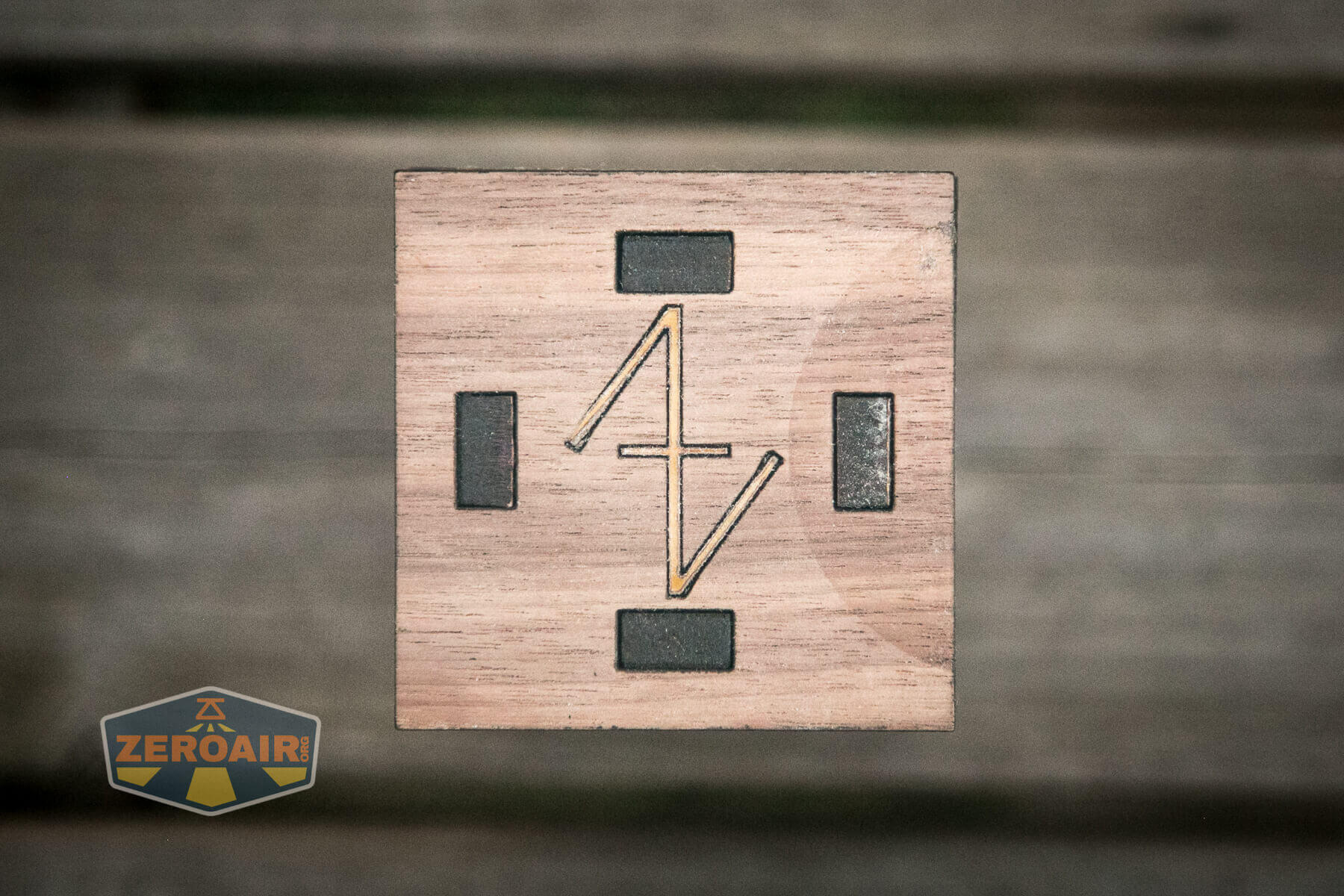
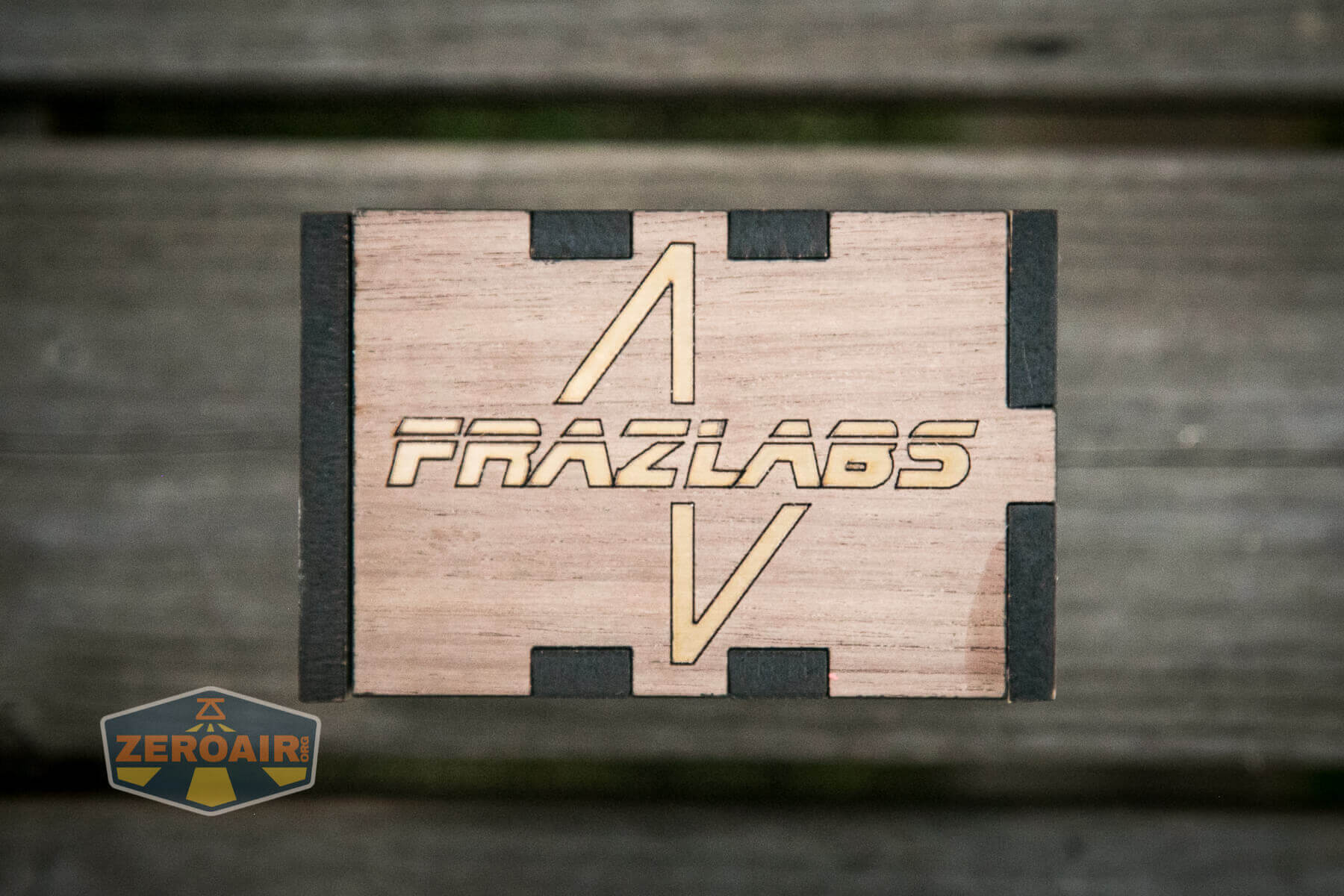
The box is neat. It’s part of the whole setup, of course, and extremely nice. Other brands could take note….
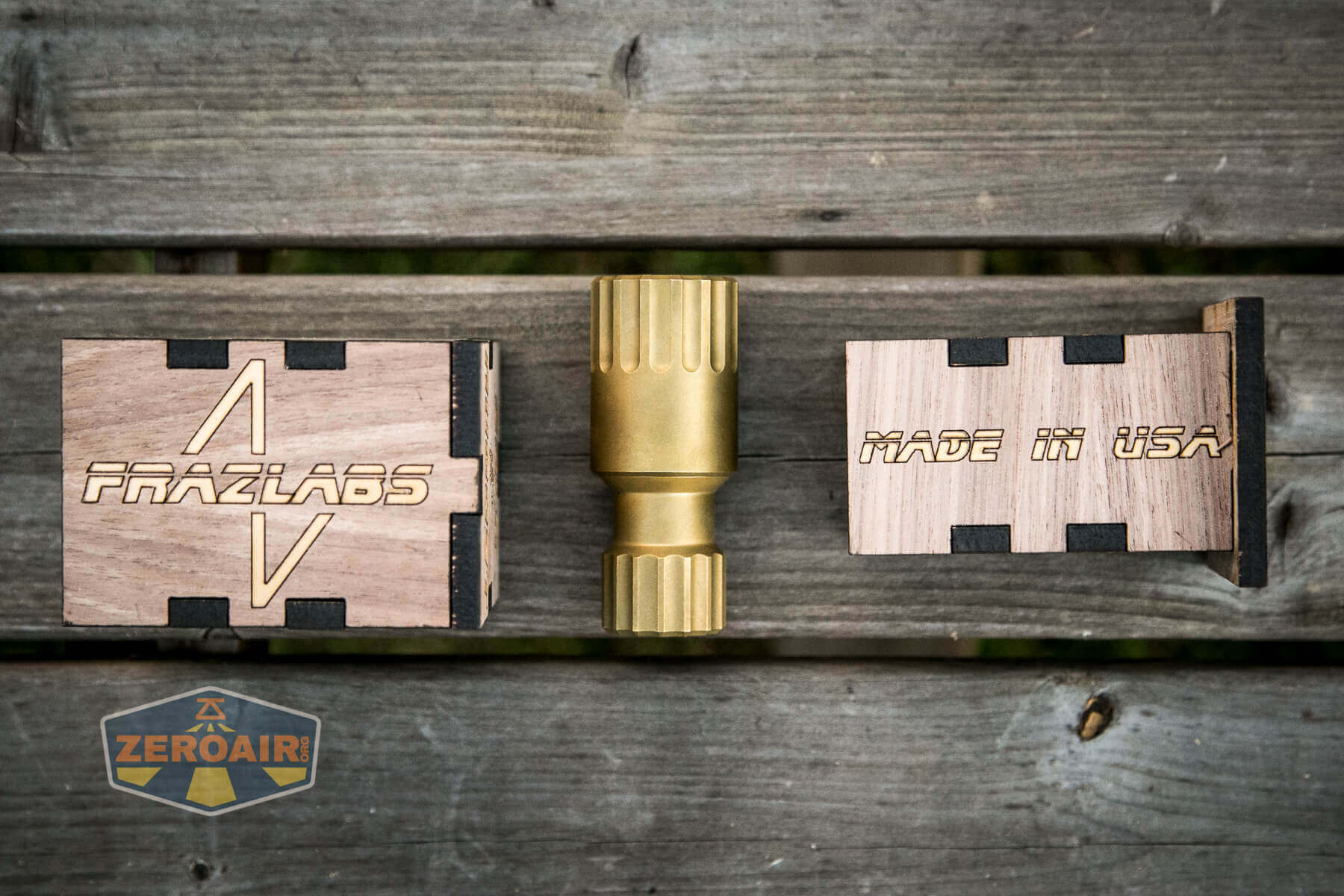
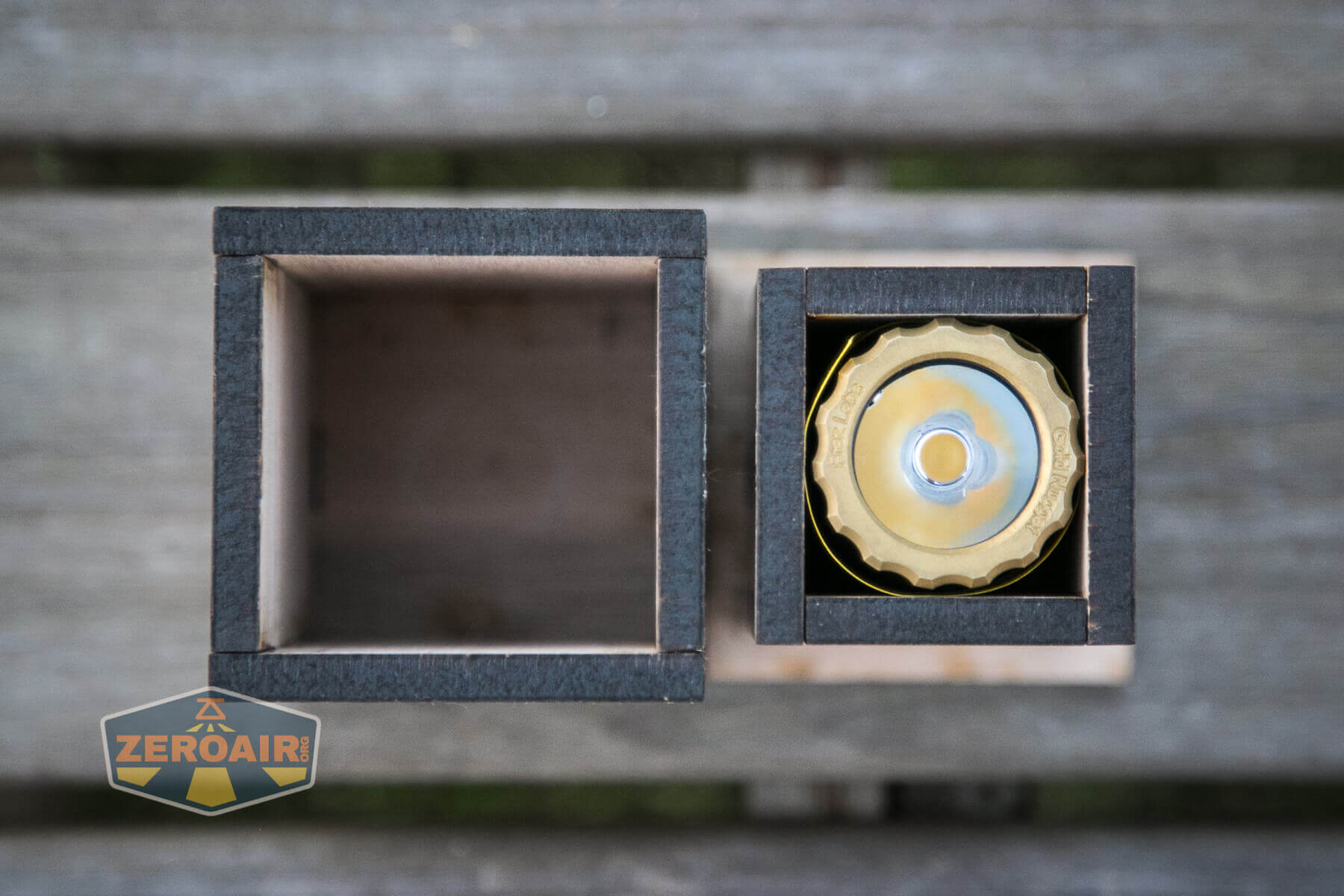
There is no manual. The product page serves as the manual.
For instructions on how to use the Gold Nugget, please click here.
Build Quality and Disassembly
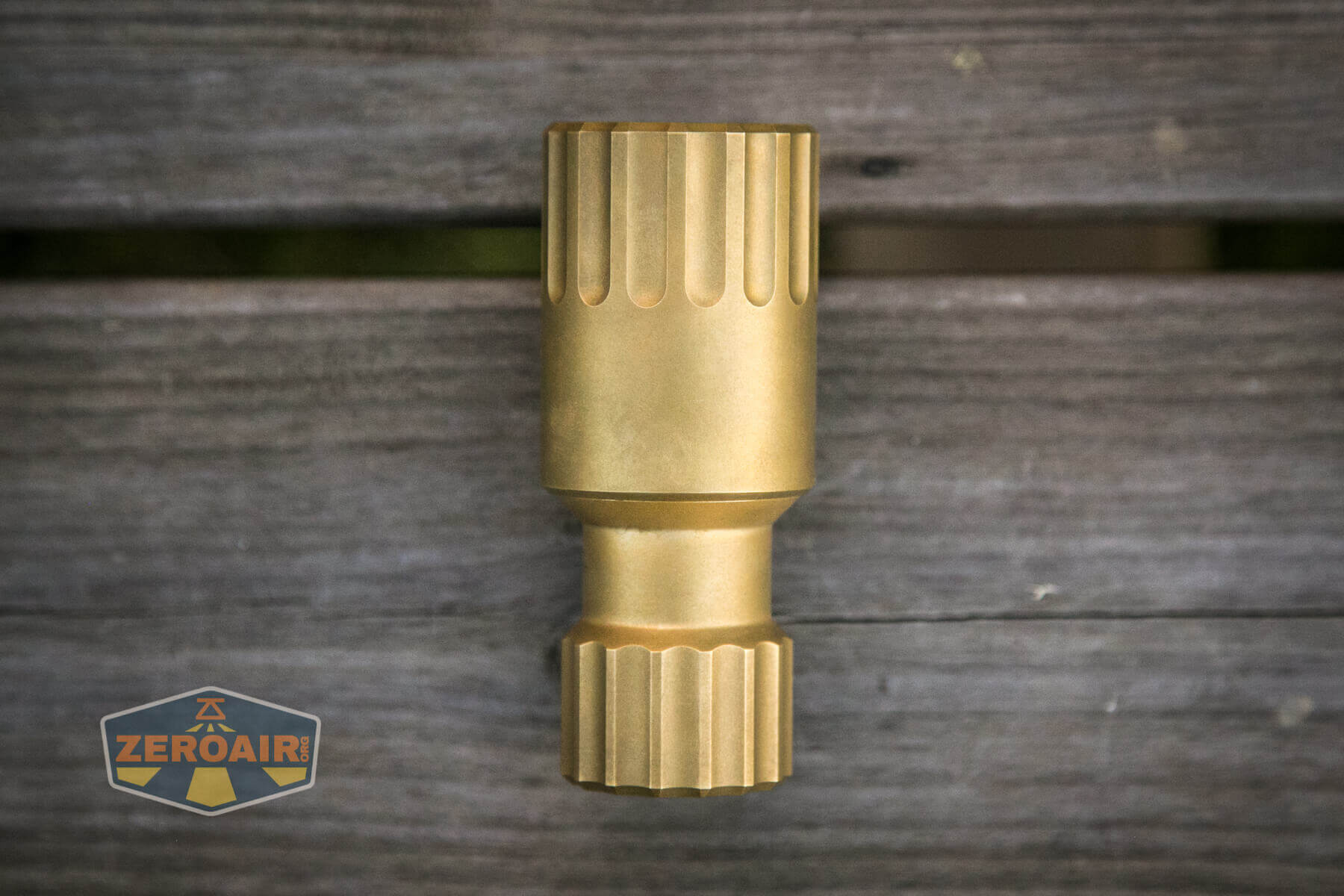
What an interesting and unusual light the Fraz Labs Gold Nugget is. Build quality is great, but what could you even compare it to?
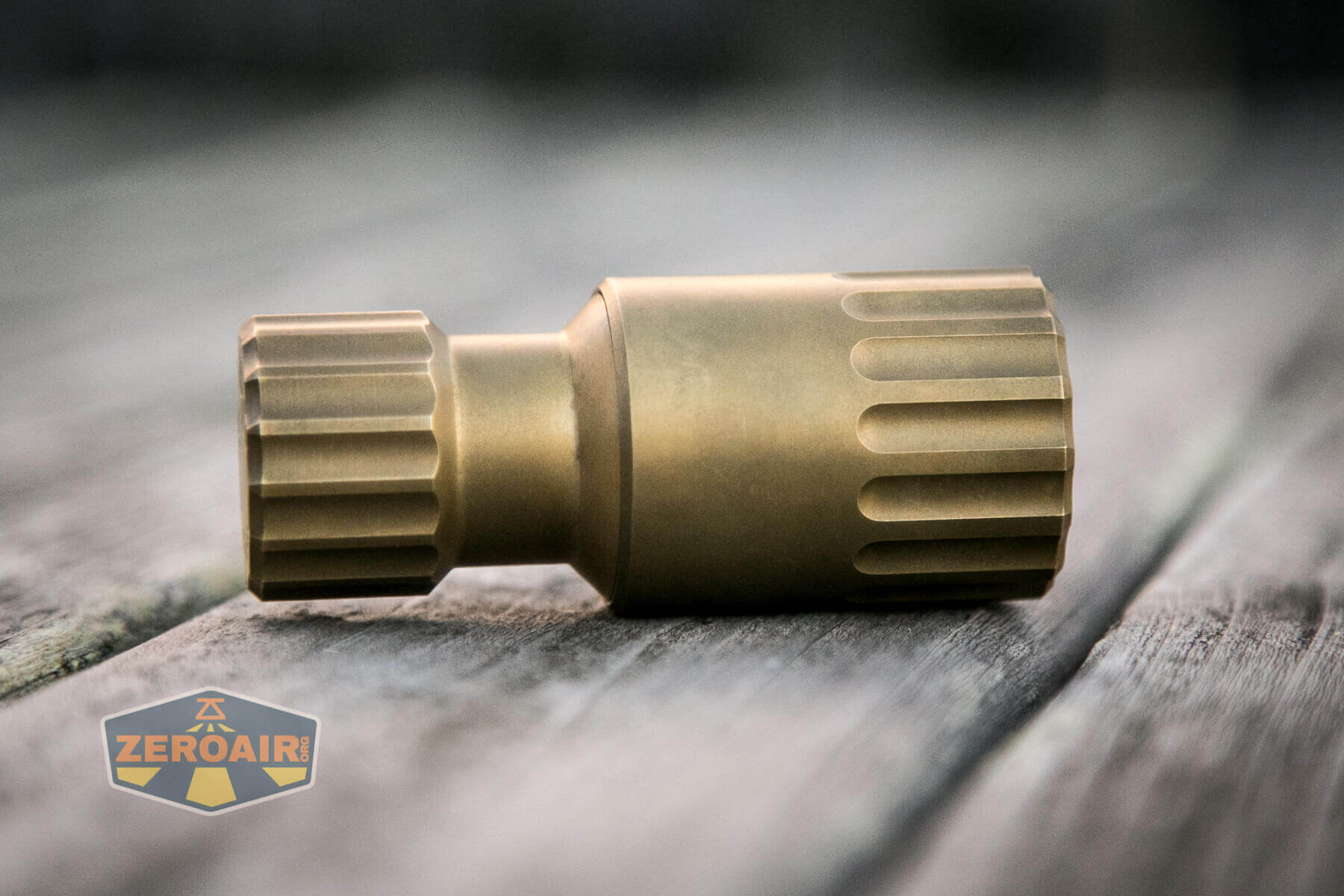
The body has no point of reference – all the sides are exactly the same. There’s no branding anywhere on the sides, no pocket clip, nothing else. (Which is fine, of course.)
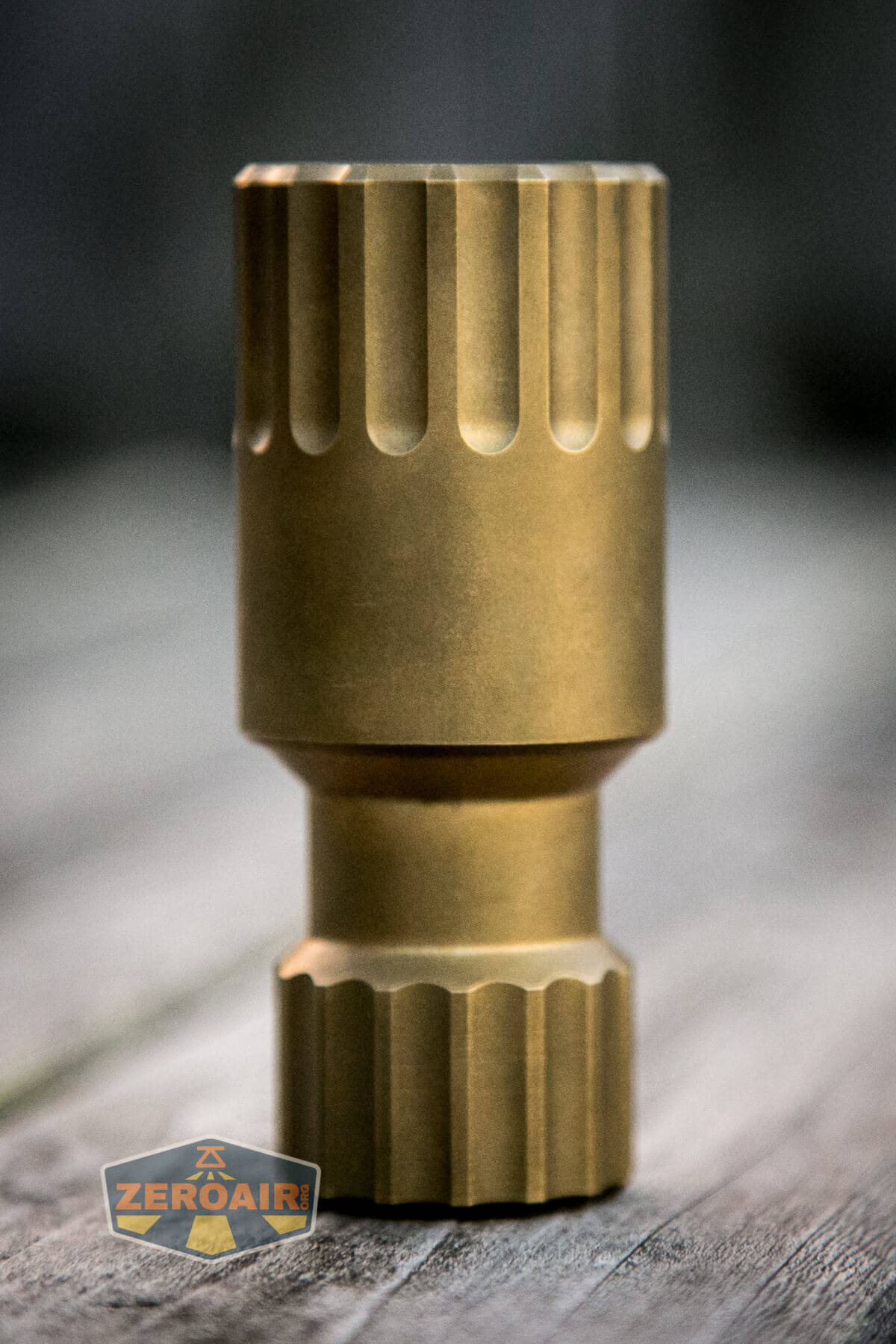
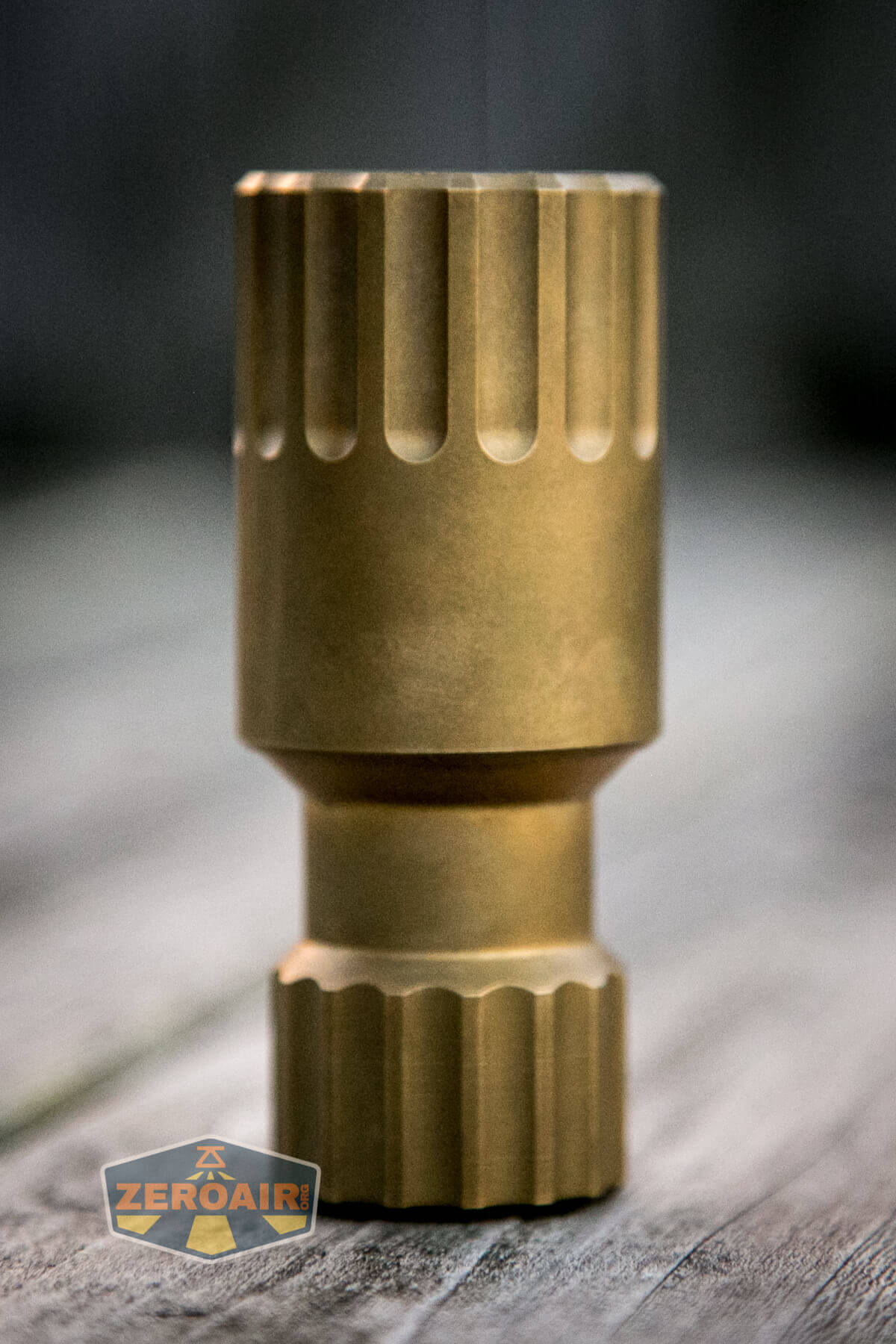
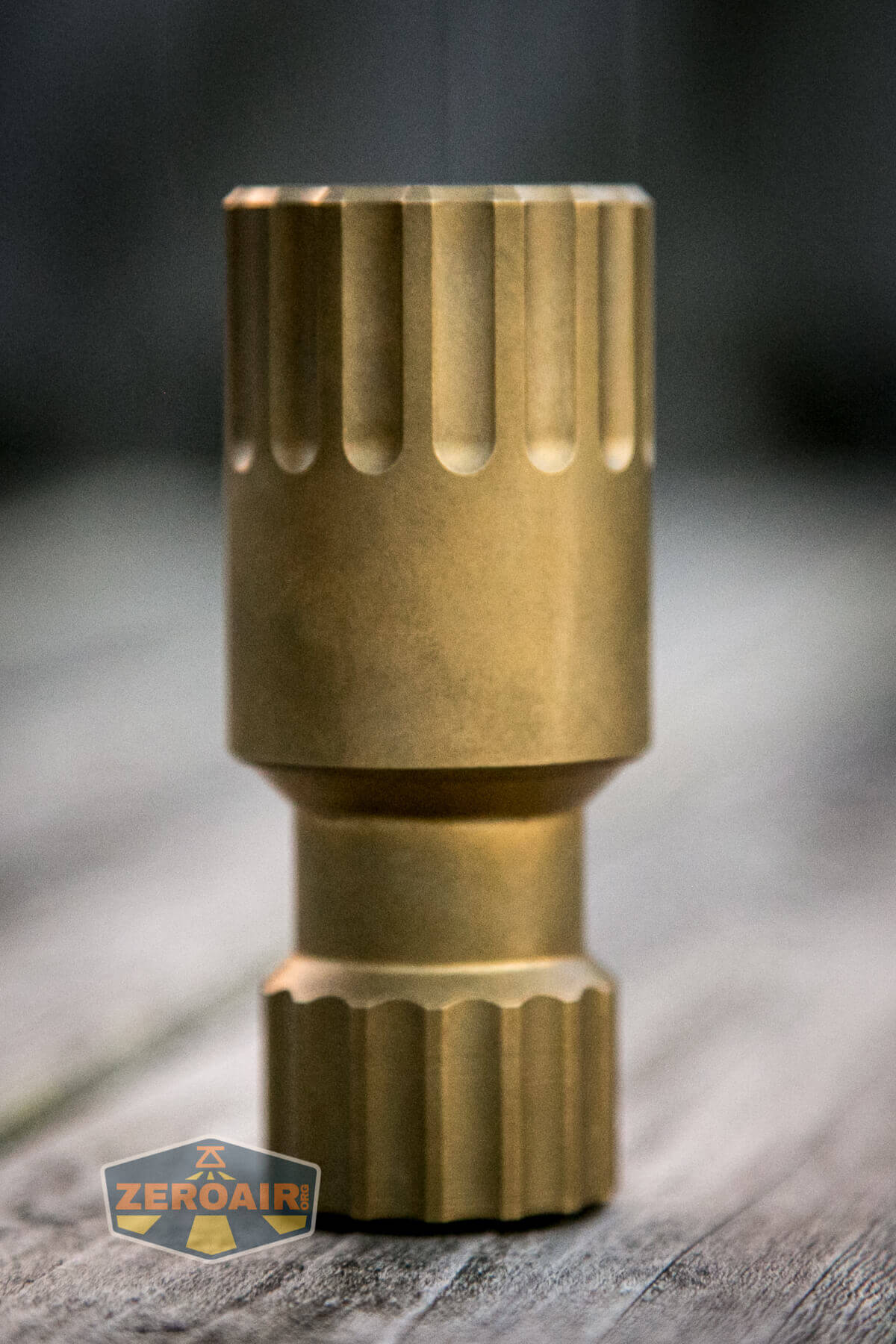
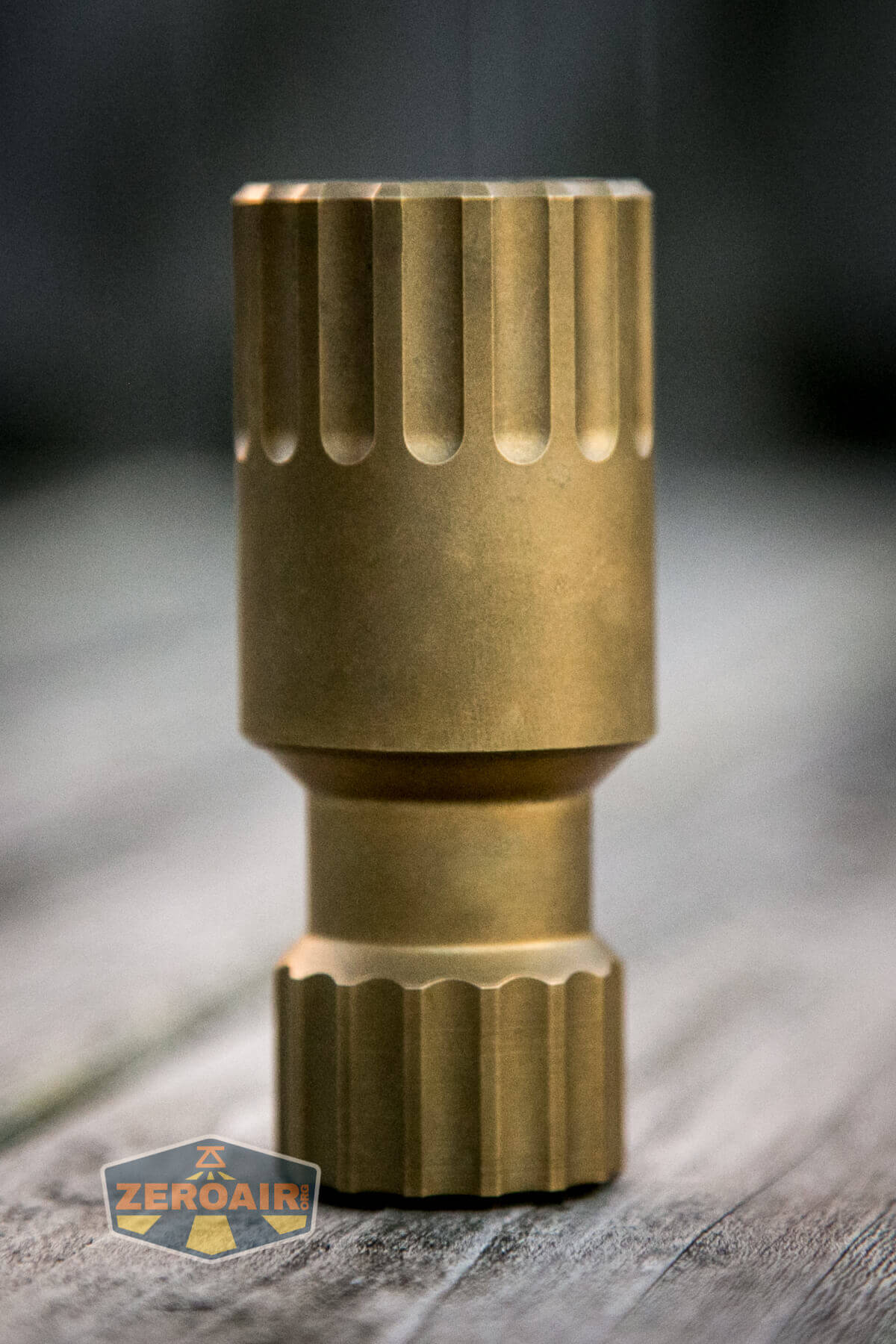
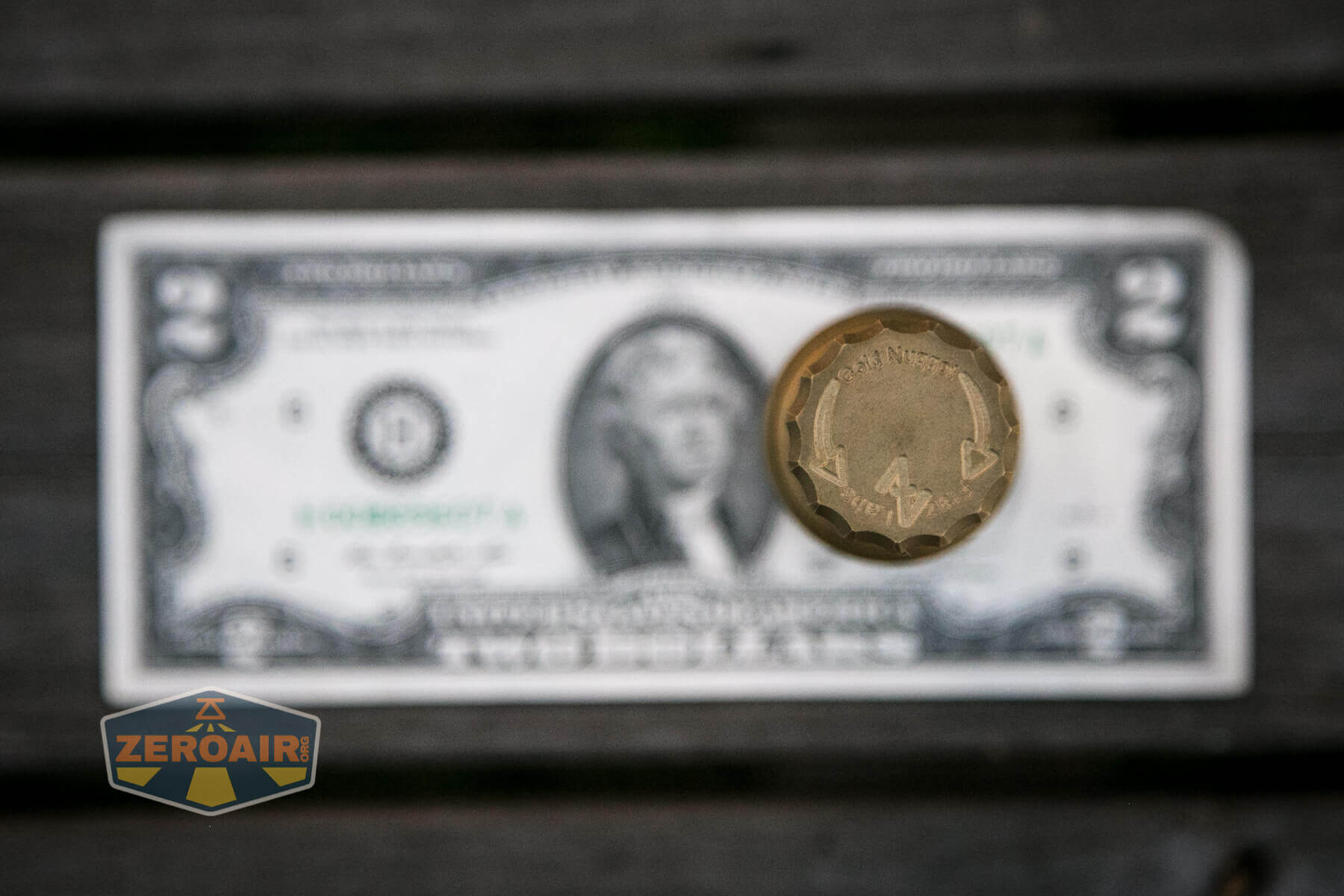
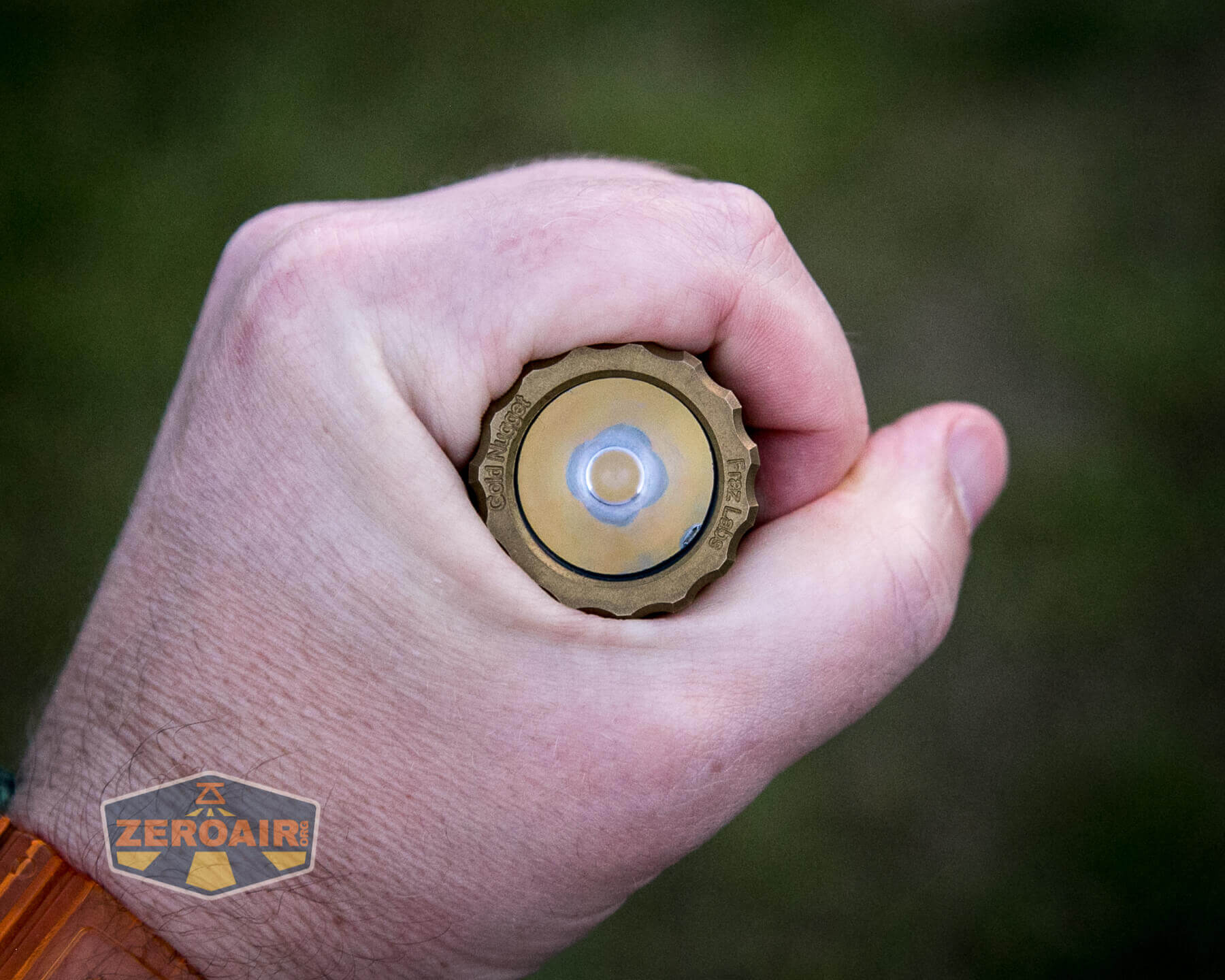
But we do get some branding right here on the tailcap. And not some silk-screened branding that’s going to come off. Nope, this is milled branding, and it is quite nice!
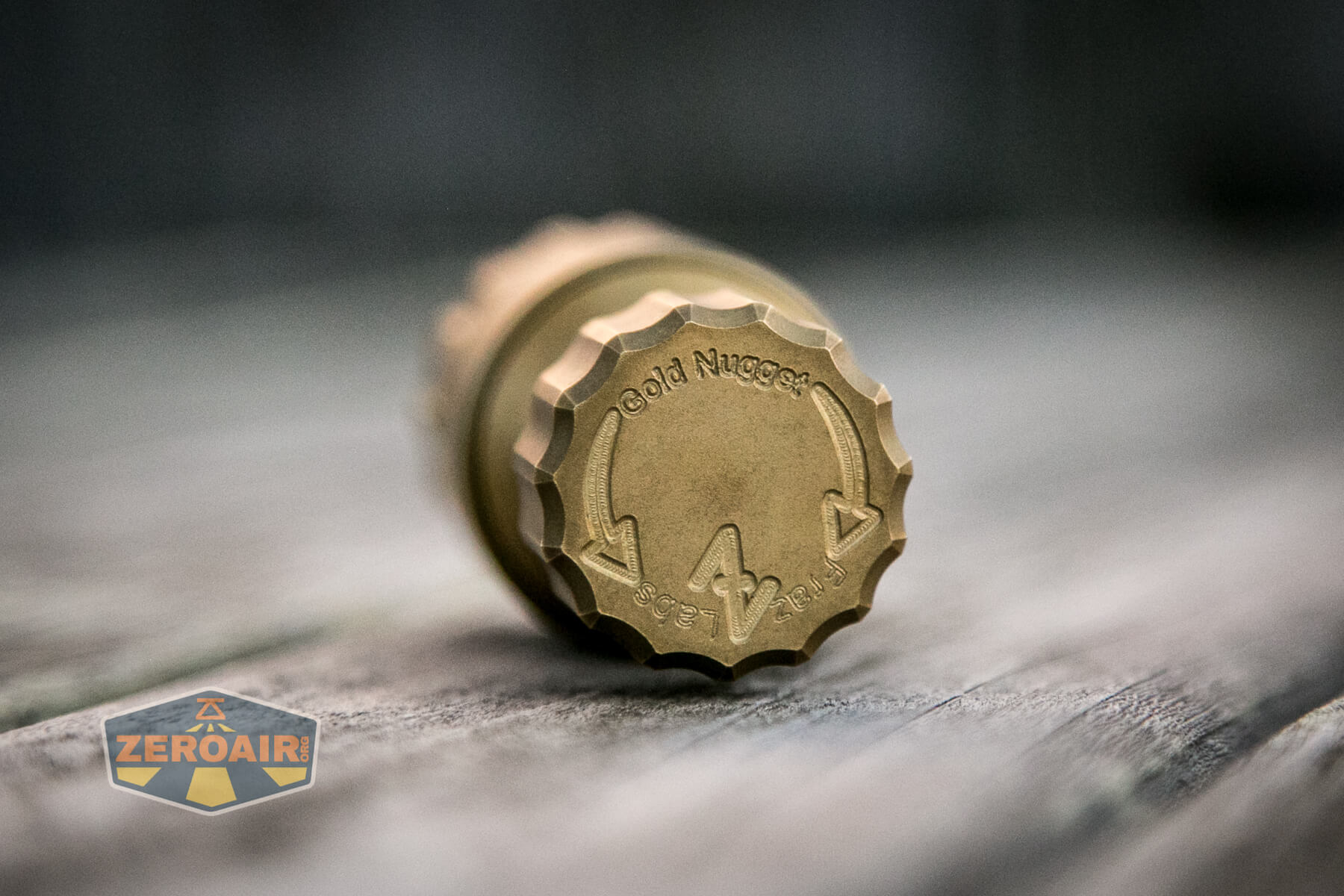
I joked with a friend that a neat possibility for this light would be to have a custom logo or design made into the tailcap, and the Fraz Labs Gold Nugget could then be used as a wax seal stamp.
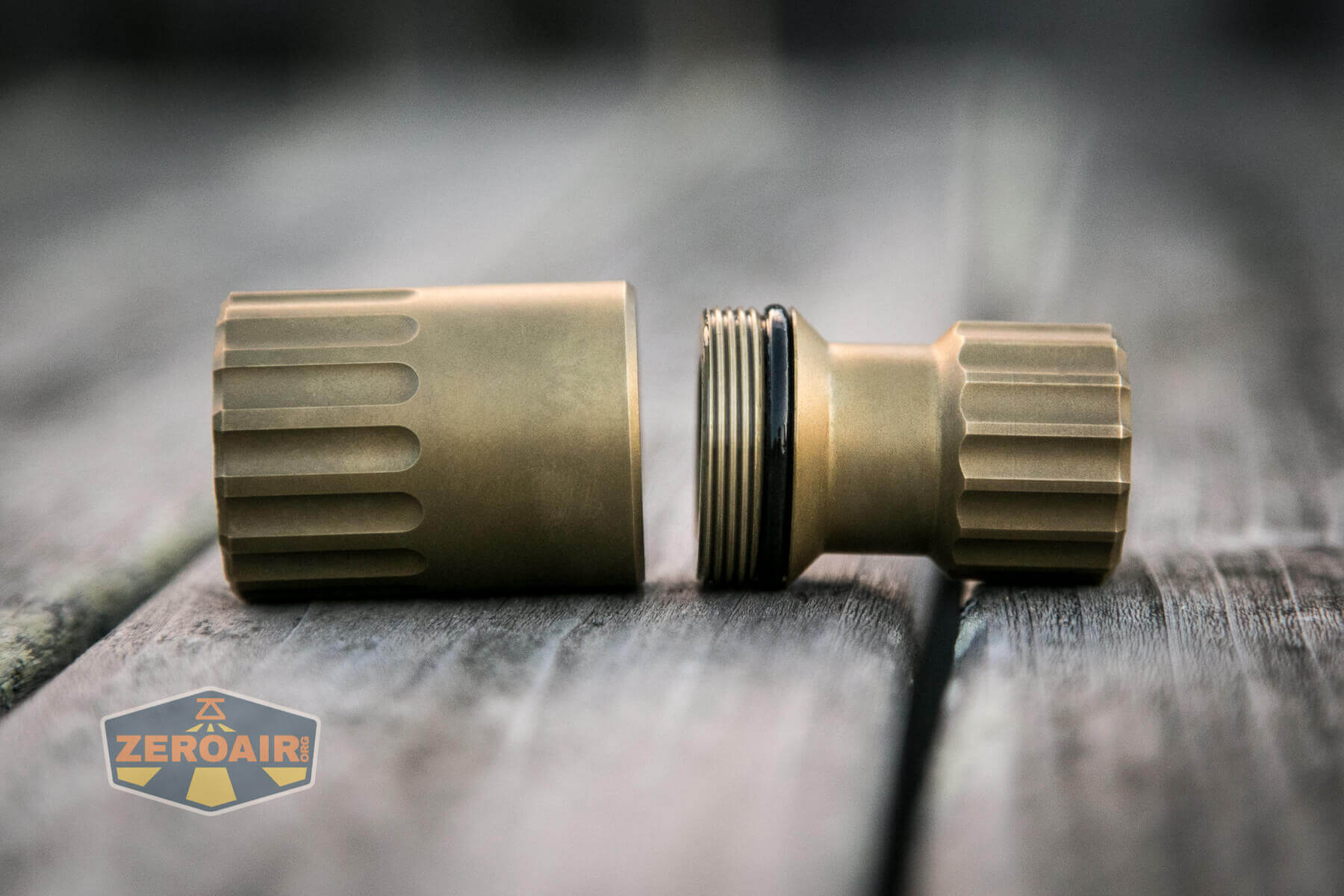
The Fraz Labs Gold Nugget is finished (in this case) as “matte,” which is probably blasted or stonewashed or something. Either way, the finish is broken up very nicely. That means it’s essentially raw metal throughout, which includes the square-cut threads.
You can see below that the part where the cell tube (or “tail”) fits into the head has quite thick brass. Of course, the body tapers…. And the head is larger in diameter, but not “thick brass” since the internal components are large.
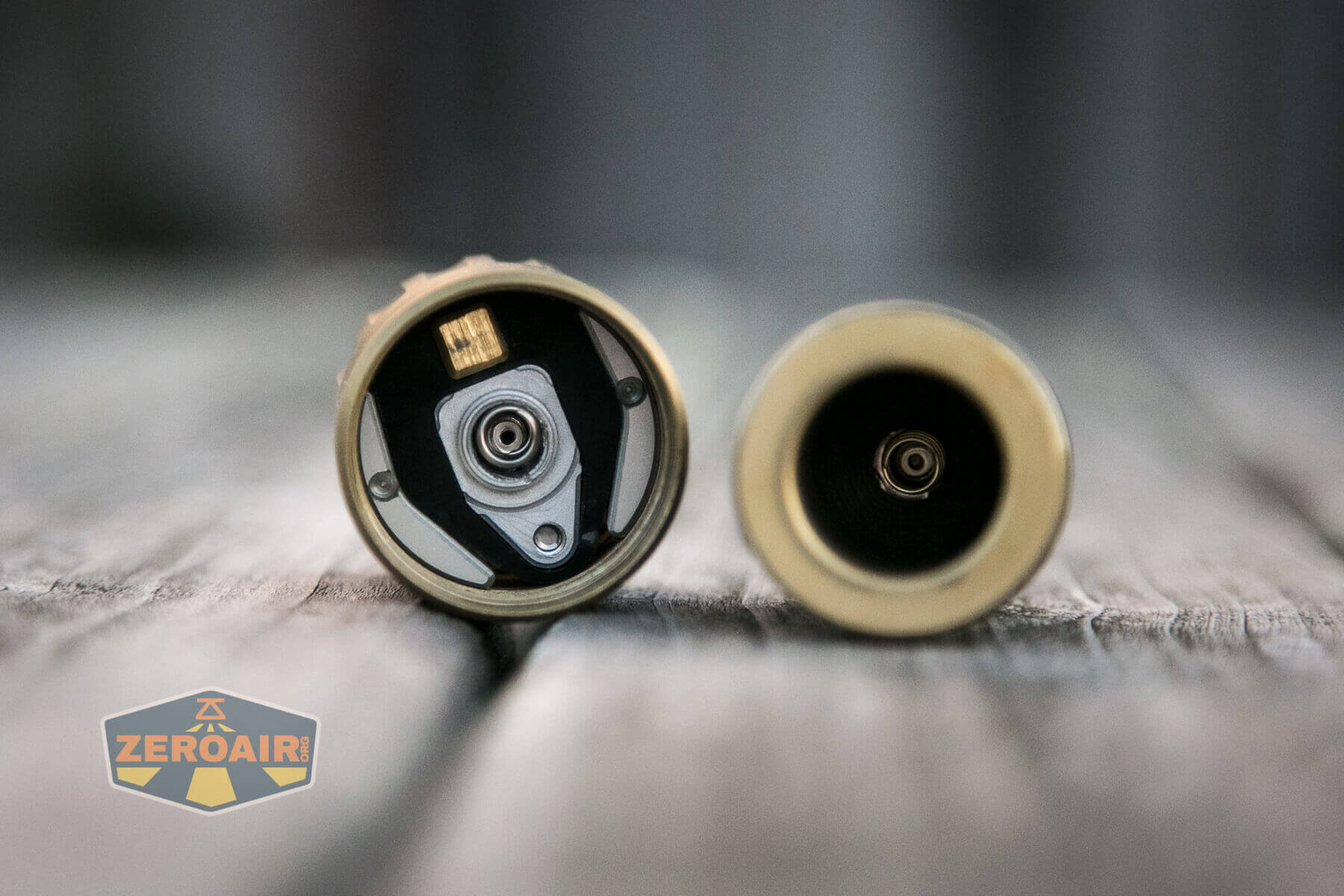
The head and tail are practically the same height. It’s a nice symmetry.
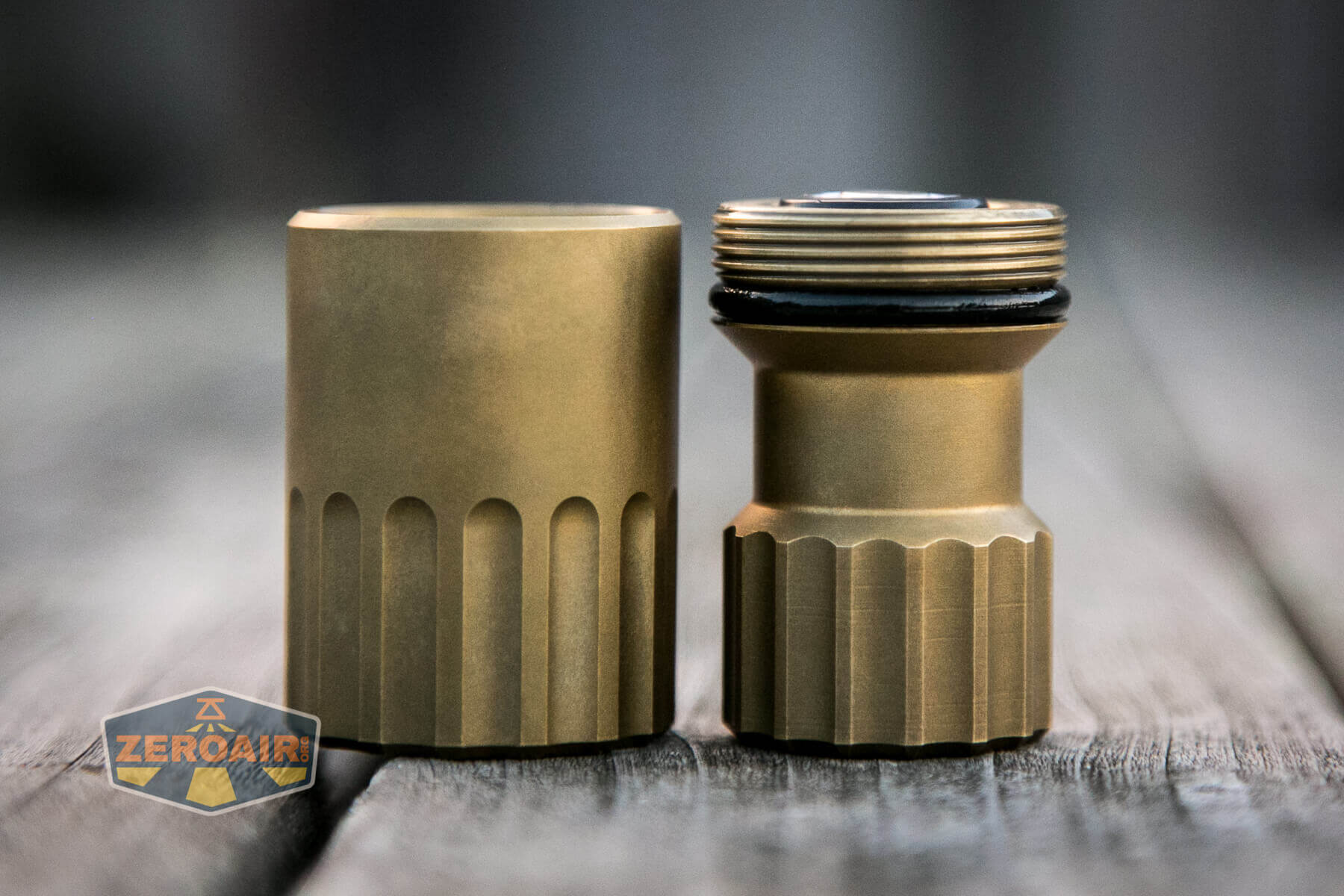
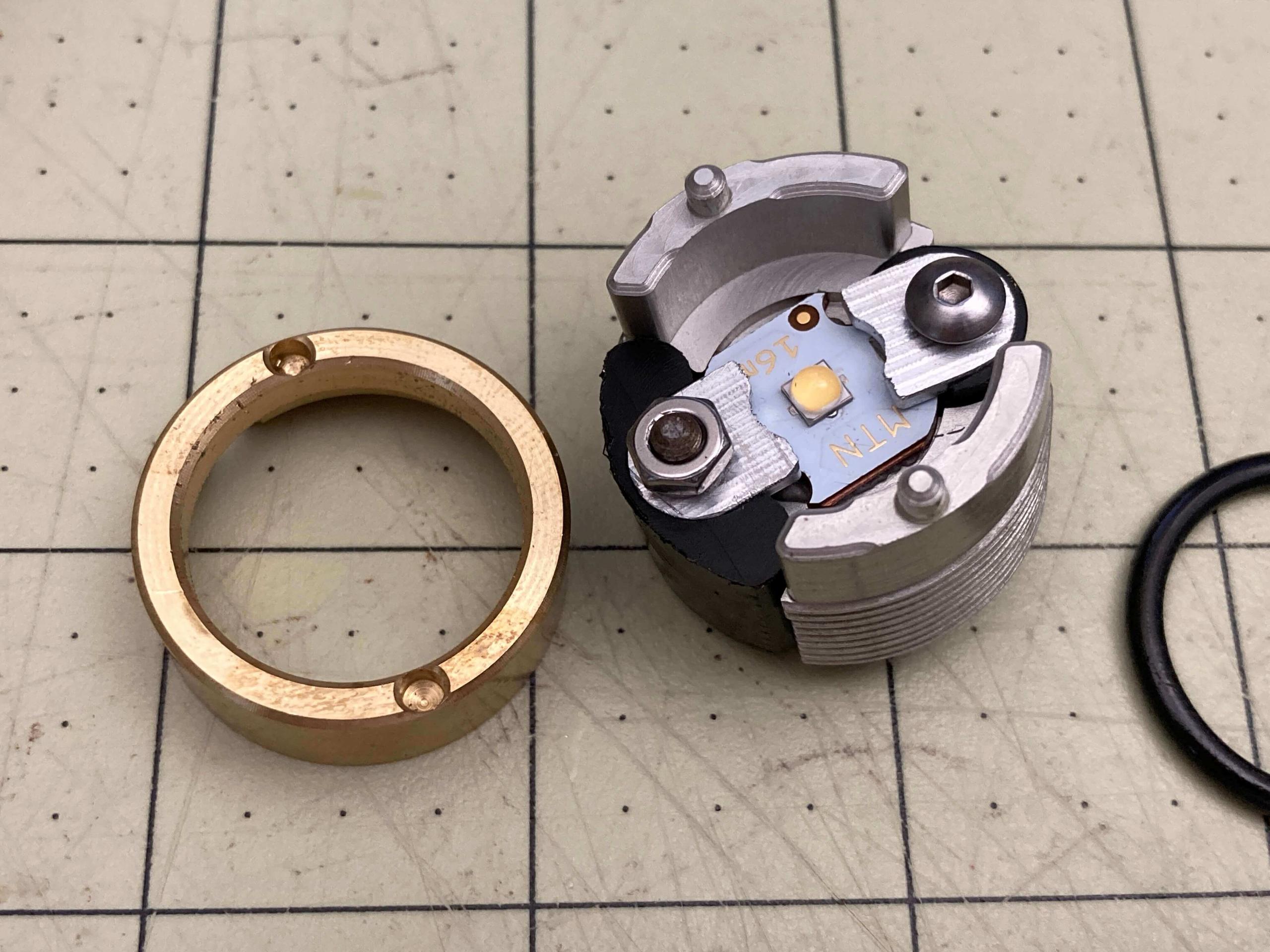
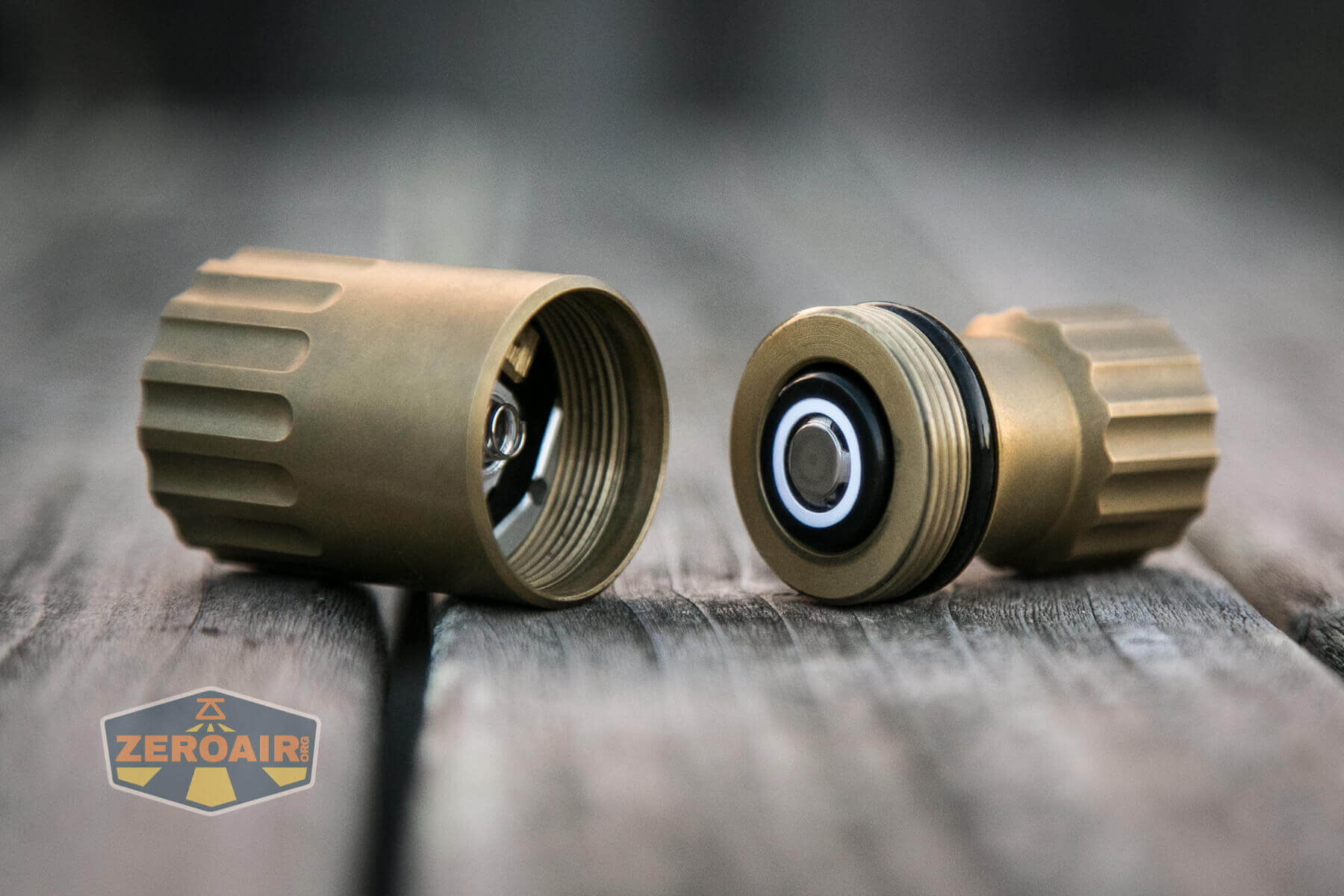
Using something like split ring pliers, it’s easy to remove the engine from the head. It just unscrews; there’s nothing threadlocked or otherwise holding it in.
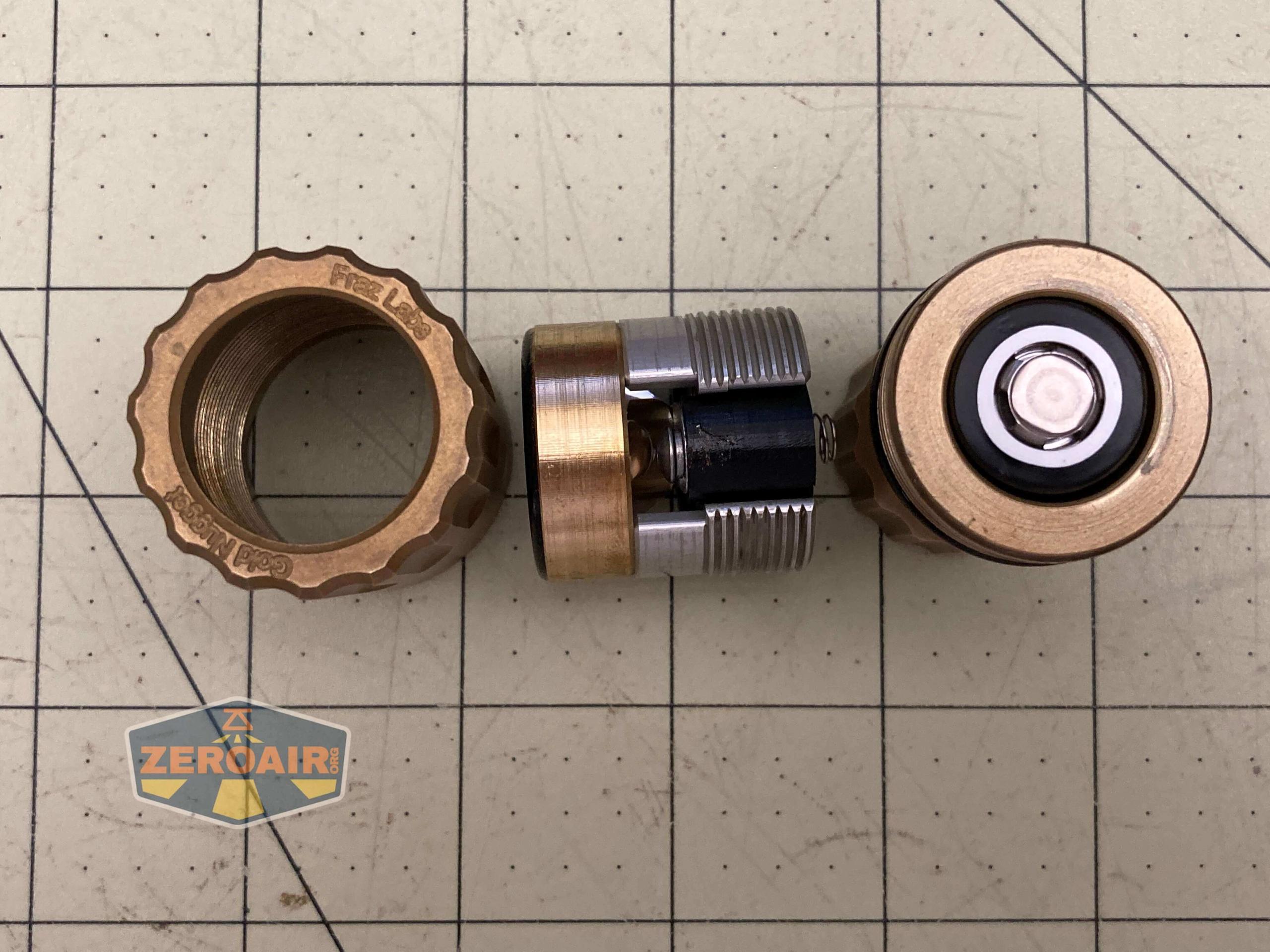
The engine is quite interesting. I’ll have to take the wording from Fraz Labs directly because most of this is electronics that I don’t fully understand.
These were formerly known as “QTC non-battery crush” engines, which tells you a lot right off the bat. QTC has its problems, though.
The problems with QTC were that it was vulnerable to shearing force as well as overcompressive force, which would limit the lifespan of the material.
Fraz Labs solved this issue in a unique (and patented) way.
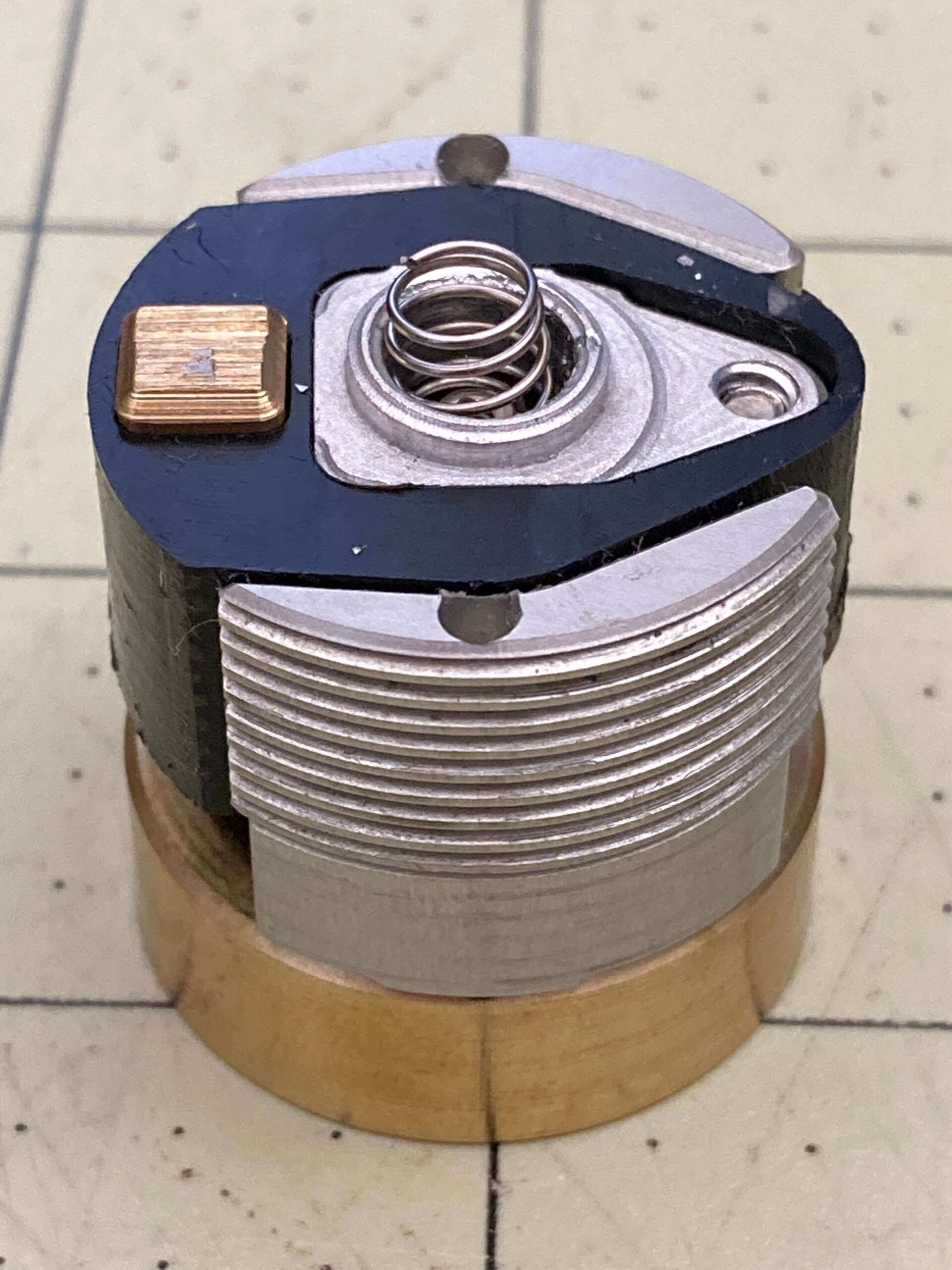
we were able to do away with battery crush and implement a piston system to house the QTC and keep it protected from these forces, greatly increasing it’s lifespan and making the light extremely durable with no electronic components to break.
How does it all work? It’s practically magic. You can look at all the components below and try to suss it out, and based on my poking around with a DMM, I’d say you’re probably wrong. Like I said, magic.
Quick sidebar: QTC is a quantum tunnelling composite, and you can read more at Wikipedia. Here’s a primer:
In the QTC’s inactive state, the conductive elements are too far from one another to pass electron charges. Thus, current does not flow when there is no pressure on the quantum-tunneling composite. A characterization of a QTC is its spiky silicon covered surface. The spikes do not actually touch, but when a force is applied to the QTC, the spikes move closer to each other and a [quantum] effect occurs as a high concentration of electrons flow from one spike tip to the next. The electric current stops when the force is taken away.
Again, as I said, magic.
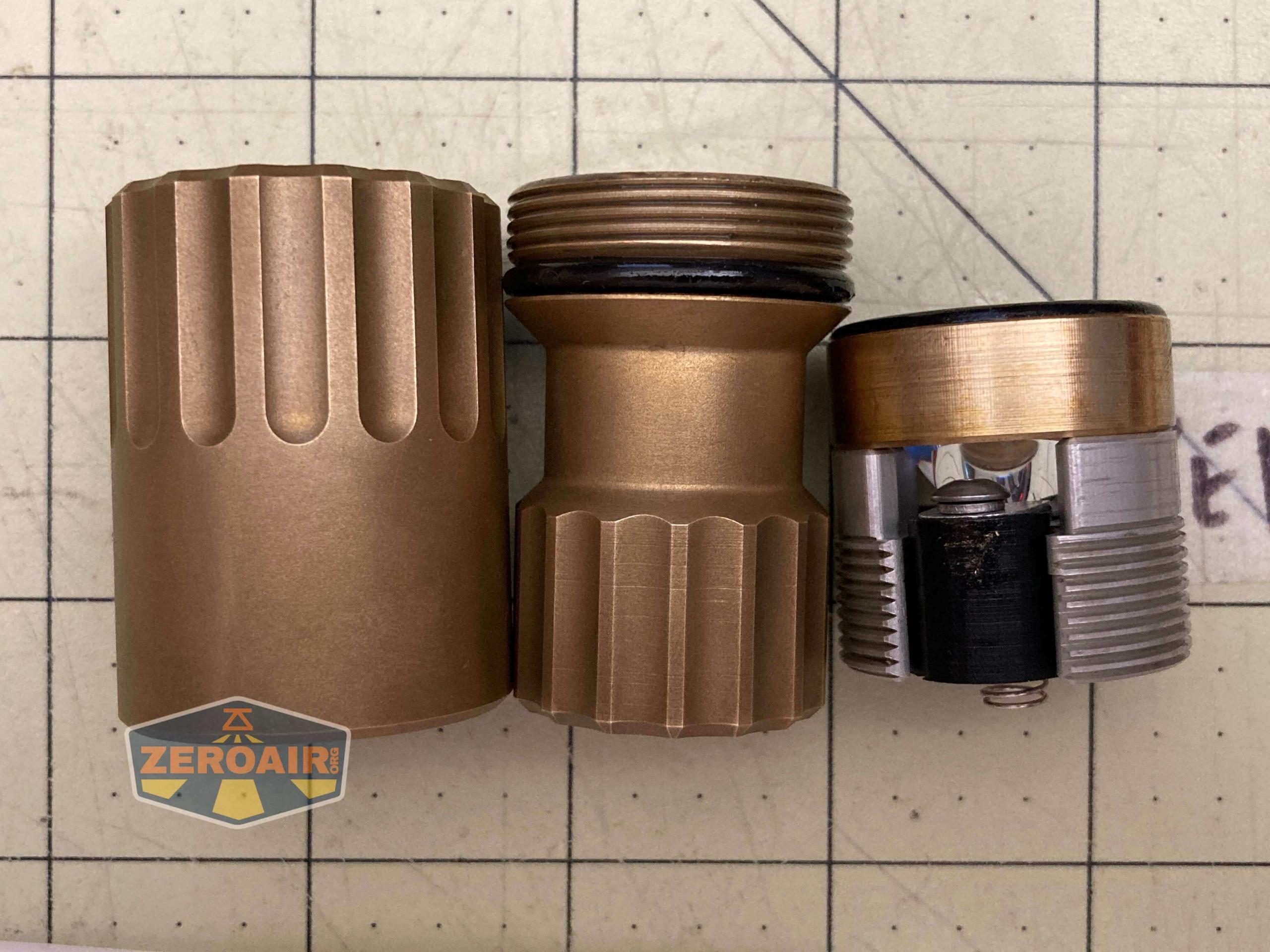
On to more internal photos. The TIR optic is not covered by any lens or protection. This is probably a move toward “one fewer thing to break,” but in reality, it’s probably going to mean “one more optic to replace because it got scratched up so badly.” At least it’s easy to swap!
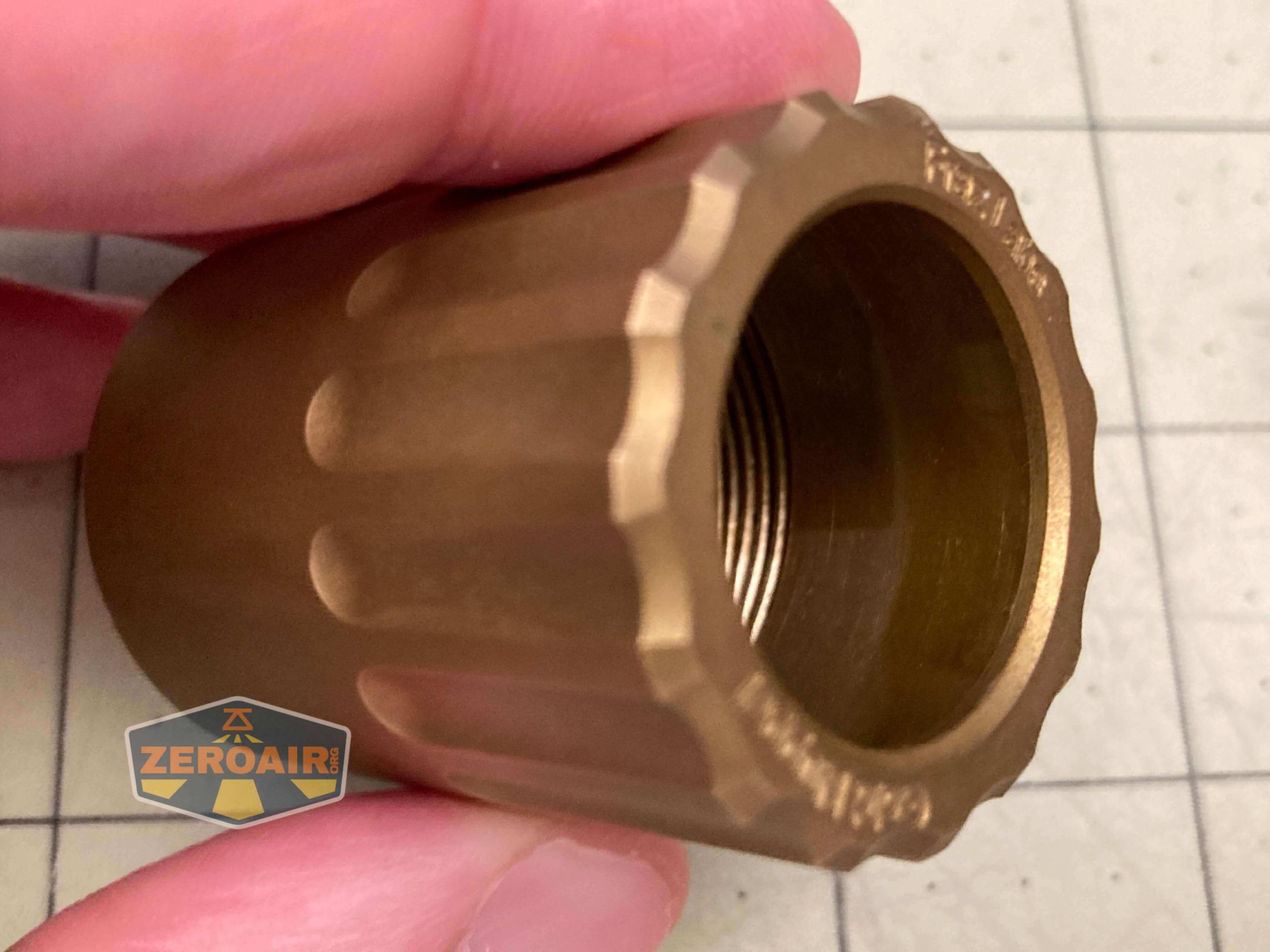
There is a seal, though, so I think waterproofness will be somewhat maintained. This o-ring keeps the optic edge covered.
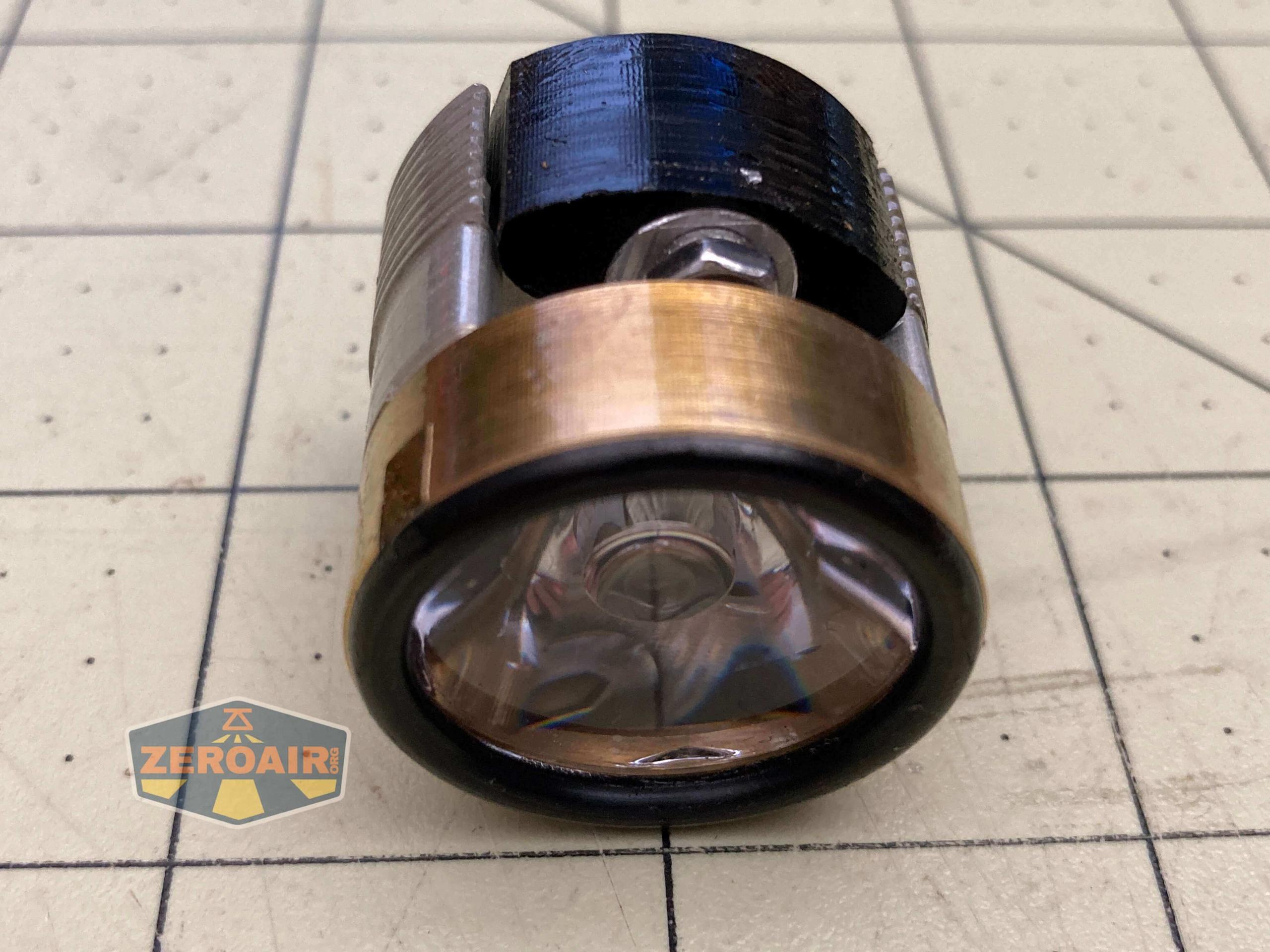
I can’t say if the optic sprue was meant to line up with that gap in the head, but it did here, and I presume it’s supposed to. I have no idea why. This feels like a throw optic – it’s narrow and clear – and so that’s great for this light.
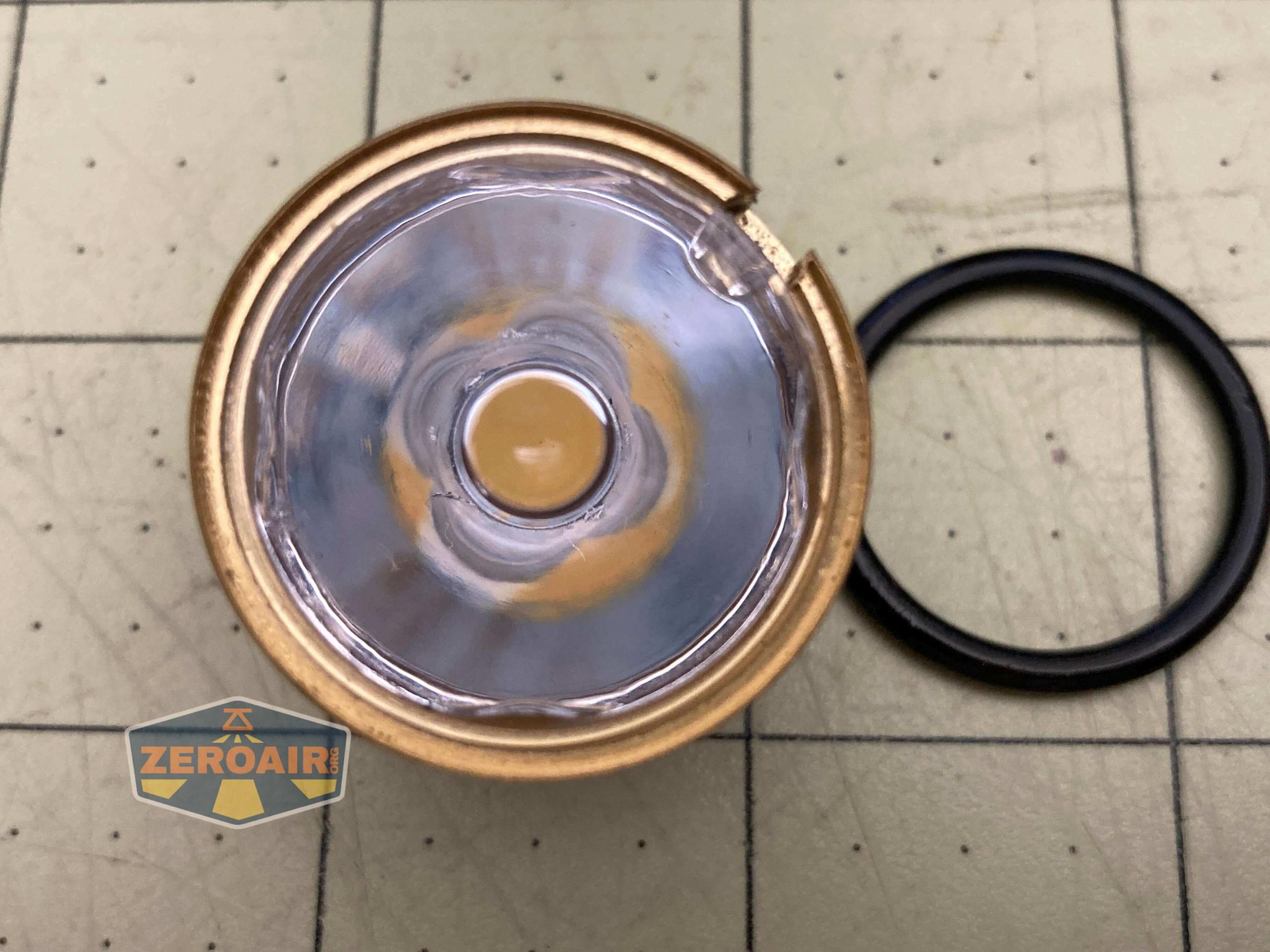
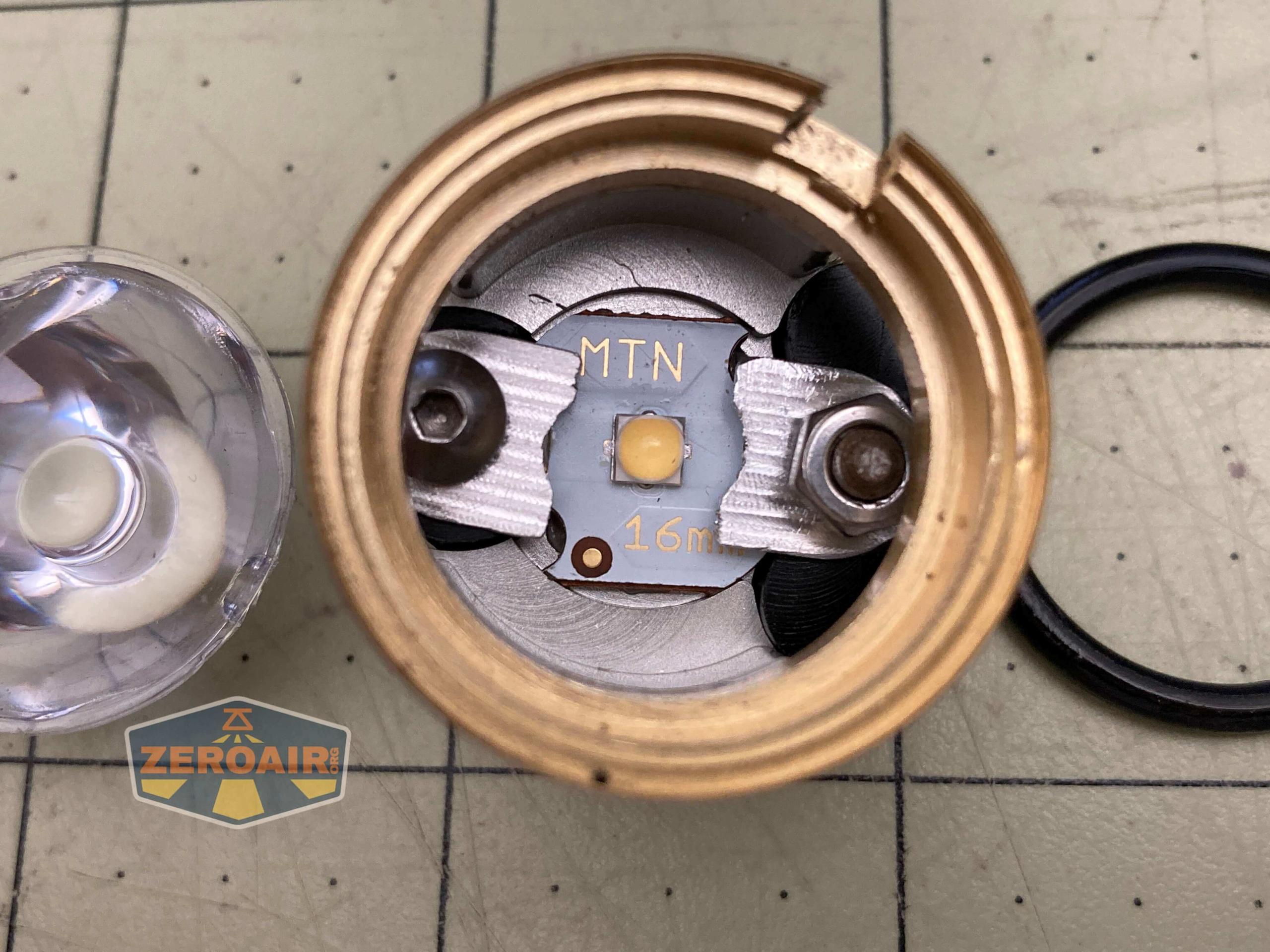
Here you can see the inside with the optic removed. Easy access to the emitter.
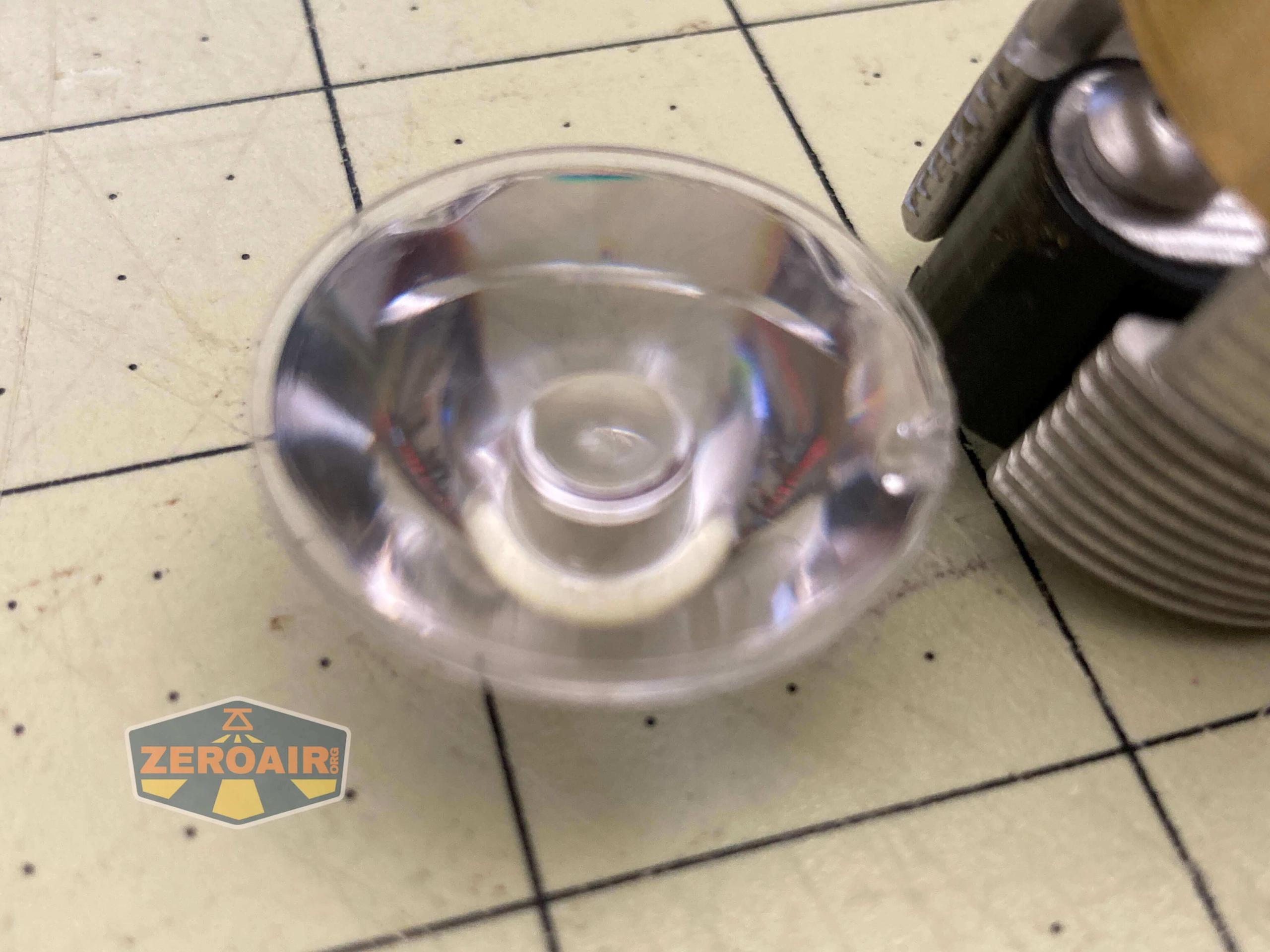
Below at right is the “piston” (as called by Fraz Labs). Fraz cautions about overtightening:
Due to the pressure from the piston traveling over the top of the battery tube, you may notice a shallow groove start to form after the initial break-in period. This is normal and will not in any way affect the functionality of the flashlight.
And one final internal photo, and essentially the main point of this light – easy ability to swap the emitter. You don’t have to reflow anything. There are no wires to solder (in fact, Fraz Labs calls this whole light a “wireless” light.) All you have to do is buy an emitter already mounted on a 16mm MCPCB and swap that into this system. Loosen the hex screw there on the right, and drop the new MCPCB in. Easy! I did not remove this, so I’m unsure what thermal compound is present.
Size and Comps
Officially:
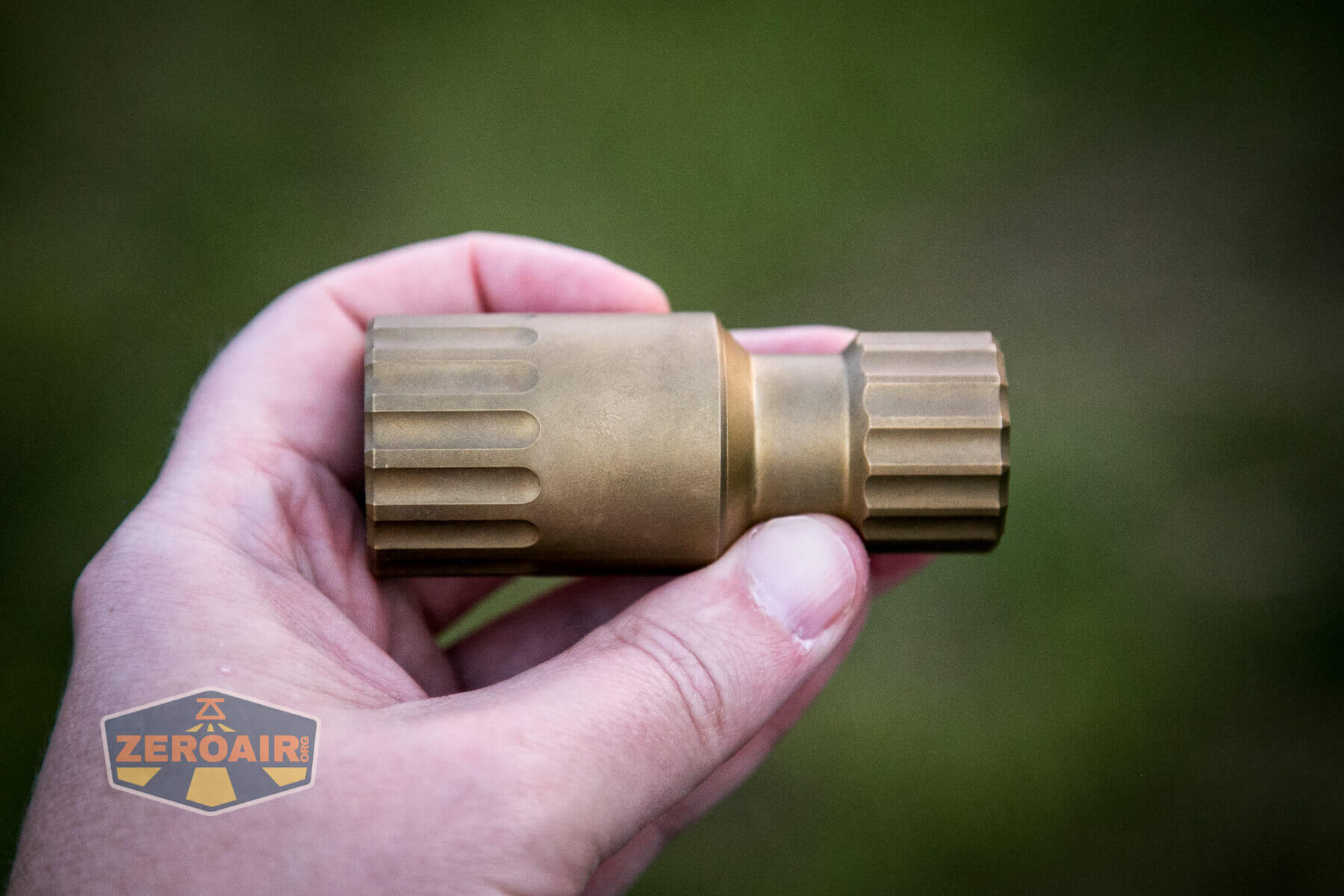
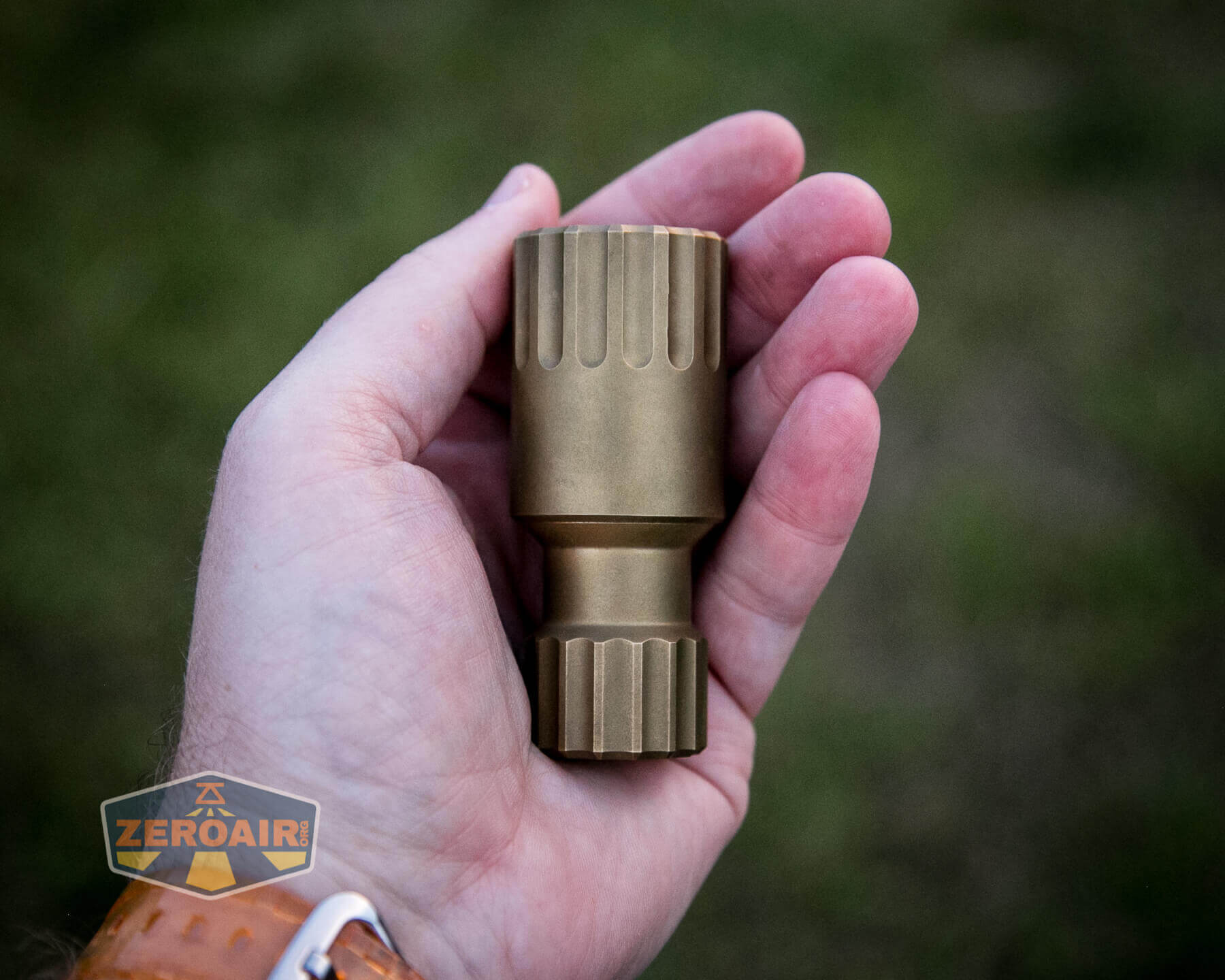
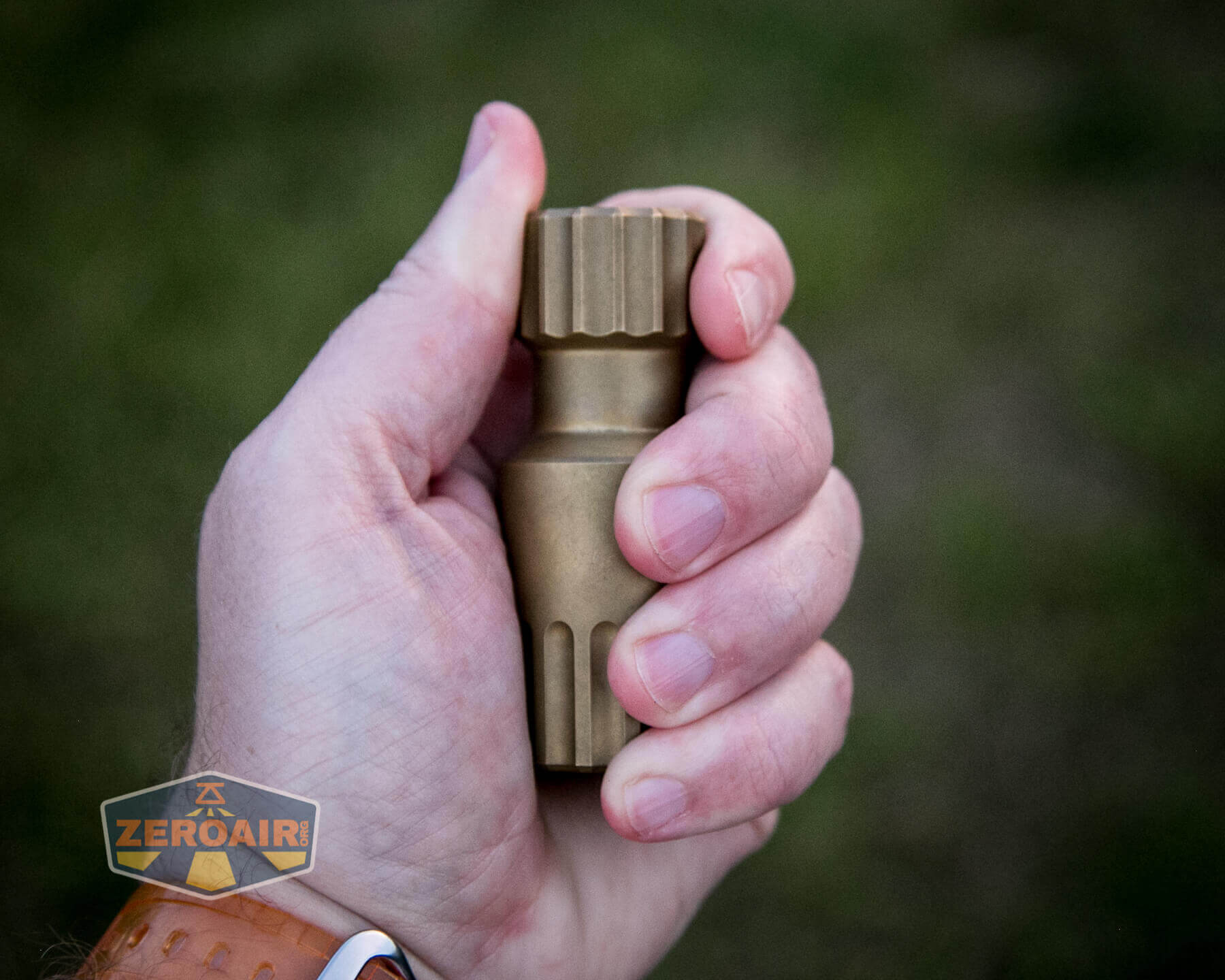
Length: 3.05″
Bezel Diameter: 1.3″
Weight without battery – 7.2oz
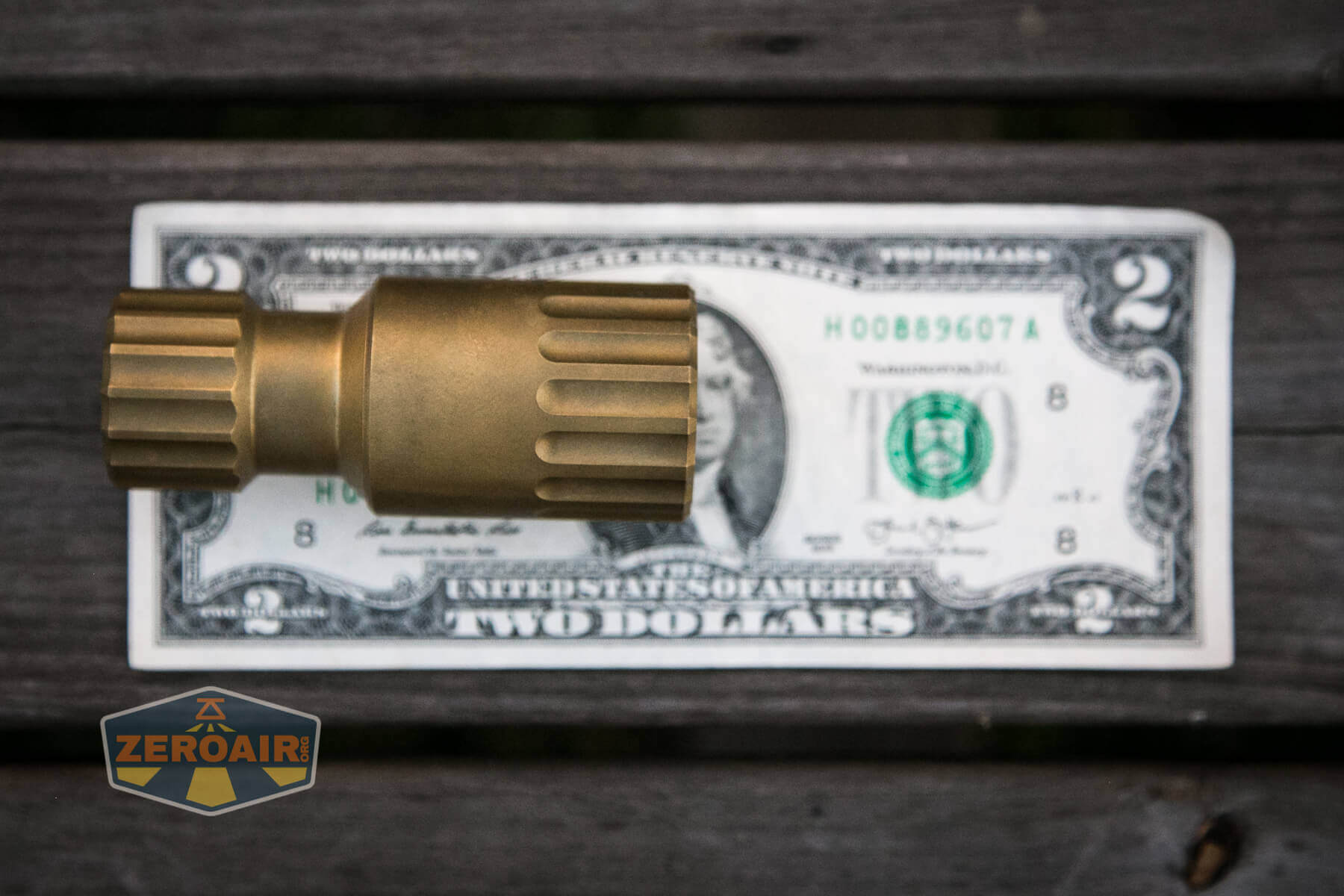
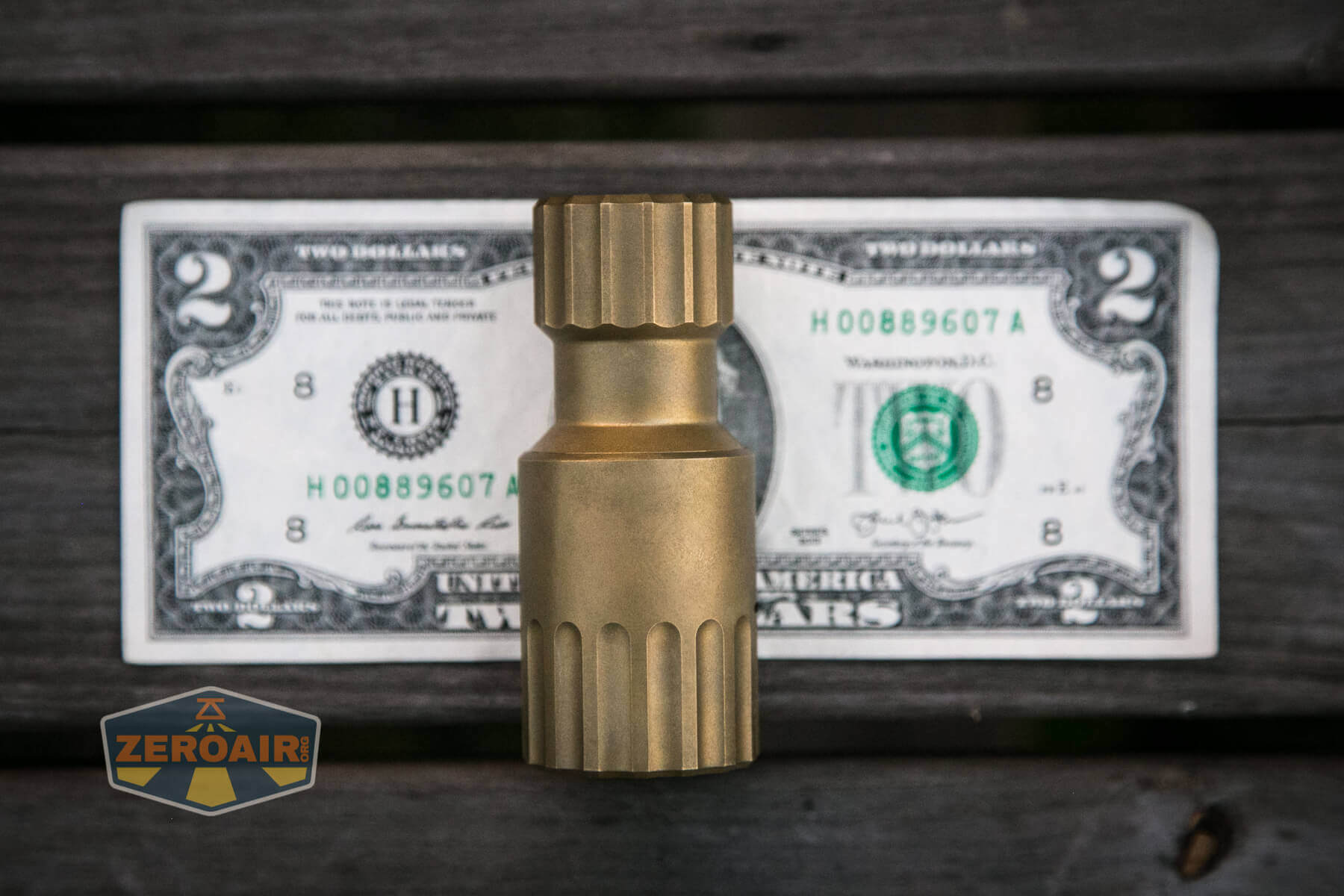
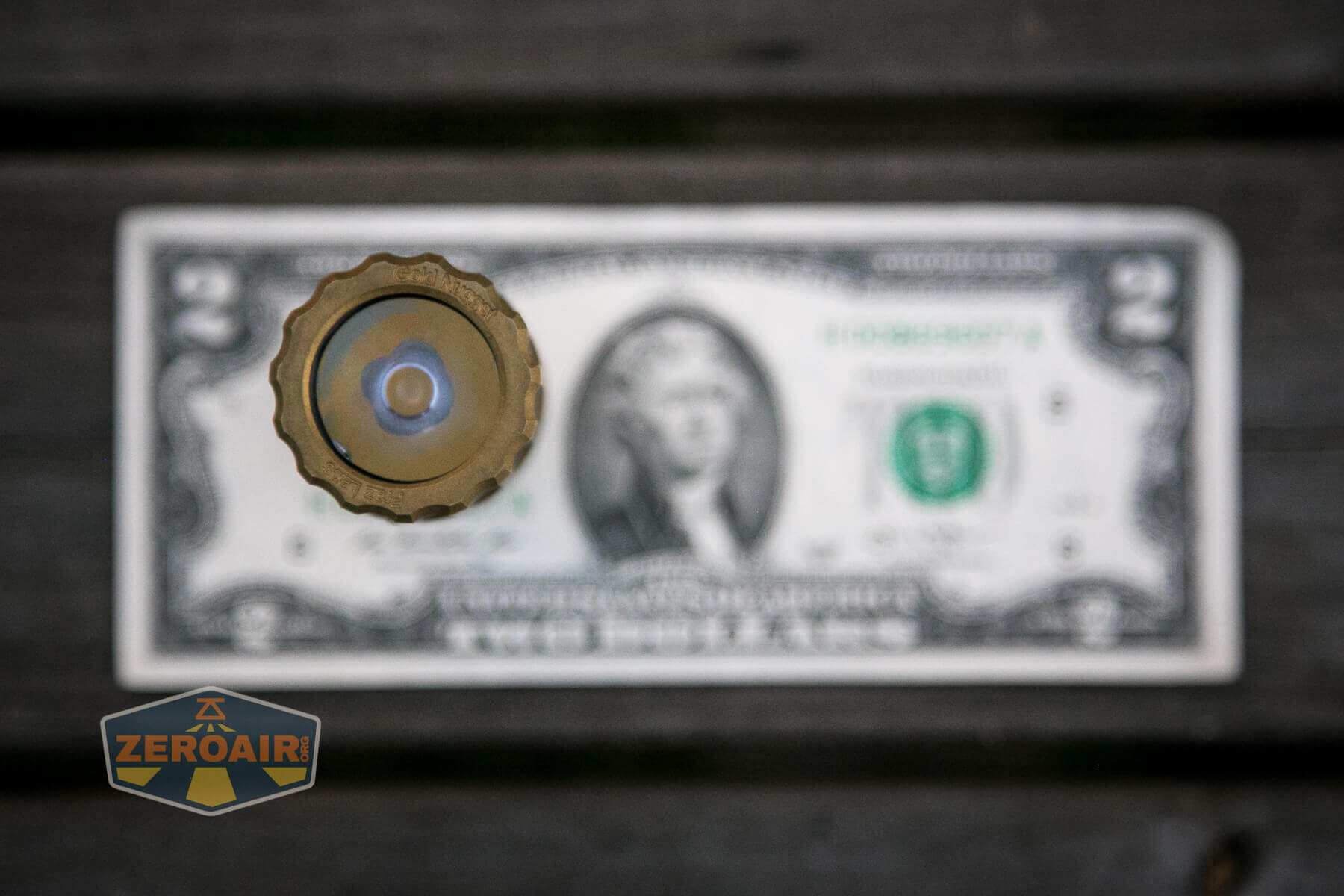
If the flashlight will headstand, I’ll try to show it here. If the flashlight will tailstand, I usually show that here, too.
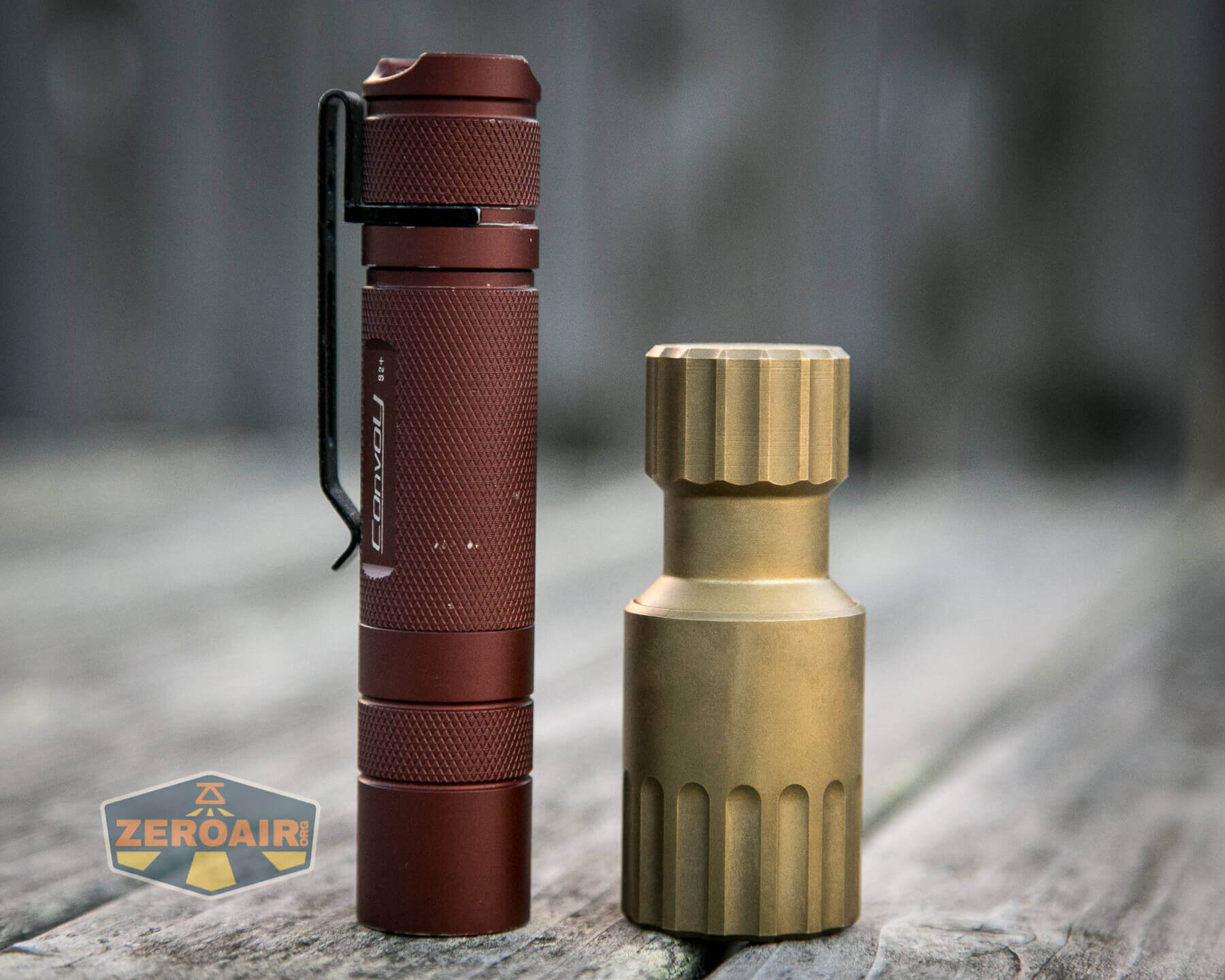
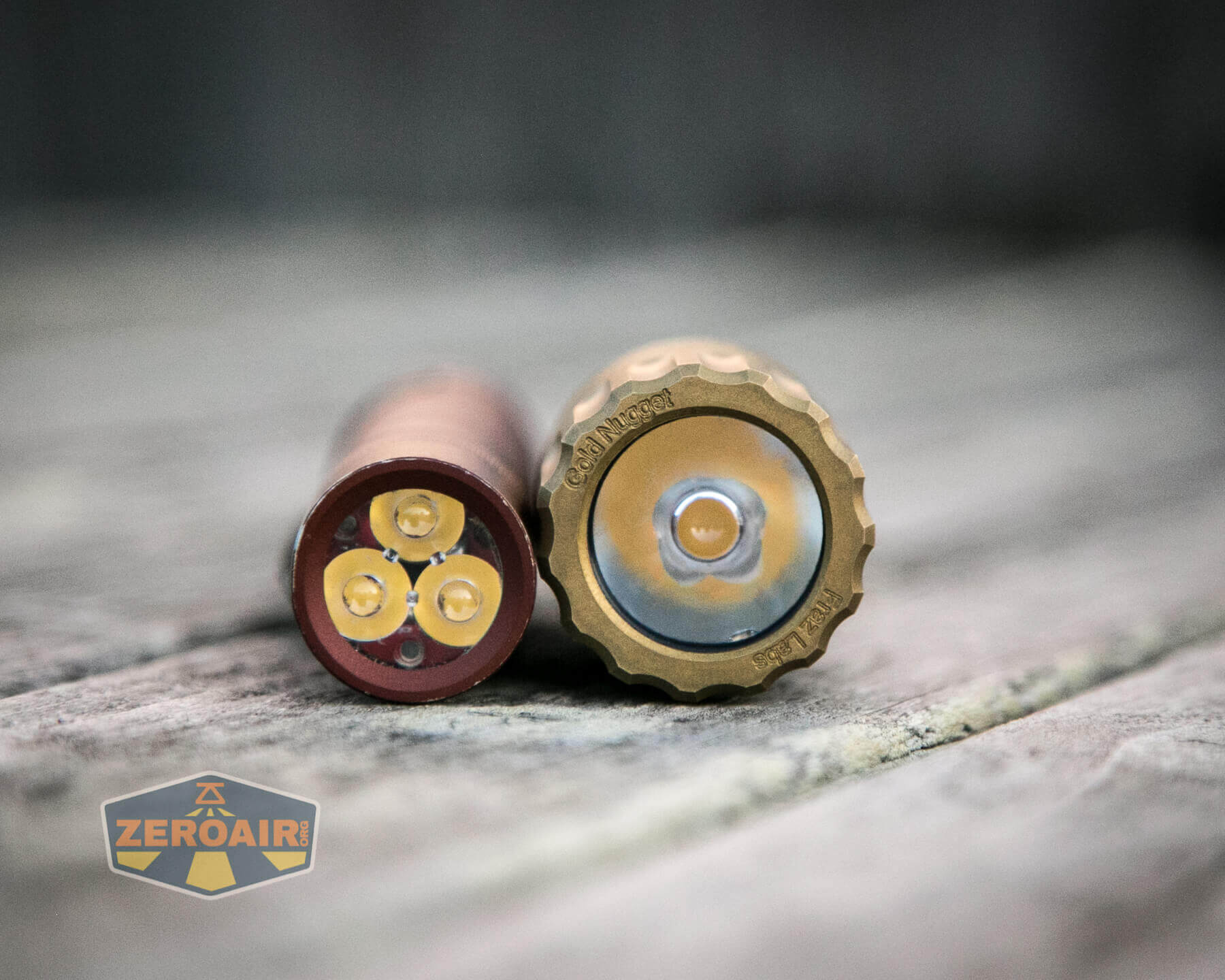
Here’s the test light with the venerable Convoy S2+. Mine is a custom “baked” edition Nichia 219b triple. A very nice 18650 light!
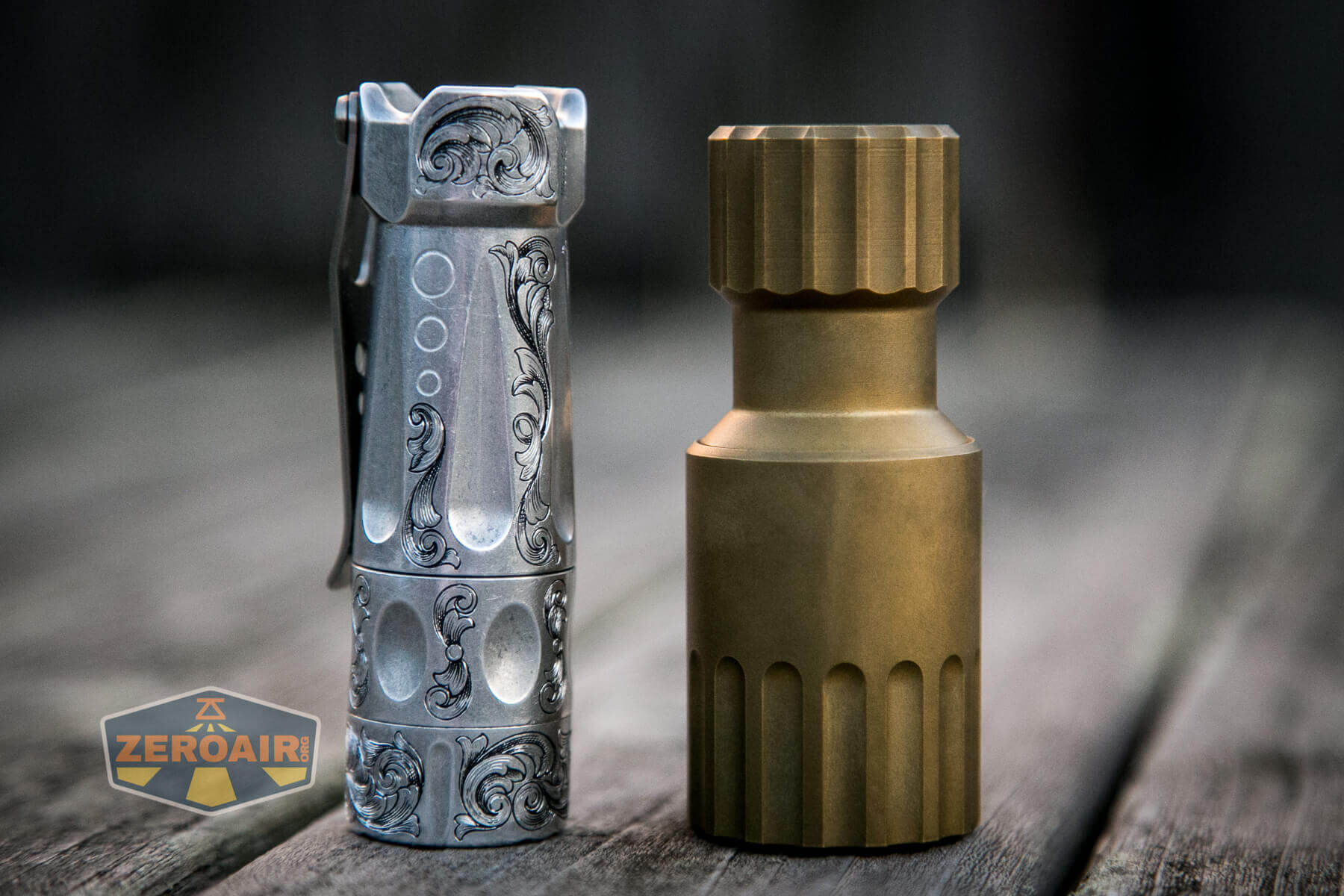
And here’s the light beside my custom-engraved TorchLAB BOSS 35, an 18350 light. I reviewed the aluminum version of that light in both 35 and 70 formats.
Retention and Carry
Really, this isn’t a “carry light” – and I hate to say it. I don’t think anyone’s going to carry a half-pound 18350 flashlight…. Maybe! And if so, note that there is no pocket clip. There is no carry pouch. There is nothing else with which to carry this light. You’ll have to use the wooden box (uncomfortable in a pocket, ask me how I know), or just throw it loose in your pocket…
This isn’t a fault – like I said, the perfect role for this light is probably going to be on a desk, as something you admire.
Power and Runtime
The Fraz Labs Gold Nugget is powered by a single lithium-ion cell. I tested with this Keepower 18350. Fraz Labs requires cells to be less than 1.39″ long. Any unprotected flat top should fit this requirement just fine.
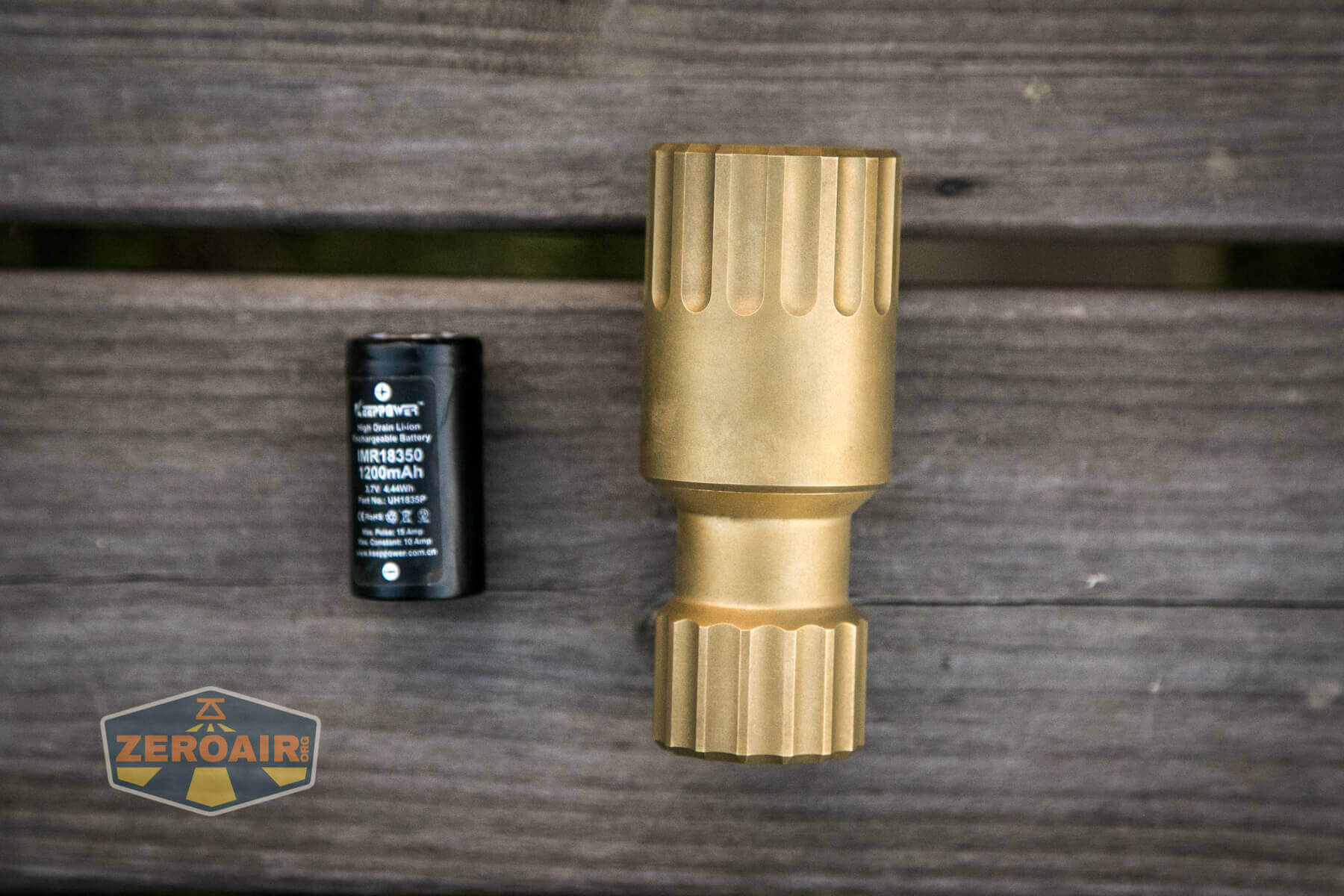
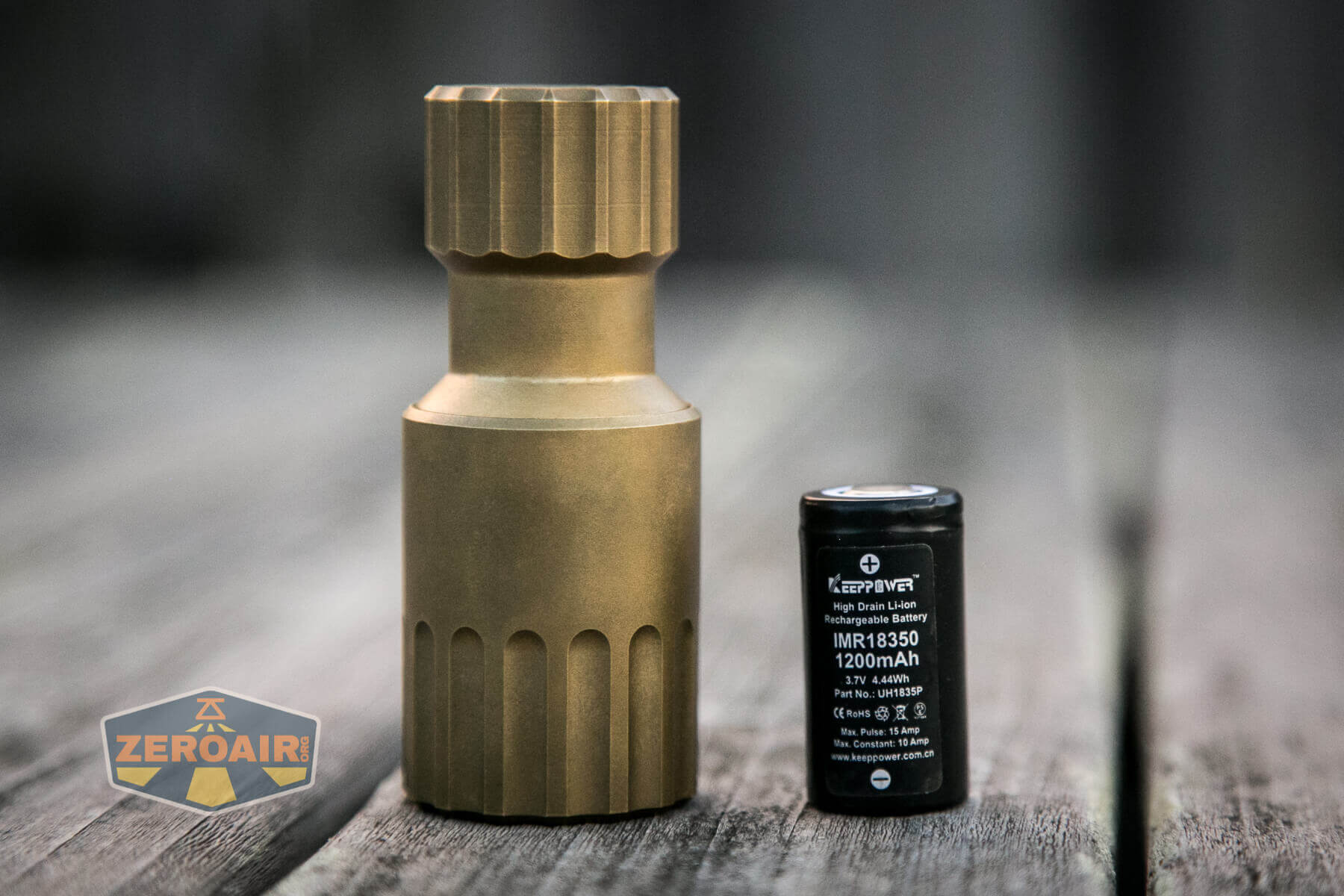
The cell goes into the light in the usual way – positive terminal toward the head.
Despite all other things about the uniqueness of the Fraz Labs Gold Nugget, it’s essentially a twisty, infinitely variable output light. As such, it’s hard to state modes specifically, so I just tested two. I tested the highest output I could achieve, which is to say “as tight as I could get the head” or “as tight as I was willing to twist the head.” Fraz Labs specifically states not to overtighten….
So here’s “High” – the output drifts downward following cell voltage. I did not observe low voltage protection (!!!), but the output on this and the other mode was noticeably dim by the end.
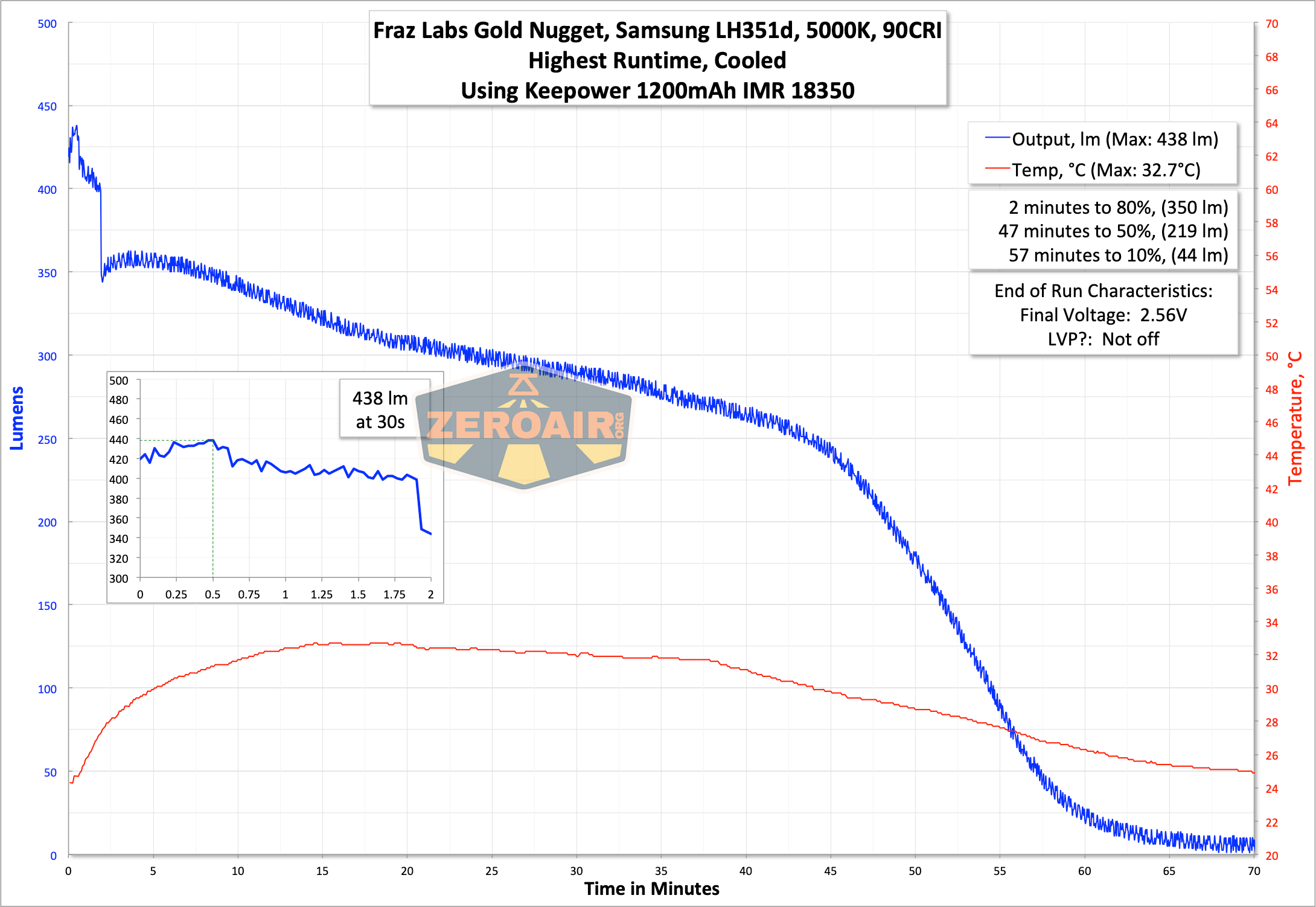
In both the test above and the test below, I turned the light on (by twisting, of course) and then left it. I did not continue to tighten the head. So we see something interesting about QTC (or the “smart material”). It seems that either as it heats up, or as cell voltage changes in some way (by dipping), the output will creep up. There’s no problem with that, it’s just something I think I’d like to know more about!
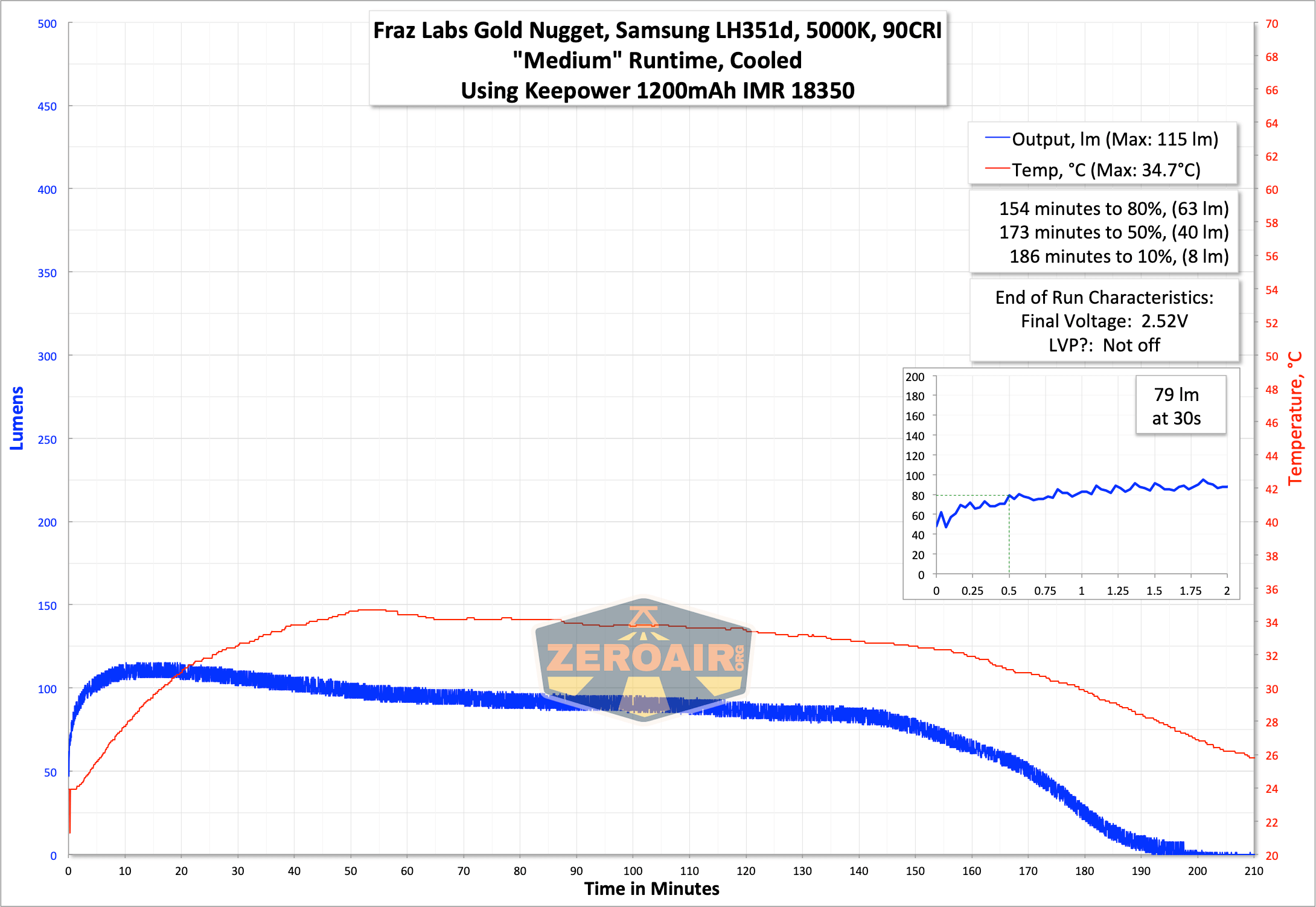
I’m disappointed that the light does not have low voltage protection, and here’s why. Because of how the QTC (or “smart material”) works, this light has exceptionally low output levels. I mean so low you can’t even imagine. You wouldn’t be able to tell the light is on in the darkest of rooms. So, despite this being a mechanical apparatus (which usually has “zero parasitic drain”), you can end up with “parasitic drain” simply because you’ve left the light on (accidentally). Yes, that’ll be slow, but wouldn’t you rather just have low voltage protection?
Anyway, that’s just not how the light works. It doesn’t have “traditional electronics,” which means there’d be no way to have low voltage protection. So just prepare to loosen the head quite a bit.
Pulse Width Modulation
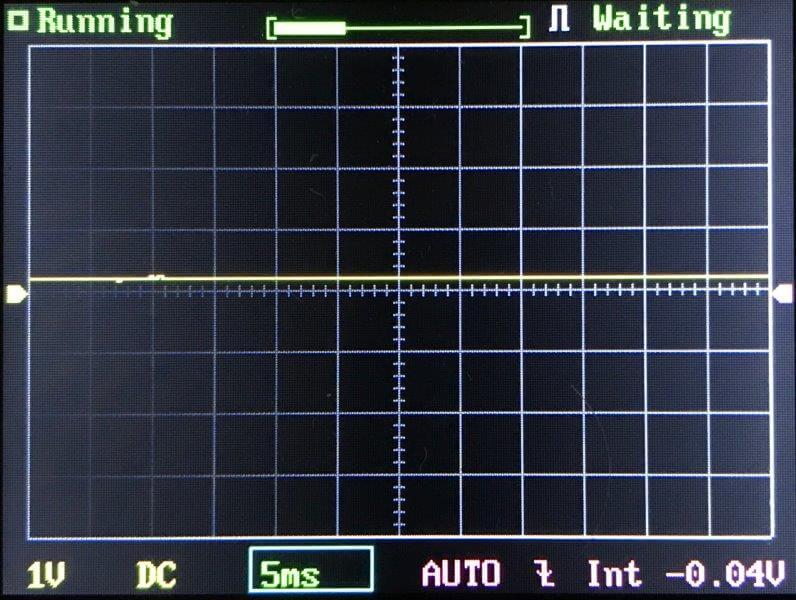
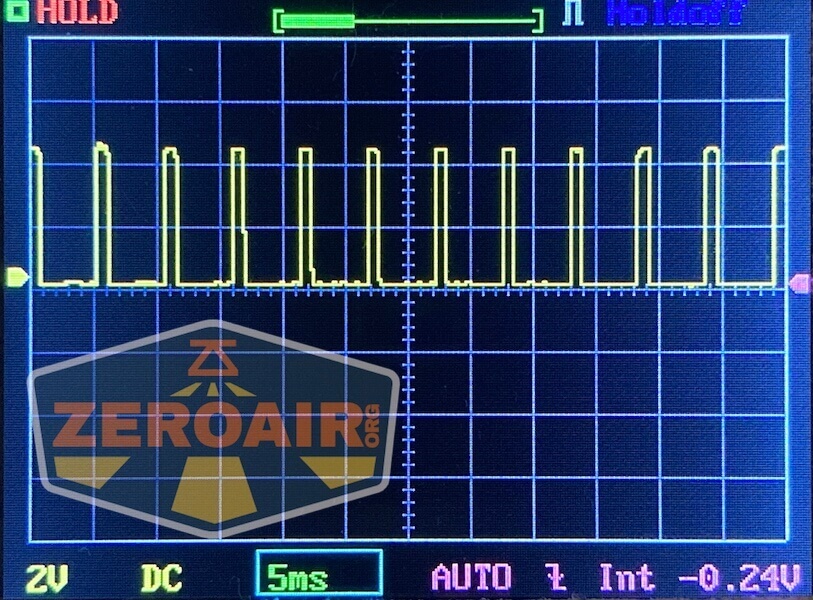
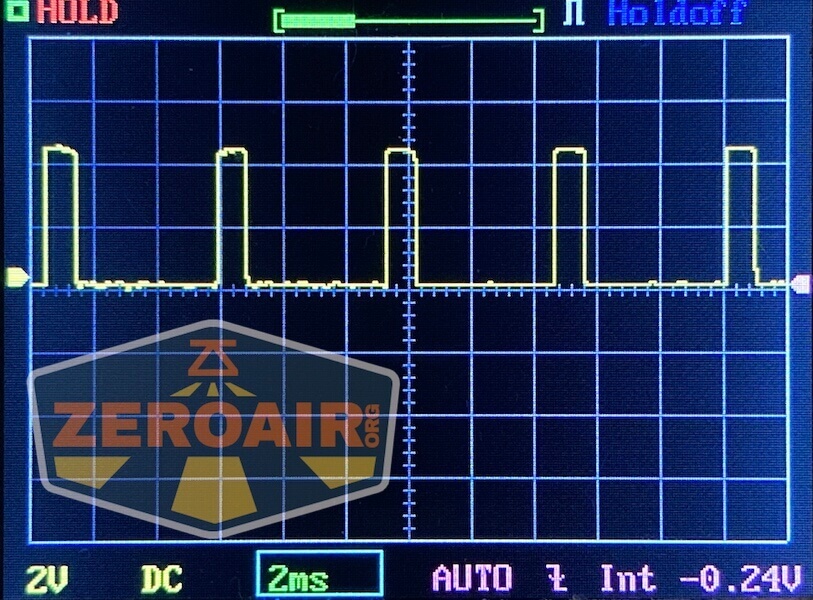
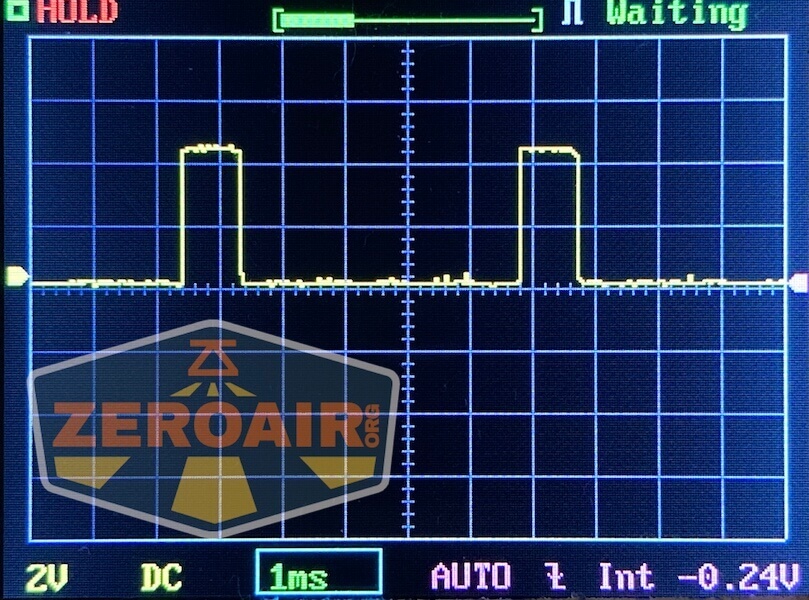
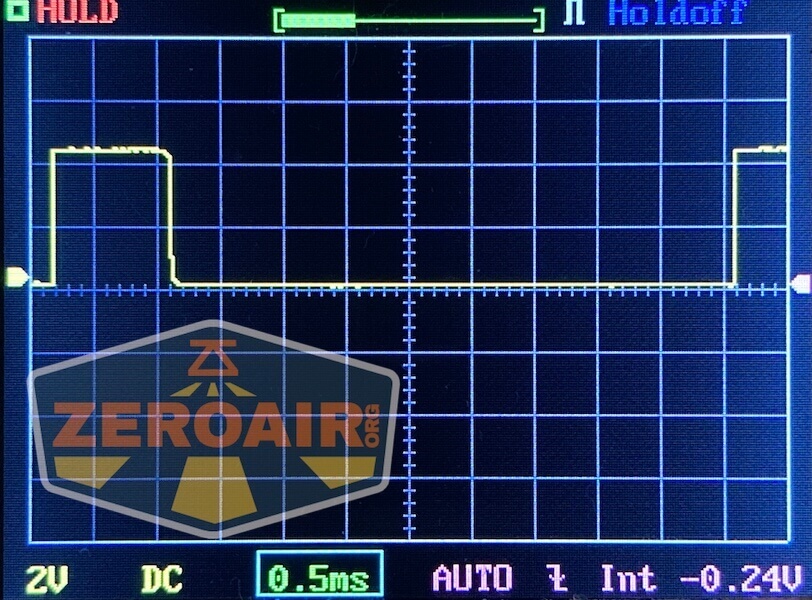
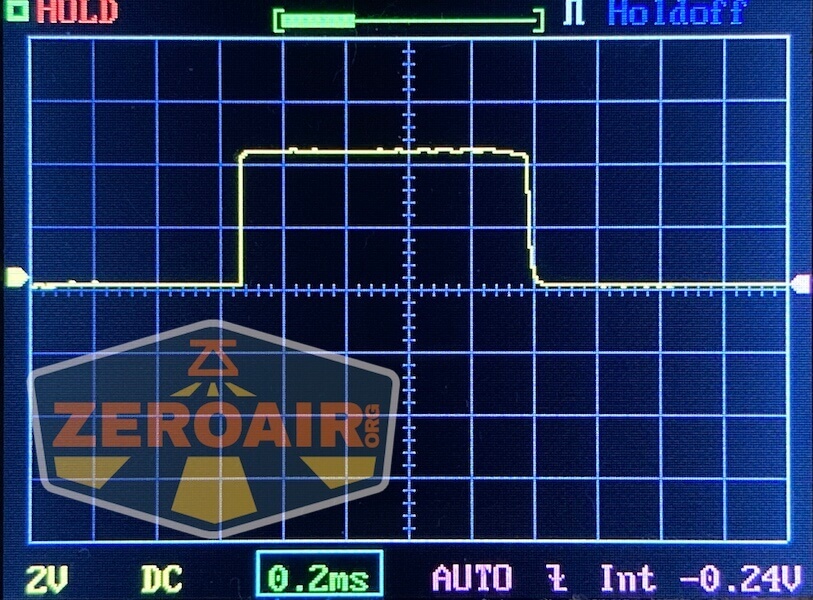
As far as I understand QTC and the implementation in the Fraz Labs Gold Nugget, this light is essentially a direct drive light. We wouldn’t expect PWM. How can a direct drive light have variable output, though? Well, that’s the magic of QTC.
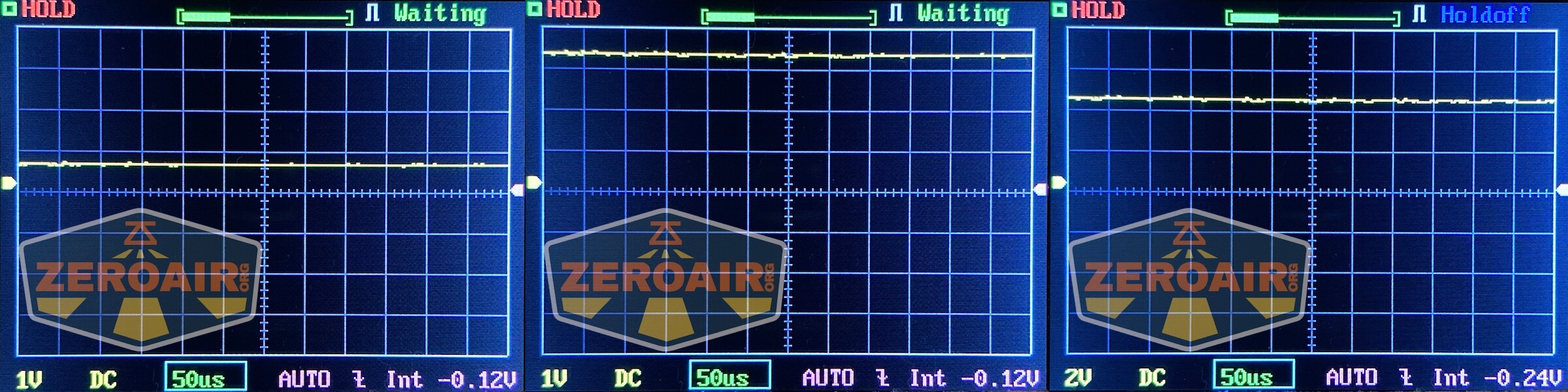 Here you can see a “baseline” – a chart with almost no light hitting the sensor.
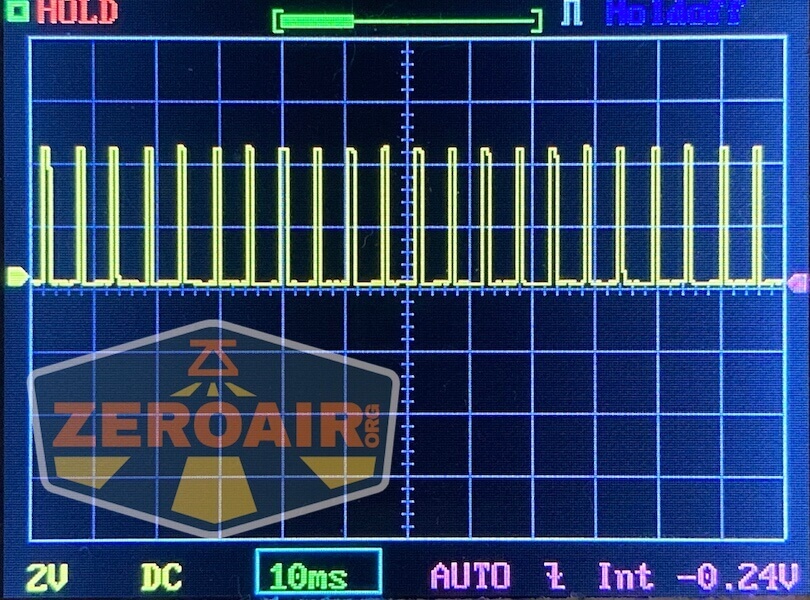
Then there’s the Ultrafire WF-602C flashlight, which has some of the worst PWM I’ve seen. It’s so bad that I used a post about it to explain PWM! Here are multiple timescales (10ms, 5ms, 2ms, 1ms, 0.5ms, 0.2ms) to make comparing this “worst” PWM light to the test light easier. That post also explains why I didn’t test the WF-602C at the usual 50us scale.
User Interface and Operation
We’ve talked about QTC (ad nauseam?), so let’s just talk about the fact here that the Fraz Labs Gold Nugget is a twisty. Twist the tail into the head for “on” and keep tightening for higher output.
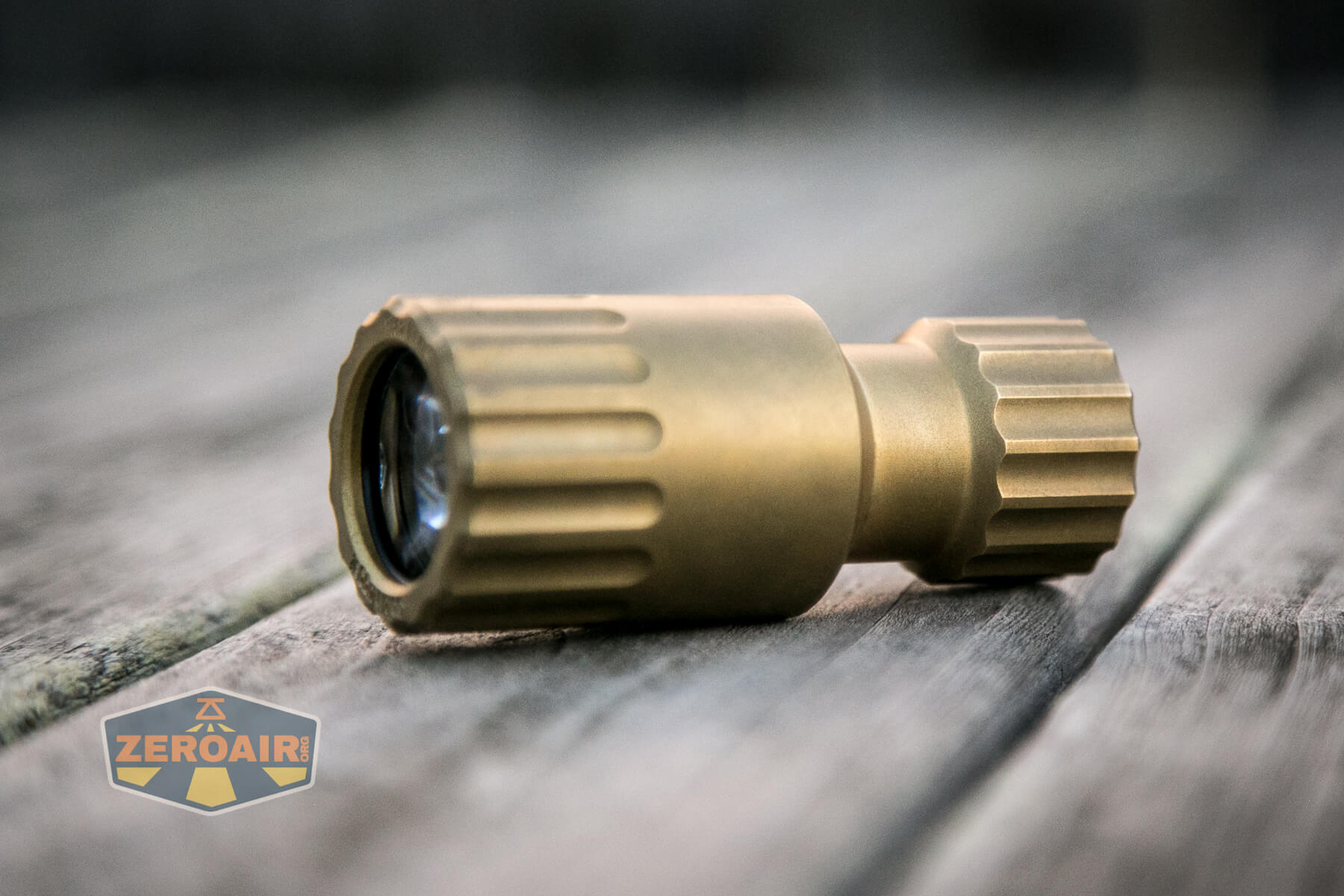
The head and tail have great grip areas, which assist in tightening and loosening the parts.
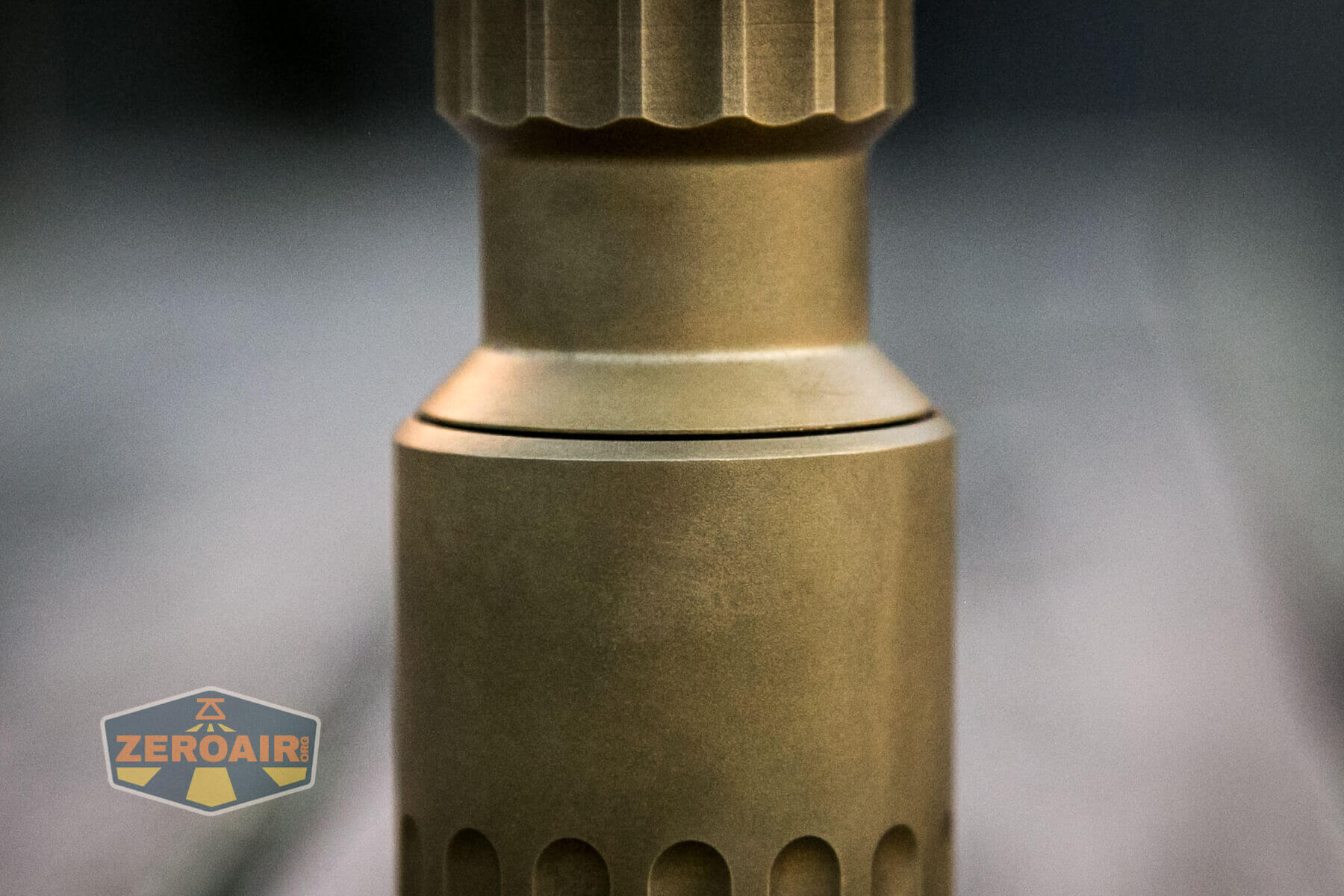
When “least off” “almost on” the parts line up into a nice shoulder.
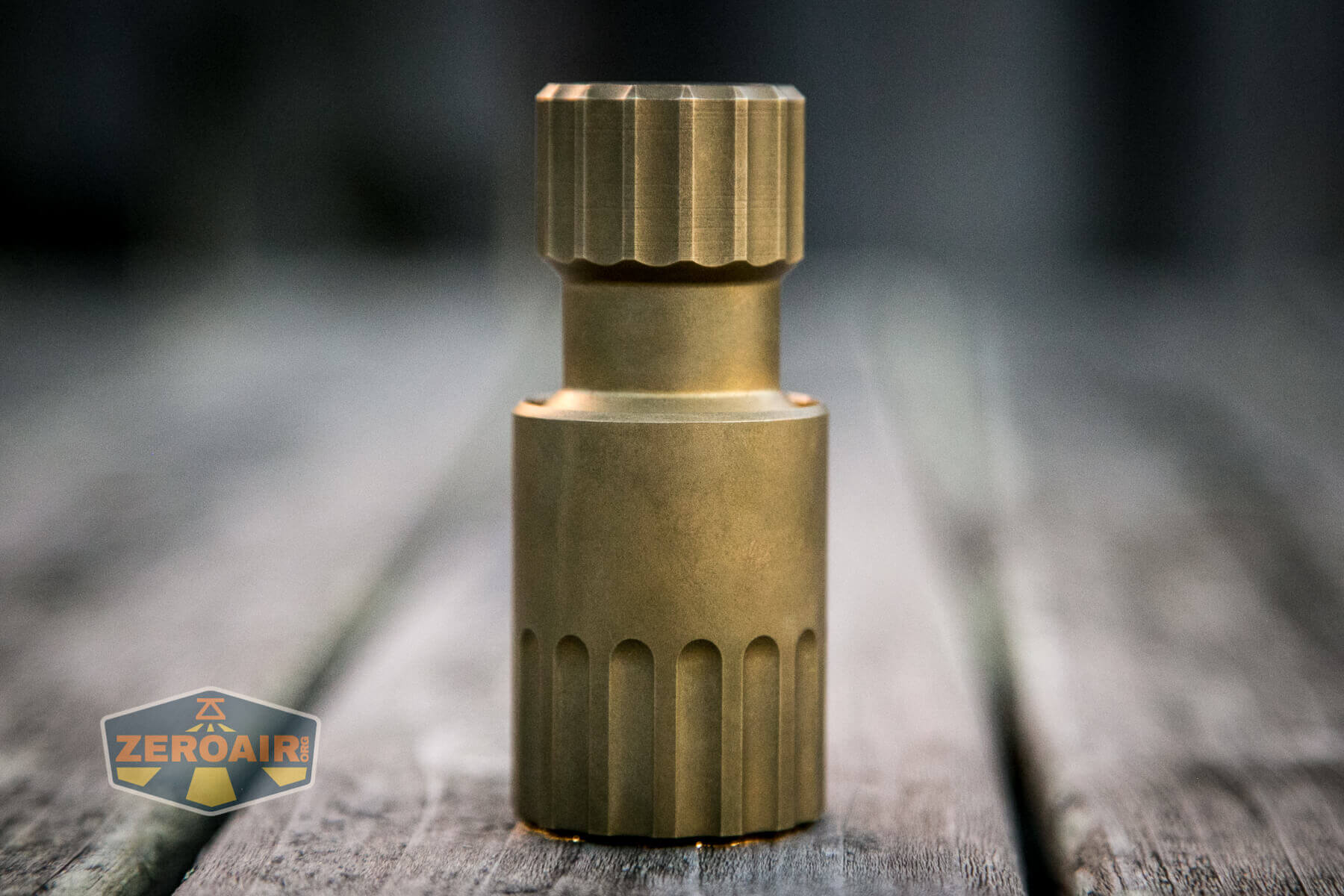
When in an on state, the tail end/cell tube goes into the head in such a way that there’s a lip over the cell tube.
One thing I noted when using the light is something Fraz mentions:
because this light functions in a mechanical way instead of using an electrical driver to control the ramping, there may be slight flickering while changing brightness levels.
If and when you read the instructions, don’t fret too much about this. The flickering isn’t much and isn’t too off-putting. But it is there, and I did notice it.
Here’s a user interface table!
| State | Action | Result |
|---|---|---|
| Off | Tighten | On |
| On | Loosen | Off |
| On | Tighten | Higher output |
LED and Beam
The emitter of choice in the Fraz Labs Gold Nugget is a Samsung LH351d of the 5000K, 90CRI variety.
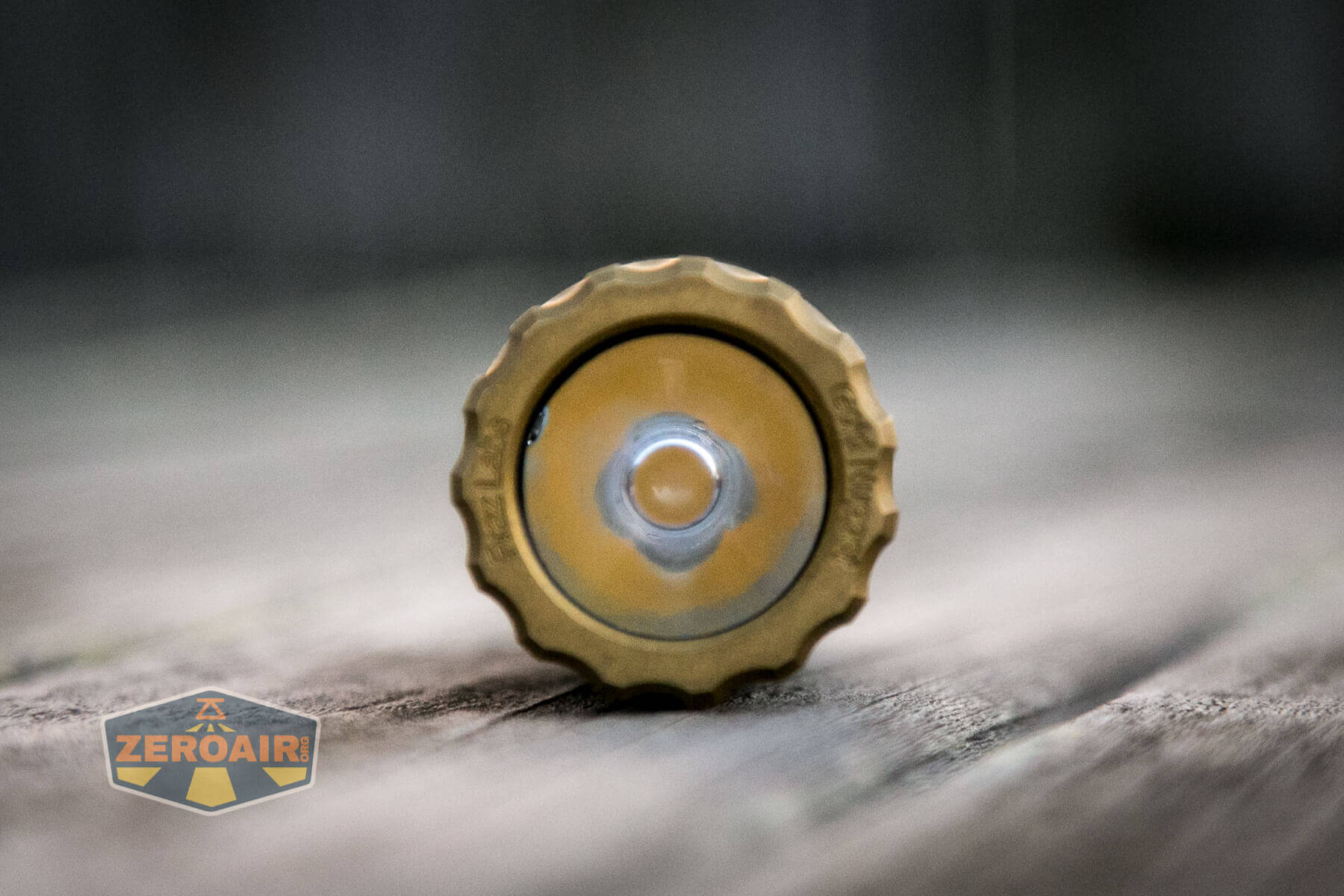
Fraz Labs uses a clear, narrow optic.
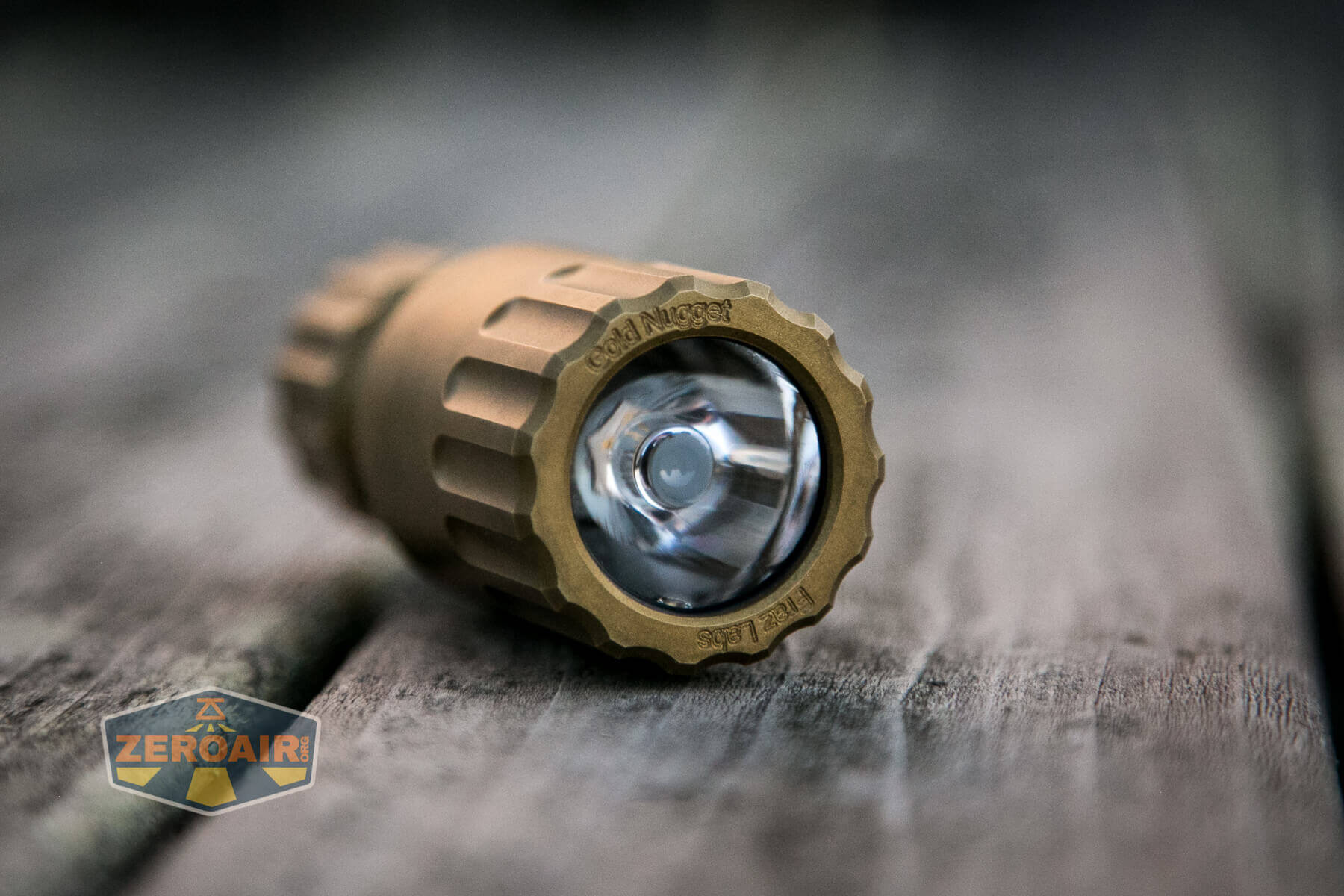
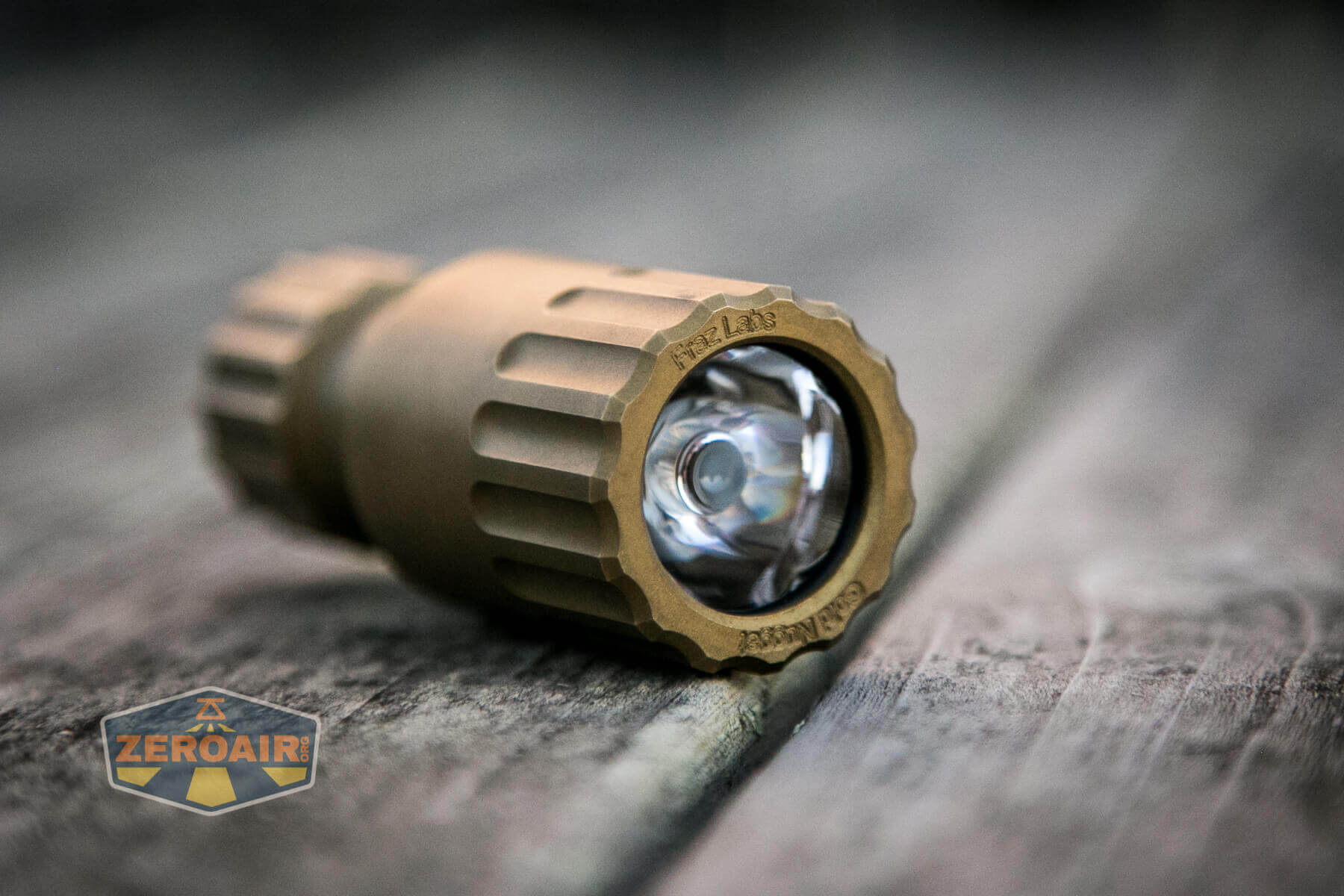
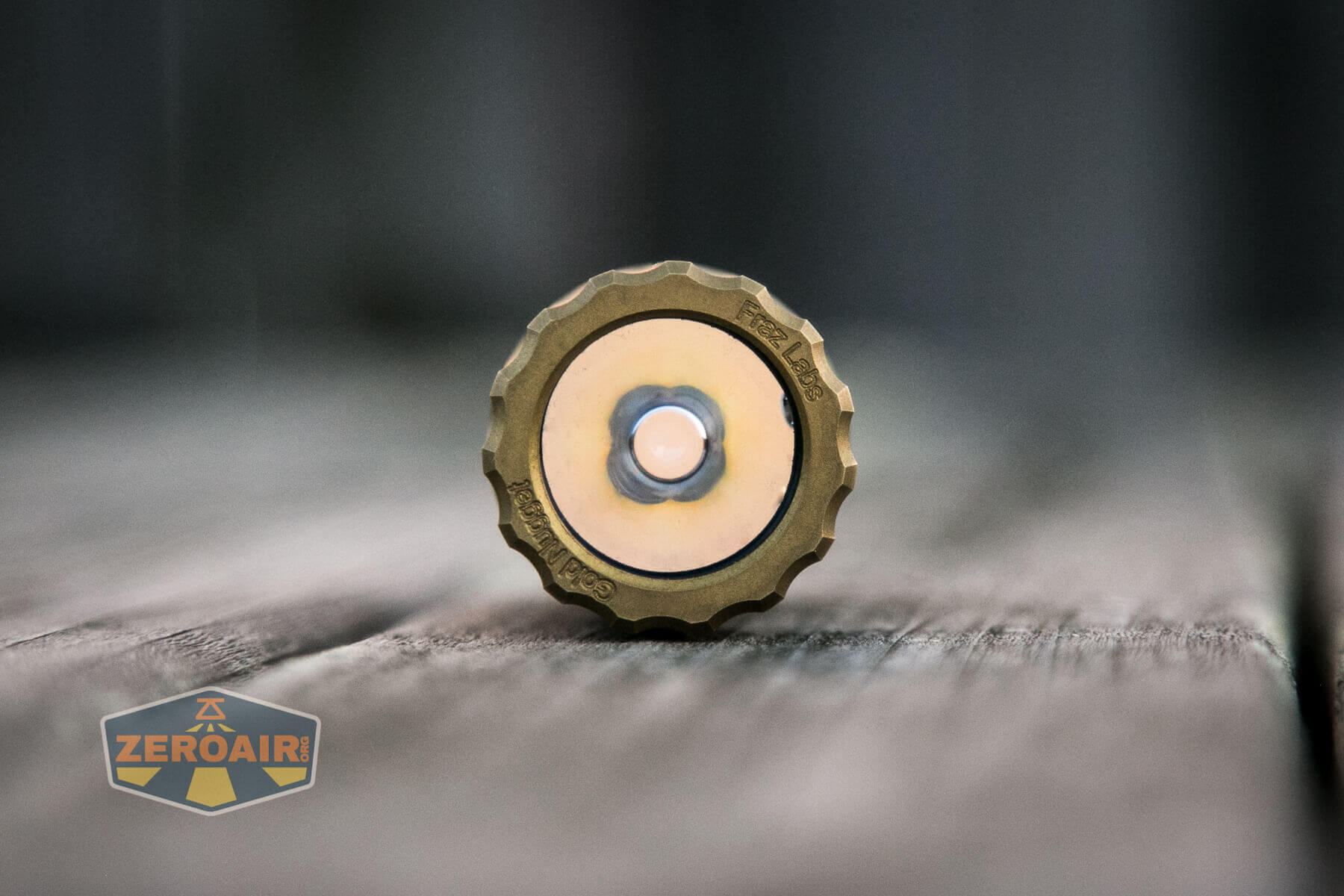
This clear, narrow optic makes a beam profile that seems to put out more light than you’d really expect, and drastically increases the utility of the light.
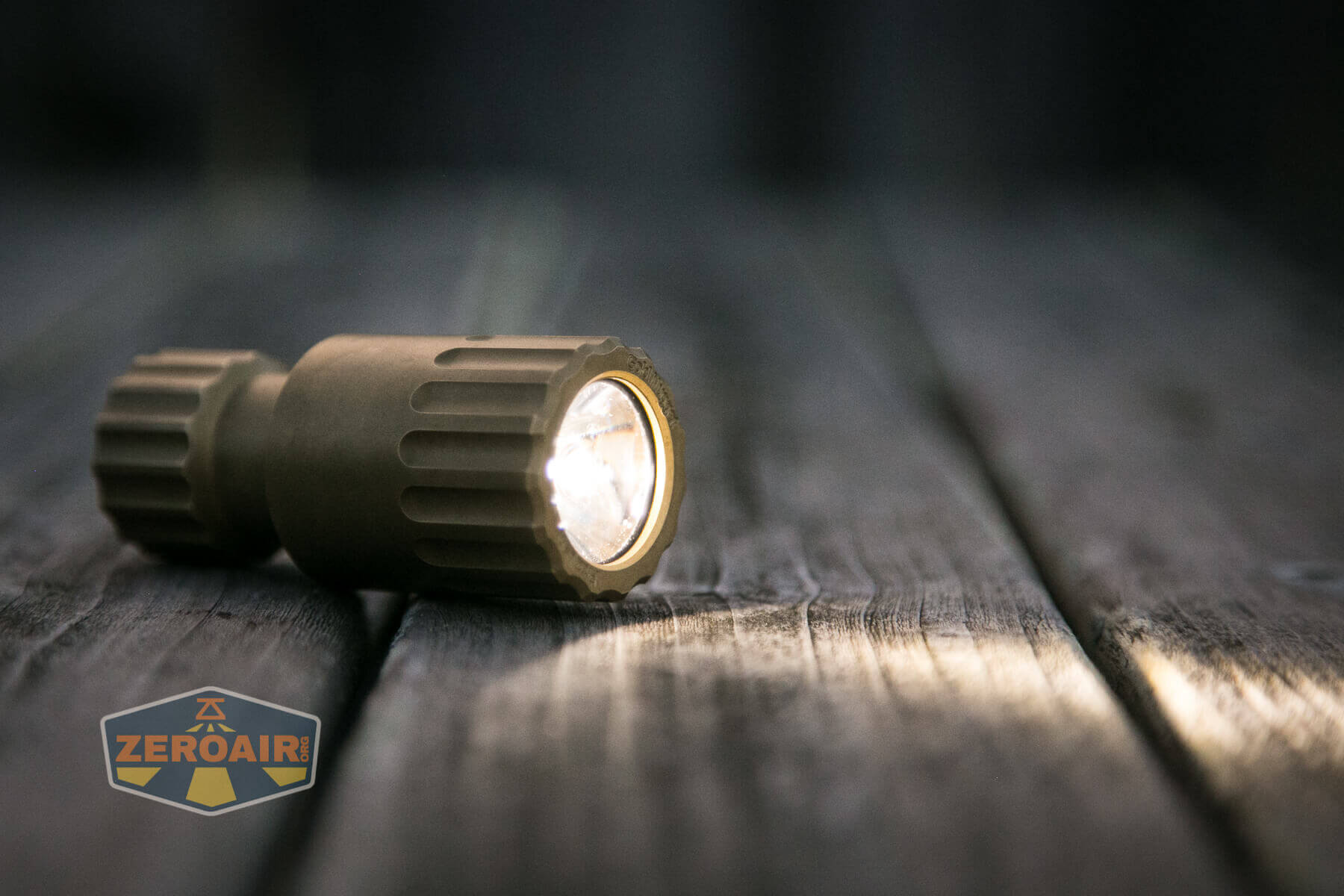
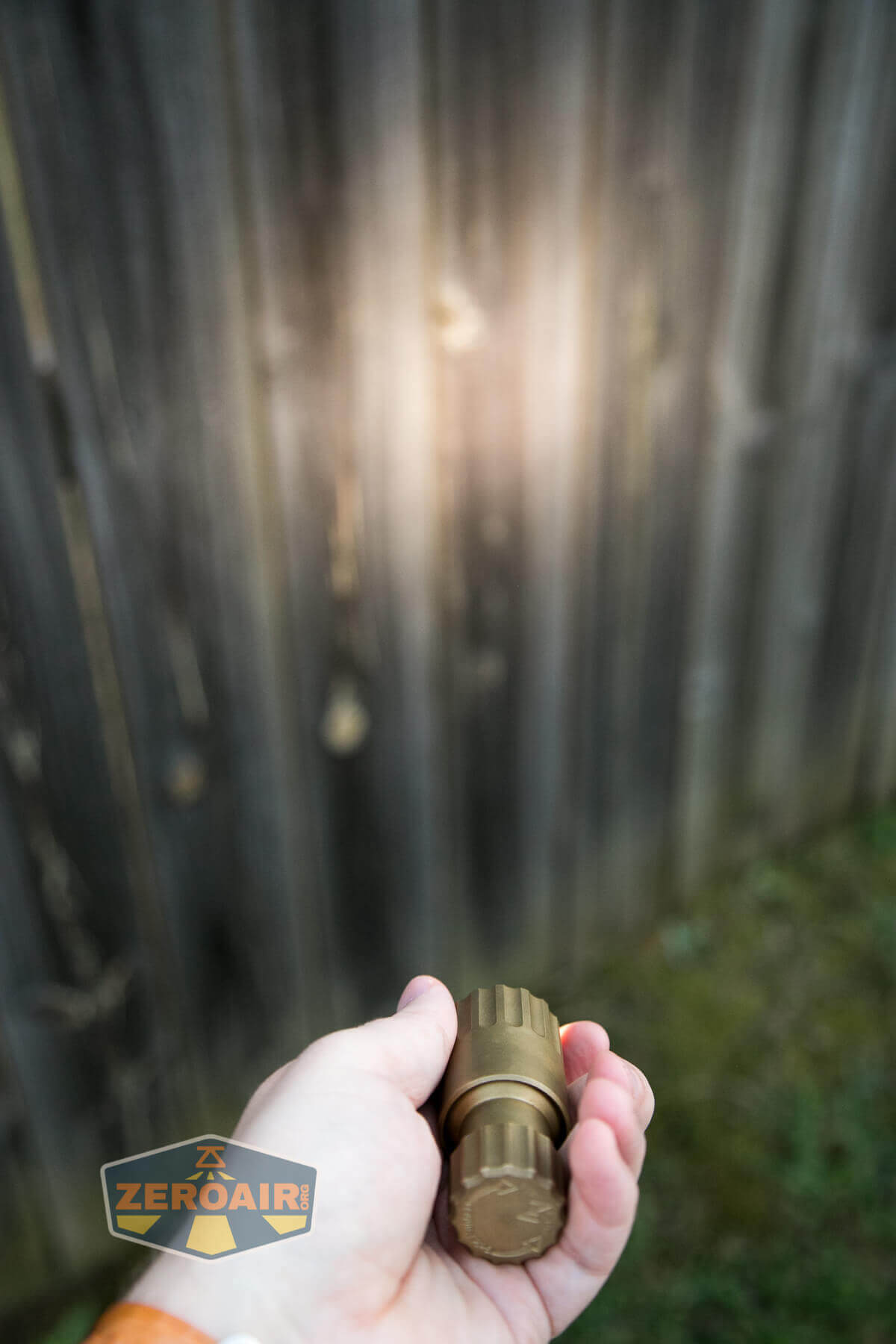
Say whatever you want about this being a $200 desk toy, and who would buy it and why, and all that. But my opinion is that it’s a real looker.
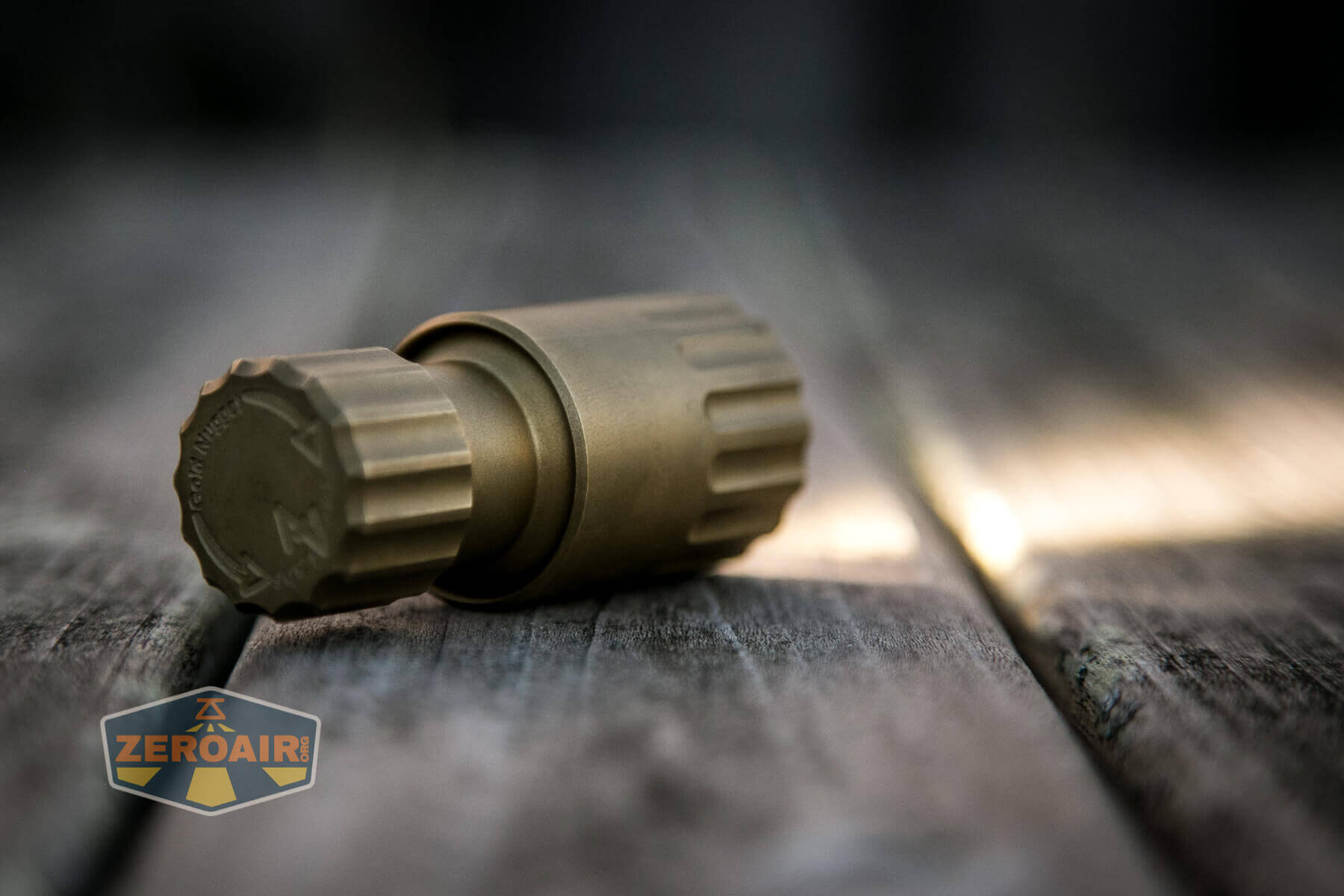
The bezel doesn’t reveal any light when “face down” on a surface. That’d be one good improvement to make. Flute this bezel a little, and let the light shine.
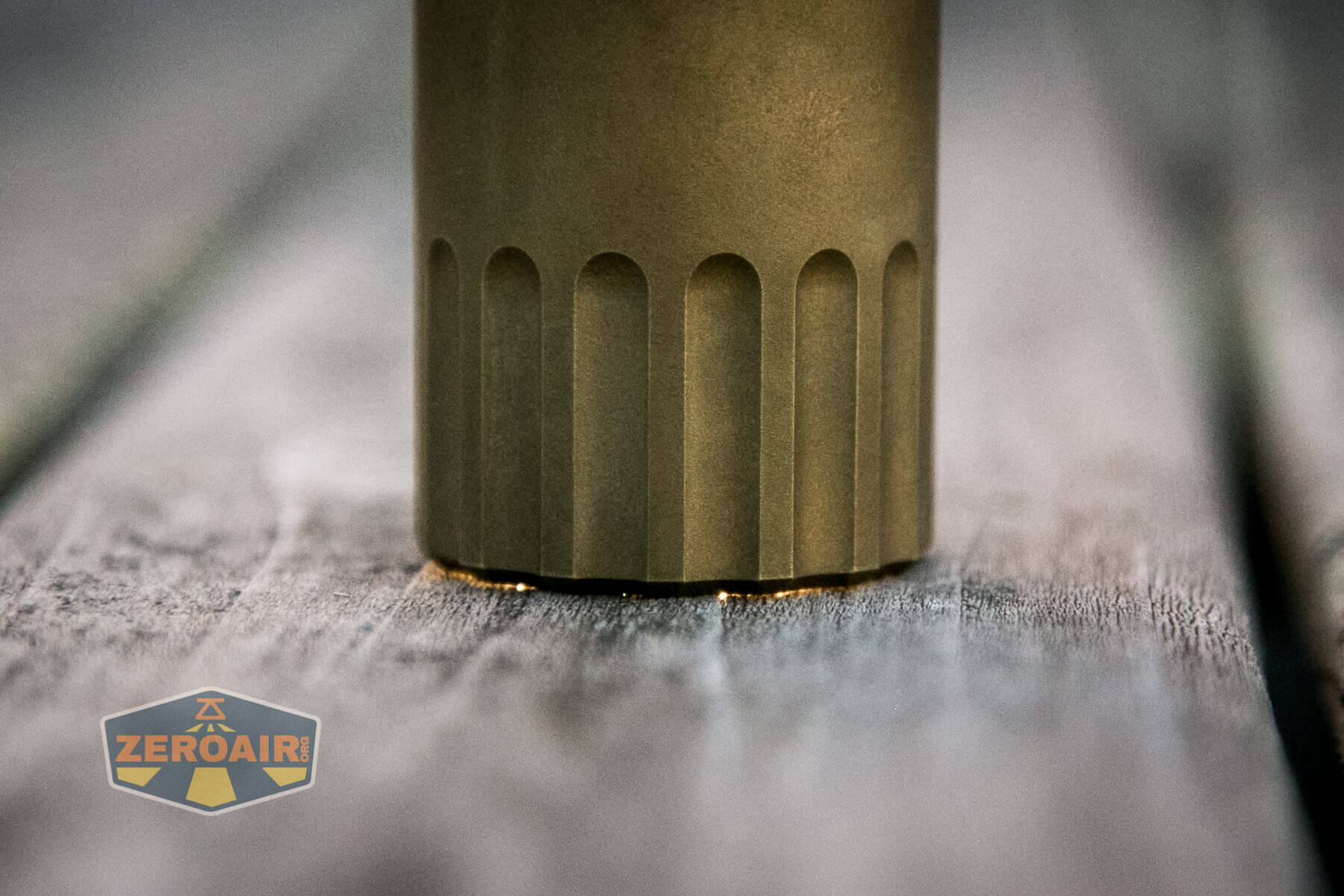
As stated above, one of the two main points (as I read them) about the Fraz Labs Gold Nugget is the easy ability to swap the emitter. Just pull the engine and all the parts, loosen that Hex screw, and drop in your new emitter/16mm PCB. No soldering is required. You might wish to put some thermal paste under the MCPCB. You might wish to have some lube for the threads on the engine that go into the head. But no soldering is required.
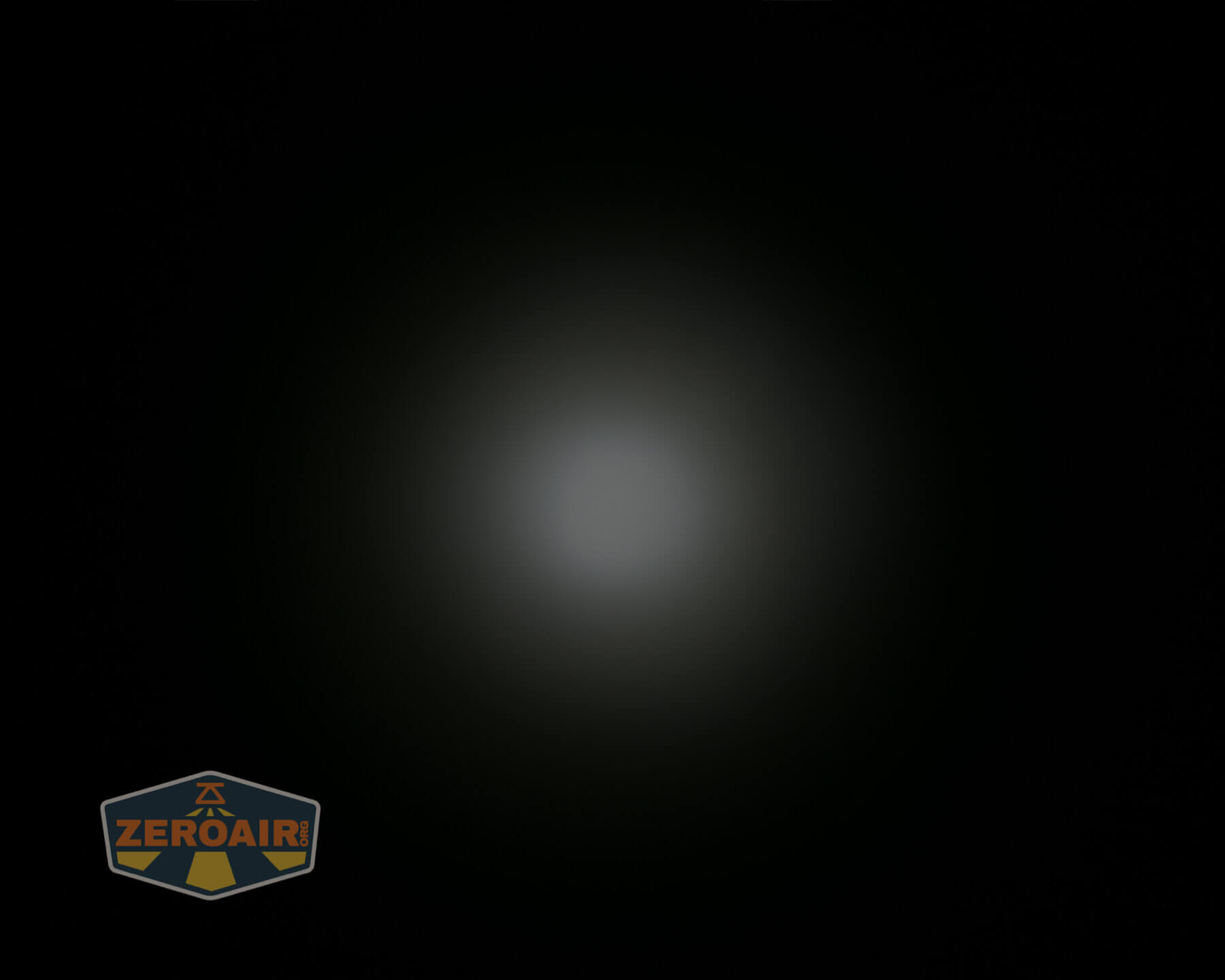
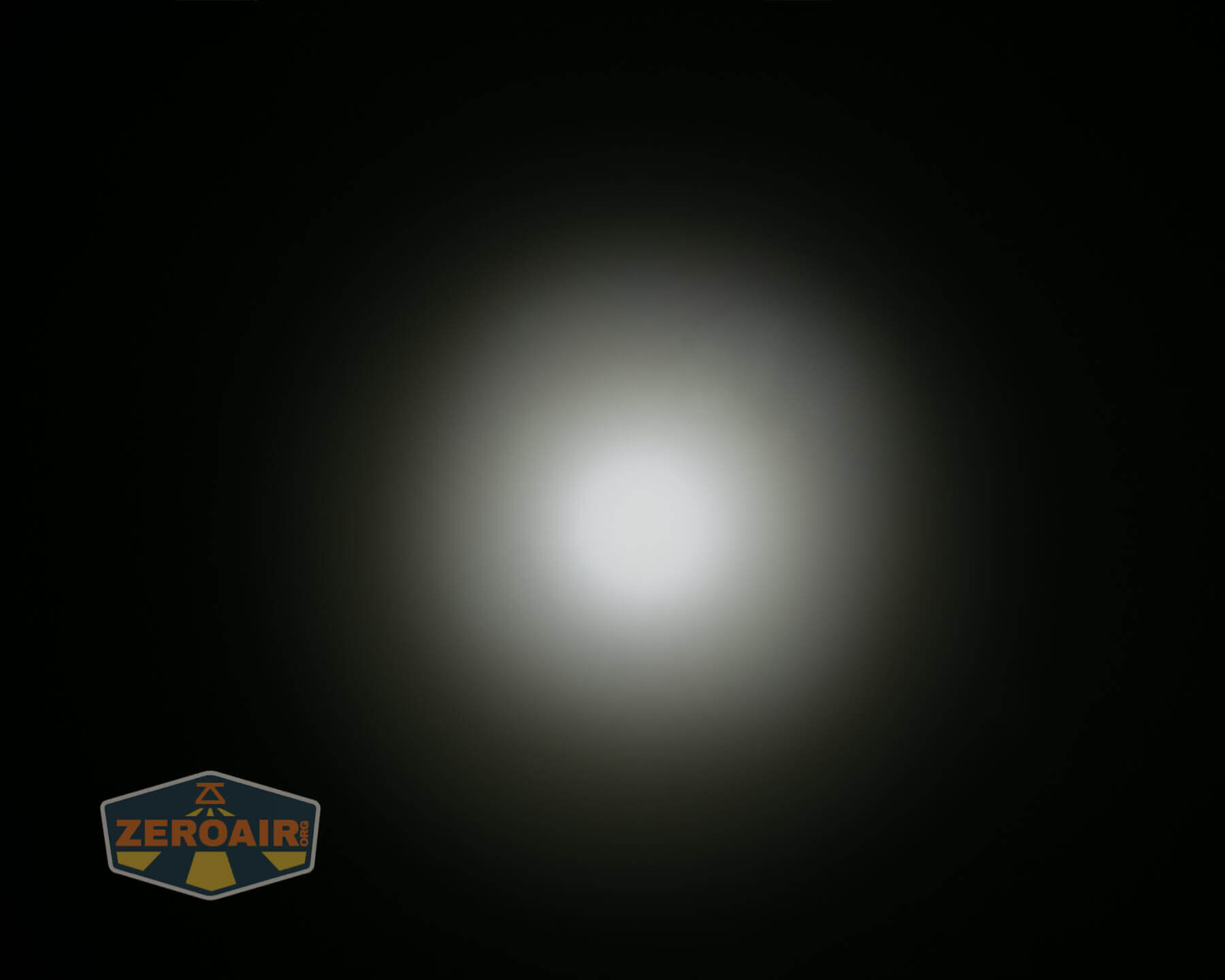
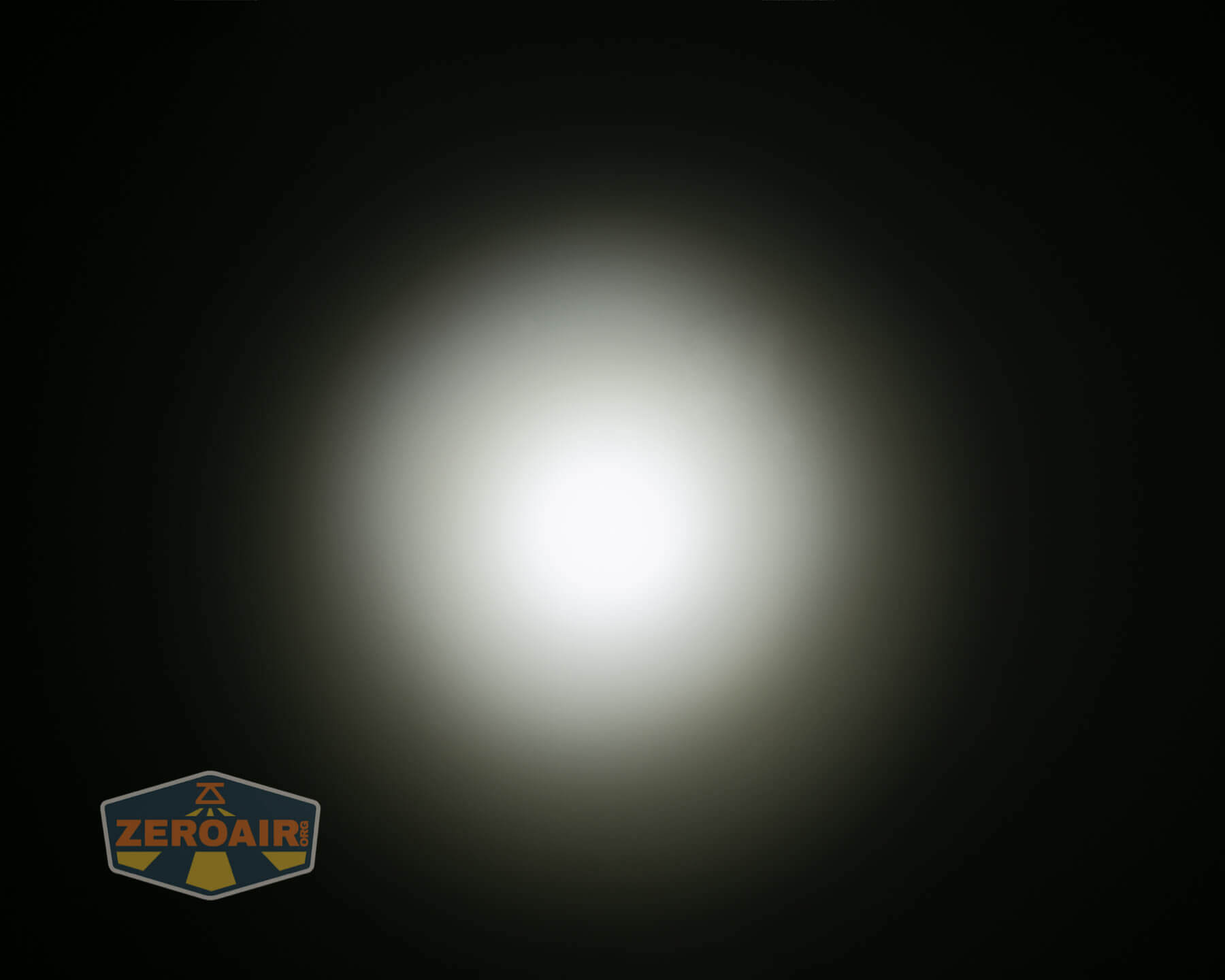
I tried to capture how low low is here. But I could take a picture of a dark room and you could say “what’s this?” It’s the Fraz Labs Gold Nugget on its lowest mode. But I manipulate the photo-taking and you end up being able to see the light on so everything is confused… These next three photos, for whatever it’s worth, demonstrate an emitter on that I could barely see myself, in person. It’s very low.
Beamshots
These beamshots always have the following settings: f8, ISO100, 0.3s shutter, and manual 5000K exposure. These photos are taken at floor level, and the beam hits the ceiling around 9 feet away. These are just 6 random modes, with the highest being approximately the same as the runtime on High seen above.


Tint vs BLF-348 (KillzoneFlashlights.com 219b version) (affiliate link)
I keep the test flashlight on the left and the BLF-348 reference flashlight on the right.
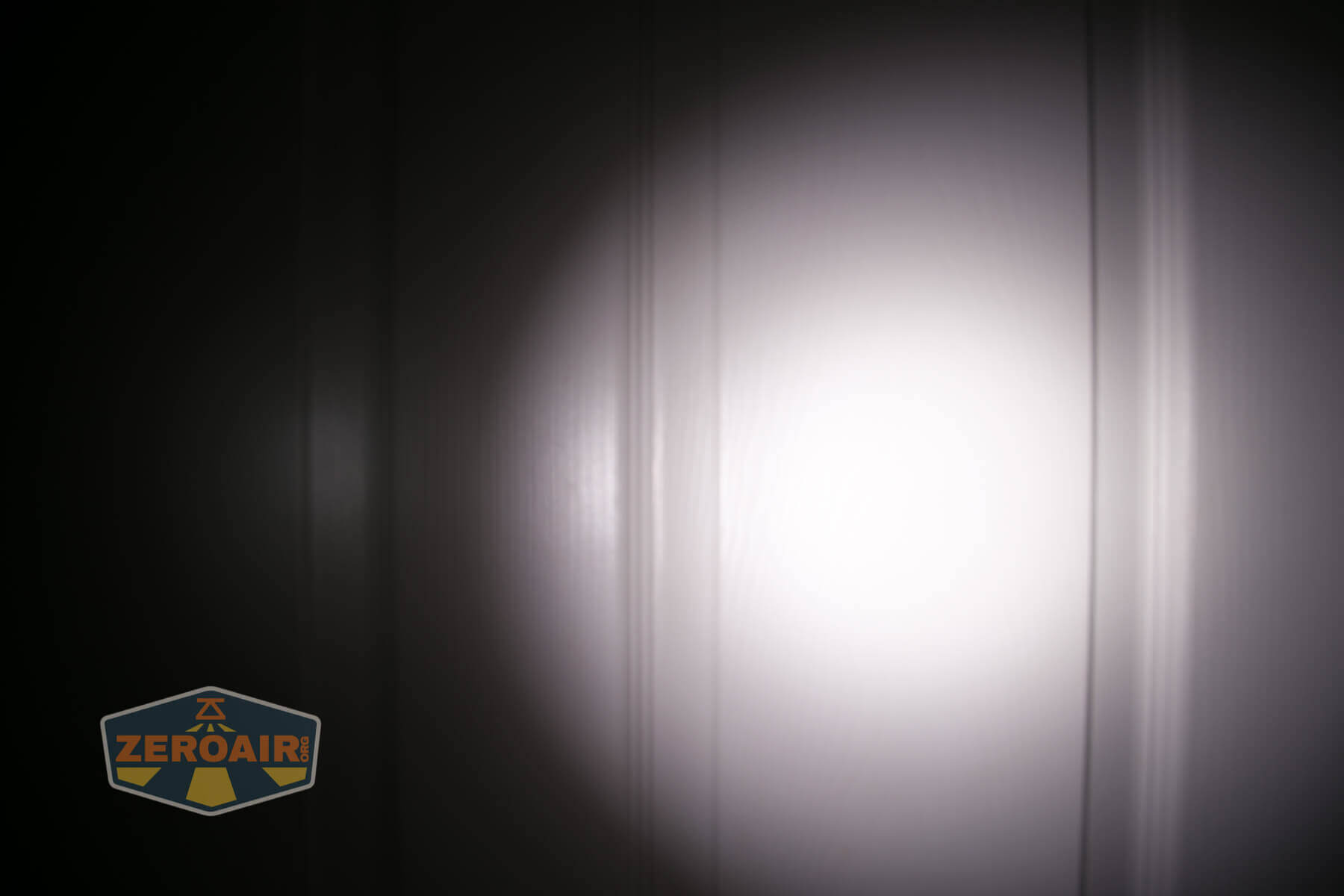
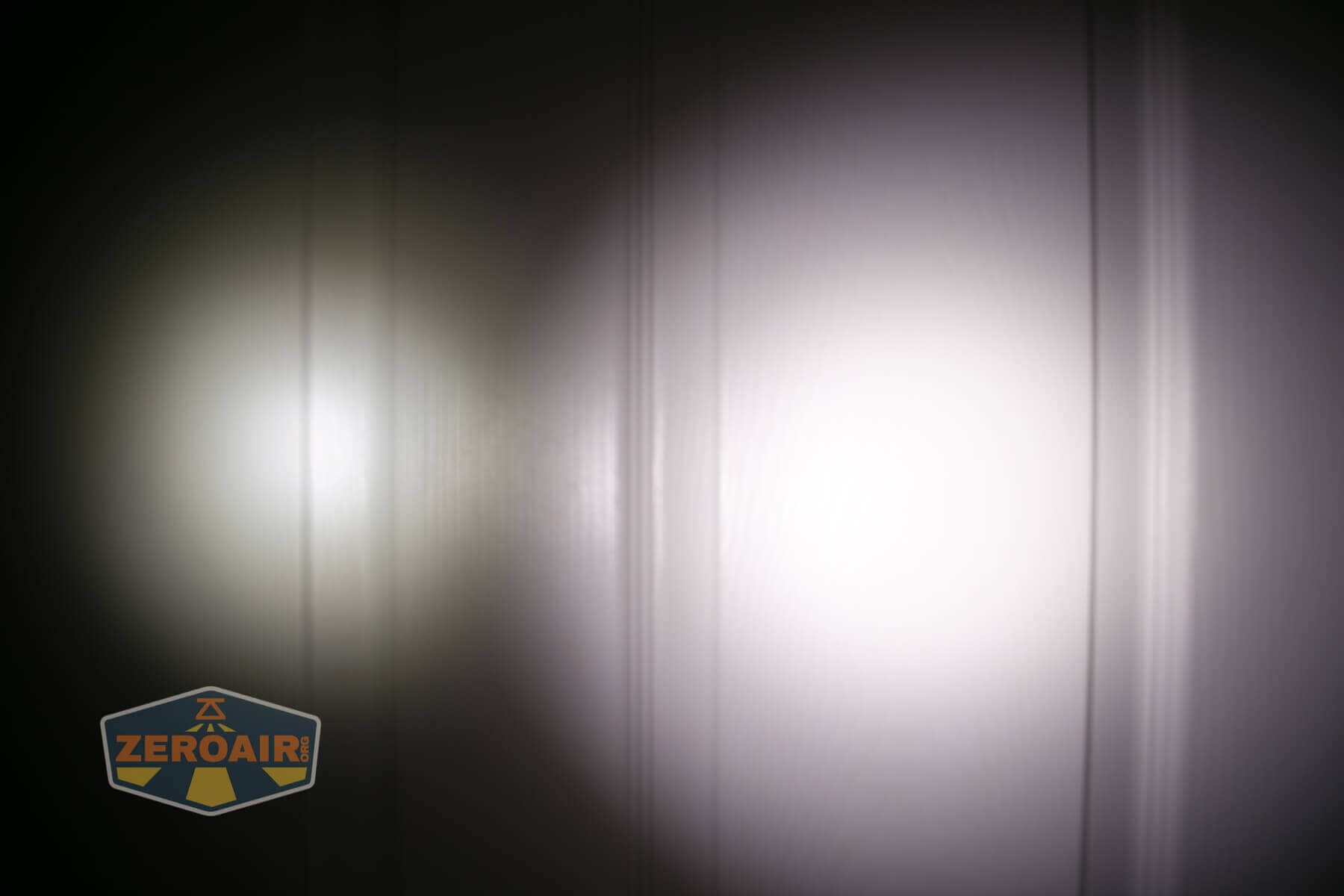
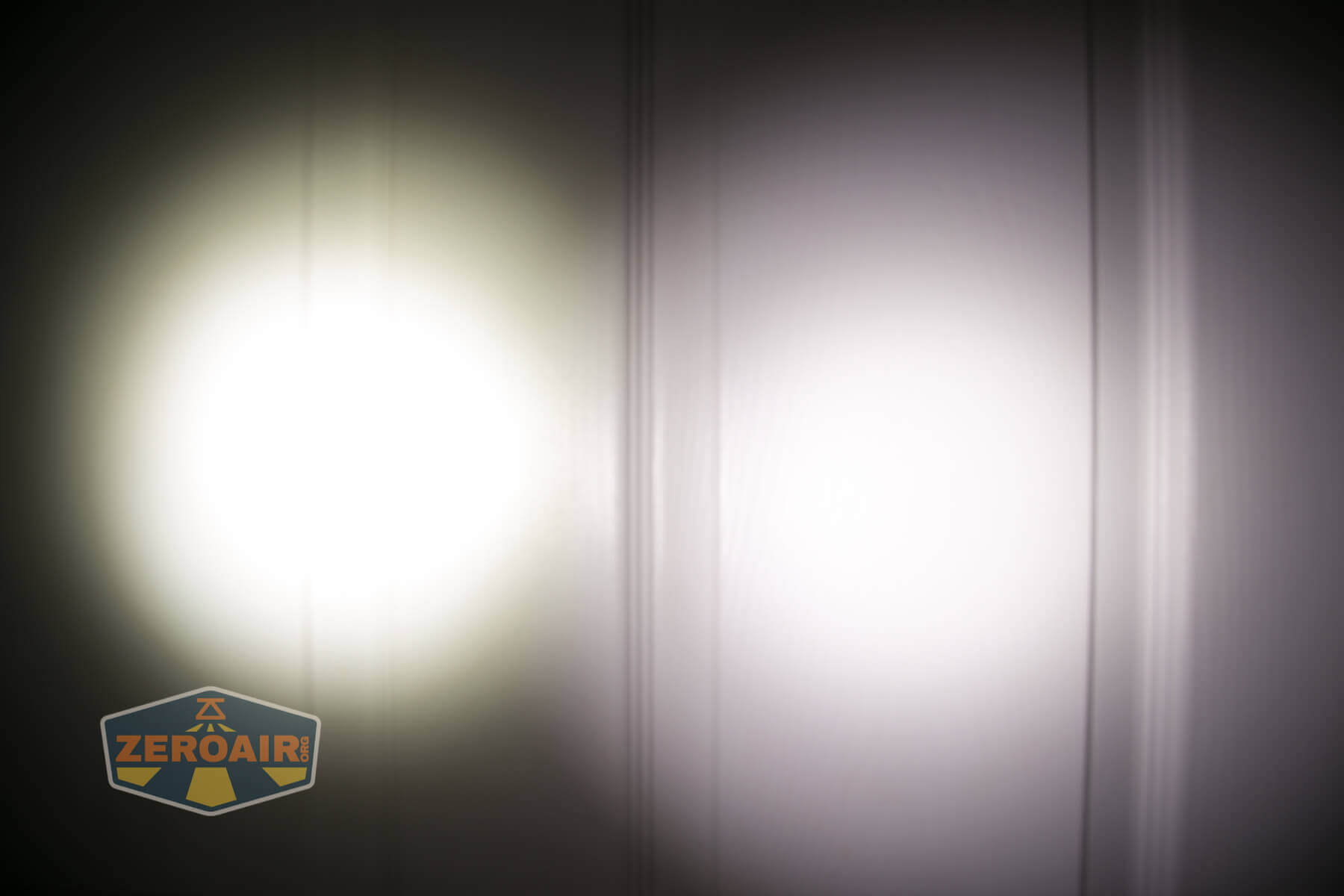
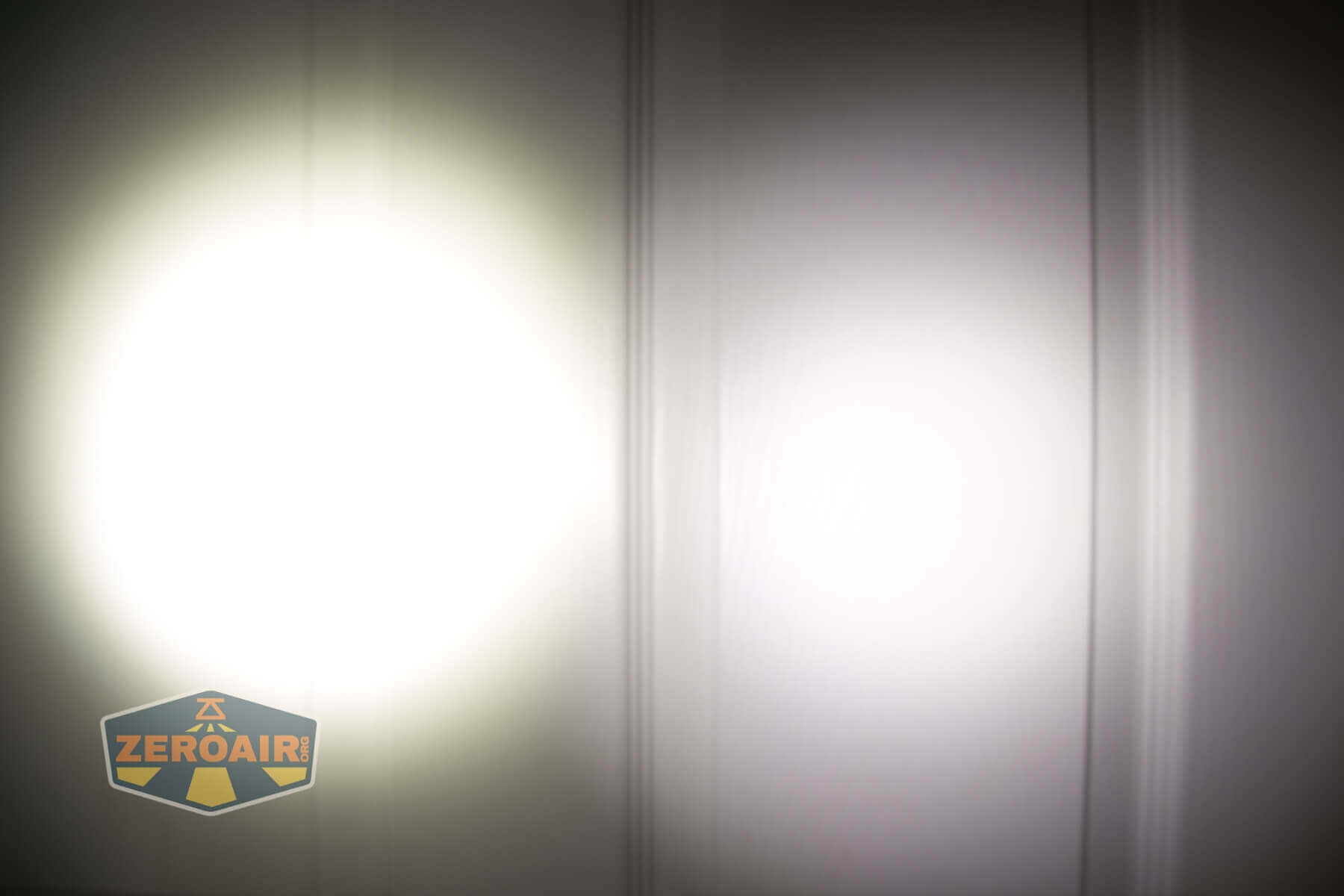
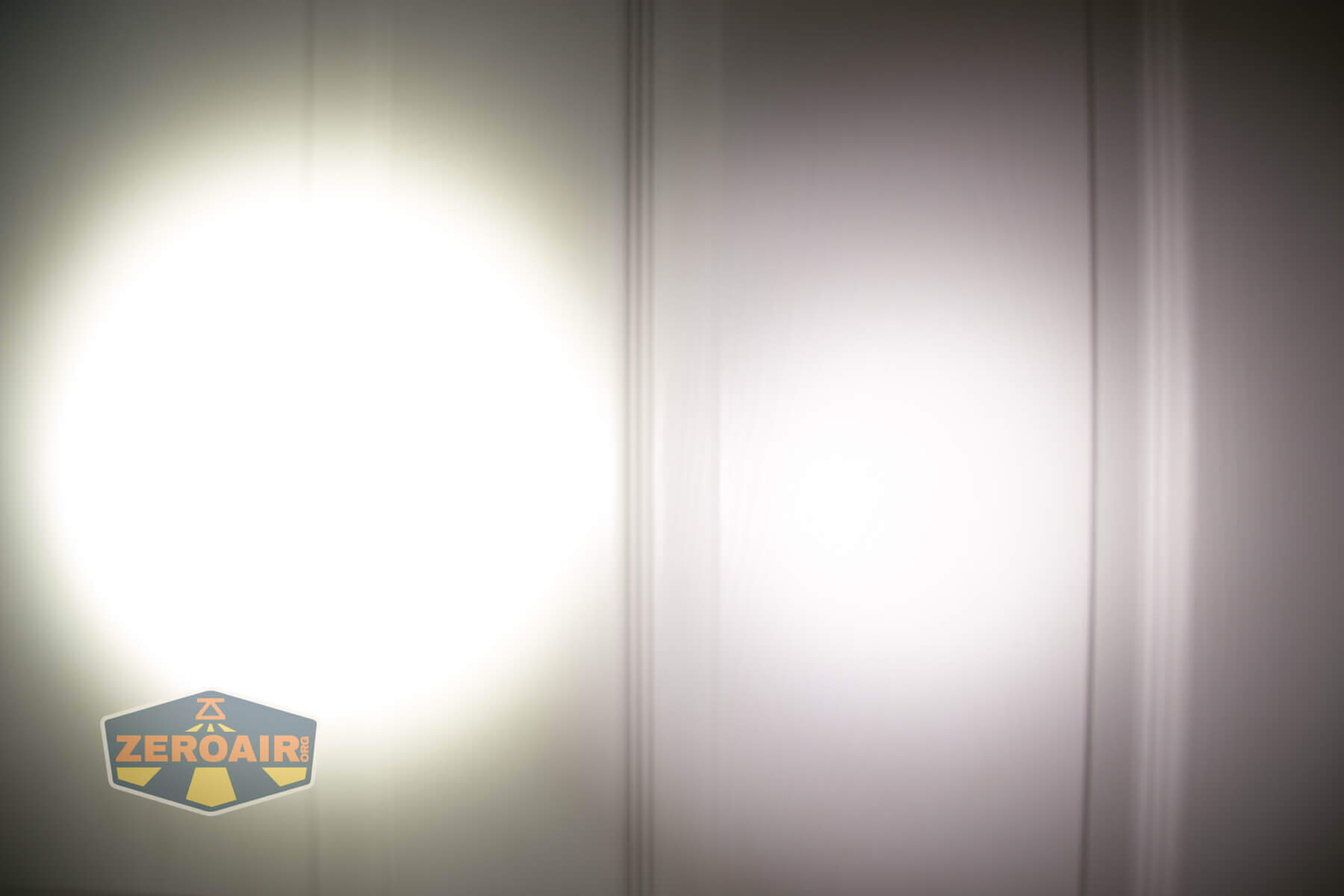
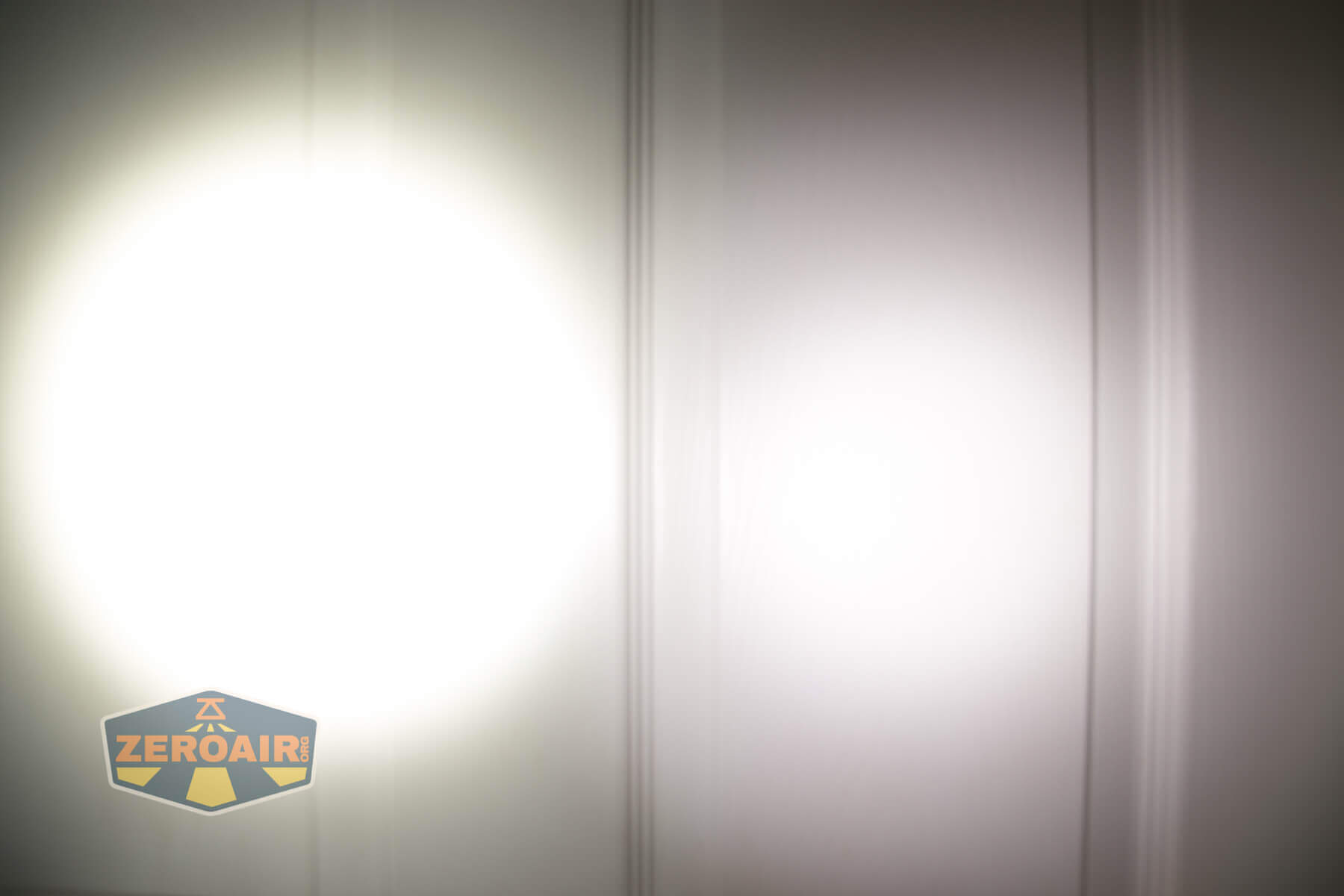
I compare everything to the KillzoneFlashlights.com 219b BLF-348 because it’s inexpensive and has the best tint!
Conclusion
What I like
- Fully brass
- Utilizes a very unique design
- No electronics? Is that a great thing? All my other lights have electronics…
- Good emitter choice from Fraz Labs
- “Easy” emitter swaps
- Good optic choice
- Ramping output
- A great desk toy!
What I don’t like
- No electronic means no low voltage protection
- Twisty
- QTC – I just really don’t love QTC still. This implementation is neat and will probably last longer than most.
- Ramping output “the hard way”
Notes
- This light was provided by u/dotmjeg for review. I was not paid to write this review. Thanks u/dotmjeg!!
- This content originally appeared at zeroair.org. Please visit there for the best experience!
- Please use my Amazon.com referral link to help support zeroair.org!
- Please support me on Patreon! I deeply appreciate your support!
Discover more from ZeroAir Reviews
Subscribe to get the latest posts sent to your email.
Looks cool, but for $200 I expect to get some actual gold, not just gold in the name!
A 400Lm light with no LVP and no on board charging for $200? Lol, nah I’m good.
PWM? how does that work without a driver ?.
thanks.
It doesn’t use PWM.