

Convoy S21A 21700 Flashlight Review
The Convoy S21A 21700 flashlight is a big brother to the S2+, and similar in most ways. The main difference: it runs on a single 21700 cell!
Official Specs and Features
Here’s a link to the Convoy S21A 21700 flashlight product page.
Versions of the Convoy S21A 21700 Flashlight
As with most Convoy flashlights, the Convoy S21A 21700 flashlight is available with many options. The specific listing I purchased this item from is only Luminus SST-40, but there are two CCTs available: 6500K and 5000K (seen here). Many other emitter options are available (and probably custom options if you ask.)
There are also two user interface options: 12 groups (seen here) and 4 modes. Also available are many body colors, but not Convoy’s full range. Just Green, Orange (seen here), Purple, and Red (at the time of writing.)
Price
The Convoy S21A 21700 flashlight sells for $17.40 regardless of the options picked on this aliexpress listing.
Short Review
There are a few reasons to buy this light (that is, instead of something like the S2+, which everyone should have anyway). The larger mass should deal with heat better, and give a higher output for at least a little longer. There are “bigger” emitter options for the S21A (like the XHP50.2, which I don’t think is usually offered in the S2+). And you might just have a bunch of 21700 cells laying around that need a good home – this is a great low-cost option for that!
Long Review
The Big Table
| Convoy S21A | |
|---|---|
| Emitter: | Luminus SST-40 (5000K) |
| Price in USD at publication time: | $17.40 |
| Cell: | 1×21700 |
| 100% Runtime Graph | 50% Runtime Graph |
| LVP? | Warning |
| Switch Type: | Mechanical |
| On-Board Charging? | No |
| Claimed Lumens (lm) | – |
| Measured Lumens (at 30s) | 1632 |
| Candela per Lumen | 11.2 |
| Claimed Throw (m) | – |
| Candela (Calculated) in cd (at 30s) | 807lux @ 4.866m = 19108cd |
| Throw (Calculated) (m) | 276.5 |
| All my Convoy reviews! | |
^ Measurement disclaimer: Testing flashlights is my hobby. I use hobbyist-level equipment for testing, including some I made myself. Try not to get buried in the details of manufacturer specifications versus measurements recorded here; A certain amount of difference (say, 10 or 15%) is perfectly reasonable.
What’s Included

- Convoy S21A 21700 Flashlight
- Lanyard
Package and Manual

The Convoy S21A 21700 Flashlight has the “old style” lower quality box. Newer S2+ lights, for example, have a harder side and are more crush-resistant.
There is no manual.
Build Quality and Disassembly

Convoy is very highly regarded by flashlight enthusiasts for having great build quality and low prices. At under $20, and available with tons of options, this is a very high-value flashlight.
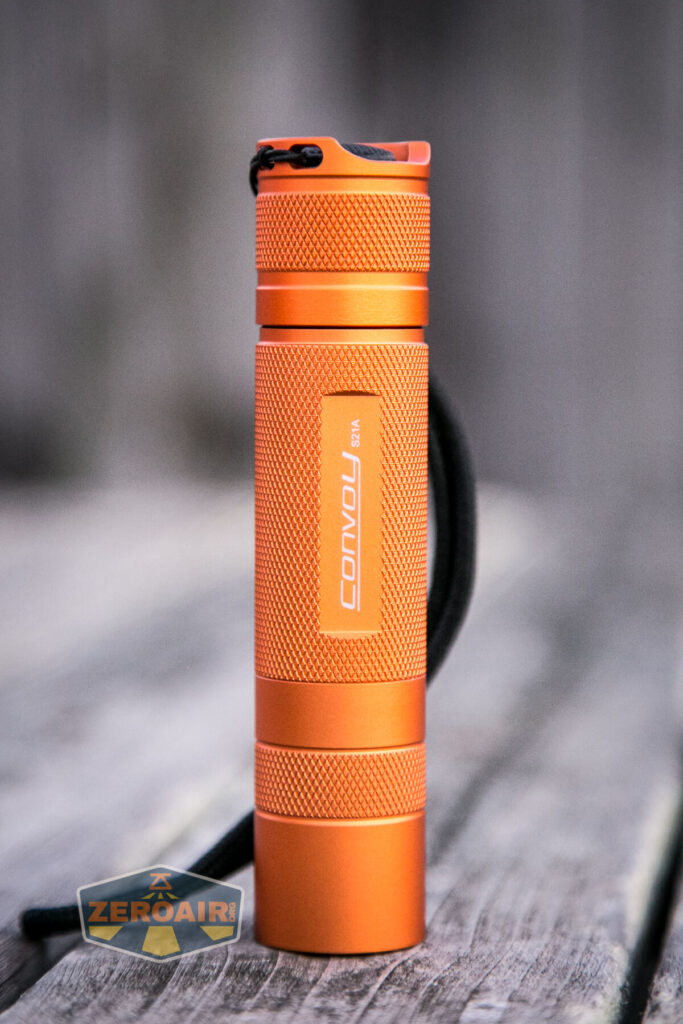
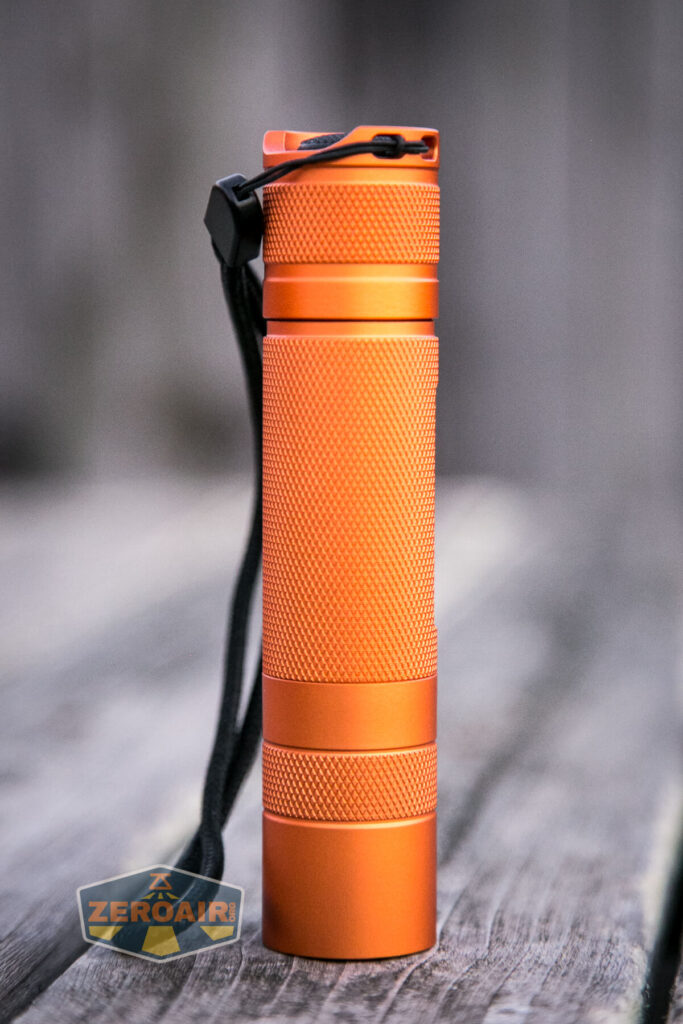


Very minimal branding. The shorty does not have any branding at all.
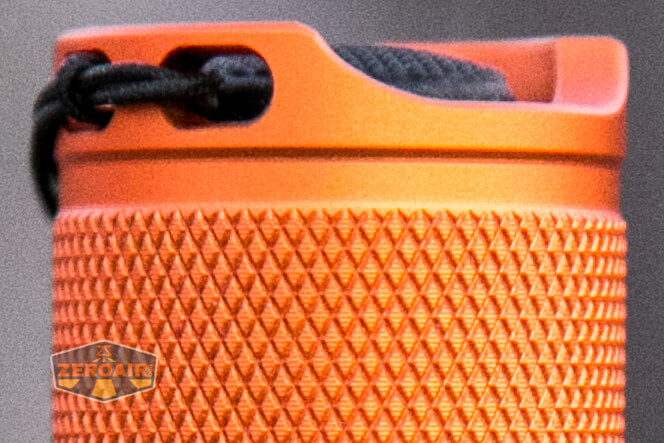


Both head and tail come off the light.

The cell tube is not reversible. One end is anodized, and one is unanodized. The anodized end is the tail end. Also, both ends have their own o-rings.


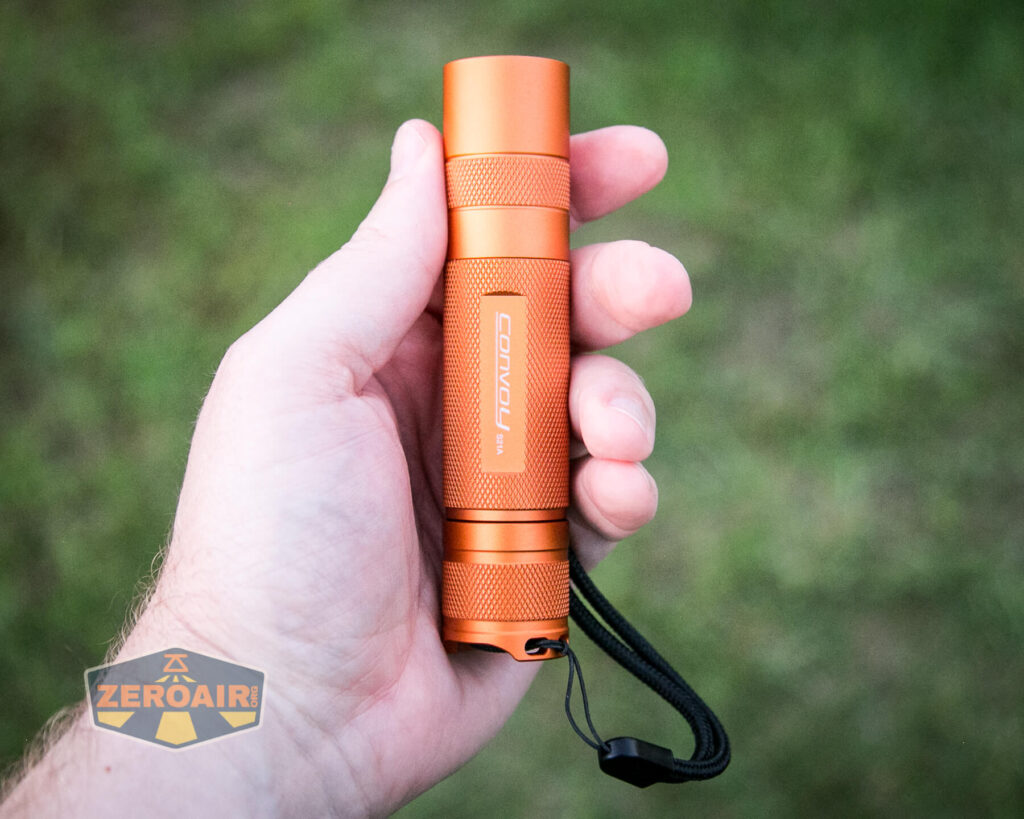
The finish of this orange light is really spectacular. The knurling is right on point. Lights costing orders of magnitude more have had worse knurling!!


I failed to get photos into the head and tail, but both have springs much like the Convoy S2+.
Size and Comps
Length / Diameter: 123mm / 26.6mm
Weight: 88g


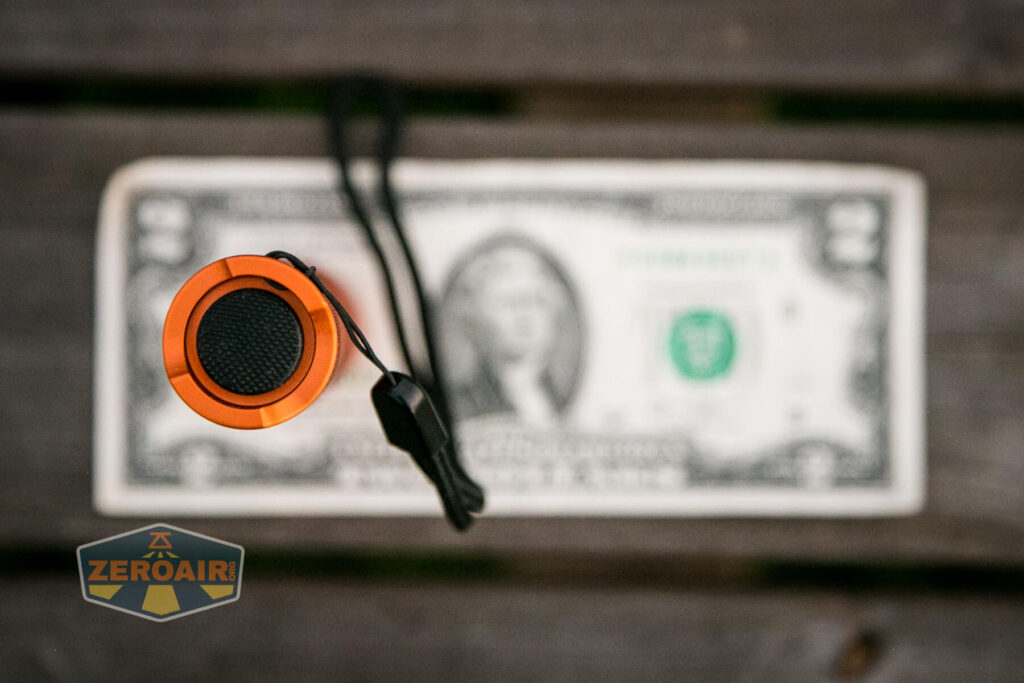

If the flashlight will headstand, I’ll show it here (usually the third photo). If the flashlight will tailstand, I’ll show that here, too (usually the fourth photo).



Here’s the test light with the venerable Convoy S2+. Mine’s a custom “baked” edition Nichia 219b triple. A very nice 18650 light.


And here’s the light beside my custom engraved TorchLAB BOSS 35, an 18350 light. I reviewed the aluminum version of that light in both 35 and 70 formats.

Ooooh if there was a shorty of this one!!!

Retention and Carry
The main (and only included) means for carrying the Convoy S21A 21700 flashlight is the attached lanyard.

It’s a standard lanyard from Convoy and attaches through two holes in the tailcap. This setup allows tailstanding fairly easily, too.

No pocket clip is included. The diameter of the S21A is likely too much to fit a standard S2+ friction clip, but I believe the screw-in-type pocket clip would work fine.
Power and Runtime
The Convoy S21A 21700 flashlight is powered by a single lithium-ion cell. The default tube supports a single 21700 cell. The cell goes into the light in the normal direction – positive end toward the head.

Here are a few runtimes for a couple of different mode groups. Since the highest three modes (100%, 50%, and 35%) are broken up across two mode groups, please note that these three aren’t really all accessible “on the fly” from just one group.


Modes and Currents
These output levels are not all available in a single-mode group. But this represents all the steady output levels.
| Mode | Mode Claimed Output (lm) | Claimed Runtime | Measured Lumens | Tailcap Amps |
|---|---|---|---|---|
| 100% | – | – | 1623 | 6.13 |
| 50% | – | – | 3.18 | |
| 35% | – | – | 914 | 2.22 |
| 20% | – | – | 1.28 | |
| 10% | – | – | 0.63 | |
| 1% | – | – | 0.05 | |
| 0.1% | – | – | 0.01 |
Pulse Width Modulation
These PWM graphs are representative – this is mode group 2 (0.1%, 1%, 10%, 35%, 100%).
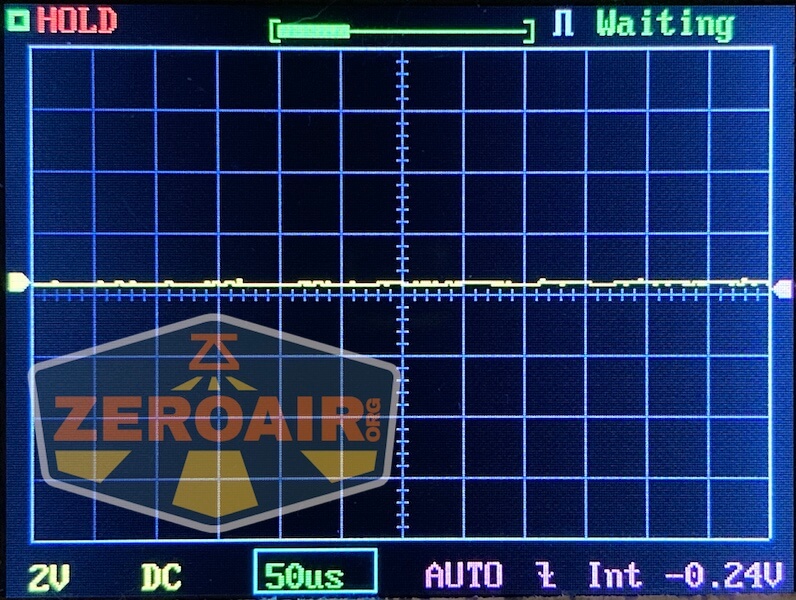
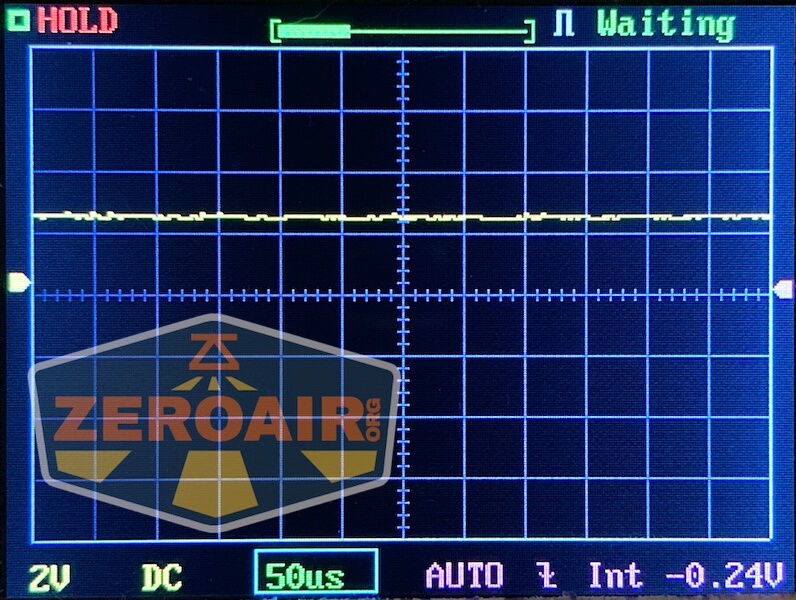

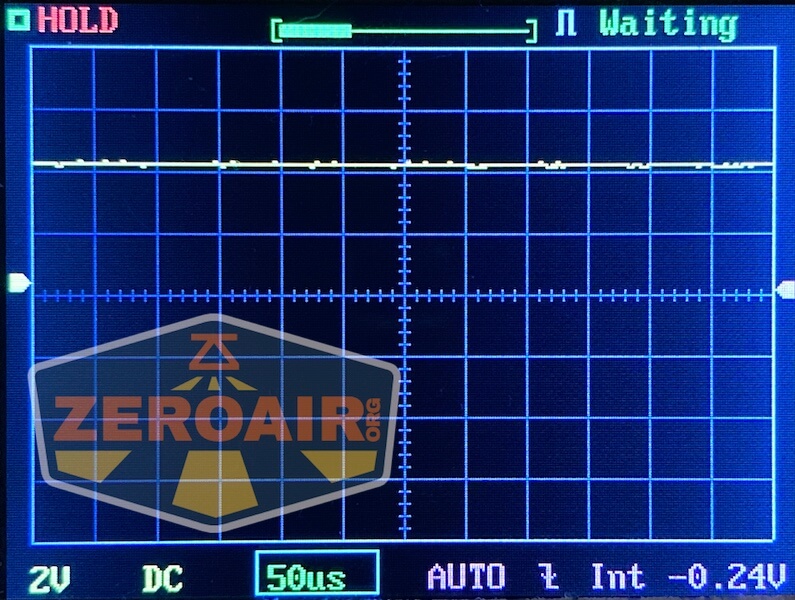
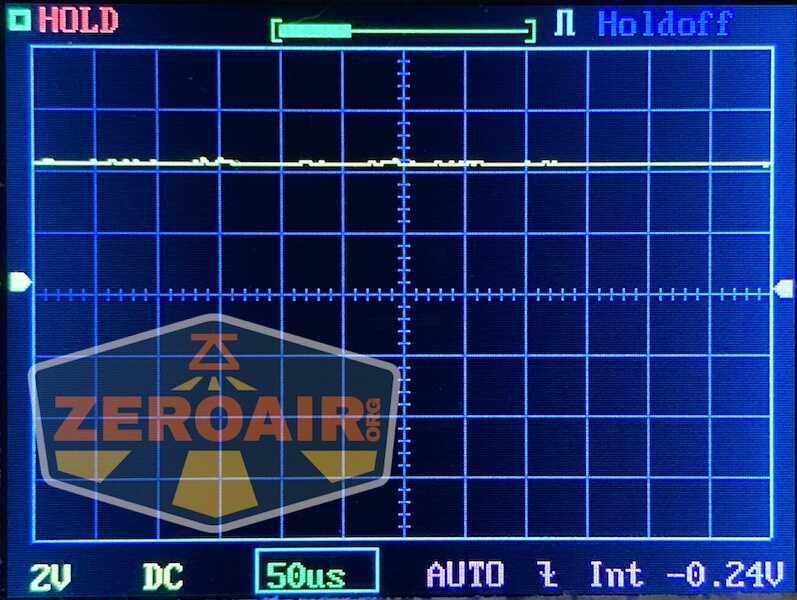
Here you can see a “baseline” – a chart with almost no light hitting the sensor.

Then there’s the Ultrafire WF-602C flashlight, which has some of the worst PWM I’ve seen. It’s so bad that I used a post about it to explain PWM! Here are multiple timescales (10ms, 5ms, 2ms, 1ms, 0.5ms, 0.2ms) to make comparing this “worst” PWM light to the test light easier. That post also explains why I didn’t test the WF-602C at the usual 50us scale.


User Interface and Operation
There’s a single switch on the Convoy S21A 21700 flashlight. This is a reverse mechanical clicky. A reverse clicky has the benefit of allowing mode changes while the light is on. But this also means that the switch does nothing until it is on – no momentary action whatsoever.

This is the same user interface that I covered in my Convoy C8+ and S2+ reviews.


This driver is known as “Biscotti” and has a bunch of mode groups (or faux-Biscotti – I’m not sure Simon runs an official version of Biscotti). The two big differences are the number of taps required to enter programming (20+ instead of 10+) and that this firmware has thermal protection (with the max temperature being 55 degrees C, per Convoy.)
Mode memory can be turned on or off (yay!), and programming is easy! But there are simply too many possibilities for me to list the user interface in a table as I usually do. Here is Simon’s flow chart for the UI.
Here’s the official guide for the Biscotti firmware:
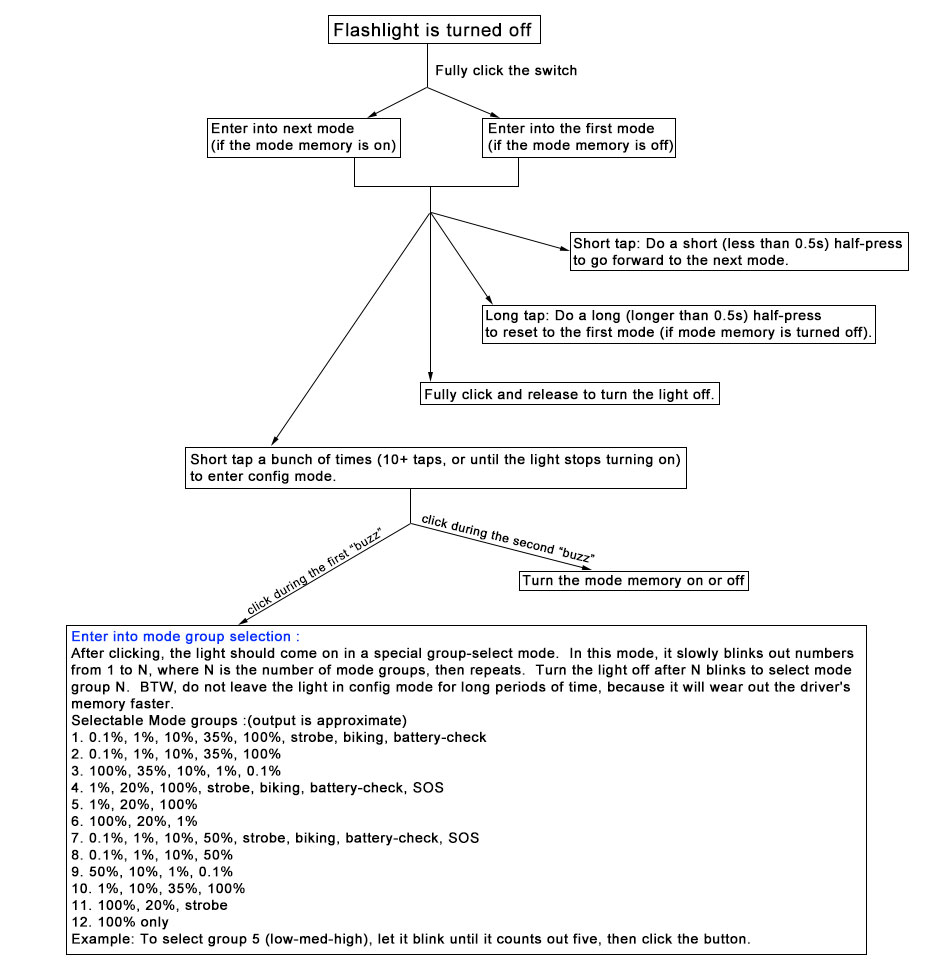
From the mode group selection above, the light ships in mode group 1. You’ll want to switch it to mode group 2 quickly of course.  And I always turn off memory if possible (and it’s possible here!). I made a first pass at my own flow chart, which you can see below.

If something’s wrong (or even just “unclear”) in there, please let me know!
LED and Beam
I opted for the 5000K CCT version of the Luminus SST-40. The reflector here is orange peel.


You can also see that there’s an AR coating on the lens, which is a nice feature.


LED Color Report (CRI and CCT)
The 5000K claim seems about right. Definitely more so for the higher output levels. The CRI is not impressive, though. These CRI/CCT measurements are representative – this is mode group 2 (0.1%, 1%, 10%, 35%, 100%).


Beamshots
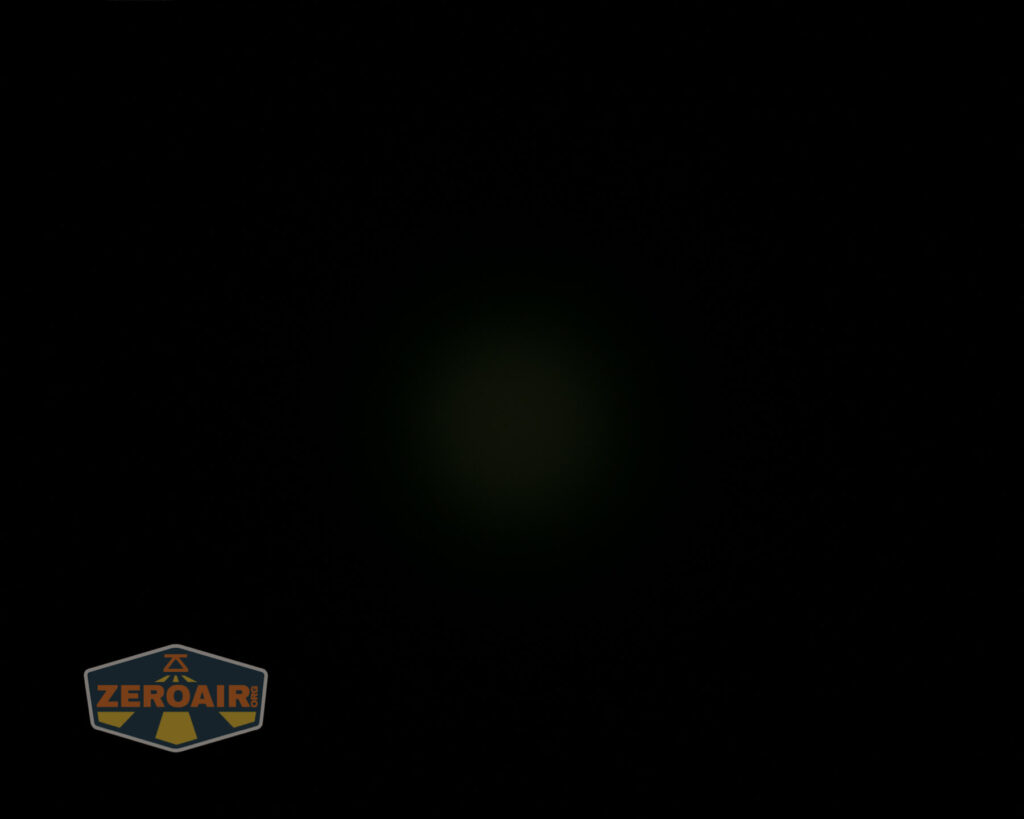
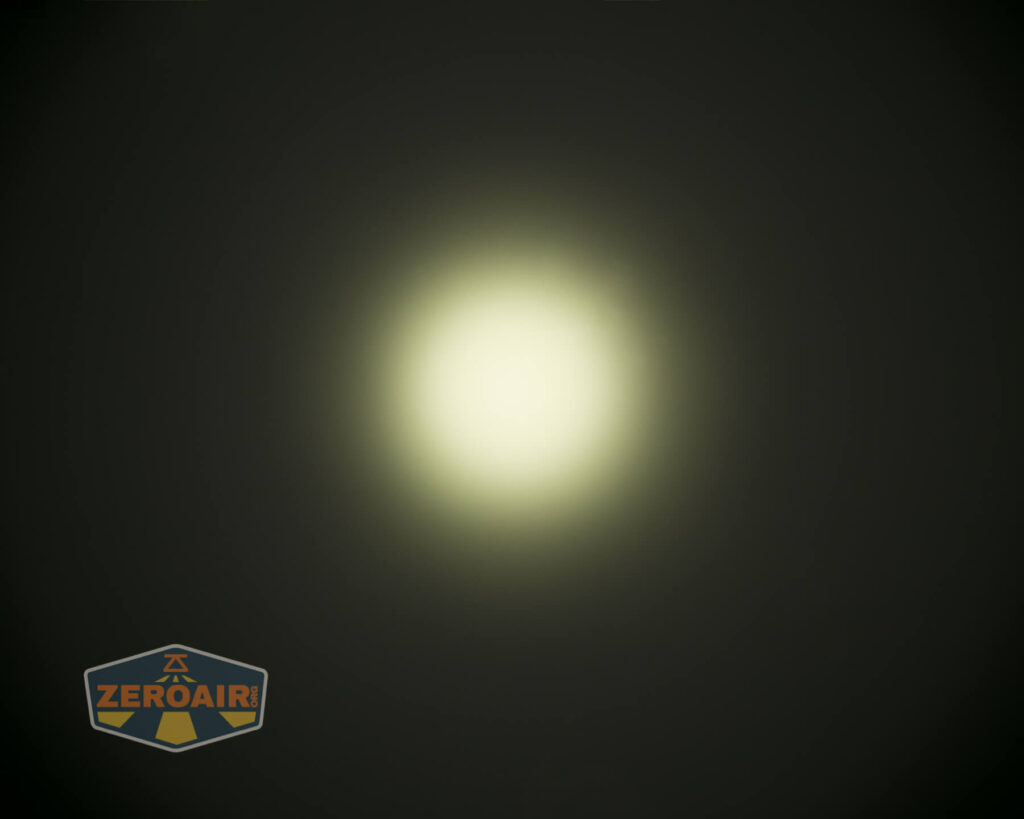
These beamshots always have the following settings: f8, ISO100, 0.3s shutter, and manual 5000K exposure. These photos are taken at floor level, and the beam hits the ceiling around 9 feet away. These beamshots are representative – this is mode group 2 (0.1%, 1%, 10%, 35%, 100%).



Tint vs BLF-348 (KillzoneFlashlights.com 219b version) (affiliate link)
I keep the test flashlight on the left and the BLF-348 reference flashlight on the right.

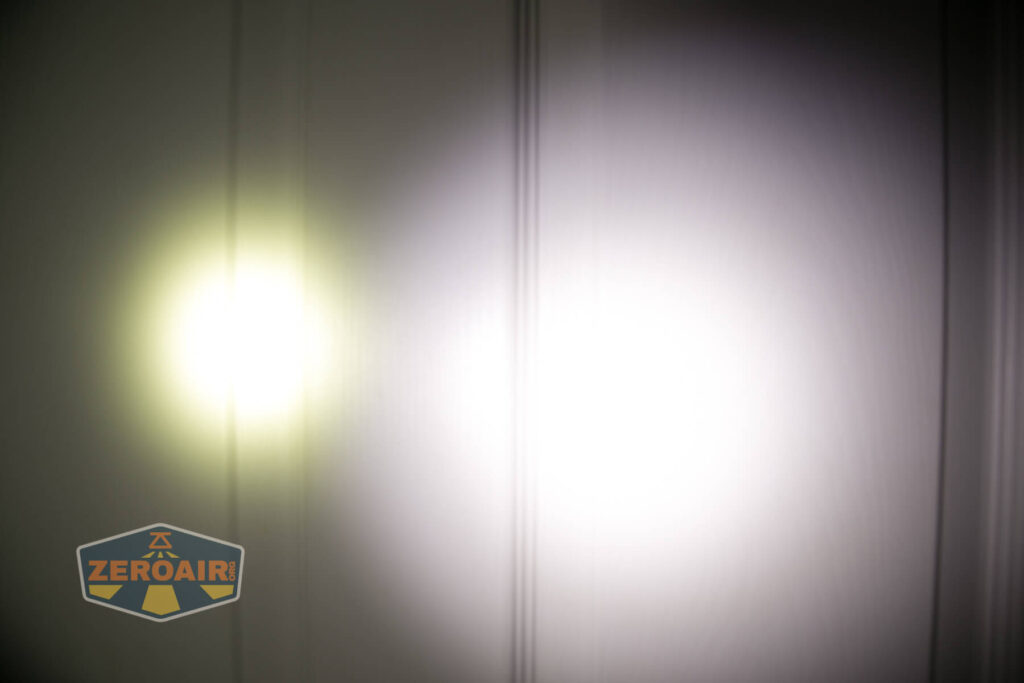


I compare everything to the KillzoneFlashlights.com 219b BLF-348 because it’s inexpensive and has the best tint!
Conclusion on the Convoy S21A 21700 Flashlight
What I like
- Low price
- Great way to get many emitter options
- Build quality is great, especially for such a low-cost light
- Highly modifiable (drivers, emitters, etc).
- No PWM
- Can run 18650/20700/21700 easily
What I don’t like
- This specific Luminus SST-40 at 5000K is too low CRI and slightly green
- No pocket clip
Notes
- This light was provided by me for review. I was not paid to write this review.
- This content originally appeared at zeroair.org. Please visit there for the best experience!
- For flashlight-related patches, stickers, and gear, head over to PhotonPhreaks.com!
- Please use my Amazon.com referral link to help support zeroair.org!
- Please support me on Patreon! I deeply appreciate your support!
Looks like I’ll be adding that to my list. I’m at three S2+ and counting. I also found that emitter to be too green for my taste. Have you ever tried using a minus green filter? Could be a game changer for these. I need to source a sheet.
I bought the S21B when an XHP50.2 version came out (tried 4000K). The same for the S21A (got an orange one in 3000K). Worked out that the S21A with CSLPM would likely have similar performance to the S21B with CULPM so the cheaper price enticed me to buy. One reason I rarely used throwers was their bulk.
Apparently the S21B has an integrated shelf, it’s not just a cosmetic difference.
My problem here is that quick rampdown. Why even offer the high lumens if it can’t sustain more than 30 seconds? I prefer the mostly flat regulation the s2+ gets with it’s linear regulator.
Great review
I also prefer the S2+. 🙂 I am glad to have the S21A hanging around though…. seems pretty neat! (But again, give me the S2+ all day.)