

Lumintop GT3 Mini Flashlight Review
Here’s a review of the Lumintop GT3 Mini flashlight, a 26350-cell light that uses three Cree XHP50.2 emitters to achieve fantastic output! Read on!
Official Specs and Features
I don’t think there’s an official Lumintop GT3 Mini flashlight product page yet!
Versions
This seems like it’ll be the only version. Time will tell!
Price
Since there’s no page yet, there also seems to be no price.
Short Review
I like a few things about this light. First, I like that Lumintop stayed with the design look of the GT3 light. This required that they use an unusual cell, but they include that so “whatever.” They also include an extension tube, and this tube works great for a 26650 cell, so that’s a win too. Output is just fantastical, but does step down quicker than is fun (it’s understandable that it steps down, but it does still take away some of the fun.)
Long Review
The Big Table
| Lumintop GT3 Mini Flashlight | |
|---|---|
| Emitter: | Cree XHP50.2 (6000K) |
| Price in USD at publication time: | |
| Cell: | 1×26350 |
| Turbo Runtime Graph | |
| LVP? | Yes |
| Switch Type: | E-Switch |
| Quiescent Current (mA): | “3.61 with backlight on 3.50 with backlight off” |
| On-Board Charging? | No |
| Claimed Lumens (lm) | 6500 |
| Measured Lumens (at 30s) | 6259 (0s) 503 (30s) |
| Candela per Lumen | 3 |
| Claimed Throw (m) | 300 |
| Candela (Calculated) in cd (at 30s) | 74lux @ 4.931m = 1799cd |
| Throw (Calculated) (m) | 84.8 (28.3% of claim)^ |
| Claimed CCT | 6000K |
| Measured CCT Range (K) | 5700-6200 Kelvin |
| Item provided for review by: | Lumintop |
| All my Lumintop reviews! | |
^ Measurement disclaimer: Testing flashlights is my hobby. I use hobbyist-level equipment for testing, including some I made myself. Try not to get buried in the details of manufacturer specifications versus measurements recorded here; A certain amount of difference (say, 10 or 15%) is perfectly reasonable.
What’s Included

- Lumintop GT3 Mini flashlight
- 26350 cell
- Extension tube for 26650
Package and Manual


Build Quality and Disassembly
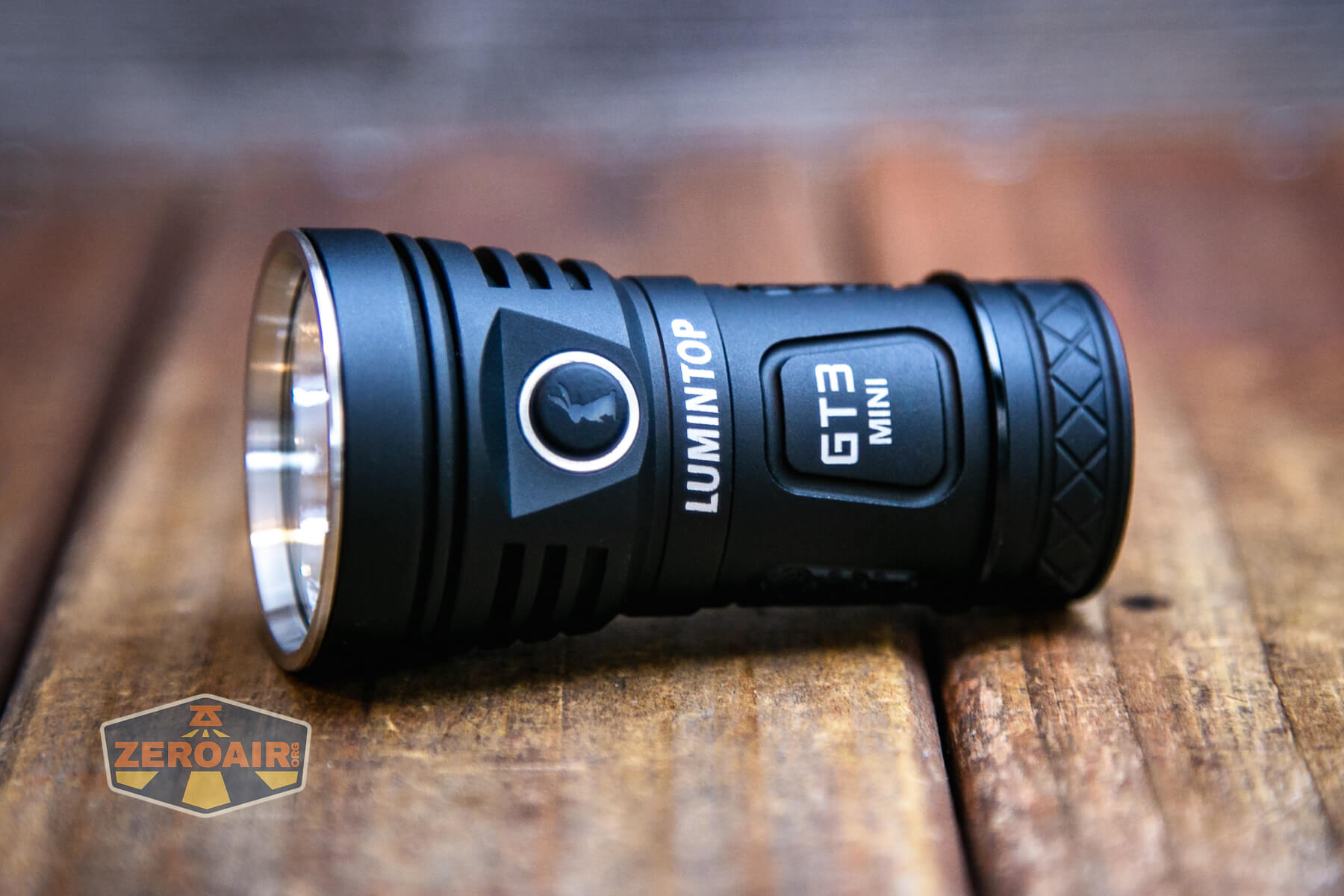
This light really is reminiscent of the Lumintop GT3 from a while back. Build quality is good.


That GT3 had Anduril, though, and this GT3 Mini does not. We do still see an indicating switch and some other similar appointments, though.
The extension tube is completely blank, but at least that means no grooves or whatever end up mismatched. I actually really love this type of extension tube, and support it fully!
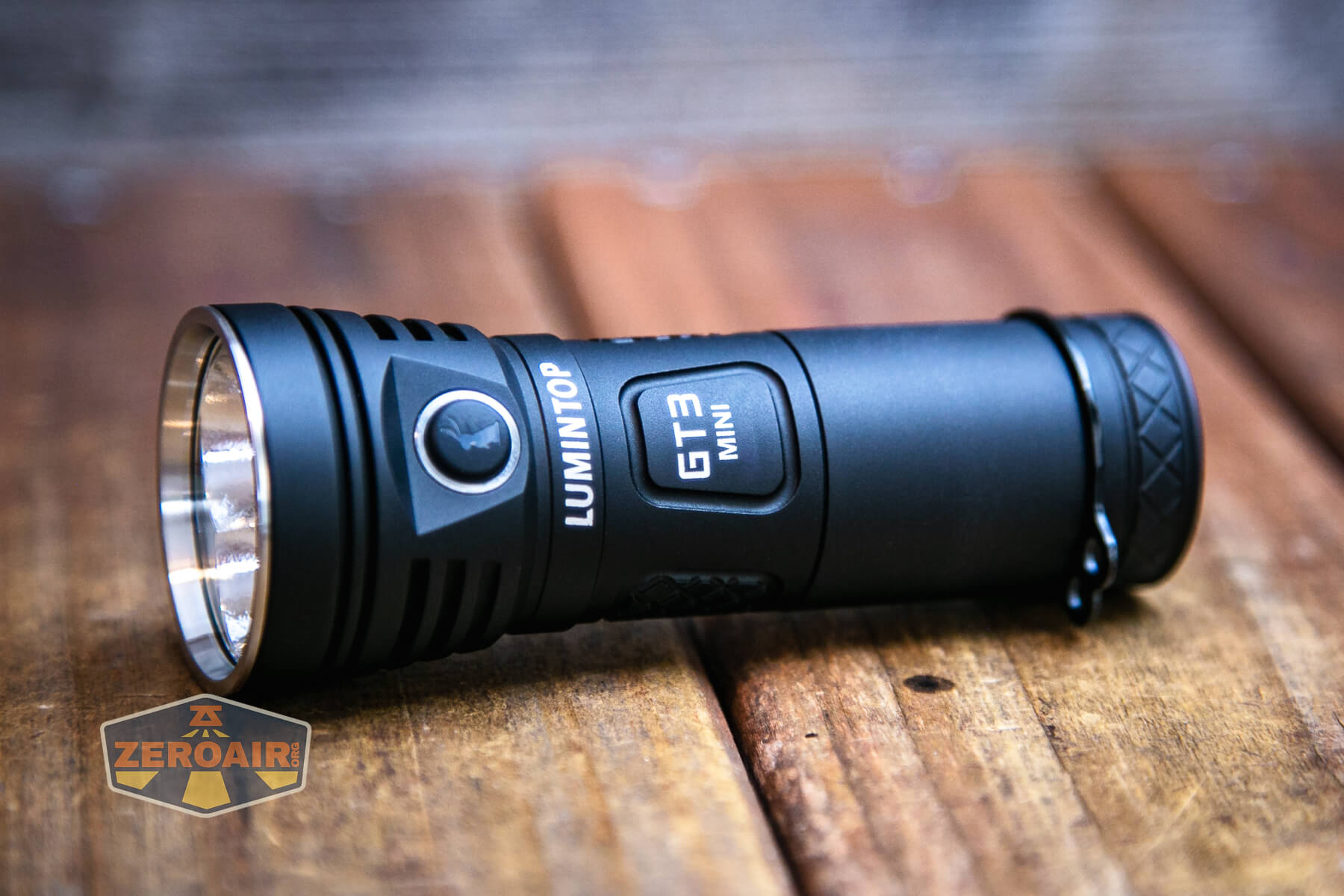

The tailcap has a big ol’ beefy spring – it’ll need that based on how much current the light draws on the higher levels!

The head has only a brass button, though.

Size and Comps
In 26350: 40 x 30 x 76mm; weight 96g (with cell)
In 26650: 40 x 30 x 106mm; weight 108g (with cell)


If the flashlight will headstand, I’ll show it here (usually the third photo). If the flashlight will tailstand, I’ll show that here, too (usually the fourth photo).


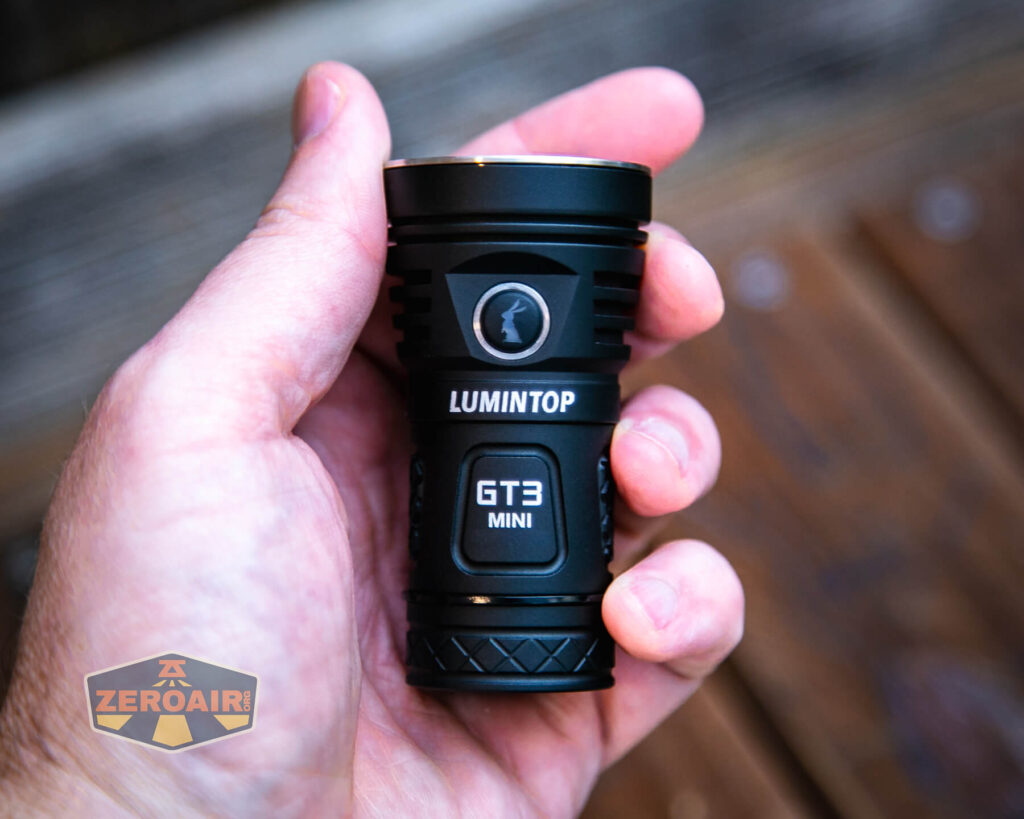


Here’s the test light with the venerable Convoy S2+. Mine is a custom “baked” edition Nichia 219b triple. A very nice 18650 light!


And here’s the light beside my custom-engraved TorchLAB BOSS 35, an 18350 light. I reviewed the aluminum version of that light in both 35 and 70 formats.
Retention and Carry
There’s really only one way intended for carry of the Lumintop GT3 Mini flashlight, and that is by a lanyard that attaches through this metal ring on the tail. A lanyard was not included with my package, but I did not receive a full retail package.

Unlike the bigger GT3, there is no tripod mounting point.
Power and Runtime
A single lithium-ion cell is used for running the Lumintop GT3 Mini flashlight. Depending on which body you have set up, that’ll be either a 26350 (included) or a 26650 (not included).

The cell goes into the light in the usual way – positive end toward the head.


Here are a few runtime tests with the included 26350 cell. I didn’t test any levels with the 26650, but Lumintop does state the output will be (much) higher when using that size cell. That’s really only because those bigger cells can typically provide more current, but actual output will depend on which cell you are using (and that’s why I didn’t test it with a 26650, and only tested with the included power source.)


Modes and Currents
| Mode | Mode Claimed Output (lm) | Claimed Runtime | Measured Lumens | Tailcap Amps |
|---|---|---|---|---|
| Turbo | 6500+650 | 20s+1h40m | 6259 (0s) 503 (30s) |
>18 |
| High2 | 4000+550 | 40s+1h40m | 3468 | 8.00 |
| High1 | 1800+550 | 1m+1h40m | 1696 | 2.28 |
| Med | 550 | 2h | 564 | 1.20 |
| Low | 130 | 7h | 130 | 0.23 |
| Moonlight | 2 | 8d | 1.88 | 8.26mA |
Pulse Width Modulation
All the middle modes do use PWM. It’s fast enough that it’s nothing to worry about.

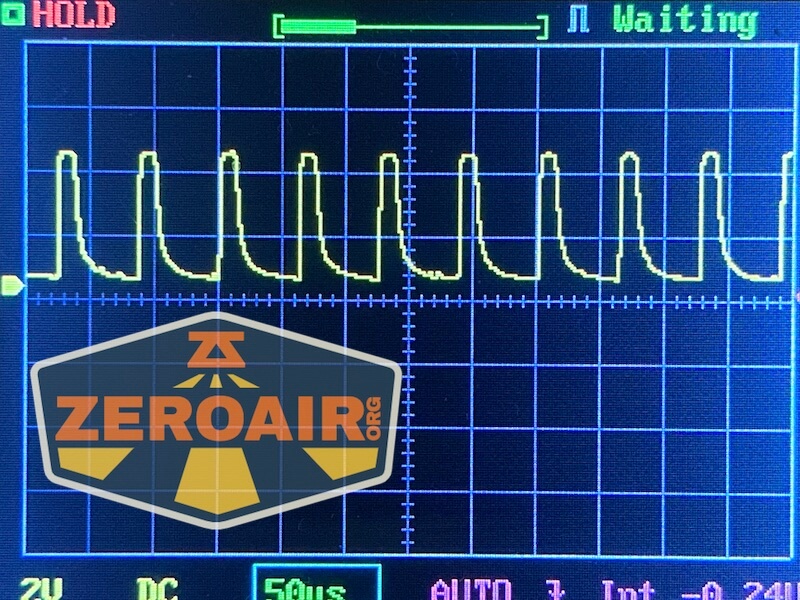
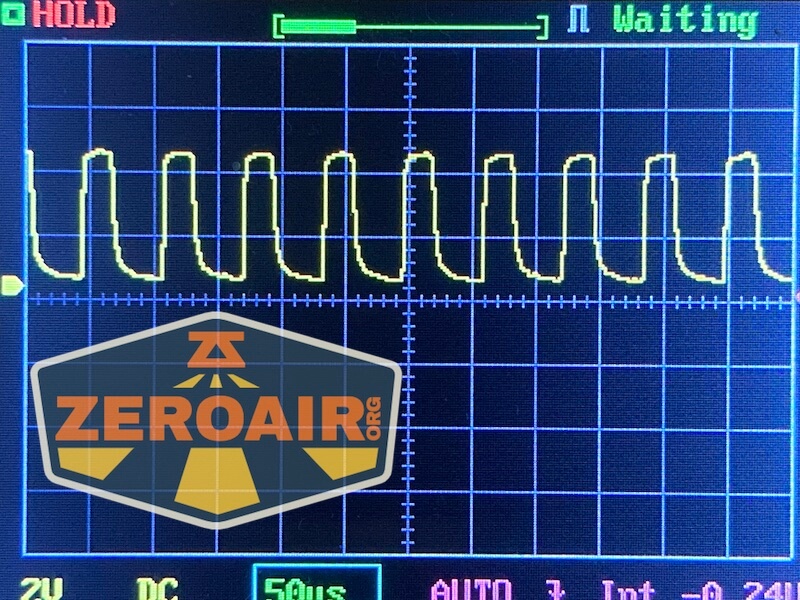


Here you can see a “baseline” – a chart with almost no light hitting the sensor.

Then there’s the Ultrafire WF-602C flashlight, which has some of the worst PWM I’ve seen. It’s so bad that I used a post about it to explain PWM! Here are multiple timescales (10ms, 5ms, 2ms, 1ms, 0.5ms, 0.2ms) to make comparing this “worst” PWM light to the test light easier. That post also explains why I didn’t test the WF-602C at the usual 50us scale.


User Interface and Operation
A side e-switch is used in the Lumintop GT3 Mini flashlight. There are two blue emitters behind the switch, and the switch cover has a translucent Lumintop rabbit logo symbol.


The action of the switch is very low.

Here’s a user interface table!
| State | Action | Result |
|---|---|---|
| Off | Hold | Moonlight |
| Off | Click | On (Mode memory (low/med/high)) |
| On | Hold | Off |
| On | Click | Mode advance |
| Off | Double Click | High2 |
| On | Double Click | Turbo |
| Moonlight | Double Click | Strobe |
| Strobe Group | Double Click | Strobe advance (Strobe > SOS > Beacon) |
| Off | Click 3x | Battery check^ |
| Off | Click 4x | Lockout |
| Lockout | Click | Momentary Low |
| Lockout | Click 4x | Unlock (to off state) |
| Off | Click 7x | Iterate switch backlight (on or off) |
^ Battery check is as follows: slowish blinks for the ones digit then pause and faster blinks for tenths. For example, three blinks then pause then 8 quicker blinks indicates 3.8V.
LED and Beam
Used in the Lumintop GT3 Mini flashlight are three Cree XHP50.2 emitters. They have a dome and seem to be foolish.

Each has a small orange peel reflector, too.

The lens appears to have AR coating.


LED Color Report (CRI and CCT)
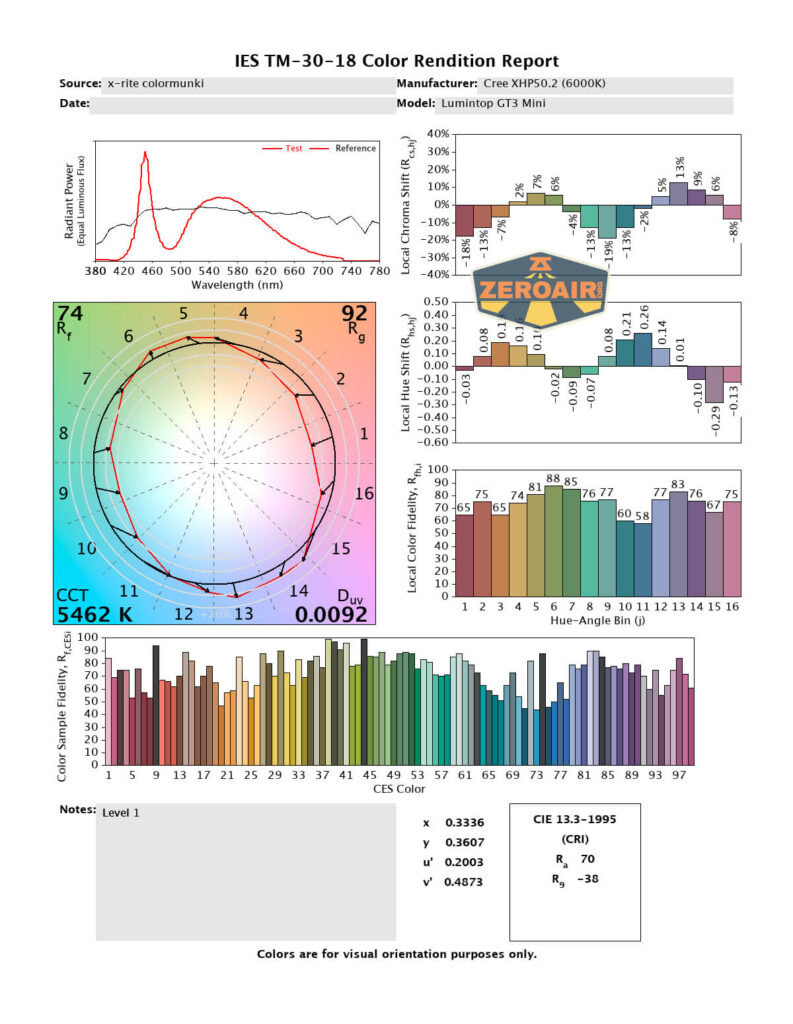
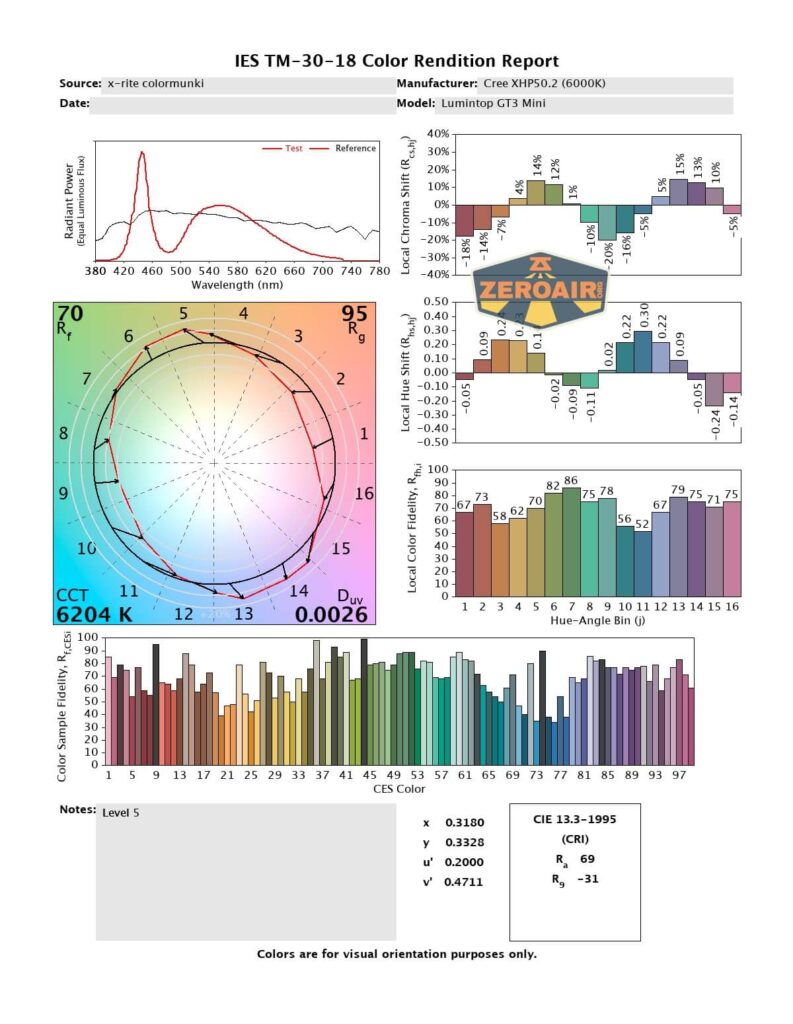
The CRI of this extremely high-output light is actually respectable, starting at around 5500K and drifting up past 6200K in the higher levels. CRI is low, however.



Beamshots
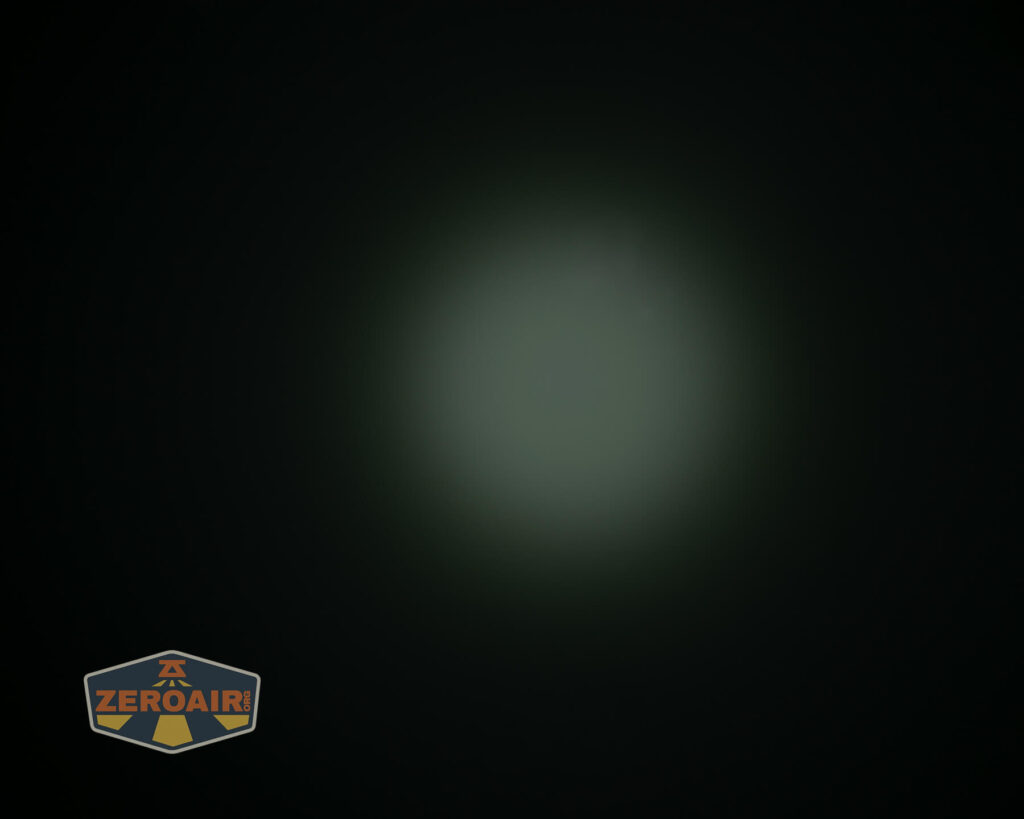
These beamshots always have the following settings: f8, ISO100, 0.3s shutter, and manual 5000K exposure. These photos are taken at floor level, and the beam hits the ceiling around 9 feet away.

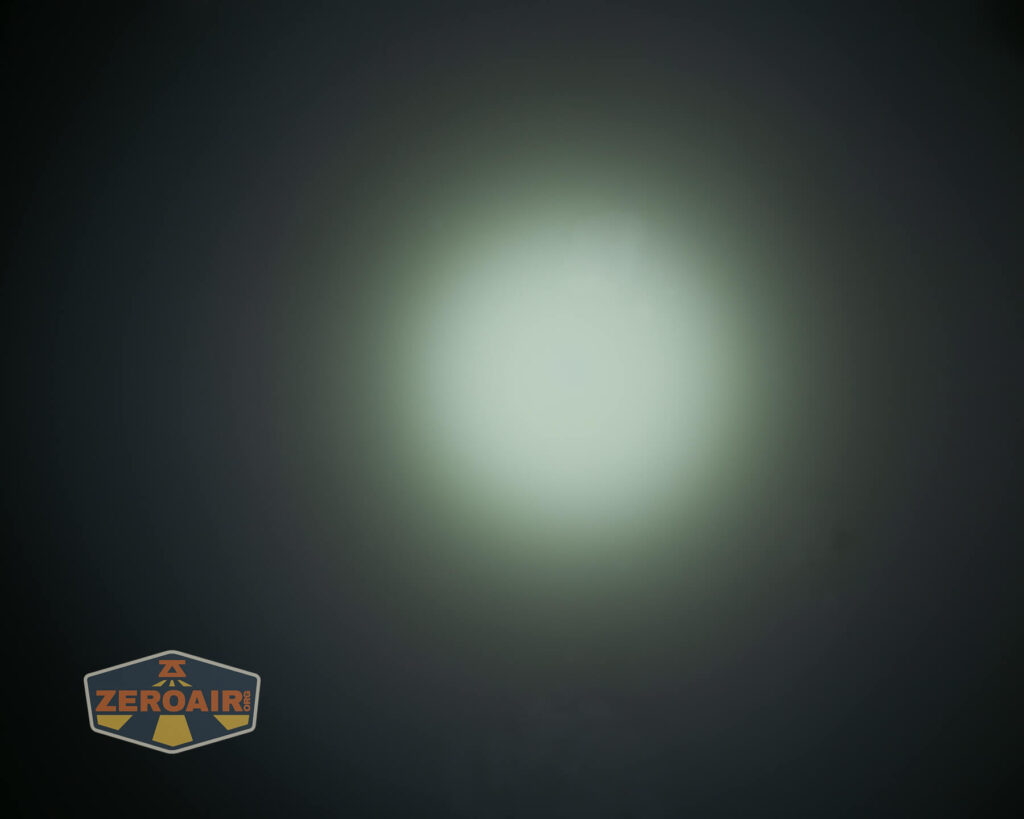
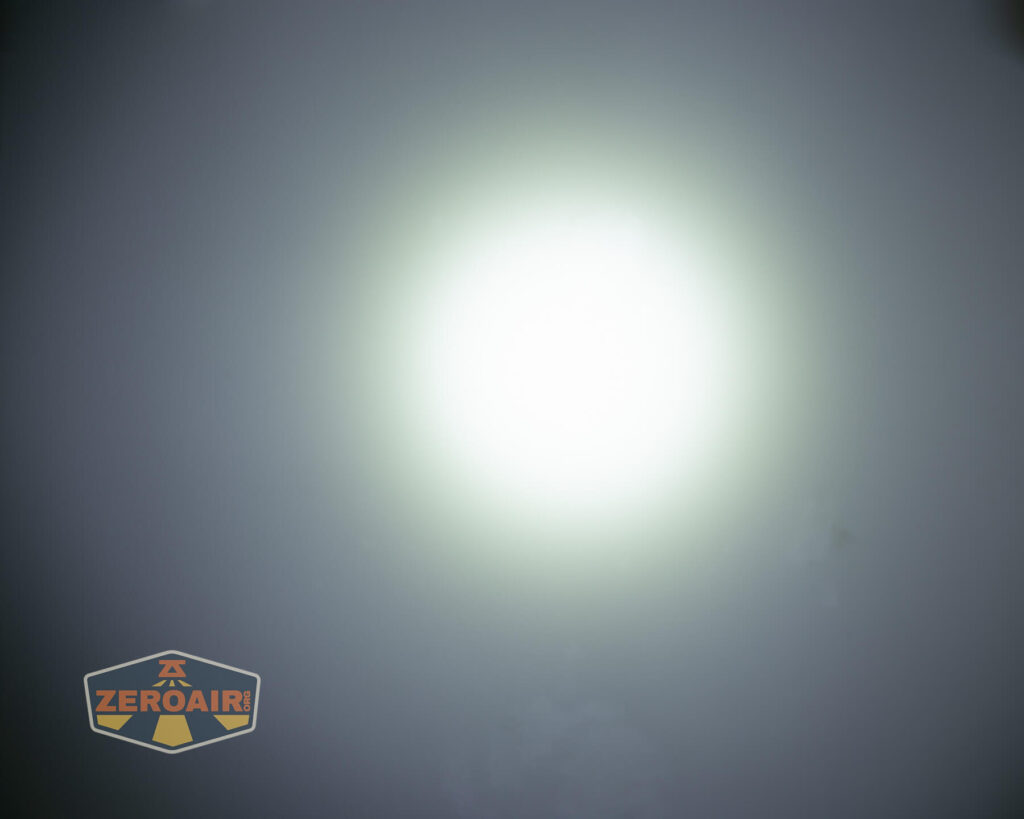
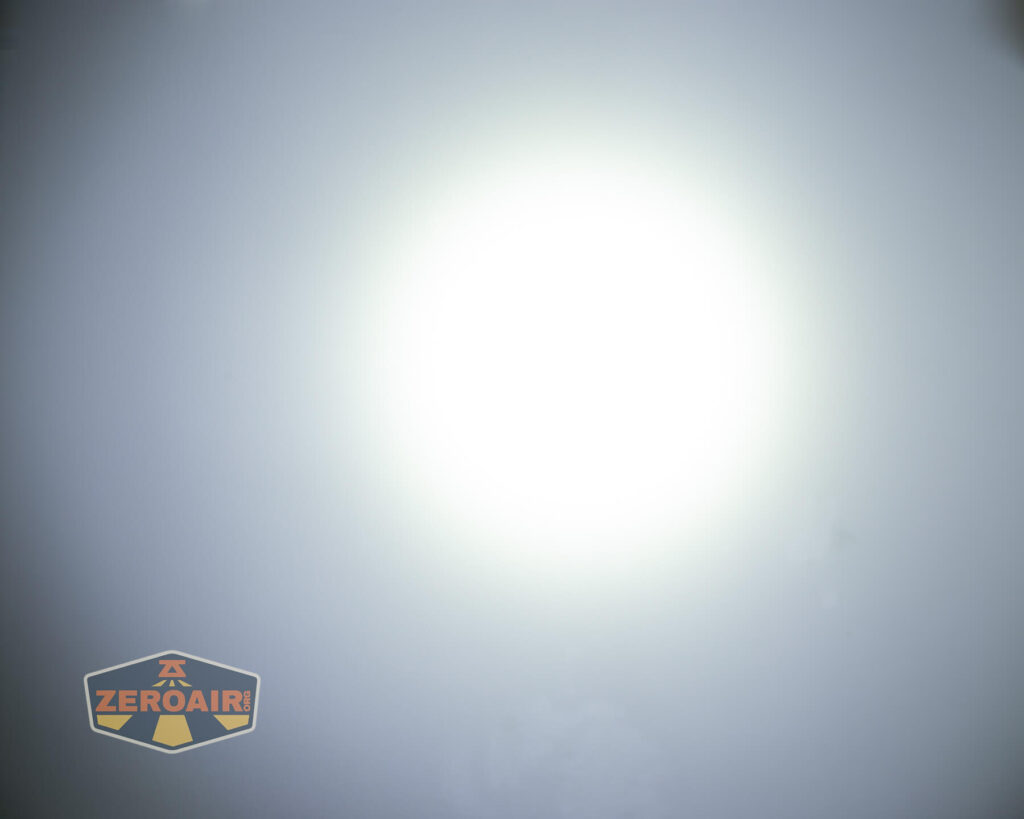

Tint vs BLF-348 (KillzoneFlashlights.com 219b version) (affiliate link)
I keep the test flashlight on the left and the BLF-348 reference flashlight on the right.




I compare everything to the KillzoneFlashlights.com 219b BLF-348 because it’s inexpensive and has the best tint!
Conclusion
What I like
- Extremely high output
- Fun small size
- Includes an extension for a more reasonable size
- Bigger size provides even more output and better runtimes
- Six output levels
- Not encumbered by ramping
What I don’t like
- Doesn’t use Anduril (as the bigger GT3 does)
- Stepdowns are so quick on the higher levels
- Low CRI
- Hold for off (doesn’t always bother me but seems particularly egregious in this context)
Notes
- This content originally appeared at zeroair.org. Please visit there for the best experience!
- Please use my Amazon.com referral link to help support zeroair.org!
- Please support me on Patreon! I deeply appreciate your support!
Excellent review, as always!
FYI, it looks like Lumintop Lighting has it for $89.95 (without a cell)
https://lumintoplighting.com/products/lumintop-gt3-mini-6500-lumens-3-x-xhp502-outdoor-26350-flashlight-232
Great, thank you for the link. A bit more than I was expecting…