

Nightwatch NS14R Flood Flashlight Review
The Nightwatch NS14R flood flashlight achieves high output with fourteen (14!) SFS72 emitters and two 21700 cells in series. It’s simple, but is a real beast!
Official Specs and Features
Here’s a referral link to the Nightwatch NS14R flood flashlight product page.
Versions
There looks to be only one body for the Nightwatch NS14R flood flashlight but two emitter options. There’s the SFS72 seen here, as well as a SSQ55.2. The SSQ55.2 has a dome and looks to be a bigger emitter, and that’s really where the “flood” comes into the name of this NS14R flashlight. The SFS72 has a much smaller emitting area, and throws much more.
The NS14R is a “known format” for Nightwatch, though. I’ve even tested one before: the Nightwatch NS59v2 Chaos.
Price
Various packages are available, but with cells, this SFS72 version is $155.95. You should definitely include the cells with your purchase, but more on that later. The two emitter options are actually the same price. The Nightwatch NS14R flood flashlight is available at NealsGadgets through my referral link.
Short Review
This light is bright. (Duh, right?) But it’s really bright. It also stays really bright for longer than you might guess, and it’s a duration you need to steel yourself for: this light gets HOT. I wish there was a proper lower mode, but otherwise I’m very pleased with the Nightwatch NS14R flood flashlight.
Long Review of the Nightwatch NS14R flood flashlight
The Big Table
| Nightwatch NS14R flood flashlight | |
|---|---|
| Emitter: | SFS72 (14 emitters) |
| Price in USD at publication time: | $155.95 |
| Cell: | 2×21700 |
| Runtime Graphs | |
| LVP? | Yes |
| Switch Type: | E-Switch |
| Quiescent Current (mA): | ? |
| On-Board Charging? | No |
| Claimed Lumens (lm) | 20000 |
| Measured Lumens (at 30s) | 11554 (57.8% of claim)^ |
| Candela per Lumen | 12.3 |
| Claimed Throw (m) | 1000 |
| Candela (Calculated) in cd (at 30s) | 3380lux @ 7.094m = 170098cd |
| Throw (Calculated) (m) | 824.9 (82.5% of claim)^ |
| Claimed CCT | 5000 |
| Measured CCT Range (K) | 5200-6400 Kelvin |
| Item provided for review by: | NealsGadgets |
| All my Nightwatch reviews! | |
^ Measurement disclaimer: Testing flashlights is my hobby. I use hobbyist-level equipment for testing, including some I made myself. Try not to get buried in the details of manufacturer specifications versus measurements recorded here; A certain amount of difference (say, 10 or 15%) is perfectly reasonable.
What’s Included
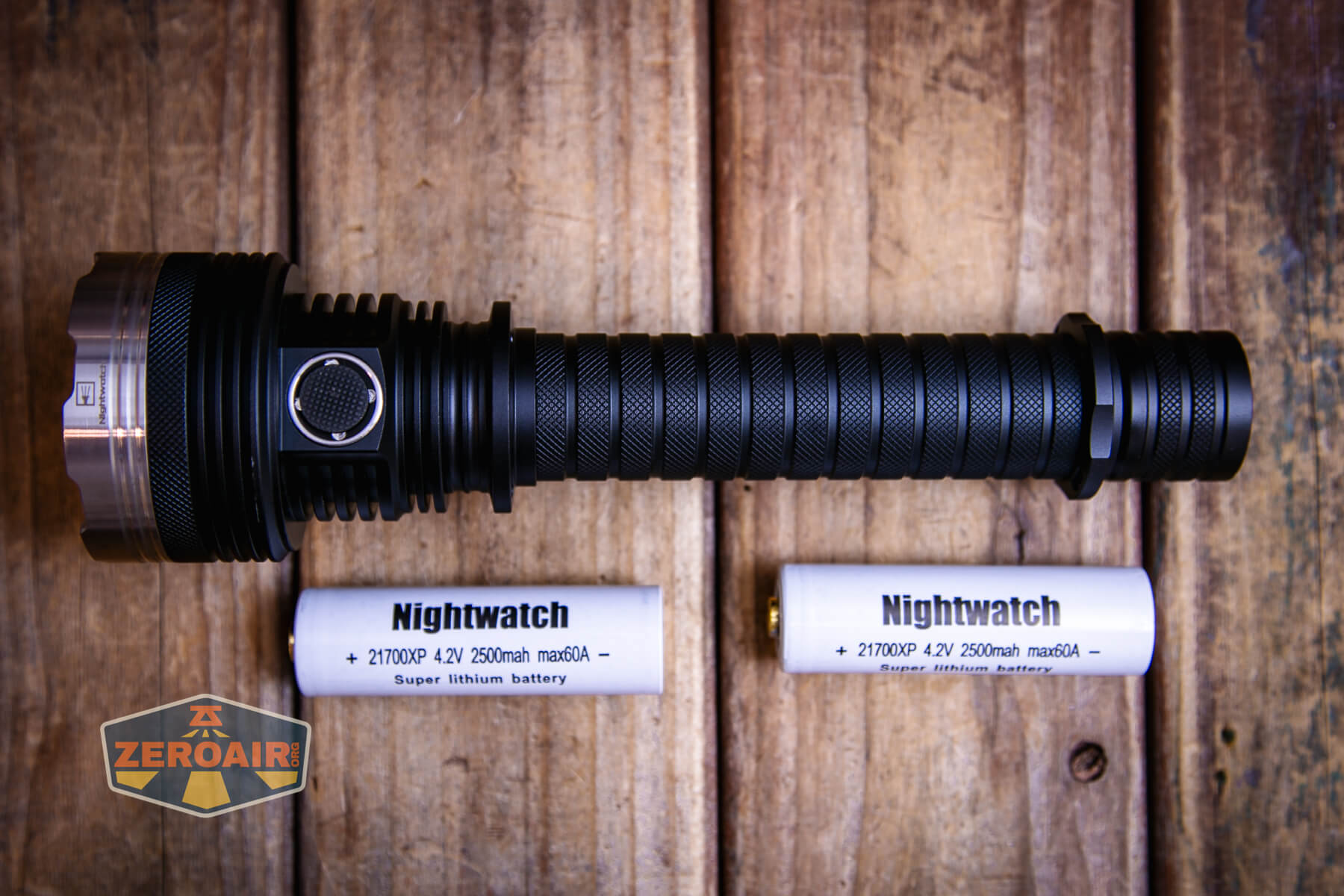
- Nightwatch NS14R flood flashlight
- Nightwatch 3800mAh 21700 (2) (if you buy the package)
Package and Manual
There is no manual.
Build Quality and Disassembly

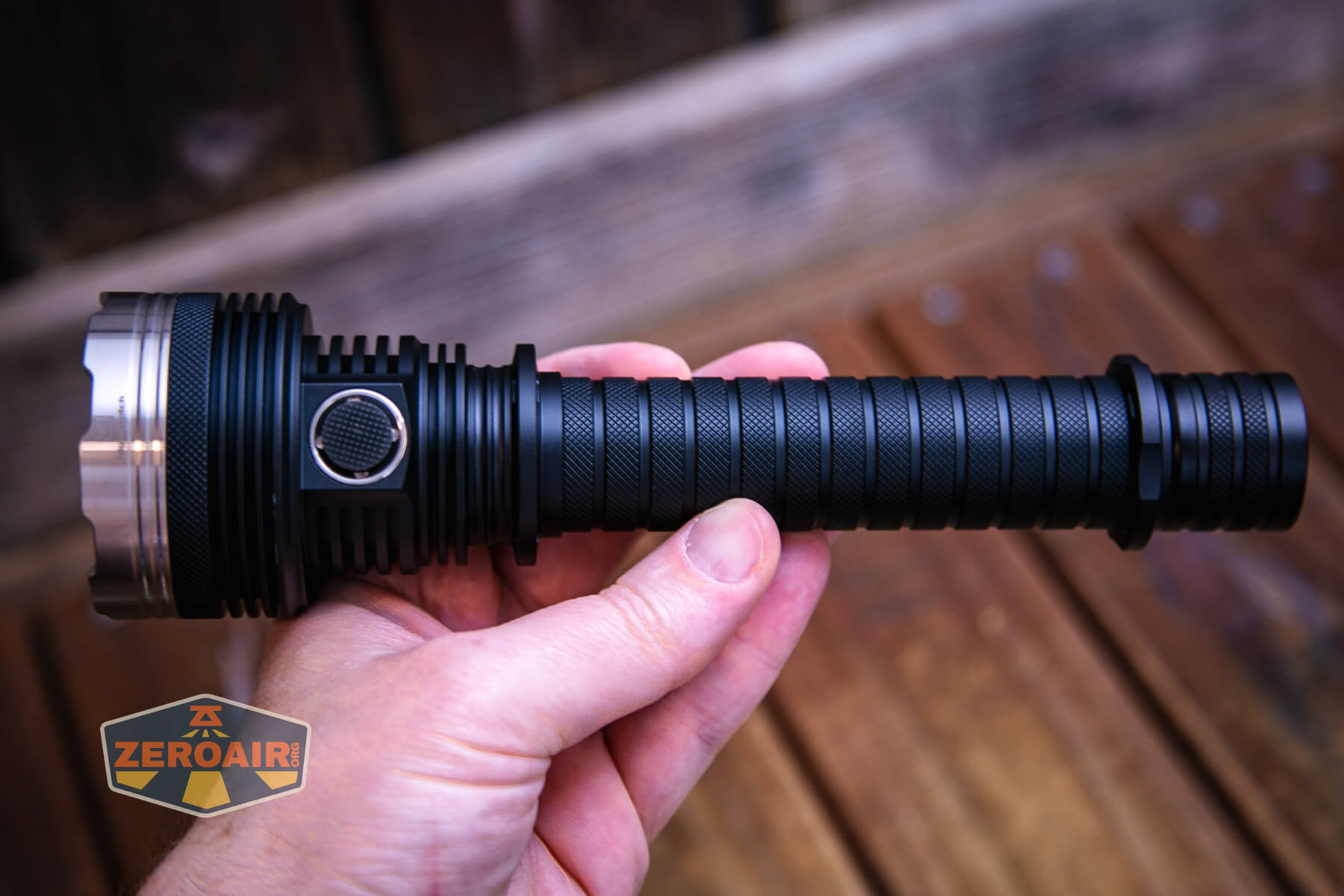
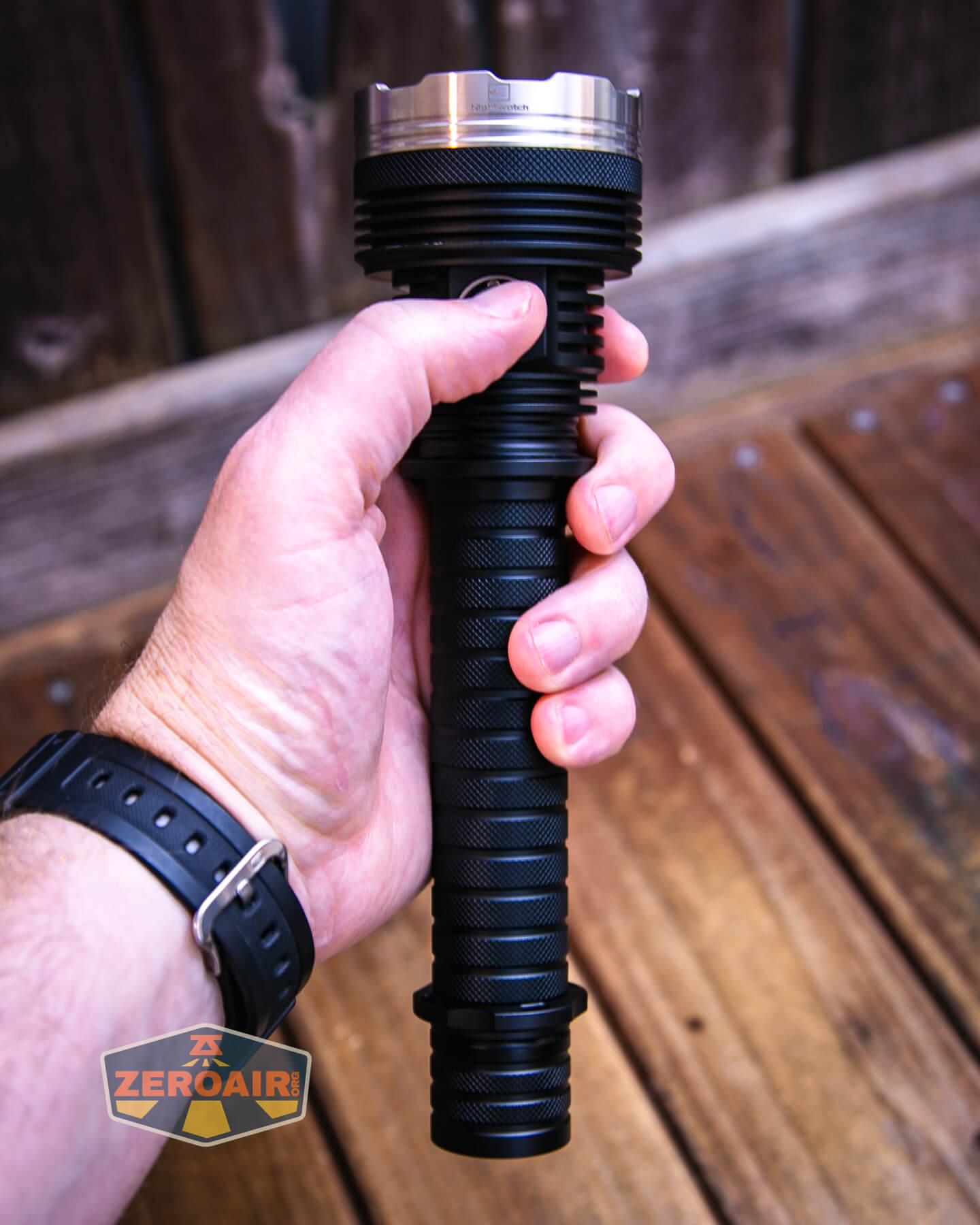
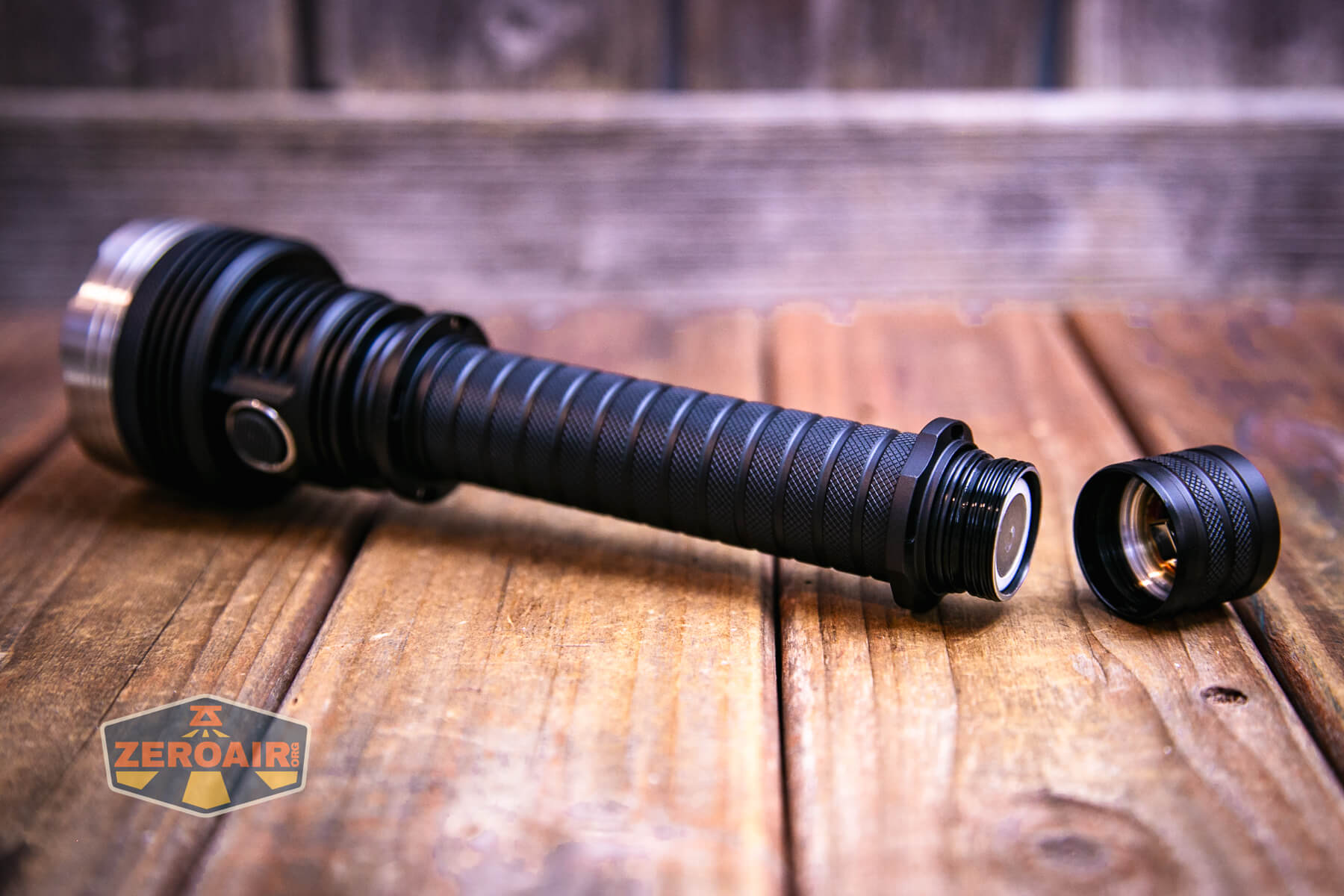
This light is robust. With the size and shape of it (aka Maglite-ish) you’d want it to be robust. There are two ways I’m judging that: 1) the mass – there’s a bunch of mass in the head that will make this a great swinger. Two: there’s absolutely no rattle in the battery compartment.
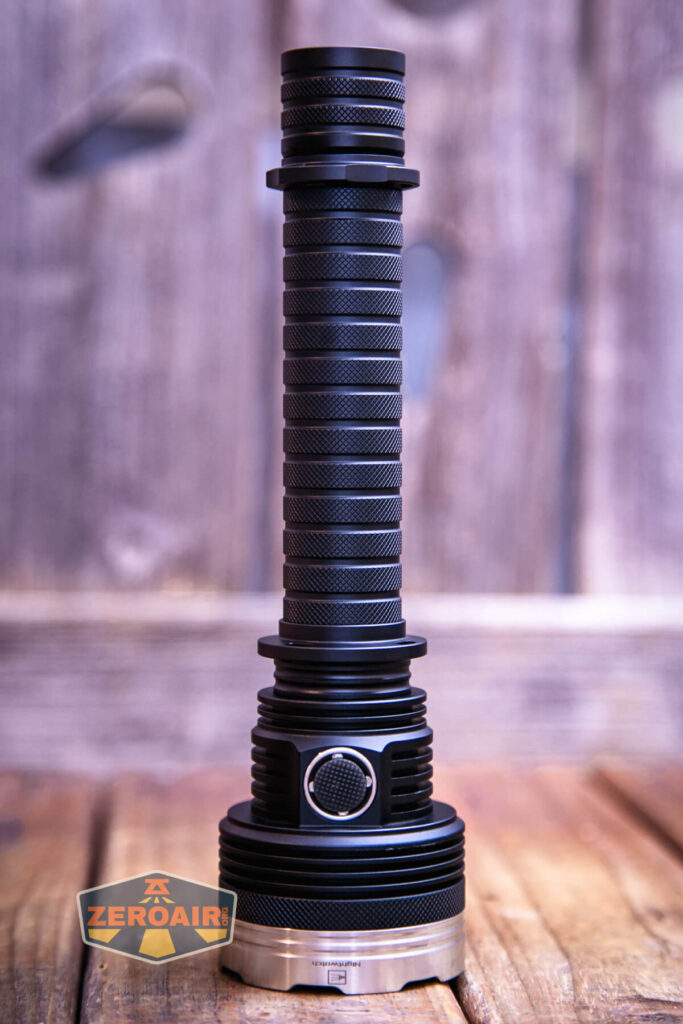
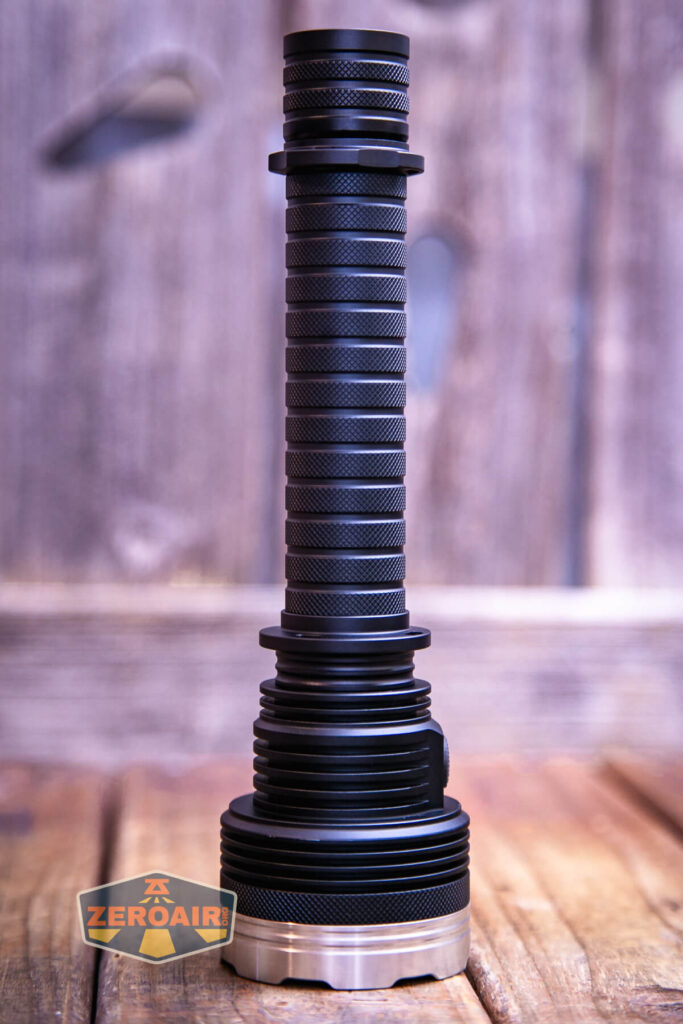
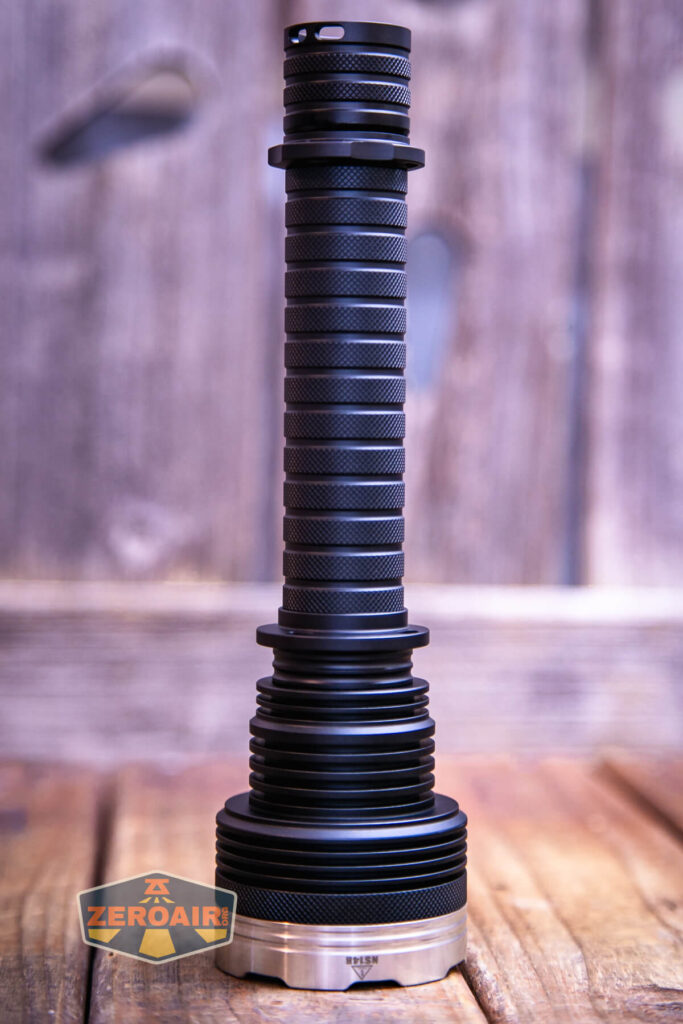
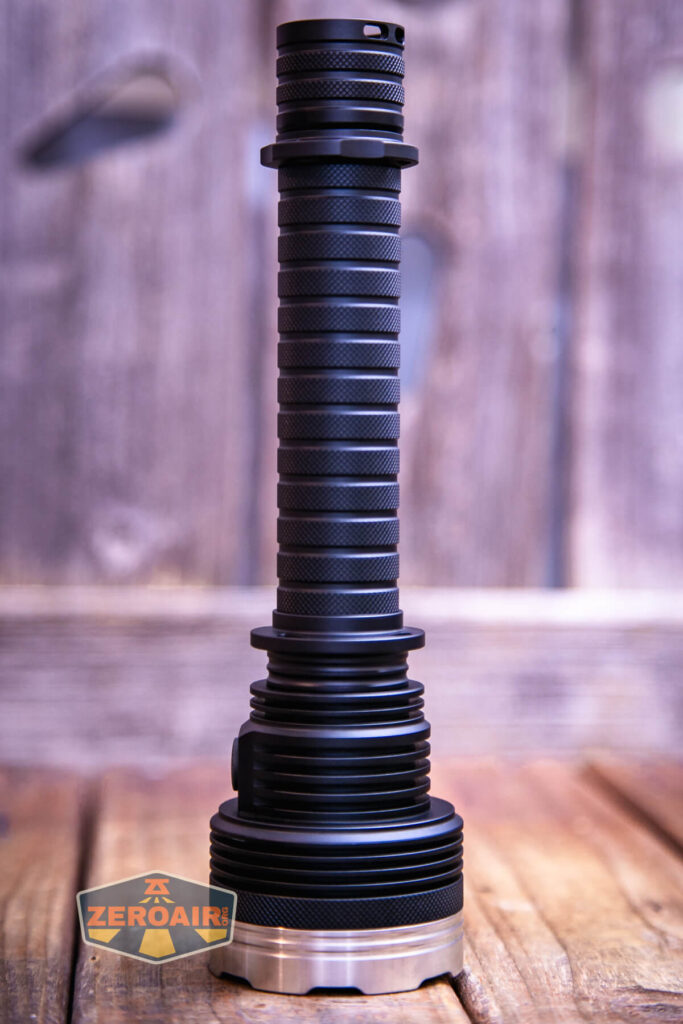
Thus, you can comfortably grab this light by the tactical tail ring on the tail end and swing it around as needed. It’s very pleasant in that way.
Grip is fantastic due to the knulring along the cell tube.
Both the head and tail come off of the cell tube.
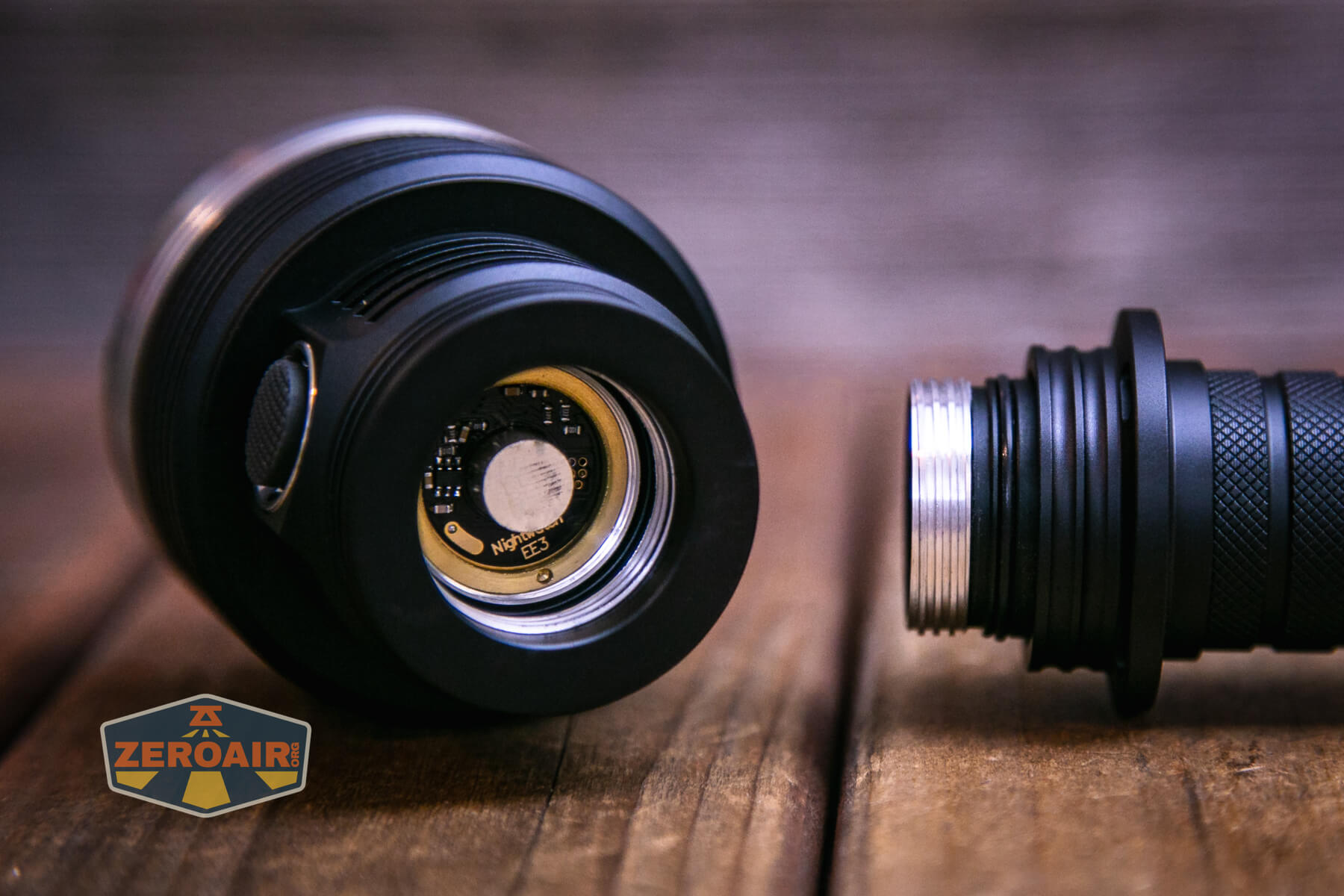
The tail end has a spring. You can see the brass retaining ring holding the whole switch mechanism in, too.
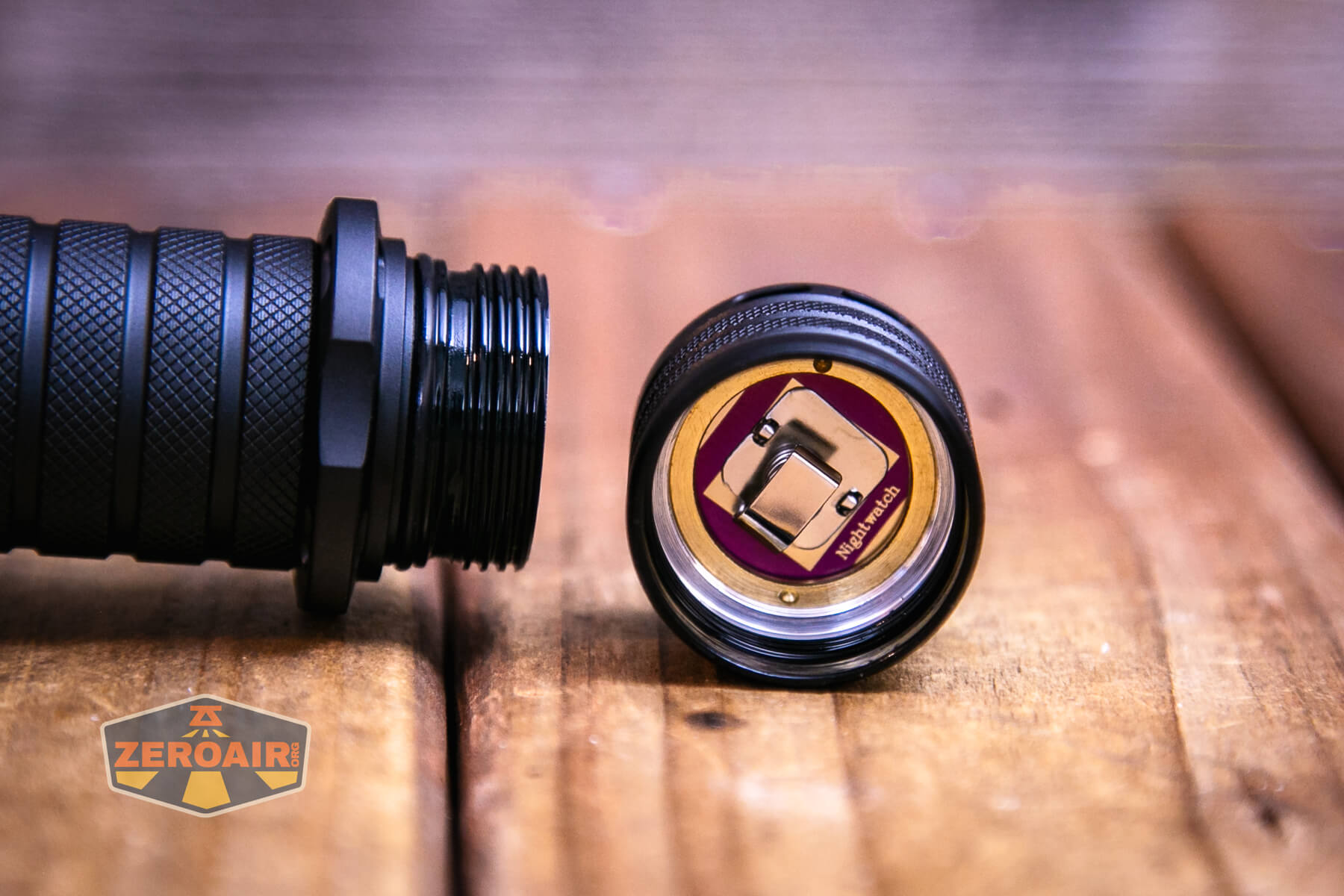
Threads on the head are unanodized and square cut. They seem robust. Check out that beefy contact point in the head. More on this later but these parts all carry very high current, so it’s sensible that they’d be beefy.
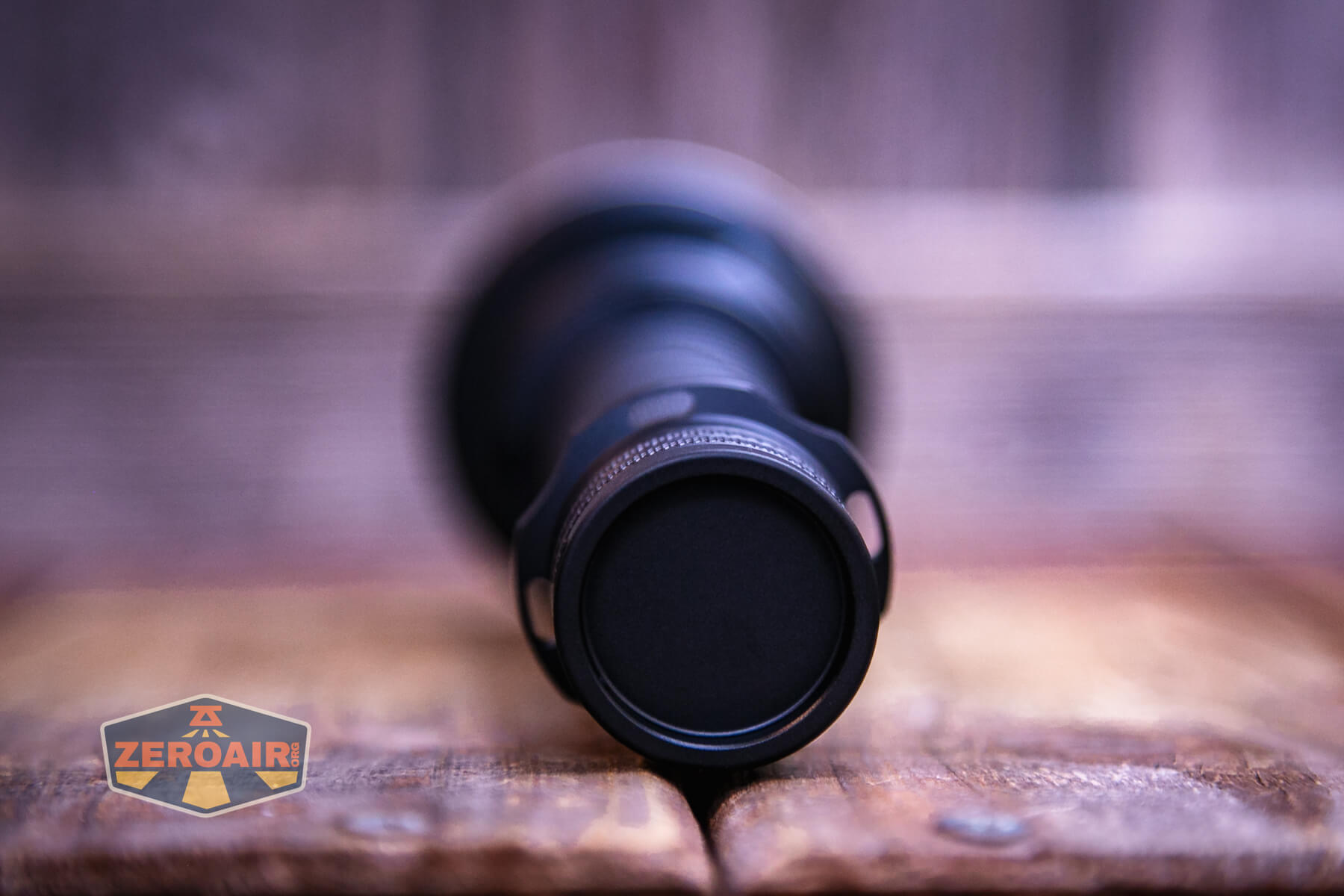
One thing I think Nightwatch might have changed from previous generations of this light (which had different emitters) is that now the light seems to ship with this stainless steel bezel by default. That’s an improvement. It looks great and serves a great purpose on this light! It’s very toothy, and I’d want those teeth to be stainless (not aluminum). So this is a great bezel.
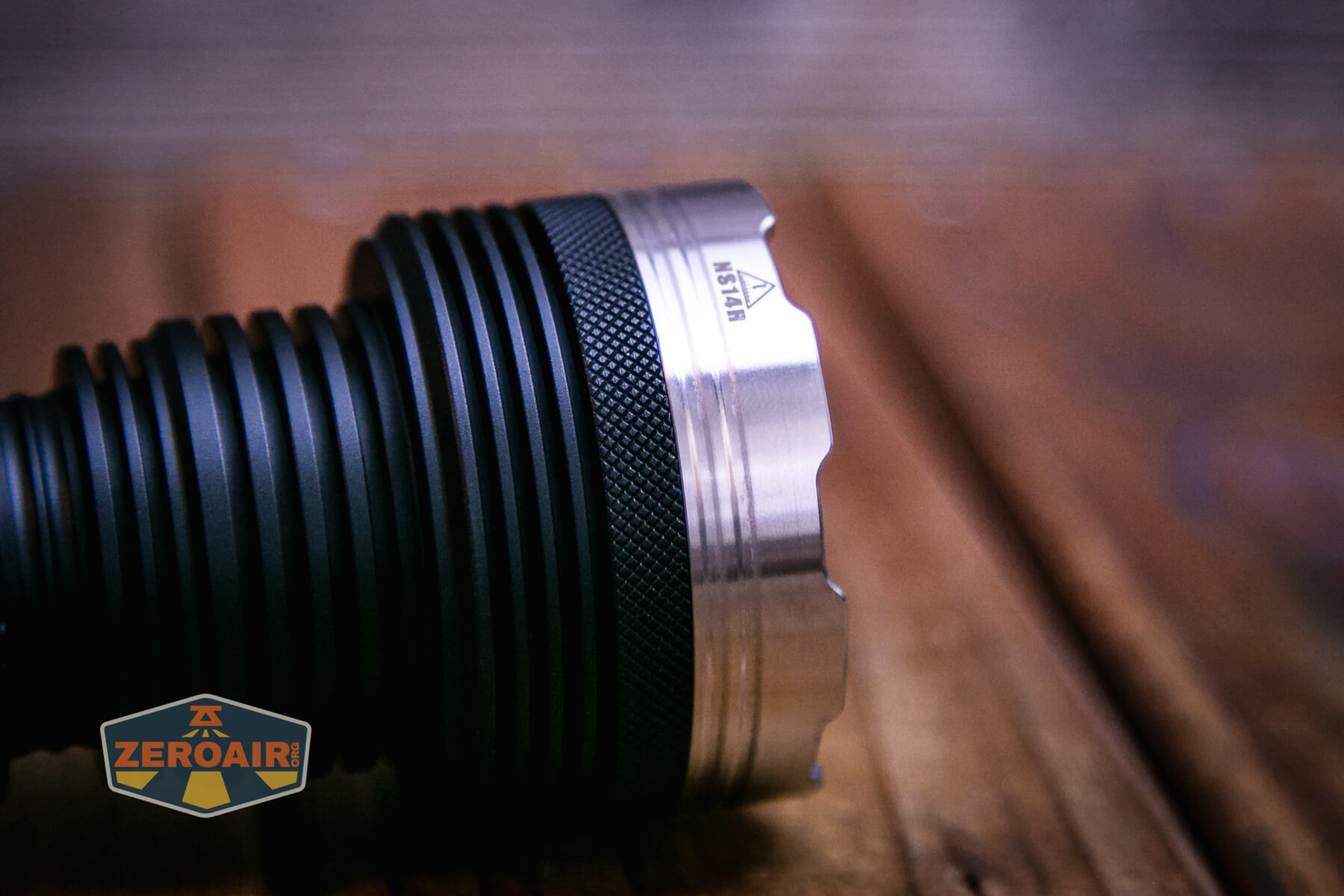
There are a ton of cooling fins, too. That’s needed because this light really draws a ton of amps!
Size and Comps
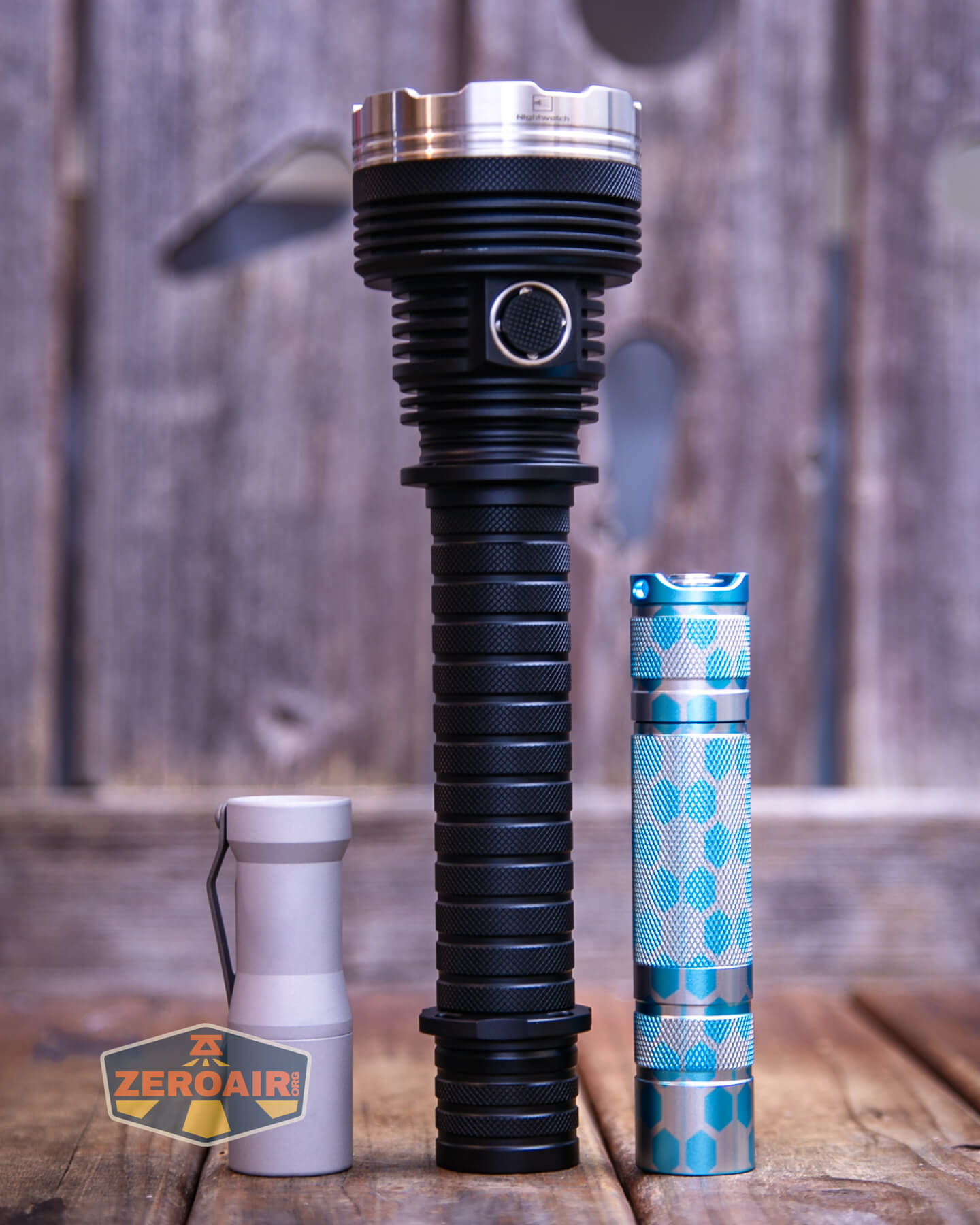
Dimensions: 58mm head x 215mm length
Weight: 338g without cells
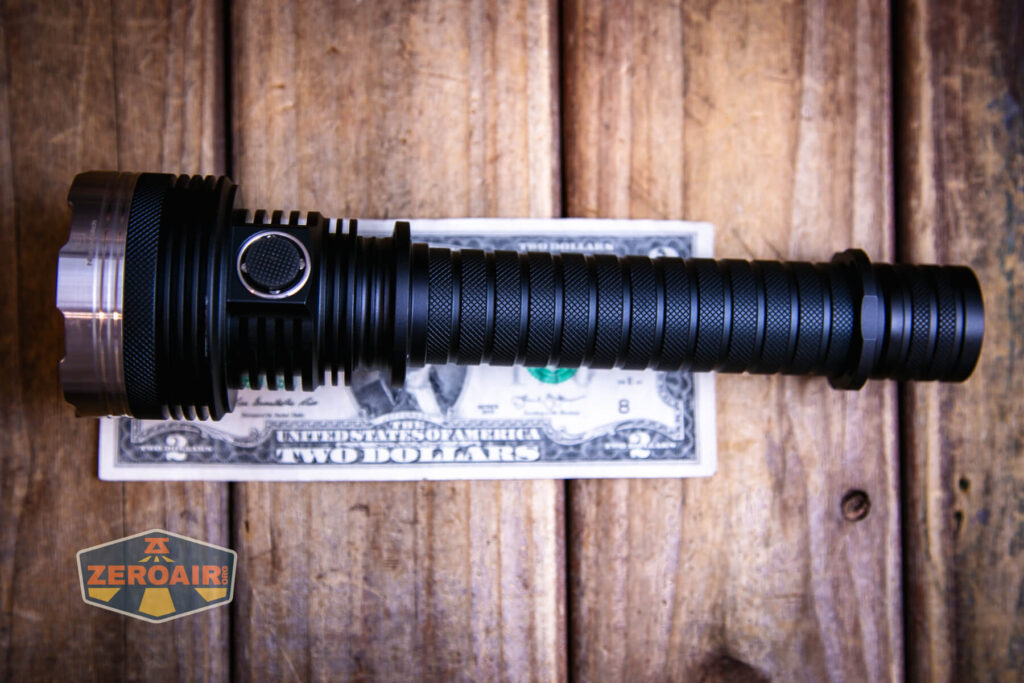
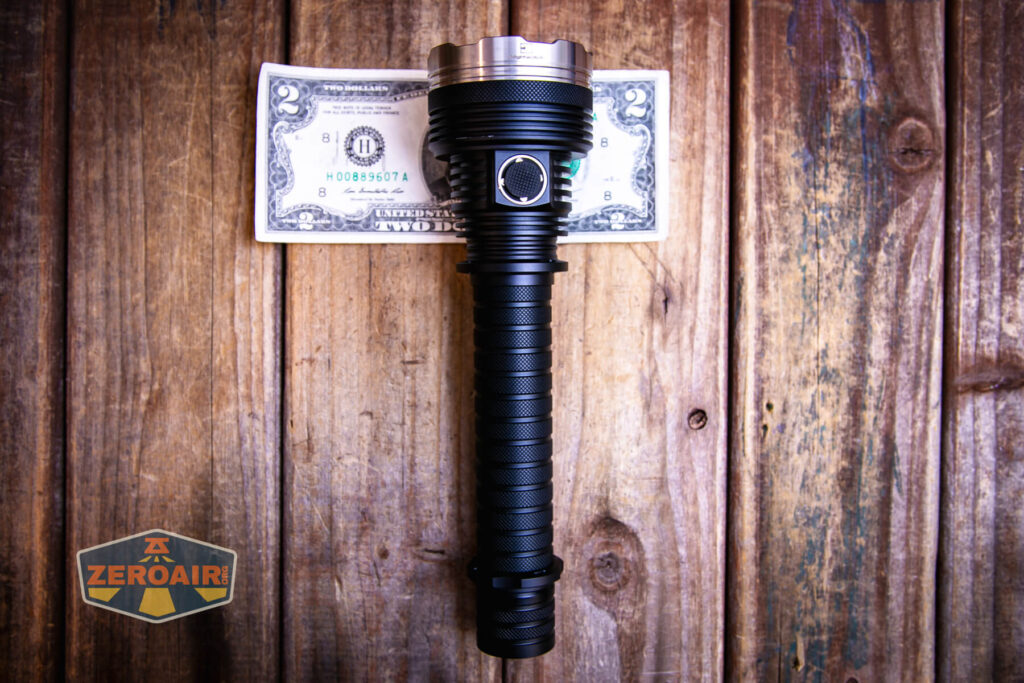
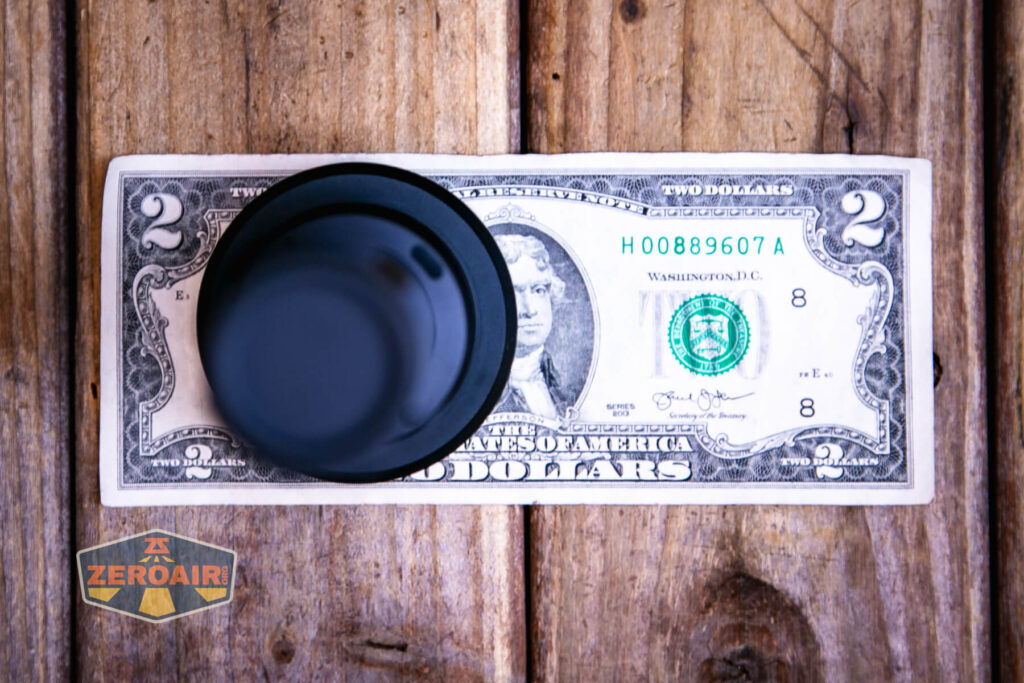
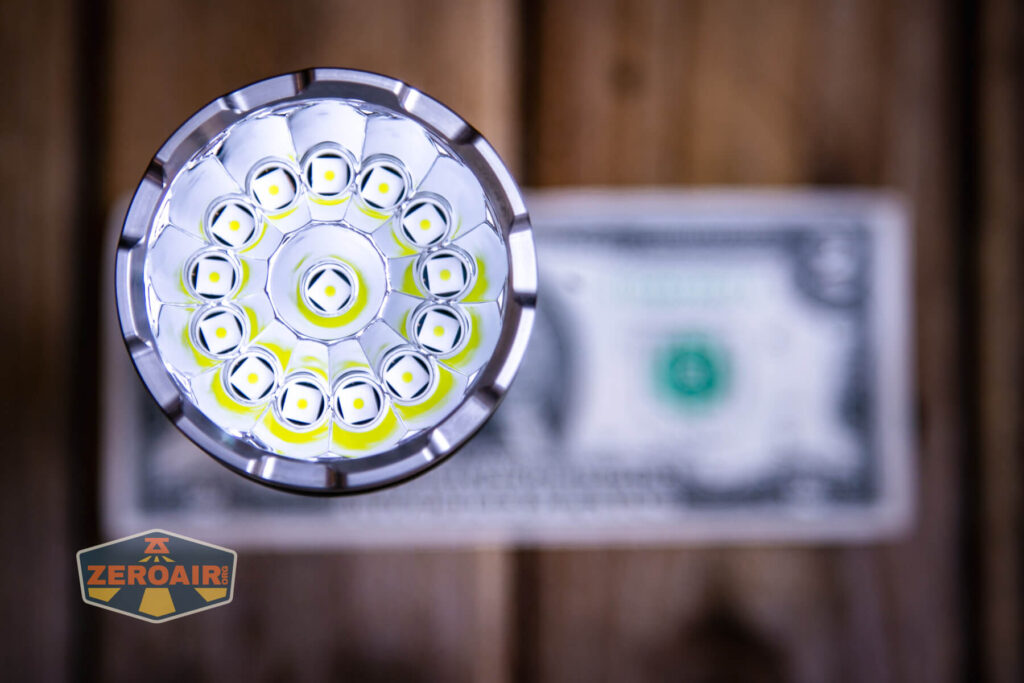
If the flashlight will headstand, I’ll show it here (usually the third photo). If the flashlight will tailstand, I’ll also show that (usually in the fourth photo).
Here’s the test light with the venerable Convoy S2+. The version you see below is an honeycomb Convoy S2+ host that’s been laser engraved by GadgetConnections.com. I did a full post on this light right here! Or go straight to GadgetConnections.com to buy your Convoy S2+ now!
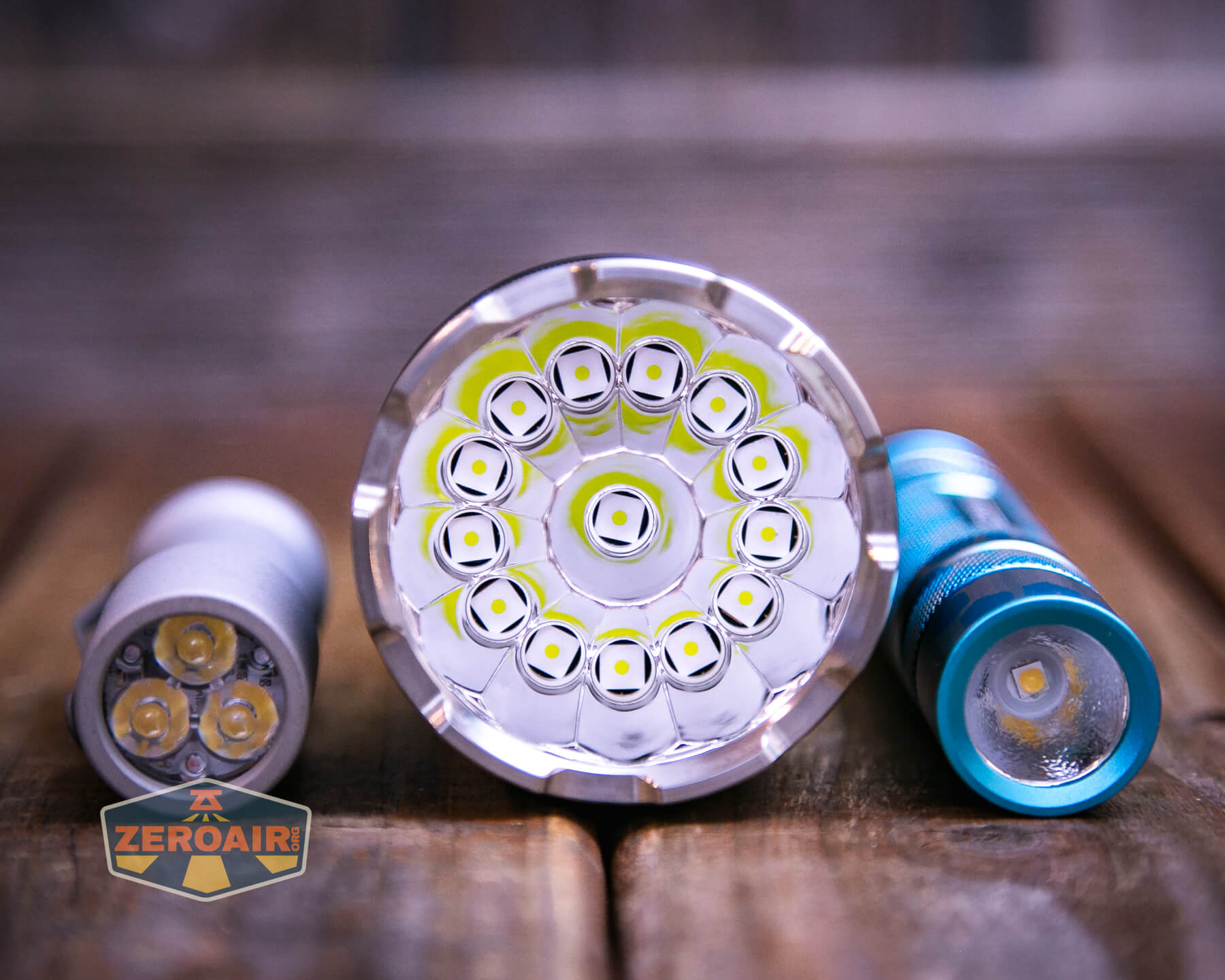
Also above is the light beside a new standard 18350 light! It’s not one I’ve reviewed yet but this is the CWF Arcadian Peanut in aluminum. This one is stonewashed and has the new Quantum Dragon driver – a whole new product! Stay tuned for a full review of this tiny powerhouse!
Retention and Carry
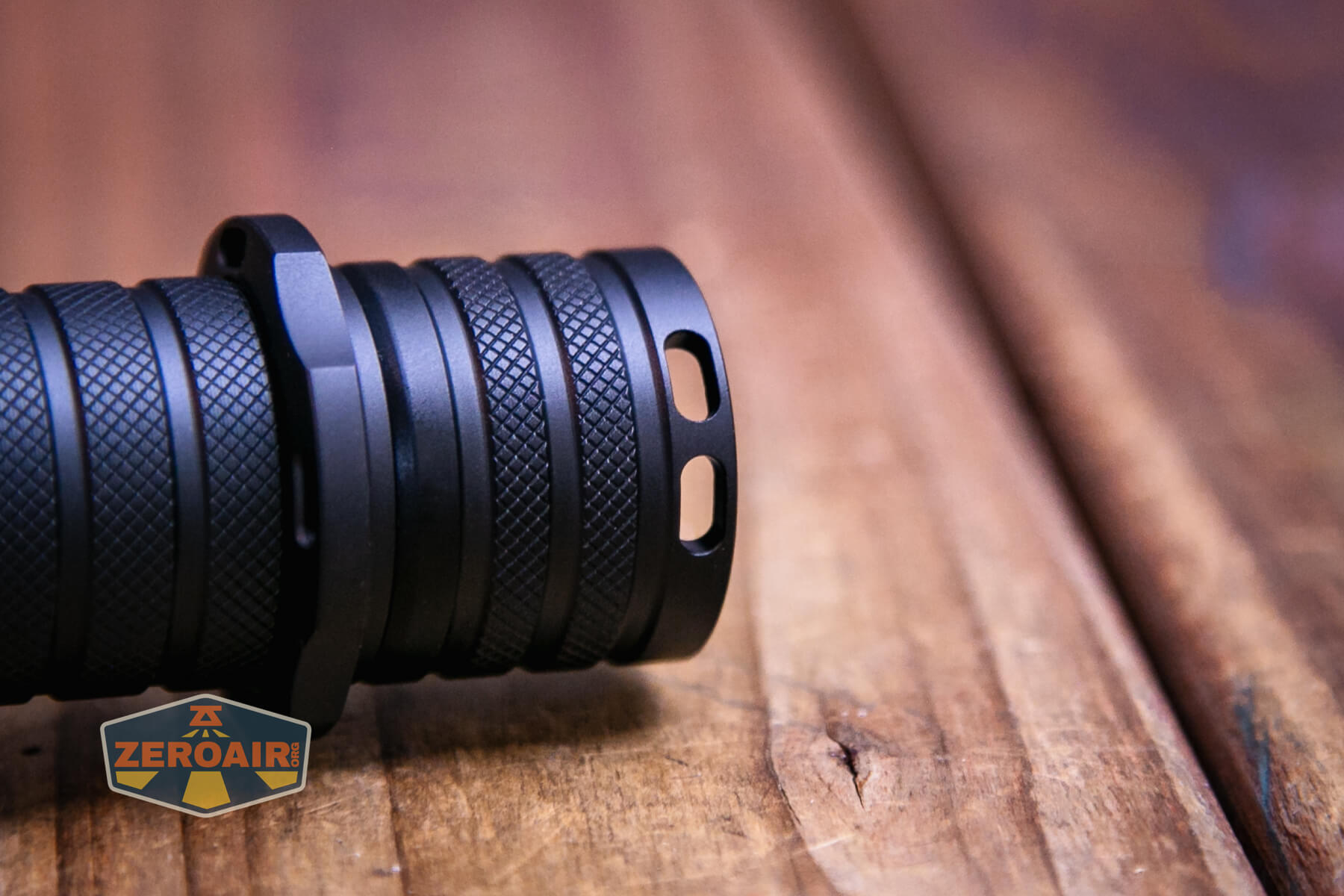
First, there’s a tactical ring on the tail end. This tactical ring ships installed but can be removed easily when the tailcap is off.
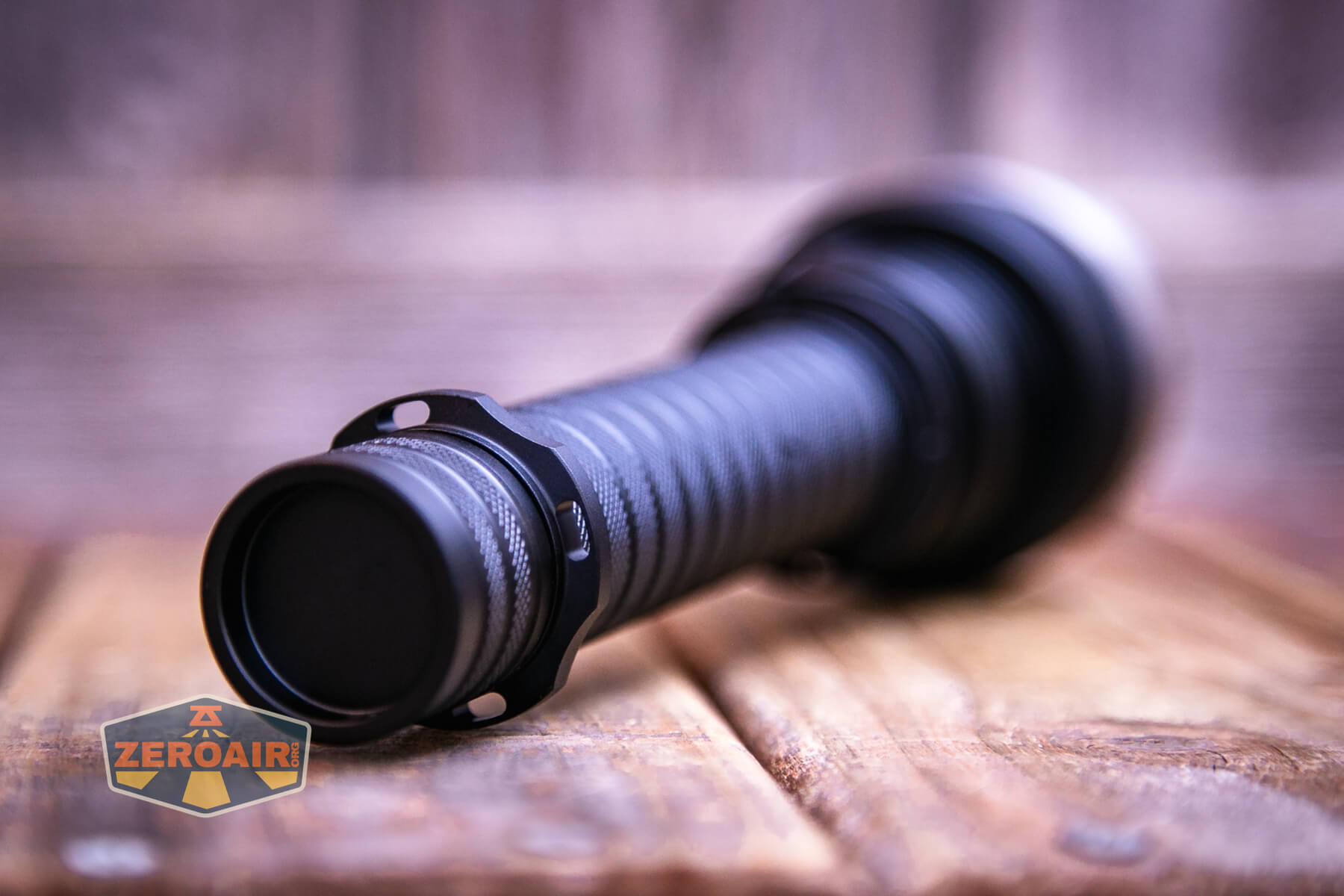
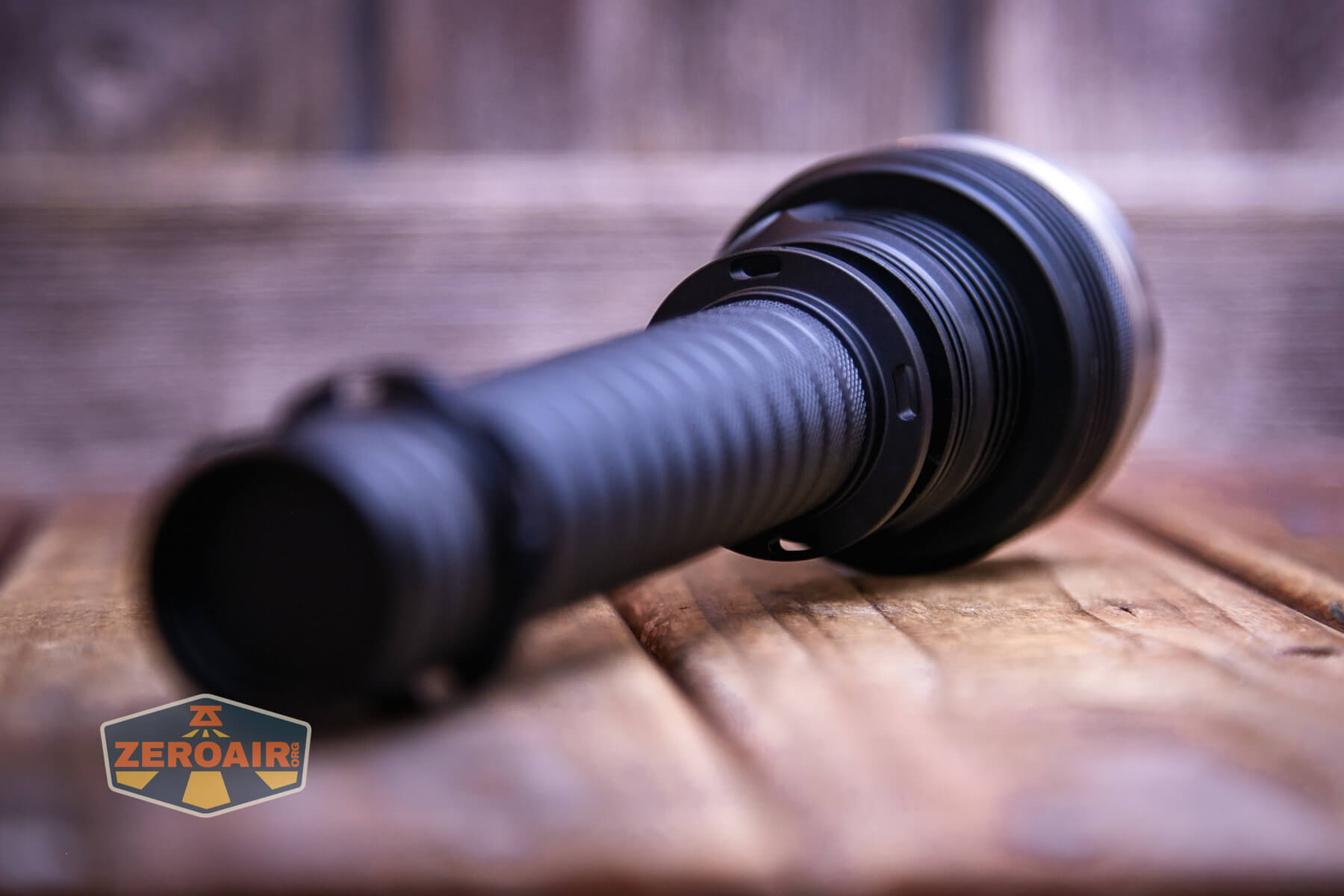
Also included is this lanyard attachment point in the tailcap. No lanyard is included.
Power and Runtime
The Nightwatch NS14R flood flashlight requires two 21700 cells for powering this 14-emitter array of SFS72 emitters. You’ll need button top unprotected cells, which may be hard to find in the 21700 format. That’s why you should just buy these two cells from Neal directly – they add around $20 and for the added buttons to already be included, it’s worth that cost.
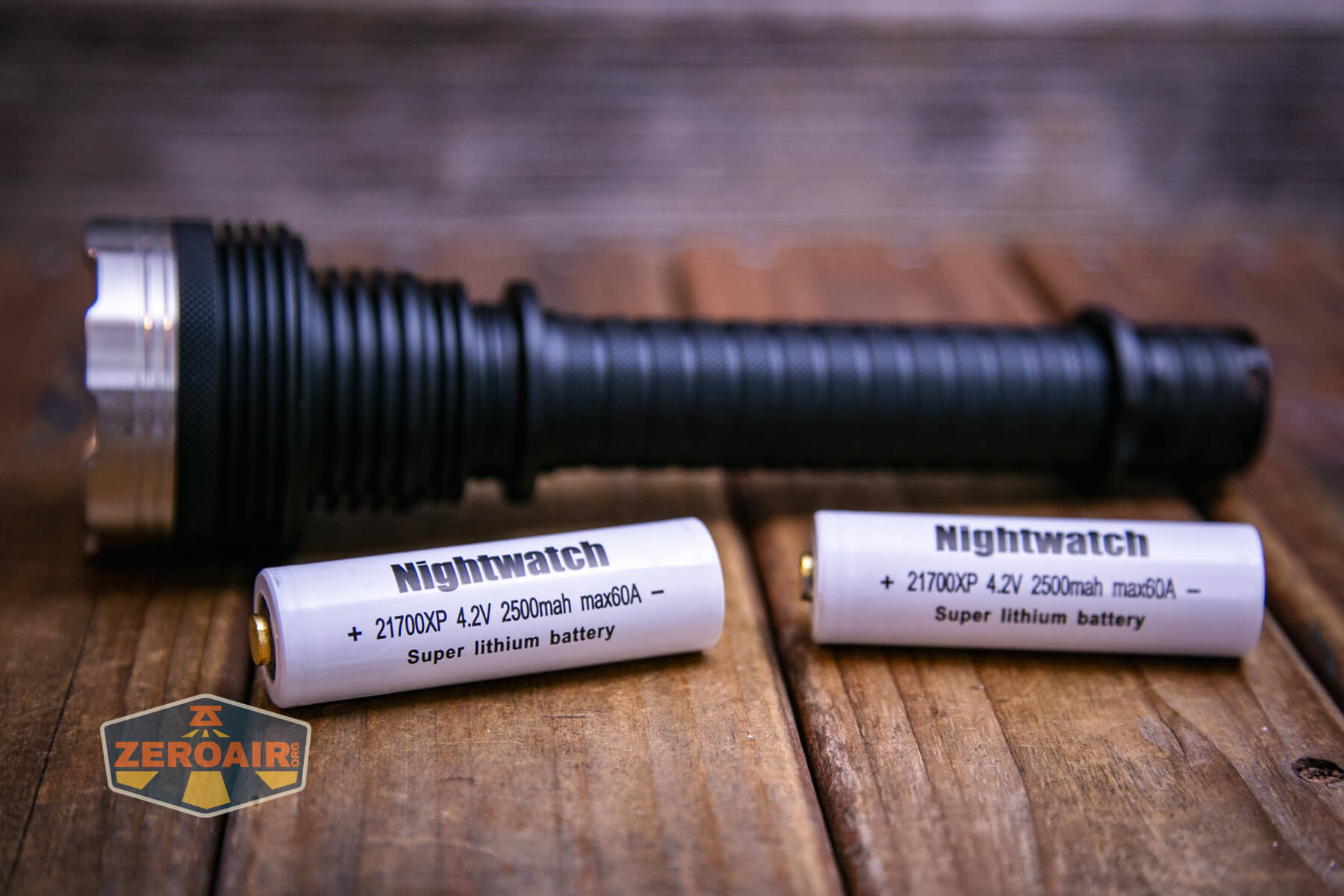
Also, Neal specifies on his site that the wrapper is wrong regarding capacity – these aren’t “2500mAh,” they’re 38oomAh. They still have a 60A current, which is just massively huge, but the capacity of 3800mAh for a 21700 still seems more reasonable.
Here’s the button that is added (already).
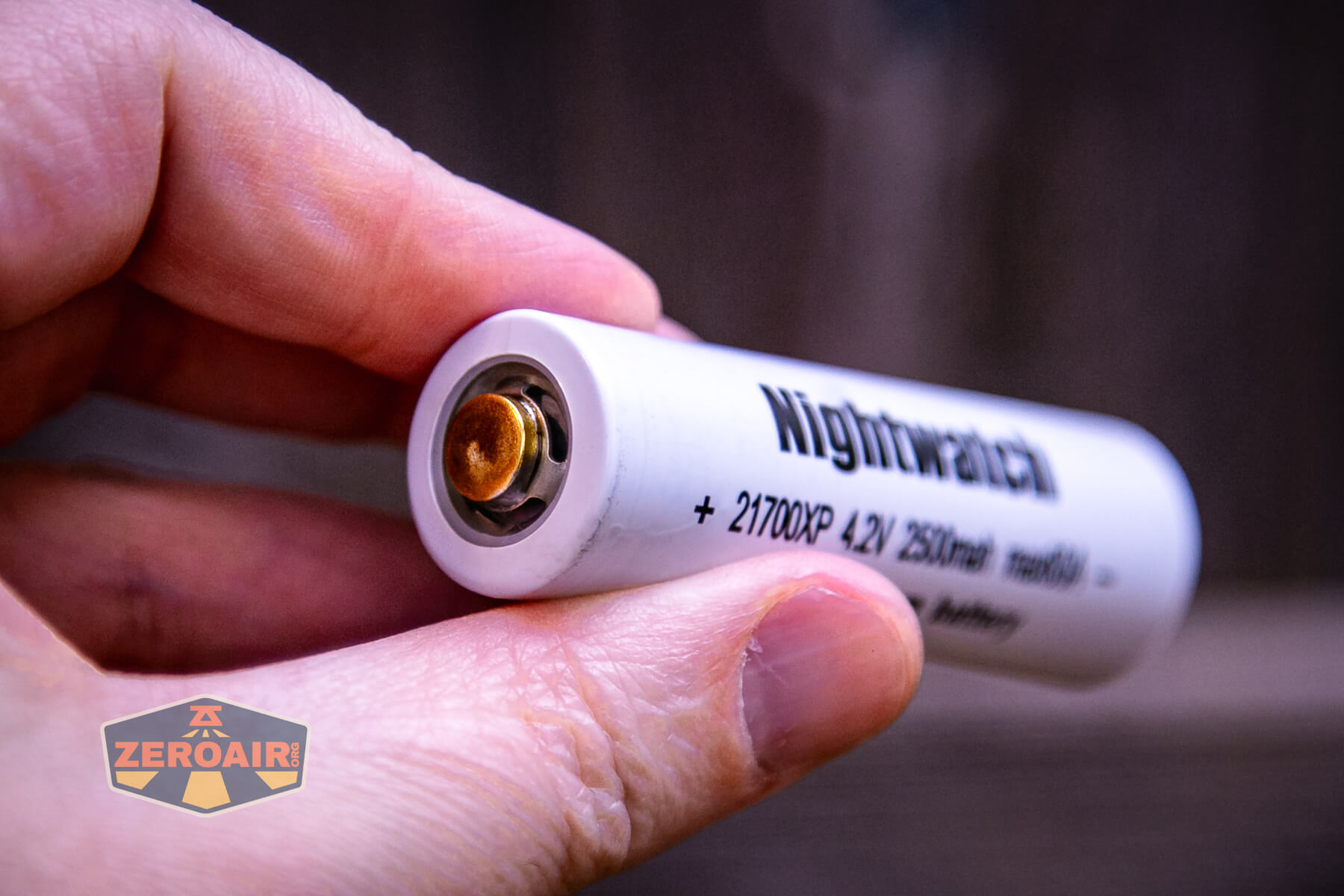
The cells are installed in the usual way – button toward the head.
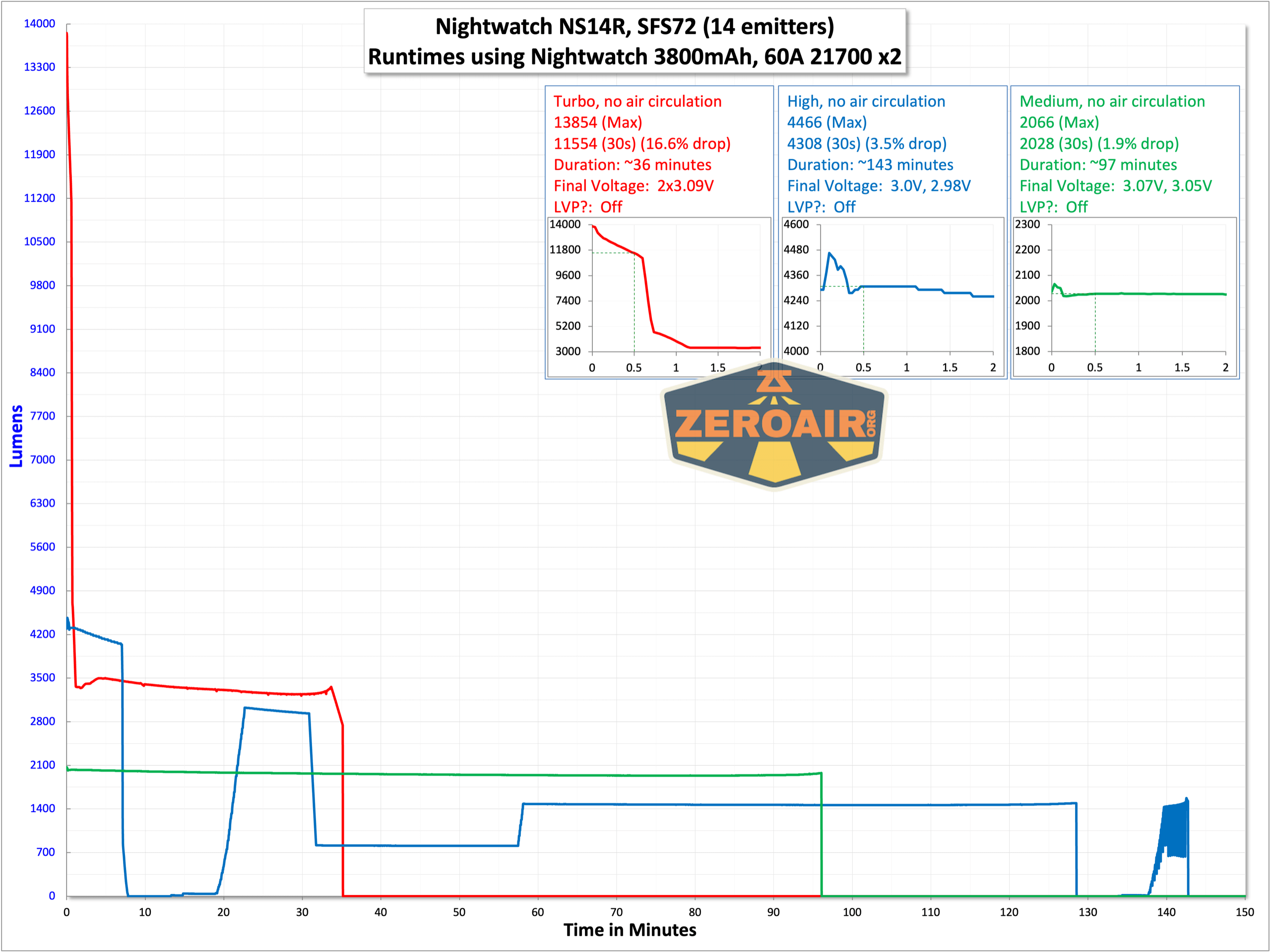
Here are a few runtime graphs
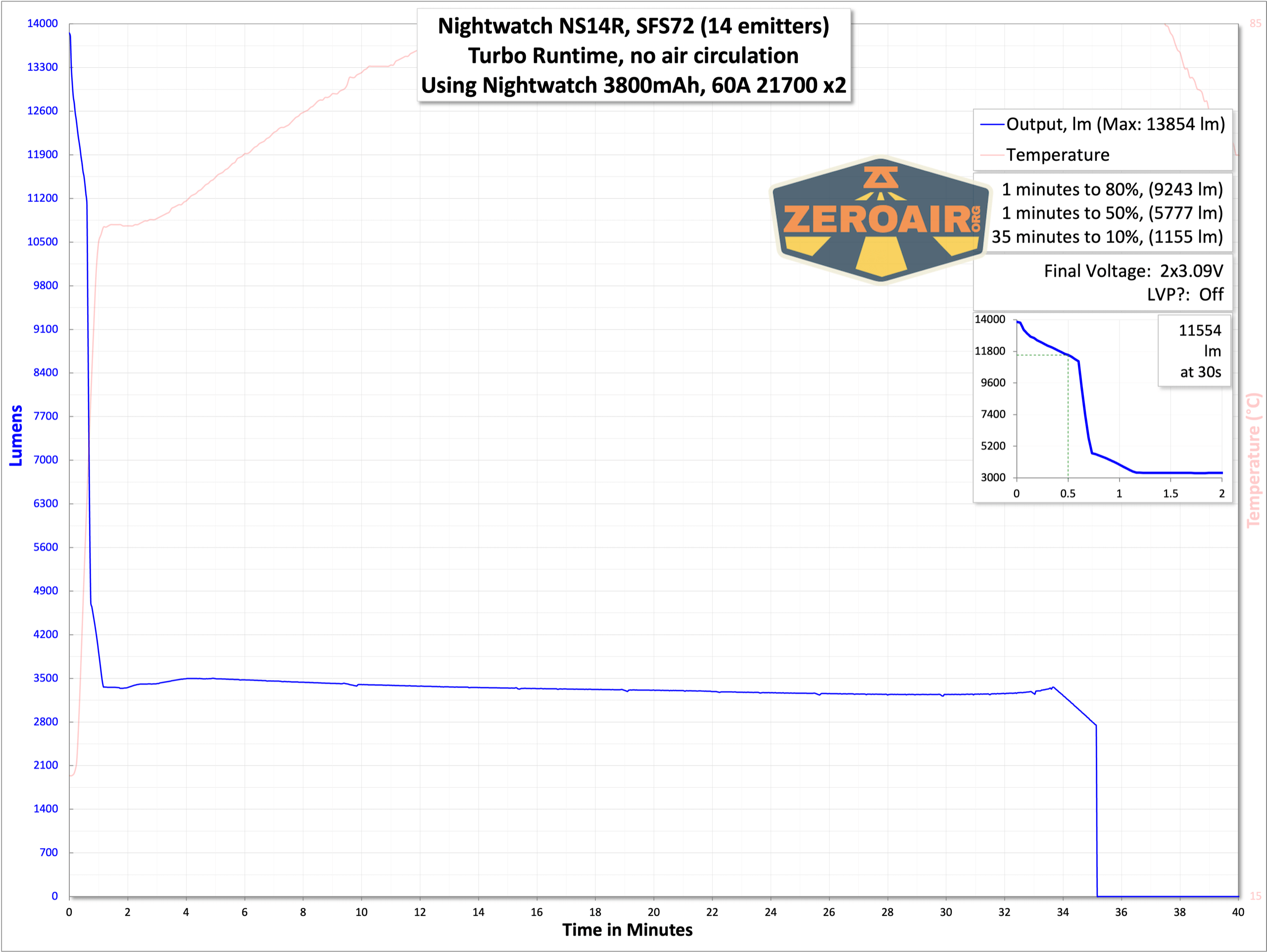
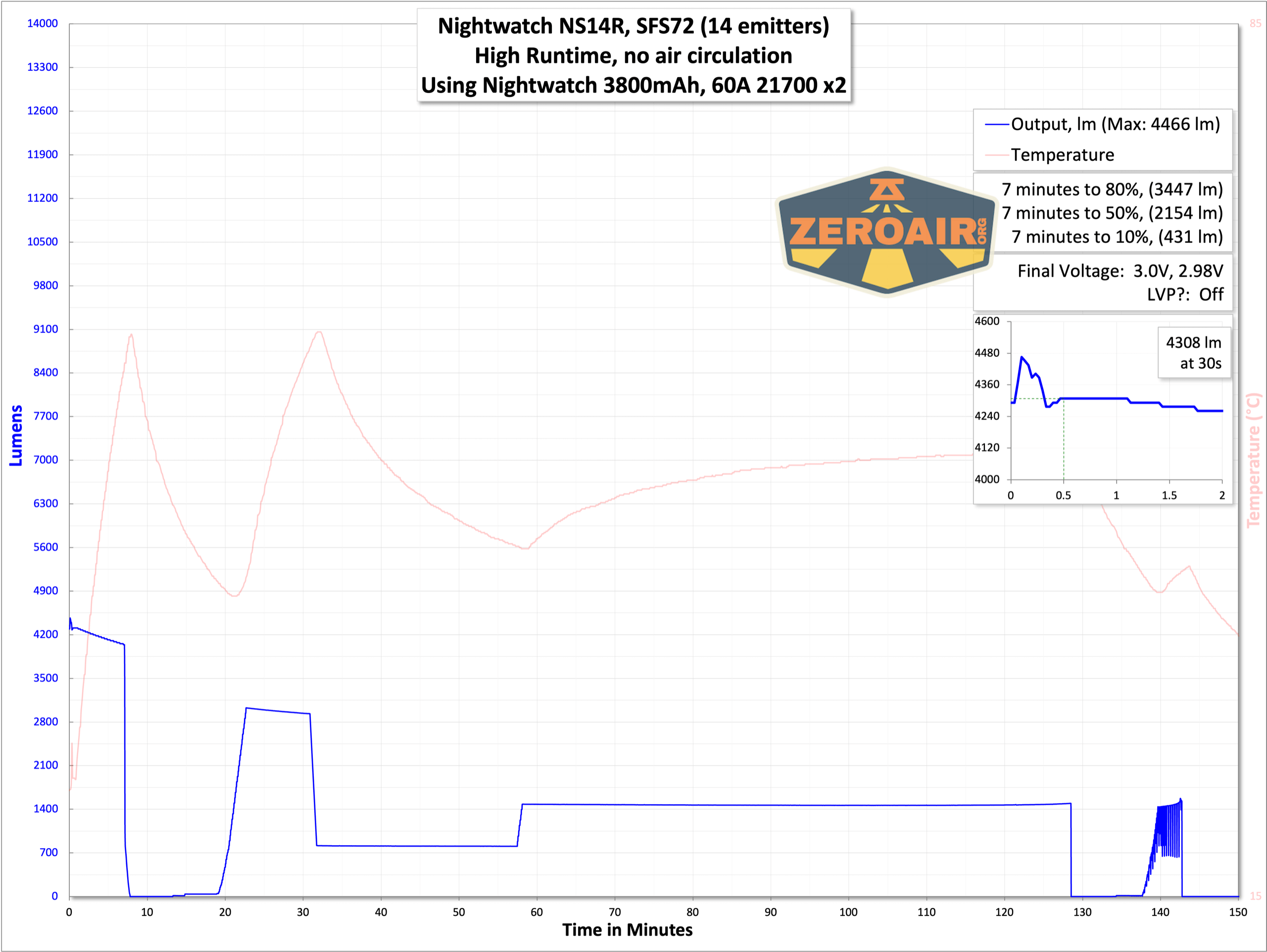
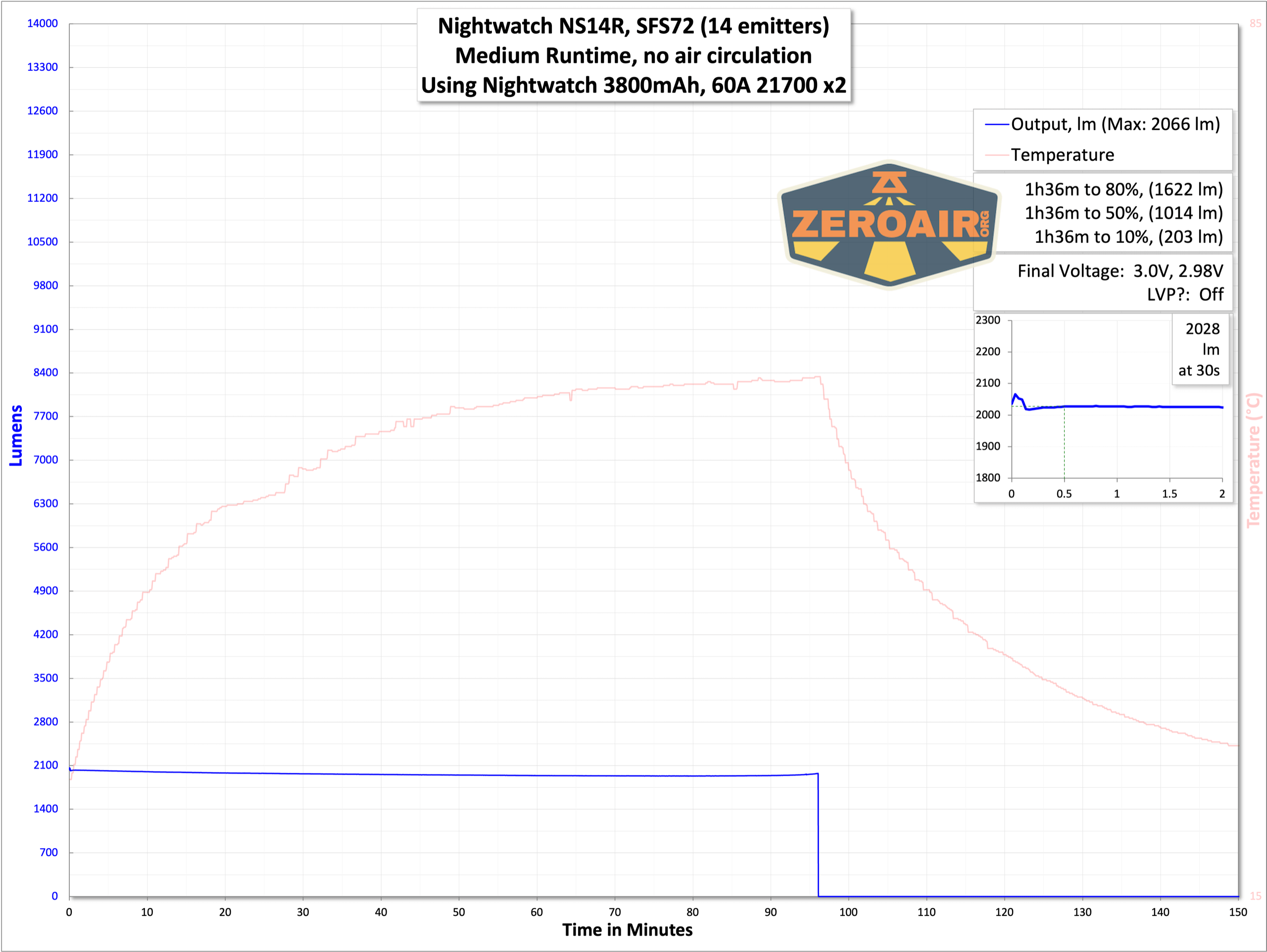
The light does exhibit low voltage protection. Also notably, the current draw on turbo is massive more than 18A at 8.4V! In fact, the product page states it’s 35A on Turbo!! (That’s around 30oW!)
Modes and Currents
| Mode | Mode Claimed Output (lm) | Claimed Runtime | Measured Lumens | Tailcap Amps |
|---|---|---|---|---|
| Turbo | 20,000 | – | 13854 (0s) 11551 (30s) |
>18 |
| Middle1 | 5,000 | – | 4308 | 5.41 |
| Middle2 | 2,000 | – | 2028 | 2.04 |
| Low | 580 | – | 688 | 0.62 |
Pulse Width Modulation
I don’t think this is really PWM here, but there are some squiggles on the lower three modes. You’d never notice this in person, though.
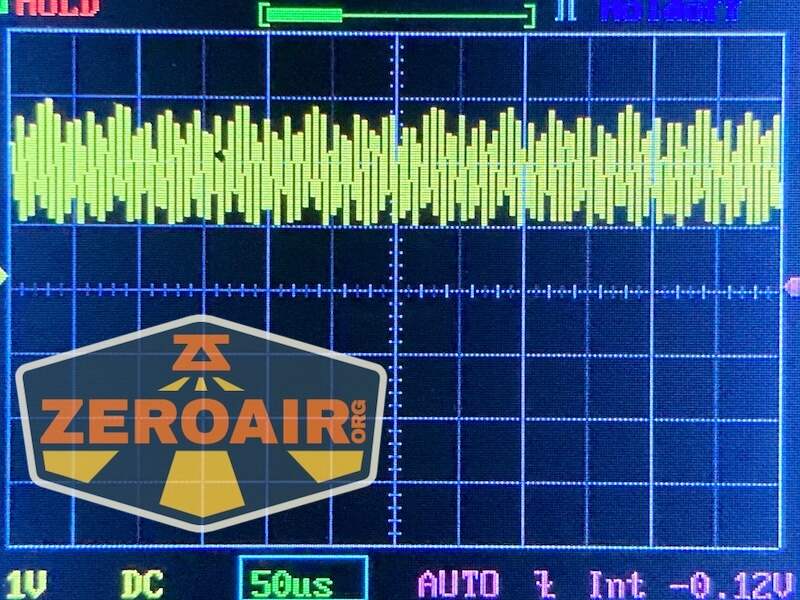
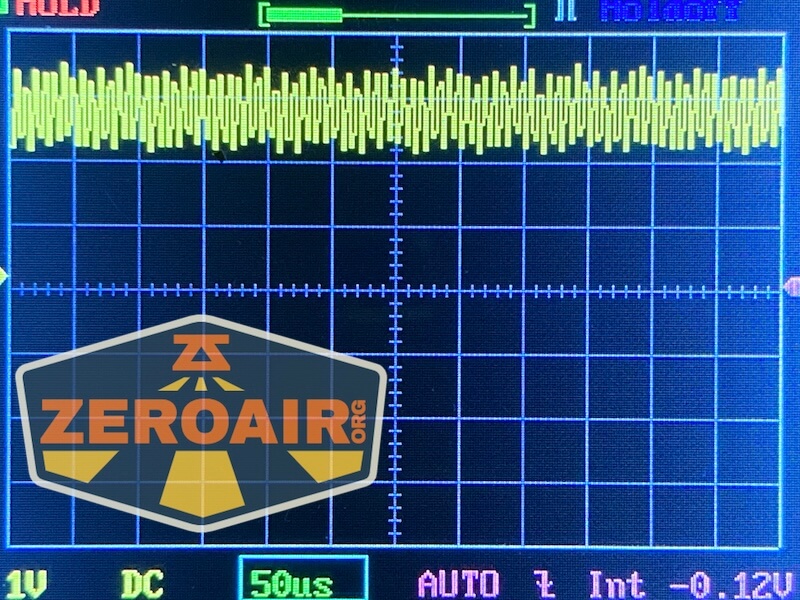
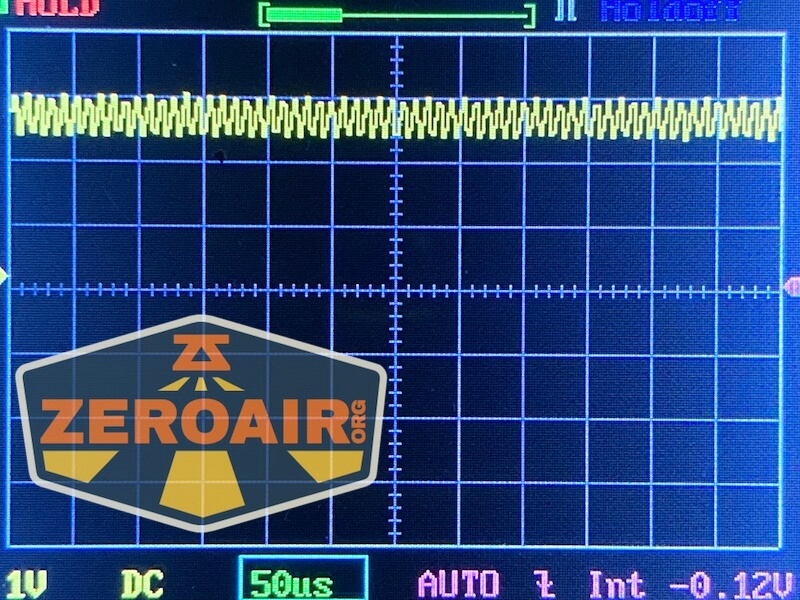
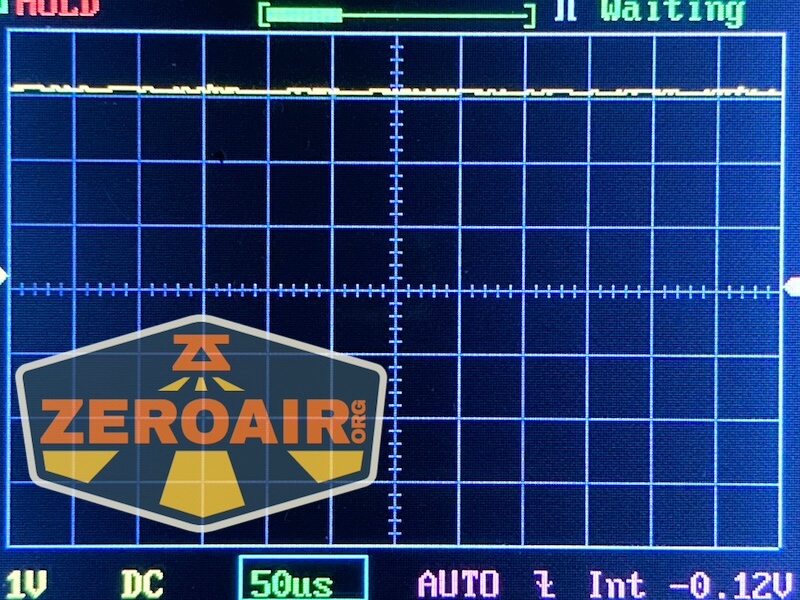
Here you can see a “baseline” – a chart with almost no light hitting the sensor. Then there’s the Ultrafire WF-602C flashlight, which has some of the worst PWM I’ve seen. It’s so bad that I used a post about it to explain PWM! Here are multiple timescales (10ms, 5ms, 2ms, 1ms, 0.5ms, 0.2ms) to make comparing this “worst” PWM light to the test light easier. That post also explains why I didn’t test the WF-602C at the usual 50us scale.


User Interface and Operation
The Nightwatch NS14R flood flashlight uses a side e-switch.
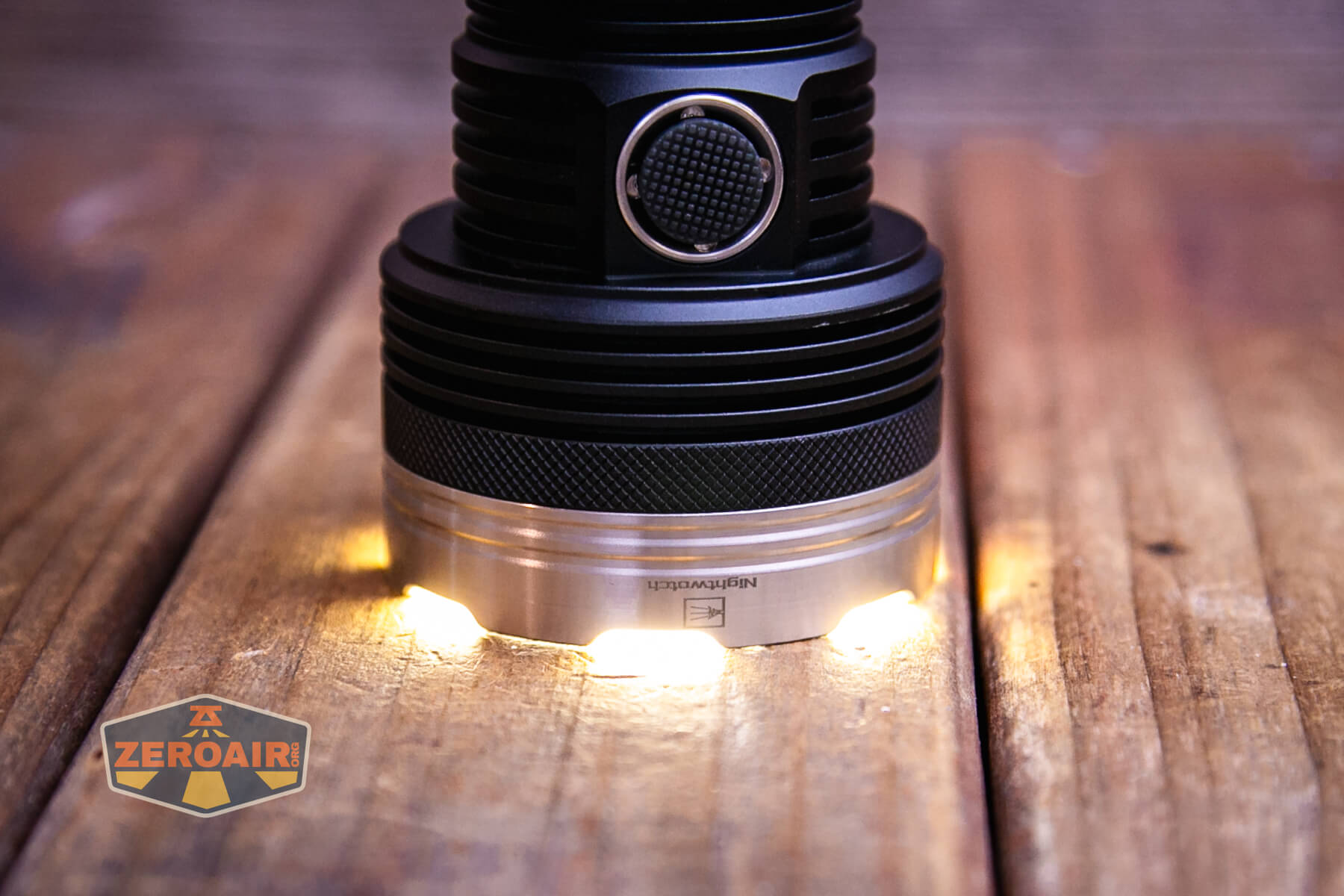
The e-switch is weird though, because sometimes after cycling the cells (out and back in) the light will pause then come back on. That’s been weird – and definitely be careful when you cycle the cells that you don’t place the light head-down.
This e-switch is actually a difference between the NS14R and NS59v2 – the NS59v2 uses a mechanical tail switch!
I don’t know why they made the switch change but it’s fine, except that the light gets very hot and a tail switch is better in that case. With a tail switch, you may not have to touch the hottest parts of the light to turn it off. With this side e-switch, you almost certainly do.
Here’s a user interface table!
| State | Action | Result |
|---|---|---|
| Off | Click | On (Mode memory) |
| Any | Double Click | Turbo |
| On | Click | Mode advance (excluding Turbo) |
| On | Hold | Off |
| Off | Hold | Nothing |
| Any | Triple Click | Strobe |
| Strobe | Click | Previous state (or mode memory, if strobe from off) |
I will say that I think Neal’s product page is meant for the previous version, and not the Nightwatch NS14R flood flashlight. The page indicates there’s a “high” mode but I believe there are just four levels. (All I’m able to observe are four levels!) The page also indicates the light has “temperature control” which really does not seem to be the case…
LED and Beam
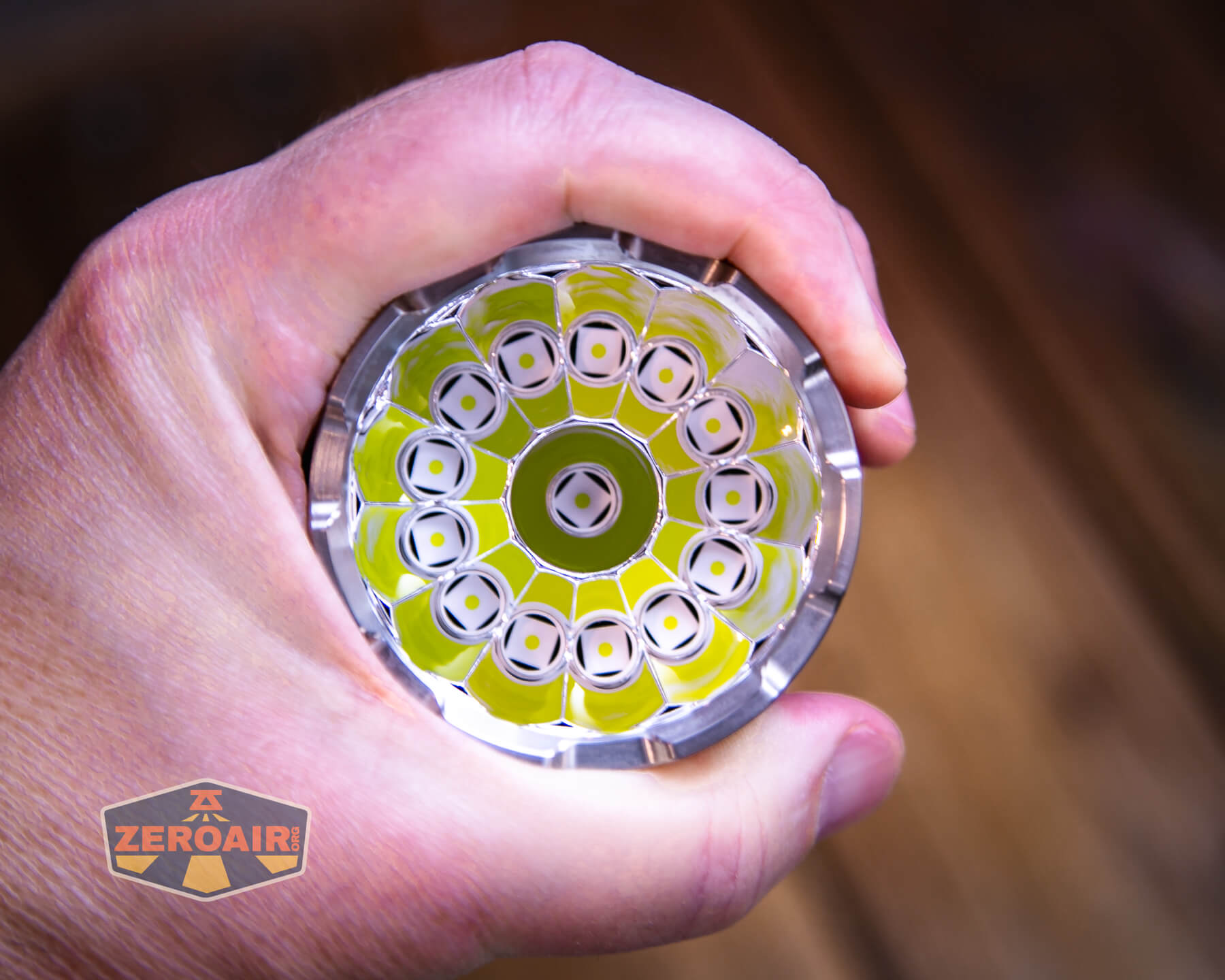
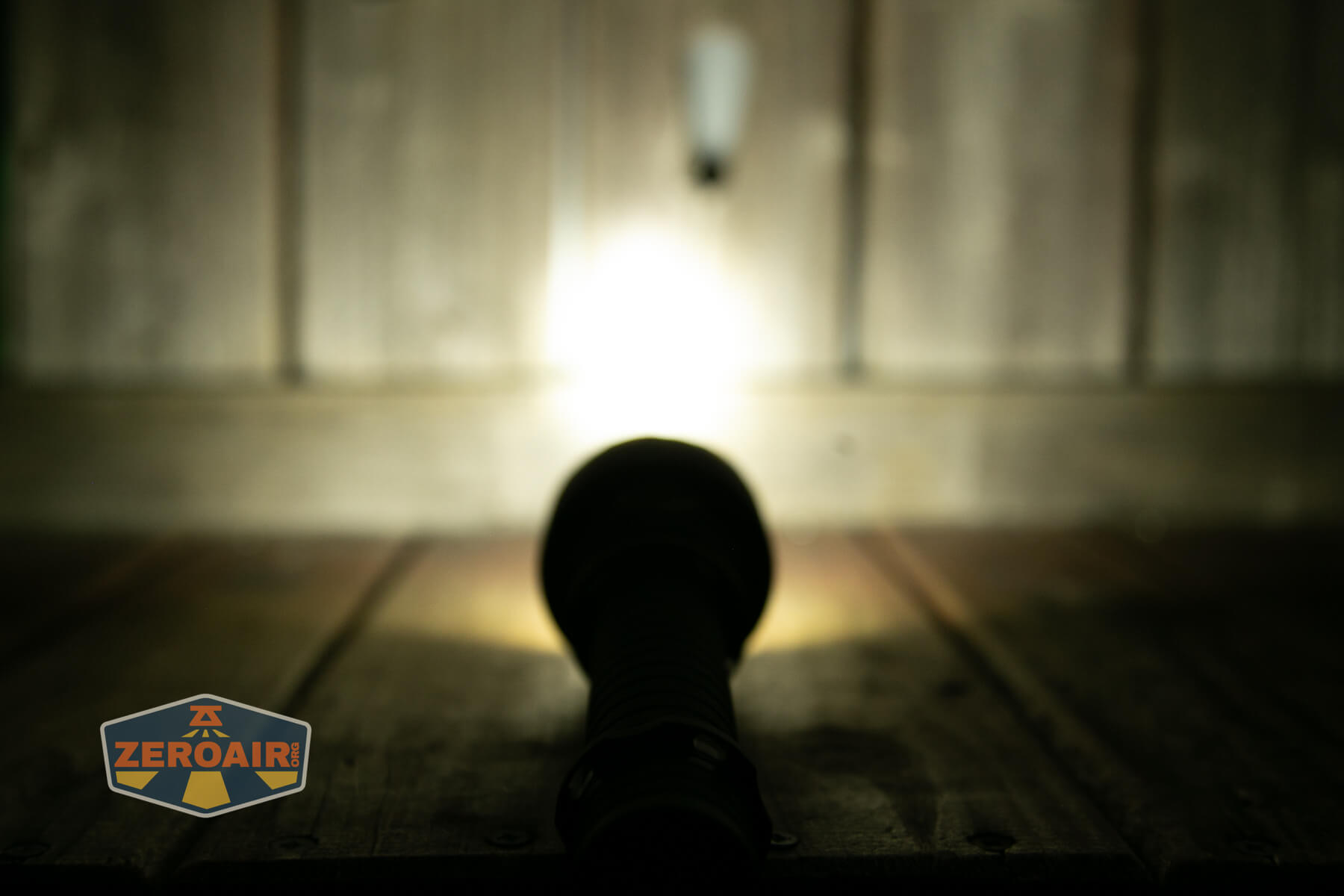
The Nightwatch NS14R flood flashlight uses 14 emitters I don’t think I’ve tested before (at least not by this name.) These are SFS72 emitter, and despite having a big footprint, they have a small emitting area. Each also has a bit of a reflector.
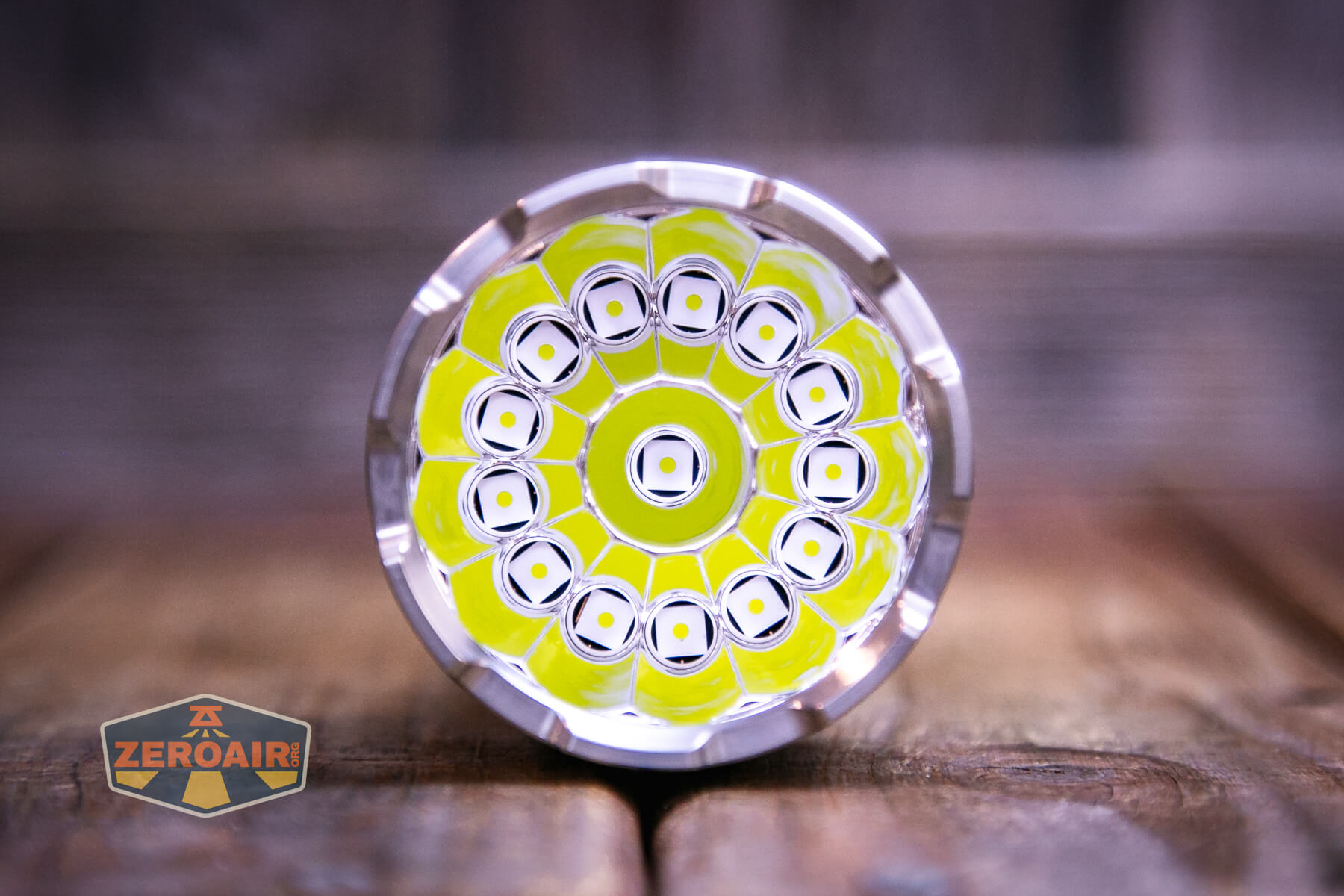
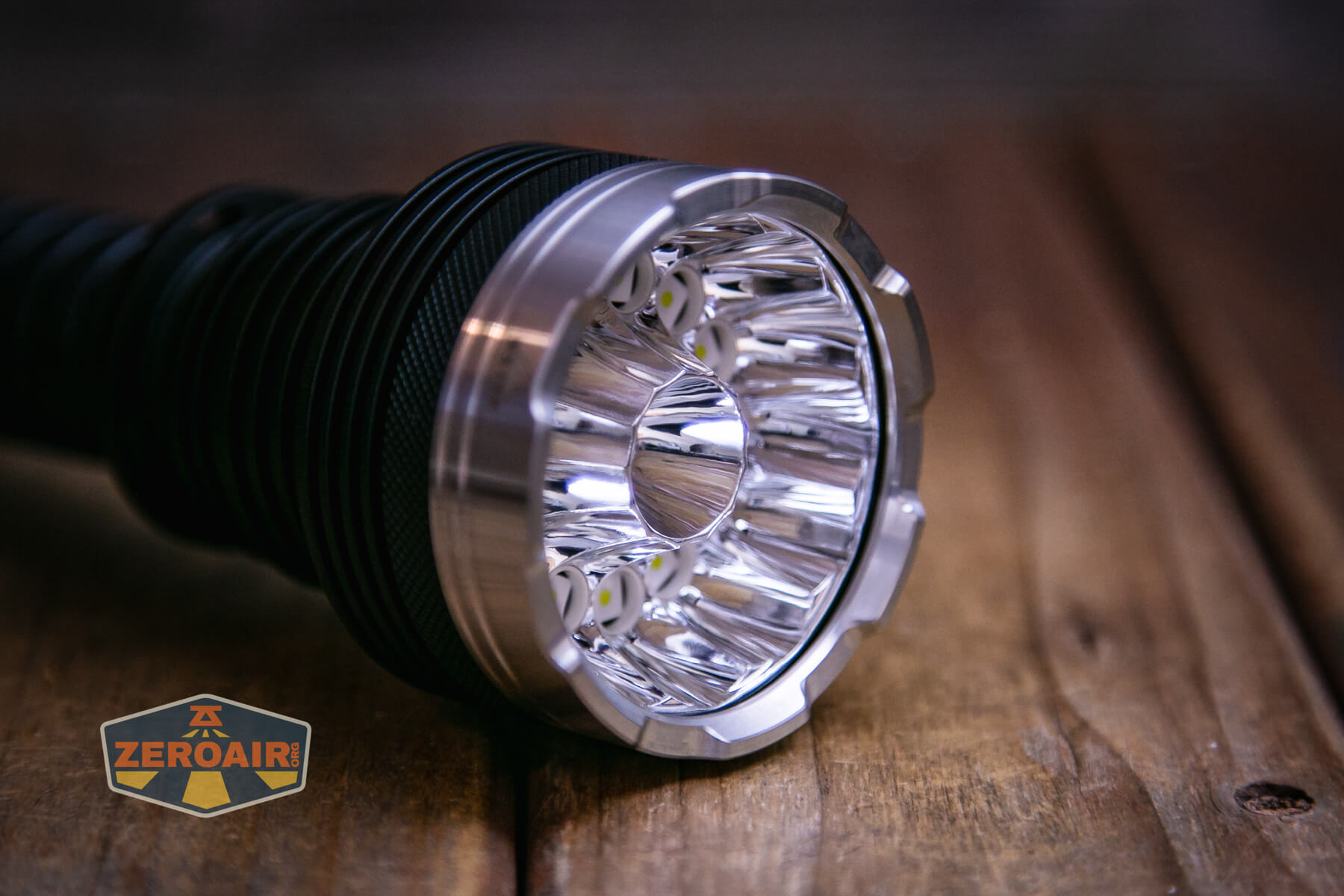
The bezel is shaped, so light will escape when headstanding.
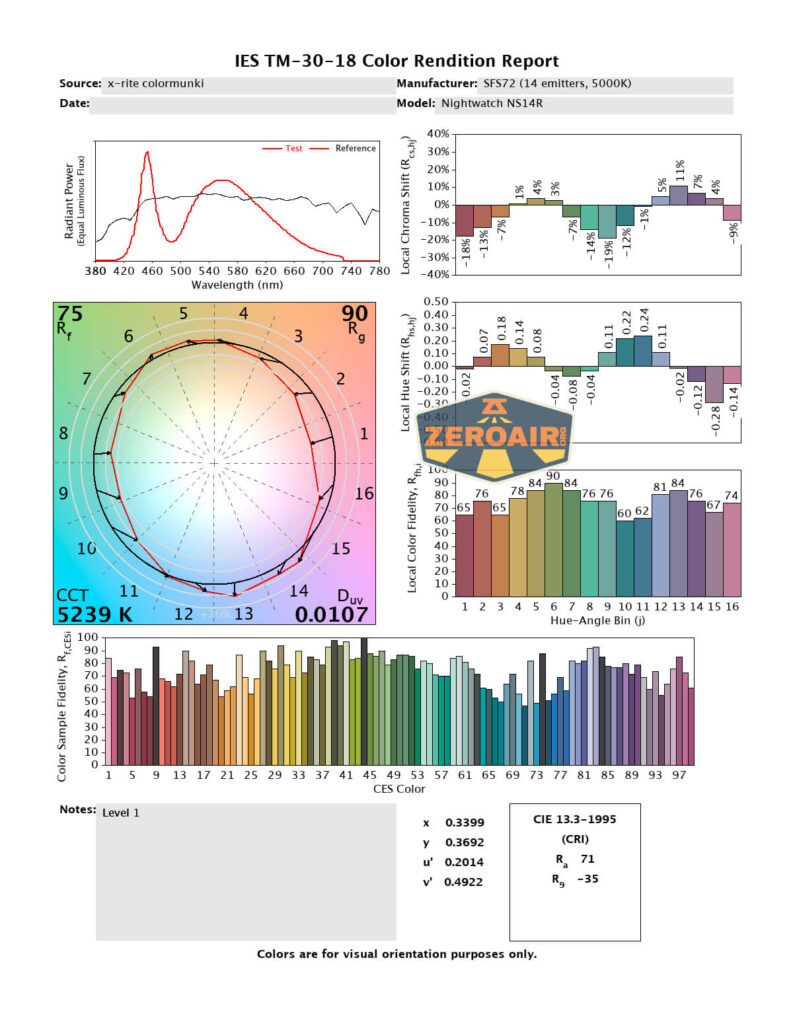
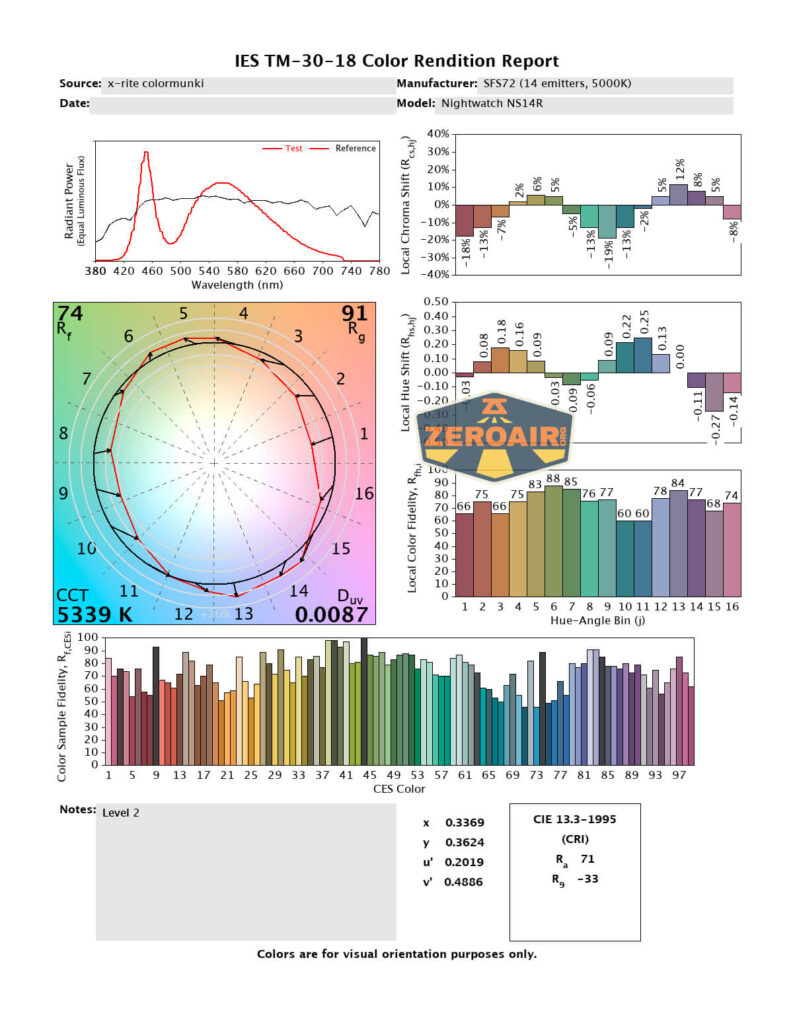
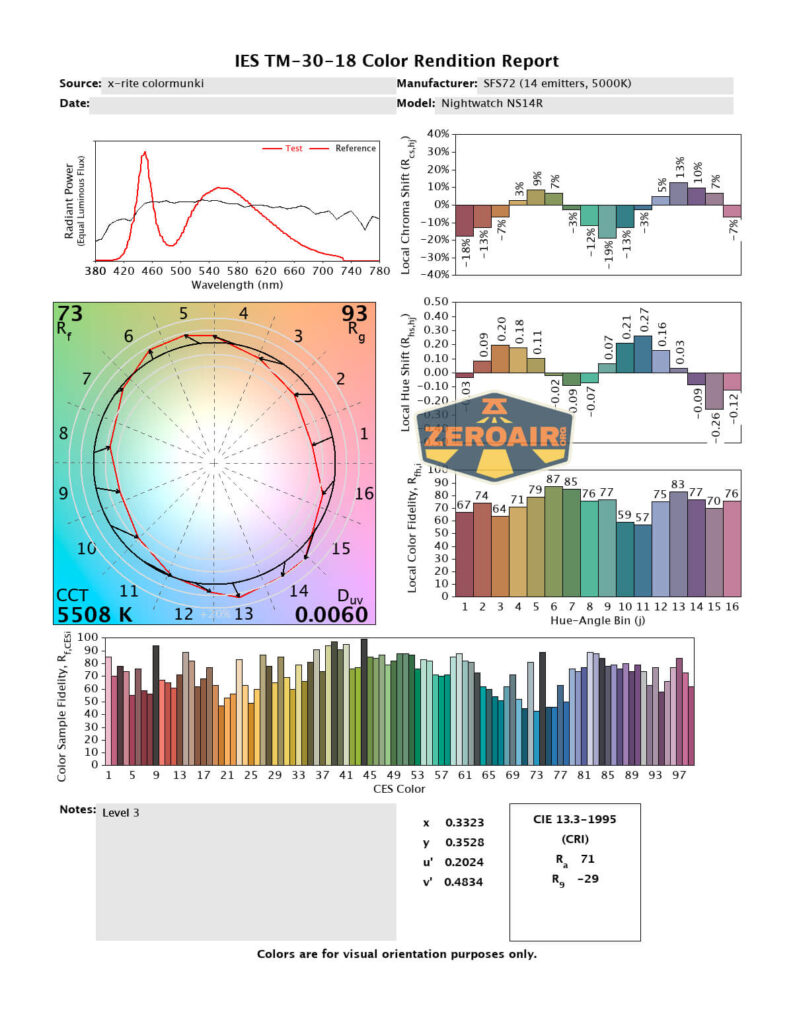
LED Color Report (CRI and CCT)
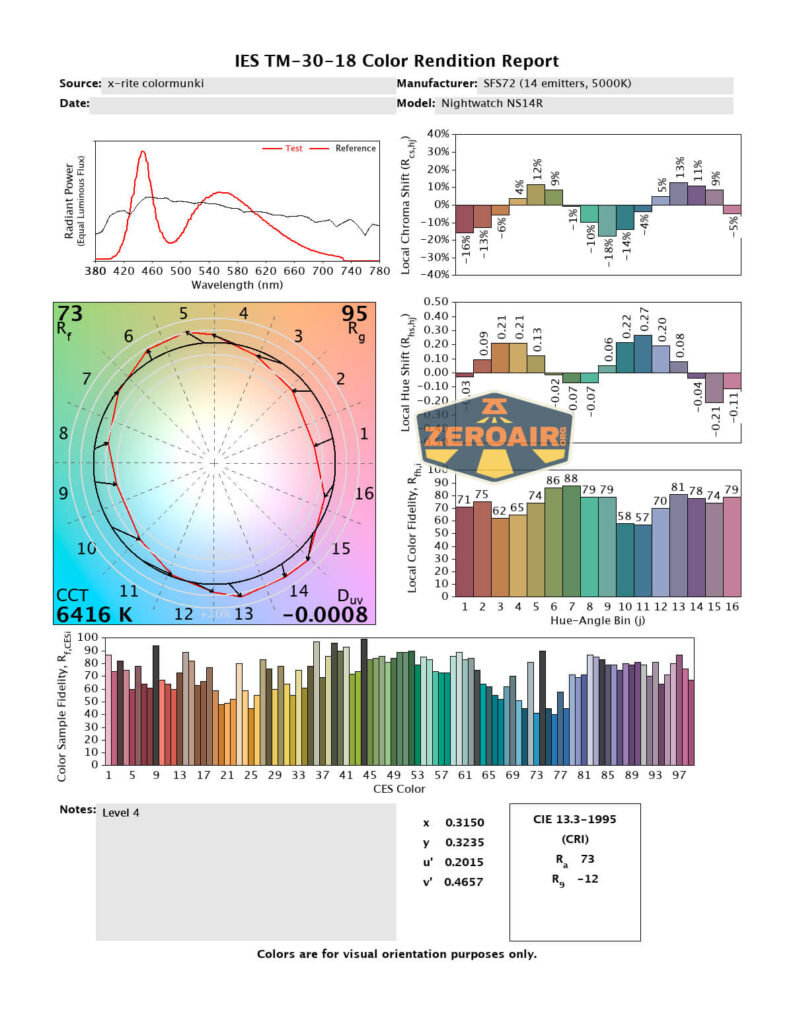
CRI and CCT are good for such a high-output light. The CCT ranges from mid 5000K’s to mid 6000K’s, and the CRI is low (but not too low) at around 71. It’s claimed to be a 5000K light, so this is fairly good.
Beamshots
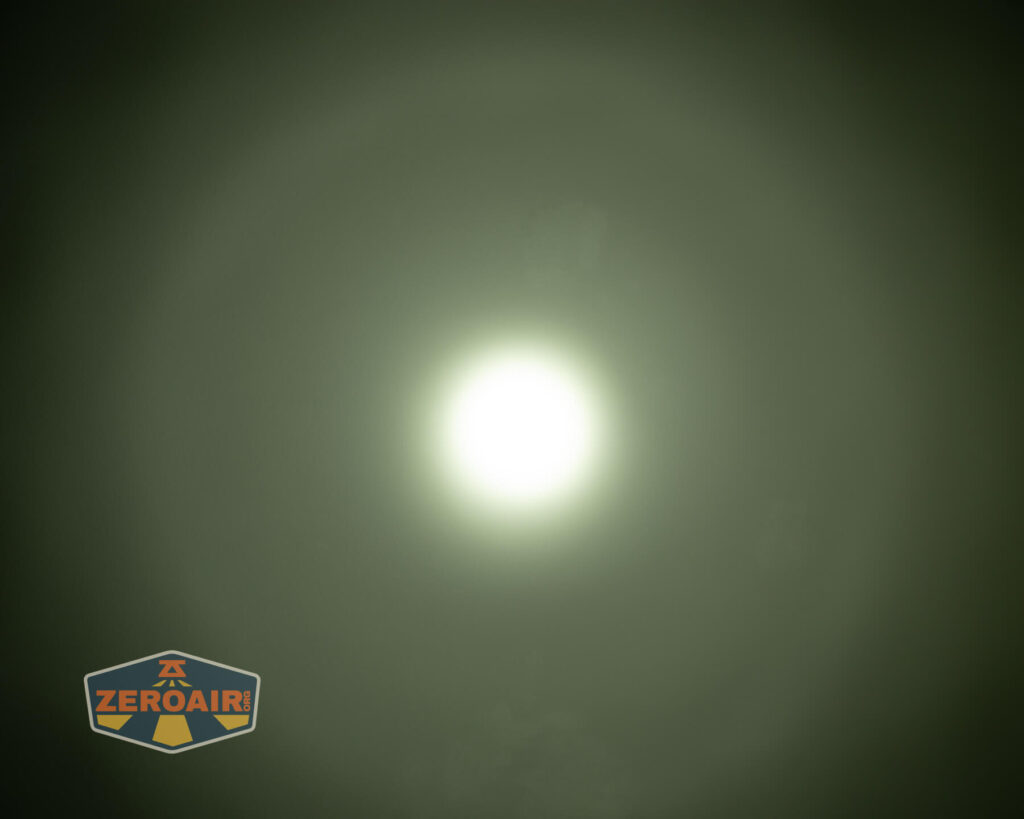
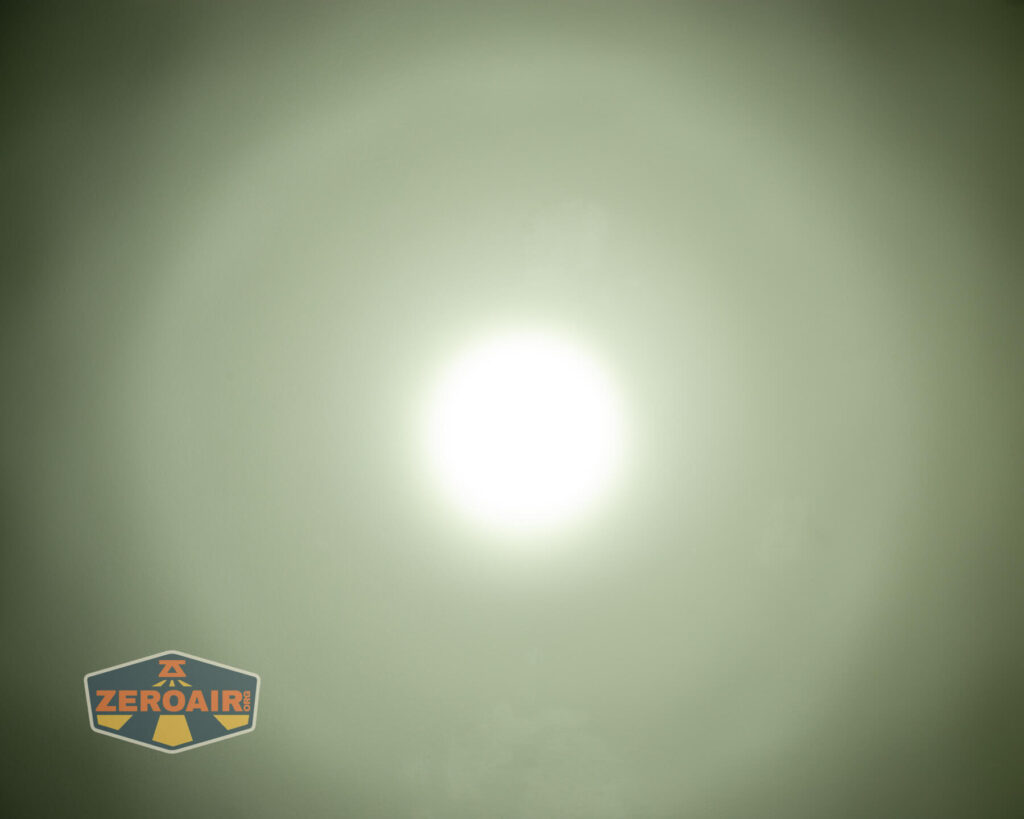
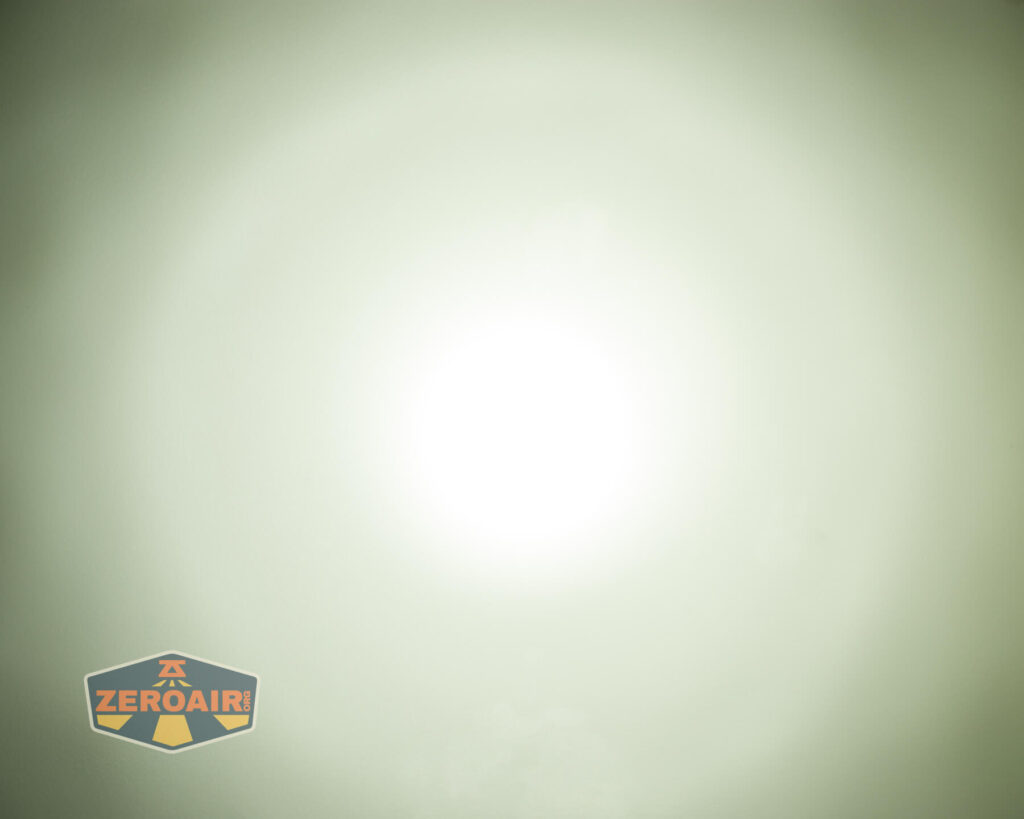
These beamshots always have the following settings: f8, ISO100, 0.3s shutter, and manual 5000K exposure. These photos are taken at floor level, and the beam hits the ceiling around 9 feet away.

Tint vs BLF-348 (KillzoneFlashlights.com 219b version) (affiliate link)
I keep the test flashlight on the left and the BLF-348 reference flashlight on the right.




I compare everything to the KillzoneFlashlights.com 219b BLF-348 because it’s inexpensive and has the best tint!
Conclusion
What I like
- Fantastical output
- Very throwy!
- Correspondingly (to “very throwy”), the beam profile is great!
- CCT is not on the cool side of cool
- Stainless bezel seems to be the default (or only) option now (it’s the best anyway)
- Included cells are capable
What I don’t like
- Gets very hot (like, don’t-give-it-to-someone-who-isn’t-an-enthusiast hot)
- Just four modes (and none of them are the least bit low)
- Specific about cells (requires unprotected button tops!)
Notes
- This content originally appeared at zeroair.org. Please visit there for the best experience!
- Please use my Amazon.com referral link to help support zeroair.org!
- Please support me on Patreon! I deeply appreciate your support!