

Olight i3T 2 EOS Flashlight Review
The Olight i3T 2 EOS is a special “Friendship” flashlight for 2024. The “2” in the name designates that this model supports 10440, too! Read on for testing.
Note From The Editor
Somewhere along the way, after this post was initially published on 12/20/2023, it got totally deleted from the site. I’m not sure how or why that happened, but it happened multiple times over the course of a few years. I’ve rewritten it with some effort, but note that this isn’t really a new post, nor is there any new data herein. So if you see this post on the republish date, I hope you still enjoy it!
Official Specs and Features
Here’s a referral link to the Olight i3T 2 EOS flashlight product page.
Versions
This “2” version is new, but there are a number of bodies. There’s this Friendship 2024 edition, which is some sort of crystalized brass (and apparently not listed on the website.) Also available is a dragon version, as well as just black. They all seem to have the same emitter.
Price
Depending on which version you pick, you’ll pay around $27. Buy the Olight i3T 2 EOS flashlight through this referral link!
What’s Included


- Olight i3T 2 EOS flashlight
- Spare o-rings (2)
- Alkaline AAA
- Manual etc
Package and Manual


Build Quality and Disassembly

I am really not sure what this metal is called. It doesn’t seem like “simply brass” – there’s definitely some intentional flaking going on, and it’s fantastic.
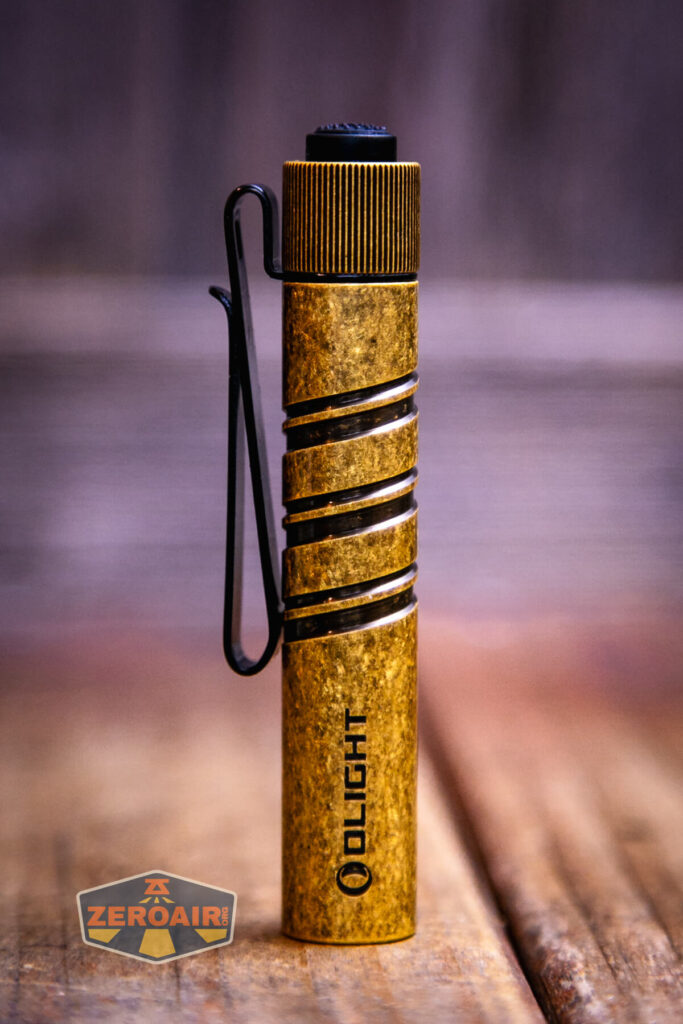


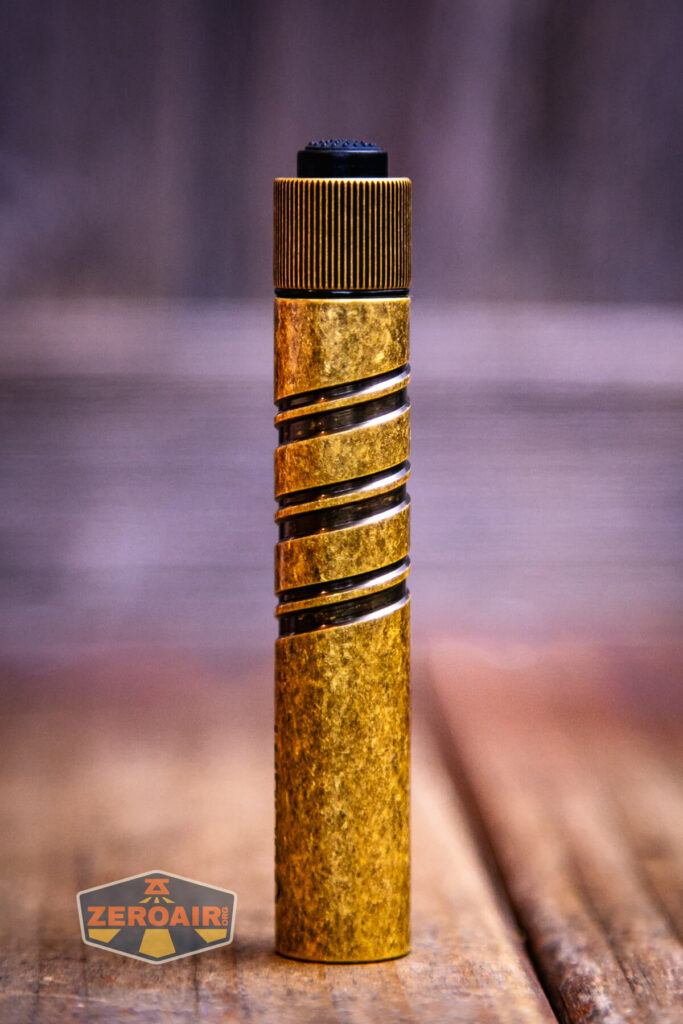
Build-wise, though, this is very much an i3T EOS. There are some electronic improvements, but it still feels like an i3T EOS.

This is as far as I got the light apart. The head didn’t come off readily, and I didn’t fight with it.

The tailcap has nice thick square-cut threads and is unanodized. This does mean that physical lockout isn’t possible, but as this is a mechanical clicky, there’s no drain on the cell if the light is off. There’s also a spring on the tailcap. It’s not double sprung, but it’s stiff enough, and nice quality.


Size and Comps
Length 89mm, Head and body diameter 15mm.


If the flashlight will headstand, I’ll show it here (usually the third photo). If the flashlight will tailstand, I’ll also show that (usually in the fourth photo).

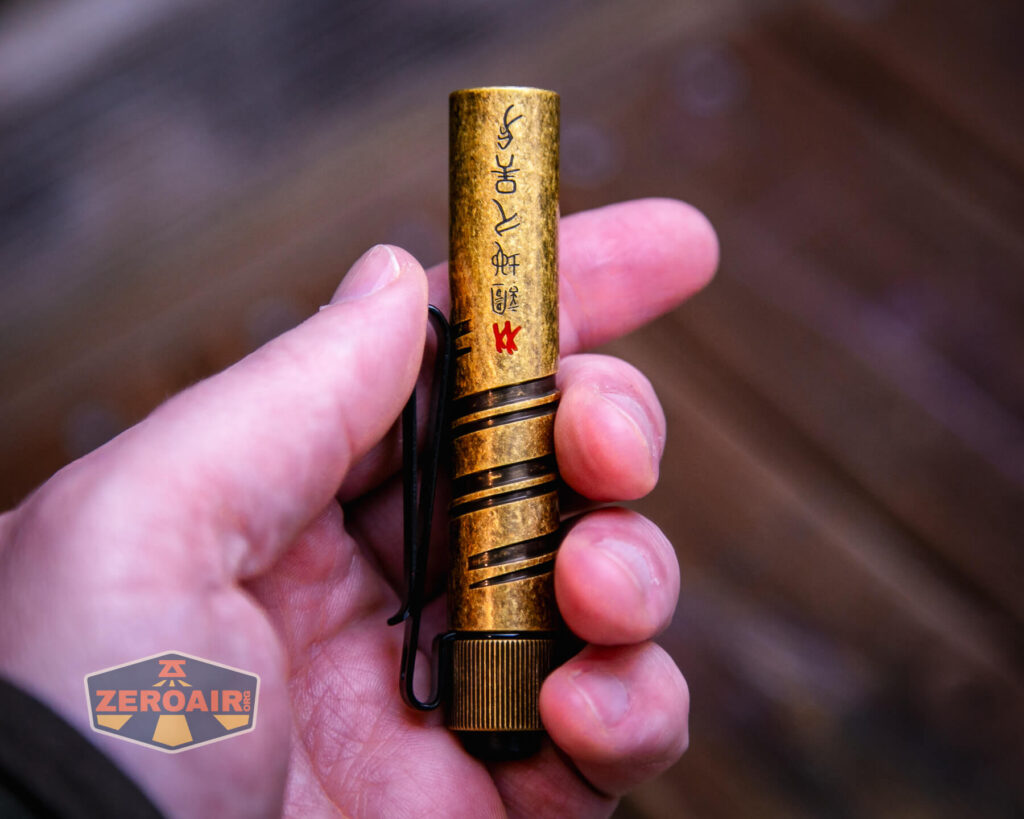
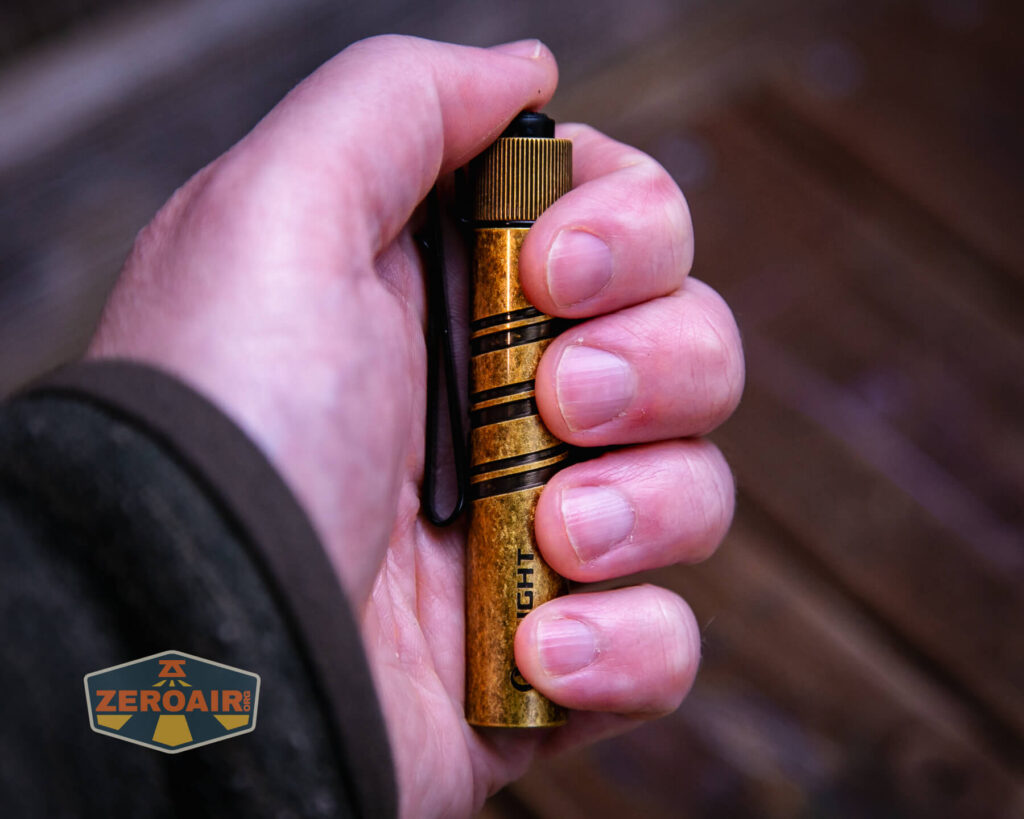
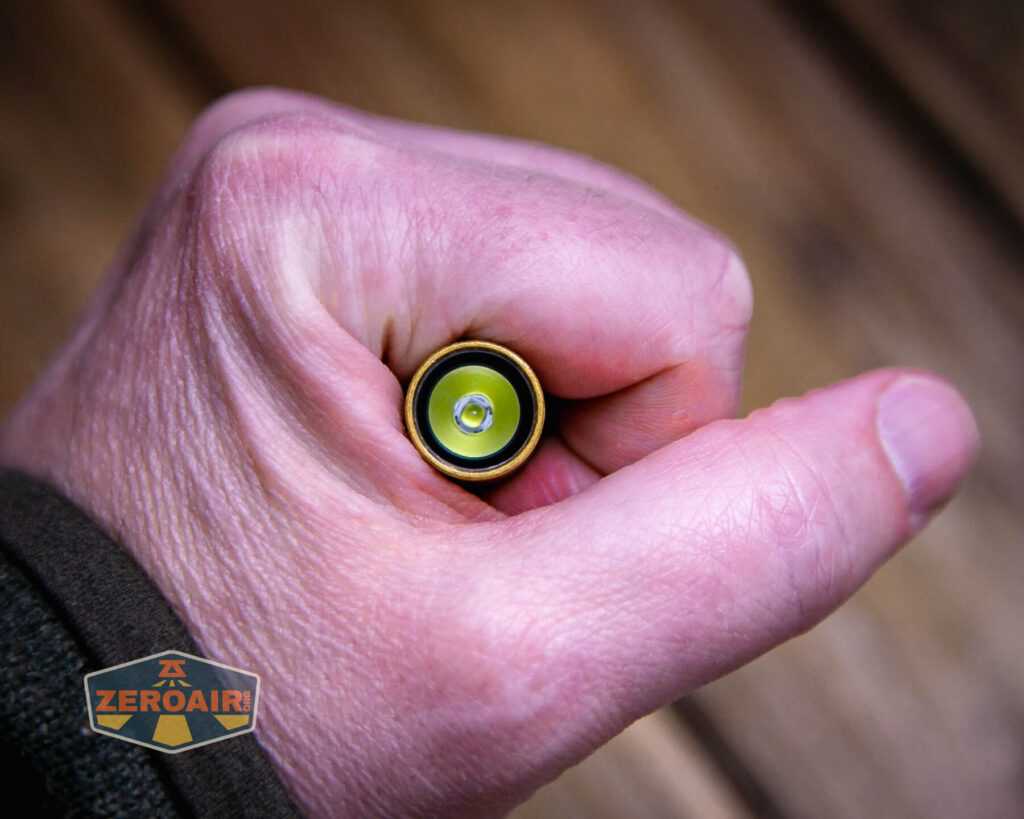
Here’s the test light with the venerable Convoy S2+. The version you see below is a custom Convoy S2+ host that’s been laser engraved by GadgetConnections.com. I did a full post on an orange engraved host right here! Or just go straight to GadgetConnections.com to buy your Convoy S2+ now!


Also above is the light beside a TorchLAB BOSS 35, an 18350 light. I reviewed the aluminum version of that light in both 35 and 70 formats. I also reviewed that specific edition, the “Oveready BOSS FT Collector Vintage Brass” 35. I love it!
Retention and Carry
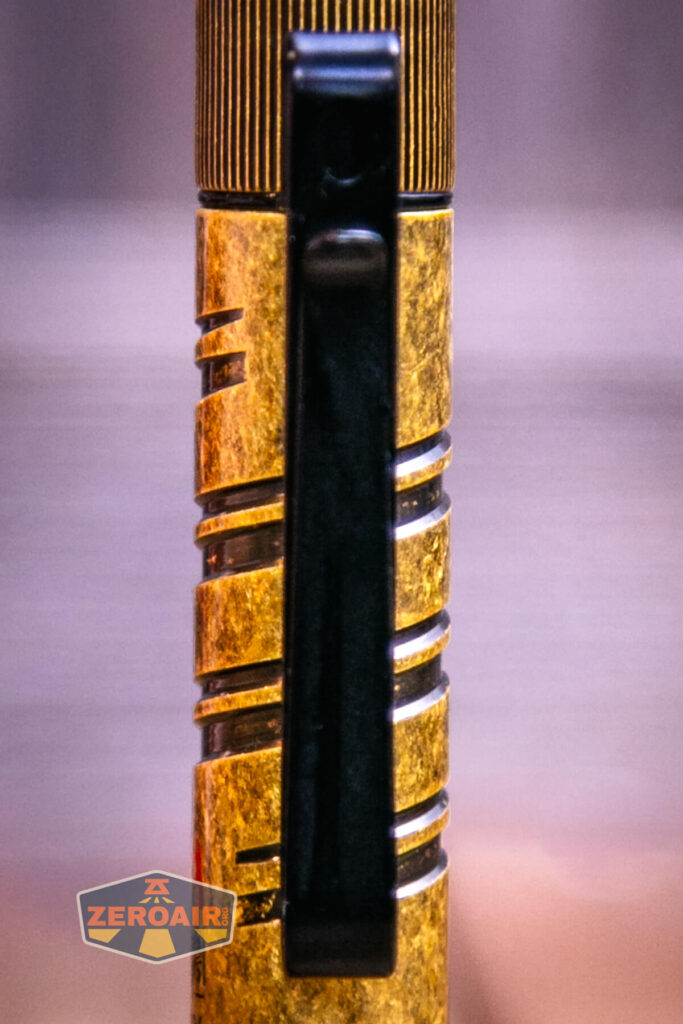
The pocket clip, which arrives installed has the folded-over, clip-either-direction setup. There’s a lanyard hole in the shoulder, too. At one point I didn’t like these clips, and while I still prefer the more traditional type, these have grown on me a little.

Unlike previous iterations, this version has a collar clip! That’s an improvement, I think.

Power and Runtime
Power is provided by a single AAA cell. Olight does include a primary cell, but all my testing was done with an Eneloop AAA NiMH. This being the second version (v2), this Olight i3T 2 EOS flashlight will also run a single 10440 (lithium-ion) cell, too!

I do think you should use rechargeable AAA cells in the Olight i3T EOS flashlight and I recommend these Amazon Basics.
The cell goes into the Olight i3T EOS flashlight in the usual way – positive end toward the head.

Below you can see a number of runtimes – two with lithium-ion and one with an AAA. Output is a bit higher with the lithium-ion, and the stepdown steps down to a higher shoulder. The duration is about the same, so it seems like 10440 is a winner for this light.


Notably, the test with an 10440 on low does not demonstrate low voltage protection. That’s important!
Modes and Currents
| Mode | Mode Claimed Output (lm) | Claimed Runtime | Measured Lumens | Tailcap Amps |
|---|---|---|---|---|
| High (AAA) | 200-100 | 7m+28m | 180 | 1.23 |
| Low (AAA) | 5 | 21h | 5 | 0.03 |
| High (10440) | – | – | 294 | 0.76 |
| Low (10440) | – | – | 6 | [low] |
Pulse Width Modulation
Neither output level for either power source uses PWM.


For reference, here’s a baseline shot, with all the room lights off and almost nothing hitting the sensor. Also, here’s the light with the worst PWM I could find. I’m adding multiple timescales, so it’ll be easier to compare to the test light. Unfortunately, the PWM on this light is so bad that it doesn’t even work with my normal scale, which is 50 microseconds (50us). 10ms. 5ms. 2ms. 1ms. 0.5ms. 0.2ms. In a display faster than 0.2ms or so, the on/off cycle is more than one screen, so it’d just (very incorrectly) look like a flat line. I wrote more about this Ultrafire WF-602C flashlight and explained a little about PWM too.


User Interface and Operation
The switch is a mechanical forward clicky. It’s very clicky and clicks on the downstroke and upstroke. The click is quite loud.


Here’s a user interface table!
| State | Action | Result |
|---|---|---|
| Off | Click | Low |
| Low | Click | High |
| Off | Half-press 5x (and hold on the last half-press) OR Full press 9x^ |
Light will come on in the programmed output for 1 second, then iterate (and program to memory) to the other output. (All you can do is iterate what starts first, you can’t, for example, have two High modes.) |
| Off | Half-press | Momentary (Low first, another half press for high) |
^ Best I can tell, these two programming options do the same thing. I don’t think they really do it well, either – it’s hard to program this light, and this is the tiniest amount of programmability. All you can do is select which mode is the first mode. Also when programming, you’ll quickly realize how stiff this switch is. Very stiff, that’s how.
The light will revert to low as the next mode once off for 2 seconds.
LED and Beam
Olight doesn’t state what emitter is used in the Olight i3T 2 EOS flashlight, but previous versions used a Philips Luxeon TX. Maybe that’s what we have here, too.

That emitter is coupled with a clear TIR.


LED Color Report (CRI and CCT)
CCT is approximately cool white. CRI is low.


Beamshots
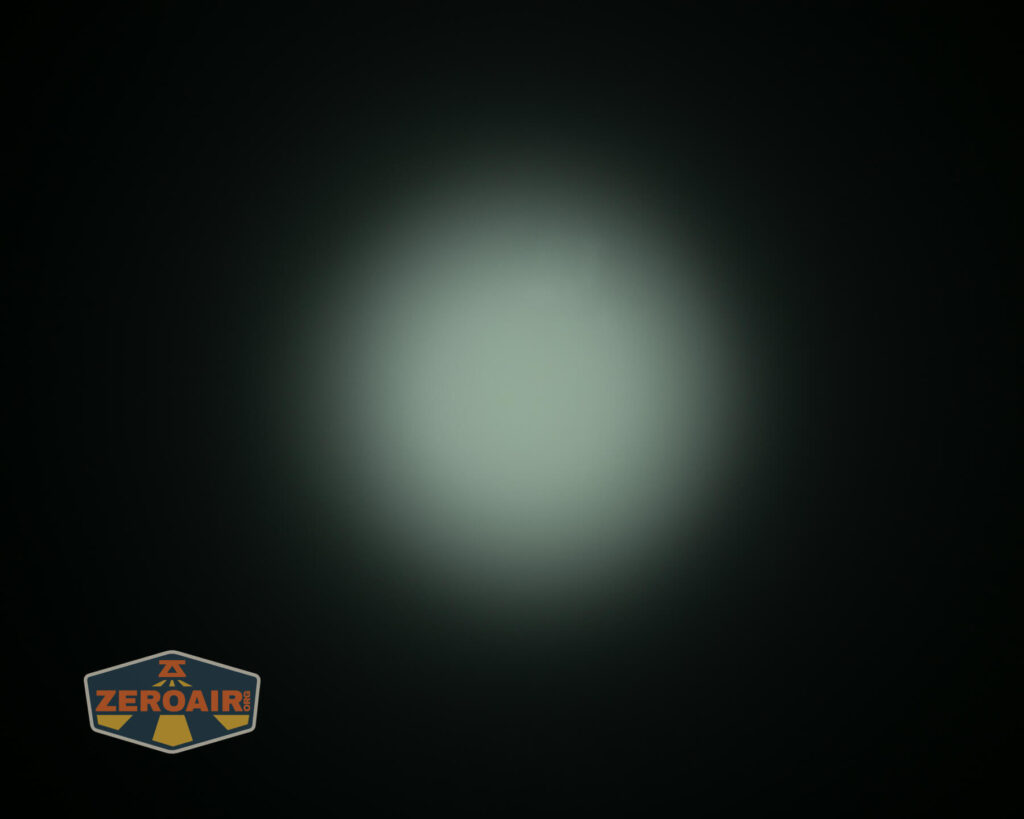
These beamshots are always with the following settings: f8, ISO100, 0.3s shutter, and manual 5000K exposure.
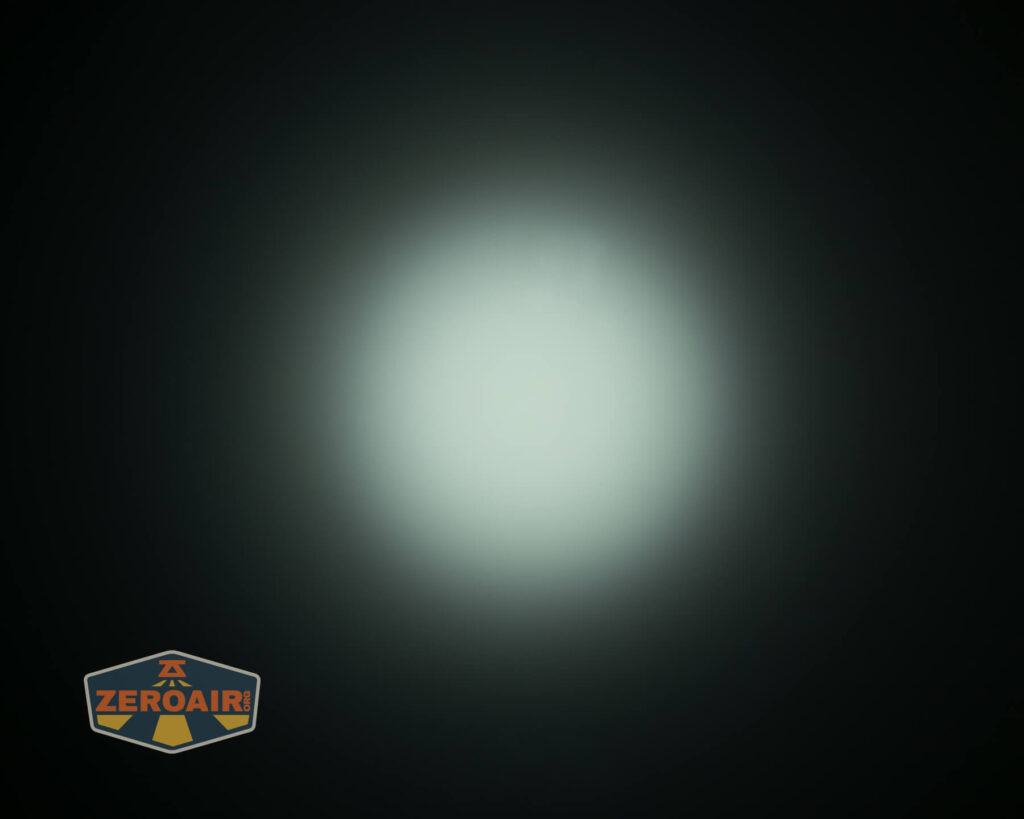
Tint vs BLF-348 (KillzoneFlashlights.com 219b version) (affiliate link)
I keep the test flashlight on the left, and the BLF-348 reference flashlight on the right.

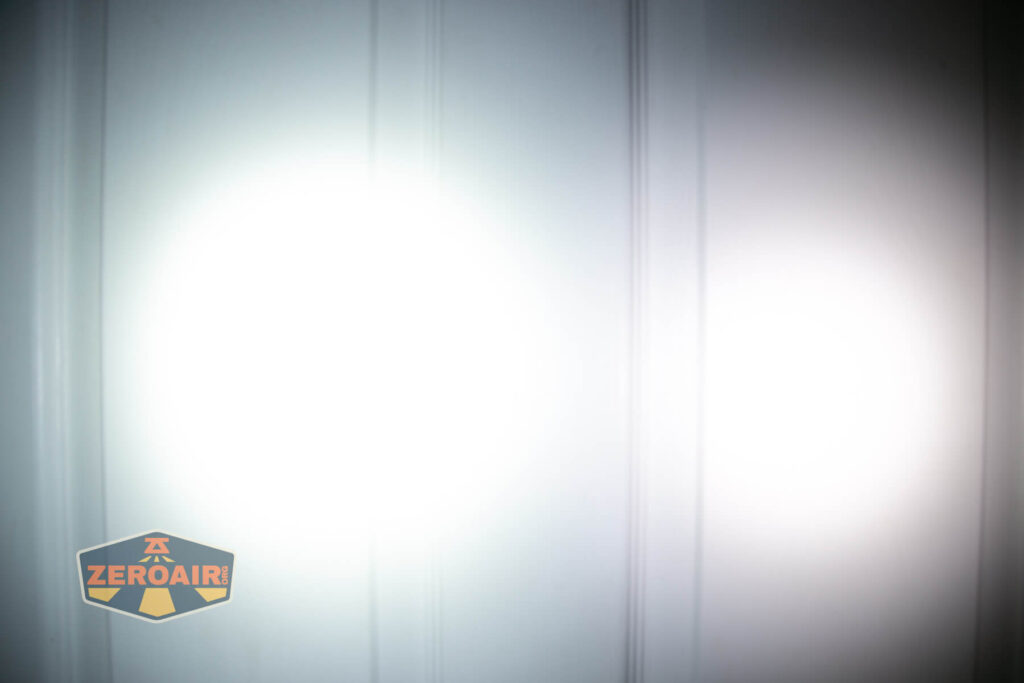

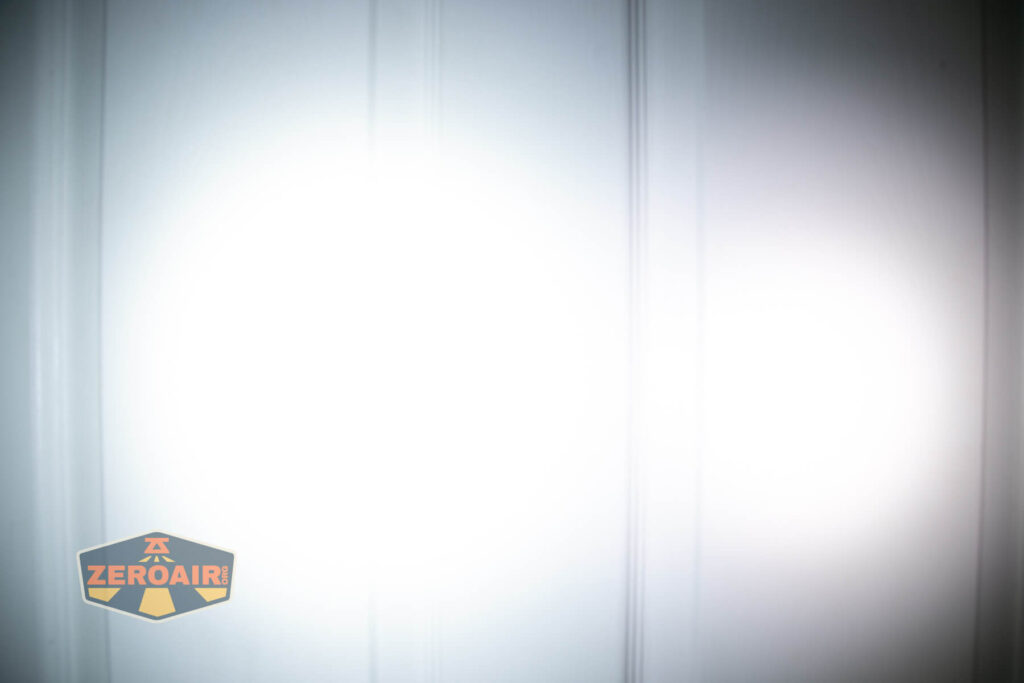
I compare everything to the KillzoneFlashlights.com 219b BLF-348 because it’s inexpensive and has the best tint!
Summary and Conclusion
It’s very nice that Olight has officially added 10440 support for the i3T EOS. I probably won’t ever use that, but I like not having to worry about dropping any cell into the light. I like the simple user interface, and this crystalized brass is great!
The Big Table
| Olight i3T 2 EOS Friendship 2024 | |
|---|---|
| Emitter: | Unstated |
| Price in USD at publication time: | $26.99 |
| Cell: | 1×10440 1xAAA |
| Runtime Graphs | |
| LVP? | No |
| Switch Type: | Mechanical |
| On-Board Charging? | No |
| Claimed Lumens (lm) | 10440: – AAA: 200 |
| Measured Lumens (at 30s) | 10440: 290 AAA: 180 (90% of claim)^ |
| Candela per Lumen | 10440: 5.86 AAA: 5.67 |
| Claimed Throw (m) | 10440: – AAA: 62 |
| Candela (Calculated) in cd (at 30s) | 10440: 143lux @ 3.535m = 1787cd AAA: 94lux @ 3.336m = 1046cd |
| Throw (Calculated) (m) | 10440: 84.5 AAA: 64.7 (104.4% of claim)^ |
| Claimed CCT | 10440: – AAA: – |
| Measured CCT Range (K) | 10440: 5500-5800 Kelvin AAA: 5600-5900 Kelvin |
| Item provided for review by: | Olight |
| All my Olight reviews! | |
^ Measurement disclaimer: Testing flashlights is my hobby. I use hobbyist-level equipment for testing, including some I made myself. Try not to get buried in the details of manufacturer specifications versus measurements recorded here; A certain amount of difference (say, 10 or 15%) is perfectly reasonable.
What I like
- Simple user interface
- AAA format (with alkaline/NiMH support)
- Supports 10440 (lithium-ion)
- TIR optic beam profile
- No strobe!
- Square-cut, high-quality threads
What I don’t like
- No Nichia option
- Programmable
Notes
- This content originally appeared at zeroair.org. Please visit there for the best experience!
- Use my amazon.com referral link if you’re willing to help support making more reviews like this one!
- Please support me on Patreon! Feeding flashlights is expensive! And funding Fun Fund Friday even more so. I deeply appreciate your support!