
Skilhunt E2A V2 Flashlight Review
The Skilhunt E2A V2 flashlight is available with four emitter options and a very simple user interface. It can run the included 14500 or 1.5V AA batteries, too! Read on!
Official Specs and Features
Here’s a referral link to the Skilhunt E2A V2 flashlight product page.
Versions
Four emitters are available, including this LHP351 cool white option. There’s also a high CRI option, among others. Three body colors are available, and you can pick three different cell options.
Price
As seen in this review, the Skilhunt E2A V2 flashlight costs $26.90.
What’s Included
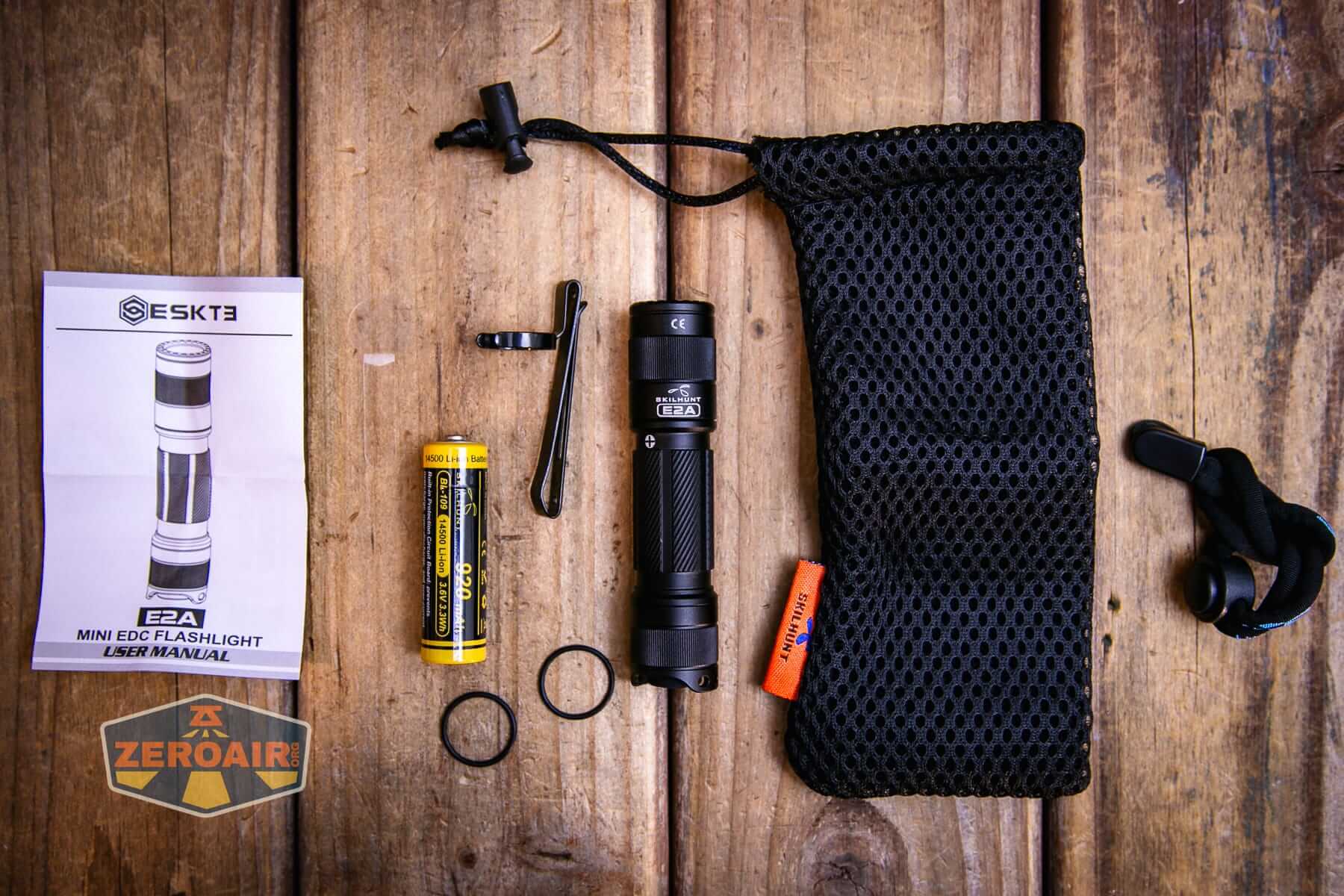
- Skilhunt E2A V2 flashlight
- Skilhunt 14500 cell
- Pocket clip
- Lanyard
- Spare o-rings (2)
- Mesh pouch
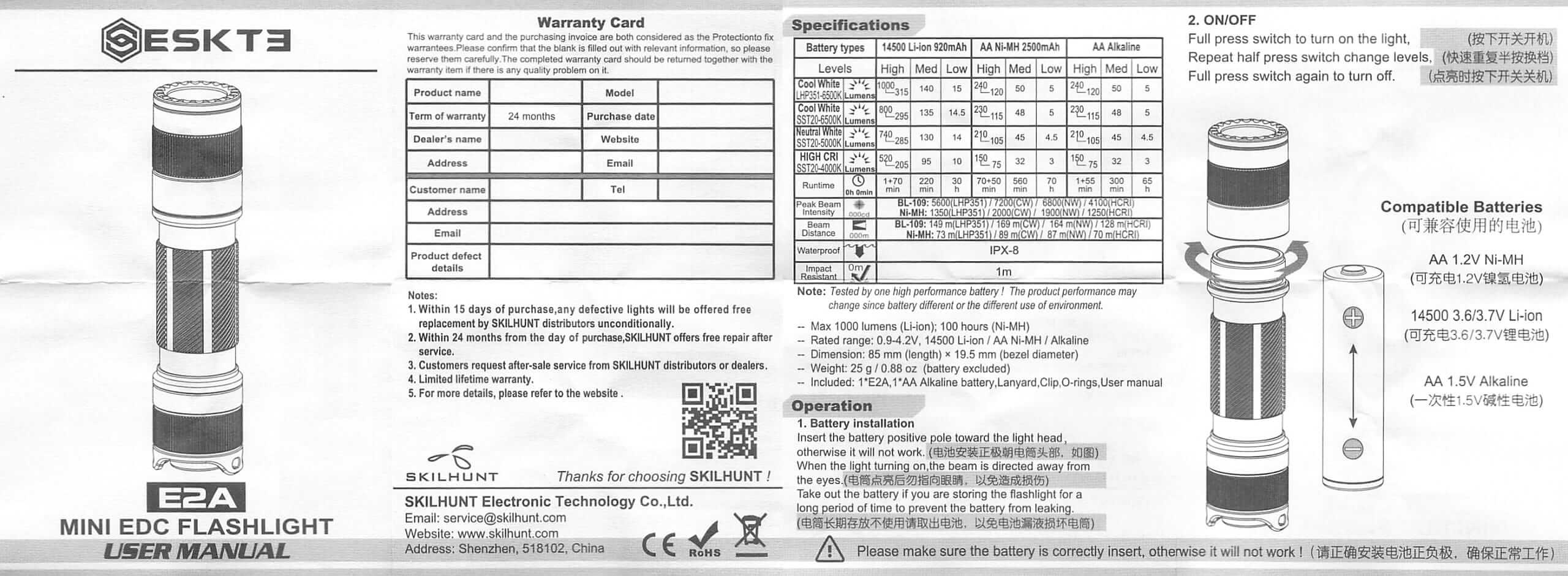
- Manual
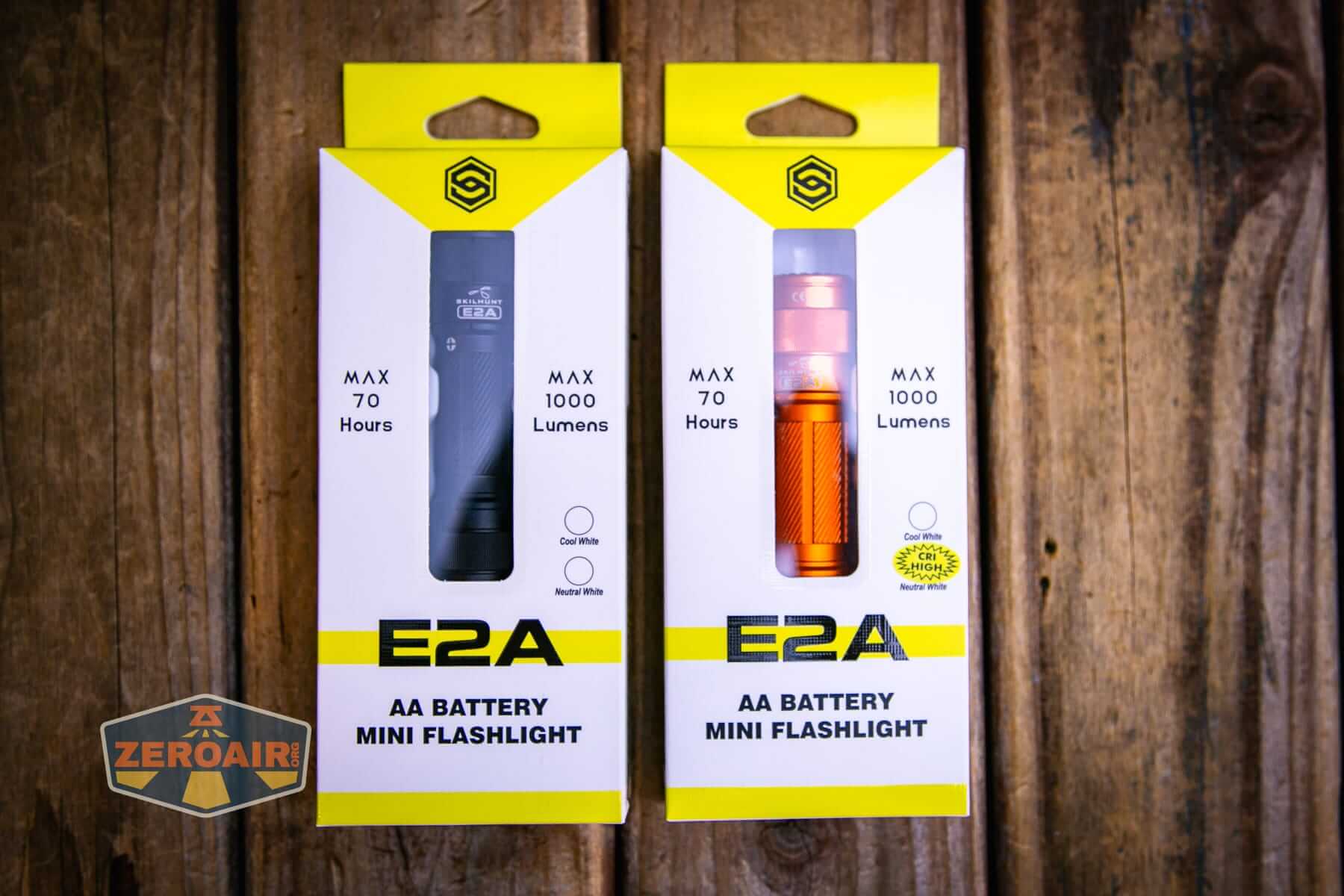
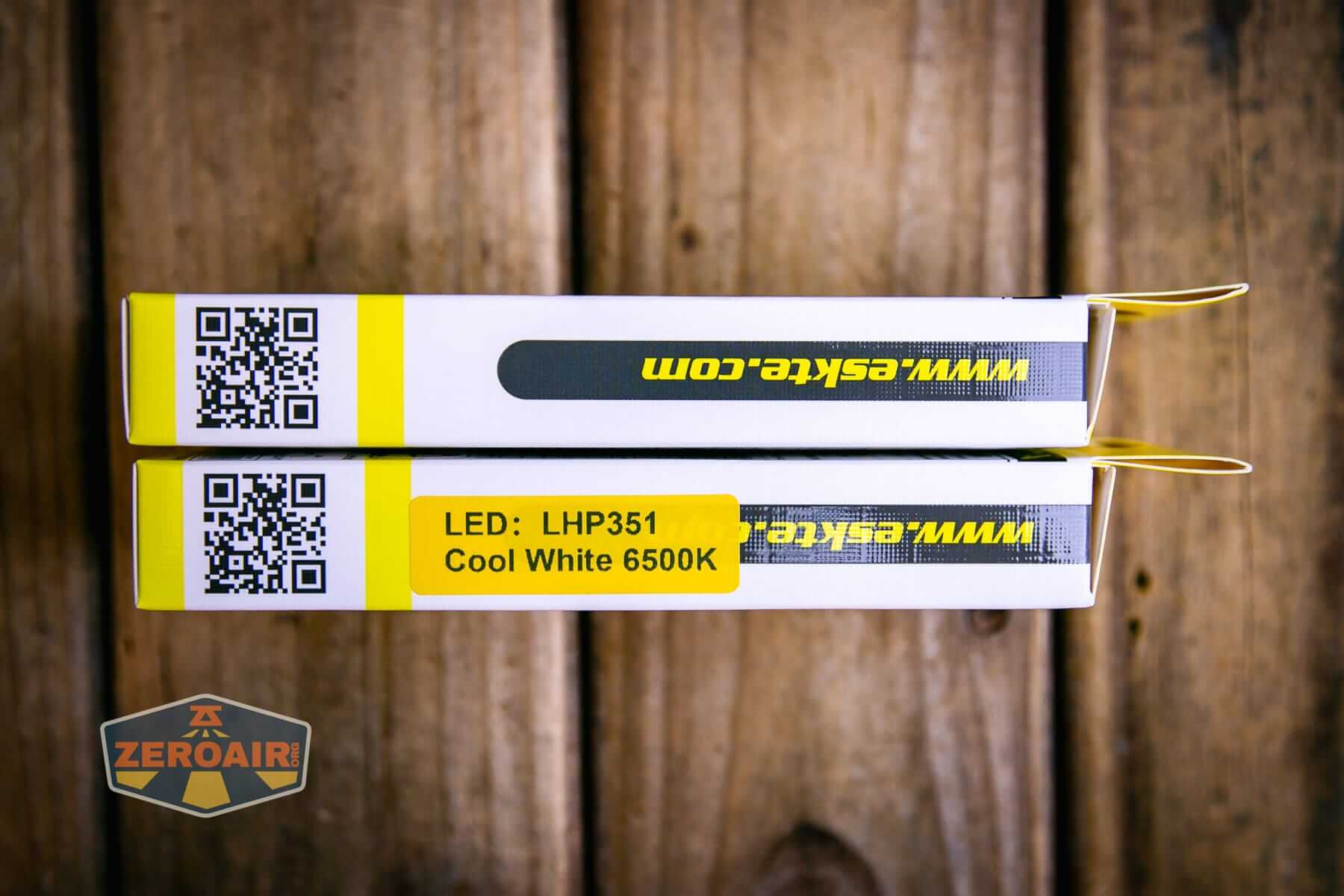
Package and Manual
Build Quality and Disassembly
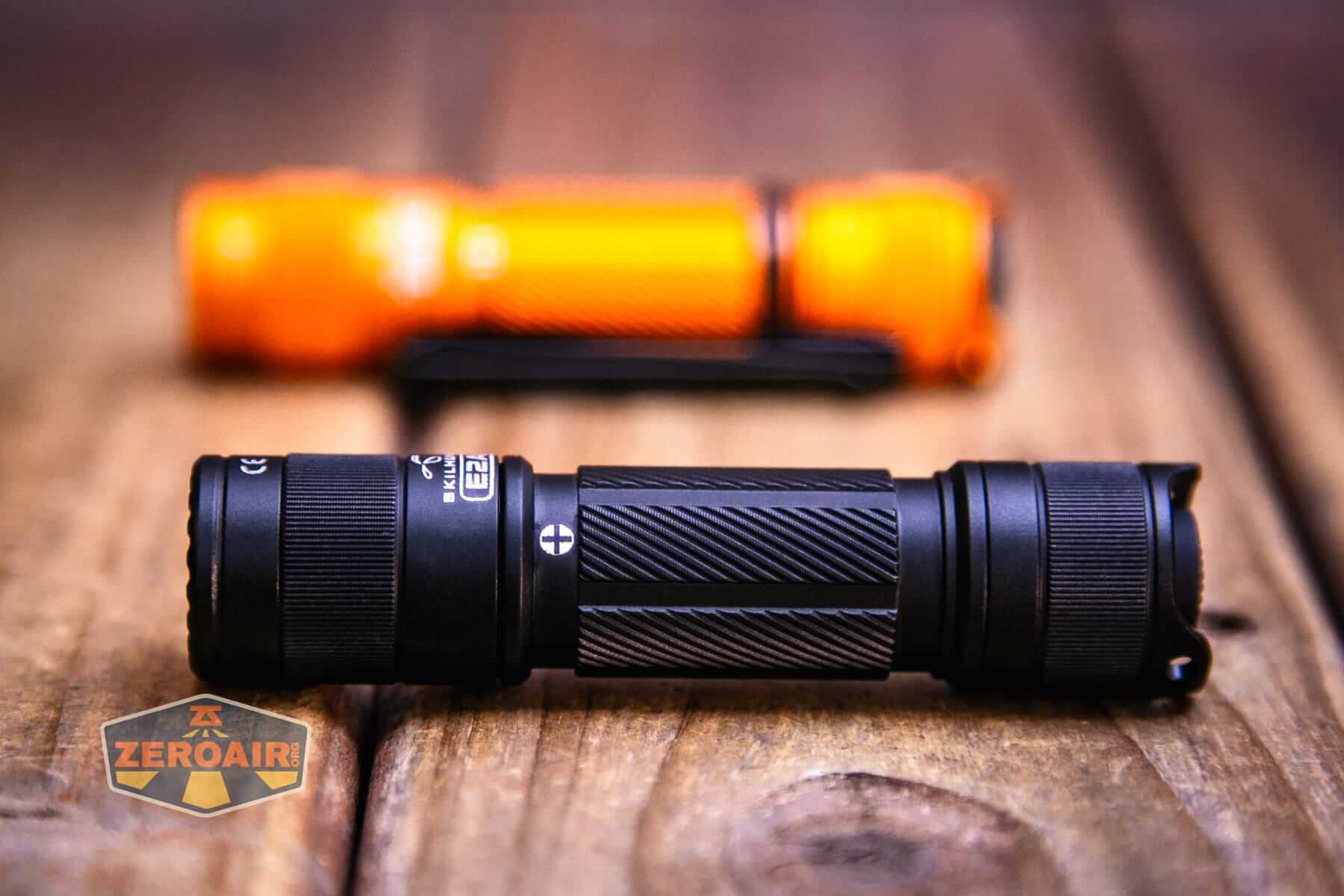
As far as I can tell, the body of the Skilhunt E2A V2 flashlight is unchanged from the original style. That’s fine – the original E2A was great! It’s a very simple light.
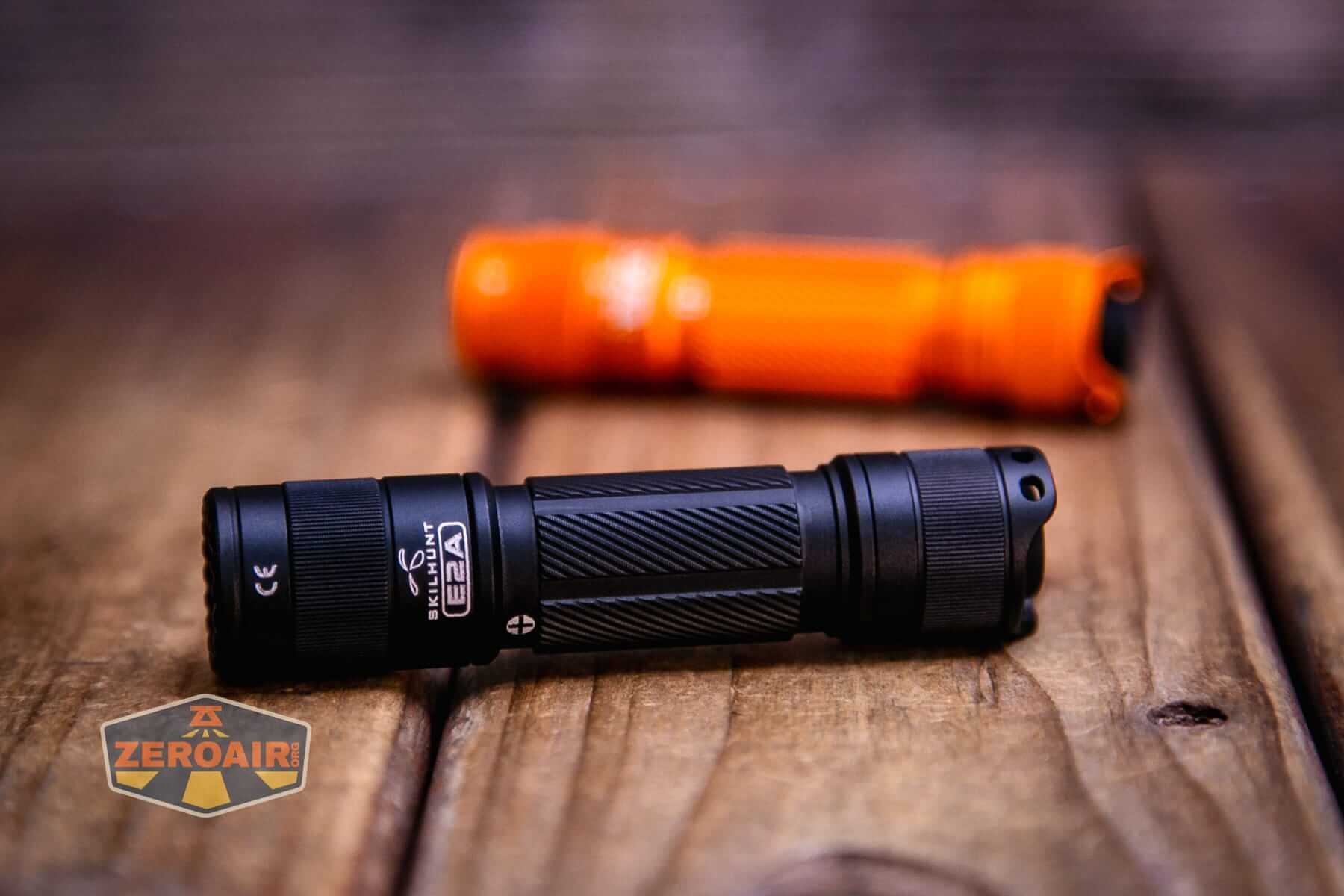
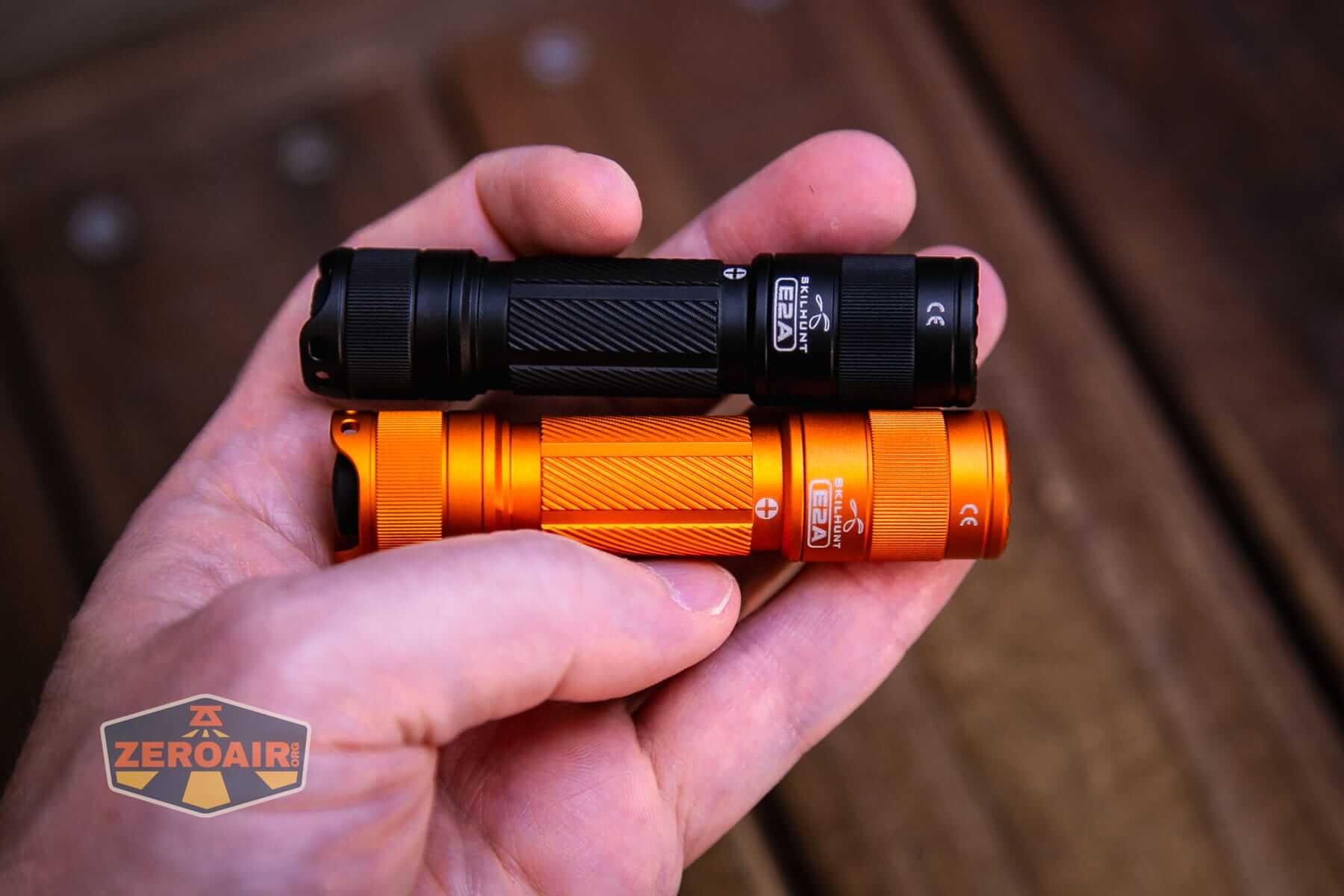
Also, I received two of these lights. One black (above) and one orange (below), with different emitter options. This black body has the LHP351 cool white emitter. But any body can have any emitter, so I’ve mixed photos between the lights.
The head removes easily to reveal fairly short, square-cut, and anodized threads.
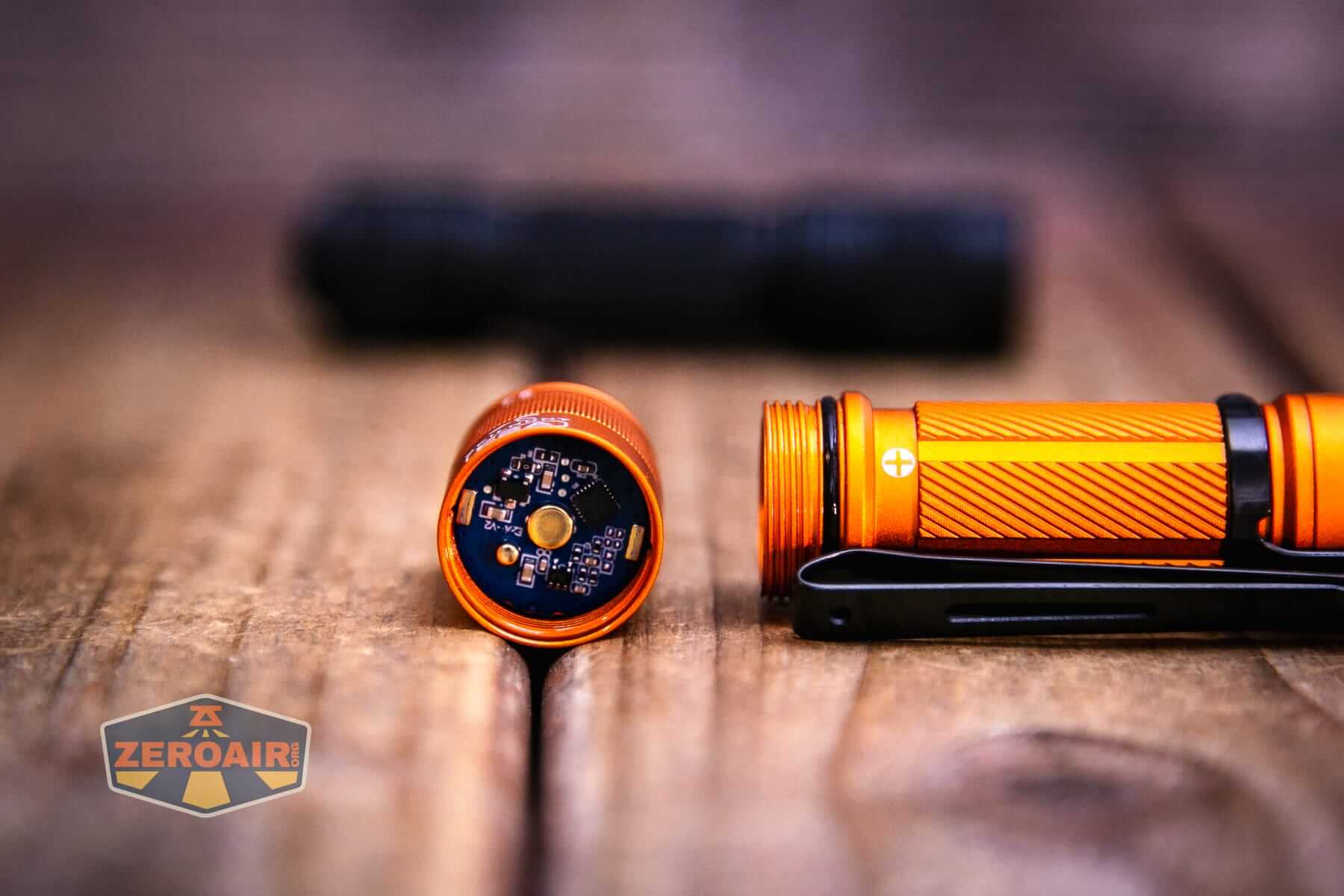
Compared to the original E2A, this V2 has gained a bunch of components on the driver!
The tailcap is glued and is not removable. It has a spring.
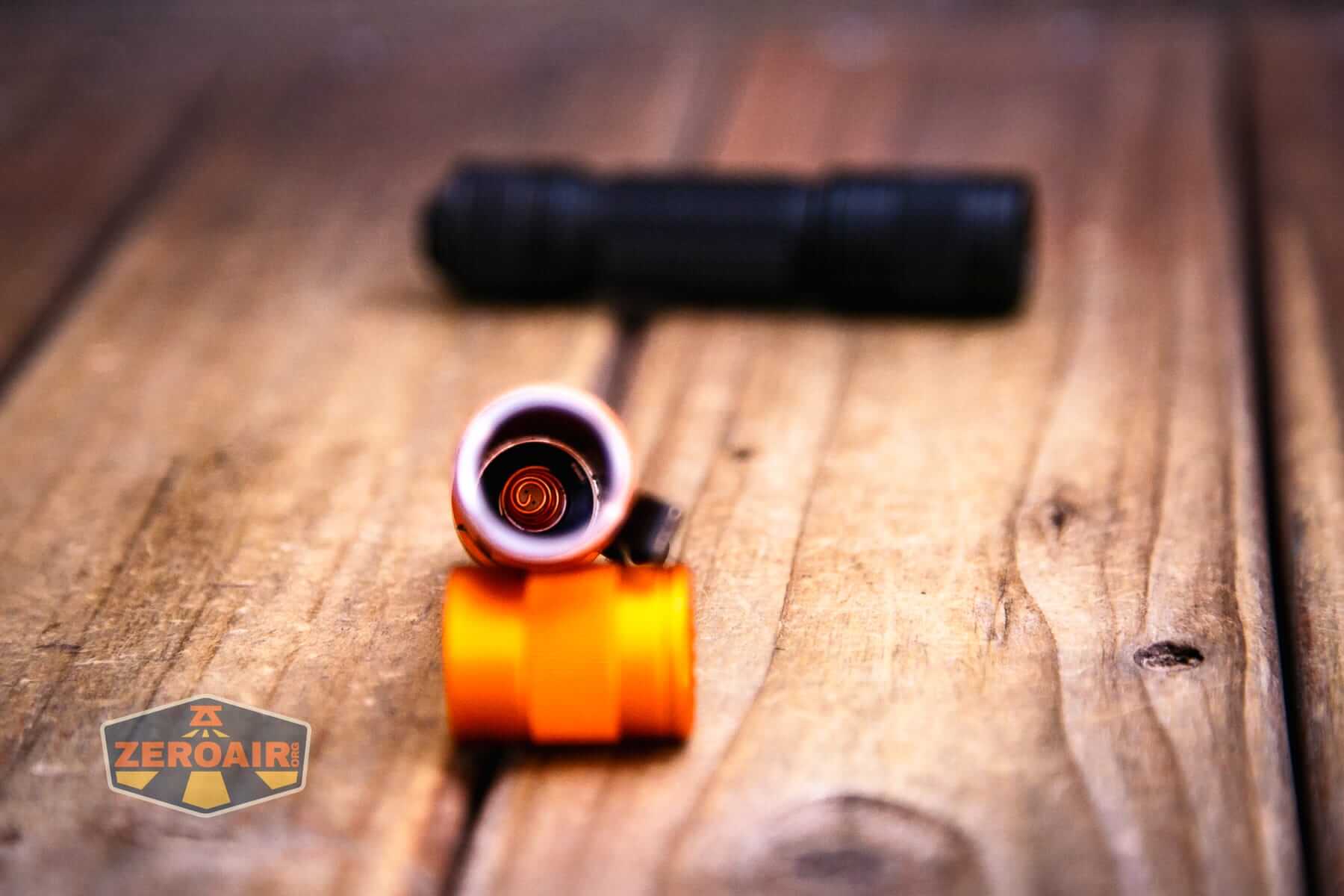
Unlike the original, the bezel does not seem removable.
Size and Comps
85mm x 19mm x 18mm and 25g without cell.
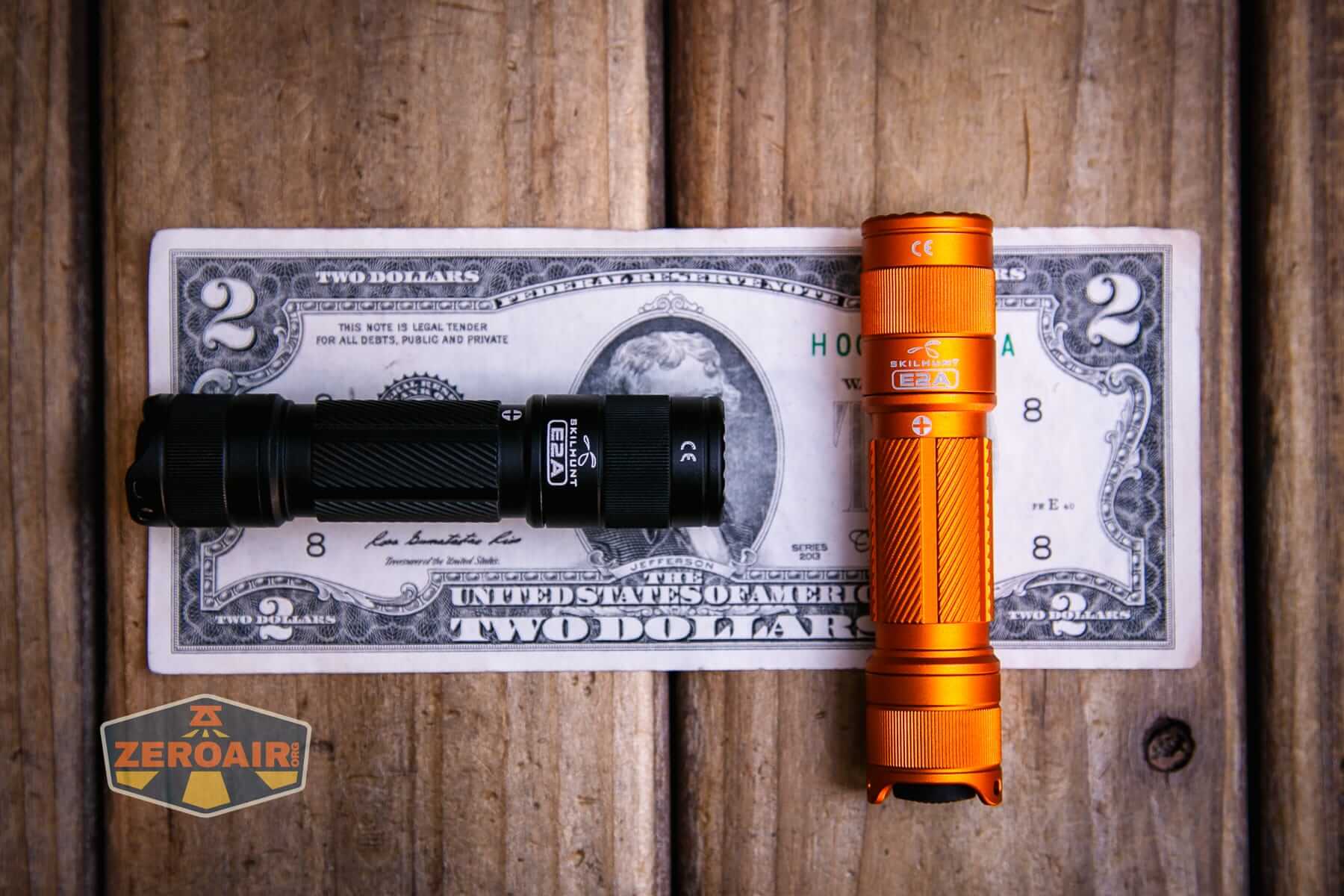
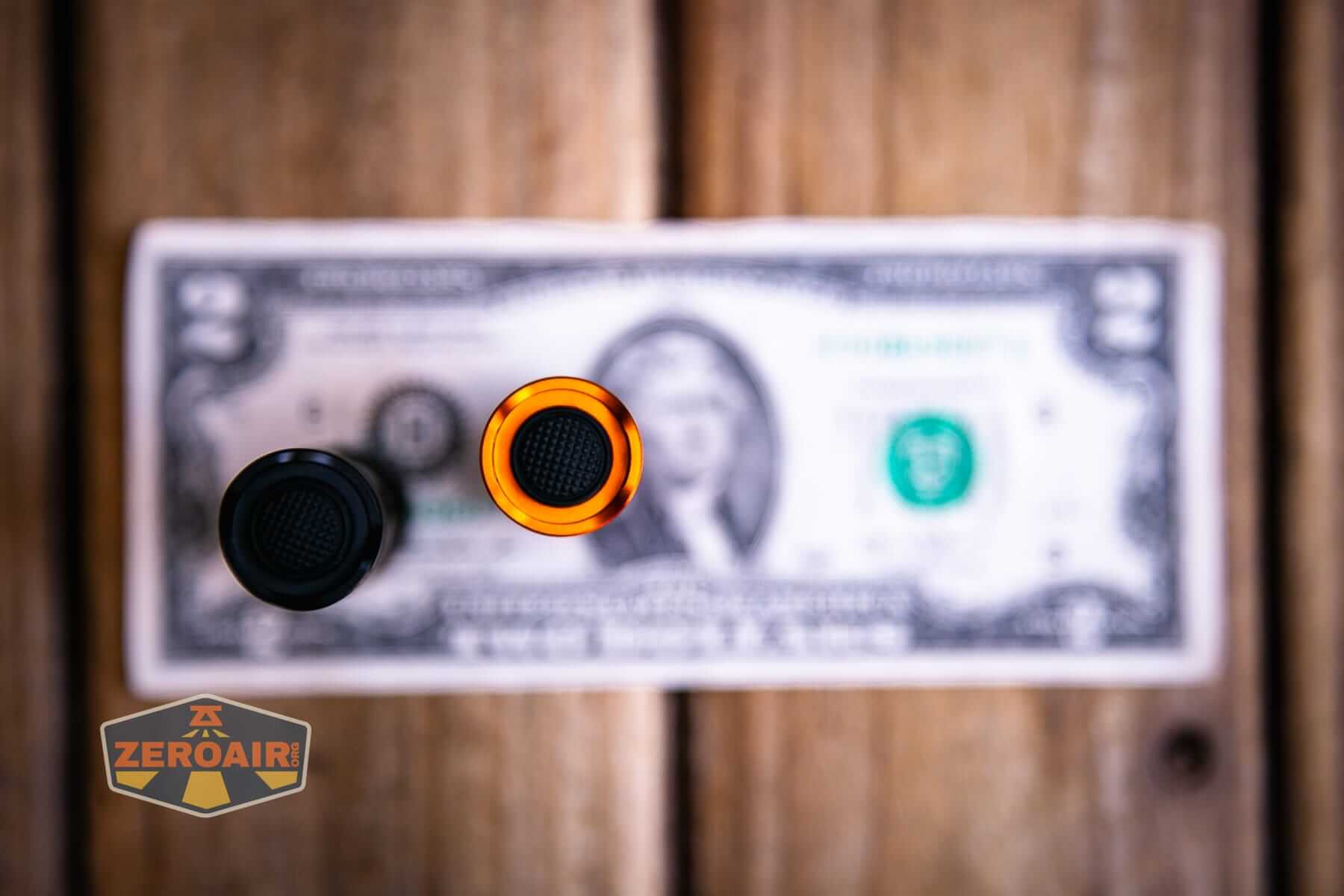
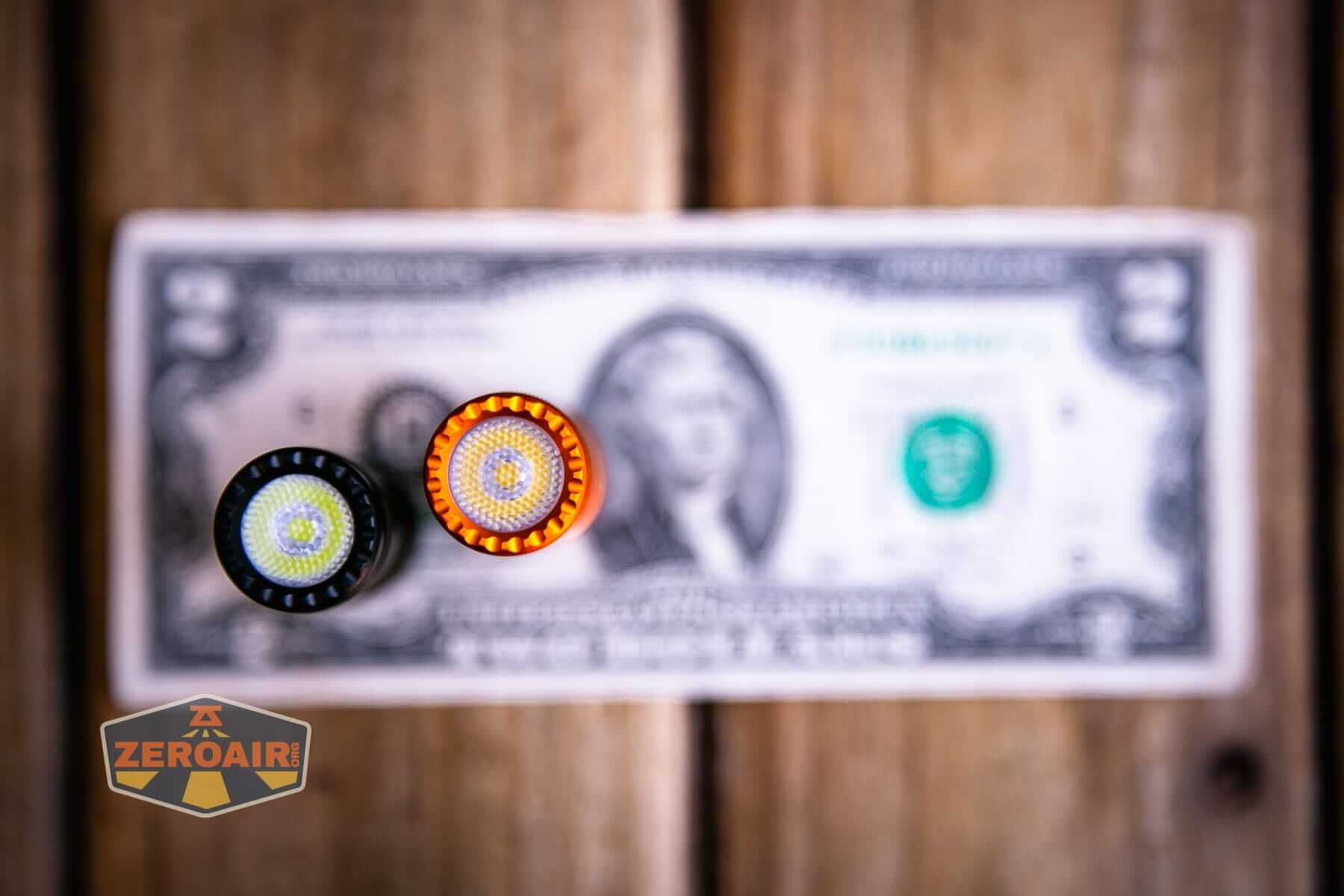
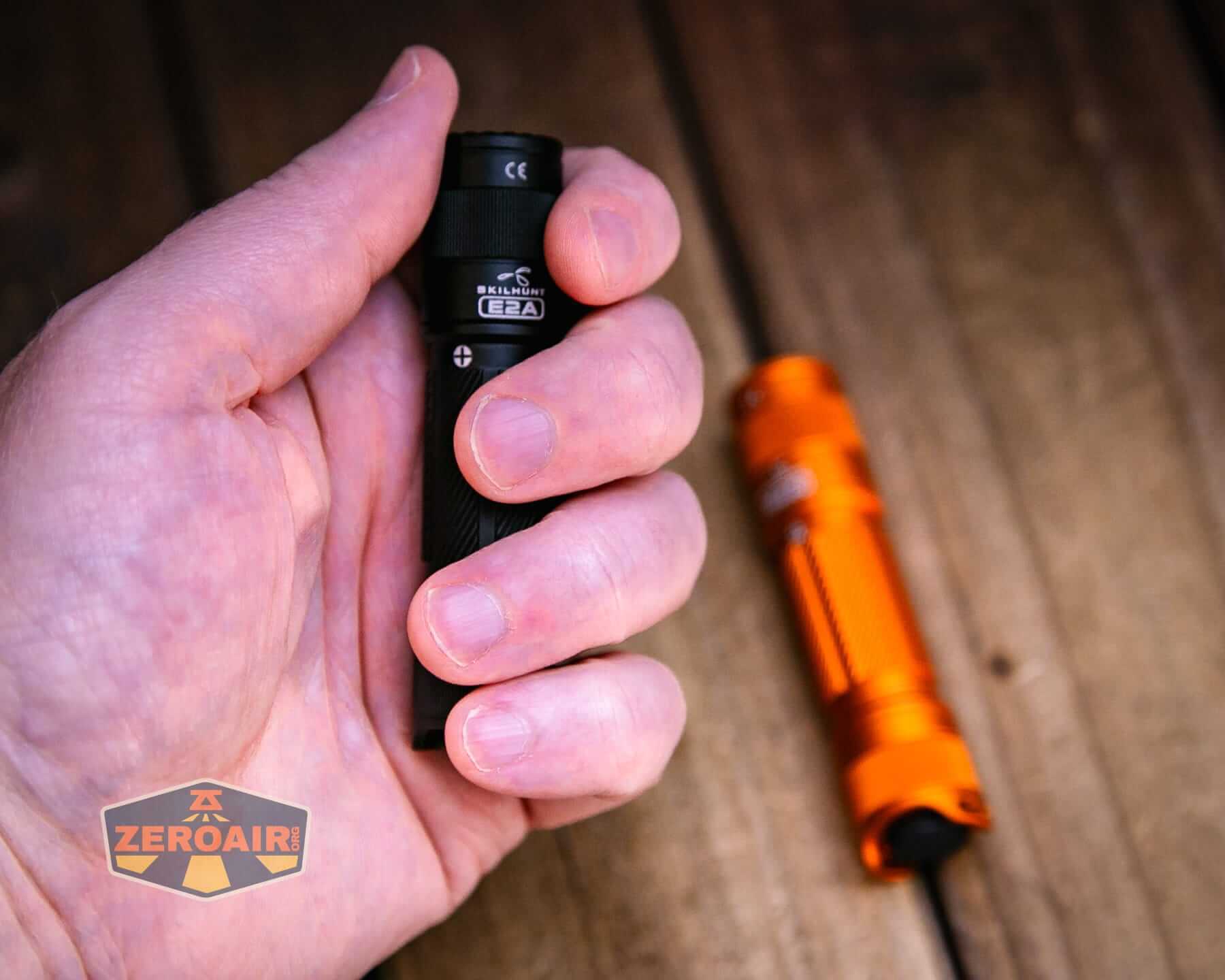
Here’s the light in hand:
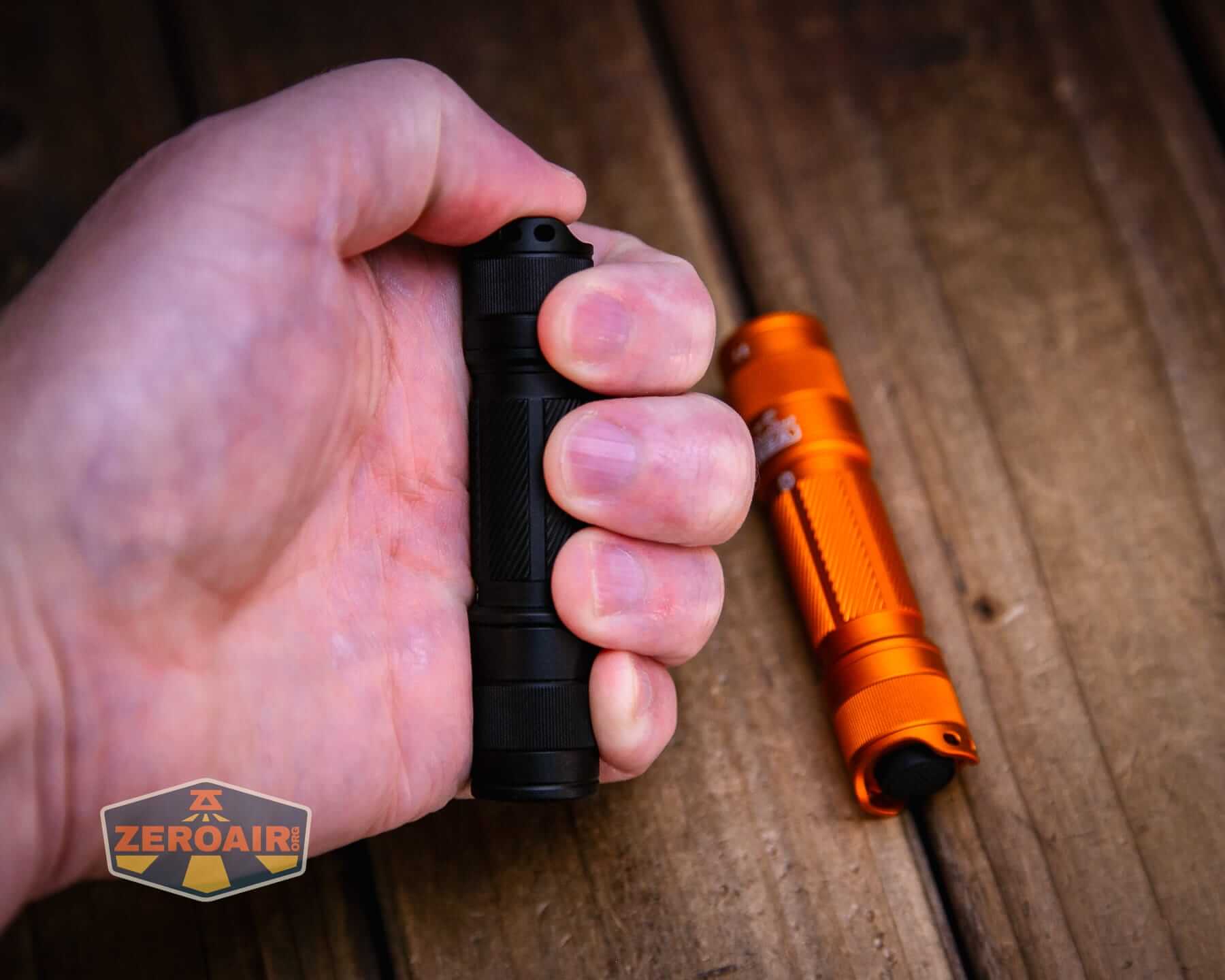
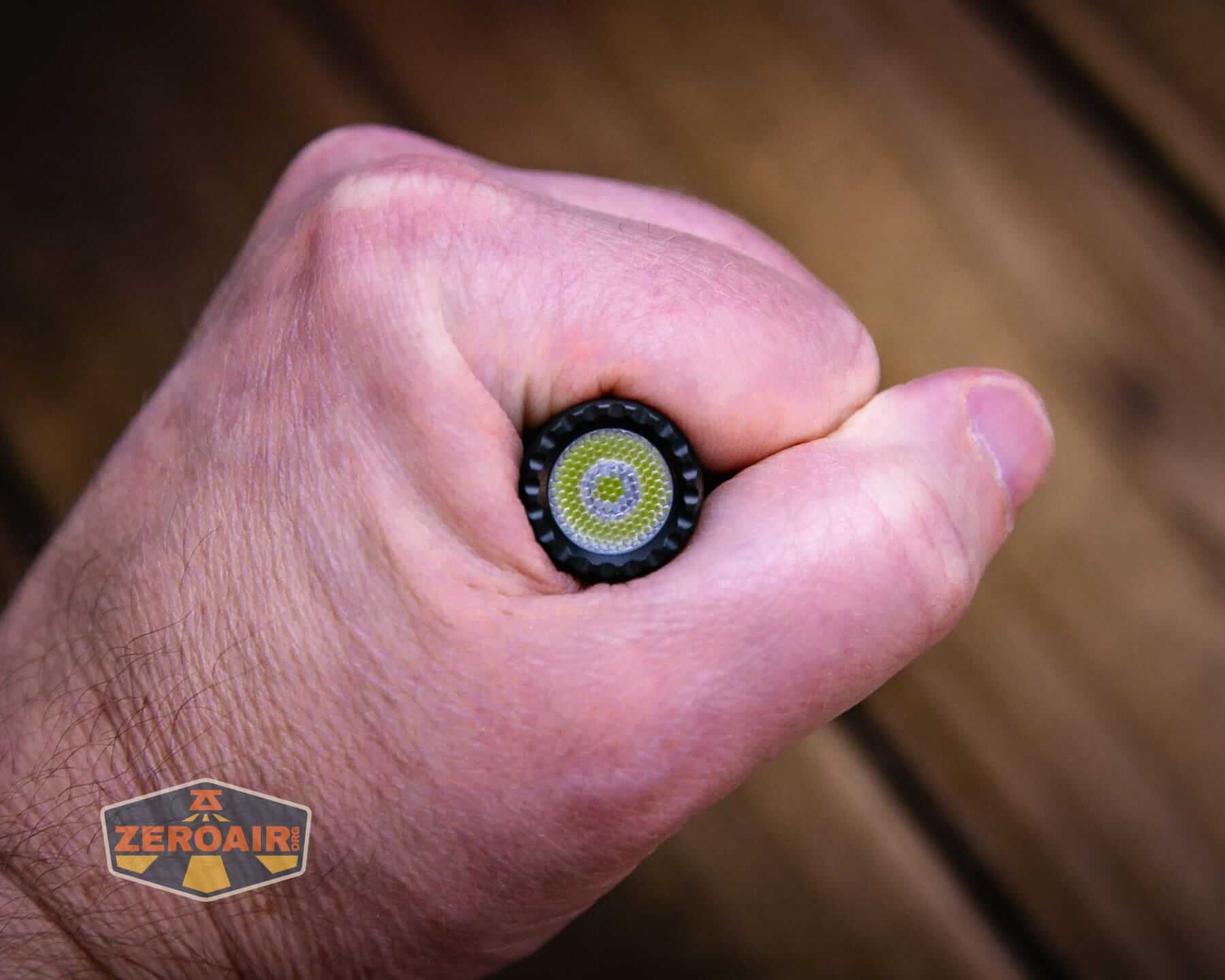
Here’s the test light with the venerable Convoy S2+. This is a brass version, which is a good bit heavier than aluminum, but has the same dimensions: 24mm in diameter by 117.5mm in length.
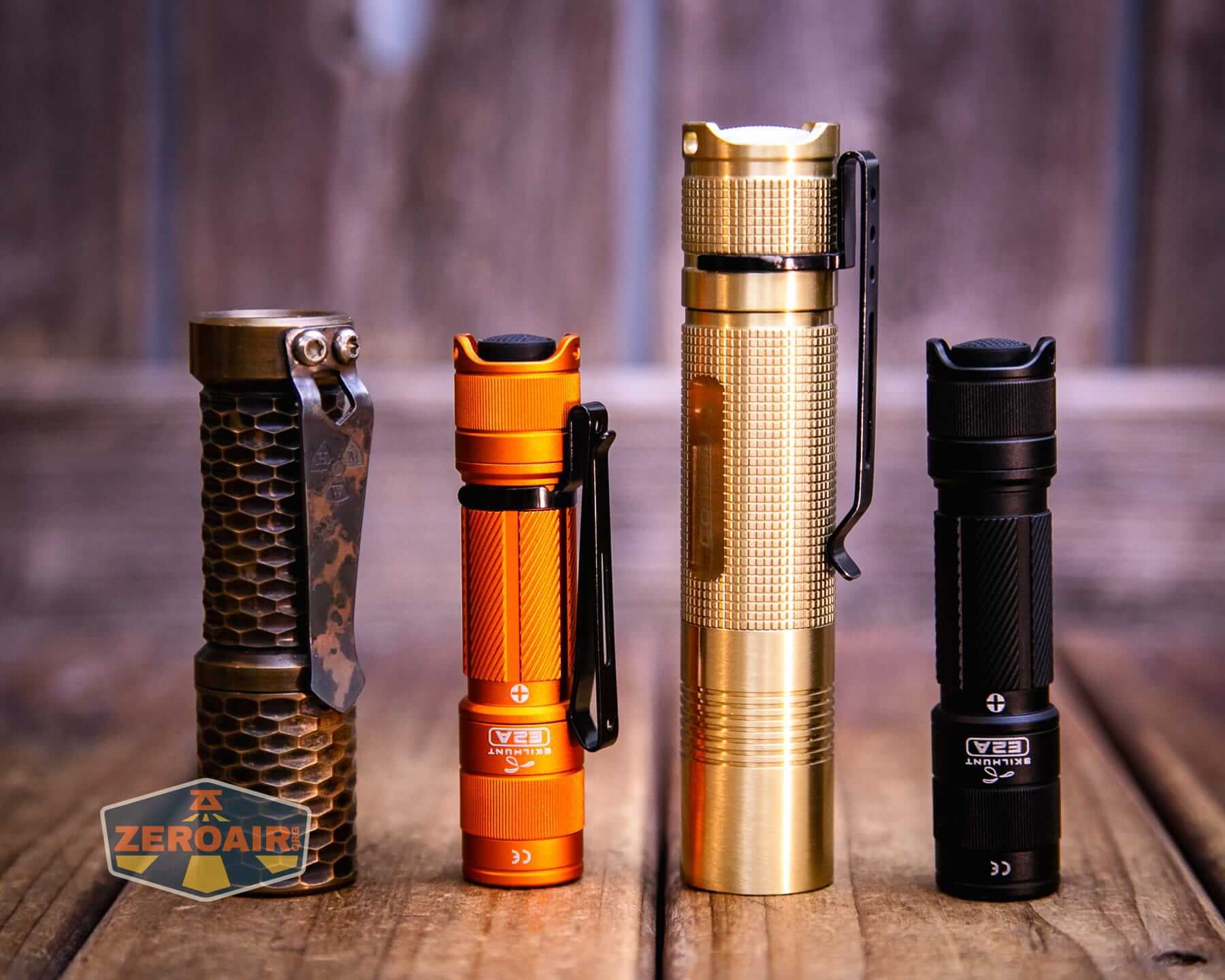
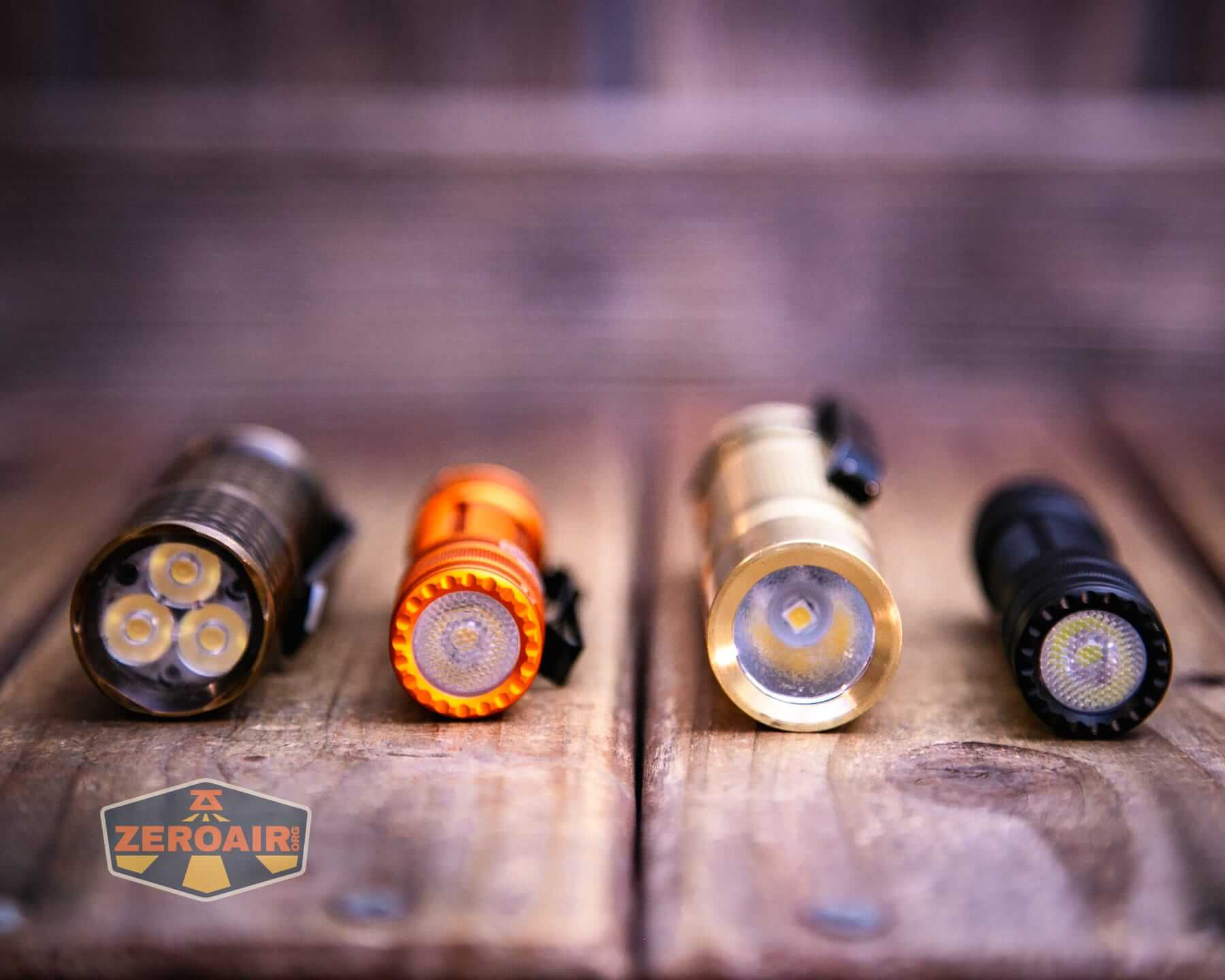
Also in the photo above, my Standard Reference Material (SRM) flashlight is the Hanko Machine Works Trident, an 18350 light. While I have not reviewed or tested the Gunner Grip version seen here, I have tested a Hanko Machine Works Trident Total Tesseract in brass. I love the Trident, and it’s a striking contrast to the inexpensive Convoy S2+, another great SRM.
Retention and Carry
A pocket clip is provided but not installed with the Skilhunt E2A.
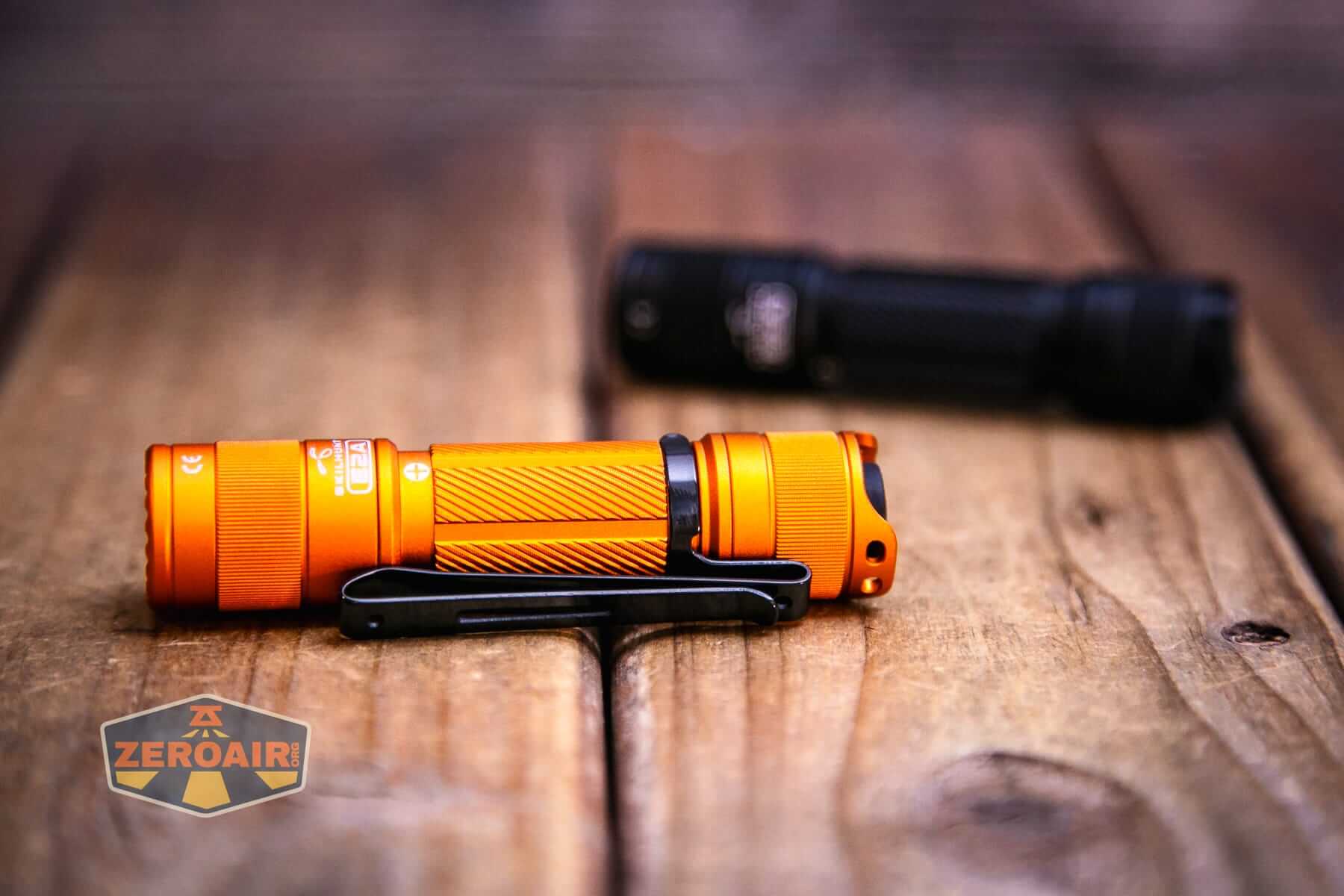
The clip is upgraded (from the original) and is a thicker two-way clip. This is a huge improvement!
Another upgrade is that the clip can be installed on the head or tail end of the Skilhunt E2A V2 flashlight.
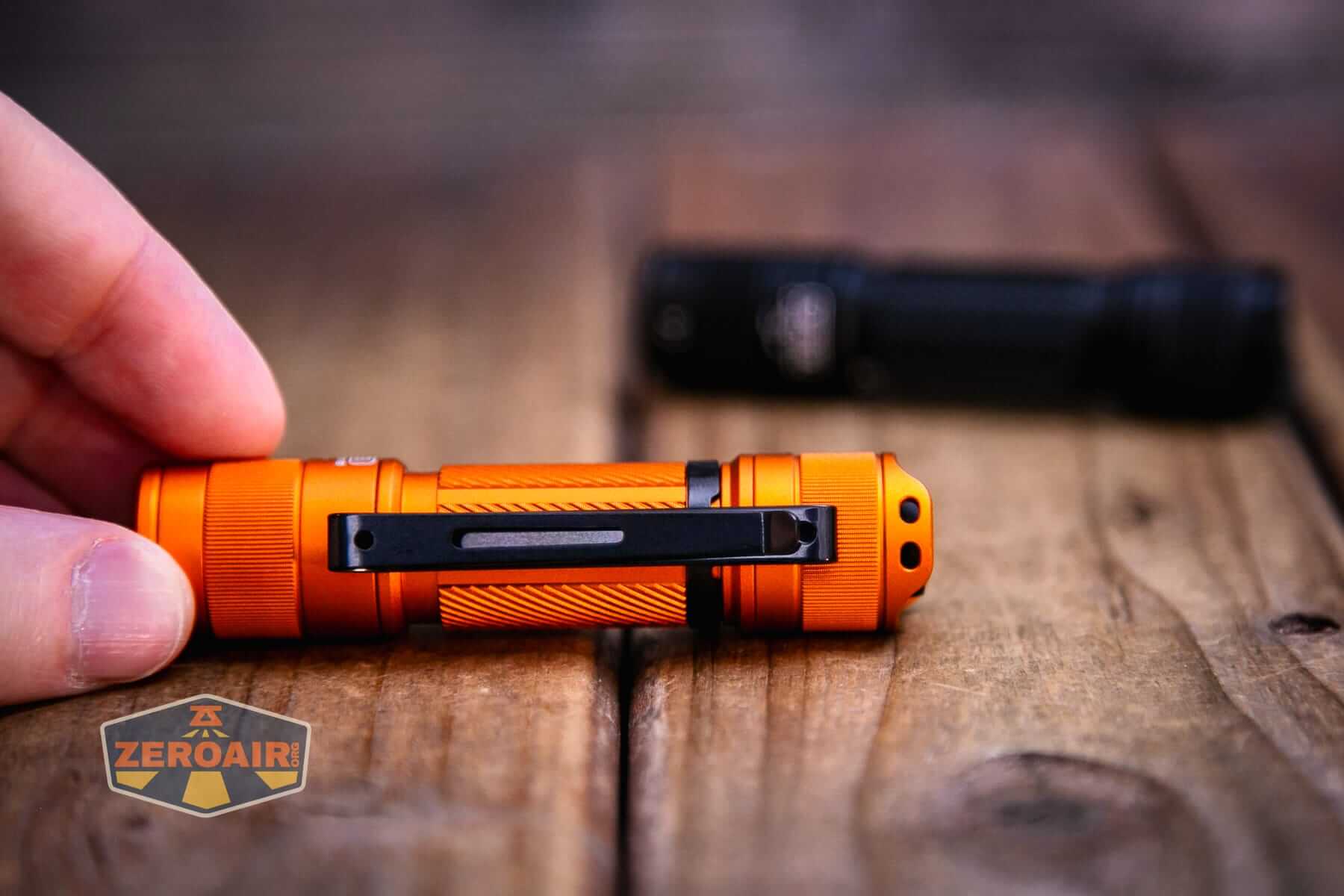
The included lanyard may be installed through the pocket clip or more appropriately through either of the tailcap holes.
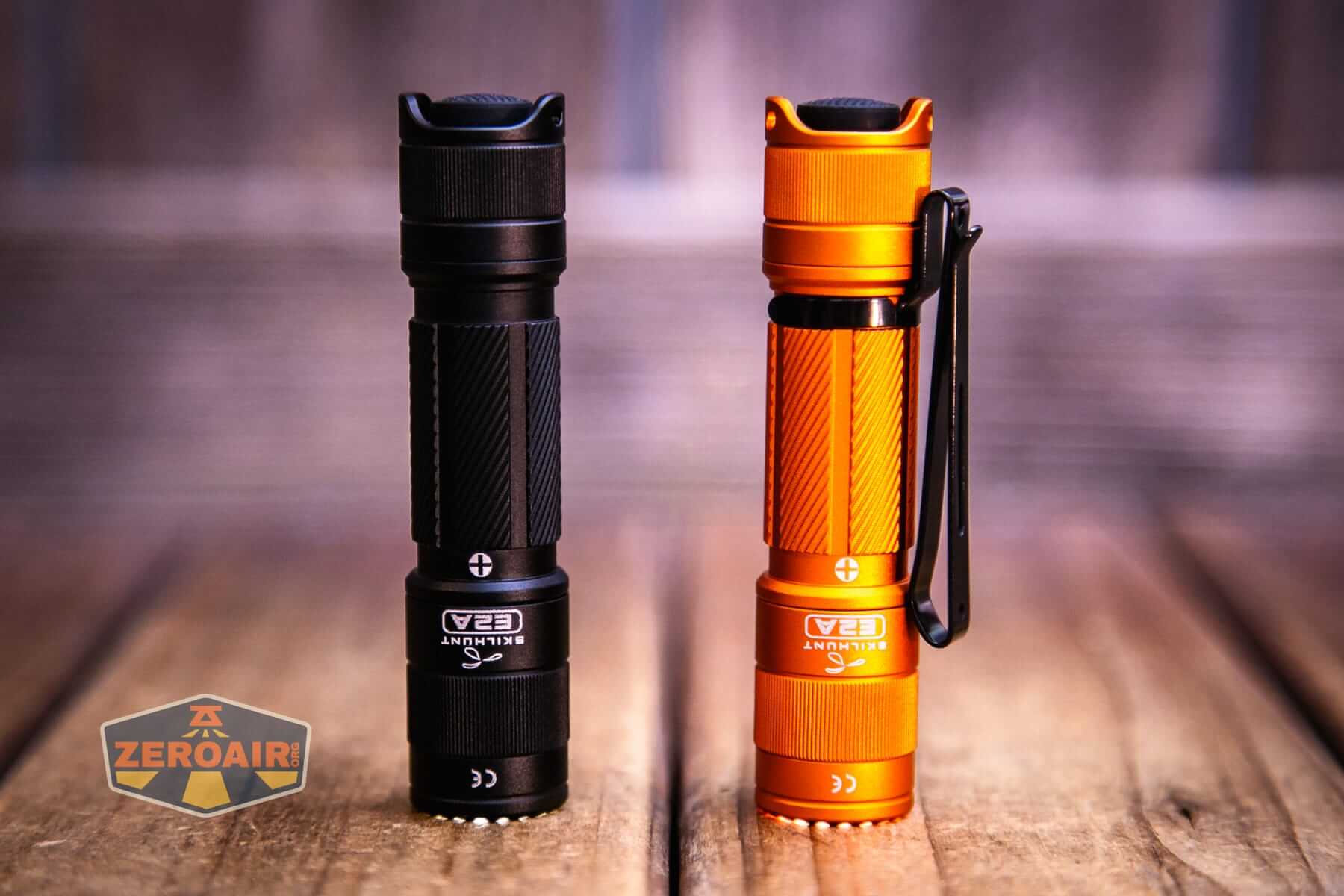
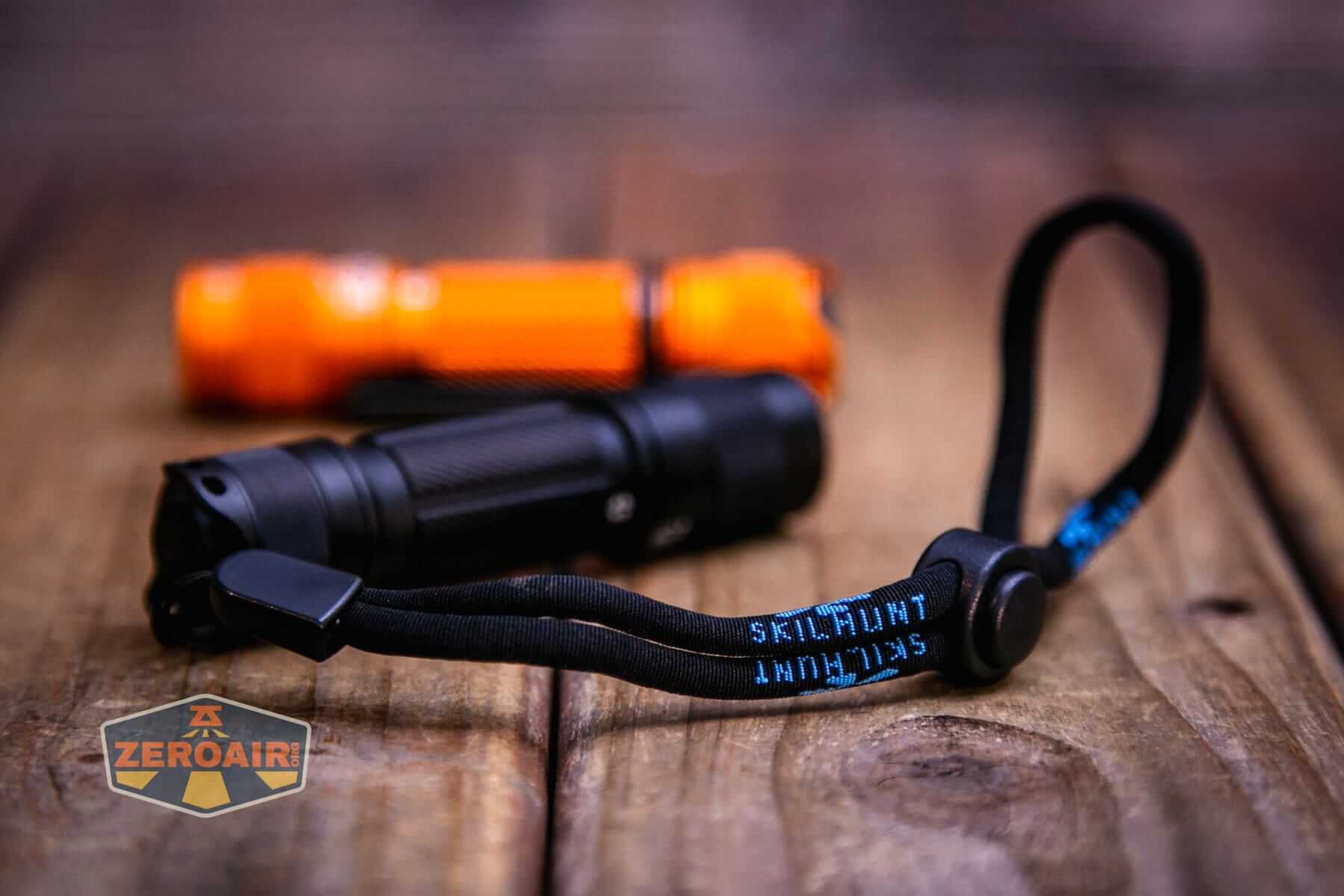
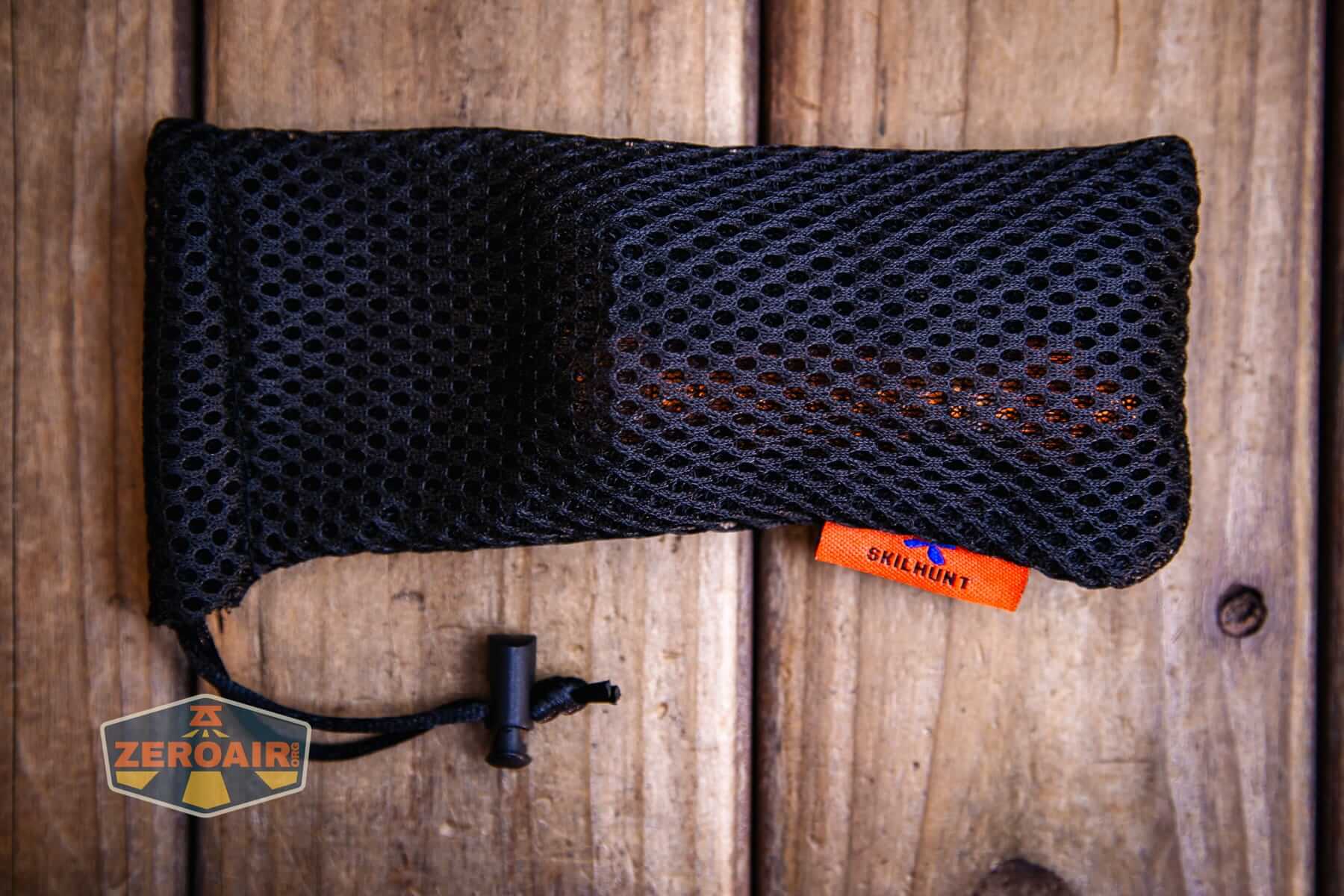
Skilhunt includes a mesh baggie that’s plenty big for the Skilhunt E2A V2 flashlight. In fact, the E2A sort of swims in this pouch.
Power and Runtime
As stated many times already to this point, the Skilhunt E2A V2 flashlight runs on both AA cells (that is, “1.5V cells”) and lithium-ion cells (14500, or “4.2V cells”). This is a bit of a coup – I’ve owned lights that cost 20x as much and didn’t have dual chemistry support!
I feel very strongly that a light should support all the cells that will physically fit. I, as a flashlight user, can be and often am stupid. But I don’t like for my stupidity to be not remembering to use an AA when a 14500 will fit.
Skilhunt includes (by option) this 920mAh 14500, a lithium-ion cell.
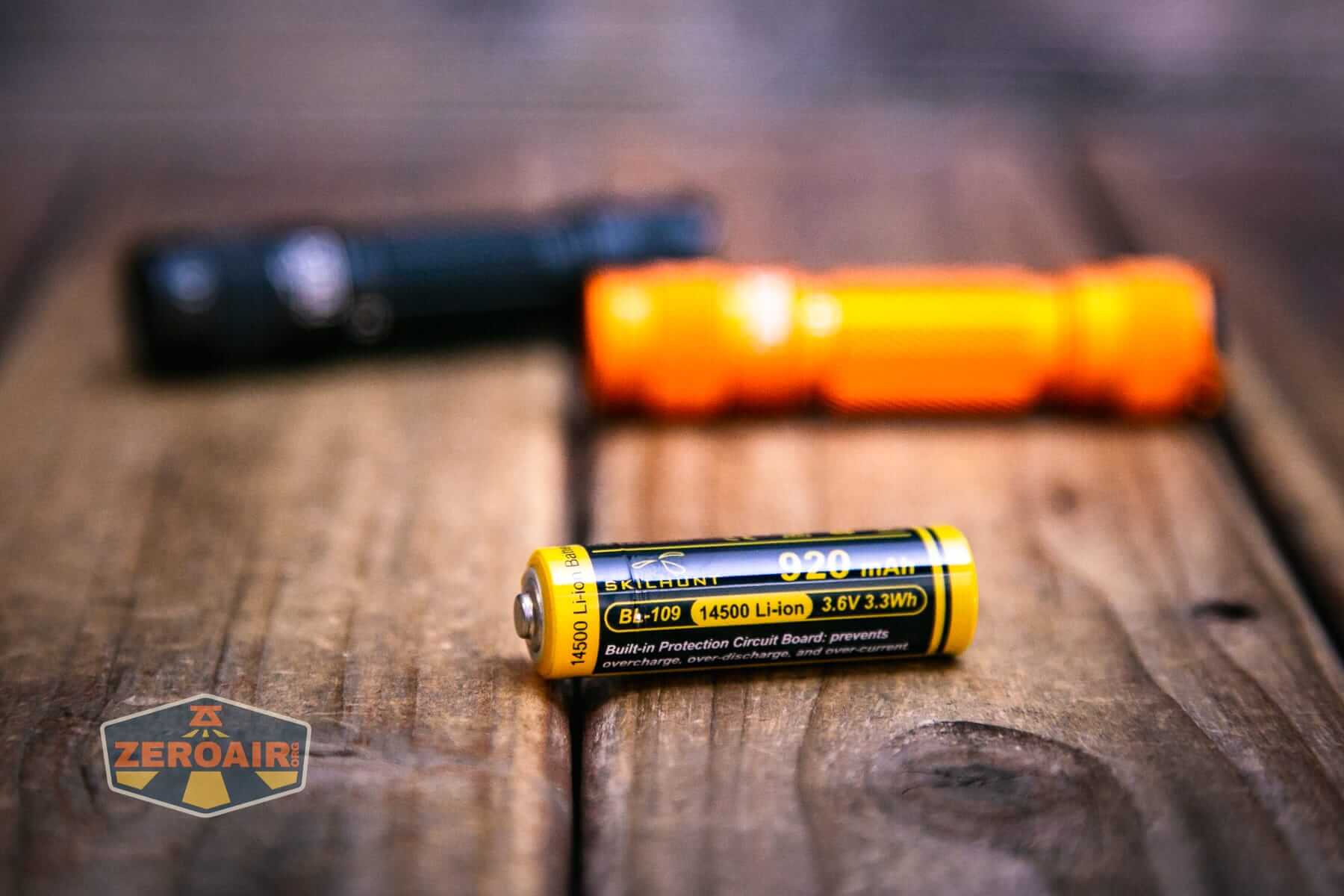
The cell goes into this light the usual way: button/positive end toward the head.
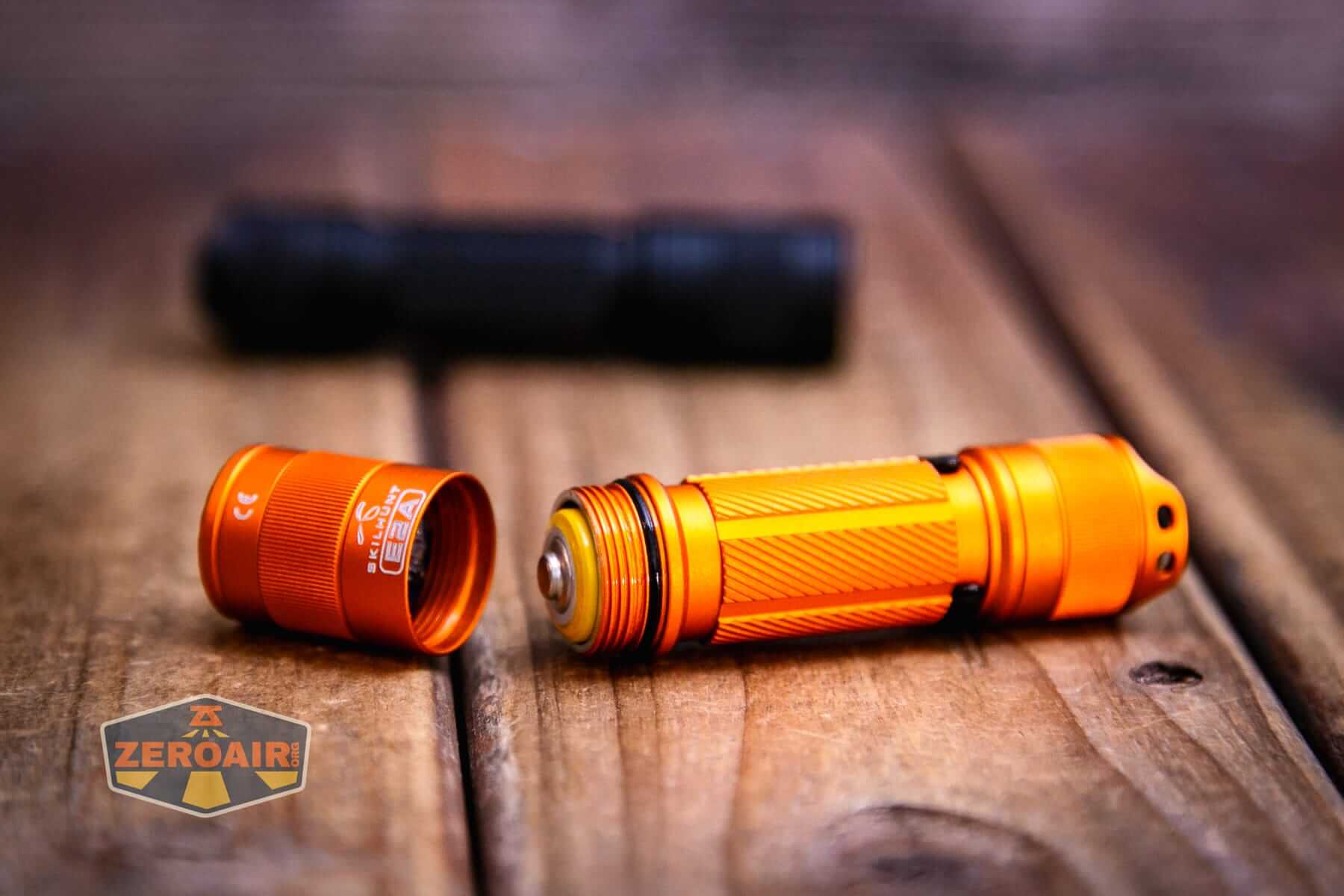
There’s a little printed icon to remind you of that, too.
Here are runtimes on the higher two modes using the included 14500 cell.
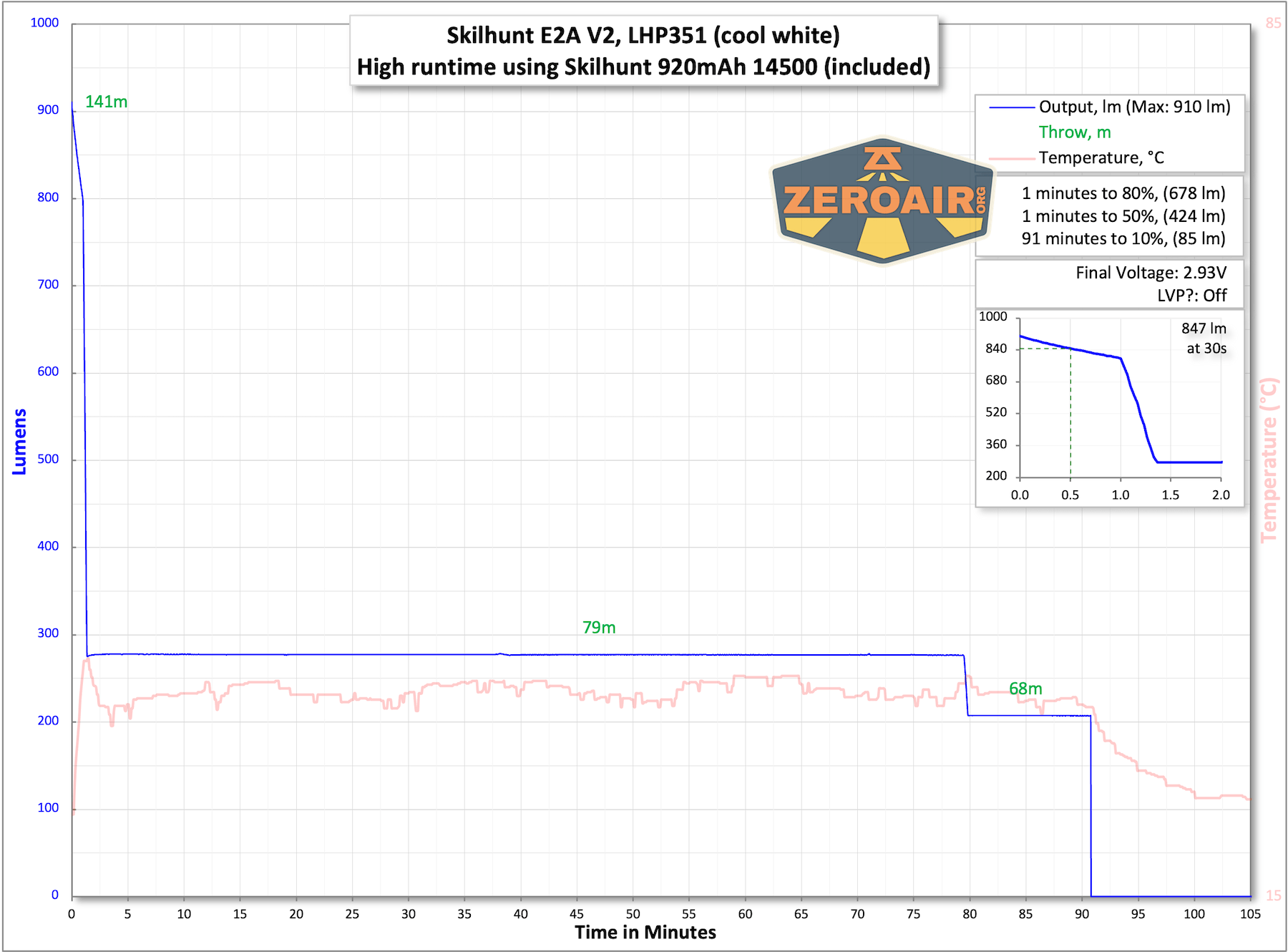
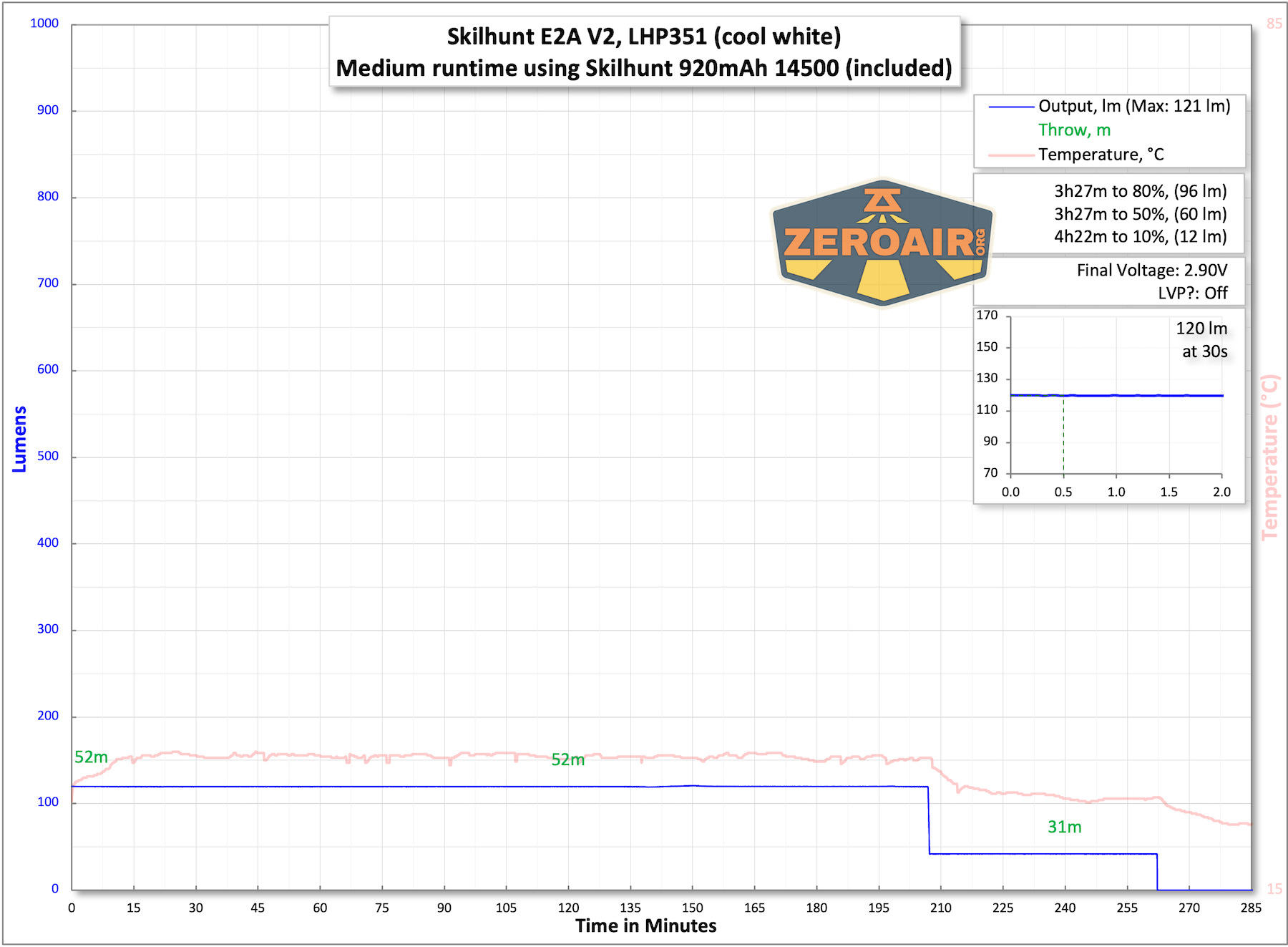
The temperature lines in these charts are included as general context, not precise measurements. The values represent the range (min to max) during testing, but should not be taken as exact readings. A temperature sensor is not always attached to the bezel (or even the hottest spot, assuming that could be defined). Even with ideal placement, too many variables affect temperature to definitively state a specific max value.
Modes and Currents
| Mode | Mode Claimed Output (lm) | Claimed Runtime | Measured Lumens | Tailcap Amps |
|---|---|---|---|---|
| High | 1000-315 | 1m+70m | 910 (0s) 847 (30s) |
2.46 |
| Medium | 140 | 220m | 121 (0s) 120 (30s) |
0.20 |
| Low | 15 | 30h | 13 | 0.01 |
Pulse Width Modulation
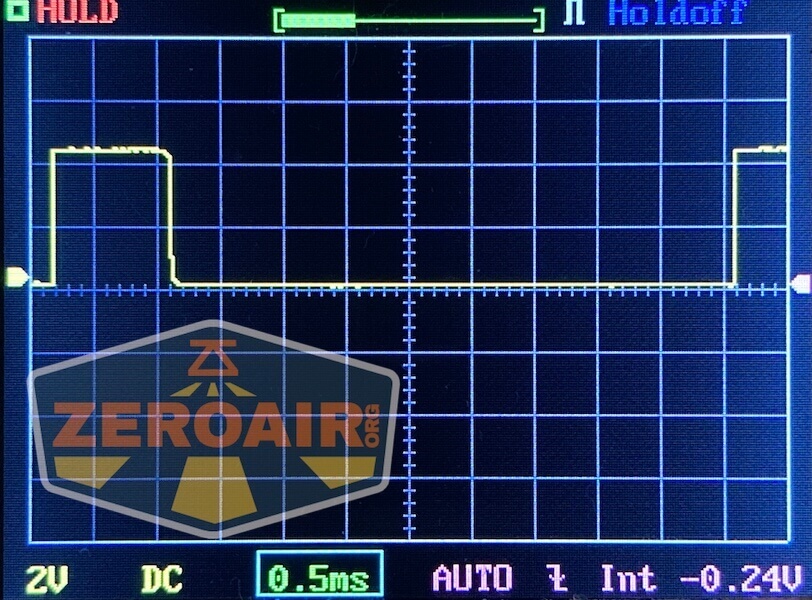
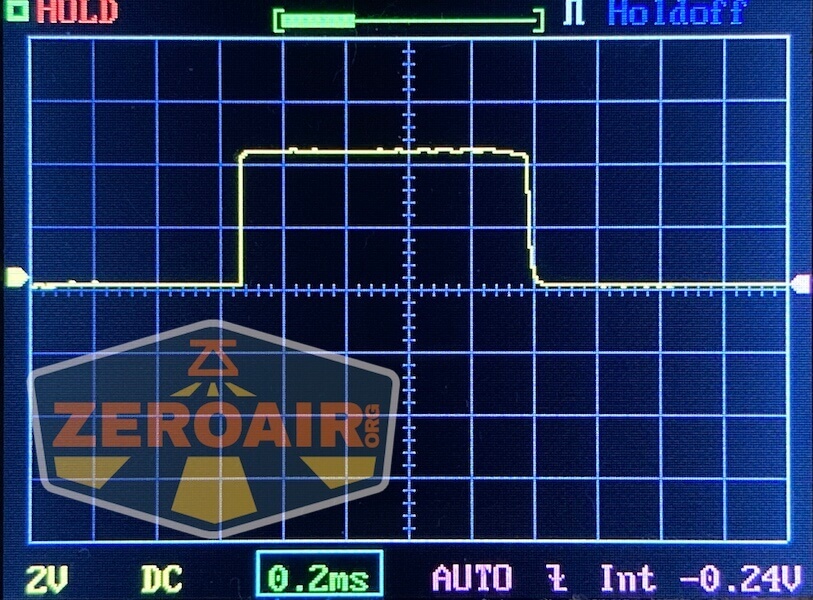
None of the modes use PWM.
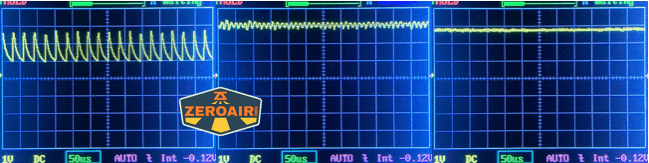
Click here to see a “baseline” – a chart with almost no light hitting the sensor.
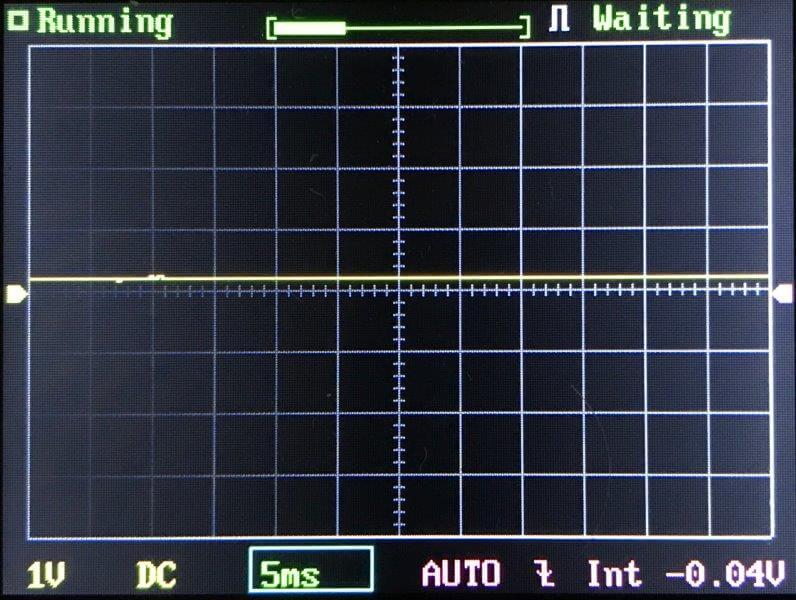
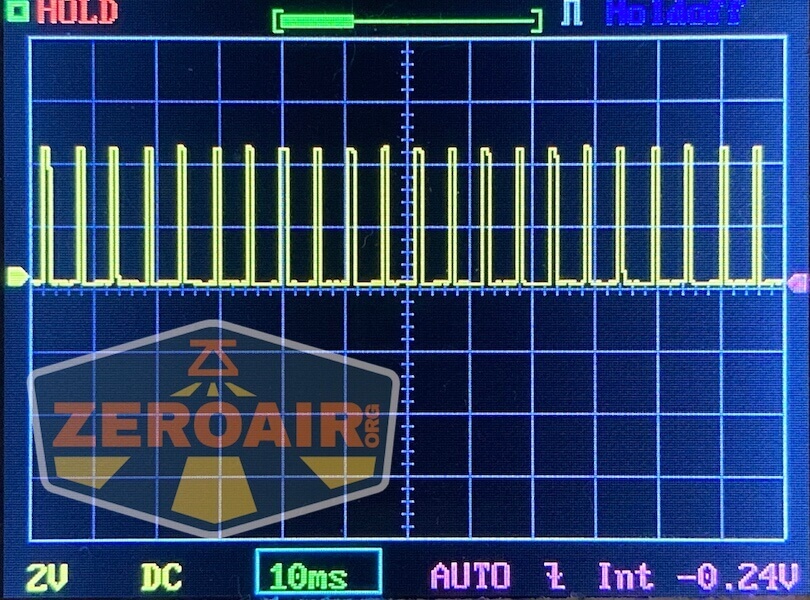
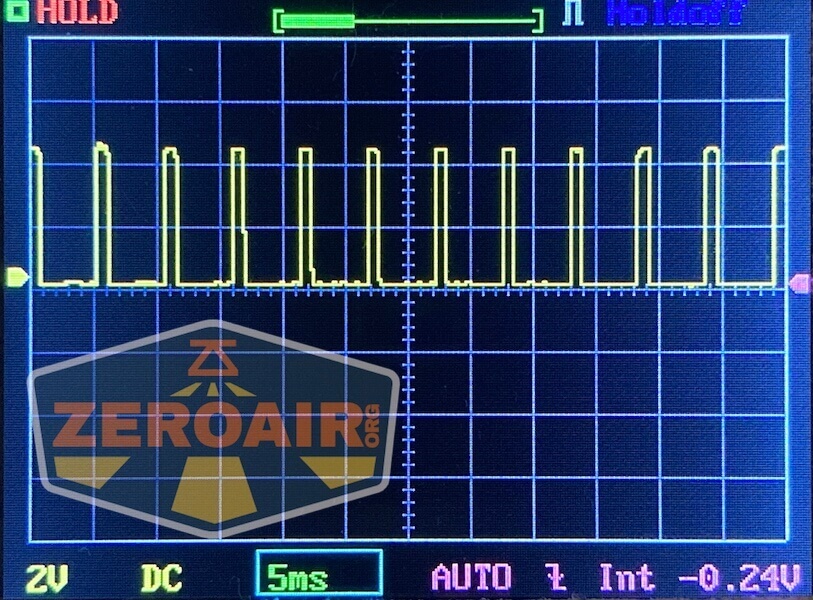
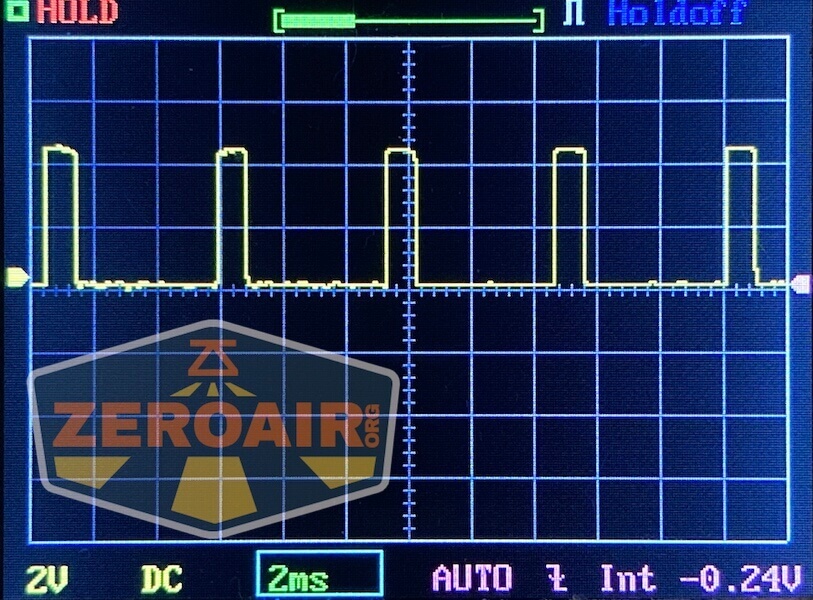
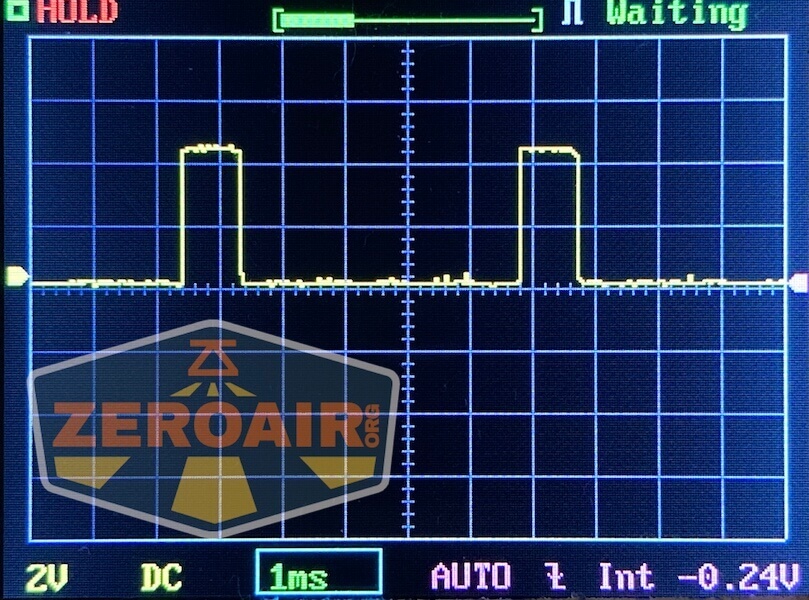
Then there’s the Ultrafire WF-602C flashlight, which has some of the worst PWM I’ve seen. It’s so bad that I used a post about it to explain PWM! Here are multiple timescales (10ms, 5ms, 2ms, 1ms, 0.5ms, 0.2ms) to make comparing this “worst” PWM light to the test light easier. That post also explains why I didn’t test the WF-602C at the usual 50us scale.
User Interface and Operation
The operation of the E2A V2 is through the tailswitch. This is a rubber-covered mechanical reverse-clicky switch.
The tailcap build allows for access from the side, much like bigger tactical lights. But I don’t think you’ll be using this one for tactical reasons. Maybe it’ll be easier to use with gloves this way, though.
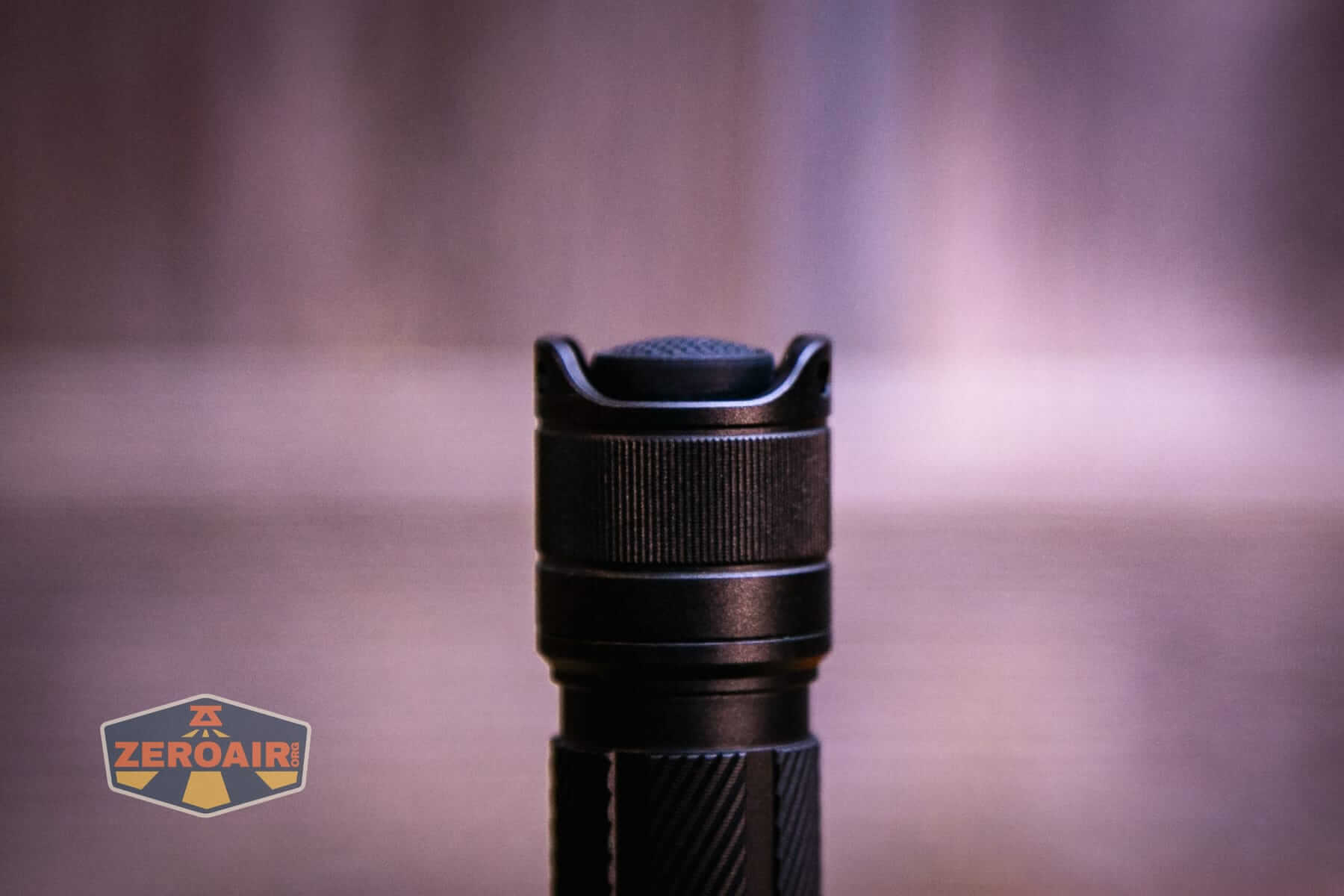
The click is very positive (which means “loud”) and requires surprising force to actuate.
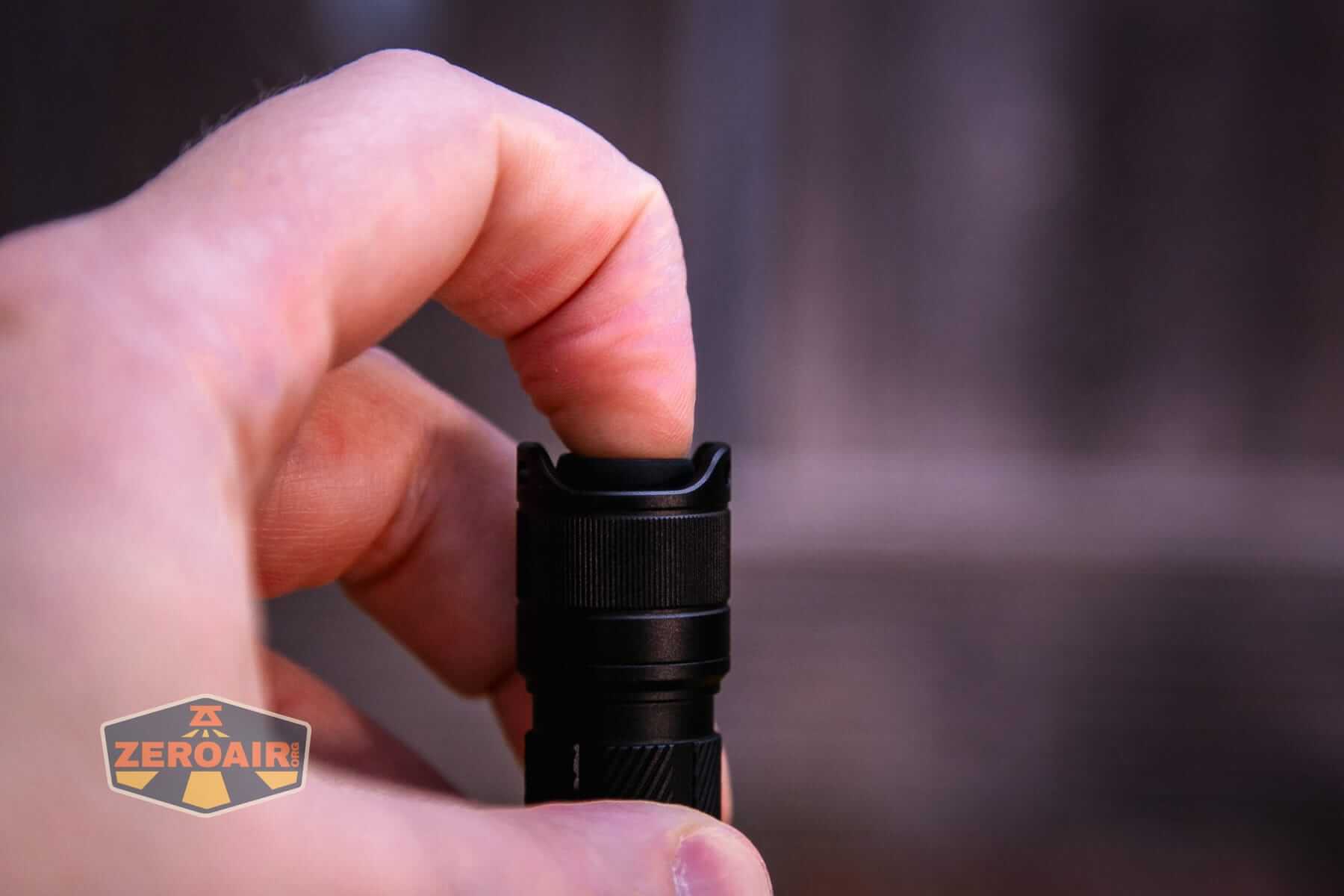
Here’s a user interface table!
| State | Action | Result |
|---|---|---|
| Off | Click | On (Memorized Mode) |
| On | Click | Off |
| On | Tap (“Half-press”) | Mode advance (LMH) |
With regard to the memorized mode – a mode is memorized when the light is on in that mode for more than 5 seconds.
LED and Beam
Data in this review is for the cool white version (the black body below). That emitter is the LHP351 and is rated at 6500K. Both lights that I have (and probably all options of this light) use a pebbled TIR.
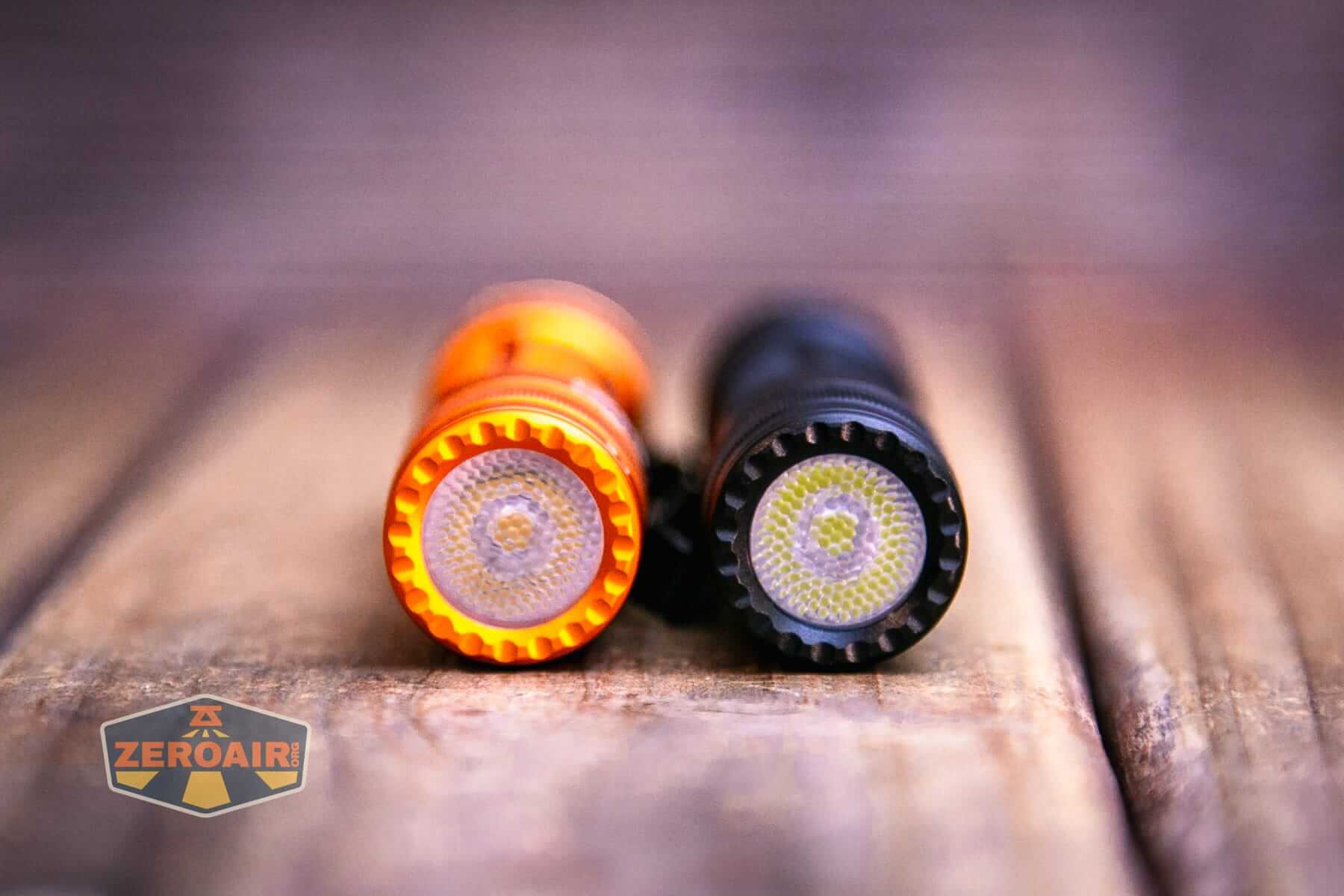
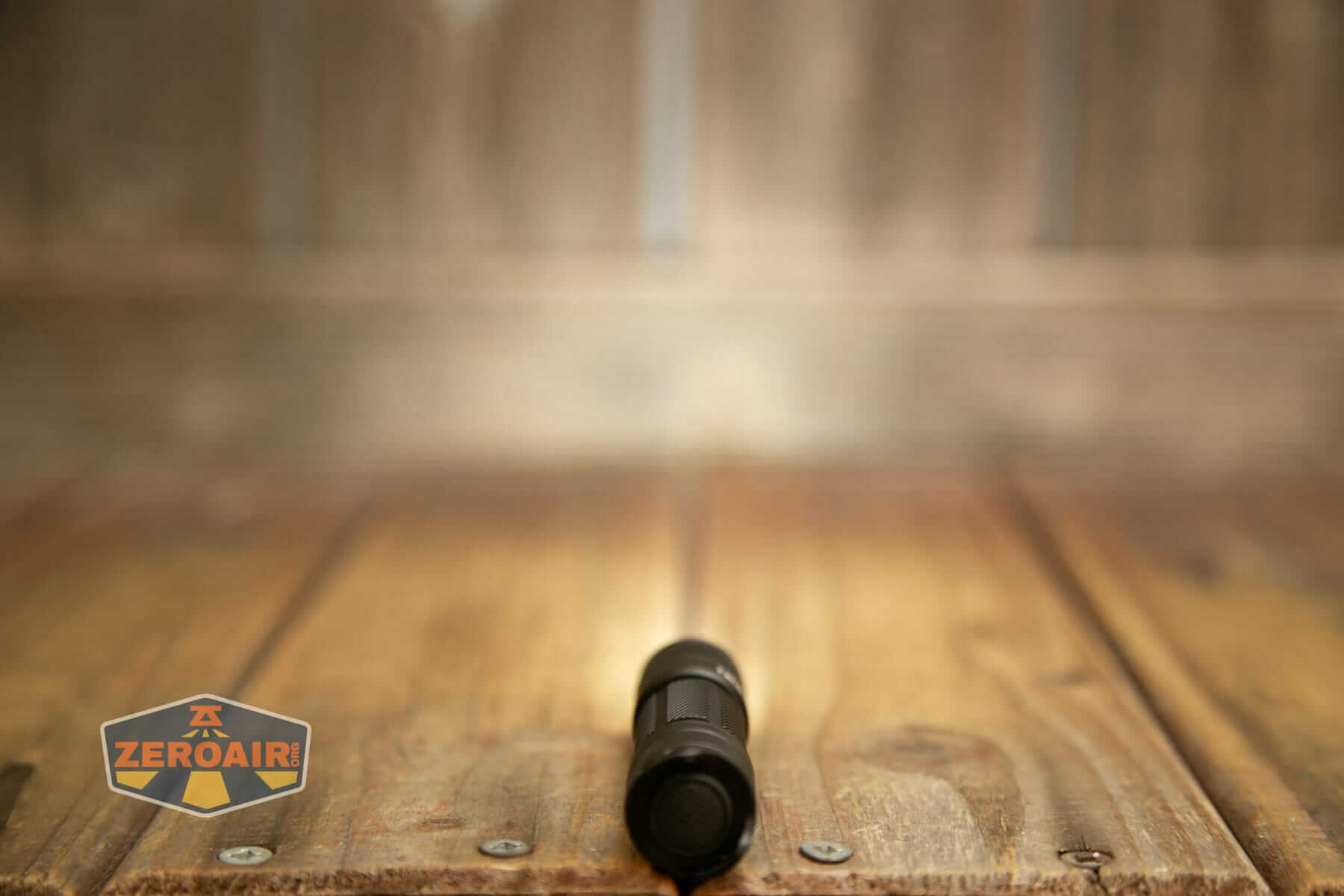
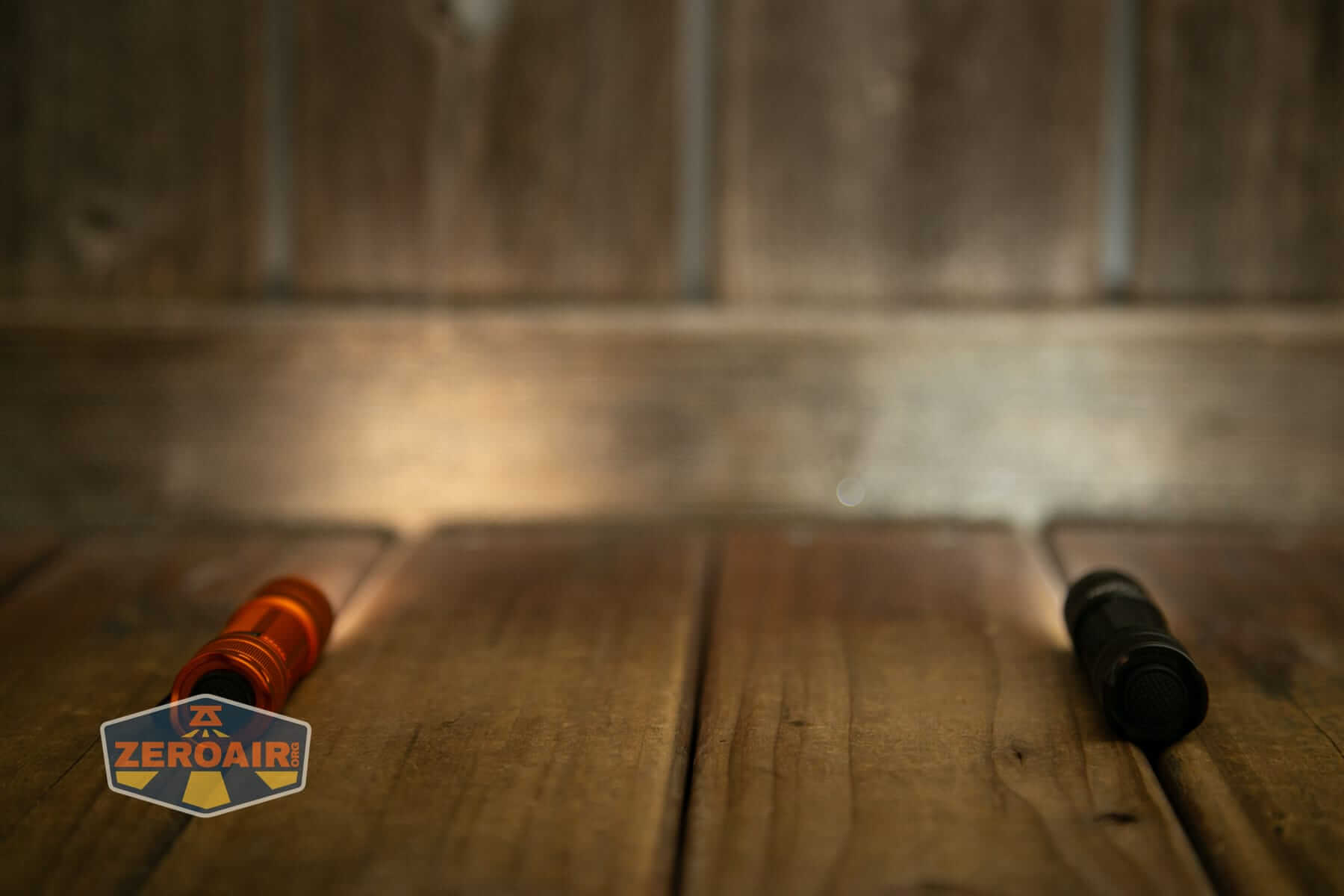
Below is this cool white option (right) beside the High CRI version.
LED Color Report (CRI and CCT)
The cool white version is very cool white, ranging all the way up to around 6700K. It is low CRI, too.
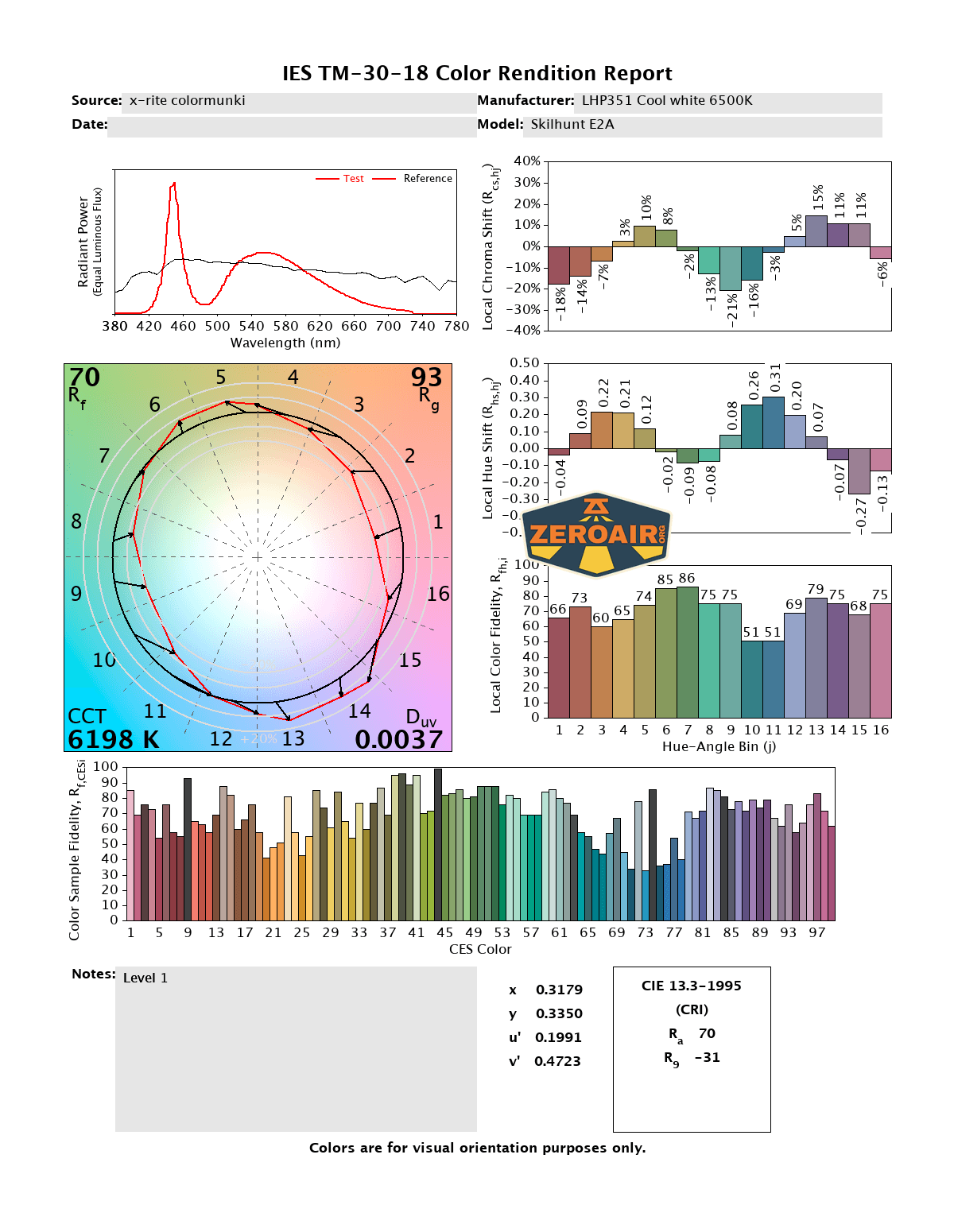
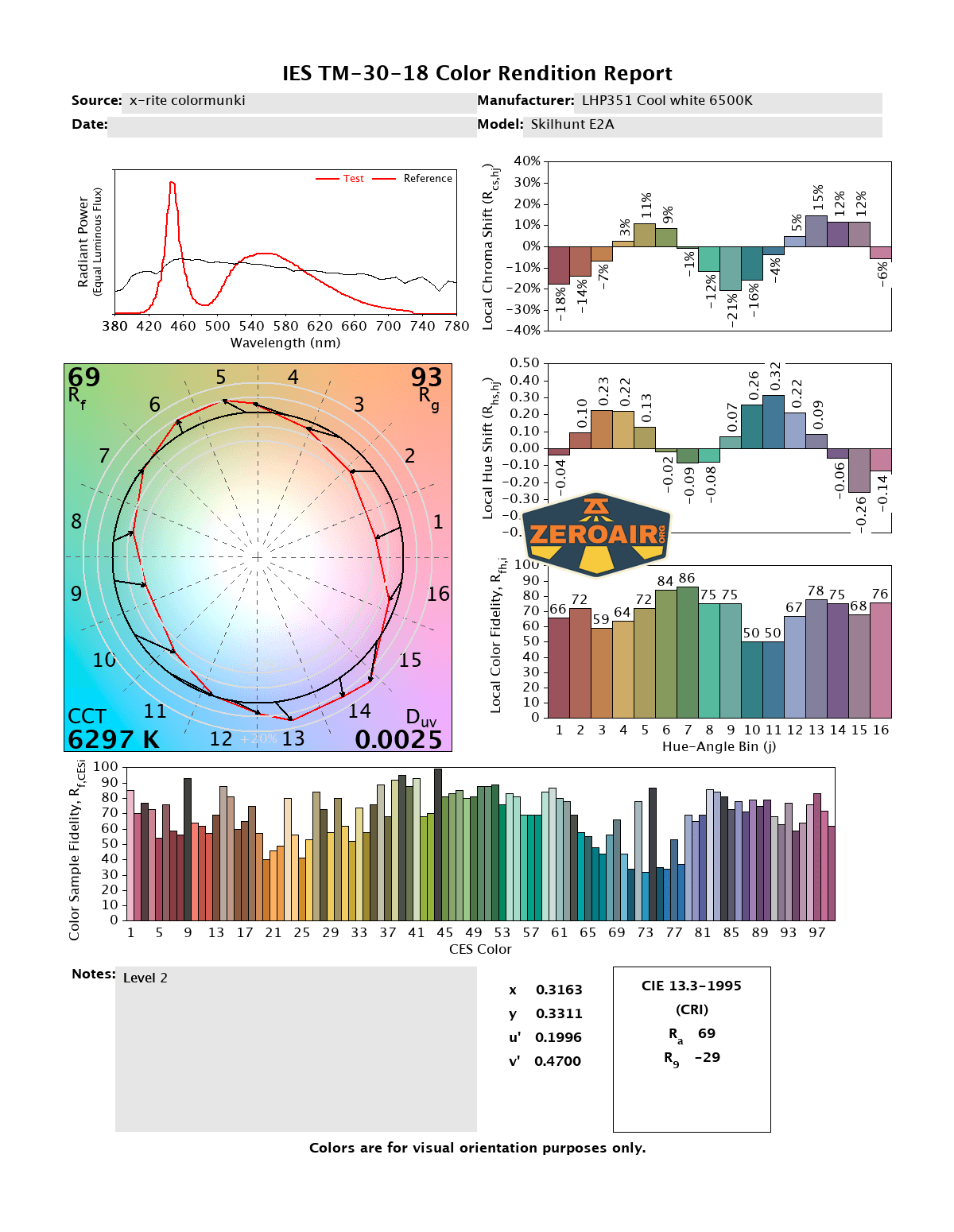
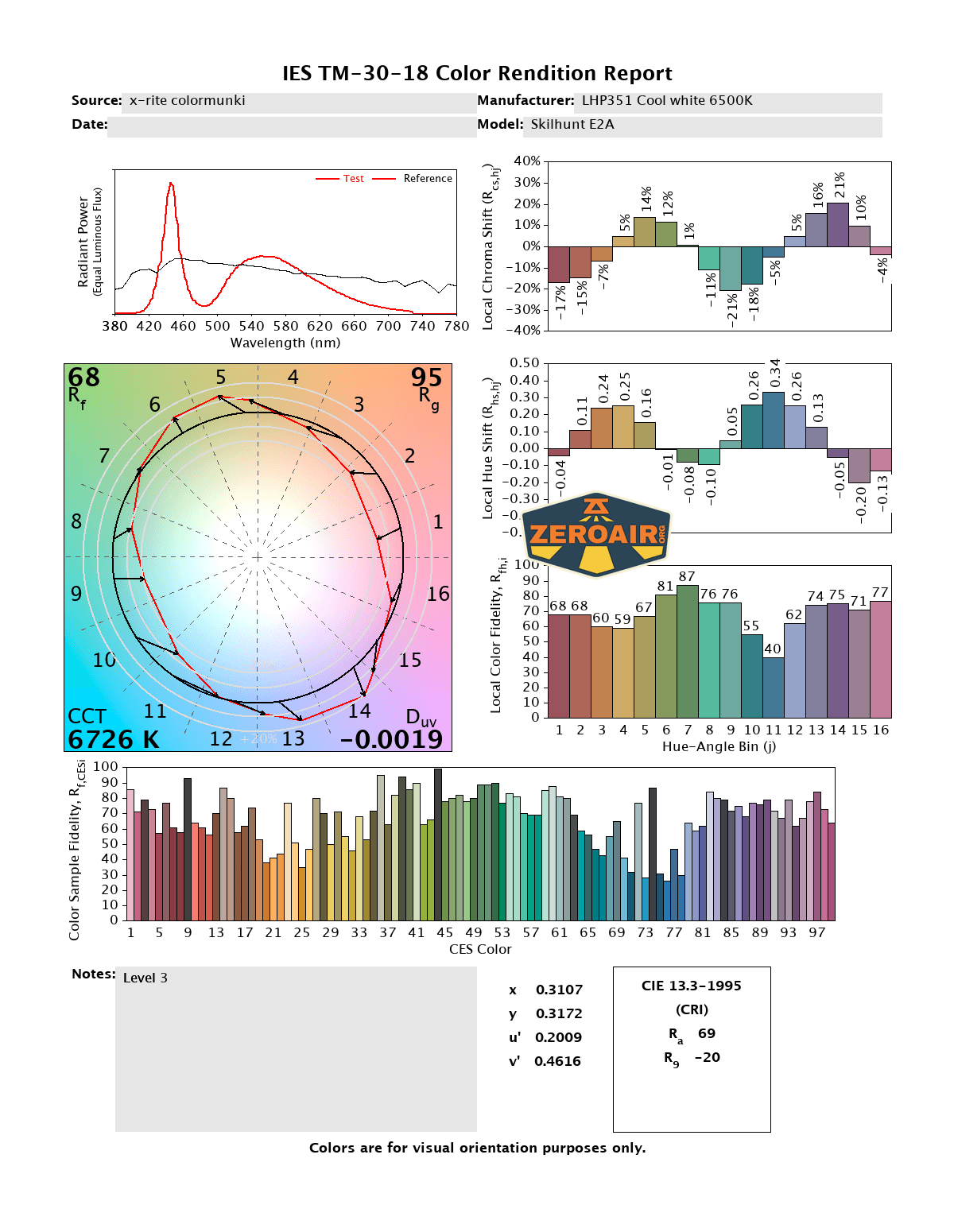
CCT (Correlated Color Temperature) refers to the measurement of the color appearance of light, expressed in Kelvins (K), which indicates whether the light is warm (yellowish) or cool (bluish). A lower CCT (below 3000K) is considered warm light, while a higher CCT (above 5000K) gives cooler, bluish light.
CRI (Color Rendering Index) is a measure of how accurately a light source renders colors in comparison to natural sunlight. Scored on a scale from 0 to 100, higher CRI values indicate that colors appear more true to life and vibrant, similar to how they would look under the sun.
Beamshots
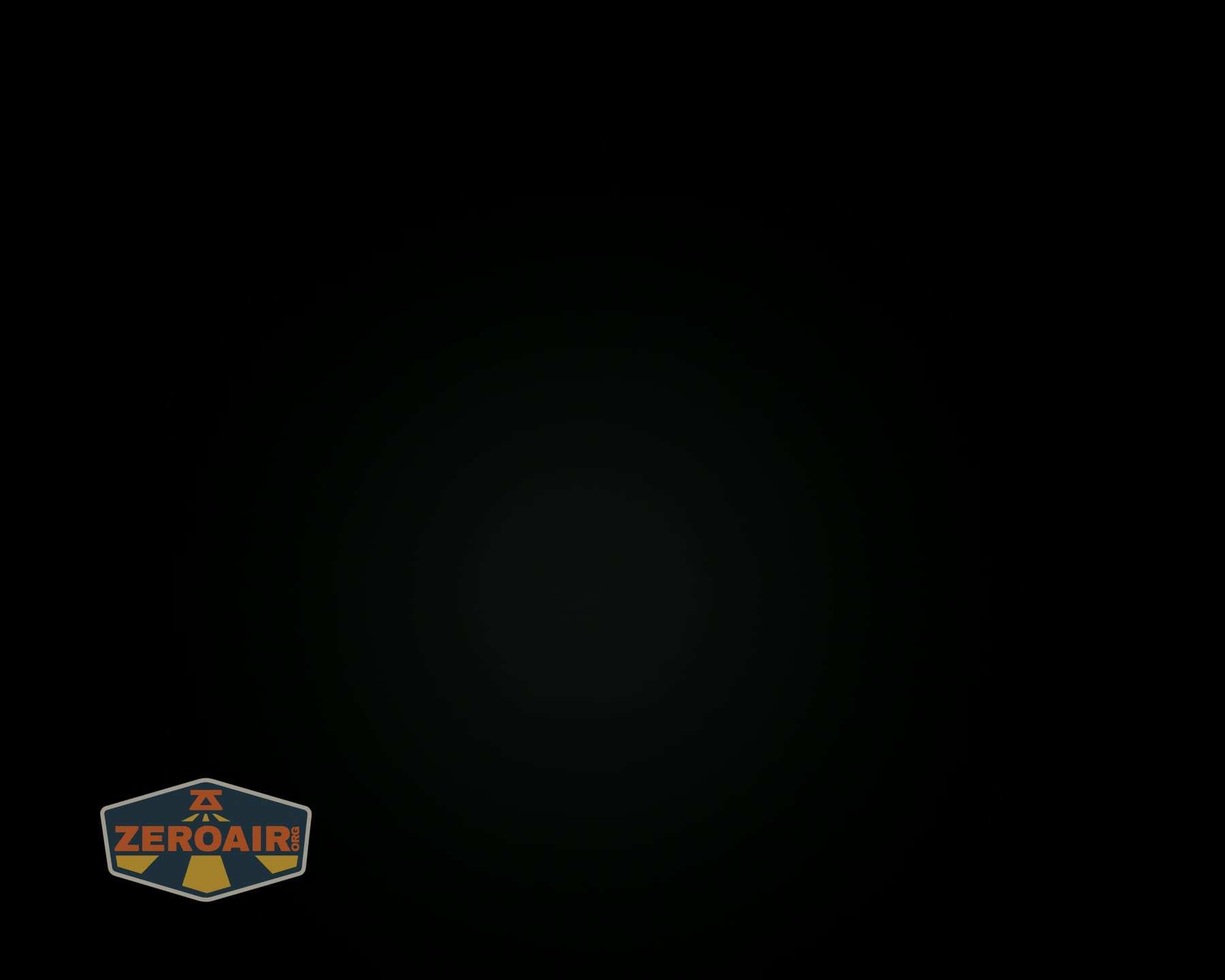
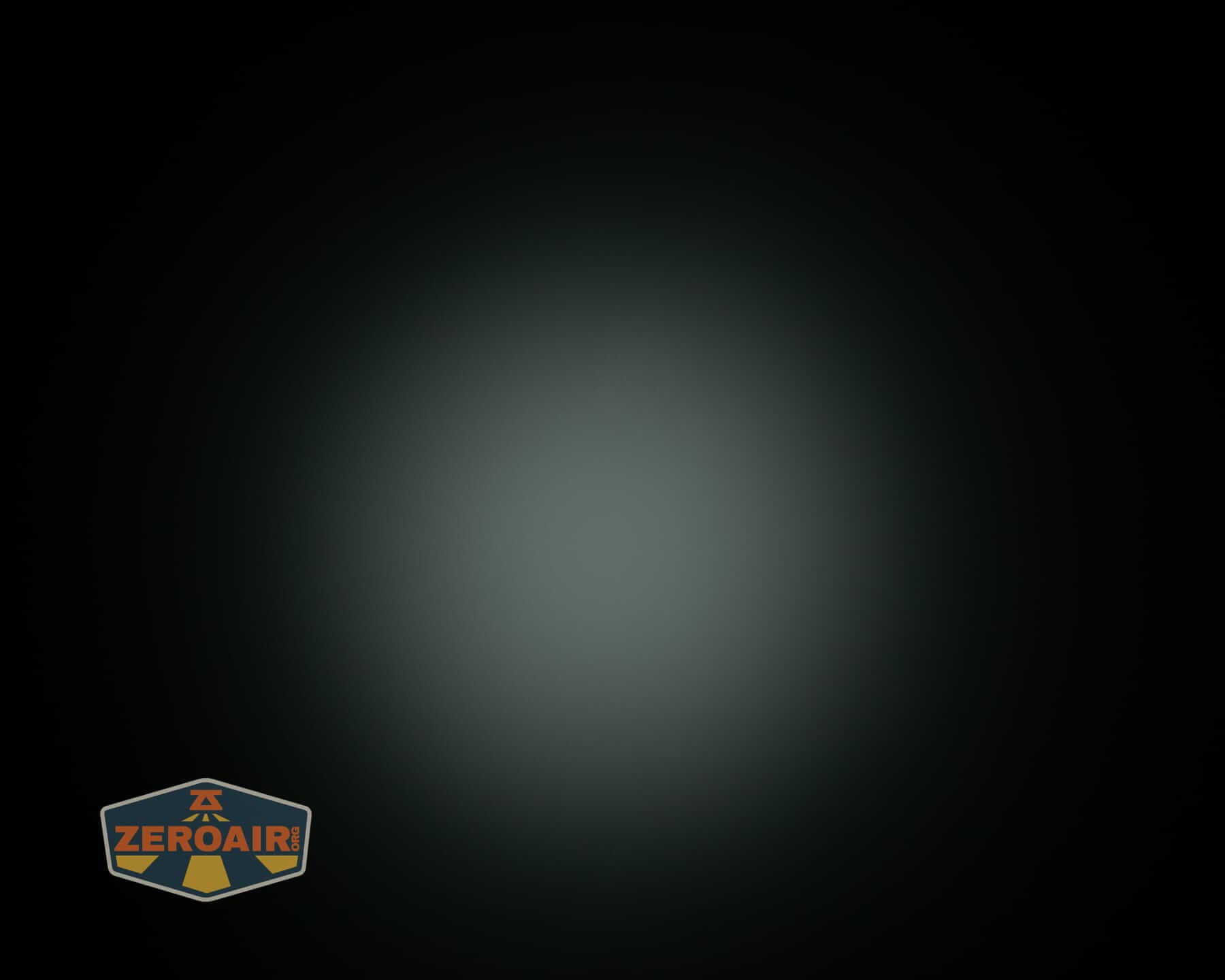
These beamshots always have the following settings: f8, ISO100, 0.3s shutter, and manual 5000K exposure. These photos are taken at floor level, and the beam hits the ceiling around 9 feet away.
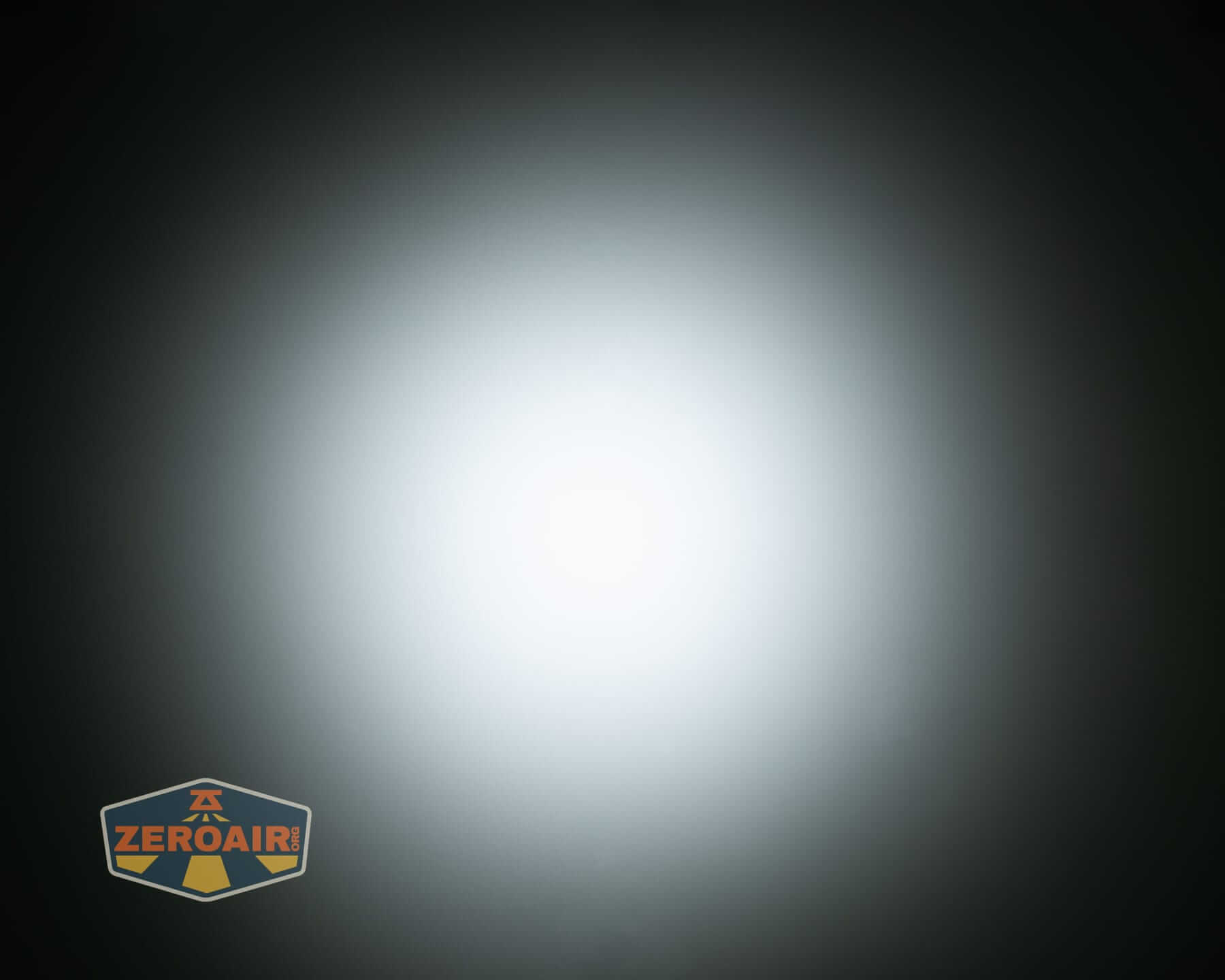
Tint vs BLF-348 (KillzoneFlashlights.com 219b version) (affiliate link)
I keep the test flashlight on the left and the BLF-348 reference flashlight on the right. These photos are taken around 18 inches from the door.
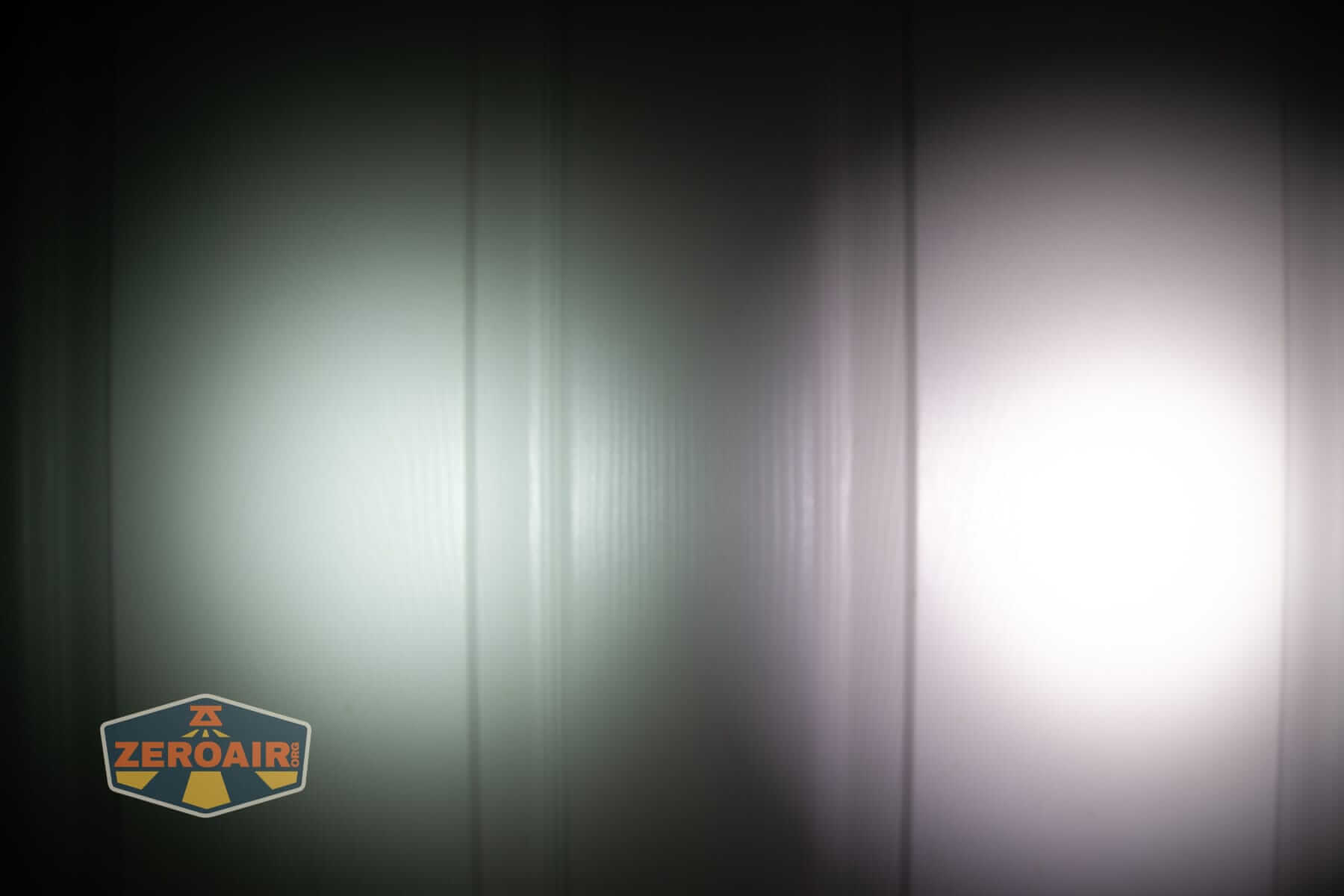
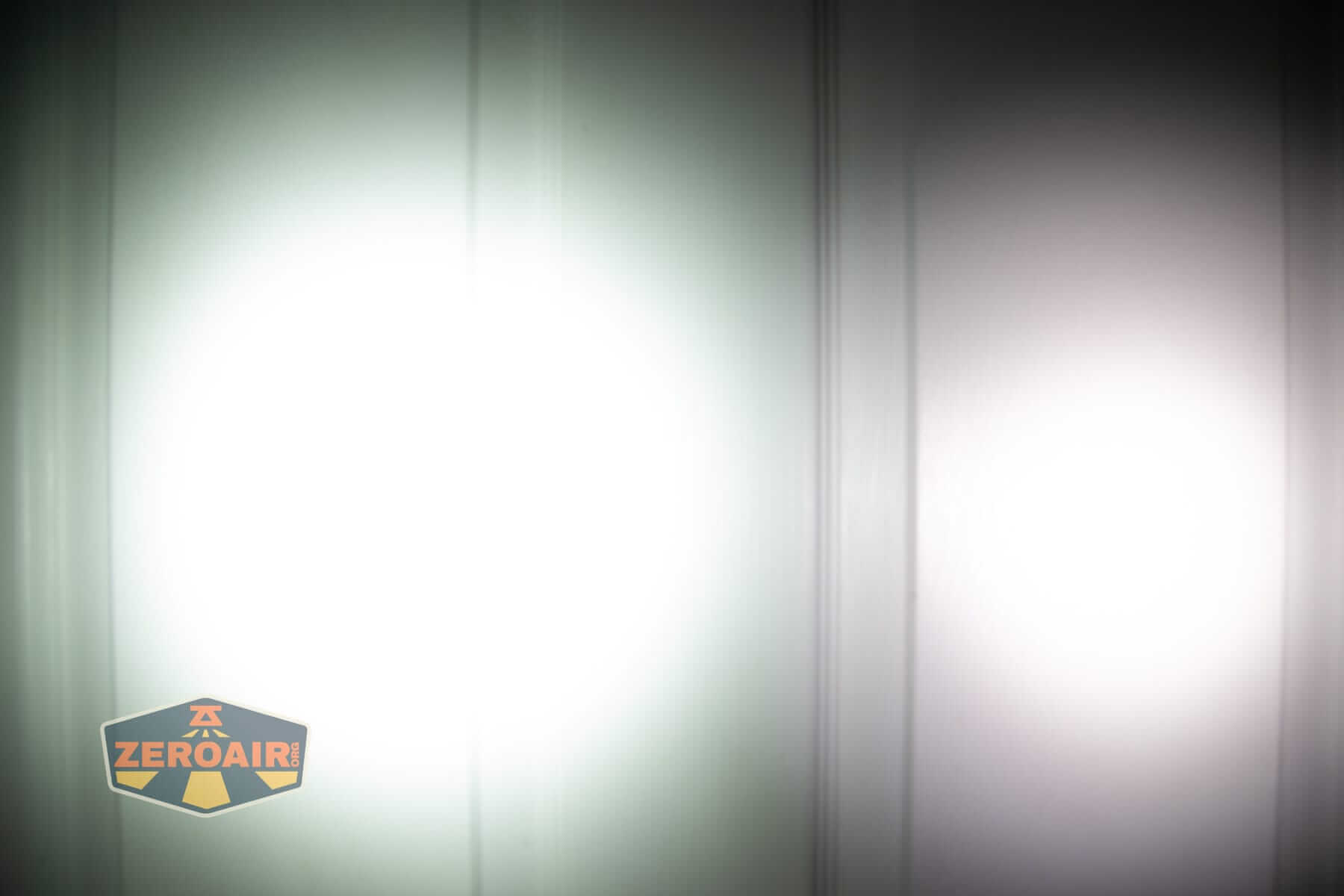

I compare everything to the KillzoneFlashlights.com 219b BLF-348 because it’s inexpensive and has the best tint!
Summary and Conclusion
I appreciate the improvements Skilhunt made on the E2A V2 flashlight. I also appreciate the things they kept the same, such as the user interface and general design of the light. One more thing to love is that the price hasn’t gone up dramatically! Because this one can run the included (or “available”) 14500 but also AA cells, this is a great bag light!
The Big Table
| Skilhunt E2A V2 flashlight | |
|---|---|
| Emitter: | LHP351 (Cool White) |
| Price in USD at publication time: | $26.90 |
| Cell: | 1×14500 |
| Runtime Graphs | |
| LVP? | Yes |
| Switch Type: | Mechanical |
| On-Board Charging? | Yes |
| Charge Port Type: | – |
| Charge Graph | |
| Power off Charge Port | – |
| Claimed Lumens (lm) | 1000 |
| Measured Lumens (at 30s) | 847 (84.7% of claim)^ |
| Candela per Lumen | 5.6 |
| Claimed Throw (m) | 149 |
| Candela (Calculated) in cd (at 30s) | 209lux @ 4.774m = 4763cd |
| Throw (Calculated) (m) | 138.0 (92.6% of claim)^ |
| Claimed CCT | Cool White 6500 |
| Measured CCT Range (K) | Cool White 6200-6700 Kelvin |
| Item provided for review by: | Skilhunt |
| All my Skilhunt reviews! | |
^ Measurement disclaimer: Testing flashlights is my hobby. I use hobbyist-level equipment for testing, including some I made myself. Try not to get buried in the details of manufacturer specifications versus measurements recorded here; A certain amount of difference (say, 10 or 15%) is perfectly reasonable.
What I like
- Multi-chemistry support
- High CRI option
- Cool white offers higher output
- Good size for an AA-sized light
- No lip service to some garbage turbo mode.
What I don’t like
- May be hard to remove parts for an emitter swap
Notes
- This content originally appeared at zeroair.org. Please visit there for the best experience!
- Please use my Amazon.com referral link to help support zeroair.org!
- Please support me on Patreon! I deeply appreciate your support!
Discover more from ZeroAir Reviews
Subscribe to get the latest posts sent to your email.