
Acebeam TK16 (Osram) Flashlight Review
The Acebeam TK16 flashlight is available with emitter options – here’s the Osram edition. This is a nice e-switch triple flashlight!
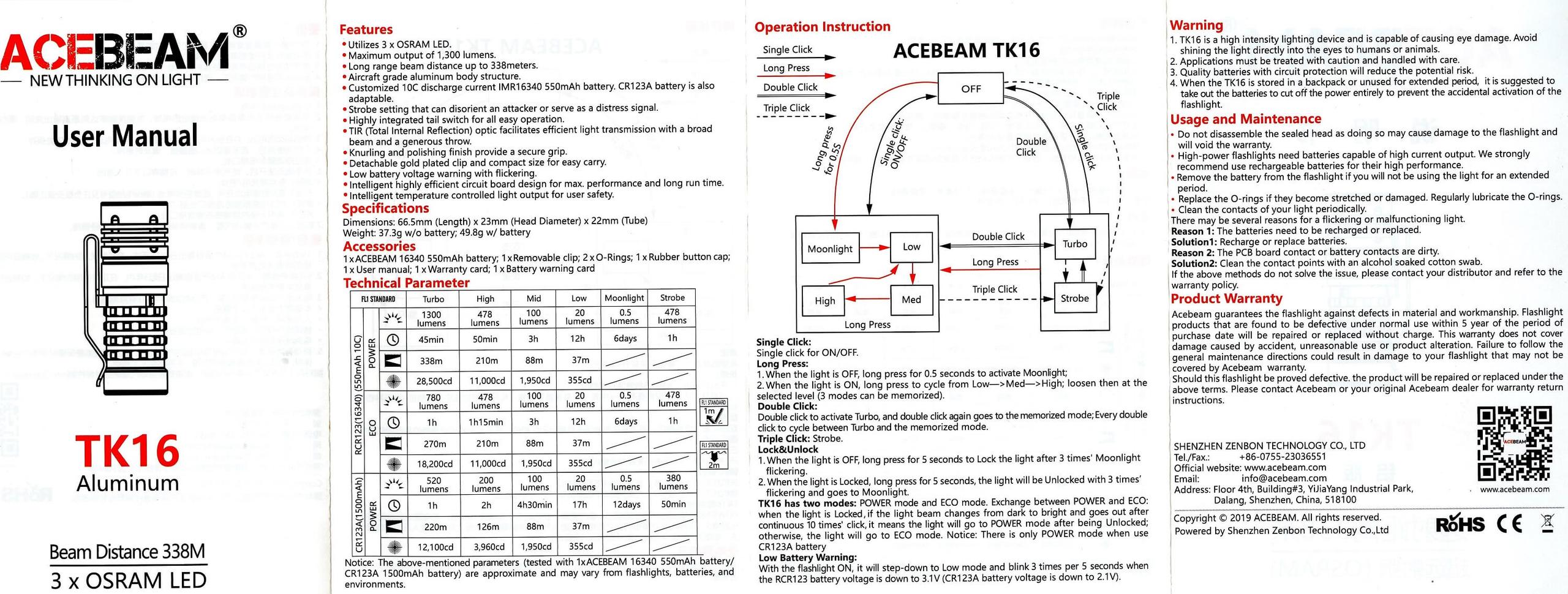
Official Specs and Features
Here’s a referral link to the official product page at killzoneflashlights.com.
Versions
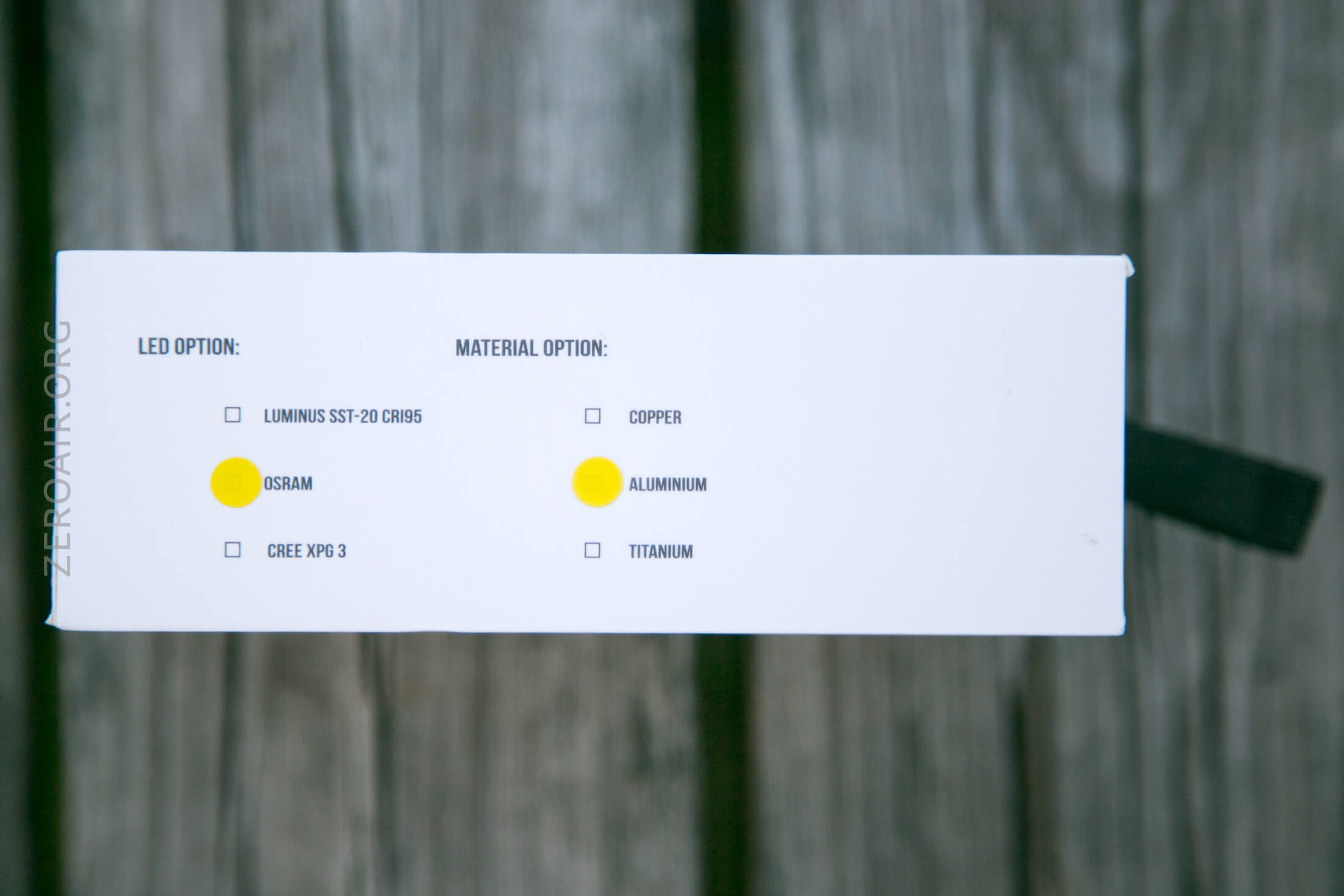
There are a number of versions. First, the emitters. There’s an Osram edition (seen in this review). There’s a Luminus SST20 High CRI edition. And there’s an option with Cree XP-G3.
There are also body options. What I have here is the aluminum version, which is anodized black. Also available is copper. Possibly down the road, other materials will be available too (for example, titanium is mentioned on the box).
Short Review
I like this light a whole lot. It’s likely to replace my most-used “find my way around the house in the dark” light. I do wish it accepted 18350 cells, and I do wish it were available in brass. I’m very pleased with the LED options, and the user interface is good, too. It’s a winner for me.
Long Review
The Big Table
| Acebeam TK16 | |
|---|---|
| Emitter: | OSRAM |
| Price in USD at publication time: | $54.99 Buy yours at KillzoneFlashlights.com! |
| Cell: | 1×16340 (included) |
| Power Turbo Runtime | Eco Turbo Runtime |
| LVP? | Yes |
| Switch Type: | E-Switch |
| Quiescent Current (A): | ? |
| On-Board Charging? | No |
| Claimed Lumens (lm) | 1300 |
| Measured Lumens (at 30s) | 1154 (88.8% of claim)^ |
| Claimed Throw (m) | 338 |
| Candela (Calculated) in cd (at 30s) | 726lux @ 4.915m = 17538cd |
| Throw (Calculated) (m) | 264.9 (78.4% of claim)^ |
| All my Acebeam reviews! | |
^ Measurement disclaimer: Testing flashlights is my hobby. I use hobbyist-level equipment for testing, including some I made myself. Try not to get buried in the details of manufacturer specifications versus measurements recorded here; A certain amount of difference (say, 10 or 15%) is perfectly reasonable.
What’s Included
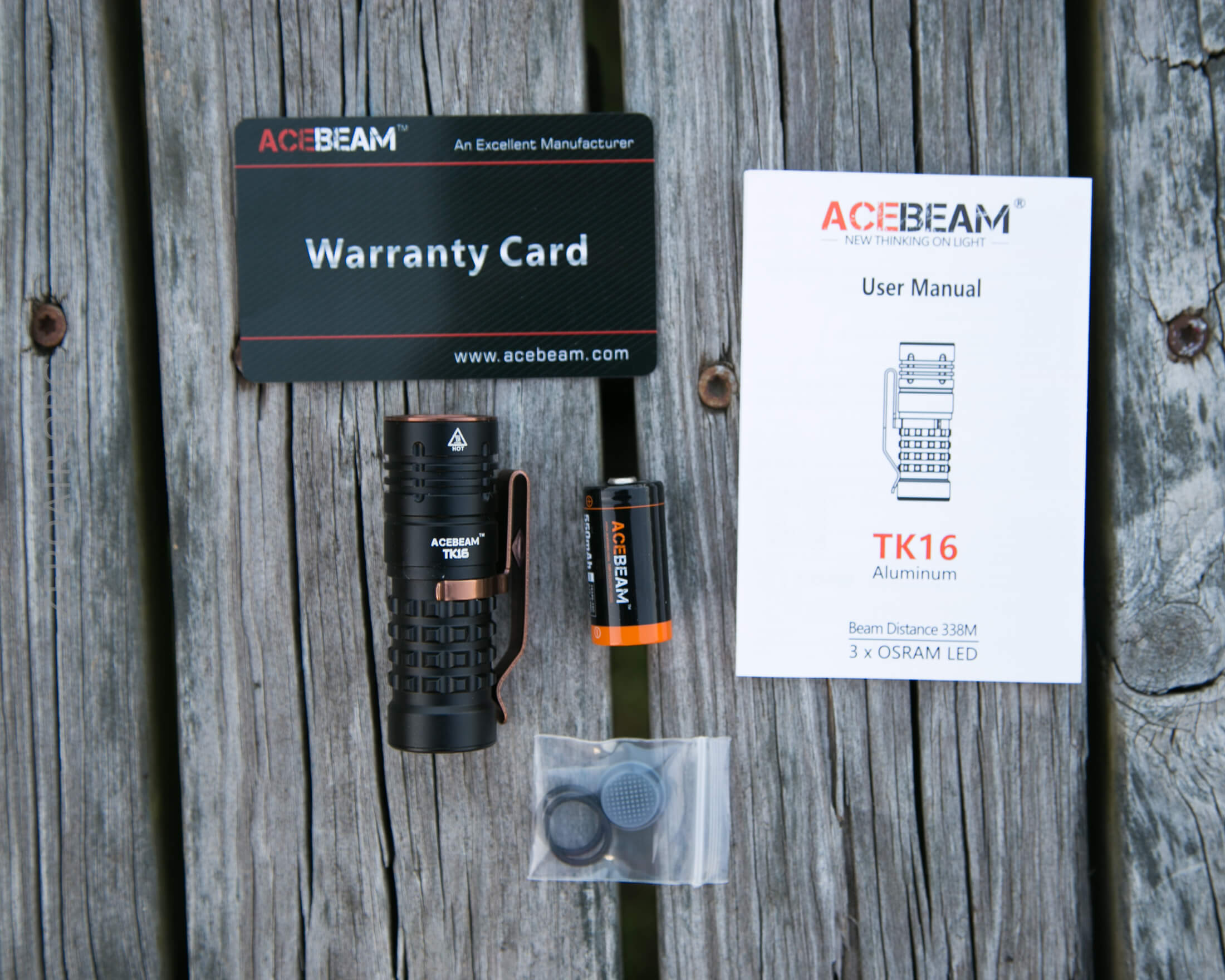
- Acebeam TK16 Flashlight
- Acebeam 550mAh High Drain 16340
- Spare rubber boot
- Spare o-rings (2)
- Manual and warranty card
Package and Manual
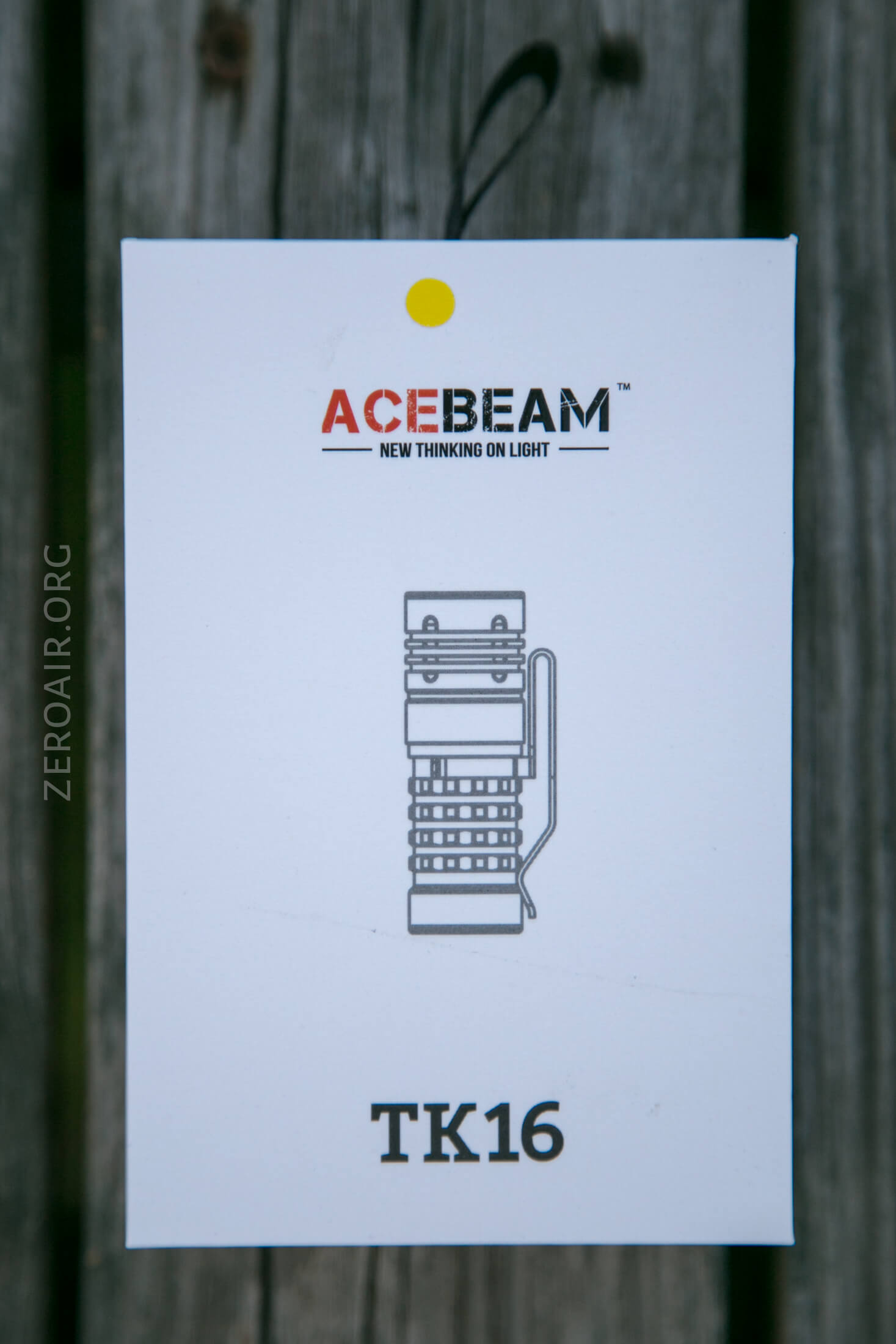
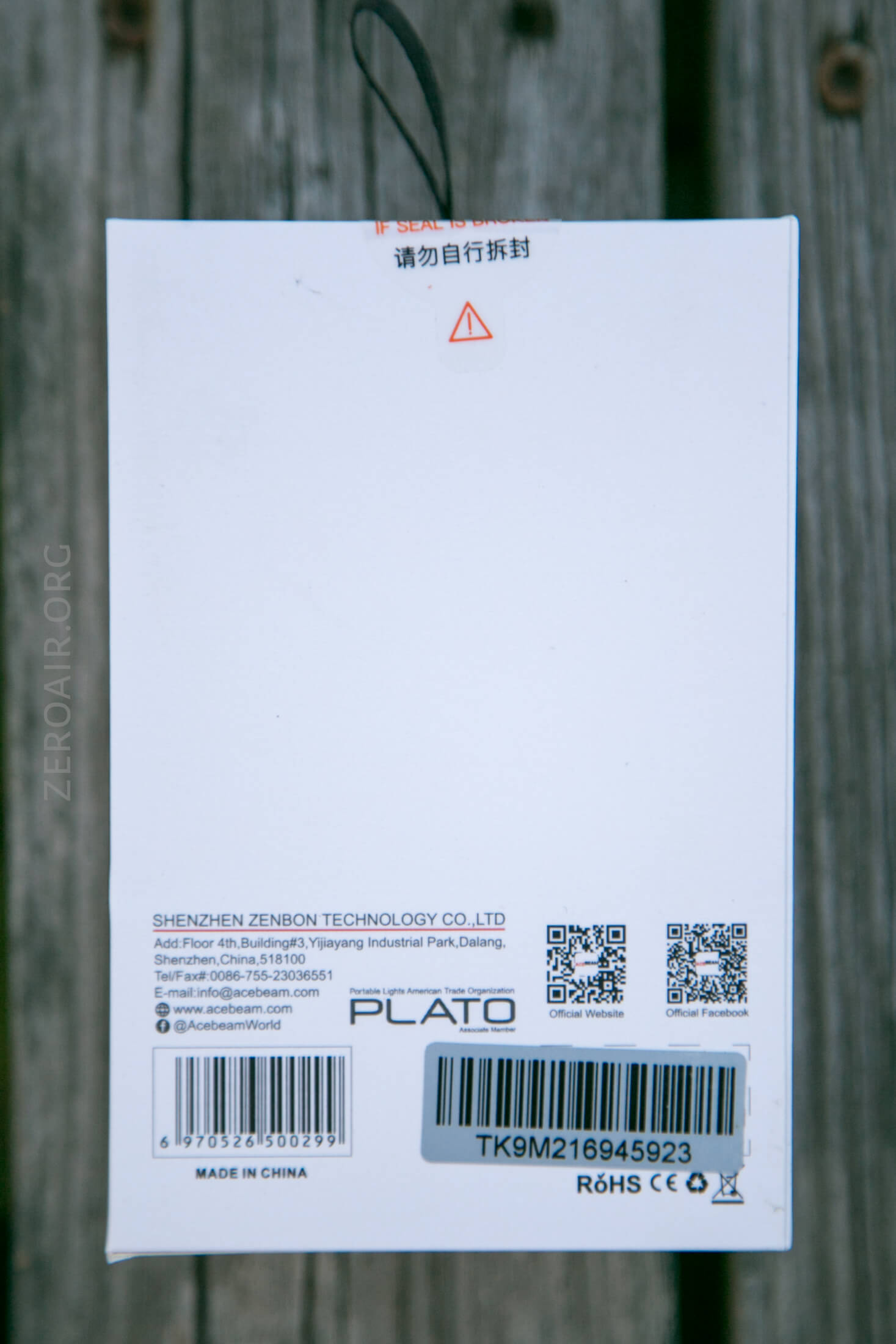
The light ships in a nice white package, with a serial number sticker on the back. I don’t know how to associate this serial with any specific LED option, but the side of the box has that info, seen below.
The manual is very nice. Two languages are included. The manual is specific for each emitter type.
Build Quality and Disassembly
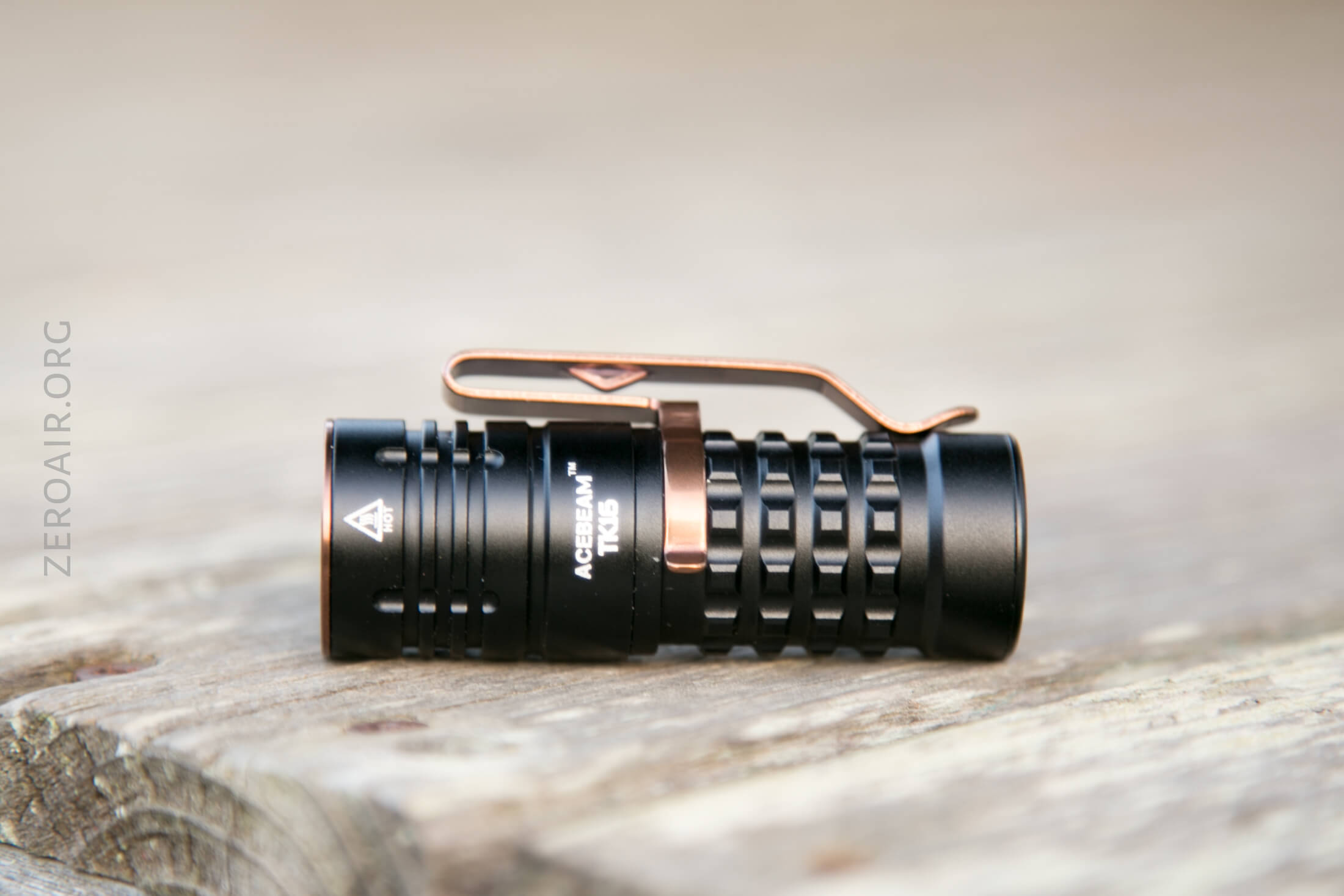
The build on the TK16 is quite nice, with nothing glaringly bad to mention.
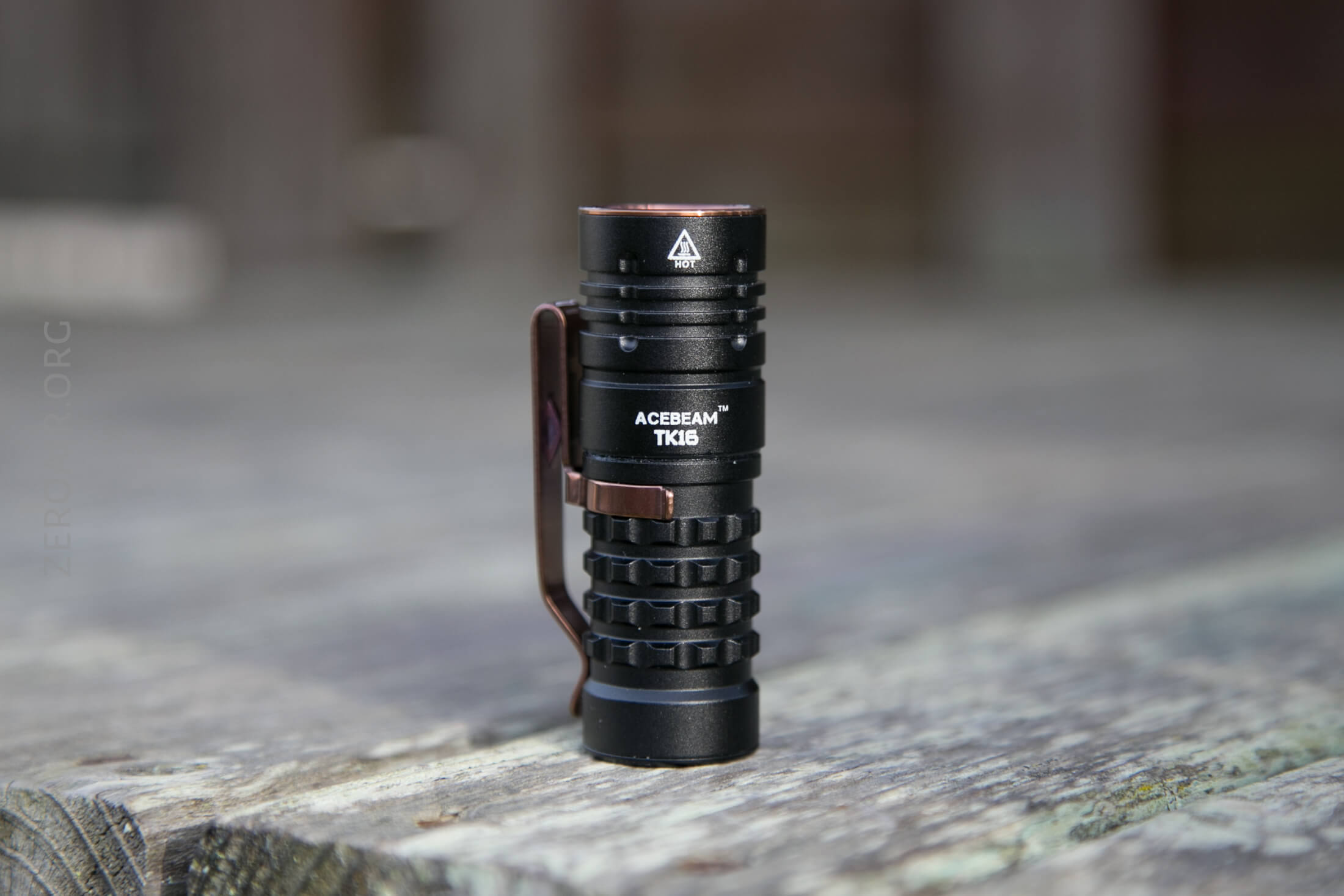
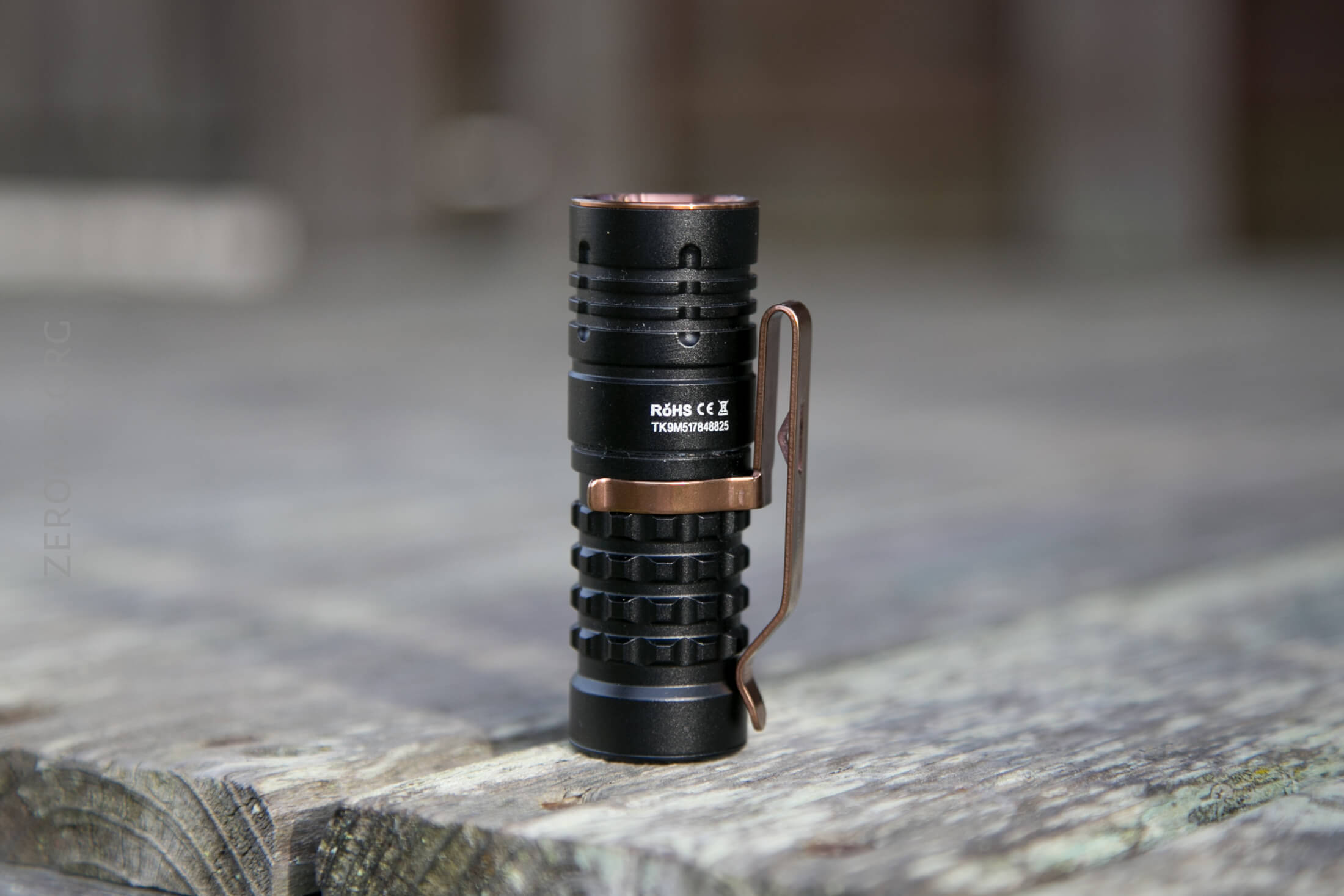
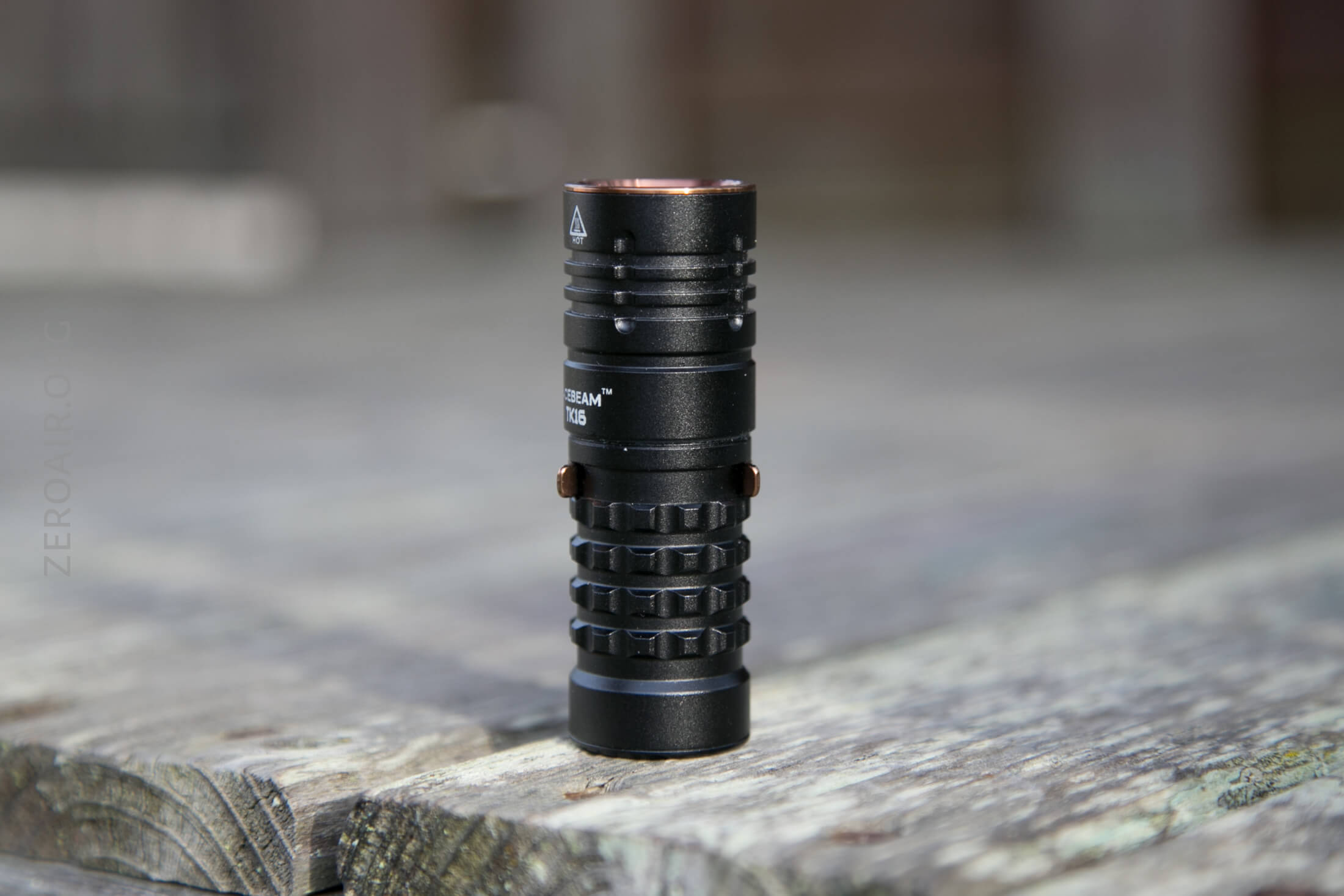
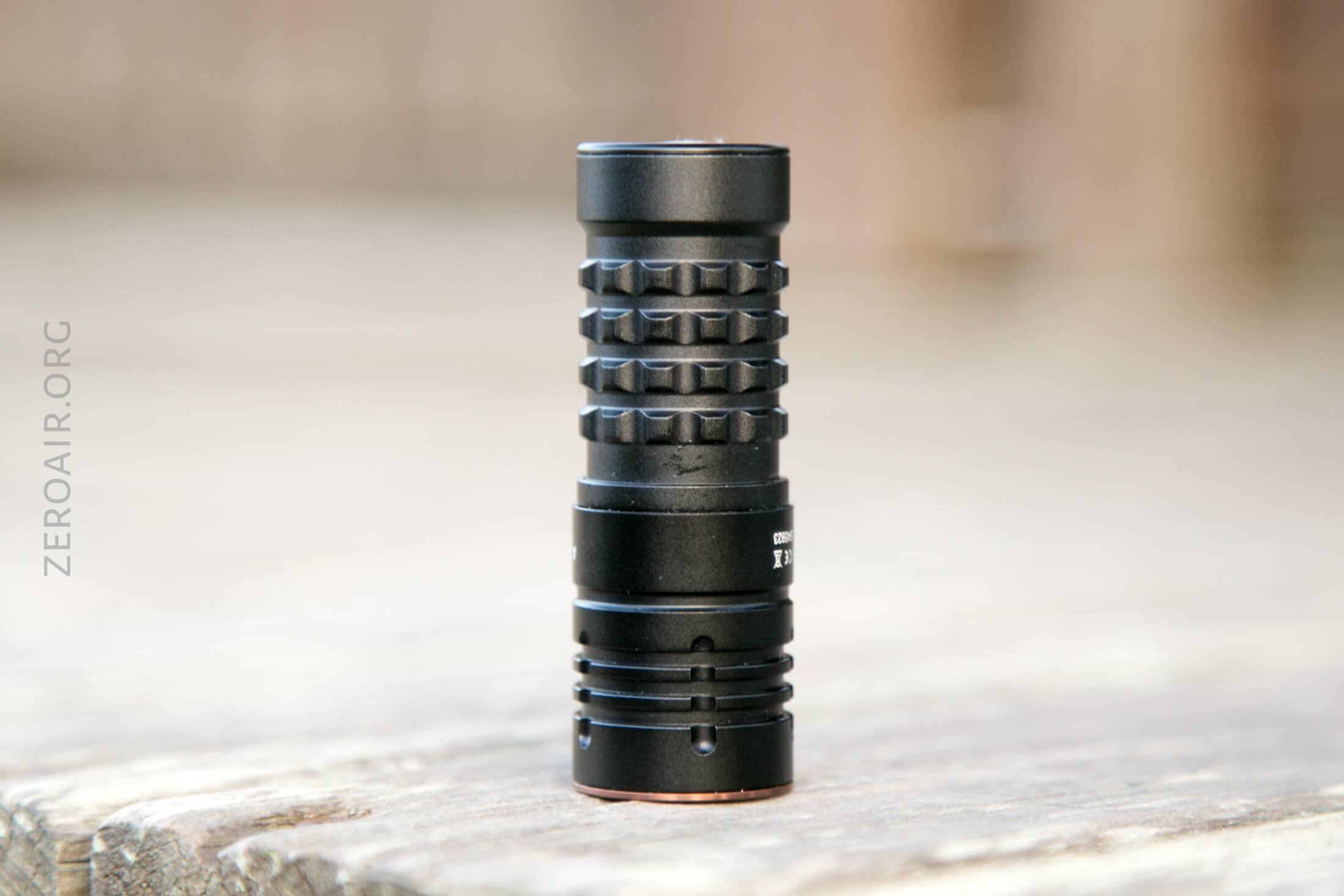
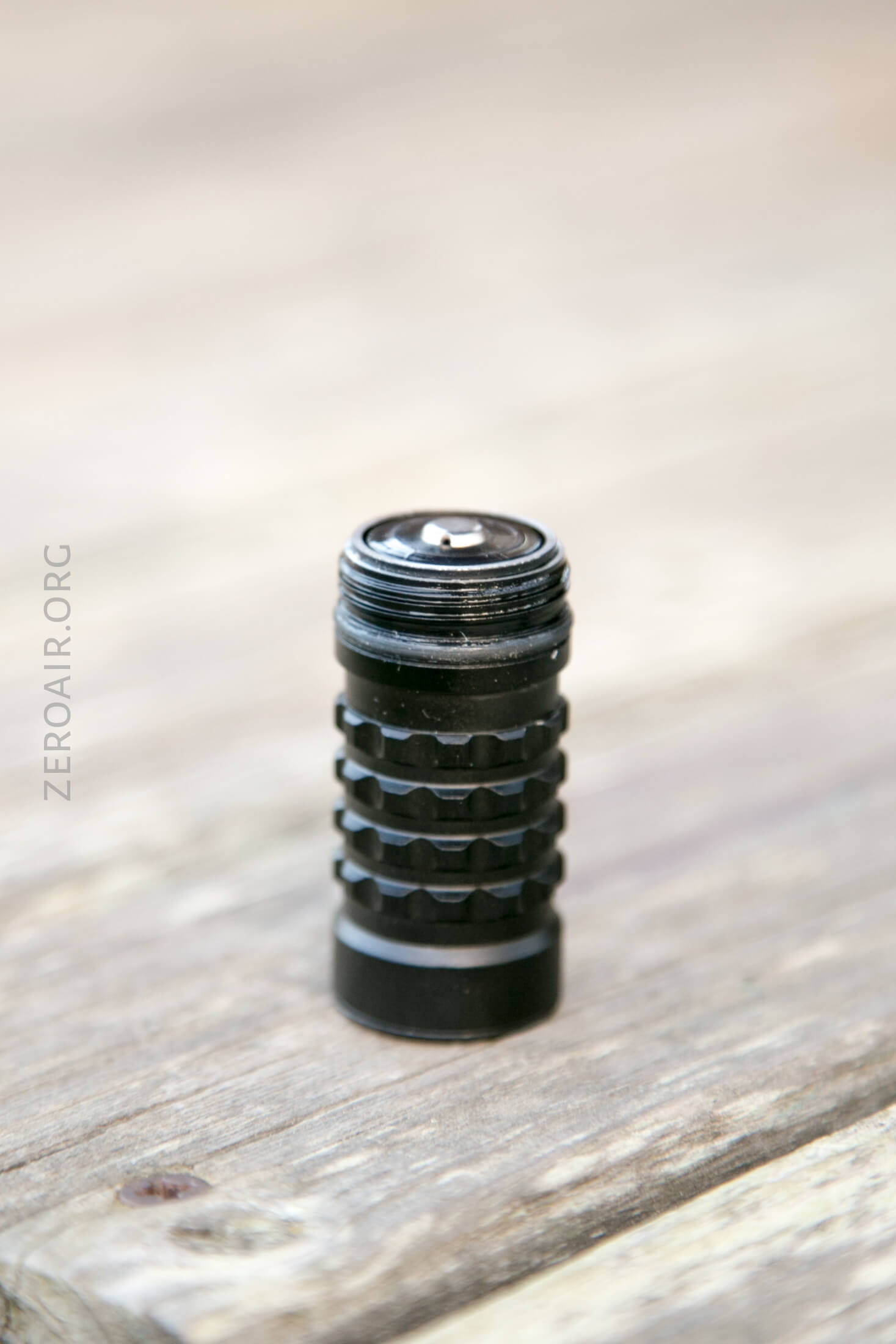
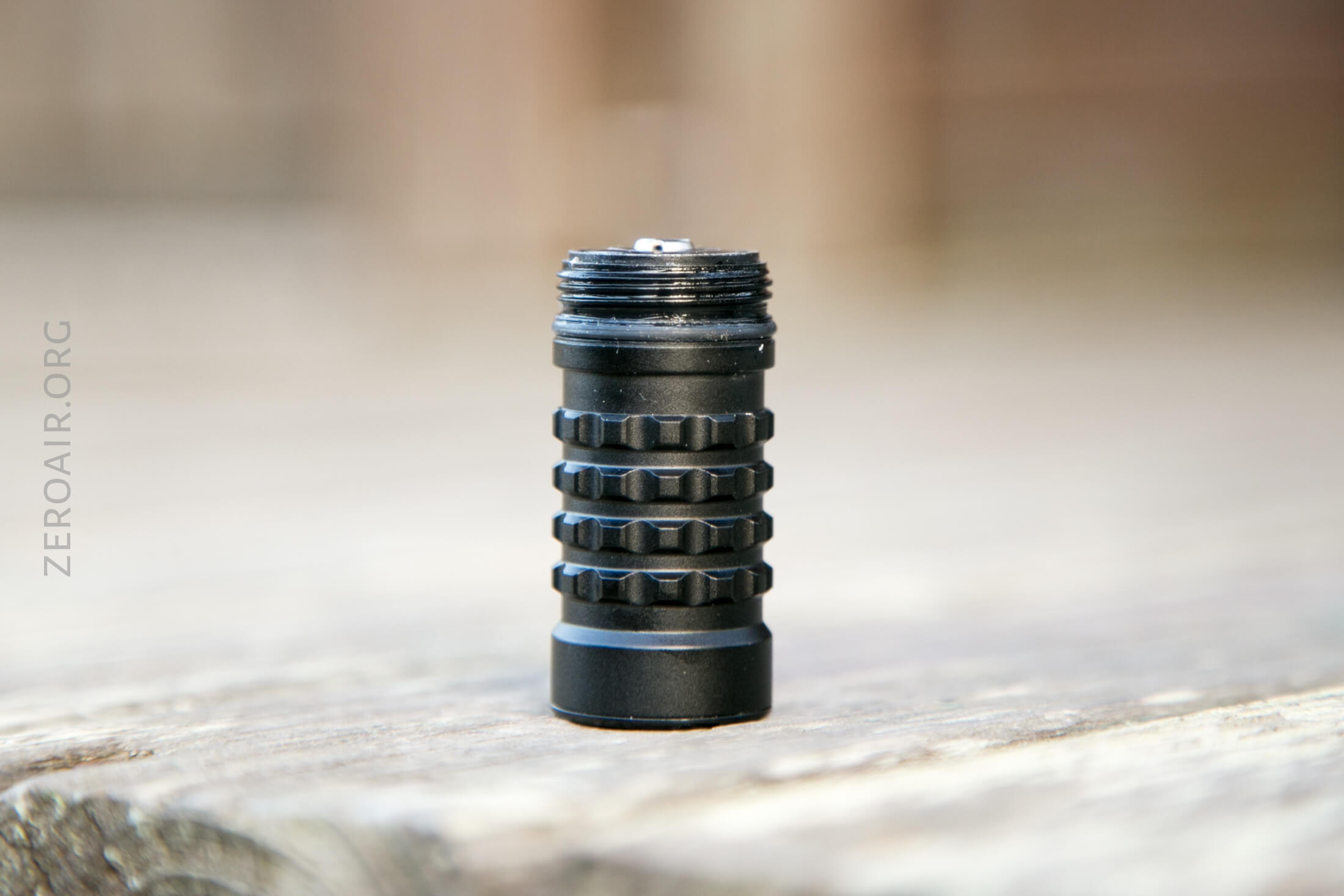
The light is a bit unusual with the big knurling squares on the body. These are grippy enough, but cause the light to have a bit of a texture overall that I just wish was…. regular knurling. If this was regular knurling, with the same diameter of light, I bet there’s an extra mm lost that would have allowed for 18350 cells. Food for thought.
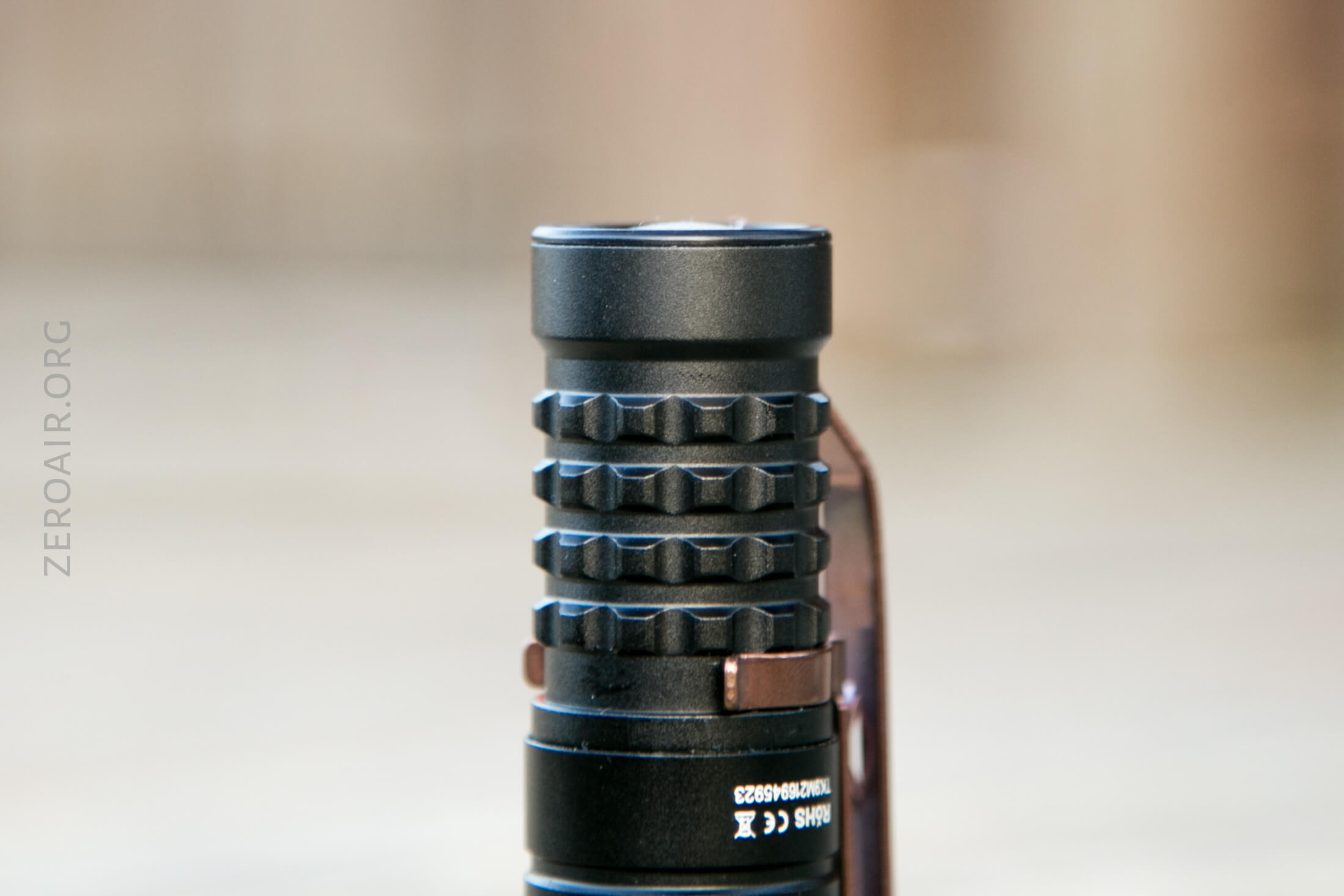
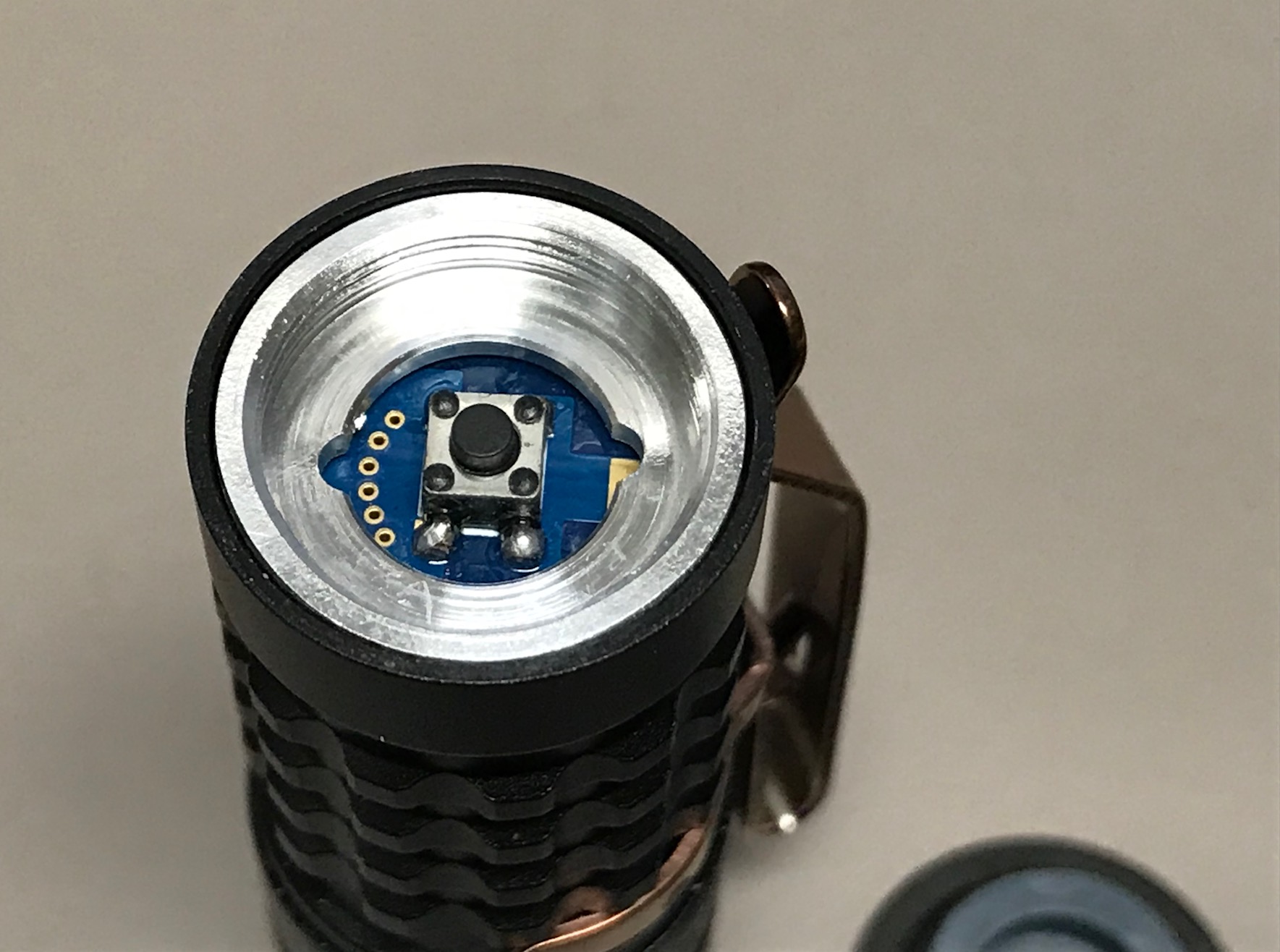
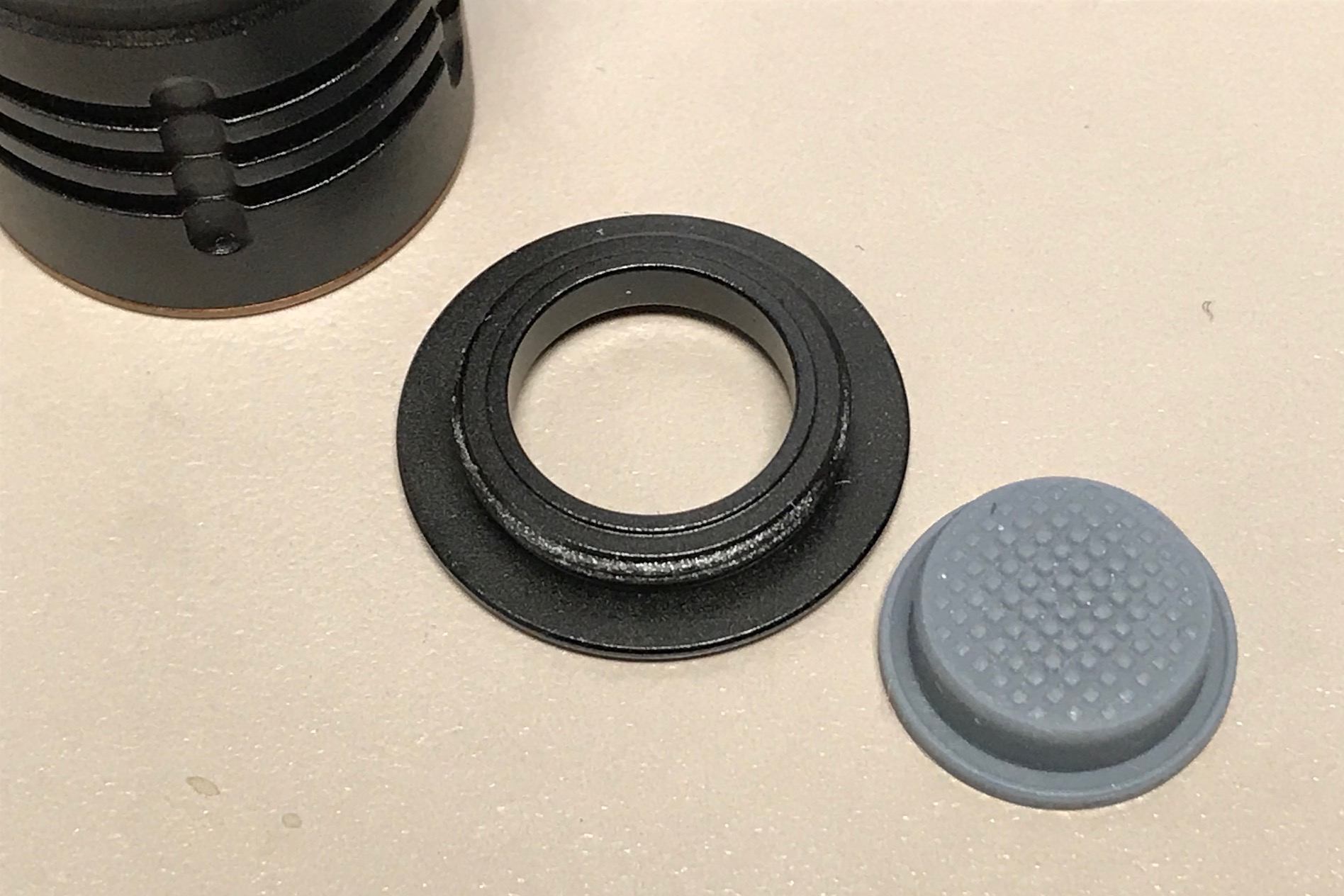
Though subtle, the tailcap actually has a little lip, which can be unscrewed. That’s how to replace the rubber boot. It’s very simple (with no pieces to lose).
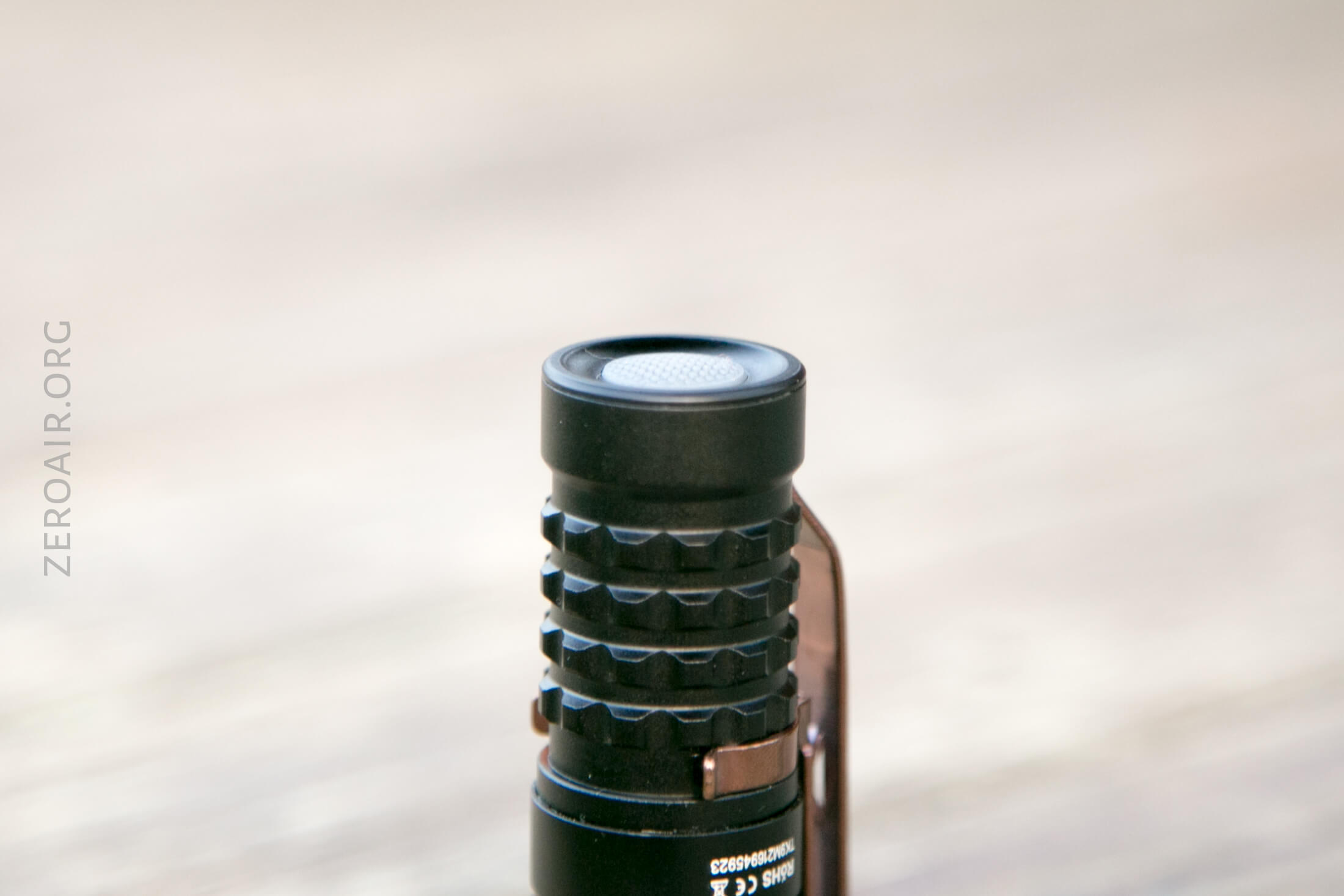
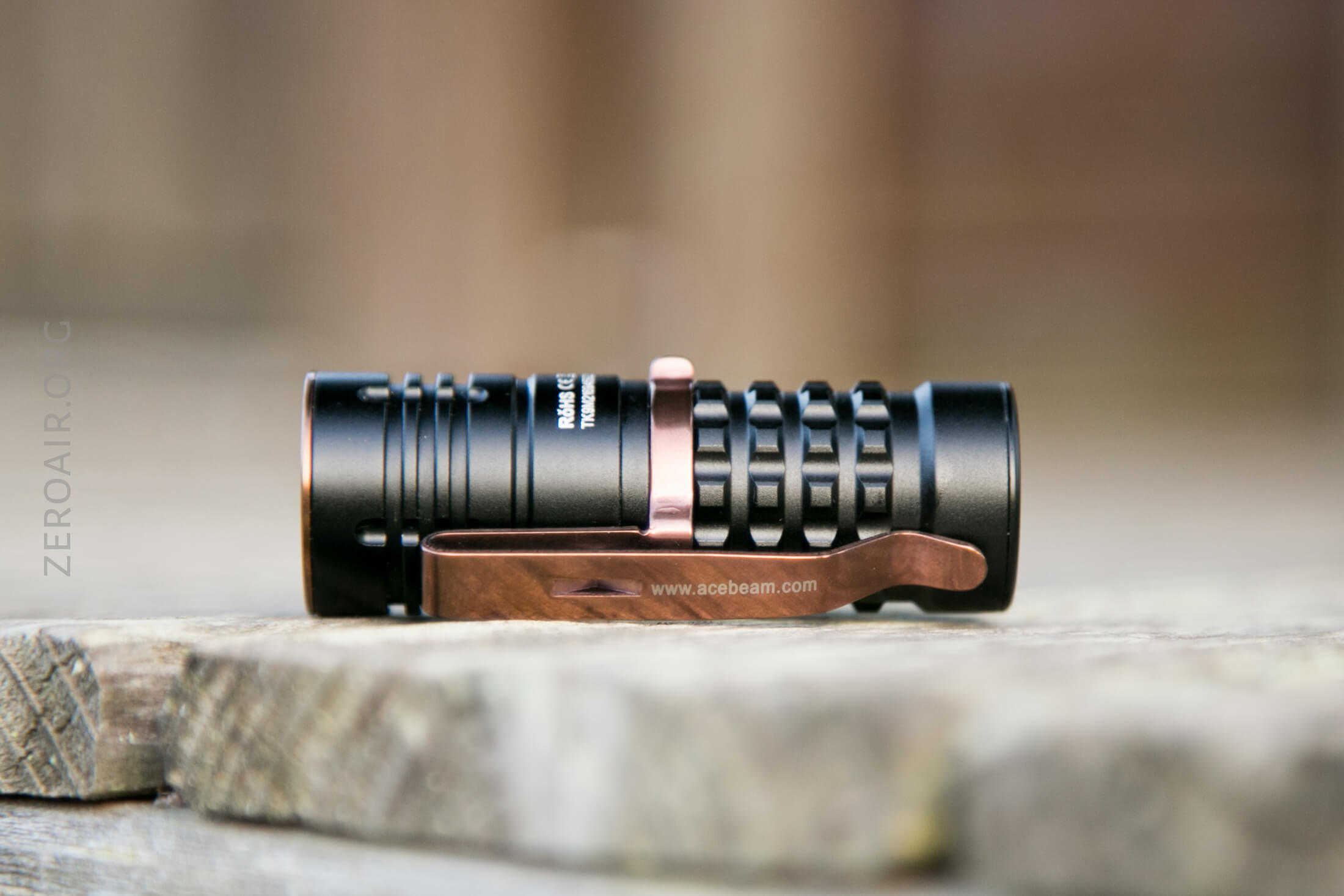
The head has some decorative fins but they should do a decent job of cooling, too.
The threads are highly lubed, square-cut, and anodized. Also note in the picture below, the serial number which you can correspond to your box, which also has the LED information.
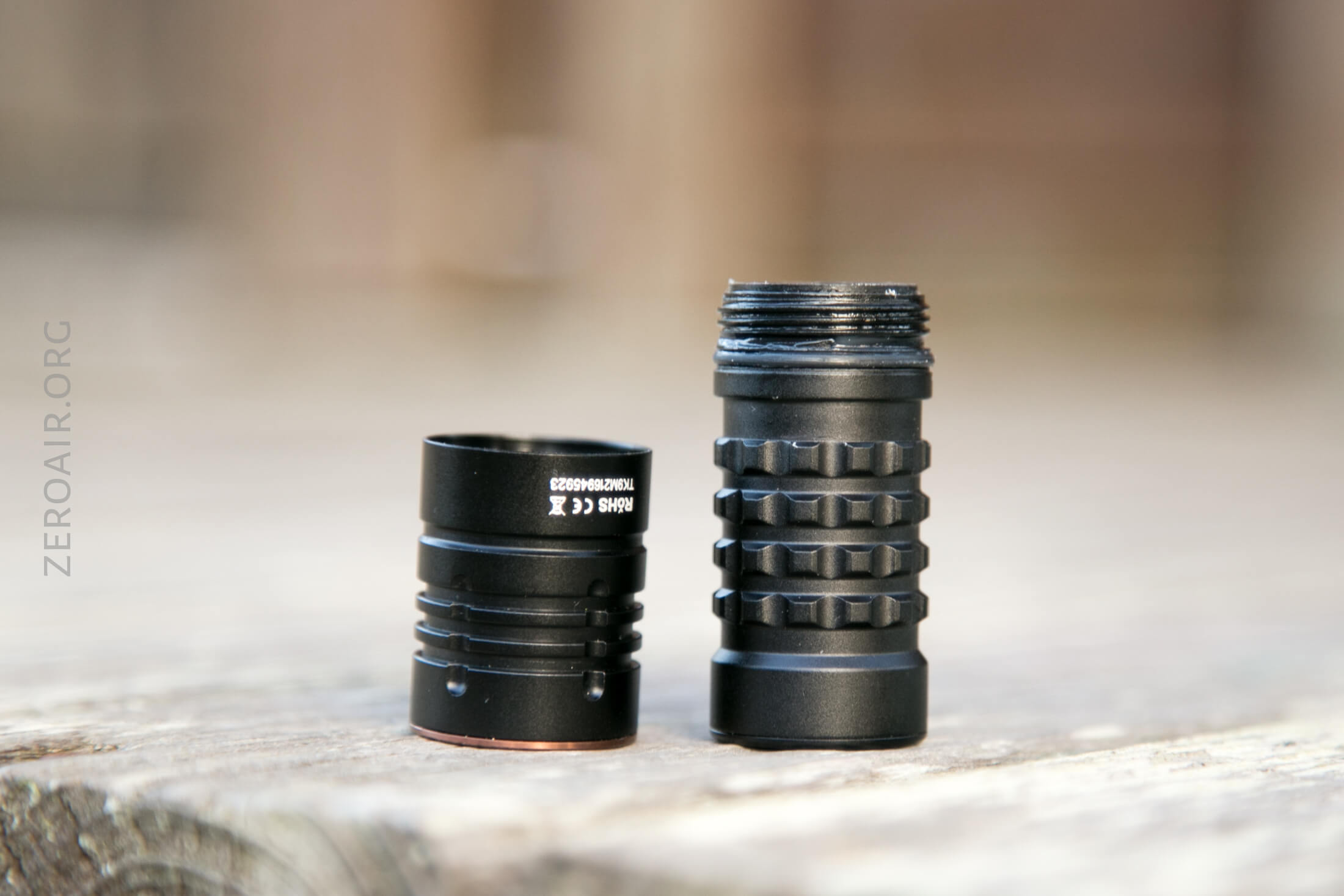
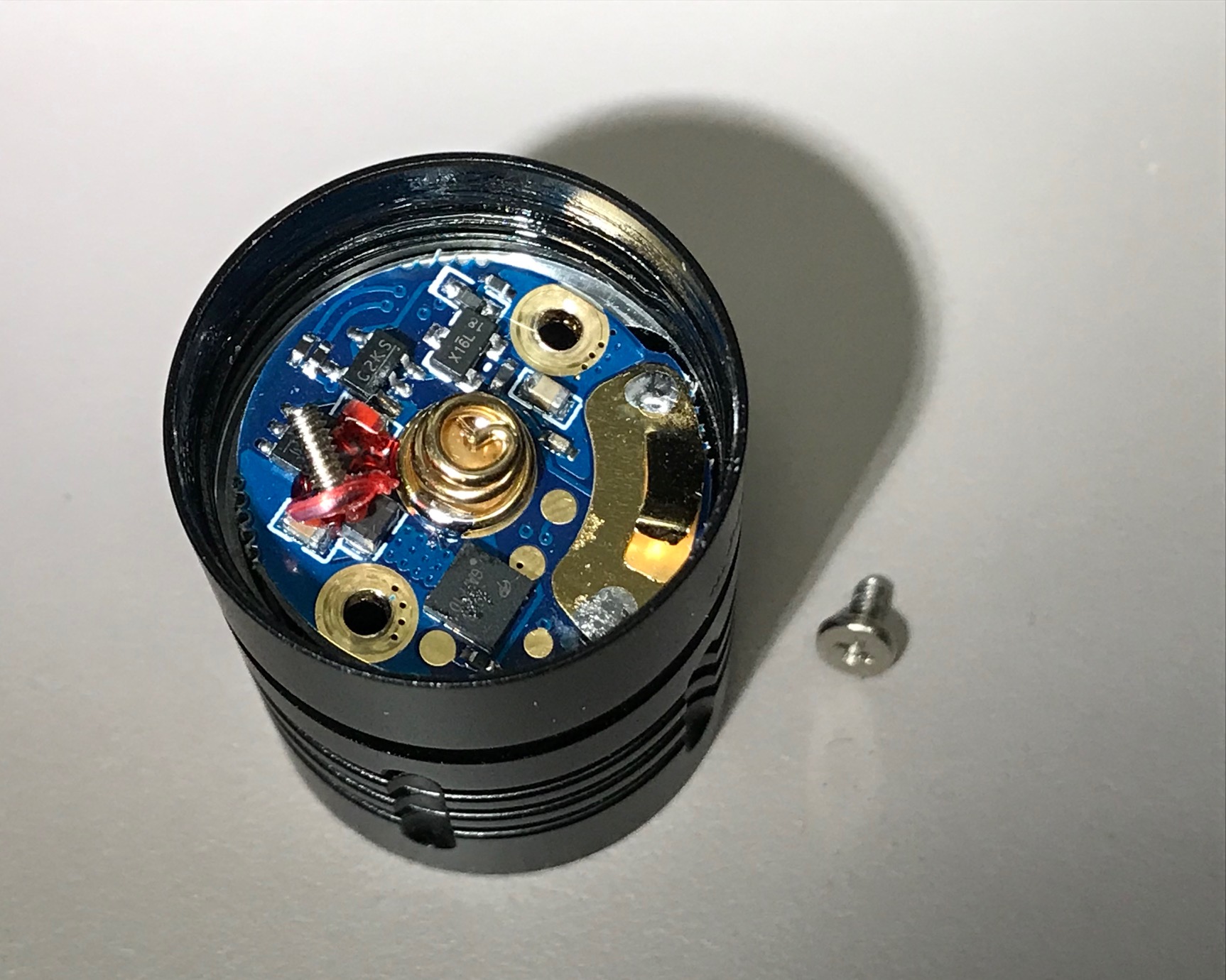
The inside of the light:
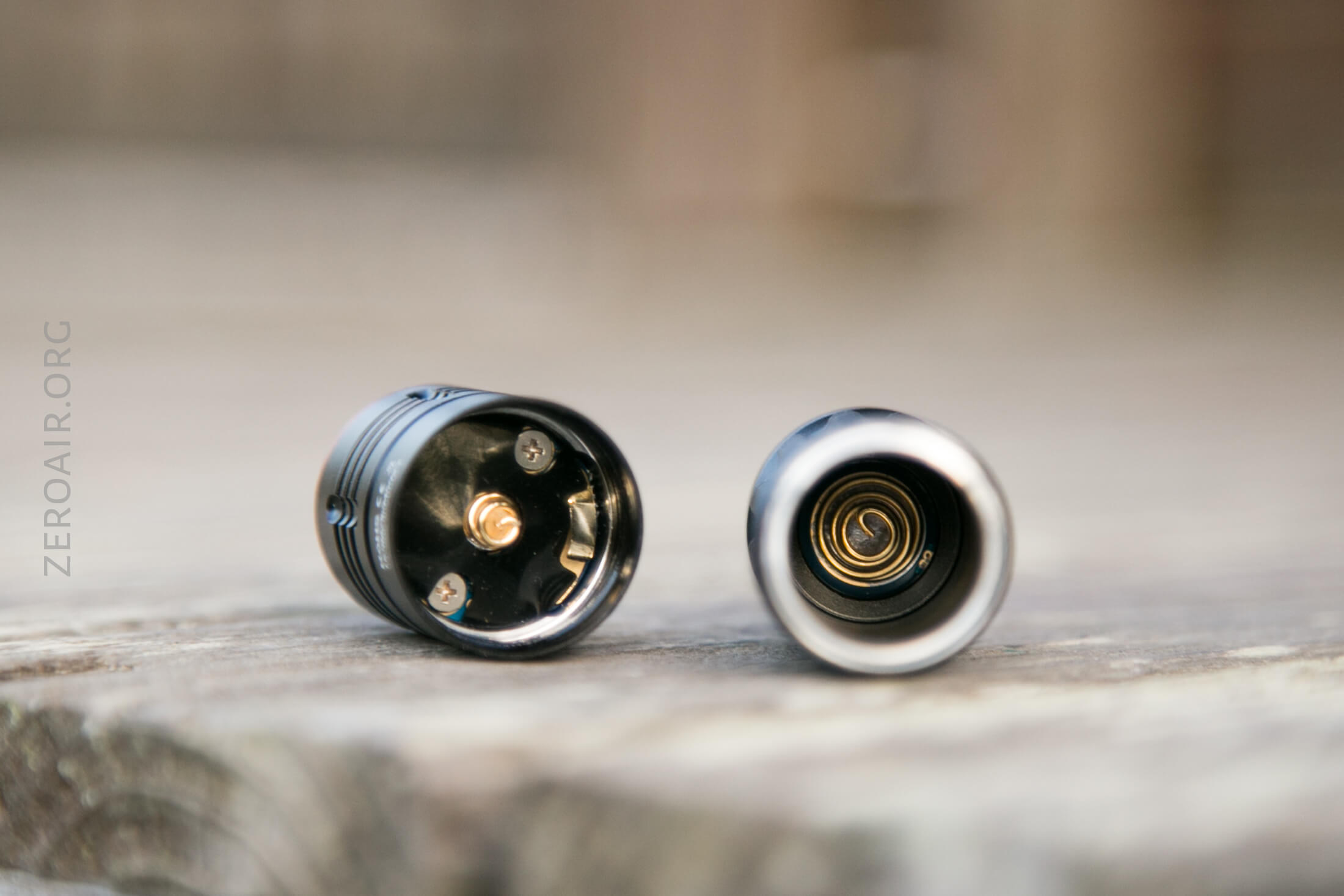
The tail has a spring, and also due to the electronic switch in the tail, some electronic components, too. The head has a thin spring, and also what looks like potting, but this seems to be more of a protective sticker than potting or conformal coating. It’s quite thick – around 1mm, and very flexible.
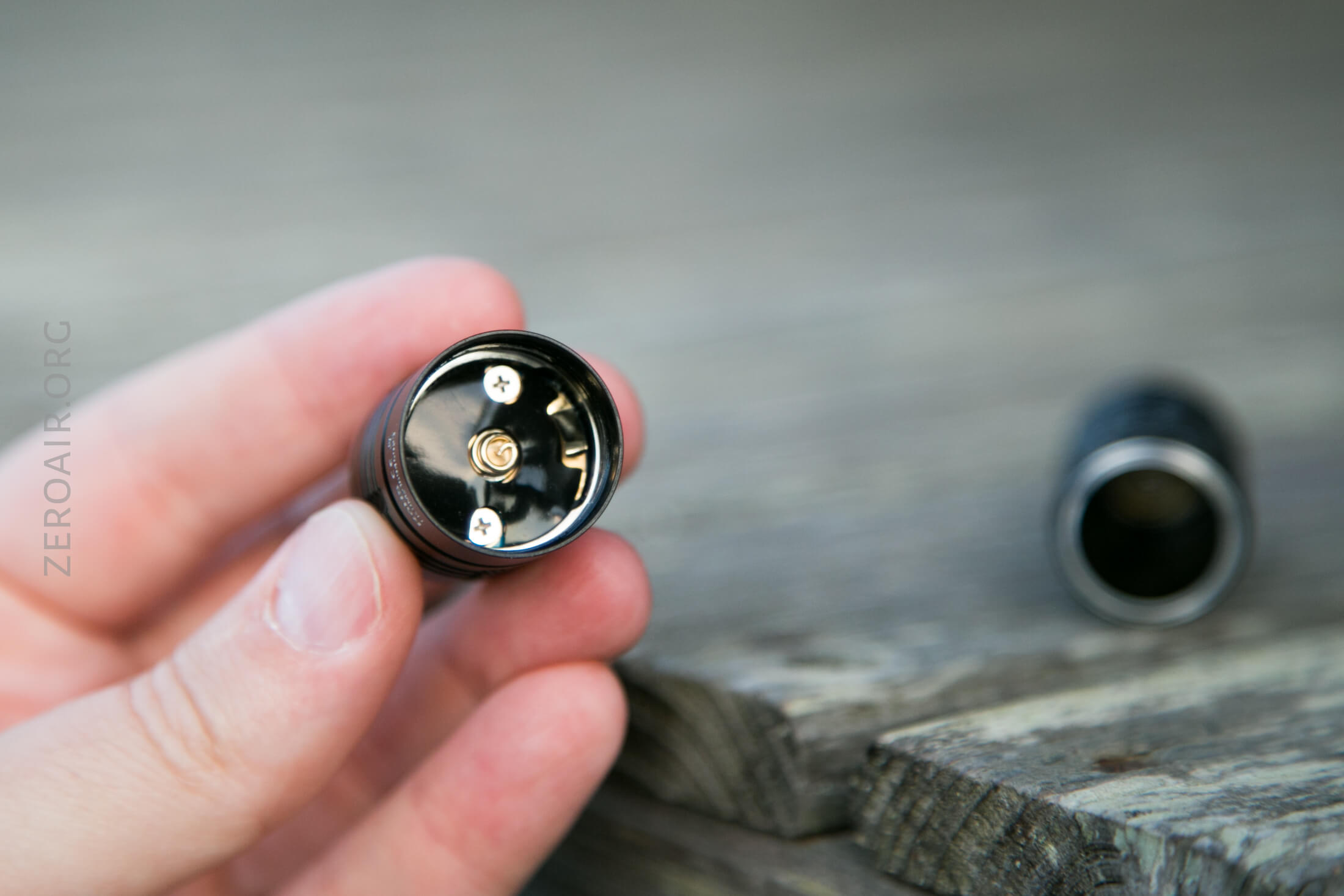
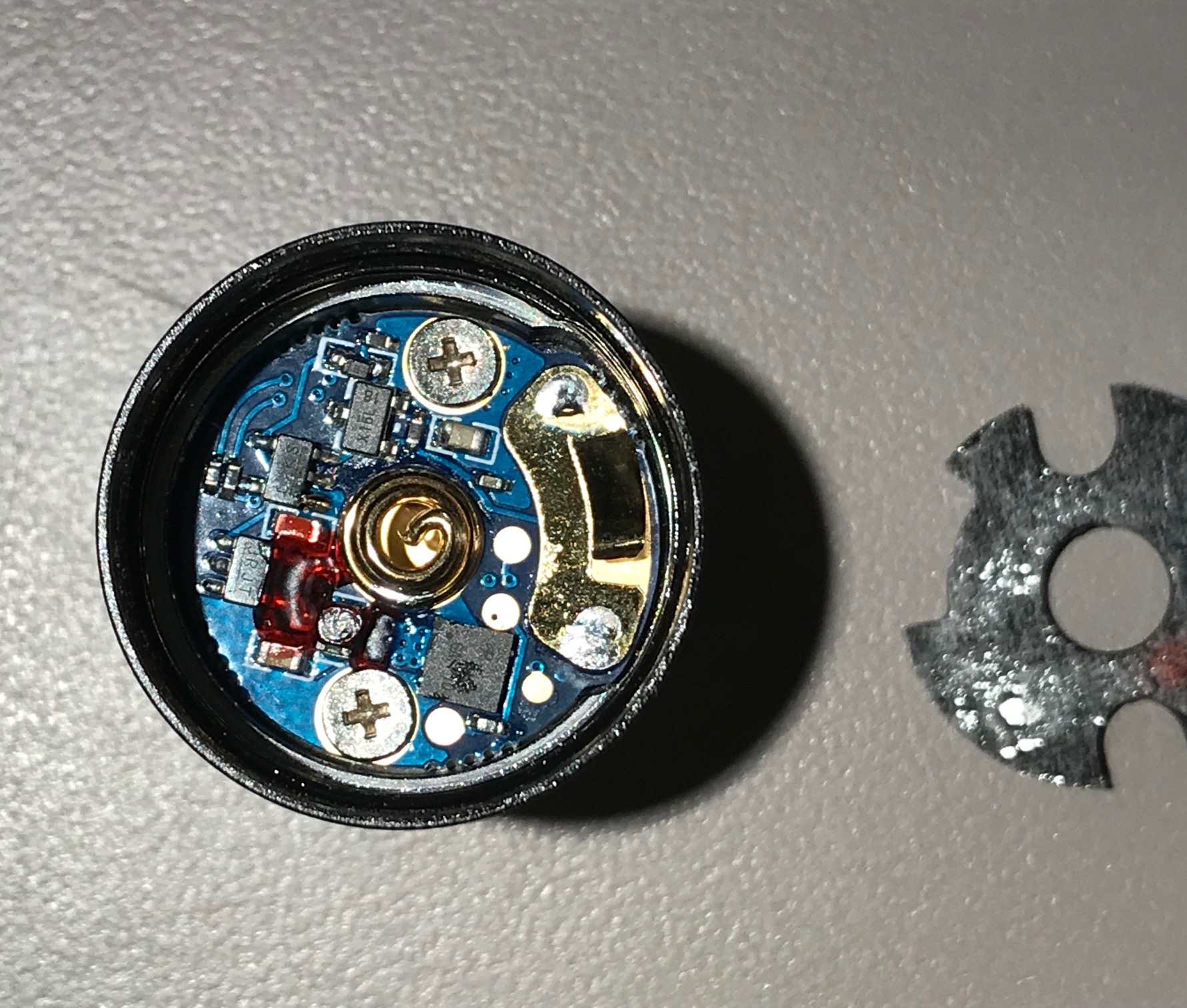
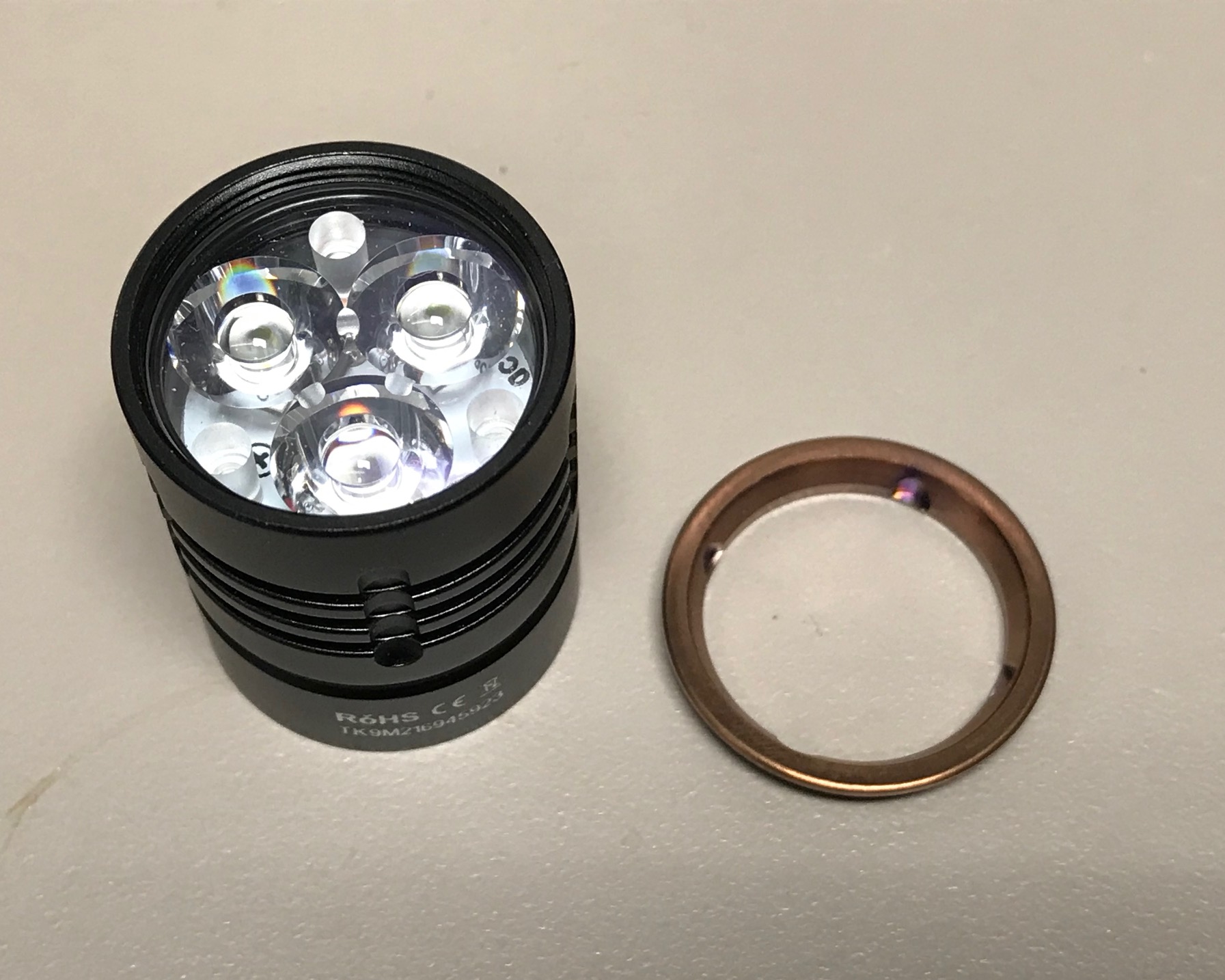
Despite the bezel unscrewing readily, the optic doesn’t fall out, nor come out easily with persuasion.
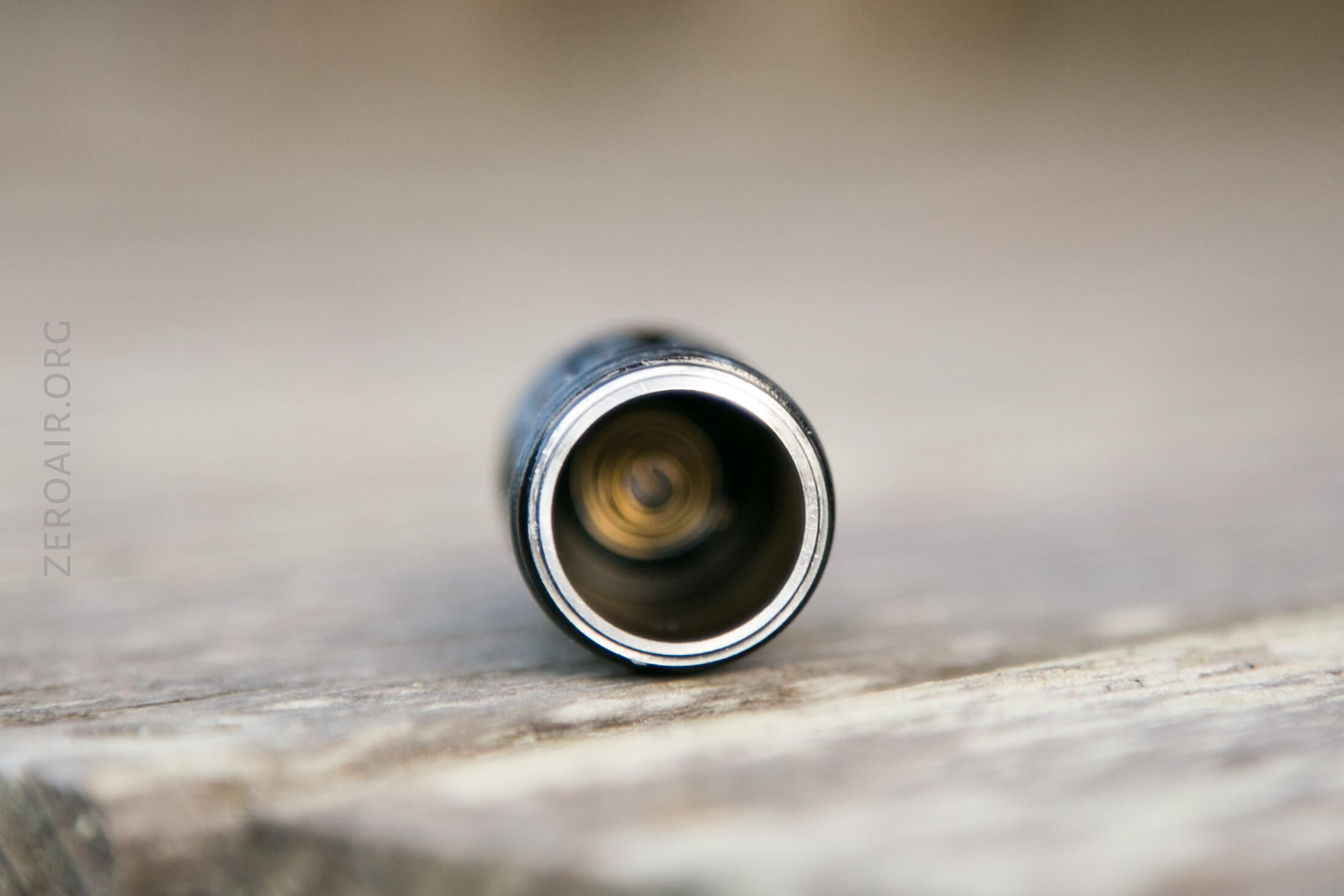
The body has an “inner sleeve,” a necessity with the e-switch. This sleeve does not come out, at least not without completely disassembling the tail of the light.
My only complaint with this light regarding build quality is that the head is just a bit difficult to thread onto the body with the clip in place.
Size and Comps
Officially:
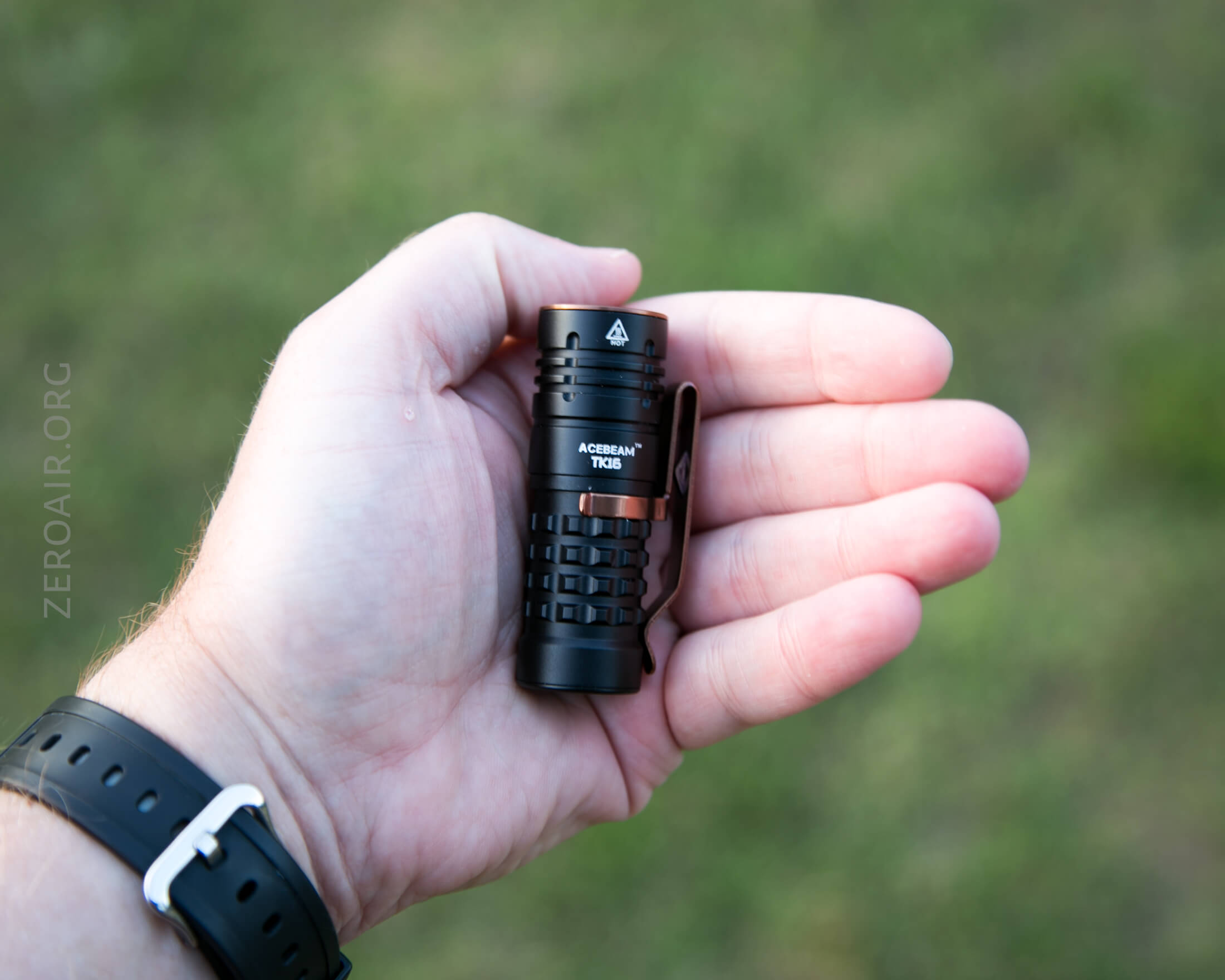
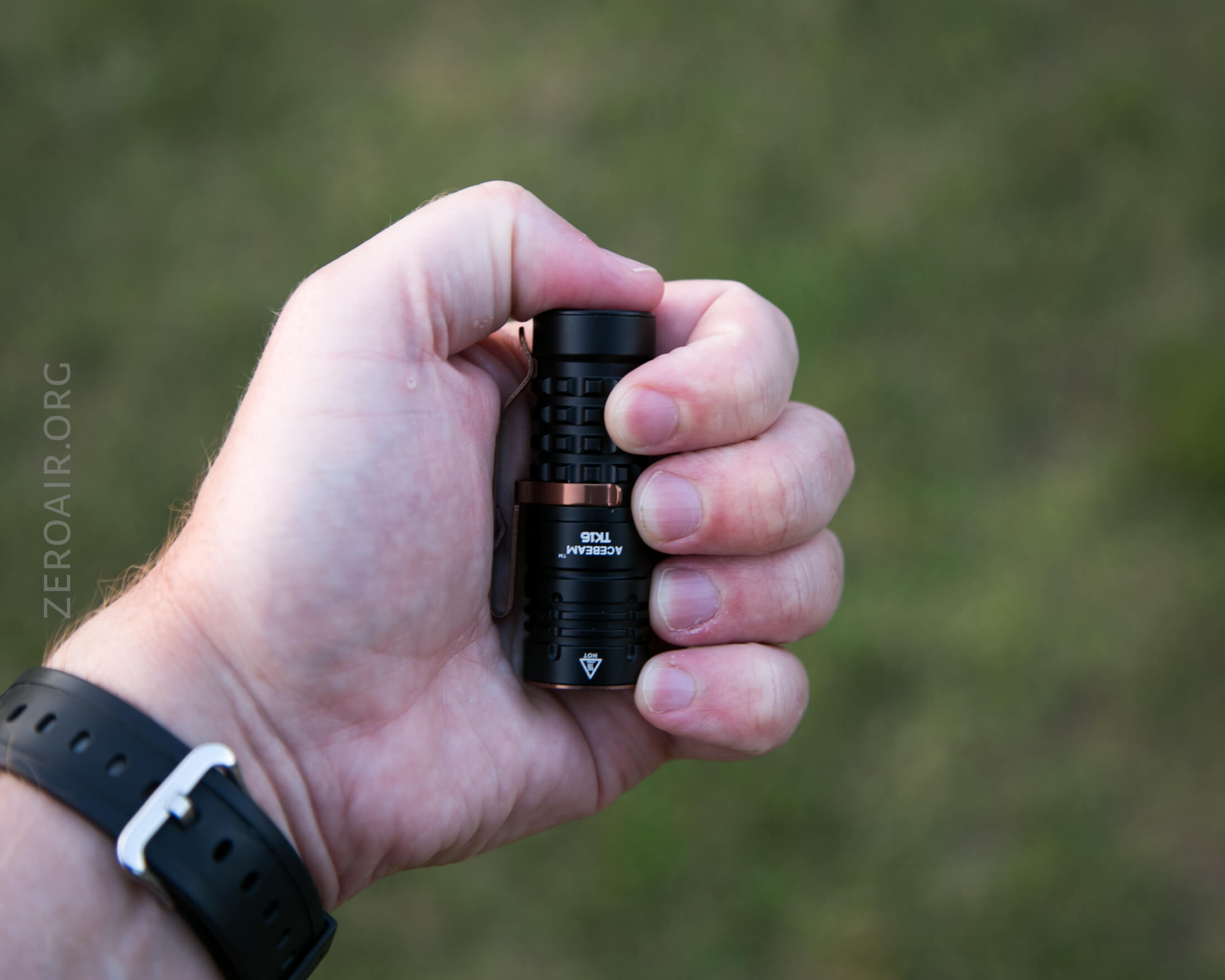
66.5mm long, 23mm wide (head), and 22mm wide (tail).
Weight: 37.3g
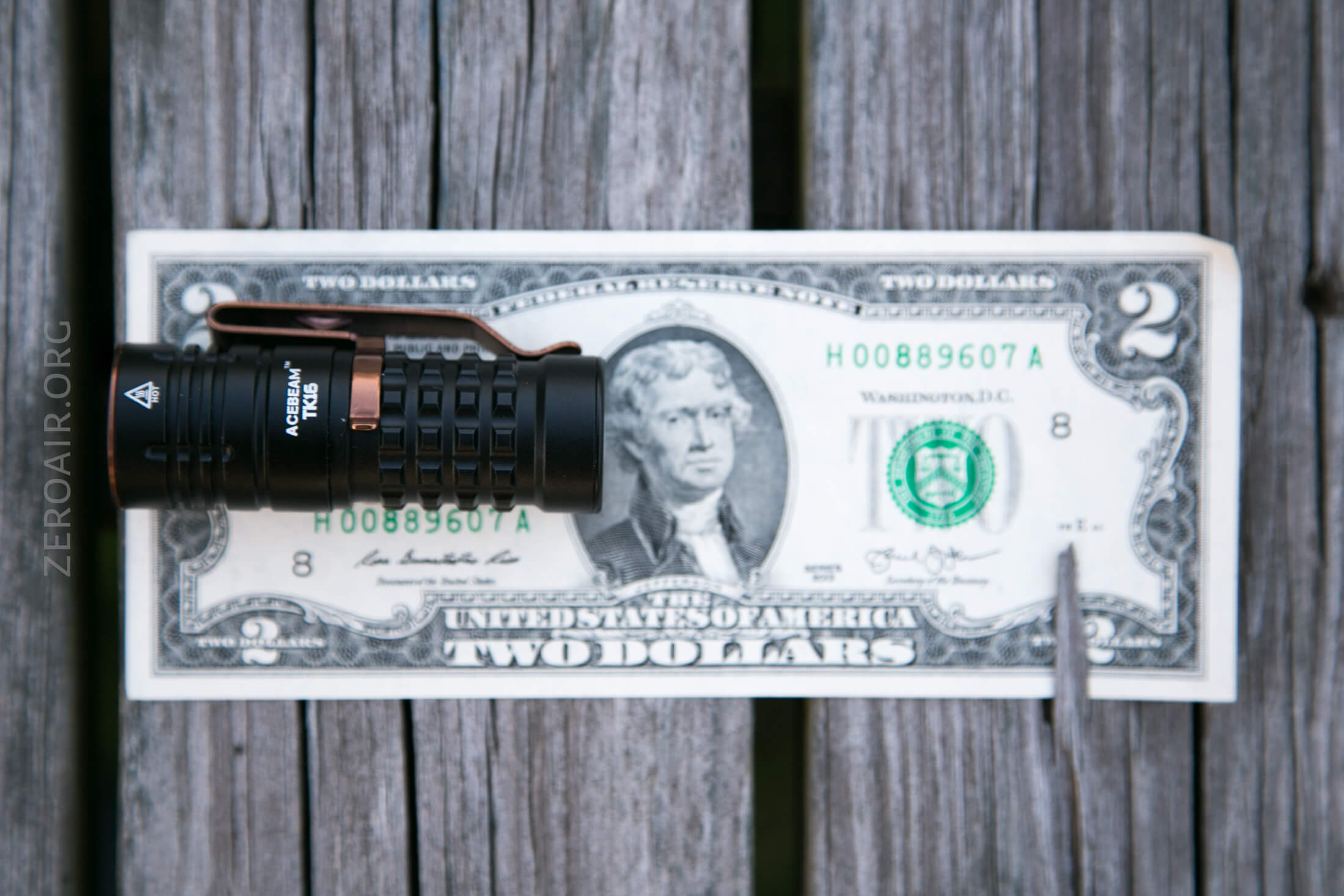
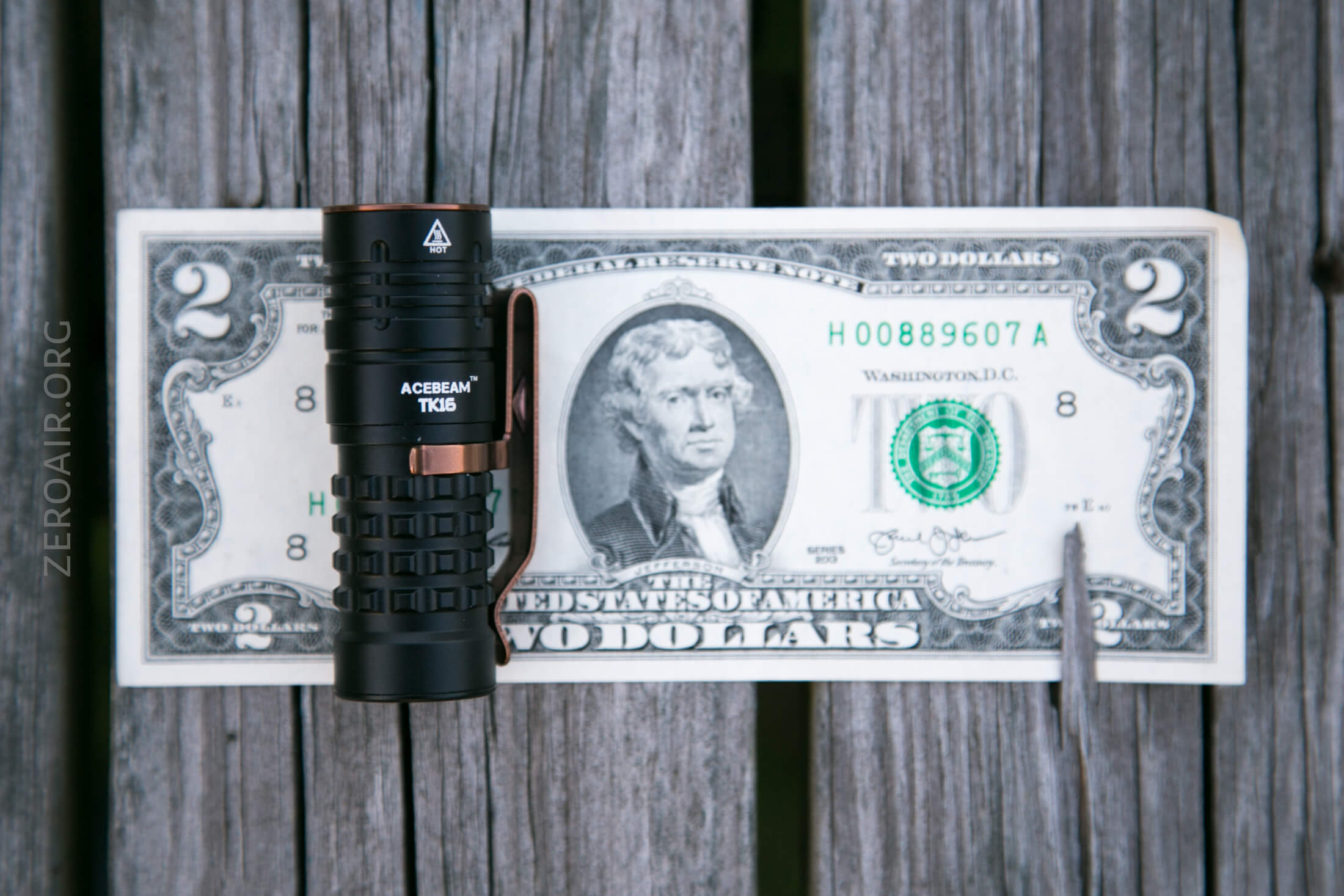
It’s a small light, indeed!
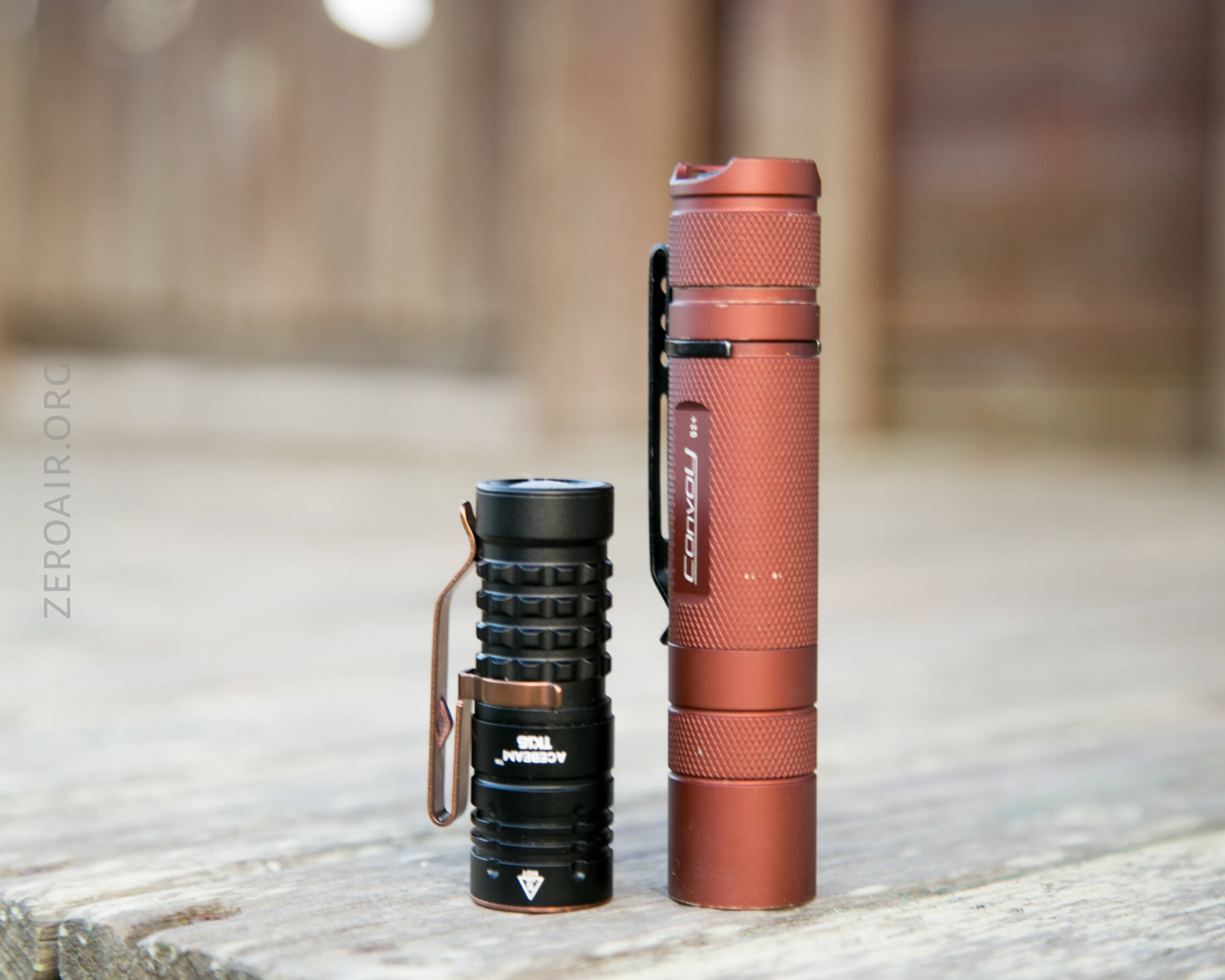
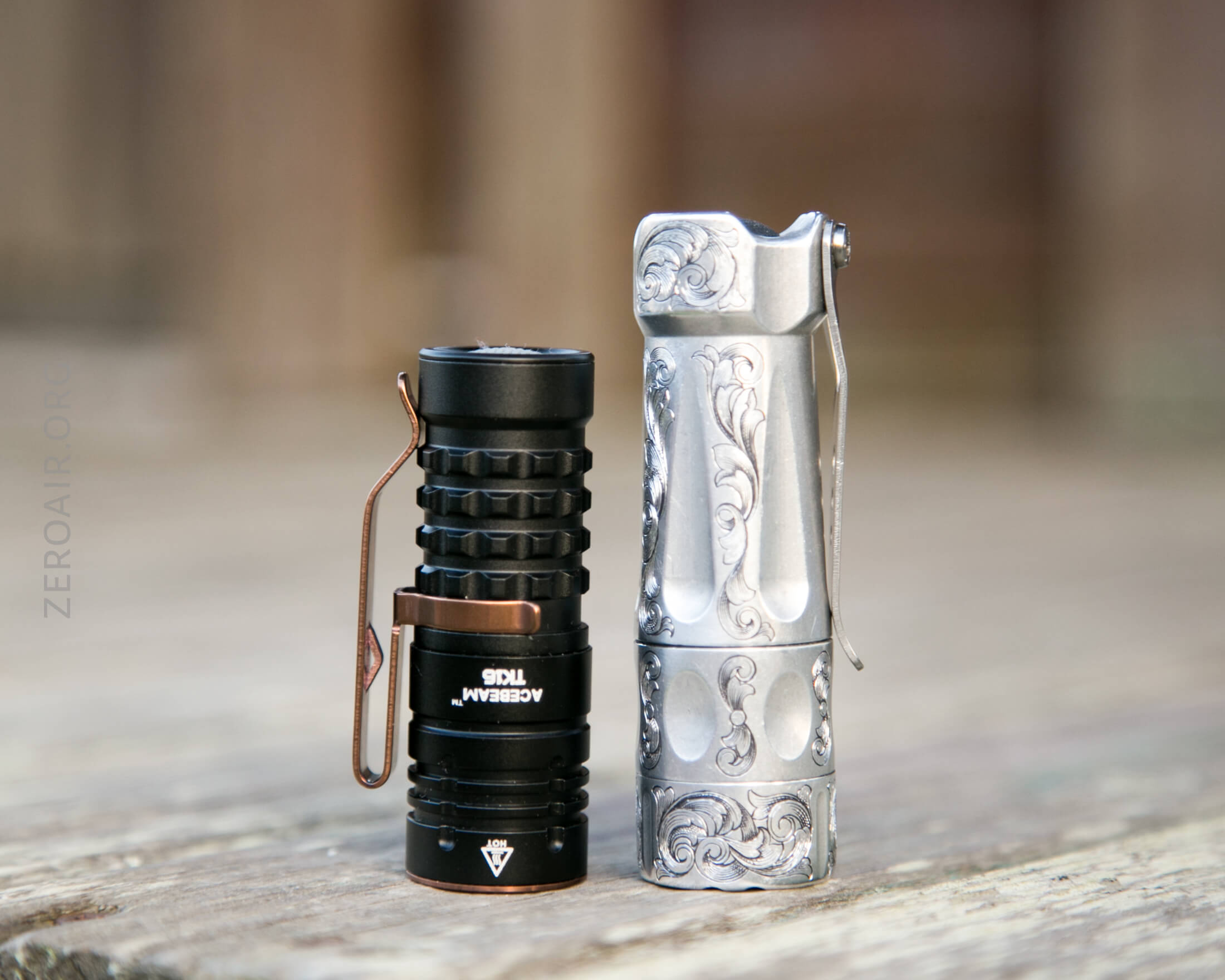
Retention and Carry
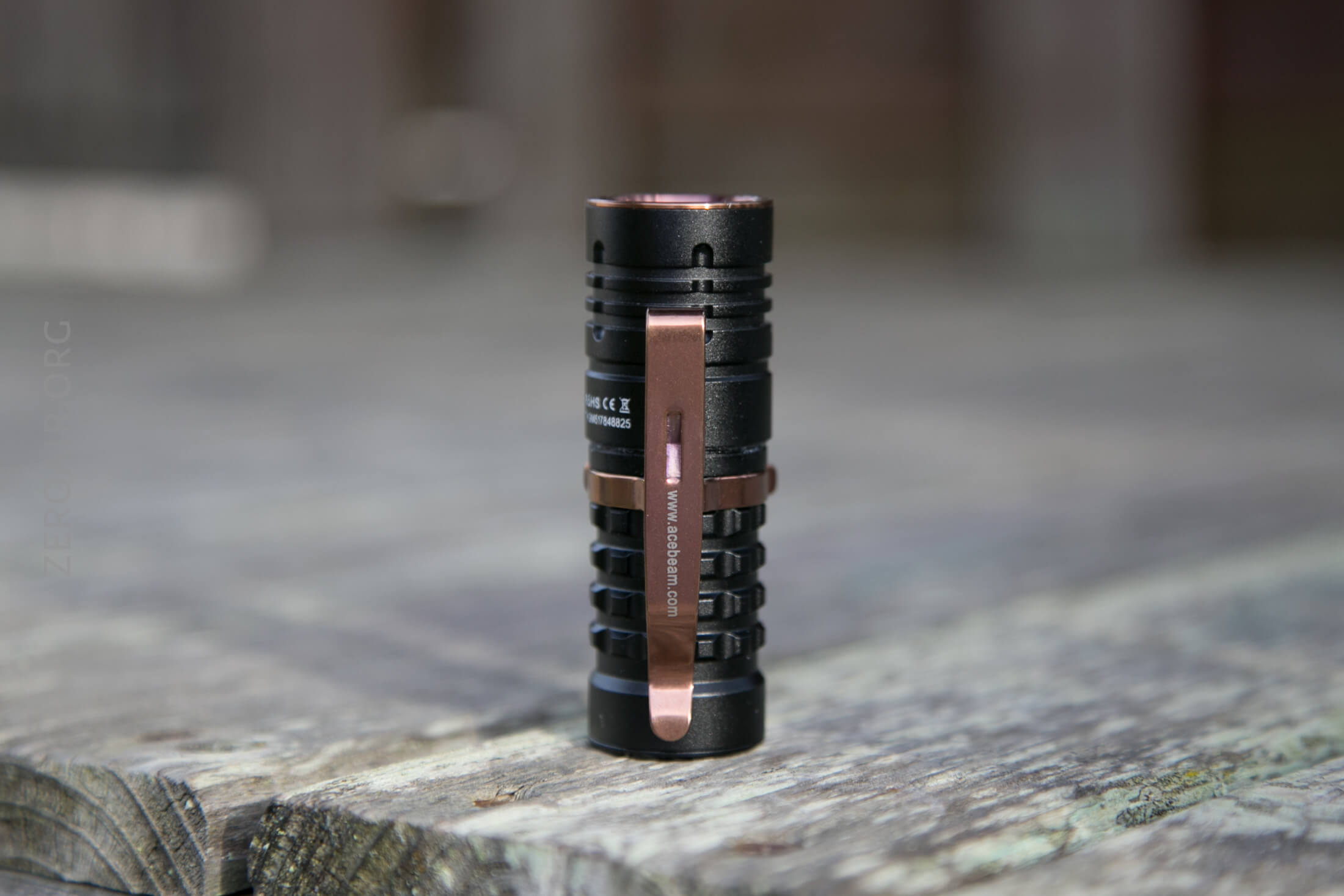
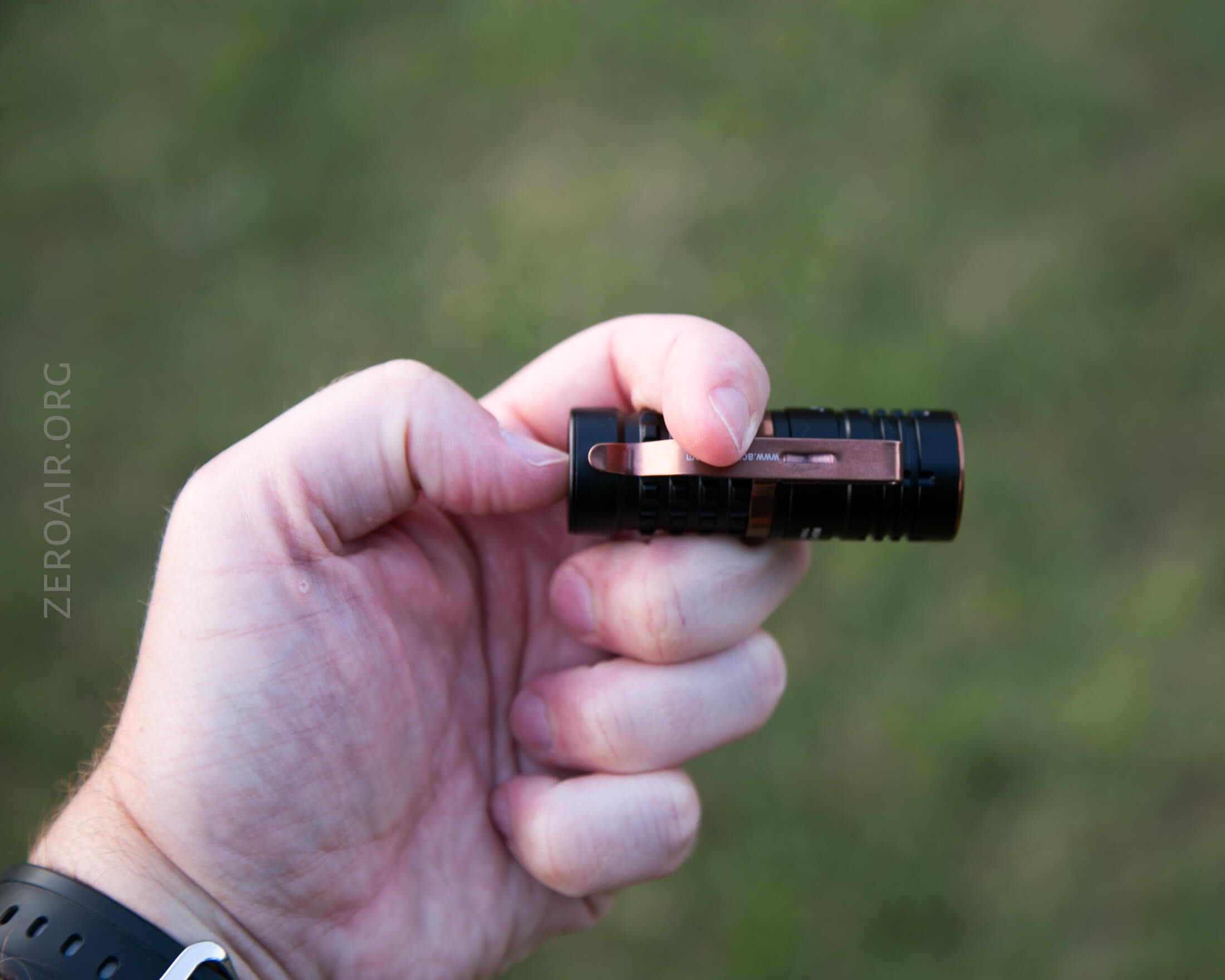
The only option for carry (aside from naked deep carry) is the included pocket clip. It’s a friction-fit clip, and quite snug. Technically reversible but in reality, it doesn’t sit properly in the orientation not seen below. So this is the “right way.” The mouth isn’t quite as big as I’d like and the bit of the clip that’s attached to the body blocks pockets a little. It does need that added material some of these types of clips have. (Sorry, there’s really not a name for it.)
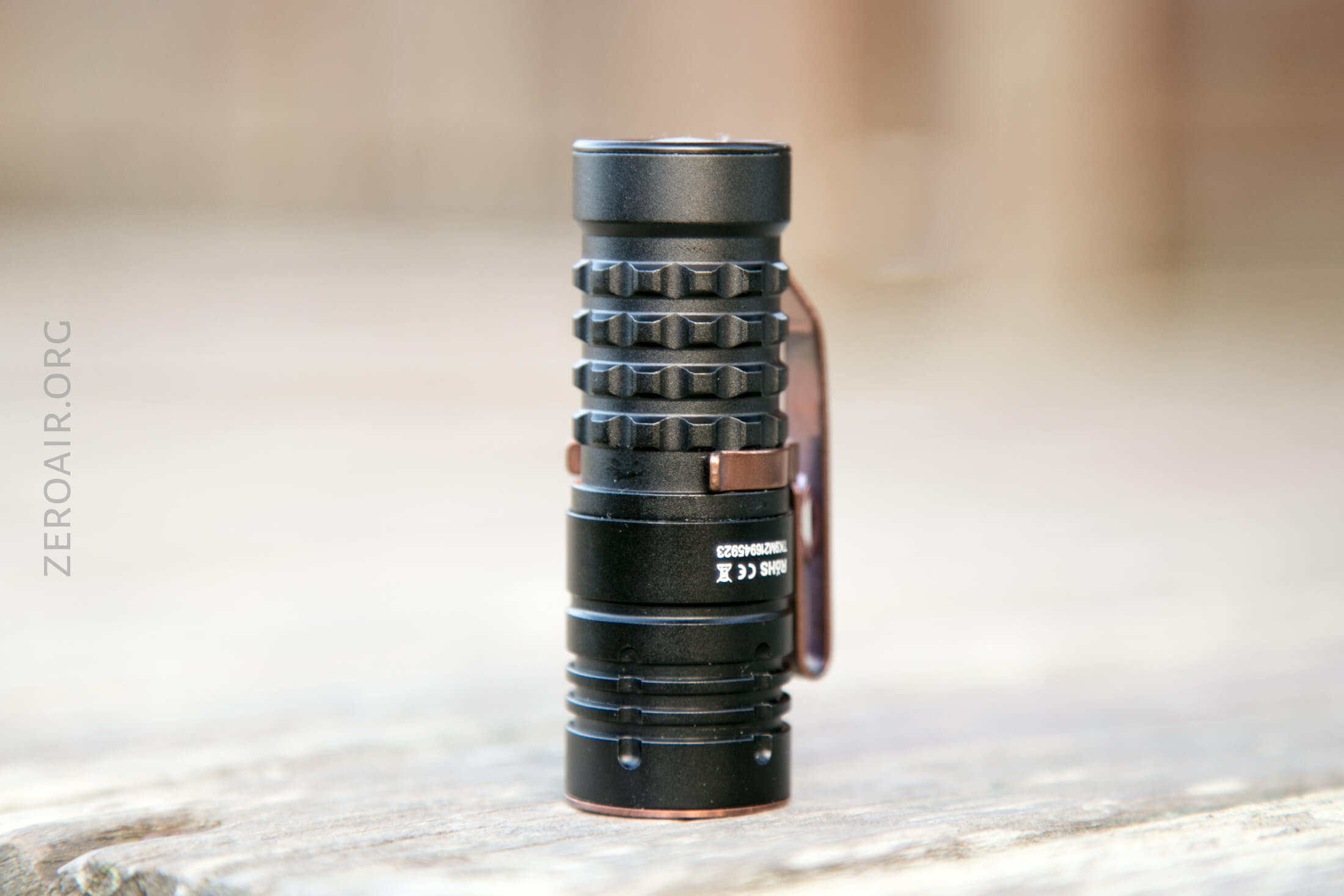
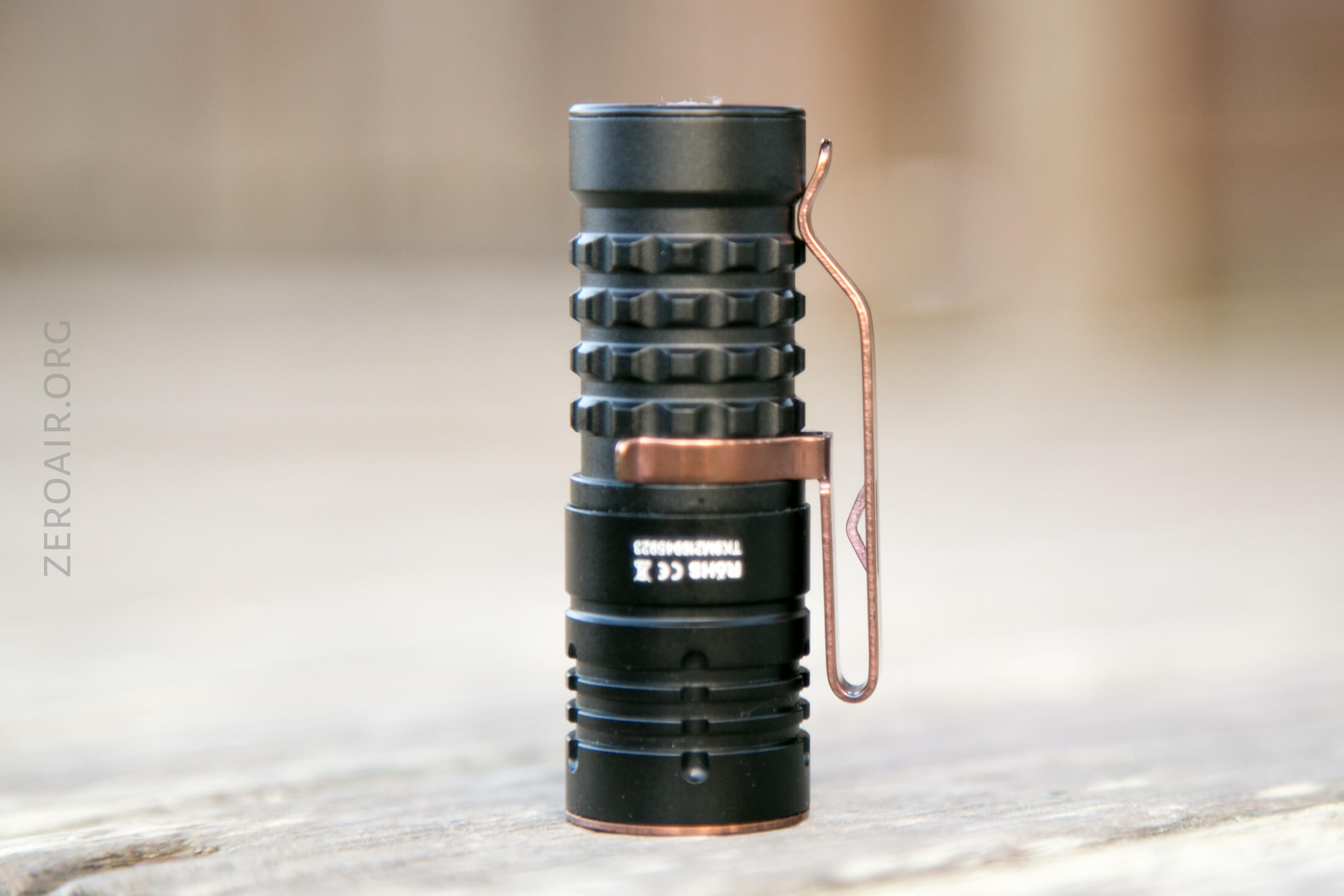
The orientation seen above is bezel up, and not a deep carry. Ultimately, the clip could be better.
Power and Runtime
The TK16 (all models) is powered by a single 16340 cell. Acebeam includes a cell, which is 550mAh. It’s not specifically labeled as high drain, but I suspect it is.
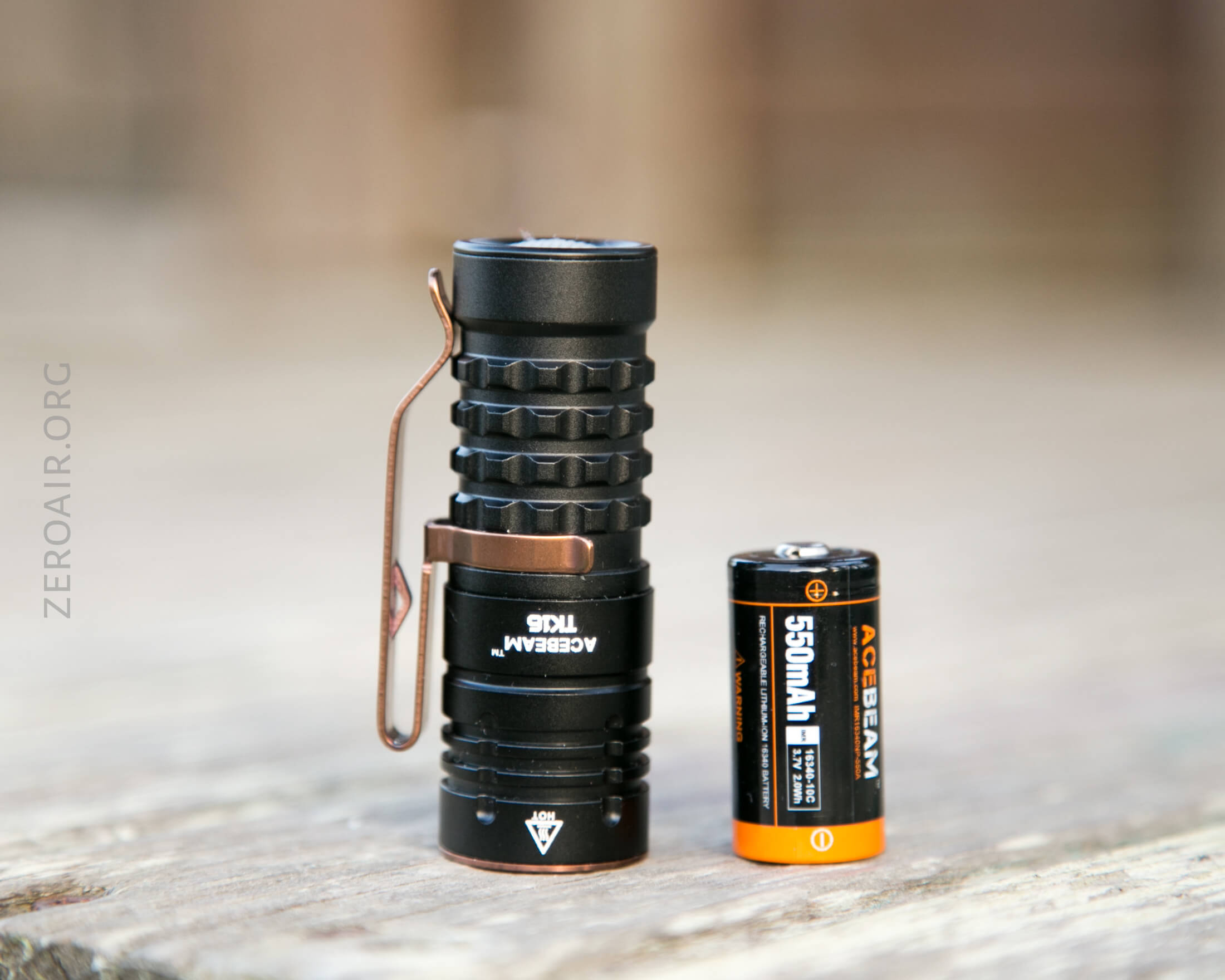
The cell is a button top.
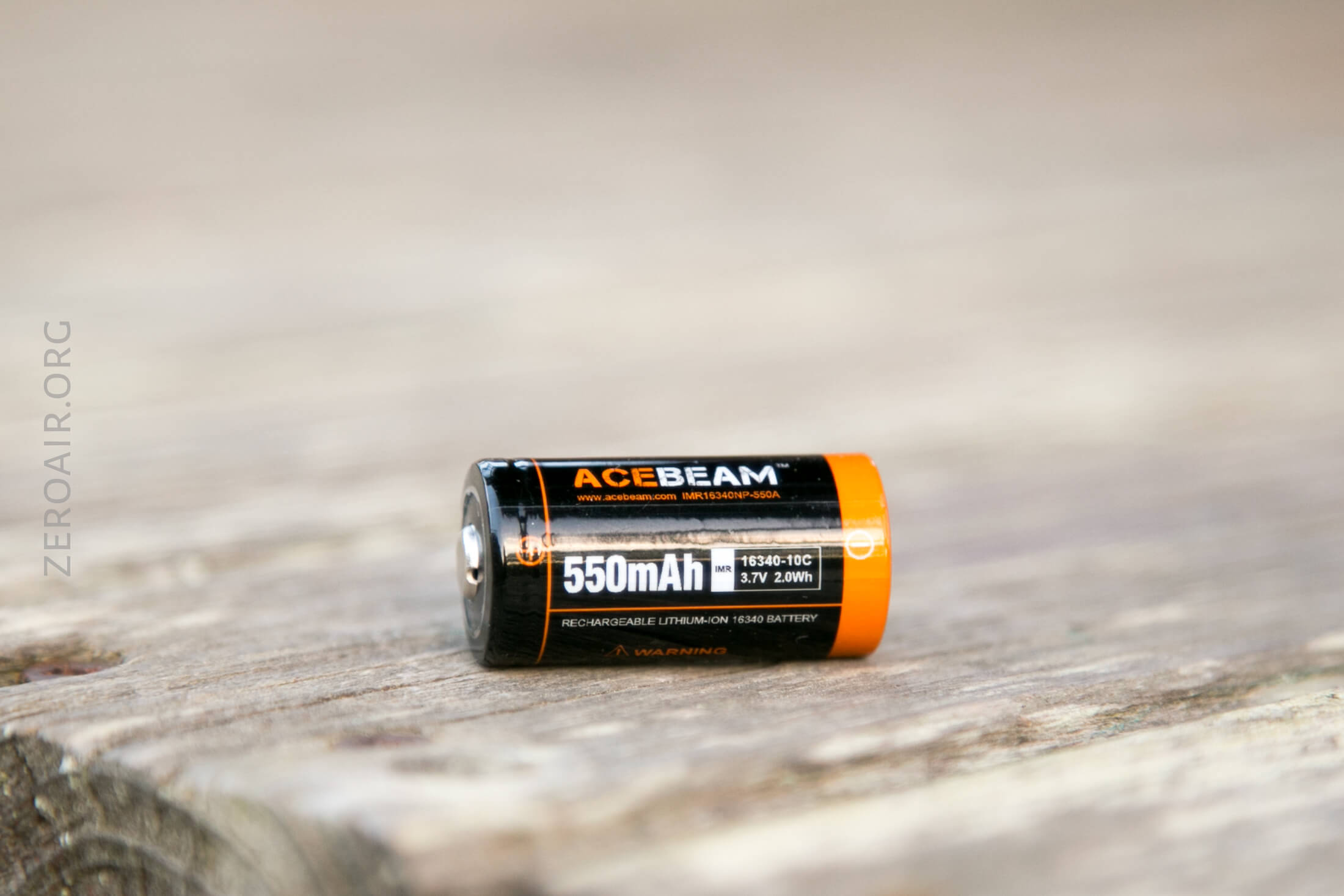
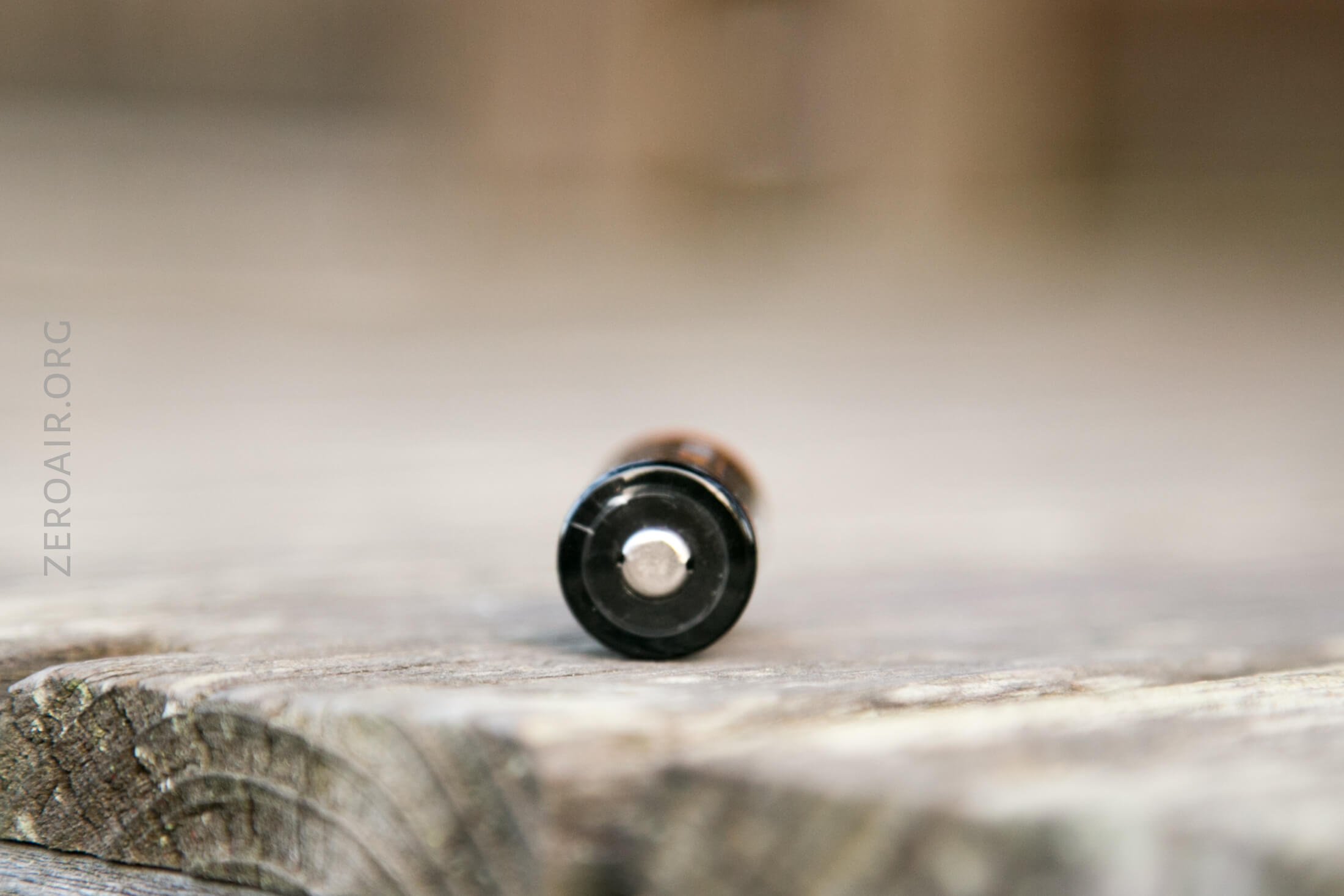
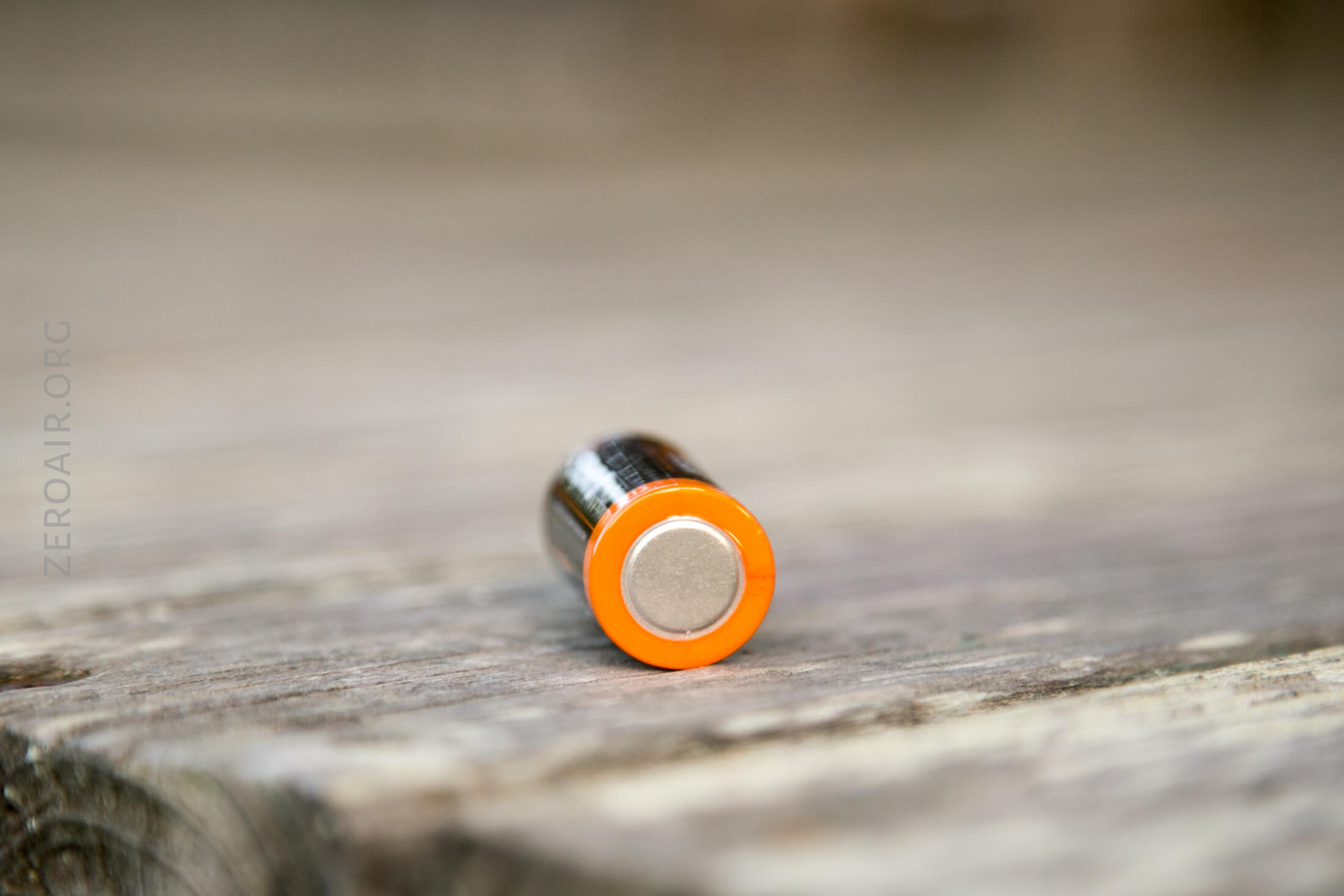
Here’s the way to put the cell in the light – as usual, the head gets the positive terminal.
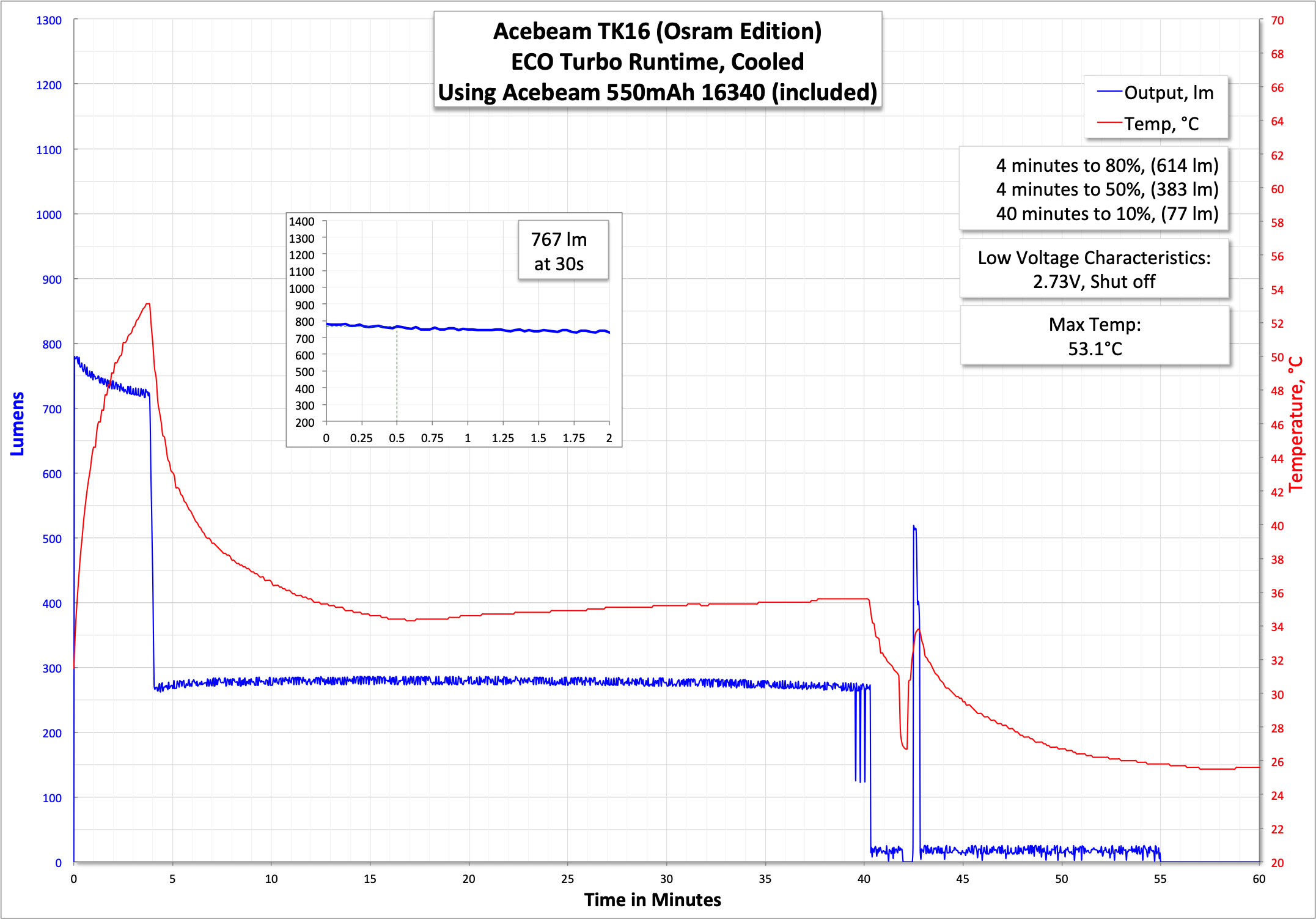
The user interface is interesting in that there are two mode groups – “Power” and “Eco.” They differ in the output on Turbo, but also (inexplicably) in the runtimes on a lower mode or two. I did an extra runtime for this light – both Turbos, and the High mode (which is the same output for both groups).
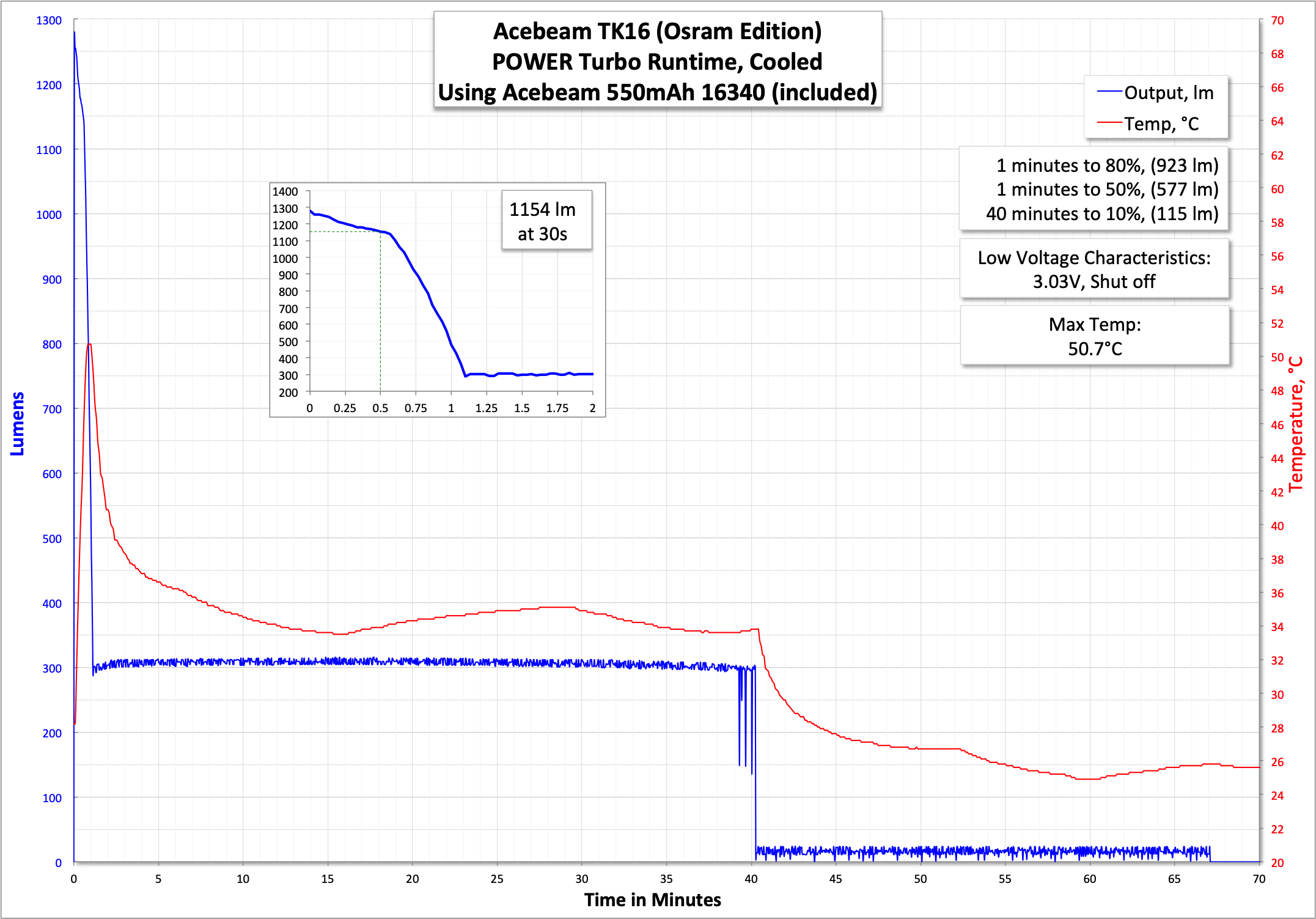
In every case, the light exhibited LVP. The differences in voltage at shutoff can be attributed to the operator not stopping the test immediately at shutoff, and allowing the cell to bounce back (sometimes a little, sometimes a lot.)
High is fairly respectably flat, but for only around 25 minutes. Then the stepdown is dramatic (as on both Turbos.)
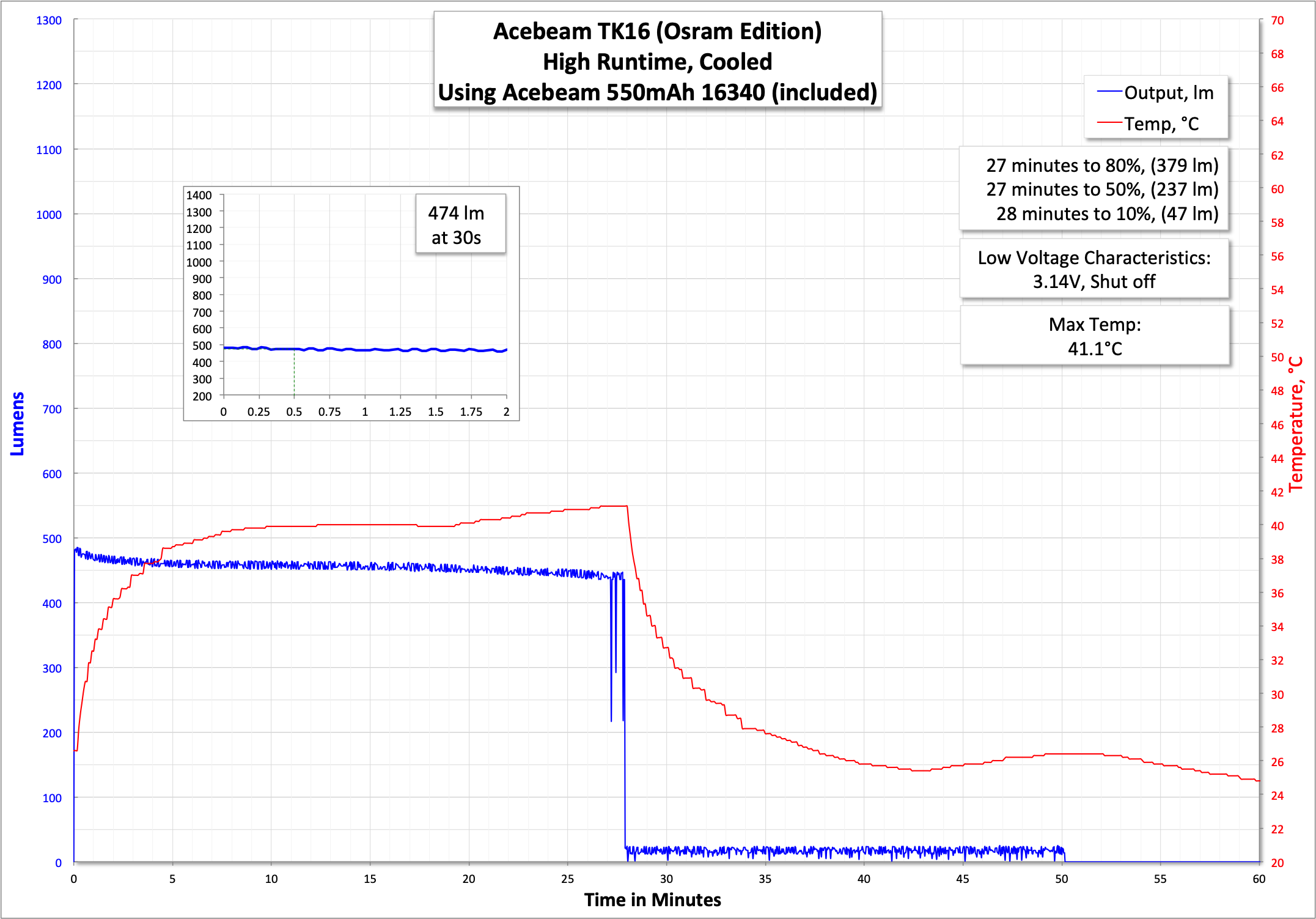
The LVP on High is likely the better measure of where the light stops – 2.7V or so. Note before the massive stepdown, the light flickers warning that the voltage is low.
Modes and Currents
| Mode | Mode Claimed Output (lm) | Claimed Runtime | Measured Lumens |
|---|---|---|---|
| POWER Turbo | 1300 | 45m | 1154 |
| ECO Turbo | 780 | 1h | 767 |
| High | 478 | 50m (1h15m ECO) | 474 |
| Mid | 100 | 3h | 99 |
| Low | 20 | 12h | 24 |
| Moonlight | 0.5 | 6d | ~ |
Pulse Width Modulation
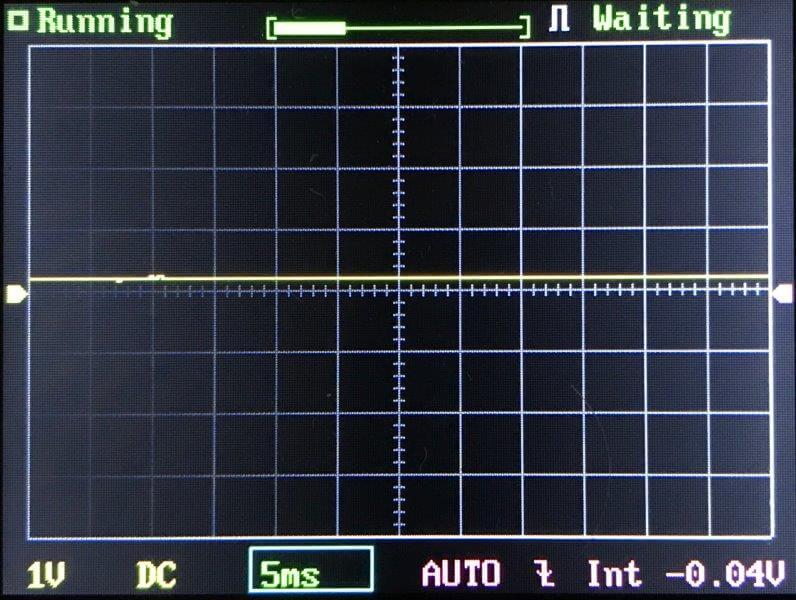
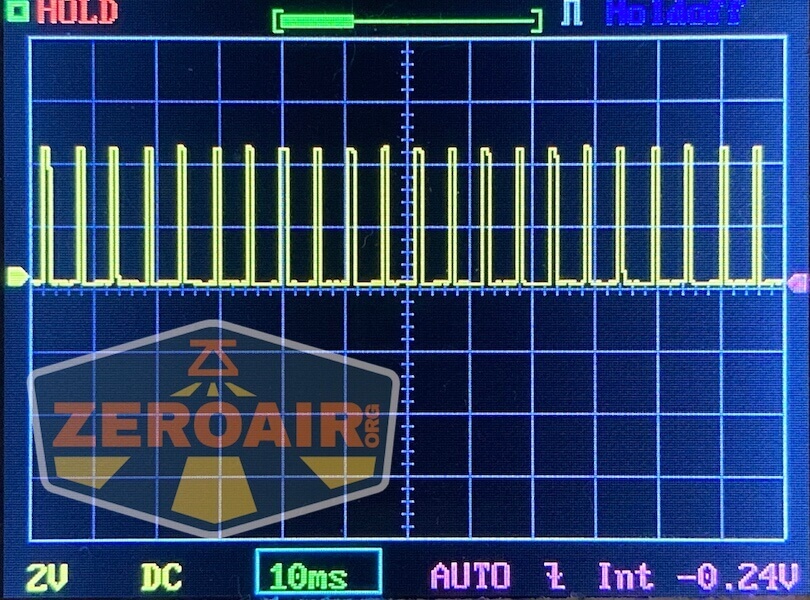
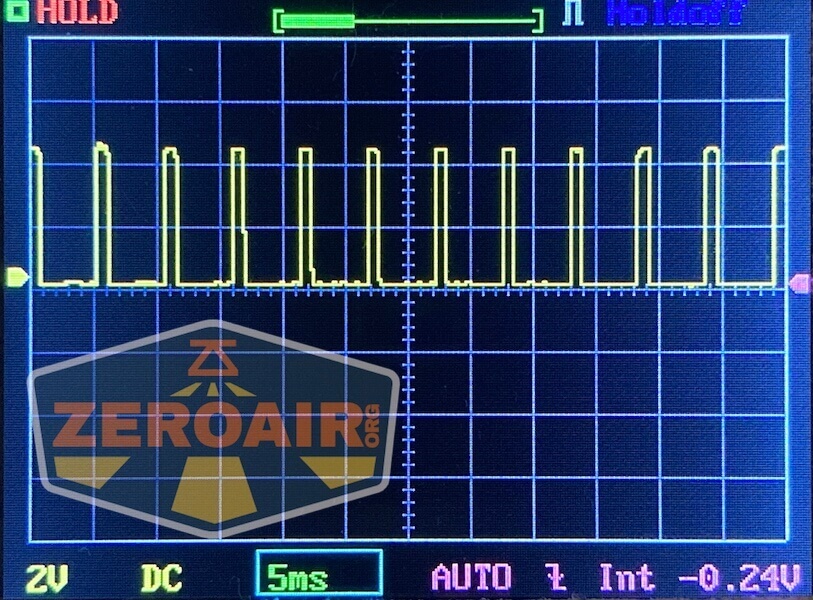
None of the modes use PWM. That’s good!

Here you can see a “baseline” – a chart with almost no light hitting the sensor.
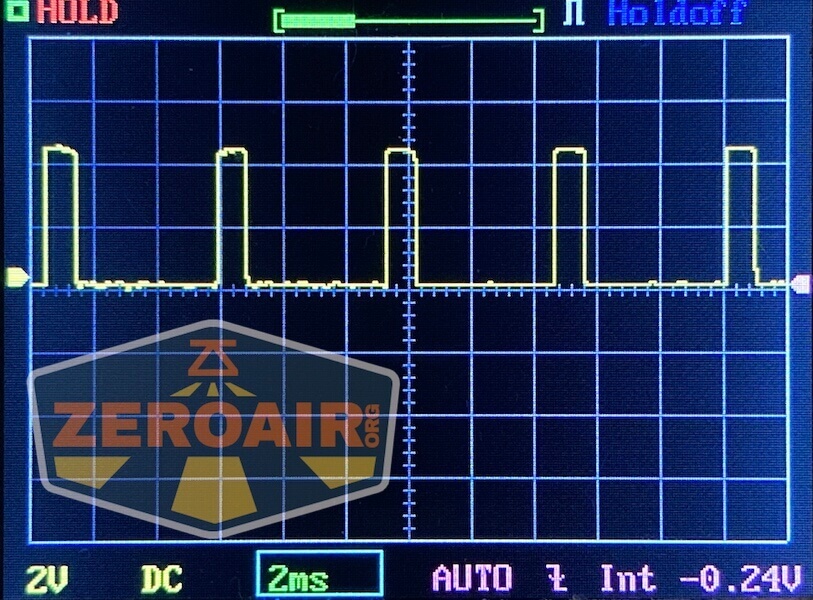
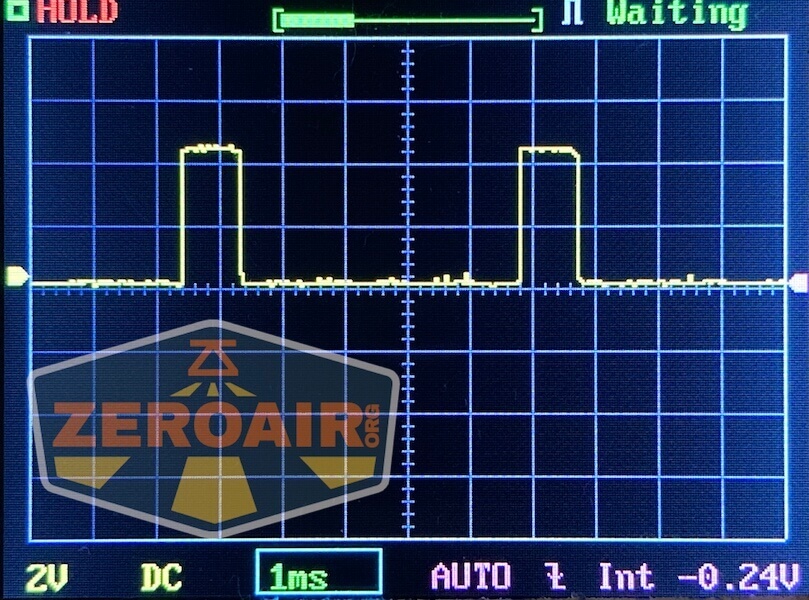
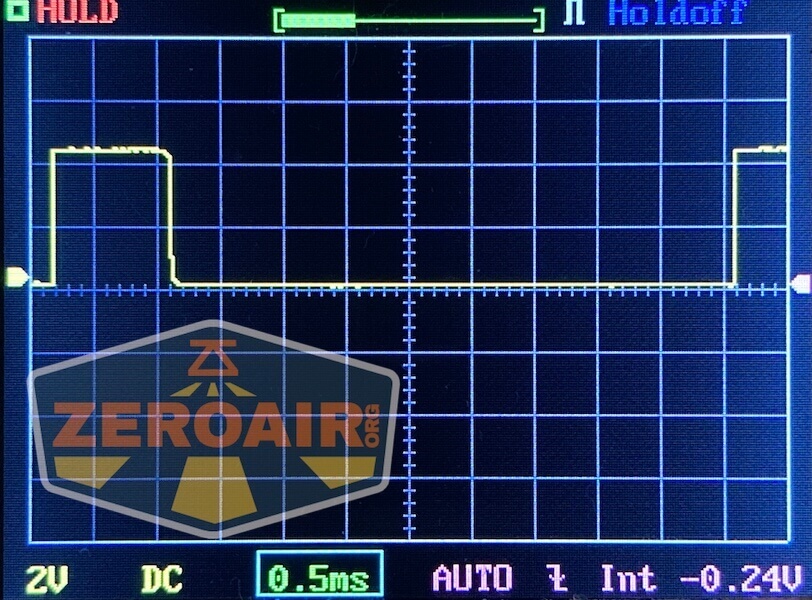
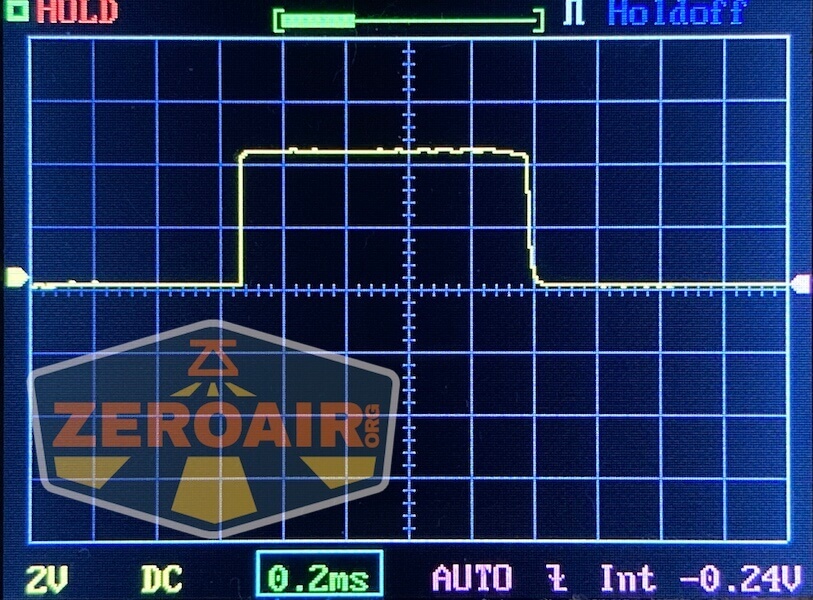
Then there’s the Ultrafire WF-602C flashlight, which has some of the worst PWM I’ve seen. It’s so bad that I used a post about it to explain PWM! Here are multiple timescales (10ms, 5ms, 2ms, 1ms, 0.5ms, 0.2ms) to make comparing this “worst” PWM light to the test light easier. That post also explains why I didn’t test the WF-602C at the usual 50us scale.
User Interface and Operation
The switch on the TK16 is a tail e-switch and has a rubber cover.
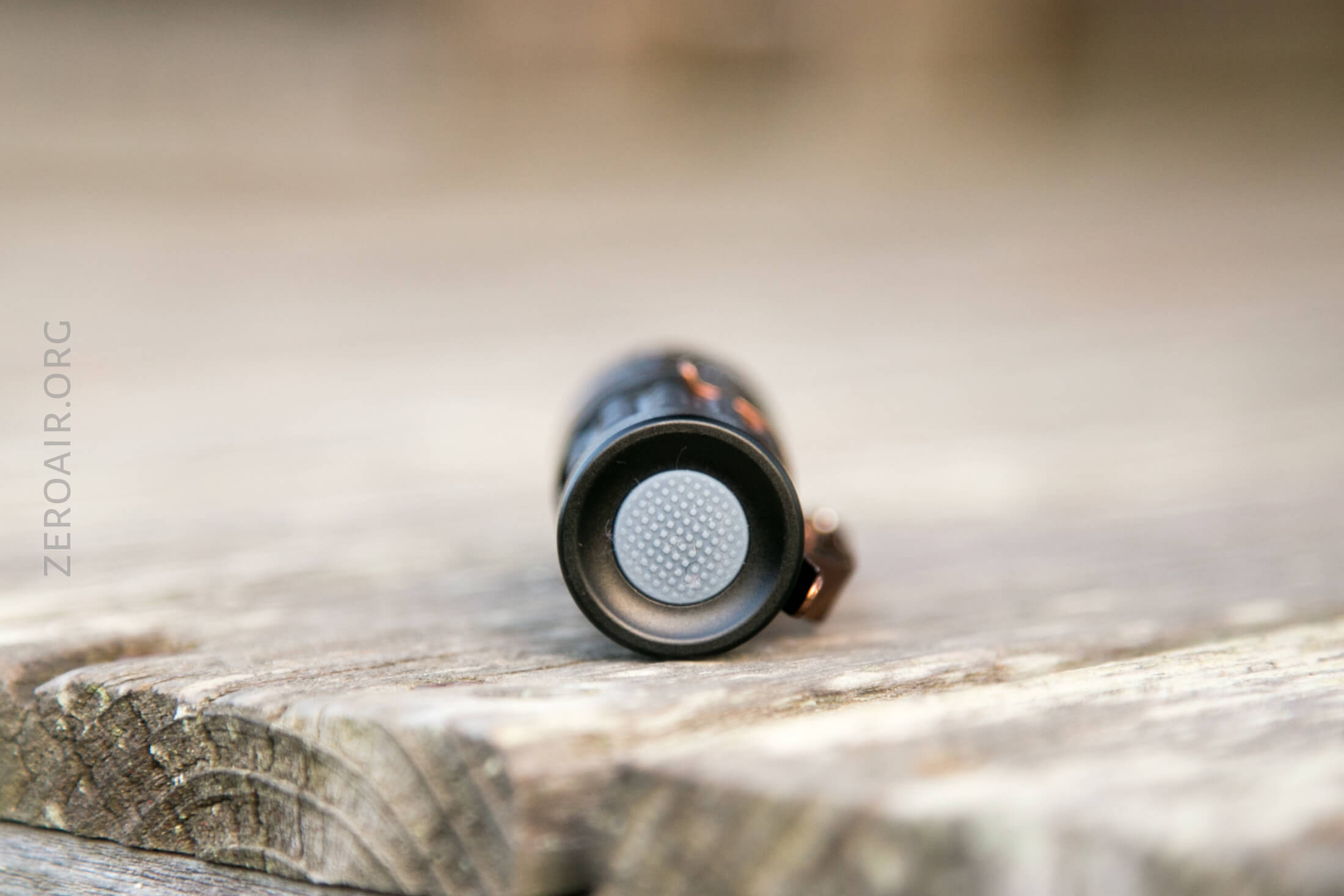
The switch is surrounded by a screw-down bezel-like piece, which allows easy replacement of the cover.
Here’s a user interface table!
| State | Action | Result |
|---|---|---|
| Off | Click | On (Mode Memory) |
| Off | Hold | Moonlight |
| Off | Long Hold | Moonlight then Lockout (Triple flash to confirm) |
| Lockout | Long Hold | Unlock to Moonlight |
| Lockout | Click 10x | Switch Mode Groups between Power and ECO^ |
| Any | Double Click | Turbo |
| Any | Triple Click | Strobe |
| On | Hold | Mode Cycle (LMH) (No Moonlight, Turbo, or Strobe) |
| Special Group (Turbo or Strobe) | Hold | Low^^ |
| On | Click | Off |
^ Power Group is indicated by a low flash then high flash, then off. ECO group is indicated by a high flash then a low flash. The light remains locked even after group change.
^^ Manual has this wrong – seems to say it’ll go back to the memorized mode, but it in fact goes to low.
LED and Beam
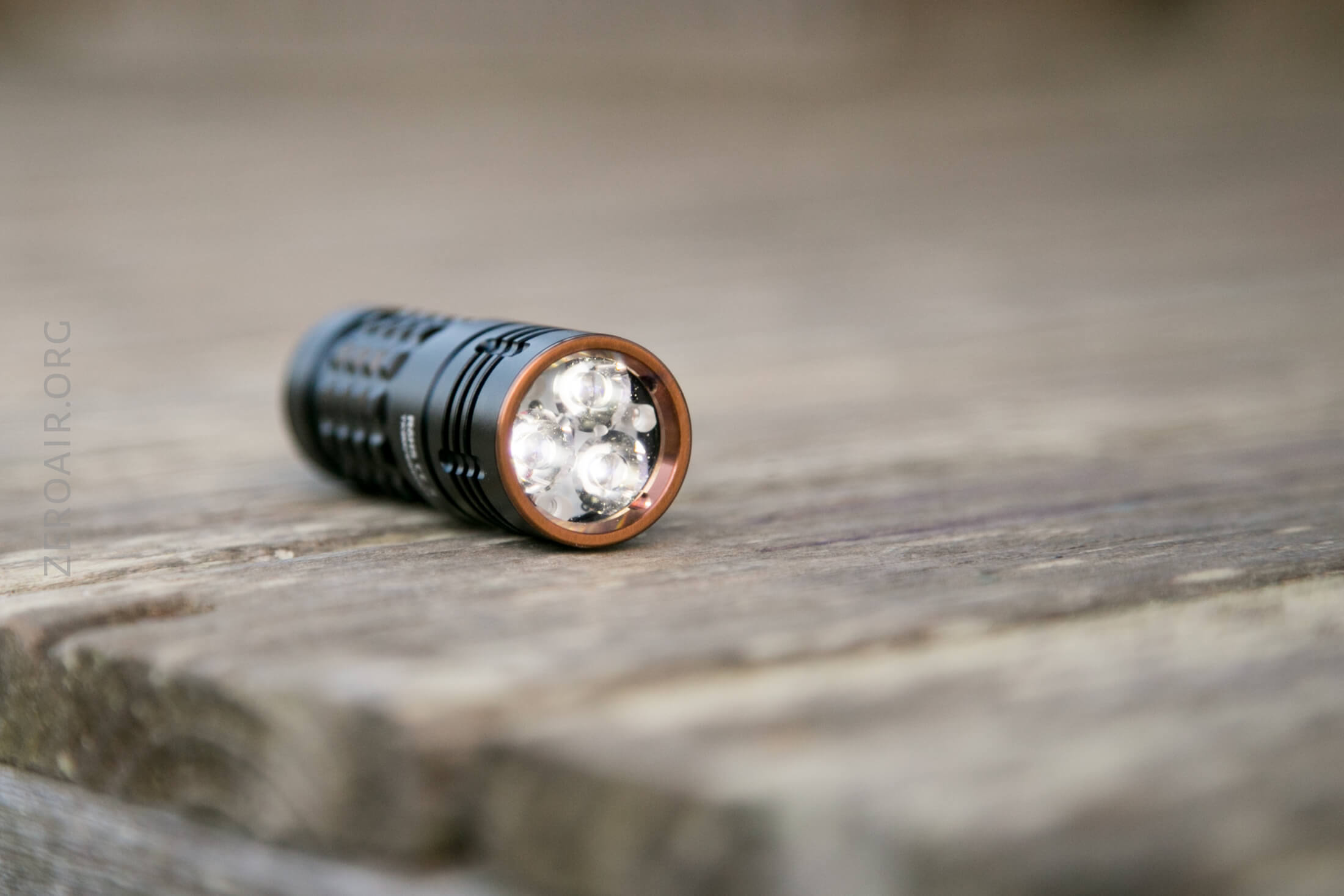
In this copy of the TK16, I have the Osram emitters. There are three of them, and they’re behind a clear optic.
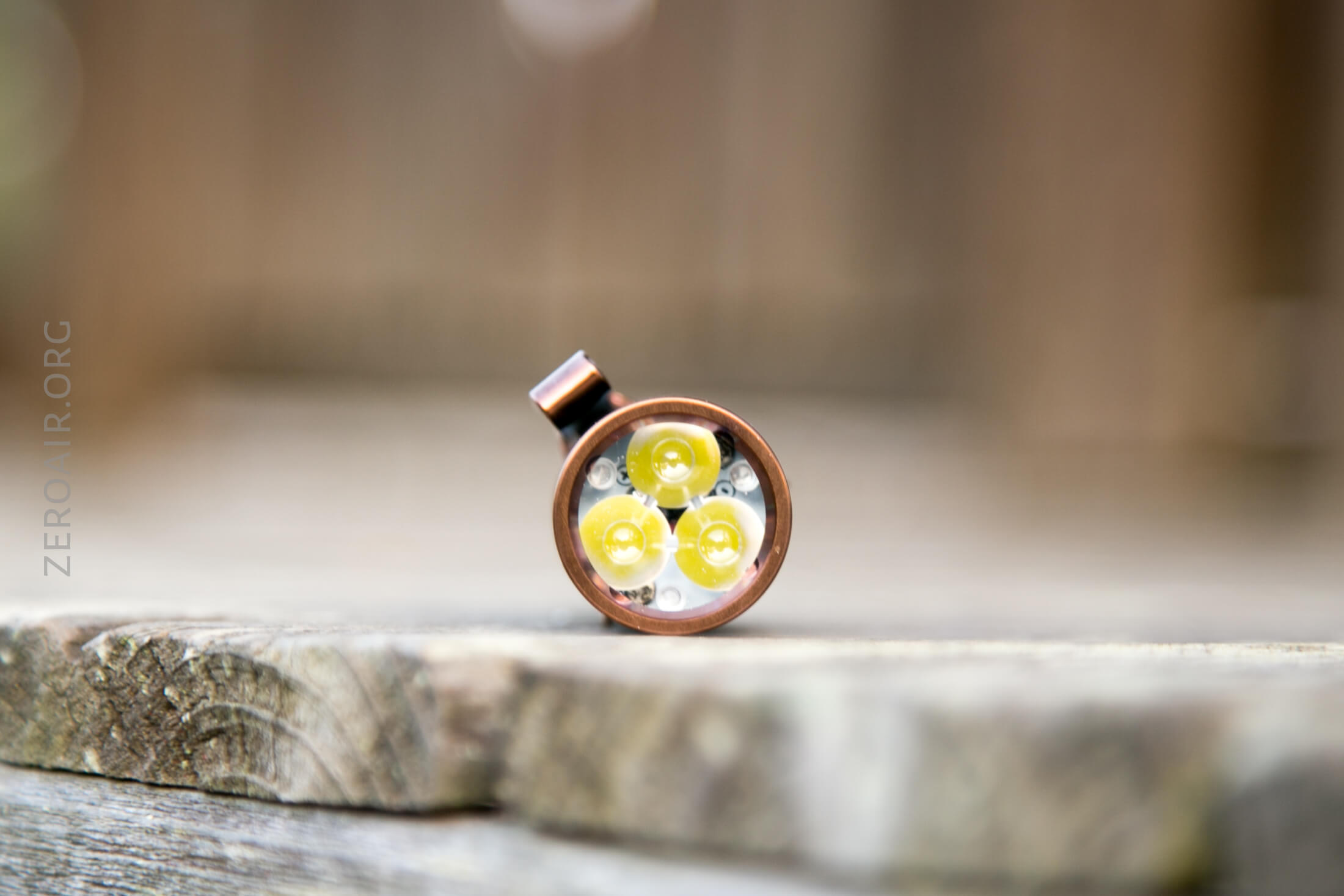
It’s a nice-looking front.
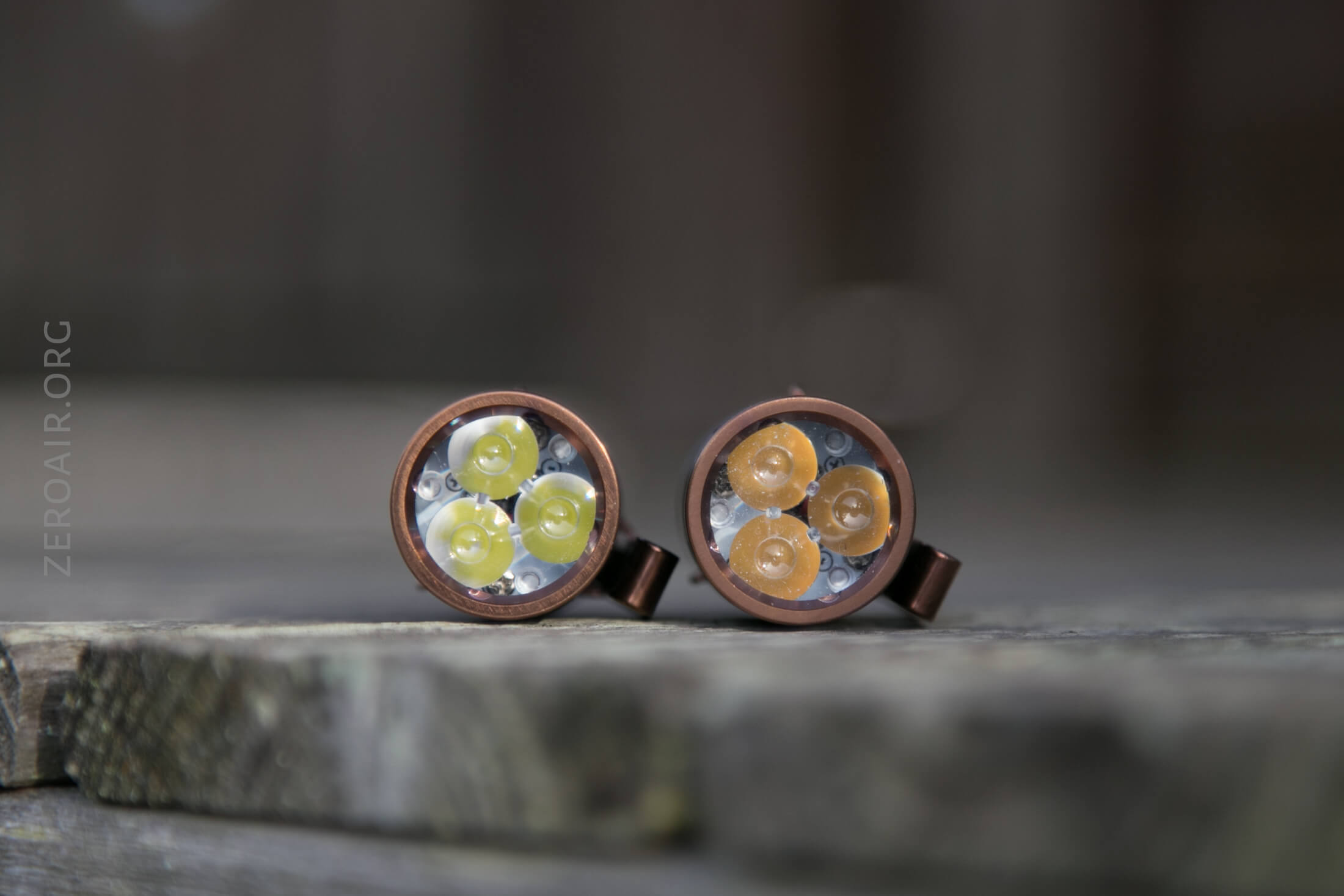
Below have a look at the two copies I have – on the left is this Osram emitter light, and on the right is the Luminus SST20 option.
These beamshots always have the following settings: f8, ISO100, 0.3s shutter, and manual 5000K exposure. These photos are taken at floor level, and the beam hits the ceiling around 9 feet away.

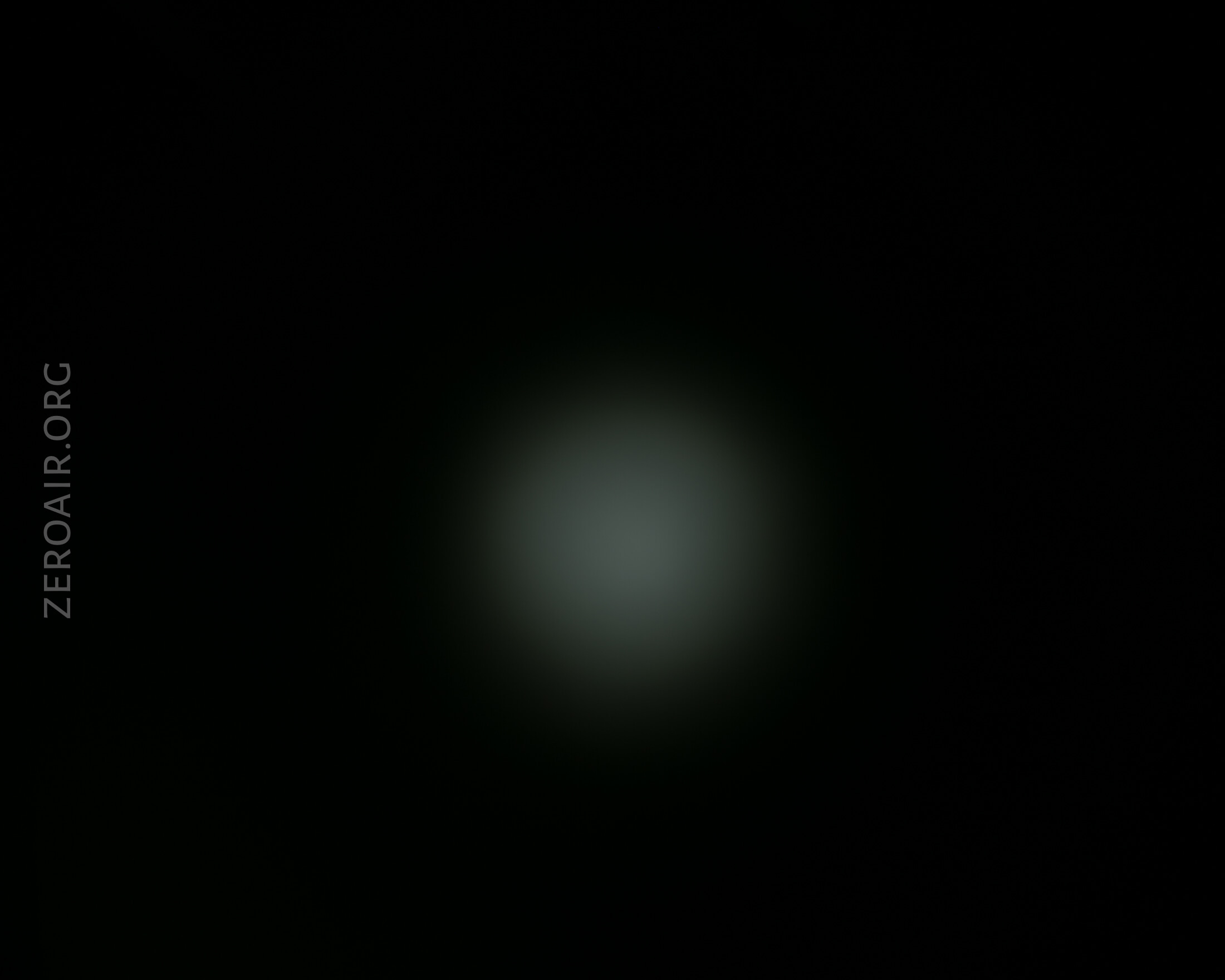
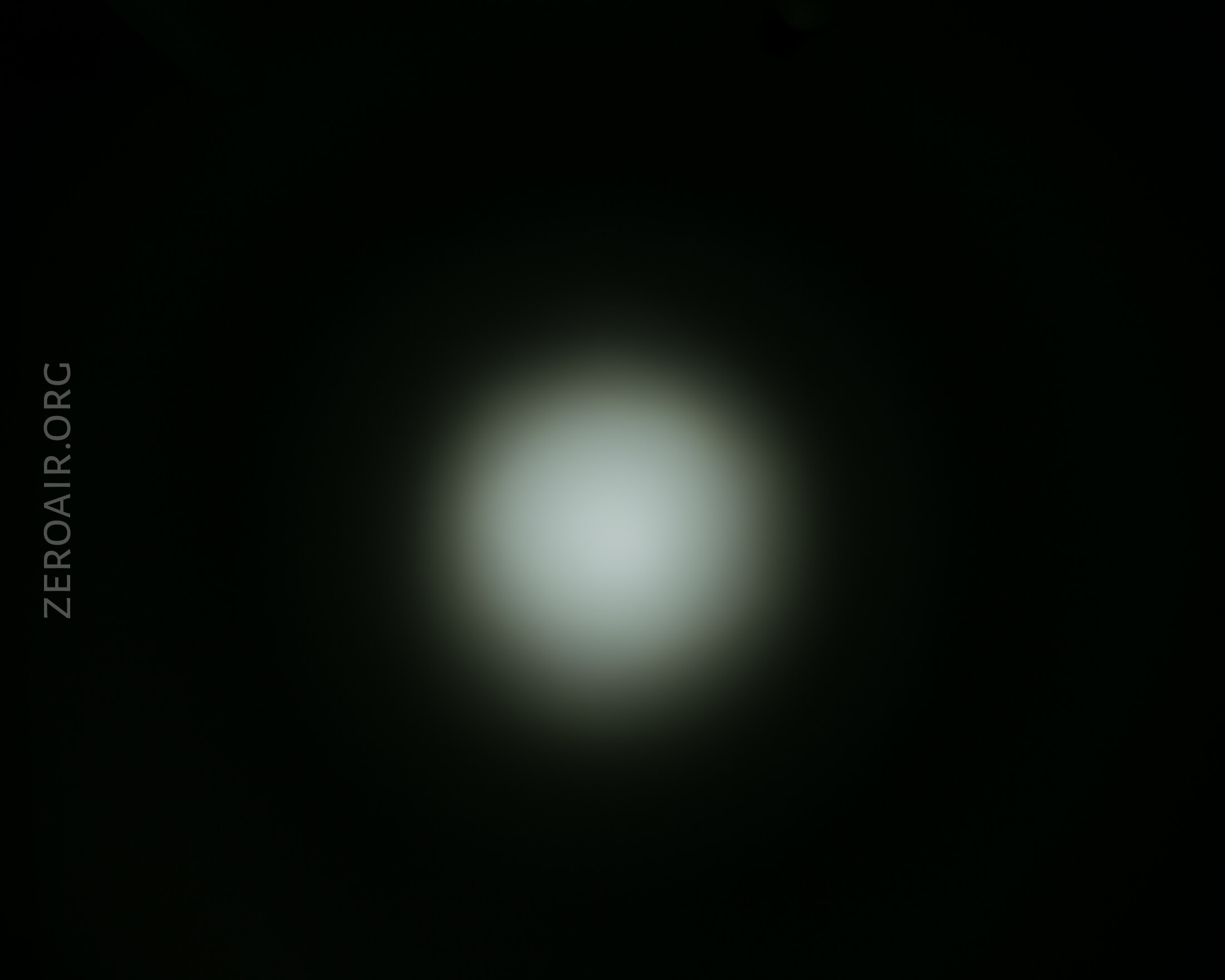
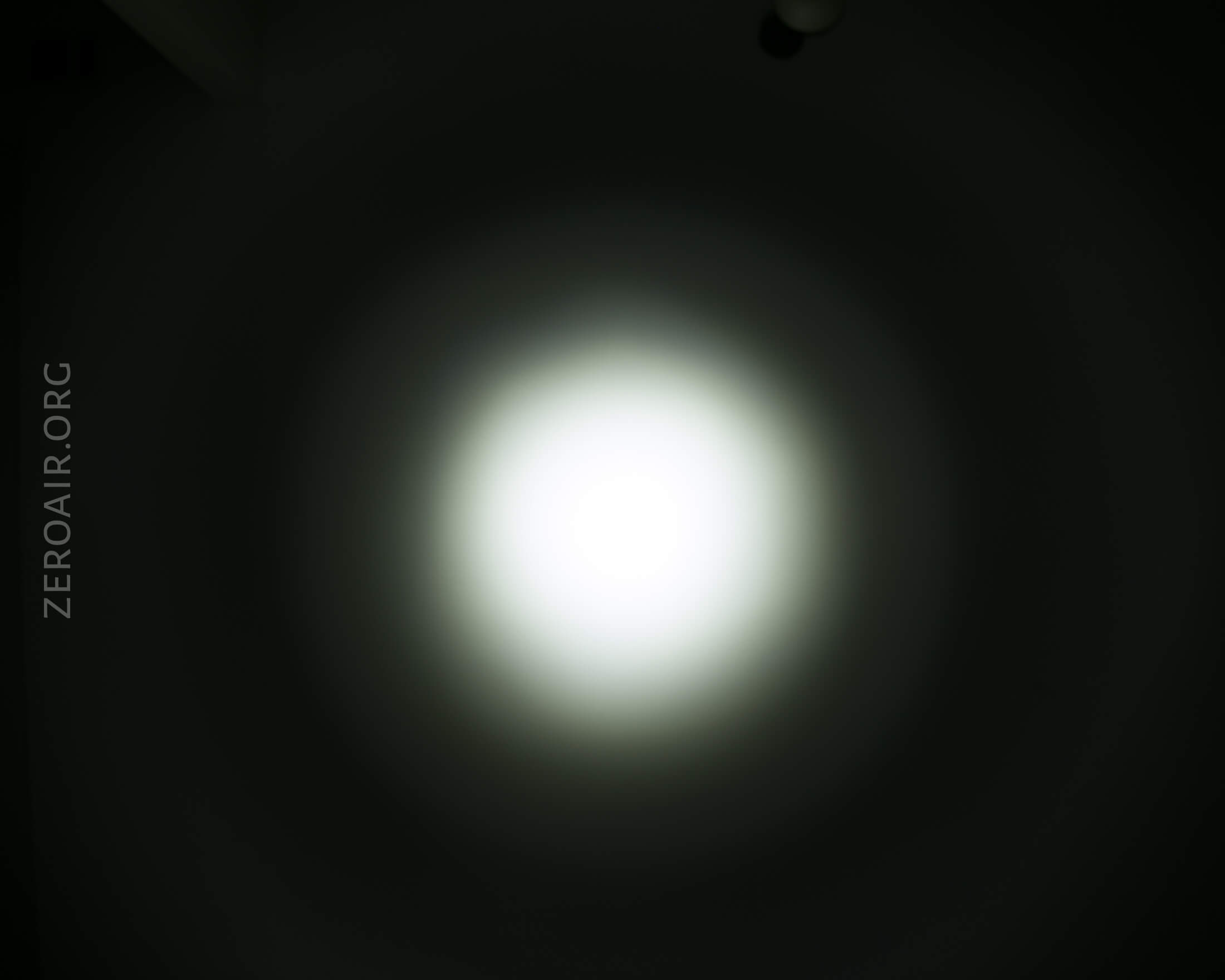
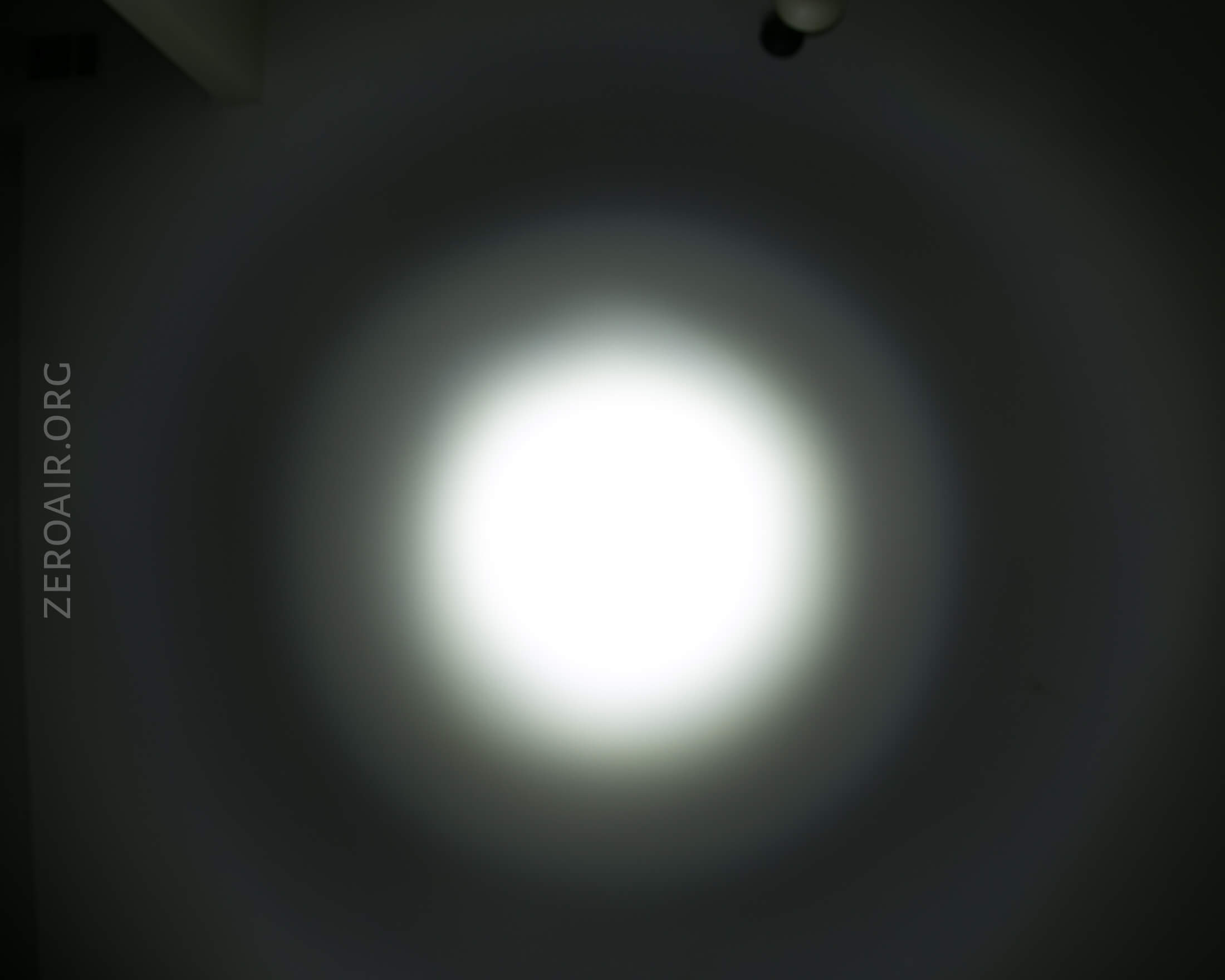
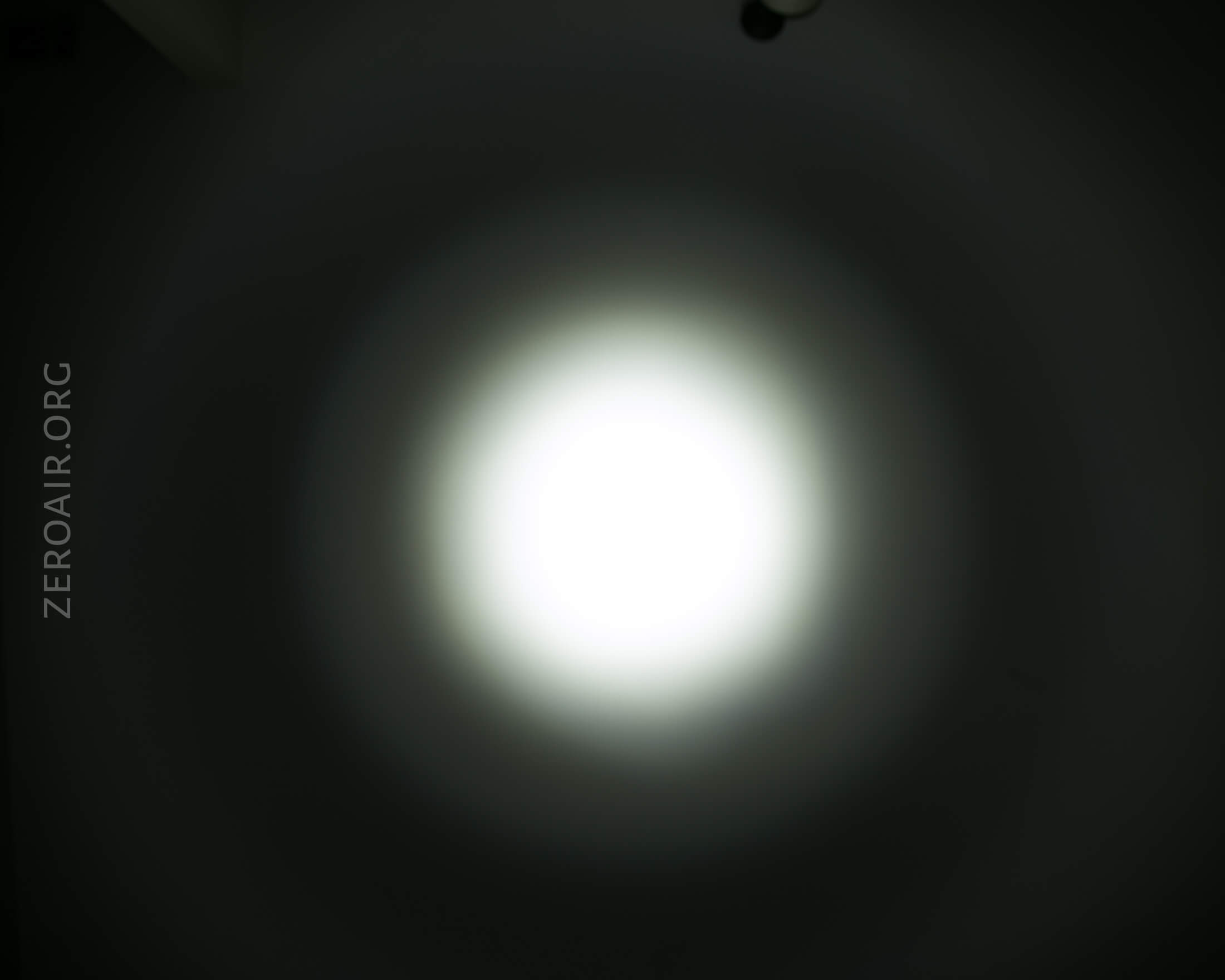
The first 5 modes are all of the outputs of the Power group. The last (right most) is ECO Turbo, so should be (and is) lower than Power Turbo.
Tint vs BLF-348 (KillzoneFlashlights.com 219b version) (affiliate link)
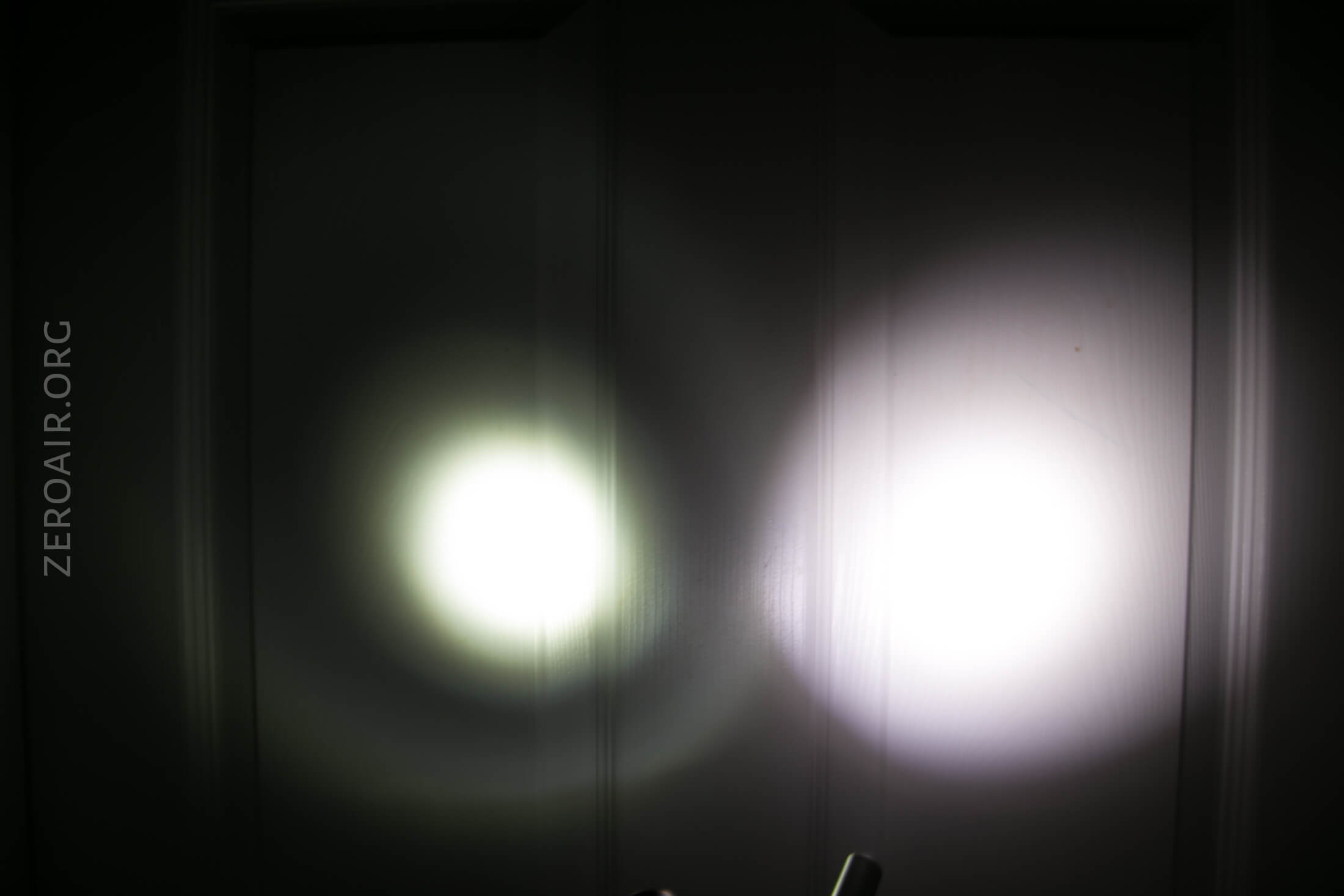
I compare everything to the KillzoneFlashlights.com 219b BLF-348 because it’s inexpensive and has the best tint!
Random Comparisons and Competitive Options
Here’s a link to a relevantly filtered page on parametrek.com. I use that site a lot! There’s nothing else in the 16340 format, with Osram emitters!
Conclusion
What I like
- Output
- user interface is quite versatile, and allows access to low easily
- Multiple groups, allowing better power management
- Size and shape
What I don’t like
- Pocket clip isn’t fantastic
- Throw on this model didn’t seem to meet specification
- It’s not an 18350 light
- Switching between groups is a bit fiddly
Notes
- This light was provided by Acebeam for review. I was not paid to write this review. Buy yours at KillzoneFlashlights.com!
- This content originally appeared at zeroair.org. Please visit there for the best experience!
- Use my amazon.com referral link if you’re willing to help support making more reviews like this one!
- Please support me on Patreon! I deeply appreciate your support!
Discover more from ZeroAir Reviews
Subscribe to get the latest posts sent to your email.
Once again great review! So how do I change to Power Mode and Eco Mode? 10X pressing the tail switch?
That’s right.
How to switch back to ECO? 10X press again?