
Vapcell INR26650 Lithium-ion Cell Review
The Vapcell INR26650 Lithium-ion is a 26650 cell with a high capacity and reasonable discharge rating. Read on for all the data you want!
Official Specs
Here’s a link to the Vapcell INR26650 Lithium-ion Cell product page.
- Model: INR26650 5500mah 20A
- Size: 26.6*65.2mm
- Nominal voltage: 3.60V
- End-of-charge voltage: 4.20V
- End-of-discharge Voltage: 2.5V
- Typical Capacity: 5500mAh (0.2C discharge)
- Min capacity: 5400mAh (0.2C discharge)
- Weight: Max:96g
- Internal resistance: Max:16mΩ (AC 1kHz)
- Standard Charge: 2000mA, CCCV 100mA cut-off
- Charging Time: 4hours(standard charge)
- Quick Charge Current: 3000mA
- Max Continuous Discharge Current: 20000mA
Price
Looks like these are around $9 each, and you can buy yours from LiionWholesale.com or Illumn.com for $10 each.
Short Review
The capacity of these is the real star. I tested well above 5500mAh. As for the 20A rating – yes, it hits that. This is the first cell I can remember that has set off the temperature alarm on my logger, though, so be aware that at 20A it gets quite hot.
Long Review
Package
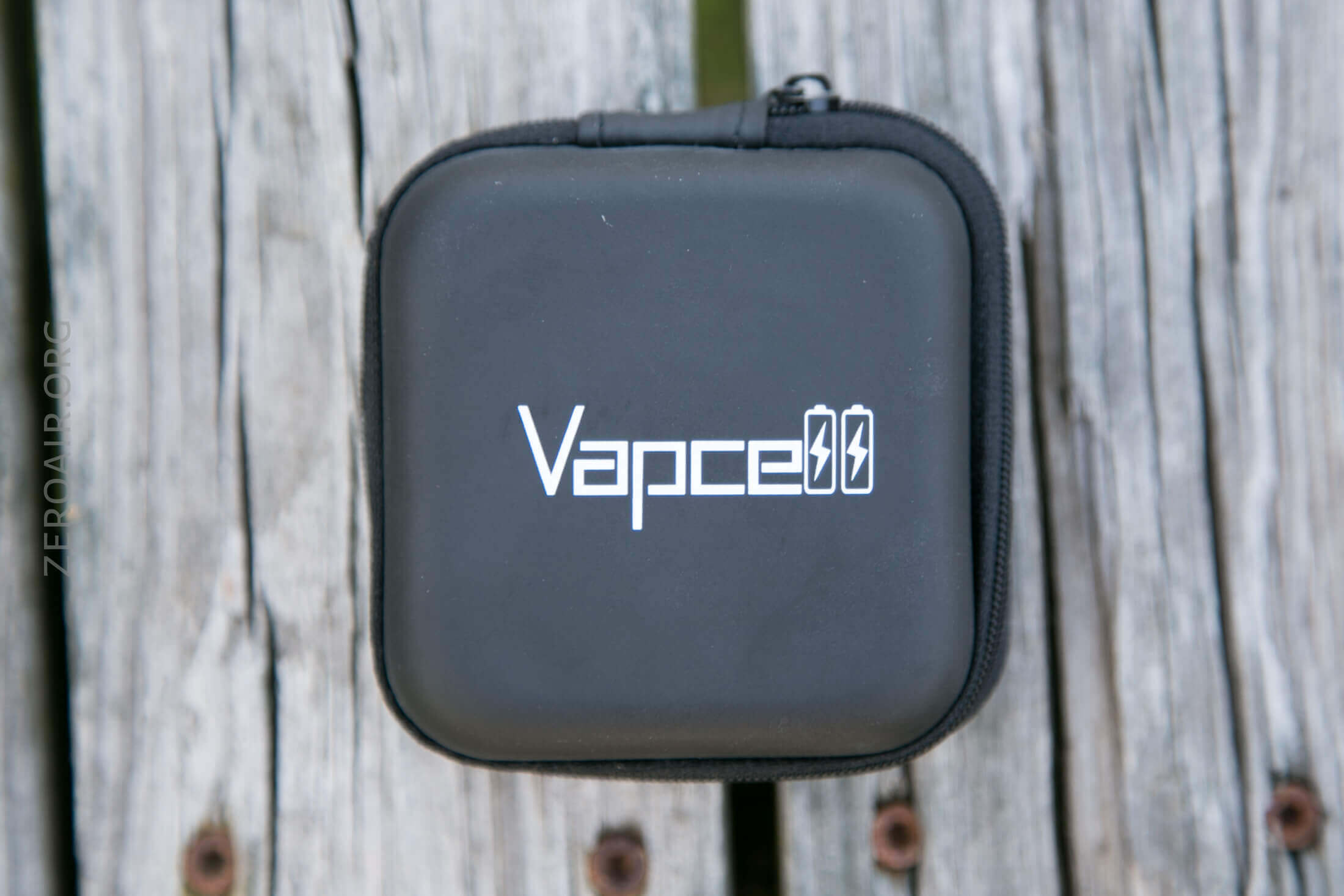
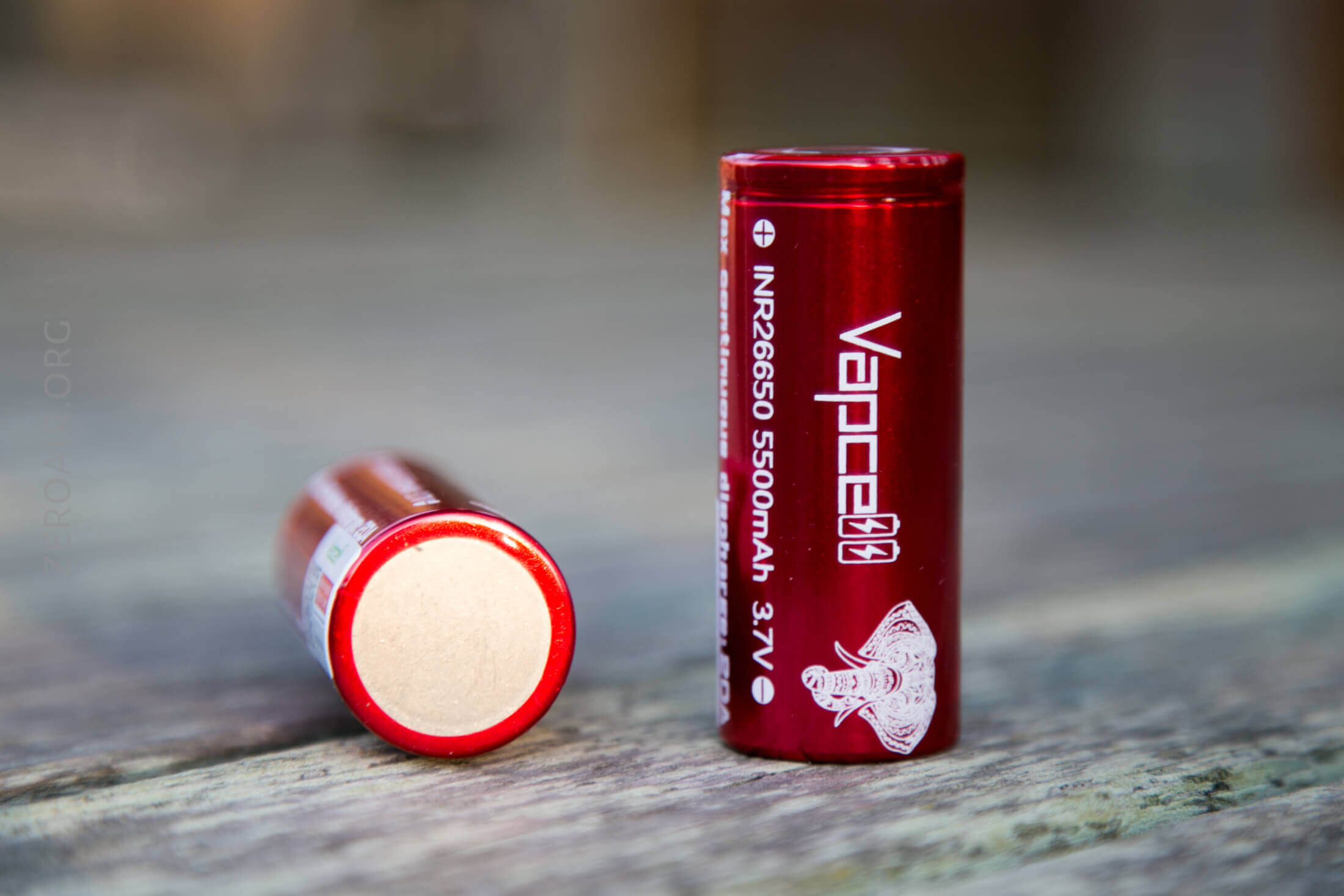
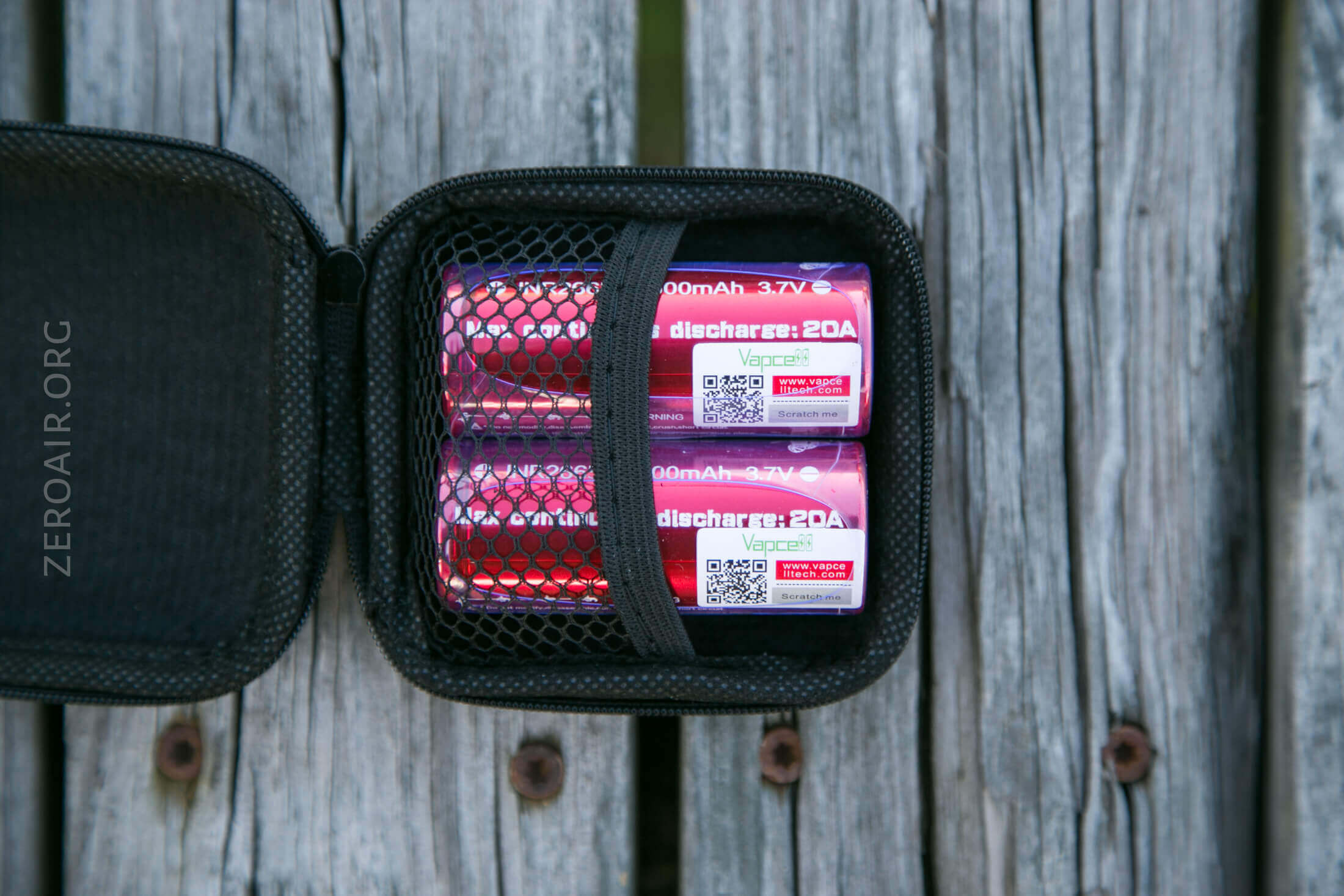 At least direct from Vapcell, these ship in zippered pouches. From other retailers, they’ll probably be in a different package, though. The cells do have a terminal shrink wrap, which needs to be removed.
Build Quality
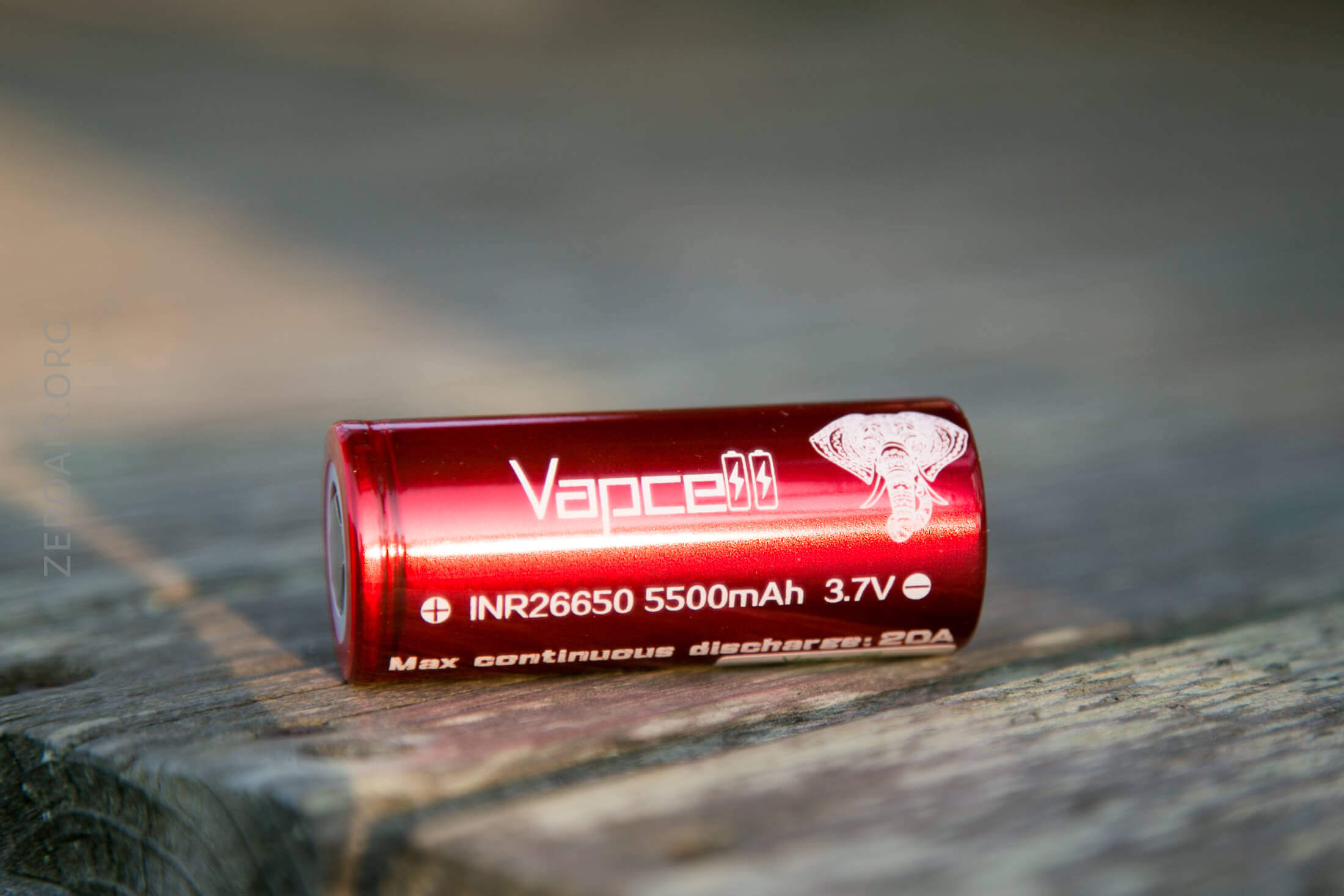
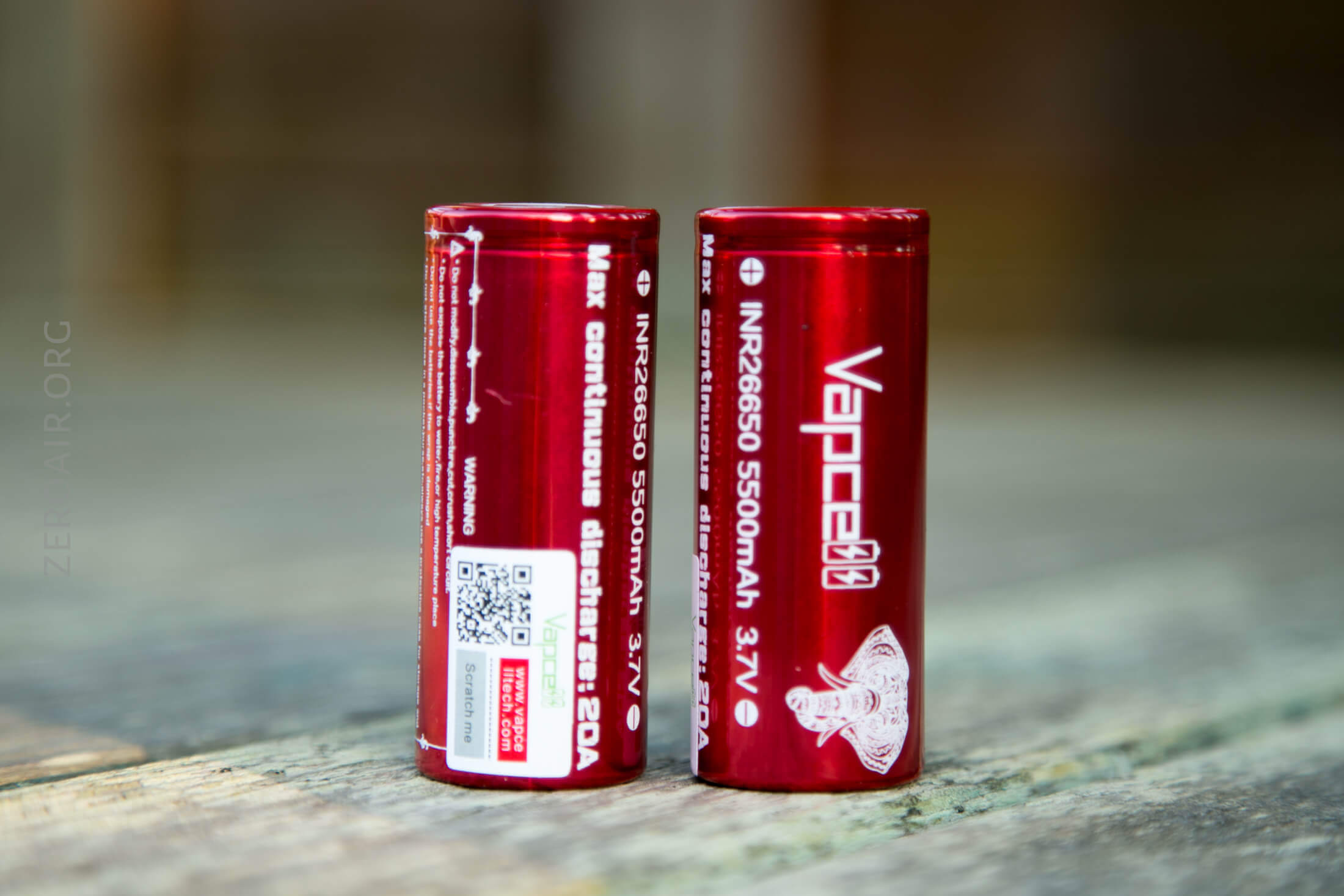
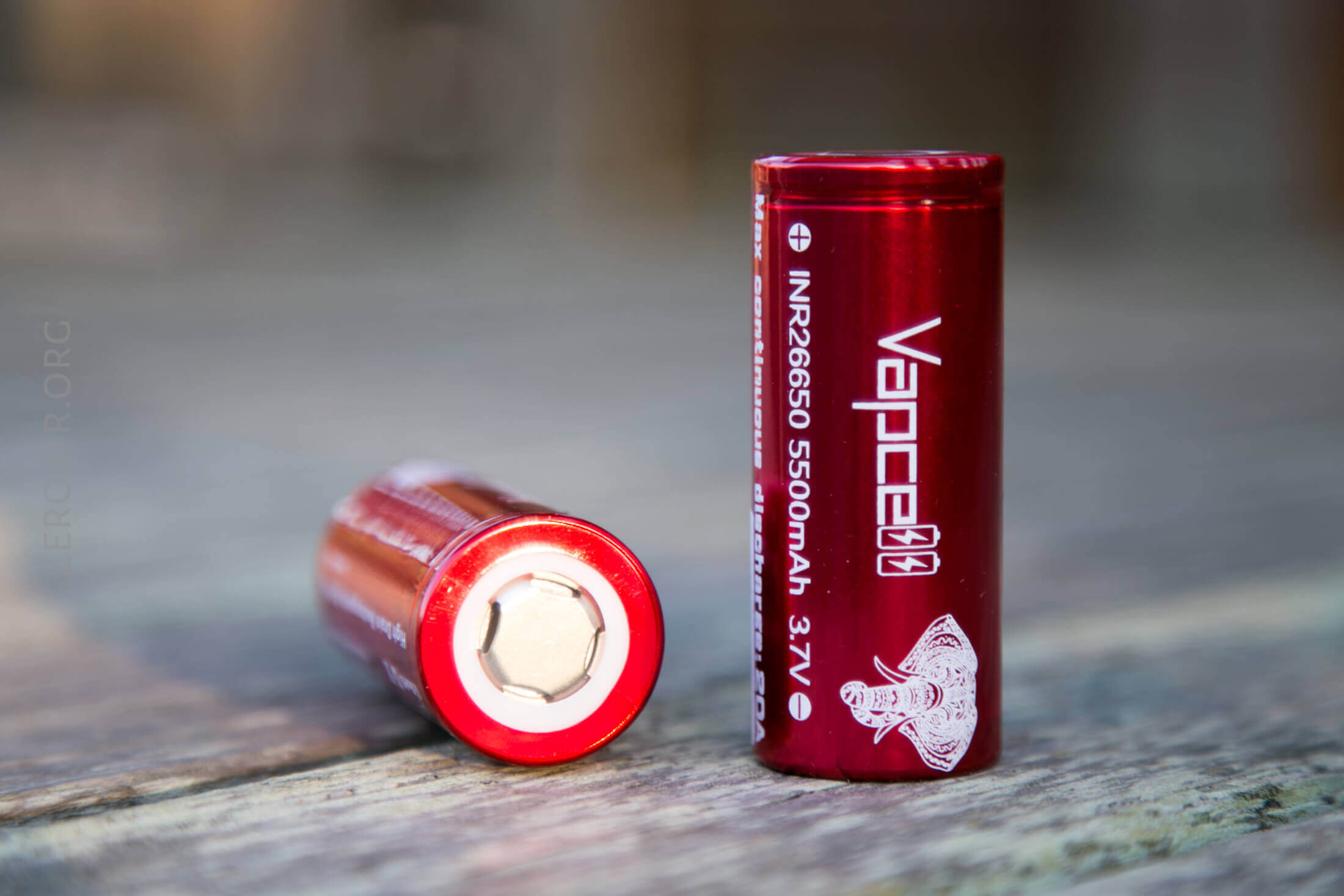
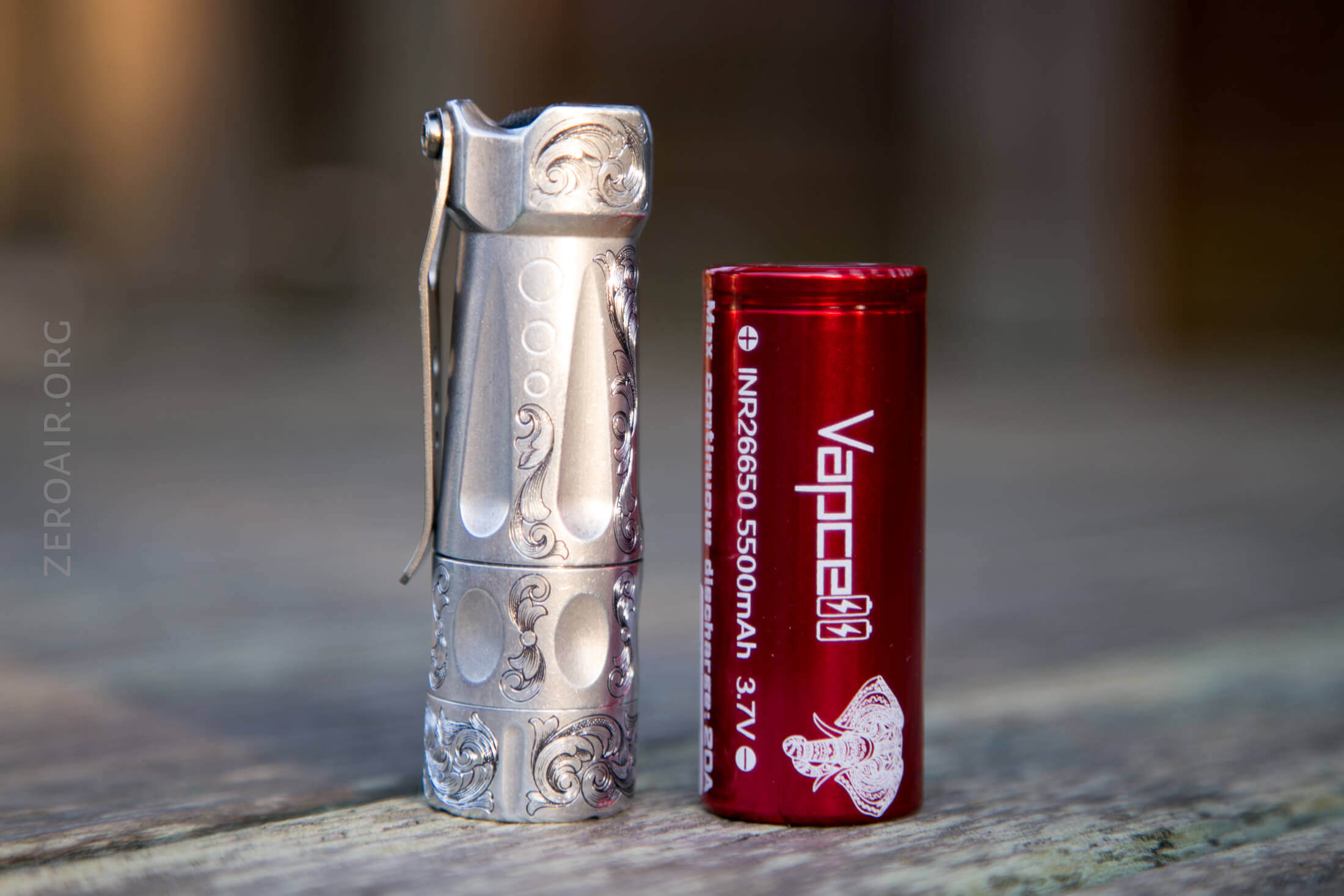
They’re nice cells. The Vapcell wrapper colors are great. This one even has a little graphic of an elephant. Not sure what that means in context but it’s a nice, pretty wrapper.
Size
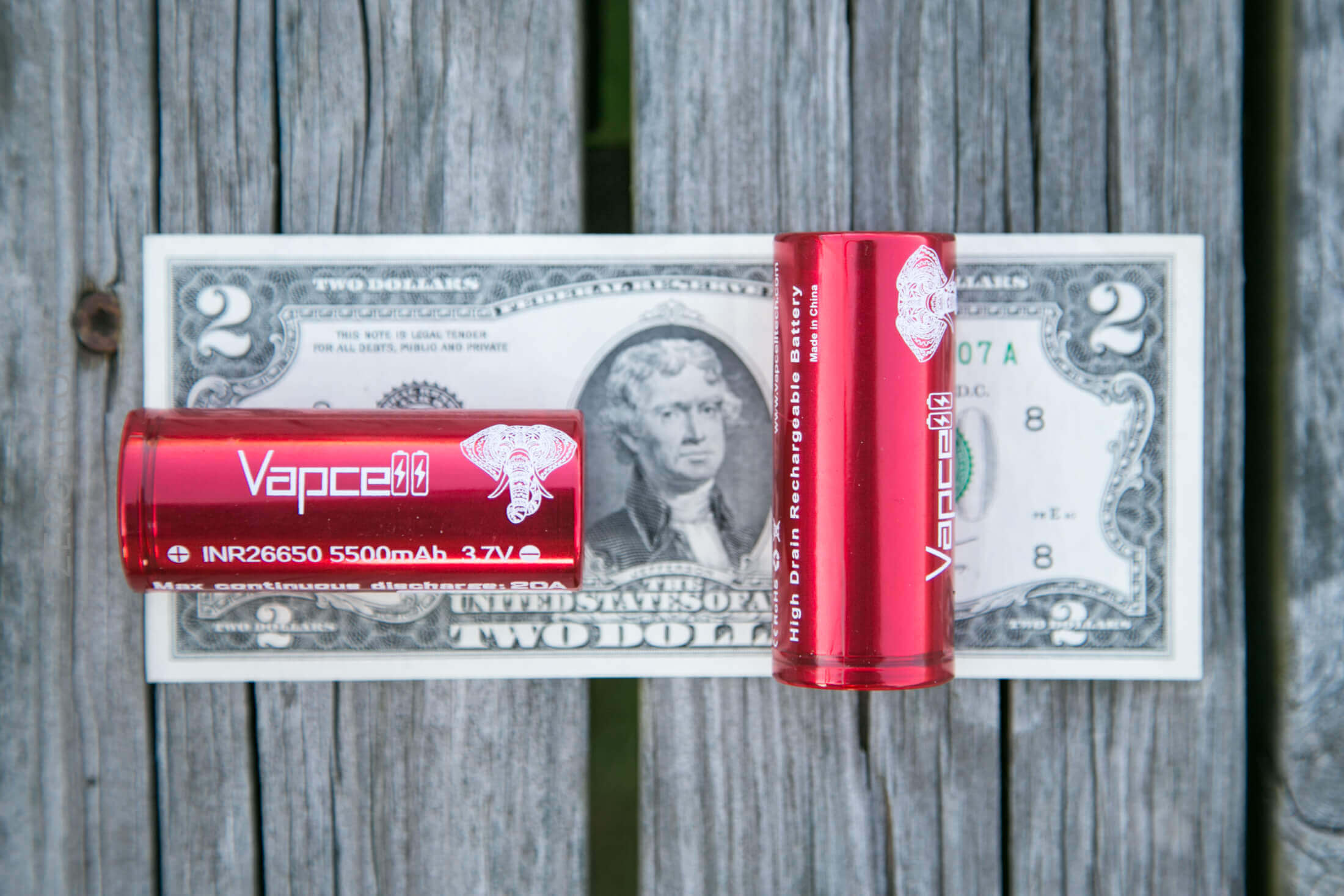
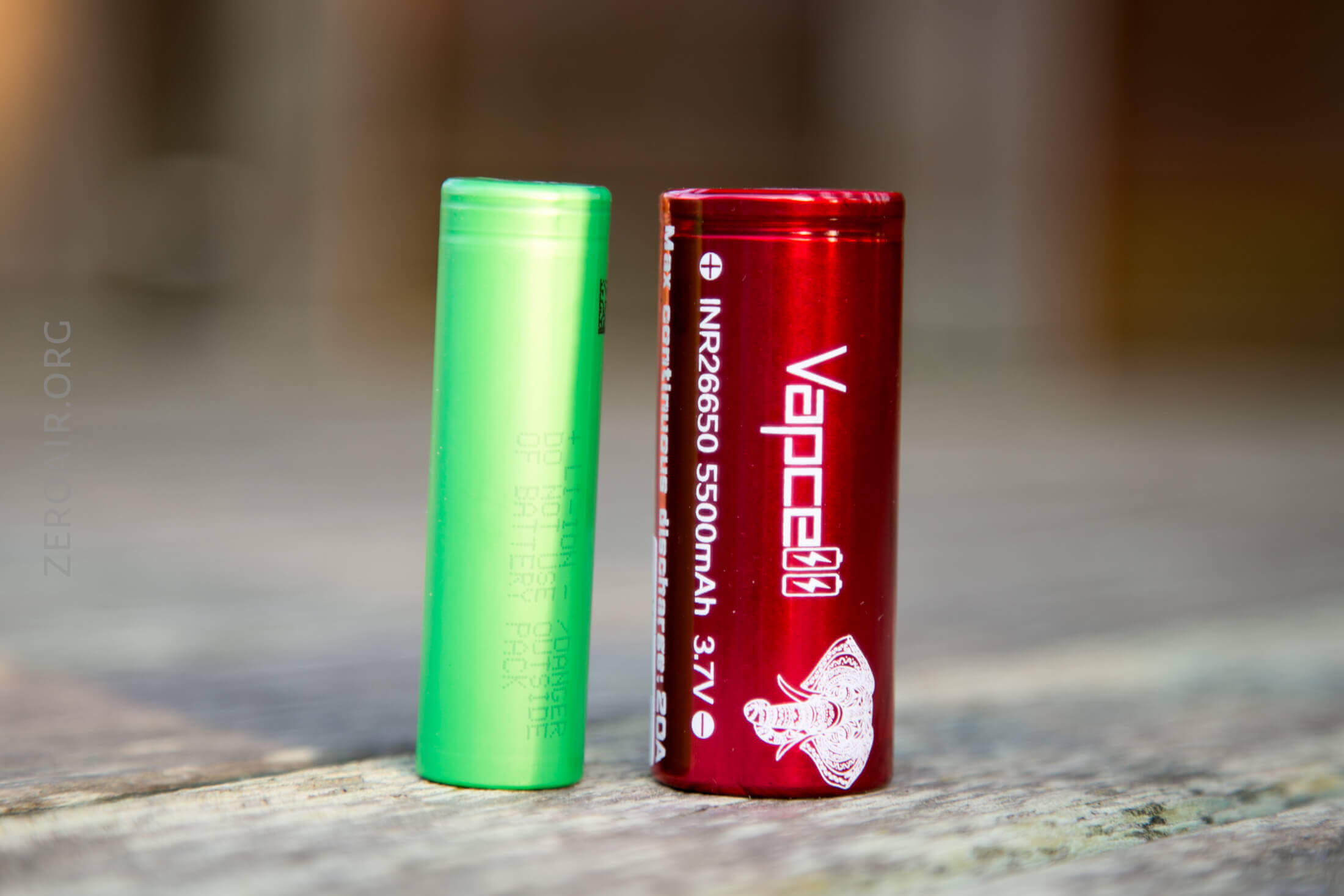
- Size: 26.6 x 65.2mm
- Weight: Max: 96g
Testing
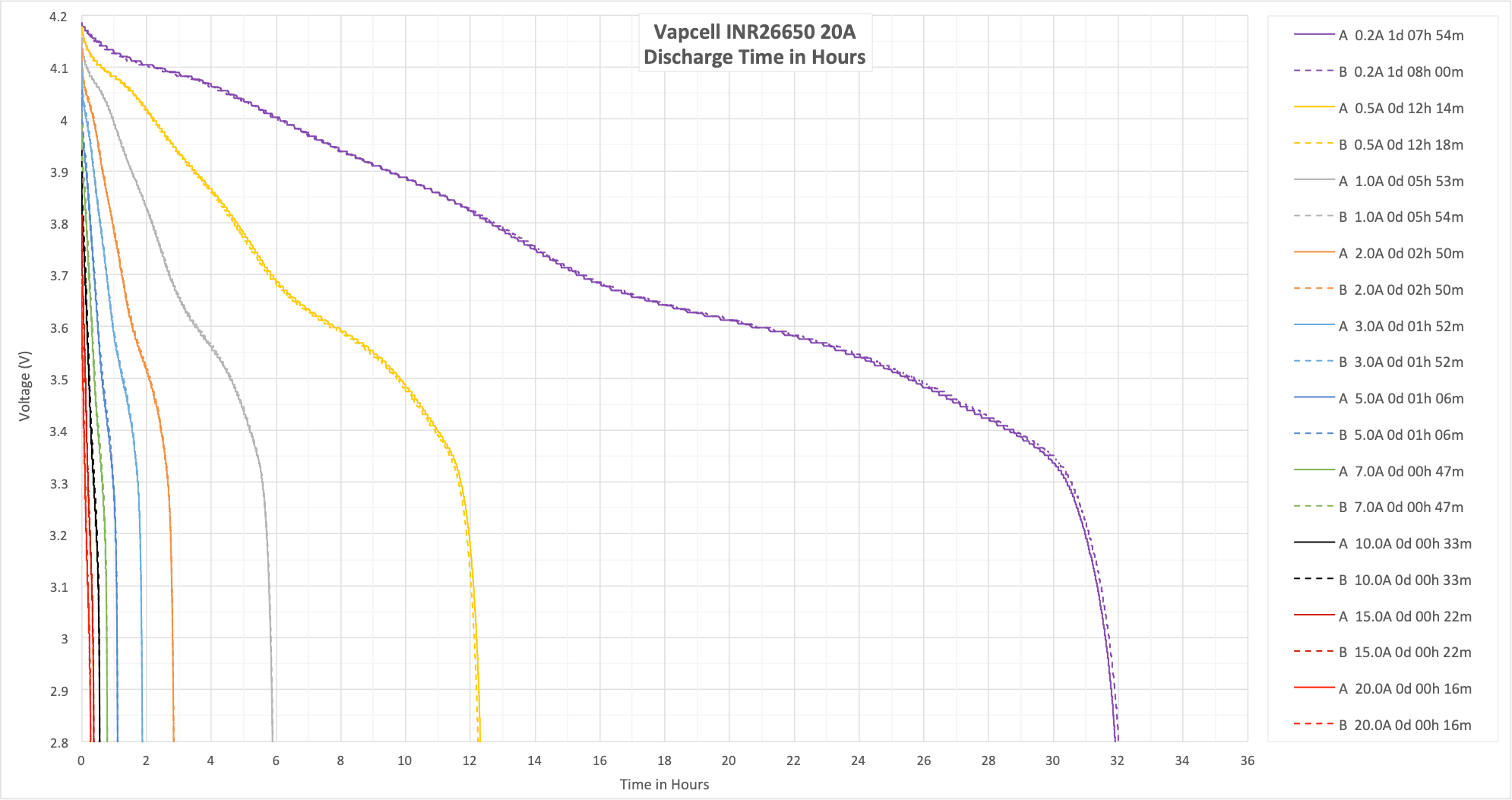
I generally try to keep the scales similar, so over time, the charts will be generally comparable. However, for this high-capacity 26650 cell, I had to bump my scale a bit to accommodate the extra capacity.
Discharge tests
Capacity
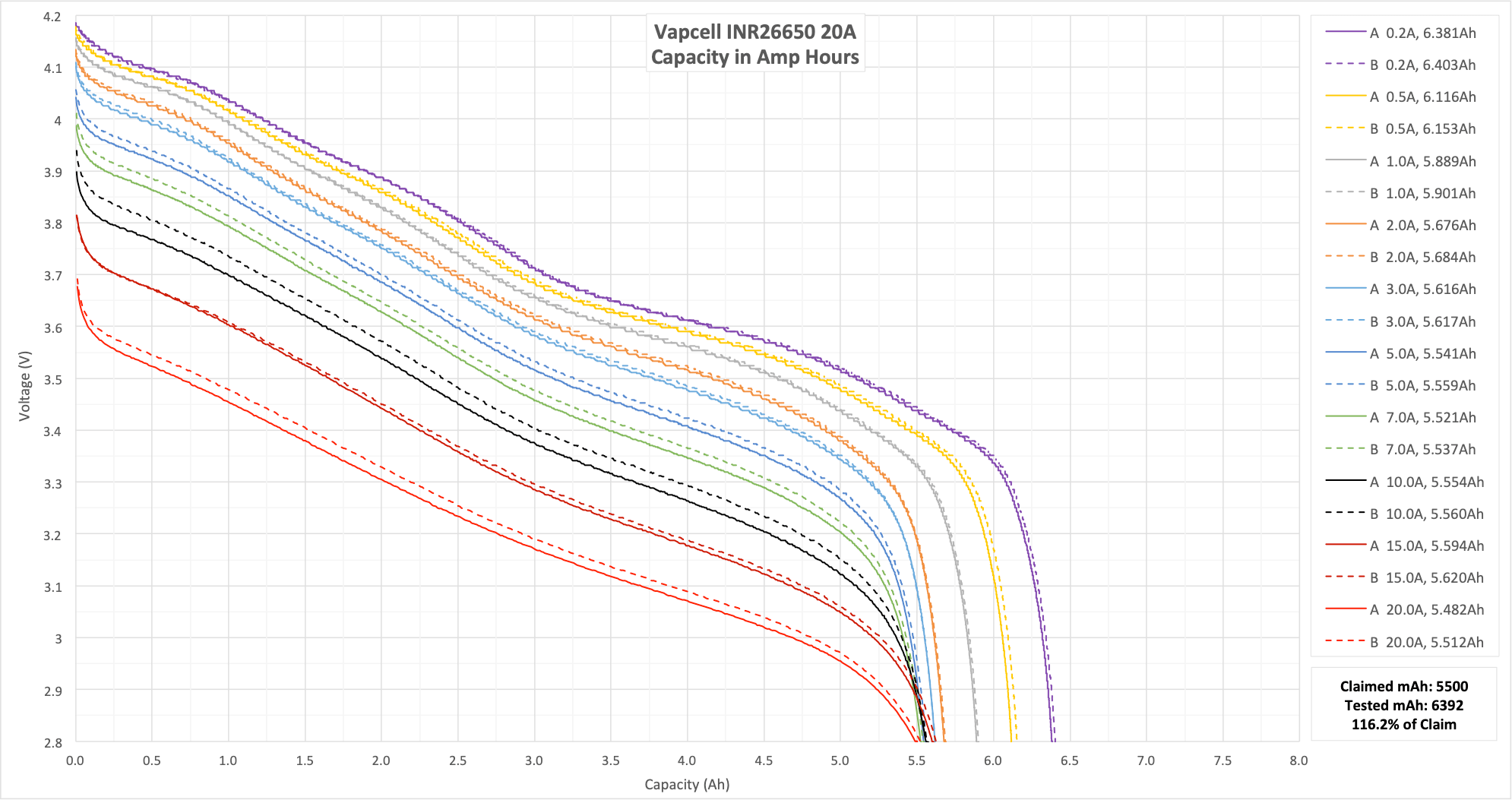
You’ll see that the cell tests on my equipment at 6392mAh, well above the rated capacity, and that’s stopping the test at 2.8V, not the rated 2.5V (not that the difference would be much). There are a number of possibilities. The cell could just have that much energy. It’s also possible that my test equipment could use a calibration – possibly the shunt is off by a small percentage, and in long tests like this, it’s compounded over time. I am not able to correct for that yet, but it’s something I’m exploring.
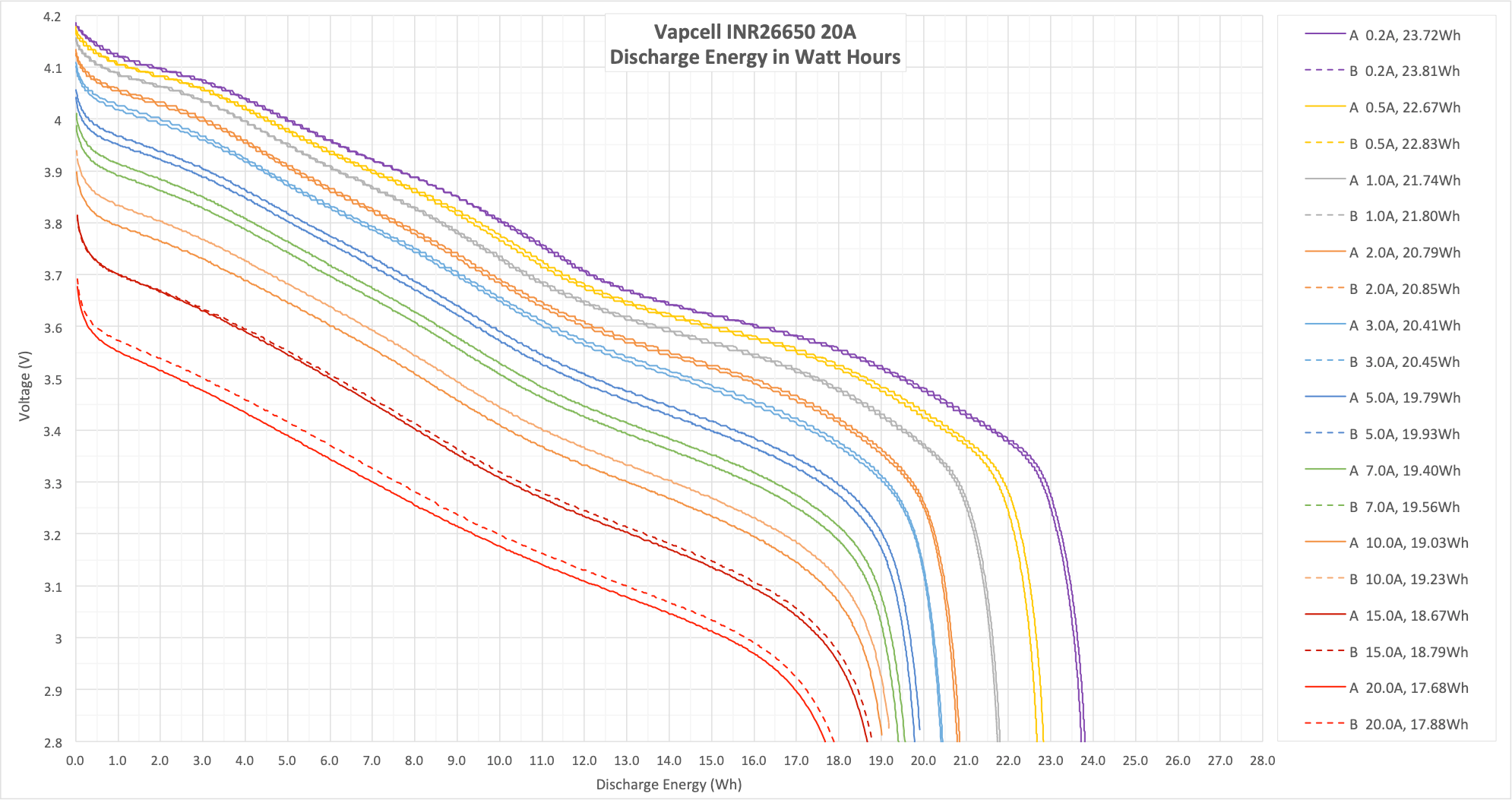
Energy
Bounce
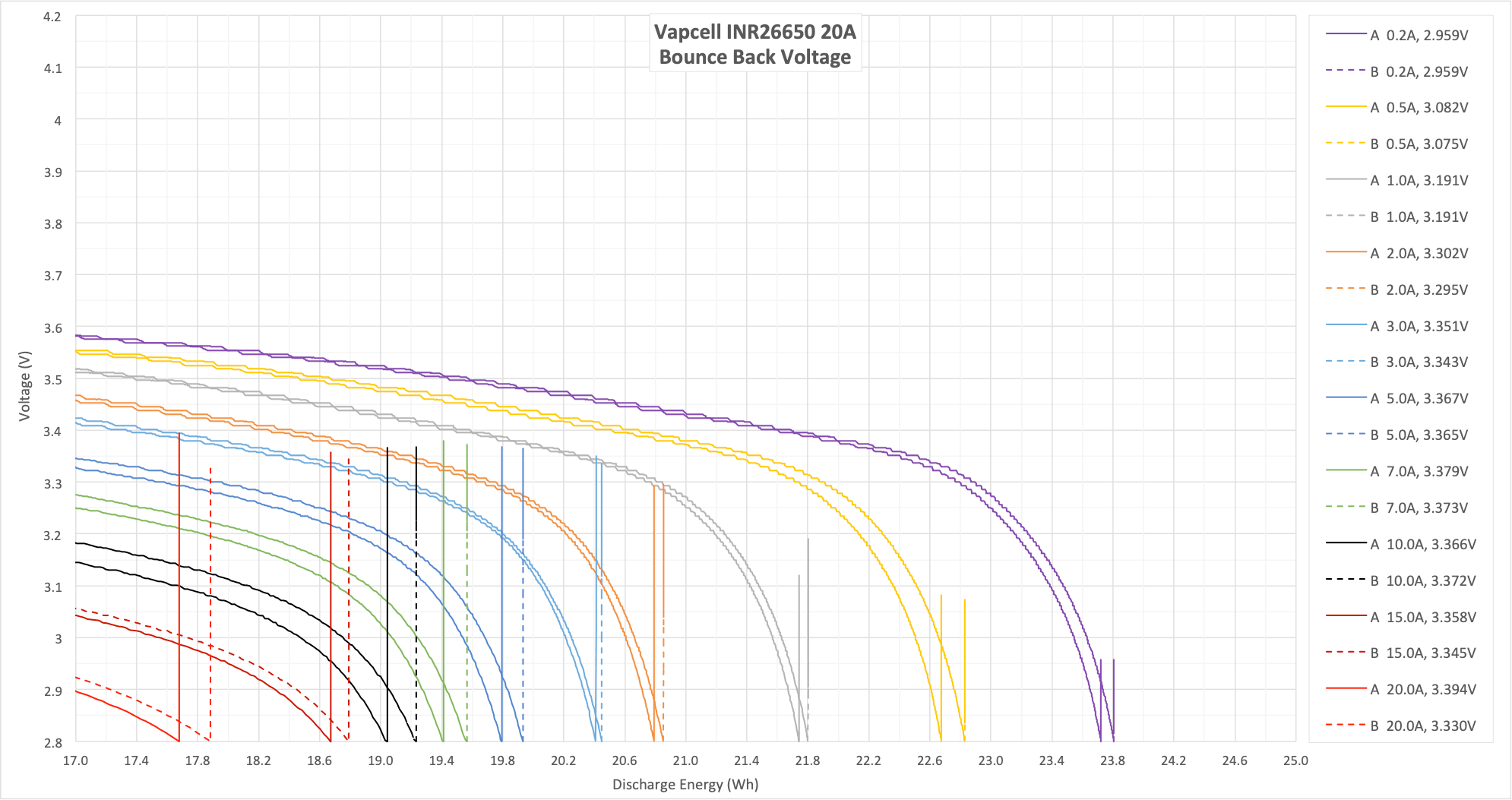
“Bounce back” is what the cell voltage does when the cell rests after a discharge. After heavy discharge rates, the cell voltage bounces back higher when discharge is stopped. This corresponds to a discharge amount of less energy and does mean that there’s energy left in the cell. So if I selected the cell with the highest bounce back voltage (ie the cell that was discharged at the highest current), then discharged it to 2.8V at 0.2A, I’d still find that there was a lot of energy still in the cell.
Here is why I think it is so interesting about “Bounce.” A poorly performing cell will bounce back higher after high discharges. That’s because the IR is higher, and because the cell performs much worse under high loads. So a good-performing cell will bounce back much less because it’s much more capable of high discharge. At high discharge on a capable cell, more of the energy makes its way out of the cell! Hence less bounce.
I more or less figured this out on my own, so I welcome discourse about this topic. Until I hear it’s wrong, I propose this as a new metric for cell quality!
Charge Test
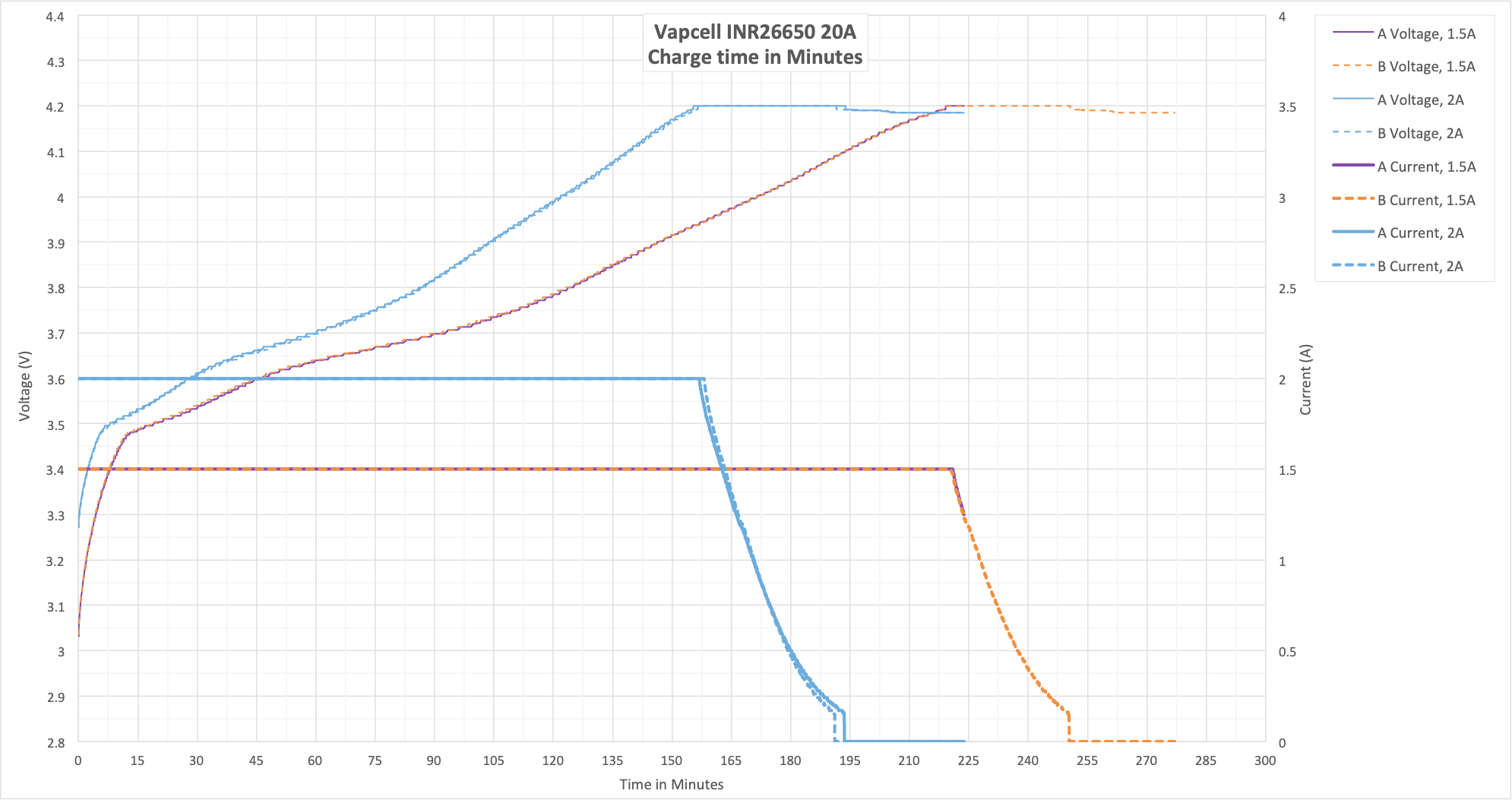
The cell is rated to charge at 3A; my max test was 2A.
Temperature
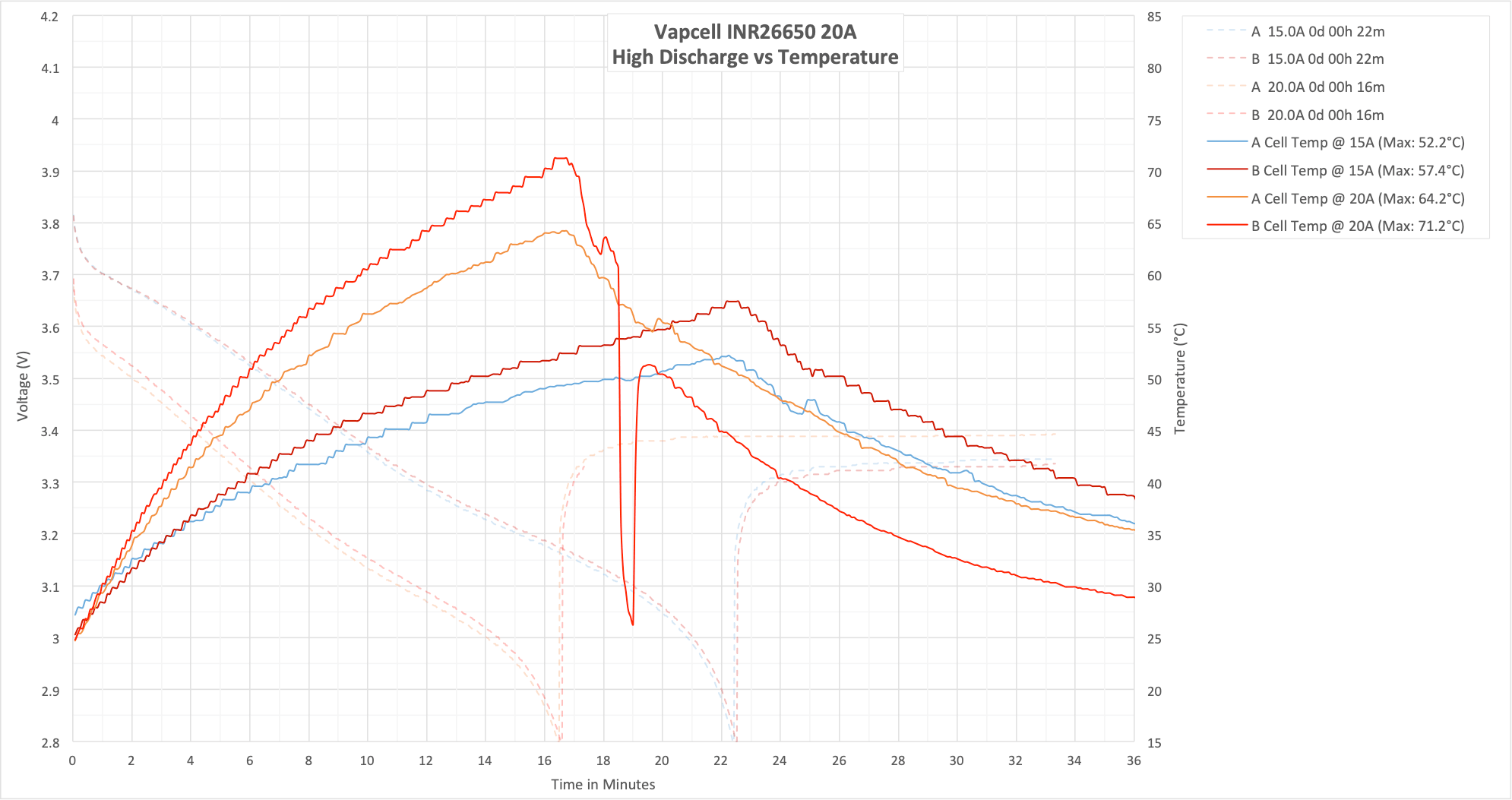
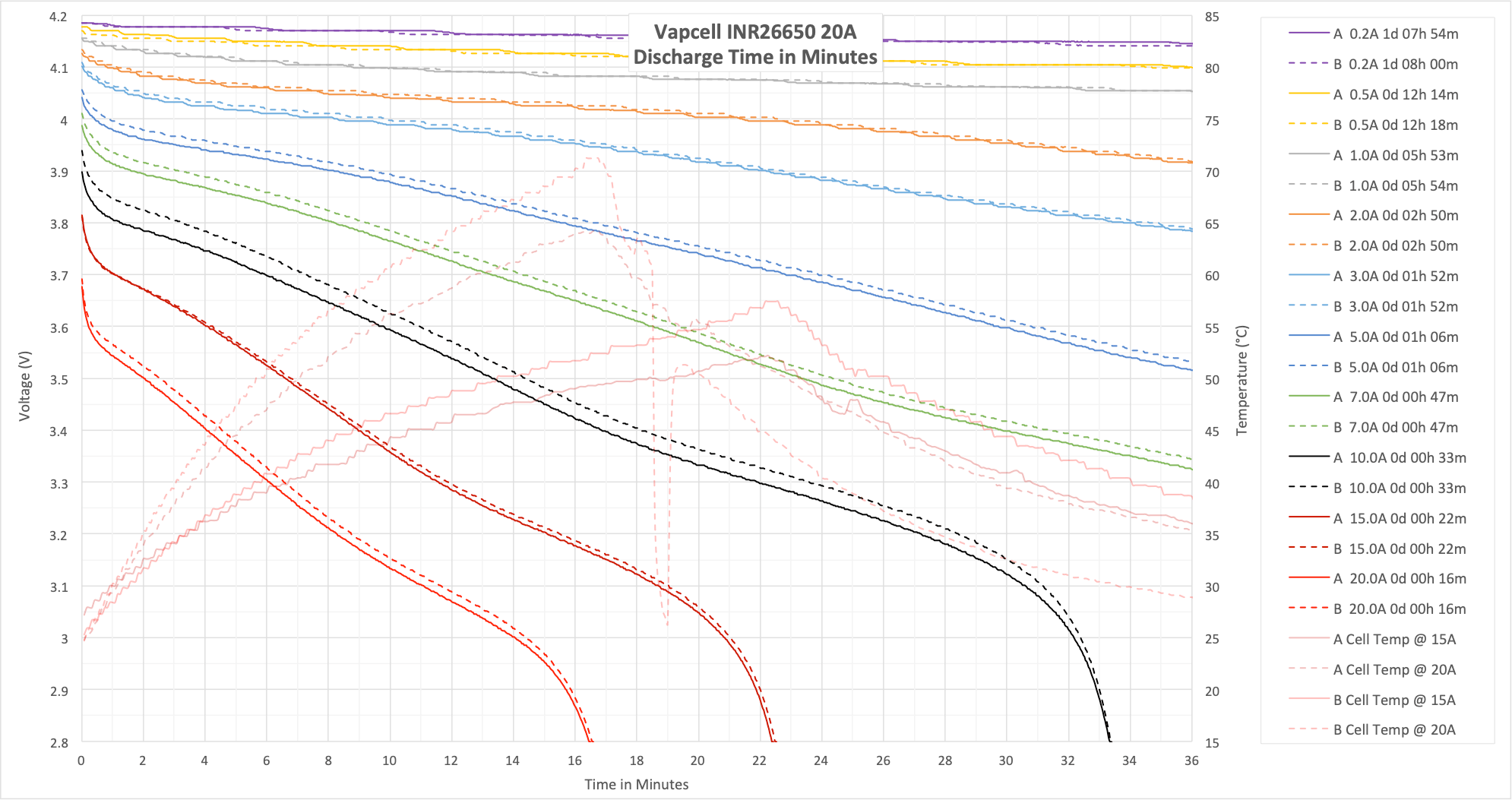
The dip in the line of the B cell at 20A was due to the probe falling off the cell. My alarm is set to 70ºC, and so I checked things when that test was running. Generally speaking, 70ºC is too high for … things… but probably technically within the parameters of the test. I personally would not recommend sustained 20A requests of this cell, but for flashlights, it’s probably ok.
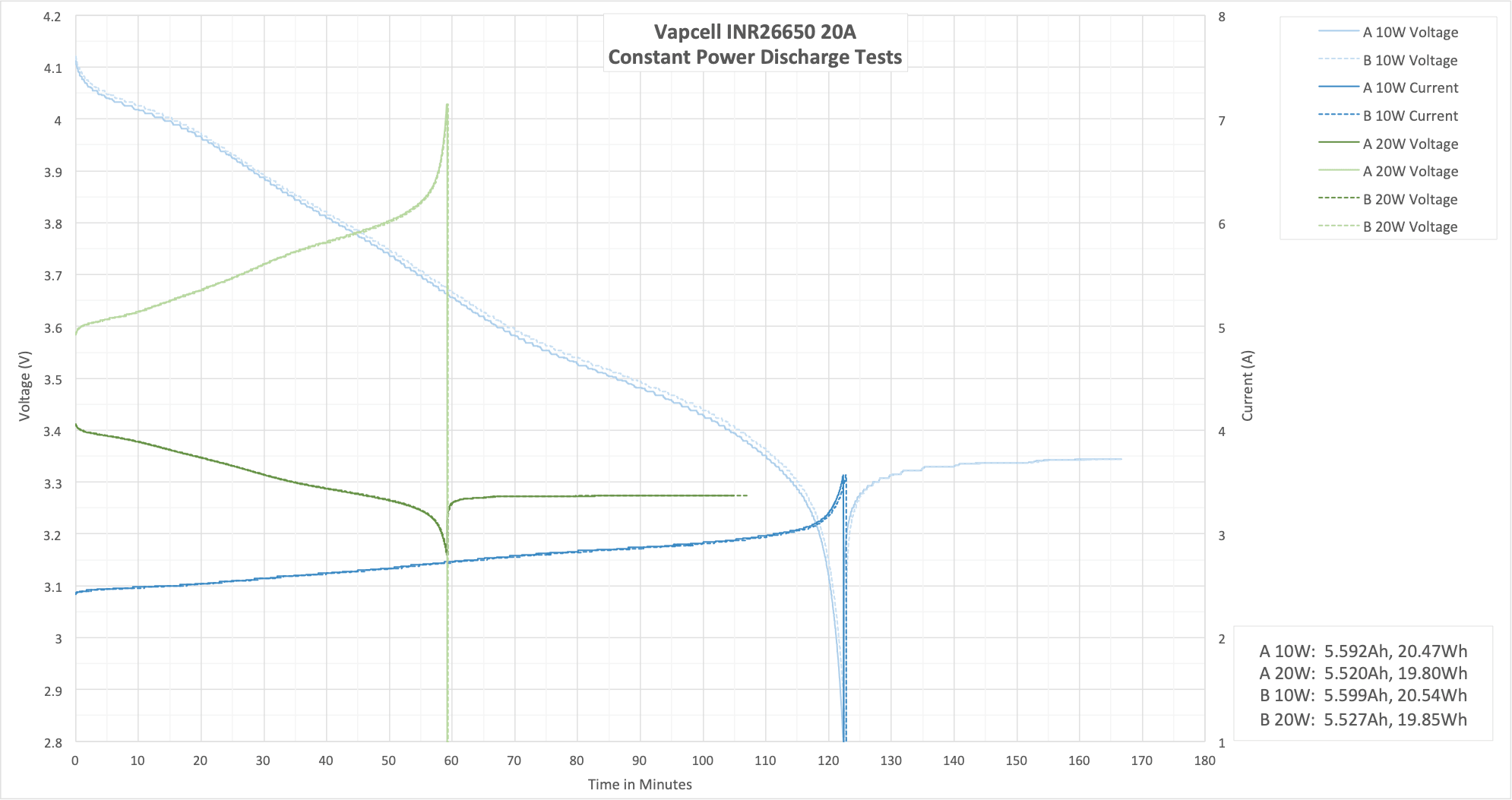
Power, Constant
Internal Resistance
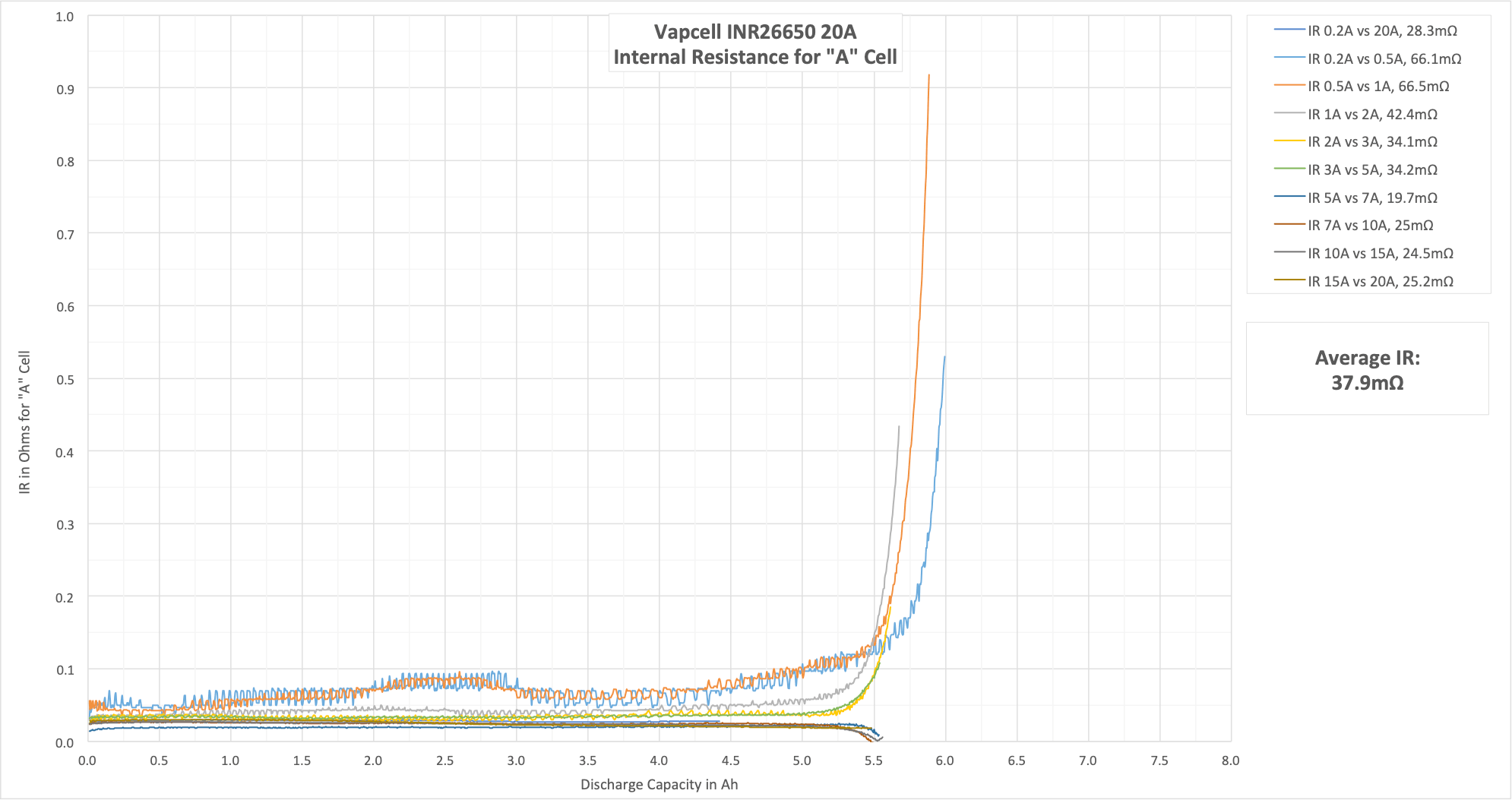
Most often (read: always), internal resistance is mentioned as a spot value. In truth, the IR changes over time. Due to cell age and cell heat, among other things. A graph of IR is interesting because it can show, for example, when a cell begins to “die,” at which point the remaining energy will be “harder” to extract. This is when the IR spikes. In the graph below, that’s around 750-800mAh. These graphs are also useful for determining if a cell would be good for a hot-rod flashlight, for example.
Conclusion
I summarized it in the Temperature section. “I personally would not recommend sustained 20A requests of this cell, but for flashlights, it’s probably ok.” At 20A, the cells get very hot. Otherwise, the performance is good, particularly with regard to capacity. So if you have an application requiring high capacity but not necessarily high current, this is a great cell!
Notes
- These cells were provided by Vapcell for review. I was not paid to write this review.
- This content originally appeared at zeroair.org. Please visit there for the best experience!
- Use my amazon.com referral link if you’re willing to help support making more reviews like this one!
- Please support me on Patreon! I deeply appreciate your support!
Discover more from ZeroAir Reviews
Subscribe to get the latest posts sent to your email.