
Lumintop GT Mini NM1 Flashlight Review
The Lumintop family just got a new member – the Lumintop GT Mini NM1 Flashlight. This is another small thrower, and includes a shorty tube!
Official Specs and Features
Here’s a link to the Lumintop GT Mini NM1 flashlight product page.
Versions
The Lumintop GT family is too big to list them all. Of this GT Mini NM1, there’s just this one model. Of course, the GT Mini is the same light, but it doesn’t have the “NM1” in the name (or the NM1 emitter!)
Price
The price of the Lumintop GT Mini NM1 Flashlight is $57.95 without a battery. For $66.95, you can have a cell included.
Short Review
I really do love the Flat White emitter. Overall, this makes for a nice little thrower. And if you like Andúril, then this will be a great match for you!
Long Review
The Big Table
| Lumintop GT Mini NM1 Flashlight | |
|---|---|
| Emitter: | Osram KW CSLNM1.TG |
| Price in USD at publication time: | $57.95 |
| Cell: | 1×18650 |
| Turbo Runtime Graph | High Runtime Graph |
| LVP? | Yes |
| Switch Type: | E-Switch |
| Quiescent Current (mA): | |
| On-Board Charging? | No |
| Claimed Lumens (lm) | – |
| Measured Lumens (at 30s) | 619 |
| Candela per Lumen | 399 |
| Claimed Throw (m) | 1050 |
| Candela (Calculated) in cd (at 30s) | 7760lux @ 5.477m = 232781cd |
| Throw (Calculated) (m) | 964.9 (91.9% of claim)^ |
| All my Lumintop reviews! | |
^ Measurement disclaimer: Testing flashlights is my hobby. I use hobbyist-level equipment for testing, including some I made myself. Try not to get buried in the details of manufacturer specifications versus measurements recorded here; A certain amount of difference (say, 10 or 15%) is perfectly reasonable.
What’s Included
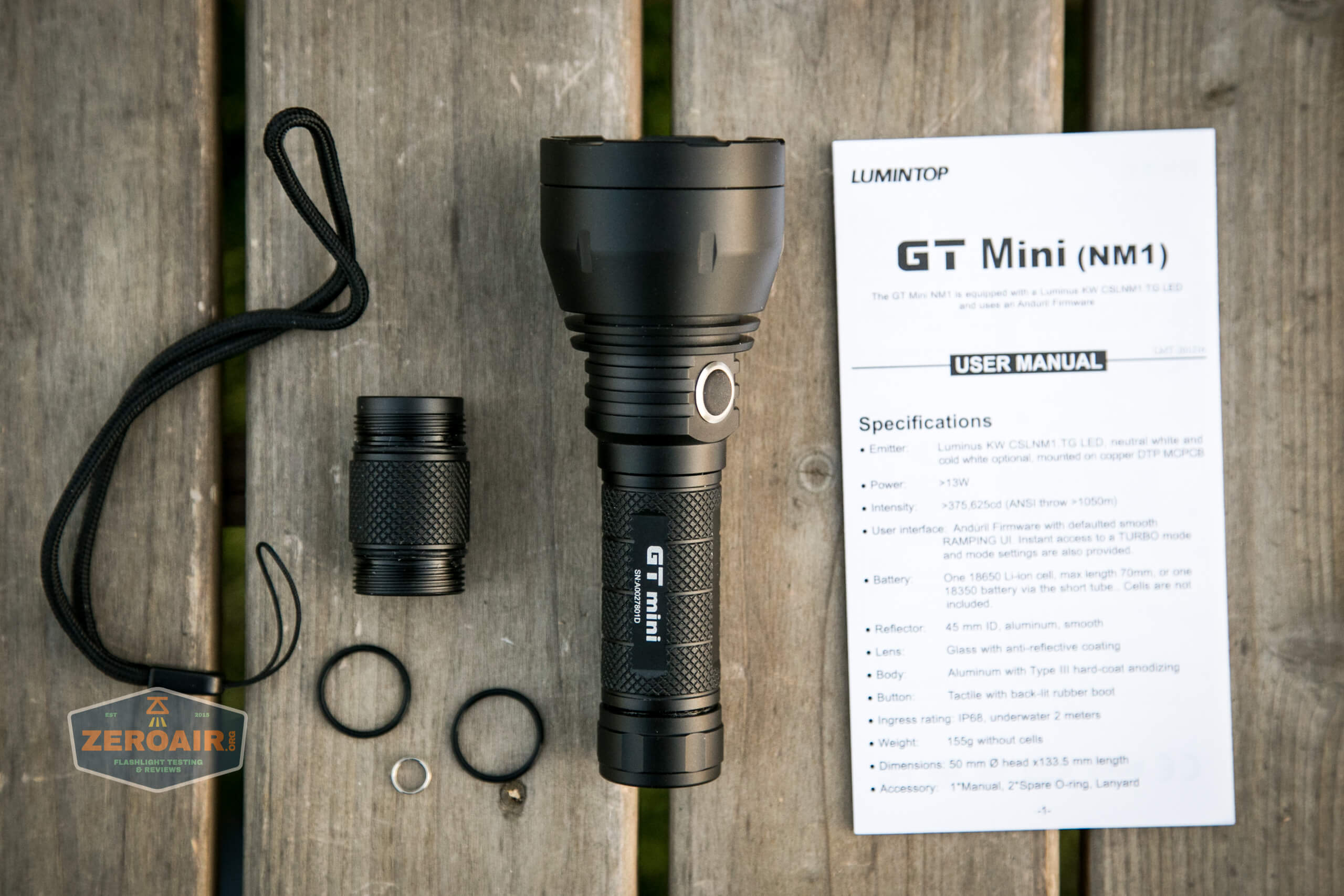
- Lumintop GT Mini NM1 Flashlight
- 18350 tube
- Spare o-rings (2)
- Split ring
- Lanyard
- Manual
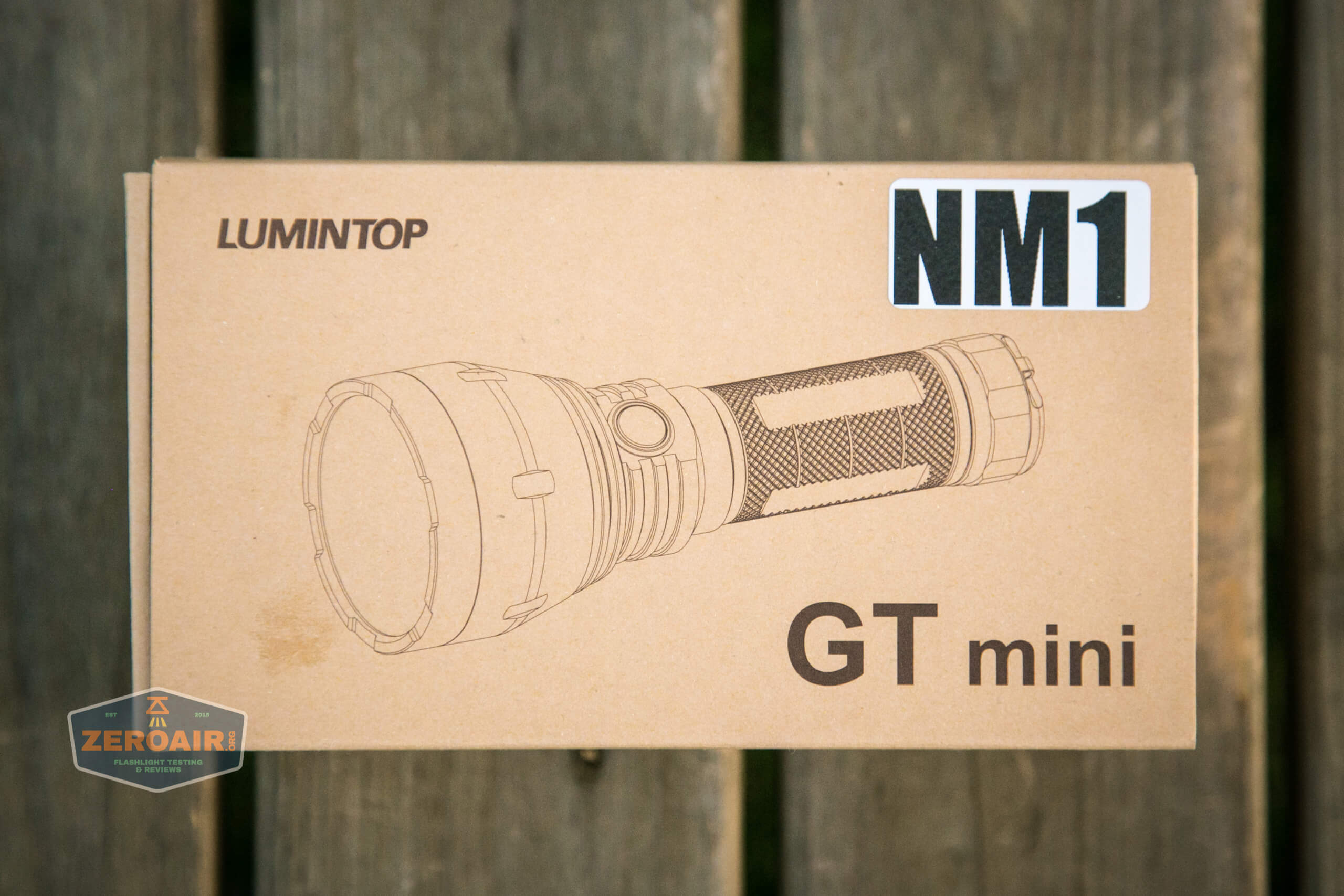
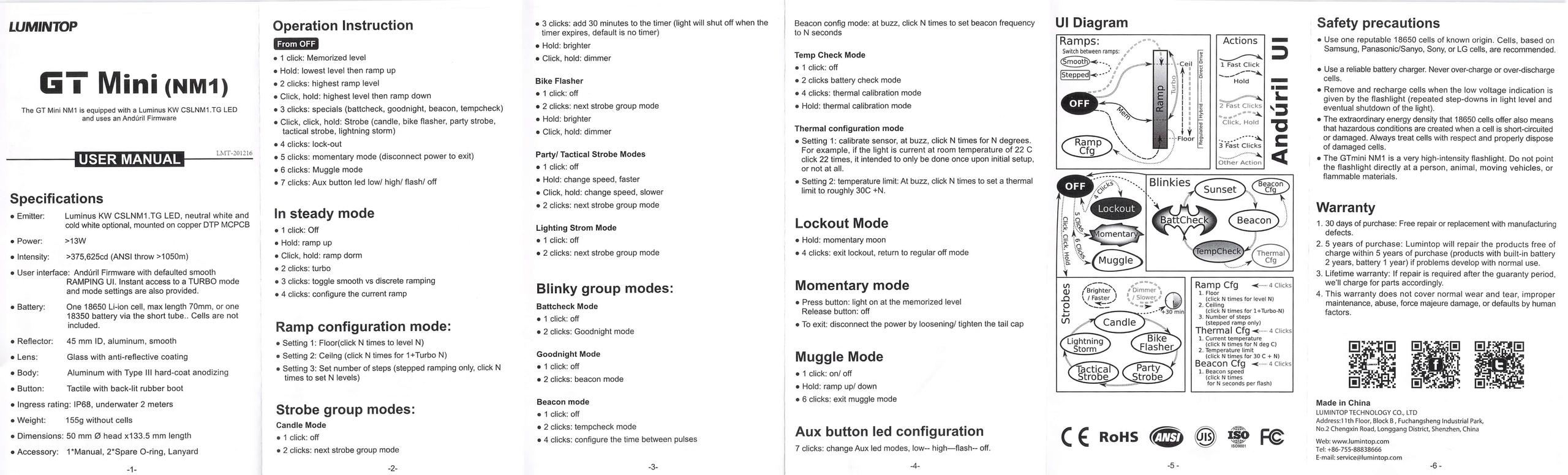
Package and Manual
Build Quality and Disassembly
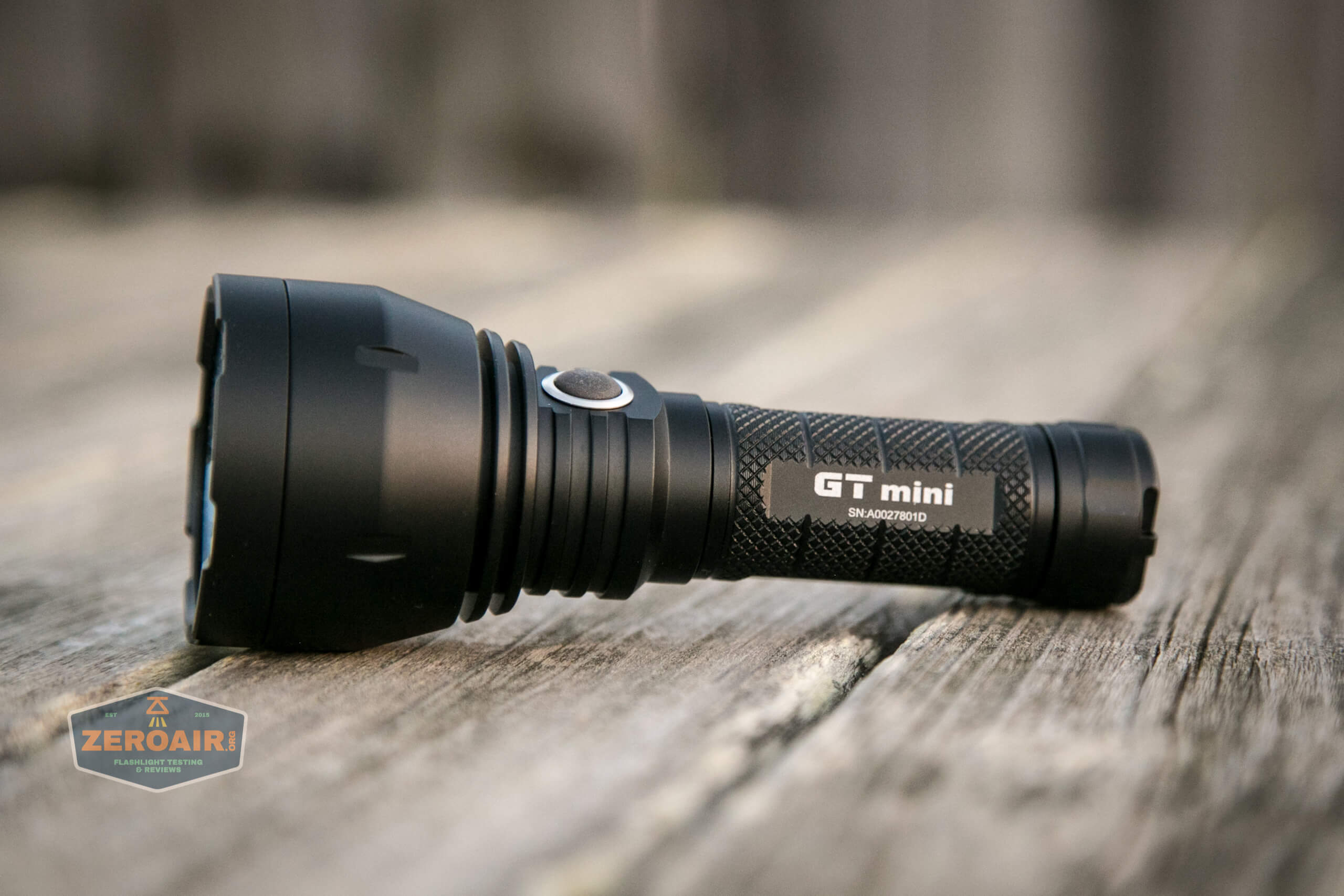
The build quality here is fine. There’s nothing bad at all, and it seems to be a well-built, solid light.
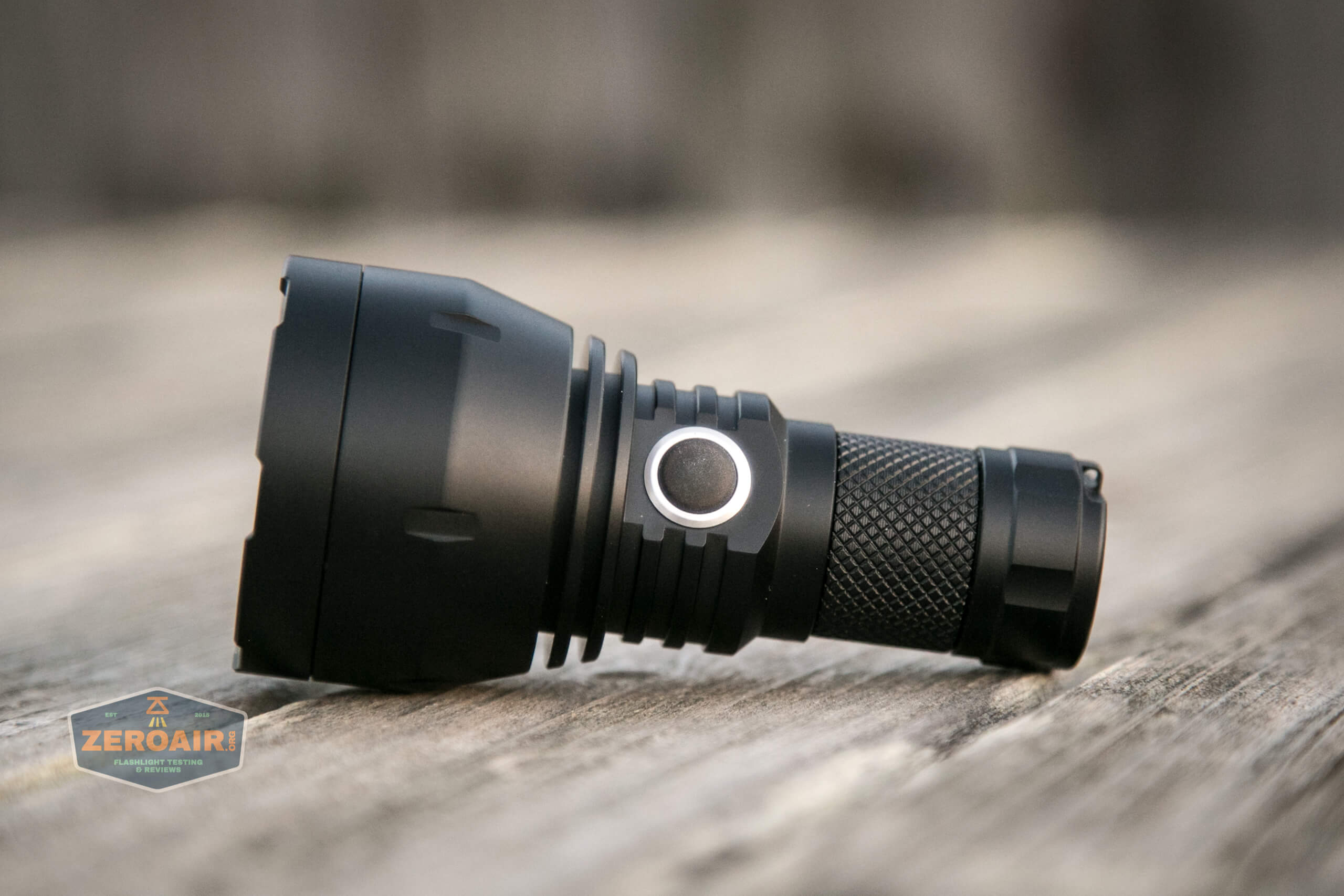
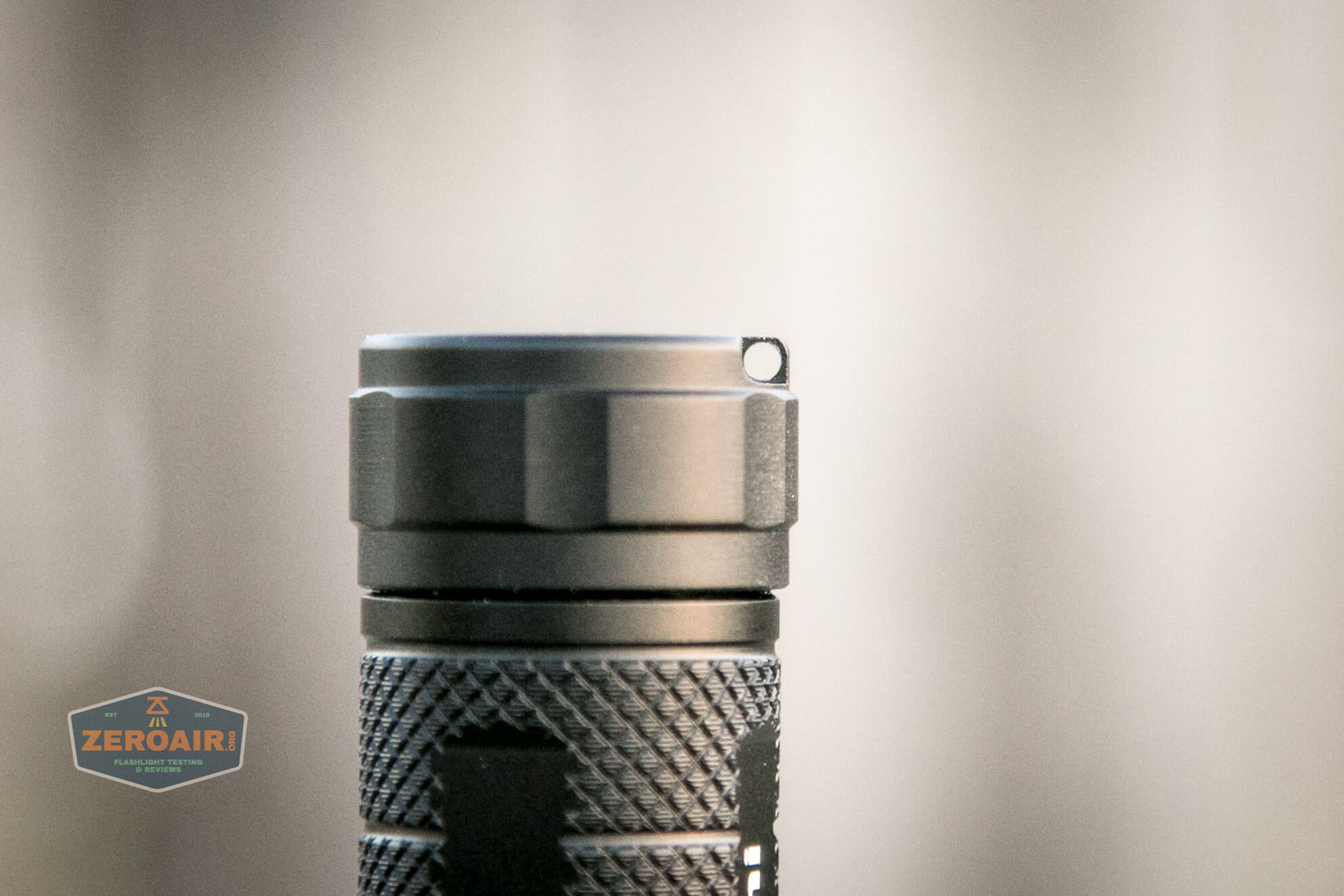
You can see above that the 18350 cell tube does not have any branding at all. There’s not much room for it while maintaining the required knurling.
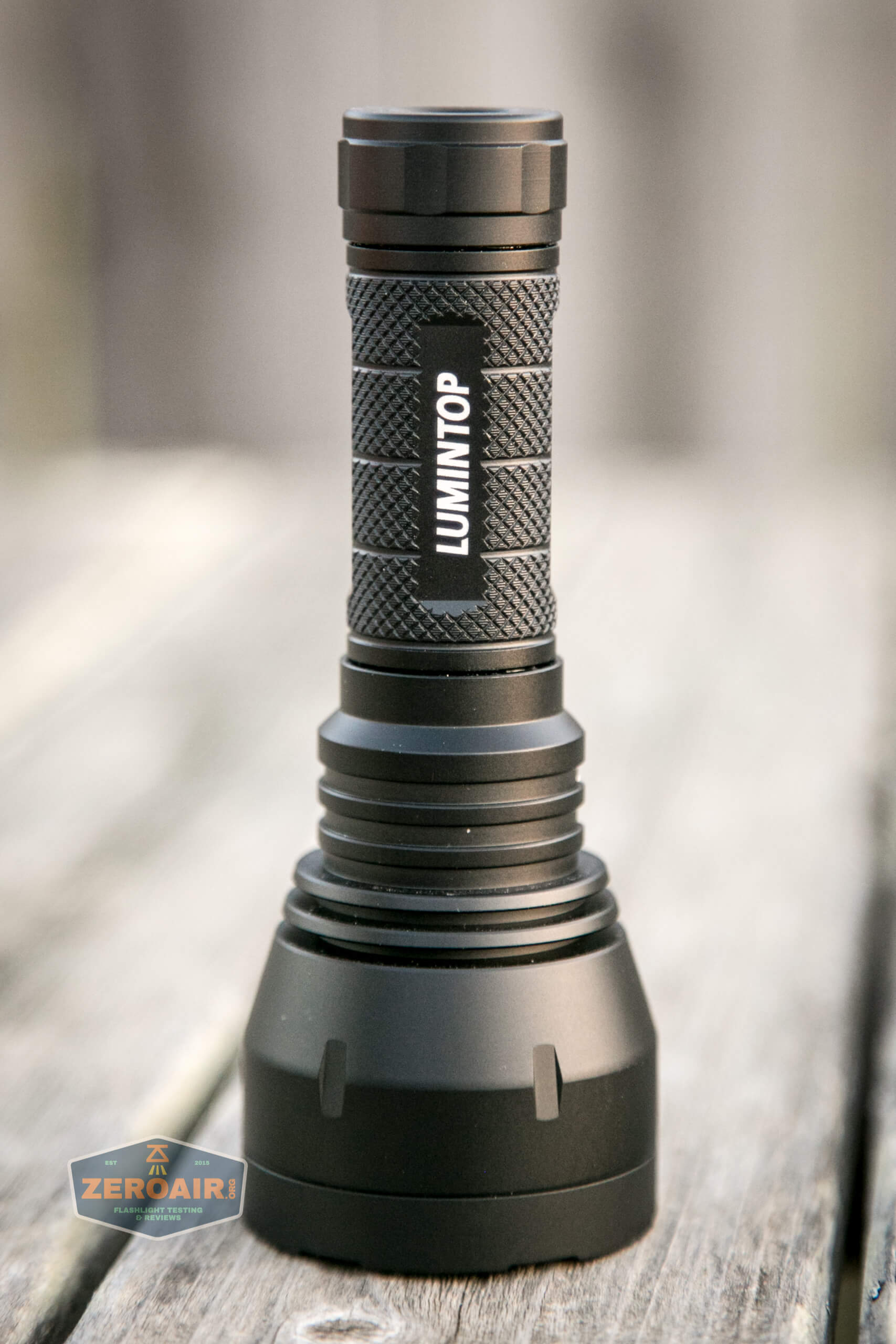
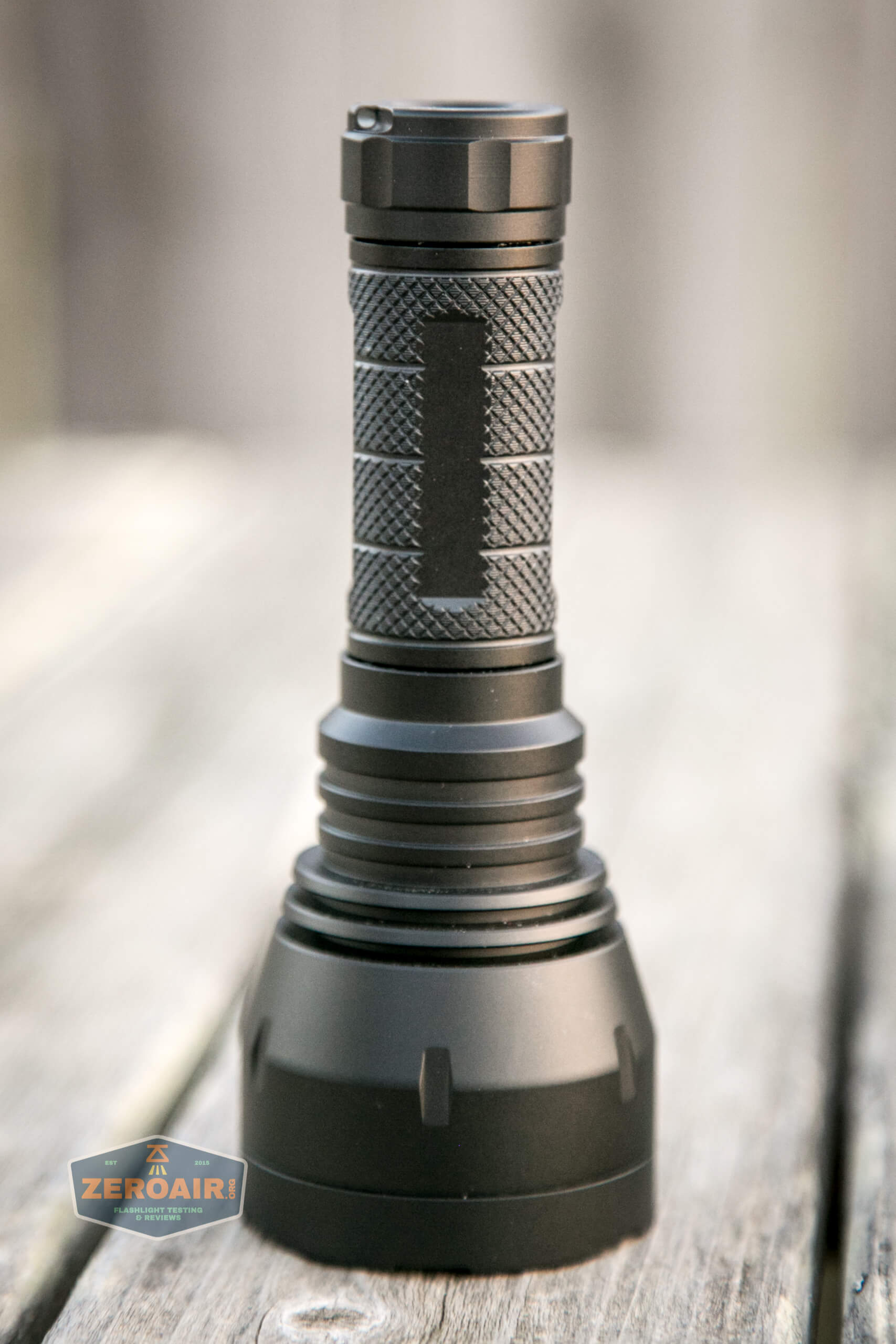
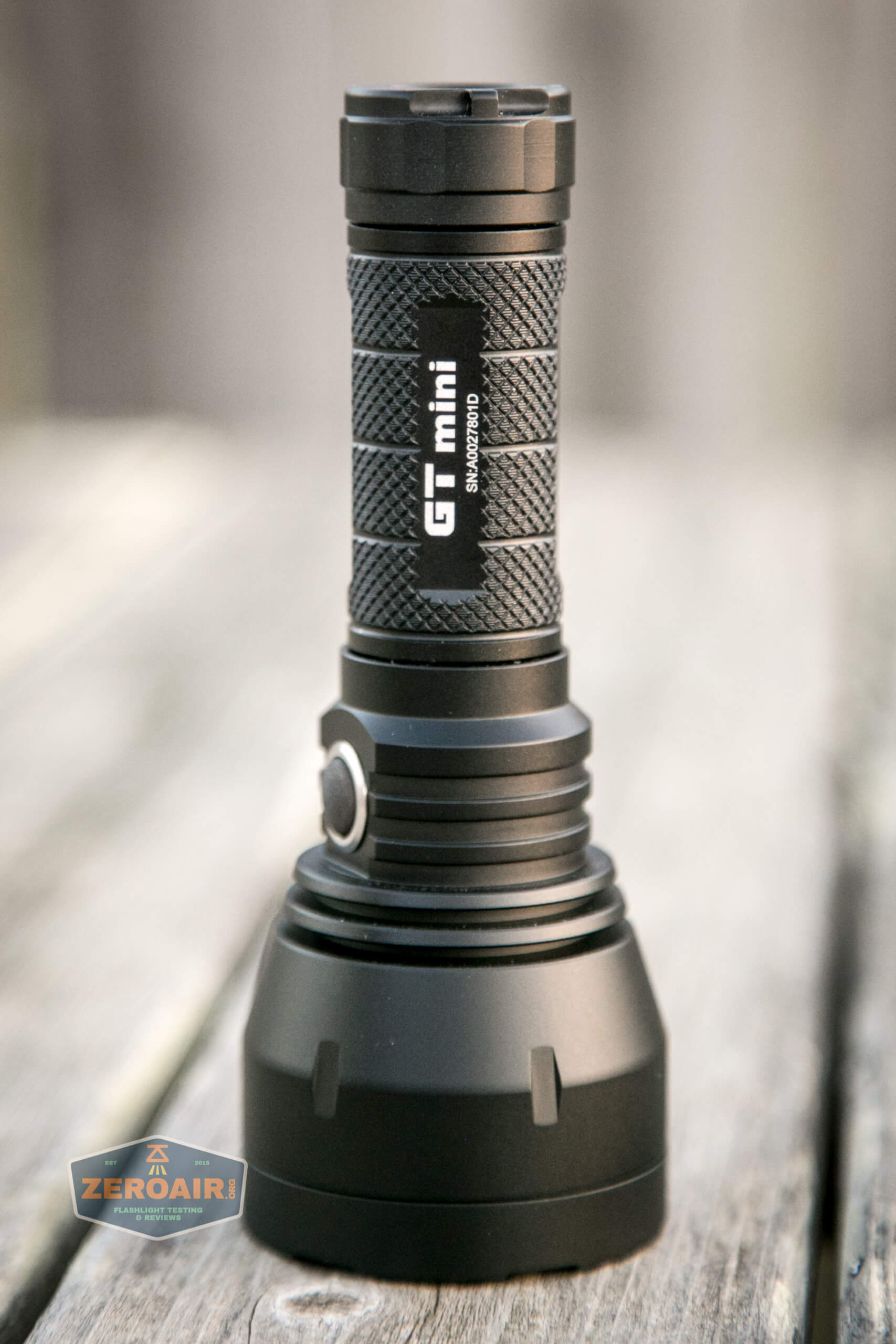
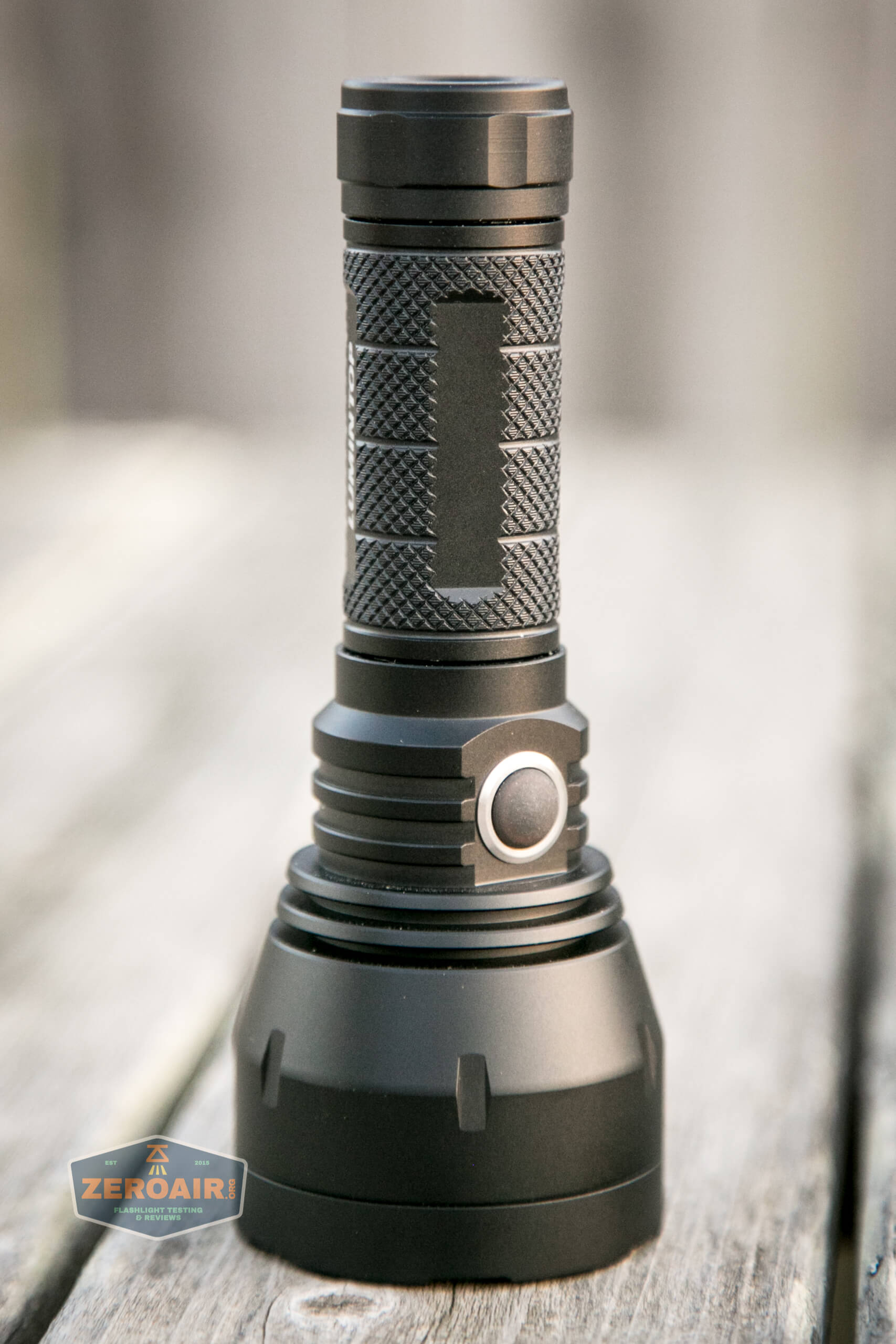
I consider this to be an 18650 light, really, with a bonus of “18350 tube included.”
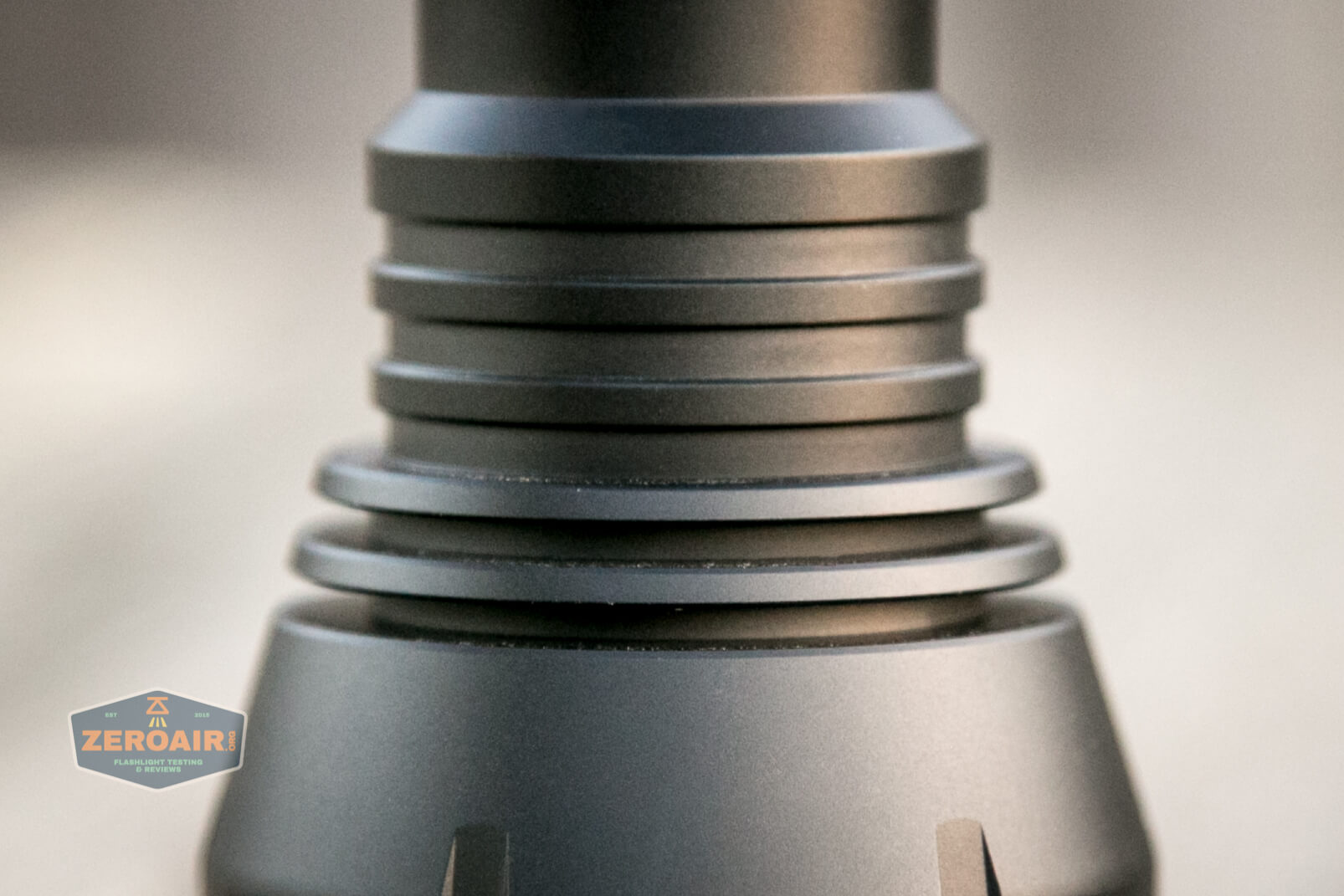
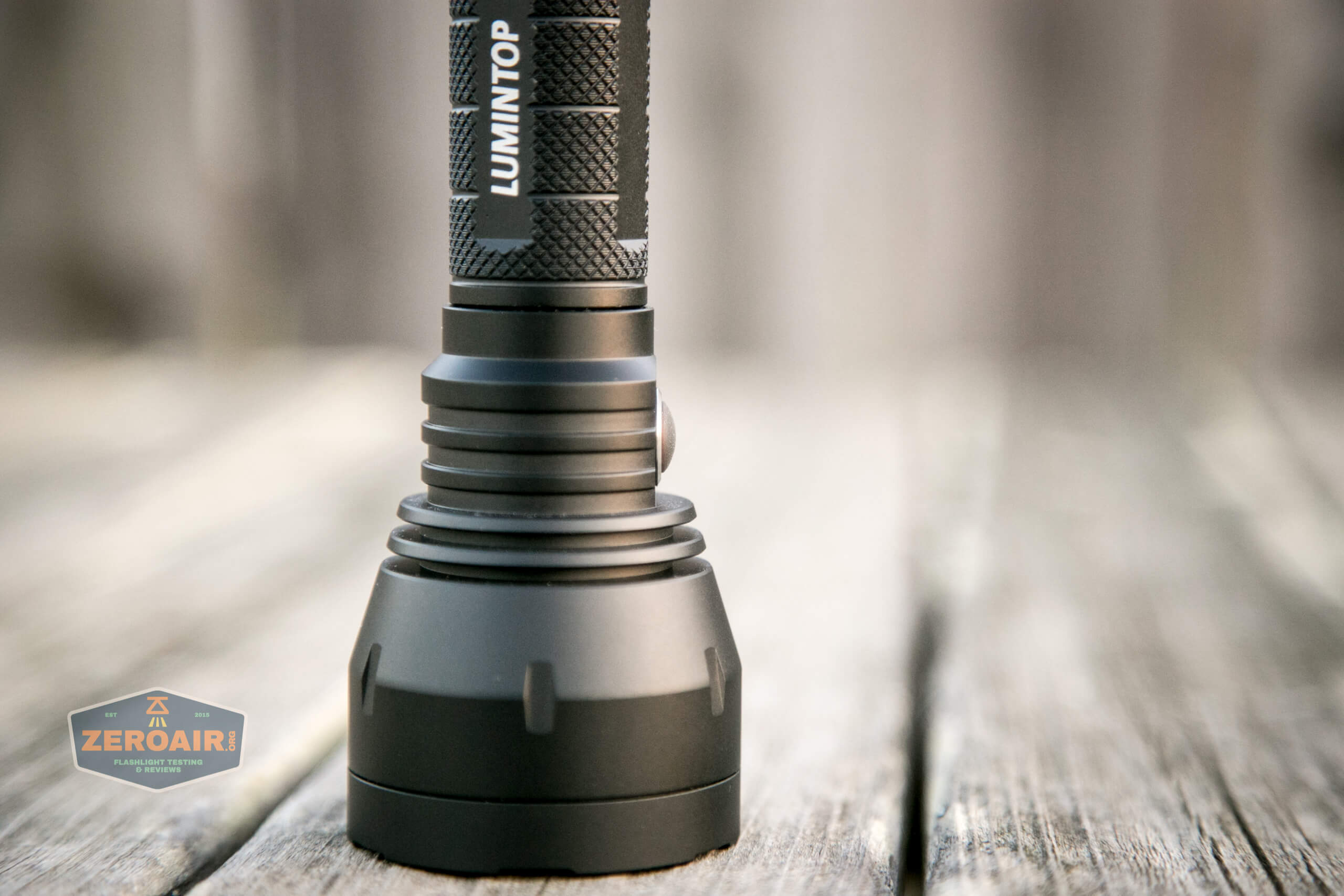
The head has ample cooling, but this is probably mostly aesthetic – the GT series has a standard, and this look is that standard. (The light isn’t really driven all that hard, from my testing.)
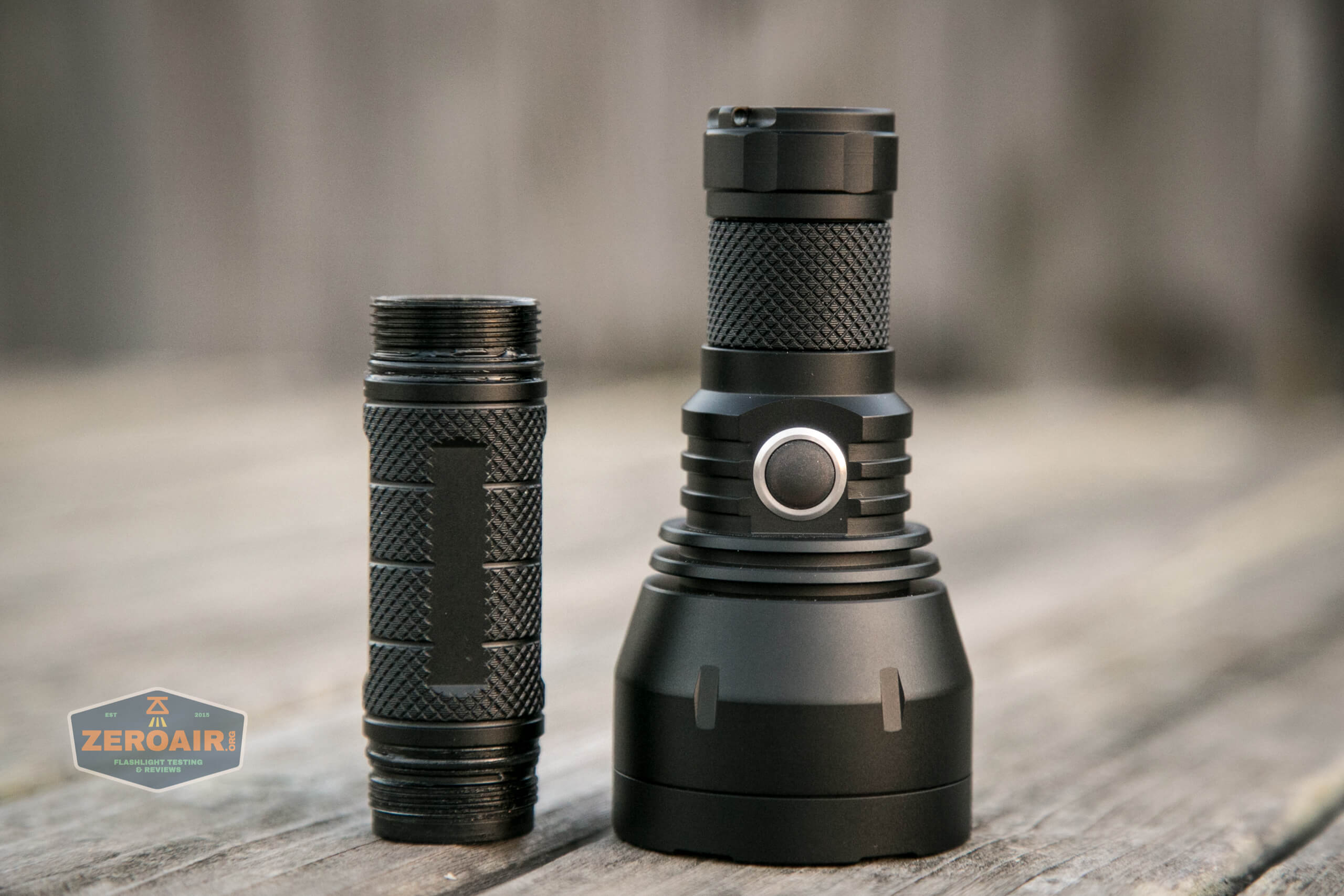
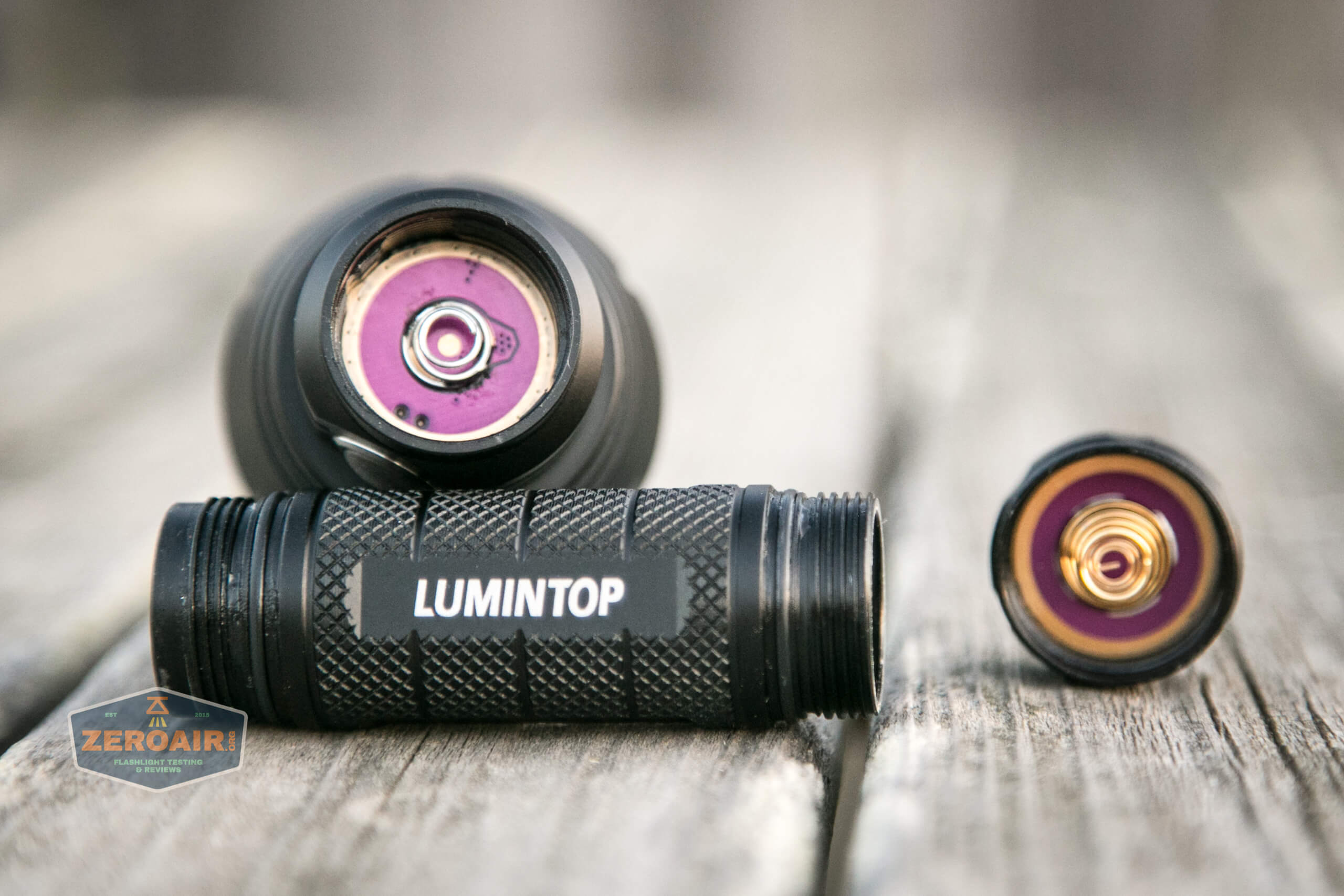
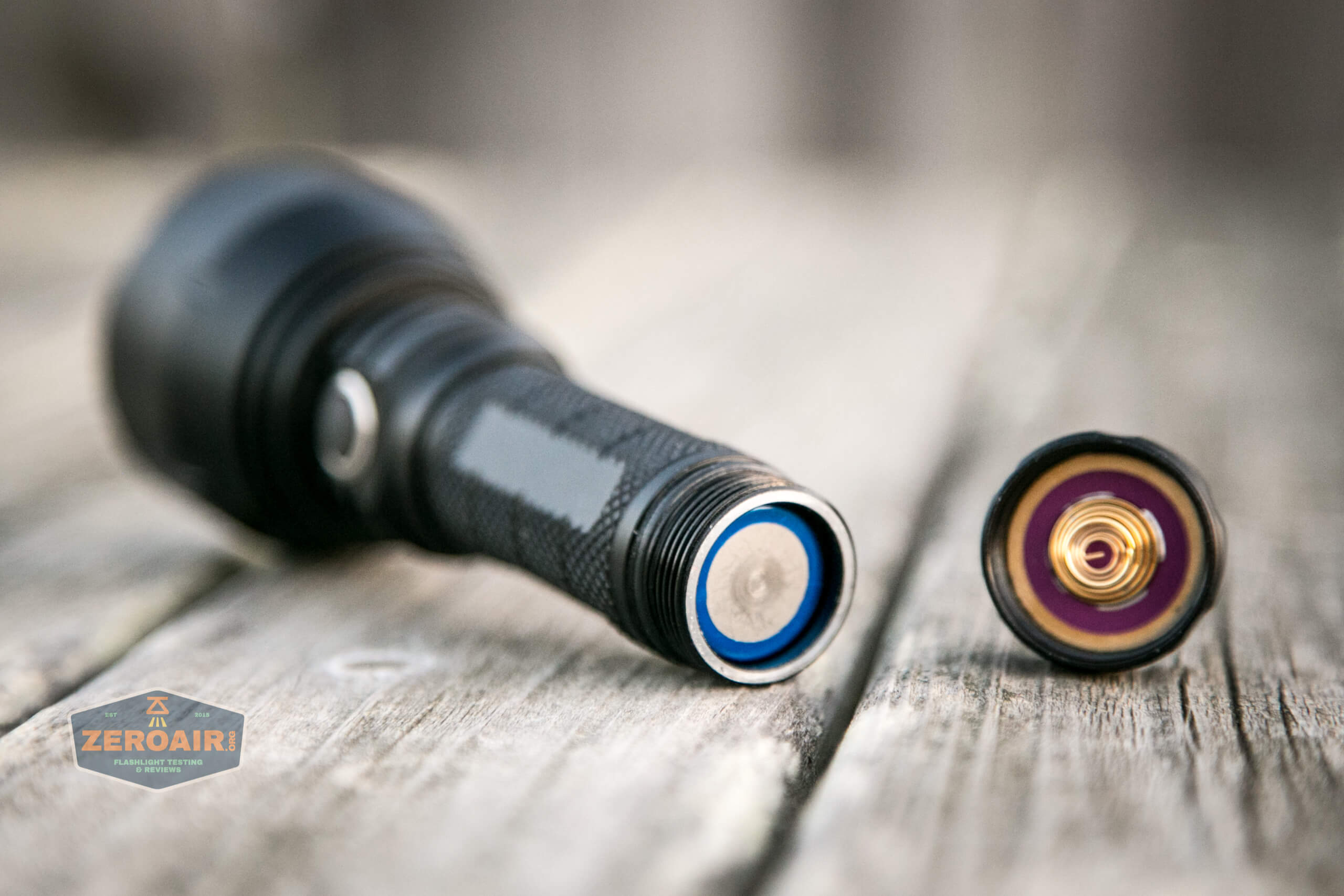
The cell tube is directional. The end with smooth threads (at right, below) goes into the head.
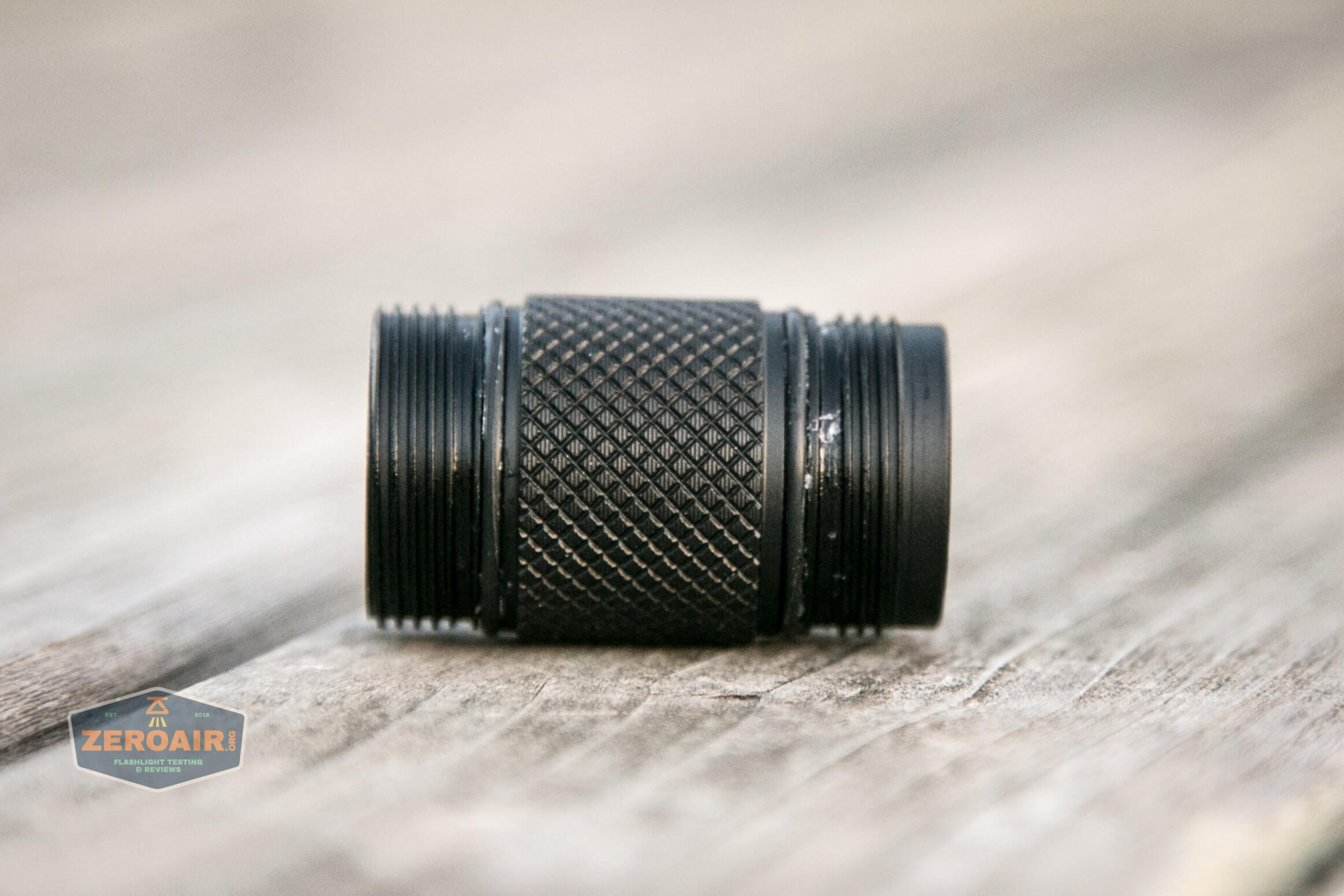
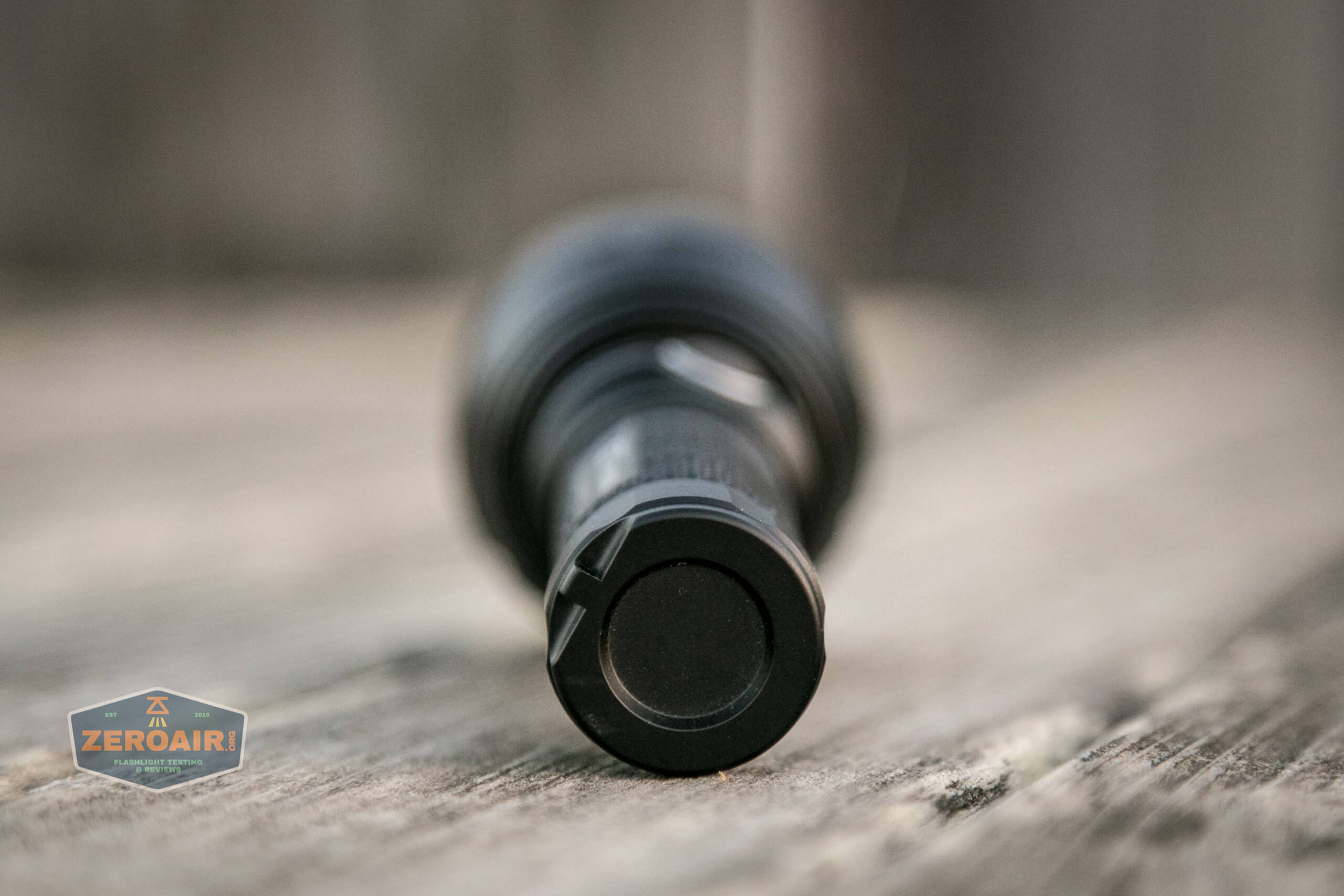
Here’s the correct orientation.
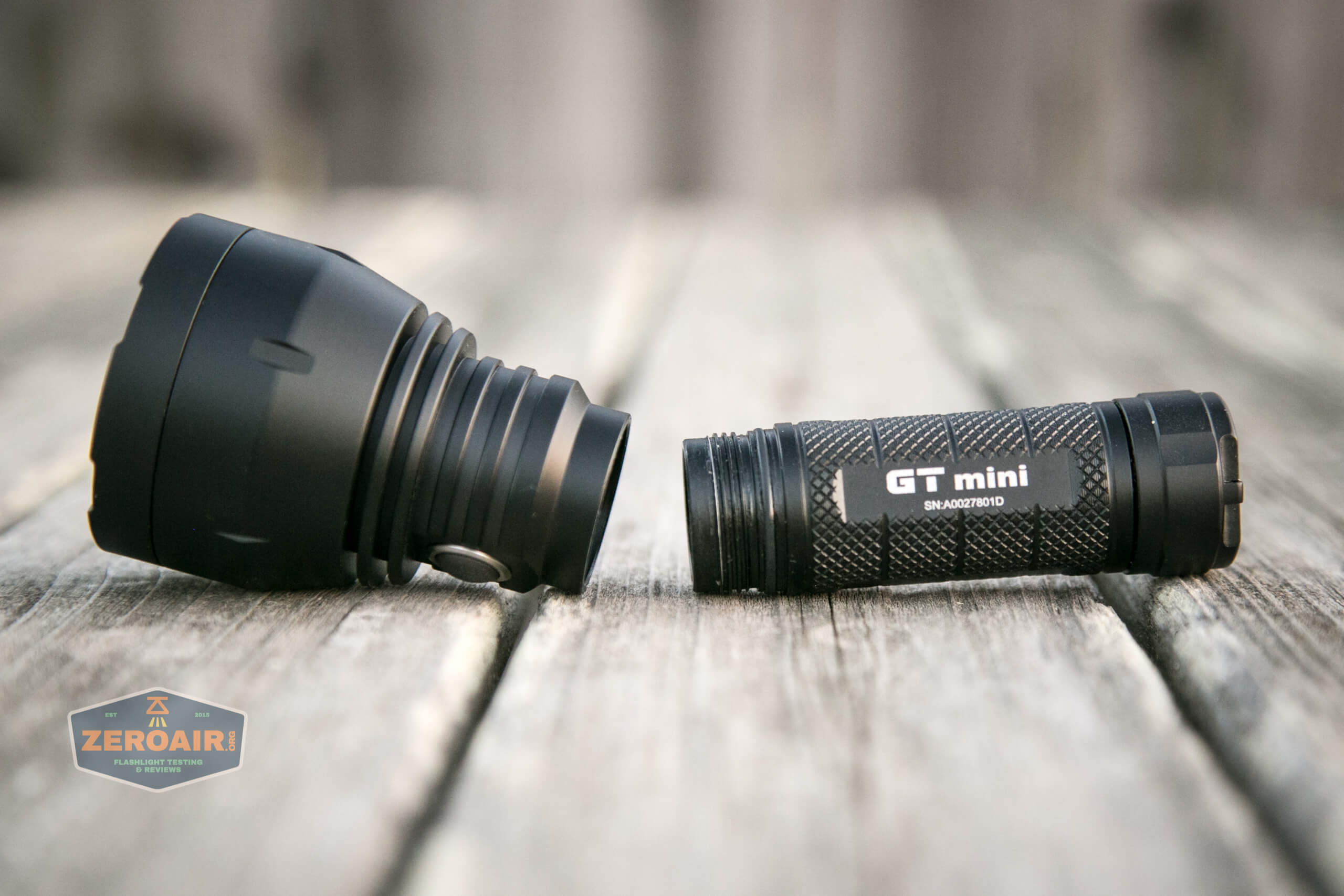
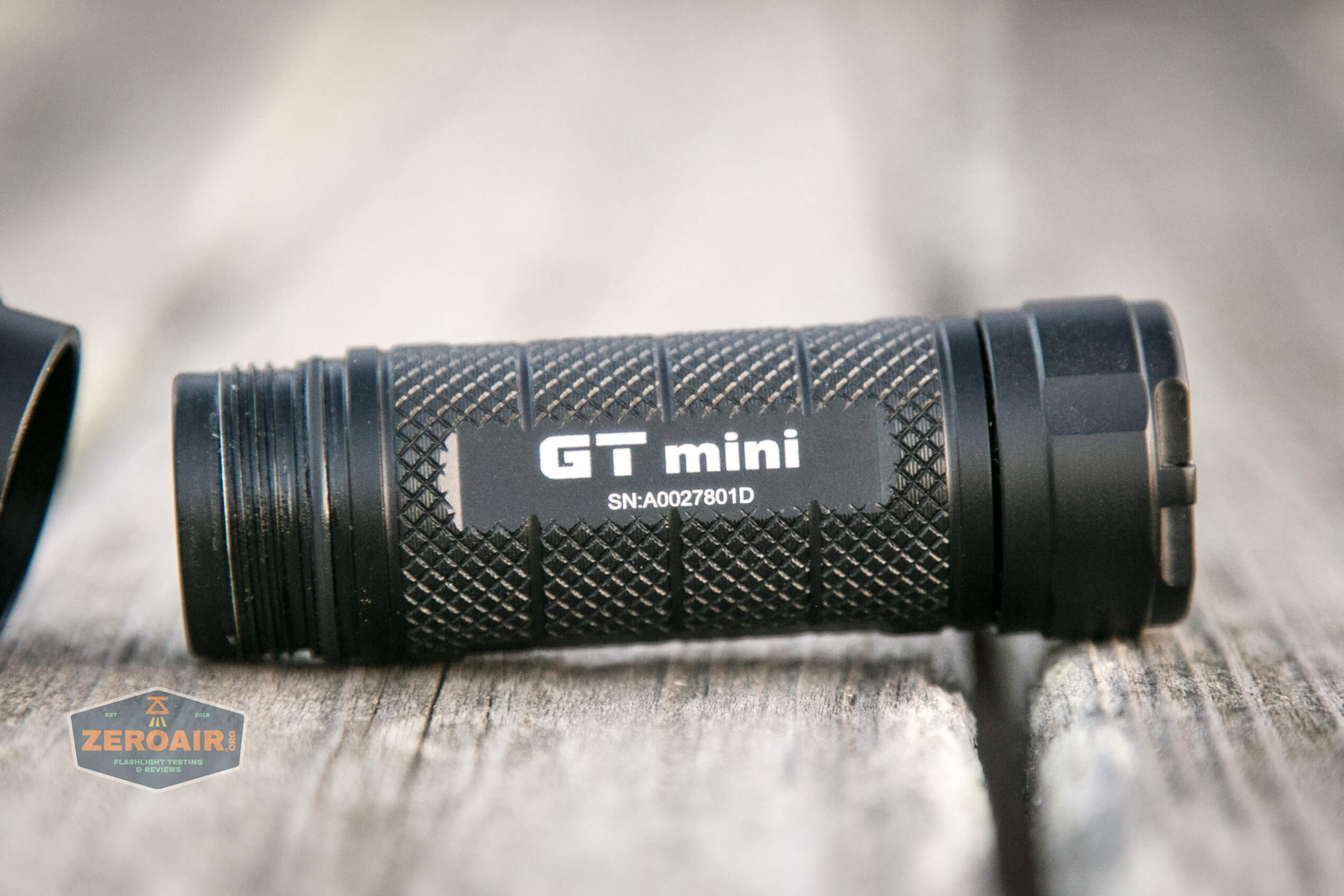
Threads on both ends are very smooth. square-cut, anodized, and moderately long.
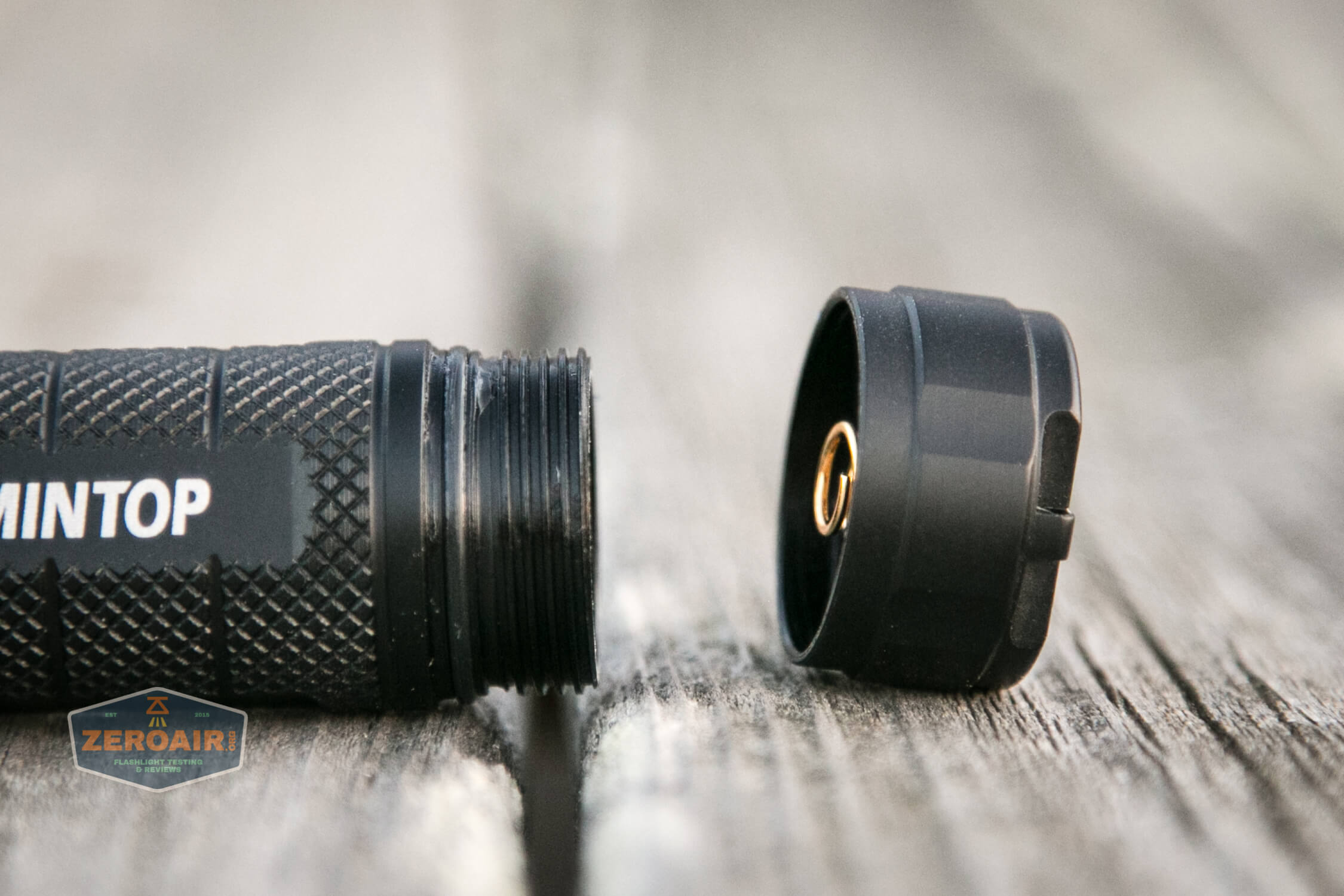
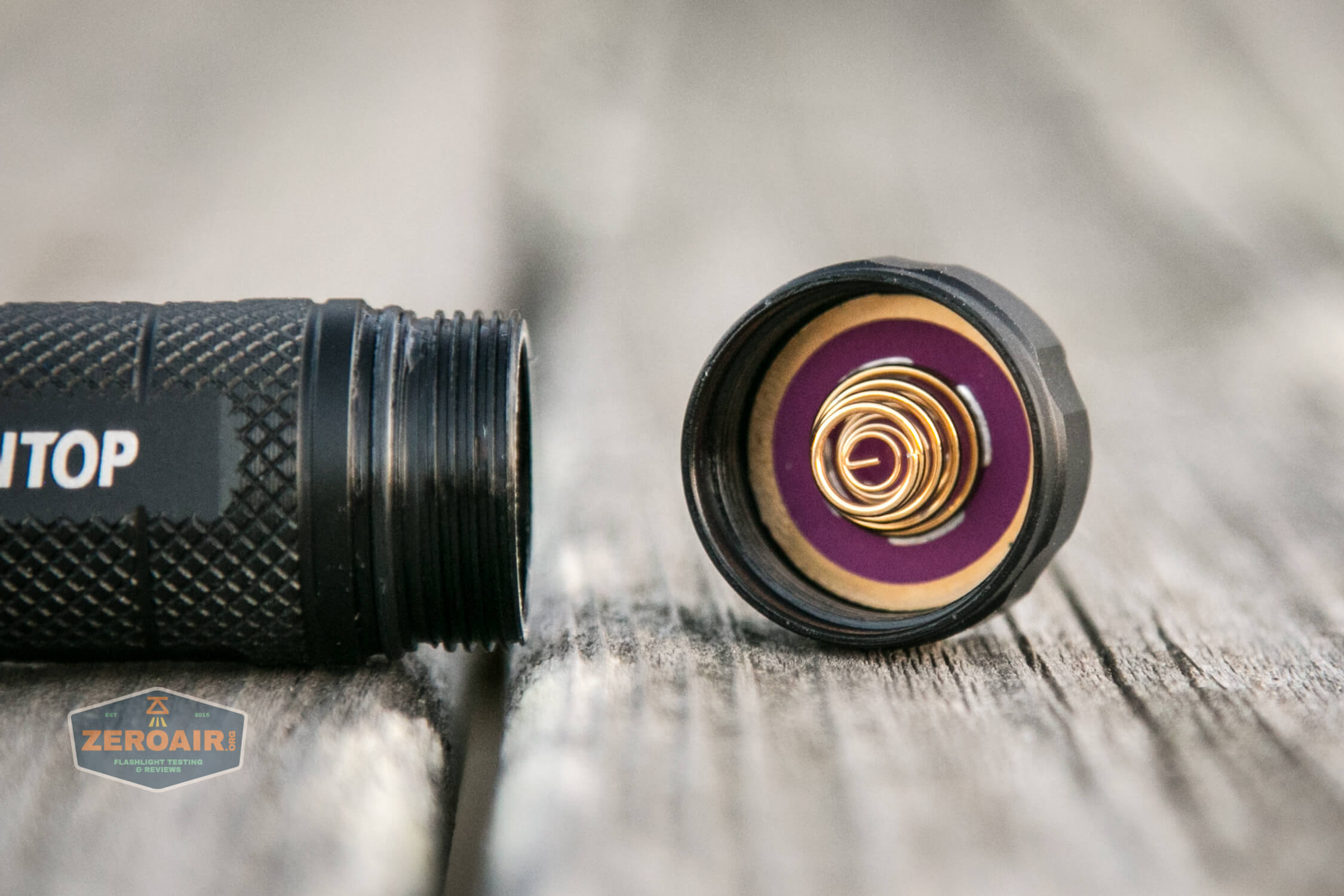
This tailcap spring is a big, thick double spring, too. Good for high current.
The head spring, on the other hand, is short and not nearly as beefy.
Size and Comps
For the 18650 version.
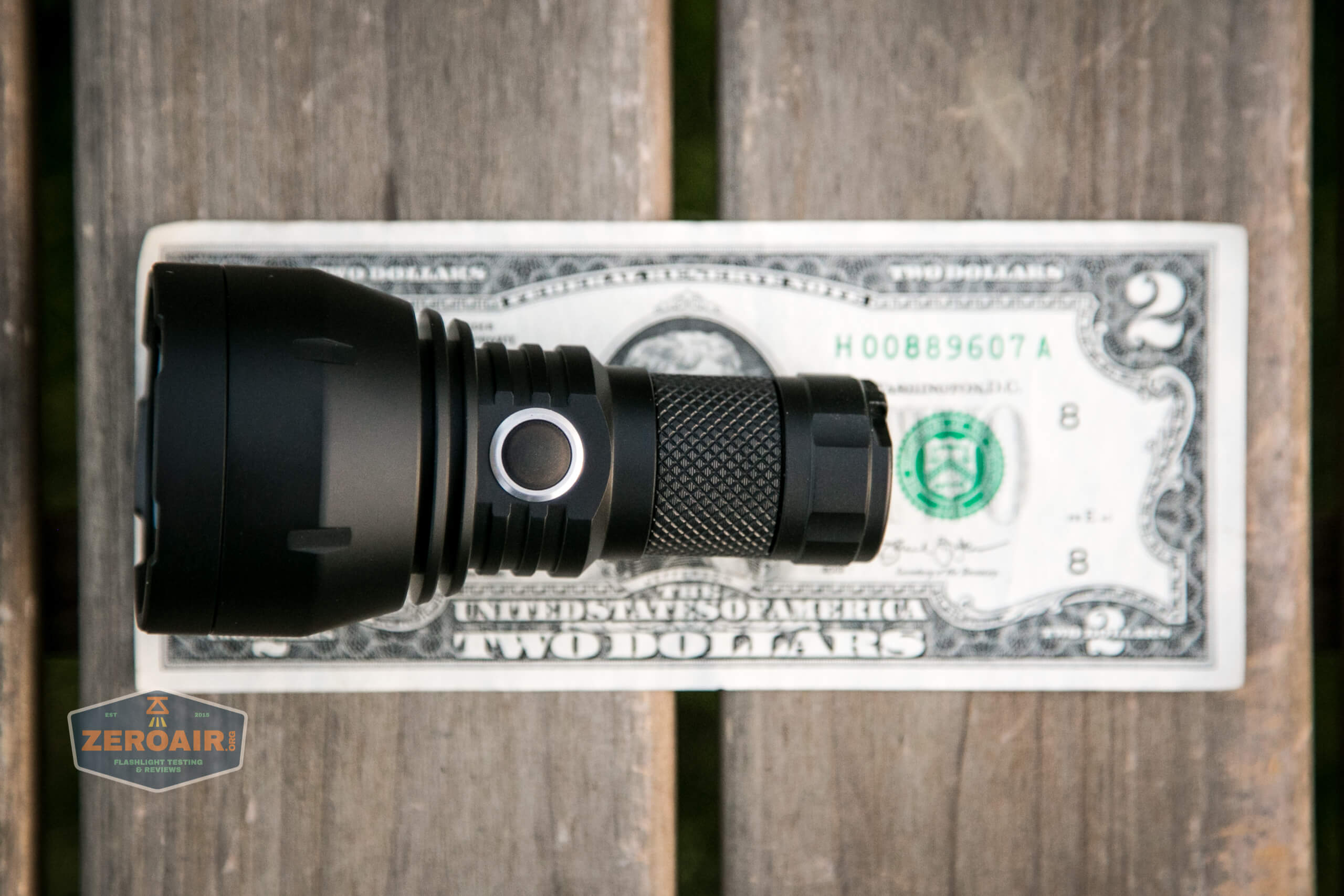
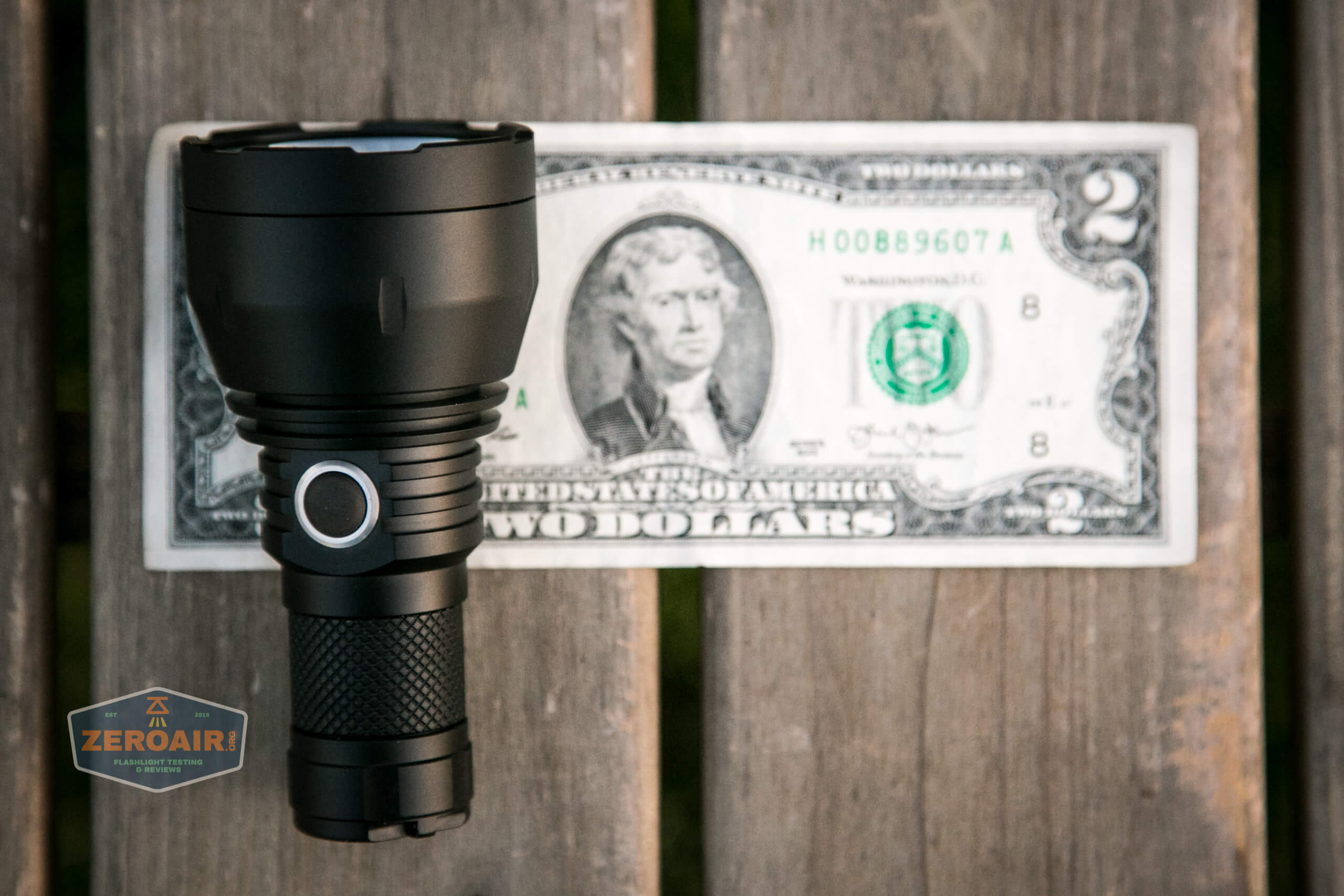
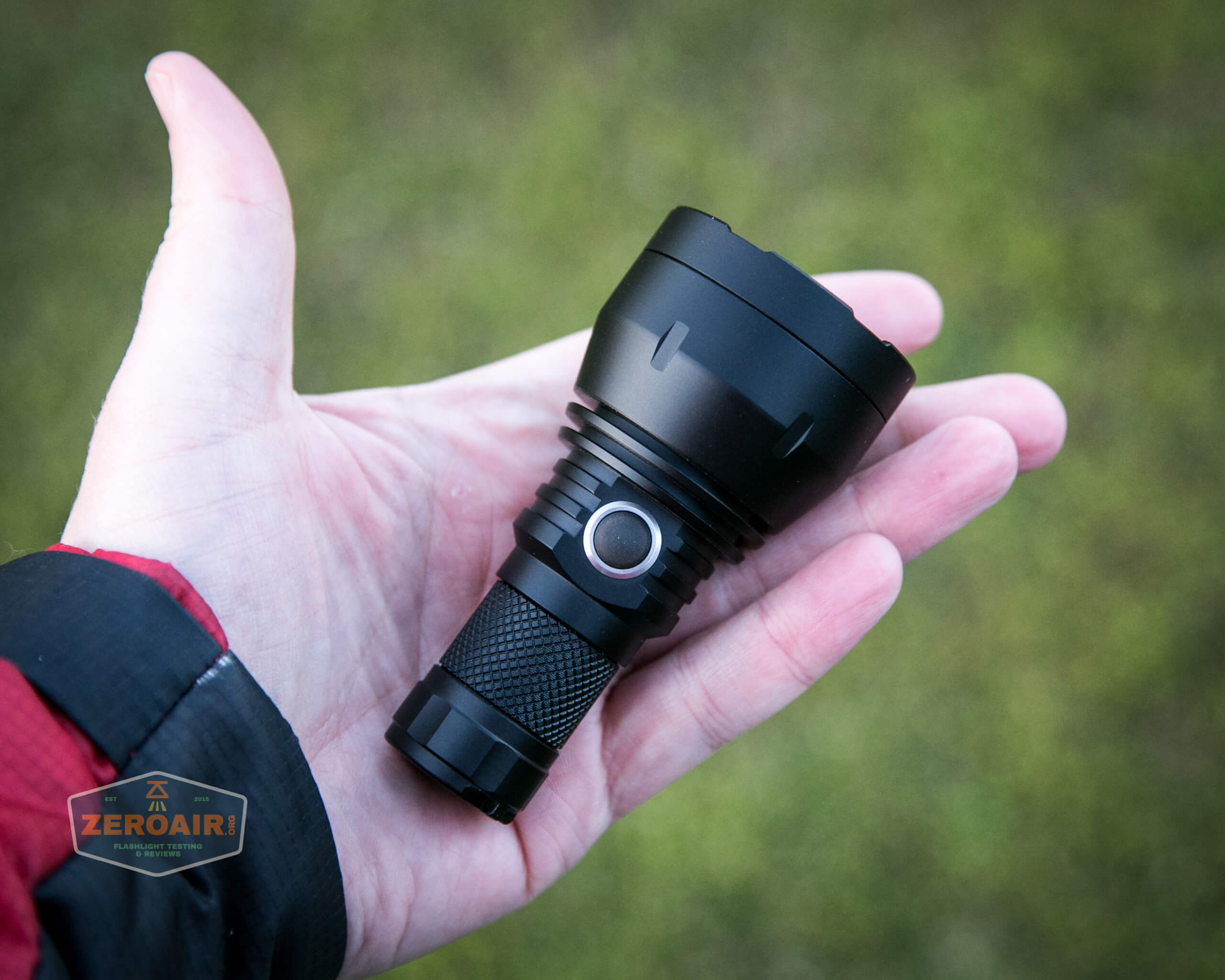
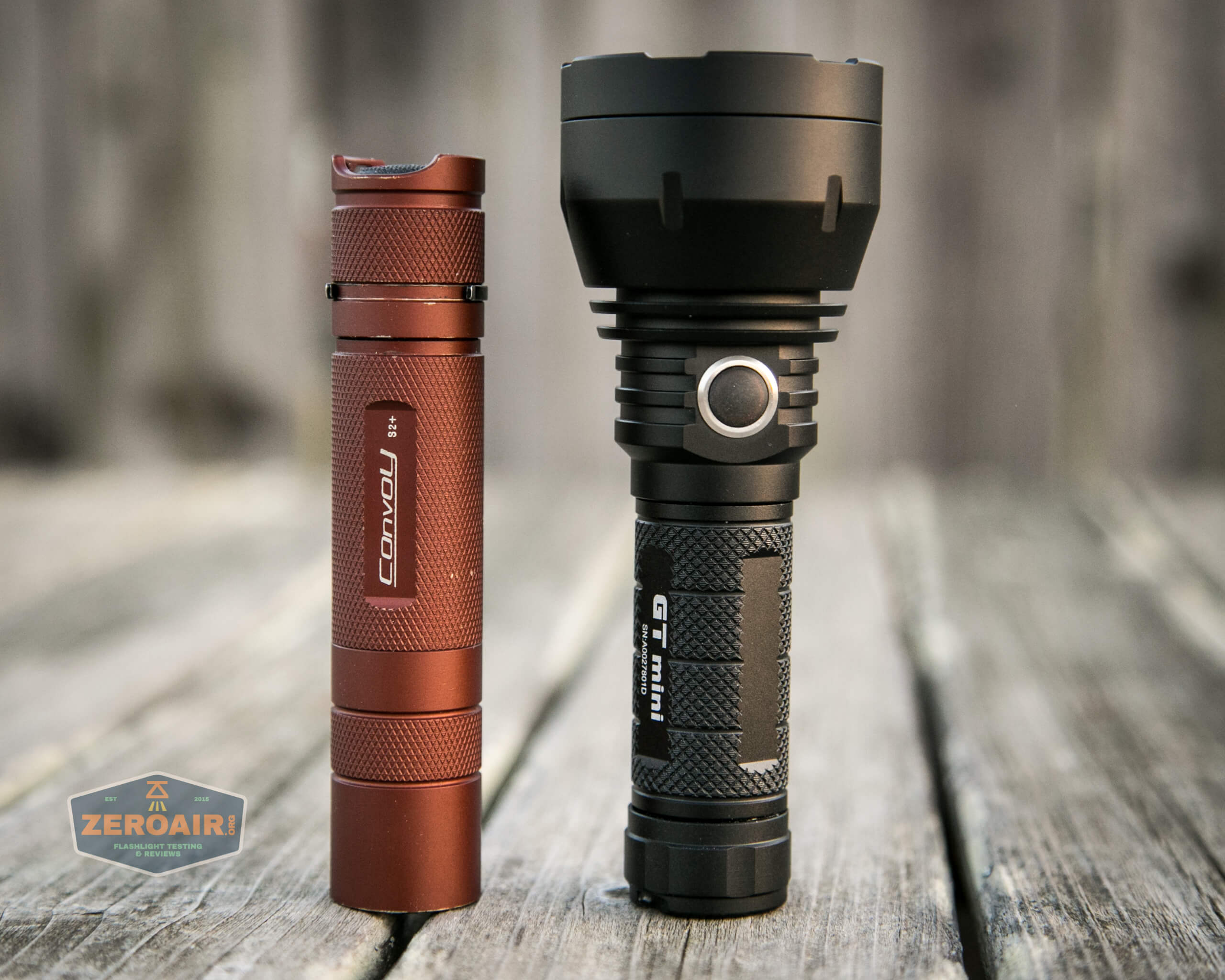
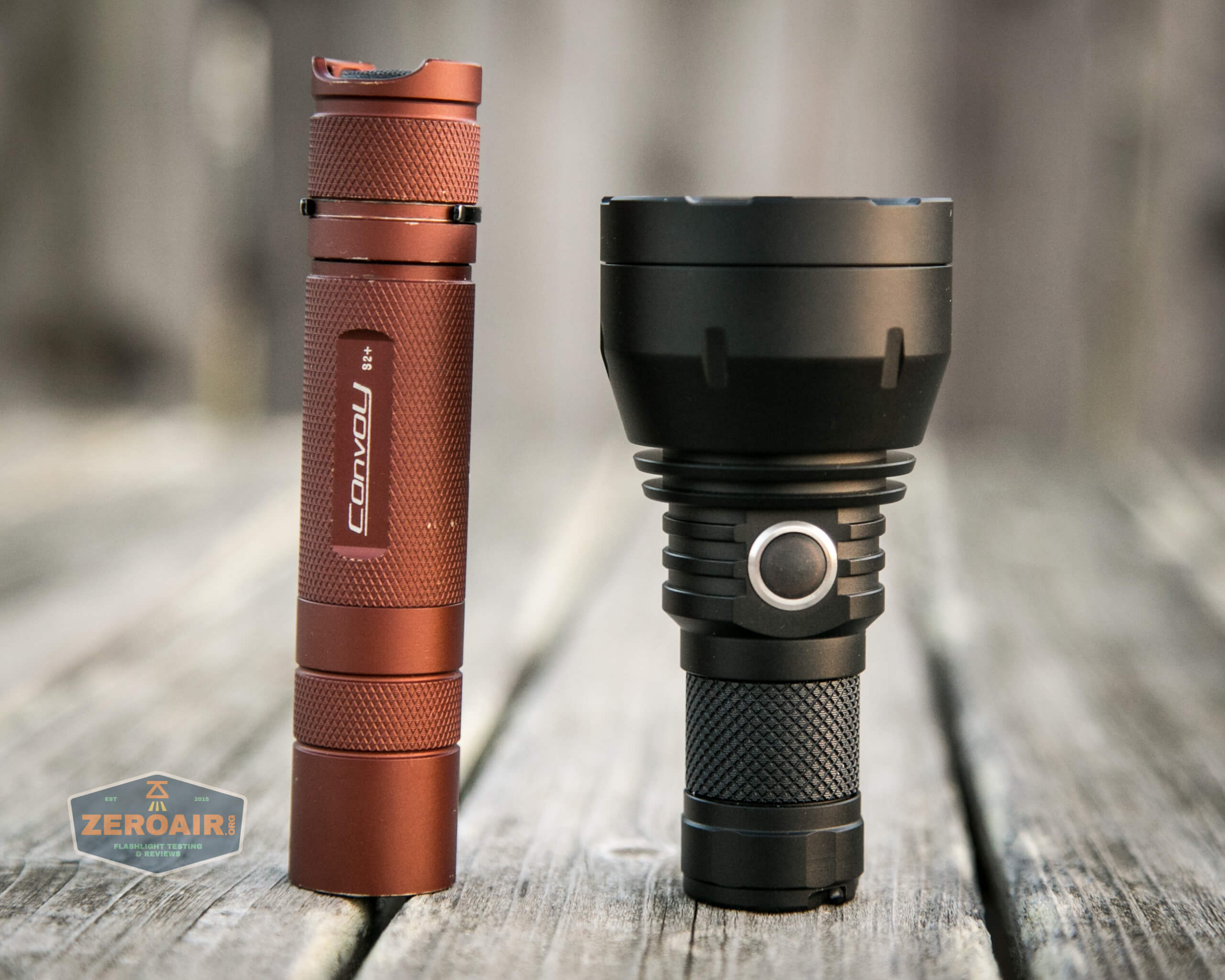
Dimensions: 50mm Ø head x 133.5mm length
Weight: Approximately 155g without cells
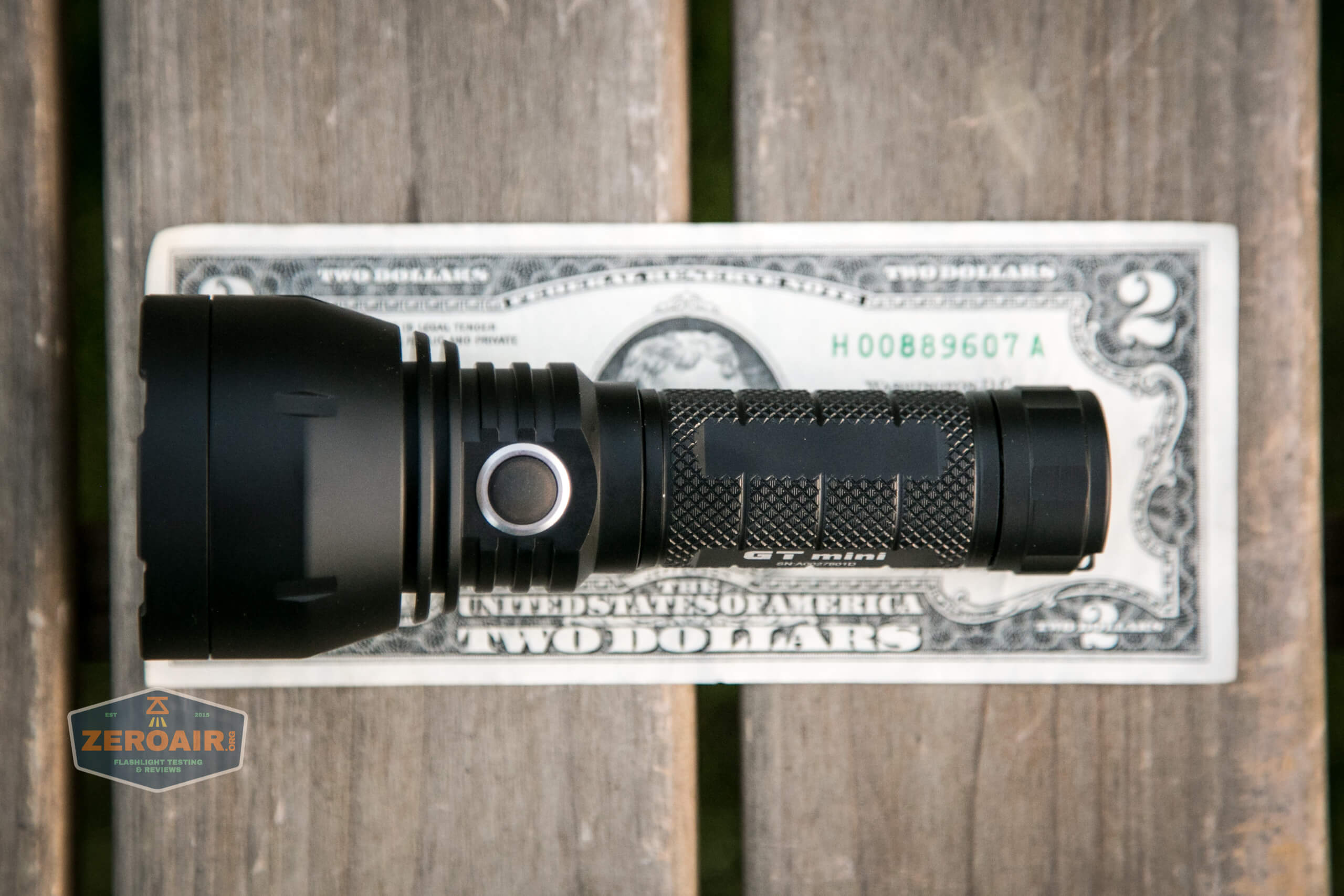
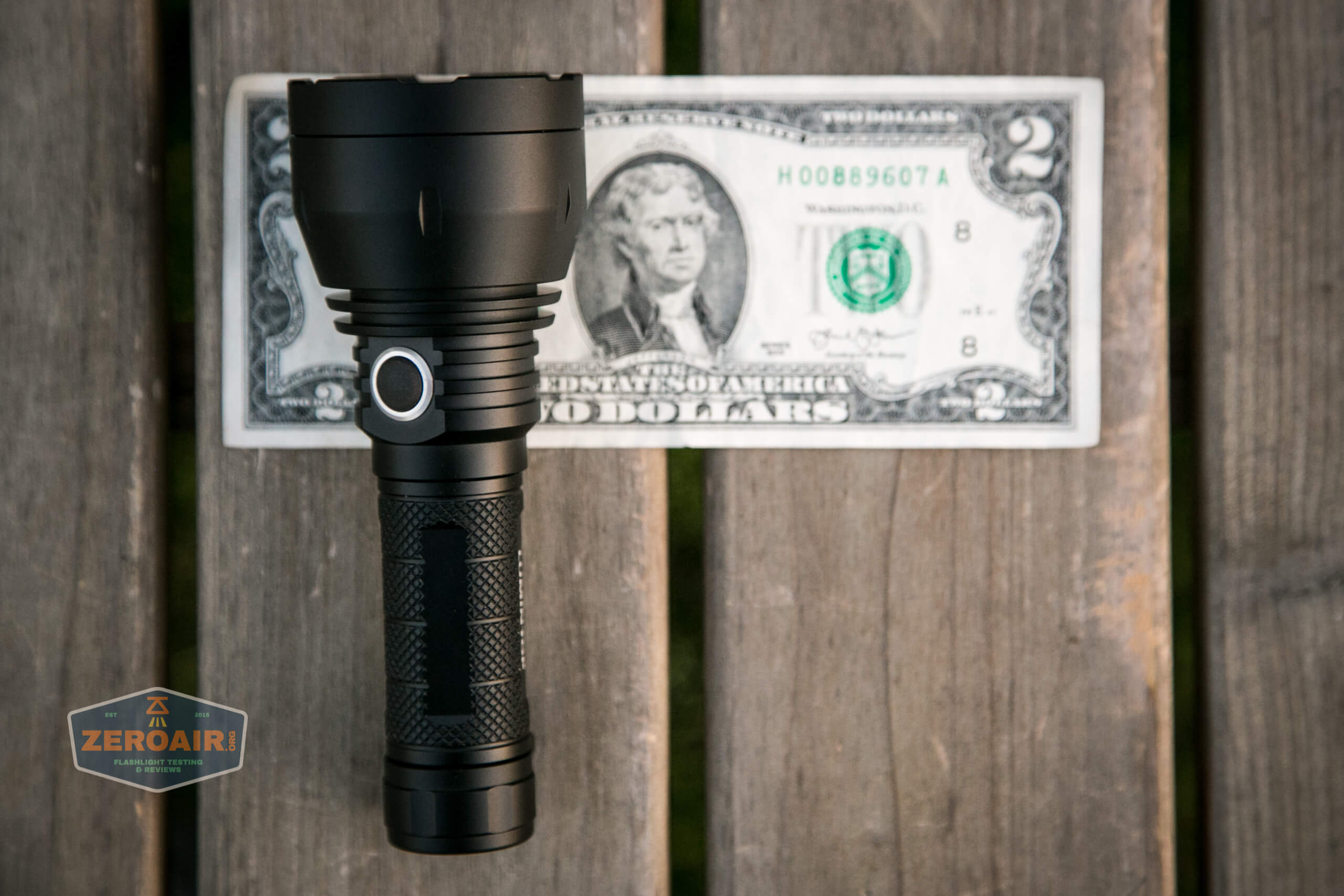
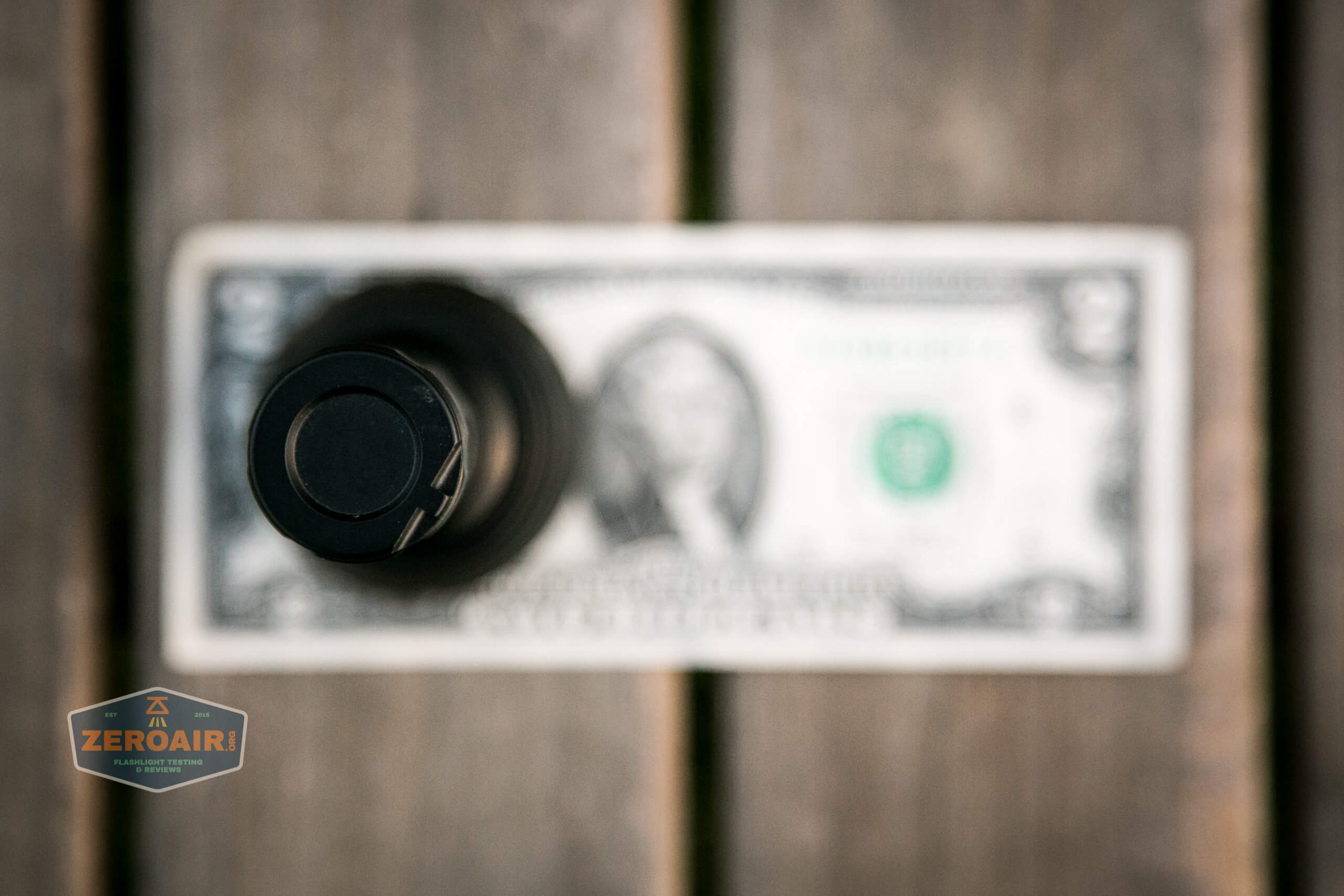
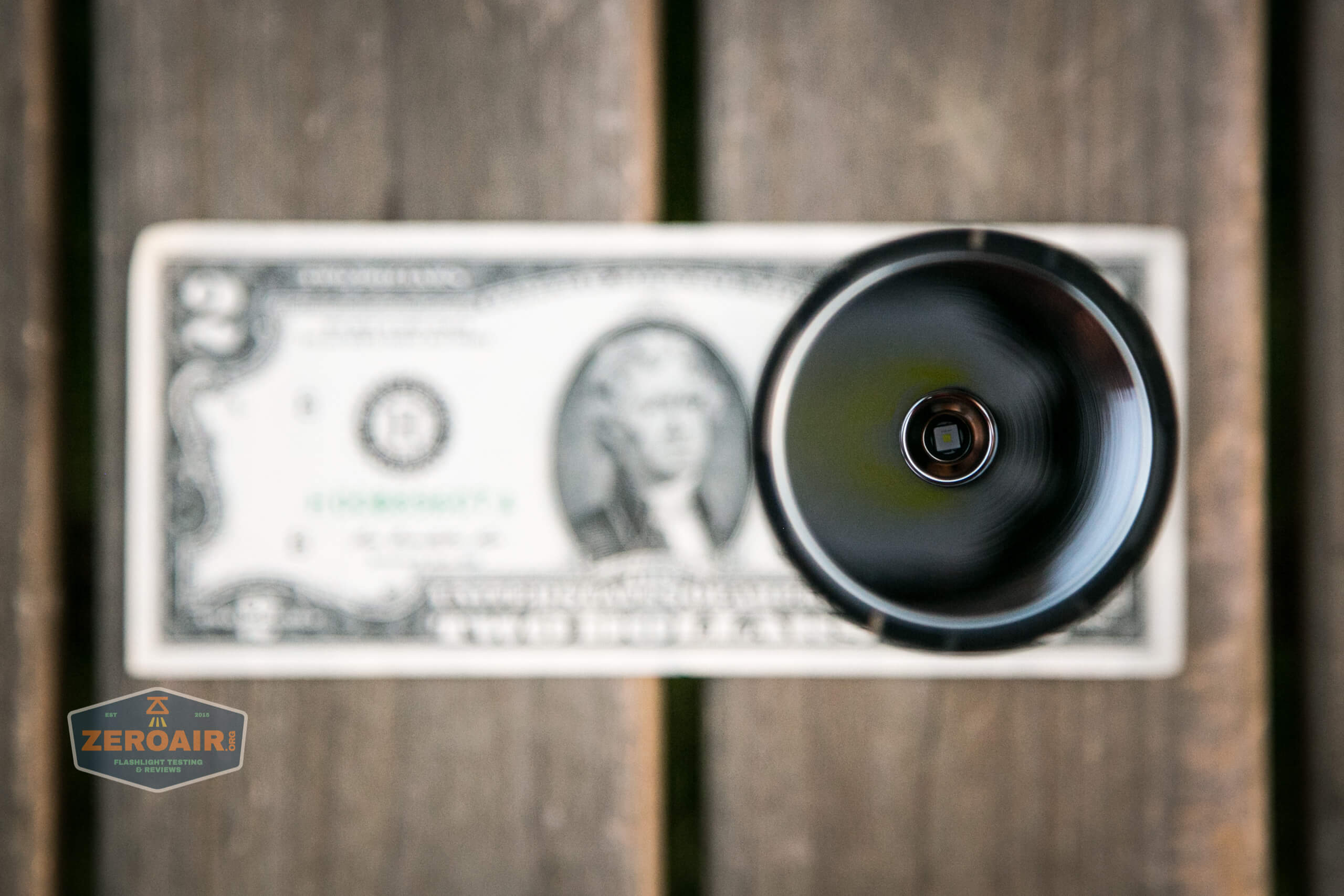
Lumintop doesn’t even list these numbers for the 18350 version. Another reason I consider this a 18650 light with a 18350 bonus.
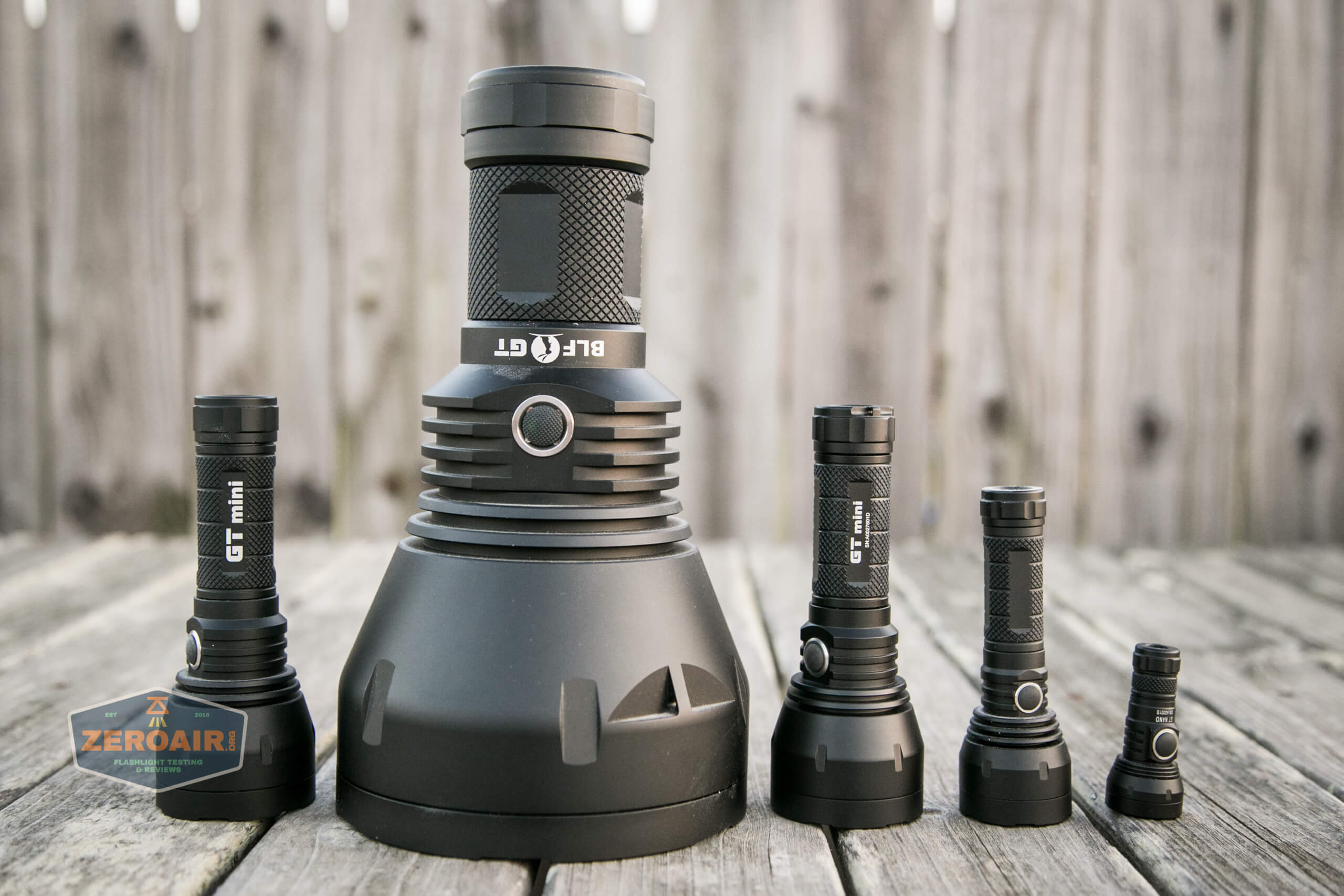
If the flashlight will headstand, I’ll try to show it here. If the flashlight will tailstand, I usually show that here, too.
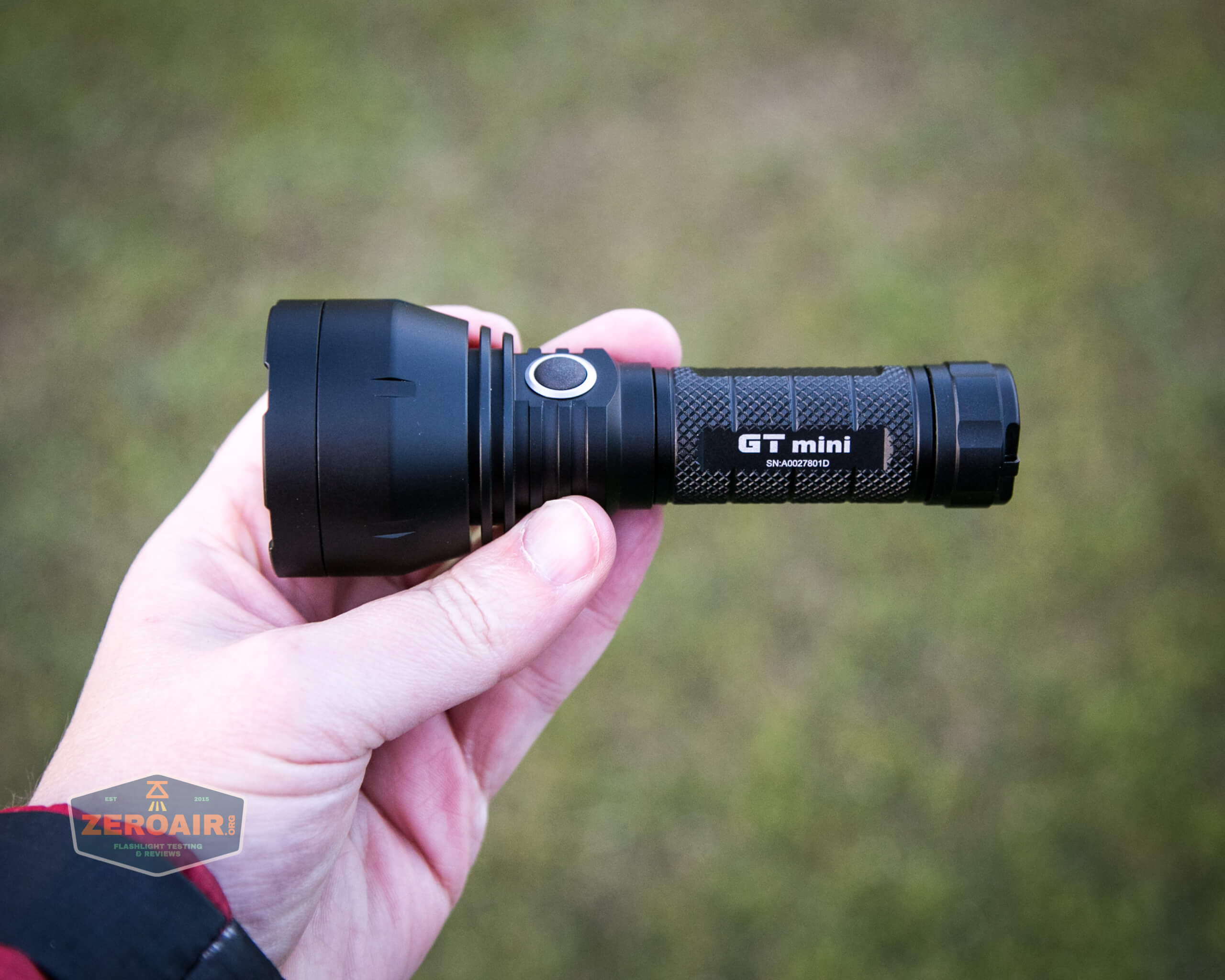
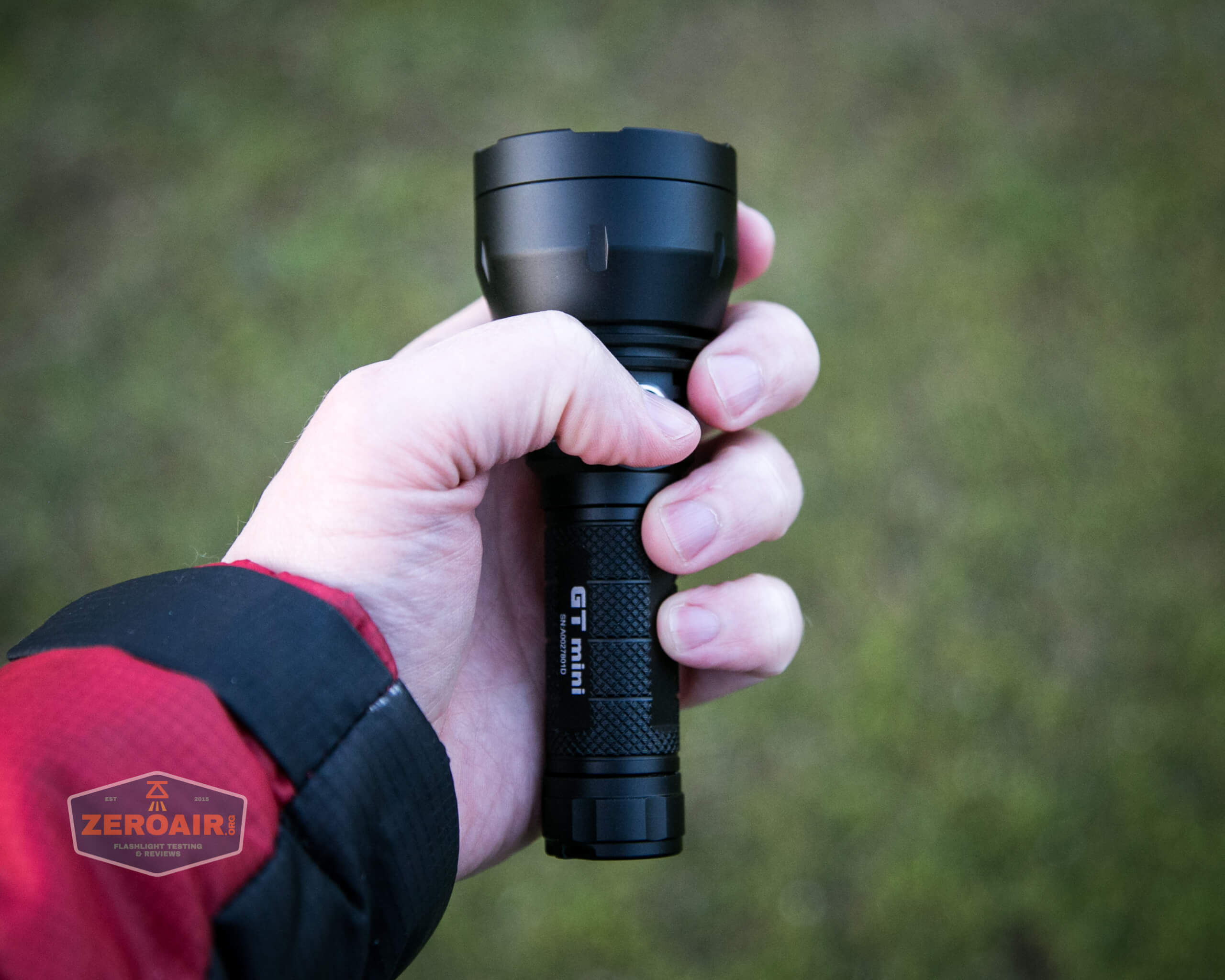
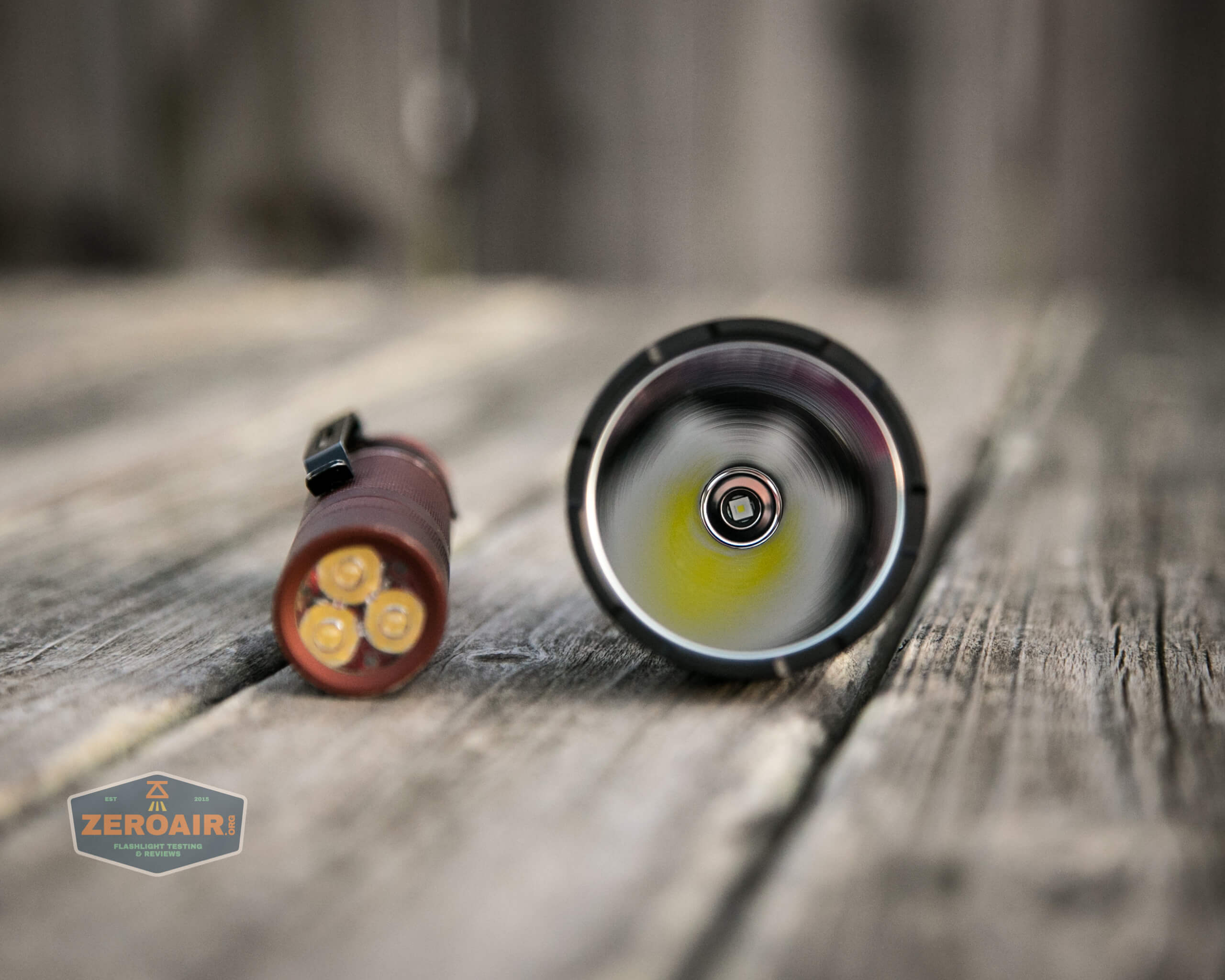
Here’s the test light with the venerable Convoy S2+. Mine is a custom “baked” edition Nichia 219b triple. A very nice 18650 light!
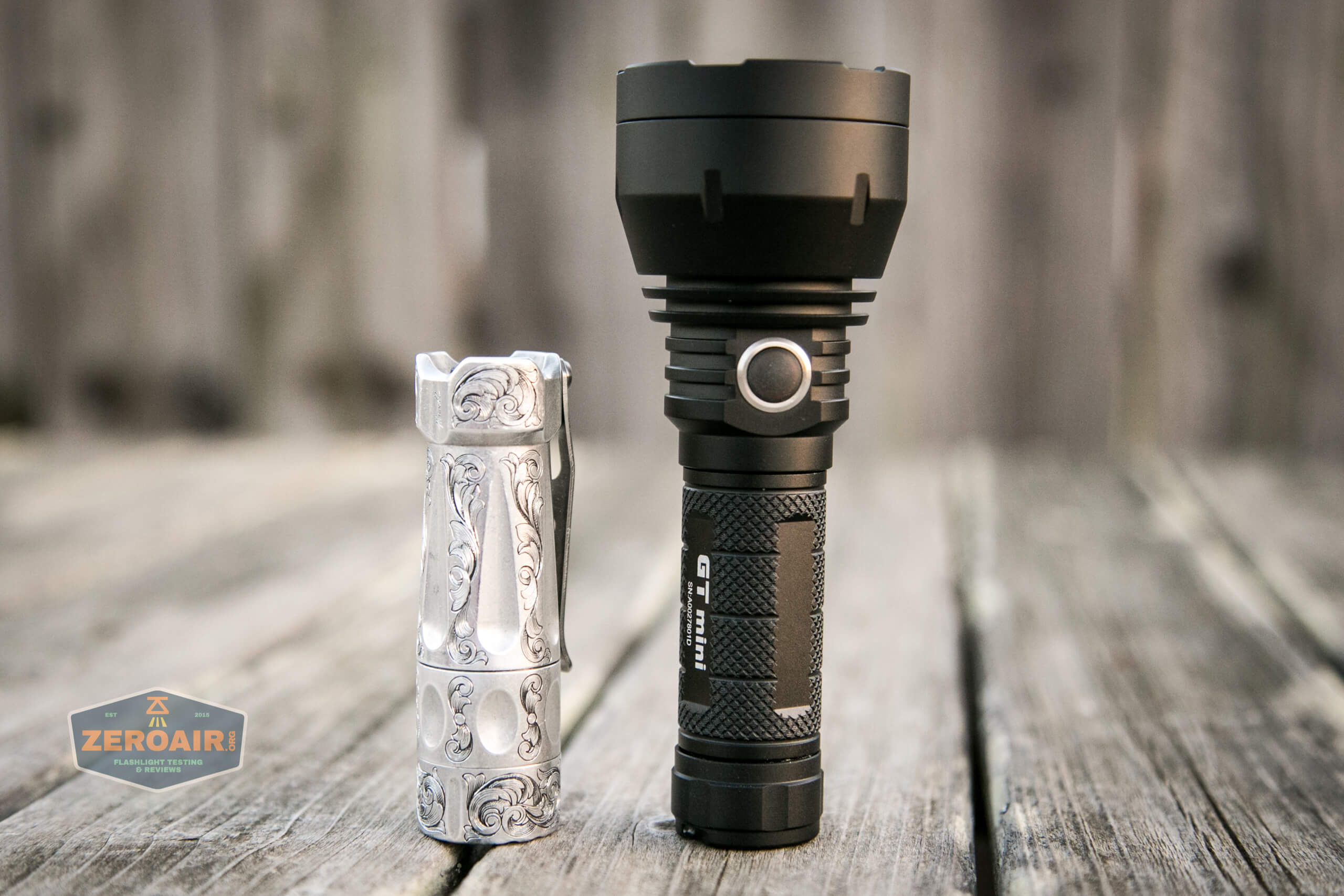
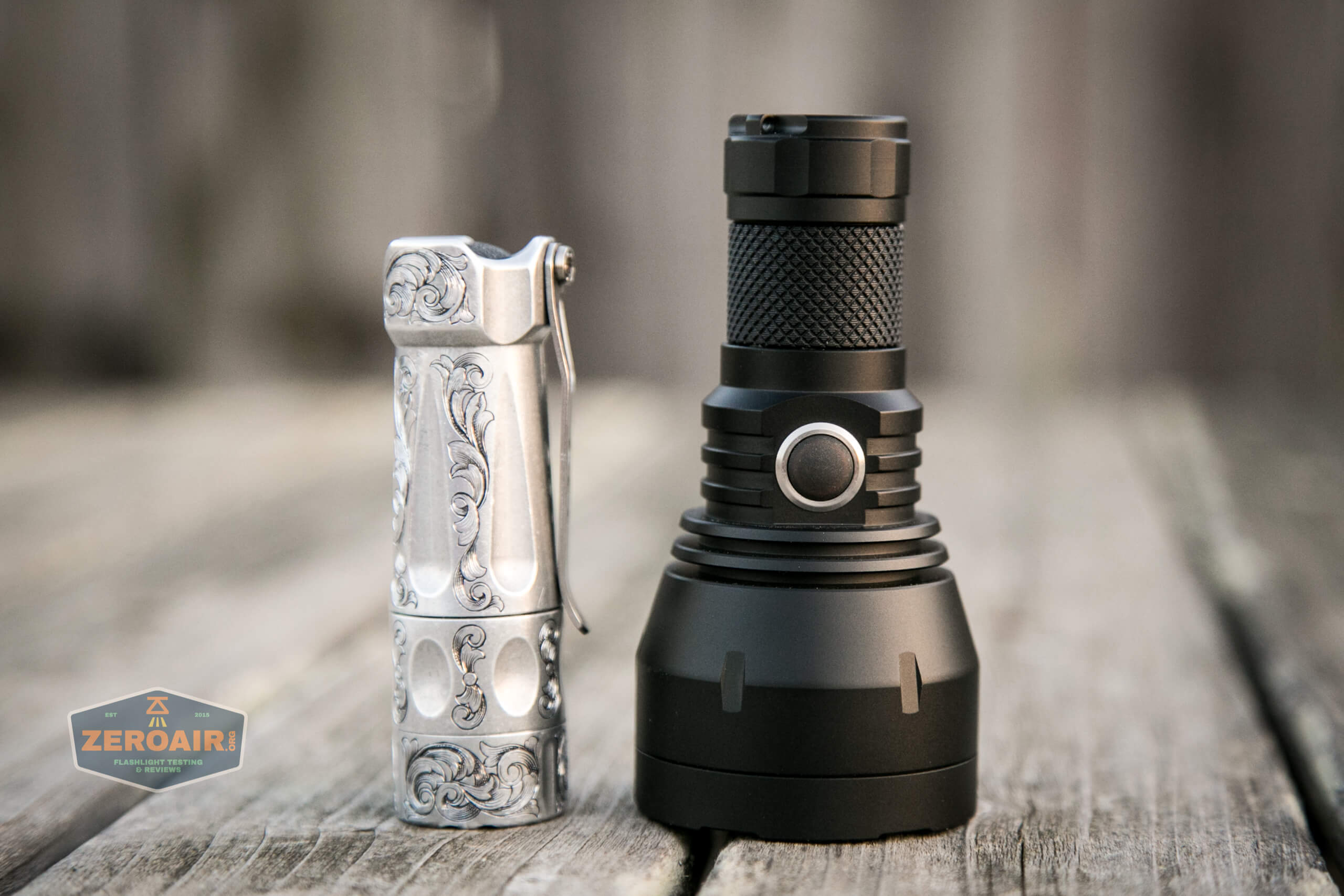
And here’s the light beside my custom-engraved TorchLAB BOSS 35, an 18350 light. I reviewed the aluminum version of that light in both 35 and 70 formats.
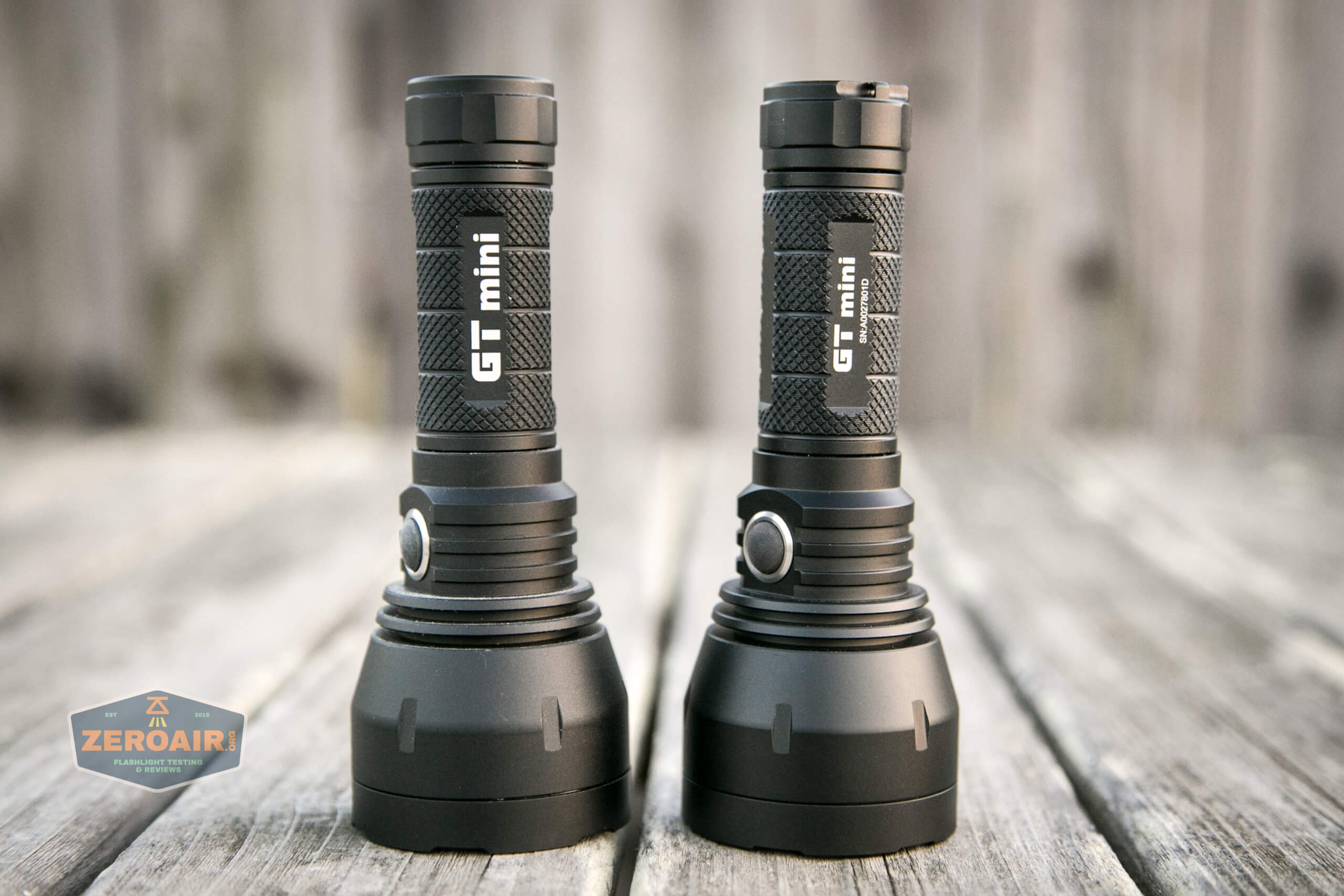
Others:
Retention and Carry
A provided lanyard connects on the tailcap. Unlike the big GT, there’s no attachment point on the head.
There is no pocket clip or pouch.
Power and Runtime
Power is provided to the GT Mini NM1 by either an 18650 or 18350 Li-ion cell. Both the head and tail have springs, so the light should have no trouble using either type of cell. And the power drawn on the turbo isn’t so great that most cells can’t handle it.
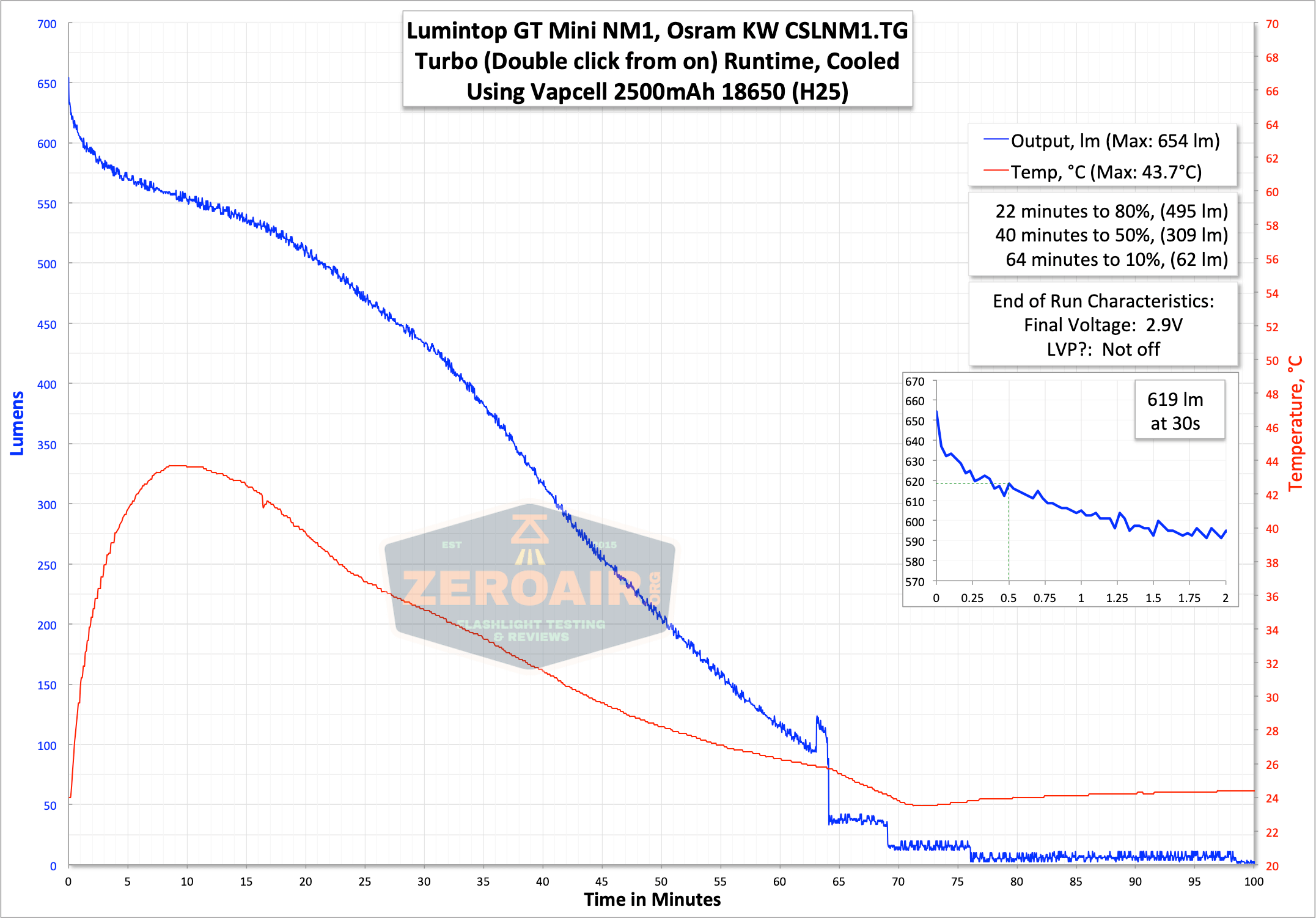
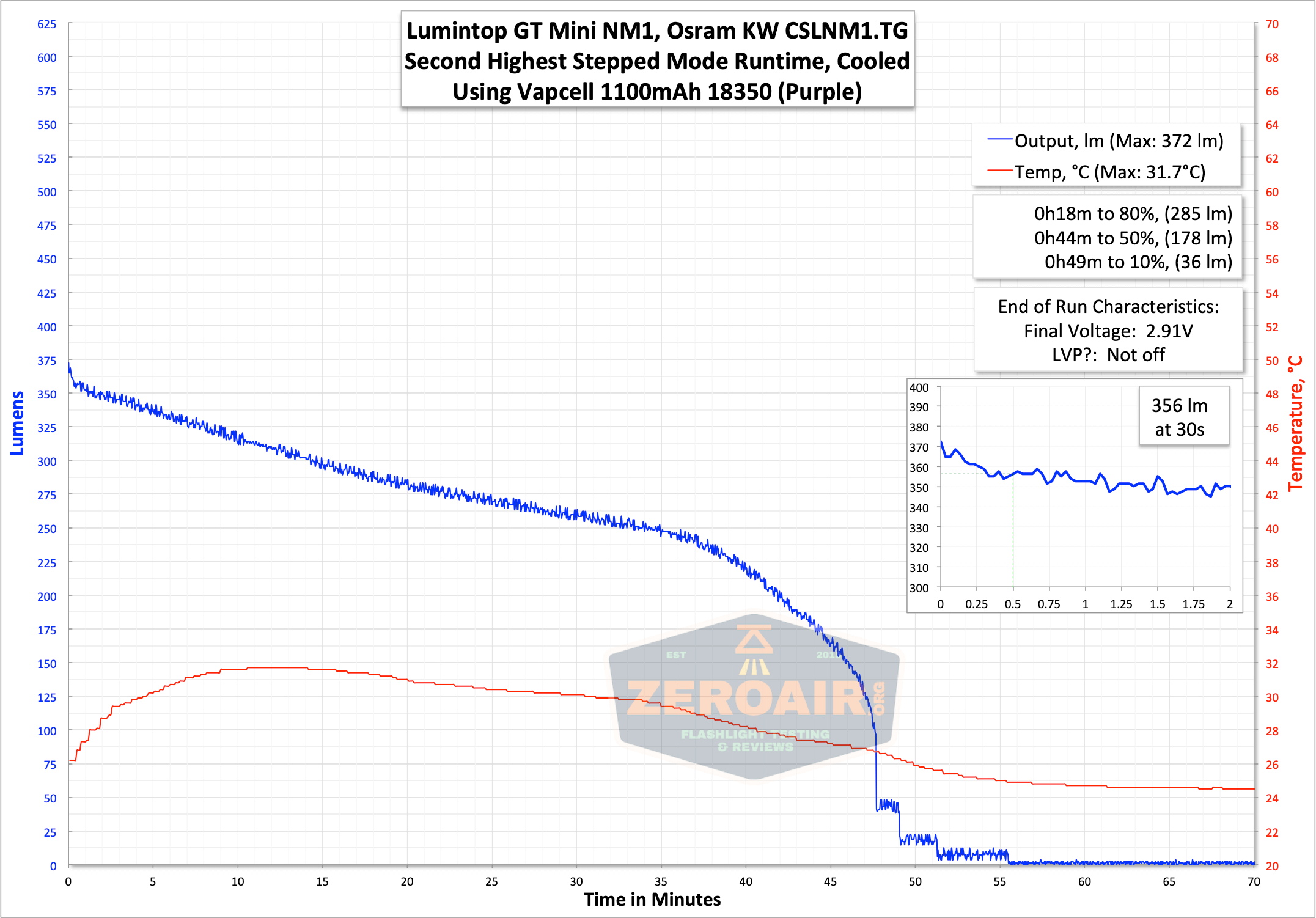
Here’s a runtime on Turbo. By popular demand, I calibrated the temperature setting to 50 degrees C – (plus or minus, depending on how accurately I can count 20 clicks…) The light is highly configurable, but in all of my tests has LVP.
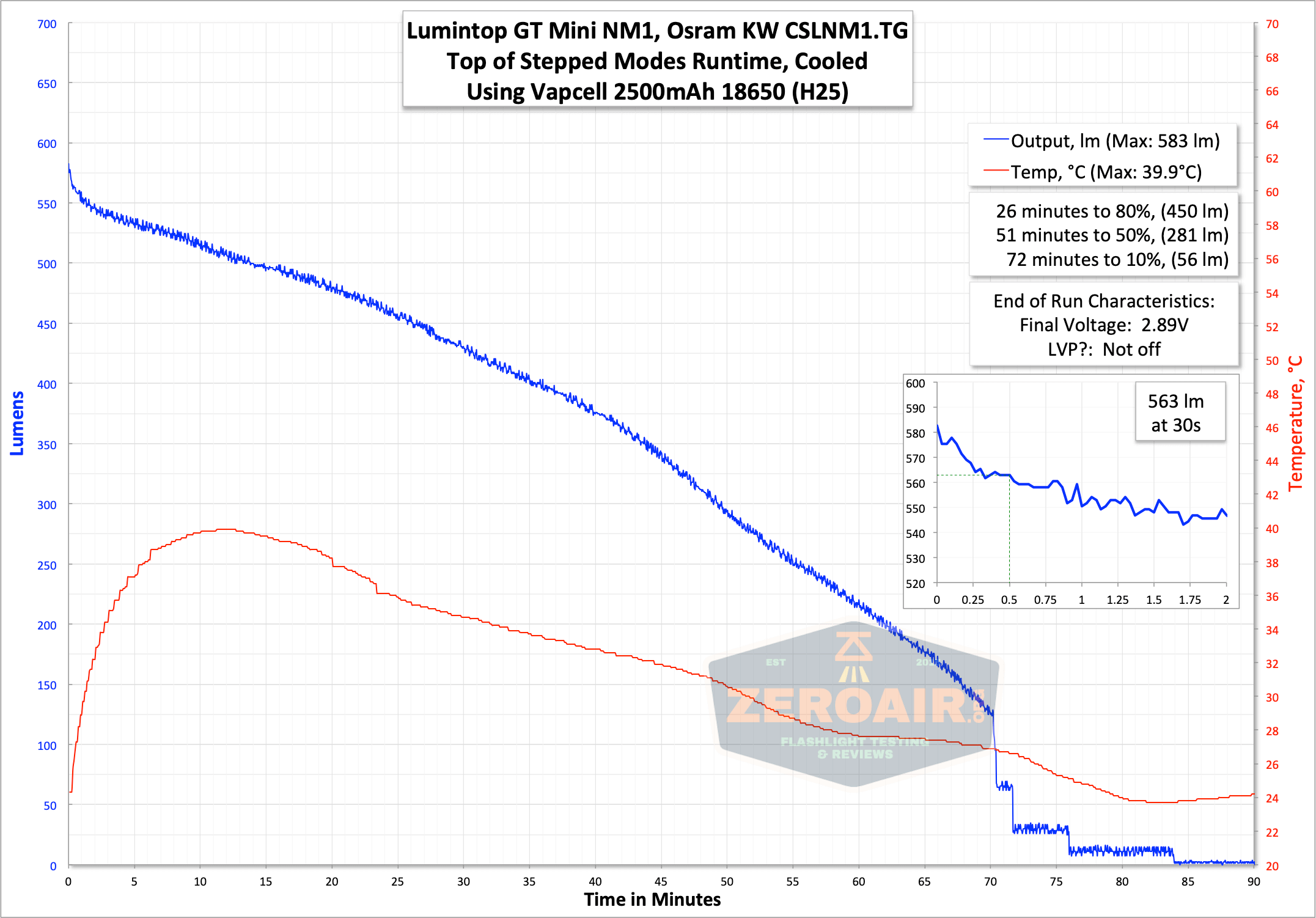
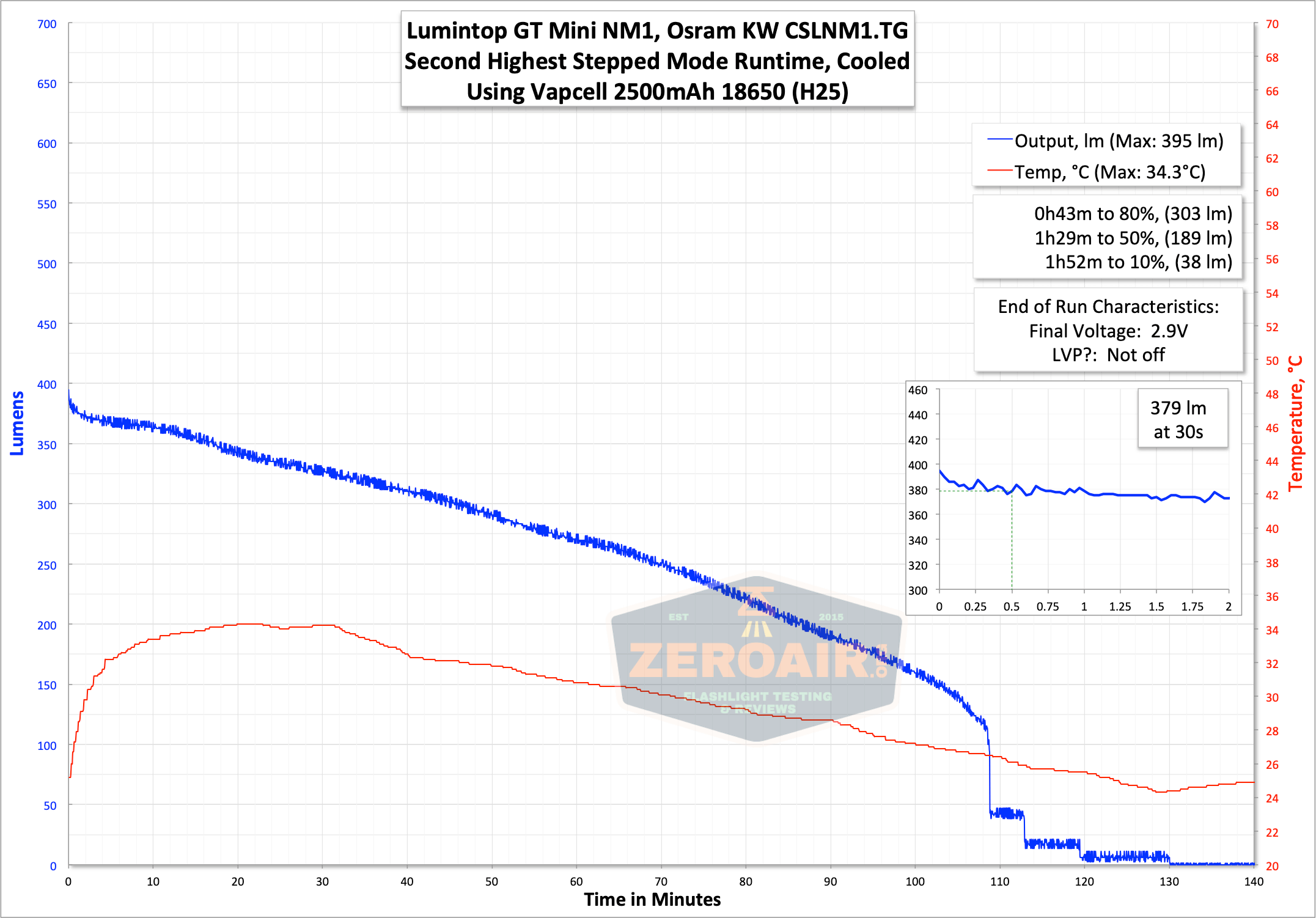
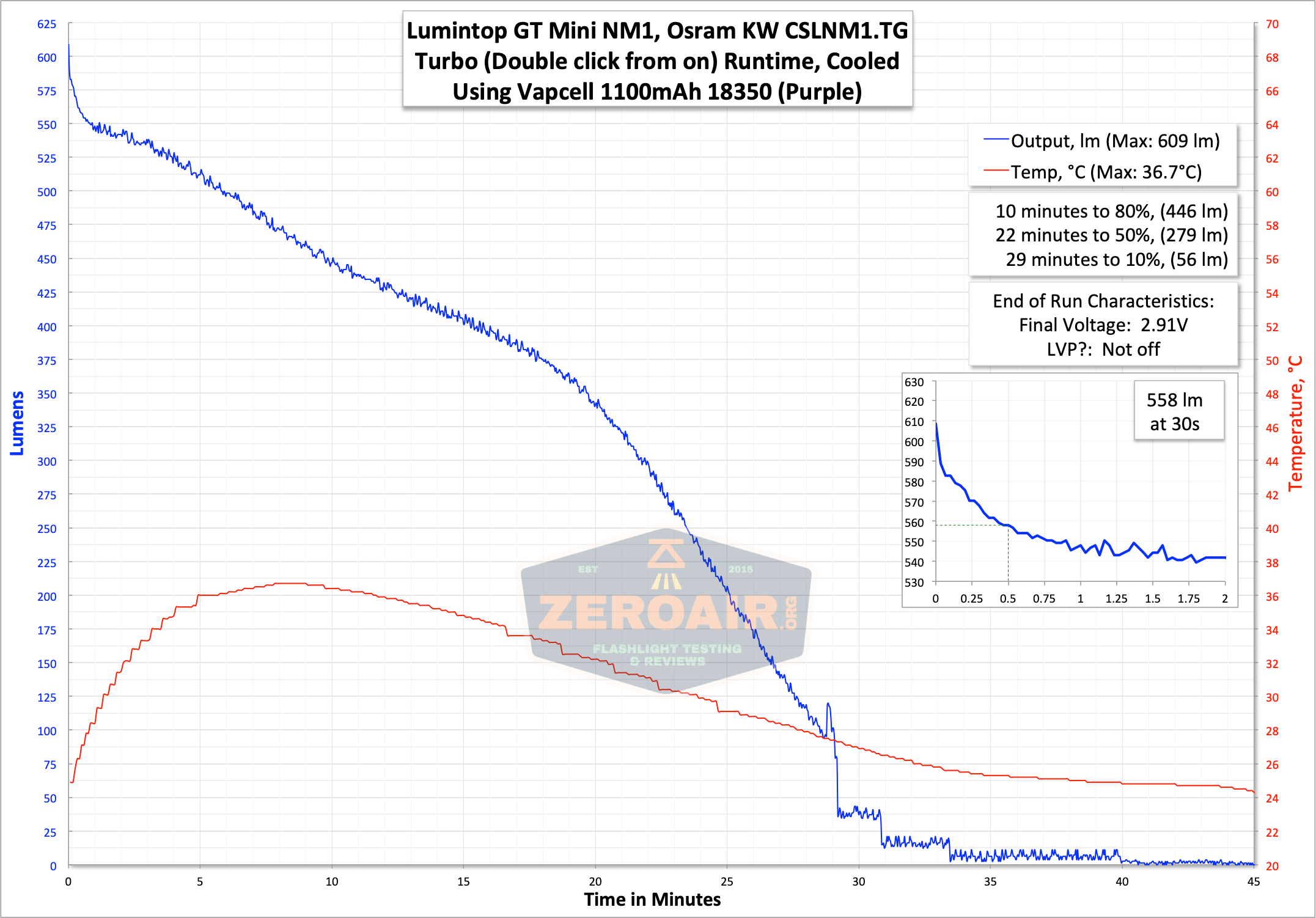
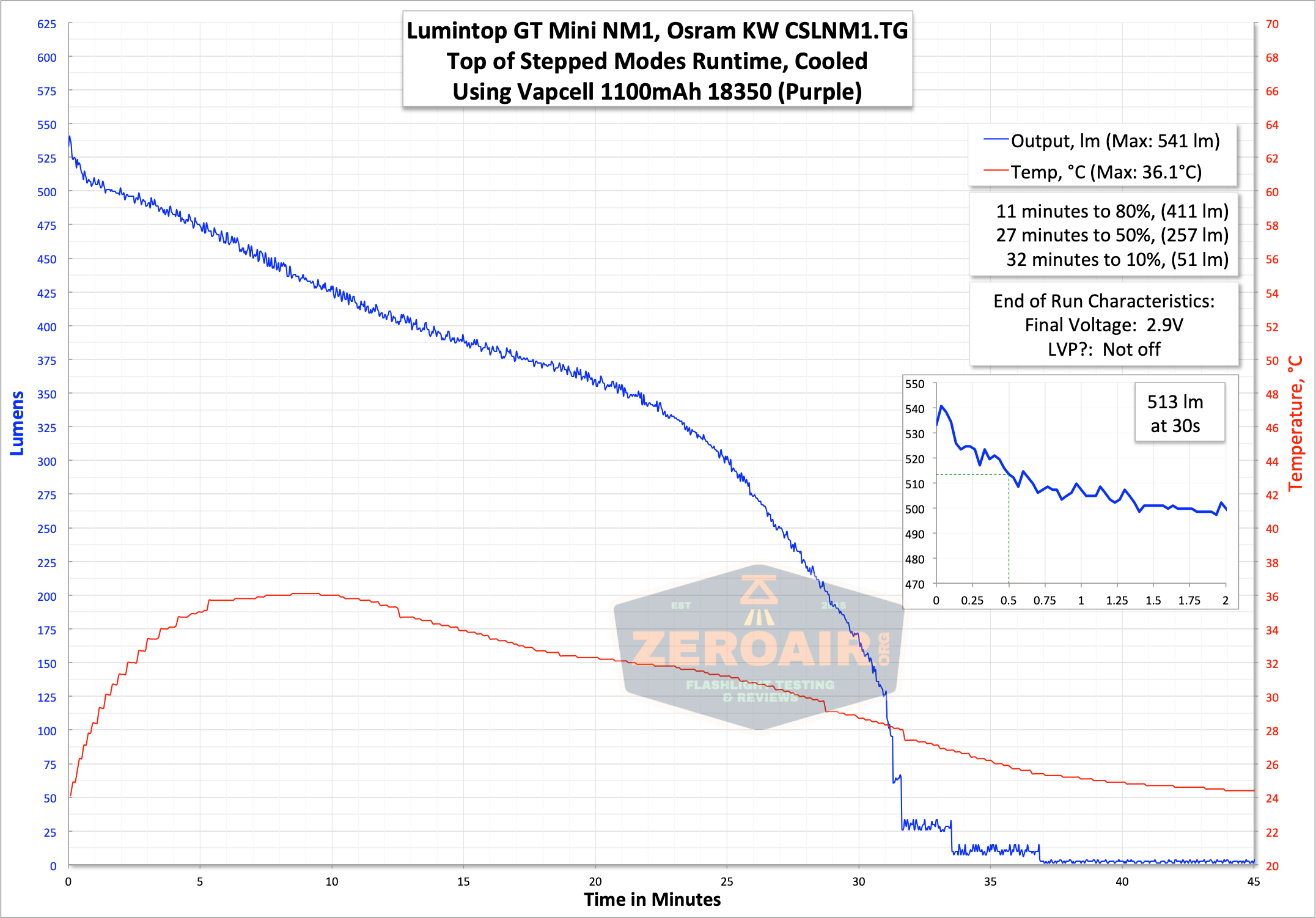
Just to demonstrate the difference in runtime length for an 18350 cell, here are the same modes as the 3 above. Output is actually a bit lower across the board with an 18350.
Modes and Currents
| Mode | Mode Claimed Output (lm) | Claimed Runtime | Measured Lumens | Tailcap Amps |
|---|---|---|---|---|
| Double click Turbo | – | – | 2.66 | |
| Highest stepped | – | – | 2.08 | |
| 7 | – | – | 1.08 | |
| 6 | – | – | 0.56 | |
| 5 | – | – | 0.35 | |
| 4 | – | – | 0.19 | |
| 3 | – | – | 0.05 | |
| Lowest stepped | – | – | 0.00 | |
| Lowest of Ramping | – | – | 0.00 |
Pulse Width Modulation
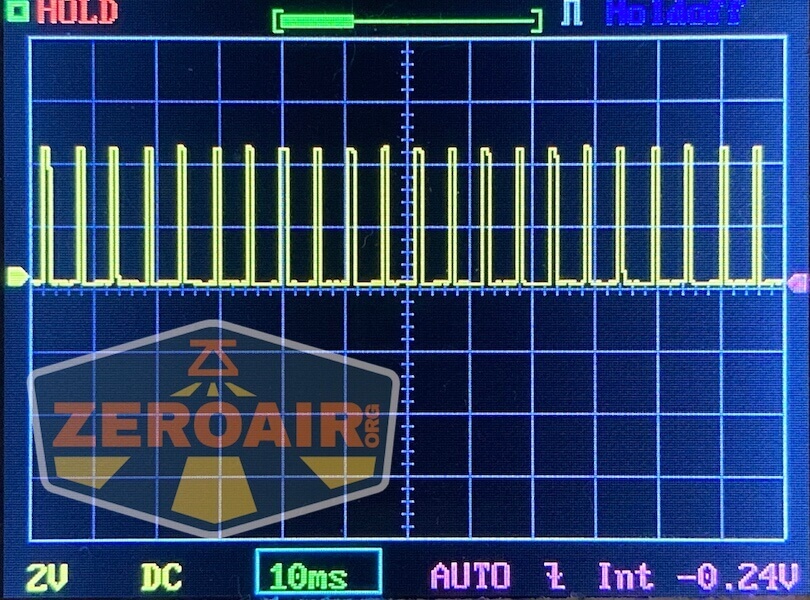
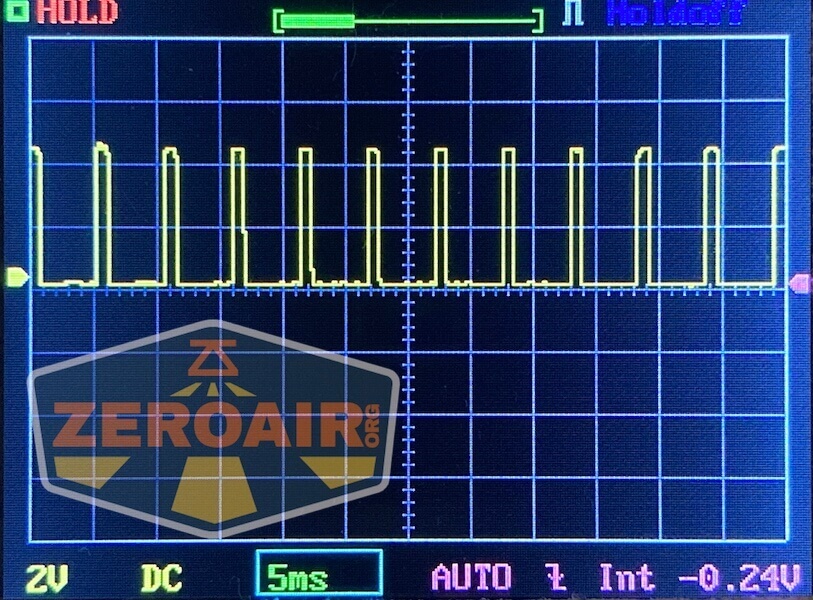
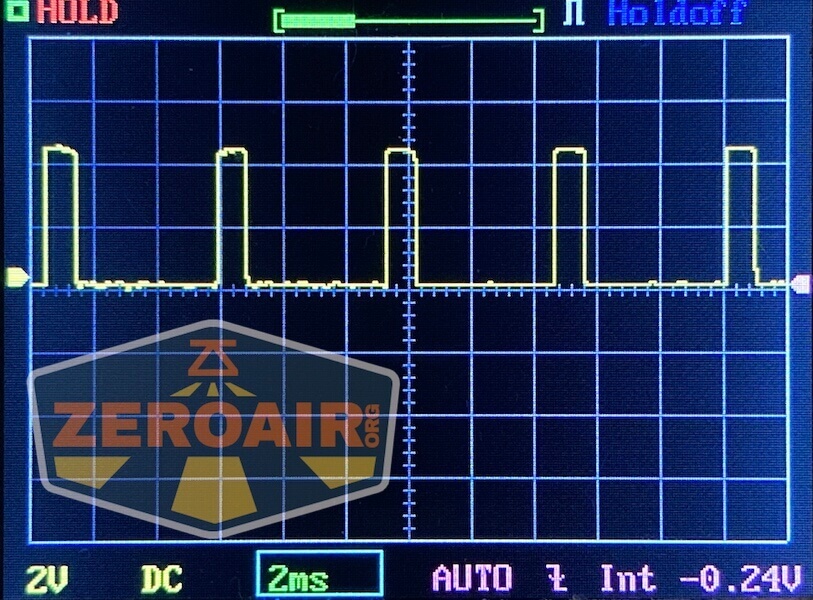
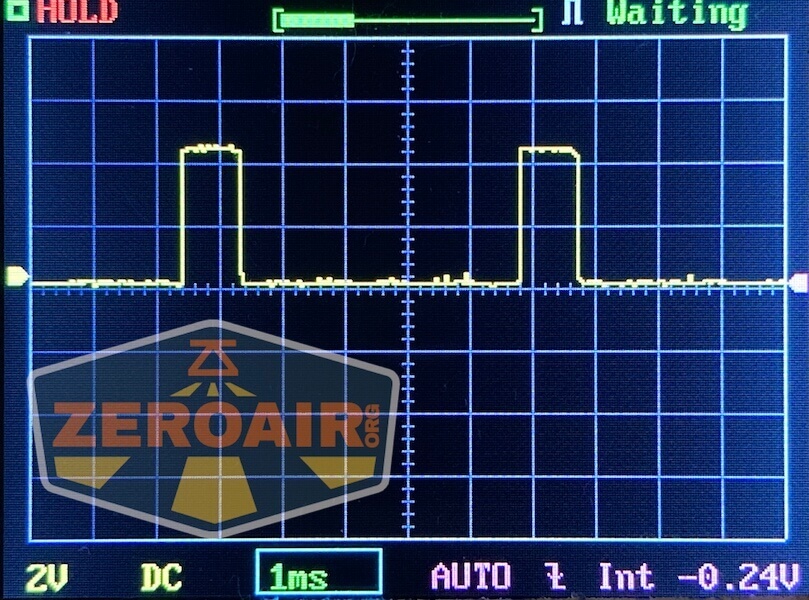
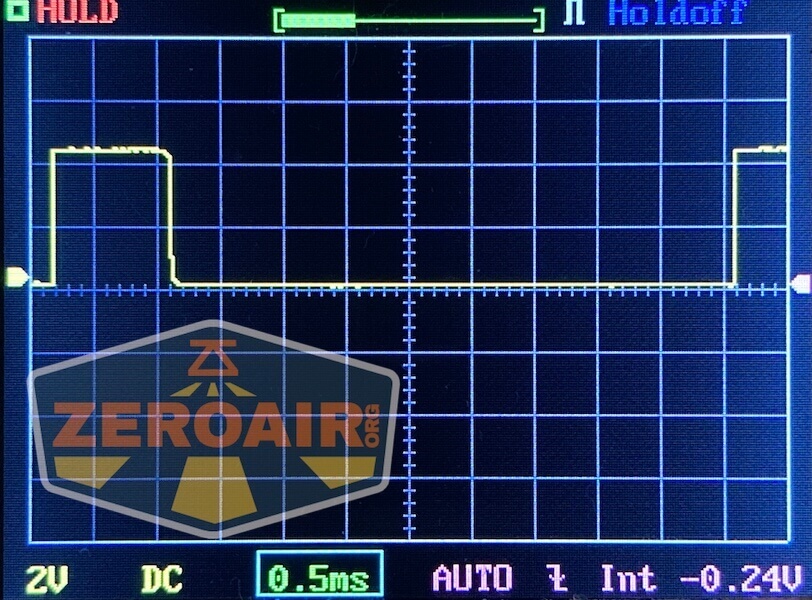
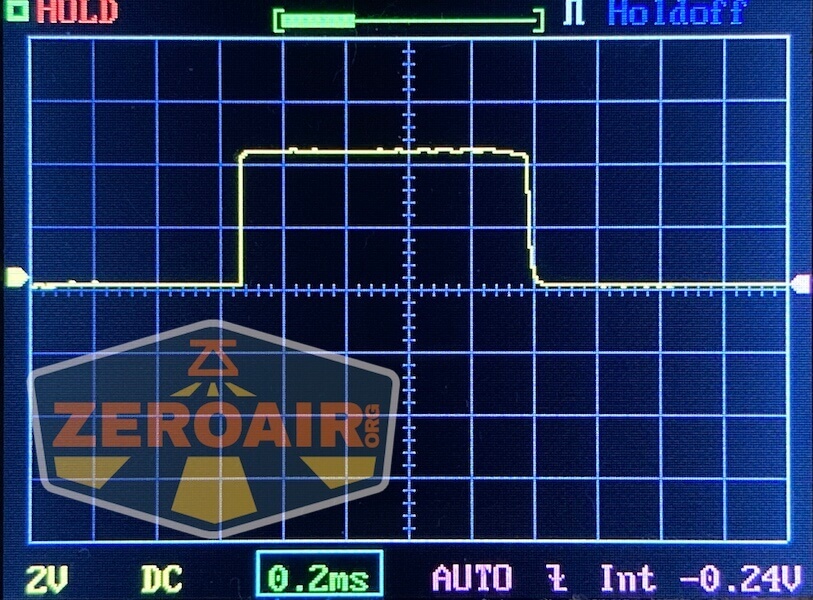
Andúril has PWM on all modes. On the lowest few modes, it’s even fairly slow, but it’s not disturbing. It’s visible with effort, though.

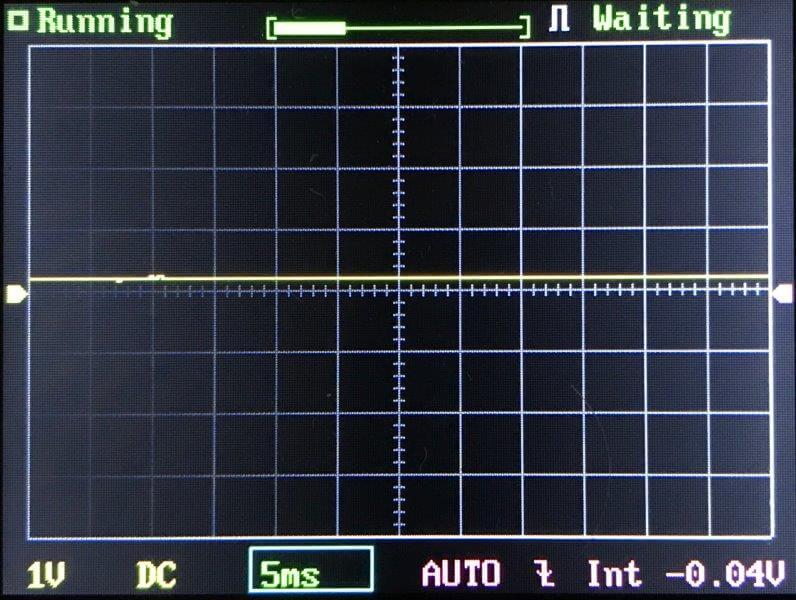
Here you can see a “baseline” – a chart with almost no light hitting the sensor.
Then there’s the Ultrafire WF-602C flashlight, which has some of the worst PWM I’ve seen. It’s so bad that I used a post about it to explain PWM! Here are multiple timescales (10ms, 5ms, 2ms, 1ms, 0.5ms, 0.2ms) to make comparing this “worst” PWM light to the test light easier. That post also explains why I didn’t test the WF-602C at the usual 50us scale.
User Interface and Operation
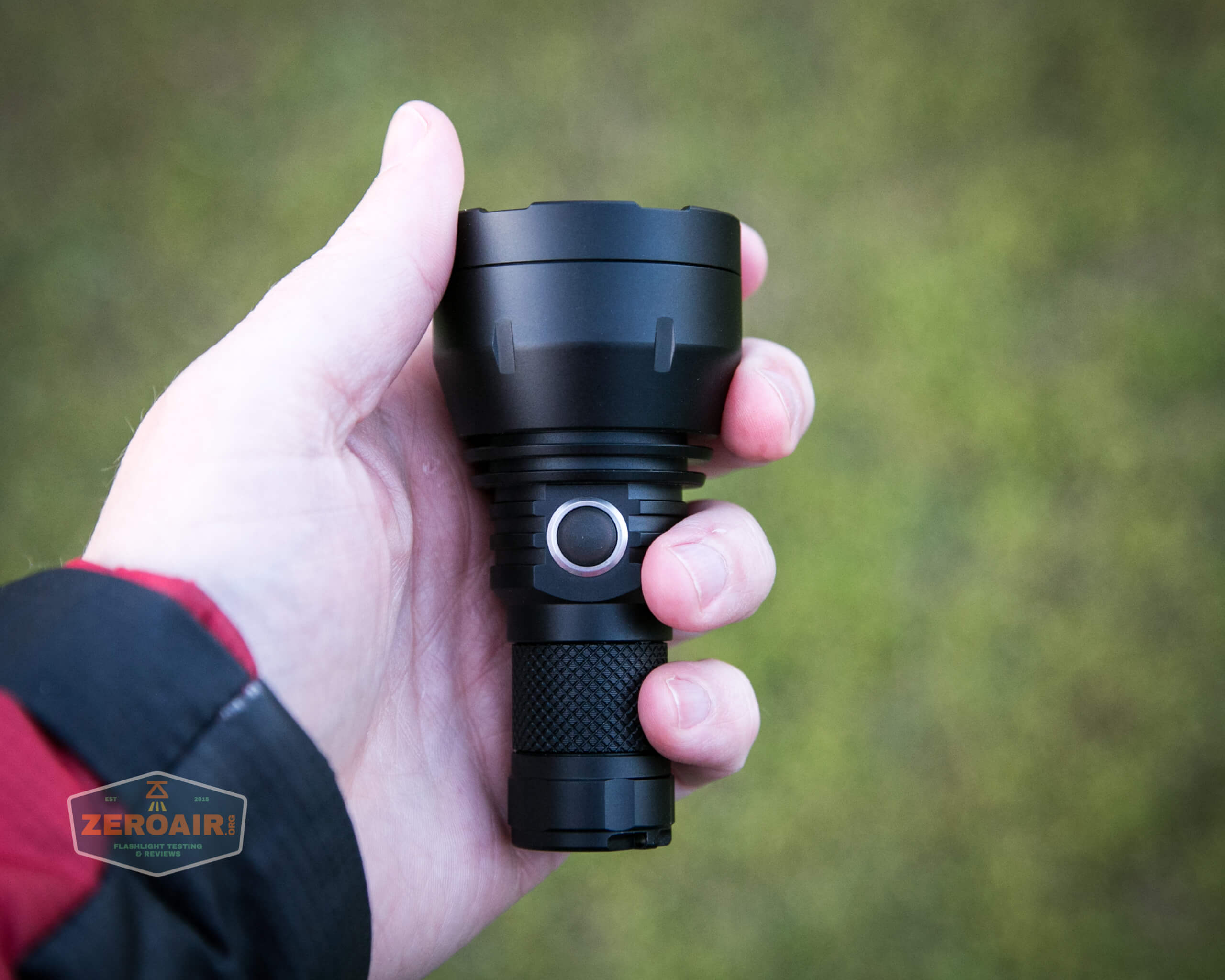
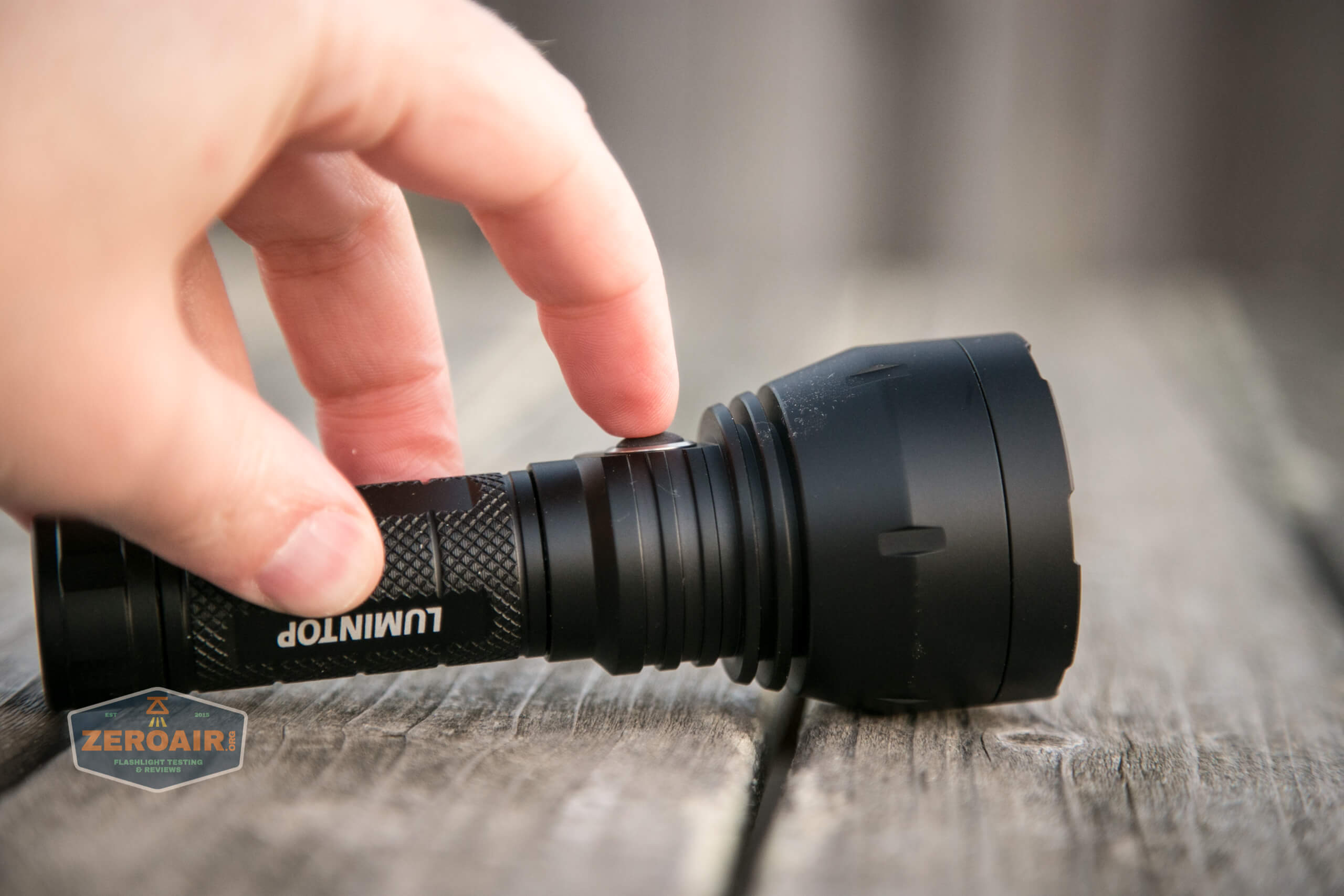
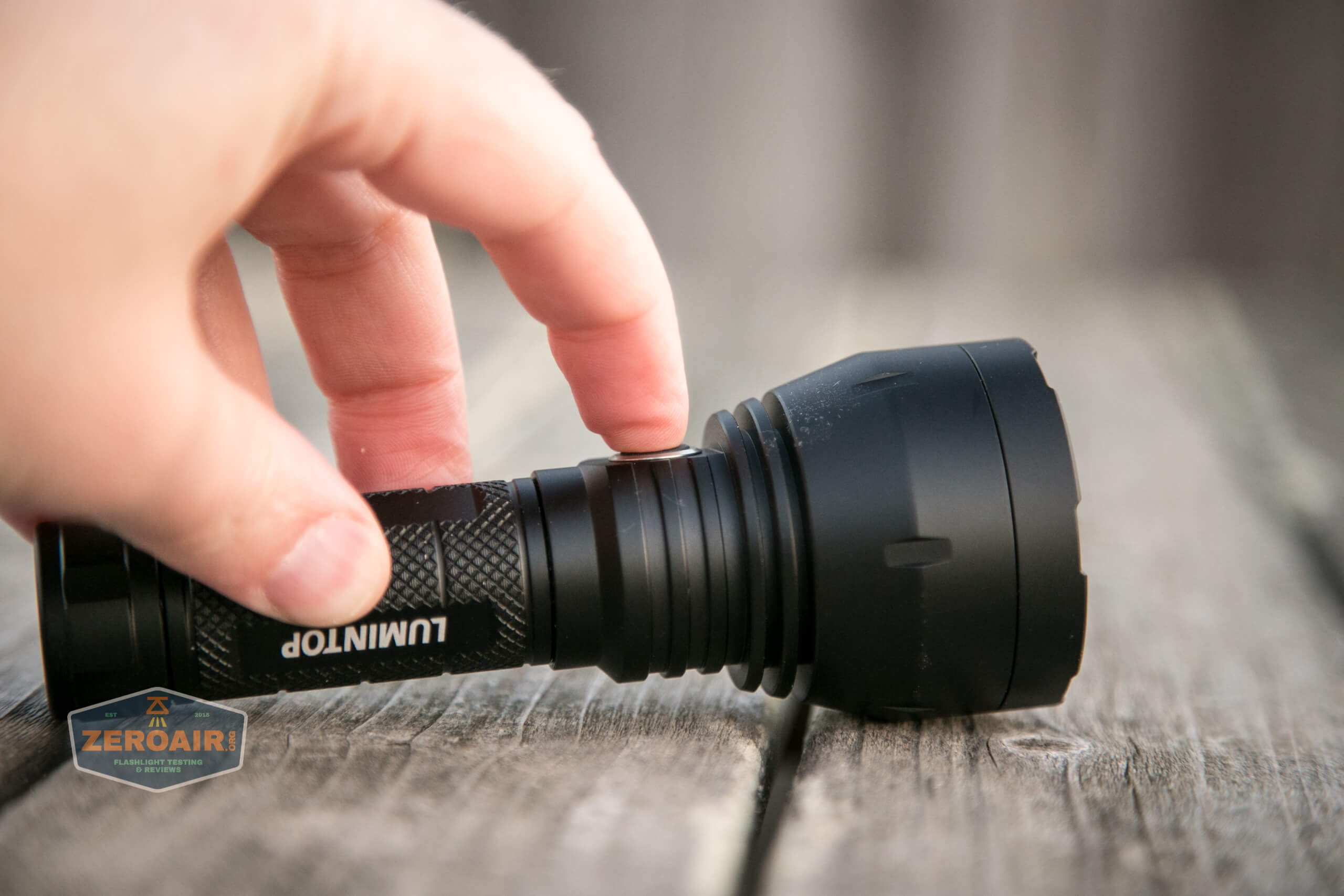
There’s a single switch on the GT Mini NM1. It’s a side, e-switch, and has an indicating emitter under it. The indicator is green, and on my light, only half the switch is on. I’m not sure if this is intentional or if half my switch isn’t working as it should. Either way, it told me the information I needed. (Notably, this is how my other GT Mini was, so I have to assume it’s intentional.)
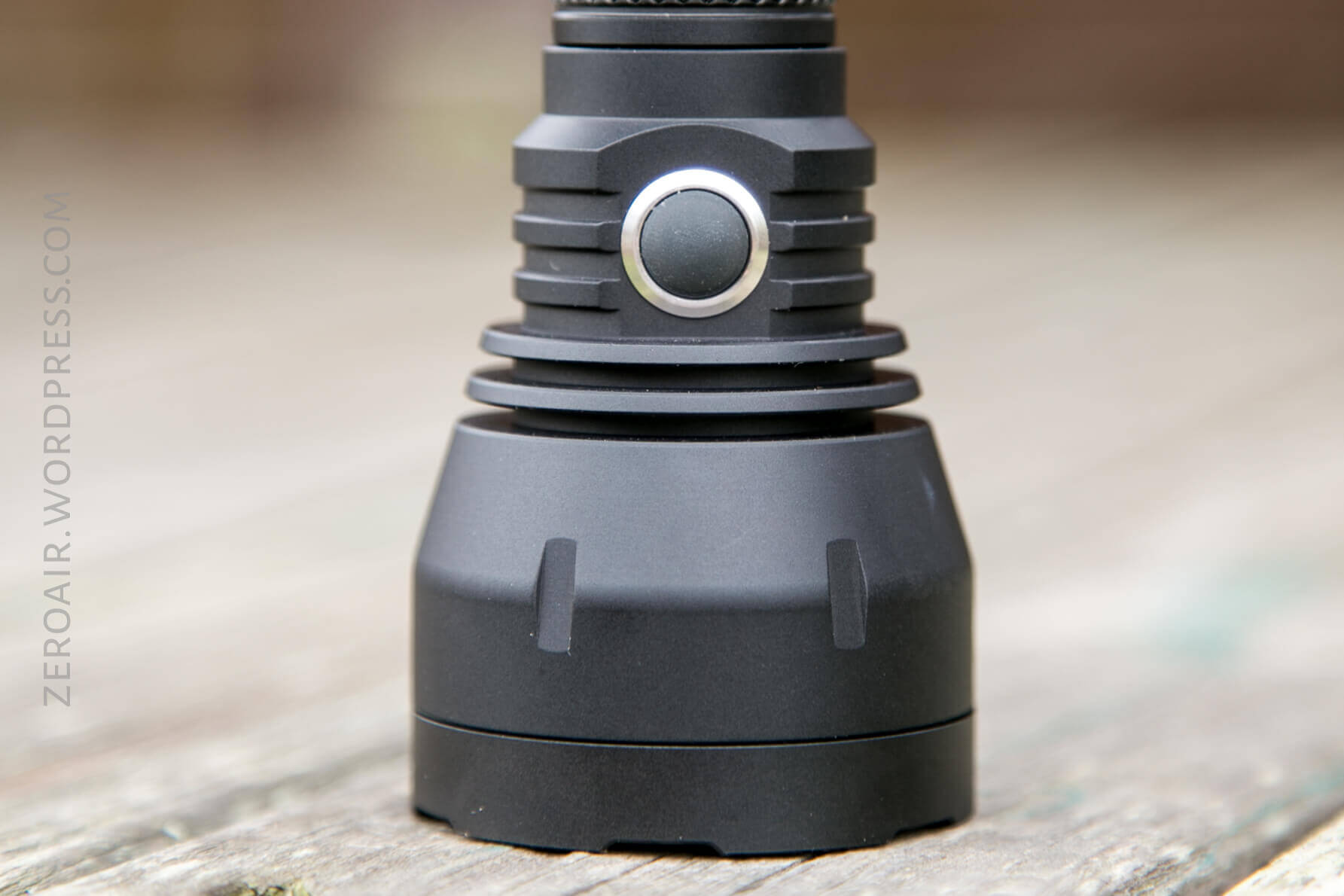
The switch is a little too domed for my tastes and ends up feeling squishy. I really prefer flat rubber, or even metal switches (Thrunite does good indicating metal switches). Since this one is only half-lit, it either looks like it’s not working right or is cheap. And neither of those is good. Either way, it maintains the design language of the other GT series lights.
Unlike the previous GT Mini I reviewed, this light runs on Andúril, and not Narsil.
I’m dropping in ToyKeeper’s newest user interface diagram, which includes some features my light does not have. The firmware reset, for example, and also the secondary emitter options – but the graphic itself as a whole is much better. I did a version check of this model, and what I read it as is: 19690720. I am not sure how to read this as a version number… This actually appears to be a custom build of Andúril, but I’m not sure what the customizations are specifically.
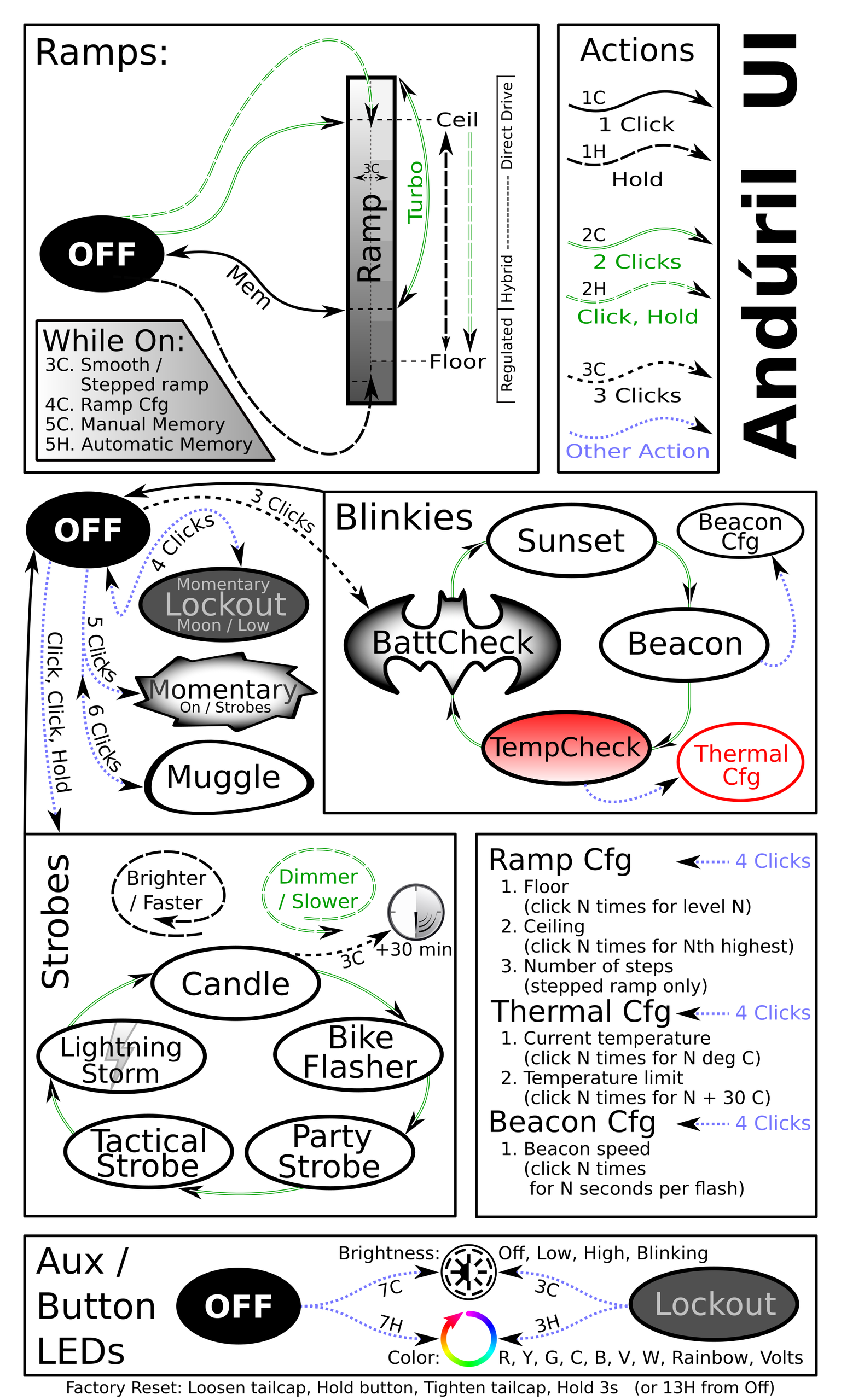
Here’s a user interface table anyway!
| State | Action | Result |
|---|---|---|
| Off | Hold | On (Low) |
| Off | Click | On (Mode Memory) |
| Off | Click 2x | Highest Hybrid Mode |
| Off | Click 3x | Blinkie Mode Group |
| Off | Click 4x | Lockout |
| Off | Click 5x | Momentary |
| Off | Click 6x | Muggle |
| Off | Click, Click, Hold | Strobe Group (Mode Memory Strobe) |
| Strobe Group | Click 2x | Strobe Cycle (Candle > Bike Flasher > Party Strobe > Tactical Strobe > Lightning Storm) |
| Blinkie Mode Group | Click 2x | Blinke Cycle (Sunset > Beacon > TempCheck > BattCheck) |
| On | Click 3x | Switch between Stepped and Smooth Ramp |
| On | Click 4x | Ramp Configuration |
| TempCheck | Click 4x | Thermal Configuration |
| Beacon | Click 4x | Beacon Configuration |
| Lockout | Click 4x | Off |
| Off | Click 15x | Andúril version check (blinks YYYYMMDD, zero is a very short blink) |
| Strobe Group | Click | Off |
| (Basically) On | Click | Off |
| Candle | Click 3x | 30 minute timer to off |
| Strobe Group | Hold | Heighten selected mode (Make faster or brighter) |
| Strobe Group | Click, Hold | Lessen selected mode (Make slower or dimmer) |
| On | Click 2x | FET Turbo |
| Ramp Configuration | [Wait for Single flash] Click N time for level N. | Selection of the “Low” you like best by clicking 1, 2, 3, etc. where 1, 2, 3, etc are different levels of low. |
| Ramp Configuration | [Wait for Second flash] Click N time for 1+Turbo-N. | Selection of the “Ceiling” you like best by clicking 1, 2, 3, etc. where 1, 2, 3, etc are different Ceiling levels. |
| Ramp Configuration | [Wait for Third flash] Click for how many steps you want in Stepped mode. | Sets Number of Steps. |
| Thermal Configuration | [Wait for First flash] Click for N times for N degrees C. | Displays Current Temperature. |
| Thermal Configuration | [Wait for Second flash] Click for N times for 30C + N. | Sets Temperature Limit. |
| Beacon Configuration | [Wait for First flash] Click for N times N seconds per flash | Sets Beacon Speed. |
LED and Beam
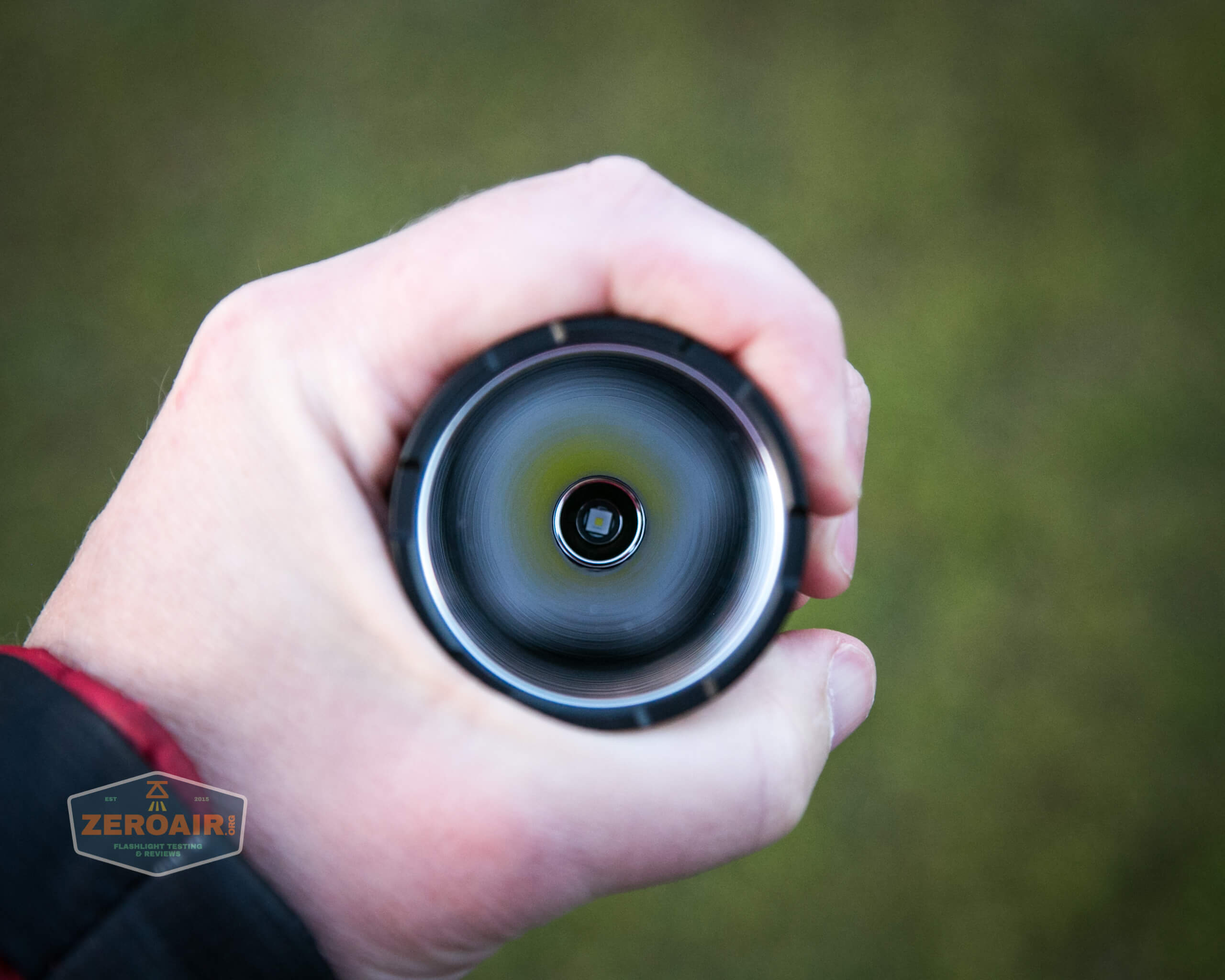
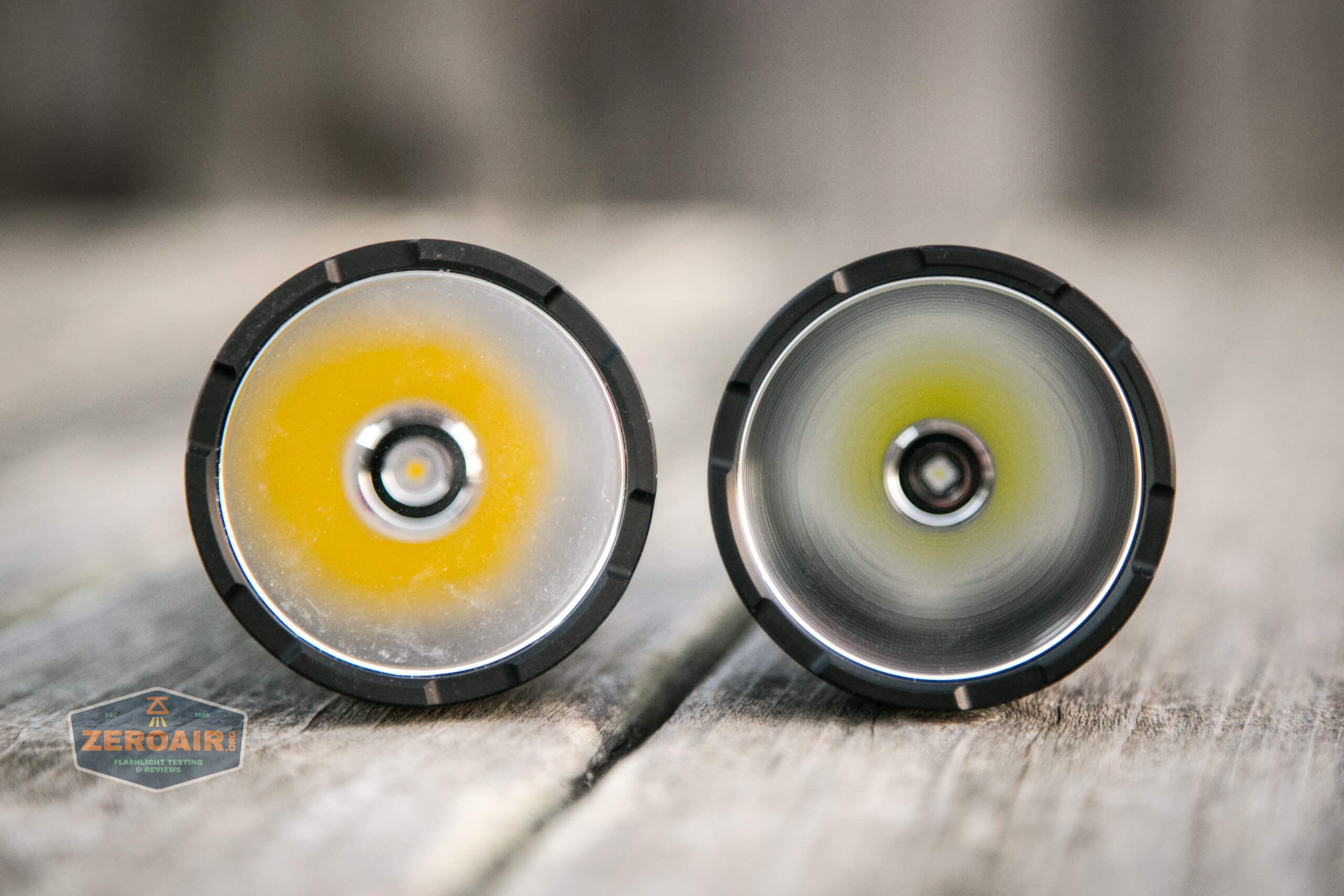
The emitter used in this Lumintop GT Mini NM1 flashlight is given away by the name: Osram KW CSLNM1.TG LED. This is a “flat white” emitter, and so perfect for throw.
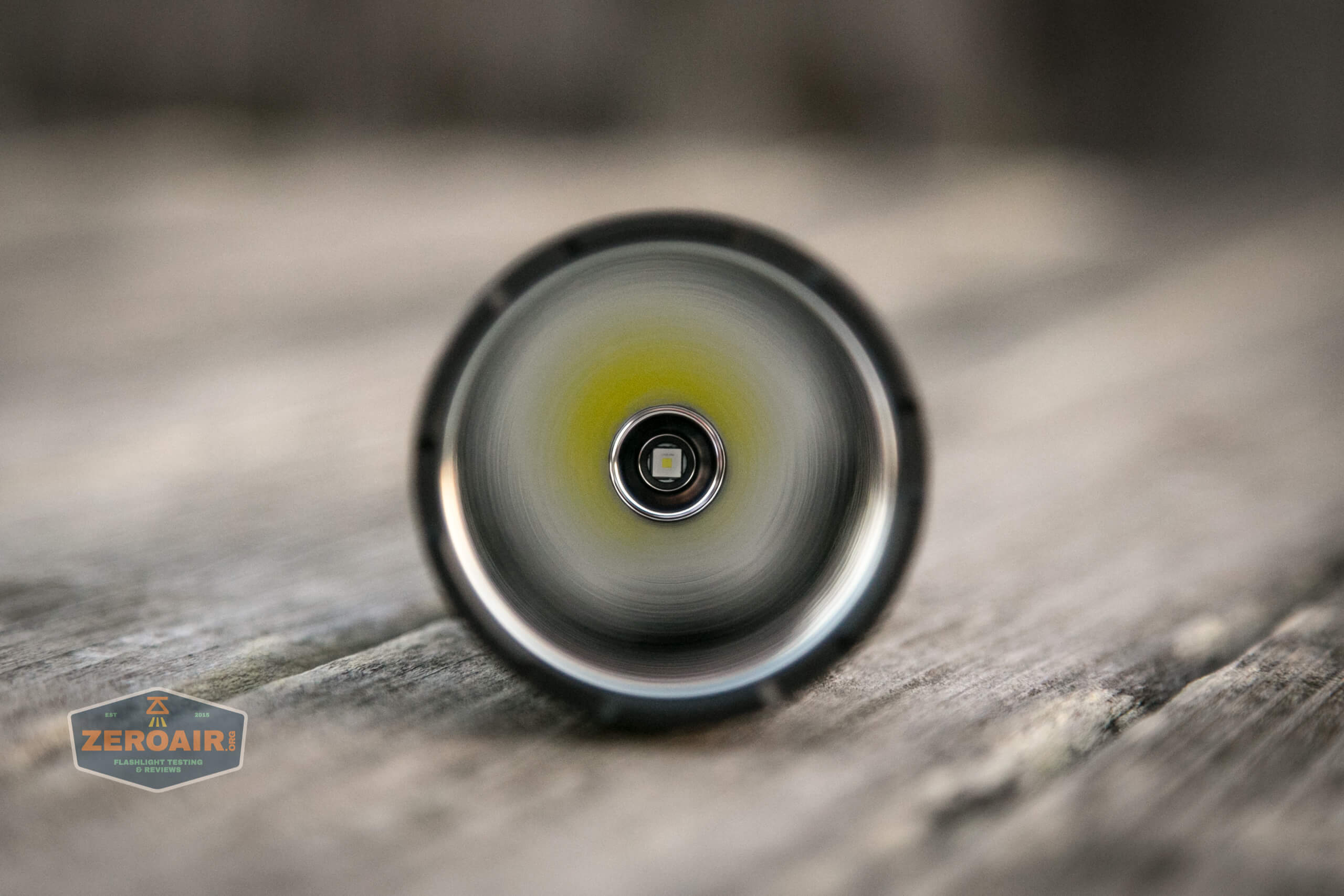
The reflector is smooth and deep and wide.
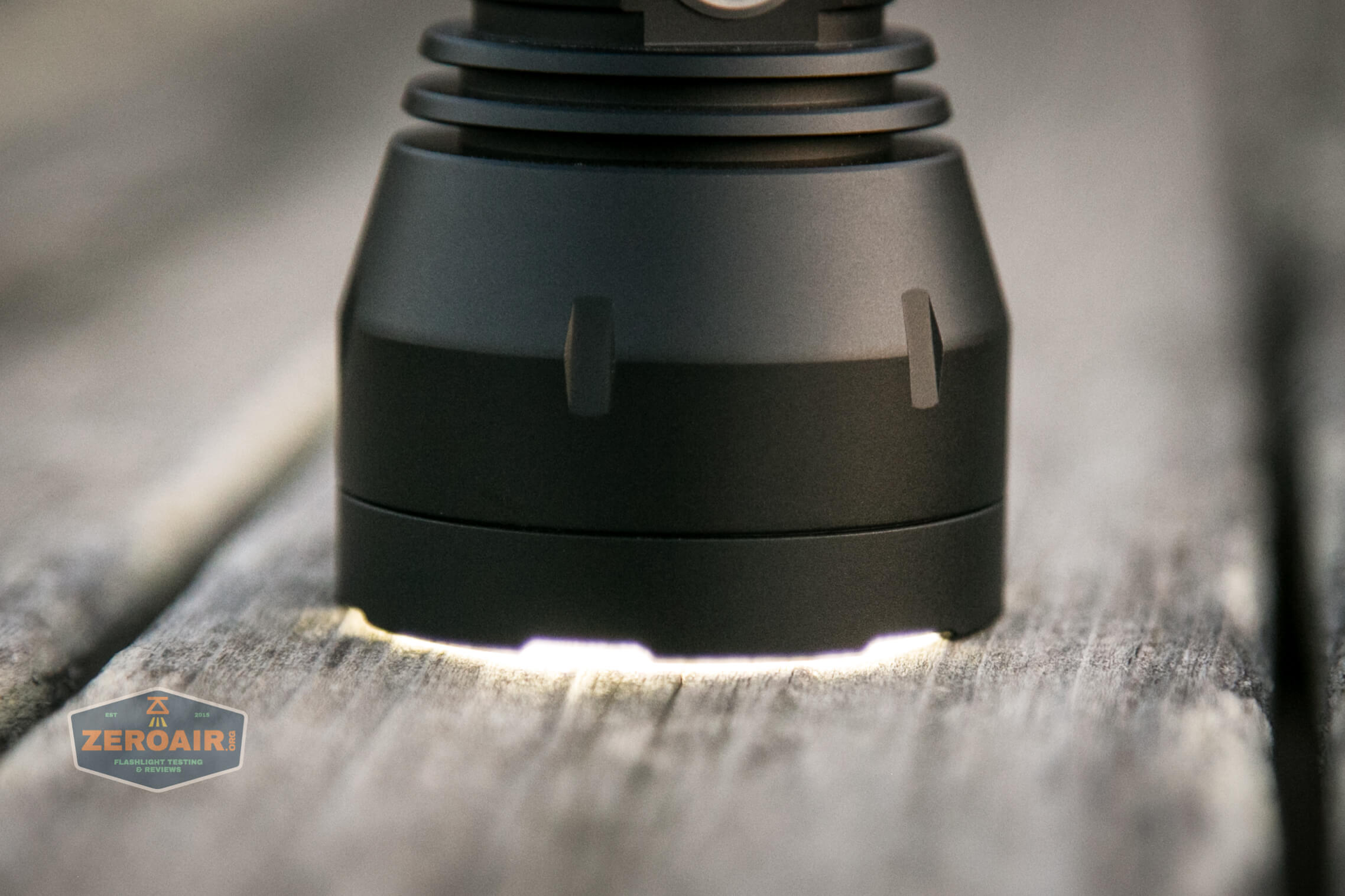
A “crenelated” (barely) bezel allows light to show when headstanding.
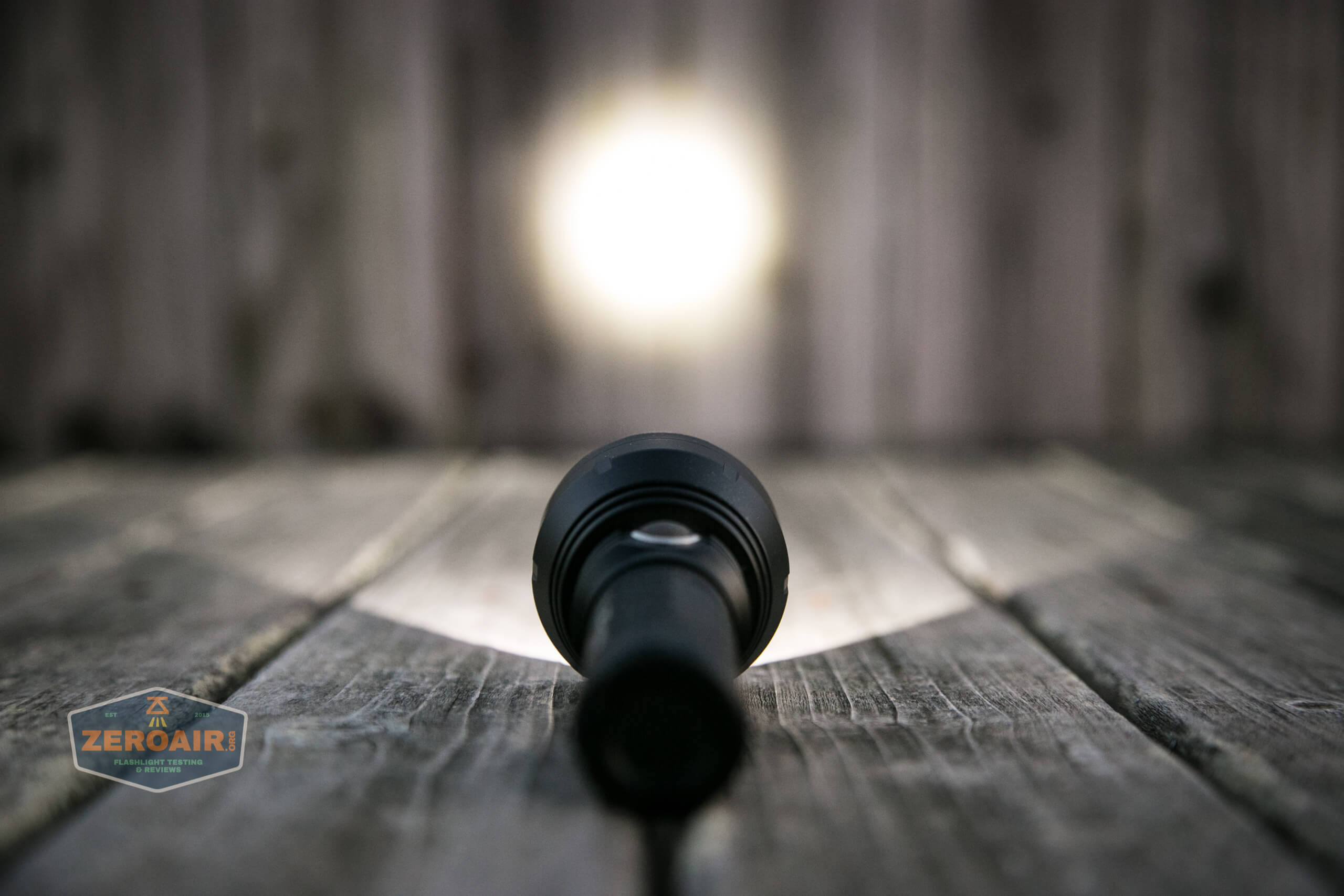
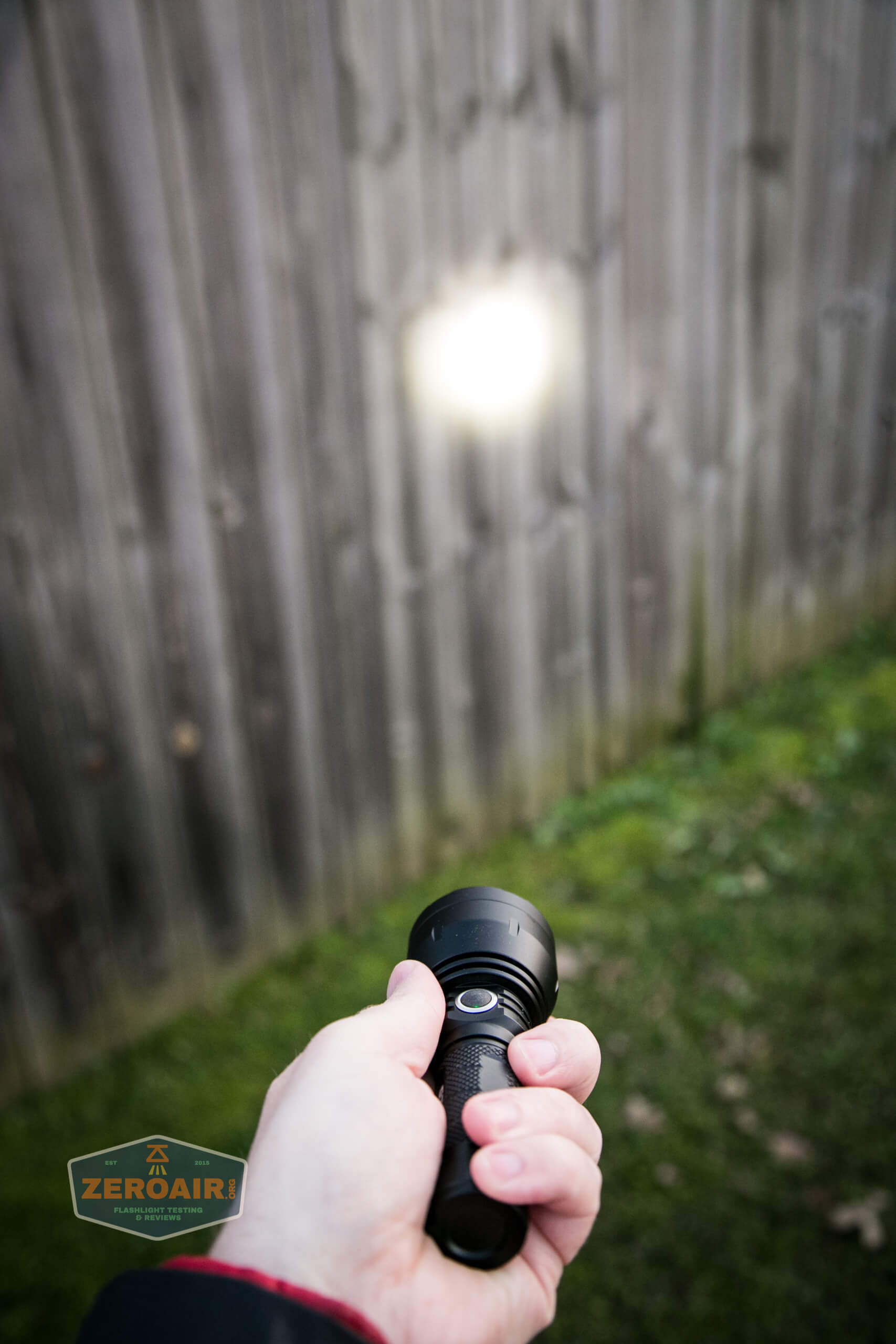
Make no mistake, this is a very throwy flashlight! (And I love that.)
Beamshots
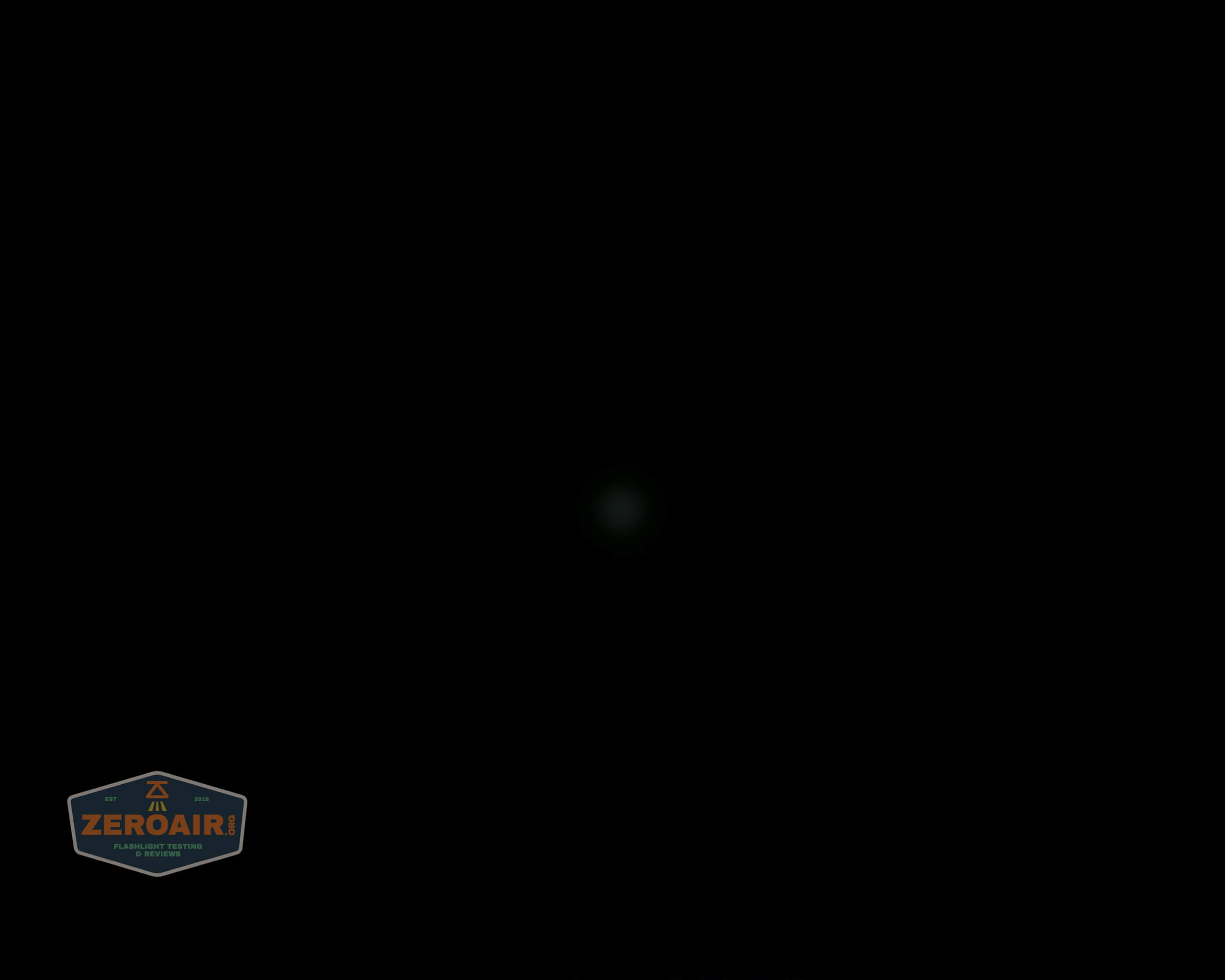
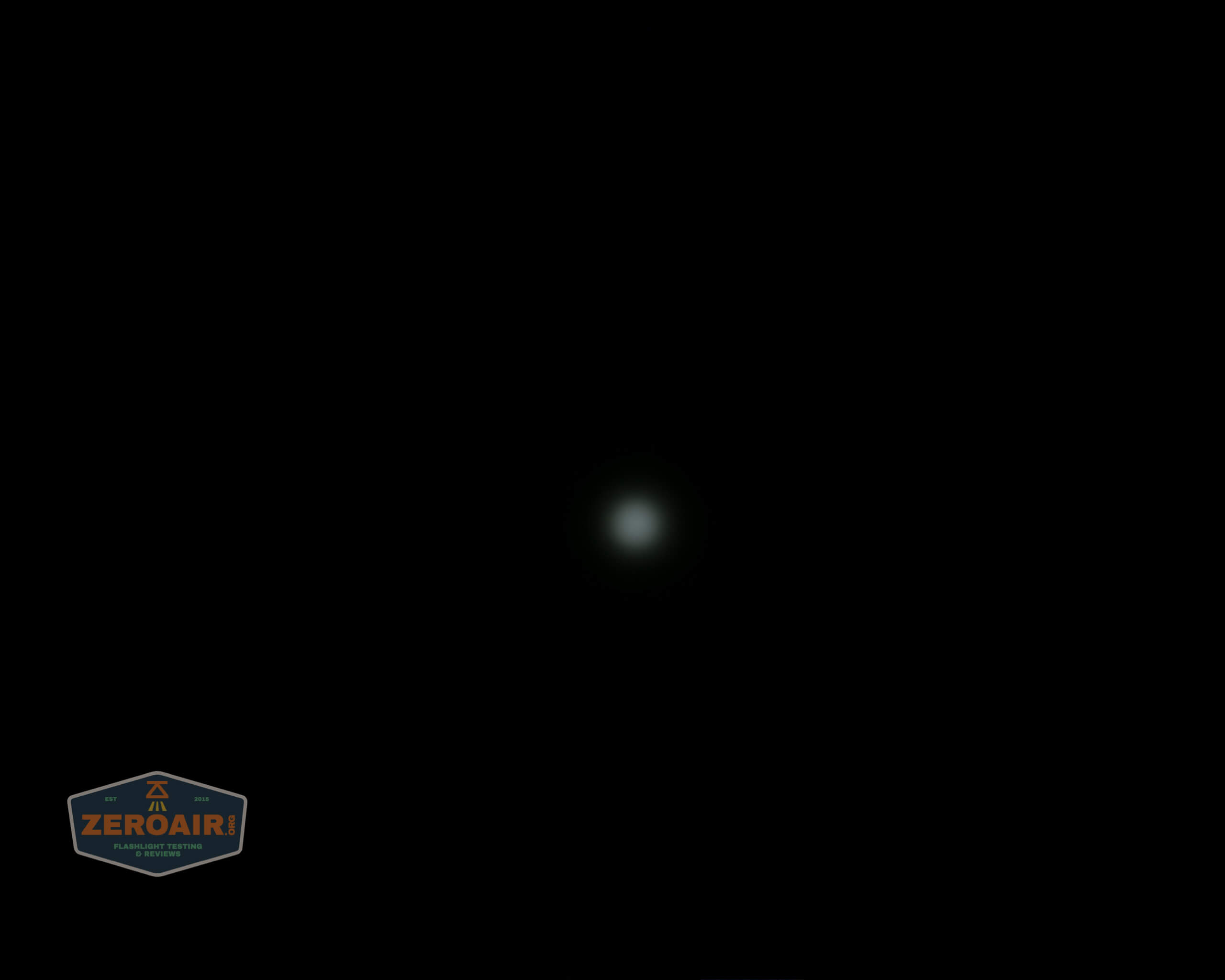
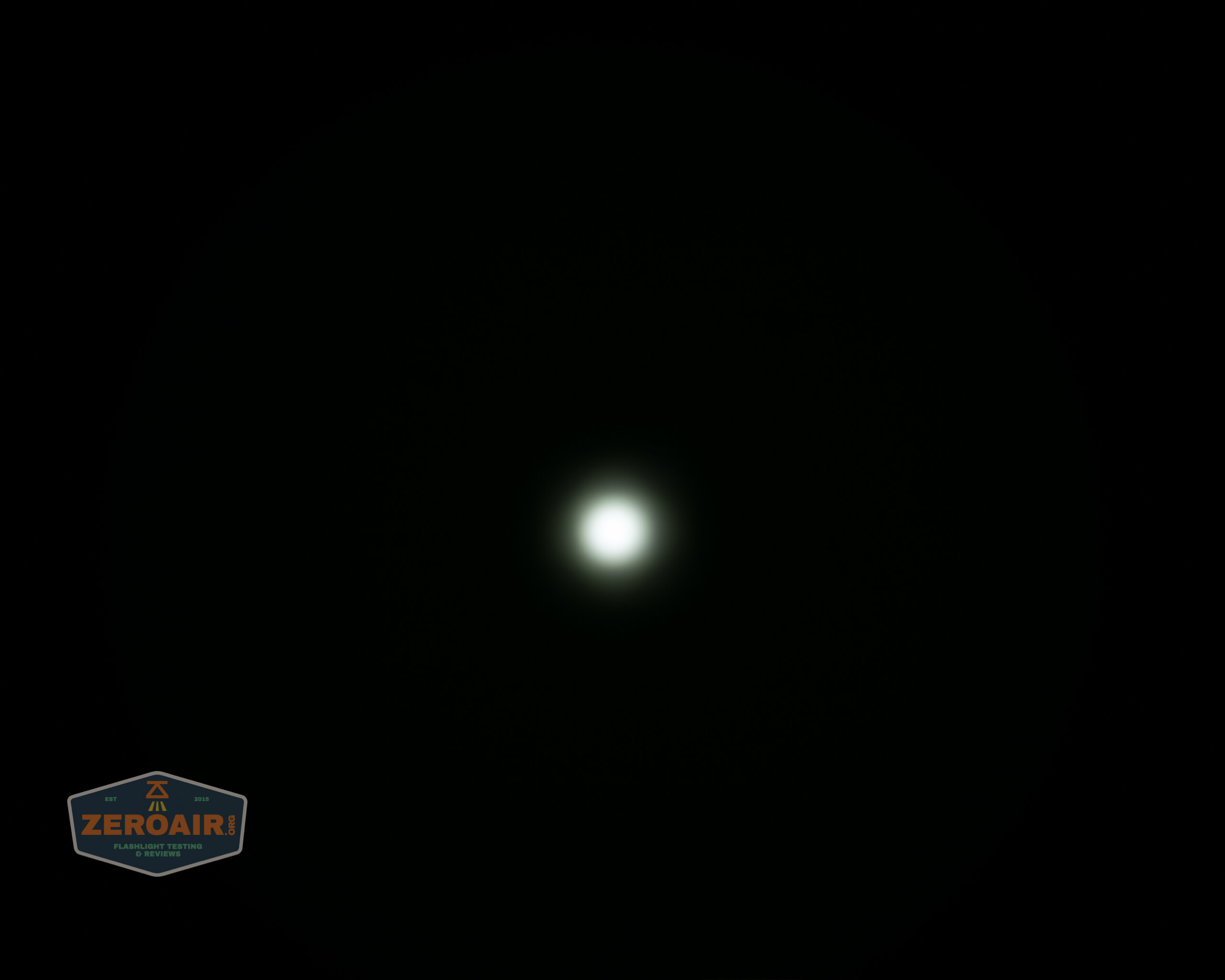
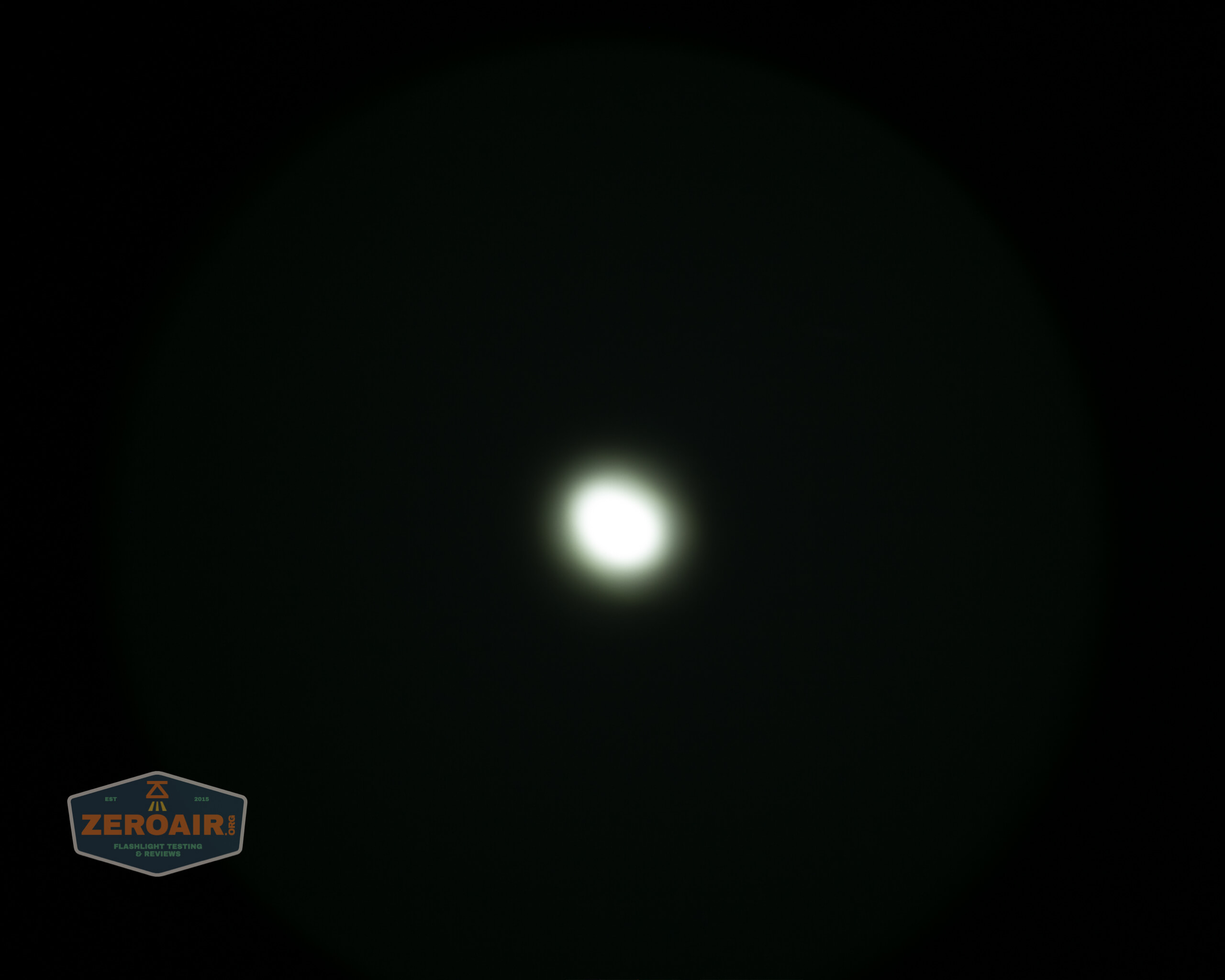
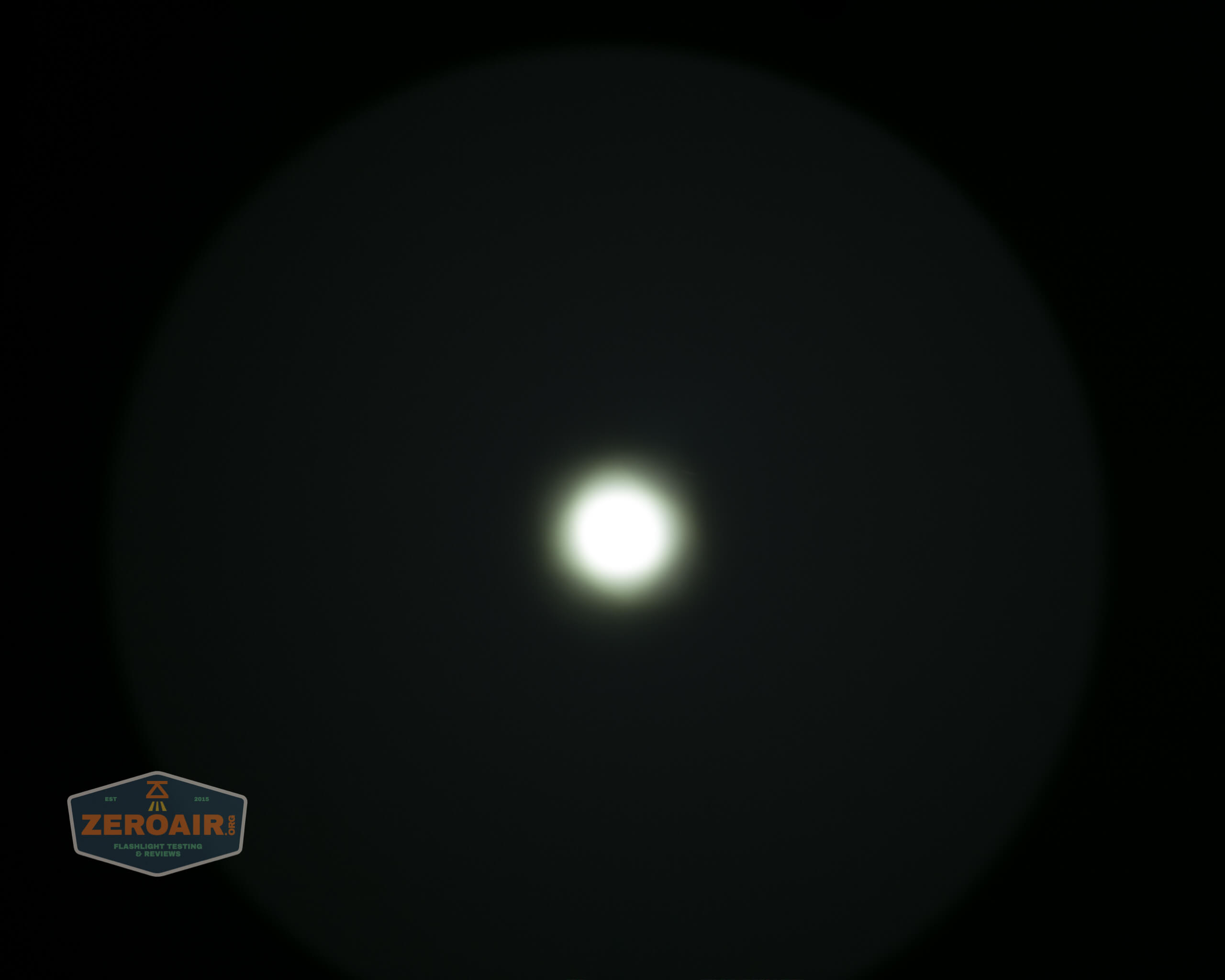
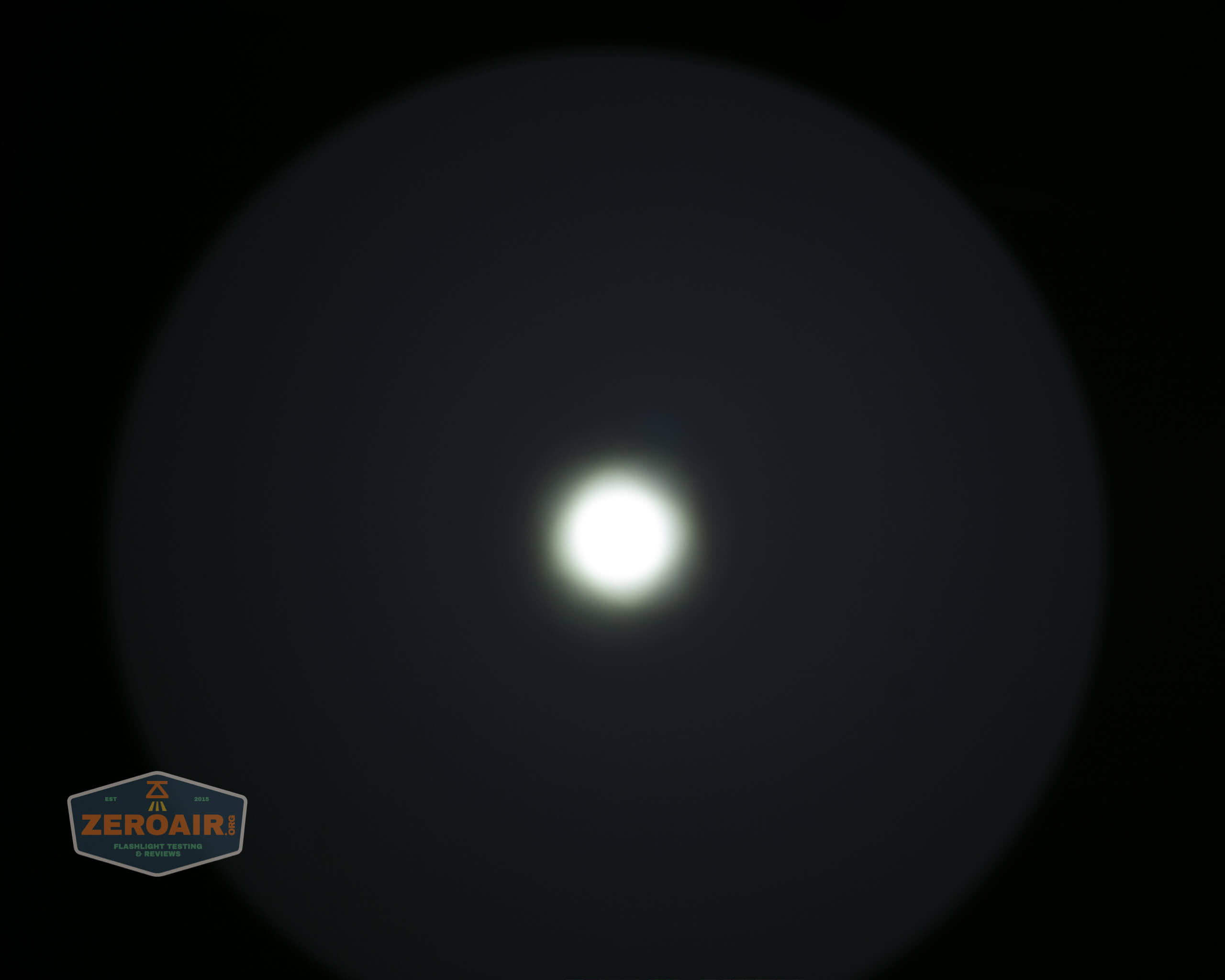
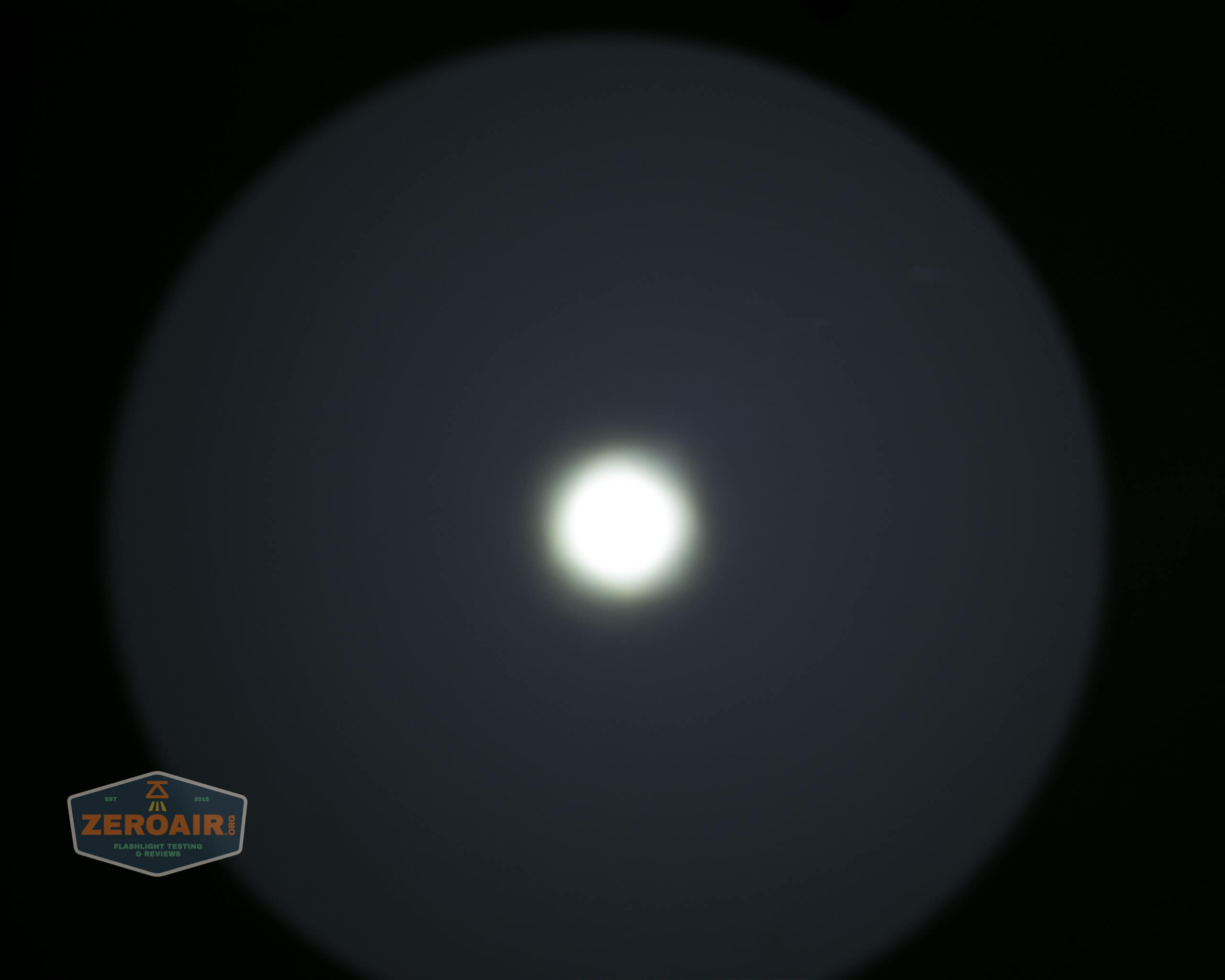
These beamshots always have the following settings: f8, ISO100, 0.3s shutter, and manual 5000K exposure. These photos are taken at floor level, and the beam hits the ceiling around 9 feet away. As I usually try to do with Andúril lights, I’ve shown the lowest mode, which is only available through the ramping setup. Then the stepped modes, and finally the “double click Turbo” output. The same goes for the PWM tests below.
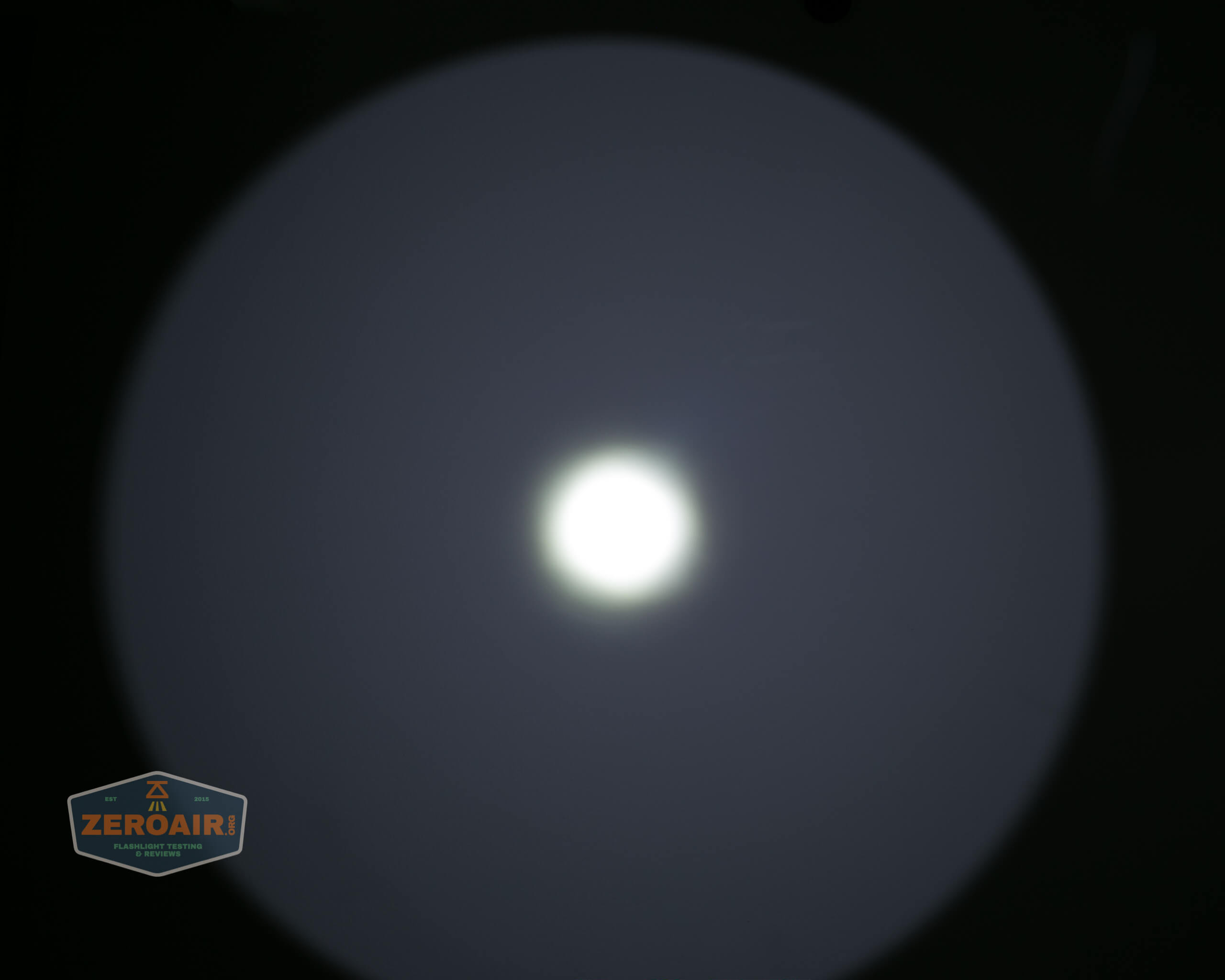
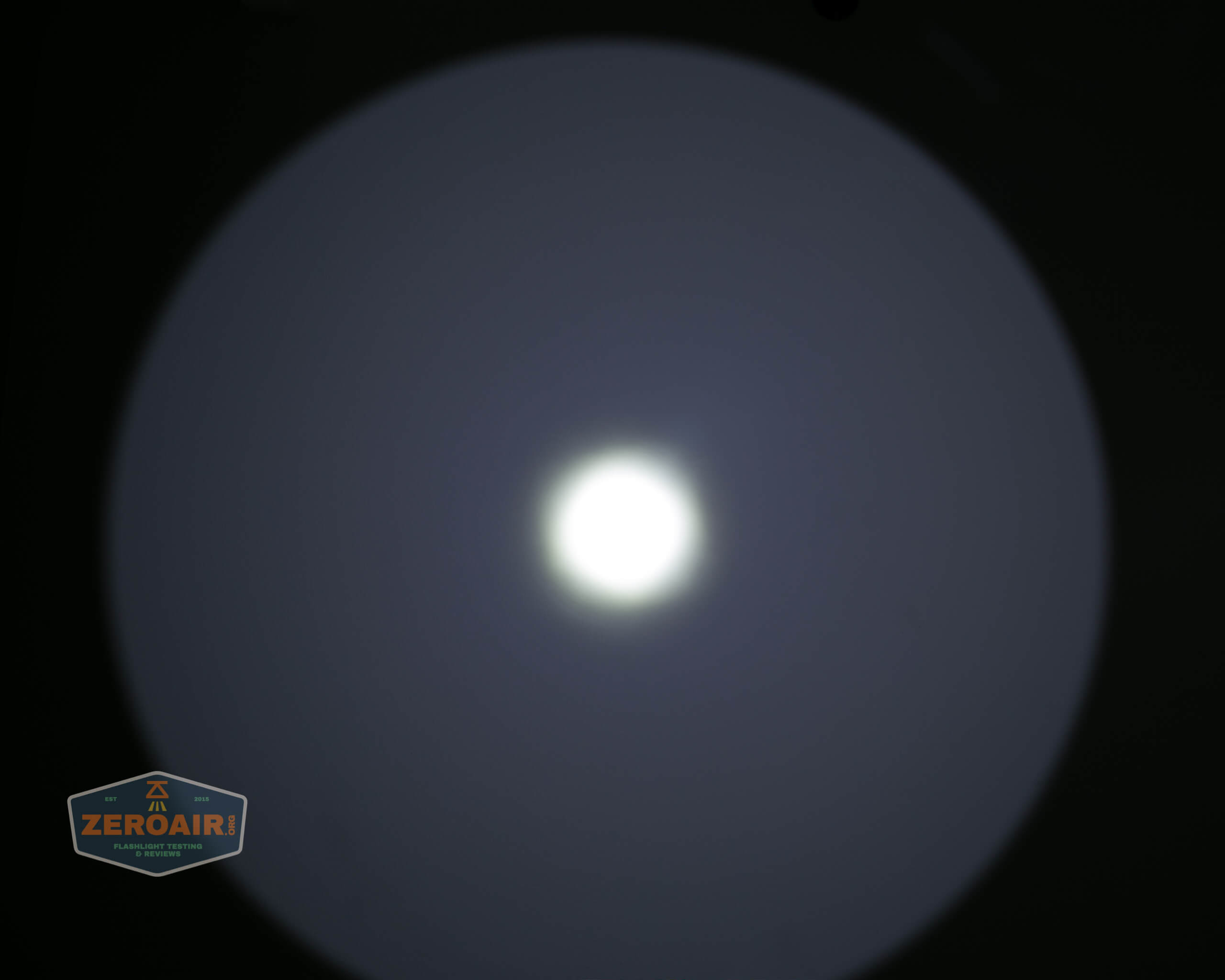
Tint vs BLF-348 (KillzoneFlashlights.com 219b version) (affiliate link)
I keep the test flashlight on the left and the BLF-348 reference flashlight on the right.
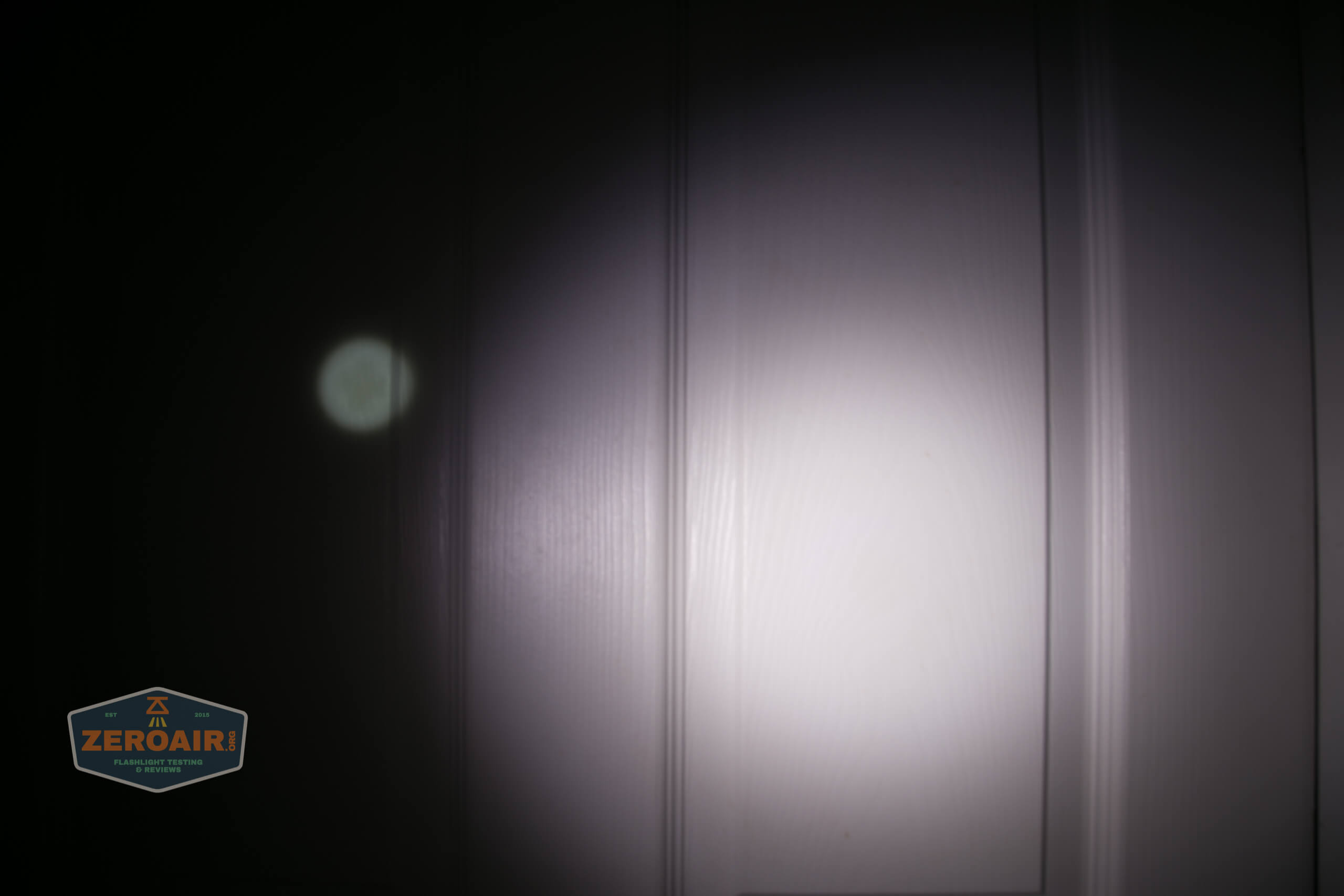
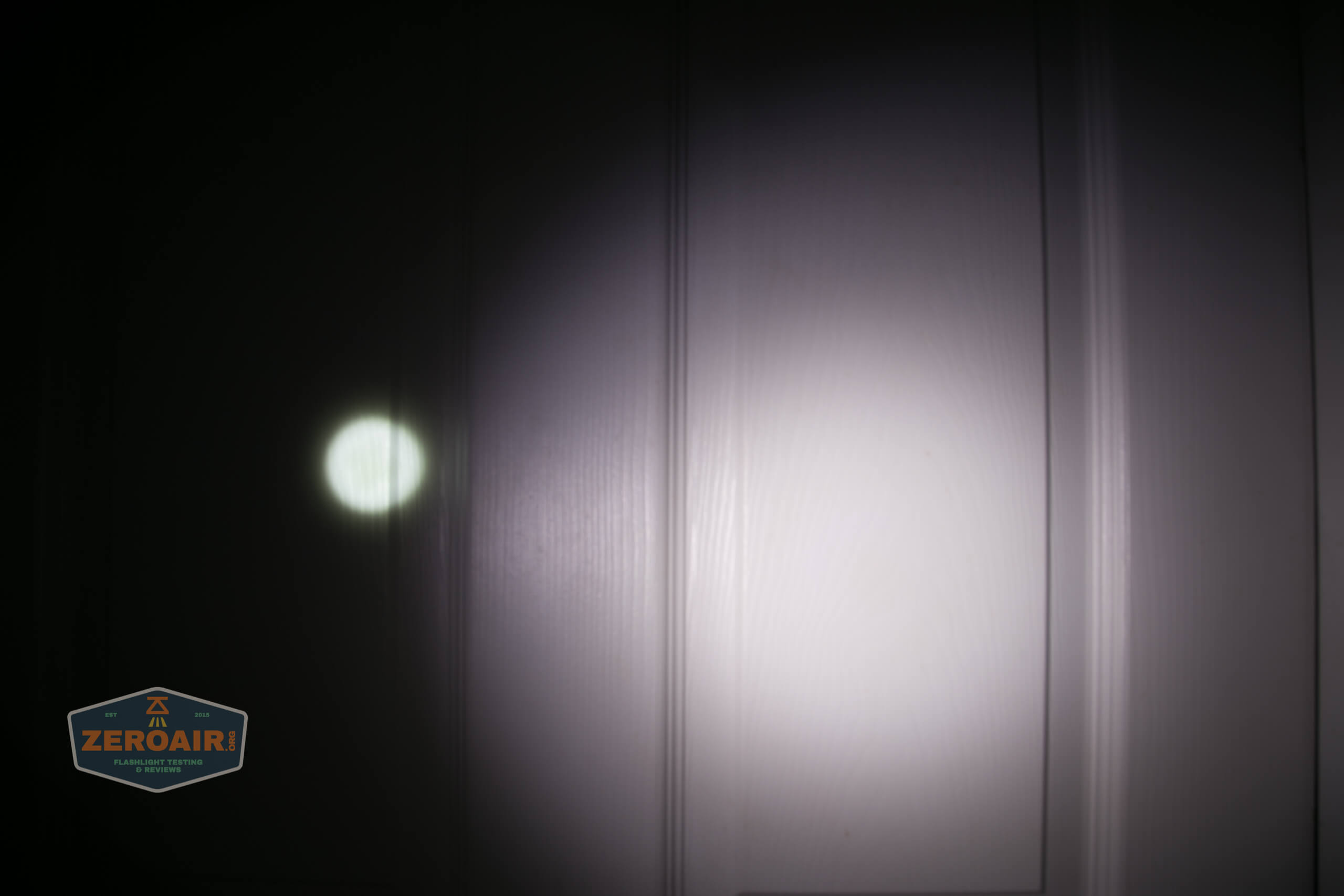
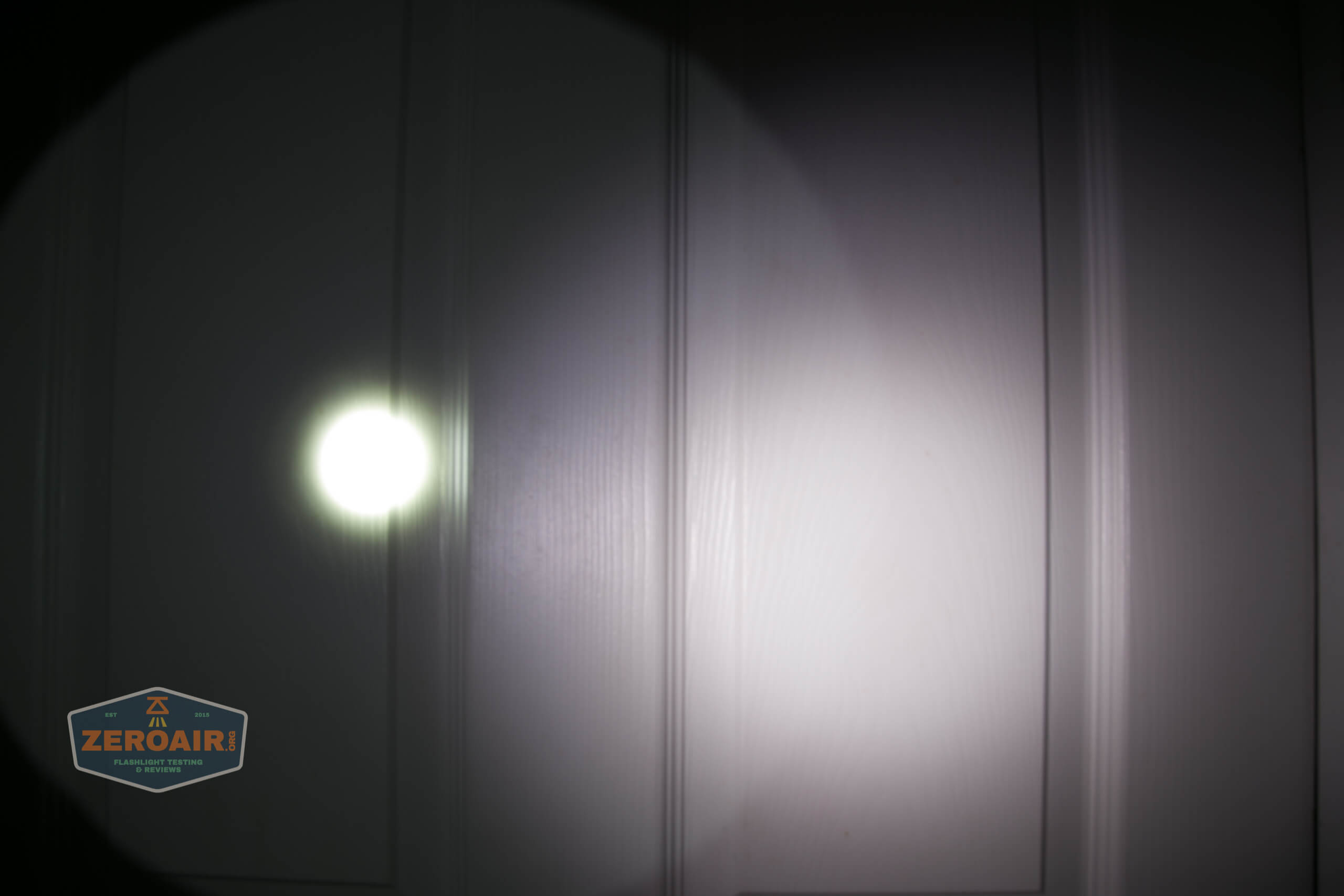
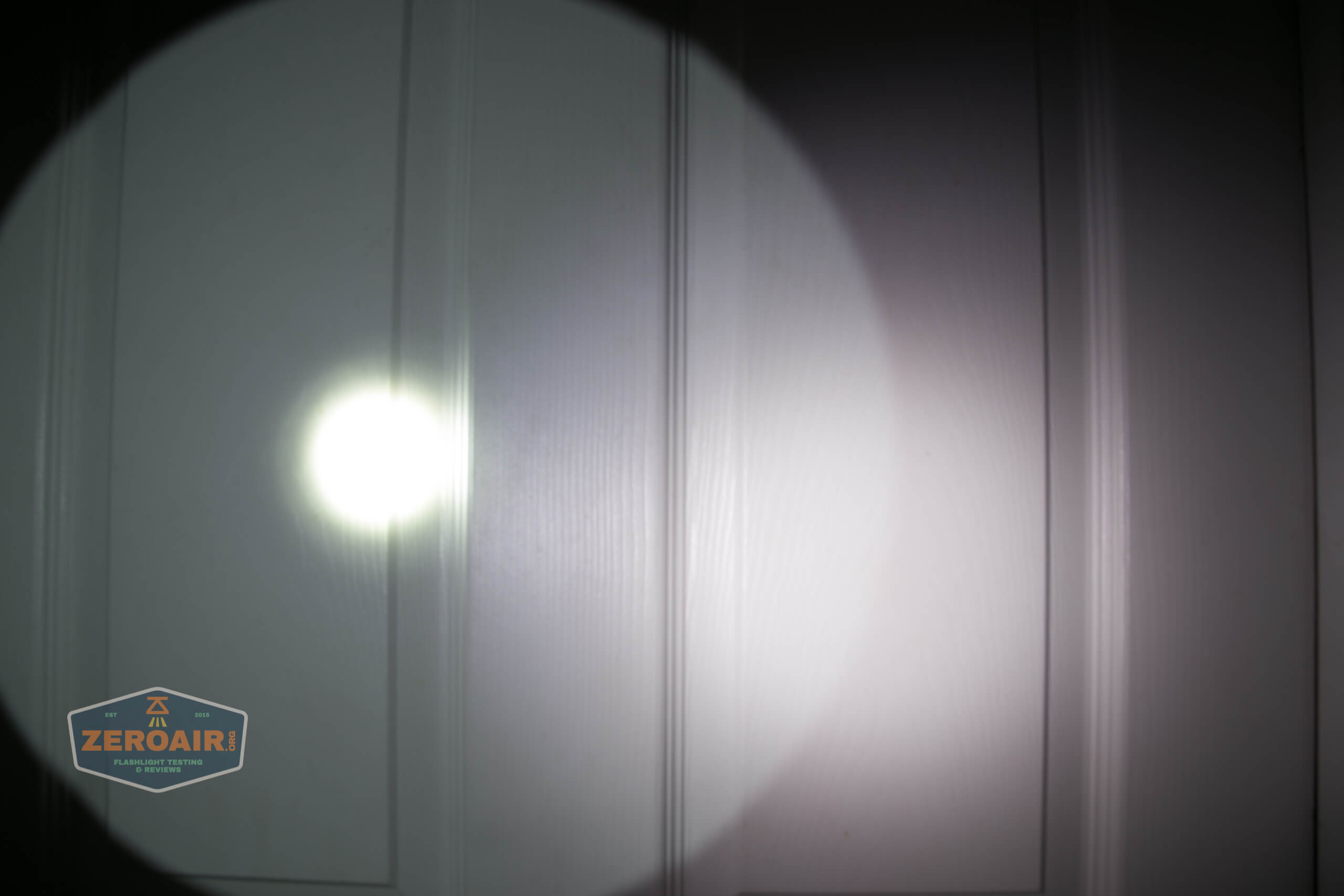
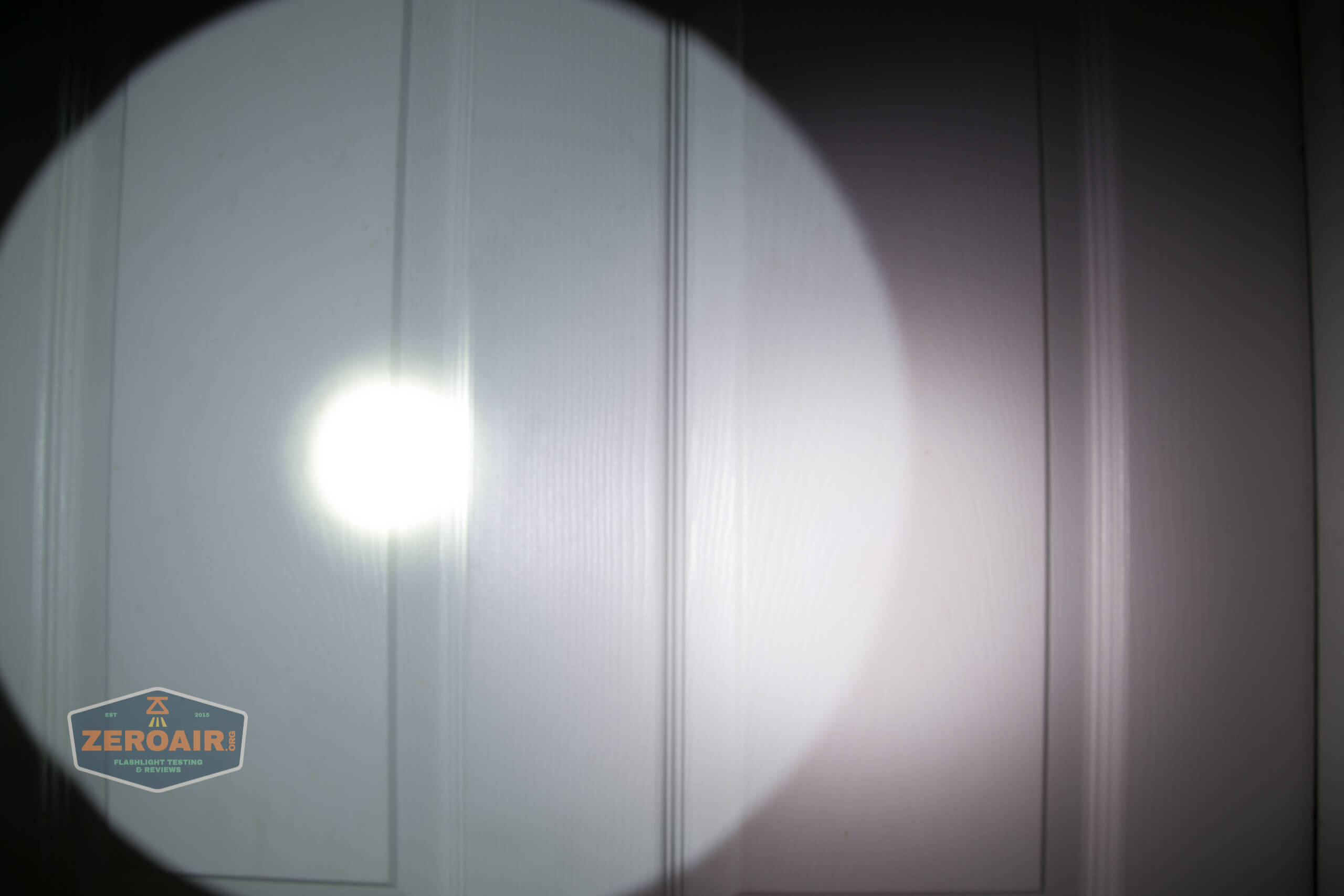
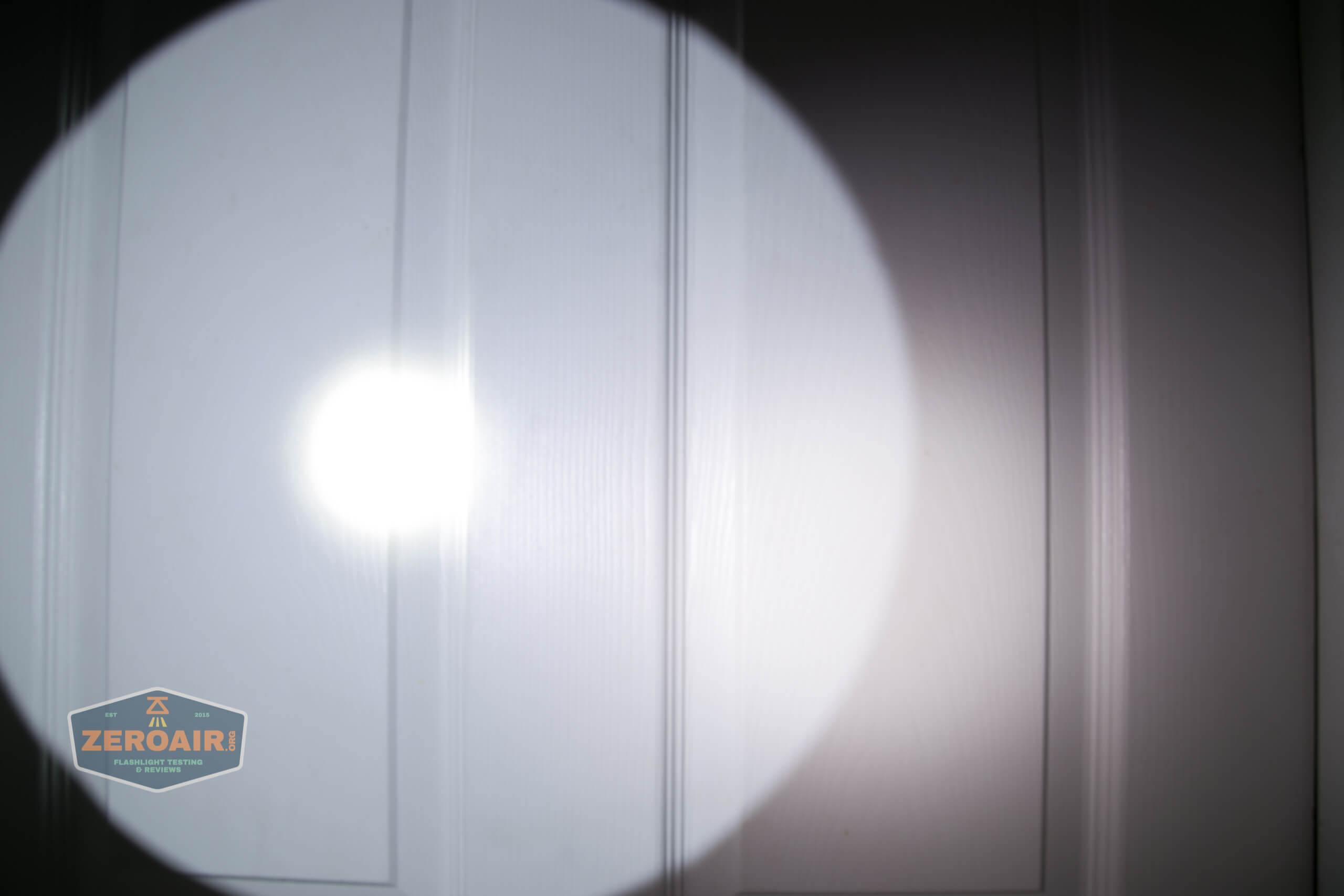
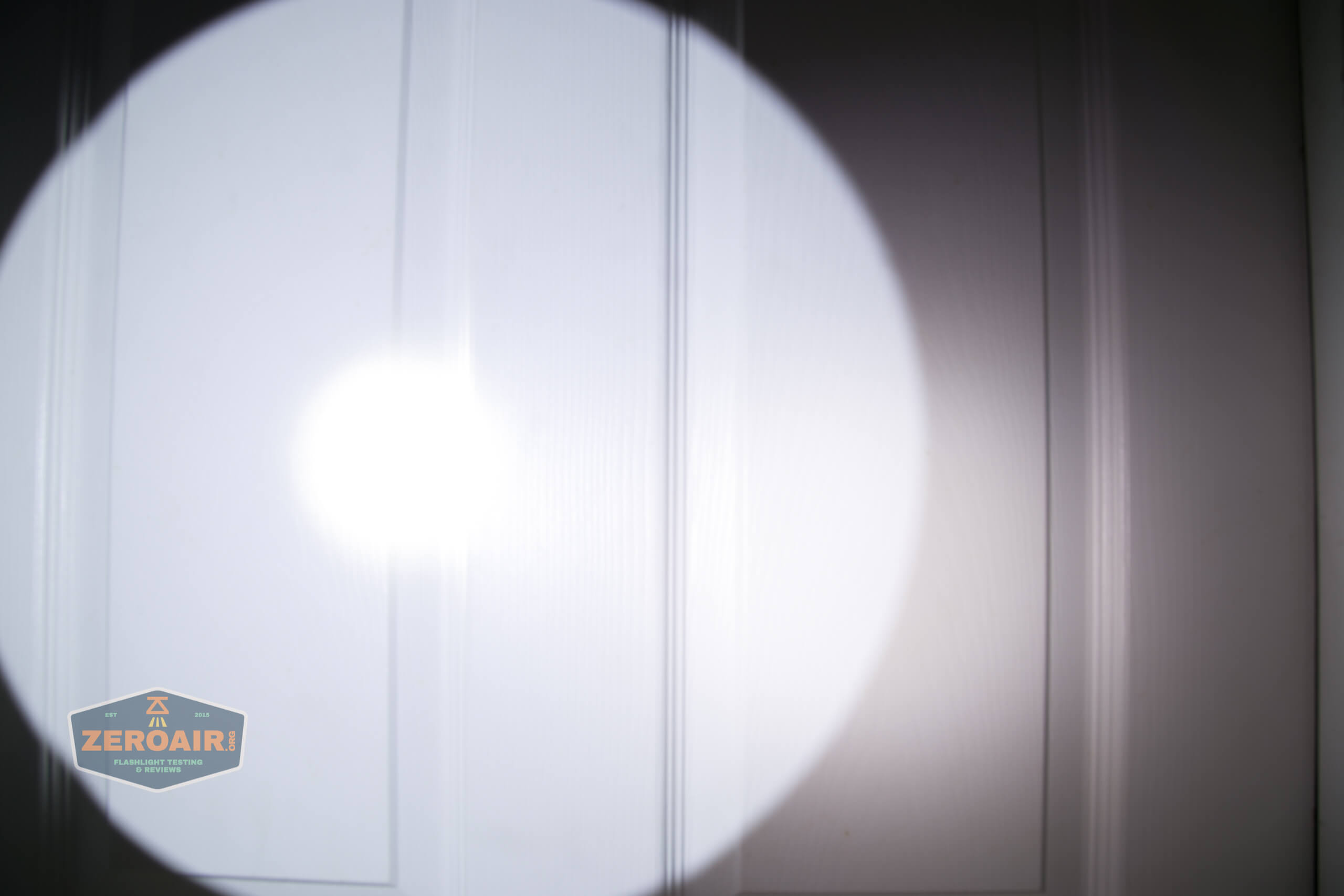
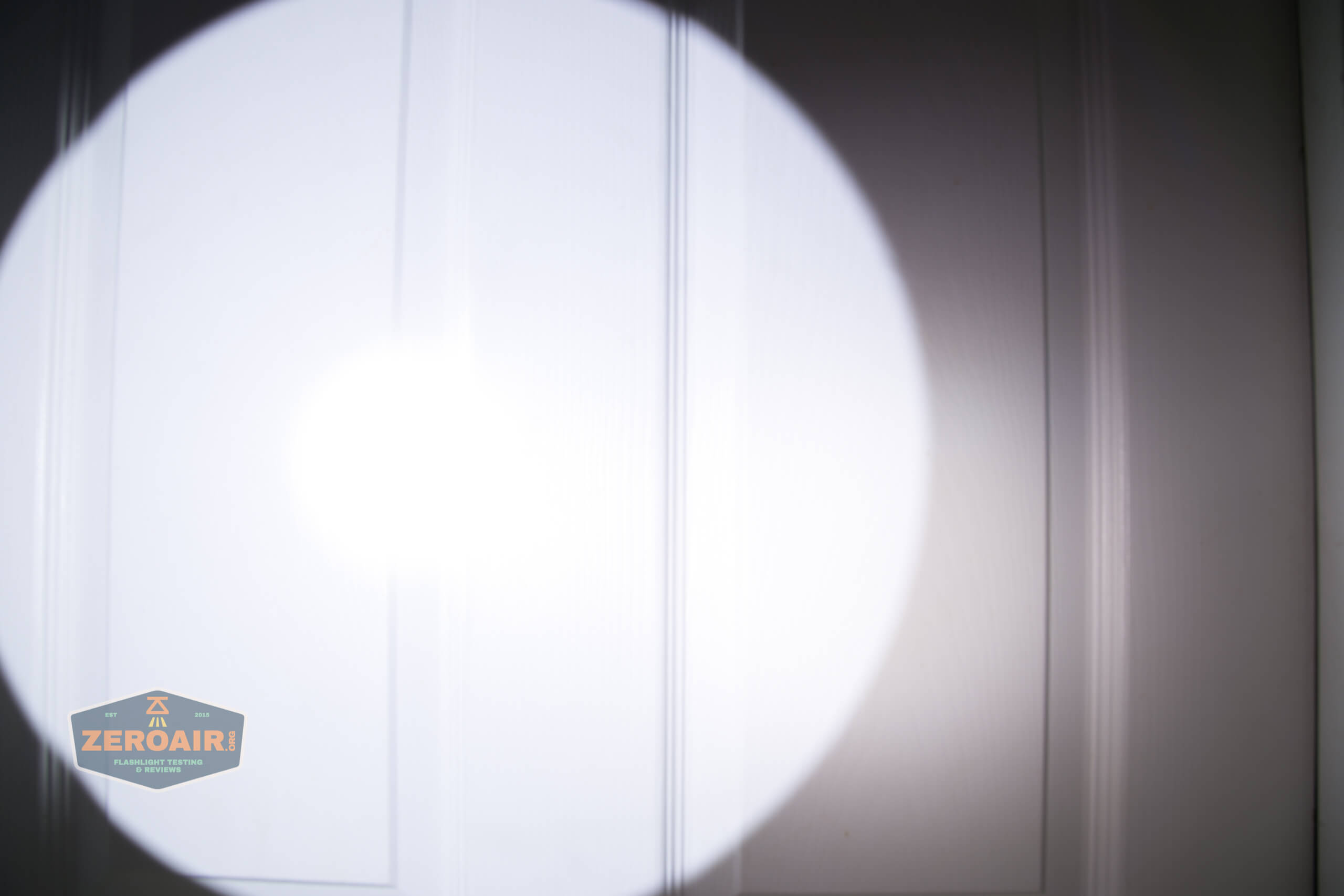
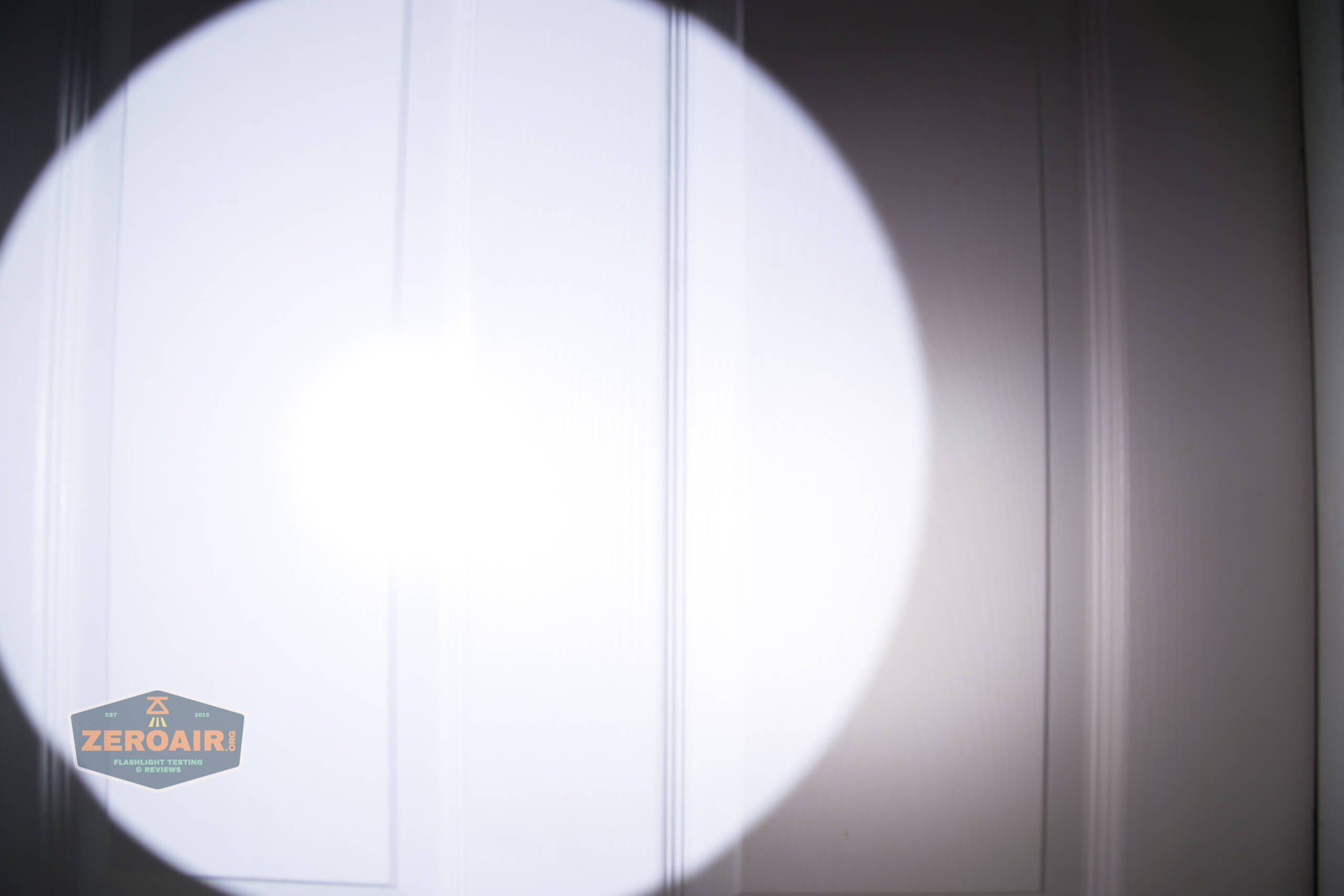
I compare everything to the KillzoneFlashlights.com 219b BLF-348 because it’s inexpensive and has the best tint!
Conclusion
What I like
- Build quality is great
- Very programmable
- 18350 and 18650 versions
- It really is a Mini GT
- Is really very throwy!!
What I don’t like
- Half lit switch
- Small button
Notes
- This light was provided by Lumintop for review. I was not paid to write this review.
- This content originally appeared at zeroair.org. Please visit there for the best experience!
- Please use my Amazon.com referral link to help support zeroair.org!
Discover more from ZeroAir Reviews
Subscribe to get the latest posts sent to your email.
Having one led under the switch cover is perfectly normal. By thinking there should be two, I assume you think there is a separate circuit board for the switch like bigger lights have. It does not. The switch is soldered to the side of the driver and there only one place for an led.
Here is a picture courtesy of steel_1024 from blf forum.
https://farm1.staticflickr.com/849/42790628544_c39320df4b_z.jpg
Hope that helps clear up any confusion.