
Imalent DN12 Flashlight Review
The Imalent DN12 flashlight offers stepless dimming and an unusual capacitive switch. It even has a tiny LCD! Read on!
Official Specs
Here’s a link to the Imalent DN12 product page.
Features:
- Utilizes the latest CREE XP-L HI LED with a lifespan of 50000 hours, maximum output of 1000 lumens, with an internal USB charging function.
- Size: 83mm (Length) * 32mm (Head diameter) * 25.4mm (Body diameter)
- Designed for fast infinite brightness adjustment
- Built-in multifunctional LCD display to observe various flashlight parameters and battery capacity.
- Toughened ultra-clear mineral glass and anti-reflective coating.
- Aerospace-grade aluminum alloy body
- Military Specification Type III.-hard anodized
- IPX-8 standard waterproof (2 meters submersible).
- Working Voltage: 2.8-4.2V
- Lens: Toughened Ultra-clear Mineral Glass Lens
- Impact Resistance: 1.5M
- Beam Distance: 300-400m
- Body Material: Aluminium Alloy
The above section contains the manufacturer’s descriptions and claims, not my impressions or results.
Short Review
A nice little flashlight with a deep reflector and an unusual shape (such a short body!). But hard for me to get behind without a better switch, and possibly a 18650 extender tube.
Long Review
What’s Included
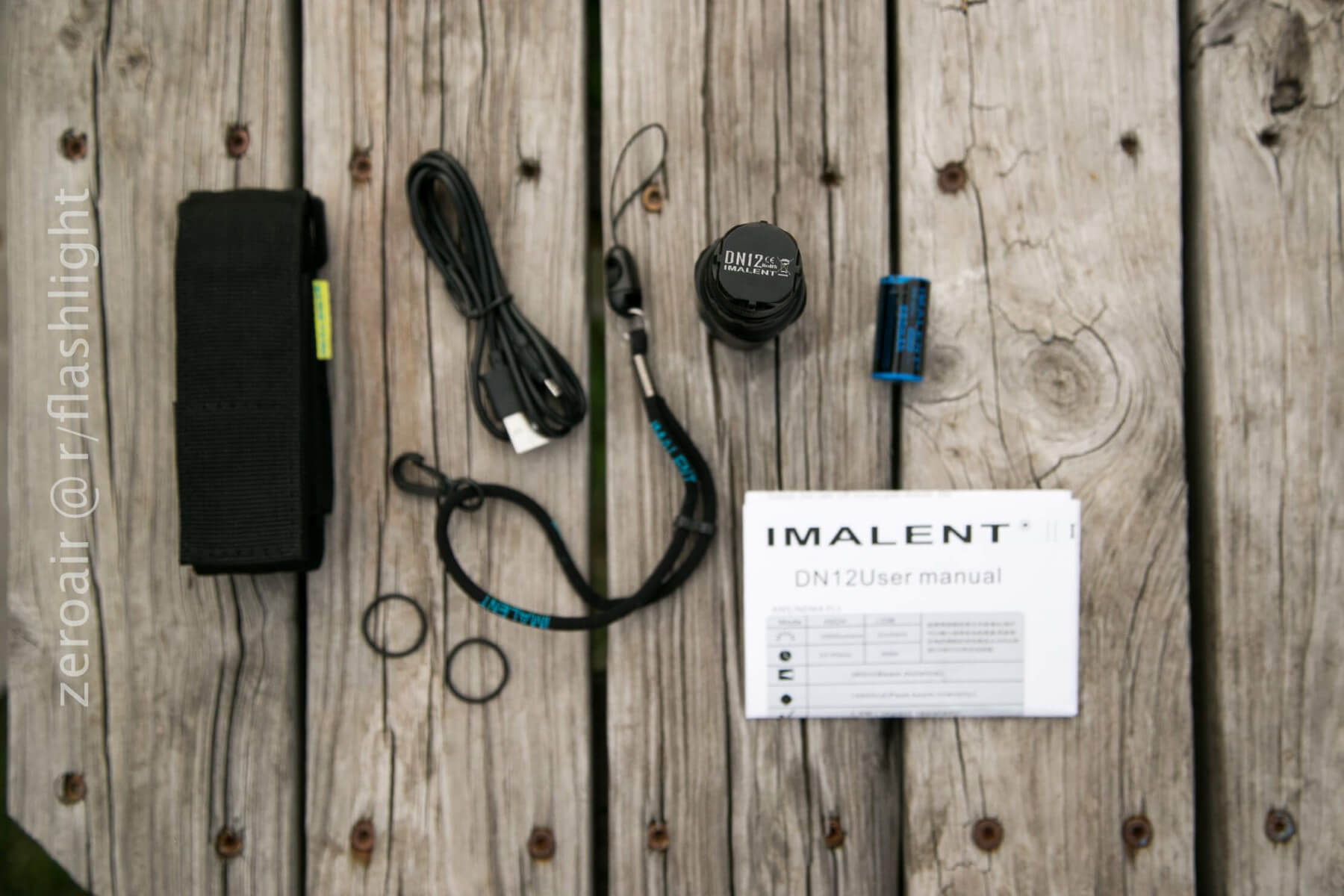
- Imalent DN12
- Lanyard
- 650mAh cell
- Manual
- Micro-USB cord
- Two spare o-rings
- Nylon pouch holster
Build Quality, Durability, and Disassembly
This is not a poorly built light, but it has at least one flaw with build quality, and a few other problems generally. The main build problem is that the smooth reflector is not really smooth, and this causes some nasty artifacts in the beam. This may really only matter when whitewall hunting, but I’ve noticed it nearly every time I’ve picked this light up for use…. Otherwise, the parts are generally fine. The micro-USB port is well sealed with a rubber boot. Things screw together nicely and are well-lubed. The o-rings are nice and thick.
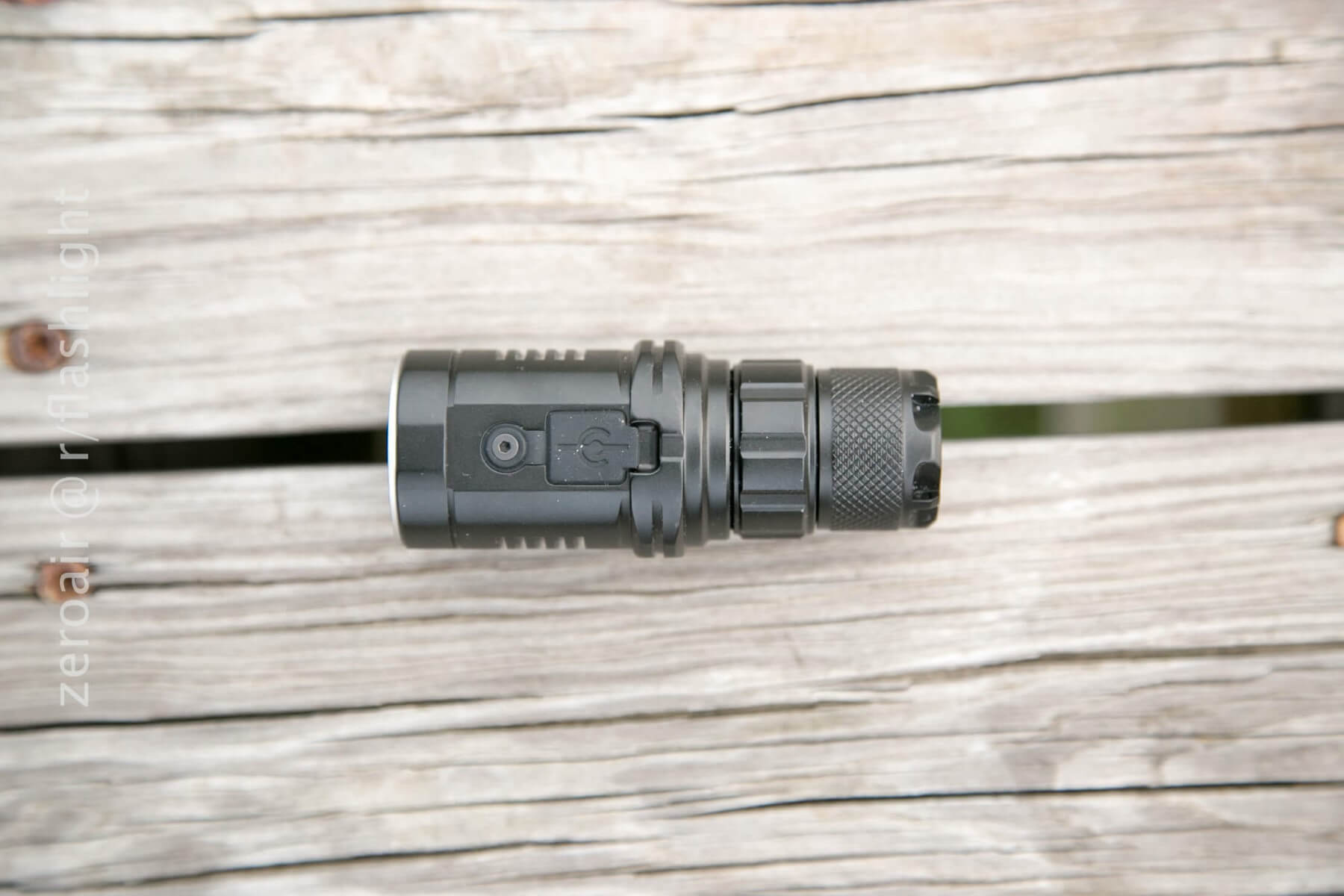
The spring and contact are said to be gold-plated, and that’s probably not wrong.
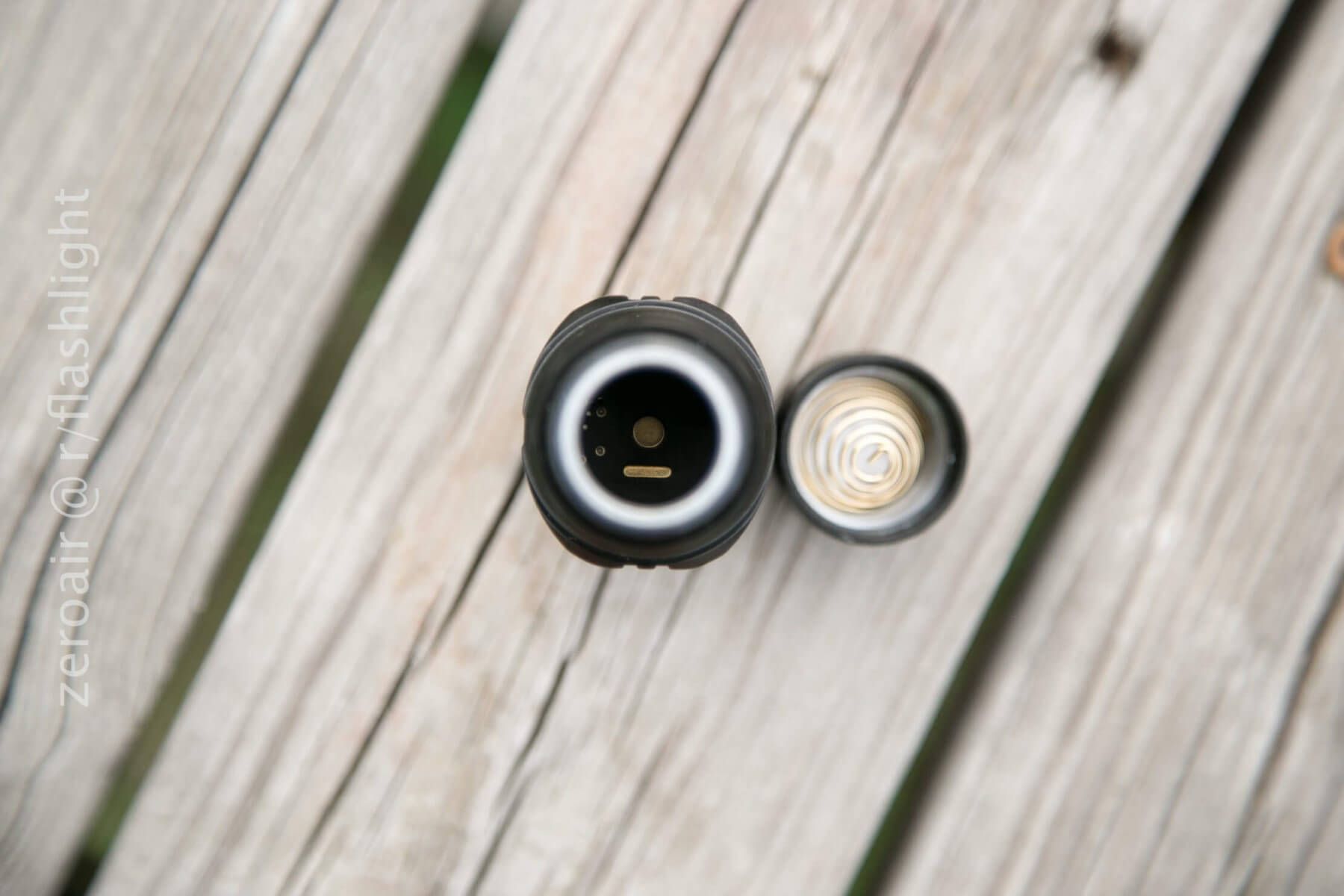
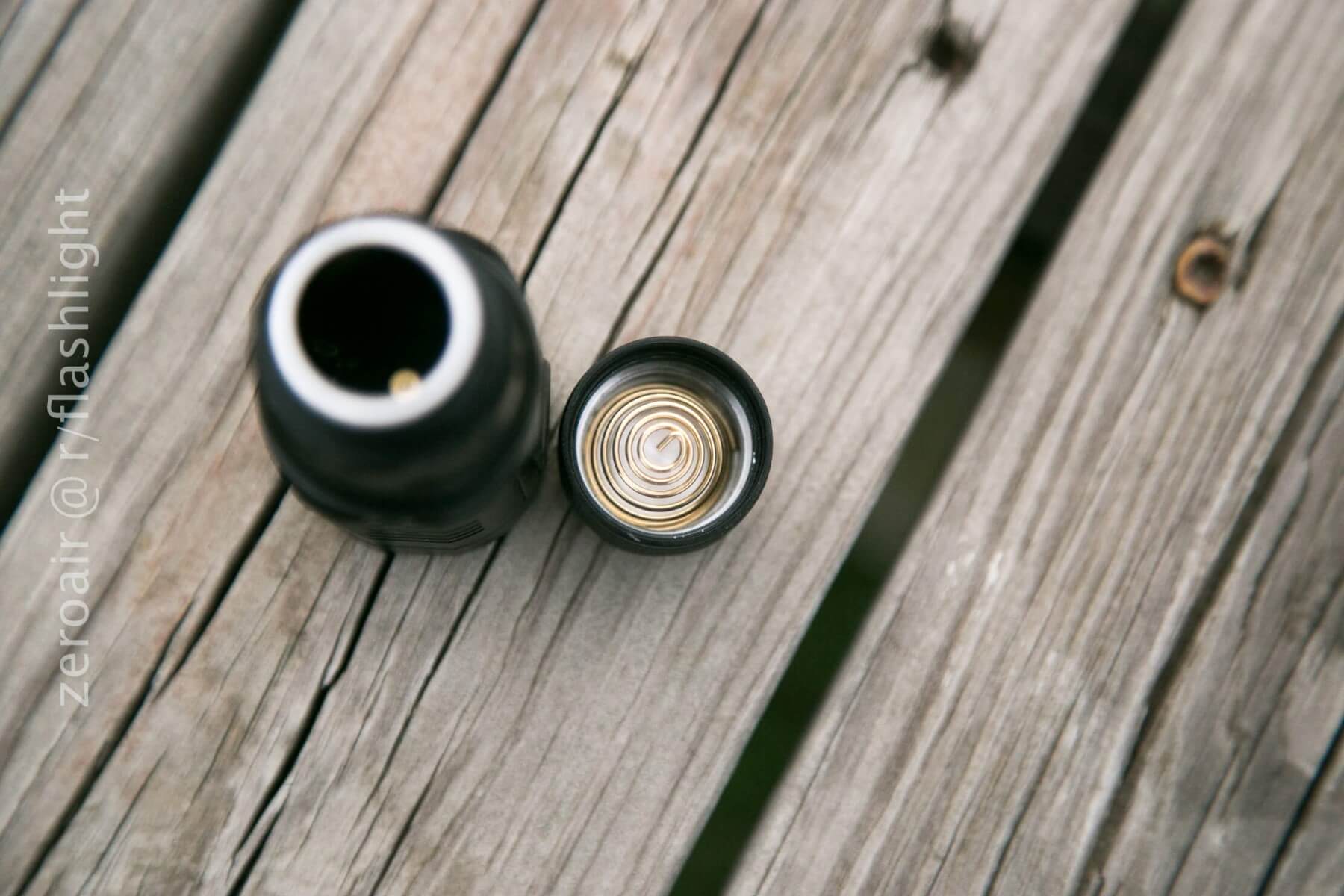
There’s room in there for a magnet, and that spring comes out easily if you want to add one.
Package and Manual
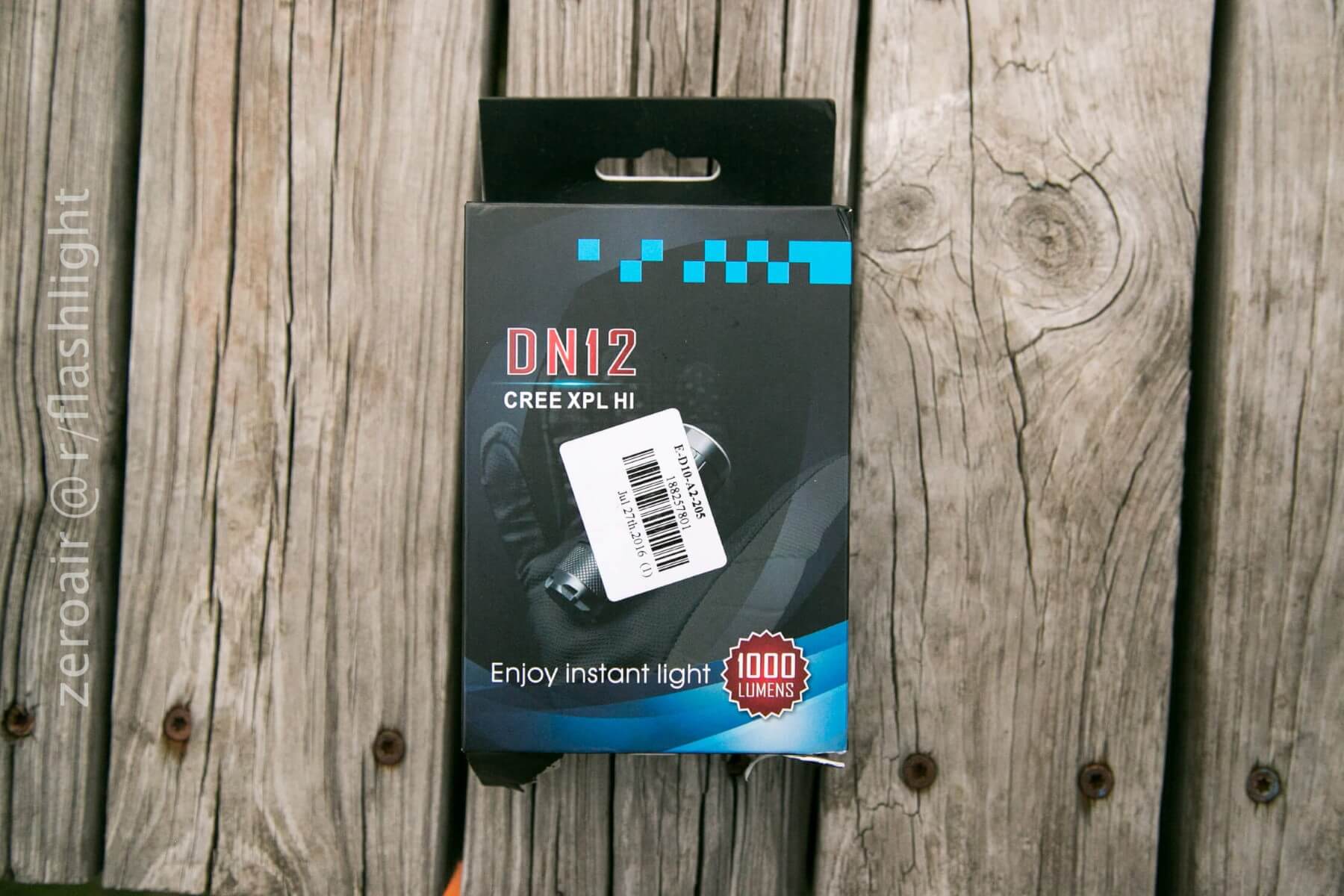
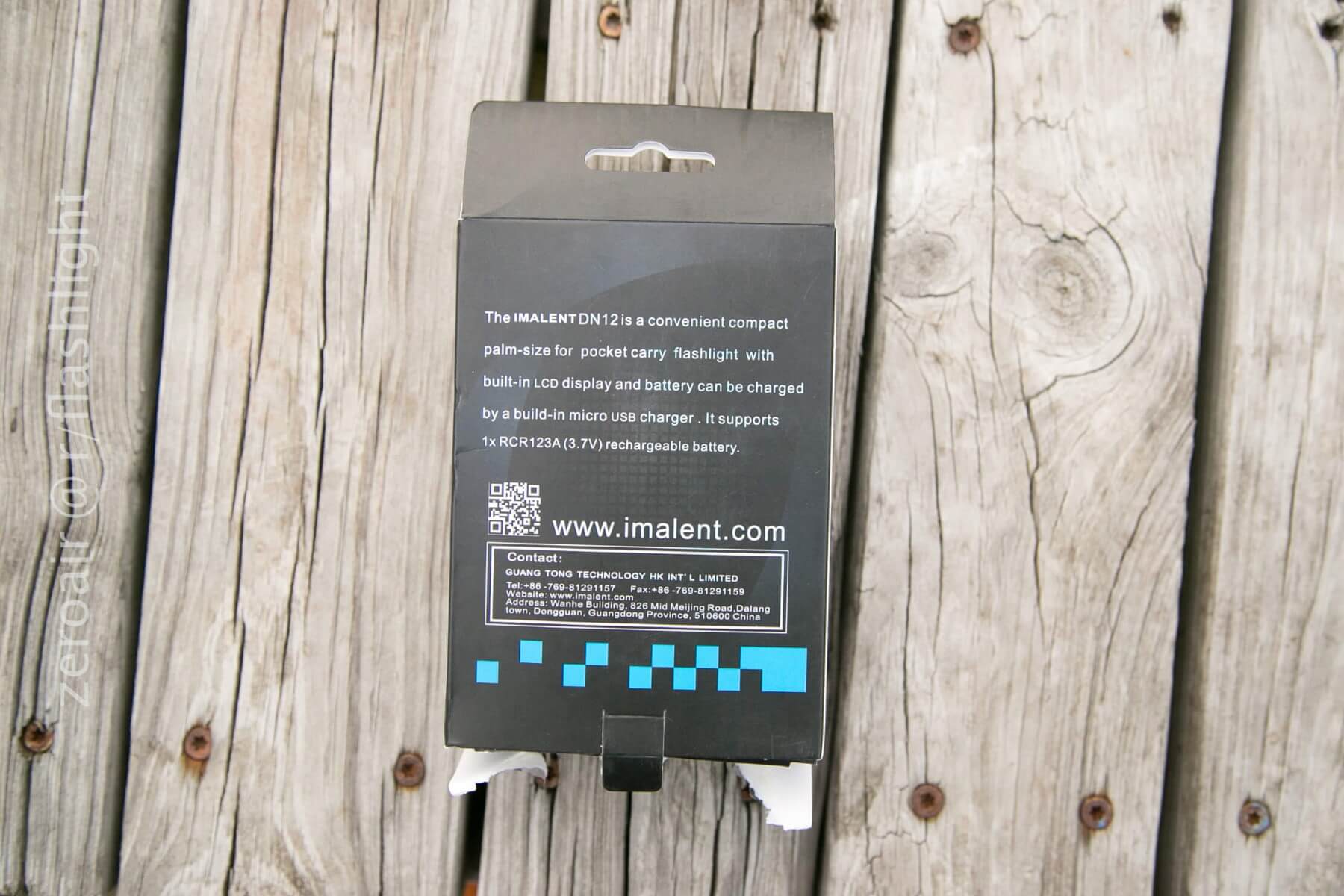
Cardboard package, with a plastic tray insert. Back of the box, not all that interesting.
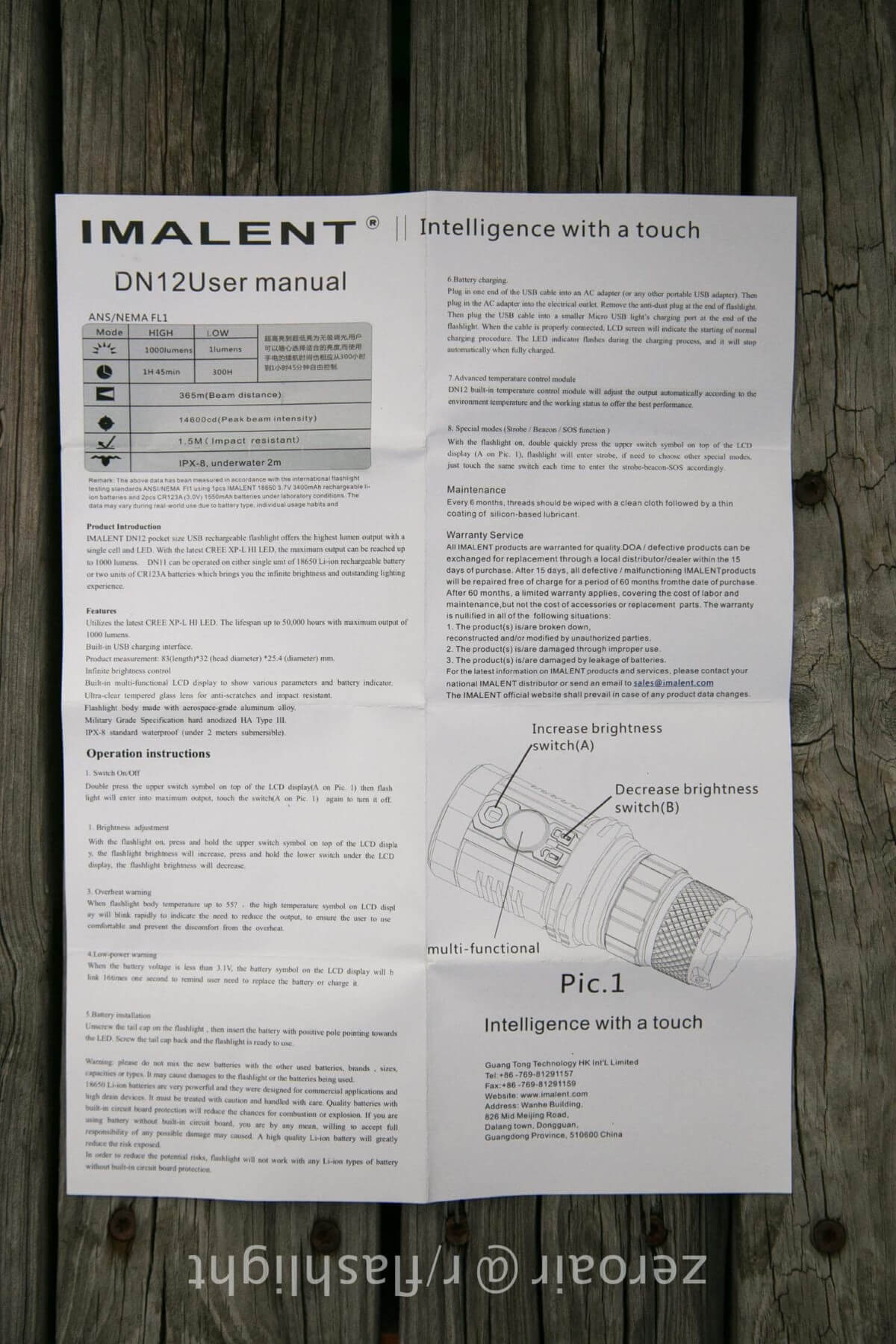
The manual is, quite frankly, not all that useful. It covers the basics, I think, but the light provides information that the manual doesn’t cover.
Retention
A lanyard or a pouch is your two options here. A clip wouldn’t really work. The lanyard on this one is much nicer than any I’ve seen. It has a quick-detach option and also a clippy hanger on the other end. It’s very nice. I carry the light loose in my pocket, though, and it’s…. quite big for that.
Power
A single 3.7V 650mAh rcr123a. It’s not proprietary, and as such, the light will charge any RCR123A or 16340 you might have.
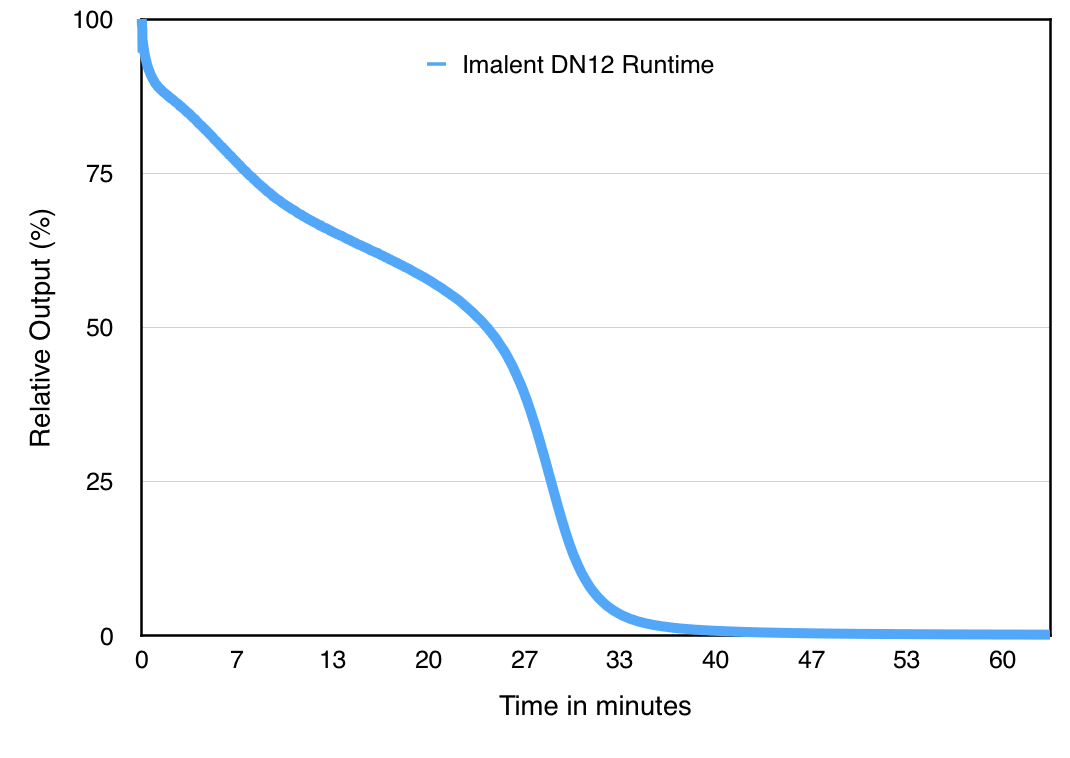
1000 lumens for [negligible], then dropping relatively steadily for the next 30 minutes or so. It’s an XPL-HI on a 650 mAh cell, so I guess that is to be expected (?).
User Interface and Operation
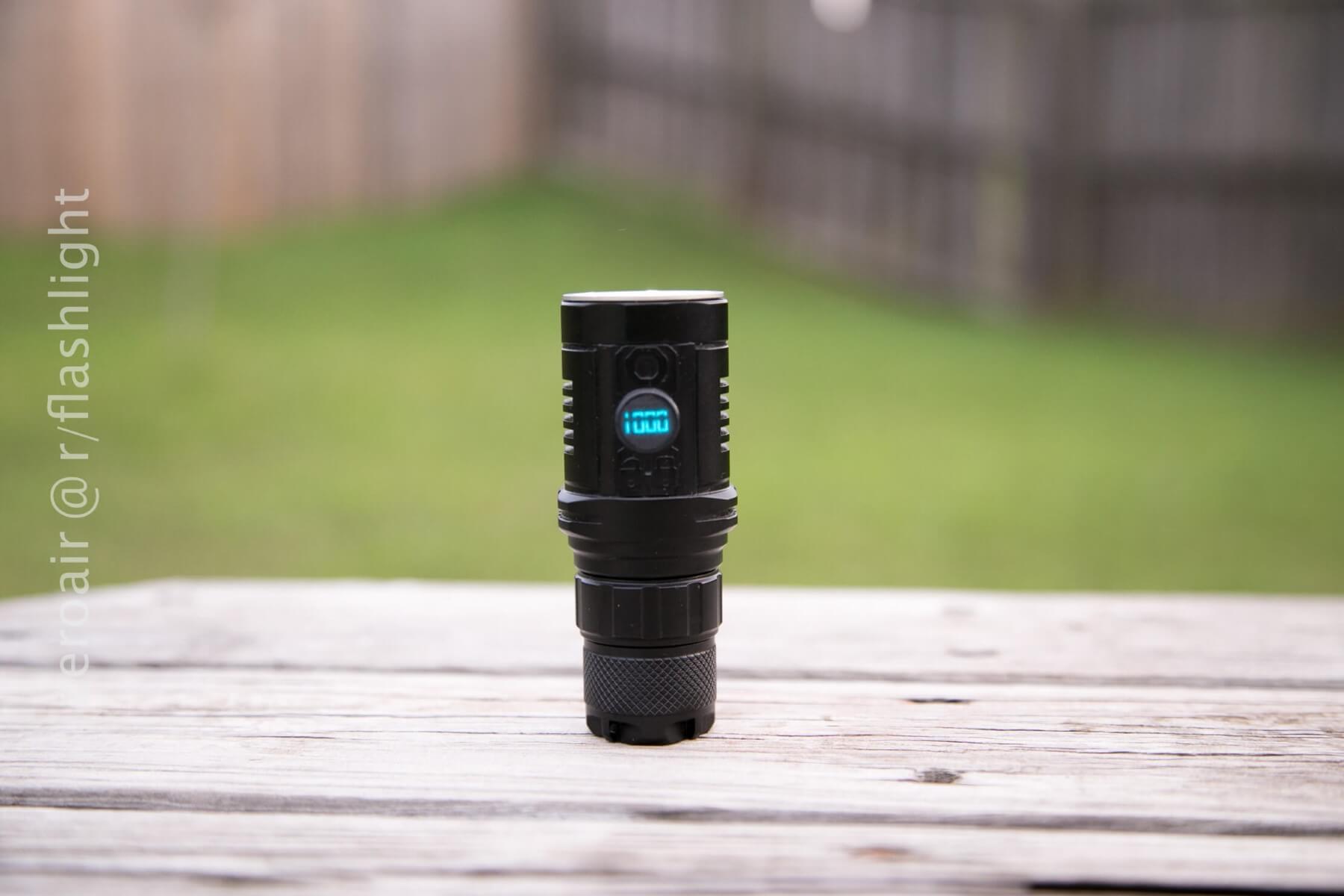
The light operates with a capacitive switch. I have never seen that in a light before, and can’t even think of a light that’s had that. And let me be honest and say, I couldn’t even figure out how to turn the thing on for quite some time after I opened the package. I really, really don’t care for this switch. Secondly, it’s a “seamless ramping” UI, which goes all the way down to “1 lumen”. It’ll ramp from 1 to 1000 in steps of 10. The result of this is that it takes quite a while to get from 1 to 1000, and I haven’t found a shortcut yet. This is extremely frustrating. Furthermore, there is no feedback to know if you’ve turned the light on, or, for that matter, even been mashing on the correct spot. You might say, “Ah, no big deal.” Sure, but it’s something grossly different from the last x number of years flashlighting…. And I wonder what question is being answered by having a capacitive switch instead of a traditional one?
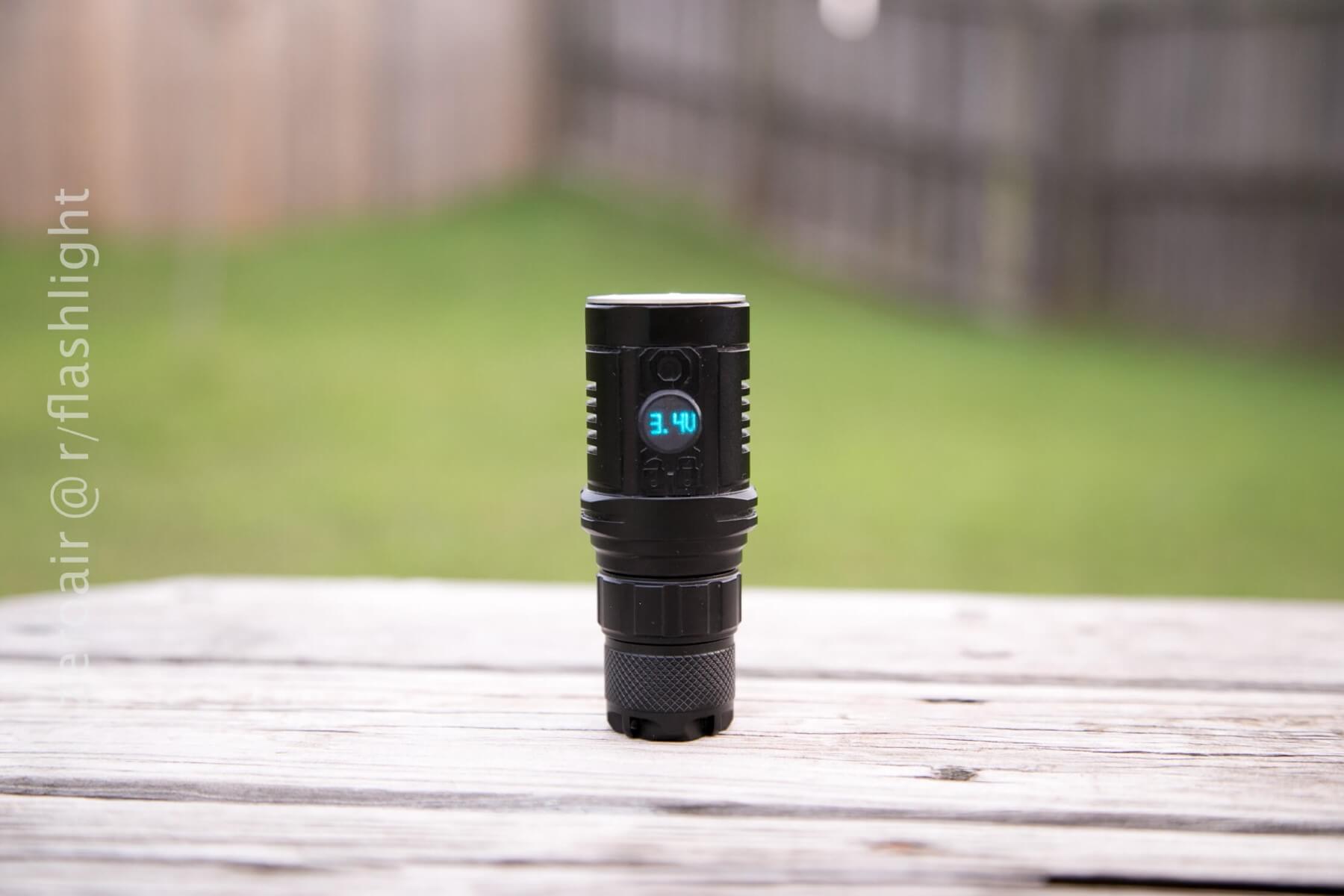
The switch area includes an LCD readout. Mainly used to display what lumen setting is selected. It also reads out the cell voltage, but to what end, I’m not sure. It reads all over the place from 3.4V to 4.0V with no change in cell (only change in mode).
While the light is on, a double click will get the strobe modes (3). Then a single click will cycle through the strobes, and if you get into the strobes, you have to cycle through all three to get the light turned off. That’s another extremely frustrating thing – sometimes I accidentally hit strobe (which is 1000 lumens too). Oh, you were in 1 lumen mode and accidentally double hit the capacitive switch? Boom, 1000 lumens worth of fast strobe. Didn’t mean to do that? Well, click two more times to get the light back to 1 lumen, or three times to turn the light off. After cycling through two more strobe modes.
LED and Beam
The CREE XPL-HI is a great emitter for throw, and the smooth deep reflector pairs nicely with that.
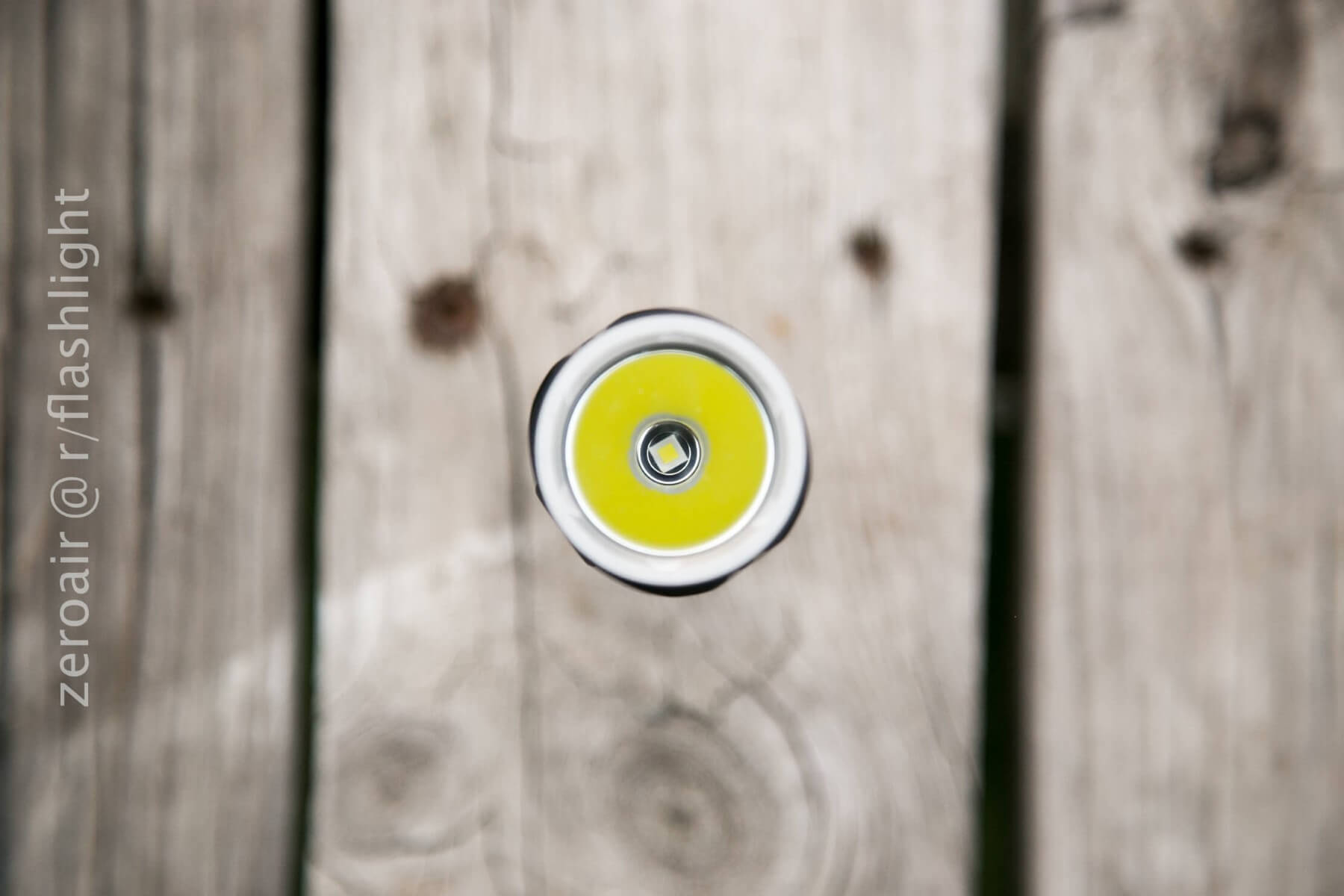
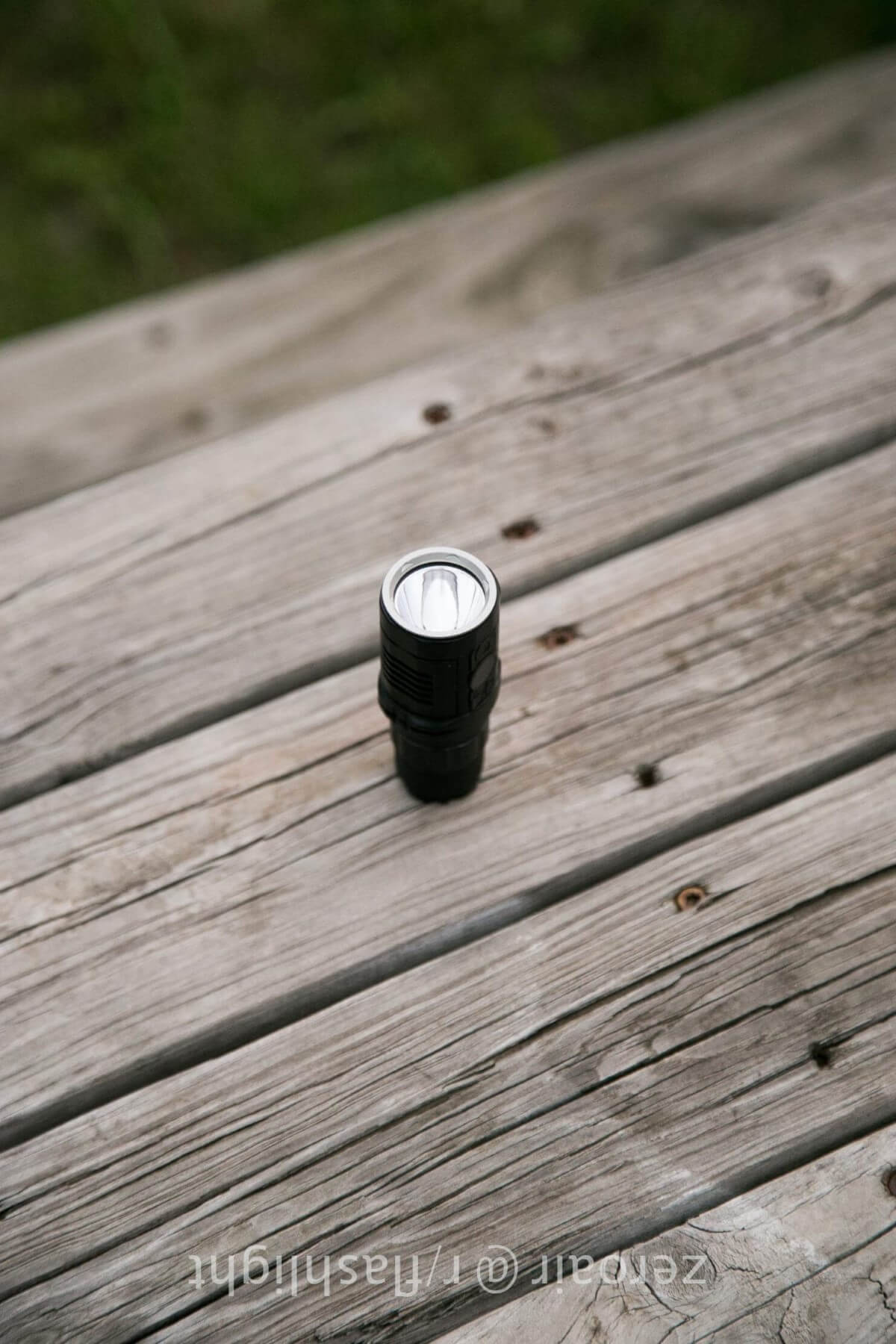
The light does have good throw, but all of this is on a 650 mAh RCR123a…. So you may throw 1000 lumens, but it will not be for long. That’s just a concession you have to make – there’s no extension tube for this light to the best of my knowledge. There is a different version with the same head, but to me, the tailcap looks different. The head may be the same (DN11).
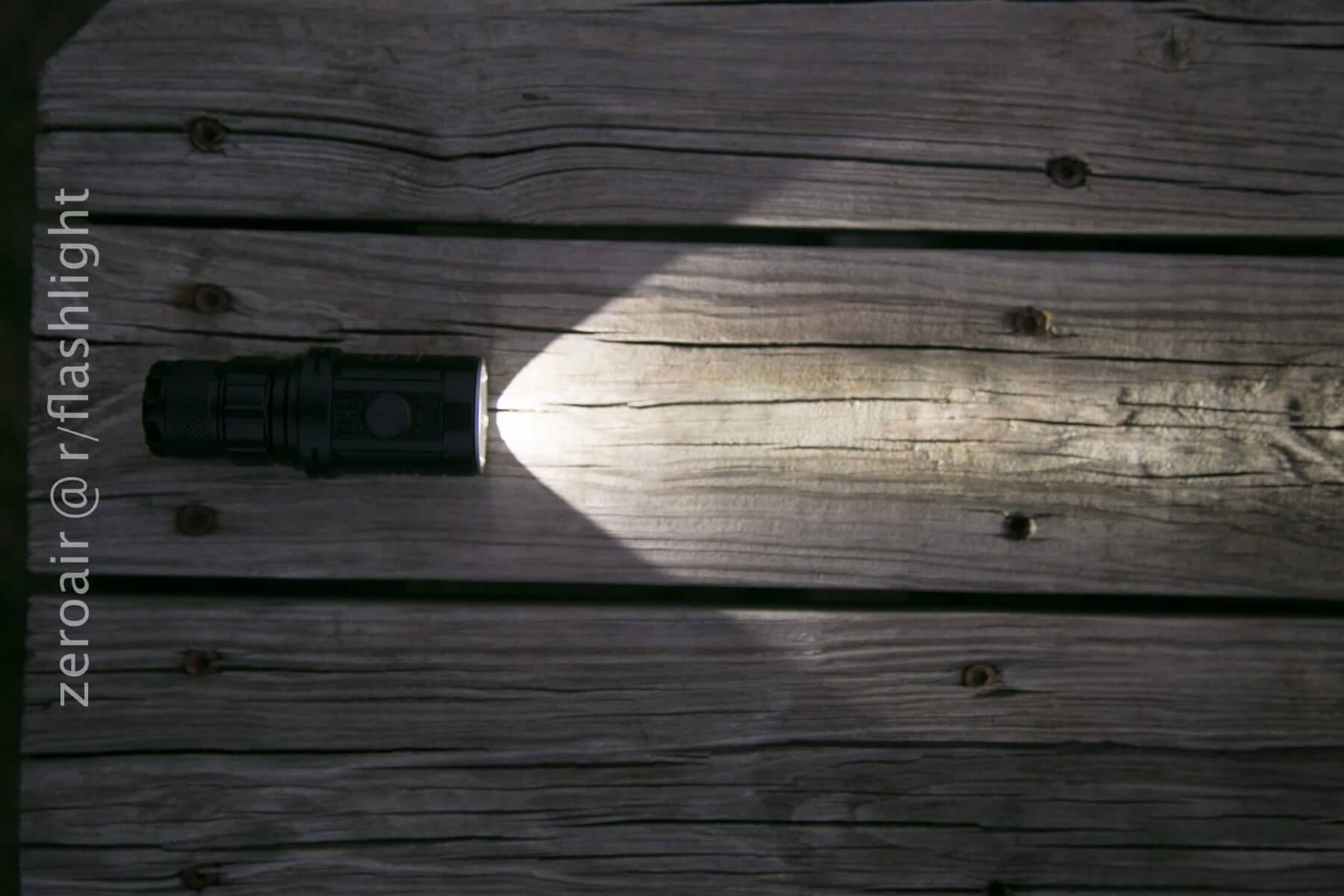
So the beam throws with an intense spot and a fair amount of spill. Very typical of XPL-HI setups. Even on the 1-lumen mode, the XPL-HI does make a useful spot of light.
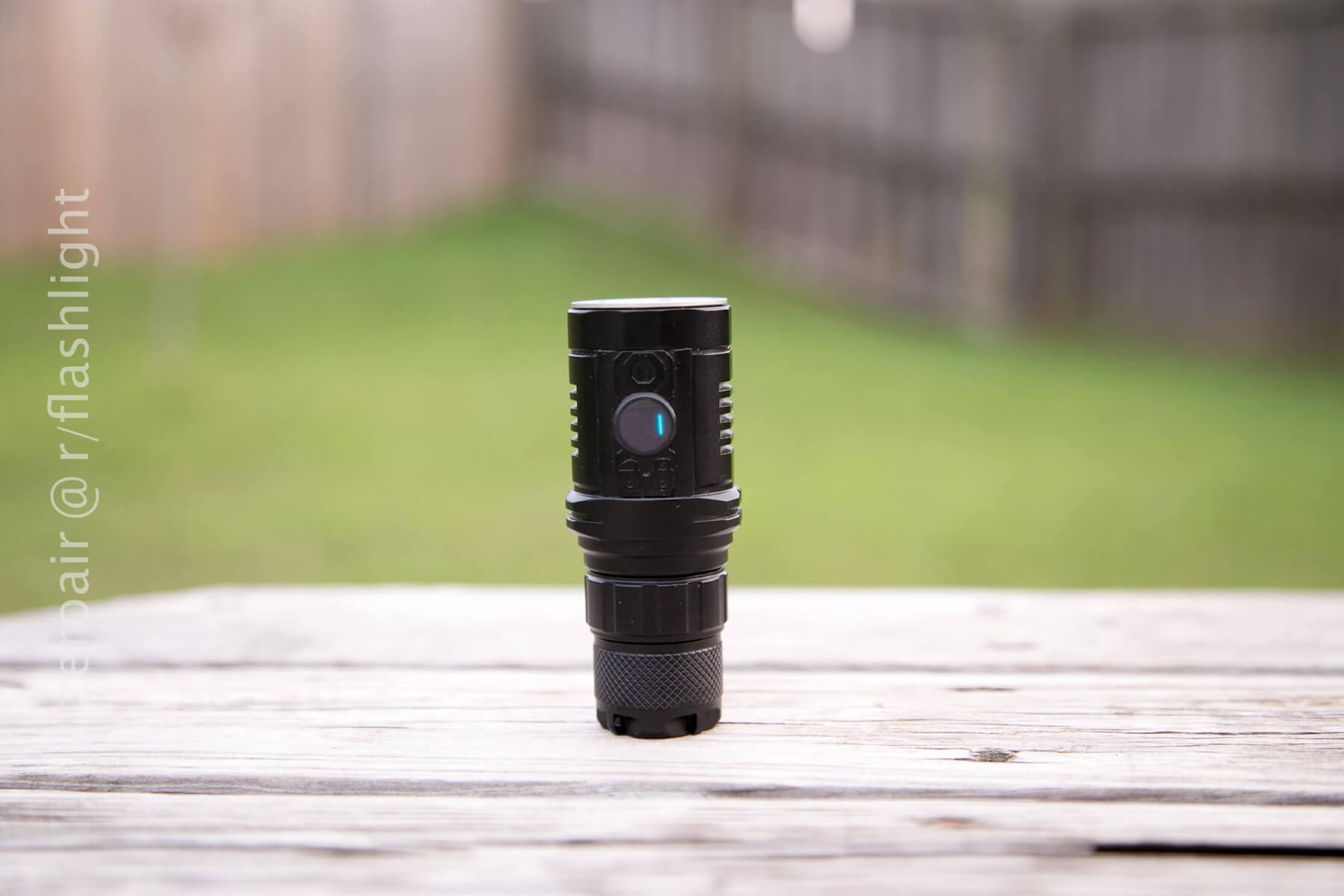
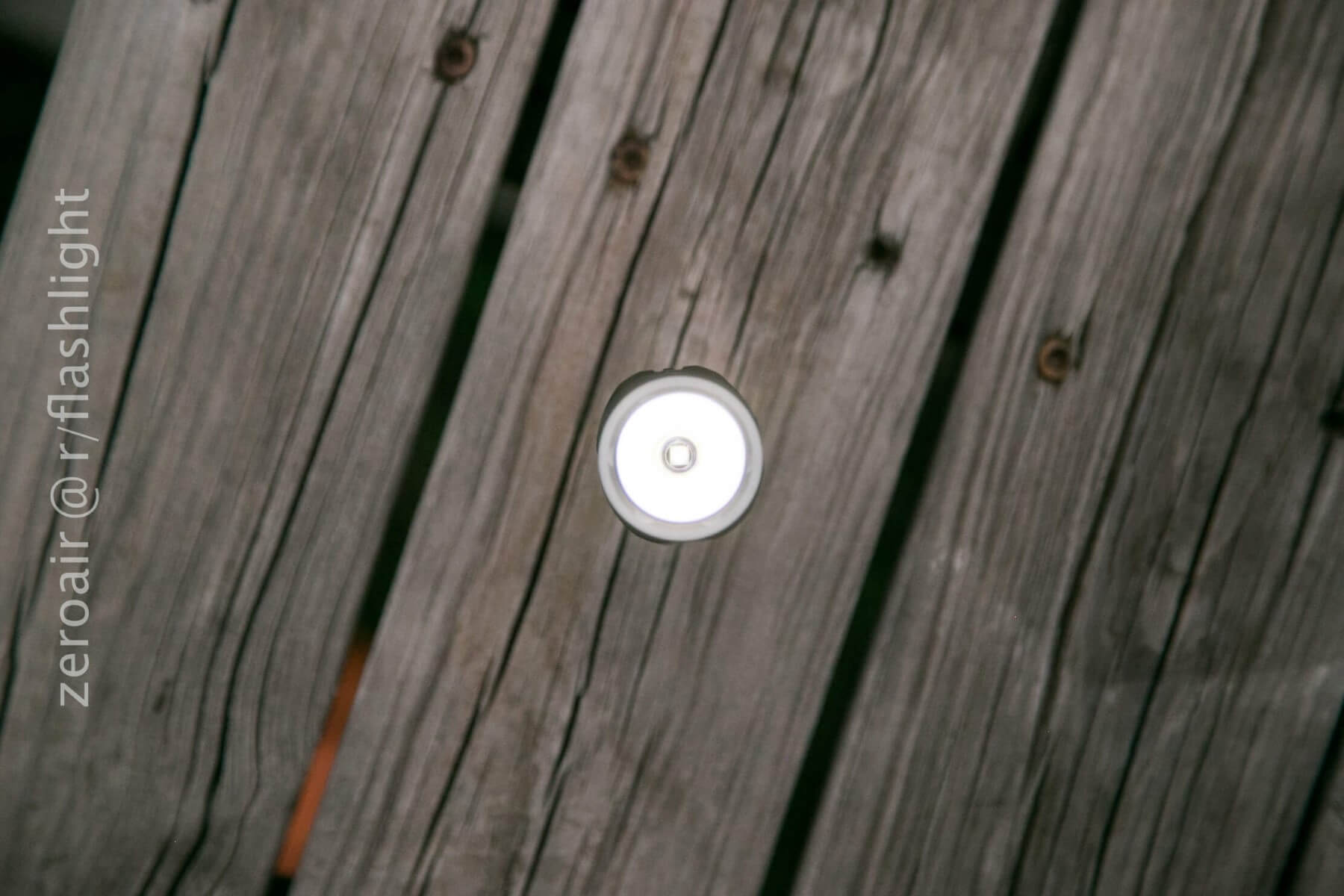
(1 lumen mode also inexplicably shows “3.4V” on a fully charged cell).
The 1000 lumen mode, however, read 4.2V (same cell, seconds later).
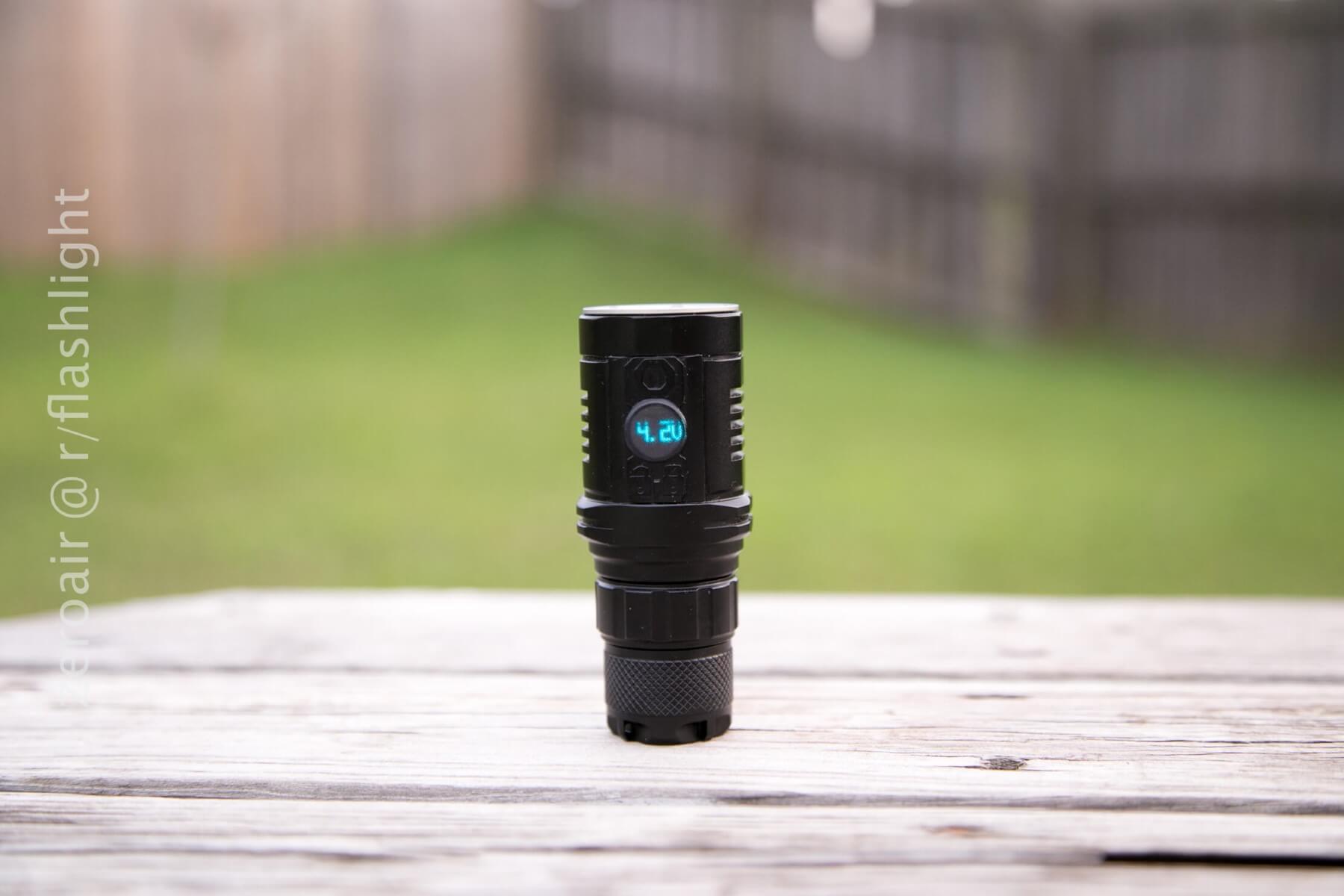
That has to mean something other than a cell readout – but the manual does not cover it, and I can’t guess.
The beam spills this way.
Beamshots
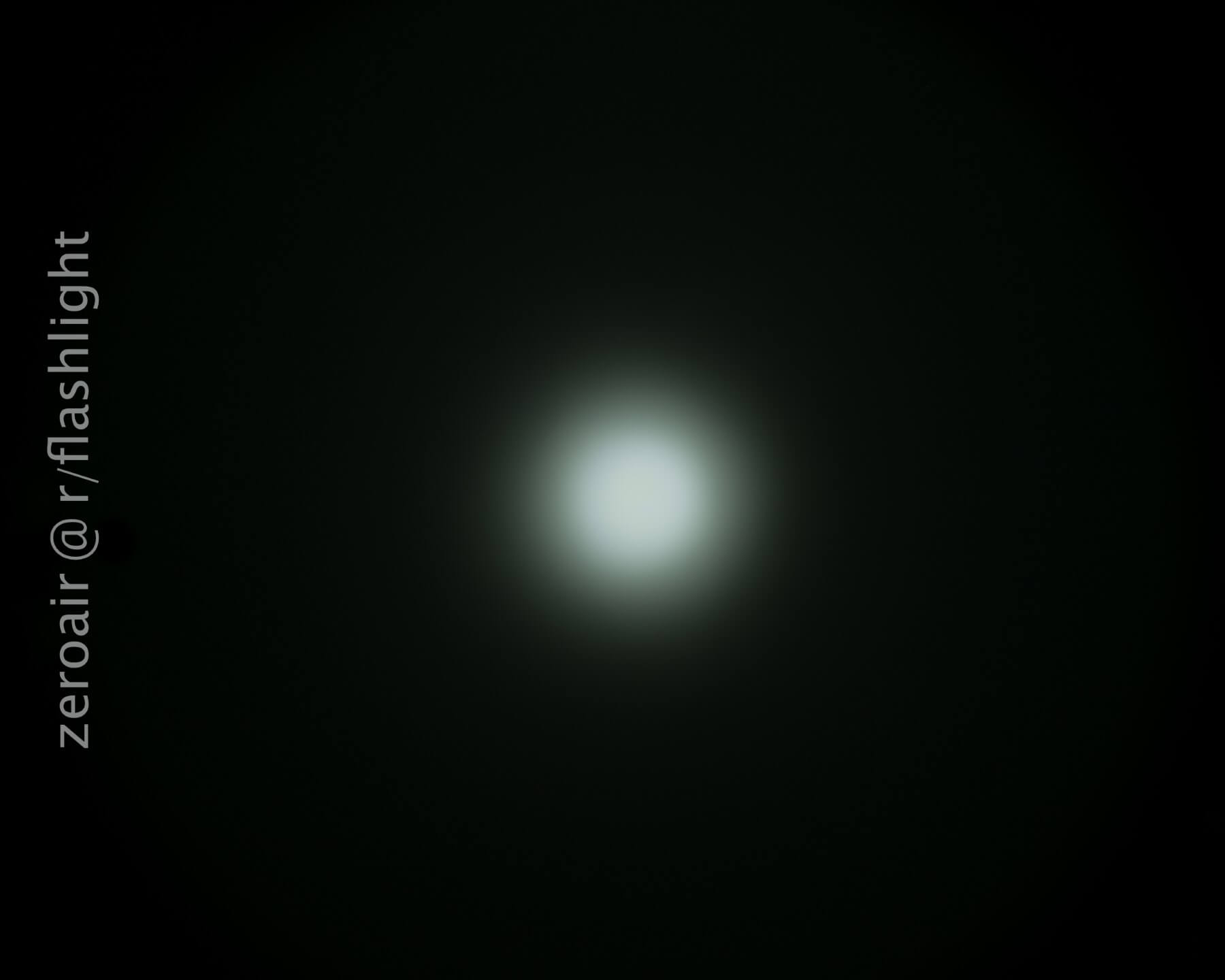
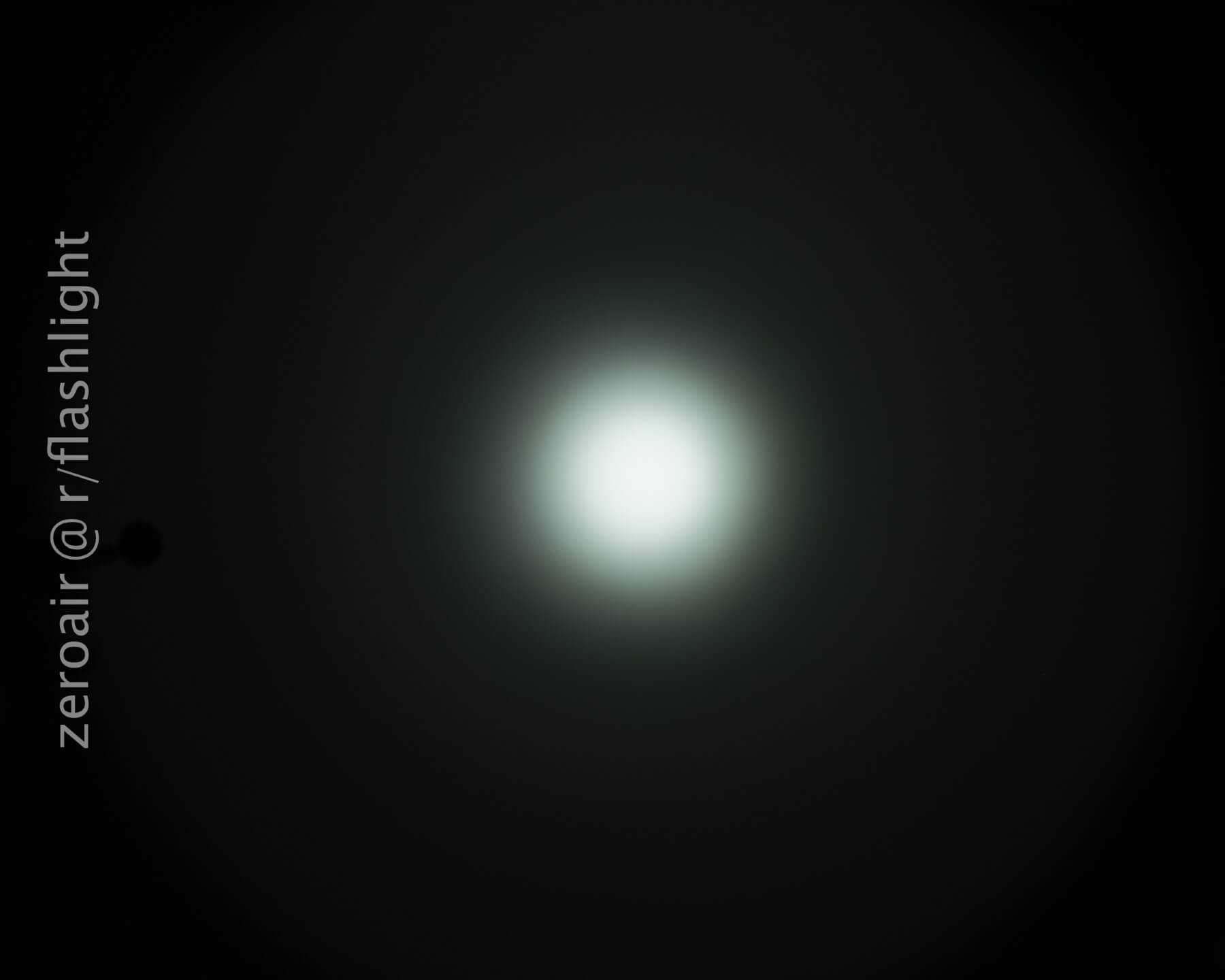
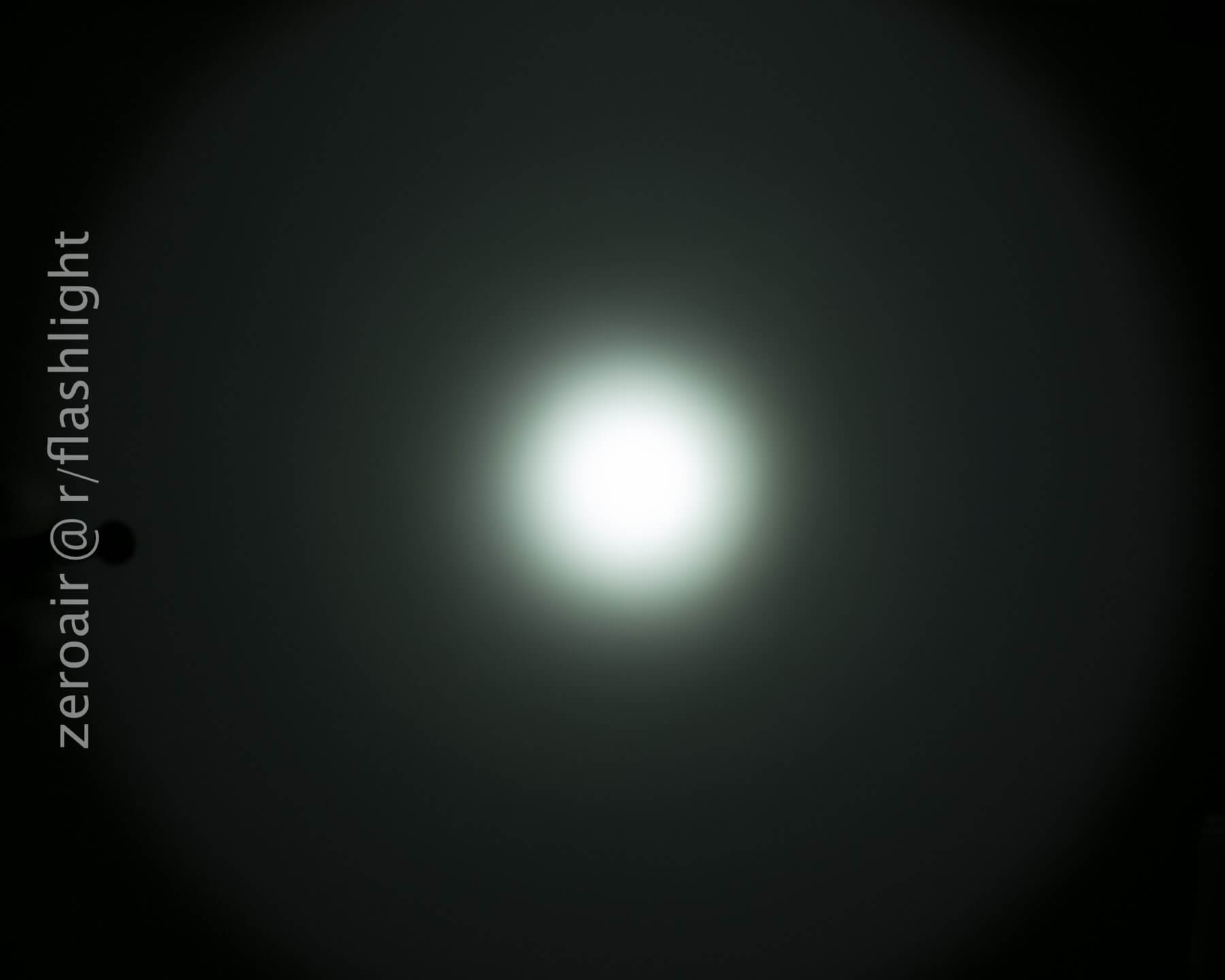
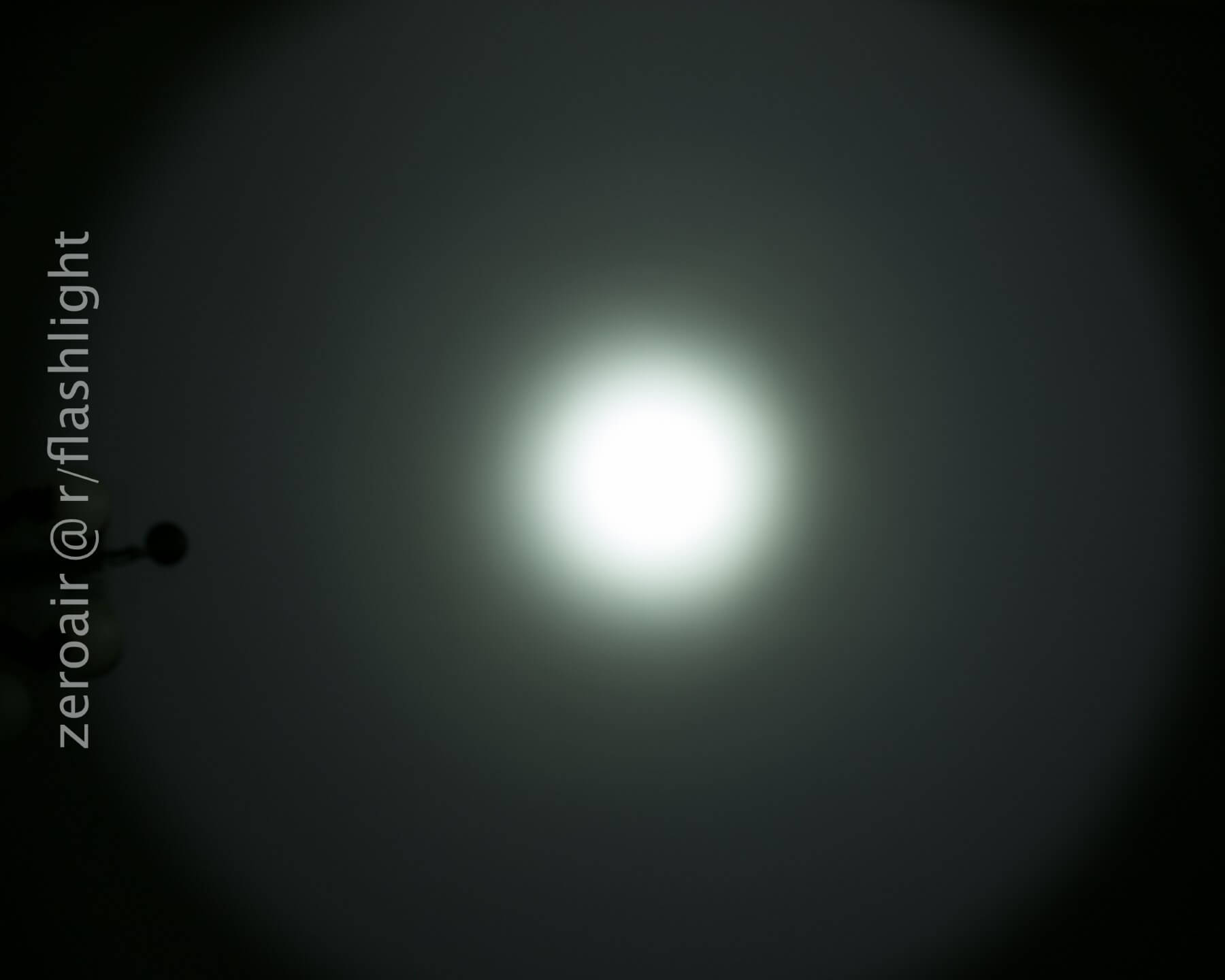
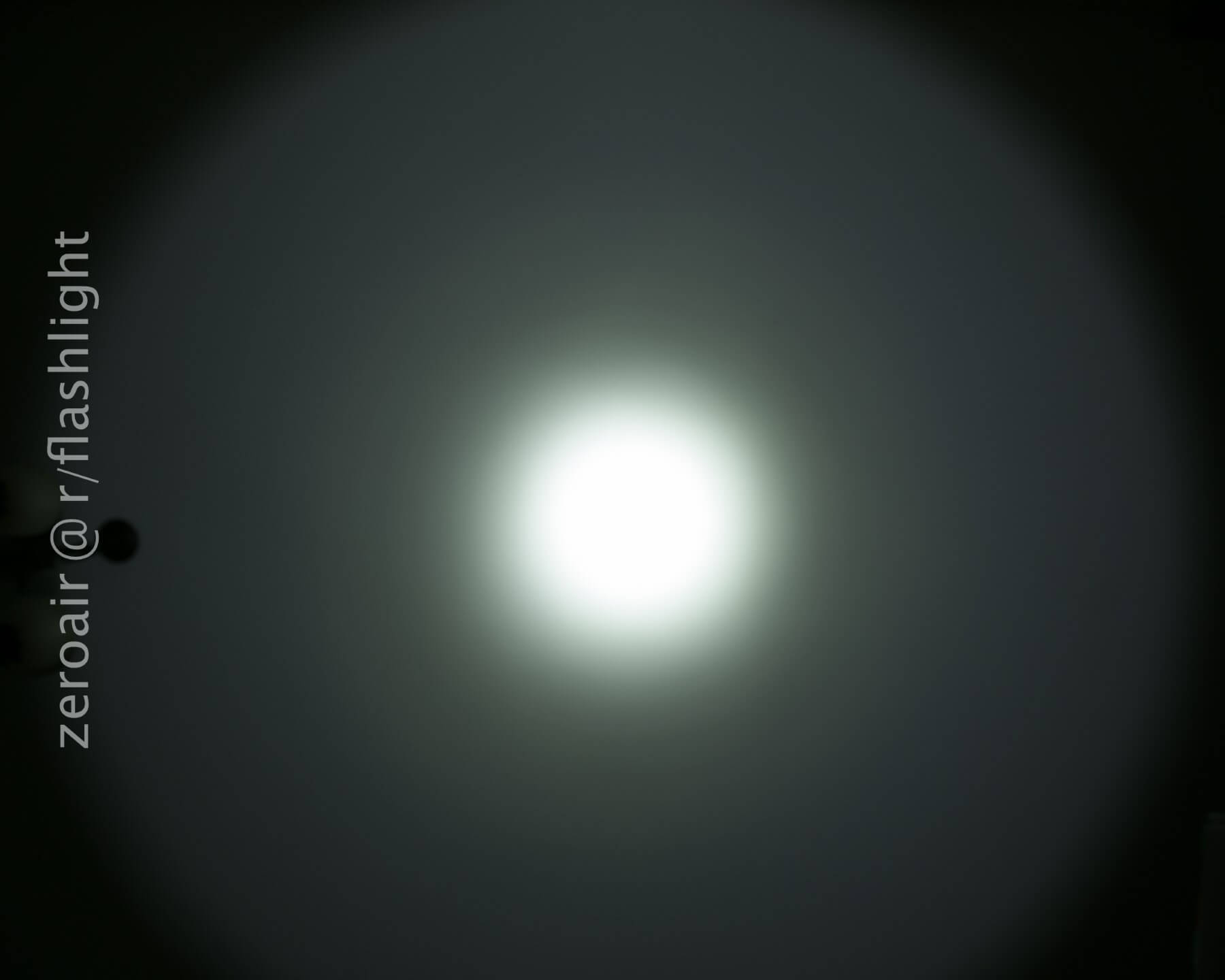
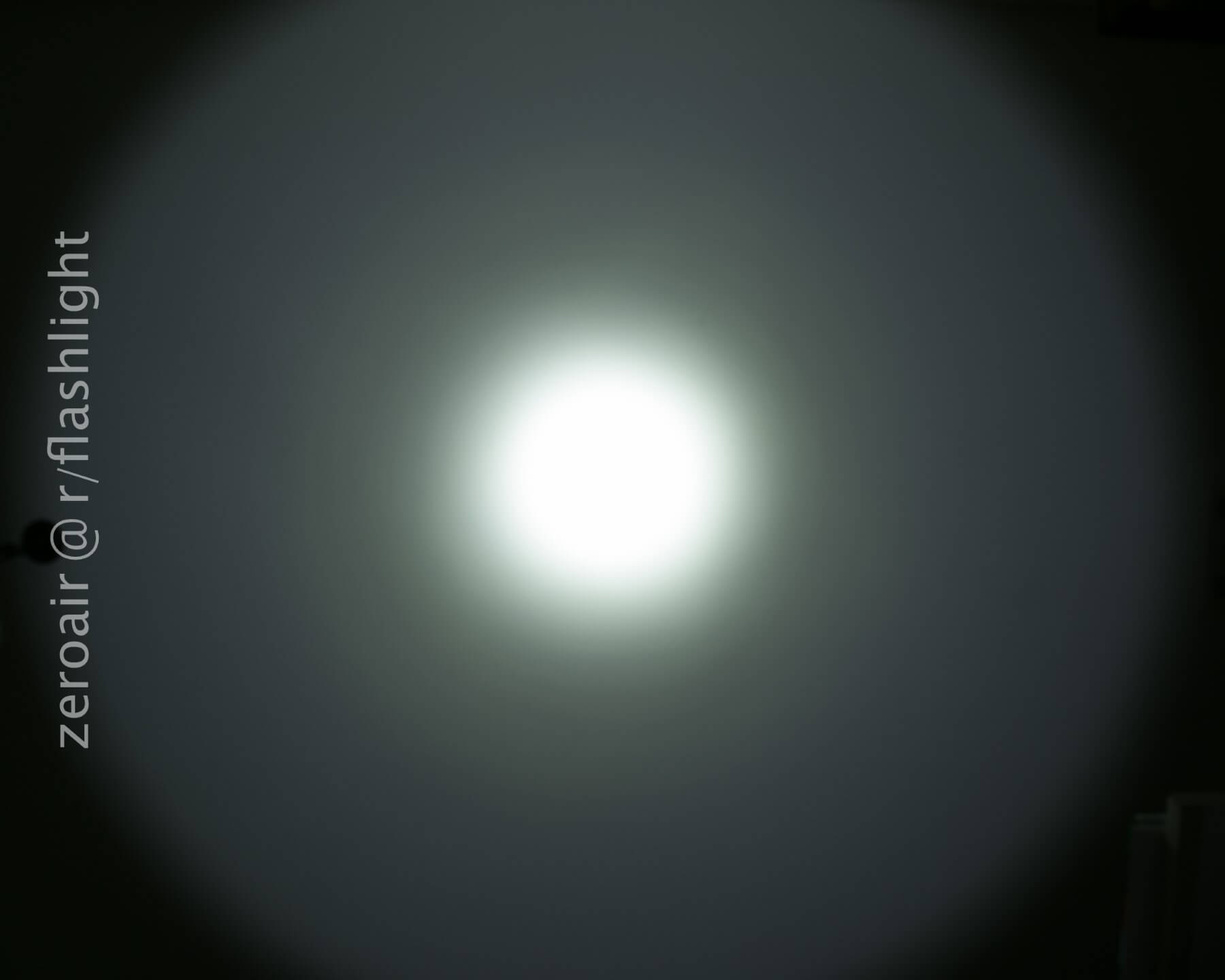
These beamshots always have the following settings: f8, ISO100, 0.3s shutter, and manual 5000K exposure. These photos are taken at floor level, and the beam hits the ceiling around 9 feet away.
And beamshots at random lumen settings I picked. (1000, 800, 600, 400, 200, 100, 1, I believe).

Size
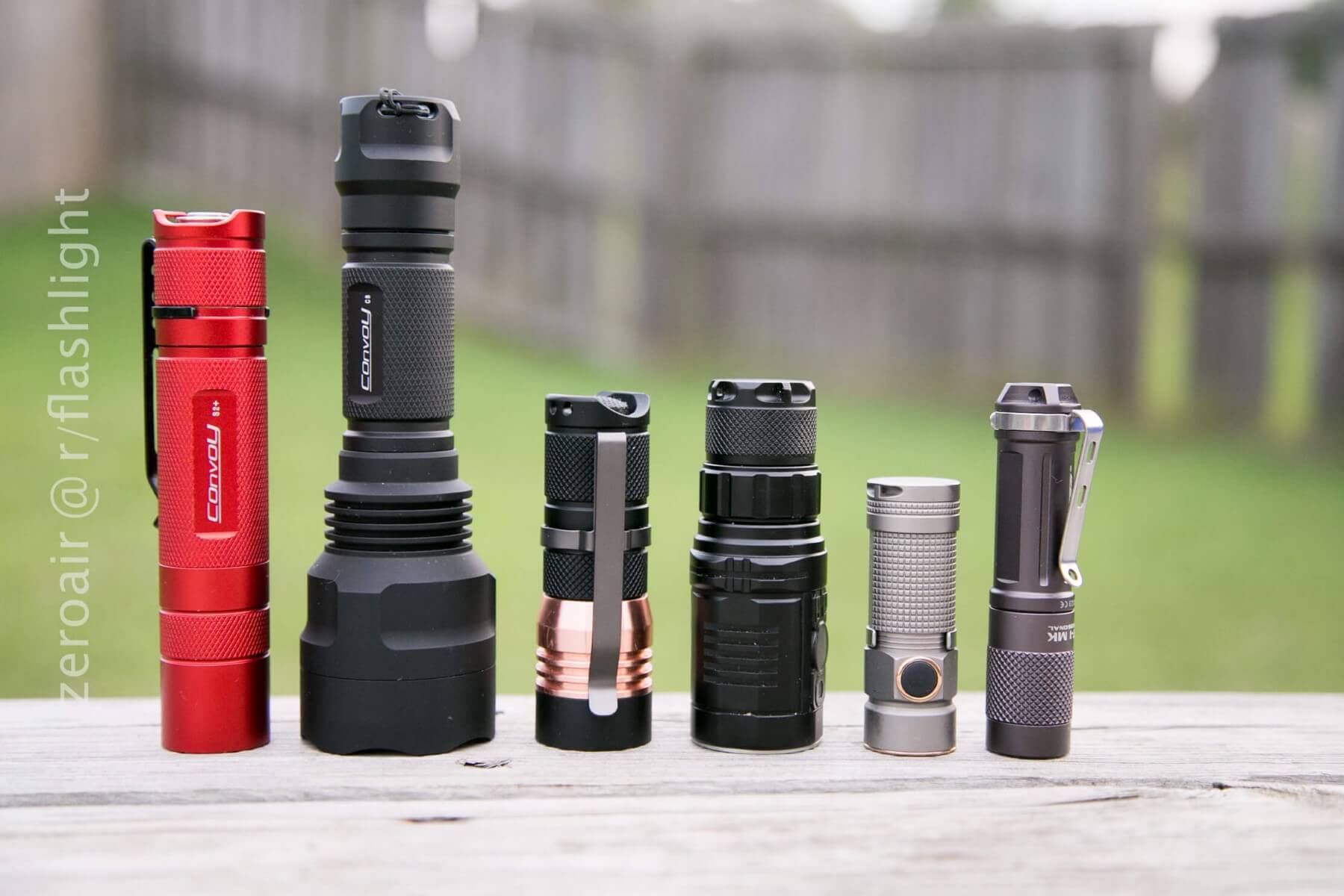
83mm x 32mm (Head) * 25.4mm (Body). Chunky little thing! It holds ok, but at this size basically requires holding the head. At 1000 lumens, that head’s going to get hot rather quickly, so be aware it might get uncomfortable. Also, hey, just wear gloves, you say? Ah, but remember that capacitive switch…. Good luck turning it on or off or changing modes.
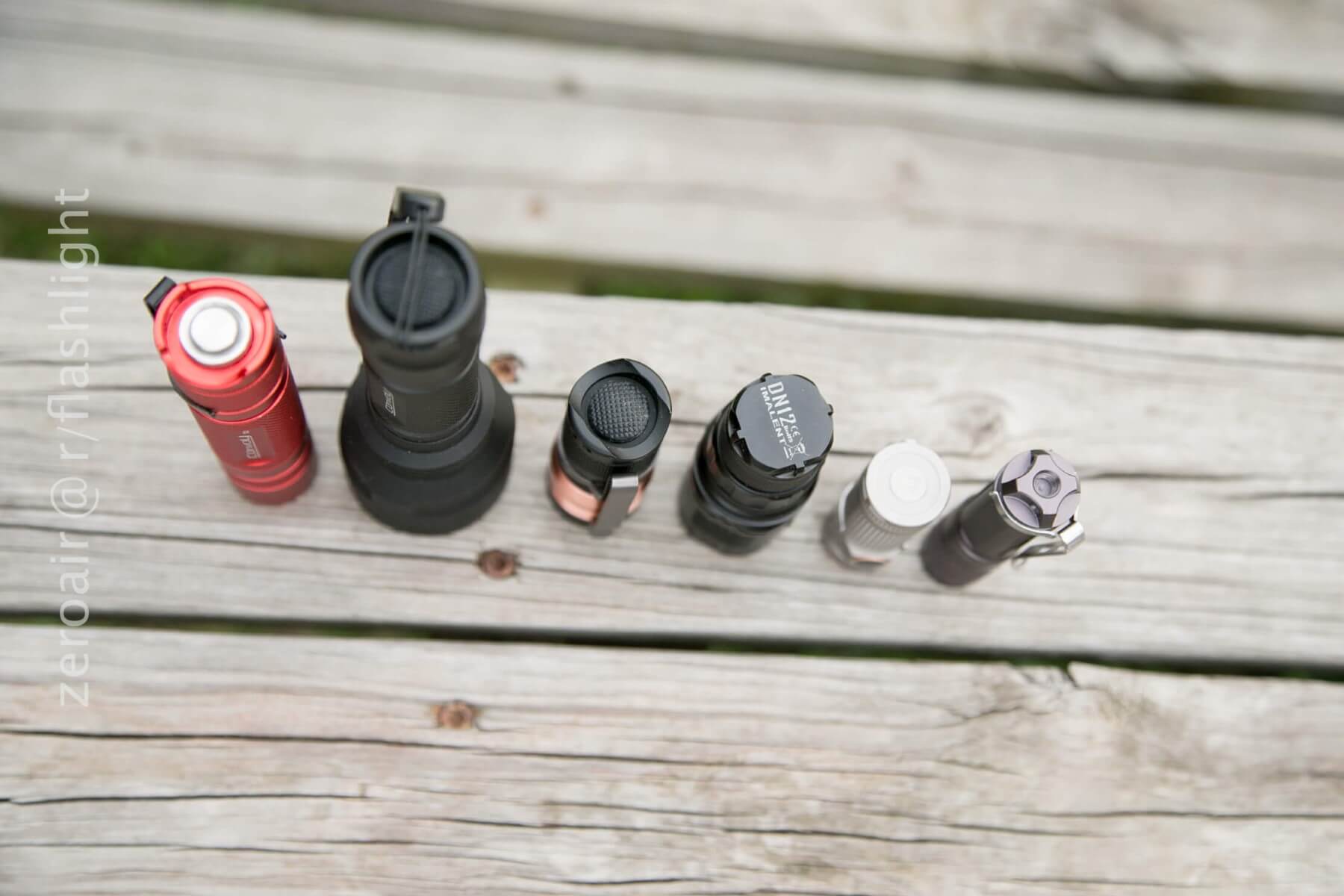
A few other lights,
and top down.
Random Comparisons….
A CR123 thrower…. I certainly don’t have one. I’ll compare it to some other cr123 lights, like the Olight S1, with a pic.
Conclusion
What I like
- Comes with a battery
- Throws quite well
- Small
- Onboard charging
- It is bright!
What I don’t like
- Switch is not good
- Reflector artifacts in beam
- No 18650 extension tube
- Battery rattle
- Comfort in hand
- Capacitive switch
- LCD isn’t really all that useful
- ZERO feedback from light via reasonable means
Competitive Options
Evaluate why you’d need a CR123 thrower, and then, at the very least, buy the 18650 version of this light (DN11), if the user interface and the switch speak to you. I’d love to see if this head screws onto the DN11 body. I’m almost sure it would.
But there are some, like the Nitecore EC11, that might also suit your needs.
Final Thoughts
It’s unusual for me to just really not care for a light (it’s happened once before, from my memory). I did not enjoy this light. I am sure there are circumstances where this light would be the perfect companion, and if you’re that person, then I hope this review was helpful!
Notes
- This light was provided by GearBest for review. I was not paid to write this review.
- This content originally appeared at zeroair.org. Please visit there for the best experience!
- Use my amazon.com referral link if you’re willing to help support making more reviews like this one!
- Please support me on Patreon! I deeply appreciate your support!
Discover more from ZeroAir Reviews
Subscribe to get the latest posts sent to your email.