


Nitecore P16 TAC Flashlight Review
The Nitecore P16 TAC flashlight offers a single Cree XM-L2 emitter and a dual switch interface. This light has tactical features, too.
Official Specs and Features
Here’s a link to the Nitecore P16 TAC flashlight product page.
Versions
There’s just one version of the P16 TAC, but there’s also a P16. The P16 has an indicating side switch, but otherwise, the P16 TAC seems to be a spec bump (higher output).
MSRP
These go for around $69.95.
Short Review
This is a solid, simple light, and the dual switches make a great combo. The light lacks a bit of “wow” factor for me, but is well built and does what it’s intended to do.
Long Review
The Big Table
| Nitecore P16 Tac | |
|---|---|
| Emitter: | Cree XM-L2 (U3) |
| Price in USD at publication time: | $69.95 |
| Cell: | 1×18650 |
| Turbo Runtime | |
| LVP? | No |
| Switch Type: | Mechanical Forward Clicky |
| On-Board Charging? | No |
| Claimed Lumens (lm) | 1000 |
| Claimed Throw (m) | 300 |
| Candela (Calculated) in cd (at 30s) | 716lux @ 6.033m = 26060cd |
| Throw (Calculated) (m) | 322.9 (107.6% of claim)^ |
| All my Nitecore reviews! | |
^ Measurement disclaimer: Testing flashlights is my hobby. I use hobbyist-level equipment for testing, including some I made myself. Try not to get buried in the details of manufacturer specifications versus measurements recorded here; A certain amount of difference (say, 10 or 15%) is perfectly reasonable.
What’s Included
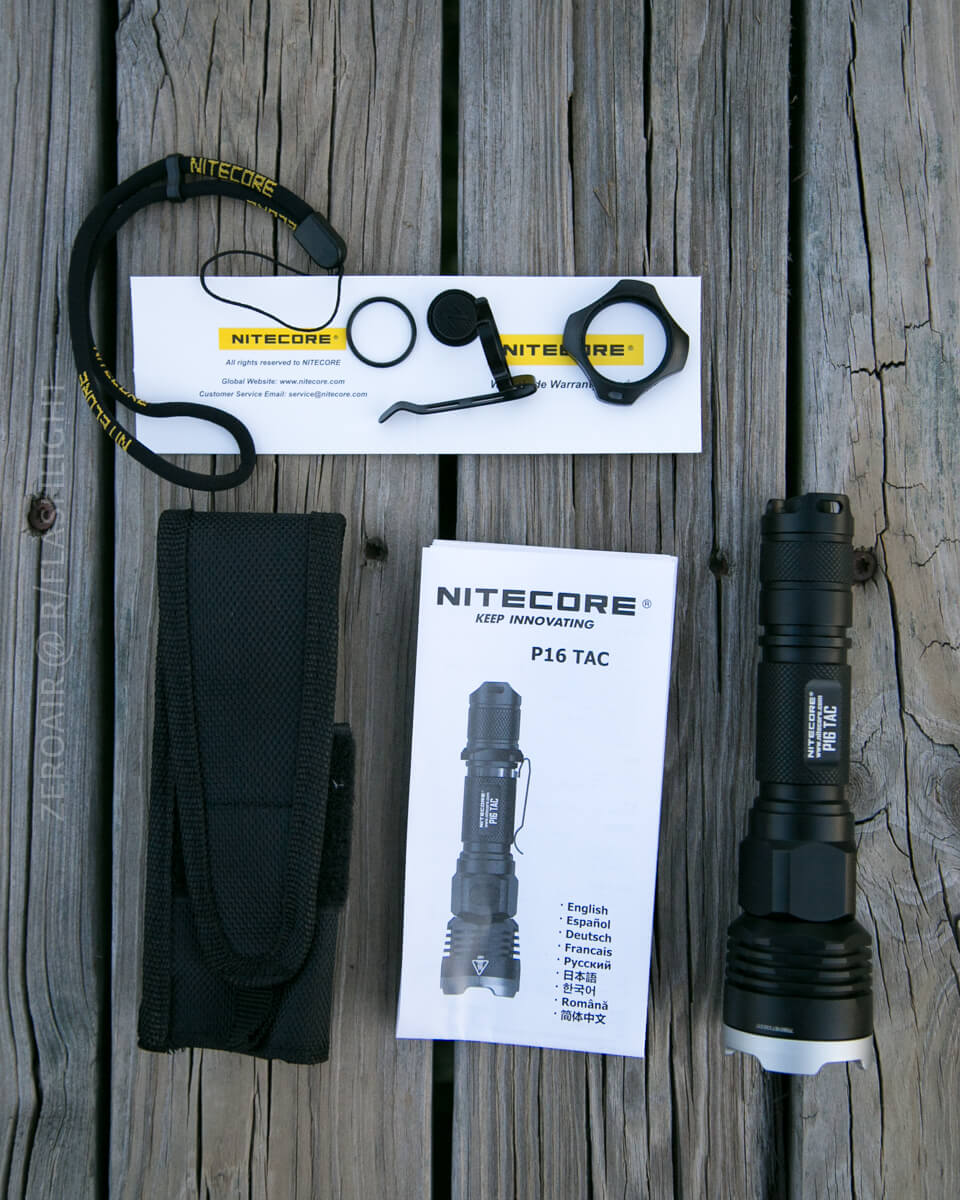
- Nitecore P16 TAC
- Nylon pouch
- Lanyard
- Pocket clip
- Spare o-ring
- Spare rubber boot for tailswitch
- Manual
Package and Manual
The package is typical Nitecore – black and orange cardboard, and highly printed. The box really does a good job of describing the light, in fact (down to the fact that it accepts only button top cells!)
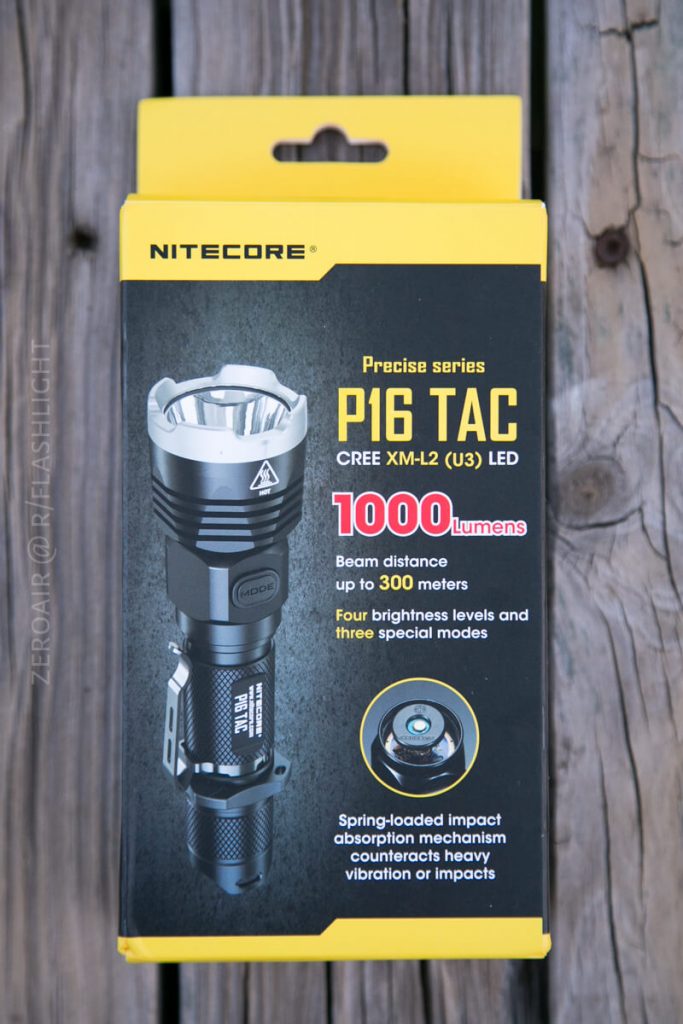
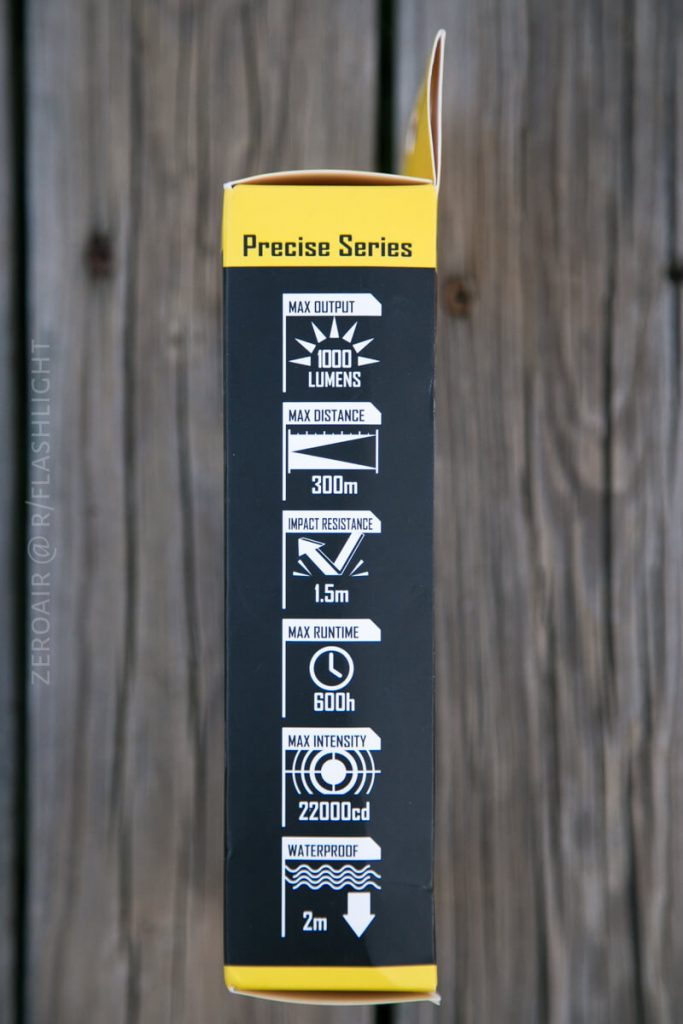
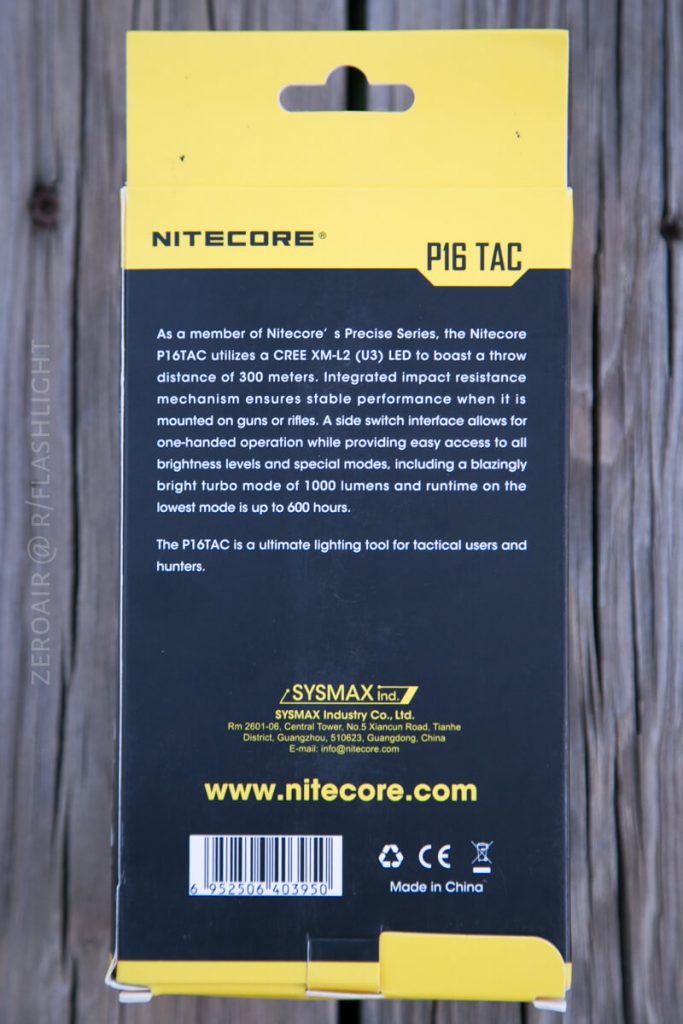

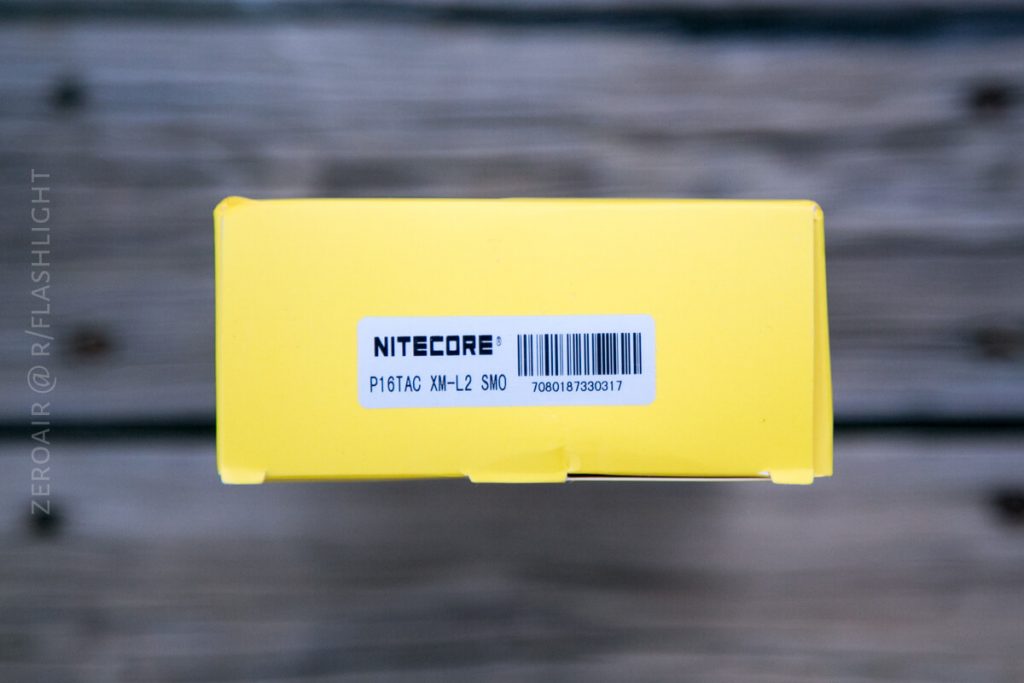
The manual is good too. It contains about the same amount of info as the box, however. 😛 Here’s a .pfd link to the manual.
Build Quality and Disassembly
The P16 TAC has typical Nitecore build quality. In my experience, that’s great quality. The threads are anodized and well-lubed. The o-rings are beefy. The anodizing is nice and thick. I haven’t disassembled the light all the way down to the driver, but the parts I can see are good.
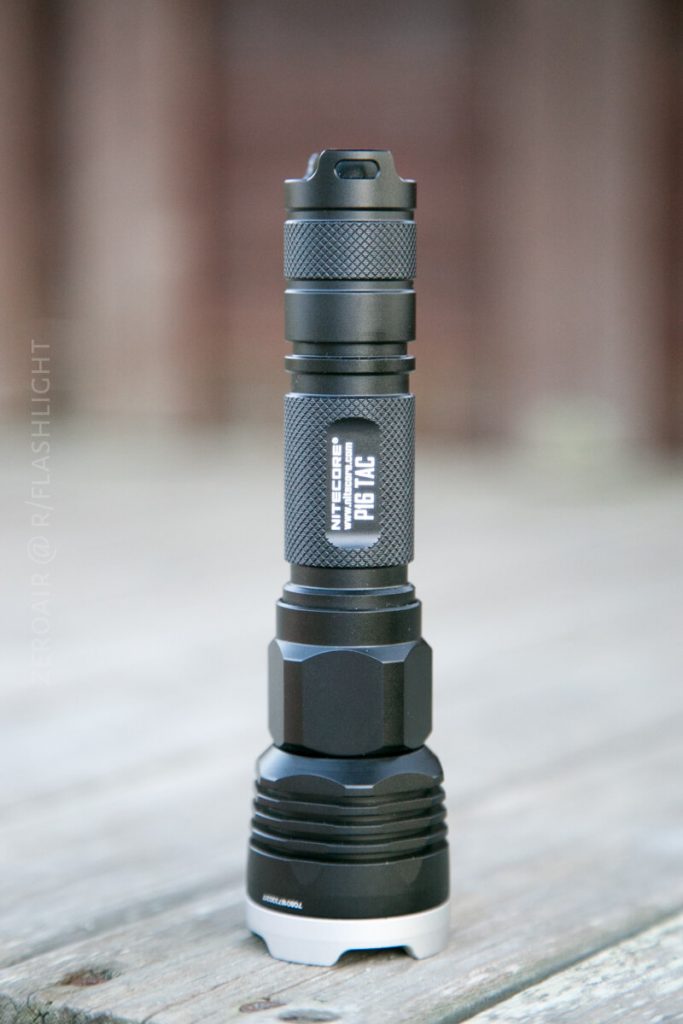

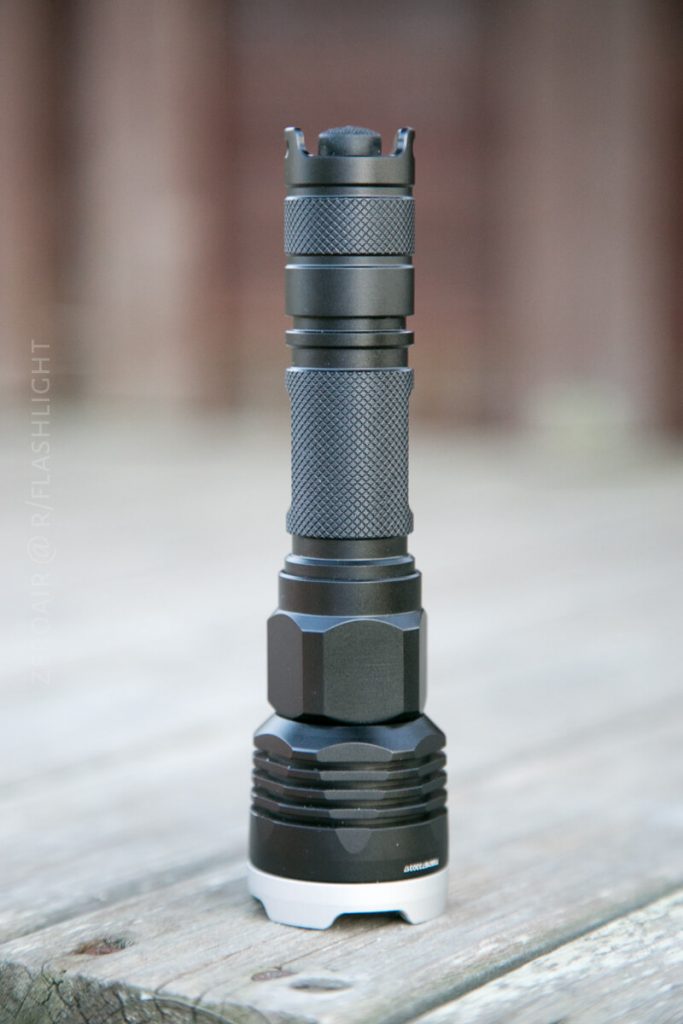
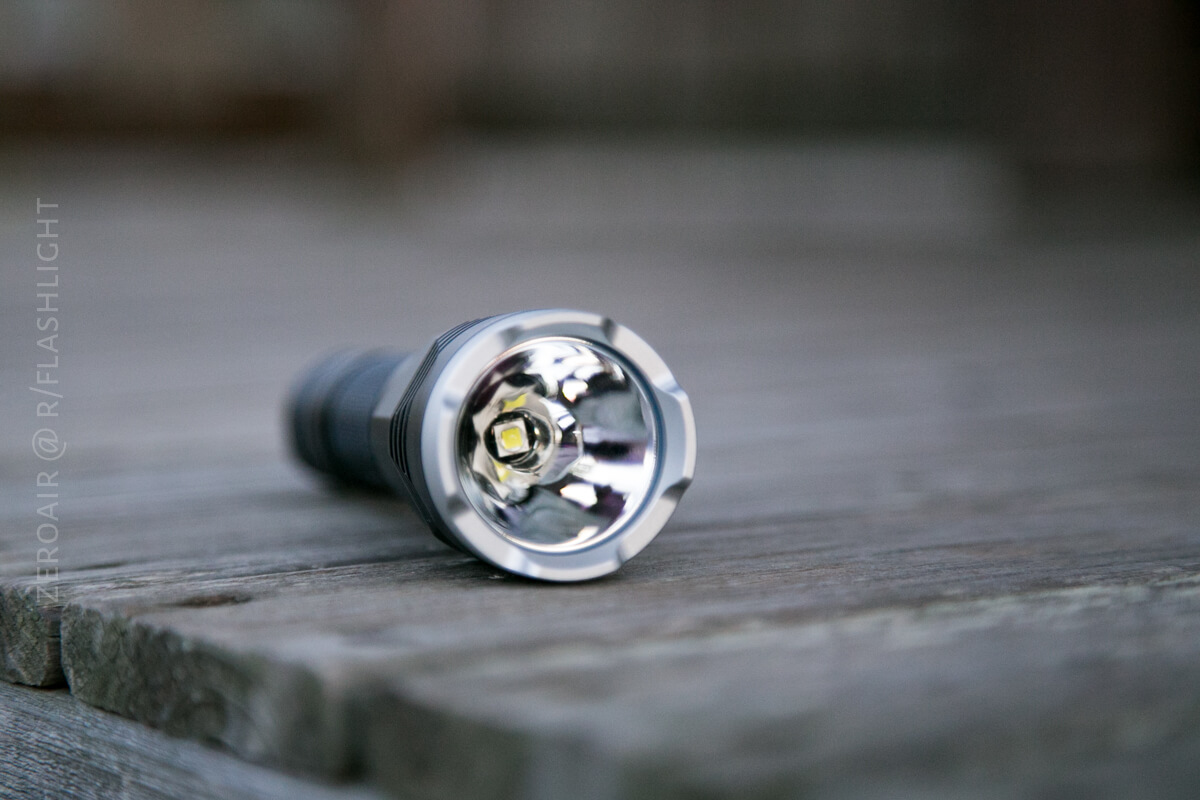
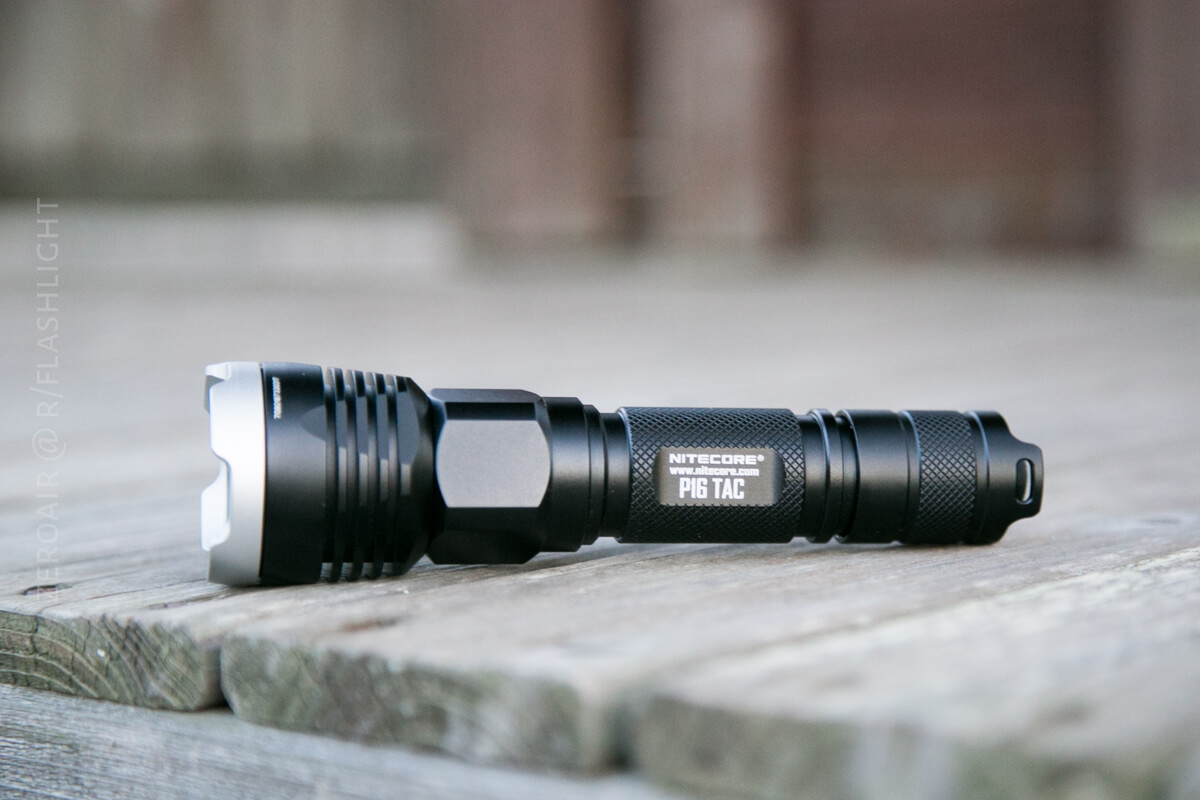
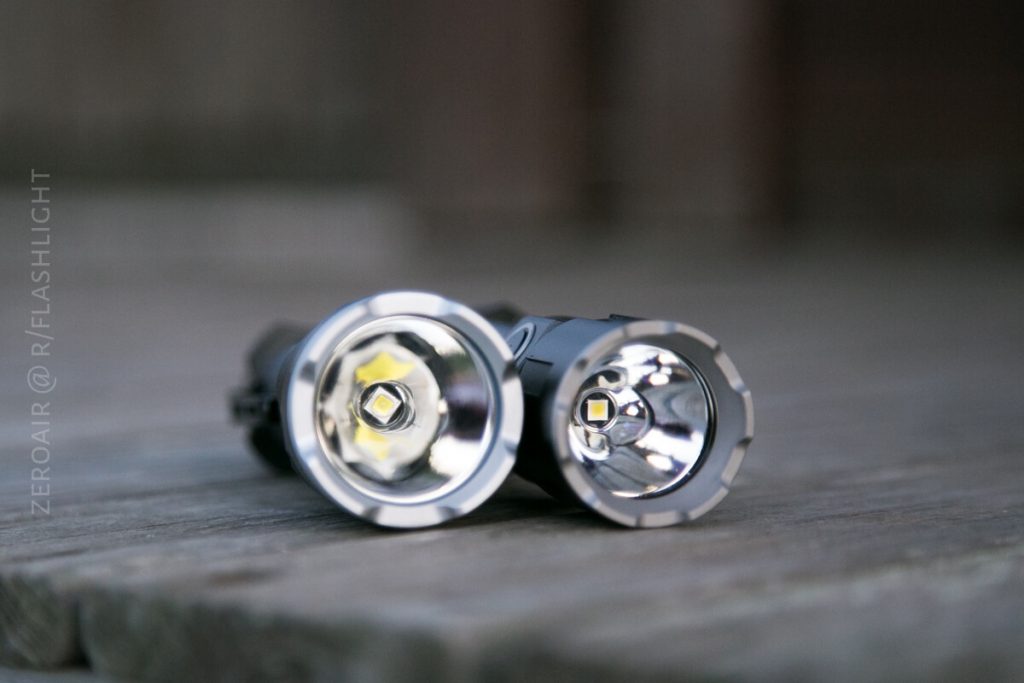
The bezel is crenelated, and on a tactical light these might sometimes be very sharp, but I don’t find that to be the case on this light. They’re fairly “soft”. Note also those large cooling fins.
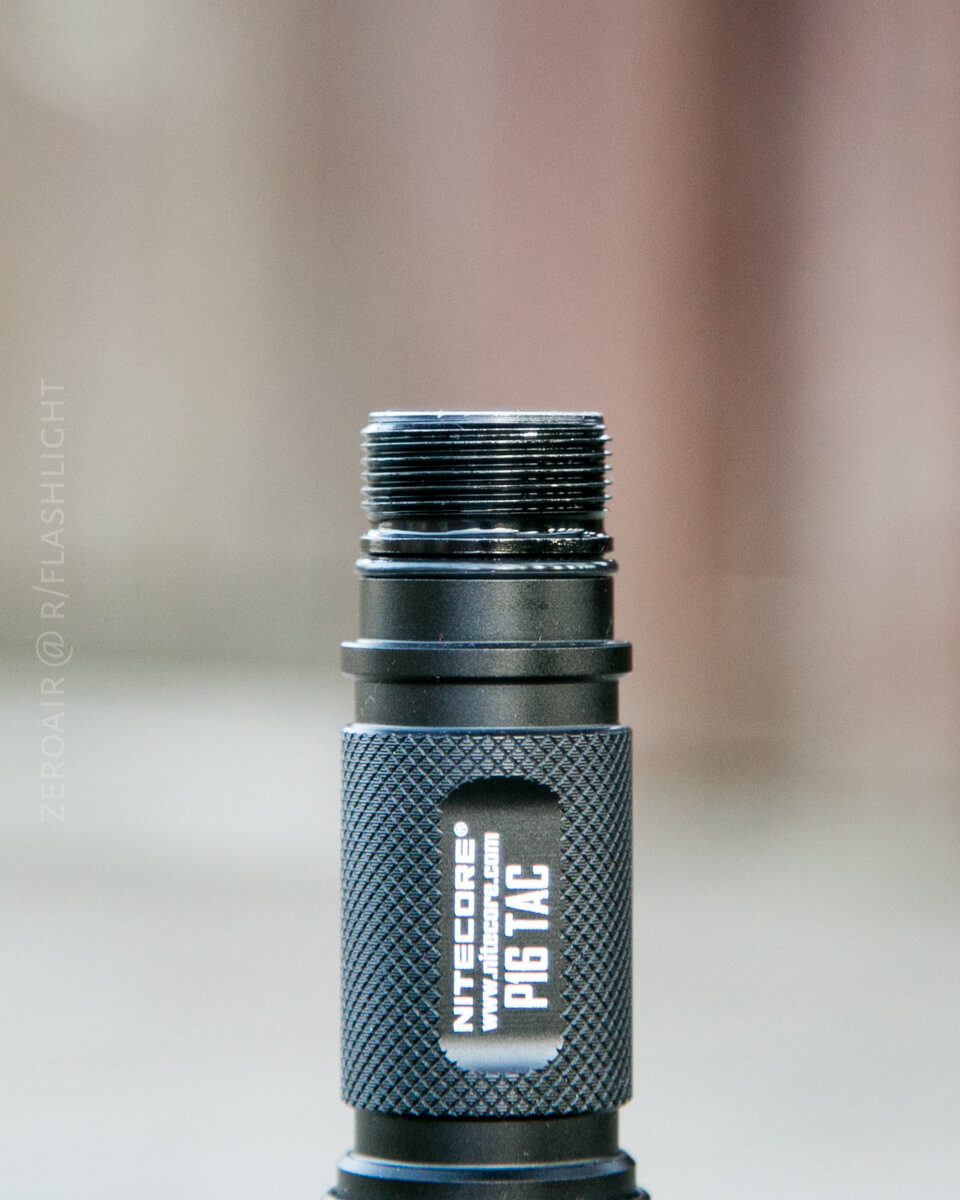
The threads are anodized and there’s plenty of lube. Those aren’t square-cut, but they’re still good enough.
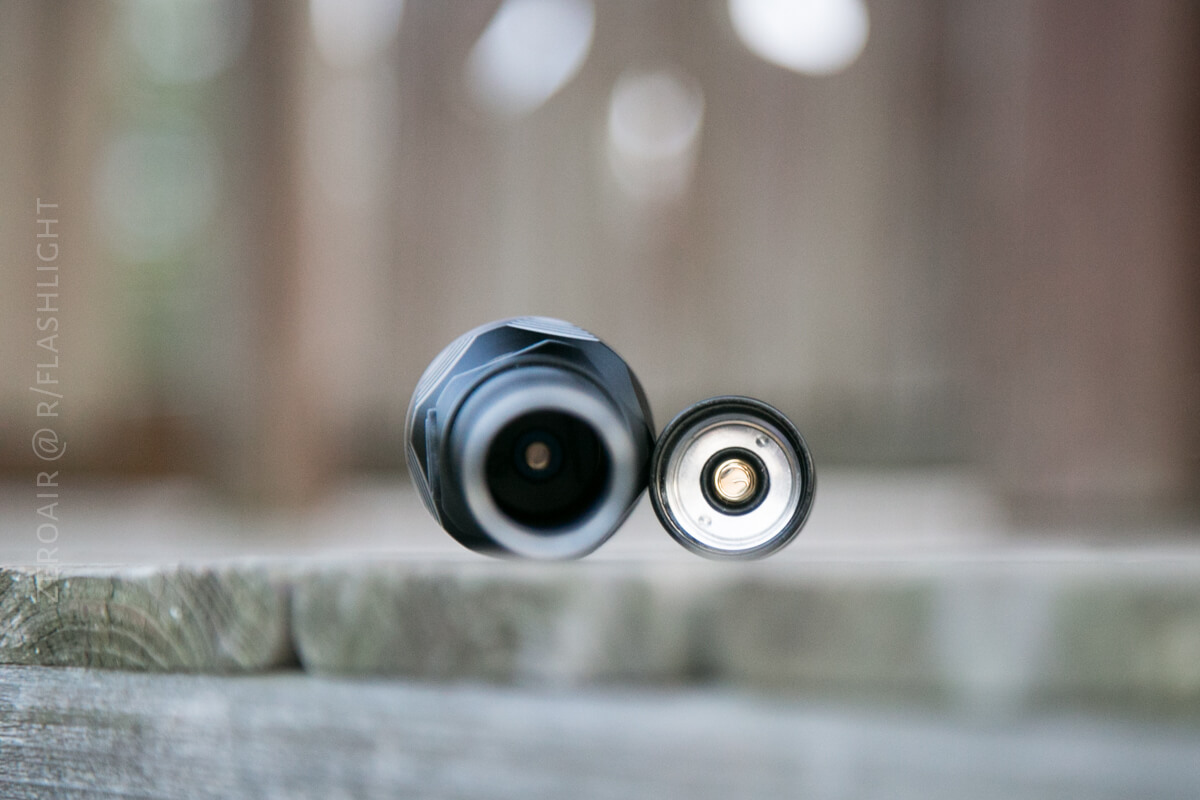
I wasn’t able to separate the cell tube from the head of the light (or the bezel off the head for that matter) but here you can see spring on the tailcap. It’s a small spring but fairly stiff. The driver side of the light, while it can barely be seen here, is just like a previous Nitecore I reviewed, the SRT7GT. It’s a bit of an odd design, with a button at the end of a spring, and around this button, a rubber gasket. This design precludes the use of flat top cells. I tested the light with a Nitecore brand IMR 18650, which is a button top. You’ll have to use button tops in this light.
Size
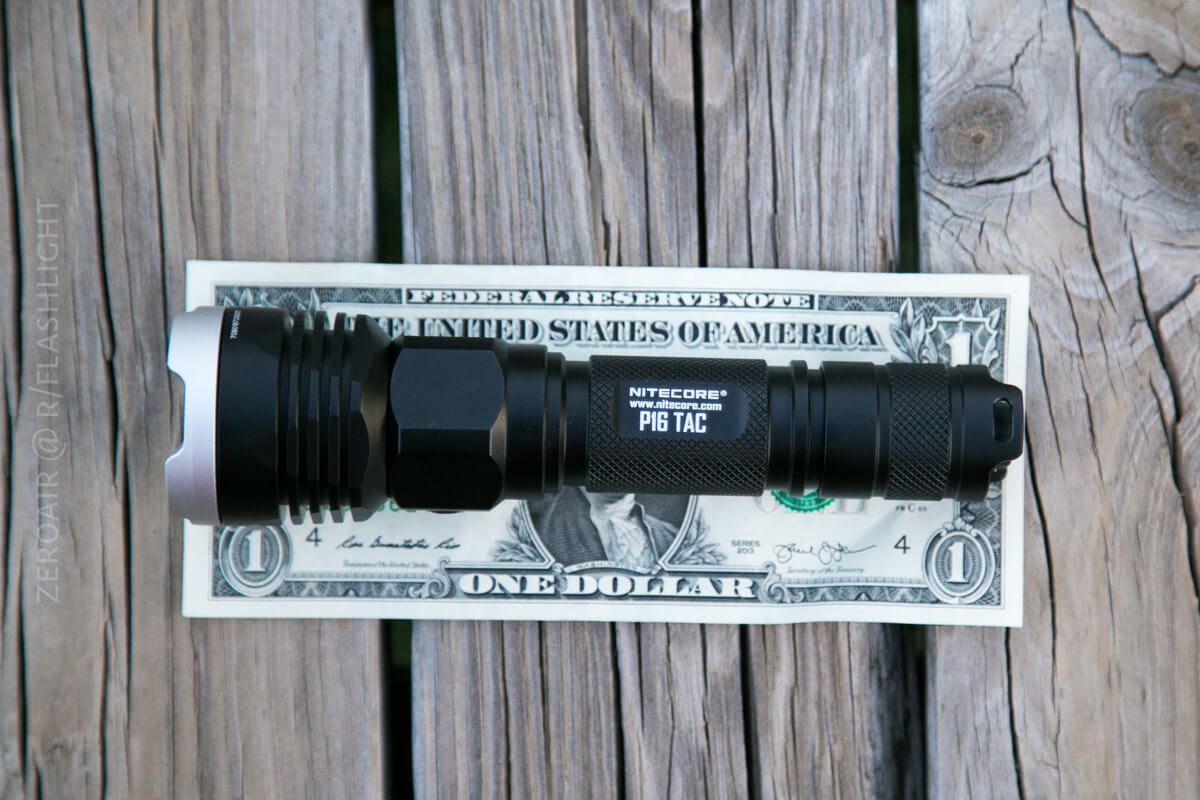
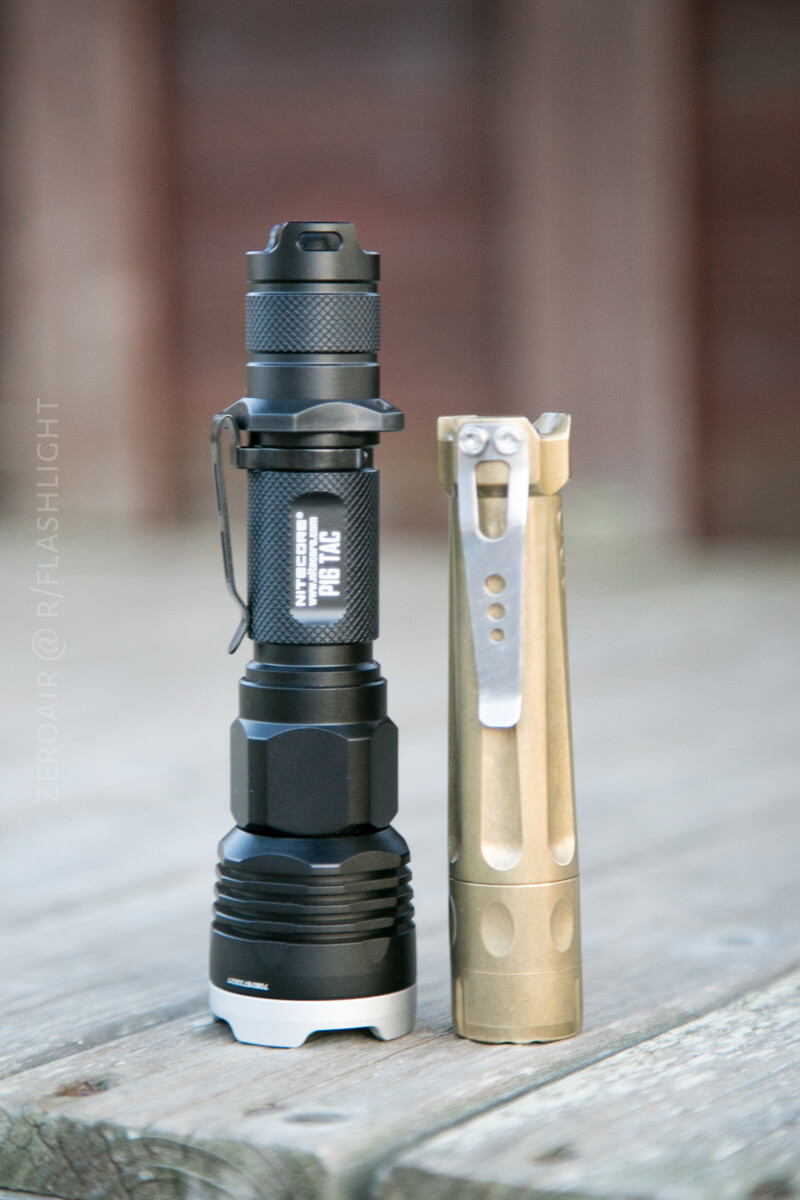
Officially the light is 151mm long, 40mm at the head and 25.4mm at the tail. Without cell, the lightweight 141g.
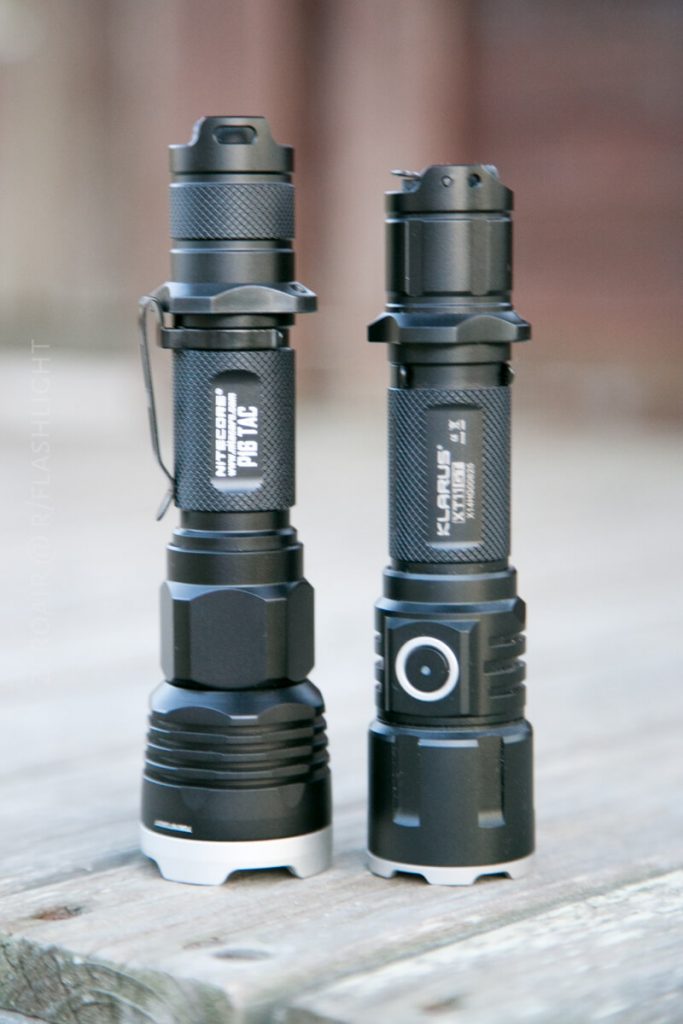
This light is probably a little long for what it is. Below you can see it compared to the Klarus XT11GT, which has nearly the same throw rating, and also dual switches, and adds onboard charging too!
Retention
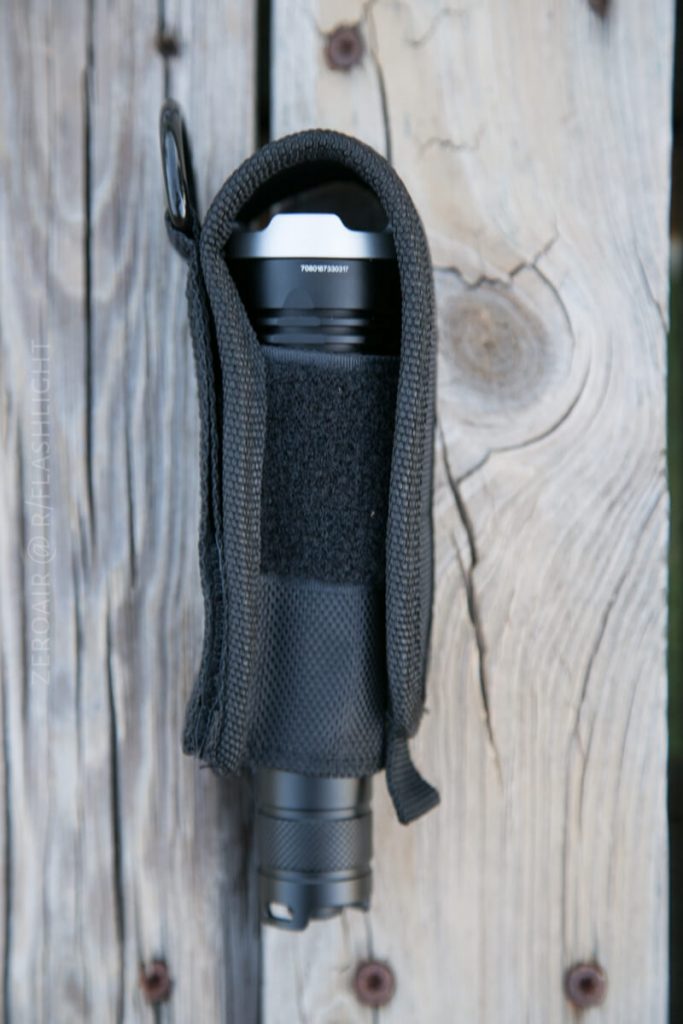
There are a number of options here. First, the nylon pouch. It’s directional, with the tail of the light going in first. There’s a nice (plastic) D-ring on the back, and a double loop velcro belt loop.
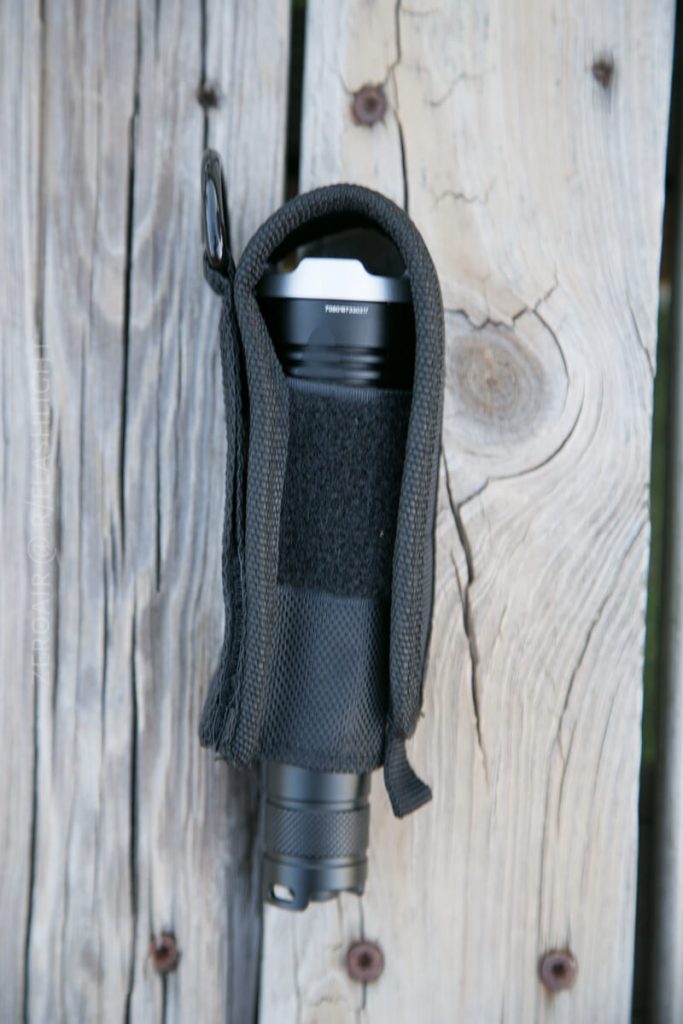
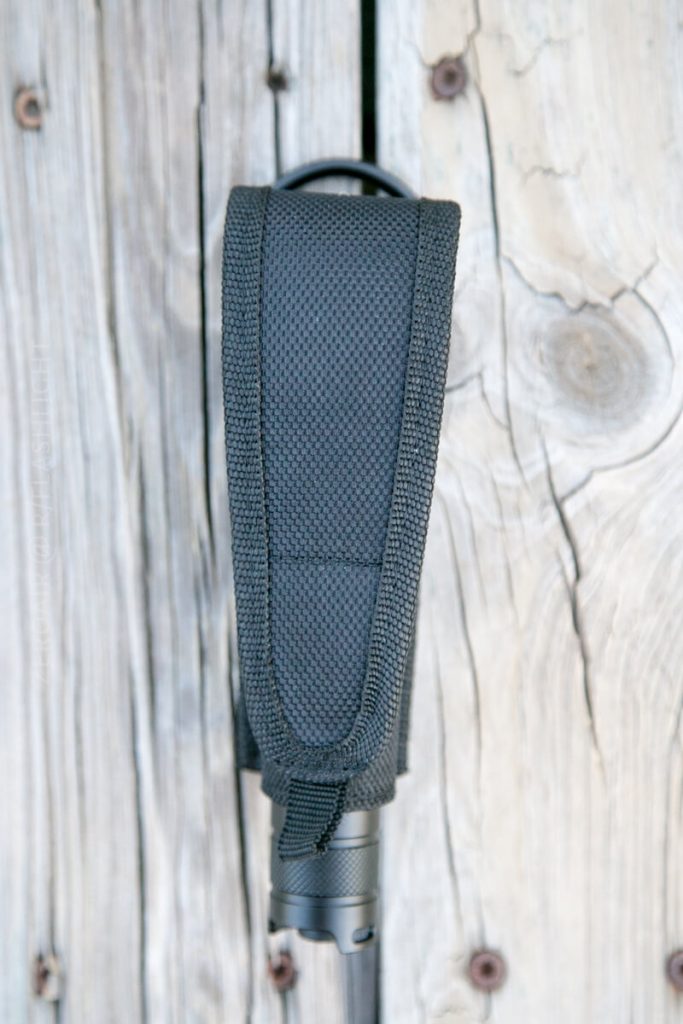
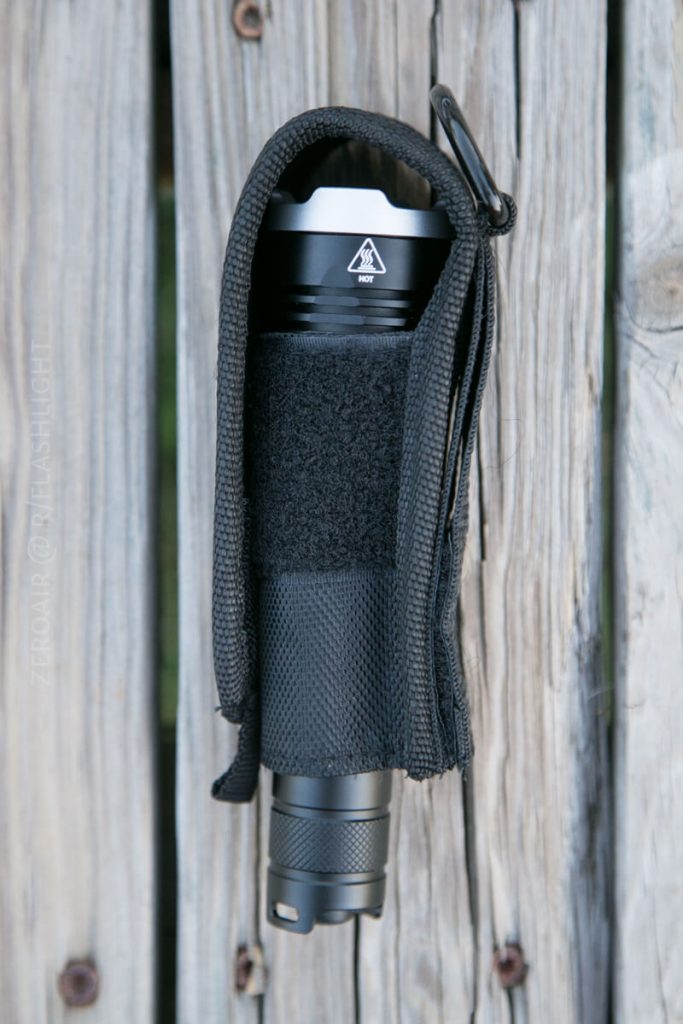
There is a pocket clip, which does not come installed. It’s reversible, for bezel up or down carry.
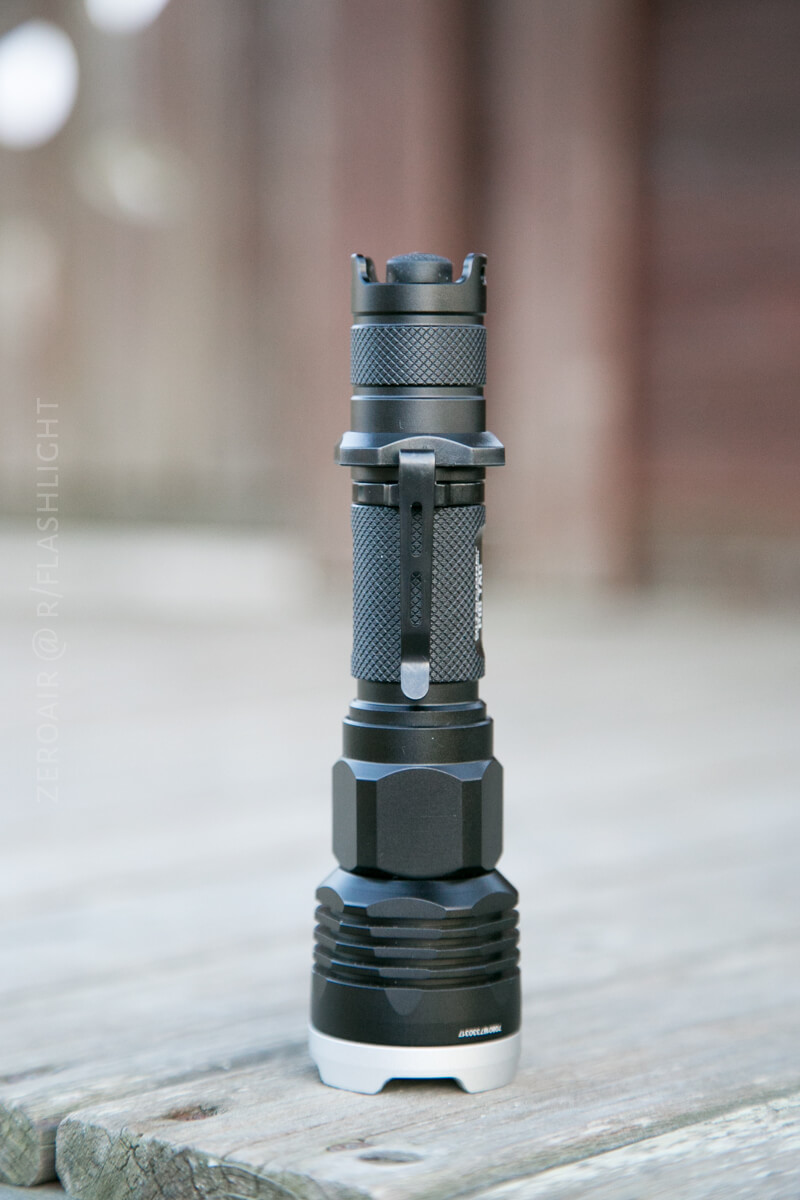
There’s a tactical ring, which also has a cutout for the lanyard. This tac ring spins relatively freely on the light, even when the parts are tightened down.
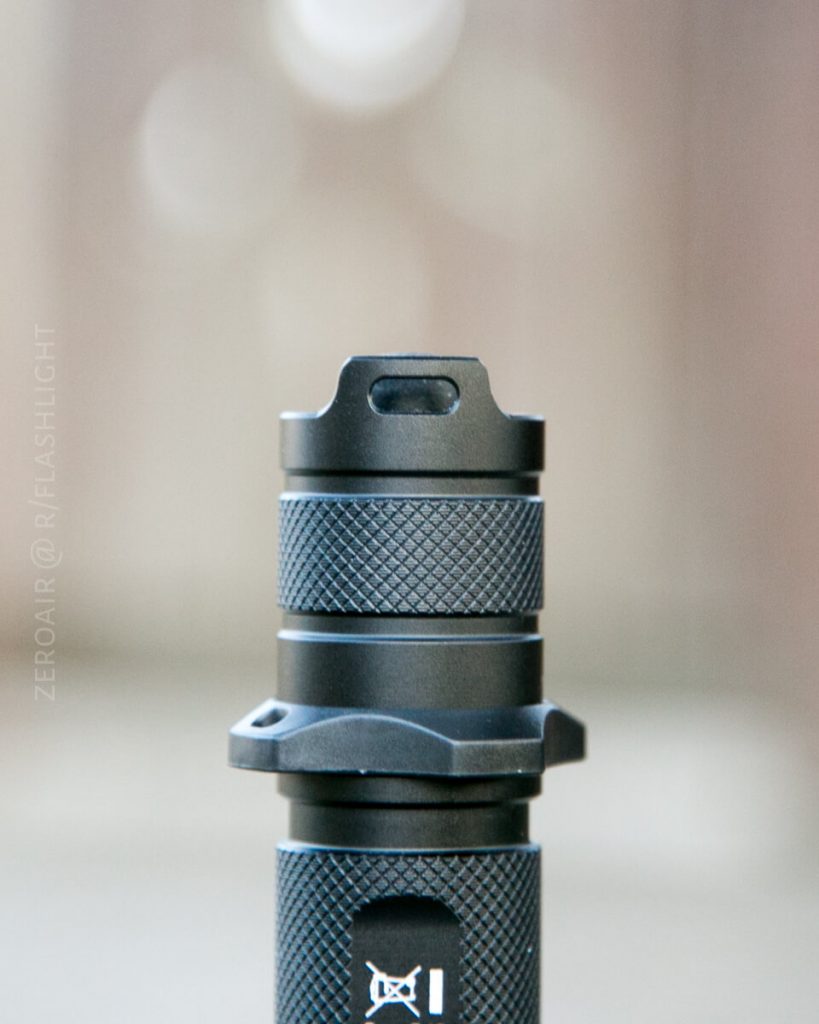
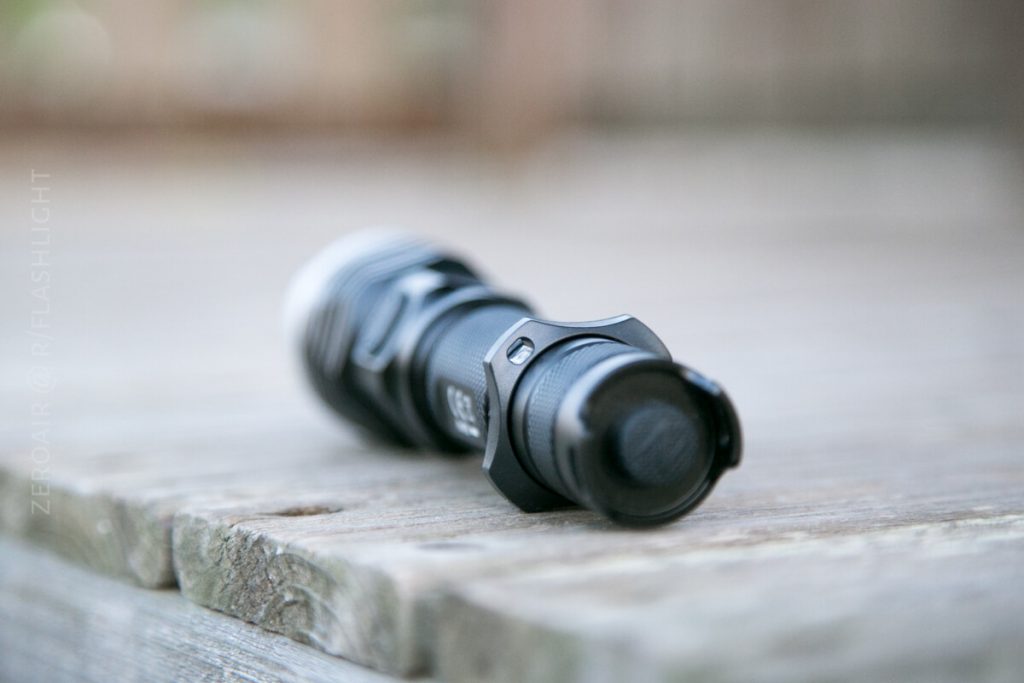
The pocket clip and the tac ring can be installed concurrently, but in this case, the pocket clip must be in one of the grooves of the tactical ring. Since this ring floats, that’s not a problem.
Power
The P16 TAC is powered by a single 18650, or two 18350 cells. These must be button top cells, but length is not important. I used a Nitecore 3100mAh IMR 18650, and I didn’t do any testing with 2×18350 cells.
Below is the runtime. I ran two tests on turbo. For the blue test, I stopped at about 80 minutes, with a concern for cell voltage. It was ok, so for the next test, I let the light go longer. There is no LVP on this light, and when I finally stopped the test, the cell was at 2.57V. So be aware of no LVP. Not that one would really want LVP in a tactical light, right?

Here’s a blow-up of the first 10 minutes. I’m going to try to do this more because I think it provides as much useful information as the WHOLE runtime seen above. The light is only on 100% for a matter of seconds but holds around 90% for 5 minutes. That is a timed stepdown at 5 minutes.

User Interface and Operation
There are two switches on this Nitecore. One mechanical forward clicky tail switch (the “Power switch”, and one side e-switch (the “Mode switch”).
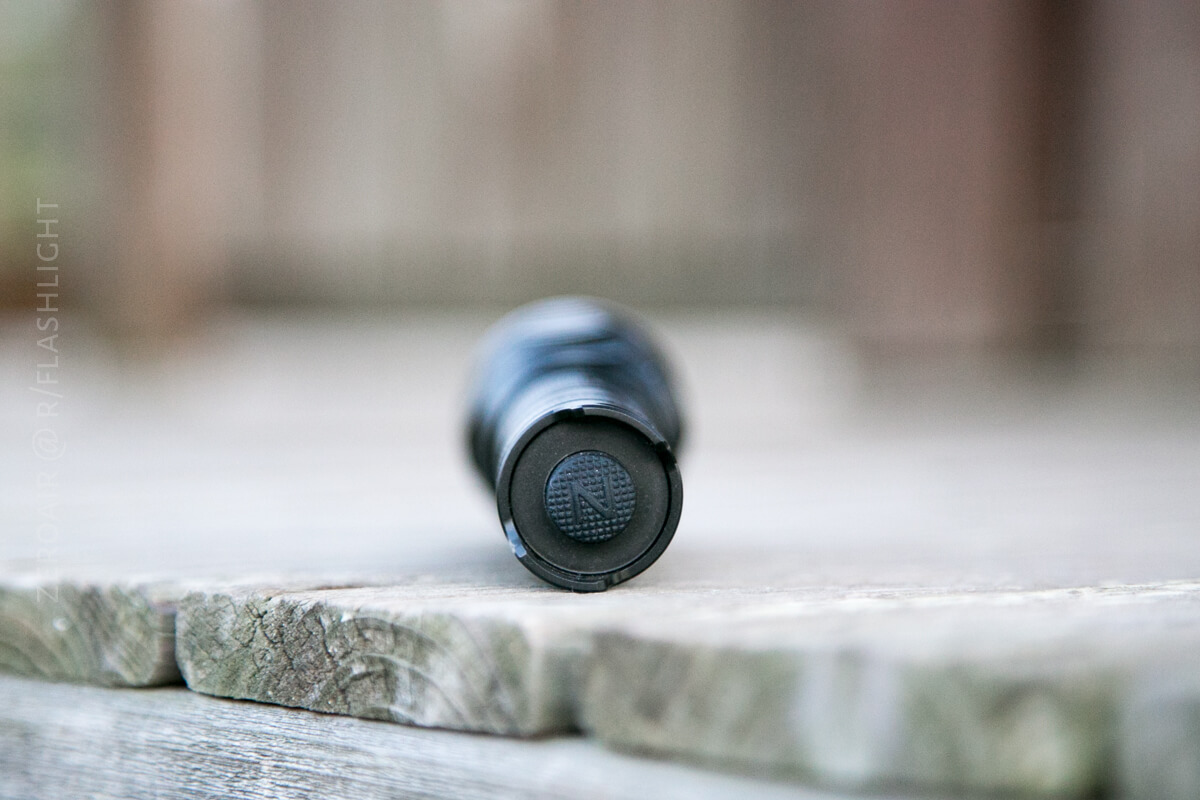
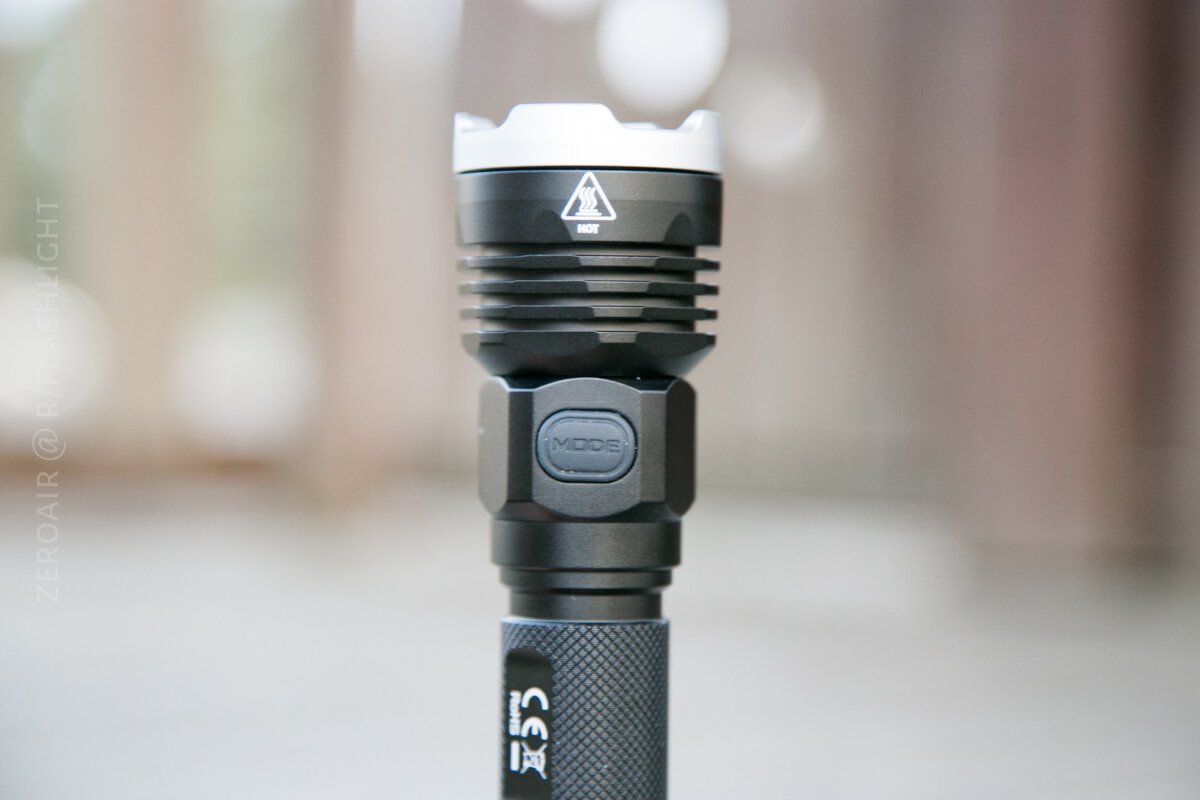
The user interface is as follows:
| State | Action | Result |
|---|---|---|
| Off | Half press Tail | Momentary (Of memorized mode) |
| Off | Click Tail | On (Mode memory) |
| On | Click Tail | Off |
| On | Click Side | Advance mode (ULow>L>M>H) |
| On | Hold Side | Strobe |
| Strobe | Hold Side | Advance strobe group (Strobe>SOS>Beacon) |
| Strobe | Click Side | Previous main mode |
Modes
| Mode | Mode Claimed Output (lm) | Claimed Runtime |
|---|---|---|
| High | 1000 | 1h 15m |
| Mid | 240 | 7h |
| Low | 60 | 33h |
| Ultra-Low | 1 | 600h |
LED and Beam
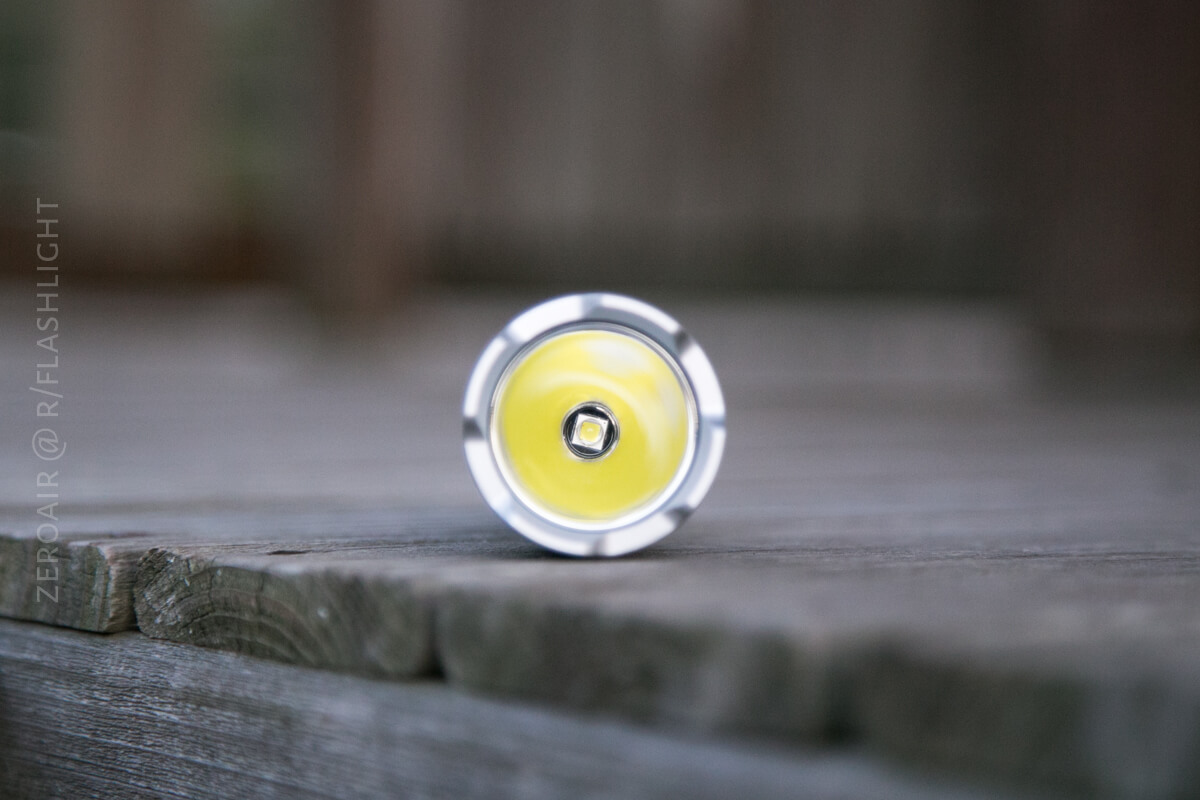
There’s a Cree XM-L2 U3 in this light. It sits at the base of a deep, smooth reflector. It’s a bit of a surprise that there isn’t a domeless emitter in here, since this light is meant to have a bit of throw. Of course, everyone knows my love of the XP-L HI….
The beam does have a tight hotspot, but the spill is also well defined. It’s not normally very noticeable, but if one rotates the light, the bezel crenelations can be seen easily, in the beam profile.
Beamshots
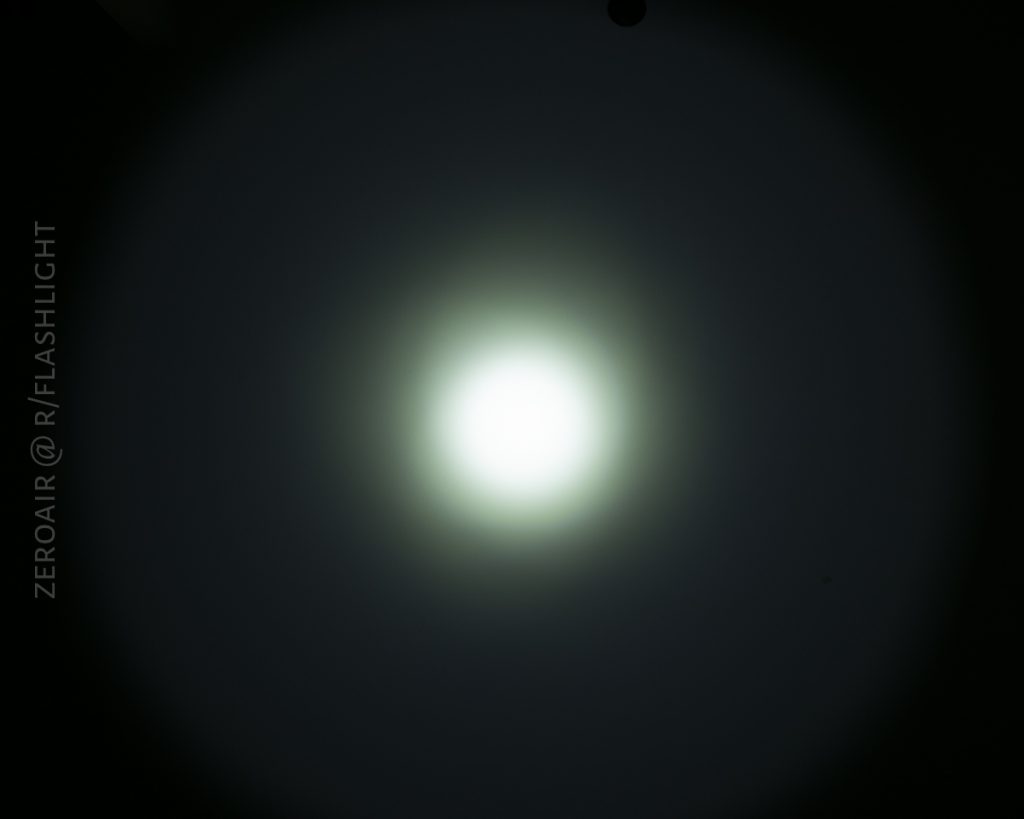
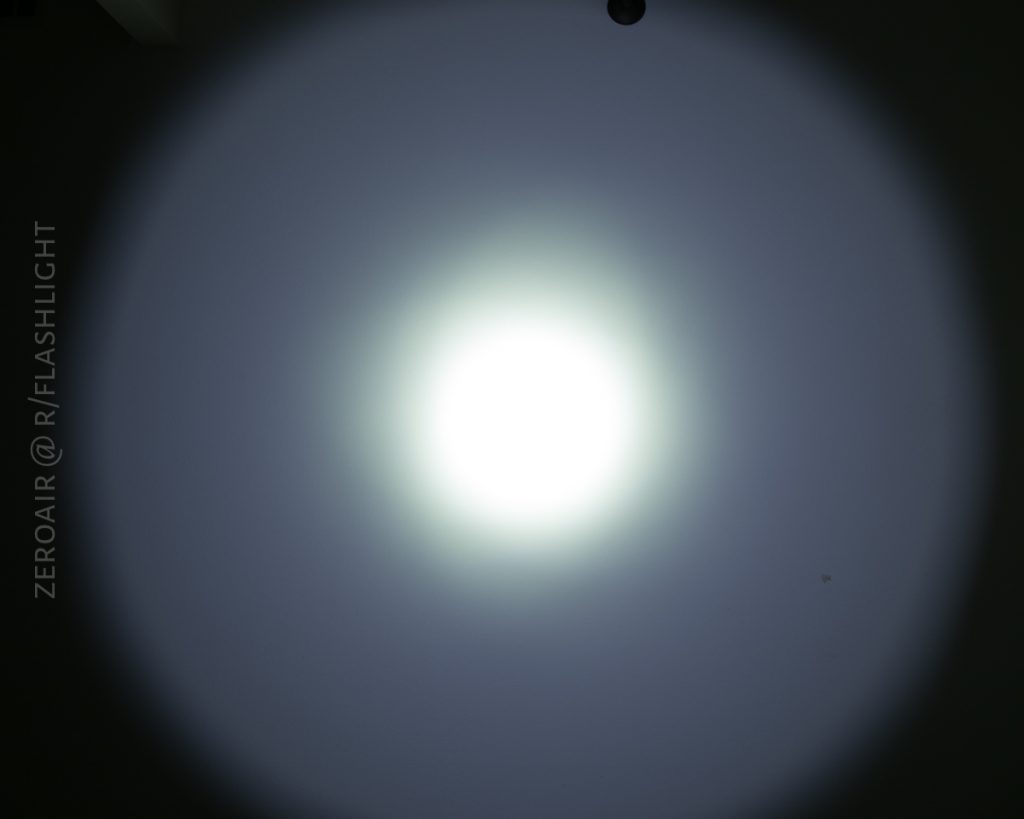
These beamshots always have the following settings: f8, ISO100, 0.3s shutter, and manual 5000K exposure. These photos are taken at floor level, and the beam hits the ceiling around 9 feet away.


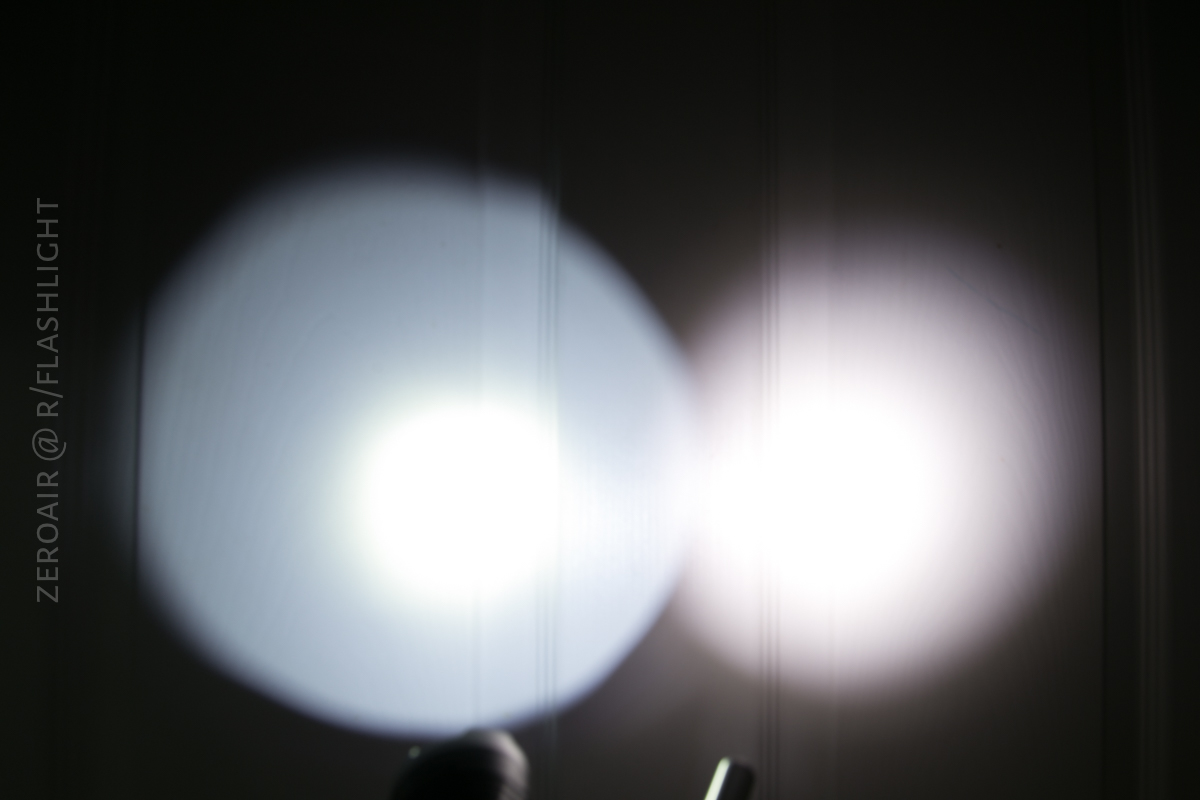
Tint vs BLF-348 (KillzoneFlashlights.com 219b version) (affiliate link)
I keep the test flashlight on the left and the BLF-348 reference flashlight on the right.
Random Comparisons and Competitive Options
This seems to me to be a bit of a saturated market that this light slots into. I can see a lot of people buying it on name recognition. I’m satisfied with Nitecore’s quality. There are other lights that offer as much or more (like the light shown above, the Klarus XT11GT, or the XT12GT as well), but also cost more.
Conclusion
What I like
- Nice throw
- Good build quality
- Runtime is good
- Cell versatility
What I don’t like
- Button top only cells
- A bit of a generic light
- Cree XM-L2, when another emitter makes more sense
Notes
- This light was provided by NitecoreStore.com for review. I was not paid to write this review.
- This content originally appeared at zeroair.org. Please visit there for the best experience!
- For flashlight-related patches, stickers, and gear, head over to PhotonPhreaks.com!
- Use my amazon.com referral link if you’re willing to help support making more reviews like this one!
- Please support me on Patreon! I deeply appreciate your support!