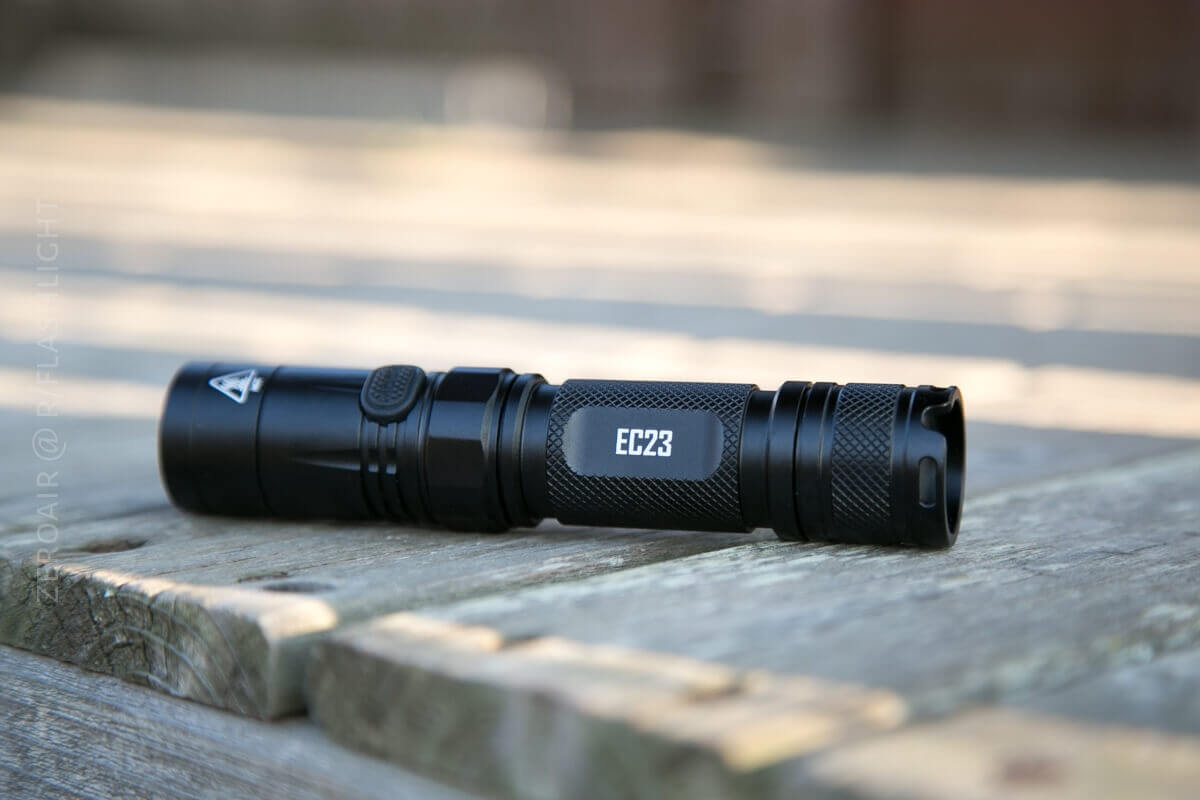

Nitecore EC23 Flashlight Review
The Nitecore EC23 flashlight offers a Cree XHP35 HD emitter for great output (rated at 1800 lumens) and uses a single 18650. Read on!
Official Specs and Features
Here’s a link to the Nitecore EC23 Flashlight product page.
Versions
There is only one version of this light.
Price
MSRP for this light is $54.95. As new as it is, that’s probably going to be the street price for a while, too.
Short Review
This is a nice [very bright] light, and nice to have a side switch only option on a light like this. A little surprising that there’s no clip included, but the lanyard is included.
Long Review
The Big Table
| Nitecore EC23 | |
|---|---|
| Emitter: | Cree XHP35 HD (E2) |
| Price in USD at publication time: | |
| Cell: | 1×18650 |
| Turbo Runtime | |
| LVP? | Warning |
| Switch Type: | E-Switch |
| Quiescent Current (A): | ? |
| On-Board Charging? | No |
| Claimed Lumens (lm) | 1800 |
| Claimed Throw (m) | 255 |
| Candela (Calculated) in cd (at 30s) | 482lux @ 5.022m = 12156cd |
| Throw (Calculated) (m) | 220.5 (86.5% of claim)^ |
| All my Nitecore reviews! | |
^ Measurement disclaimer: Testing flashlights is my hobby. I use hobbyist-level equipment for testing, including some I made myself. Try not to get buried in the details of manufacturer specifications versus measurements recorded here; A certain amount of difference (say, 10 or 15%) is perfectly reasonable.
What’s Included
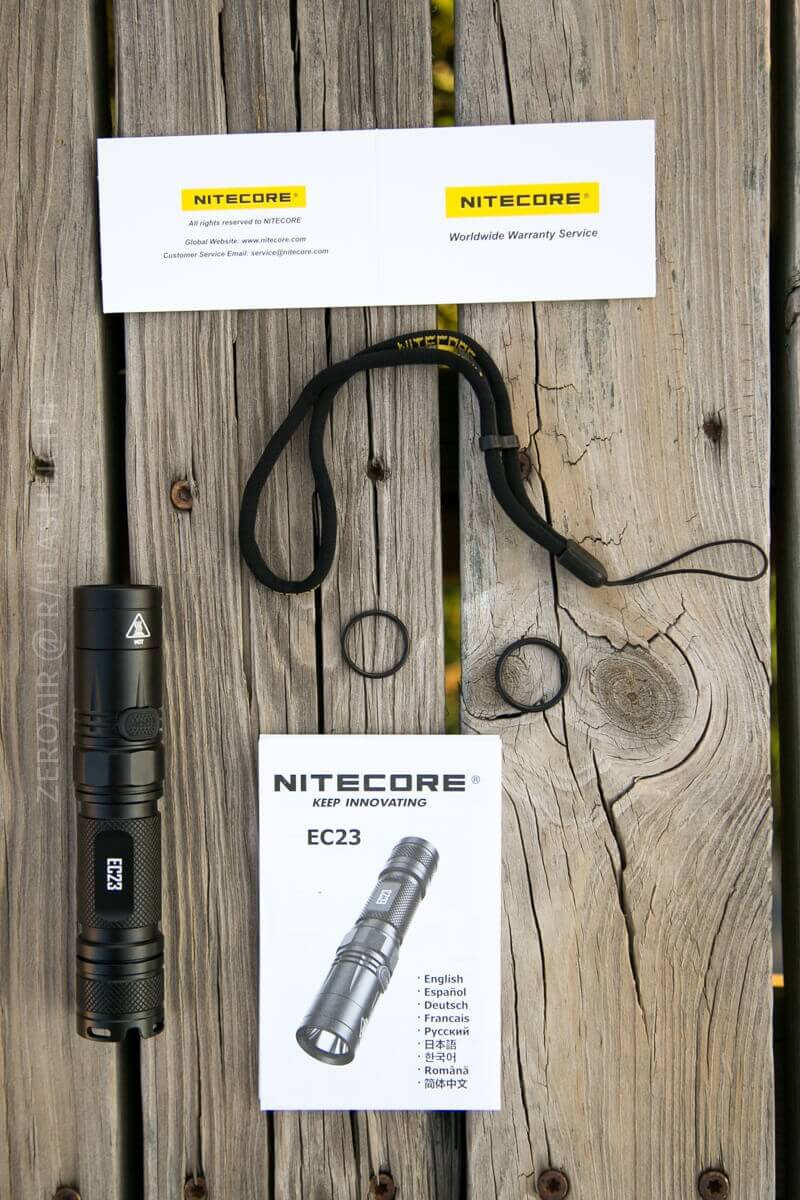
- Nitecore EC23
- Lanyard
- Spare o-rings (2)
- Manual
Package and Manual
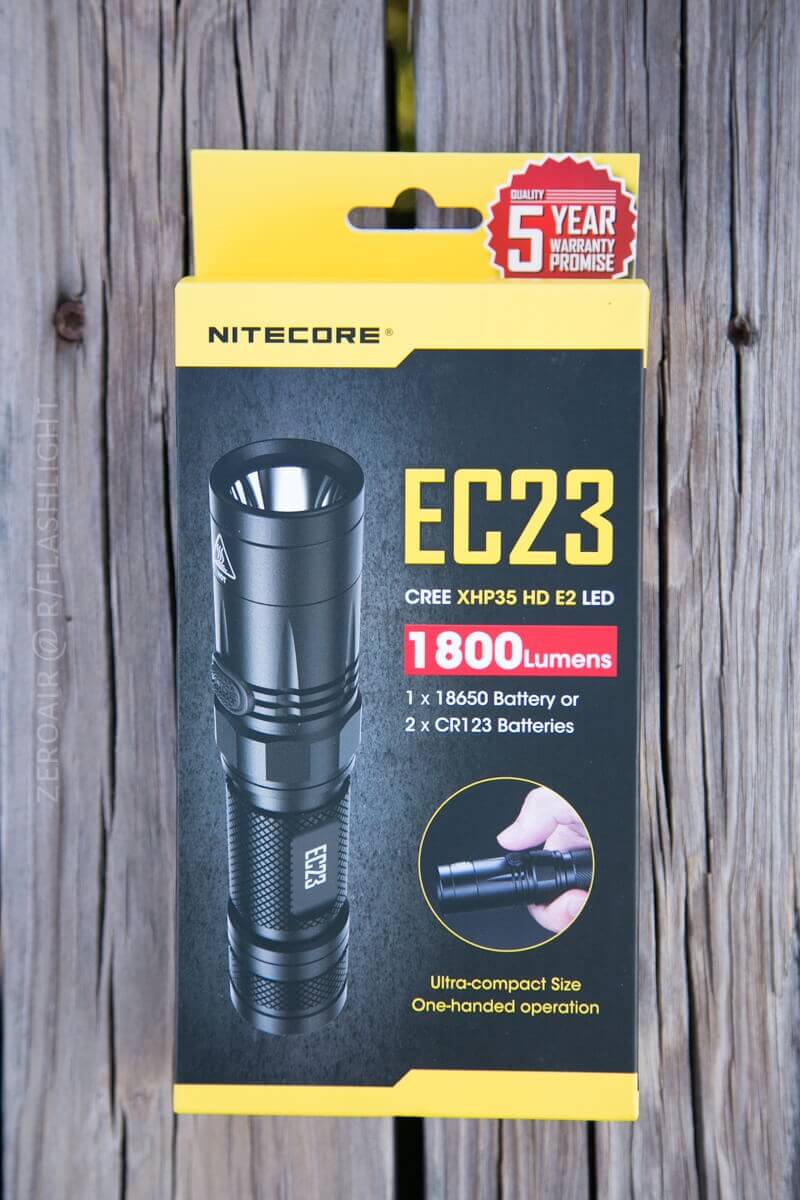
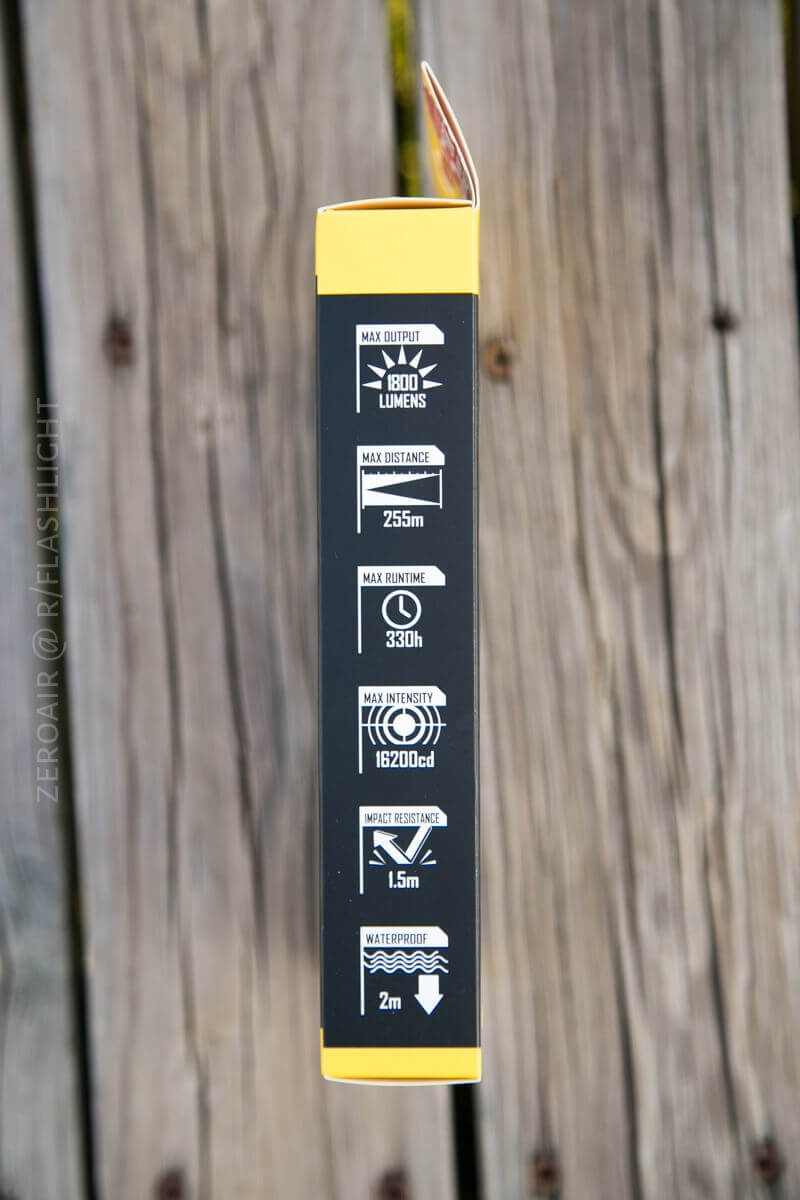
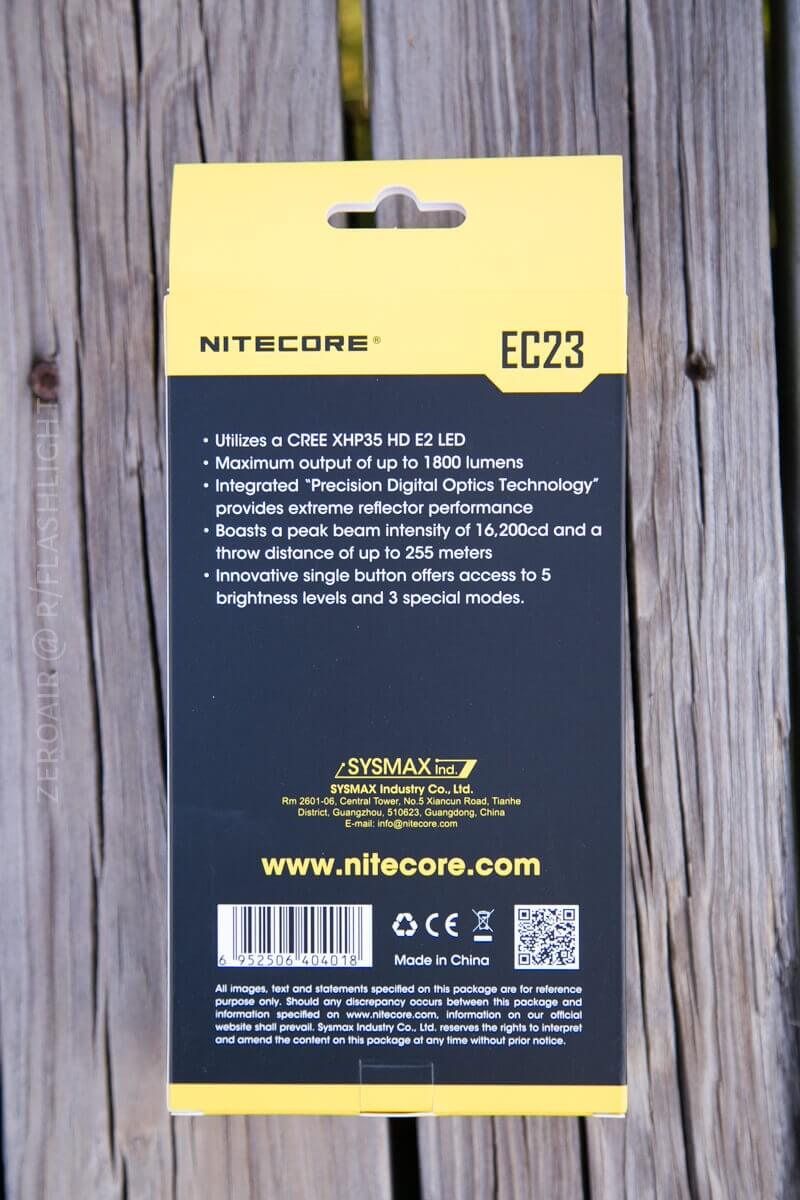
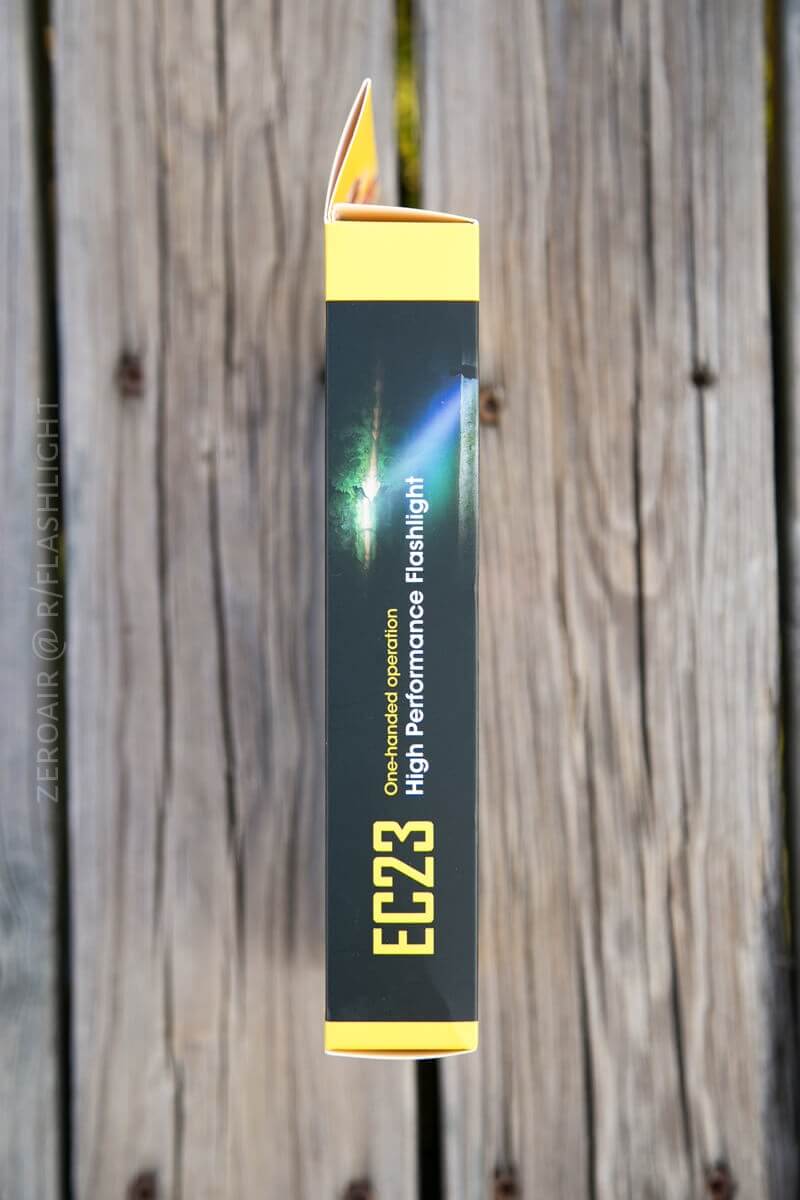
The EC23 comes in a display-ready, non-windowed black and yellow cardboard box. The light and goods are in a plastic tray. Just like all current Nitecore EDC-sized lights.
Build Quality and Disassembly
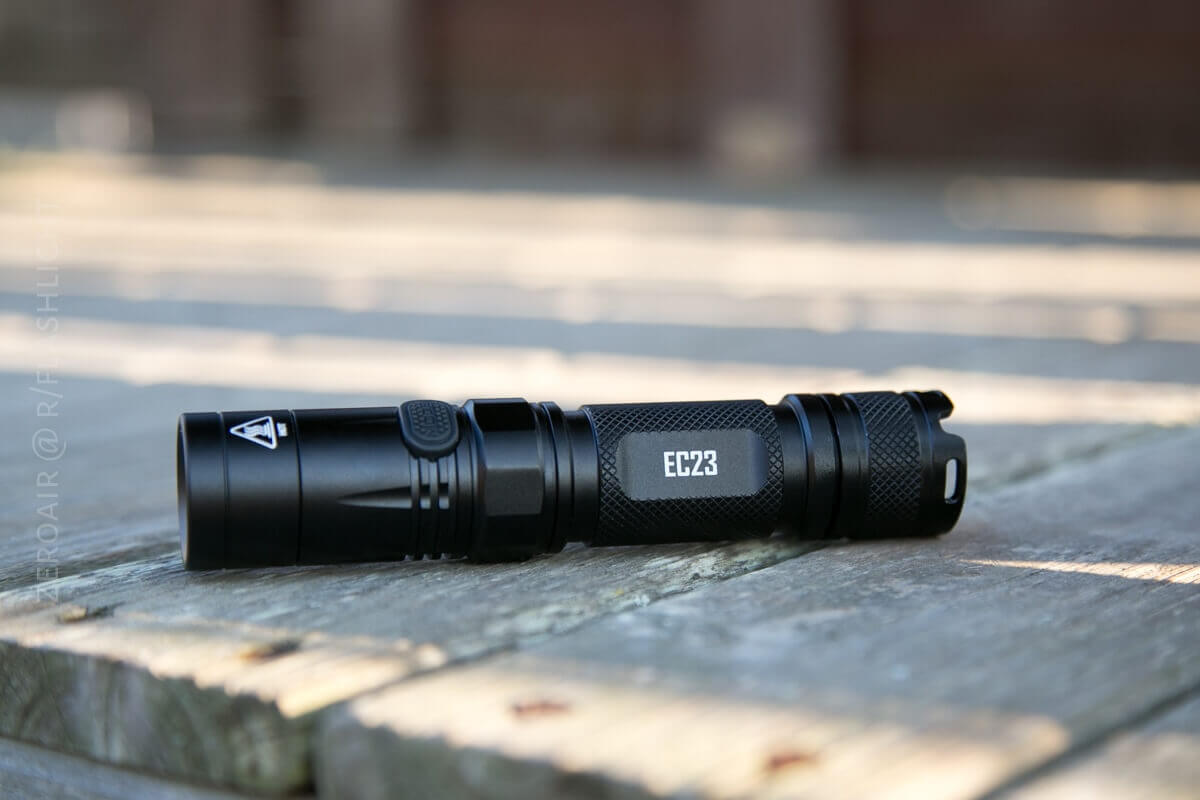
I’m very satisfied with the build quality of this light. It’s sturdy and feels like it’d be a great workhorse light. The threads are anodized and square on both ends. The tailcap has a beefy, large spring, and the head end has an unsprung brass button.
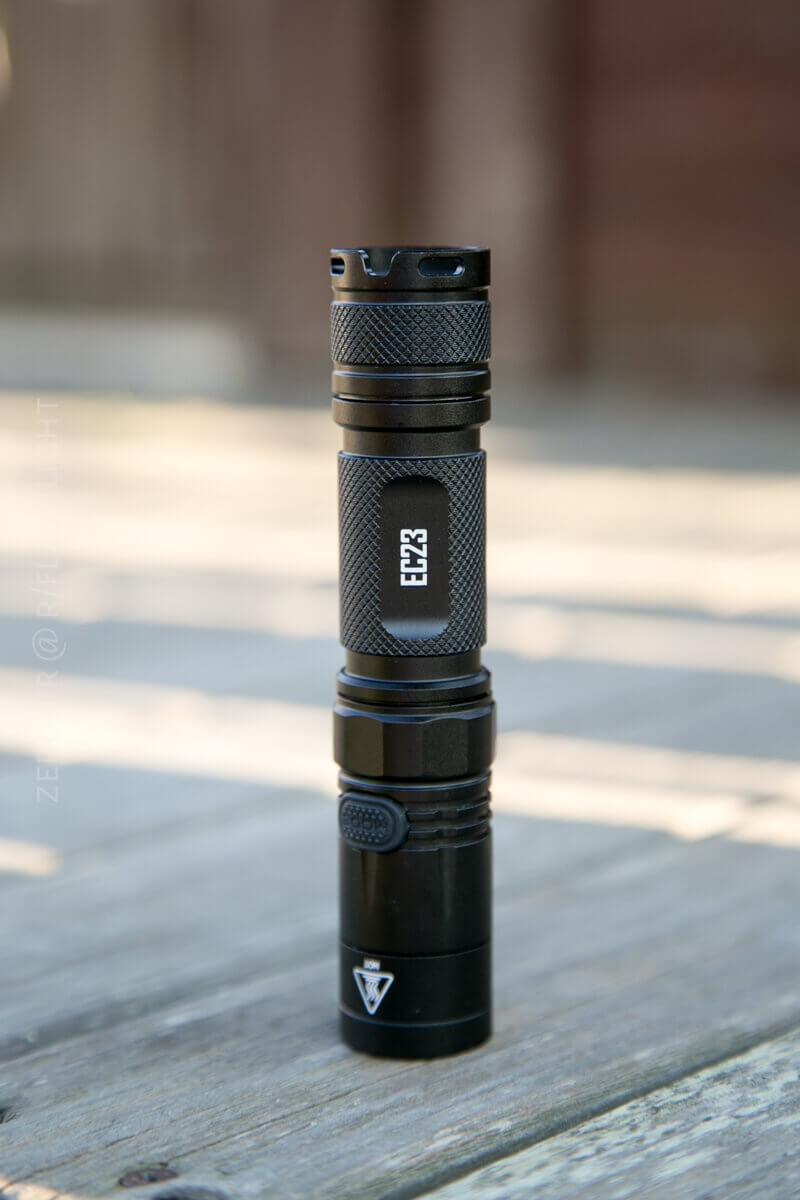
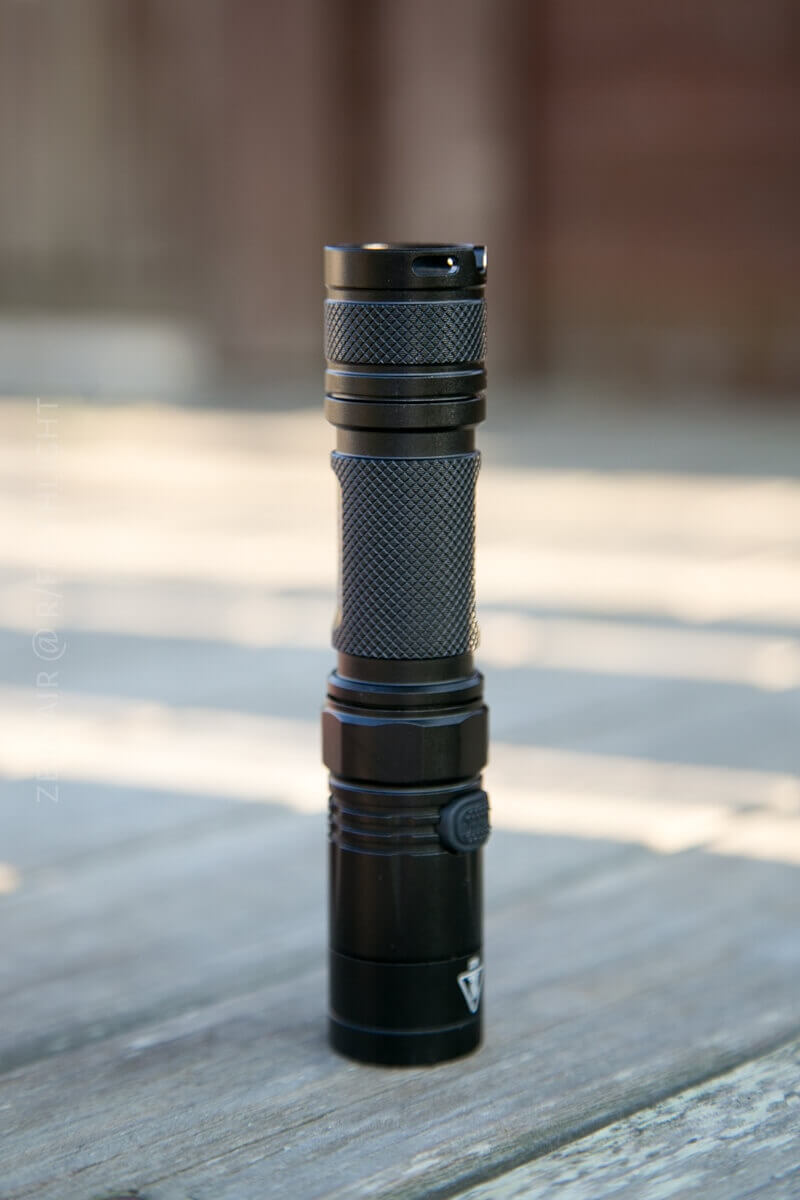
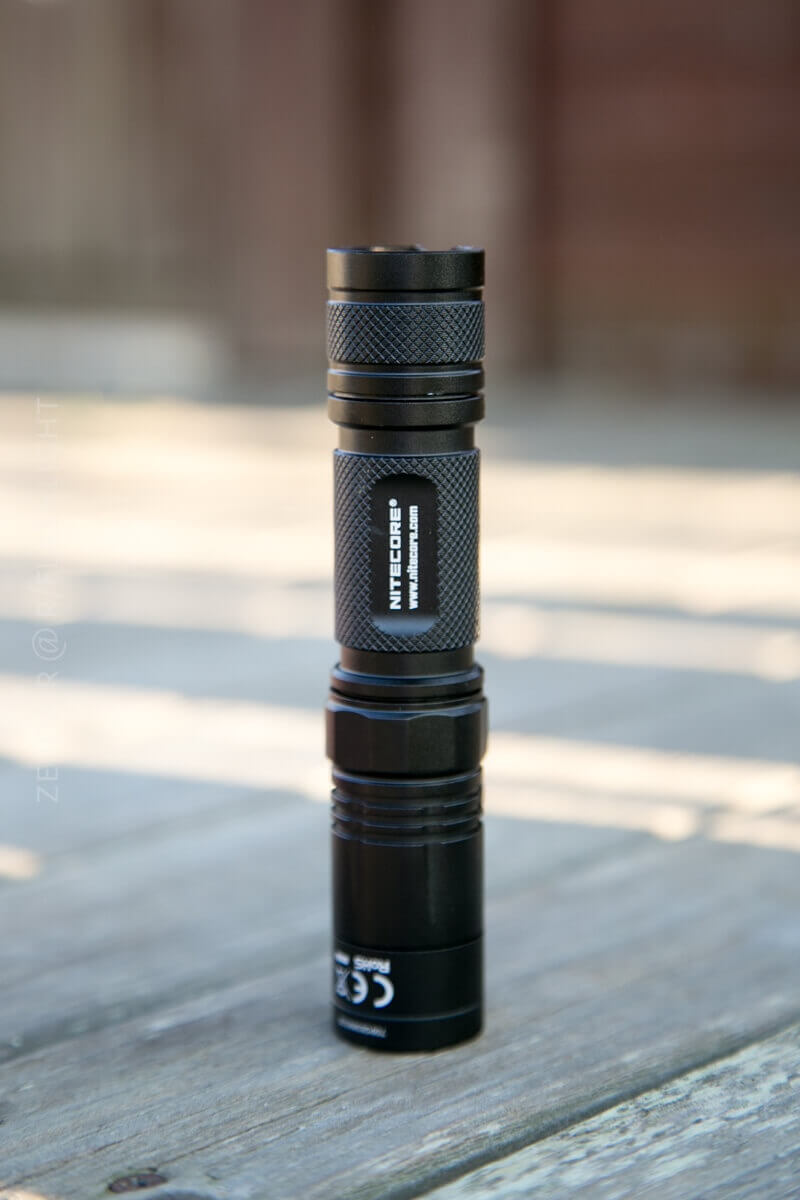
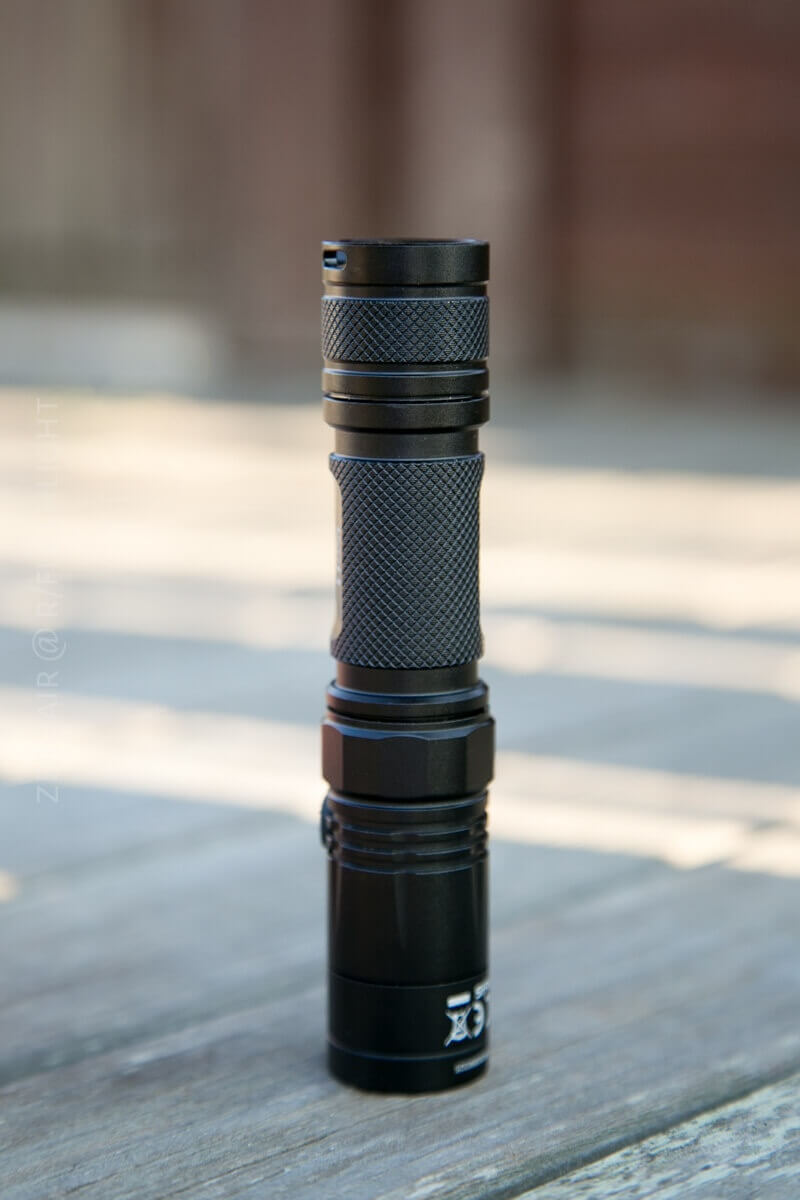
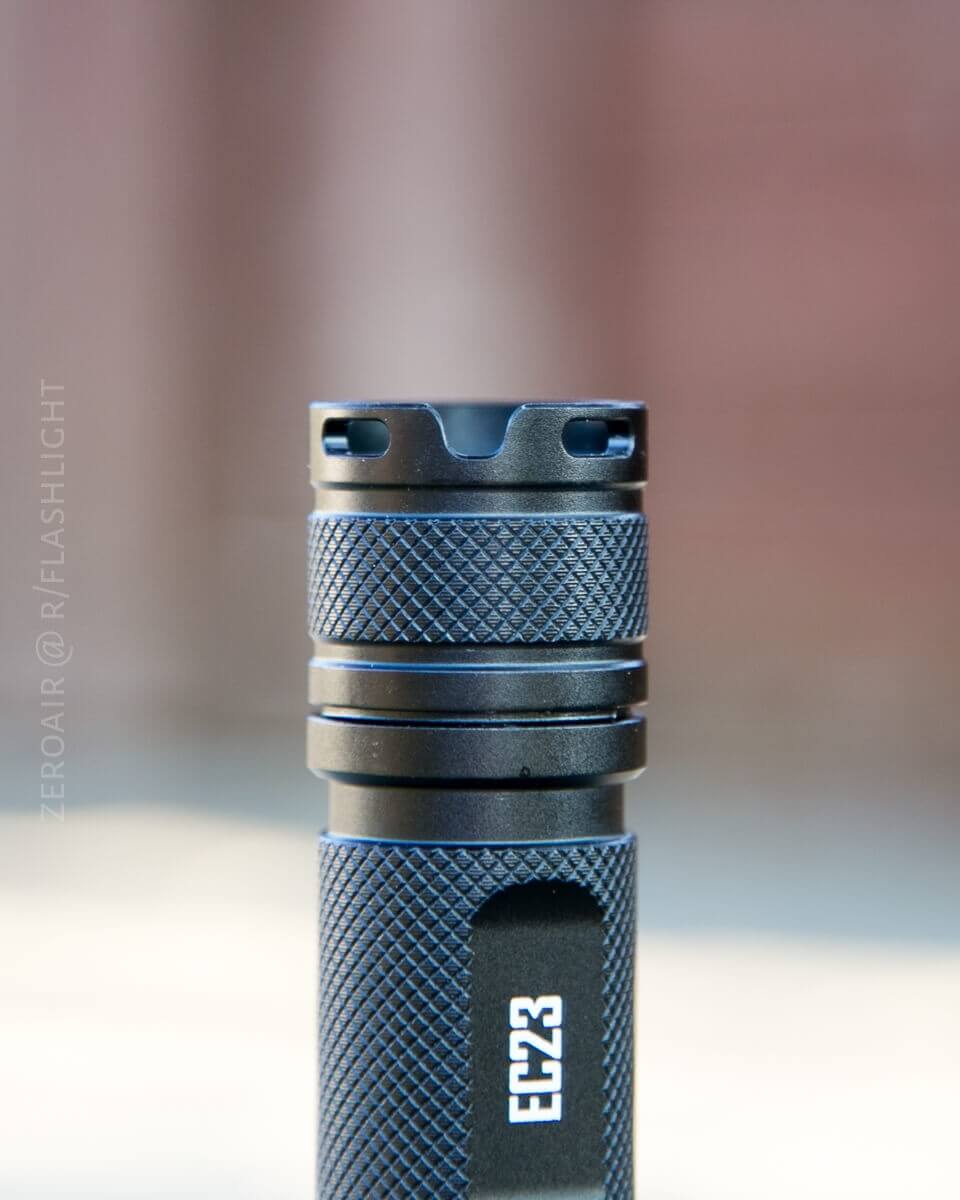
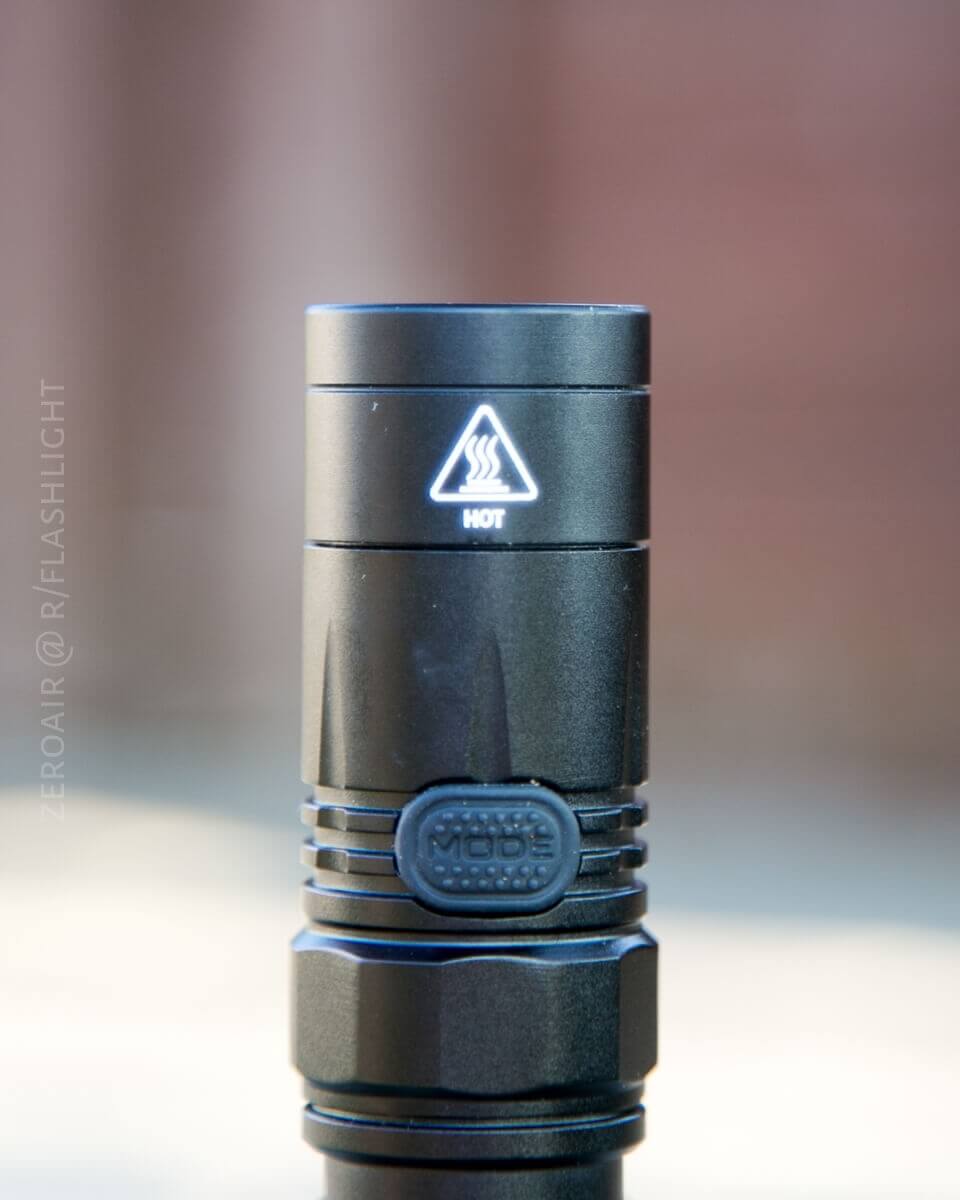
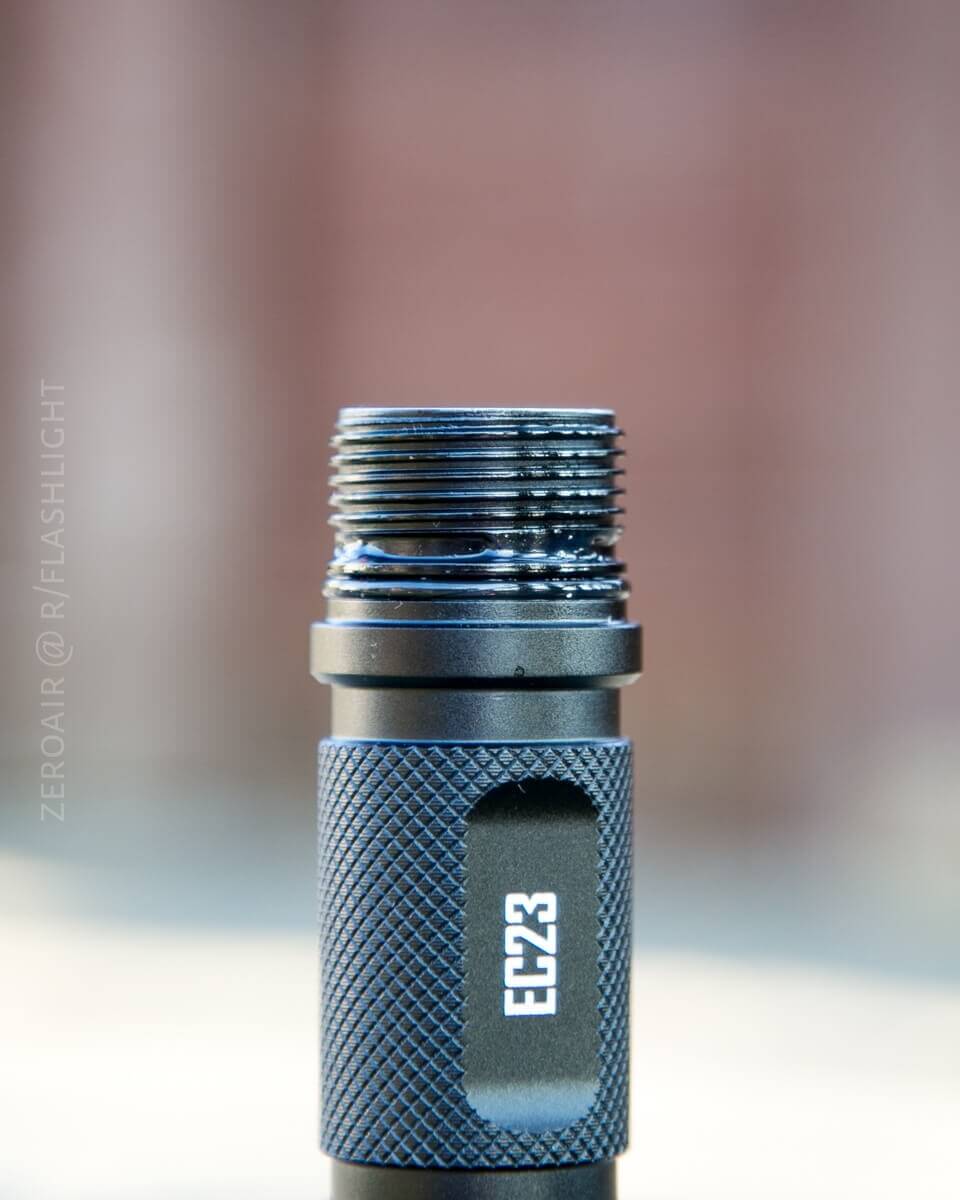
Here you can see the parts – I wasn’t able to separate the head any further than you see – I am not sure how easily the emitter could be swapped.
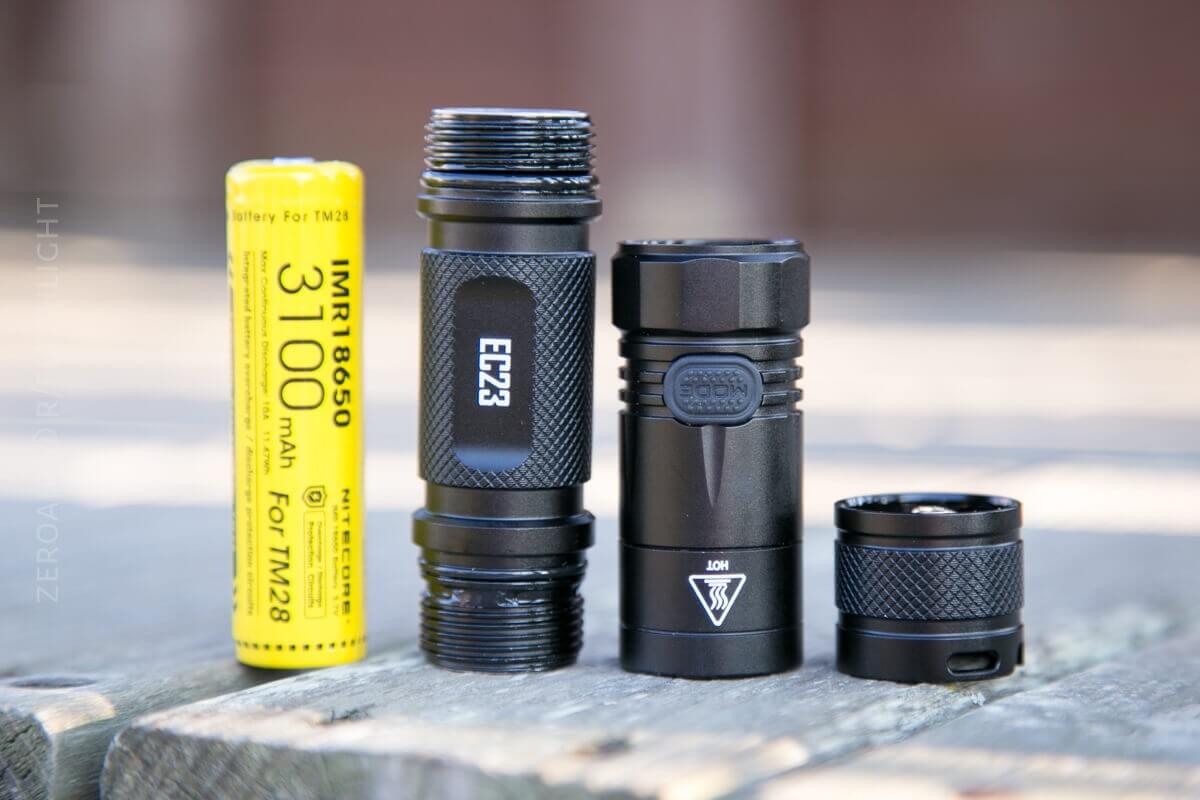
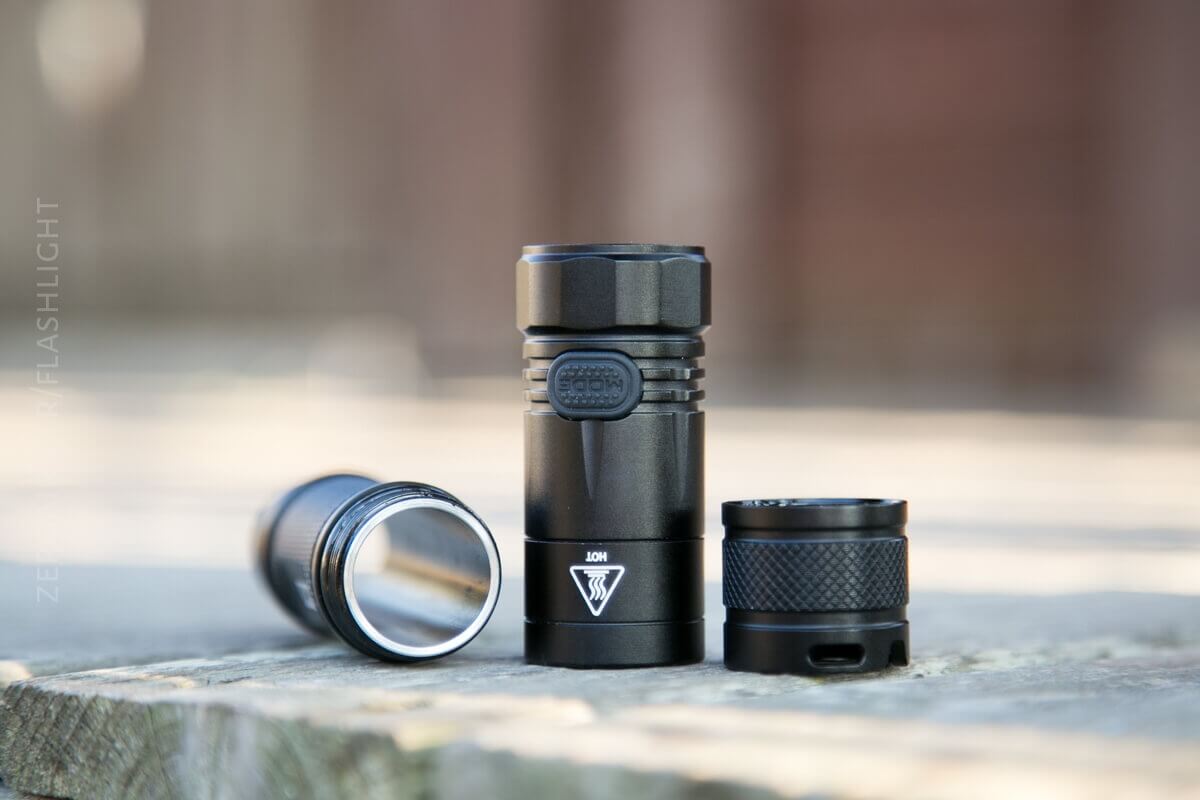
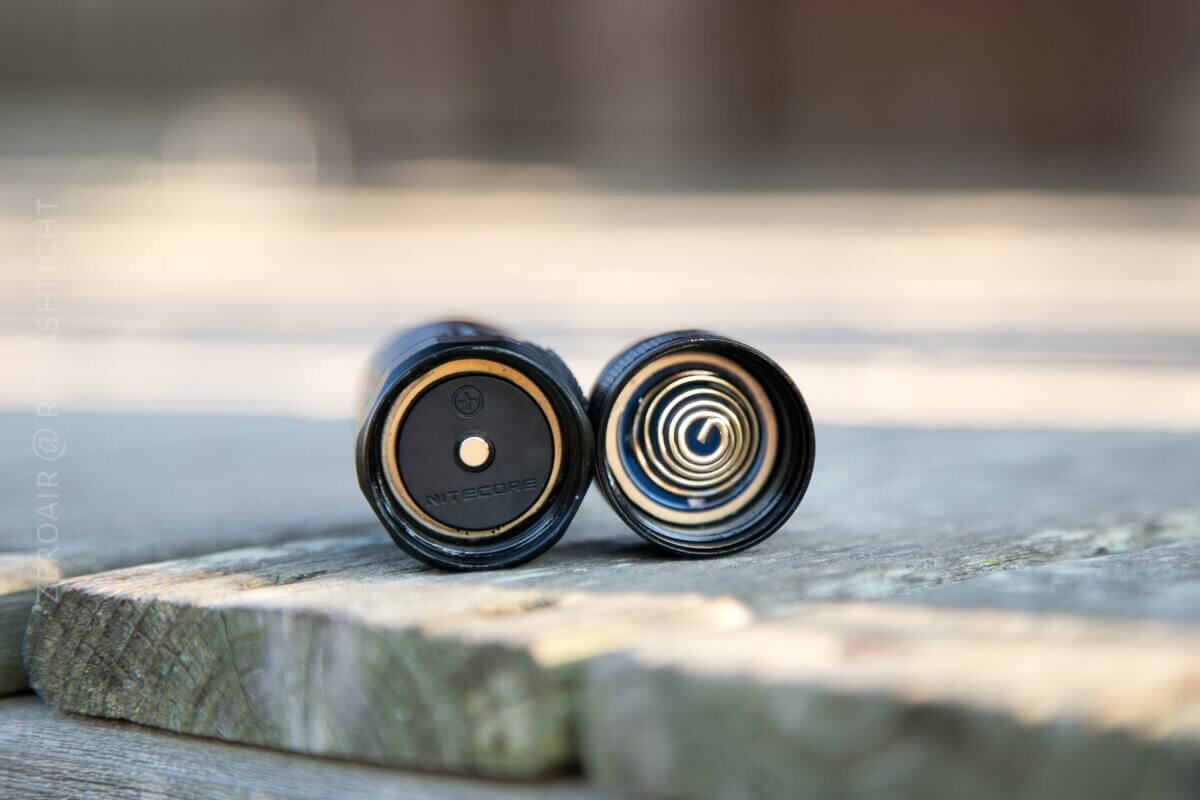
I have to compliment the knurling – this is my favorite kind, and this is a fantastic example of it. Diamond, but flat.
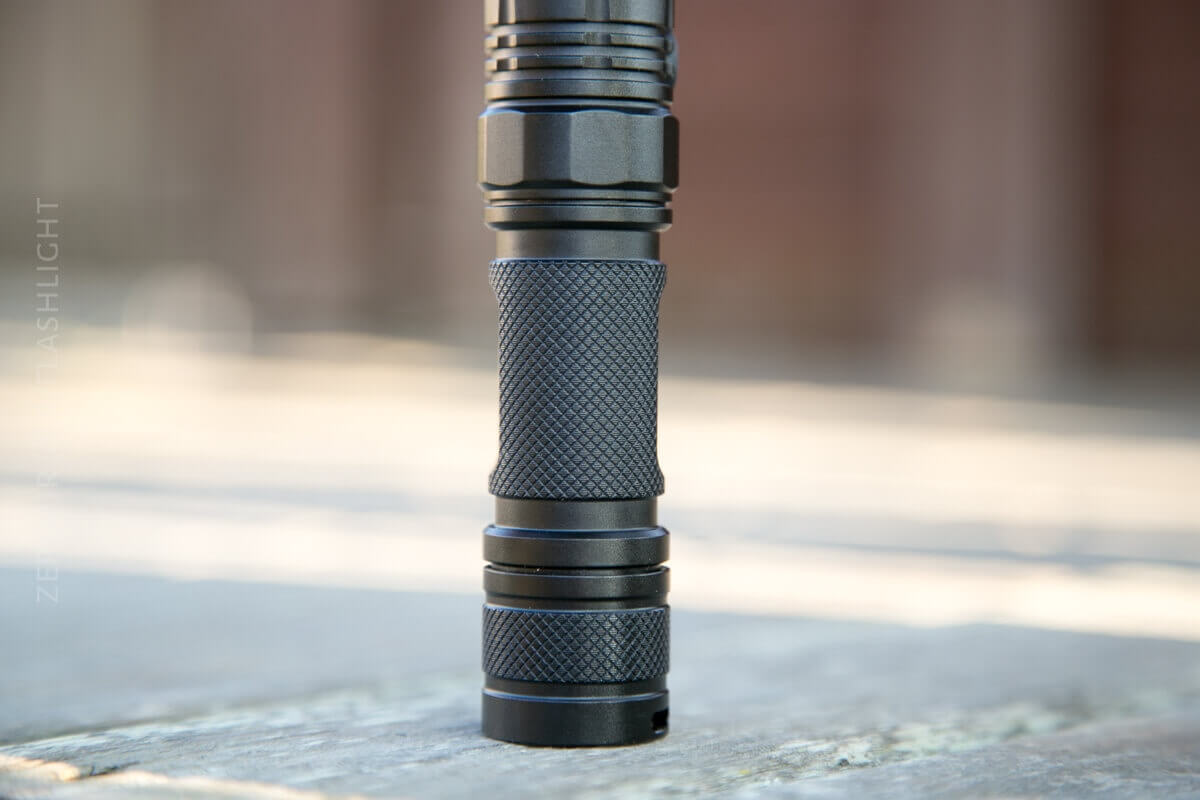
I will say that this light has a lot doing on. In hand, it just feels busy. Lots of ridges, lots of angles, lots of … just stuff happening.
Size
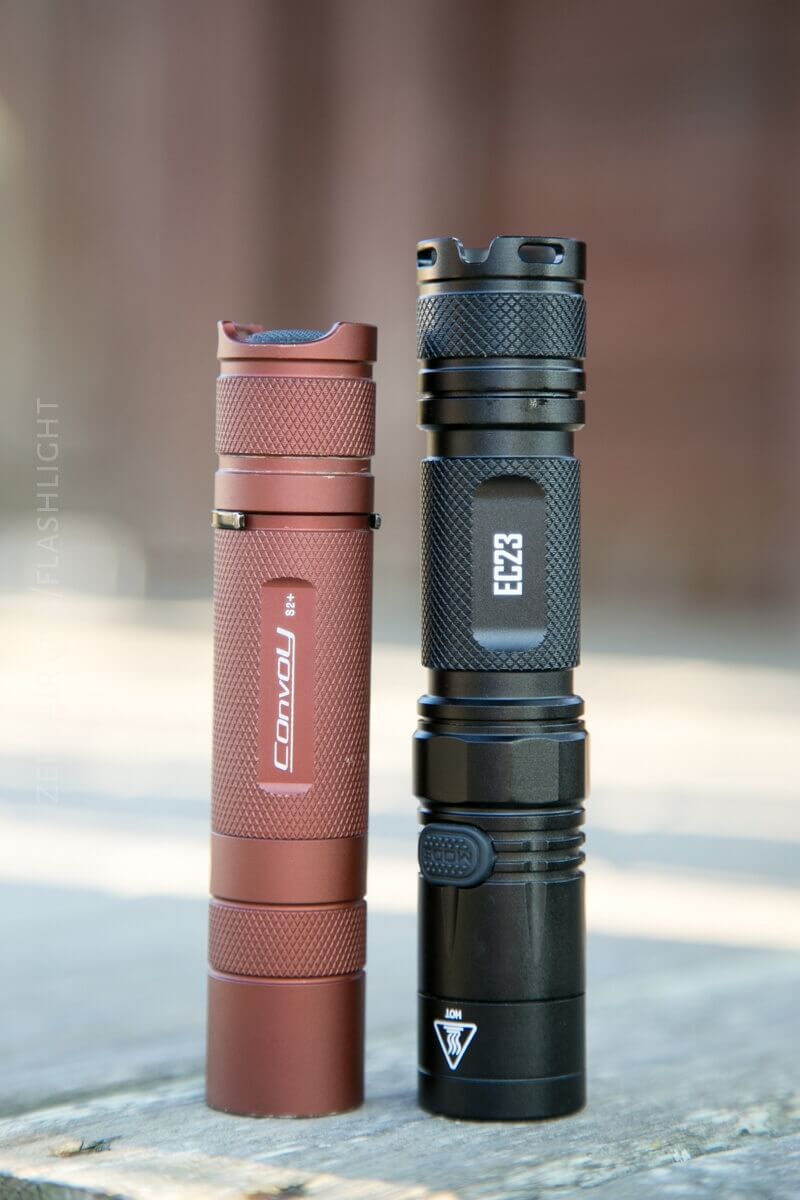
Officially 128.7mm x 25.4mm, and 78g without battery.
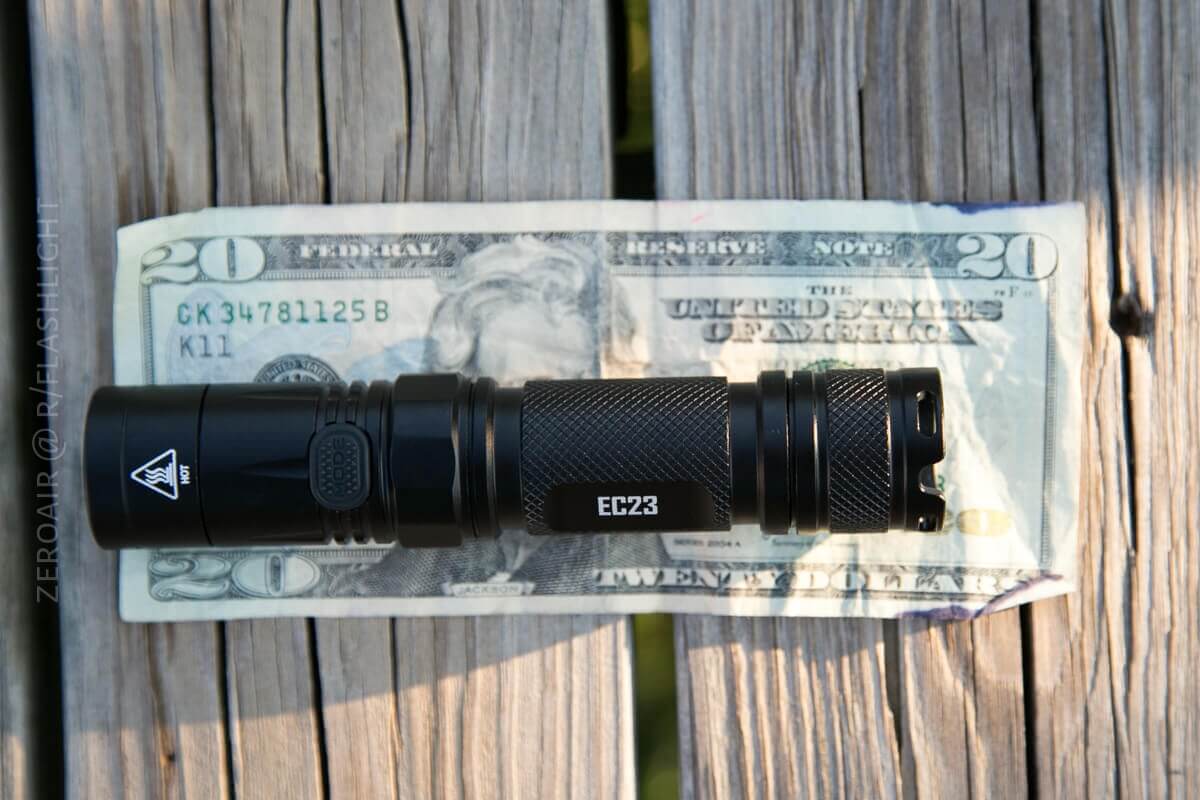
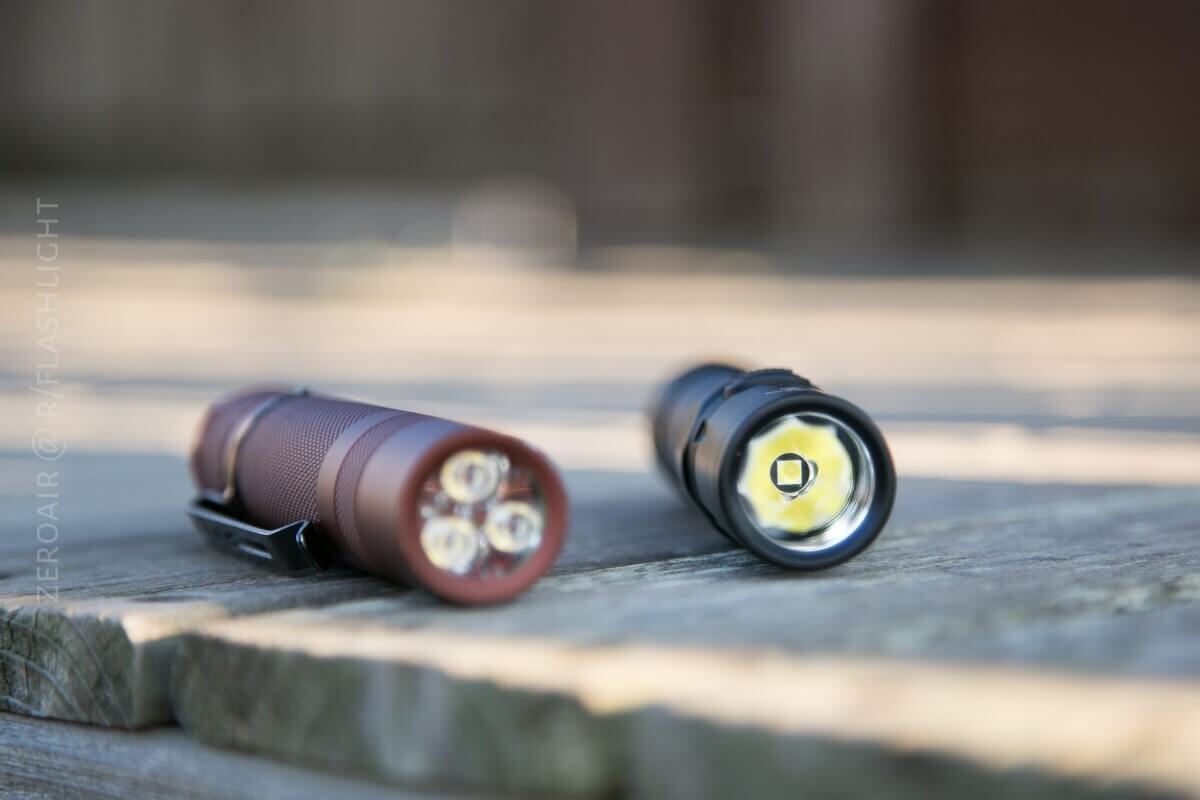
This light is quite a bit longer than the venerable Convoy S2+.
Retention
There’s only one included method for carrying this light, and that is a lanyard. The lanyard connects at the tailcap, where there are two loops for connection.
There is no pocket clip. There are slots for a pocket clip on the body, but one is not included.
Power
The EC23 is powered by a single 18650. Protected and unprotected work, as well as flat top and button top. Below is a runtime on Turbo. The runtime was stopped when (per the manual’s description) the indicating side switch indicated the cell voltage was low. When I stopped the test at this time, the cell voltage was 3.15V – fairly high for a warning, I think.
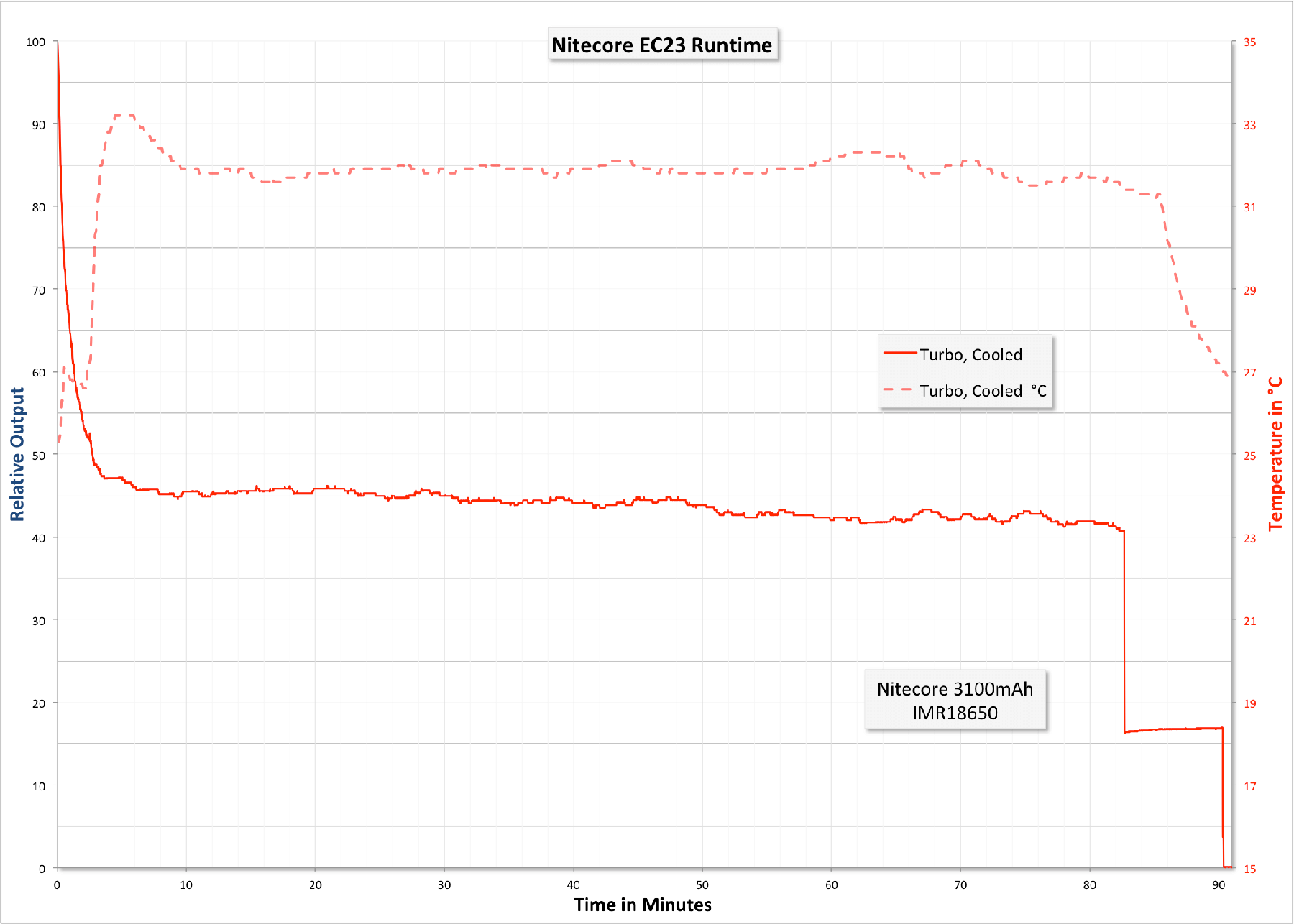
Also note that turbo isn’t maintained long, and the stepdown is to a steady 45% output. Temp is also stable when cooled, and not very hot at all.
One more thing about the indicating switch. When a cell is inserted, the switch will tell the cell voltage. It’ll blink out the ones digit (four blinks for 4V), then pause and blink out the tenths digit (four blinks pause one blink = 4.1V). This even works when 2-up cells are used. The manual only discusses RCR123’s, however (not 18350s). When voltage is reported for these cells, it’s the average voltage.
When the light is on, the blue indicator will blink once every 2 seconds when power levels reach 50% and blink quickly when levels are “low” (~3.15V).
The performance with 2-up 18350’s seems to actually be a little worse than with an 18650. I can’t explain that, but I will say the voltage indicator read “4.2V” – maybe 2×18350 confuses the light (overvoltage), and it’s really better (if you’re going to use 2x cells), to use RCR123’s like the manual states. I don’t have two of those to test with, unfortunately.
User Interface and Operation
There’s a single switch on this light. It’s an indicating switch. The indication is bright blue and easily visible. There’s no tailswitch, which seems surprising. I don’t mind – I like side switches.
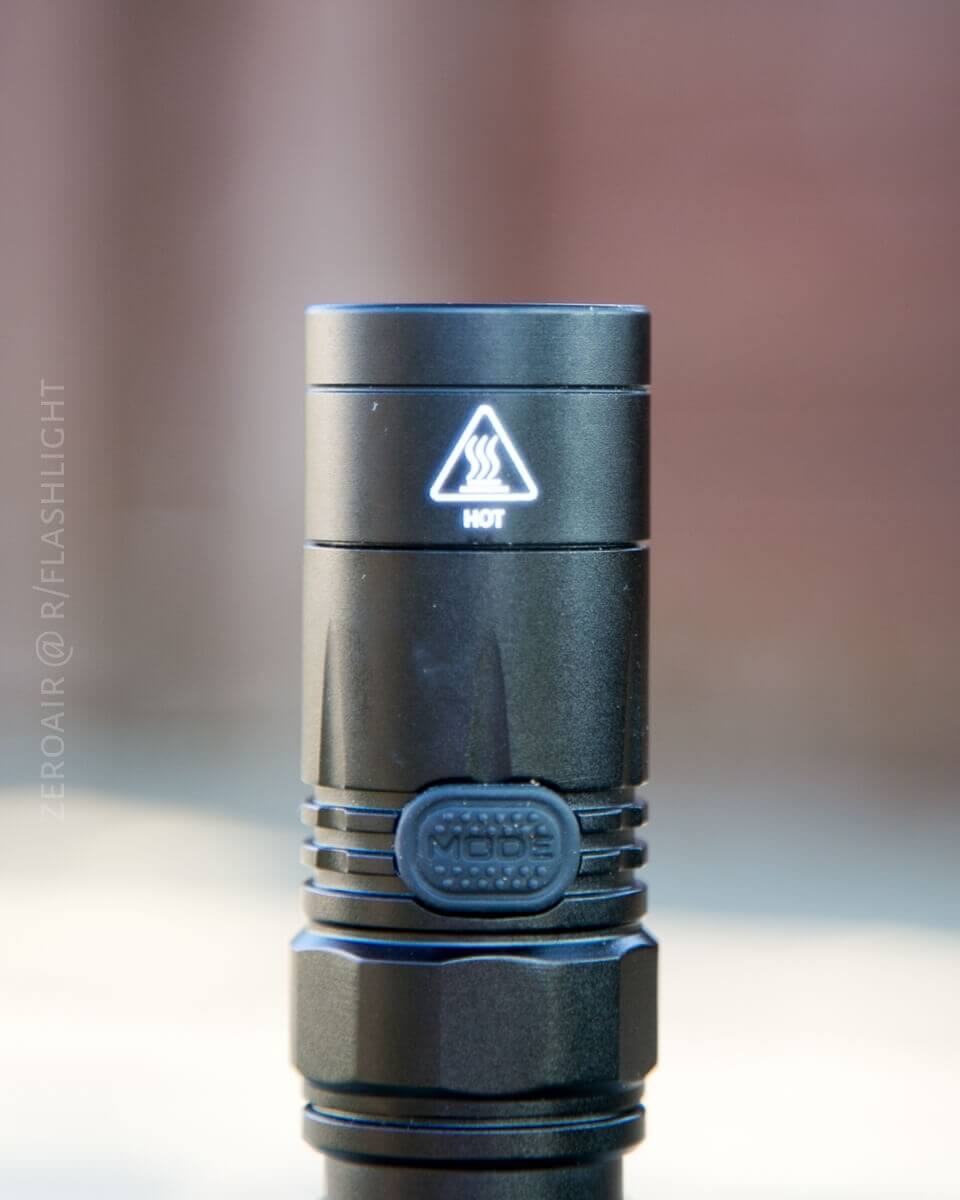
I’ll be honest, I find the user interface to be a little confusing. It seems like lately Nitecore is trying out some new things with UI’s (like with the Concept 1). And I like that. This user interface isn’t bad by any means, but I did have some trouble getting used to it.
Particularly, the issue is hitting Turbo too easily. Seems like any time I want to do anything, the next mode is going to be Turbo. Here’s a user interface table.
| State | Action | Result |
|---|---|---|
| Off | Short Hold | Ultralow |
| Off | Click | Mode Memory (Any mode) |
| Off | Long Hold | Turbo |
| Off | Really long hold | Momentary Turbo |
| On | Click | Off |
| On | Hold | Momentary Turbo |
| Momentary Turbo | Release switch | Return to previous mode |
| Within 3s of On | Hold | Mode cycle |
| Any | Triple-click | Strobe |
| Strobe | Hold | Next strobe (Fast strobe>SOS>Beacon) |
I might have missed something. There’s a lot going on in the UI. But it’s fairly simple once you realize the ways to get to Turbo, and how to avoid them.
Modes
| Mode | Mode Claimed Output (lm) | Claimed Runtime | Mode Measured Lux |
|---|---|---|---|
| Turbo | 1800 | 30m | 35200 |
| High | 980 | 1h15m | 17190 |
| Mid | 300 | 4h15m | 1289 |
| Low | 55 | 20h | 37 |
| Ultralow | 1 | 300h | 5 |
LED and Beam
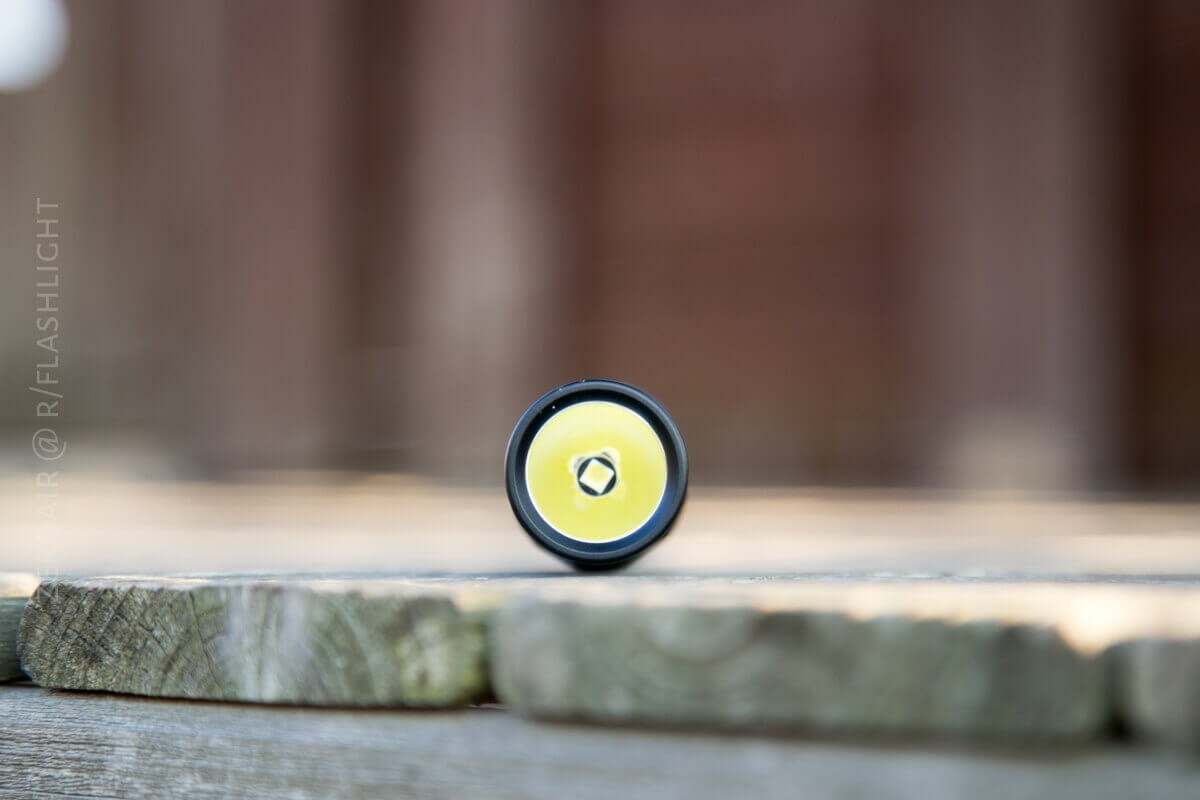
Nitecore has opted to use a Cree XHP35 HD in this light. This is coupled with a smooth reflector. I generally like these XHP emitters, but in a light like this, with the smooth reflector and probable intention for a bit of throw, I think a HI might be a better choice. But then I’m biased; I almost always like HI emitters.
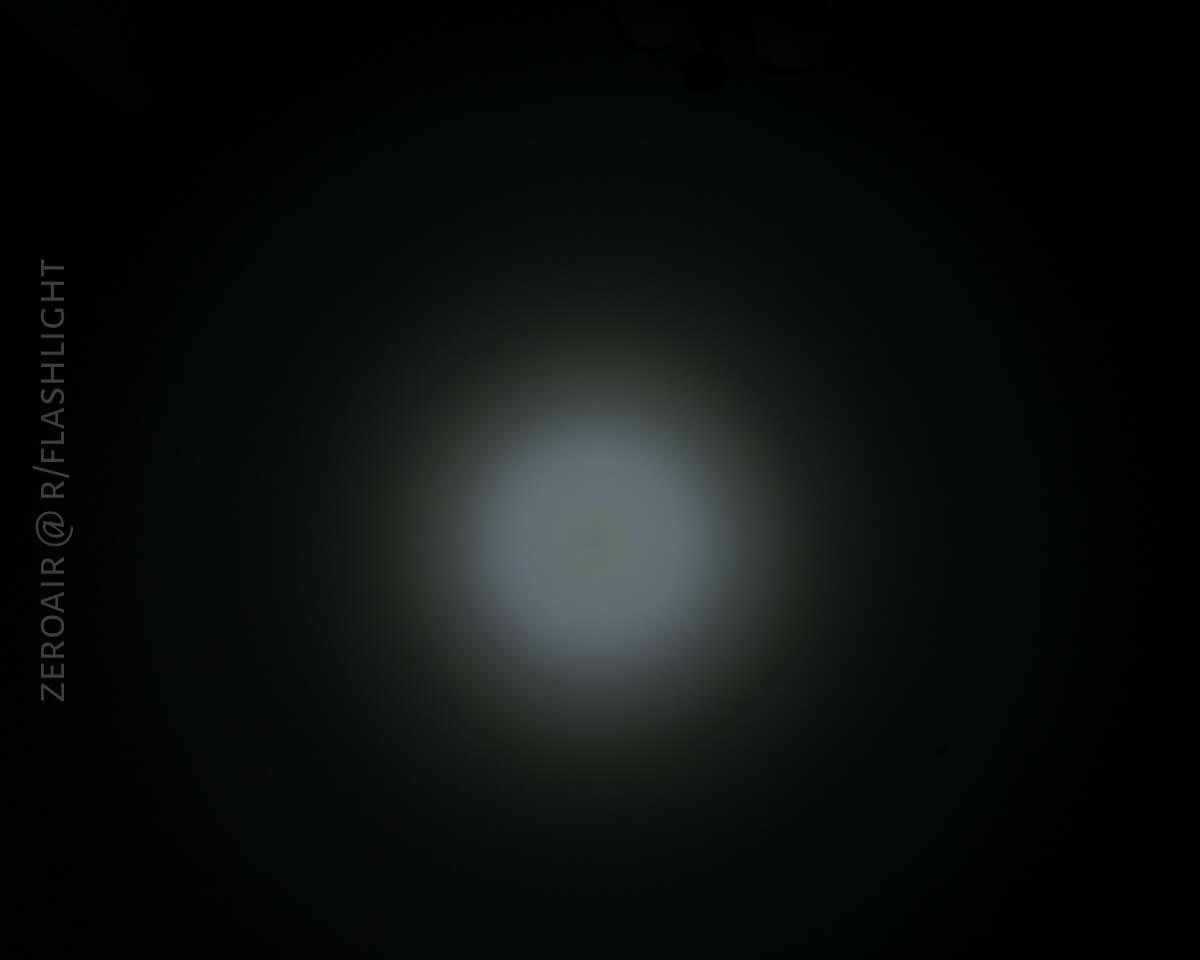
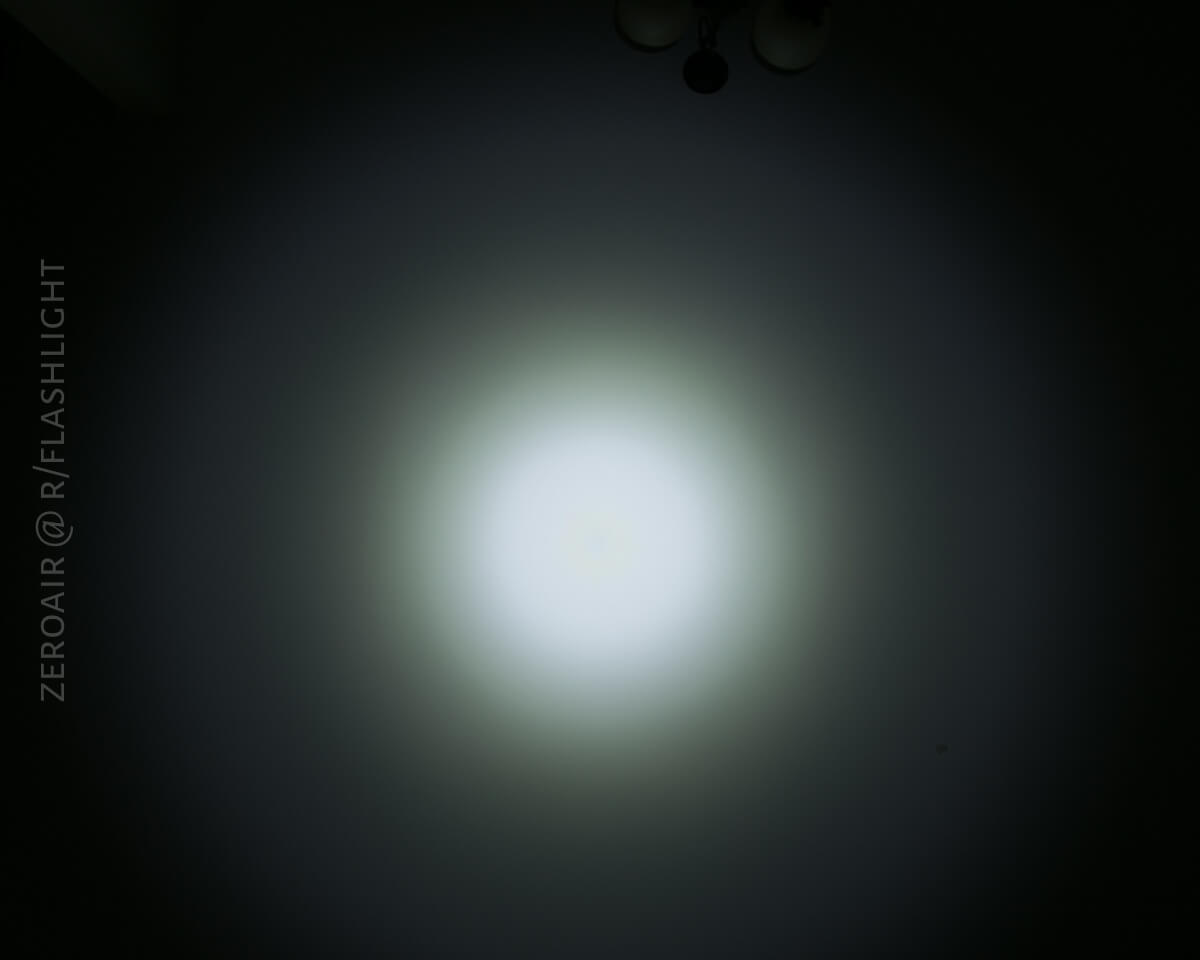
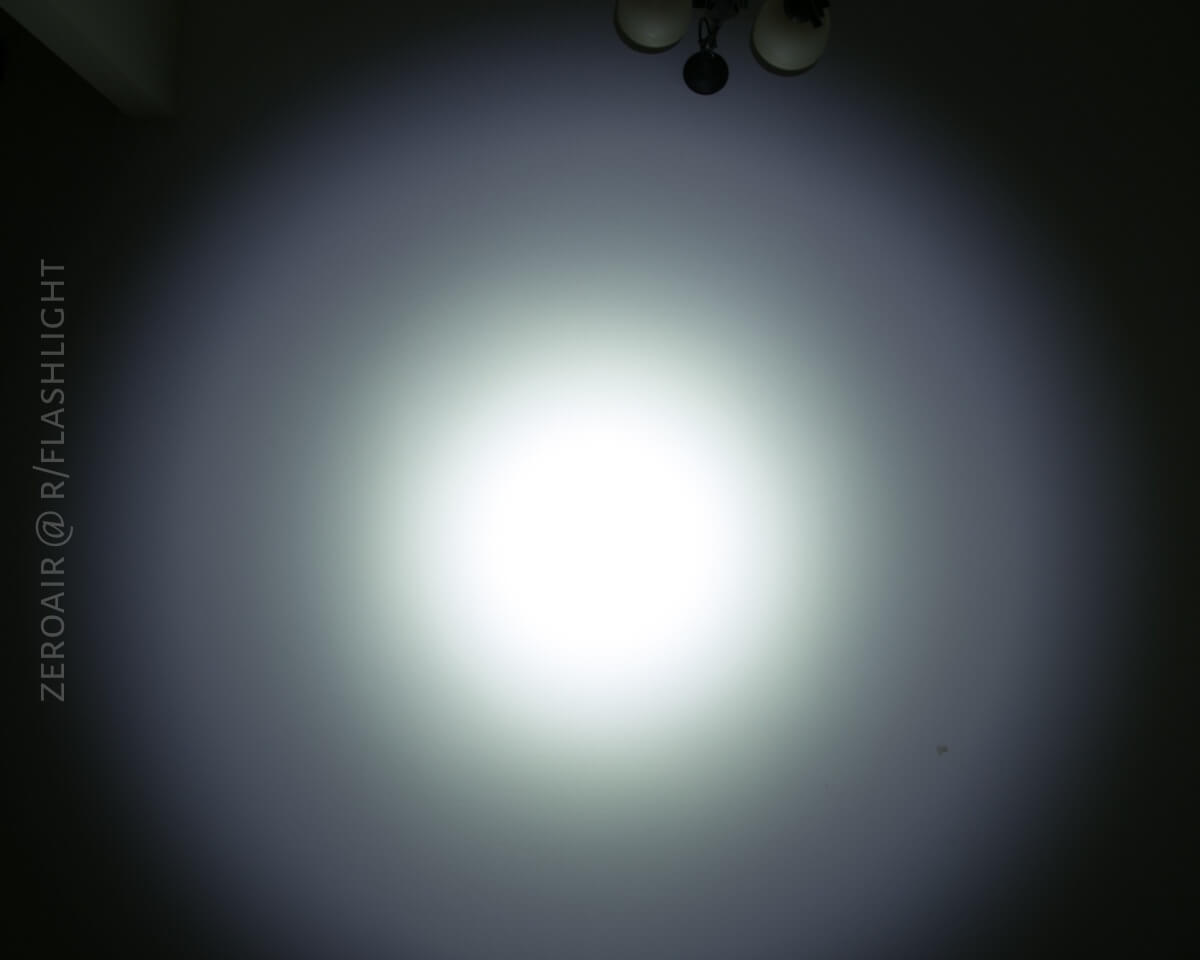
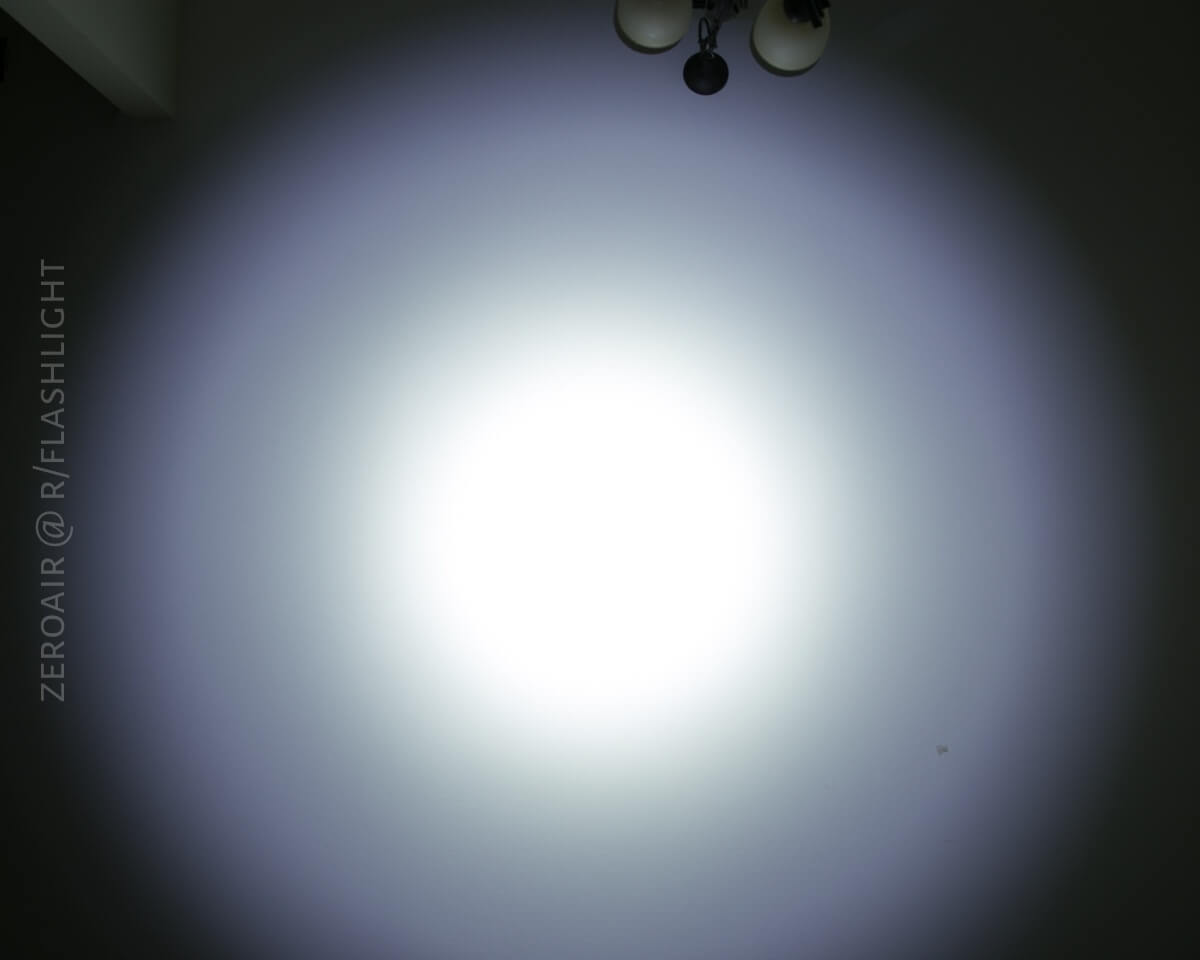
The beam is ok, but there’s a gigantic yellow donut right in the center. At about 5m, the donut is around a foot across.
Beamshots
These beamshots always have the following settings: f8, ISO100, 0.3s shutter, and manual 5000K exposure. These photos are taken at floor level, and the beam hits the ceiling around 9 feet away.

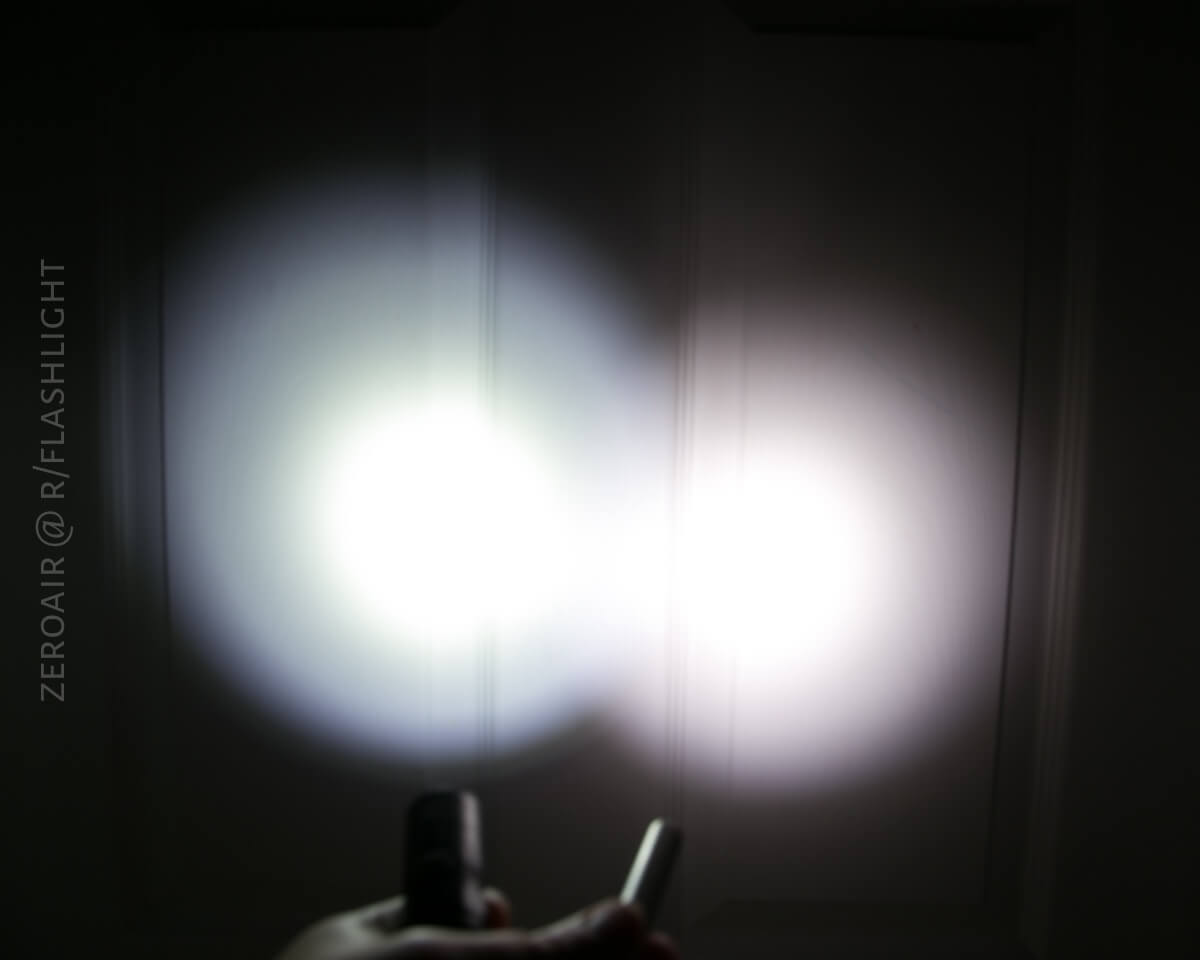
Tint vs BLF-348 (KillzoneFlashlights.com 219b version) (affiliate link)
I keep the test flashlight on the left and the BLF-348 reference flashlight on the right.
Conclusion
What I like
- Indicating side switch
- Output is great (I didn’t measure total output, but it’s very bright
- Build quality is solid
What I don’t like
- Donut hole in the beam
- User interface is a bit confusing
Notes
- This light was provided by NitecoreStore.com for review. I was not paid to write this review.
- This content originally appeared at zeroair.org. Please visit there for the best experience!
- Use my amazon.com referral link if you’re willing to help support making more reviews like this one!
- Please support me on Patreon! I deeply appreciate your support!
Discover more from ZeroAir Reviews
Subscribe to get the latest posts sent to your email.
Pingback: Zebralight SC63w Flashlight Review – ZeroAir Reviews