
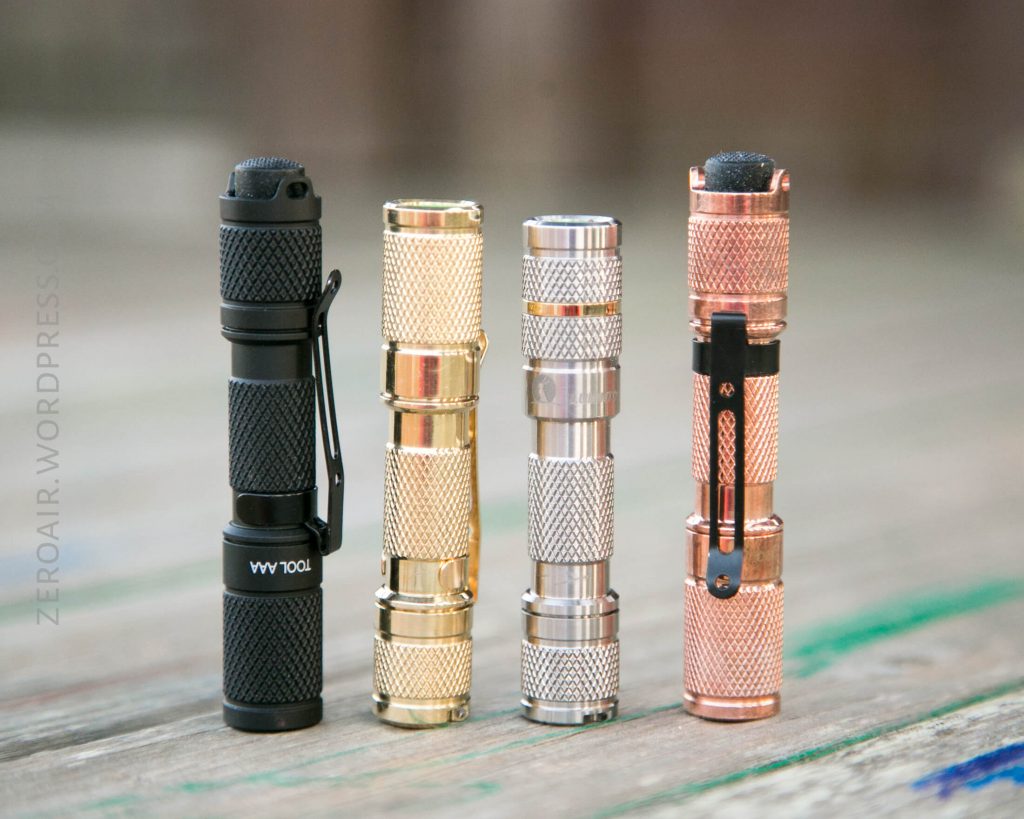
Lumintop Tool AAA Flashlight Review
Here is a multi-review of the Lumintop Tool AAA flashlight in copper, aluminum, brass, and titanium. Read on for many photos and tests!

This review is strictly about the AAA version of the Tool, though Lumintop has recently released an AA version. I hope to have one of those for review soon. (In this review I’ll refer to the Tool AAA as simply the “Tool” – I hope the schism doesn’t ruin the review, but I think the pieces fit.)
Also, note that some of the photographs are from the three review items. I did reshoot and include the brass. But some shots are from the first photos and don’t include the Brass. I hope you’ll forgive that.
Here’s a link to the lights on GearBest.
Official Specs and Features
Aluminum
Titanium
Copper
Brass
Versions
Clearly, there are at least 4 versions (as I am reviewing four versions here). Massdrop also has a blue titanium version, and there are generally two emitter options, the Nichia 219b, and a Cree XP-G2. Among the different metals and finishes, there are two switch types: a mechanical clicky, and an e-switch (both are not available in all finishes).
Price
Depending on what metal you choose, the price ranges from $10 to $40ish, with a good price for aluminum being $10, and a good price for copper being $20.
Short Review
Well, I liked it enough to buy my own, and it’s one of the more expensive versions. That should qualify as a solid endorsement.
Long Review
The Big Table
| Lumintop Tool Titanium | Lumintop Tool Copper | Lumintop Tool Brass | ||
|---|---|---|---|---|
| Emitter | Nichia 219b | |||
| Cell | AAA | |||
| LVP? | Warning | |||
| Claimed Lumens (lm) | 80 | 80 | 80 | 80 |
| Lux (Measured) | 66 lux @ 2.4 m | 64 lux @ 2.5 m | 62 lux @ 2.5 m | 51 lux @ 2.7 m |
| Candela (Calculated) in cd | 378.9 | 403.2 | 395 | 369 |
| Throw (Calculated) (m) | 378.9^ | 403.2^ | 395^ | 369^ |
| Throw (Claimed) (m) | 34 | 34 | 34 | 34 |
^ Measurement disclaimer: Testing flashlights is my hobby. I use hobbyist-level equipment for testing, including some I made myself. Try not to get buried in the details of manufacturer specifications versus measurements recorded here; A certain amount of difference (say, 10 or 15%) is perfectly reasonable.
What’s Included

- Lumintop Tool AAA
- Spare o-rings (2)
- Keychain hook (depending on model)
- Manual
Package and Manual
There are two package options for the Tool. One is a slip-fit cardboard box typical of Lumintop, and the other is a more display-ready package. This doesn’t seem to be related to the cost, metal, or switch of the light. Some are one, some are the other. Either is fine but the plastic case as with the Massdrop Brass and the Aluminum version is a nice bonus.
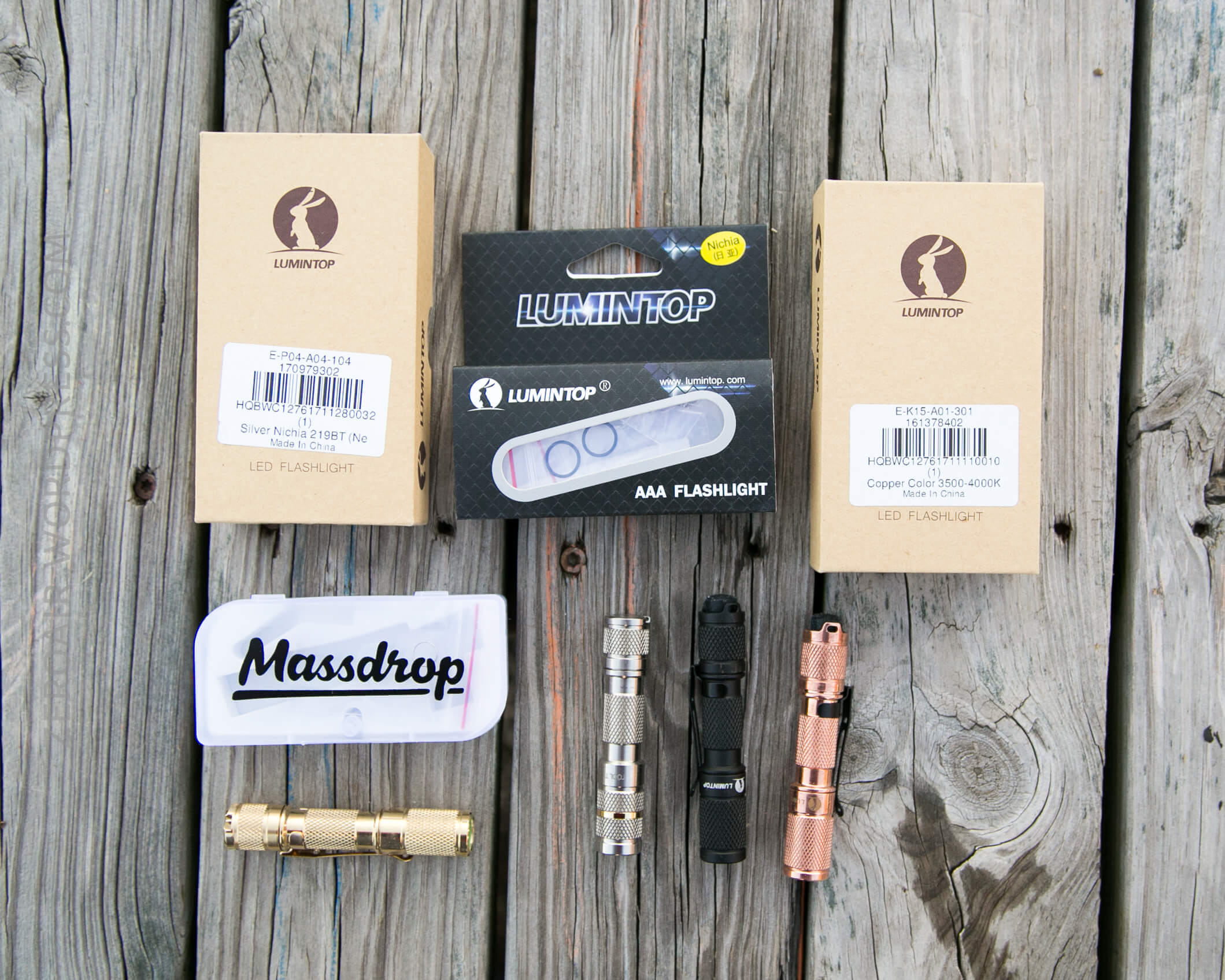
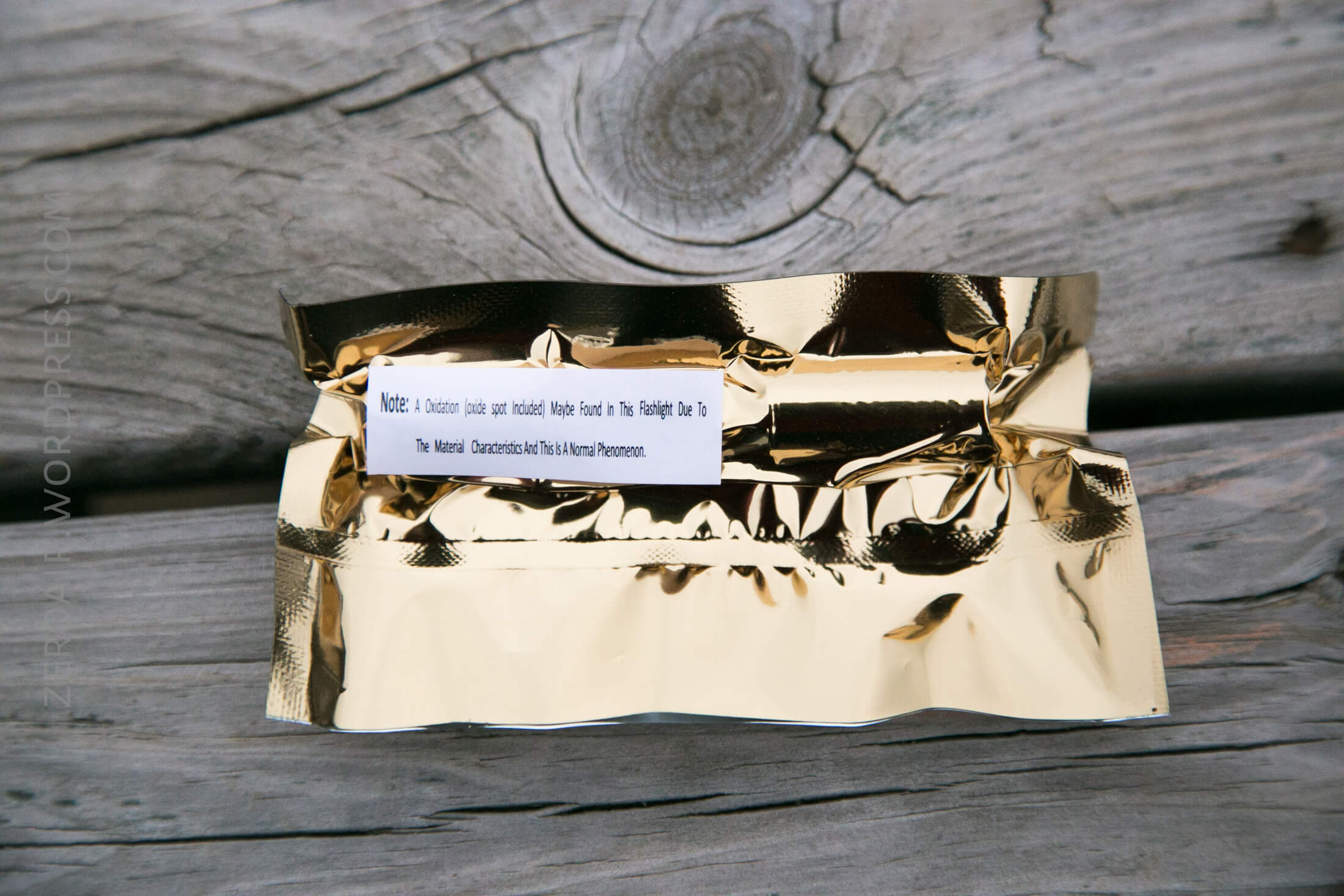
The bodies that can patina, are shipped in a sealed foil pouch so that the lights are pristine when received. This is a nice touch. It also meant that the Brass shipped outside its Massdrop-labeled case (which is fine, but I found it humorous).
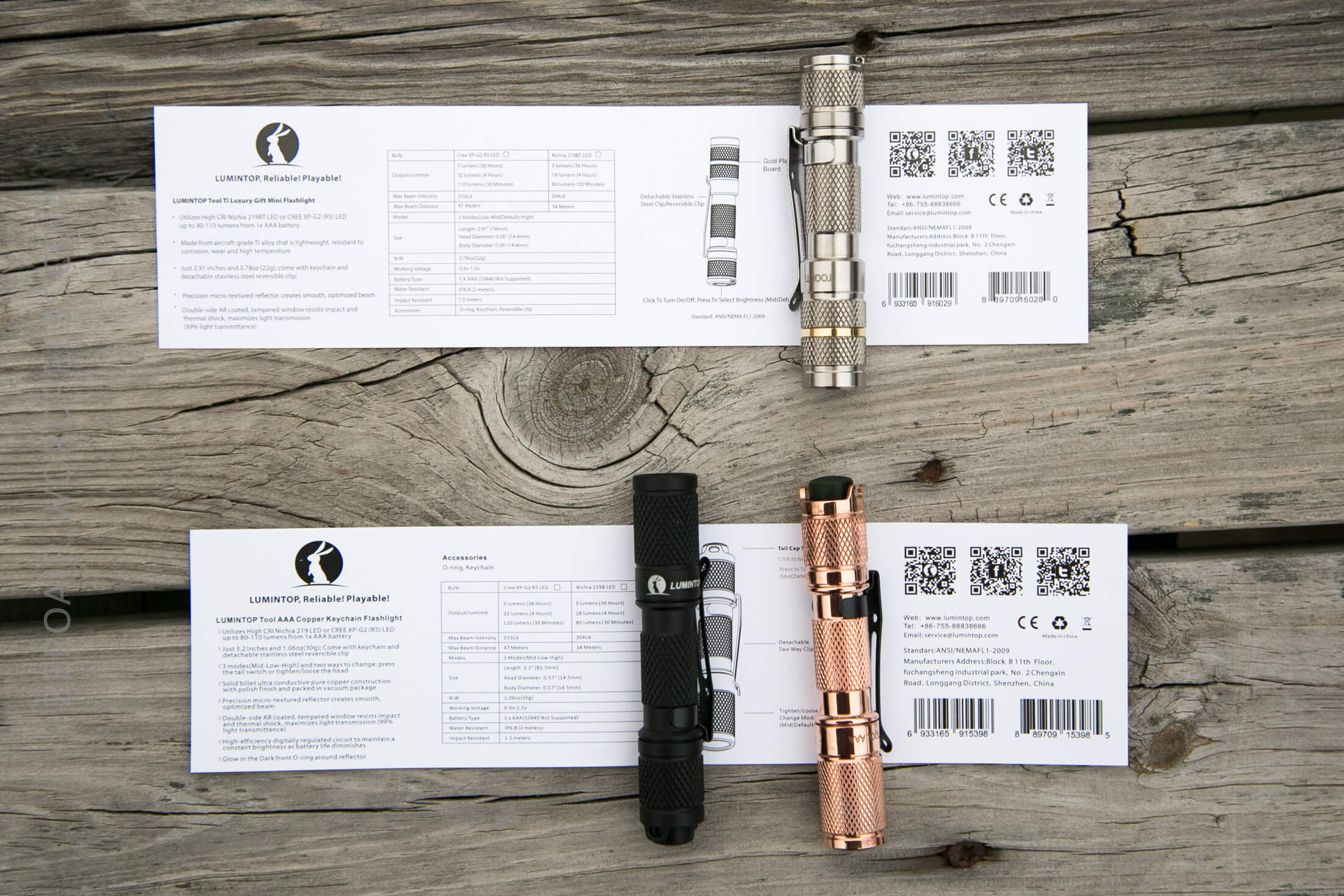
The manual for these lights is typical Lumintop, and fair. The specs and features info is good, but there’s no user interface description at all.
Build Quality and Disassembly
I am extremely impressed with these inexpensive lights. First off, for there to be so many versions and in so many materials, is great. I’m a brass fan, and once I had the first three, I realized these are good lights (even at the $30 I paid from Massdrop). In every case, the build quality is consistent and threads are smooth, and operation is flawless.

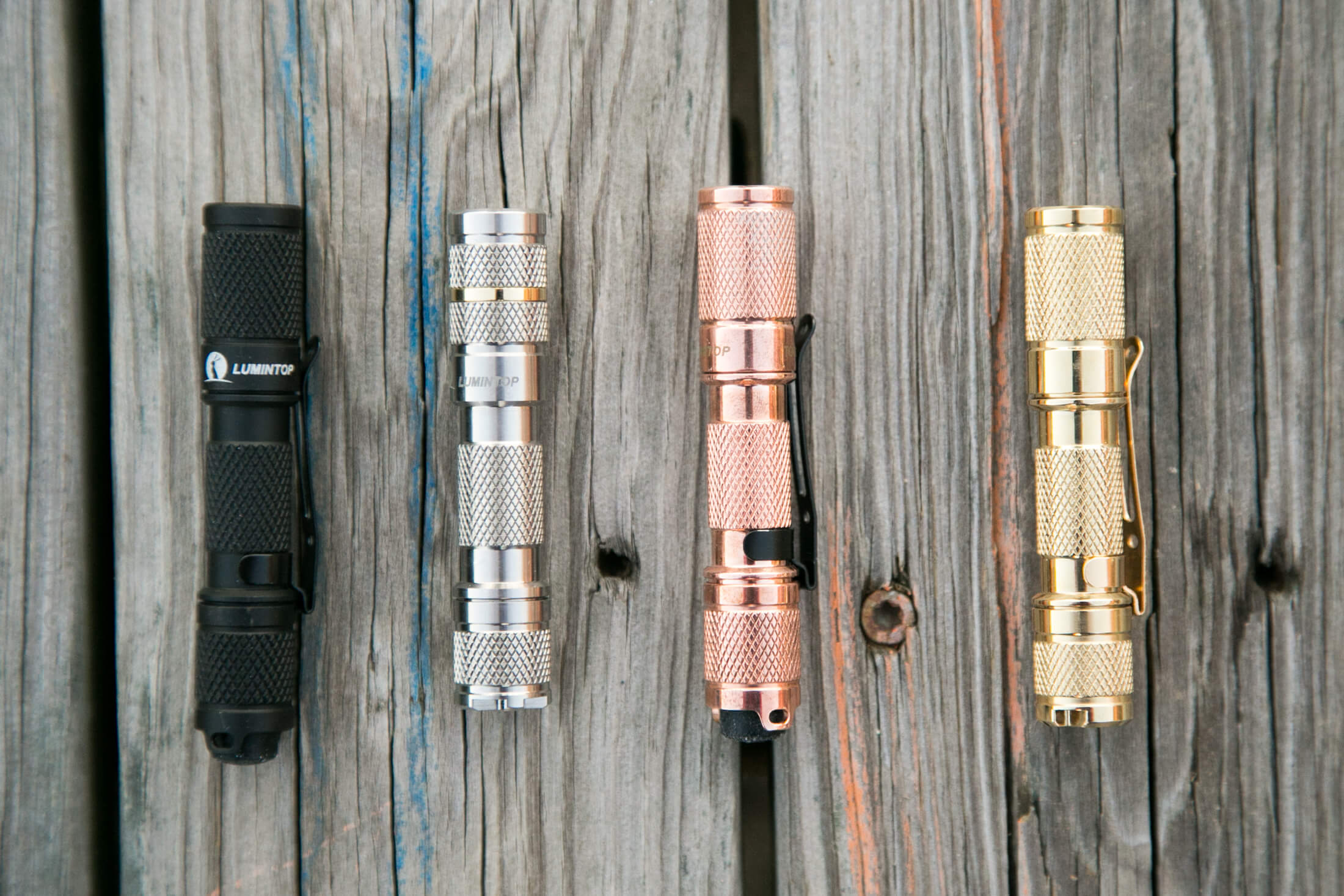
What held me back from ordering one of these ages ago, is that I simply did not like the shape. I didn’t like the thin waist of the aluminum, and that turned me away from all models. Once I have them in hand, I can say that the size and shape is just fine.
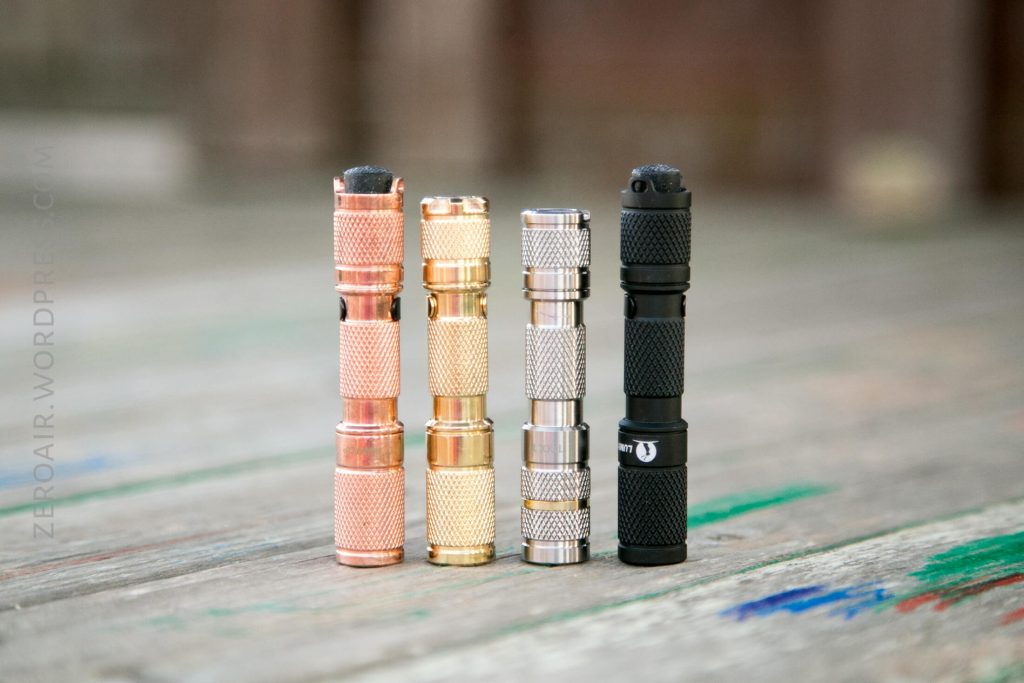
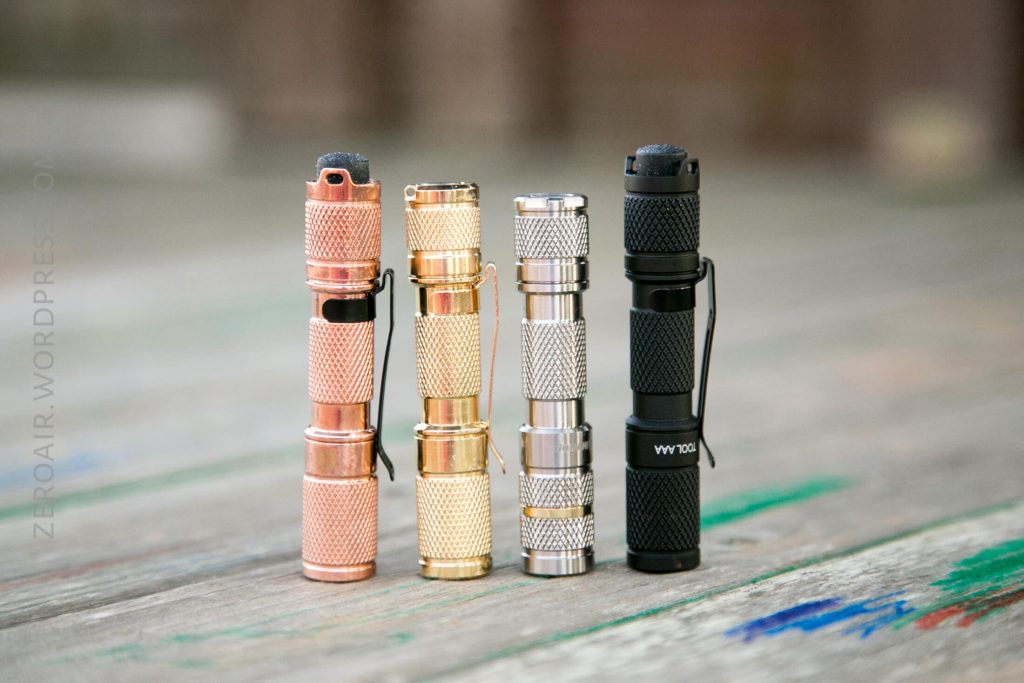
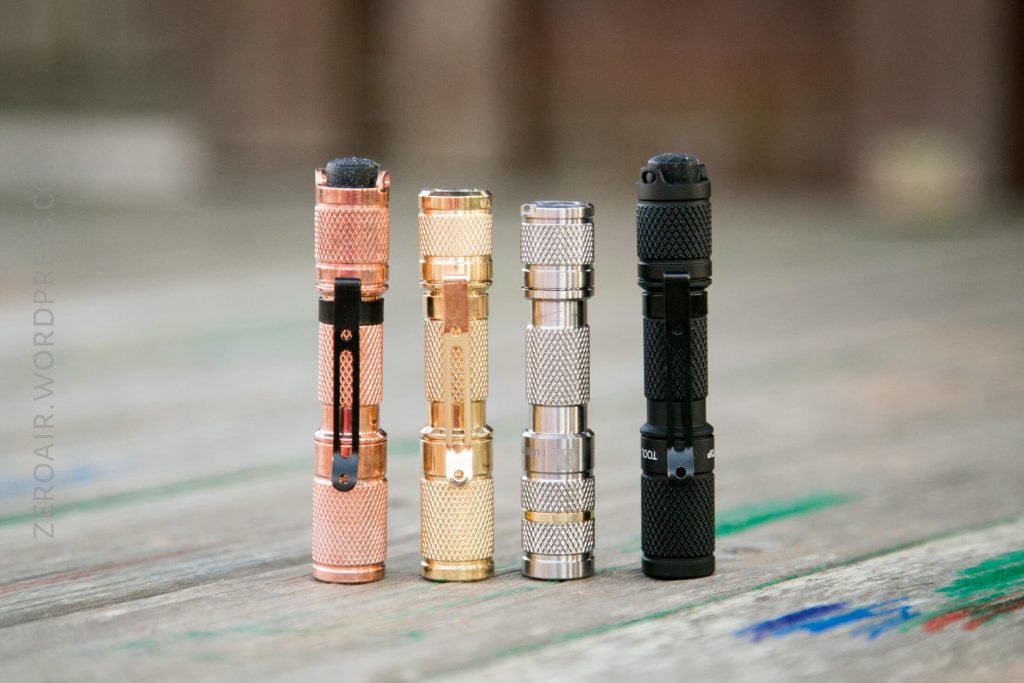
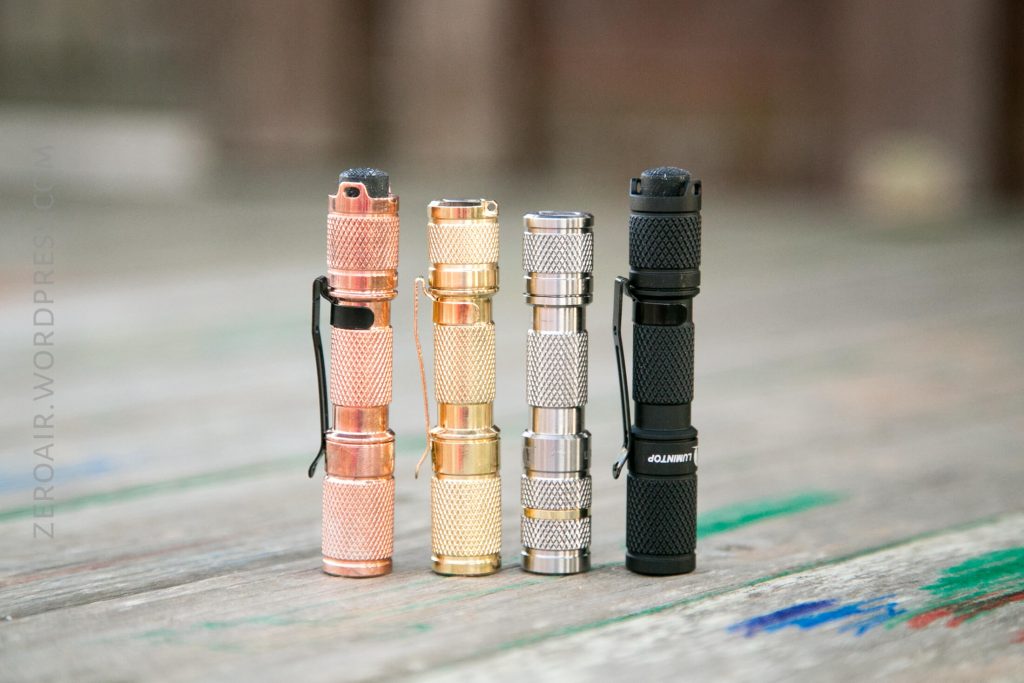
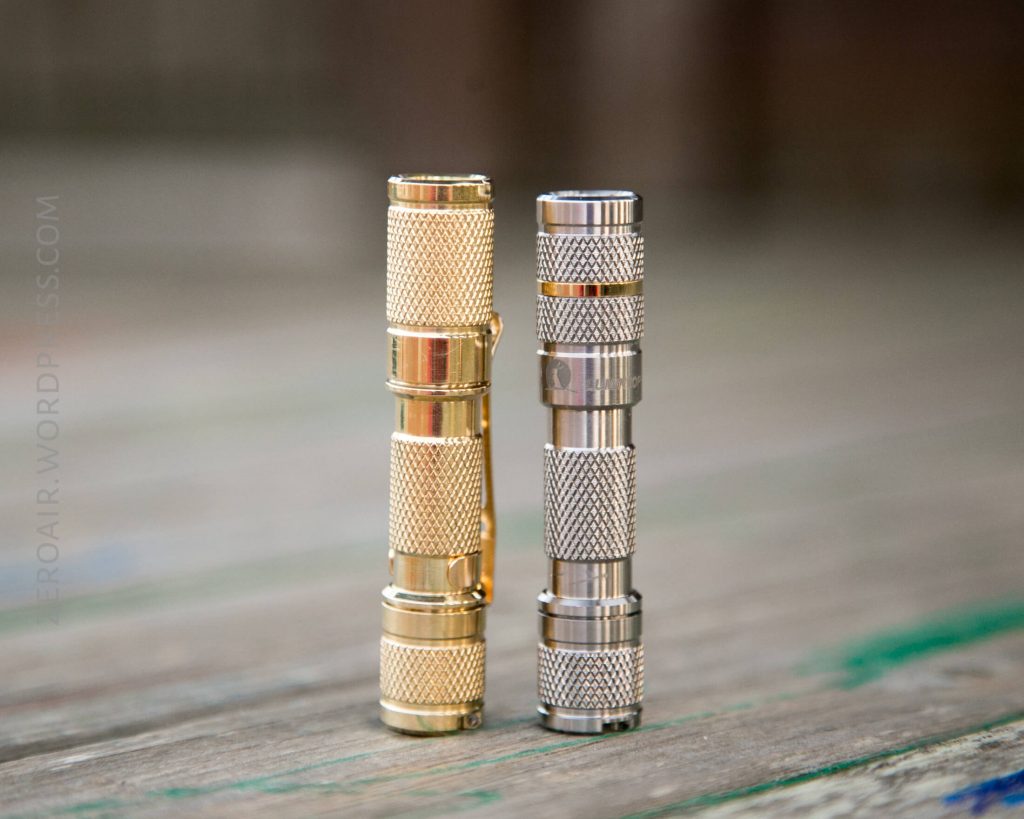
Each model has flat diamond knurling, which makes for a good grip without being overly grippy in the pocket.
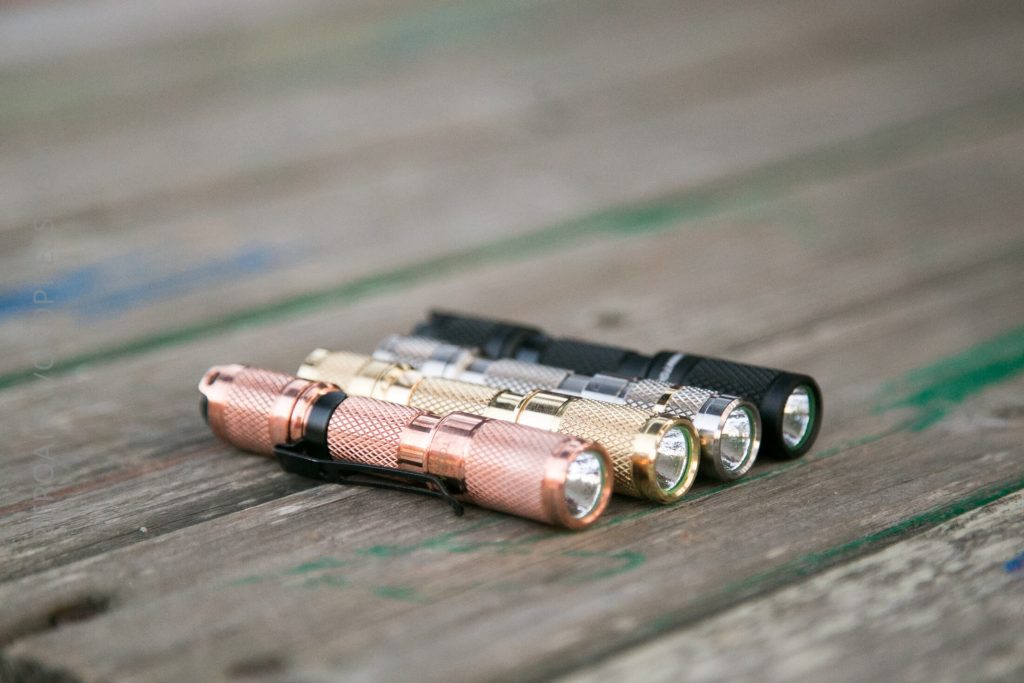
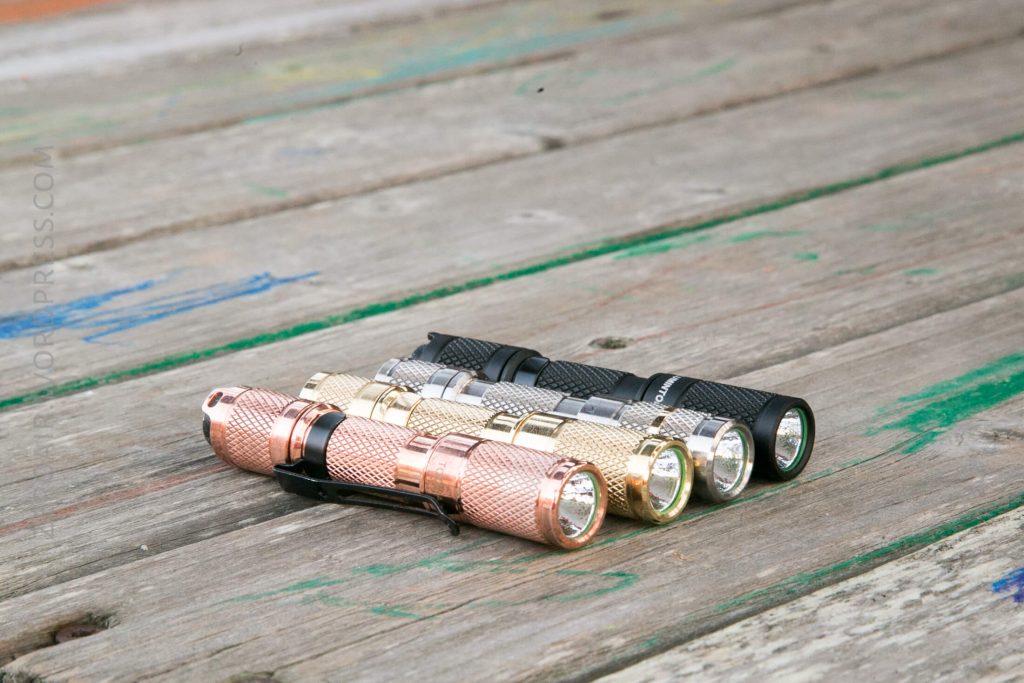
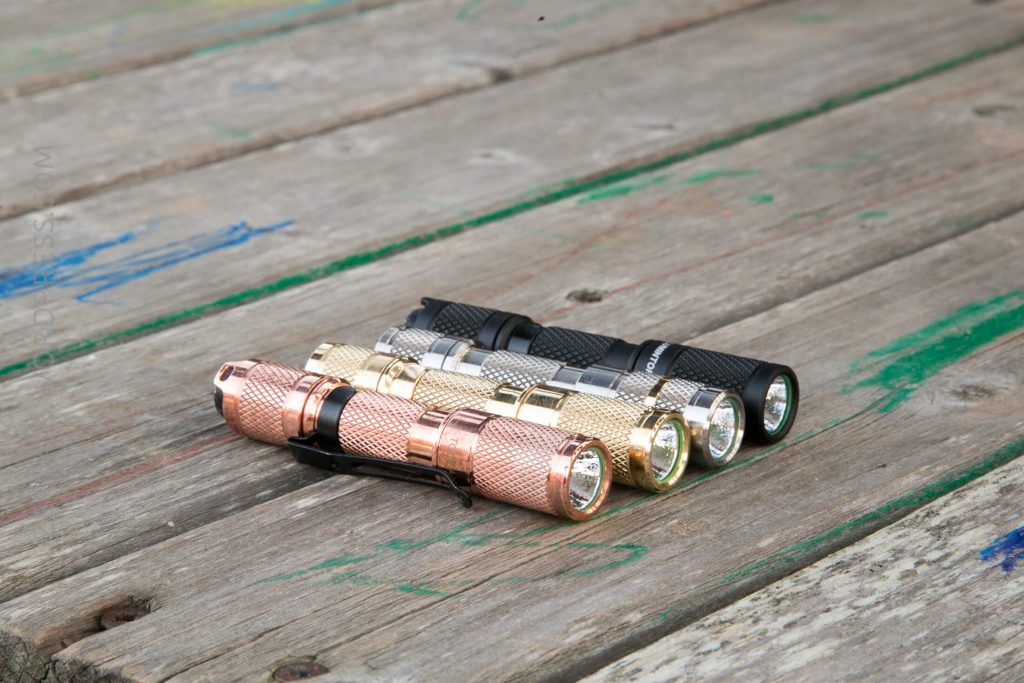
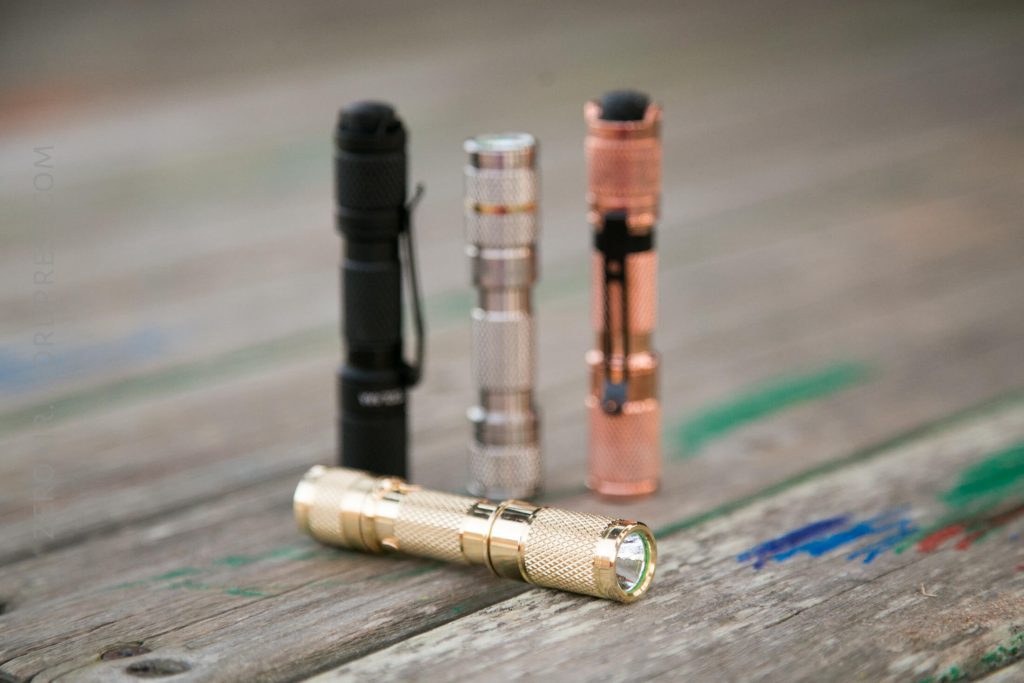
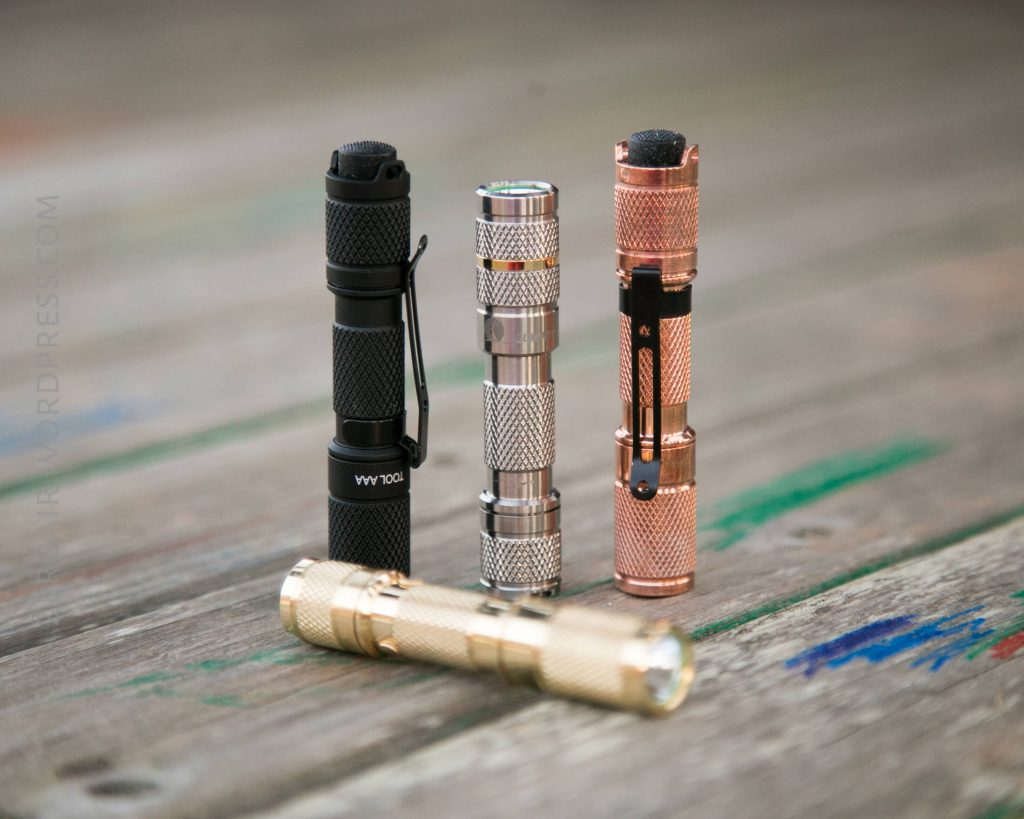
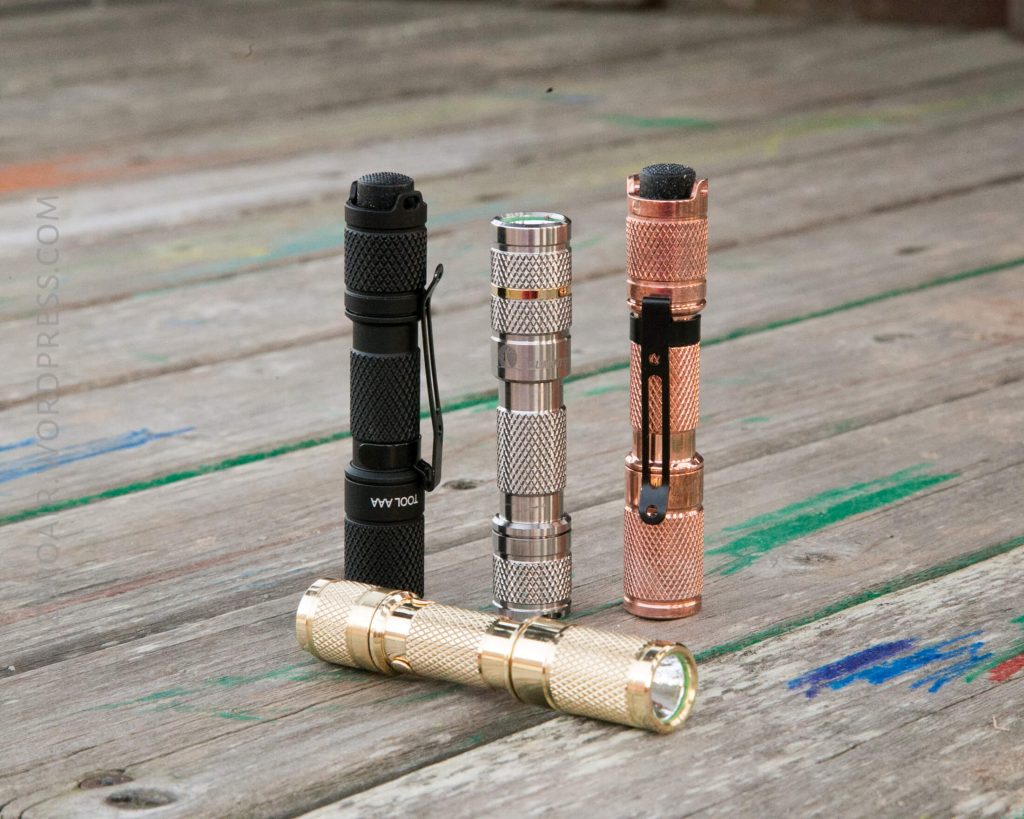
All models are highly disassemblable. The head and tail unscrew from the center tube easily. Inside the head and tailcap of all models, the parts are held in by threaded parts, which can just be unscrewed out of the lights.
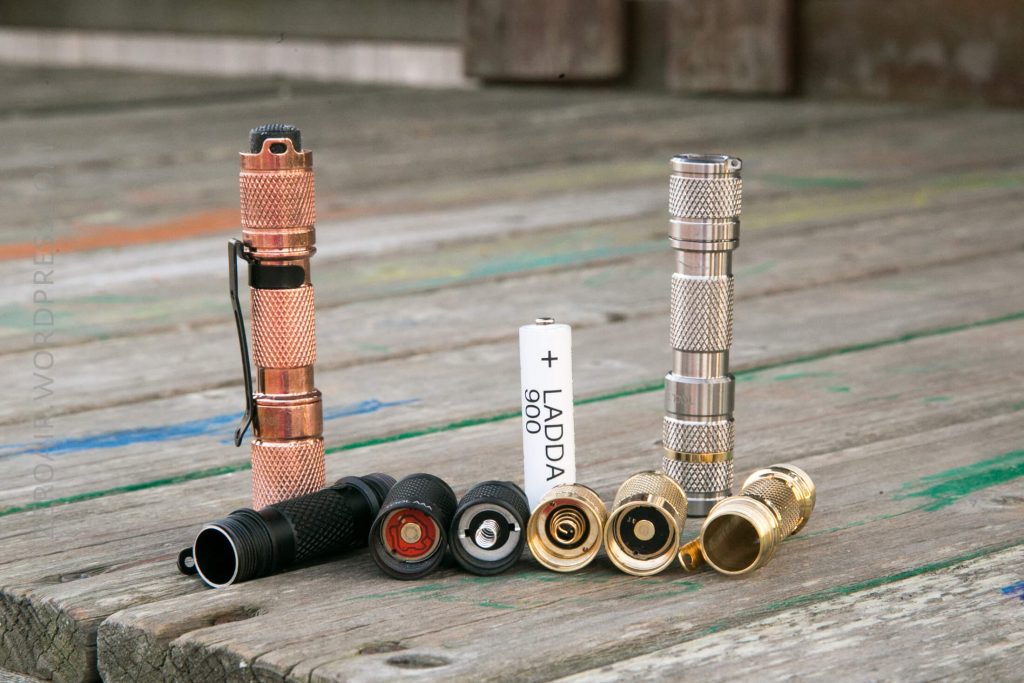
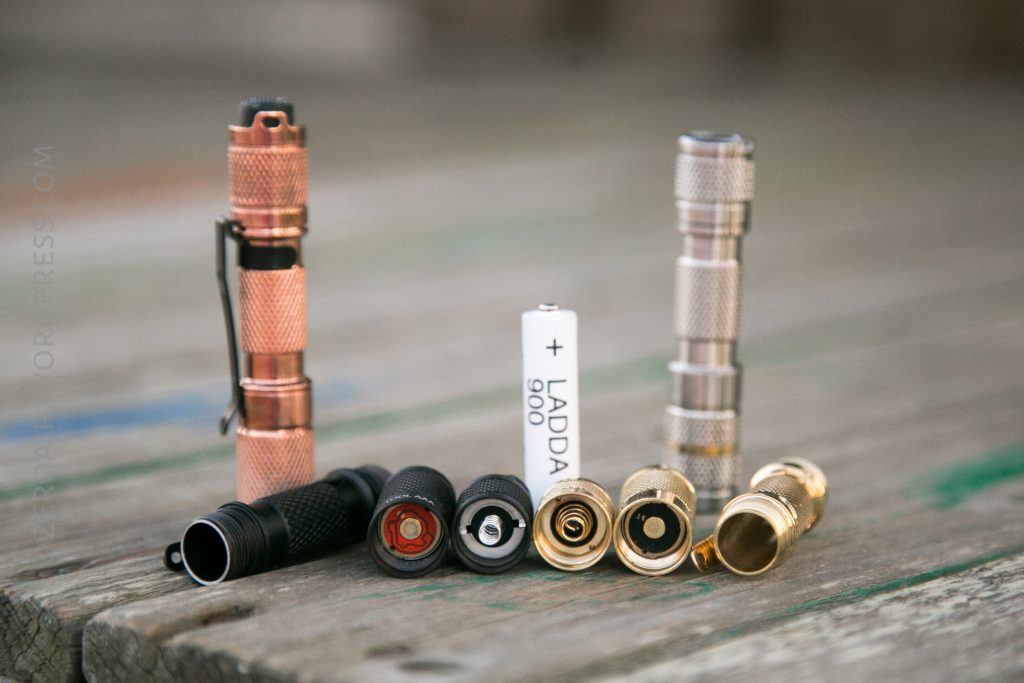
Like-models may be Frankensteined with one exception: The titanium has a special head, and will only swap with other titanium lights. E-tails will swap, Mechanical tails (and heads) will swap. But brass head and ti head will not. The Titanium has a brass ring for heat dissipation from the pill.

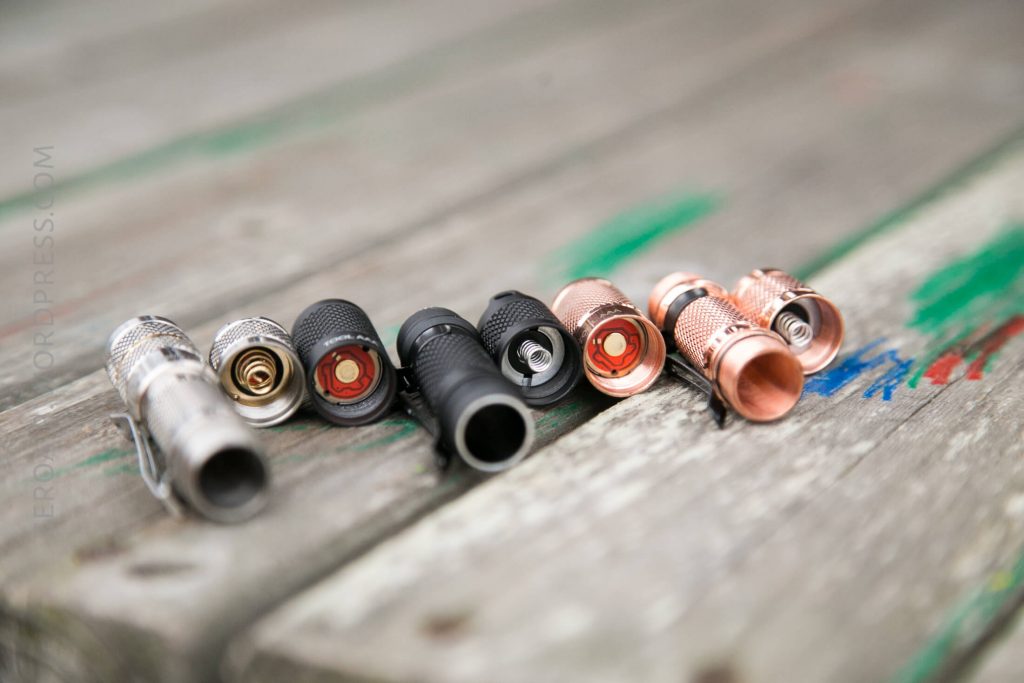
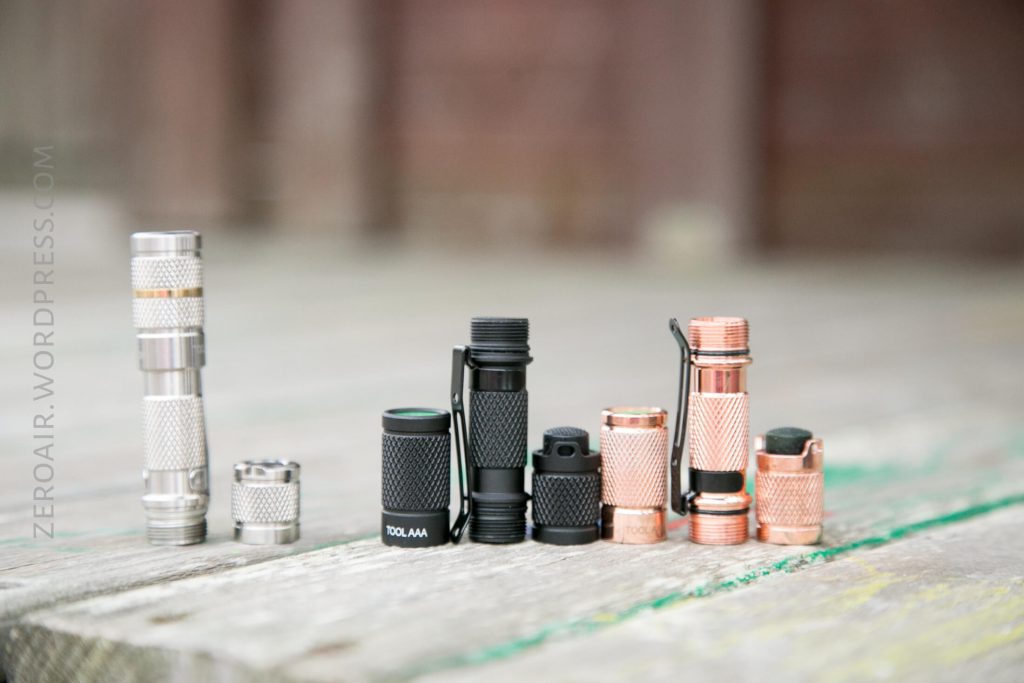
And the Frankenstein versions don’t look half bad.
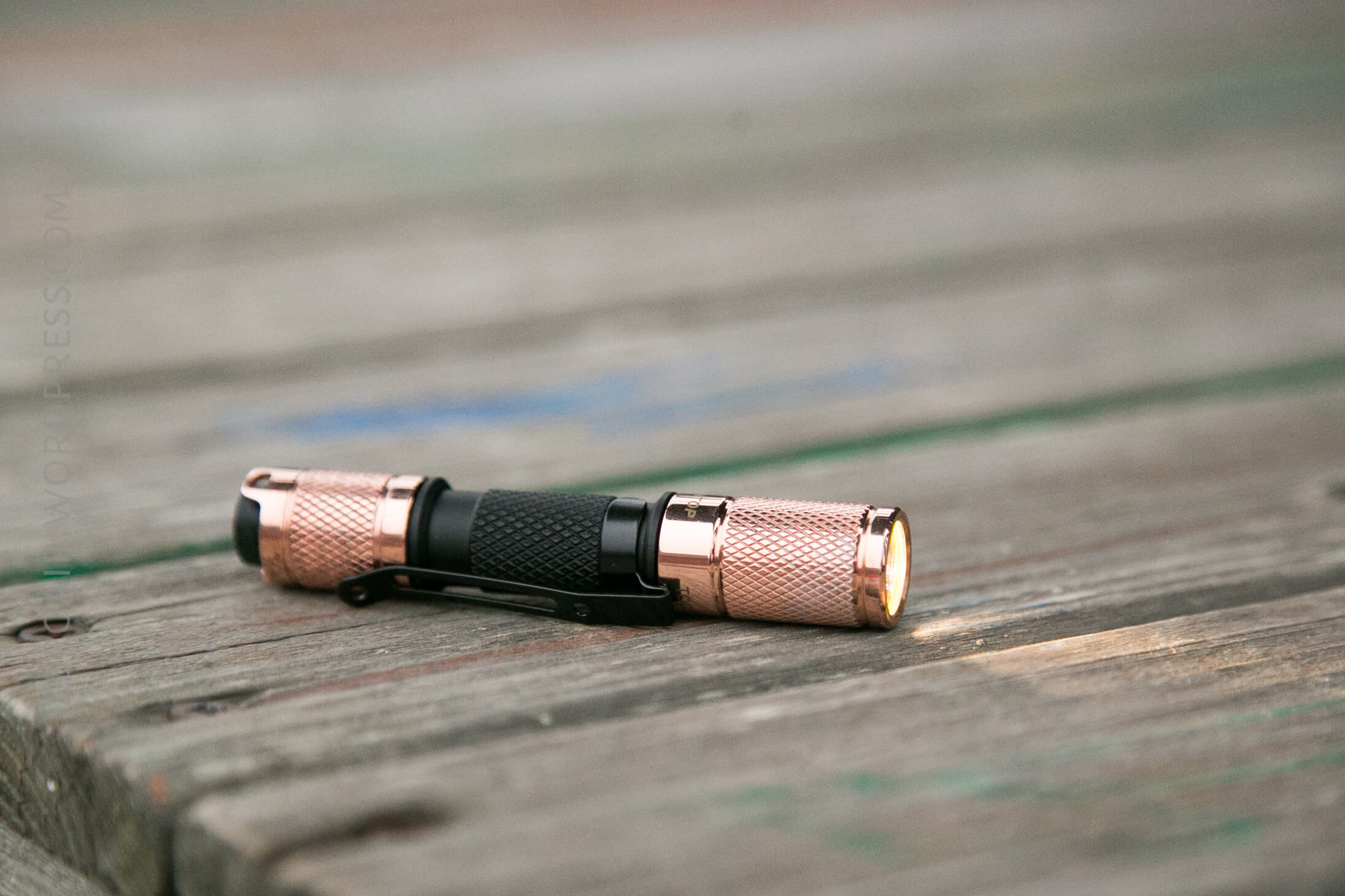
One more point about the build: the cell tube is reversible. I don’t know why you’d need to do that since the clip can go on either end, but it’s still possible. Anyway, it’s nice that the light will work with the tube in either direction; one less thing for a user to futz with. The exception, as usual, is the titanium, which has a male end and a female end and is thus not reversible.
Size
The lights are around 3″ long, and very slim. Easy to carry as a backup, and forget about.
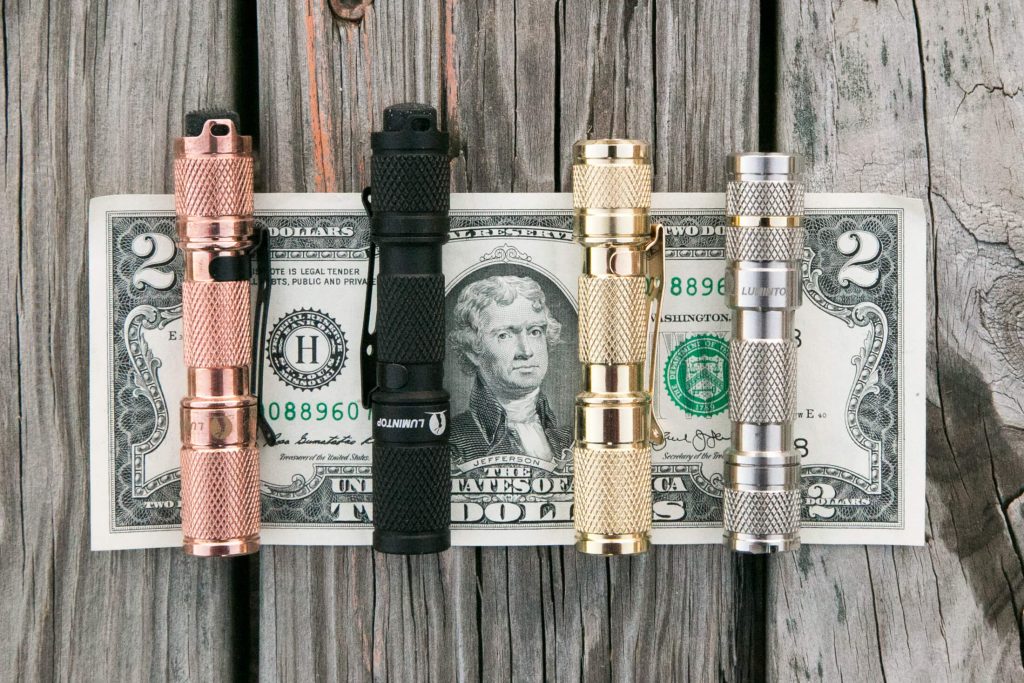
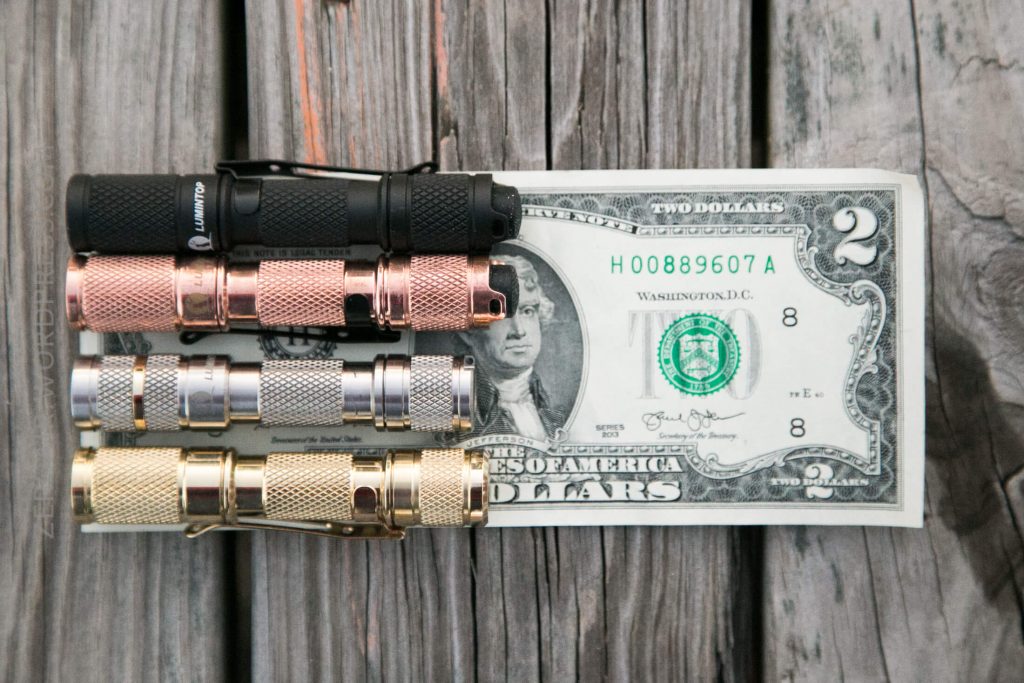
Retention
A pocket clip is standard on all versions but the titanium. The brass model even has a color-matching clip (though I do not think the clip is brass). Titanium is made for a clip, but one is not included.

Power
These lights are powered by a single AAA cell. In all my testing I used an Eneloop AAA or a Ladda AAA, both NiMH cells. There is no mention of 10440 support, and the manual states that the max driver voltage is 1.5V. So stay away from Li-ion cells in this light.
Here’s a runtime for all 4 models that I own. I wouldn’t read too much into the actual individual differences – the difference in relative output could be the difference in 2mm on my setup, or myriad other things.
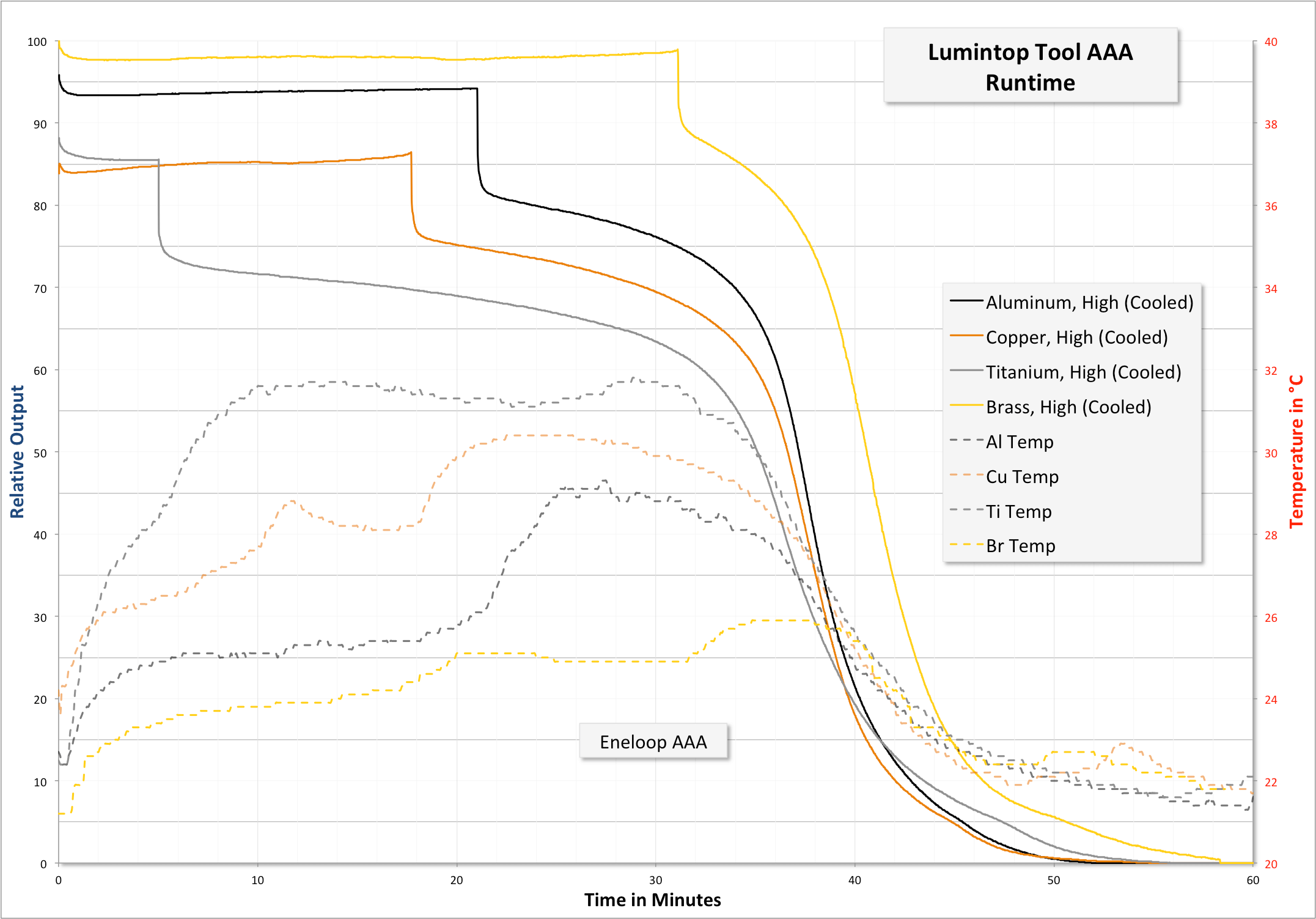
Brass is surprisingly the best performer, especially compared to Titanium. Strangely there seems to be no correlation between switch mechanism (mechanical or electronic) or special metal (brass or copper, or titanium).
One more thing about power and the e-switch lights. These lights have a small capacitor in the tailcap, which is required for operating the e-switch. This capacitor charges off the cell that’s placed in the light. If your light is like mine, that capacitor might need time to charge before first use. Usually just a few seconds, but maybe longer. If your e-switch light doesn’t fire up right away, give that cap time to charge.
These e-switch lights also have a quiescent current of around 0.004A if I’m measuring it right (and I very well may not be).
User Interface and Operation
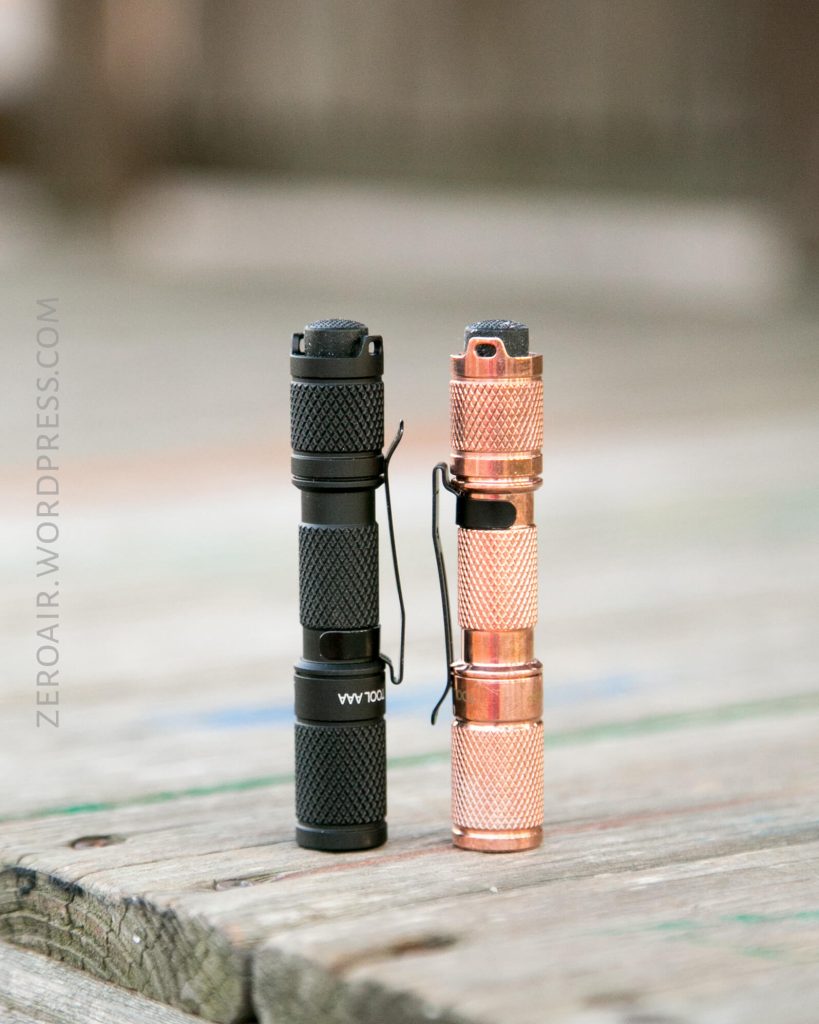
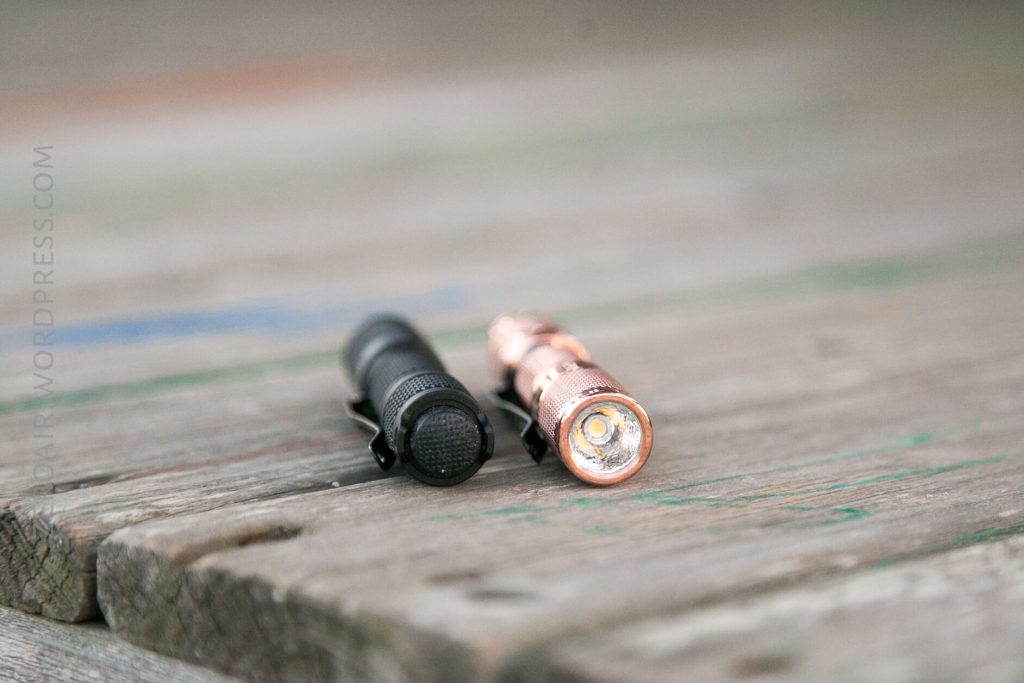
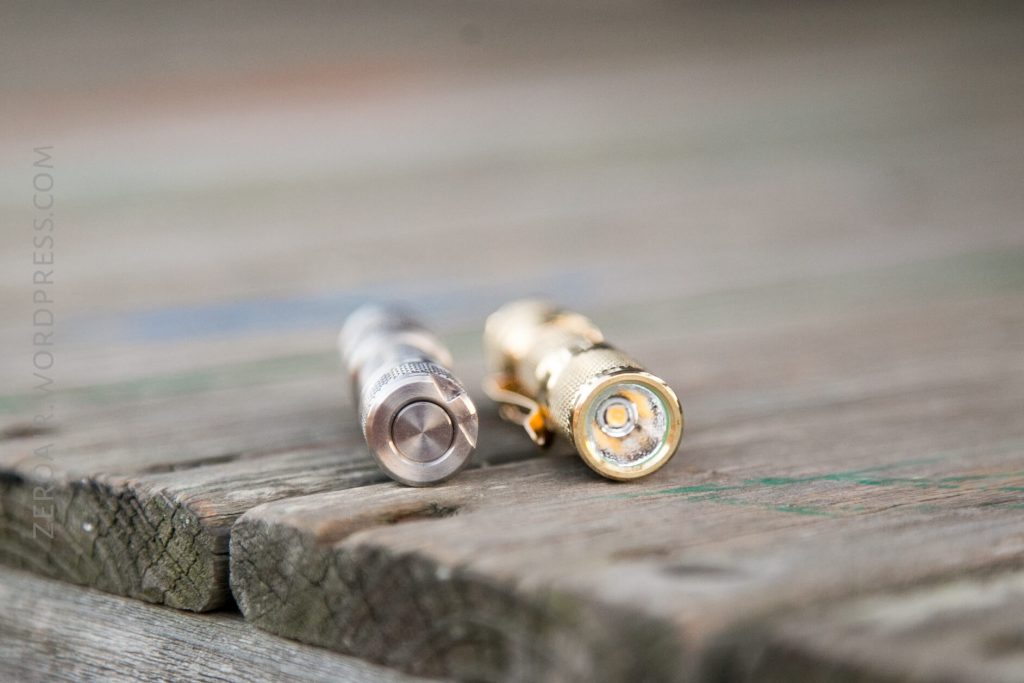
While these lights do have different switches, the operation is largely the same. Tools with the rubber boot have reverse mechanical clickies. Tools without the rubber boot have metal e-switches. The user interface is also very simple. Click for on, click for off. Clicking on quickly enough will advance the modes. All but Brass go HML, while brass goes LMH. E-switch variants must be clicked off and on to advance modes, but the mechanical may be half-pressed to advance.
The mechanical clickies are extremely clicky. I mean they click with extreme prejudice. The e-switches are much quieter, but flat across the top and can be less easy to find. They’re also metal switches, whereas the mechanical have big rubber boots with lots of grip.

There really seems to be no hidden modes on these lights. Just three modes, no strobe, no turbo, etc. I quite like it.
Modes
| Mode | Mode Claimed Output (lm) | Claimed Runtime | Mode Measured Lux |
|---|---|---|---|
| High | 80 | 30m | 1712 |
| Mid | 18 | 4h | 518 |
| Low | 3 | 36h | 54 |
LED and Beam
All of my Tools have Nichia 219b emitters. There’s also available a Cree XP-G2 version, which I recommend avoiding unless you hate life. And color. And accurate color representation and awesome tint. If you already have a Tool XP-G2 we can still be friends, though.
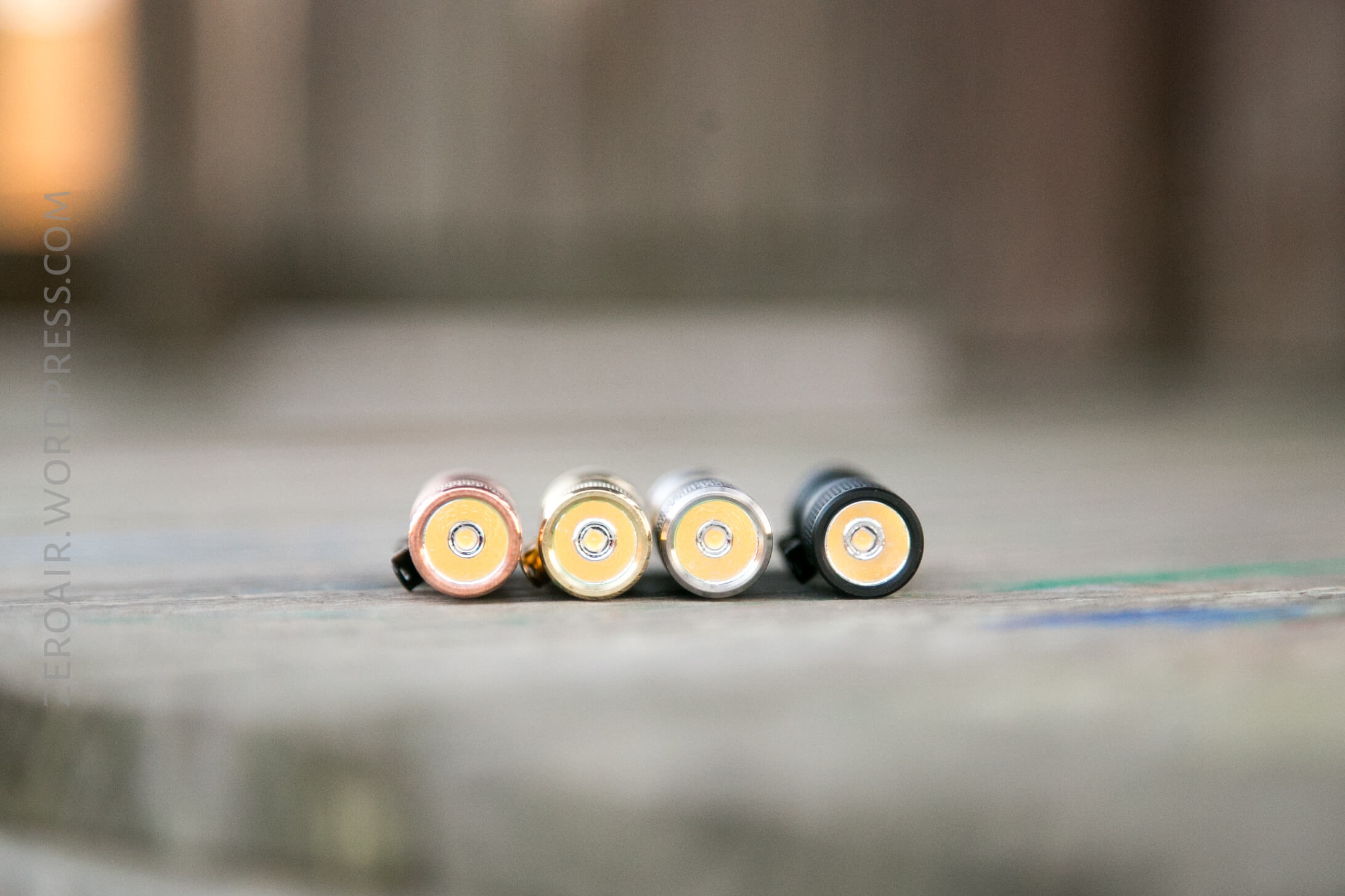
The beam profile is mostly spot with some spill, and glorious 219b tint.
Beamshots
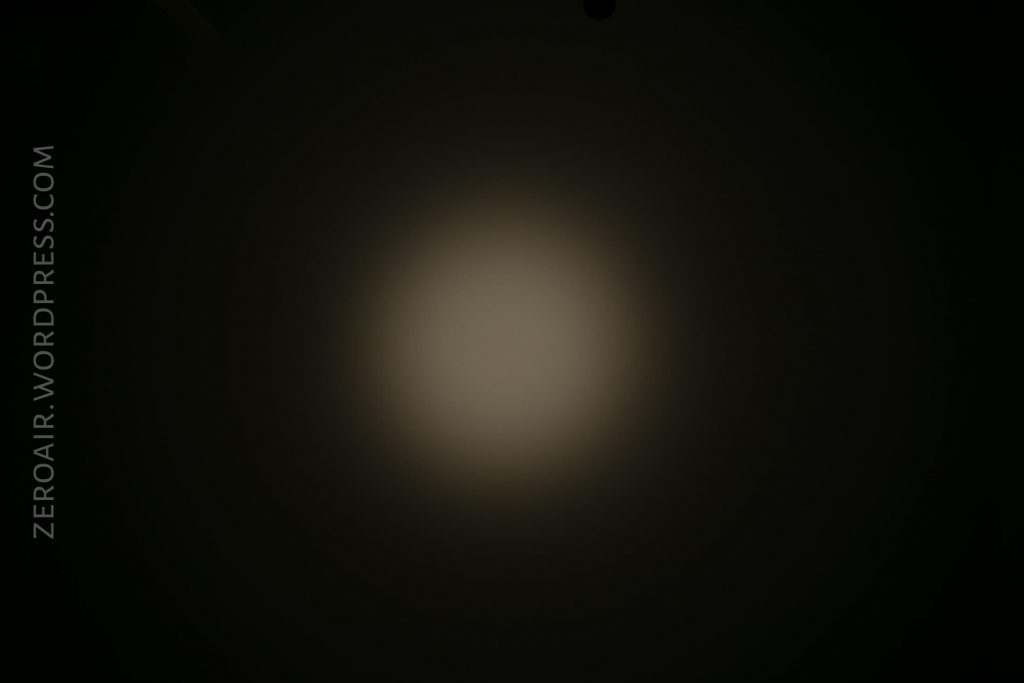
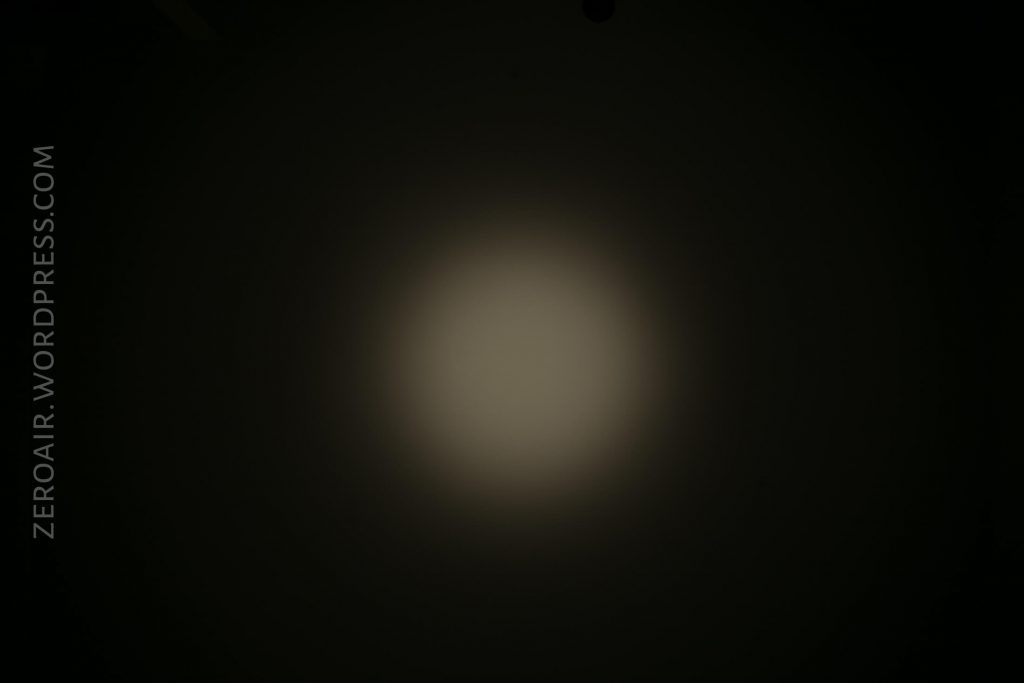
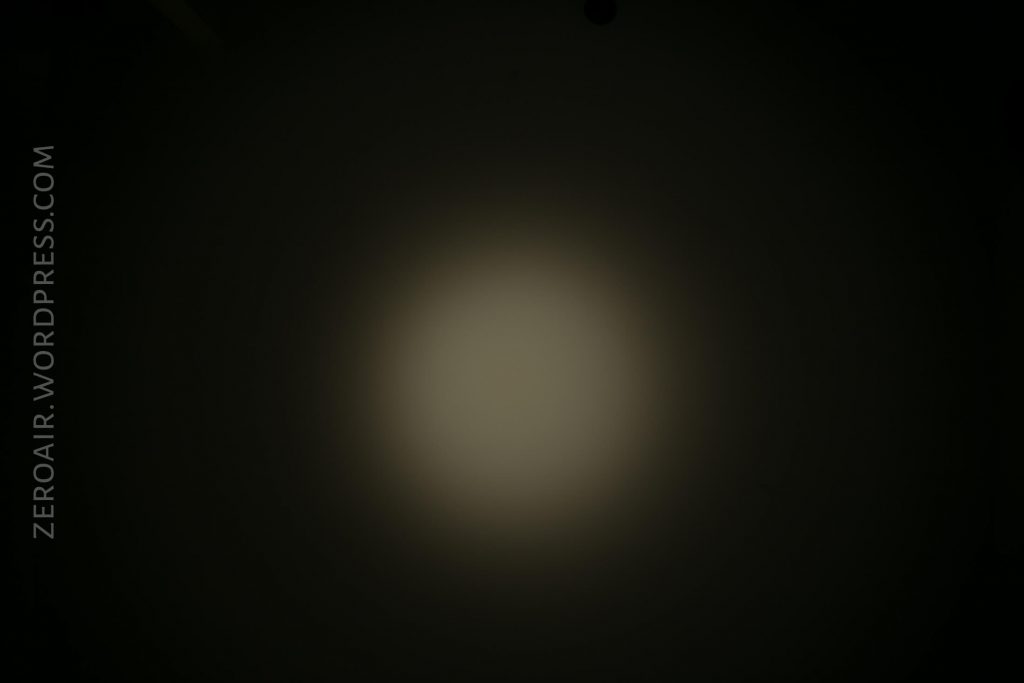
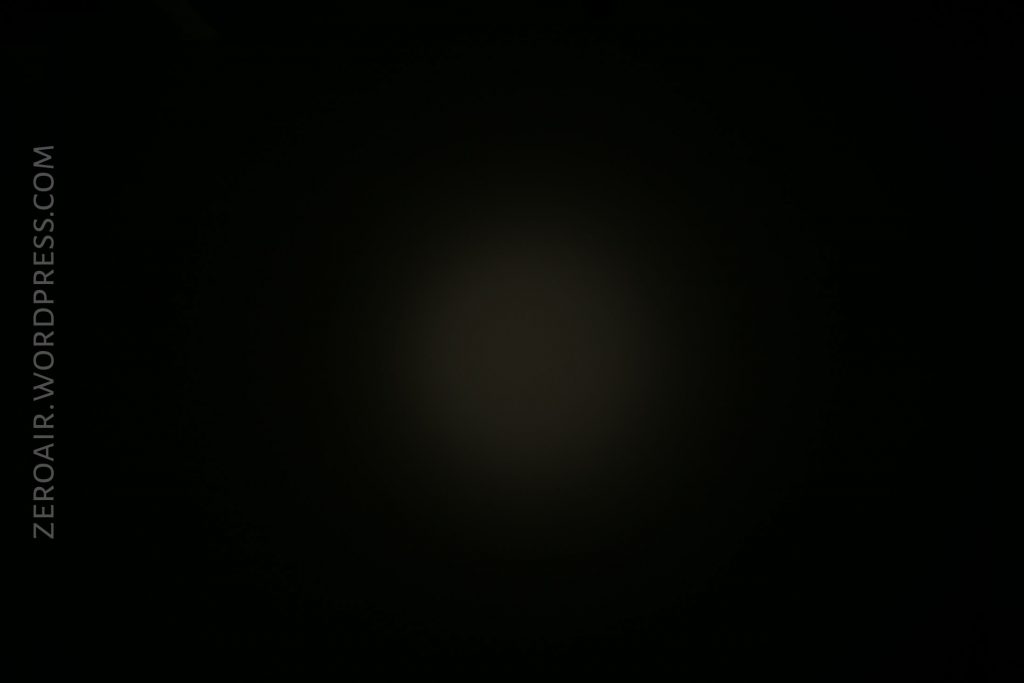
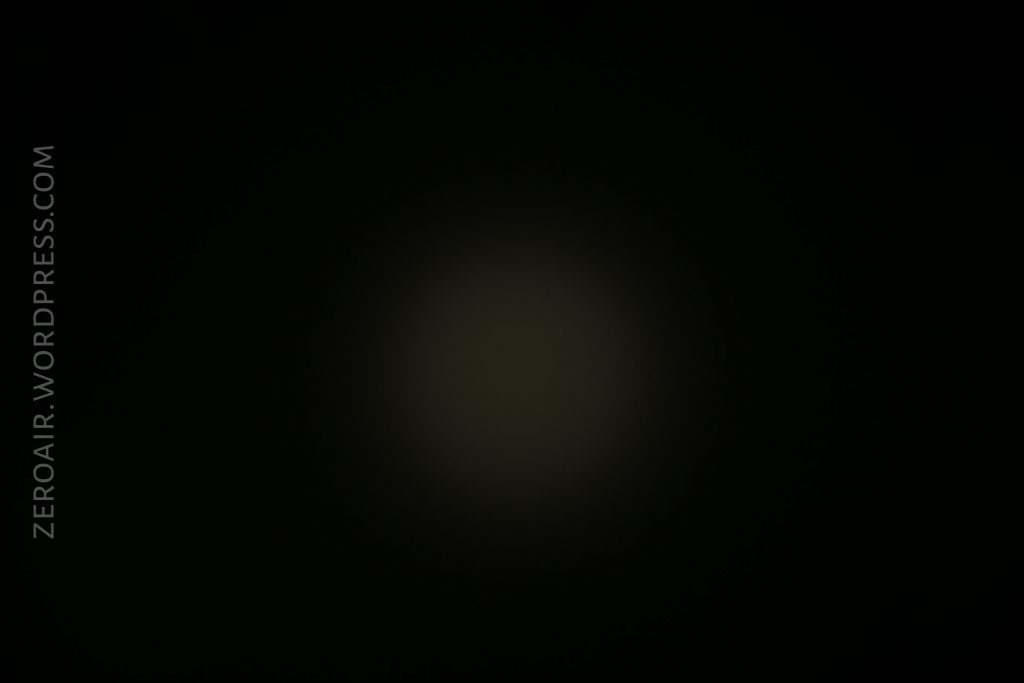
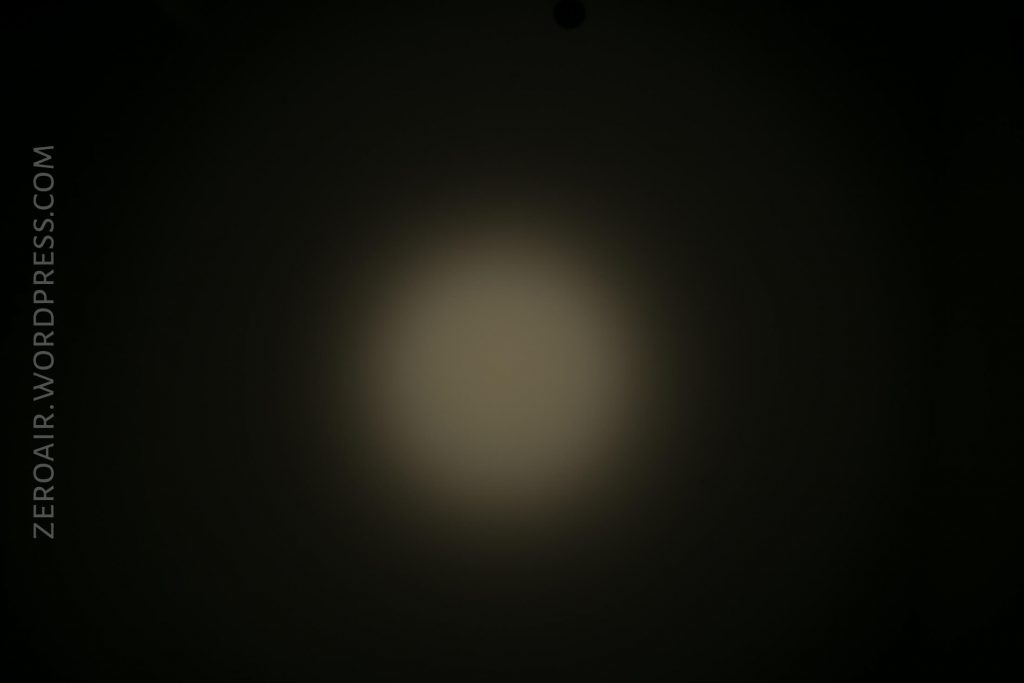
These beamshots always have the following settings: f8, ISO100, 0.3s shutter, and manual 5000K exposure. These photos are taken at floor level, and the beam hits the ceiling around 9 feet away.
Below is more or less a mess of beamshots, but you get the idea. Across all 4 lights, each mode is generally consistent in output.




Tint vs BLF-348 (KillzoneFlashlights.com 219b version) (affiliate link)
I keep the test flashlight on the left and the BLF-348 reference flashlight on the right.
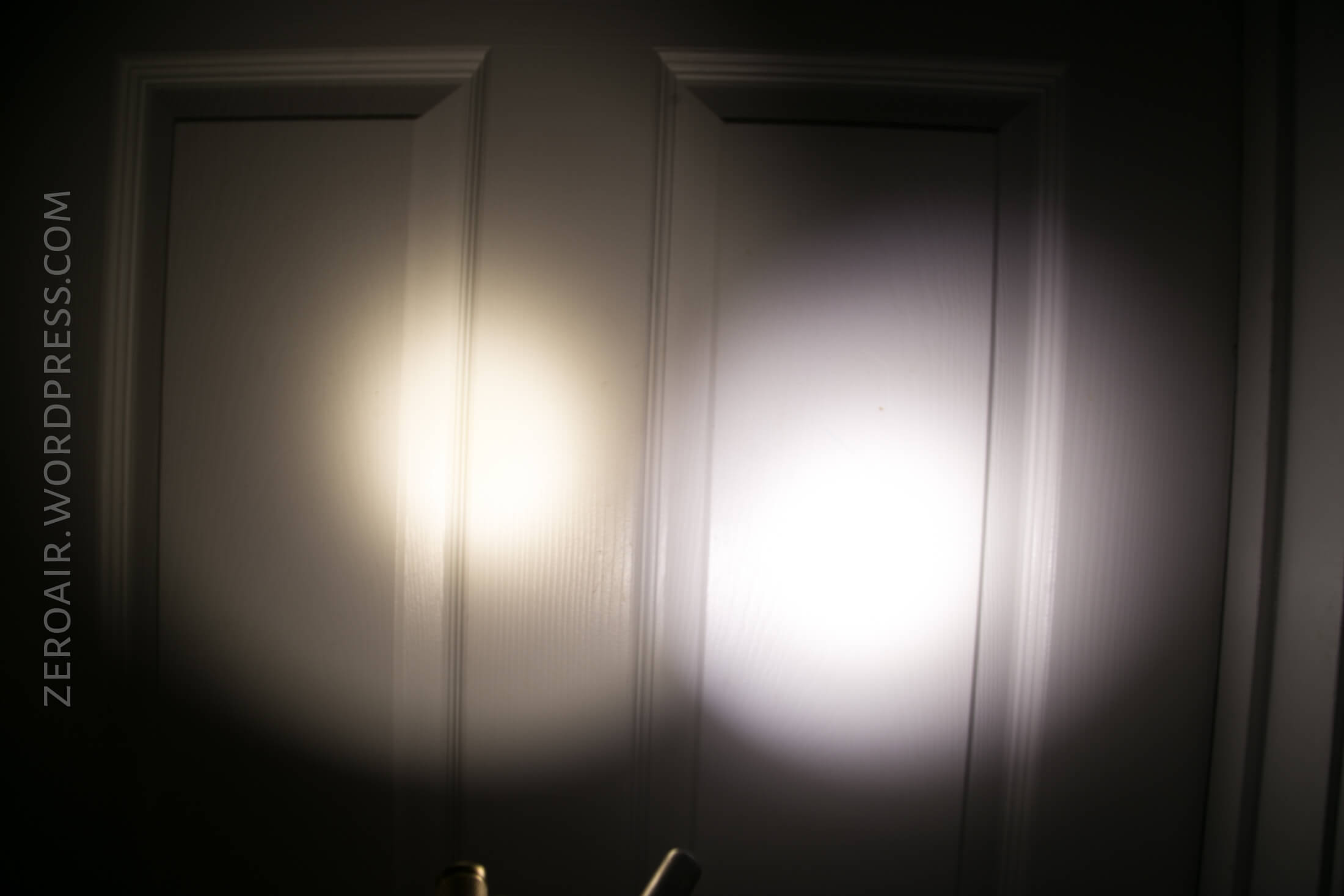
Tool at left in the above photo. The tint is really fairly consistent across these four lights, so take this as a representative sample. Also the tint across 219b’s isn’t entirely consistent, so the difference in these tints won’t correlate strictly speaking to what you receive no matter which you purchase.
I’m dissatisfied that the Tool doesn’t match the BLF-348, which has my favorite tint, really. Also 219b.
Random Comparisons and Competitive Options
Here’s a relevantly filtered page on parametrek.com. There are some great competitors for this light. One I have experience with is the Eagtac D25AAA, also available with a Nichia emitter. I absolutely loved this little light, except it’s a twisty, and has too-easily-accessed strobe modes. And it’s been available for cheap ($10), too! No special metals, though, and that’s something I love about the Tool.
Conclusion
What I like
- Size
- Special metal availability
- Simple UI
- No excess of modes
- Different switch types
- Available in Nichia
- Low cost
What I don’t like
- I wish for better tint from the Nichia – like my BLF-348
- user interface lottery. Some are LMH, some are HML.
Notes
- This light was provided by GearBest (and I liked those three so much I bought the brass version!) for review. I was not paid to write this review.
- This content originally appeared at zeroair.org. Please visit there for the best experience!
- Use my amazon.com referral link if you’re willing to help support making more reviews like this one!
- Please support me on Patreon! I deeply appreciate your support!
Aluminum aaa tools from Gearbest now have nichia 219c instead of 219b – despite the descriptions. Same story with iYP365.
Pingback: Lumintop Tool AA Flashlight Review – ZeroAir Reviews
Love the Schism reference 🙂 May buy one of these. I had my eye on the Acebeam M20 for the claimed higher output and .8h run time but if it tests closer to 25 mins then other features/design matter more on other lights that can last half an hour with a decent high mode.
Pingback: Lumintop Tool AA Flashlight Review - ZeroAir Reviews