

Nitecore LA30 Lantern Review
The Nitecore LA30 is a “dual-fuel” lantern, supporting AA cells as well as having a built-in cell with micro-USB charging. Read on!
Official Specs and Features
Here’s a link to the Nitecore LA30 Lantern product page.
Versions
There’s only one version of this light, but it comes in two body colors: Blue and Yellow. I have the yellow option.
Price
The MSRP on this lantern is $39.95, and that’s the price you’ll likely see most places, as this is a very new light.
Short Review
This is a very cool light. I like the dual-fuel feature. The output is good, too, and would be perfect for inside a tent. I wouldn’t call it lightweight, though, particularly when being used with AA cells, and so I would use this car camping, not backpacking.
Long Review
The Big Table
| Nitecore LA30 | |
|---|---|
| Emitter: | Not named (High CRI, with red ) |
| Price in USD at publication time: | |
| Cell: | Internal, AAx2 |
| Turbo Runtime | |
| LVP? | Switch to low |
| Switch Type: | |
| On-Board Charging? | Yes |
| Chargetime | |
| Power off Charge Port with no Cell? | ? |
| Claimed Lumens (lm) | 250 |
| Measured Lumens (at 30s) | (0% of claim)^ |
| Claimed Throw (m) | 35 |
| Candela (Calculated) in cd (at 30s) | 43lux @ 1.496m = 96cd |
| Throw (Calculated) (m) | 19.6 (56% of claim)^ |
| All my Nitecore reviews! | |
^ Measurement disclaimer: Testing flashlights is my hobby. I use hobbyist-level equipment for testing, including some I made myself. Try not to get buried in the details of manufacturer specifications versus measurements recorded here; A certain amount of difference (say, 10 or 15%) is perfectly reasonable.
What’s Included

- Nitecore LA30
- Charge cable
- Spare o-ring (two types
- Paperwork
Package and Manual
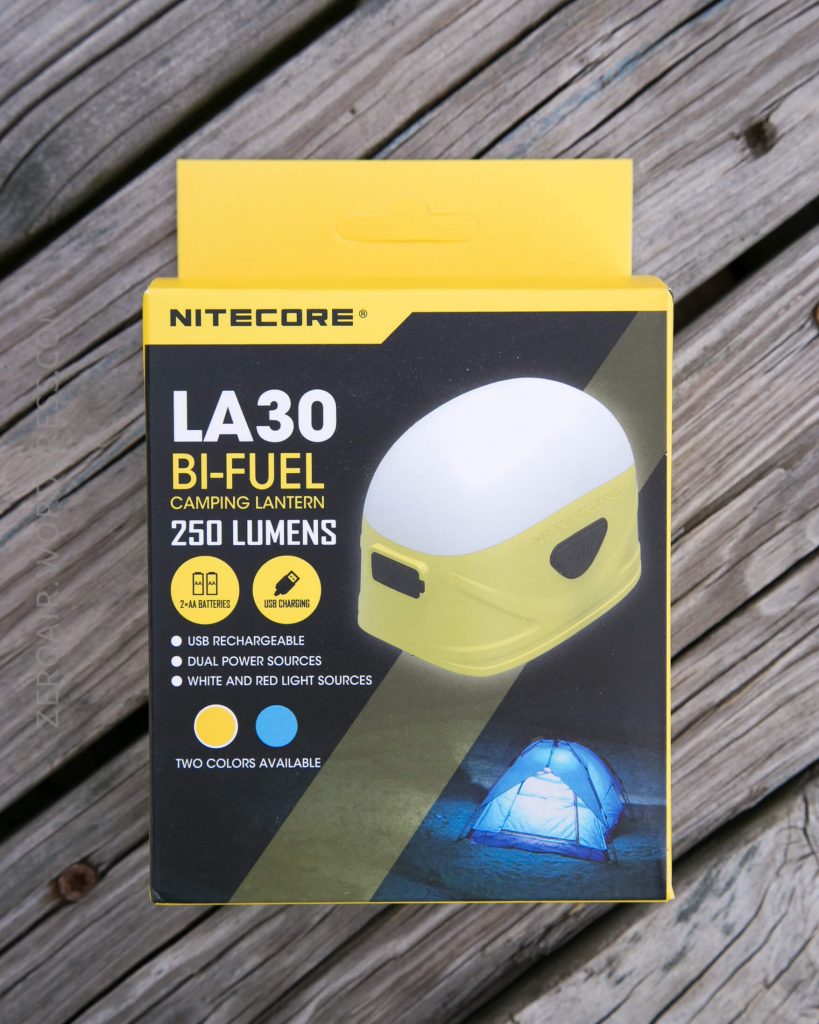
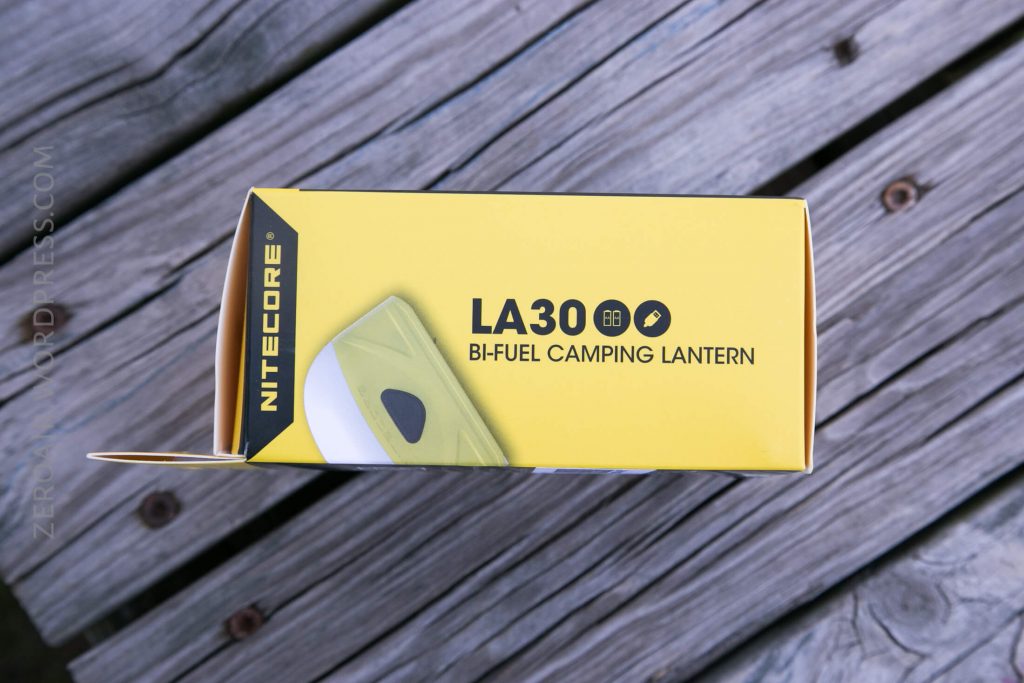
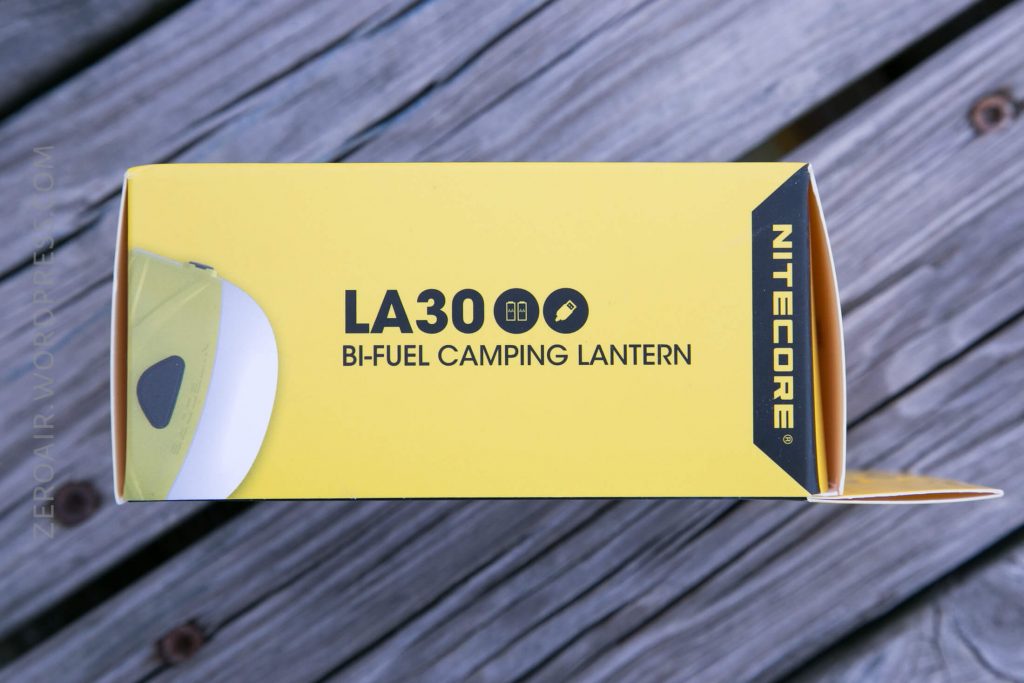
The LA30 ships in Nitecore’s standard yellow and black package, with a bunch of printing and specs and a photo.

Build Quality and Disassembly

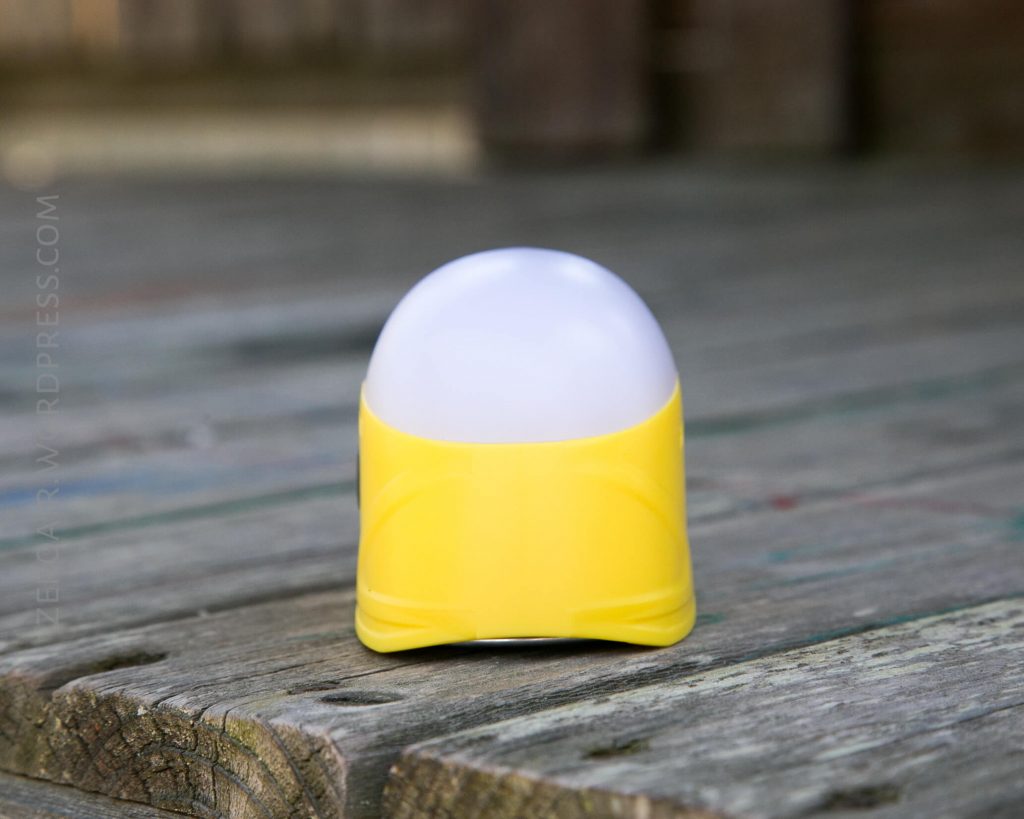

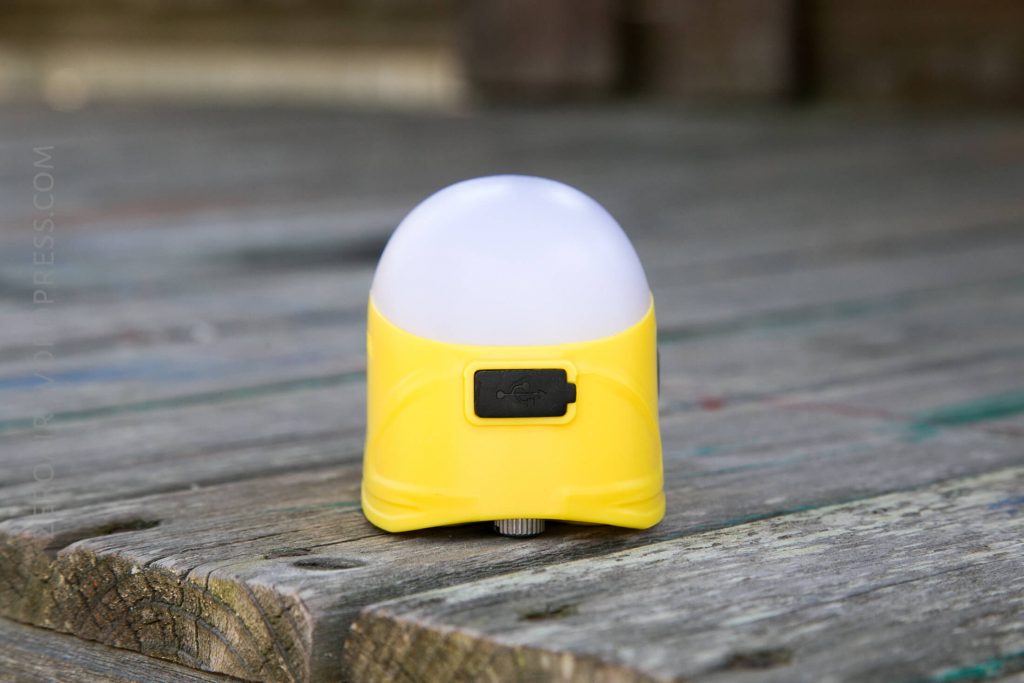

The build of the LA30 is much like what I saw of the XTAR Moon RC2. The parts seem to be ultrasonically welded (at least that’s what the RC2 was) and do not come apart. So as a whole the unit seems very solid. The dome diffuses the light extremely well.
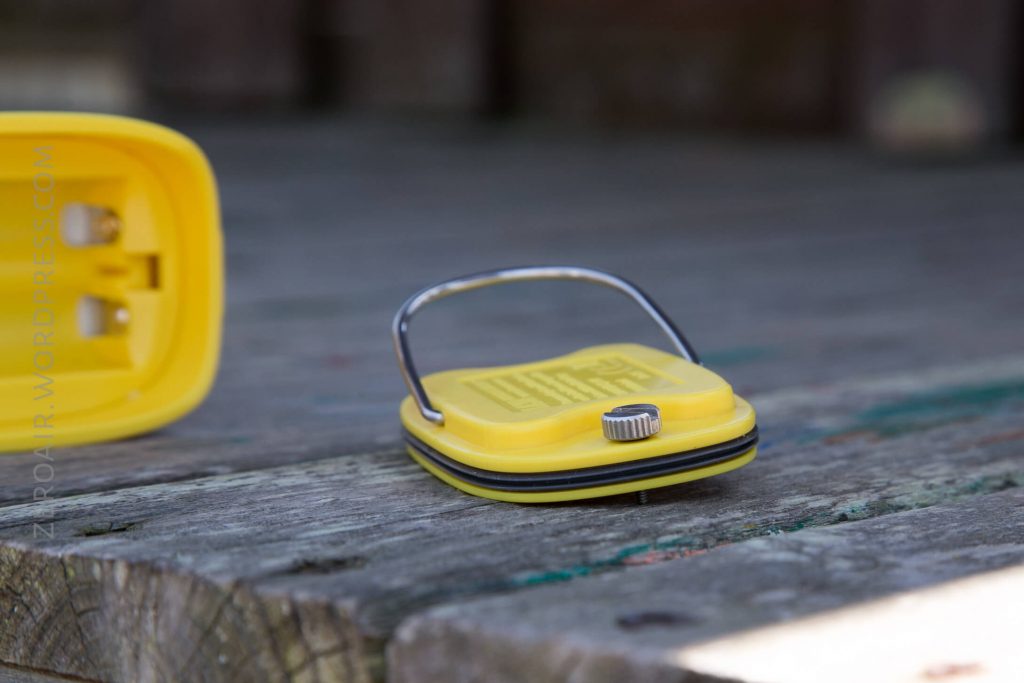
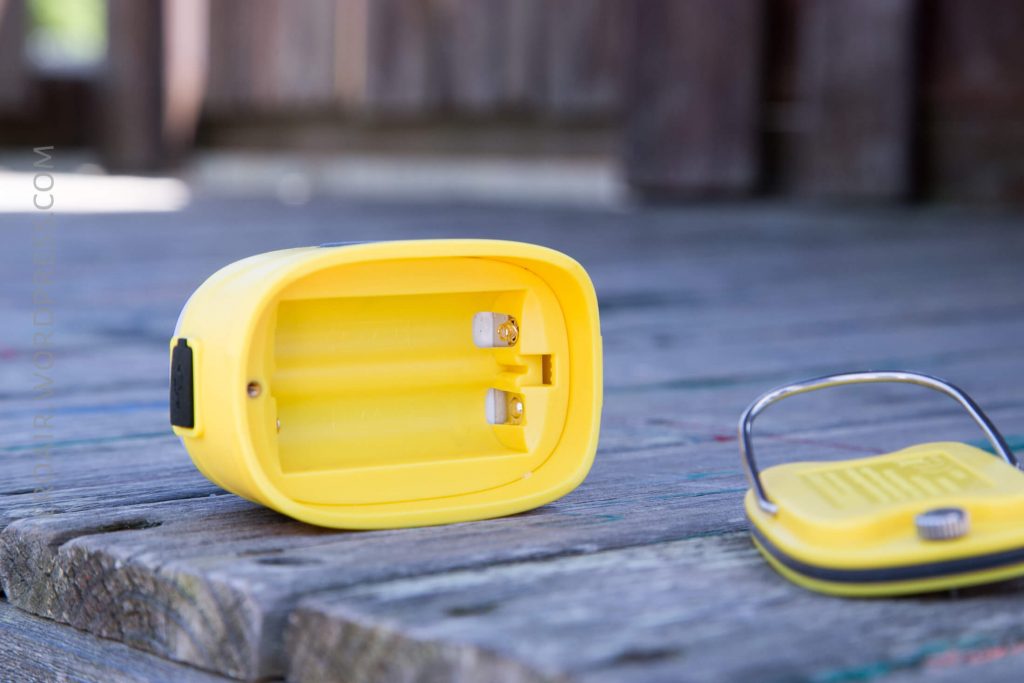

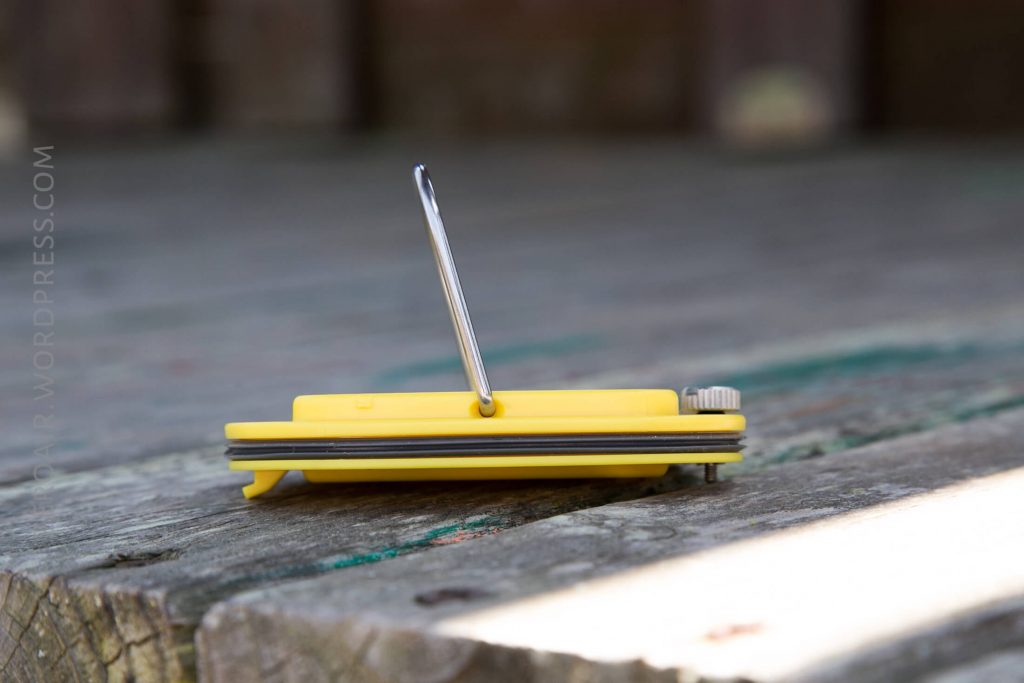
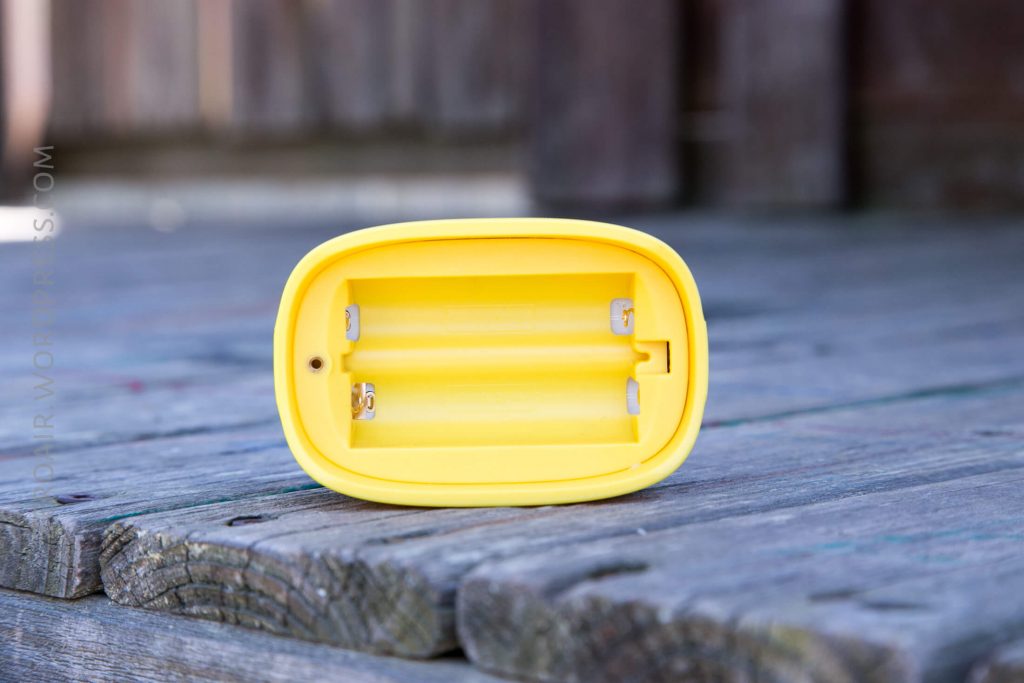
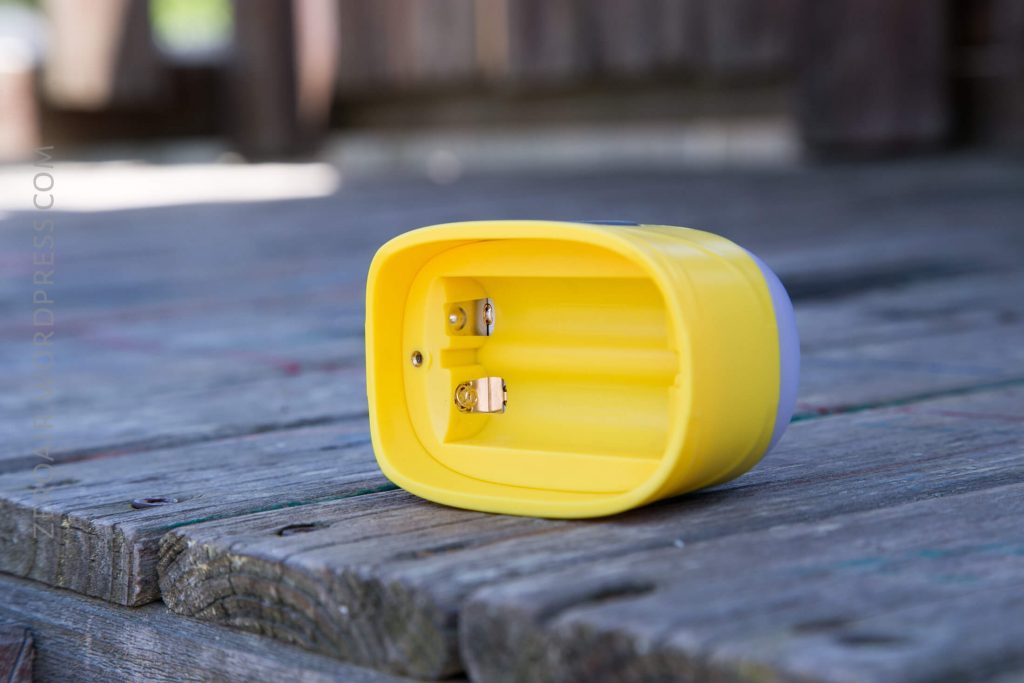
As stated above, there’s not much to disassemble in this light. The bottom unscrews for placement of AA cells. There’s a little hook on the non-screw end for proper seating of the cover. It’s a nice cover – quite thick and has a screw-down closure. This thumbscrew was ever so slightly fiddly, but I never had any actual trouble with it. It also has a big gap for using coins, in case the need arises.
Note that this cover in no way has anything to do with the operation of the light. With or without AA cells installed, with the cover off, the light may be operated fully. With the cover off, the light is no longer waterproof, of course.
Size
Officially 75.2mm x 49.5mm x 53.8mm. It’s not really a small light, to be sure. The area that fits 2xAA cells really does require a lot of volume from the light; if not for that feature, the light would be around the size of the XTAR Moon.



Here’s the LA30 with the Convoy S2+.

Retention
Two means to hold this lantern in place. First is the magnet, which is sufficiently strong for holding the light in any orientation. The magnet is inside the AA cover (not exposed at all).

Next is the metal loop, which would be useful for hanging the light from inside a tent or places like that. It is possible to remove the loop (just take off the cover and spread the loop out a little, and it’ll come out of the base). It’s sprung, so when it reaches a certain point it’ll want to snap to the ‘closed’ position.

Power
The primary power source for the LA30 is the internal cell, claimed at 1800mAh. This cell is not removable (nor is it even possible to non-destructively view the cell in my experience). In the runtime below, the internal cell is the red line. Note from that runtime that it’s possible to reset the light to the highest output, even after it’s stepped down. Also noteworthy is that the initial stepdown from highest output to ~95% takes 10 minutes or so. Respectable.
Another option for powering the LA30 is two AA cells. This isn’t “two AA-sized cells.” It’s very traditional: AA primary or AA NiMH. Nothing else. No 14500, no lithium primary (that one’s strange but the manual says it specifically). Not sure what’s the difference in lithium primary (still 1.5V), but follow the manual and don’t use those. In the runtime below, I’m using Eneloop AA (NiMH) cells. In fact, NiMH is the recommended AA-type cell. The runtime is not nearly as long as the internal cell runtime.

Of interest in the dual-fuel discussion is that these cells in no way cooperate during operation. Ie if you have a fully charged internal cell, and fully charged AA cells, you don’t get (Internal + AA) type runtimes. With AA cells installed, the light will operate off AA cells, period. If you wish to use the internal cell, you must remove the AA cells. This also means that if you’re using rechargeable AAs, the charge port for charging the internal cell will not also charge the AA cells. I wish it would. If it would then this could be a compelling backpacking device, maybe.
Charging
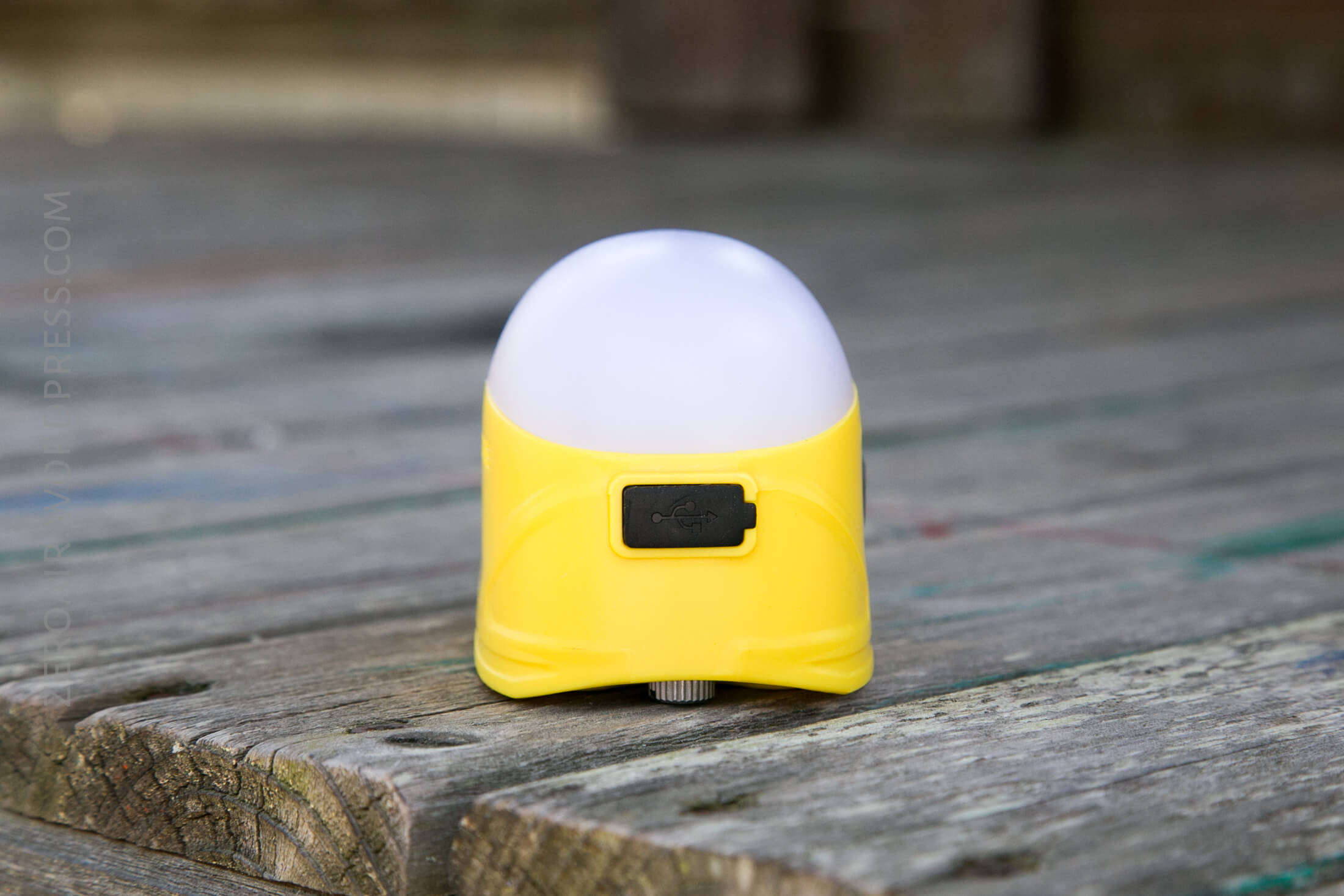
Below is a graph of the chargetime of the internal cell. The cell is rated at 1.8Ah and tests much higher. Charging is also respectable at 0.5A, and the charge graph is very clean throughout.

When charging, the red emitter is lit red. When charging is complete, a green emitter turns the whole dome green. It’s quite bright, and possibly something to be aware of. There’s also no way to prevent this. But it’s not a big deal. Unfortunately, there’s no way to access the green emitter during normal operation.
User Interface and Operation
Here’s a user interface table!
| State | Action | Result |
|---|---|---|
| Off | Click | Power indicator^ |
| Off | Hold (~0.6s) | Low White |
| On (White) | Click | Mode advance (LMH) |
| Off | Double Click | Red |
| On | Hold | Off |
| On (Red) | Click | Red Mode advance (LH, Beacon, SOS) |
| Off | Hold | Low then High (“direct access to high”) |
| On | Hold (>3s) | Locator beacon (very low output) |
^ Power indicator:
3 blinks = battery > 50%
2 blinks = battery < 50%
1 blink = battery < 10%
In Power Indicator mode, the light indicates power with “big” red flashes, then switches over to locator beacon output (much lower red).
I honestly expect there’s something I’m missing here on the UI. It’s a touch complex, but it has some very nice features (battery indicator! etc).
Modes
| Mode | Mode Claimed Output (lm) | Claimed Runtime (Internal/AA) | Mode Measured Lux |
|---|---|---|---|
| High | 250 | 4h/3h | 2000 |
| Mid | 55 | 9h15m/7h30m | 484 |
| Low | 8 | 56h/48h | 104 |
| Red High | 40 | 7h15m/6h | – |
| Red Low | 5 | 48h/40h | – |
LED and Beam
The emitters are not named, so far as I can tell. They’re High CRI (and I believe it, the color rendering is quite good). They’re also not accessible for better photos – they’re under the sonically welded dome.
The beam is absolutely all flood. It’s a lantern; that’s basically what you’d want. As such, the light doesn’t hit the 35m throw rating, but I’d hardly dock the light for that….
Beamshots
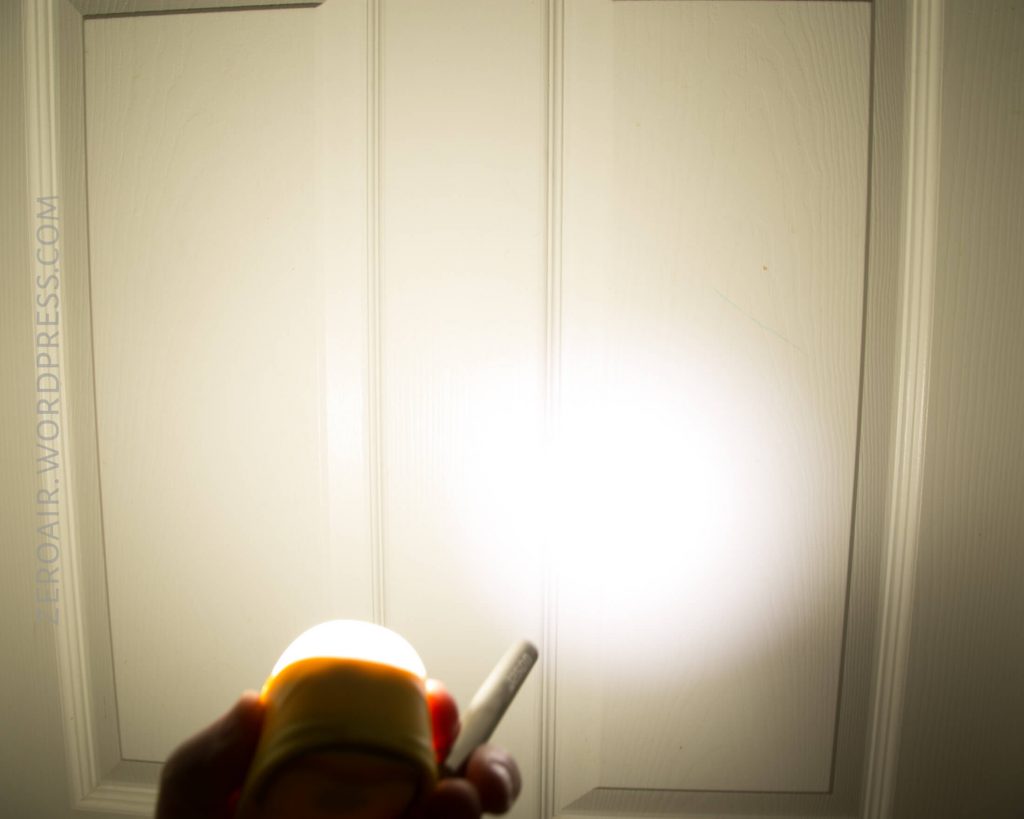
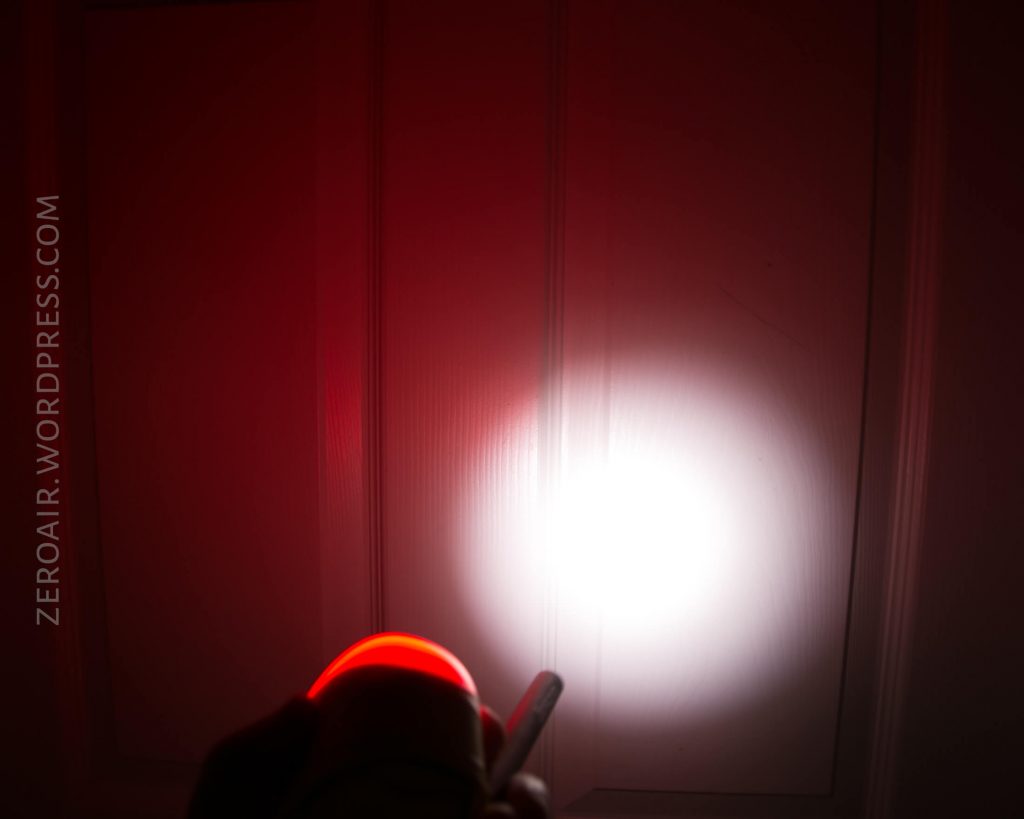
These beamshots always have the following settings: f8, ISO100, 0.3s shutter, and manual 5000K exposure. These photos are taken at floor level, and the beam hits the ceiling around 9 feet away.




Tint vs BLF-348 (KillzoneFlashlights.com 219b version) (affiliate link)
I keep the test flashlight on the left and the BLF-348 reference flashlight on the right.
Random Comparisons and Competitive Options
Here’s a relevantly filtered page on parametrek.com. This light is a spitting image of the Fenix CL20. I don’t believe the CL20 has an internal cell, so that makes the LA30 better in my opinion. Output is higher for the LA30 as well.
Conclusion
What I like
- Dual-fuel
- On-board charging
- Comprehensive user interface (even if it requires a little learning)
- Extremely diffuse output
What I don’t like
- AA and Internal cell don’t communicate in any way
- Light is a bit big and hefty
Notes
- This light was provided by NitecoreStore for review. I was not paid to write this review.
- This content originally appeared at zeroair.org. Please visit there for the best experience!
- Use my amazon.com referral link if you’re willing to help support making more reviews like this one!
- Please support me on Patreon! I deeply appreciate your support!