
Nitecore LR12 Flashlight Review
The Nitecore LR12 flashlight is a 18650 lantern flashlight that has a twisty “lipstick” interface and uses a Cree XP-L HD emitter. Read on for testing!
Official Specs and Features
Here’s a link to the Nitecore LR12 Flashlight product page.
Versions
There’s only one version of this light.
Price
MSRP is $49.95, and the light is available at NitecoreStore.
Short Review
I said I went into this review with no preconceived notions. That’s not entirely true. I didn’t expect to like this light, thinking it was a bit of a silly design. In the end, I actually quite like it. It’s interesting and unusual, and I really like the extension tube diffuser (but for an unusual reason). I like it enough that I’d love to give the LA10 a go!
Long Review
The Big Table
| Nitecore LR12 | |
|---|---|
| Emitter: | Cree XP-L HD (V6) |
| Price in USD at publication time: | $49.95 |
| Cell: | 1×18650 |
| Runtime | |
| LVP? | Yes |
| Switch Type: | Twisty |
| On-Board Charging? | No |
| Claimed Lumens (lm) | 1000 |
| Measured Lumens (at 30s) | 1100 (110% of claim)^ |
| Claimed Throw (m) | 166 |
| Candela (Calculated) in cd (at 30s) | 247lux @ 5.524m = 7537cd |
| Throw (Calculated) (m) | 173.6 (104.6% of claim)^ |
| All my Nitecore reviews! | |

^ Measurement disclaimer: Testing flashlights is my hobby. I use hobbyist-level equipment for testing, including some I made myself. Try not to get buried in the details of manufacturer specifications versus measurements recorded here; A certain amount of difference (say, 10 or 15%) is perfectly reasonable.
What’s Included
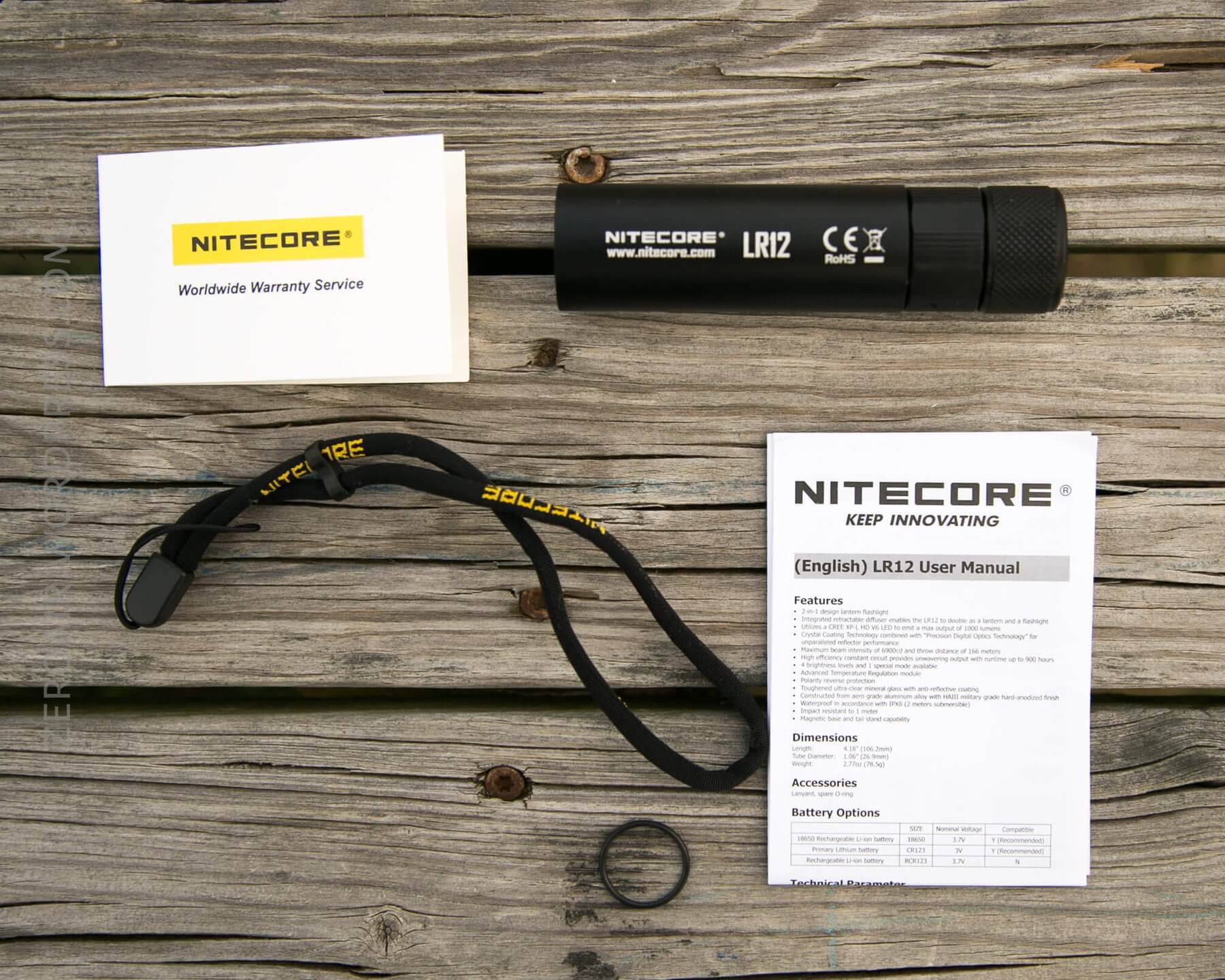
- Nitecore LR12
- Lanyard
- Spare o-ring
- Manual and paperwork
Package and Manual
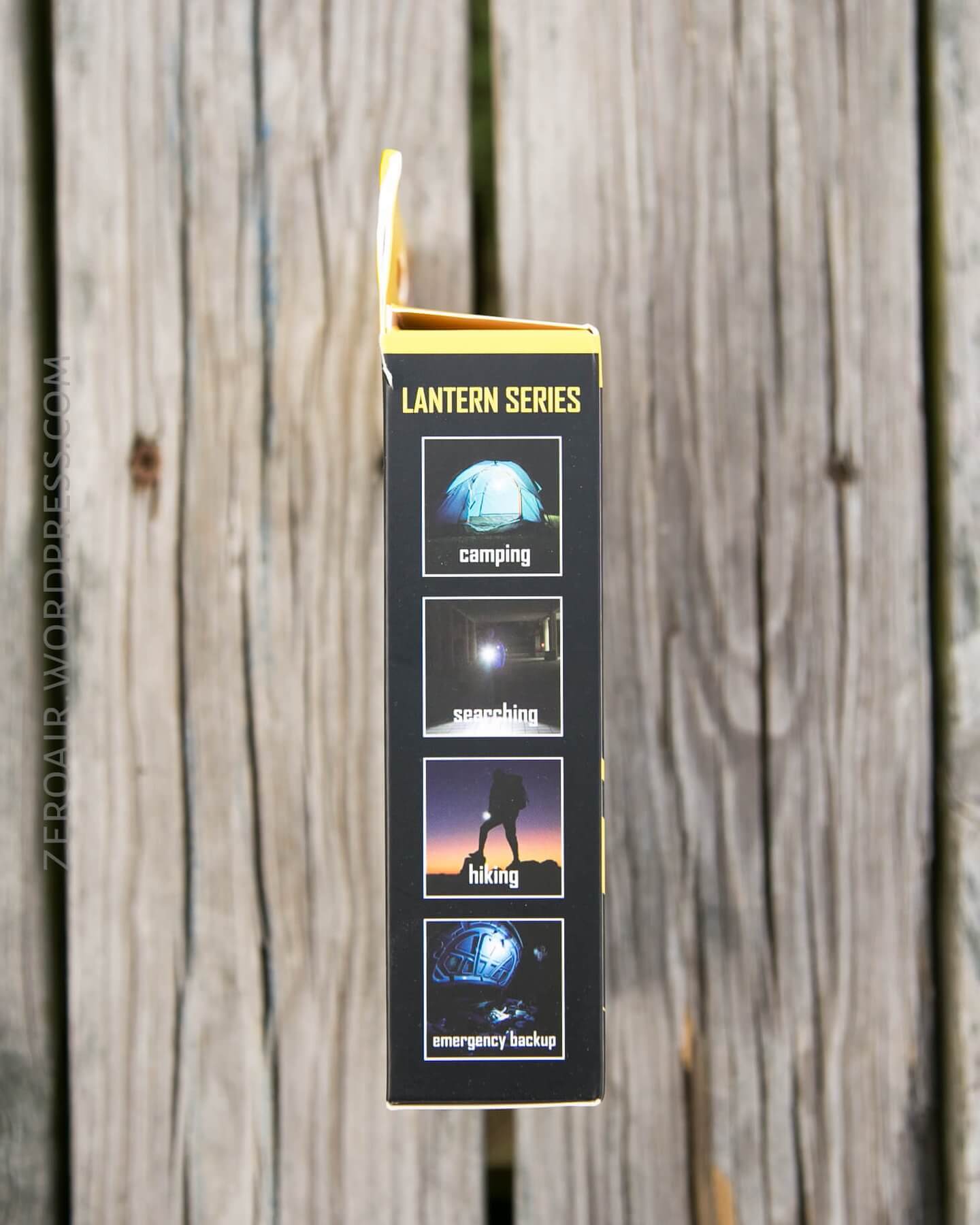
Nitecore’s typical black and yellow package, with specs and a photo of the light.
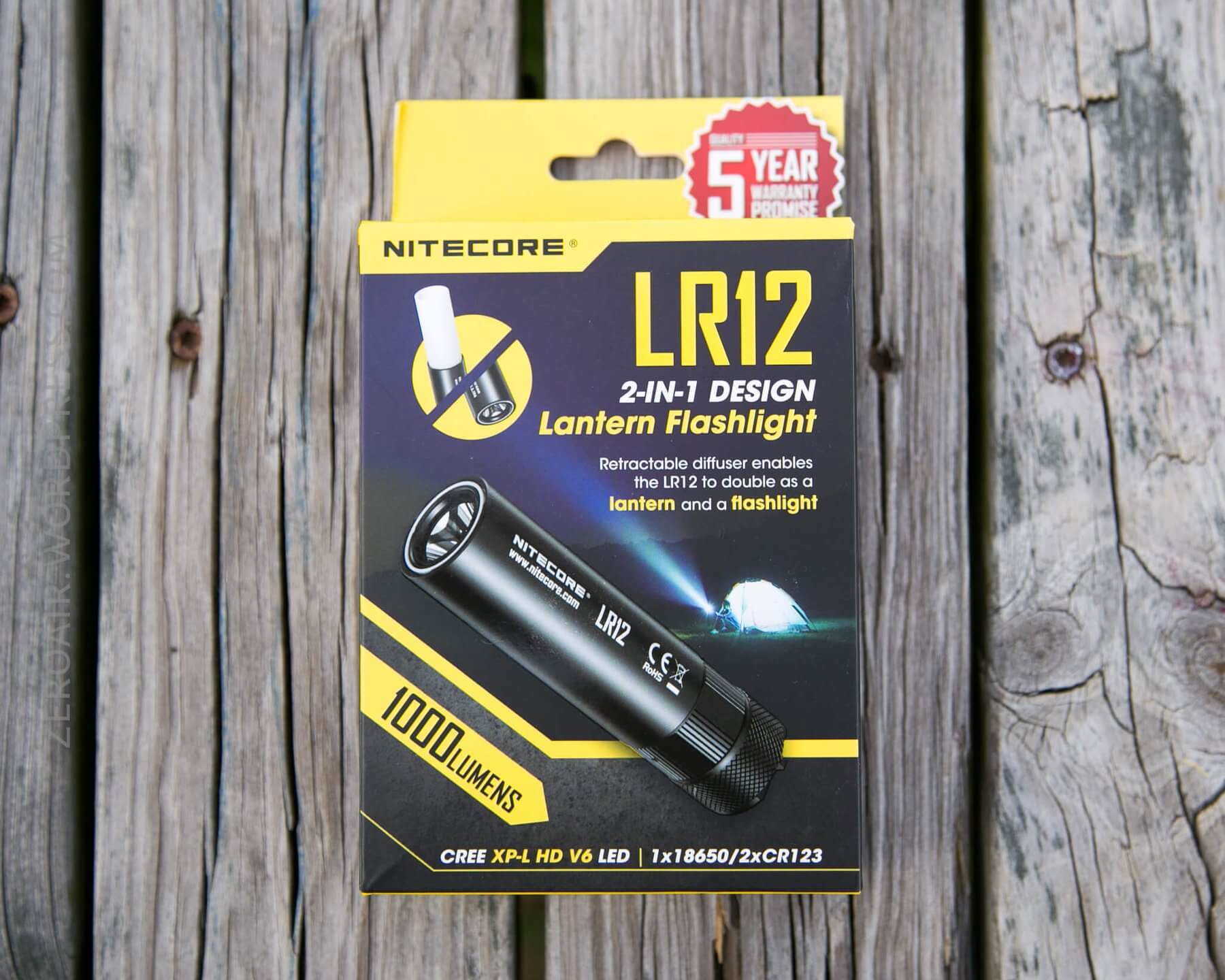
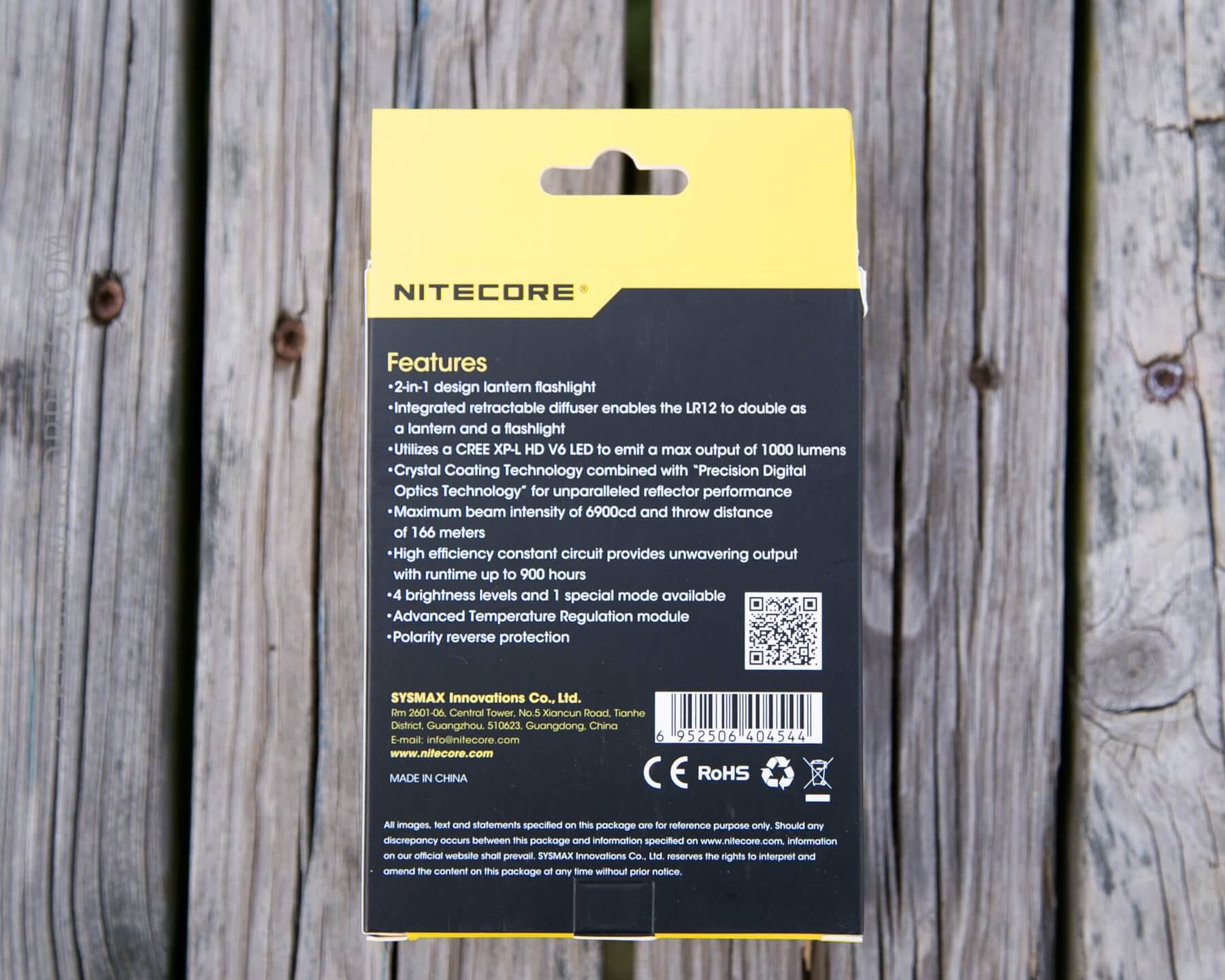
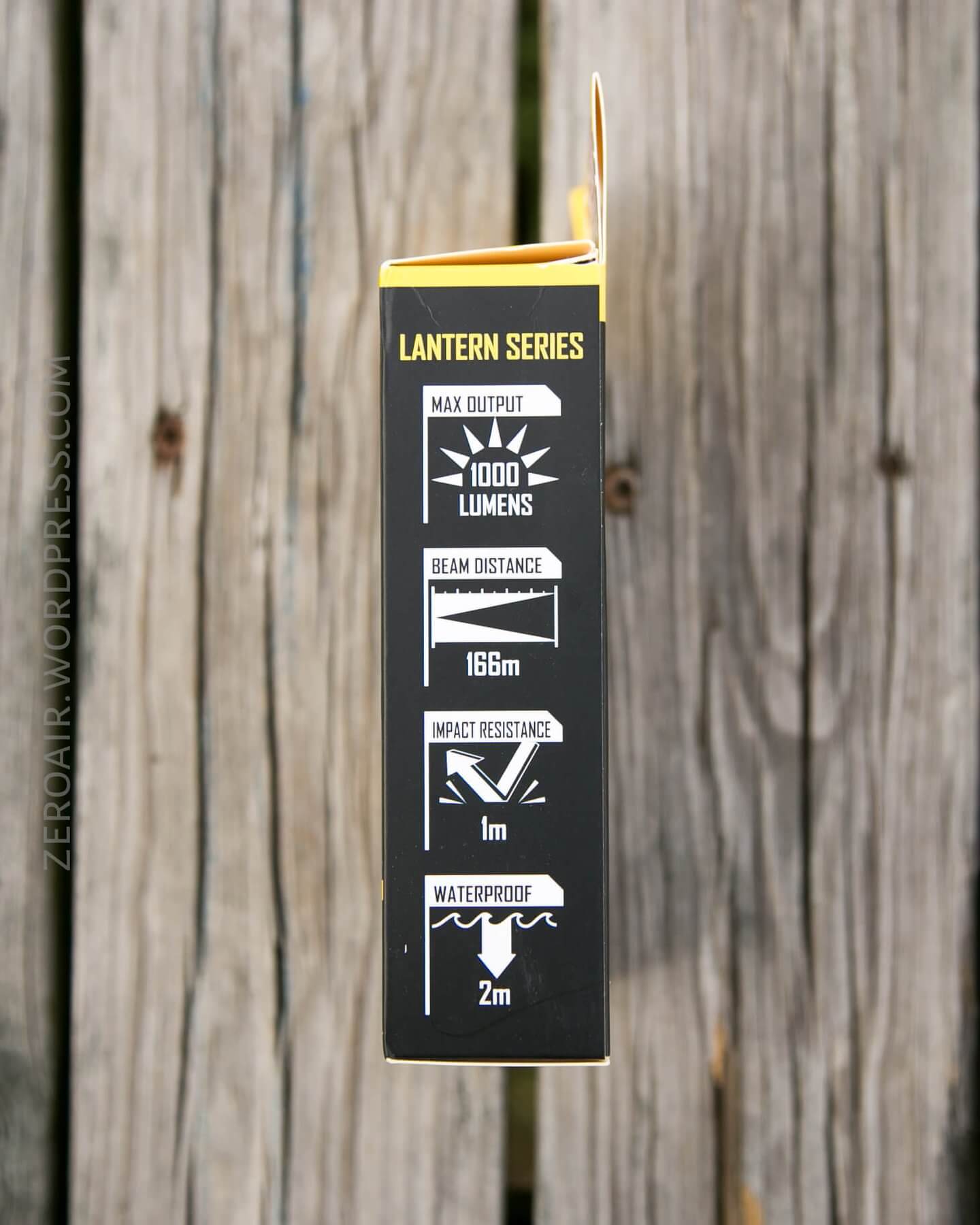
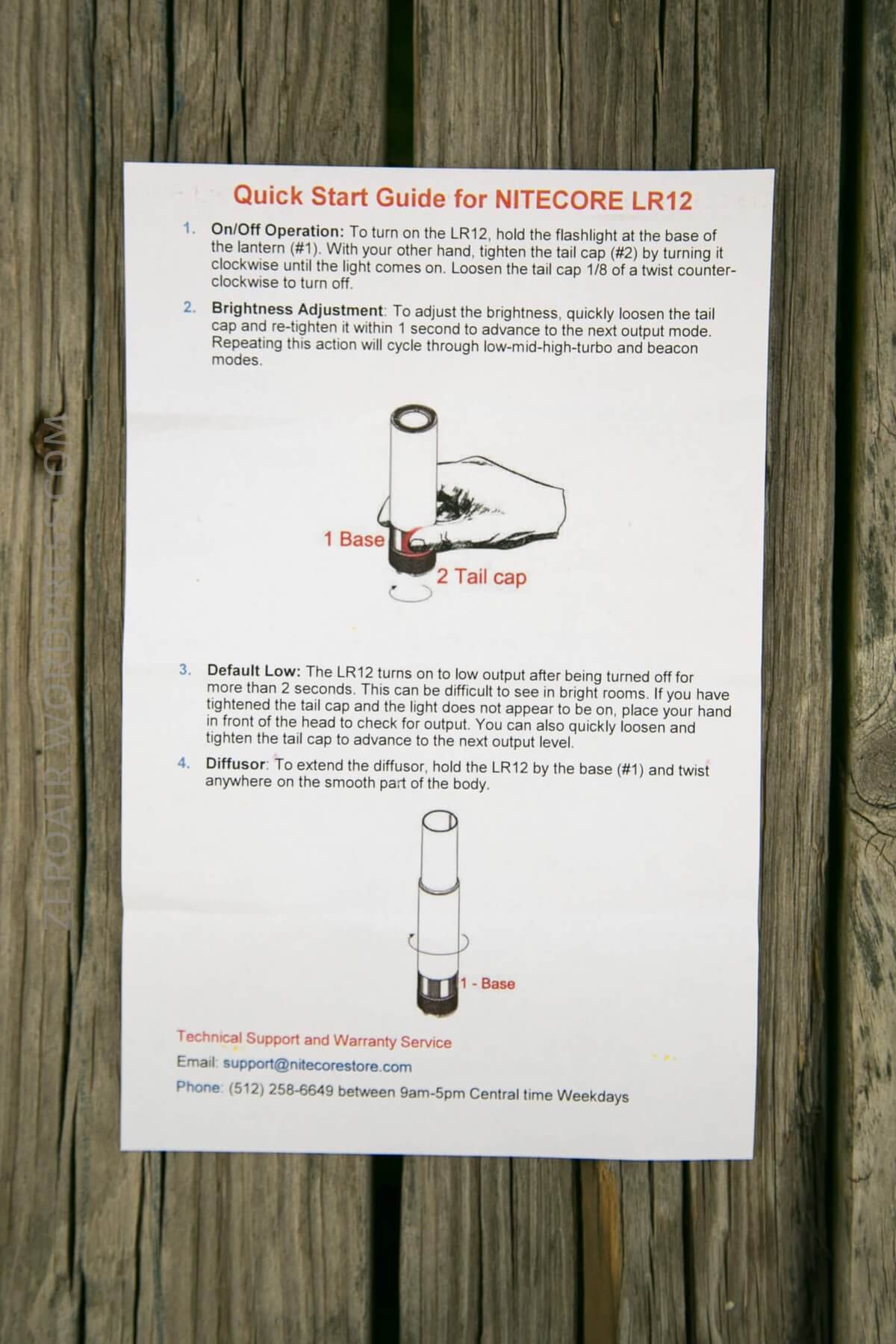
Here’s a copy of the PDF manual. Also included in my package was a little quick-start guide.
Build Quality and Disassembly
The LR12 is a nicely built light. It’s a bit unusual in that the bulk of the body is used to house the retractable diffuser. That’s all fine and good, but it does force certain realities on the user interface and usability of the light. More on that later.
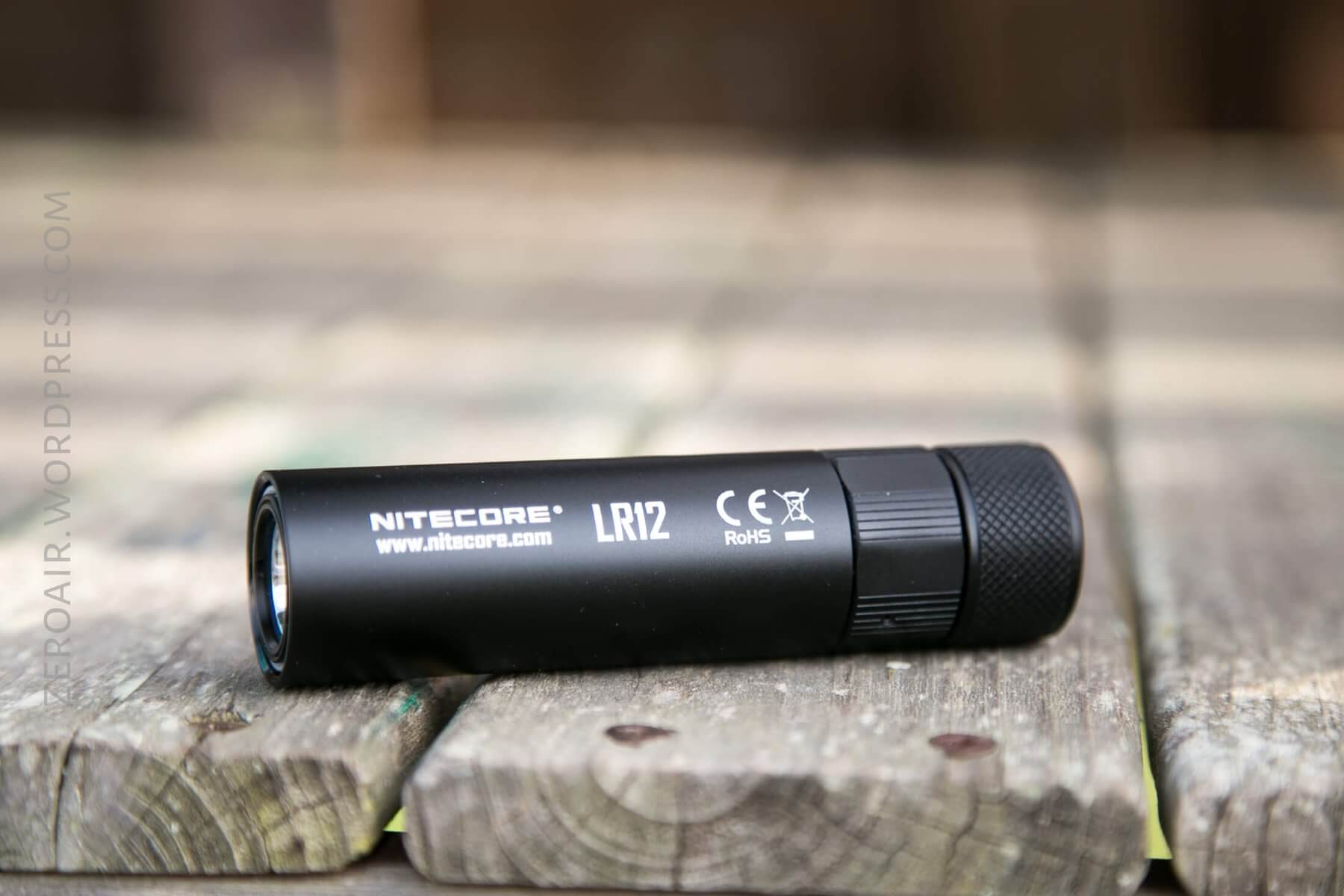
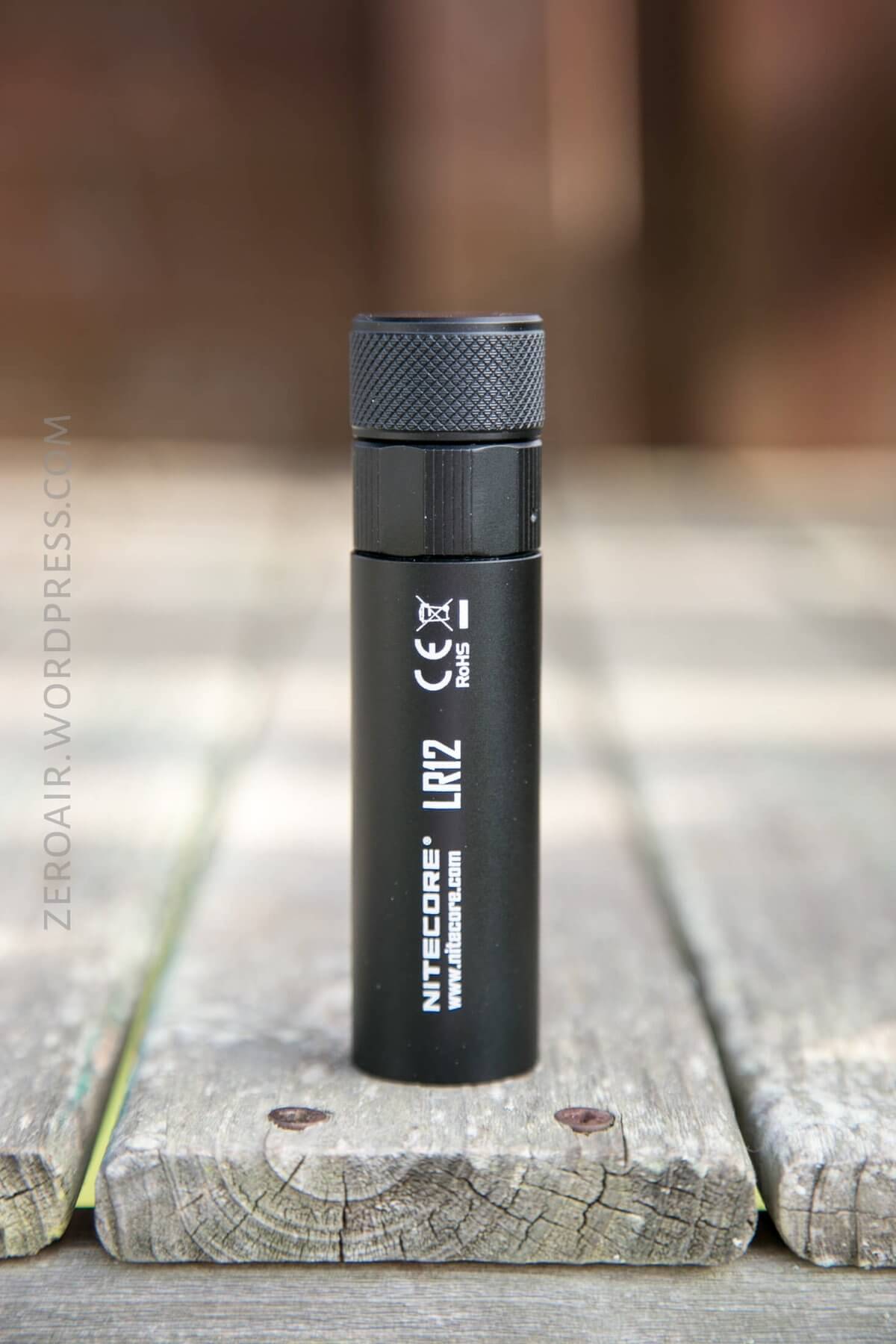
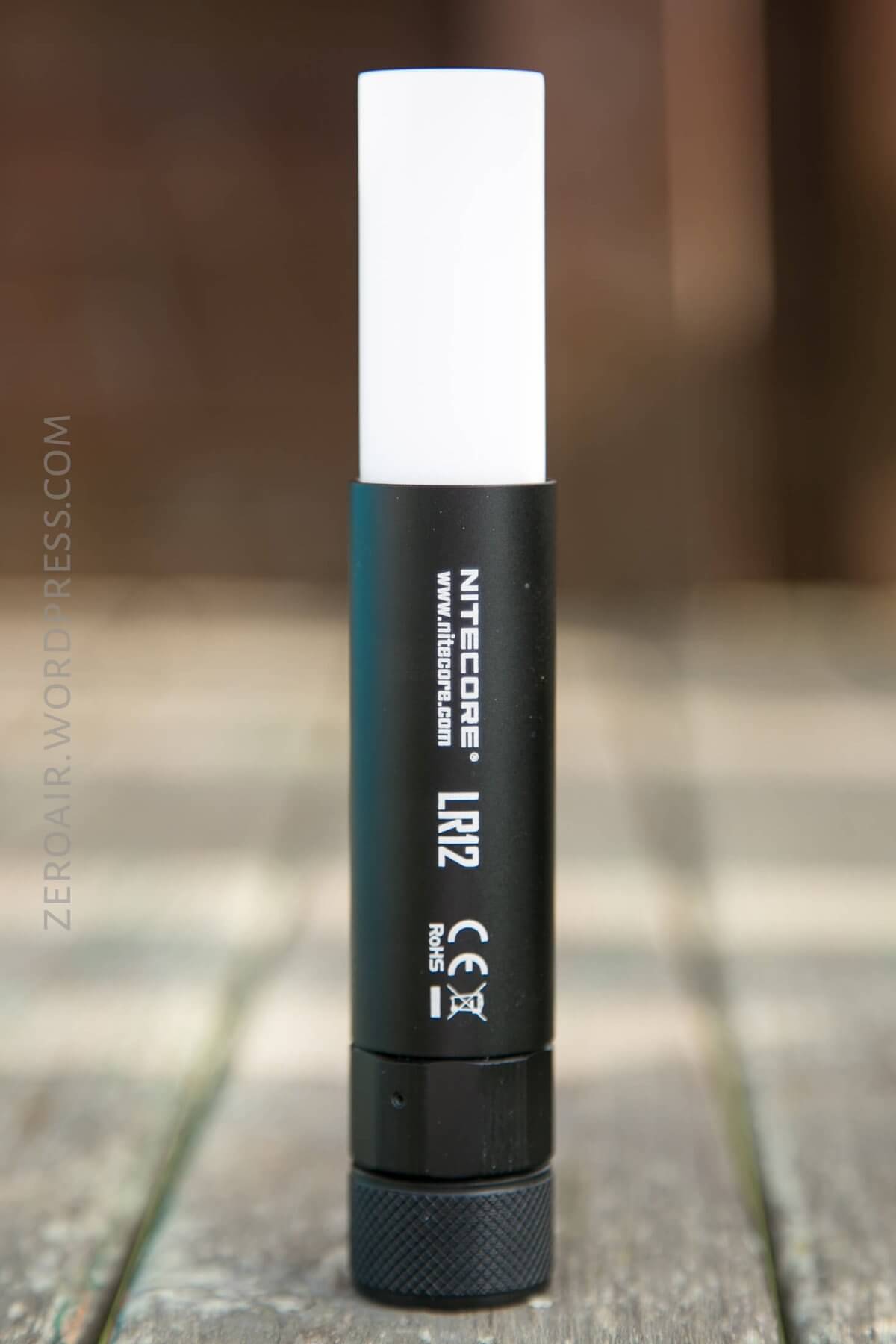
Here’s the diffuser in the out position. Off, and On.
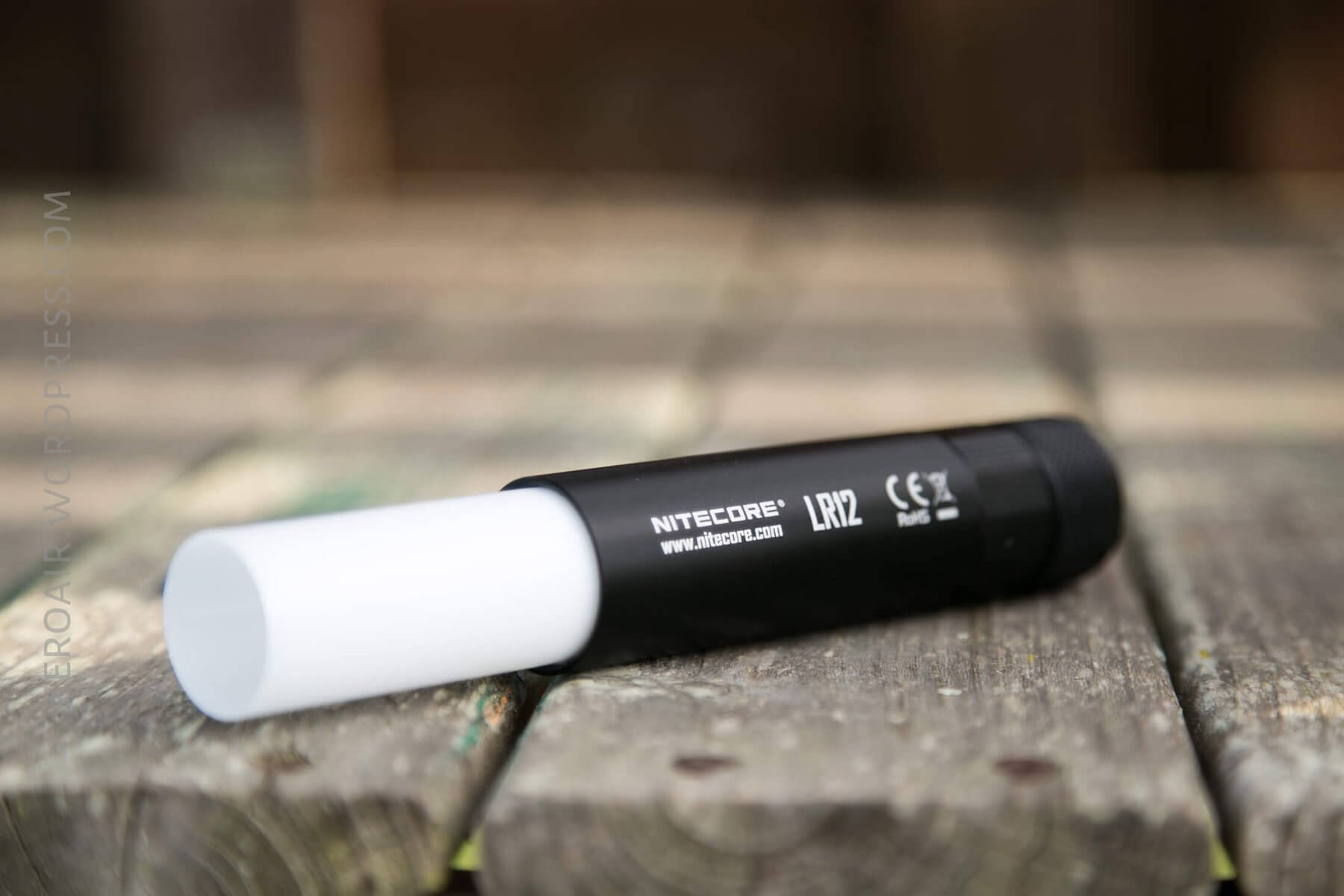
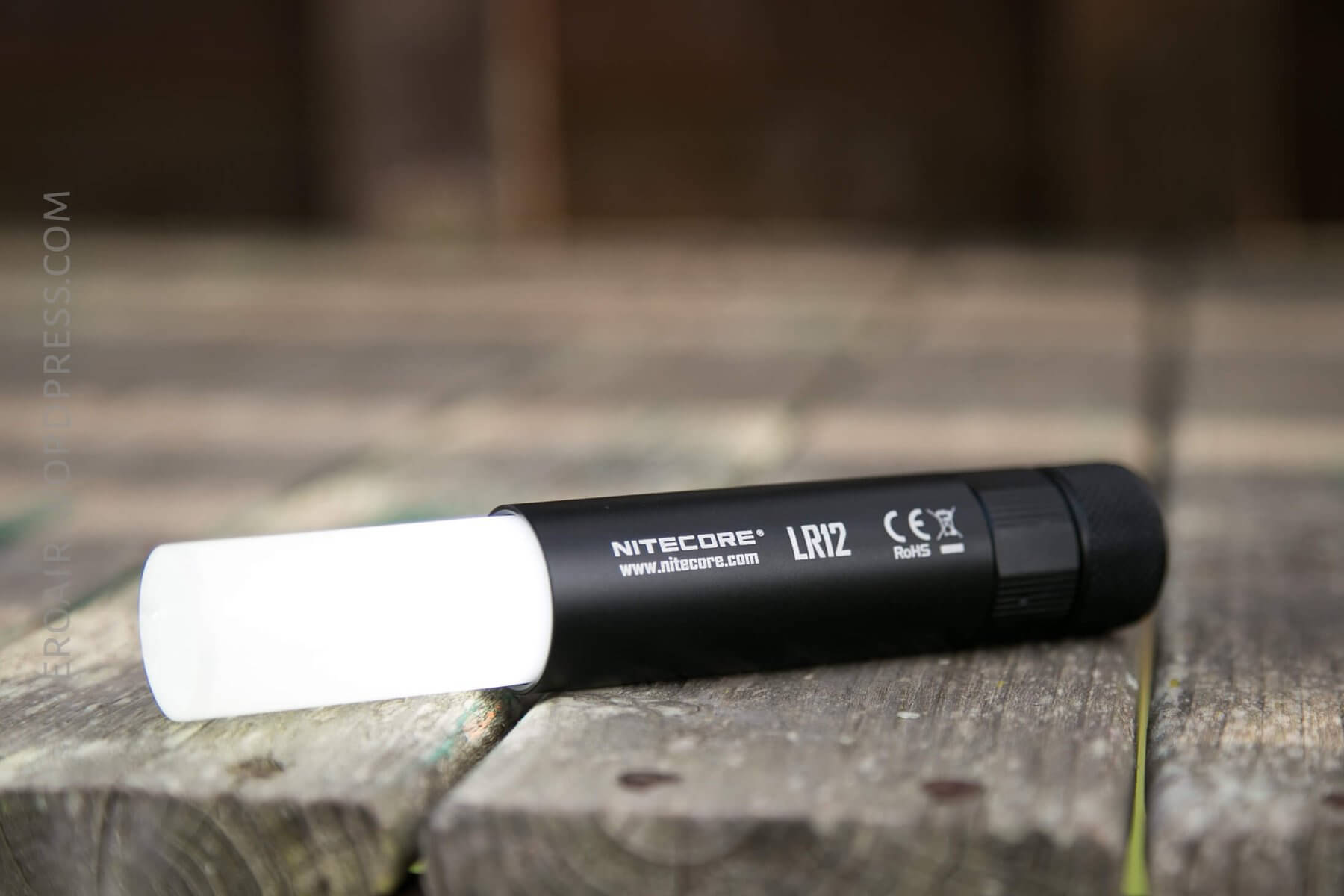
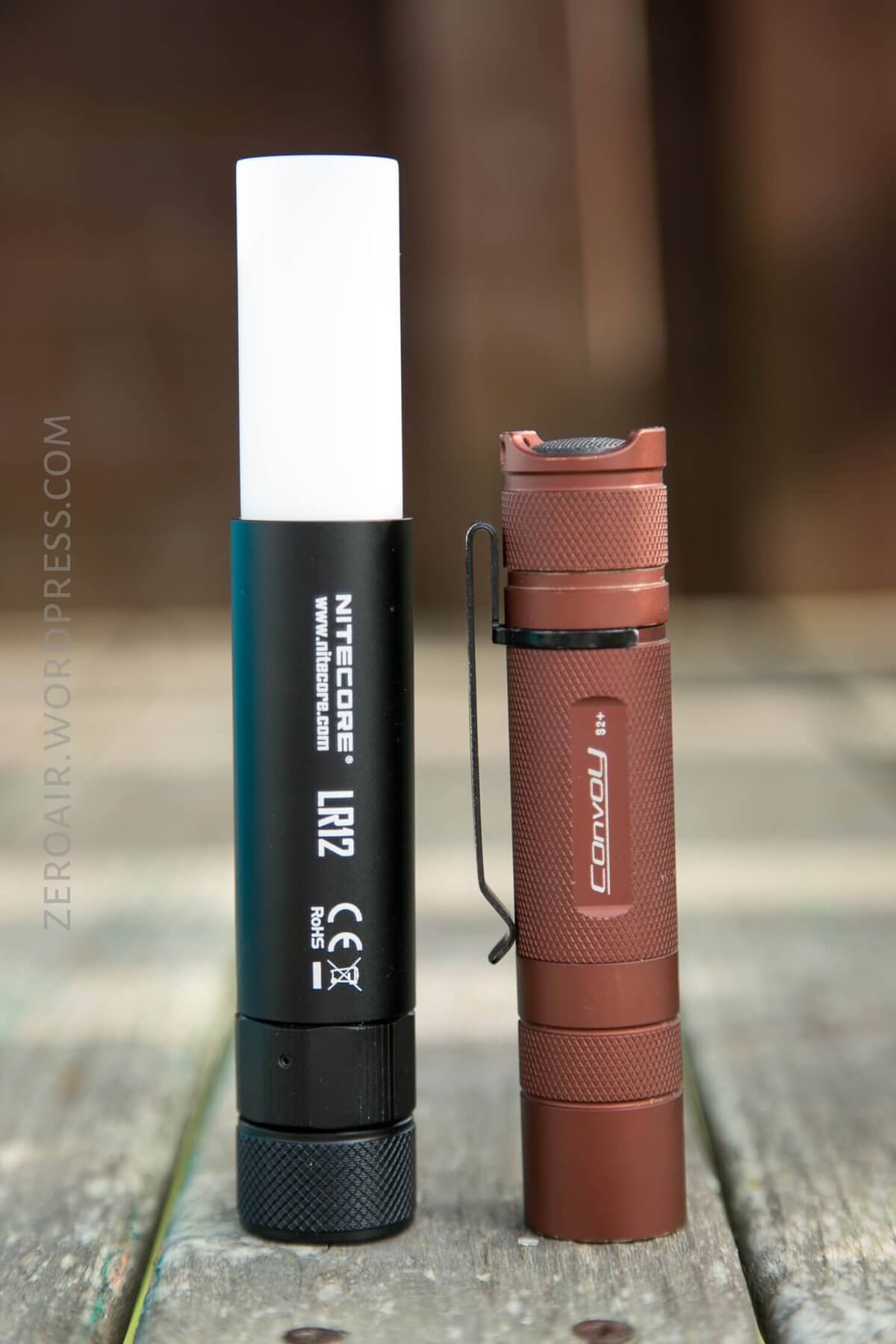
Of course, the diffuser makes a huge difference in length. It also makes a huge difference in two other things that might not be immediately obvious. First, the light is noticeably thicker than many other 18650 lights. Second, the mechanism of the diffuser means that the bezel essentially exposes the diffuser and the inside of the tube to dust and dirt, with no real or good way to clean it.
There’s no way to cover these rings on the front, so they’re exposed to dirt and grime.
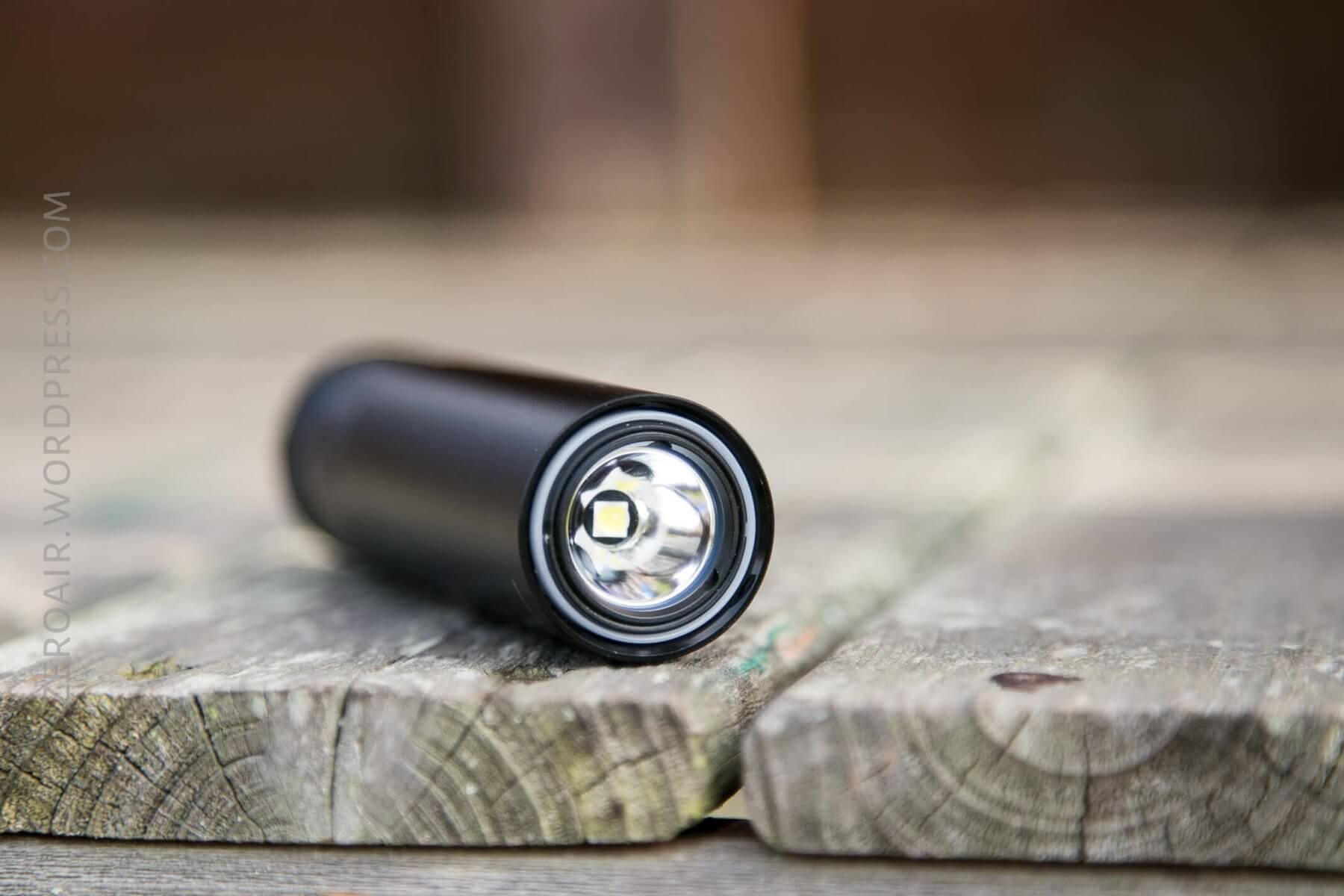
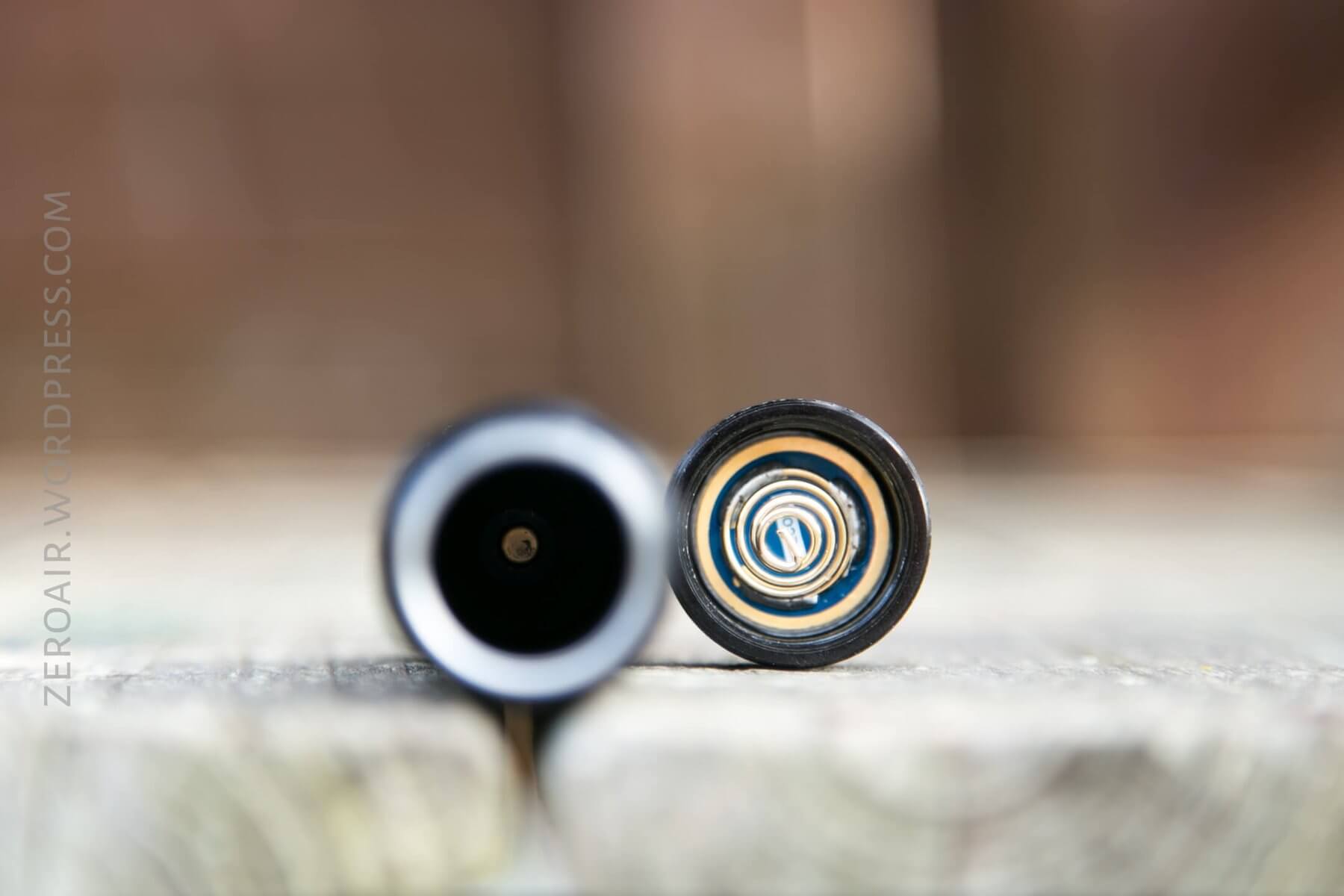
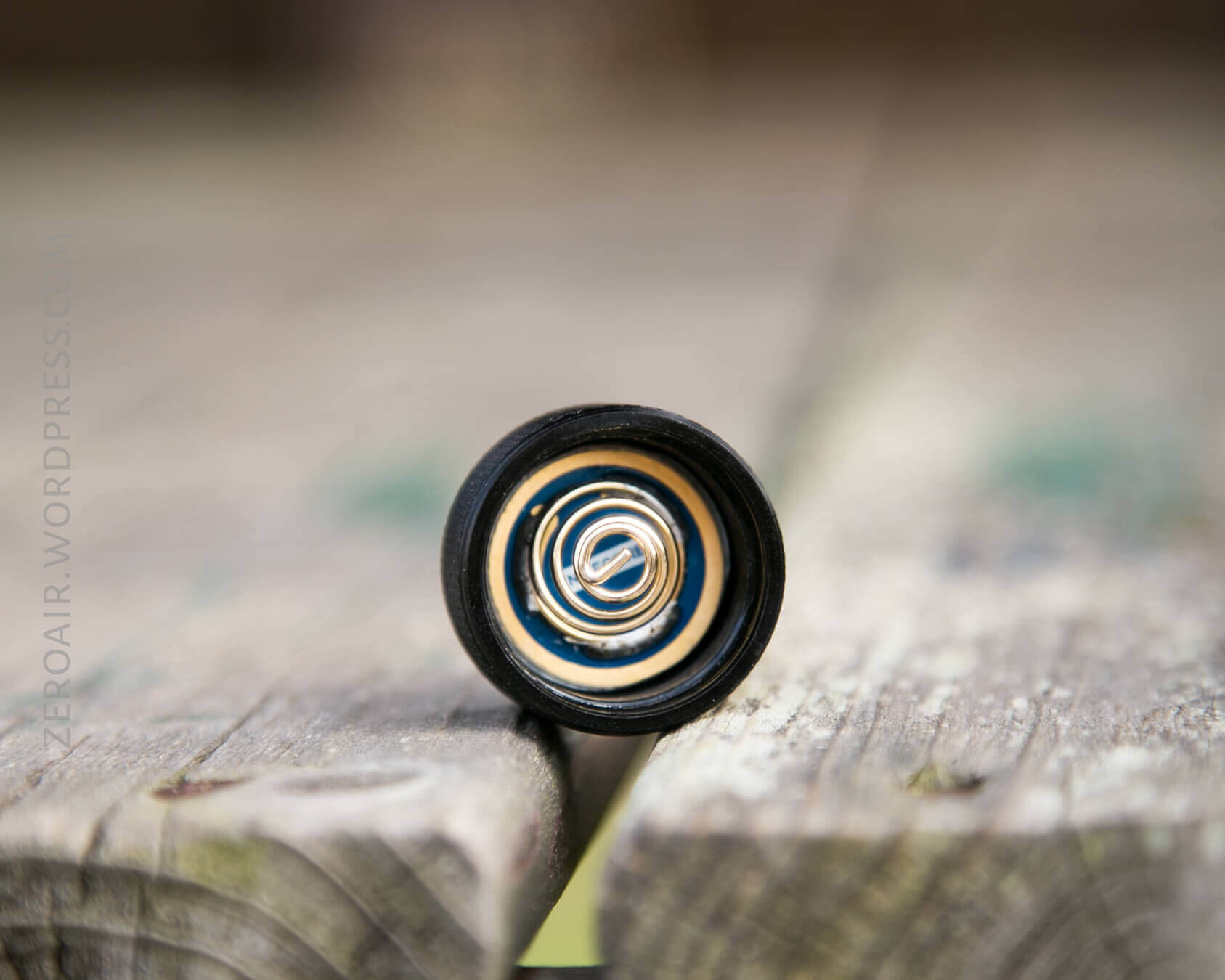
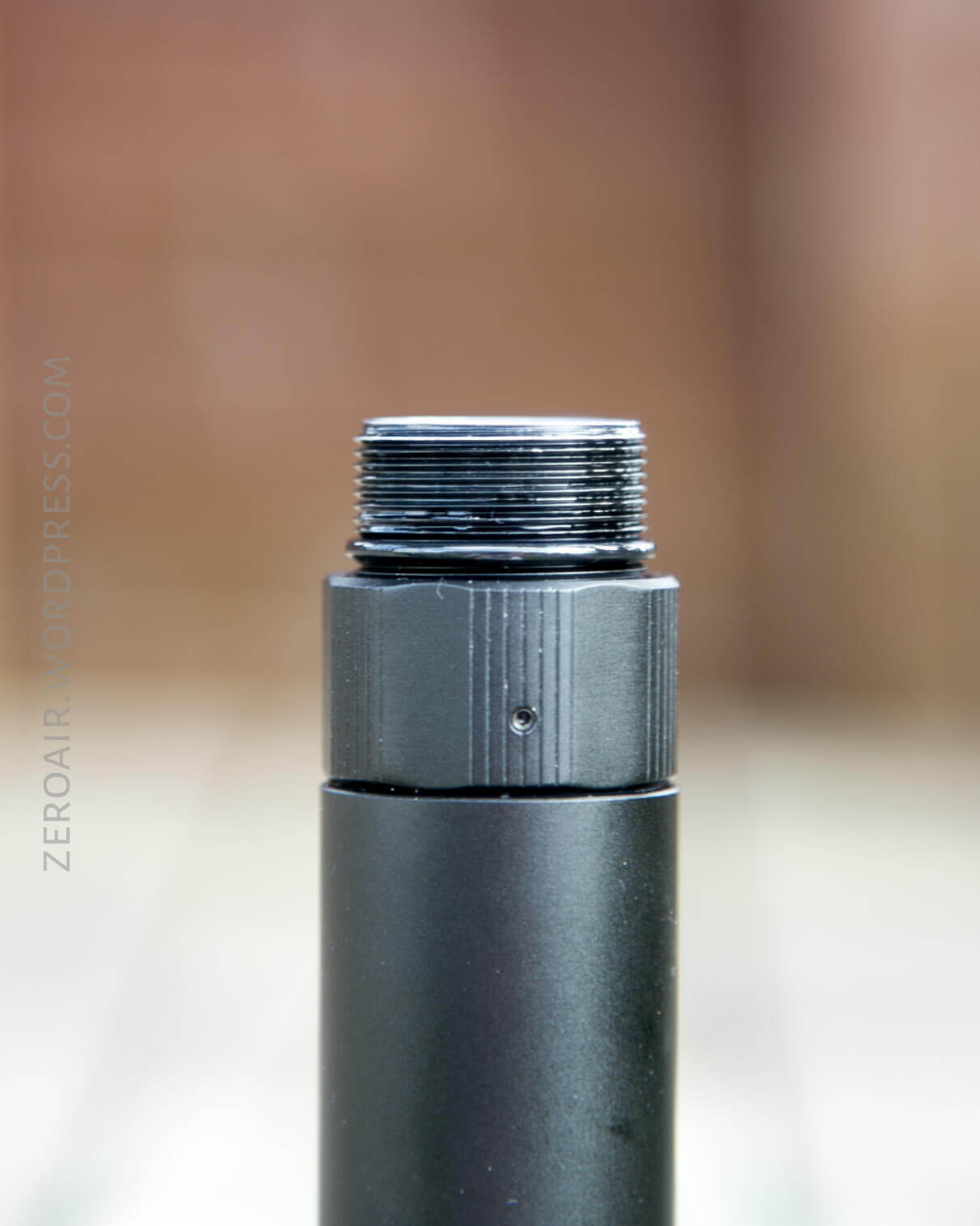
The bezel is a retaining ring with divots on the inside, which should allow access to the emitter. The tailcap has a beefy spring and a strong magnet, and the head end is a small brass button. The threads are thin triangle threads, with a lot of lube.
Size
Officially 106.2 mm x 26.9 mm, and weighing 78.5 g.
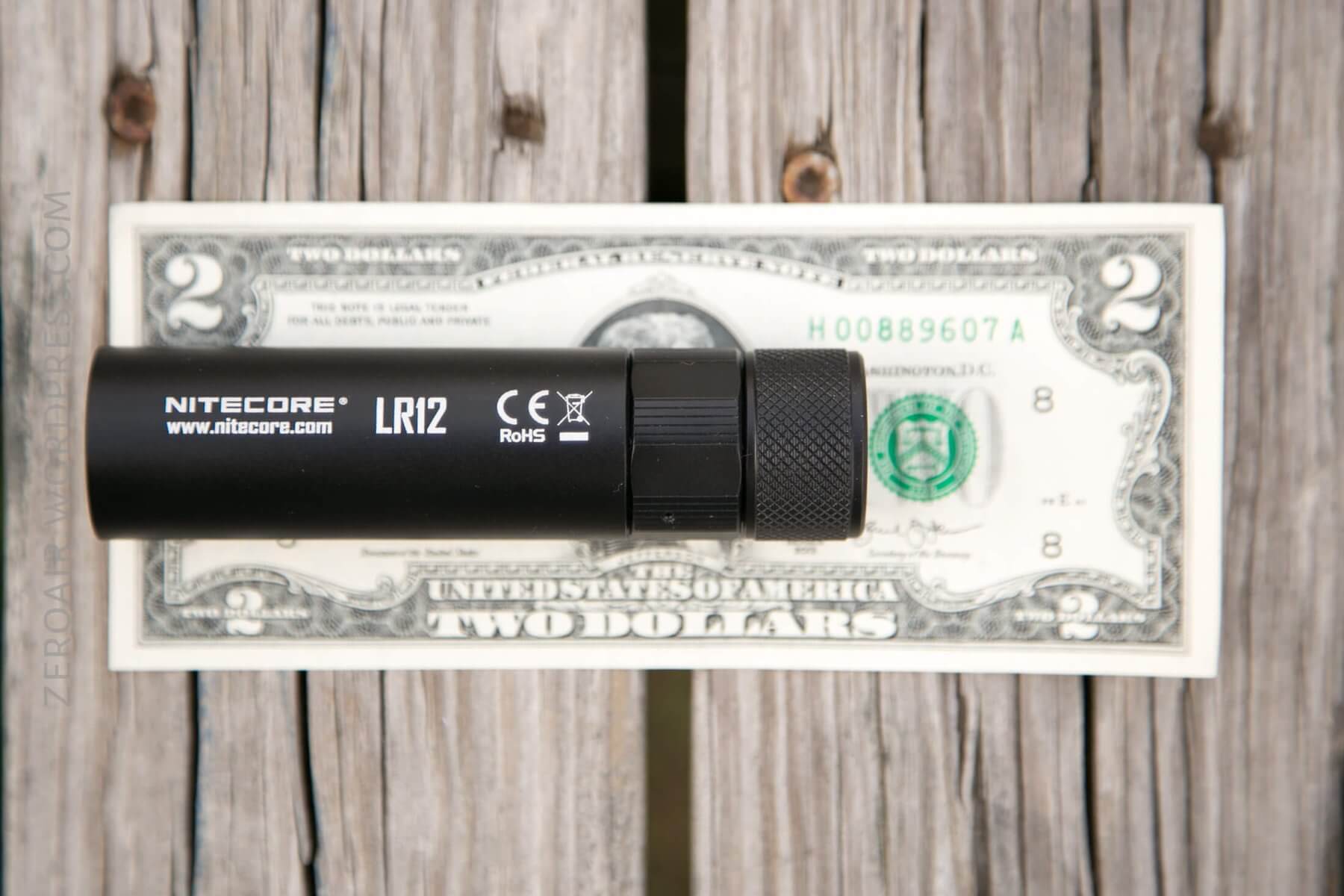
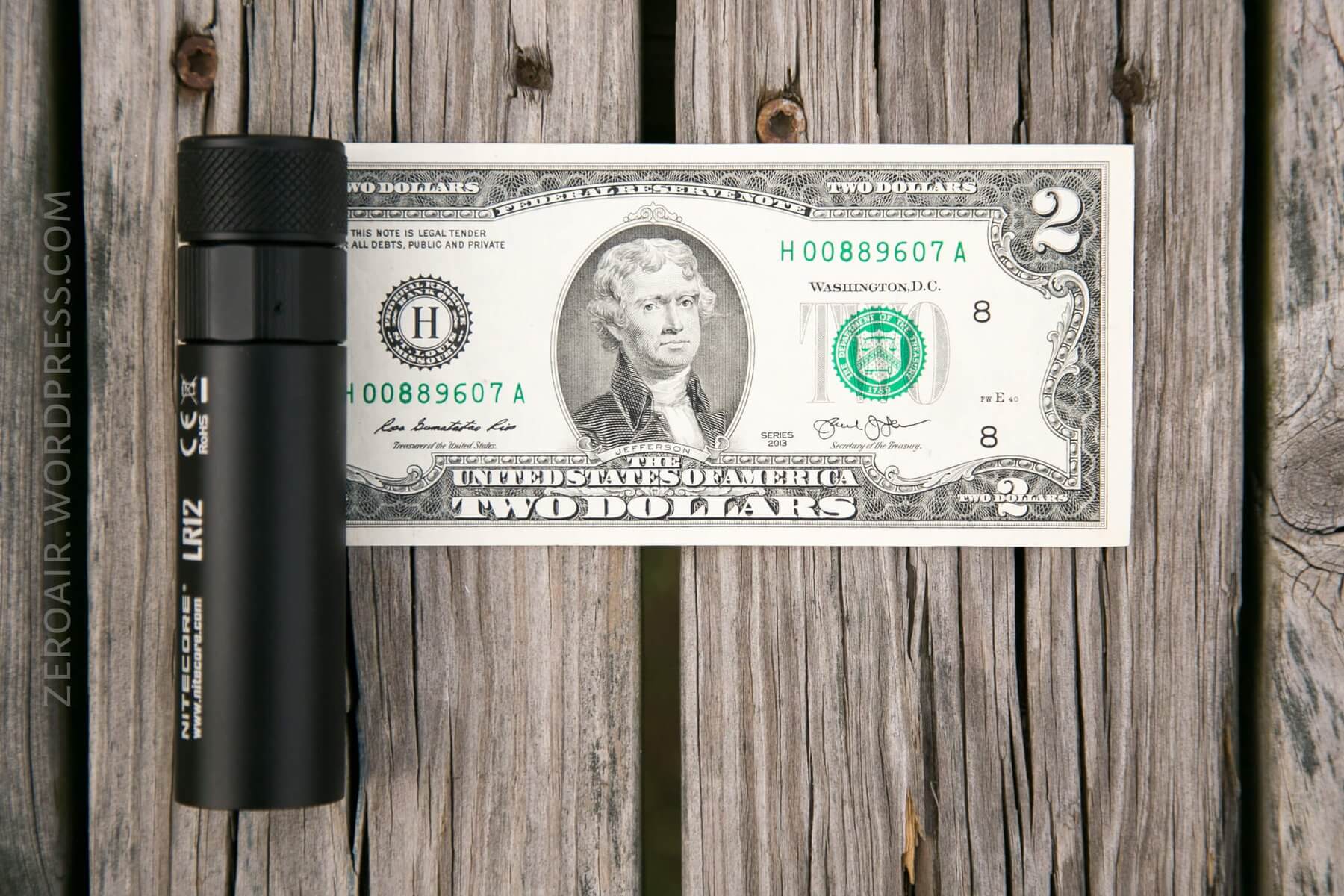
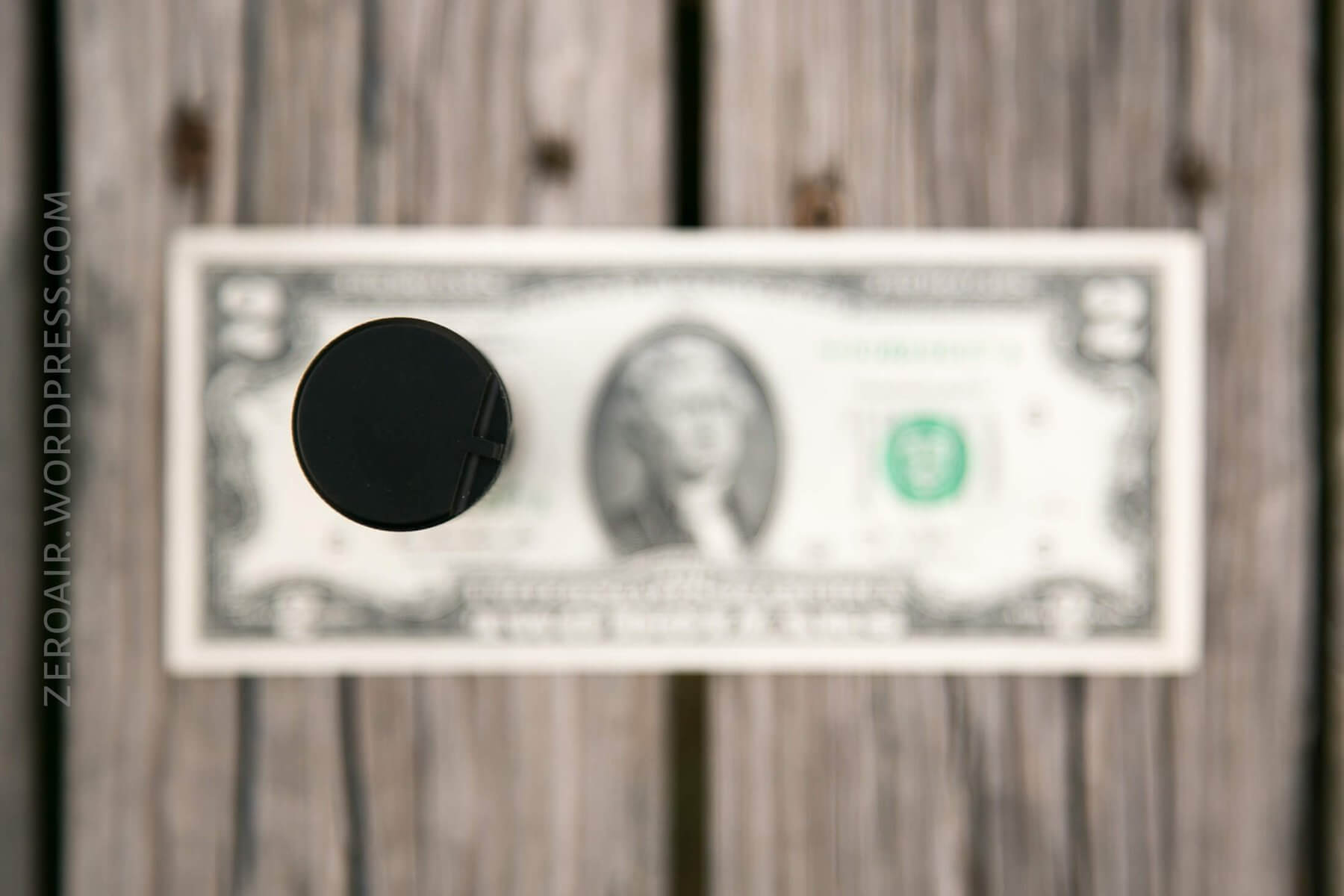
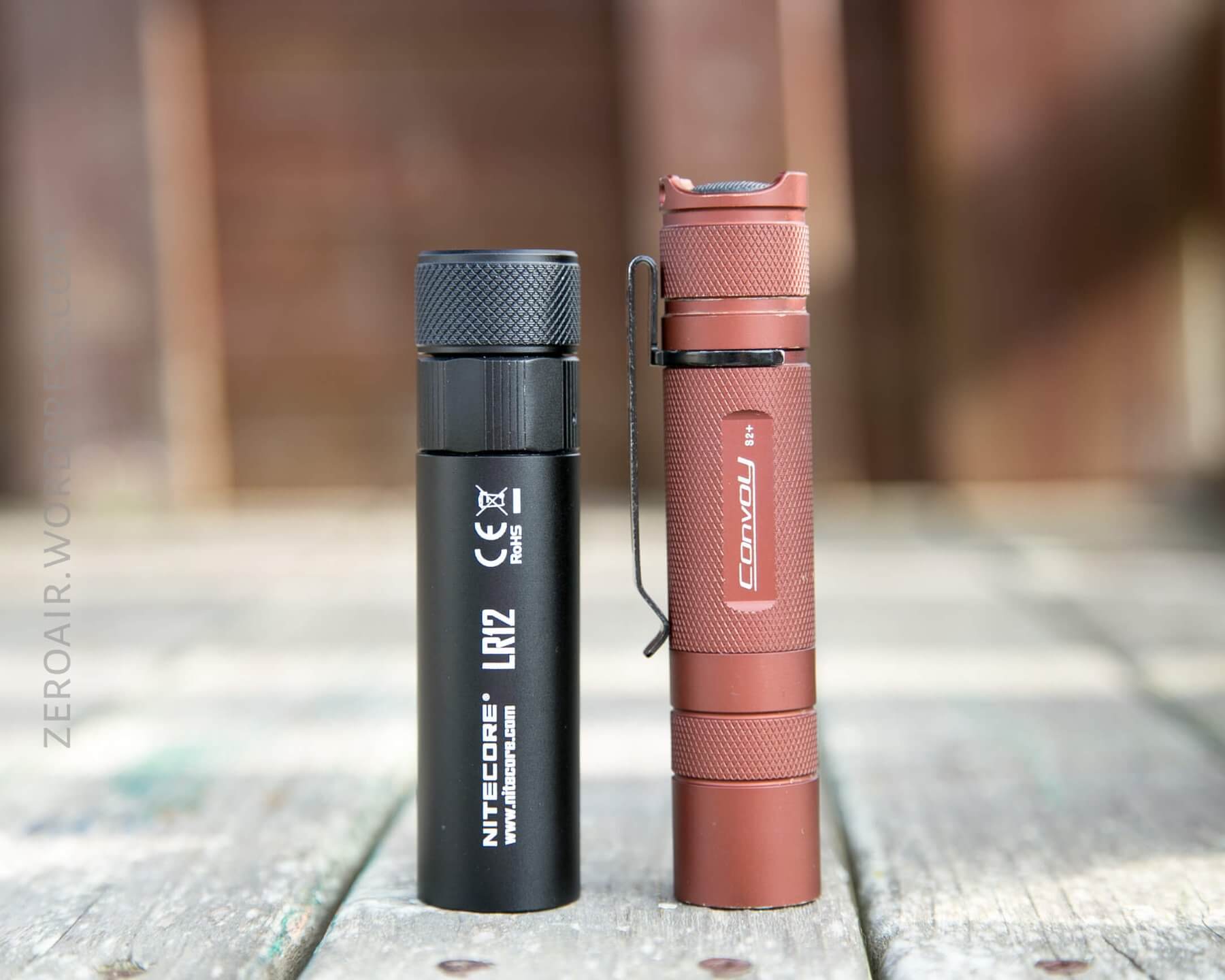
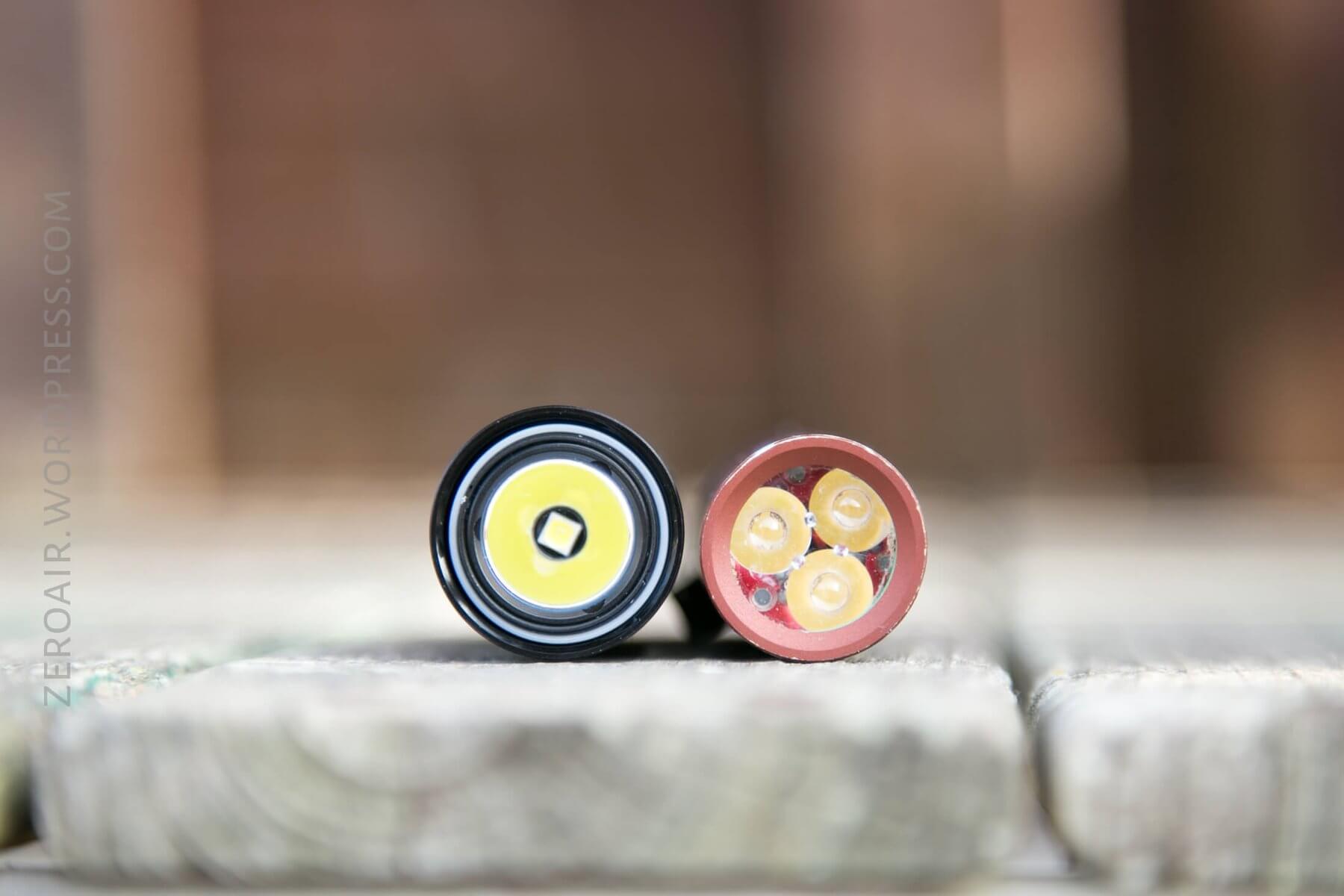
Most tube lights are around an inch in diameter. That’s 25.4mm. This one is 26.9. That’s 1.5mm wider, and it’s noticeable. Shorter than a Convoy S2+, though, which is good.
Retention
The main way to carry this light is with the lanyard. Or just loose in the pocket, as I carry it. But mainly, with the lanyard, which attaches through a hole in the tailcap.
The second way this light can be retained is with the strong magnet in the tailcap.
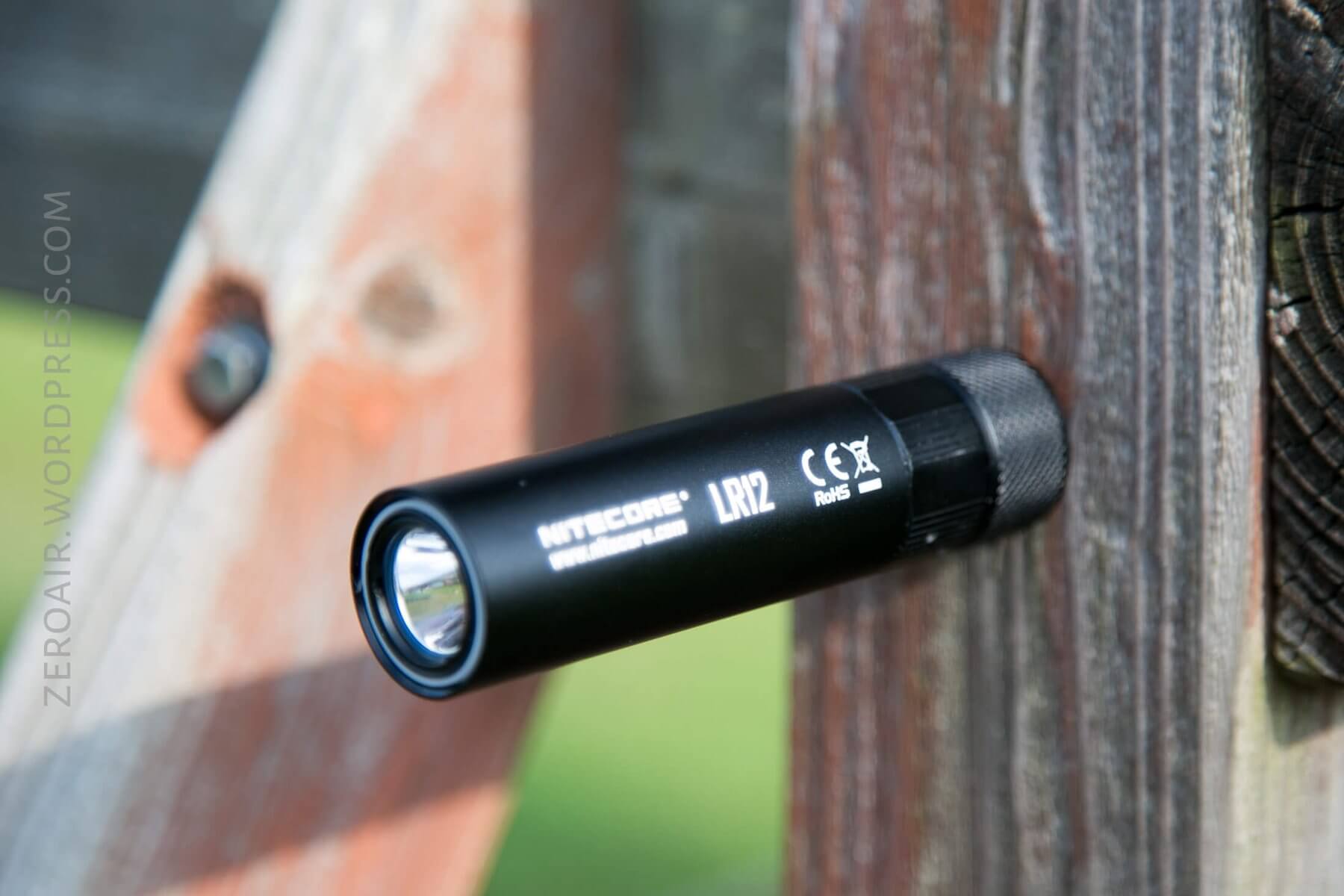
There is no pocket clip option for this light.
Power
The LR12 is powered by a single 18650, but may also be powered by two CR123A. I didn’t find any difference in performance between the two. Any type 18650 will work fine: protected, unprotected and flat top or button top. I tested this light with a Nitecore cell, a high-drain 3100mAh cell.
Here’s a runtime on Turbo. The light shut off at 3.19V, which indicates LVP, something I confirmed with my bench power. The decline from initial output (which is around 1150 lumens to the “30 second reading” (which is what should be published) at around 1100 lumens, to a much steeper decline at 1.5 minutes is fairly slow. At 1.5 minutes, the light effectively steps down to high.
Note from the editor: while updating this post years later, I realized I had linked the wrong runtime. And now the real runtime is lost to time and space. Sorry!
User Interface and Operation
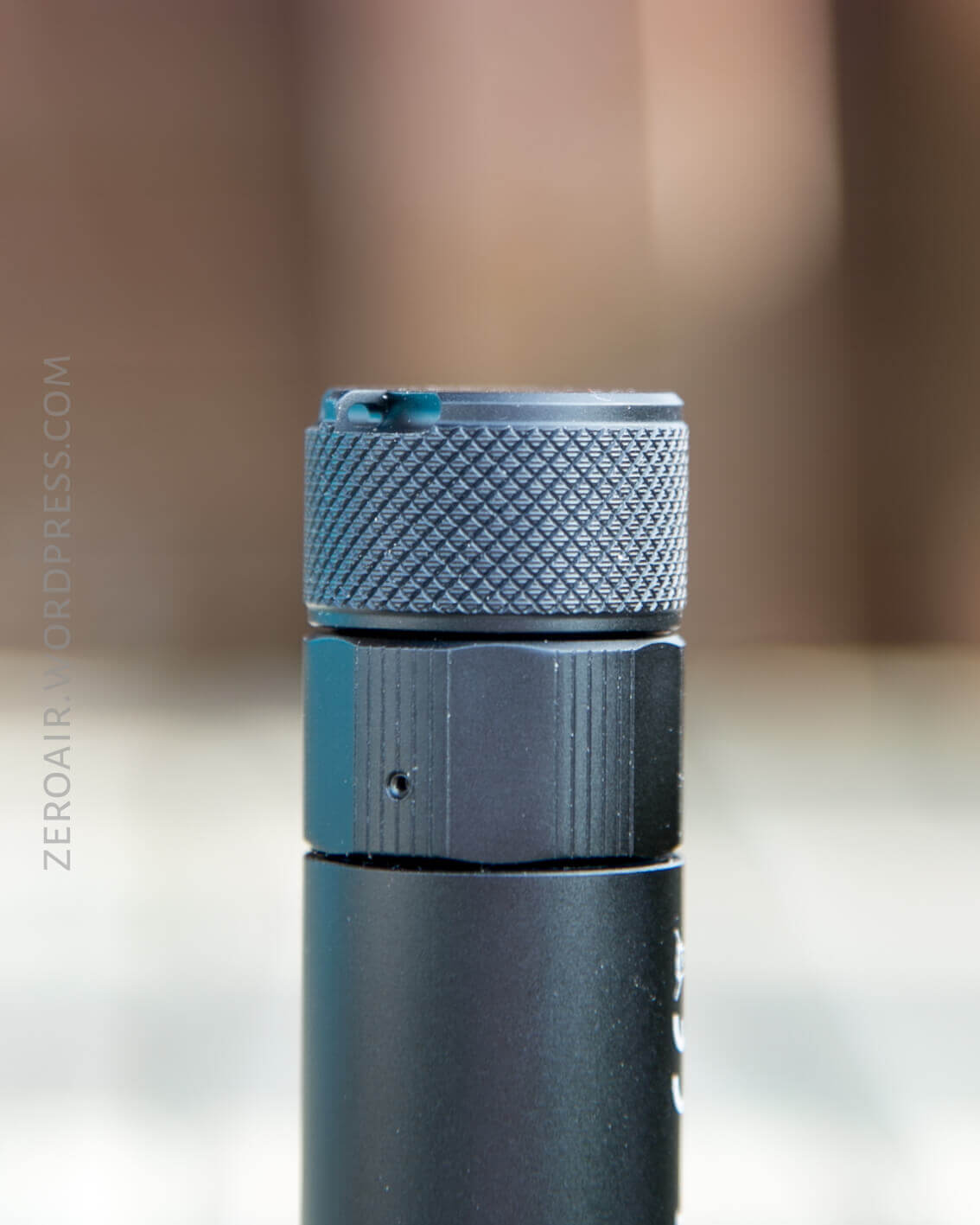
This is a twisty light, with no buttons at all. It’s a little hard to twist since the main body can’t be grabbed for operation – the main body twists for extending the diffuser. There are two ~1″ sections at the bottom. One has knurling, and one is hexagonal-shaped. Hold the hex-shaped area, and turn the tailcap to operate the light. If the light is twisted off and on within 2 seconds, the modes will advance. If the light isn’t twisted off and on within 2 seconds, the next twist will turn it back on to the lowest mode.
So it’s a very simple UI. If you advance through all the modes, you’ll get Low > Mid > High > Turbo > Beacon.
To be sure, Nitecore’s manual does a good job of describing this. Better than I did above, so I’ll just paste it here.
Turning the LR12 on within a 2-second interval after it is turned off will switch the light to the next available mode, repeat this process to cycle through “low-mid-high-turbo-beacon”. Note: The LR12 does not have memory function, it will always be turned on at the low output after it has been turned off for more than 2 seconds.
Of course, I like that there’s no memory. And the modes you’d wish to avoid are easy to avoid. But this does mean there’s no shortcut to, well, anything except low.
Modes
| Mode | Mode Claimed Output (lm) | Claimed Runtime | Mode Measured Lux | Tailcap Amps |
|---|---|---|---|---|
| Turbo | 1000 | 1h | 968 | 2.73 |
| High | 230 | 6h | 214 | 0.40 |
| Mid | 60 | 24h | 56 | 0.09 |
| Low | 1 | 900h | 6 | 0.00 |
LED and Beam
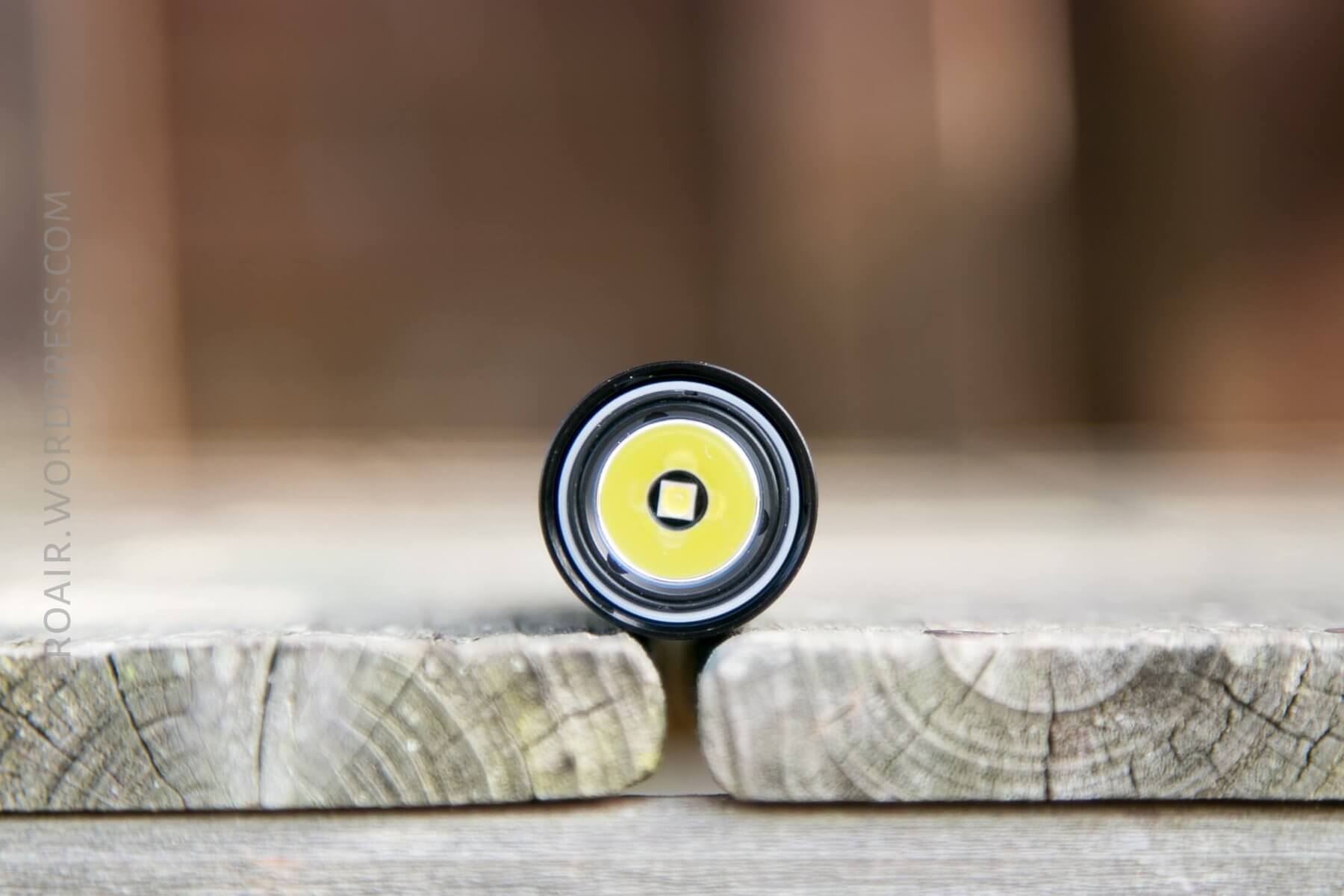
The emitter of choice in the LR12 is a Cree XP-L HD. The reflector is small and fairly shallow, making a beam with a fair amount of spill.
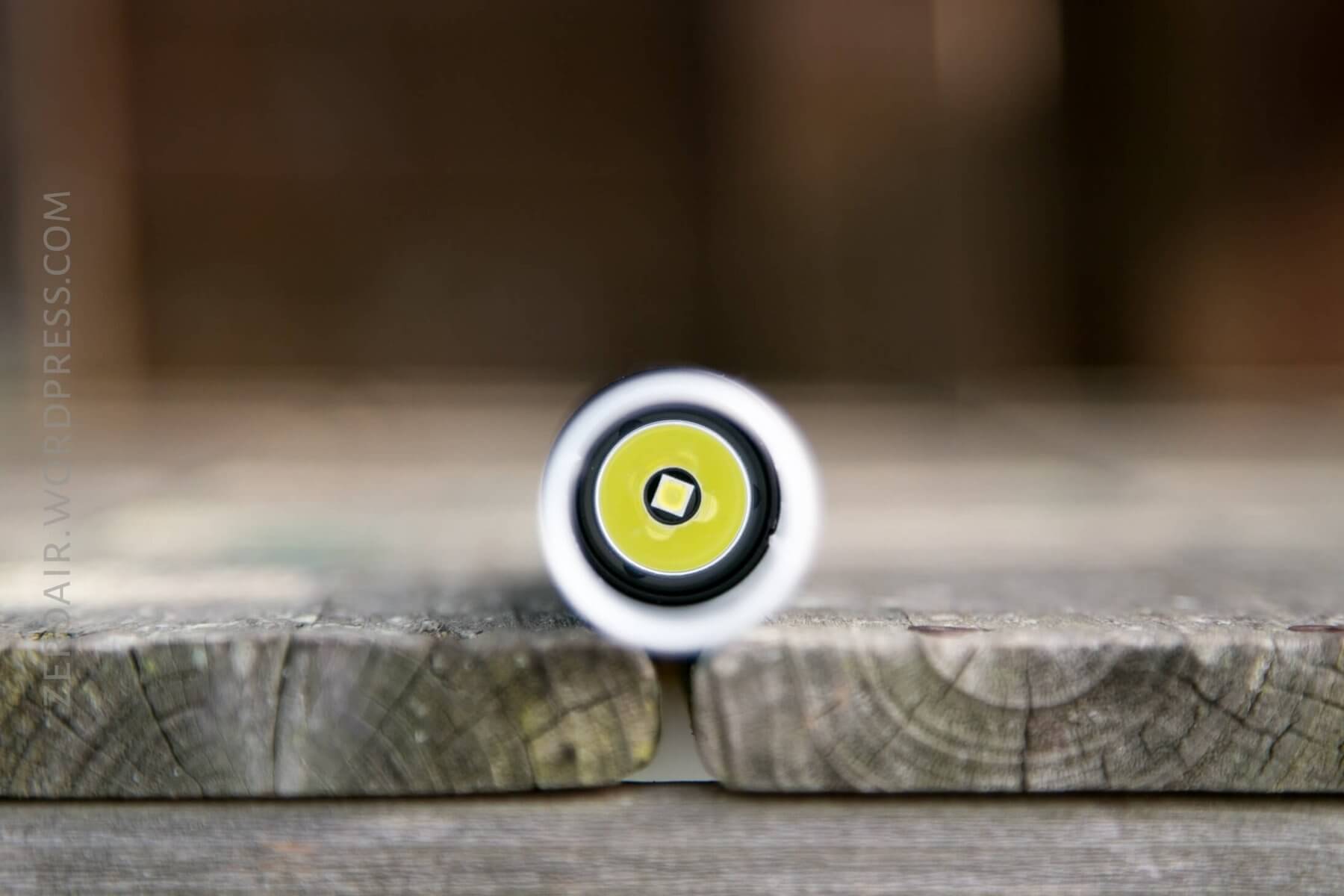
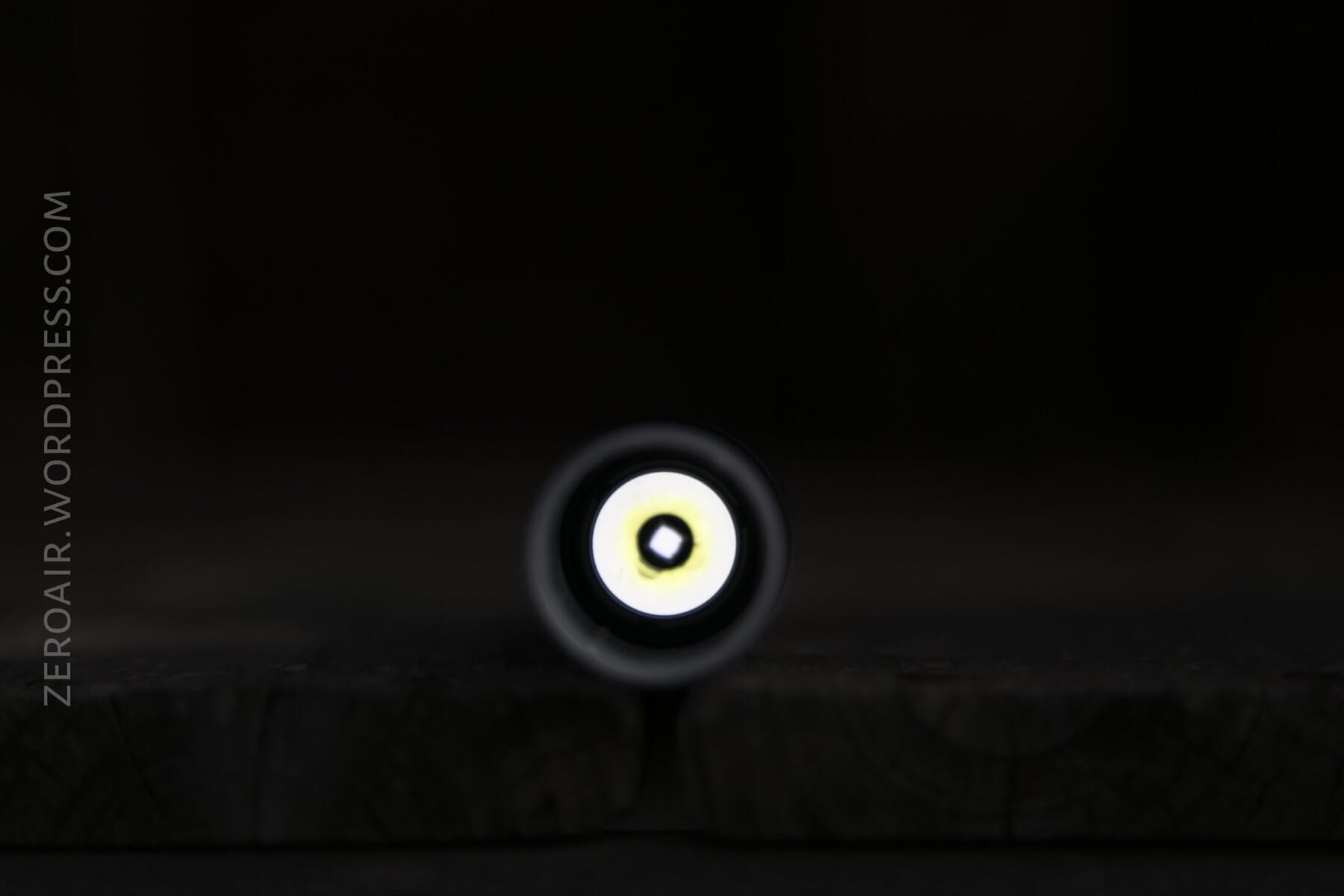
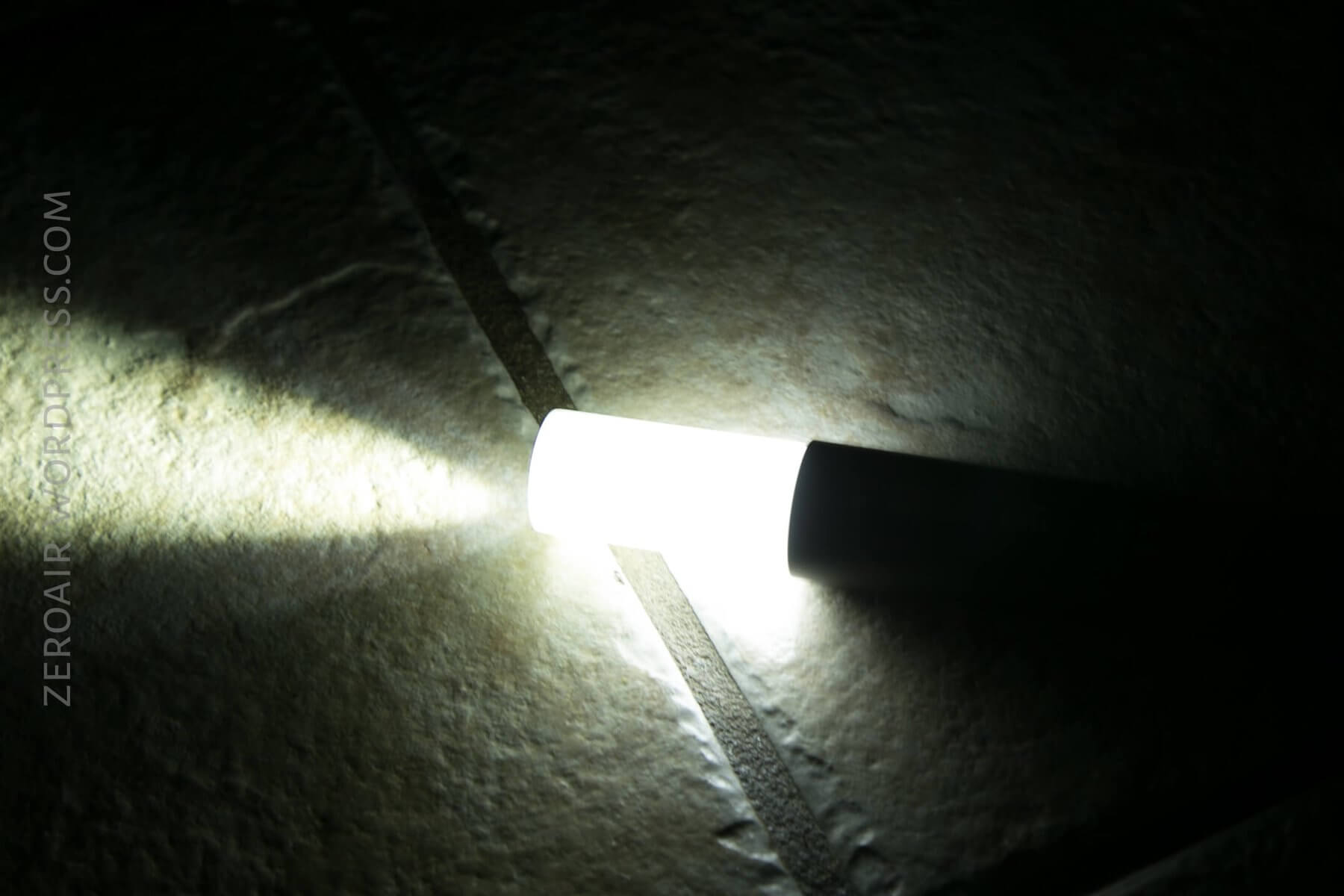
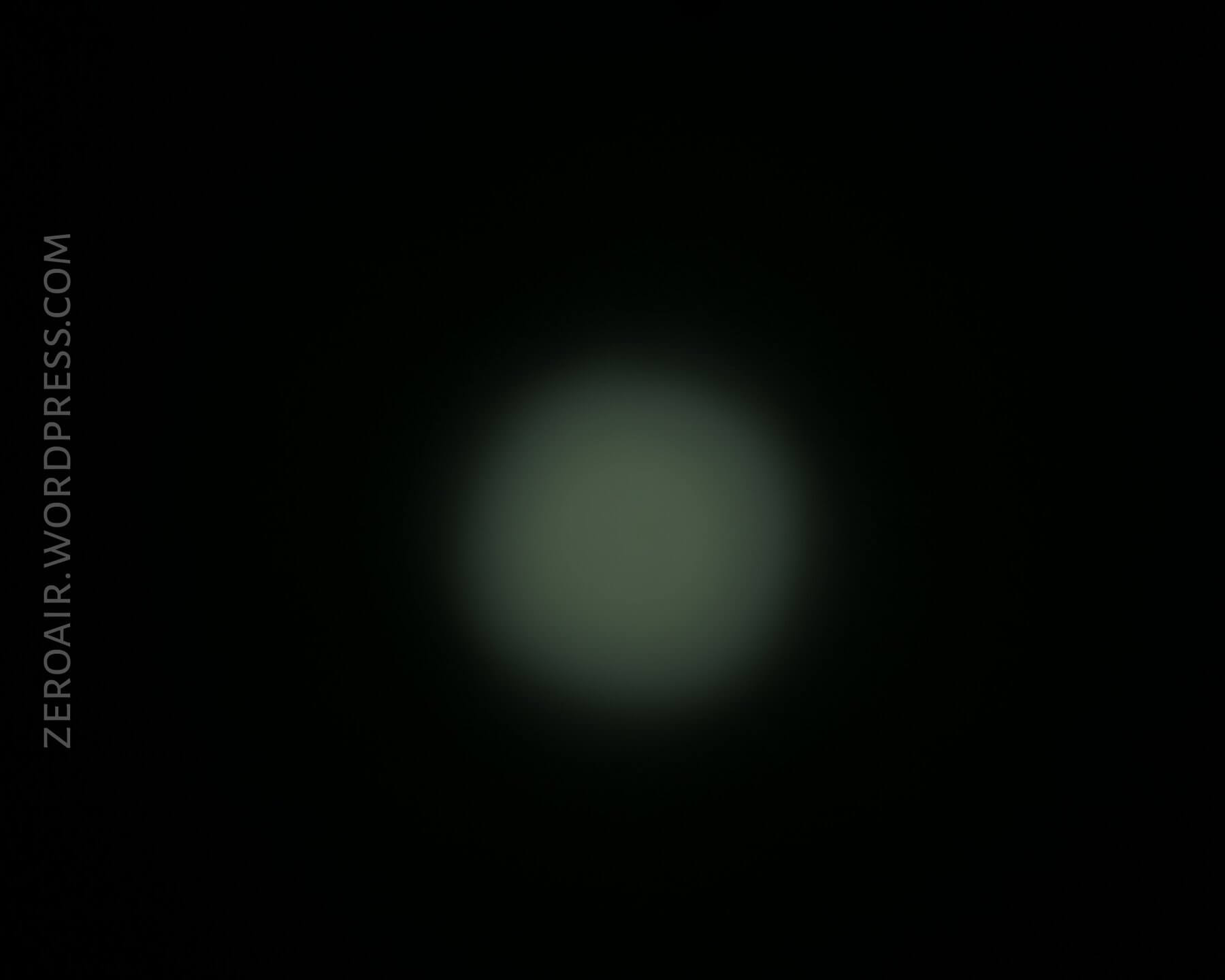
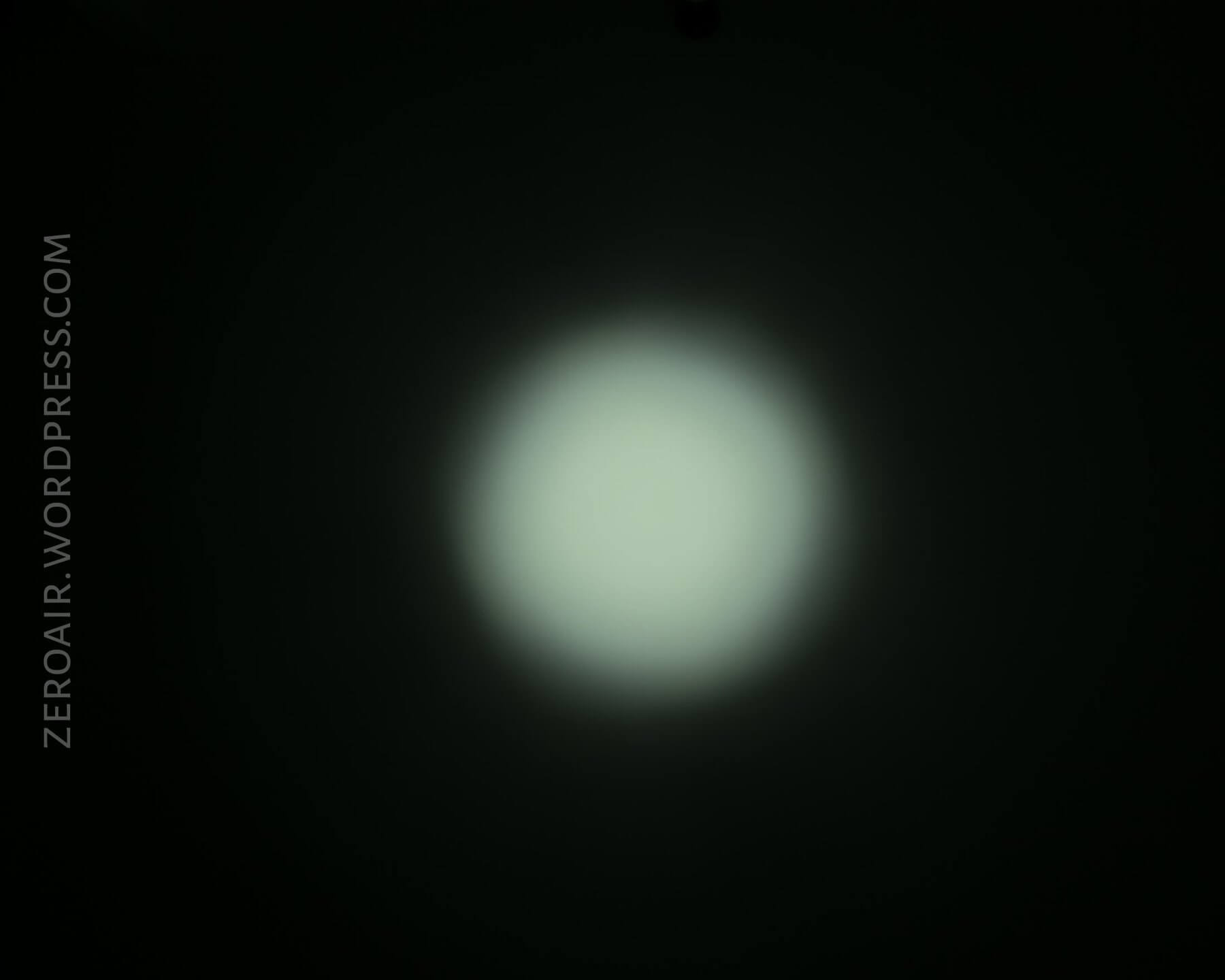
The light also has a diffuser, which actually achieves two things. First of all (and intentionally), the diffuser makes the light into a lantern-style light. Second of all, and more to my preference, the diffuser removes all the spill from the beam profile. This light has pointed out to me just how much I don’t like spill. I love the beam profile when the diffuser is out. This doesn’t change the throw.
Beamshots
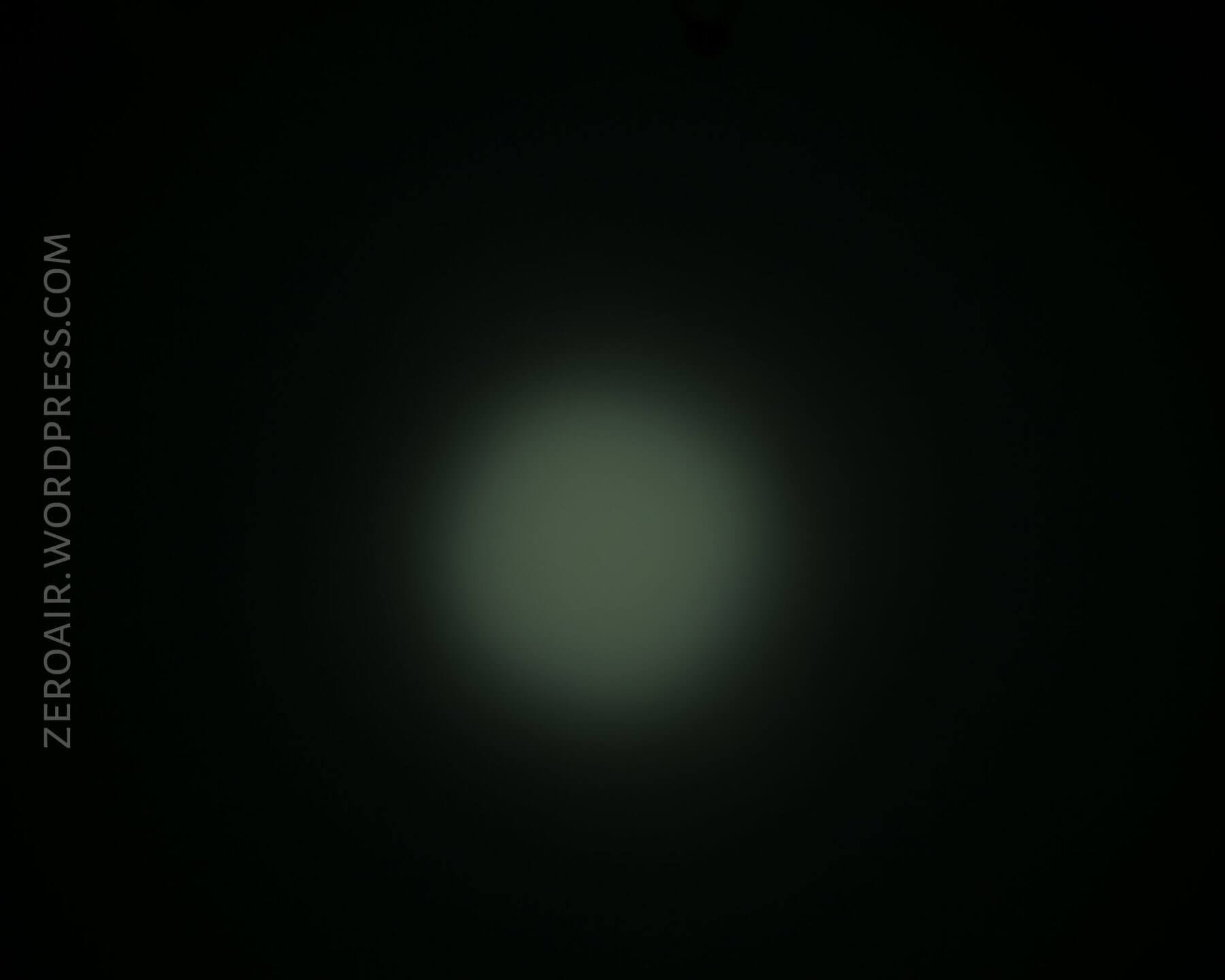
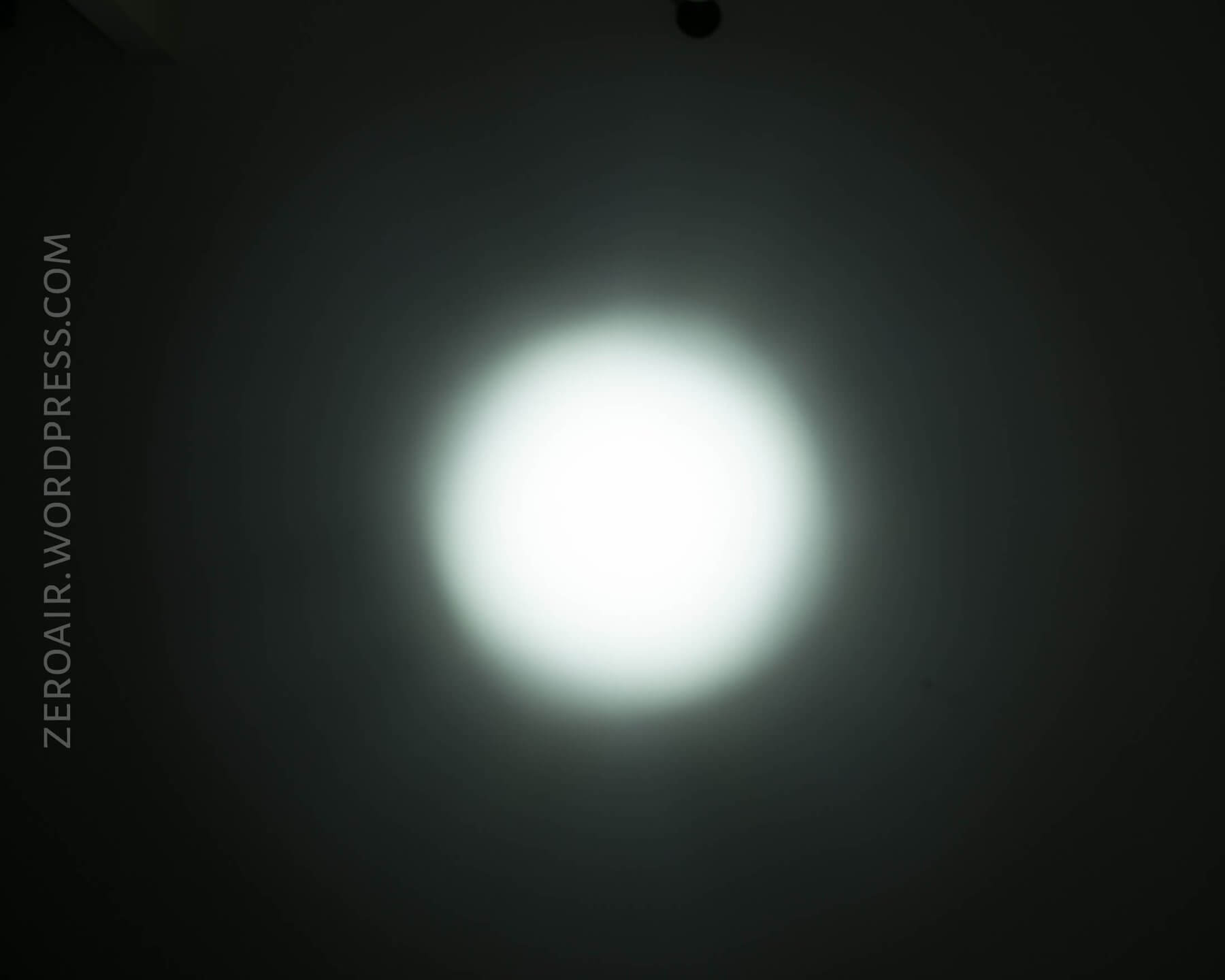
These beamshots always have the following settings: f8, ISO100, 0.3s shutter, and manual 5000K exposure. These photos are taken at floor level, and the beam hits the ceiling around 9 feet away.
With the diffuser fully retracted:

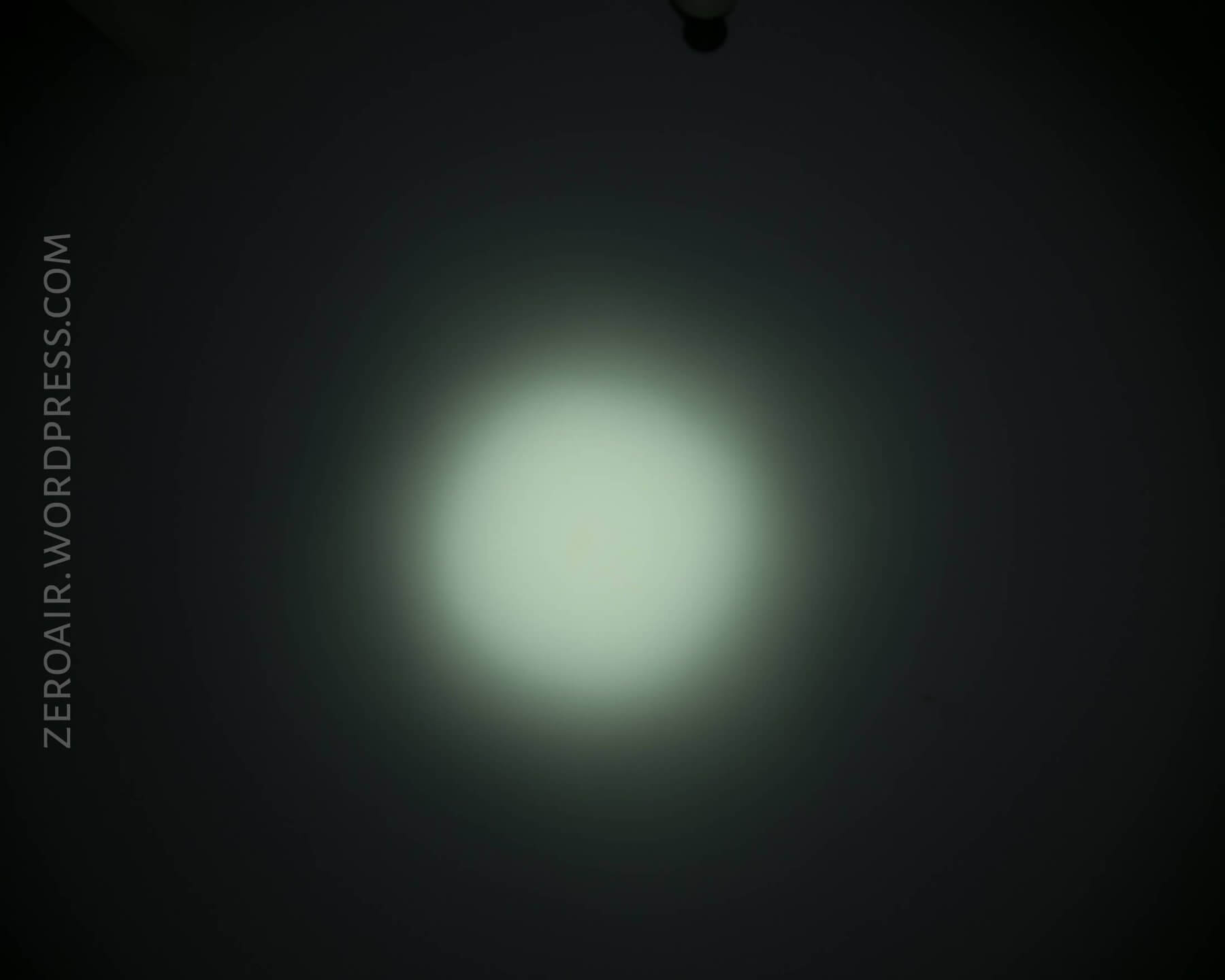
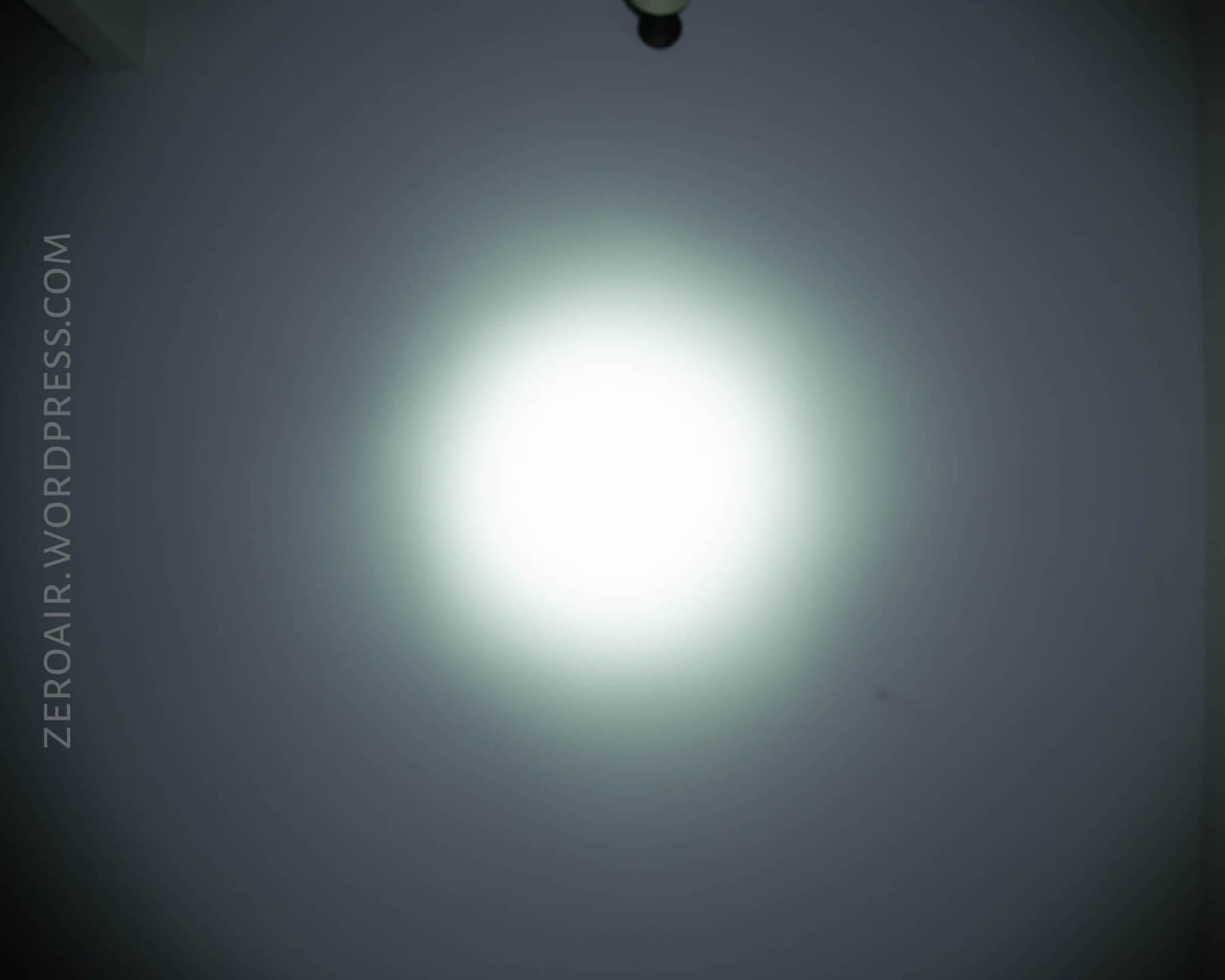
With diffuser fully extended:

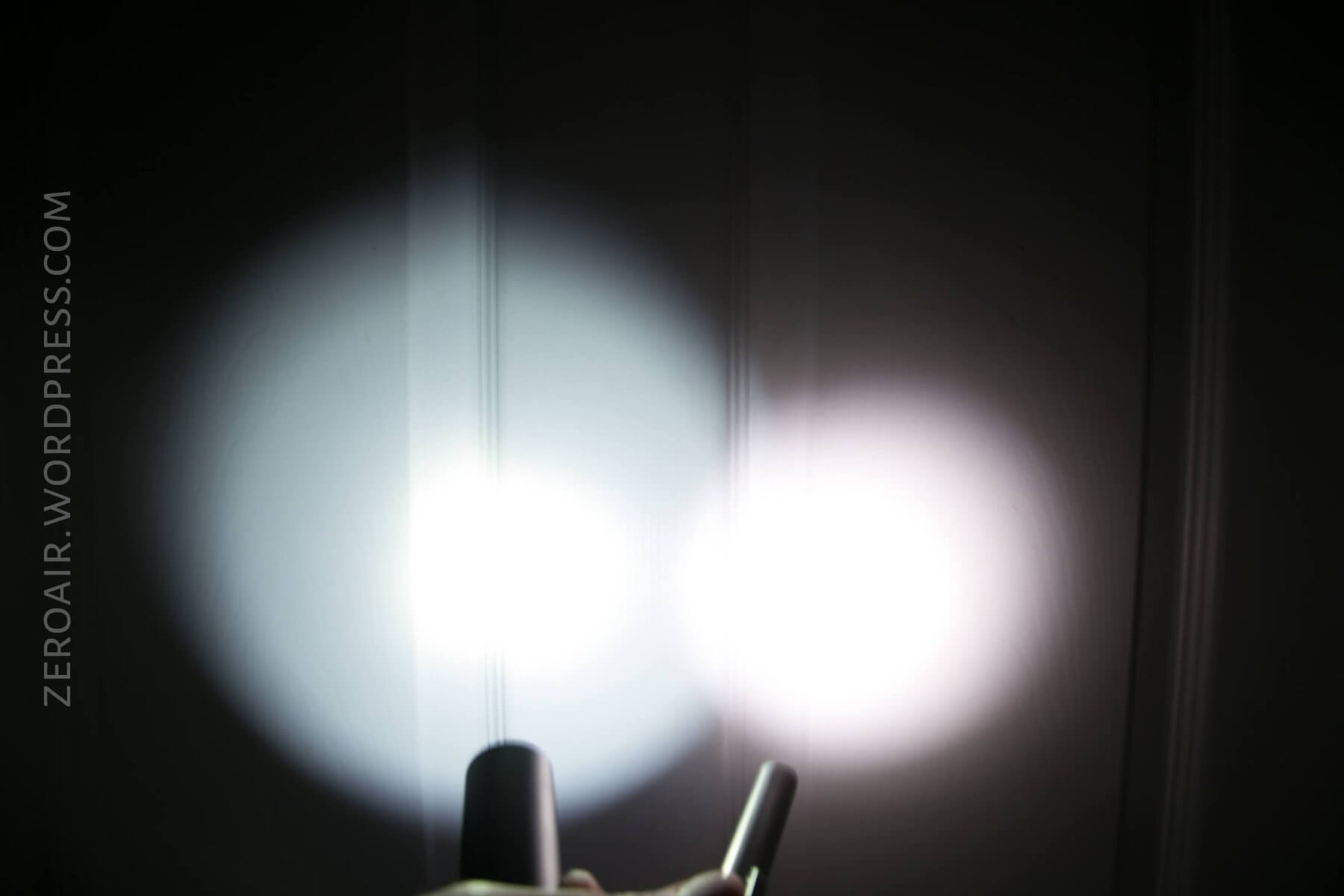
Tint vs BLF-348 (KillzoneFlashlights.com 219b version) (affiliate link)
I keep the test flashlight on the left and the BLF-348 reference flashlight on the right.
Conclusion
What I like
- Beam profile when the lantern portion is extended
- Bests its throw rating
- Nice utility as a lantern
- Has LVP
What I don’t like
- Girth
- Lack of sufficient space to grip for twist action
Notes
- This light was provided by NitecoreStore for review. I was not paid to write this review.
- This content originally appeared at zeroair.org. Please visit there for the best experience!
- Use my amazon.com referral link if you’re willing to help support making more reviews like this one!
- Please support me on Patreon! I deeply appreciate your support!
Discover more from ZeroAir Reviews
Subscribe to get the latest posts sent to your email.