
XTAR MC3 Charger Review
Here’s the XTAR MC3 Charger, a simple three-bay charger that supports wider cells like 26650s and charges only lithium-ion. Read on for testing!
Official Specs
Here’s a link to the XTAR MC3 Charger product page.
Price
Right at $10! A 3-bay, 3A (total) charger for $10!!
Short Review
This is an extremely basic charger, but it can charge one cell up to 2A, and 3A total across the bays. It doesn’t offer anything other than a Li-Ion charger, and it doesn’t have many exceptional features. But it’s a performer!
Long Review
Key Features
• Max 2A for single slot, Max 3A in total
• Intelligently Adjust Charging Current
• Easy-to-read LED indicator
• Micro USB powered, charge anywhere
• 0V Activation Function & Soft Start
• TC-CC-CV Three-Stage Charging
Manual and Packaging
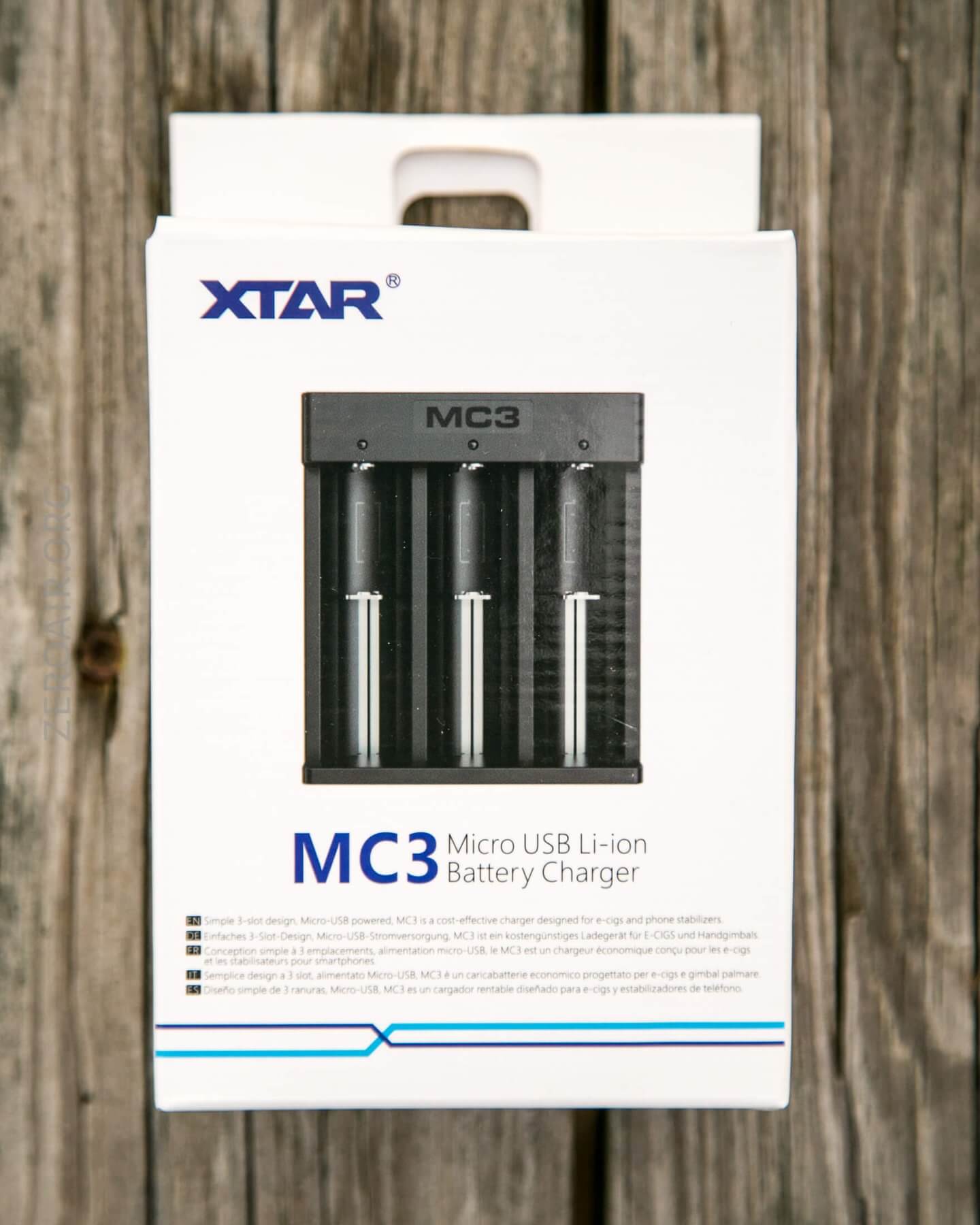
Standard XTAR white and blue packaging, with a photo of the item on the front.
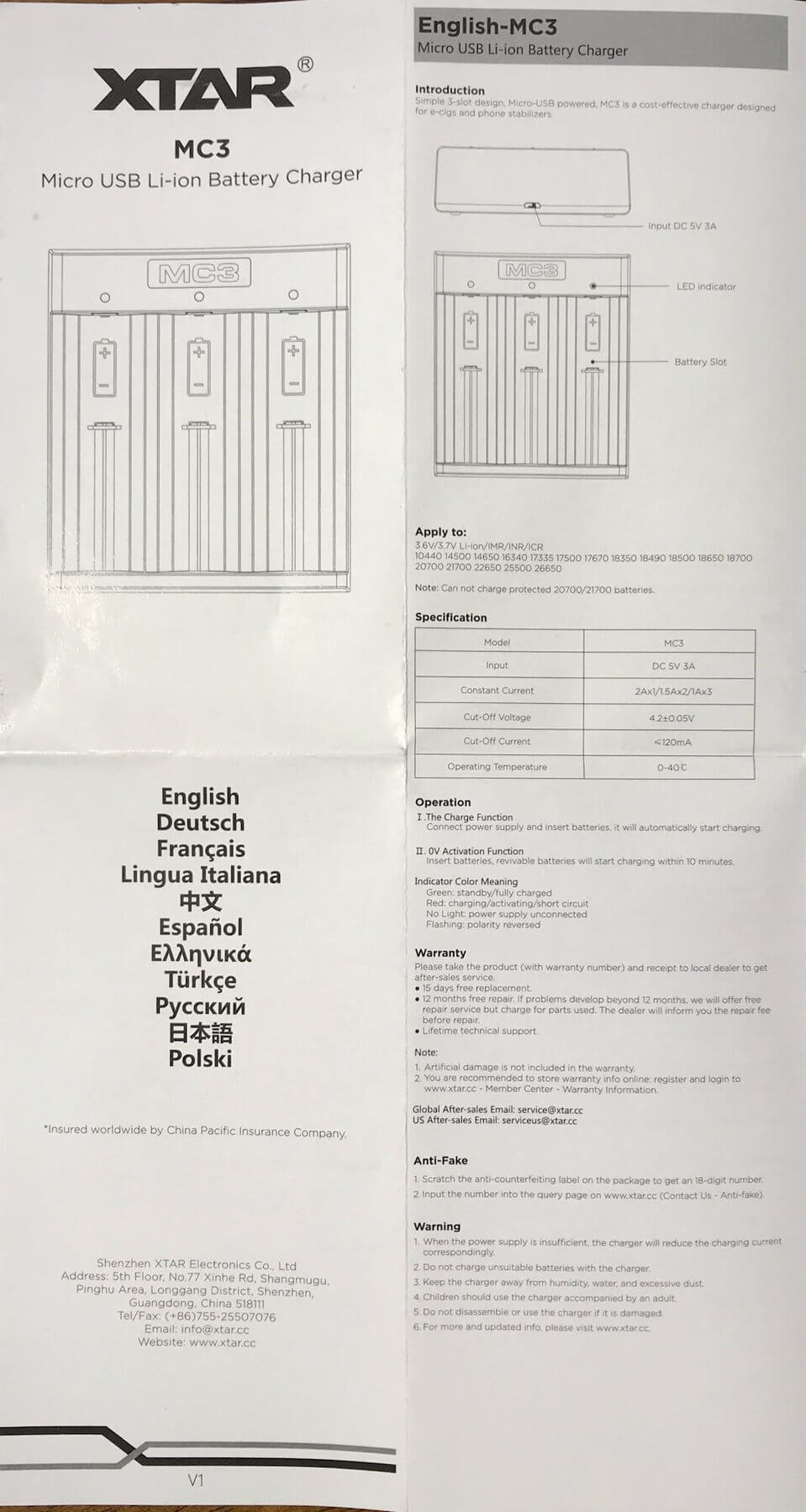
What’s Included
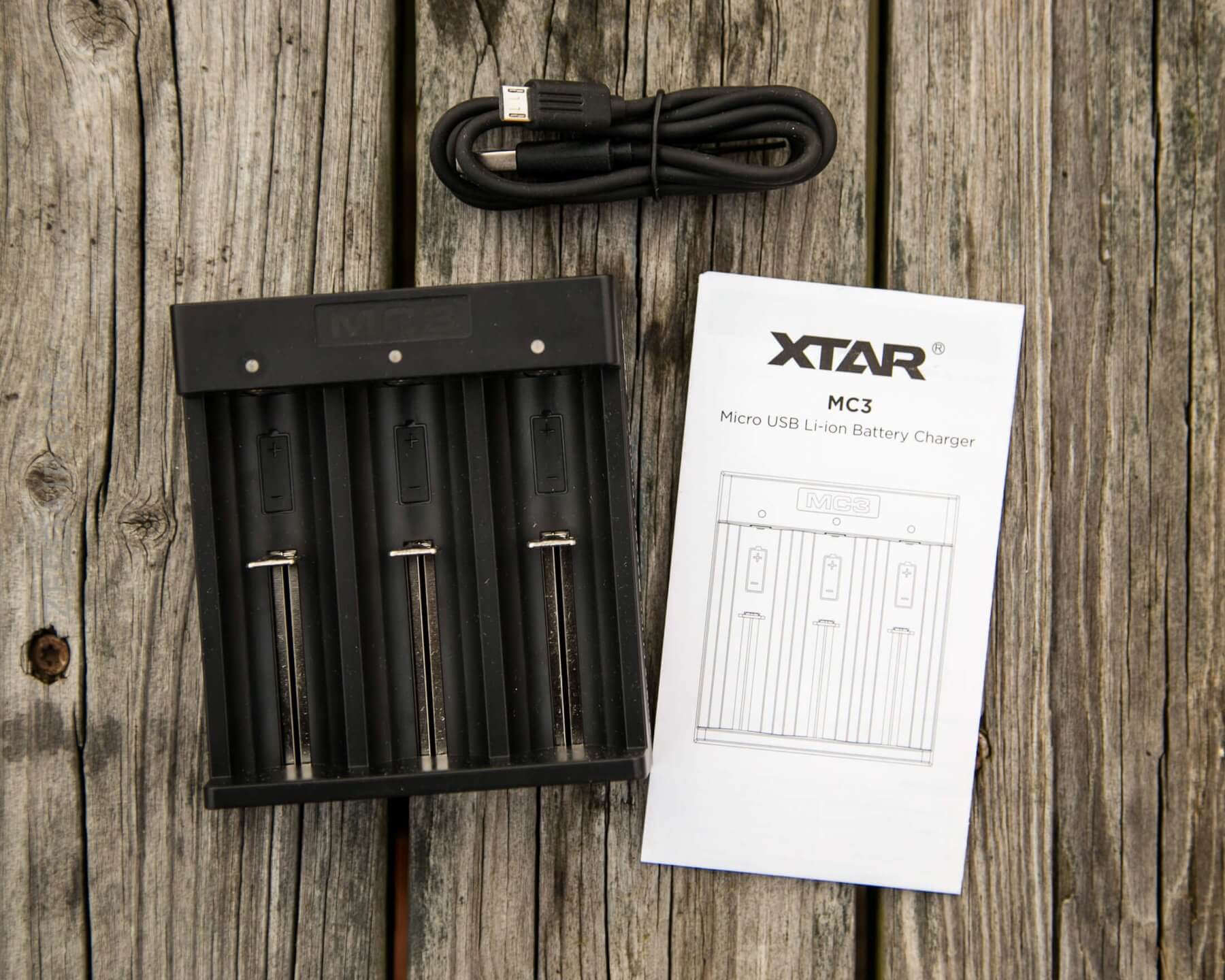
- XTAR MC3 3-Bay charger
- Charge cable (USB to micro-USB)
- Manual
Build Quality and Durability
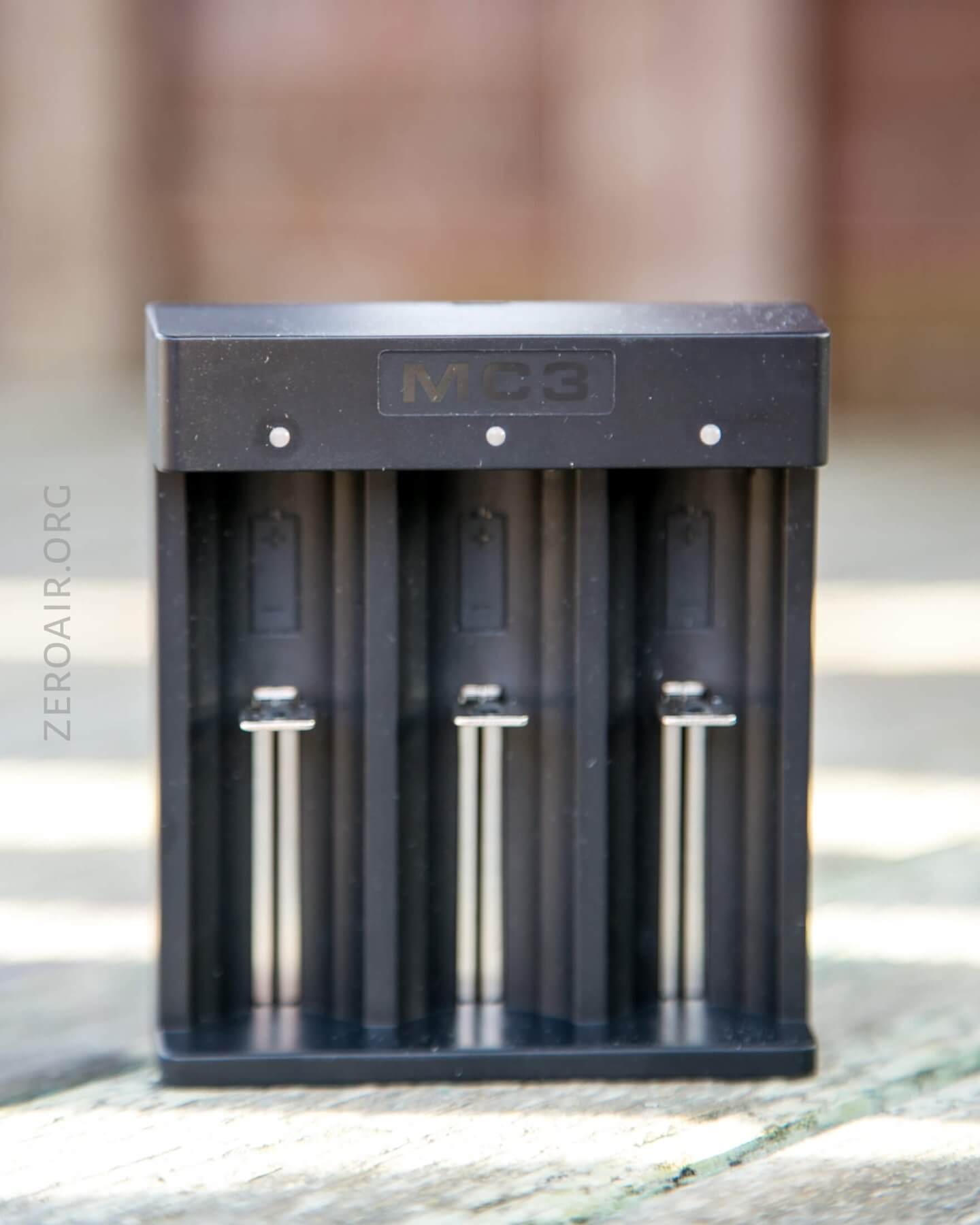
This charger isn’t along the lines of the very best charger I’ve handled as far as hand-feel, but it’s just a very simple charger. The build quality seems good, and certainly good enough to live on a desk all the time.
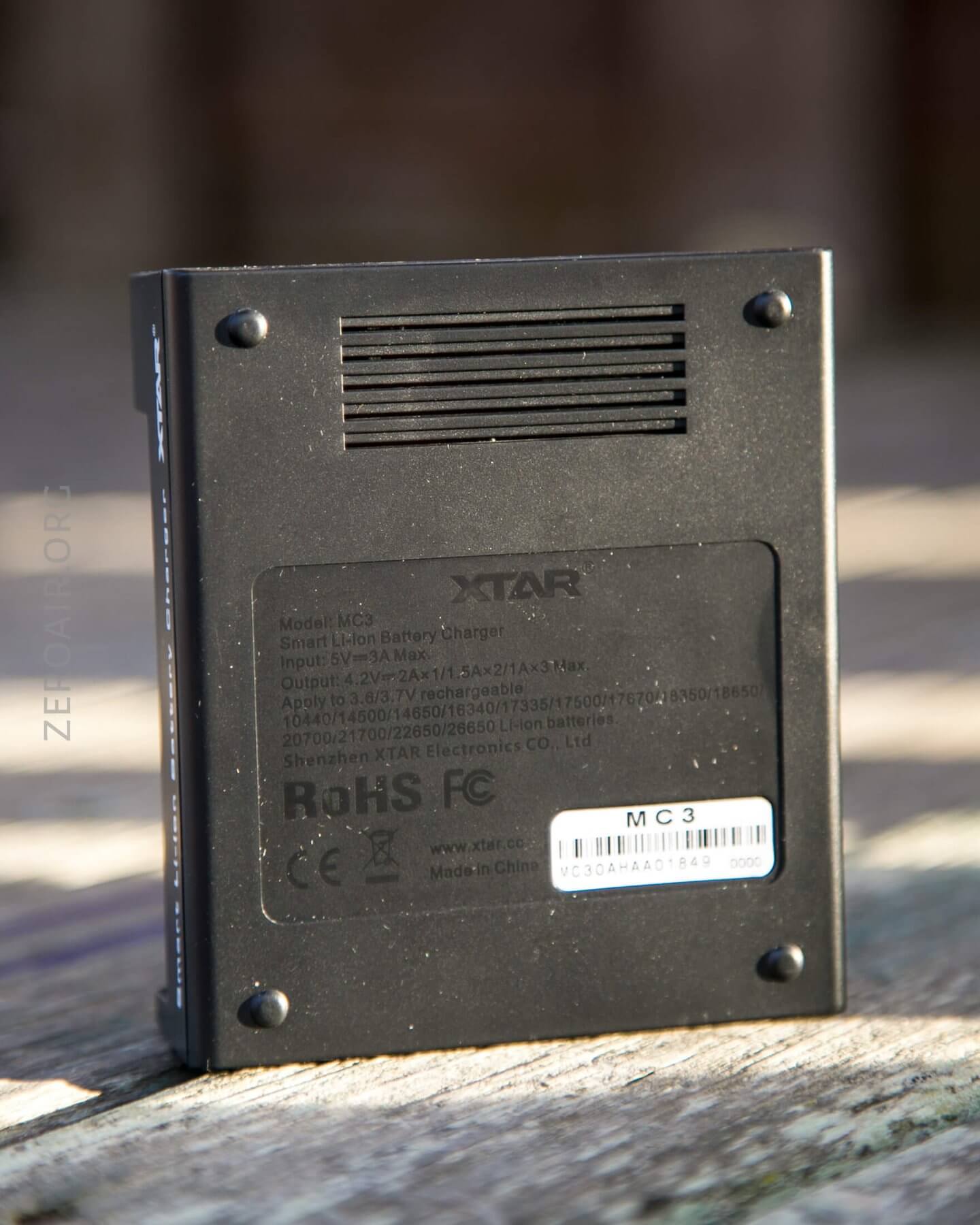
The back has the applicable charge items imprinted permanently. There are four hard plastic feet, too.
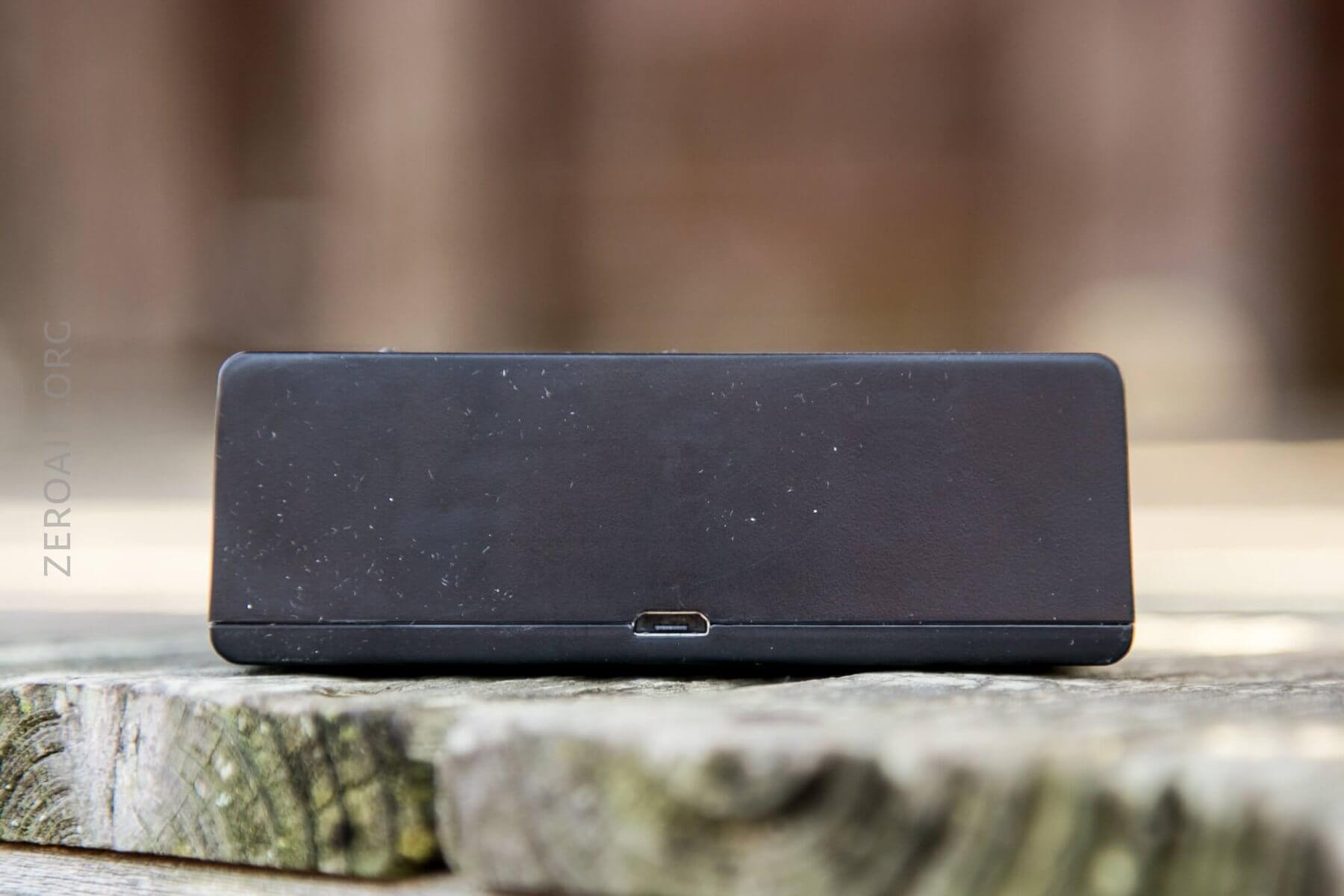
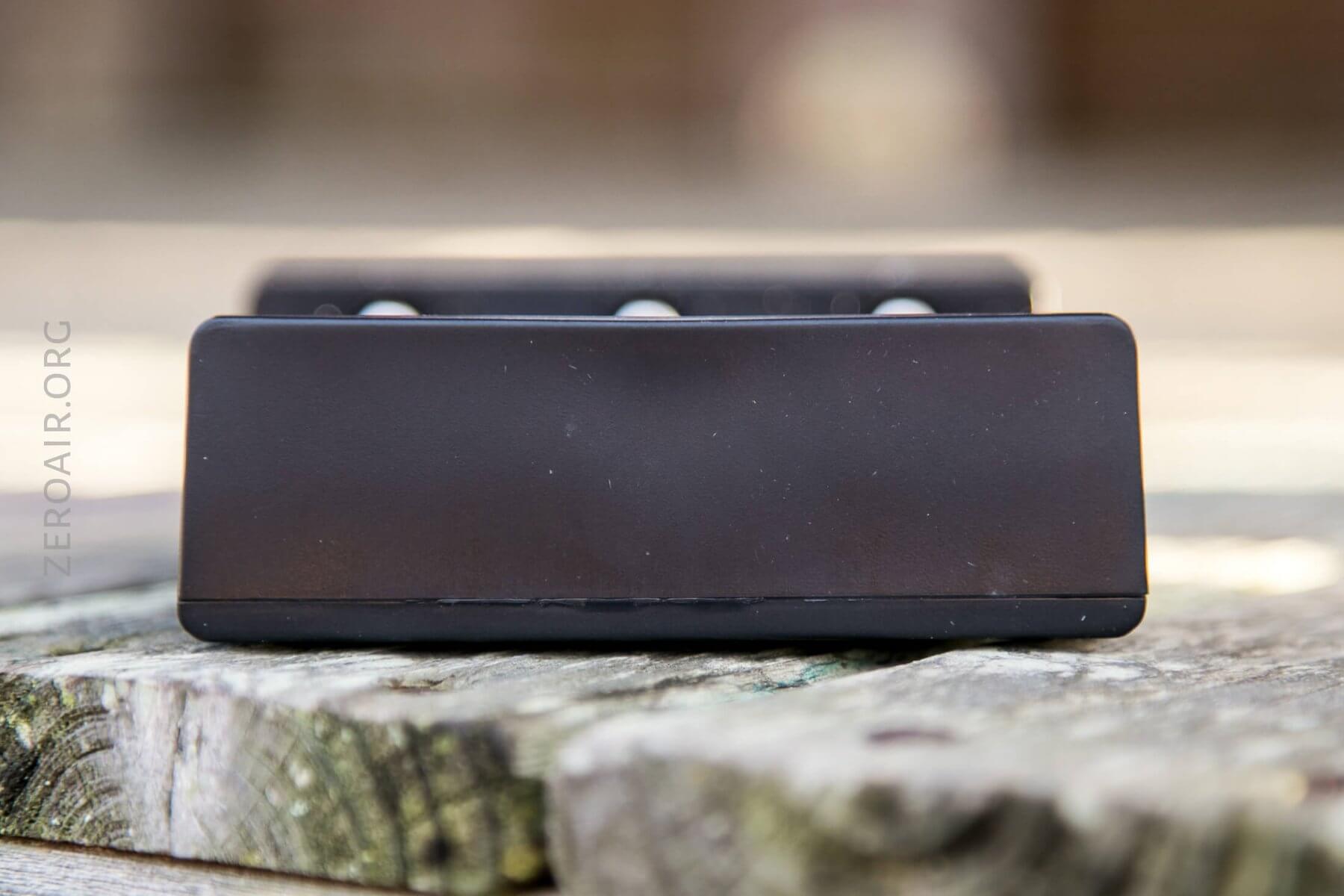
The top and bottom are featureless, except for the micro-USB plug in the top
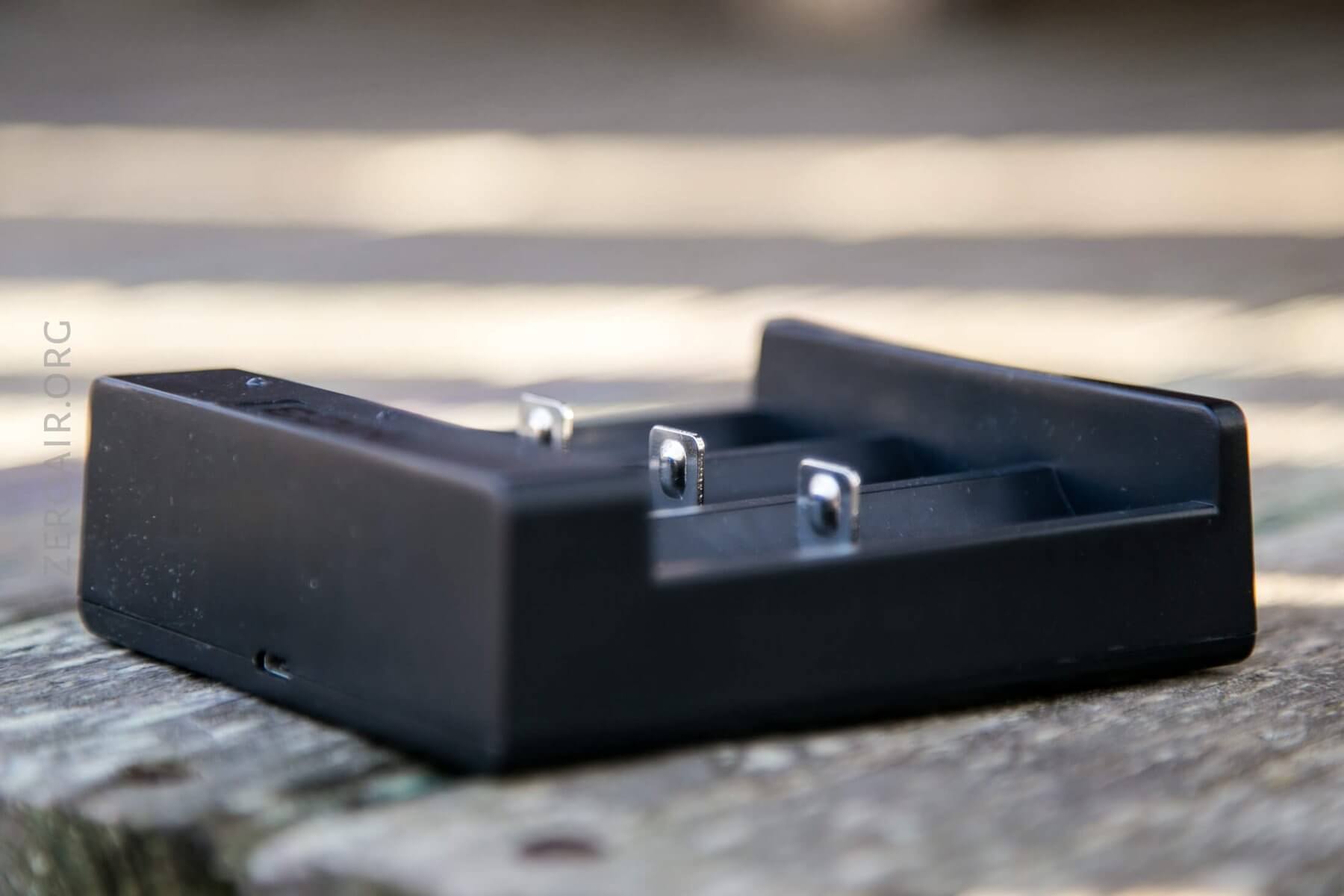
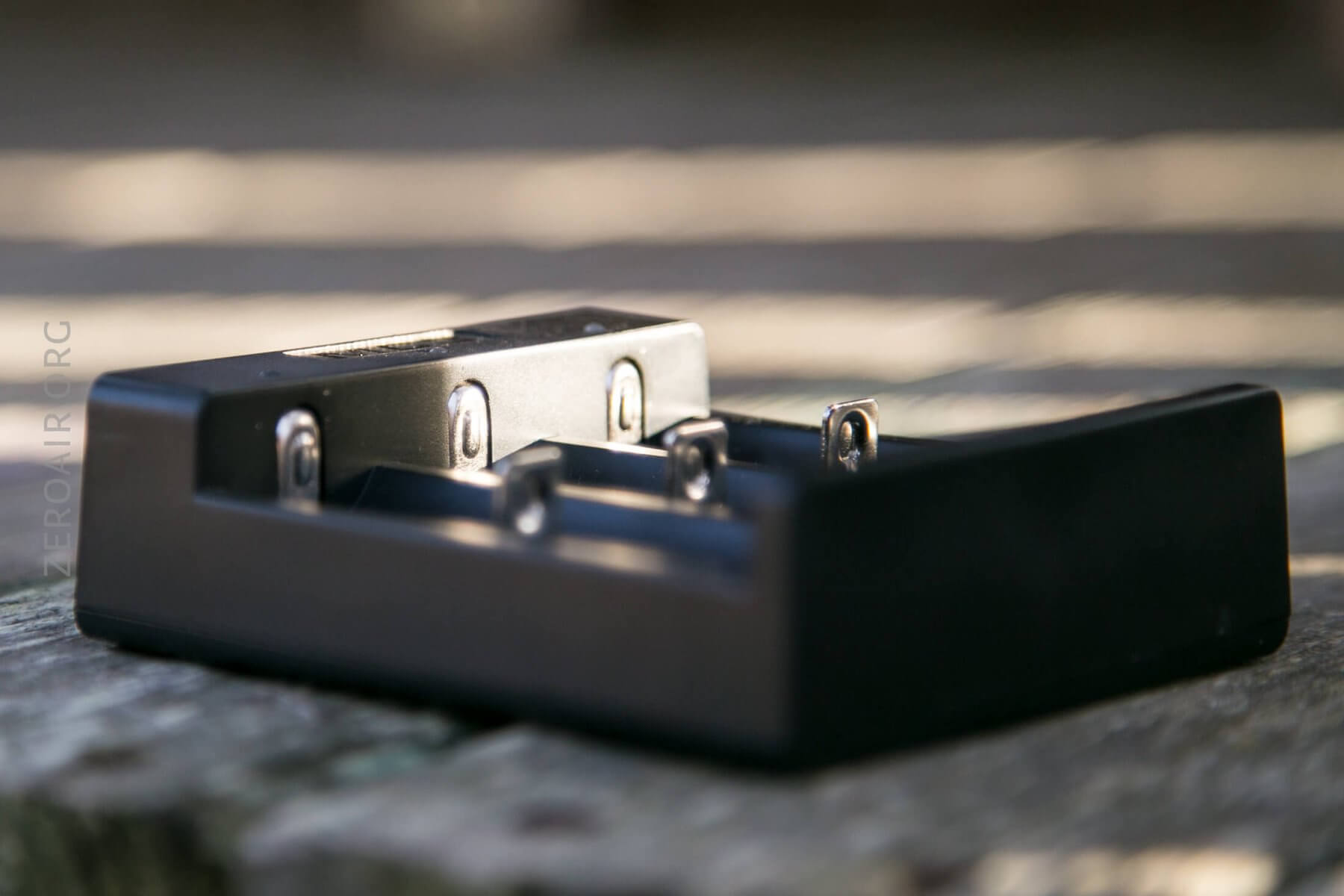
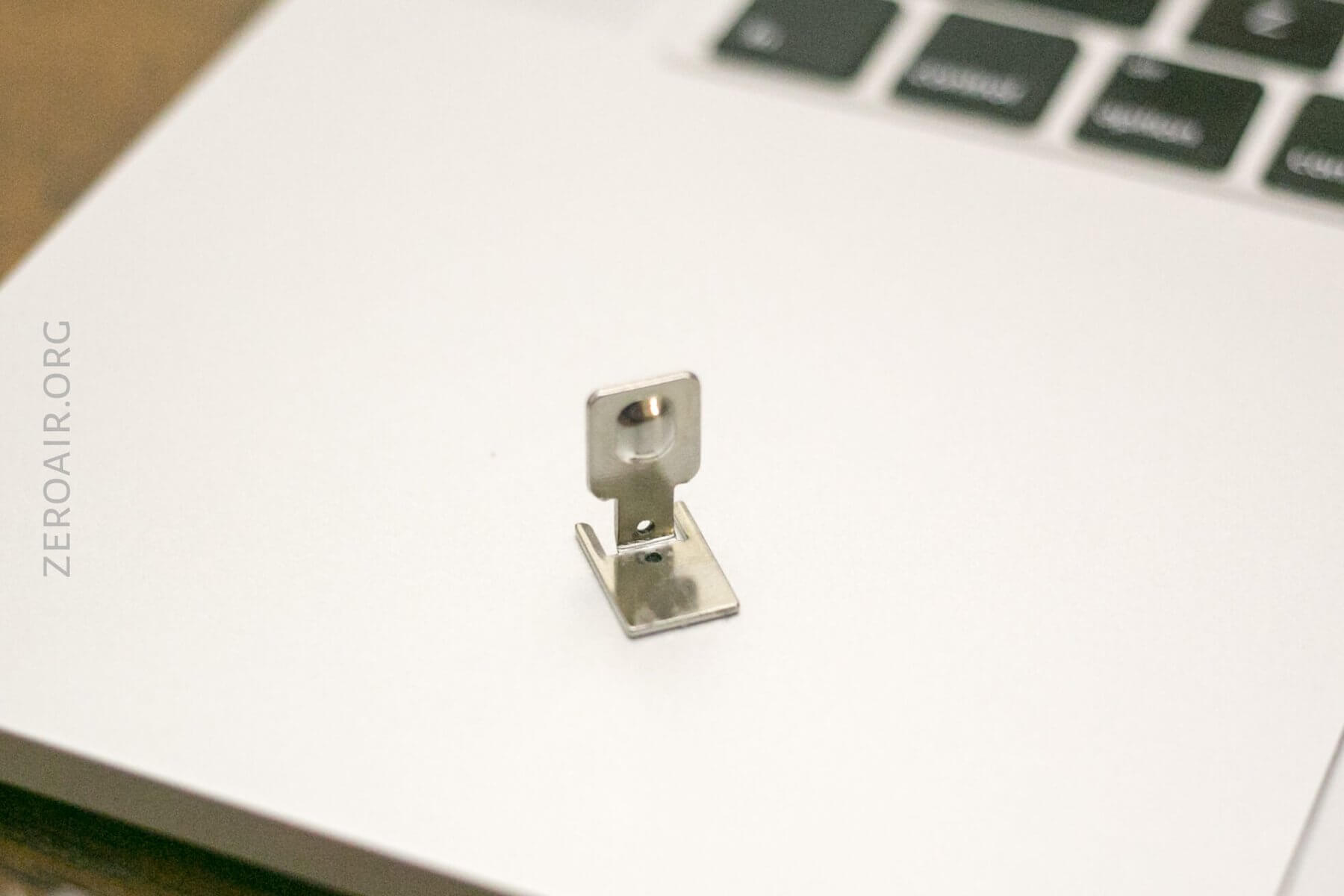
The slides are of normal quality and use. Not unusually stiff, and with the usual button-ish contact area. Also, the bays have room for many sizes of cells, from shorter 18350/16340-sized cells, all the way up to (just barely!) 21700 cells.
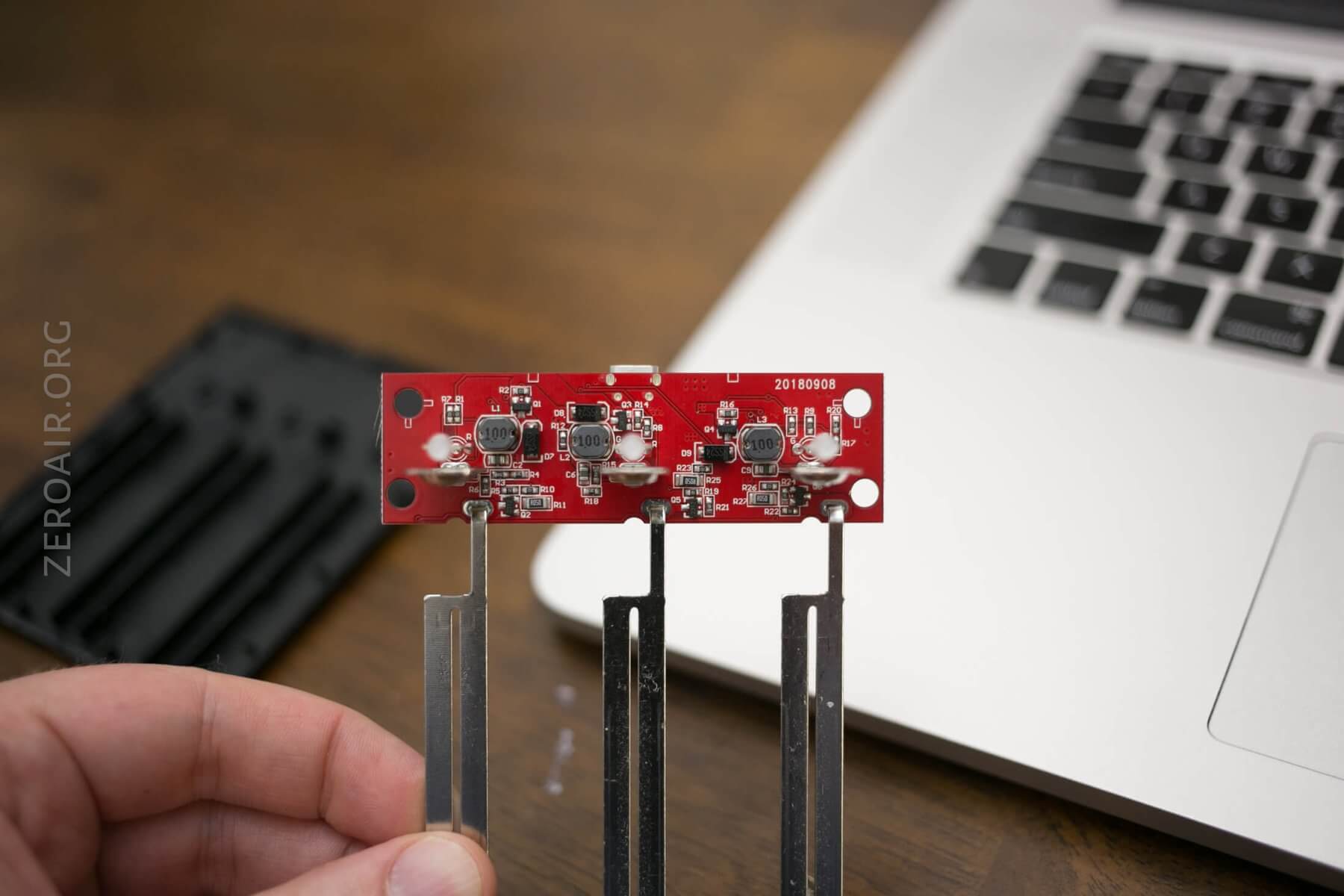
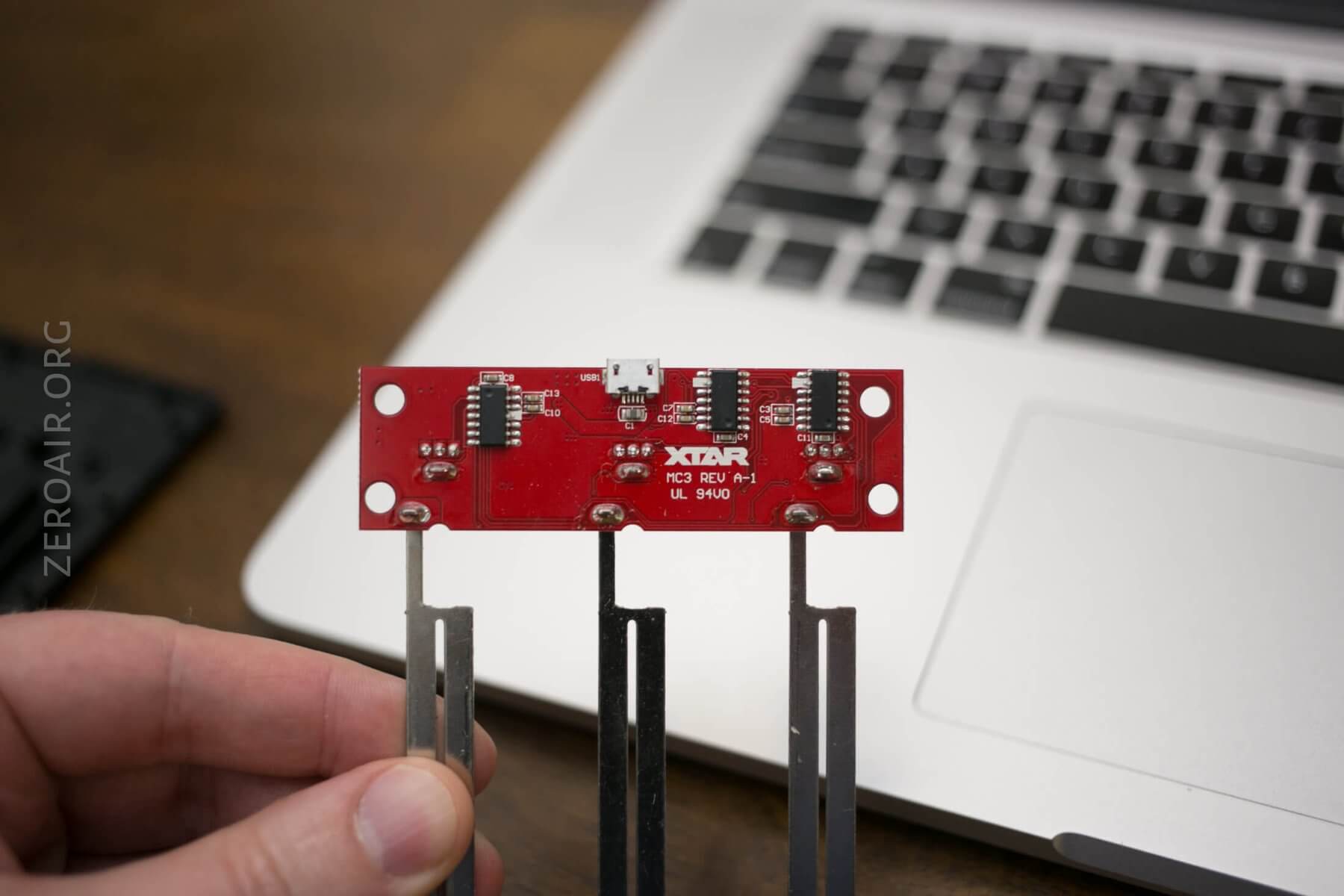
Here’s a bit of disassembly. This does require breaking the seal between the top and bottom halves, but a little electrical tape seems to hold it just fine.
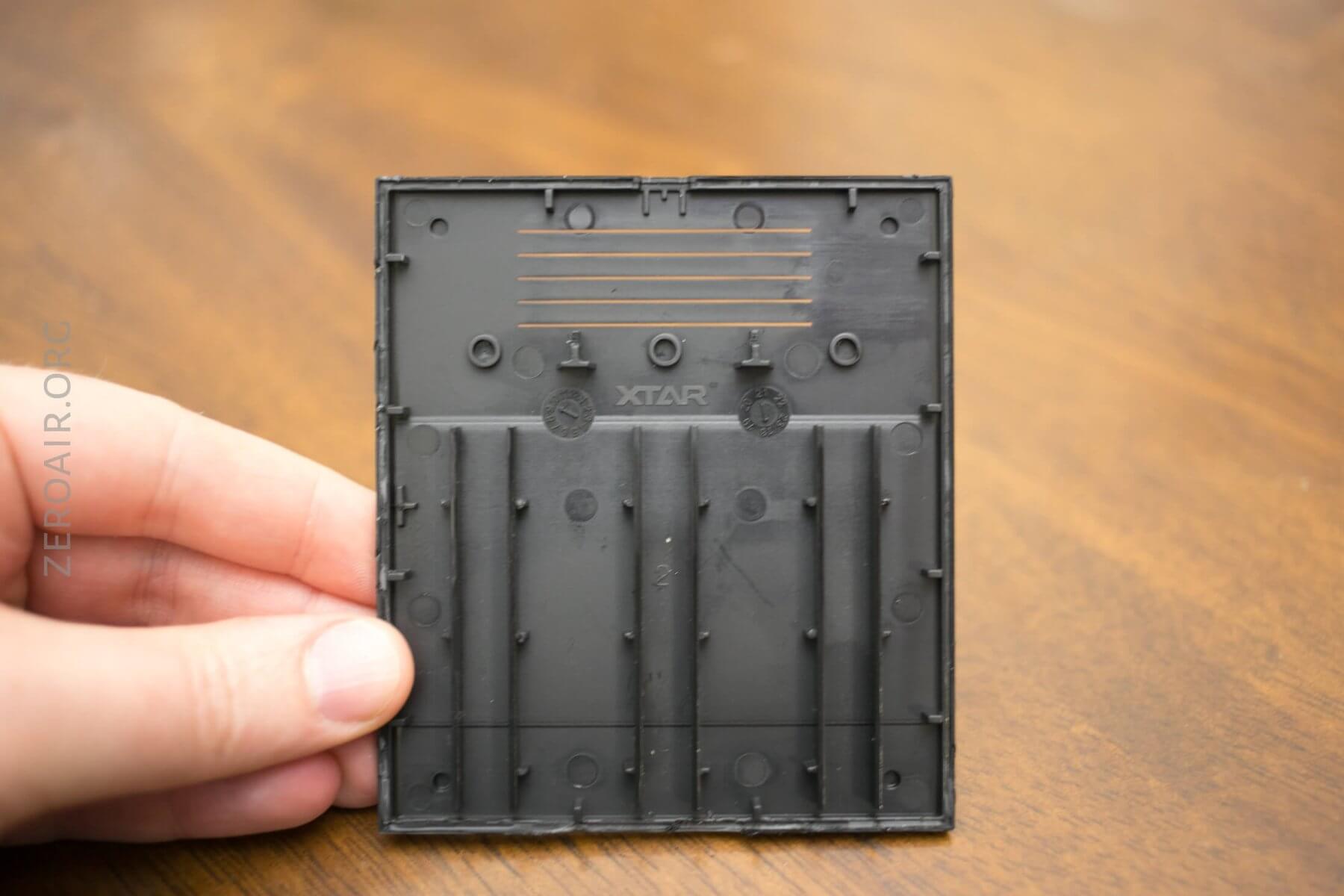
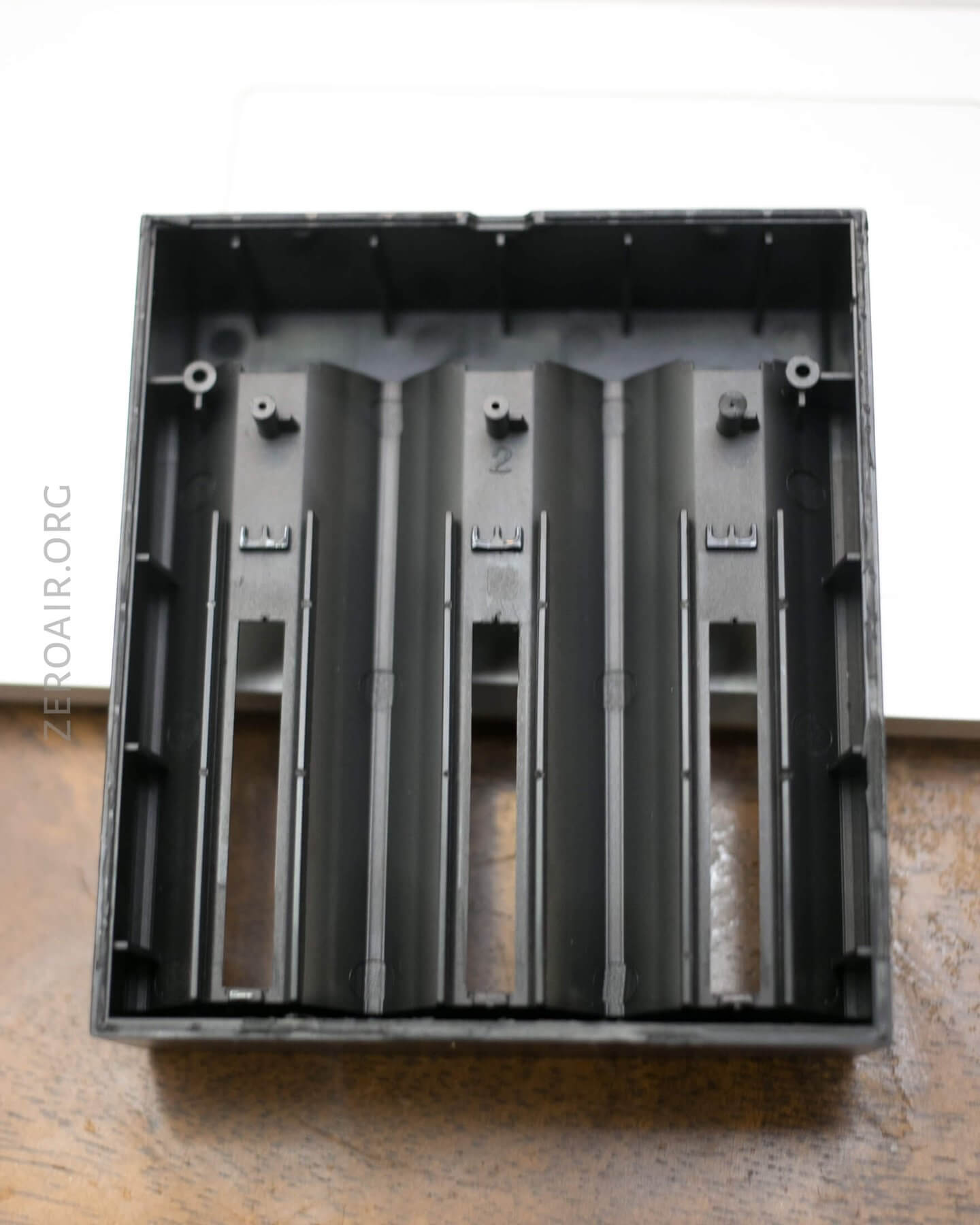
Size
Officially
100mm x 87mm x 30mm, and weighing 92g.
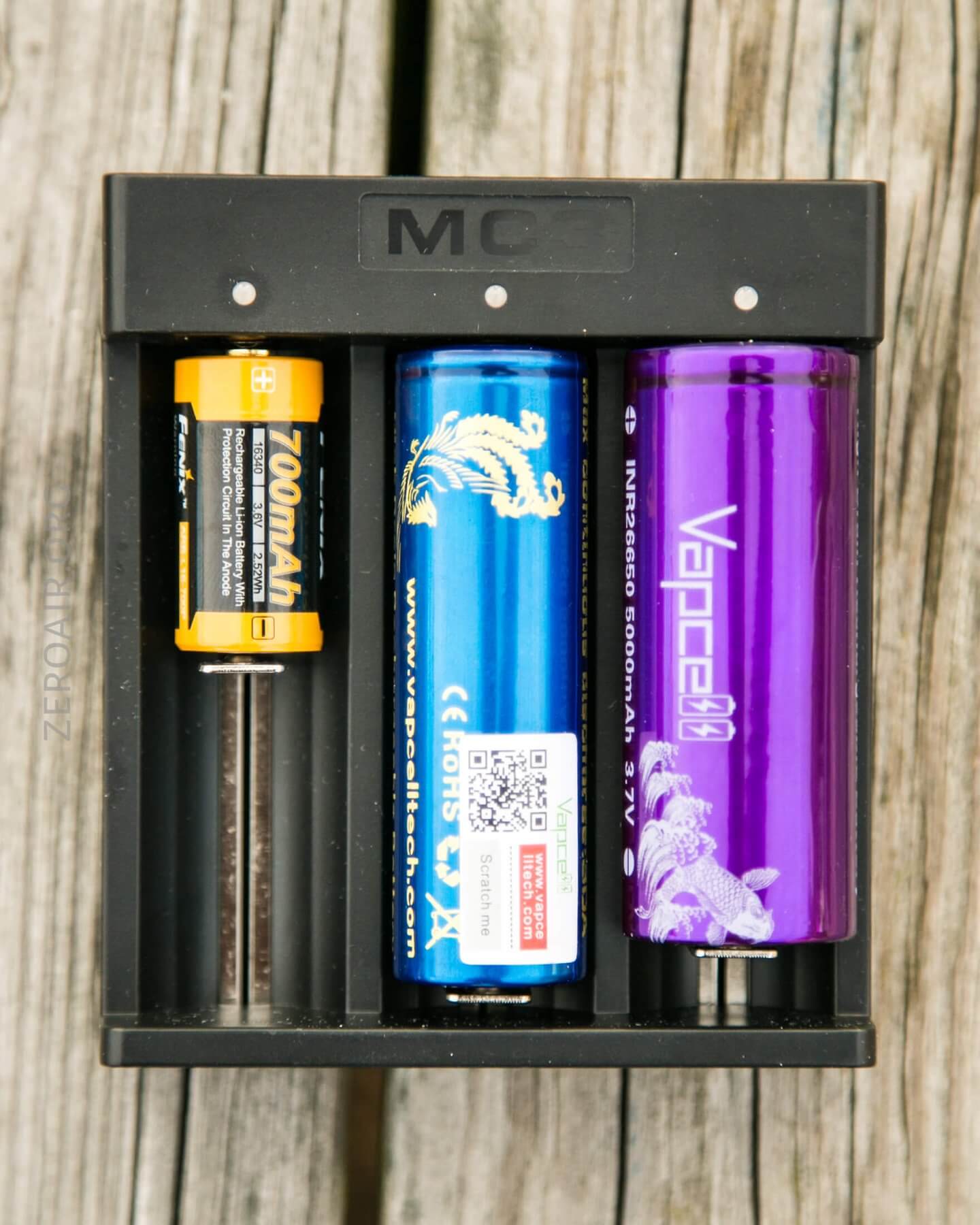
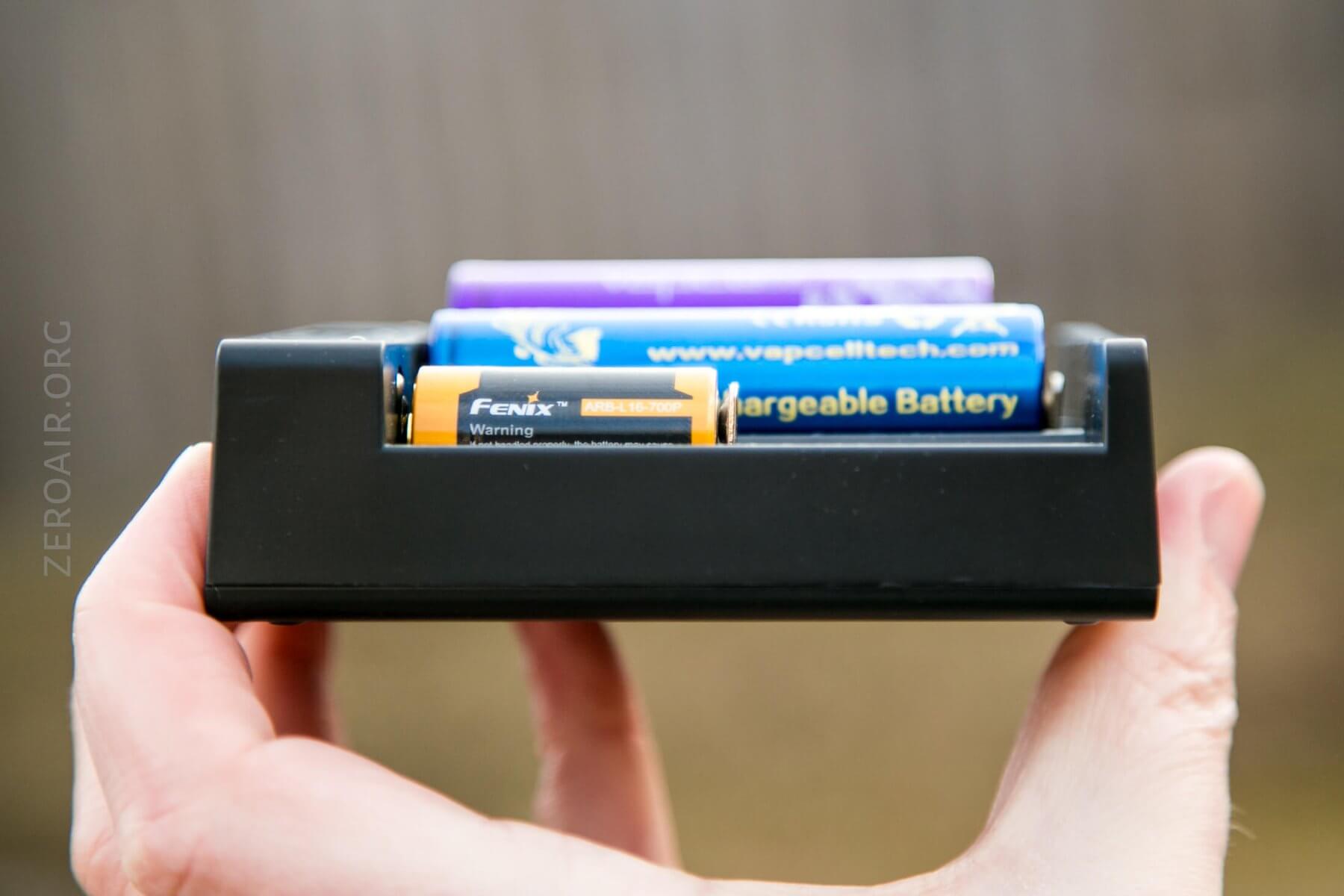
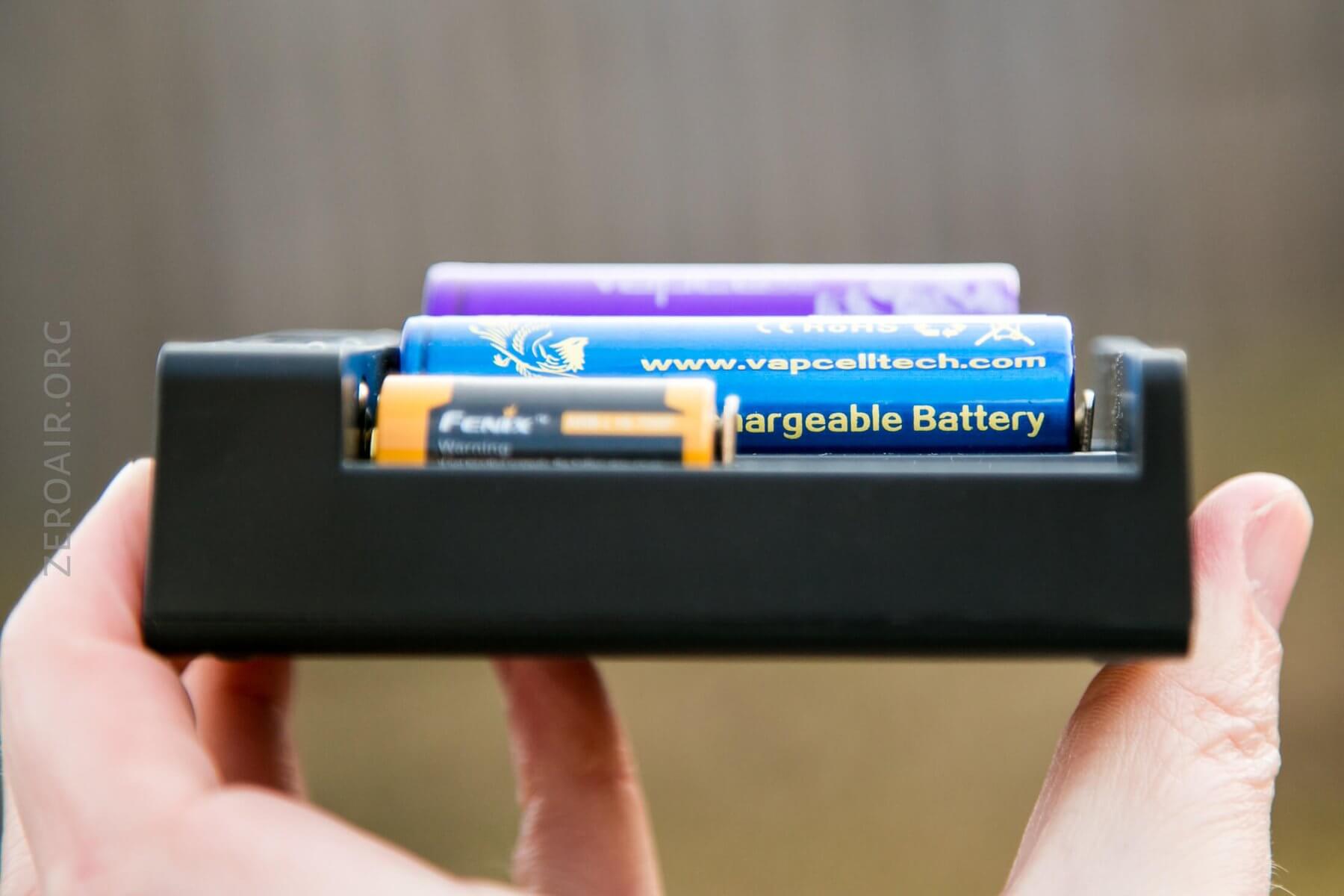
For being such a relatively small charger, it fits a surprising range of cells. From down to 16340-sized cells, all the way up to three 26650 cells. Or three 21700 cells, too. Or any mix.
Left is the fitment of a 26650. Middle, notice the 16340. And at right, in focus is the 21700 cell.
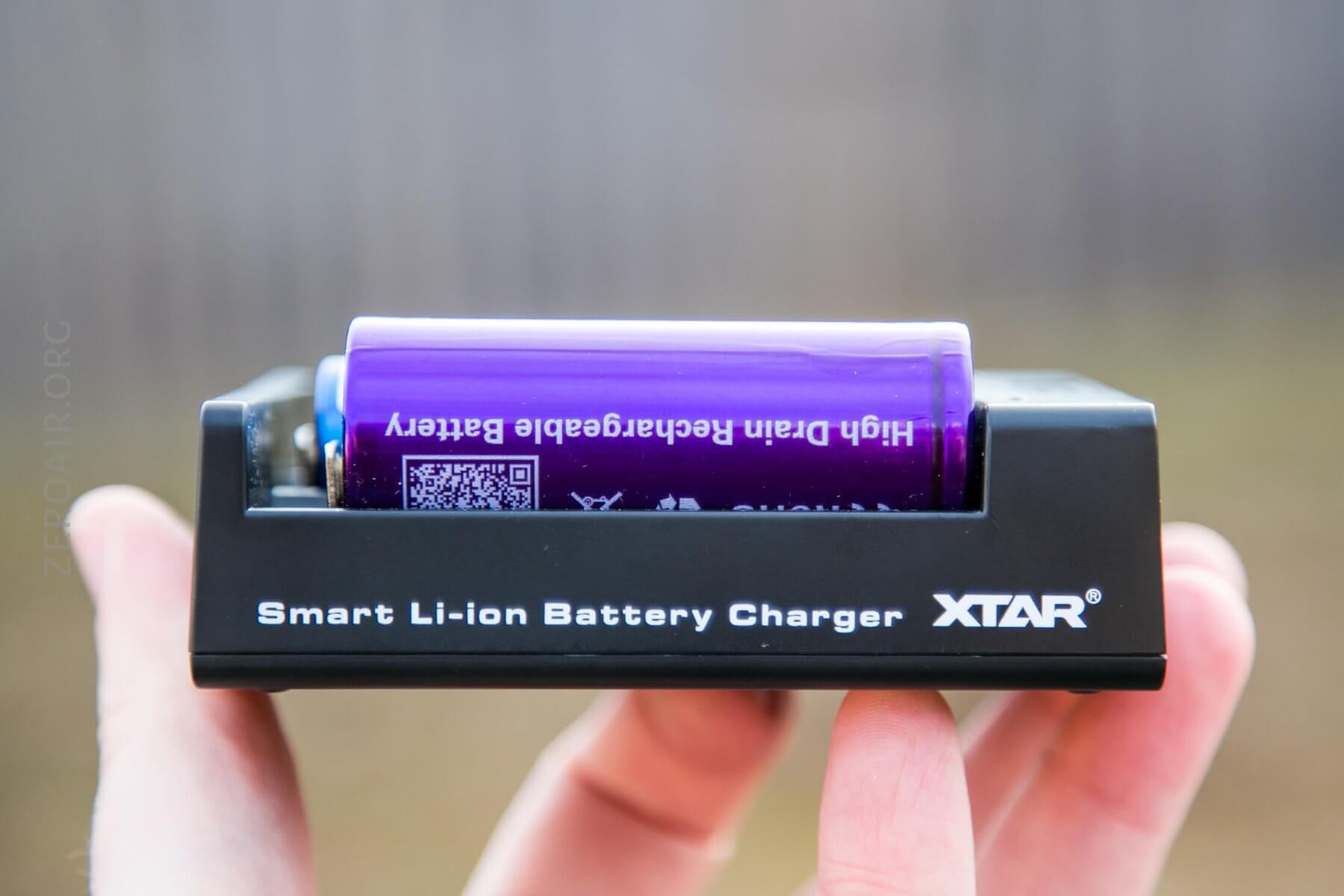
Power
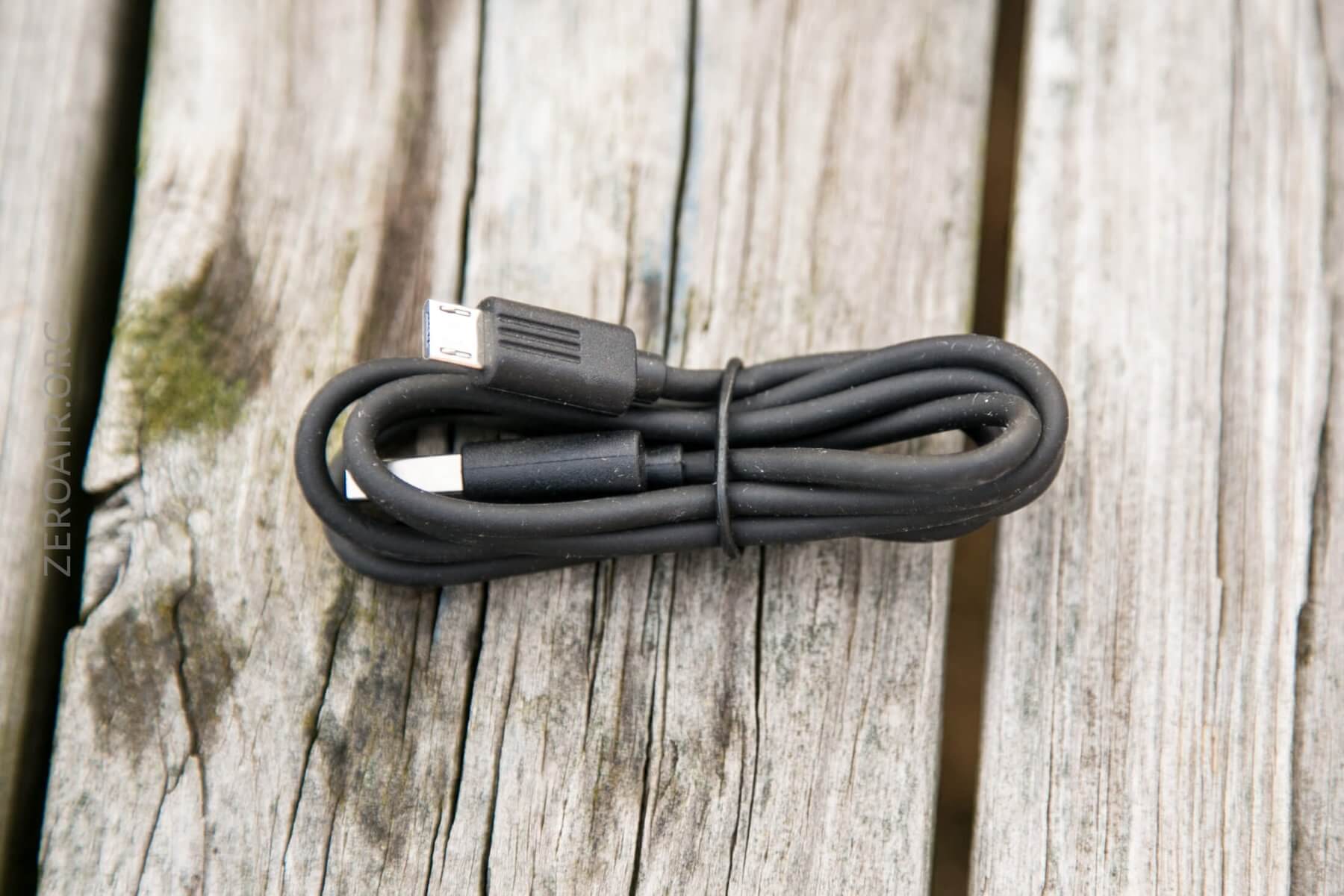
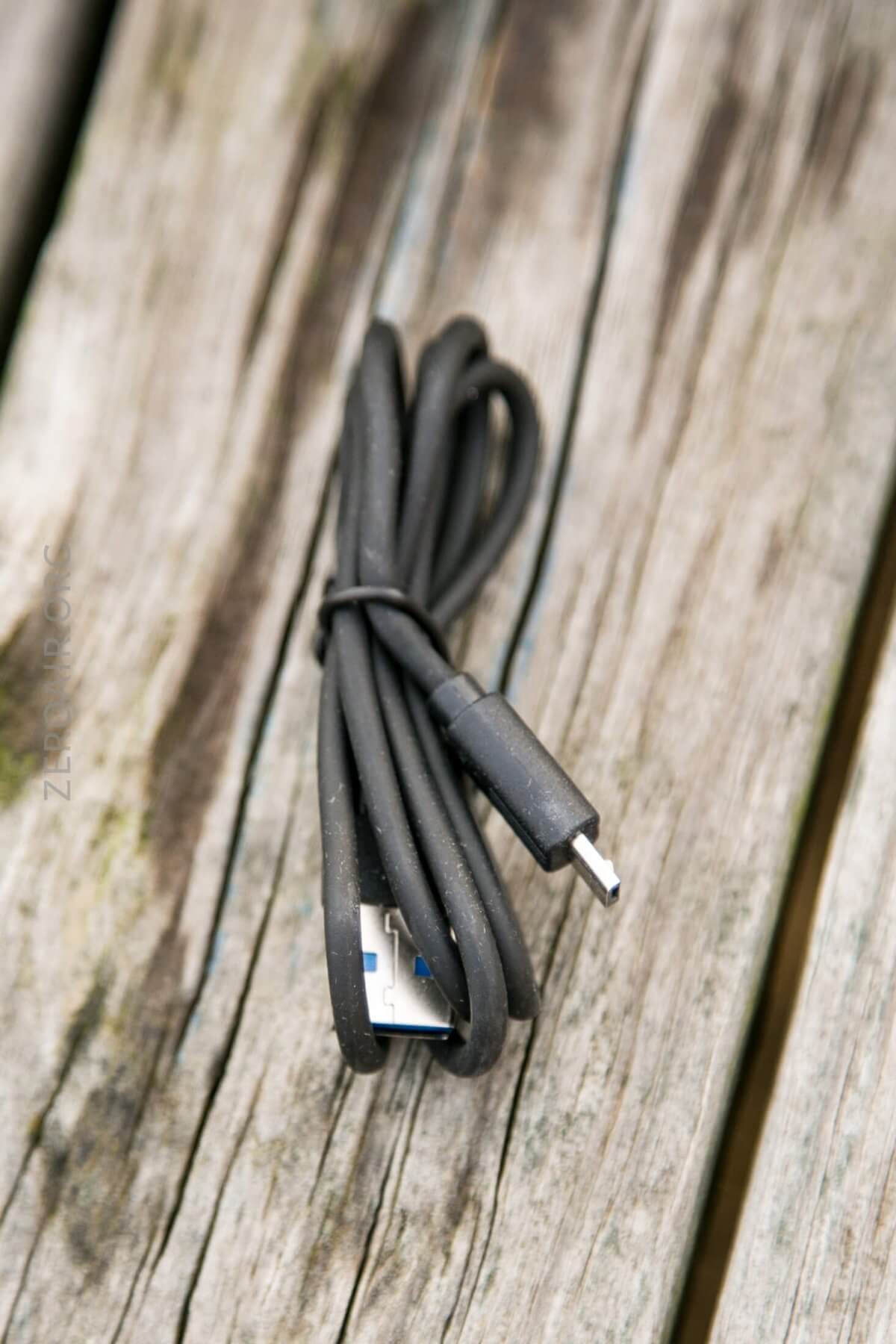
The MC3 is powered by micro-USB. A cable is included, and it’s a 2.5A-rated (claimed) cable – a very nice cable. The charger is not QC3, so it doesn’t take advantage of that speed, and maxes out at 3A total, in almost any combination across the 3 bays. 2A to one bay, 1.5A to 2 bays, 1A to 3 bays…. The only option that doesn’t happen is 3A to one bay.
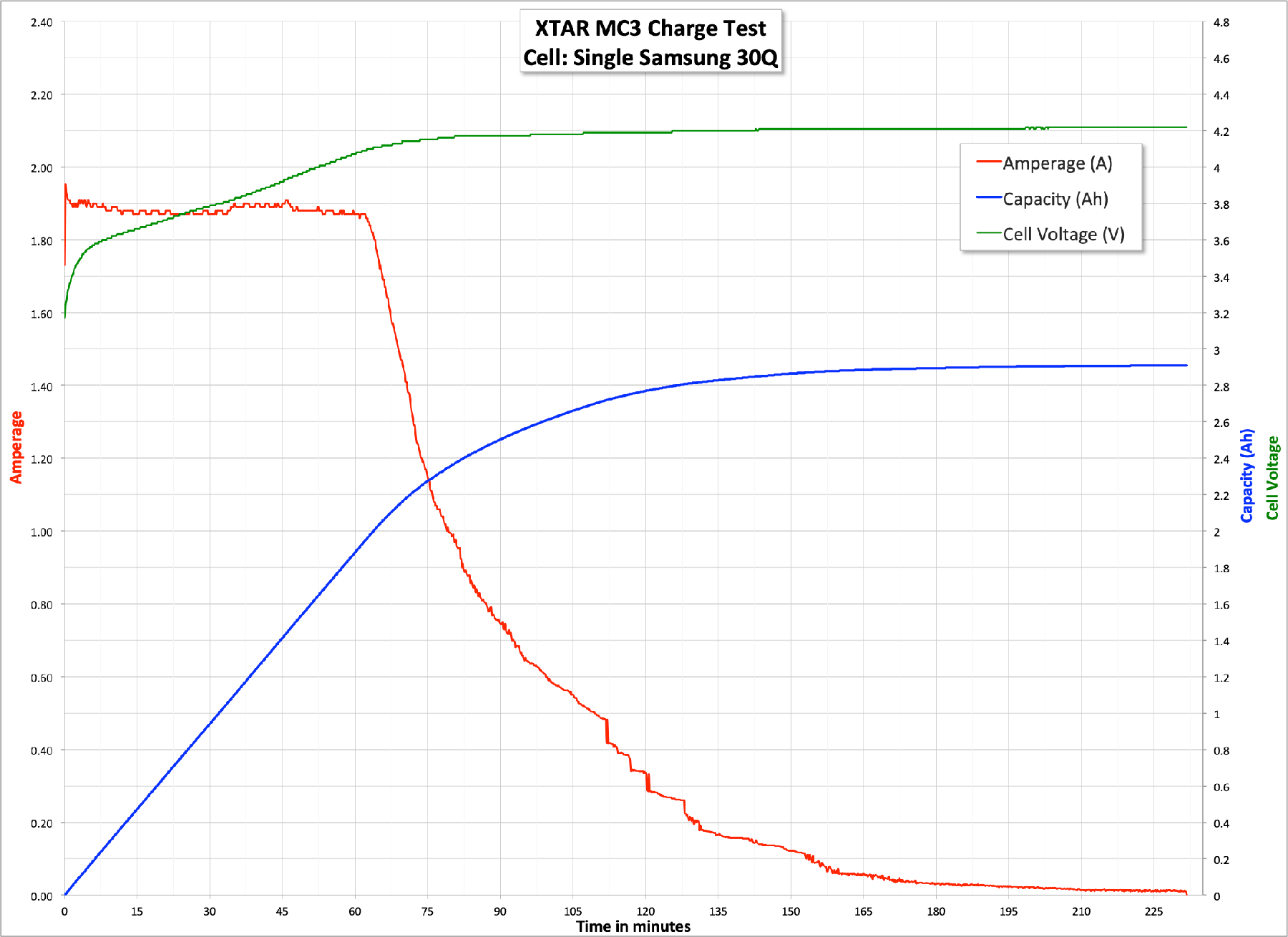
Here’s a charge test of all the options. Charging a single cell. The charger hits around 1.9A consistently (close enough to 2A). The CV phase seems unnecessarily long – look at the next graph to see why.
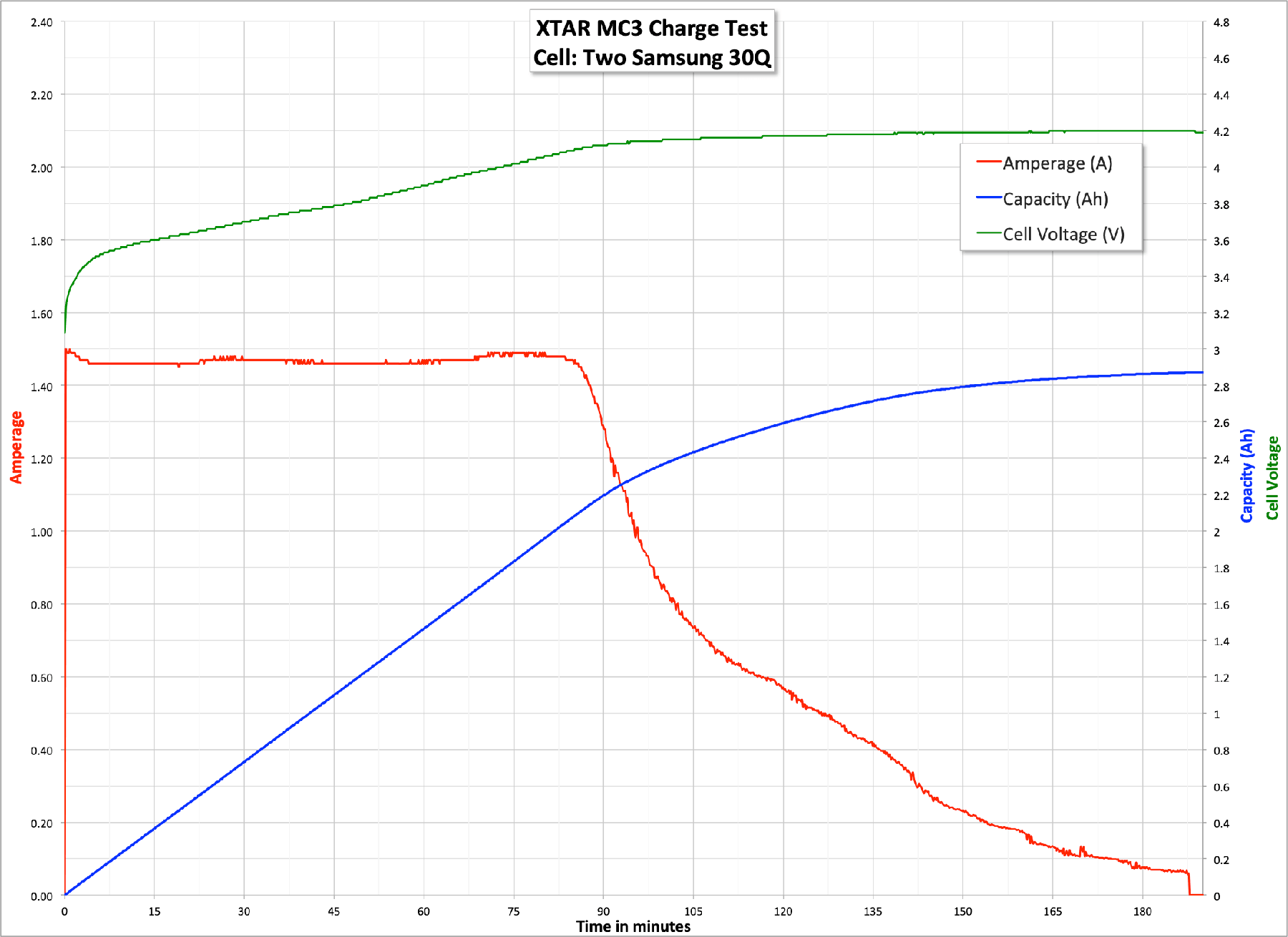
Below is charging two cells at one time (the third bay is empty). The monitored bay sees ~1.5A as expected, but the CV phase is much shorter with this test. This means that overall, with regard to any single cell, it looks to be faster to charge two cells than it is to charge a single cell.
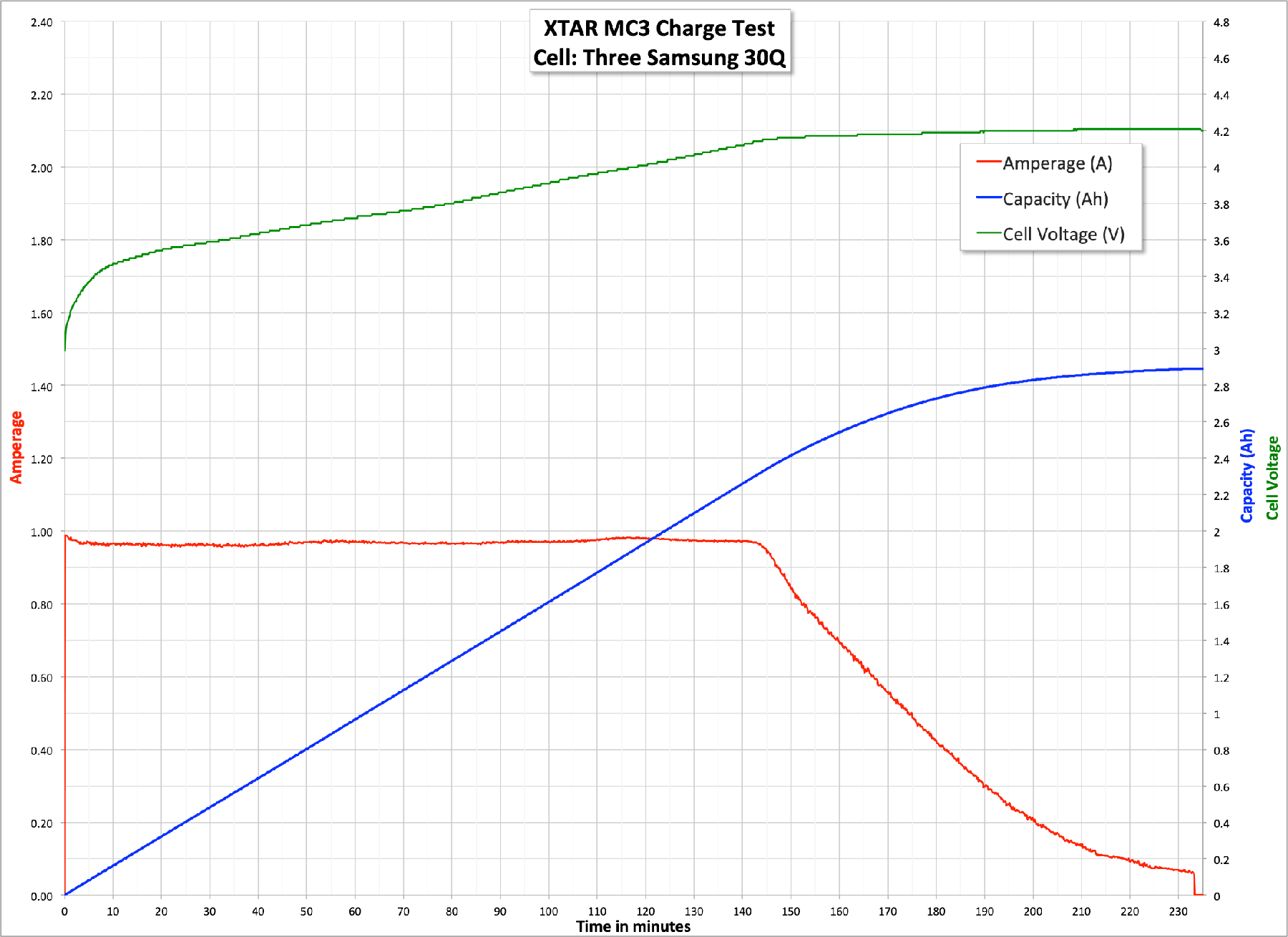
Charging three cells (and monitoring one) again sees the charger do what it claims: ~1A charging. Again, interestingly, charging three cells to their stopping points is as far as charging a single cell to its stopping point!!
User Interface and Operation
As with what seems like every charger I’ve tested lately, there’s nothing to interact with on this charger. Just drop the cell(s) in, and the charger will take over. Note that the manual does not state reverse polarity protection, so put the cells in the correct way (positive end goes on the end with the LEDs). Also, the bays are labeled with which end goes where.
When a cell is charging, the LED above the bay will be red. If there’s a problem, the LED will flash red for that bay. If the bay is empty or charging is done, the LED will be solid green.
Conclusion
What I like
- Very simple device
- 2A charging or 3A max
What I don’t like
- Fairly rudimentary
- Doesn’t claim to have reverse polarity protection.
Notes
- This item was provided by XTAR for review. I was not paid to write this review.
- This content originally appeared at zeroair.org. Please visit there for the best experience!
- Use my amazon.com referral link if you’re willing to help support making more reviews like this one!
- Please support me on Patreon! I deeply appreciate your support!
Discover more from ZeroAir Reviews
Subscribe to get the latest posts sent to your email.
I’m probably quite late here. Do you know if it changes the current to 0.5A when charging smaller cells like 14500 or 18350?