
Olight Olantern Lantern Review – Really the Lantern Everyone Asked for?
Olight has released the Olight Olantern Lantern. It’s an LED lantern with a very classic look – iconic even. Read on for some thoughts, more photos, and a bit of testing!
Official Specs and Features
Here’s a [referral] link to the official product page.
Versions
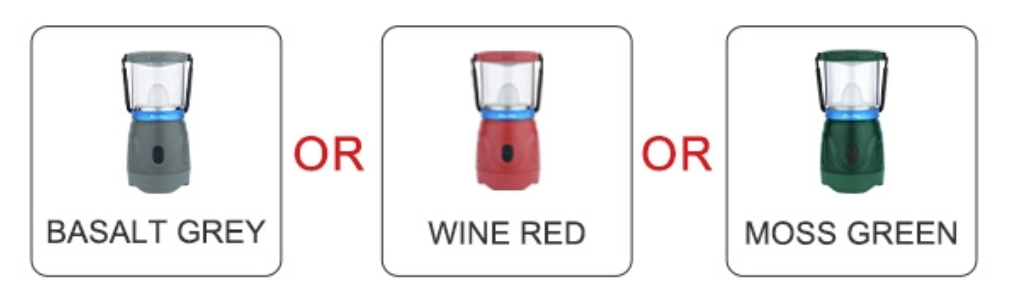
There’s really just one version, but it’s available in 3 body colors. There’s Basalt Grey, Wine Red, and Moss Green (seen here).
Price
The list price on these LED lanterns is $79.95.
Short Review
For nostalgia purposes, this LED lantern is hard to beat. It’s very lantern-like, and it does what lanterns should do. The charging is good, and it’s great that it can be used while charging. The two LED options are nice, too, though changing them is a bit burdensome. I really like the warm white flicker (“Flame Lamp”) option, and the battery life for this option is spectacular.
Long Review
The Big Table
| Olight Olantern | |
|---|---|
| Emitter: | Unstated (two included) |
| Price in USD at publication time: | $79.95 |
| Cell: | Internal |
| High Runtime (white emitter) | |
| LVP? | ? |
| Switch Type: | E-Switch |
| Quiescent Current (mA): | ? |
| On-Board Charging? | Yes |
| Charge Port Type: | proprietary magnetic |
| Chargetime | |
| Power off Charge Port | Yes, all modes |
| Claimed Lumens (lm) | 360 |
| Measured Lumens (at 30s) | – |
| Claimed Throw (m) | – |
| Candela (Calculated) in cd (at 30s) | 43lux @ 1.428m = 88cd (white emitter) |
| Throw (Calculated) (m) | 18.7 (white emitter) |
| All my Olight reviews! | |
^ Measurement disclaimer: Testing flashlights is my hobby. I use hobbyist-level equipment for testing, including some I made myself. Try not to get buried in the details of manufacturer specifications versus measurements recorded here; A certain amount of difference (say, 10 or 15%) is perfectly reasonable.
What’s Included
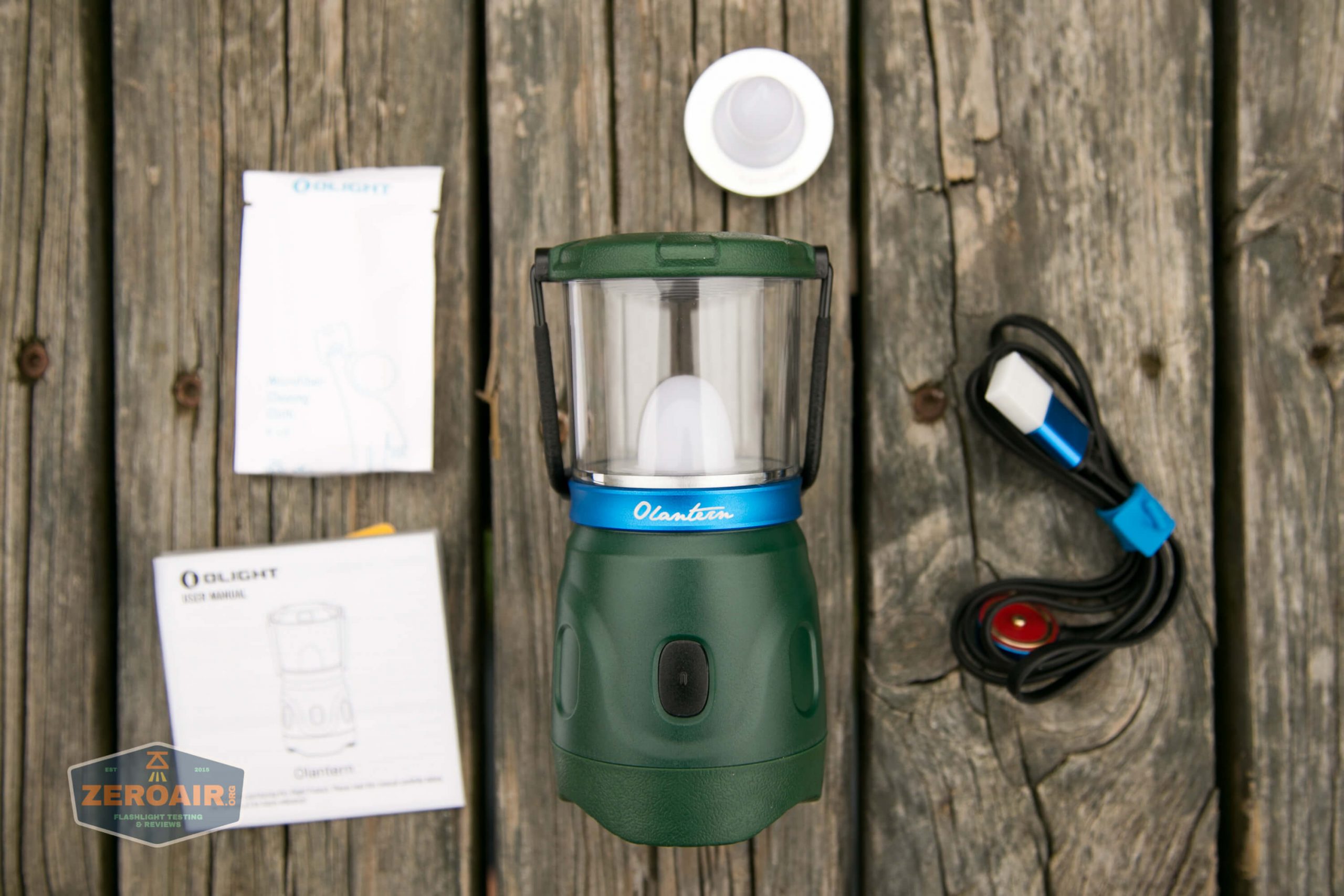
- Olight Olantern
- Charge cable (Olight MCC proprietary magnetic)
- Alternate Flame Lamp (Warm White)
- Cleaning cloth
- Manual
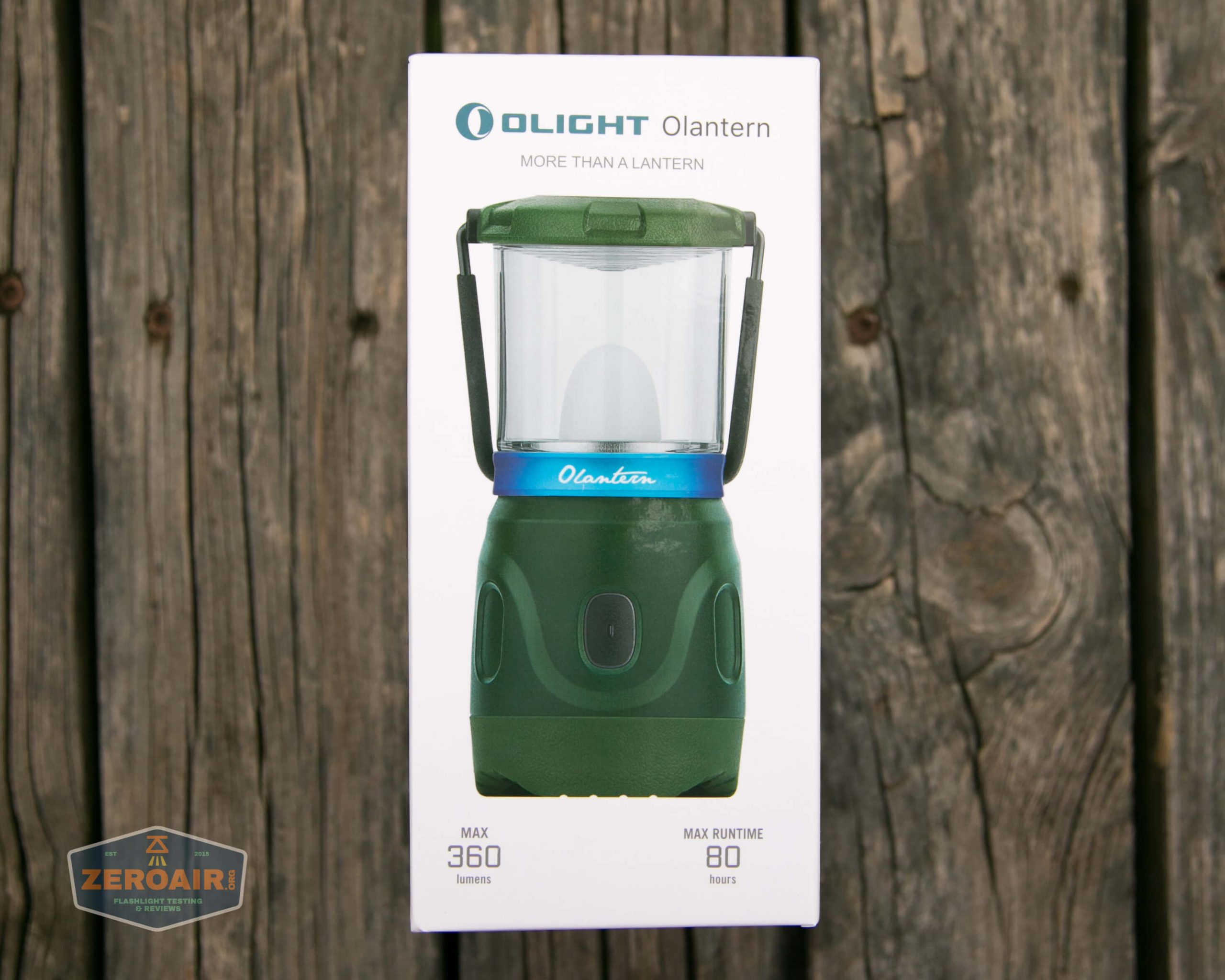
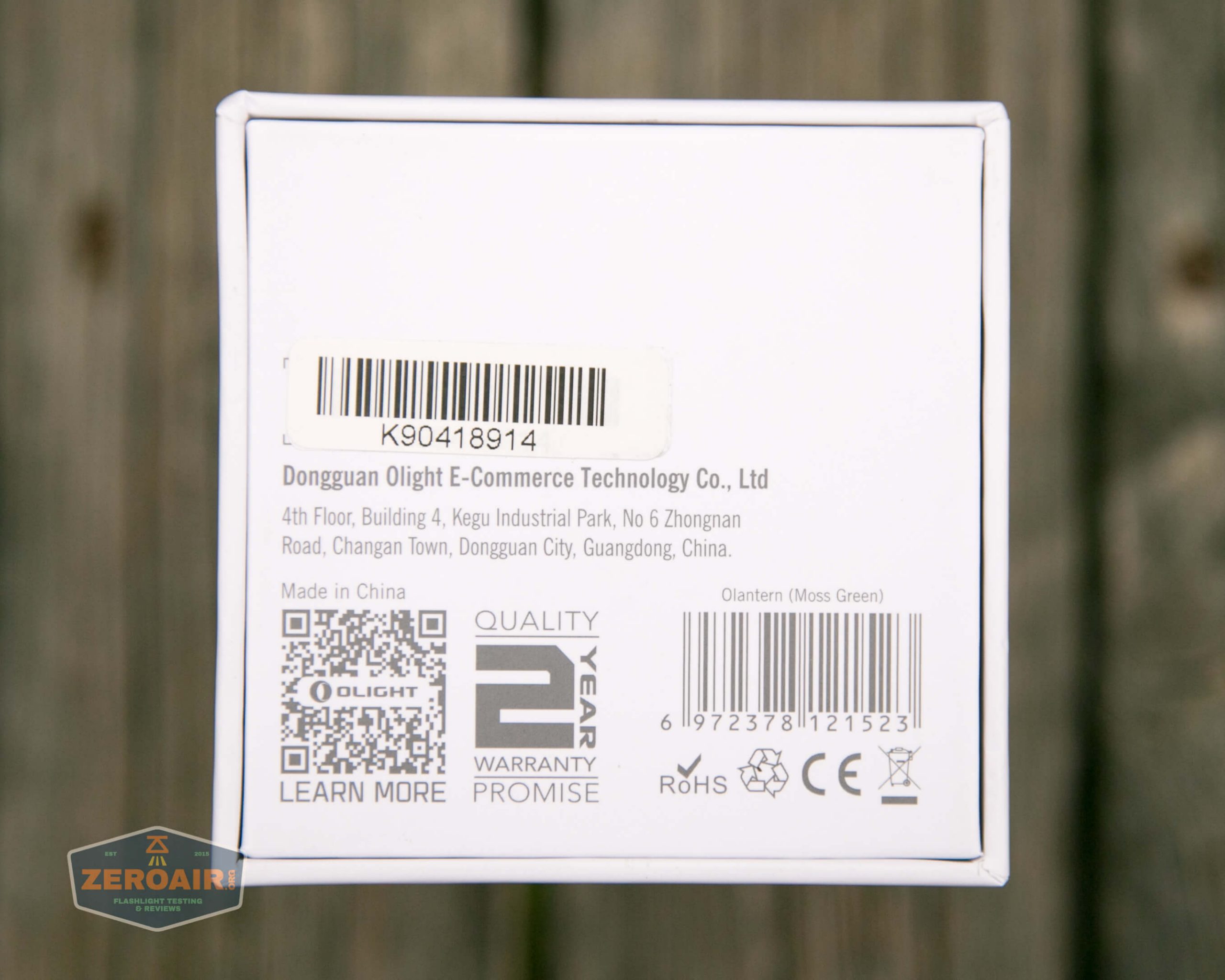
Package and Manual
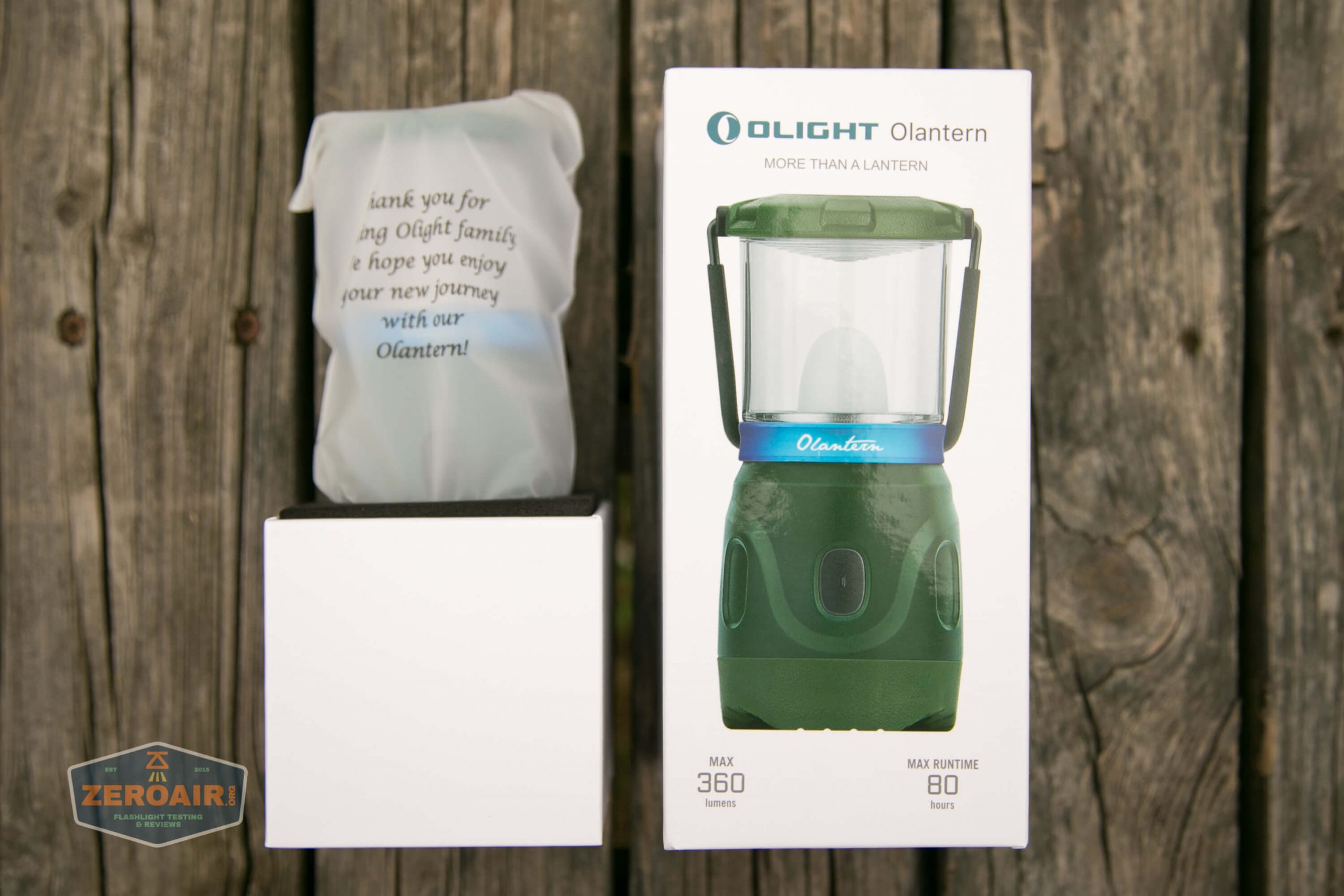
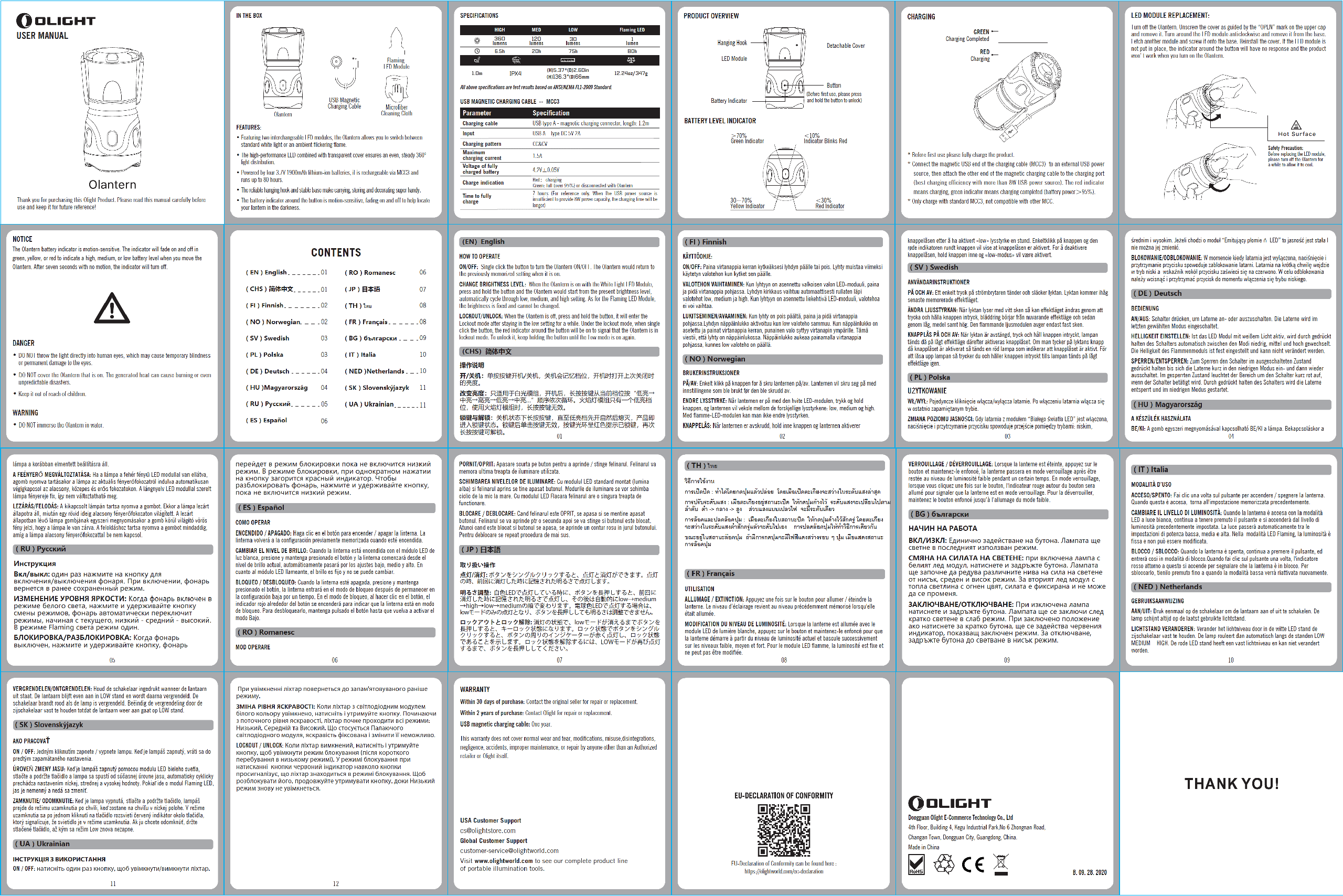
Build Quality and Disassembly
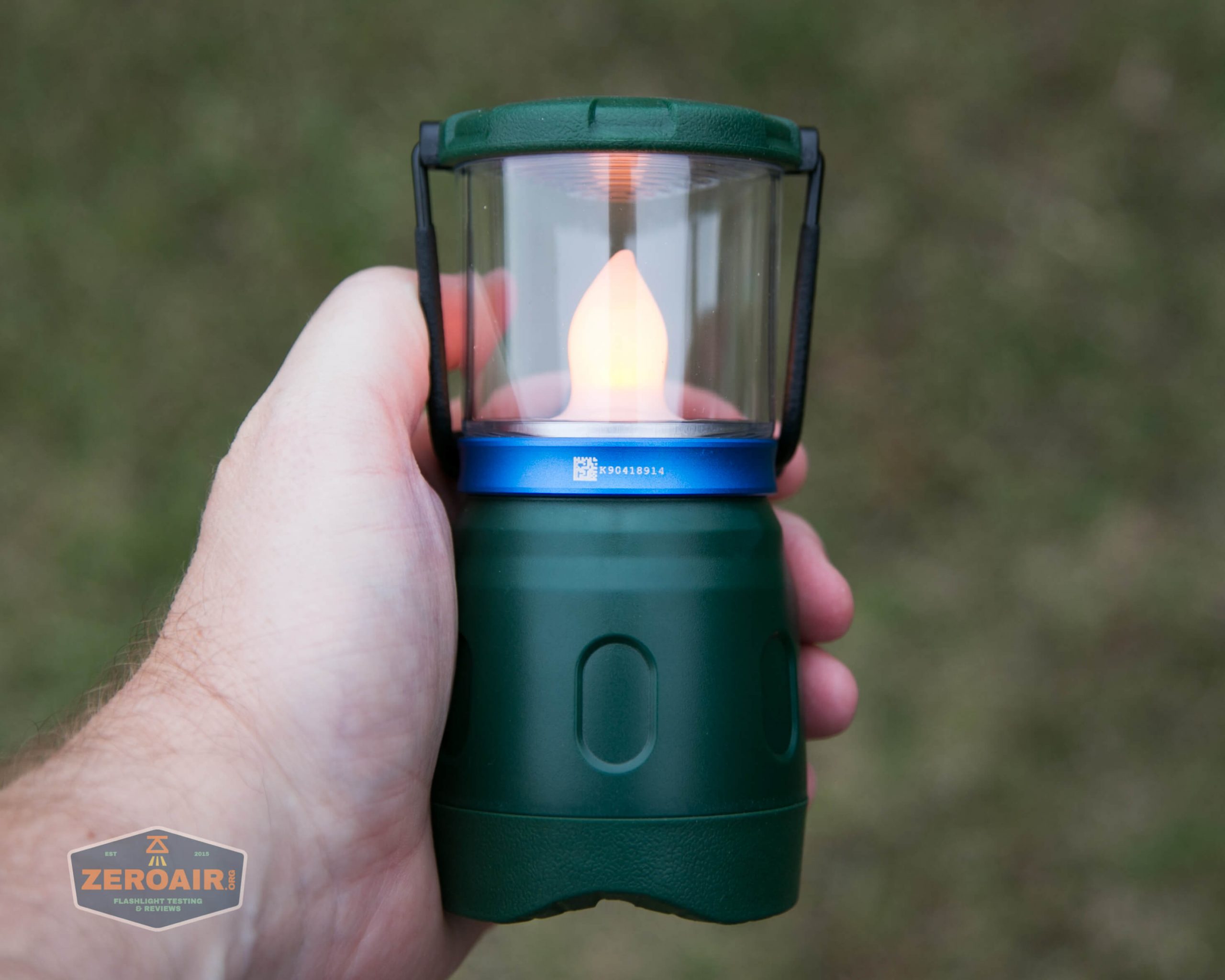
By and large, this lantern is made of plastic. There are some metal bits (like the blue ring in the center), but the top and bottom and sides, and clear area are all plastic. The handle is metal and is coated with grippy plastic.
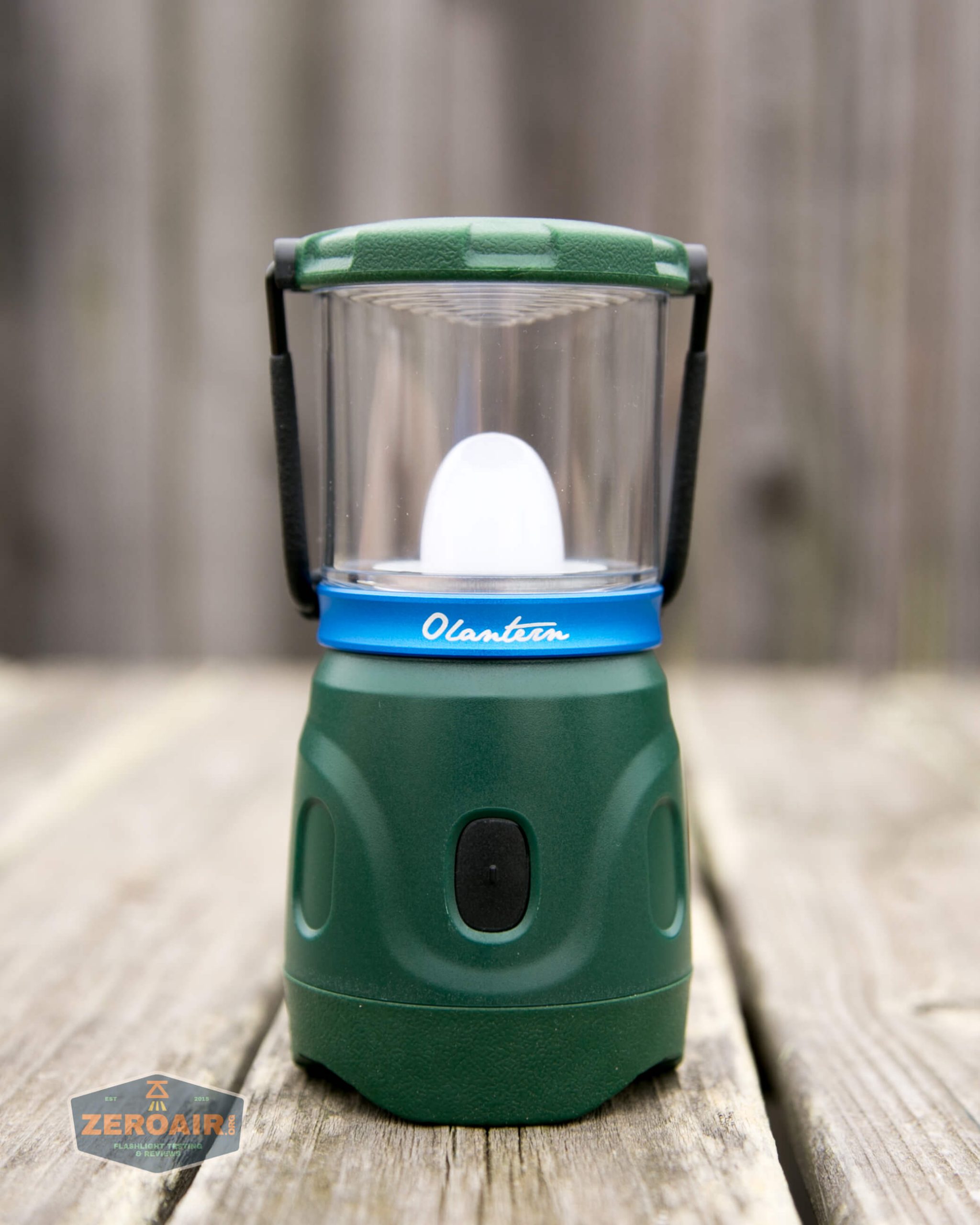
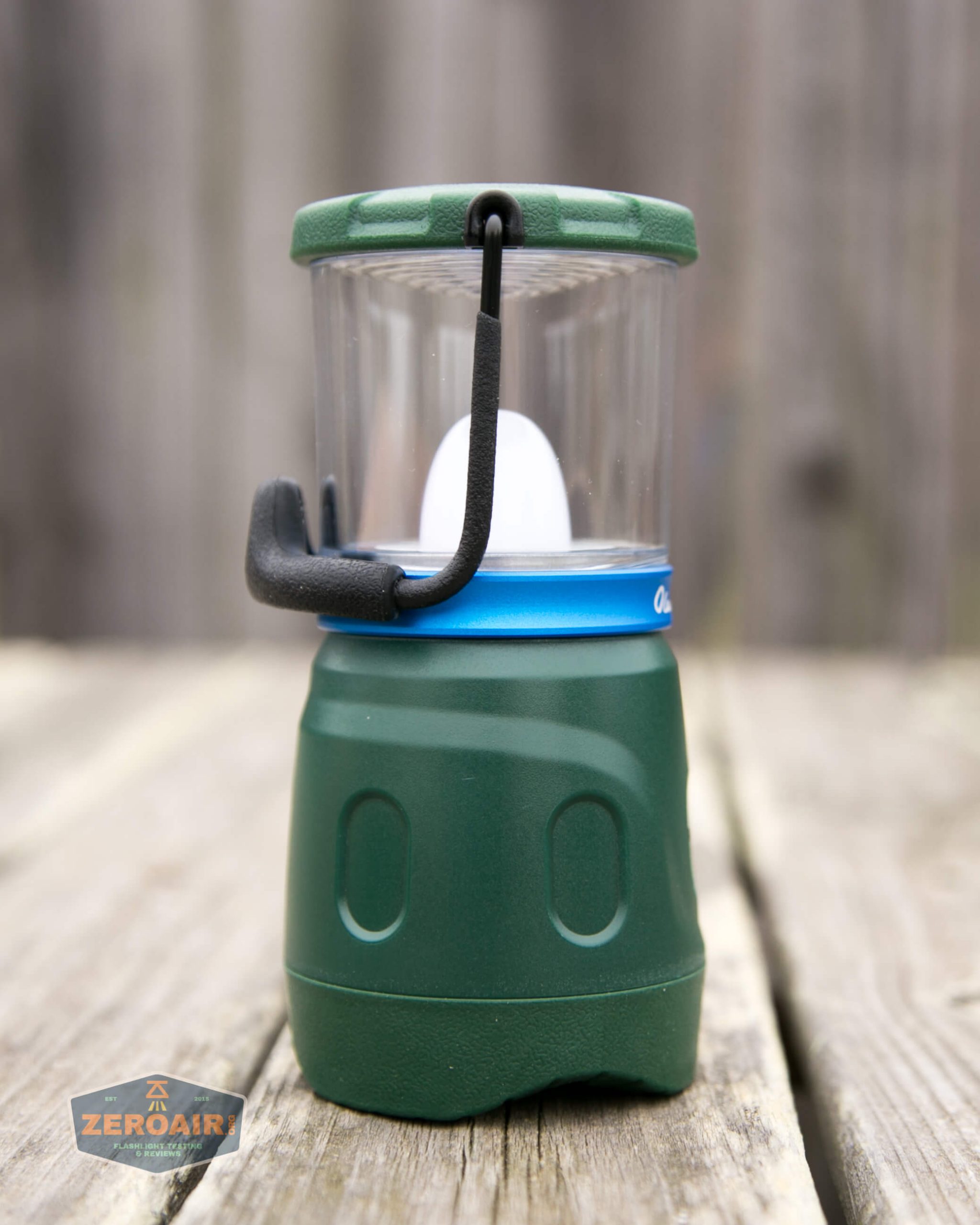
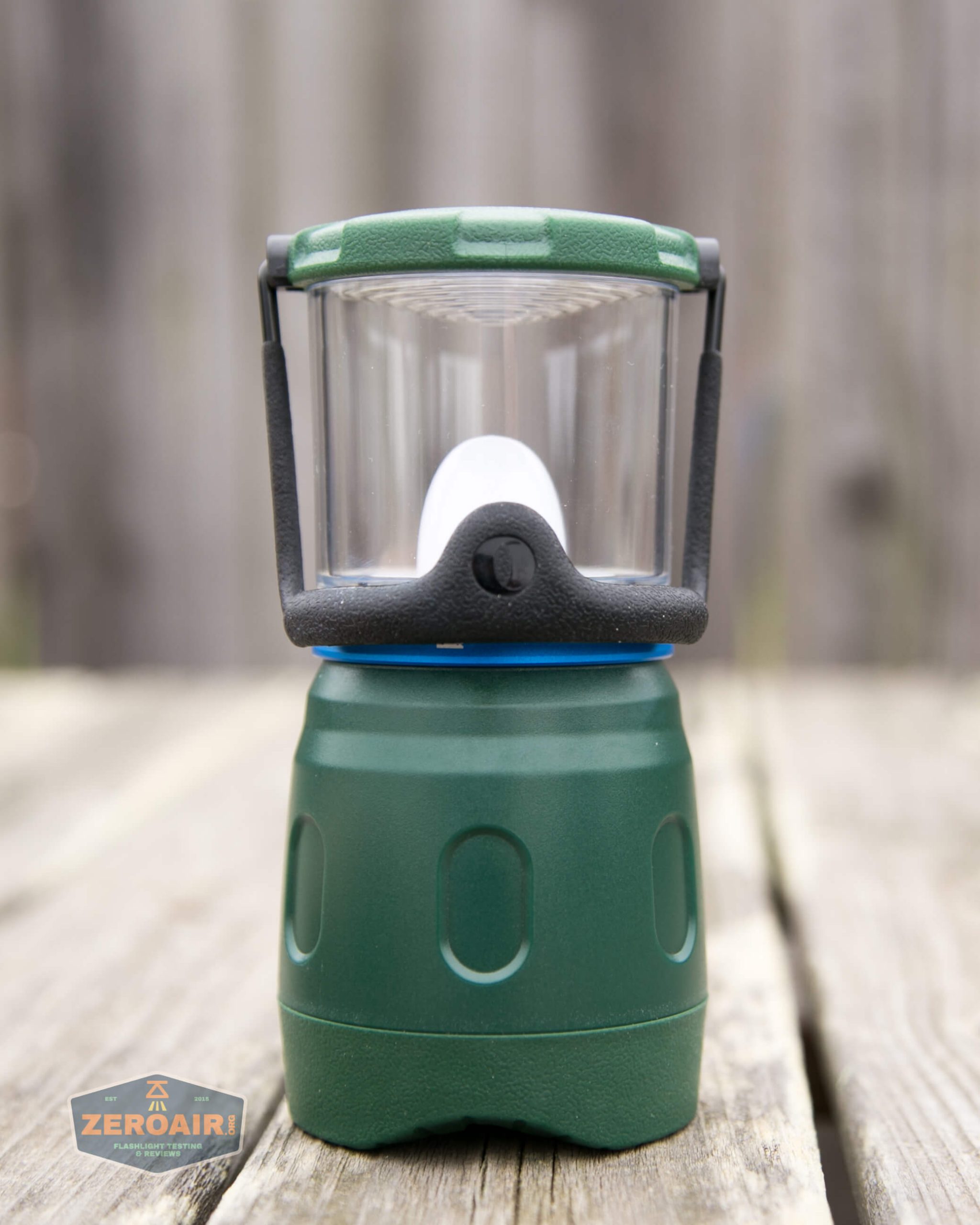
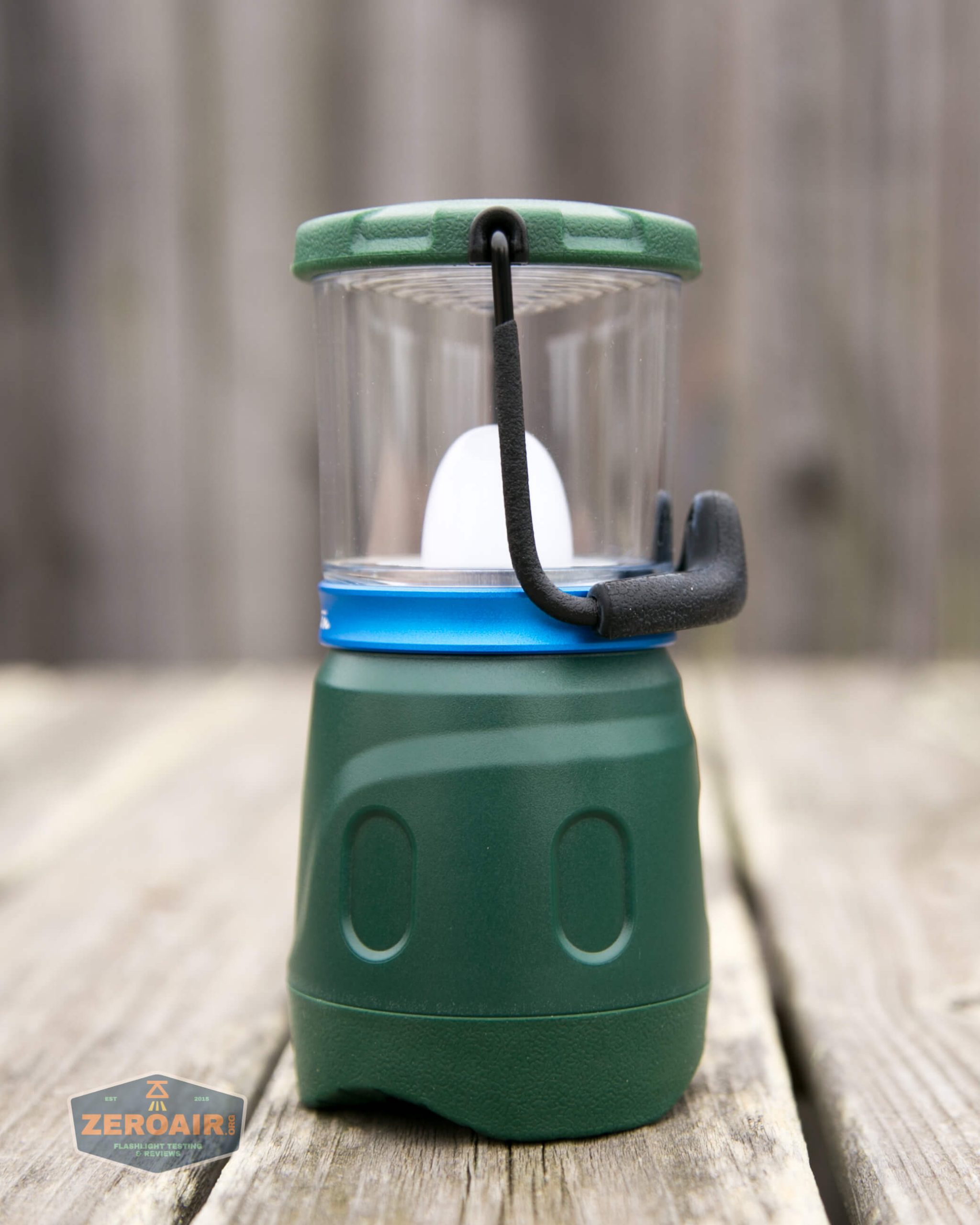
The Olight Olantern LED lantern has a very classic lantern look. (The look is so classic, in fact, that the Olantern shares design stylings with some other LED lanterns.)
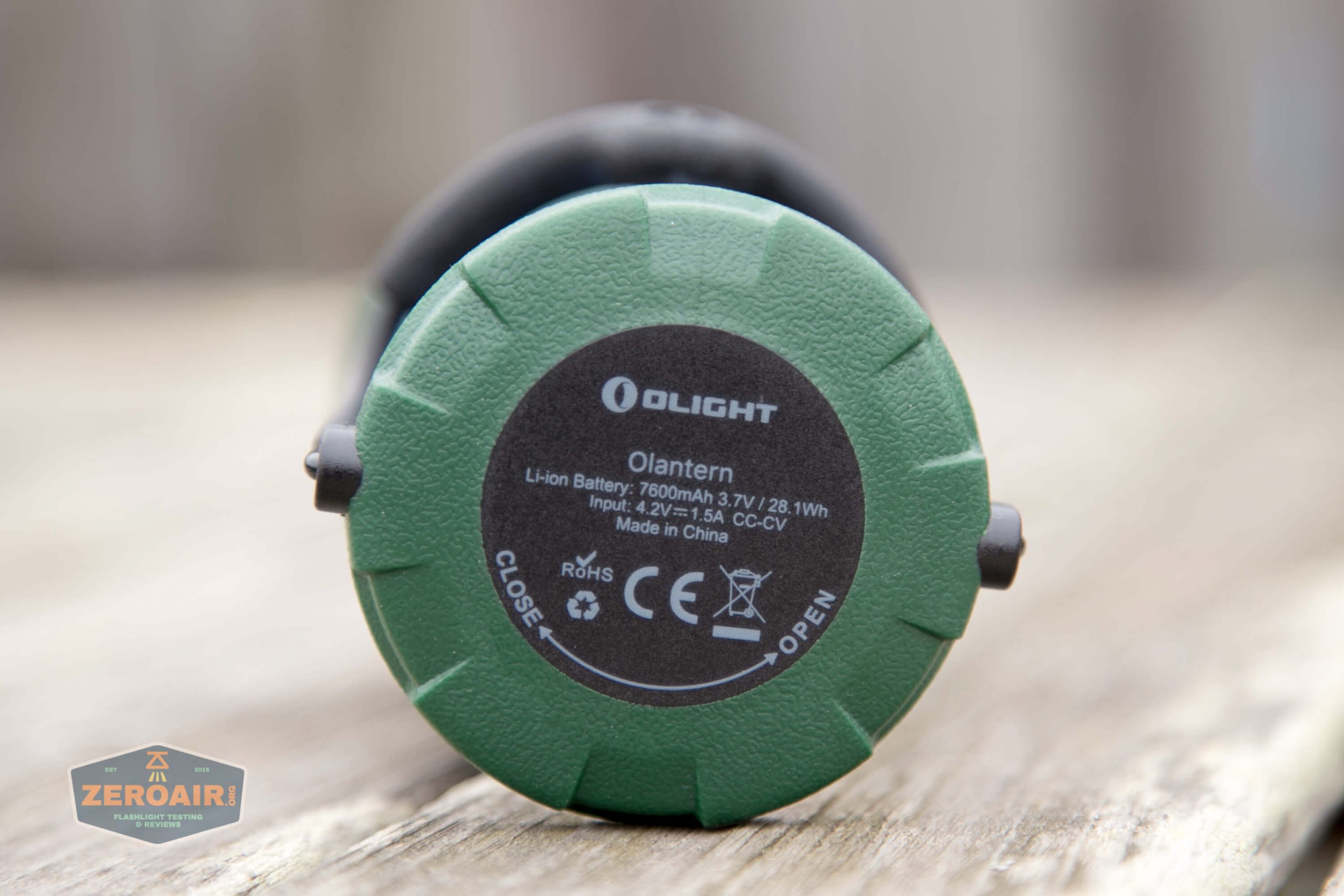
The build quality is rugged enough for general campsite use. I don’t imagine you’d take this lantern hiking, but it’d probably stand up to that as well.
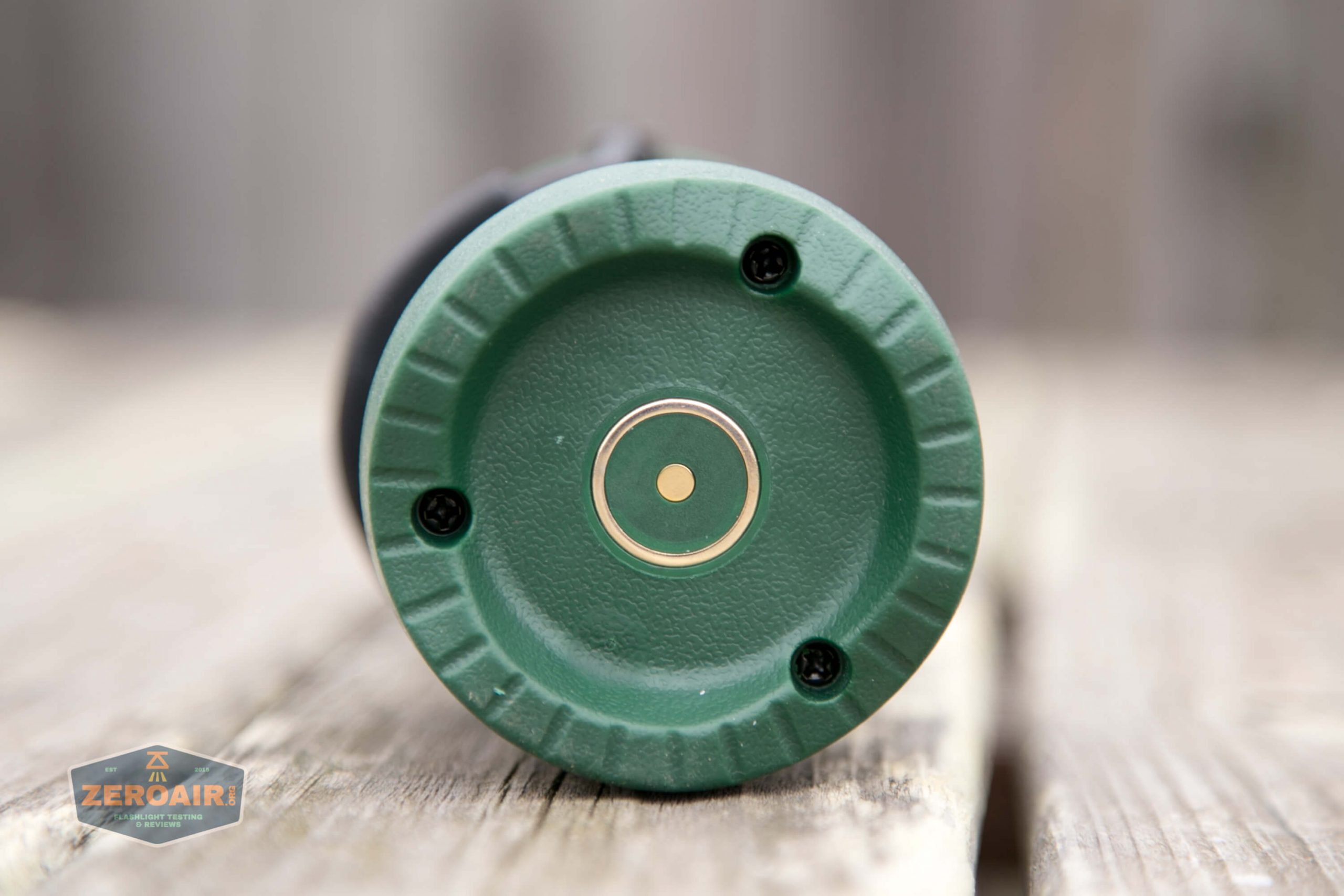
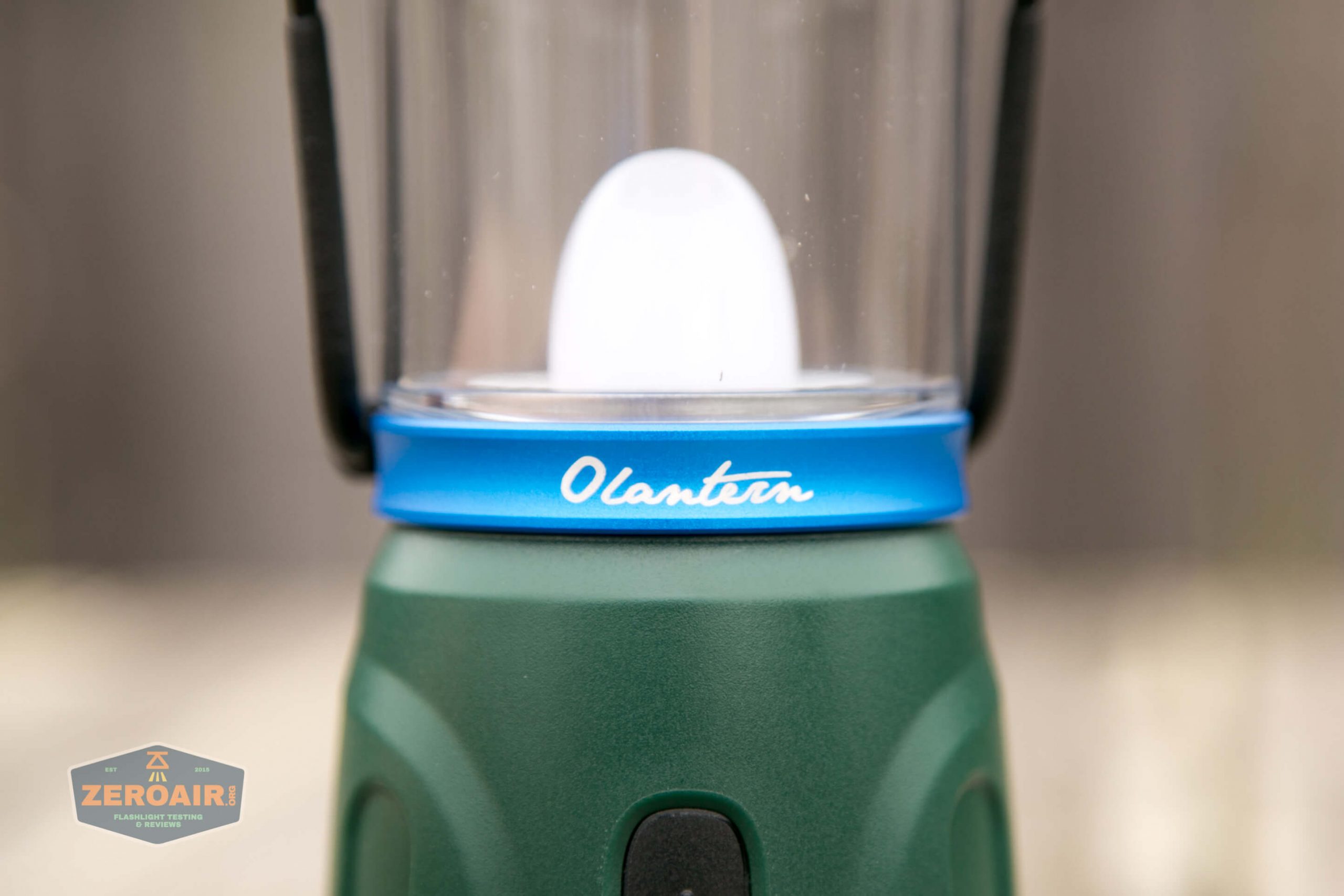
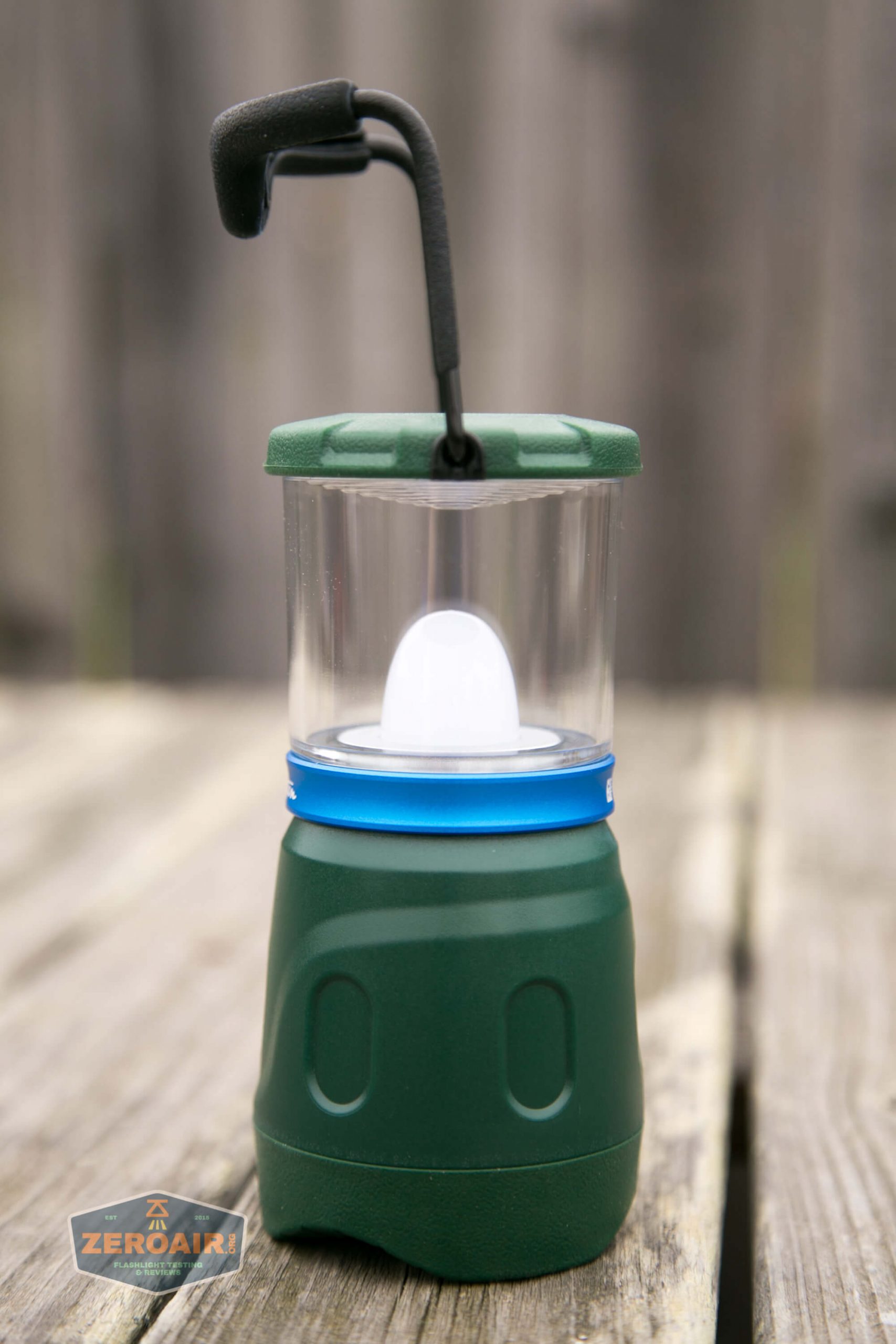
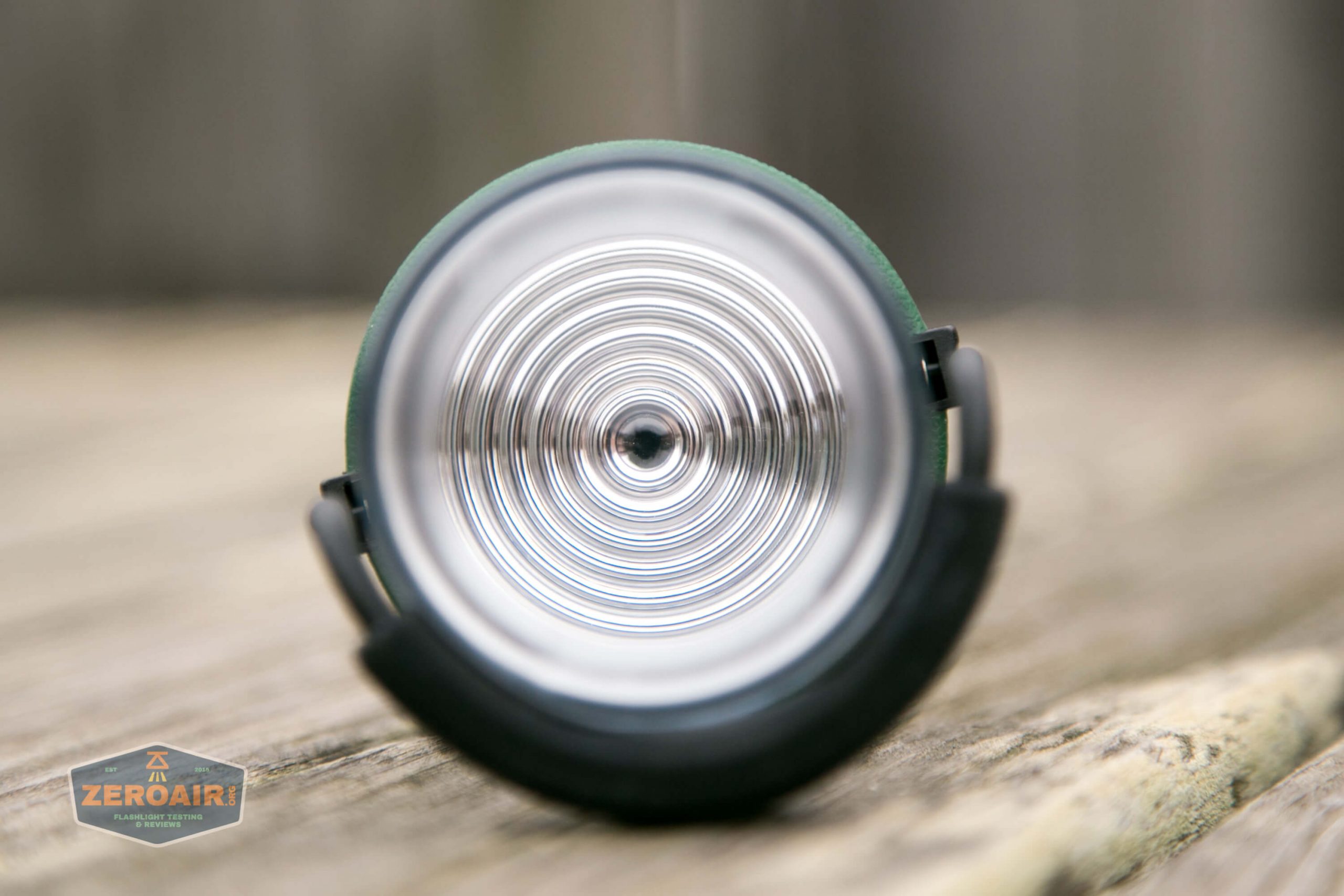
The clear top of the Olantern unscrews to reveal the “bulb.”


This clear cover has some ripples on the top (seen below), which should aid in directing the output – see below in the beamshots to see how that affects the beam.
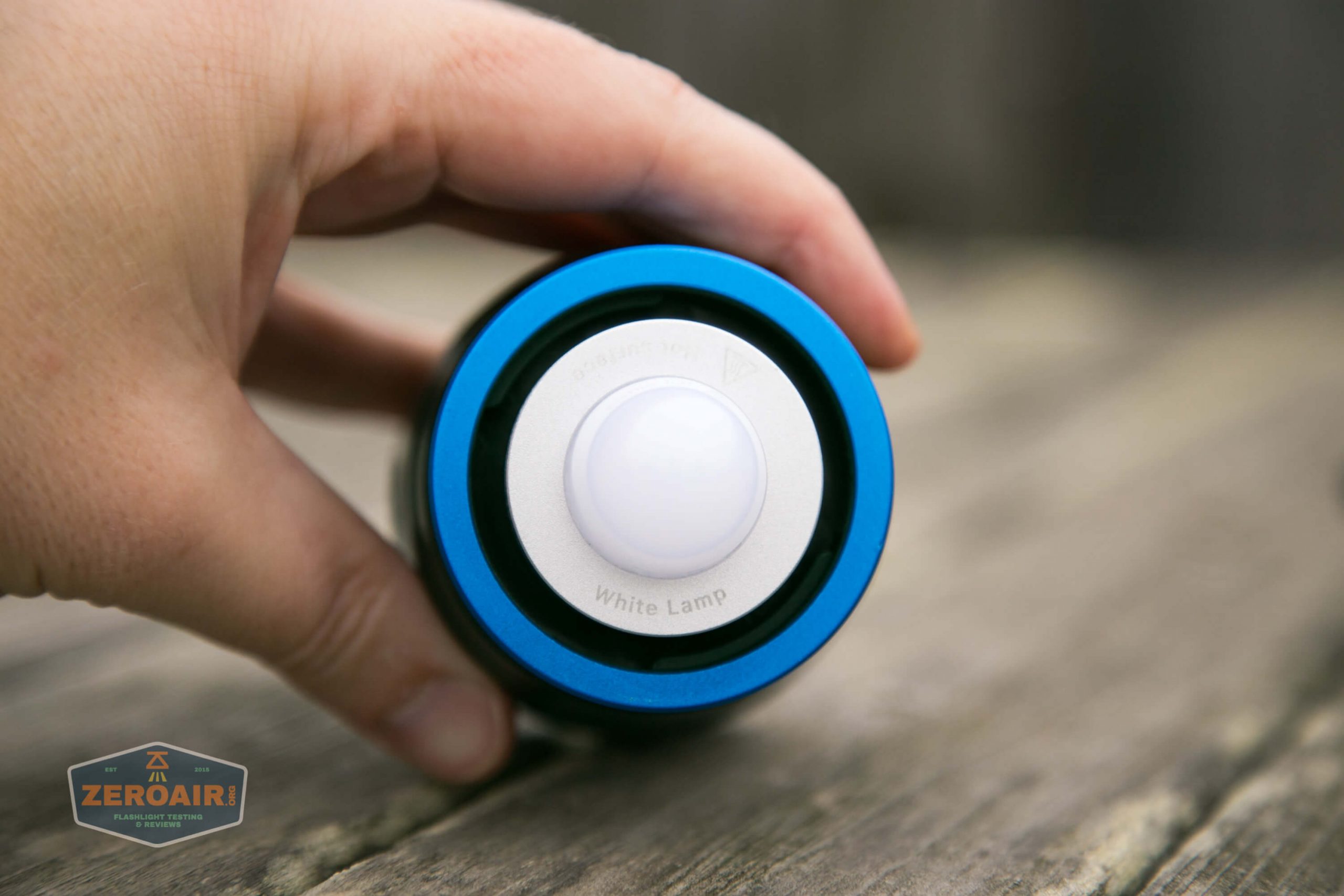
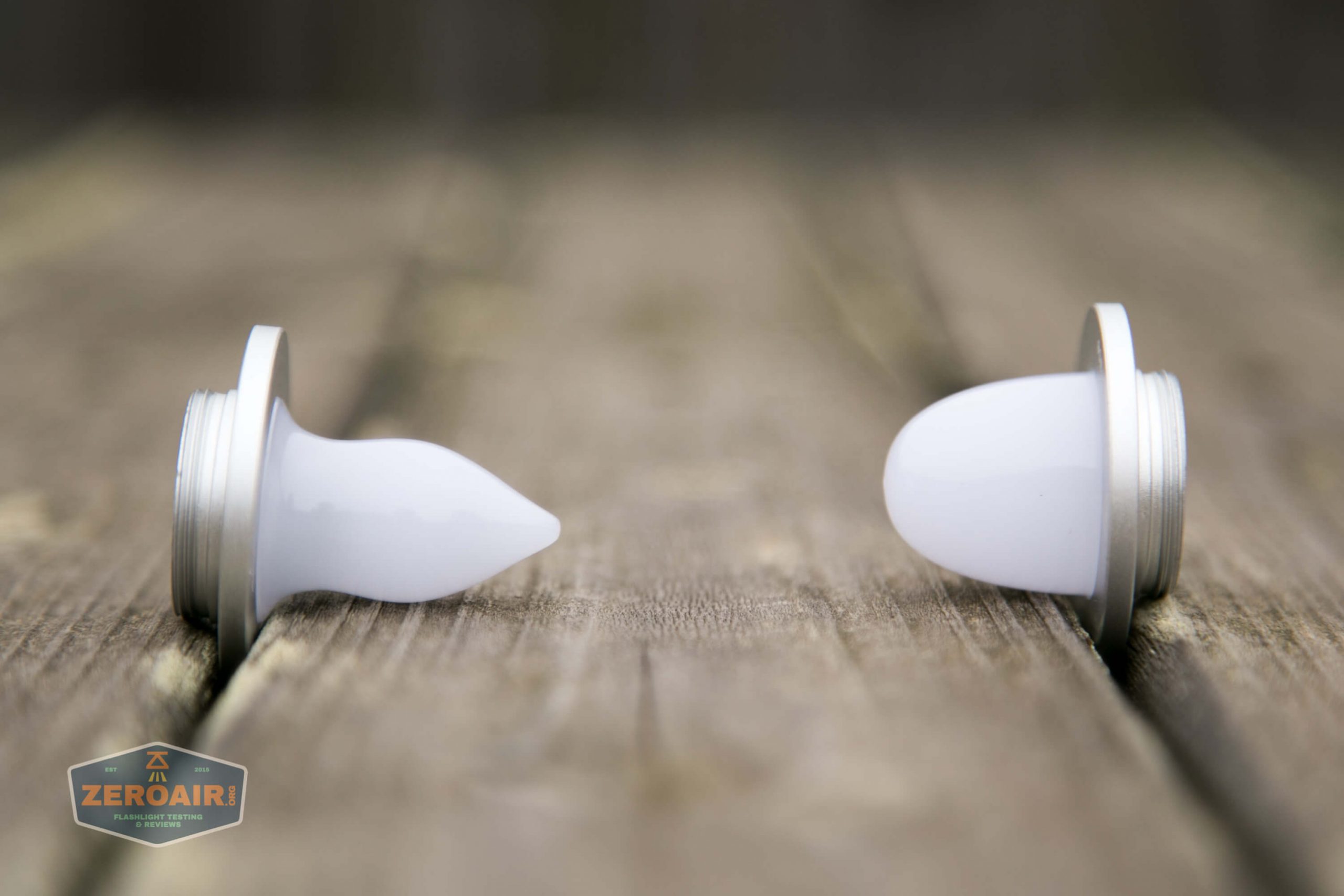
The two bulbs have a nice metal base and are labeled. (Below, see “White Lamp” printed on the metal base.)

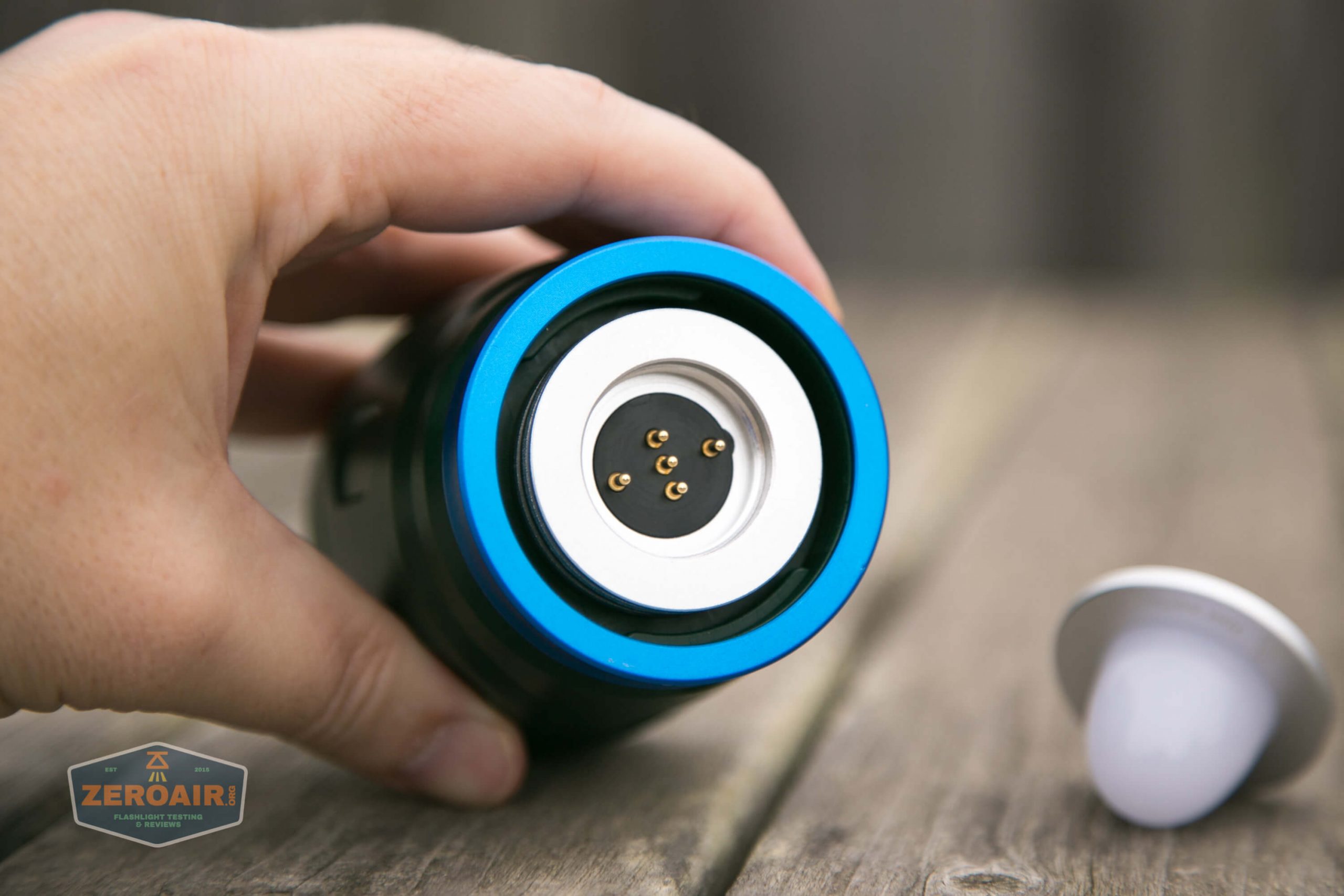
The lantern base has a bunch of contacts, as you can see below, which presumably orient to each lamp individually.
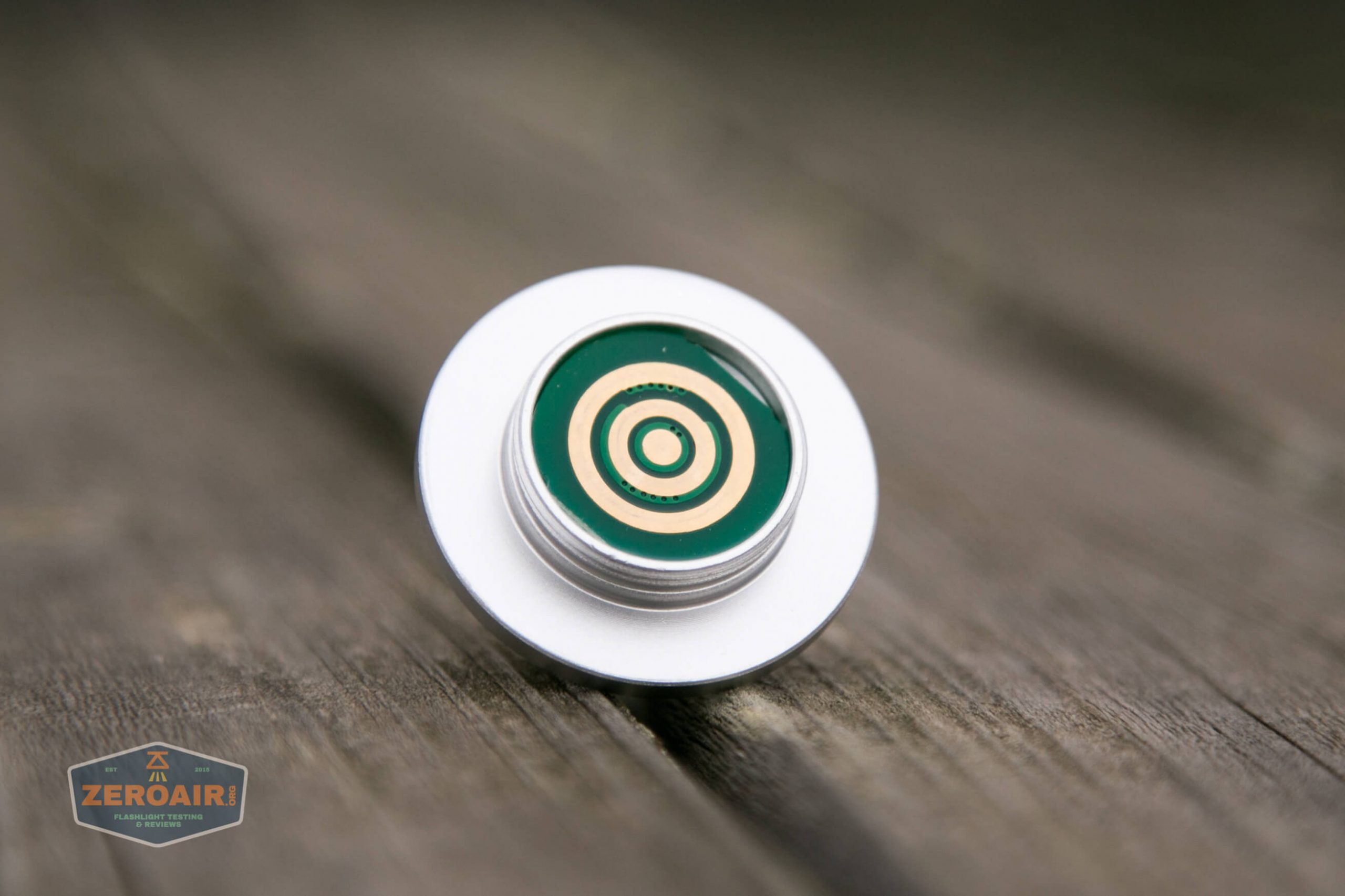
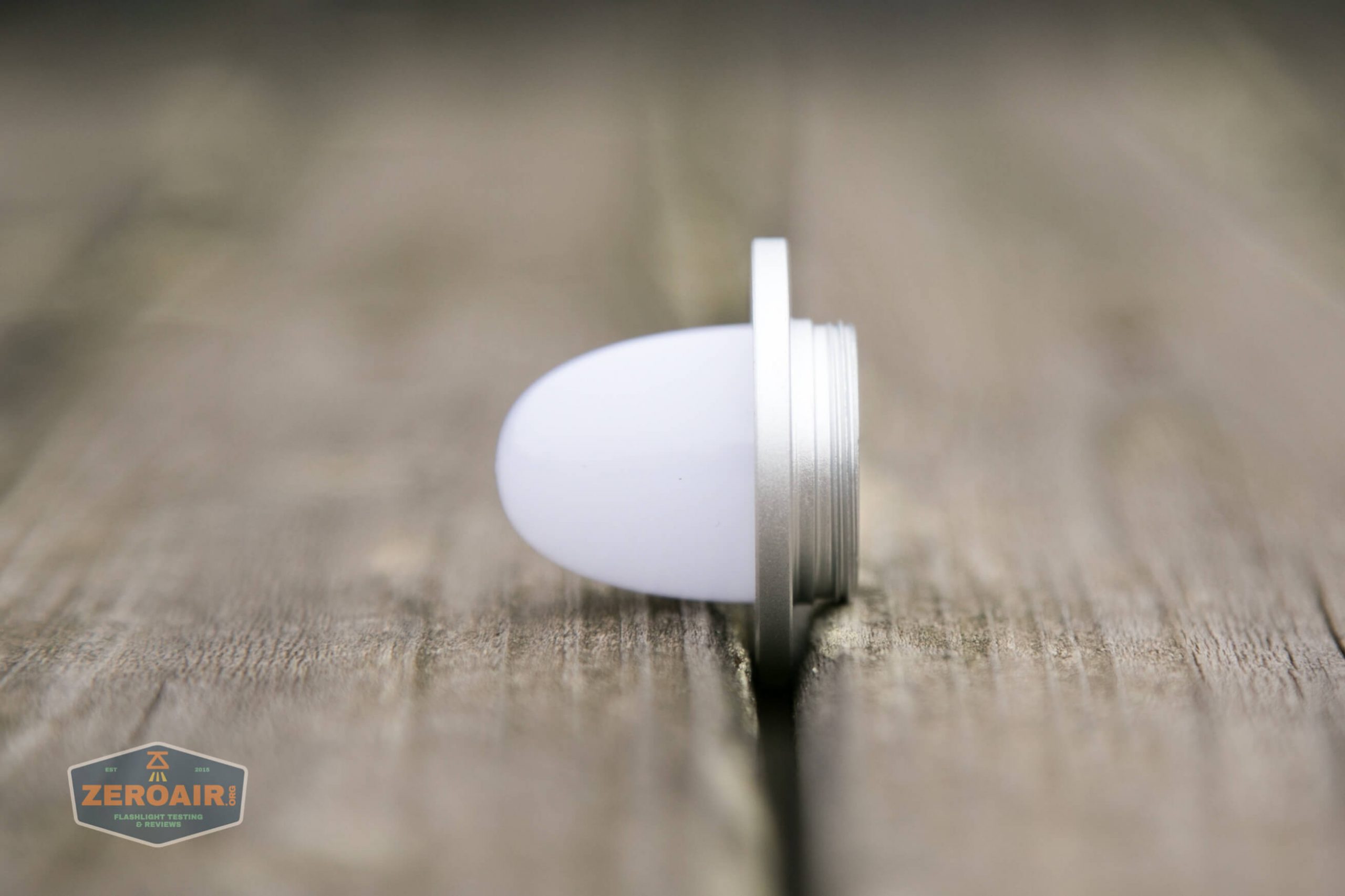
On the left is the Flame Lamp (looks like a candle), and on the right is the domed White Lamp.

Size and Comps
Officially, the dimensions are 136.3mm in height and 66mm in diameter. The weight is 347g.
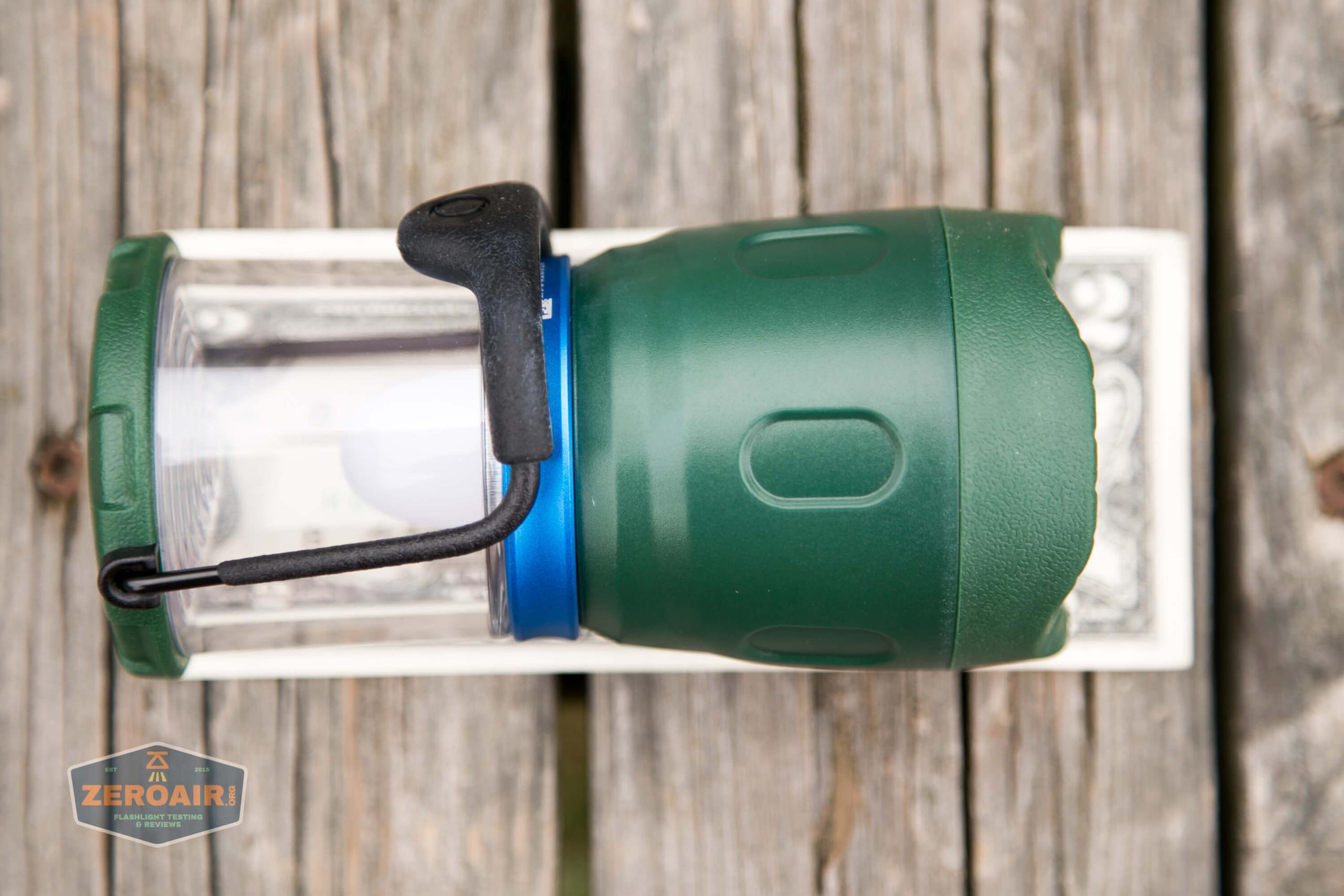
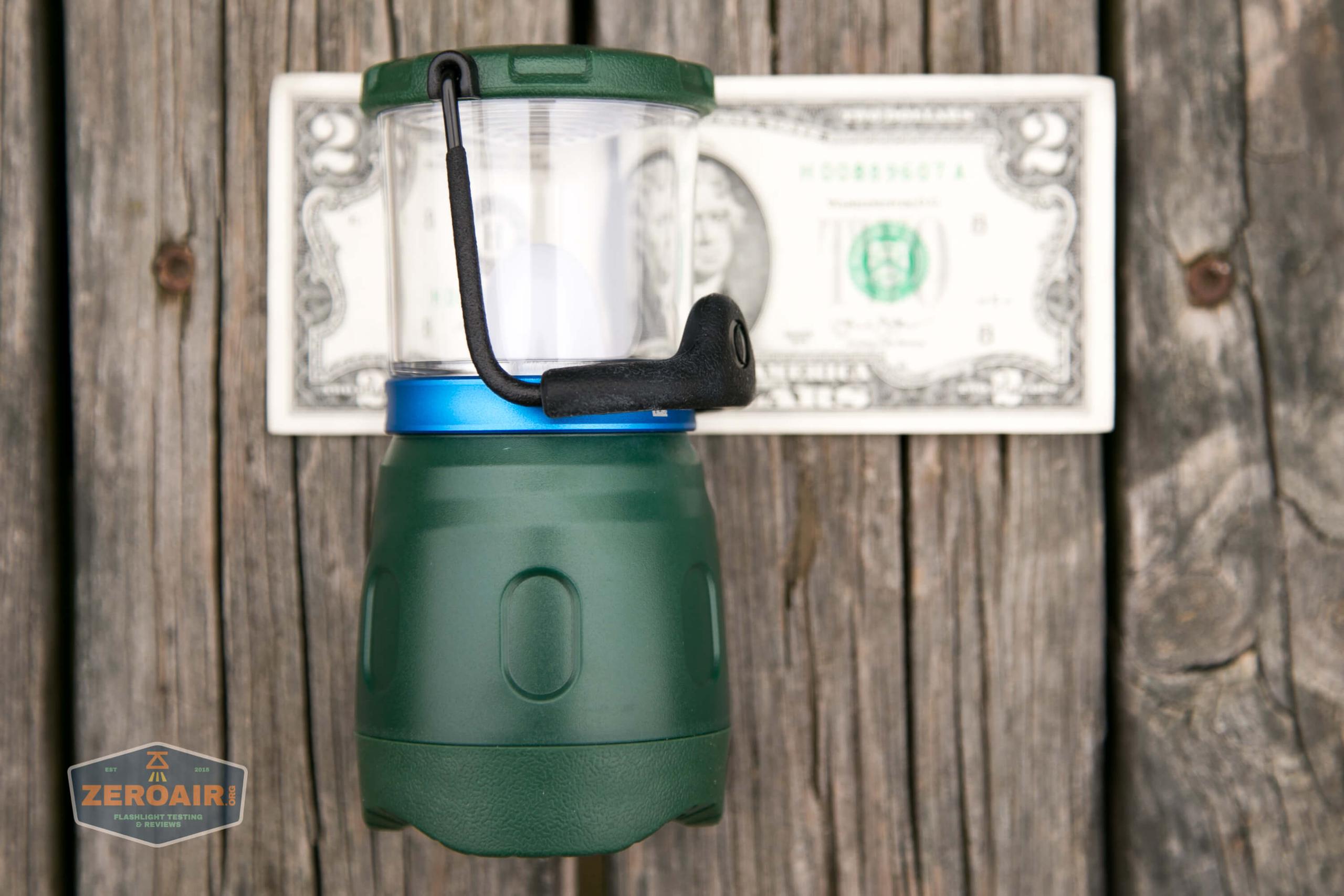
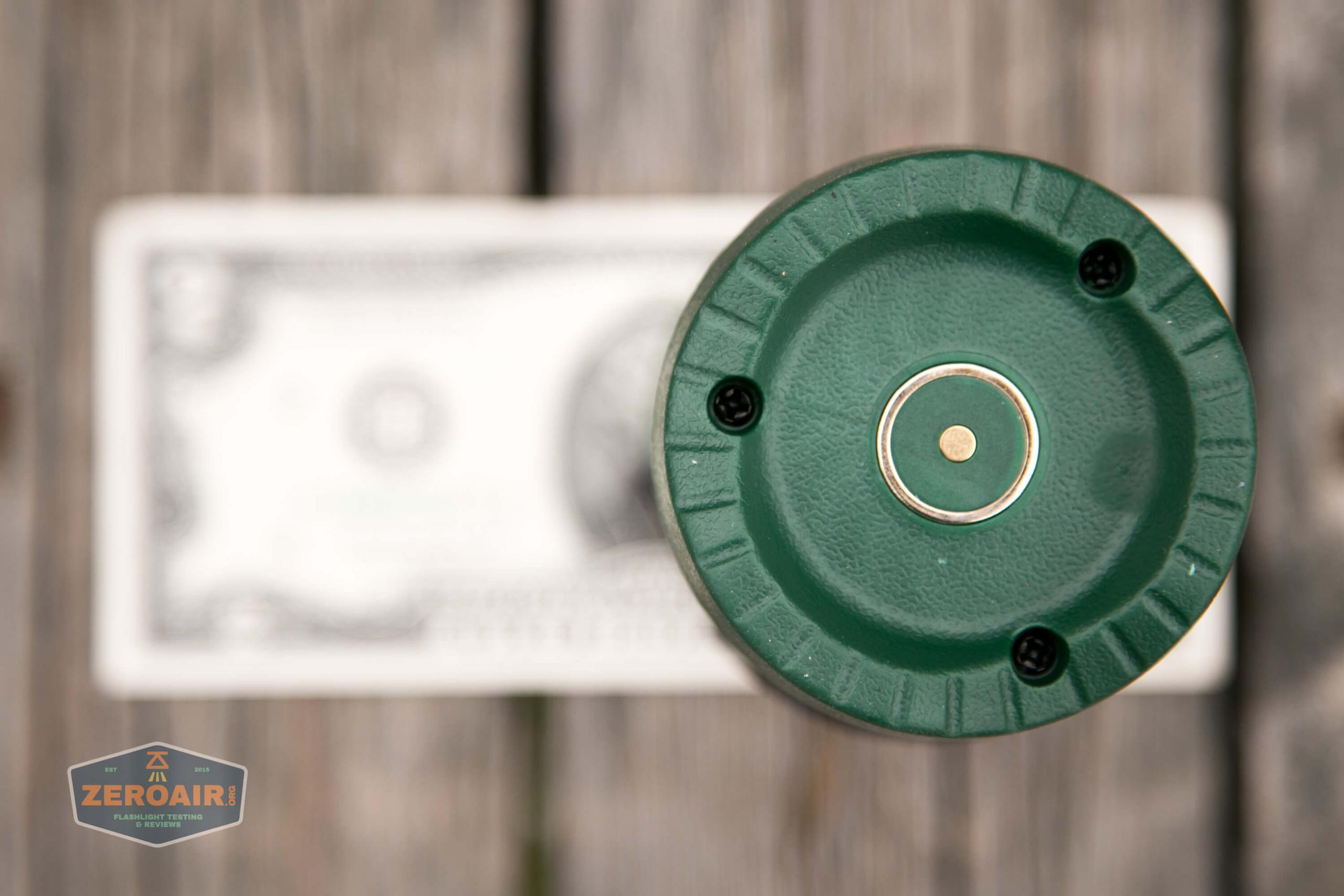
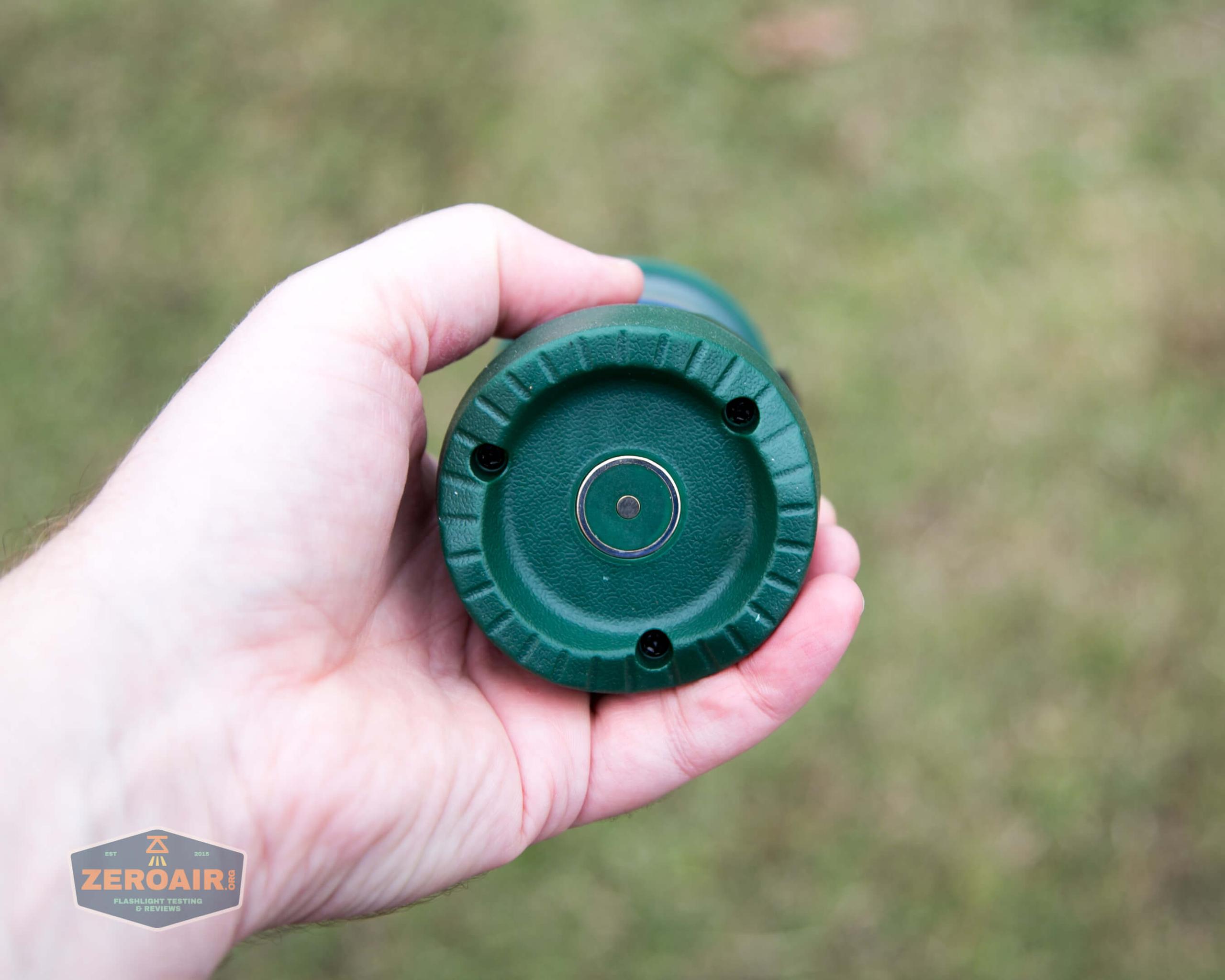
If the flashlight will headstand, I’ll try to show it here. If the flashlight will tailstand, I usually show that here, too.
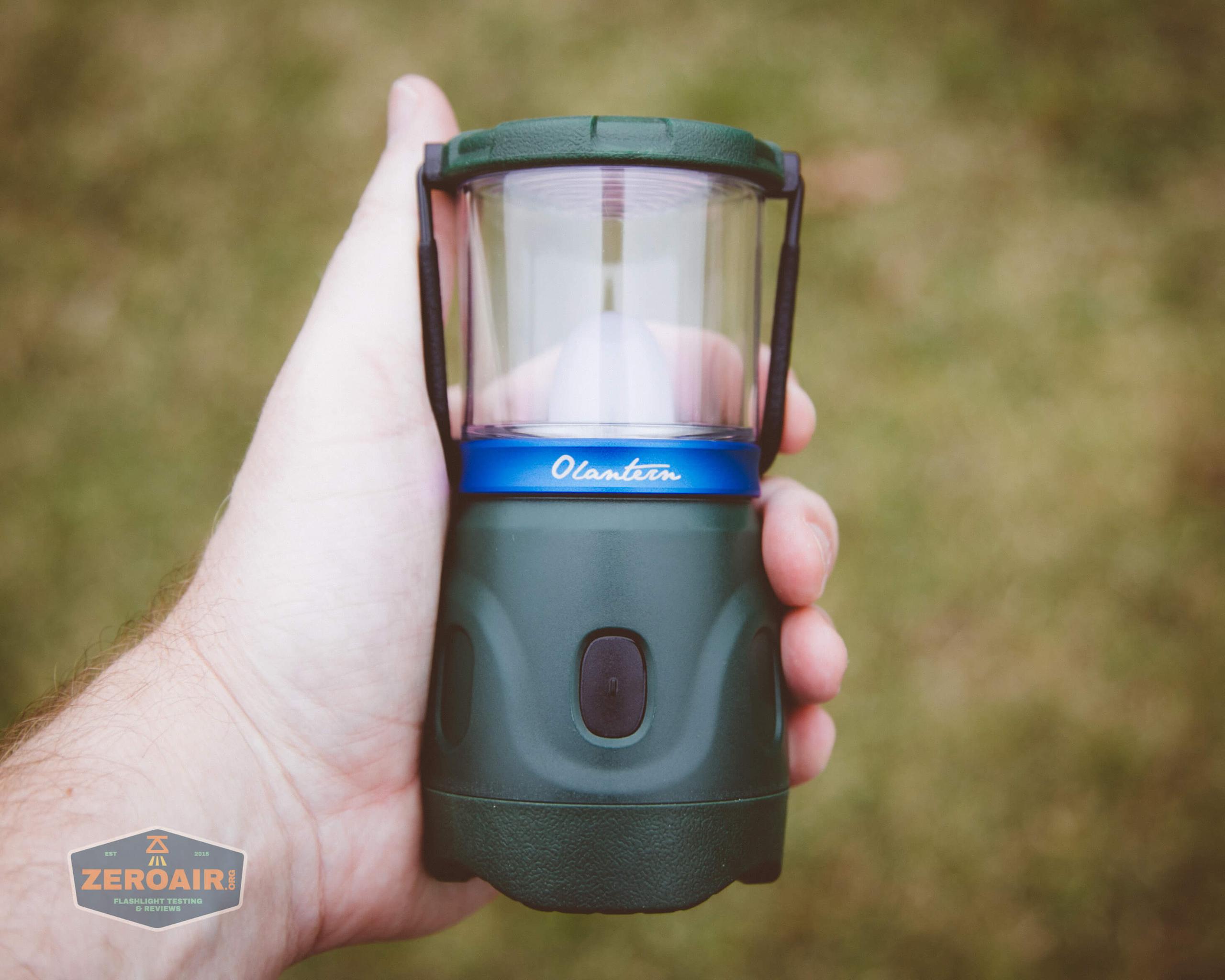
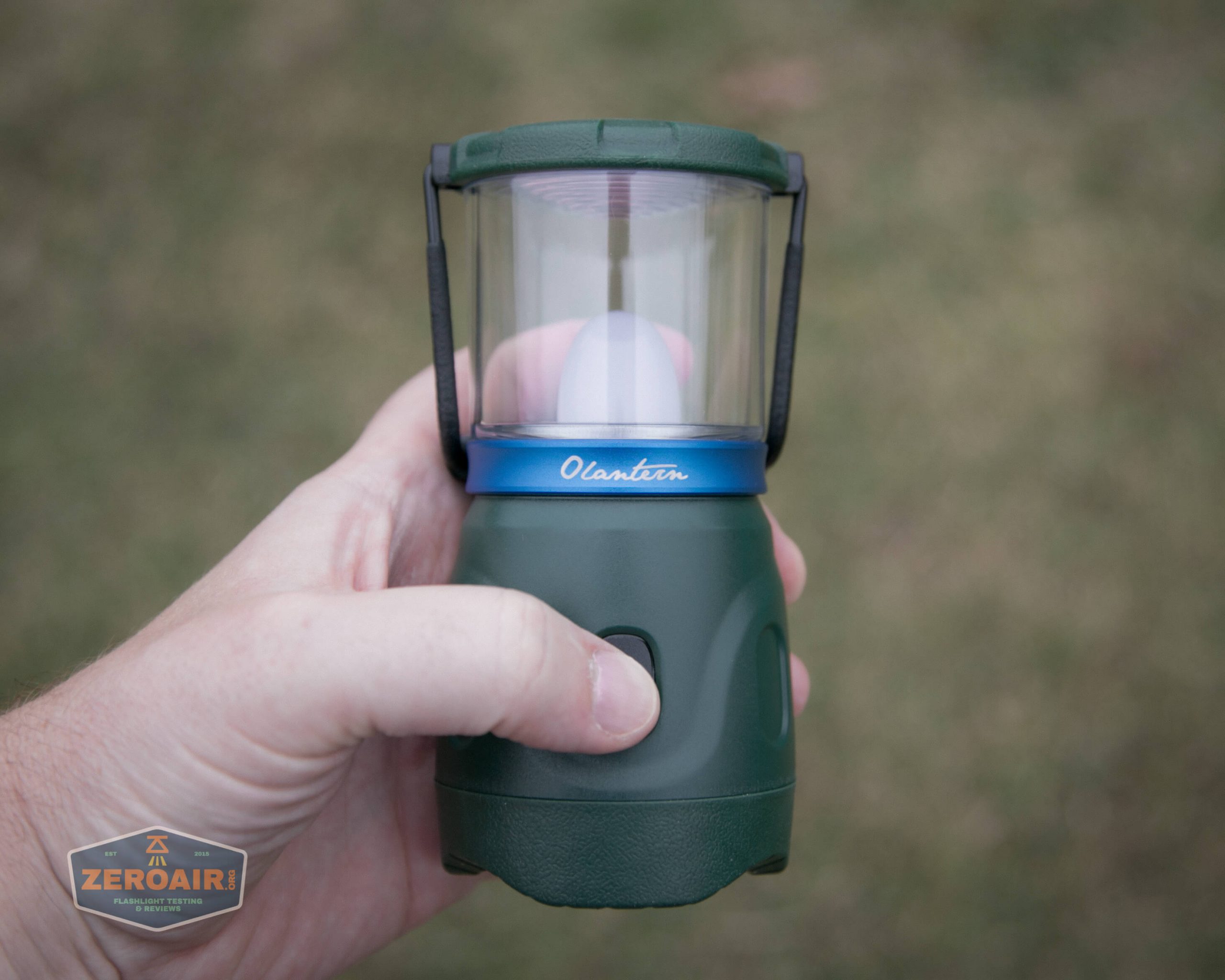
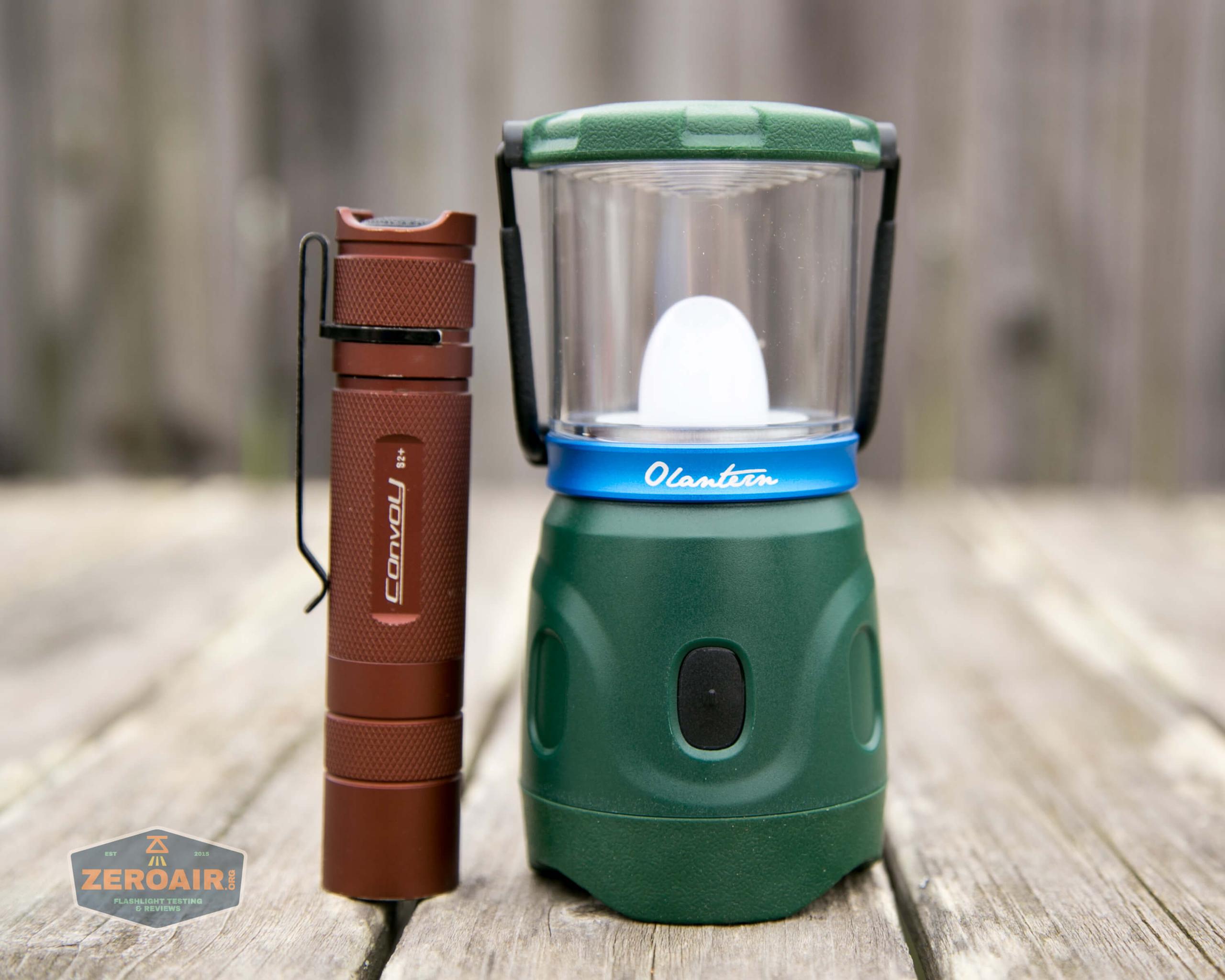
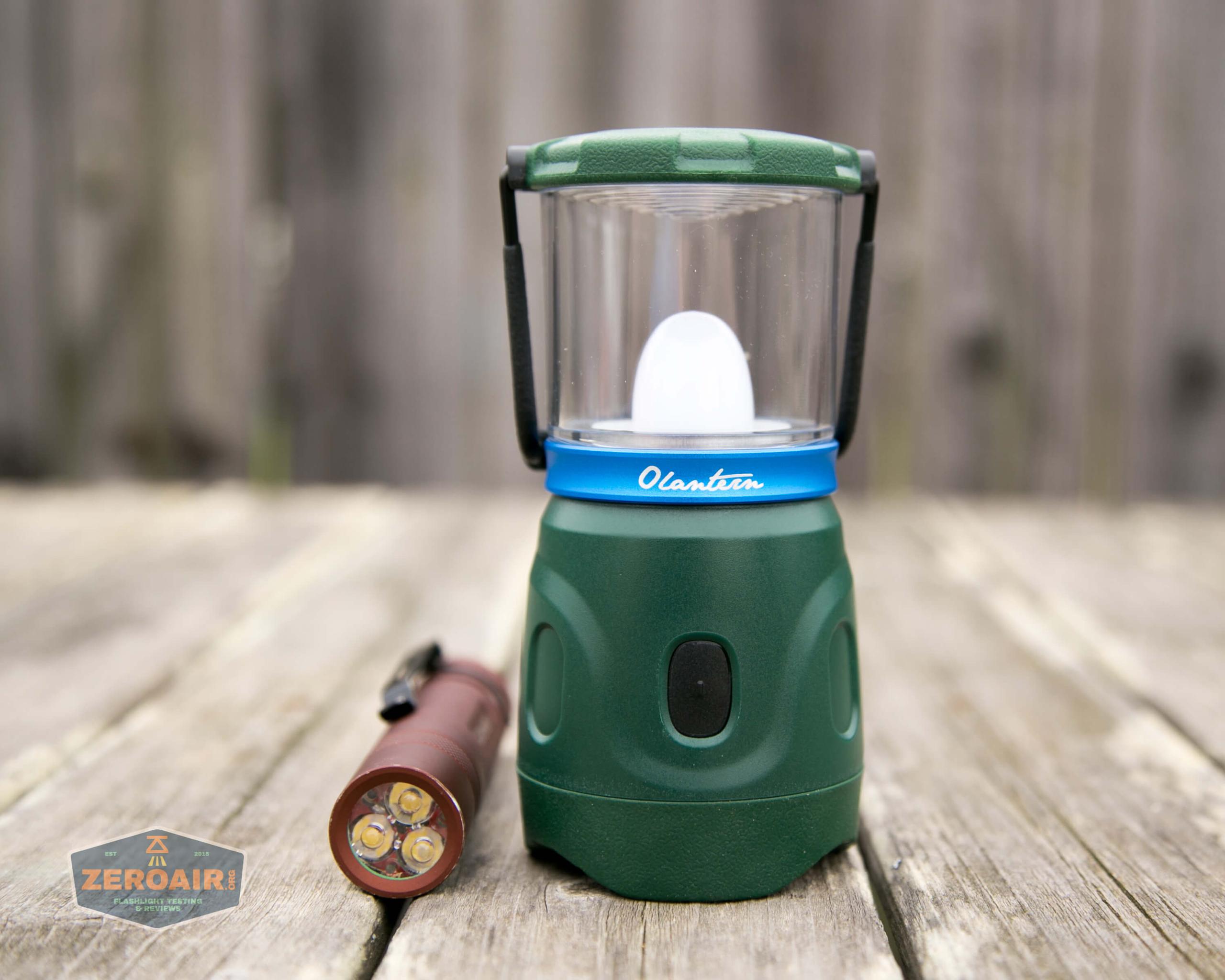
Here’s the test light with the venerable Convoy S2+. Mine is a custom “baked” edition Nichia 219b triple. A very nice 18650 light!
And here’s the light beside my custom-engraved TorchLAB BOSS 35, an 18350 light. I reviewed the aluminum version of that light in both 35 and 70 formats.
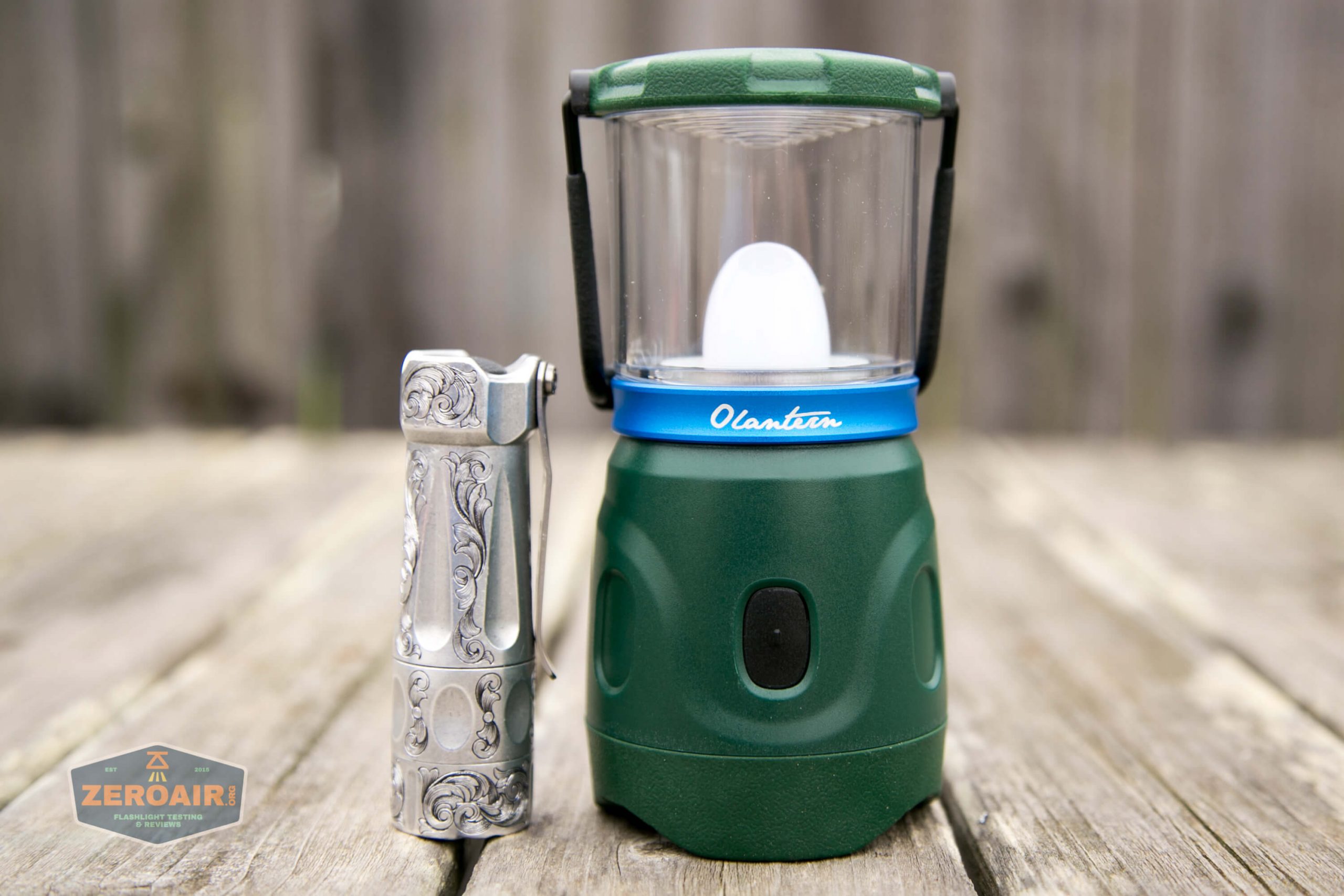
Retention and Carry
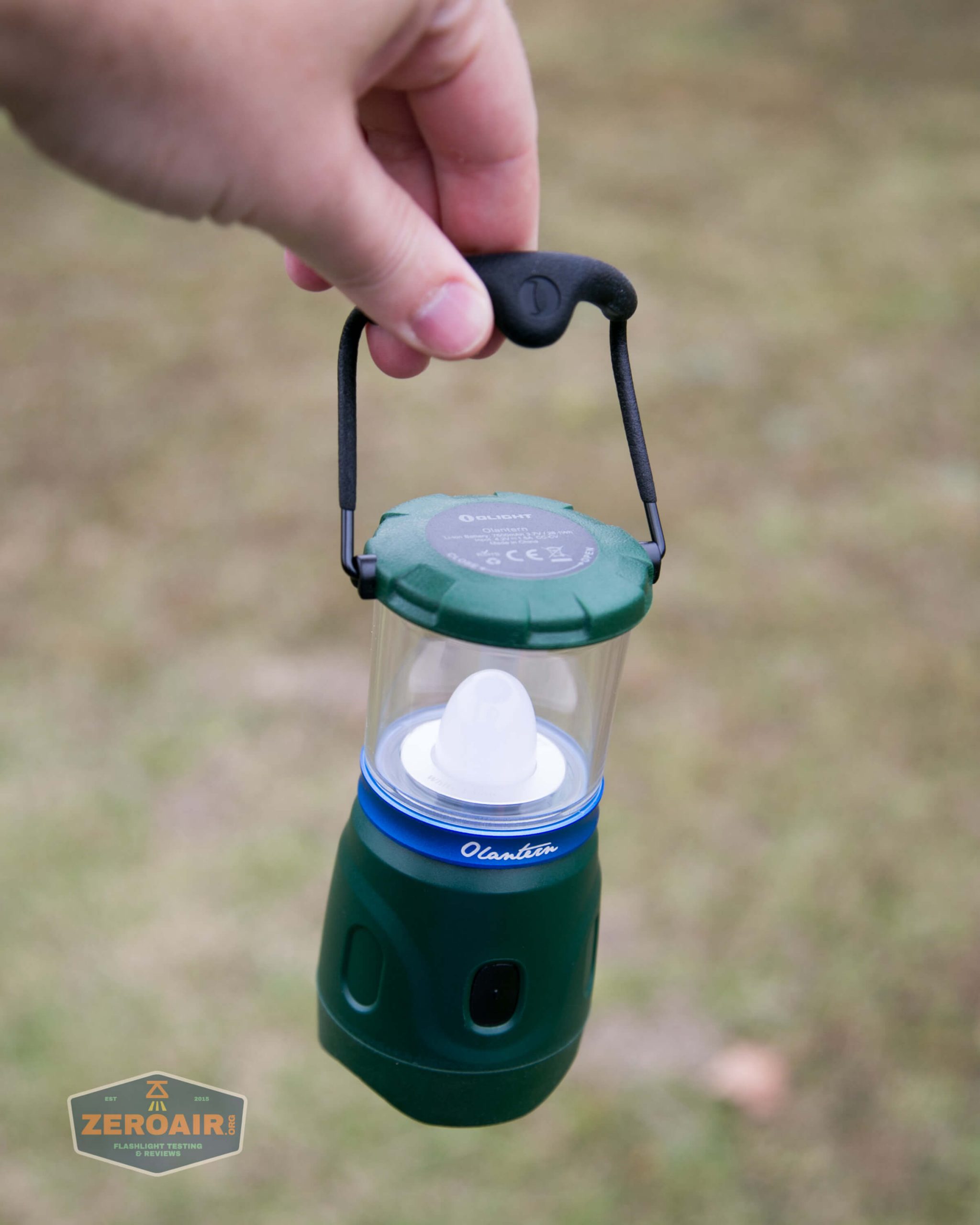
The intended means for carrying and use of this lantern is the curved handle that pivots upward. When down (as seen below), the handle is mostly out of the way.
When up, the curved bit has a sort of hook, which would help if being held on a limb or something, and is also somewhat grippy.
There really isn’t any other way to carry or use the light. It is very stable on the base, so it will work on a table or surface, too.
Power and Runtime
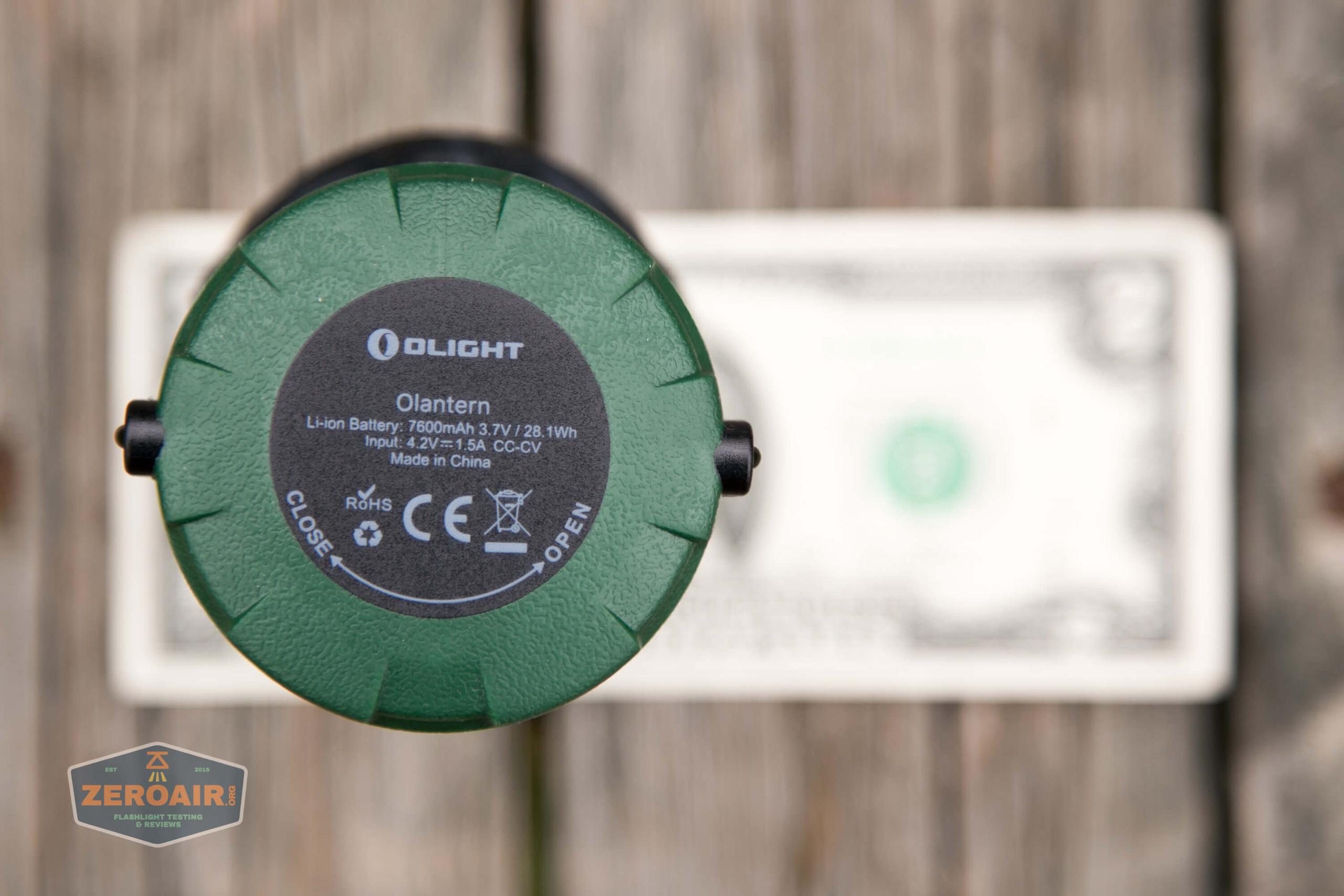
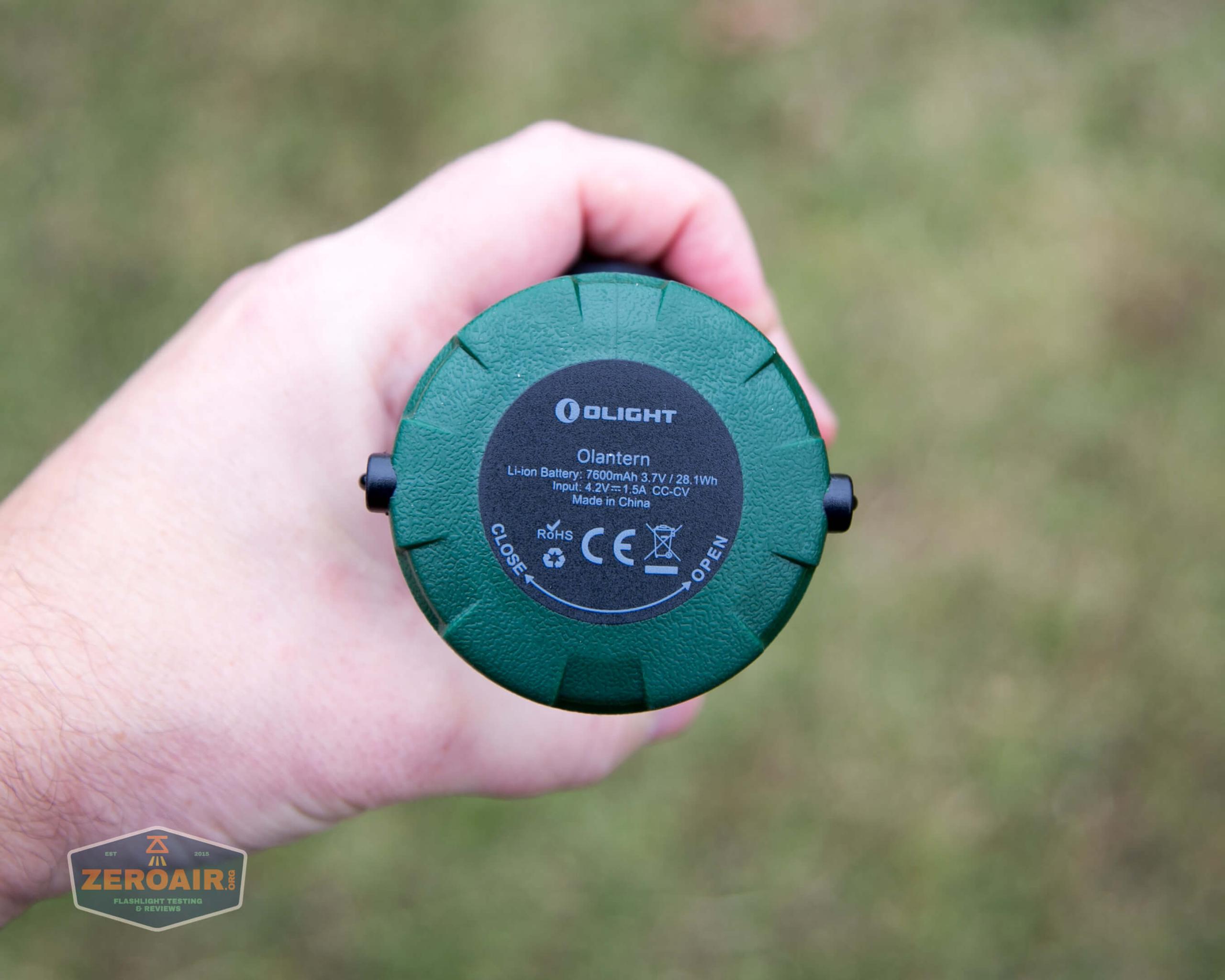
The Olight Olantern is powered by an internal, built-in battery. I disassembled what I could of the Olantern, and didn’t ever access the battery. The rumor is that there are three or four 18500 cells inside. The claimed capacity is 7600mAh at 3.7V, which means these cells would be in parallel, and that capacity probably means there are 4 of them. Reasonable to have this setup, but it’d be great if they were accessible and changeable.
And while I’m wishing regarding the battery, why not 18650, and make them accessible? And make it a powerbank…. This could have gone so many ways!
Here’s a runtime on the highest mode (which is the White Lamp).
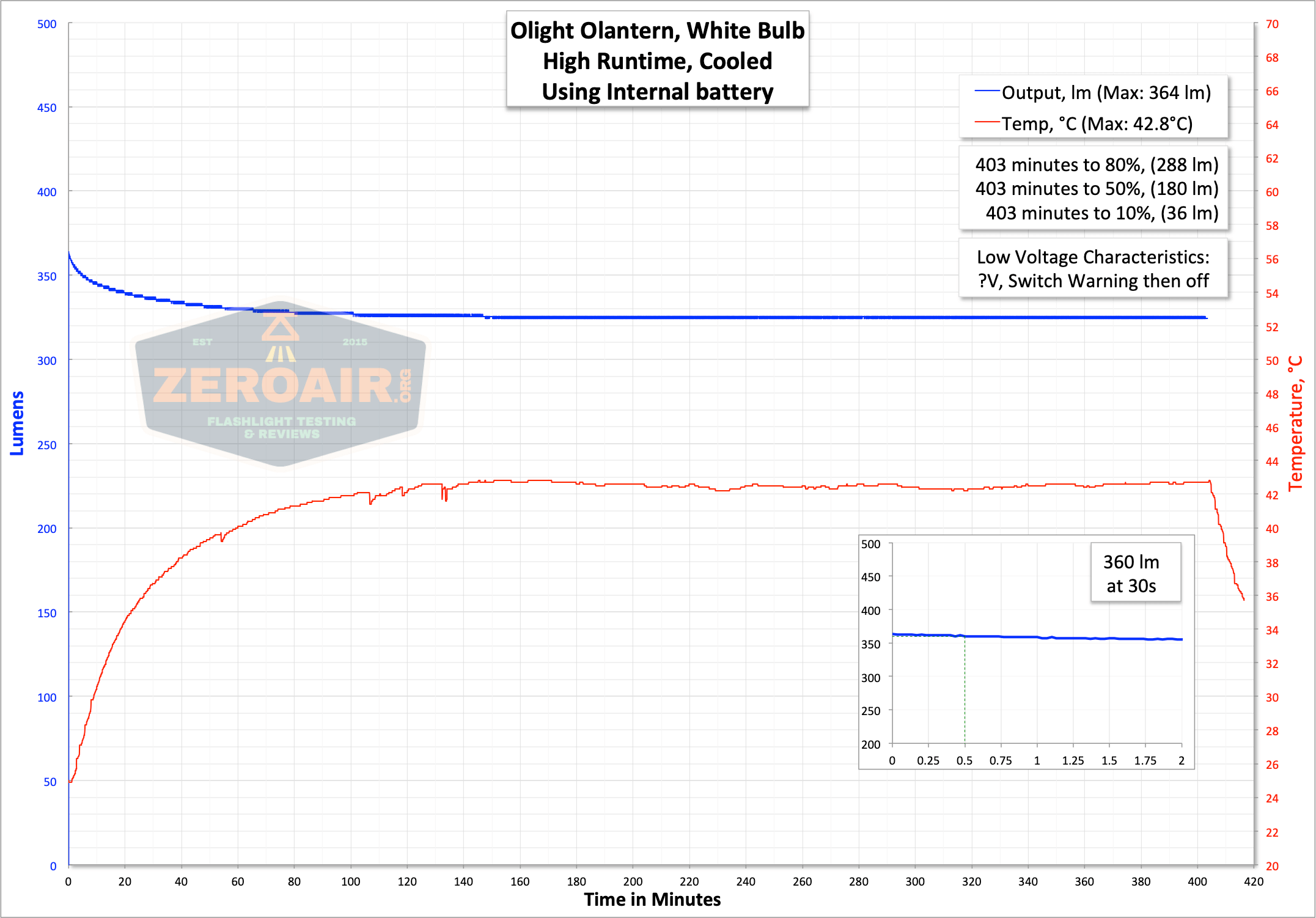
The light shuts off with low voltage protection. The switch also gives some warnings, as follows:
Green: >70% capacity
Yellow: 30%-70% capacity
Red: <30% capacity
Red flashing: <10% capacity
Charging
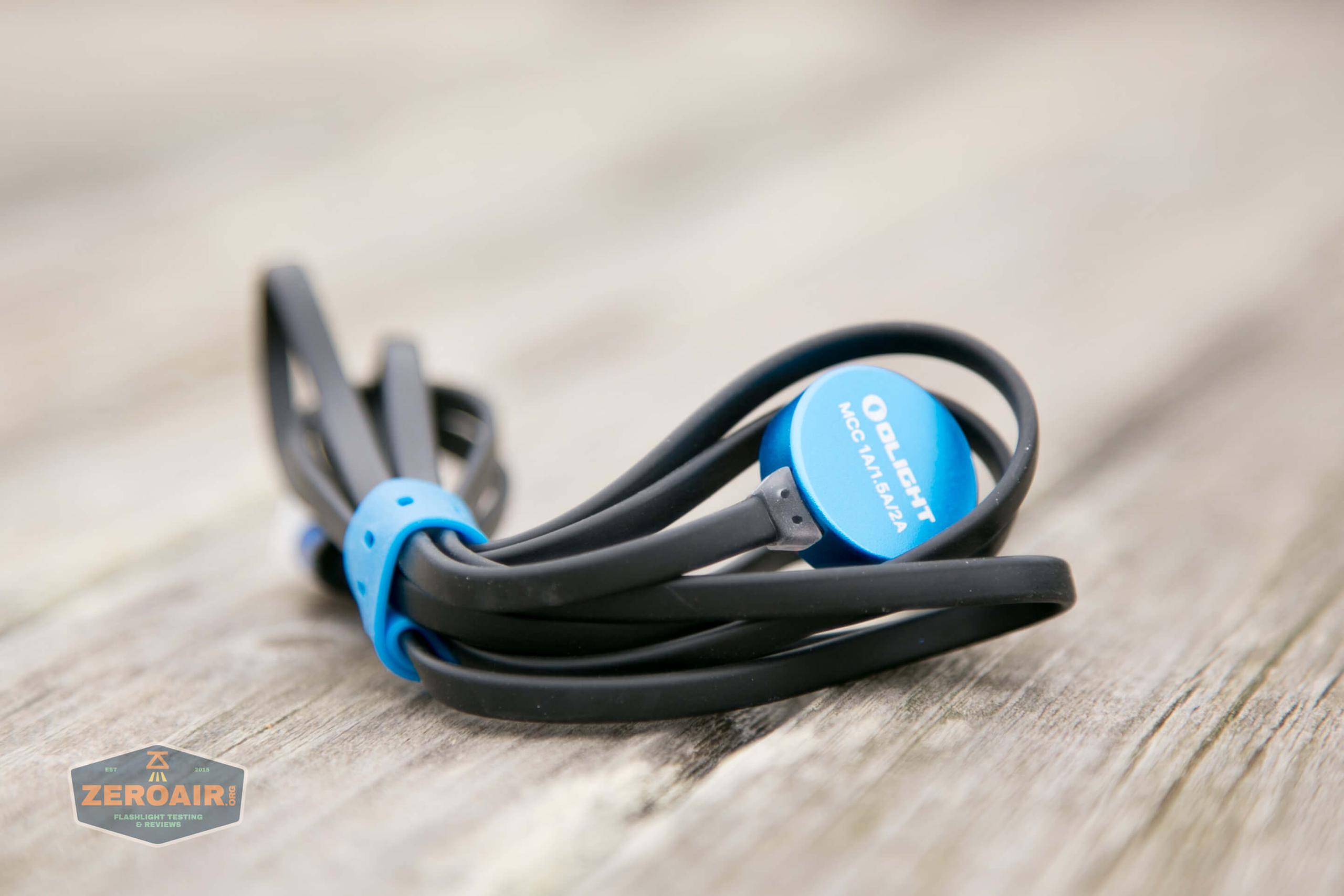
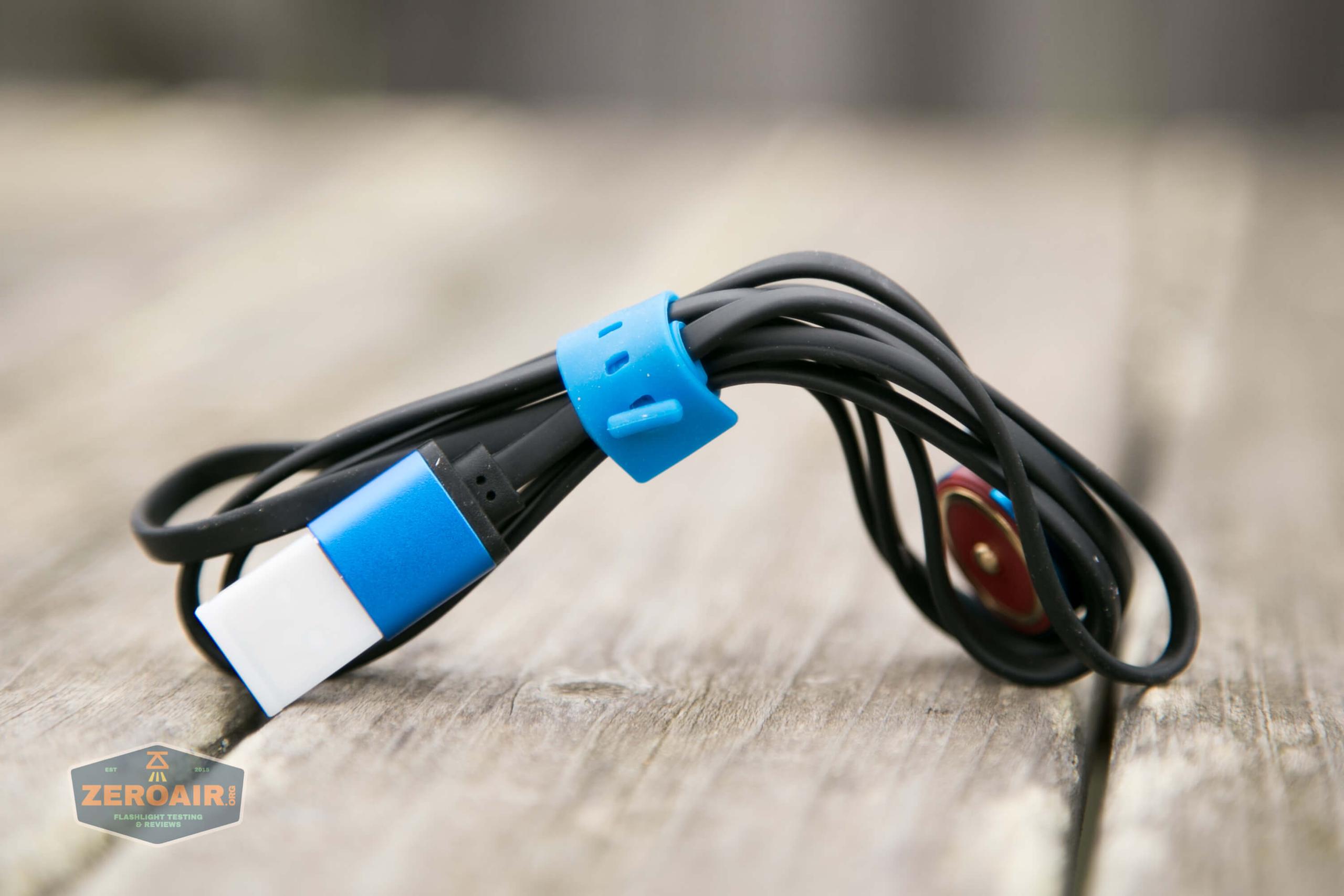
Included with the package is this charging cable. It’s a proprietary magnetic charge cable – the standard Olight MCC charge cable. However, this one is much longer than the standard version.
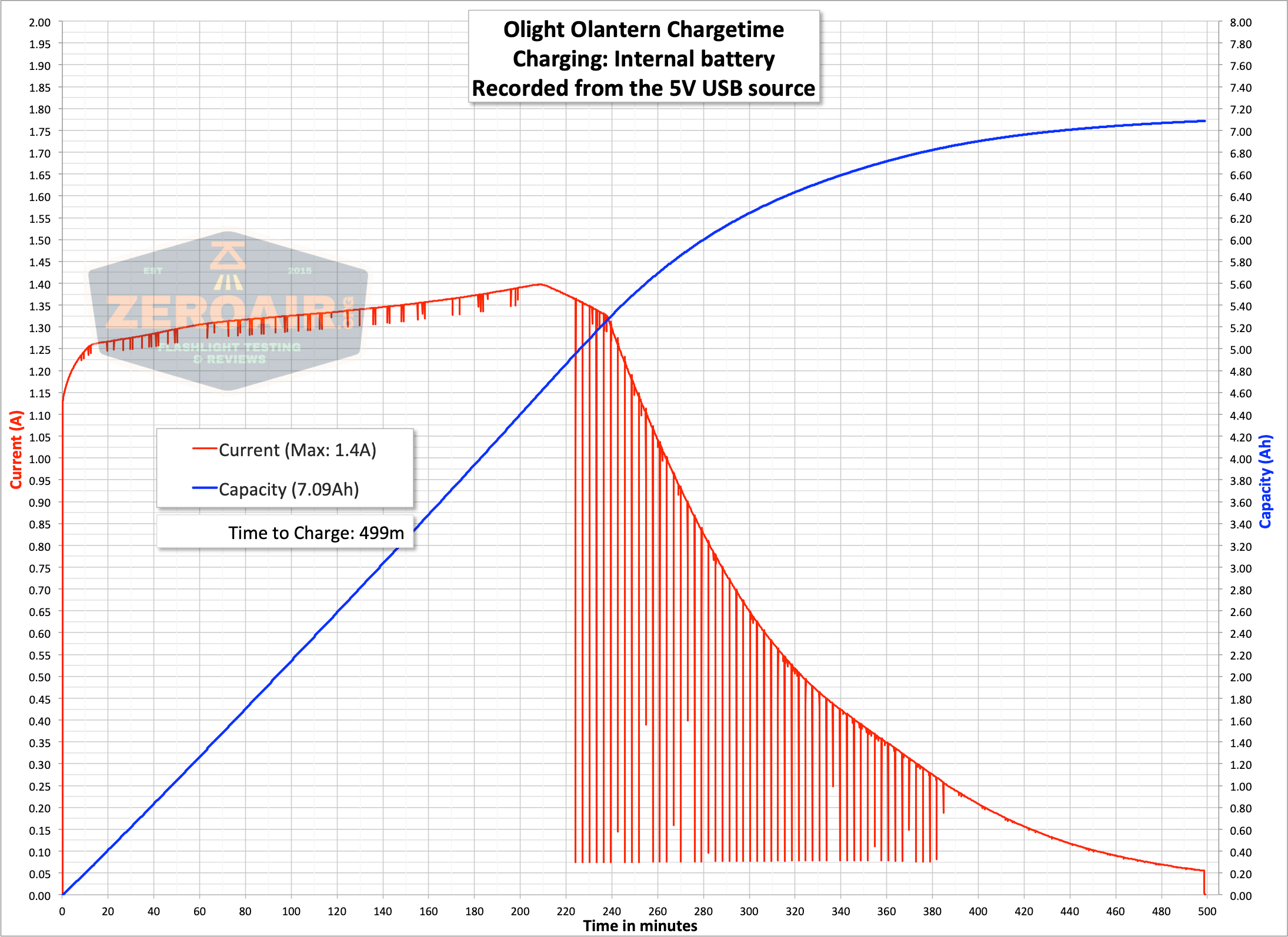
Here’s a charge graph. The specs are that this charges at 1.5A, and that is true. Charging takes just over 8 hours.
Modes and Currents
| Mode | Mode Claimed Output (lm) | Claimed Runtime | Measured Lumens | Tailcap Amps |
|---|---|---|---|---|
| High (White Lamp) | 360 | 6.5h | – | – |
| Medium (White Lamp) | 120 | 20h | – | – |
| Low (White Lamp) | 30 | 75h | – | – |
| On (Flame Lamp) | 1 | 80h | – | – |
Pulse Width Modulation
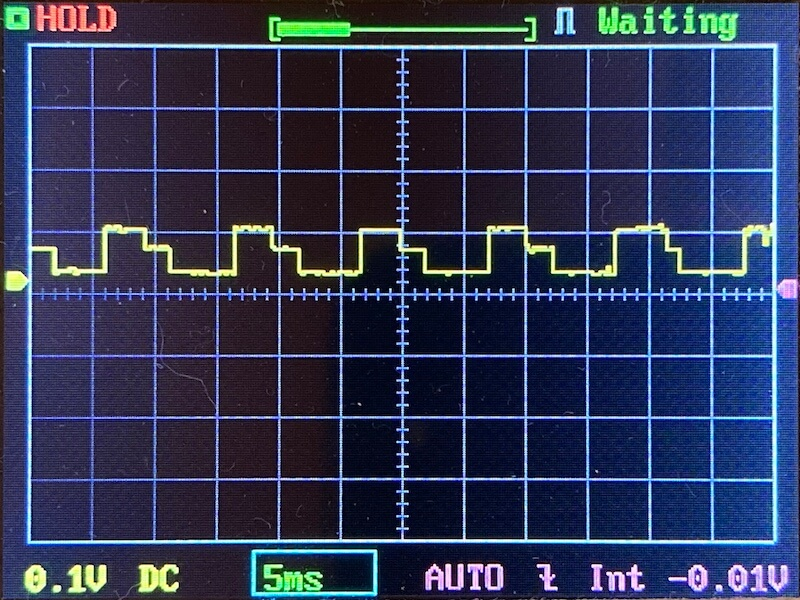
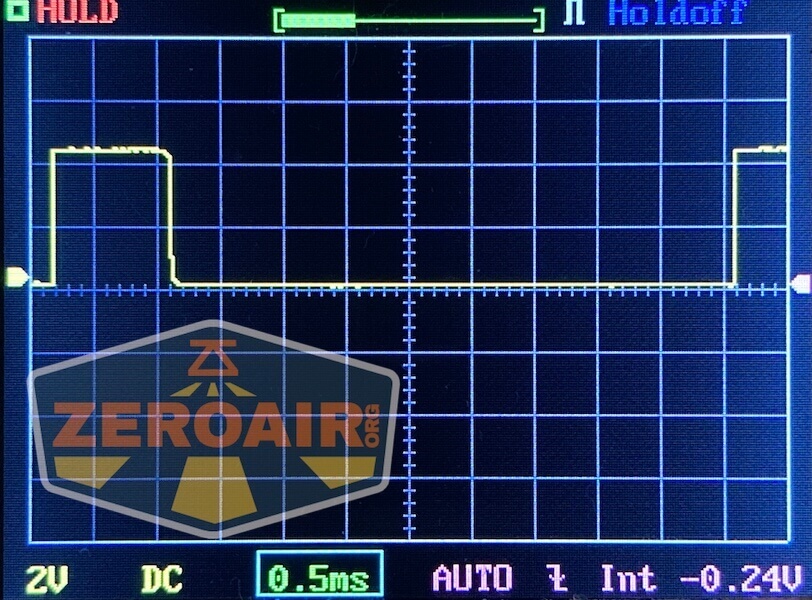
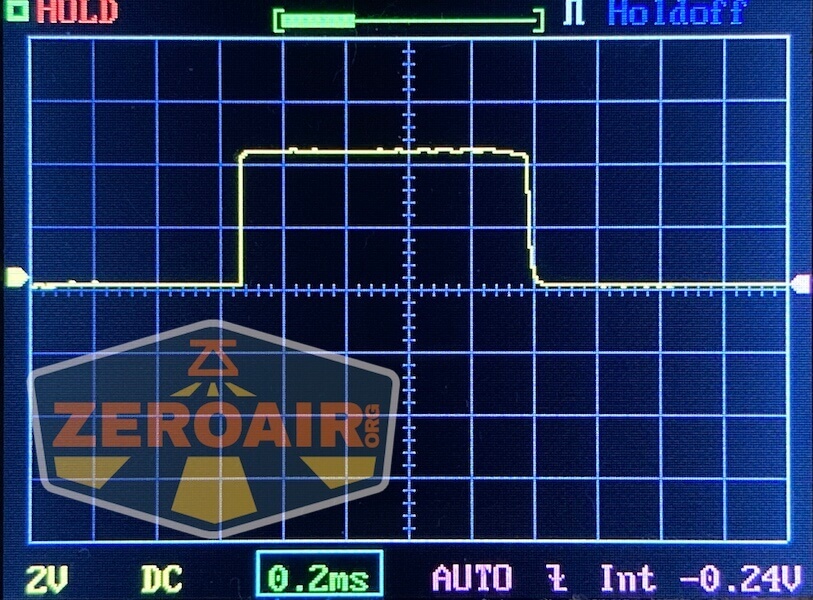
There isn’t any PWM on any of the modes. First is the Flame Lamp – the steps you see there is actually the flicker, which I’ve included only to show that it’s a repeated pattern (and not PWM).
 Now LMH of the White Lamp – no PWM.
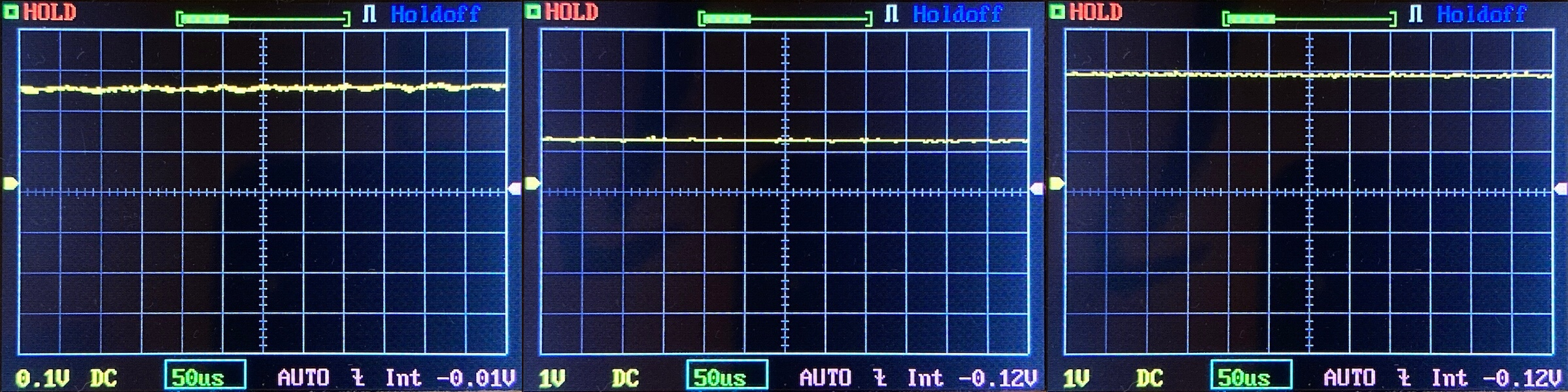 Here you can see a “baseline” – a chart with almost no light hitting the sensor.
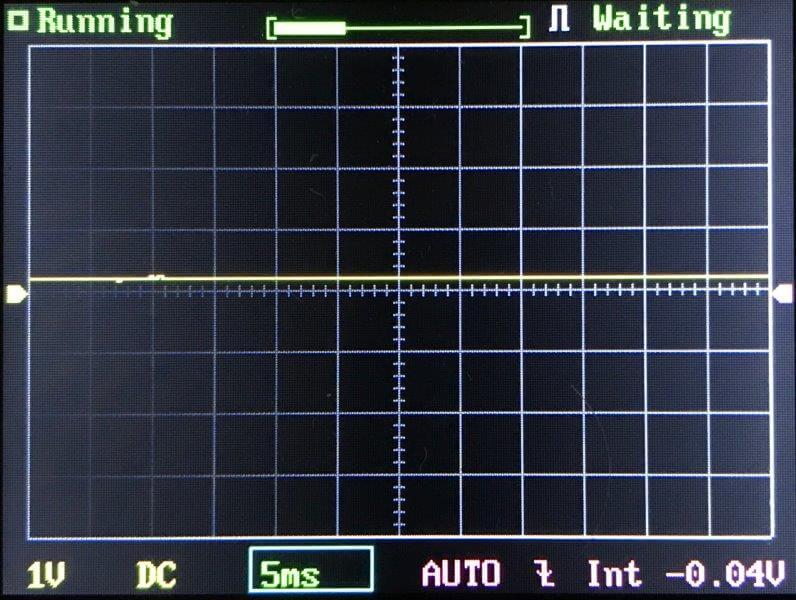
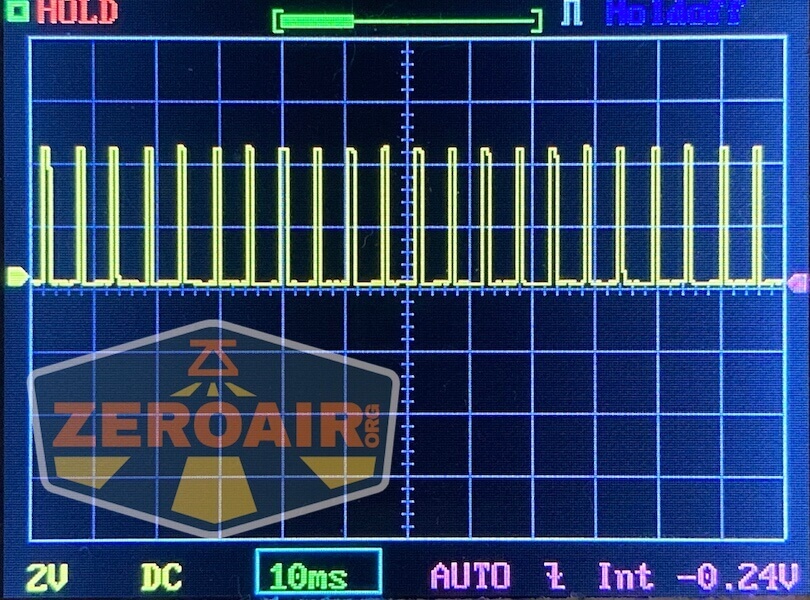
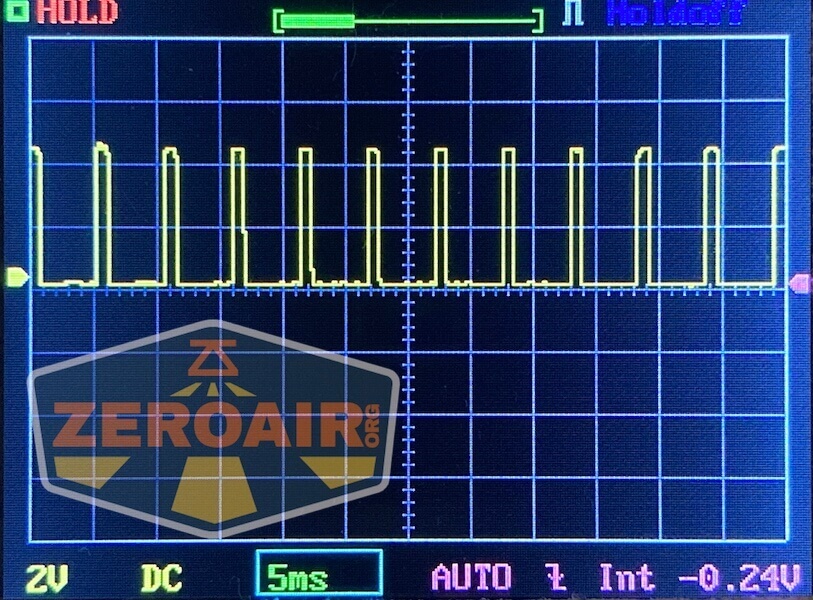
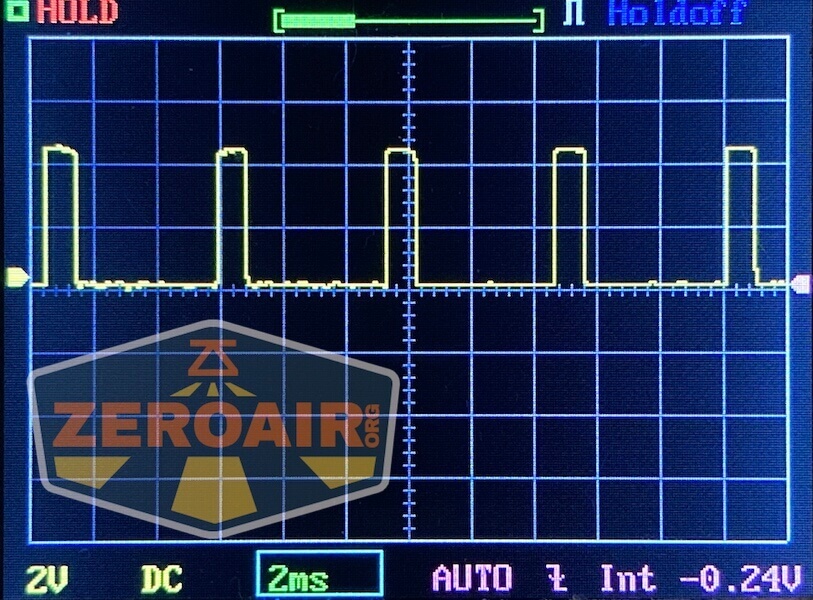
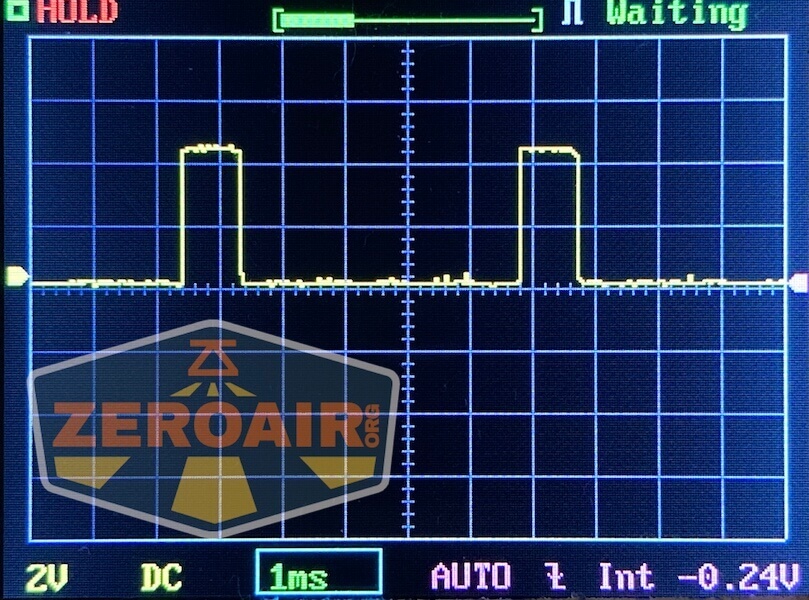
Then there’s the Ultrafire WF-602C flashlight, which has some of the worst PWM I’ve seen. It’s so bad that I used a post about it to explain PWM! Here are multiple timescales (10ms, 5ms, 2ms, 1ms, 0.5ms, 0.2ms) to make comparing this “worst” PWM light to the test light easier. That post also explains why I didn’t test the WF-602C at the usual 50us scale.
User Interface and Operation
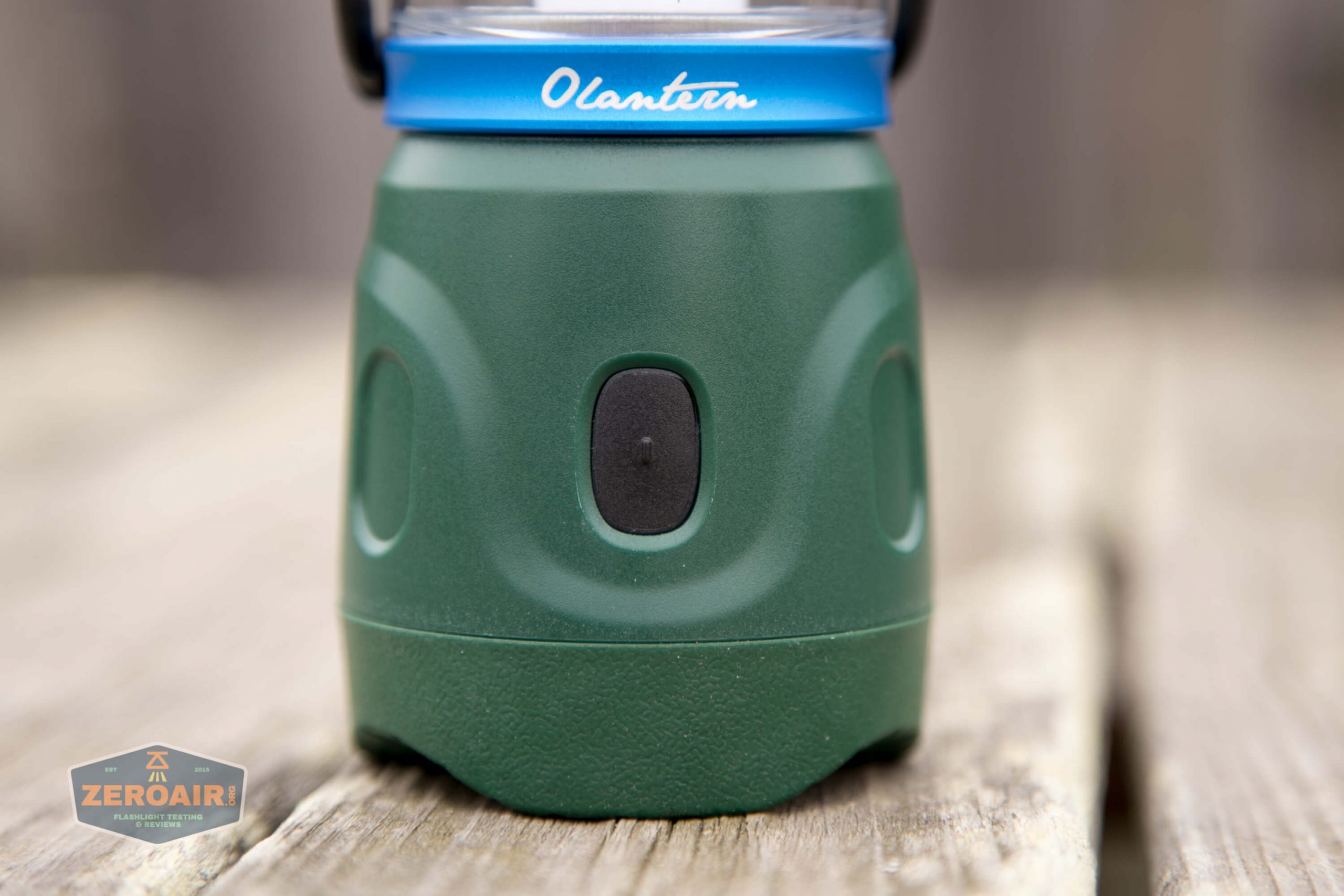
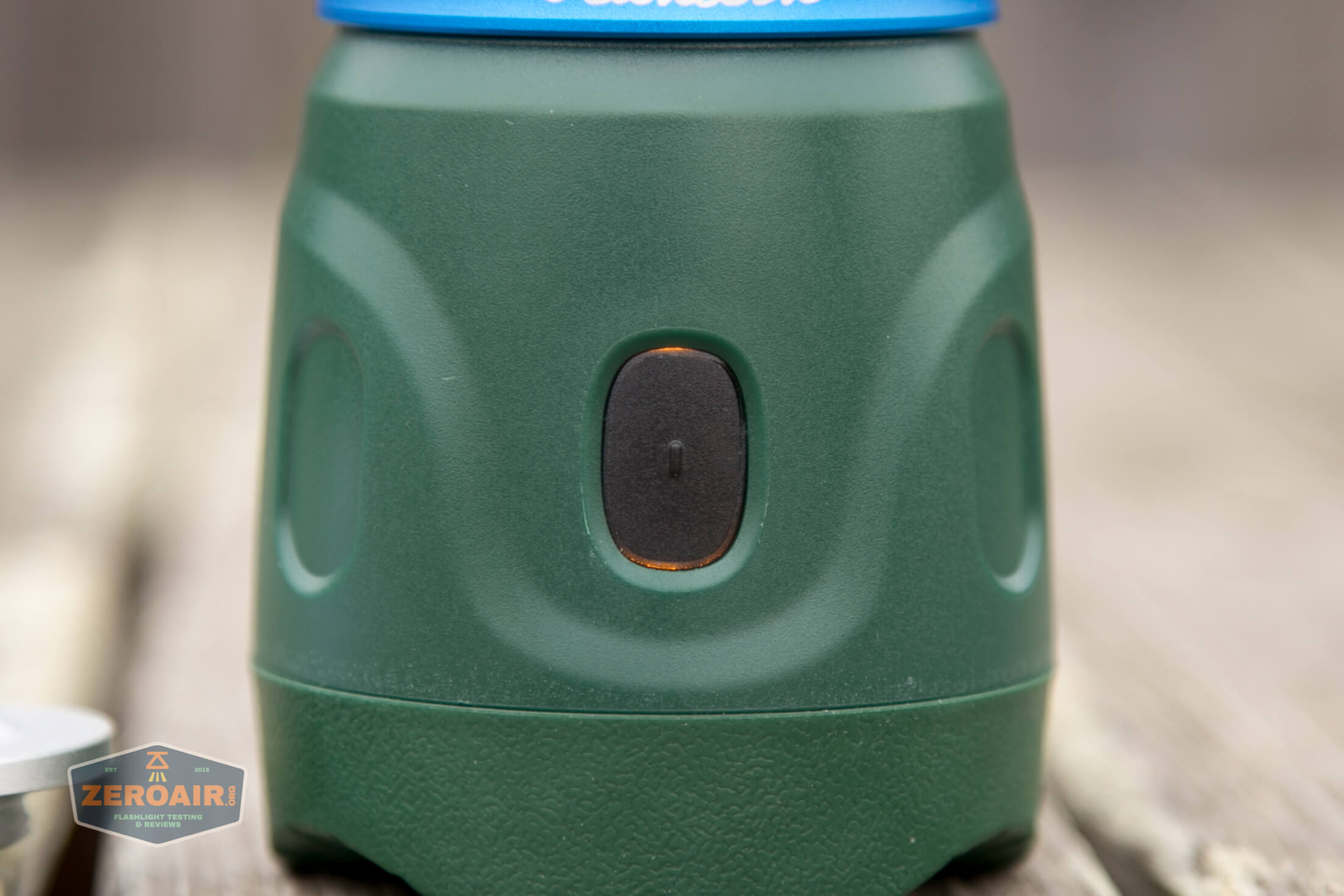
The switch of the Olantern is an indicating side e-switch. The switch itself is black and fits the pattern along the side of the body. That actually causes a problem, since by feel, the switch is almost indistinguishable from the rest of the body. The switch does have a nub in the center, however, which could be helpful.
The switch can indicate three colors. Red is one option.
Orange is another.
And when the charge is >70%, the switch will light green. The lighting is quite subtle, really.
Here’s a user interface table!
| State | Action | Result |
|---|---|---|
| Off | Click | On (Mode memory) |
| Off | Hold | Low |
| On | Hold | Mode advance (LMH) |
| On | Click | Off |
| Off | Hold (>2s) | Lockout |
| Lockout | Click | Switch blinks red for a few seconds to indicate lockout |
| Lockout | Hold | Unlock to Low |
Most of the above cover both the White and Flame lamps. Since there’s only one mode on the WW Lamp, there is no mode advancing or memory – it’s just the one setting.
LED and Beam
Olight doesn’t mention which emitters are used on the two Olantern options. I’m not sure that’s really much of a concern in this case (though I usually disagree with Olight not saying up front what emitters are used. These are so covered and so diffuse that it really doesn’t matter.
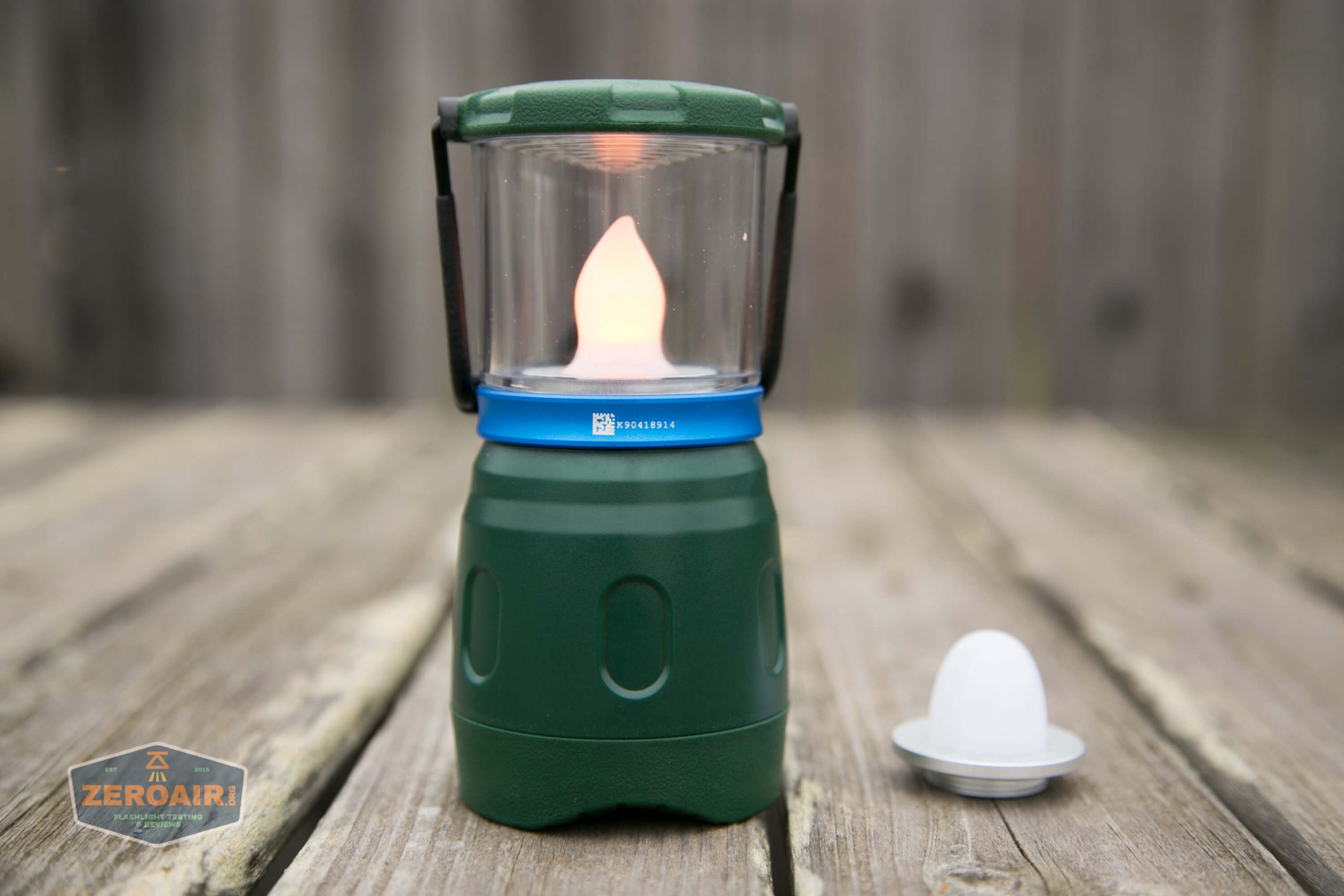
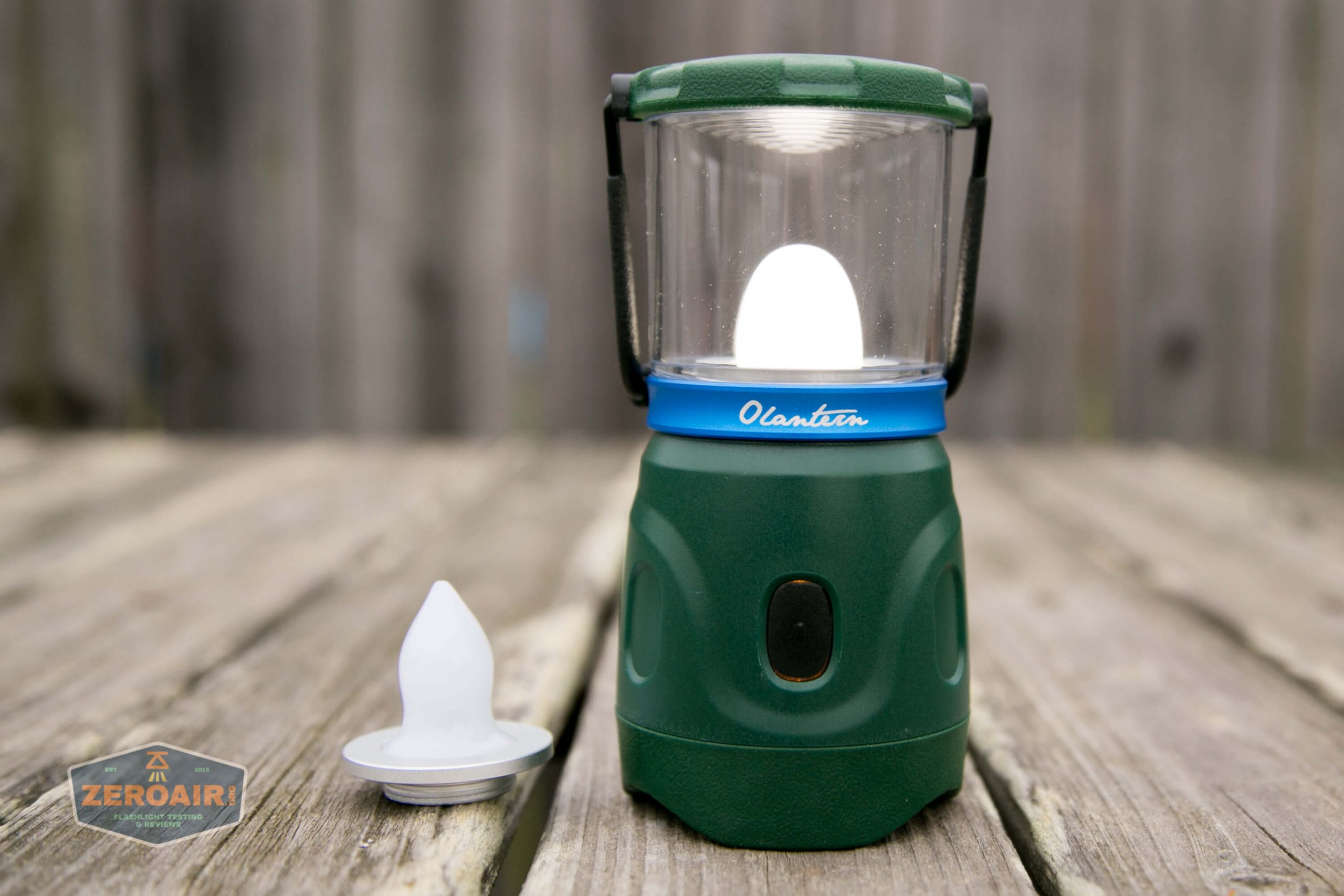
Below is the Flame Lamp. It has a fun, licking flame shape, which also serves to visually (and tactually, too) differentiate the two lamps.
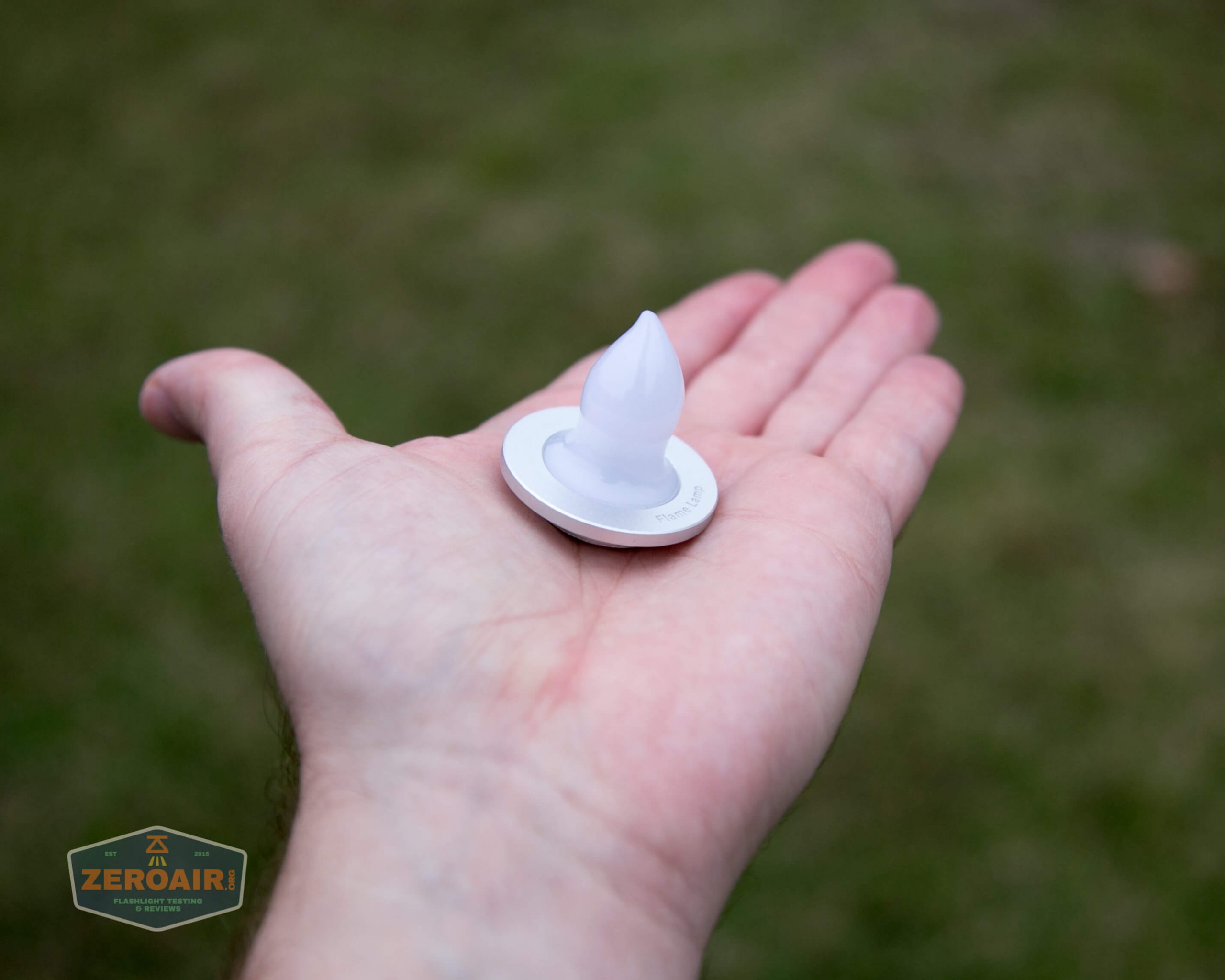
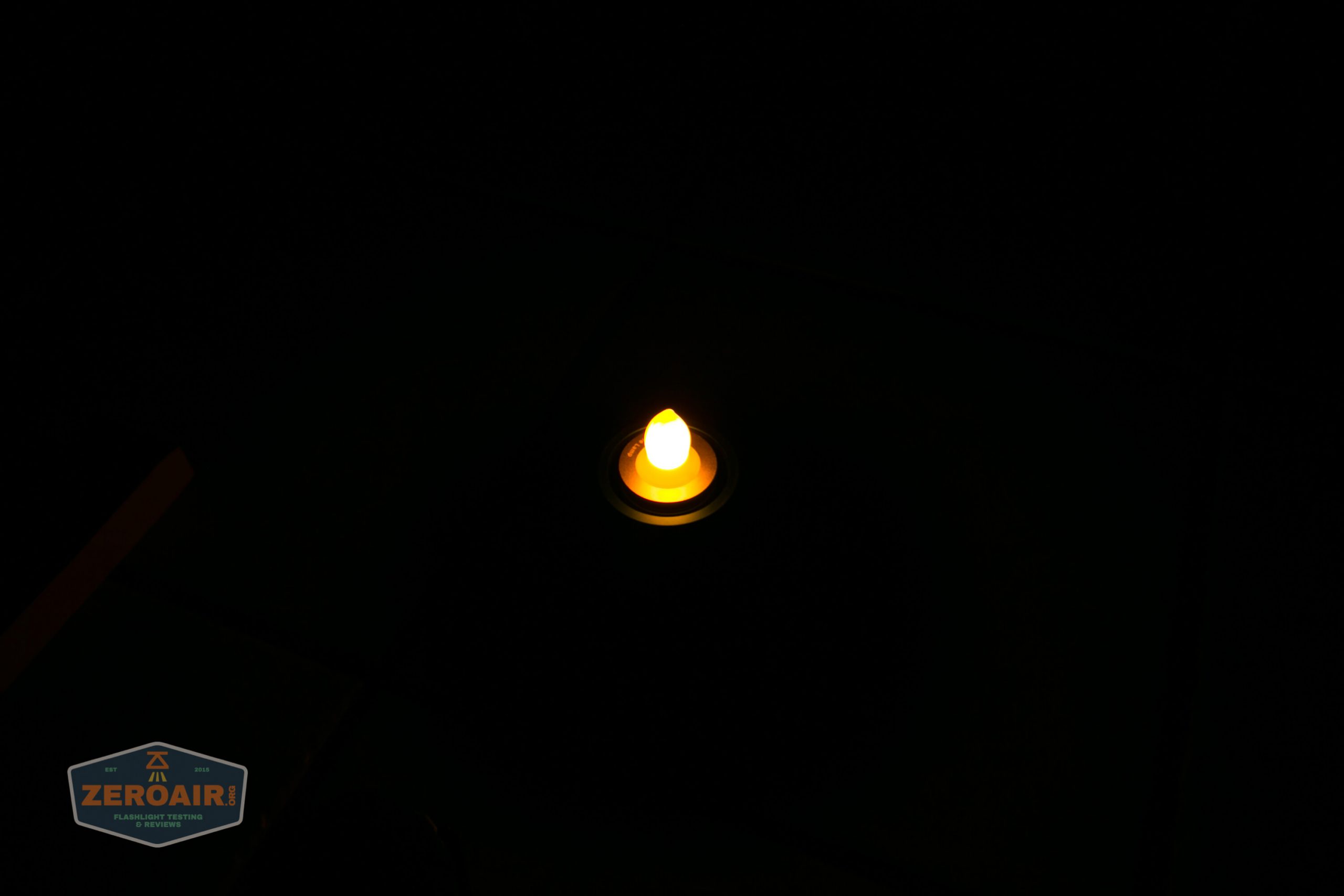
These just screw into the lantern base, with little difficulty.
Beamshots
These beamshots always have the following settings: f8, ISO100, 0.3s shutter, and manual 5000K exposure. These photos are taken at floor level, and the beam hits the ceiling around 9 feet away.
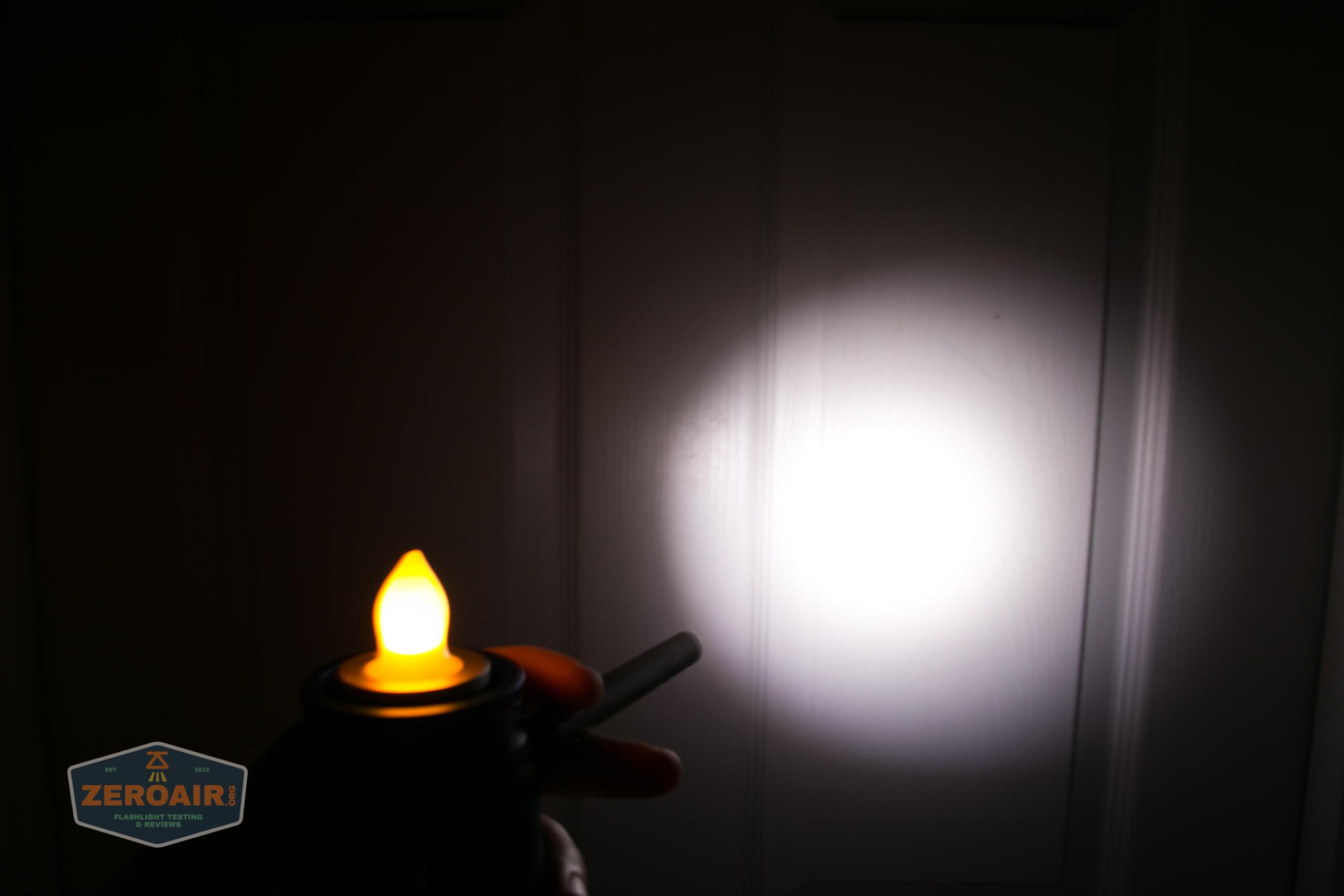
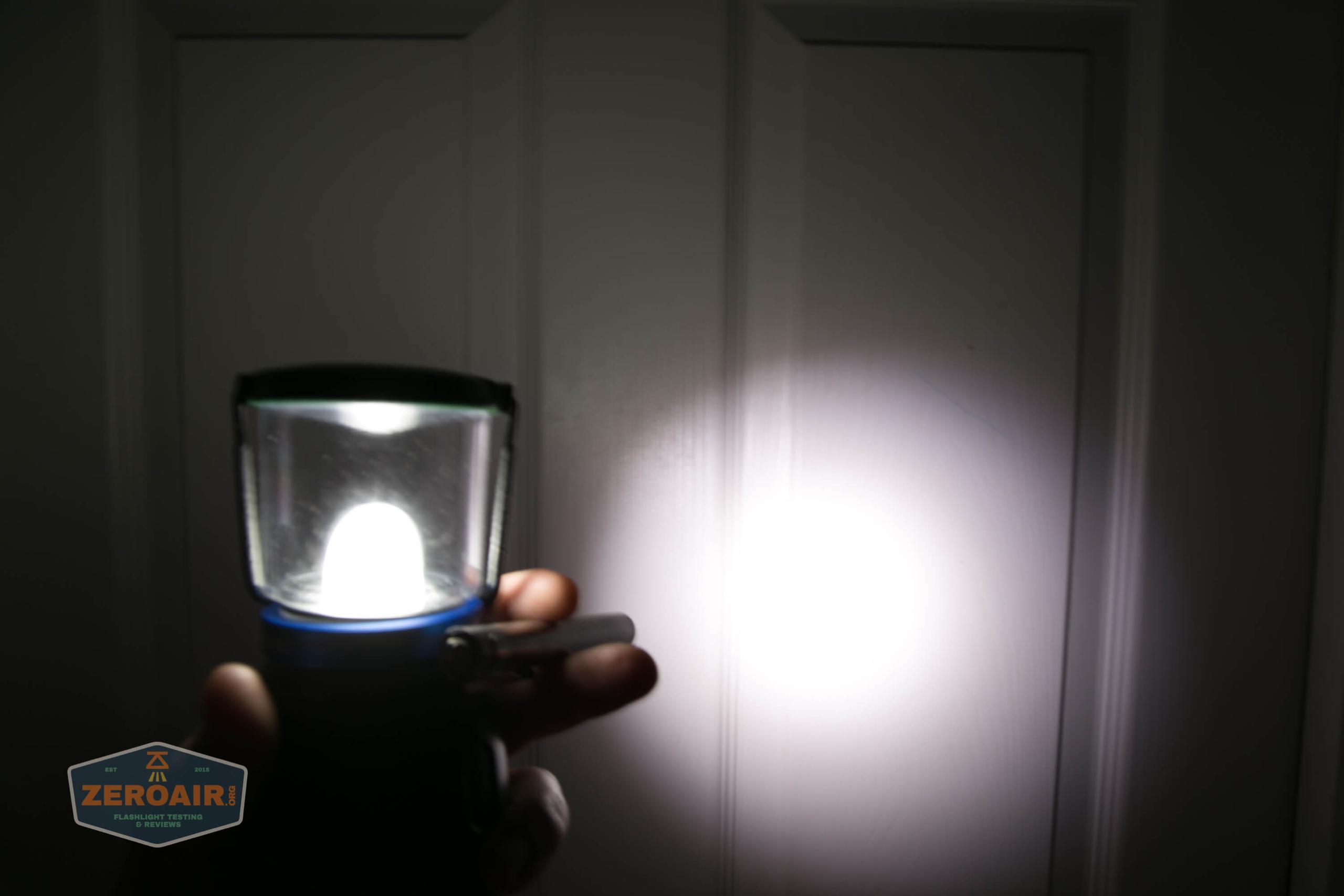
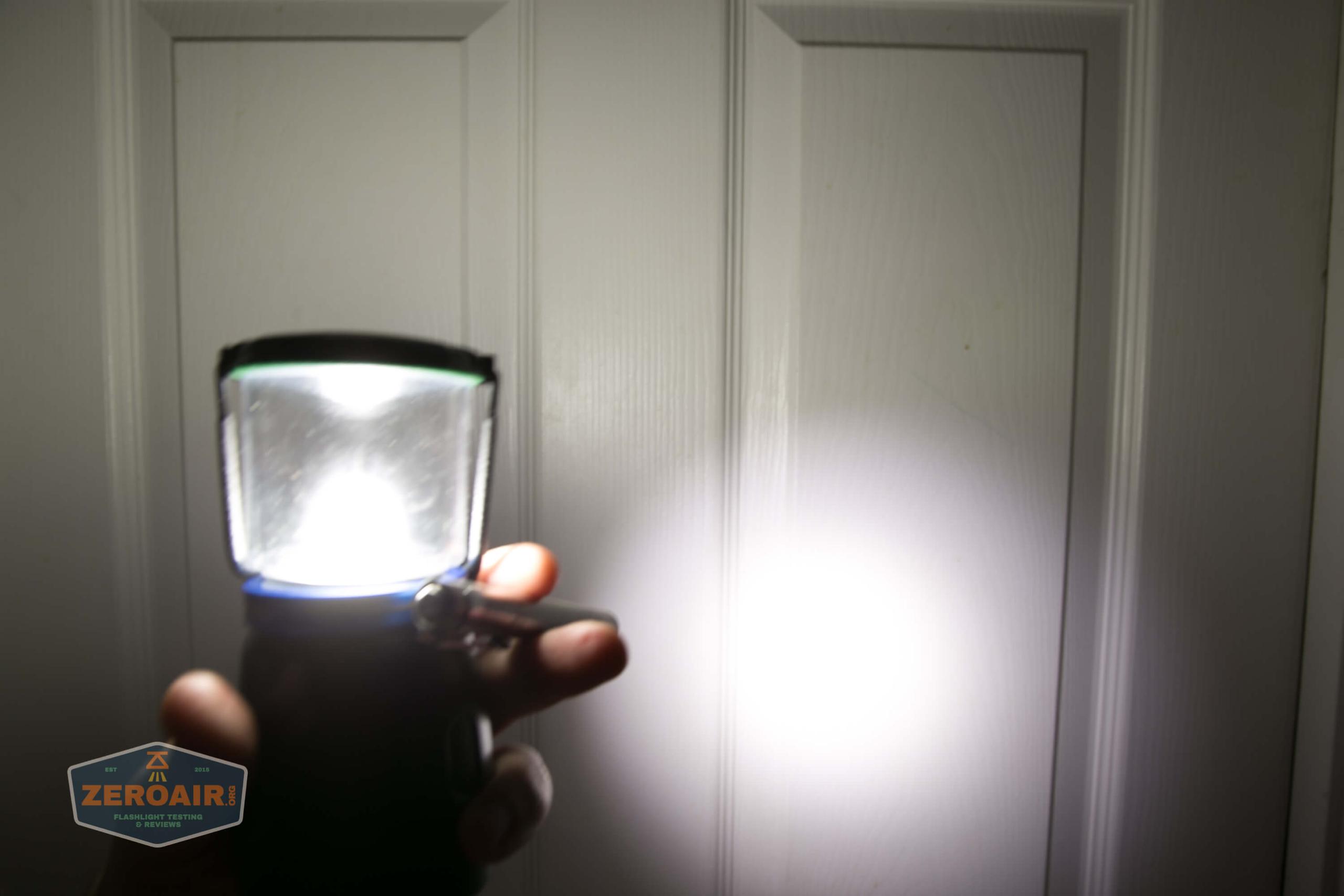
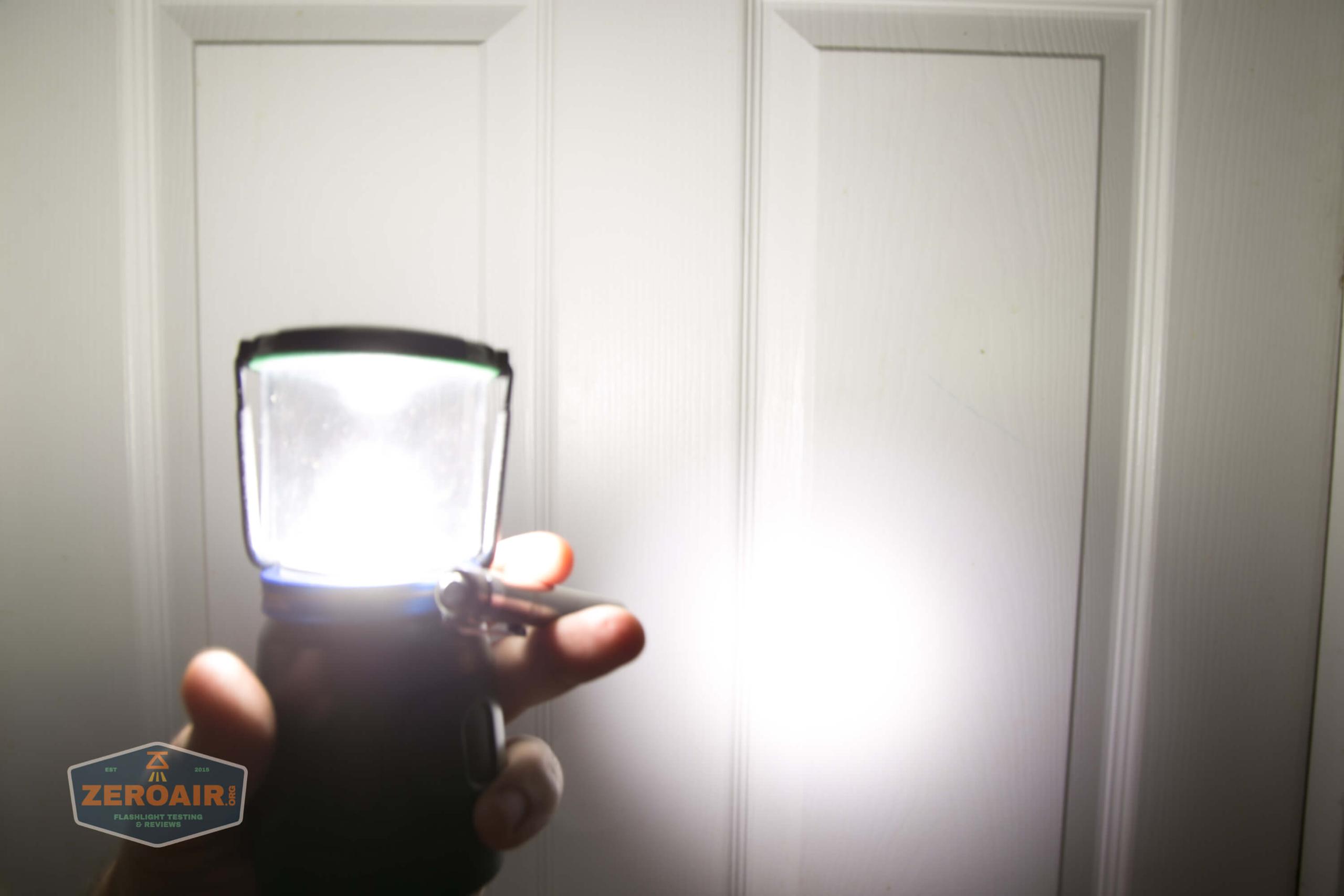
These beamshots aren’t really all that useful as the lantern doesn’t project all that well from my floor to the ceiling. But this does give you some idea. First is the Flame Lamp.

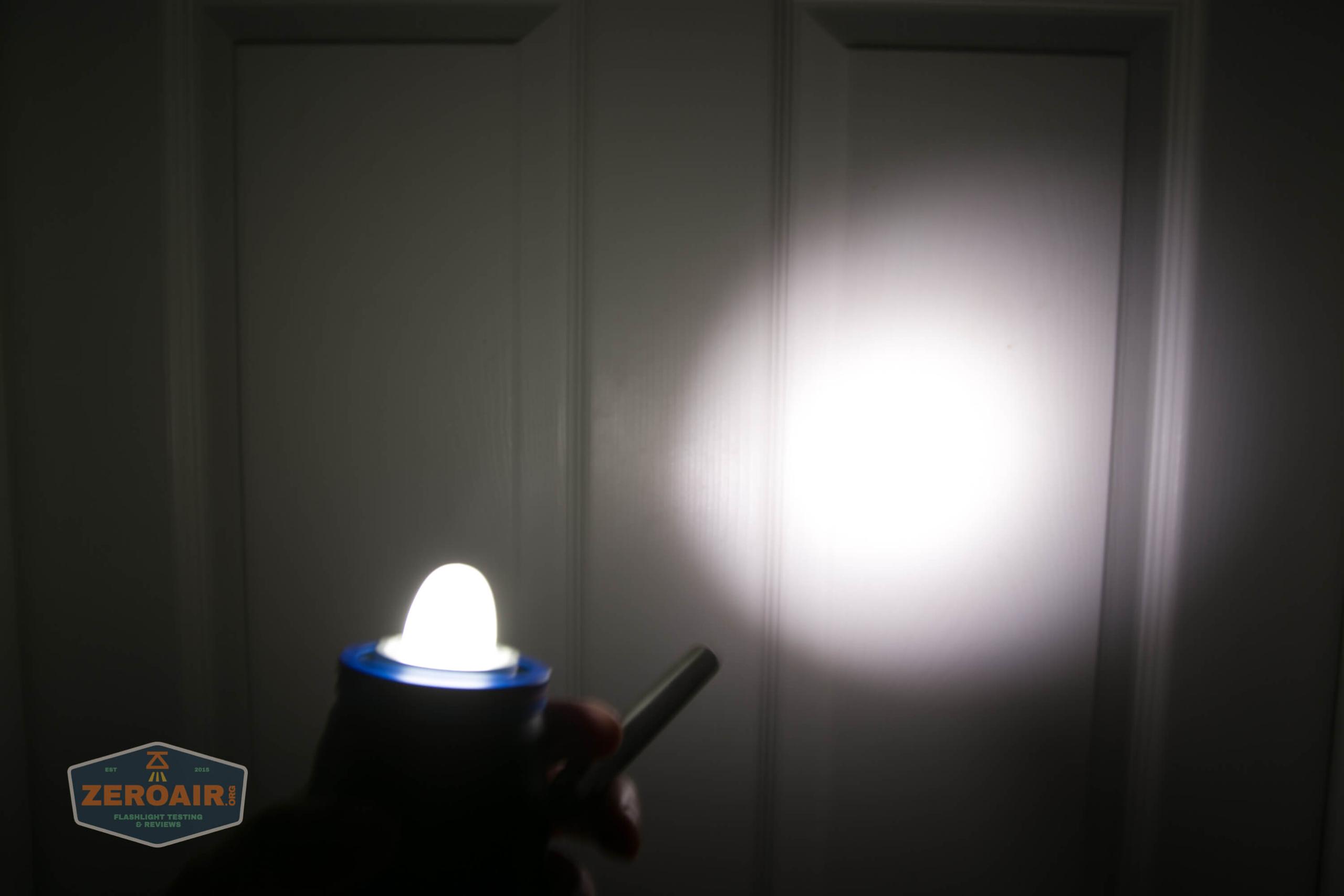
Next are a few options for the White Lamp. The first is with the top toward the ceiling. The top casts a shadow, of course.



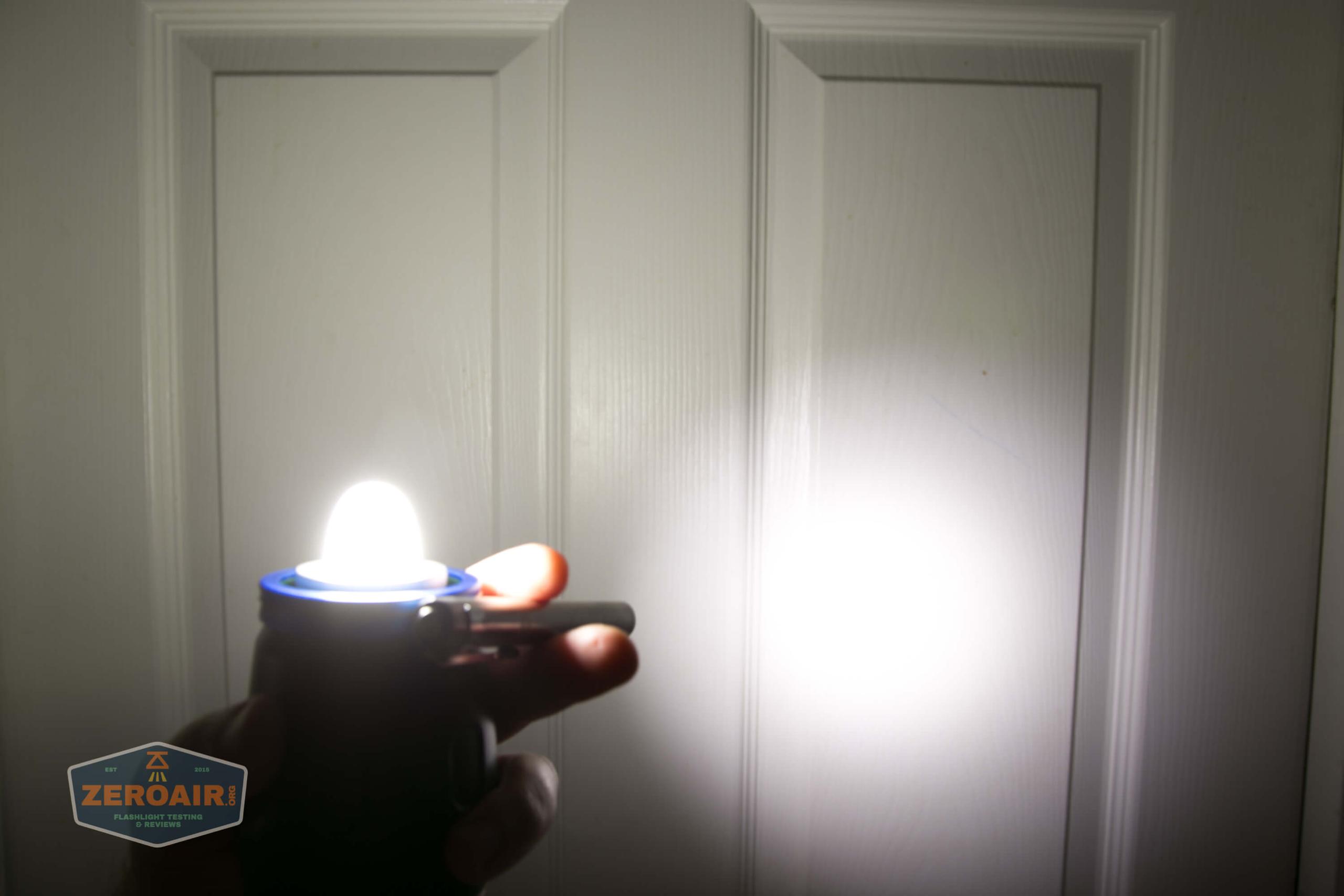
Next is the lantern with the side turned toward the ceiling (but with the top on).



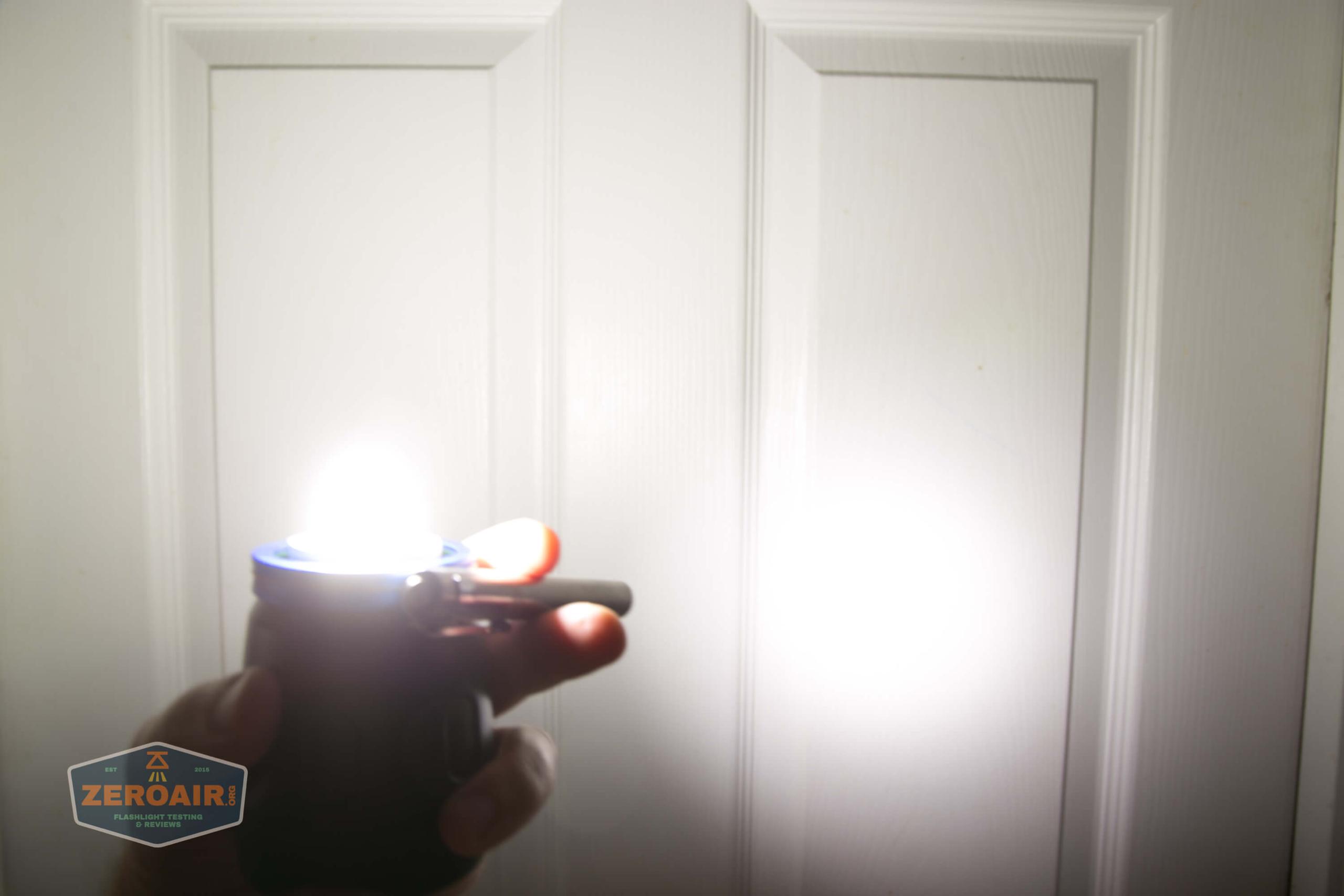
Finally is the lantern with the clear top is completely removed.



Tint vs BLF-348 (KillzoneFlashlights.com 219b version) (affiliate link)
I keep the test flashlight on the left and the BLF-348 reference flashlight on the right.
I compare everything to the KillzoneFlashlights.com 219b BLF-348 because it’s inexpensive and has the best tint!
Conclusion
What I like
- Flame Lamp is a fun and long-lasting option
- Great nostalgic look
- Easy user interface
- Works while on charge base
What I don’t like
- Price is high
- Cells are not changeable
- Switch hard to find by feel
- No powerbank option
Notes
- This light was provided by Olight for review. I was not paid to write this review.
- This content originally appeared at zeroair.org. Please visit there for the best experience!
- Use my amazon.com referral link if you’re willing to help support making more reviews like this one!
- Please support me on Patreon! I deeply appreciate your support!
Discover more from ZeroAir Reviews
Subscribe to get the latest posts sent to your email.
Did the fresnel looking lens above the LED actually do anything? I can’t really tell from the beam shots.
I’m going to go with a hearty “not really.” It probably is supposed to deflect the upwards light outward, and I can’t speak to much there. But the top is solid, so it doesn’t direct any light upwards….
Comparison with LT1?
I don’t have an LT1 to compare it. I think the LT1 is bigger, but probably superior in almost every other way. The cells can be removed. They’re bigger cells so more capacity (theoretically, with the right cells). It runs on “real flashlight” user interface (Anduril, and I think there are some other options?)
I do have a Q8, however, and I’d probably just throw a fancy diffuser on that one and call it good as a lantern.
Nowhere do I see you or Olight mention the materials it is made of. Looks like only the blue bezel and “lamp” pill are aluminum. The rest of it looks like it is poorly molded plastic, including the clear cover and the green cap on top. I think they have a log of nerve charging to much for a cheaply made product. It is tiny enough that for that price the entire body, except for the clear parts, should be made from machined aluminum. At least for that price they could clean off the flashing from the plastic molds.
You did call their negative on limited battery capacity and lack of USB external device charging which would have really been welcome if not completely required this day and age. Not surprised Olight sells a $35 lantern for $80 but that is what their flash sales are for. They are the Invicta of the flashlight world. This lantern looks like a loser to me. I’m sure the dedicated Olight zealots will eat it up like candy. They can release a new color in 6 months and sell 5 more to every one that buys one of these.
Pingback: Imalent RT90 Luminus SBT-90.2 Flashlight Review - ZeroAir Reviews