
Lumintop EDC AA Flashlight Review
There’s a new AA light on the market, and fortunately, it’s quite versatile – it supports AA (Alkaline/NiMH) and 14500 as well! It’s the Lumintop EDC AA flashlight, a simple flashlight with a mechanical clicky tail switch.
Official Specs and Features
Here’s a link to the official product page.
Versions
Initially, there was one version only, but I’m relatively sure the line has been expanded to include a Nichia version as well as the original Osram edition. There is only one body, however.
Price
These are listed at $19.95. Very nice for a light that supports both NiMH and lithium-ion chemistry!
Short Review
This is a good little light for the price of $20. I’d say get the Nichia version if you can, unless you like cool white. Multiple chemistry support is praise-worthy on a $20 light (something other lights 10x the price don’t even offer!)
Long Review
The Big Table
| Lumintop EDC AA | |
|---|---|
| Emitter: | Osram Pusra1.PM (6500K) |
| Price in USD at publication time: | $19.95 |
| Cell: | 1xAA |
| Turbo Runtime | High Runtime |
| LVP? | |
| Switch Type: | Mechanical |
| On-Board Charging? | No |
| Claimed Lumens (lm) | 180 |
| Measured Lumens (at 30s) | 147 (81.7% of claim)^ |
| Candela per Lumen | 1.4 |
| Claimed Throw (m) | 61 |
| Candela (Calculated) in cd (at 30s) | 25lux @ 3.064m = 235cd |
| Throw (Calculated) (m) | 30.6 (50.2% of claim)^ |
| All my Lumintop reviews! | |
| Lumintop EDC AA | |
|---|---|
| Emitter: | Osram Pusra1.PM (6500K) |
| Price in USD at publication time: | $19.95 |
| Cell: | 1×14500 |
| Turbo Runtime | High Runtime |
| LVP? | |
| Switch Type: | Mechanical |
| On-Board Charging? | No |
| Claimed Lumens (lm) | 600 |
| Measured Lumens (at 30s) | 641 (106.8% of claim)^ |
| Candela per Lumen | 1.5 |
| Claimed Throw (m) | 61 |
| Candela (Calculated) in cd (at 30s) | 106lux @ 3.214m = 1095cd |
| Throw (Calculated) (m) | 66.2 (108.5% of claim)^ |
| All my Lumintop reviews! | |
^ Measurement disclaimer: Testing flashlights is my hobby. I use hobbyist-level equipment for testing, including some I made myself. Try not to get buried in the details of manufacturer specifications versus measurements recorded here; A certain amount of difference (say, 10 or 15%) is perfectly reasonable.
What’s Included
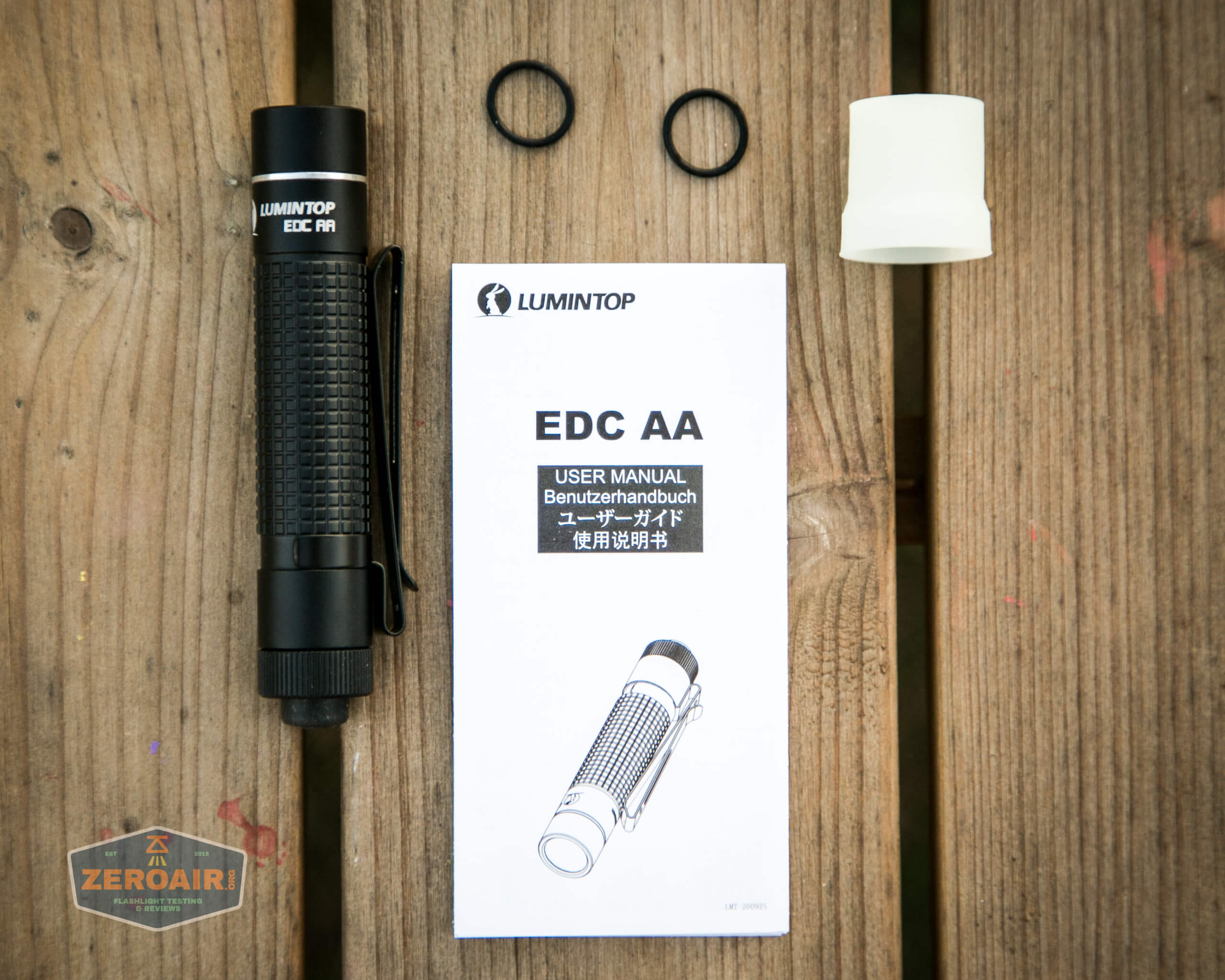
- Lumintop EDC AA Flashlight
- Spare o-rings (2)
- Glow diffuser
- Manual
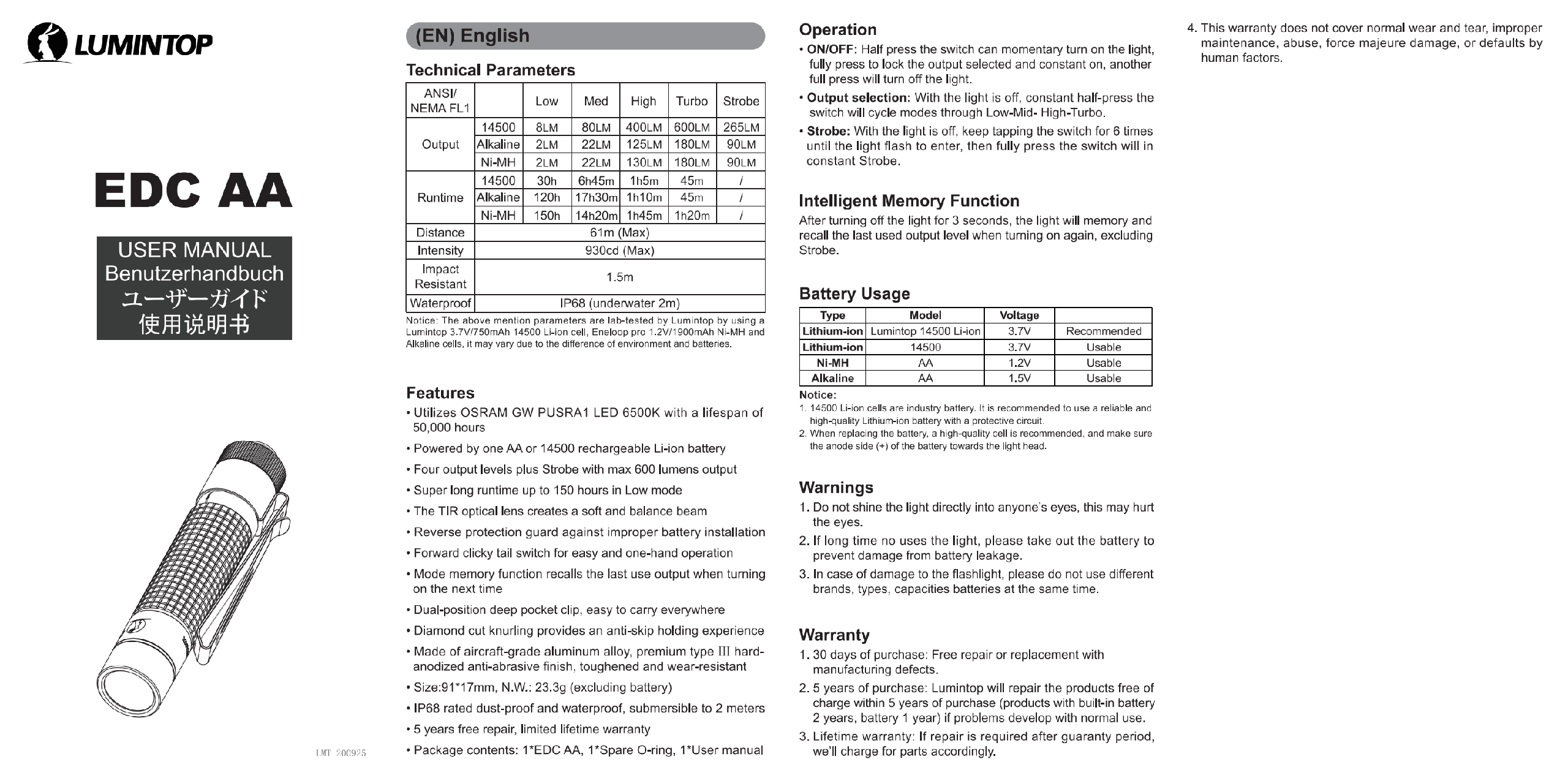
Package and Manual
Build Quality and Disassembly
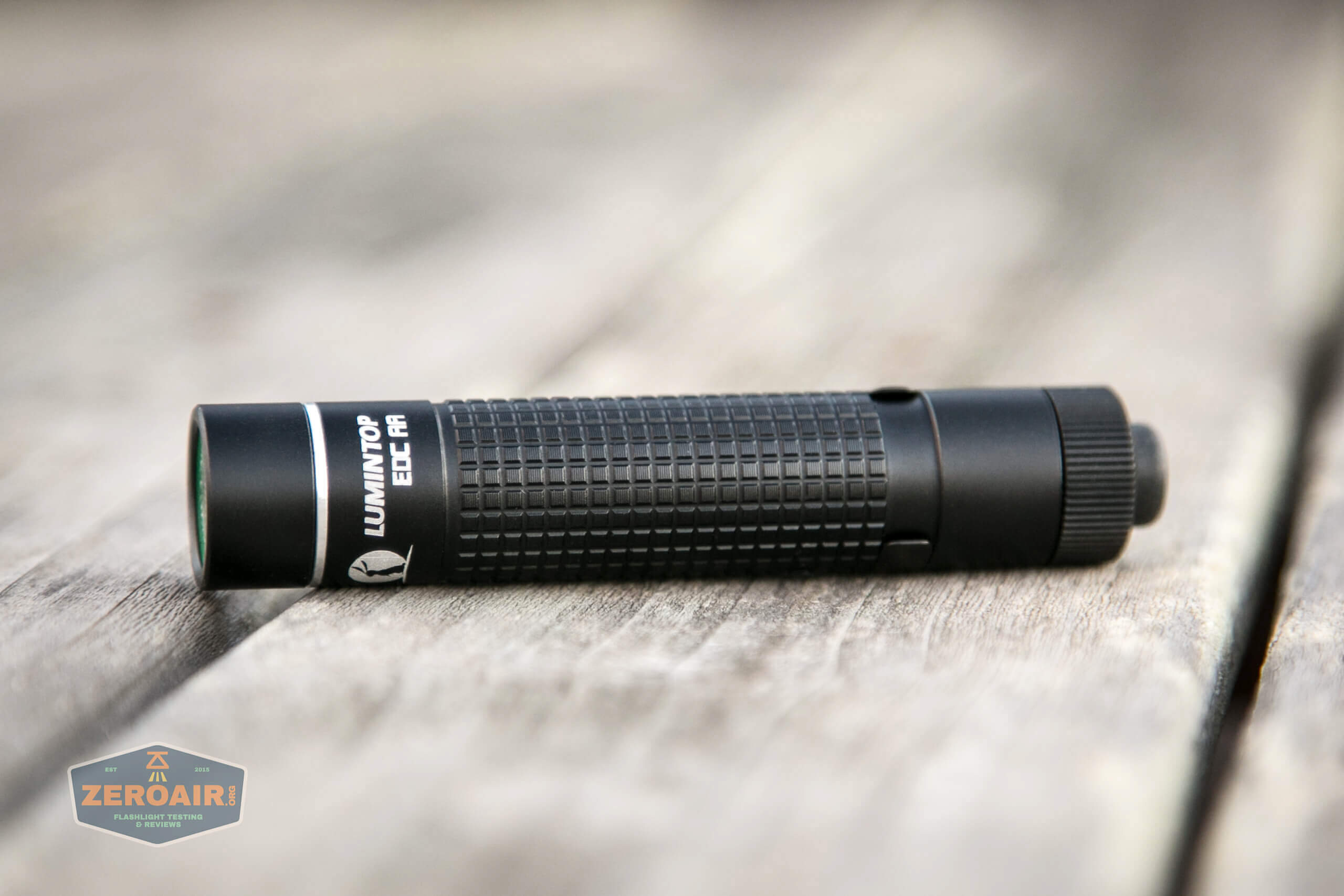
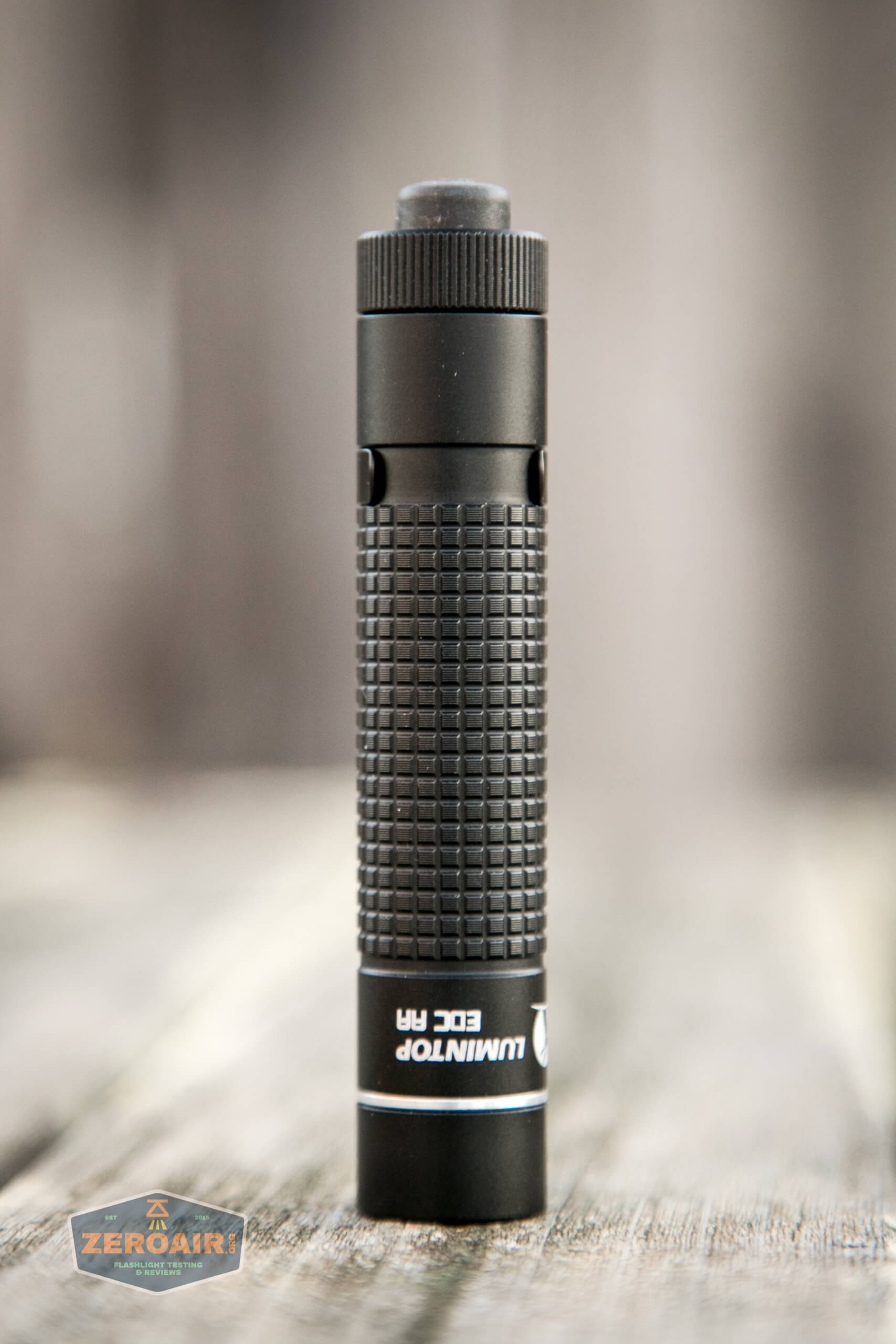
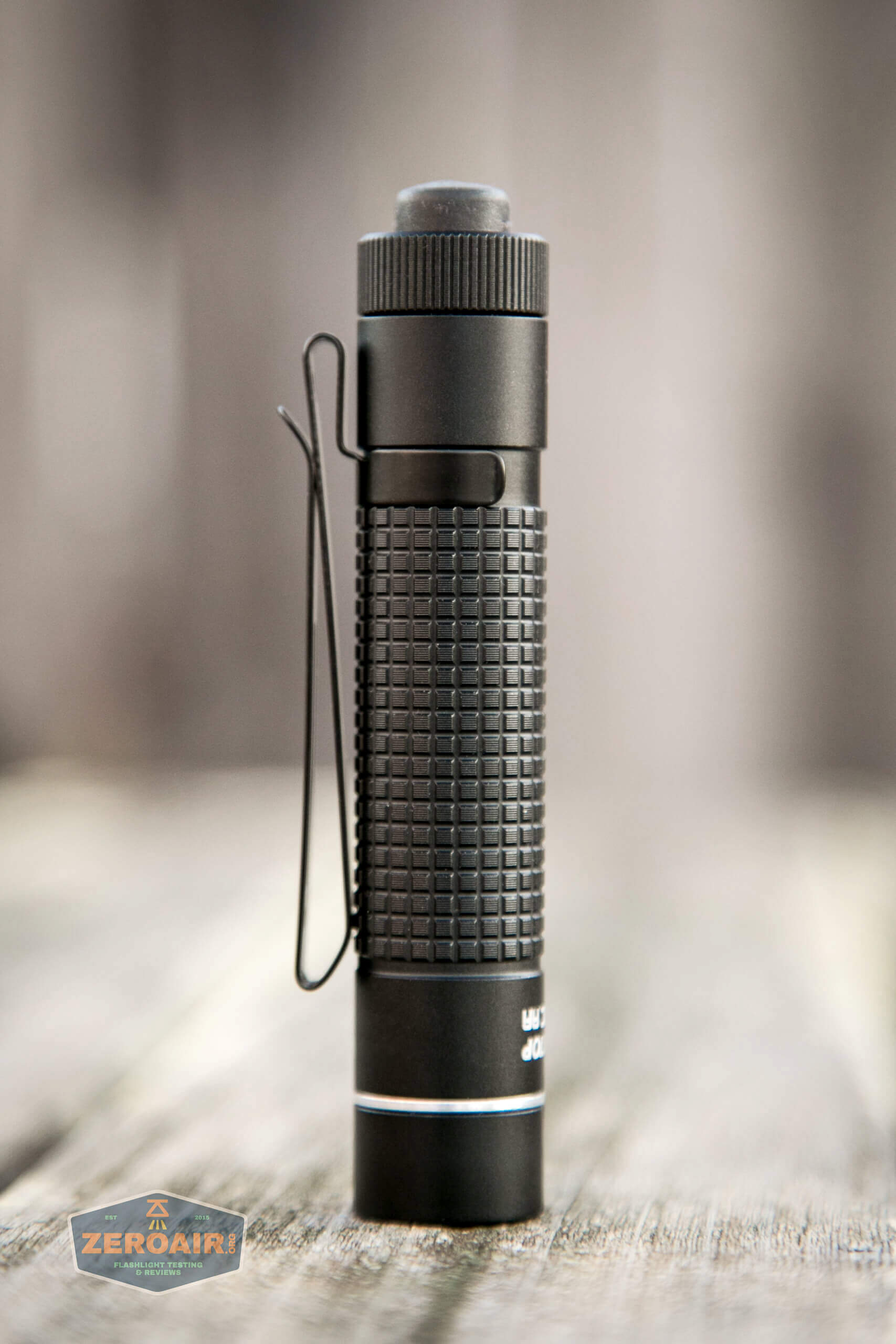
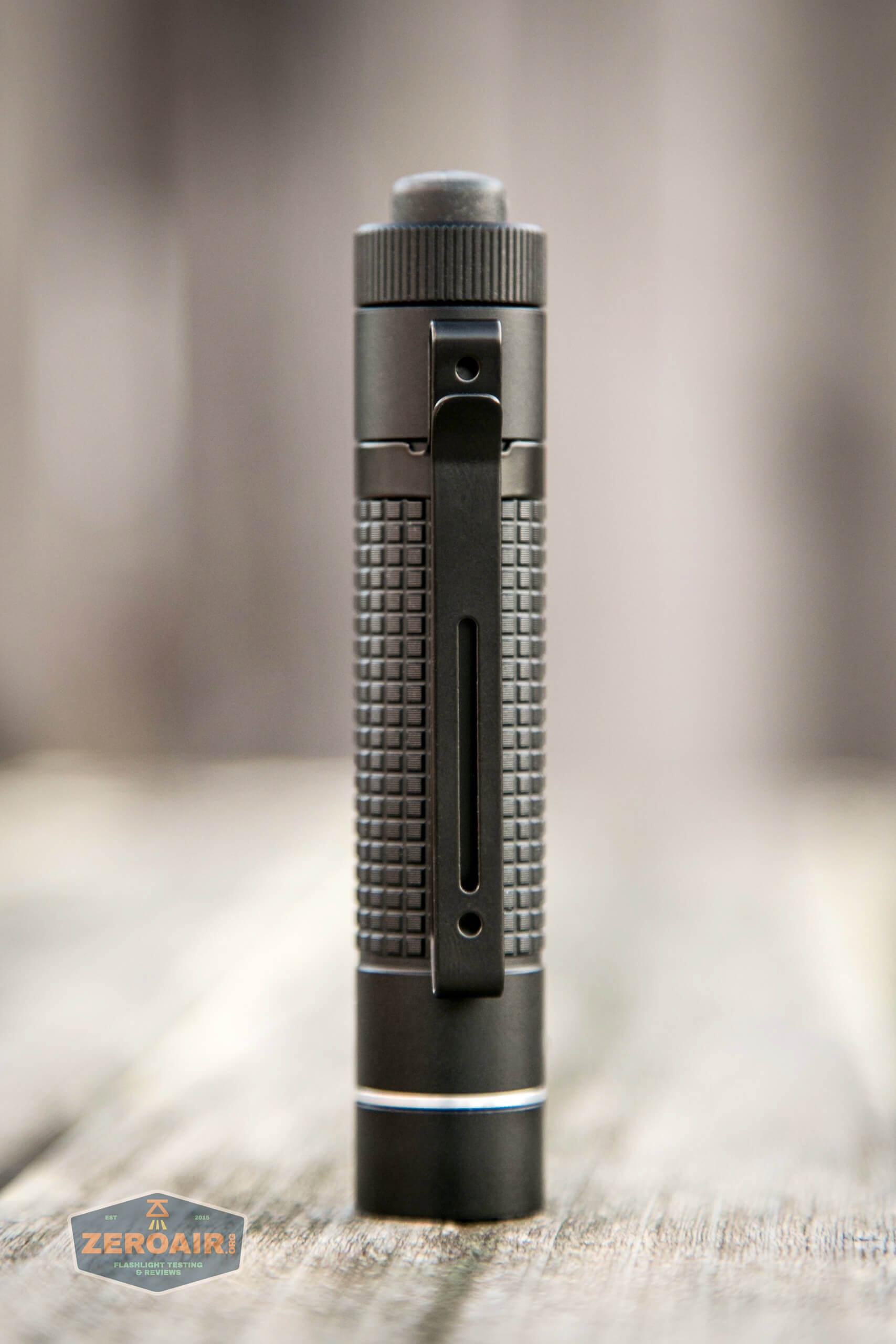
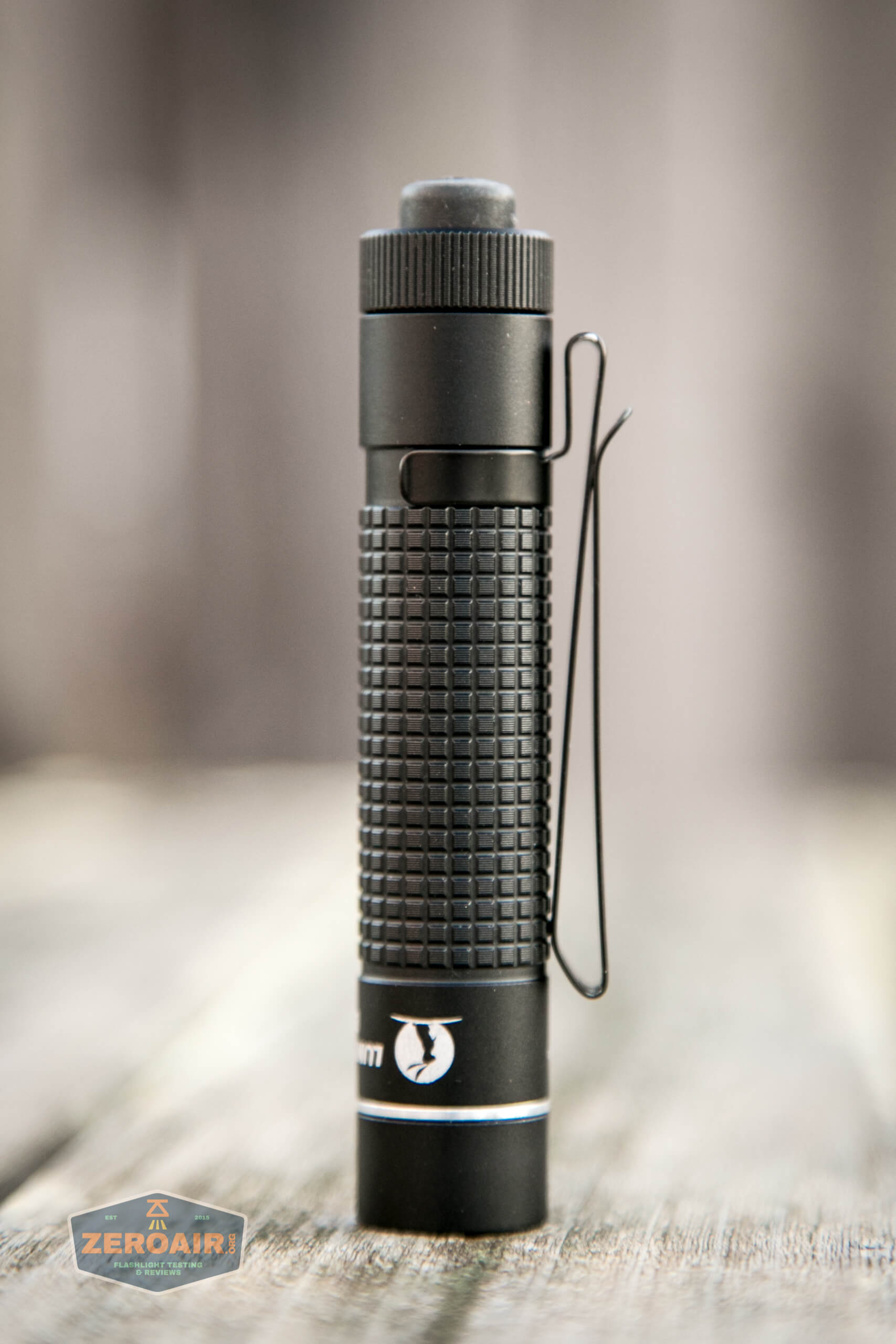
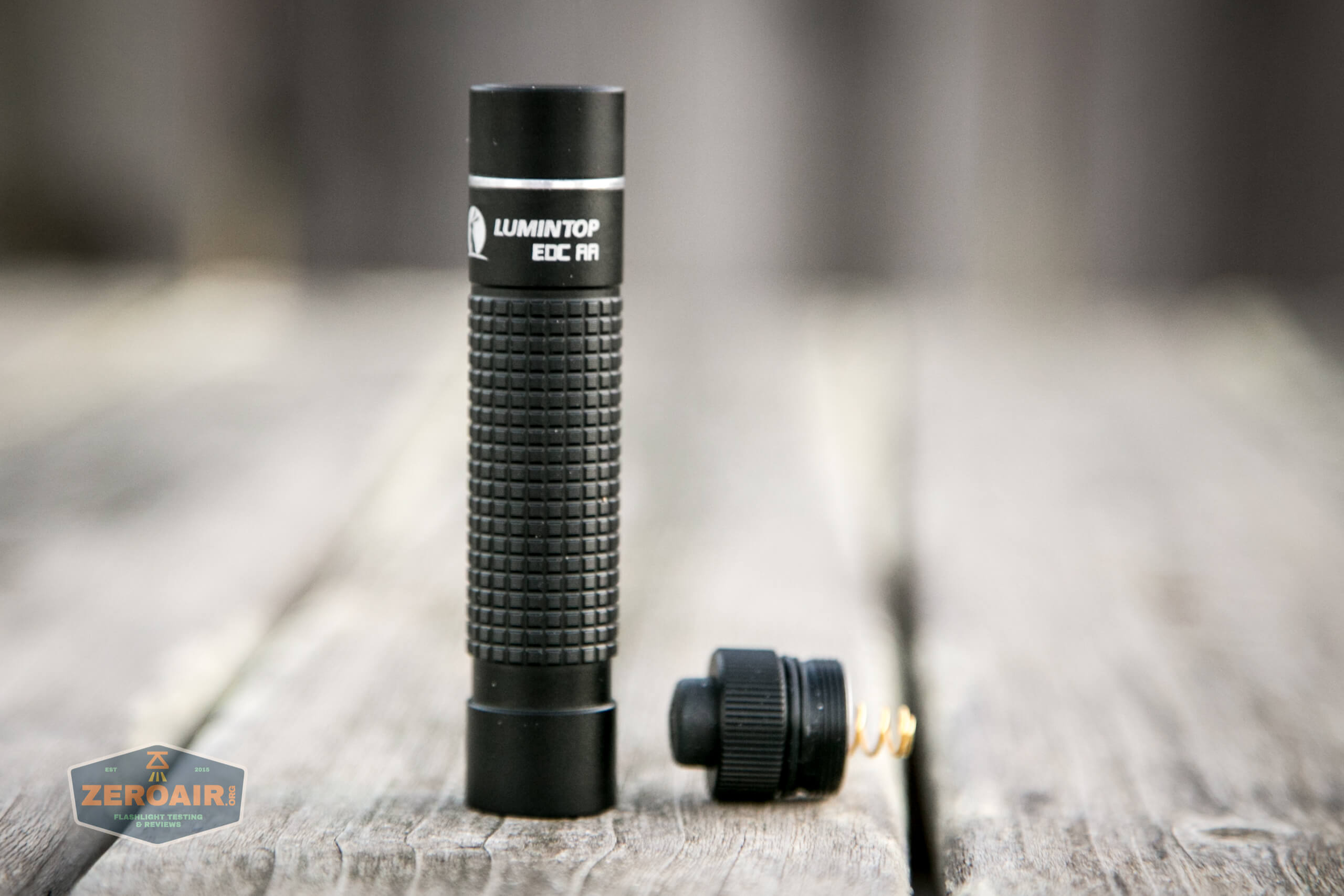
The build quality of this small Lumintop is pretty good. The aluminum feels quite thin, but that doesn’t cause any use issues.
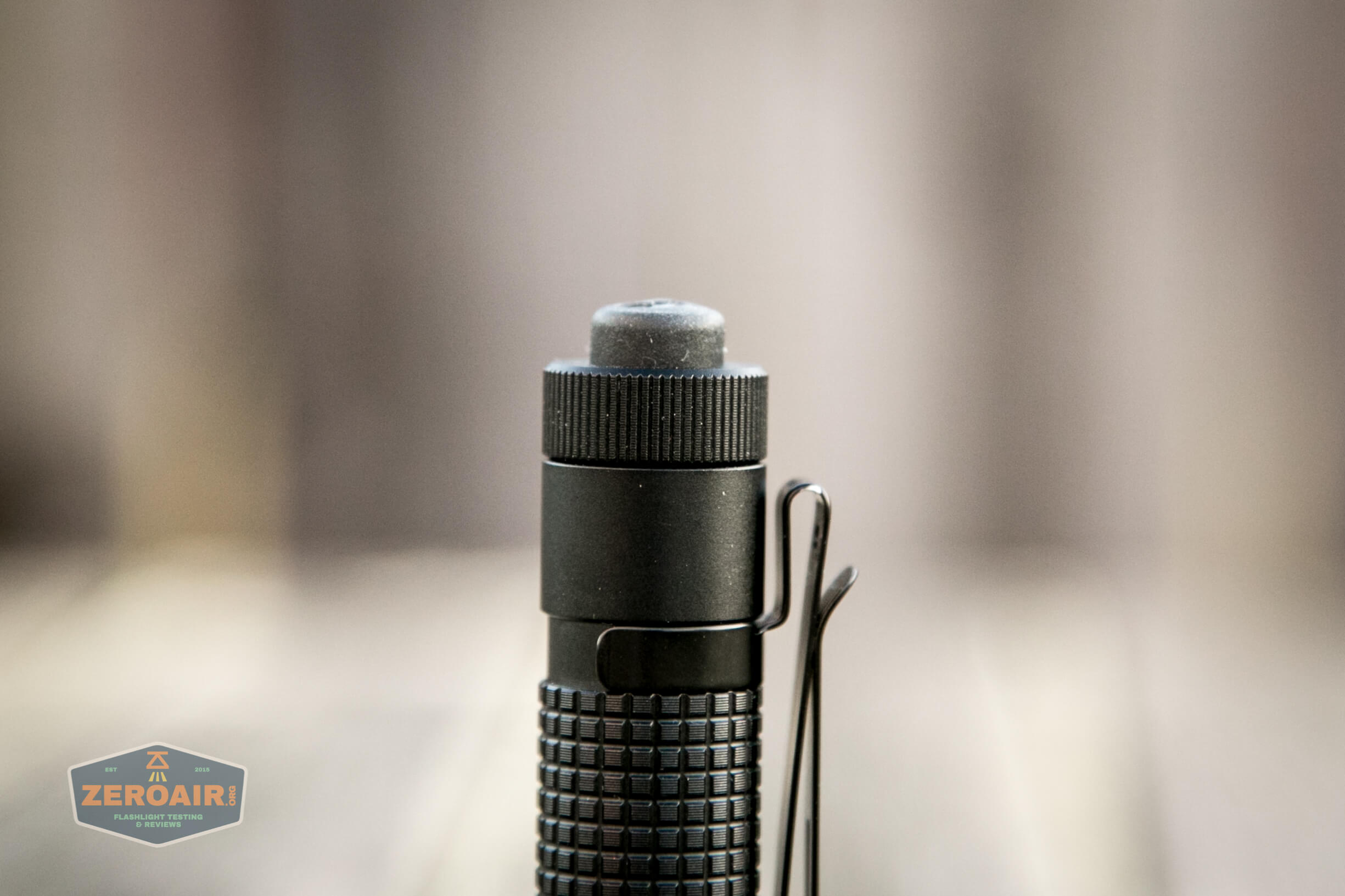
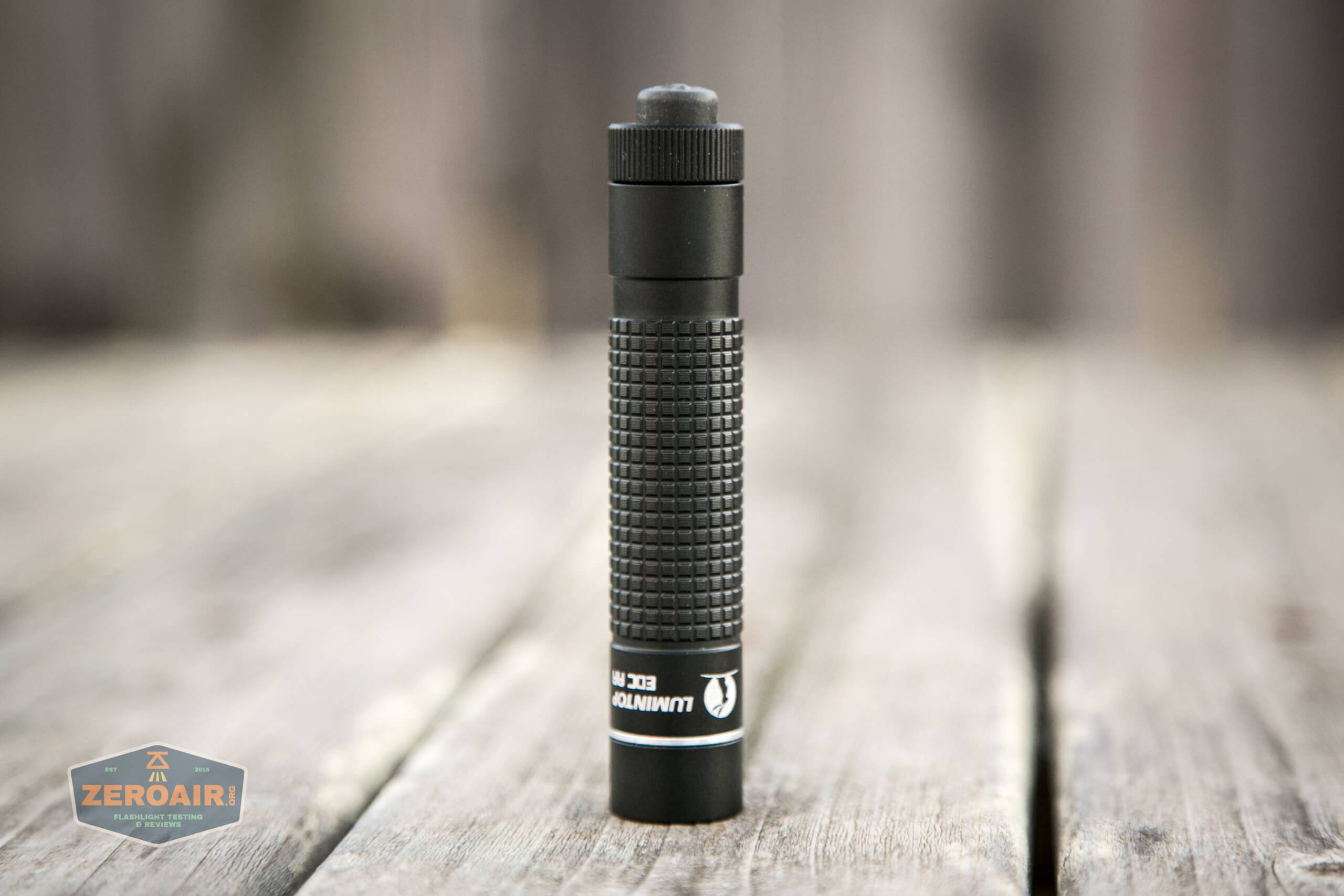
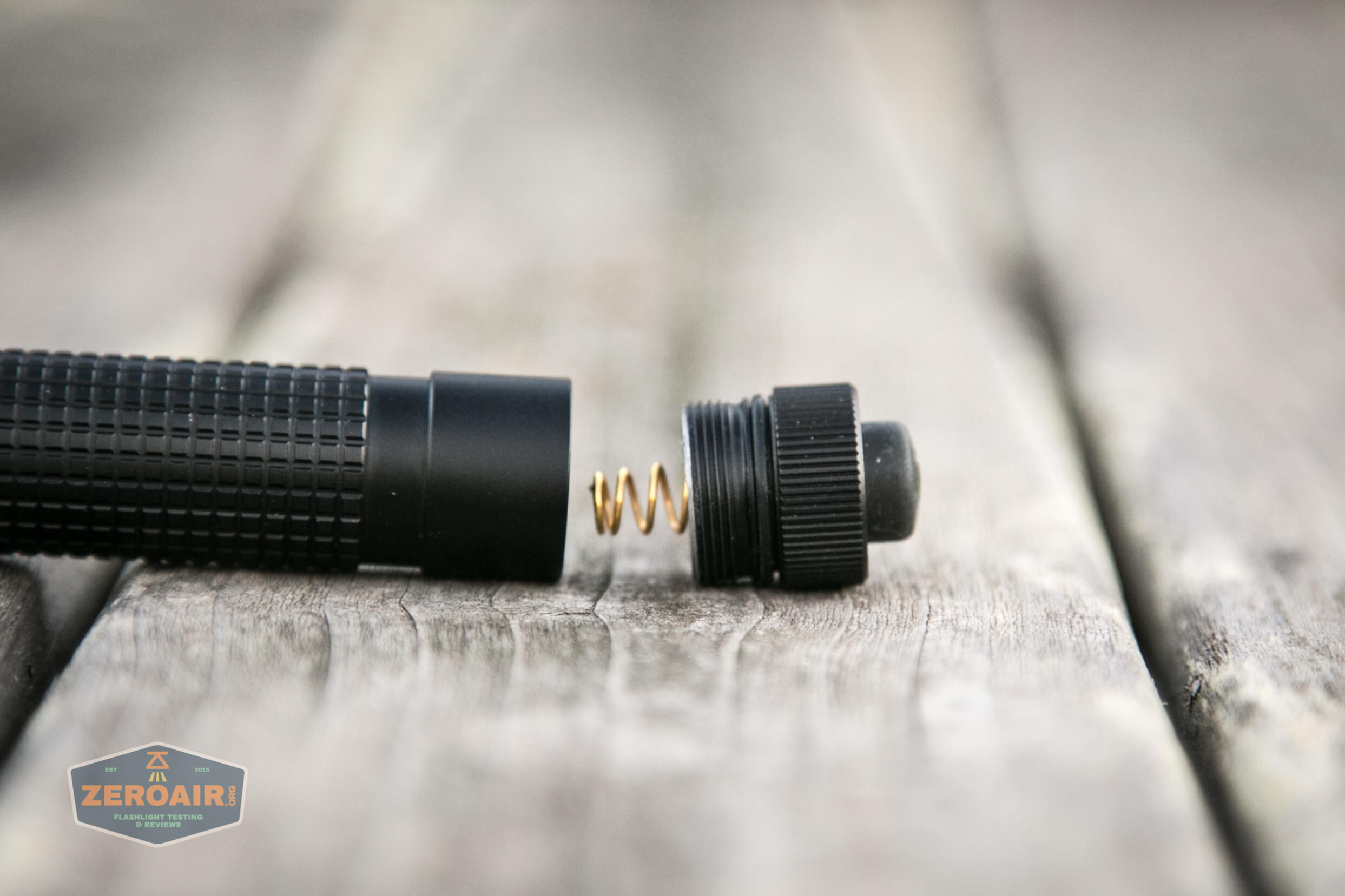
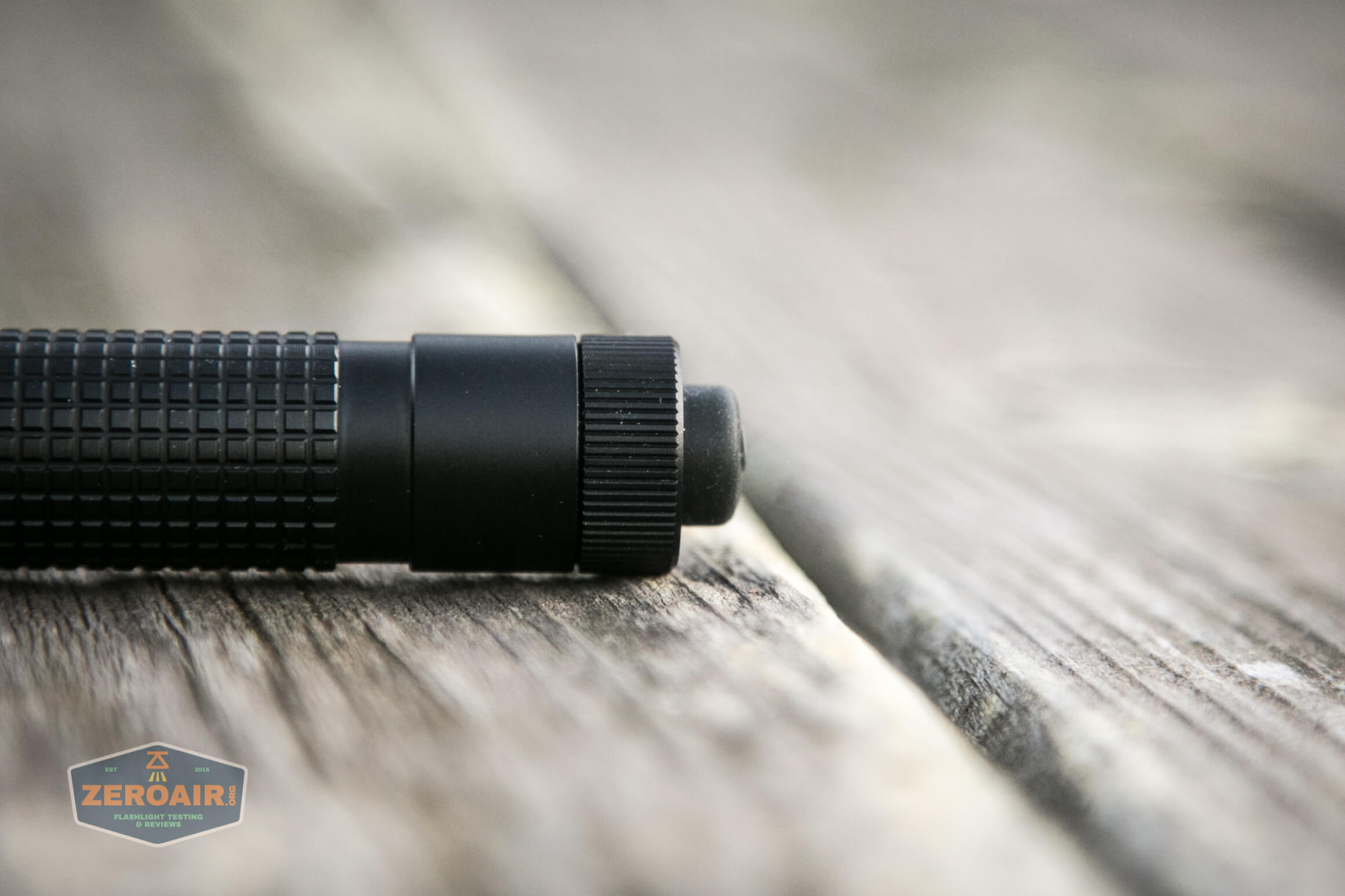
The only part that comes off is the tailcap, and that has some reeding that really aids in removal.
The body has square knurling, which provides adequate grip.
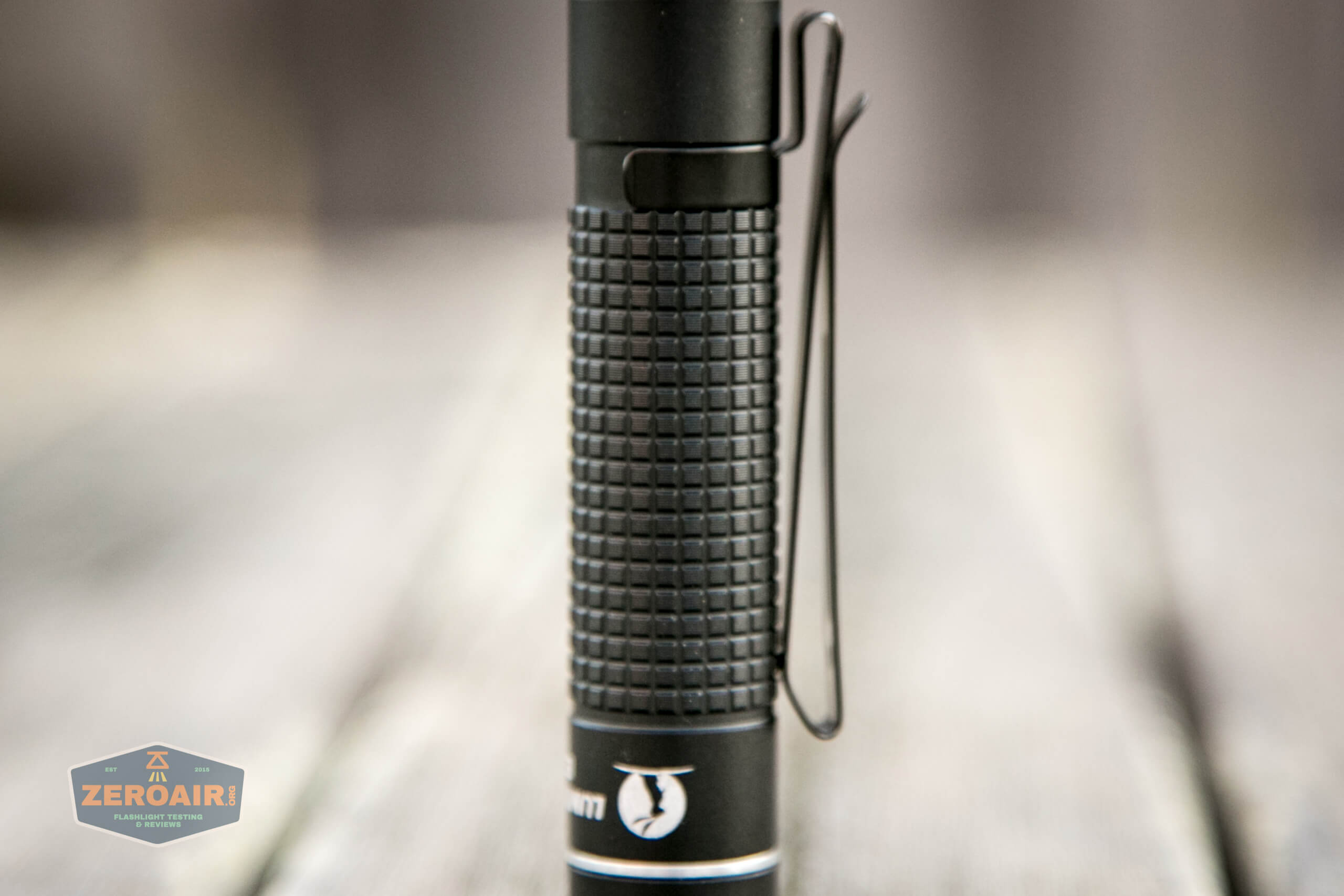
Interestingly, the head has a bit of exposed aluminum, which is probably the pill where the emitter attaches. This should aid with heat exchange.
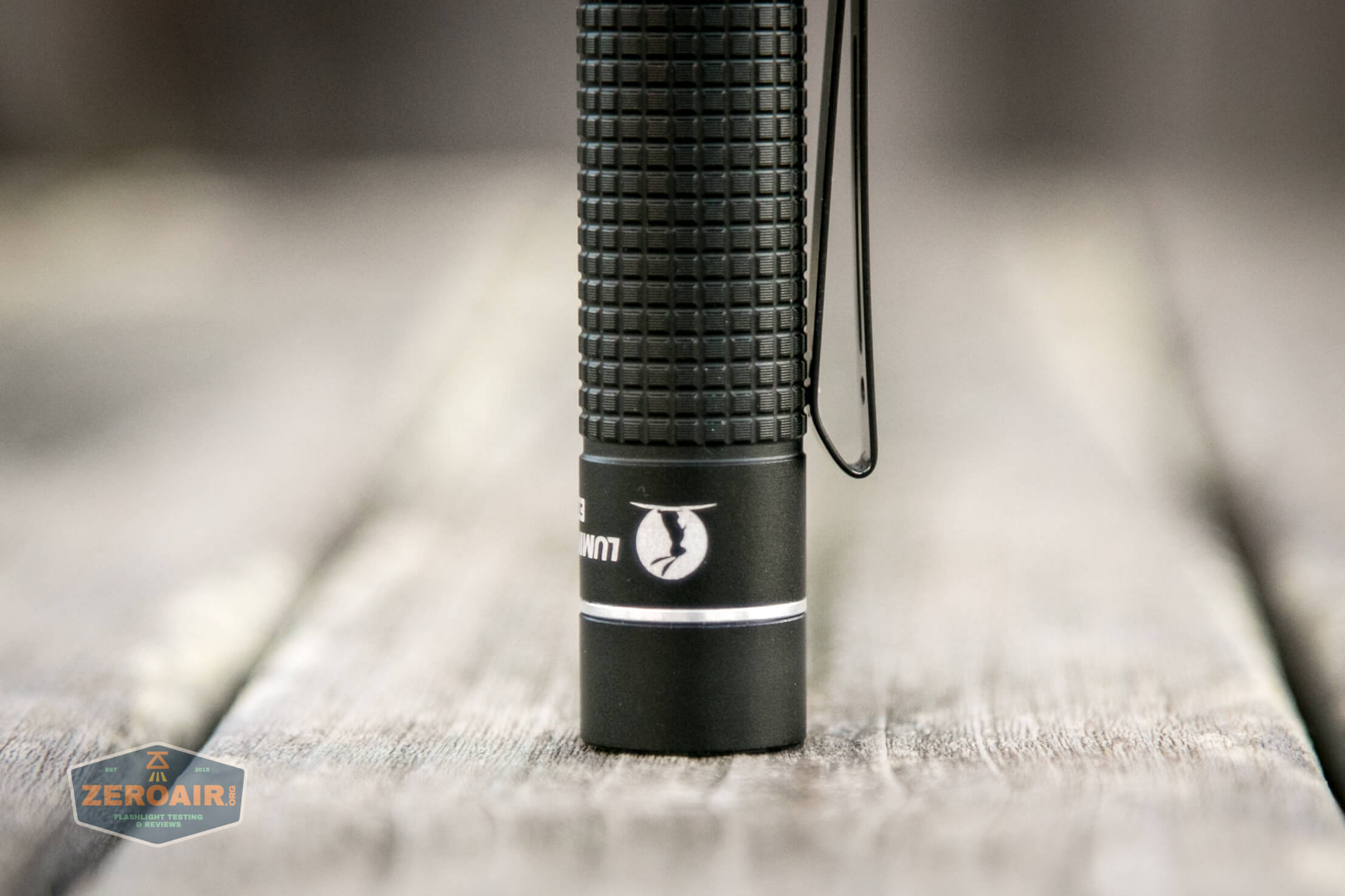
The bezel does not have any reliefs, so when headstanding, no light escapes.
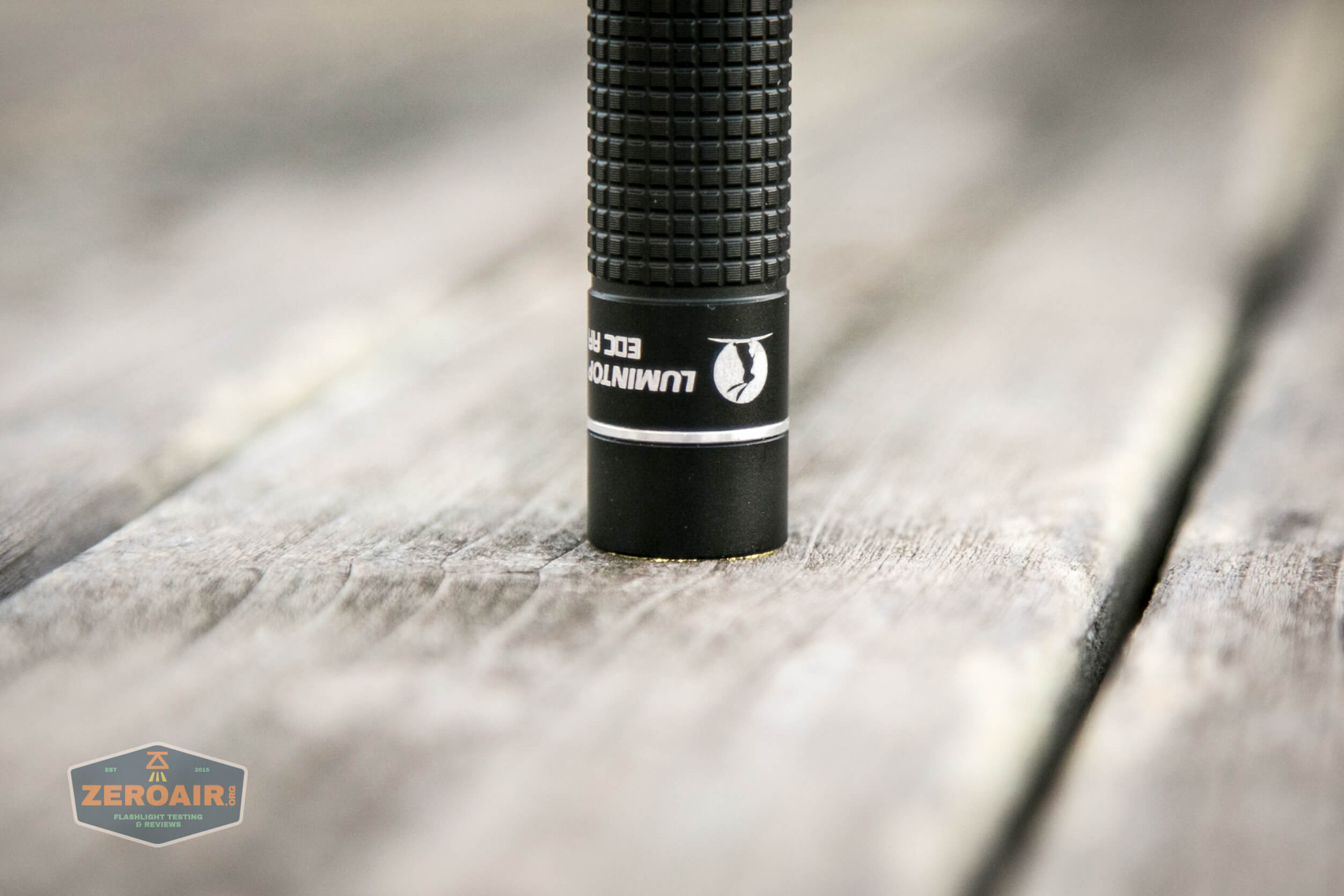
There’s a spring on the tailcap, and the threads are fine triangle cut anodized threads.
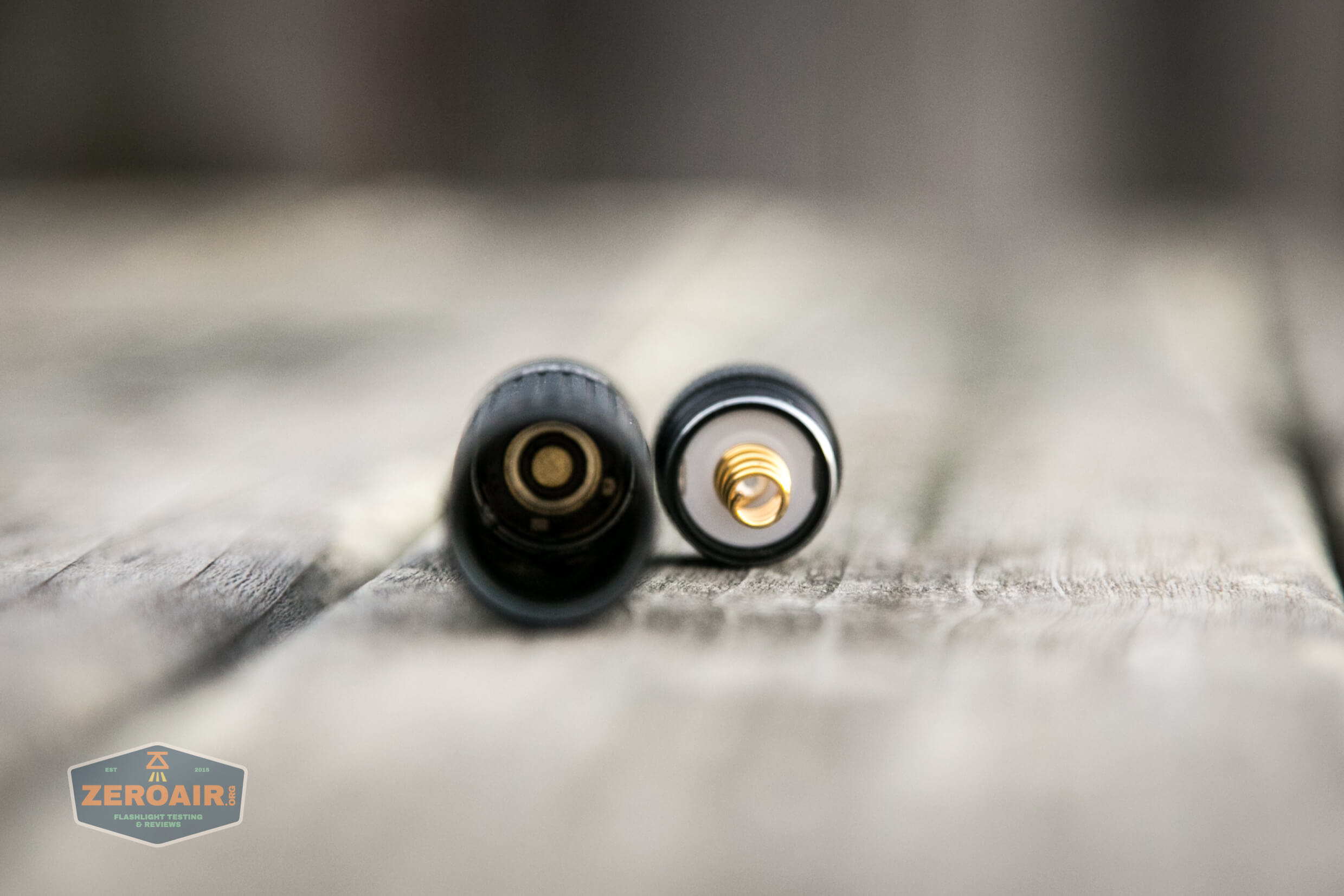
The head end does not have a spring. In fact, there’s only a little brass button. Also seen here is a little brass surrounding the positive contact – this prevents the use of any flat top cells.
Size and Comps
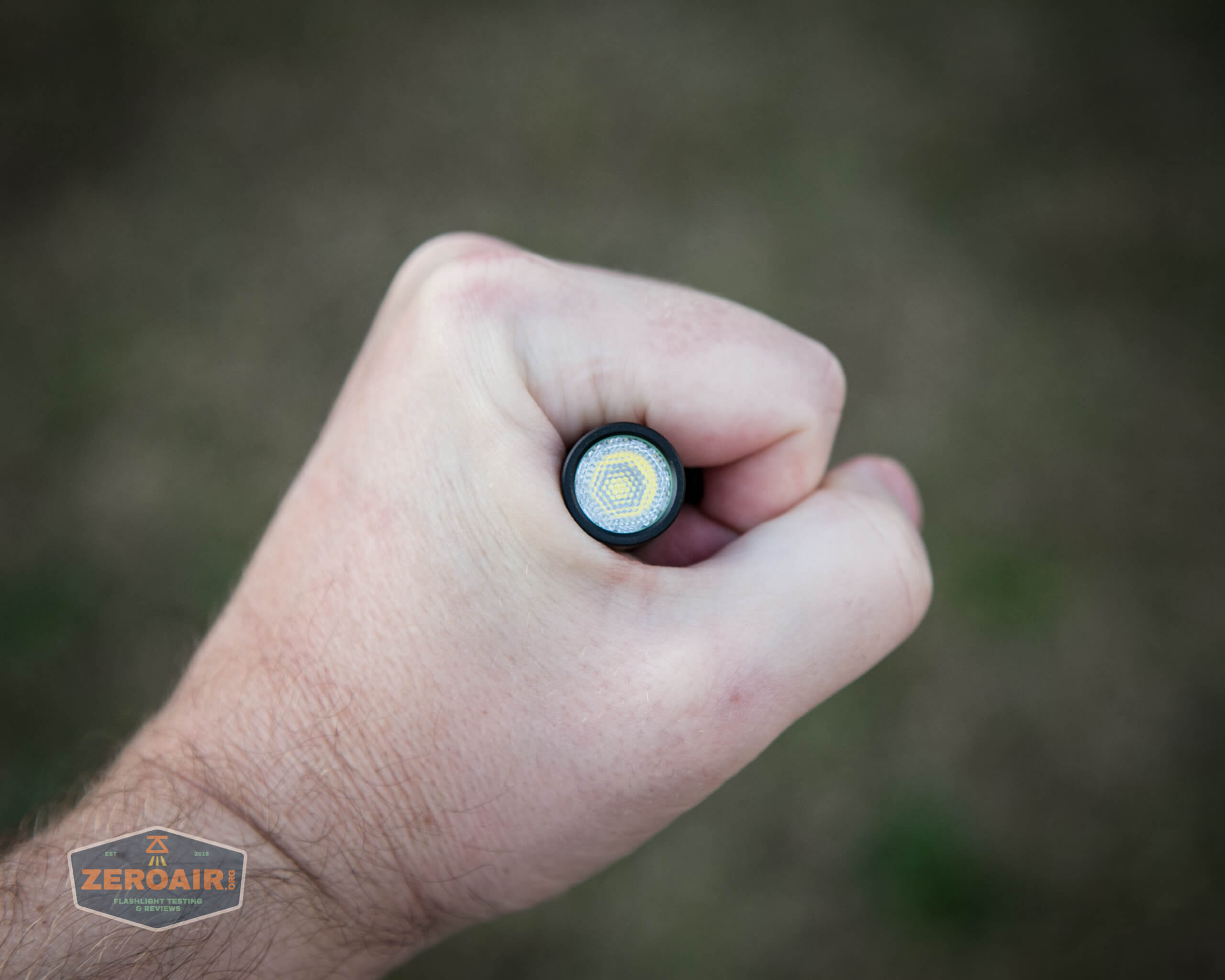
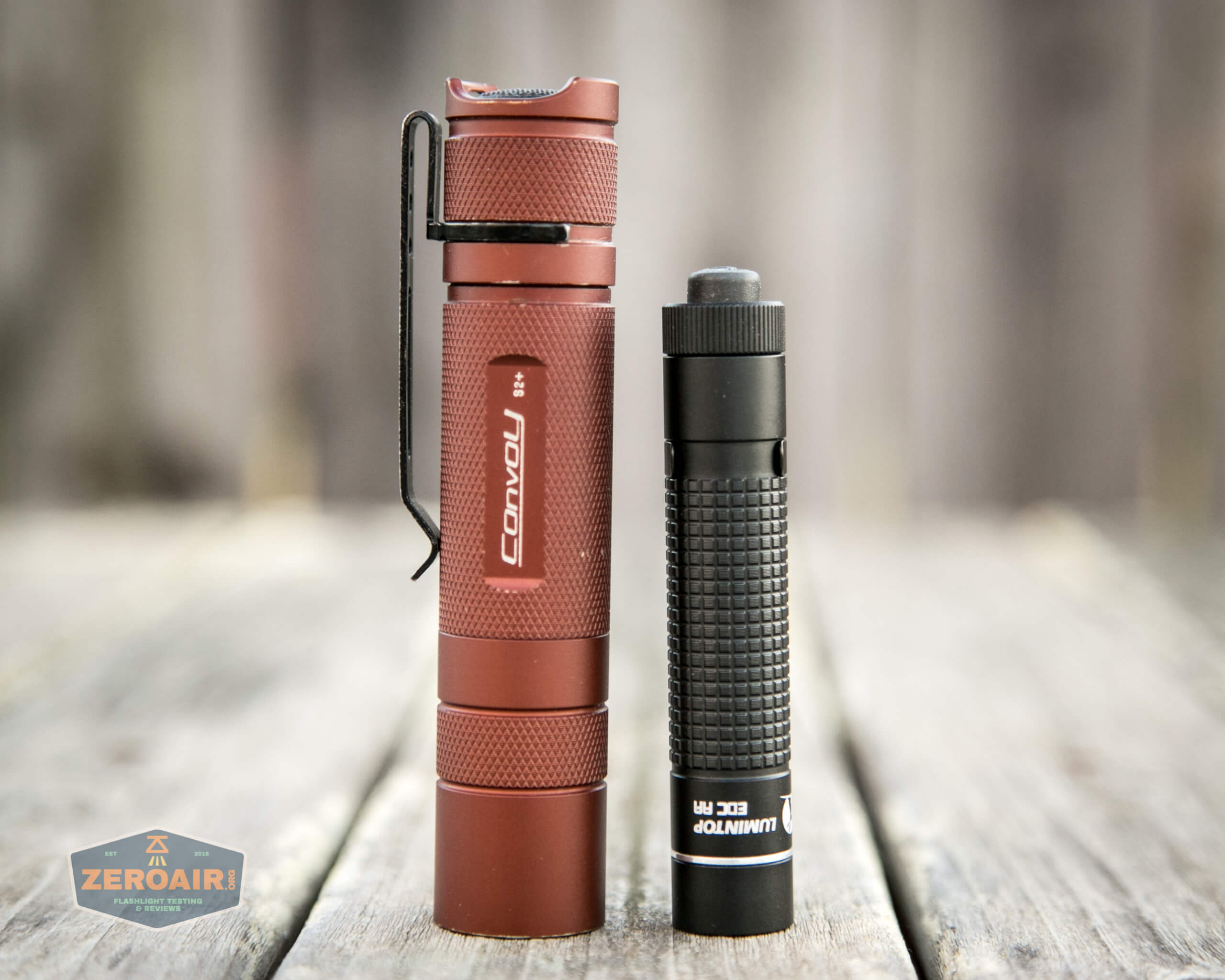
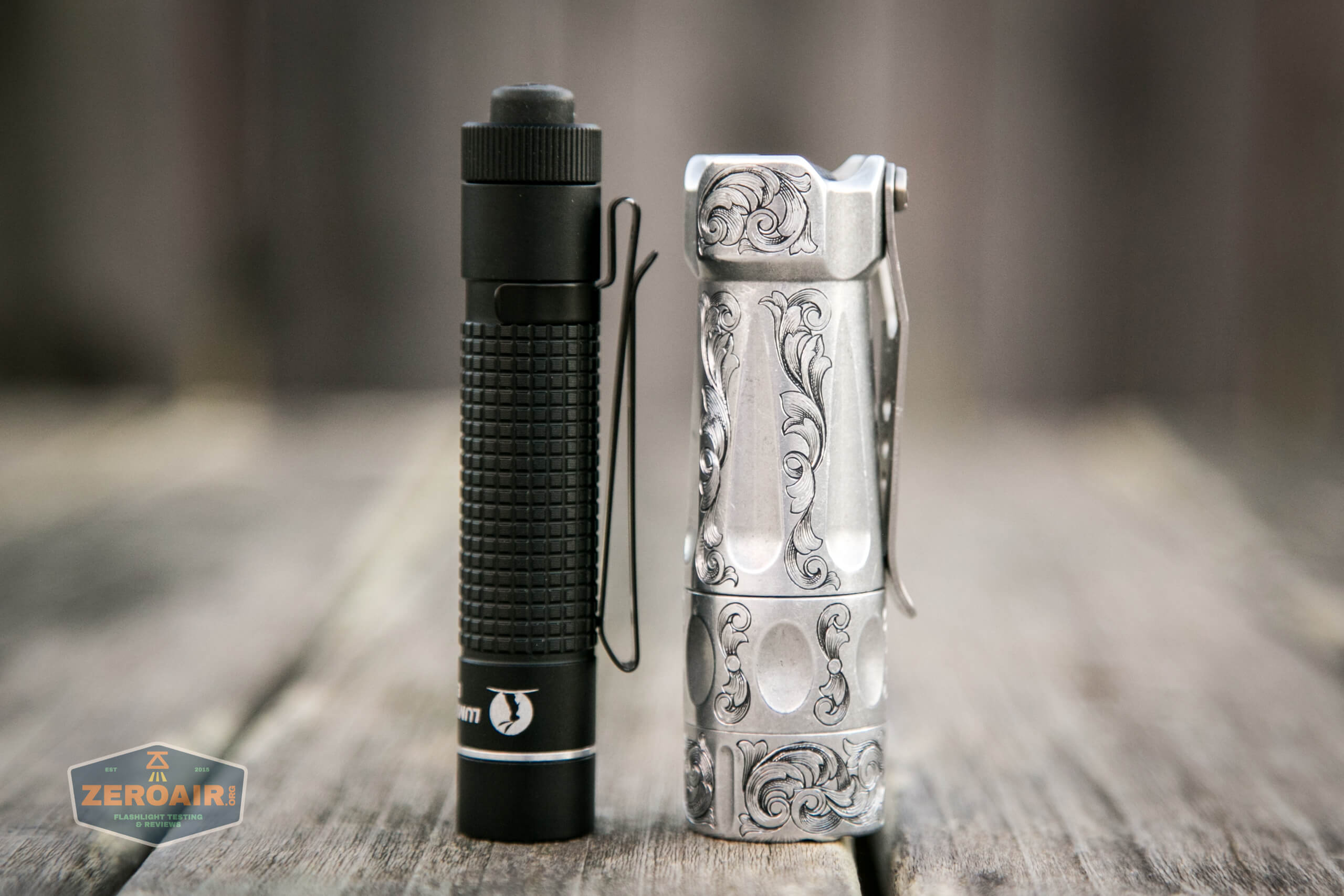
Officially, the Lumintop EDC AA is 91mm x 17mm, and weighs 23.3g without the cell.
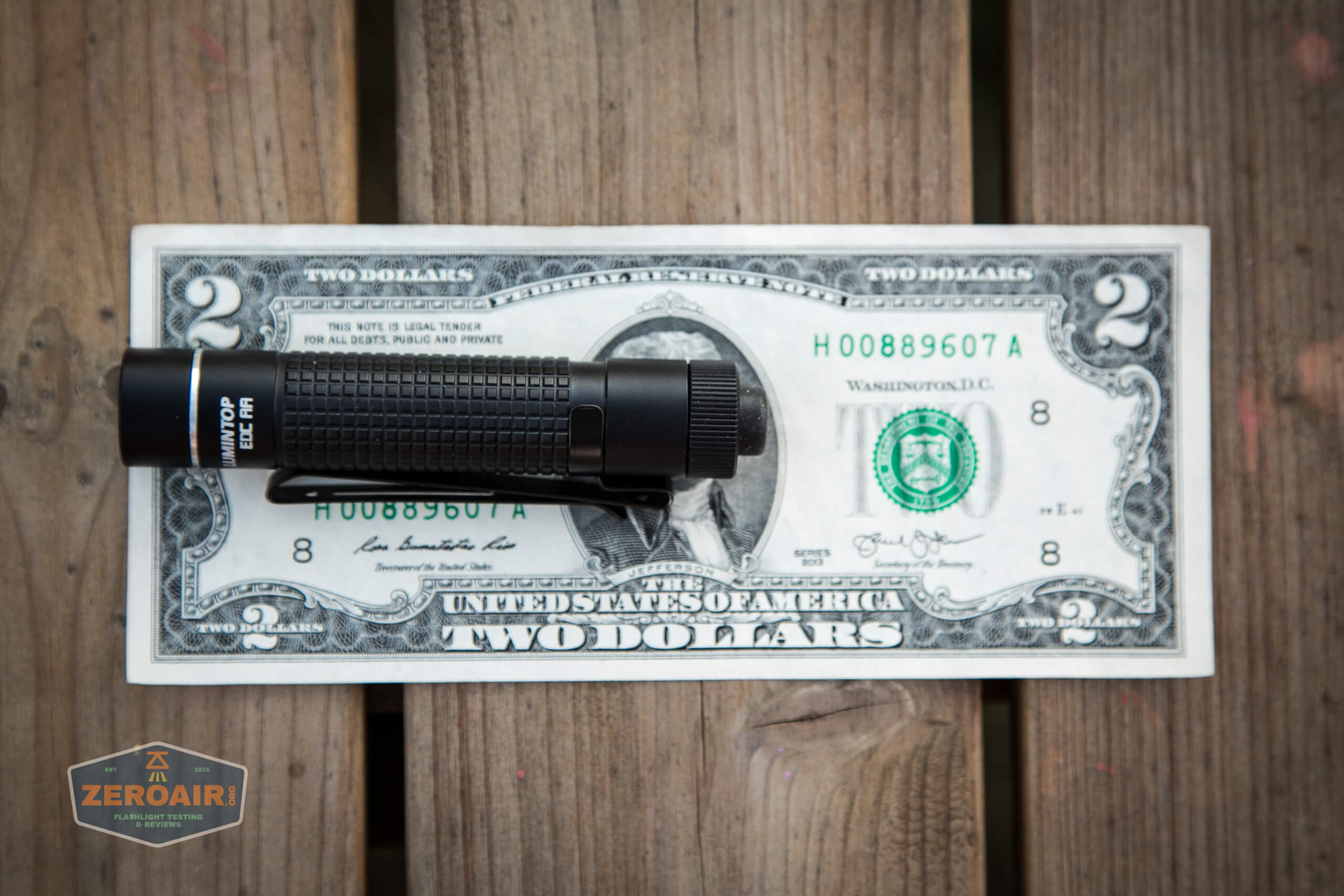
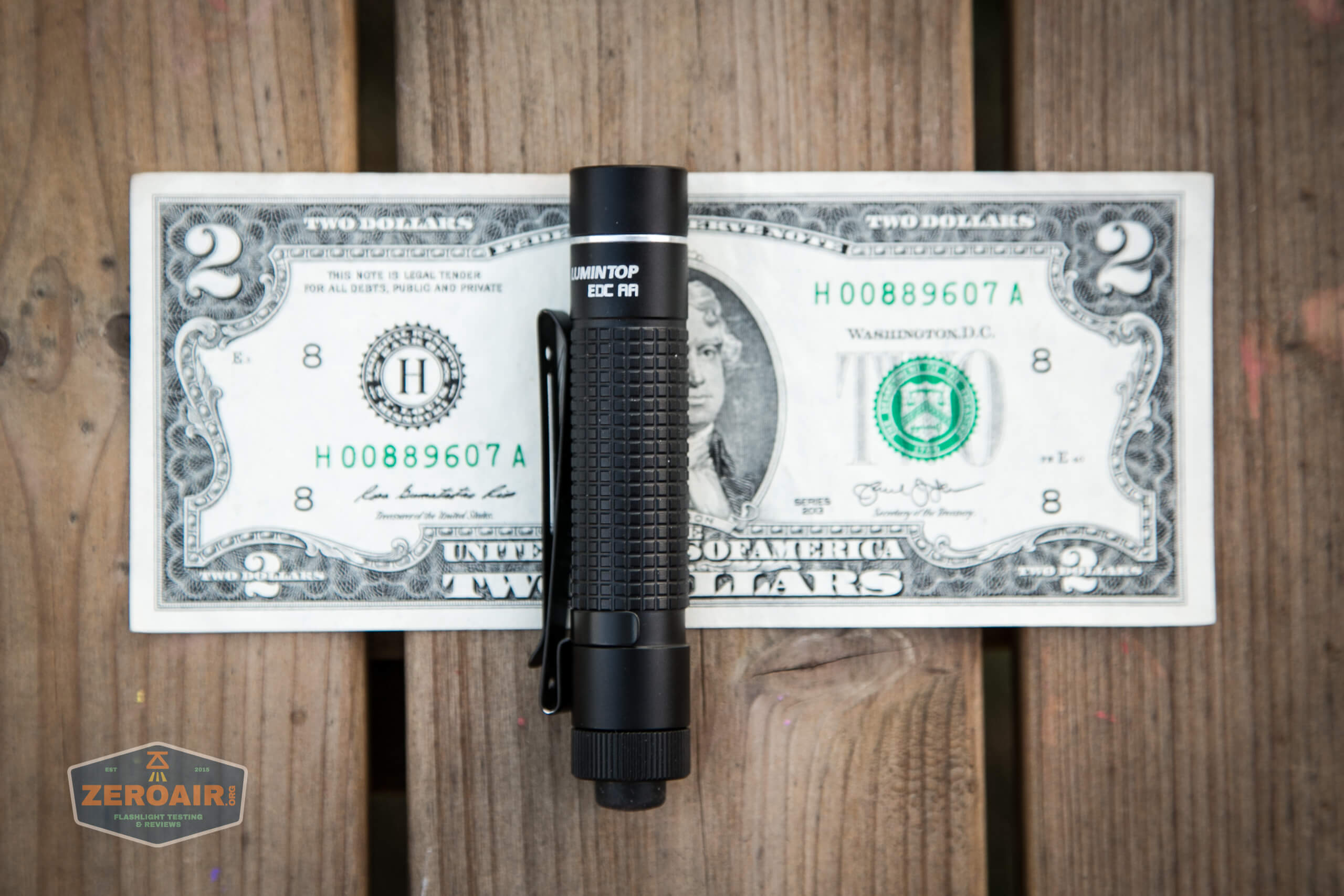

If the flashlight will headstand, I’ll try to show it here. If the flashlight will tailstand, I usually show that here, too.
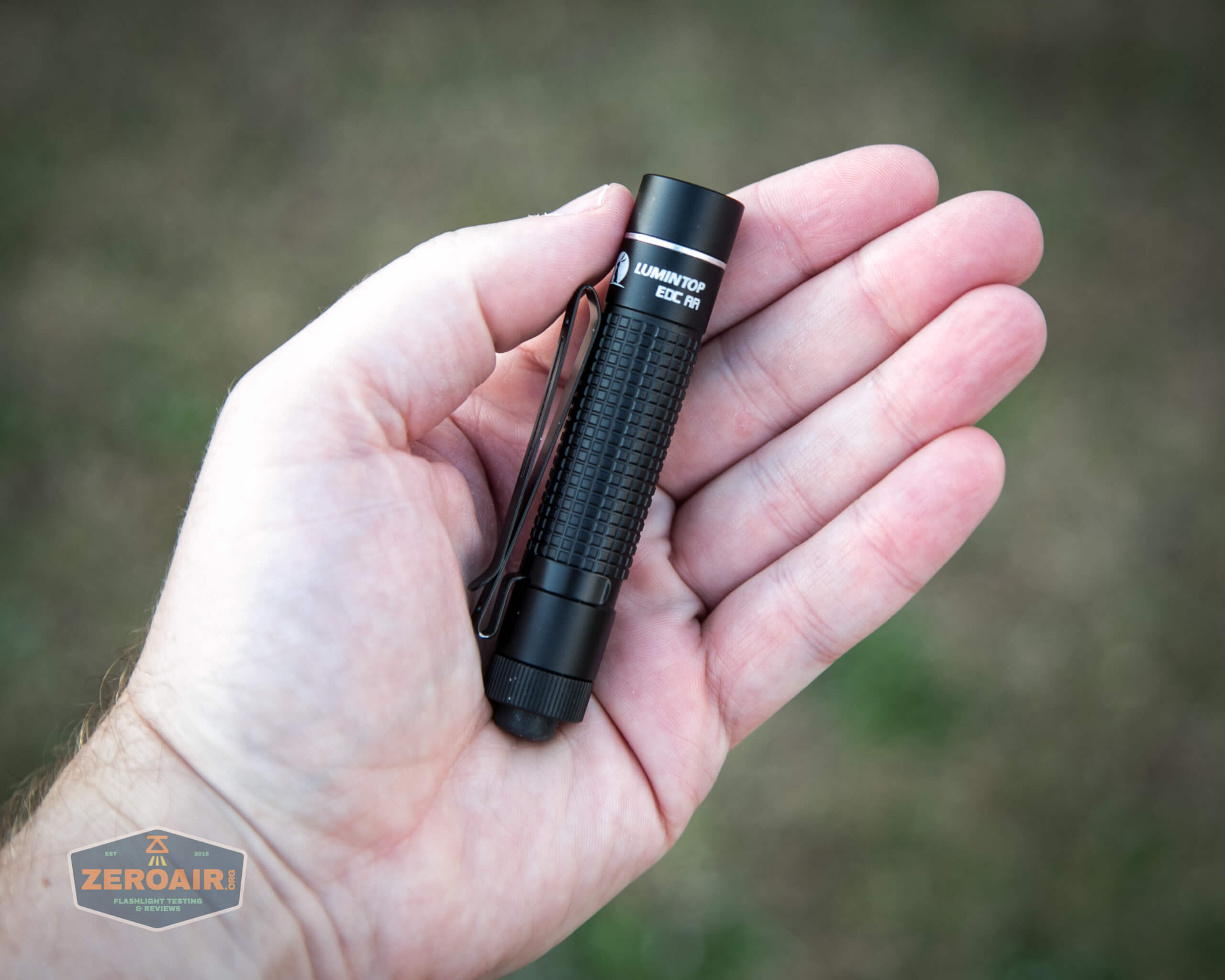
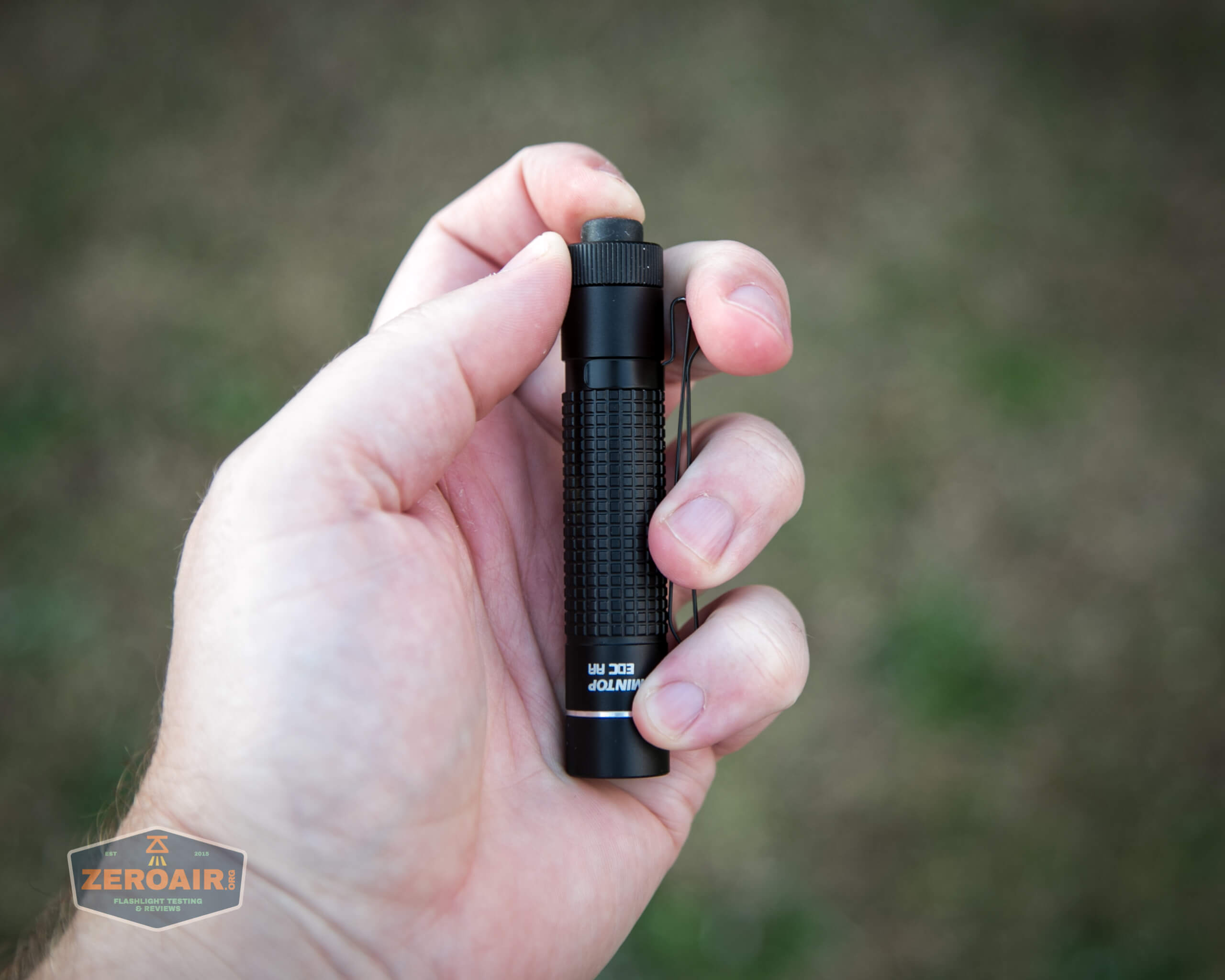
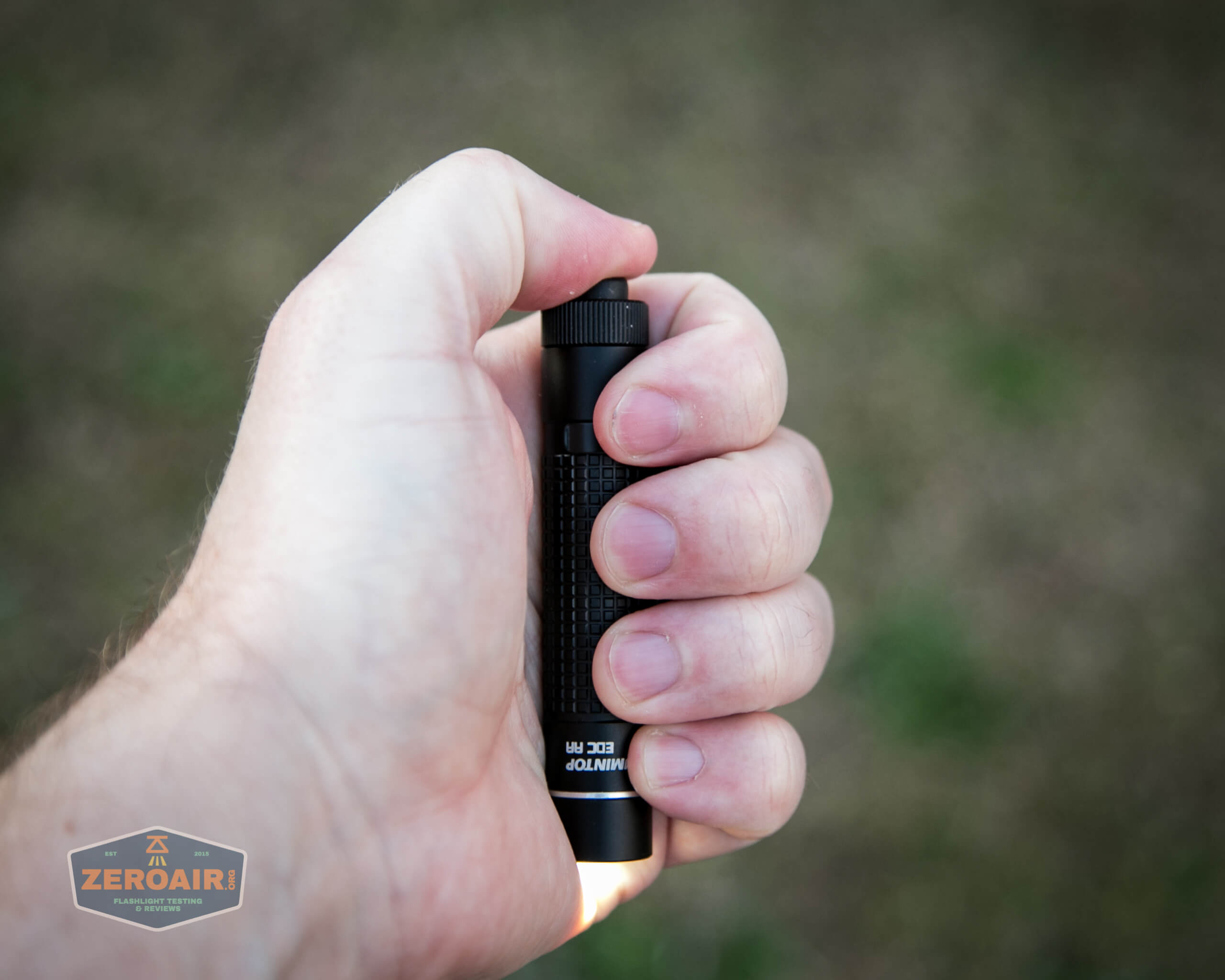
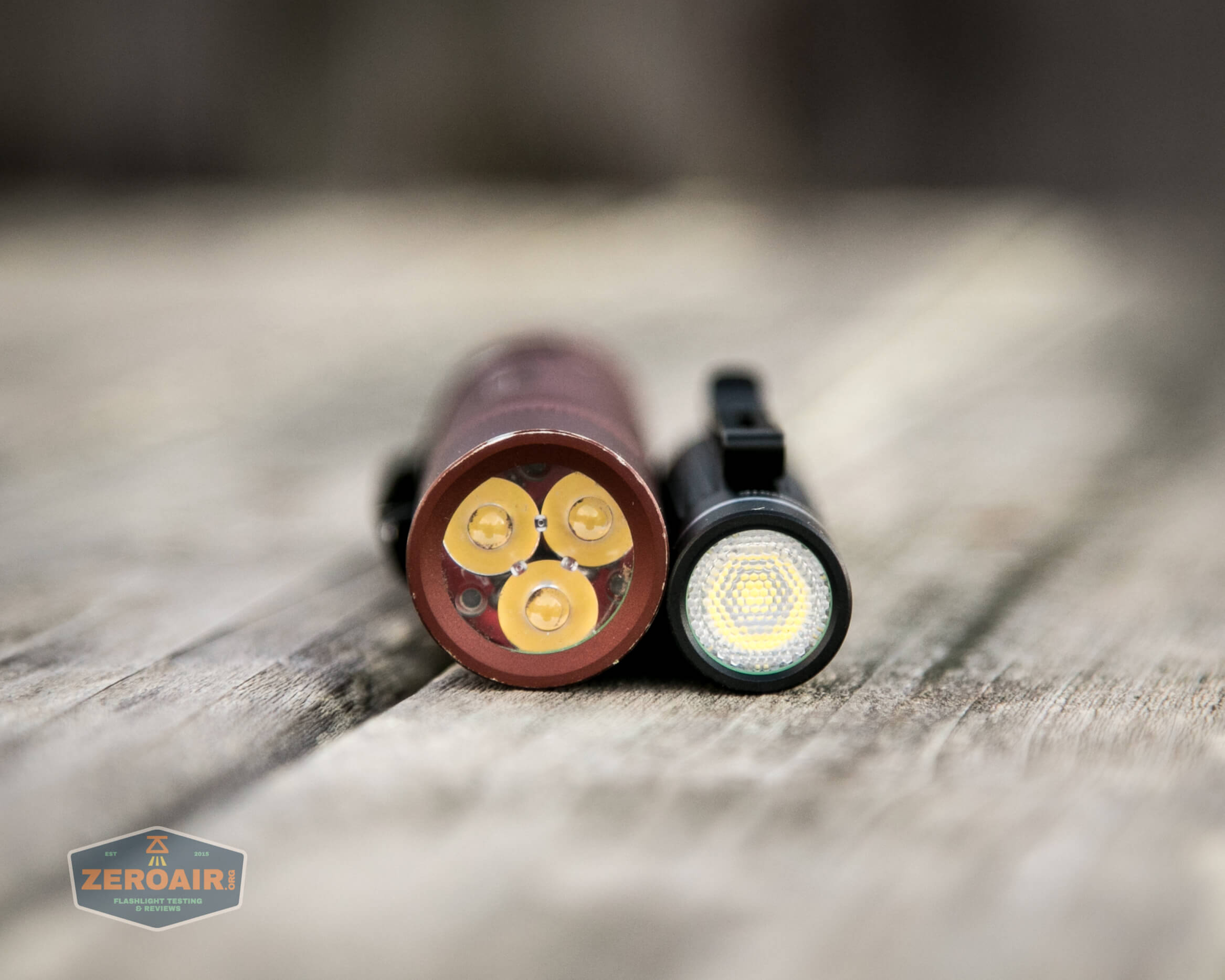
Here’s the test light with the venerable Convoy S2+. Mine is a custom “baked” edition Nichia 219b triple. A very nice 18650 light!
And here’s the light beside my custom-engraved TorchLAB BOSS 35, an 18350 light. I reviewed the aluminum version of that light in both 35 and 70 formats.
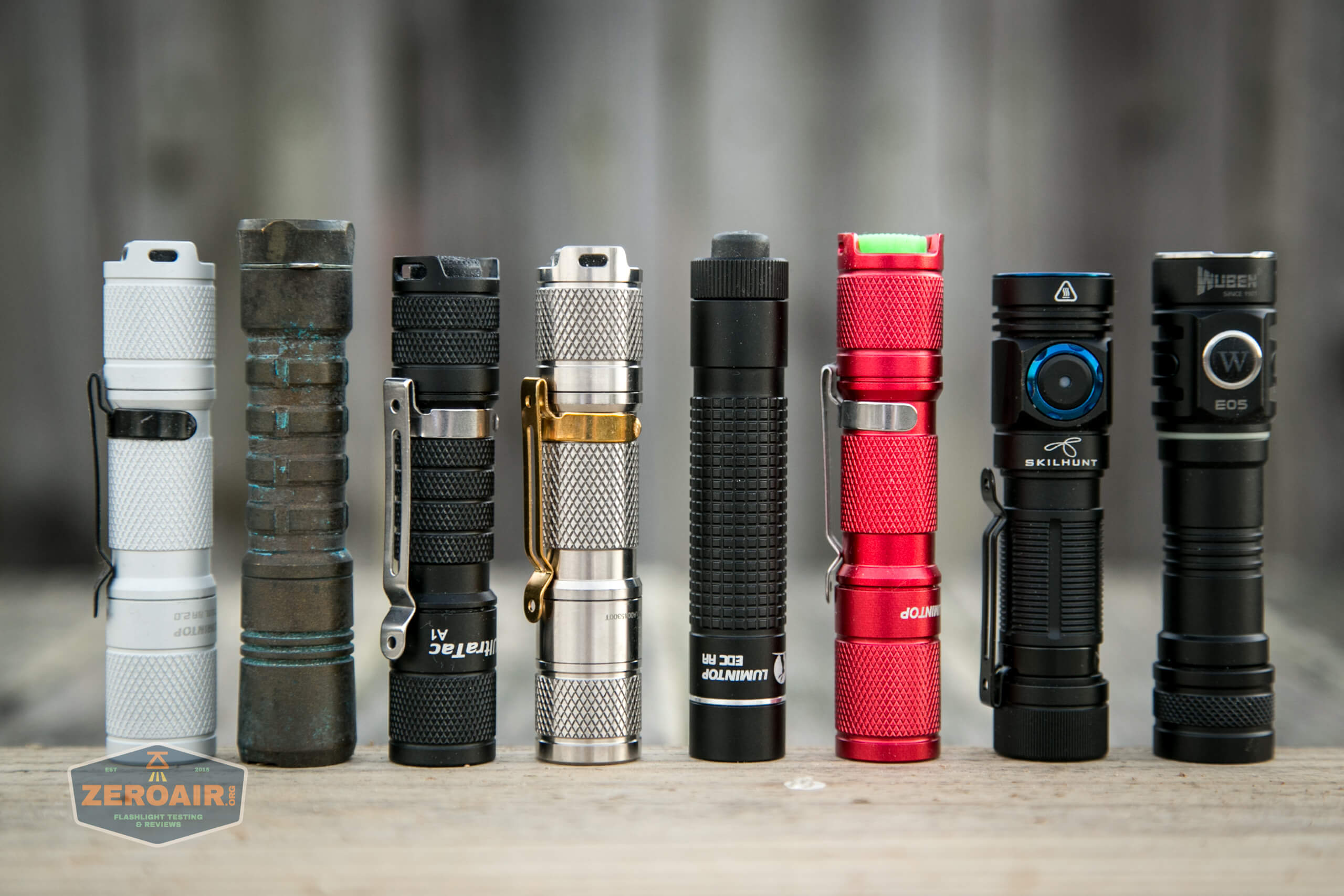
Here’s a bunch of other AA-sized lights. I had the one I most wanted to compare out for this photo, but completely forgot and left it in my pocket. It’s the Firefly 2.0 titanium light, and has the same knurling pattern as this Lumintop. The Lumintop EDC AA stacks up fairly well among this group.
Retention and Carry
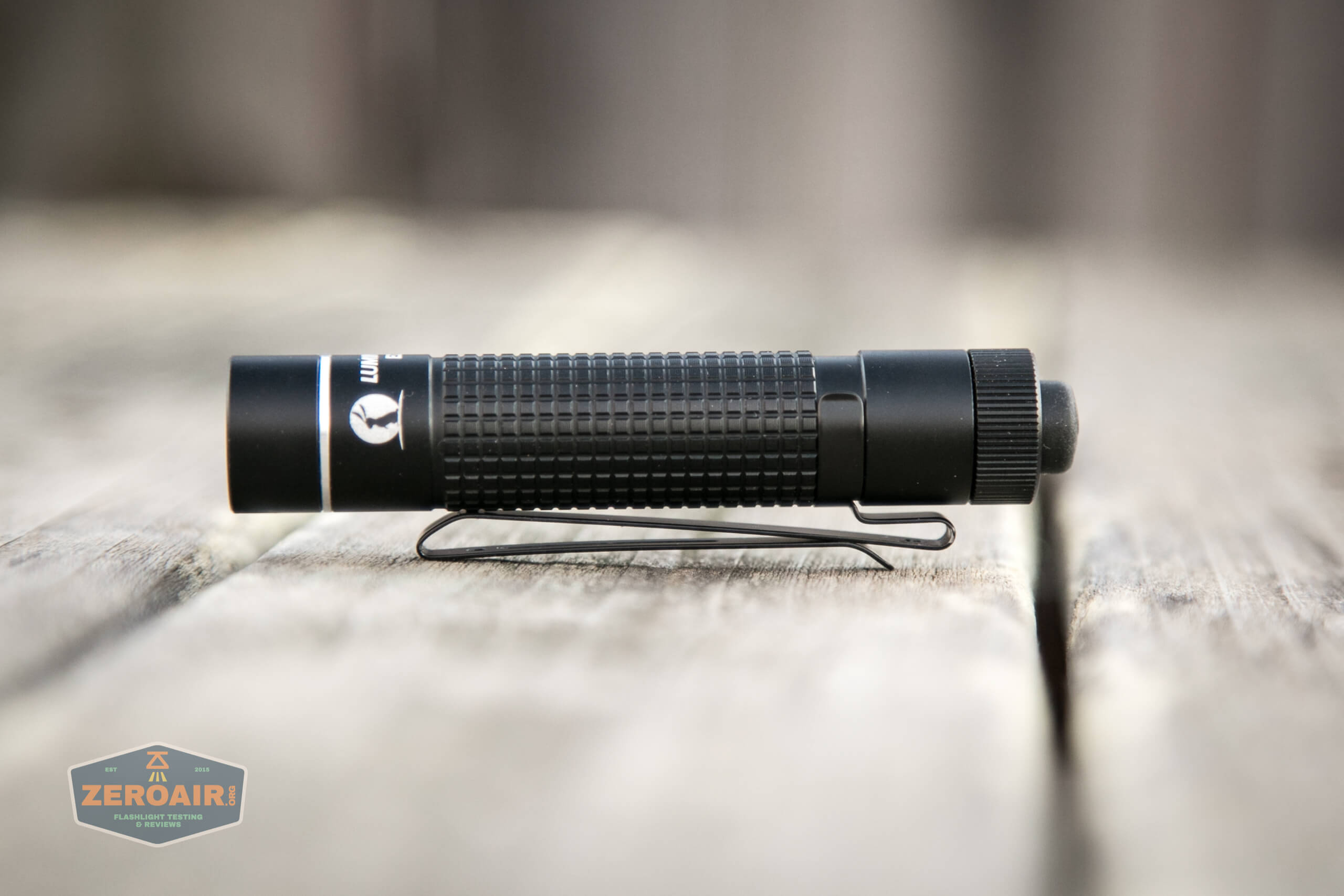
Included with the EDC AA is a two-way pocket clip.
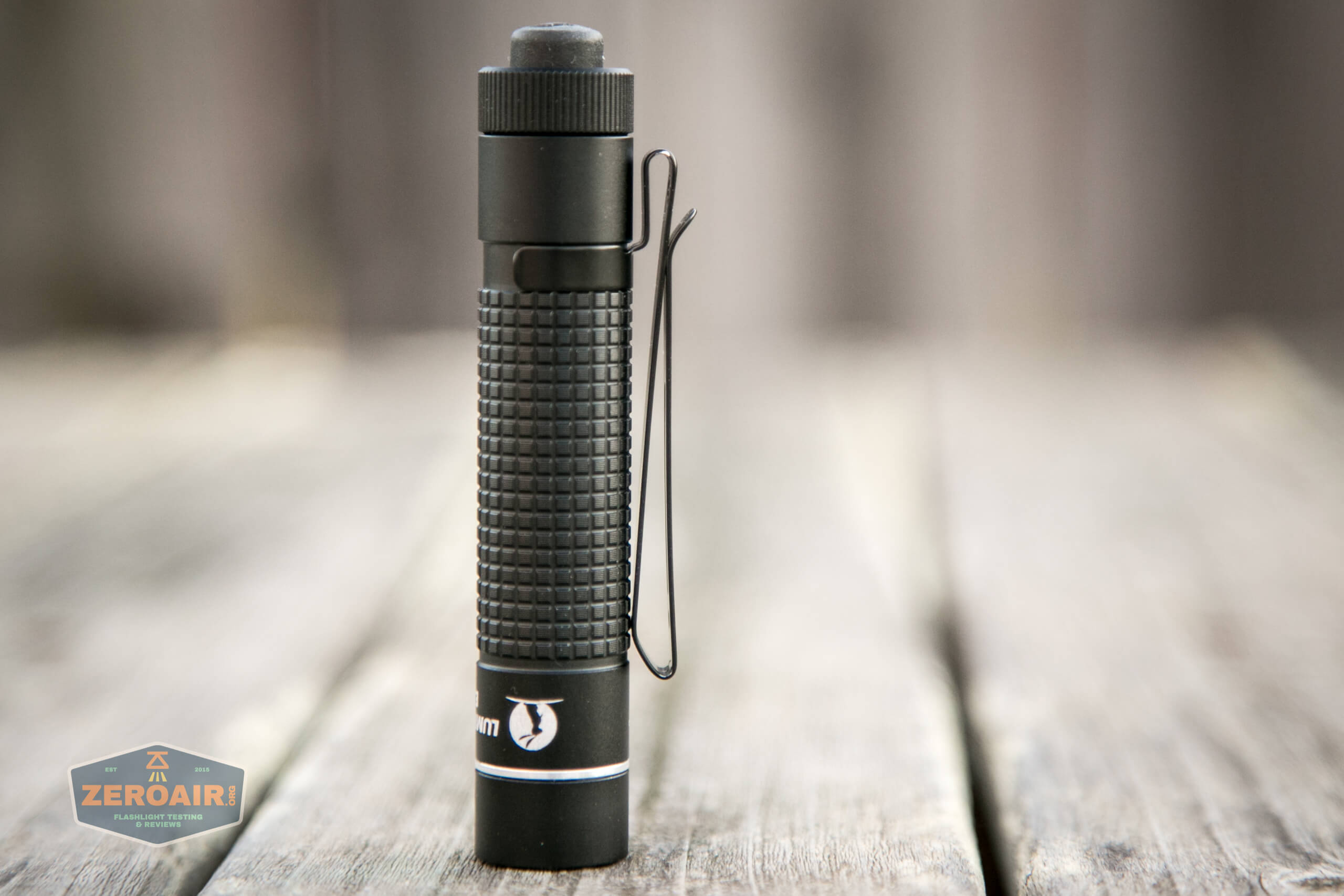
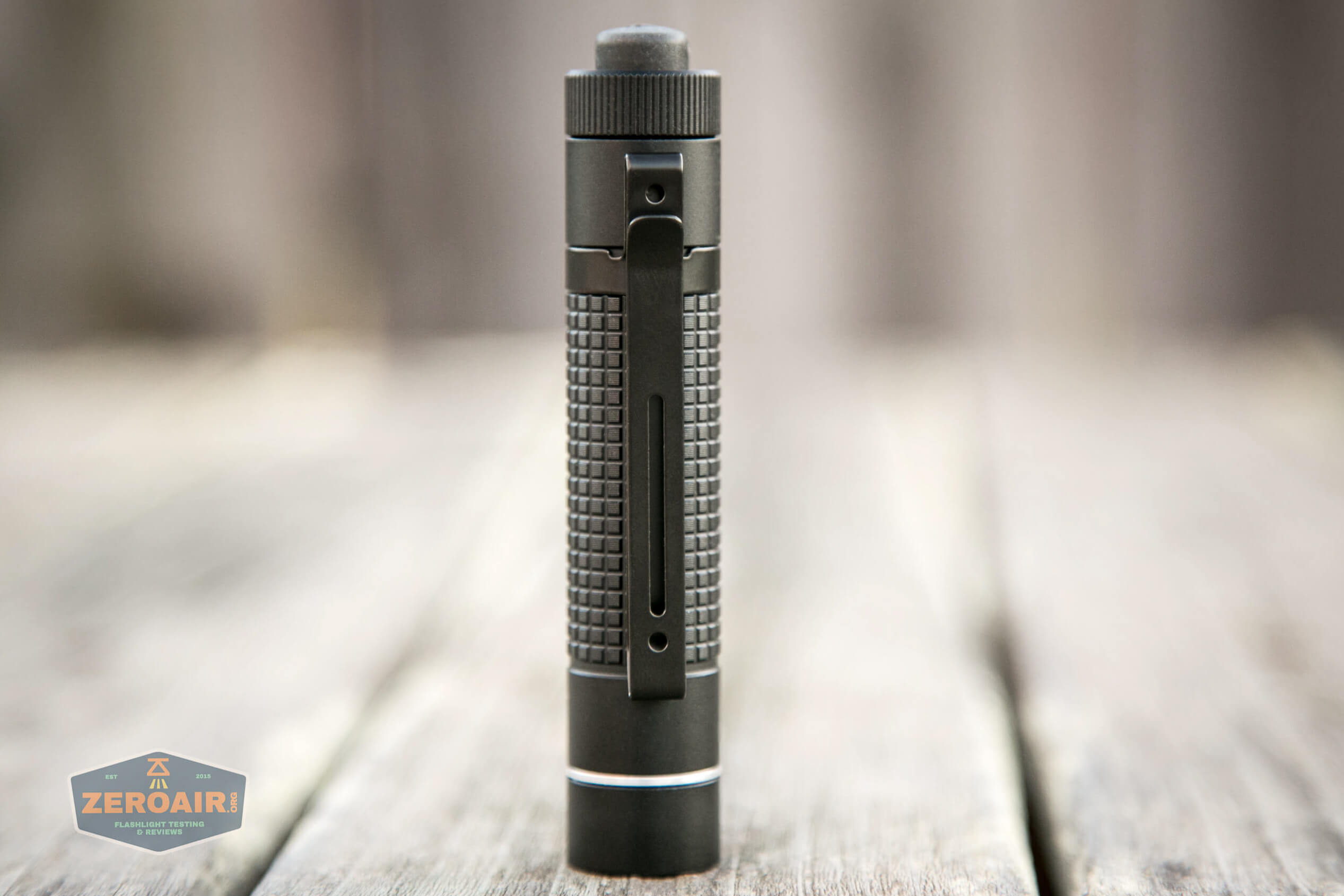
The clip can only install on the tail end, but with the two-way option, is usable as bezel up or bezel down.
The two-way clip also allows the light to serve as a hatlight.
The pocket clip has a couple of holes that can support a lanyard, too.
Power and Runtime
The Lumintop EDC AA is powered by a single cell. It’s a versatile driver, though, and can run on most common AA-sized chemistries – Alkaline, NiMH, and the 14500 lithium-ion cell, too.
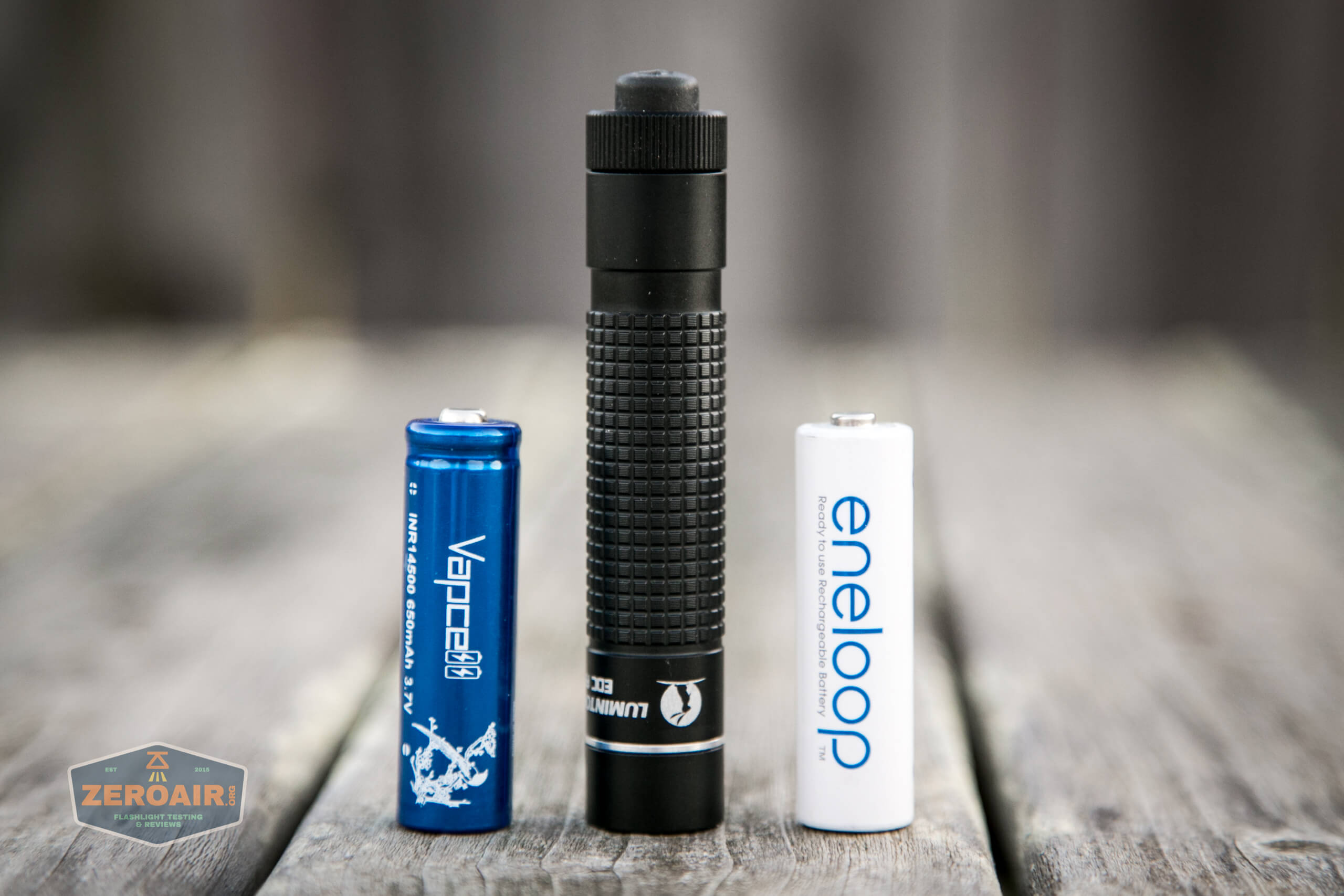
As mentioned above, the positive terminal will allow only button top cells. Button tops are common for alkaline and NiMH, but you’ll need to order your 14500 cells more specifically.
Here are some runtimes. AA first, since I’d consider this “mainly” an AA light (it’s right there in the name).
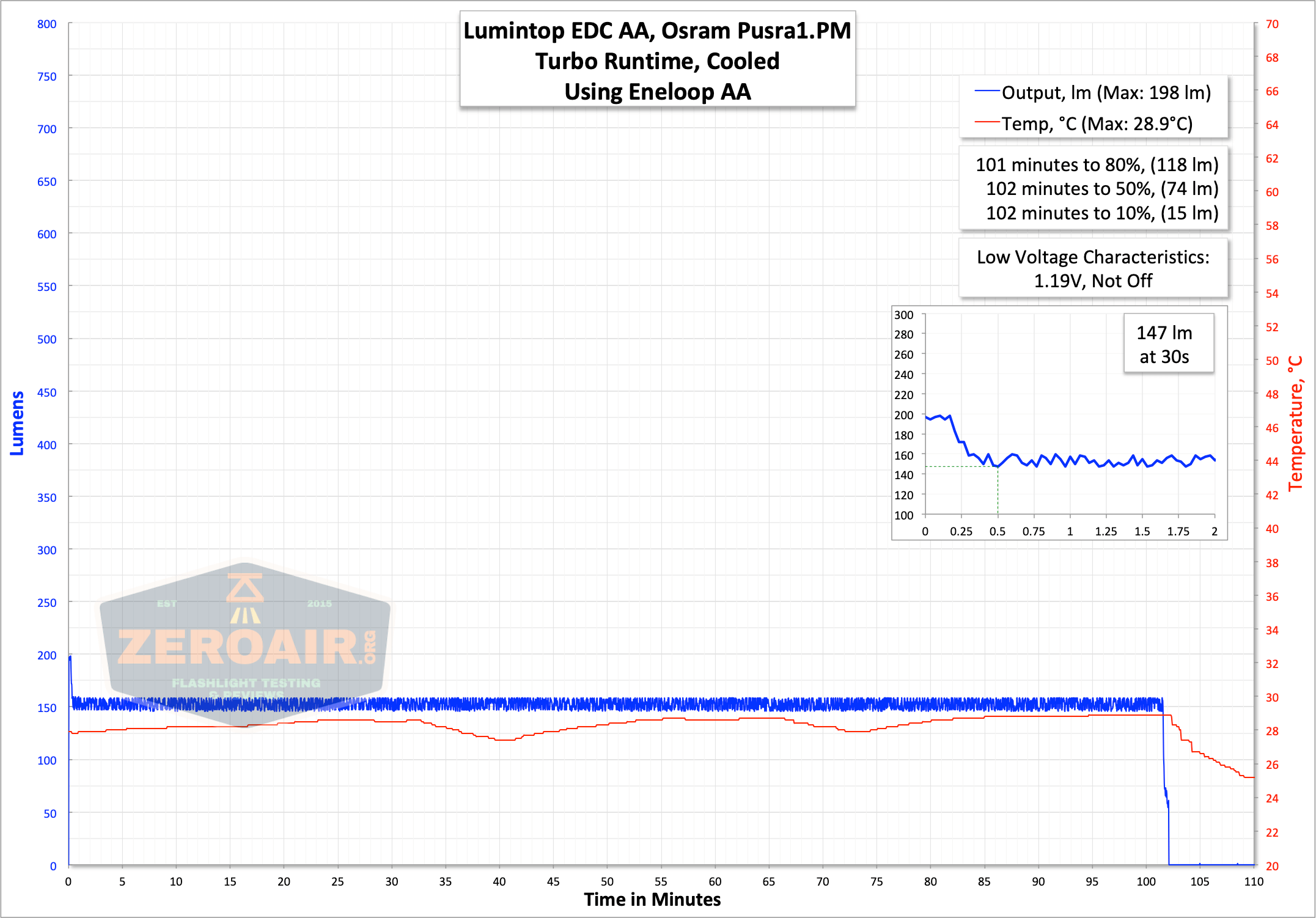
Performance is pretty good with AA but the light steps down practically immediately. There’s very little difference in Turbo and High for AA (1.5V) cells. The light steps down hard when the voltage drops, but there doesn’t really seem to be actual low voltage protection. On bench power, the light didn’t shut off (starting with 1.5V power) until around 0.6V.
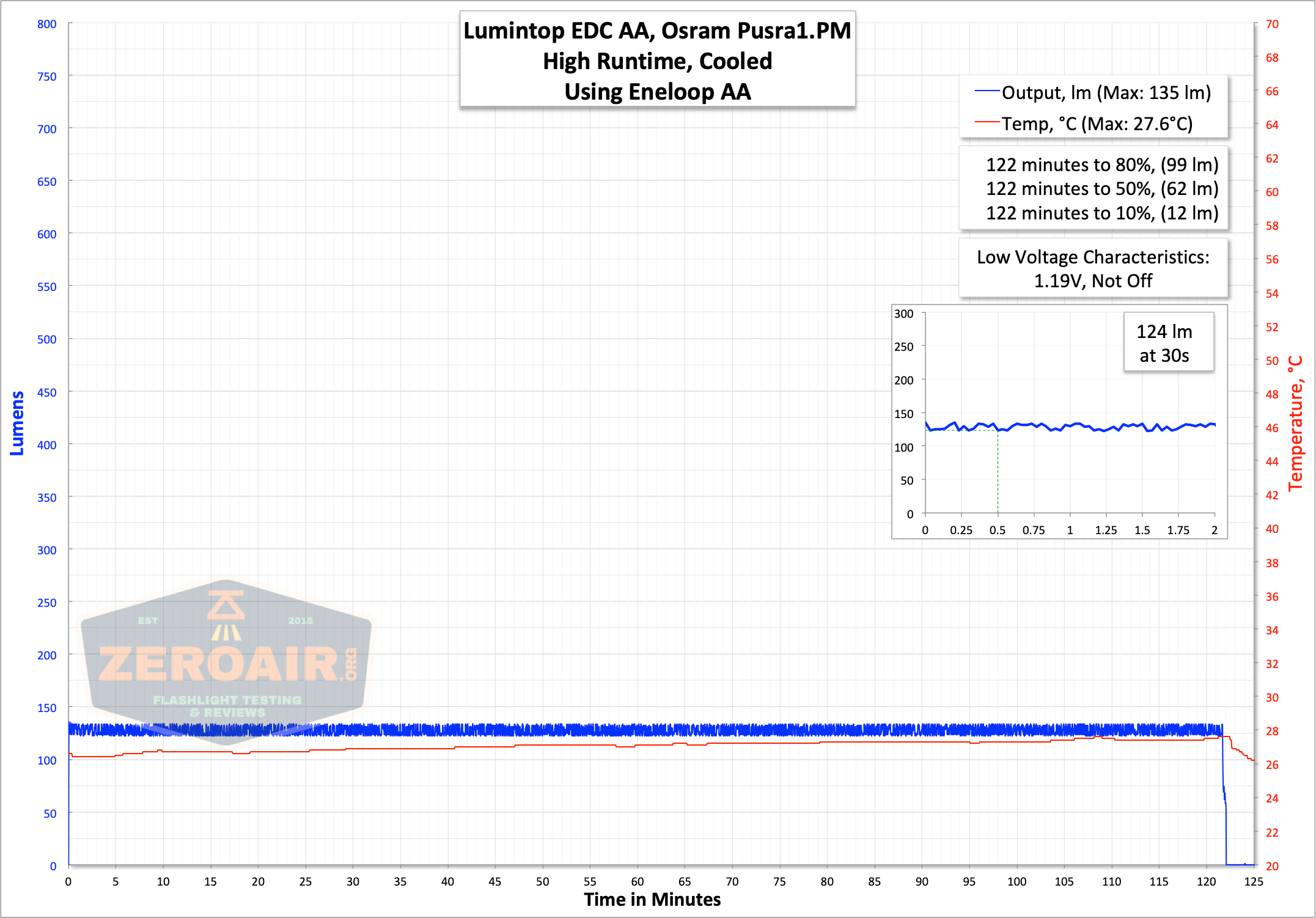
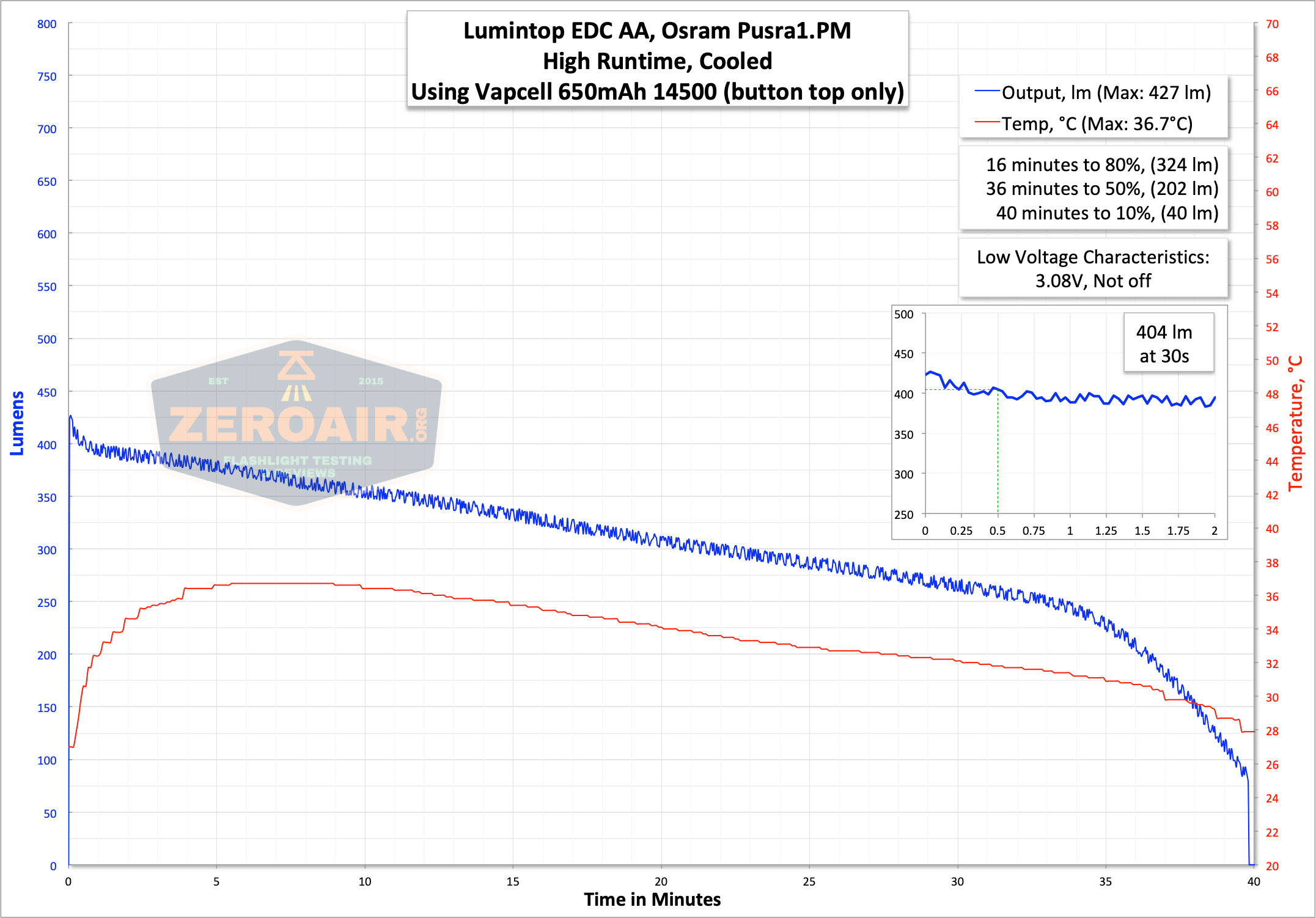
Output with a 14500 cell was quite different. Not only does the light best the 600-lumen specification, but the output also stays much higher as the voltage drops off.
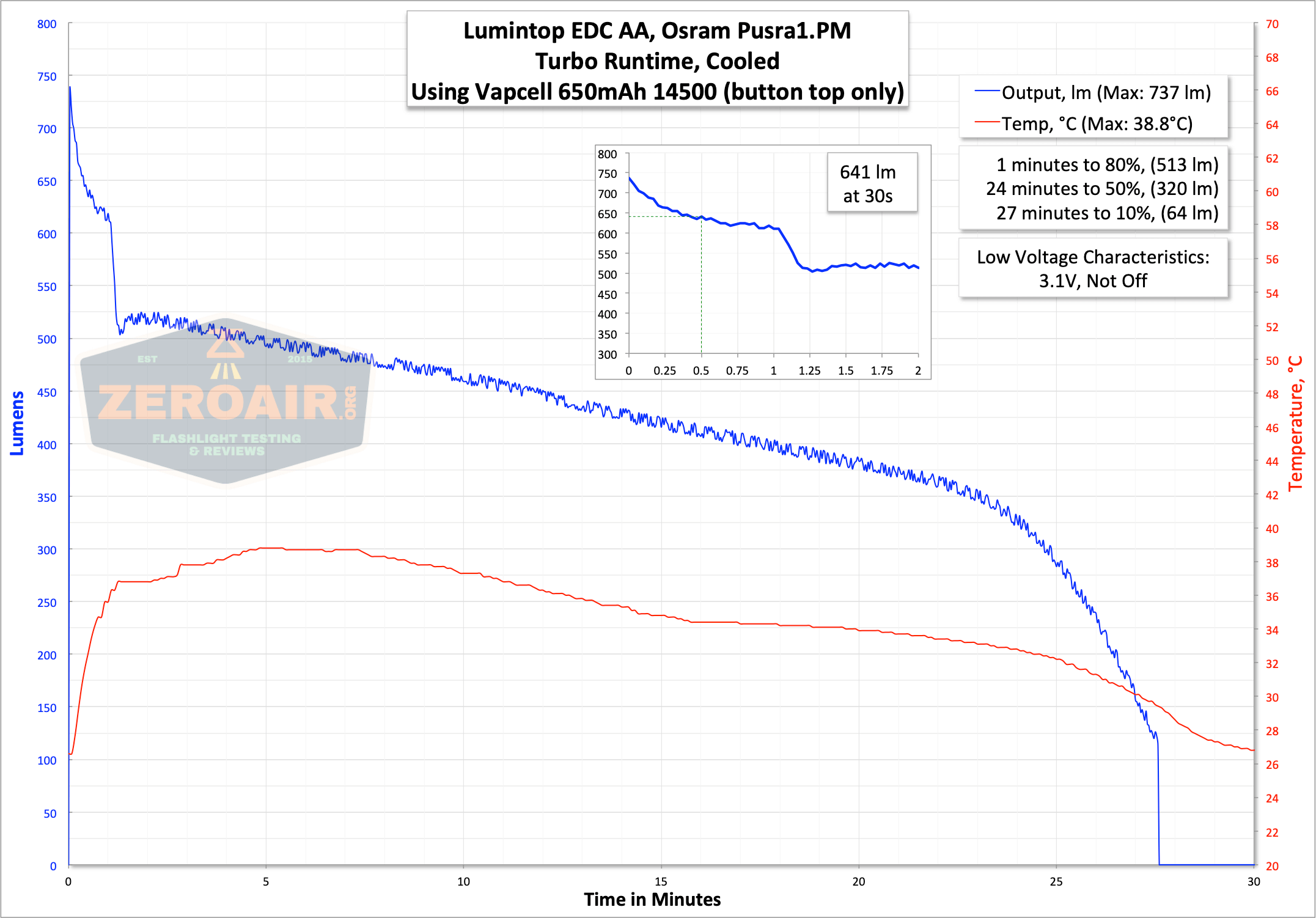
A similar story is seen on High, as the output trails off while the cell voltage drops. The light steps down so very hard when the voltage gets to around 3.0V that you’ll certainly notice a low cell. But I can’t say there’s low voltage protection here, either.
Modes and Currents
| Mode | Powered By | Mode Claimed Output (lm) | Claimed Runtime | Measured Lumens | Tailcap Amps |
|---|---|---|---|---|---|
| Turbo | 14500: | 600 | 45m | 641 | 2.53 |
| High | 14500: | 400 | 1h5m | 404 | 1.20 |
| Medium | 14500: | 80 | 6h45m | 63 | 0.16 |
| Low | 14500: | 8 | 30h | 12 | 0.03 |
| Mode | Powered By | Mode Claimed Output (lm) | Claimed Runtime | Measured Lumens | Tailcap Amps |
|---|---|---|---|---|---|
| Turbo | AA (Alkaline): | 180 | 45m | – | 1.10 |
| High | AA (Alkaline): | 125 | 1h10m | – | 0.64 |
| Medium | AA (Alkaline): | 22 | 17h30m | – | 0.11 |
| Low | AA (Alkaline): | 2 | 120h | – | 0.01 |
| Mode | Powered By | Mode Claimed Output (lm) | Claimed Runtime | Measured Lumens | Tailcap Amps |
|---|---|---|---|---|---|
| Turbo | AA (NiMH): | 180 | 1h20m | 147 | 1.10 |
| High | AA (NiMH): | 130 | 1h45m | 124 | 0.64 |
| Medium | AA (NiMH): | 22 | 14h20m | 24 | 0.11 |
| Low | AA (NiMH): | 2 | 150h | – | 0.01 |
Pulse Width Modulation
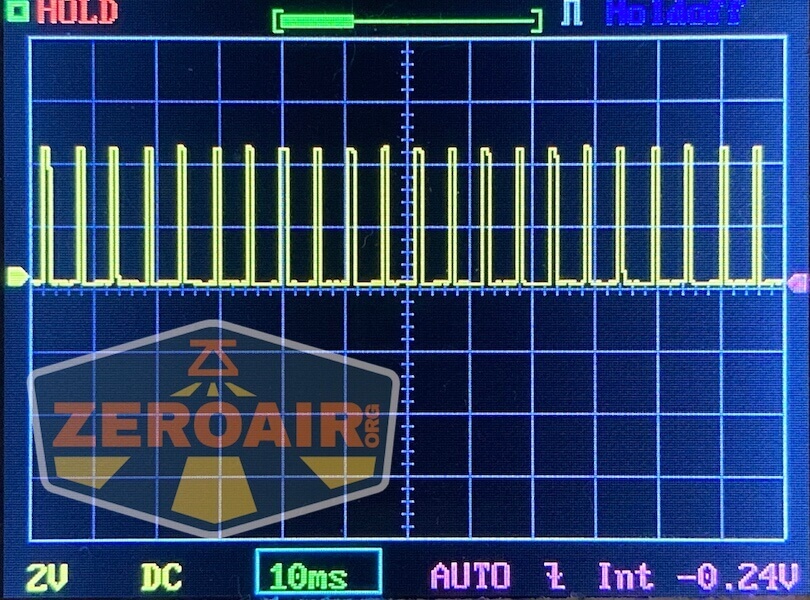
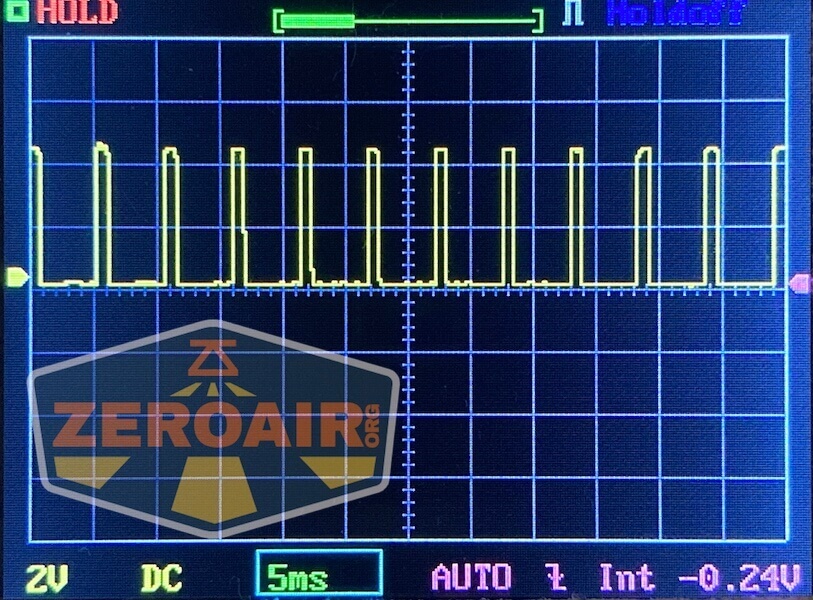
Interestingly, the 1.5V cells show PWM on only the lowest mode. Running the light at 4.2V (with a 14500, that is), there’s PWM on all modes. I wouldn’t say the PWM is noticeable on even the lowest mode, though.
Eneloop AA:
 Vapcell 14500:
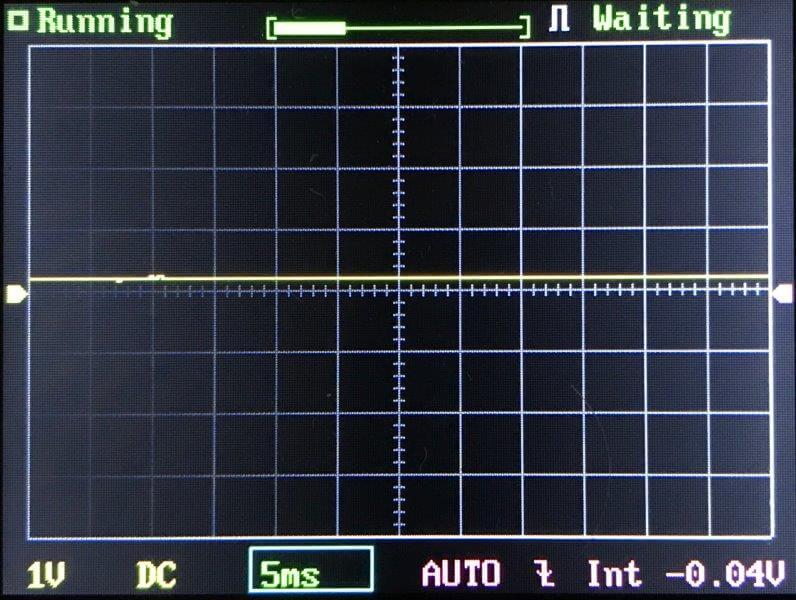
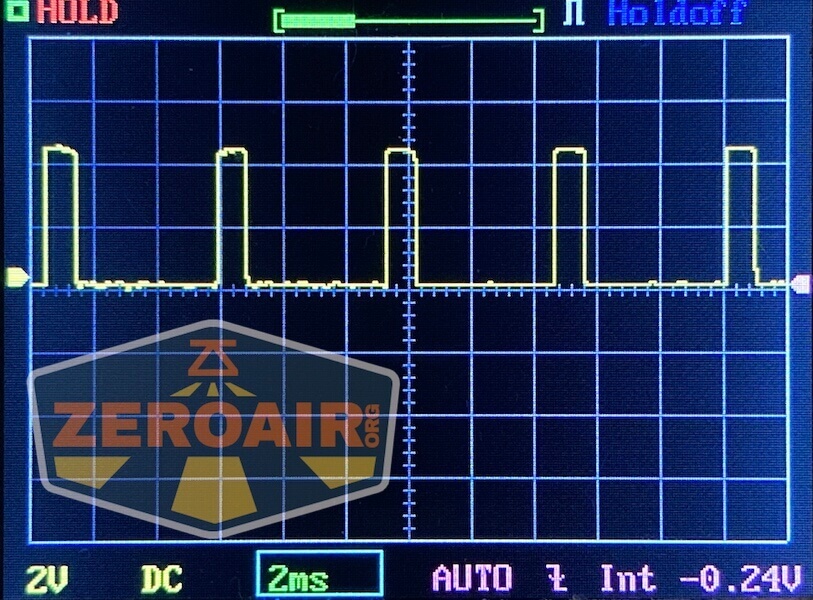
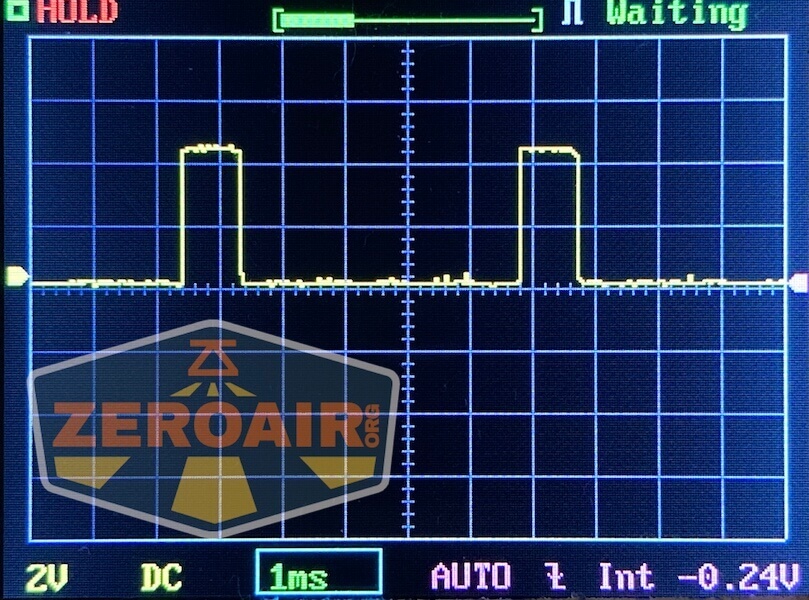
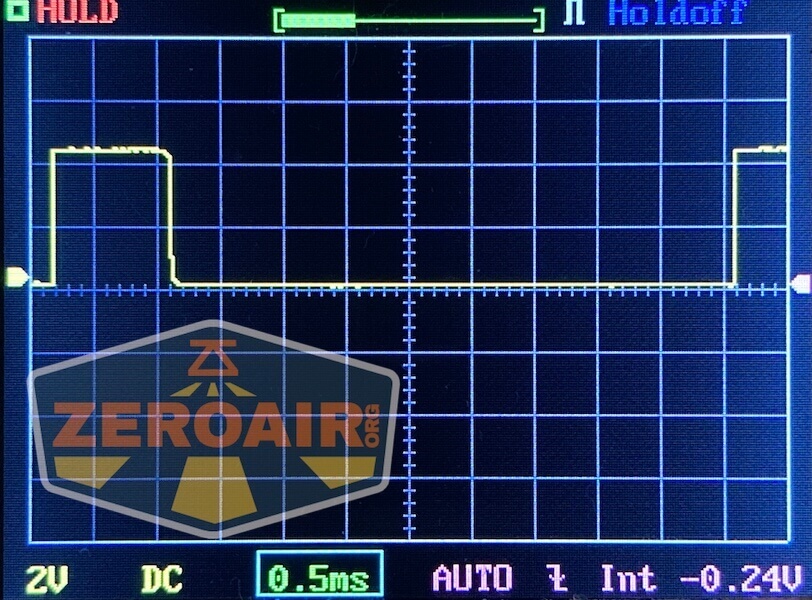
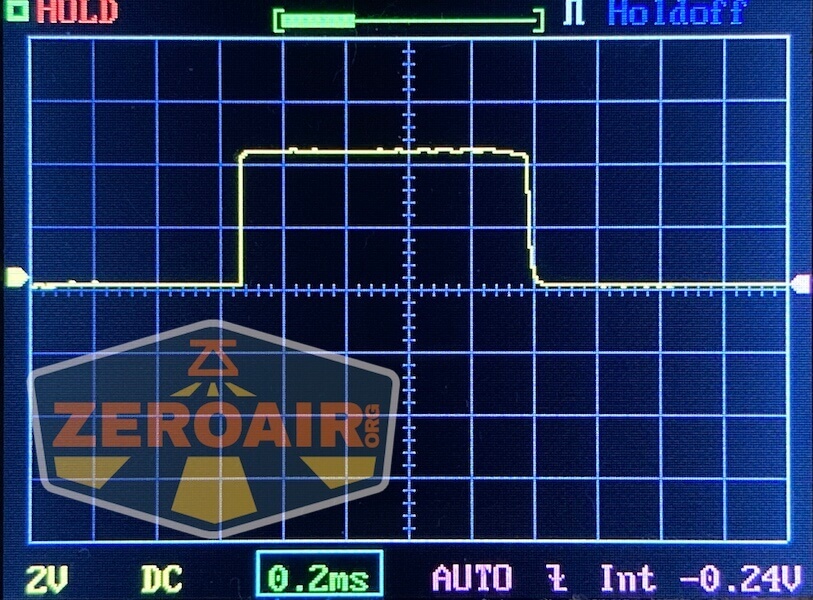
 Here you can see a “baseline” – a chart with almost no light hitting the sensor.
Then there’s the Ultrafire WF-602C flashlight, which has some of the worst PWM I’ve seen. It’s so bad that I used a post about it to explain PWM! Here are multiple timescales (10ms, 5ms, 2ms, 1ms, 0.5ms, 0.2ms) to make comparing this “worst” PWM light to the test light easier. That post also explains why I didn’t test the WF-602C at the usual 50us scale.
User Interface and Operation
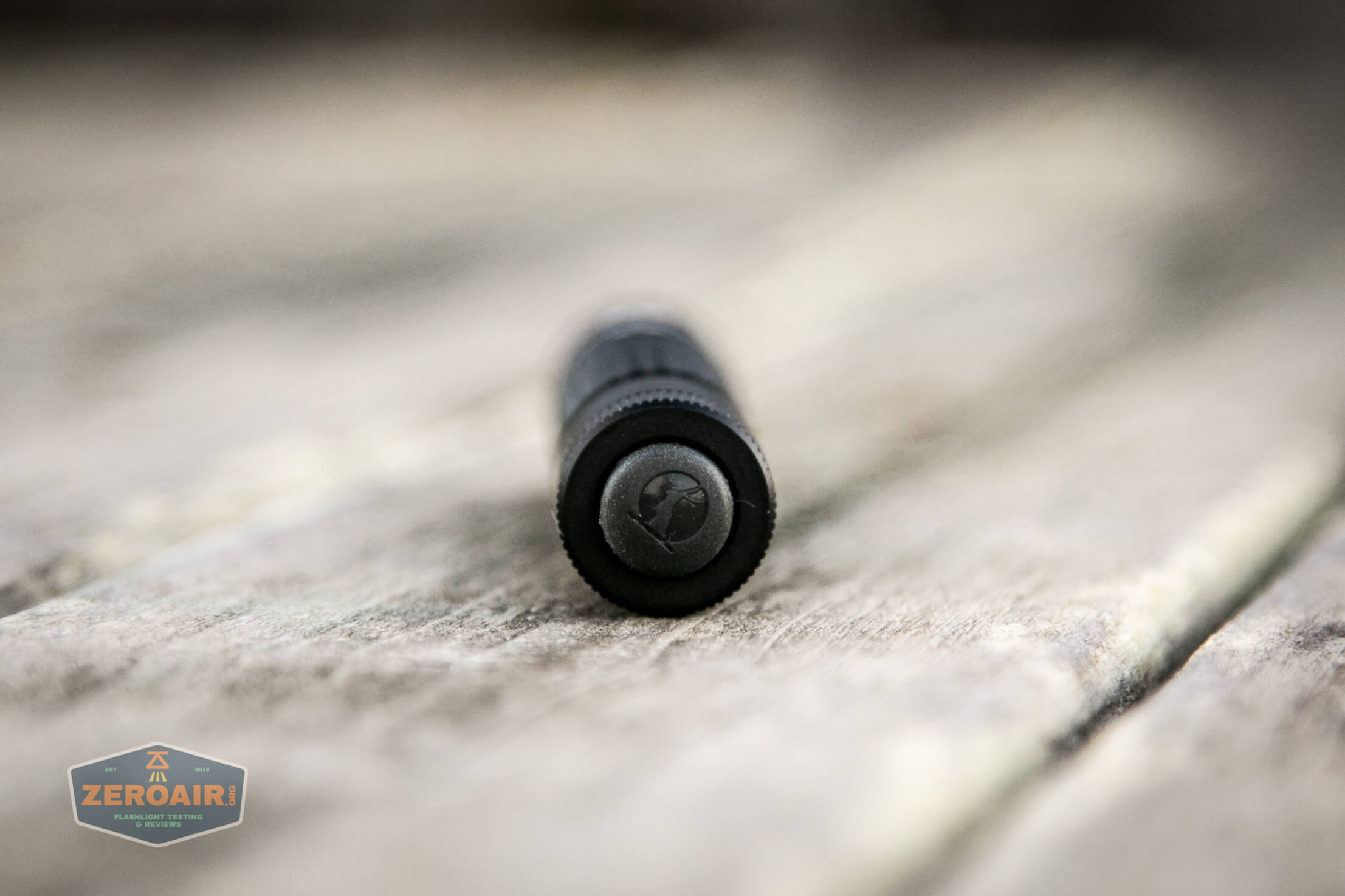
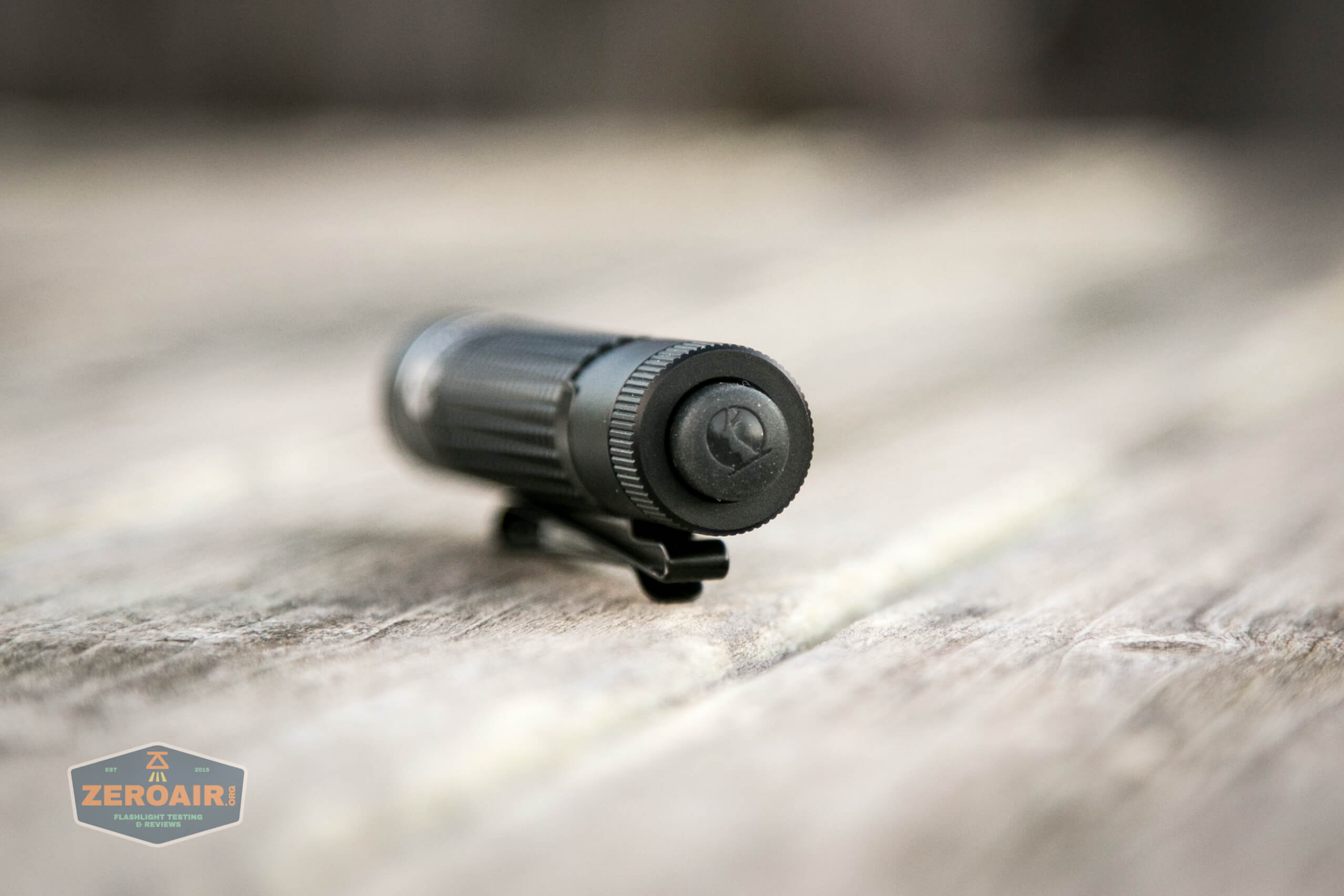
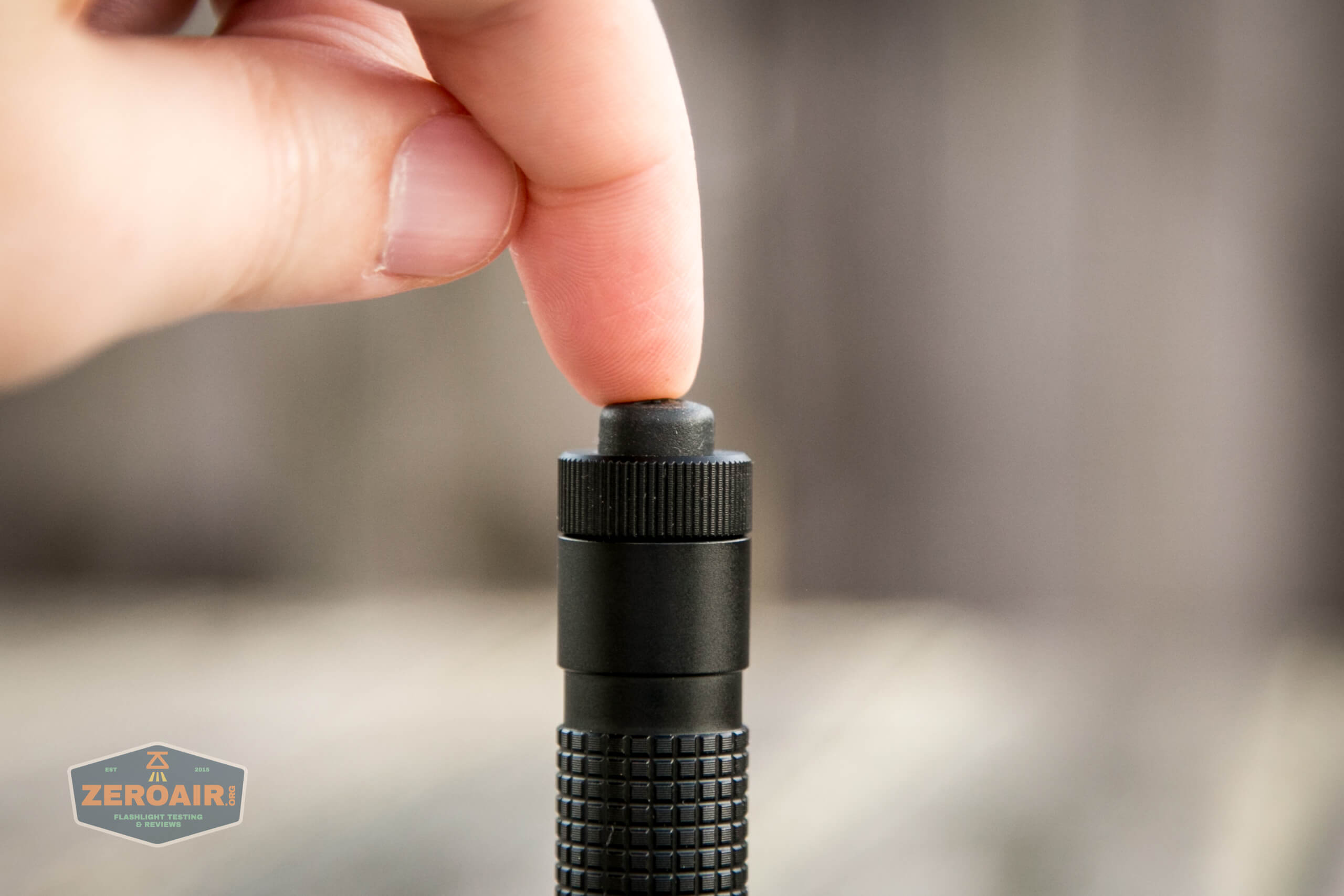
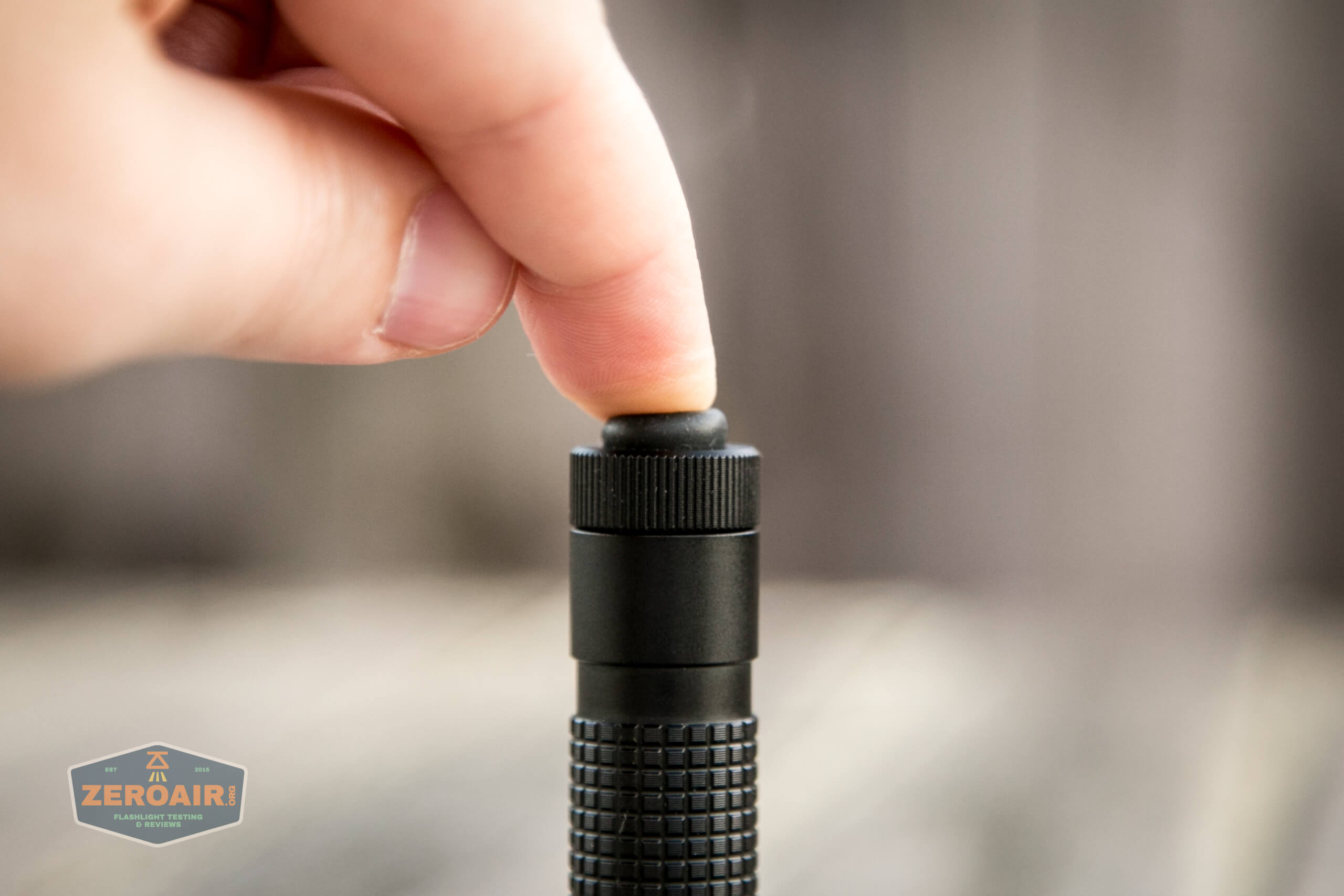
The Lumintop EDC AA is controlled by a single mechanical switch. It’s a forward clicky and is very proud. It’s a “tactical level” of proud. The switch also has what will be some of the last uses of the Lumintop bunny logo, as Lumintop was forced to change the bunny logo.
Here’s a user interface table!
| State | Action | Result |
|---|---|---|
| Off | Click | On (Mode Memory) |
| Off | Tap | Mode advance (Low > Medium > High > Turbo) |
| On | Click | Off |
| Off | Hold | Momentary (Mode Memory) |
| Off | Tap 6x | Strobe |
| On >3s | – | Memorizes mode |
LED and Beam
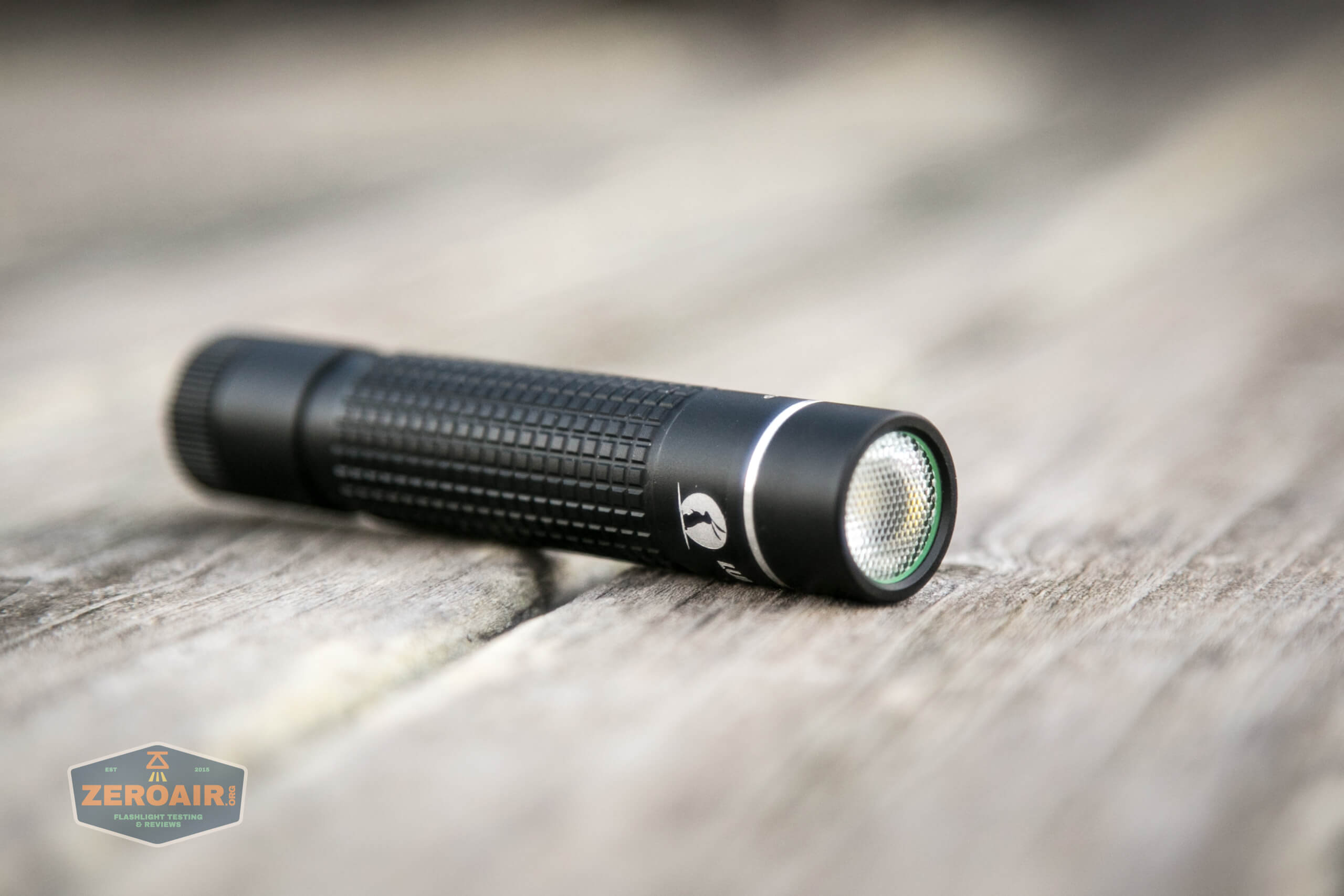
The emitter of choice in the Lumintop EDC AA (can’t tell you how many times by this point I’ve typed “TOOL AA” and had to correct it.) is an Osram Pusra1.PM, 6500K. That’s a very cool emitter. The light uses a dimpled TIR optic and provides a very floody output.
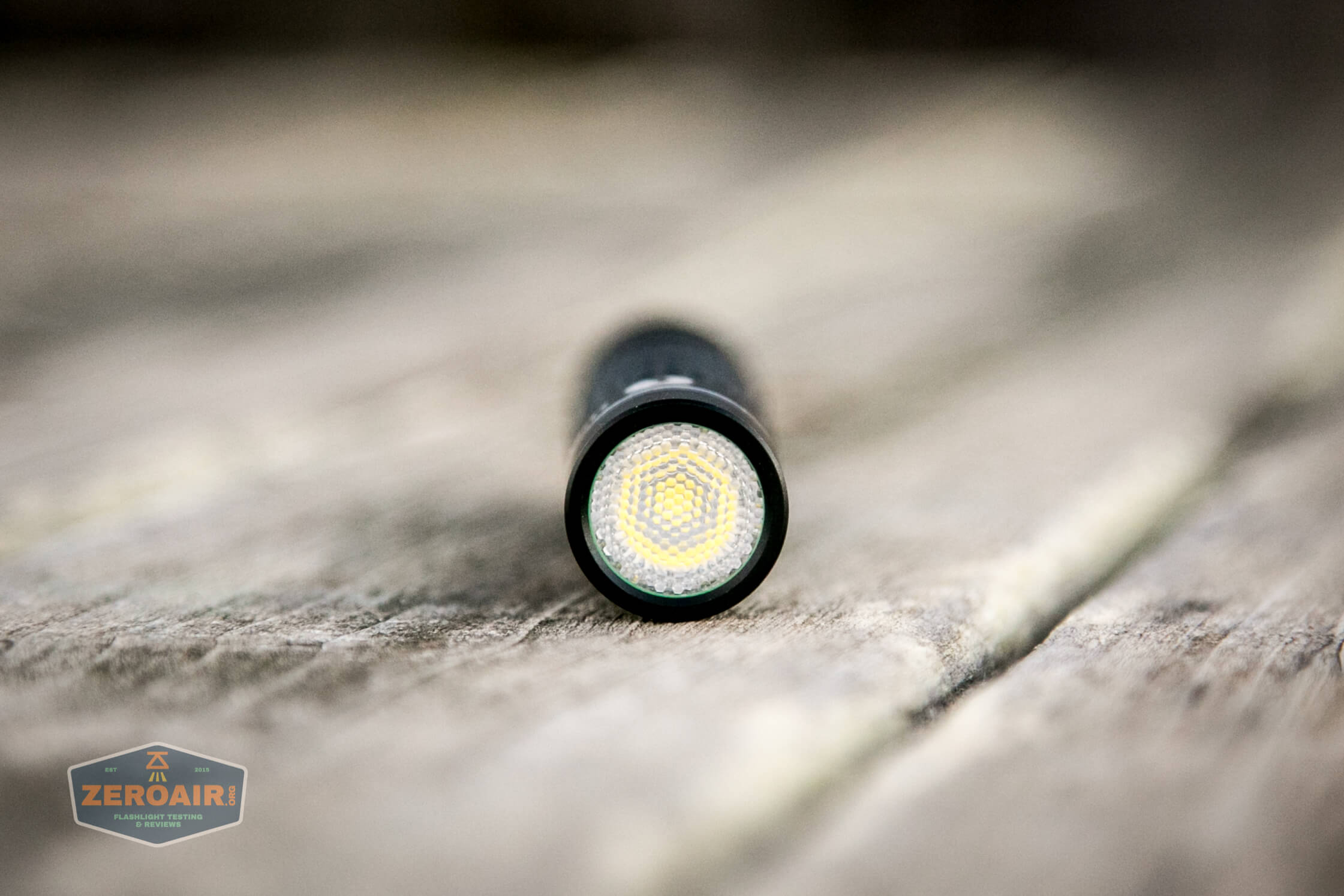
There’s an o-ring in front of the TIR, and it’s a green glowy o-ring!
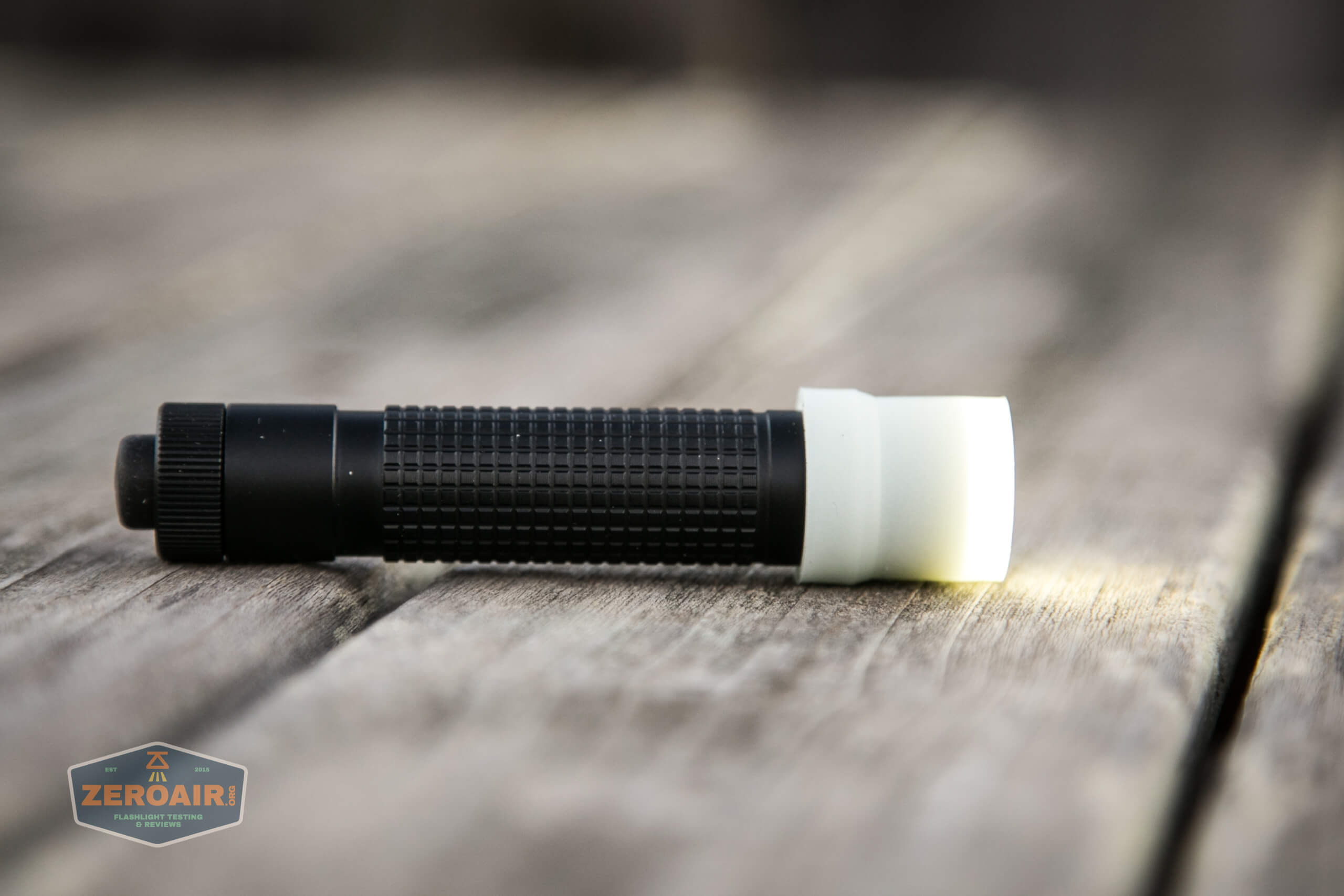
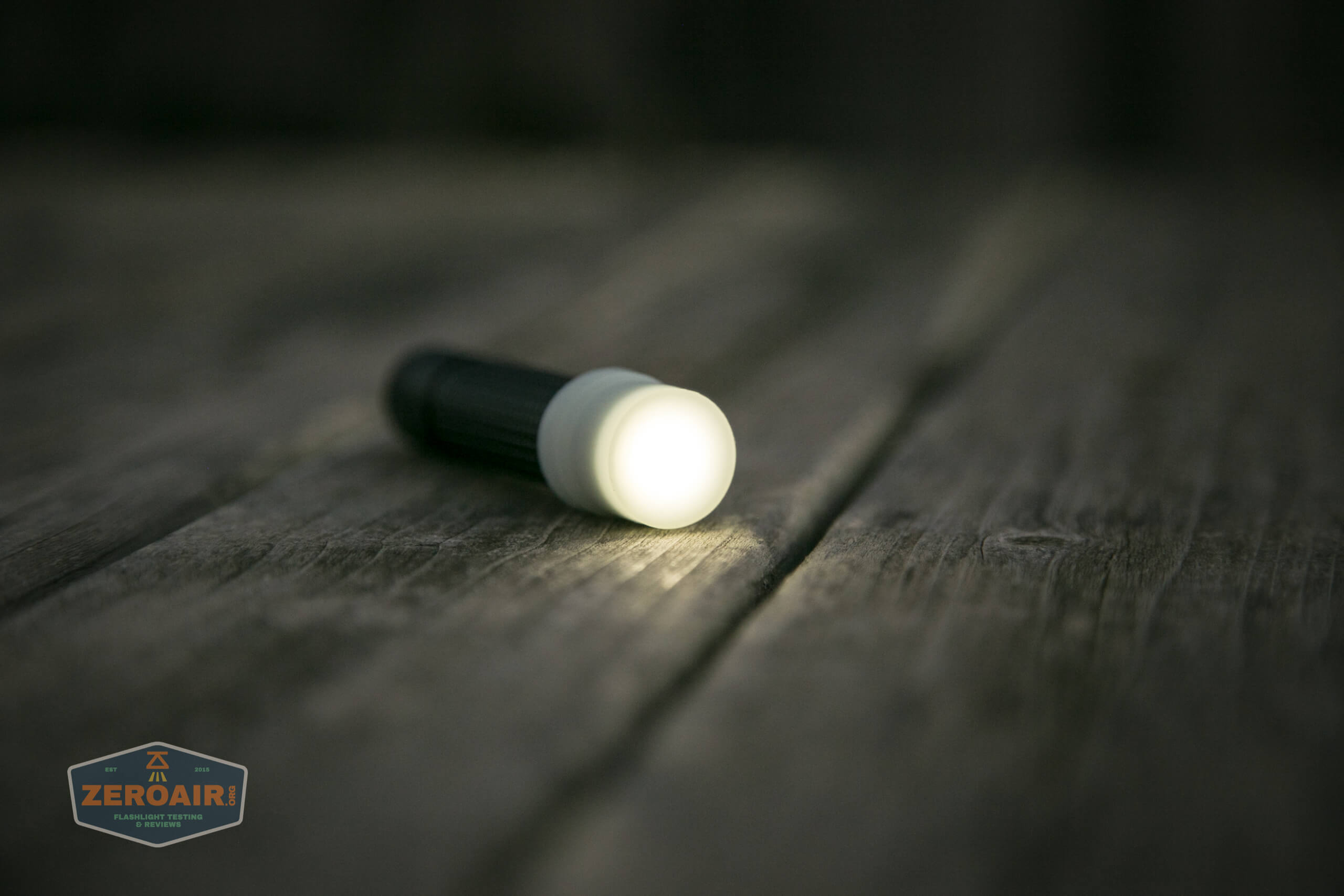
If the TIR doesn’t diffuse the output enough for you, the included glow adapter is a good option.
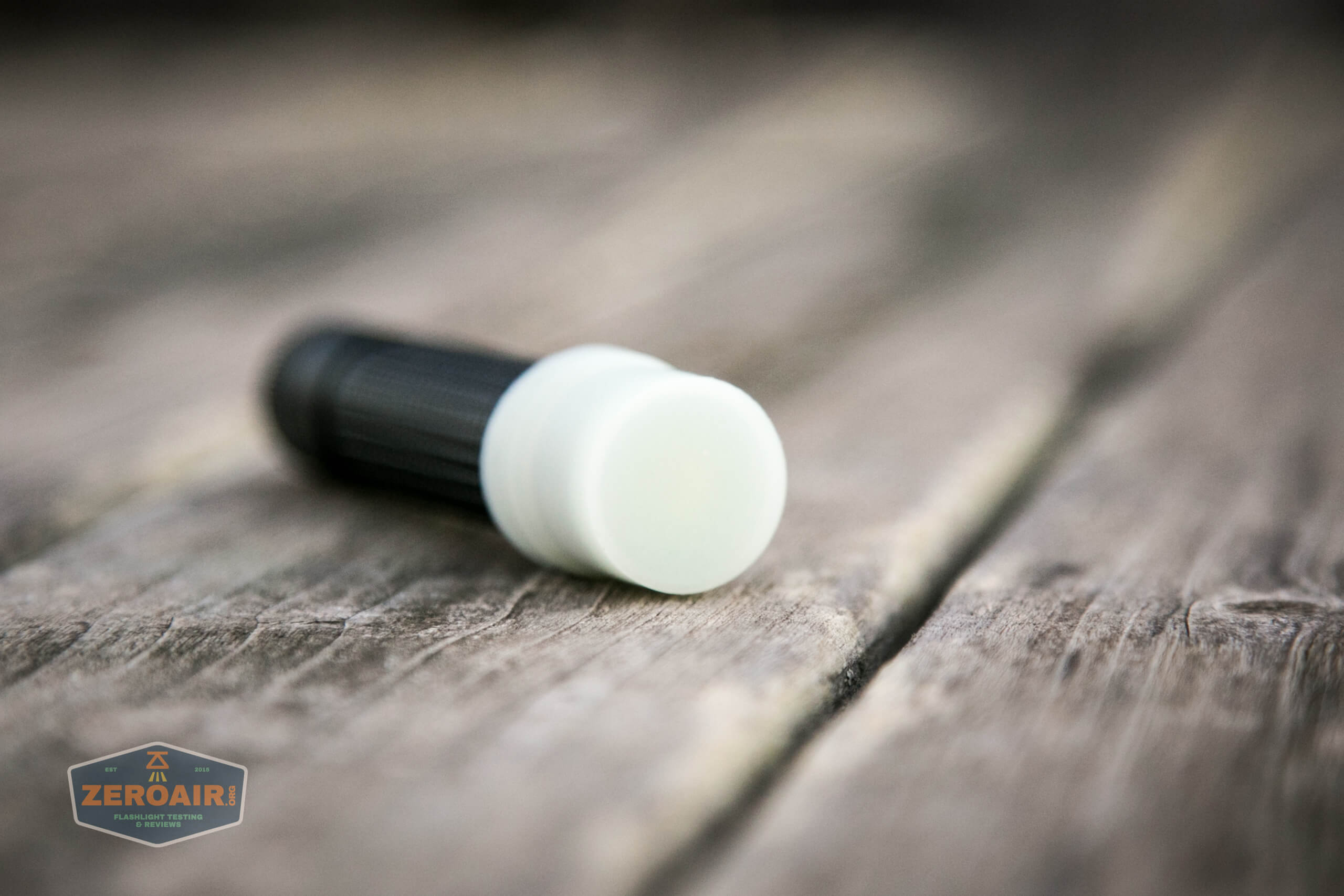
This just slips right over the front of the light.
Beamshots
These beamshots always have the following settings: f8, ISO100, 0.3s shutter, and manual 5000K exposure. These photos are taken at floor level, and the beam hits the ceiling around 9 feet away.
Eneloop AA:




Vapcell 14500:




Tint vs BLF-348 (KillzoneFlashlights.com 219b version) (affiliate link)
I keep the test flashlight on the left and the BLF-348 reference flashlight on the right.
Eneloop AA:
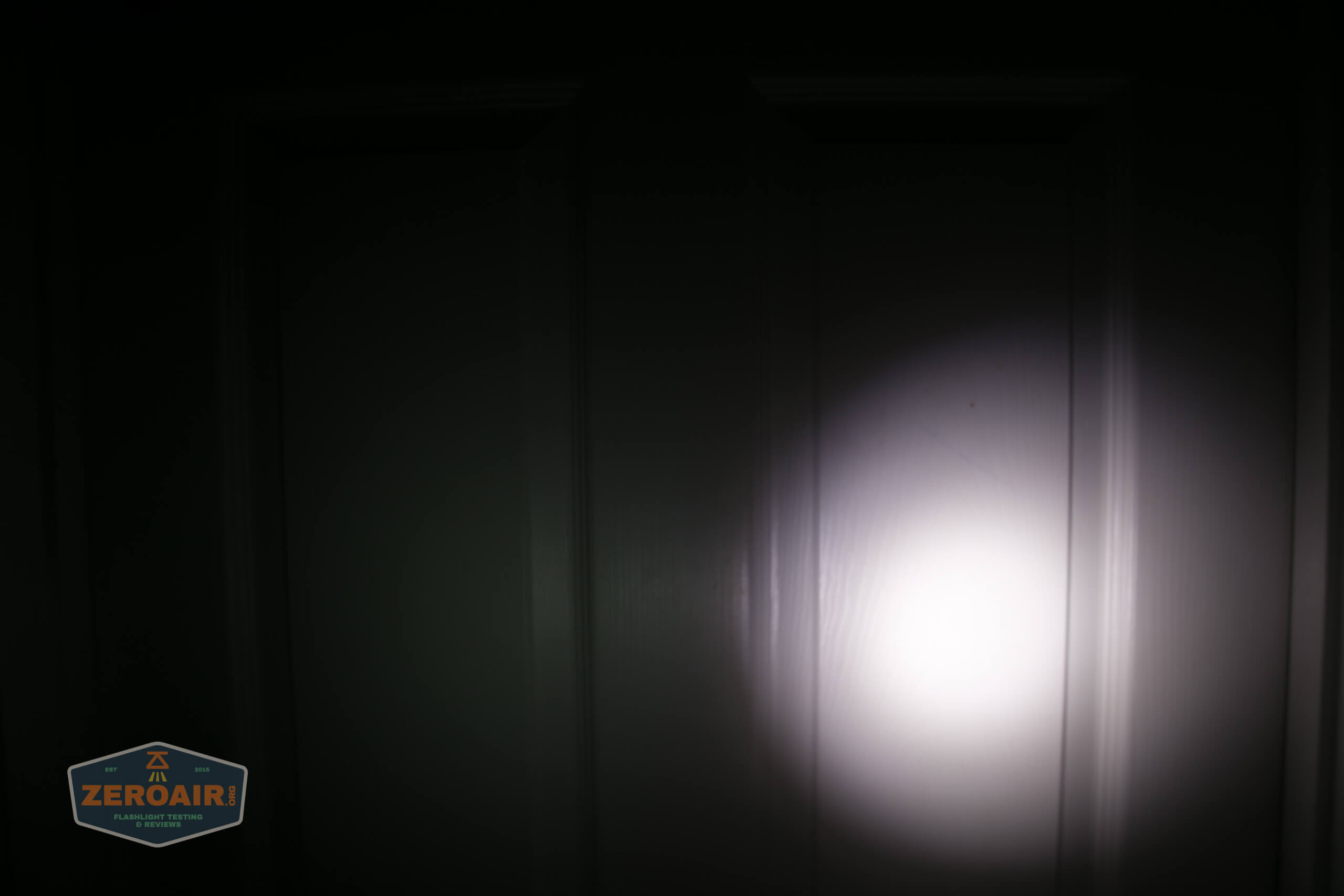
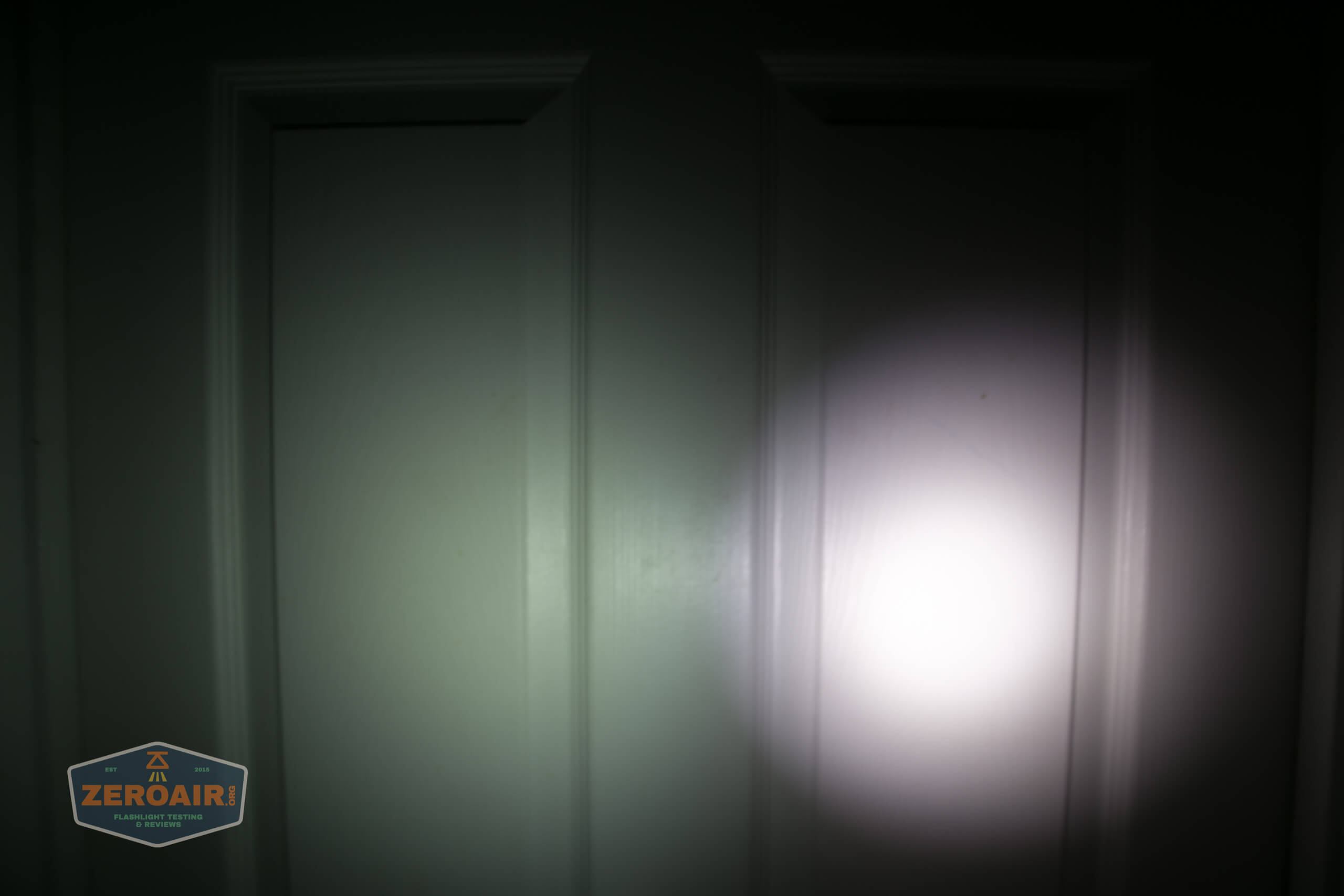
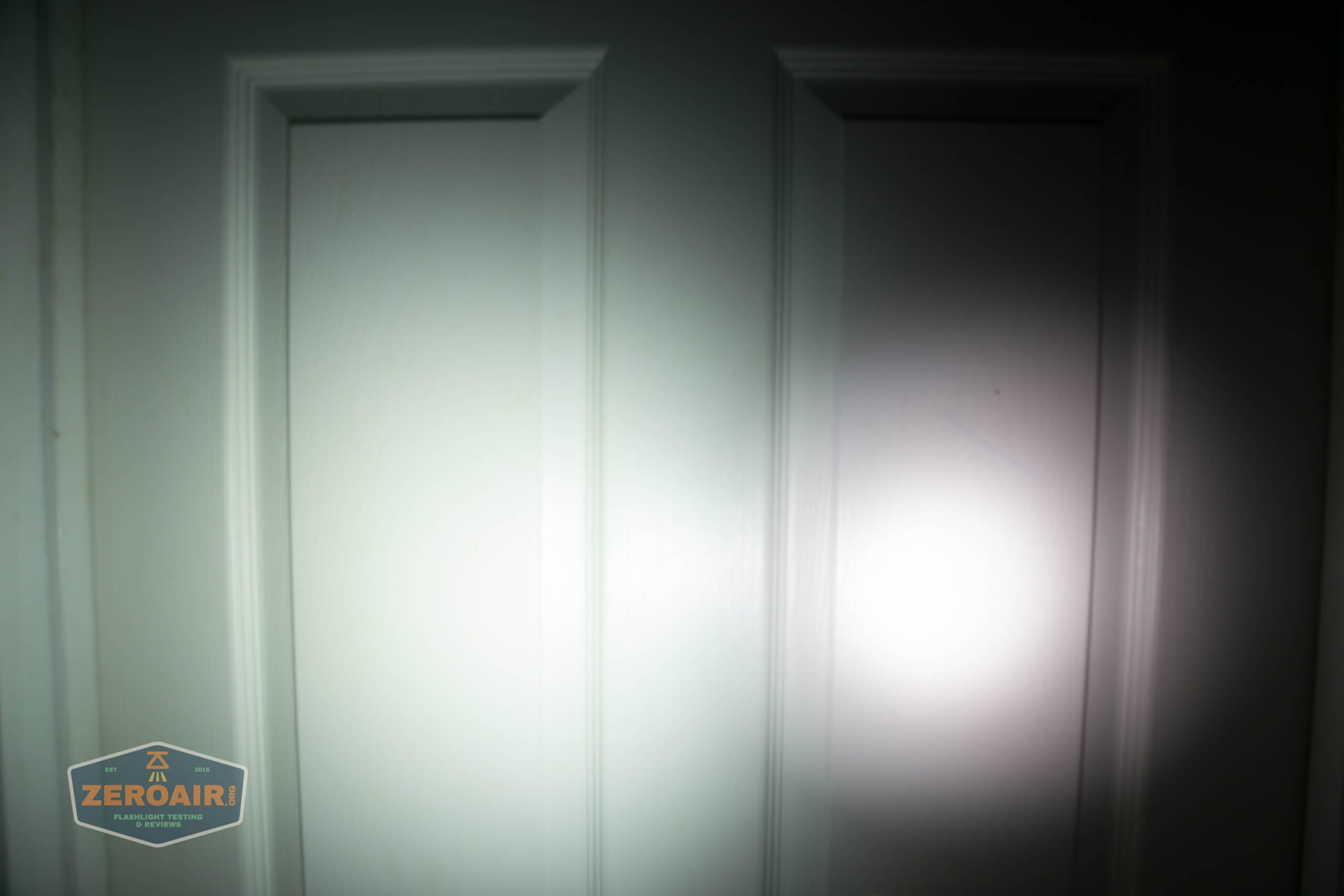
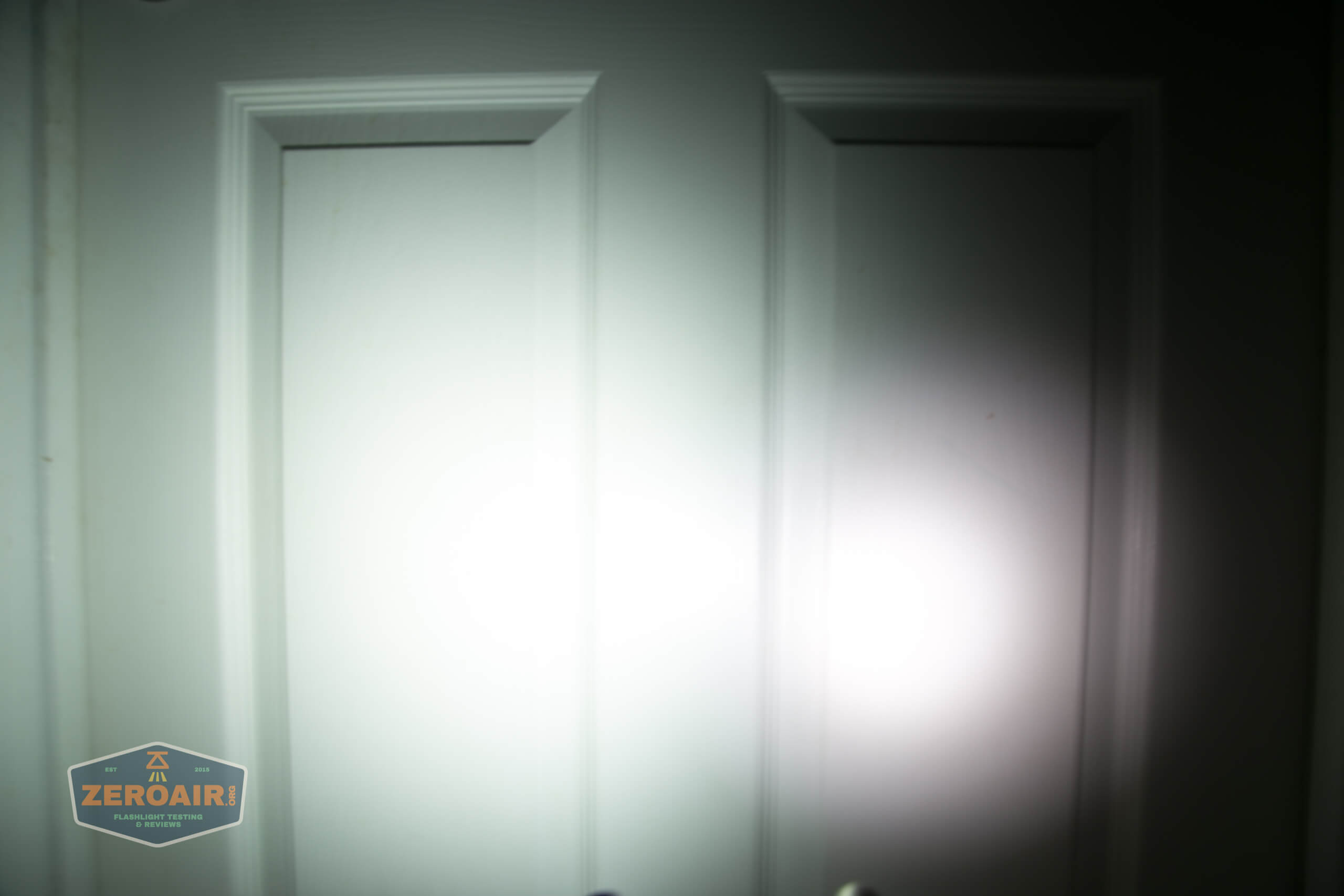
Vapcell 14500:
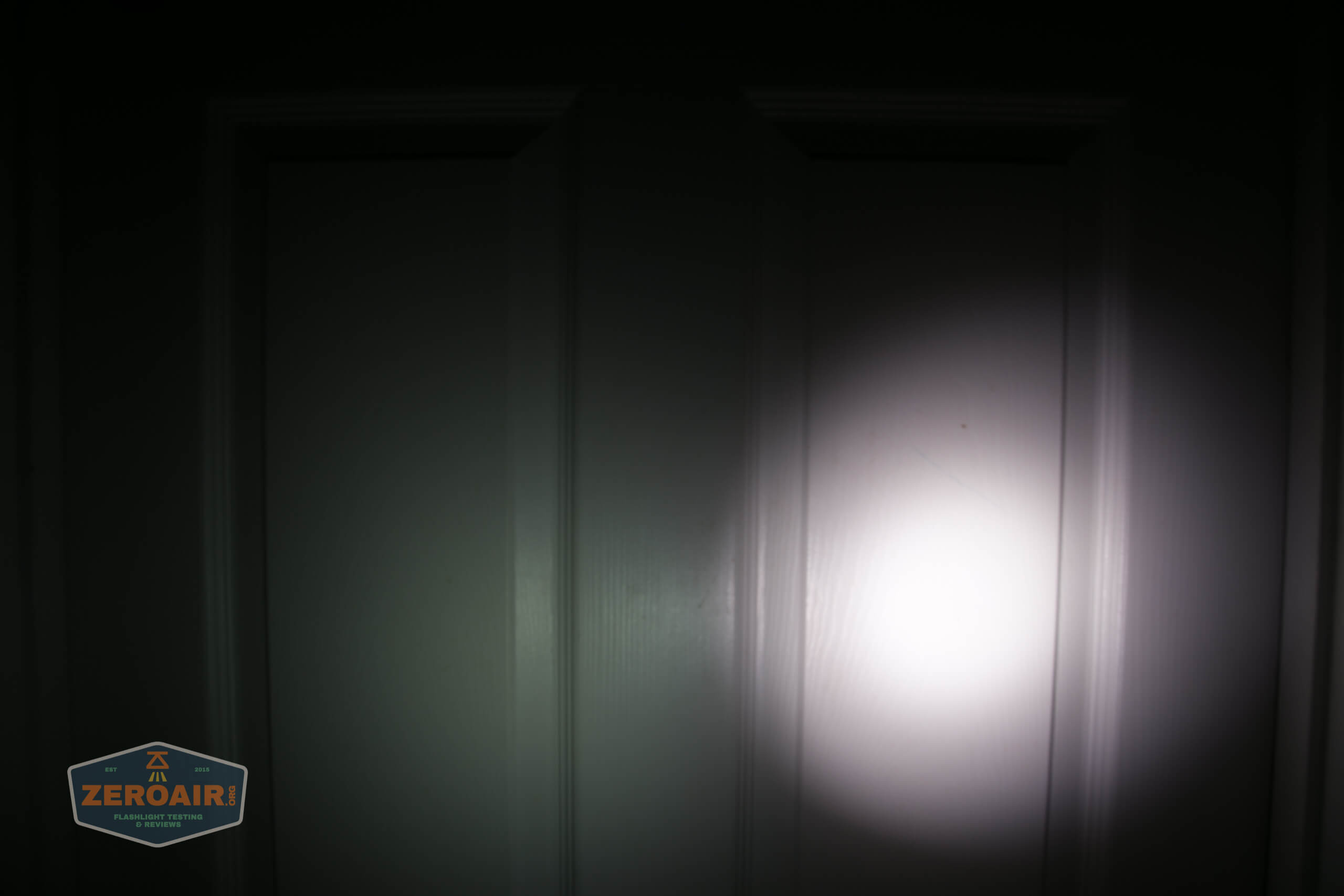
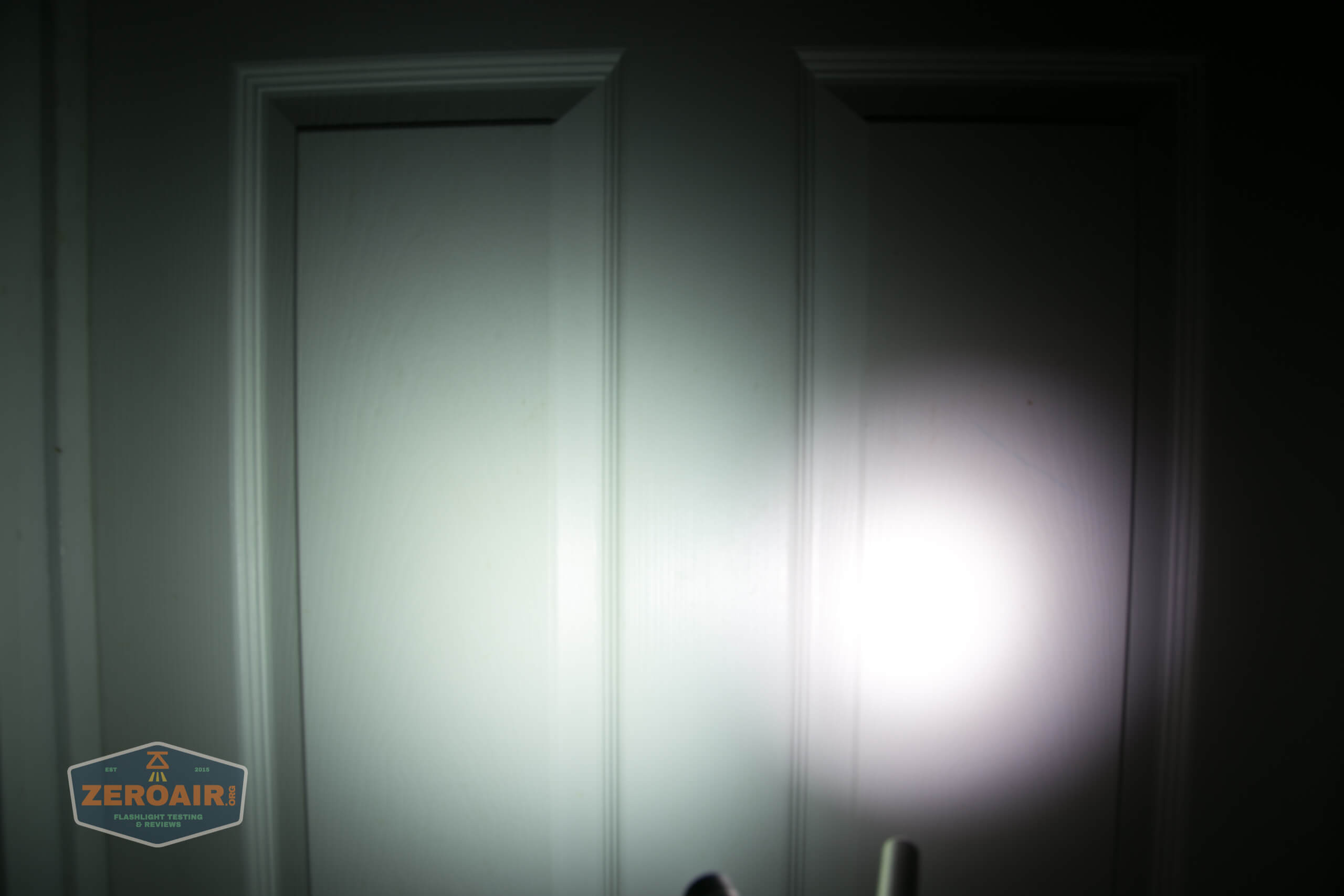
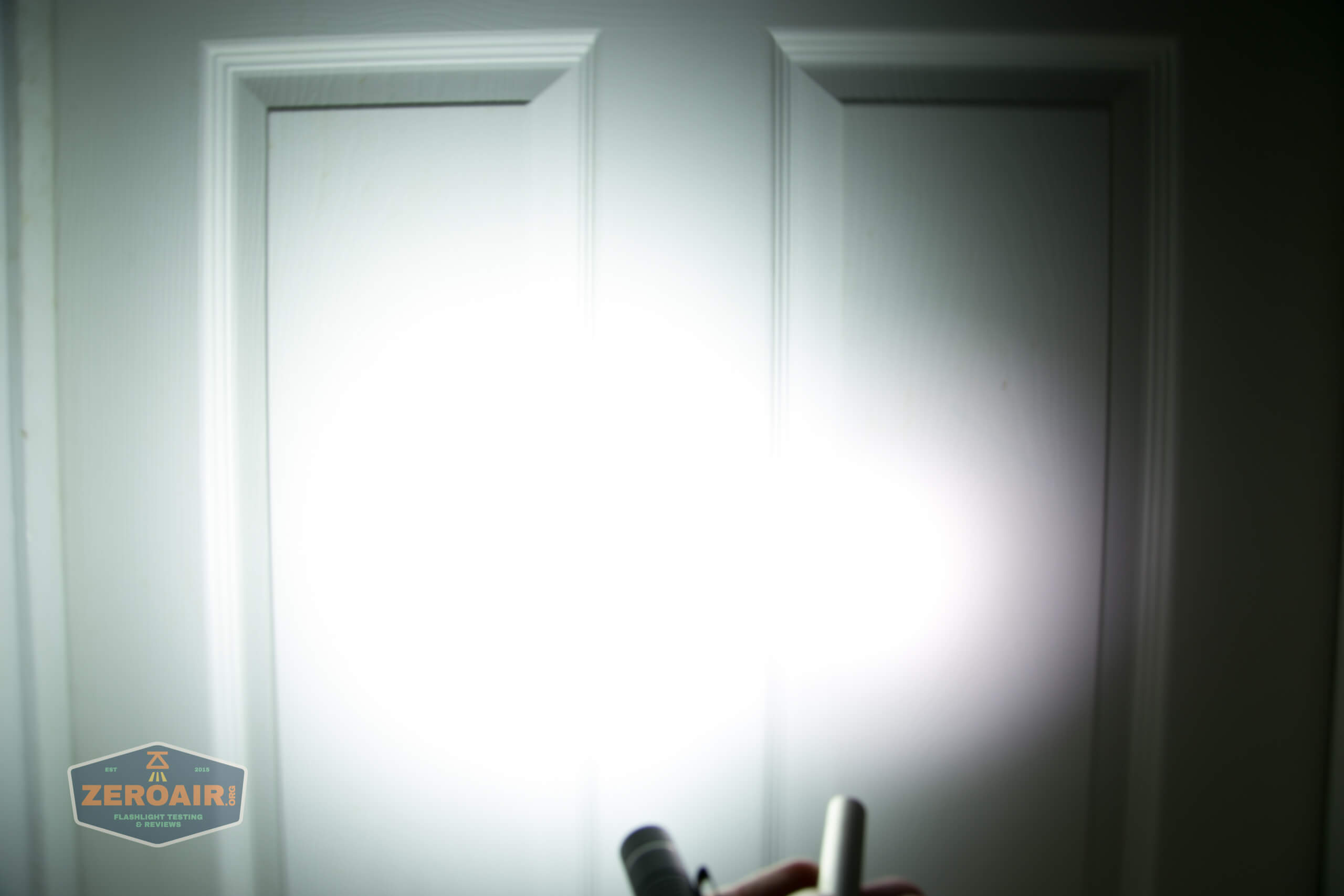

I compare everything to the KillzoneFlashlights.com 219b BLF-348 because it’s inexpensive and has the best tint!
Conclusion
What I like
- Low cost
- Simple user interface
- Momentary use because of the forward clicky
- Great that they’ll have a Nichia version
What I don’t like
- 6500K cool white emitter
- I really don’t think there’s any need for strobe on this light, and I landed there much too often!
- I would much prefer no mode memory
Notes
- This light was provided by Lumintop for review. I was not paid to write this review.
- This content originally appeared at zeroair.org. Please visit there for the best experience!
- Use my amazon.com referral link if you’re willing to help support making more reviews like this one!
- Please support me on Patreon! I deeply appreciate your support!
Discover more from ZeroAir Reviews
Subscribe to get the latest posts sent to your email.
The combination of having a memory mode and the design of the tail switch/UI kills this light as an EDC.
Carrying this in your front pants pocket with constantly change the mode, you will never know what mode it will be in when you go to use it.
Pingback: Flashlight News: Phreaky Briefing Issue 39 – PhotonPhreaks