
Streamlight Key-Mate Keychain Flashlight Review
The other day on Facebook, someone posted a photo of the Lumintop GT Nano with the Streamlight Key-Mate Keychain 72101 flashlight. Well, that light was very flashlighty, and interested me greatly, so I went and found it on Amazon, and here’s a review!
Official Specs and Features
Here’s a link to the official product page.
Streamlight Key-Mate Keychain Flashlight Versions
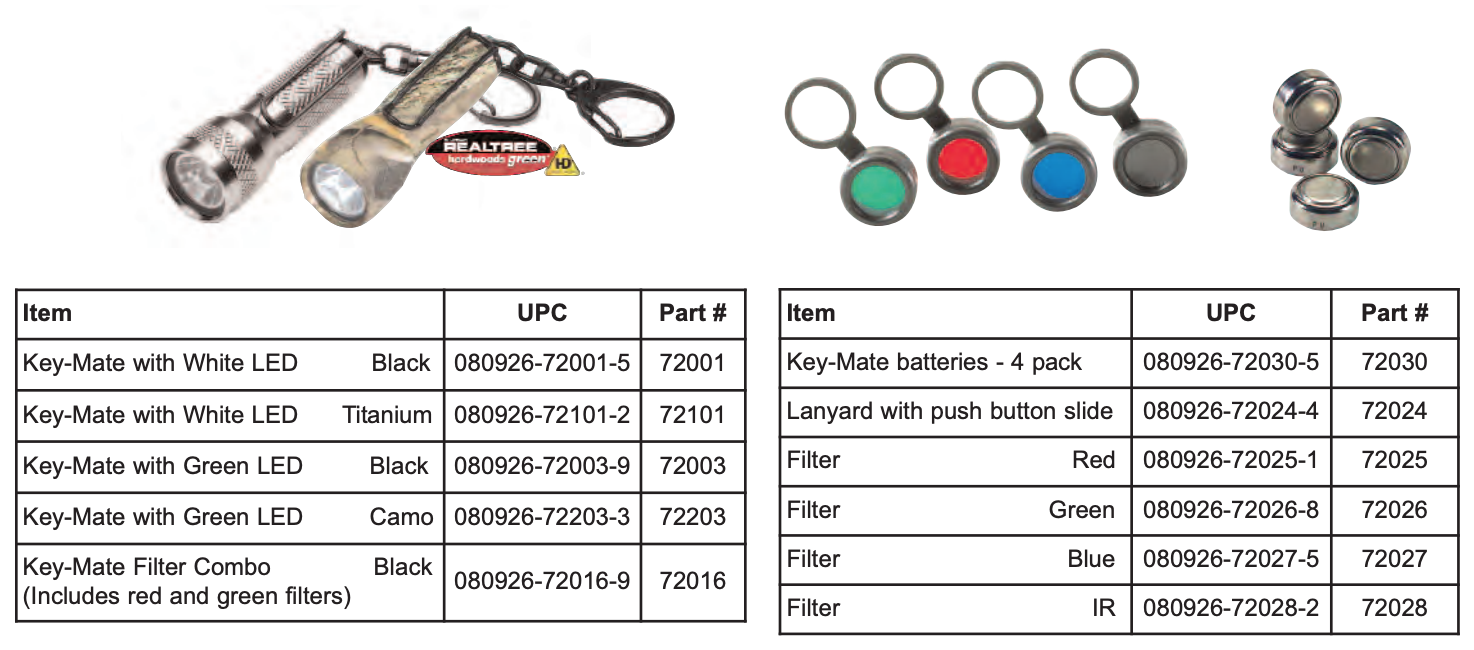
There are a few versions of the 72101. And there are some filter attachments, too. The body colors are Black, Titanium (seen here), and Camo.
Price
I bought mine for $13 on Amazon.com (referral link). You might see them for less elsewhere, but $10-$13 is pretty standard.
Short Review of the Streamlight Key-Mate Keychain Flashlight
This is a great fun little light! With some modification, it’d probably be worth the $13 price. Unfortunately, not a ton of modification can be done. Just a simple 5mm emitter swap would be great, though!
Long Review
The Big Table
| Streamlight Key-Mate | |
|---|---|
| Emitter: | 5mm (White) |
| Price in USD at publication time: | $13.00 on Amazon (referral link) |
| Cell: | 4xLR44 |
| Runtime | |
| LVP? | No |
| Switch Type: | Twisty |
| On-Board Charging? | No |
| Claimed Lumens (lm) | 10 |
| Measured Lumens (at 30s) | 10 (100% of claim)^ |
| Candela per Lumen | 8.2 |
| Claimed Throw (m) | – |
| Candela (Calculated) in cd (at 30s) | 30lux @ 2.903m = 253cd |
| Throw (Calculated) (m) | 31.8^ |
| All my Streamlight reviews! | |
^ Measurement disclaimer: Testing flashlights is my hobby. I use hobbyist-level equipment for testing, including some I made myself. Try not to get buried in the details of manufacturer specifications versus measurements recorded here; A certain amount of difference (say, 10 or 15%) is perfectly reasonable.
What’s Included
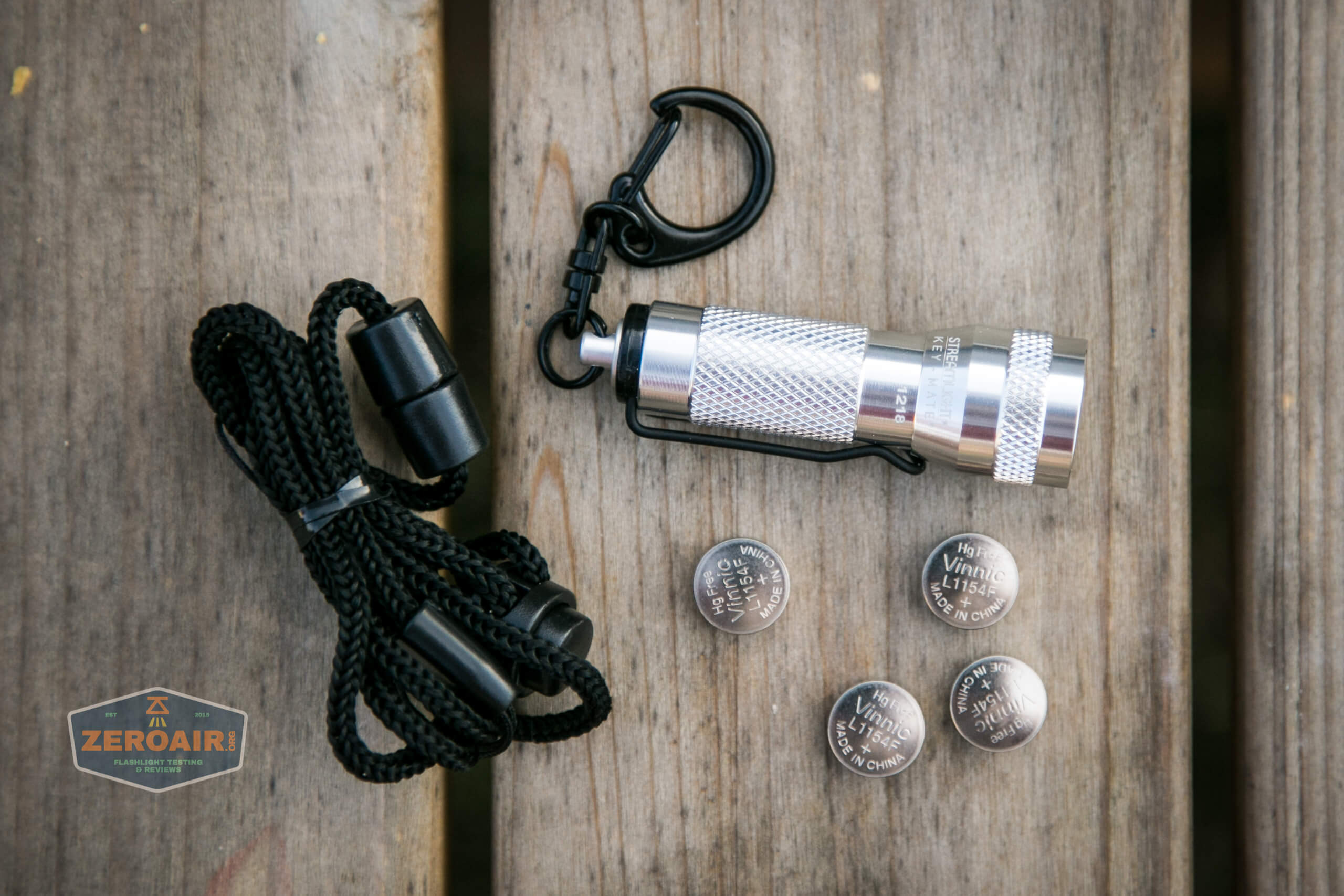
- Streamlight Key-Mate flashlight
- Lanyard
- L1154F cells (4)
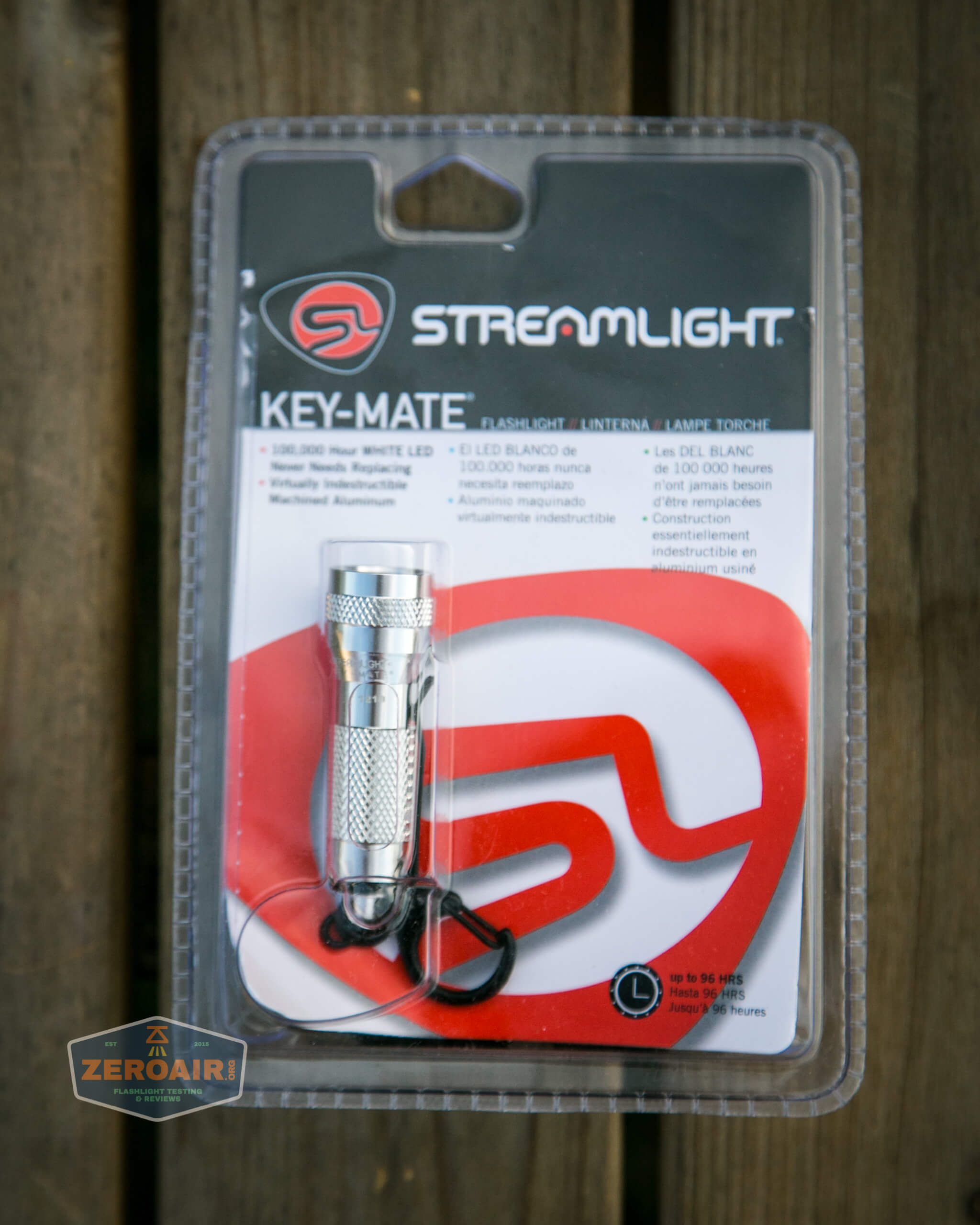
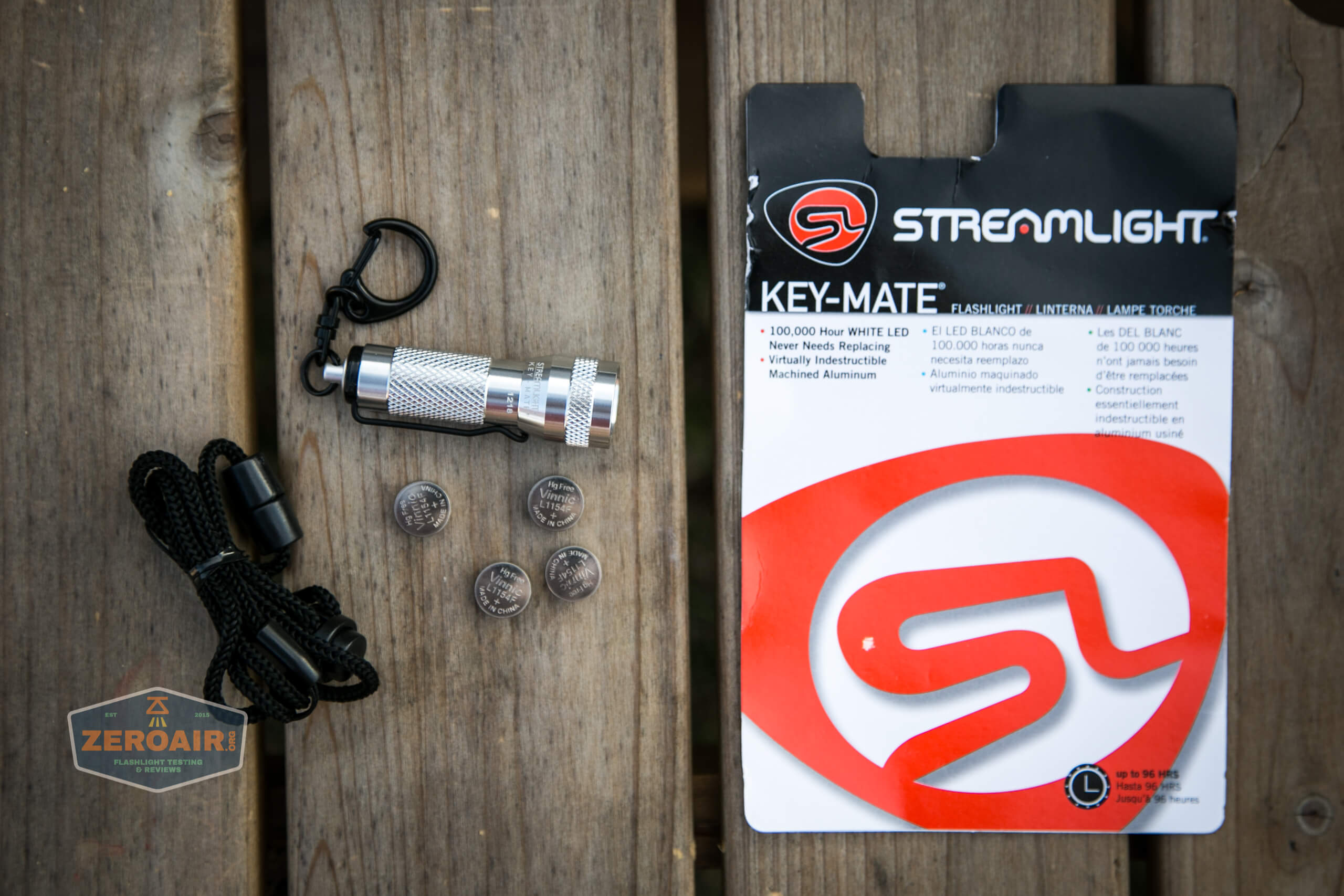
Package and Manual
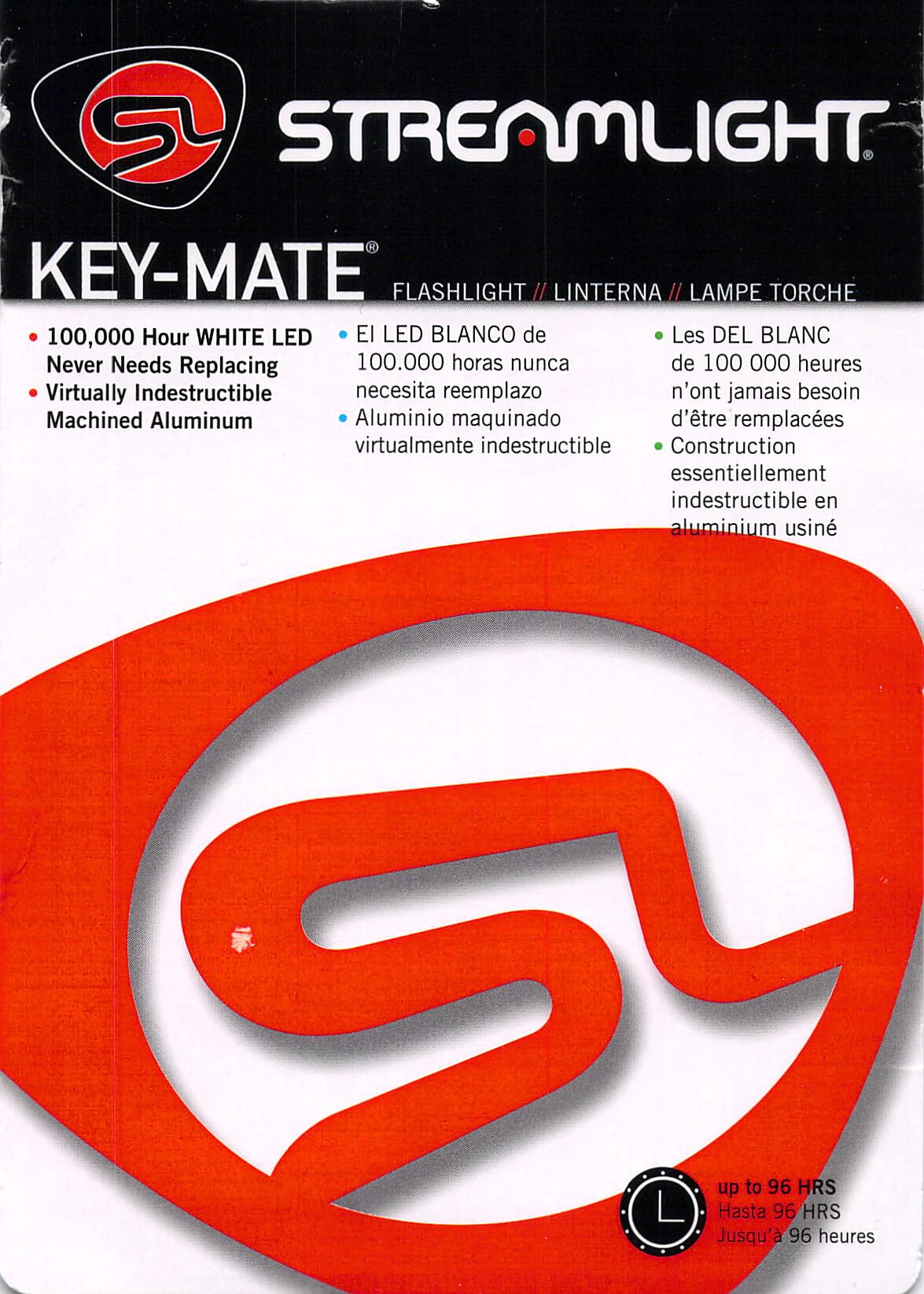
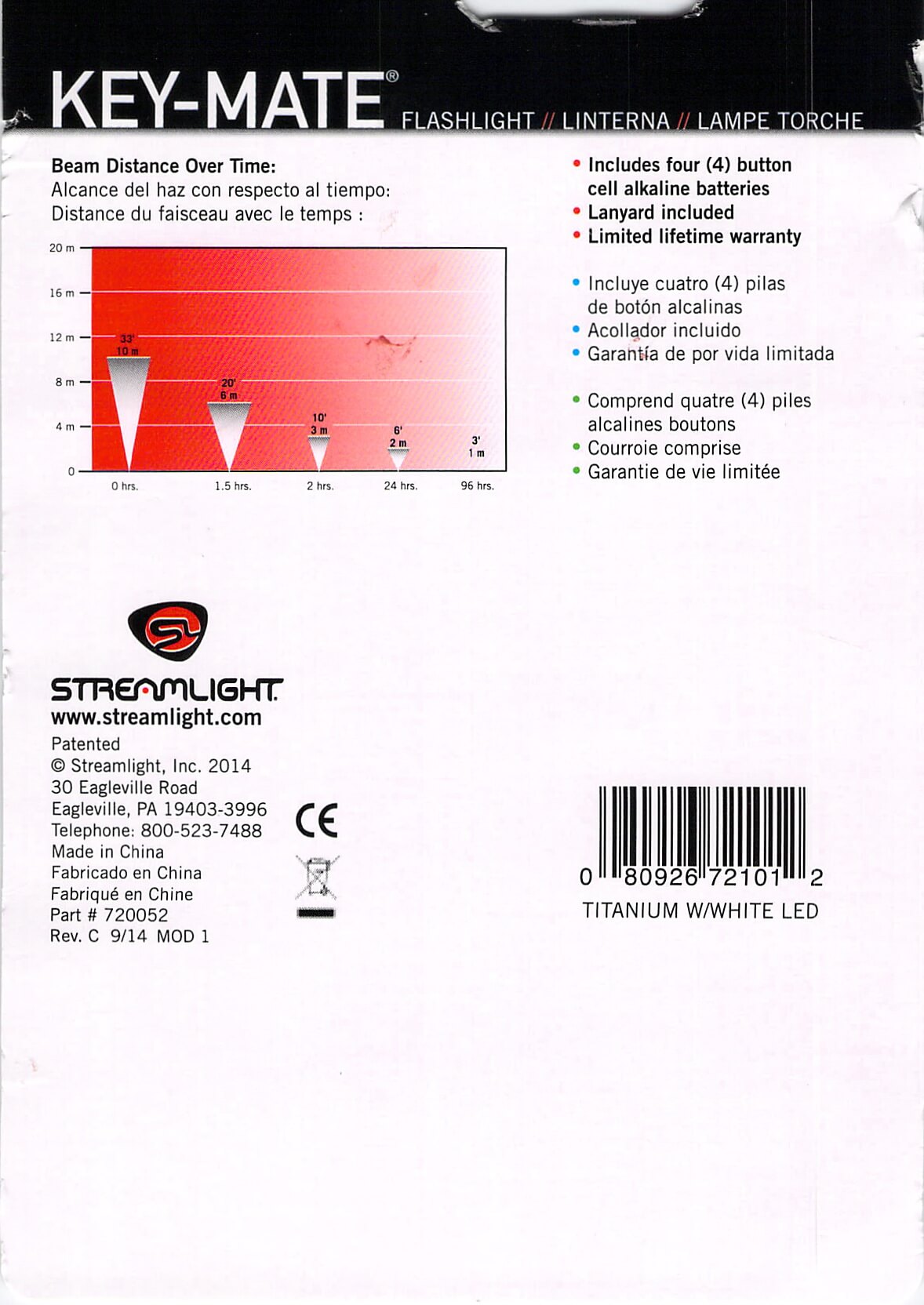
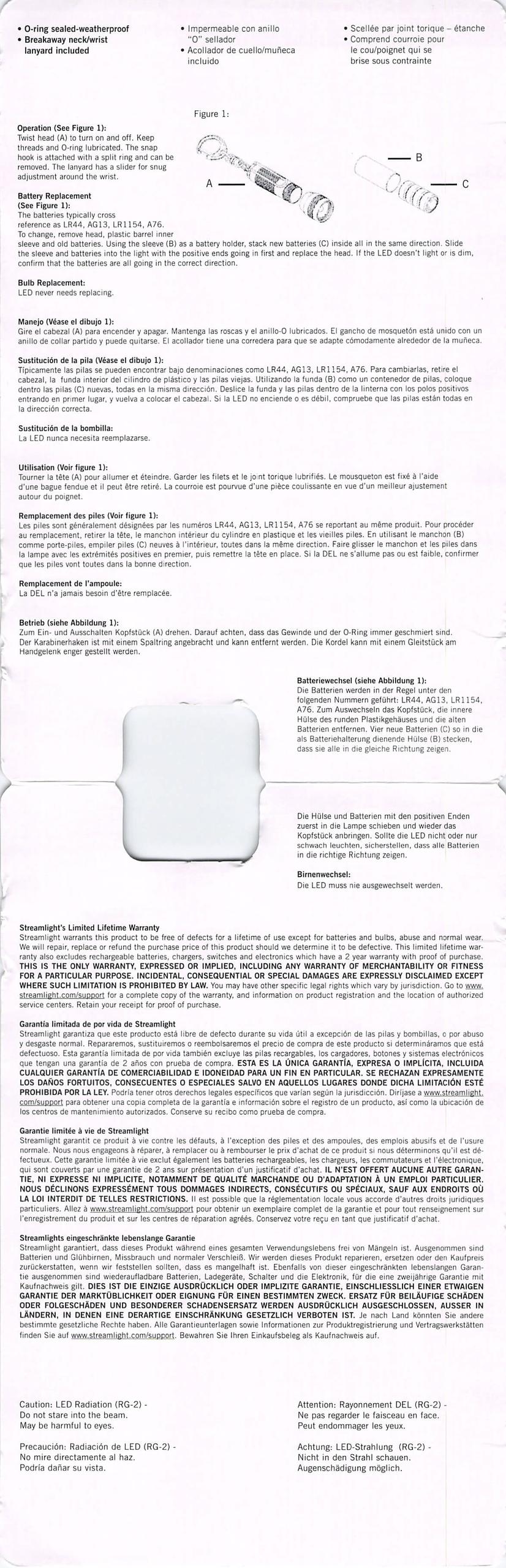
Build Quality and Disassembly
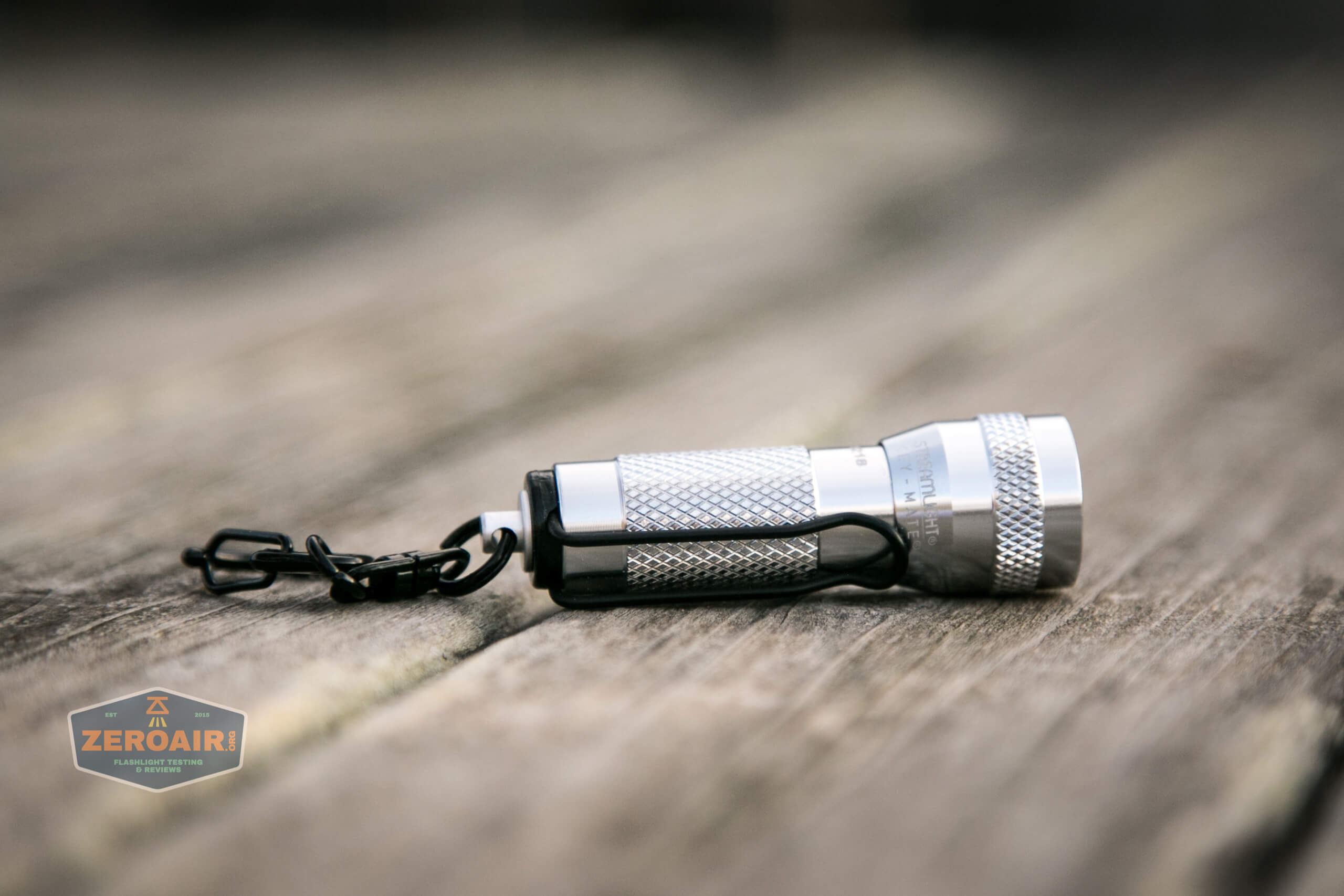
First off, note that this is the “Titanium” branded option of the Key-Mate. As far as I can tell (and as far as my experience tells me), this light is 100% not titanium at all, and “titanium” is meant to represent the look. I didn’t expect it to be titanium, but I consider it grossly misrepresentative to name it Titanium without also saying “titanium look” or something to that. This is not titanium, and really, I wouldn’t even say it looks like titanium. So just consider it named titanium as if you’d name it George or Potato.
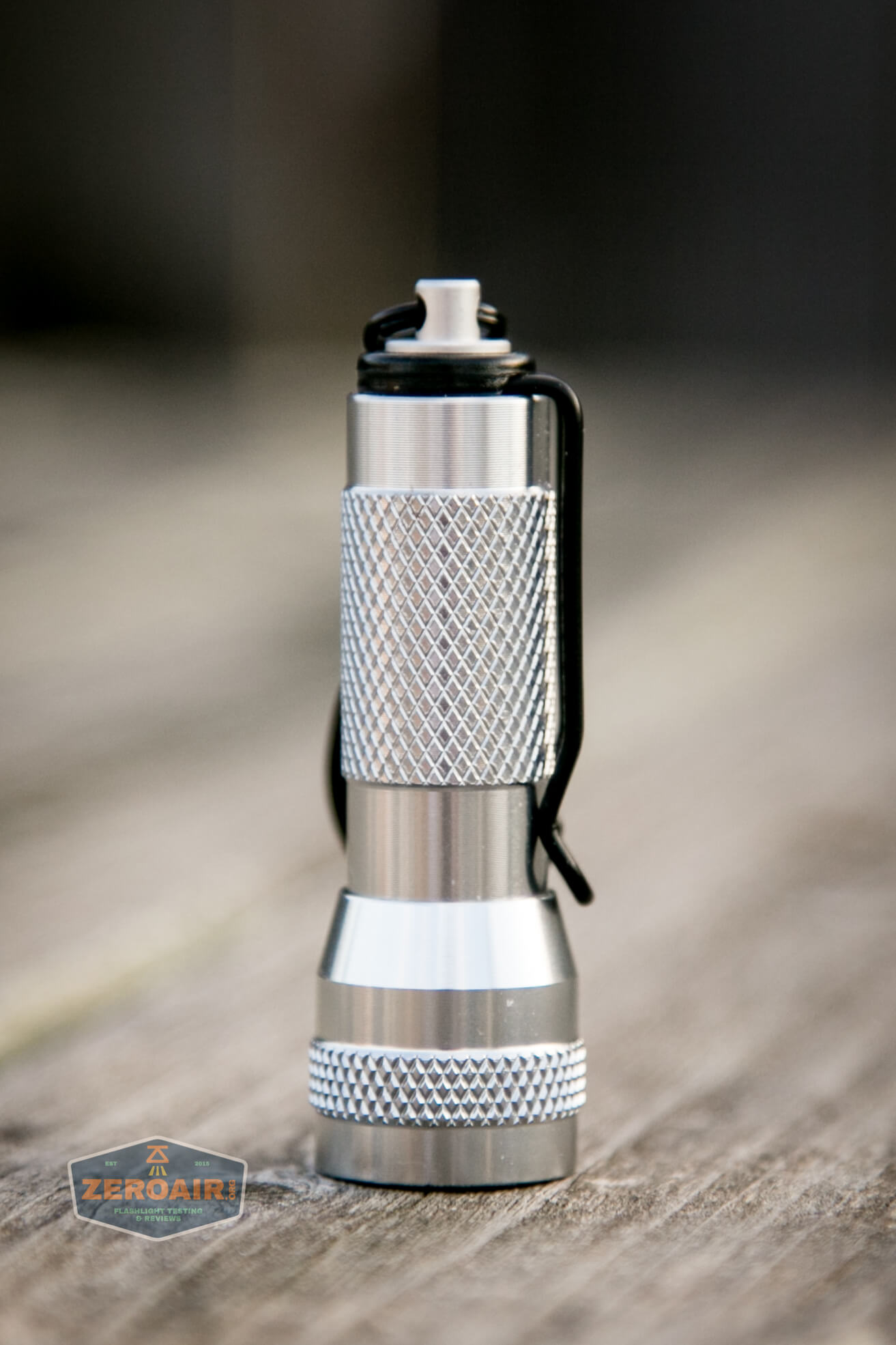
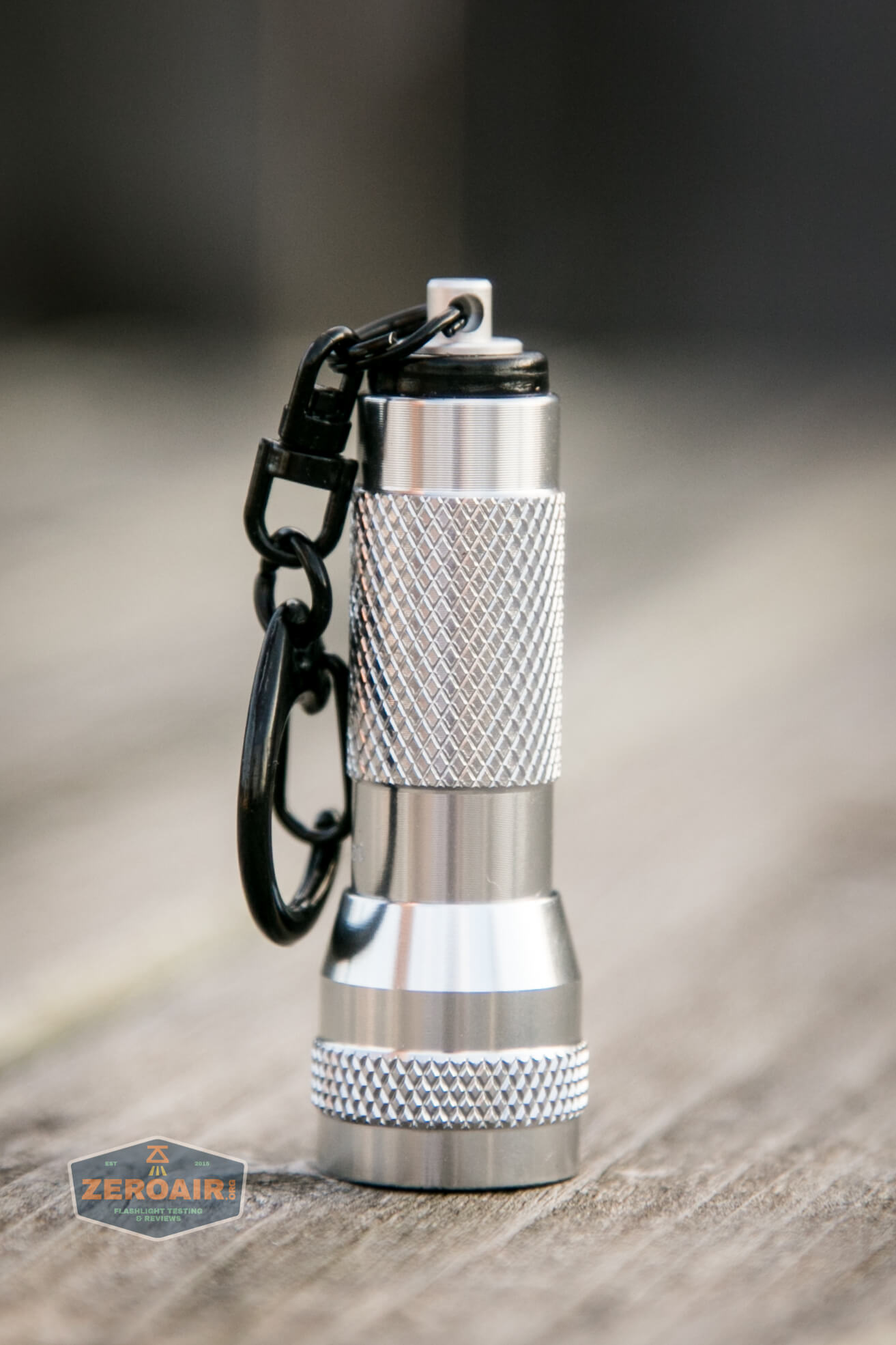
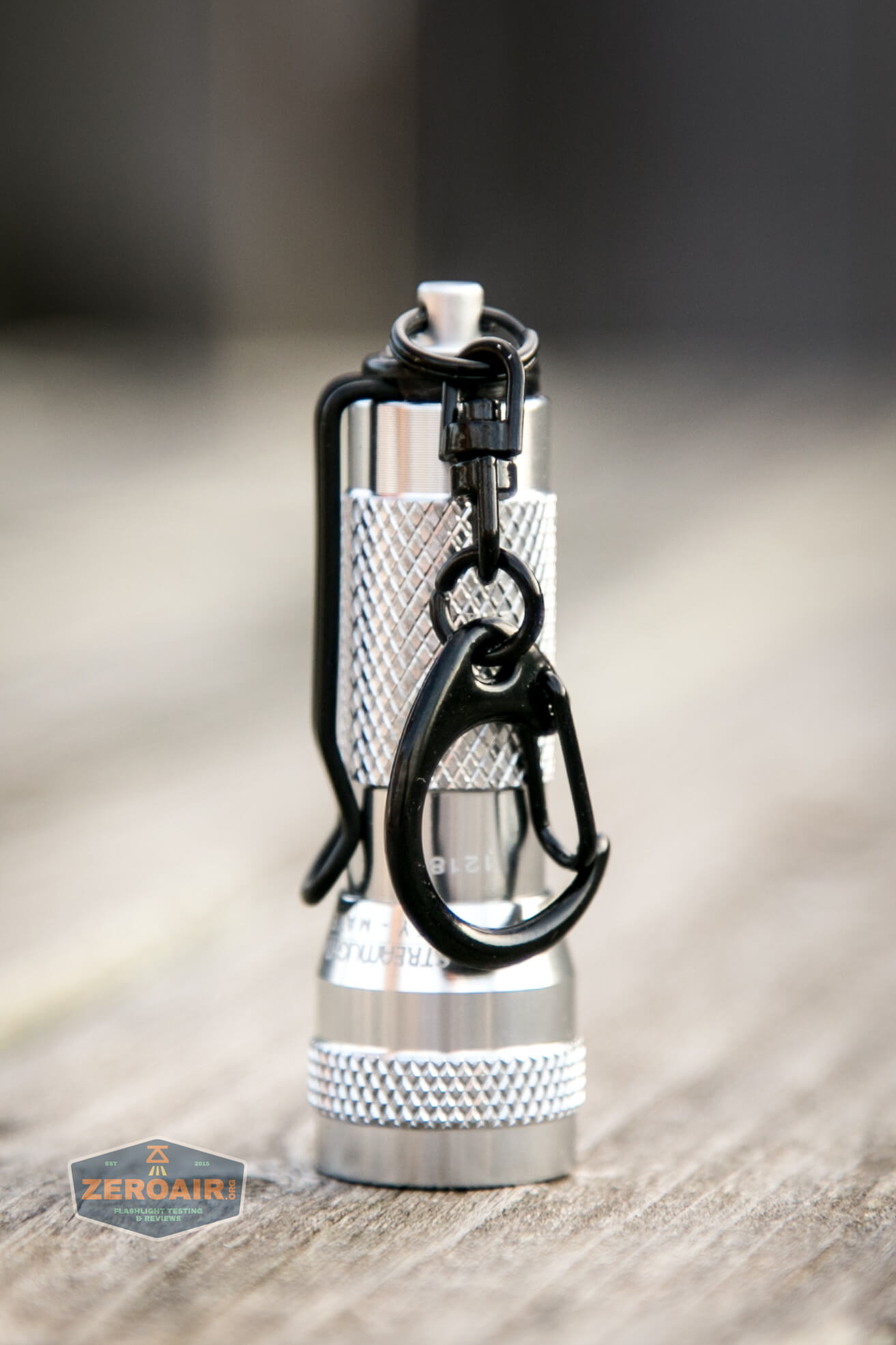
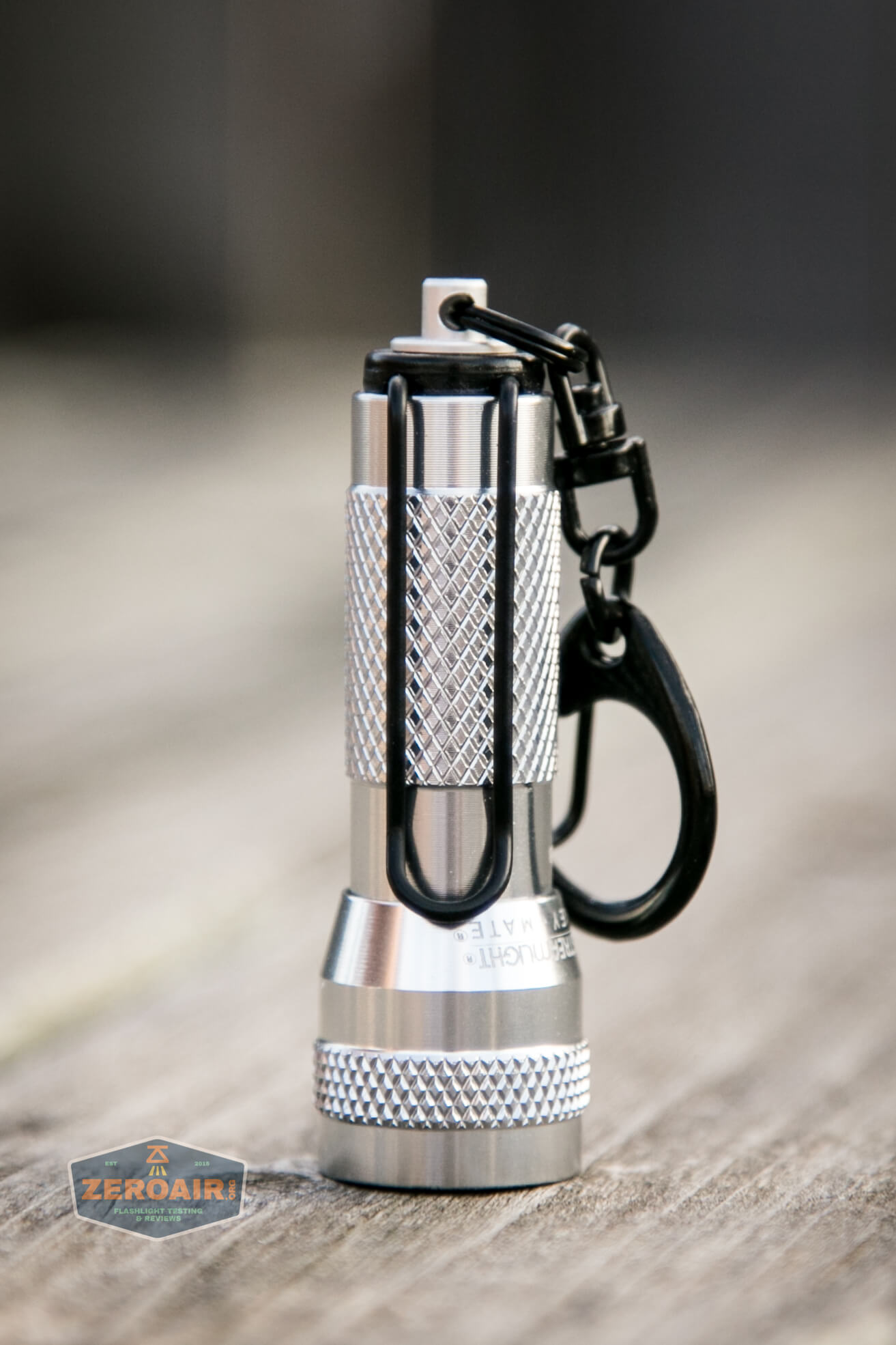
All of that said, you can’t deny how fun this little light is and looks. it’s very flashlighty, and that’s a feature that I love. In fact, that’s entirely why I bought it. (Well… more on that later).
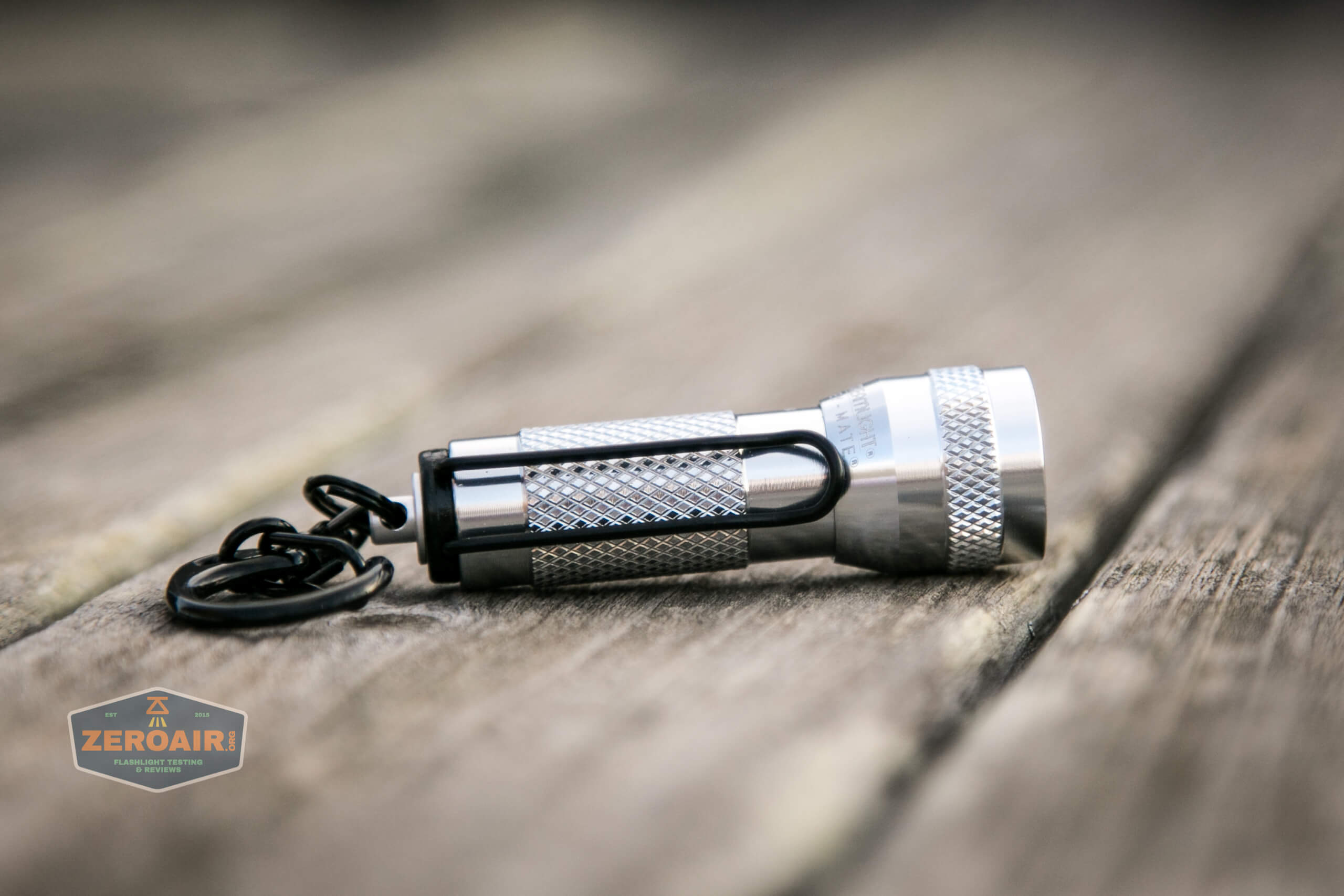
The build quality is ok if you don’t really ever open the light.
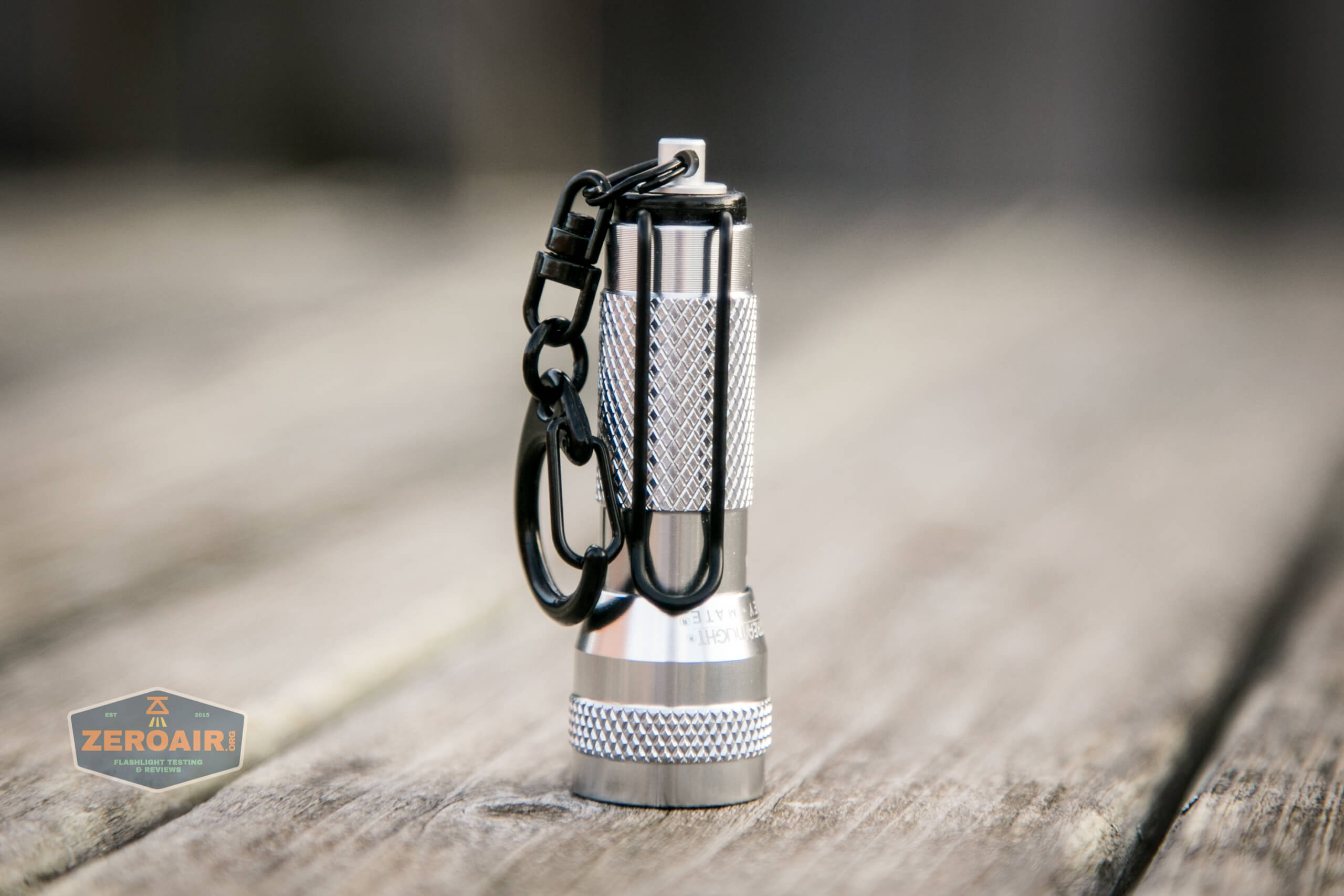
All these accessories are attached to the Key-Mate.
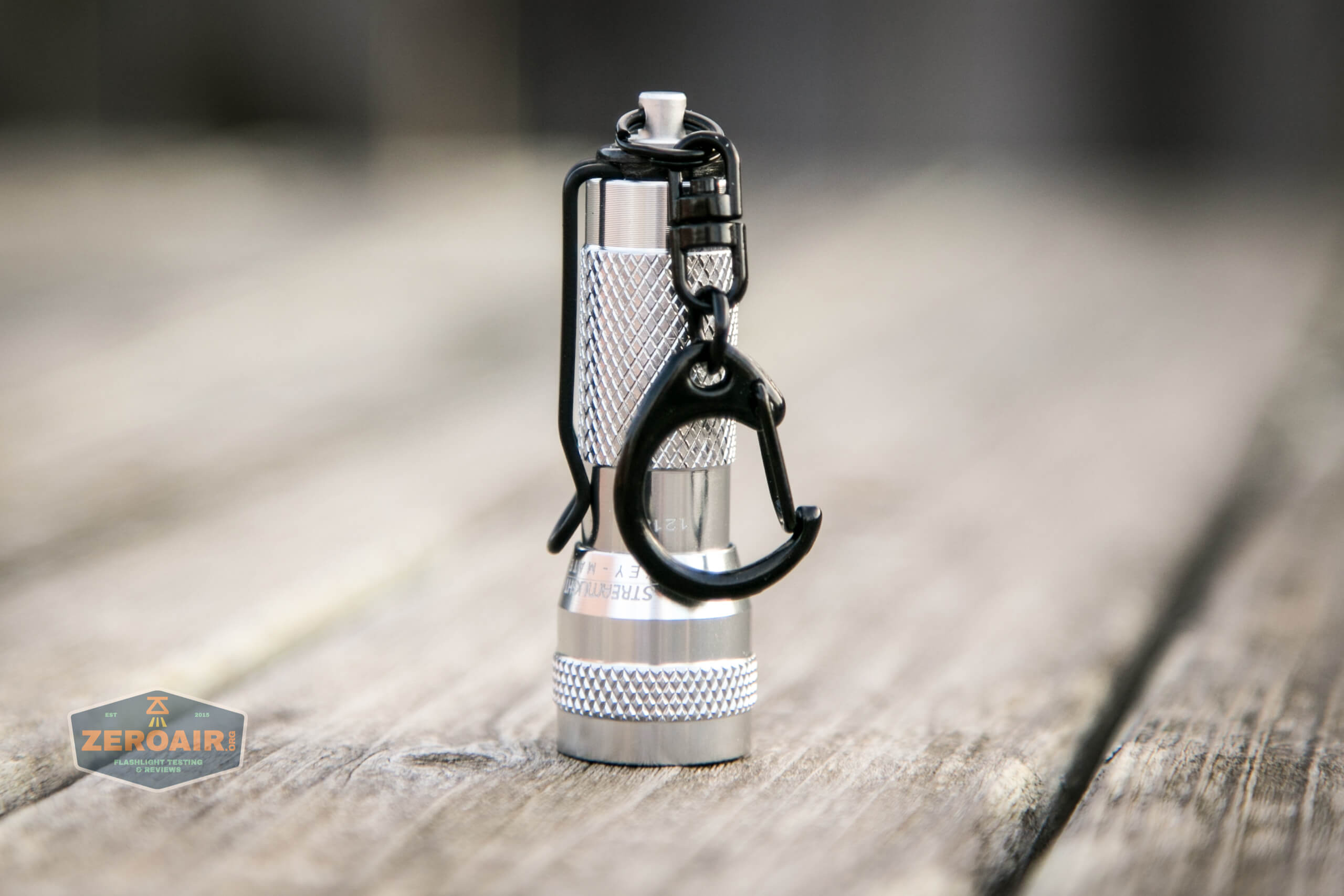
This little keyring connector is pretty nice!
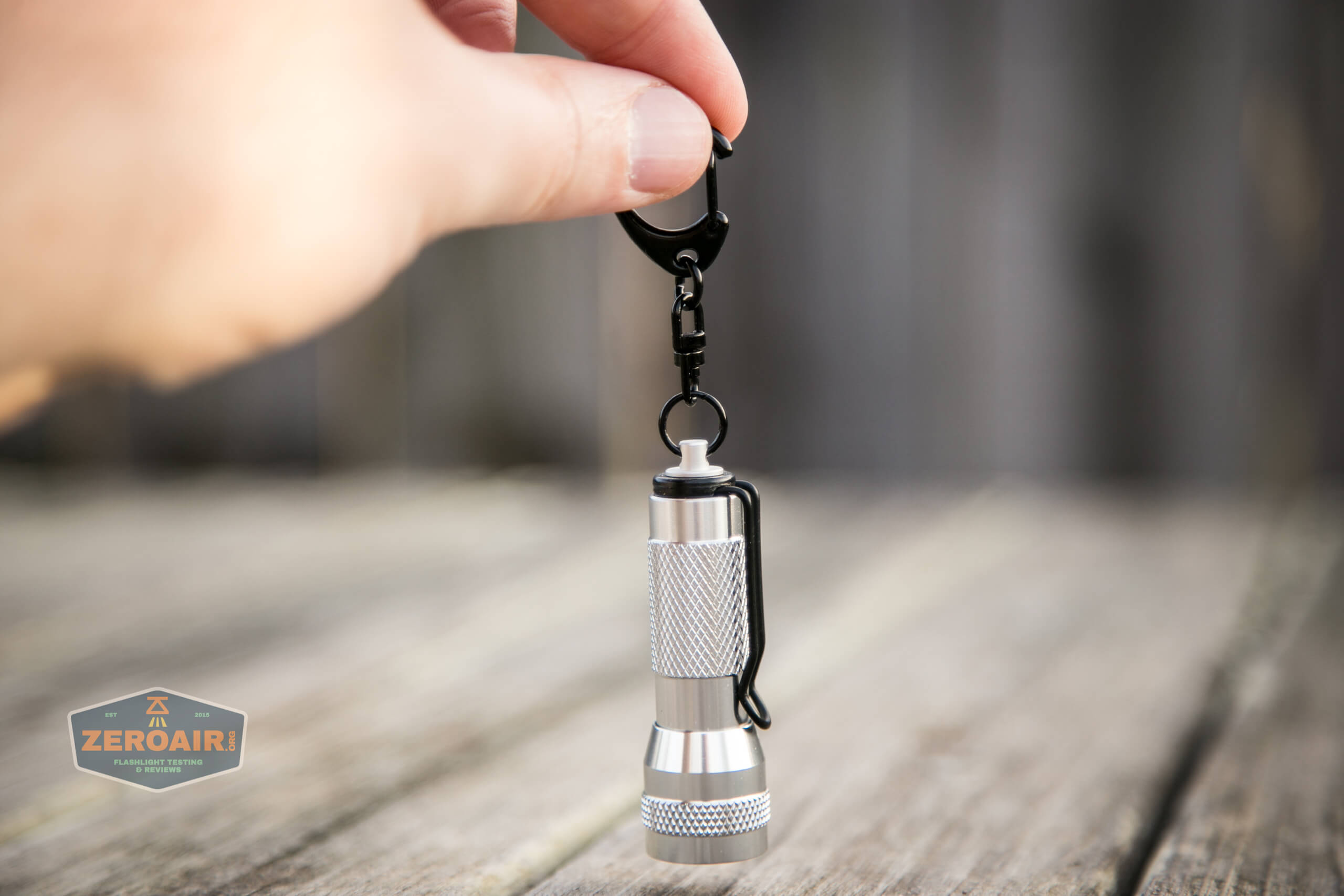
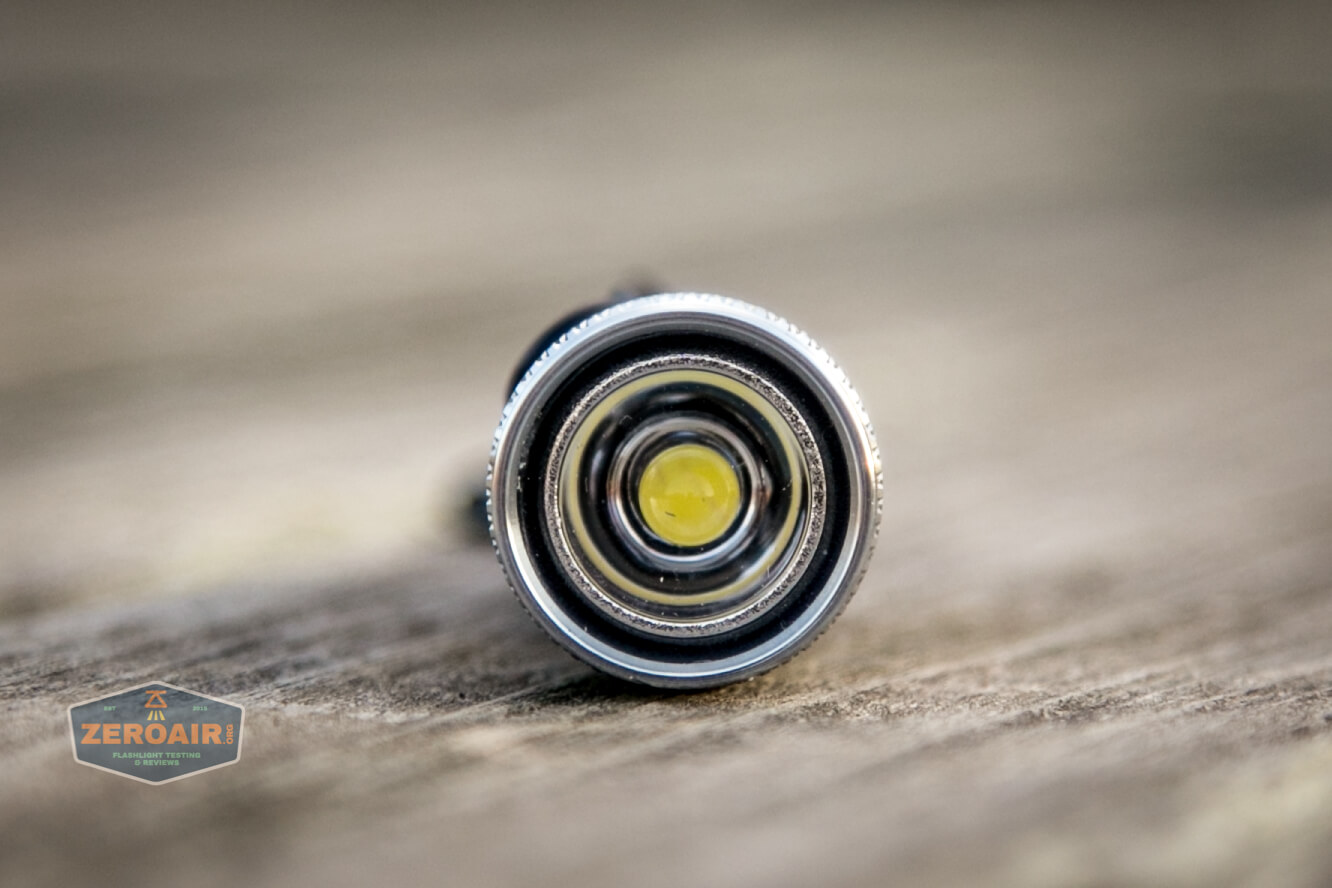
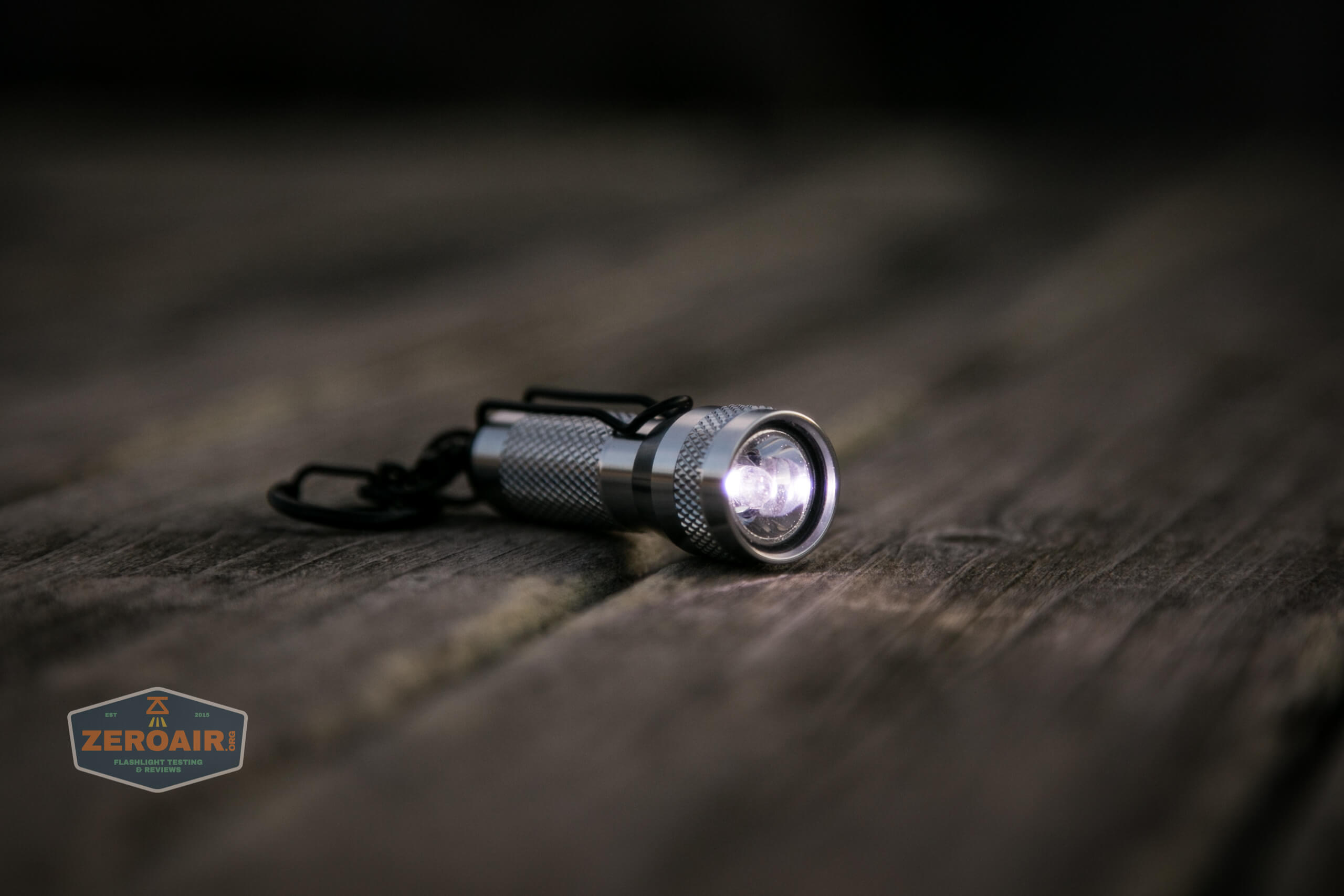
Check out the front of the light. You could guess what all this does to the beam profile (and you won’t be wrong).
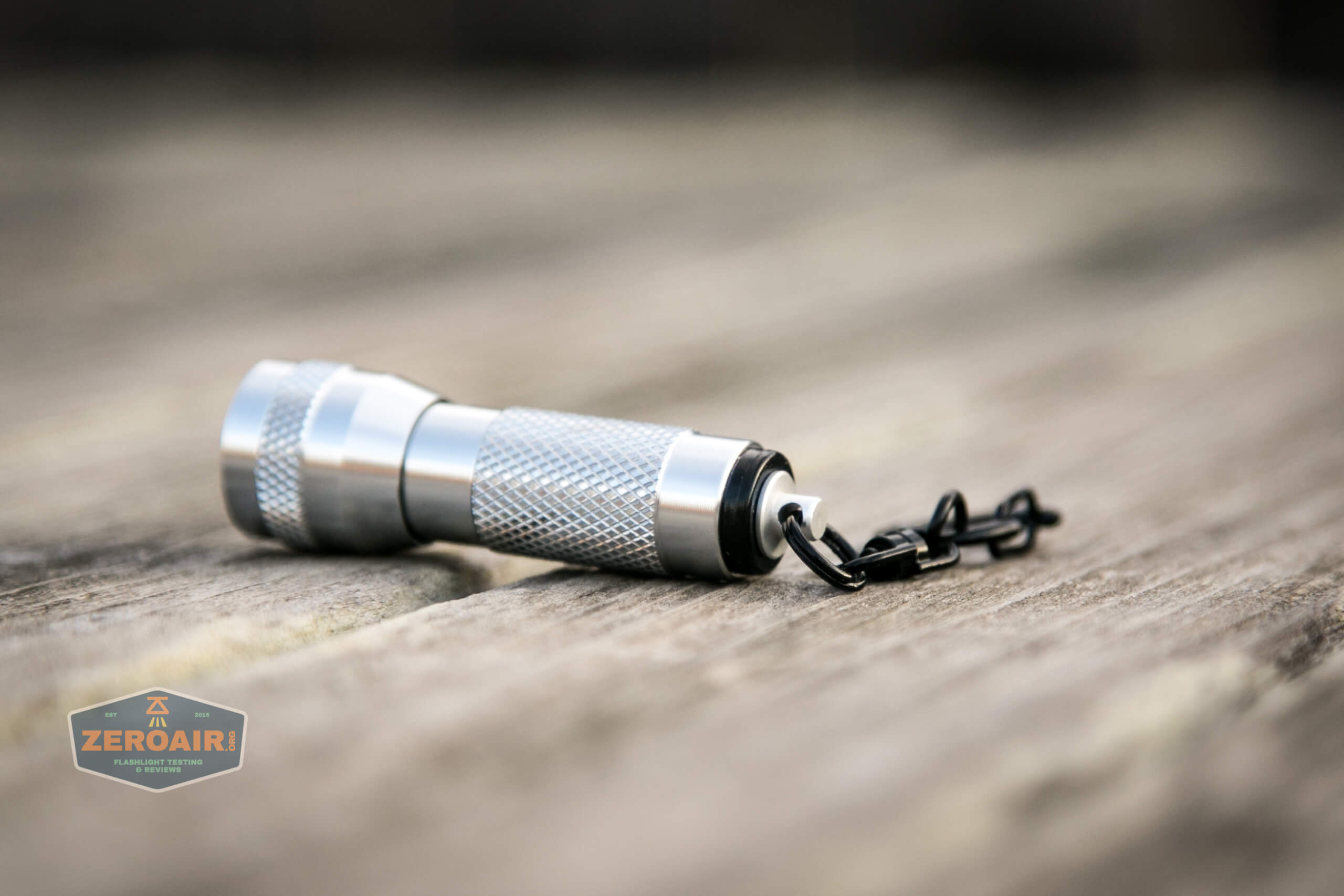
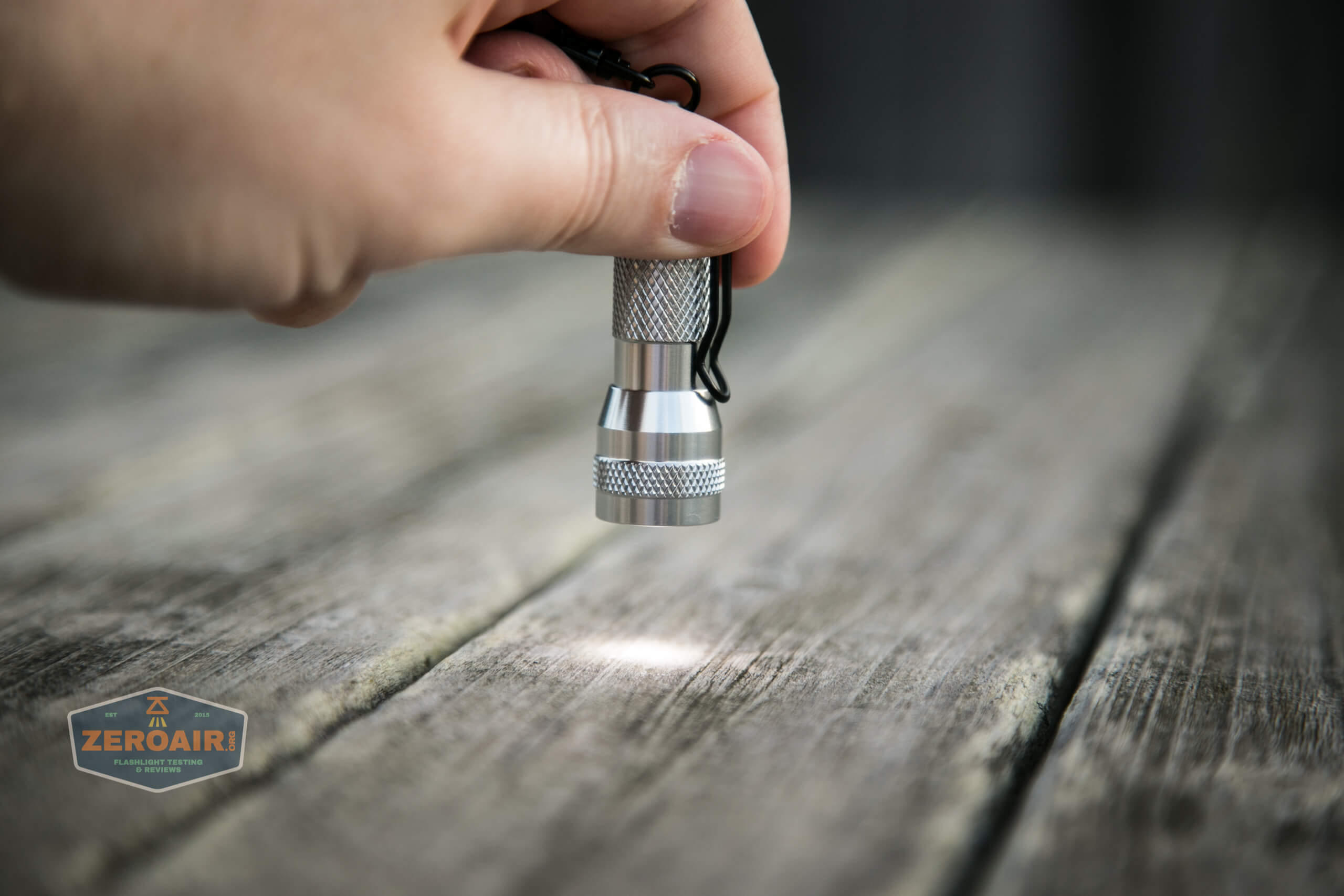
Both the head and body have ample knurling. It’s a twisty after all, so that’s important. One-handed operation is easy.
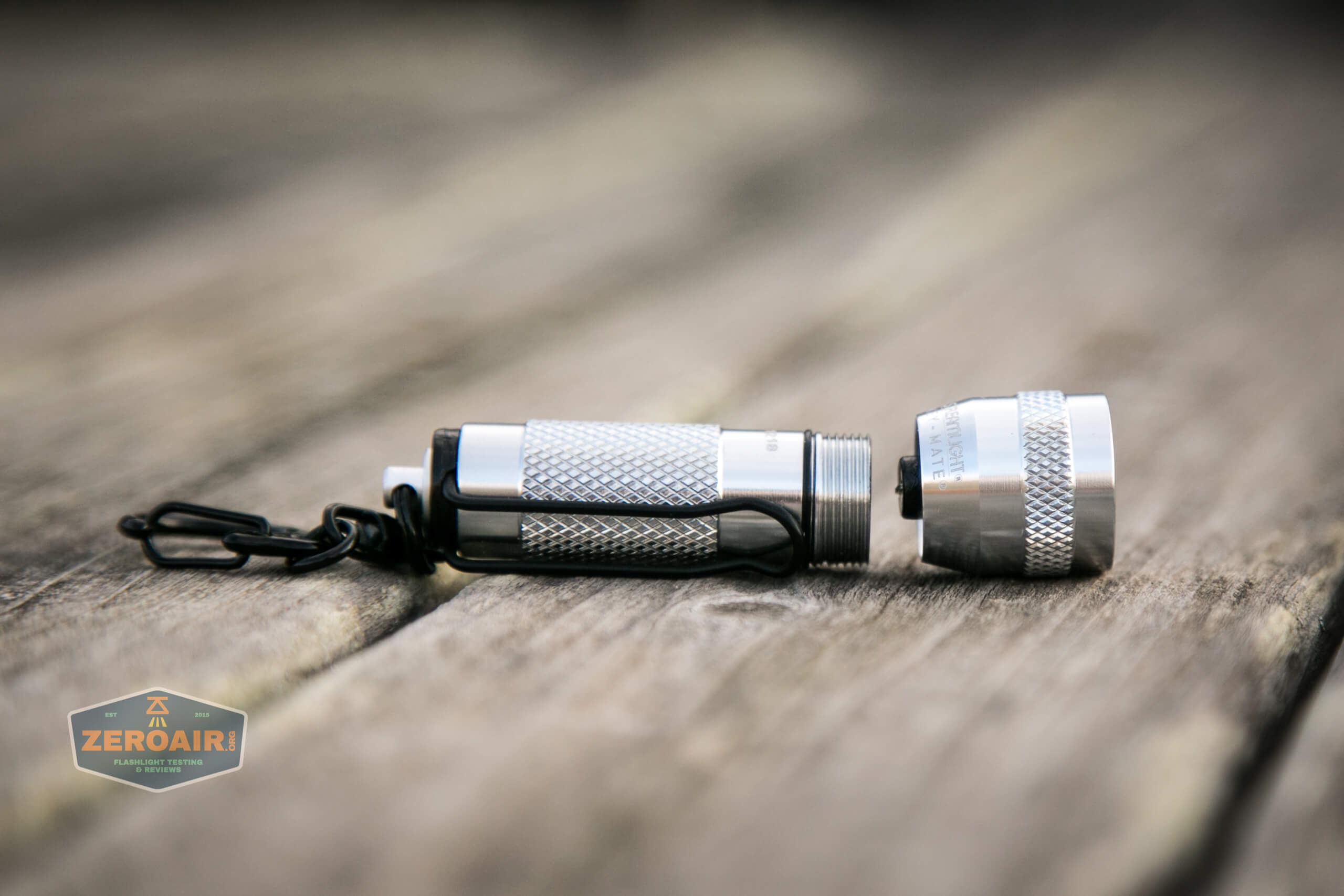
The threads are long and smooth – again, exactly what you’d want with a twisty.
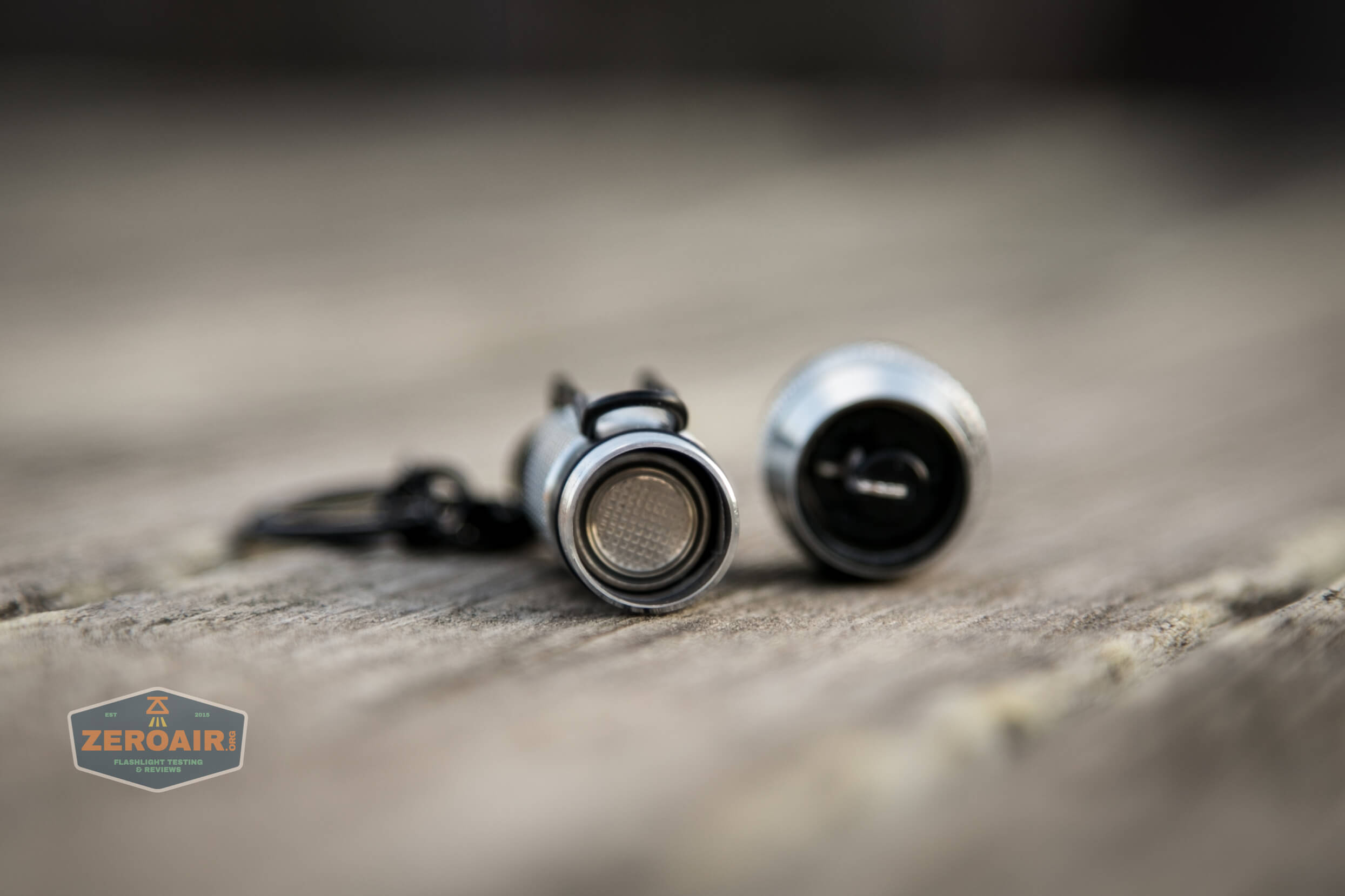
Here’s another sign of the build quality. That spring on the negative end is thin and generally low quality. On the positive side of things (the right), there’s so much plastic. So much plastic. Really, the whole setup here internally is plastic, with the leads from the 5mm LED being the contact points.
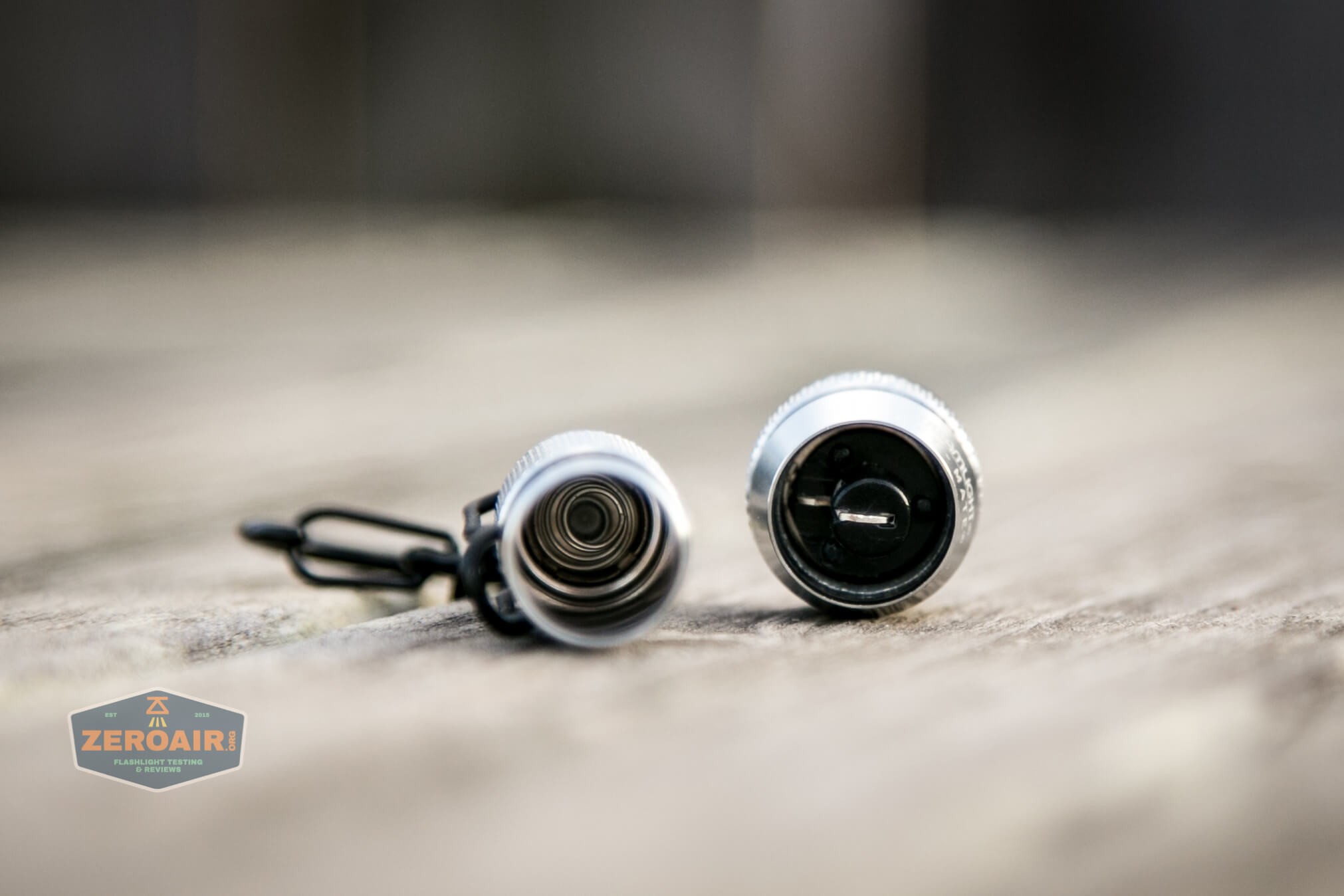
I’m not saying that’s good or bad, but if you intended to modify this light, then you’ll have to find all of your own internals. Just a simple LED swap could likely be performed, though.
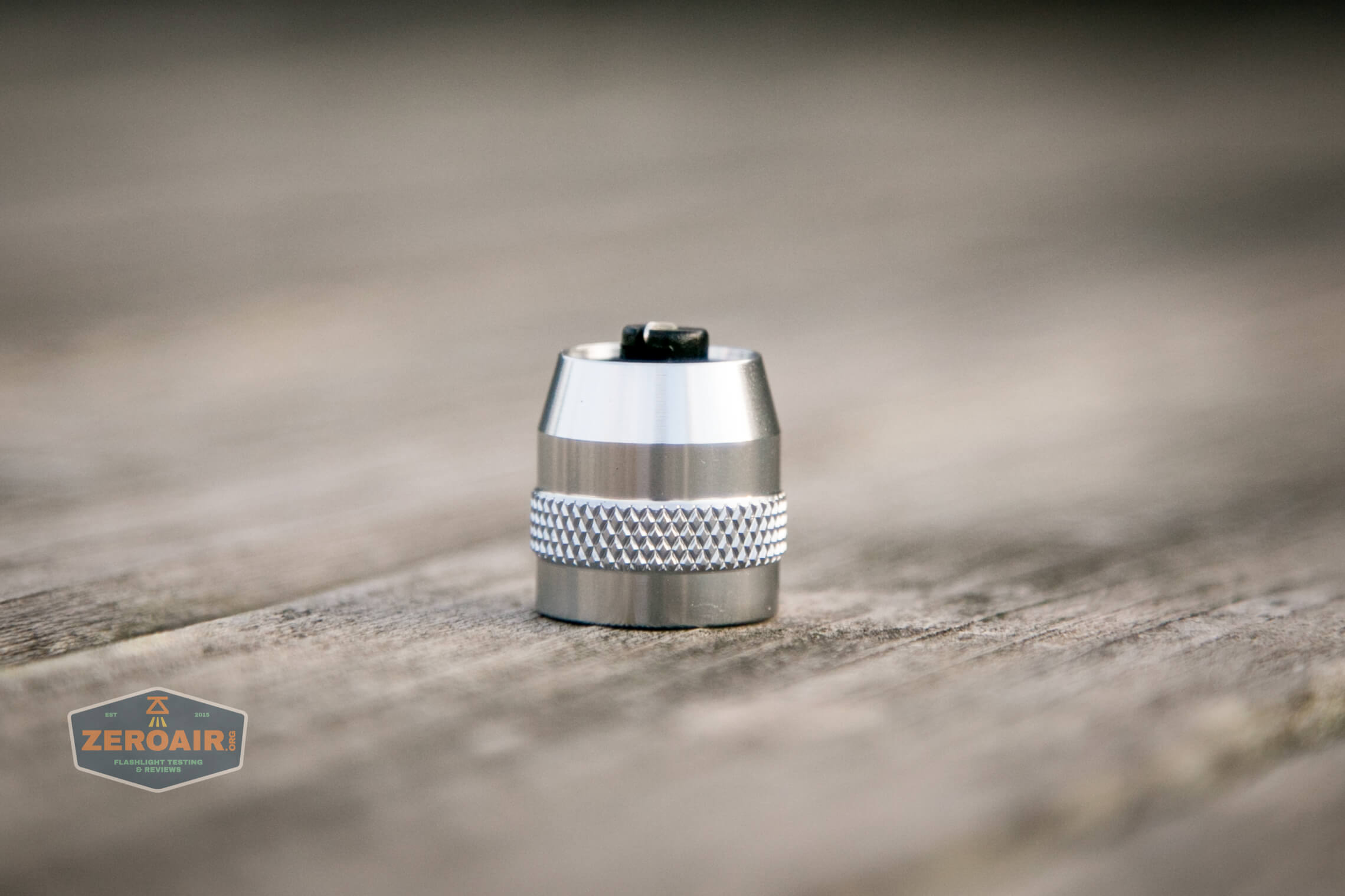
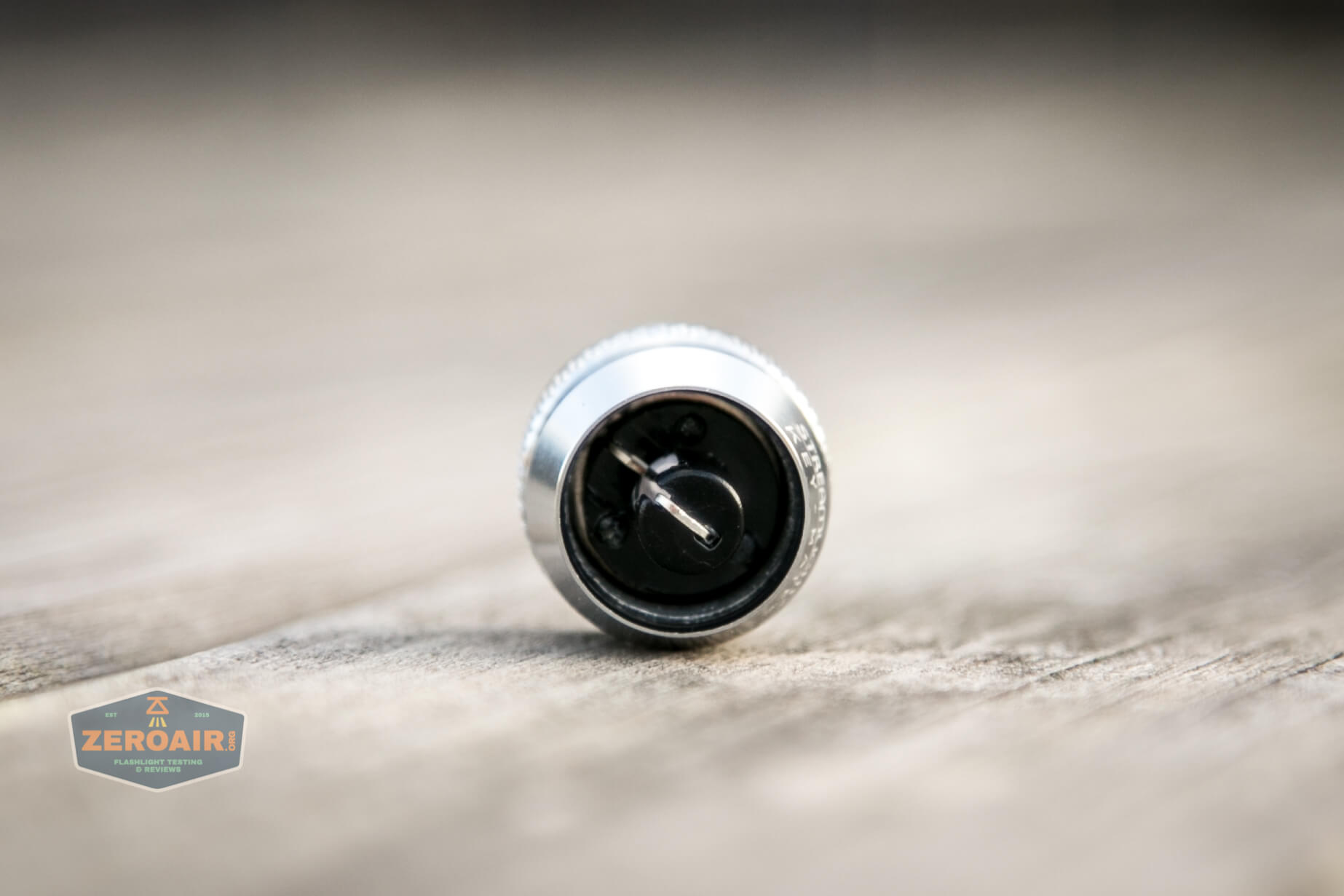
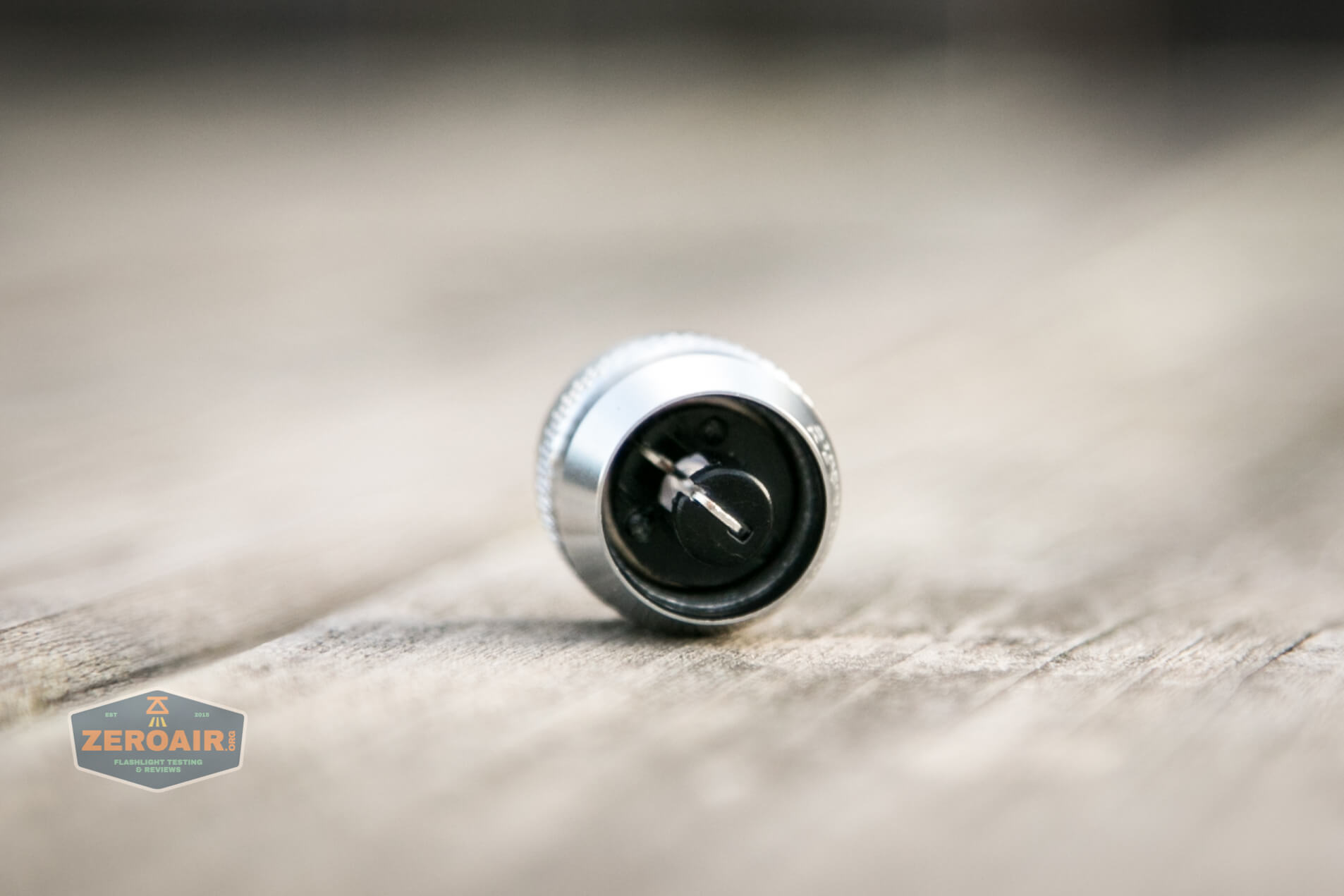
Inside the cell tube is a sticker saying “12/18” – I’m unsure what this means, but probably (or “possibly”) a build date.
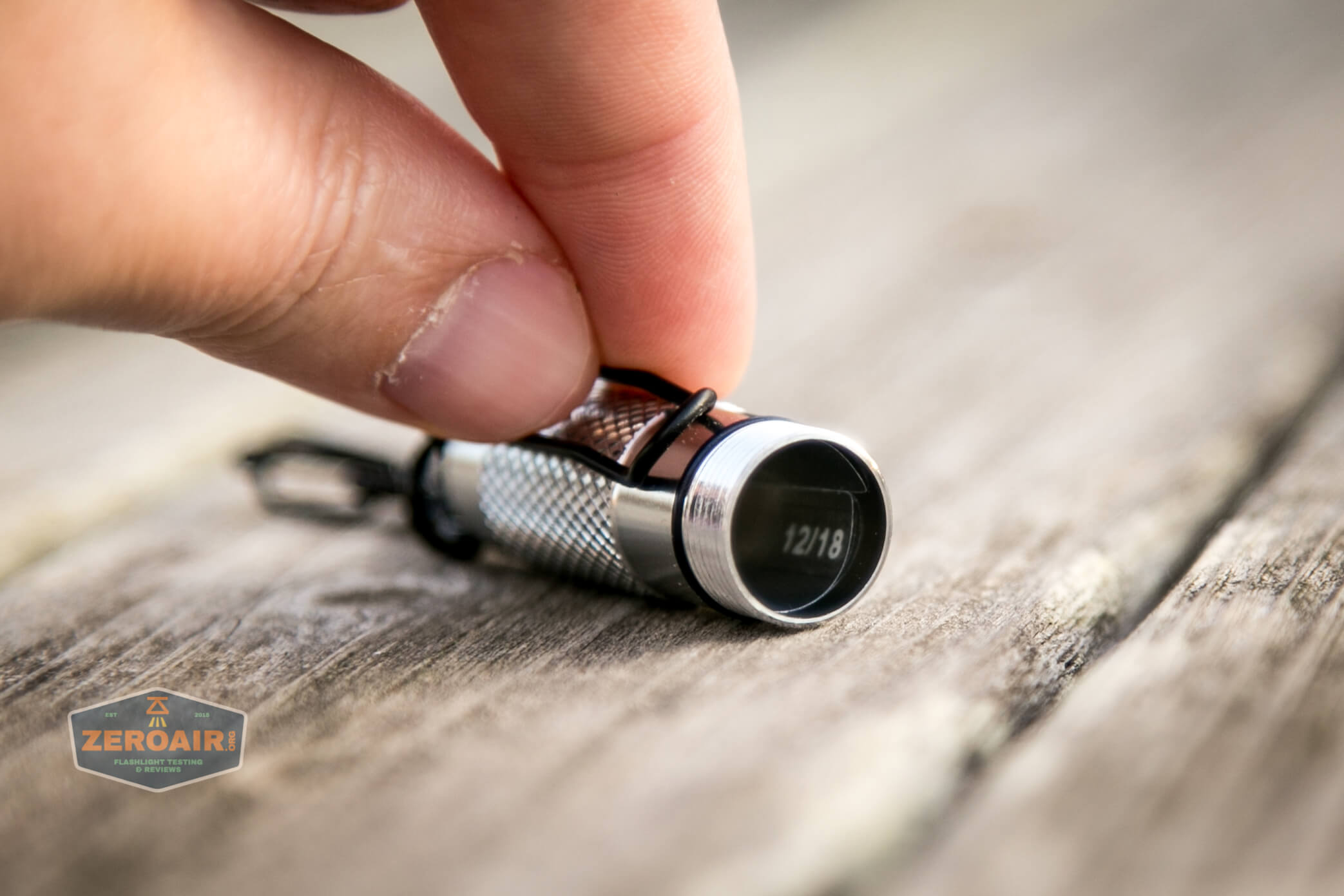
Tailstanding is technically possible.
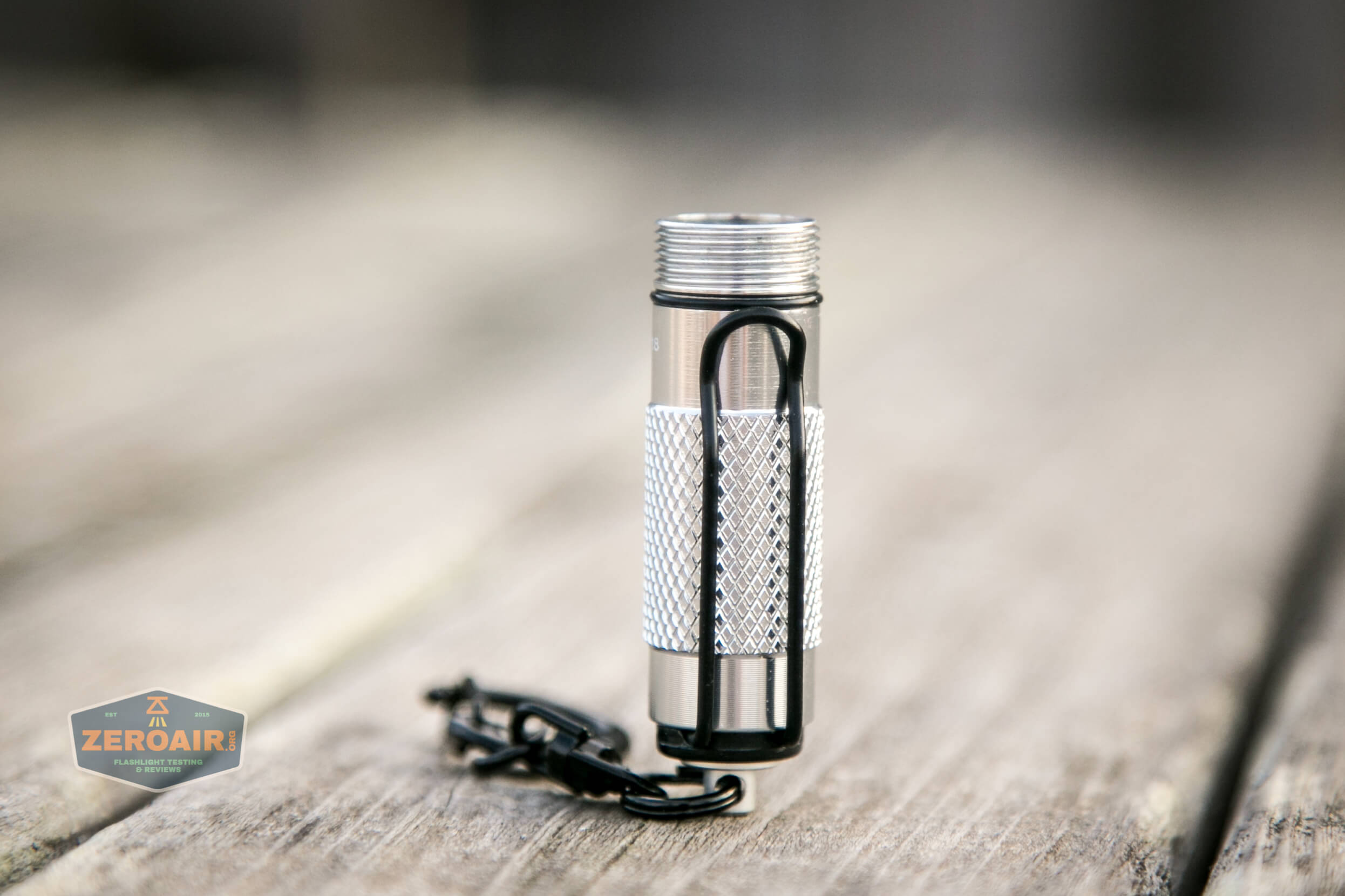
All four included cells are required for operation – there are no spares.
Size and Comps
Length: 2.36 in. (5.9 cm)
Diameter: Major Diameter: 0.74 in. (1.88 cm)
Body Diameter: 0.57 in. (1.45 cm)
Weight: 0.9 ounces (25.4 grams) (includes cells)
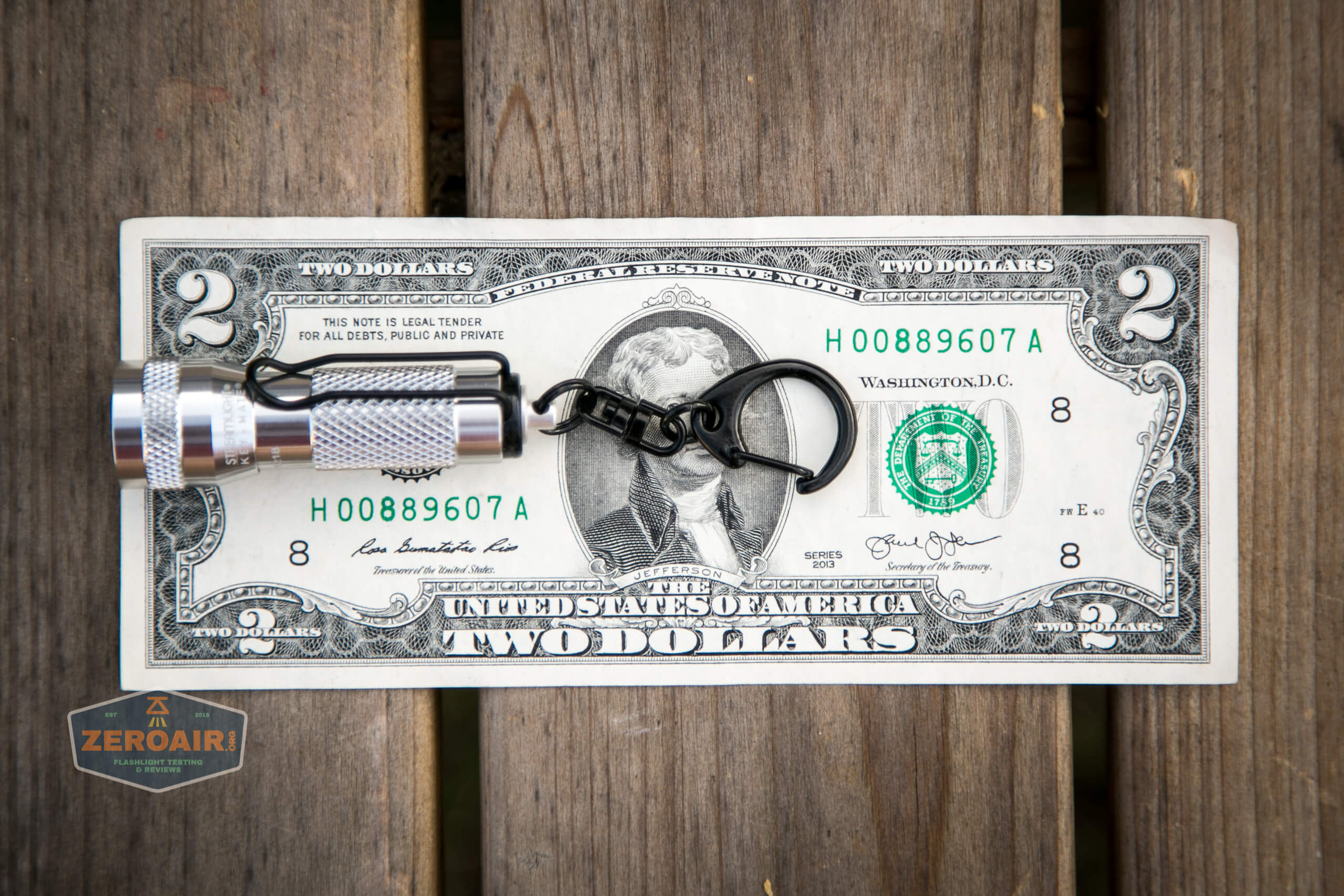
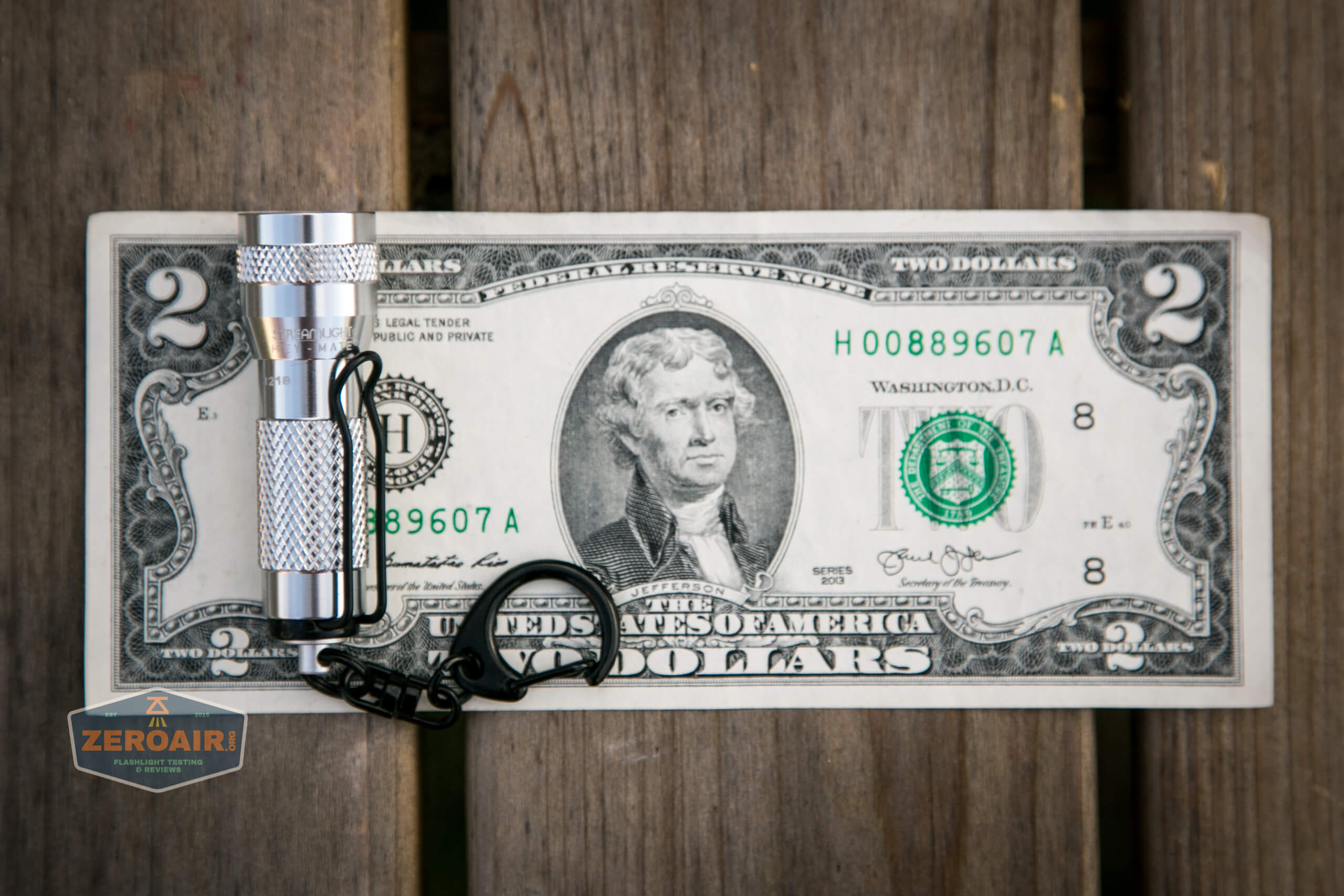
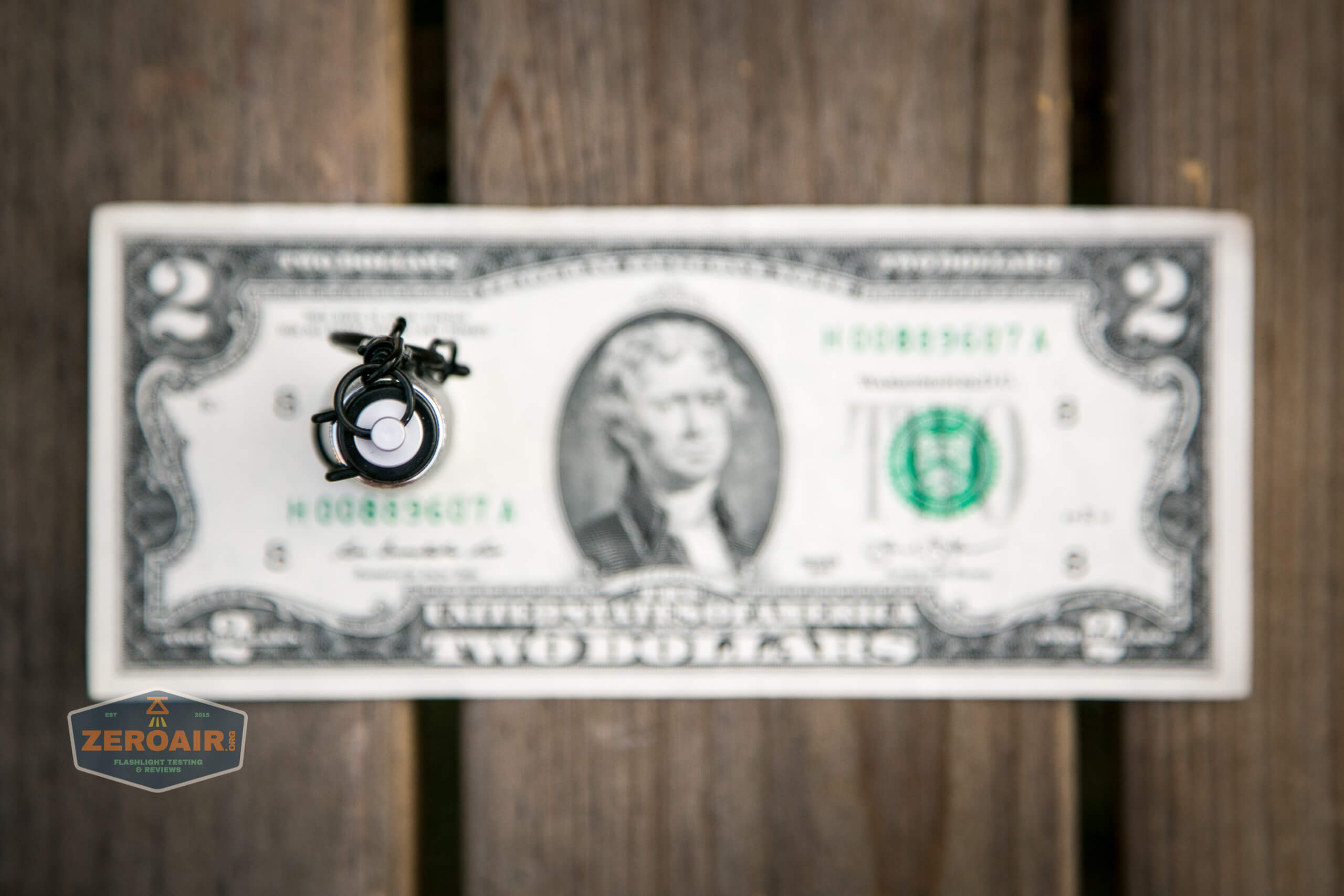
If the flashlight will headstand, I’ll try to show it here. If the flashlight will tailstand, I usually show that here, too.
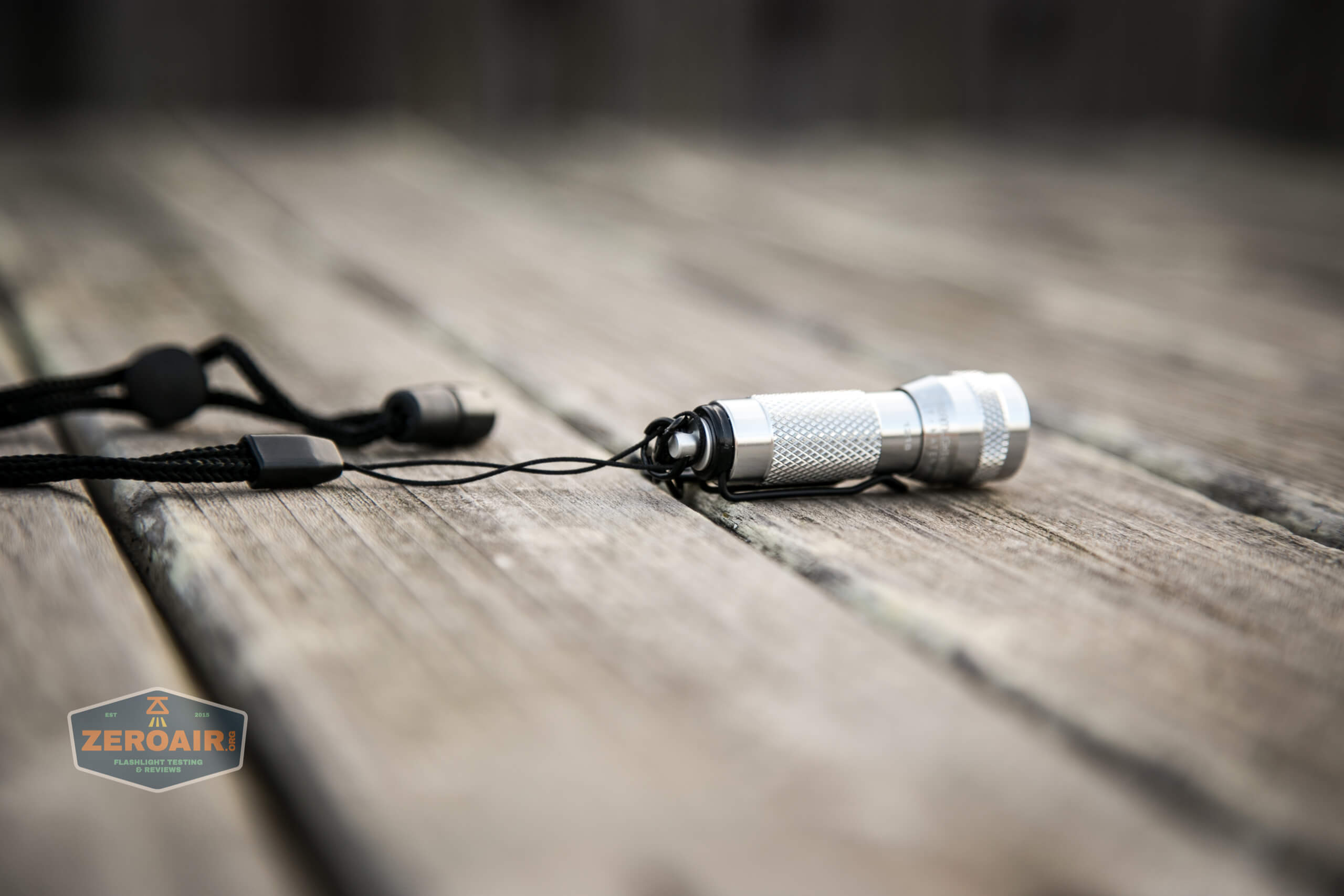
You may not have picked up on it until now, but this light is TINY!
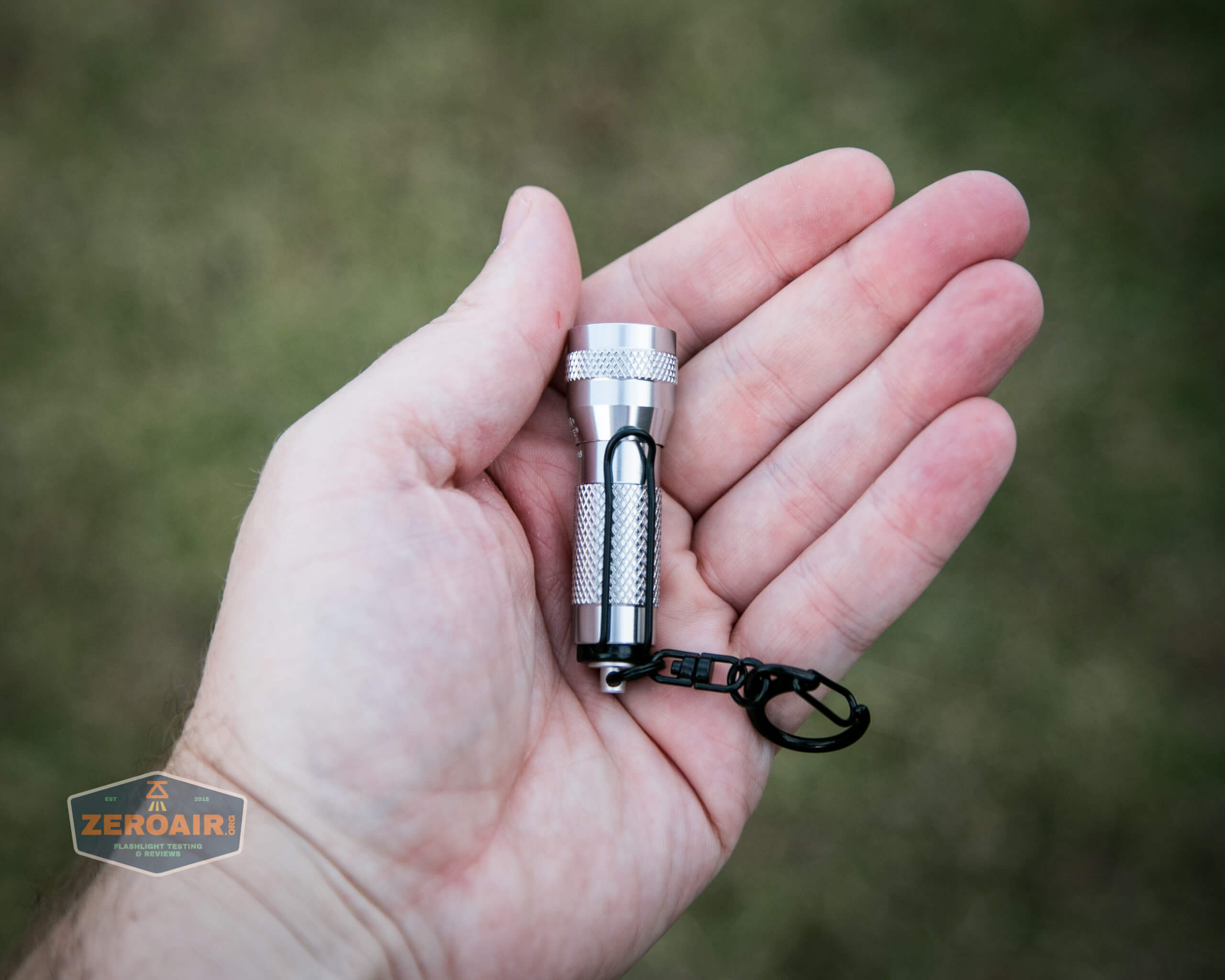
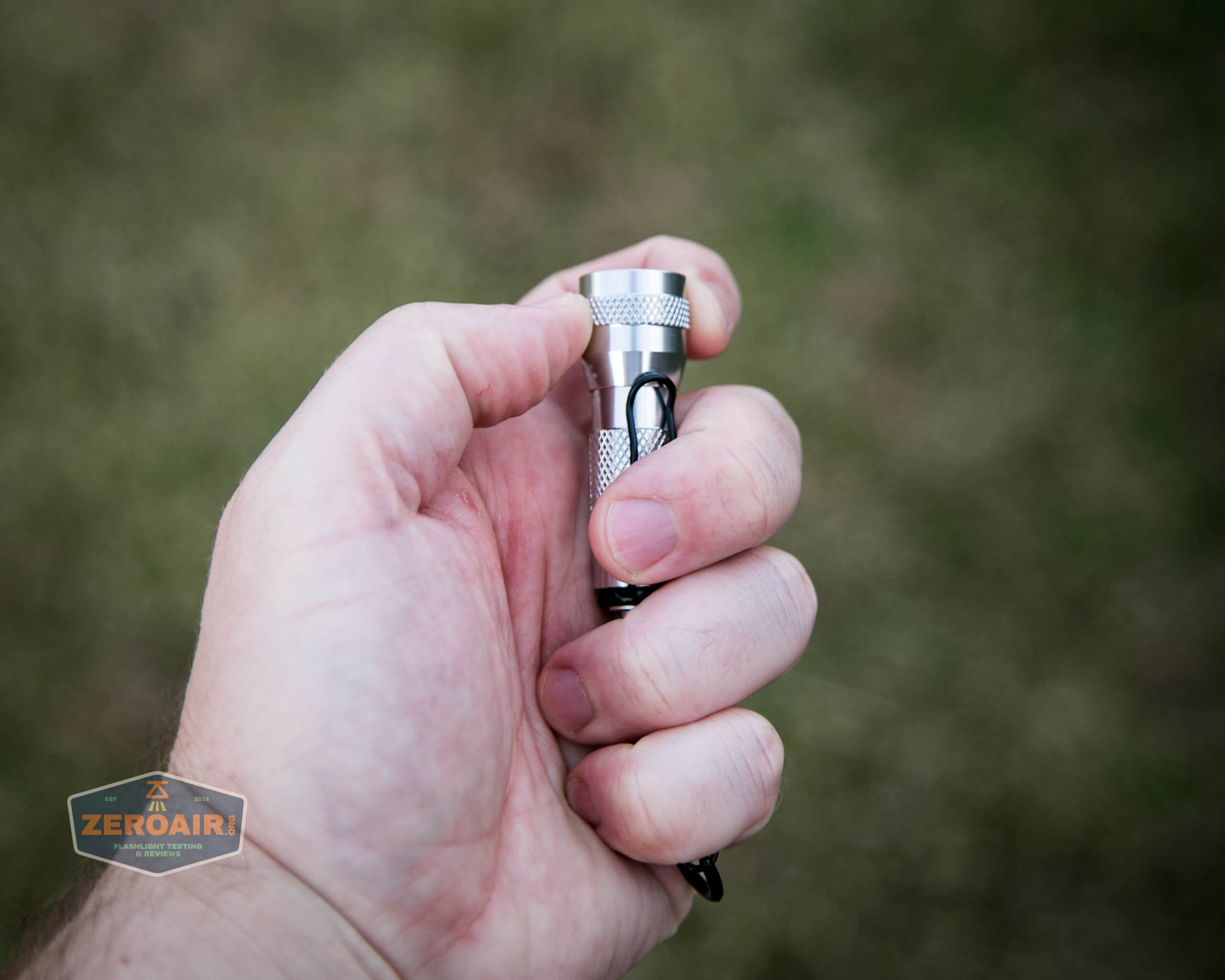
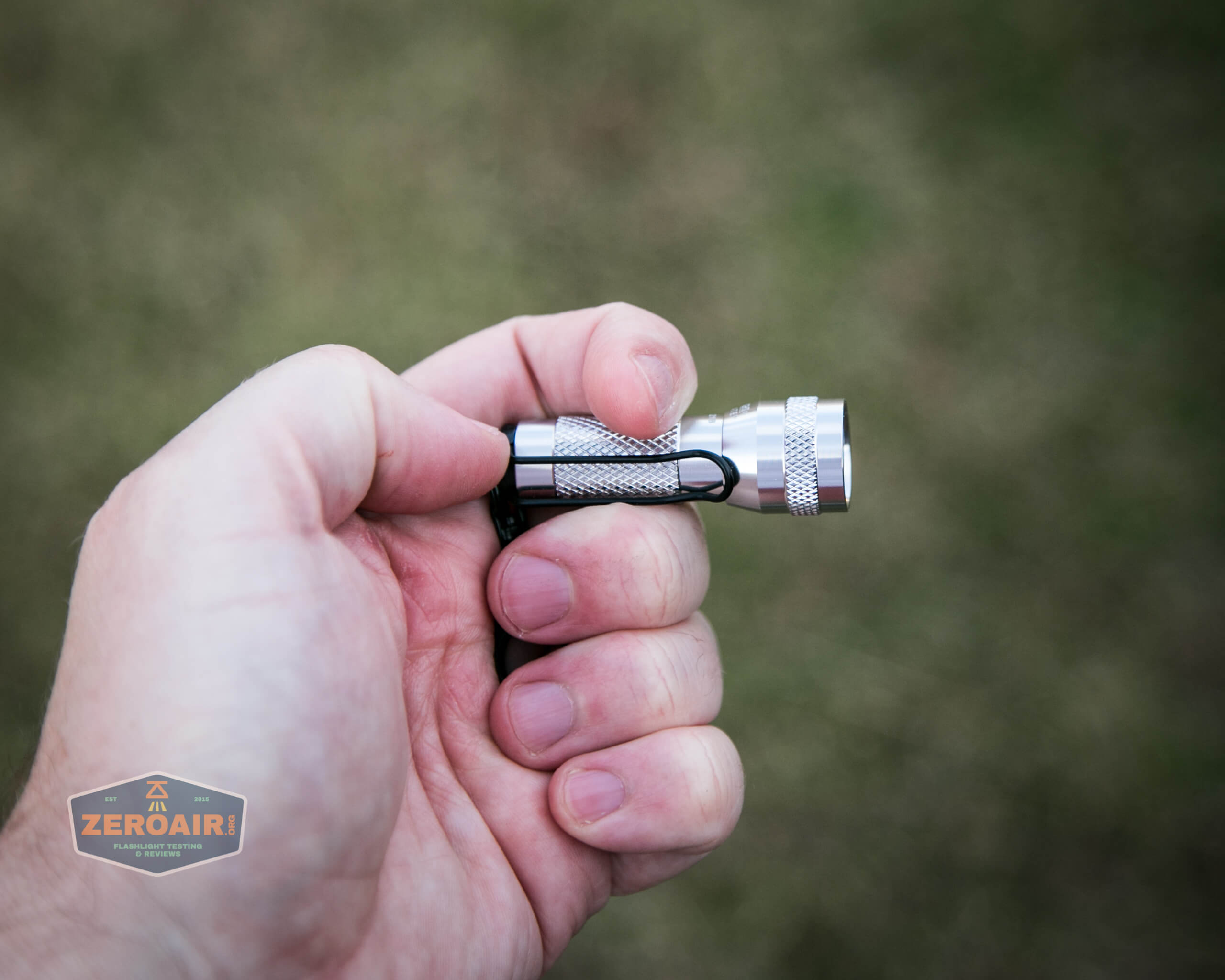
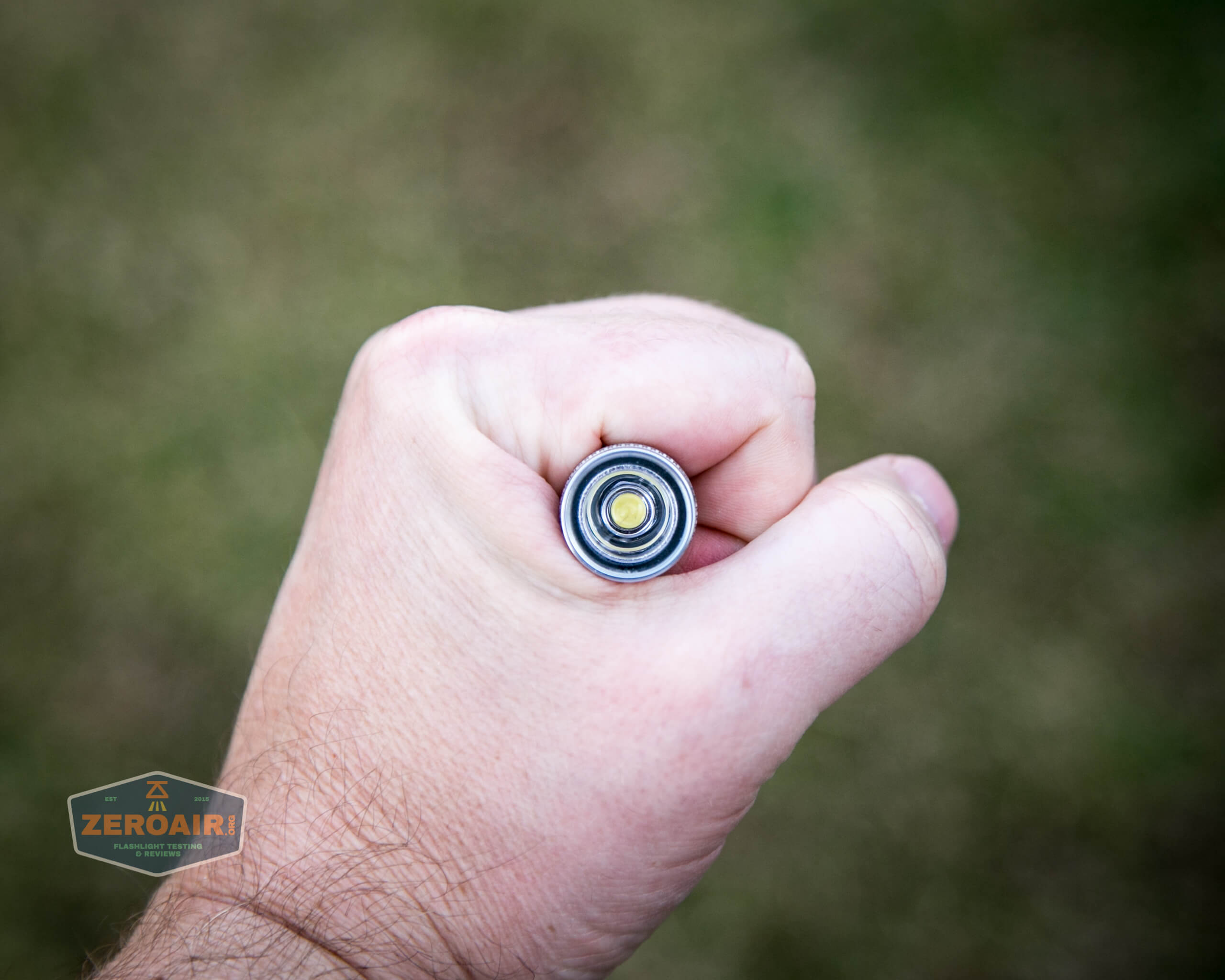
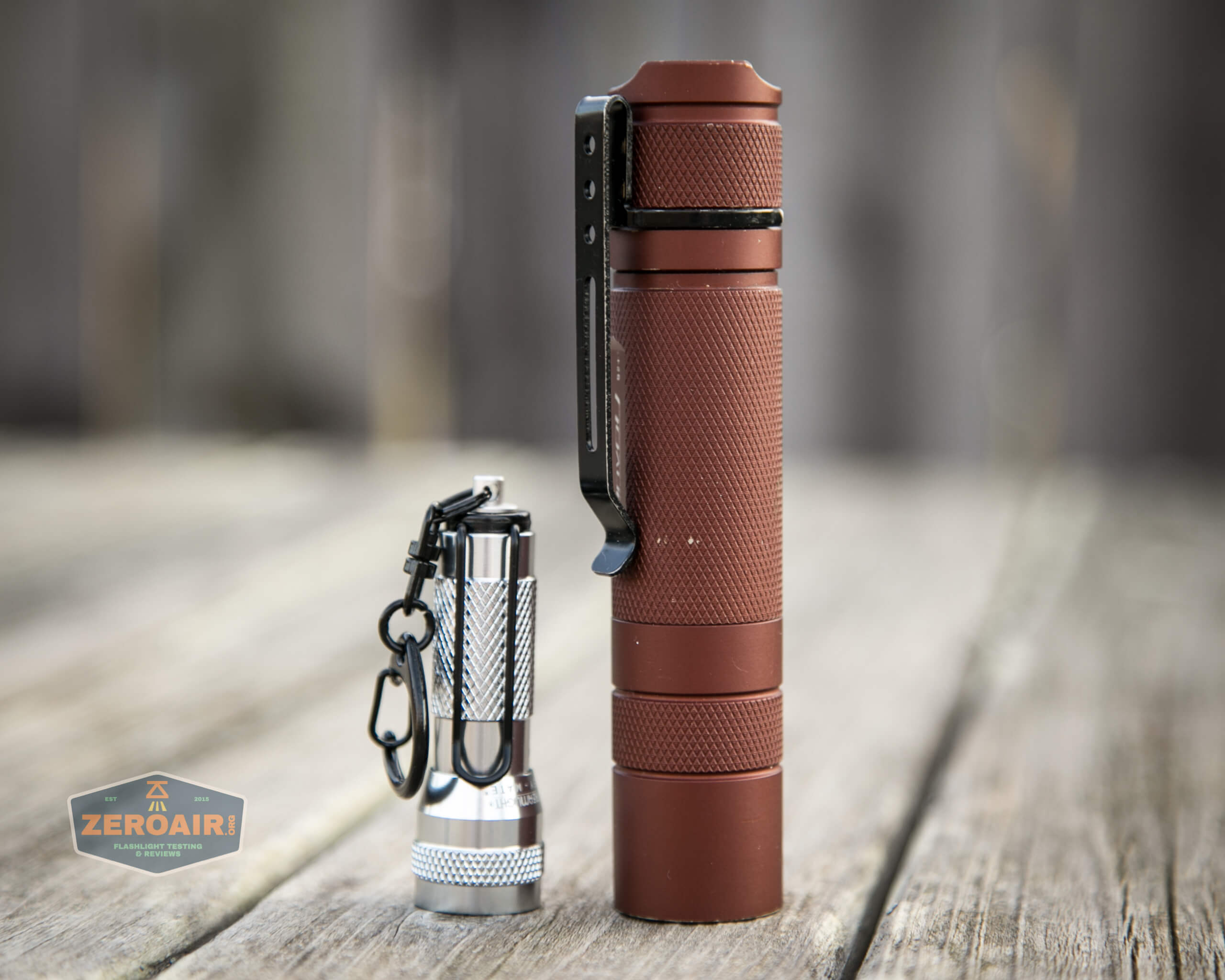
Here’s the test light with the venerable Convoy S2+. Mine is a custom “baked” edition Nichia 219b triple. A very nice 18650 light!
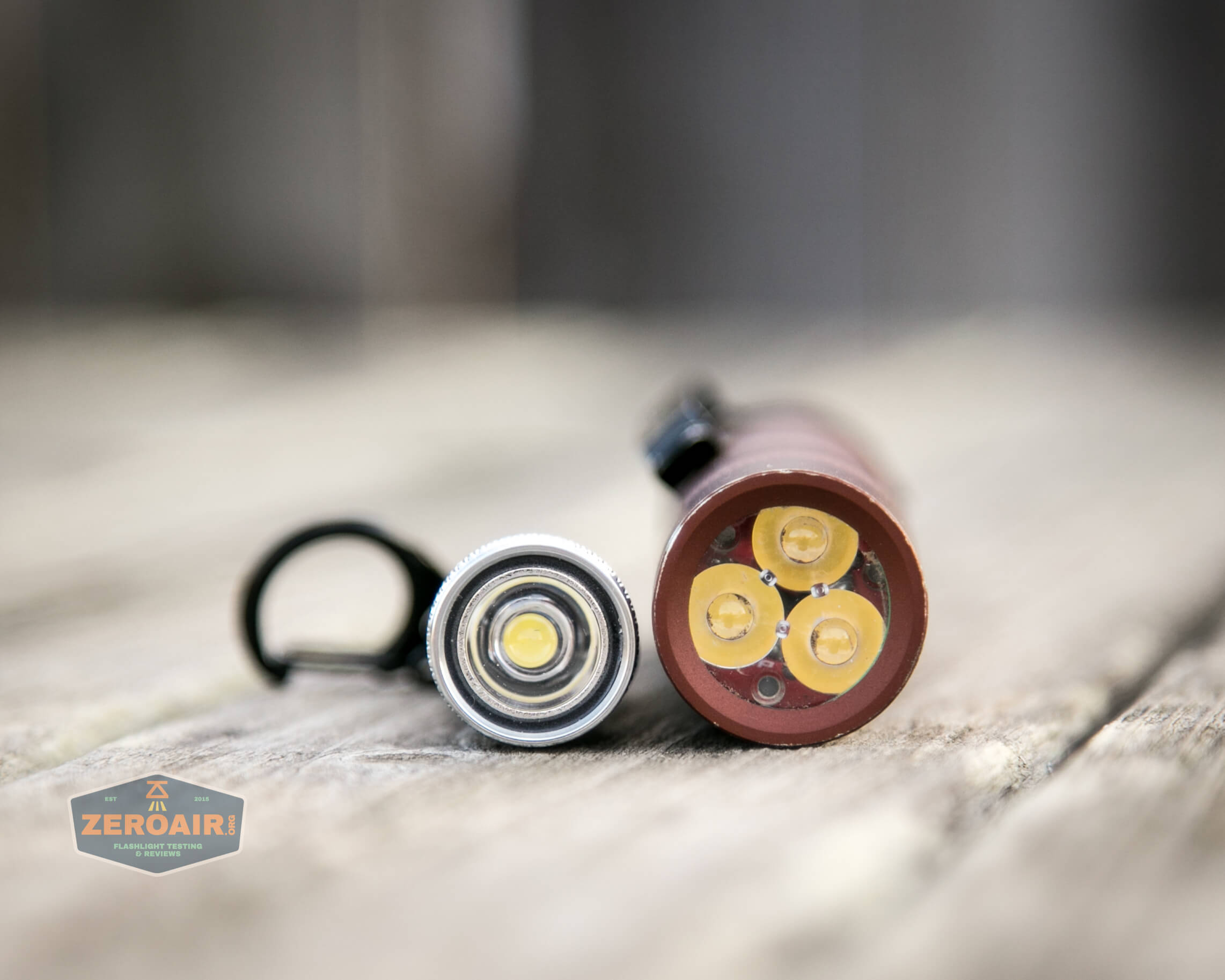
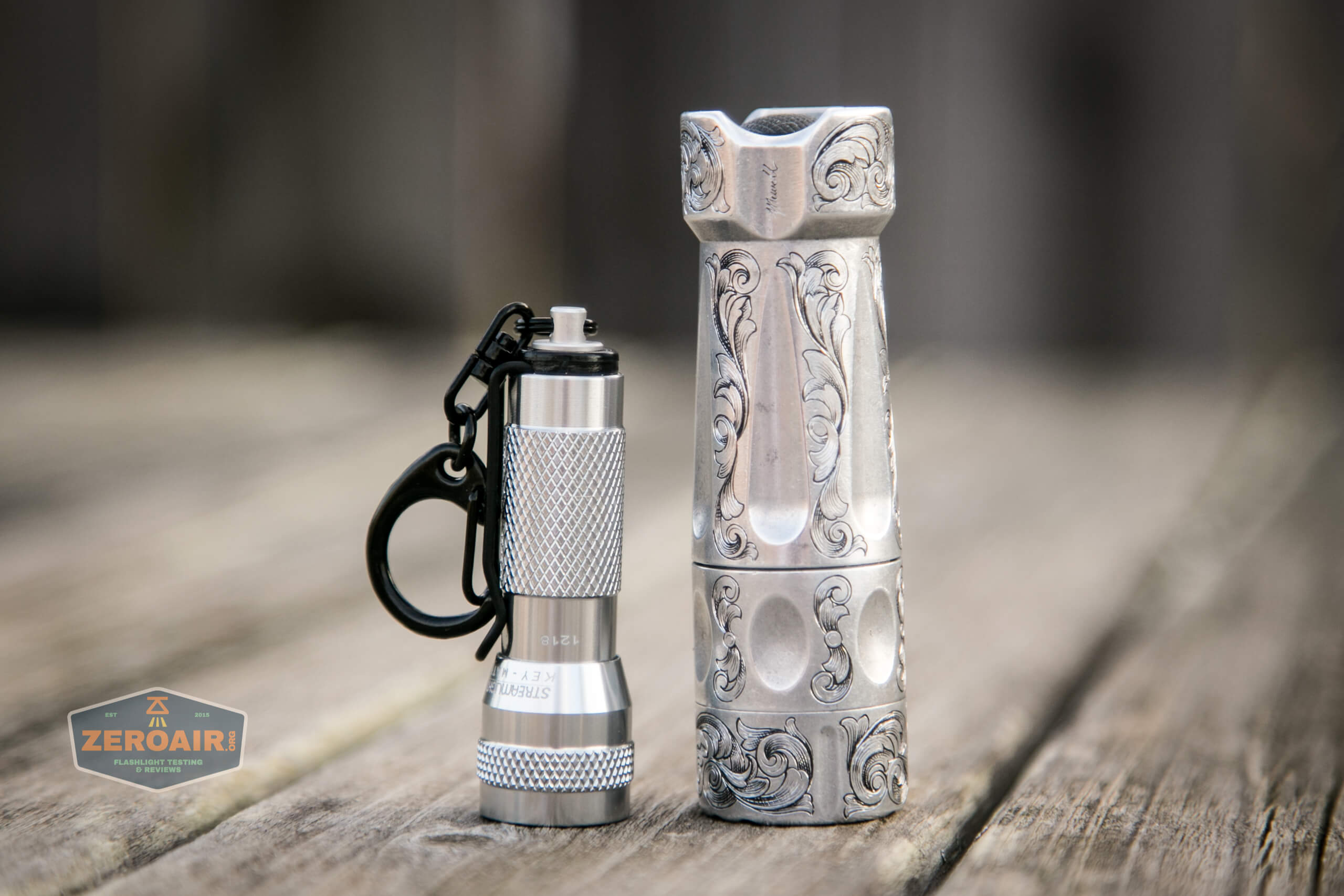
And here’s the light beside my custom-engraved TorchLAB BOSS 35, an 18350 light. I reviewed the aluminum version of that light in both 35 and 70 formats.
Retention and Carry
A pocket clip is included, and not really removable. It’s a “paperclip style” pocket clip and very tight. Tight like “hard to use” or even “pointless to try to use.” Tighter is better, though, because at least this way it can be loosened.
Also included is this keyring on a twisty chain, which again, isn’t really removable.
The chain is a nice infinite-twist chain. And the ring connector has a gate, not a split ring. So that’s nice, too.
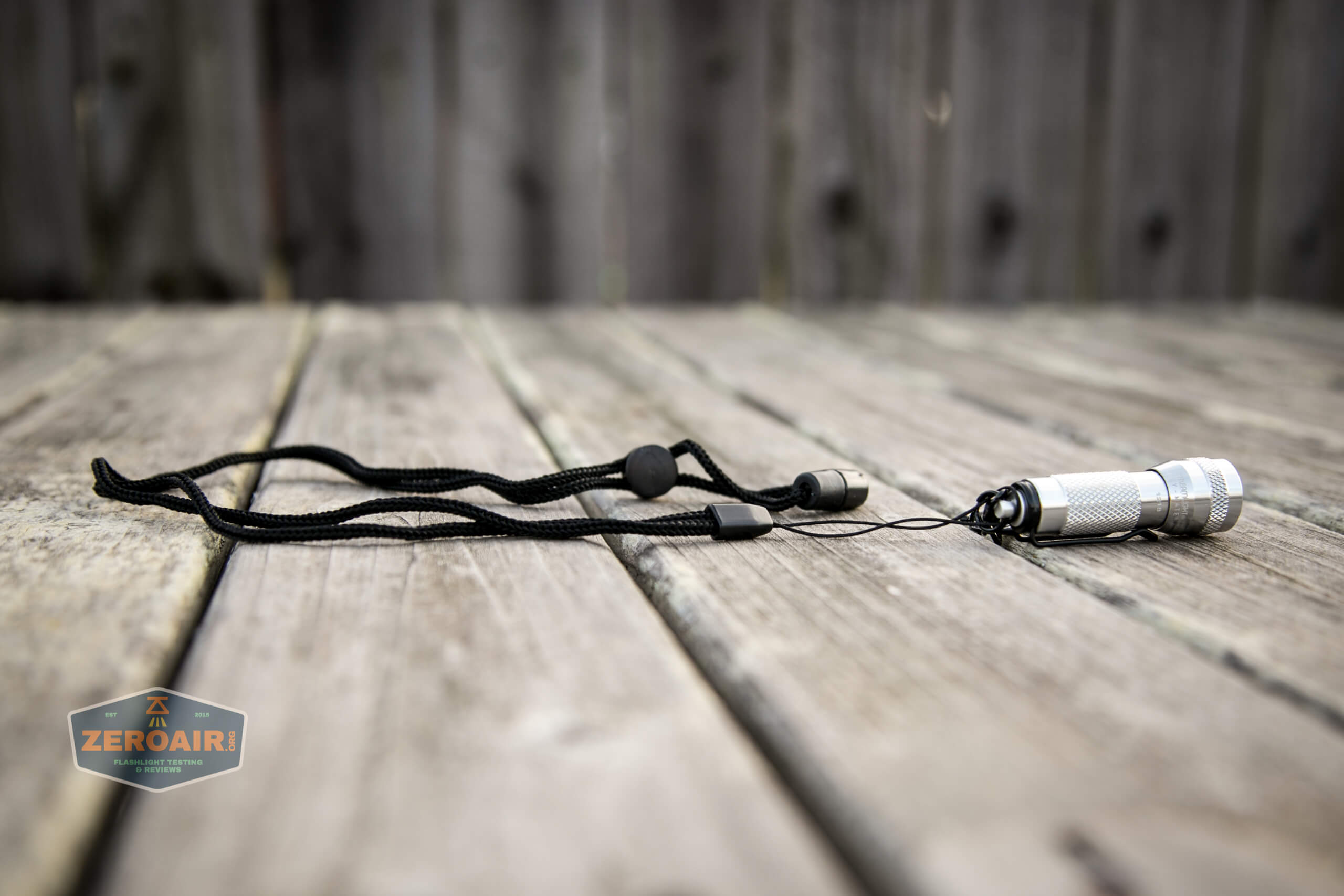
Finally included is this lanyard. It’s quite long, not really paracord, and does have a quick release for safety.
Power and Runtime
The Streamlight Key-Mate 72101 requires four coin cells. The manual says four LR44 ships with the light, and they ship installed.
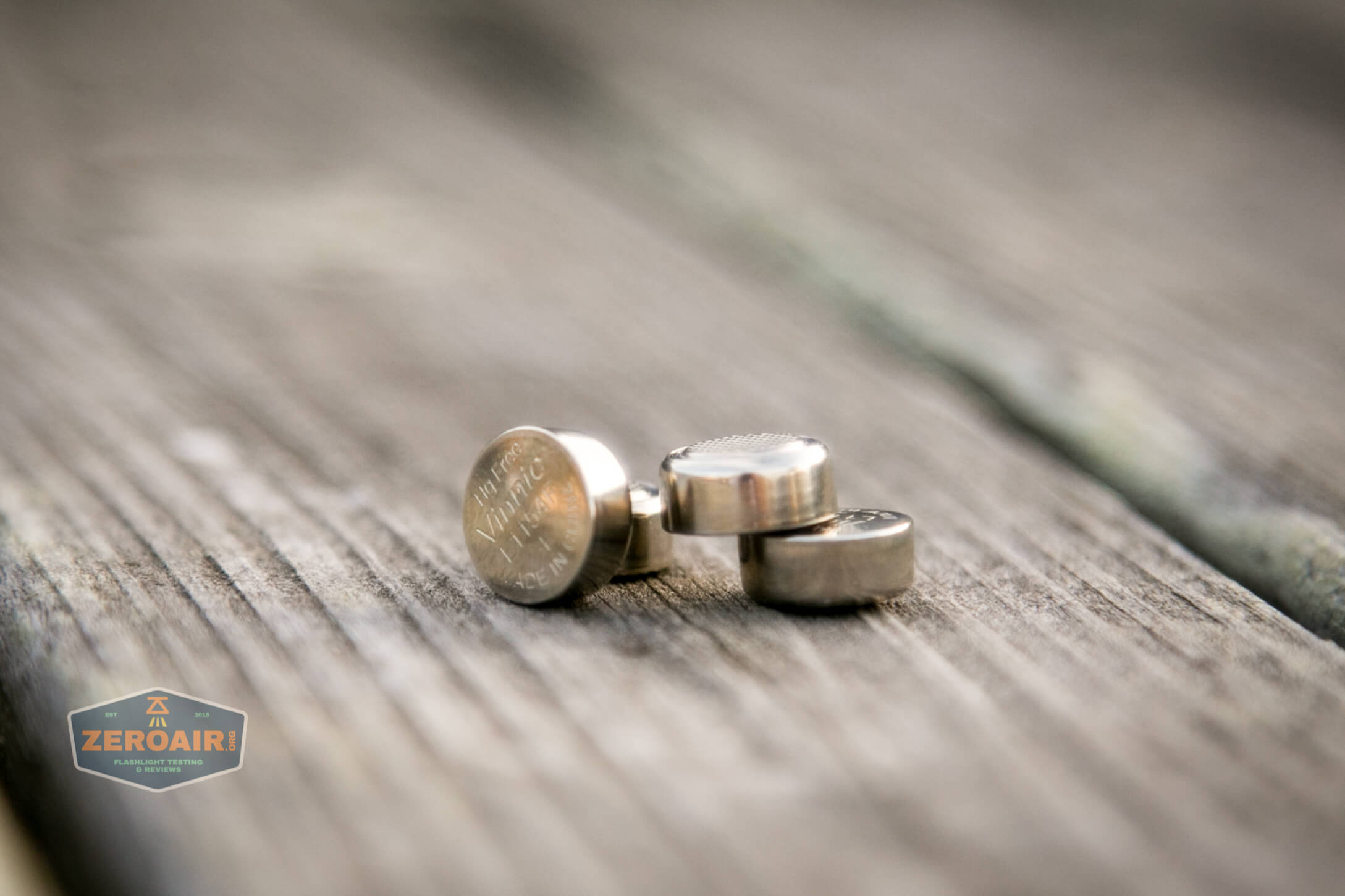
Each of these is 1.5V, and there are various button cells this size that will work. A quick search reveals this:
Duracell 76A 1.5V Alkaline Battery Replacement LR44, CR44, SR44, AG13, A76, PX76.
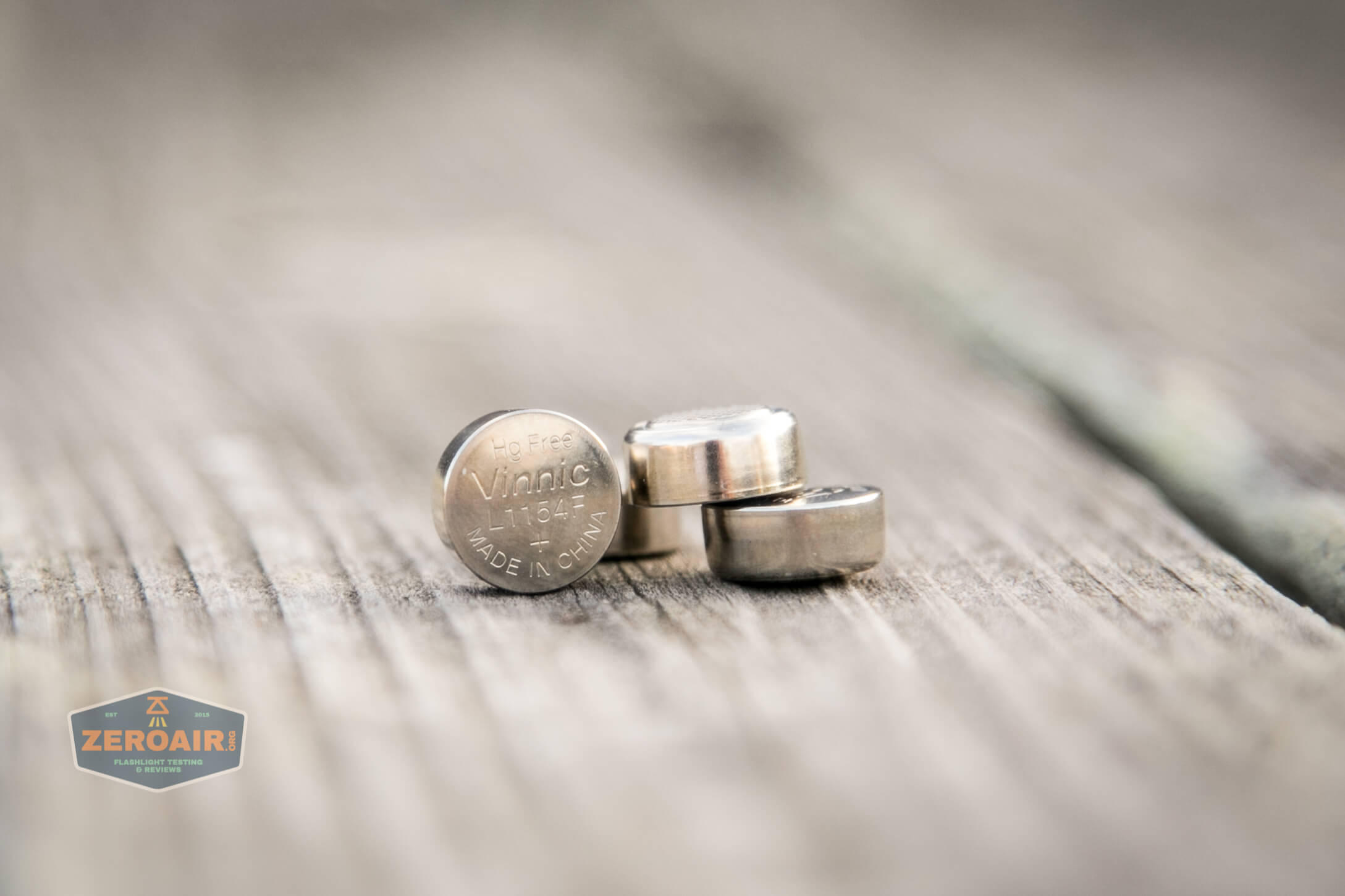
With my purchase of the light, I also bought some replacement cells. You can get these here – half the price of the light!
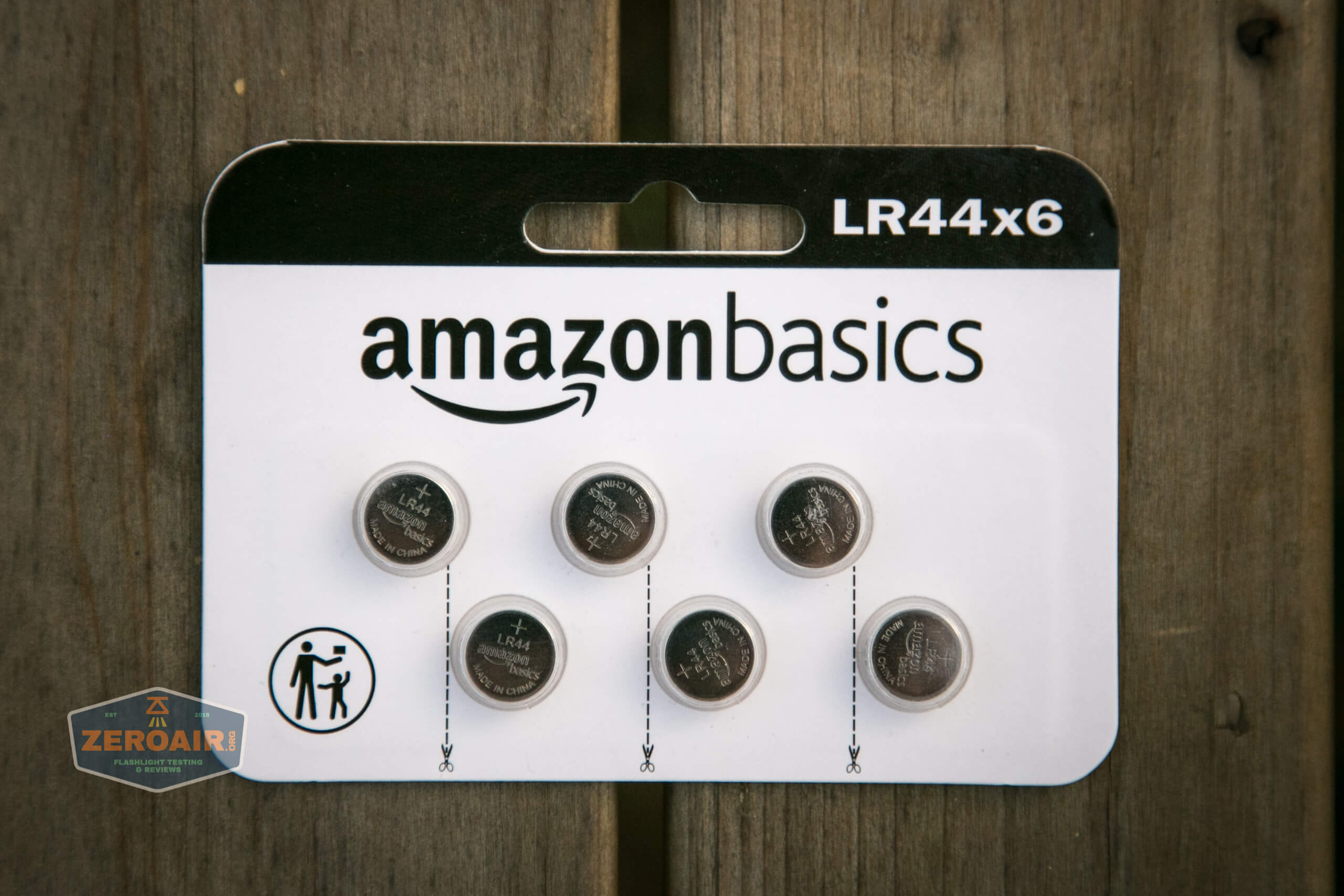
The cells go into the light in the opposite direction of “normal.” The negative end goes toward the emitter.
Forget dropping these in one by one. They’ll rotate around, and it’ll be a big hassle to get them lined up…
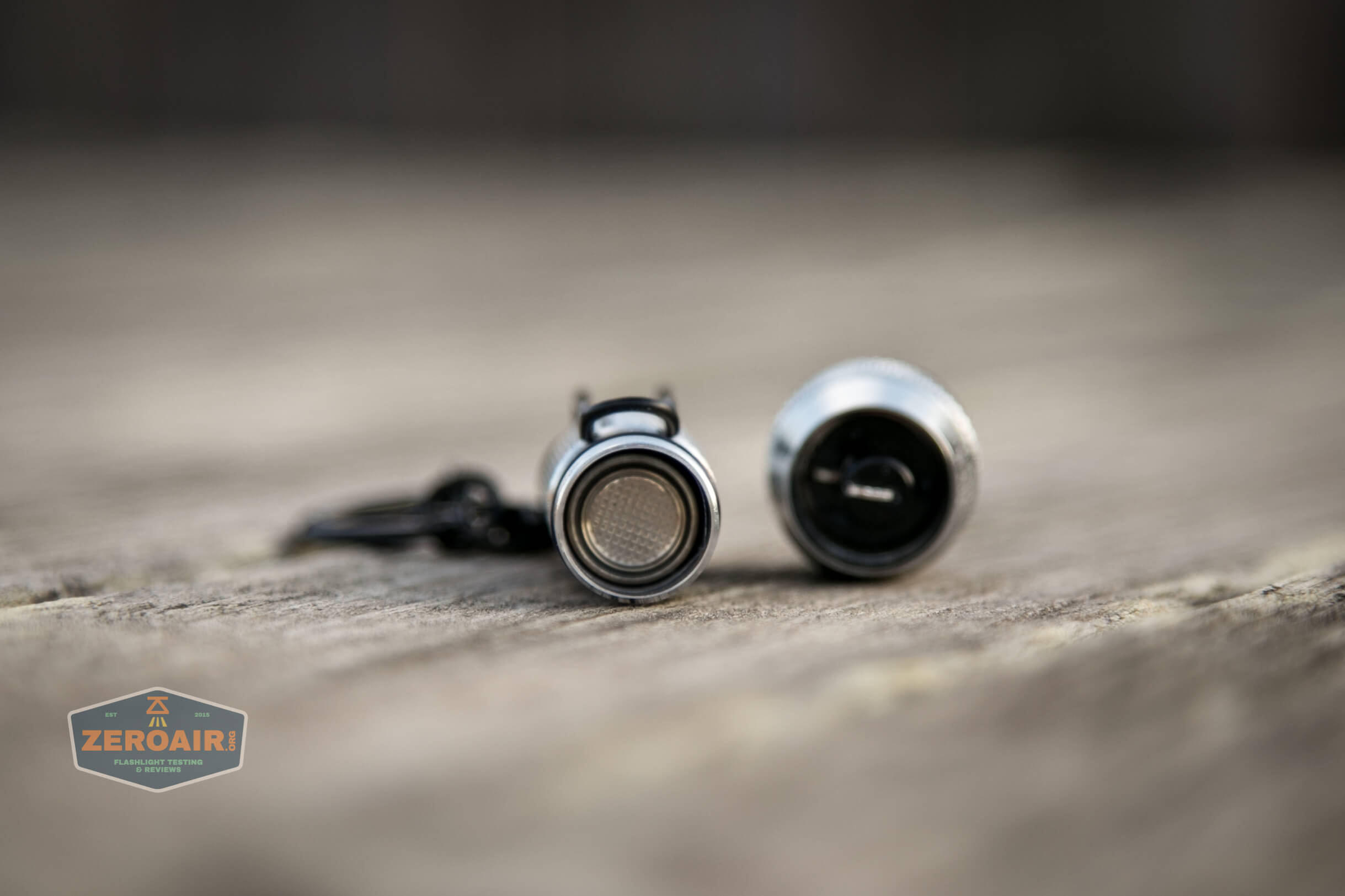
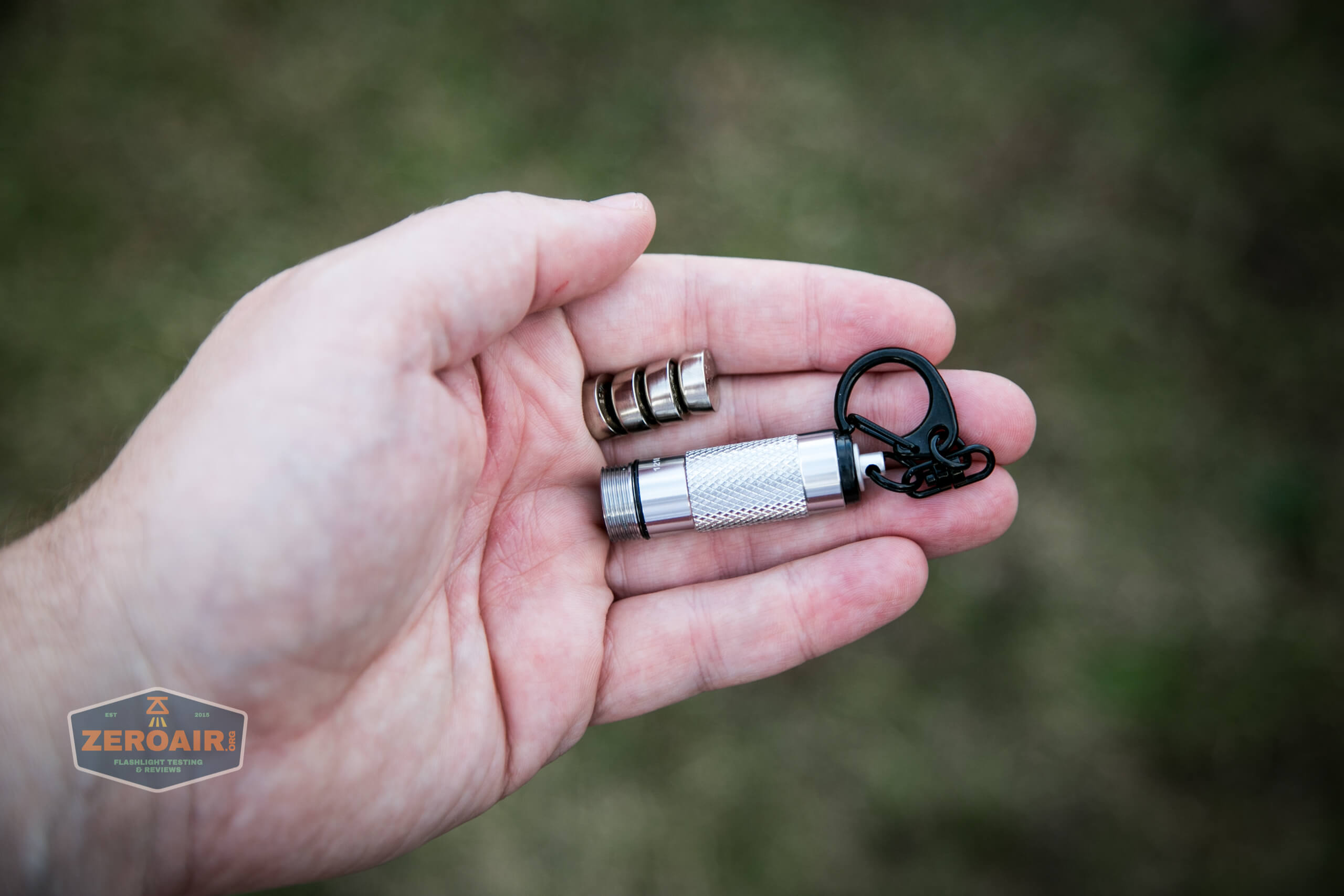
Instead, line the cells in the groove of your fingers as shown below, and then slide the cell tube over. The orientations shown below are the right way.
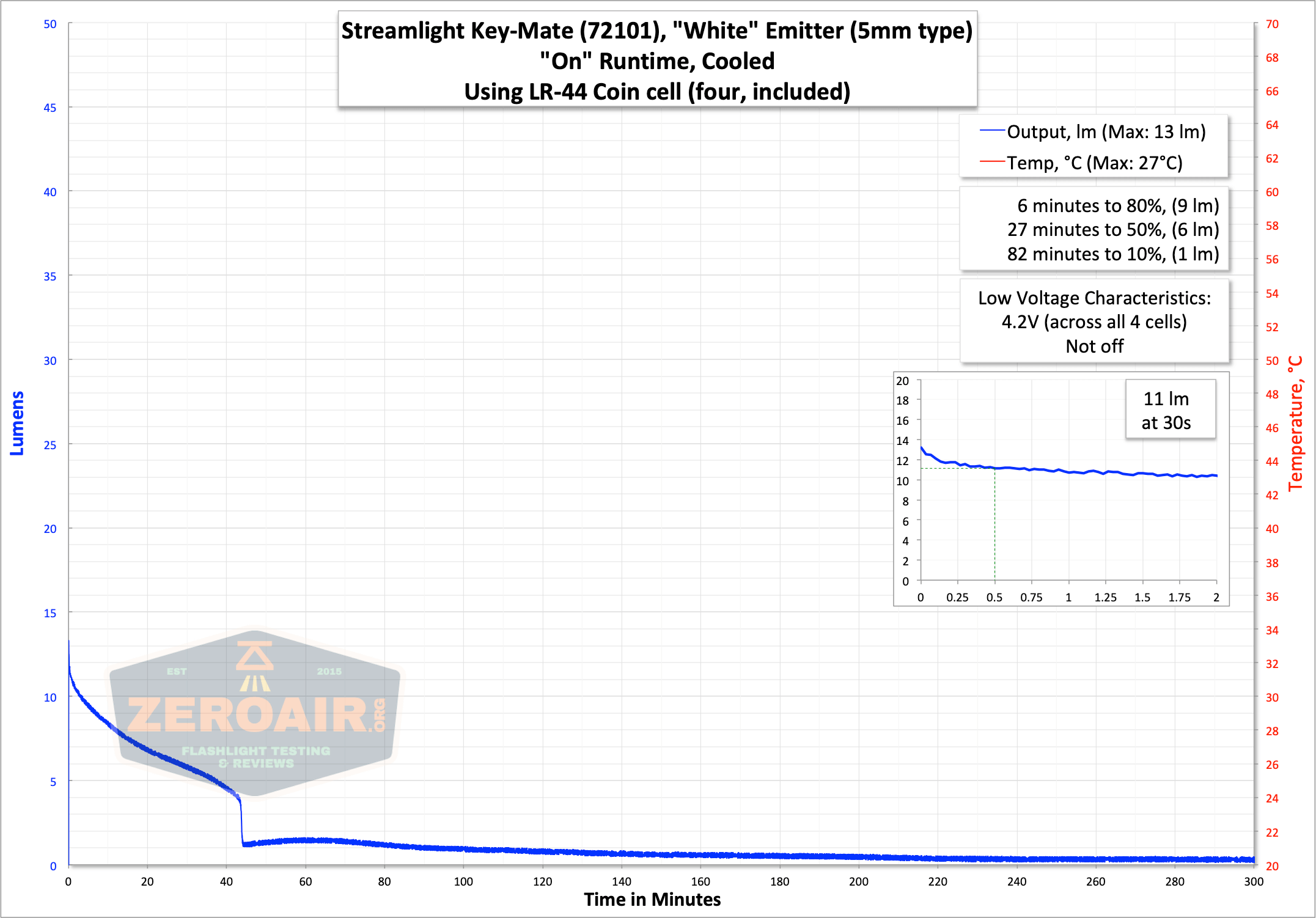
There’s just one mode, so just one runtime. The light only claims 10 lumens, and after around 40 minutes, it steps down. From there, it really just lasts and lasts – I’m not even showing the whole test here so that the first 40 minutes aren’t compressed beyond usefulness. I finally stopped the test, while the light was still on, and was reading 4.2V across the four cells. That makes it around 1.05V per cell. I’m not sure what the lower limit of these cells is, but they’re single-use – it won’t hurt to discharge them completely.
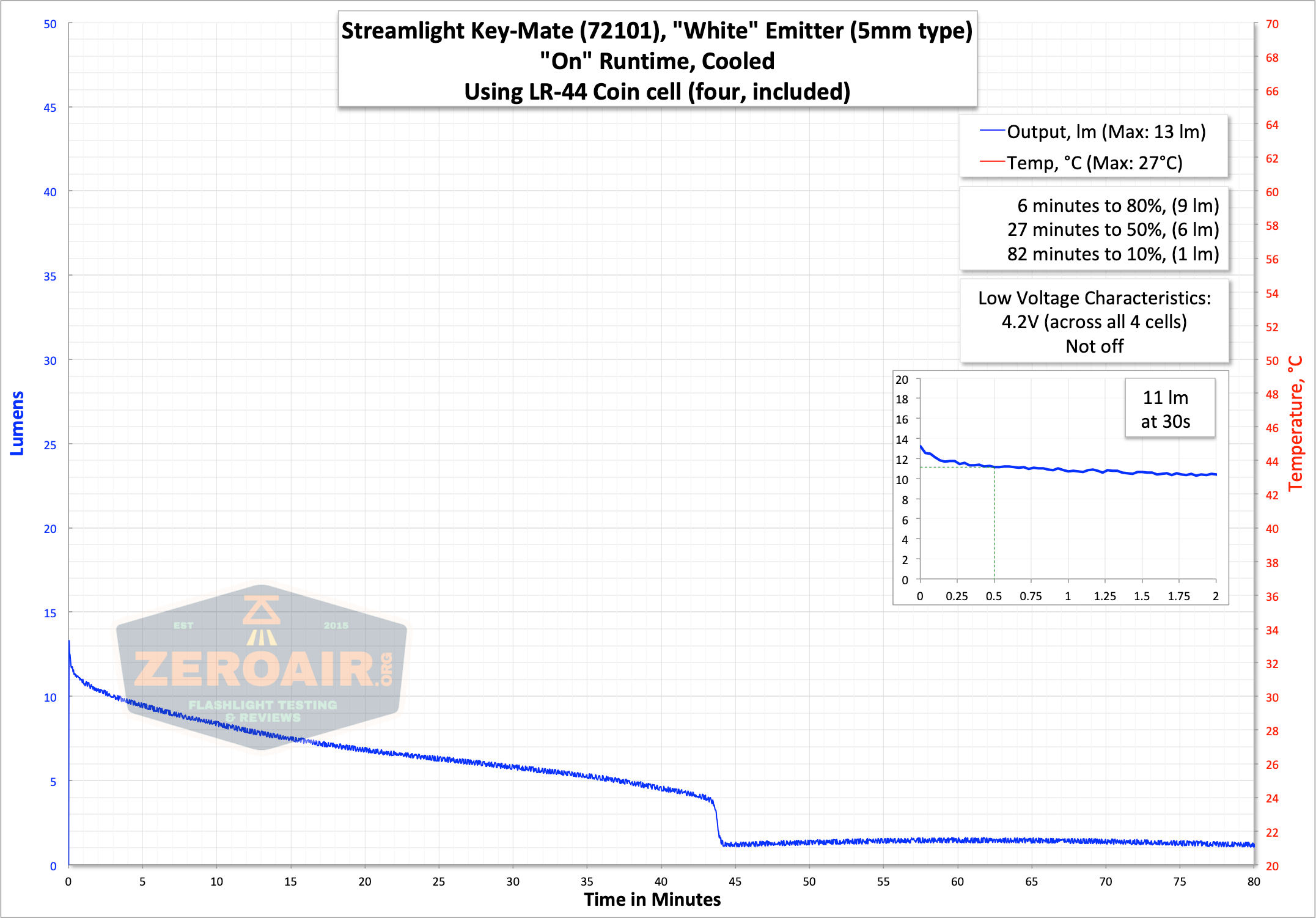
Here’s a close-up of the graph above, showing up to the stepdown.
Modes and Currents
There’s just one mode. On bench power, set at 6V, the emitter would take way more current than it needed – it’s a direct drive light. These cells don’t provide all that much current, though – at around 0.2A it’s ok. Above that (say 0.3A), the emitter gets really blue (bluer than it is supposed to be).
Pulse Width Modulation
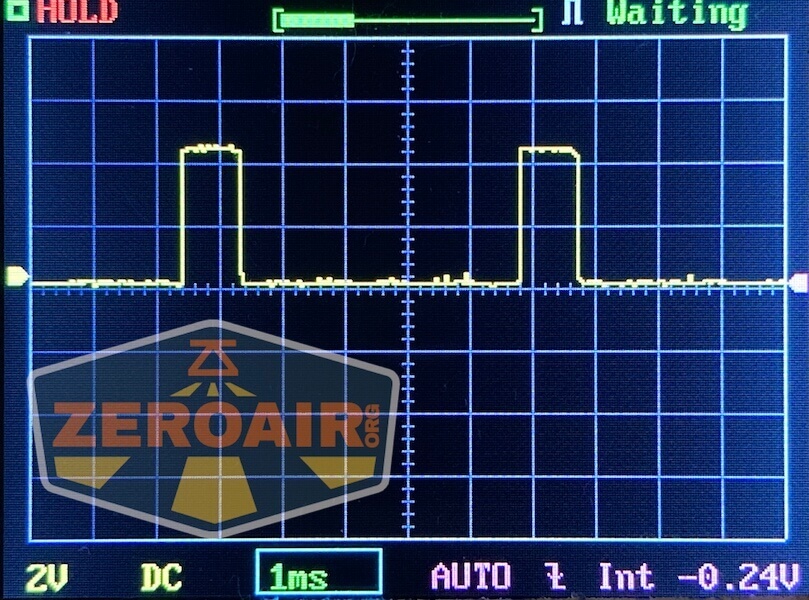
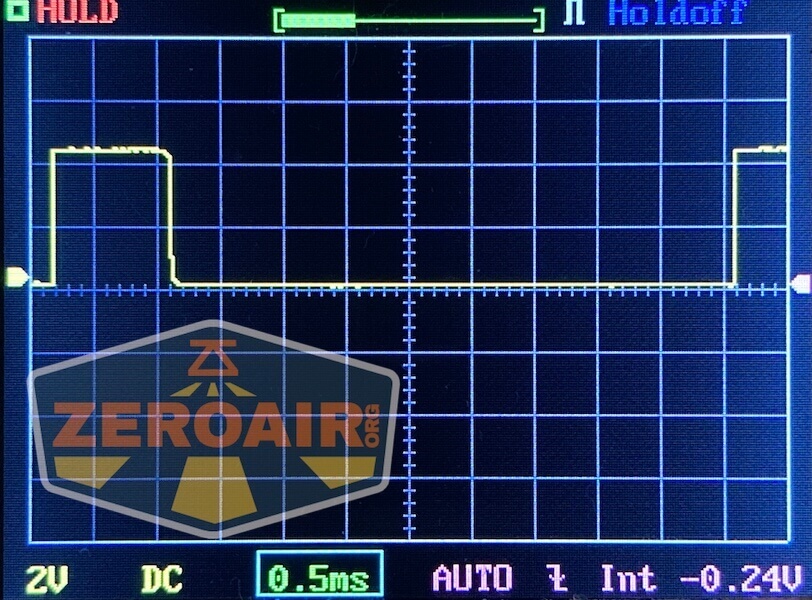
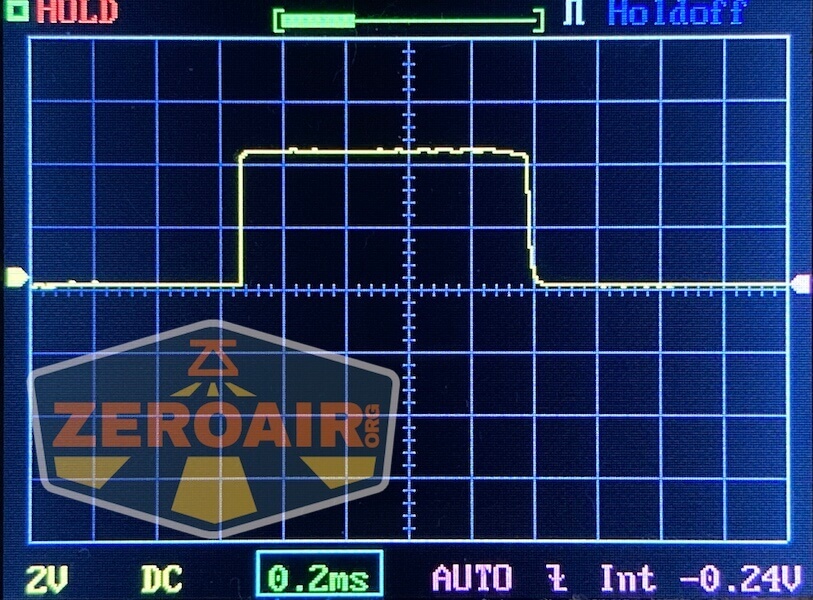
No PWM is seen!
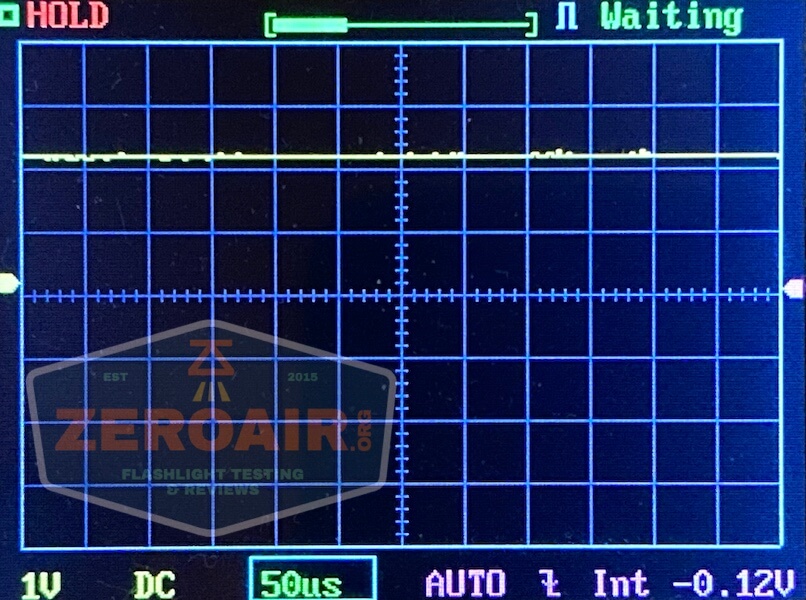
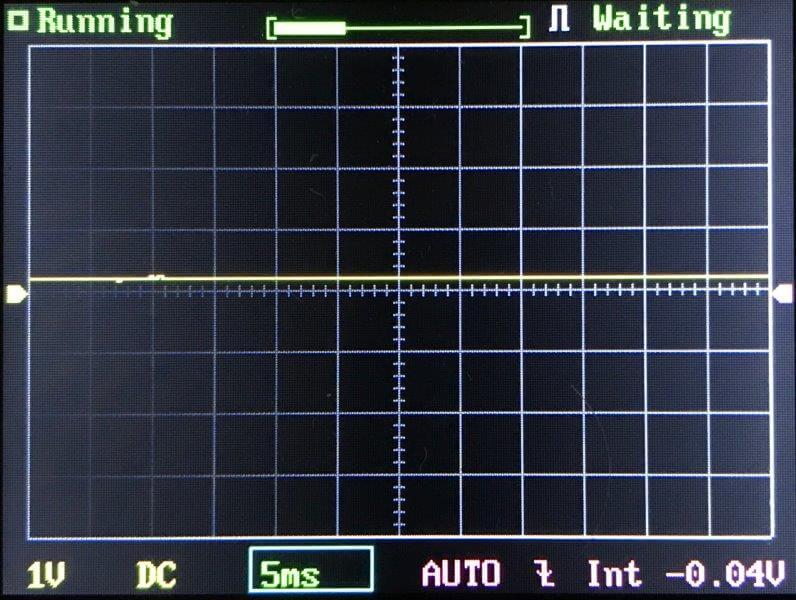
Here you can see a “baseline” – a chart with almost no light hitting the sensor.
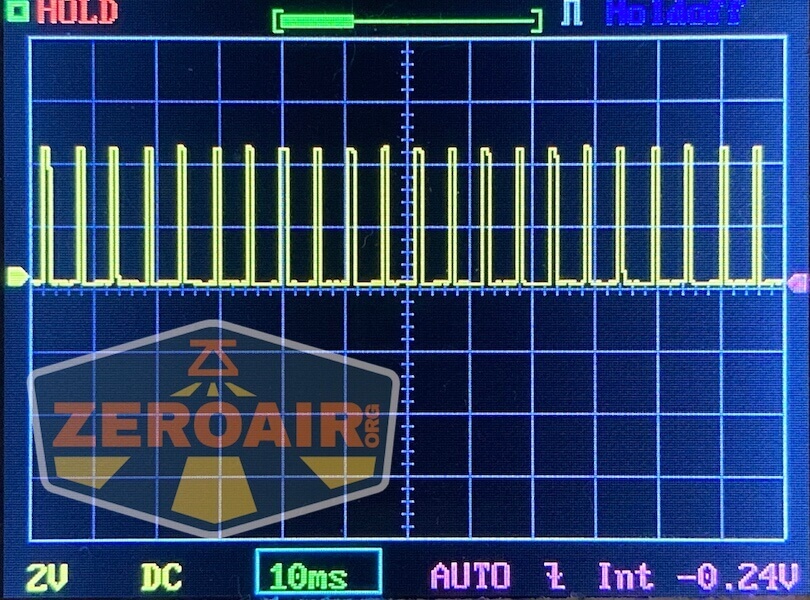
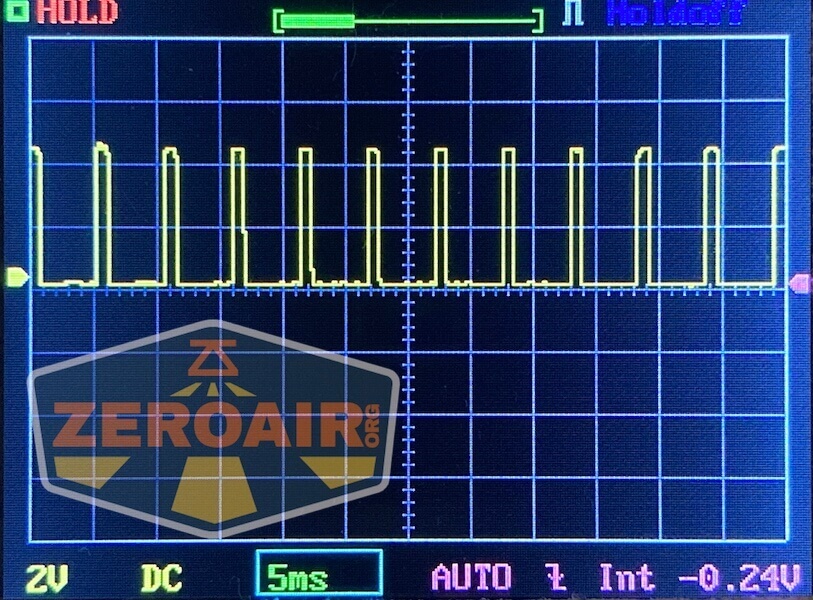
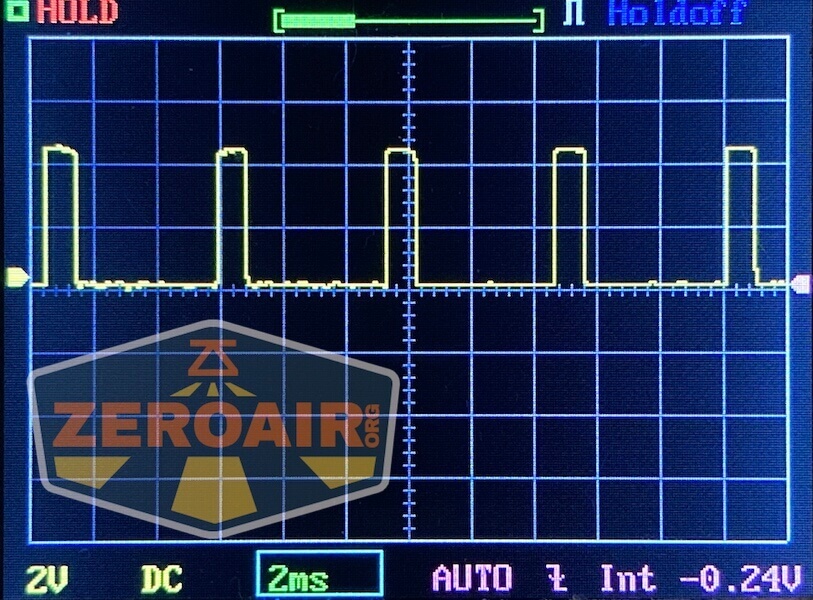
Then there’s the Ultrafire WF-602C flashlight, which has some of the worst PWM I’ve seen. It’s so bad that I used a post about it to explain PWM! Here are multiple timescales (10ms, 5ms, 2ms, 1ms, 0.5ms, 0.2ms) to make comparing this “worst” PWM light to the test light easier. That post also explains why I didn’t test the WF-602C at the usual 50us scale.
User Interface and Operation
The light is a twisty! Tighten the head for “on.” Loosen the head for off. There is no other option or mode.
Here’s a user interface table!
| State | Action | Result |
|---|---|---|
| Off | Tighten | On |
| On | Loosen | Off |
I love easy UI’s. 😀
LED and Beam
The emitter used in this Streamlight is a 5mm domed white LED. I believe there’s also a green option.
The mess you see above is a little confusing, actually. There’s a reflector, into which the dome of the emitter protrudes. So the reflector is pretty smooth, and the LED dome makes it look very ringy.
The LED “legs” just stick into this plastic bit and make direct contact with the cells. There is no driver!
These beamshots always have the following settings: f8, ISO100, 0.3s shutter, and manual 5000K exposure. These photos are taken at floor level, and the beam hits the ceiling around 9 feet away.
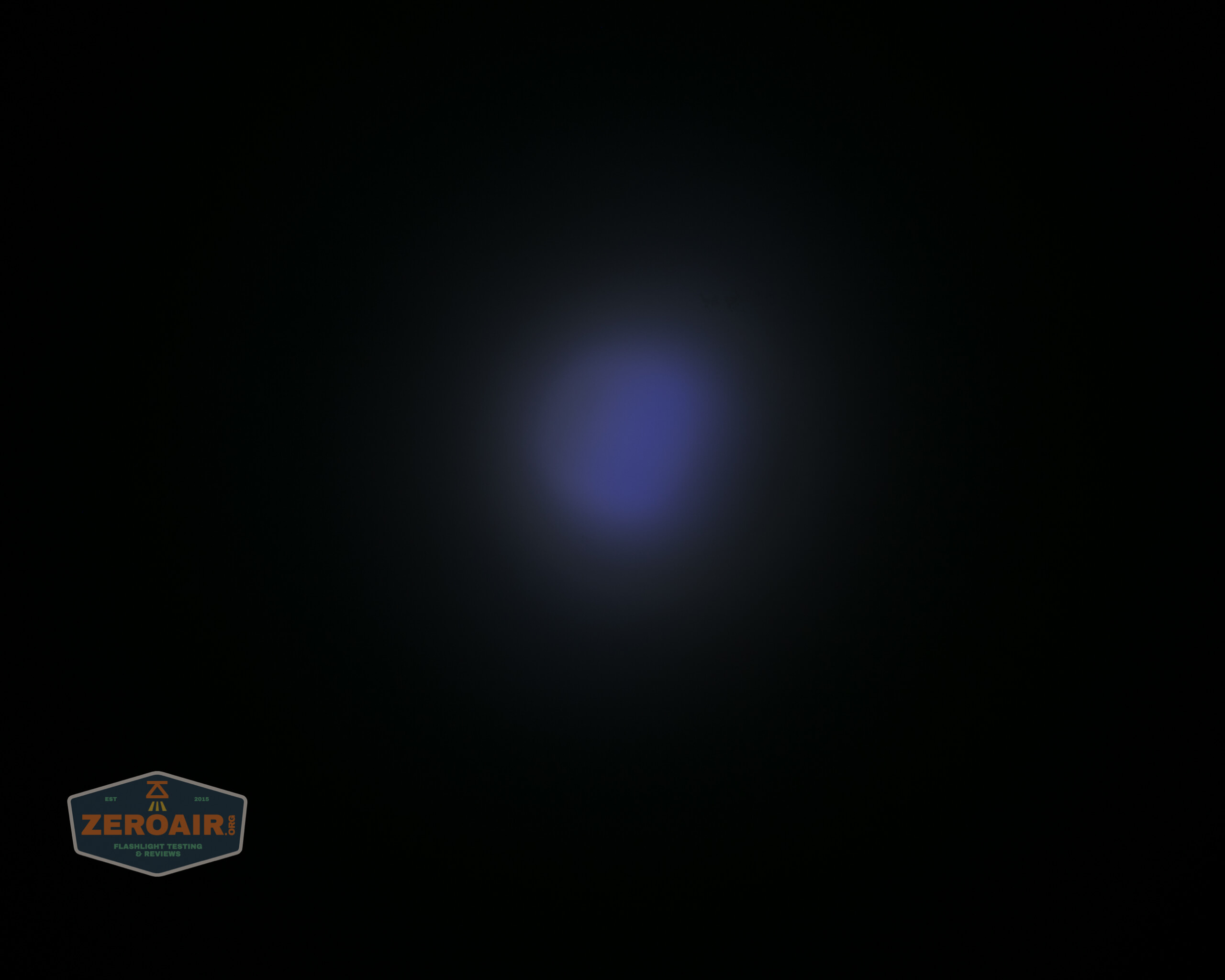
Tint vs BLF-348 (KillzoneFlashlights.com 219b version) (affiliate link)
I keep the test flashlight on the left and the BLF-348 reference flashlight on the right.
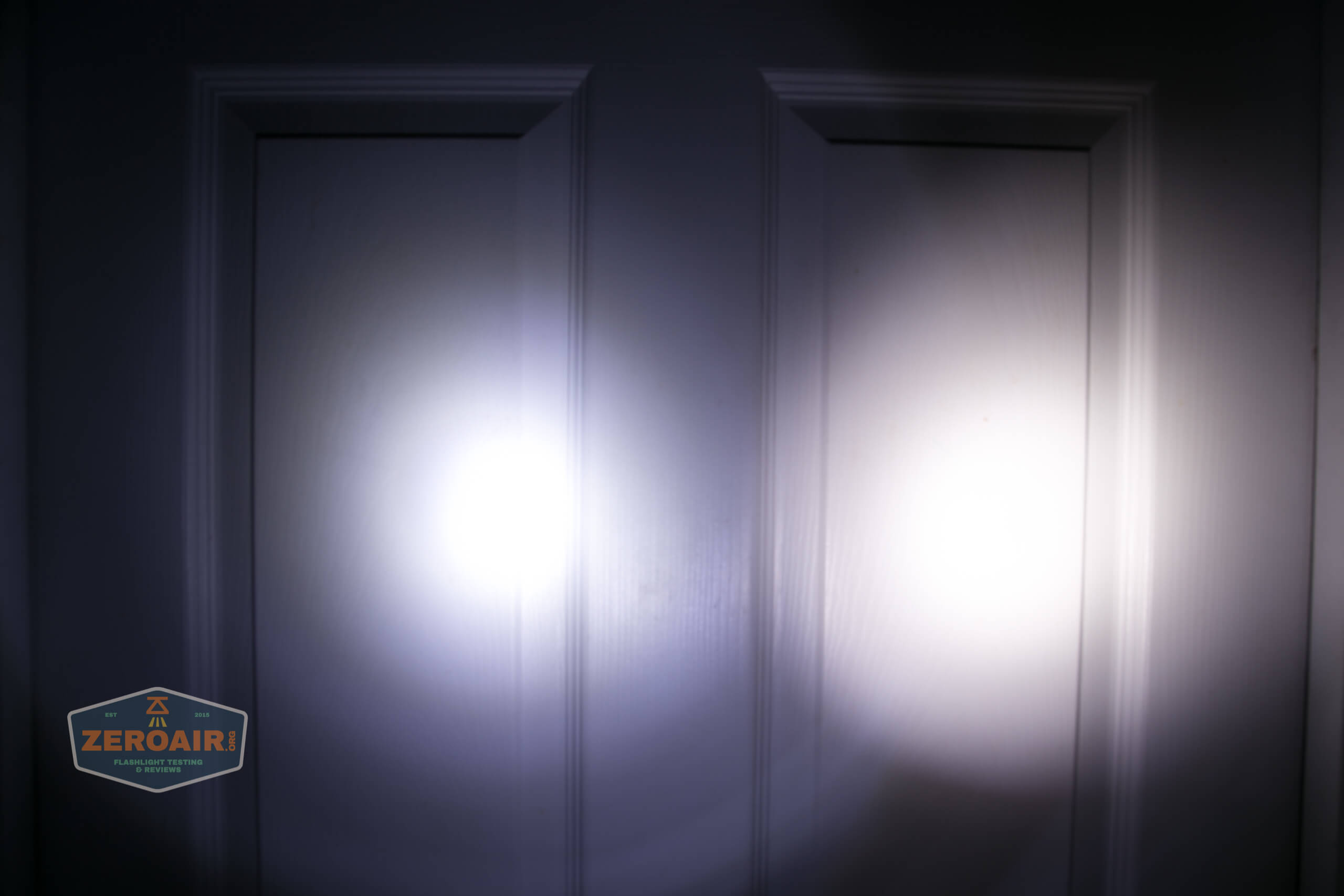
I compare everything to the KillzoneFlashlights.com 219b BLF-348 because it’s inexpensive and has the best tint!
Conclusion
What I like
- Small size
- Twist is very smooth
- Only one mode
- Excellent throw
What I don’t like
- Claims titanium; isn’t titanium
- Blue temperature on the LED
- Only one mode
Notes
- This light was provided by me for review. I was not paid to write this review.
- This content originally appeared at zeroair.org. Please visit there for the best experience!
- Use my amazon.com referral link if you’re willing to help support making more reviews like this one!
- Please support me on Patreon! I deeply appreciate your support!
Discover more from ZeroAir Reviews
Subscribe to get the latest posts sent to your email.
You can also use 2x CR1/3N batteries in this light as well as any that take the 4x LR44. They are lithium so won’t leak and are easier to put in the flashlight. If you shop around there about the same cost as LR44 when you consider you only need 2.
I’d be interested in seeing a runtime test with #675 zinc air hearing aid batteries instead of the LR44’s.
Yep, me too!