
Lumintop LA38 LEP Flashlight Review
The Lumintop LA38 LEP, aka “THOR” or “THOR II,” is a titanium 18350/18650 LEP flashlight with an RGB tailcap and other features. Read on!
Lumintop LA38 LEP Official Specs and Features
Here’s a link to the Lumintop LA38 “Thor II” product page.
Versions
Depending on what you consider “versions”, there are at least three of the titanium. There are Polished, Stonewashed, and Sandblasted (seen here). Each of those ships has an 18650 extension, so you could see that as a separate version if you wanted.
Also available is an aluminum version, which is just over half the cost of this titanium. Four colors are available: Black, Grey, Sand, and Raw. On the aluminum version, the extension tube looks to be a separate purchase.
Price of the Lumintop LA38 LEP
At nealsgadgets.com, all titanium versions weigh in at $384.95. This includes the extension tube and doesn’t include either cell type.
Aluminum, which isn’t available at Neals, is around $210 on Lumintop’s site, with the extension tube for 18650 adding around $8. (Buy the extension tube.)
Short Review
As an 18350 LEP, this thing rocks. Just three modes, nothing complicated, and a bunch of bells and whistles that make this thing glow…. It’s pricey at around $400, but it sure is fetching. Read on to see why I say “as an 18350 LEP,” and I’m not talking about the extension tube…
Also, I should say somewhere toward the top (and why not here) that I think what I got is a pre-production Lumintop LEP. It’s not branded “THOR,” and I didn’t get the full retail package. More reasons later. So while mine isn’t labeled THOR, I’ll probably call it both THOR and LA38, fairly interchangeably.
Long Review
The Big Table
| Lumintop LA38 LEP “Thor II” | |
|---|---|
| Emitter: | LEP |
| Price in USD at publication time: | $384.95 |
| Cell: | 1×18350 |
| High Runtime Graph | Medium Runtime Graph |
| LVP? | Yes |
| Switch Type: | Mechanical |
| On-Board Charging? | No |
| Claimed Lumens (lm) | 500 |
| Measured Lumens (at 30s) | 252 (50.4% of claim)^ |
| Candela per Lumen | 1682.1 |
| Claimed Throw (m) | 1800 |
| Candela (Calculated) in cd (at 30s) | 8100lux @ 7.434m = 447641cd |
| Throw (Calculated) (m) | 1338.1 (74.3% of claim)^ |
| All my Lumintop reviews! | |
^ Measurement disclaimer: Testing flashlights is my hobby. I use hobbyist-level equipment for testing, including some I made myself. Try not to get buried in the details of manufacturer specifications versus measurements recorded here; A certain amount of difference (say, 10 or 15%) is perfectly reasonable.
What’s Included
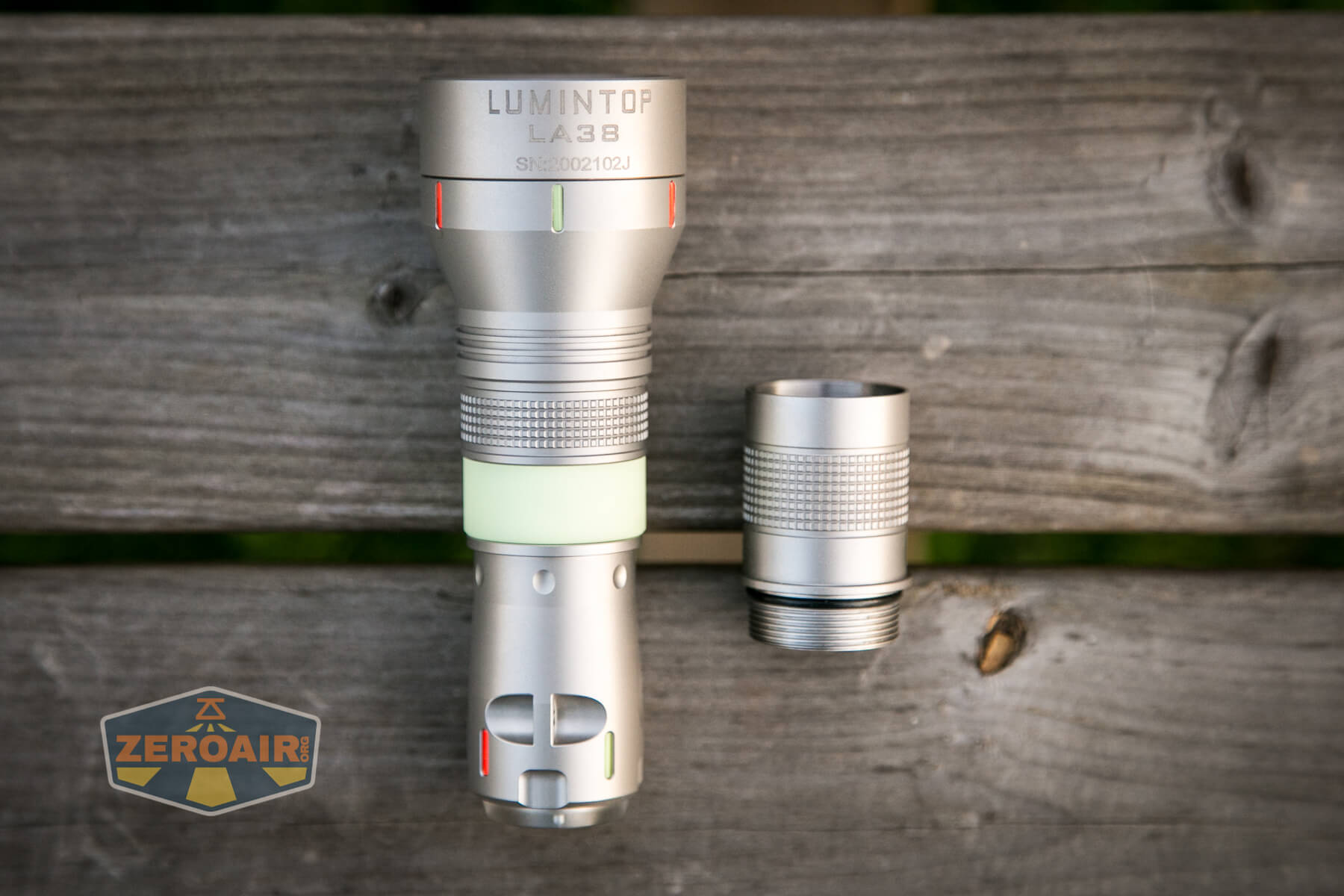
In my (not complete retail) package is the Lumintop LA38 LEP and the 18650 extension tube. I didn’t get a manual or anything else. I have no doubt the light at least comes with a manual and lanyard.
- Lumintop LA38 LEP
- Lumintop LA38 LEP 18650 extension tube
Package and Manual
Again, I didn’t get a manual with this light.
Build Quality and Disassembly
I’m going to mostly break these photos up into the 18350 (first, always) and 18650 (second, always) versions of the light.
First, the 18350 version.
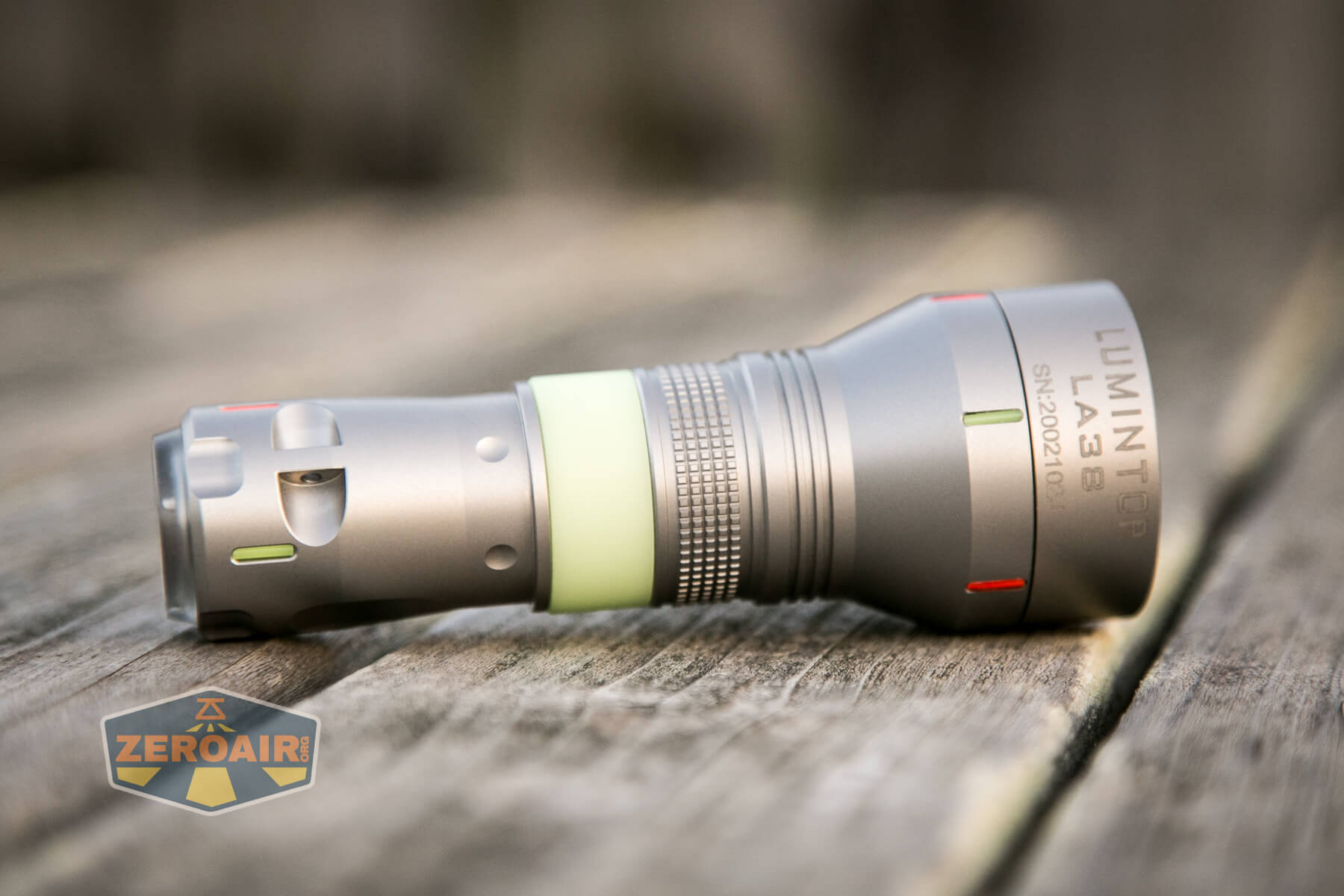
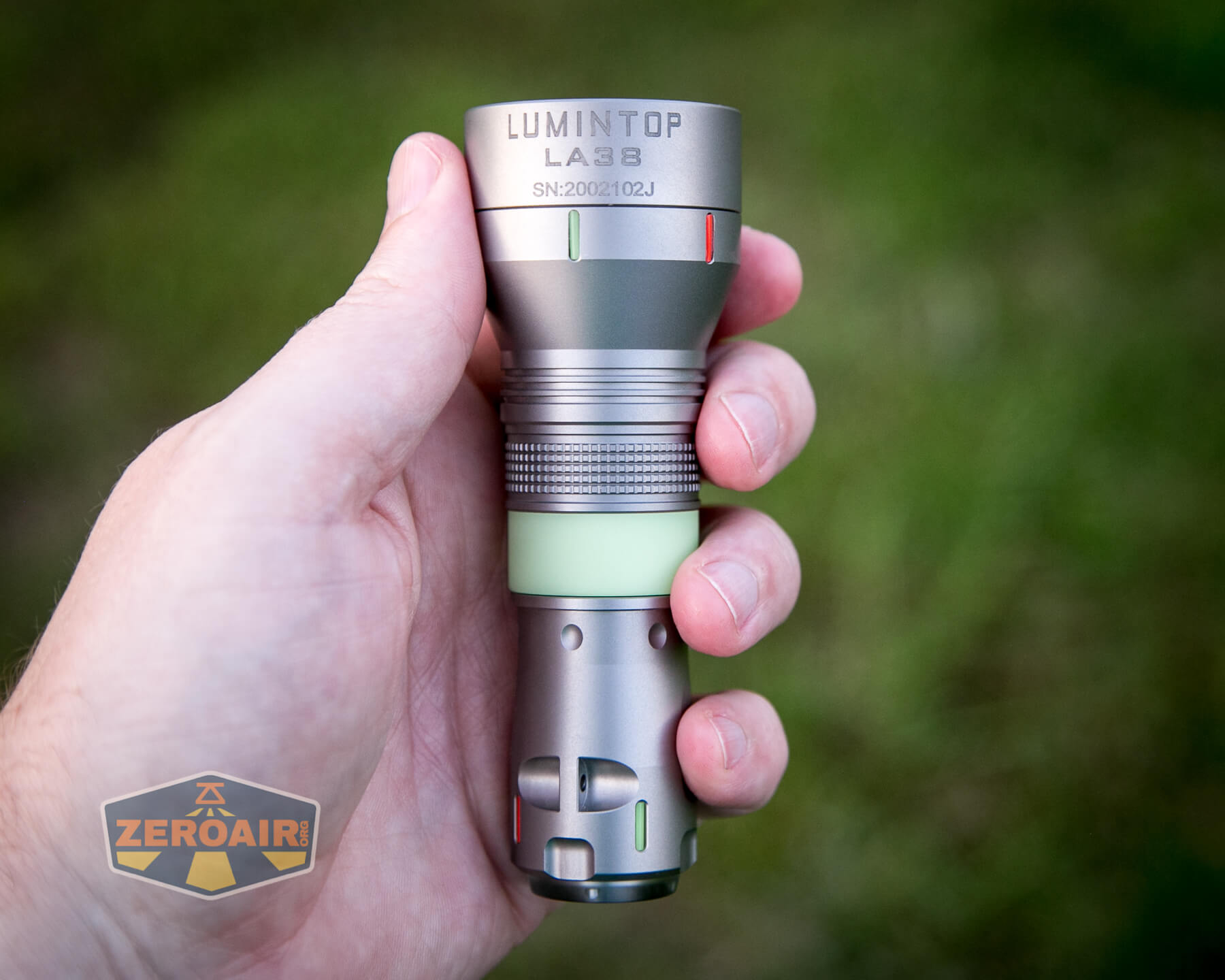
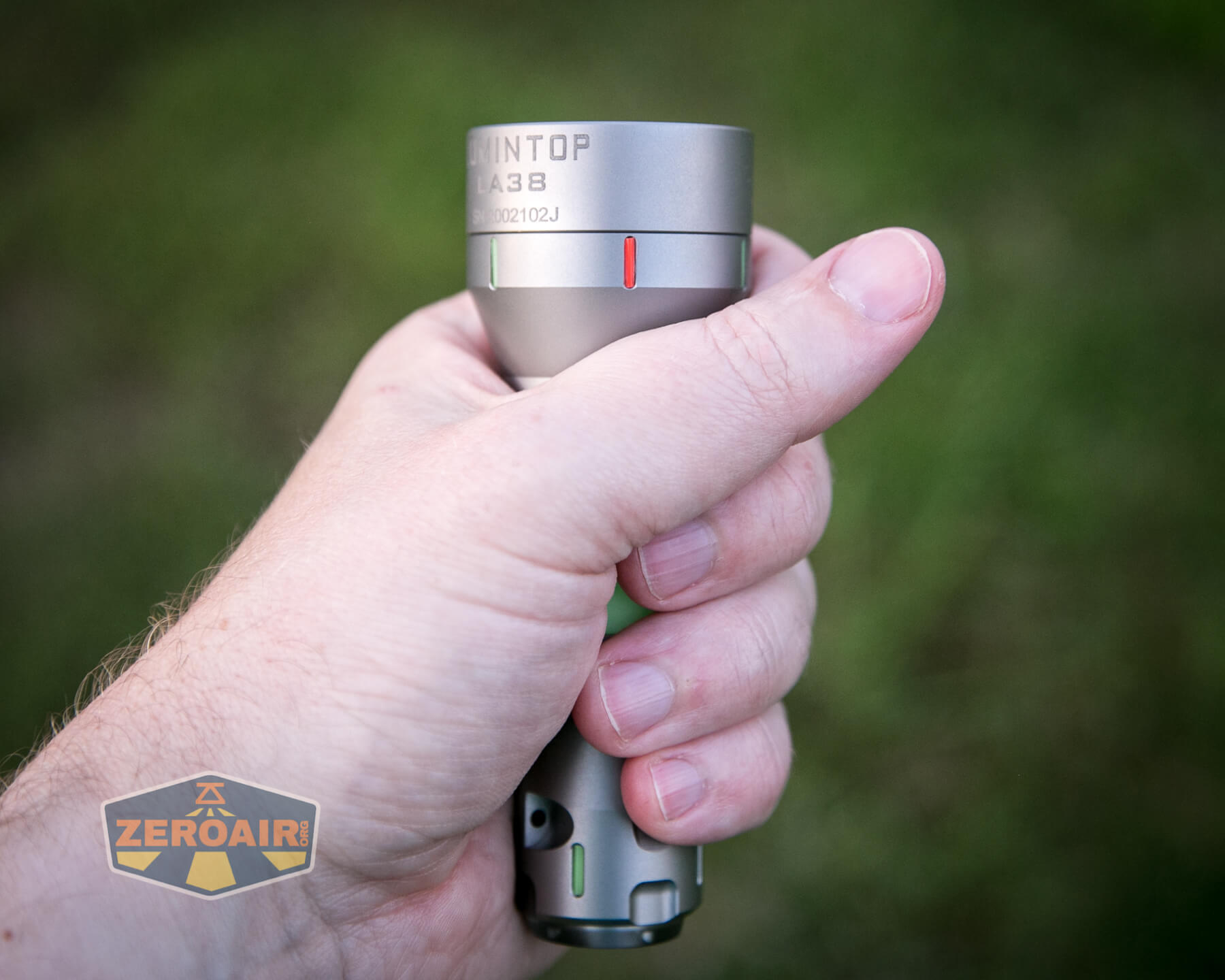
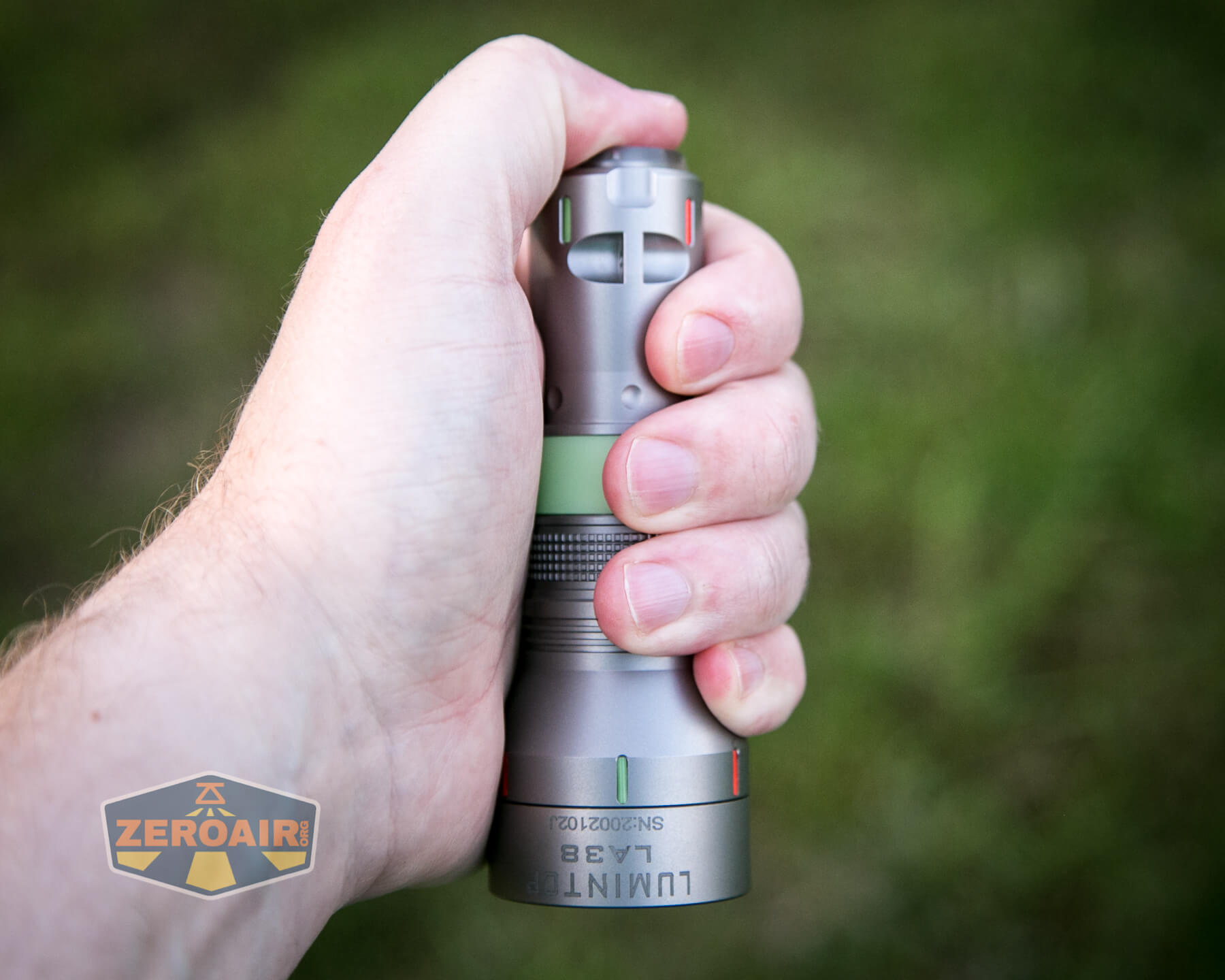
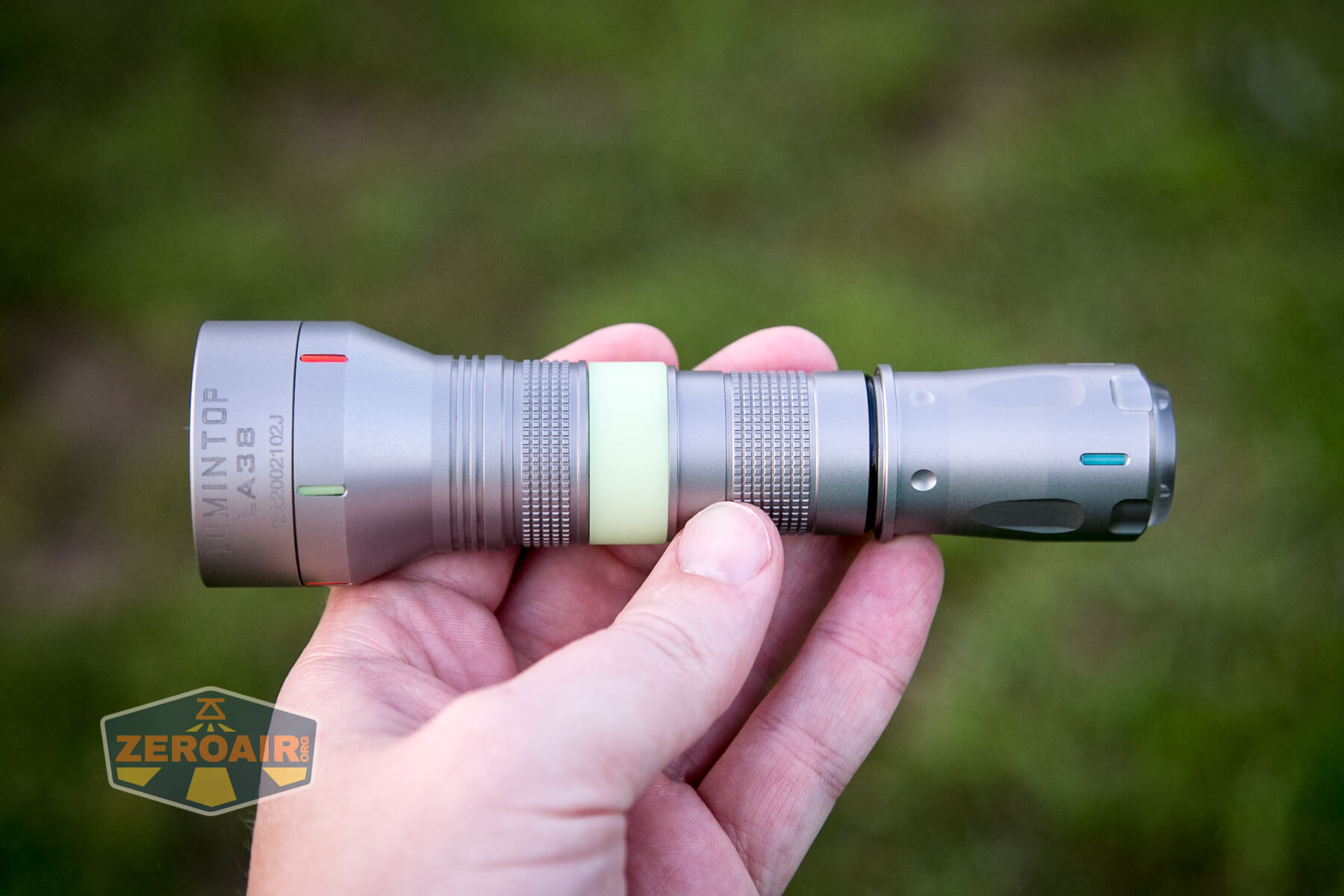
I don’t know what your perceptions of titanium lights are, but more often than not, they’re actually heavier than their aluminum counterpart. I don’t have the aluminum version of the Thor, but I can tell you that this light is heavier than I would have guessed it to be. It’s weighty. It has a nice weight.
The build quality is good, too – I have the sandblasted, and that finish seems to hide use marks, which I appreciate. I don’t think Polished would do the same, and raw aluminum would certainly absolutely not.
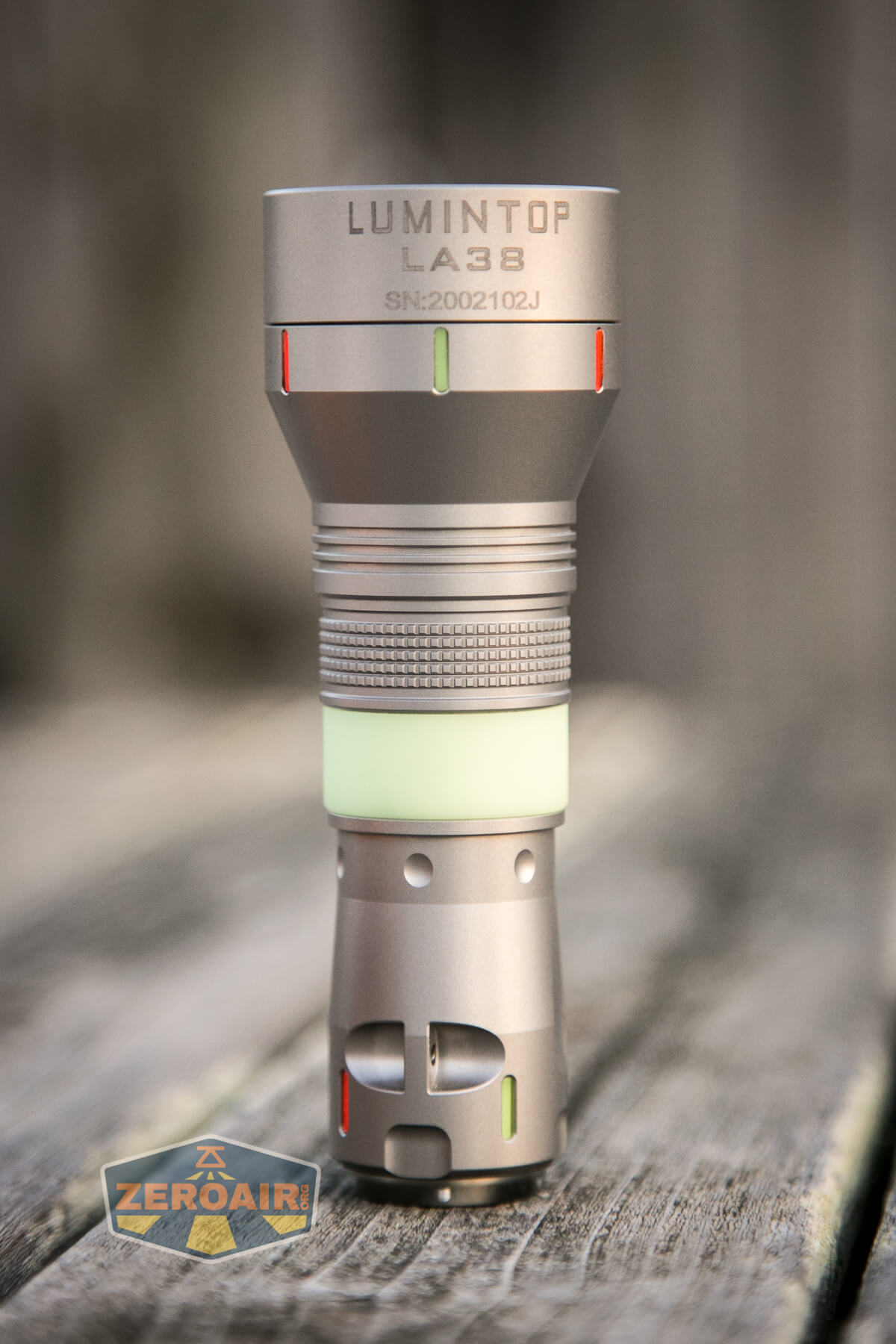
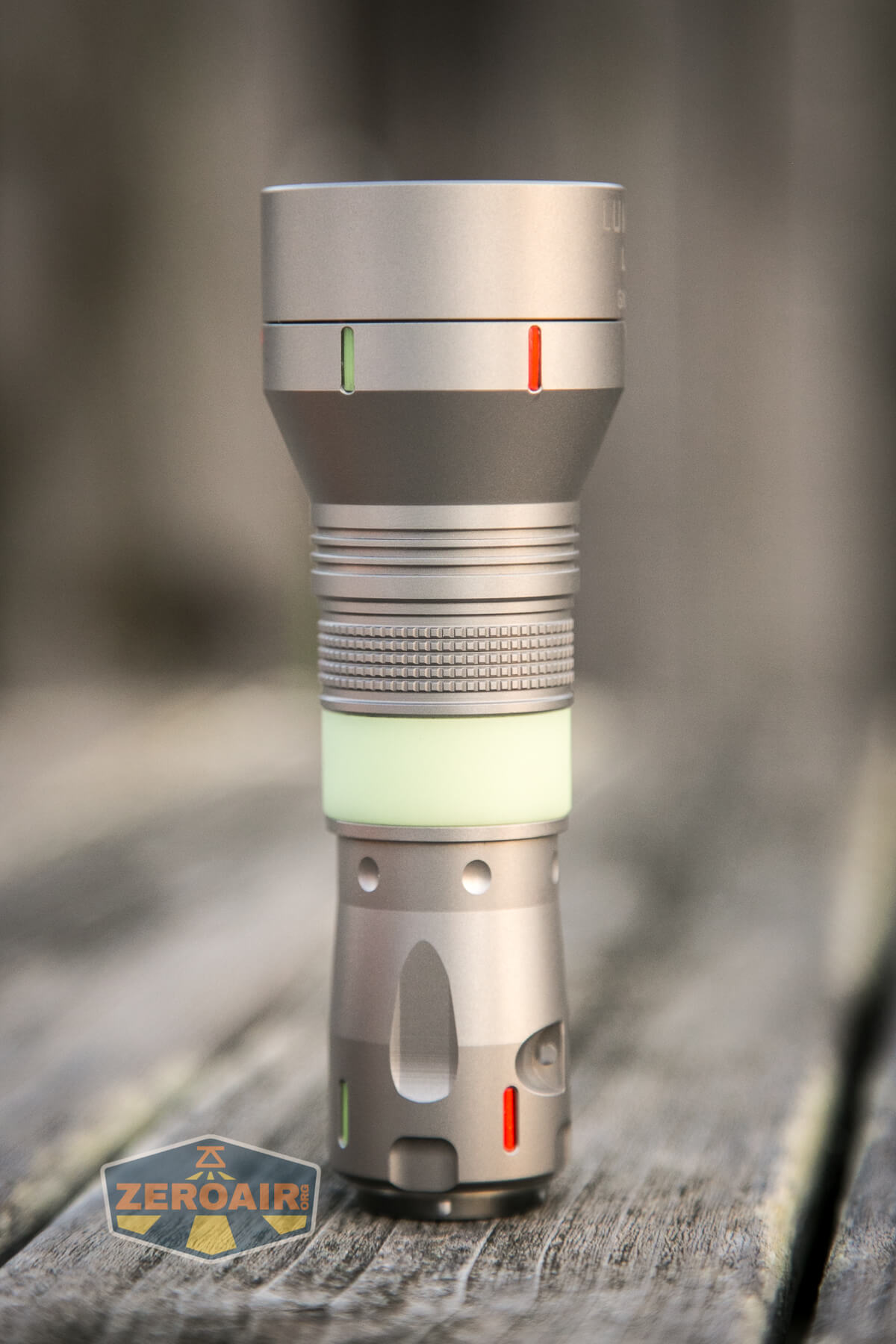
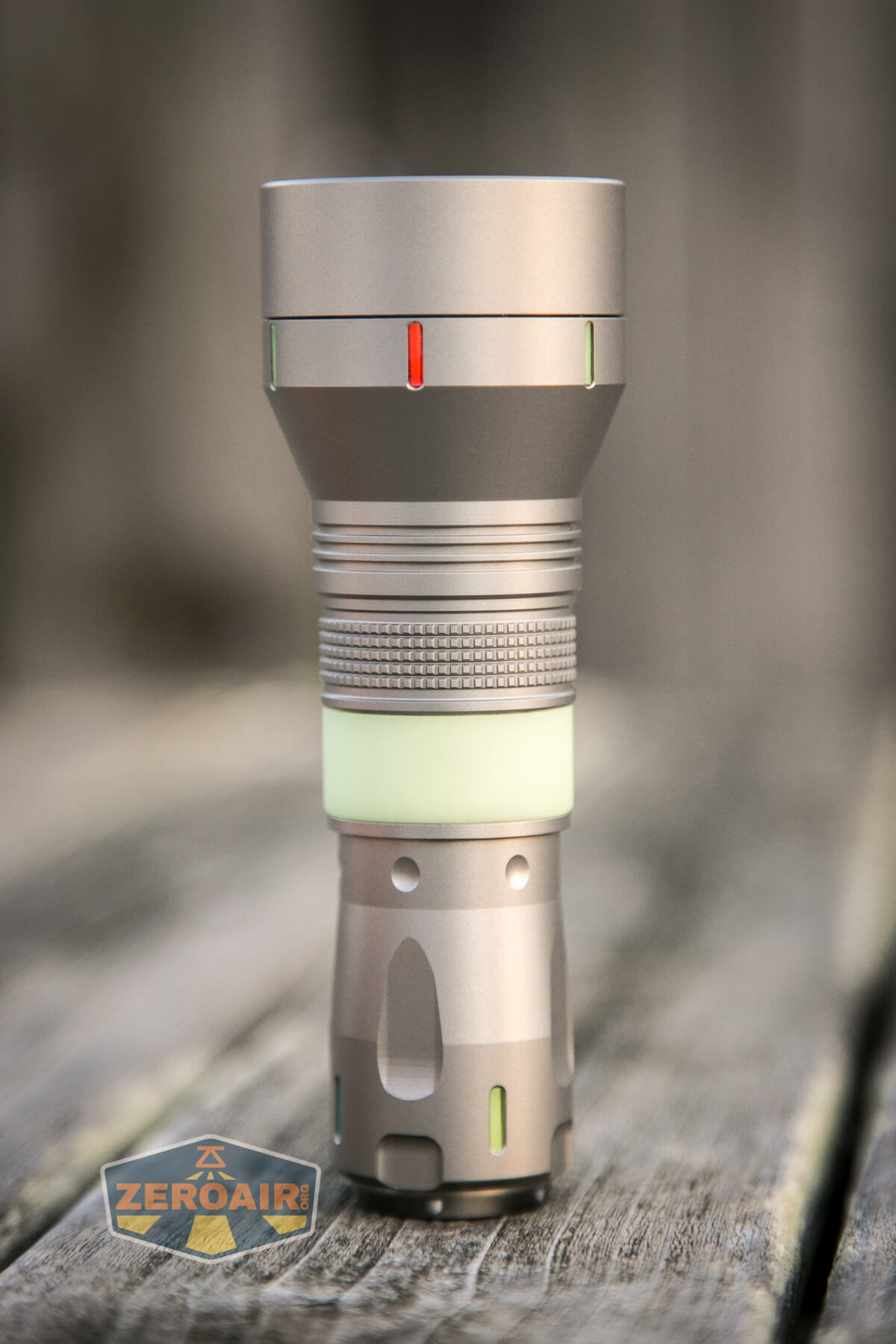
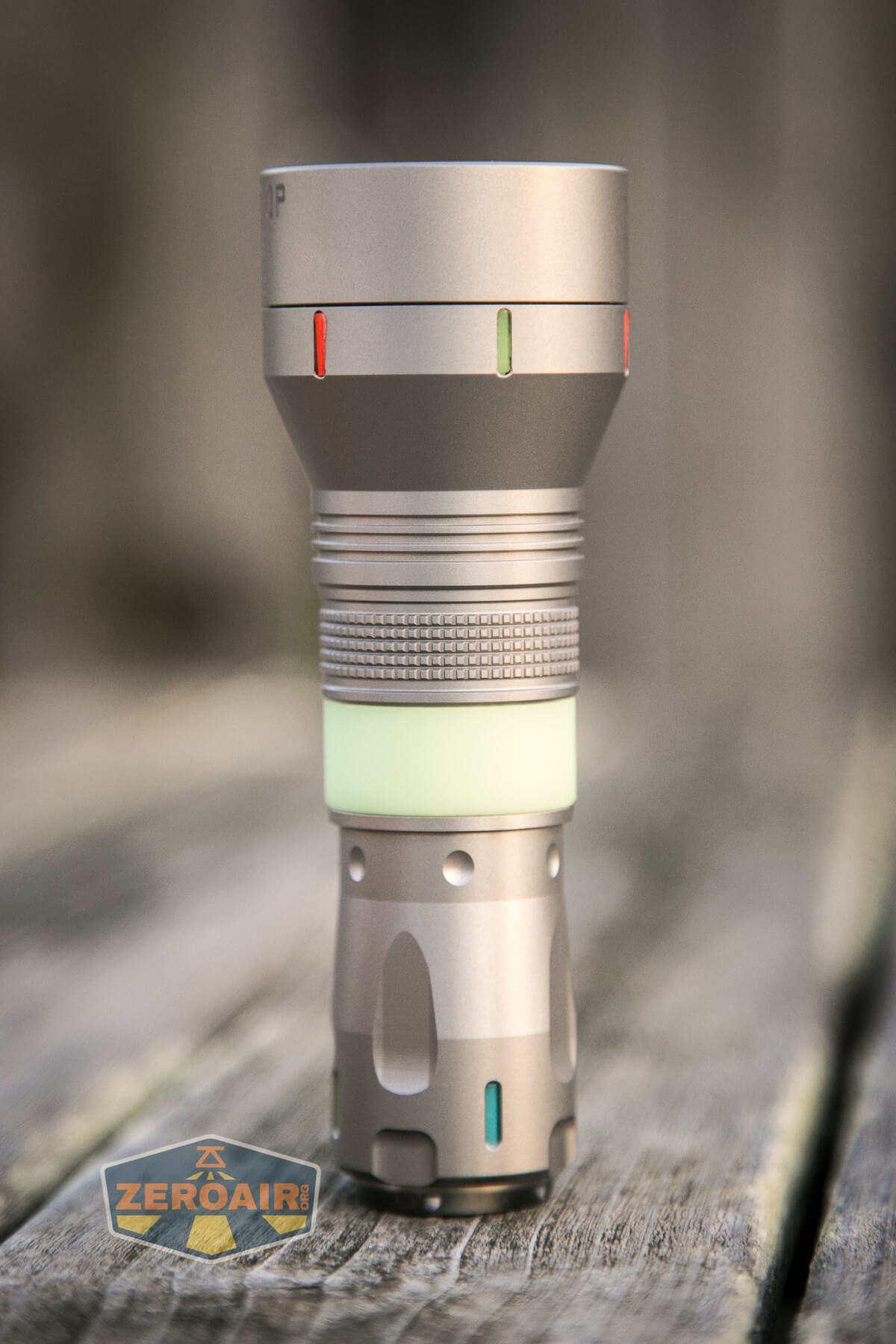
Next is the Lumintop LA38 LEP with the 18650 extension. Below, you’ll probably note that there’s an exposed o-ring and maybe the tailcap isn’t tightened all the way. It’s as tight as it’ll go. Unfortunately, on my review copy, the tailcap does not screw into the 18650 extension completely (barely at all, to be honest.) This is massively disappointing, and Neal is getting back to me about this detail.
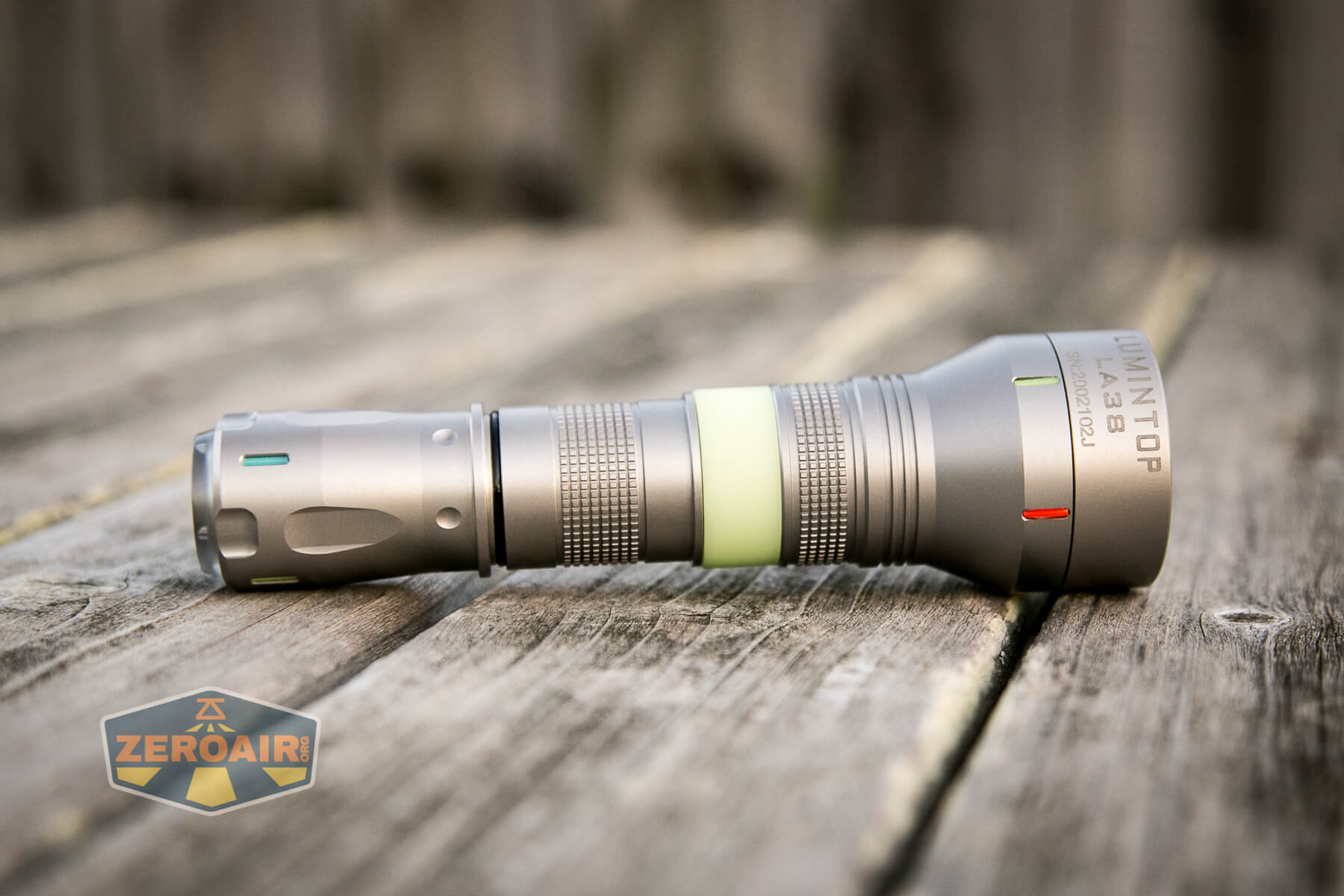
If you’re willing to spend nearly $400 on just an 18350 version of this light, then no worries, carry on. But if you want to use the 18650 extension (and I think it’s worthwhile), then ping Neal before your purchase and have him specifically make sure the extension fits properly. I believe at $400 he’d do this.
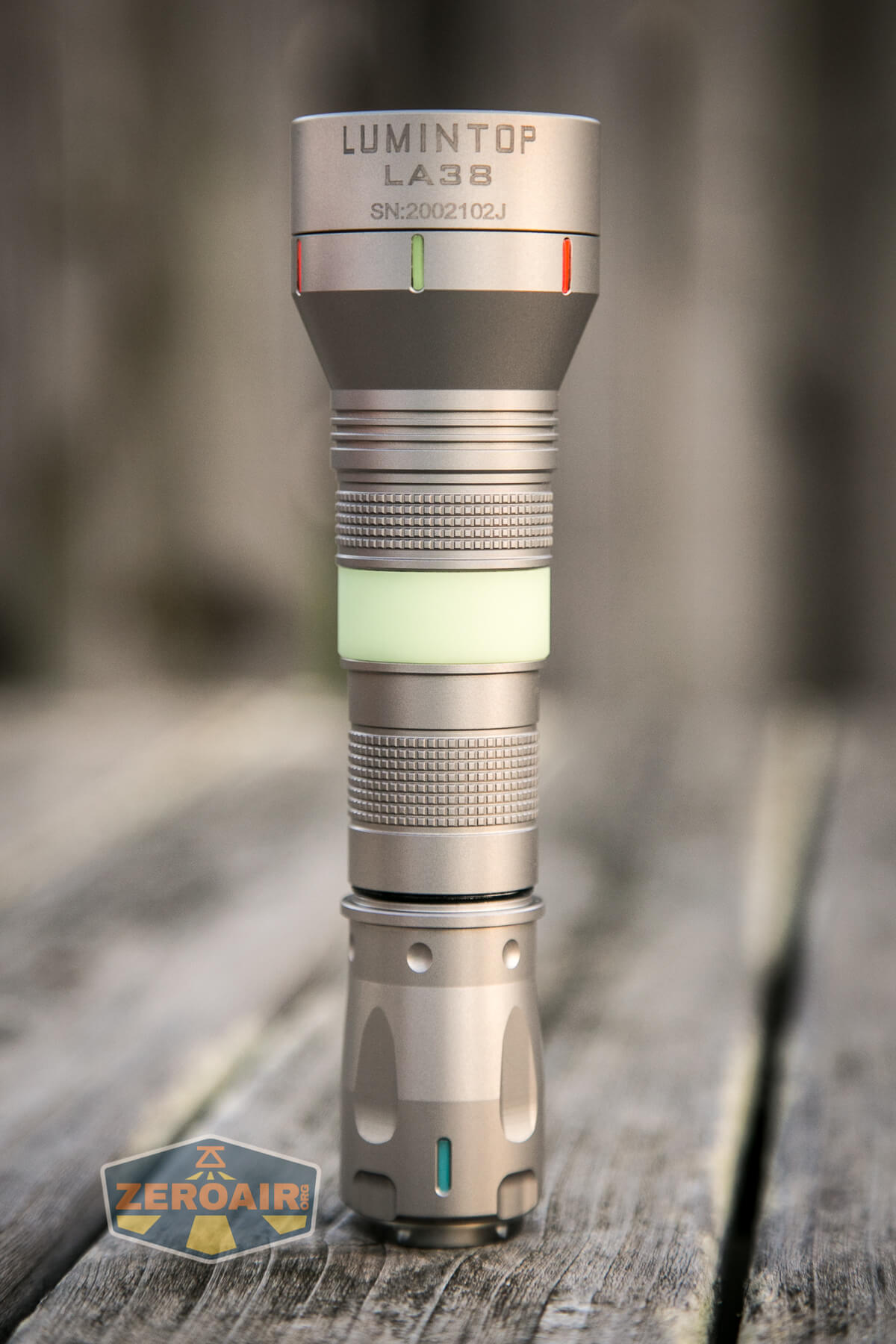
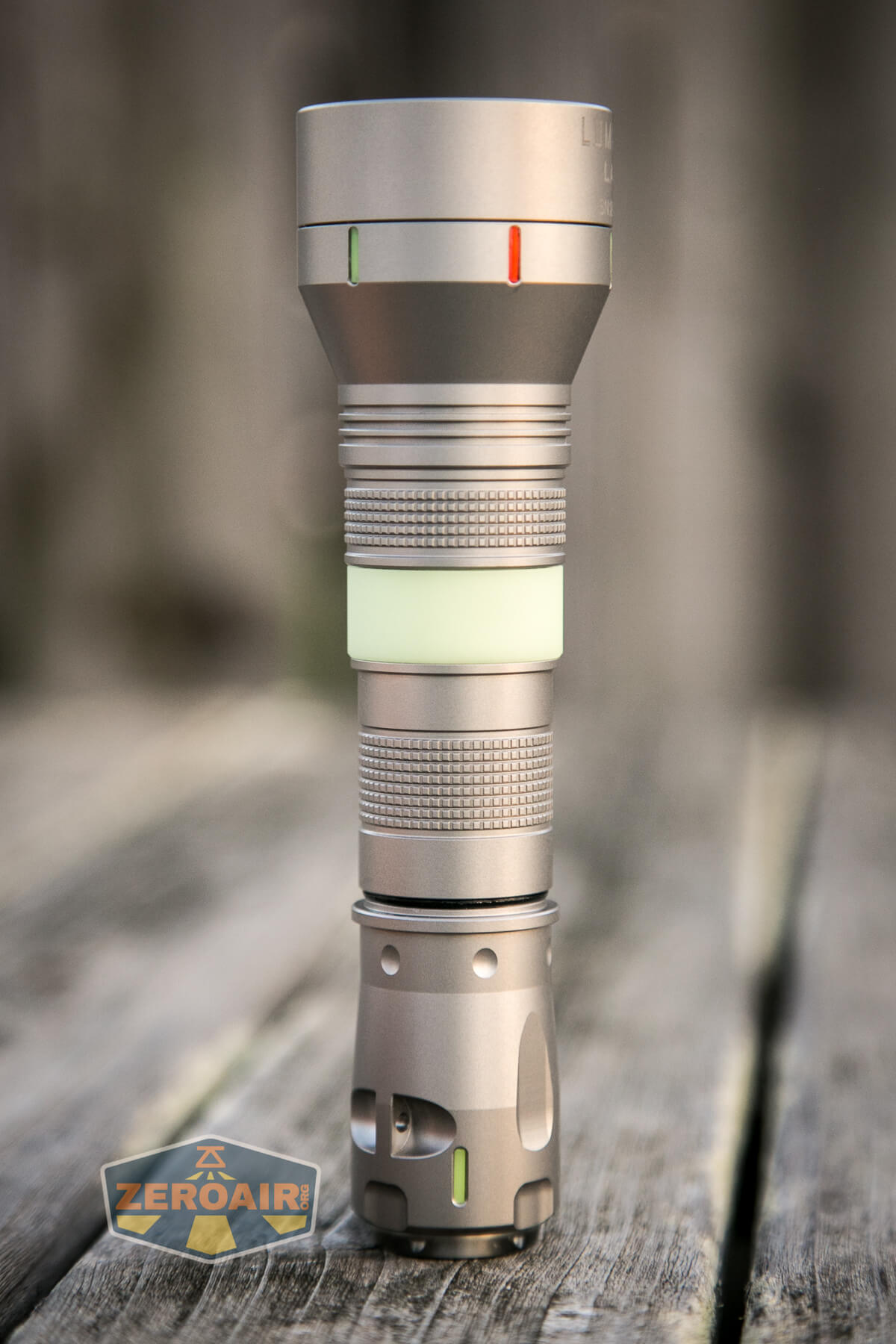
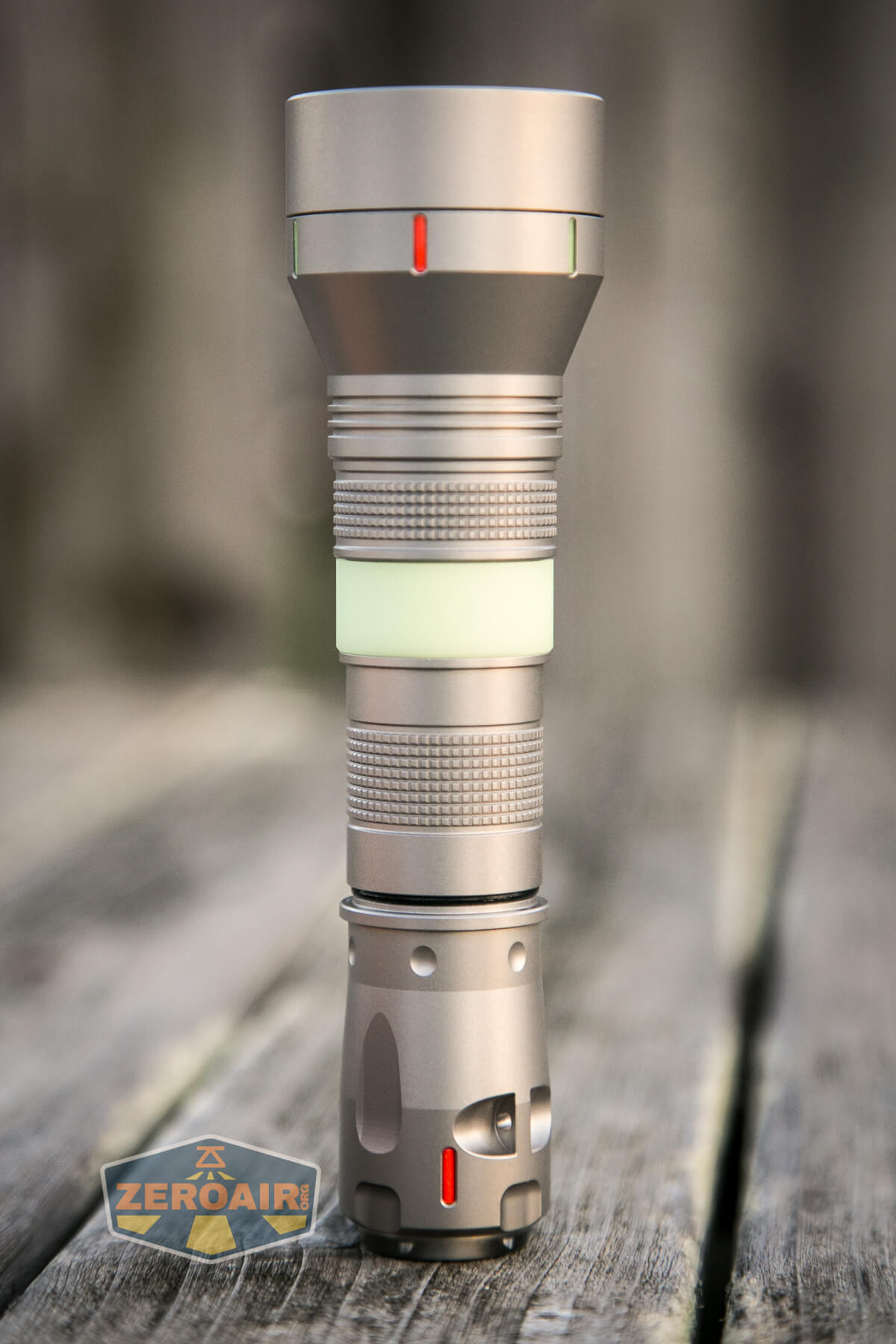
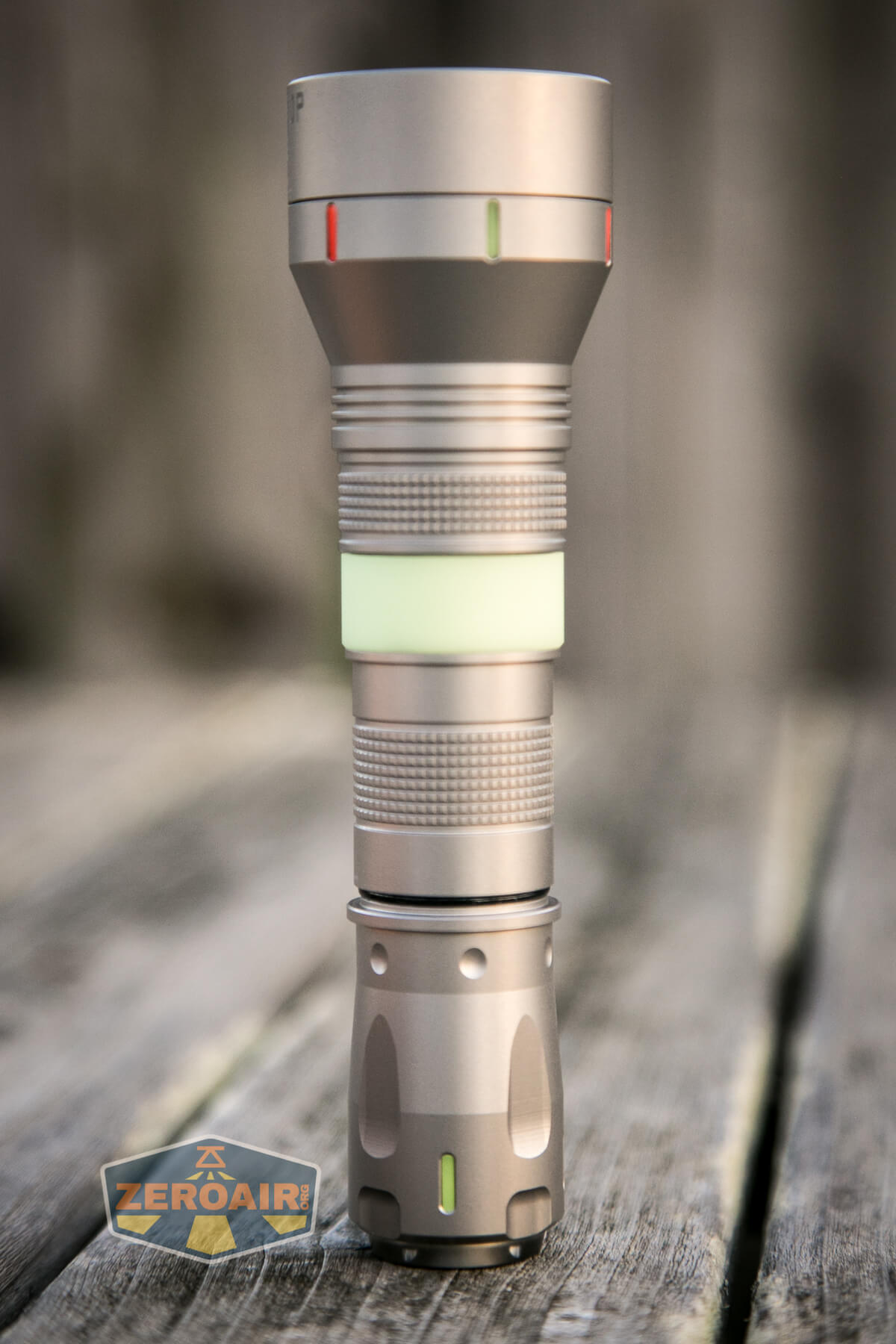
So that’s it for the 18650 testing. At one point, I did force the tailcap a bit onto the 18650 extension, just to see if there was a bit of a “breakover” point or a burr that I needed to get past or something. There wasn’t. All I did by doing this was damage the tailcap threads just enough that it wasn’t perfect in the 18350 body anymore. (Though, after a number of uses, it’s smooth now.)
Let me finish this point by saying that the 18350 version was perfect out of the box. It always worked just right, and was perfectly smooth – in fact, the smoothest titanium threads I can remember.
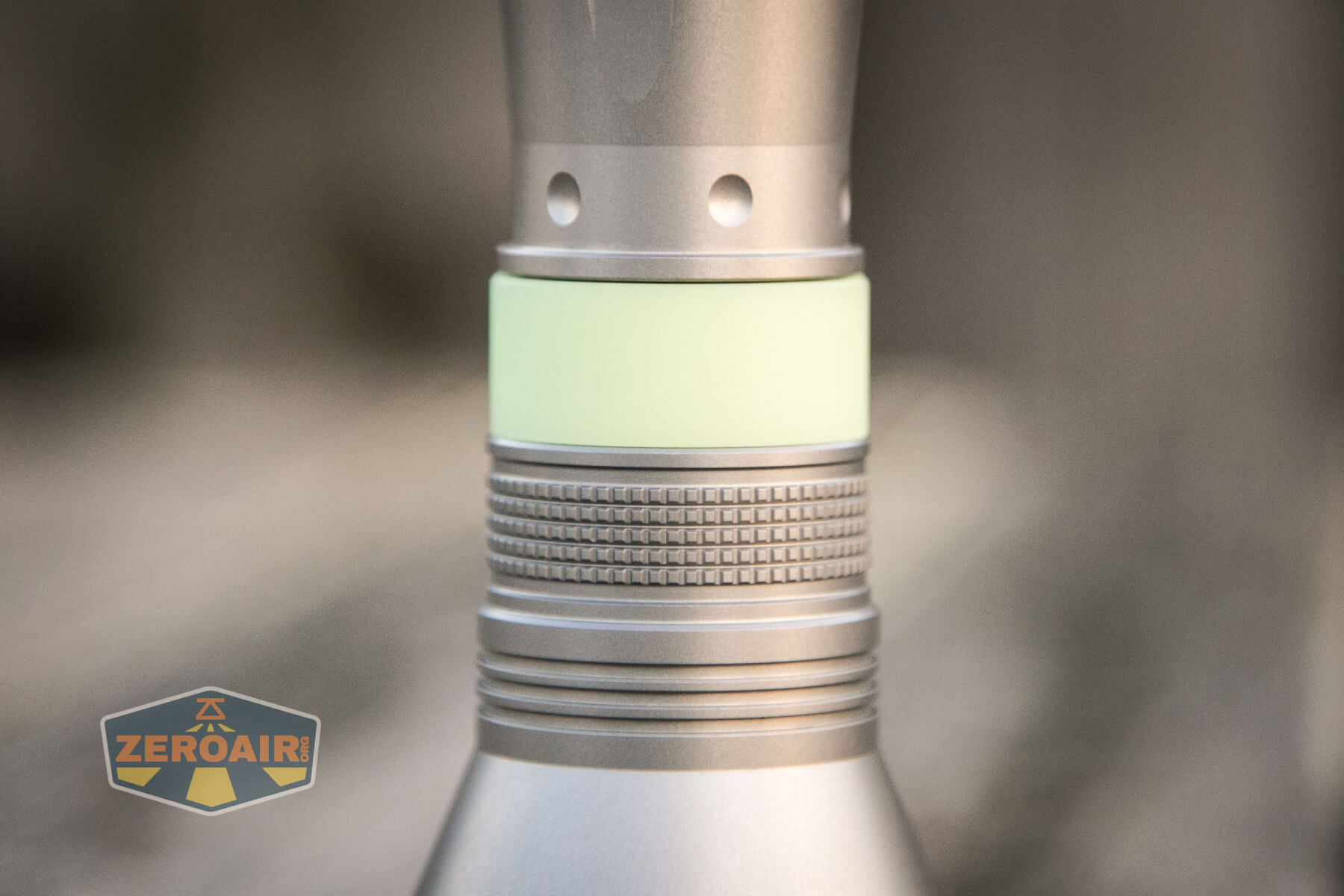
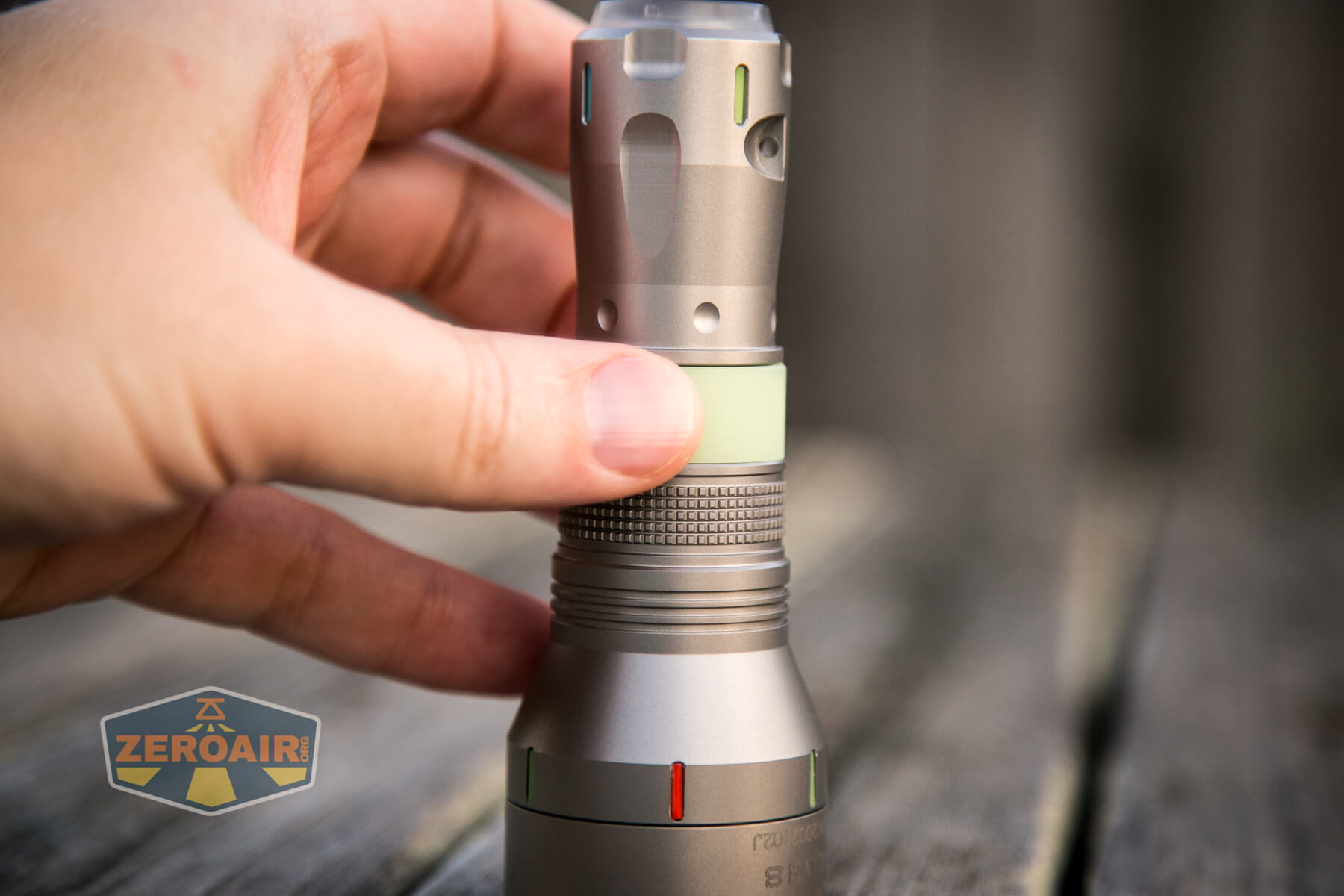
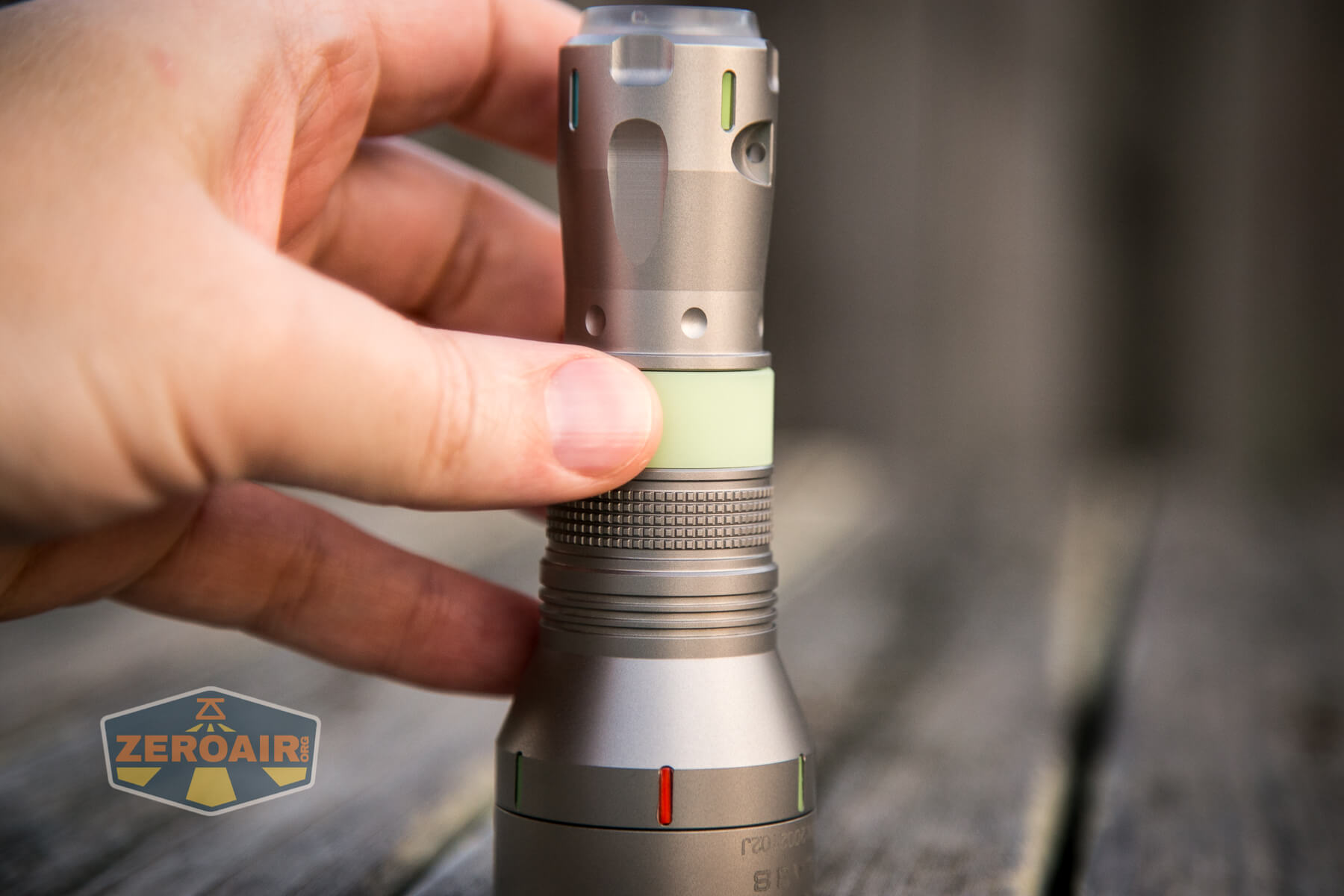
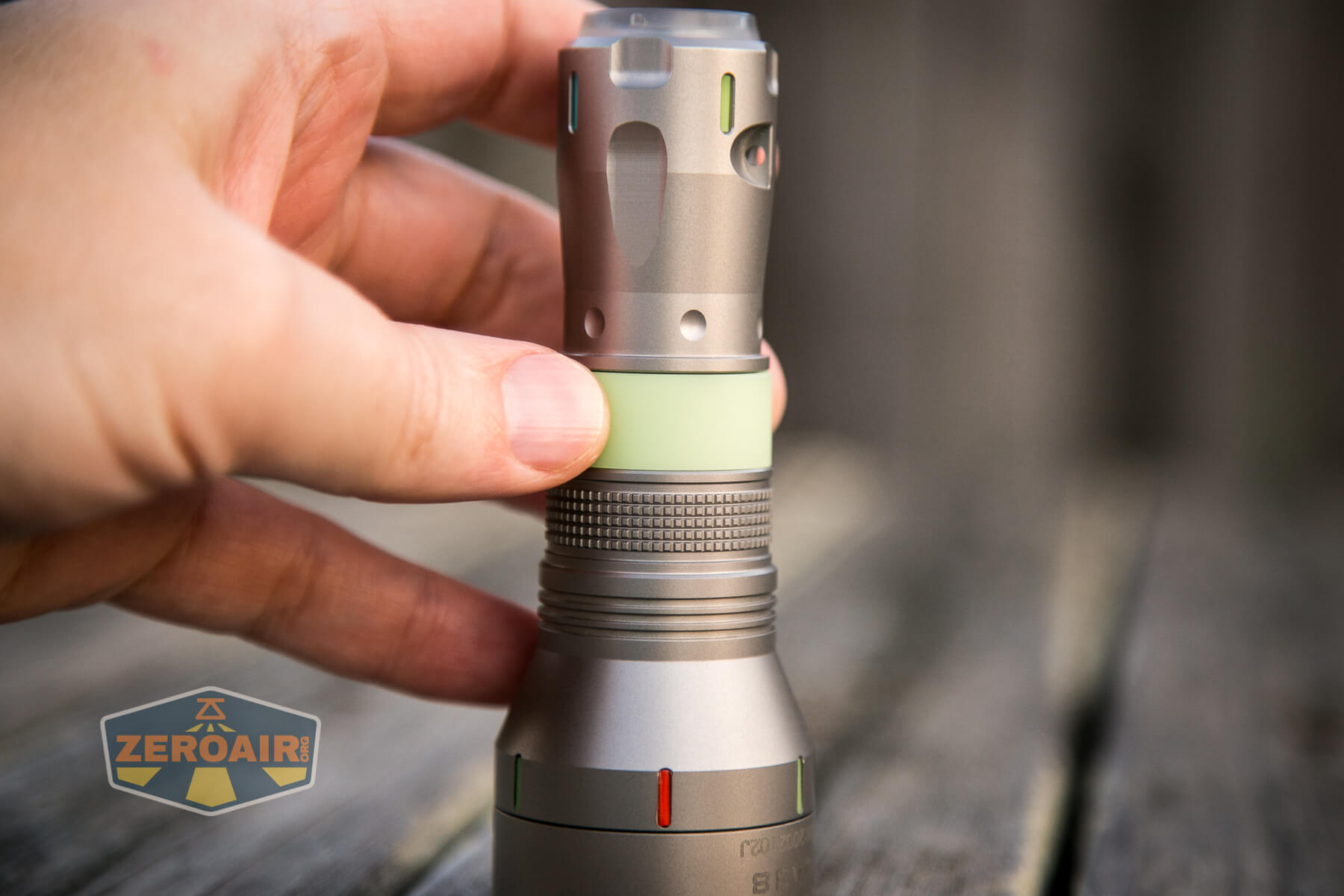
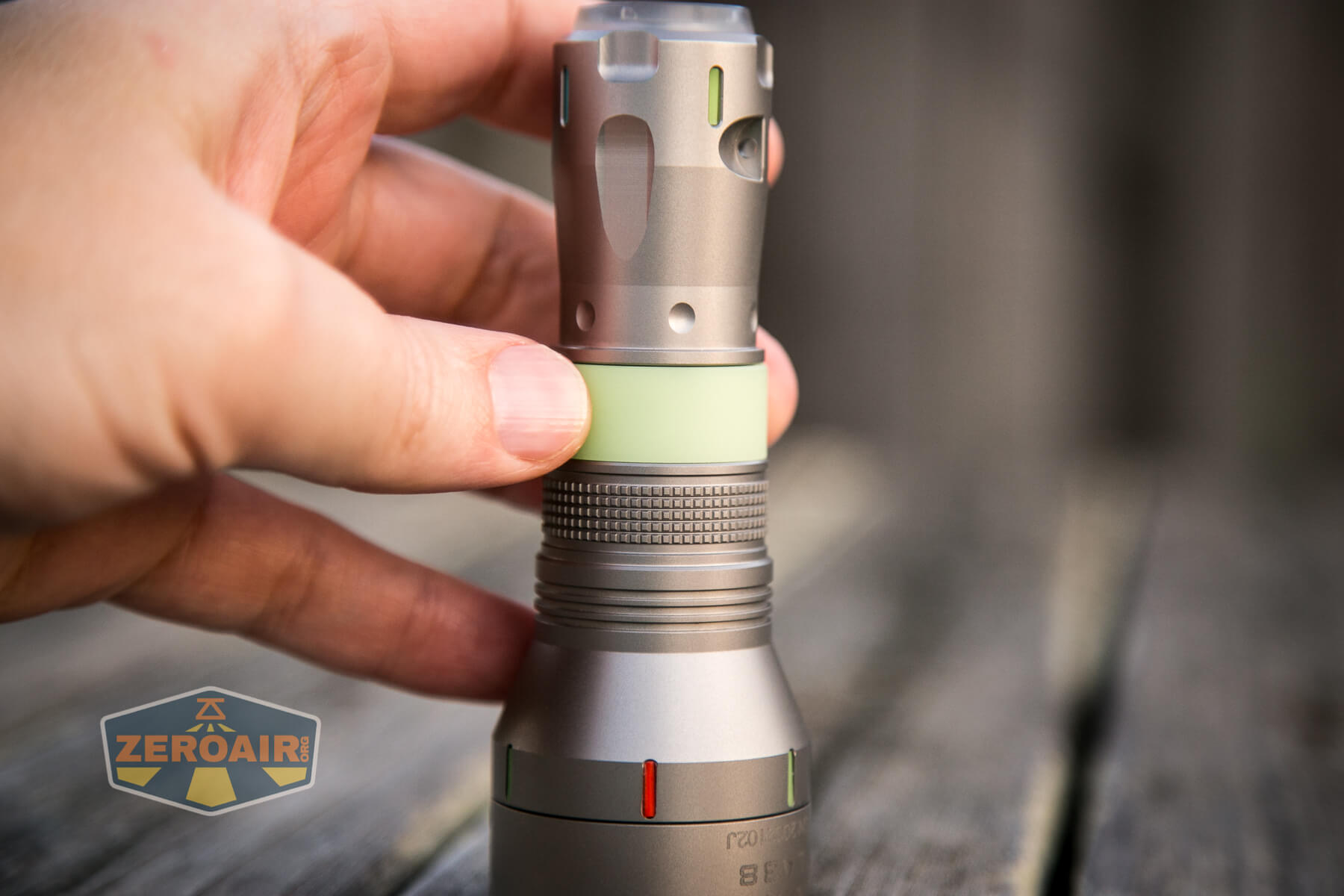
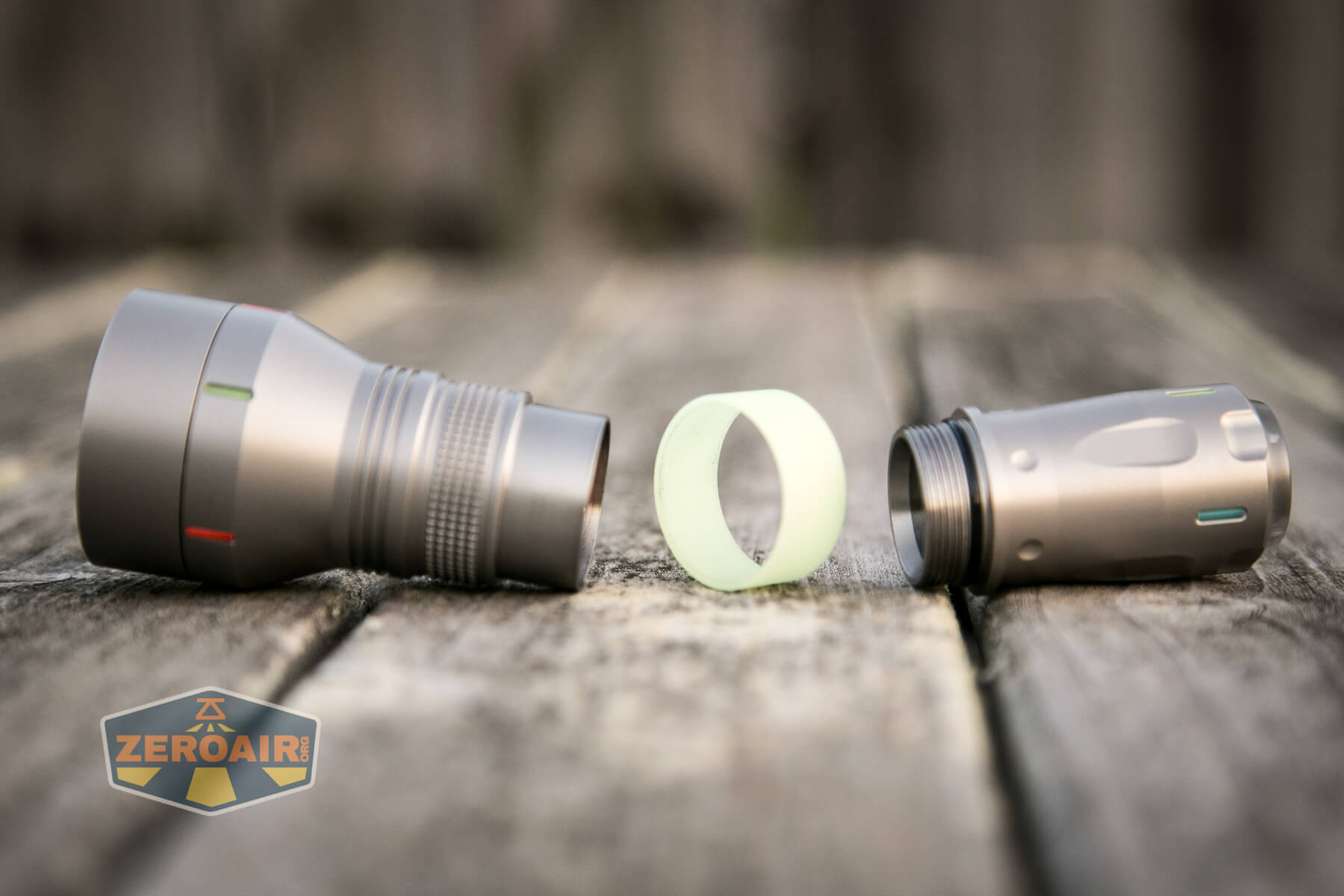
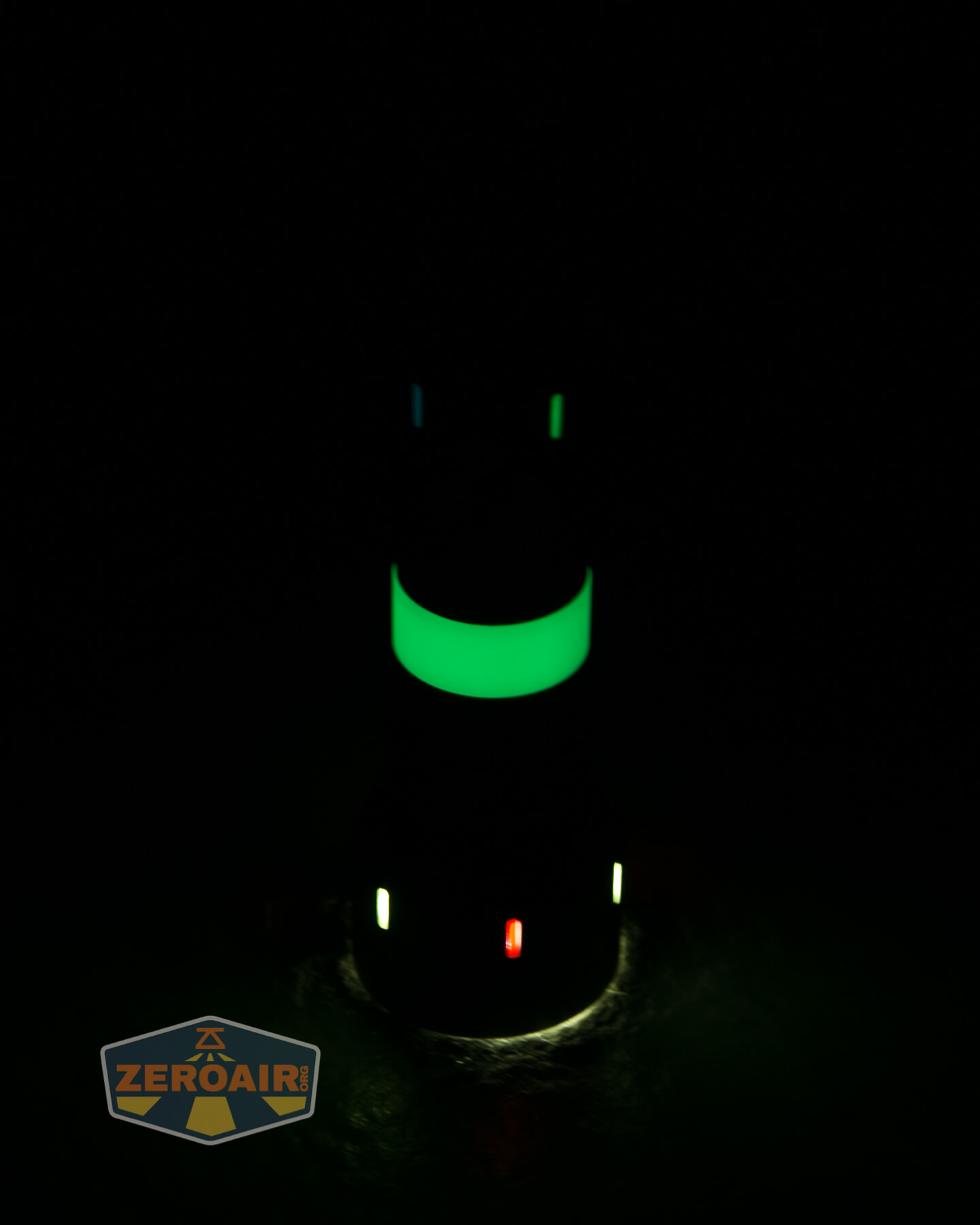
This ring is a glow ring. Pretty neat, I think! And also, this ring spins freely. That’s less neat, but it’s nice to be able to remove this as desired. It’s replaceable with other color glow rings, and also with metal rings. The THOR-branded LEPs seem to ship with metal rings.
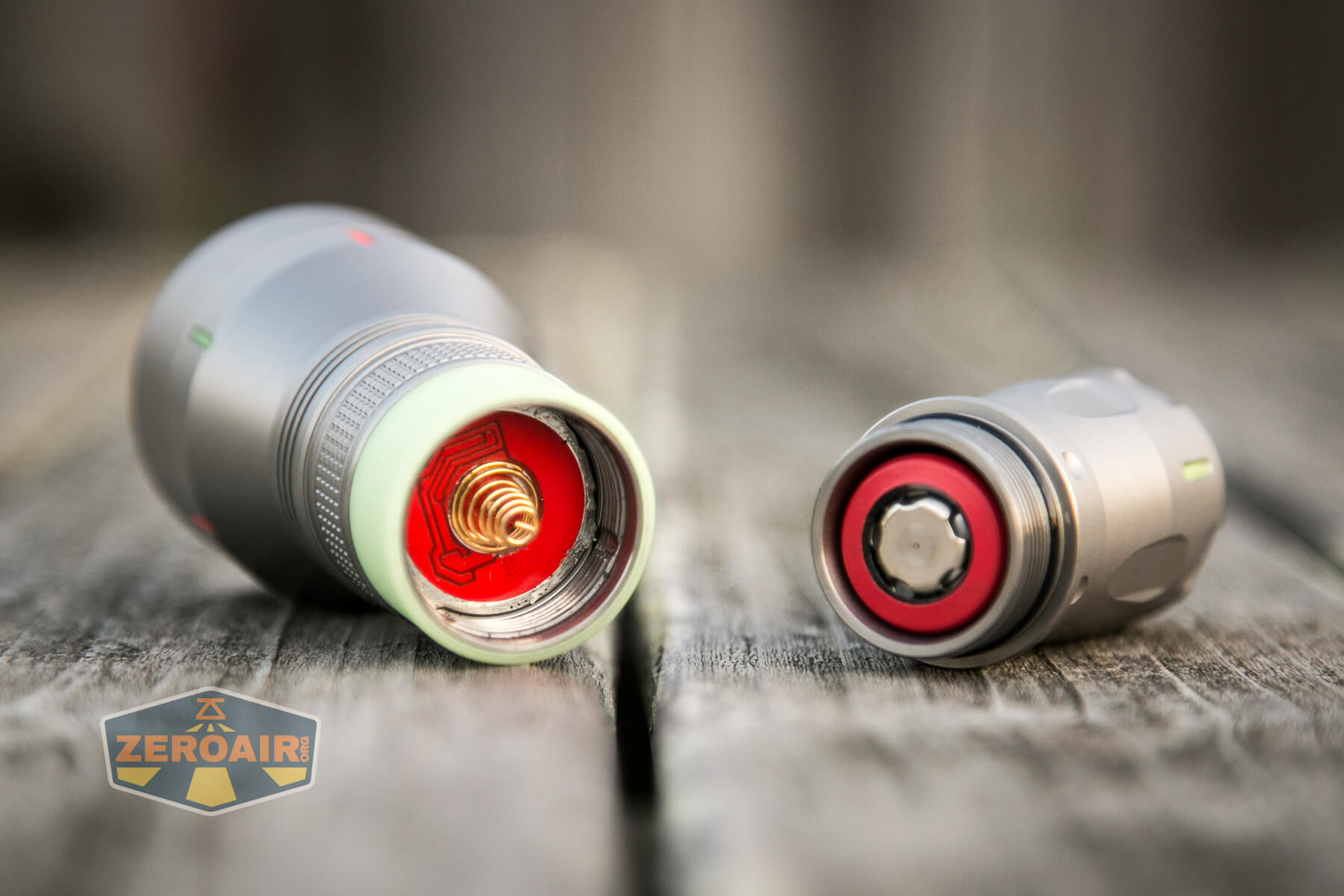
Inside, you can see that there are two springs.
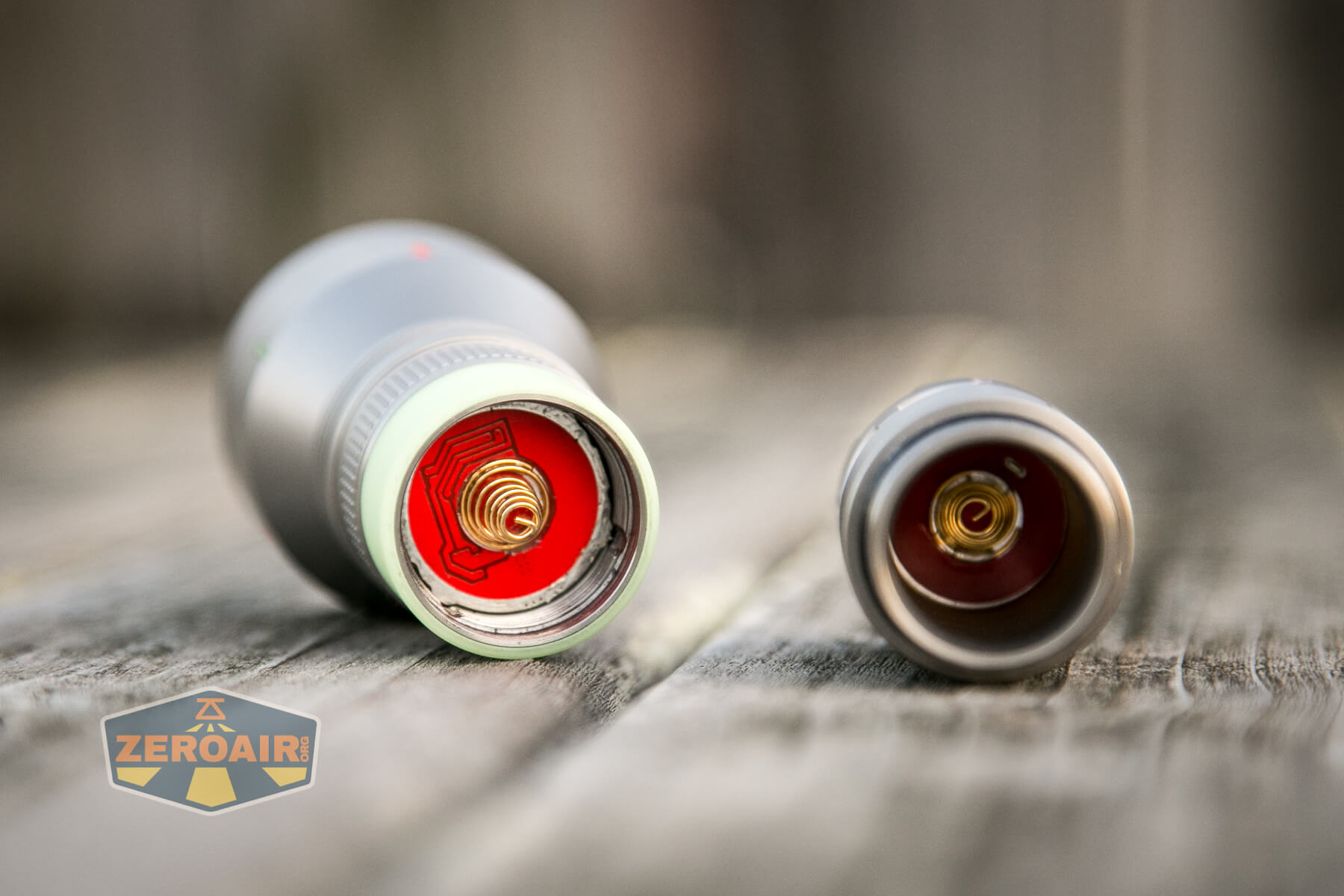
The tailcap isn’t really a “tailcap” and more of a “cell tube.” On the right below is the 18350 cell tube.
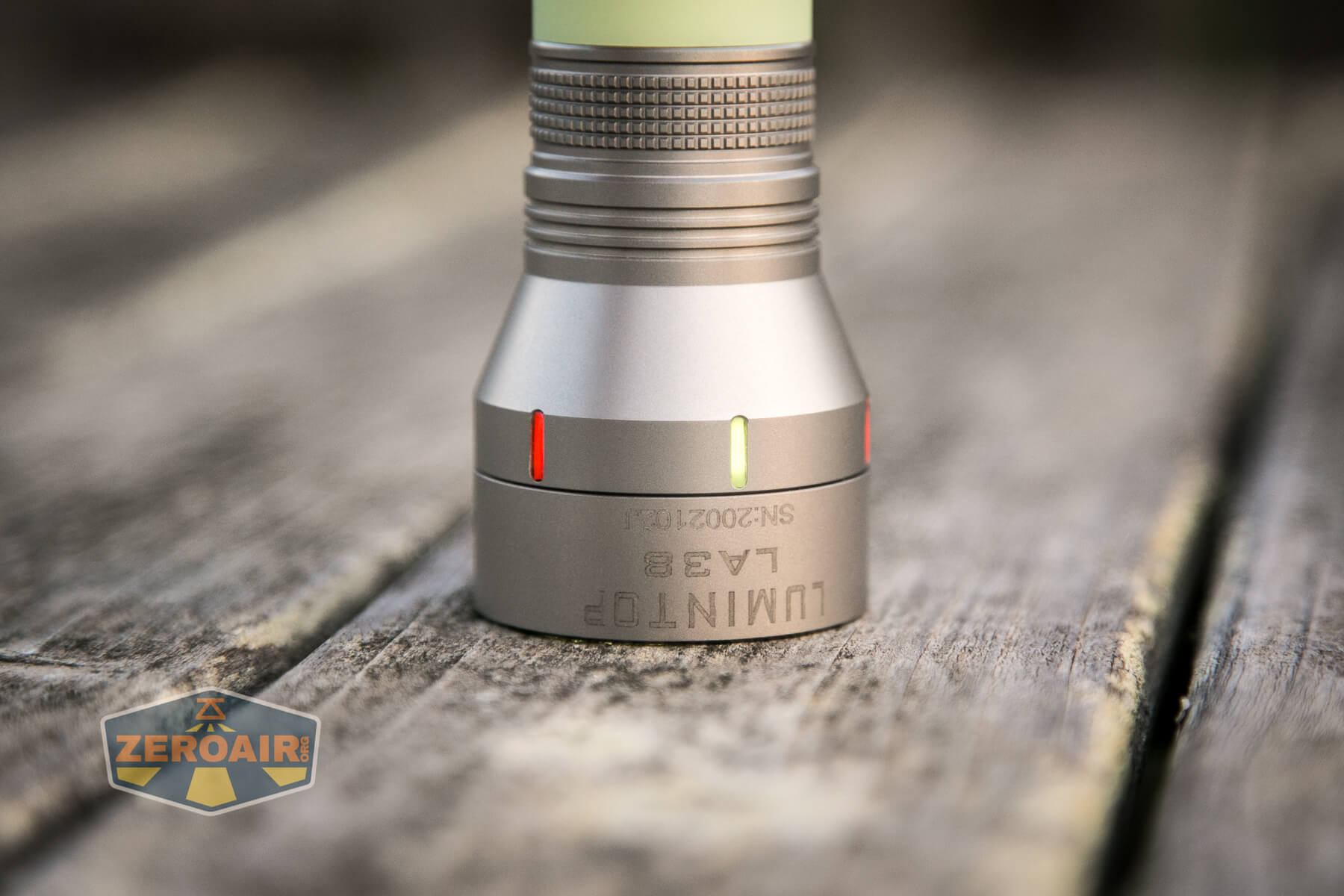
Around the collar is a bit of square knurling.
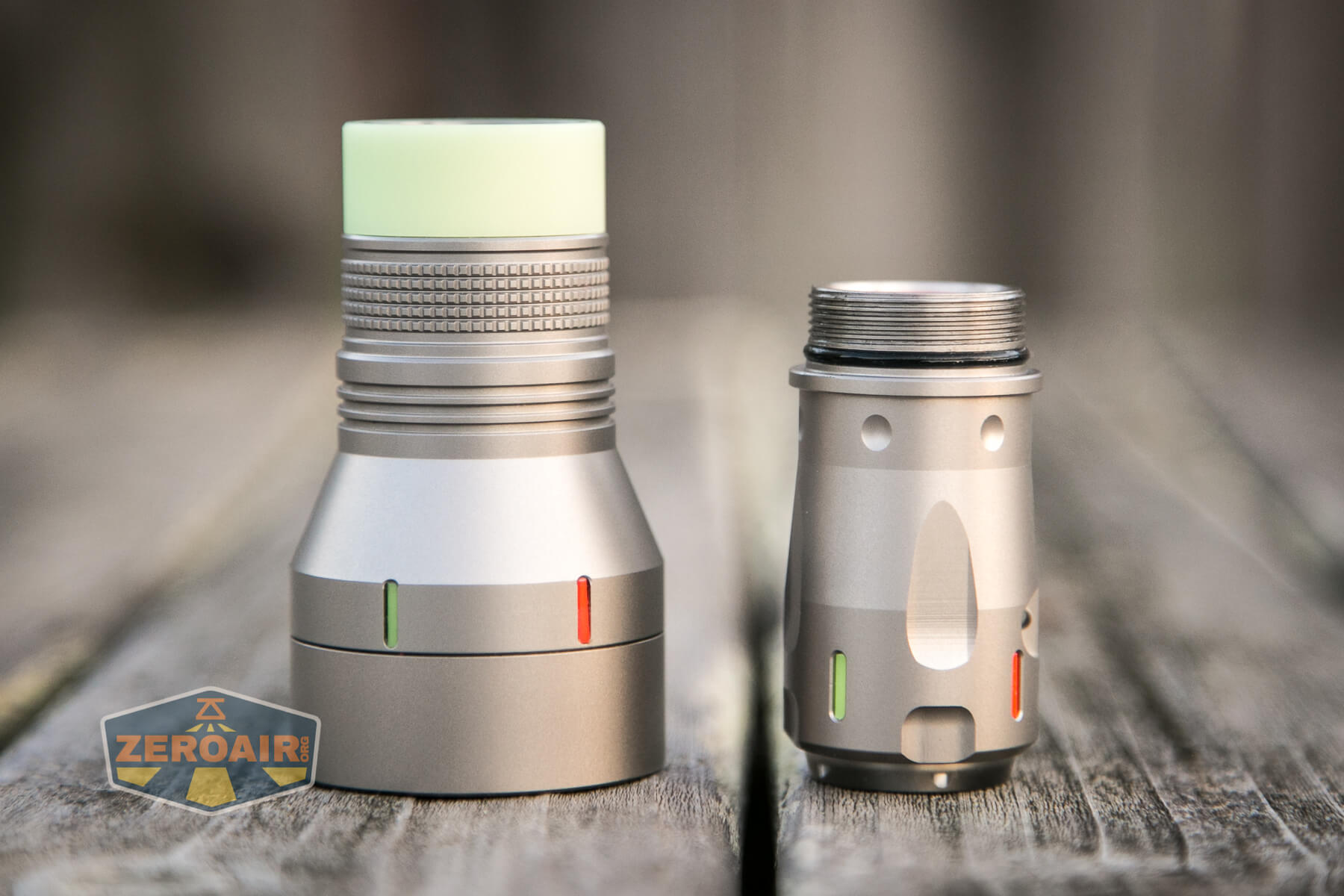
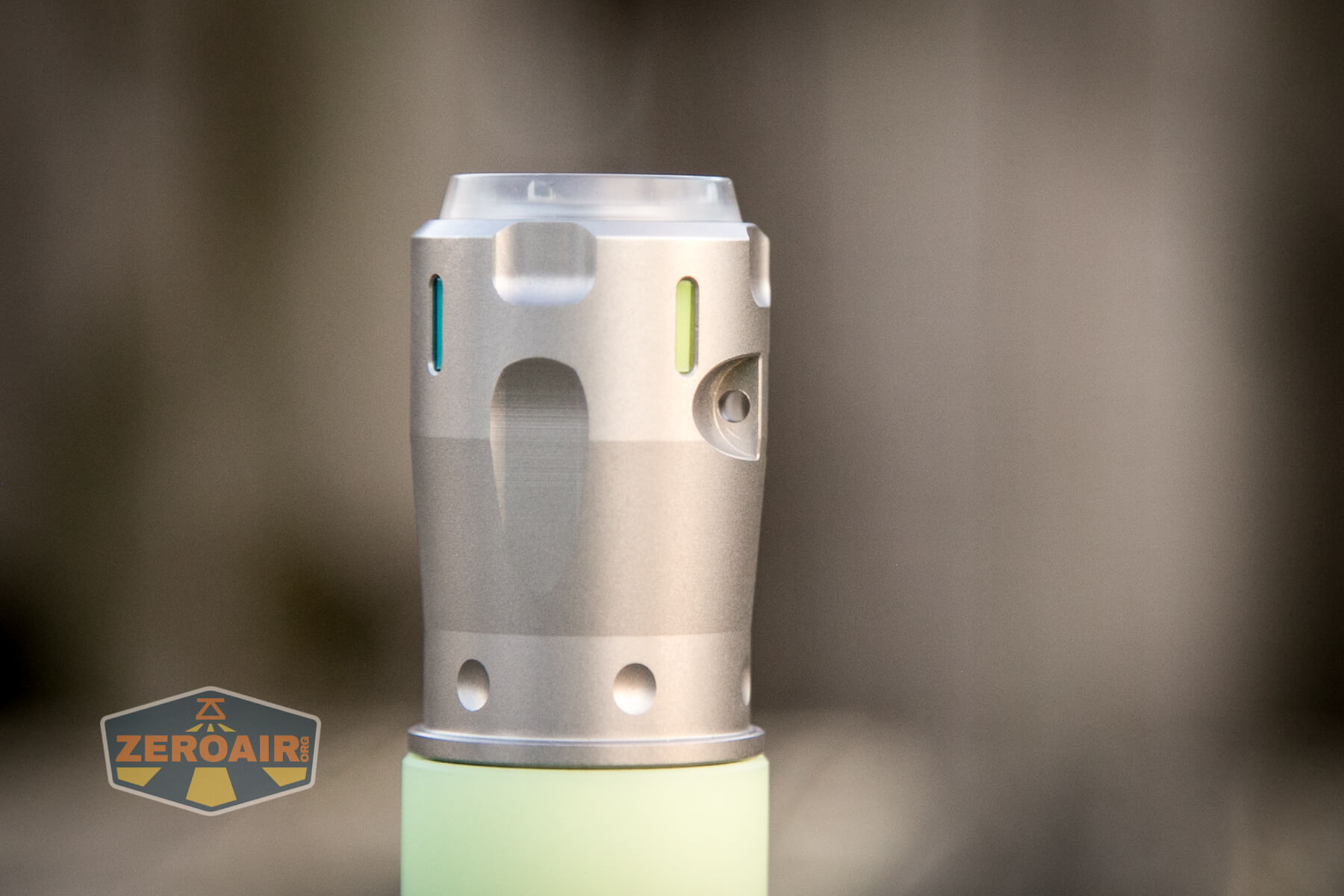
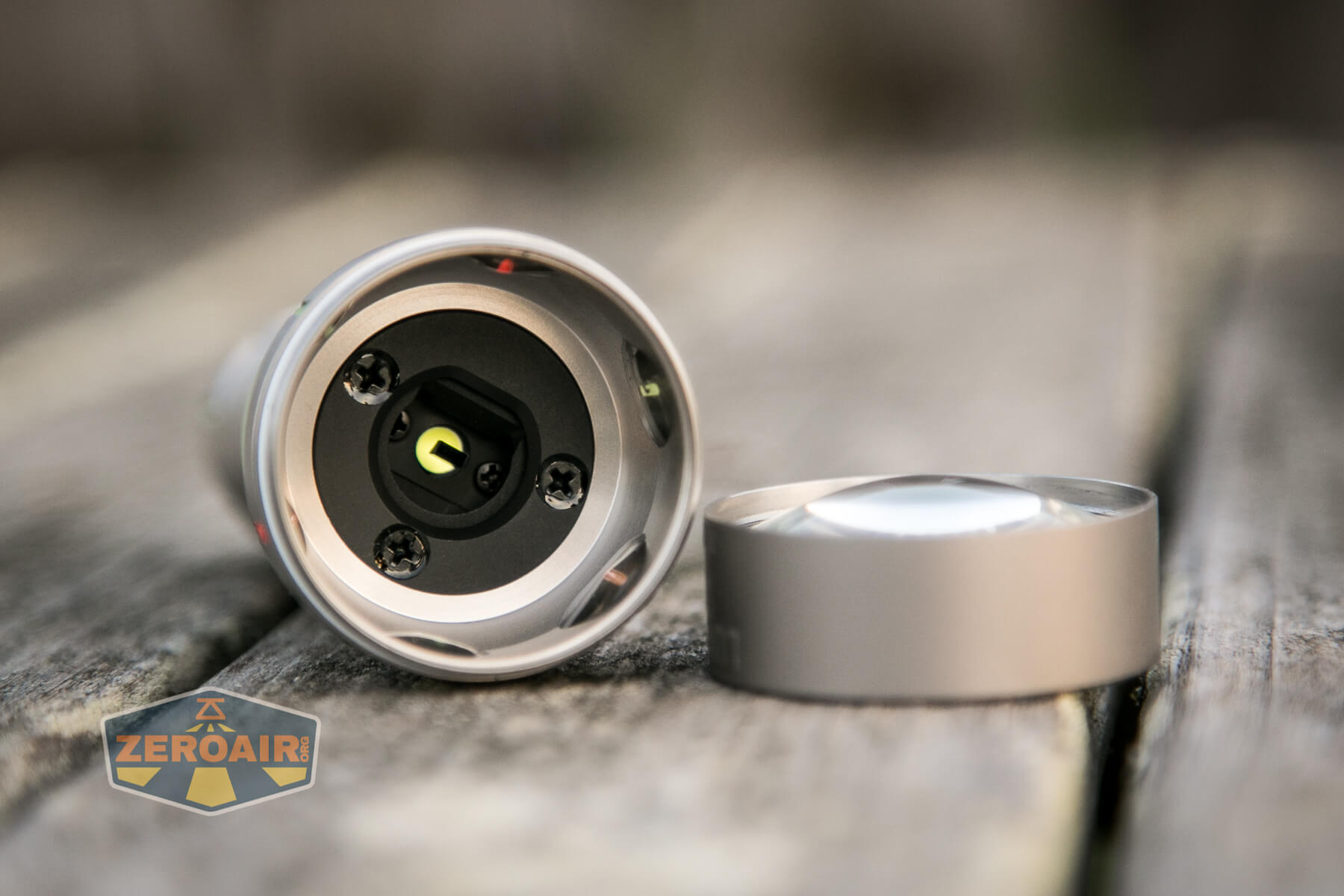
Surprisingly (and probably unnecessarily), the bezel unscrews easily. This does reveal something interesting – those glow tubes (they are not tritium) have clear windows all the way to the LEP output! So when the light is on, those glow tubes get charged and can be seen.
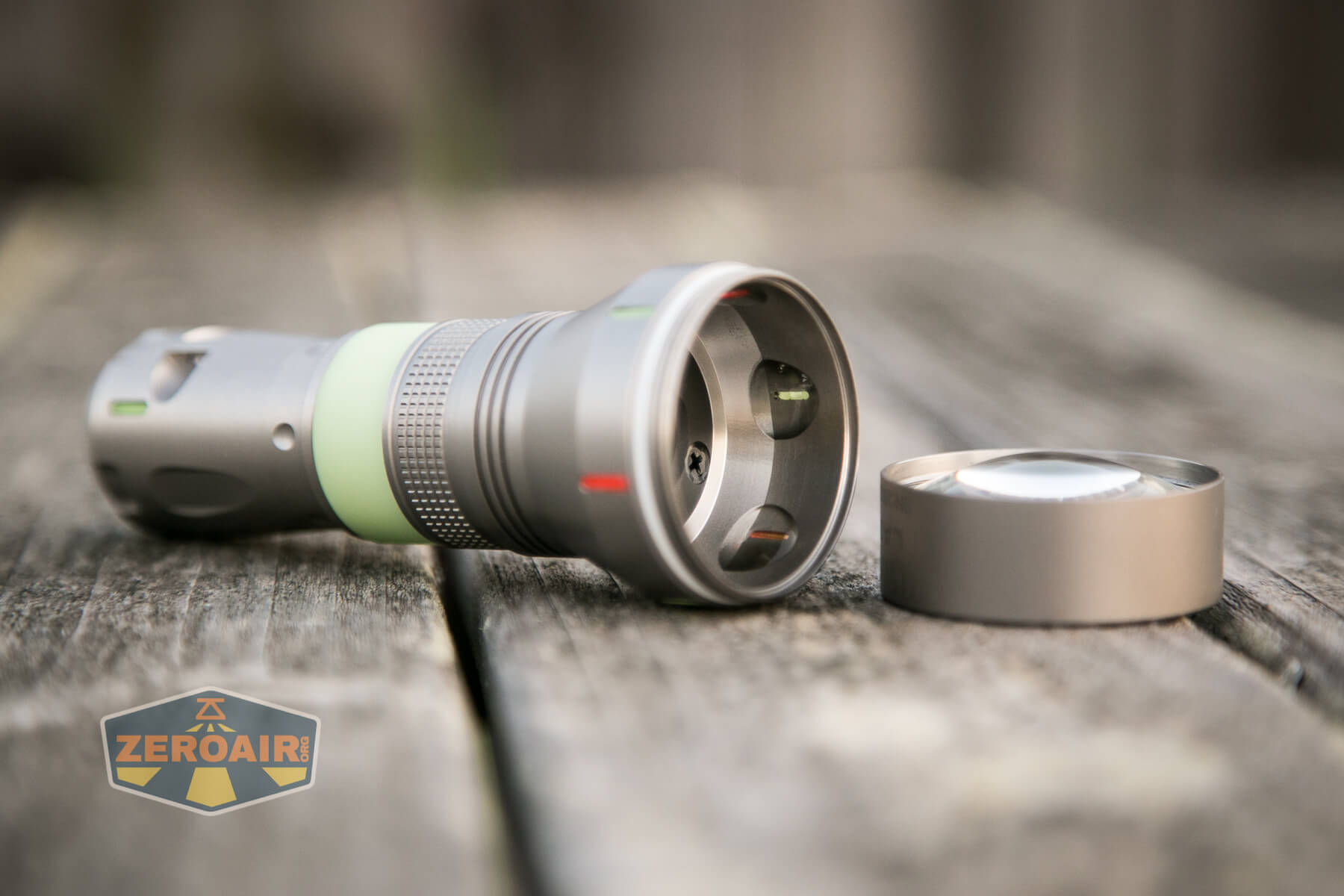
The threads are of moderate length, and despite being fairly fine, are square-cut. Honestly, these are very good threads (for the 18350 version.) And really, with the 18650 version, it’s not a bad thread issue – it’s just that the threads don’t seem to be the right pitch! They aren’t grinding away, just being slightly wrong. They are clearly wrong and just will not budge past a certain point.
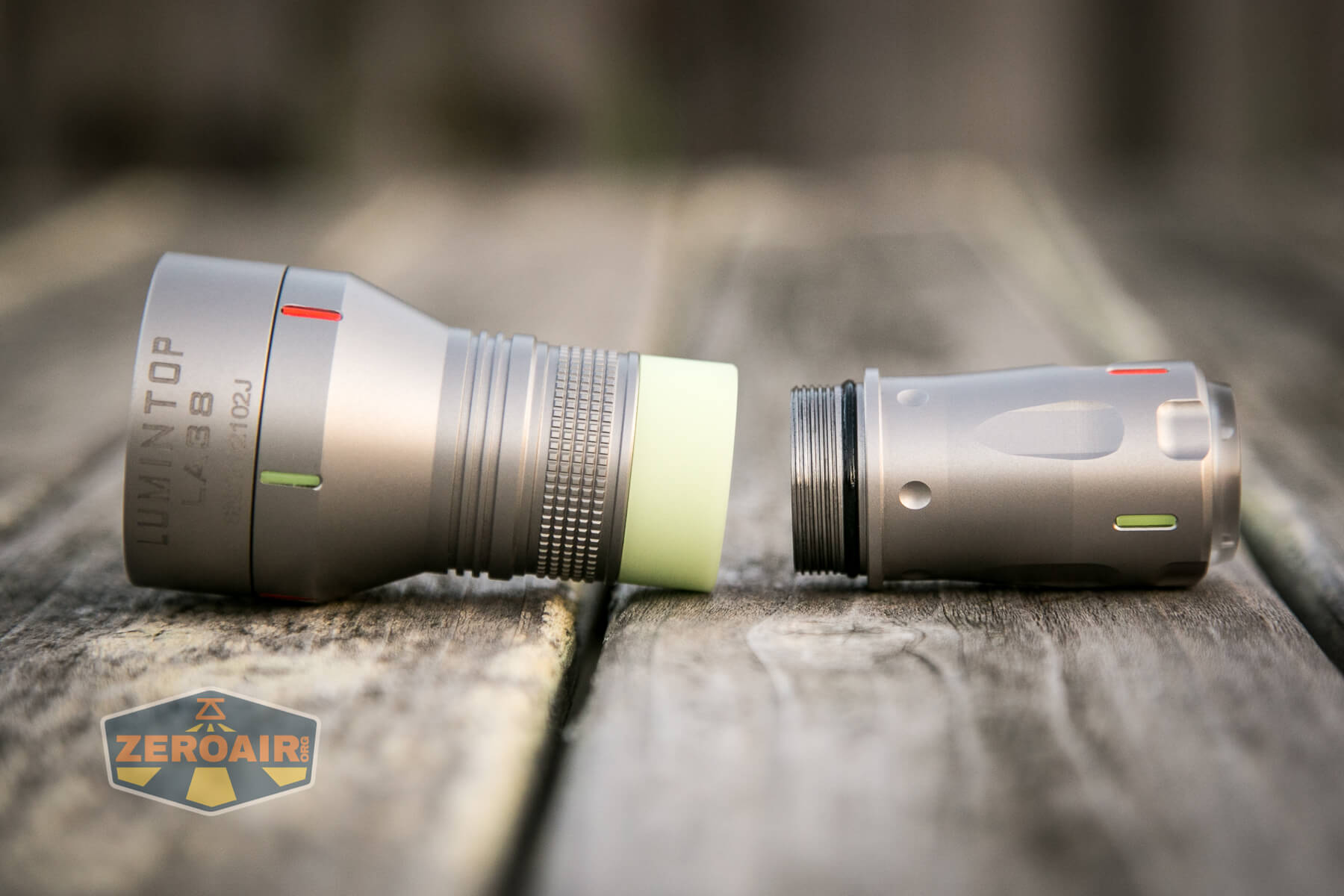
Here’s the extension tube. I really like this theory of 18350/18650 usage. Just give me an extension tube on an 18350 light. Make all lights 18350, with the 18650 extension! I really love this way of doing things. (In fact, if the TorchLAB BOSS was this way, I’d be pretty pumped!)
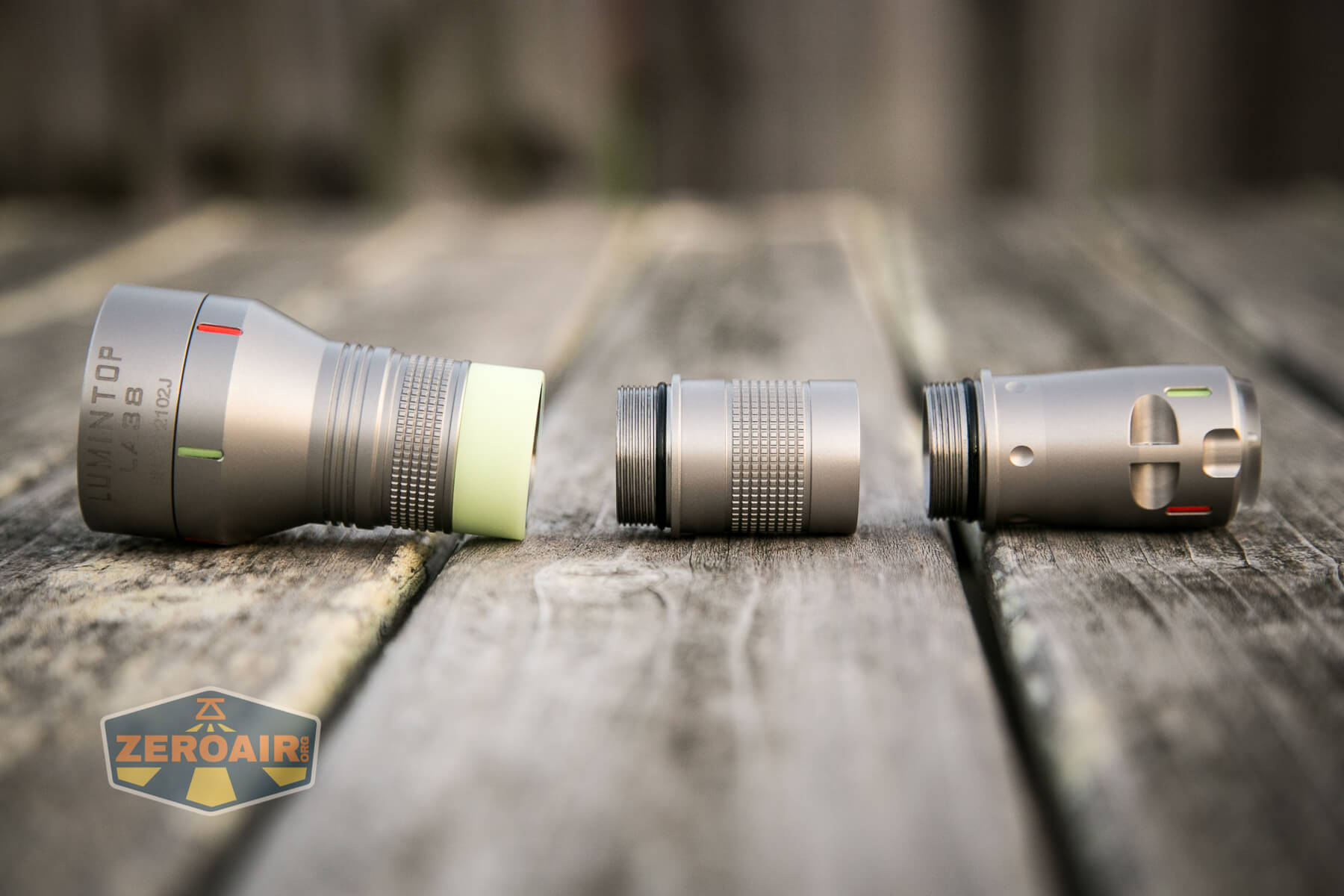
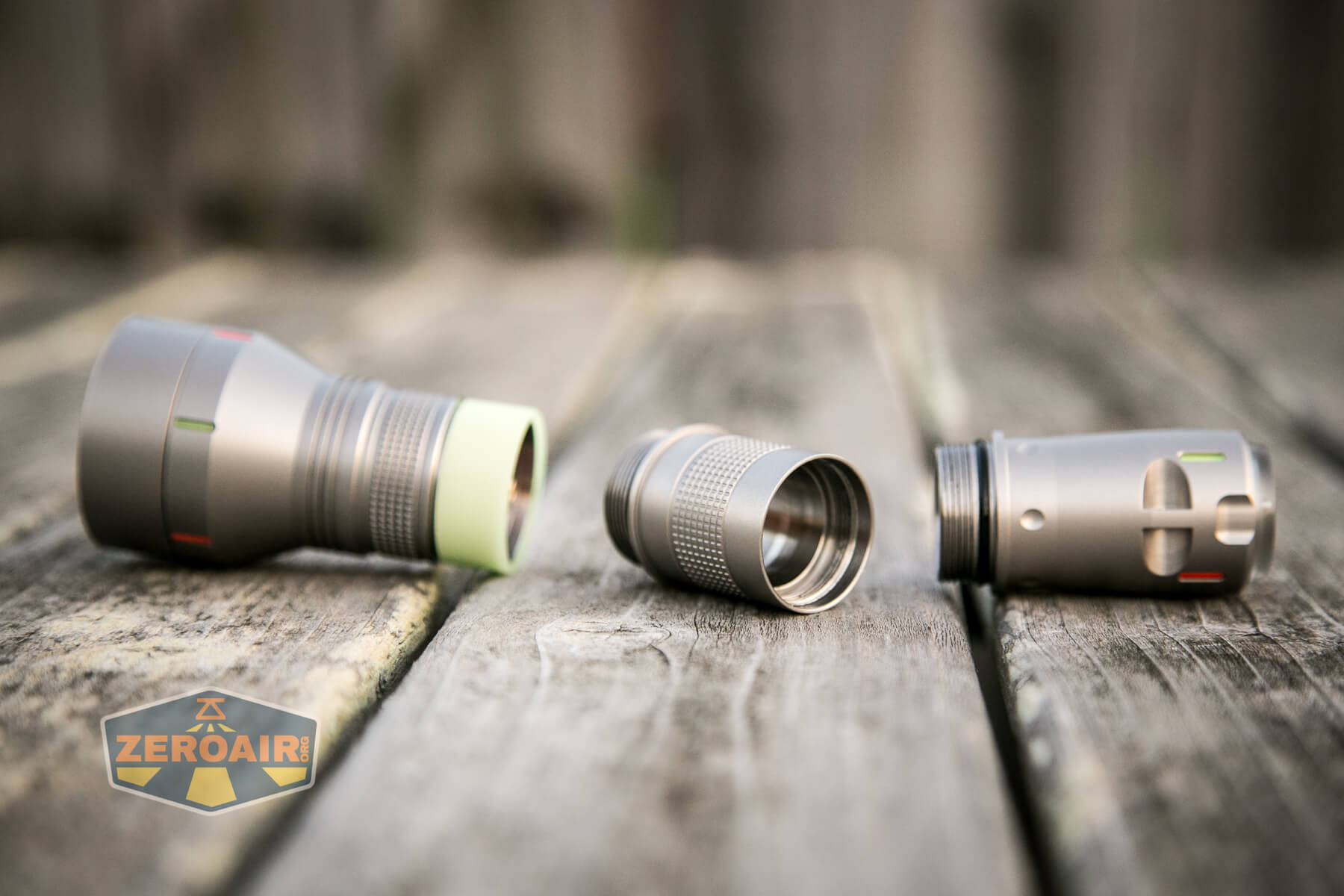
Here you can see the glow ring removed.
All in all, I’d say the build quality is very good, with that one exception that prevents using the 18650 extension. That’s a pretty big issue, but again, I’m pretty sure this is a preproduction or prototype version of the light (waiting to see what Neal says about this!), and I have a strong feeling that Lumintop isn’t shipping these lights with extensions that don’t work.
I’ll add one more comment – I know users with these lights in hand, and their 18650 extension works just fine.
Size and Comps
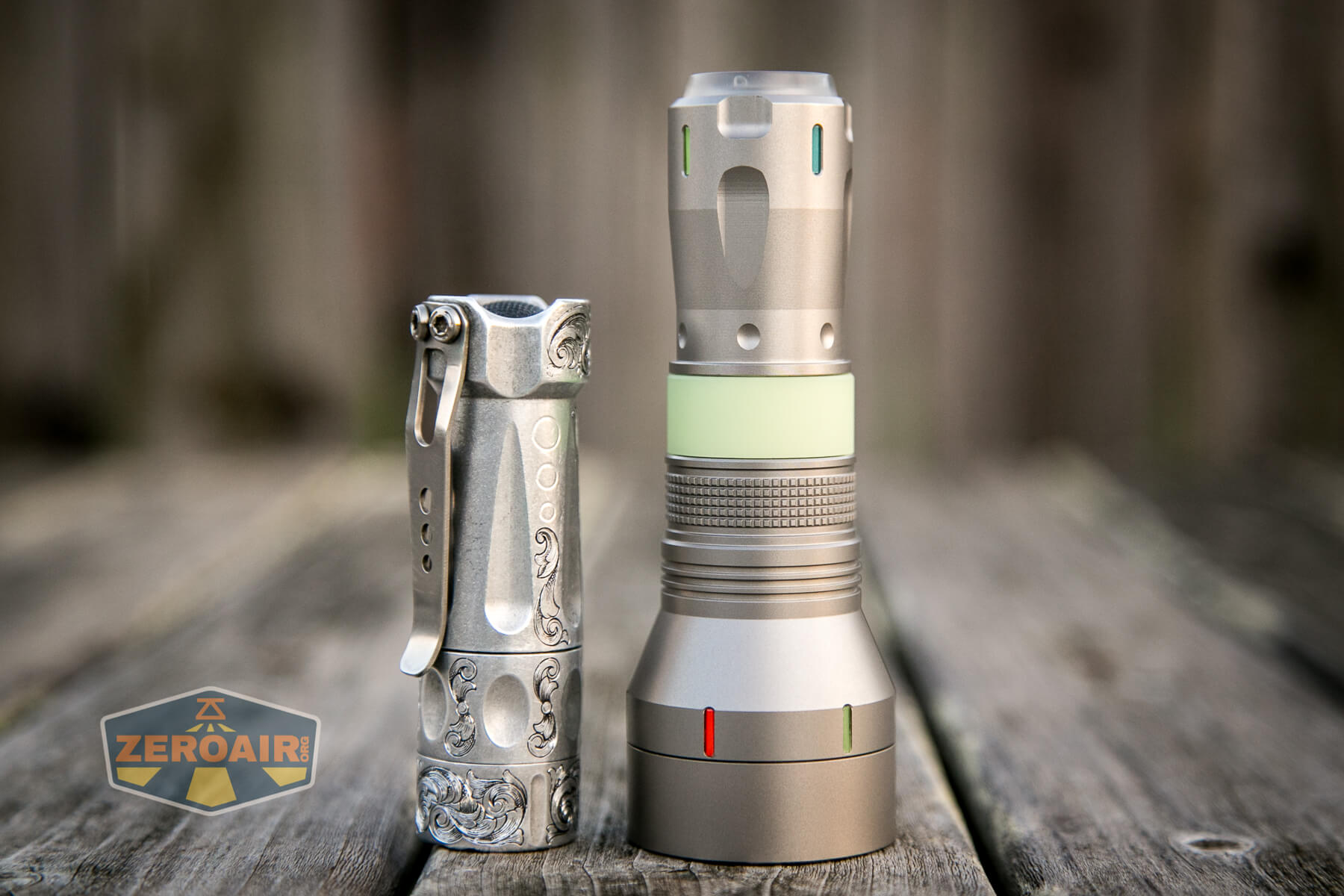
- Diameter: 118mm (length) x 28 mm (body dia.) x 41.5mm (head dia.)
- Weight: 125 g (without battery)
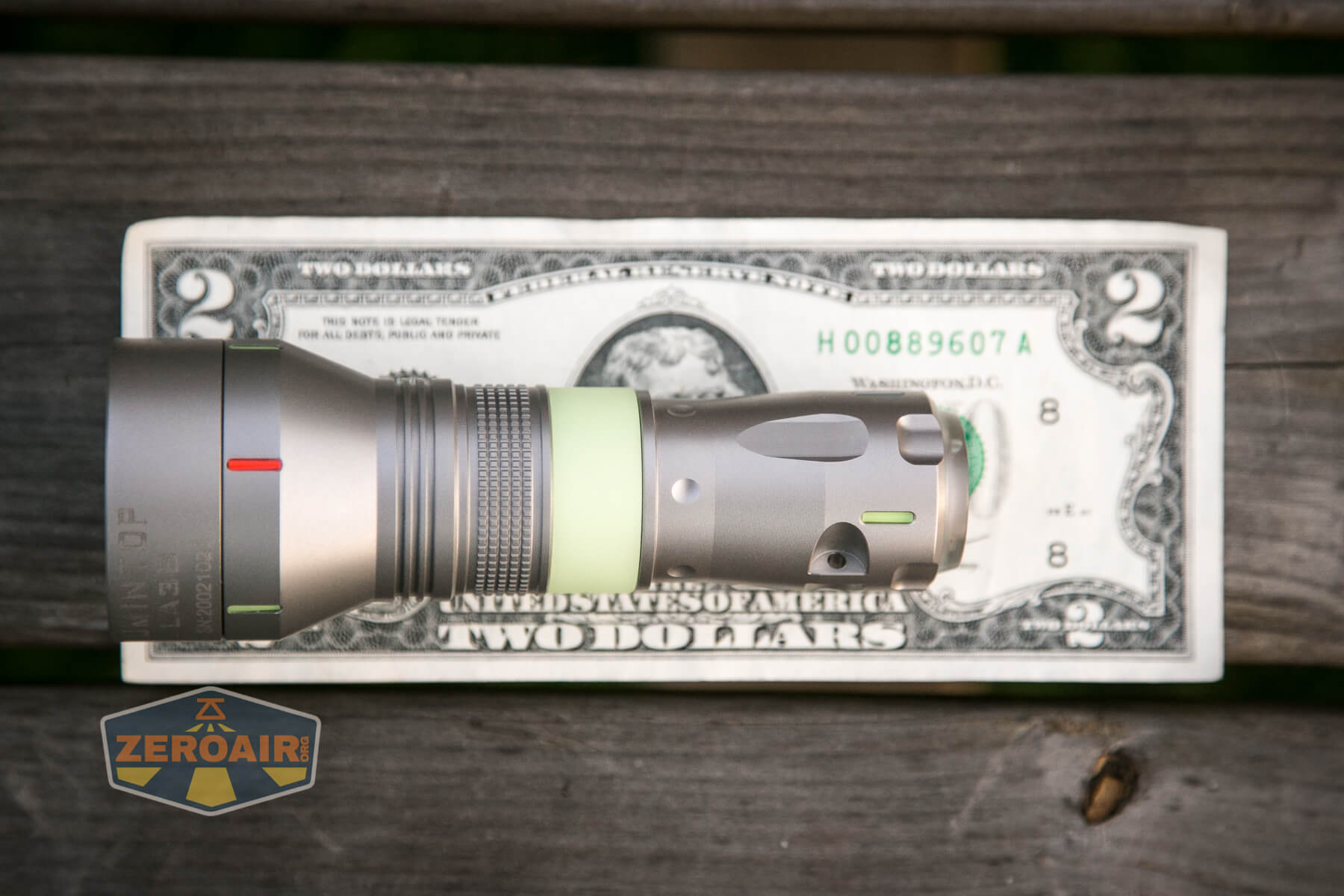
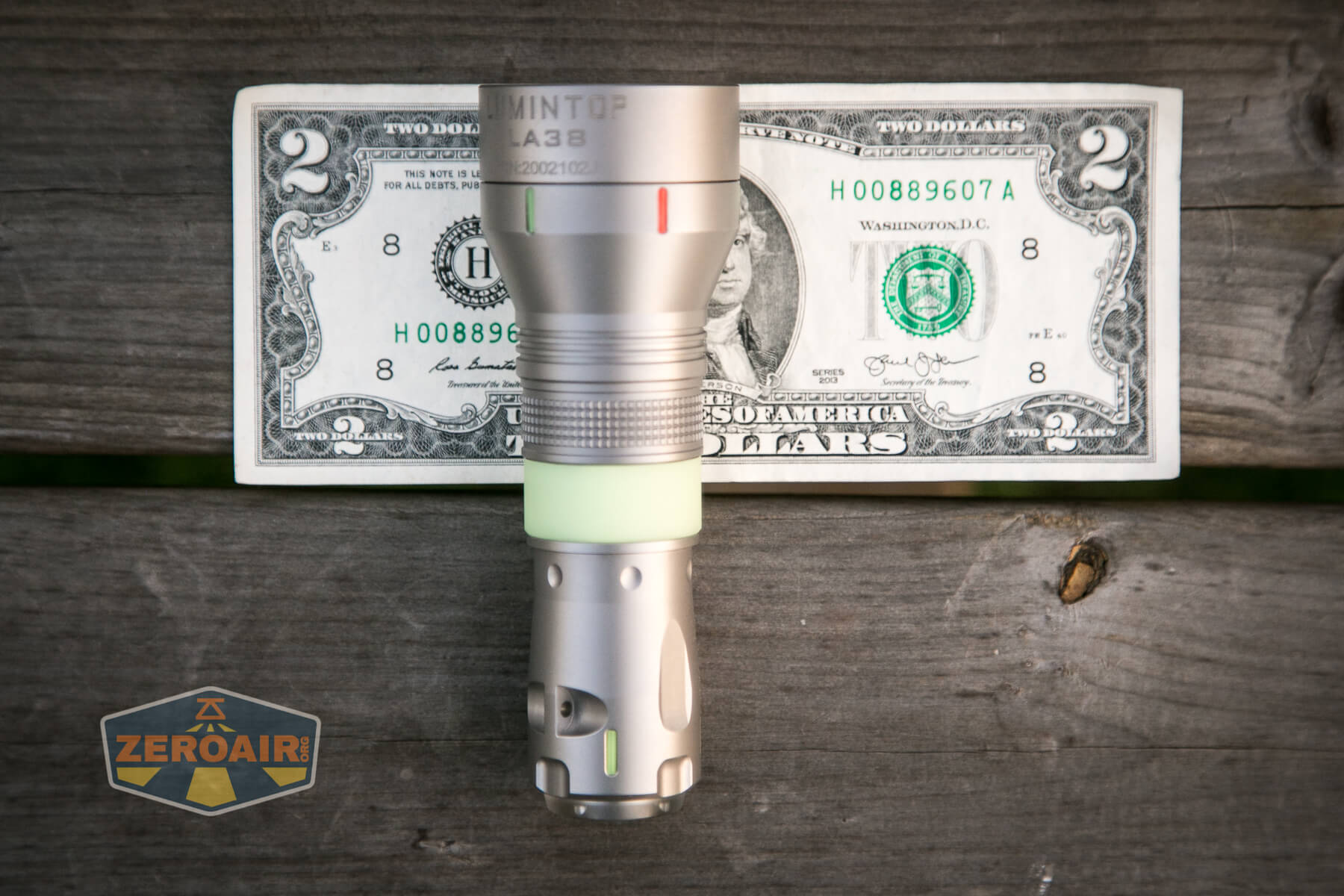
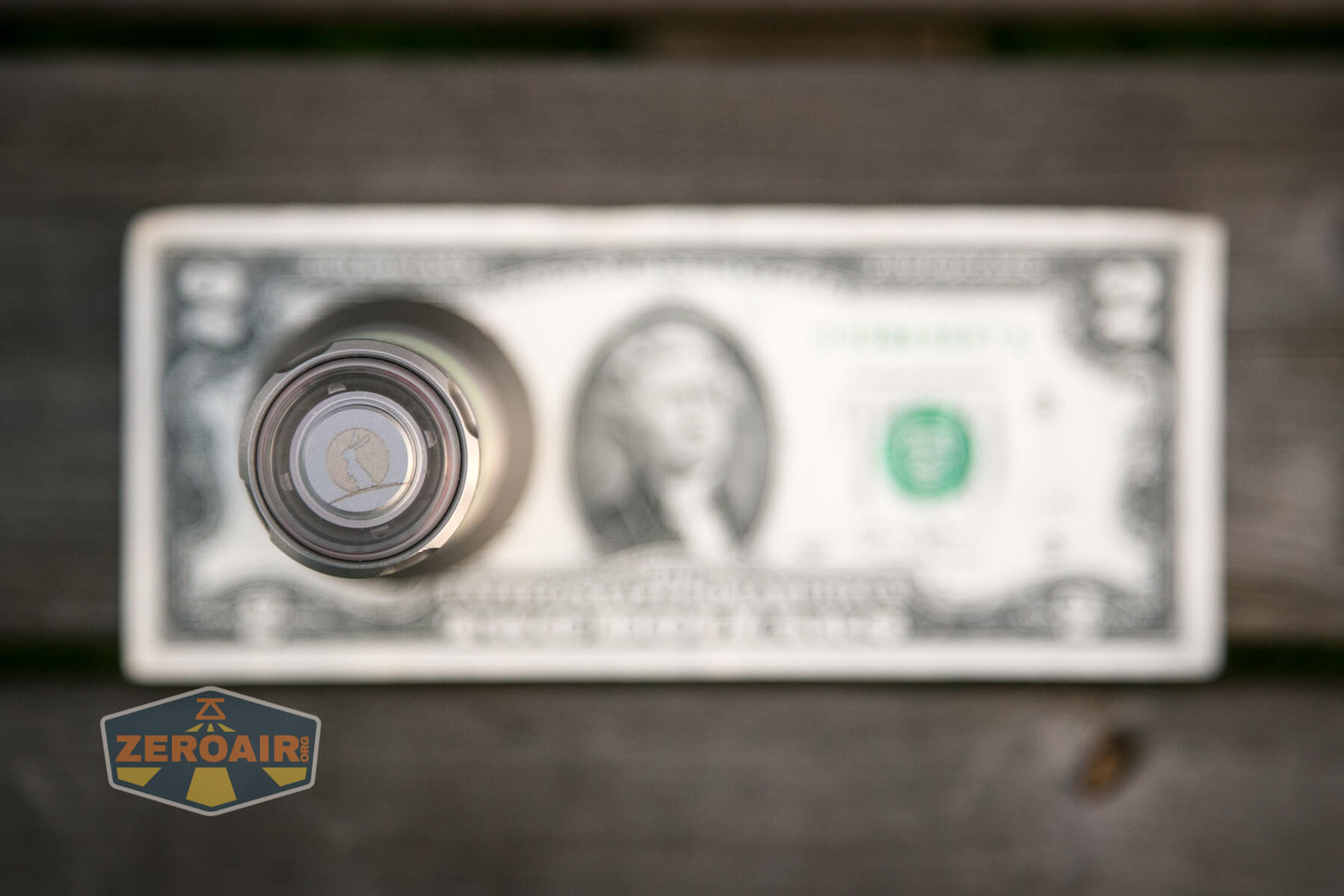
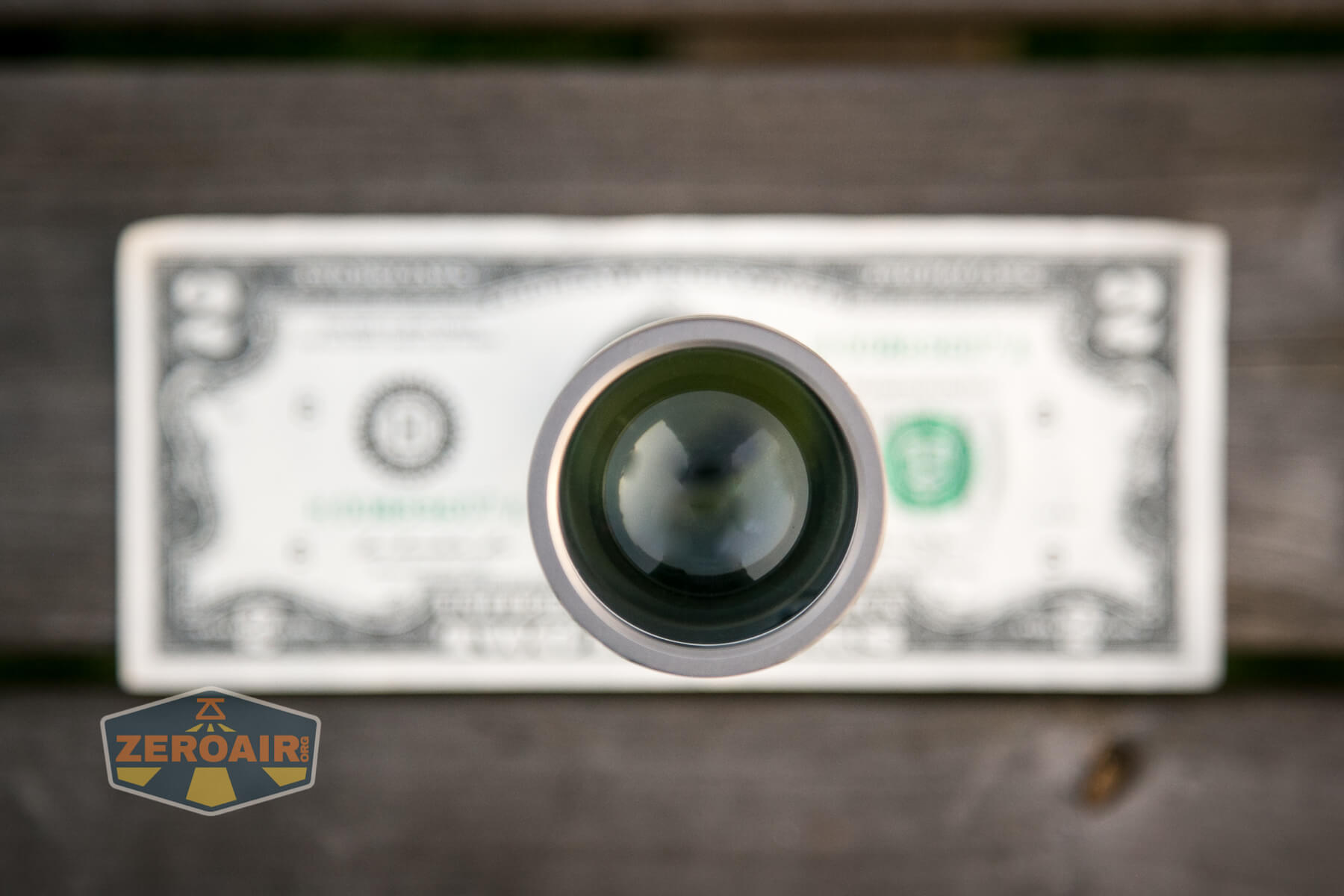
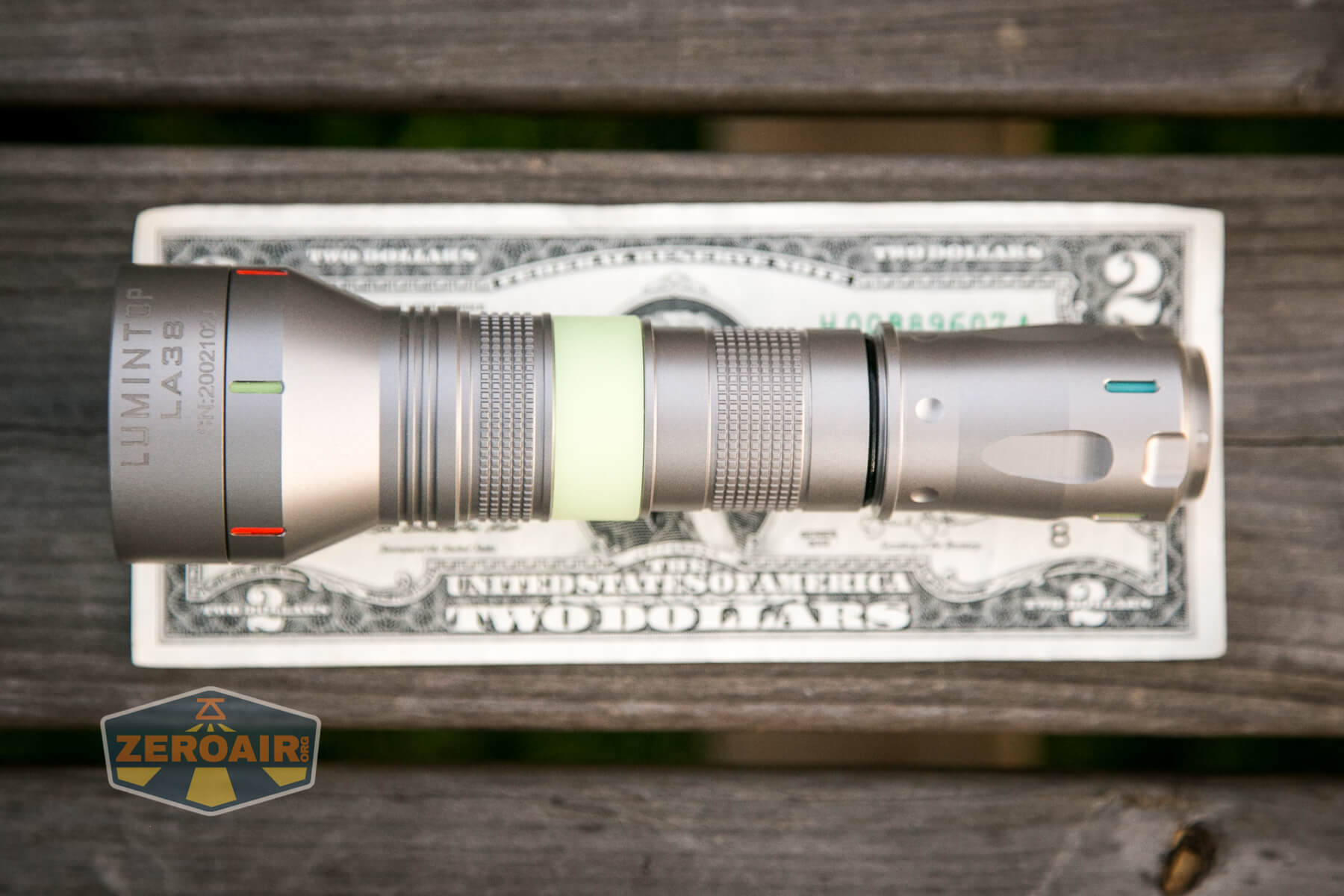
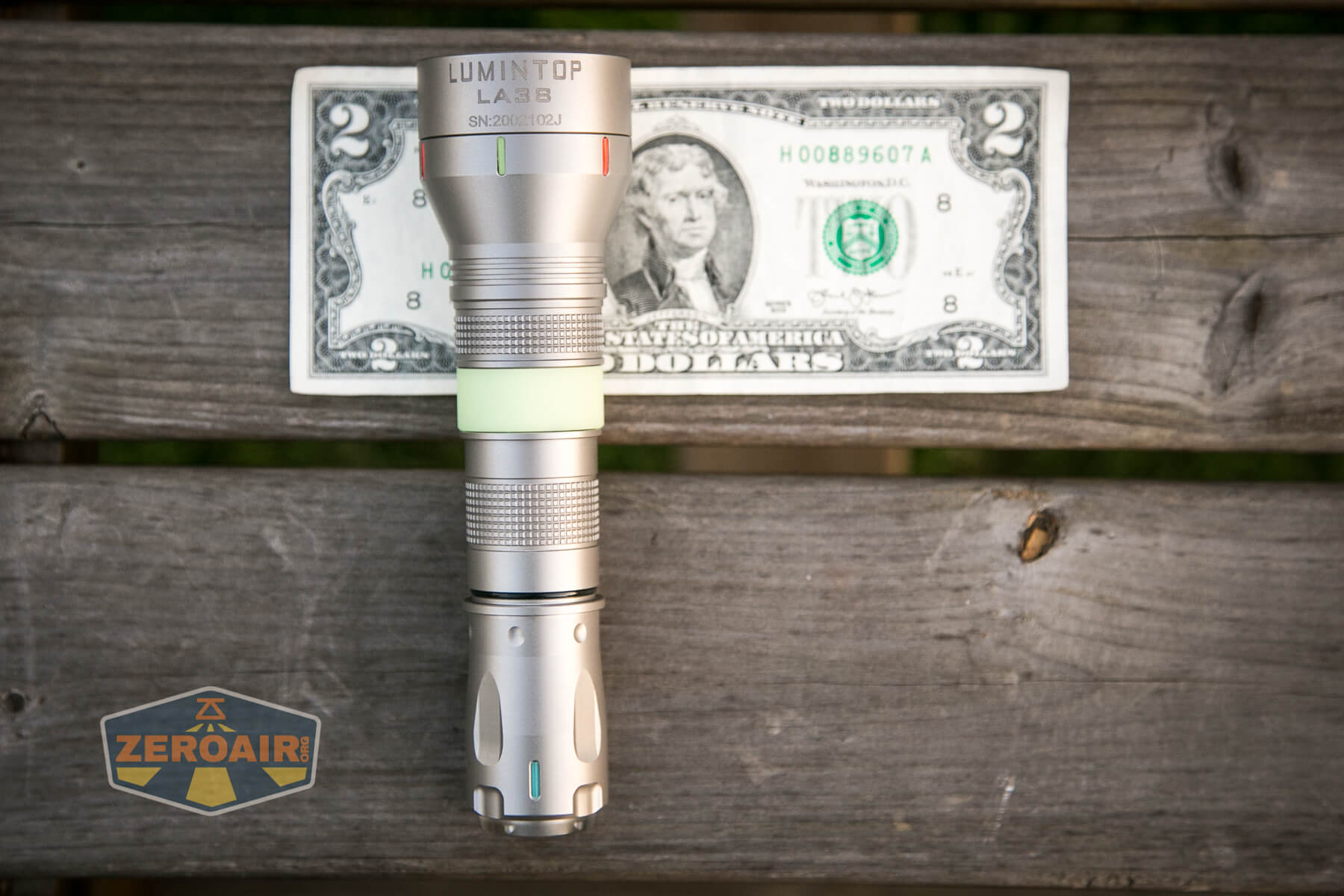
If the flashlight will headstand, I’ll try to show it here. If the flashlight will tailstand, I usually show that here, too.
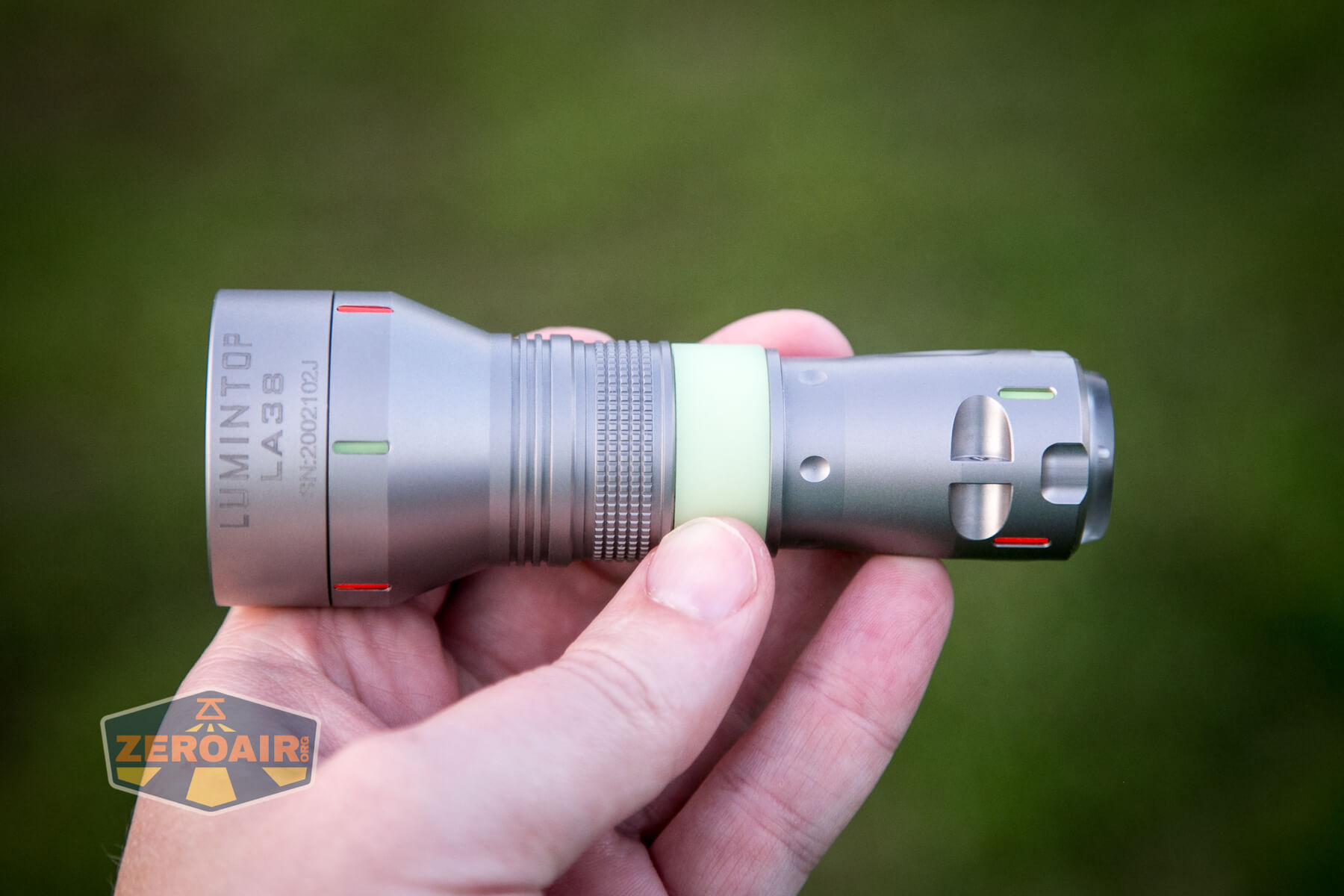
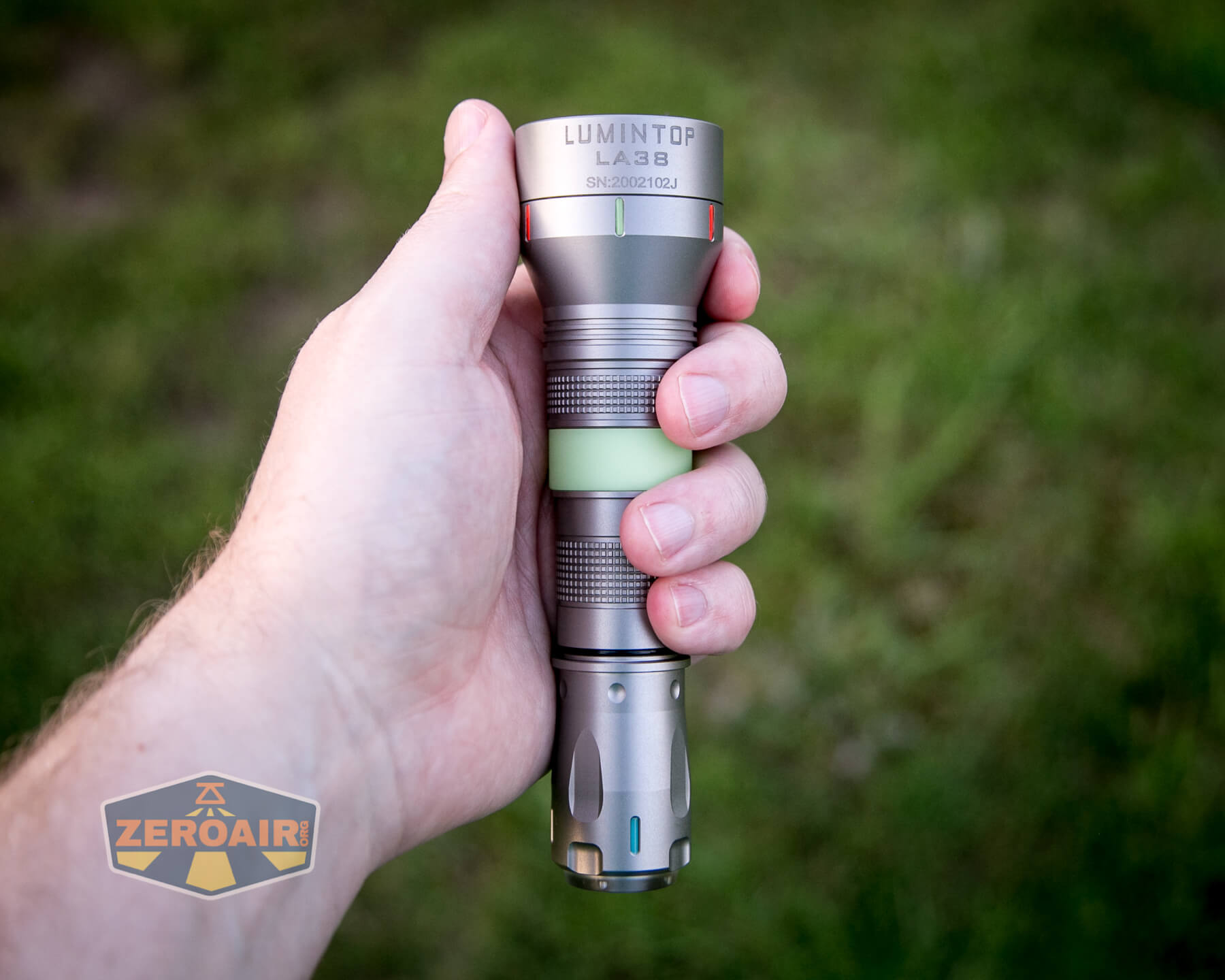
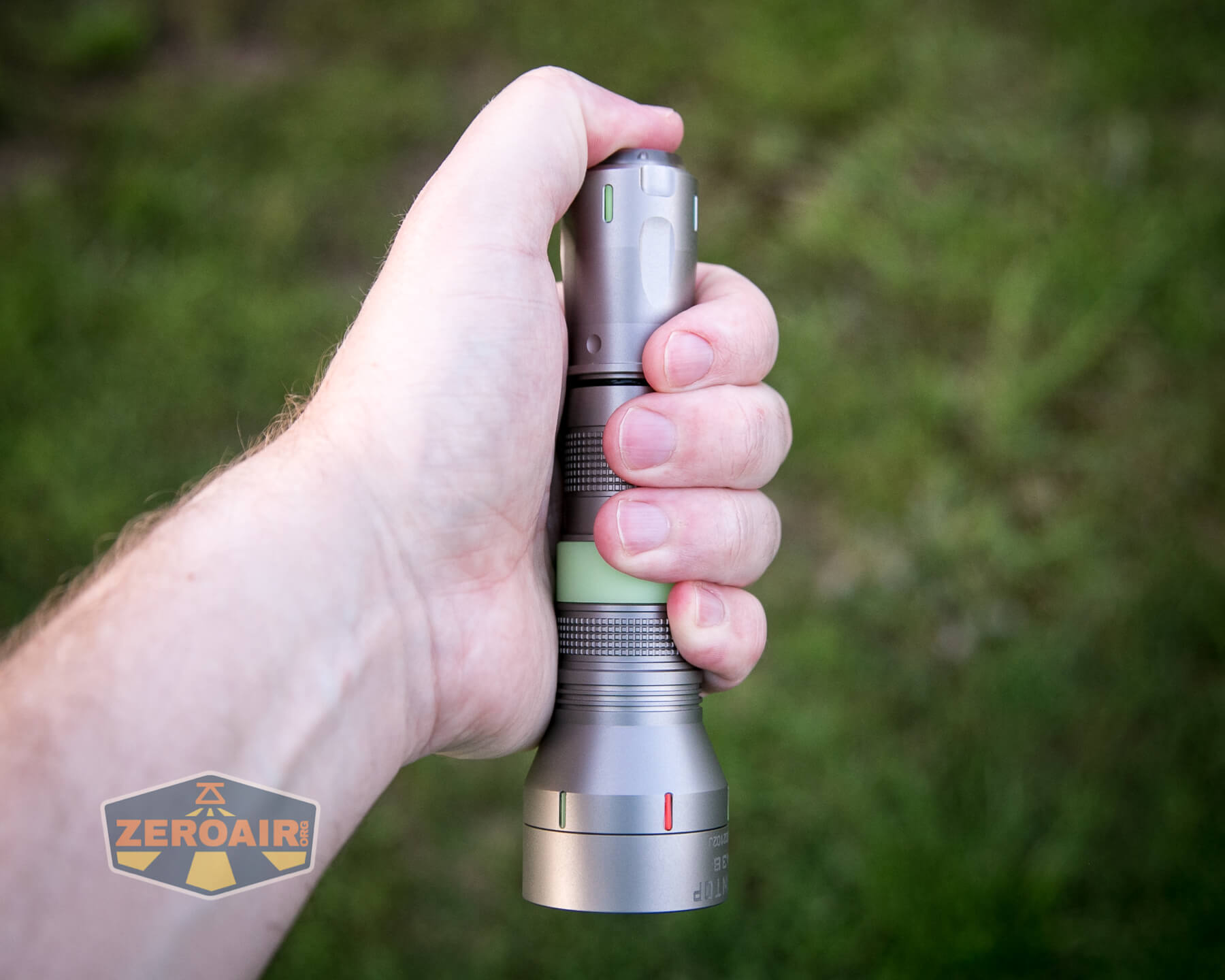
Here’s the test light with the venerable Convoy S2+. Mine is a custom “baked” edition Nichia 219b triple. A very nice 18650 light!
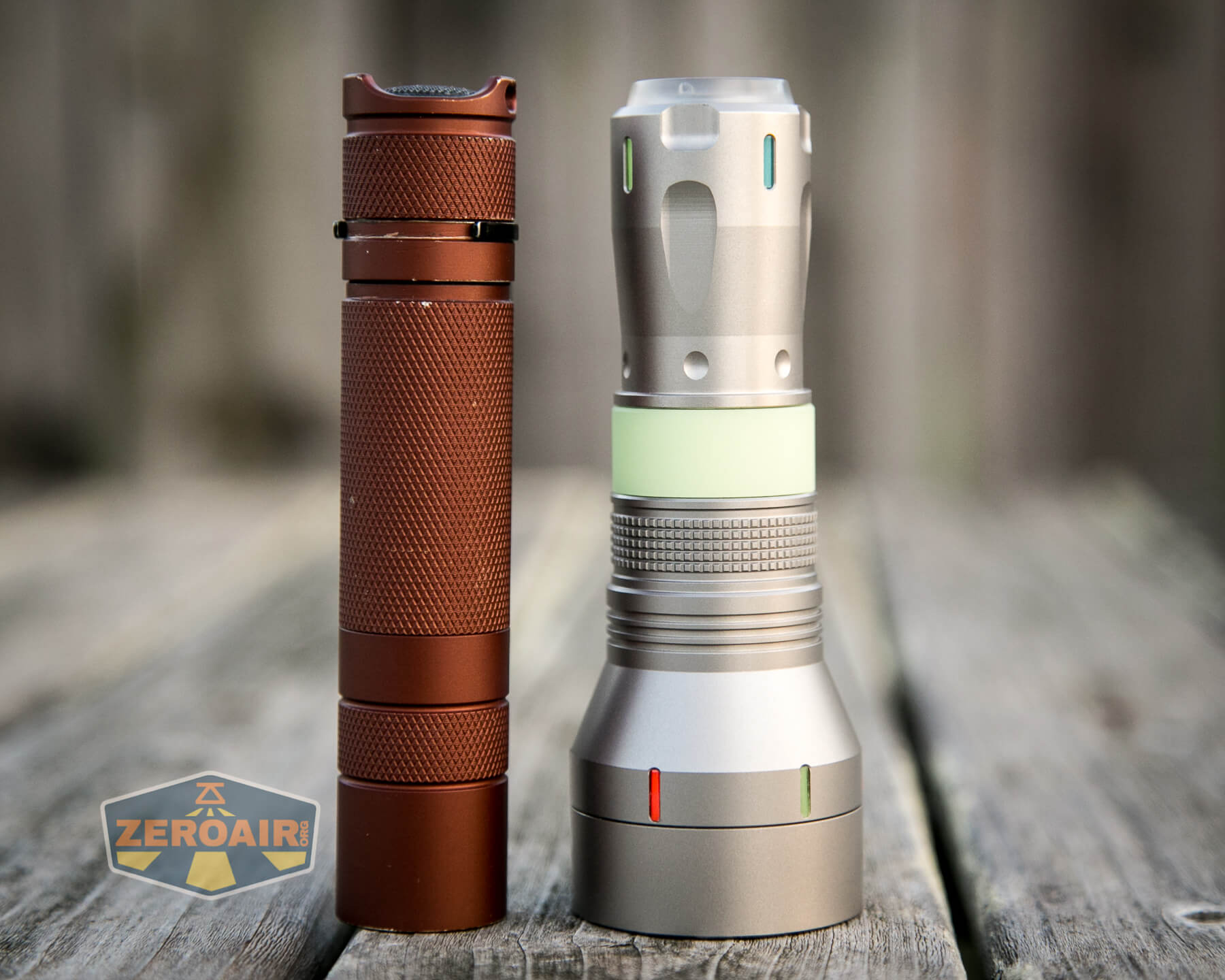
And here’s the light beside my custom-engraved TorchLAB BOSS 35, an 18350 light. I reviewed the aluminum version of that light in both 35 and 70 formats.
Retention and Carry
The 18350 cell tube has a lanyard hole in a “lanyard cutout” area.
My non-retail package didn’t include a lanyard though.
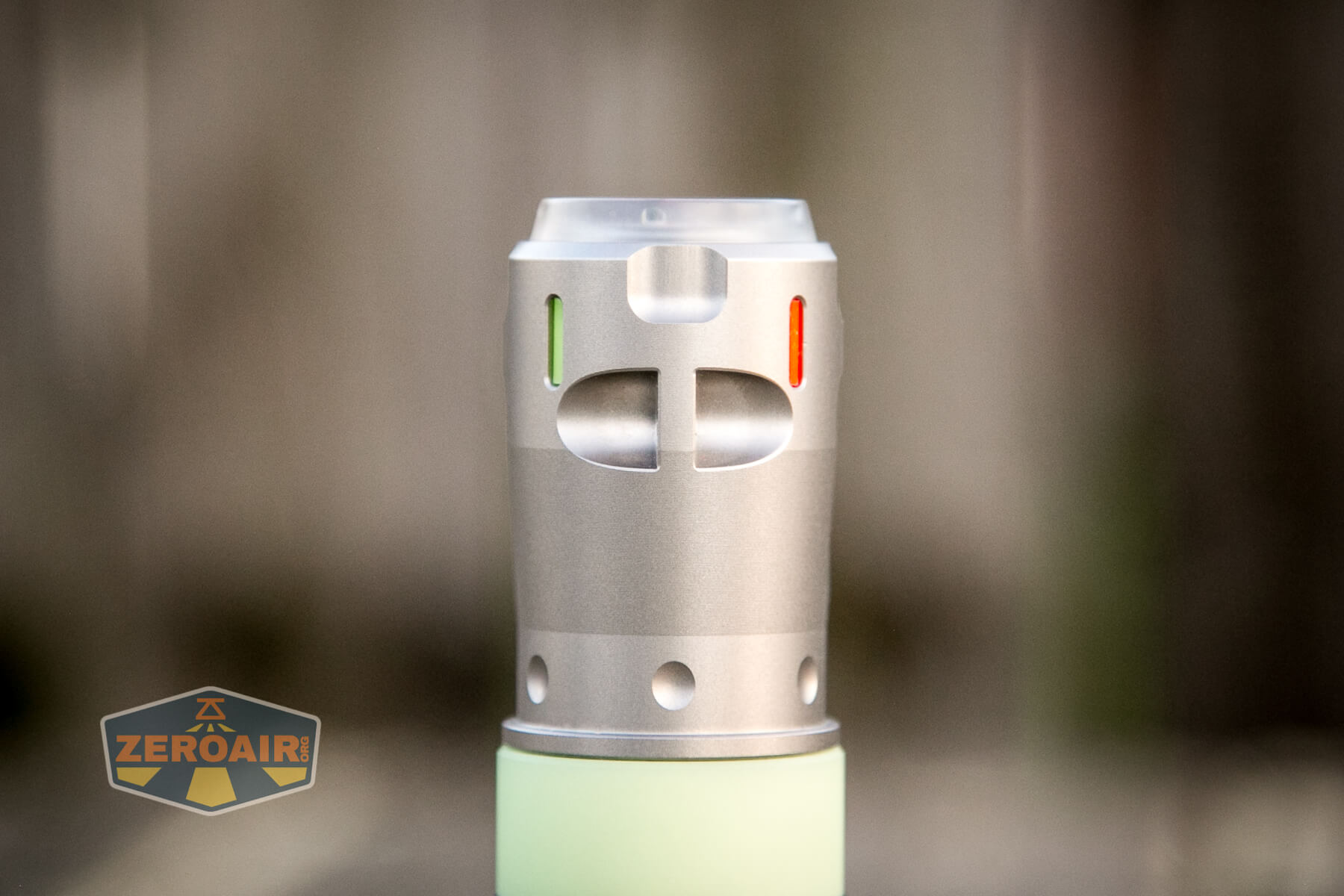
Nothing else is included for carry.
Power and Runtime
The Lumintop LA38 LEP runs on a single lithium-ion cell. Depending on which setup you are going with, that’s either an 18350 or an 18650.
The light is not to be used with the 18650 extension tube and two 18350 cells. That’ll surely kill your light. A cell isn’t included.
Here are the runtimes for all 3 modes. The output in lumens is well below the claim, but this is more likely due to inadequacies in my testing apparatus and less likely that the light is producing half of the output claim. More important is the throw measurements, and that’s much closer to the specification.
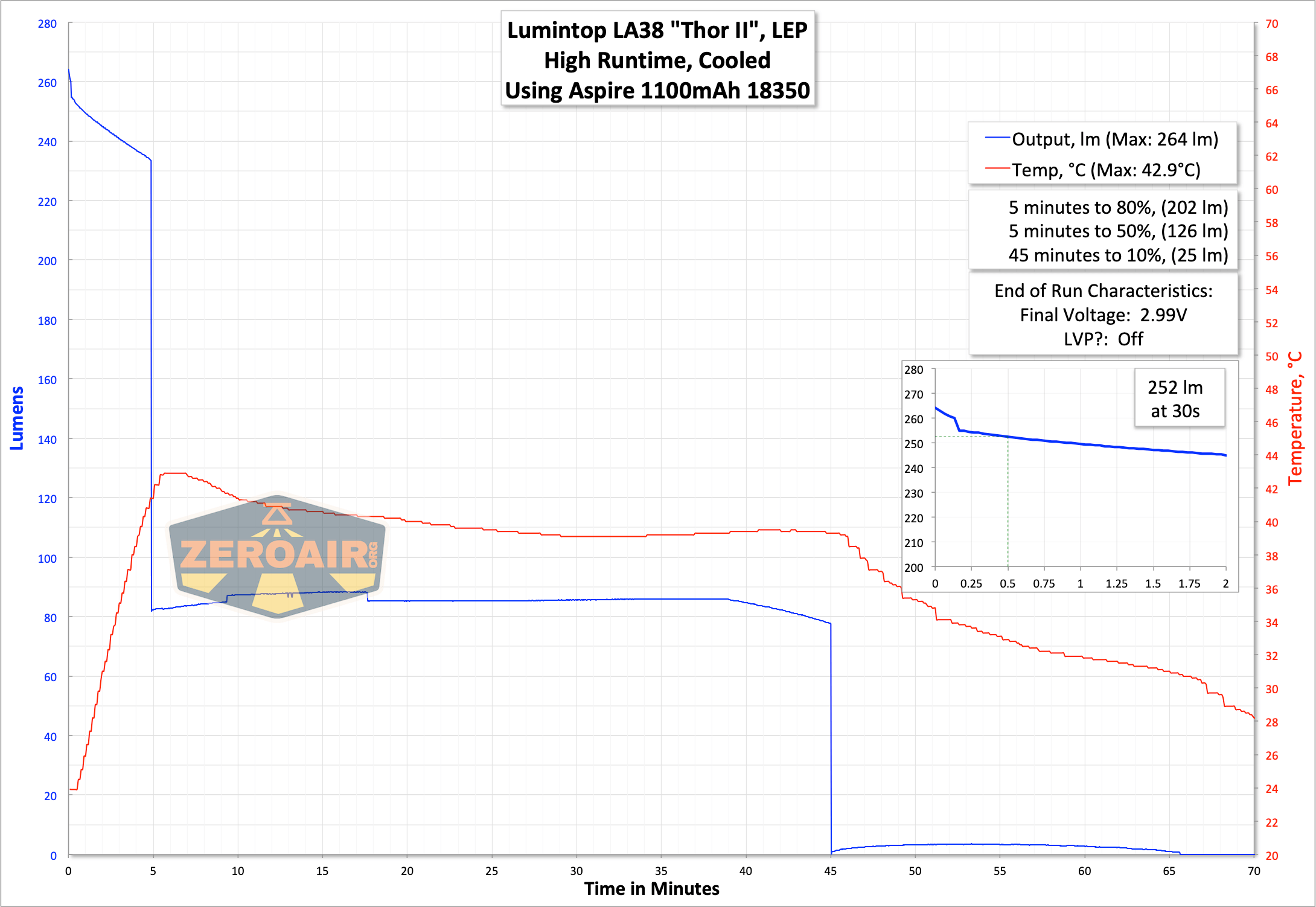
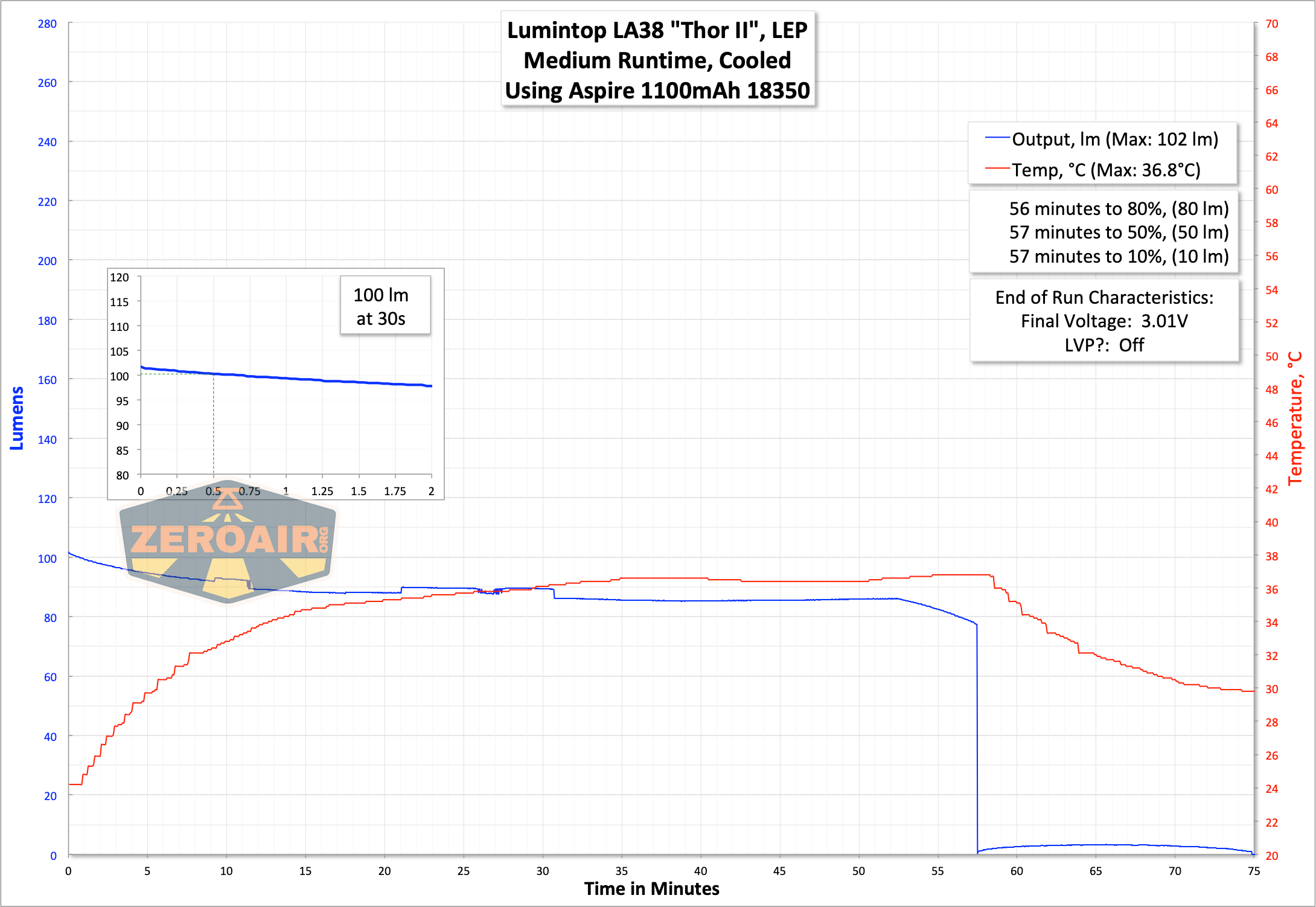
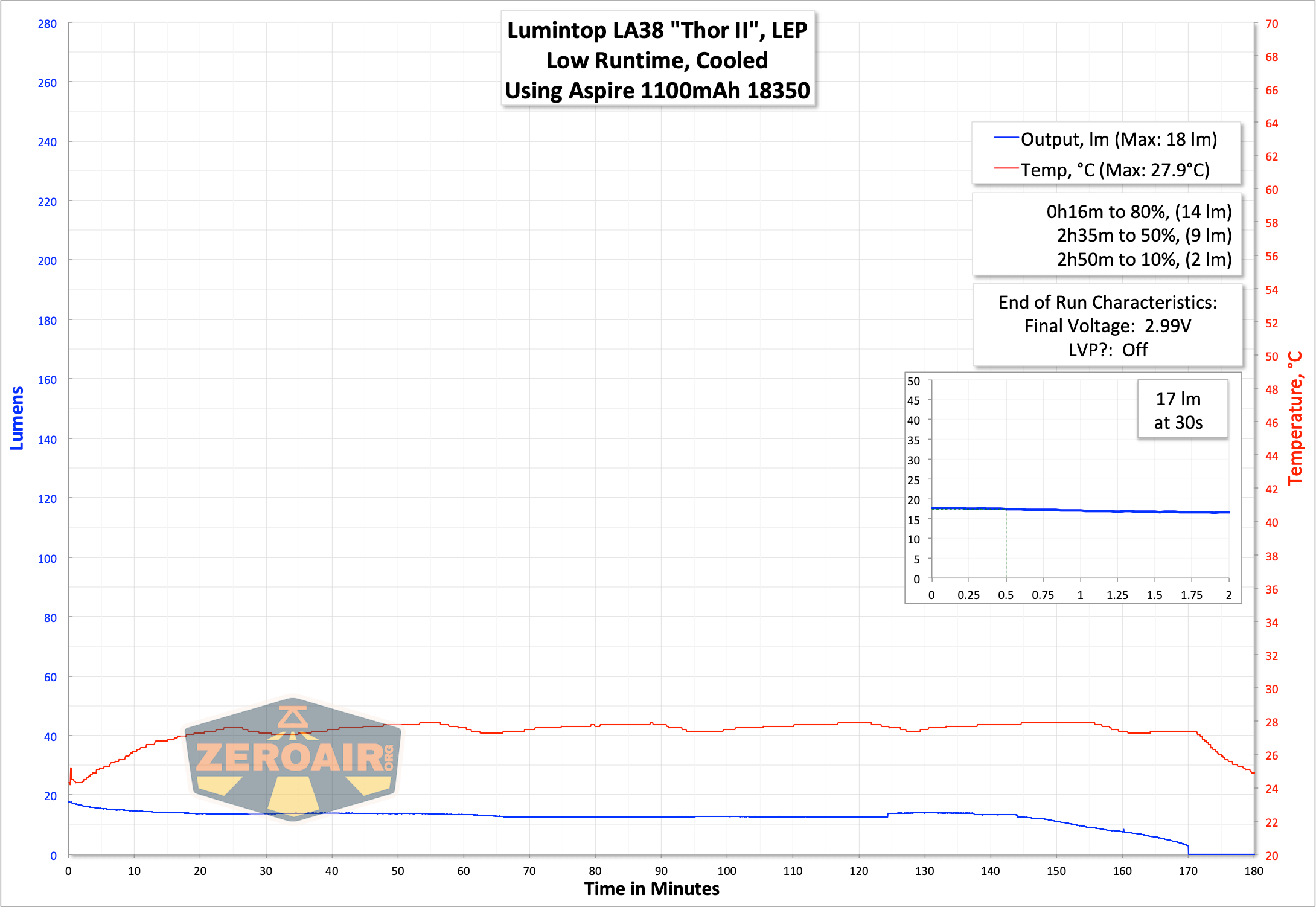
Every runtime on the Lumintop LA38 LEP displayed low voltage protection at around 3V.
On bench power, I observed a flash warning at 3V, and at 2.7V the light went off.
Modes and Currents
| Mode | Mode Claimed Output (lm) | Claimed Runtime | Measured Lumens | Tailcap Amps |
|---|---|---|---|---|
| High | 500 | 18350: 5m/45m
18650: 5m/2h55m |
252 | 2.35 |
| Med | 180 | 18350: 58m
18650: 3h5m |
100 | 0.80 |
| Low | 30 | 18350: 2h20m
18650: 4h40m |
17 | 0.30 |
Pulse Width Modulation
No PWM at all.
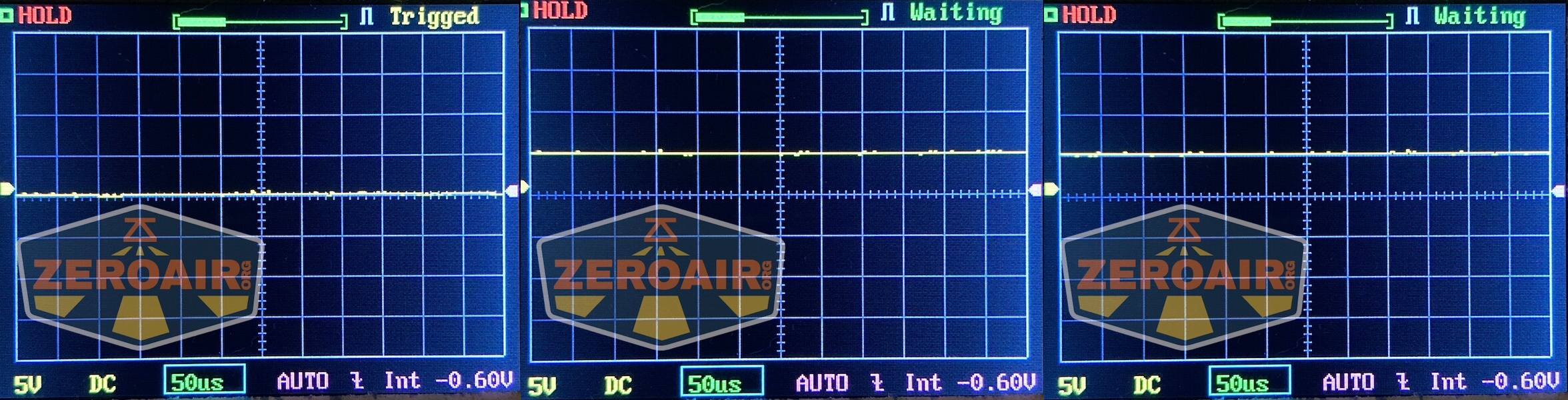 Here you can see a “baseline” – a chart with almost no light hitting the sensor.
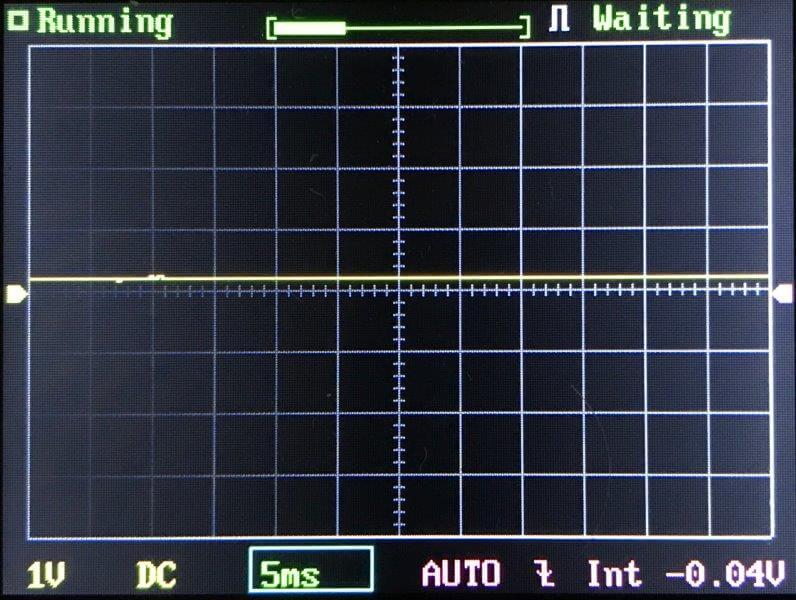
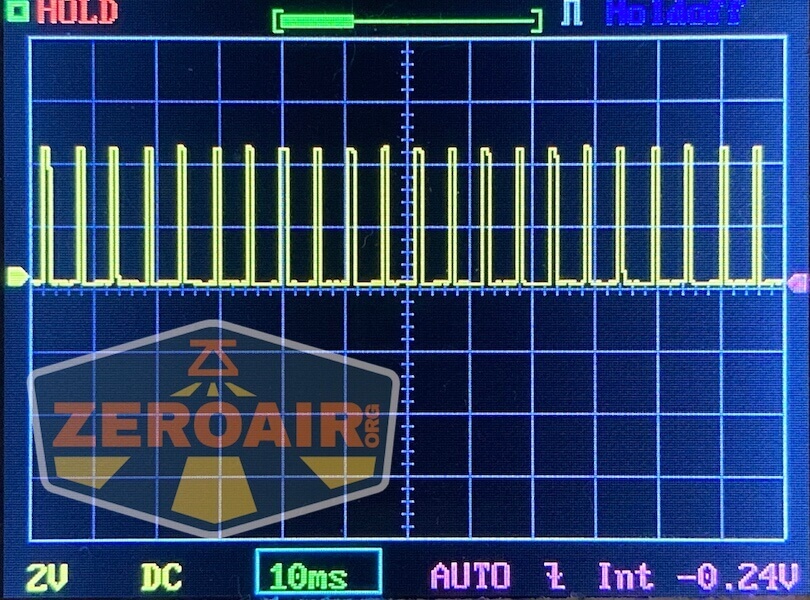
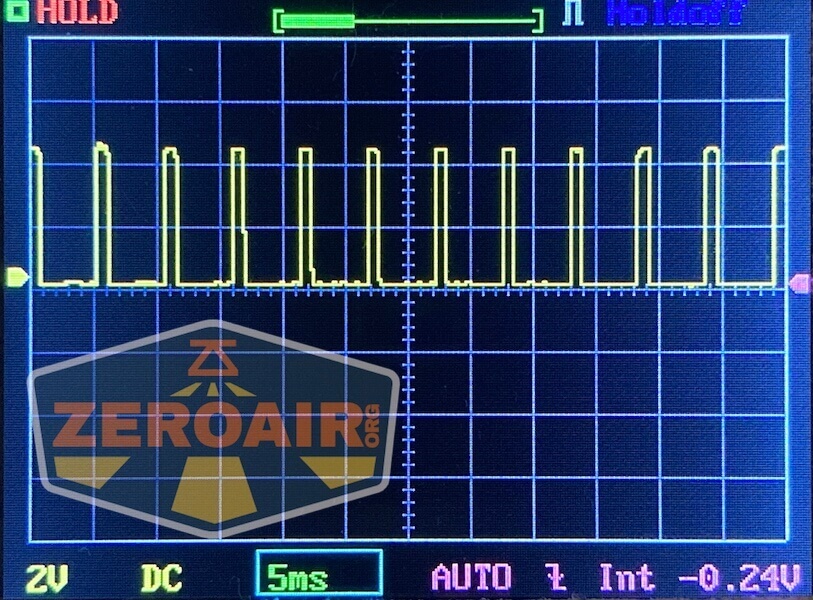
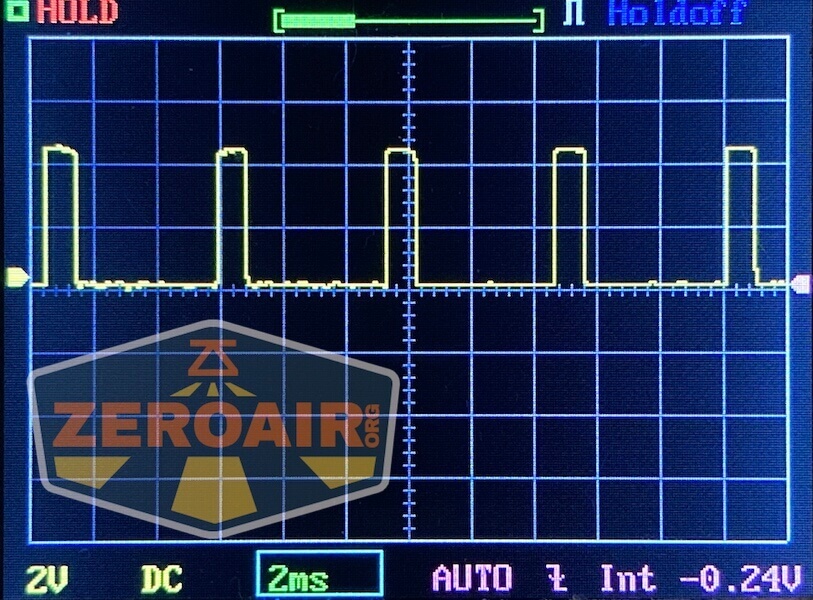
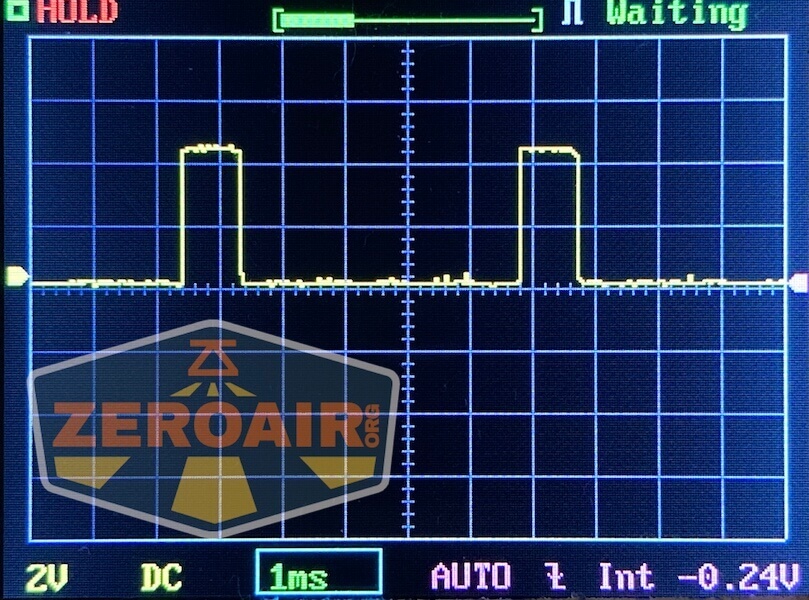
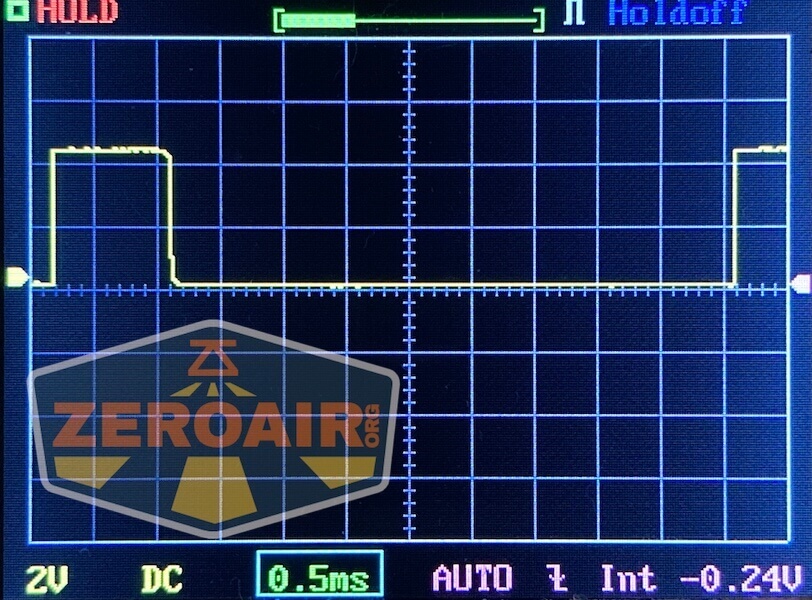
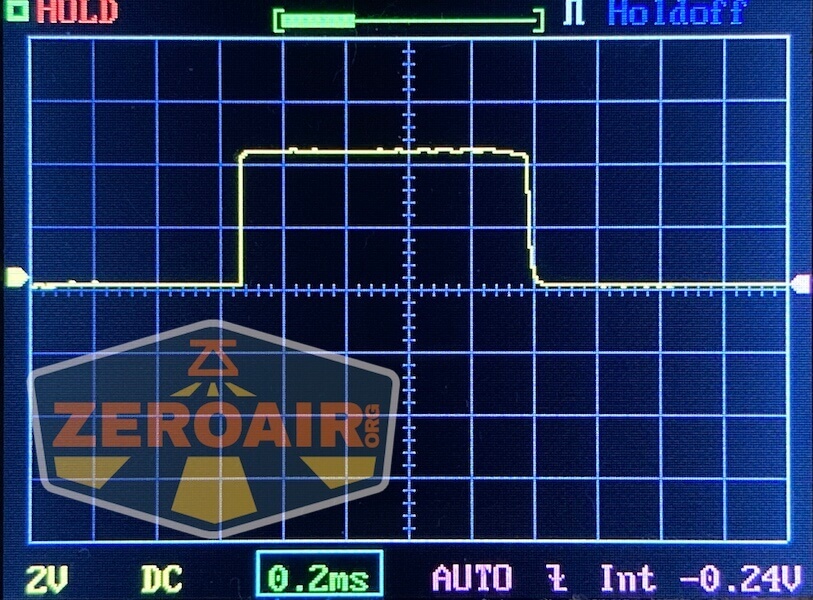
Then there’s the Ultrafire WF-602C flashlight, which has some of the worst PWM I’ve seen. It’s so bad that I used a post about it to explain PWM! Here are multiple timescales (10ms, 5ms, 2ms, 1ms, 0.5ms, 0.2ms) to make comparing this “worst” PWM light to the test light easier. That post also explains why I didn’t test the WF-602C at the usual 50us scale.
User Interface and Operation
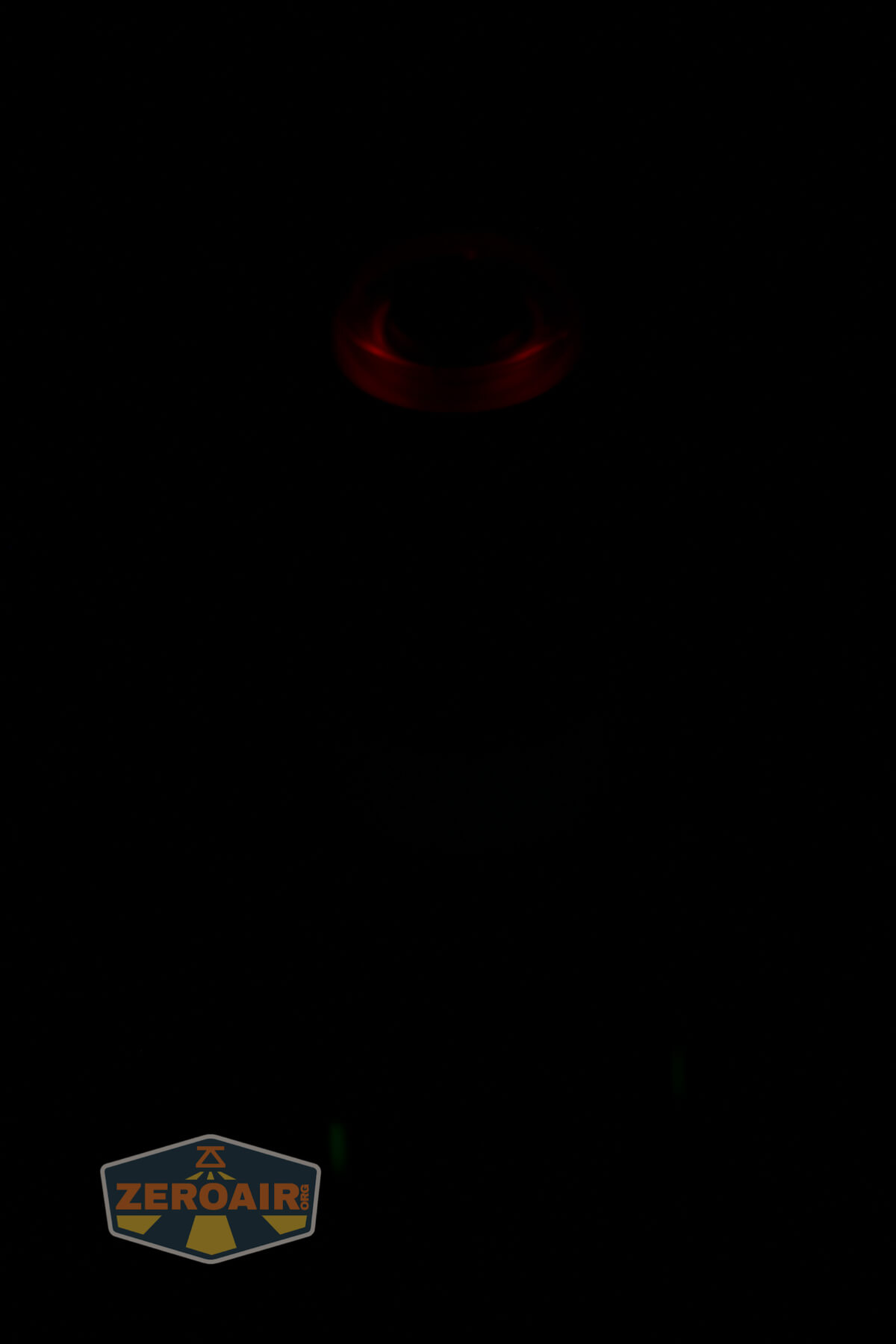
Surprisingly the Lumintop LA38 LEP uses a reverse mechanical clicky. That’s surprising because the clear tailcap surround is backlight with RGB.
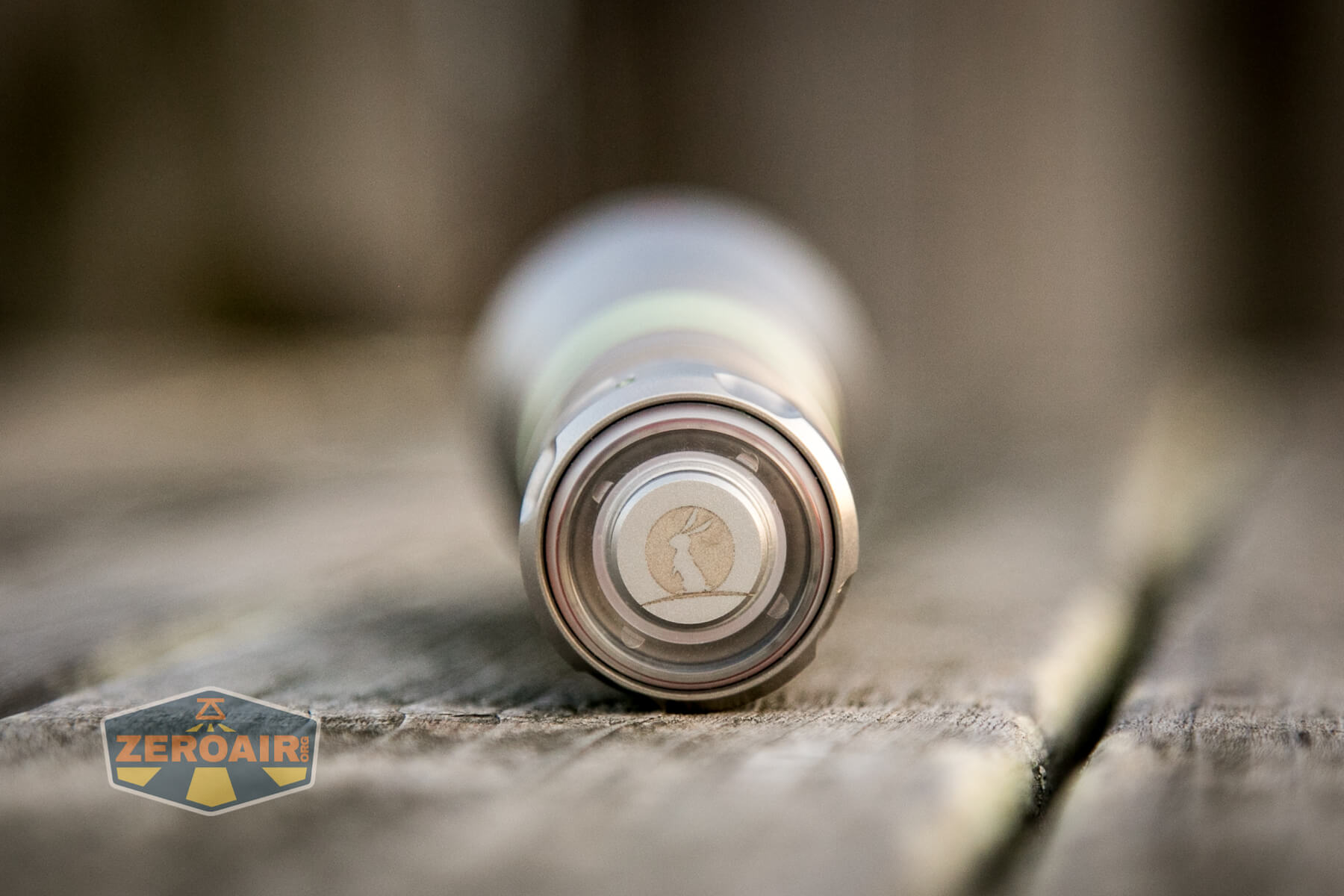
That’s not just simply the most uncommon thing ever in the world, sure, but it’s a little surprising because of all the tail e-switch lights Lumintop has been making lately.
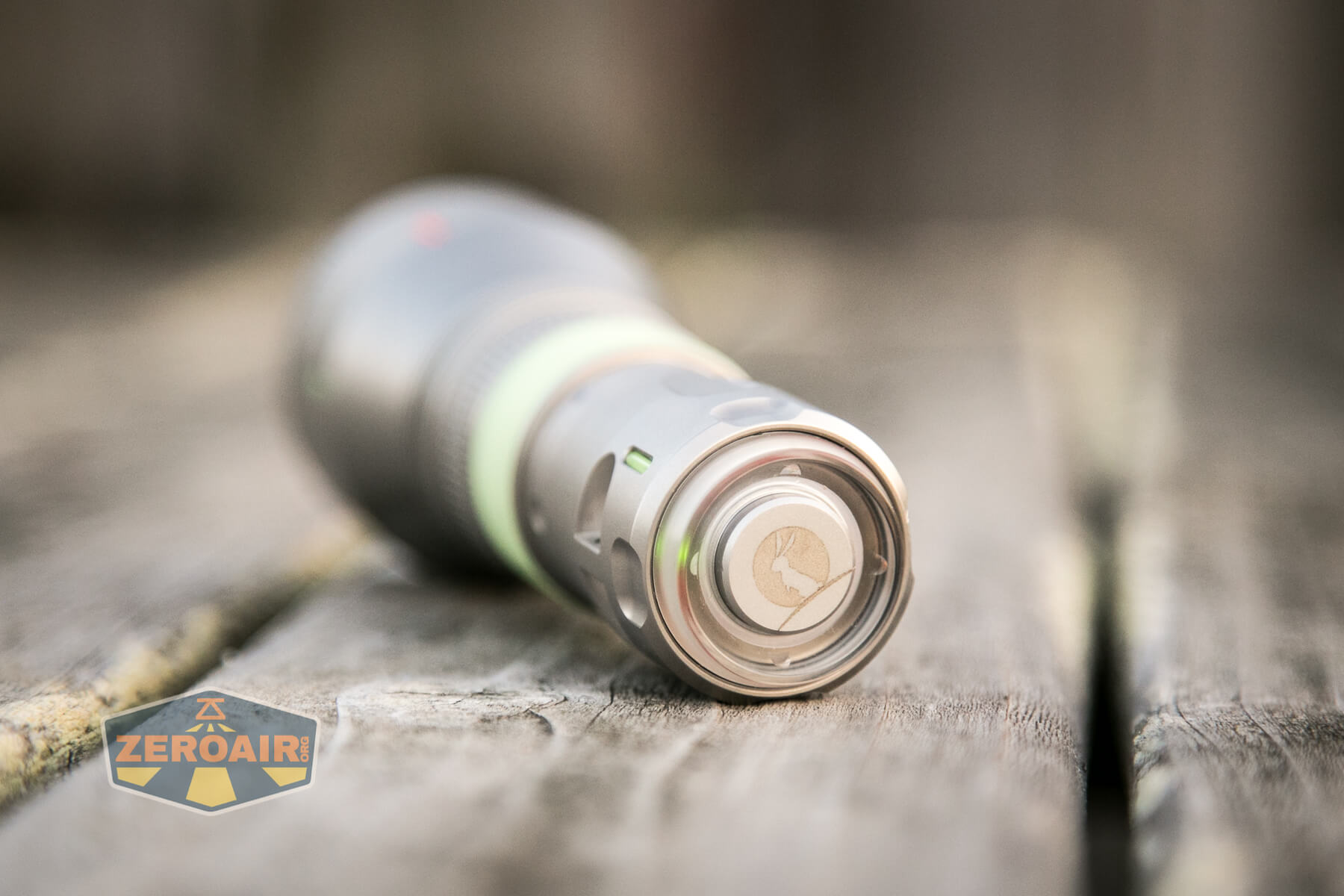
The surround completely protects the switch, and the light will tailstand easily.
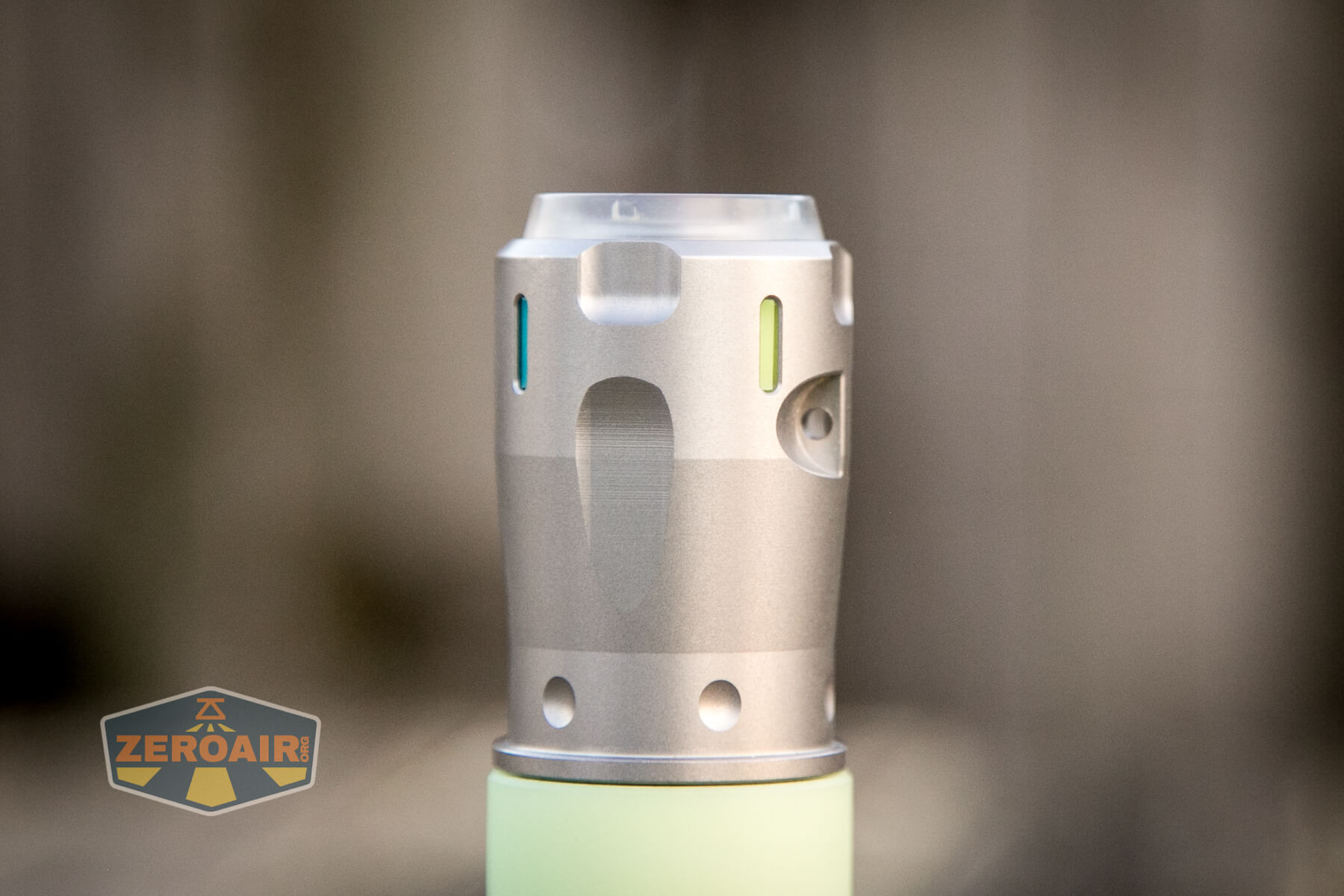
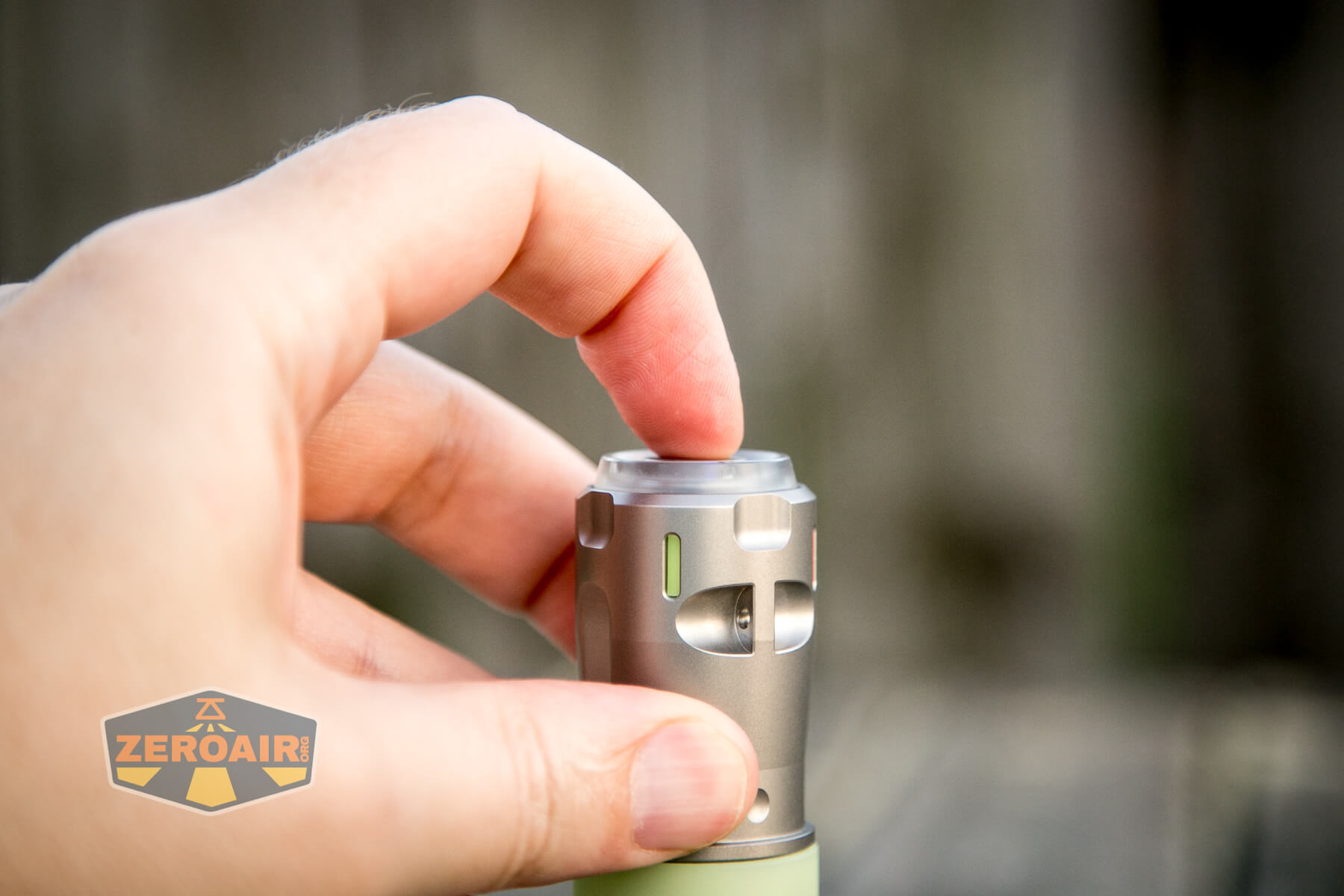
One thing I’m less fond of on this switch is that it has an absolute hair trigger. I press it often without meaning to. It’s a nice action, though. Good travel, very positive, just maybe a little too easy to press.
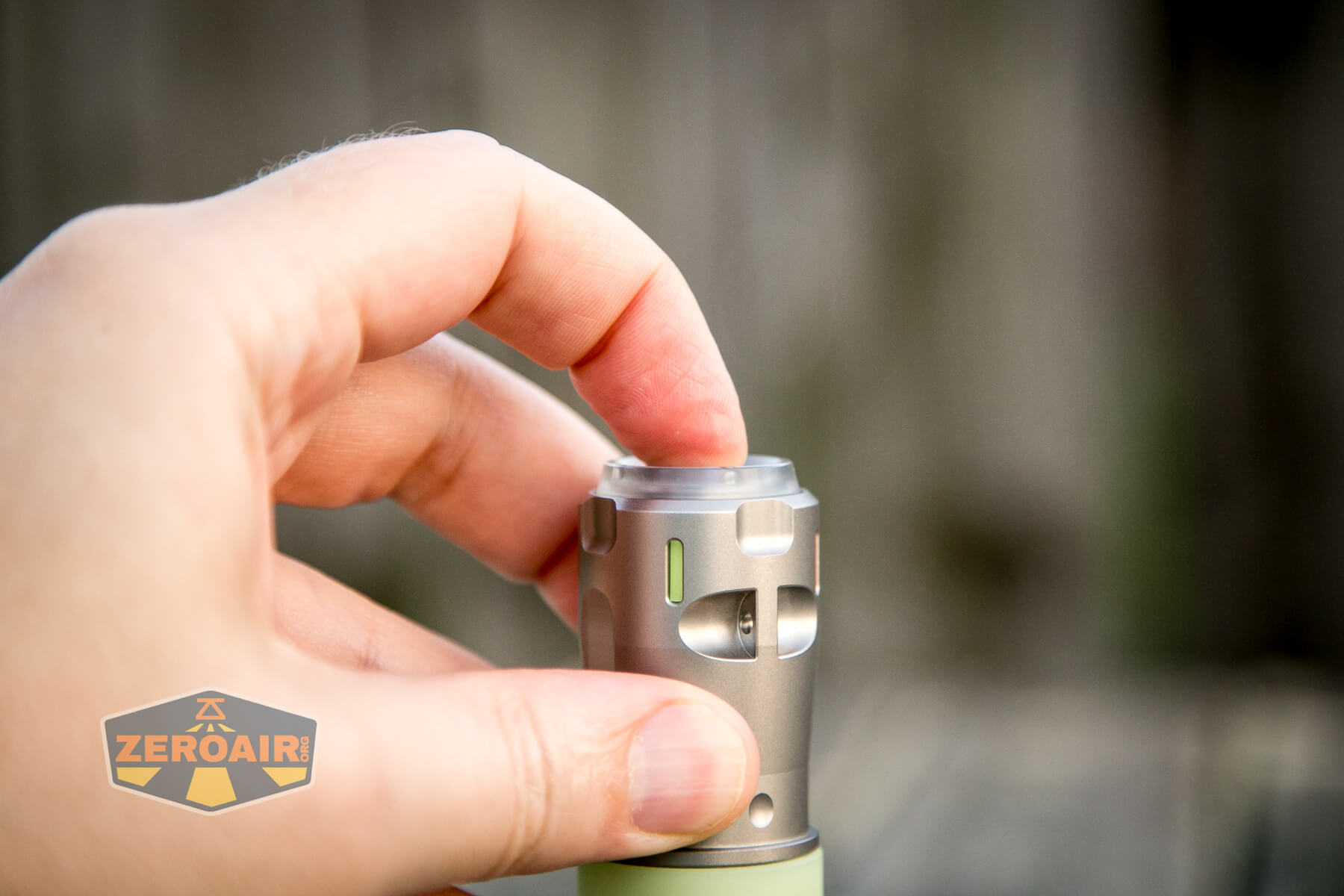
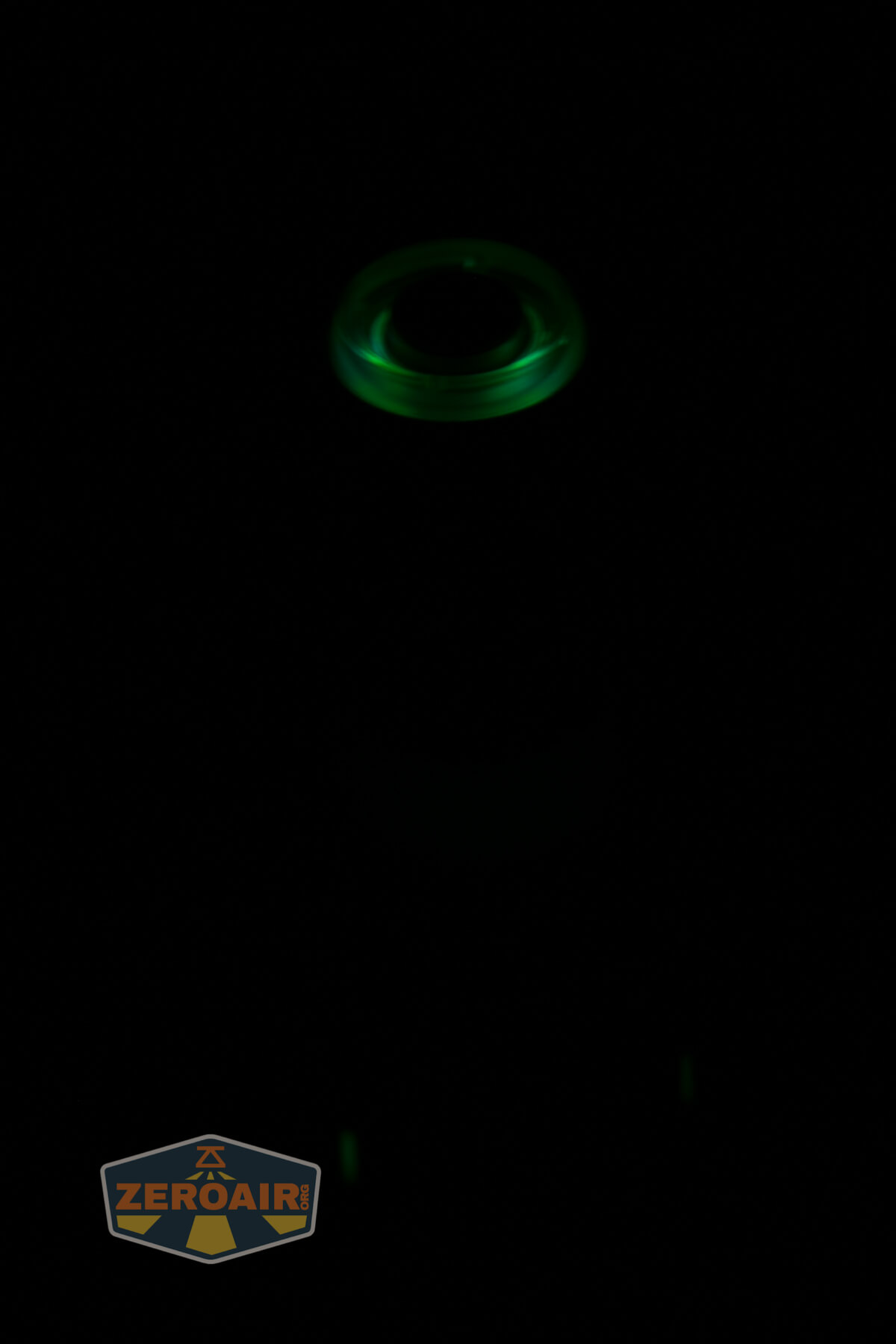
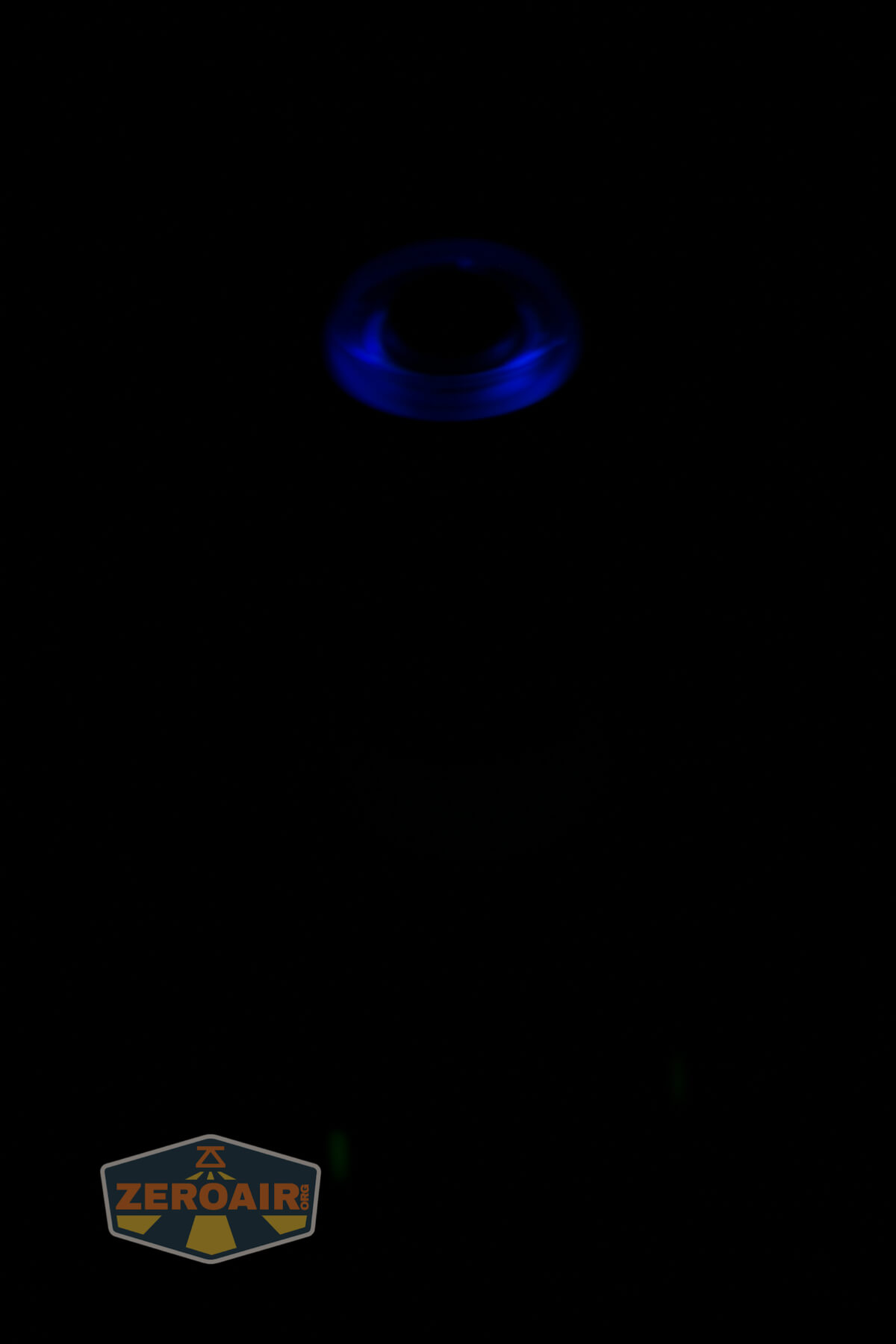
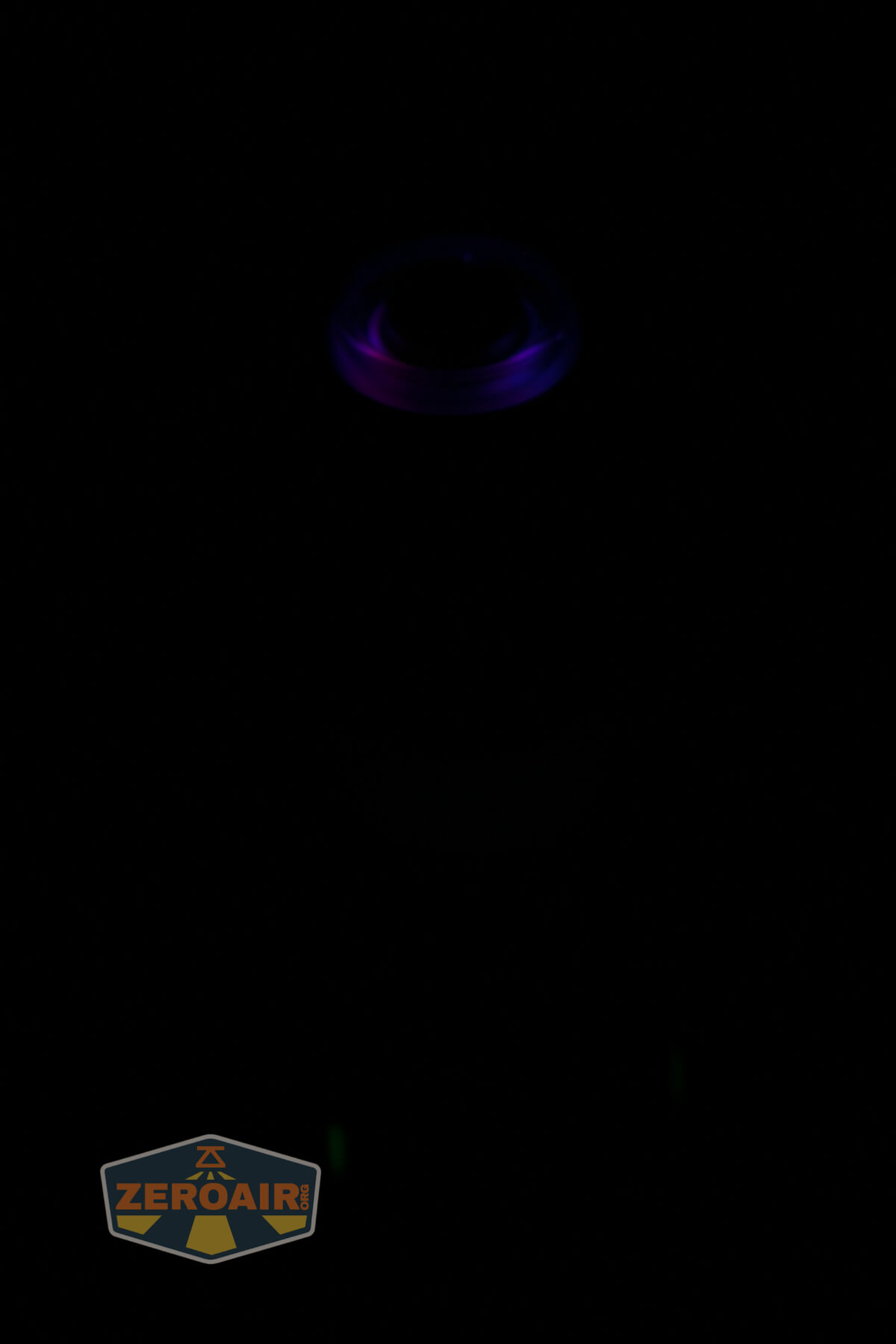
Below you can see some of the colors that the switch turns – it seems to be fully RGB.
Here’s a user interface table! Again, I don’t have a manual, so this could be not entirely complete.
| State | Action | Result |
|---|---|---|
| Off | Click | On (Mode memory) |
| On | Click | Off |
| On | Tap | Mode advance (LMH) |
And that’s it, as far as I can tell! No strobes, no anything else…. just three modes in easy reverse clicky format. I feel like there could be a way to iterate the RGB tailcap lighting, but I didn’t find it in my clicking around. Also, I’m unclear if the RGB tailcap indicates anything about the cell voltage. It doesn’t seem to. It seems to just “breathe” in RGB.
LED and Beam
Lumintop LA38 is a LEP flashlight, of course.
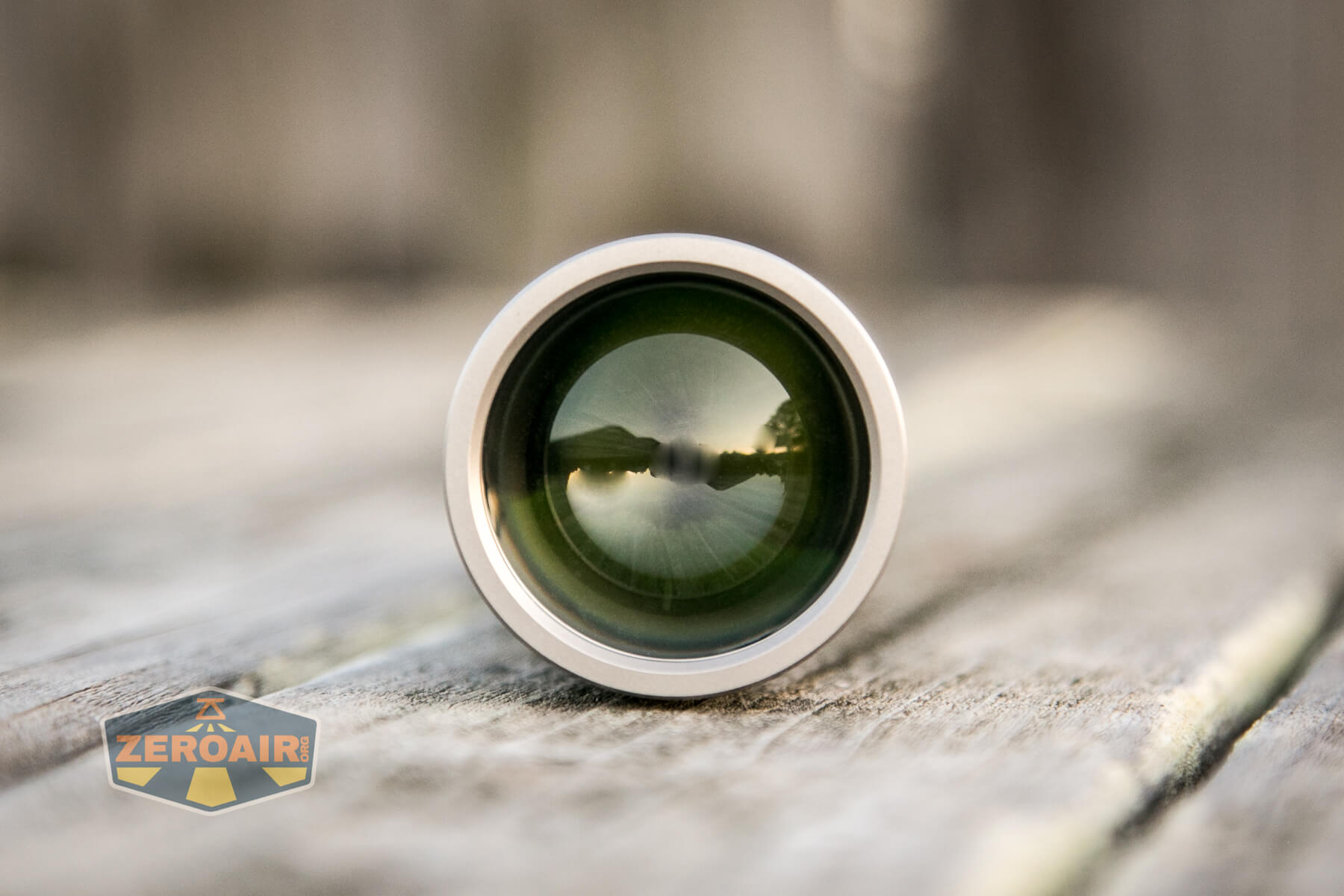
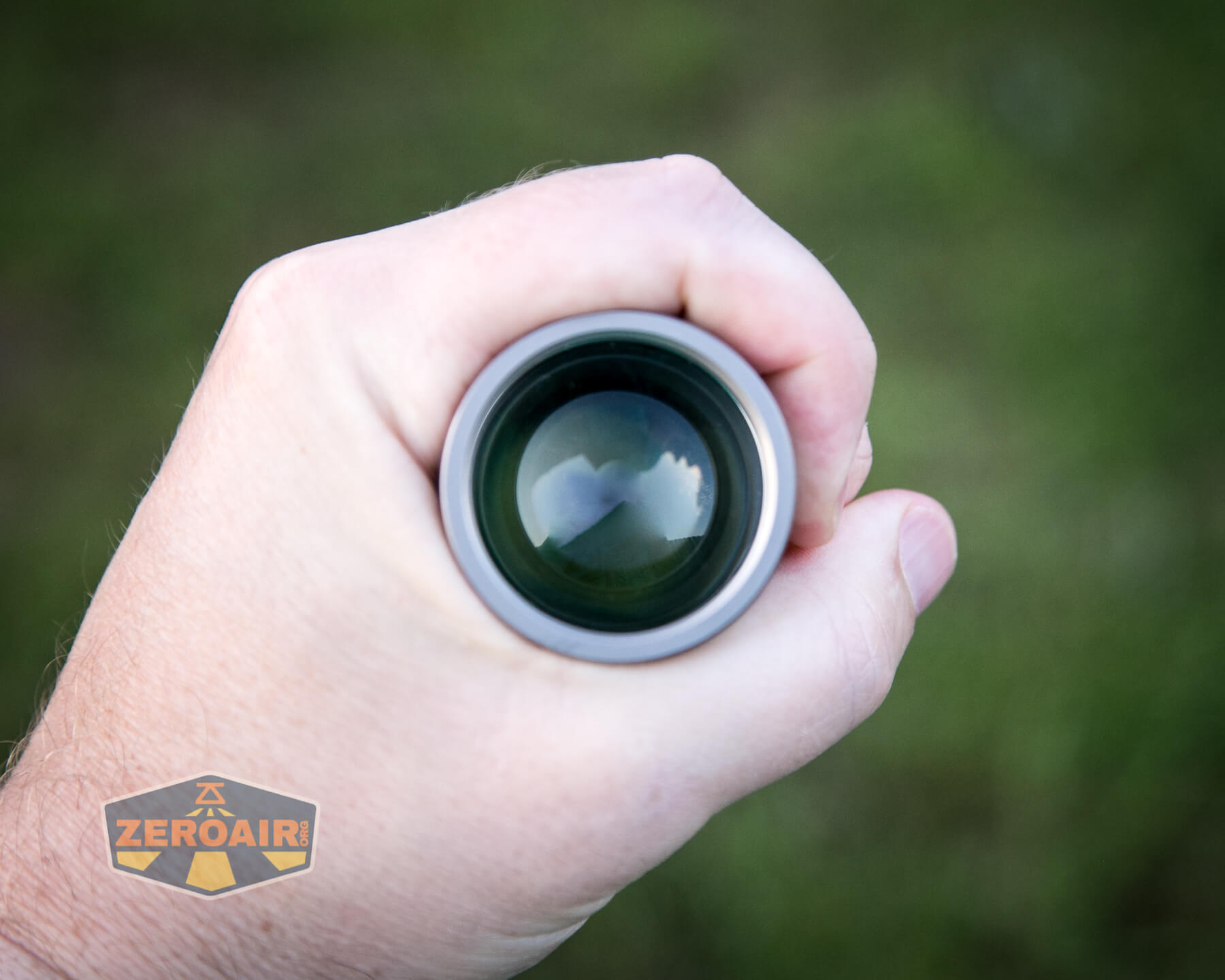
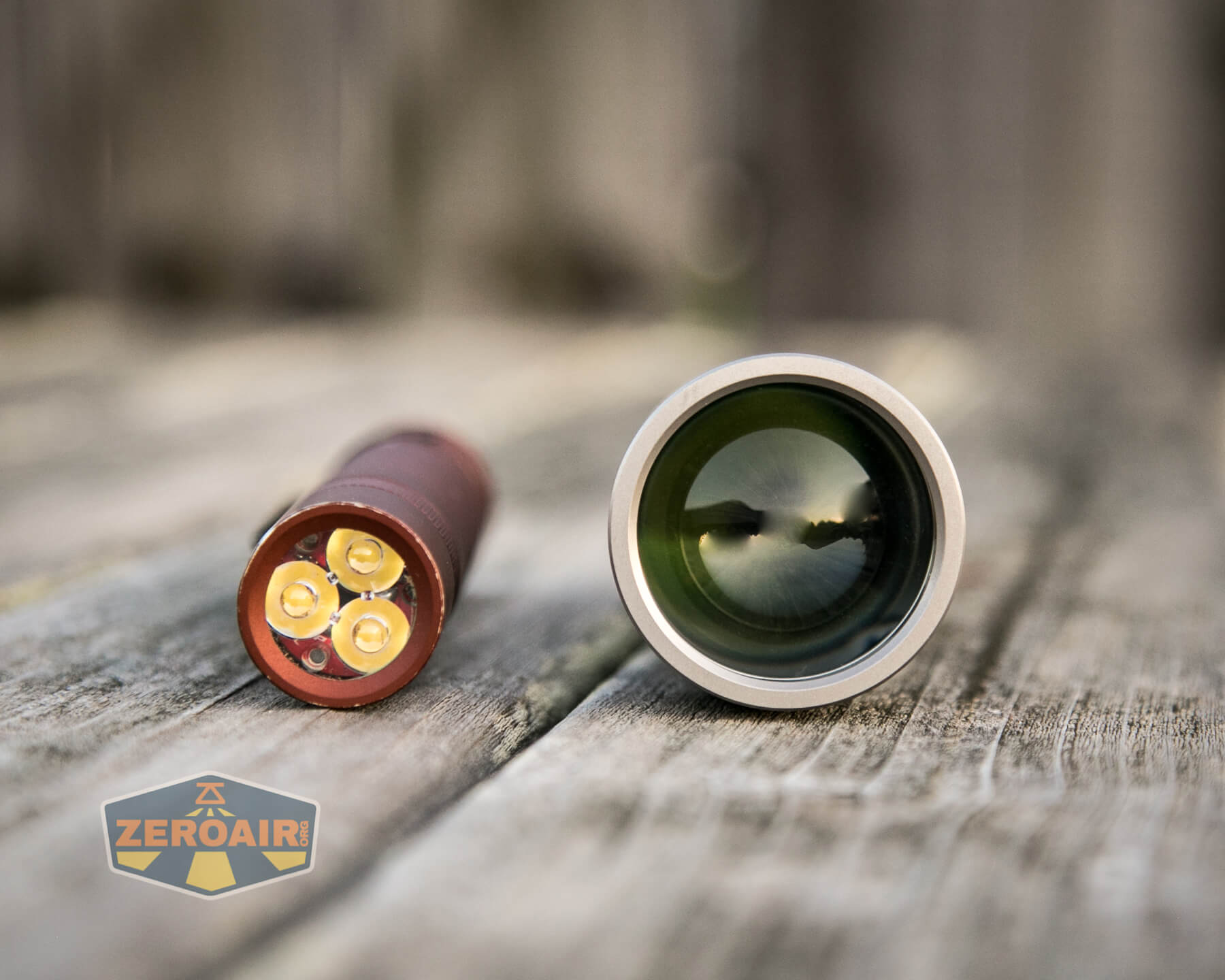
The glass lens is flat on the front and rounded on the back (inside).
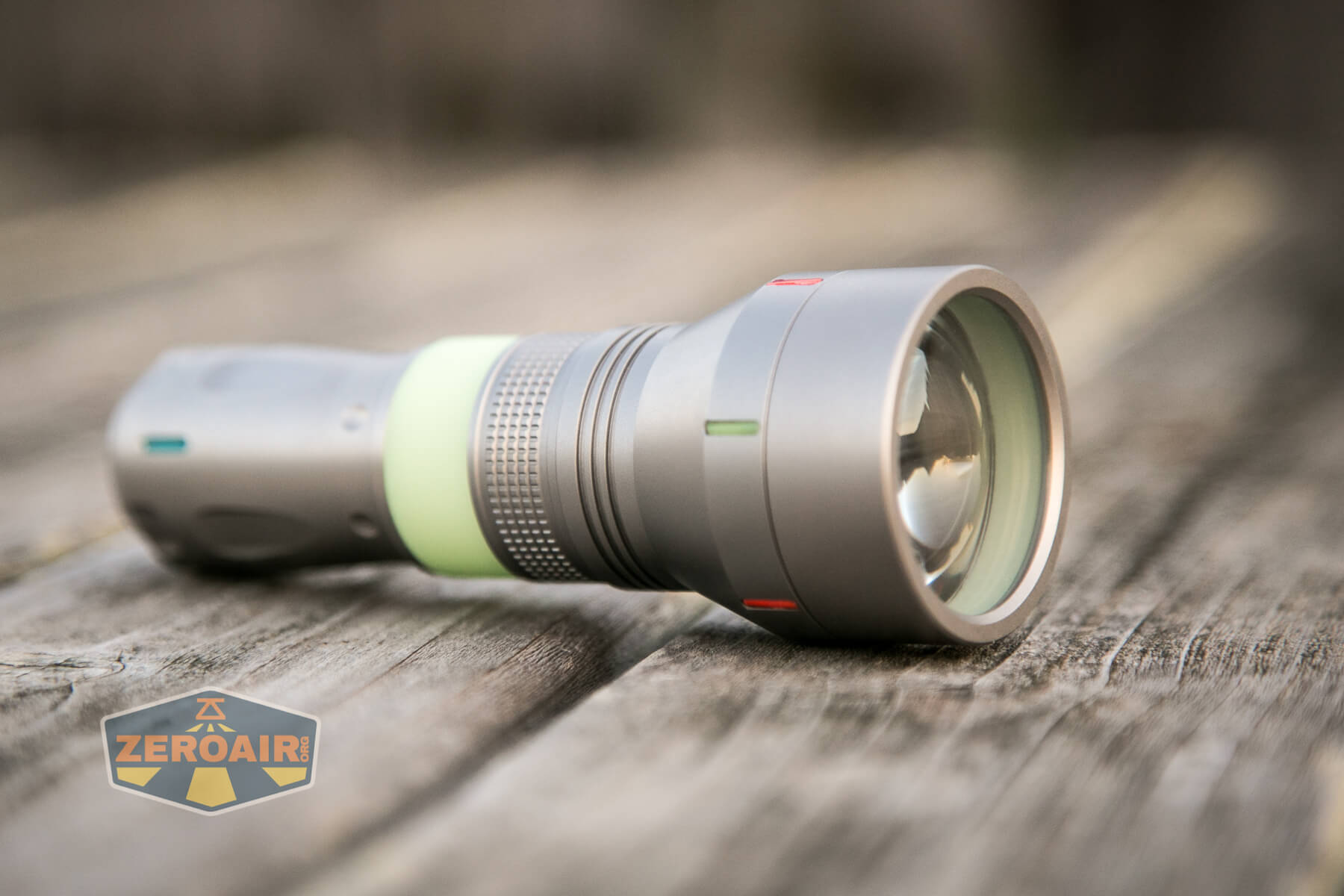
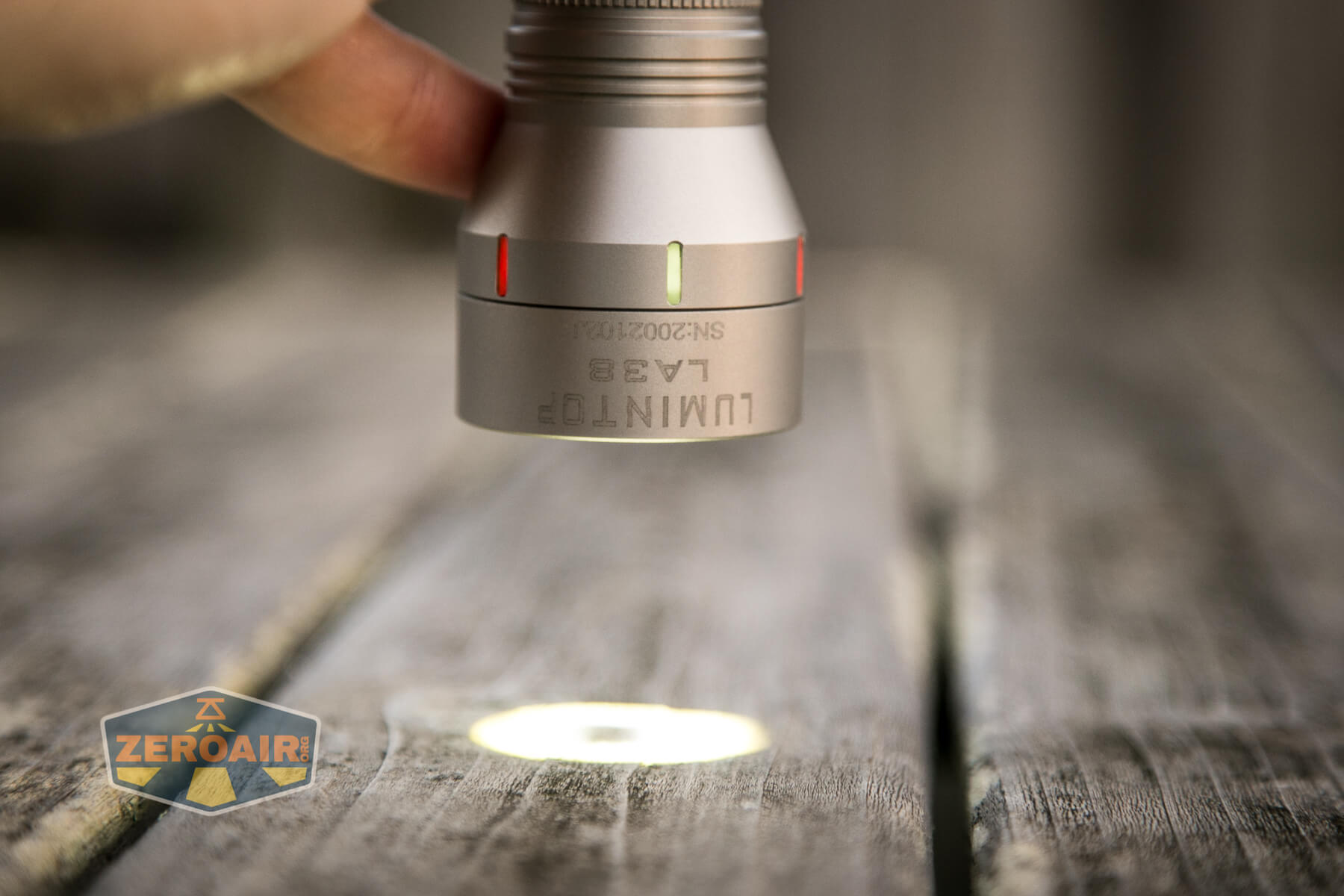
LEPs are very throwy!!
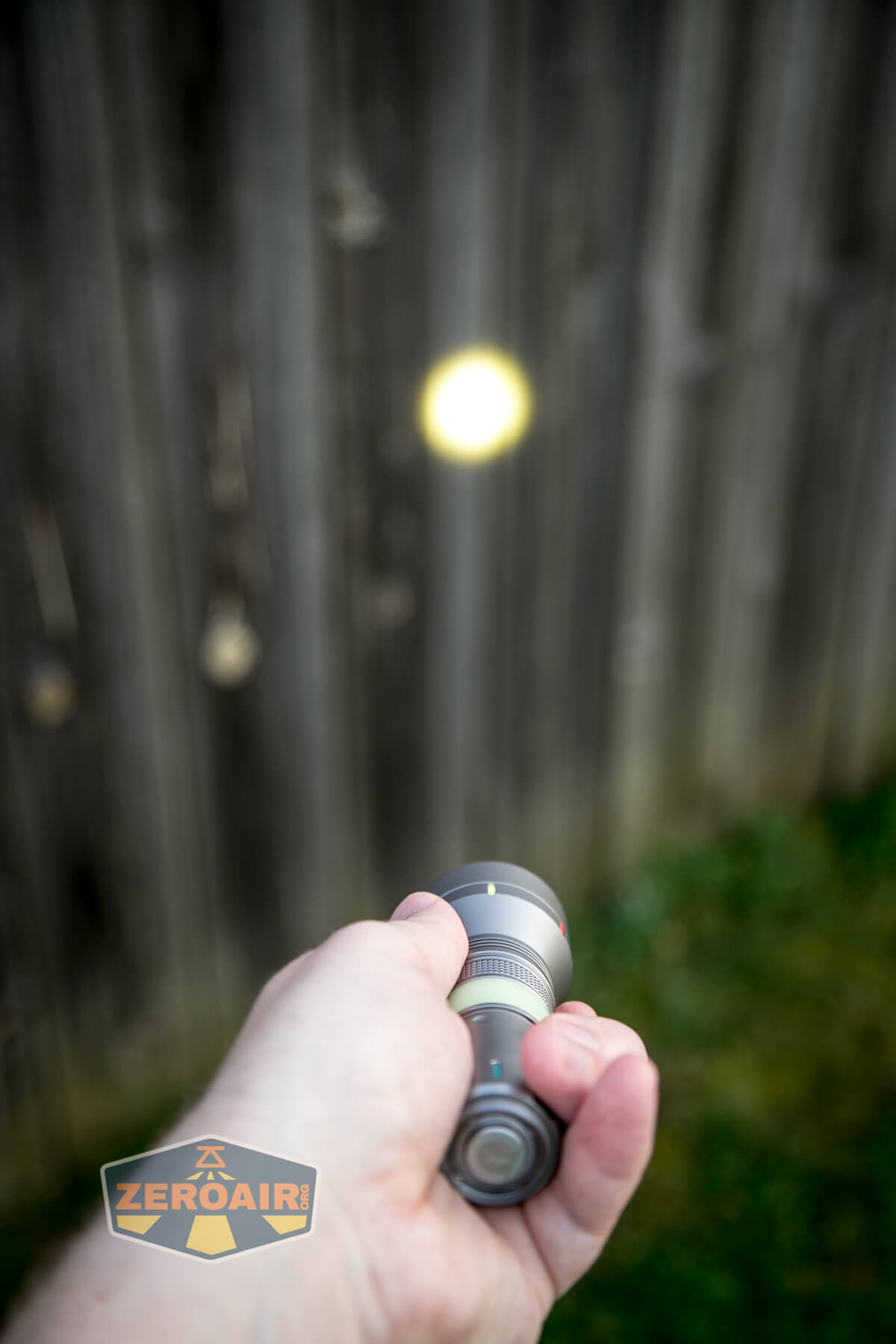
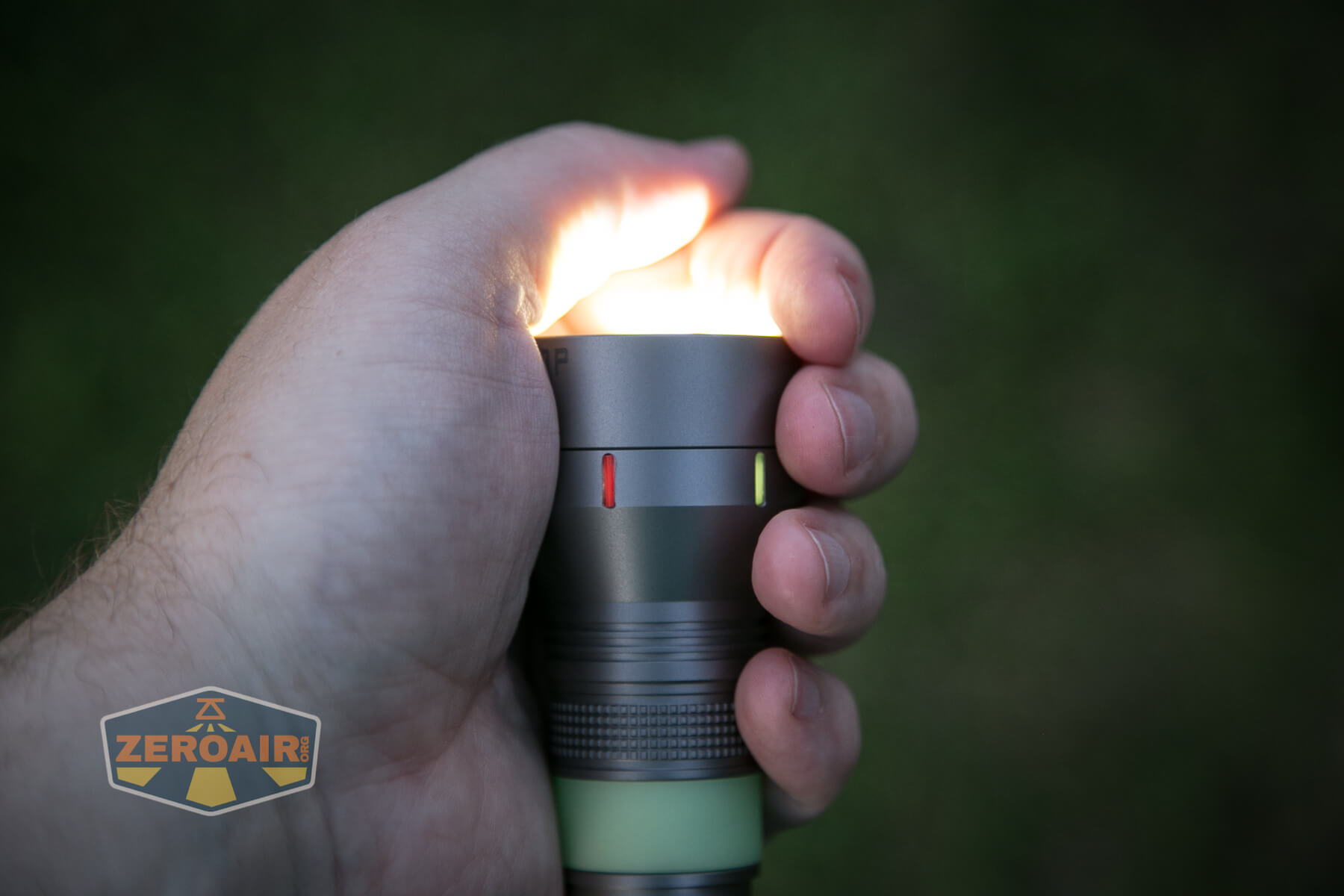
As I said below, the glow tube area glows with the LEP output, since they are epoxied in from the inside. This is a nice touch! And one that’s really only possible with a LEP since there’s no reflector to interfere.
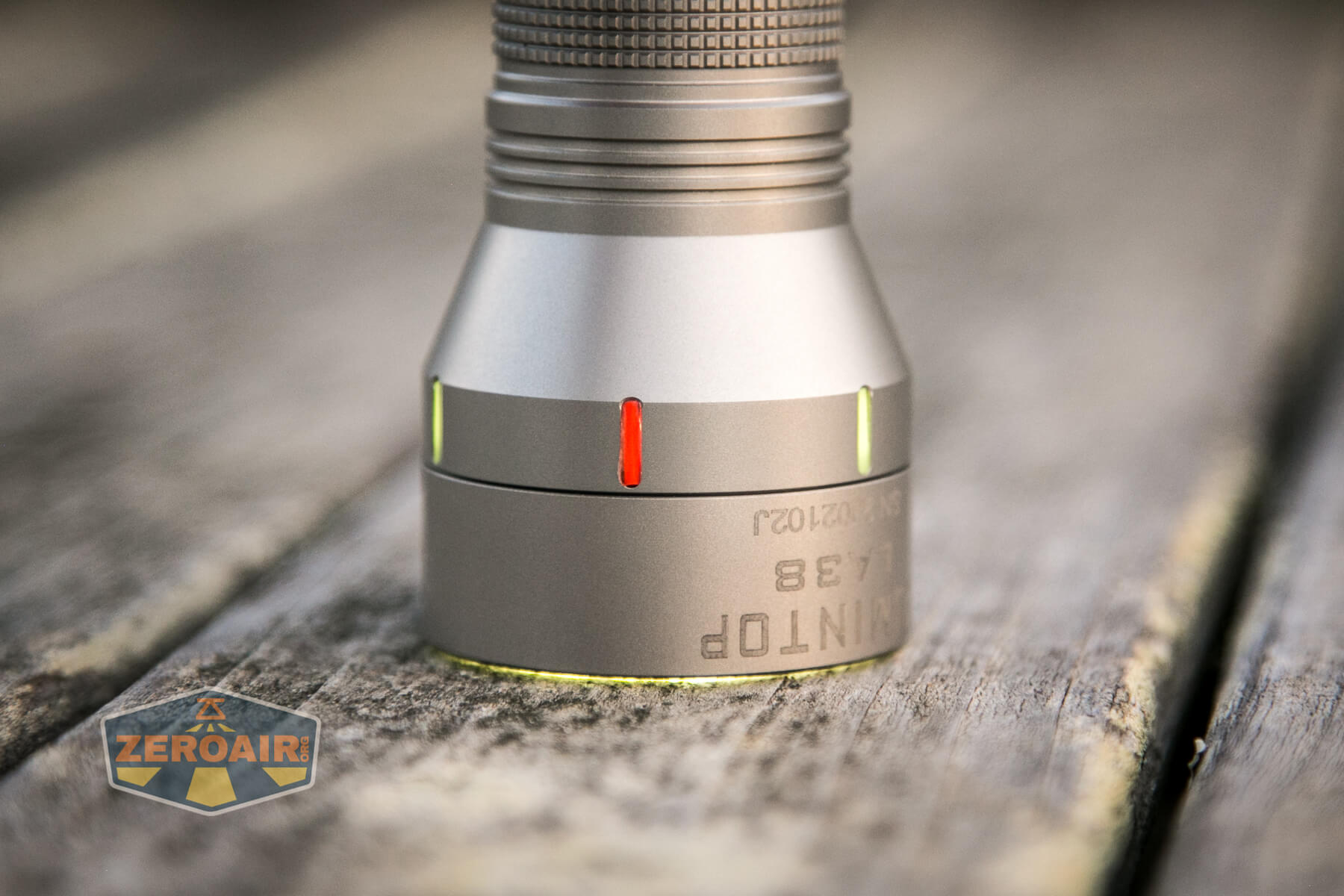
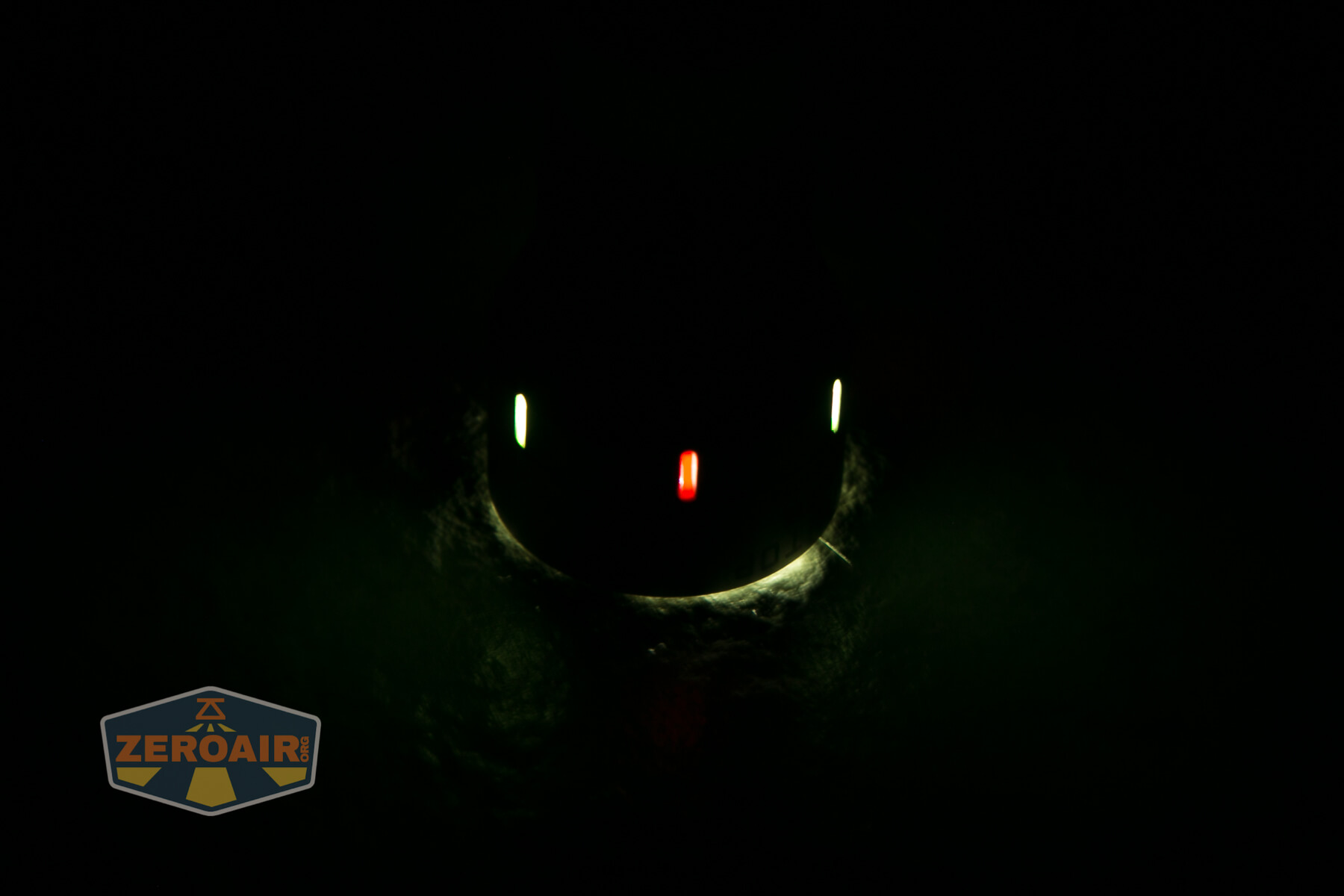
Glow ring!
You’ll probably never have need to get into the LEP fixture, but it’s very accessible.
Beamshots
These beamshots always have the following settings: f8, ISO100, 0.3s shutter, and manual 5000K exposure. These photos are taken at floor level, and the beam hits the ceiling around 9 feet away.
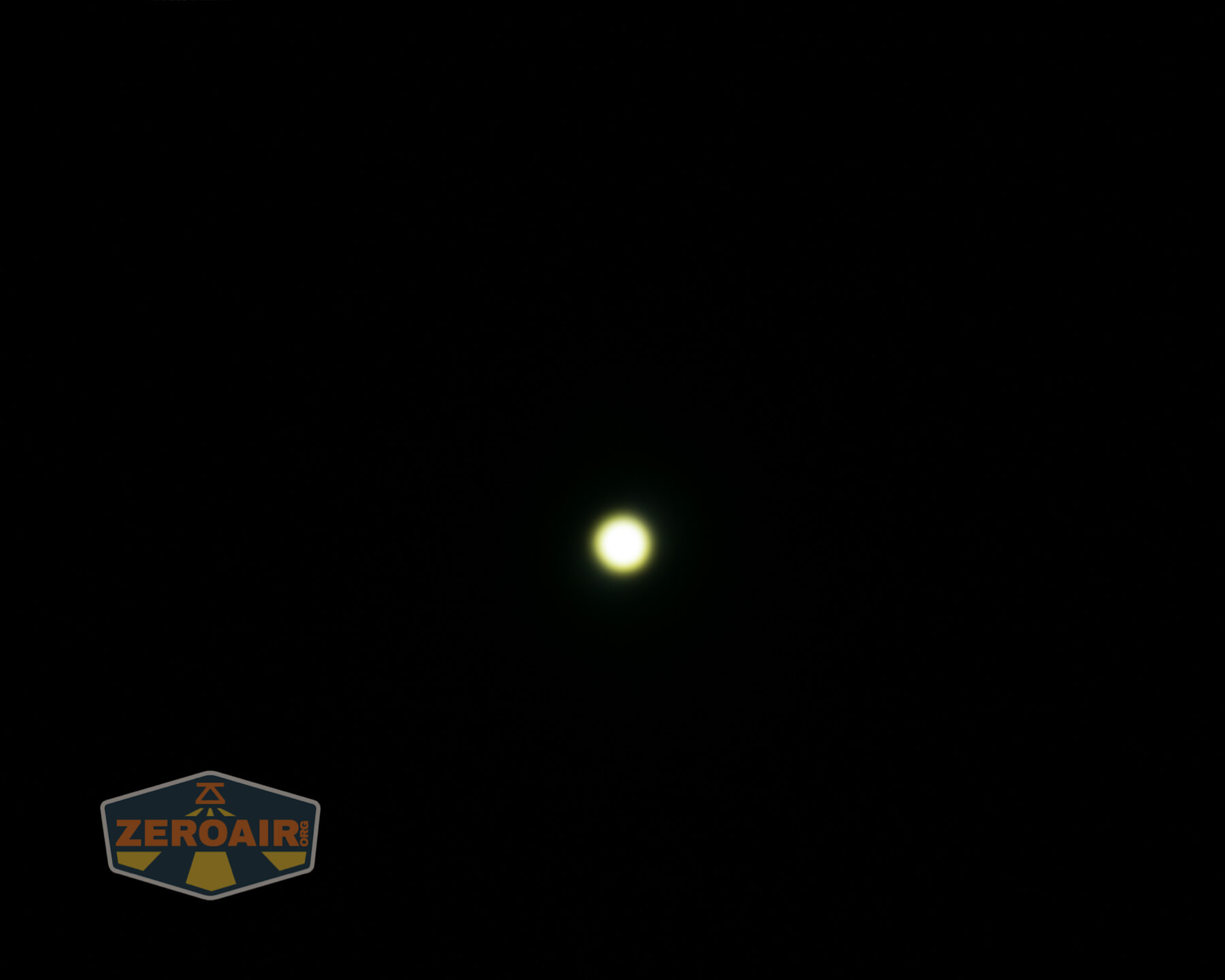
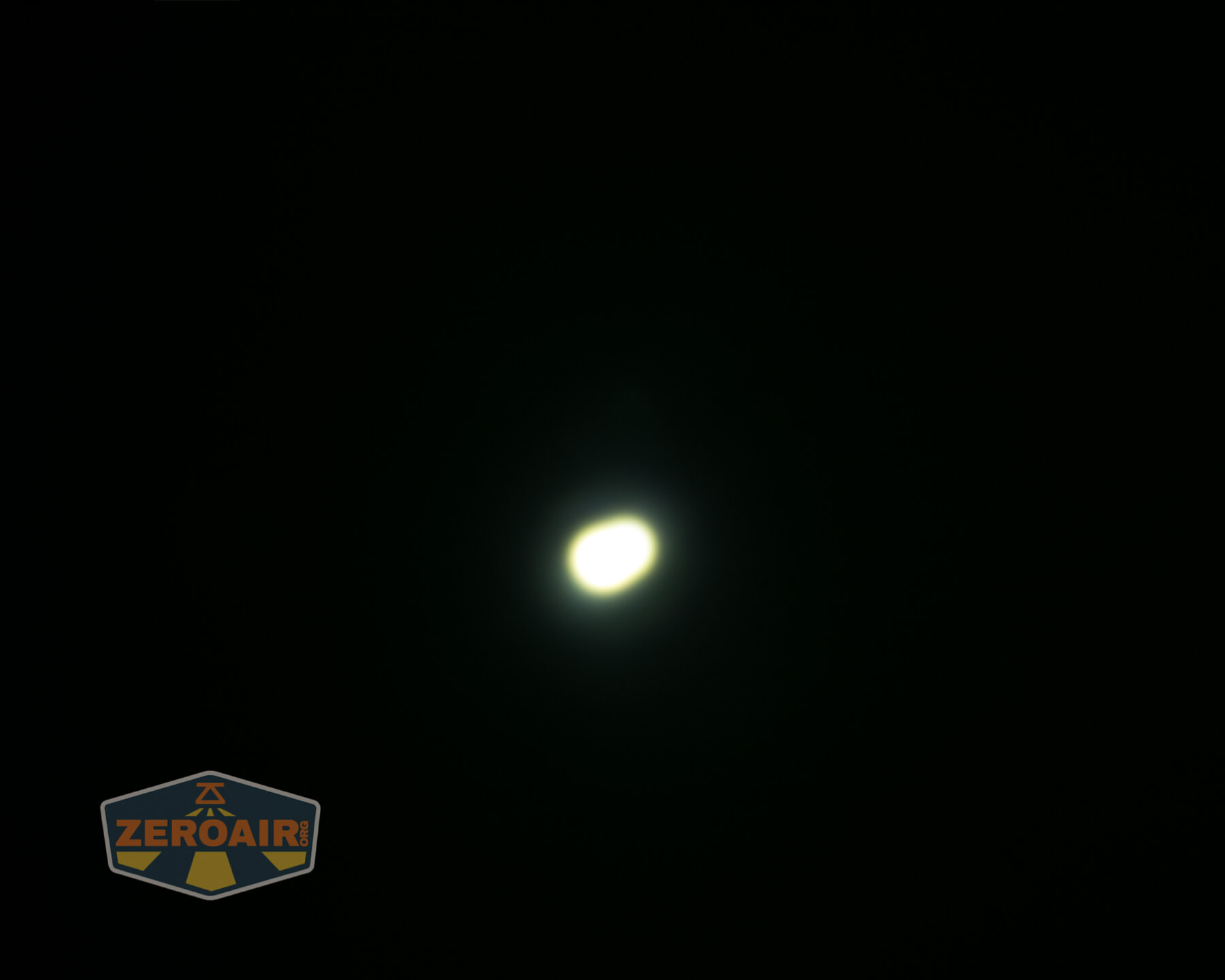
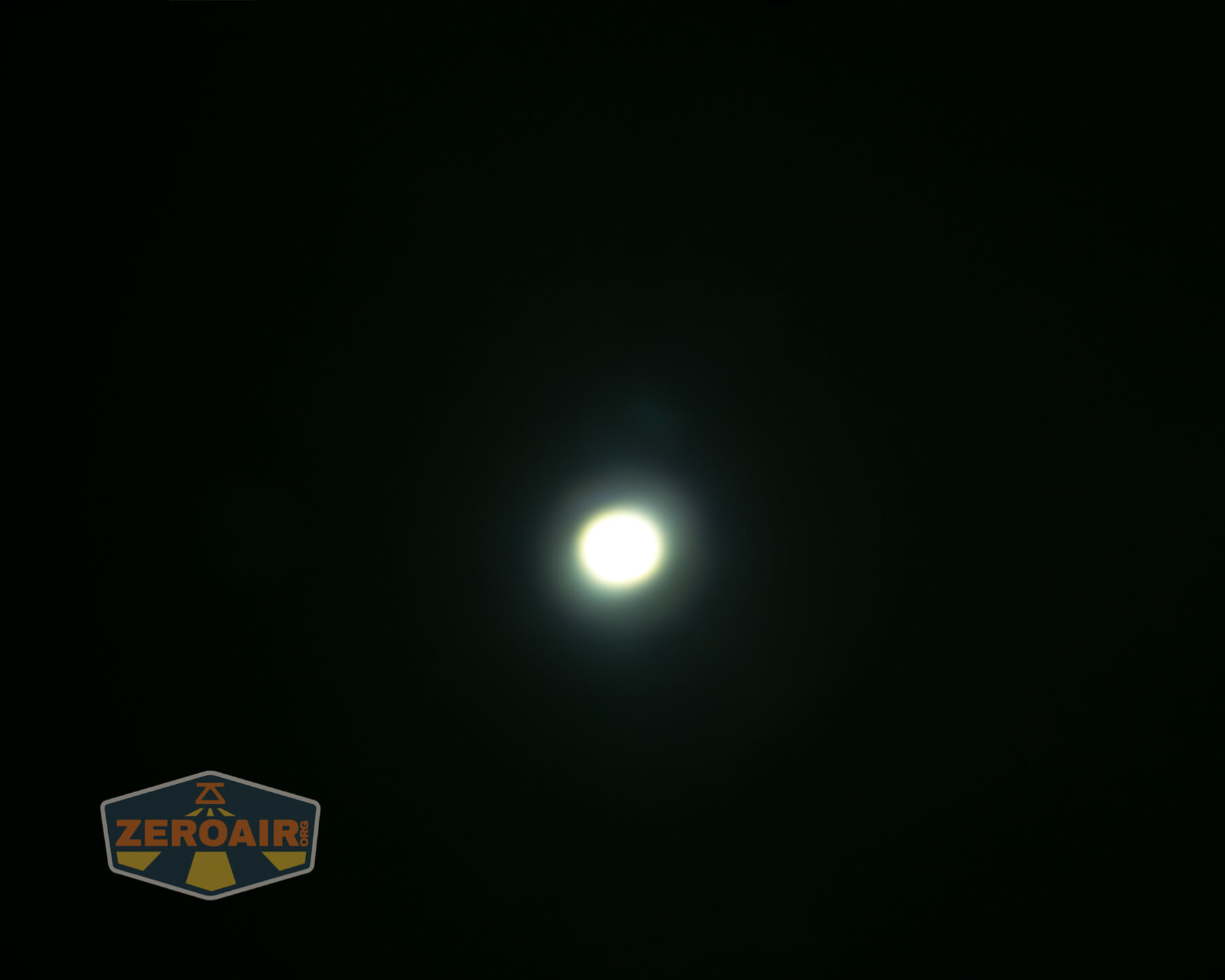
Tint vs BLF-348 (KillzoneFlashlights.com 219b version) (affiliate link)
I keep the test flashlight on the left and the BLF-348 reference flashlight on the right.
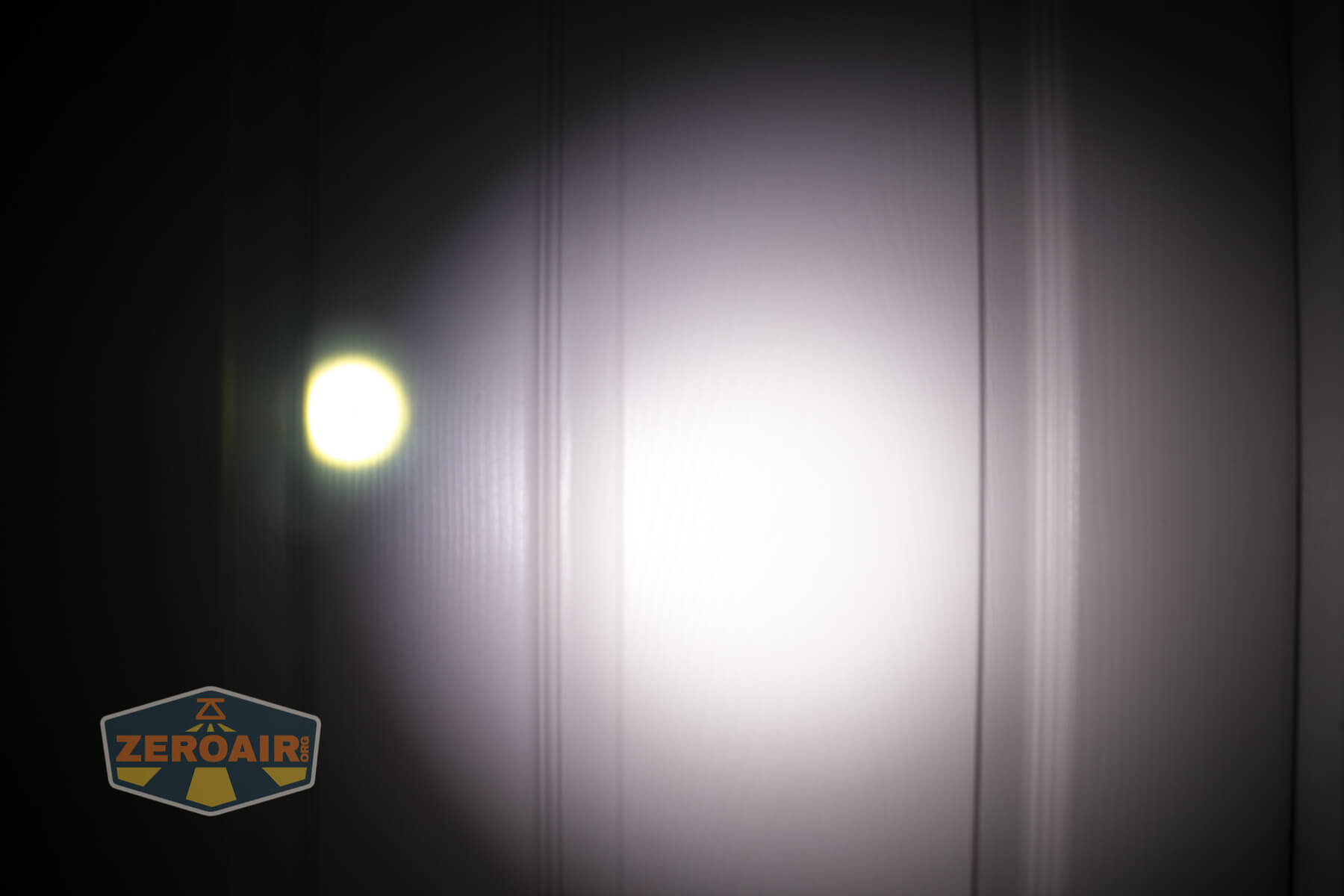
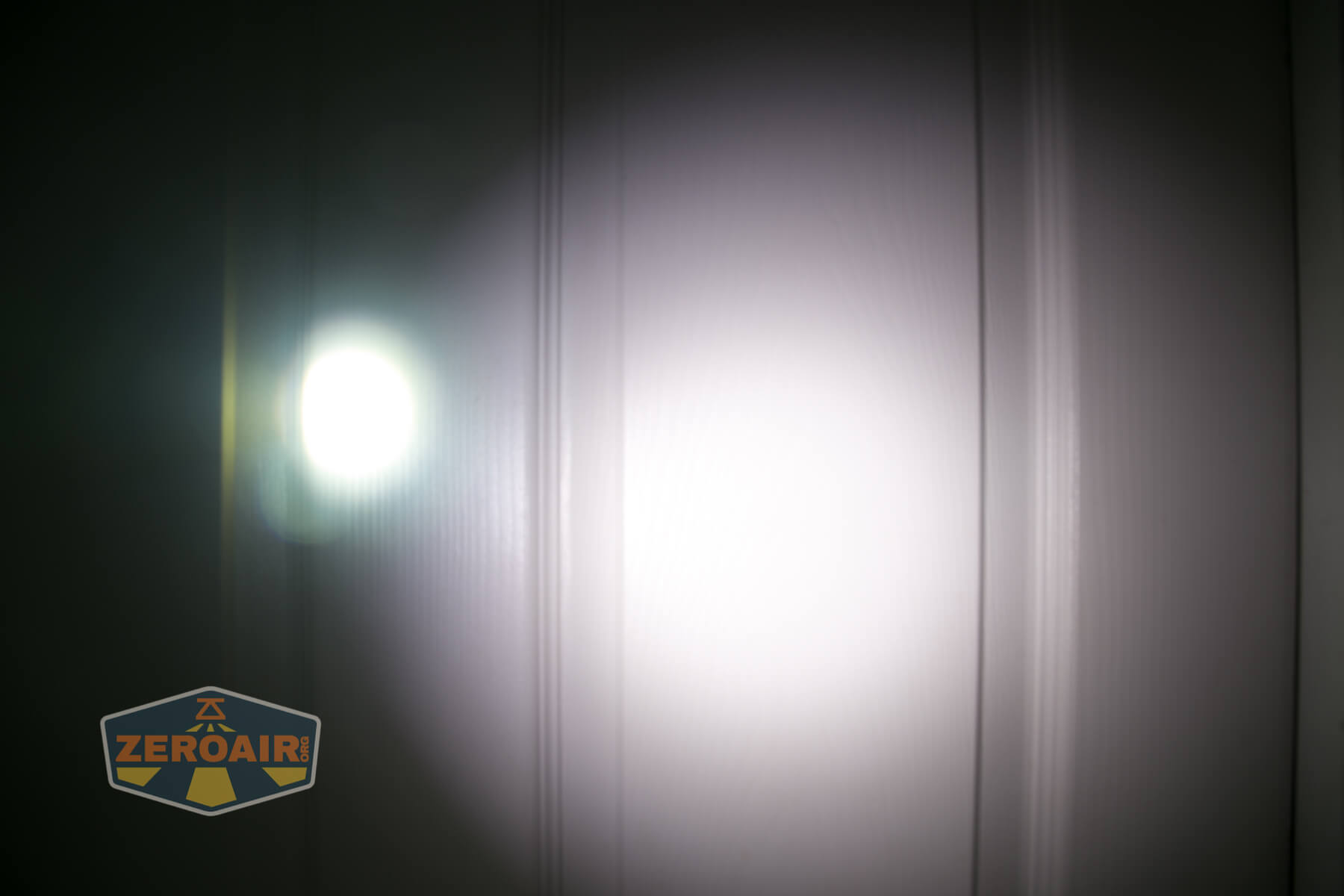
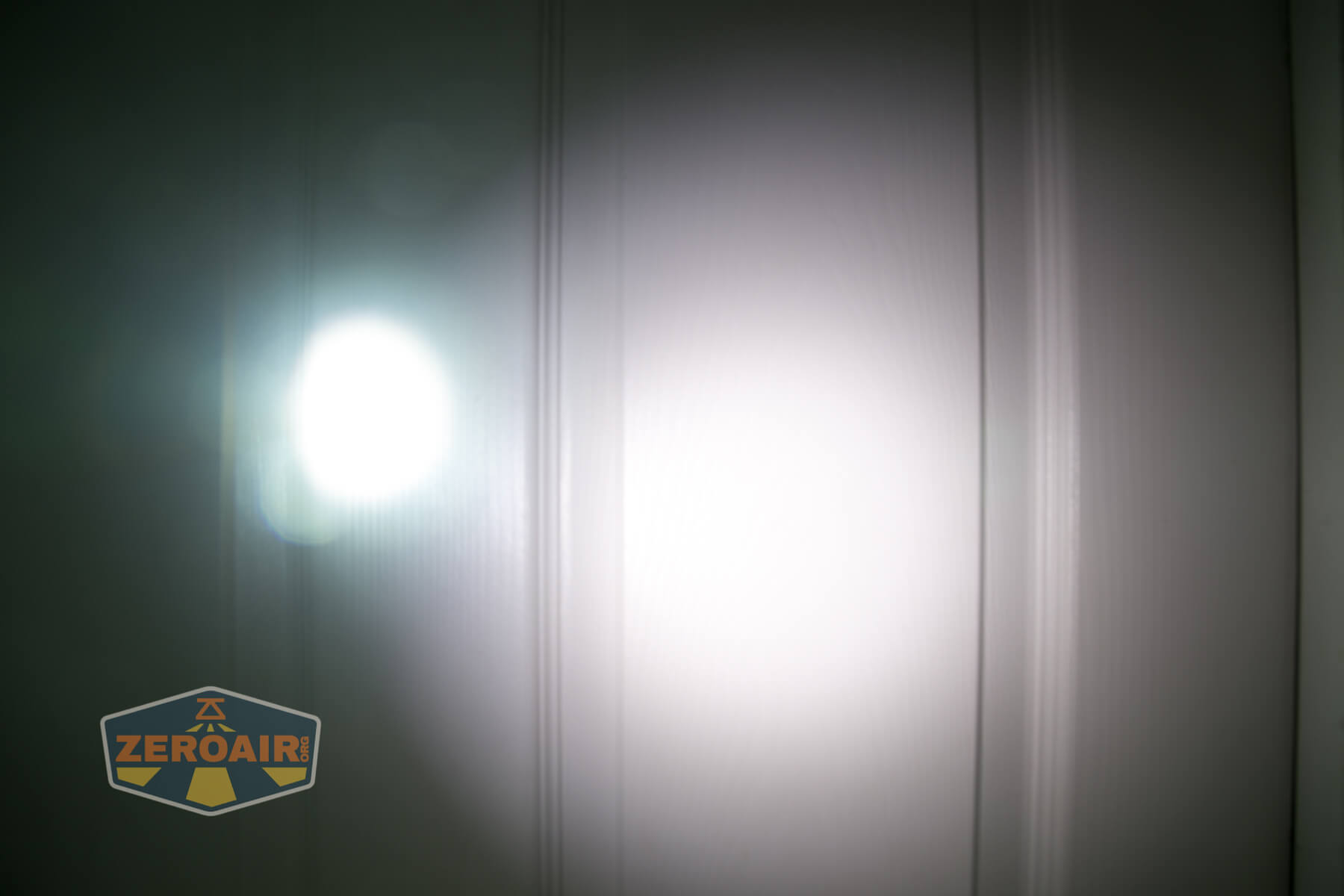
I compare everything to the KillzoneFlashlights.com 219b BLF-348 because it’s inexpensive and has the best tint!
Conclusion
What I like
- This is a fancy, high-end LEP!
- Use of titanium, with multiple finishes available
- Very easy user interface
- Uses a single 18350
- Package includes a 18650 extension tube
- RGB tailcap
- Glow ring
- Peekaboo glow tubes in the head, activated when the light is on
What I don’t like
- The 18650 extension tube in my light didn’t fit 🙁
- Very costly!
- RGB tailcap doesn’t do enough (voltage indication would be great)
Notes
- This light was provided by NealsGadgets.com for review. I was not paid to write this review.
- This content originally appeared at zeroair.org. Please visit there for the best experience!
- Please use my Amazon.com referral link to help support zeroair.org!
- Please support me on Patreon! I deeply appreciate your support!
Discover more from ZeroAir Reviews
Subscribe to get the latest posts sent to your email.