

Thrunite TS2 Self-Rescue Lantern Review
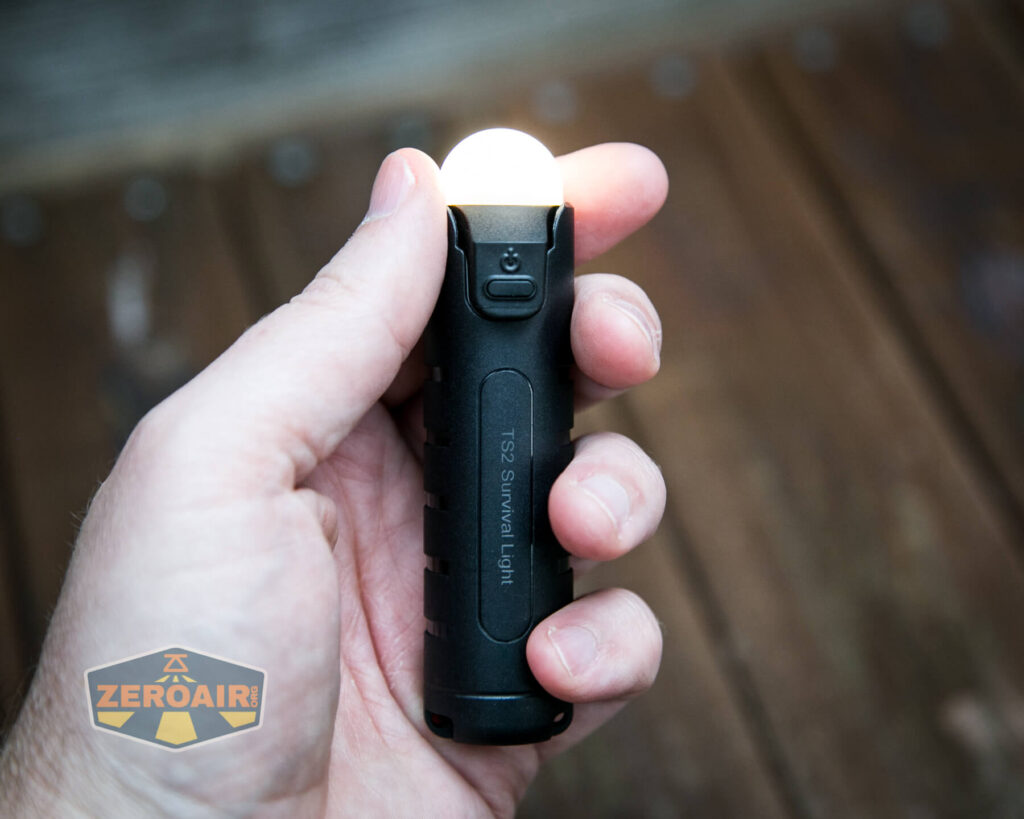
Thrunite has released the TS2 Self-Rescue lantern, a tiny little device that rests atop a single 21700 cell, and provides warm white output!
Official Specs and Features
Here’s a link to the Thrunite TS2 Lantern product page.
Versions
It looks like there’s just one version of the Thrunite TS2 Self-Rescue lantern.
Price
These are selling for $29.95 at the moment. Here are a couple of referral links to Amazon:
Thrunite TS2 Self-Rescue Lantern
Thrunite also has a promotion to the Ti2 AAA flashlight.
Original price:$9.99
Sale Price:$5.99/pcs, $9.99/2pcs, $14.99/3pcs, $18.99/4pcs
Short Review
It’s hard to deny the utility of these little things. I don’t even want to though; they’re great fun. I’m so glad Thrunite went with a warm white emitter option here (despite not stating what the emitter is). Price is maybe a little high but that price also includes the cell, and these 21700 cells are never inexpensive. Honestly, the cable that’s included is probably worth half the price of the item.
Long Review of the Thrunite TS2 Self-Rescue Lantern
The Big Table
| Thrunite TS2 Self-Rescue Lantern | |
|---|---|
| Emitter: | Unstated (Warm White) |
| Price in USD at publication time: | $29.95 |
| Cell: | 1×21700 |
| LVP? | |
| Switch Type: | E-Switch |
| Quiescent Current (mA): | |
| Claimed Lumens (lm) | 118 |
| Candela per Lumen | 0.6 |
| Claimed Throw (m) | – |
| Candela (Calculated) in cd (at 30s) | 15lux @ 1.38m = 29cd |
| Throw (Calculated) (m) | 10.7 |
| Item provided for review by: | Thrunite |
| All my Thrunite reviews! | |
^ Measurement disclaimer: Testing flashlights is my hobby. I use hobbyist-level equipment for testing, including some I made myself. Try not to get buried in the details of manufacturer specifications versus measurements recorded here; A certain amount of difference (say, 10 or 15%) is perfectly reasonable.
What’s Included

- Thrunite TS2 Self-Rescue lantern
- Thrunite 5000mAh 21700 with USB-C port
- Magnetic hook
- Magnetic carry sheath
- Charge cable (USB/USB-C on one end and USB-C/Lightning/Micro-USB on the other)
Package and Manual


Build Quality and Disassembly

Really there are two parts here. There’s the lantern, which lives atop the included 21700. That’s the main thrust of the reviews – the rest are just accessories. The build quality of this little lantern is officially “fine.” It’s not better or worse than you’d expect out of a $30 package where half or more is the cost of a 21700, and half the rest is probably that fancy cable…
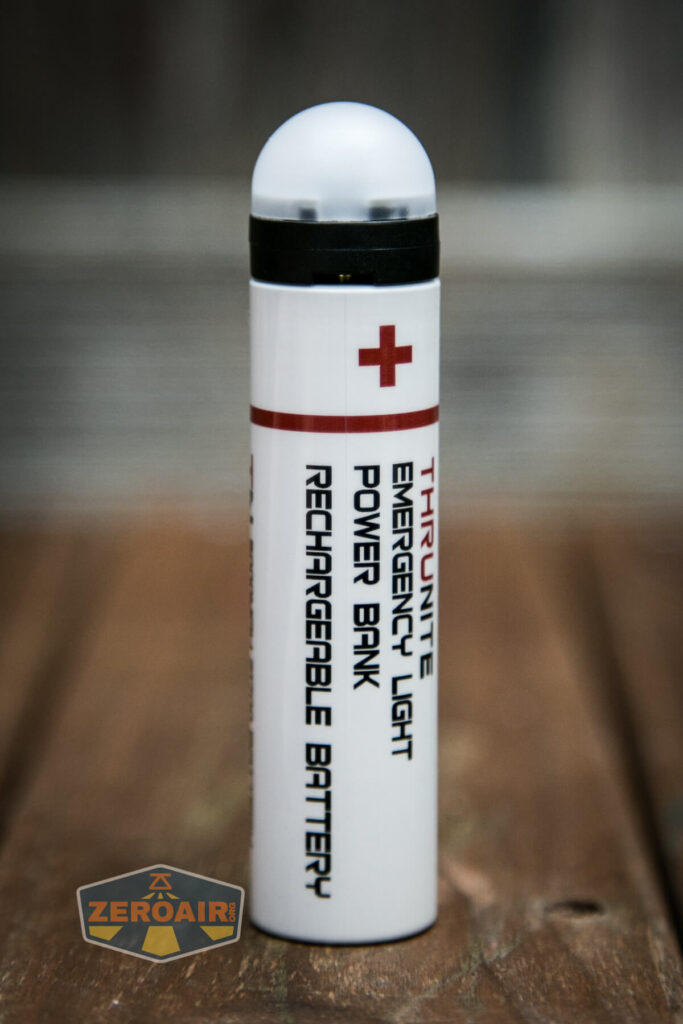

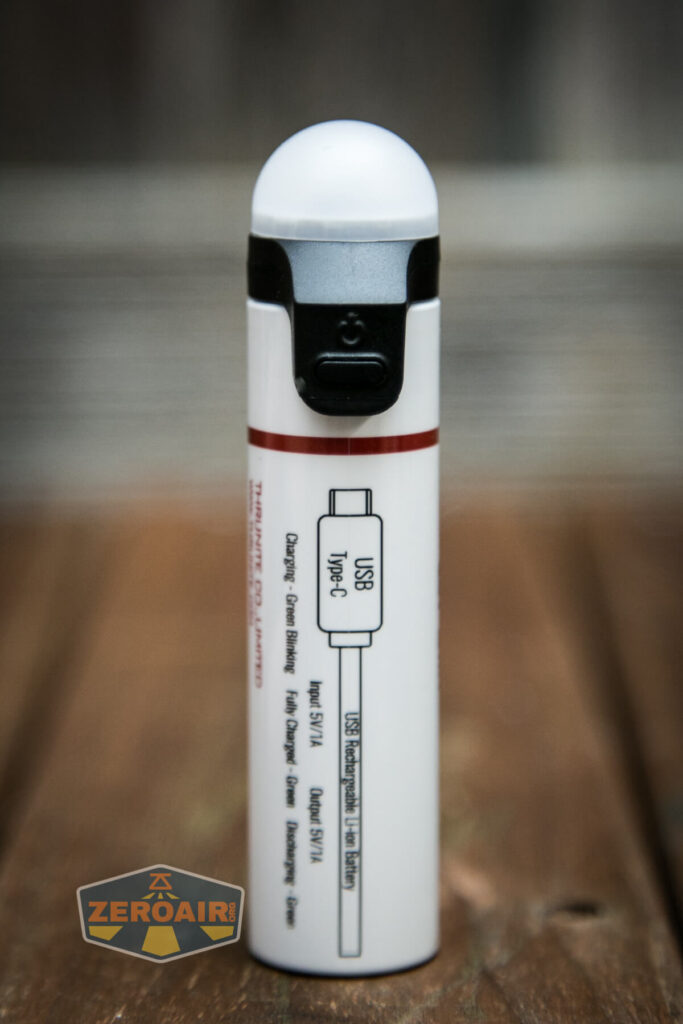

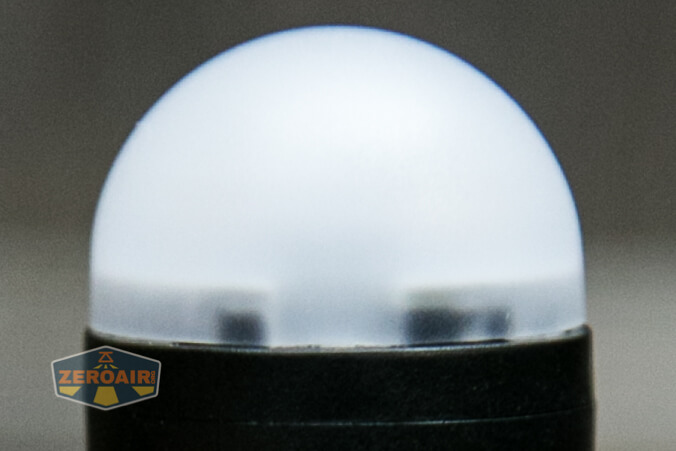

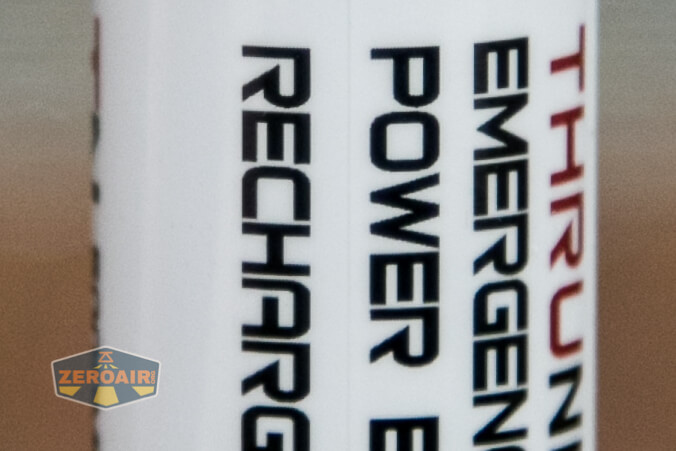
You’ll see the parts much more below, but take note of how these two fit together. The Thrunite TS2 Self-Rescue lantern (the actual lantern of it) and the plastic case that the 21700 cell fits into. The fit is great (or “perfect”).

Maybe you’re like me and thought that this would be a good thing to give the kids to wander around and play with…. Eh maybe. It’s still essentially handing them a bare 21700 lithium-ion cell, even if it’s inside this plastic case. These parts (lantern and plastic body) do not screw together. The cell is held into the case by a magnet but still, it’s easy to remove.
Thus despite how perfect it’d be for kids, it’s probably really not at all ideal for kids (any more so than you’d trust them to handle a bare lithium-ion cell).
Size and Comps
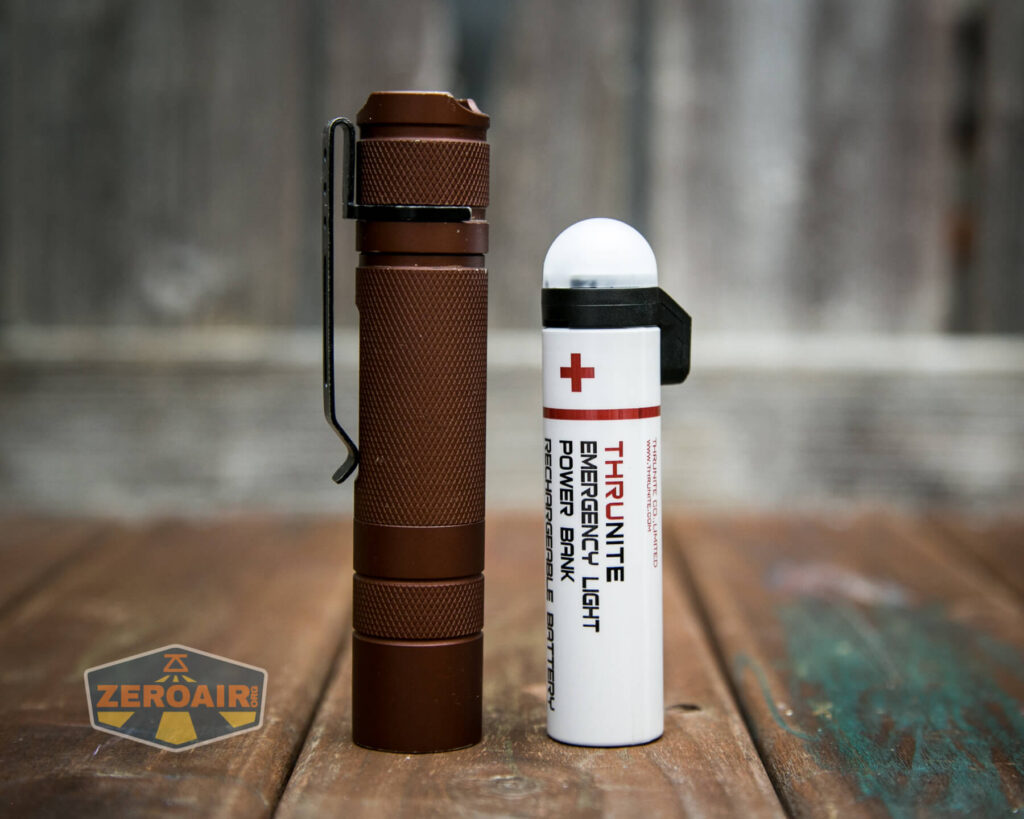
Officially 21.7mm x 77.2mm.
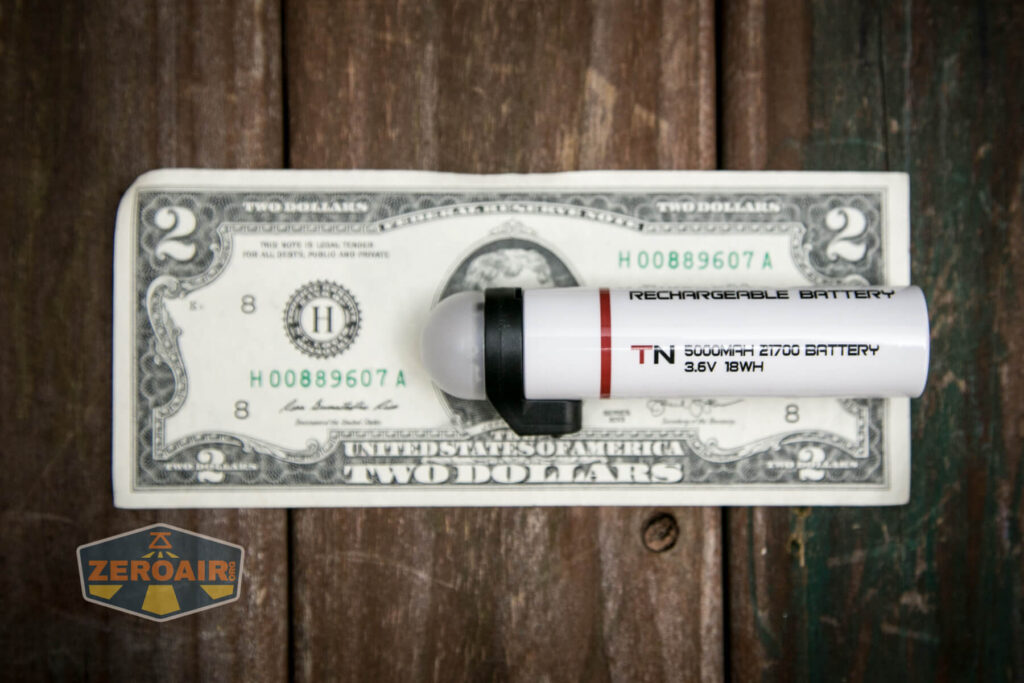
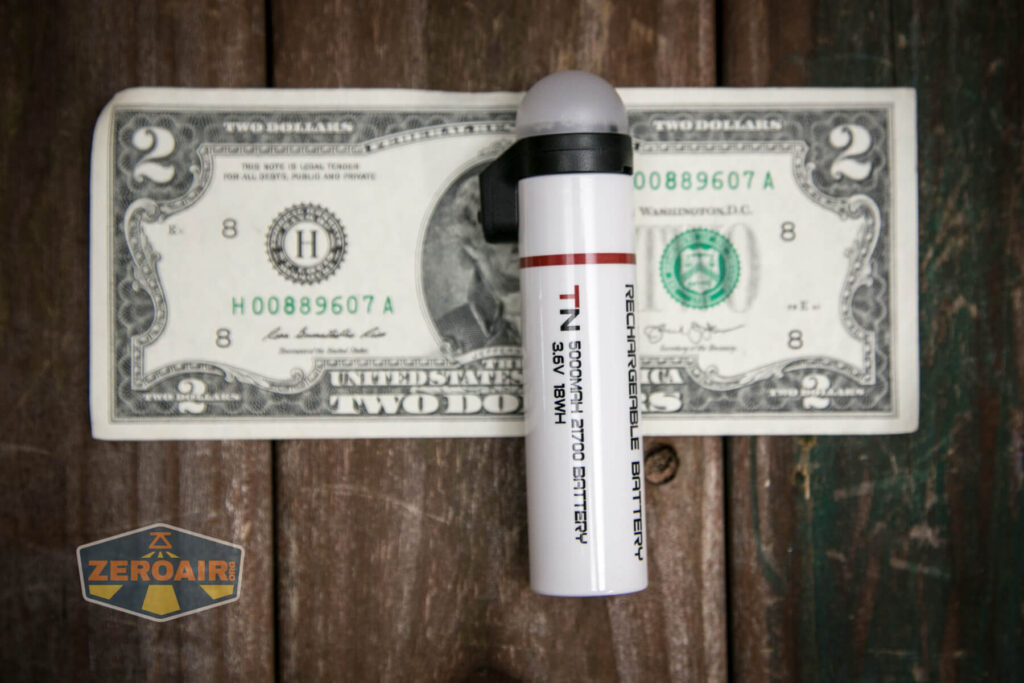
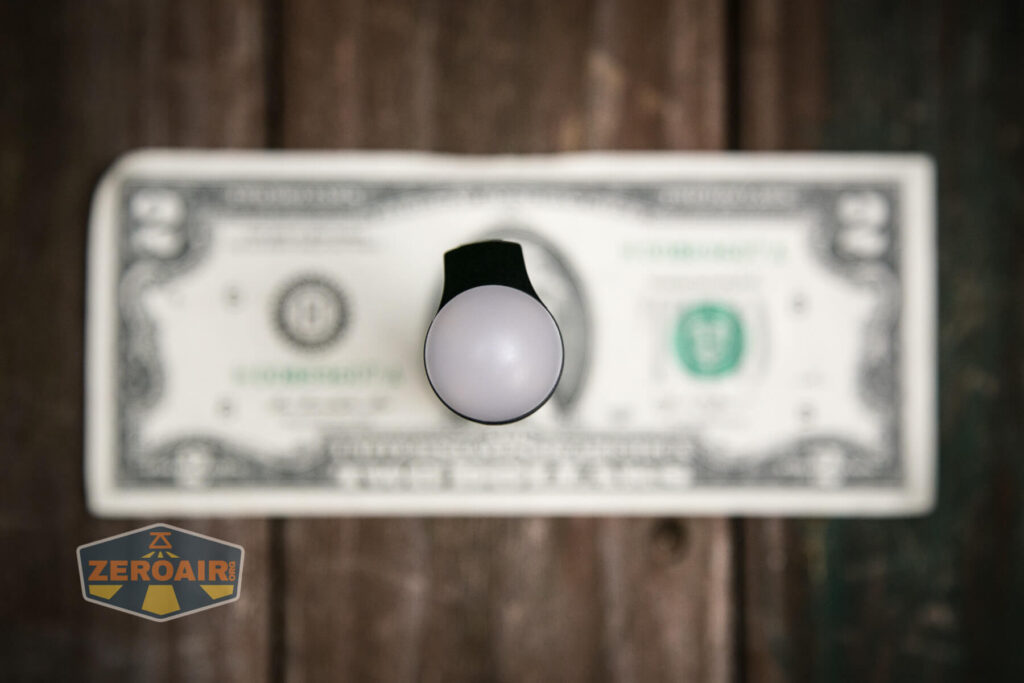
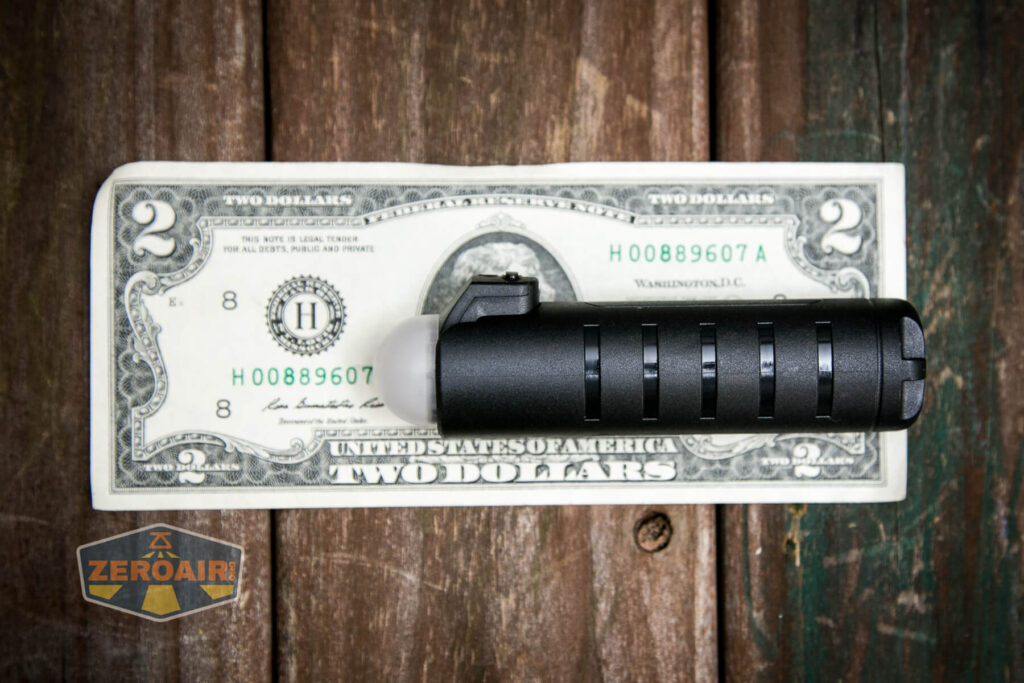
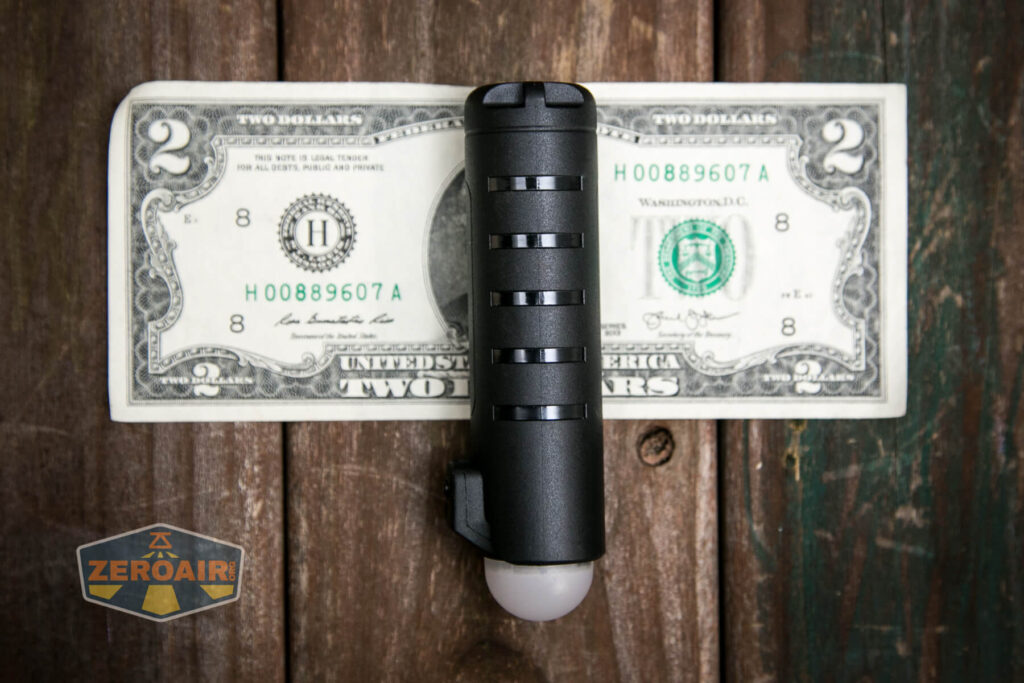
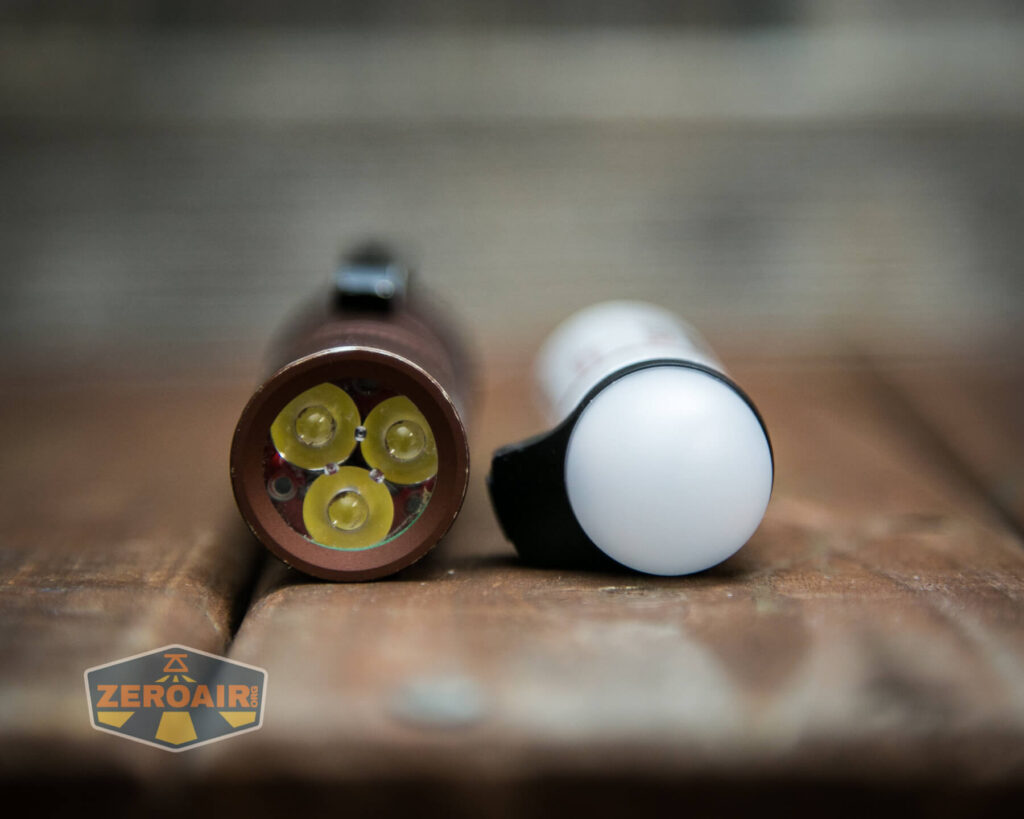
If the flashlight will headstand, I’ll show it here (usually the third photo). If the flashlight will tailstand, I’ll show that here, too (usually the fourth photo).

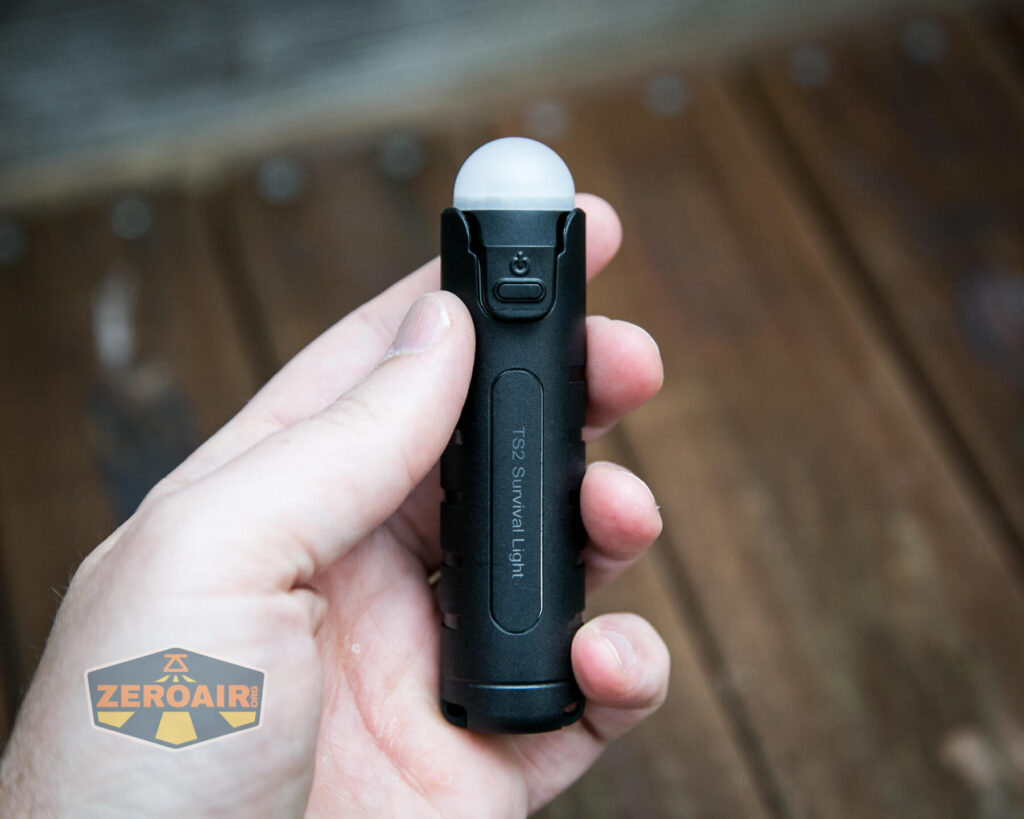

Here’s the test light with the venerable Convoy S2+. Mine’s a custom “baked” edition Nichia 219b triple. A very nice 18650 light.

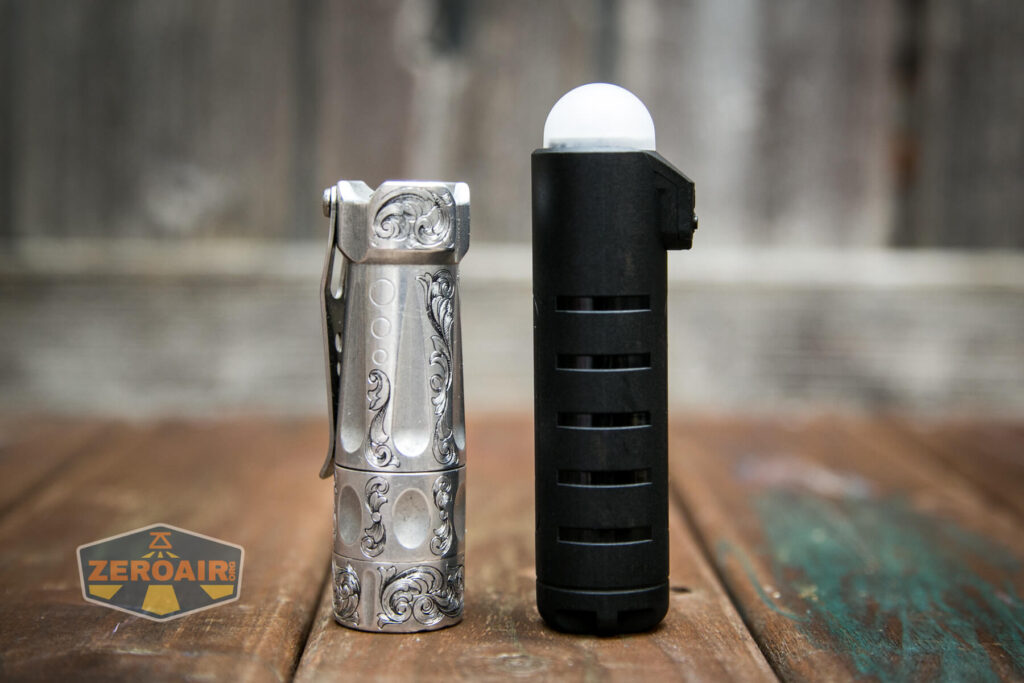
And here’s the light beside my custom engraved TorchLAB BOSS 35, an 18350 light. I reviewed the aluminum version of that light in both 35 and 70 formats.

Retention and Carry
As I’ve already touched on, there are a number of ways to carry the Thrunite TS2 Self-Rescue lantern. Probably primary among those is this plastic case, into which the 21700 cell slips. You can see below that there’s a magnet in the base of that case, and it holds the 21700 “fine.”

The magnet here is plenty strong to hold the parts against a metal surface. It’ll hang easily by this magnet – horizontally too, but a little less securely. It’s by no means an extra aggressive connection.
On this plastic case are two lanyard loops. A lanyard is not included.


Finally, there’s a magnetic hook

I find this connection to be just fine – the Thrunite TS2 Self-Rescue lantern will hang easily. In fact the magnetic hook will hang from the plastic case too.


Power and Runtime
The Thrunite TS2 Self-Rescue lantern is powered by the included 21700 cell. This cell has a USB-C port on the positive end.

Actually, the lantern receives power from the USB-C port, and not strictly “from the cell” (in the traditional sense).

The contacts of the cell are actually completely irrelevant for the TS2 lantern. The part of the lantern that touches the positive terminal does so only for guidance and support – there is no electrical connection. ALL the power comes through the USB-C port.

That leads me to be able to answer your other question: Yes if you have a female USB-C port that can be powered, you can run this lantern from that USB-C port. I don’t really sit around with a ton of female USB-C ports though. I happen to have a few, and two of them are on testing devices. They have to have a “high exposure” side though because the plastic of the “top” of the lantern has maybe 1.5mm between the USB-C (male) and the top. For example on my computer that has a USB-C port, it’s too protected to fit the lantern.
No runtime graphs here. The shortest runtime is around 11 hours. I did find that the lantern heats up a surprising amount during use on High.
Charging
The lantern itself is just a head. But the included cell charges via USB-C.

As you can see above, the charge port is accessible when the cell is in the sheath. It’d be sort of hard to get the lantern off the cell while in the sheath, though…
Included as well is this charging cable which has pretty much everything you’d want. On the “power” side there is a USB port, and inside that is a USB-C port. The opposite end of this cable offers three options – USB-C, micro-USB, and an Apple Lightning plug. This means you can probably use this cable to charge just about whatever, from just about whatever. (Including charging this 21700 cell from USB-A or USB-C).

While charging the cell, a number of little green lights blink, up to four. When four are lit steadily, charging is complete. It’s also possible to press that little white button (at the 3 o’clock position below) for 3 seconds to find the battery level.

Charging can be performed in a regular bay-style charger too, of course. It’s not advised to do both USB-C and bay-charging at the same time, though.
Powerbank
Not only does the TS2 offer onboard charging, it offers USB-C output, as well.

Of course, that’s where the real magic of this included cable comes in. The USB-A side also has a USB-C plug, which goes into the 21700 cell. Then the other end can be used with Lightning, USB-C, or micro-USB.

It’s truly a versatile setup!
Modes and Currents
| Mode | Mode Claimed Output (lm) | Claimed Runtime | Measured Lumens | Amps^ |
|---|---|---|---|---|
| High | 118 | 11h | – | 0.36 |
| Medium | 40 | 30h | – | 0.14 |
| Low | 5 | 180h | – | 0.03 |
^ The amps displayed here are just what I see when running the light directly from a USB-C testing device. Probably moderately accurate, at least.
Pulse Width Modulation
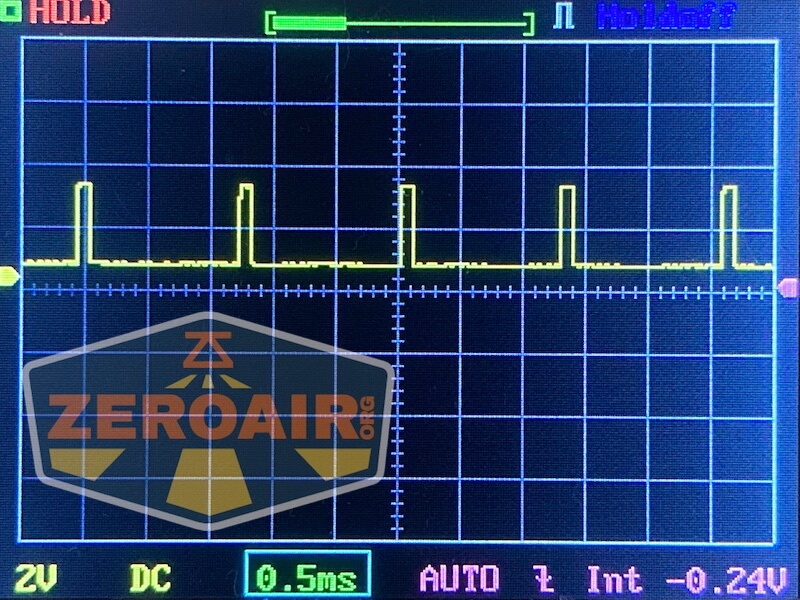
Here’s one downside of this great device: PWM. The lower two modes have very slow PWM. So slow in fact, that I’m displaying it in two timescales. First is the usual timescale.
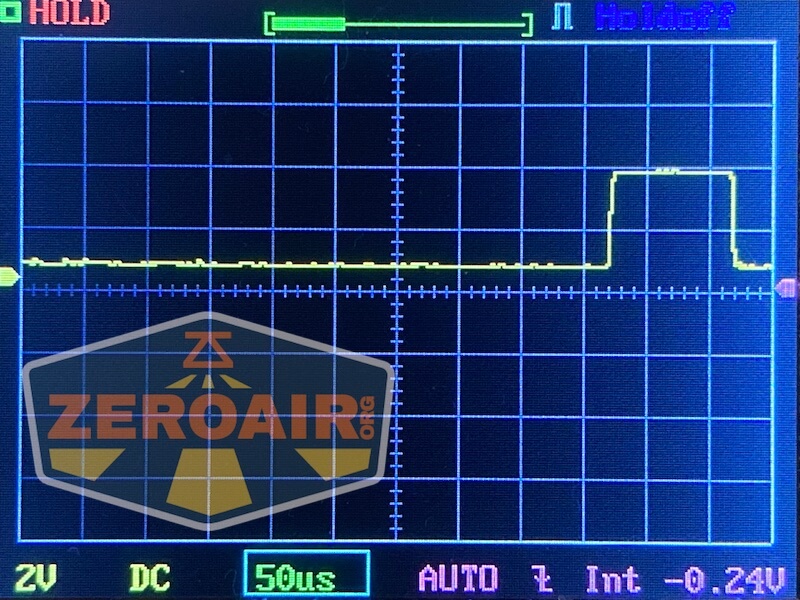
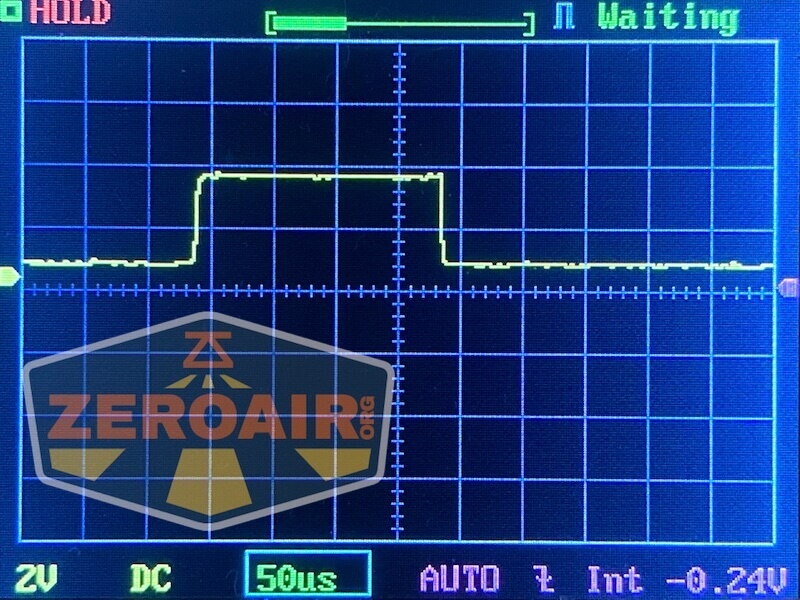
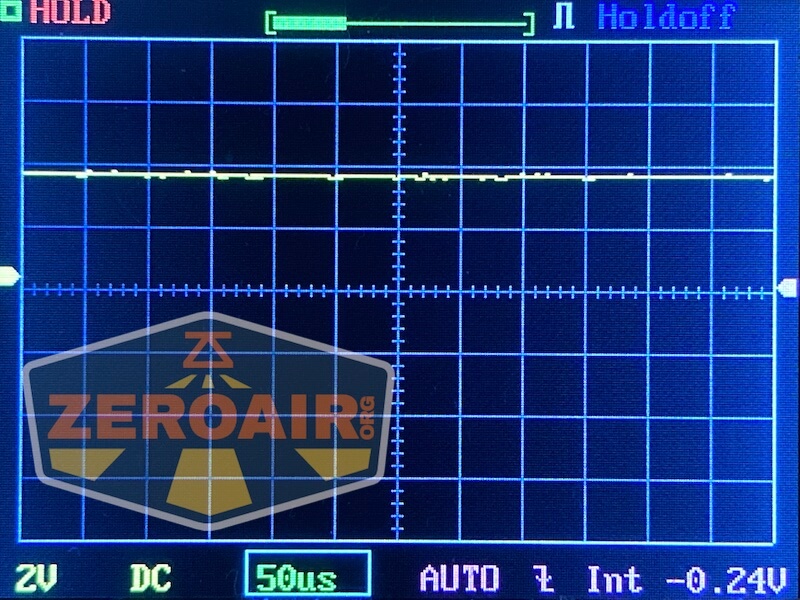
Next is a scale where you can see multiple peak-to-peak waves of PWM.
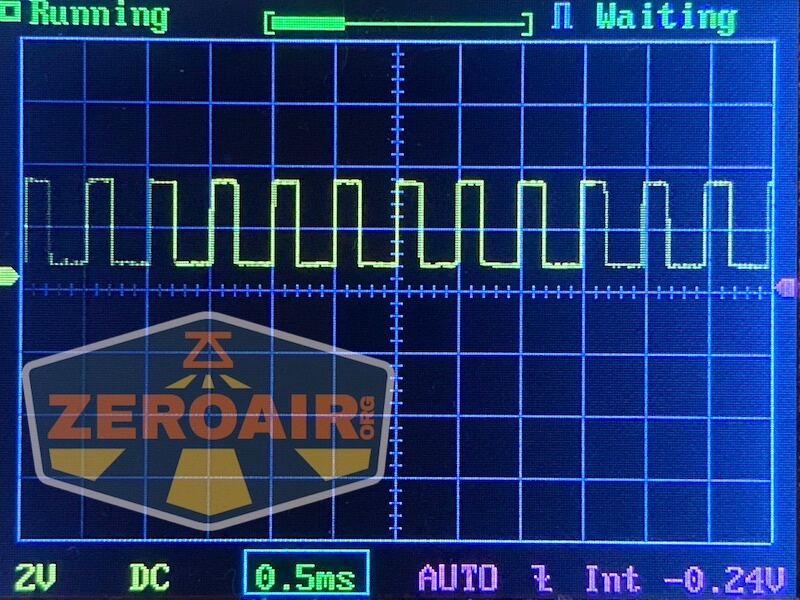
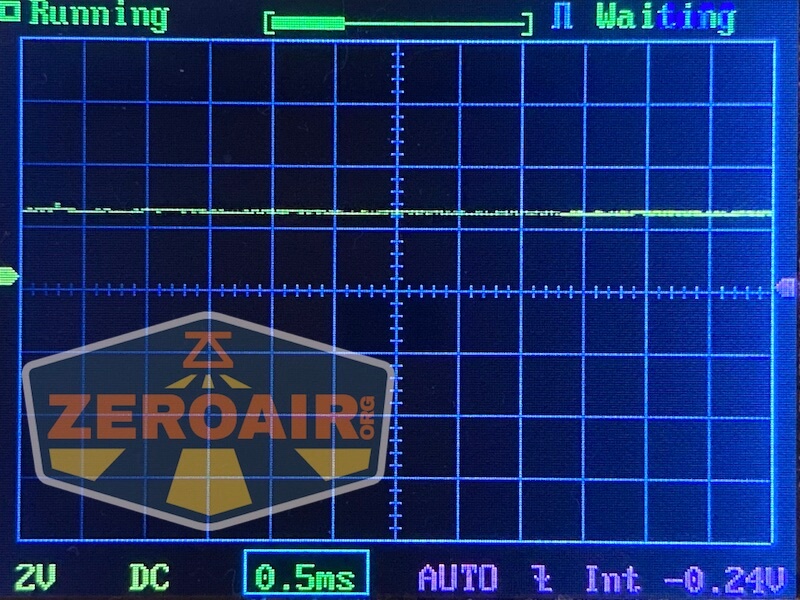
Here you can see a “baseline” – a chart with almost no light hitting the sensor.

Then there’s the Ultrafire WF-602C flashlight, which has some of the worst PWM I’ve seen. It’s so bad that I used a post about it to explain PWM! Here are multiple timescales (10ms, 5ms, 2ms, 1ms, 0.5ms, 0.2ms) to make comparing this “worst” PWM light to the test light easier. That post also explains why I didn’t test the WF-602C at the usual 50us scale.


User Interface and Operation
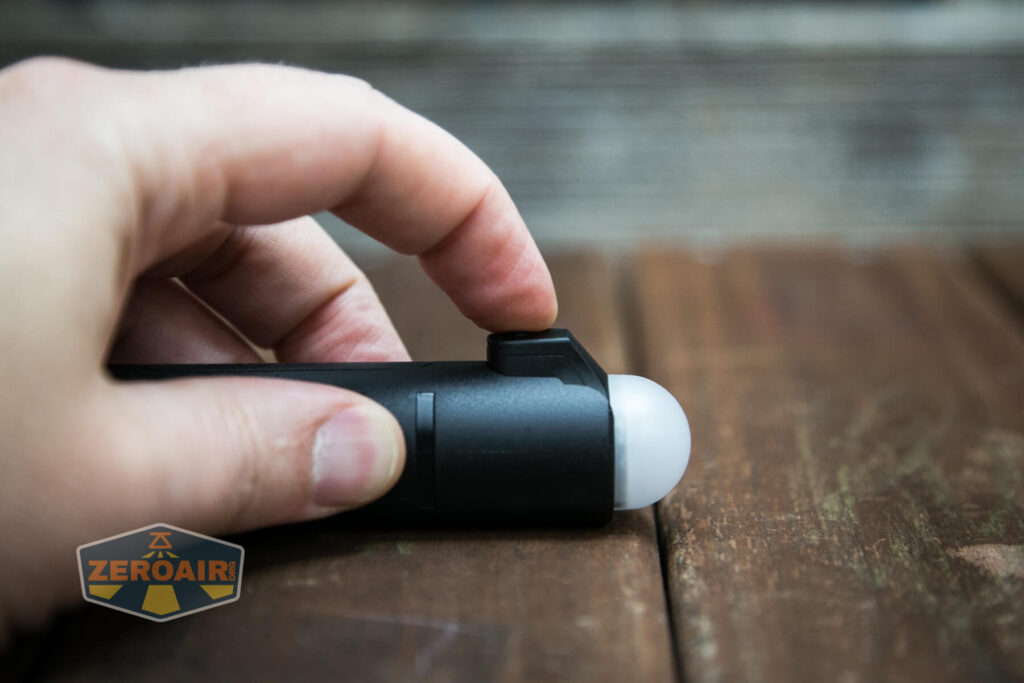
There’s a single e-switch on the TS2. Because of how the device is built, with the USB-C port going into the cell, there has to be a part sticking out from the cell. The design is clever in that when actuating the switch, the device is pushed into the port, and not some other direction.
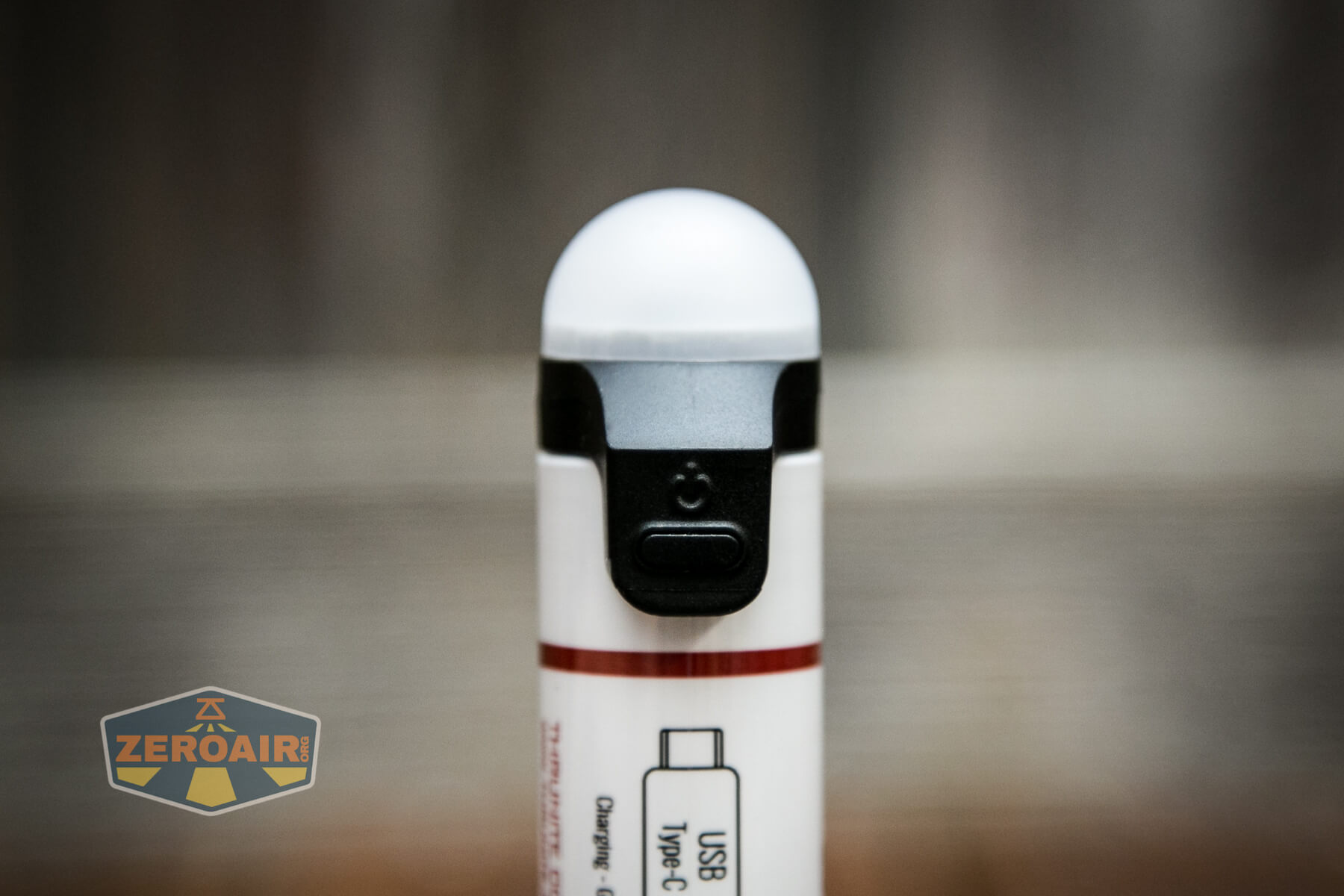
Thus, you won’t dislodge the TS2 by pressing the switch.

The flip side here is that when removing the TS2 from the 21700, it’s possible to torque the USB-C port. That can’t be good for the port, but I haven’t had any bad experiences due to my lazy removal of the TS2. Just something to note.


Here’s a user interface table!
| State | Action | Result |
|---|---|---|
| Off | Click | Low |
| Off | Hold | No action |
| On | Click | Off |
| On | Hold | Mode advance (LMH) |
| Any | Double Click | SOS |
It’s really a very simple and pleasant user interface, especially in that the device always turns on to Low.
LED and Beam
While the emitter isn’t stated on the product materials, I can say a few things. There are four emitters here, and they’re covered by this opaque dome.

The dome diffuses the light very well, and there are approximately 180 degrees of illumination.


What Thrunite doesn’t state about the emitters, maybe we can answer below.
LED Color Report (CRI and CCT)
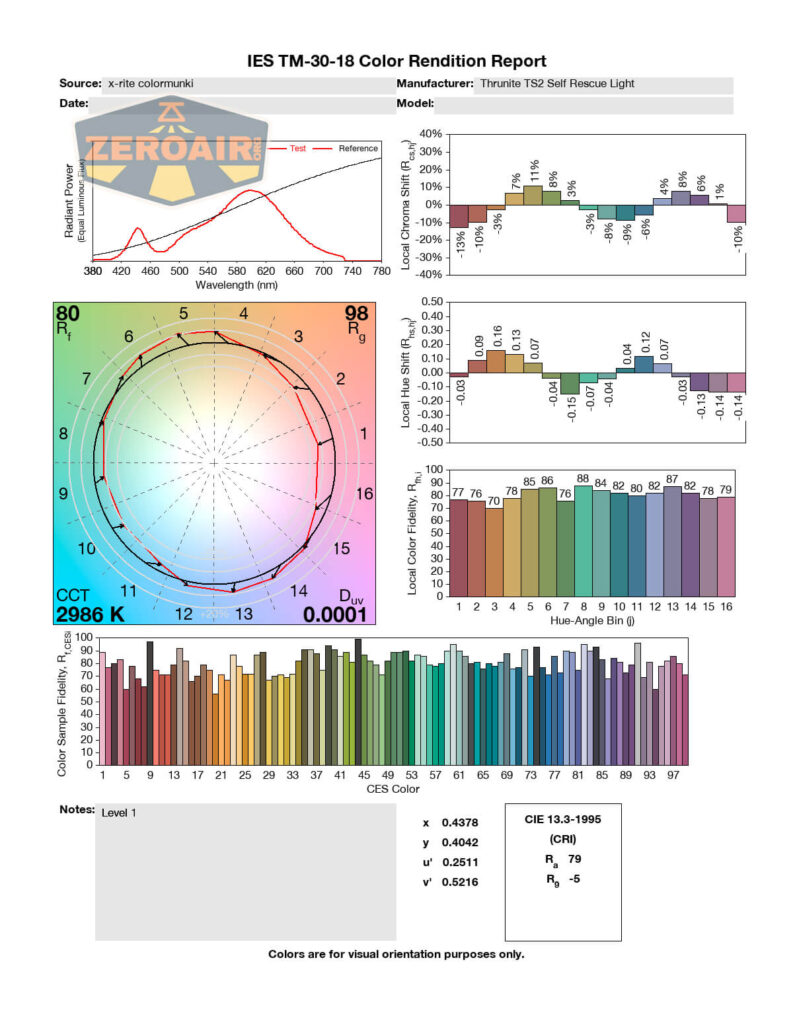
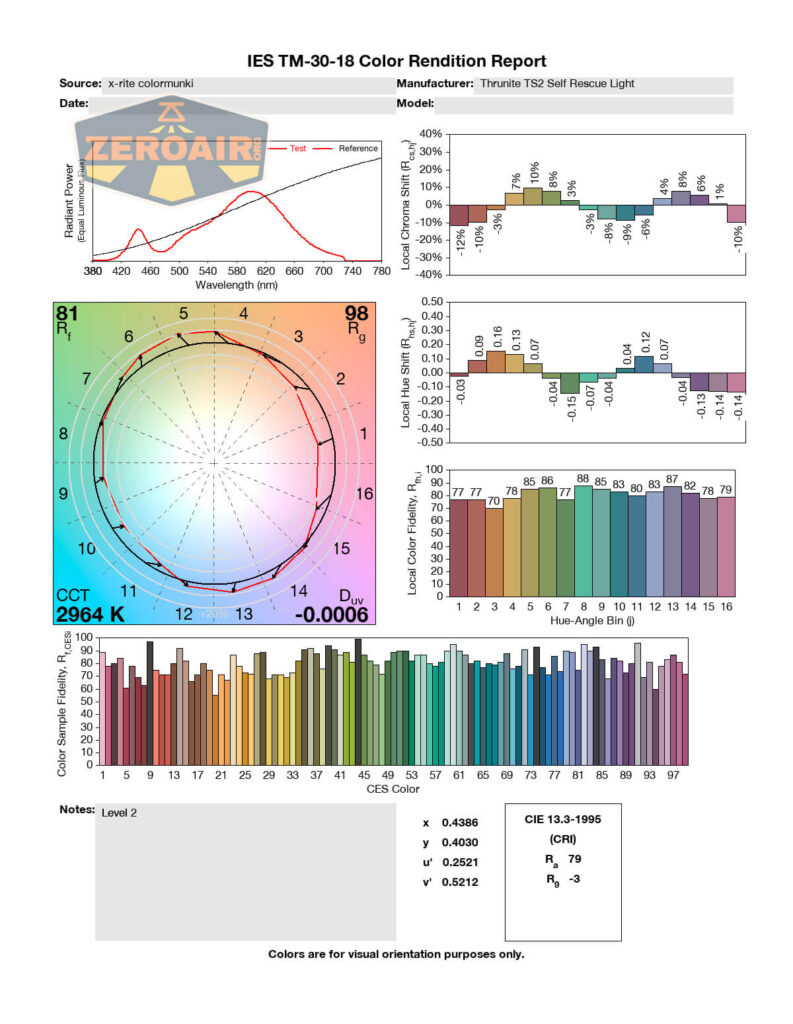
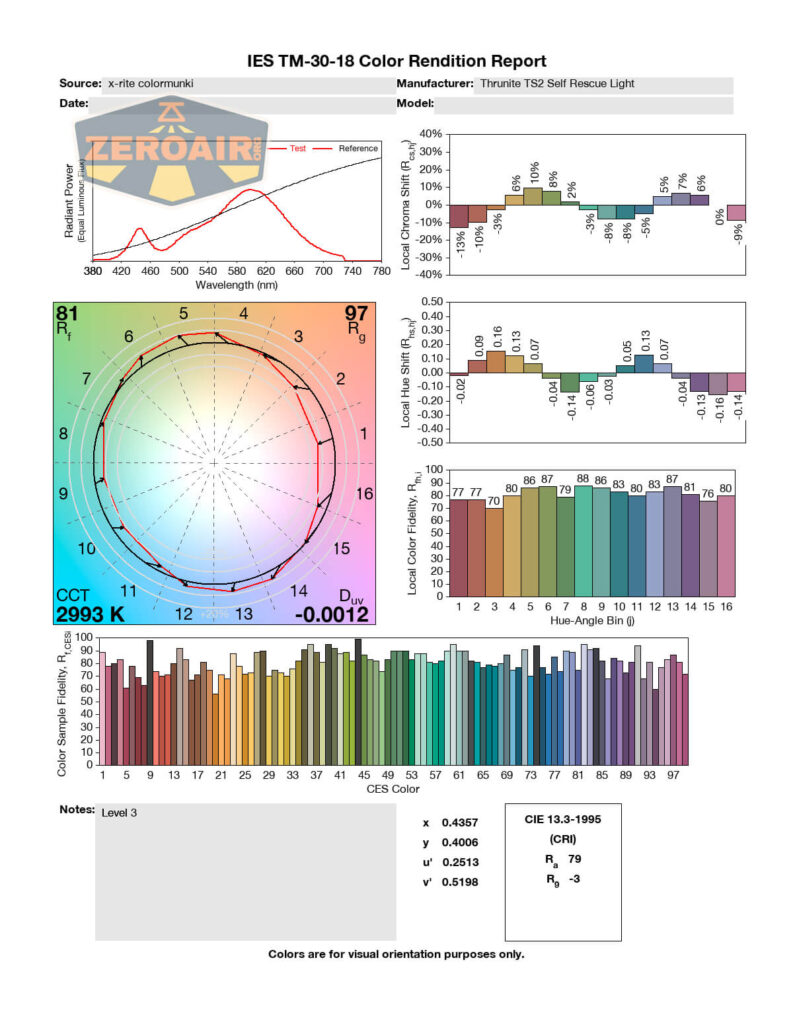
Looks like the emitters are around 3000K, which is just perfect in this type of lantern. The CRI drops in at around 79 which is possibly not ideal (we’d rather see above 90, of course.) Still, the warm white is very nice.
Beamshots
These beamshots always have the following settings: f8, ISO100, 0.3s shutter, and manual 5000K exposure. These photos are taken at floor level, and the beam hits the ceiling around 9 feet away.
Tint vs BLF-348 (KillzoneFlashlights.com 219b version) (affiliate link)
I keep the test flashlight on the left and the BLF-348 reference flashlight on the right.
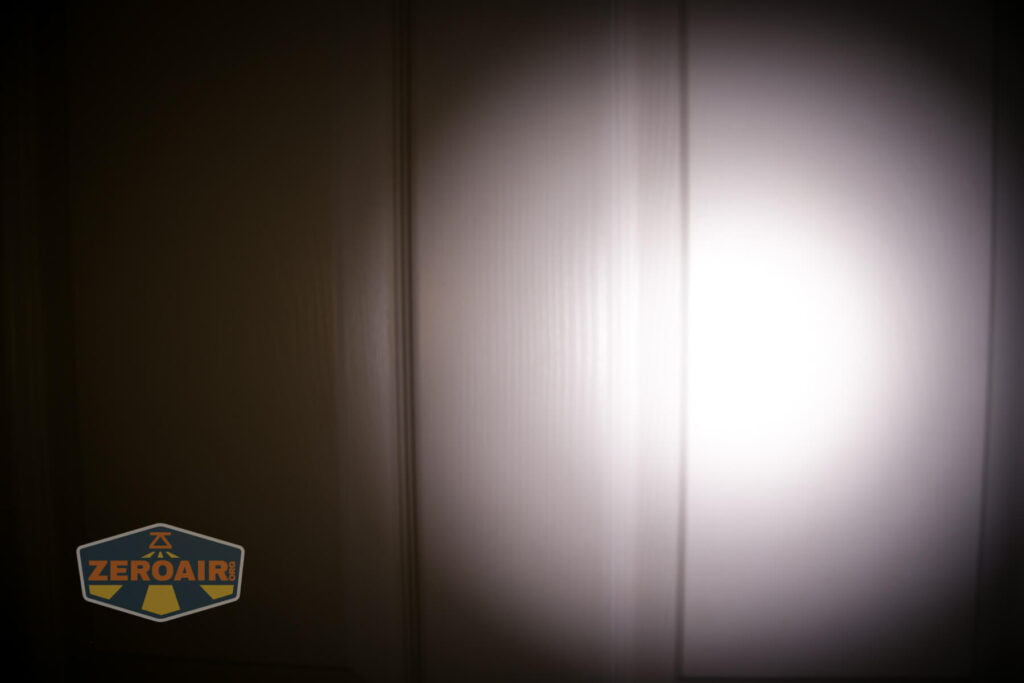

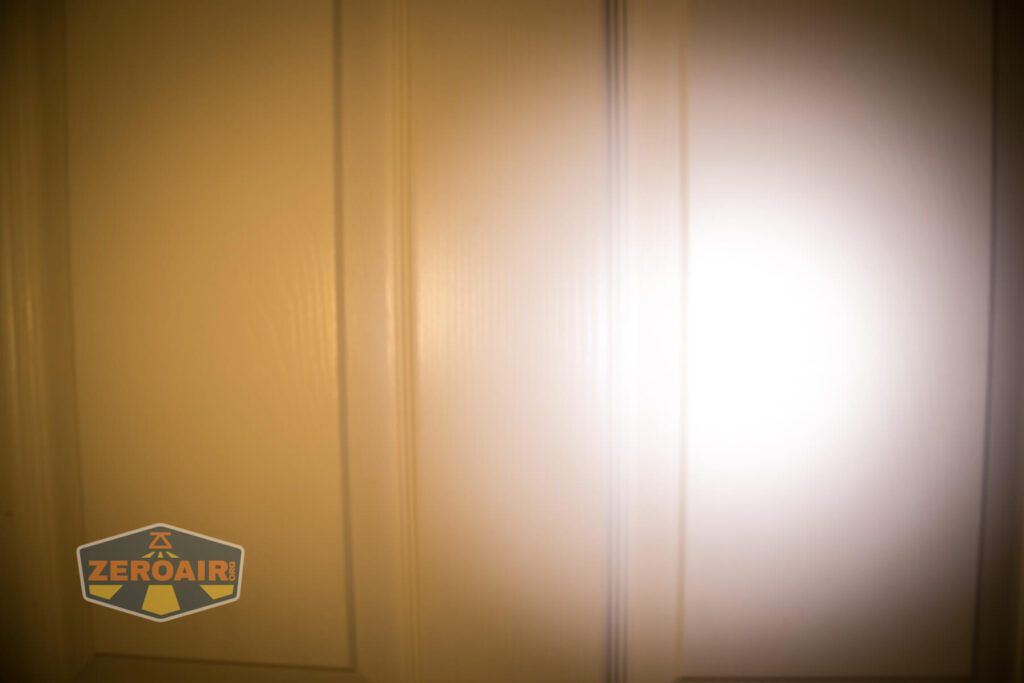
I compare everything to the KillzoneFlashlights.com 219b BLF-348 because it’s inexpensive and has the best tint!
Conclusion on the Thrunite TS2 Self-Rescue Lantern
What I like
- Very small device
- Standard (maybe “long”) 21700 cell can probably be used in other devices you own
- Powerbank feature (charges iPhone fine)
- USB-C charging
- Magnet base
- The included cable is useful for more than just this device
What I don’t like
- E-switch is a little mashy and not very crisp
- Noticeable PWM on lower two modes
Notes
- This content originally appeared at zeroair.org. Please visit there for the best experience!
- For flashlight-related patches, stickers, and gear, head over to PhotonPhreaks.com!
- Please use my Amazon.com referral link to help support zeroair.org!
- Please support me on Patreon! I deeply appreciate your support!
It looks like the real innovation here is the circuitry under the shrink wrap. Instead of a basic charging/protection circuit, they have a voltage boosting circuit. Unfortunately its only 1A. So it can charge a phone, but slowly.
Amazon is showing a $10 off coupon, bringing the price down to $19.99.
I’m kinda eyeing flashlights with powerbank functionality lately. I’ve been looking at the Sofirn IF22A and the Wurkkos TS21. I like Thrunite a lot, but there’s just no comparison between this and either of those other two flashlights, and they’re all about the same price (I think a common sale price of this will be lower than $30, but still…). I suppose this is as compact as they come, but it makes for a very poor flashlight and not very good lantern. Thanks for the review.