

Olight iMini Keychain Flashlight Review
The Olight iMini Keychain Flashlight offers an unusual “pull to operate.” With just one mode, it’s great for keychains! Read on for testing!
Official Specs and Features
Here’s a referral link to the Olight iMini Keychain flashlight product page.
Versions
Both black and red are available. I think that’s it for now.
Price
I think these might have been available as add-ons to some of the Olight sales. But the Olight iMini Keychain flashlight also seems to be available as a separate purchase, at $14.95. Here’s my Shareasale link to the Olight store for the Olight iMini Keychain flashlight.
Short Review
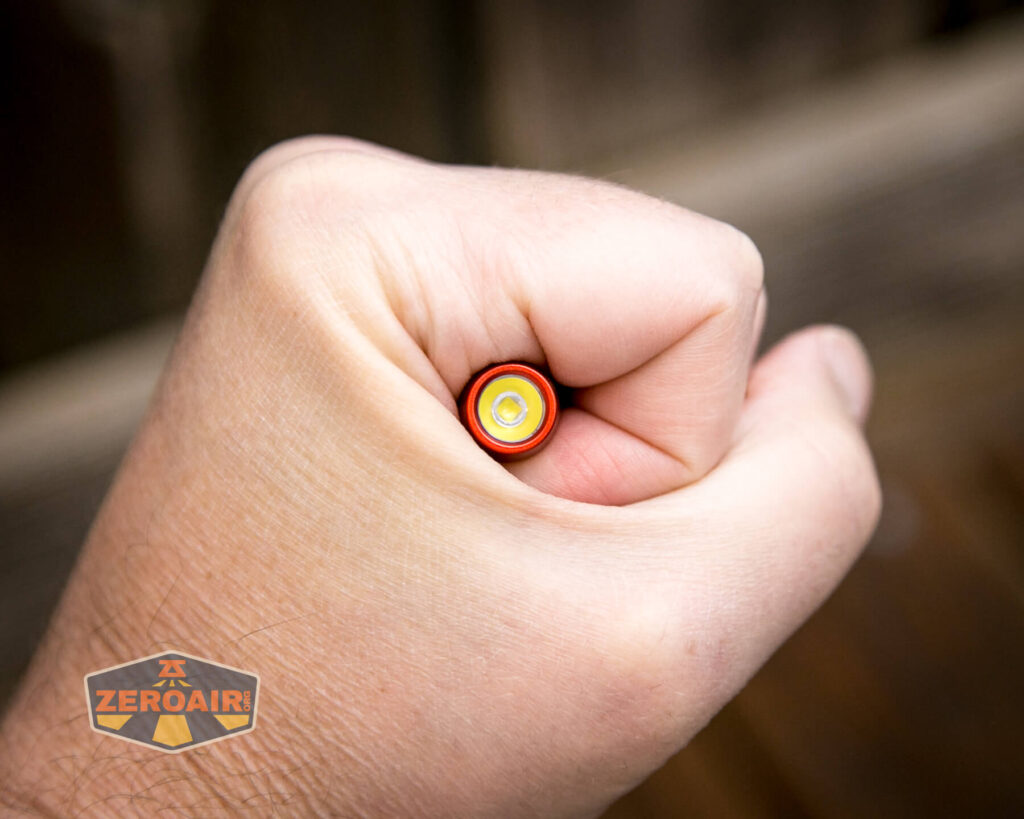
This is a cool little light. I only know of one other light that is “pull to operate” like this, and it’s pretty solid too. This one is very tiny so if you lose things… well you’ll lose this. I don’t really like the coin cells, and it uses three of them, but they do seem quite robust. For example, after the runtime test, these cells bounced back to fairly good performance – I think they can last for a while.
Long Review
The Big Table
| Olight iMini Keychain flashlight | |
|---|---|
| Emitter: | Unstated (Neutral white) |
| Price in USD at publication time: | $14.95 |
| Cell: | 3xLR41 |
| Runtime Graph | |
| LVP? | – |
| Switch Type: | Magnet |
| Charge Port Type: | – |
| Claimed Lumens (lm) | 10 |
| Measured Lumens (at 30s) | 11 (110% of claim)^ |
| Candela per Lumen | 2.5 |
| Claimed Throw (m) | 10 |
| Candela (Calculated) in cd (at 30s) | 10lux @ 1.667m = 28cd |
| Throw (Calculated) (m) | 10.5 (105% of claim)^ |
| Claimed CCT | – |
| Measured CCT Range (K) | 5500 Kelvin |
| Item provided for review by: | A friend! |
| All my Olight reviews! | |
^ Measurement disclaimer: Testing flashlights is my hobby. I use hobbyist-level equipment for testing, including some I made myself. Try not to get buried in the details of manufacturer specifications versus measurements recorded here; A certain amount of difference (say, 10 or 15%) is perfectly reasonable.
What’s Included

- Olight iMini Keychain flashlight
- Spare coin cells (3)

That second photo is just to demonstrate that there are two sets of cells included.
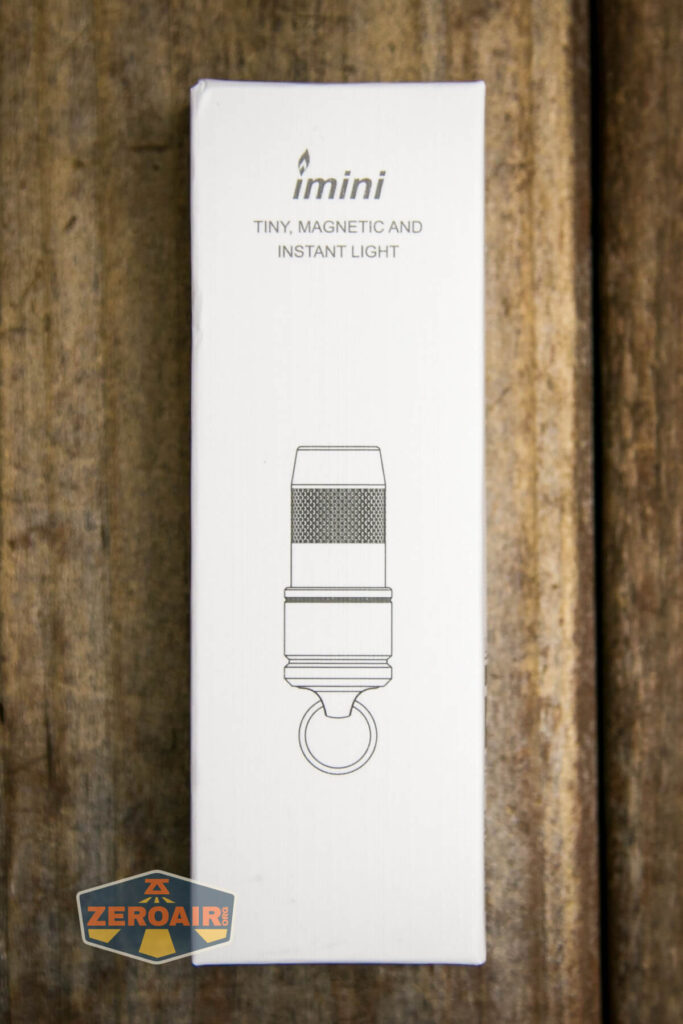
Package and Manual


Build Quality and Disassembly
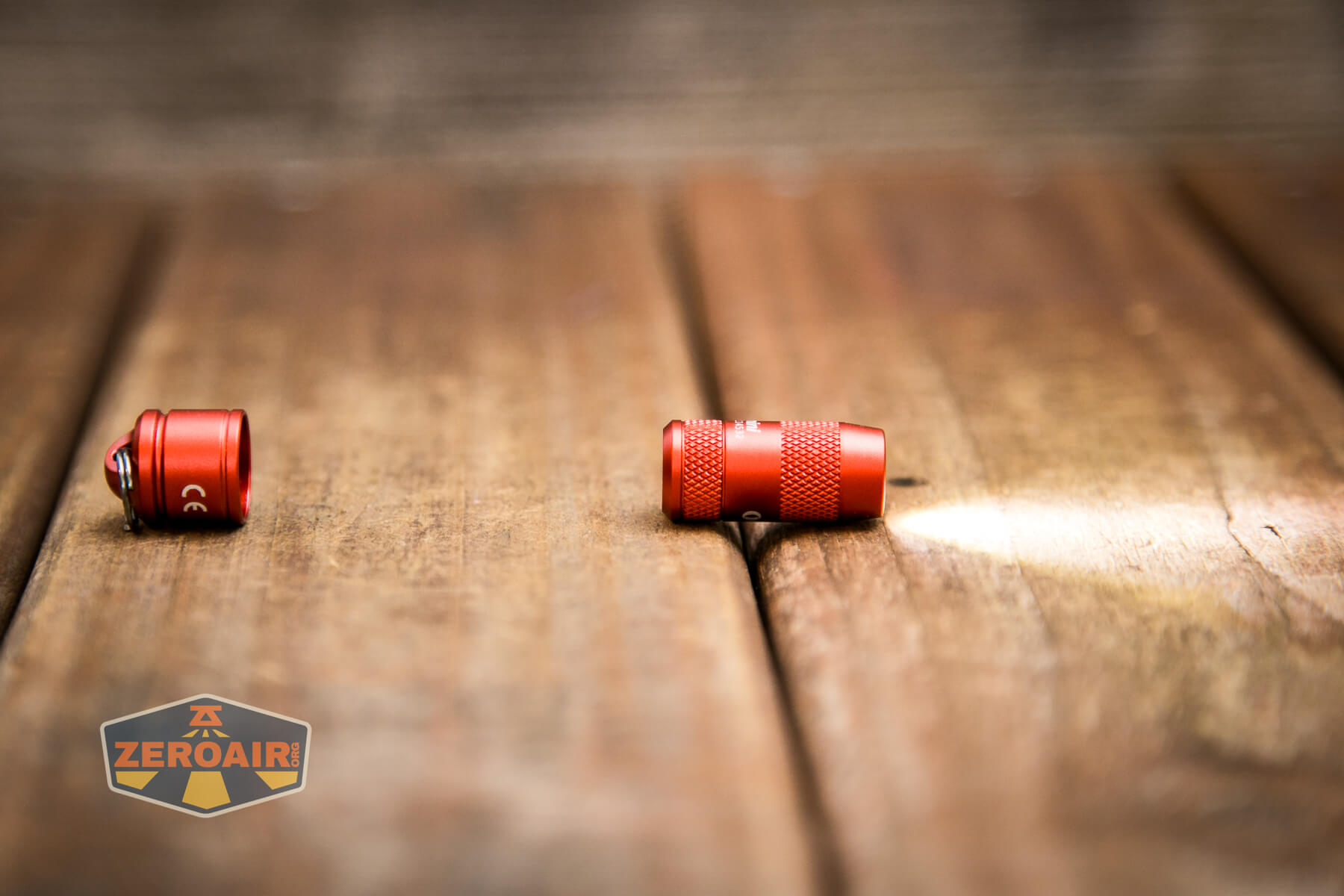
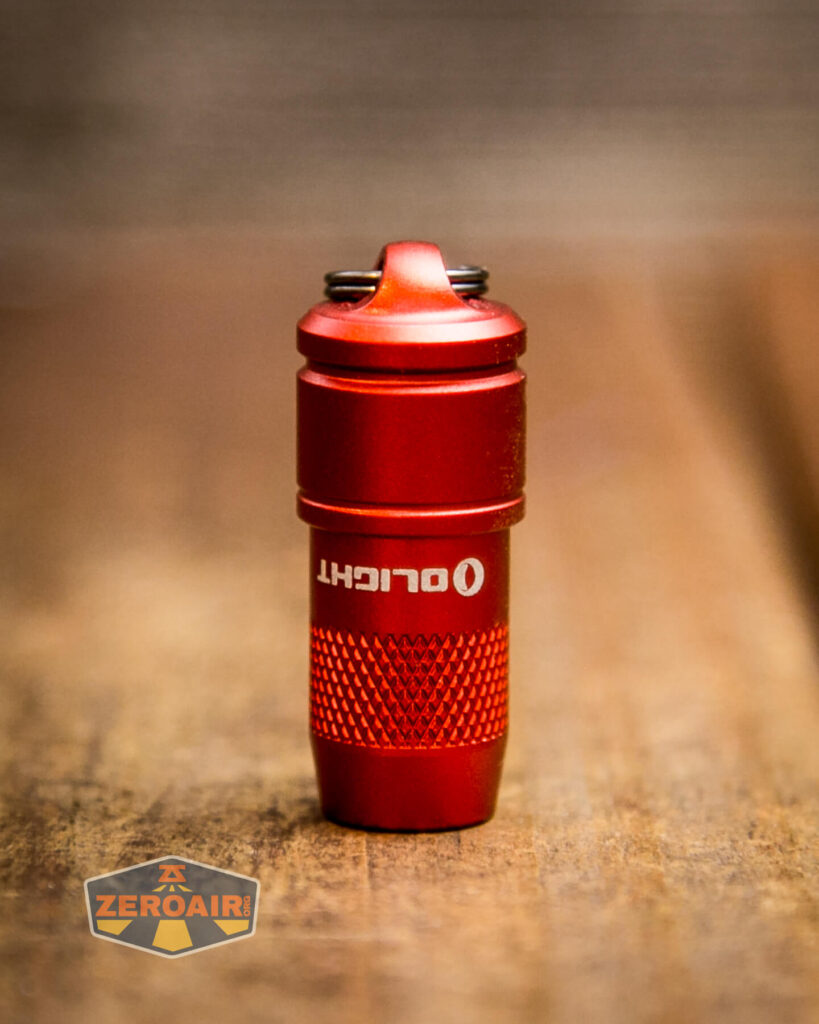
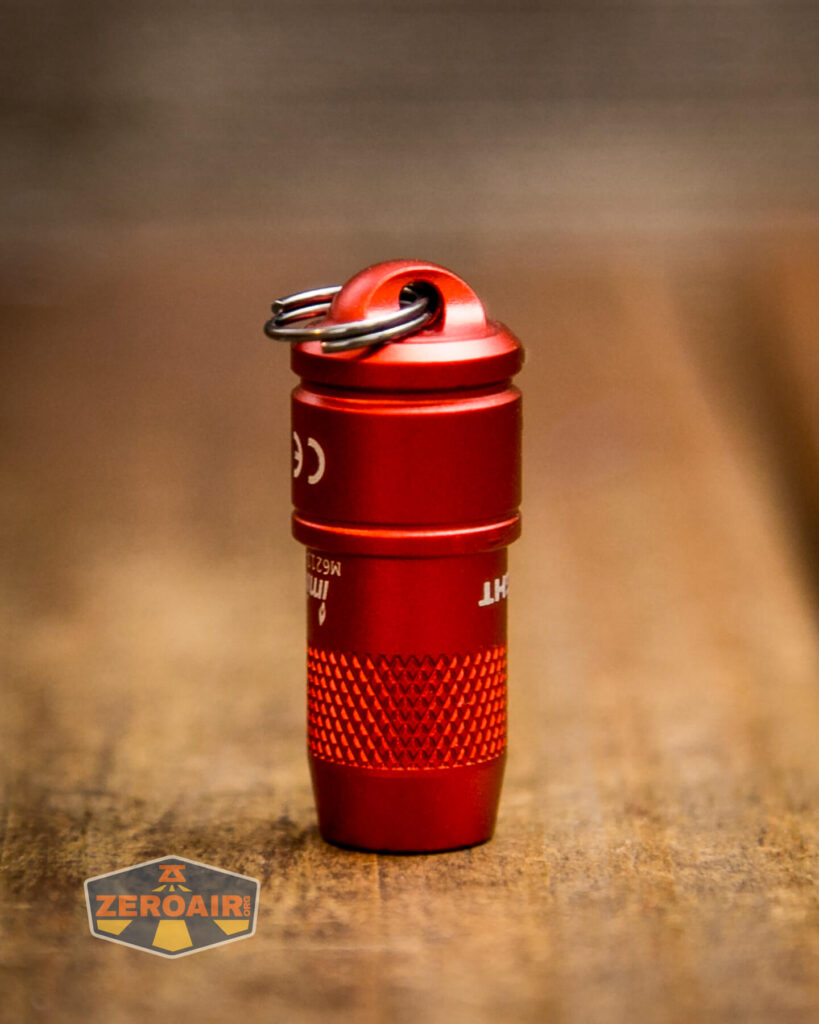
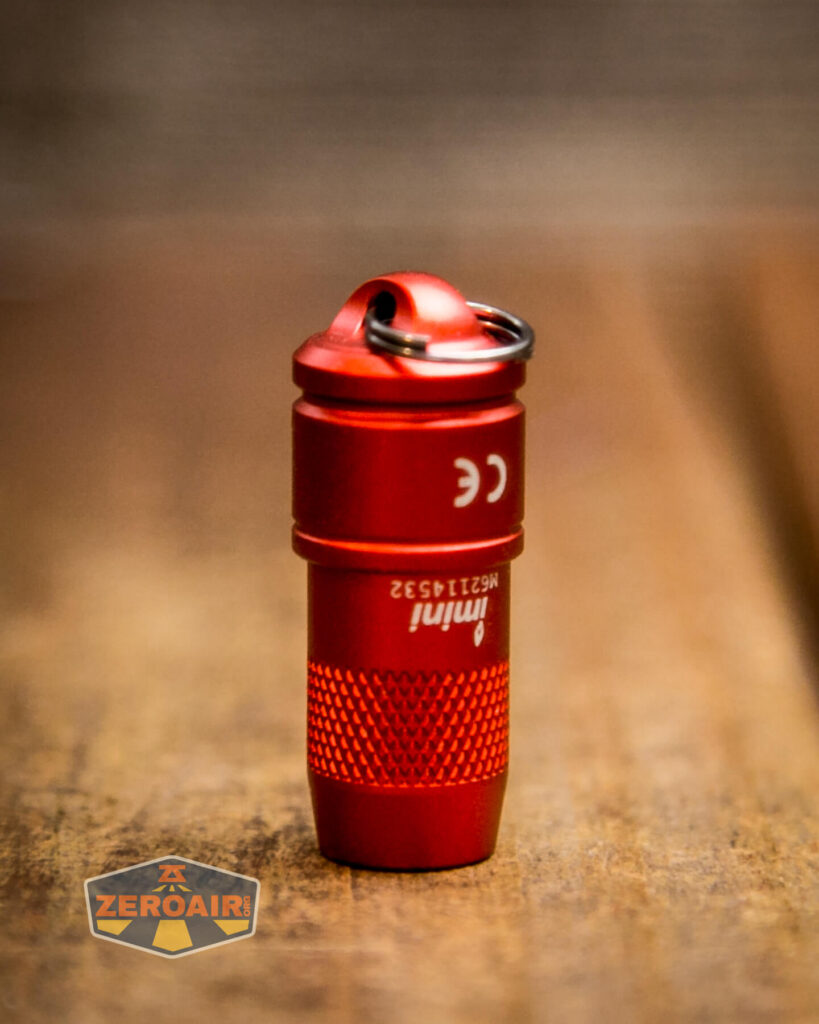
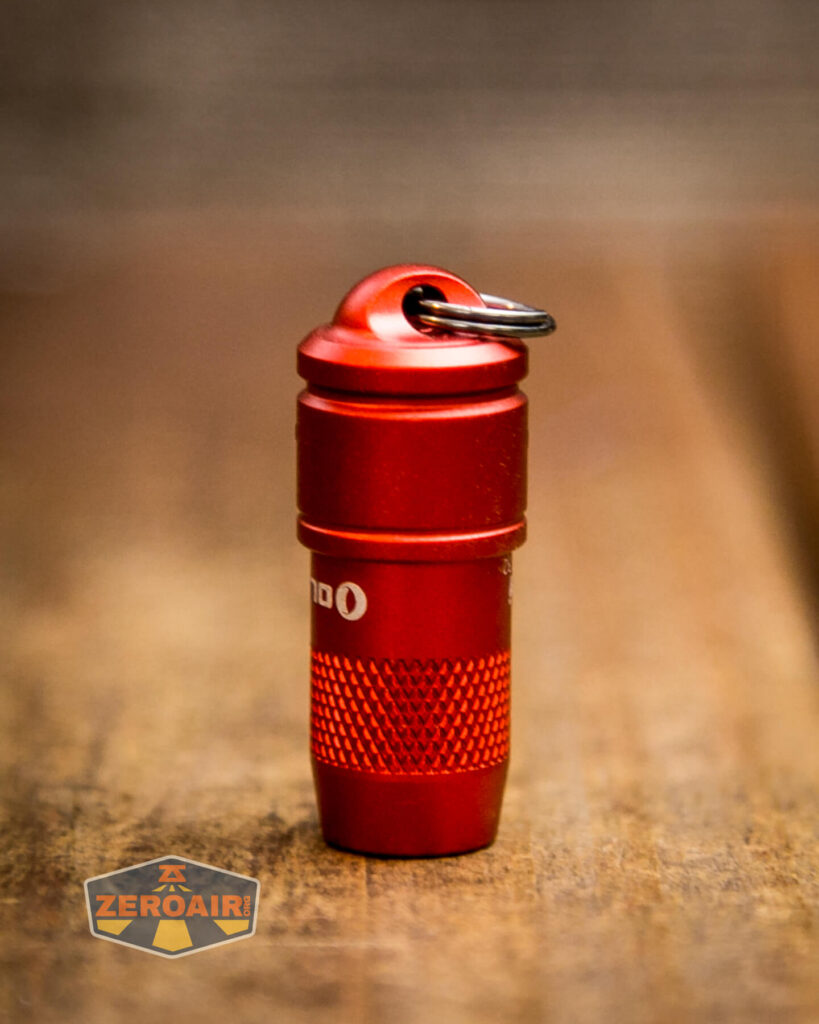
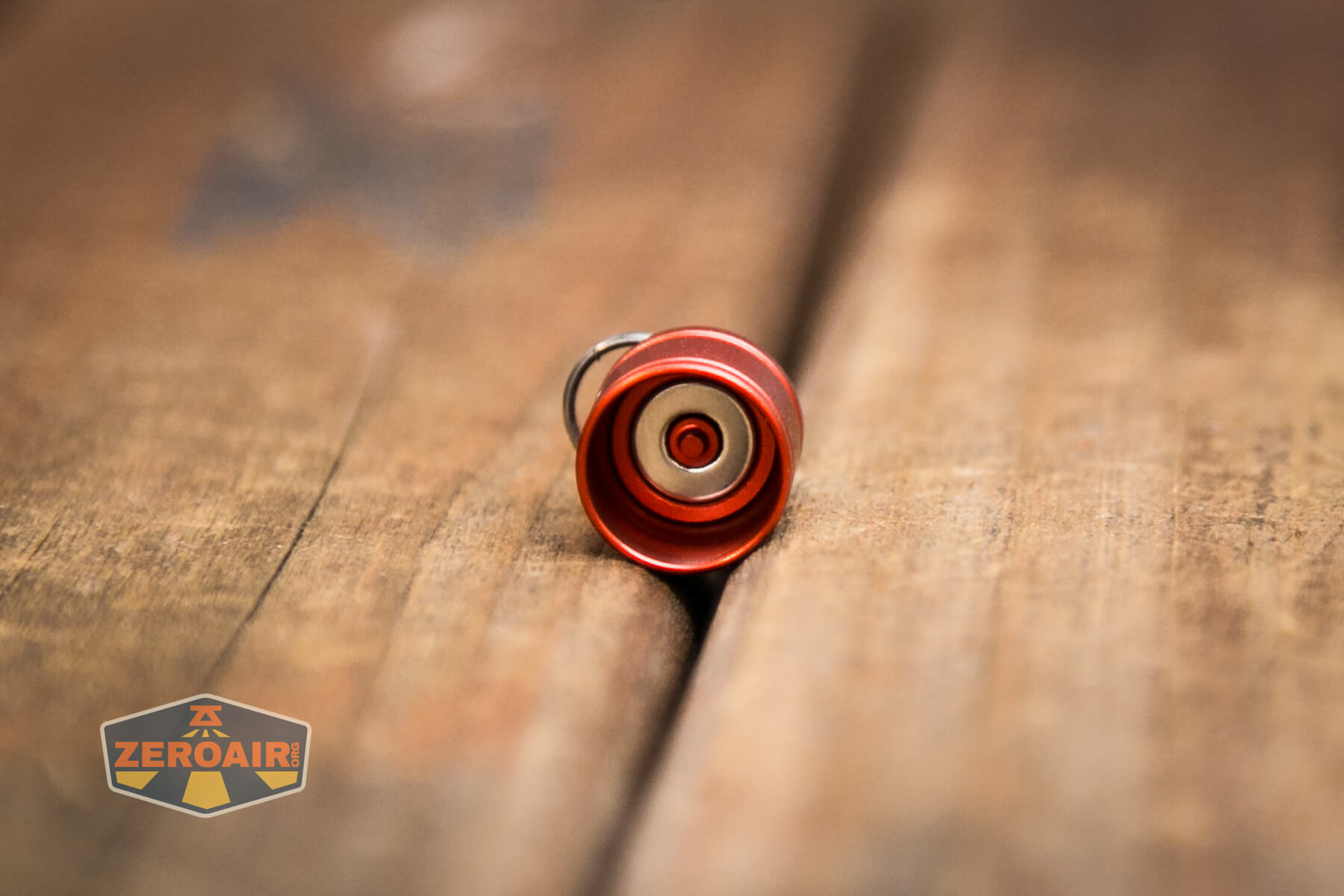
Below you can see the little red peg in the center. That’s what actually causes the Olight iMini Keychain flashlight to work. If that is in place, the light will be off.
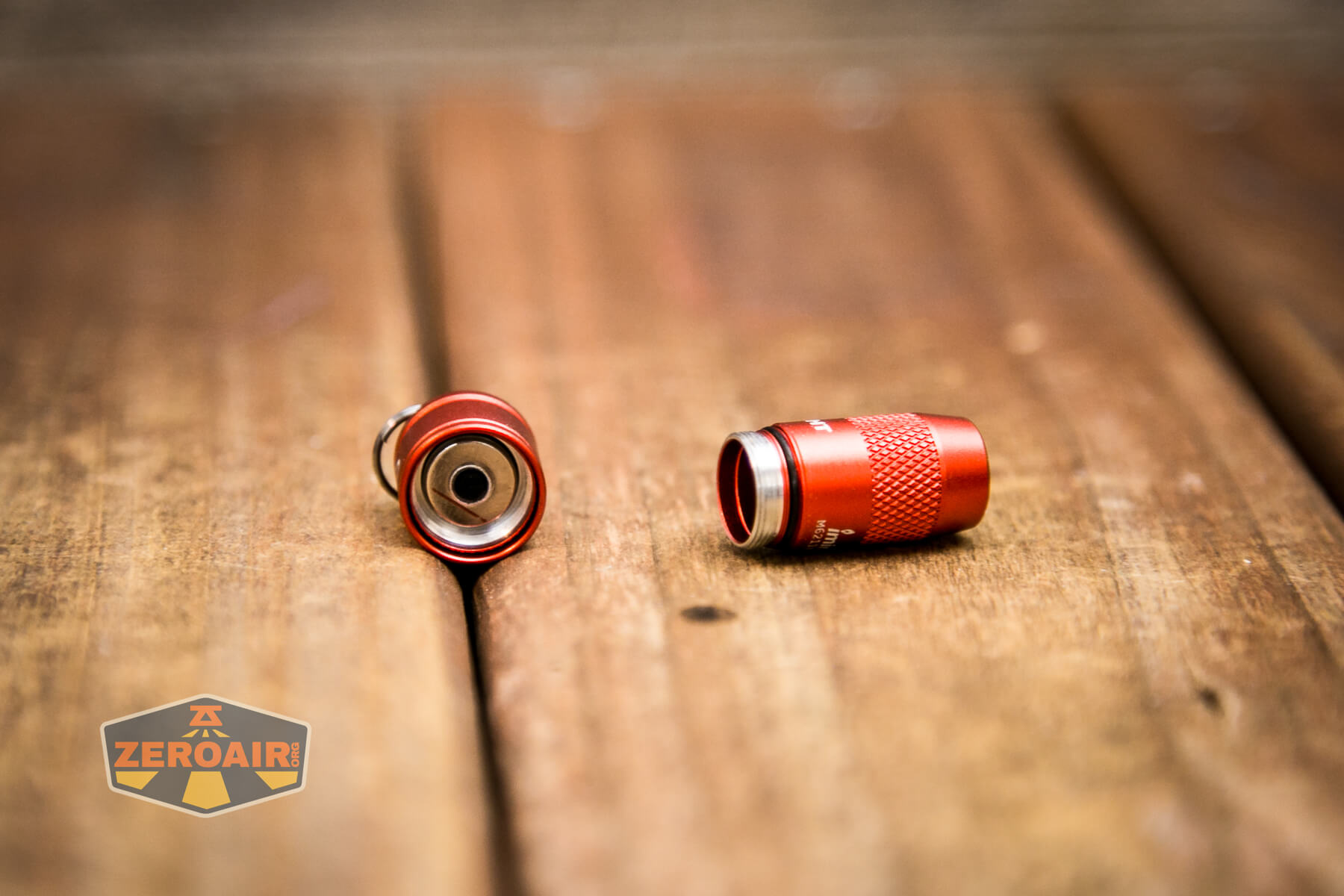
Here’s a big problem with this light… if you accidentally get the removed tailcap in place in the magnetic portion of the body it’s very hard to get them separated.
Size and Comps
Weight: 0.4 oz (11.3 g) (Including Batteries)
Length: 1.38 in (35 mm)
Body Diameter: 0.54 in (13.8 mm)
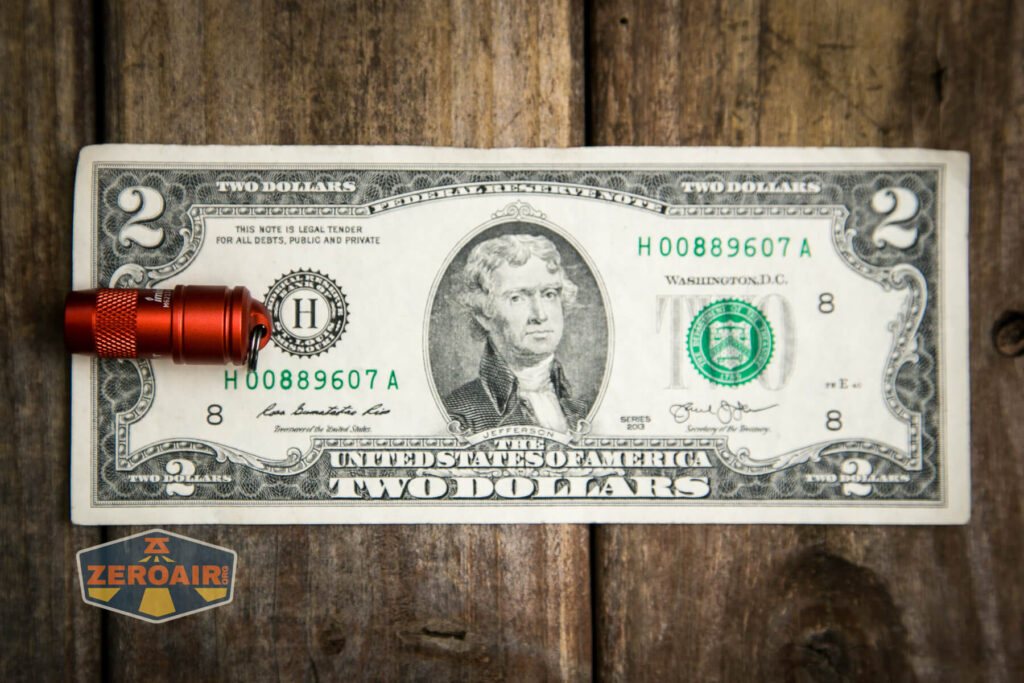
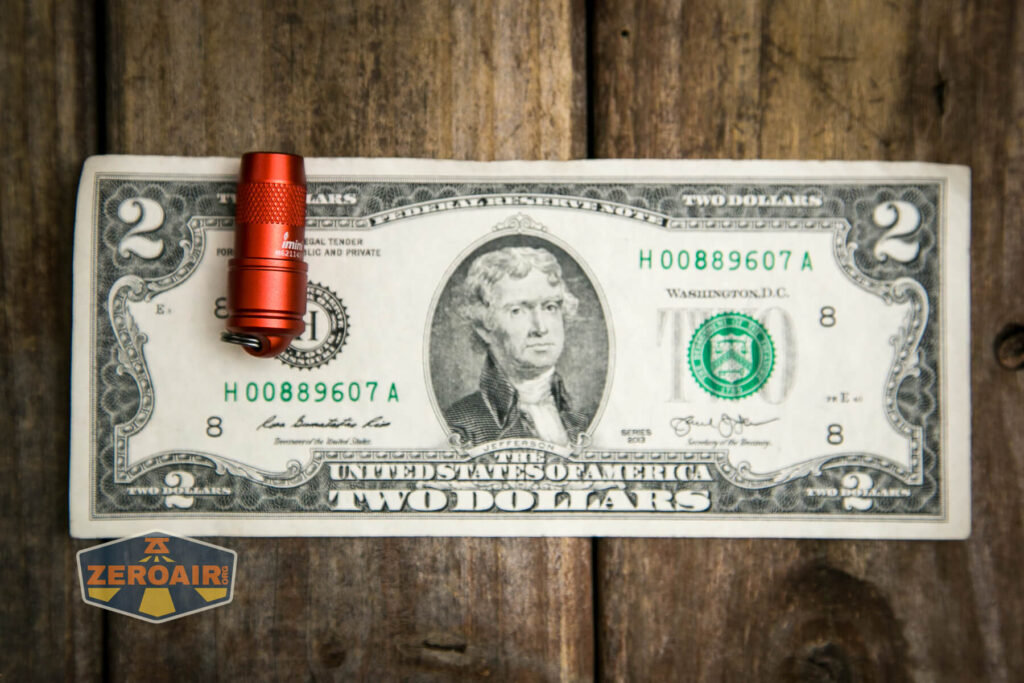
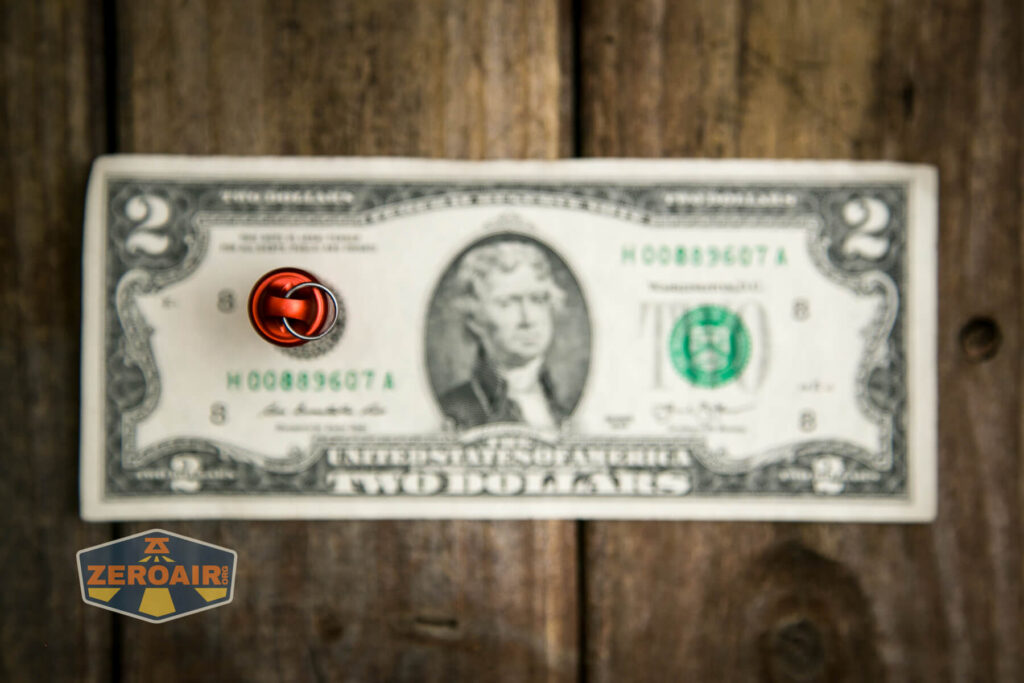
If the flashlight will headstand, I’ll show it here (usually the third photo). If the flashlight will tailstand, I’ll show that here, too (usually the fourth photo).
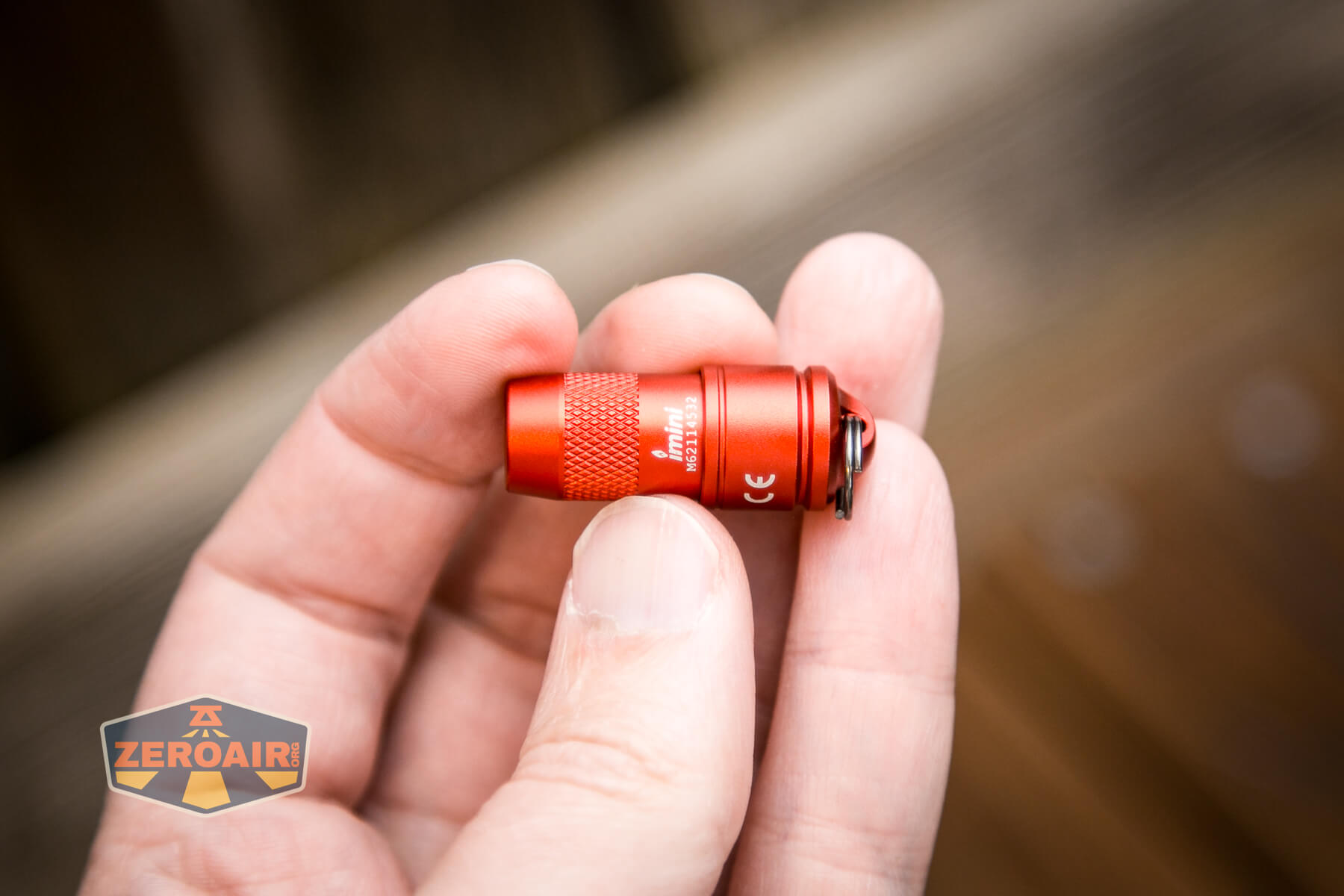
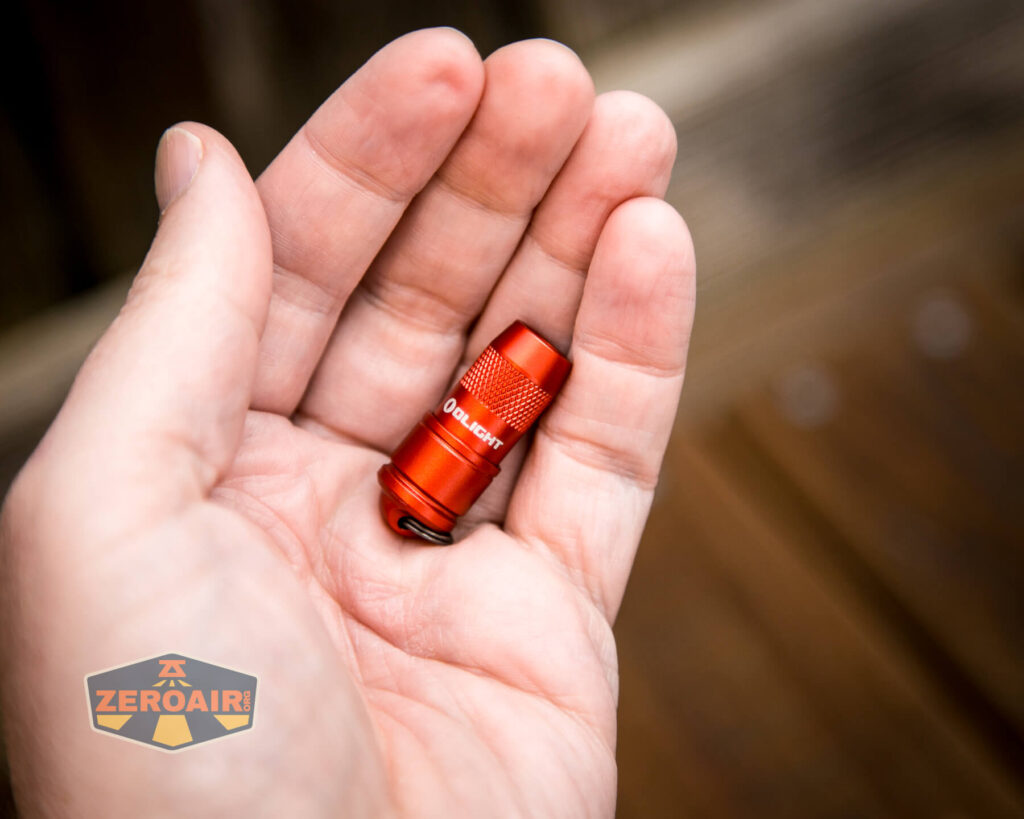
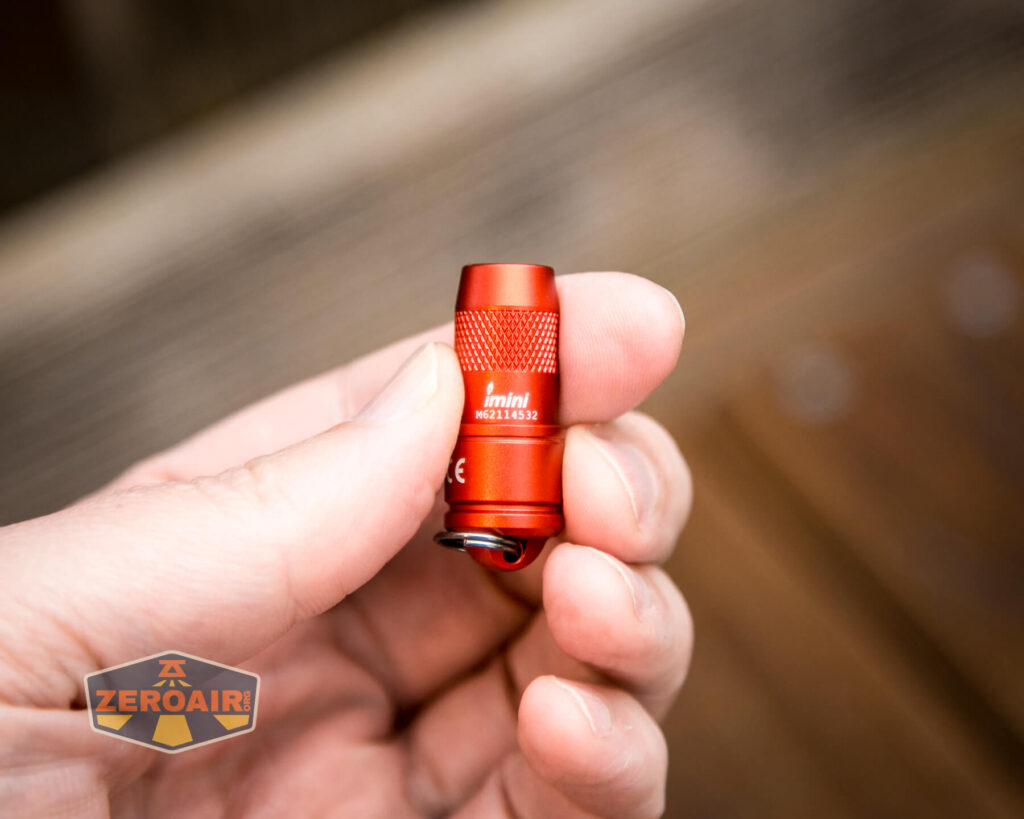
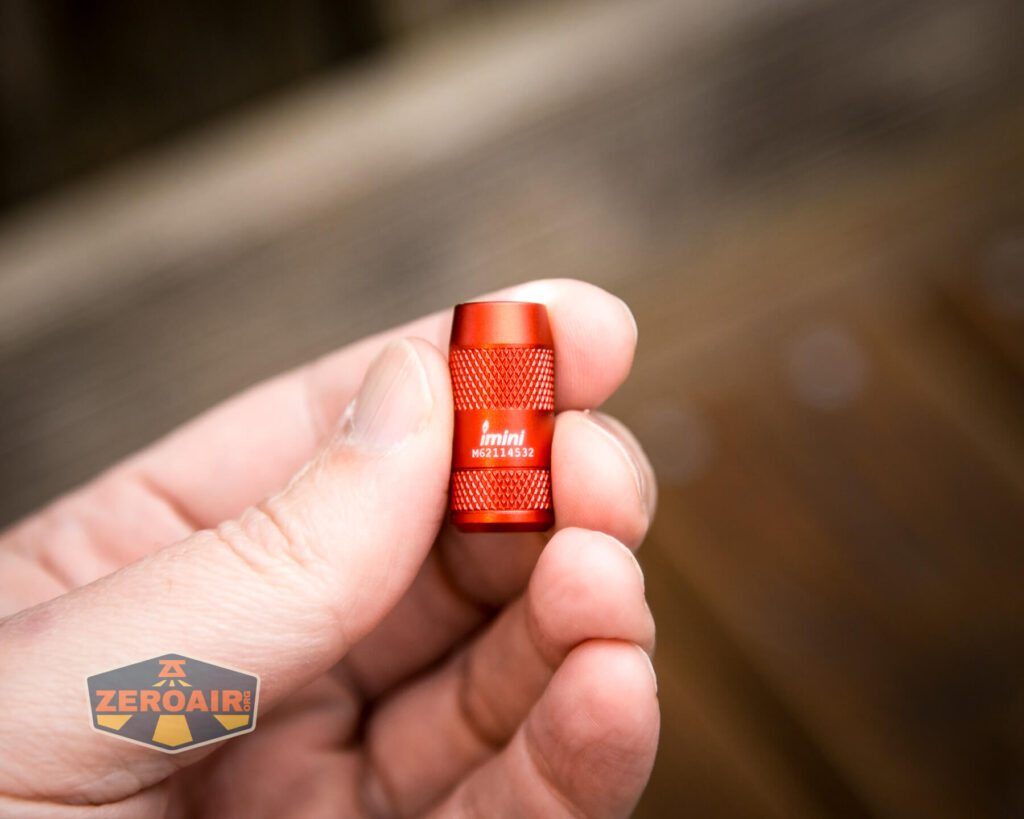
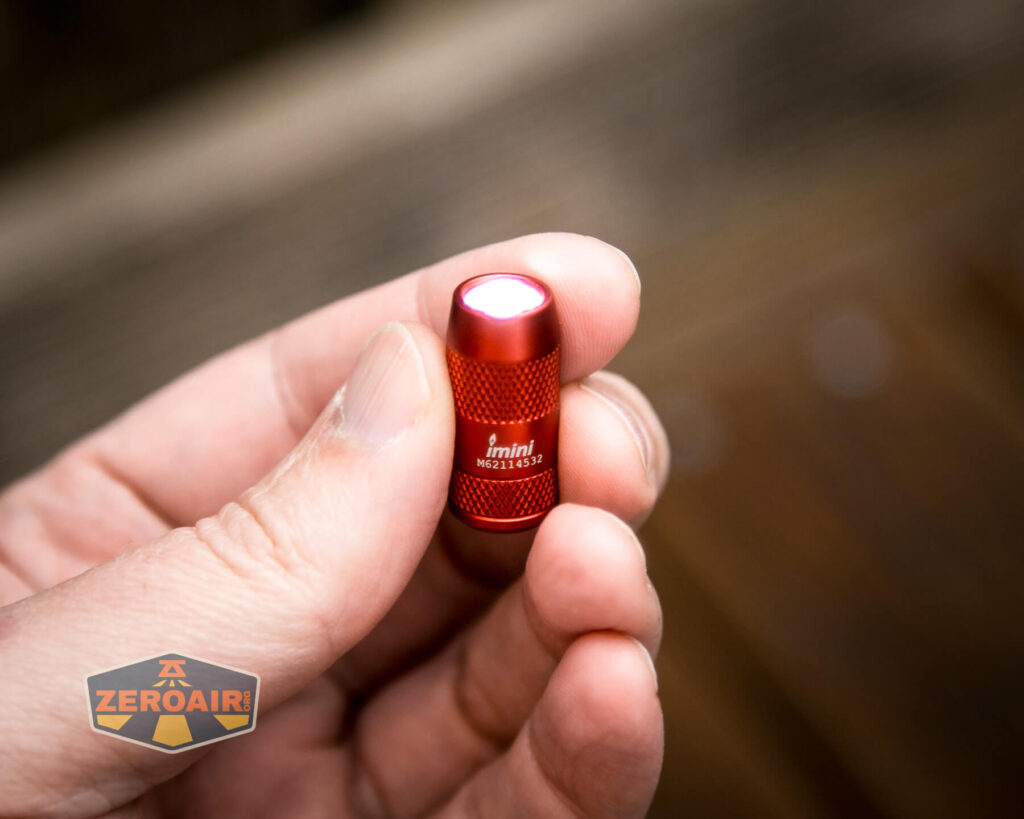
Here’s the test light with the venerable Convoy S2+. Mine’s a custom “baked” edition Nichia 219b triple. A very nice 18650 light.
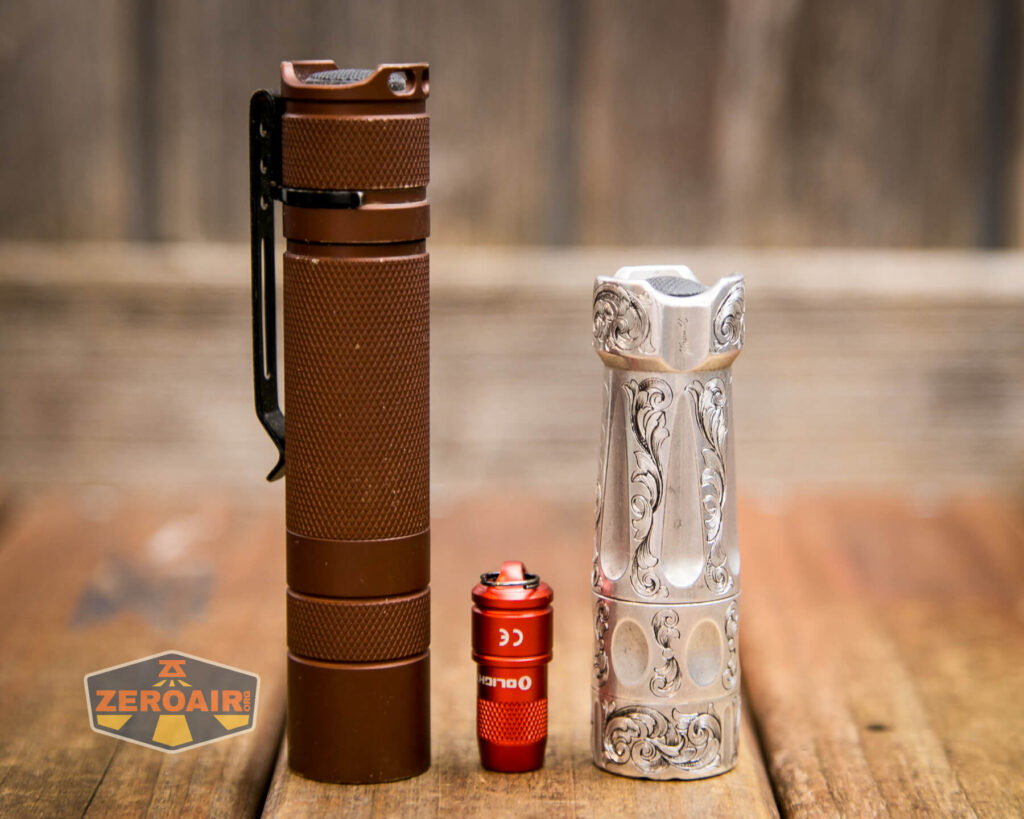
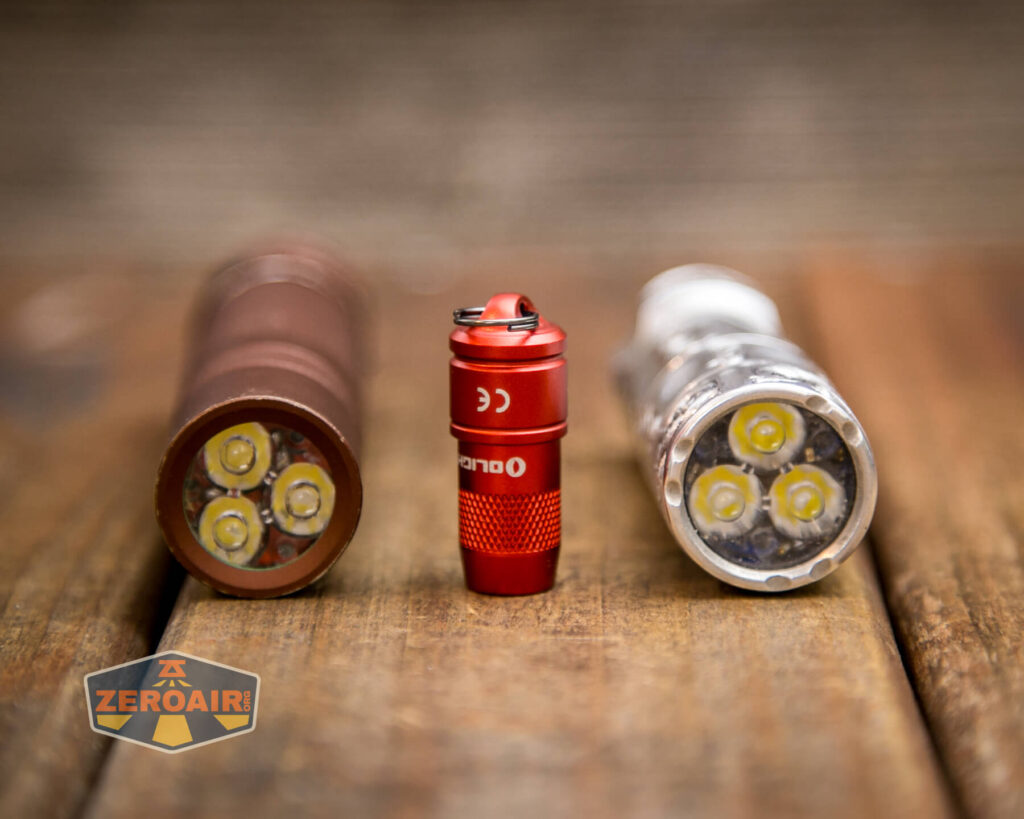
Also above is the light beside my custom-engraved TorchLAB BOSS 35, an 18350 light. I reviewed the aluminum version of that light in both 35 and 70 formats.
Retention and Carry
This is a keychain flashlight, so obviously there’s a split ring. This comes attached by default.
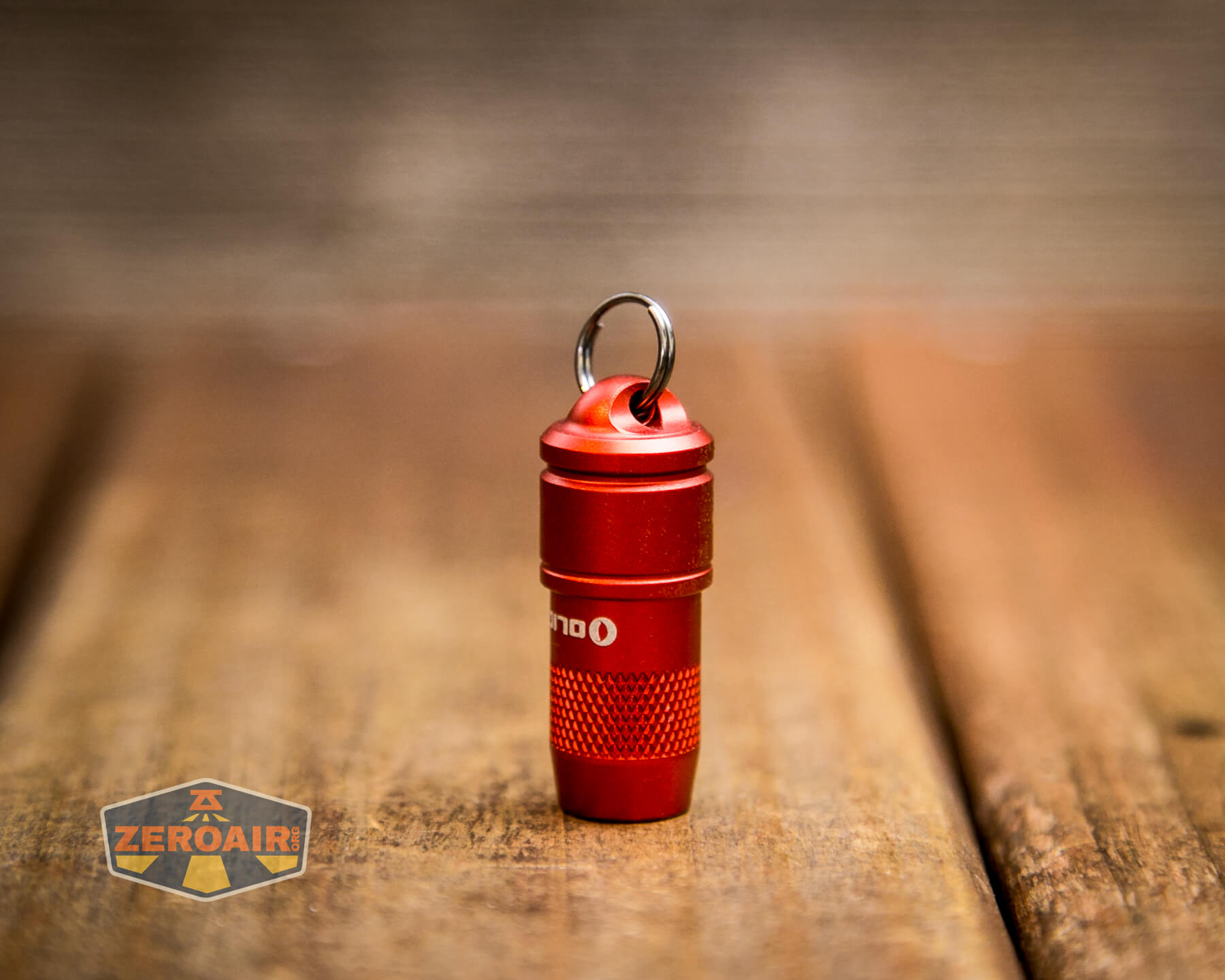
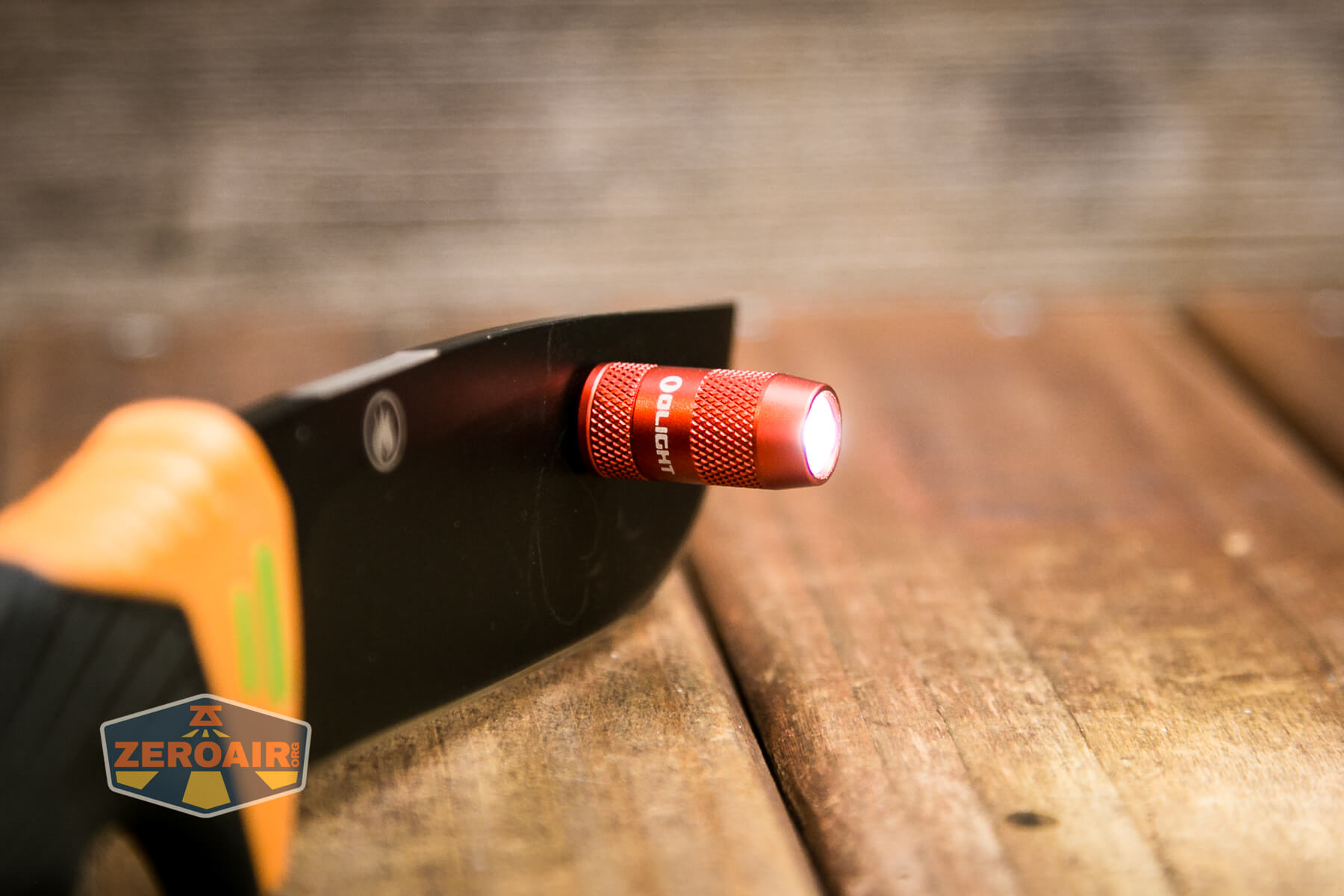
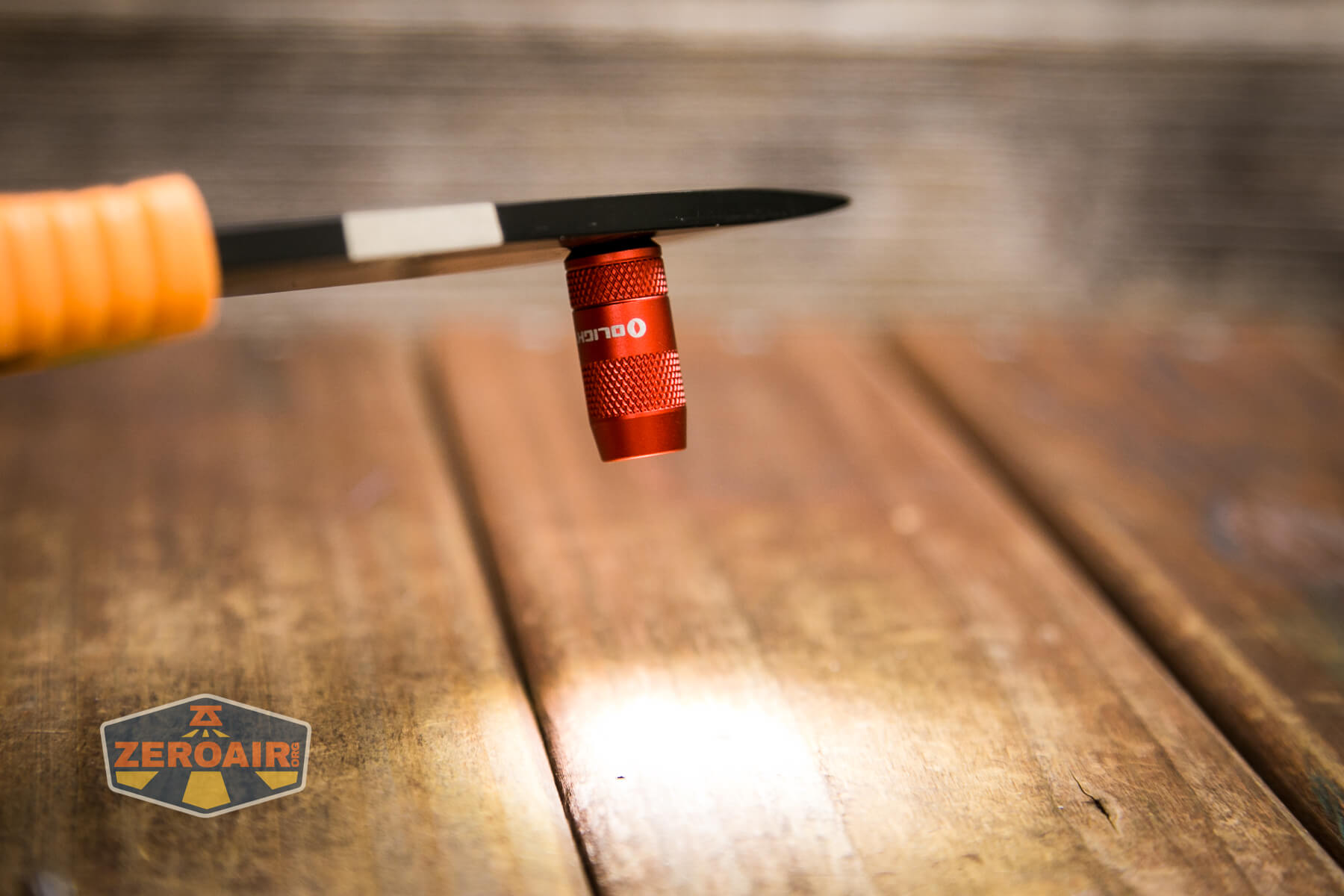
And since the light has a magnetic operation, (so to speak; it’s not technically magnetic operation…), the magnet in the base is perfectly adequate to hold the light securely.
Power and Runtime
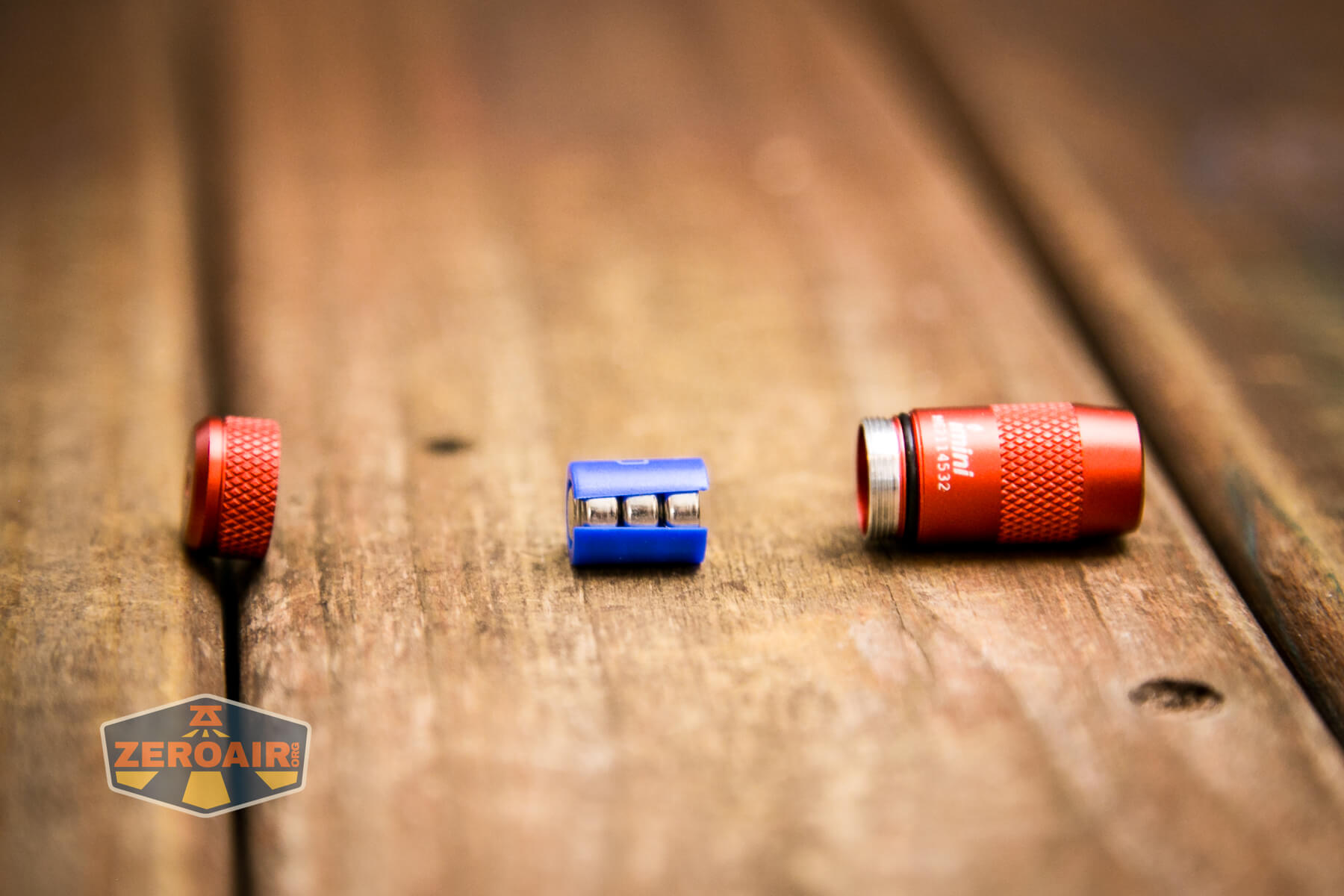
The Olight iMini Keychain flashlight runs on three coin cells. Two sets are included, and one set ships inside the light. They require this little sleeve, which keeps them properly connected. (Tape would probably suffice if you lost this…)

The orientation above is the right orientation. Positive end goes toward the head of the light (as usual, but these cells look a bit different from our normal 18650 cells or whatever.)
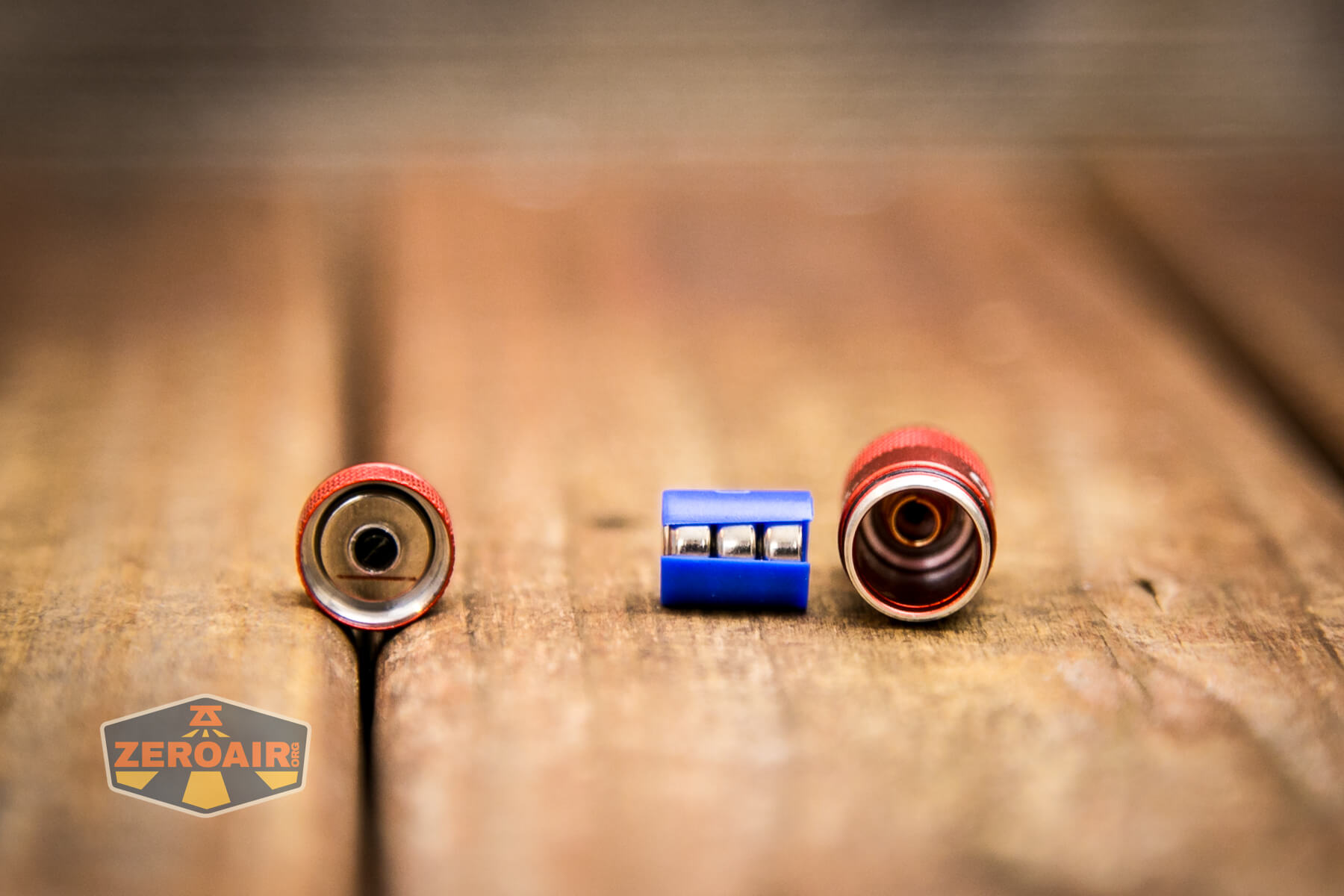
The head end has a spring so the cells are nice and cozy in there.
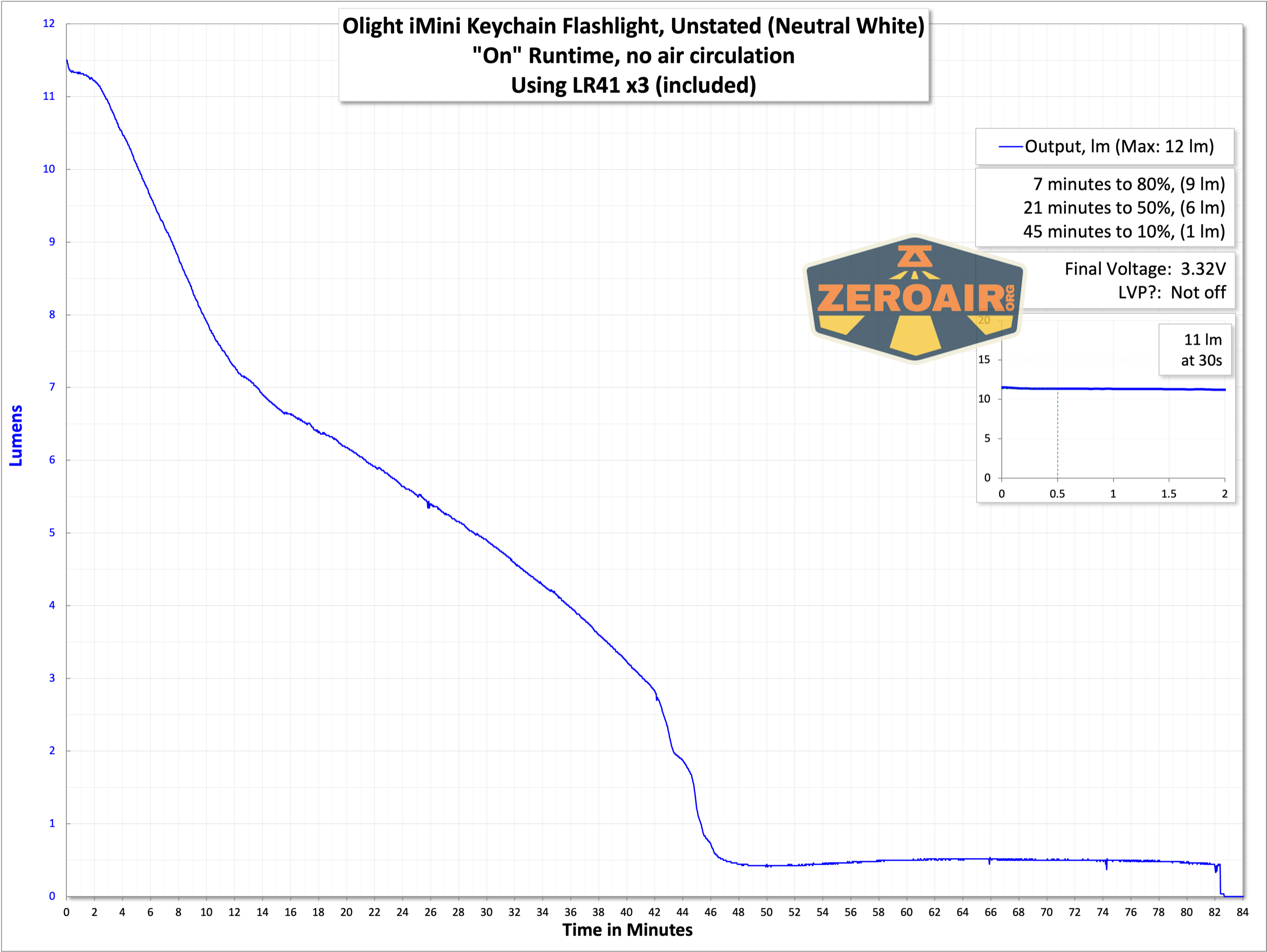
Modes and Currents
| Mode | Mode Claimed Output (lm) | Claimed Runtime | Measured Lumens | Tailcap Amps |
|---|---|---|---|---|
| On | 10 | – | 11 | ? |
Pulse Width Modulation
The single mode does not use PWM.
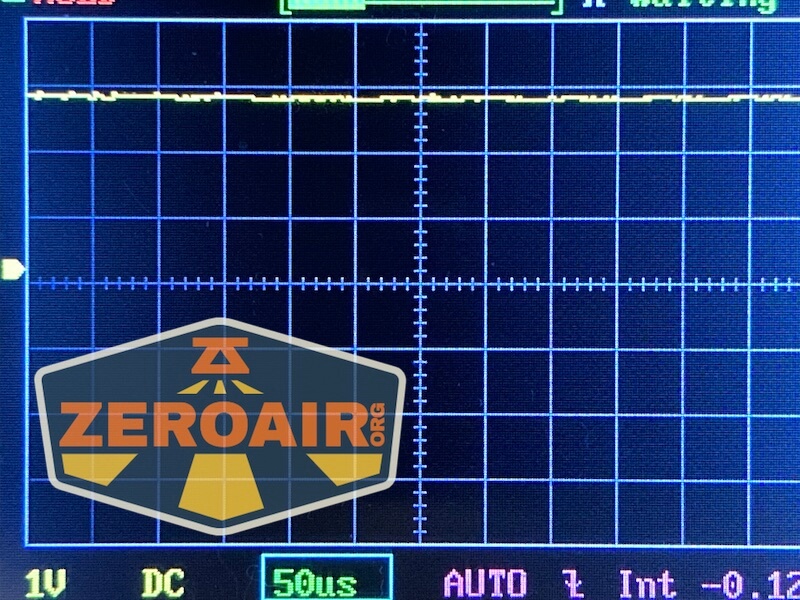
Here you can see a “baseline” – a chart with almost no light hitting the sensor.

Then there’s the Ultrafire WF-602C flashlight, which has some of the worst PWM I’ve seen. It’s so bad that I used a post about it to explain PWM! Here are multiple timescales (10ms, 5ms, 2ms, 1ms, 0.5ms, 0.2ms) to make comparing this “worst” PWM light to the test light easier. That post also explains why I didn’t test the WF-602C at the usual 50us scale.


User Interface and Operation
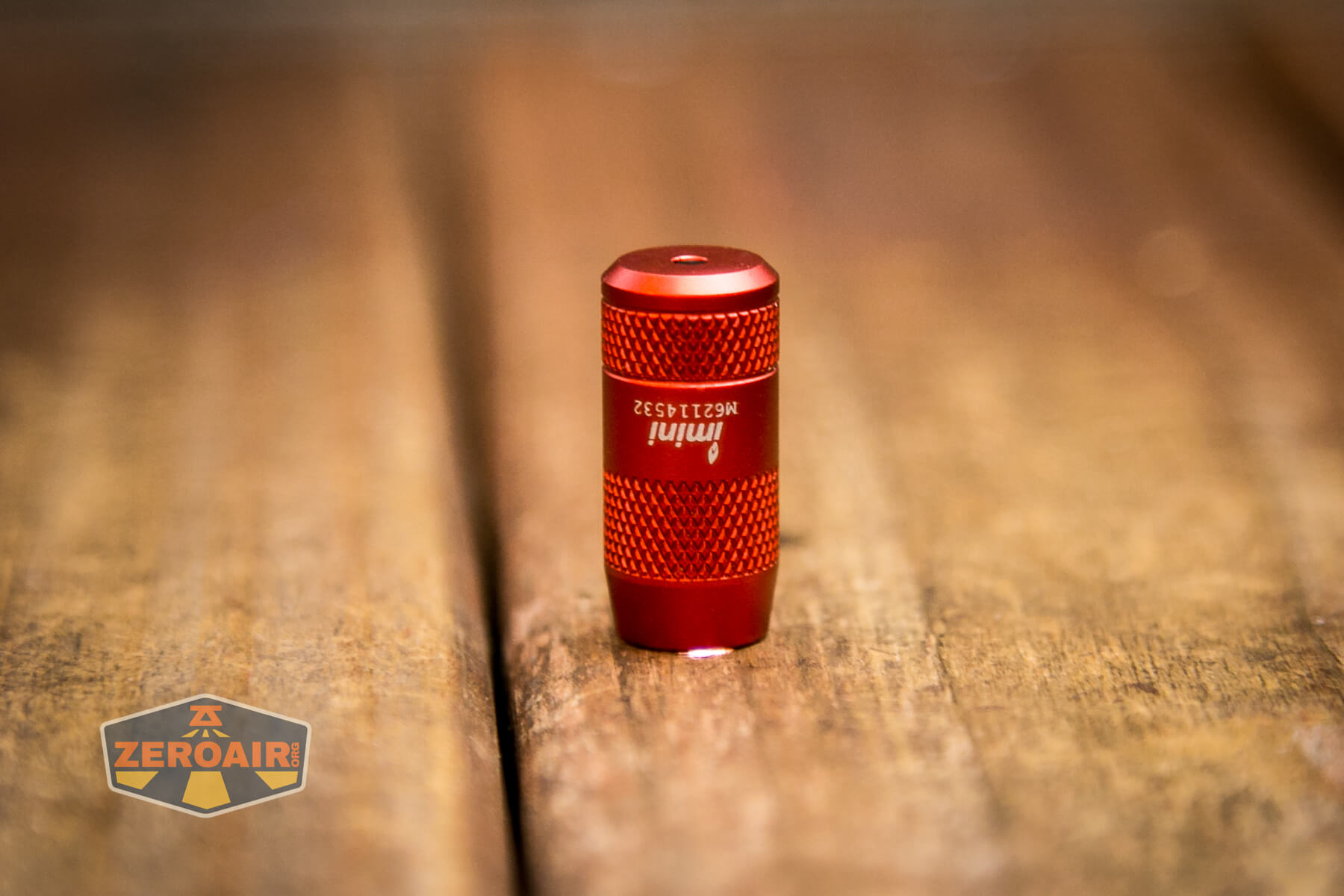
I’ve called this “magnetic operation” above but also clarified that that’s not technically accurate. The way this light works is that the magnet in both the light body (at right, below) and the keychain accessory (at left, below) snap together. When they snap together, a little post in the left part (below) pushes a switch in the right part (below).
You can do this manually, too. With the parts separated, you can push a little black button and turn the light off. It’s not something you’ll do as a regular means of operation, but it is an interesting insight into how this light works.
Interestingly, that seems to mean that this switch is a normally-on switch. It’s an e-switch (I’m supposing), so not at all like the new and great TorchLAB MOFF switch, but functionally it’s not much different.
Here’s a user interface table!
| State | Action | Result |
|---|---|---|
| Off | Remove light from keychain cap | On |
| On | Replace light into keychain cap | Off |
LED and Beam
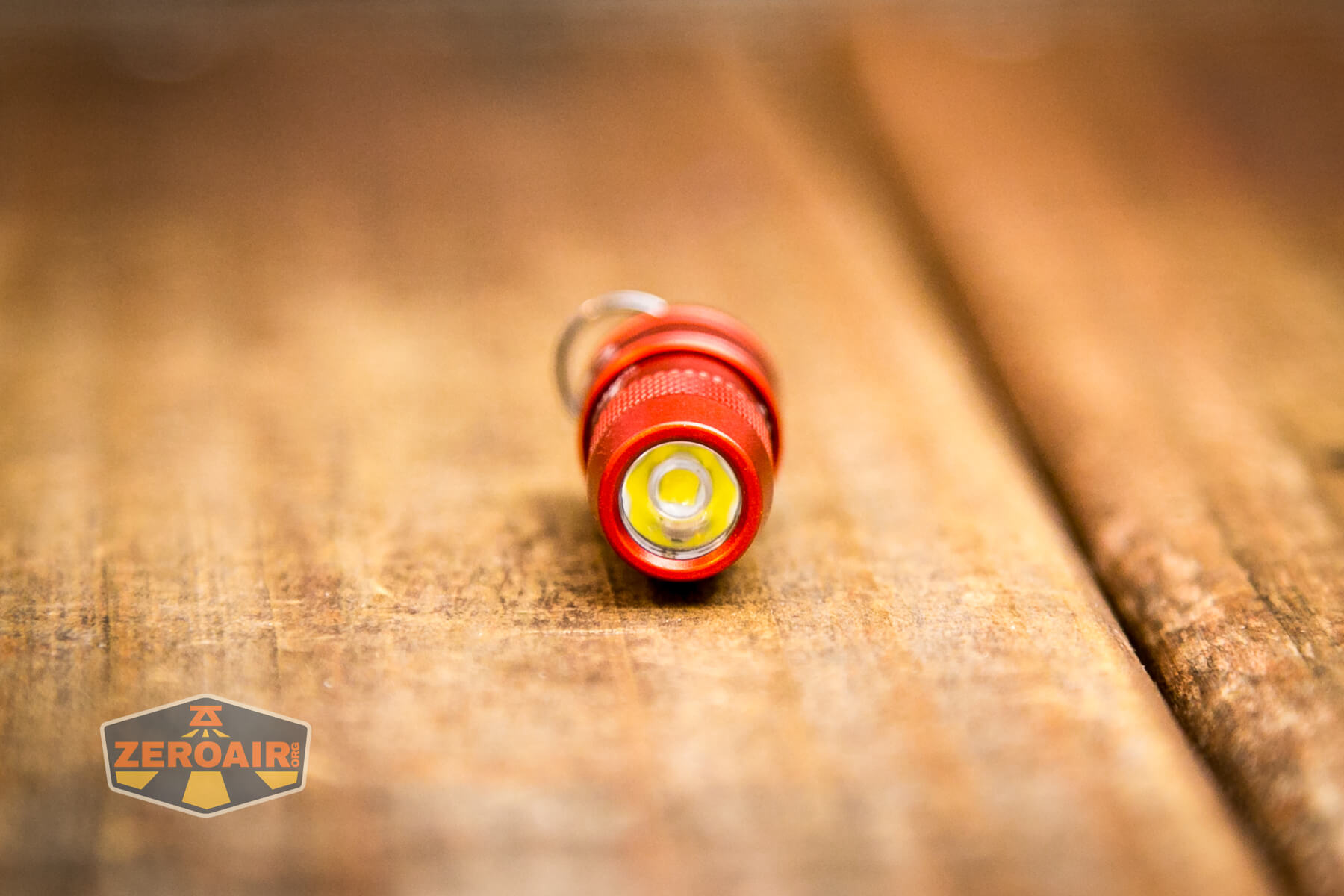
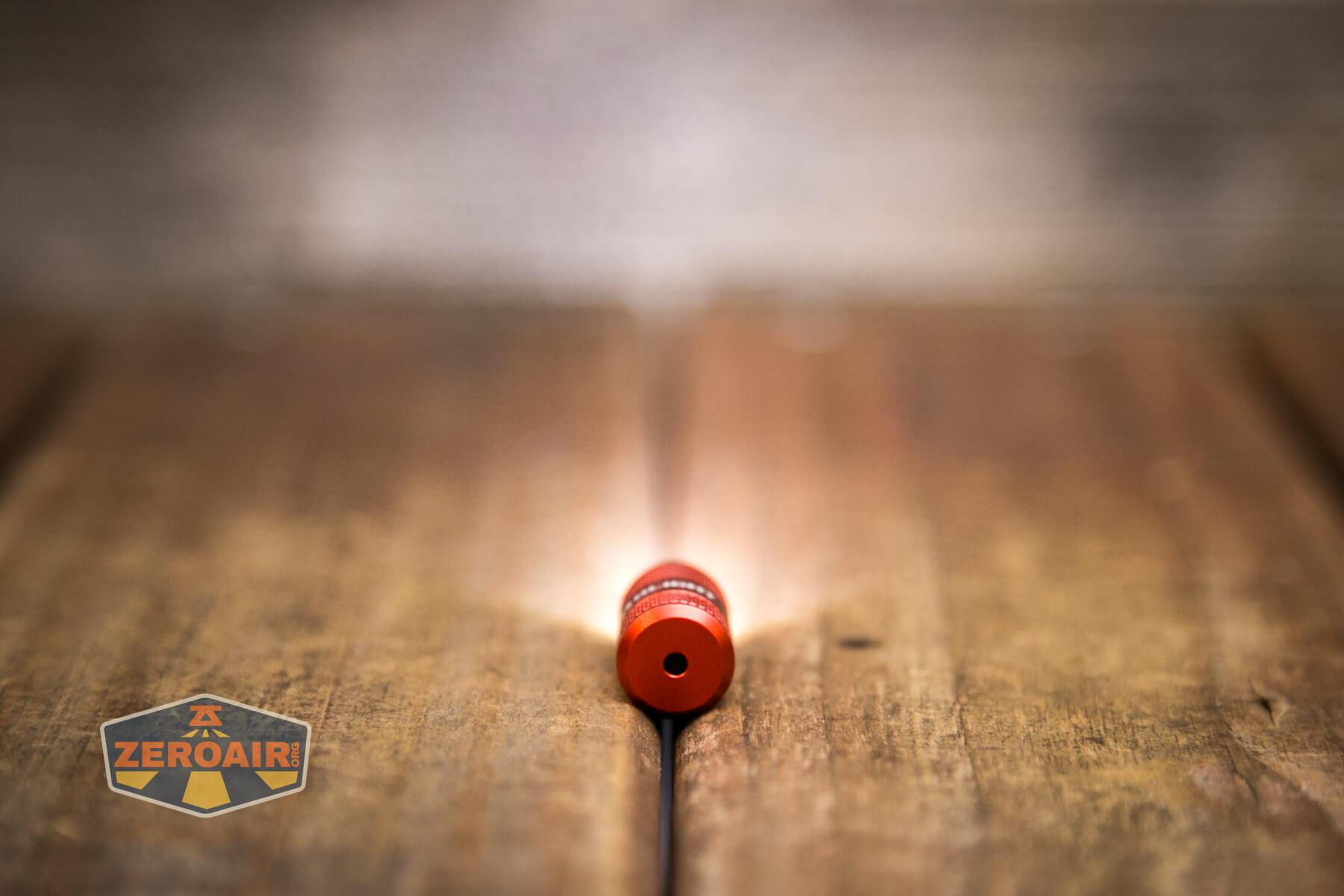
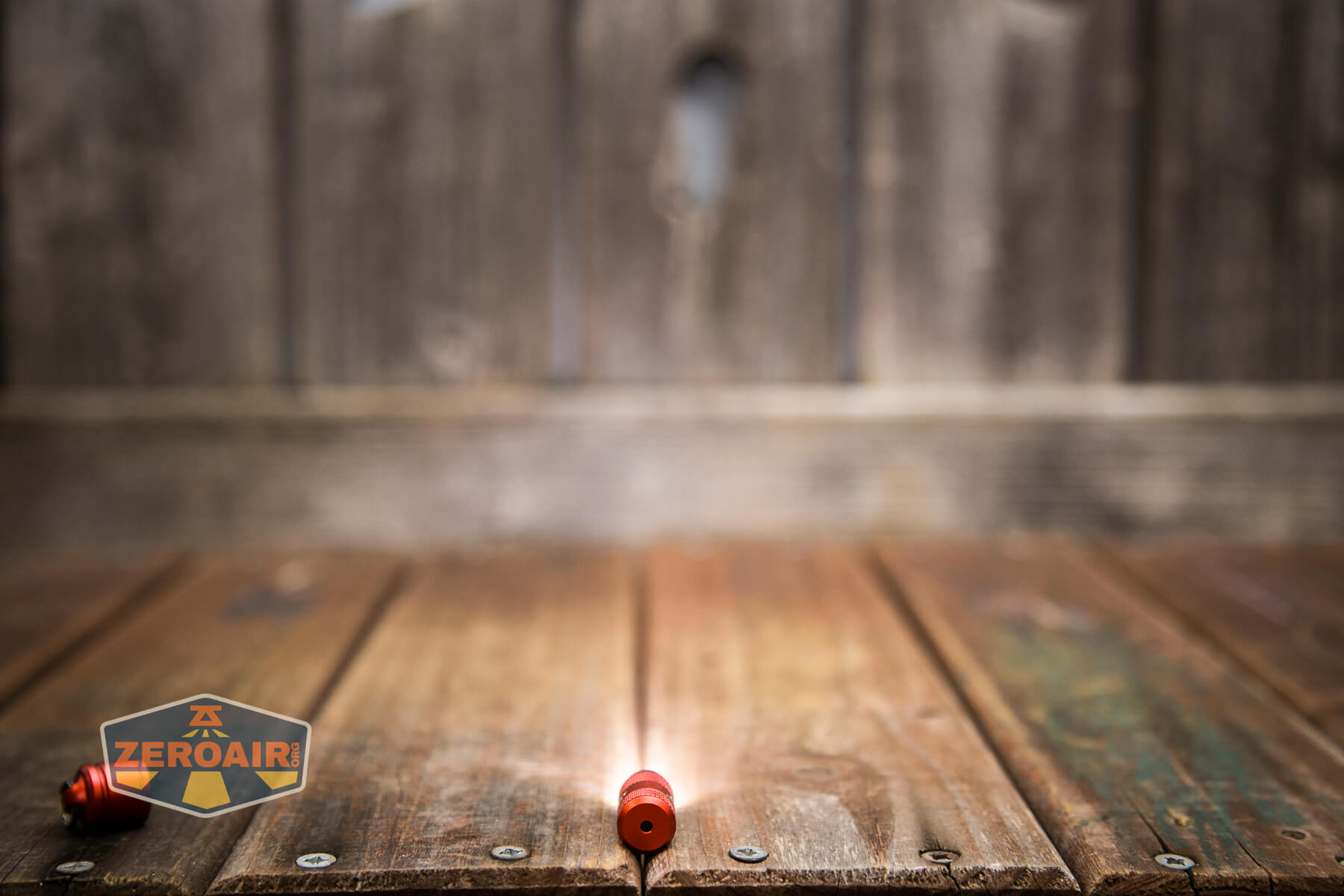
Olight doesn’t state what emitter is used. It has a small TIR. They do call it a high-performance neutral white LED, though.
LED Color Report (CRI and CCT)
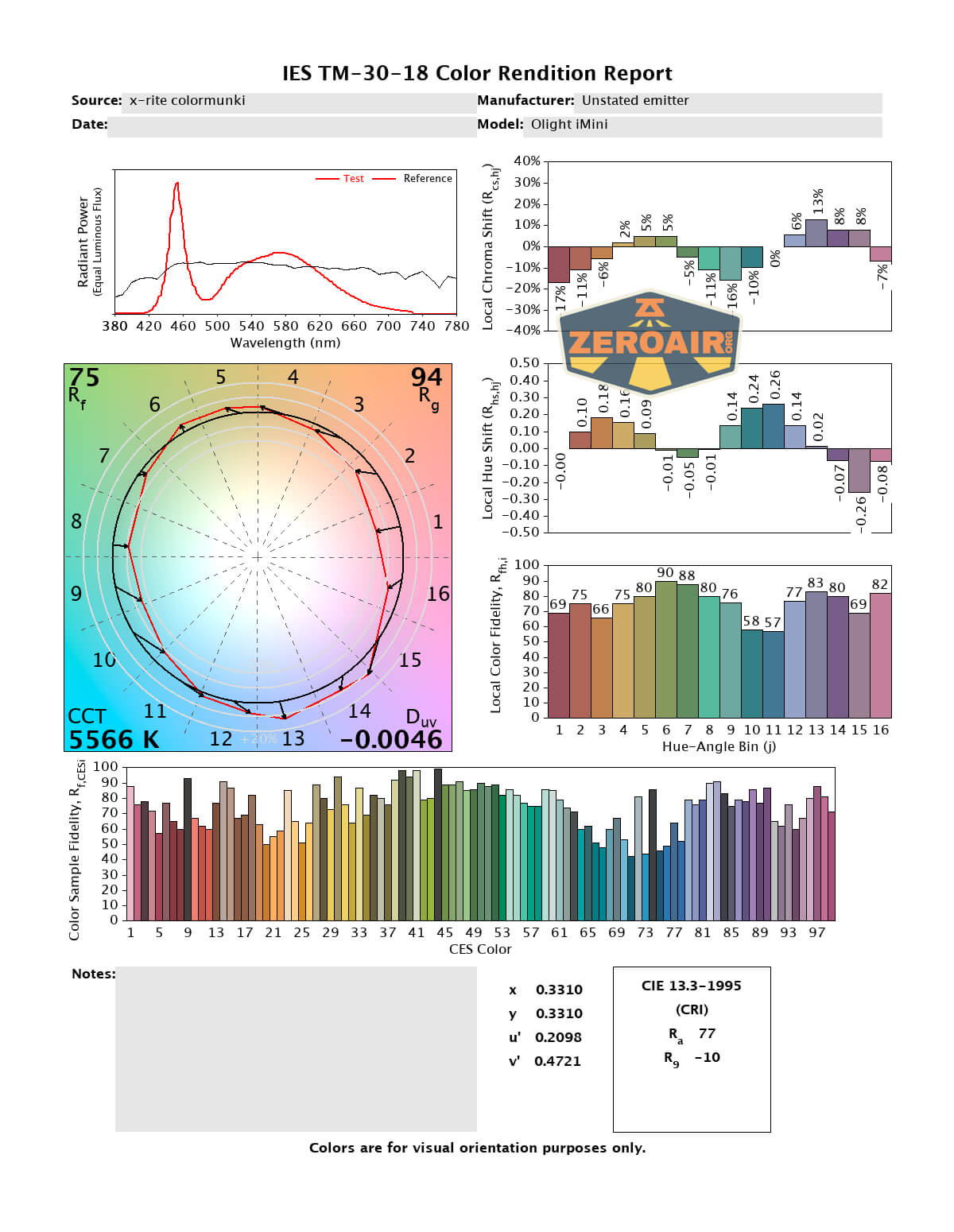
I measure the CCT at around 5500K, which I’d call on the cool side of neutral (but wouldn’t really argue about it being called “neutral”.) CRI is also not just terribly low, at around 77. The beam is also not green, with a negative Duv!
Beamshots
These beamshots always have the following settings: f8, ISO100, 0.3s shutter, and manual 5000K exposure. These photos are taken at floor level, and the beam hits the ceiling around 9 feet away.

Tint vs BLF-348 (KillzoneFlashlights.com 219b version) (affiliate link)
I keep the test flashlight on the left and the BLF-348 reference flashlight on the right.
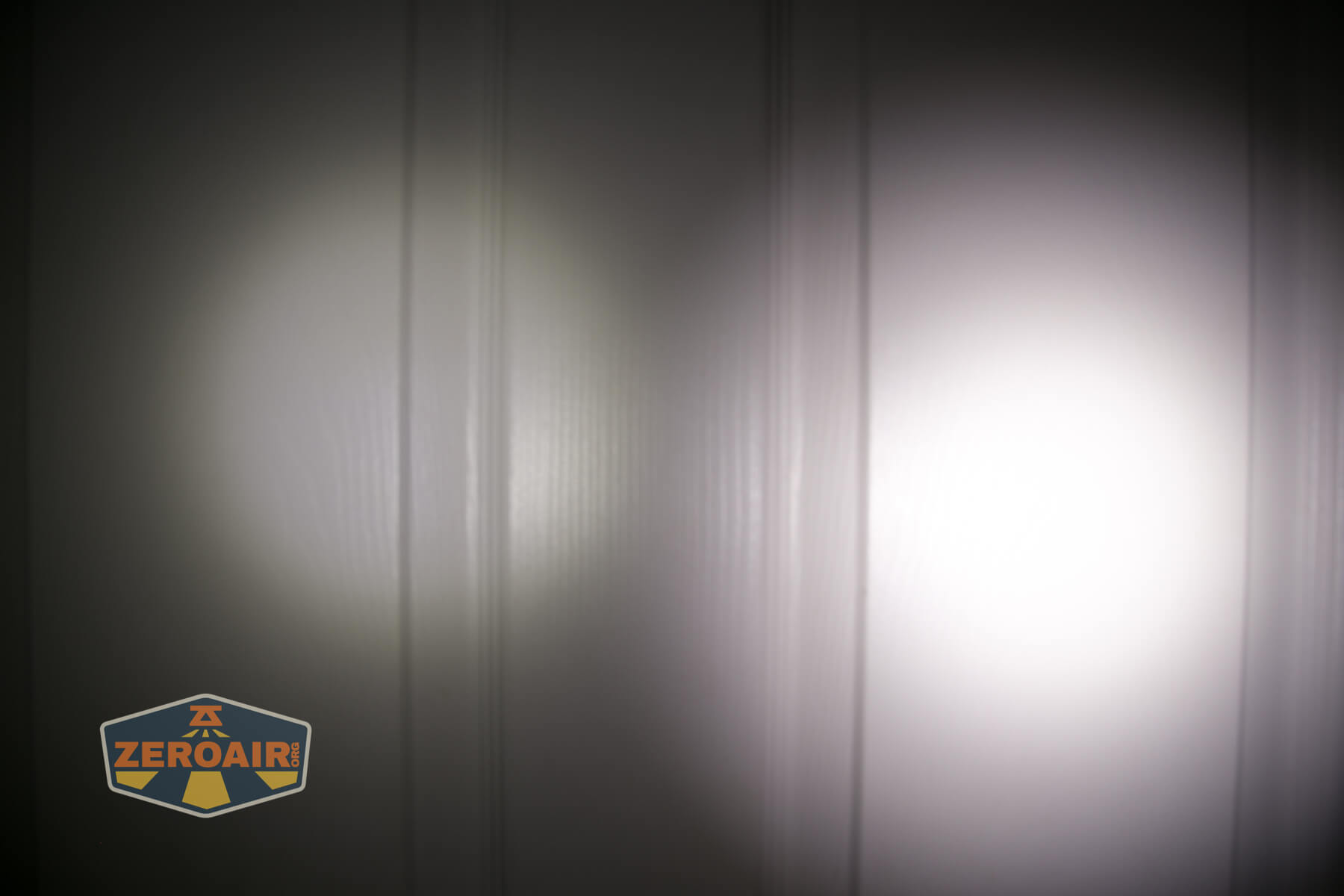
I compare everything to the KillzoneFlashlights.com 219b BLF-348 because it’s inexpensive and has the best tint!
Conclusion
What I like
- Neat actuation mechanism
- Strong magnet
- Neutral white (at 5500K)
What I don’t like
- Uses coin cells (three of them!)
- Just one mode
- It’s very small
- Must be removed from the keychain to use
Notes
- This content originally appeared at zeroair.org. Please visit there for the best experience!
- Please use my Amazon.com referral link to help support zeroair.org!
- Please support me on Patreon! I deeply appreciate your support!