

Lumintop PK27 Flashlight Review
The Lumintop PK27 flashlight is a small AAA-sized light with just three simple modes and a mechanical clicky. Great throw, too! Read on for more!
Official Specs and Features
Here’s a link to the Lumintop PK27 flashlight product page.
Versions
Just one version, I think!
Price
This AAA thrower sells in the low $20 range.
Short Review
I’m not completely sure what role the Lumintop PK27 flashlight is supposed to fill. My guess is that there are some who were not interested in the Lumintop GT Nano for some reason, and the PK27 was introduced for those people. I would recommend the GT Nano over the PK27, I think, namely because the PK27 does not (officially) support 10440 cells (and definitely not two 10440 cells!). Otherwise, this is a good and very simple AAA or 2xAAA thrower – sort of an inexpensive fun novelty.
Long Review
The Big Table
| Lumintop PK27 Flashlight | |
|---|---|
| Emitter: | Osram NM1 |
| Price in USD at publication time: | $25.95 |
| Cell: | 1xAAA or 2xAAA |
| Runtime Graphs | |
| LVP? | |
| Switch Type: | Mechanical |
| On-Board Charging? | No |
| Claimed Lumens (lm) | 300 |
| Measured Lumens (at 30s) | 219 (73% of claim)^ |
| Candela per Lumen | |
| Claimed Throw (m) | 270 |
| Candela (Calculated) in cd (at 30s) | 303lux @ 4.533m = 6226cd |
| Throw (Calculated) (m) | 157.8 (58.4% of claim)^ |
| Claimed CCT | – |
| Measured CCT Range (K) | 5300-6200 Kelvin |
| Item provided for review by: | Lumintop |
| All my Lumintop reviews! | |
^ Measurement disclaimer: Testing flashlights is my hobby. I use hobbyist-level equipment for testing, including some I made myself. Try not to get buried in the details of manufacturer specifications versus measurements recorded here; A certain amount of difference (say, 10 or 15%) is perfectly reasonable.
What’s Included

- Lumintop PK27 flashlight
- Lanyard
- Spare o-rings (2)
- Manual
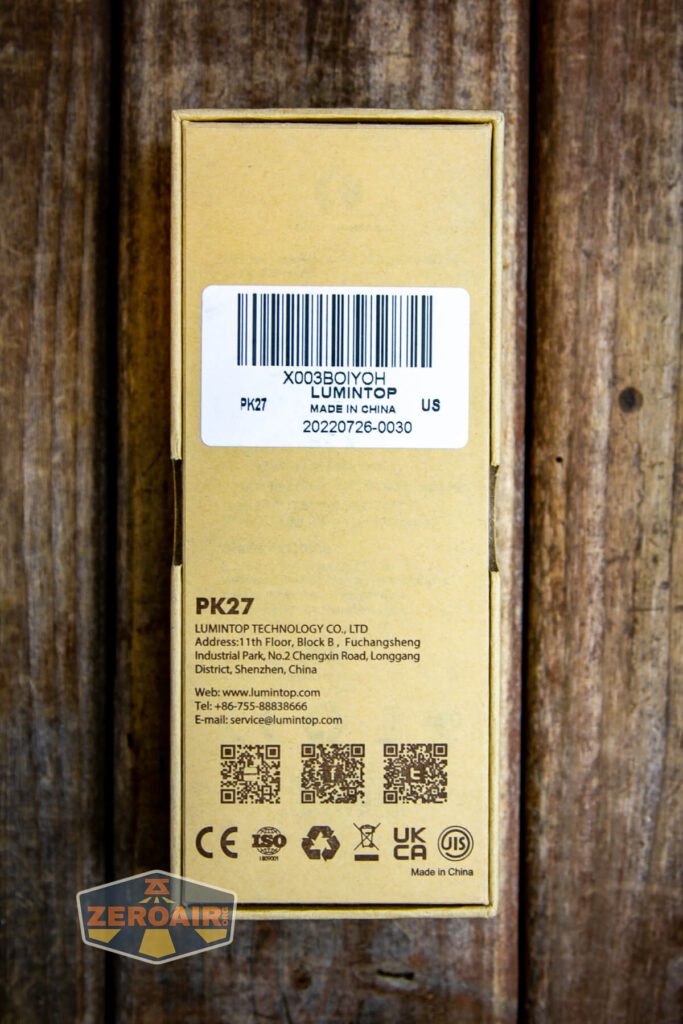
Package and Manual



Build Quality and Disassembly
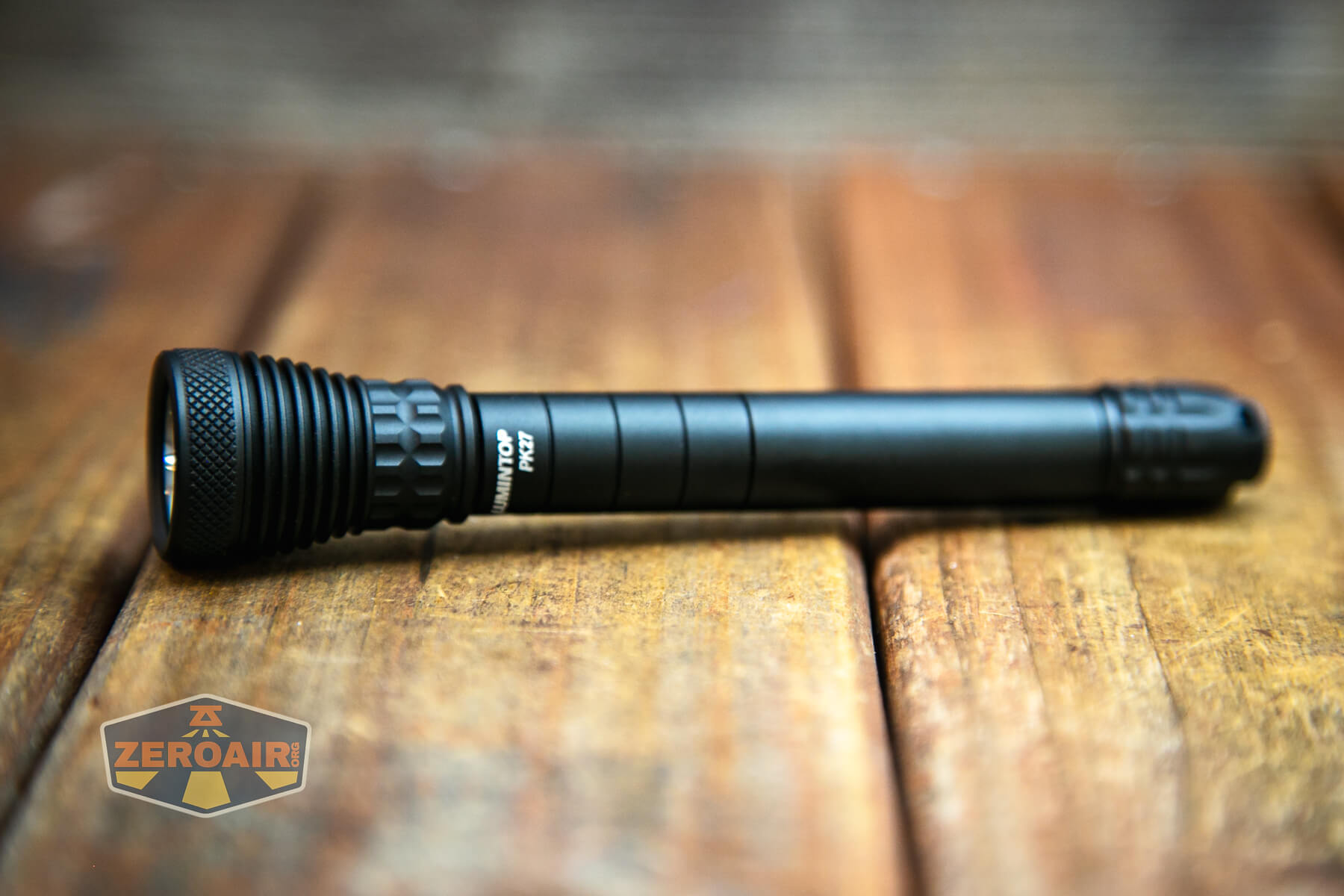



That cell tube can be broken down – this is how you select between one and two AAA cells.

The spring on the mechanical clicky is very basic.

On the head end, there’s just a brass button. This is normal; no issue there!

This extension tube is directional.

The build quality is fine and I wouldn’t say there are any issues to mention.
Size and Comps
Size 135 x 24 x 14.5mm (Length x head x tube)
Net Weight 38g (excluding battery)
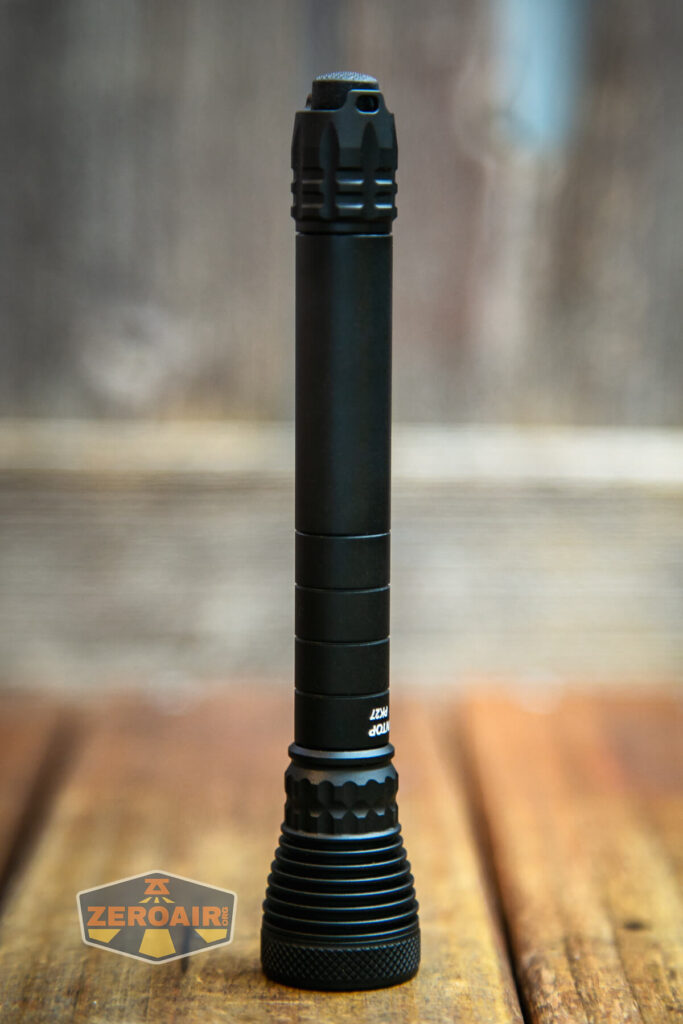
I’ve tried to capture both AAA and AAAx2 modes in the photos below.
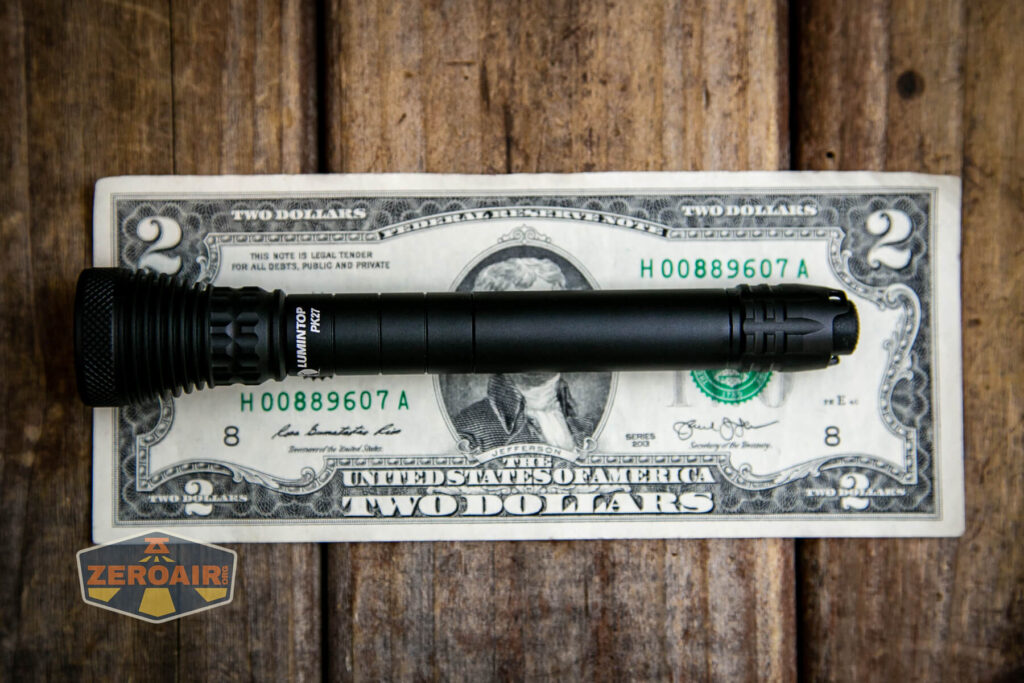
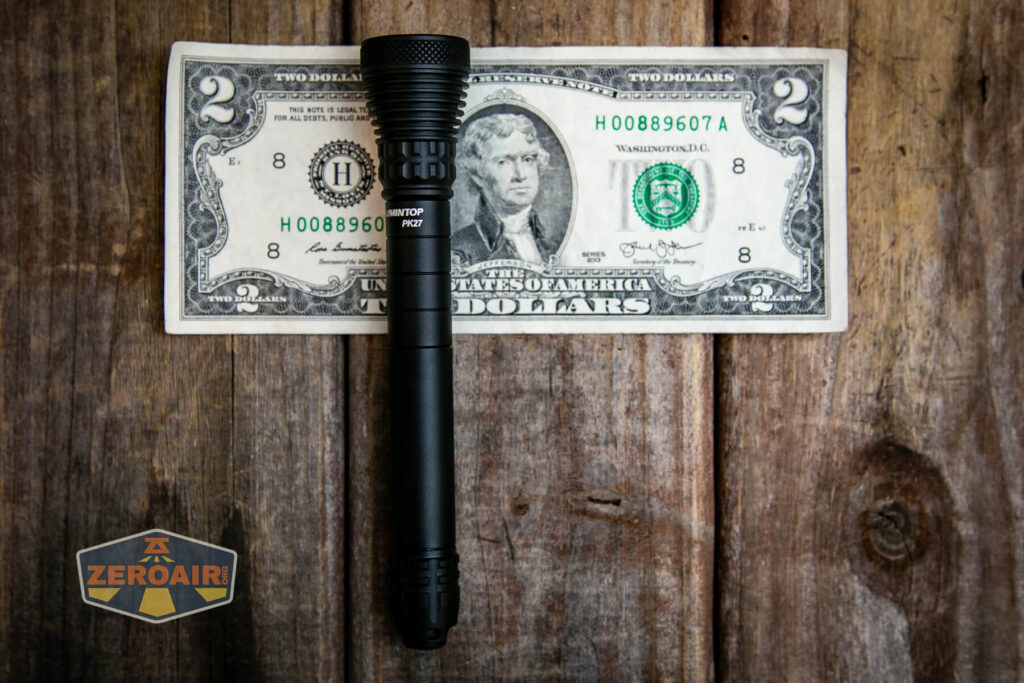


If the flashlight will headstand, I’ll show it here (usually the third photo). If the flashlight will tailstand, I’ll show that here, too (usually the fourth photo).


Here’s the test light with the venerable Convoy S2+. Mine is a custom “baked” edition Nichia 219b triple. A very nice 18650 light!
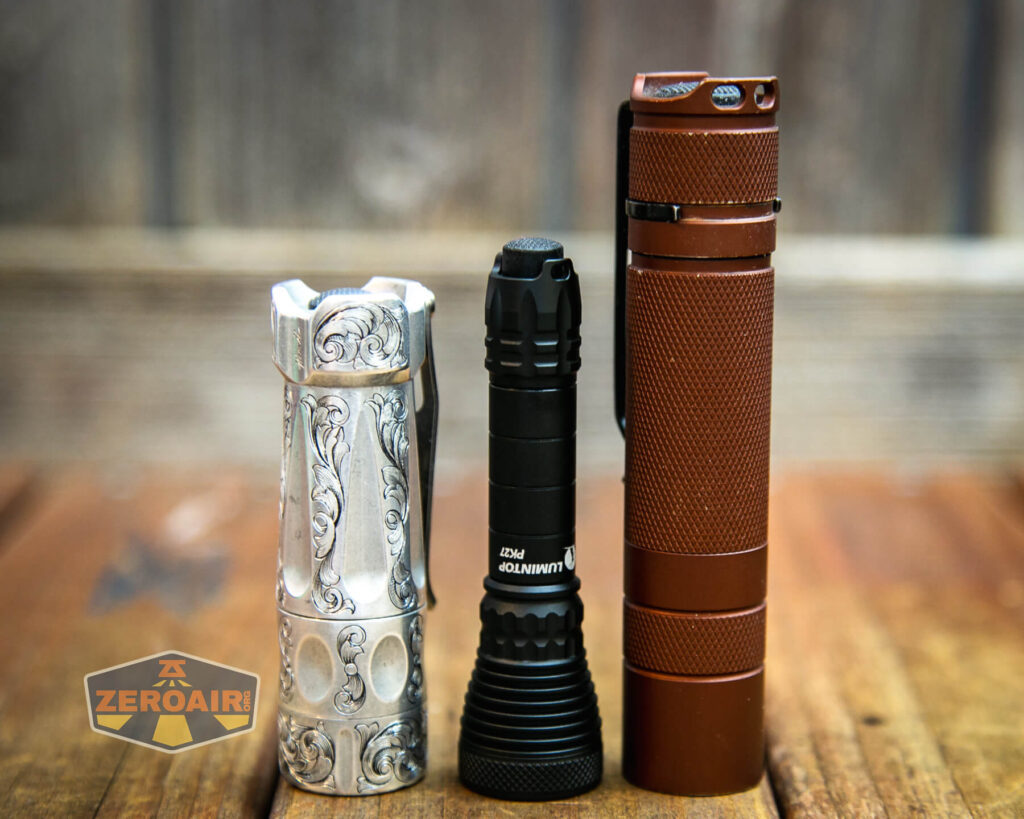

Also above is the light beside my custom-engraved TorchLAB BOSS 35, an 18350 light. I reviewed the aluminum version of that light in both 35 and 70 formats.
Below you can see the Lumintop PK27 flashlight beside the Lumintop Frog, another similarly-sized light. The Frog (like the GT Nano) runs on lithium-ion cells, though.

Retention and Carry
Only a lanyard is included for carrying the Lumintop PK27 flashlight. It attaches through one of these holes in the tailcap.

Power and Runtime
As stated above, the Lumintop PK27 flashlight runs only on 1.5V cells. Lithium-ion is not permitted – so not 10440 cells!
The package includes everything you’ll need for running one or two AAA cells, though. Seen below is the single-cell option. The cell goes into the light in the usual way – positive end toward the head.

Output is markedly different between one and two cells. It’s much higher with two cells! The runtime is nearly the same, too.


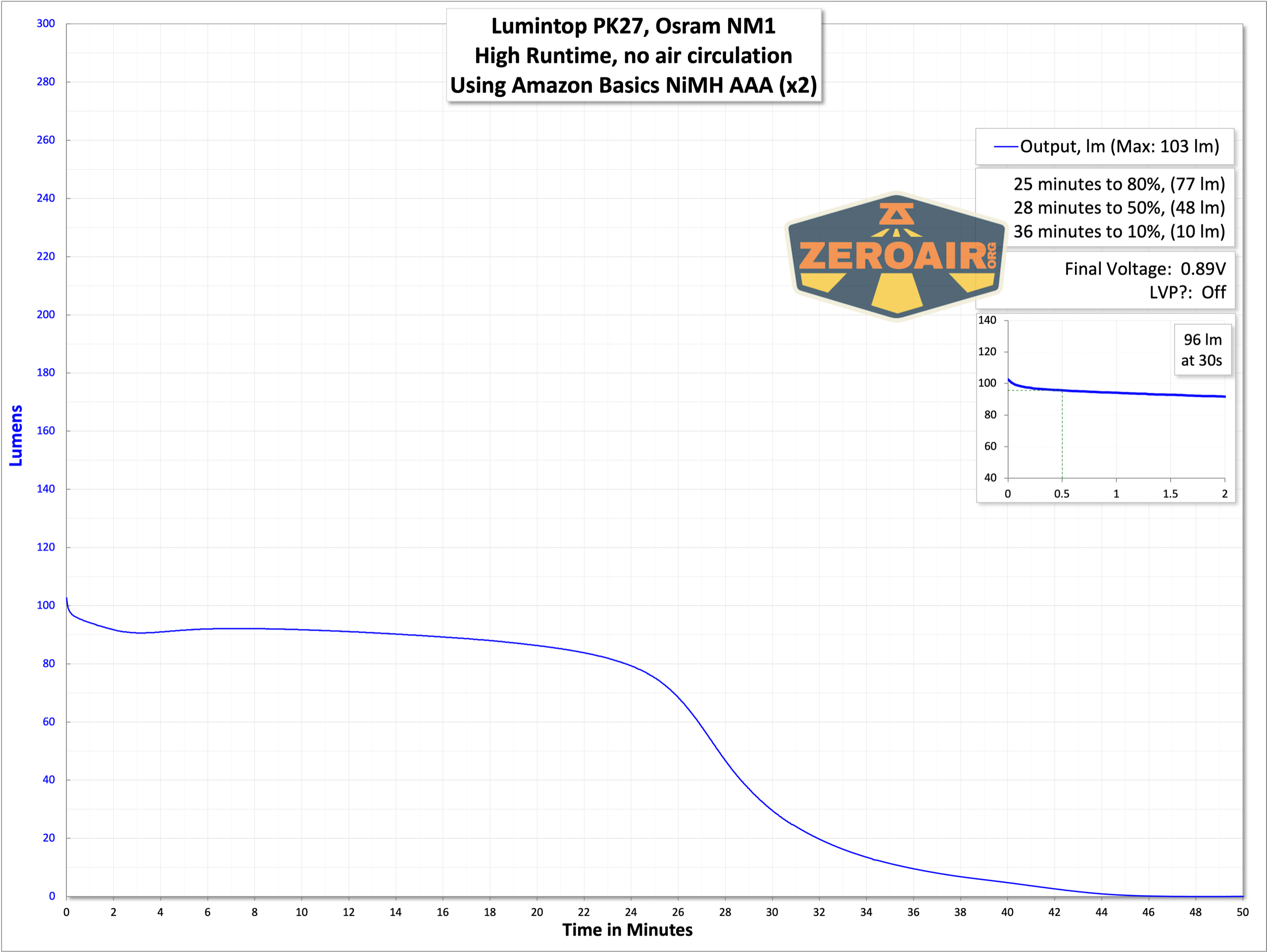
I wouldn’t describe the light as having low voltage protection, but for these 1.5V cells, that’s not the worst characteristic.
Modes and Currents
2xAAA
| Mode | Mode Claimed Output (lm) | Claimed Runtime | Measured Lumens | Tailcap Amps (@3V) |
|---|---|---|---|---|
| High | 300 | 20m | 219 | 0.86 |
| Medium | 40 | 17h | 25 | 0.09 |
| Low | 0.5 | 72h | 0.34 | ~ |
1xAAA
| Mode | Mode Claimed Output (lm) | Claimed Runtime | Measured Lumens | Tailcap Amps (@1.5V) |
|---|---|---|---|---|
| High | – | – | 96 | 2.32 |
| Medium | – | – | 4 | 0.02 |
| Low | – | – | 0.16 | ~ |
Pulse Width Modulation
The light does not use PWM with AAA or 2xAAA.


Here you can see a “baseline” – a chart with almost no light hitting the sensor.

Then there’s the Ultrafire WF-602C flashlight, which has some of the worst PWM I’ve seen. It’s so bad that I used a post about it to explain PWM! Here are multiple timescales (10ms, 5ms, 2ms, 1ms, 0.5ms, 0.2ms) to make comparing this “worst” PWM light to the test light easier. That post also explains why I didn’t test the WF-602C at the usual 50us scale.


User Interface and Operation
Control of the Lumintop PK27 flashlight is by a single mechanical tail switch. It’s a reverse clicky, so when the light is on, mode changes are possible.



Here’s a user interface table!
| State | Action | Result |
|---|---|---|
| Off | Click | High |
| On | Click | Off |
| On | Tap | Mode Advance (HML) |
LED and Beam
Lumintop has used a very throwy Osram NM1 in the PK27.

That’s coupled with a smooth reflector, which really promotes throw.

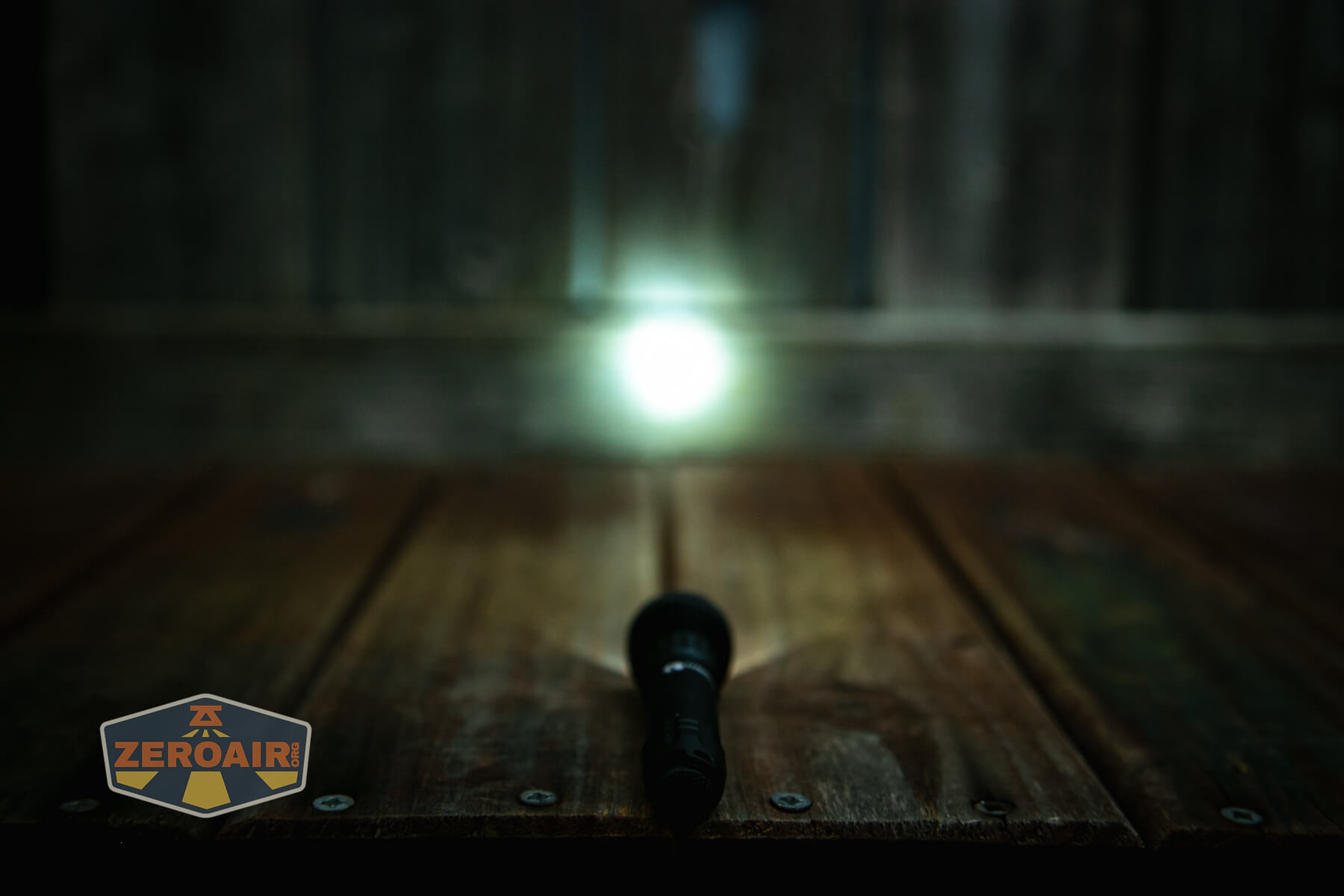
LED Color Report (CRI and CCT)
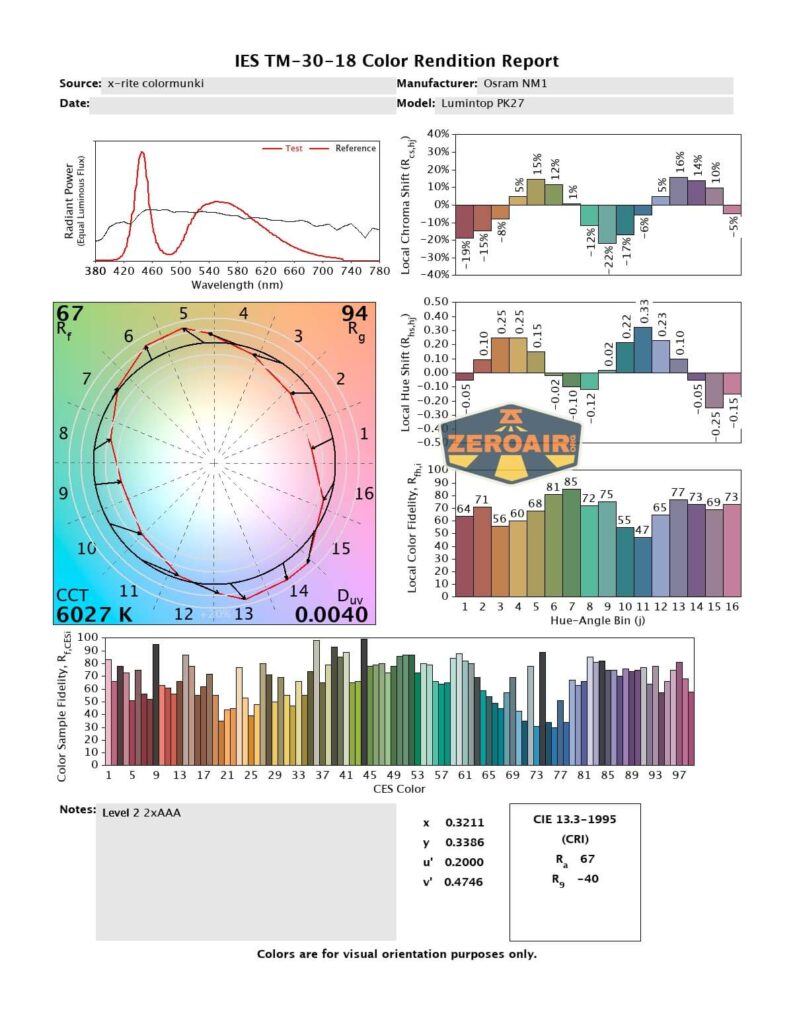
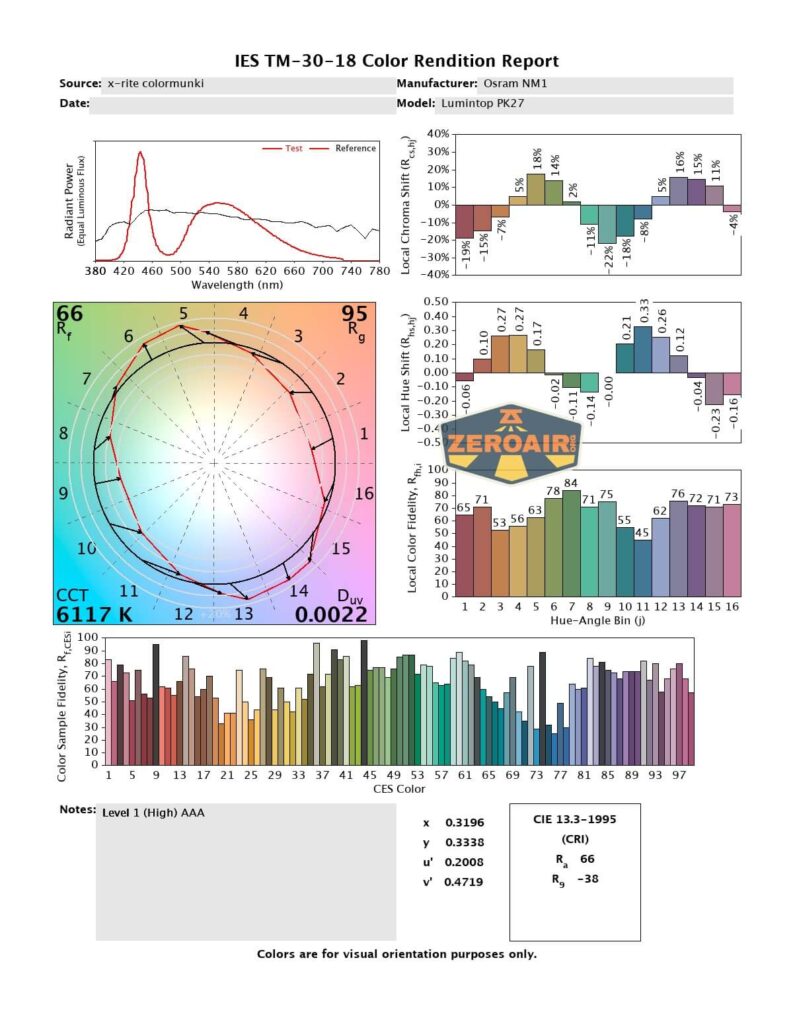
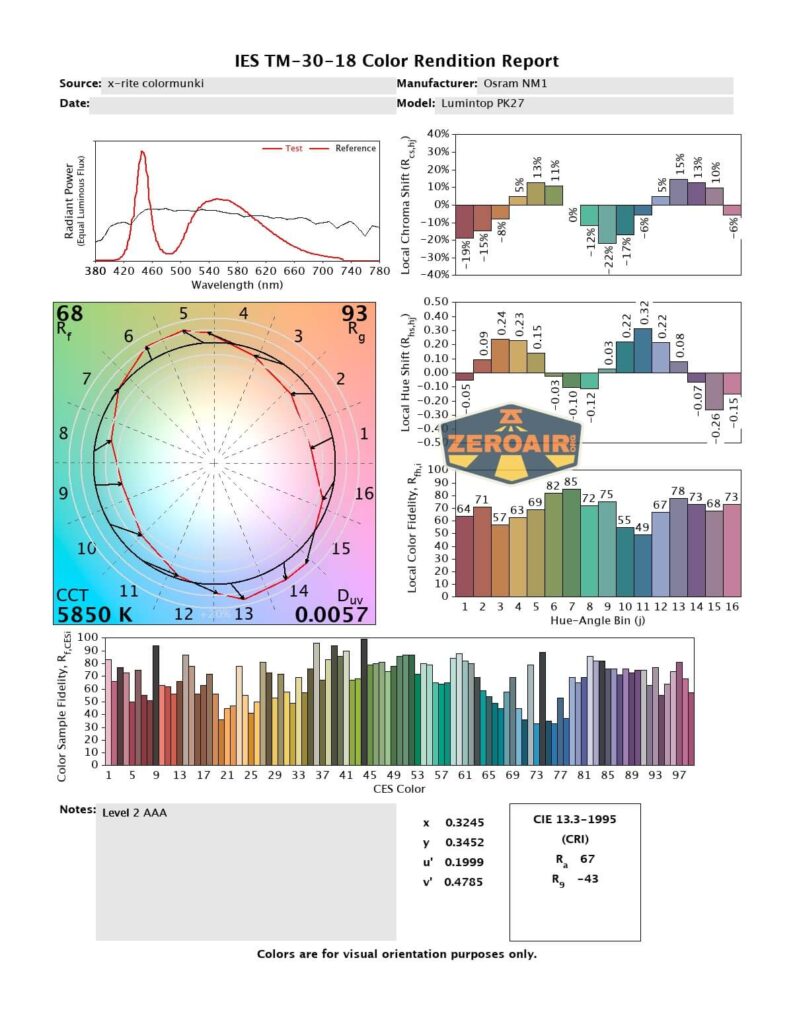
CRI and CCT are about what we expect from an NM1. On the higher modes (left, below), the CCT is “bluer” or cooler. Low is good, though, at around 5300K. CRI is low. Since AAA and 2xAAA are driven differently, I’ve included CRI and CCT reports for both!



Beamshots
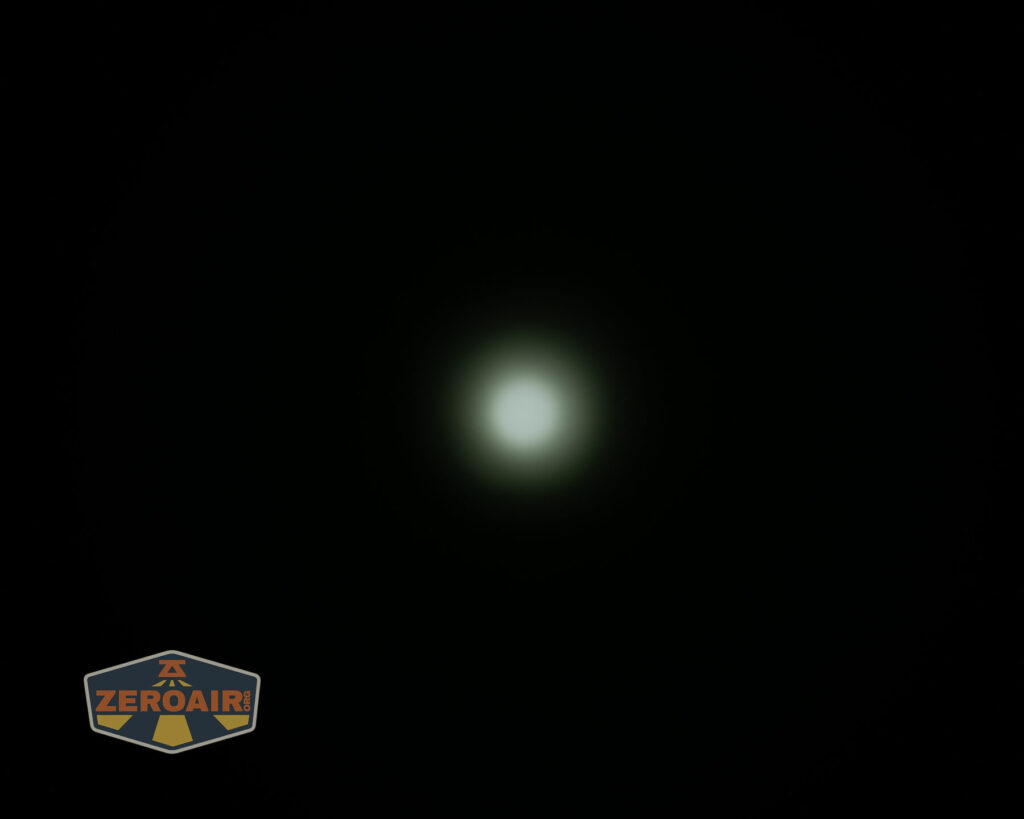
These beamshots always have the following settings: f8, ISO100, 0.3s shutter, and manual 5000K exposure. These photos are taken at floor level, and the beam hits the ceiling around 9 feet away.



Tint vs BLF-348 (KillzoneFlashlights.com 219b version) (affiliate link)
I keep the test flashlight on the left and the BLF-348 reference flashlight on the right.


I compare everything to the KillzoneFlashlights.com 219b BLF-348 because it’s inexpensive and has the best tint!
Conclusion
What I like
- Uses AAA (that is, 1.5V cells)
- Comes with what you need for running one or two AAA cells
- Very simple user interface
- Great throw
What I don’t like
- Uses only 1.5V cells
Notes
- This content originally appeared at zeroair.org. Please visit there for the best experience!
- Please use my Amazon.com referral link to help support zeroair.org!
- Please support me on Patreon! I deeply appreciate your support!