

Nextorch K40 Keychain Flashlight Review
Nextorch has released the Nextorch K40 keychain flashlight, offering both a main white as well as two side emitters. And it has USB-C charging!
Official Specs and Features
Here’s a link to the Nextorch K40 keychain flashlight product page.
Versions
There’s just one version of the Nextorch K40 keychain flashlight.
Price
Nextorch has the K40 keychain flashlight priced at$24.95.
I also have a referral coupon for Nextorch.com that’ll give you 10% off! The code is “ZEROAIR“.
Short Review
I don’t think the Nextorch K40 really breaks any ground, but it’s a fun little keychain flashlight. If you need a light with side red and UV, this is a good one to pick. Or if you necessarily need output to start on high and then go to medium and low, this is a great choice.
Long Review
The Big Table
| Nextorch K40 keychain flashlight | |
|---|---|
| Emitter: | unstated white emitter |
| Price in USD at publication time: | $24.95 |
| Cell: | Internal |
| Runtime Graphs | |
| LVP? | ? |
| Switch Type: | E-Switch |
| Quiescent Current (mA): | ? |
| On-Board Charging? | Yes |
| Charge Port Type: | USB-C |
| Charge Graph | |
| Power off Charge Port | all modes |
| Claimed Lumens (lm) | 300 |
| Measured Lumens (at 30s) | 321 (107% of claim)^ |
| Candela per Lumen | 5.9 |
| Claimed Throw (m) | 78 |
| Candela (Calculated) in cd (at 30s) | 119lux @ 4.058m = 1960cd |
| Throw (Calculated) (m) | 88.5 (113.5% of claim)^ |
| Claimed CCT | – |
| Measured CCT Range (K) | 6900-7000 Kelvin |
| Item provided for review by: | Nextorch |
| All my Nextorch reviews! | |
^ Measurement disclaimer: Testing flashlights is my hobby. I use hobbyist-level equipment for testing, including some I made myself. Try not to get buried in the details of manufacturer specifications versus measurements recorded here; A certain amount of difference (say, 10 or 15%) is perfectly reasonable.
What’s Included

- Nextorch K40 keychain flashlight
- Split ring and hook
- Charging cable (USB to USB-C)
- Manual
Package and Manual


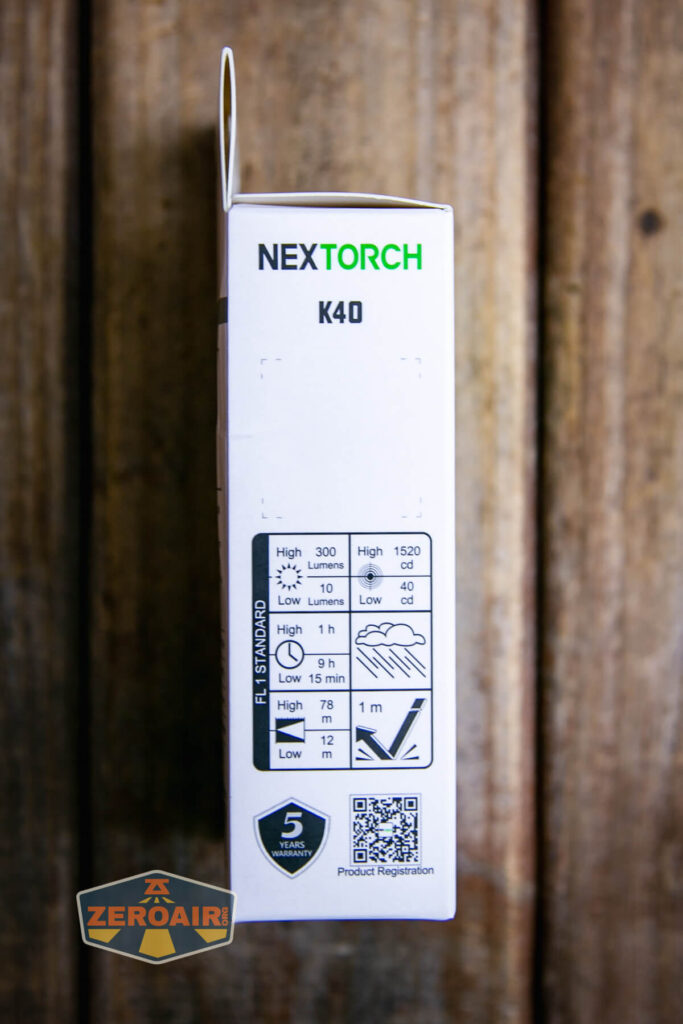

Build Quality and Disassembly

The Nextorch K40 keychain flashlight is a fairly standard keychain light “of this style.” That’s probably a lazy way to phrase this but you should know this style light by now. RovyVon popularized it, then Nitecore made one. XTAR has made a couple. The Nextorch version is a solid contender and does seem to differ in the way the plastic feels. This is a hard type of plastic.
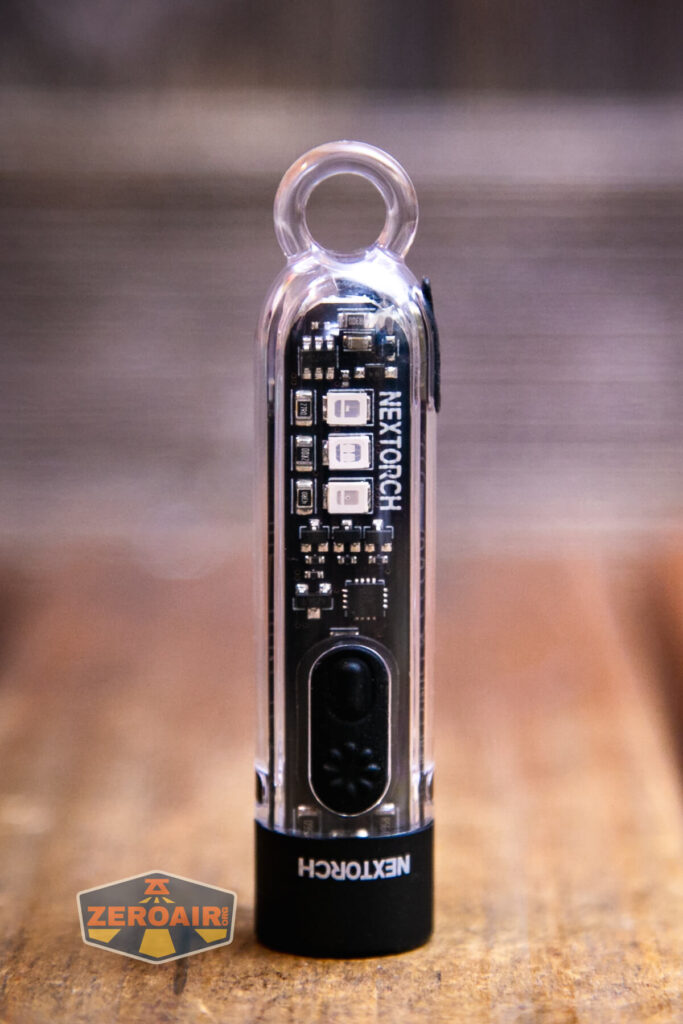
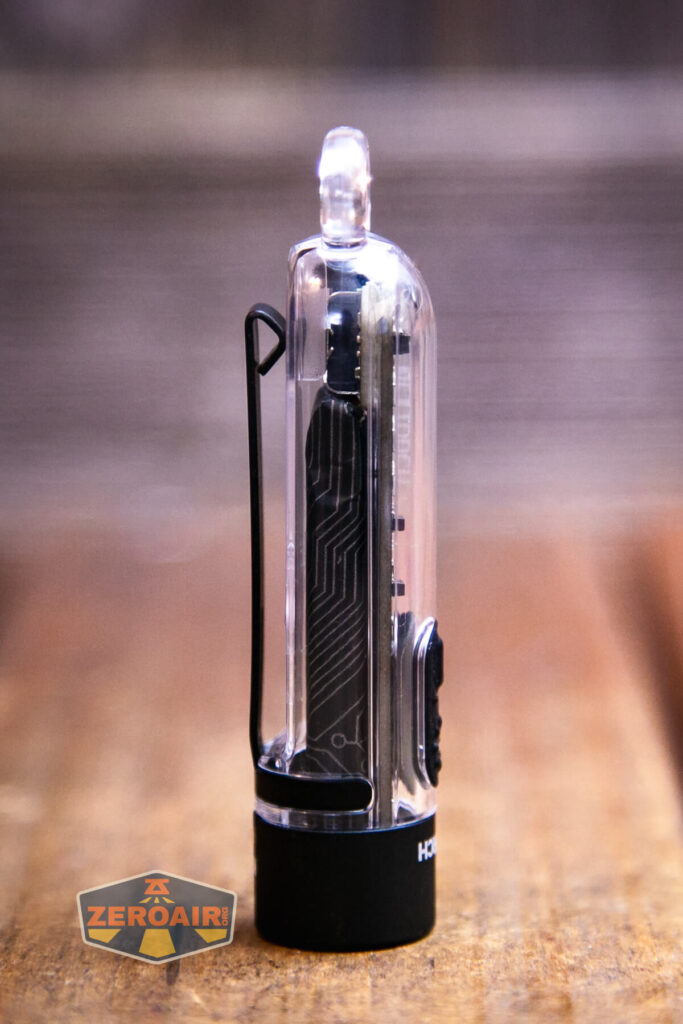
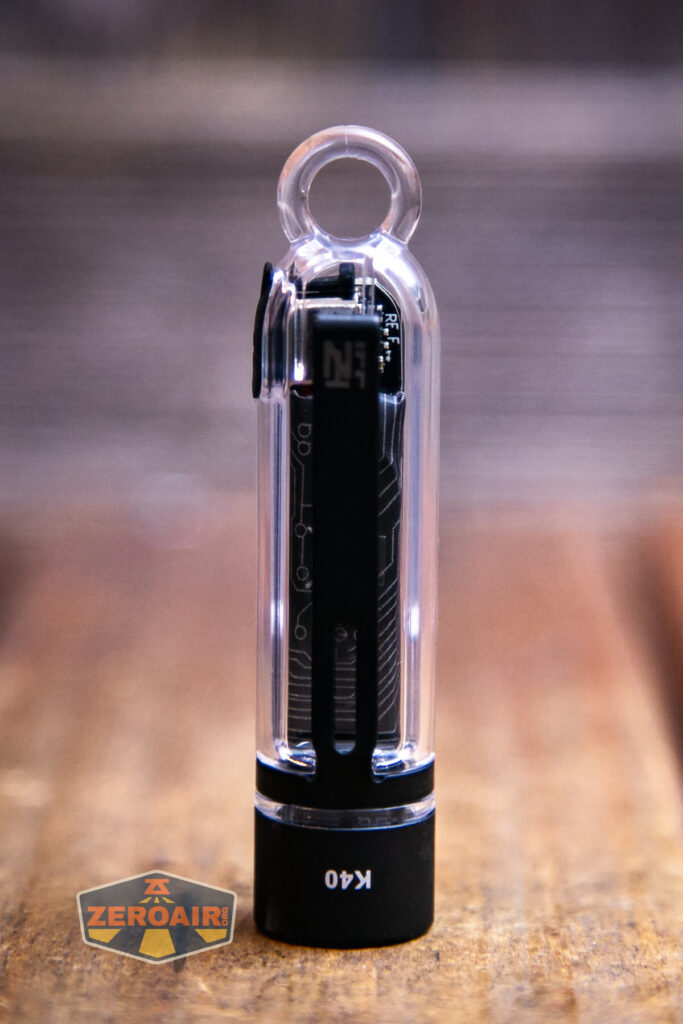
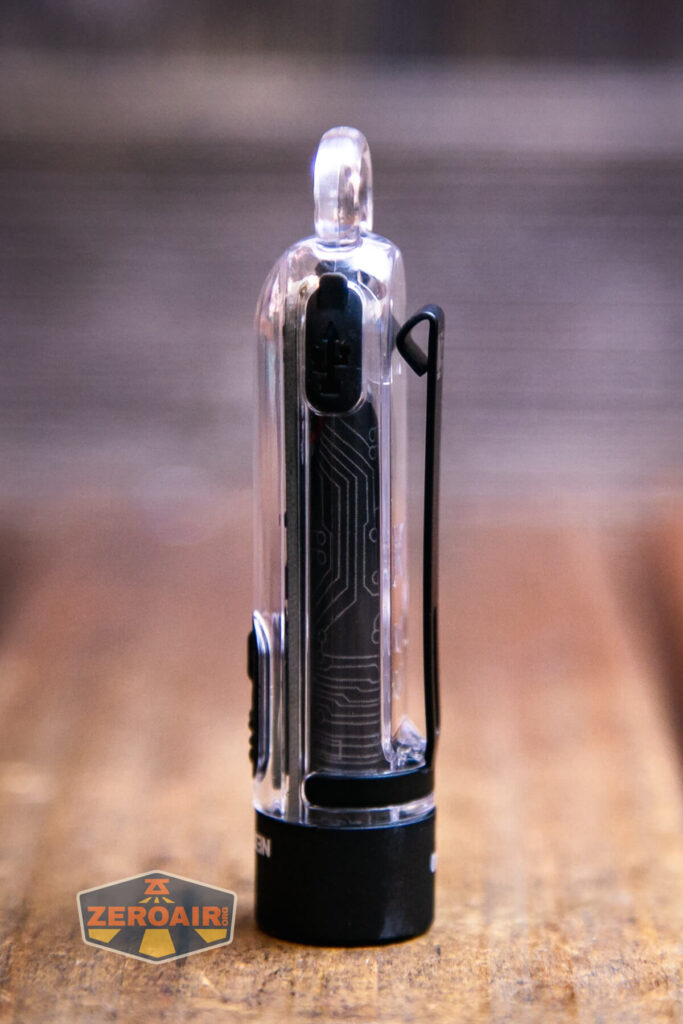
I didn’t disassemble the K40. I’m not even sure how, but it would definitely involve removing the head. I think that the black bezel is metal.
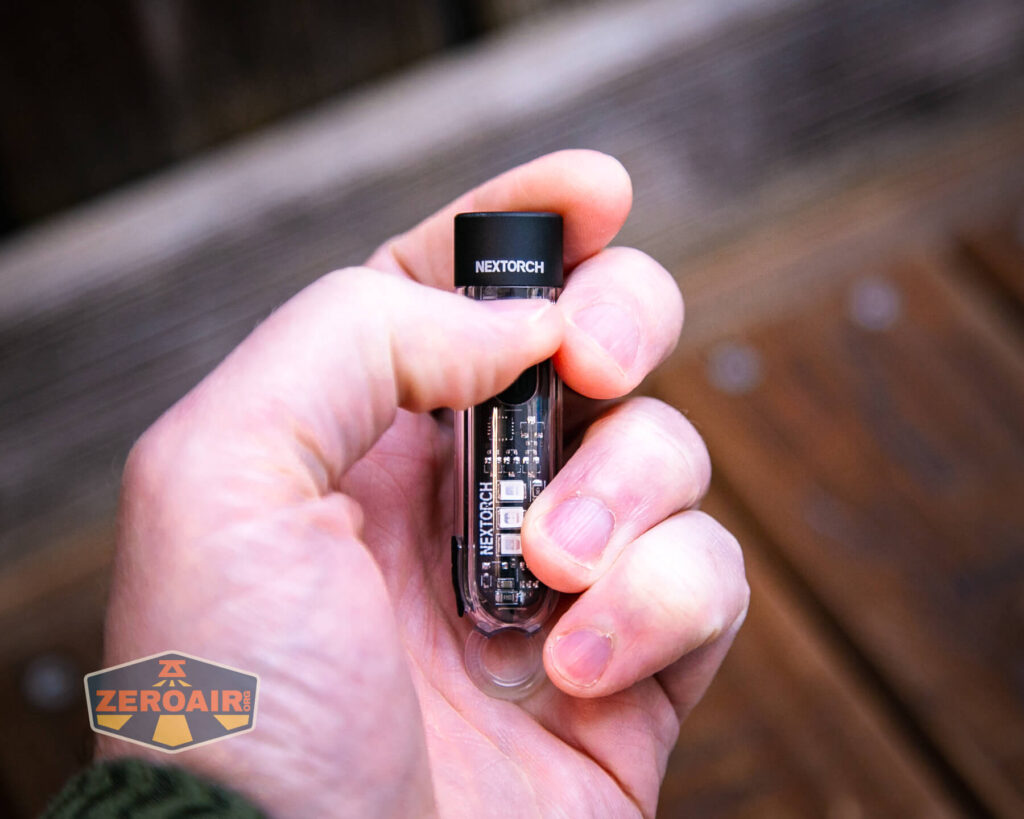
Size and Comps
Length: 73mm
Diameter: 16.5mm
Weight: 17g
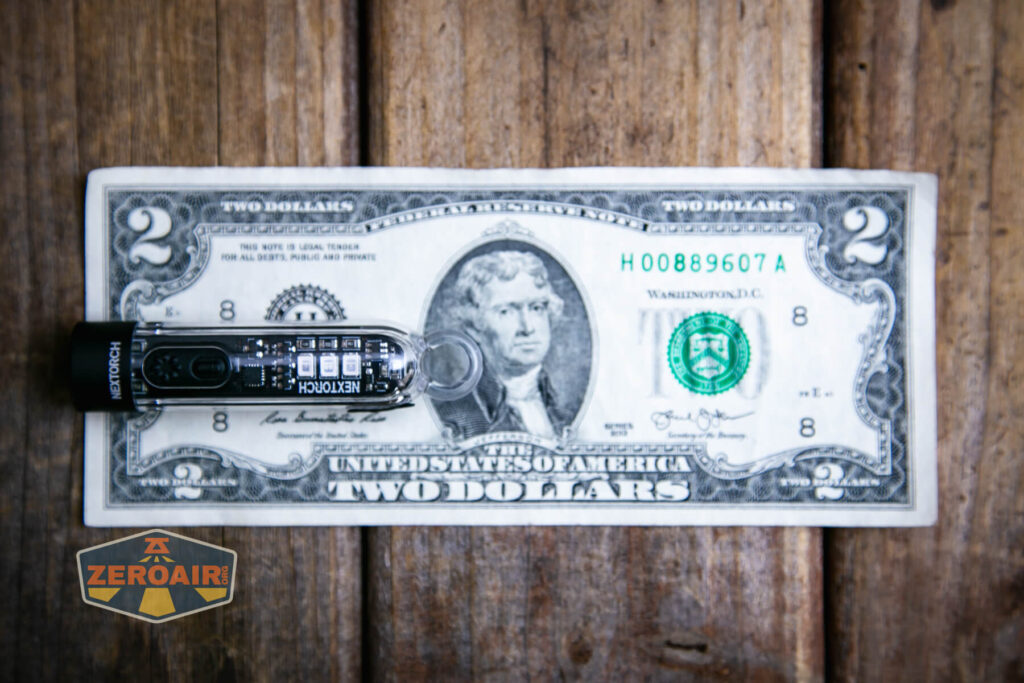
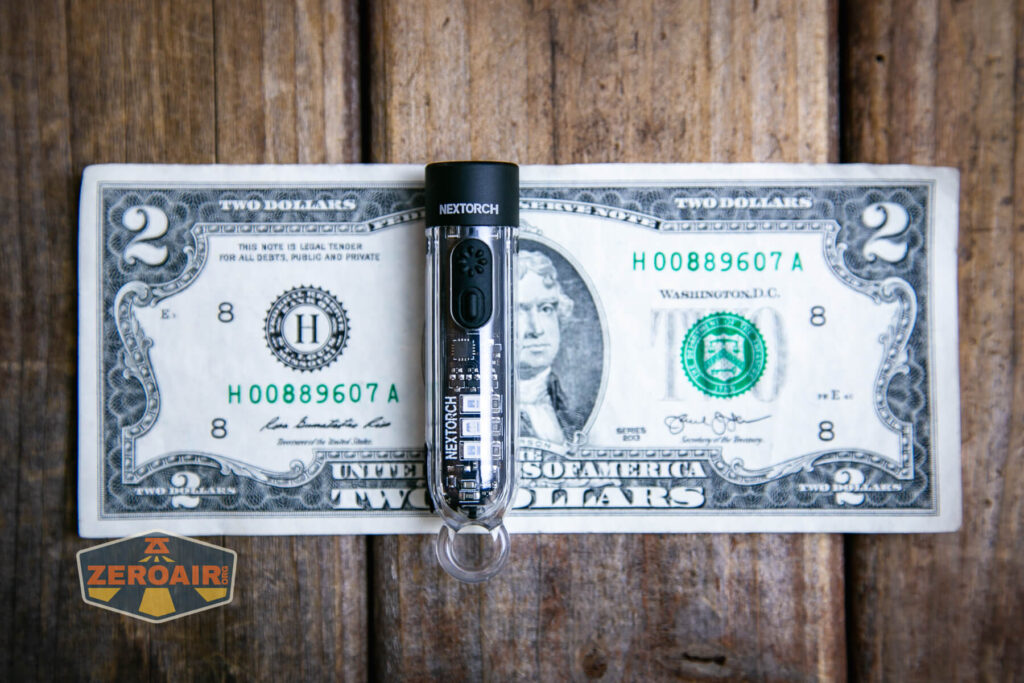

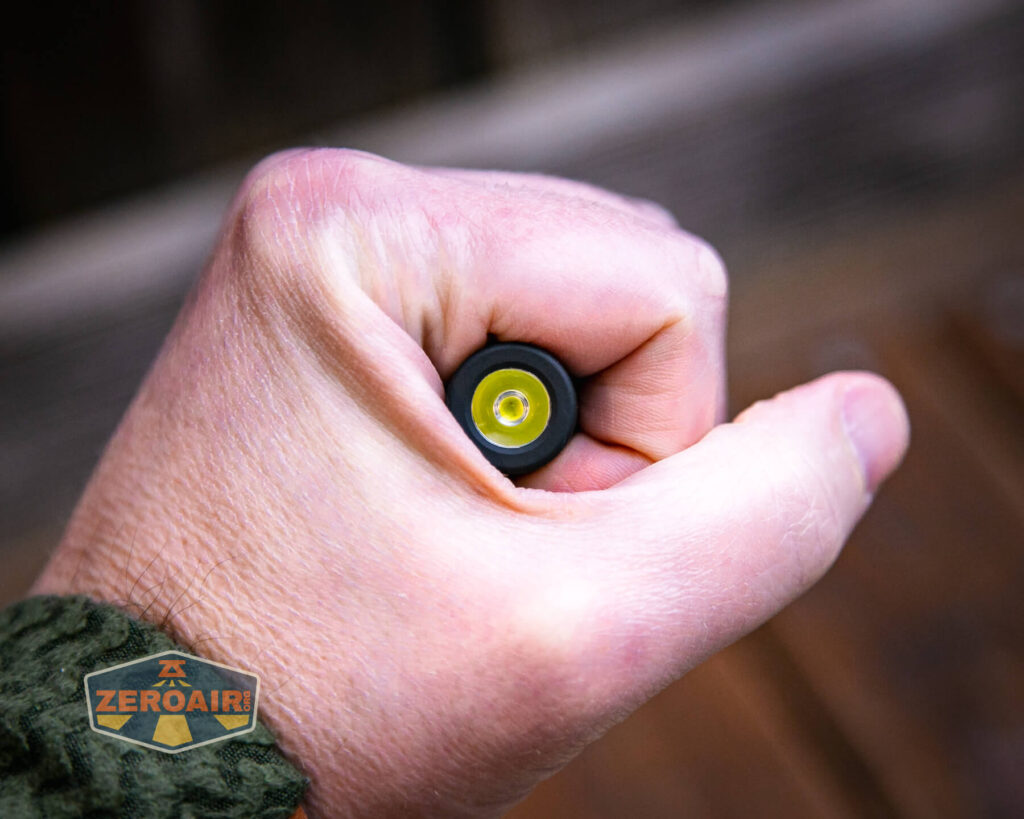
If the flashlight will headstand, I’ll show it here (usually the third photo). If the flashlight will tailstand, I’ll also show that (usually in the fourth photo).


Here’s the test light with the venerable Convoy S2+. Mine is a custom “baked” edition Nichia 219b triple. A very nice 18650 light!
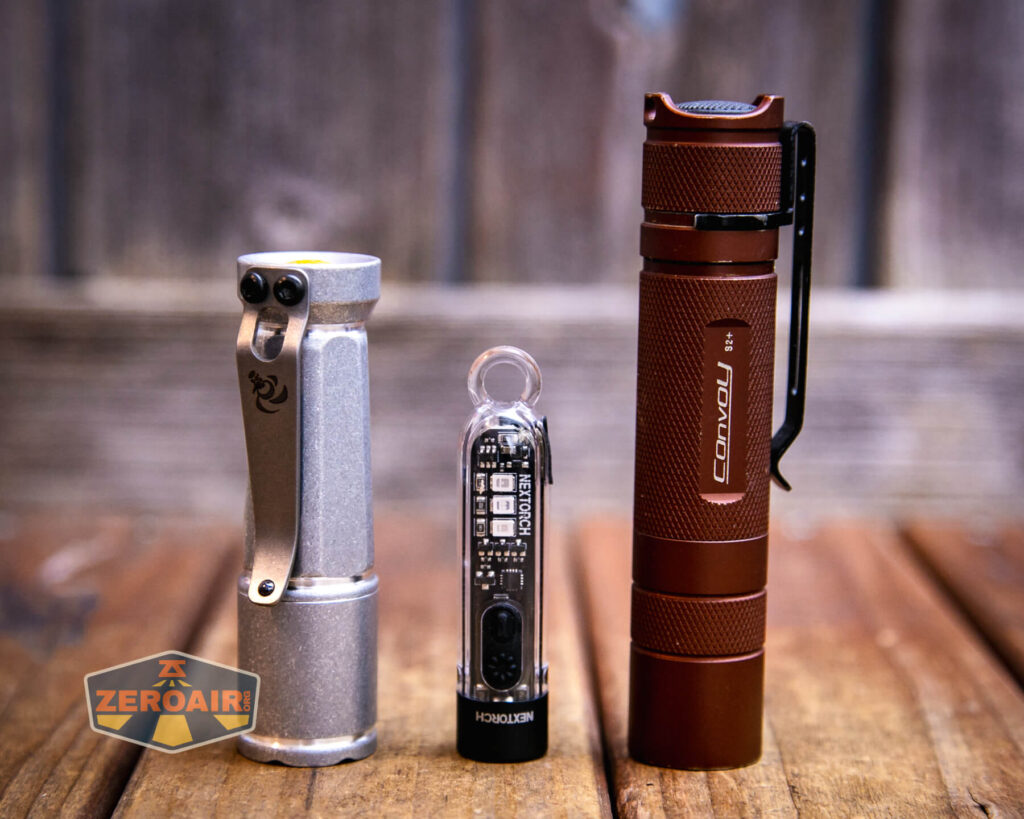

Also above on the left is a new feature light!! Laulima Metal Craft sent this Todai in tumbled aluminum for some size comparison photos like the ones above. Laulima has a bunch of incredible items. I’ve tested one (the Laulima Metal Craft Hoku) (the official site for Hoku is here) that was a Friend Fund Friday review. I was impressed enough by that Hoku that I bought a Laulima Metal Craft Diamond Slim (also in tumbled aluminum) (review is upcoming!) These lights by Laulima have impeccable build quality and not only that, they’re quite configurable. There are some (great, actually) default configurations, but Joshua Dawson (of Laulima Metal Craft) is open to ideas and emitter options and the like. I haven’t reviewed this Todai, but I have to say, it feels absolutely fantastic and I love it thus far. (Notably, I love how warm and eggy those emitters look through the TIR.)
Retention and Carry
There are a number of ways to carry the Nextorch K40 keychain flashlight. First, there’s this pocket clip. This clip is one of the “closer” clips I’ve ever seen. It’s very snug up against the body.

Very snug! Also, the mouth (the entry point) is not just huge – you’ll likely have the best luck clipping this onto a dress shirt pocket or something like that, and a worse time clipping it to blue jeans.


The clip is removable, but the area it hugs against is a specific cutout.
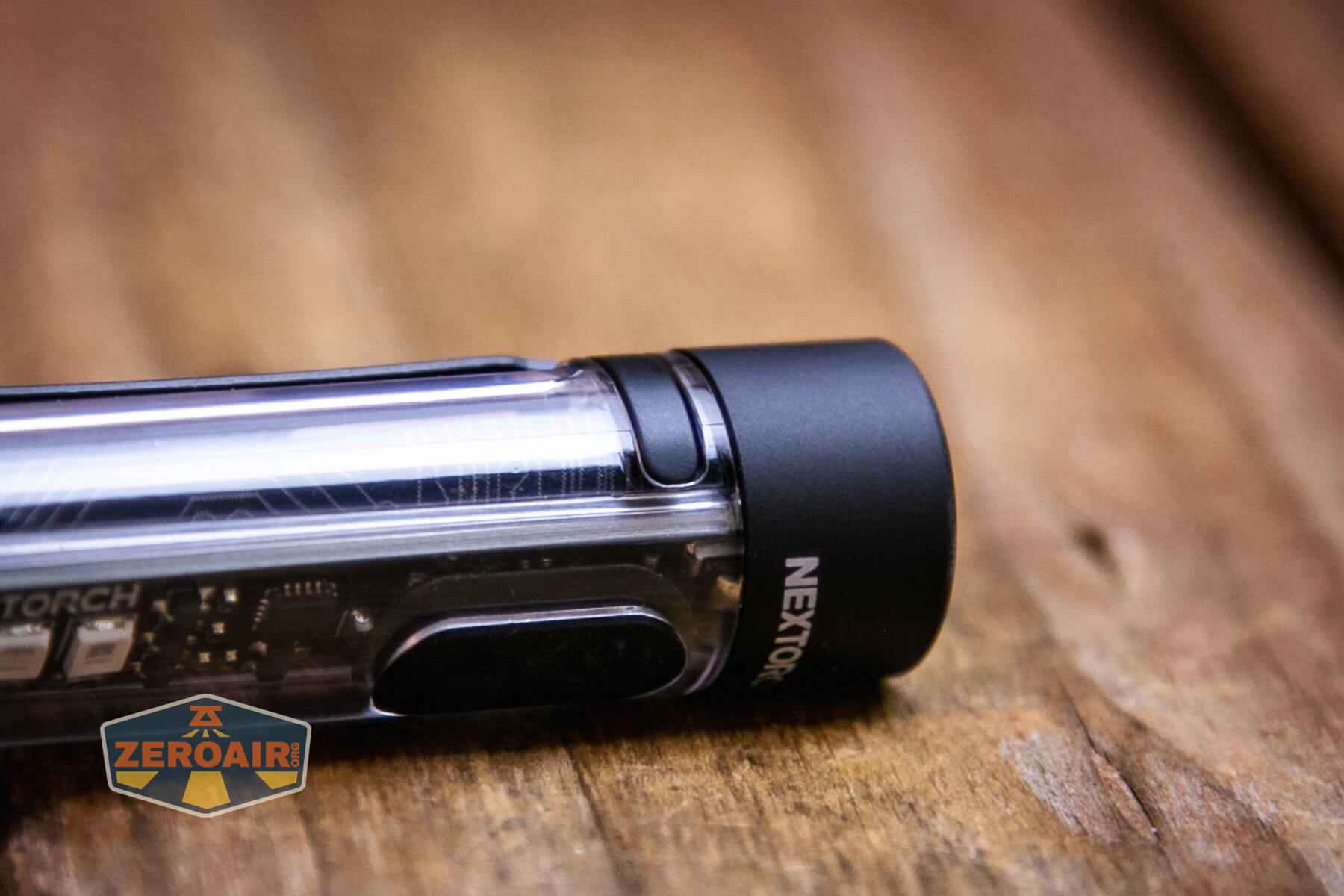
Also included is a split ring and a gate hook. I’ve attached it below in reverse, but that split ring should fit on the loop, too. Either way is reasonable, though.


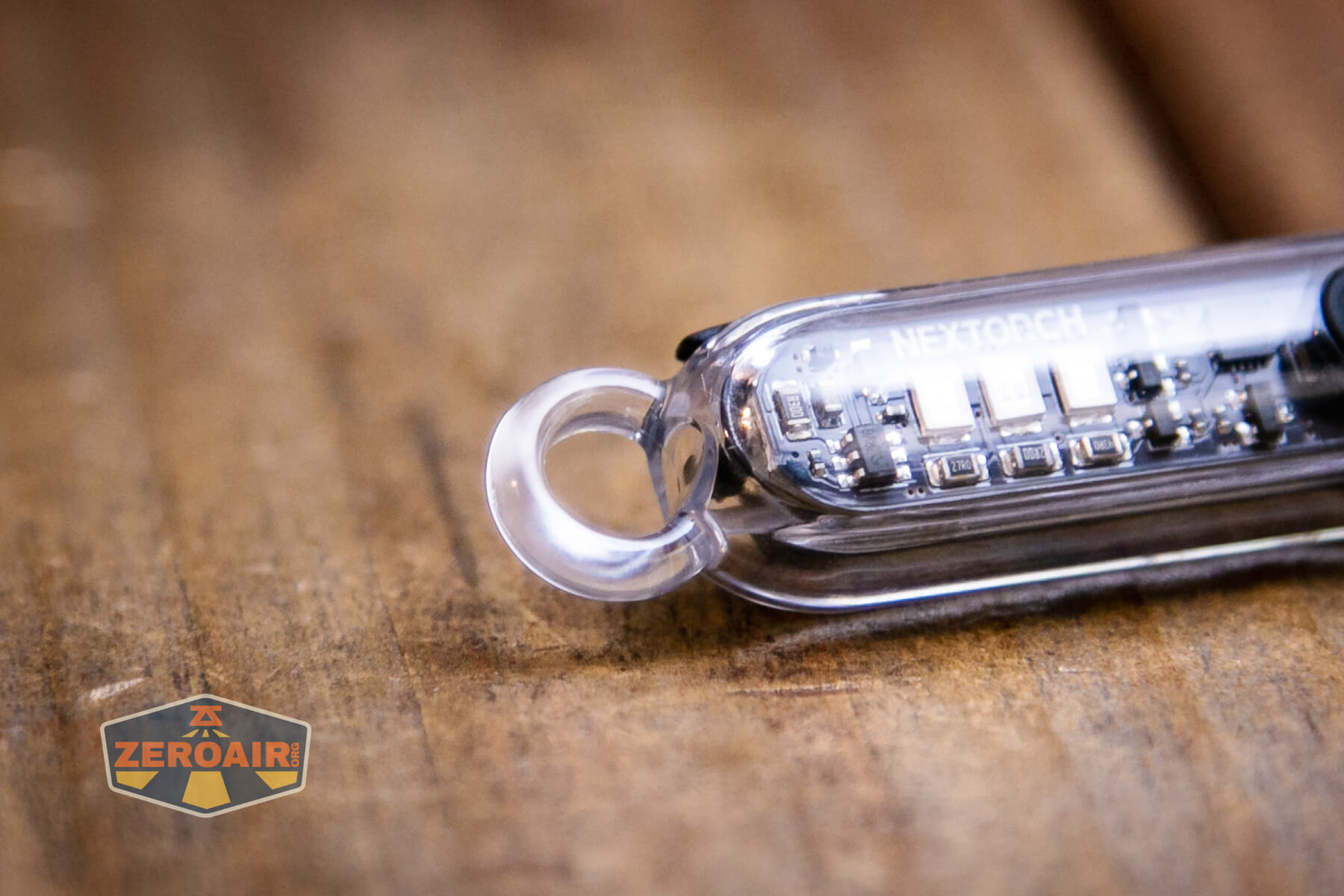
The tail loop would be great for a roll-your-own lanyard, too.
Power and Runtime
A built-in 180mAh LiPO powers the Nextorch K40 keychain flashlight. Here are a couple of runtime tests.
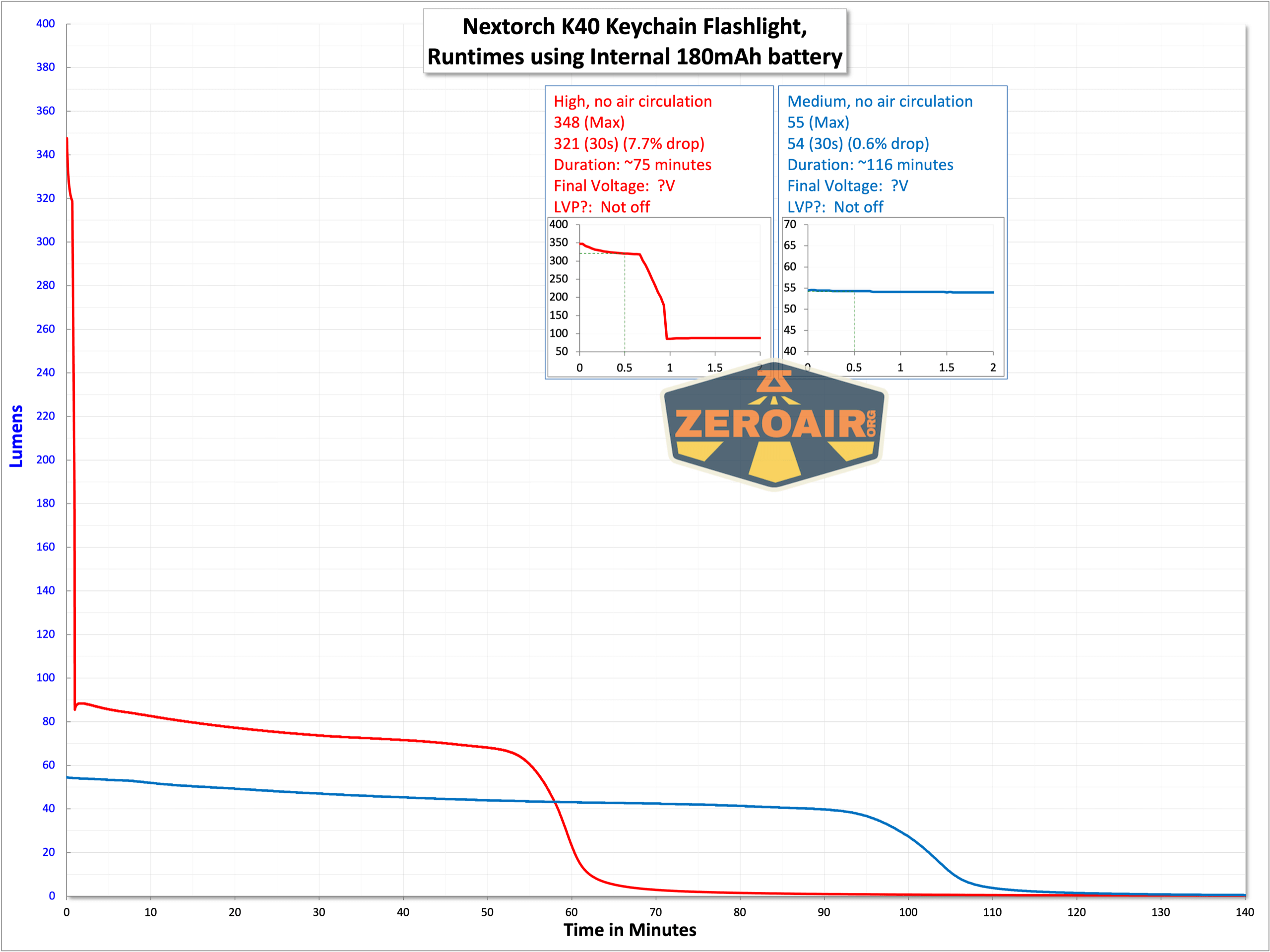
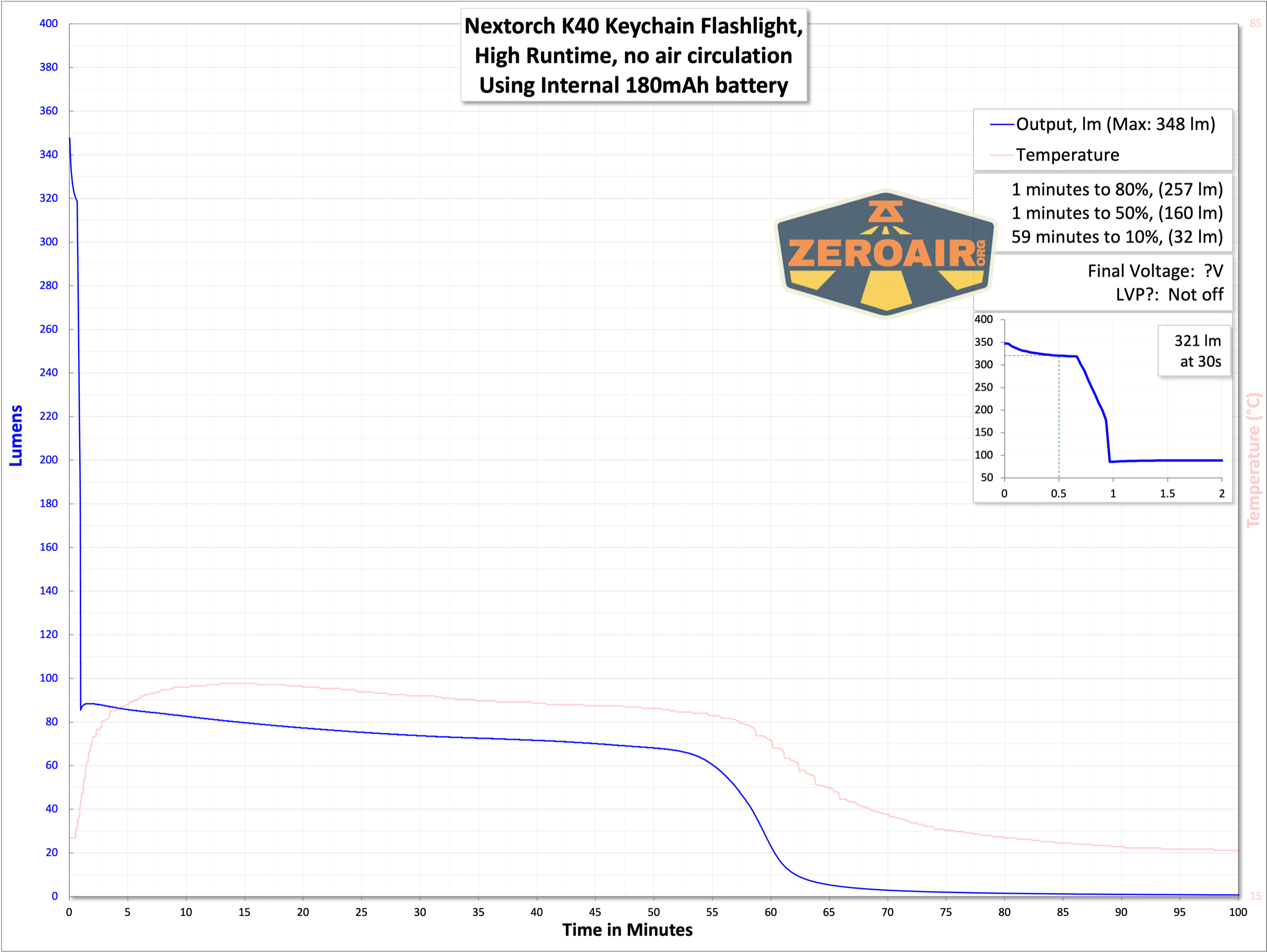
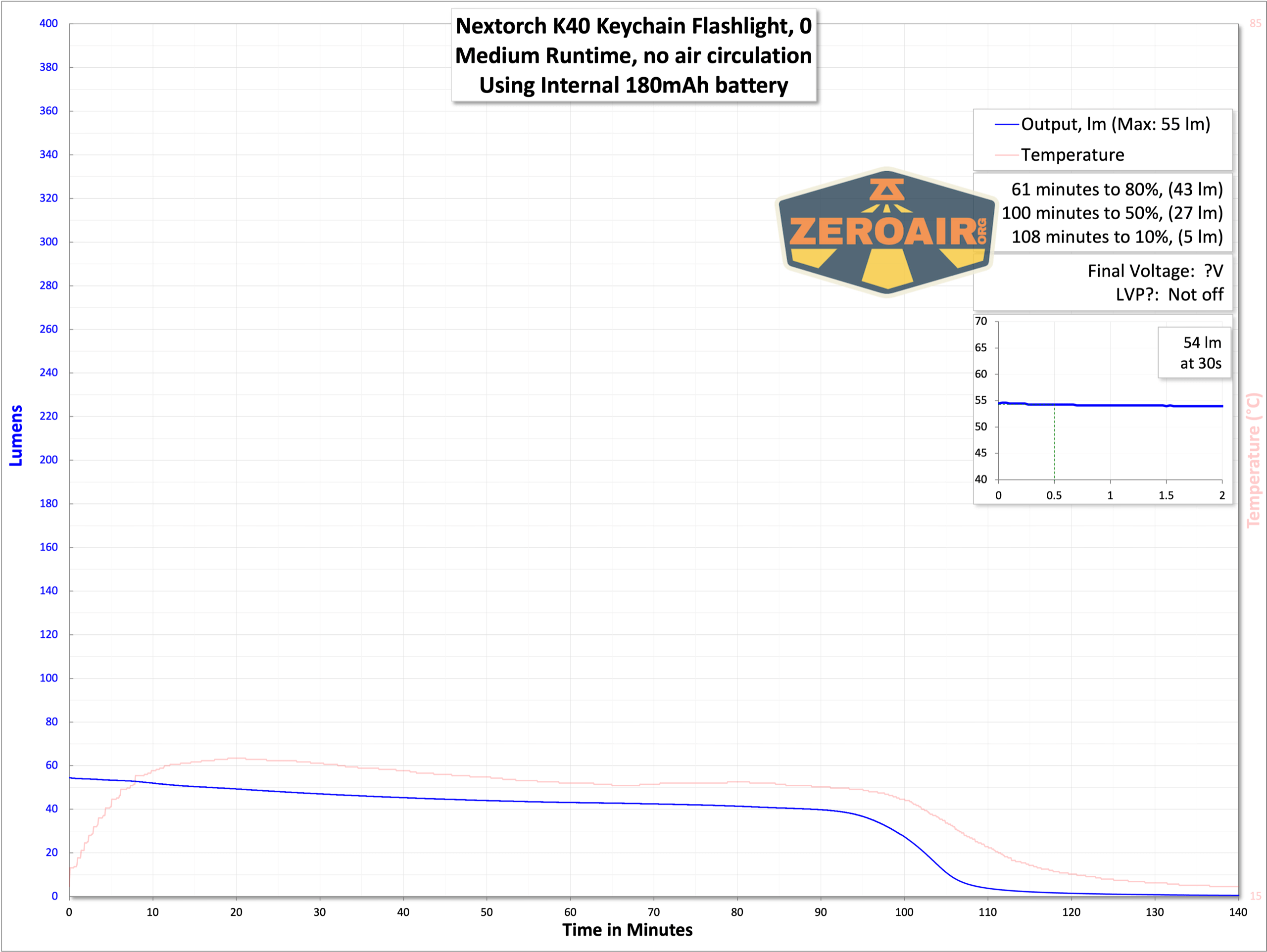
I was not able to check the voltage after stopping the tests. While the light did not shut off, you can see clearly that the output was very low toward the end. You’d notice this in practice.
Charging
On the Nextorch K40 keychain flashlight is a USB-C charging port.
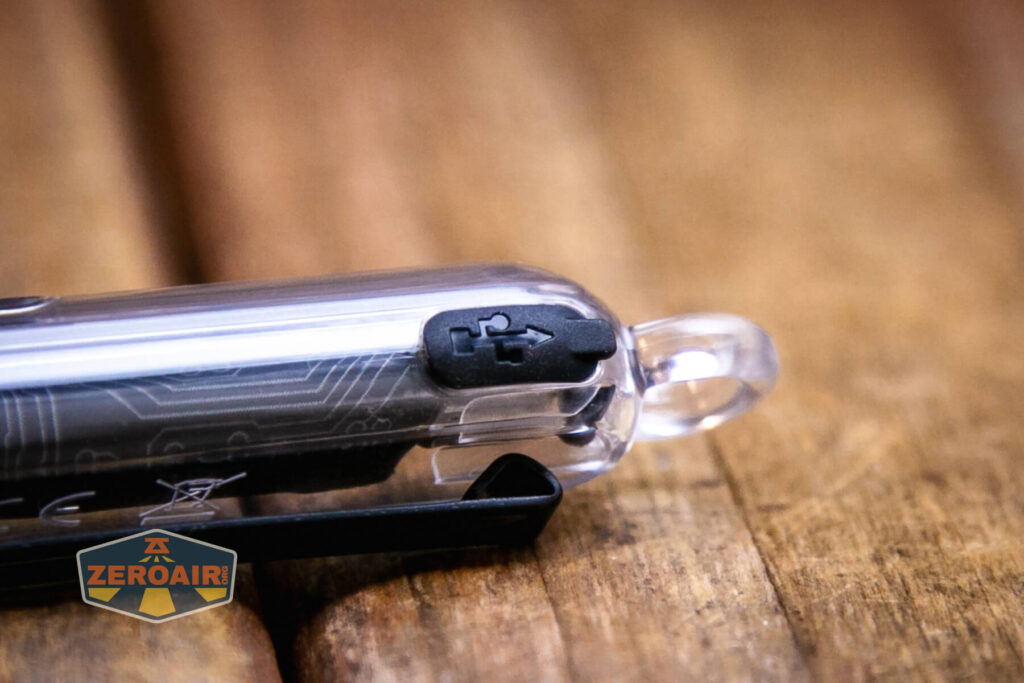

It’s a fine port and well-aligned.
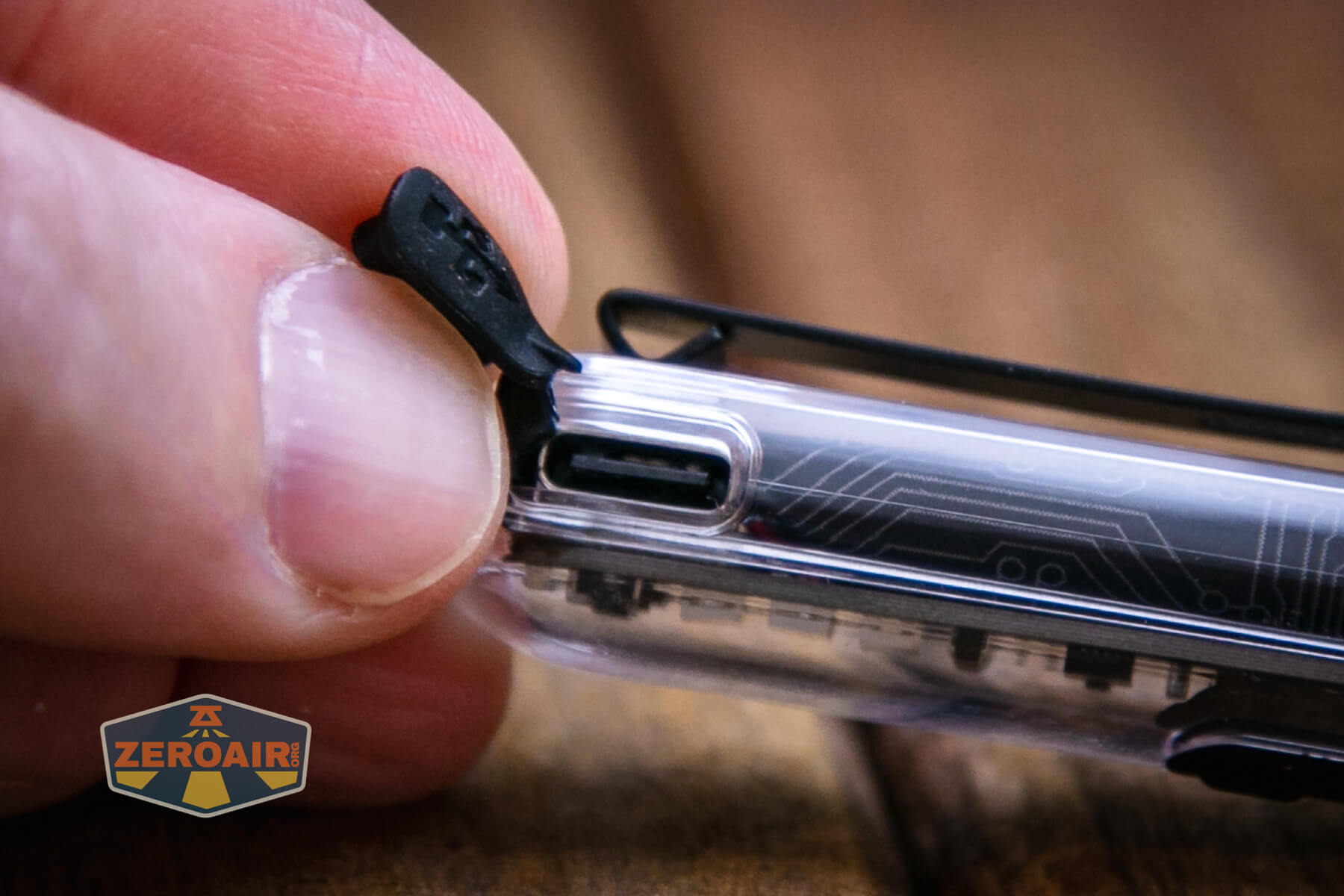
Nextorch also includes this USB to USB-C charging cable.

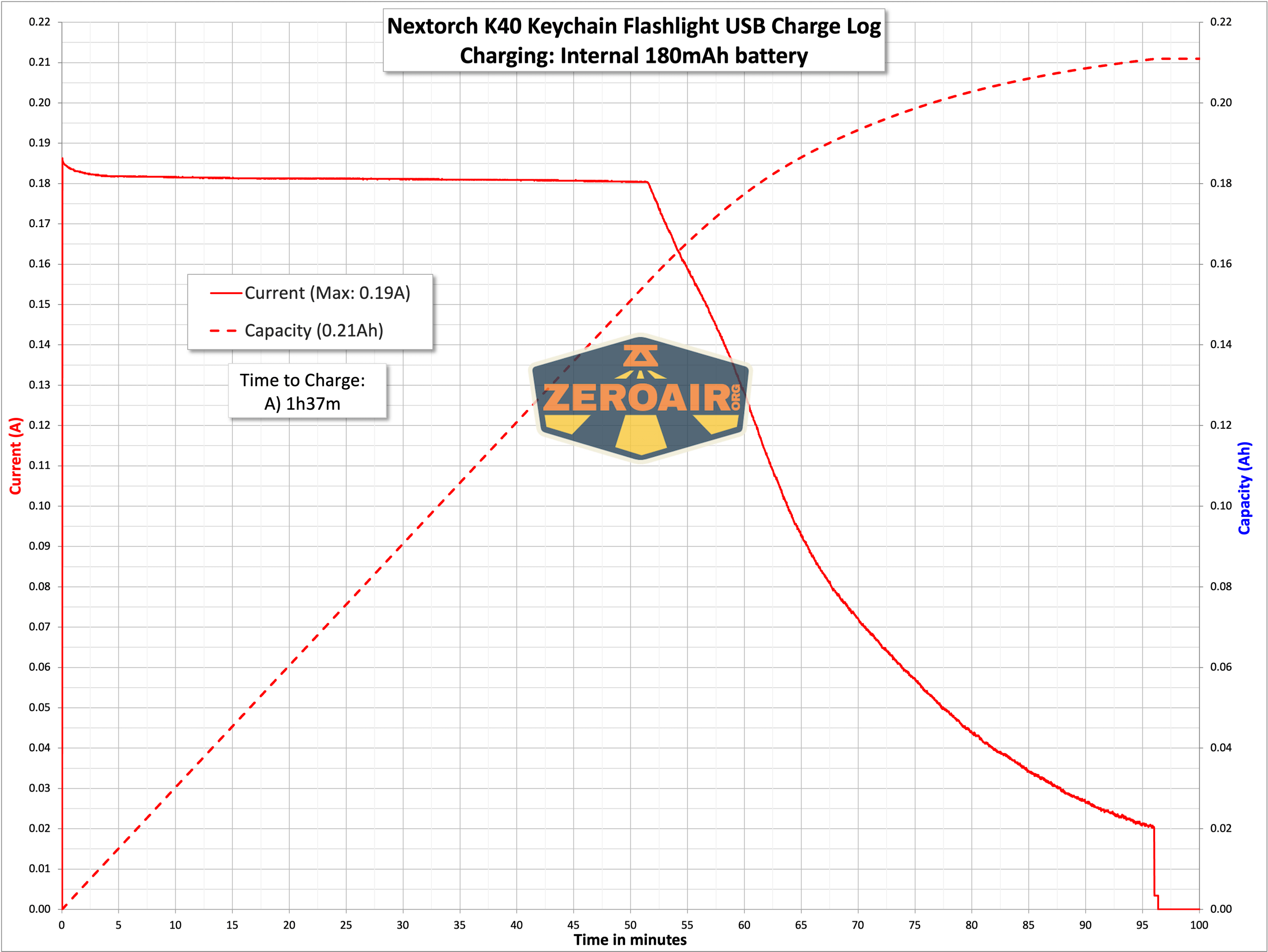
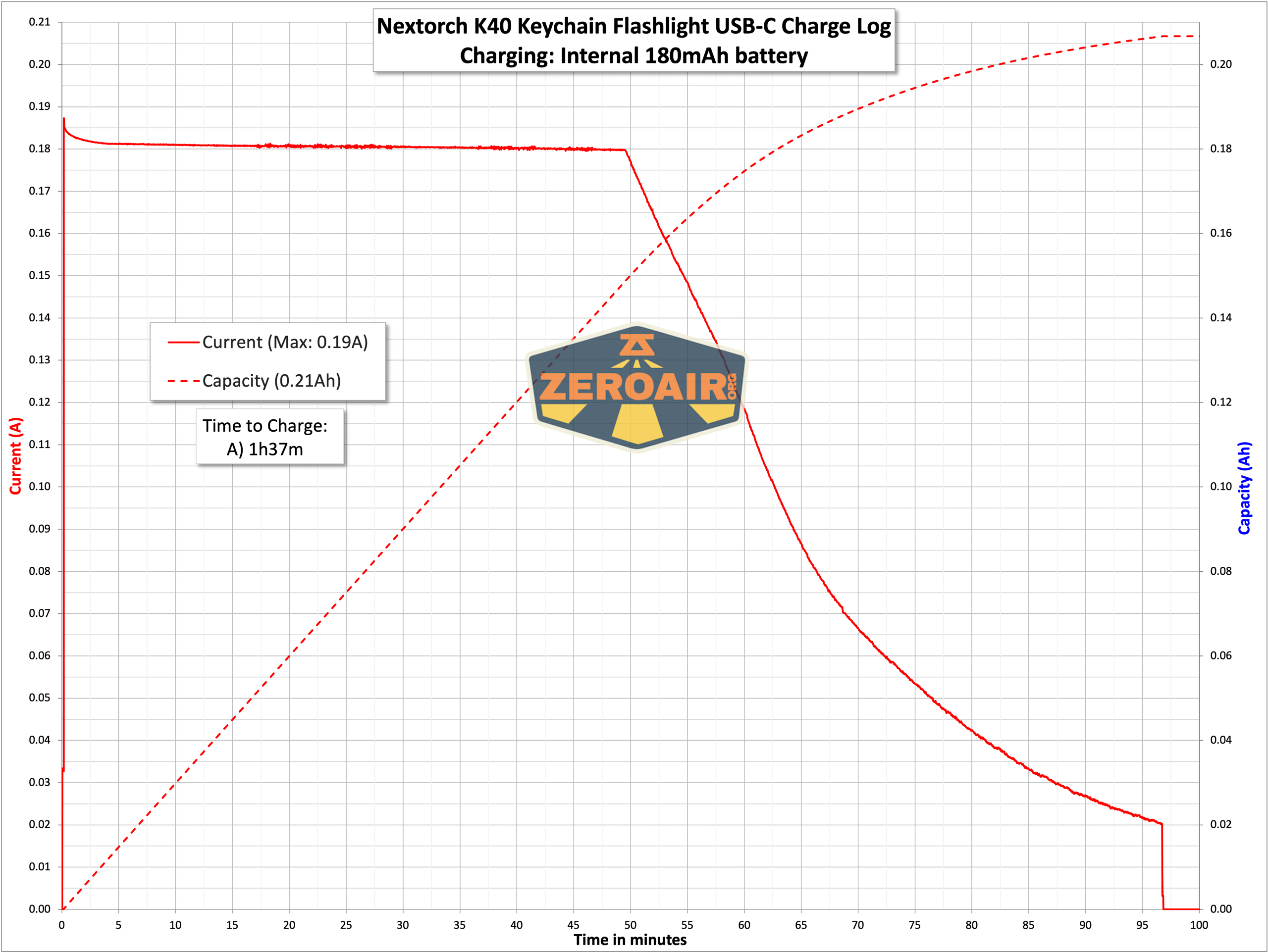
Charging proceeds at a very stable rate, and is perfectly suitable for this small-capacity cell.
Modes and Currents
| Mode | Mode Claimed Output (lm) | Claimed Runtime | Measured Lumens |
|---|---|---|---|
| High | 300 | 1h | 321 |
| Medium | 50 | 1h30m | 54 |
| Low | 10 | 9h15m | 9 |
Pulse Width Modulation
Many of the modes have PWM, but it’s fairly fast PWM. If you’re super sensitive to PWM you might notice it but otherwise, I wouldn’t fret over it.

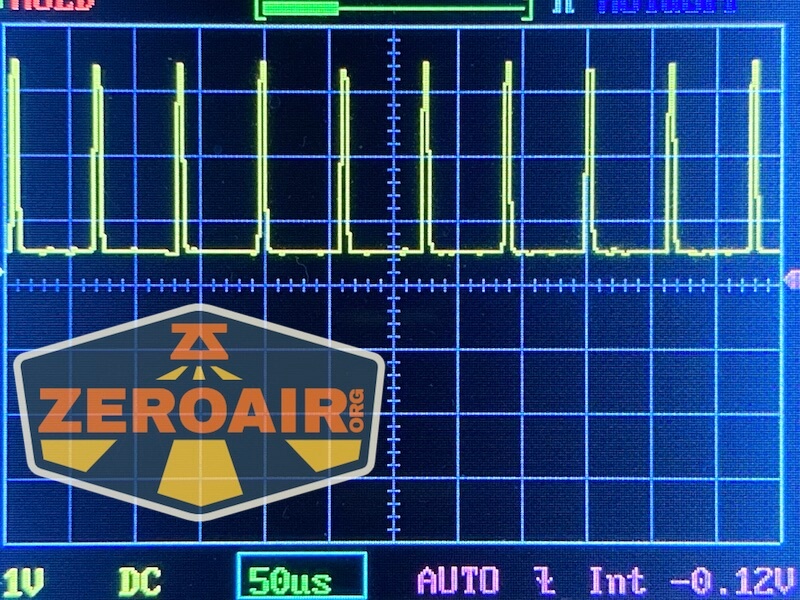


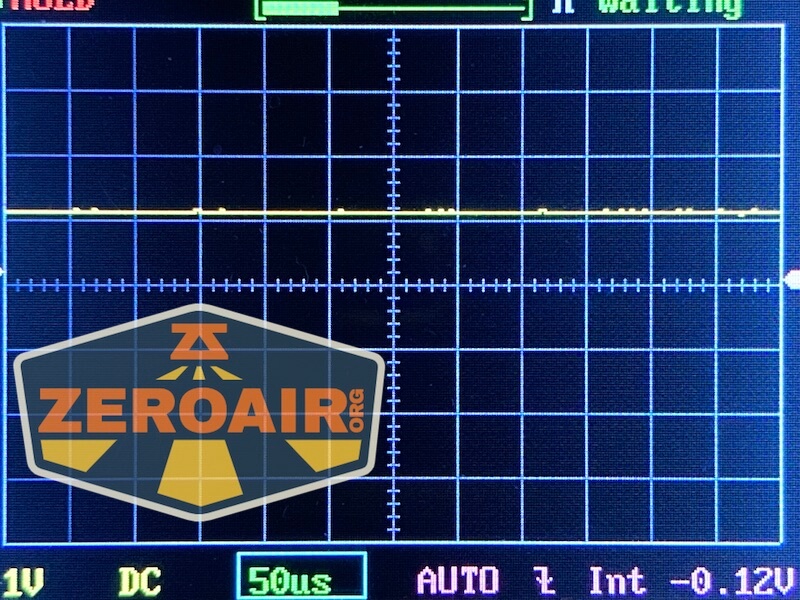
Here you can see a “baseline” – a chart with almost no light hitting the sensor.

Then there’s the Ultrafire WF-602C flashlight, which has some of the worst PWM I’ve seen. It’s so bad that I used a post about it to explain PWM! Here are multiple timescales (10ms, 5ms, 2ms, 1ms, 0.5ms, 0.2ms) to make comparing this “worst” PWM light to the test light easier. That post also explains why I didn’t test the WF-602C at the usual 50us scale.


User Interface and Operation
The K40 uses two e-switches, but they’re right together and (sort of) share a rubber cover. The front one (that is the one closest to the front of the light) controls almost all aspects of the front light, and the rear switch (closest to the secondary emitters) controls the secondary emitters.

They’re good switches, but they seem tiny.

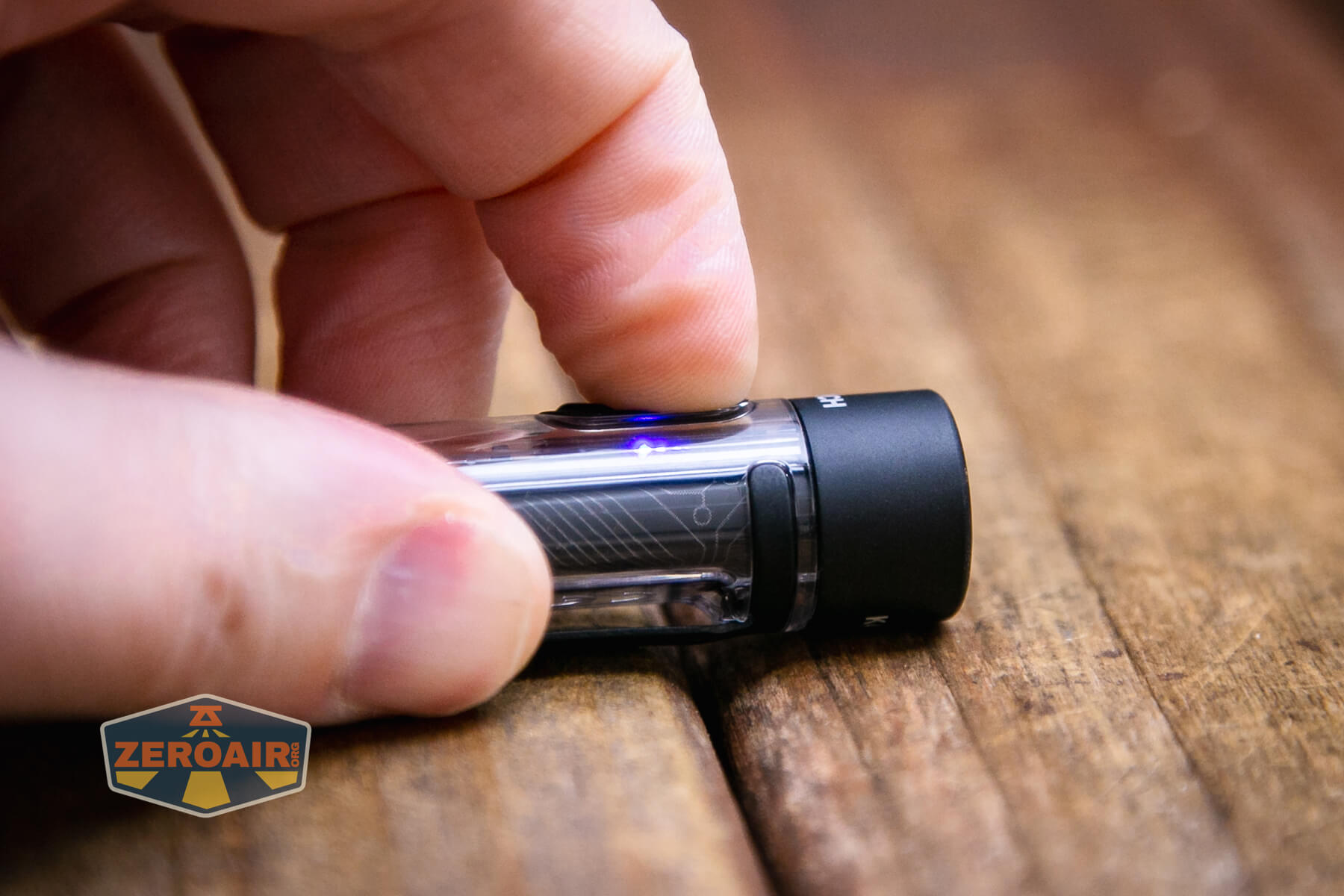
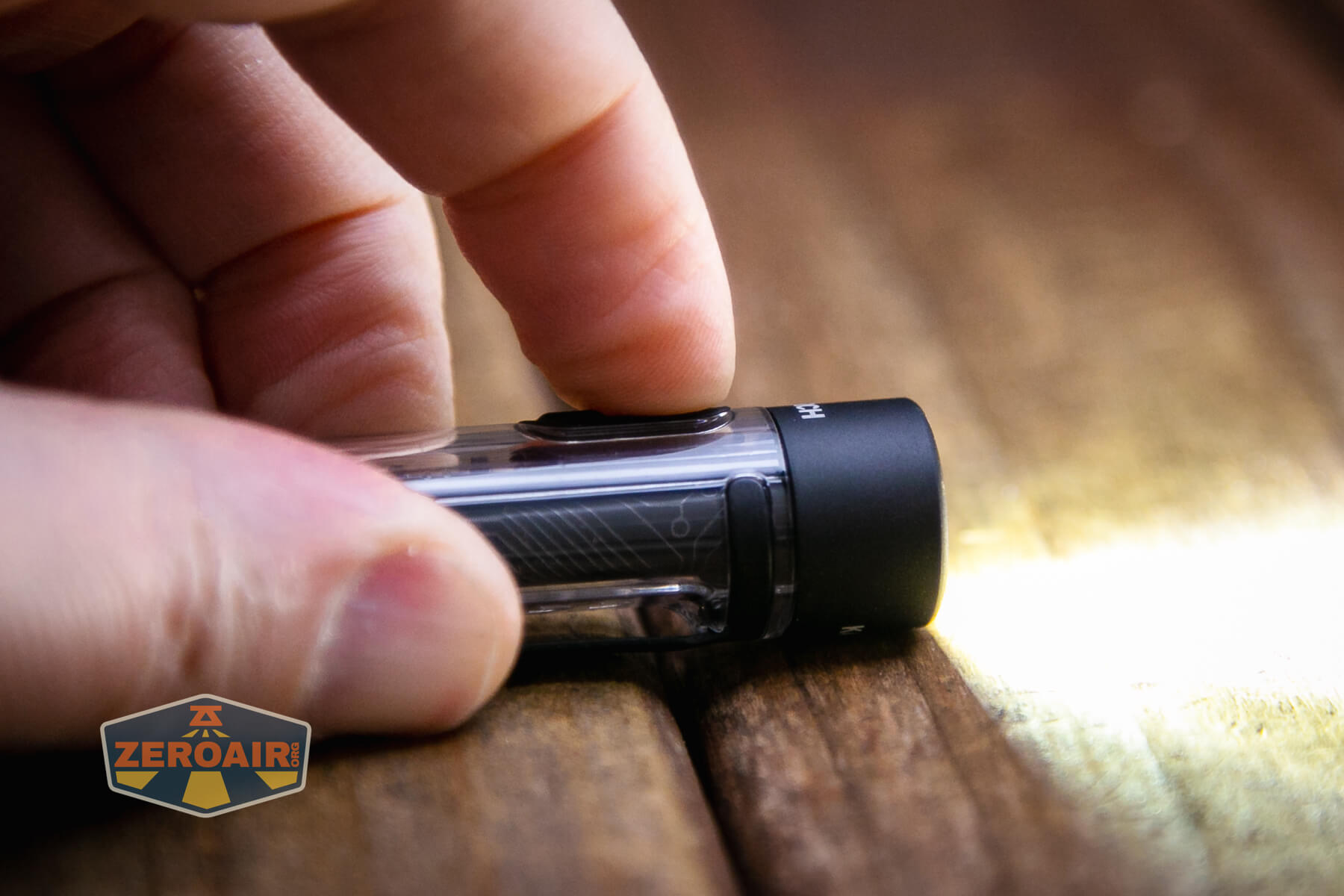
Here’s a user interface table! The manual doesn’t name the switches, so I’ll just call them “Front” and “Rear.”
| State | Action | Result |
|---|---|---|
| Off | Click Front | Main white emitter on High |
| Front on High | Click Front | Medium |
| Front on Medium | Click Front | Low |
| Front on Low | Click Front | Off |
| Front on (for a few seconds) | Click Front | Off |
| Off or Front on | Click Rear | Main white strobe |
| Main white strobe | Click Front | No change |
| Main white strobe | Click Rear | Strobe off |
| Front on | Hold Front | No change immediately (while holding) but off upon release |
| Off | Hold Rear | Side emitter on (Blue) |
| Blue | Click Rear | Red |
| Red | Click Rear | Red and blue flash (it’s red, then blue, then red and blue together) |
| Side emitter on | Hold Rear | Side off |
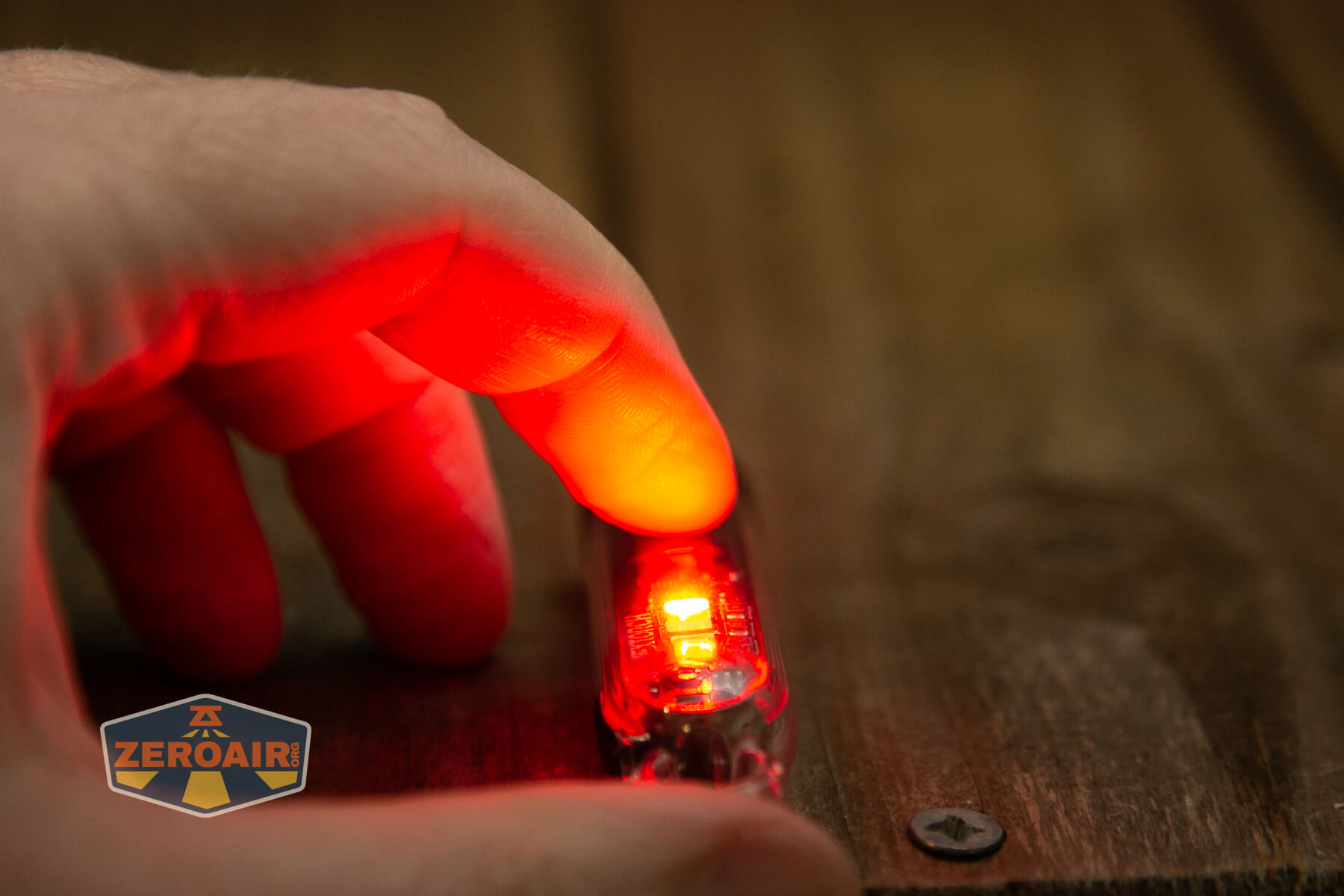
For many (most? all?) of the levels, the front emitter and side emitters can be on at the same time. I don’t know why you’d want to but if you’re a monster and need that, you can do that.
LED and Beam
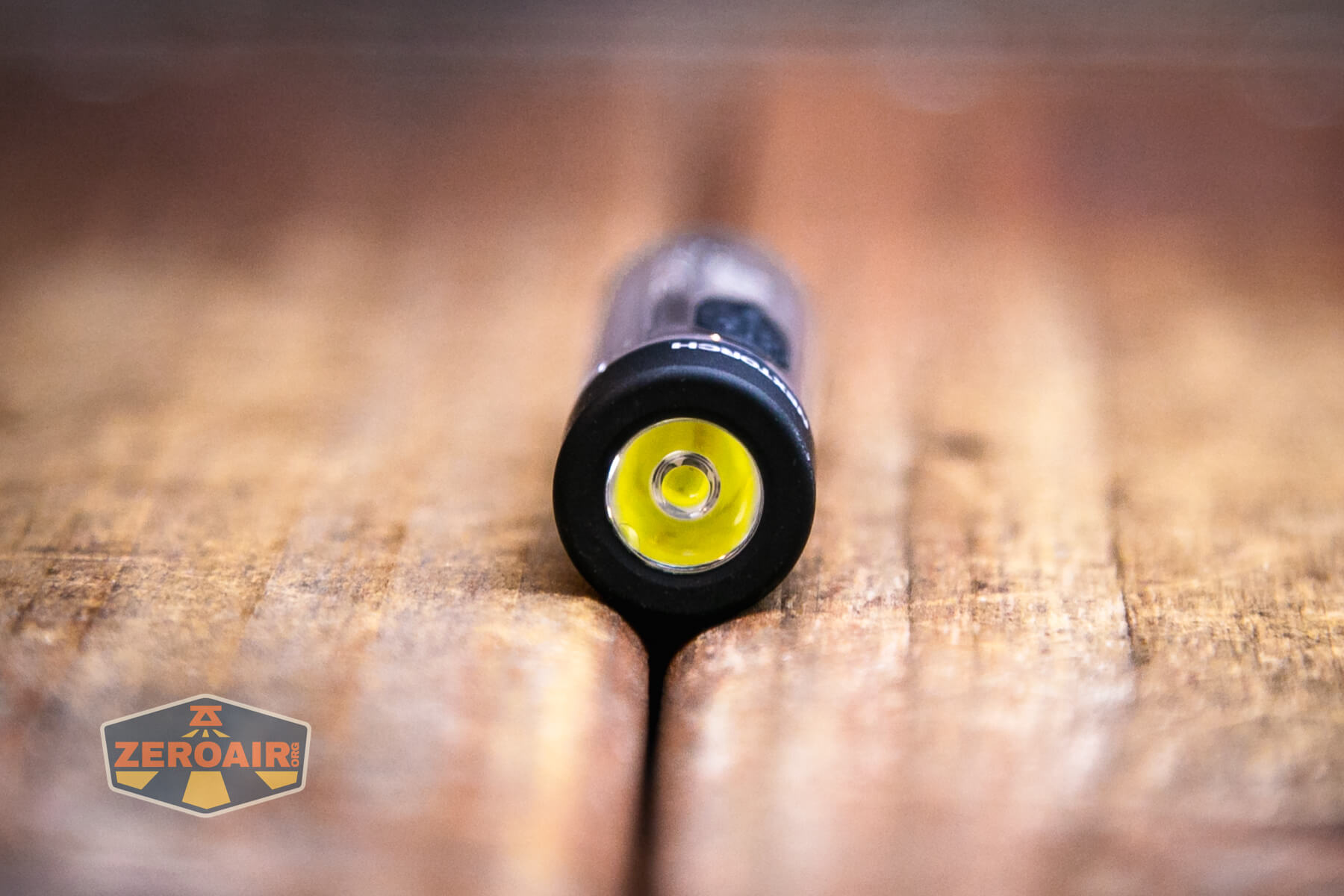
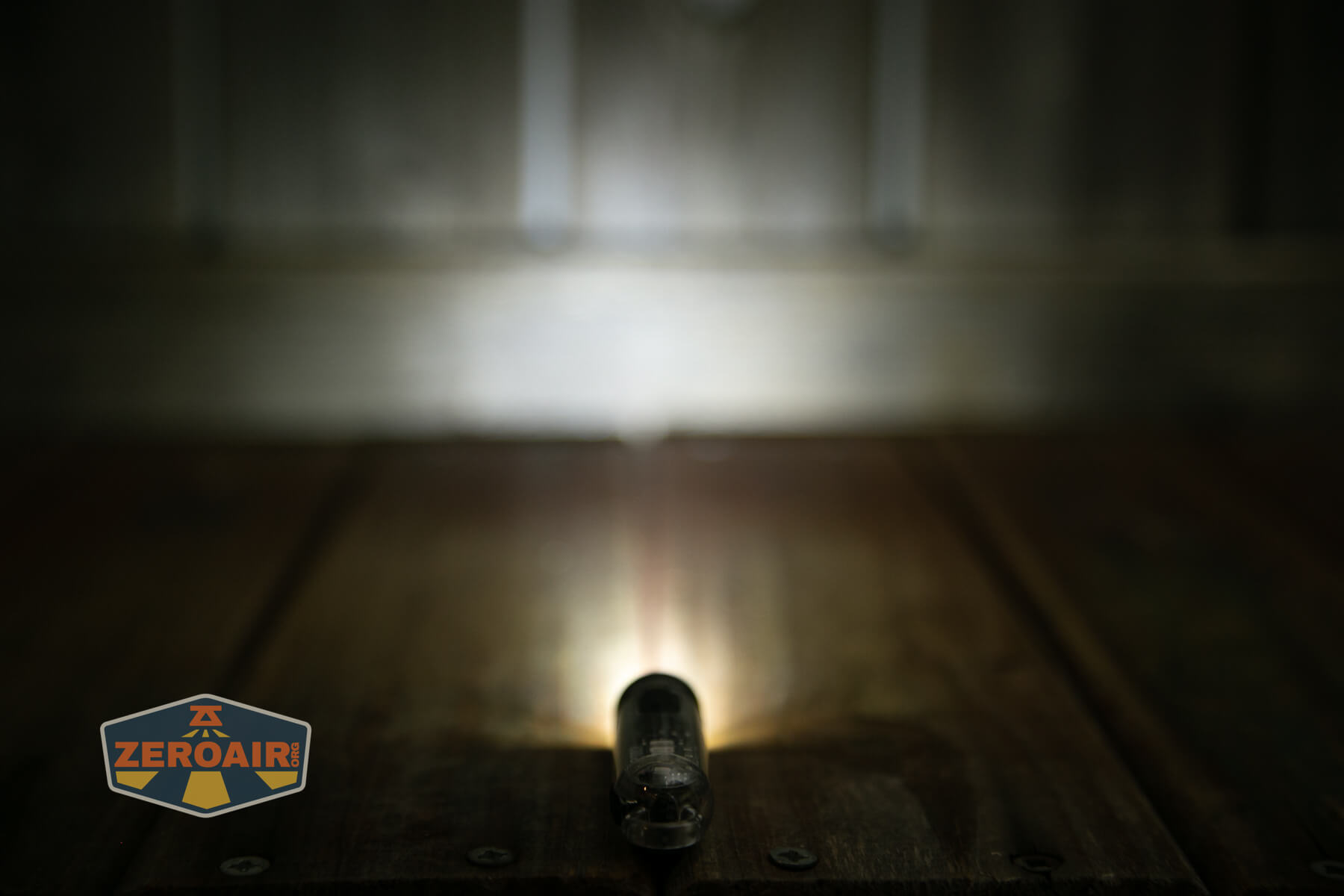
As far as I can see, Nextorch doesn’t state what emitters are used here. The front has a TIR and a fairly tight beam profile.



LED Color Report (CRI and CCT)
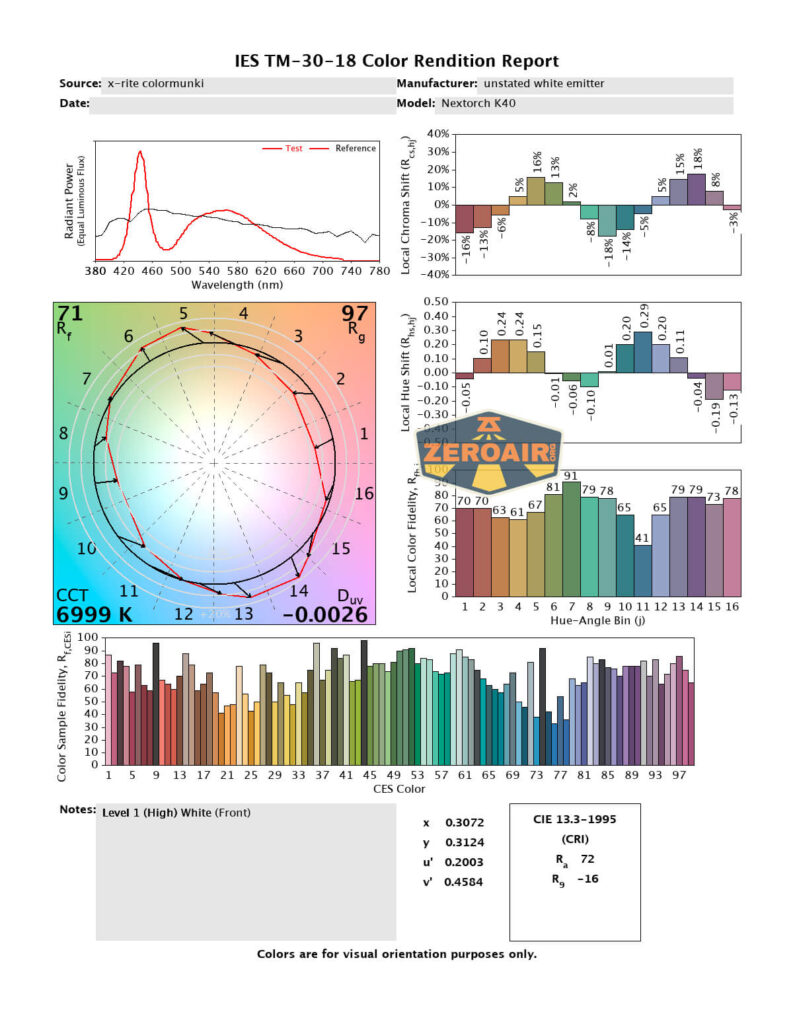
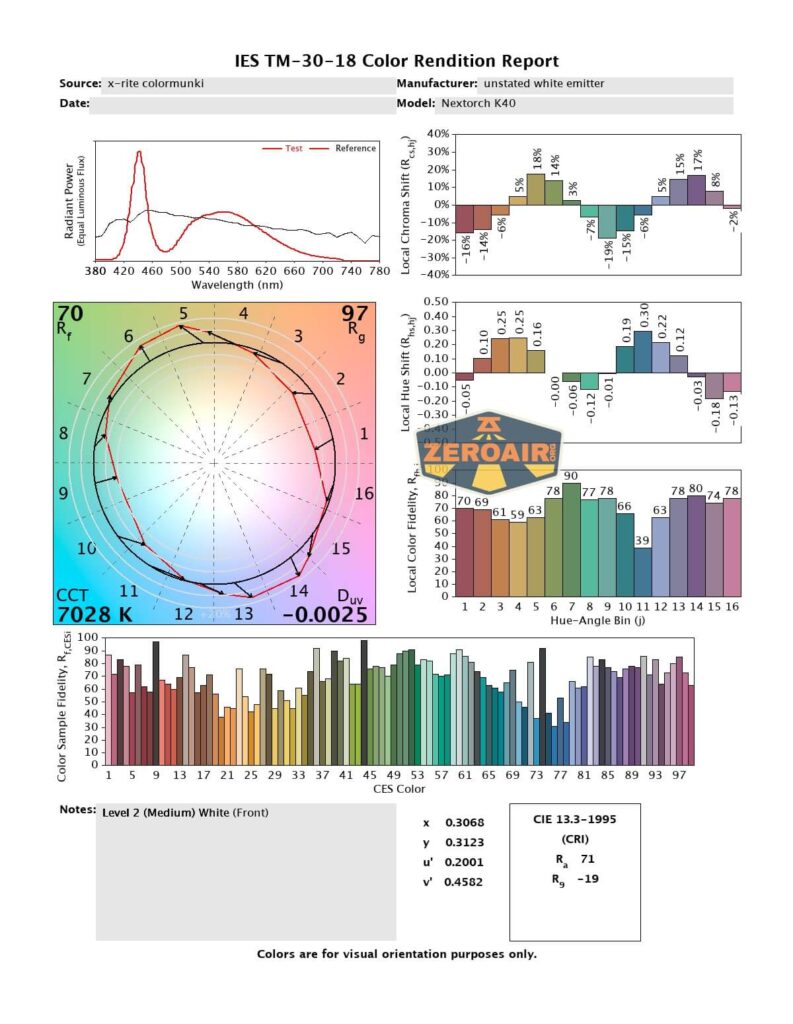
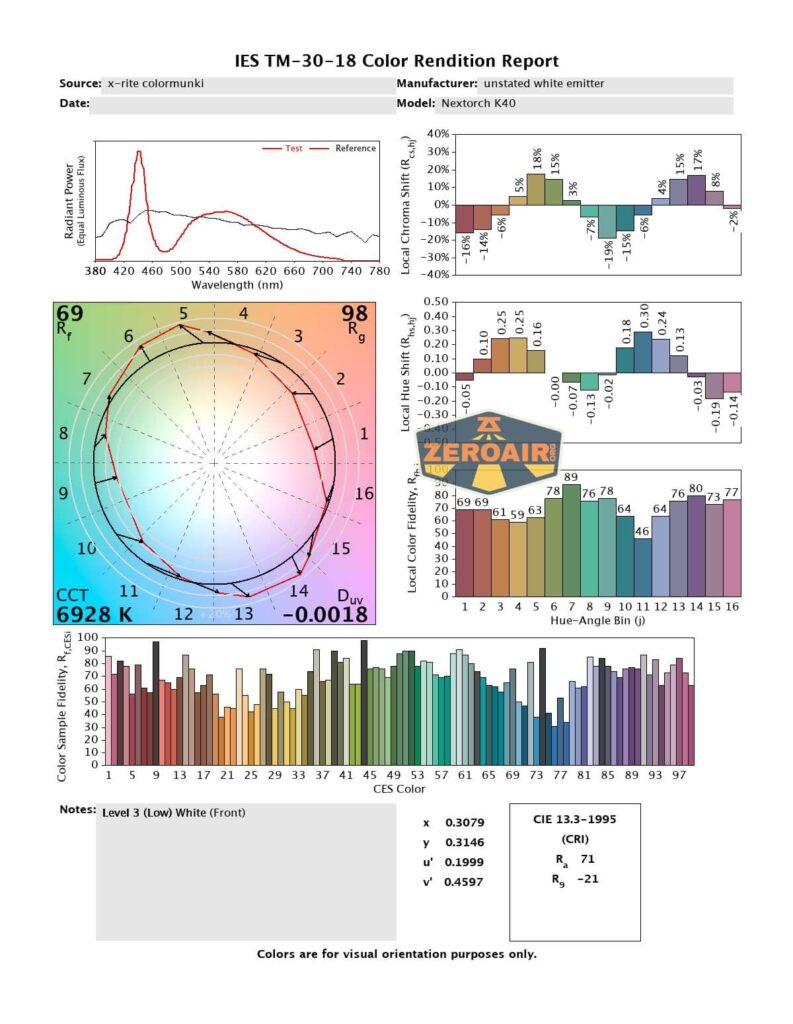
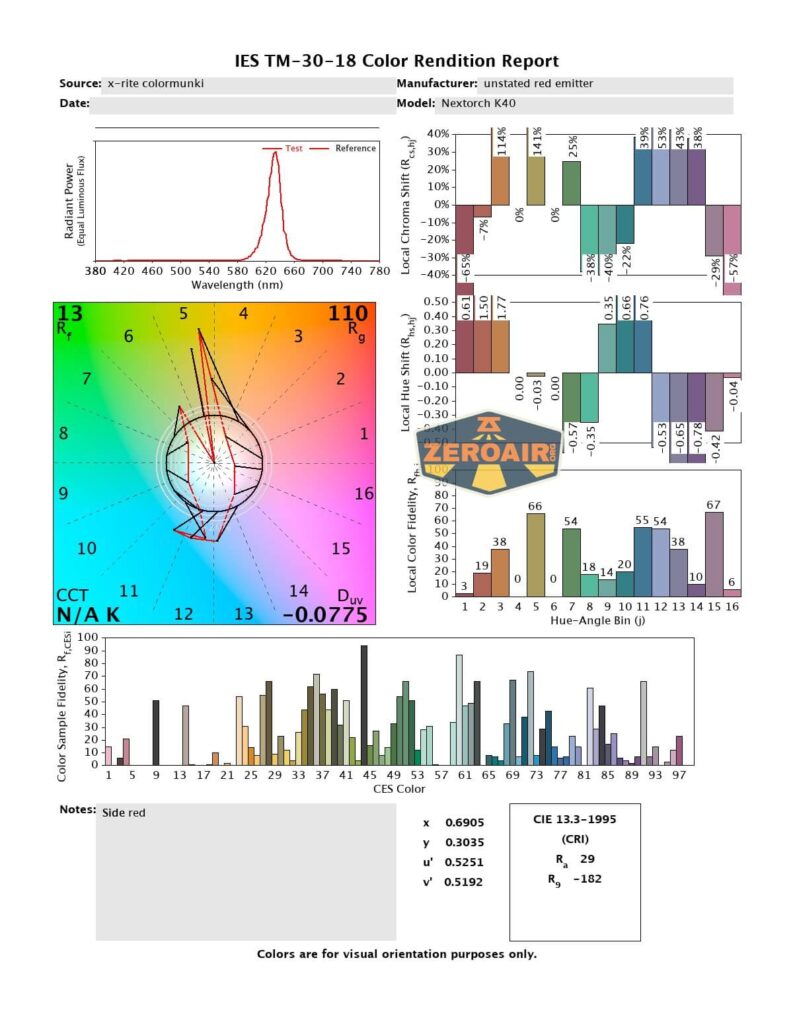
You can see from the charts below that the main front emitter is very cool white – around 7000K, with a low CRI around 71. The sides are understandably specifically chromatic.

Beamshots
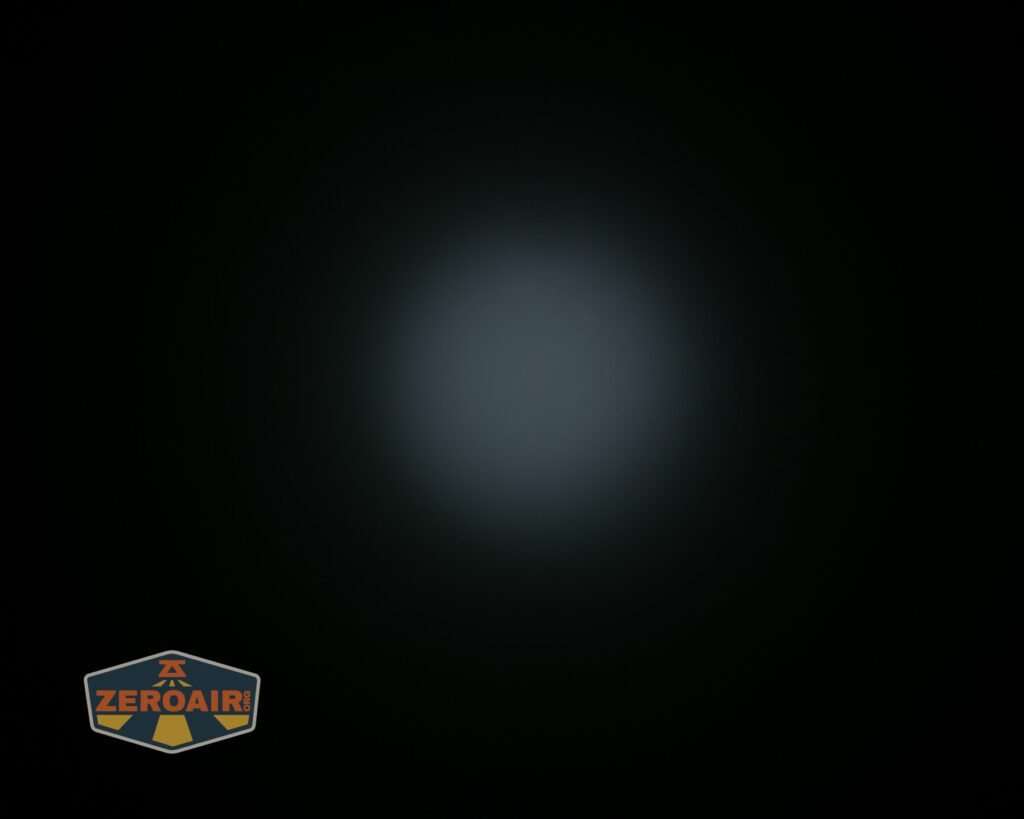
These beamshots always have the following settings: f8, ISO100, 0.3s shutter, and manual 5000K exposure. These photos are taken at floor level, and the beam hits the ceiling around 9 feet away.



Tint vs BLF-348 (KillzoneFlashlights.com 219b version) (affiliate link)
I keep the test flashlight on the left and the BLF-348 reference flashlight on the right.
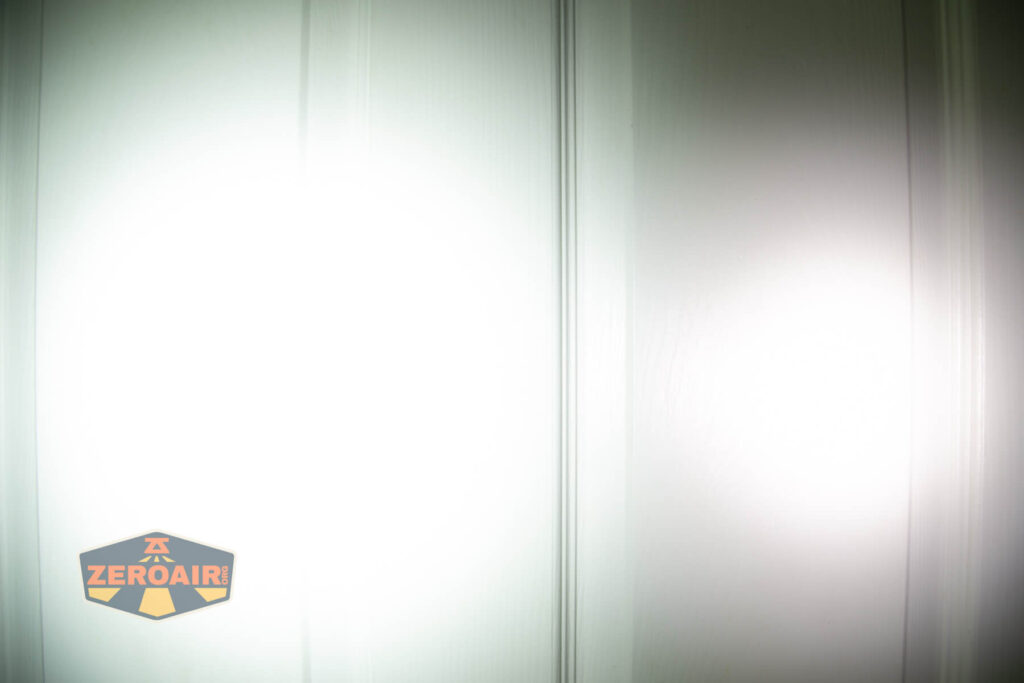
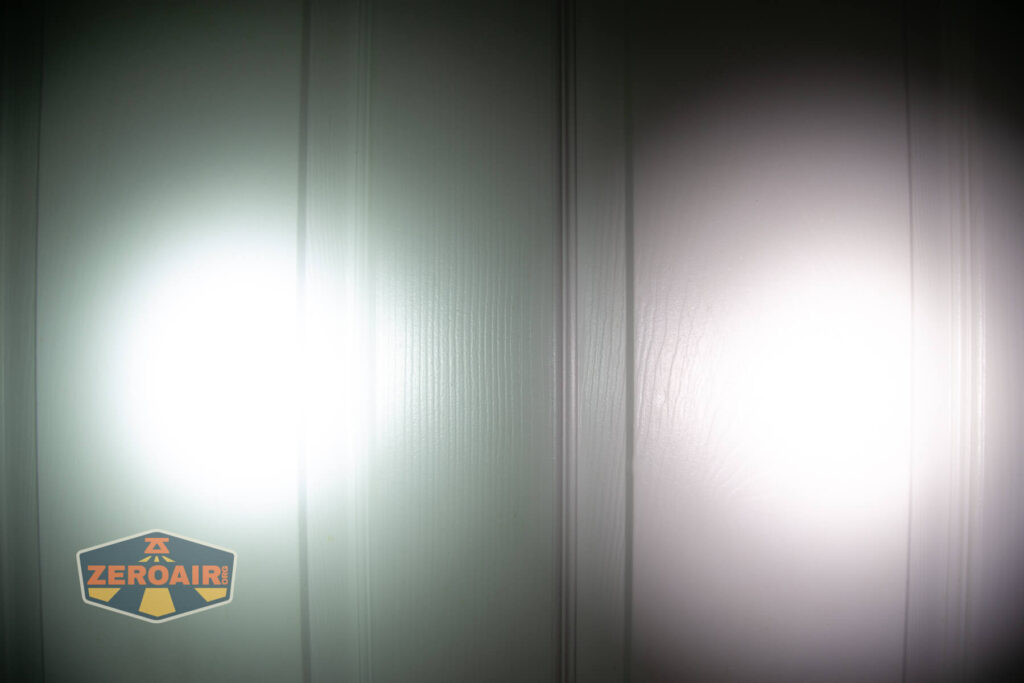

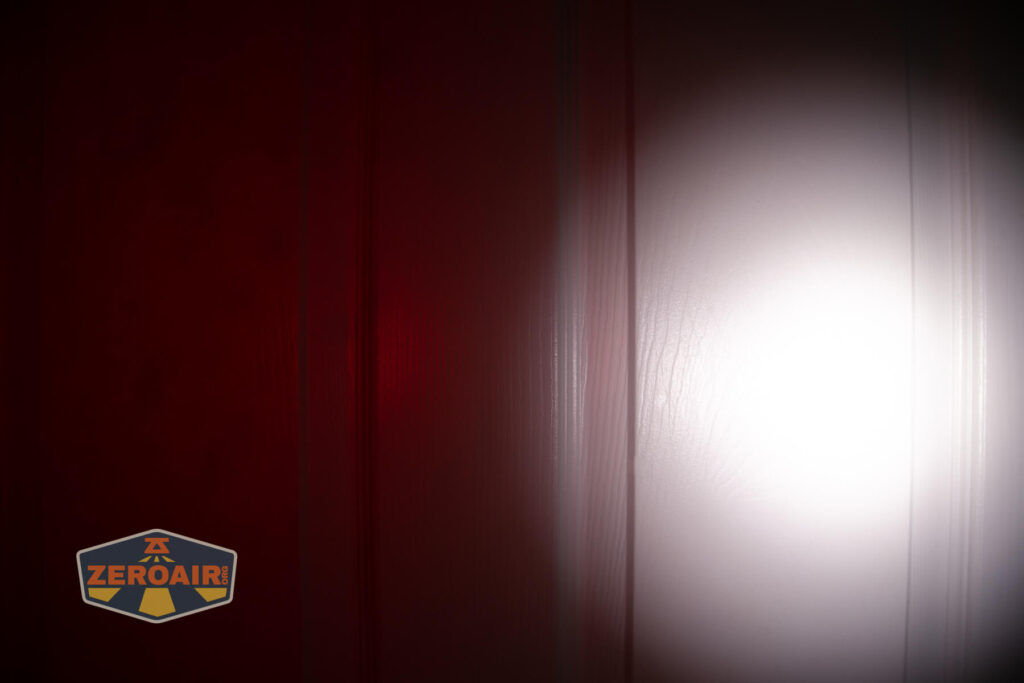
I compare everything to the KillzoneFlashlights.com 219b BLF-348 because it’s inexpensive and has the best tint!
Conclusion
What I like
- Good build quality
- Consistent charging
- Charging via USB-C
- Fairly good beam profile
- Offers UV or Blue for secondary option (with red in all versions)
What I don’t like
- Somewhat weird user interface
- Tail loop doesn’t add too much feature-wise, but contributes nearly a centimeter to the length
- Very cool white front emitter
Notes
- This content originally appeared at zeroair.org. Please visit there for the best experience!
- Please use my Amazon.com referral link to help support zeroair.org!
- Please support me on Patreon! I deeply appreciate your support!