

Olight i3T EOS Dessert Warrior Flashlight Review
The Olight i3T EOS Dessert Warrior finish is now available! It’s a simple little AAA flashlight with just two modes. Read on for more!
Official Specs and Features
Here’s a referral link to the Olight i3T EOS Dessert Warrior flashlight product page.
Versions
So many versions of the Olight i3T EOS Dessert Warrior flashlight are available! That includes many colors – black (aluminum), desert tan (aluminum), polished stainless steel, and carbon fiber. And that doesn’t even include this orange version, which I have already owned for a while and is not for sale anymore!
Price
The plain aluminum version of Olight i3T EOS Dessert Warrior sells for $19.95. Other versions are more expensive, all the way up to carbon fiber at $44.99. This Dessert Warrior is currently sold out, so I’m not sure what the price was (and it’ll probably be more if you find it on the secondary market, sorry.)
Short Review
I already know I like the i3T EOS flashlight in general. I have the orange one. I love the orange one. This Dessert Warrior version is pretty special though. If you’re into this finish, then it’s simply a must-have. But if you aren’t into the Dessert Warrior motif, and/or hate donuts, why do you hate life?
Long Review
The Big Table
| Olight i3T EOS (Dessert Warrior) | |
|---|---|
| Emitter: | Luxeon TX |
| Price in USD at publication time: | ? |
| Cell: | 1xAAA |
| High Runtime Graph | Low Runtime Graph |
| LVP? | Questionable |
| Switch Type: | Mechanical |
| On-Board Charging? | Yes |
| Charge Port Type: | – |
| Charge Graph | |
| Power off Charge Port | – |
| Claimed Lumens (lm) | 180 |
| Measured Lumens (at 30s) | 197 (109.4% of claim)^ |
| Candela per Lumen | 5.5 |
| Claimed Throw (m) | 60 |
| Candela (Calculated) in cd (at 30s) | 50lux @ 4.628m = 1071cd |
| Throw (Calculated) (m) | 65.4 (109% of claim)^ |
| Claimed CCT | – |
| Measured CCT Range (K) | 5600 Kelvin |
| Item provided for review by: | Olight |
| All my Olight reviews! | |
^ Measurement disclaimer: Testing flashlights is my hobby. I use hobbyist-level equipment for testing, including some I made myself. Try not to get buried in the details of manufacturer specifications versus measurements recorded here; A certain amount of difference (say, 10 or 15%) is perfectly reasonable.
What’s Included
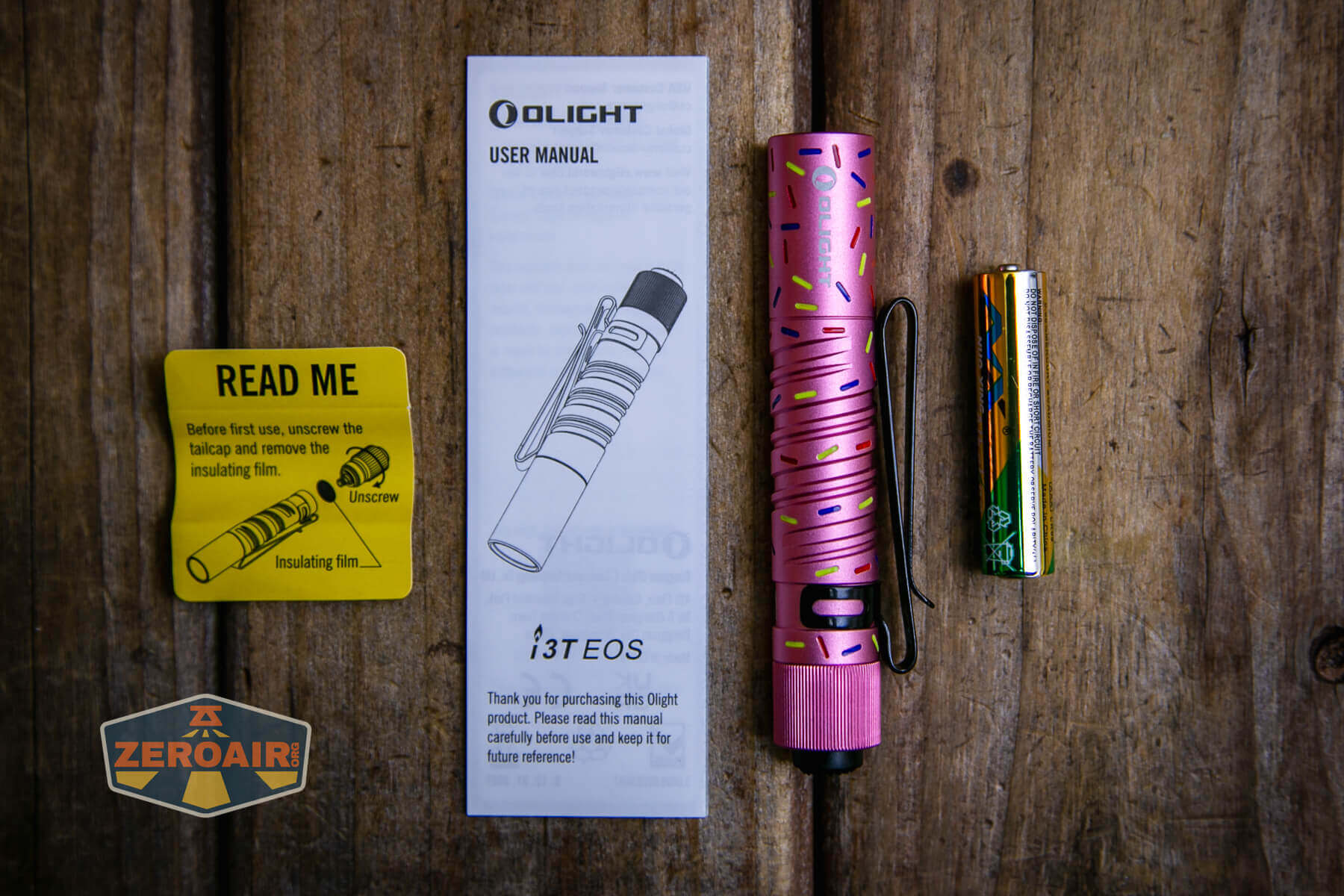
- Olight i3T EOS flashlight
- Primary AAA cell
- Manual
Package and Manual
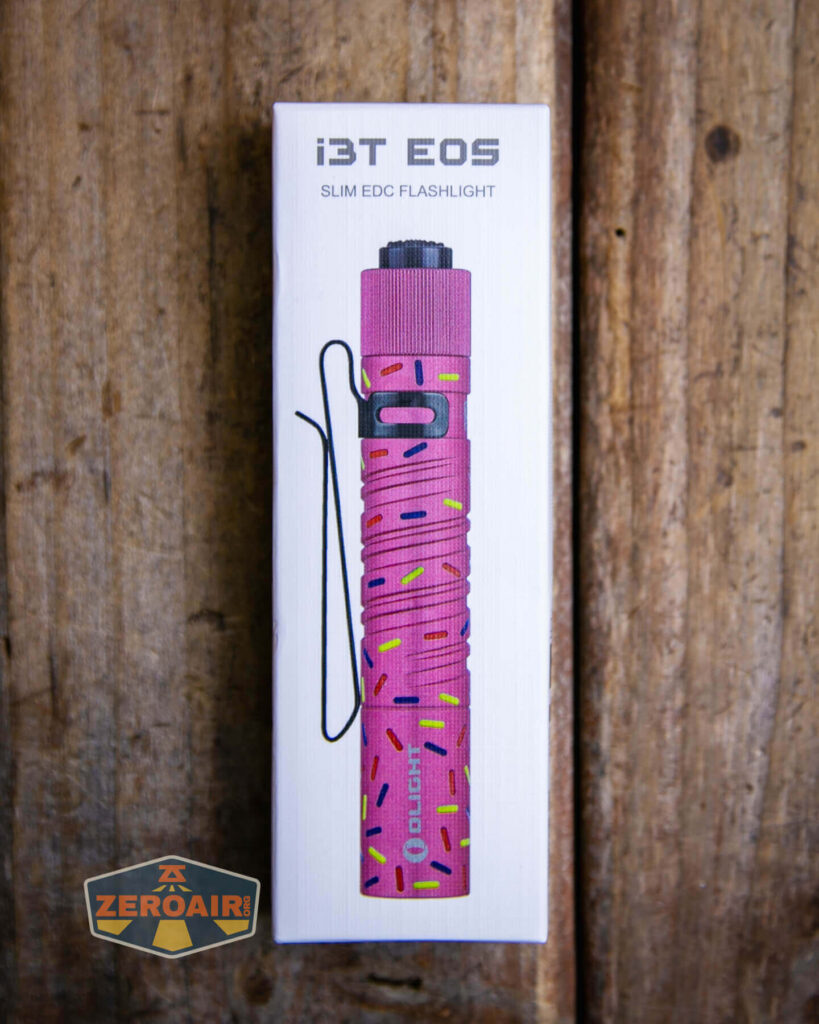
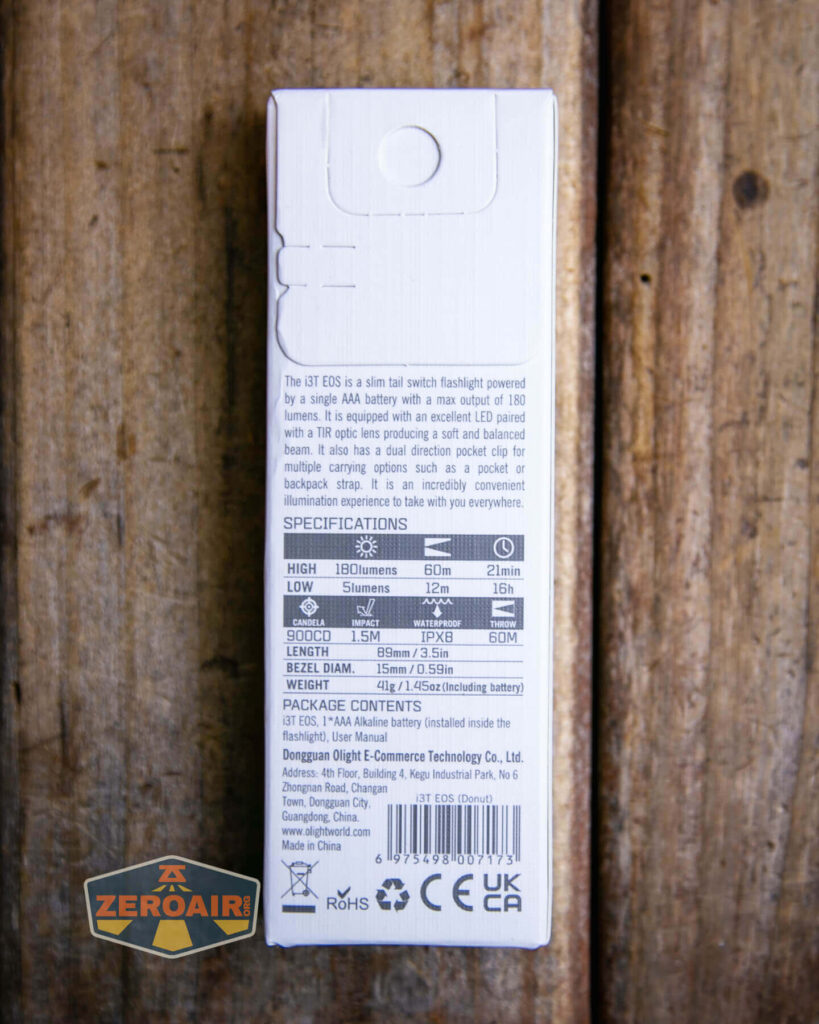
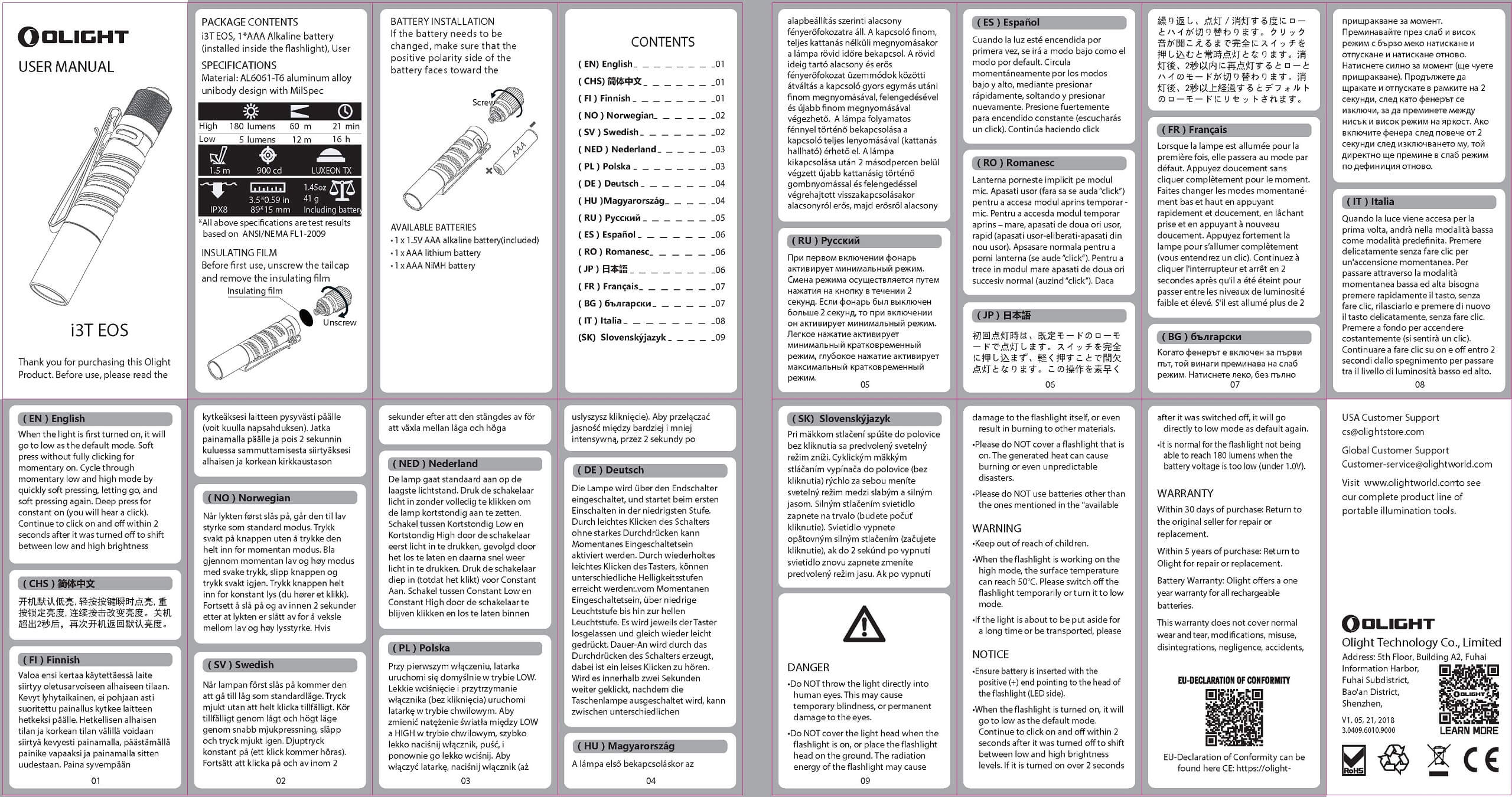
Build Quality and Disassembly
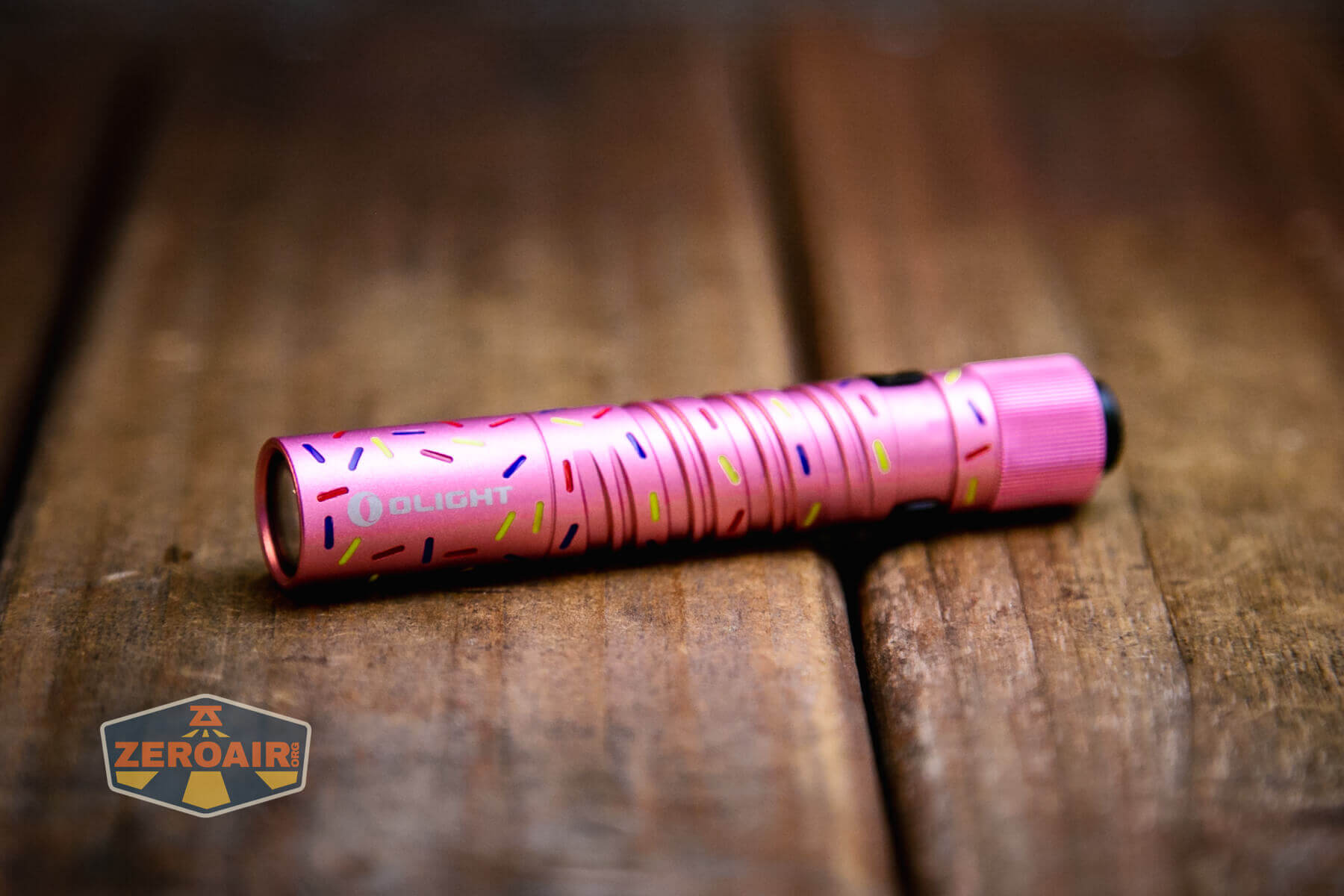
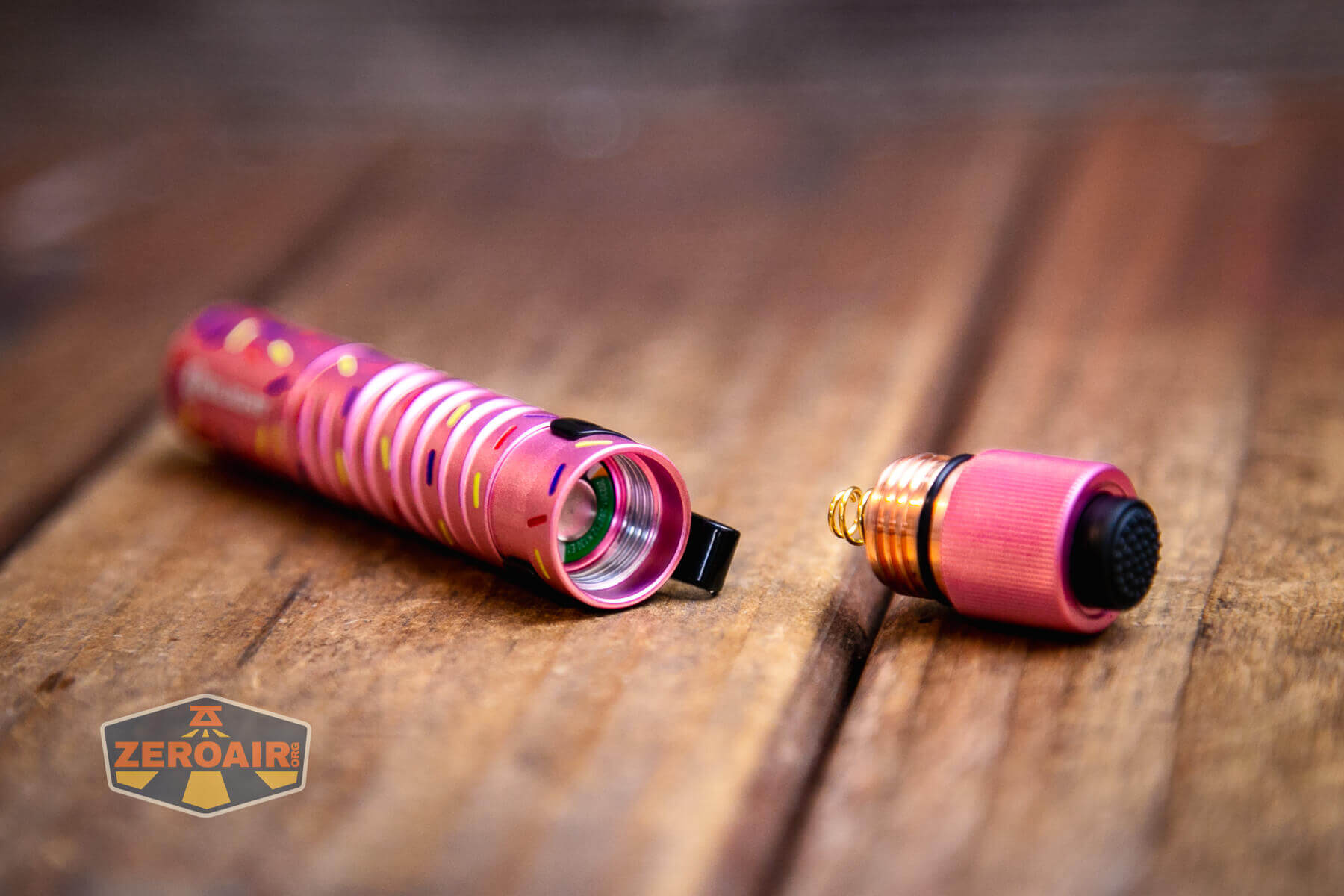
Like many Olights, this light has a nice feel in-hand. The anodizing is top quality and feels very smooth. One thing you might not have guessed (but can sort of pick up on in the photo above) is that the “sprinkles” are not just painted on! These sprinkles are milled into the body, then filled with their color!
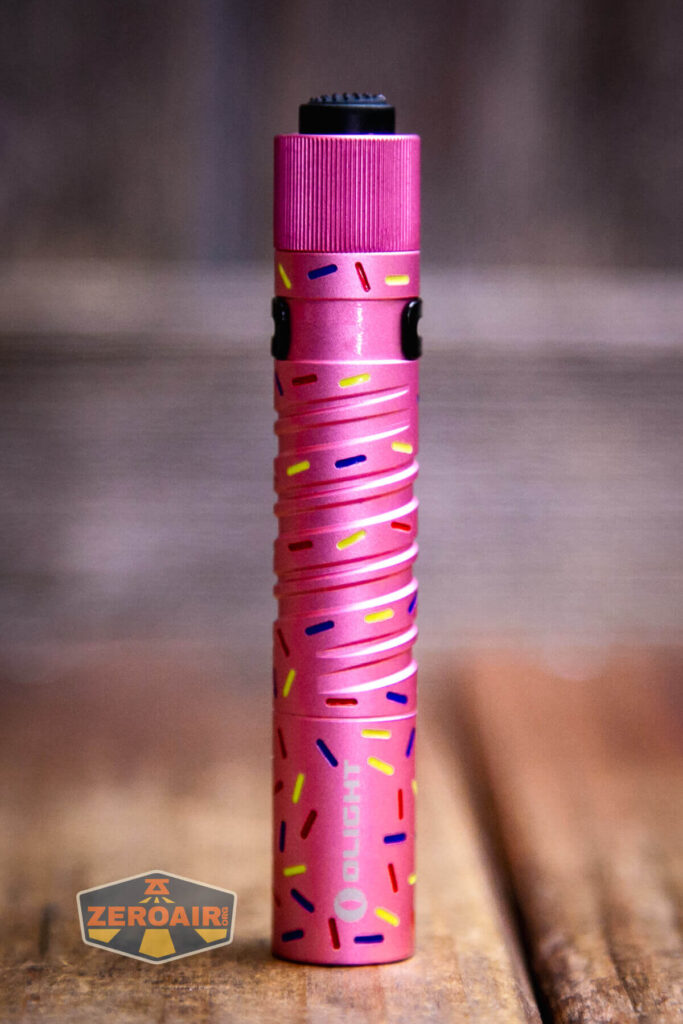
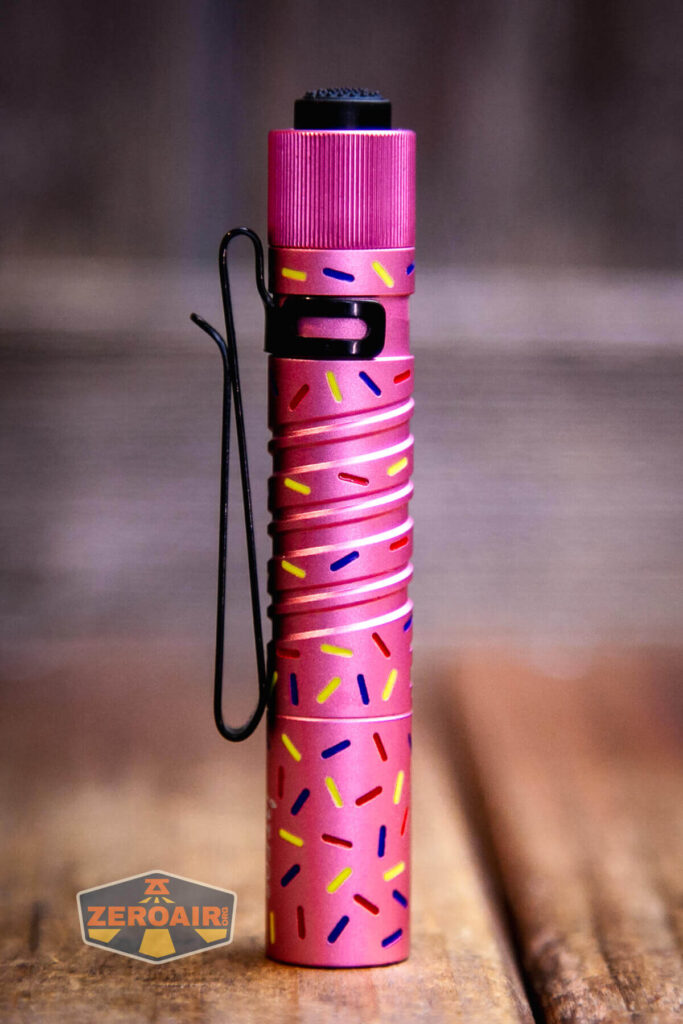
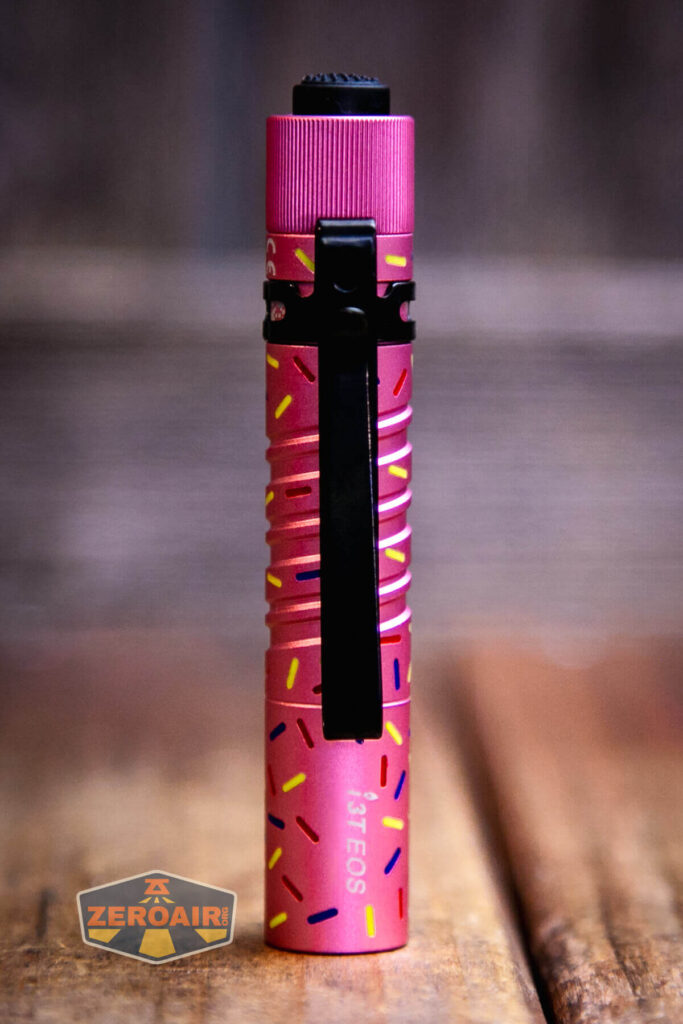
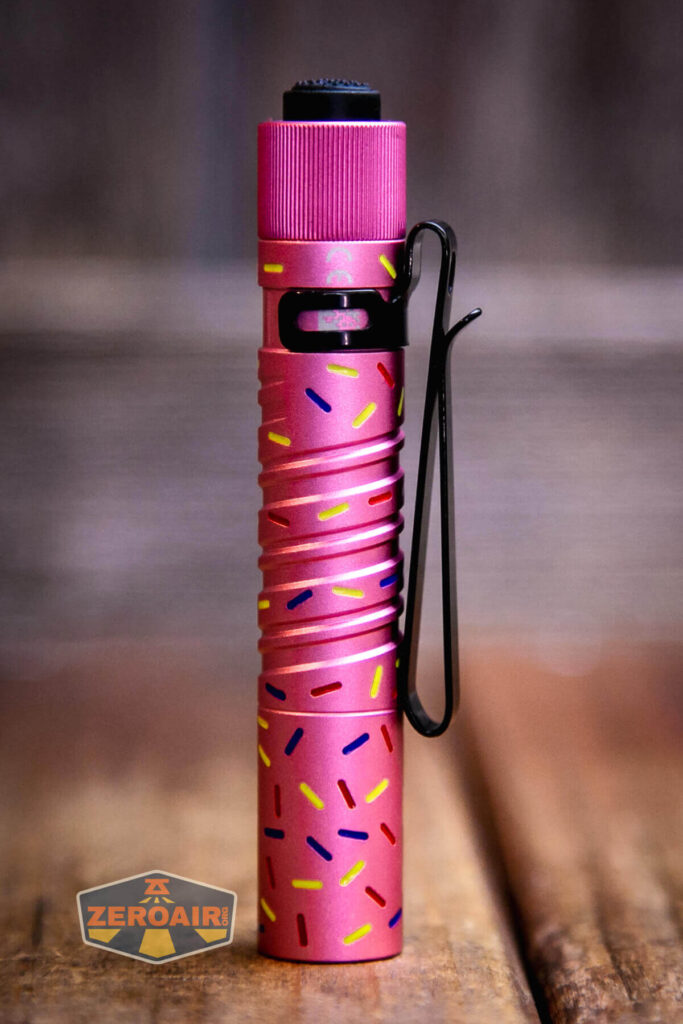
The fancy “double helix” Olight is so proud of needs to provide a good grip for one-handed use. It does an okay job in this regard, but I found it to be not quite as grippy as I wanted, and yet a bit sharper than I like all at the same time.
The tailcap has a good bit of reeding, allowing easy cell swaps.
This is as far as I got the light apart. The head doesn’t come off.
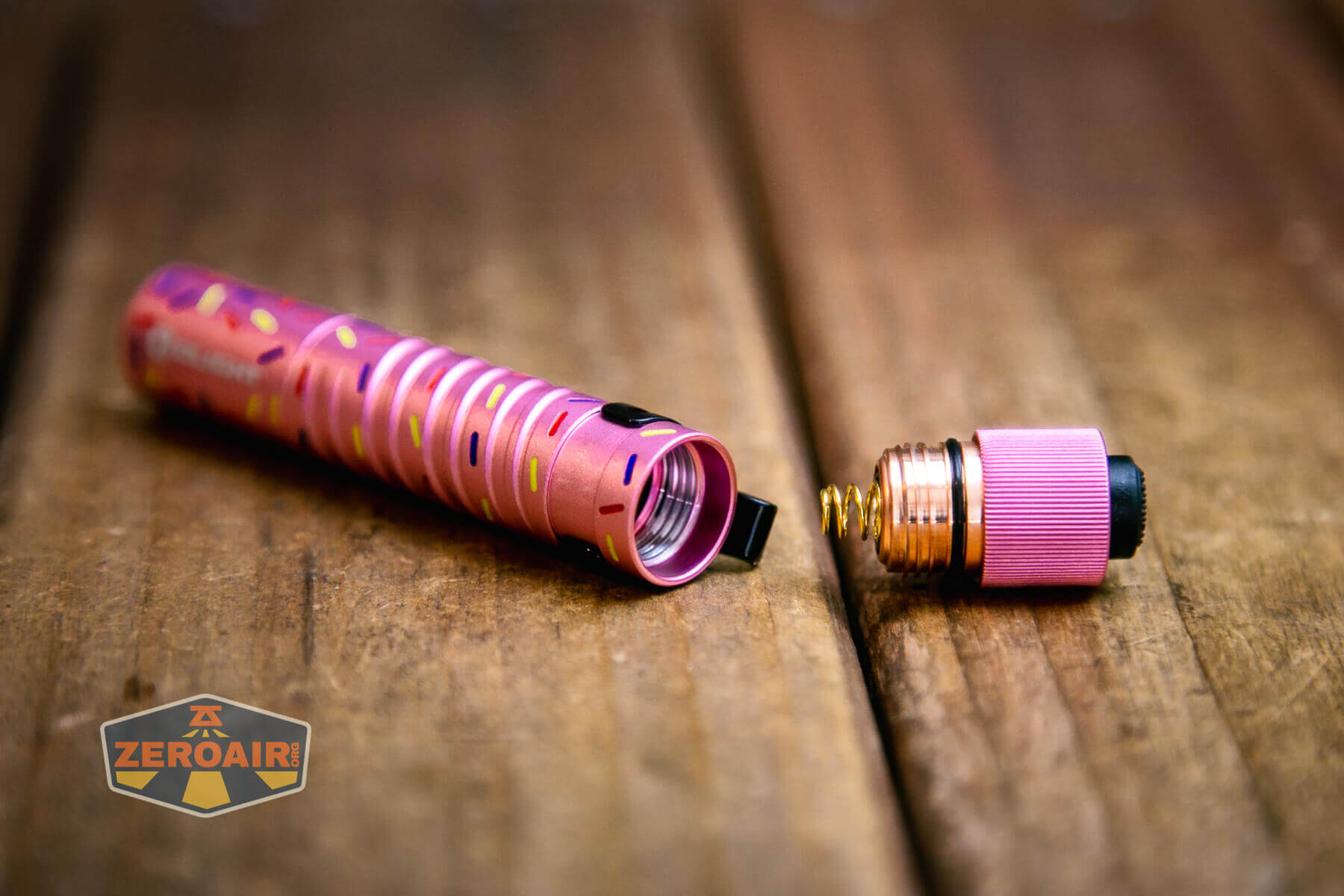
The tailcap has nice thick square-cut threads and is unanodized. This does mean that physical lockout isn’t possible, but as this is a mechanical clicky, there’s no drain on the cell if the light is off. There’s also a spring on the tailcap. It’s not double sprung, but it’s stiff enough, and nice quality.
The positive end has only a little button (no spring) for contact. That is perfectly sufficient.
Size and Comps
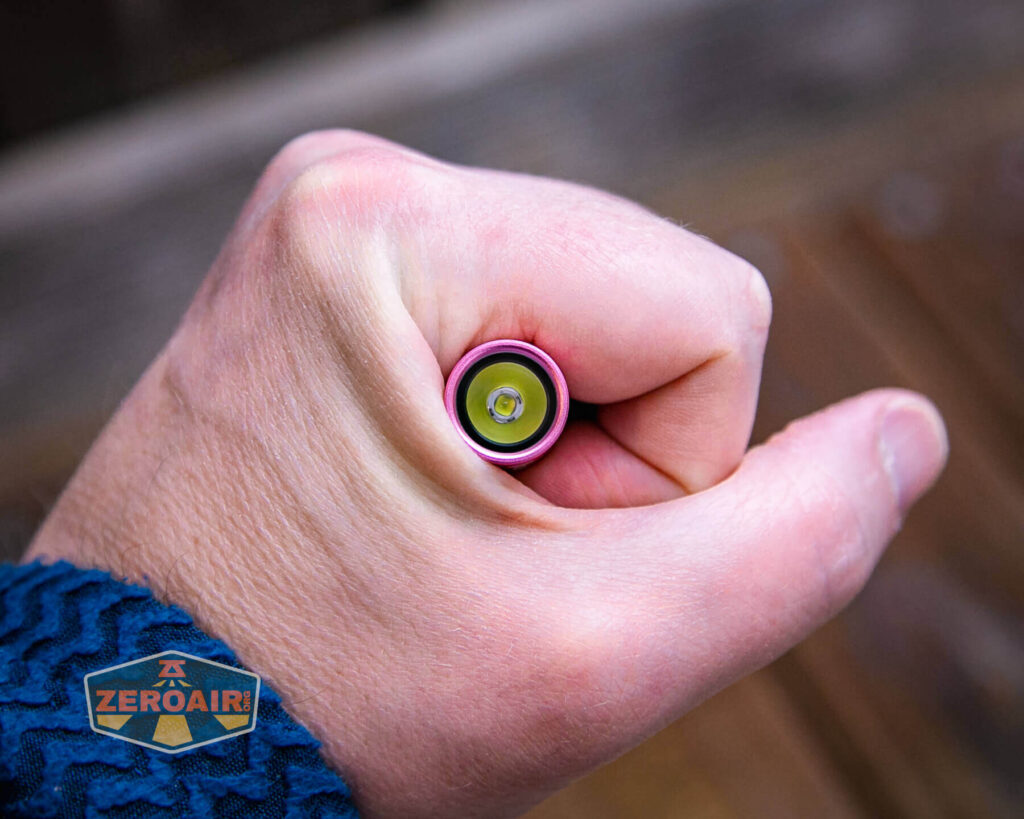
Officially Weight 41g, Length 89mm, Head and body diameter 15mm.
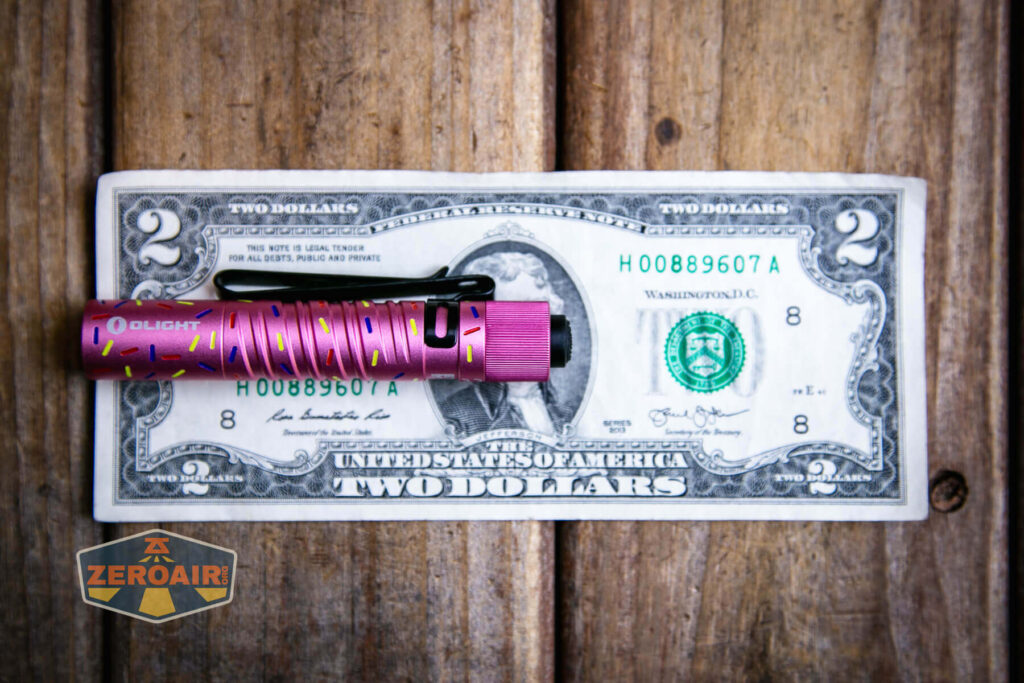
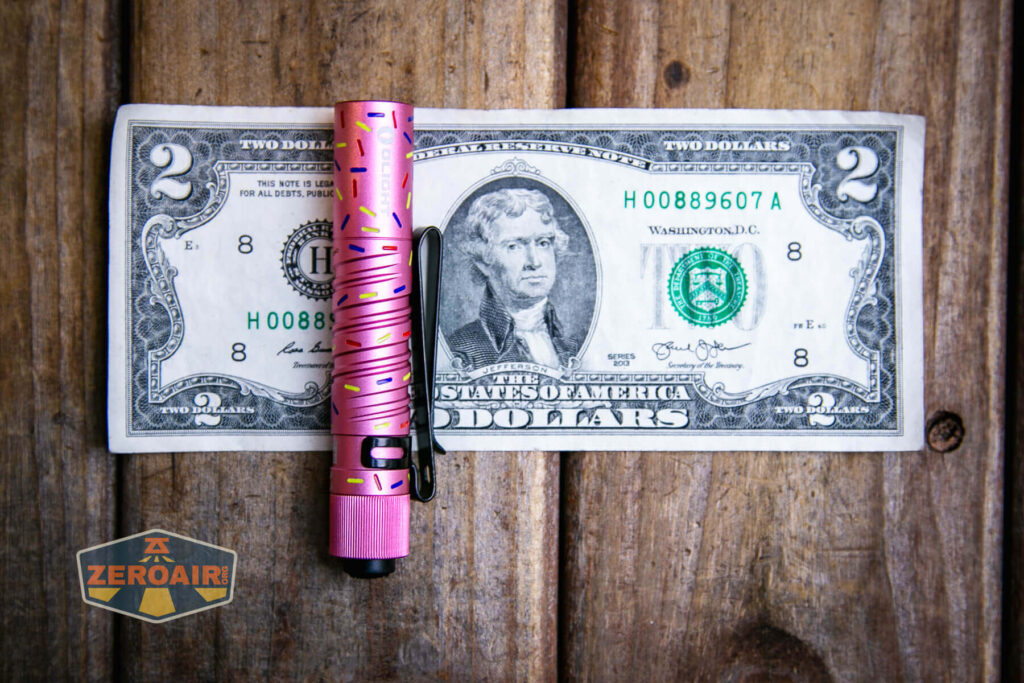
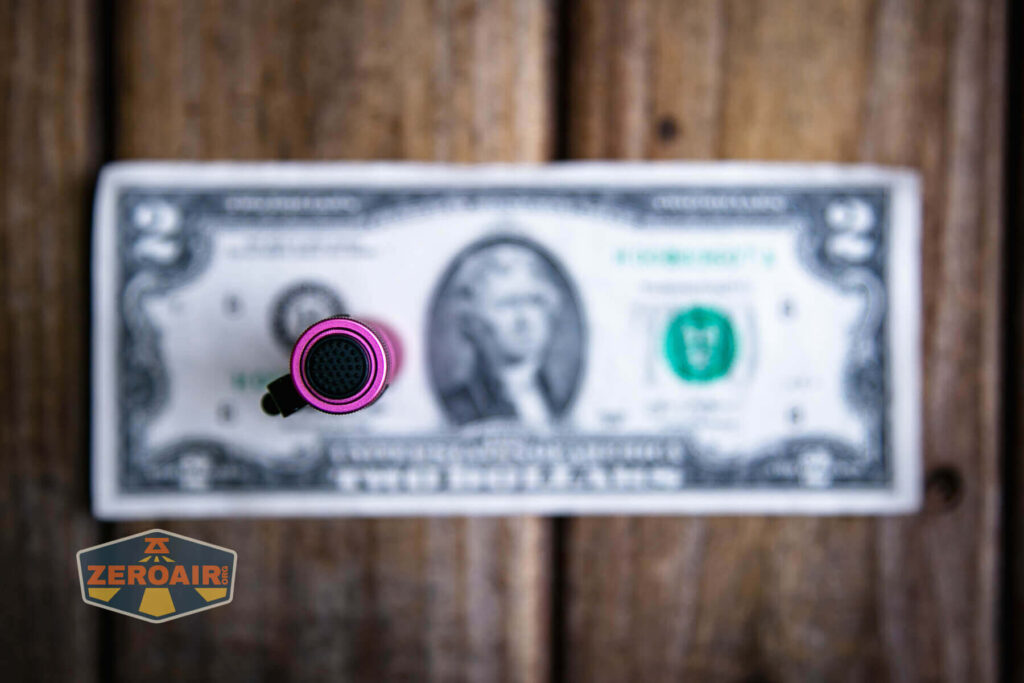
If the flashlight will headstand, I’ll show it here (usually the third photo). If the flashlight will tailstand, I’ll also show that (usually in the fourth photo).
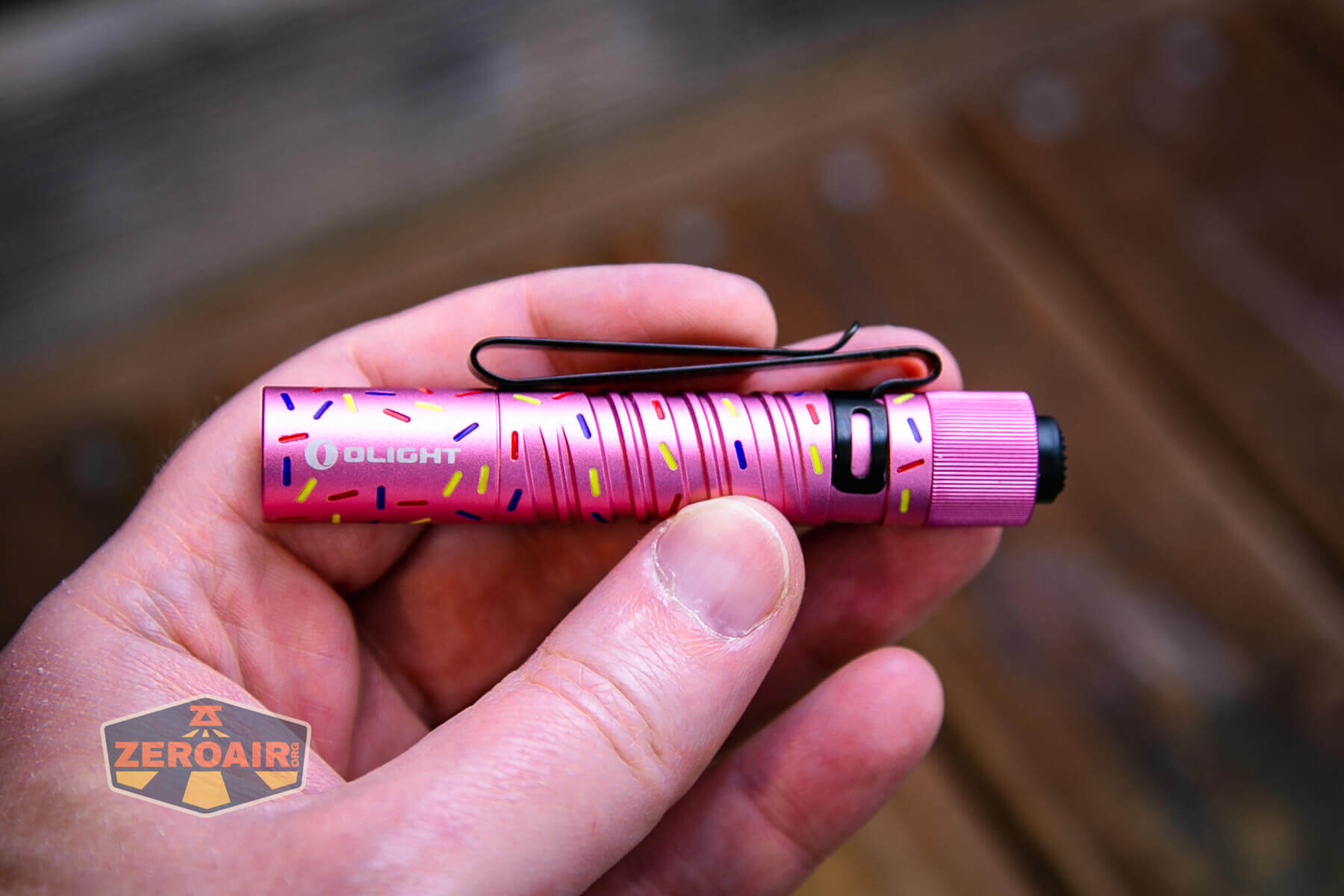
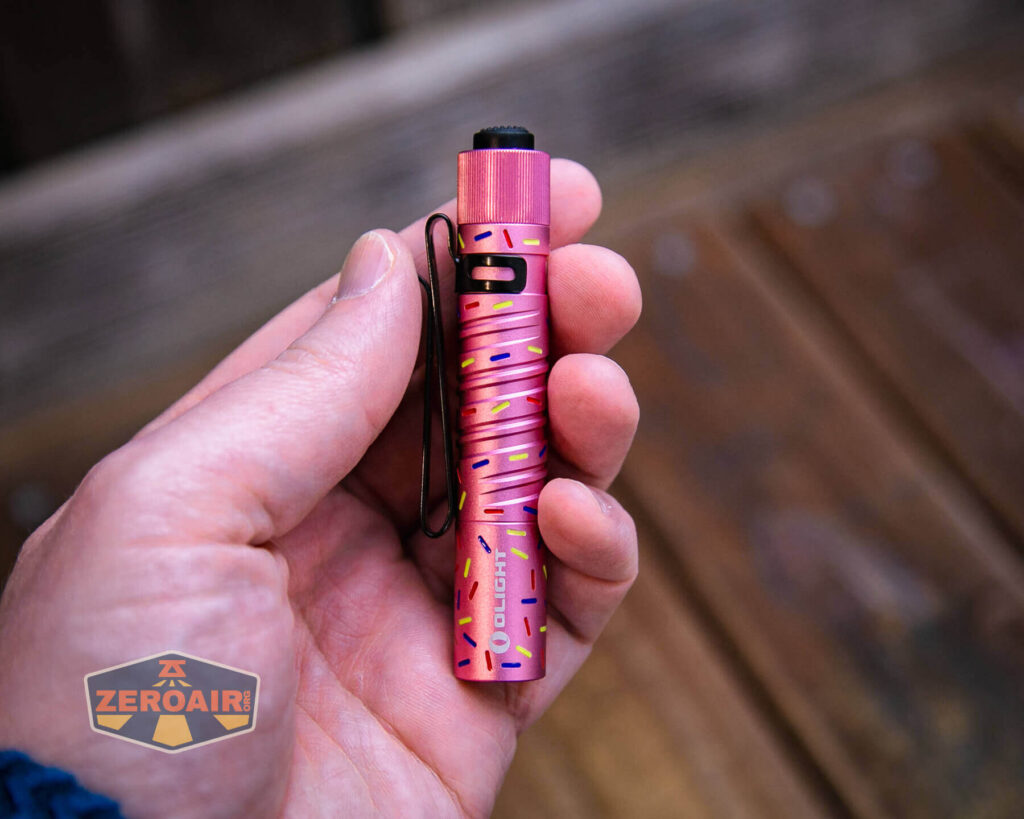
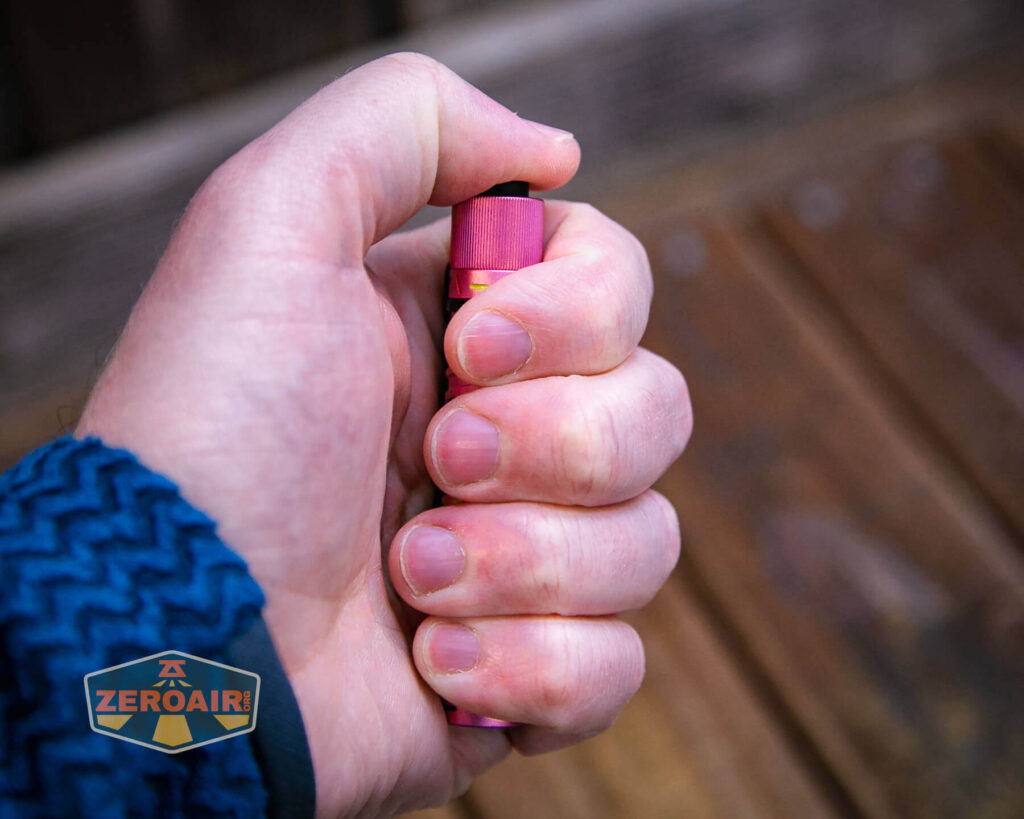
Here’s the test light with the venerable Convoy S2+. Mine is a custom “baked” edition Nichia 219b triple. A very nice 18650 light!

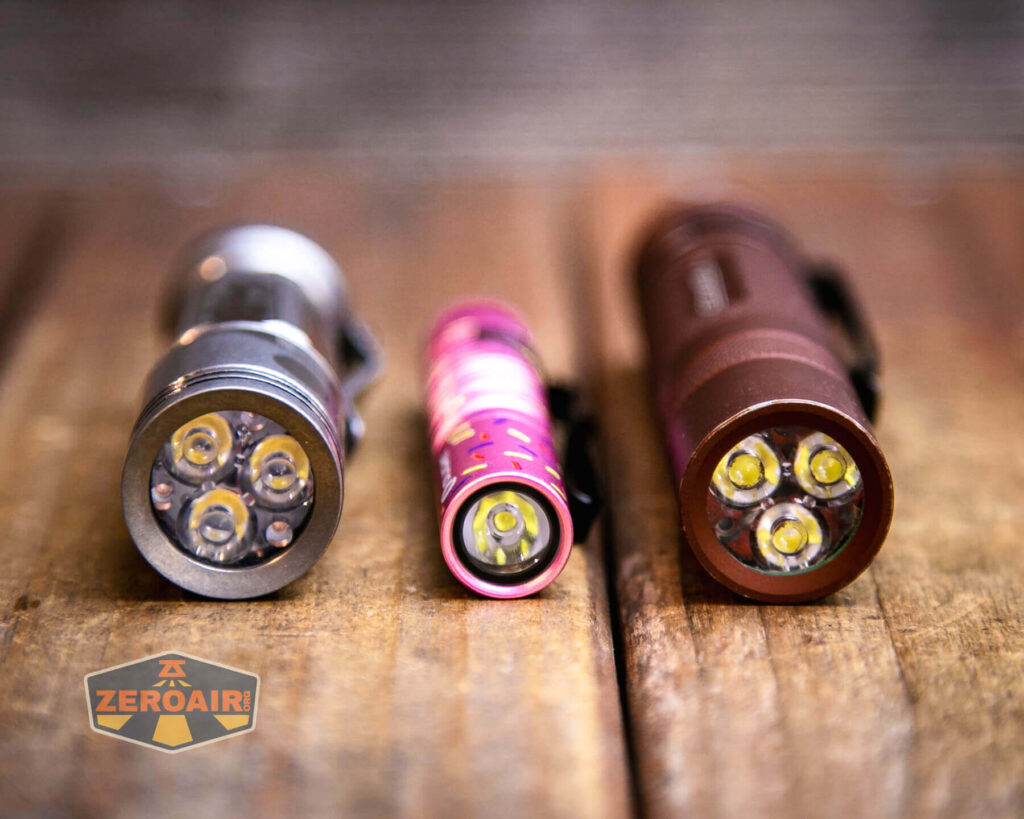
Also above on the left is a new feature light!! Laulima Metal Craft sent this titanium Todai for some size comparison photos like the ones above. Laulima has a bunch of incredible items. I’ve tested one (the Laulima Metal Craft Hoku) (the official site for Hoku is here) that was a Friend Fund Friday review. I was impressed enough by that Hoku that I bought a Laulima Metal Craft Diamond Slim (also in tumbled aluminum) (review is upcoming!) These lights by Laulima have impeccable build quality and not only that, they’re quite configurable. There are some (great, actually) default configurations, but Joshua Dawson (of Laulima Metal Craft) is open to ideas and emitter options and the like. I haven’t reviewed this Todai, but I have to say, it feels absolutely fantastic and I love it thus far. (Notably, I love how warm and eggy those emitters look through the TIR.)
Retention and Carry
The pocket clip, which arrives installed. It has the folded-over, clip-either-direction setup, and there’s a lanyard hole in the shoulder, too. At one point I didn’t like these clips, and while I still prefer the more traditional type, these have grown on me a little. Whatever you think about the clip part, it is held snugly on the body.
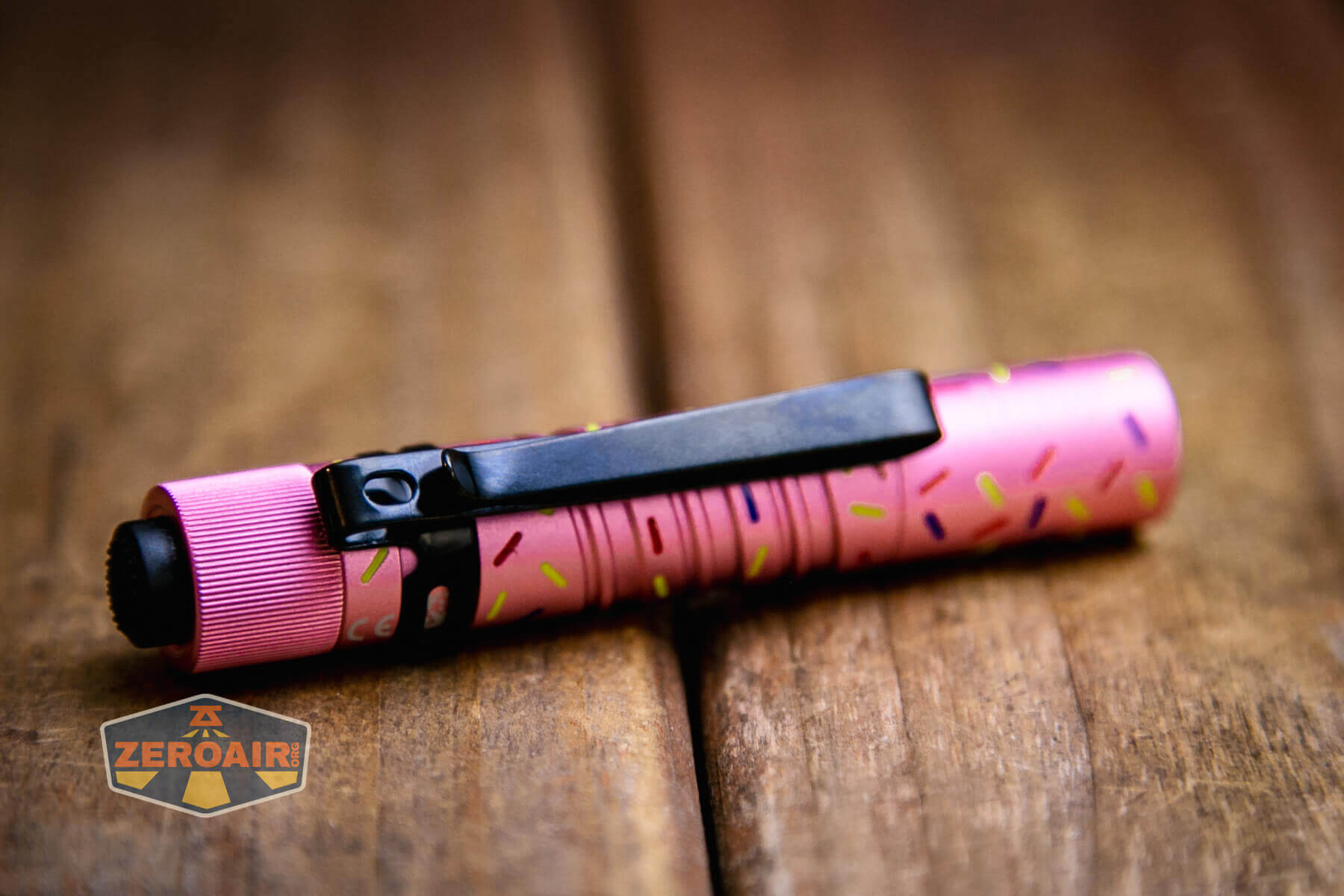
No lanyard or magnet or anything else is included for carrying the Olight i3T EOS flashlight.
Power and Runtime
Power is provided by a single AAA cell. Olight does include a primary cell, but all my testing was done with an Amazon Basics AAA NiMH.
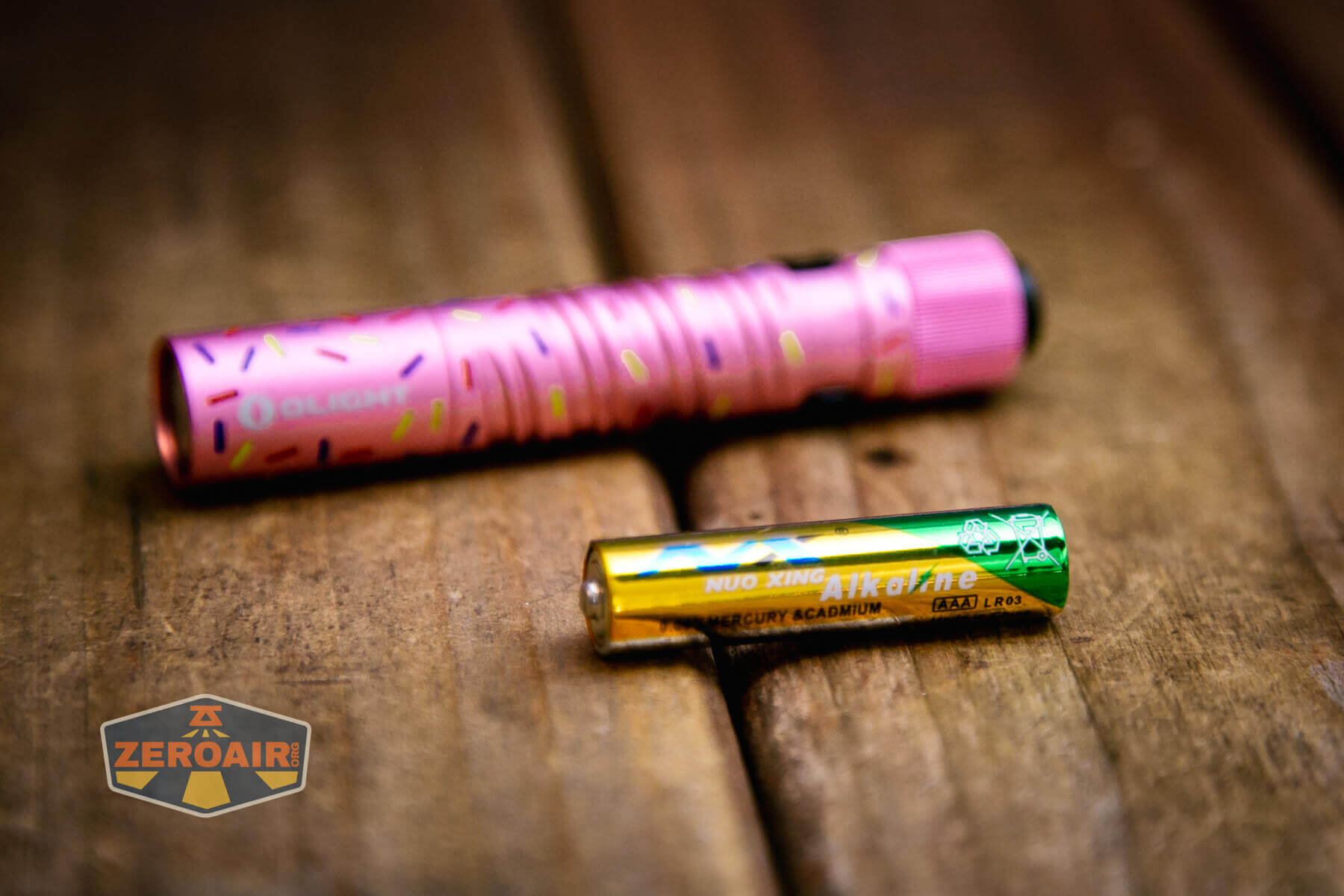
I do think you should use rechargeable AAA cells in the Olight i3T EOS flashlight and I recommend these Amazon Basics.
The cell goes into the Olight i3T EOS flashlight in the usual way – positive end toward the head.
Runtime is rated at 21 minutes for High. I can’t really explain that little dip around the 5-minute mark. My previous i3T’s have not done this.
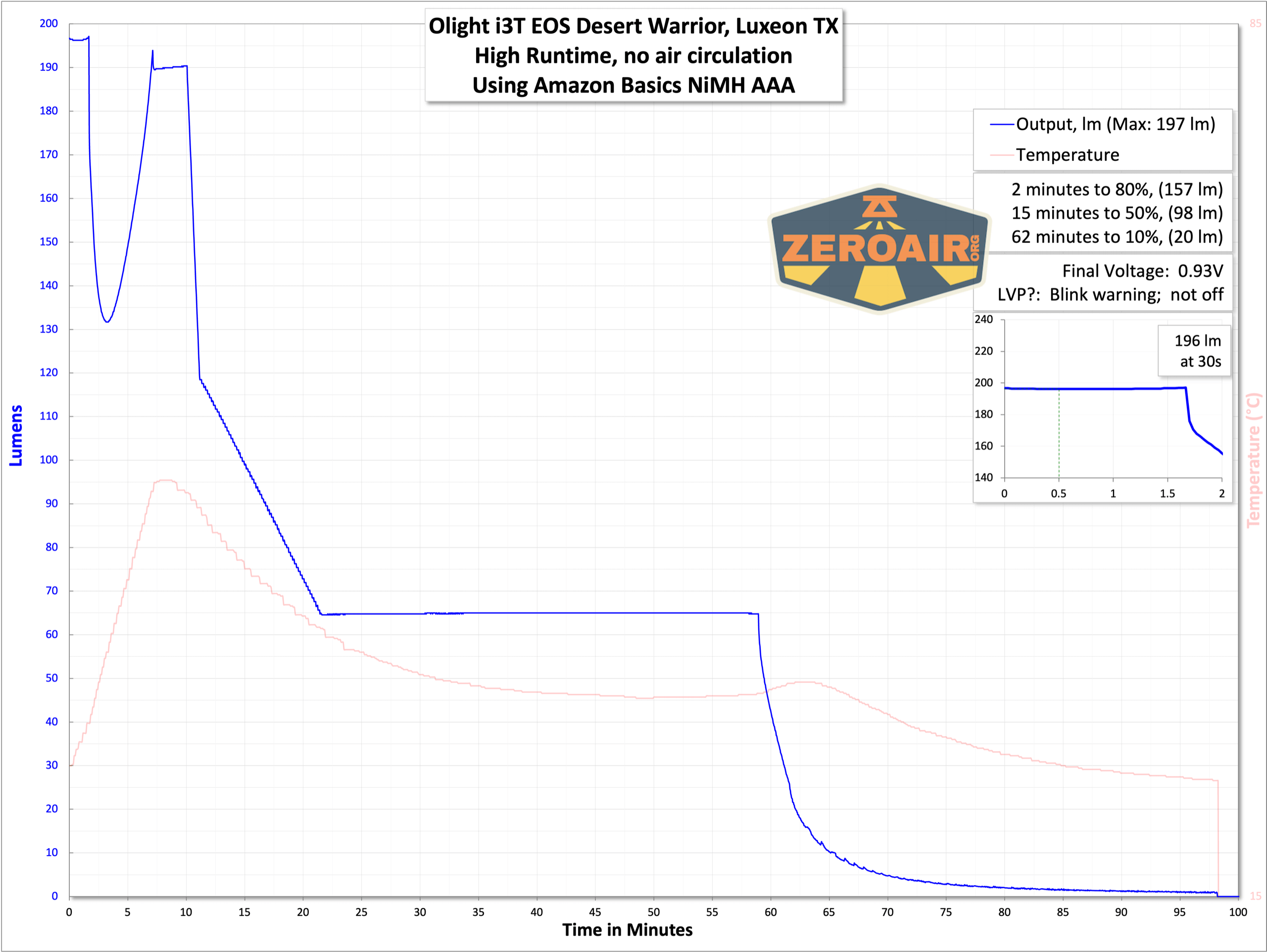
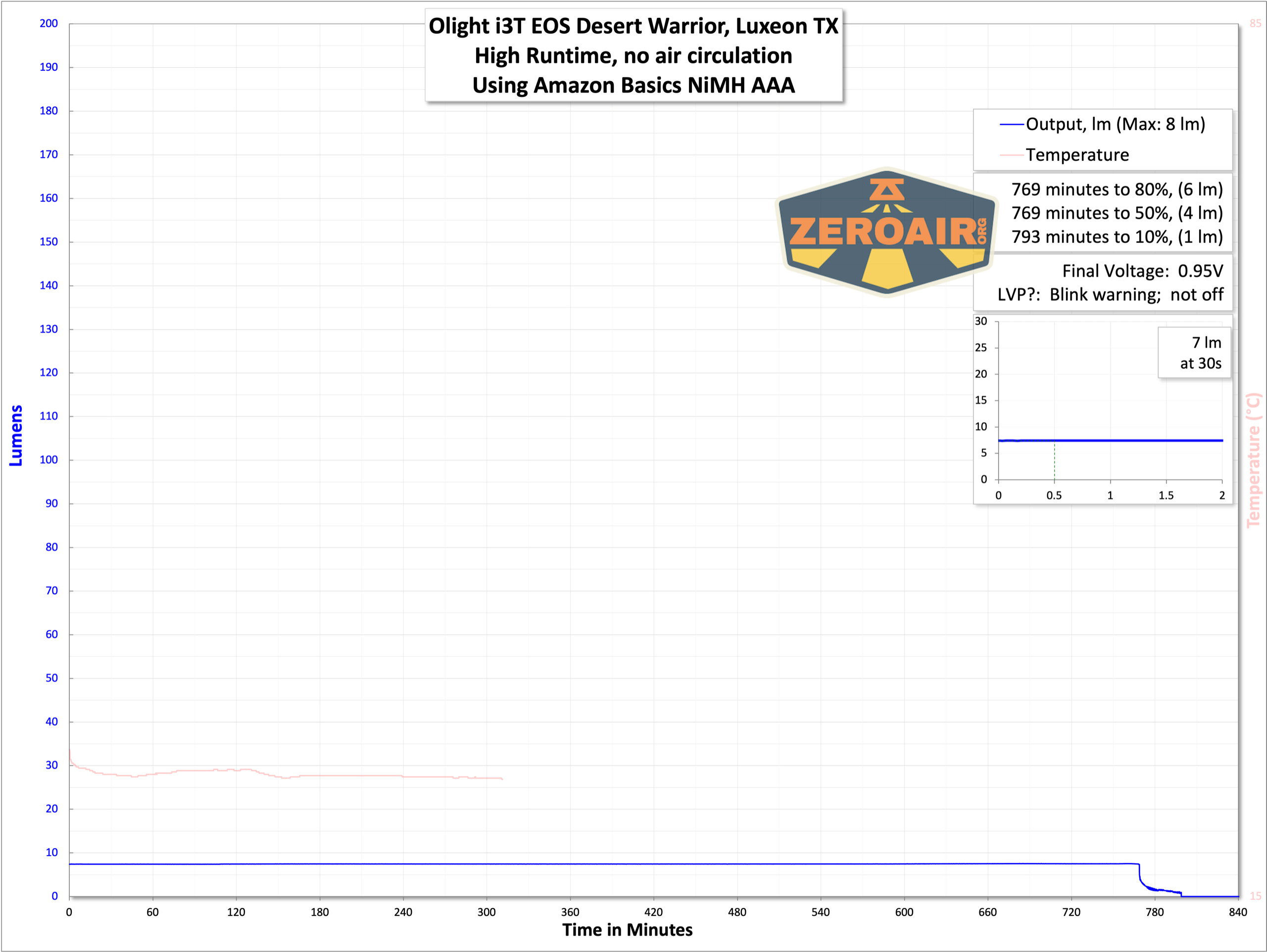
The Olight i3T EOS Dessert Warrior does not really exhibit low voltage protection, but that’s slightly less important with NiMH.
Modes and Currents
| Mode | Mode Claimed Output (lm) | Claimed Runtime | Measured Lumens | Tailcap Amps (@1.5V) |
|---|---|---|---|---|
| High | 180 | 21m | 196 | 1.47 |
| Low | 5 | 16h | 7 | 0.05 |
Pulse Width Modulation
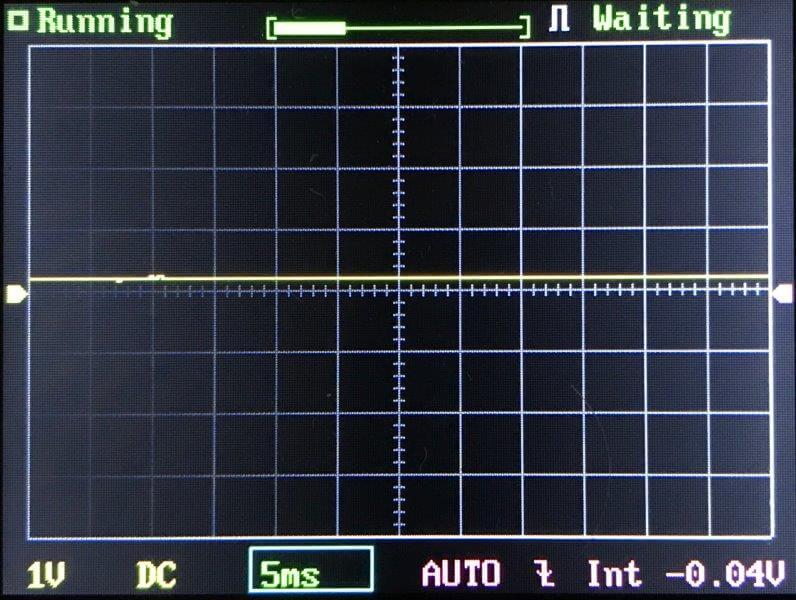
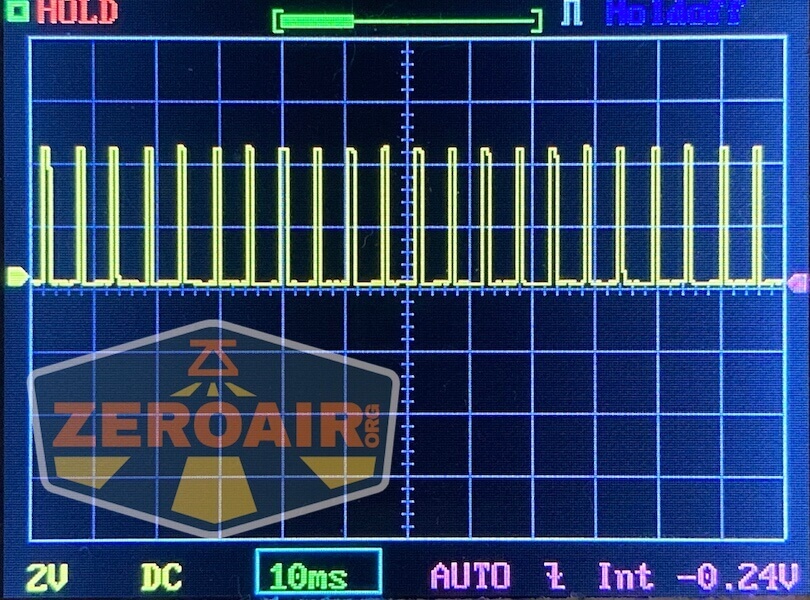
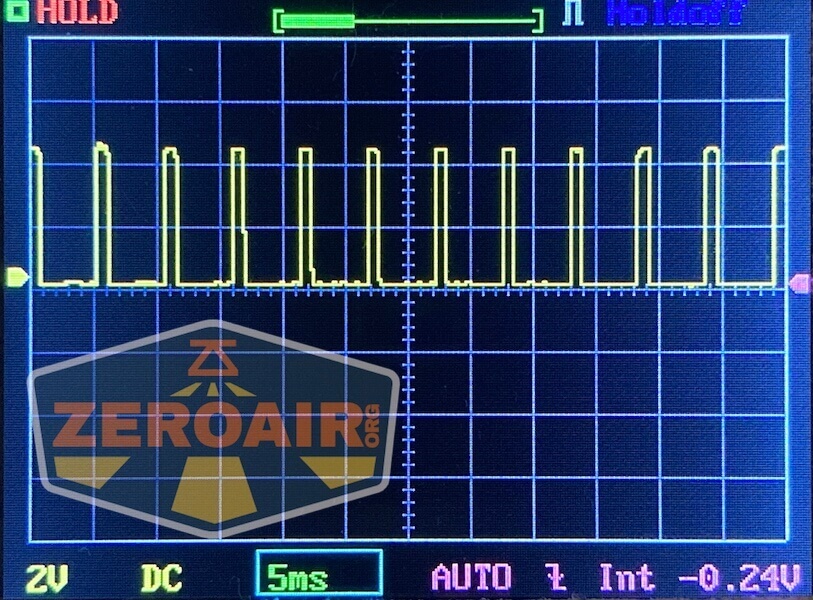
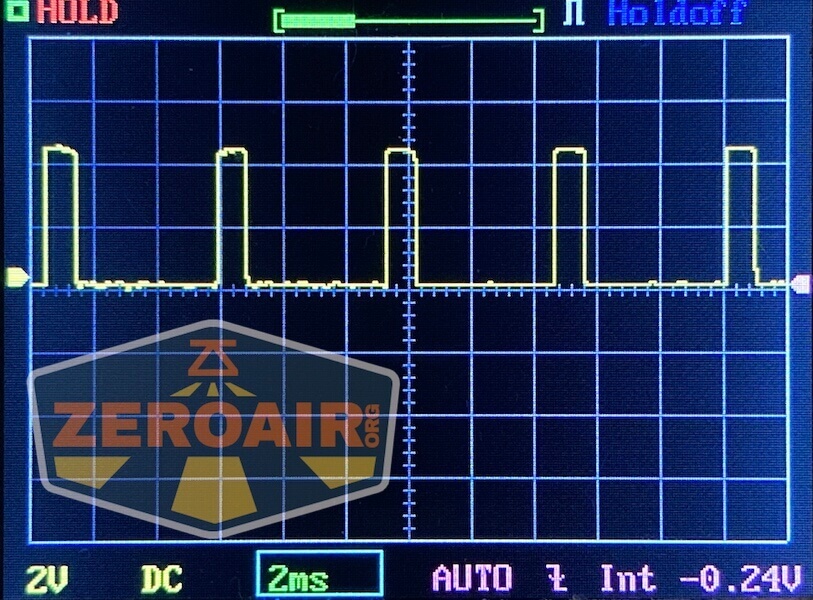
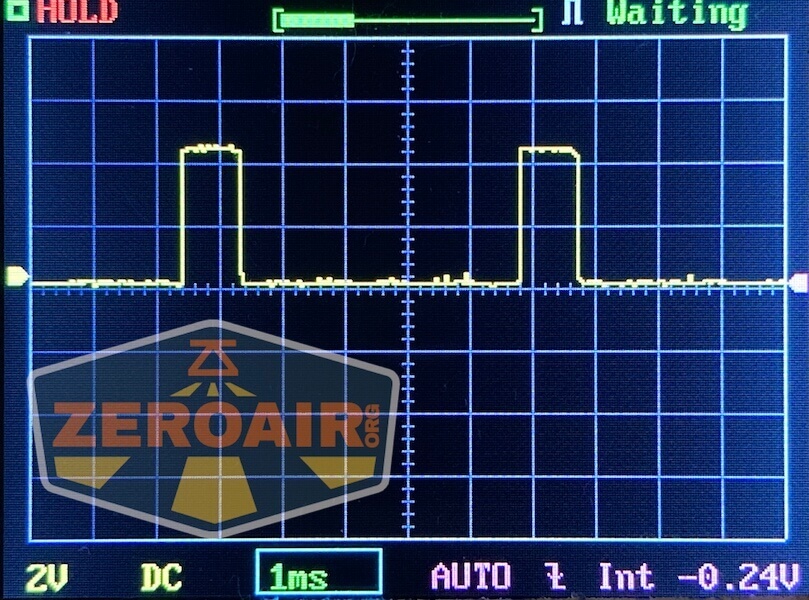
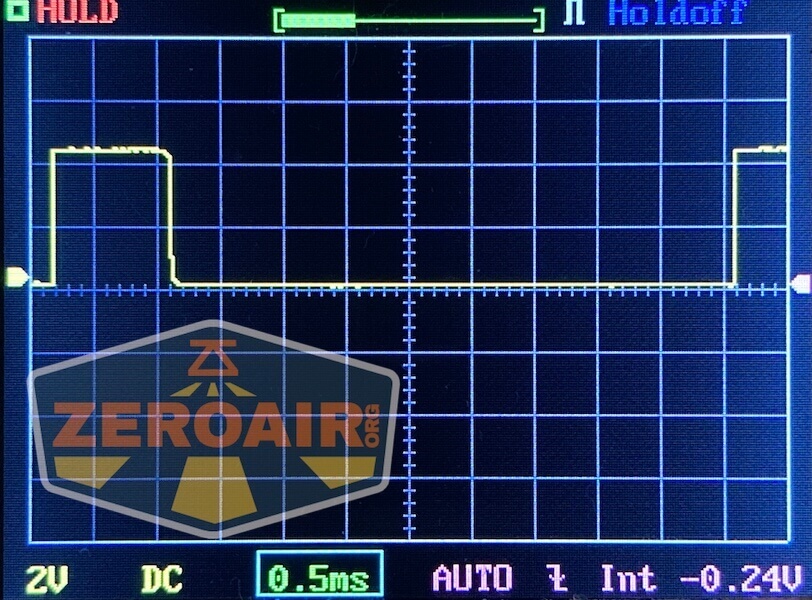
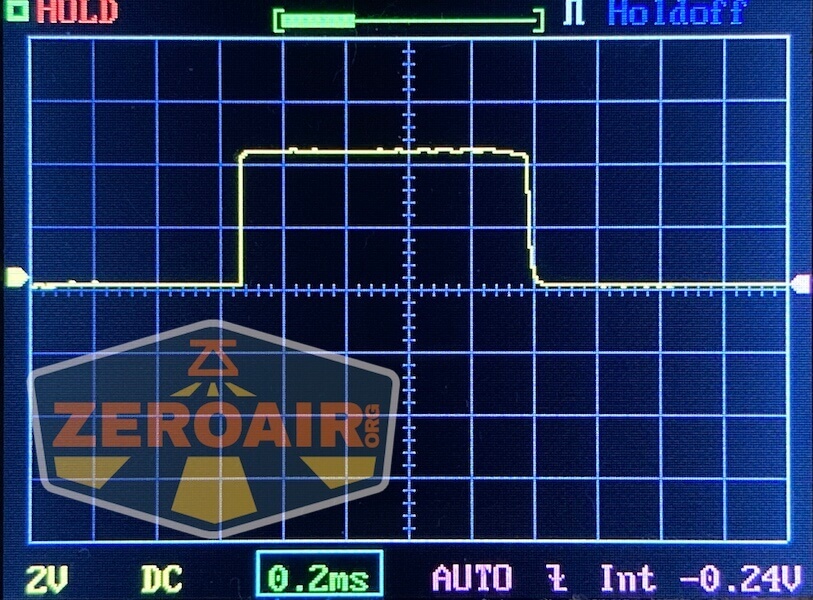
Neither output level uses PWM.
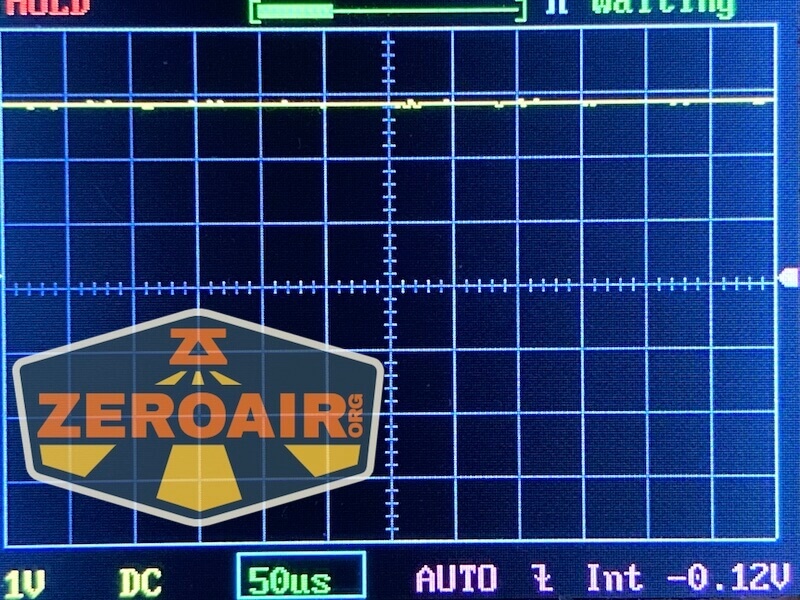
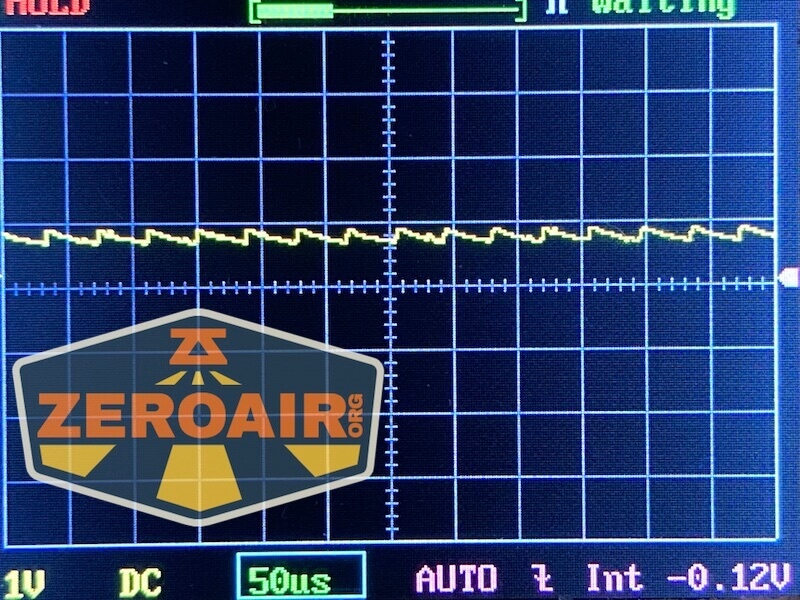
Here you can see a “baseline” – a chart with almost no light hitting the sensor.
Then there’s the Ultrafire WF-602C flashlight, which has some of the worst PWM I’ve seen. It’s so bad that I used a post about it to explain PWM! Here are multiple timescales (10ms, 5ms, 2ms, 1ms, 0.5ms, 0.2ms) to make comparing this “worst” PWM light to the test light easier. That post also explains why I didn’t test the WF-602C at the usual 50us scale.
User Interface and Operation
The switch is a mechanical forward clicky. It’s very clicky and clicks on the downstrokeand upstroke. The click is quite loud.
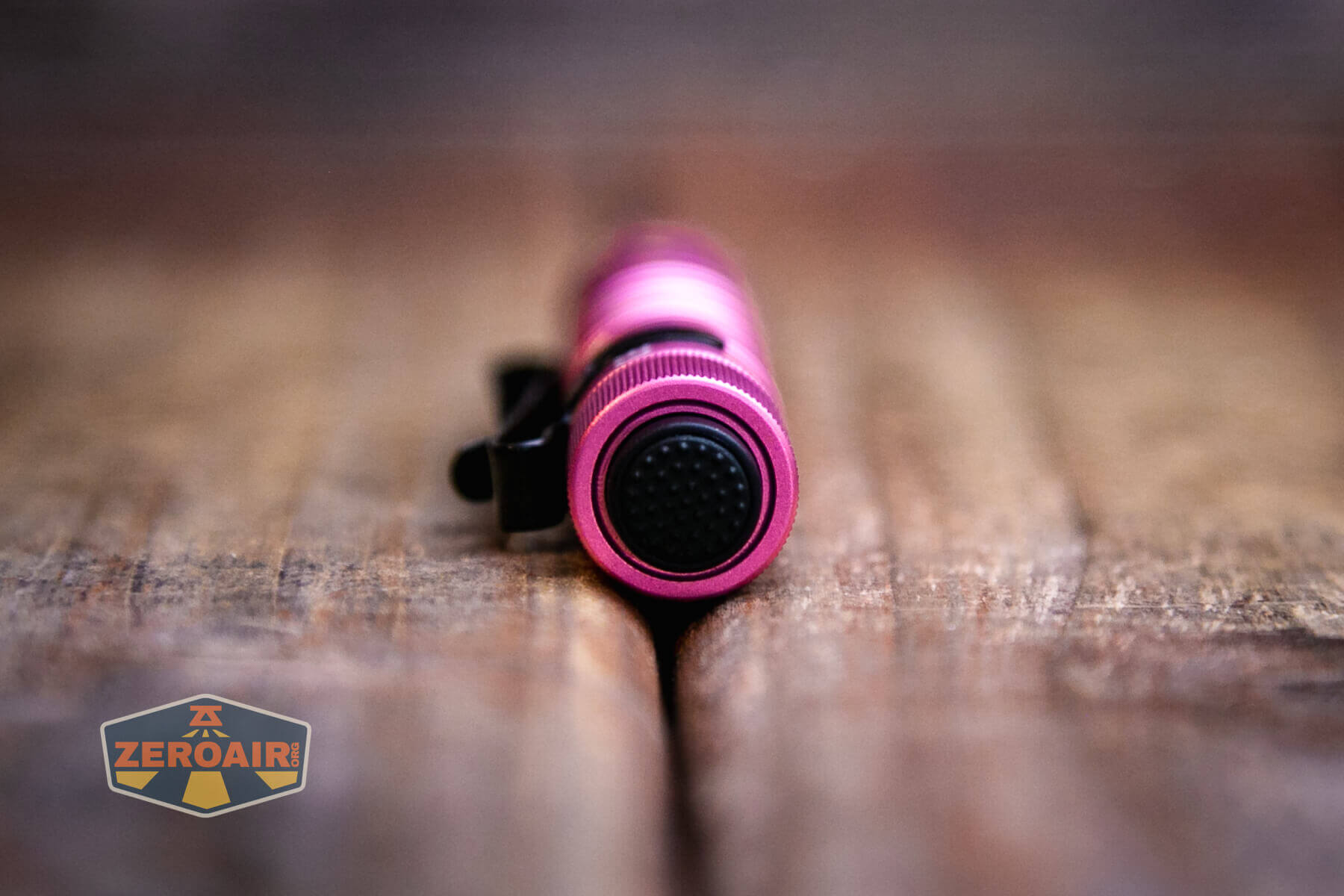
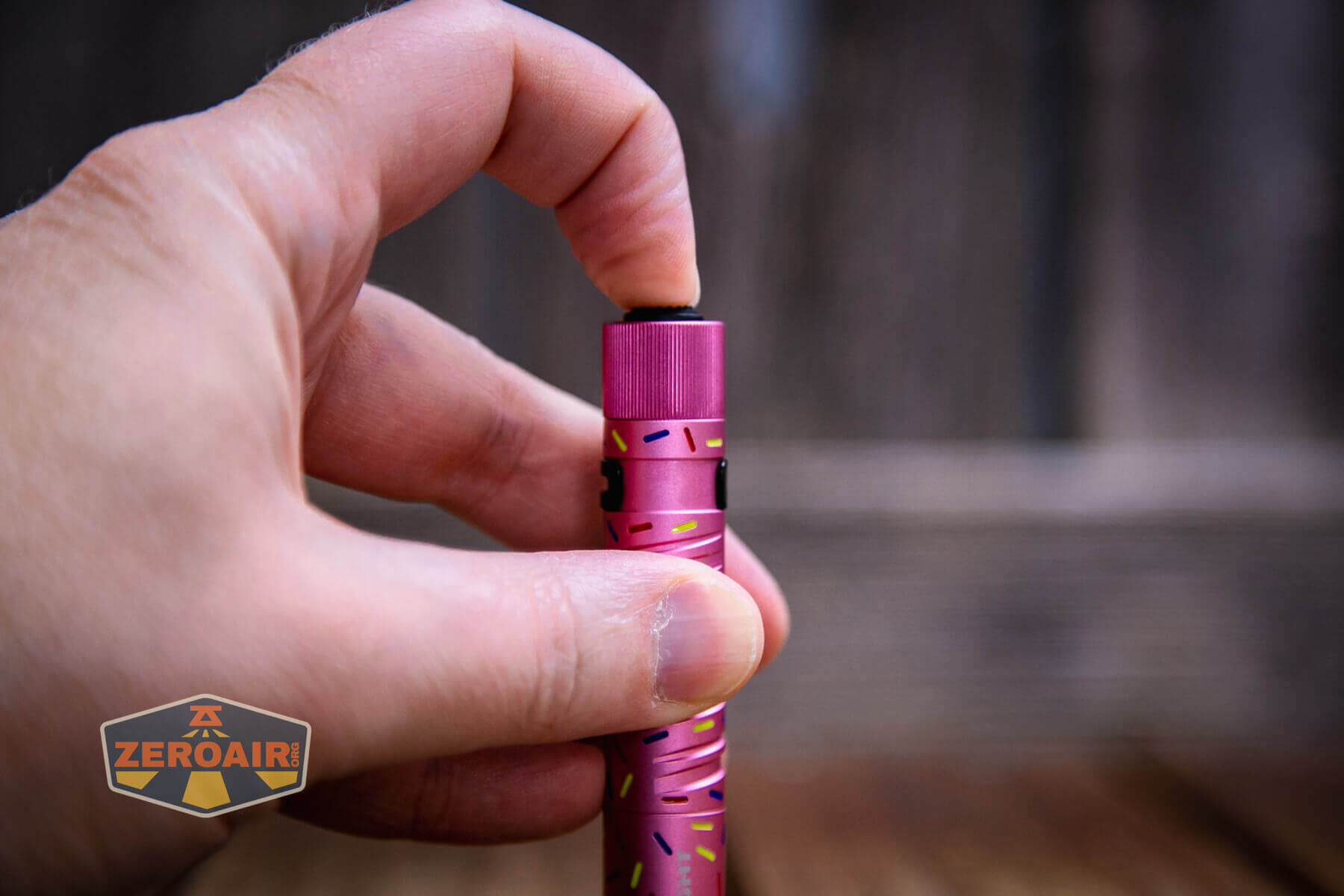
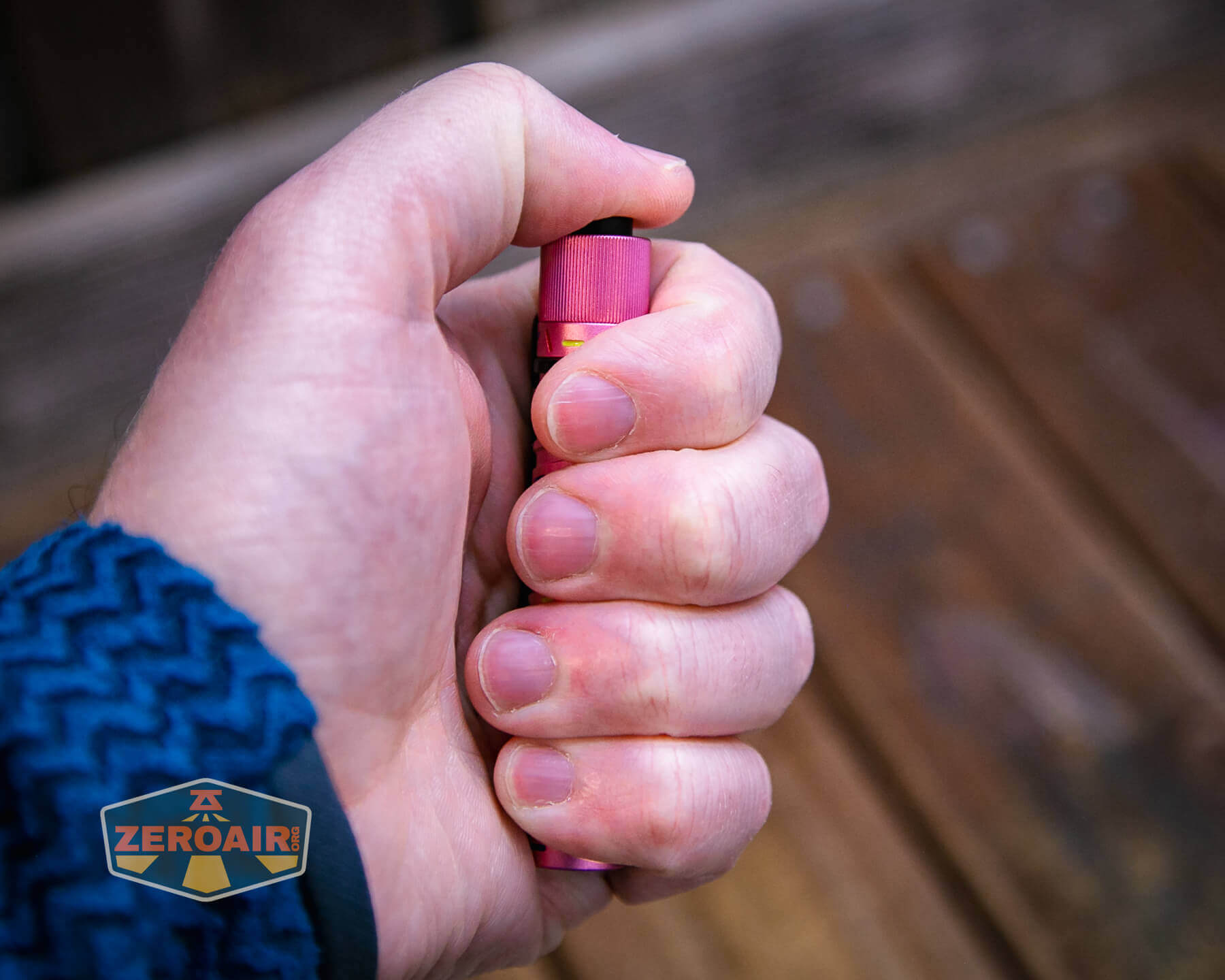
Here’s a user interface table!
| State | Action | Result |
|---|---|---|
| Off | Click | Low |
| Low | Click | High |
| Off | Half-press | Momentary (Low first, another half press for high) |
The light will revert to low as the next mode once off for 2 seconds.
LED and Beam
The emitter used in this AAA light is the Philips LUXEON TX.
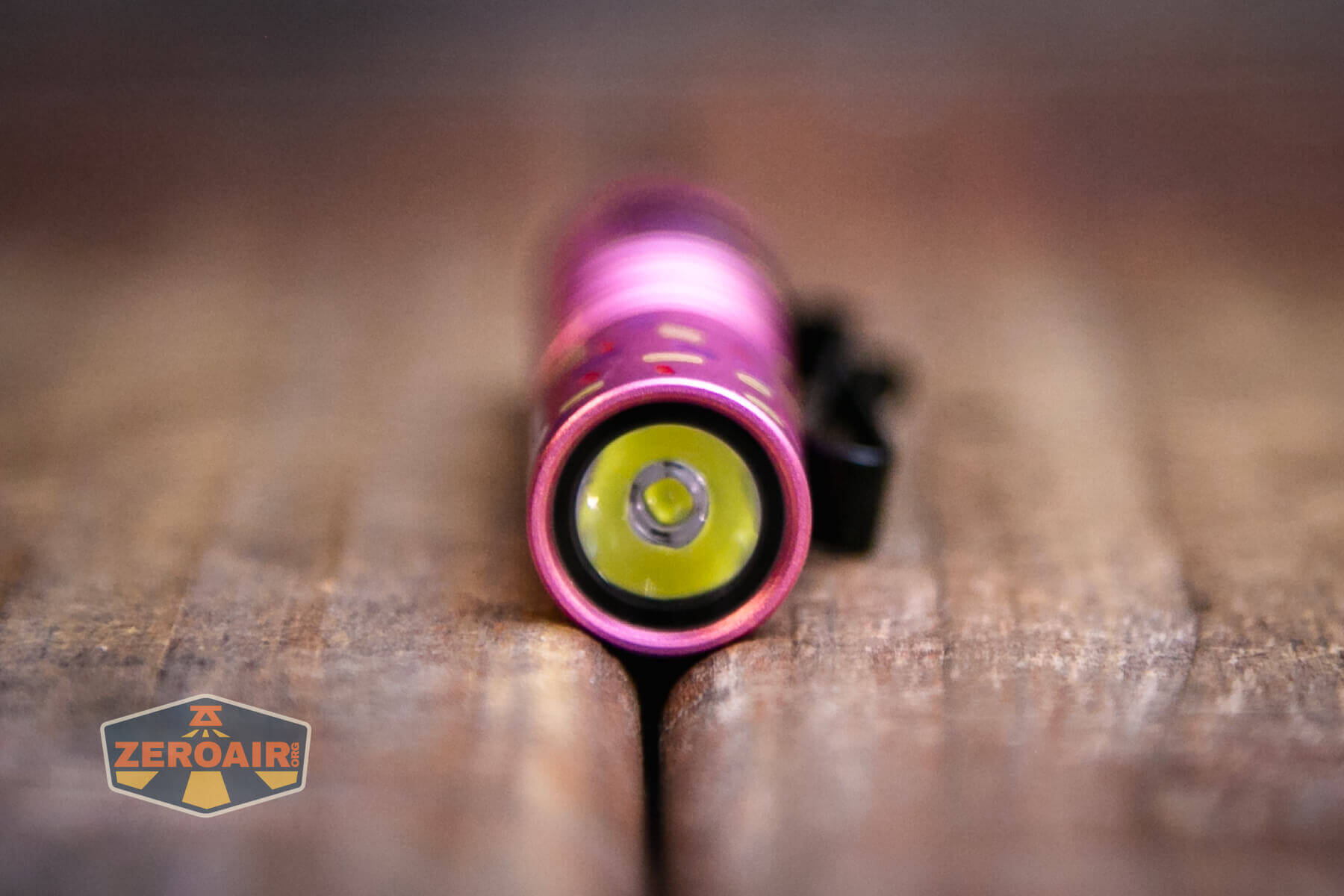
That emitter is coupled with a clear TIR.
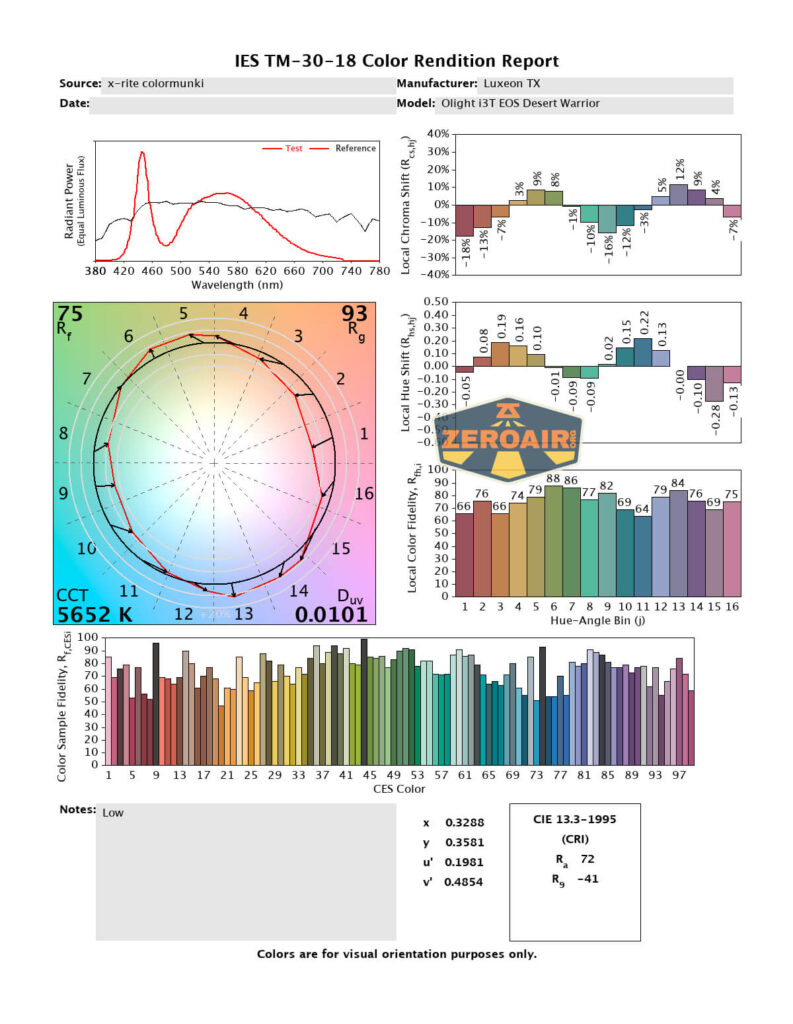
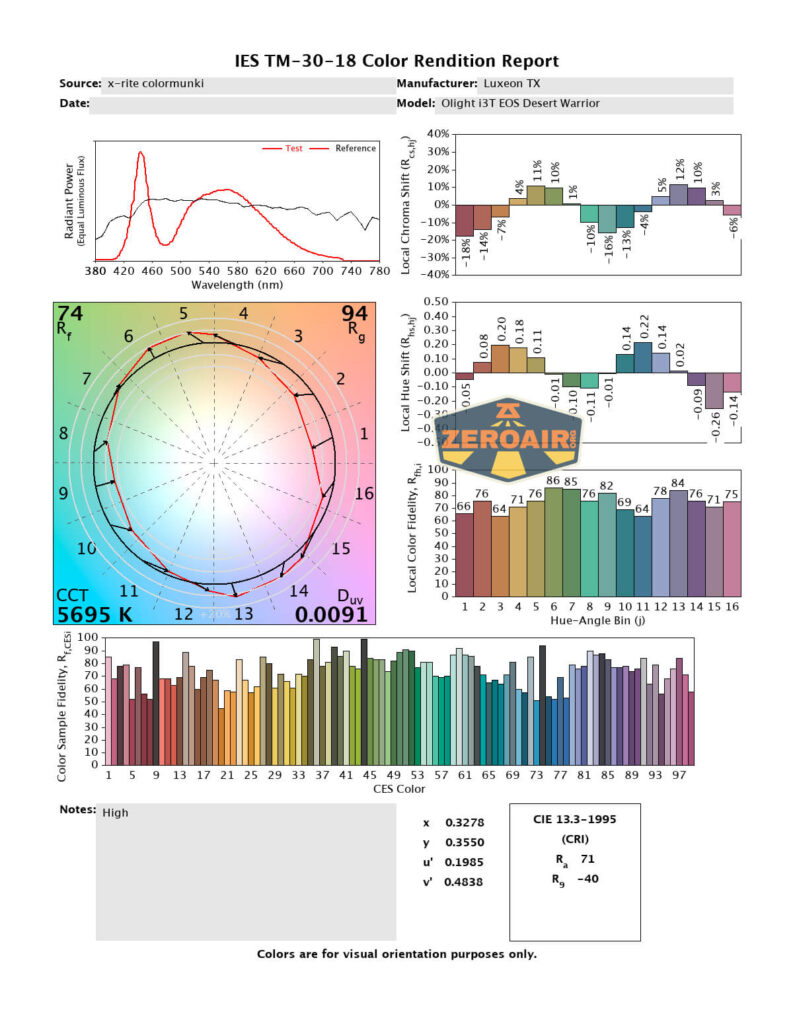
LED Color Report (CRI and CCT)
CCT is cool white, at around 5600K. The CRI is low, too, at around 71. I doubt you’ll be buying this light for the fantastic emitter, and if not, then you’re probably buying because it’s the Dessert Warrior colorway. That’s fine, and I’m into that too, but I’d still LOVE to have some great emitter in this light so that it could be an easy hearty “recommend.”
Beamshots
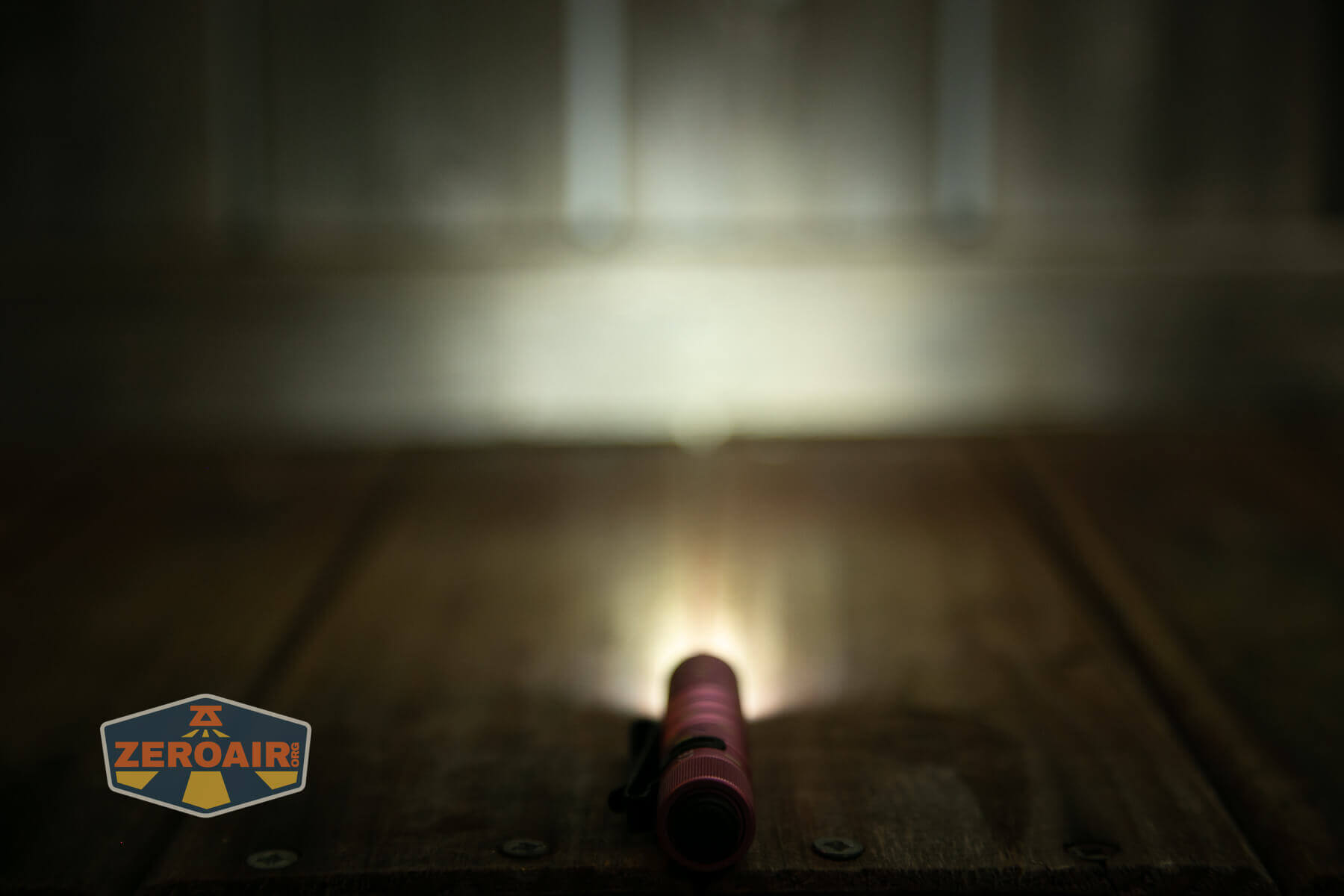
These beamshots always have the following settings: f8, ISO100, 0.3s shutter, and manual 5000K exposure. These photos are taken at floor level, and the beam hits the ceiling around 9 feet away.
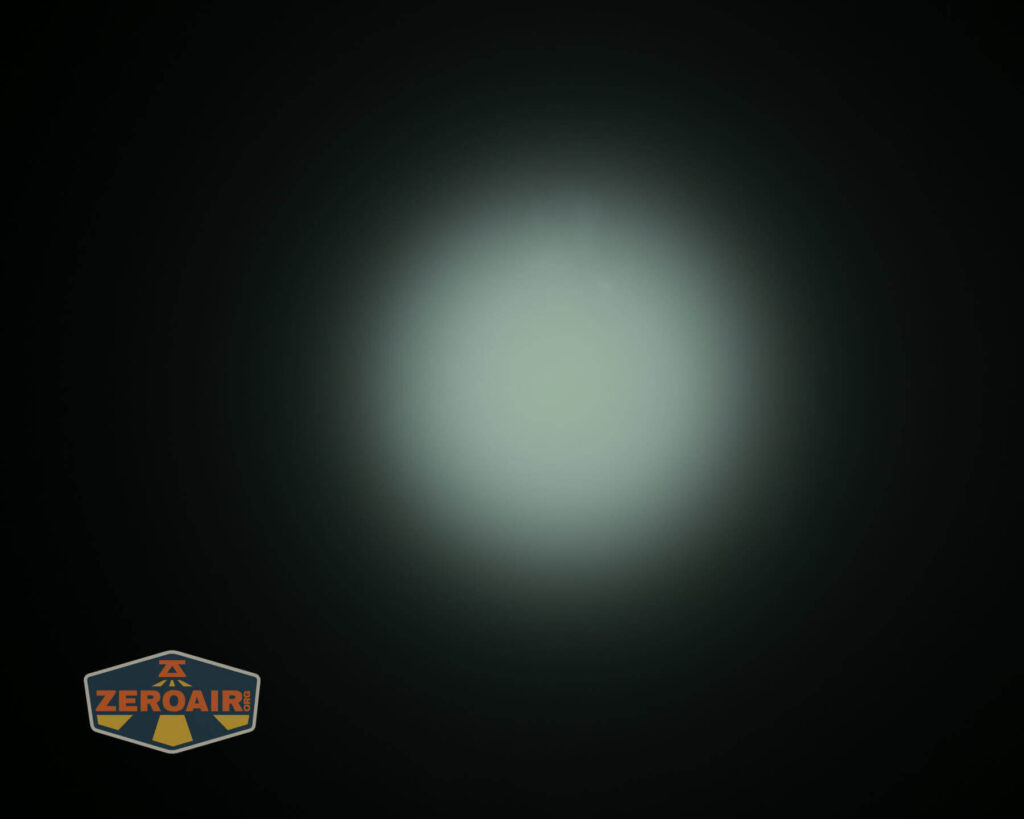
Tint vs BLF-348 (KillzoneFlashlights.com 219b version) (affiliate link)
I keep the test flashlight on the left and the BLF-348 reference flashlight on the right.
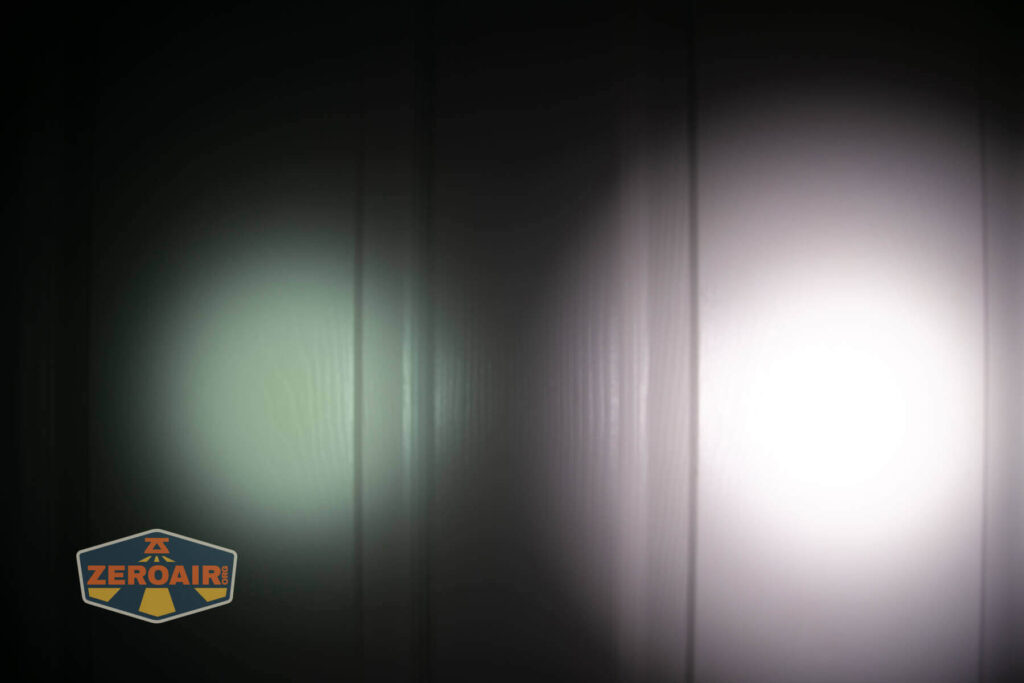
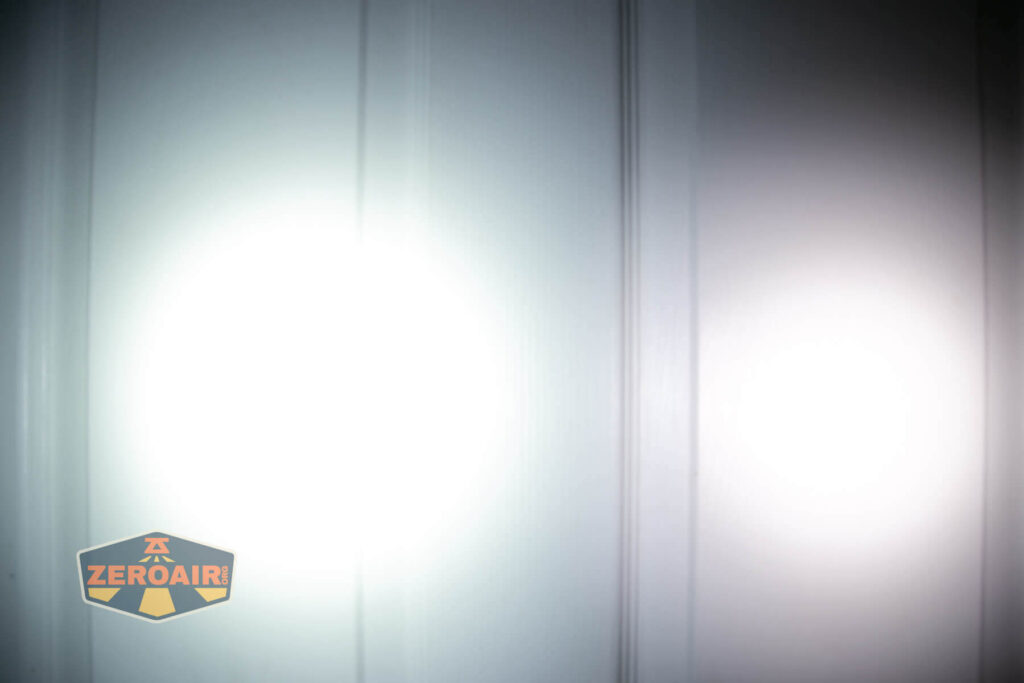
I compare everything to the KillzoneFlashlights.com 219b BLF-348 because it’s inexpensive and has the best tint!
Conclusion
What I like
- Simple UI
- AAA format (with alkaline/NiMH support)
- TIR optic beam profile
- No strobe!
- Square-cut, high-quality threads
What I don’t like
- No Nichia option
- Cool white
Notes
- This content originally appeared at zeroair.org. Please visit there for the best experience!
- Please use my Amazon.com referral link to help support zeroair.org!
- Please support me on Patreon! I deeply appreciate your support!