

Thrunite T1S V2 Flashlight Review
The Thrunite T1S V2 flashlight is available now – with “V2” indicating a couple of new body colors. Otherwise, it offers the same great features as the T1S!
Official Specs and Features
Here’s a link to the Thrunite T1S V2 flashlight product page.
Versions
The Thrunite T1S V2 flashlight is, obviously, a “version two” of this T1S product. The first one is still available (and reviewed here), and this V2 seems about the same. I believe the main (possibly only) difference is the body color. V2 is available in dark green (seen here) as well as desert tan. Otherwise, performance and build, etc. are the same.
Price
The Dark Green Thrunite T1S V2 flashlight sells for $45.95, which is a $6 premium over the black version. So if you just like the specs and beam and everything, you can save a bit by buying the black version. All of them have the same emitter, though Thrunite does list a neutral white version. It’s out of stock and probably will remain so.
The light can be had for even less on Amazon.com right now! Buy the Thrunite T1S flashlight in Dark Green for only $35.95! (referral link)
Short Review
Another great 18350 flashlight by Thrunite. I already liked the original (black) T1 a lot. Then I liked the T1 in Military Tan a lot. The T1S version in black added USB-C charging, which is an obvious upgrade, but also throws in a TIR and a new emitter, and I liked it a lot too. This Dark Green version is a neat new body color, and if green is your thing, it’s an obvious purchase!
Long Review
The Big Table
| Thrunite T1S V2 flashlight | |
|---|---|
| Emitter: | Luminus SST-40 (Cool White) |
| Price in USD at publication time: | $35.95 at amazon.com |
| Cell: | 1×18350 |
| Runtime Graphs | |
| LVP? | Yes |
| Switch Type: | E-Switch |
| Quiescent Current (mA): | ? |
| On-Board Charging? | Yes |
| Charge Port Type: | USB-C |
| Charge Graph | |
| Power off Charge Port | with cell: lowest 2 modes without cell and/or body: low, but moonlight blinking |
| Claimed Lumens (lm) | 1212 |
| Measured Lumens (at 30s) | 980 (80.9% of claim)^ |
| Candela per Lumen | 9.43 |
| Claimed Throw (m) | 184 |
| Candela (Calculated) in cd (at 30s) | 365lux @ 5.329m = 10365cd |
| Throw (Calculated) (m) | 203.6 (110.7% of claim)^ |
| Claimed CCT | – |
| Measured CCT Range (K) | 5200-5500 Kelvin |
| Item provided for review by: | Thrunite |
| All my Thrunite reviews! | |
^ Measurement disclaimer: Testing flashlights is my hobby. I use hobbyist-level equipment for testing, including some I made myself. Try not to get buried in the details of manufacturer specifications versus measurements recorded here; A certain amount of difference (say, 10 or 15%) is perfectly reasonable.
What’s Included

- Thrunite T1S V2 flashlight
- Thrunite 1100mAh 18350 (protected, button top)
- Charge cable (USB to USB-C)
- Spare o-rings (2)
- Pocket clip
- Lanyard
- Spare charge port cover (2)
- Manual and papers
Package and Manual

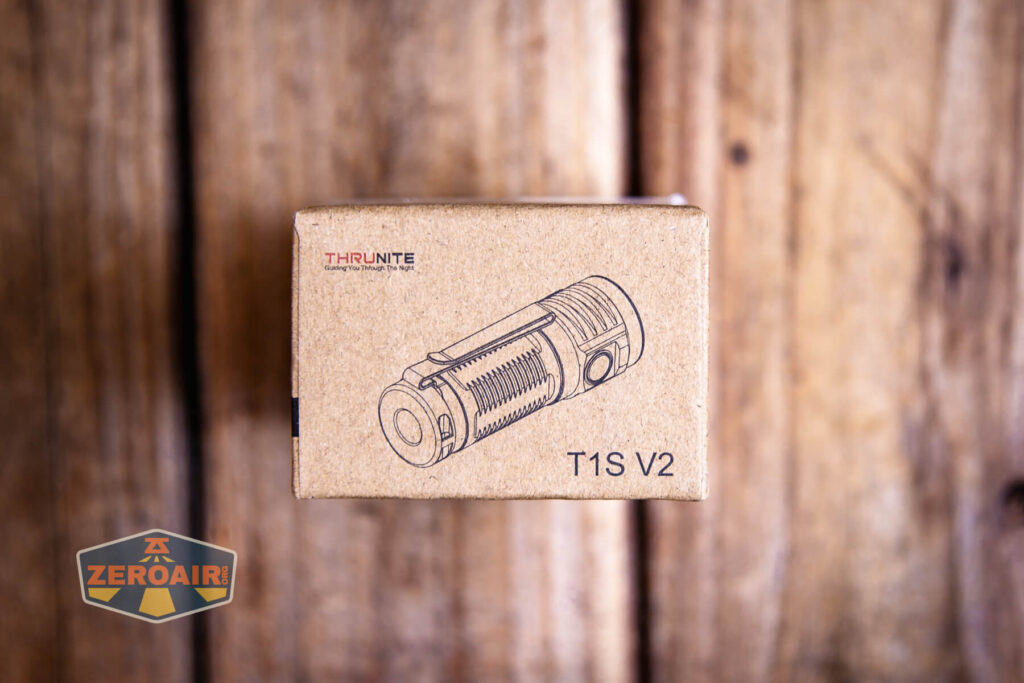
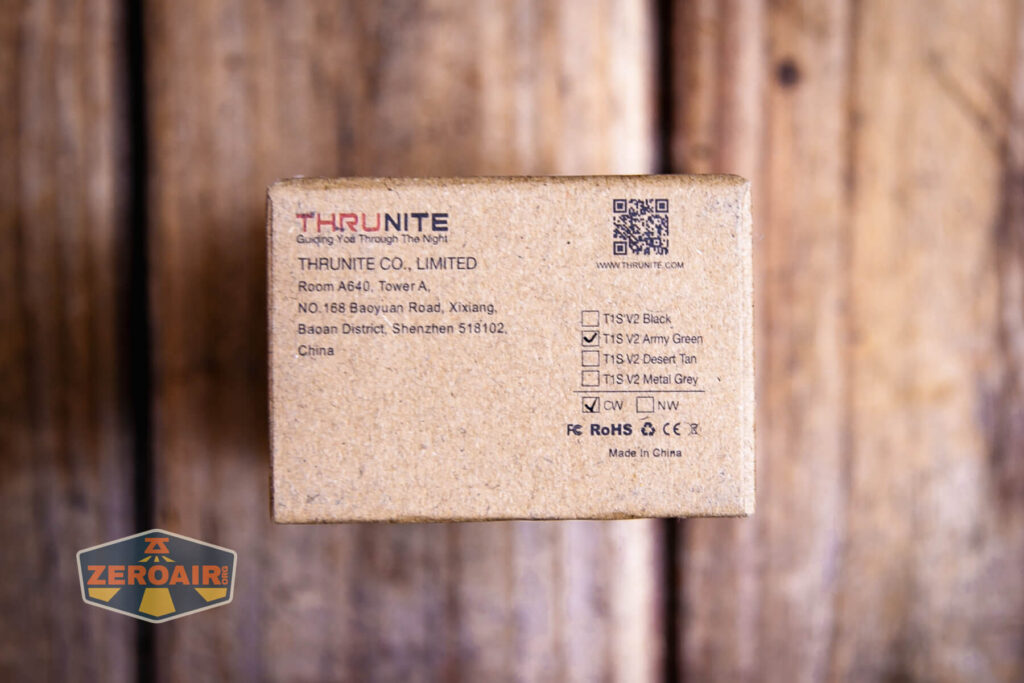

Build Quality and Disassembly

I did really like the original T1. I actually am (apparently?) a pretty big fan of Cree XHP50.2 emitters (which the T1 did use), especially since they’re available in CCTs that I find favorable (anything below 5000K). So the T1S is an iteration of a design I already like.
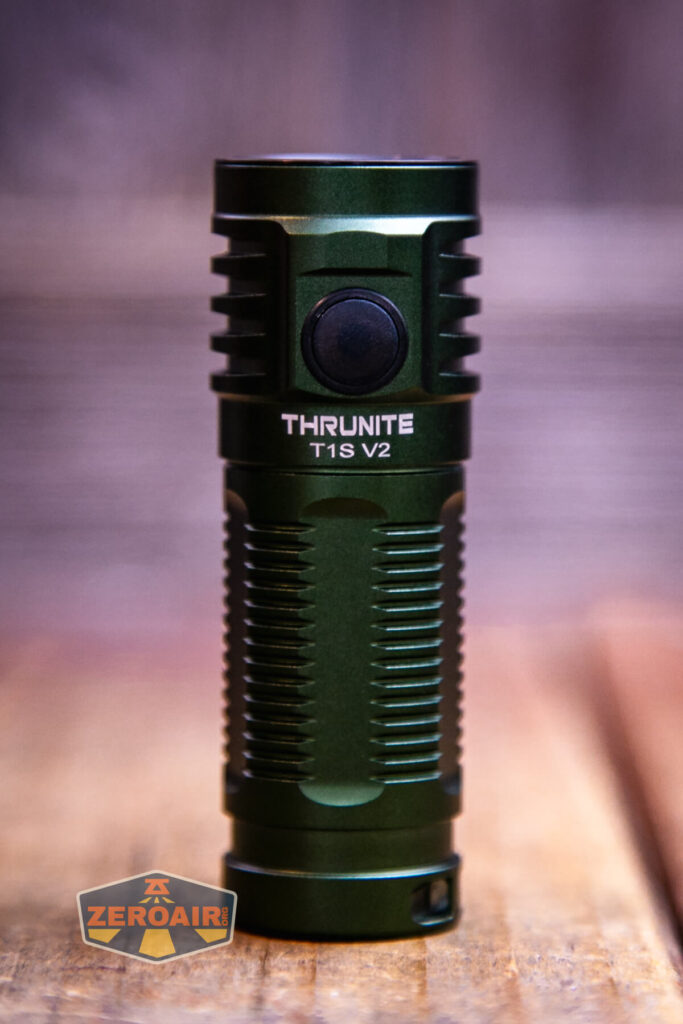
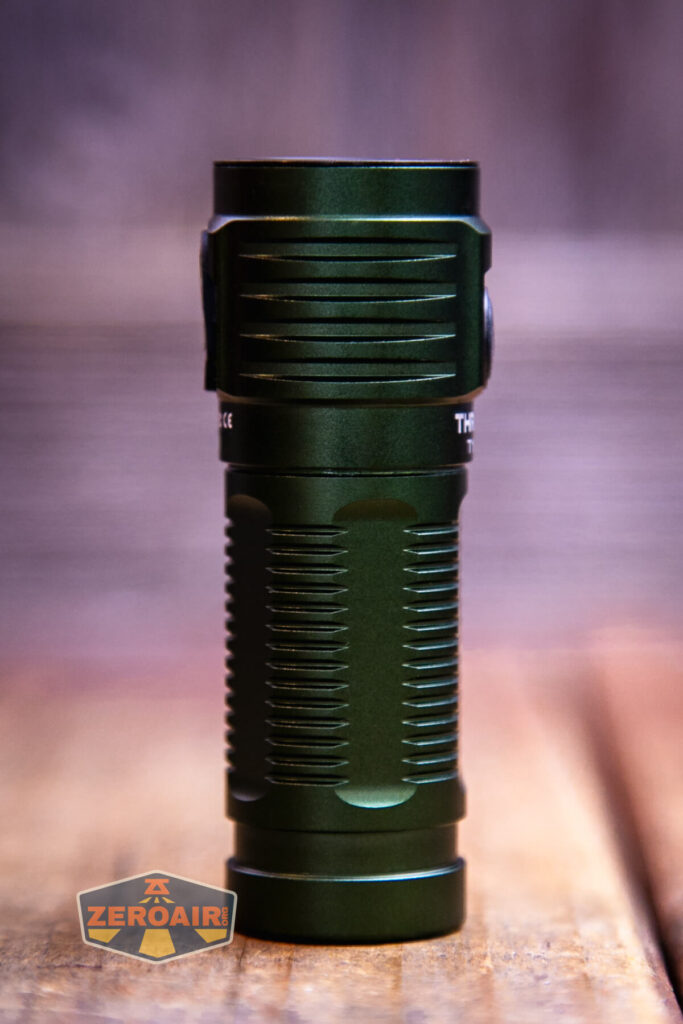
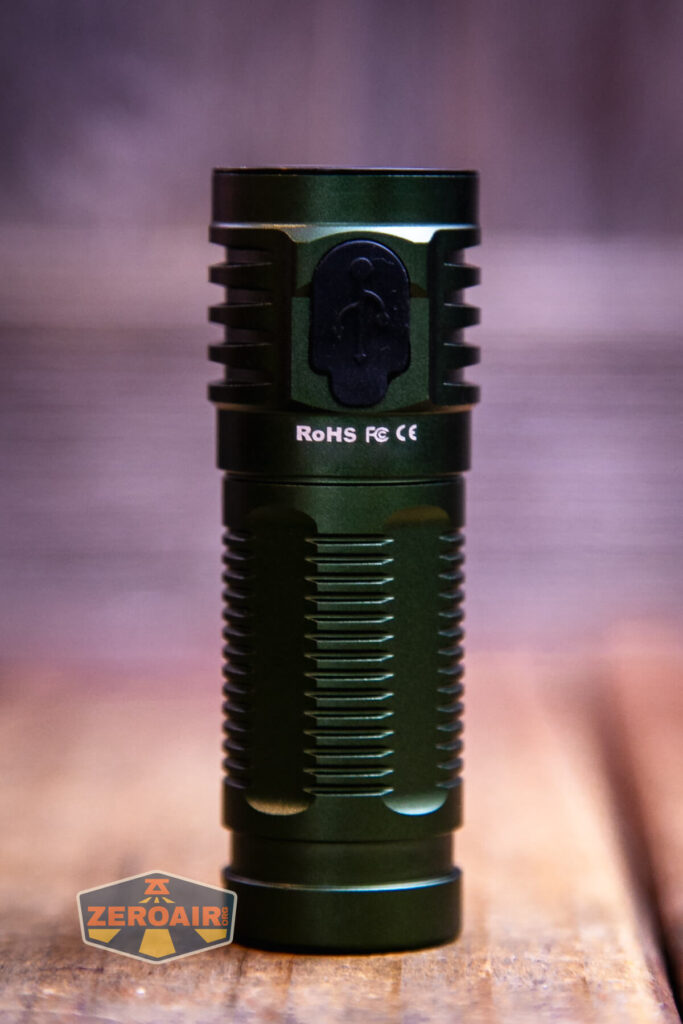
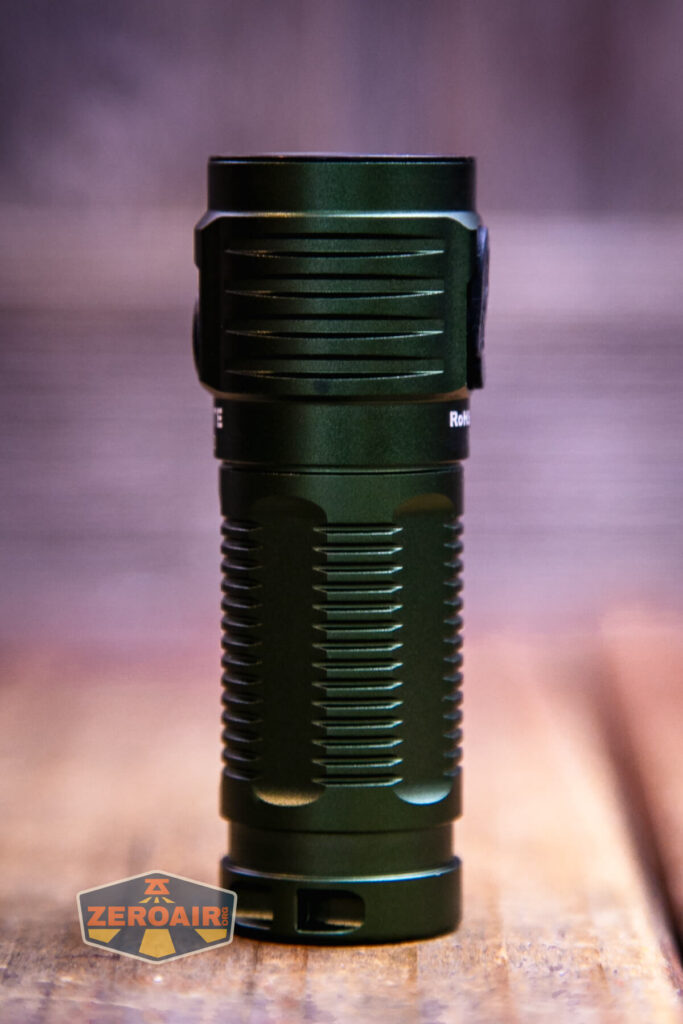
The new design is good. I wouldn’t call the changes from T1 to T1S revolutionary, but more iterative. The new grip is good enough, for example.
Considering the difference in body from the T1S to the T1S V2 though: there are none! Just the body color, which I’m really surprised demands an iteration of the T1S name.
The threads on the cell tube are anodized, square-cut, and short. I find that the head really has to be squeezed onto the body to get the threads to grab. This becomes especially noticeable if the pocket clip is installed.

The head has a brass button. It isn’t shrouded, nor is it springy, but the light does work just fine with any 18350 (including those that are actually sized according to their name – 35mm long cells). In the tail end is a big spring and also a magnet. The tail/cell tube is one piece.


Size and Comps
Weight: 41.5g without 18350
Dimensions: 69.5mmx 26.5mm x 22mm. These are exactly the same dimensions as the T1 and T1S.
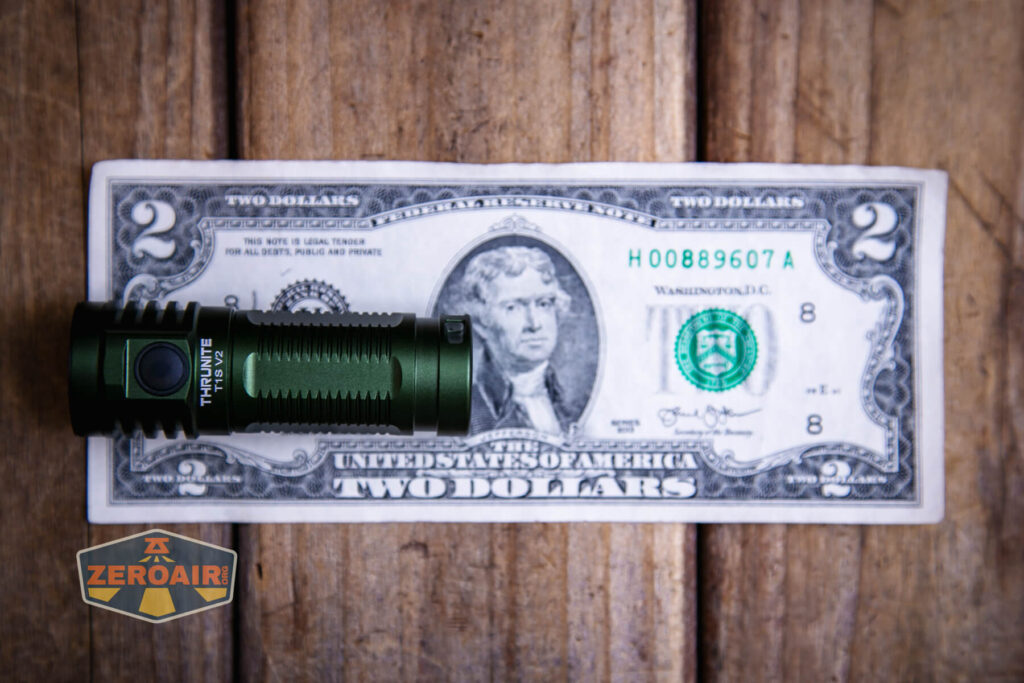
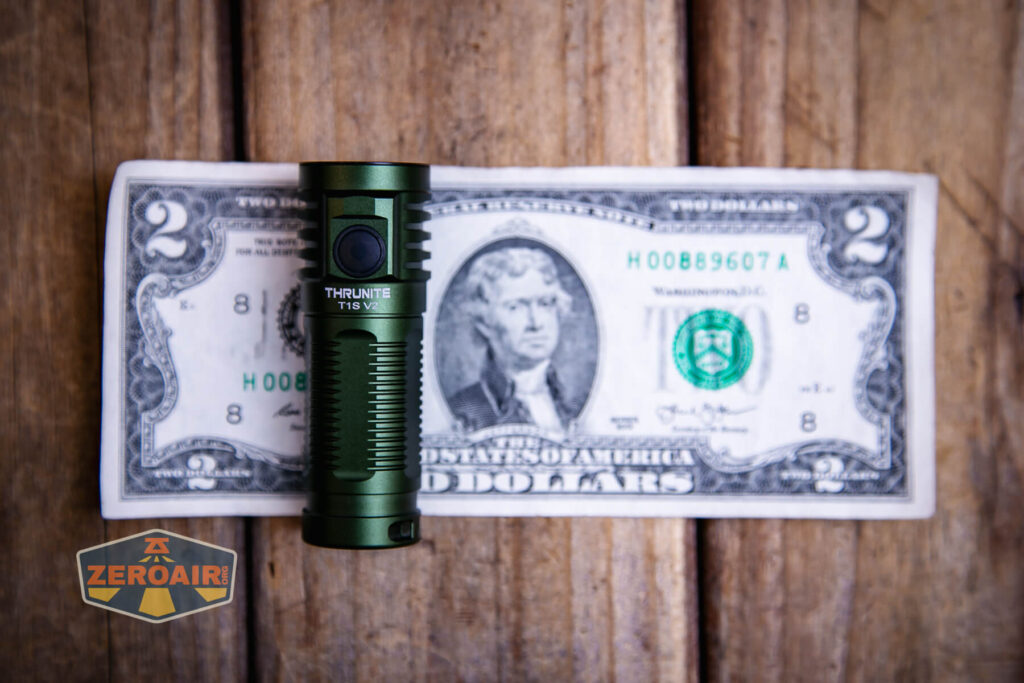
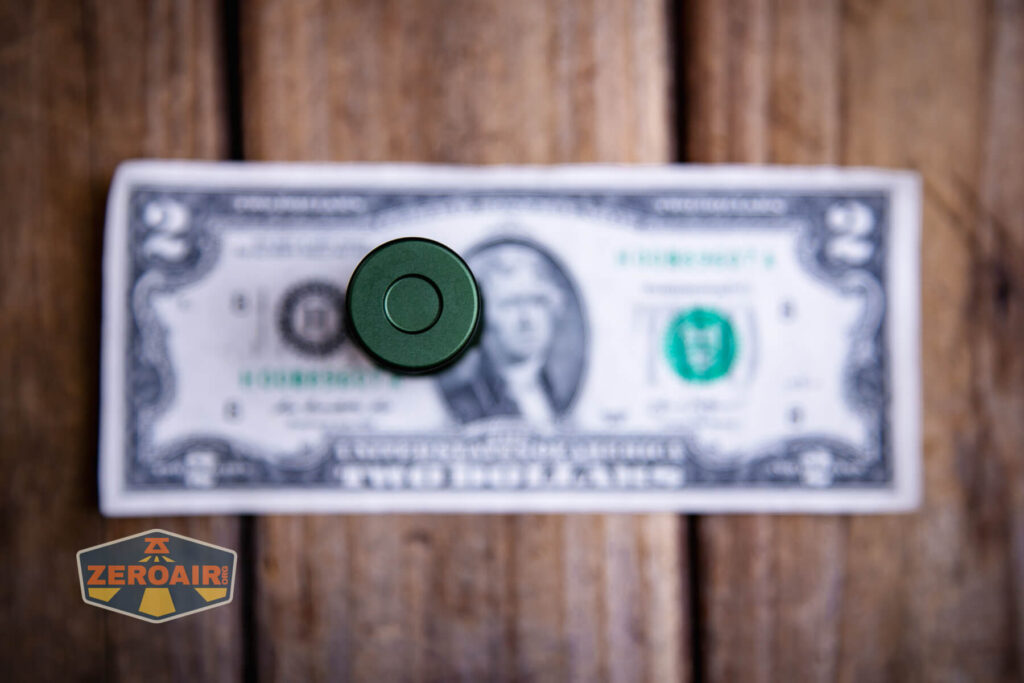

If the flashlight will headstand, I’ll show it here (usually the third photo). If the flashlight will tailstand, I’ll also show that (usually in the fourth photo).

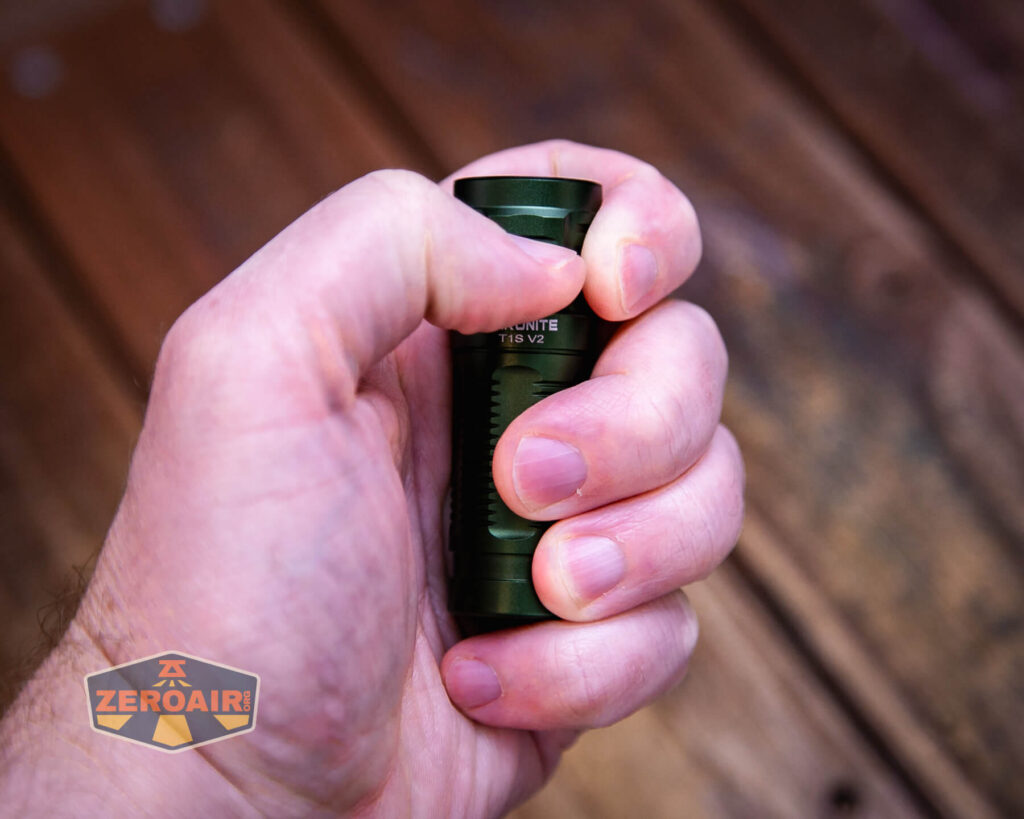
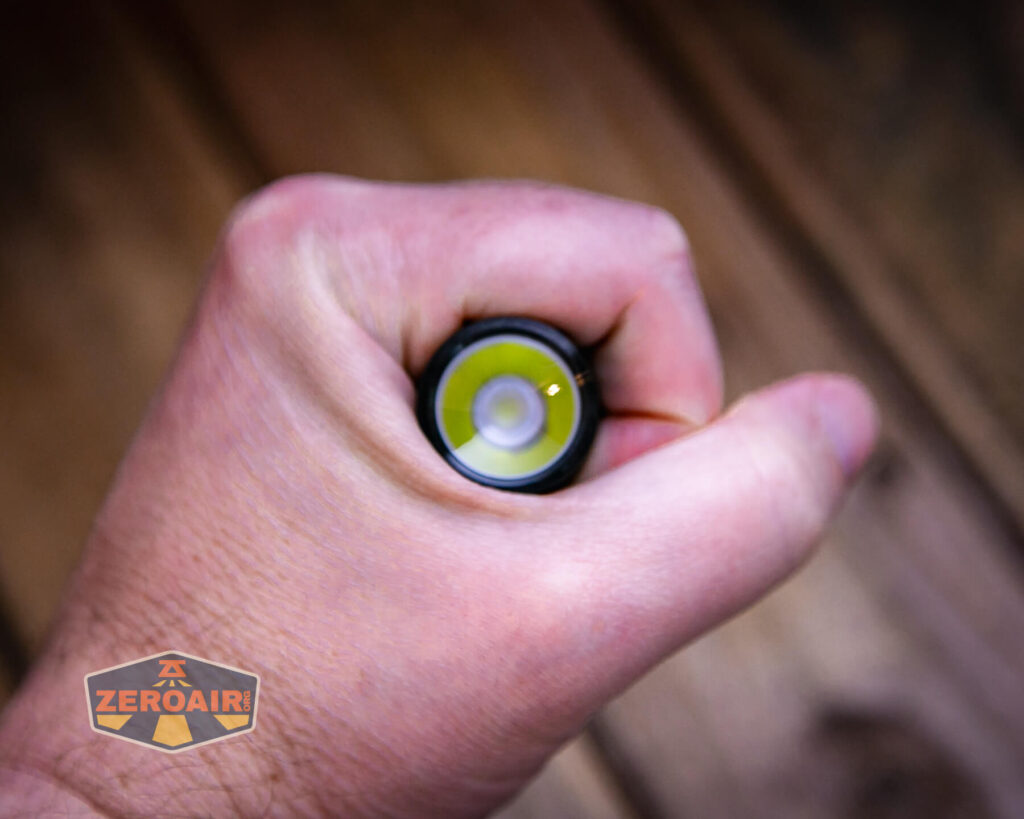
Here’s the test light with the venerable Convoy S2+. The version you see below is an orange Convoy S2+ host that’s been laser engraved by GadgetConnections.com. I did a full post on this light right here! Or go straight to GadgetConnections.com to buy your Convoy S2+ now!

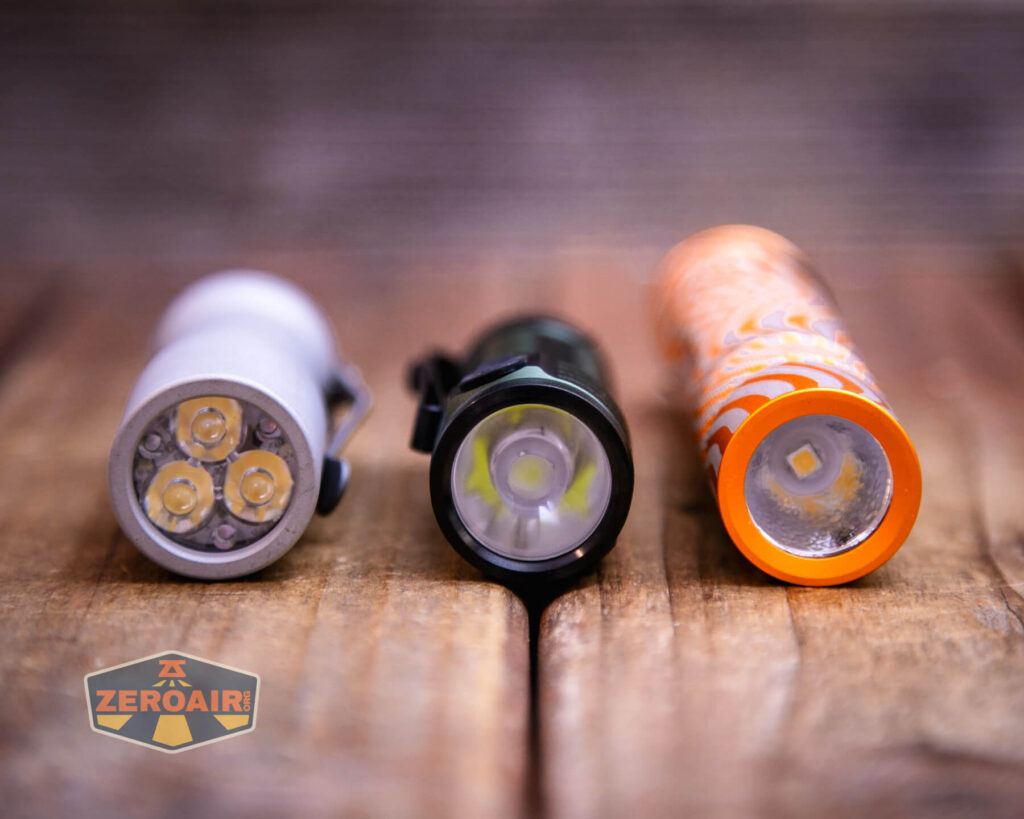
Also above is the light beside a new standard 18350 light! It’s not one I’ve reviewed yet but this is the CWF Arcadian Peanut in aluminum. This one is stonewashed and has the new Quantum Dragon driver – a whole new product! Stay tuned for a full review of this tiny powerhouse!
Retention and Carry
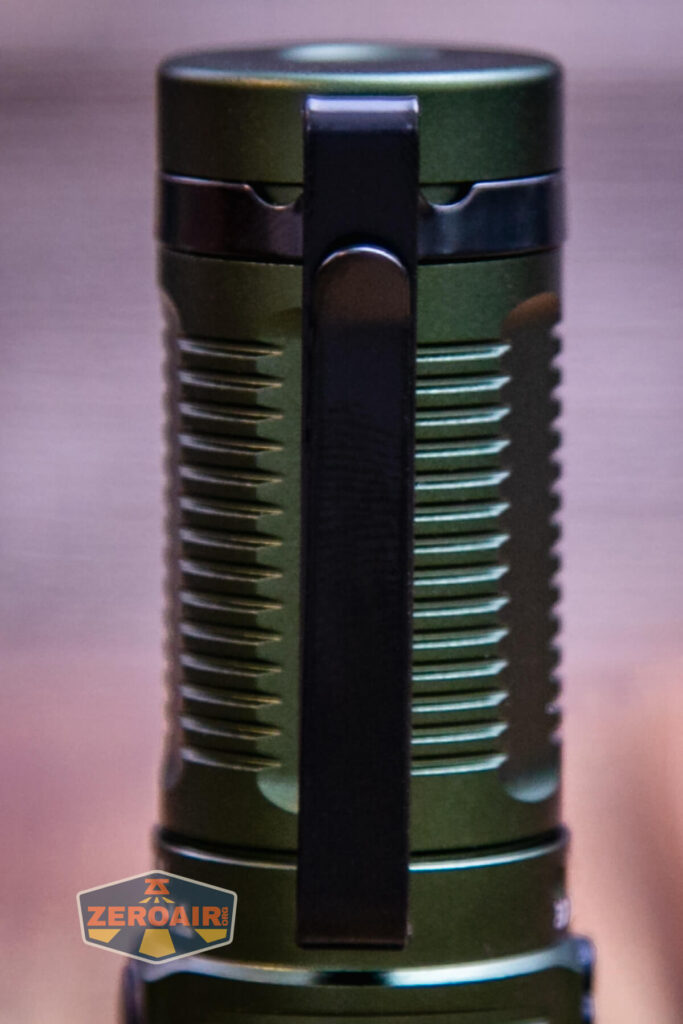
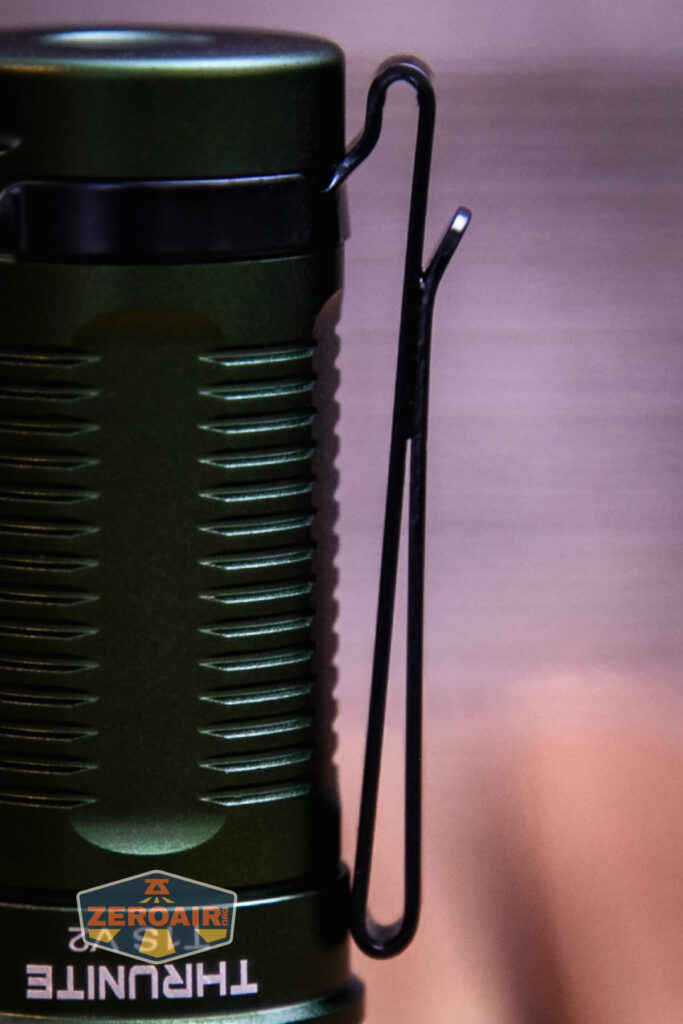
Thrunite includes a standard friction-fit two-way pocket clip that can only attach to the tail end of the light. It’s a double-direction clip, though the mouth doesn’t allow too great access for bezel-up carry. In fact, the shoulder doesn’t offer great ease of access either – I had to fiddle with the clip (ie two-handed operation) every time I put the light on my pocket. Not a huge deal, but just another reason I don’t care for these types of clips.

The clip should allow the light to be used as a hatlight, too.
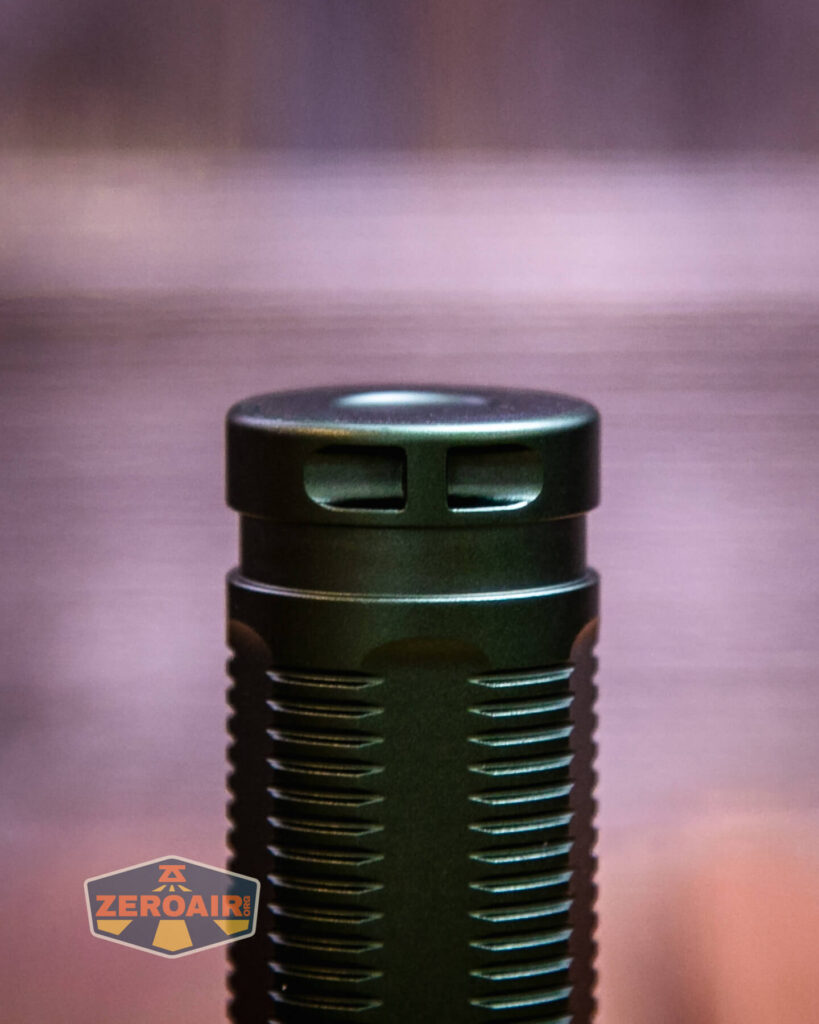
There’s also a lanyard, which should be connected through the hole in the tailcap.
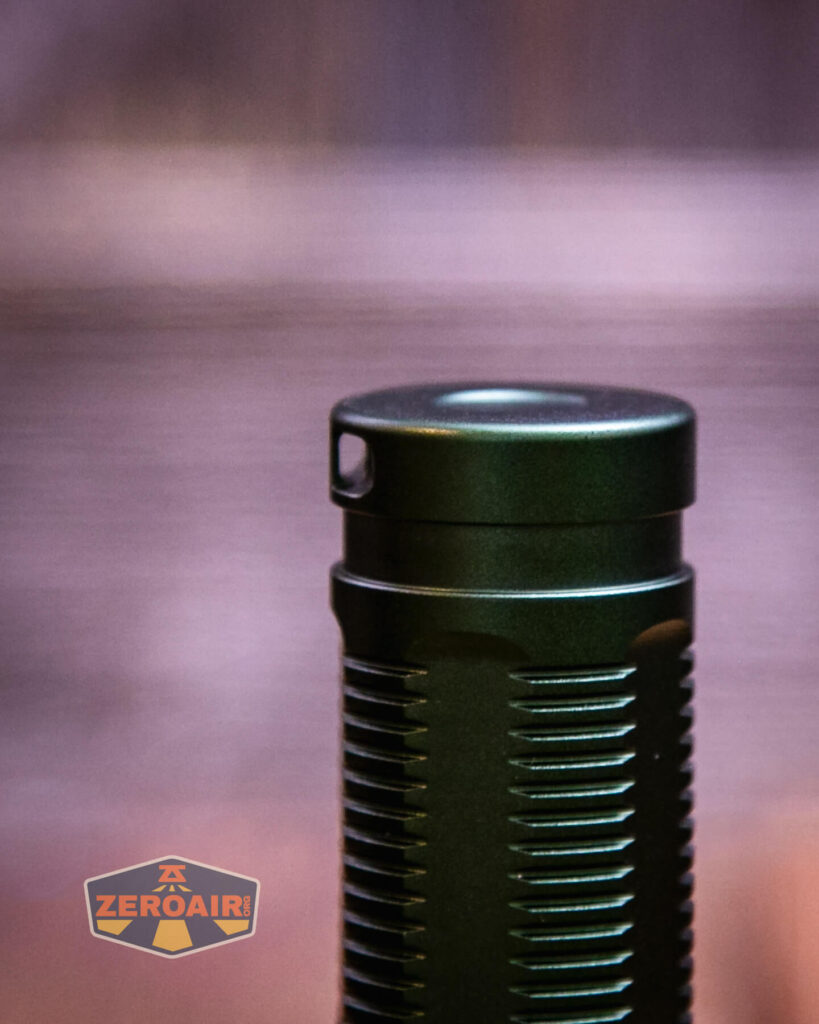

Finally, there’s the magnet in the tailcap. The magnet is quite strong and holds the light easily. I think it’d be possible to pull the spring and take the magnet out, but I did not try.
Power and Runtime
Thrunite includes the cell intended for powering the Thrunite T1S flashlight. It’s an 18350 cell, with Thrunite added protection and a button top. Those two things make it quite long to be sure, but of course, it fits in this light easily. I measured the cell at 39.7mm long.

The cell does go into the light in the usual way – positive end toward the emitter.

Runtimes follow. It does seem that this V2 version has added low voltage protection, which the previous T1S did not seem to have. That’s an important upgrade in my opinion.


Charging
The light also sports onboard charging, via a USB-C port in the head, opposite the switch. This port is protected by a big rubber press-in cover.

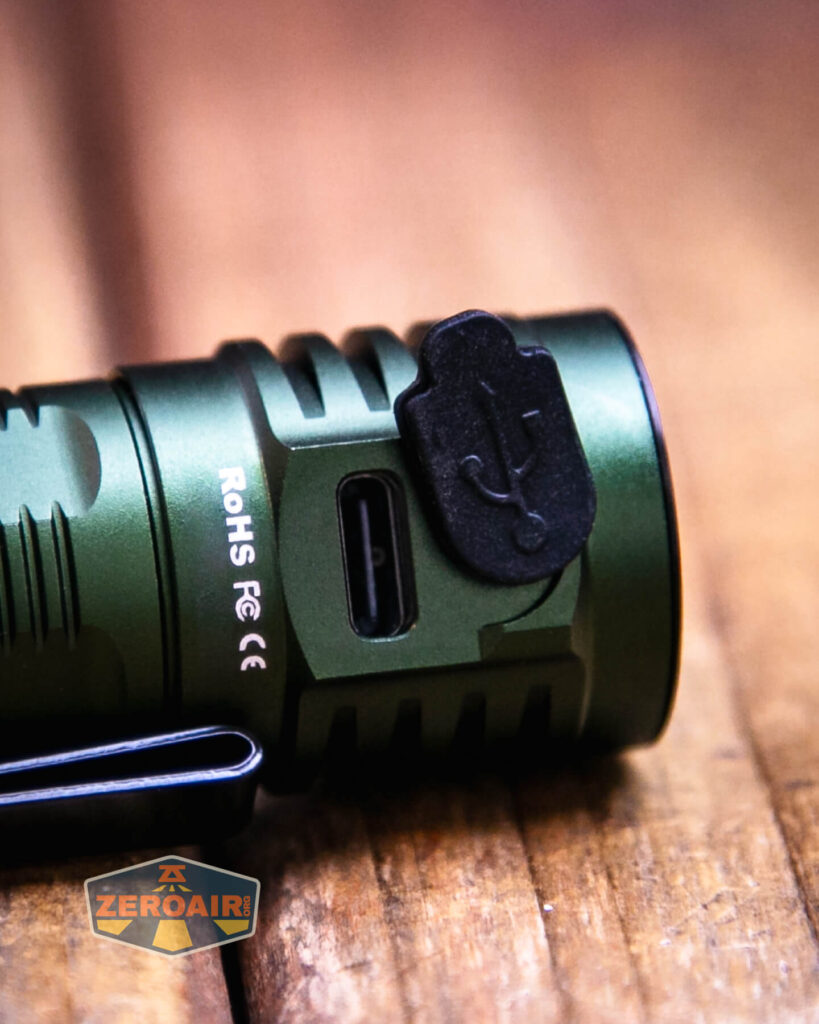
A cable is included. It is USB to USB-C.

The charge rate here is about like we saw for the other T1S. Very steady current and a nice clean cutoff.


During charging, the switch indicator is red. When charging is complete, the switch turns blue.
Modes and Currents
| Mode | Mode Claimed Output (lm) | Claimed Runtime | Measured Lumens | Tailcap Amps |
|---|---|---|---|---|
| Turbo | 1212/317 | 5m/70m | 1028 (0s) 980 (30s) |
3.01 |
| High | 407 | 80m | 352 | 0.68 |
| Medium | 94 | 5.5h | 88 | 0.14 |
| Low | 7 | 44h | 19 | 0.03 |
| Firefly | 0.5 | 27d | 0.7 | [low] |
Pulse Width Modulation
No PWM is noted.
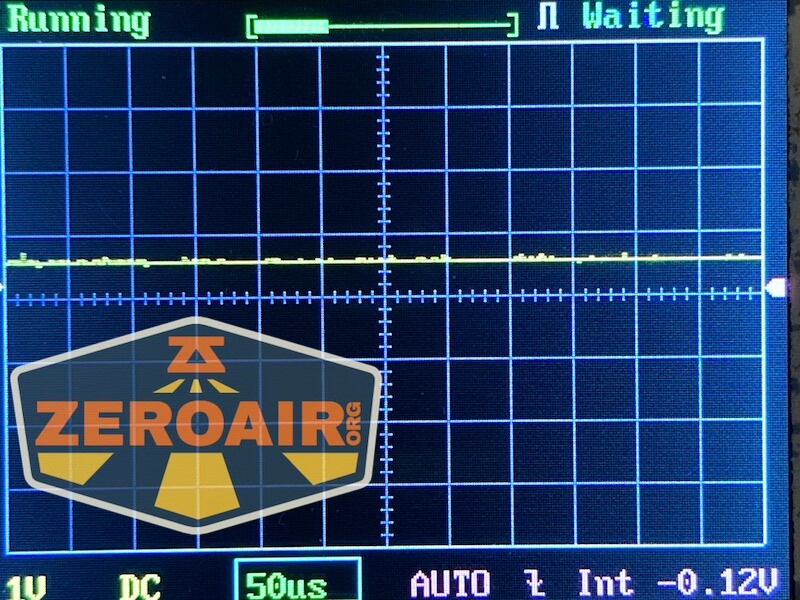
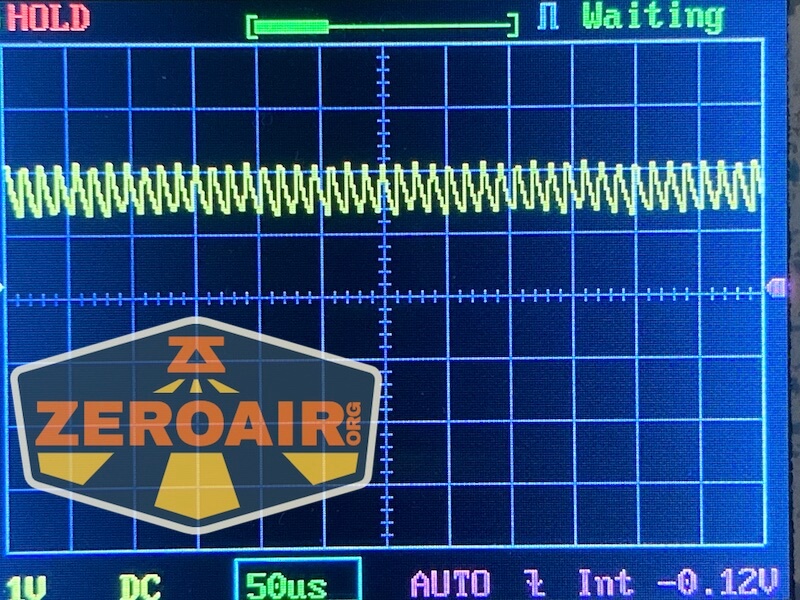
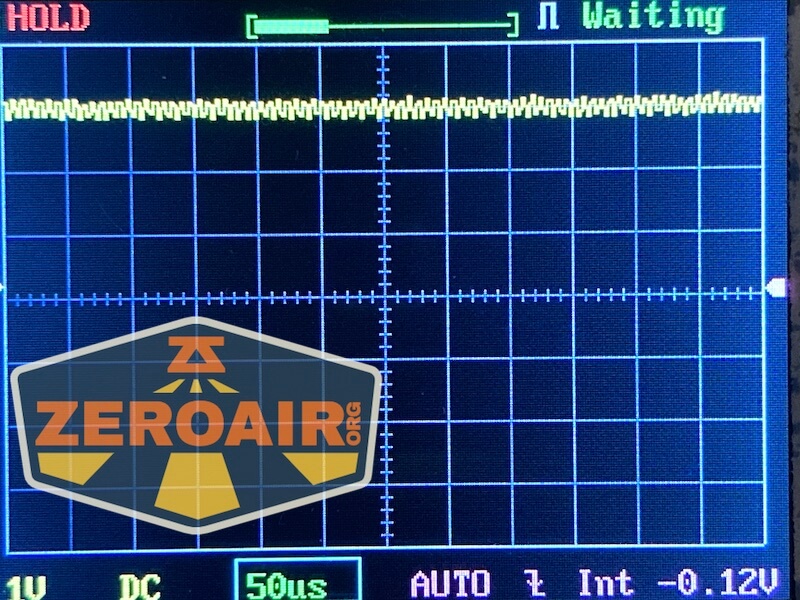
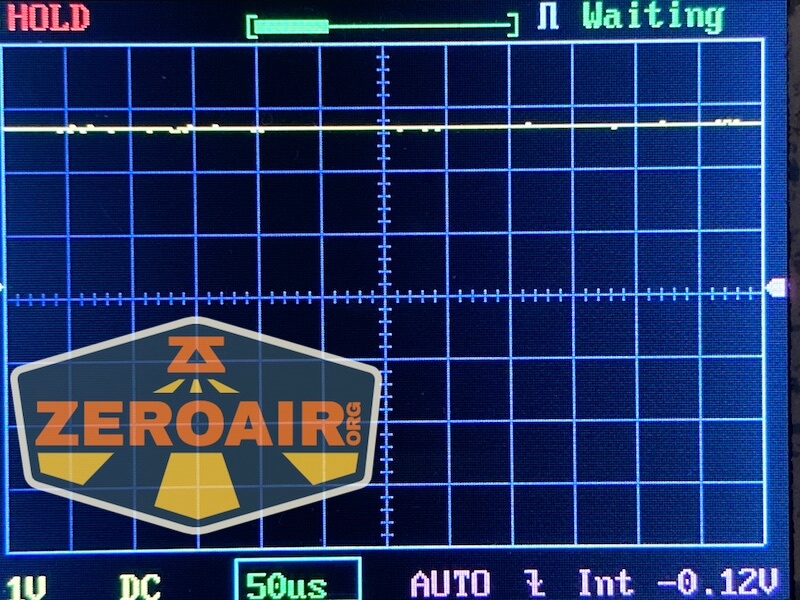
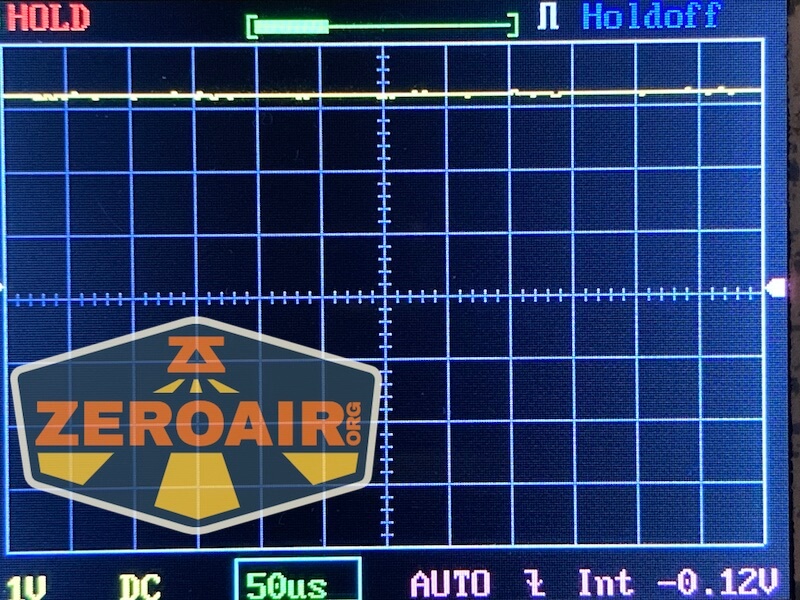
Here you can see a “baseline” – a chart with almost no light hitting the sensor. Then there’s the Ultrafire WF-602C flashlight, which has some of the worst PWM I’ve seen. It’s so bad that I used a post about it to explain PWM! Here are multiple timescales (10ms, 5ms, 2ms, 1ms, 0.5ms, 0.2ms) to make comparing this “worst” PWM light to the test light easier. That post also explains why I didn’t test the WF-602C at the usual 50us scale.


User Interface and Operation
There’s a single switch on the Thrunite T1S flashlight. It’s an indicating e-switch on the head. The button has a black look but really seems to be an opaque gray – of course, since it’s also an indicating switch. It’s barely possible by feel to differentiate the switch and charge port without looking.
The switch does have an indication function, too, as follows:
Blue: 3.2-4.2V (or 21%-100%)
Red: 2.9-3.2V (or 11-20%)
Red Flashing: 2.6-2.9V (or 1-10%)
Off: 0-2.6V (or 0%)


Here’s a user interface table!
| State | Action | Result |
|---|---|---|
| Off | Click | On (Mode Memory except for Firefly, Turbo, Strobe) |
| Off | Hold 1s | Firefly |
| Firefly | Hold 2s | Lockout |
| Lockout | Click | No Output (switch indicates red) |
| Lockout | Hold 2s | Firefly |
| On | Click | Off |
| On (Except Firefly) | Hold | Mode advance (LMH) |
| Any | Double Click | Turbo |
| Any | Triple Click | Strobe |
Note that this user interface is pretty much like the Thrunite T1, with the exception that the T1S does not have ramping. I consider that a great upgrade, and sort of back to the Thrunite roots. It feels much more natural, anyway. I will add one huge gripe with this user interface: it is not possible to go into the main modes from Firefly without turning off the light. In fact, a similar annoyance exists when entering Turbo. A double click accesses Turbo, but really it’s through off – so the light goes off on the first click, then Turbo on the second.
LED and Beam
Thrunite is still using a Luminus SST-40 emitter in this V2. It’s still cool white, too, and for now, that’s the only option available.

Unlike the T1 (which used a reflector), the T1S uses a TIR. Here we can note one other difference in this V2 edition – the plain T1S has a (probably) stainless bezel, while this Dark Green does not.

This TIR provides a surprisingly (maybe “amazingly”) tight beam pattern and this light will absolutely be more throwy than you expect.

LED Color Report (CRI and CCT)
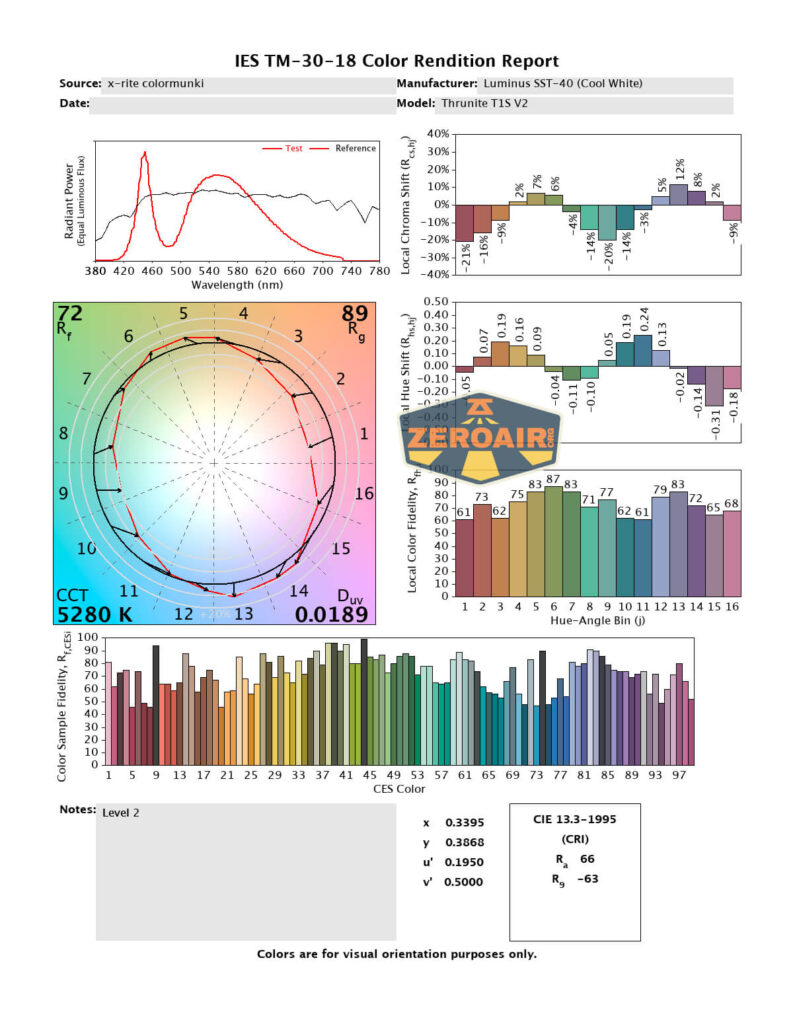
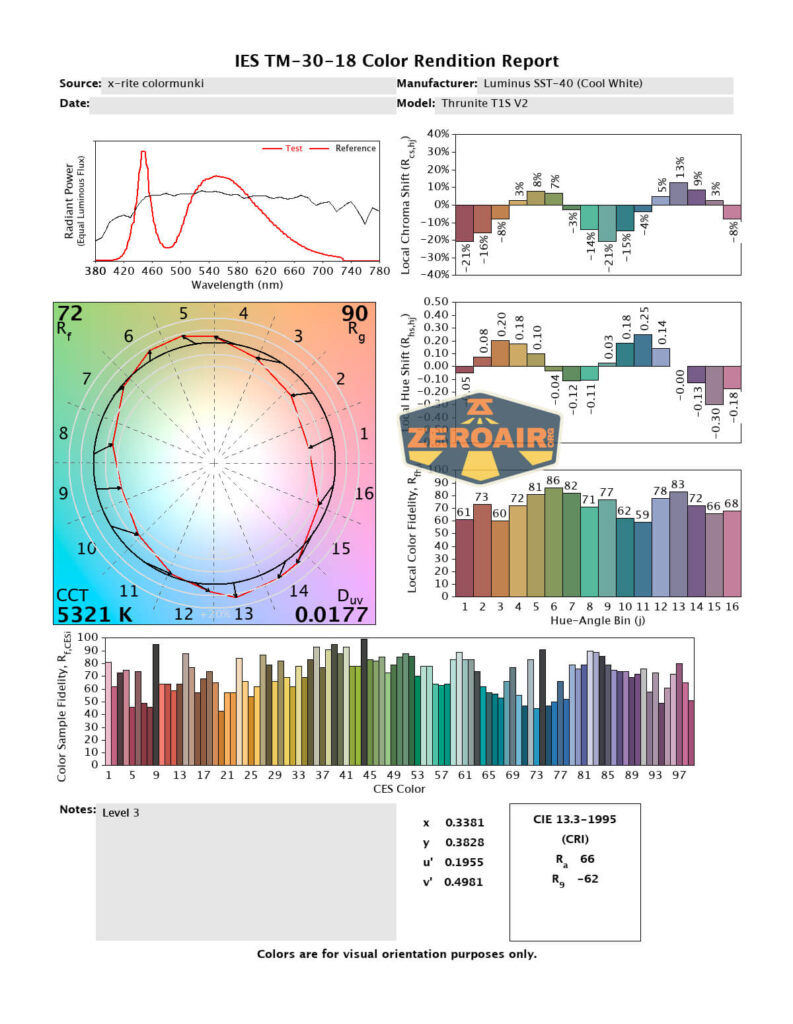
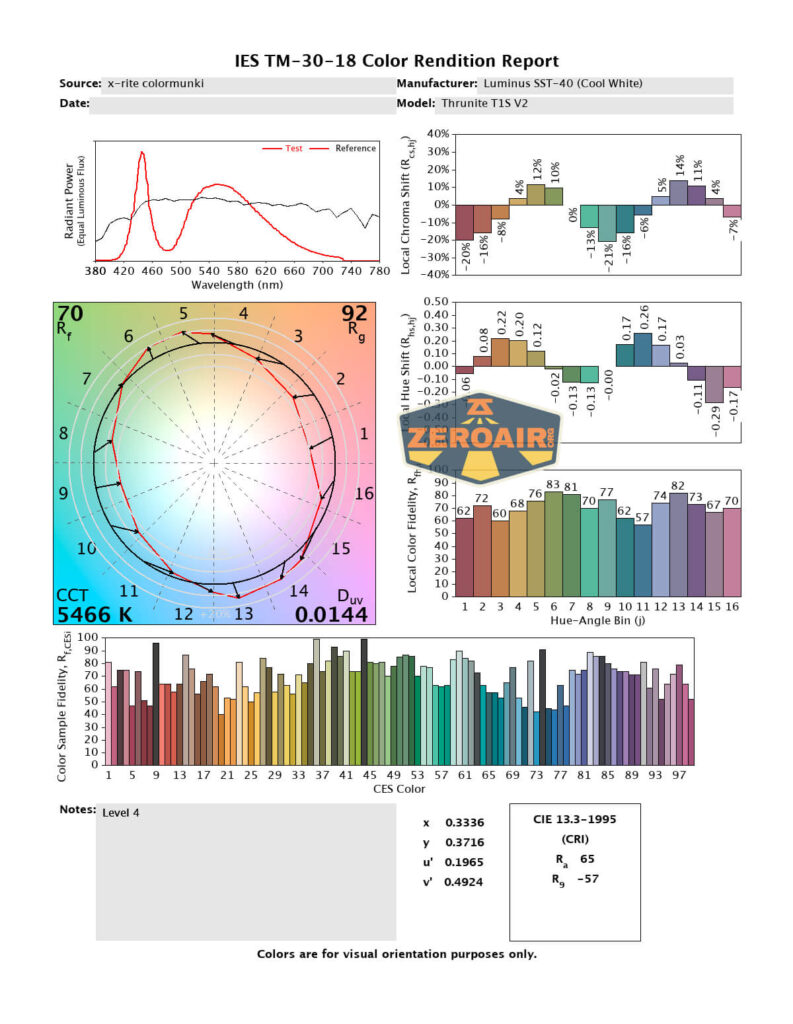
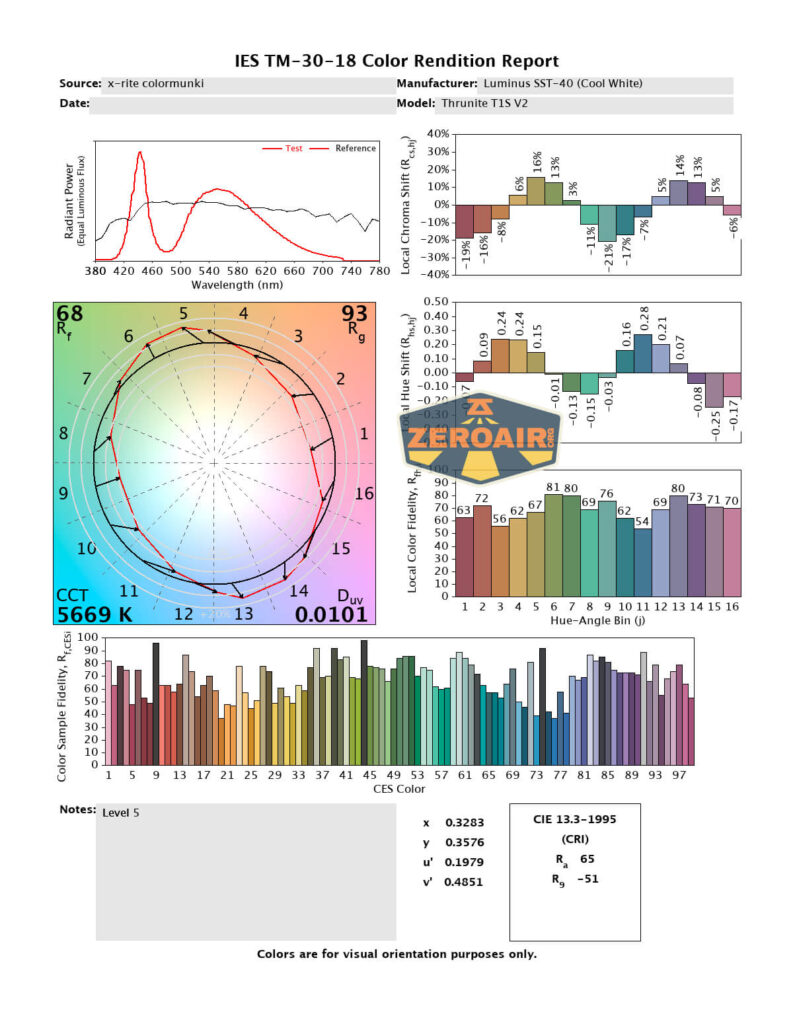
This cool white is definitely not the worst cool white available. We see from the low 5100K’s to around 5600K – yes that’s cool but more often than not when we think about “cool” we’re thinking about “over 6000K.” So let’s call this a win (ish).

Beamshots
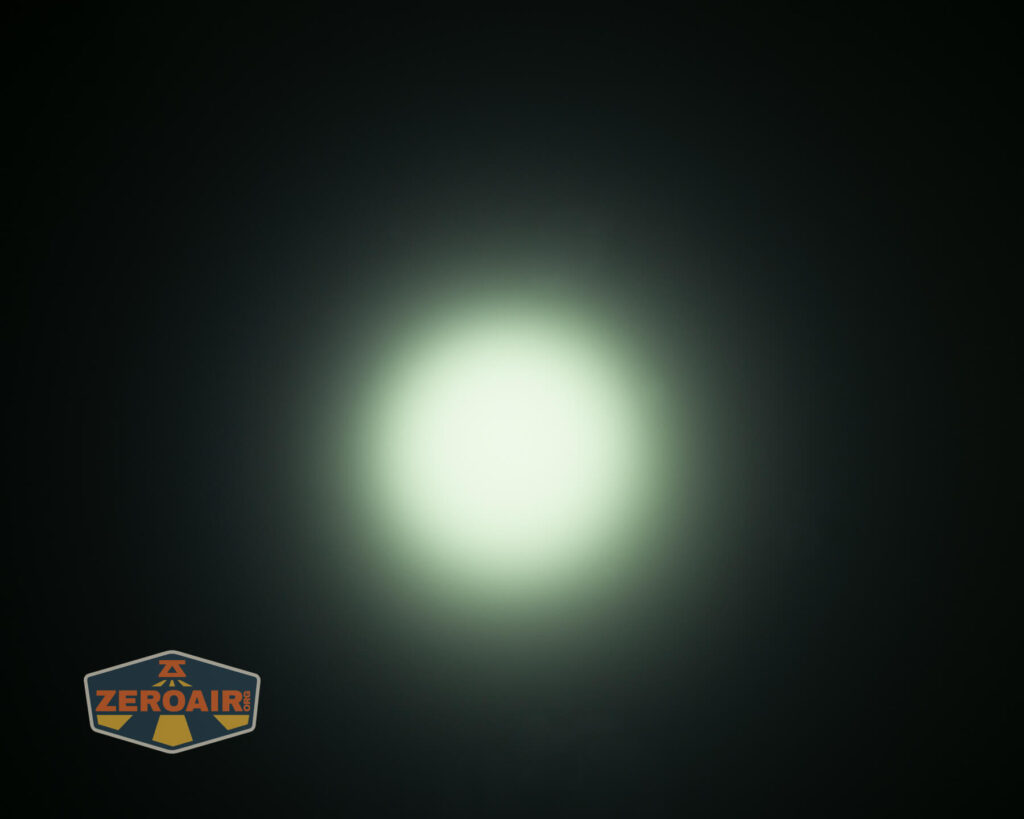
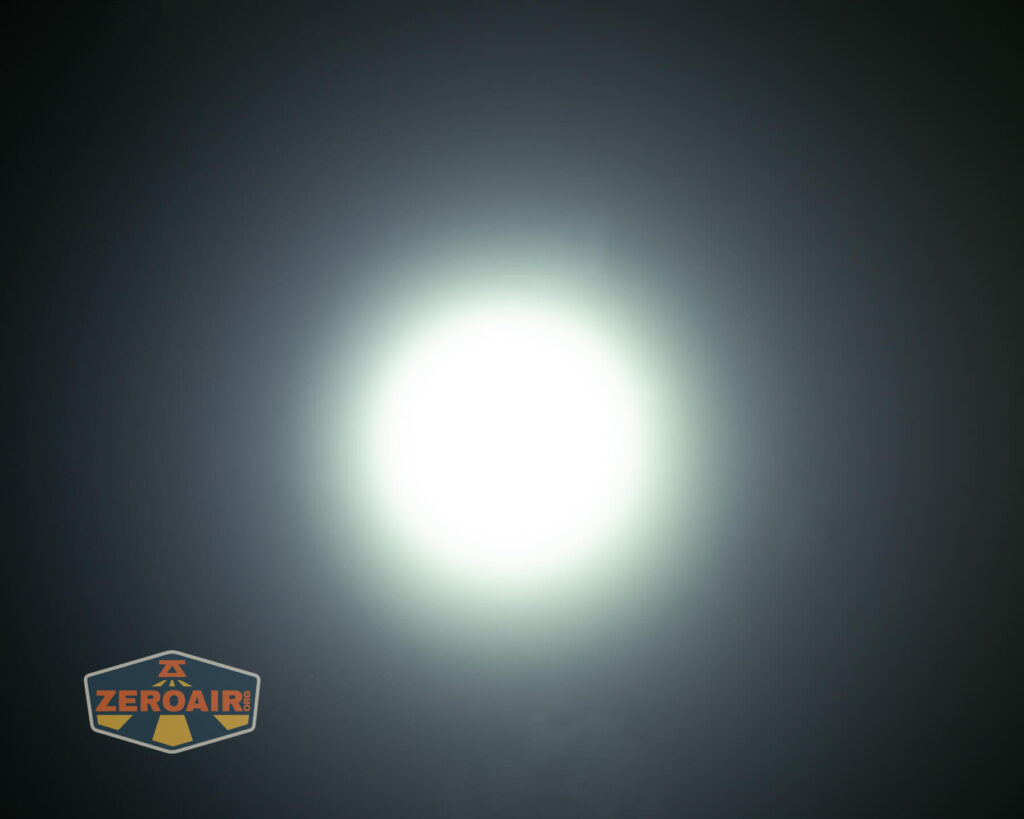
These beamshots always have the following settings: f8, ISO100, 0.3s shutter, and manual 5000K exposure. These photos are taken at floor level, and the beam hits the ceiling around 9 feet away.


Tint vs BLF-348 (KillzoneFlashlights.com 219b version) (affiliate link)
I keep the test flashlight on the left and the BLF-348 reference flashlight on the right.
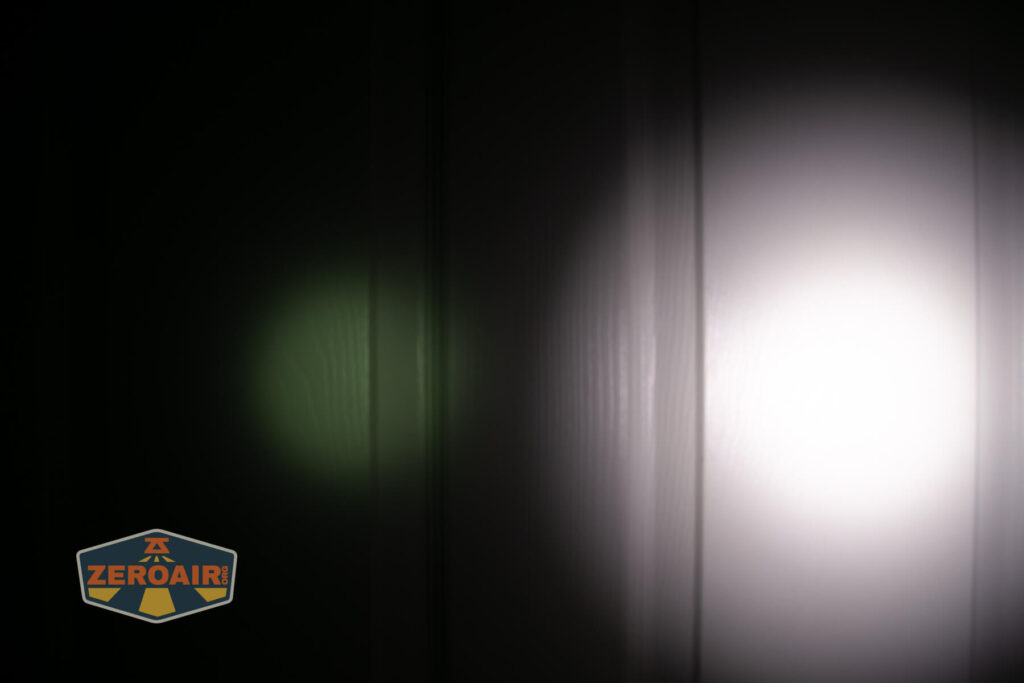
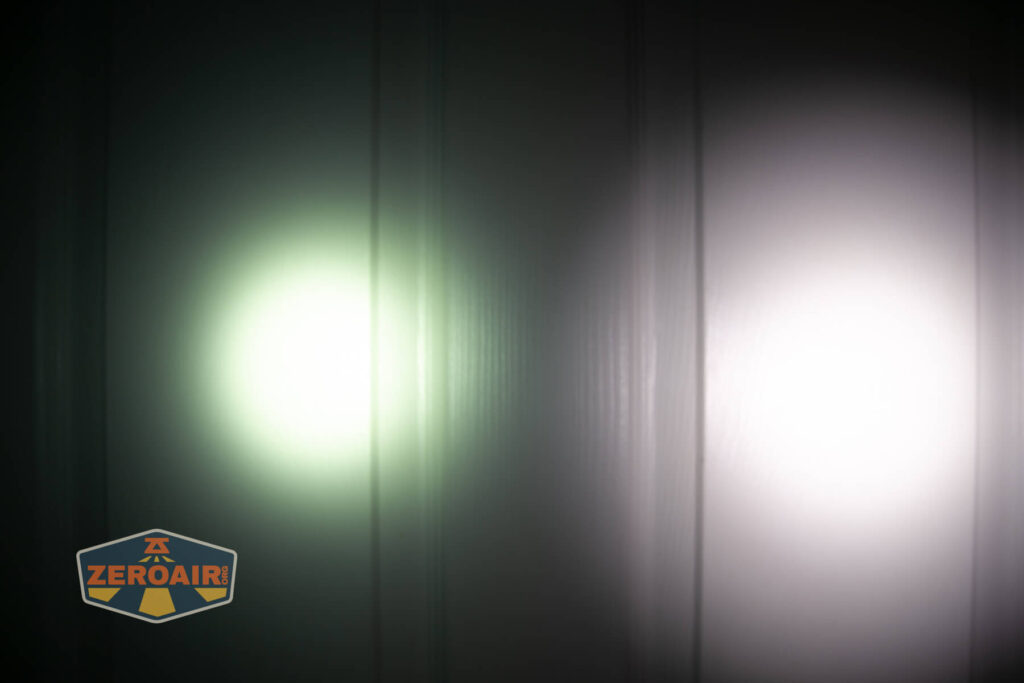
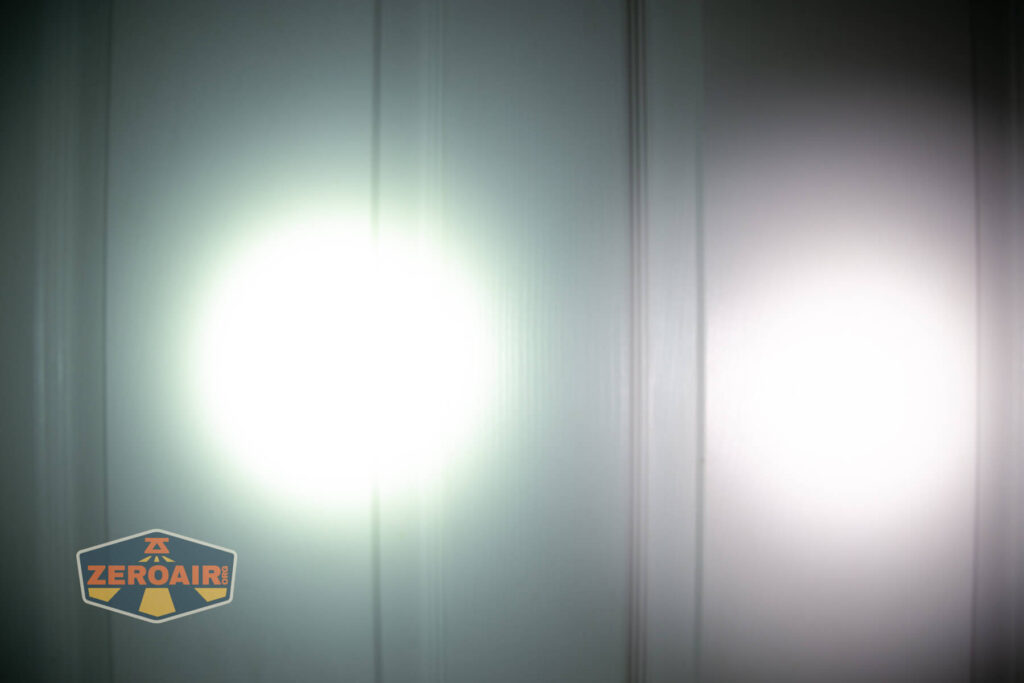


I compare everything to the KillzoneFlashlights.com 219b BLF-348 because it’s inexpensive and has the best tint!
Conclusion
What I like
- Complete package
- Size
- It’s a good e-Switch 18350 light
- The included cell has a good capacity
- Indicating switch
- Updated to use USB-C charging (and C to C works!)
What I don’t like
- I think it could be even shorter (by using a real 18350, not this long (but standard) one)
- The included cell is quite long
- I don’t like these two-way clips
- It’s not possible to cycle the main modes from Firefly
- When accessing Turbo, the light goes off briefly before hitting Turbo
Notes
- This content originally appeared at zeroair.org. Please visit there for the best experience!
- For flashlight-related patches, stickers, and gear, head over to PhotonPhreaks.com!
- Please use my Amazon.com referral link to help support zeroair.org!
- Please support me on Patreon! I deeply appreciate your support!