

Acebeam Rider RX Titanium v2 Flashlight Review
The Acebeam Rider RX Titanium v2 flashlight is an updated version of the Rider with a special edition “circuit” design. It uses a high CRI Nichia 519a, too!
Official Specs and Features
Here’s a referral link to the official product page at killzoneflashlights.com.
Versions
There’s really only one of the special editions of this Rider RX. Of course, of the Rider RX in general, there are many versions! This is version 2, in fact, and before that, there were many metals and finishes available.
Price
This special edition of the Acebeam Rider RX Titanium v2 flashlight sells for an MSRP of $52.90 at killzoneflashlights.com.
What’s Included

- Acebeam Rider RX Titanium v2 flashlight
- Acebeam 920mAh 14500
- Charging cable (USB to USB-C)
- Spare o-rings (2)
- Lanyard
- Manual
Package and Manual
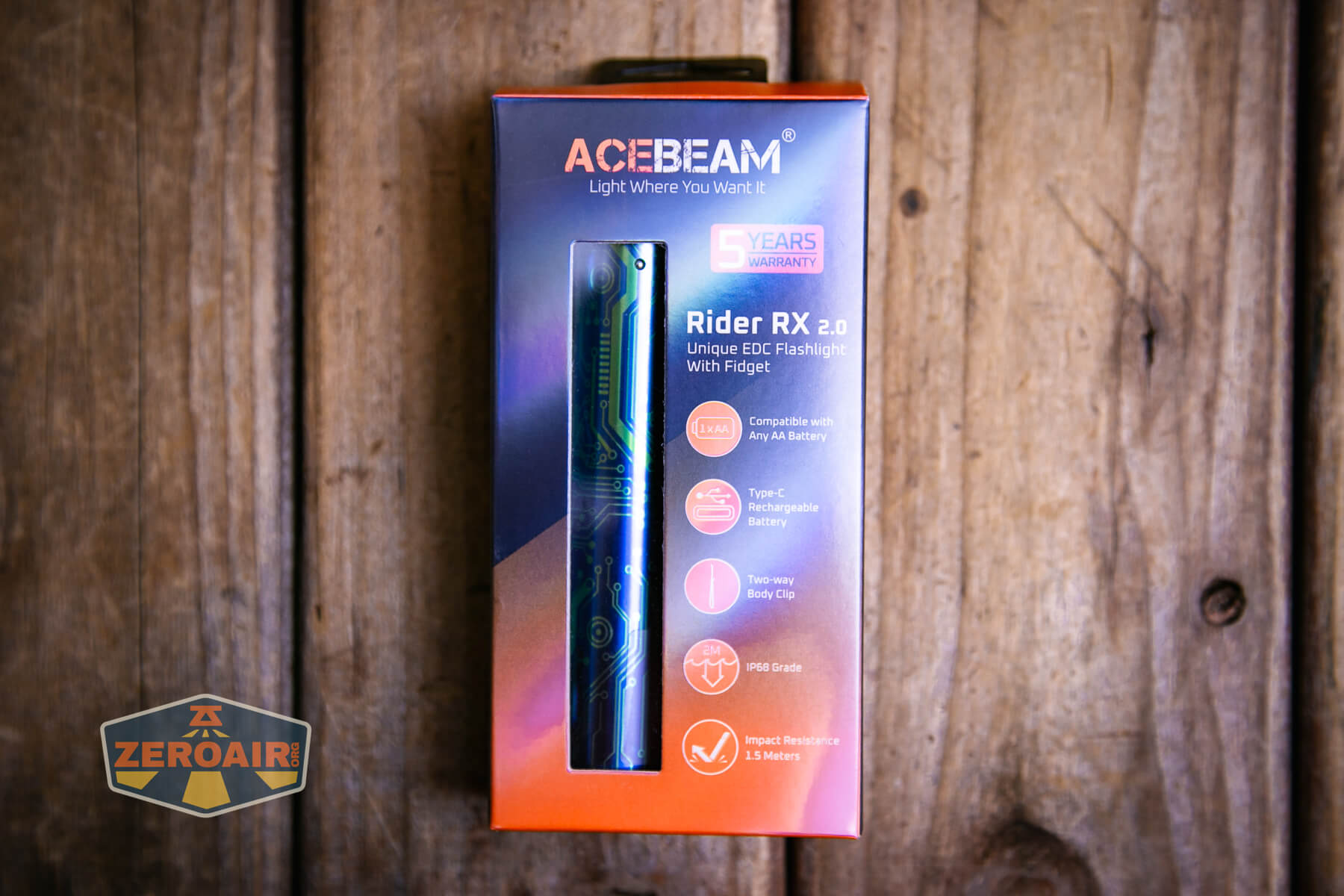

This is an updated manual, for what that’s worth. It reflects (in illustrations) the change in body design – that’s a nice detail by Acebeam.

Build Quality and Disassembly

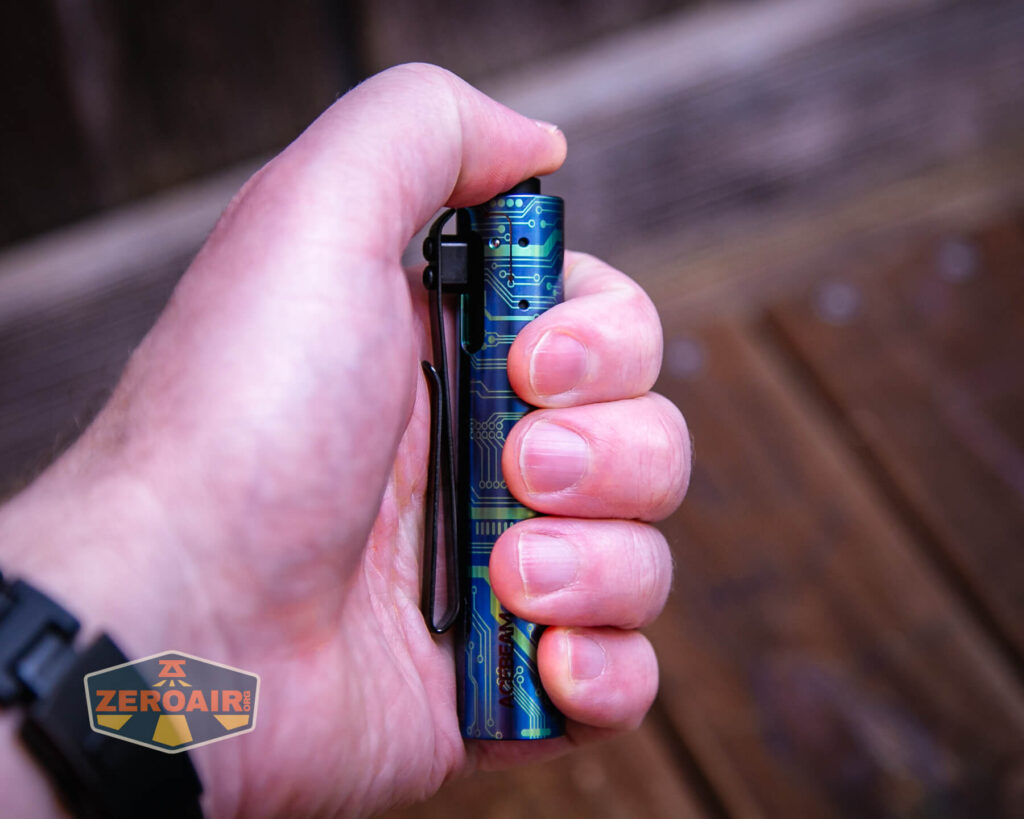
No surprises here. The Acebeam Rider RX Titanium v2 flashlight has a very nice build quality. It’s slick as glass, though, so if that’s going to be a problem, you should probably move on from this light. The whole light has a circuit-type design. I would guess this is laser anodization. Probably, the whole light is anodized blue, then the green parts are laser anodized again. But who knows! Anyway, it hasn’t rubbed off, and it’s pretty neat!
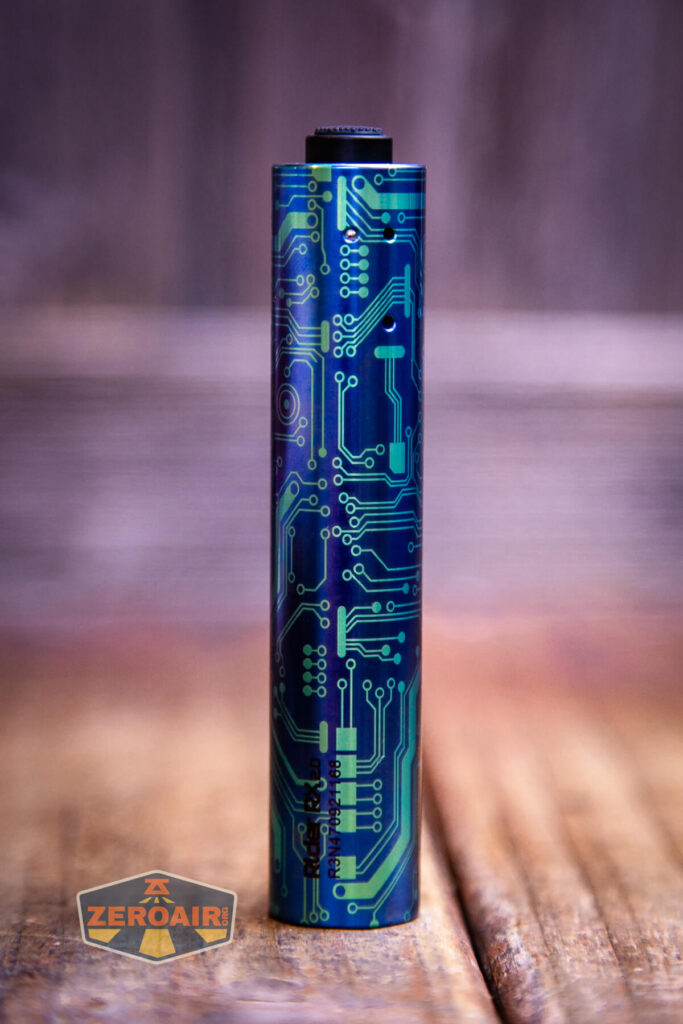
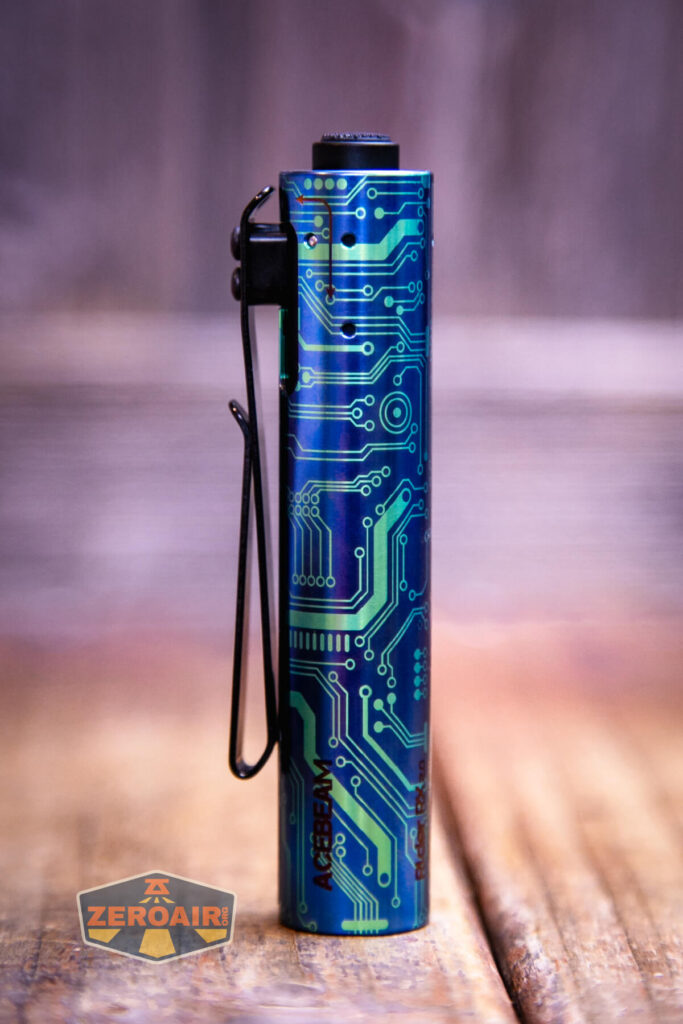
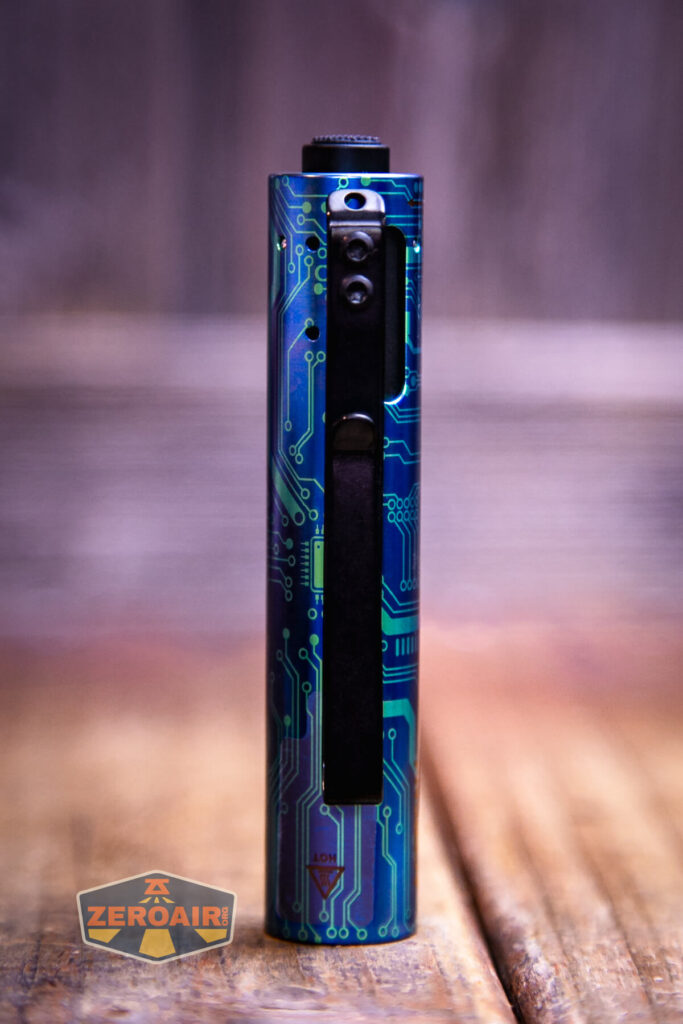

Special thanks to Acebeam for sending this light with a whole “Christmas basket” of gift items! I don’t think they even intended for this one to be reviewed (I mean, necessarily), but like the light they sent last year (a name-engraved copper Pokelit!), I figured, why not? This is my first version 2 anyway, I think. (But I have reviewed a couple of the version 1s!)
The pill, seen below, is copper. Because they’re copper, they are uncoated but still smooth.
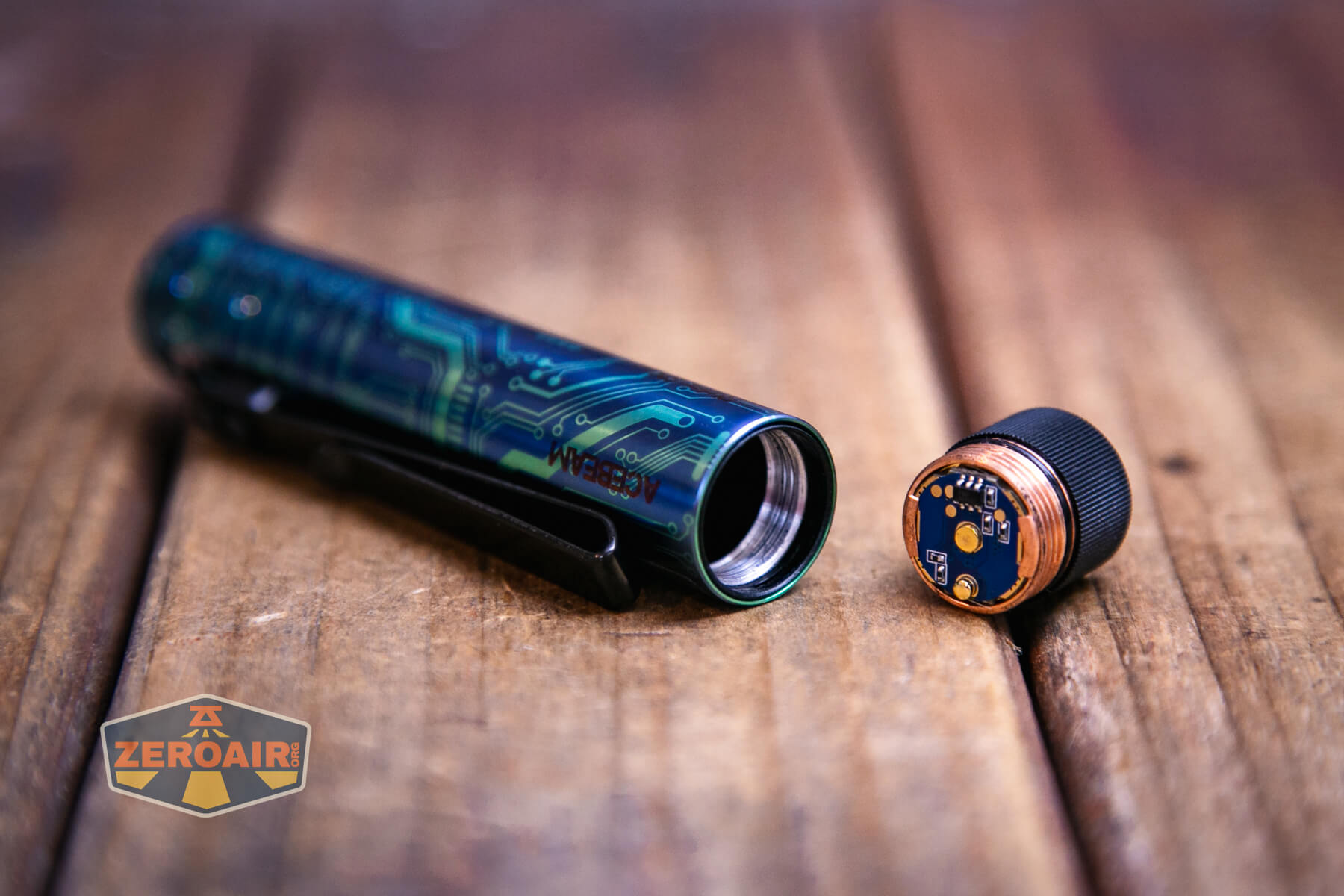
One difference between this version and others is that the head has reeding. This provides a great amount of grip!
Size and Comps
Size: 96mm x 18.6mm x 26mm
Weight: 74.7g
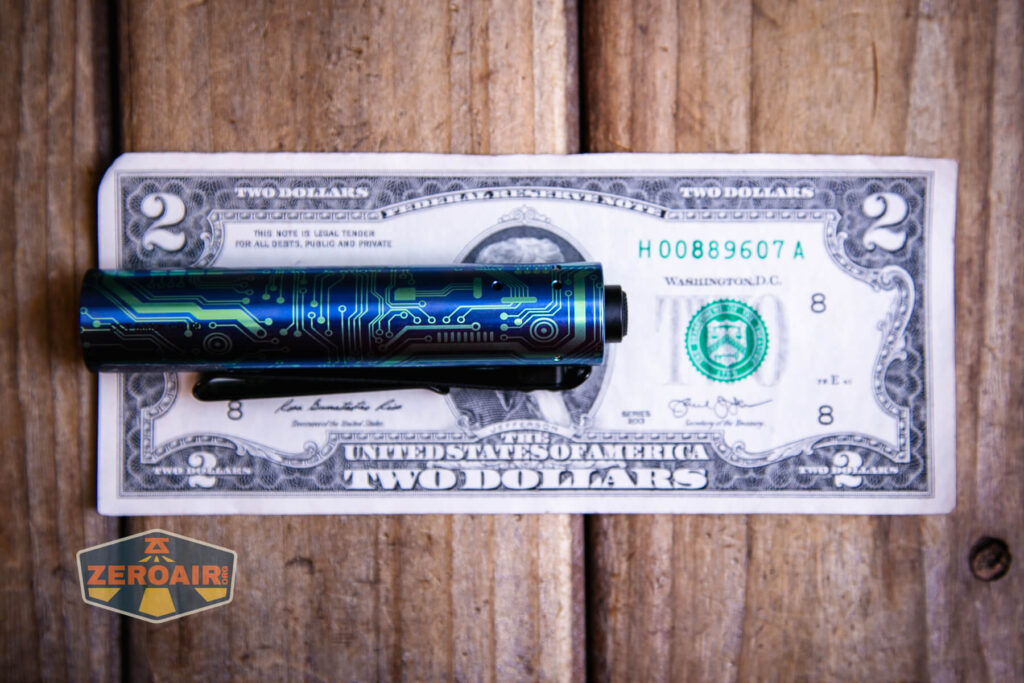
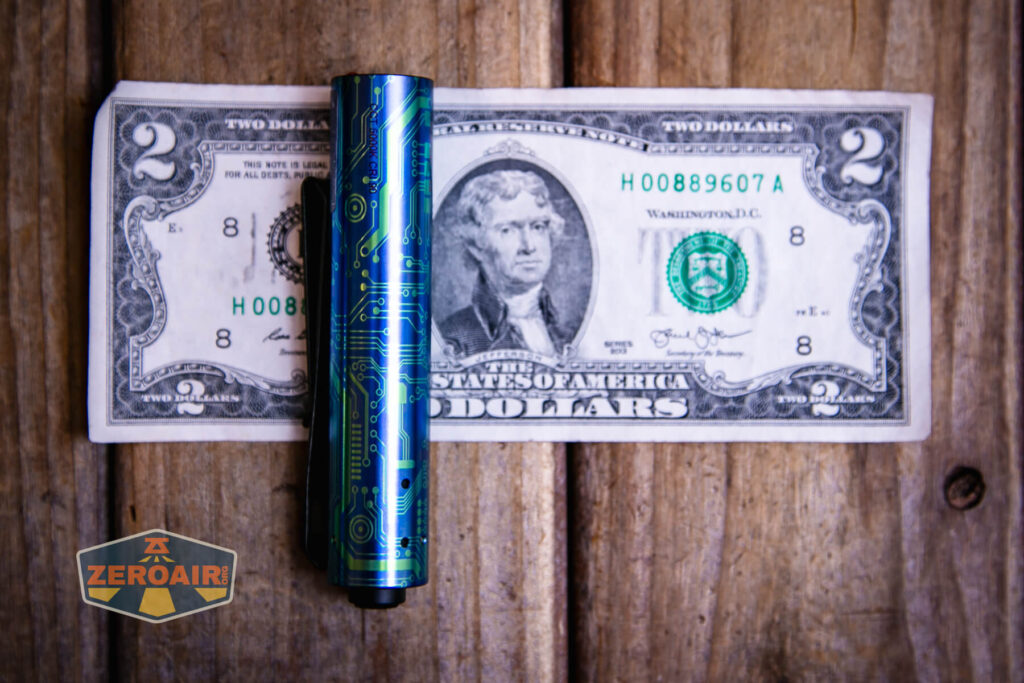
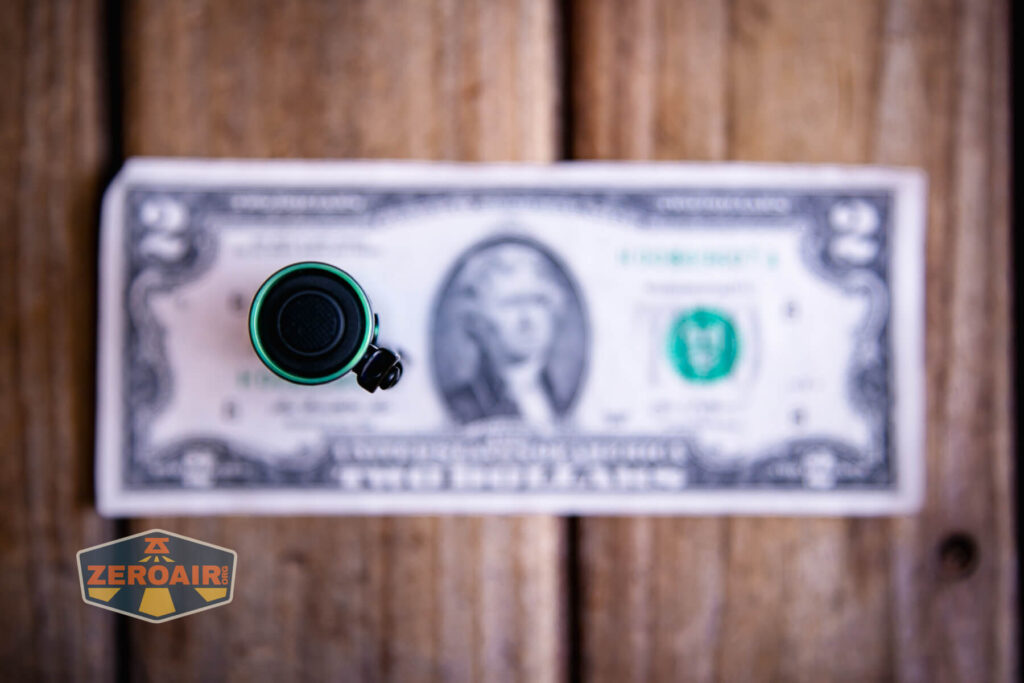
If the flashlight will headstand, I’ll show it here (usually the third photo). If the flashlight will tailstand, I’ll also show that (usually in the fourth photo).

Here’s the test light with the venerable Convoy S2+. The version you see below is a custom Convoy S2+ host that’s been laser engraved by GadgetConnections.com. I did a full post on an engraved orange host right here! Or go straight to GadgetConnections.com to buy your Convoy S2+ now!
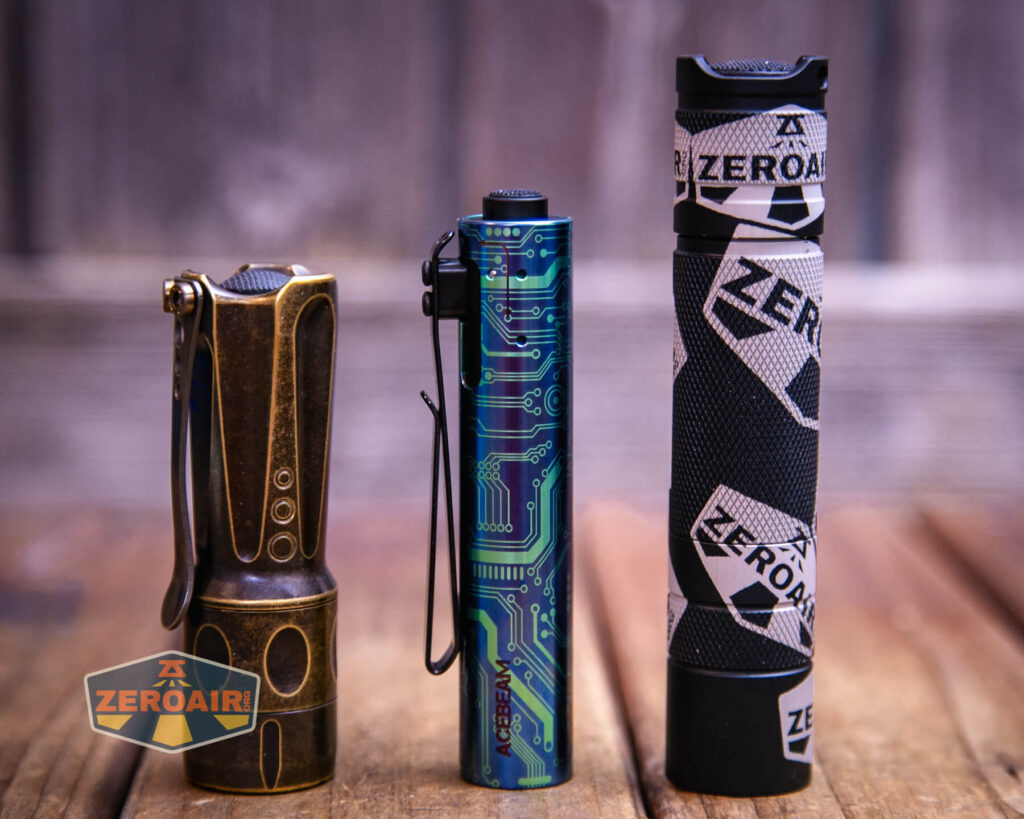
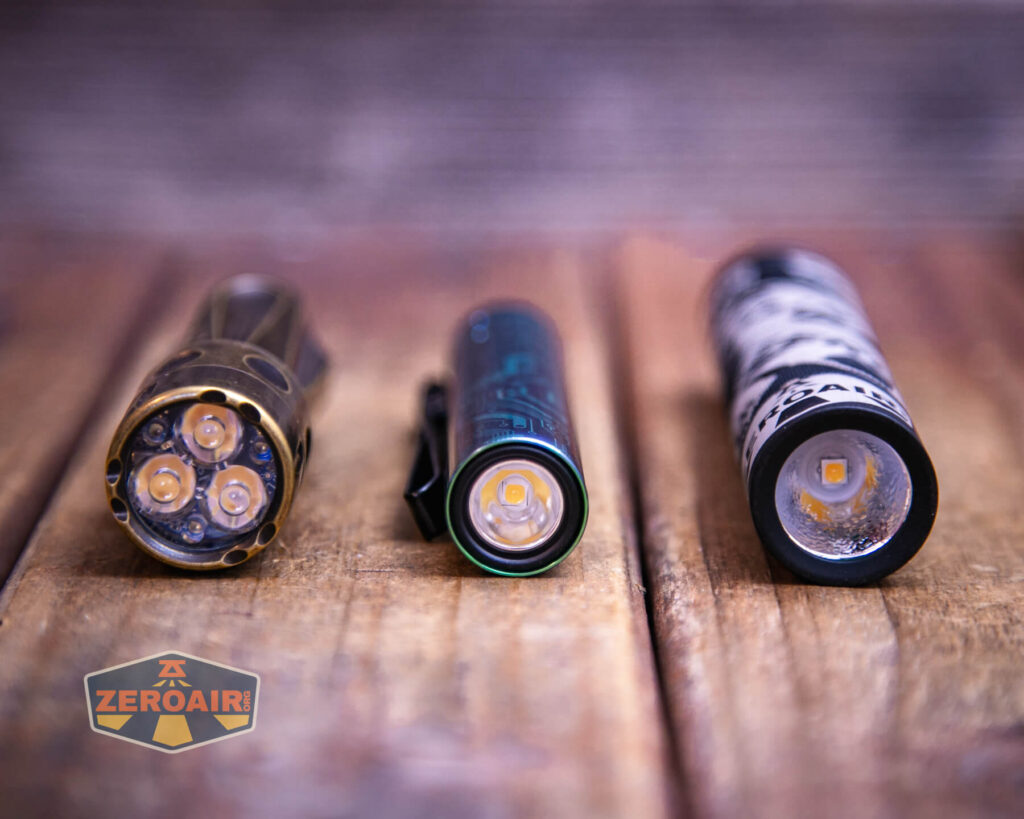
Also above is the light beside a TorchLAB BOSS 35, an 18350 light. I reviewed the aluminum version of that light in both 35 and 70 formats. I also reviewed that specific edition, the “Oveready BOSS FT Collector Vintage Brass” 35. I love it!
Retention and Carry
As covered above, there’s a pocket clip included and attached. This clip is held in place by two screws and is thus very secure.
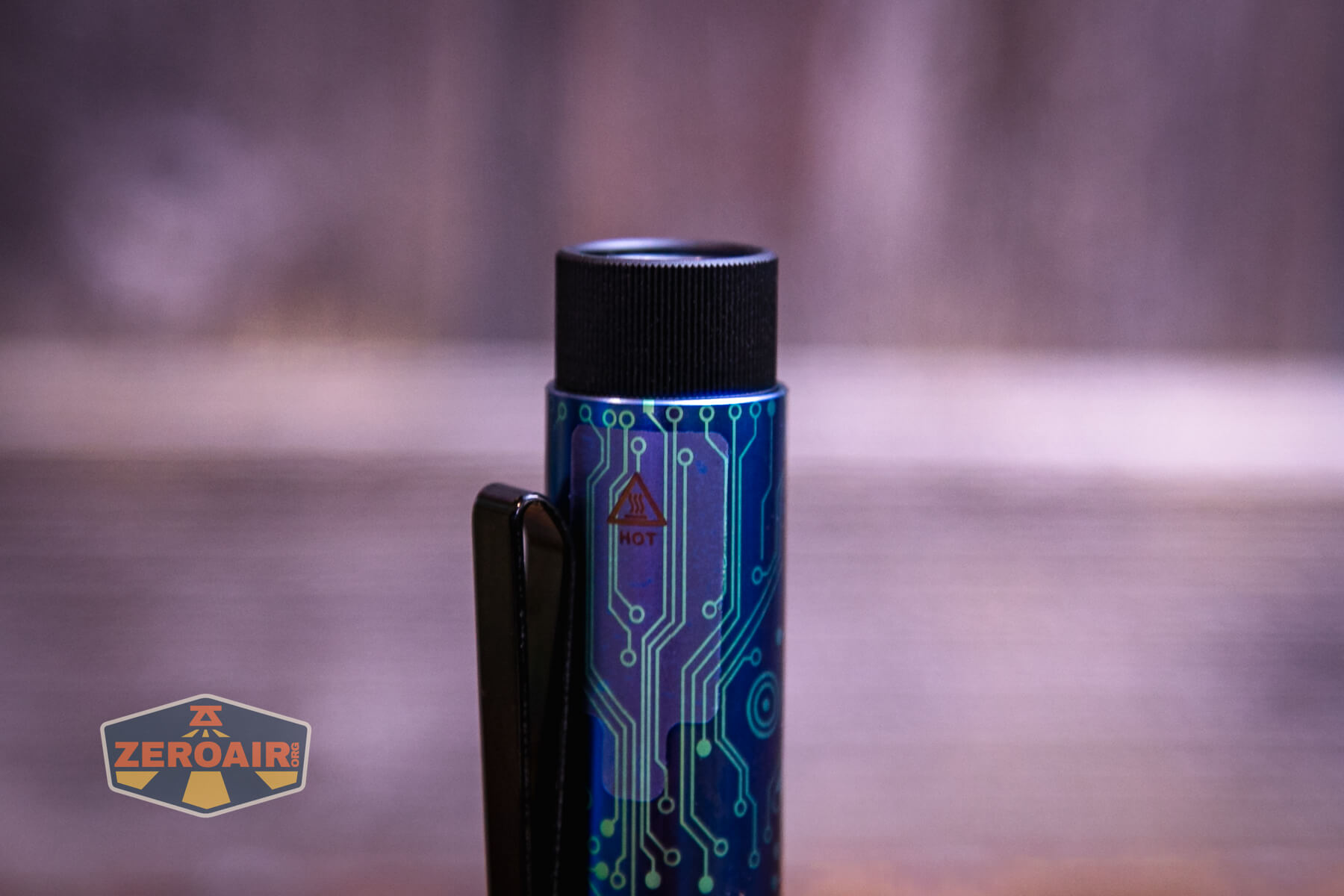
When in the resting state, the pocket clip has a little groove to rest in. When in the extended state, there is no groove. This version (the titanium) ships with a little patch. This might be just intended for shipping purposes, but it’d be reasonable to leave it in place to protect the titanium. That said, on this version, the pocket clip doesn’t even touch the body anyway.

I will add that the little protective sticker doesn’t stick all that well to this slick body. That’s in stark contrast to the sticker on my stonewashed titanium version, which is still firmly in place!
The clip design on this version is slightly (maybe significantly, depending on your perspective on clips?) different from the previous versions. It’s sleeker, hugging the body more closely. It’s a two-way clip, but it’s more of a standard two-way clip. The old version had a more pointed area touching the body. Again this one is more standard, but it’s also better.
The pocket clip is the crux of the fidget factor on the Acebeam Rider RX Titanium v2 flashlight and can be twisted around and then pushed forward for use as a fidget toy.
This actuation is also necessary for swapping the cell. Otherwise, the head is inaccessible. And when the body is extended (or the sleeve is pulled back?), the tailswitch becomes nearly inaccessible.
There’s also a lanyard included. That lanyard attaches to the pocket clip. Because the pocket clip is screwed on, and the lanyard attaches through a hole, this lanyard attachment is very secure.

Power and Runtime
Included with the Acebeam Rider RX Titanium v2 flashlight is a lithium-ion 14500 cell. However, the Rider RX V2 will also run on a single AA cell, too (that is, a 1.5V cell – primary or NiMH.)

The included 14500 cell is a standard button top, with a capacity of 920mAh.
The cell goes into the light in the usual orientation: button (positive end) toward the head.

When the light is in the extended format (which is how you’ll swap cells), the switch is not accessible. Also below you can see where the moveable pocket clip moves to. Three detents latch into place very pleasantly and positively. They provide a fidgety amount of resistance and do slide around very nicely (when you want them to do so).

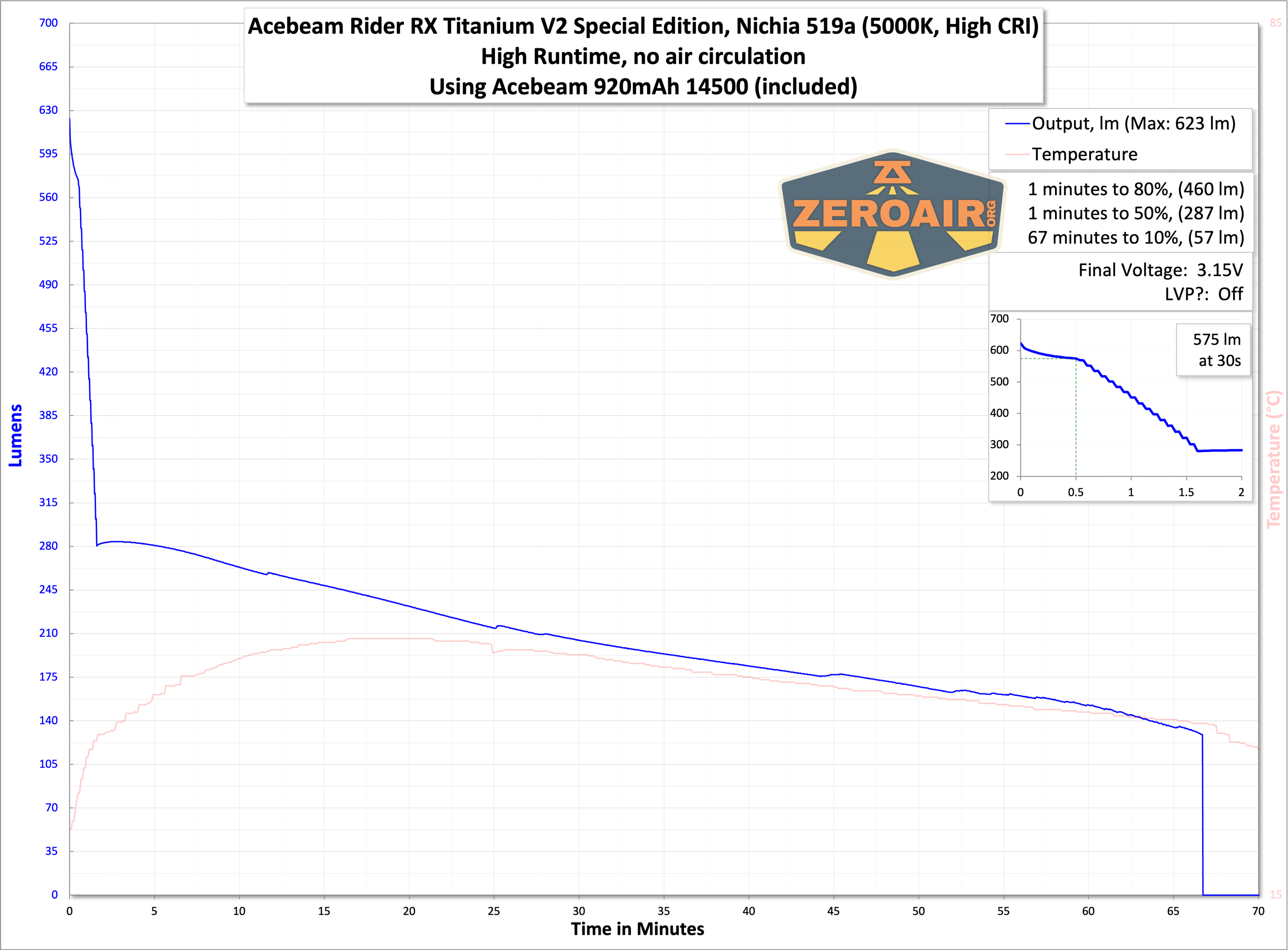
Performance with the 14500 cell is good, and there seems to be reliable low voltage protection.

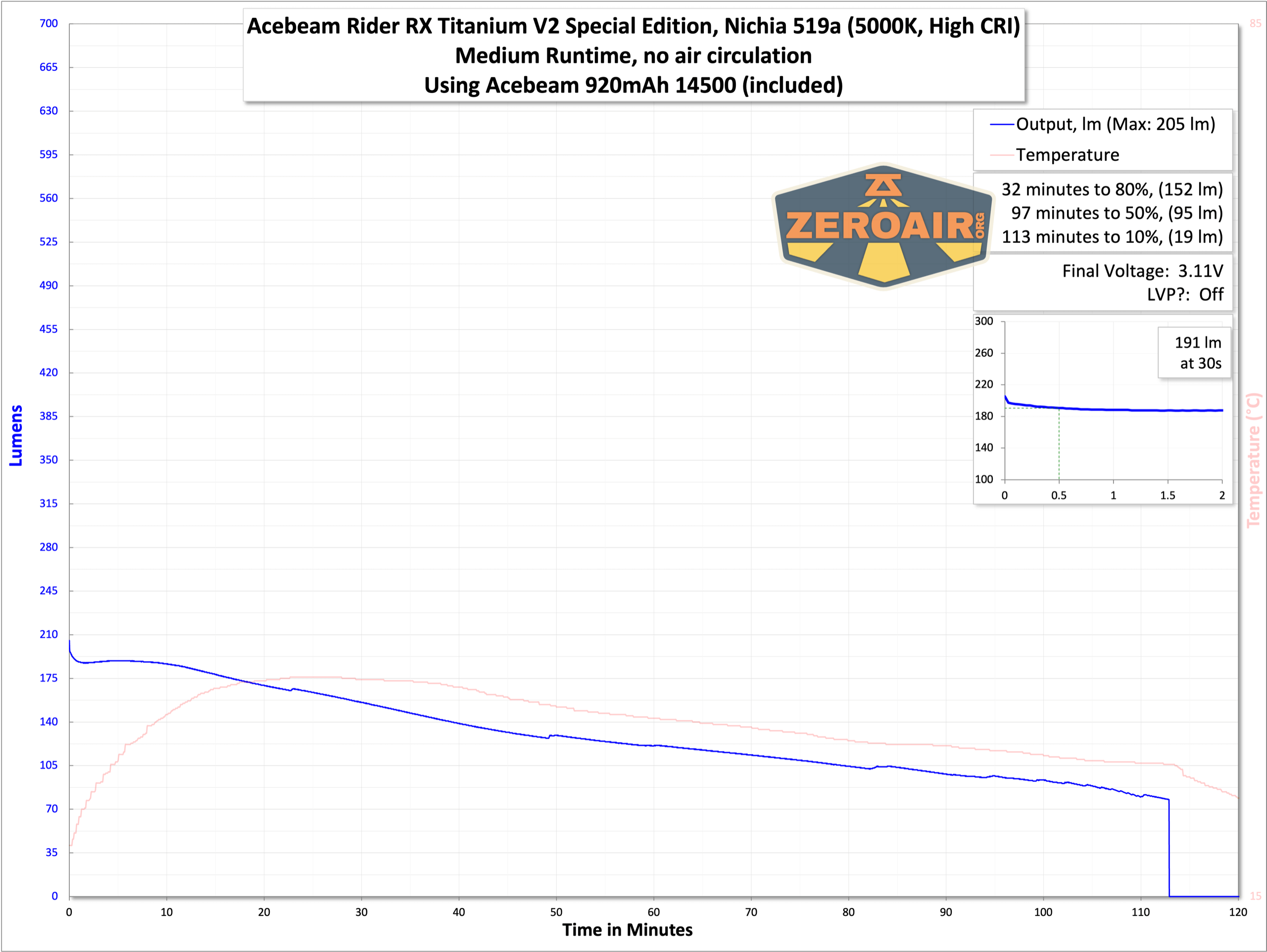

In previous iterations of this light, the manual covered the AA output. I don’t think that’s the case with this version.

Overall I’d say performance is good, and I really appreciate that the Acebeam Rider RX flashlight runs on both lithium-ion and 1.5V cells.
Charging
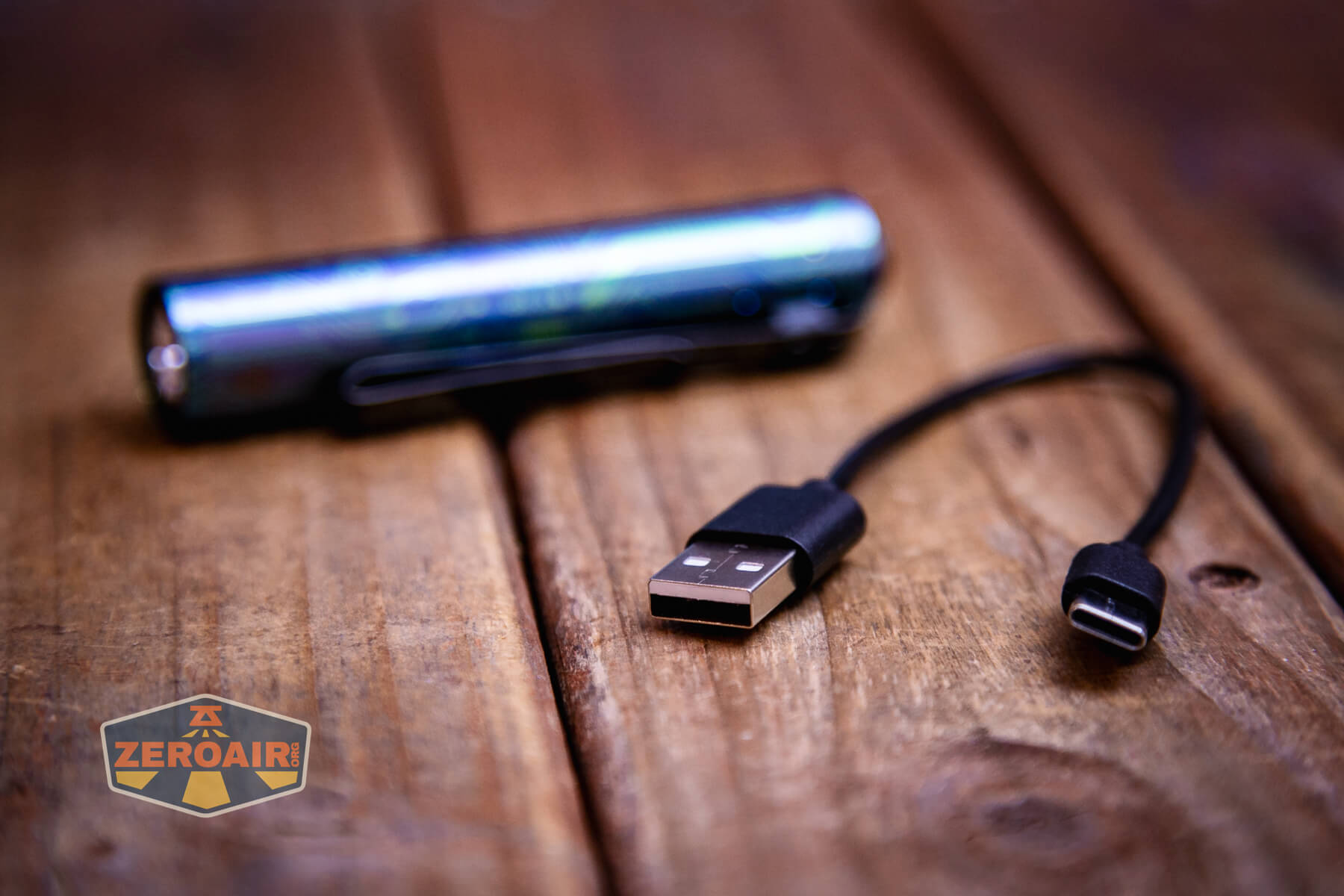
While the Acebeam Rider RX Titanium v2 flashlight itself doesn’t have built-in charging, the included cell does. That’s USB-C charging, and the port can be seen below.

Acebeam includes a short USB to USB-C cable.
Here are a few charge cycles. Charging looks fine but is a bit slow at around 0.5C.
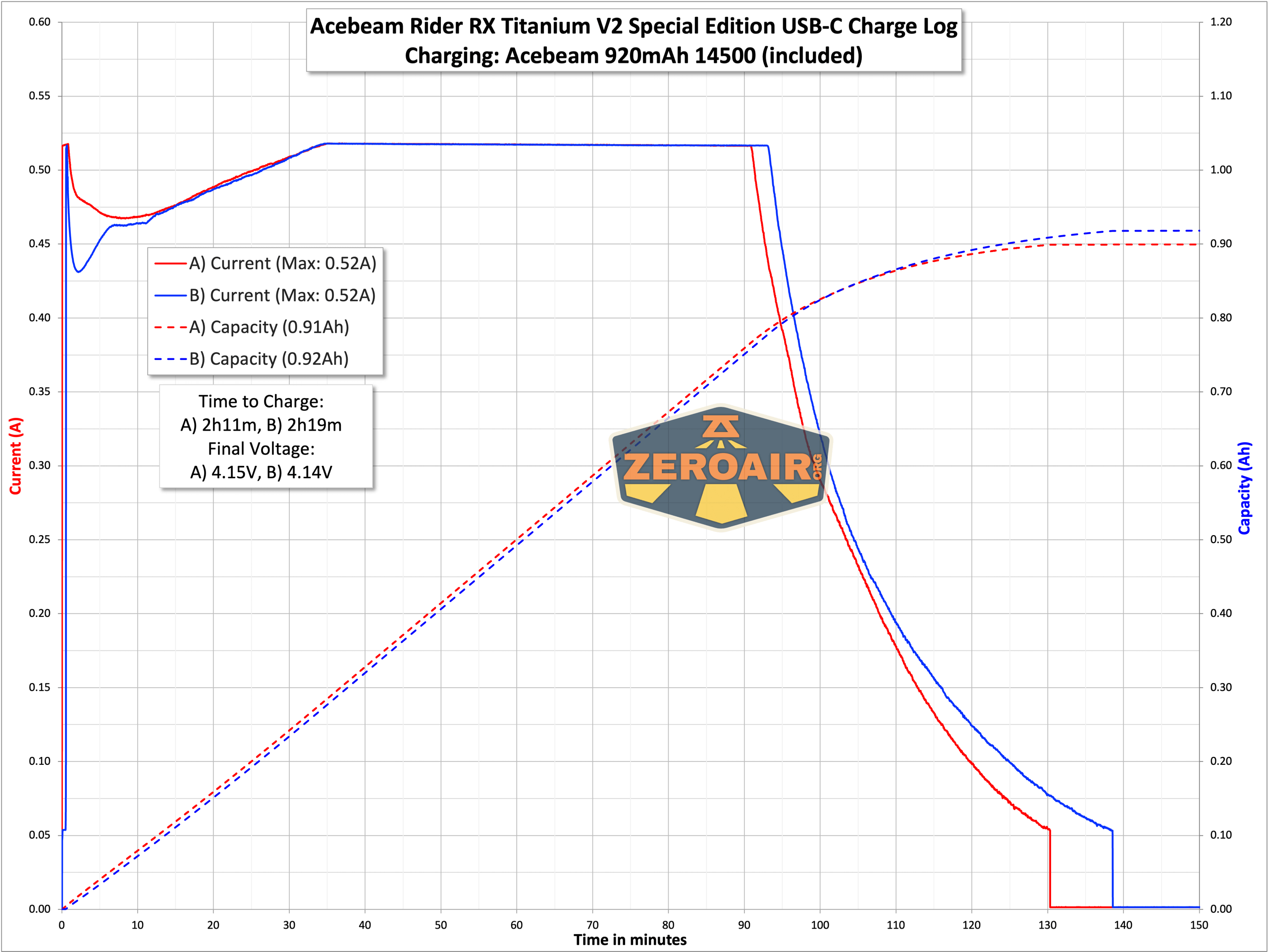

C to C charging works fine but is no faster than USB to USB-C.
Modes and Currents
14500:
| Mode | Mode Claimed Output (lm) | Claimed Runtime | Measured Lumens | Tailcap Amps (@4.2V) |
|---|---|---|---|---|
| High | 700/300 | 35s/1h | 623 (0s) 575 (30s) |
2.80 |
| Medium | 200 | 2h | 205 | 0.74 |
| Low | 50 | 14h | 49 | 0.19 |
| Ultra-Low | 5 | 58h | 7 | 0.02 |
AA:
| Mode | Mode Claimed Output (lm) | Claimed Runtime | Measured Lumens | Tailcap Amps (@1.5V) |
|---|---|---|---|---|
| High | – | – | 239 (0s) 223 (30s) |
3.13 |
| Medium | – | – | 71 | 0.92 |
| Low | – | – | 6 | 0.06 |
| Ultra-Low | – | – | 0.39 | 0.01 |
Pulse Width Modulation
Every mode from both cell types uses PWM. It’s not at all bad PWM though, and I don’t find it the least bit noticeable.
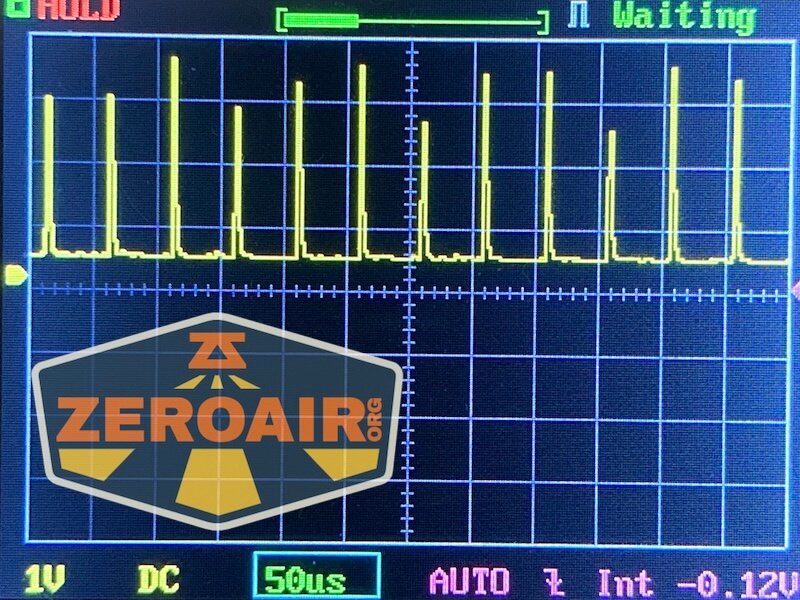
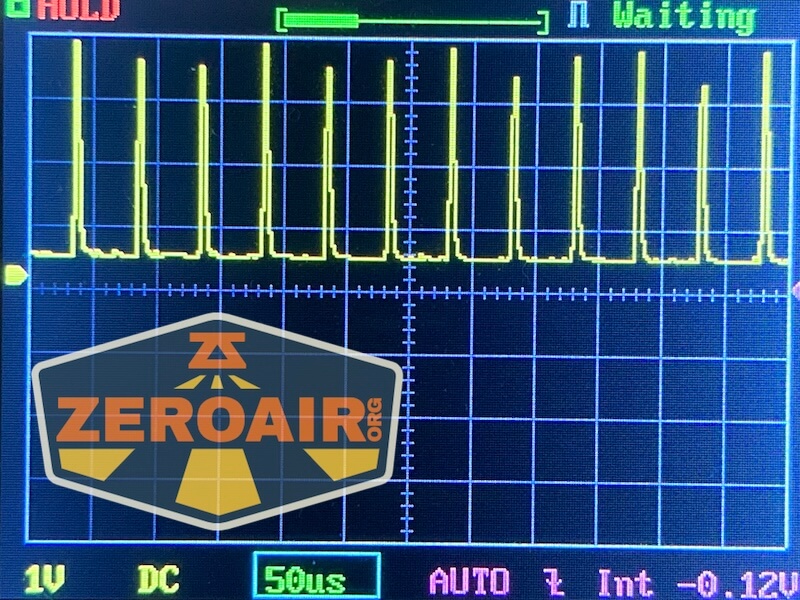
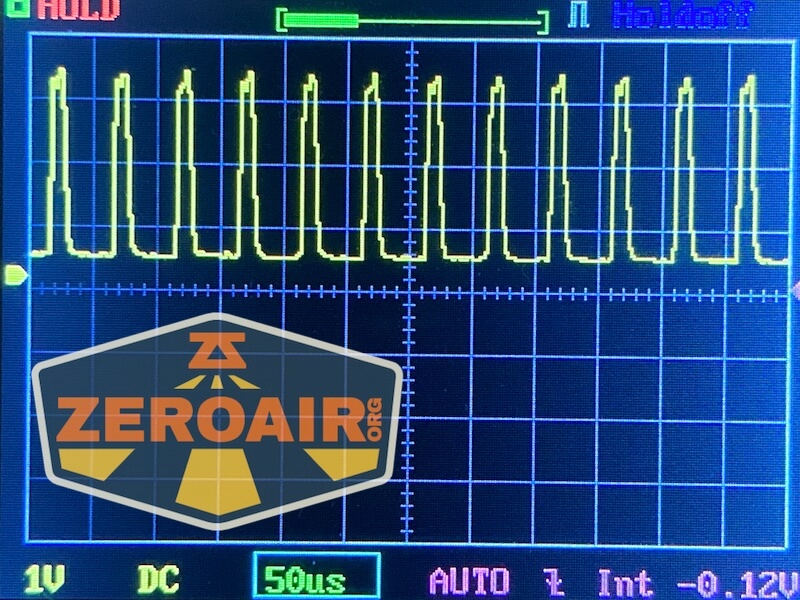
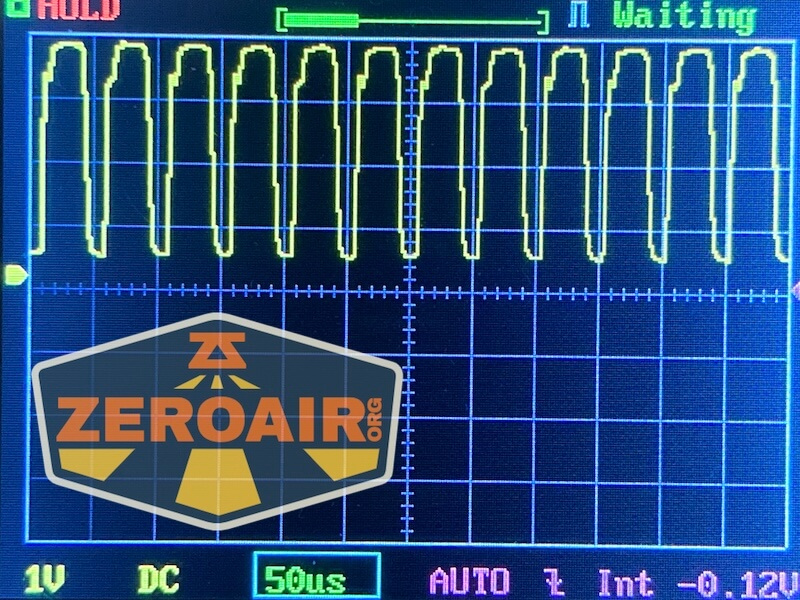
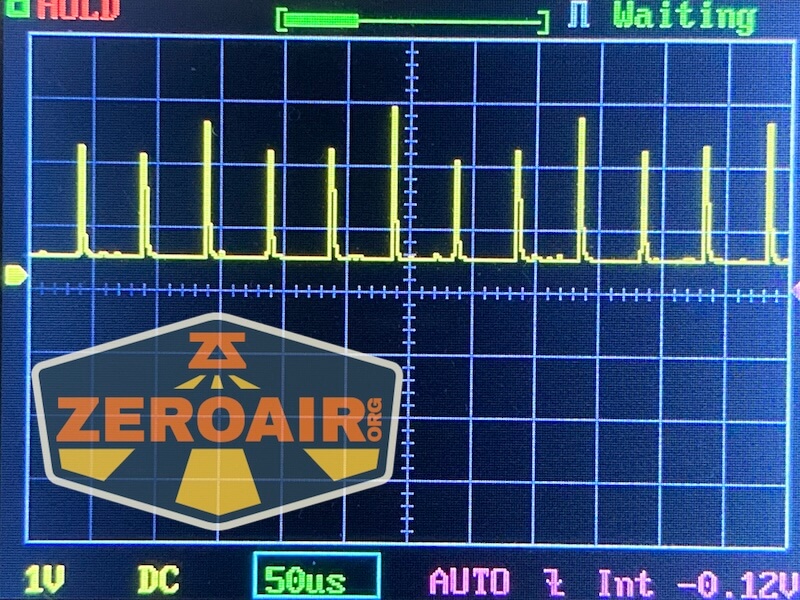
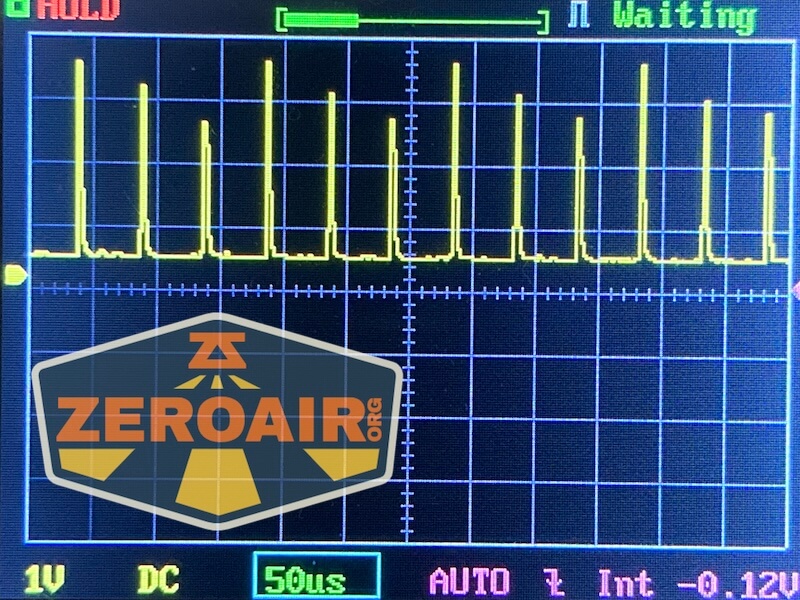
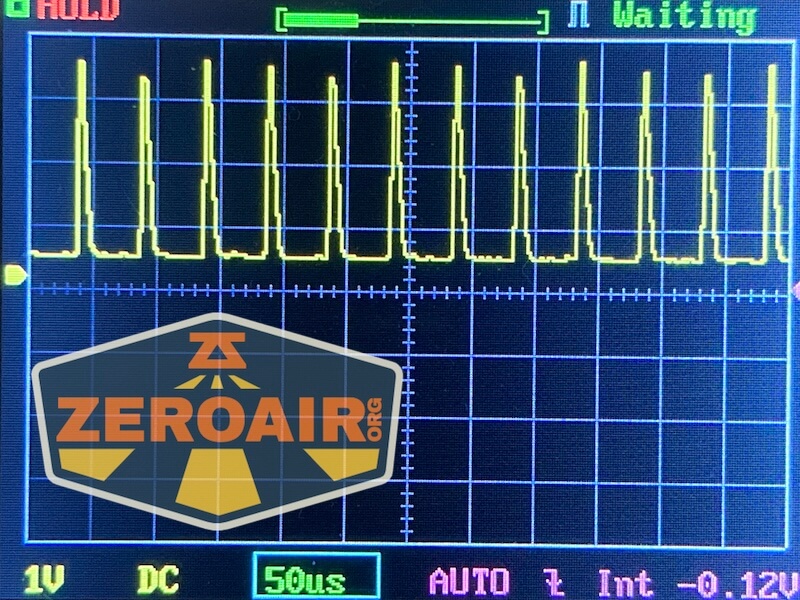
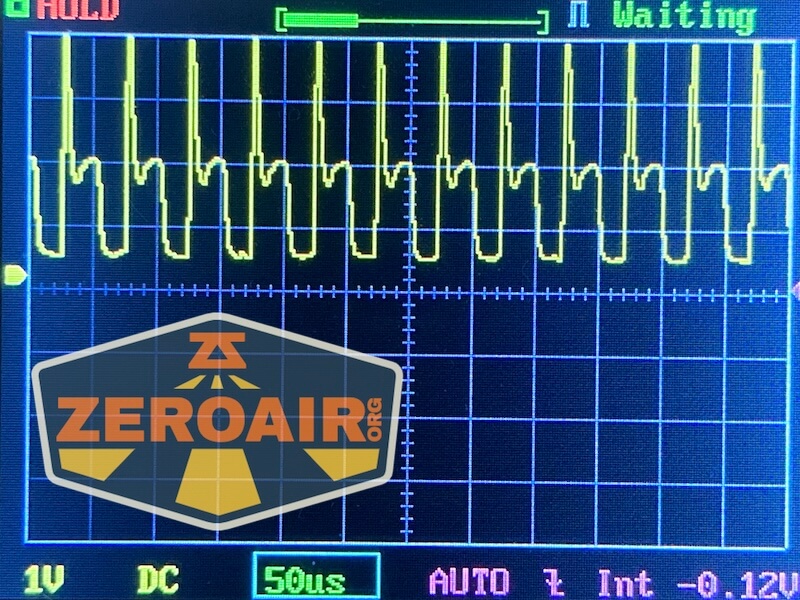
Here you can see a “baseline” – a chart with almost no light hitting the sensor. Then there’s the Ultrafire WF-602C flashlight, which has some of the worst PWM I’ve seen. It’s so bad that I used a post about it to explain PWM! Here are multiple timescales (10ms, 5ms, 2ms, 1ms, 0.5ms, 0.2ms) to make comparing this “worst” PWM light to the test light easier. That post also explains why I didn’t test the WF-602C at the usual 50us scale.


User Interface and Operation
A single switch controls the Rider RX V2. This is a mechanical tail switch and has a nice big knurled switch cover.

The switch is quite proud. Due to the domed (ish) knurling, the light will not tailstand.

Here’s a user interface table! The user interface for either cell type is the same.
| State | Action | Result |
|---|---|---|
| Off | Click | On (Mode Memory) |
| Off | Rapidly Tap | Mode advance (through all four steady modes) |
| On | Click | Off |
LED and Beam
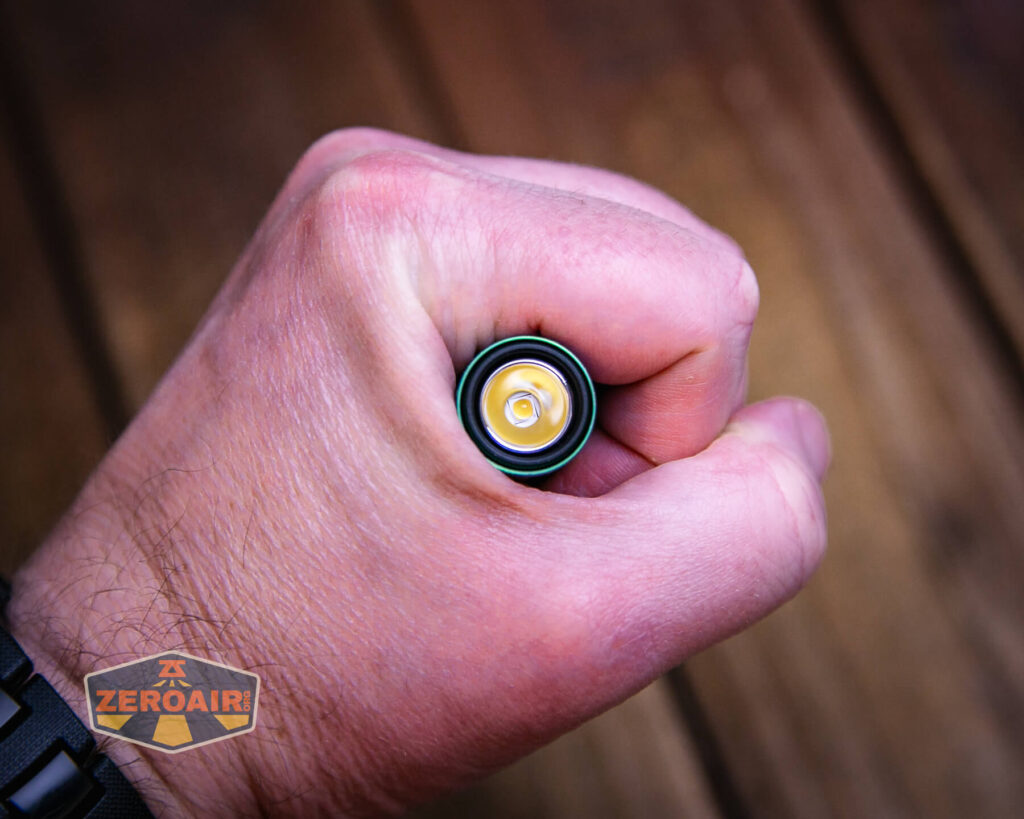
In the Acebeam Rider RX flashlight is a single Nichia 519a emitter. That is of course a fantastic emitter, and Acebeam opted for the 5000K High CRI (90) version. Also a great choice!
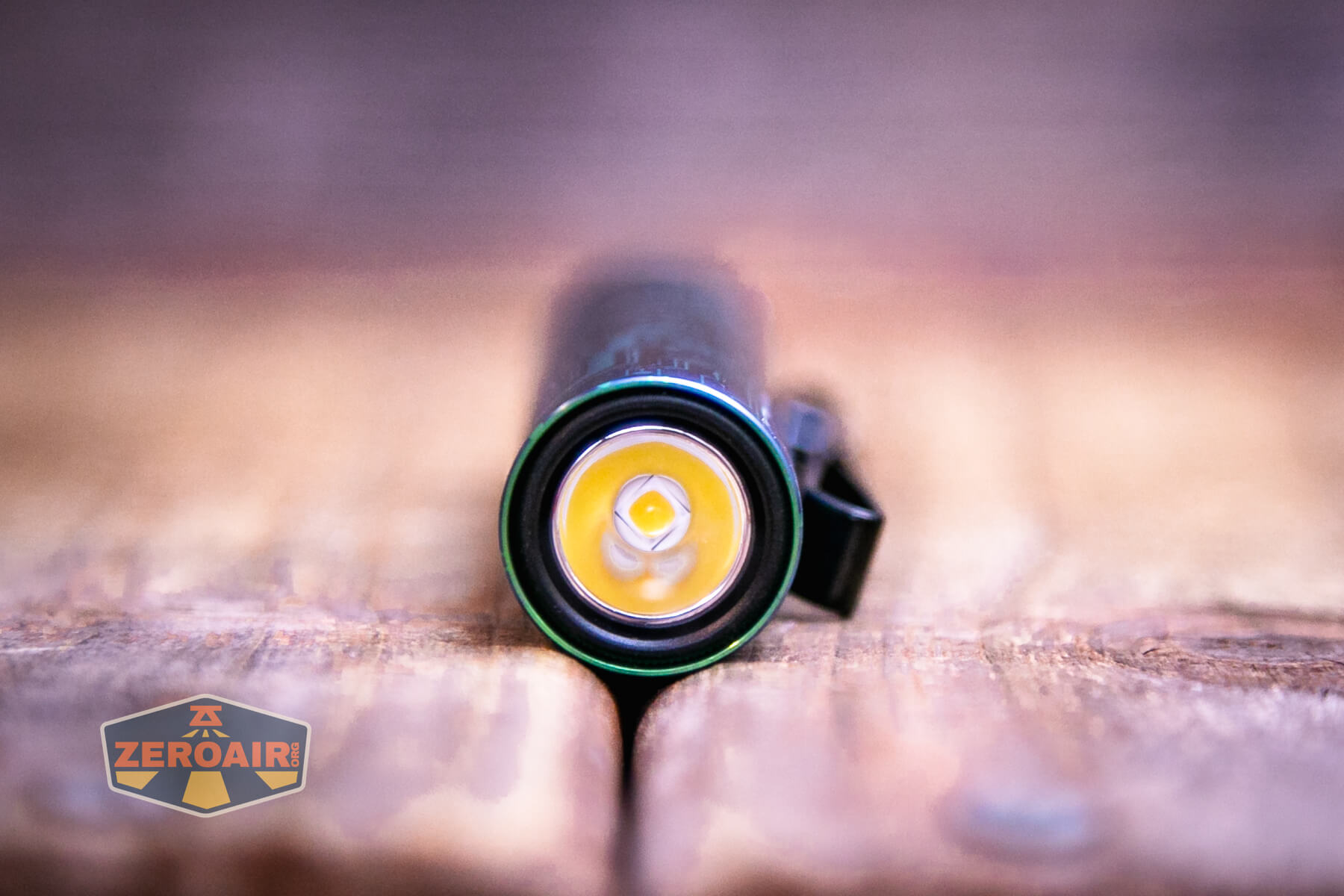
That emitter is paired with a smooth and not-all-that-deep reflector.

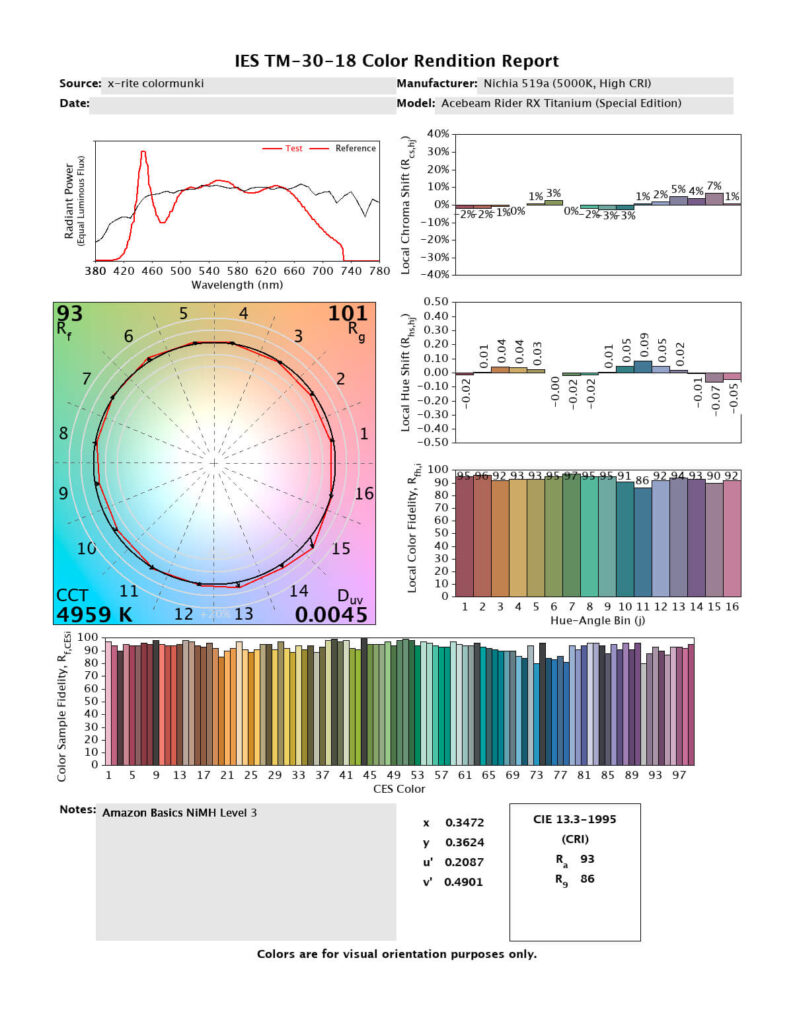
LED Color Report (CRI and CCT)
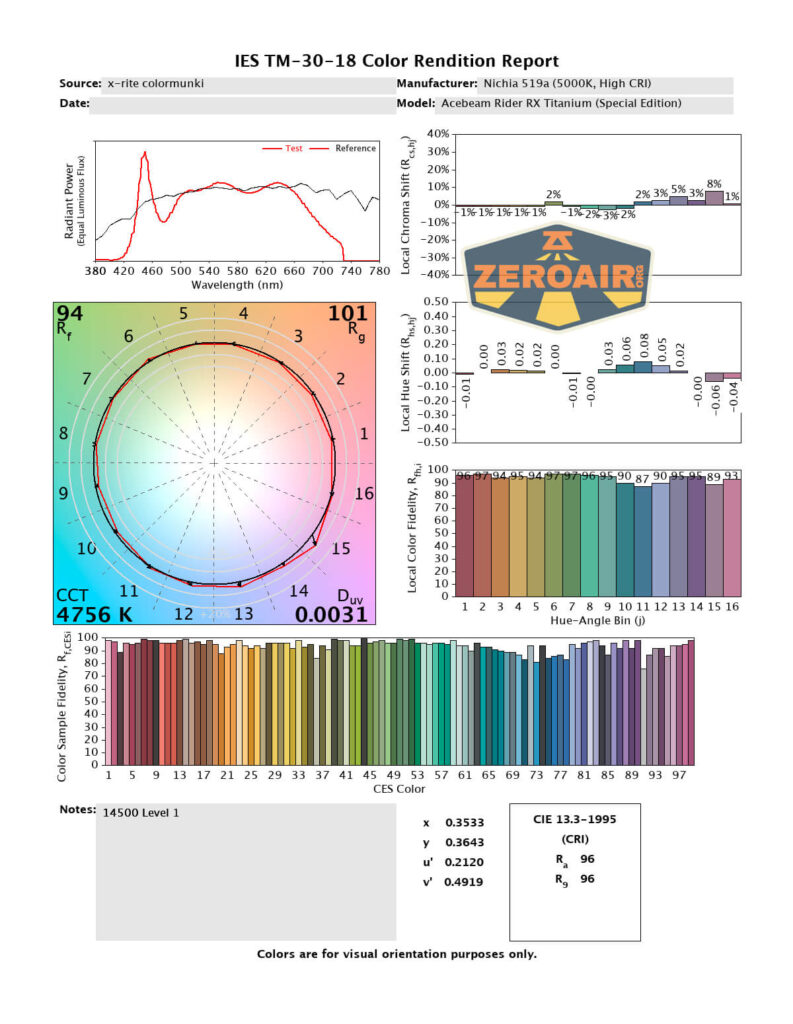
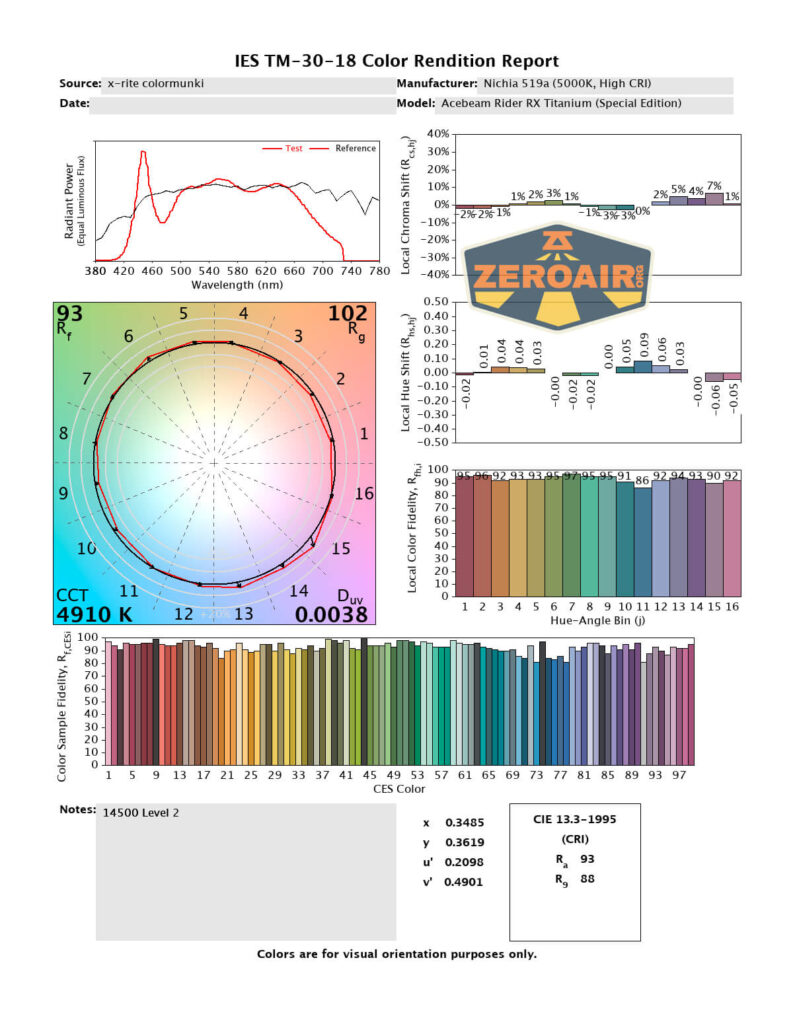
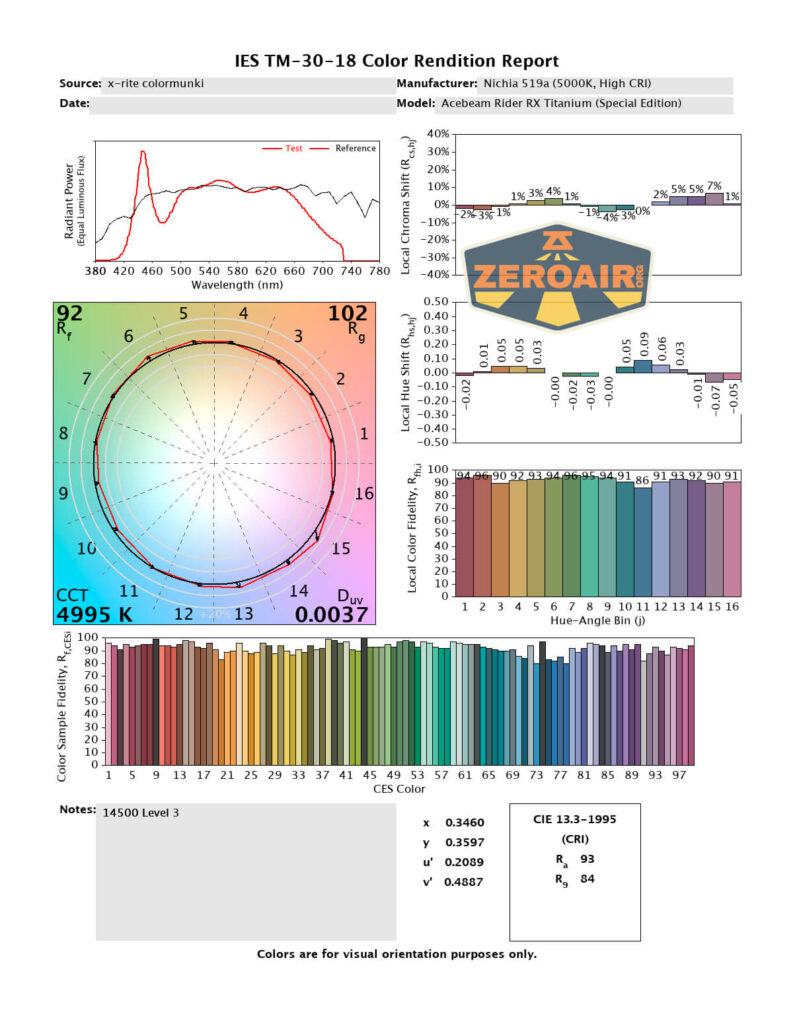
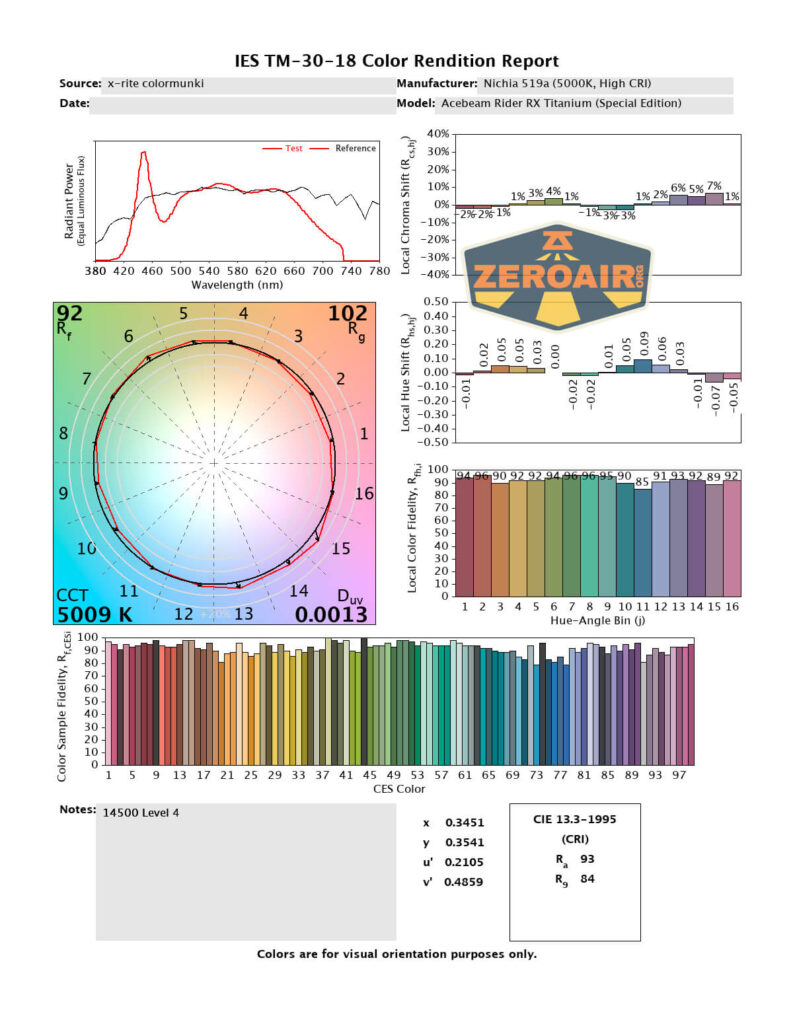
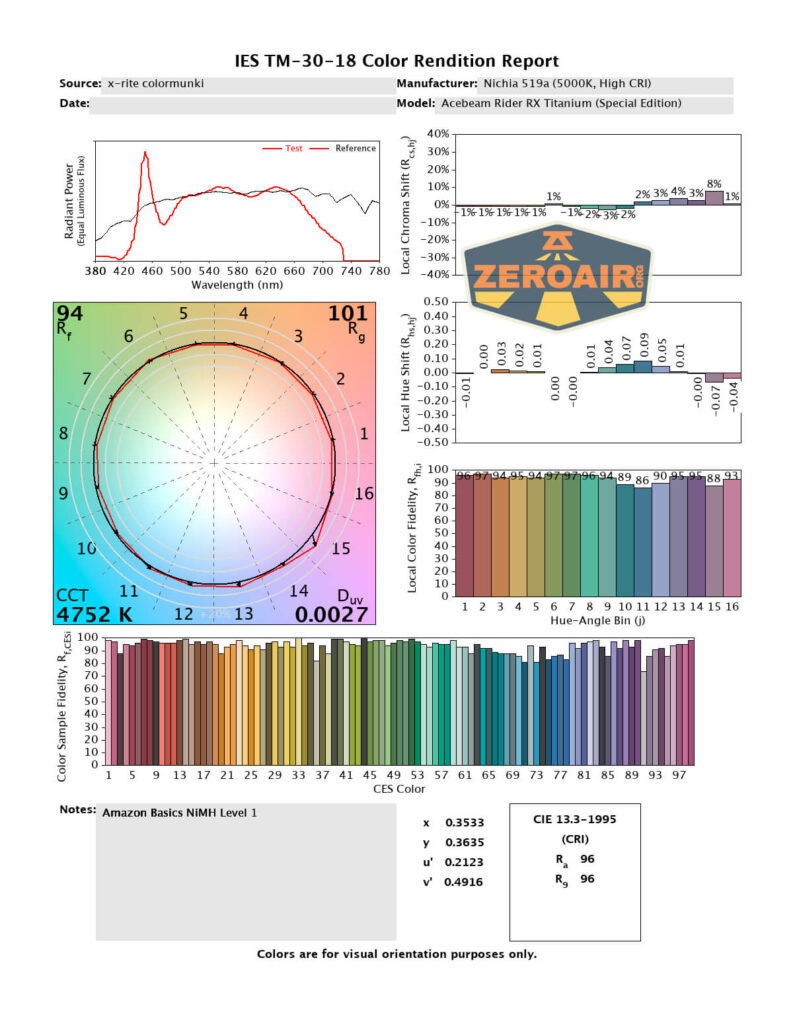
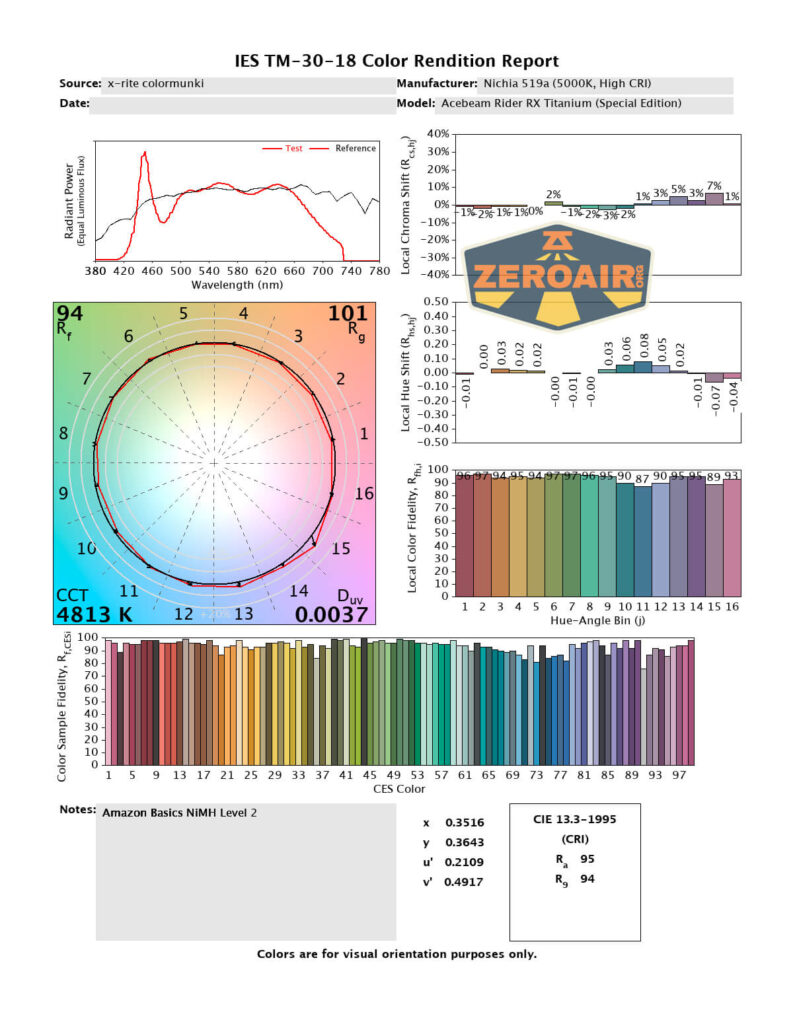
As stated above, Acebeam calls this a 5000K, CRI90 emitter. I’m happy to report that mine seems to be warmer than 5000K (around 4800K-5000K, depending on the mode) and at or above 90 CRI for every mode.

Beamshots
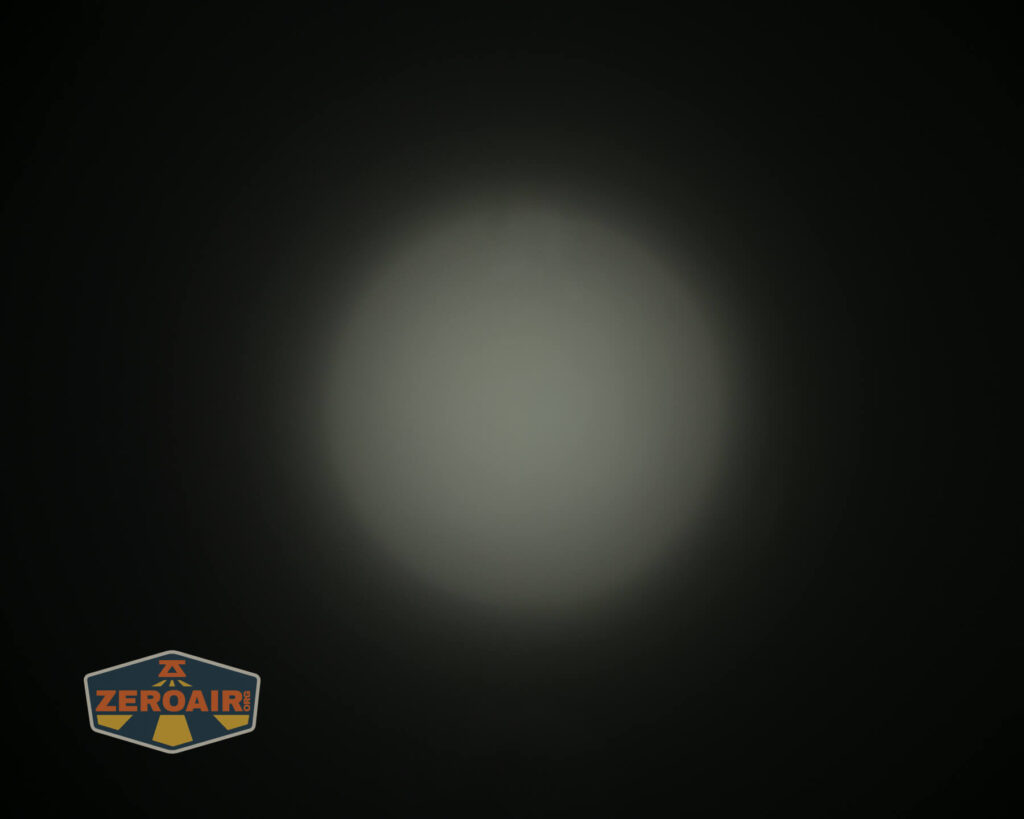
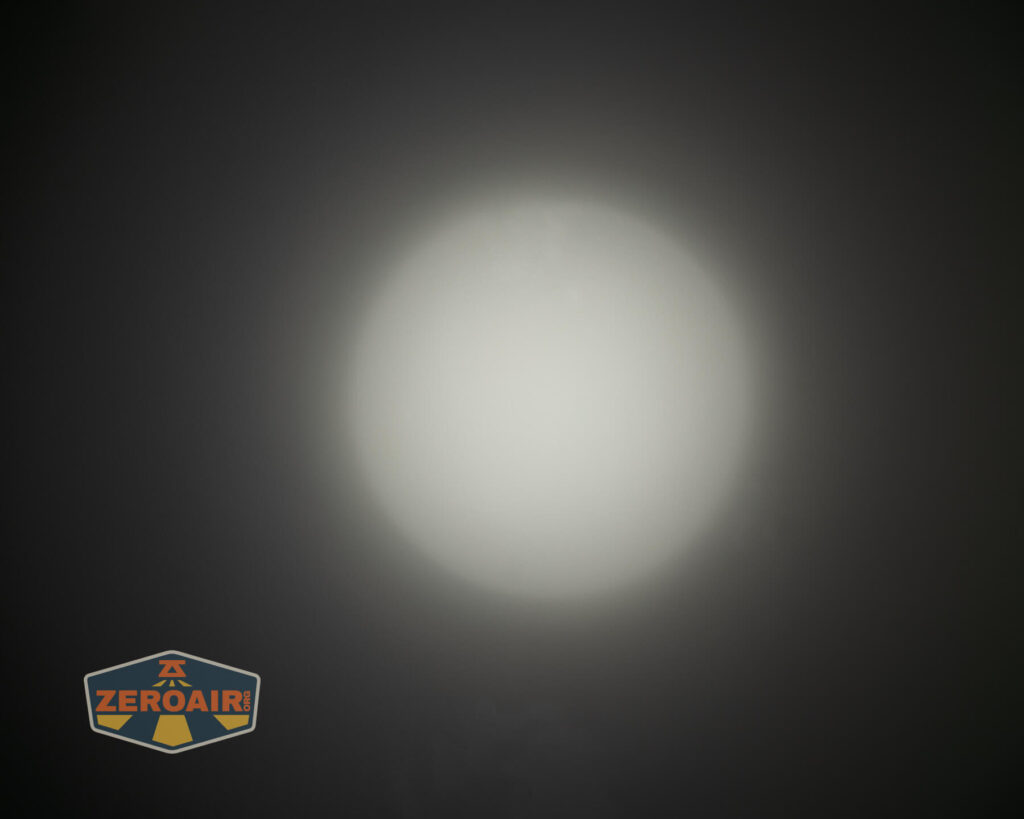
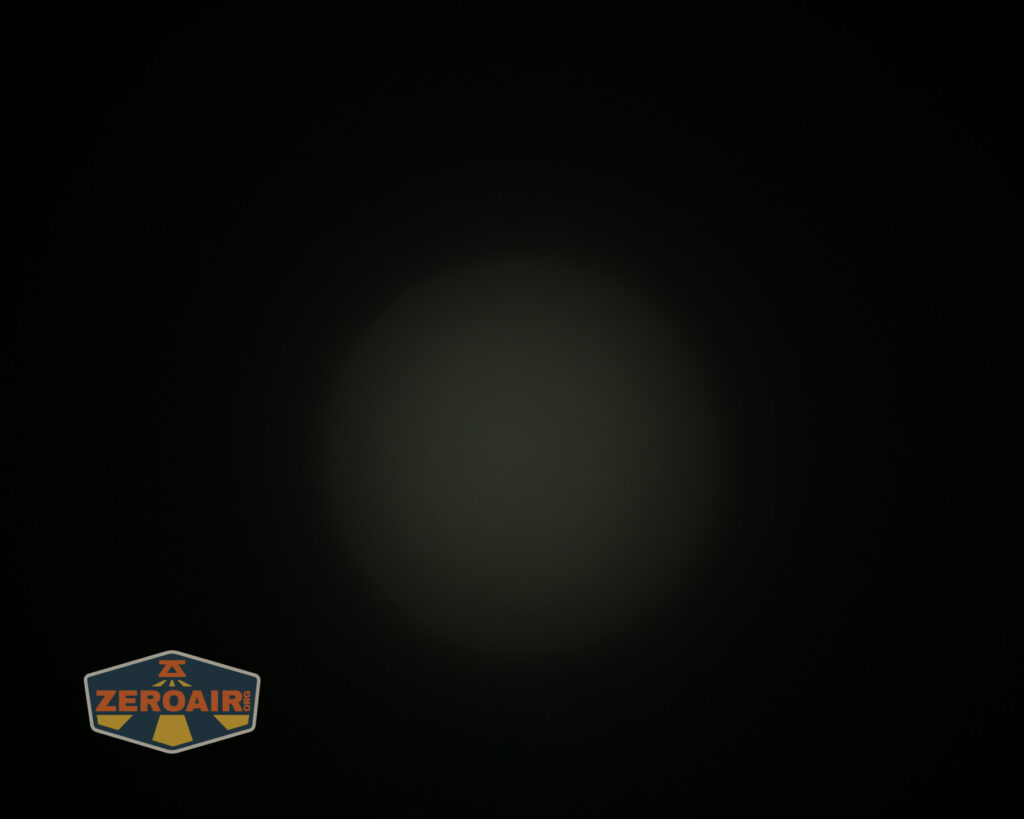
These beamshots always have the following settings: f8, ISO100, 0.3s shutter, and manual 5000K exposure. These photos are taken at floor level, and the beam hits the ceiling around 9 feet away.




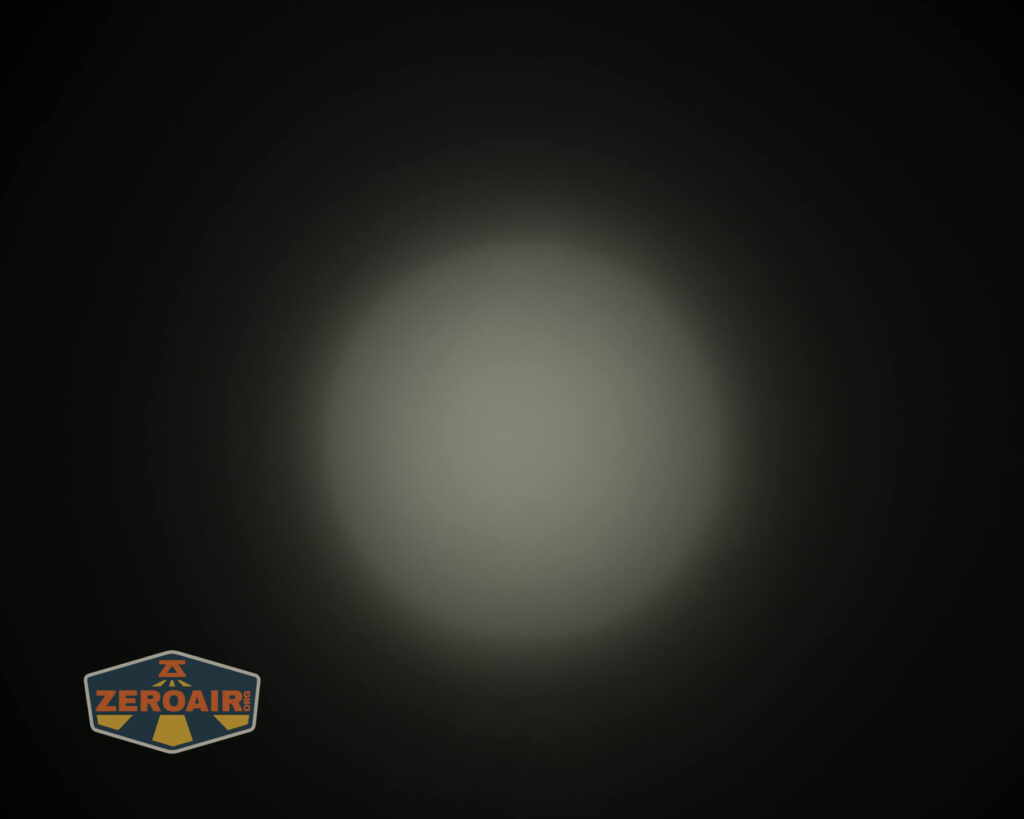
Tint vs BLF-348 (KillzoneFlashlights.com 219b version) (affiliate link)
I keep the test flashlight on the left and the BLF-348 reference flashlight on the right.
The 14500 output is noticeably brighter than the AA output, and the photos below adequately demonstrate that. The AA output is still quite usable though.
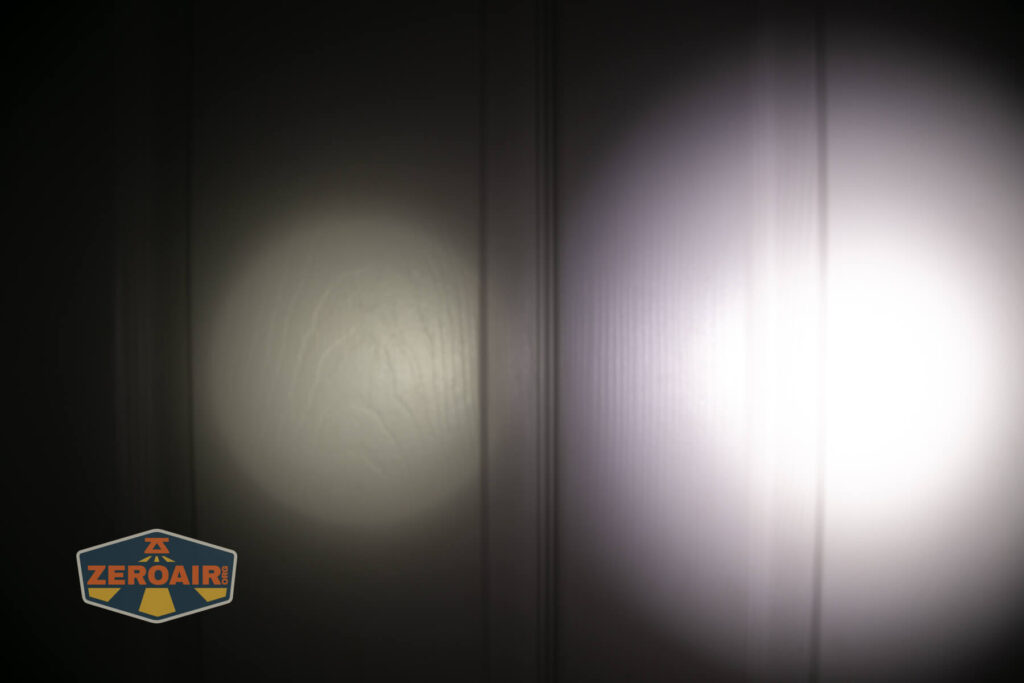
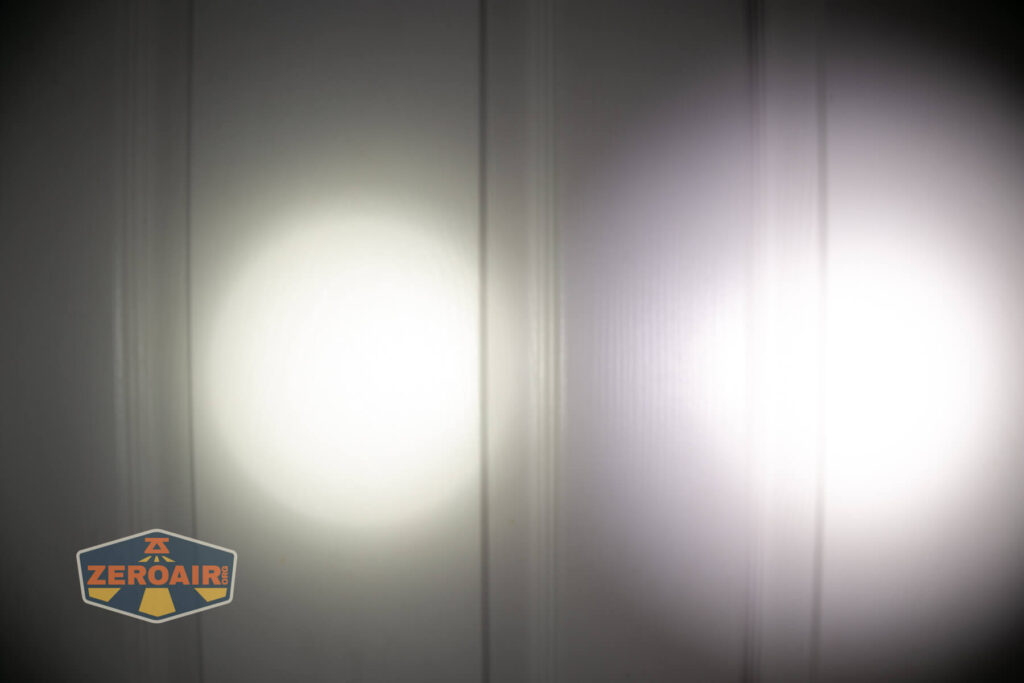


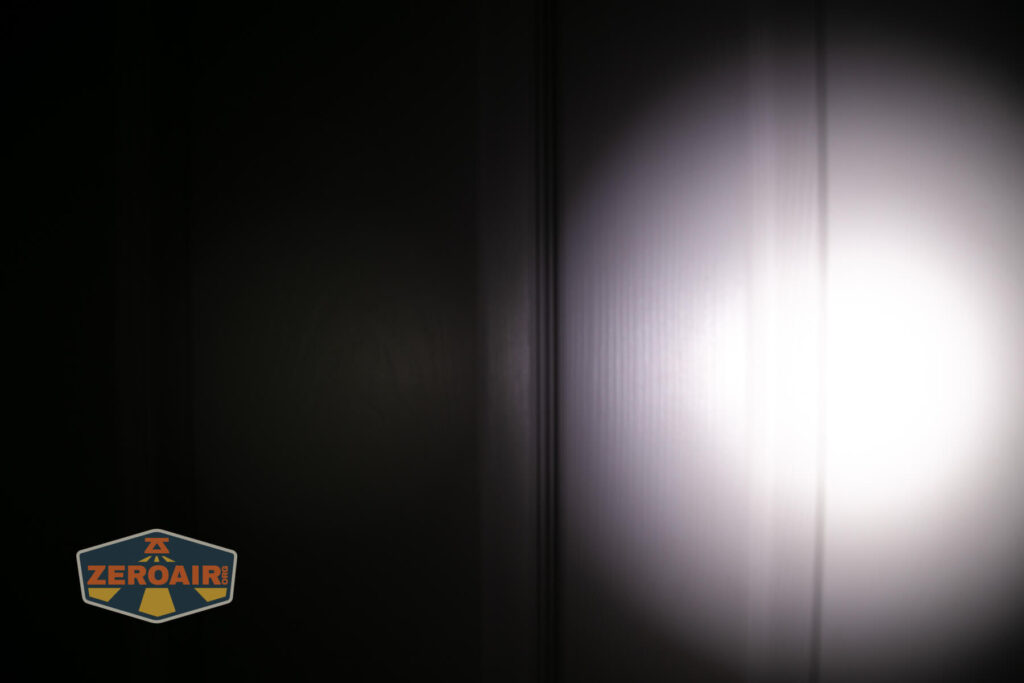
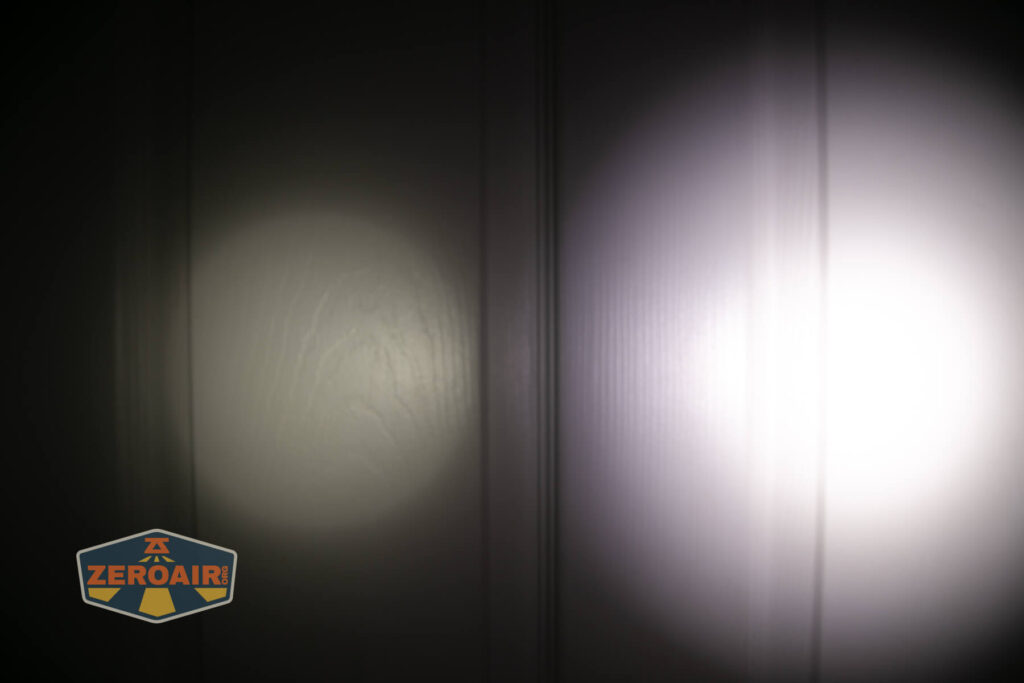
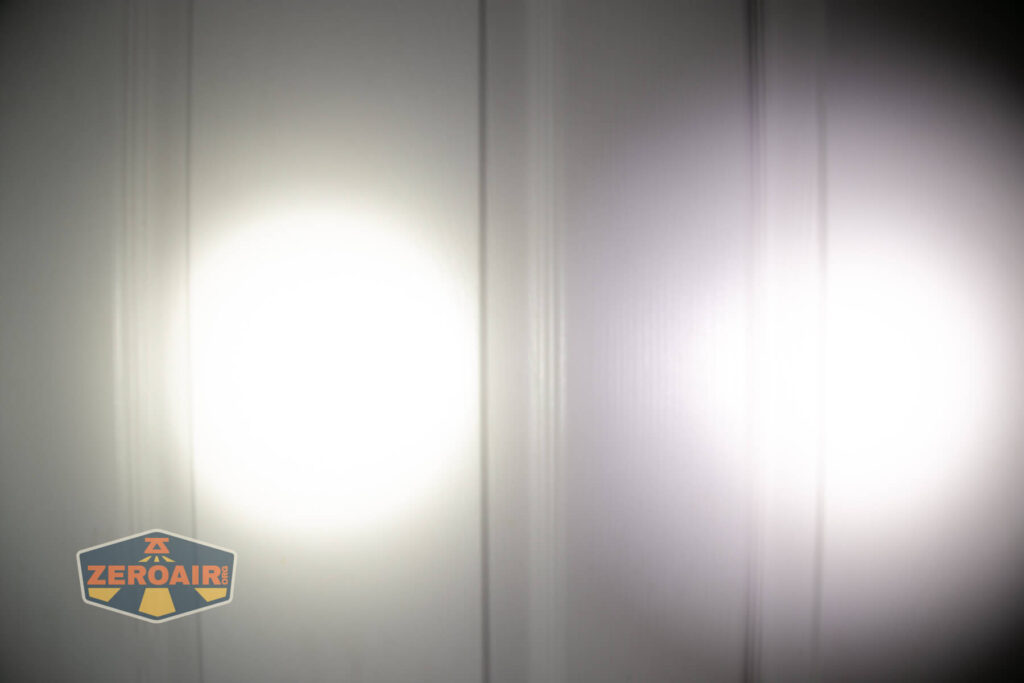

I compare everything to the KillzoneFlashlights.com 219b BLF-348 because it’s inexpensive and has the best tint!
Summary and Conclusion
I really liked the other versions I already reviewed. This titanium version at around $50 is a great deal! The build quality is great, and it accepts both AA (1.5V) and lithium-ion (4.2V) cells. Despite being “into” fidgety things, the pocket clip fidgetiness does not actually do anything for me. It’s neat, but not something I’ll use. The output is great from both a numbers perspective and from a CRI and CCT perspective, too, and I’m happy Acebeam went with Nicha 519a on this version. I’m very pleased with this light!
The Big Table
| Acebeam Rider RX Titanium v2 flashlight | |
|---|---|
| Emitter: | Nichia 519a (5000K, High CRI) |
| Price in USD at publication time: | $52.90 |
| Cell: | 1×14500 |
| High Runtime Graph | Medium Runtime Graph |
| LVP? | Yes |
| Switch Type: | Mechanical |
| On-Board Charging? | Yes |
| Charge Port Type: | USB-C (on cell) |
| Charge Graph | |
| Power off Charge Port | No |
| Claimed Lumens (lm) | 700 |
| Measured Lumens (at 30s) | 575 (82.1% of claim)^ |
| Candela per Lumen | 3.8 |
| Claimed Throw (m) | 101 |
| Candela (Calculated) in cd (at 30s) | 115lux @ 4.634m = 2470cd |
| Throw (Calculated) (m) | 99.4 (98.4% of claim)^ |
| Claimed CCT | 5000 |
| Measured CCT Range (K) | 4800-5000 Kelvin |
| Item provided for review by: | Acebeam |
| All my Acebeam reviews! | |
| Acebeam Rider RX Titanium v2 flashlight | |
|---|---|
| Emitter: | Nichia 519a (5000K, High CRI) |
| Price in USD at publication time: | $52.90 |
| Cell: | 1xAA |
| Runtime Graph | |
| LVP? | ? |
| Switch Type: | Mechanical |
| On-Board Charging? | No |
| Claimed Lumens (lm) | – |
| Measured Lumens (at 30s) | 223 |
| Candela per Lumen | 3.8 |
| Claimed Throw (m) | – |
| Candela (Calculated) in cd (at 30s) | 58lux @ 3.846m = 858cd |
| Throw (Calculated) (m) | 58.6 |
| Claimed CCT | 5000 |
| Measured CCT Range (K) | 4800-5000 Kelvin |
| Item provided for review by: | Acebeam |
| All my Acebeam reviews! | |
^ Measurement disclaimer: Testing flashlights is my hobby. I use hobbyist-level equipment for testing, including some I made myself. Try not to get buried in the details of manufacturer specifications versus measurements recorded here; A certain amount of difference (say, 10 or 15%) is perfectly reasonable.
What I like
- Attractive light
- Neat fidgety factor
- Nichia 519a is a great emitter (high CRI, good CCT)
- Complete package
- Runs on both lithium-ion and AA (alkaline and NiMH) cell types
- Very simple user interface
- Great price point (for a special edition)
- The improved pocket clip design is tighter to the body
What I don’t like
- I don’t actually care about the fidget factor on this light. It’s neat but I won’t use it that way.
- Very slick
- Fidget factor – can get dirty between the outside and inside sleeve and the action is no longer entirely pleasant
Notes
- This content originally appeared at zeroair.org. Please visit there for the best experience!
- Please use my Amazon.com referral link to help support zeroair.org!
- Please support me on Patreon! I deeply appreciate your support!