

Speras E21 Titanium Flashlight Review
The Speras E21 titanium flashlight is a 21700 cell light running a single Luminus SST-40 emitter. The tactical E21 has a neat dual-action switch. Read on!
Official Specs and Features
Here’s a link to the Speras E21 titanium flashlight product page.
Versions
A number of colors of Speras E21 are available. Those include black, red, green. There’s also metal options: aluminum and titanium (seen here). A few kit options or accessories are available, too – a GM1 mount, a RMC V2 Type C remote pressure switch, and all of it is available as a kit (in the aluminum E21 body), too.
Price
The Speras E21 titanium flashlight sells for $109 and is available now.
What’s Included
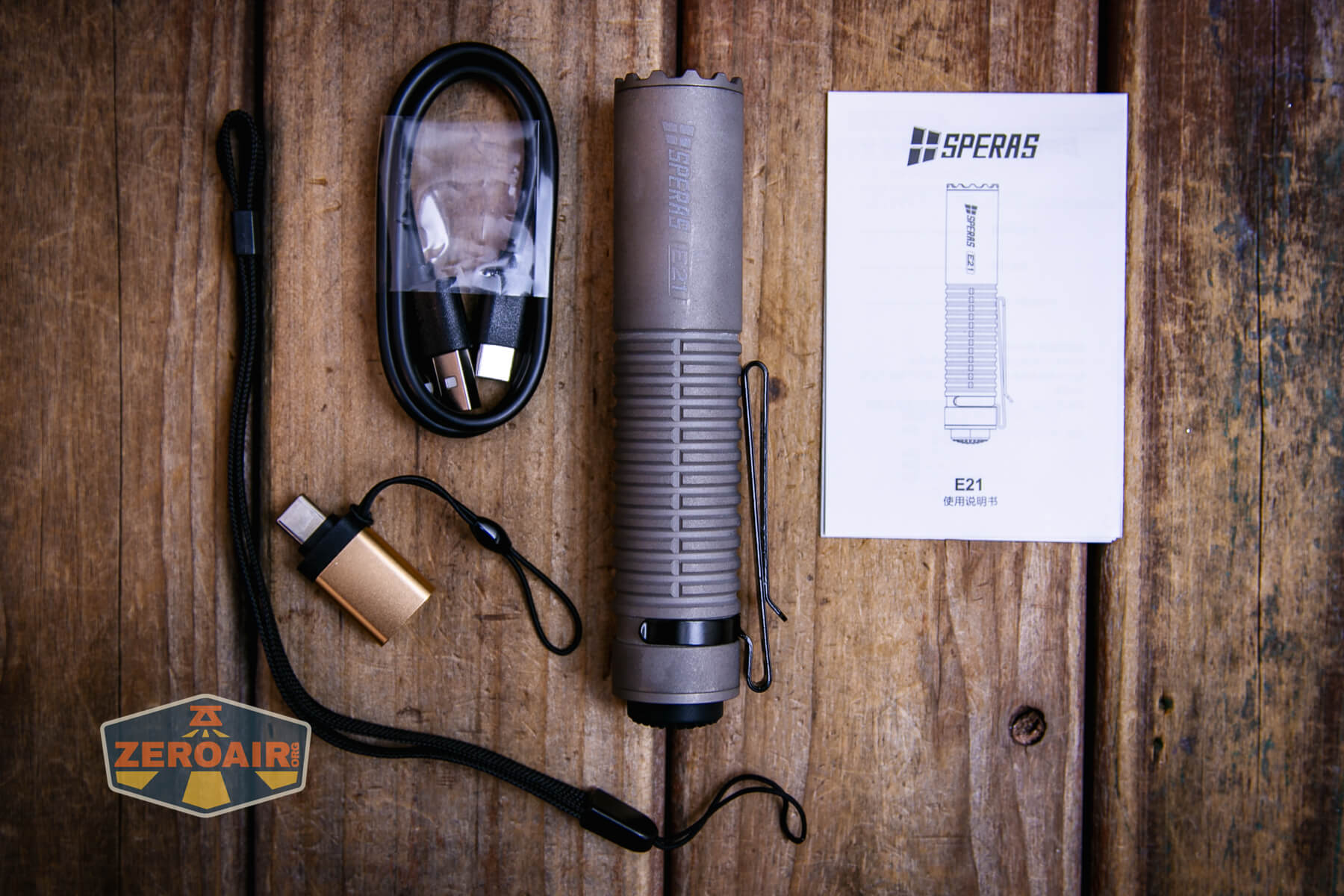
- Speras E21 titanium flashlight
- Charging cable (USB to USB-C)
- USB-C to female USB for powerbank usage
- Lanyard
- Manual
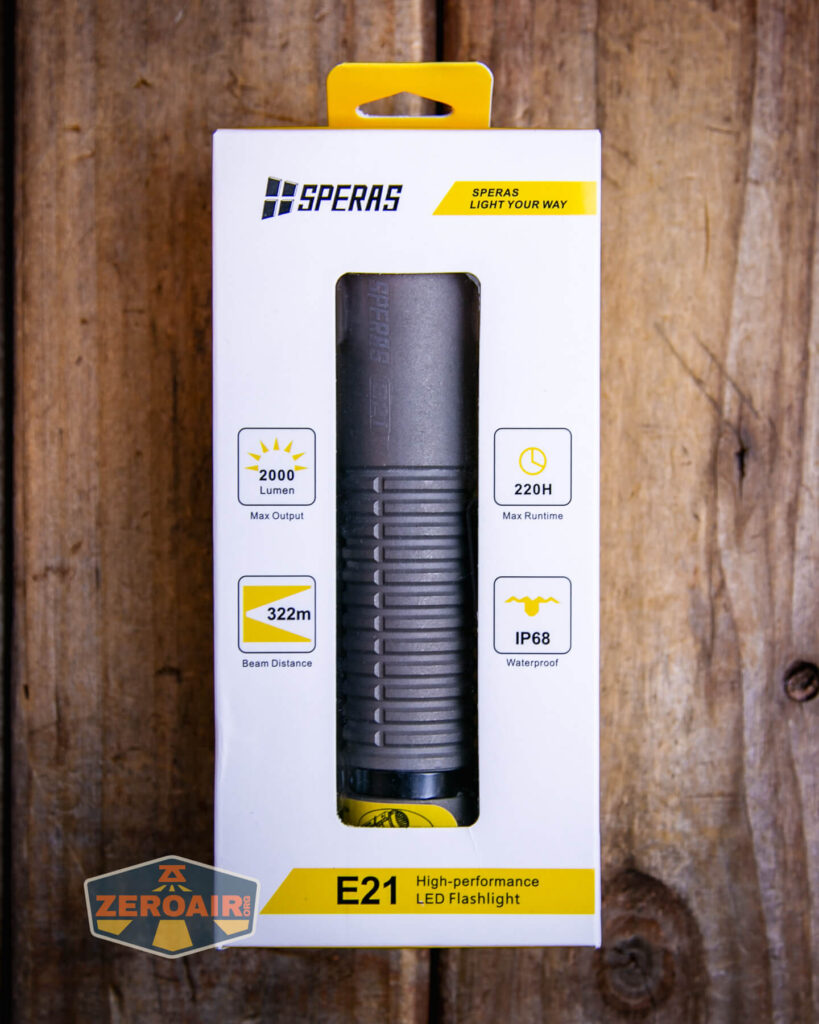
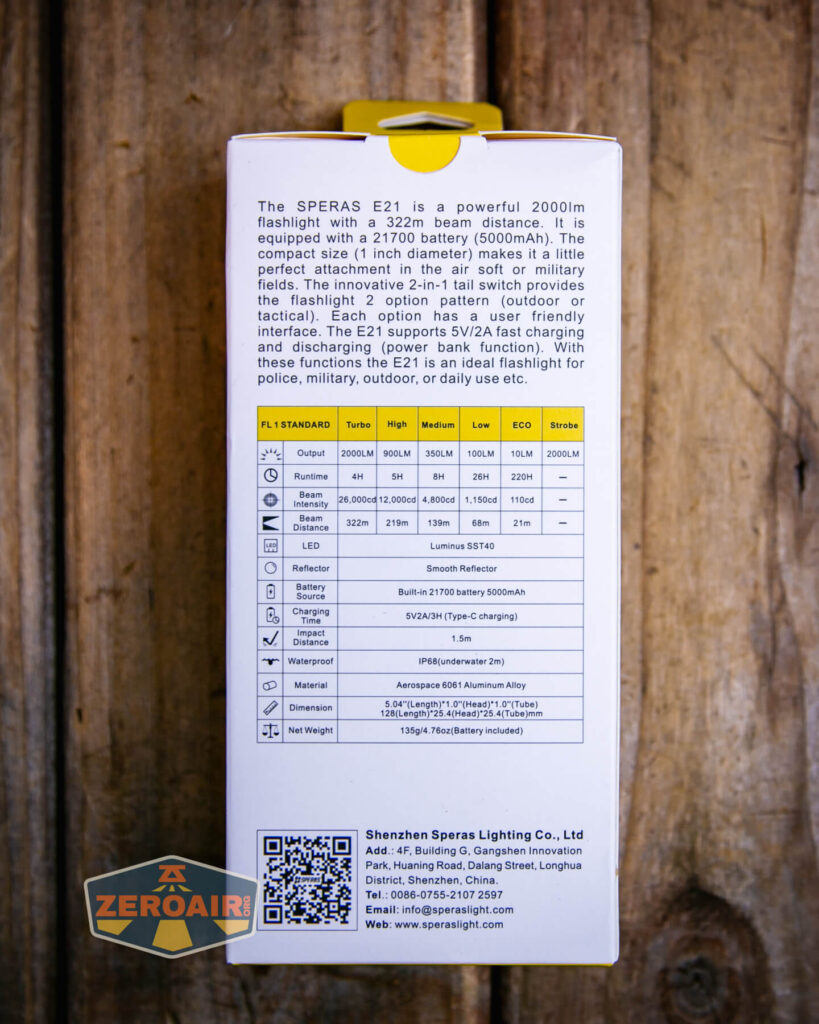
Package and Manual
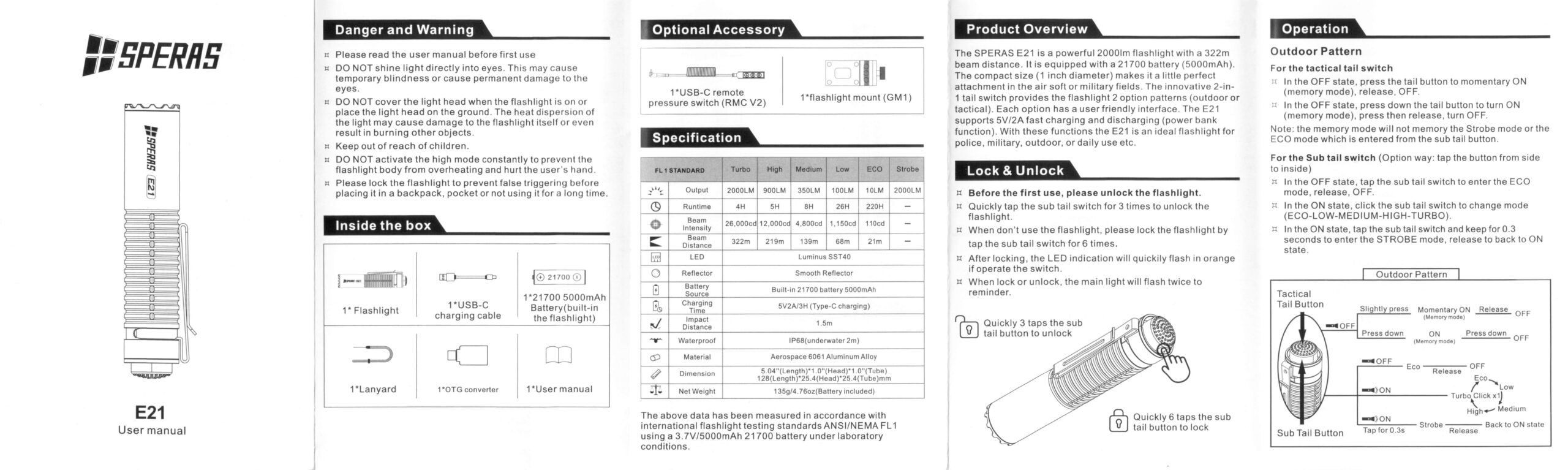
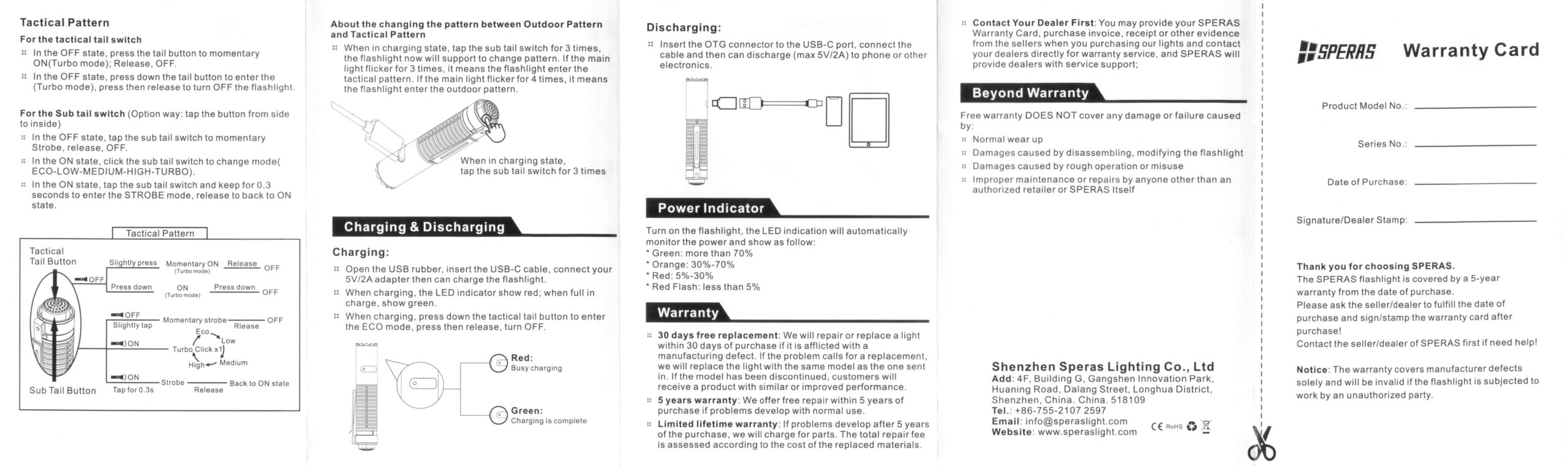
Build Quality and Disassembly

I’ve tested the aluminum Speras E21, and it’s a very nice light! Good enough that I requested this titanium version from Speras (and also because now I get to show the full kit, not just the Kickstarter preview version).
The Speras E21 titanium flashlight is well-built and solid. Not much more to say about build quality here (more later on specifics).
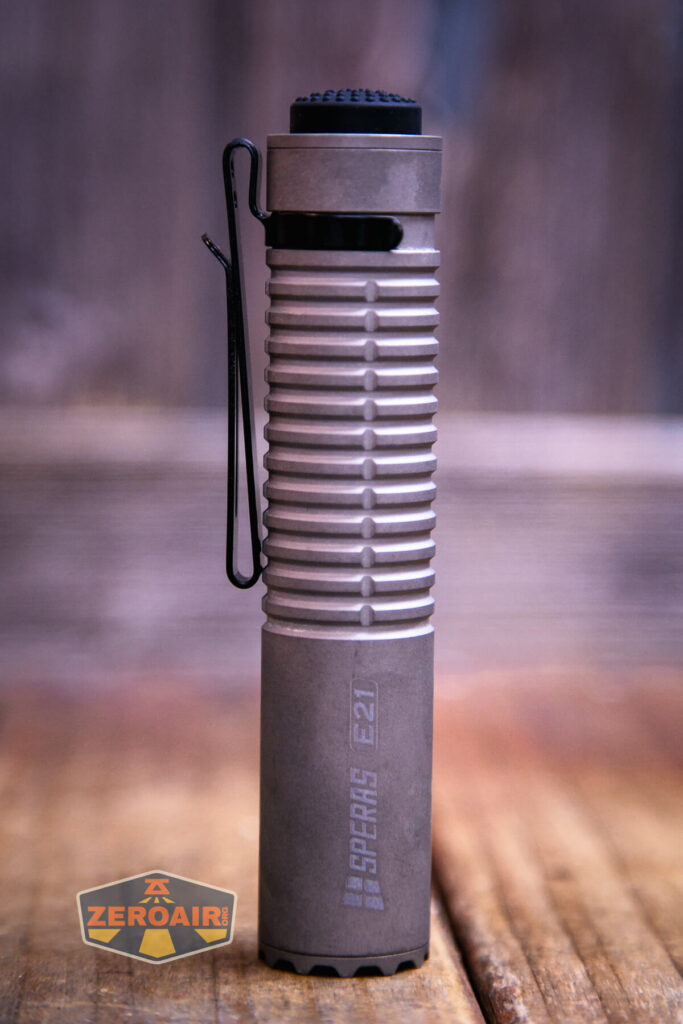
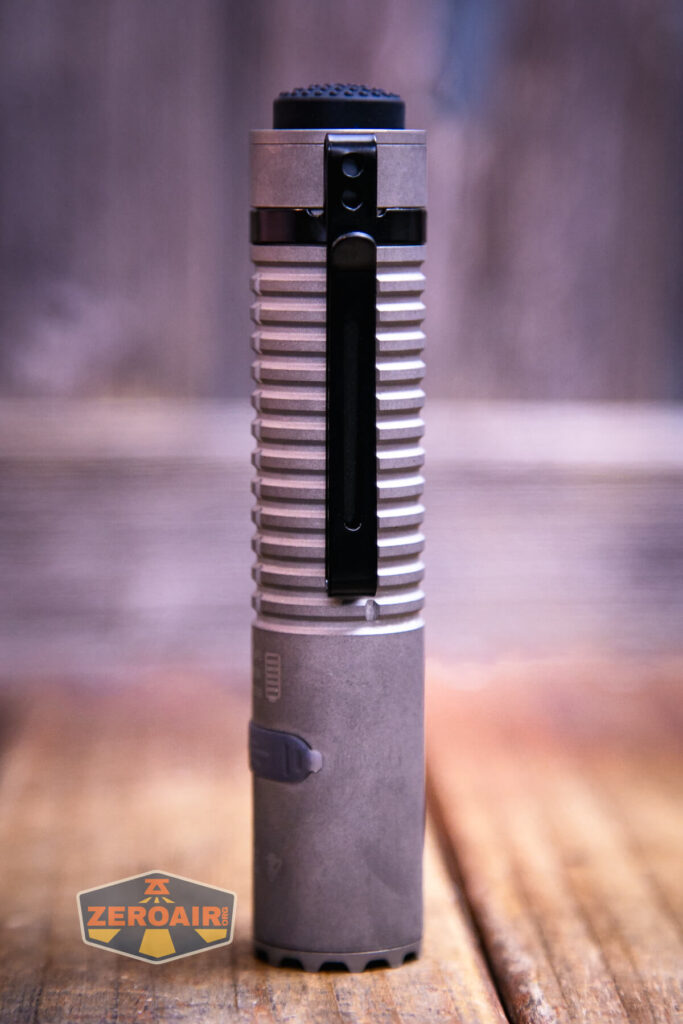
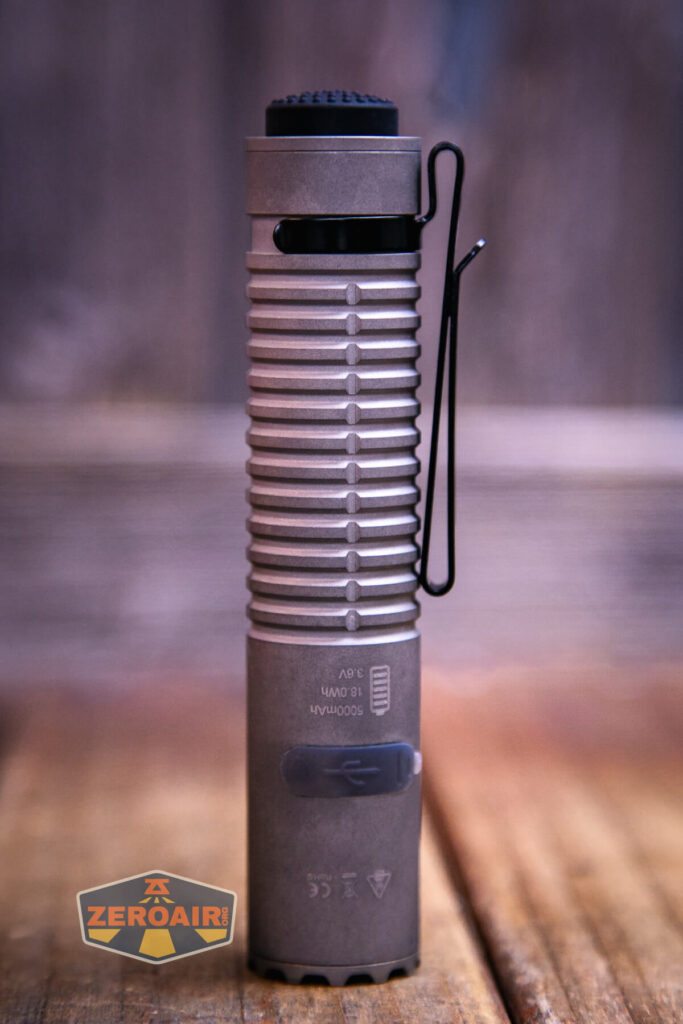
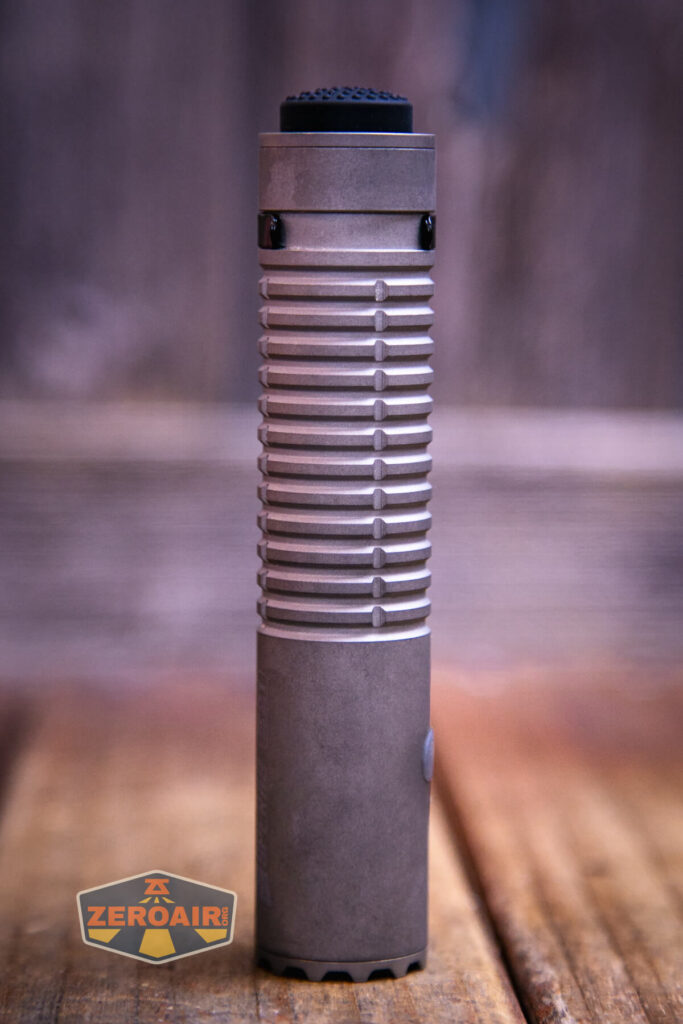
The E21 in titanium specifically (but not necessarily all Speras lights) has one specific downside: the cell is built in. As far as I could tell, the parts do not separate at all (at least with consumer-level effort).
Size and Comps
Length: 128mm
Head and tail diameter: 25.4mm
Weight: 135g (including the cell, of course, since it’s built in) (this weight is probably for the aluminum version, though.)
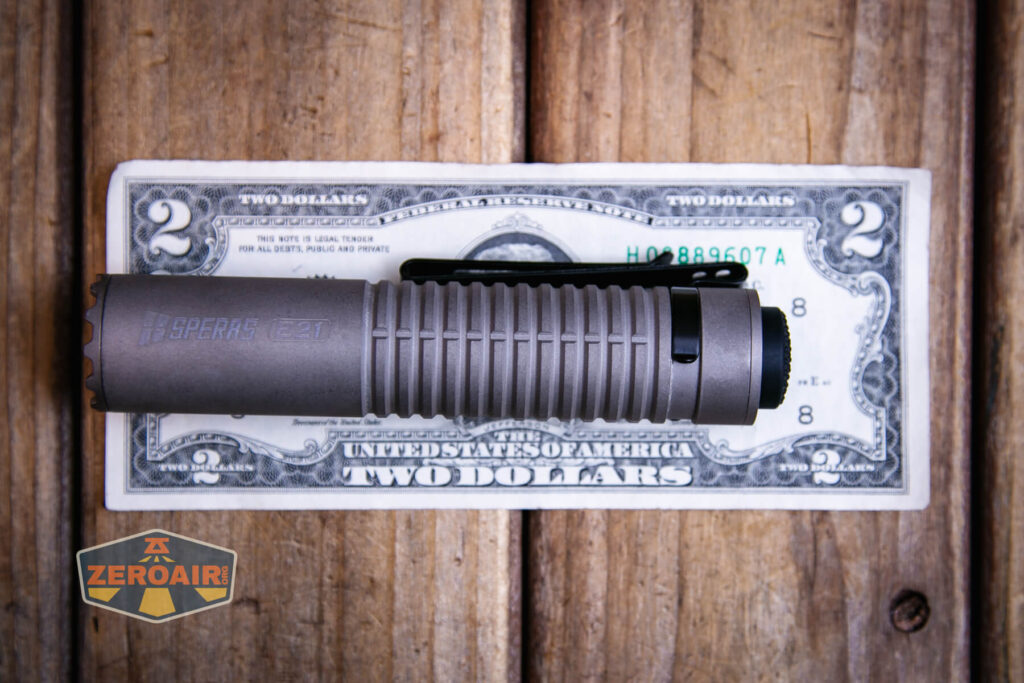
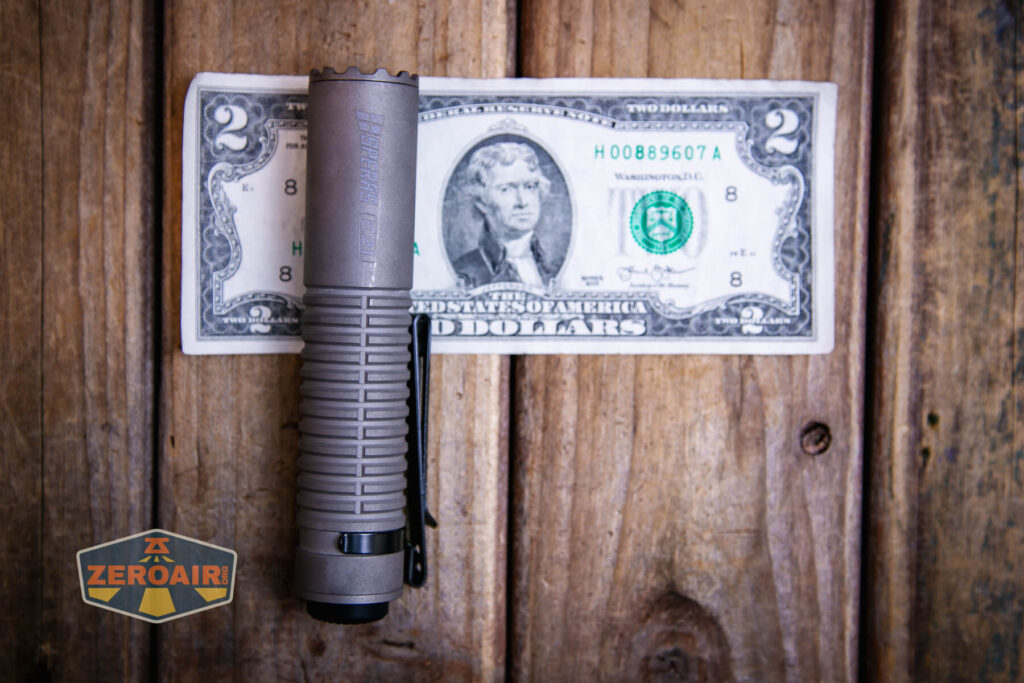
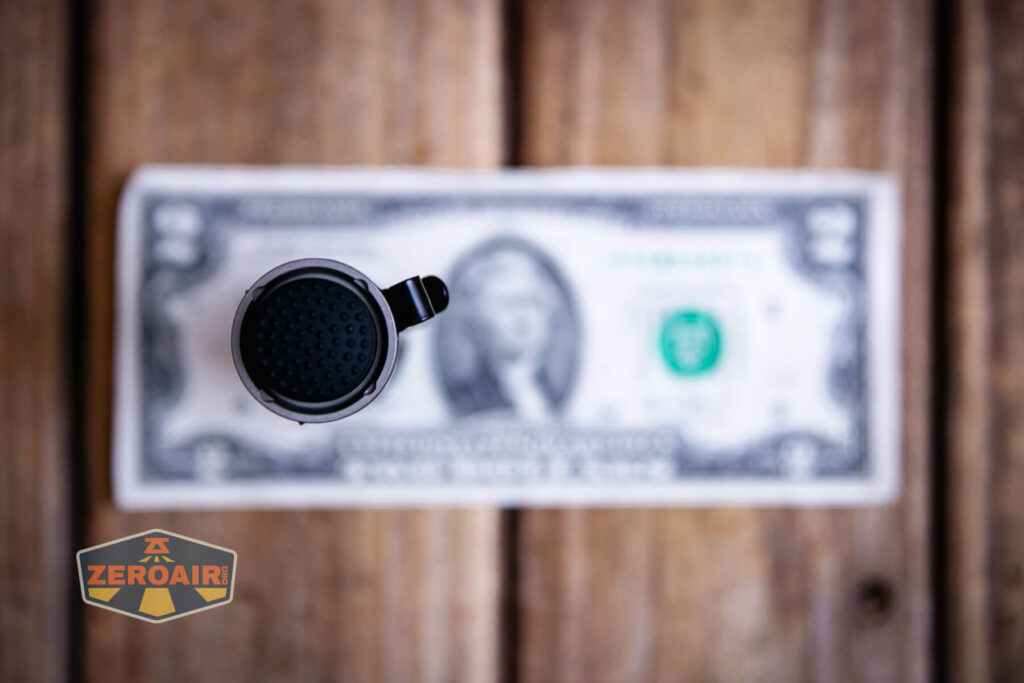
If the flashlight will headstand, I’ll show it here (usually the third photo). If the flashlight will tailstand, I’ll also show that (usually in the fourth photo).
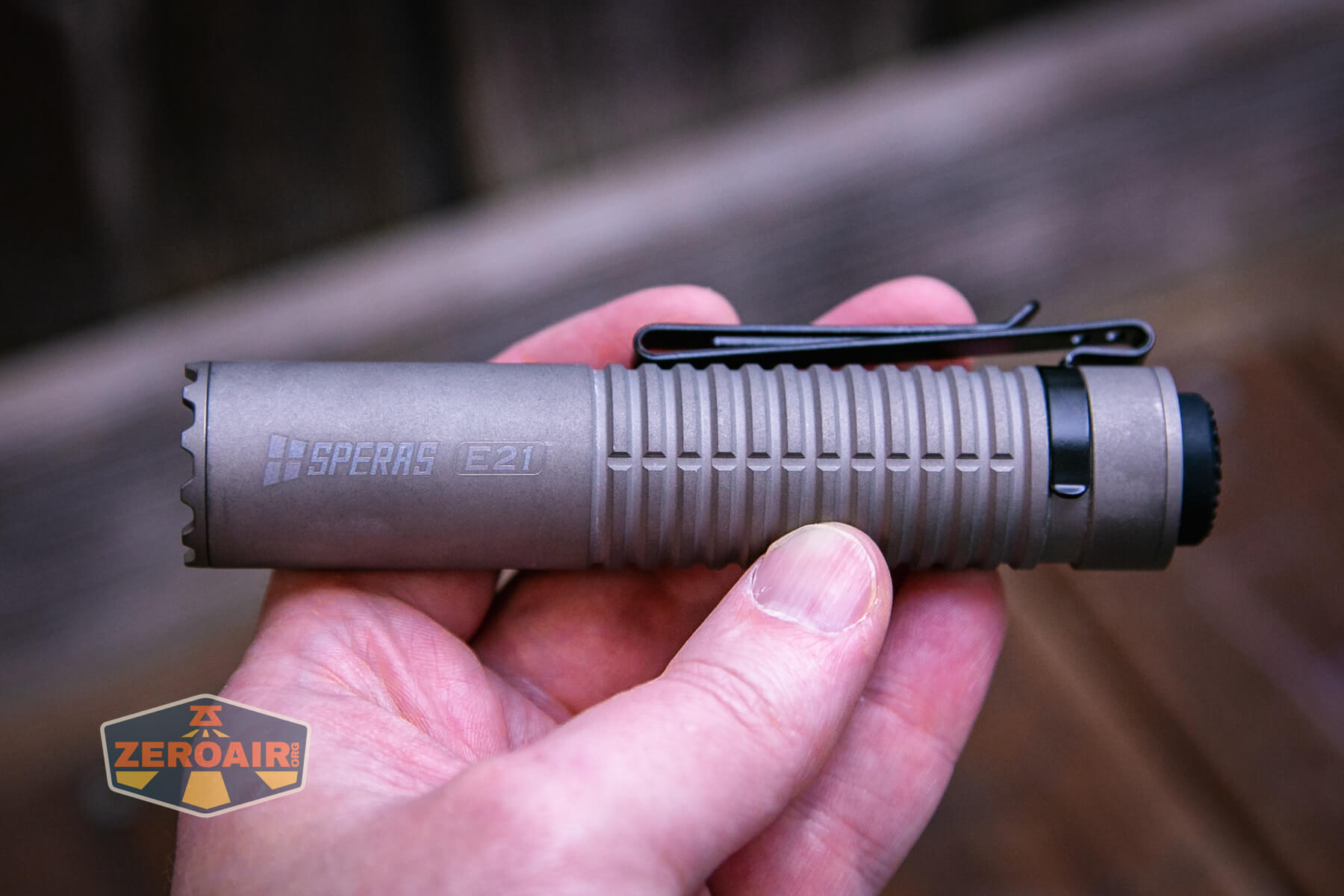
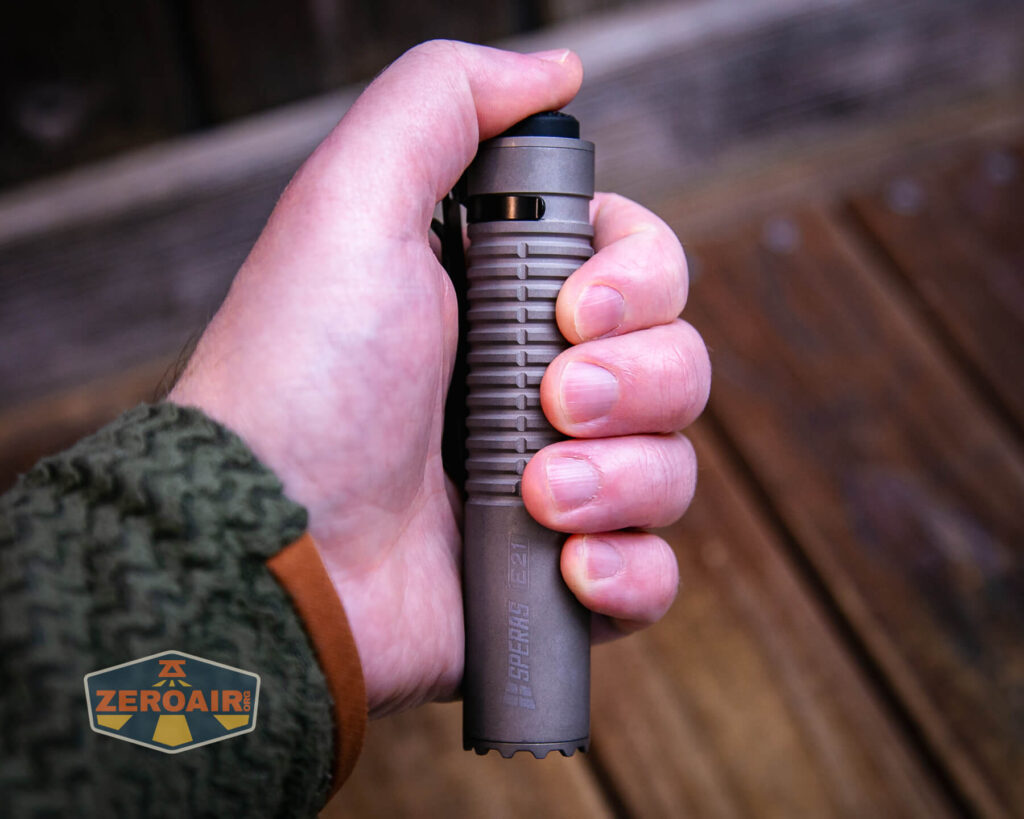
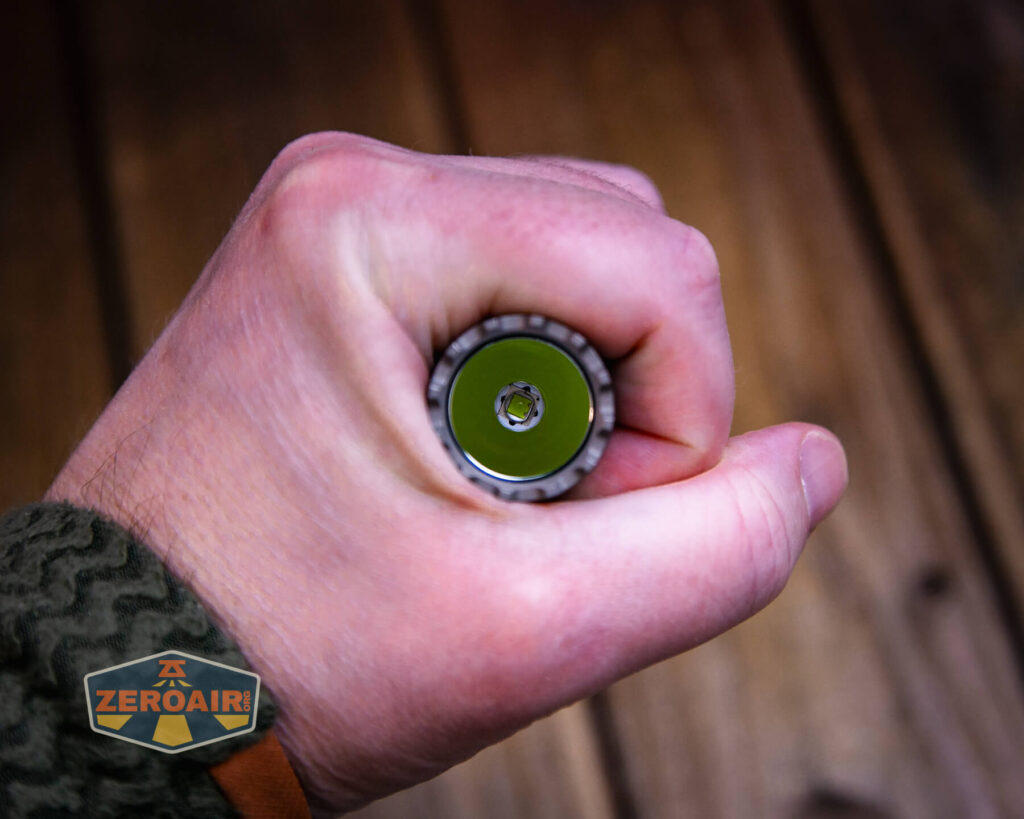
Here’s the test light with the venerable Convoy S2+. The version you see below is a custom Convoy S2+ host that’s been laser engraved by GadgetConnections.com. I did a full post on an engraved orange host right here! Or go straight to GadgetConnections.com to buy your Convoy S2+ now!
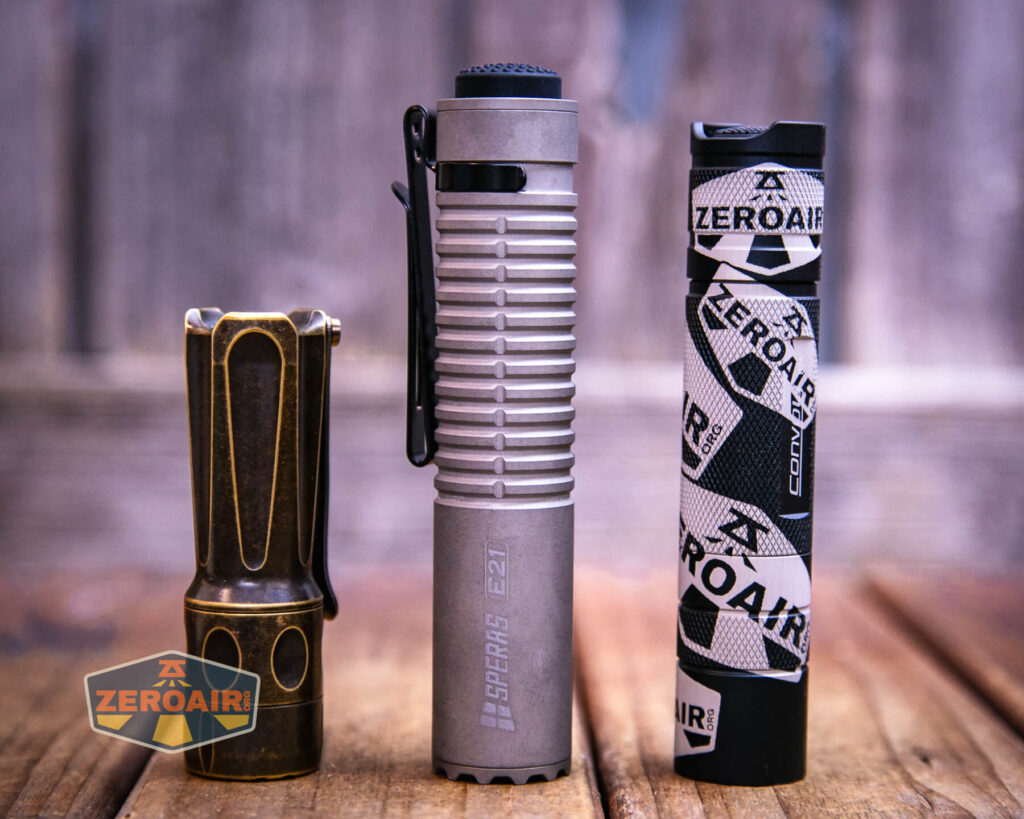
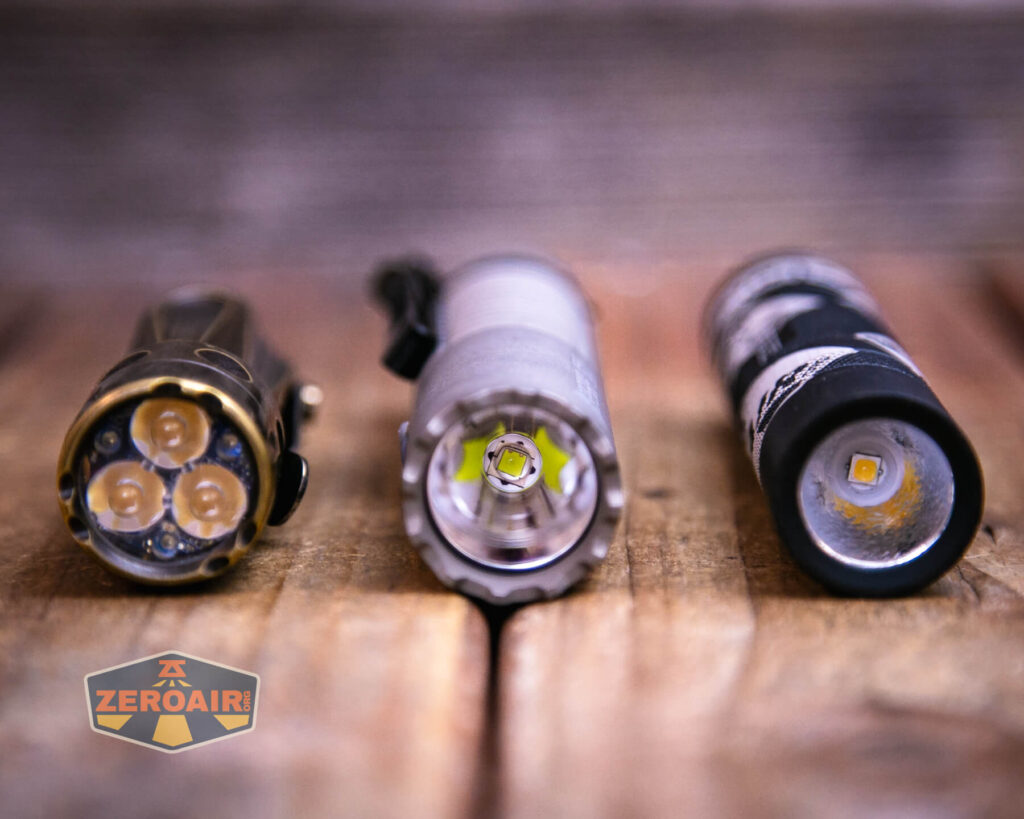
Also above is the light beside a TorchLAB BOSS 35, an 18350 light. I reviewed the aluminum version of that light in both 35 and 70 formats. I also reviewed that specific edition, the “Oveready BOSS FT Collector Vintage Brass” 35. I love it!
Retention and Carry
A pocket clip is included and attached from the factory. It’s a fairly standard two-way friction fit clip.
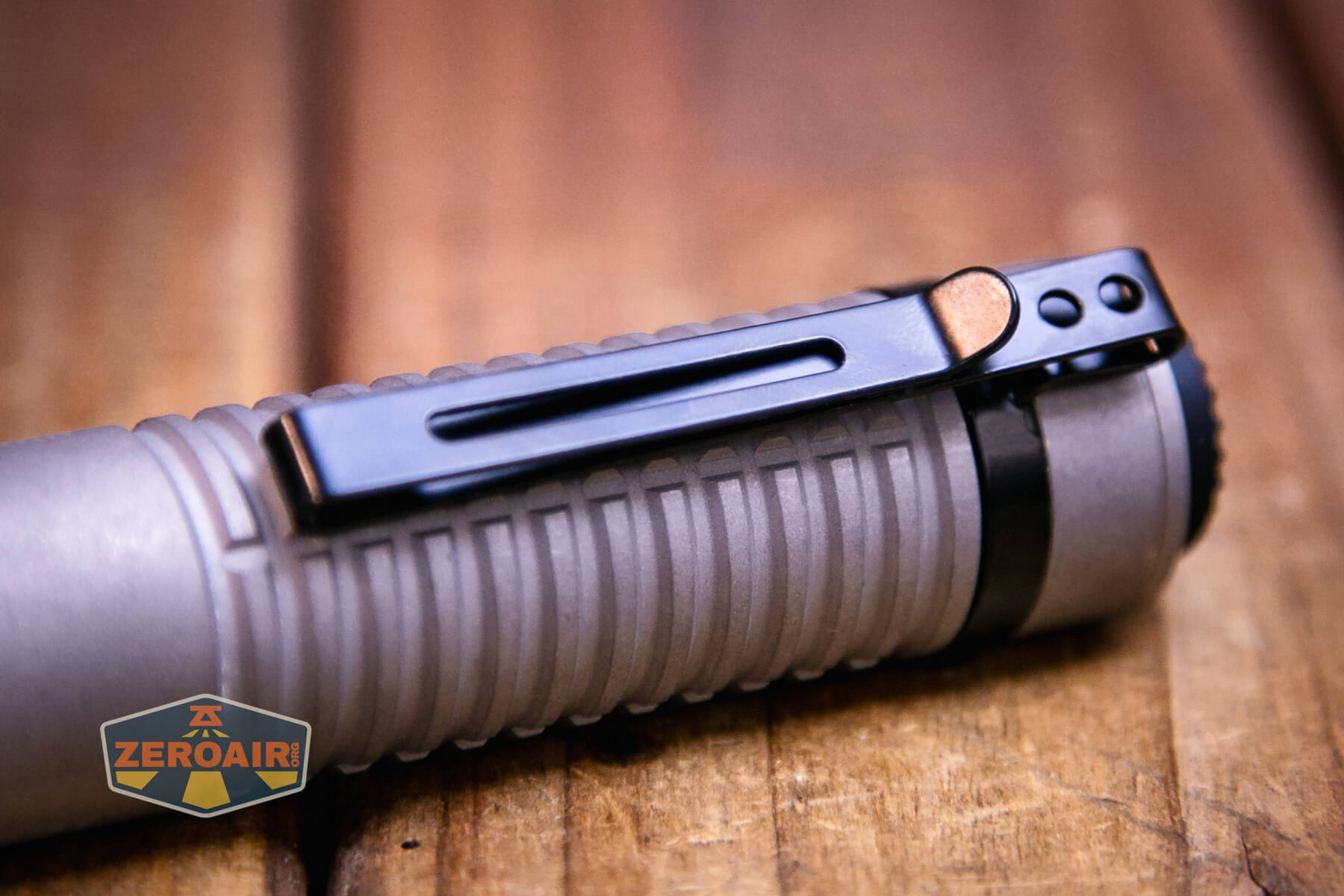
Attachment seems secure enough, but the clip is removable.
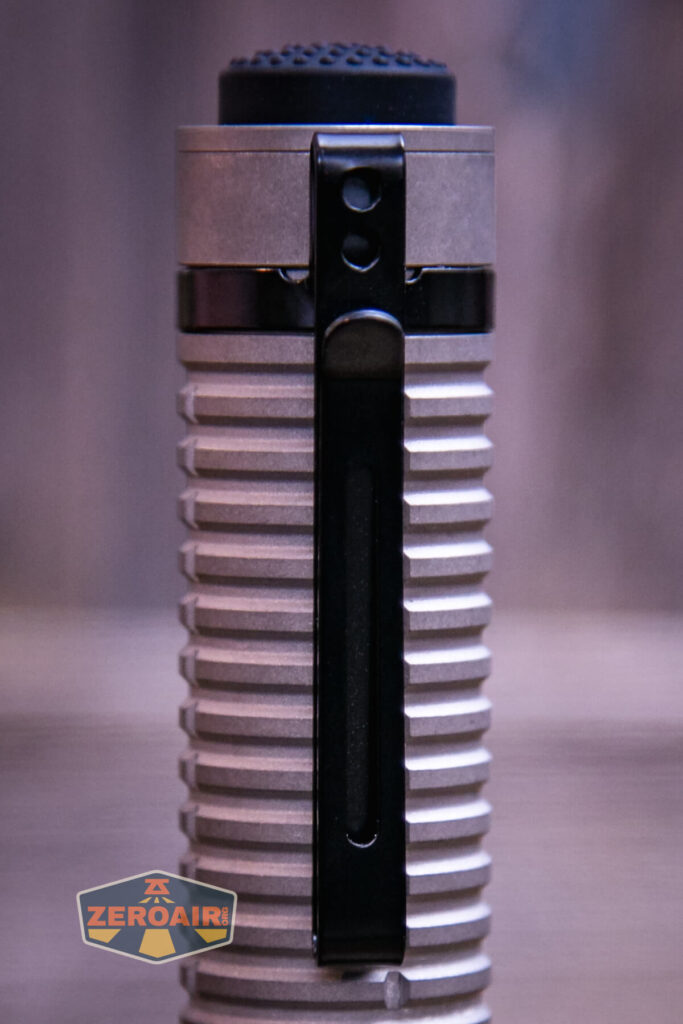
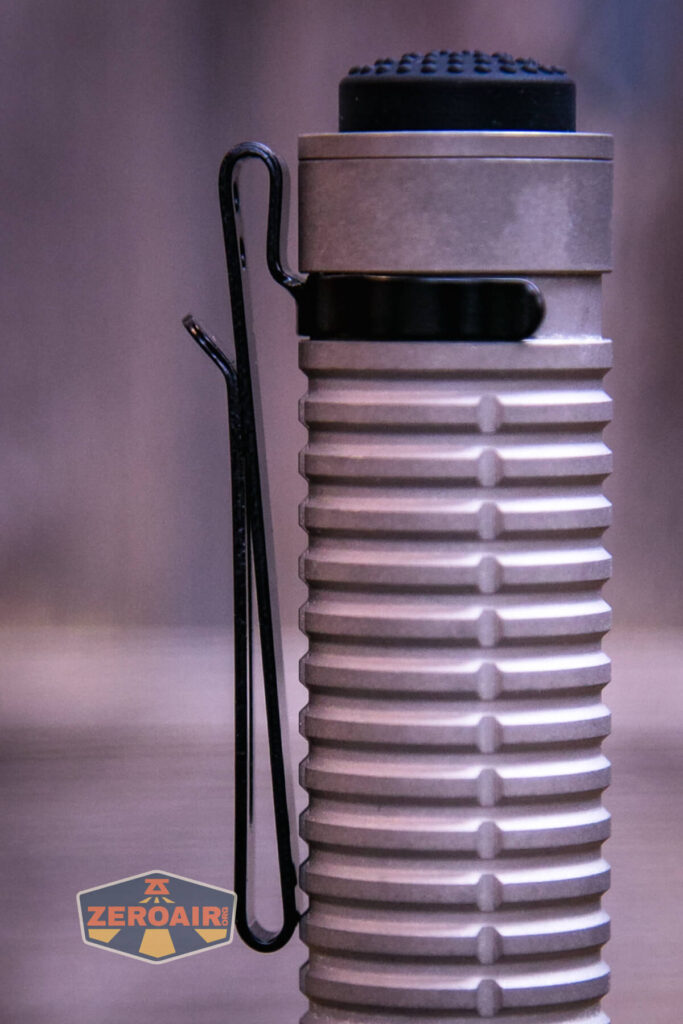
As you can see above, the clip has a hole in the shoulder to attach the included lanyard. This is the only place to attach the lanyard.
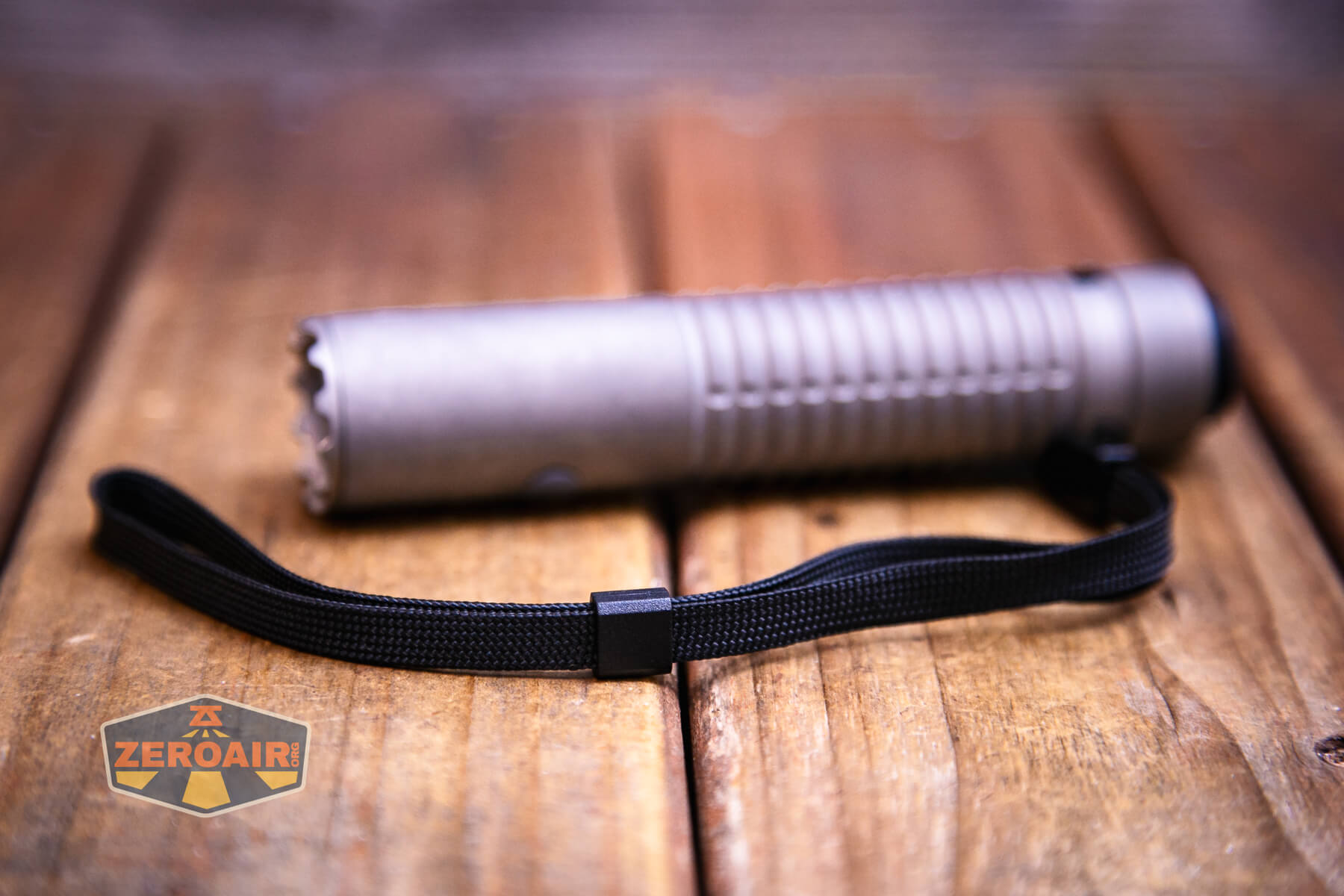
Nothing else is included for carrying the E21.
Power and Runtime
Power is provided to the E21 by a built-in 5000mAh 21700 cell. As far as I know, the cell is not user-replaceable. Obviously, the cell went into the light somehow, so with the right attitude, you might be able to swap it. But in general, you won’t be doing this in the field.
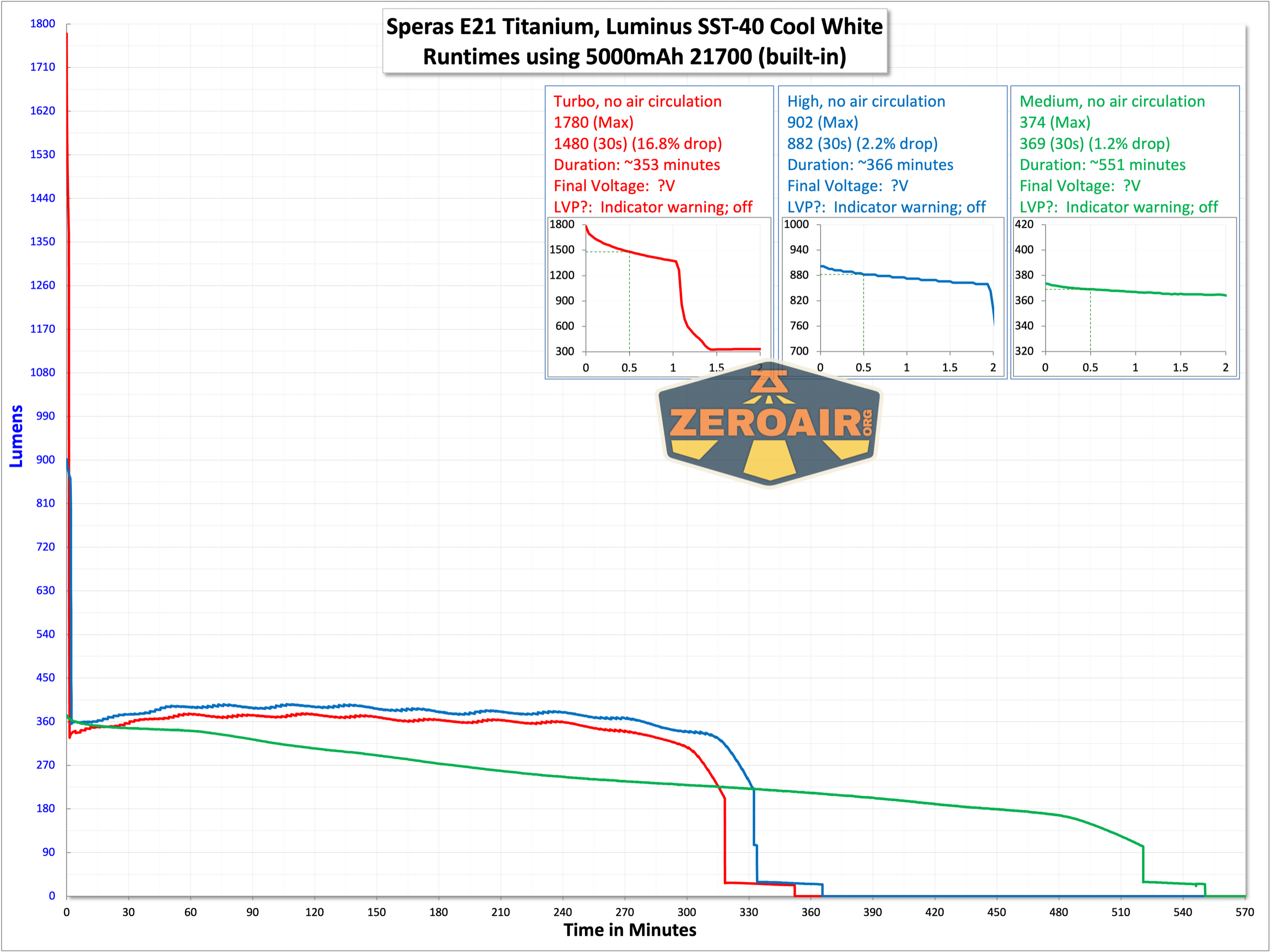
Three runtime tests are below. Turbo steps down pretty quickly, but still holds around 1500 or so lumens for a full minute. That’s pretty good.
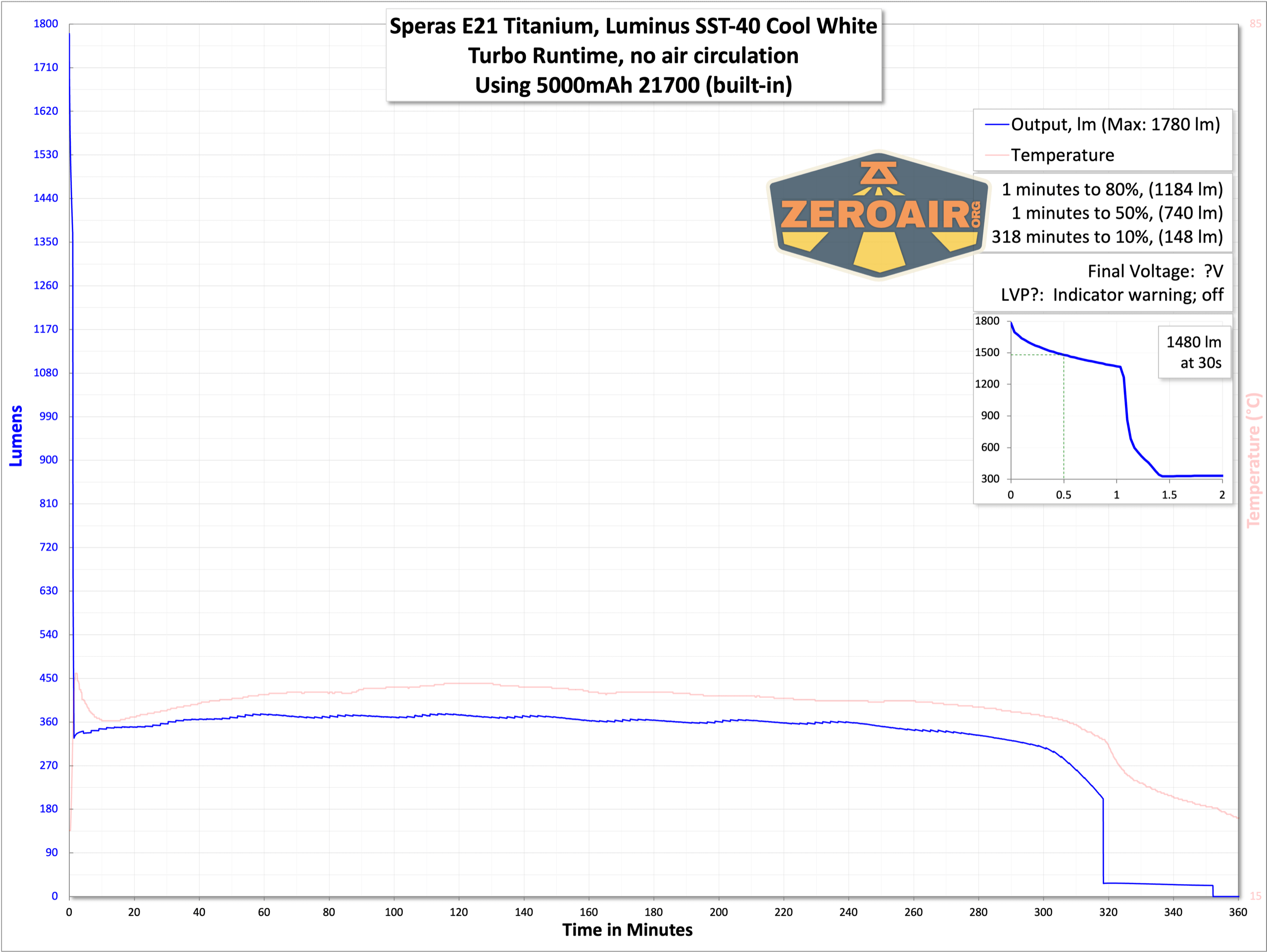
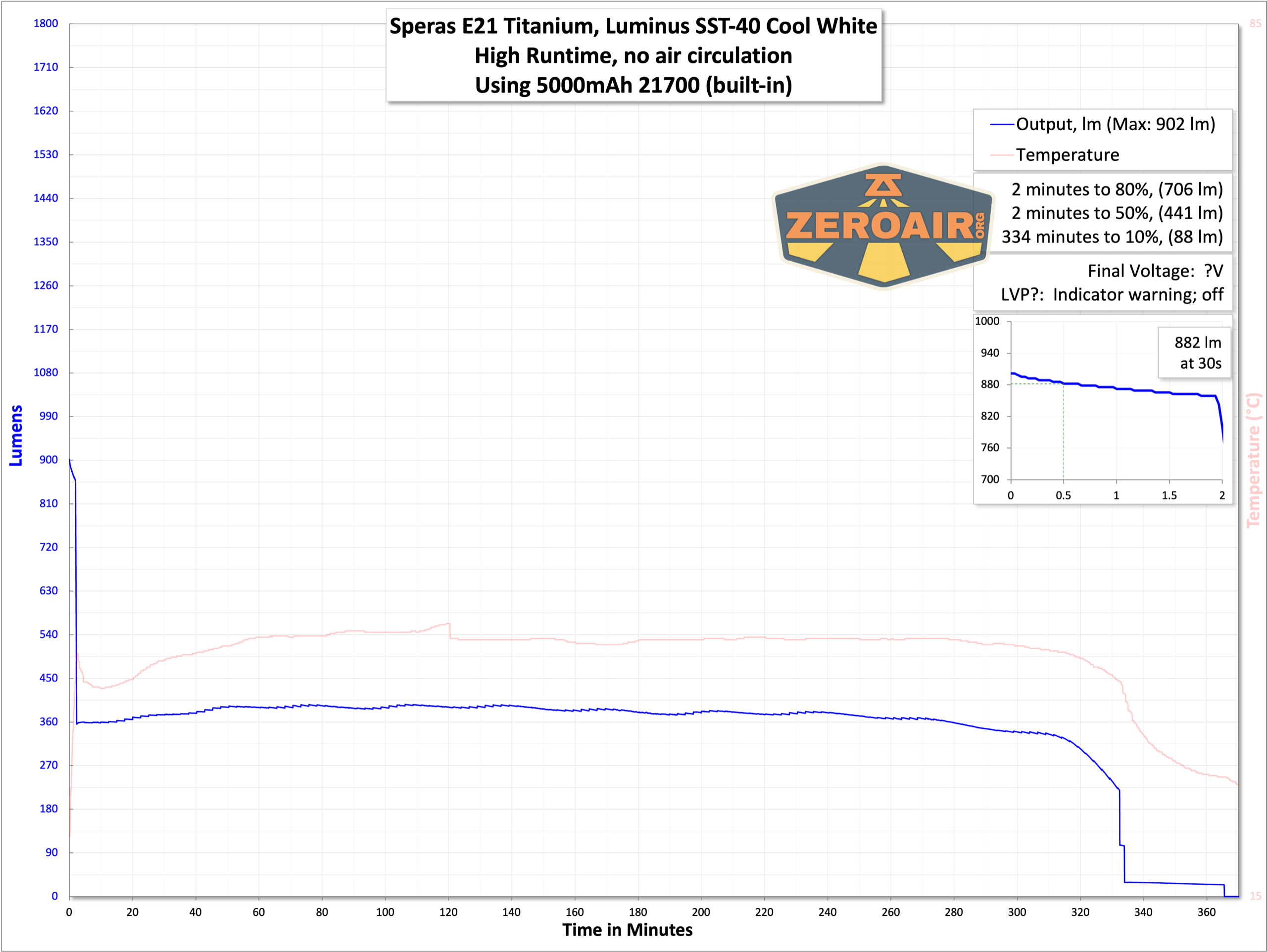
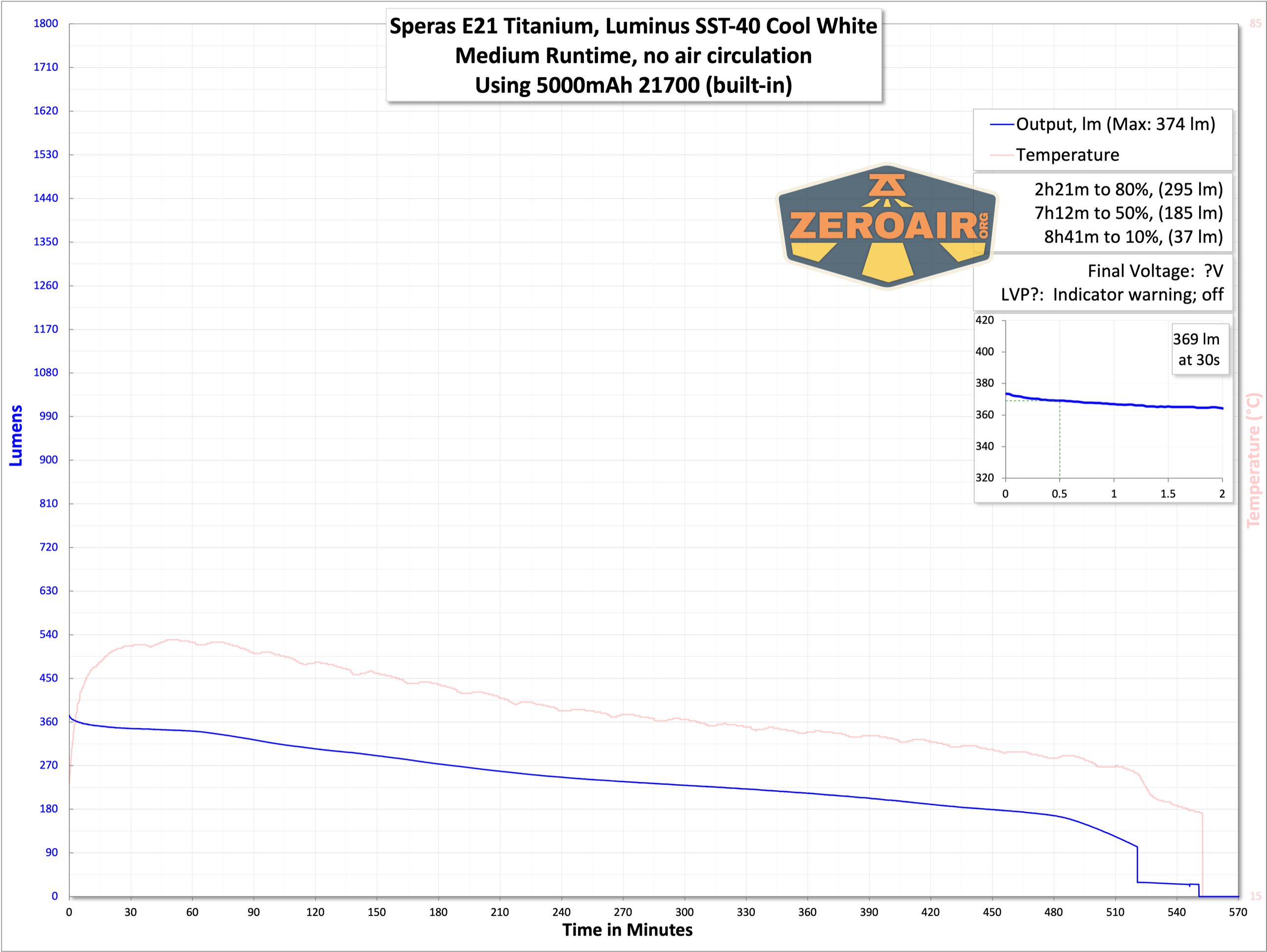
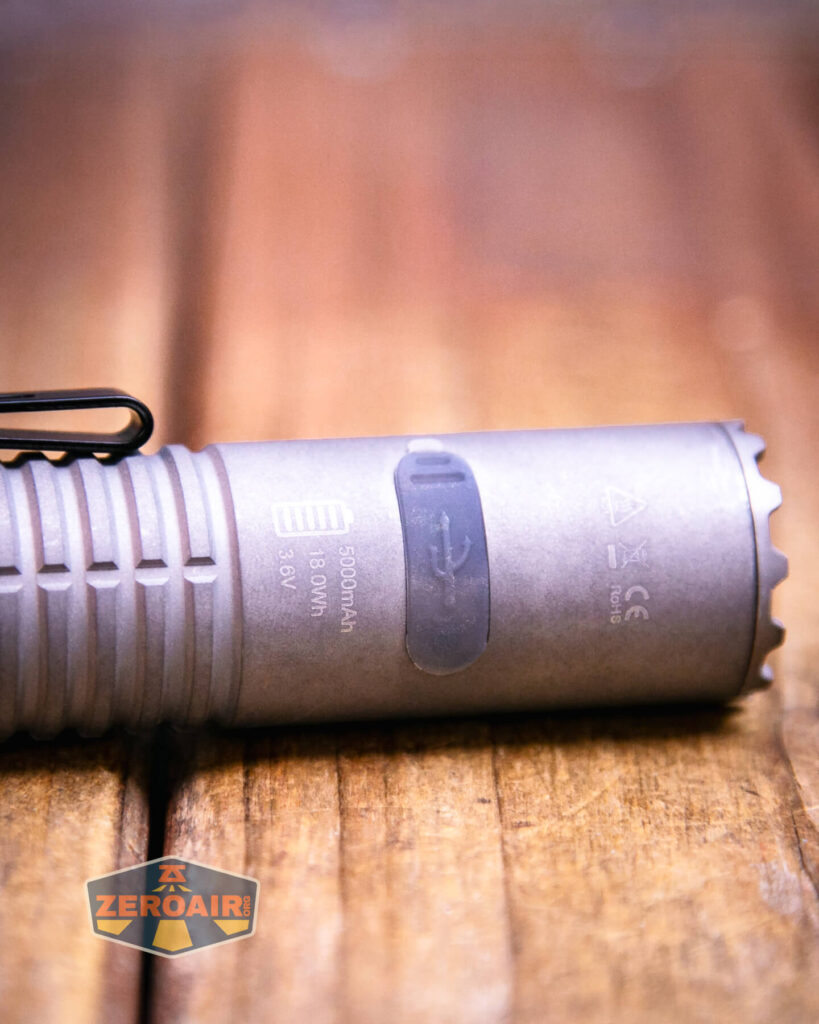
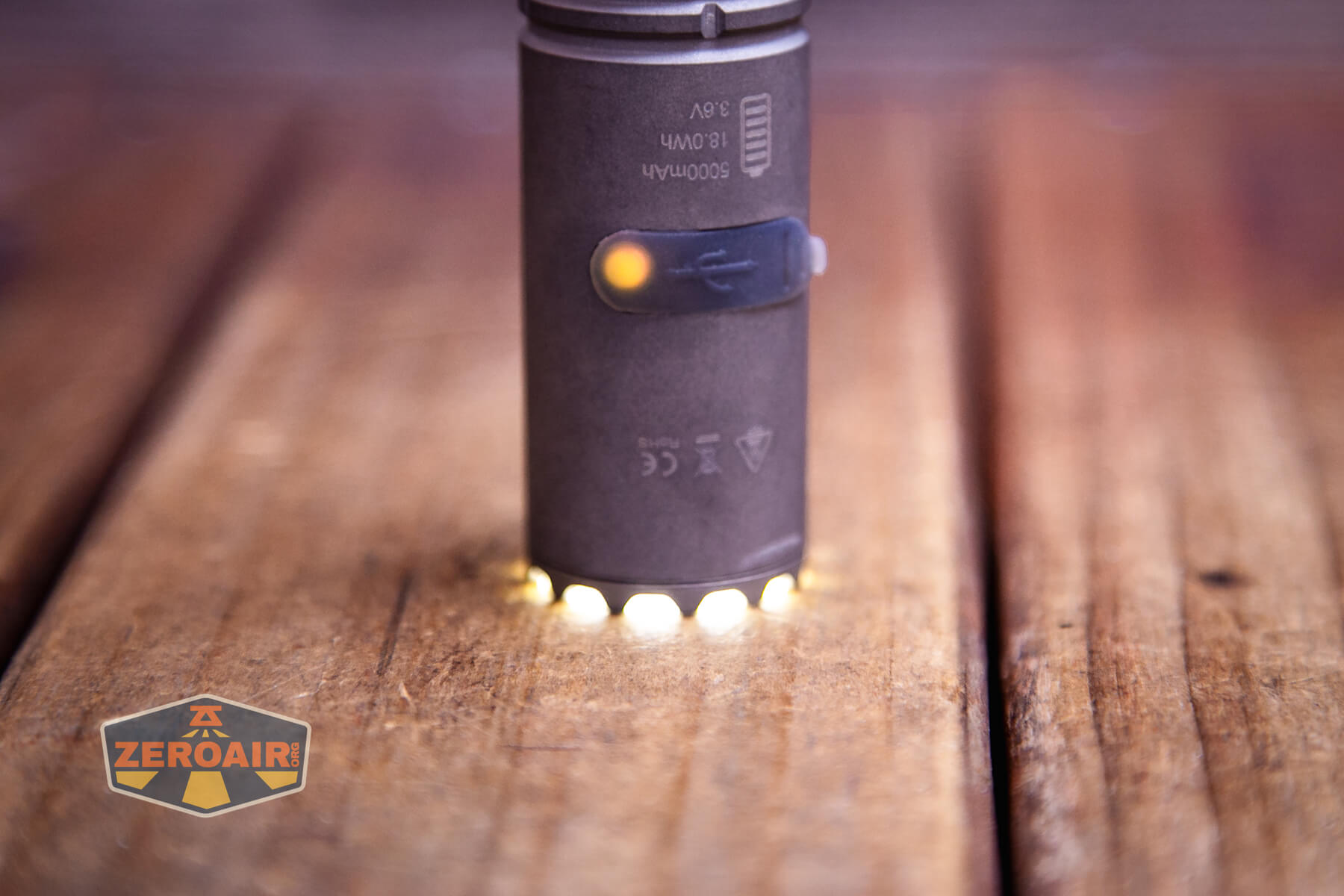
When the cell voltage is low, an indicator near the charging port blinks red. The indicator is right at the pivot point of the charging port cover, but it is conspicuous when blinking red.
Charging
Of course, with a built-in 21700 comes built-in charging. This charging is by way of a USB-C port on the head end of the Speras E21 titanium flashlight.

A cable is included: USB to USB-C.
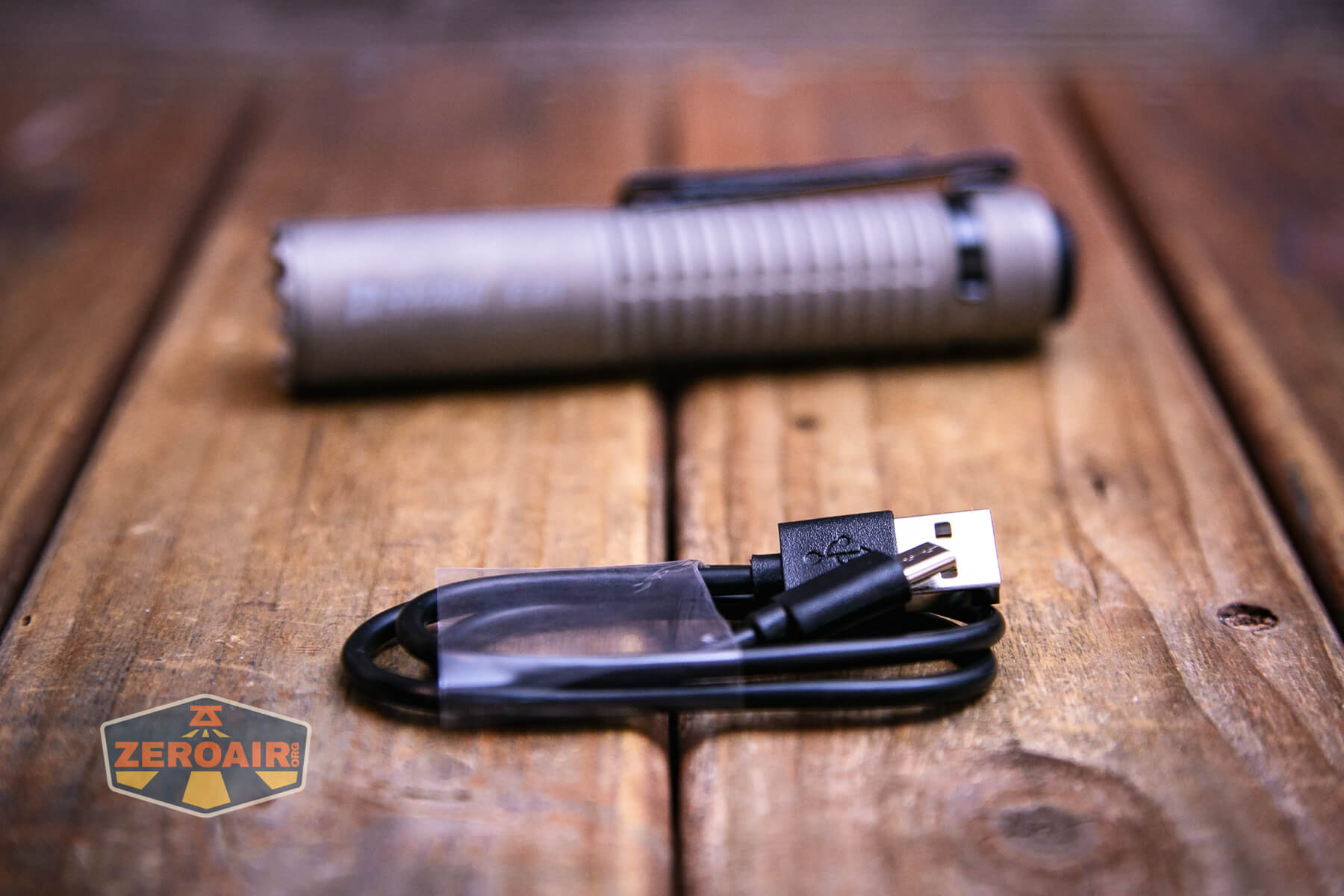
Charging works just fine and is brisk at around 2.75 hours.
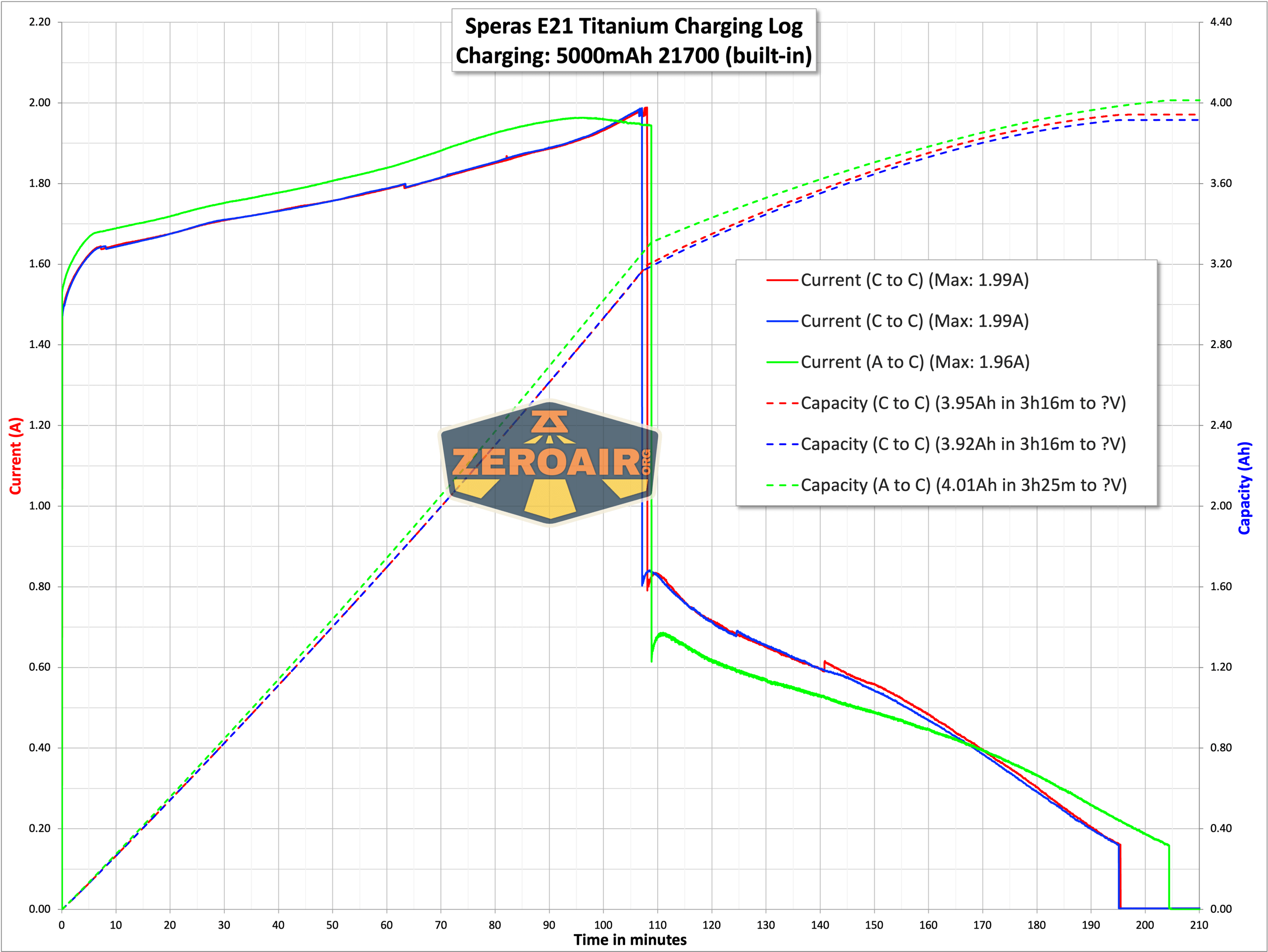
While charging, the red indicator (the same one that activates during runtimes) blinks red. When charging is complete, this indicator stays lit in green.
Powerbank
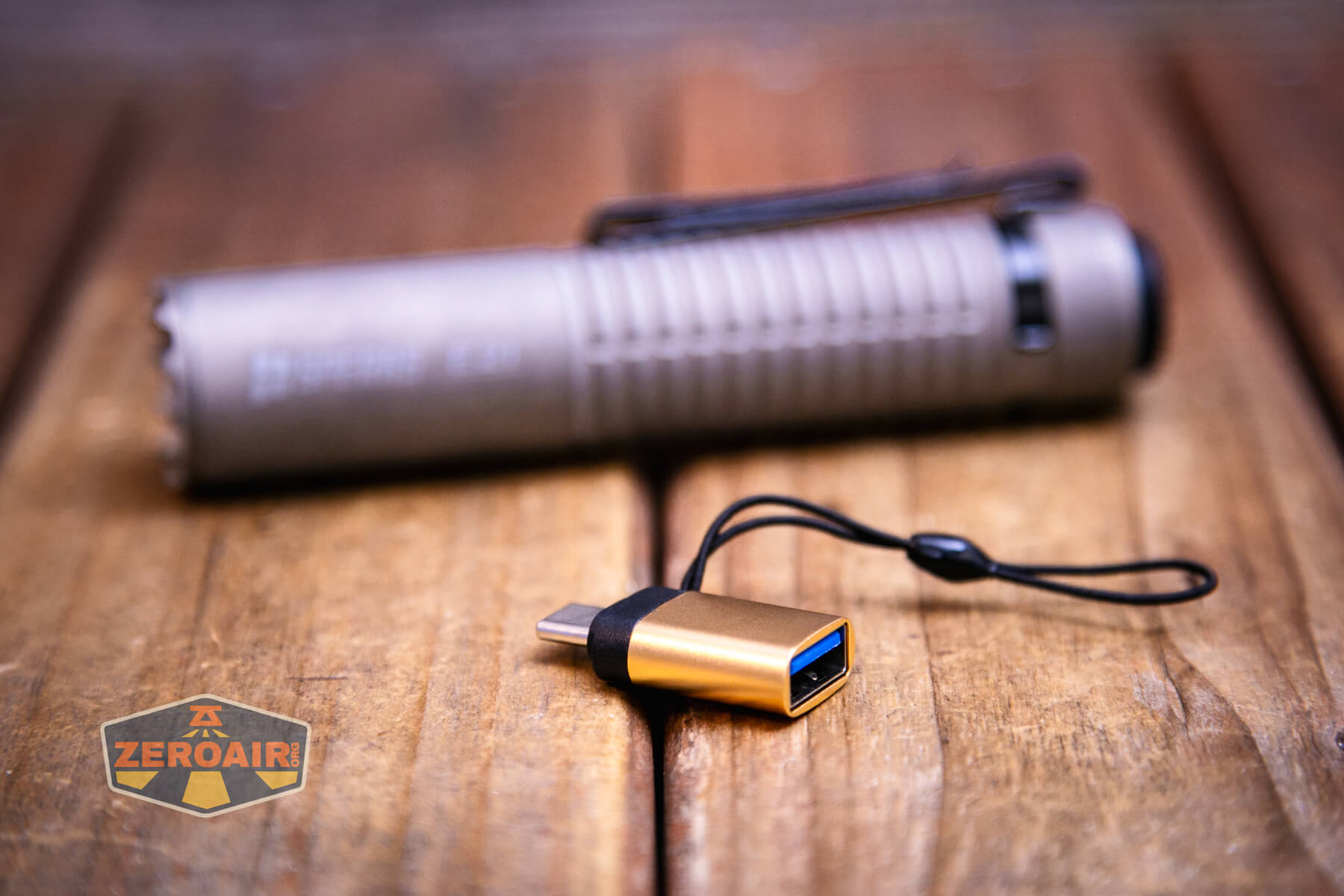
The USB-C charging port can also discharge the built-in 21700 – it can serve as a powerbank. Speras includes this male USB-C to female USB adapter, so you’d be able to use your common cables for phone charging or whatever. But C to C output works fine too (and in fact, is what I tested.)
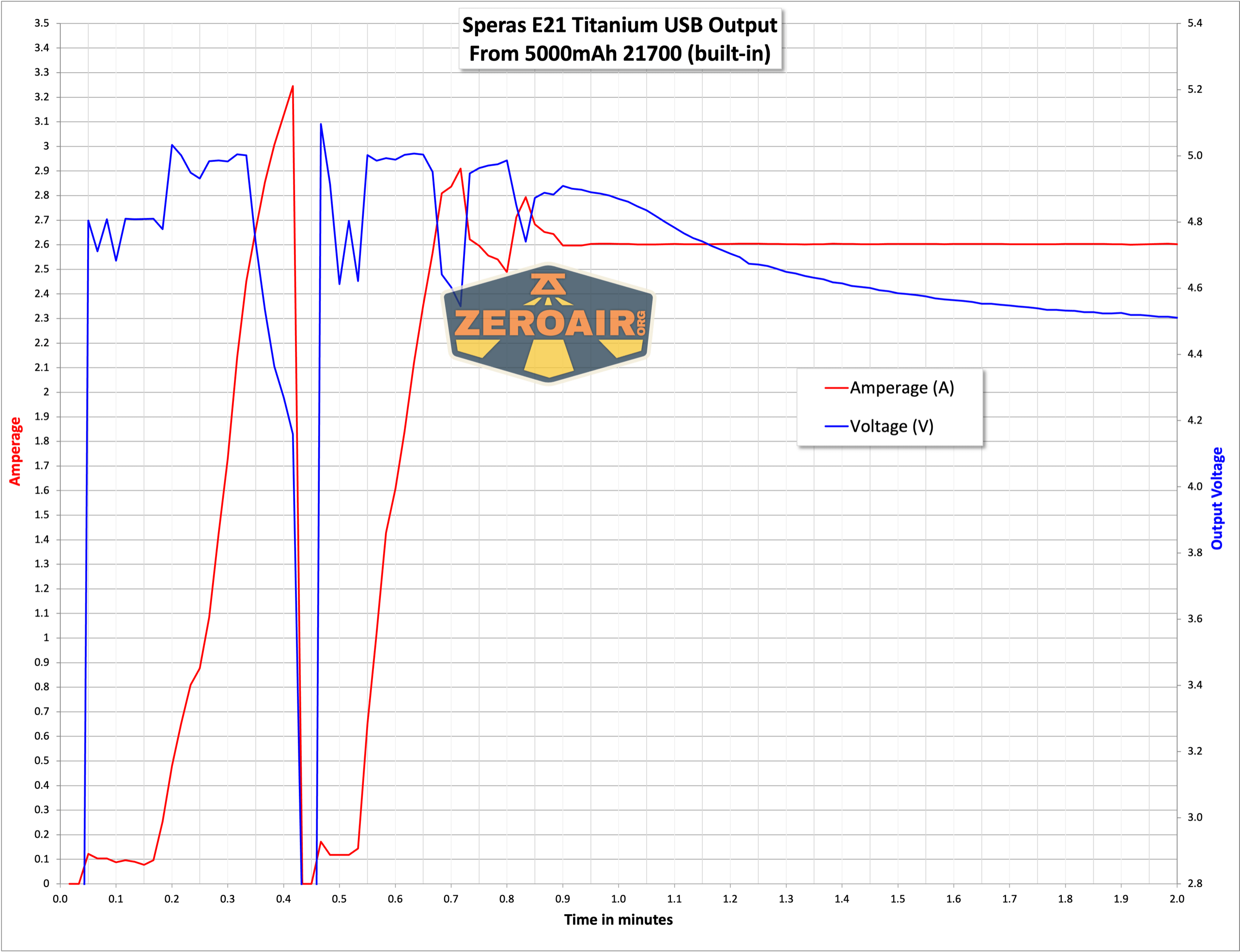
The USB-C port can output around 3A, but is most comfortable around 2A (as the manual says).
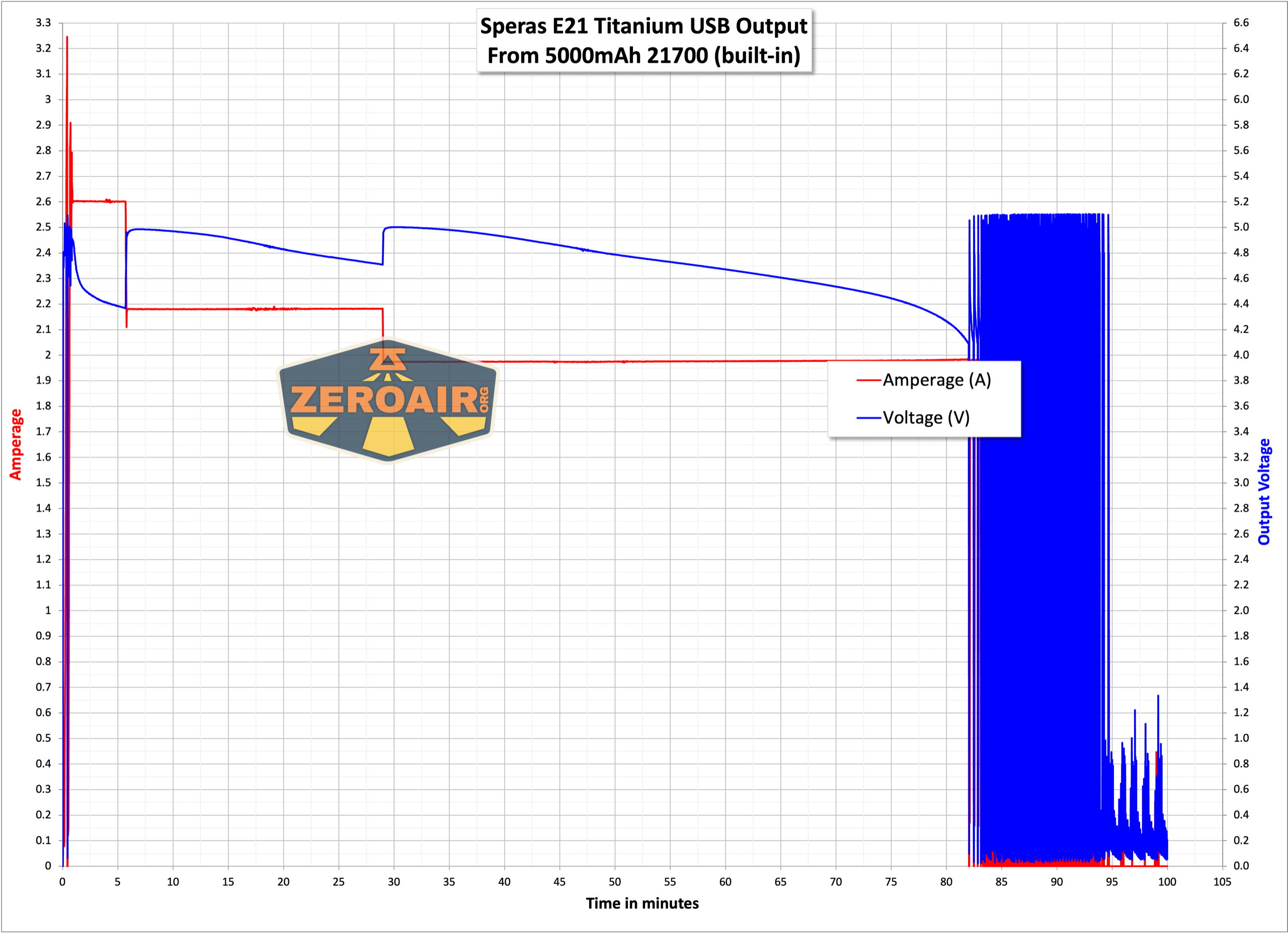
When the cell gets low, the powerbank will shut off. It does seem to continue pinging the output, but that is probably just my test equipment. Anyway, the powerbank feature works fine.
Modes and Currents
| Mode | Mode Claimed Output (lm) | Claimed Runtime | Measured Lumens |
|---|---|---|---|
| Turbo | 2000 | 4h | 1780 (os) 1480 (30s) |
| High | 900 | 5h | 900 |
| Medium | 350 | 8h | 370 |
| Low | 100 | 26h | 106 |
| Eco | 10 | 220h | 13.6 |
Pulse Width Modulation
The sawtooth observed below is probably not real PWM, and is so fast you’re very unlikely to see it anyway.
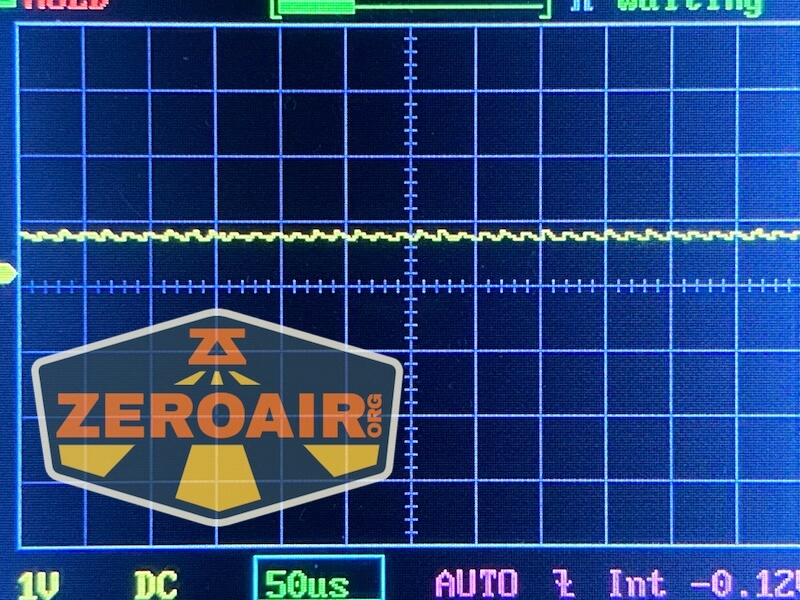
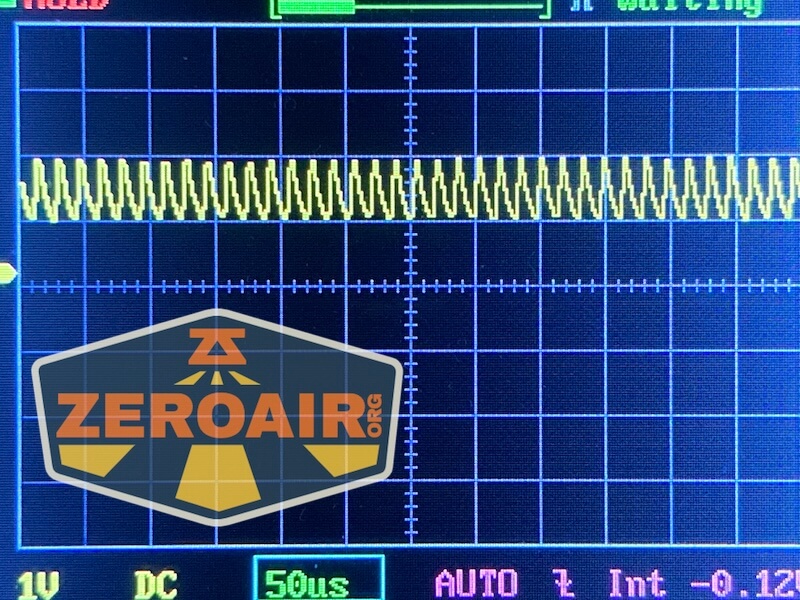
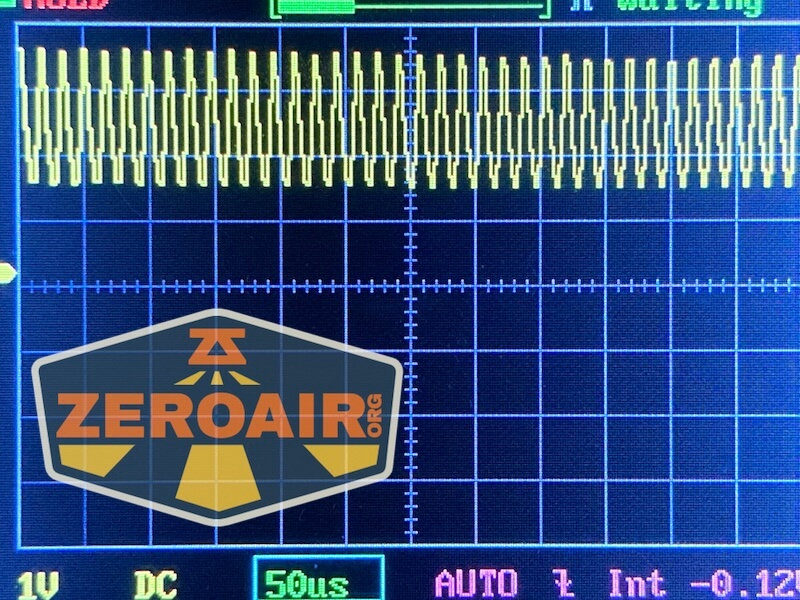
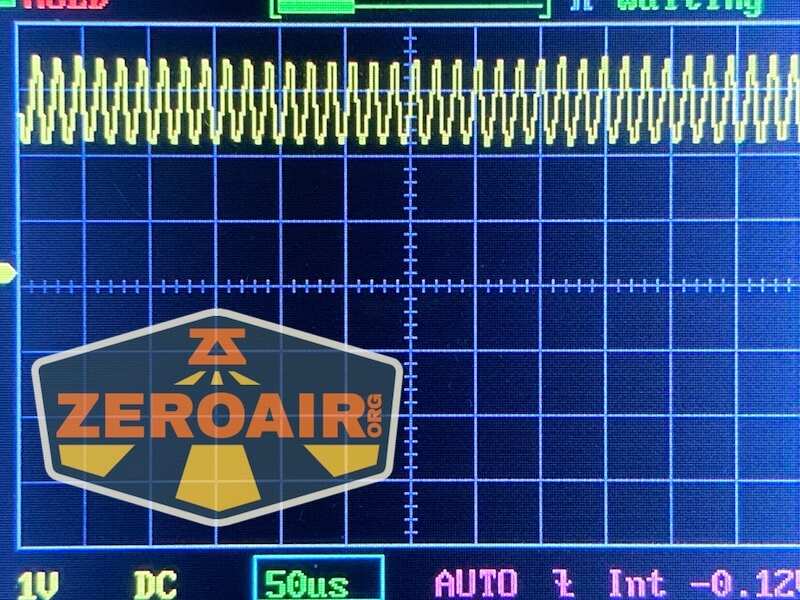
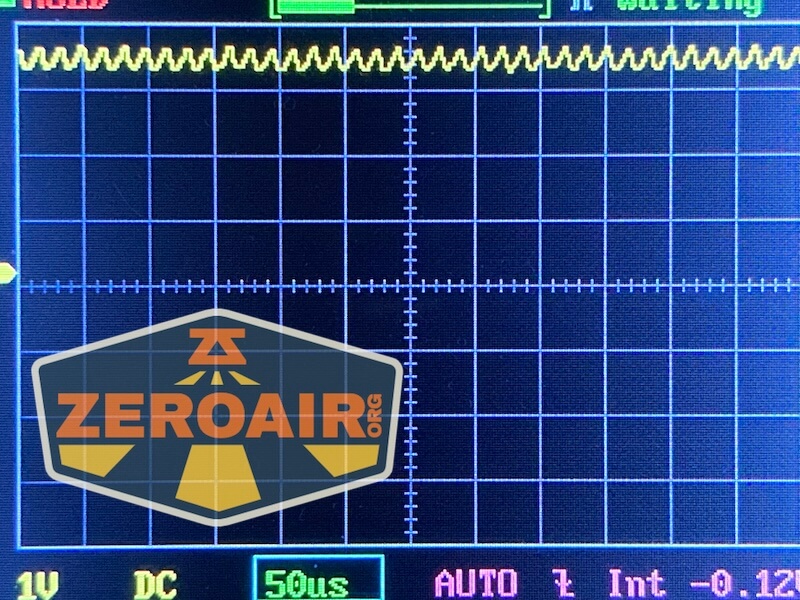
Here you can see a “baseline” – a chart with almost no light hitting the sensor. Then there’s the Ultrafire WF-602C flashlight, which has some of the worst PWM I’ve seen. It’s so bad that I used a post about it to explain PWM! Here are multiple timescales (10ms, 5ms, 2ms, 1ms, 0.5ms, 0.2ms) to make comparing this “worst” PWM light to the test light easier. That post also explains why I didn’t test the WF-602C at the usual 50us scale.


User Interface and Operation
A single switch controls the Speras E21 titanium flashlight. This switch is a very proud tactical “mechanical” switch – I say “mechanical” because I’m not sure. The clicky action feels mechanical but the side action is unusual for a mechanical switch.
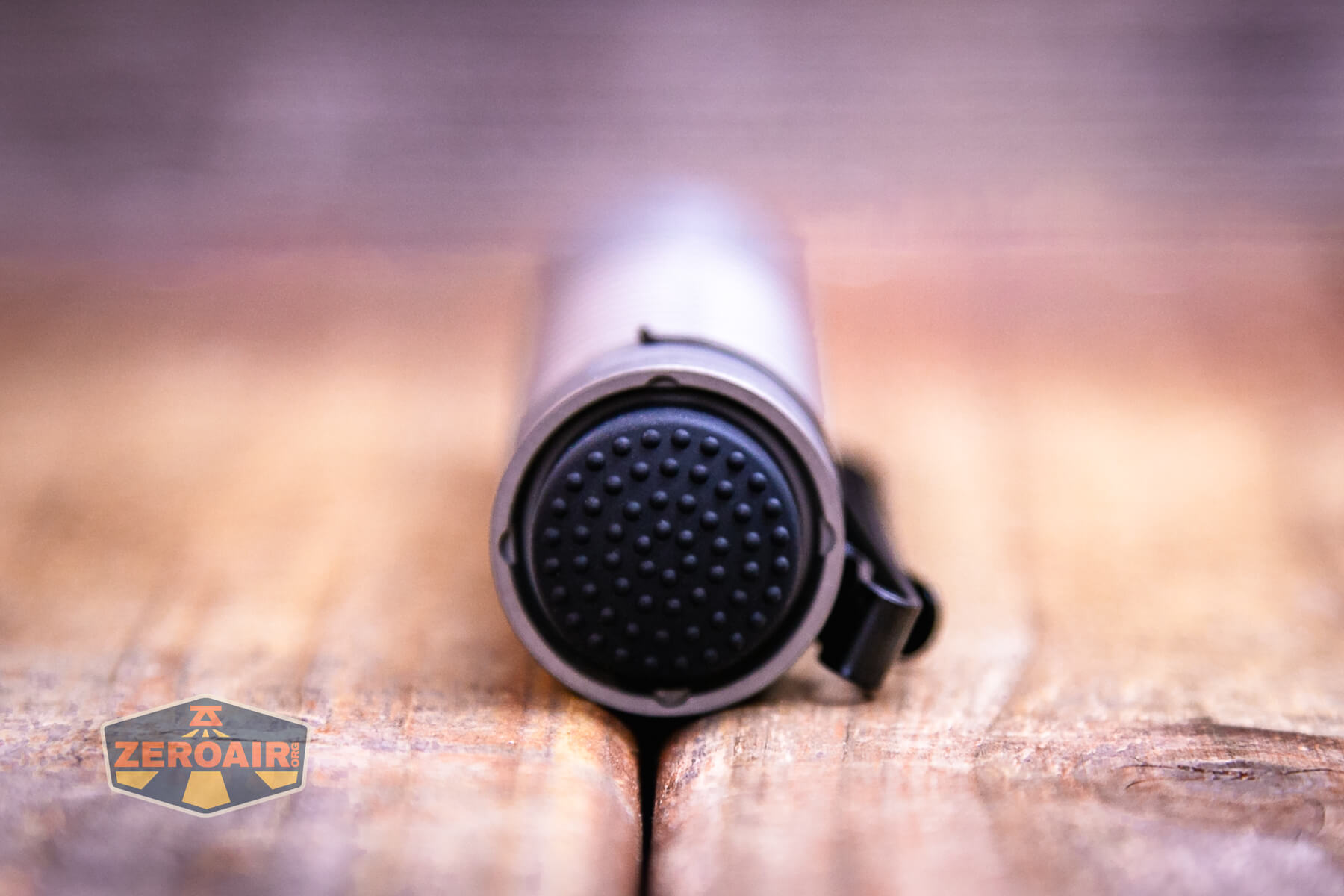
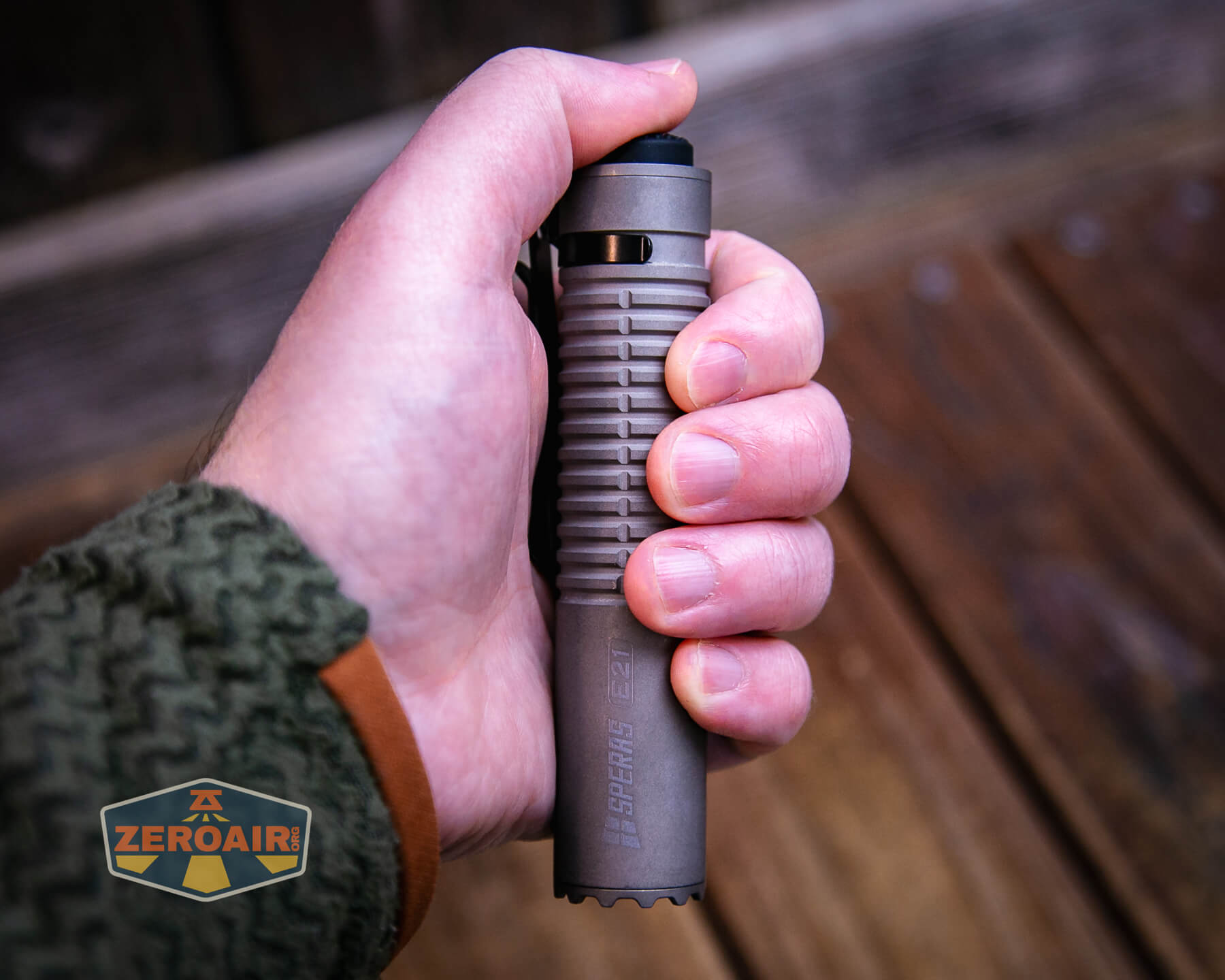
Action both ways are just fine – the clicky is positive and the mode changes work great, too!
Here’s a user interface table! The E21 has two “patterns” (or groups). They’re similar but provide different access – best for tactical or best for outdoor uses.
| State | Action | Result |
|---|---|---|
| Off Tactical Pattern | Tap | Momentary Turbo |
| Off Tactical Pattern | Click | Turbo |
| Off | Tap “Sub tail” | Strobe |
| On | Click | Off |
| On | Tap Sub tail | Mode advance (Eco>L>M>H>T) |
| On Tactical Pattern | Hold Sub tail | Momentary Strobe |
| Off Outdoor Pattern | Click | On – Mode memory (LMH only) |
| Off Outdoor Pattern | Tap | Momentary Mode Memory(LMH only) |
| Off Outdoor Pattern | Tap Sub tail | Momentary Eco (the manual has this wrongly listed as “turbo”) |
| Charging | Tap Sub tail 3x | Changes pattern (Outdoor or Tactical) with blinks to indicate (Tactical: 4 blinks. Outdoor: 3 blinks) |
| Off | Tap Sub tail | Battery indication LED beside charging port^ |
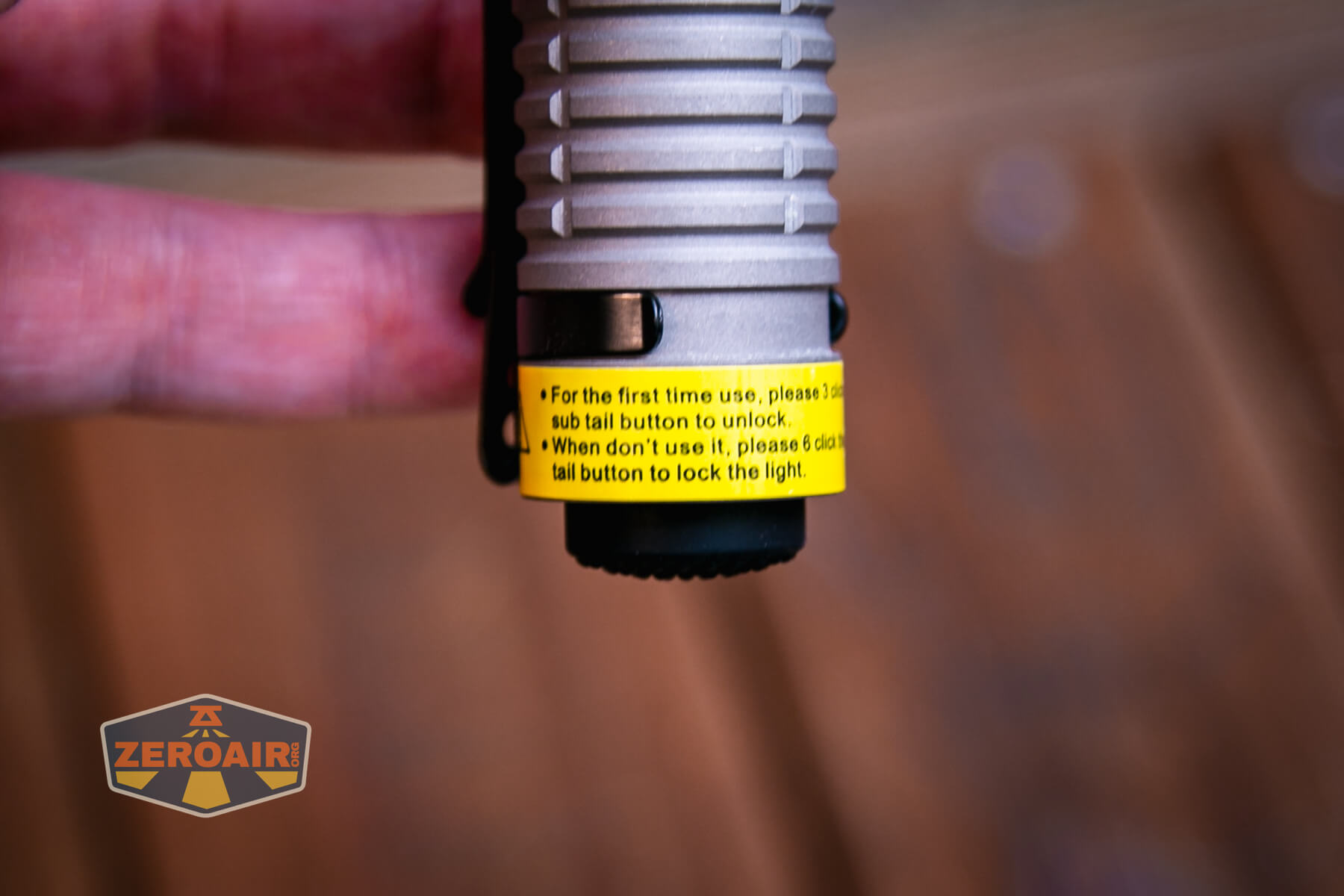
| Off | Tap Sub tail 6x | Lockout (Main emitter blinks to indicate) |
| Lockout | Tap Sub tail 3x | Unlock |
^ Battery indicator as follows:
Green: >70%
Orange: 30-70%
Red: 5-30%
Red flashing: <5%
LED and Beam
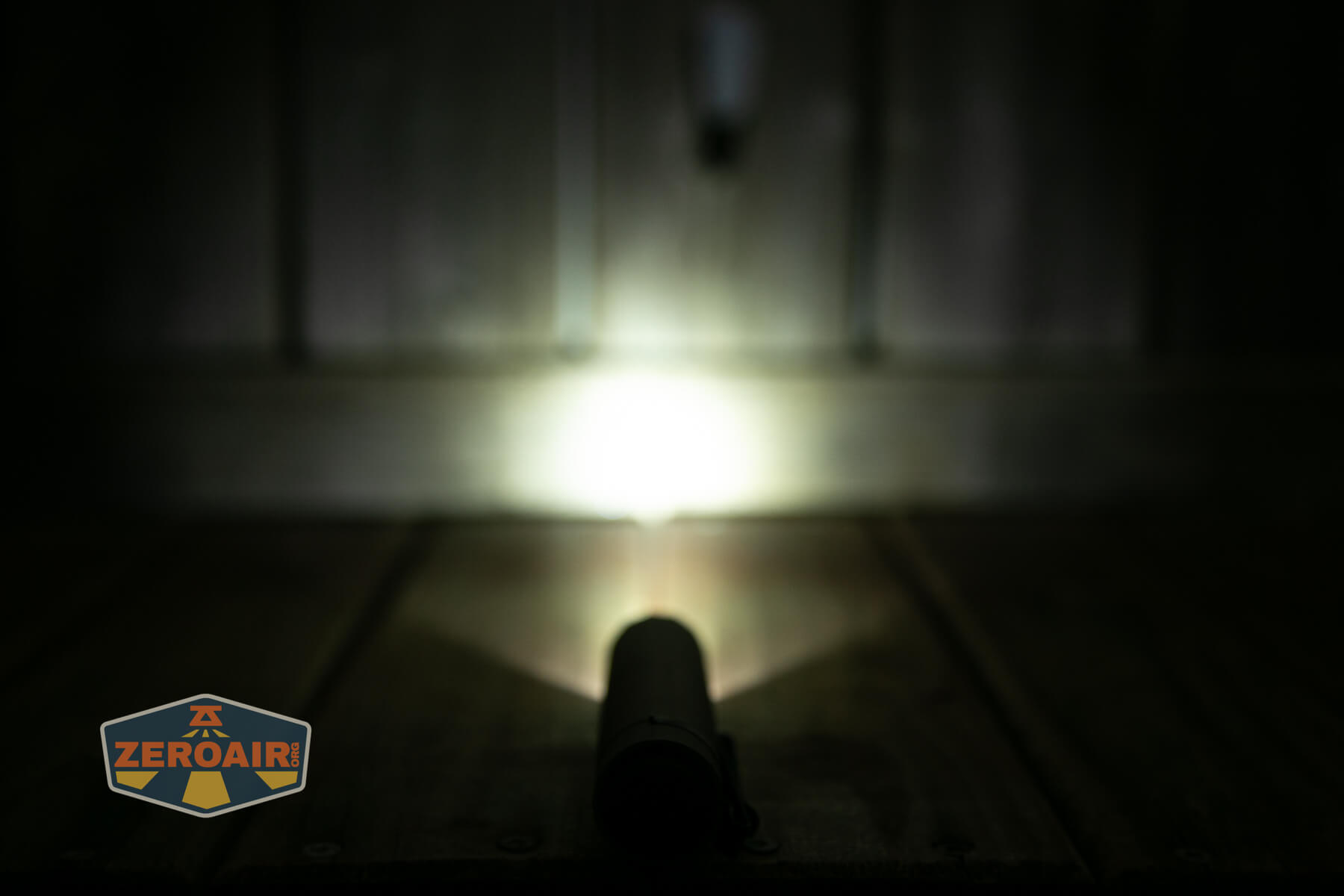
Speras has used a single Luminus SST-40 emitter in the E21. It’s rated at 6000K-6500K and has a small smooth reflector.
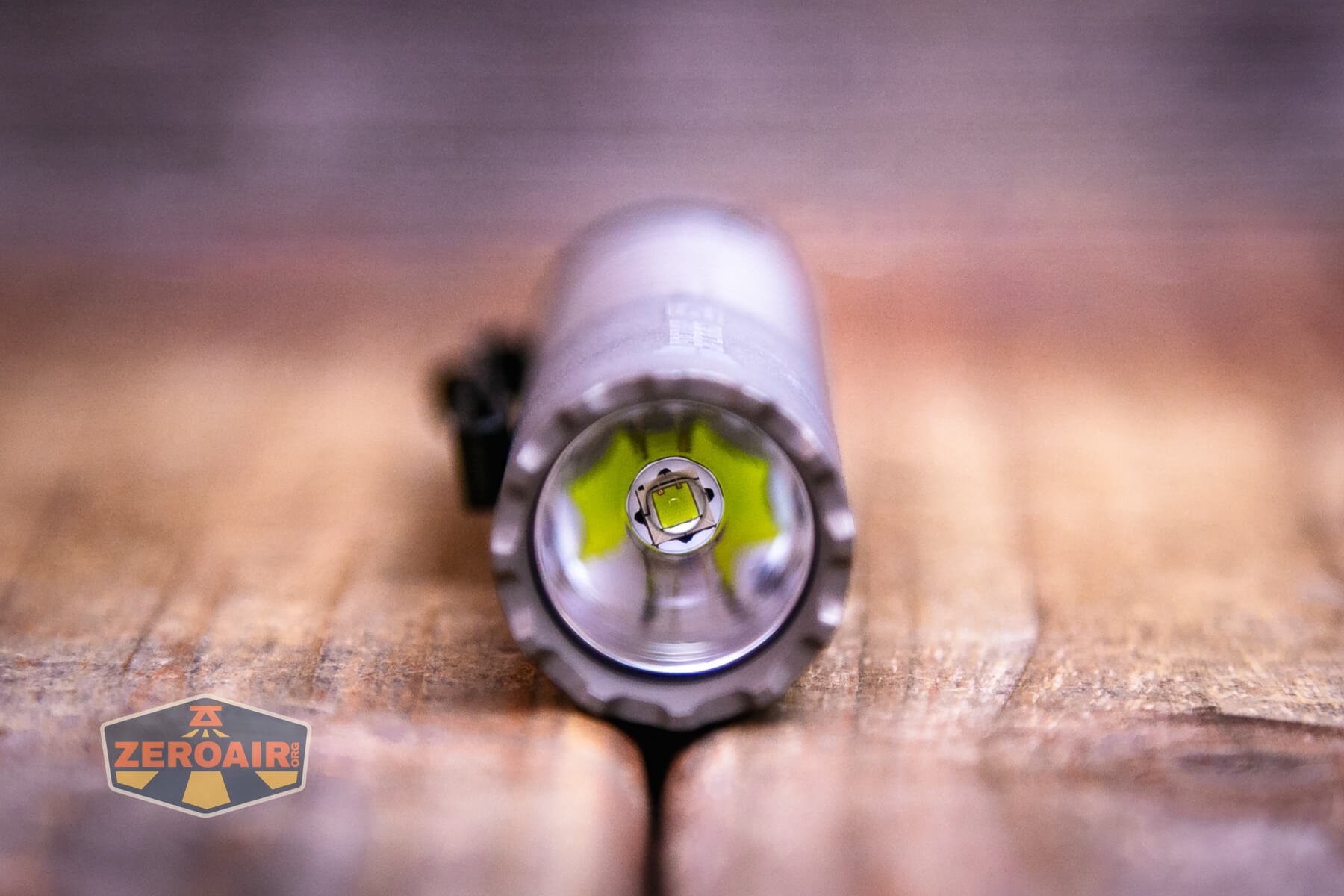
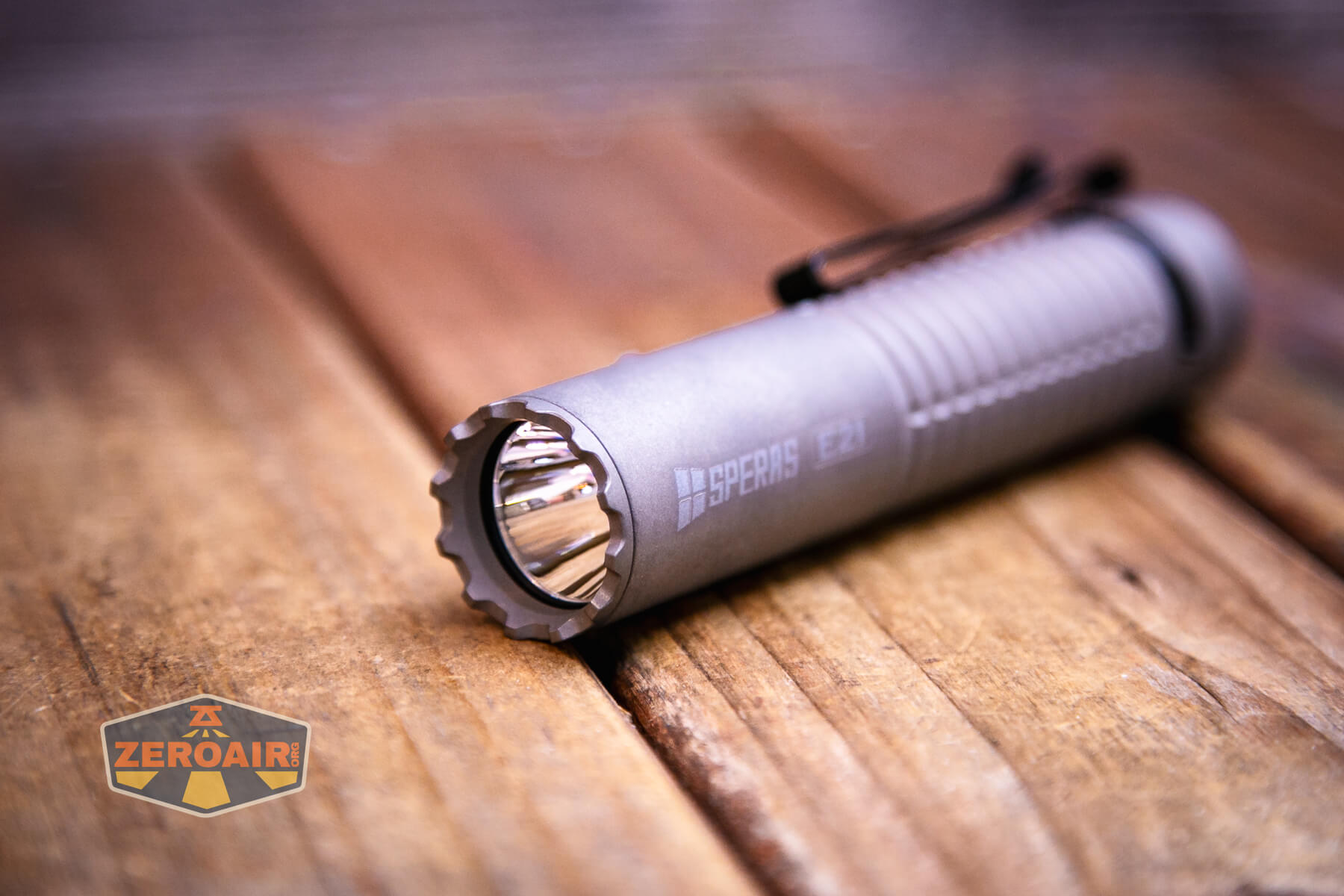
The very toothy bezel allows light to escape while headstanding, and more importantly, plays into the tactical feel of the E21. Also below you can see the power indicator.
LED Color Report (CRI and CCT)
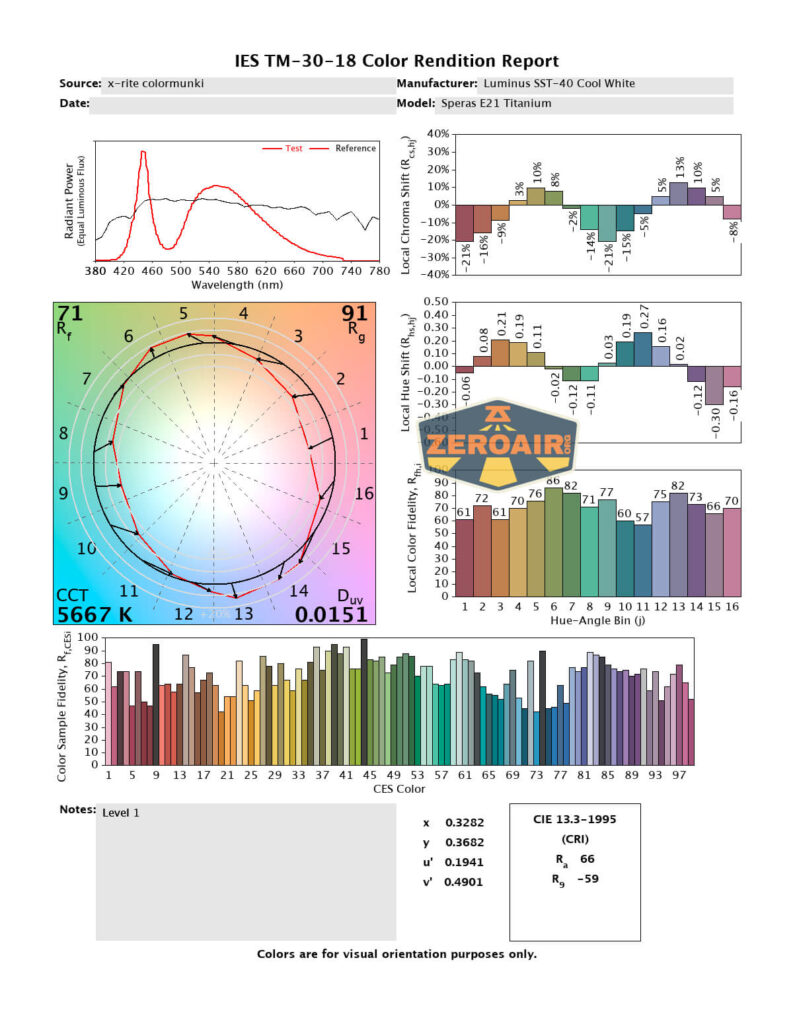
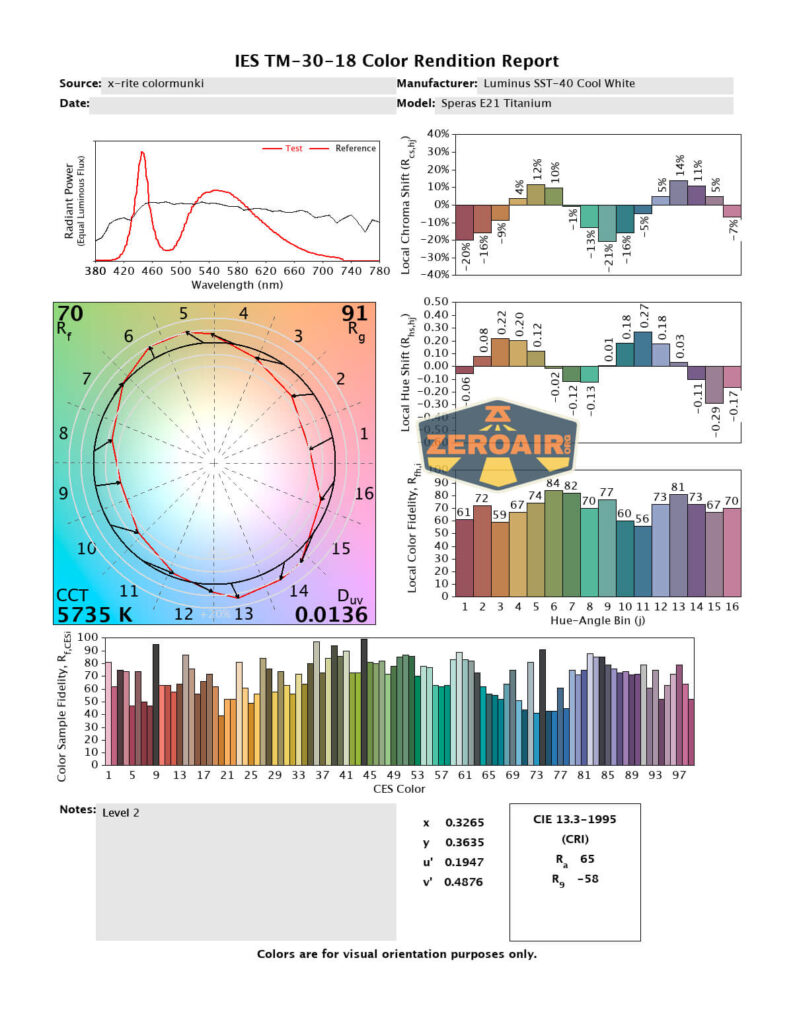
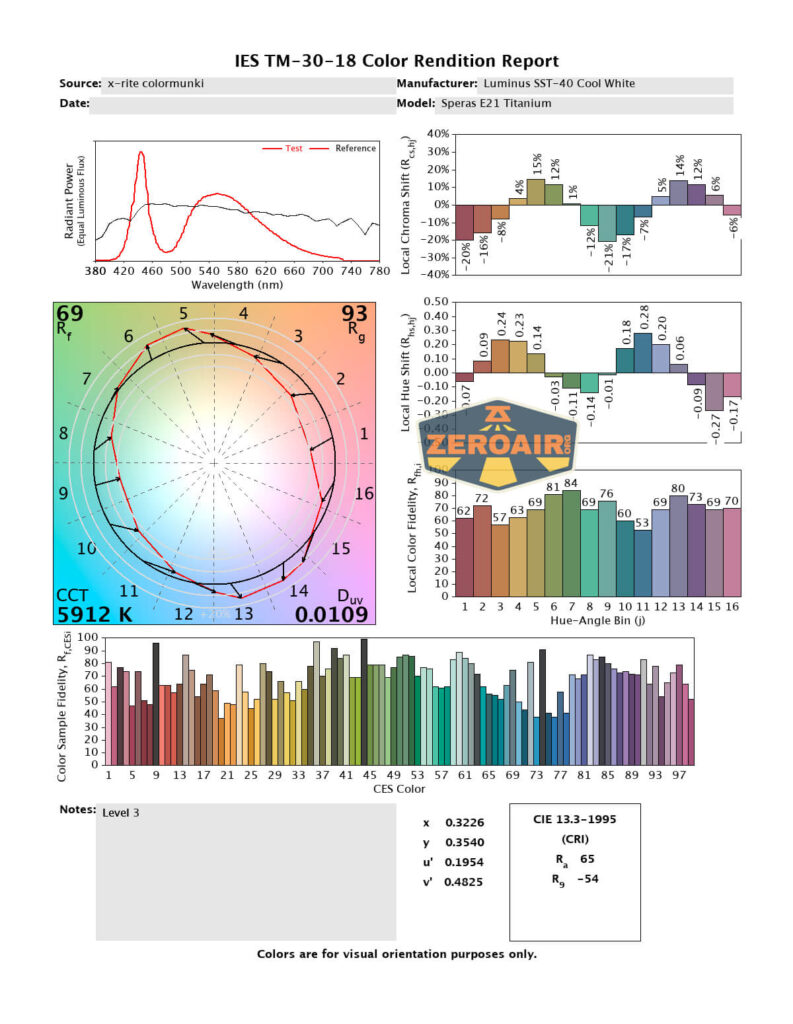
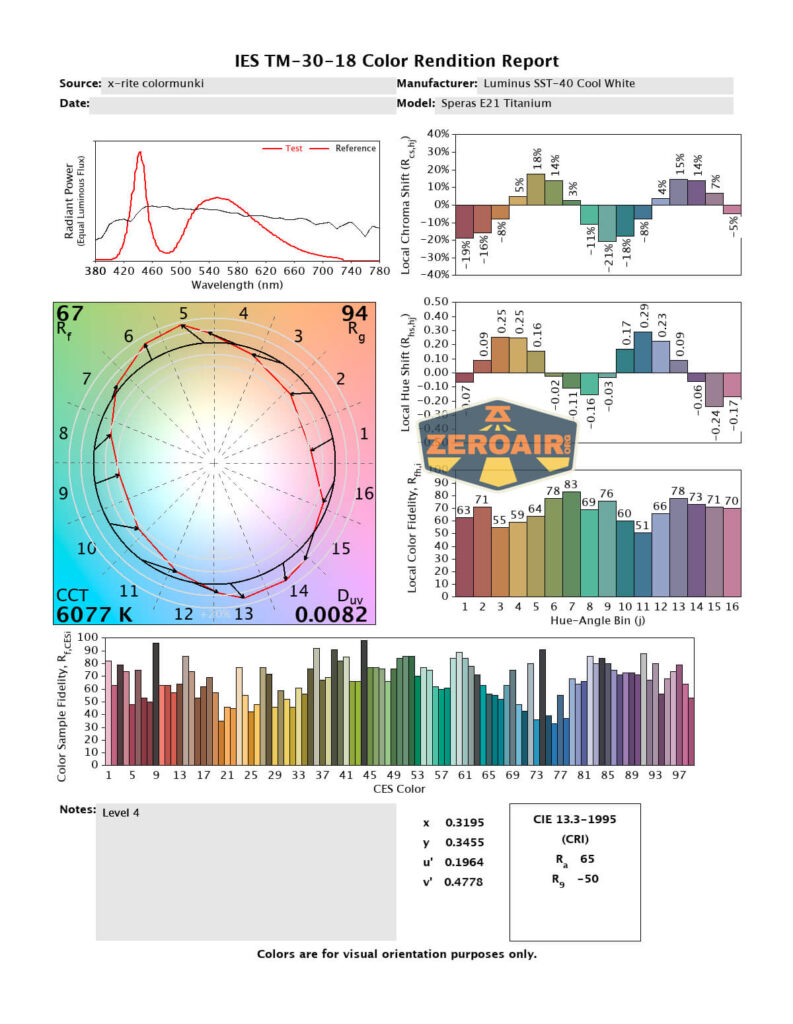
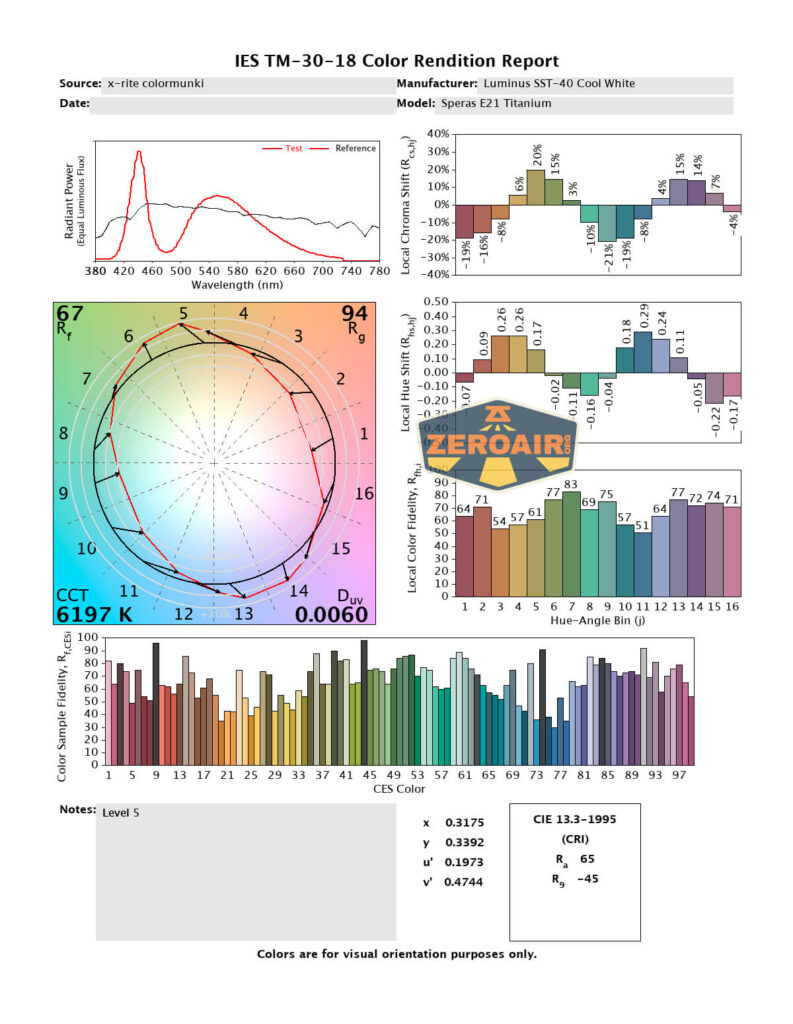
Speras seems to have safely estimated the CCT on this Luminus emitter – I read it from 5600K to around 6500K. That’s sort of “neutral” to “cool.” CRI is low at around 68.
Beamshots
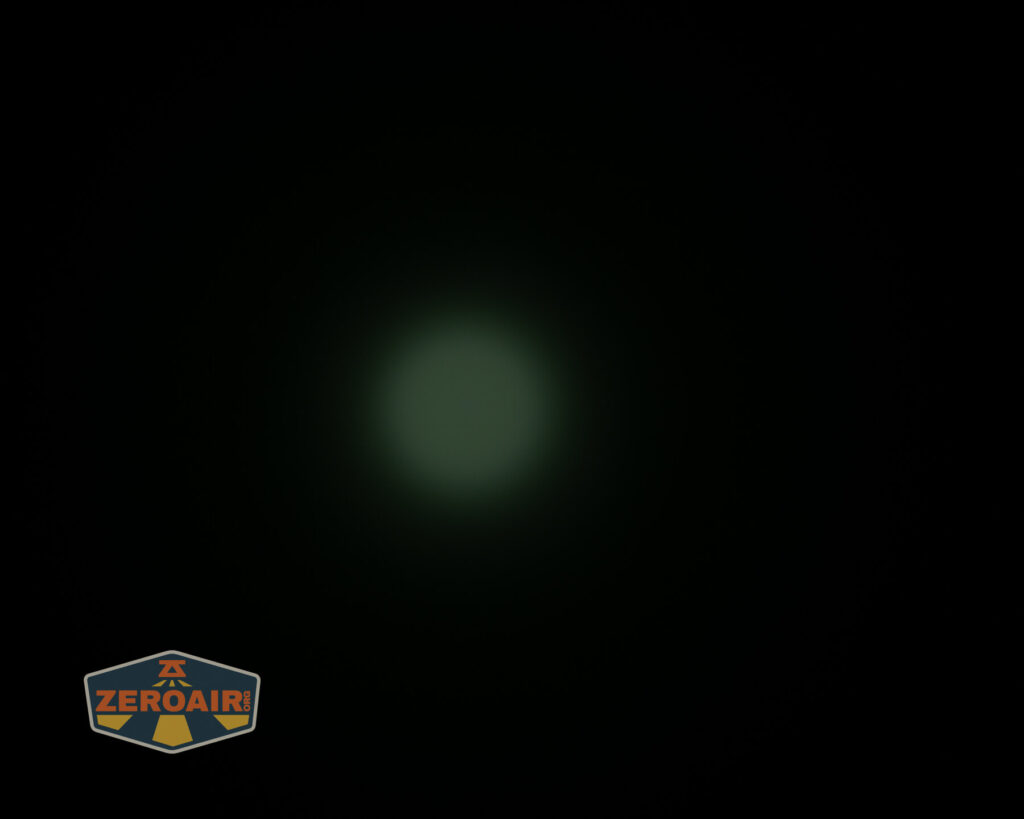
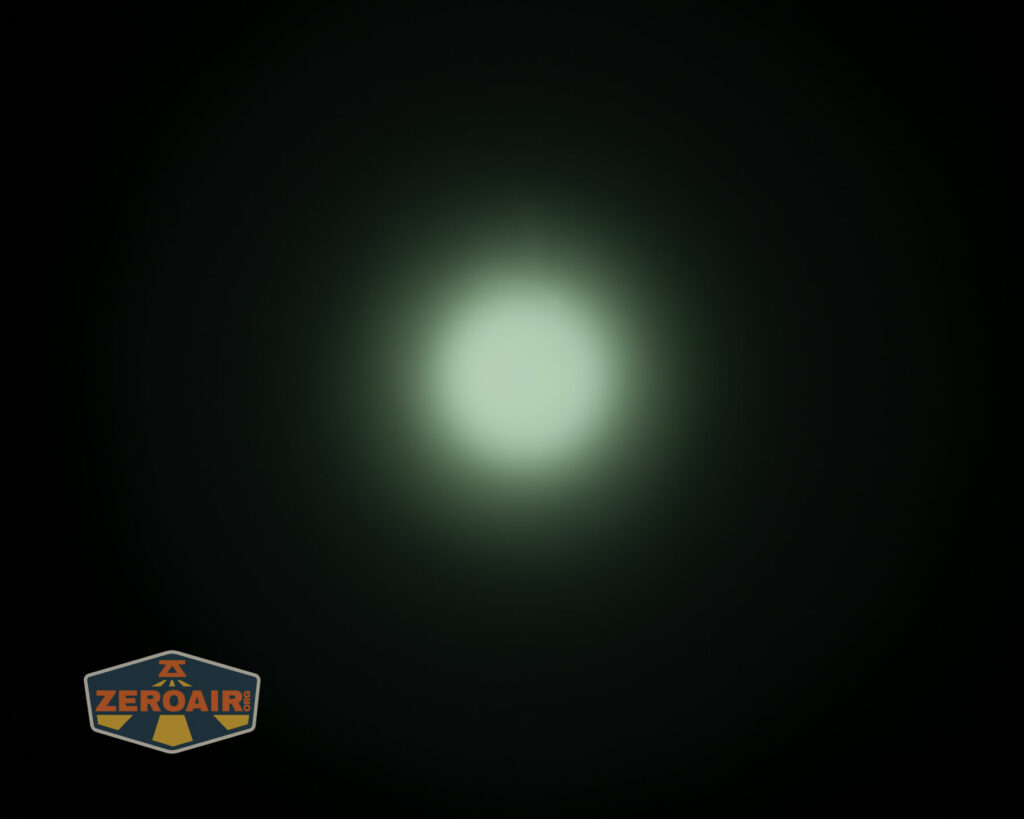
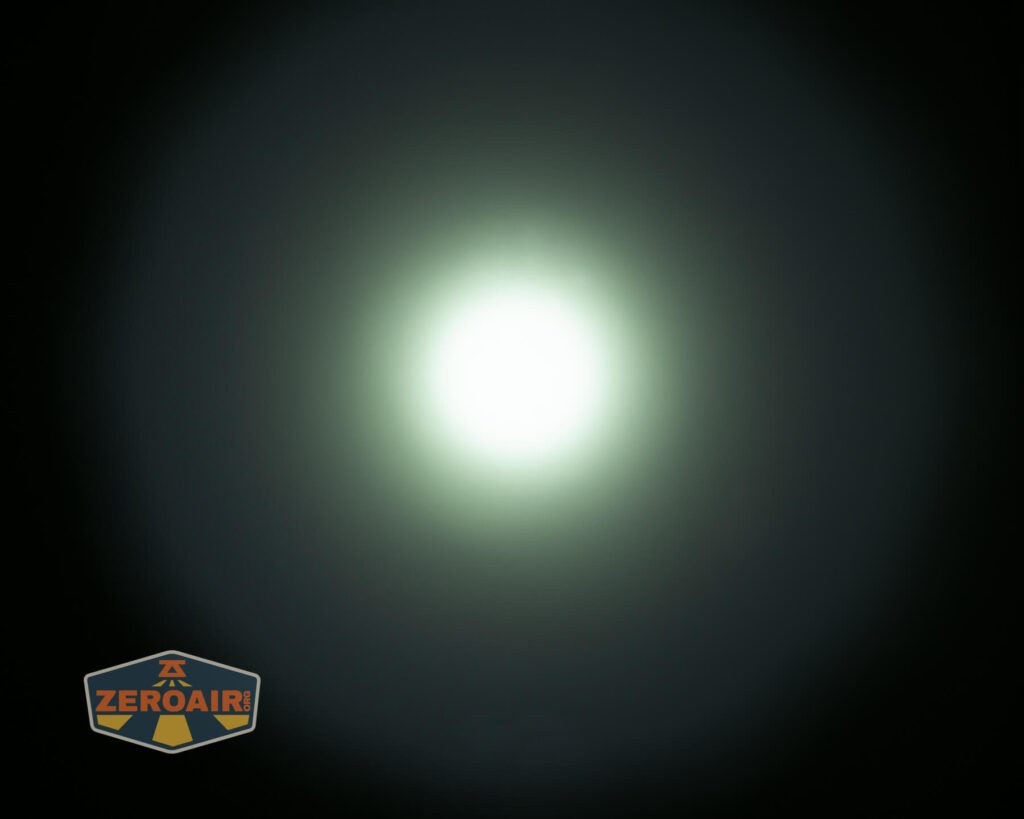
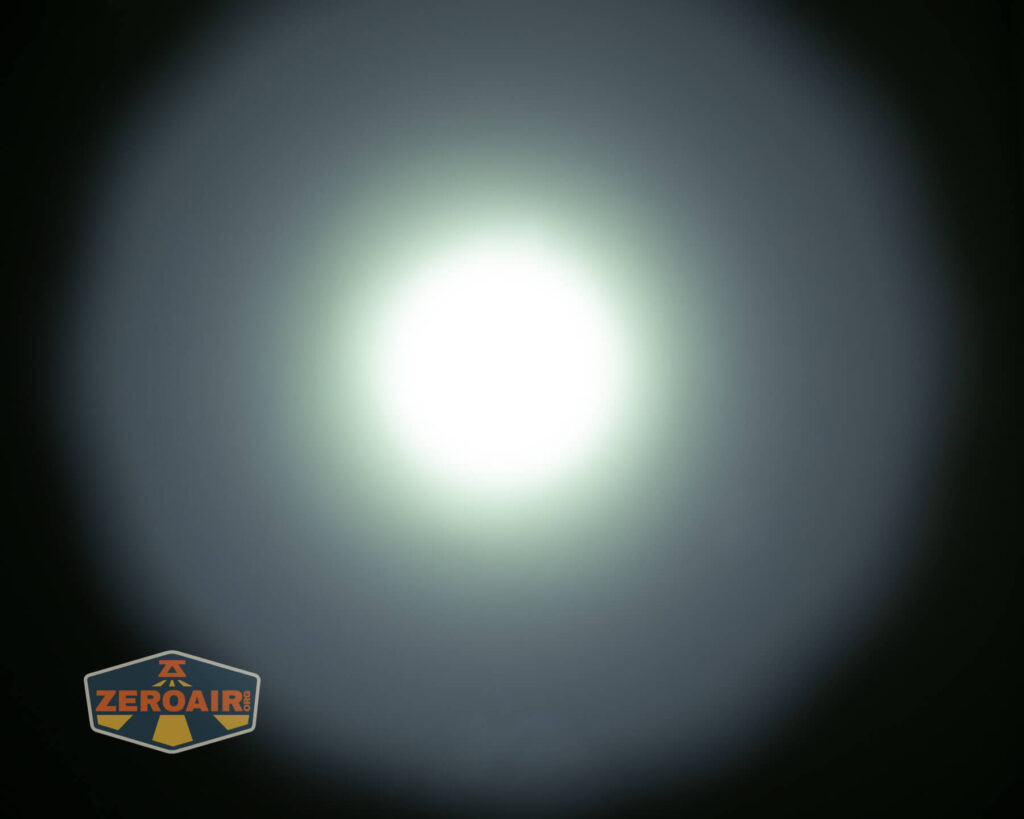
These beamshots always have the following settings: f8, ISO100, 0.3s shutter, and manual 5000K exposure. These photos are taken at floor level, and the beam hits the ceiling around 9 feet away.
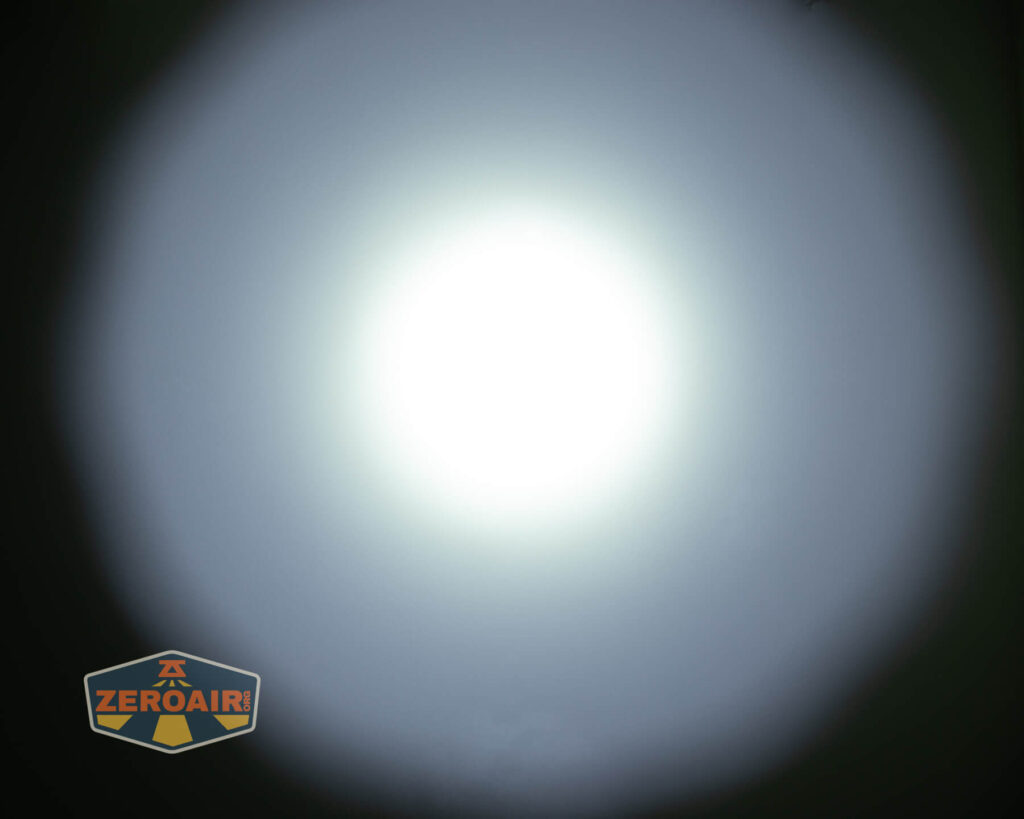
Tint vs BLF-348 (KillzoneFlashlights.com 219b version) (affiliate link)
I keep the test flashlight on the left and the BLF-348 reference flashlight on the right.
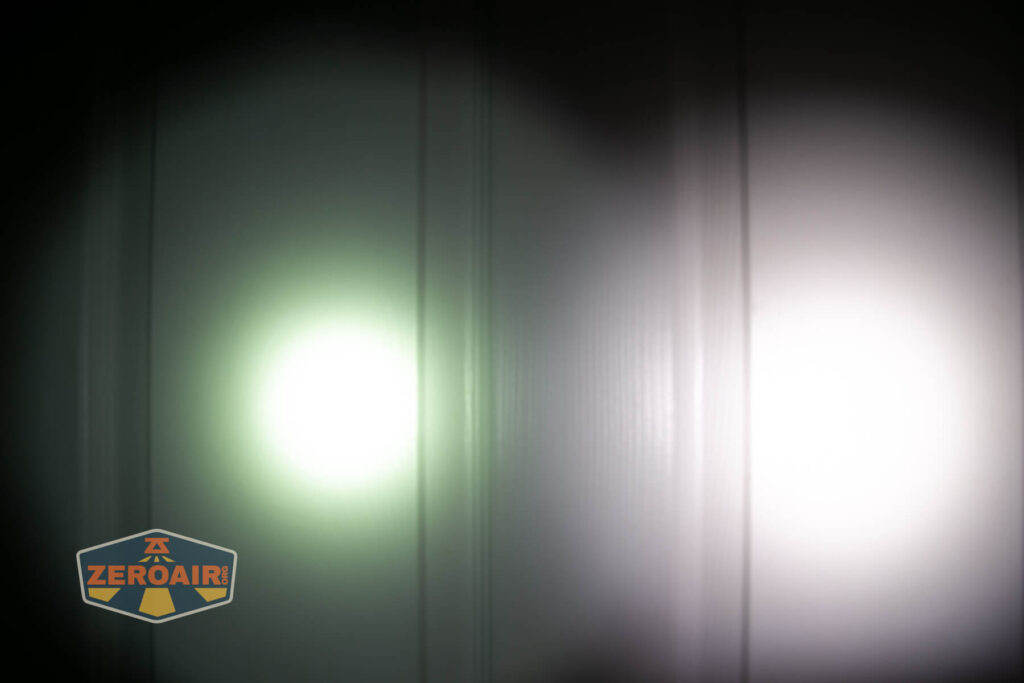
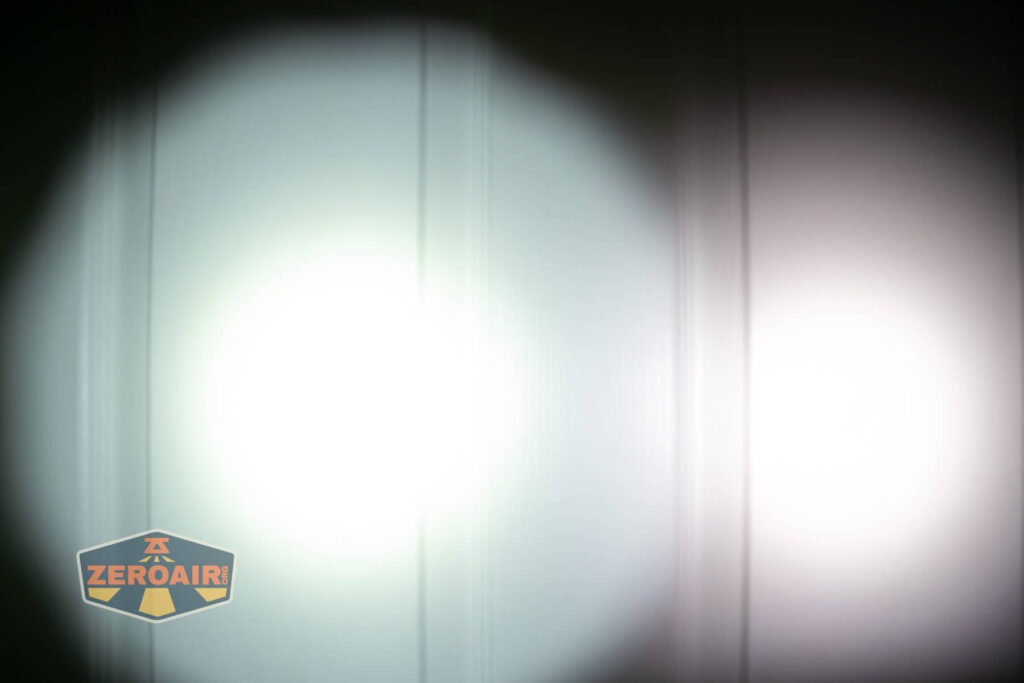
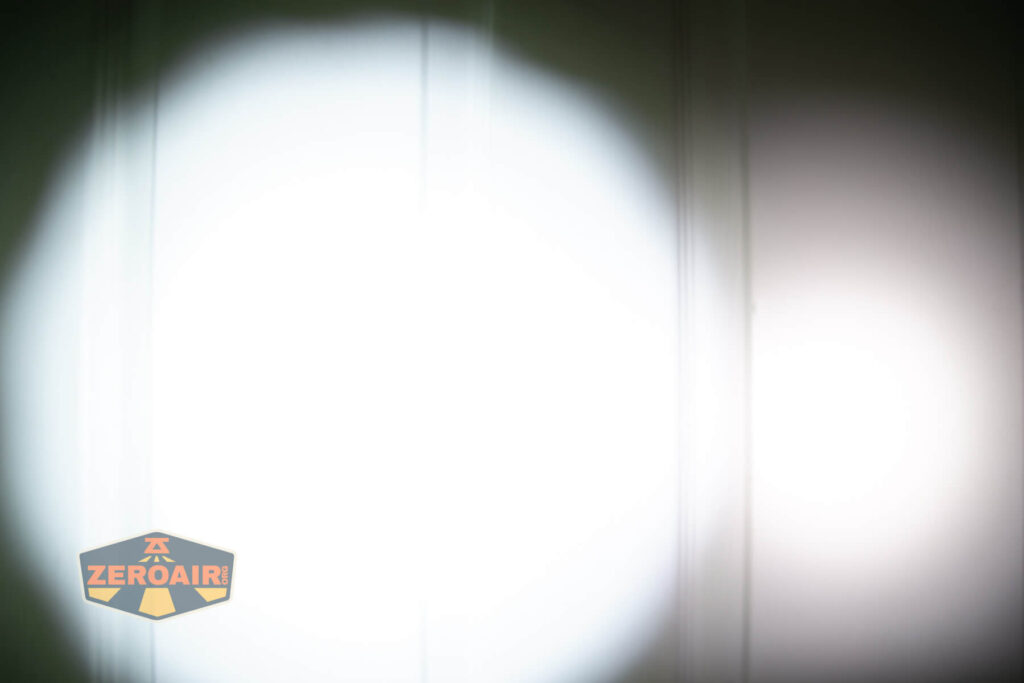
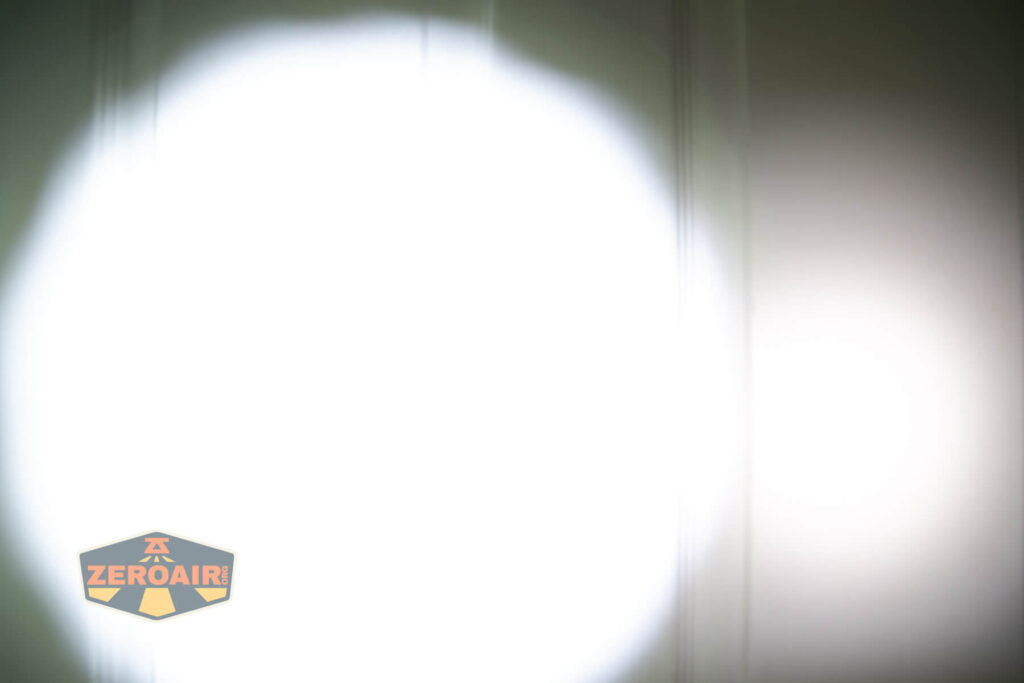
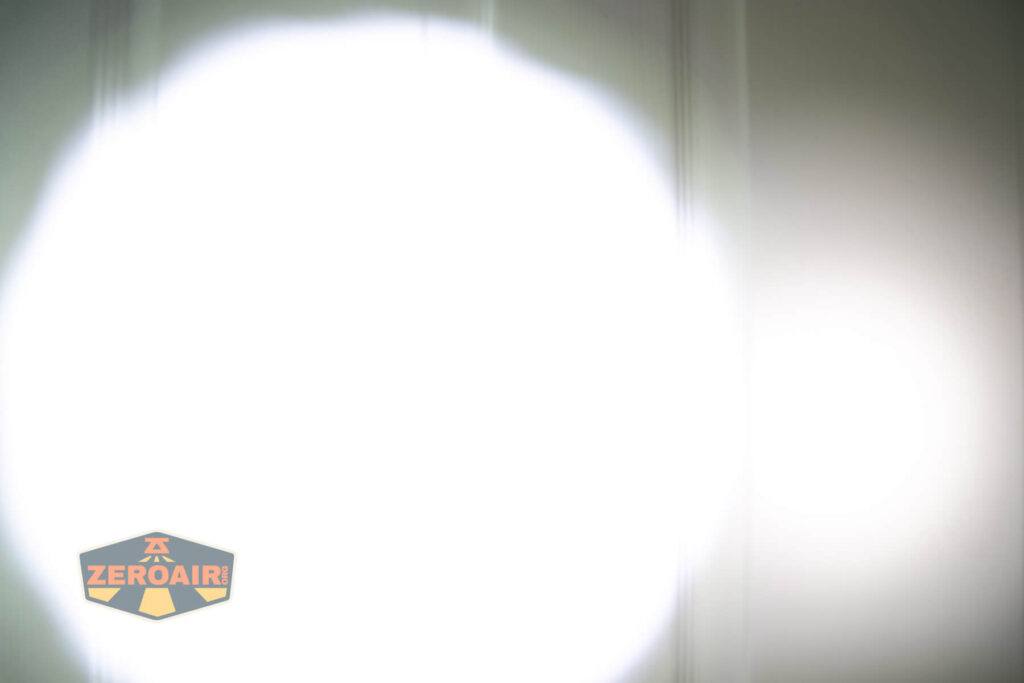
I compare everything to the KillzoneFlashlights.com 219b BLF-348 because it’s inexpensive and has the best tint!
Summary and Conclusion
The Speras E21 titanium flashlight has, among other features, a very neat dual-action tactical tail switch. The switch has a typical mechanical clicky action and is very exposed (so very tactical) but also has a side push option for mode changes. I like the switch. Output is great too, and the feature set (including USB-C charging and a powerbank) make this a great light. The aluminum version is fine but the titanium version really shines. The stonewash finish is great!
The Big Table
| Speras E21 titanium flashlight | |
|---|---|
| Emitter: | Luminus SST-40 (Cool White) |
| Price in USD at publication time: | $109.00 |
| Cell: | 1×21700 |
| Runtime Graphs | |
| LVP? | Red blink warning |
| Switch Type: | E-Switch |
| Quiescent Current (mA): | ? |
| On-Board Charging? | Yes |
| Charge Port Type: | USB-C |
| Charge Graph | |
| Power off Charge Port | Eco only |
| Claimed Lumens (lm) | 2000 |
| Measured Lumens (at 30s) | 1480 (74% of claim)^ |
| Candela per Lumen | 13.59 |
| Claimed Throw (m) | 322 |
| Candela (Calculated) in cd (at 30s) | 847lux @ 5.498m = 25603cd |
| Throw (Calculated) (m) | 320.0 (99.4% of claim)^ |
| Claimed CCT | 6000-6500 |
| Measured CCT Range (K) | 5700-6200 Kelvin |
| Item provided for review by: | Speras |
| All my Speras reviews! | |
^ Measurement disclaimer: Testing flashlights is my hobby. I use hobbyist-level equipment for testing, including some I made myself. Try not to get buried in the details of manufacturer specifications versus measurements recorded here; A certain amount of difference (say, 10 or 15%) is perfectly reasonable.
What I like
- Nice build quality
- Interesting type of two-stage or dual-action switch
- Good beam profile
- User interface is simple
- USB-C charging works well
- Powerbank function
What I don’t like
- Built-in 21700 (can’t be replaced)
- Released through Kickstarter
Notes
- This content originally appeared at zeroair.org. Please visit there for the best experience!
- Please use my Amazon.com referral link to help support zeroair.org!
- Please support me on Patreon! I deeply appreciate your support!