

Thrunite Archer Pro S Flashlight Review
The Thrunite Archer Pro S flashlight features a built-in 14500 cell, higher output than previous versions. It still has ramping and USB-C charging. Read on!
Official Specs and Features
Here’s a link to the Thrunite Archer Pro S flashlight product page on Amazon (referral link).
Versions
A neutral white version is listed on the page, but for now, only this black cool white version is available.
Price
The Thrunite Archer Pro S flashlight lists for $29.95 and includes everything you’ll need! If you want to buy the Thrunite Archer Pro S flashlight hit up this amazon.com referral link.
What’s Included
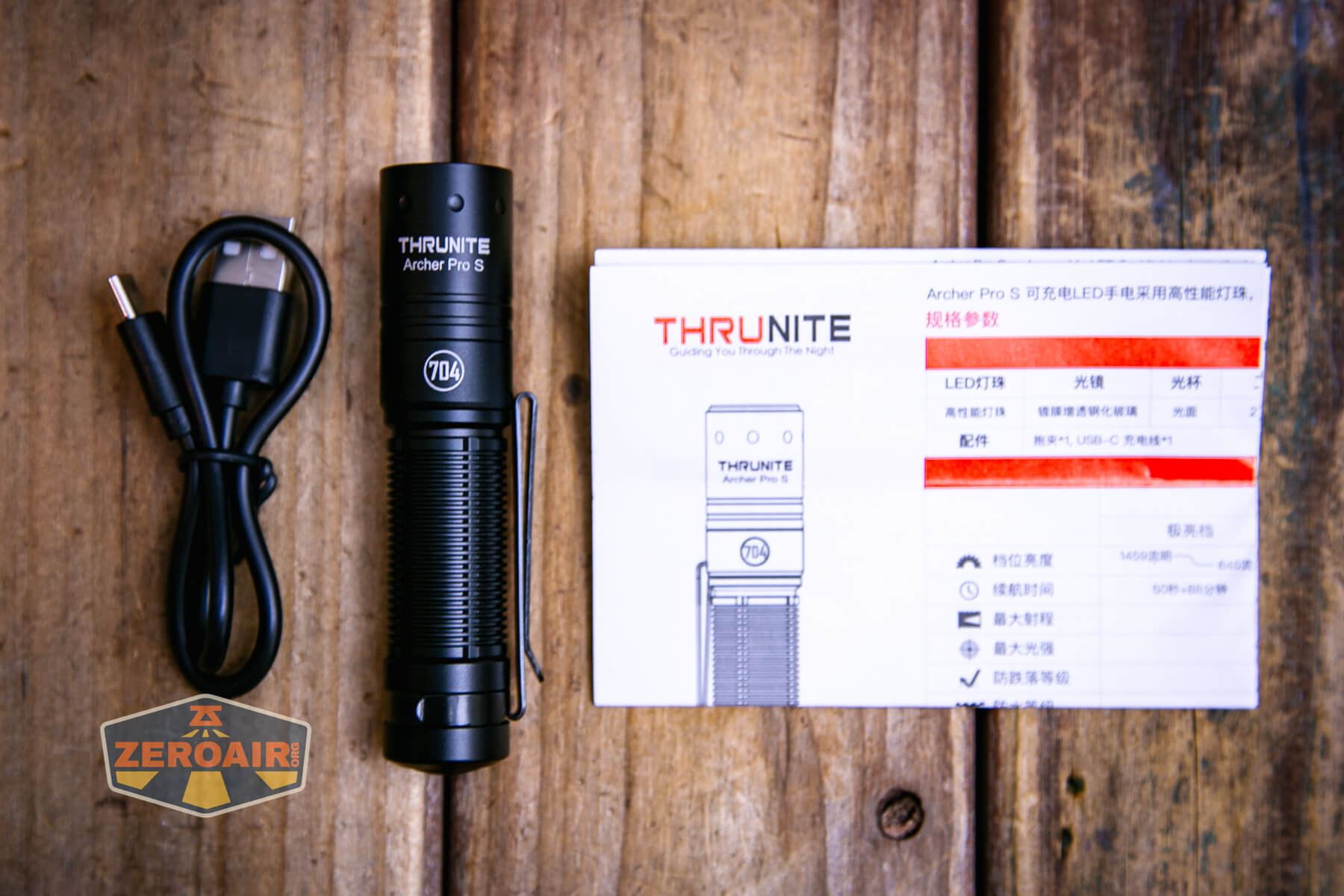
- Thrunite Archer Pro S flashlight
- Charging cable (USB to USB-C)
- Manual
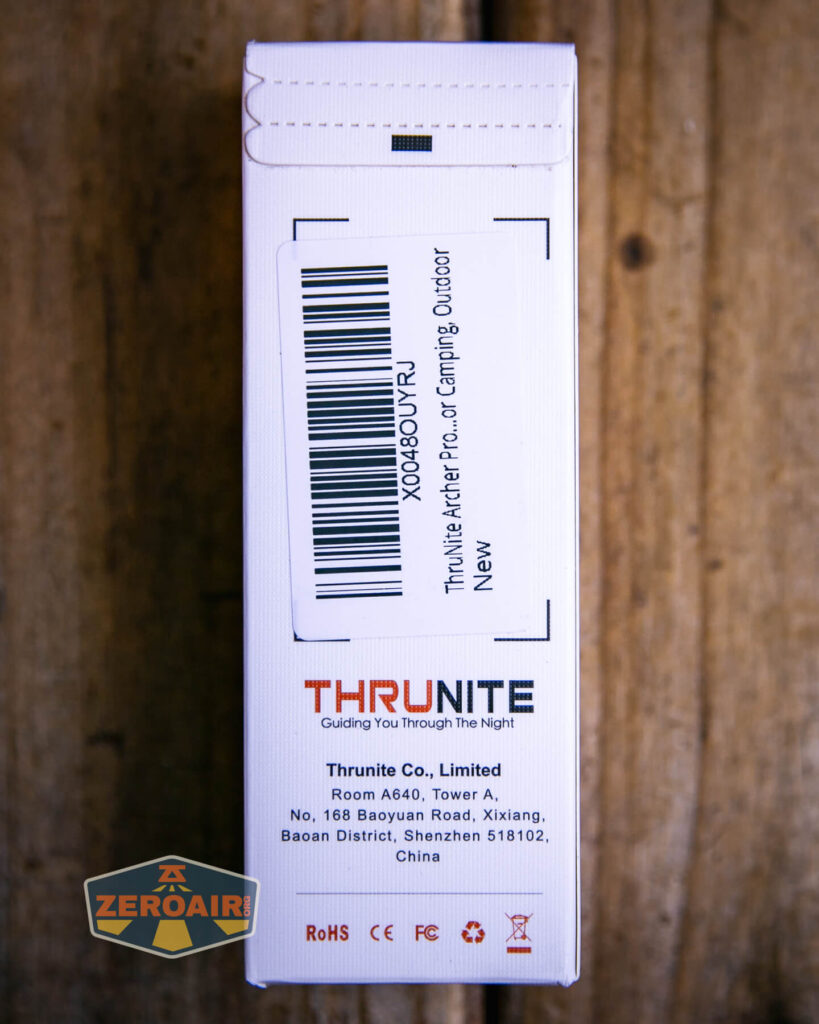
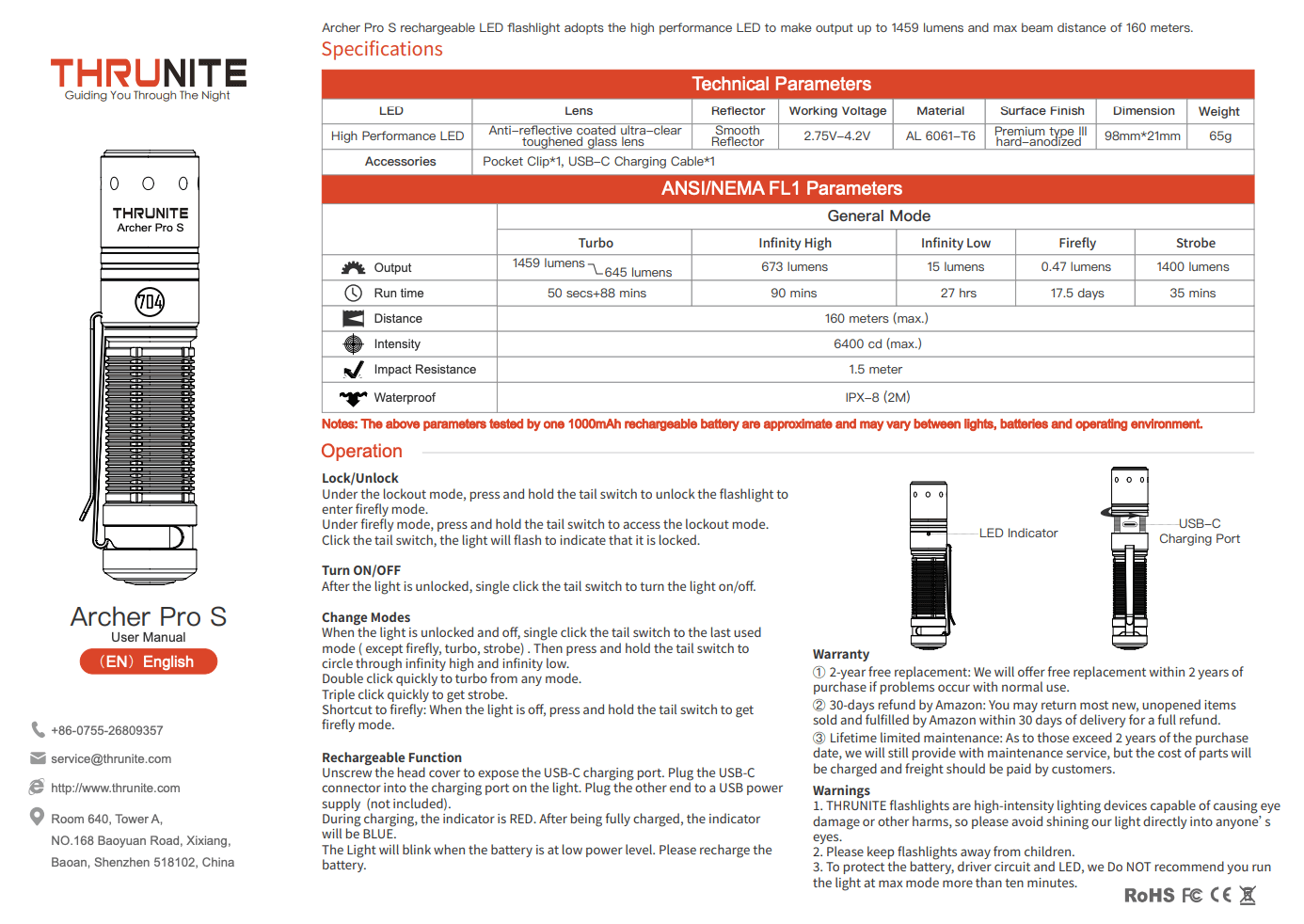
Package and Manual


Build Quality and Disassembly
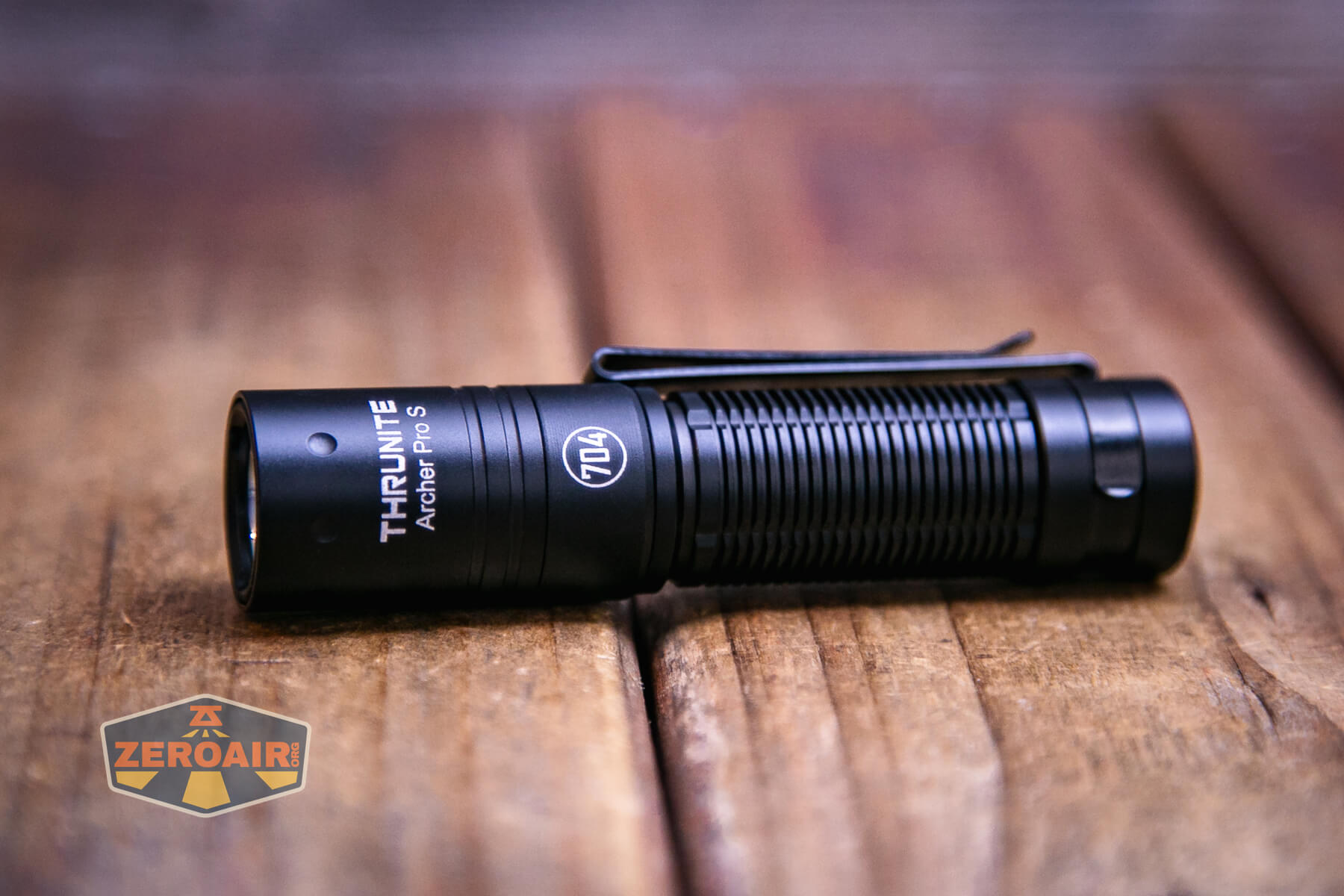
This updated version of the Archer Pro is a “704 Tactical” version. That’s a Youtube channel with tons of followers!

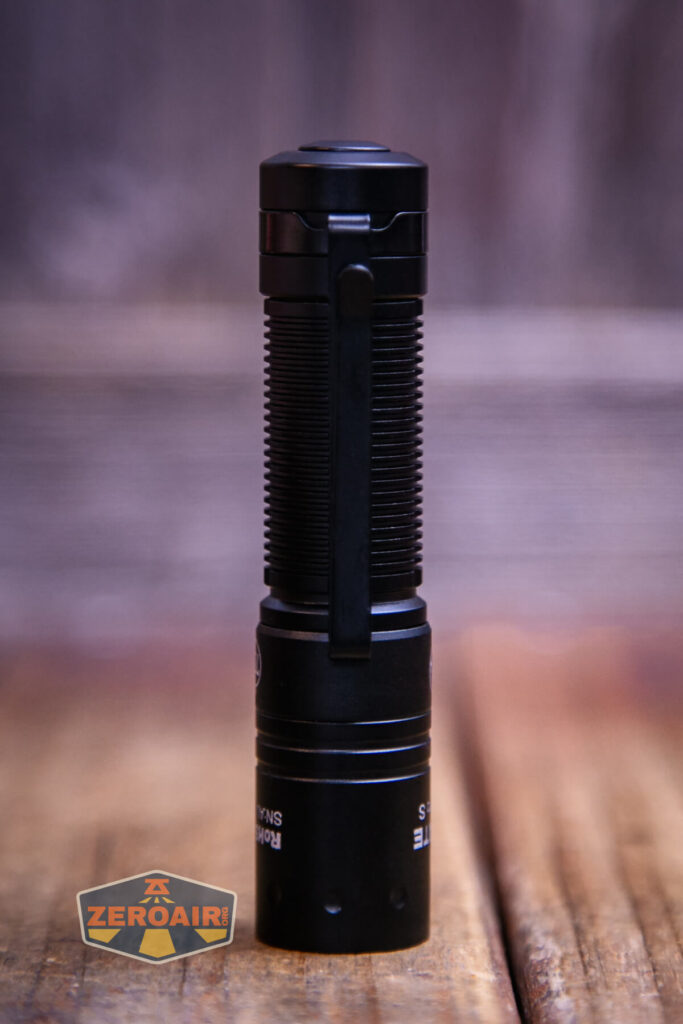
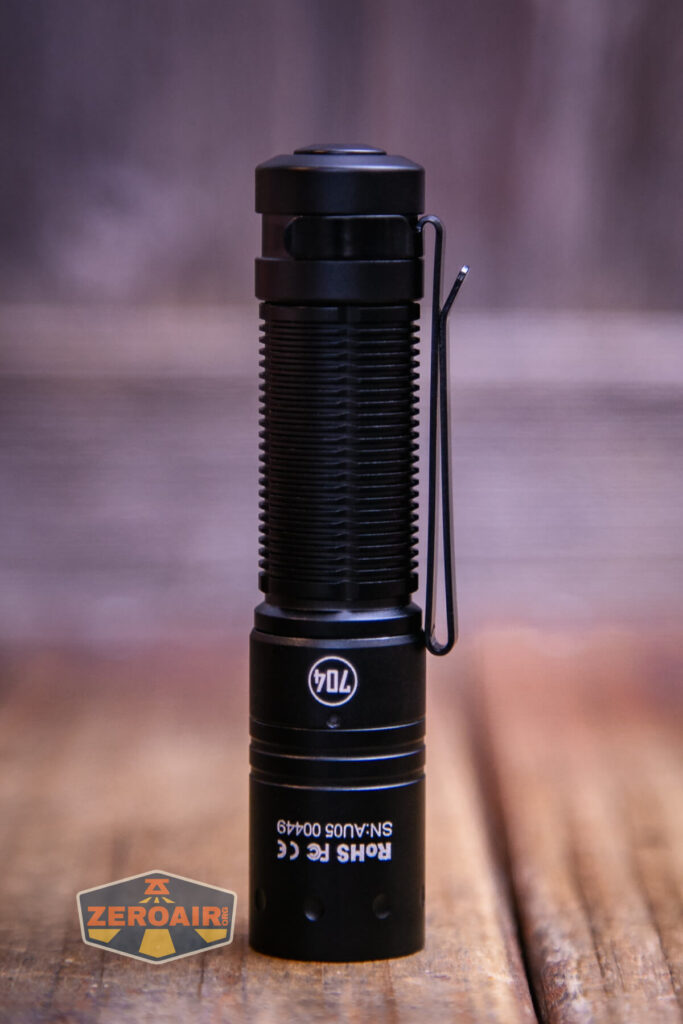
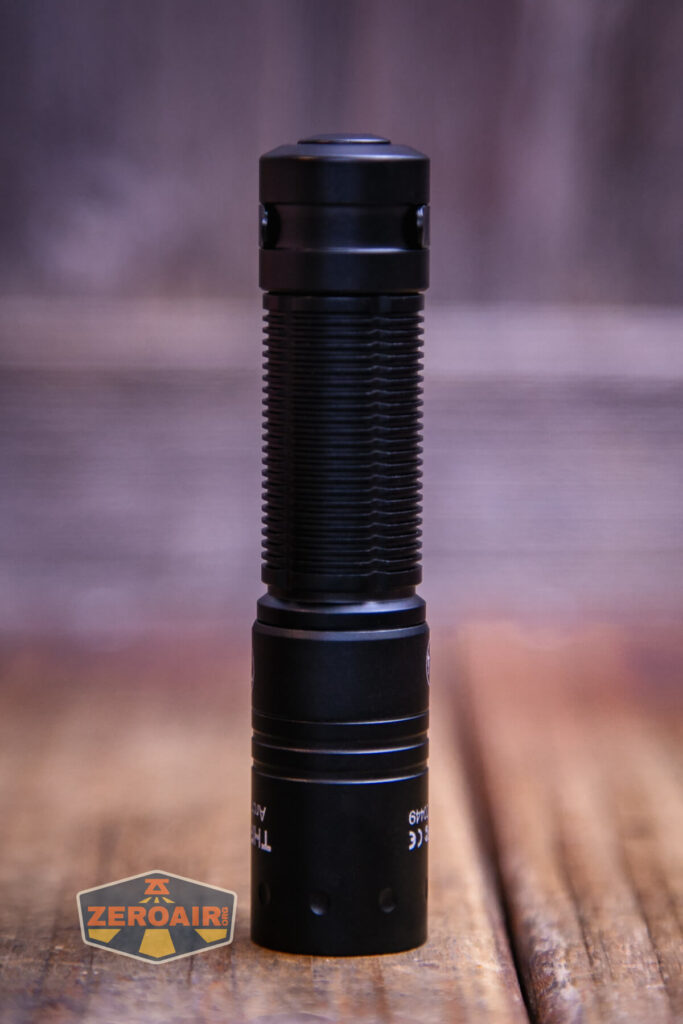
I said “disassembly” up there in the heading, but I didn’t do any disassembly of the Thrunite Archer Pro S flashlight.
The Thrunite Archer Pro S flashlight is quite resistant to disassembly anywa,y but has a good build quality overall.
Size and Comps
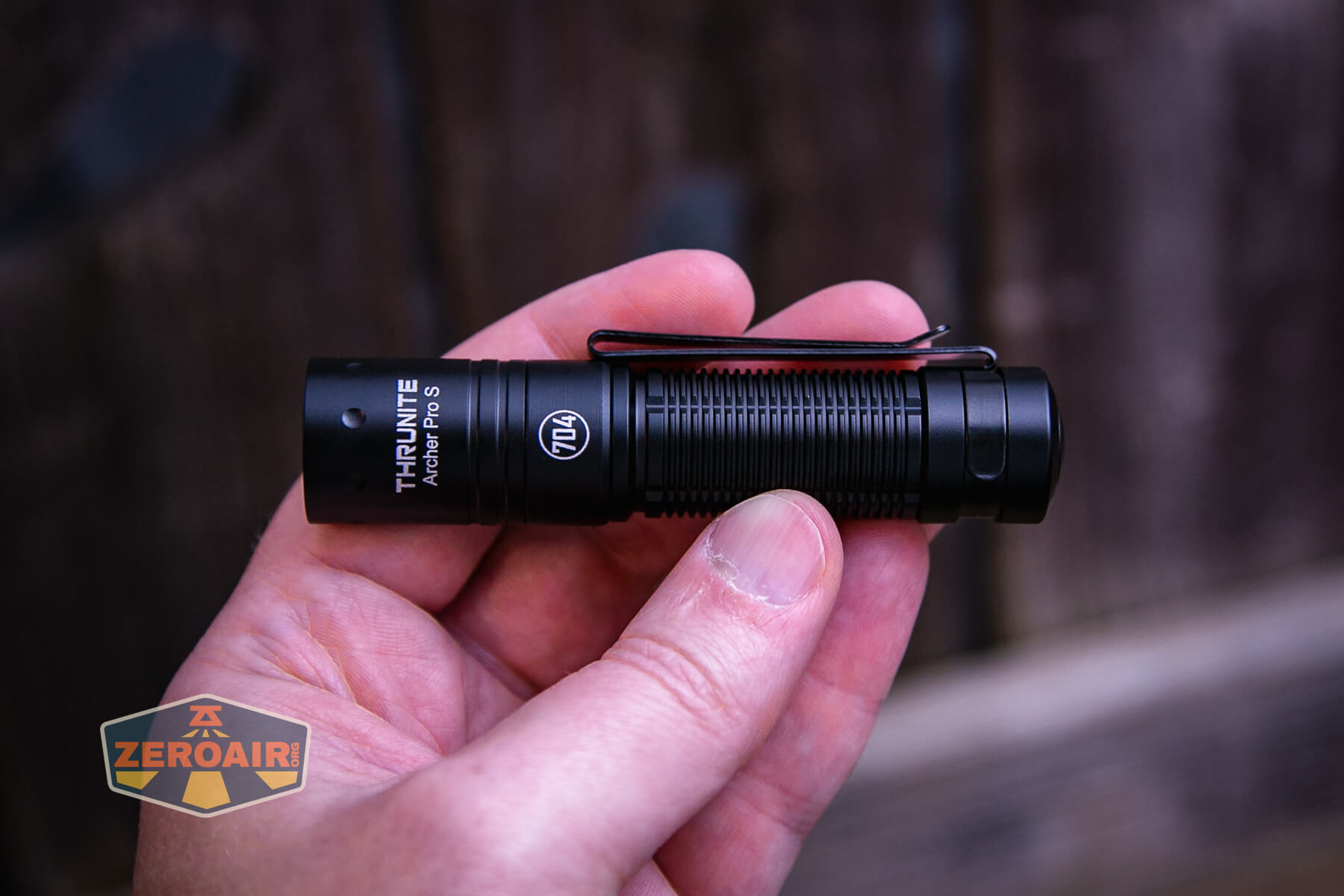
98 mm x 21mm and 65g
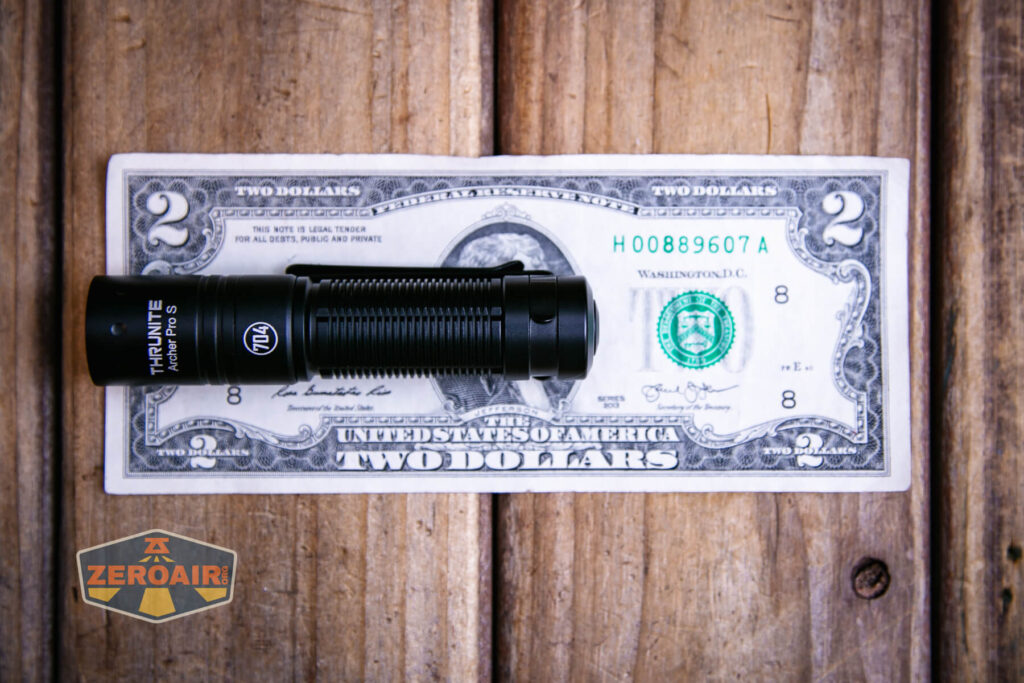
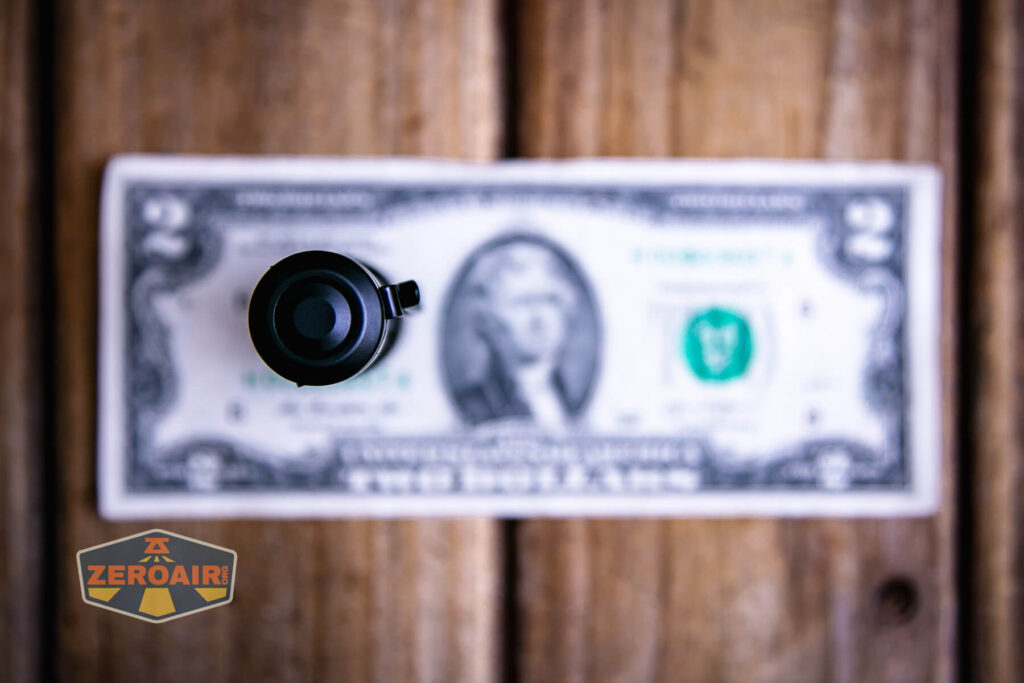
If the flashlight will headstand, I’ll show it here (usually the third photo). If the flashlight will tailstand, I’ll also show that (usually in the fourth photo).


Here’s the test light with the venerable Convoy S2+. The version below is a custom laser-engraved Convoy S2+ host by GadgetConnections.com. I did a full post on an engraved orange host right here! Or go straight to GadgetConnections.com to buy your Convoy S2+ now!

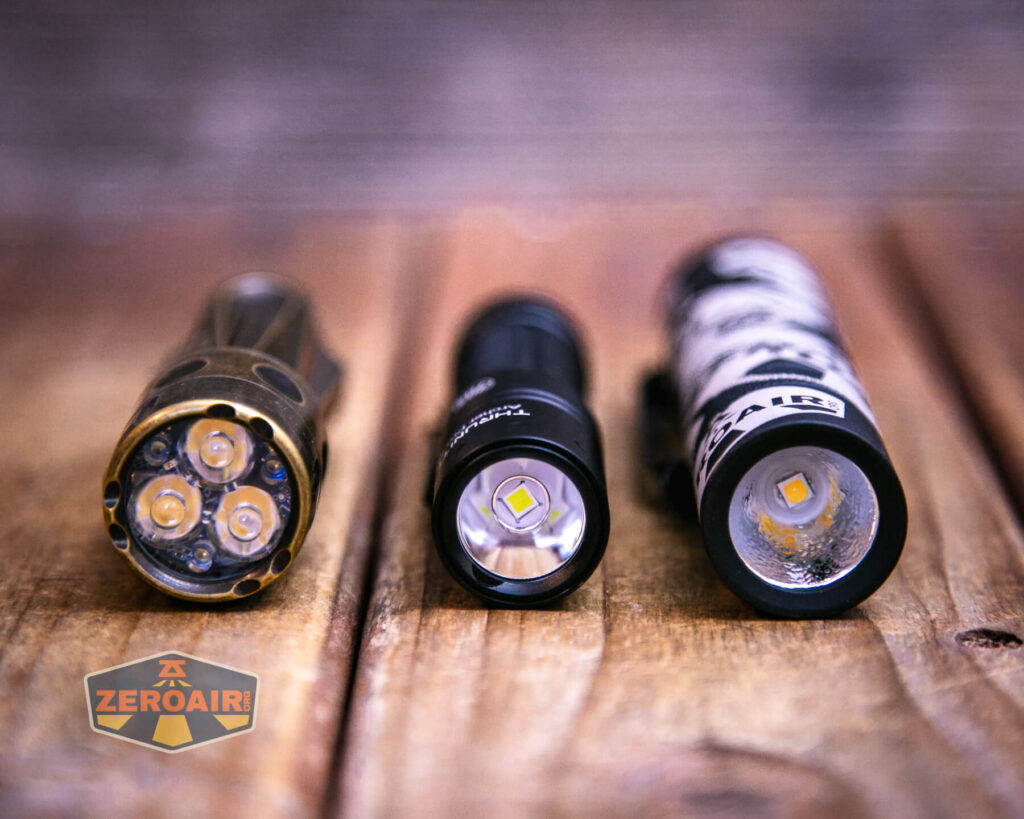
Also above is the light beside a TorchLAB BOSS 35, an 18350 light. I reviewed the aluminum version of that light in both 35 and 70 formats. I also reviewed that specific edition, the “Oveready BOSS FT Collector Vintage Brass” 35. I love it!
Retention and Carry
There’s a two-way pocket clip attached on the tail end. The clip can’t go on the head end, but again, it’s a two-way clip.
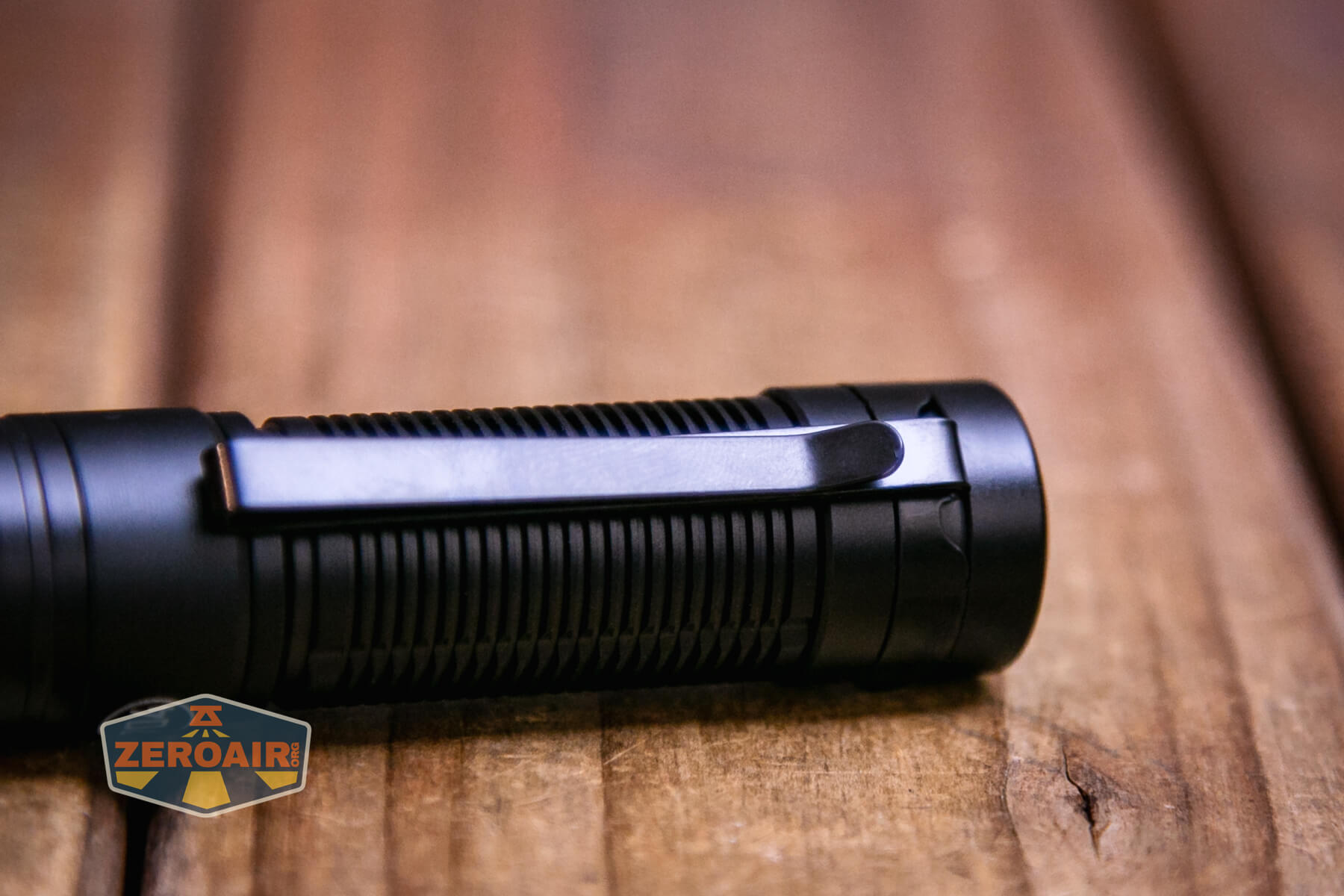


While the clip can be removed, the light does look a bit naked without it. So naked I didn’t feel right showing it here.
Nothing else is included for carrying the Thrunite Archer Pro flashlight.
Power and Runtime
A single cell powers the Thrunite Archer Pro S flashlight. It’s not [really] removable, and according to the documentation, it is a single 1000mAh 14500 cell.
Here are two runtime graphs – Turbo and the highest ramping mode.
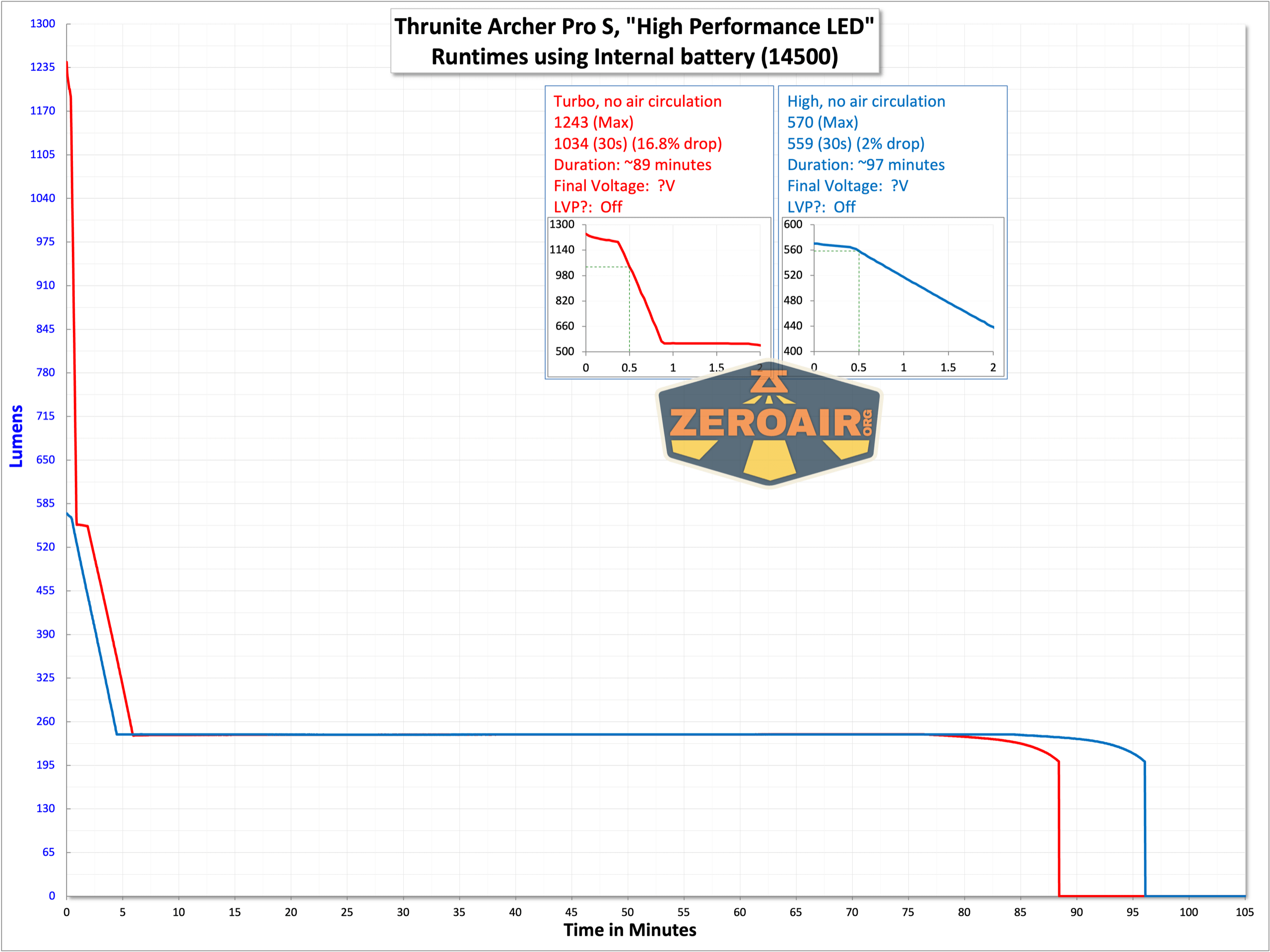
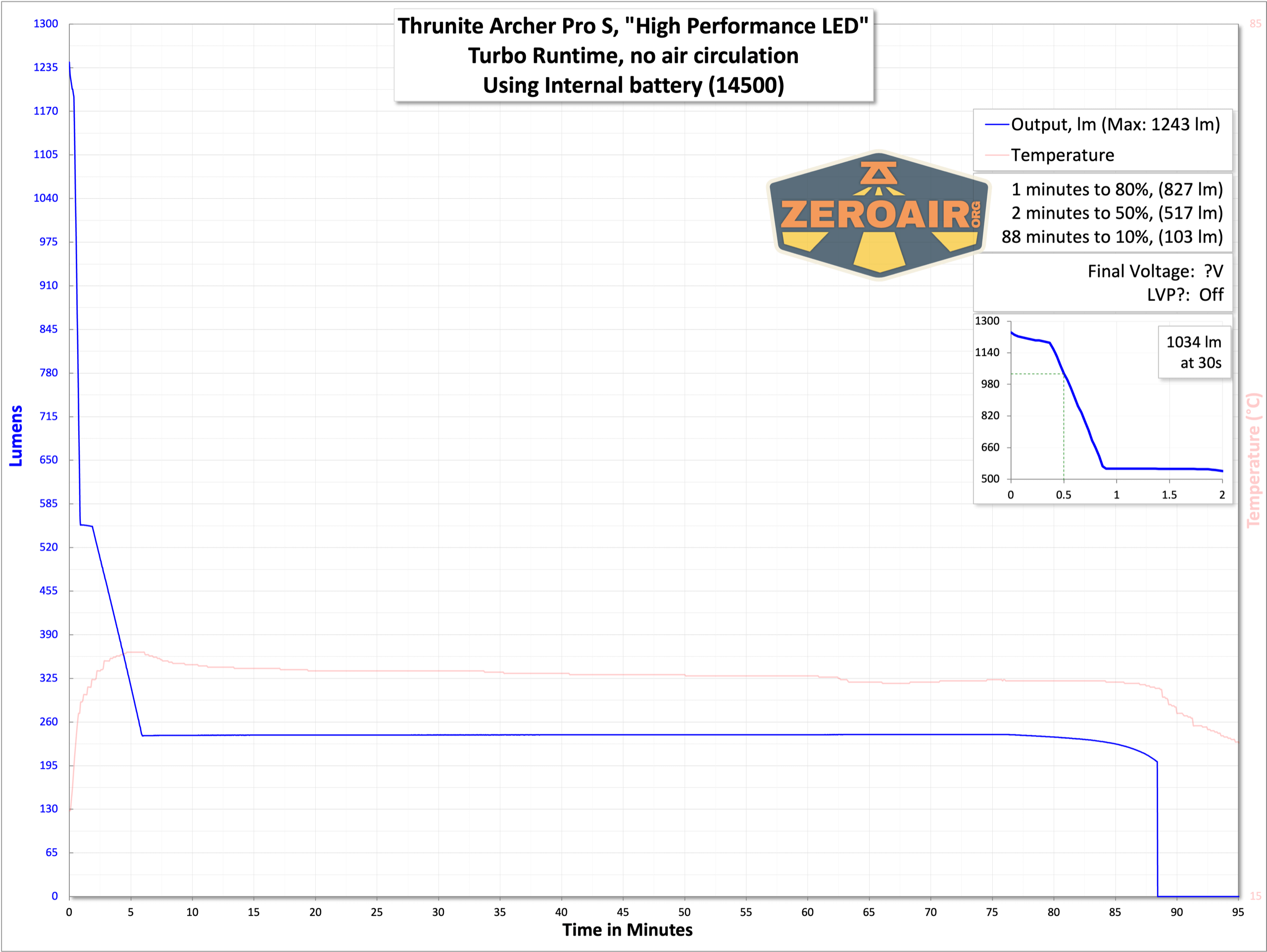
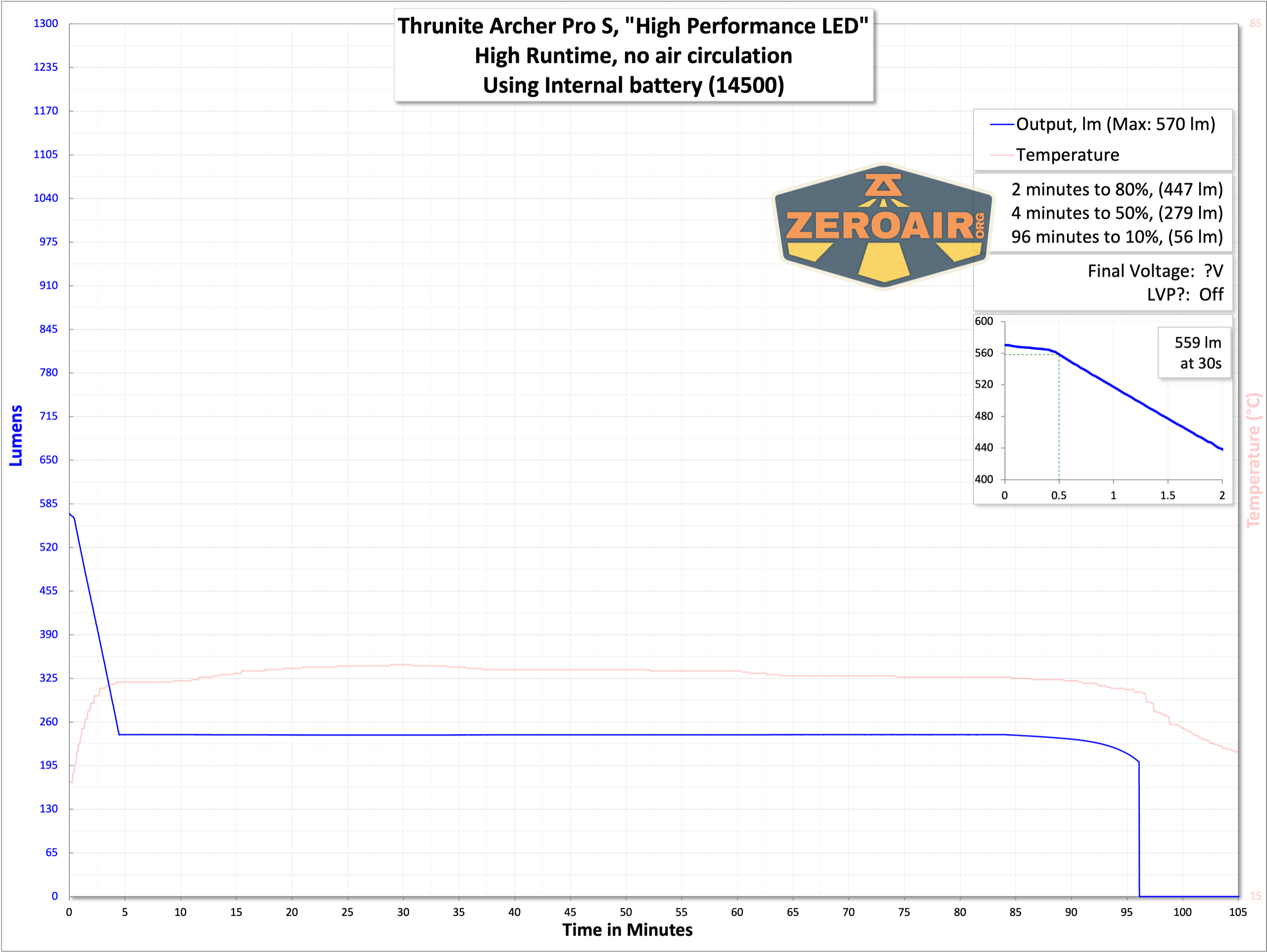
Eventually, the light shut off cleanly. This is an update from the non-S version, which blinked for a while before shutting off.
Charging
Thrunite put USB-C charging on the Archer Pro S. To reveal the charging port, one just unscrews the head.
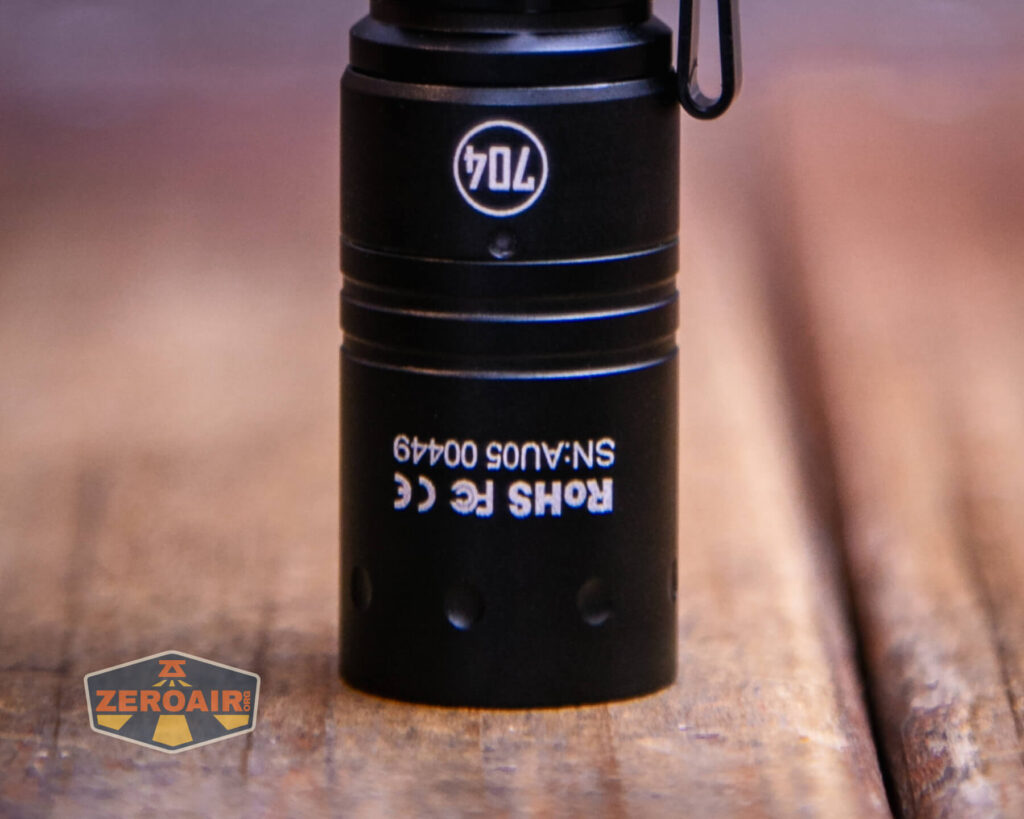

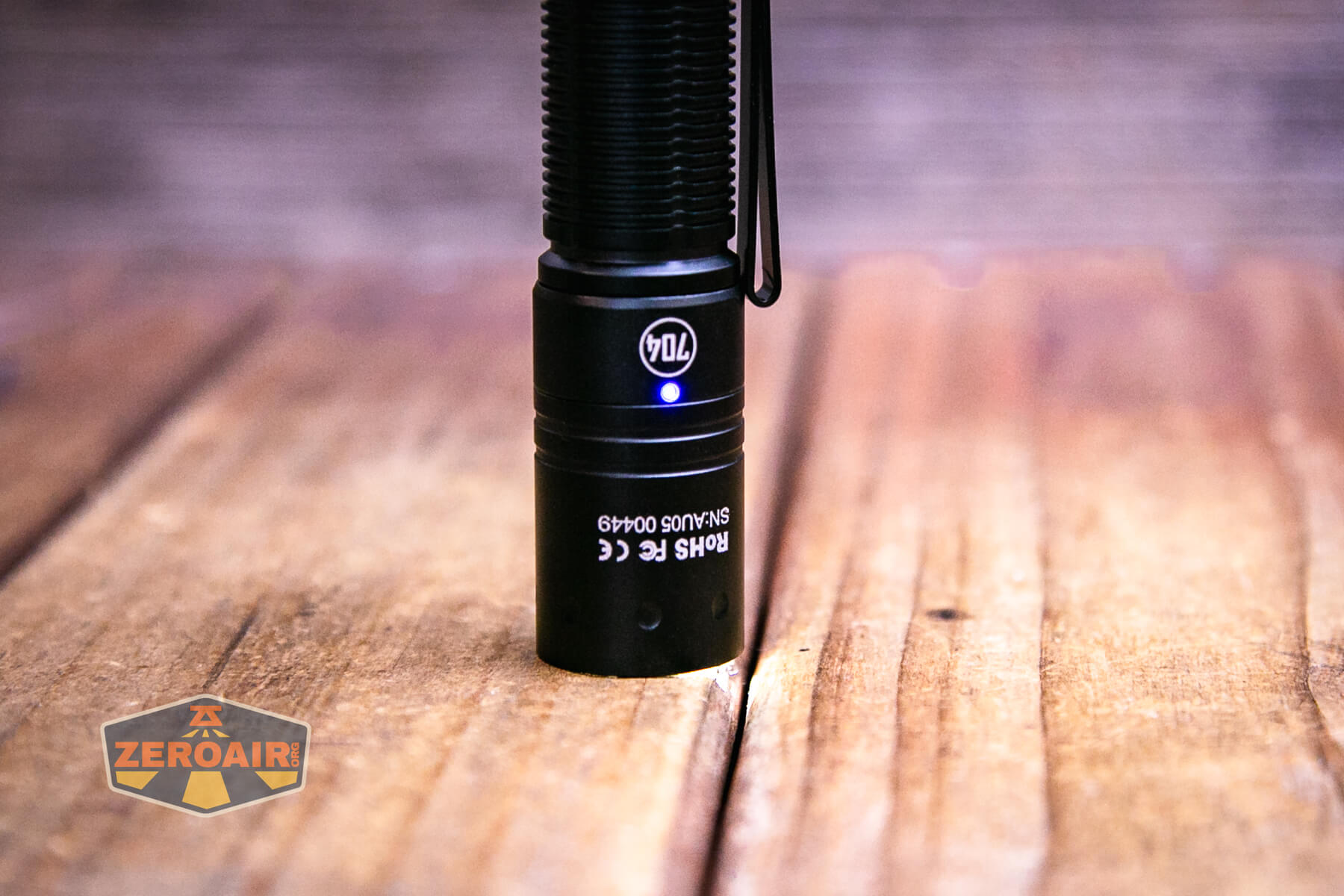
The head is “captured” though – it doesn’t unscrew all the way off. It unscrews to the point you can see below. You can also see the charging indicator in the photo at the right. This indicator is red while charging is happening, and switches to blue when charging is complete.
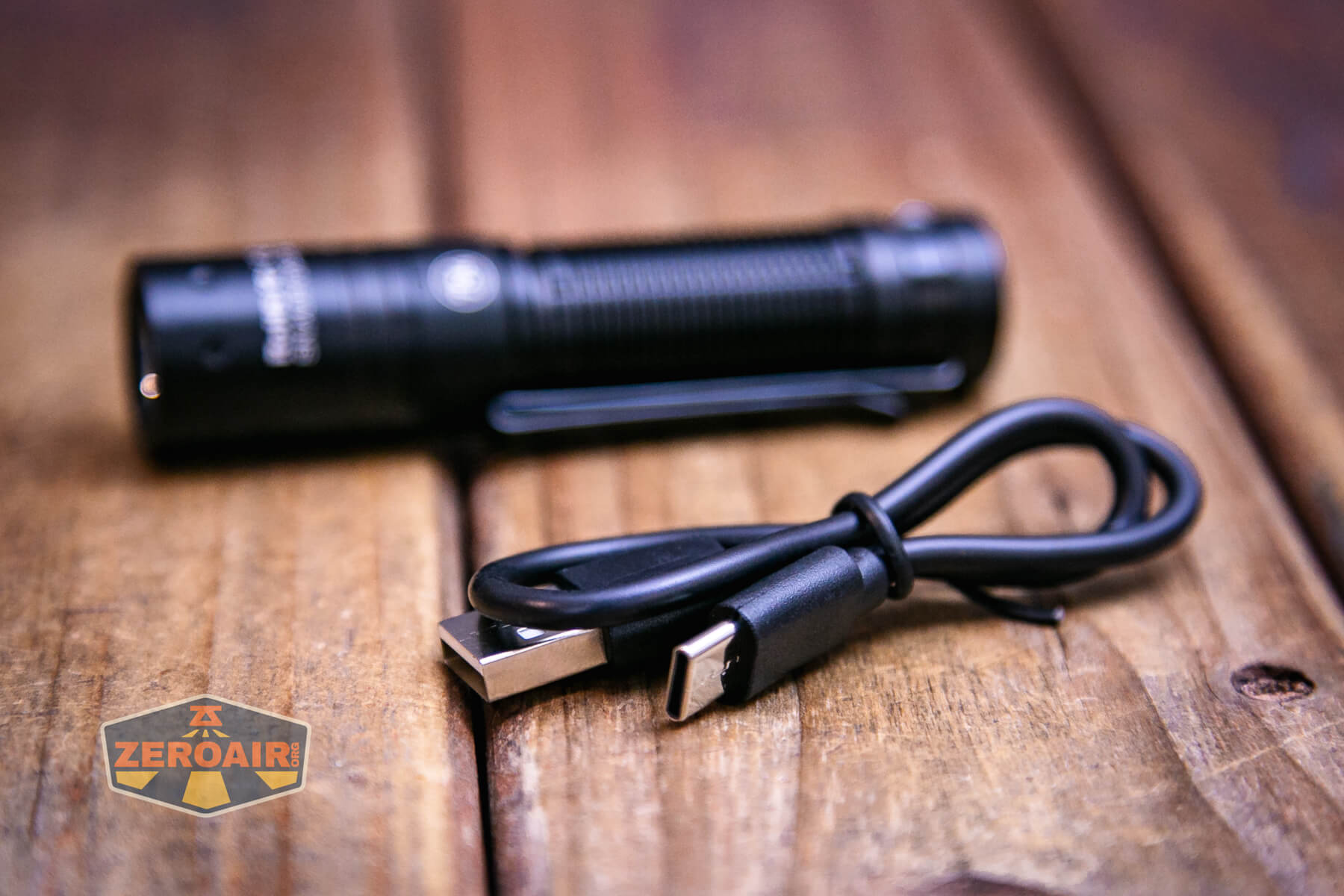
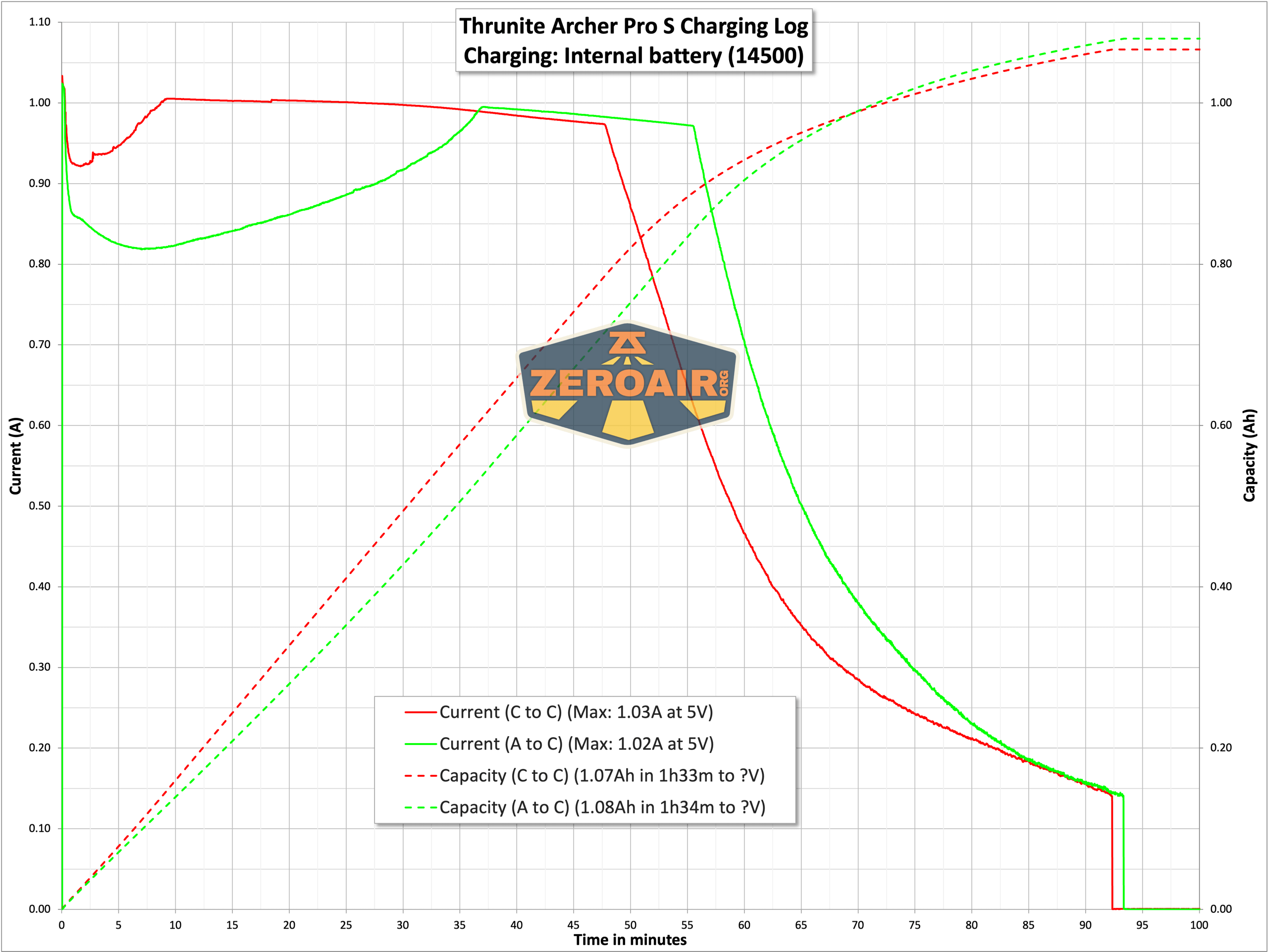
Both types of charging (A to C and C to C) work fine, but Thrunite includes an A to C cable.
Charging proceeds at around 1C and only takes around 1 and a half hours.
Modes and Currents
| Mode | Mode Claimed Output (lm) | Claimed Runtime | Measured Lumens |
|---|---|---|---|
| Turbo | 1459+645 | 50s+88m | 1243 @initial 1034 @30s |
| Infinite High | 673 | 90m | 570 @initial 559 @30s |
| Infinite Low | 15 | 27h | 13.4 |
| Firefly | 0.47 | 17.5d | 0.32 |
Pulse Width Modulation
There’s no PWM on the specific four modes. I did not test the intermediate ramps.

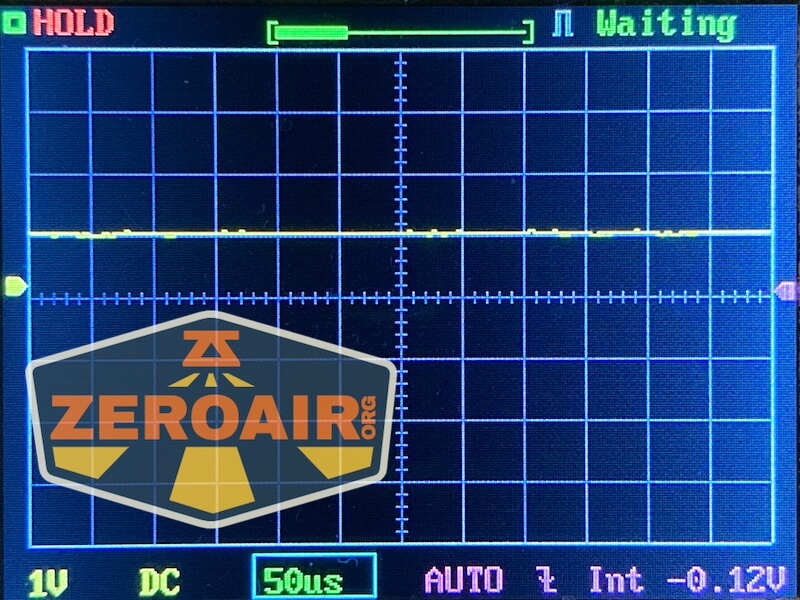
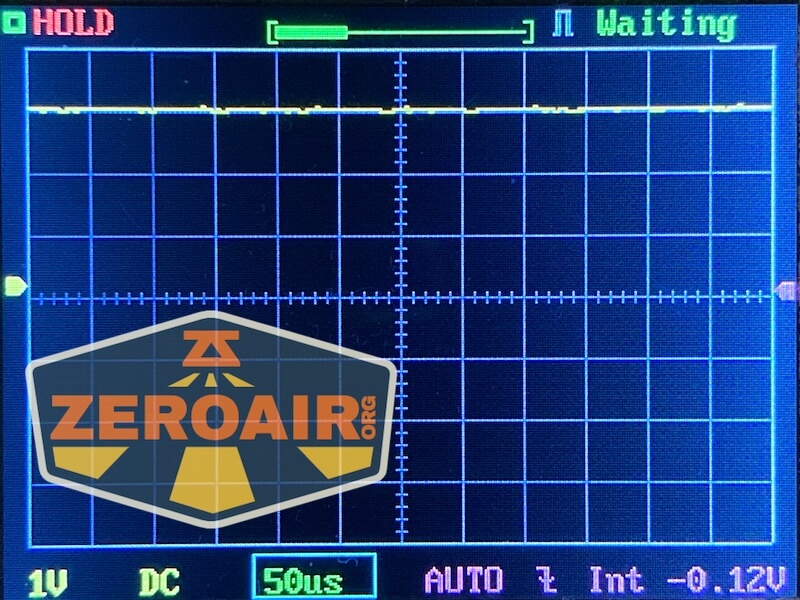

Here you can see a “baseline” – a chart with almost no light hitting the sensor. Then there’s the Ultrafire WF-602C flashlight, which has some of the worst PWM I’ve seen. It’s so bad that I used a post about it to explain PWM! Here are multiple timescales (10ms, 5ms, 2ms, 1ms, 0.5ms, 0.2ms) to make comparing this “worst” PWM light to the test light easier. That post also explains why I didn’t test the WF-602C at the usual 50us scale.


User Interface and Operation
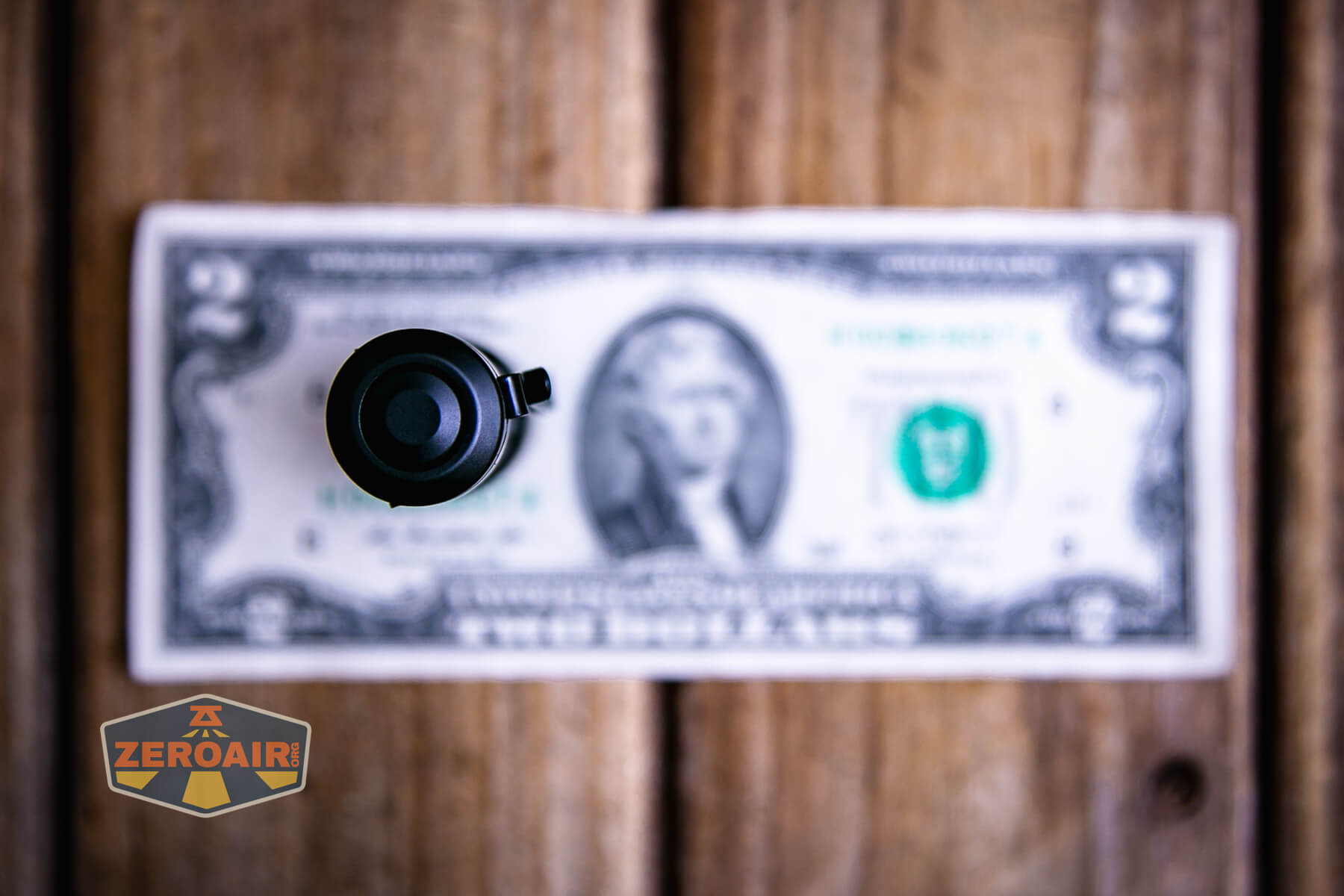
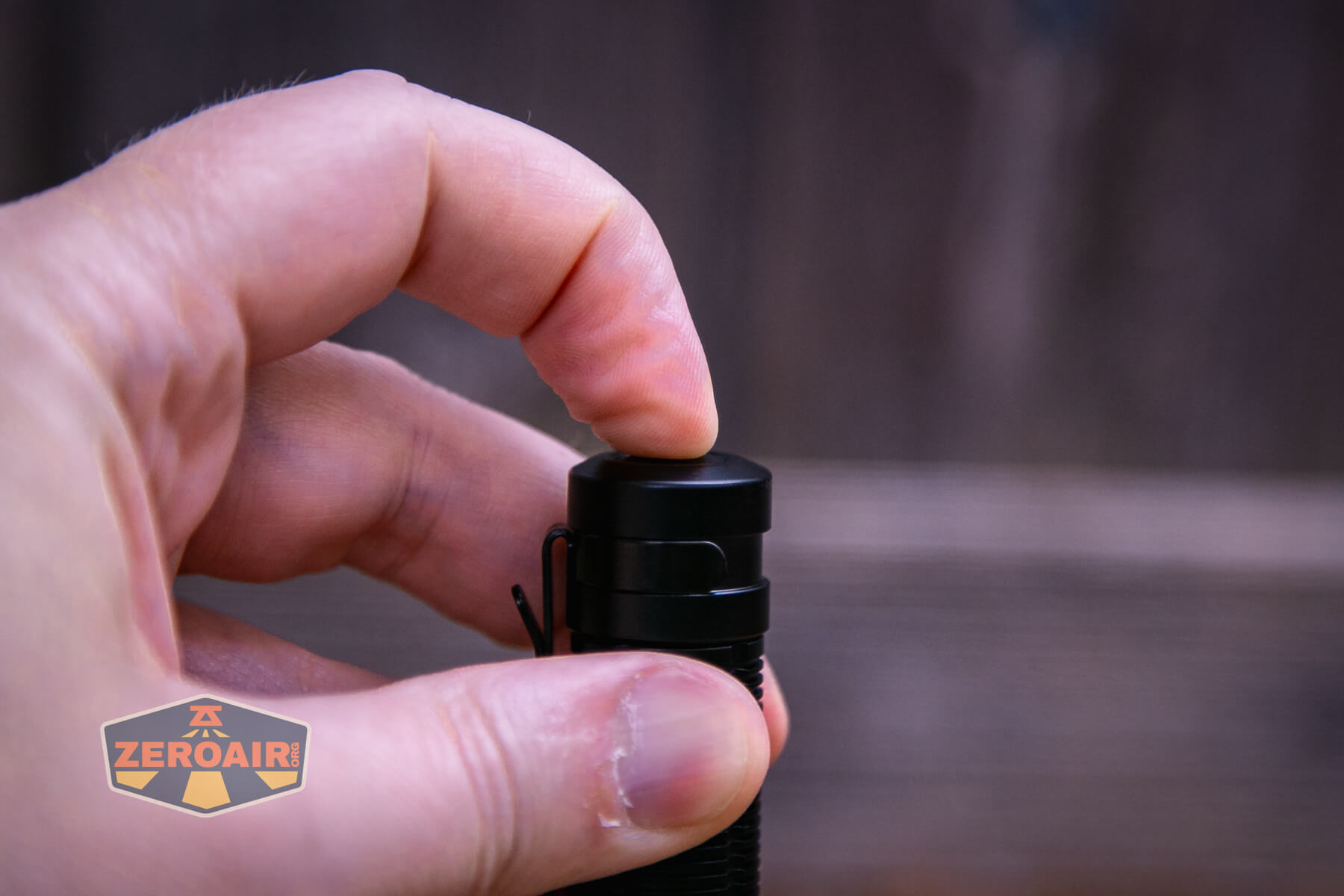
A single switch is used on the Thrunite Archer Pro S flashlight. It’s a tail switch and has a rounded cover. Despite being practically the same as the Archer Pro, this switch is still better. I (apparently) prefer a flat switch, and this one has a flat section.
Here’s a user interface table!
| State | Action | Result |
|---|---|---|
| Off | Hold | Firefly |
| Off | Click | On (Mode Memory) |
| On | Click | Off |
| Firefly | Hold | Lockout to Off |
| Lockout | Hold | Unlock to Firefly |
| Any (Except lockout) | Double Click | Turbo |
| On (Except Firefly) | Hold | Ramp up or down^ |
| Any | Click 3x | Strobe |
^The ramp here is fairly logical except for one thing – the direction is remembered, and the next iteration of ramp is opposite to what it was before. So if you ramped up then turned the light off and turn it back on again later, the ramp will be down this time. Seems like a reset to “ramp up” after 15 seconds or whatever would be more logical (and not essentially emulate “ramping mode memory”.) As it is, if you hold the switch with the light on, it’ll ramp up and down over and over. That part of the ramping is great. The light blinks at both ends to let you know it’s reached maximum or minimum.
LED and Beam
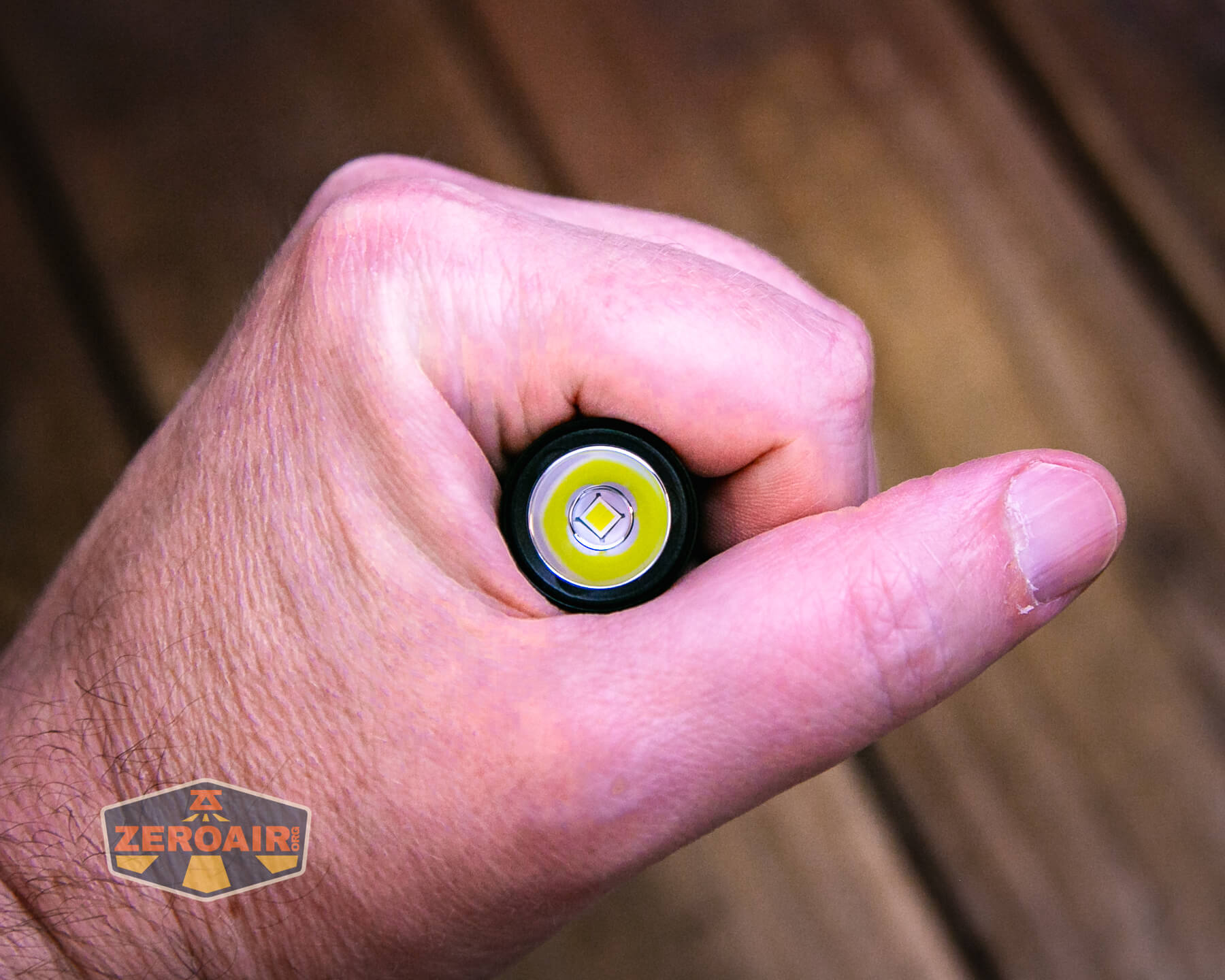
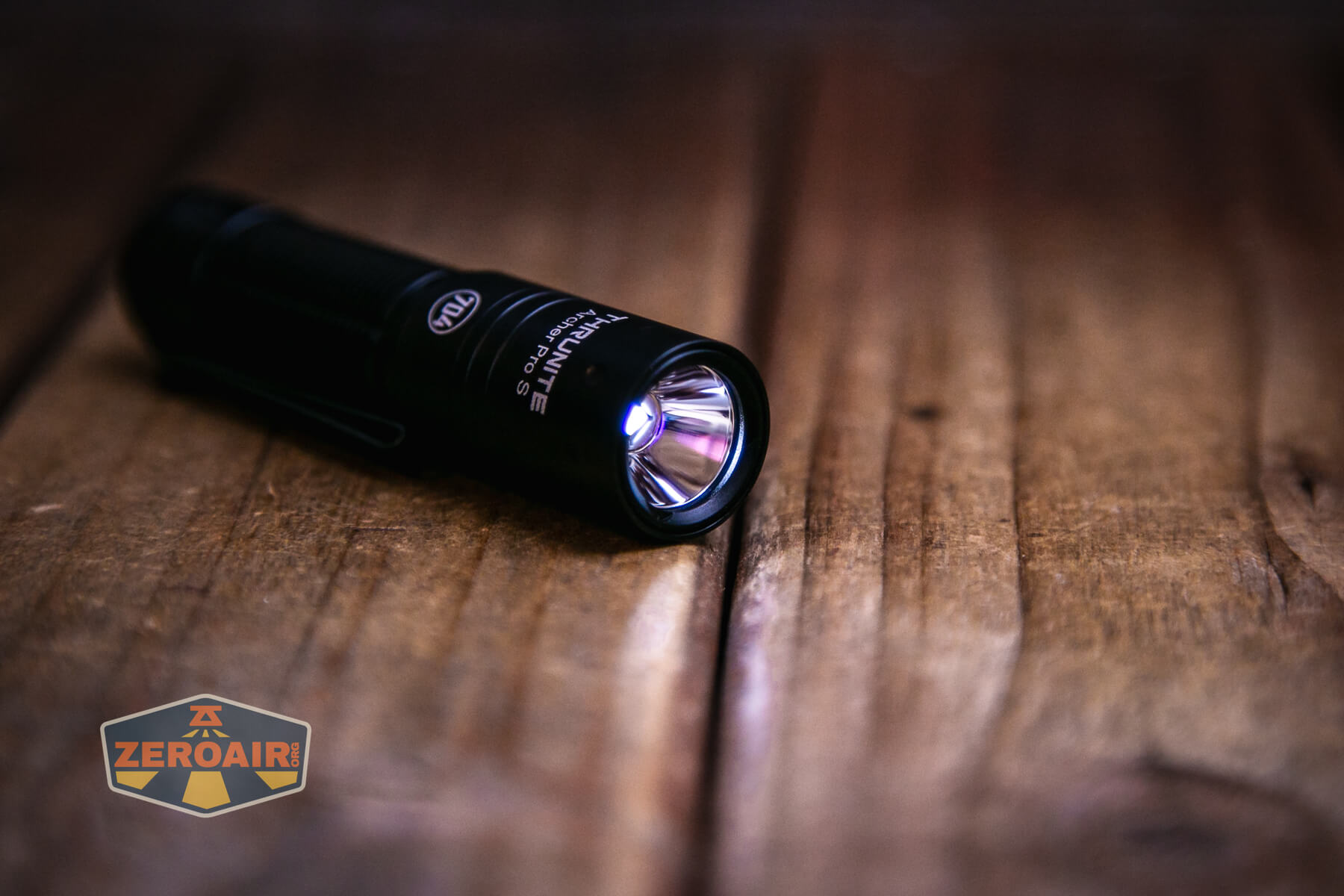
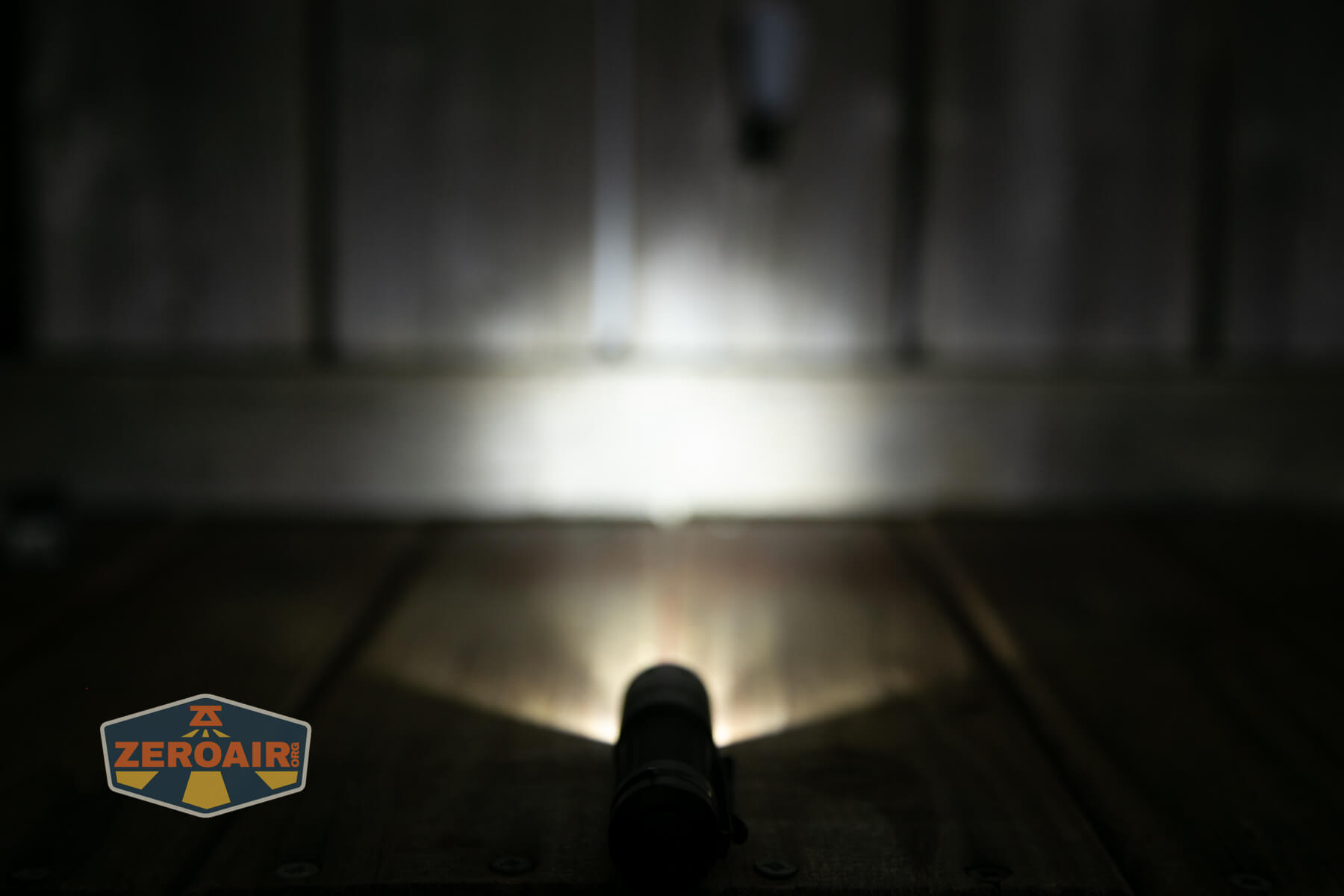
Thrunite doesn’t say what this emitter is. It’s a higher-output than the Cree XP-L2 used in the Archer Pro and also domeless, so you’d expect throw to be better, too.
LED Color Report (CRI and CCT)
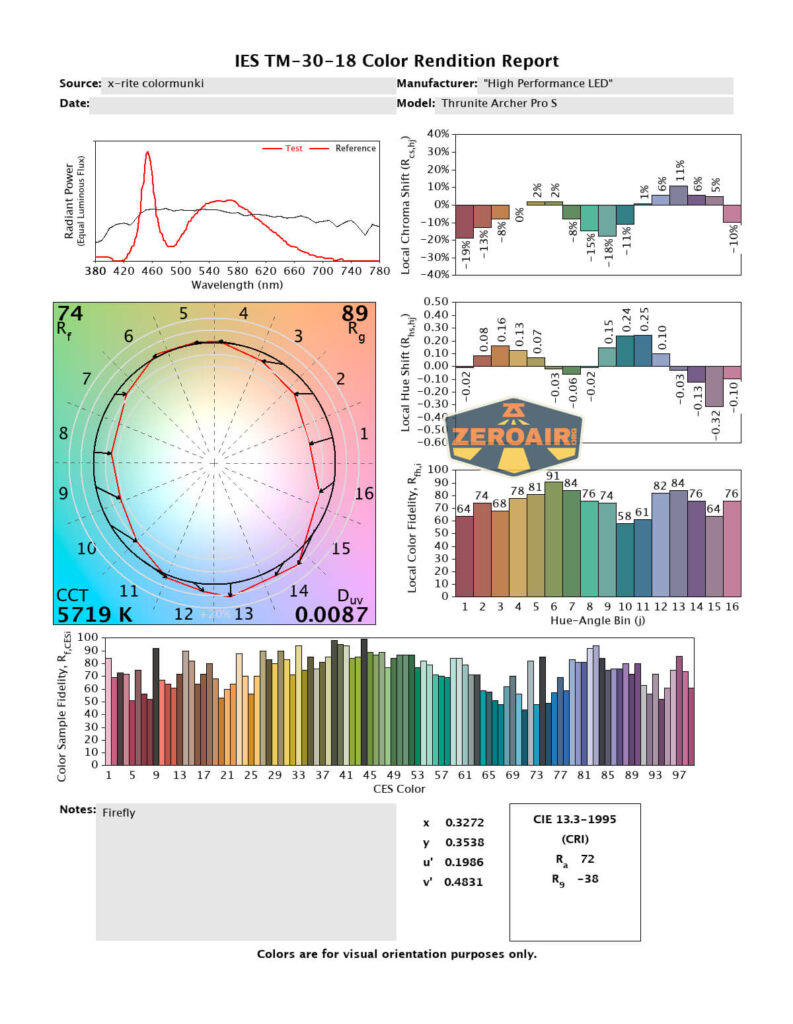
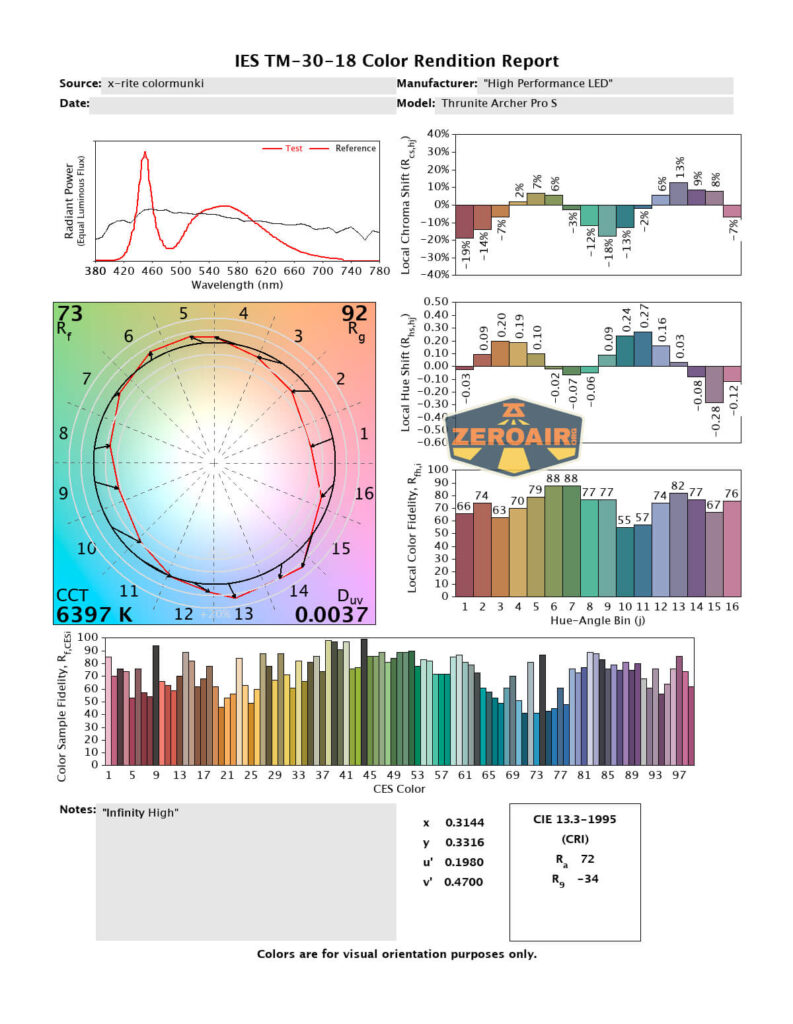
Thrunite doesn’t make any CRI or CCT claims that I can see (aside from “cool white” in the chart). The emitter here is in the cool range, and cooler the higher the output. CRI is also low, at around 70.


Beamshots
These beamshots always have the following settings: f8, ISO100, 0.3s shutter, and manual 5000K exposure. These photos are taken at floor level, and the beam hits the ceiling around 9 feet away.



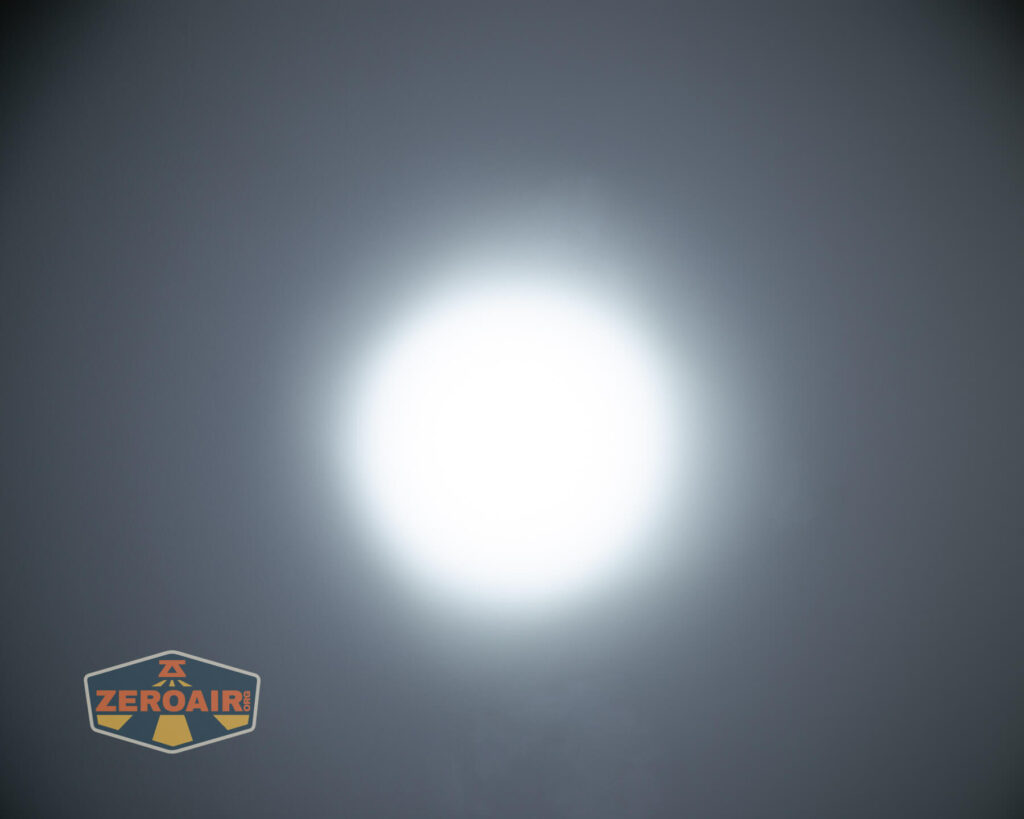
Tint vs BLF-348 (KillzoneFlashlights.com 219b version) (affiliate link)
I keep the test flashlight on the left and the BLF-348 reference flashlight on the right. These photos are taken around 18 inches from the door.


I compare everything to the KillzoneFlashlights.com 219b BLF-348 because it’s inexpensive and has the best tint!
Summary and Conclusion
The Thrunite Archer Pro S flashlight is a higher output upgrade to the Archer Pro. This is a sleek light and USB-C charging works well. I like the bookend standard modes of Firefly and Turbo, but the addition of ramping in the middle is nice. I would love to be able to swap the built-in 14500, though.
The Big Table
| Thrunite Archer Pro S flashlight | |
|---|---|
| Emitter: | “High Performance LED” (Cool white) |
| Price in USD at publication time: | $29.95 |
| Cell: | Internal |
| Runtime Graphs | |
| LVP? | |
| Switch Type: | E-Switch |
| Quiescent Current (mA): | ? |
| On-Board Charging? | Yes |
| Charge Port Type: | USB-C |
| Charge Graph | |
| Power off Charge Port | Firefly and Infinity Low only |
| Claimed Lumens (lm) | 1459 |
| Measured Lumens (at 30s) | 1034 (70.9% of claim)^ |
| Candela per Lumen | 6.61 |
| Claimed Throw (m) | 160 |
| Candela (Calculated) in cd (at 30s) | 240lux @ 4.893m = 5746cd |
| Throw (Calculated) (m) | 151.6 (94.8% of claim)^ |
| Claimed CCT | – |
| Measured CCT Range (K) | 5700-6500 Kelvin |
| Item provided for review by: | Thrunite |
| All my Thrunite reviews! | |
^ Measurement disclaimer: Testing flashlights is my hobby. I use hobbyist-level equipment for testing, including some I made myself. Try not to get buried in the details of manufacturer specifications versus measurements recorded here; A certain amount of difference (say, 10 or 15%) is perfectly reasonable.
What I like
- Simple user interface
- USB-C charging (with C to C working, too)
- The updated switch cover shape.
- CCT is reasonable at lower outputs
- Can be used (on lower modes) while charging
What I don’t like
- Not a mechanical clicky (potential for parasitic drain)
- The internal 14500 cell is not replaceable
- Stepdowns on the higher levels are fairly dramatic
Notes
- This content originally appeared at zeroair.org. Please visit there for the best experience!
- Please use my Amazon.com referral link to help support zeroair.org!
- Please support me on Patreon! I deeply appreciate your support!