

Wurkkos TD02 Green Flashlight Review
The Wurkkos TD02 green flashlight is an inexpensive (loosely) tactical light with a single emitter and TIR. It runs one 18650 and has built-in USB-C charging.
Official Specs and Features
Here’s a link to the Wurkkos TD02 Green flashlight product page.
Versions
There’s a previous version which differs only in body color. That one is black (and I’ve reviewed it). In fact, the difference here is just the body color!
Price
With cell (as pictured in this post), the Wurkkos TD02 Green flashlight runs just under $18.99. You can buy the Wurkkos TD02 Green flashlight here.
What’s Included

- Wurkkos TD02 Green flashlight
- Charging cable (USB to USB-C)
- 3000mAh 18650
- Lanyard
- Spare o-rings (2)
- Manual etc
Package and Manual


Build Quality and Disassembly
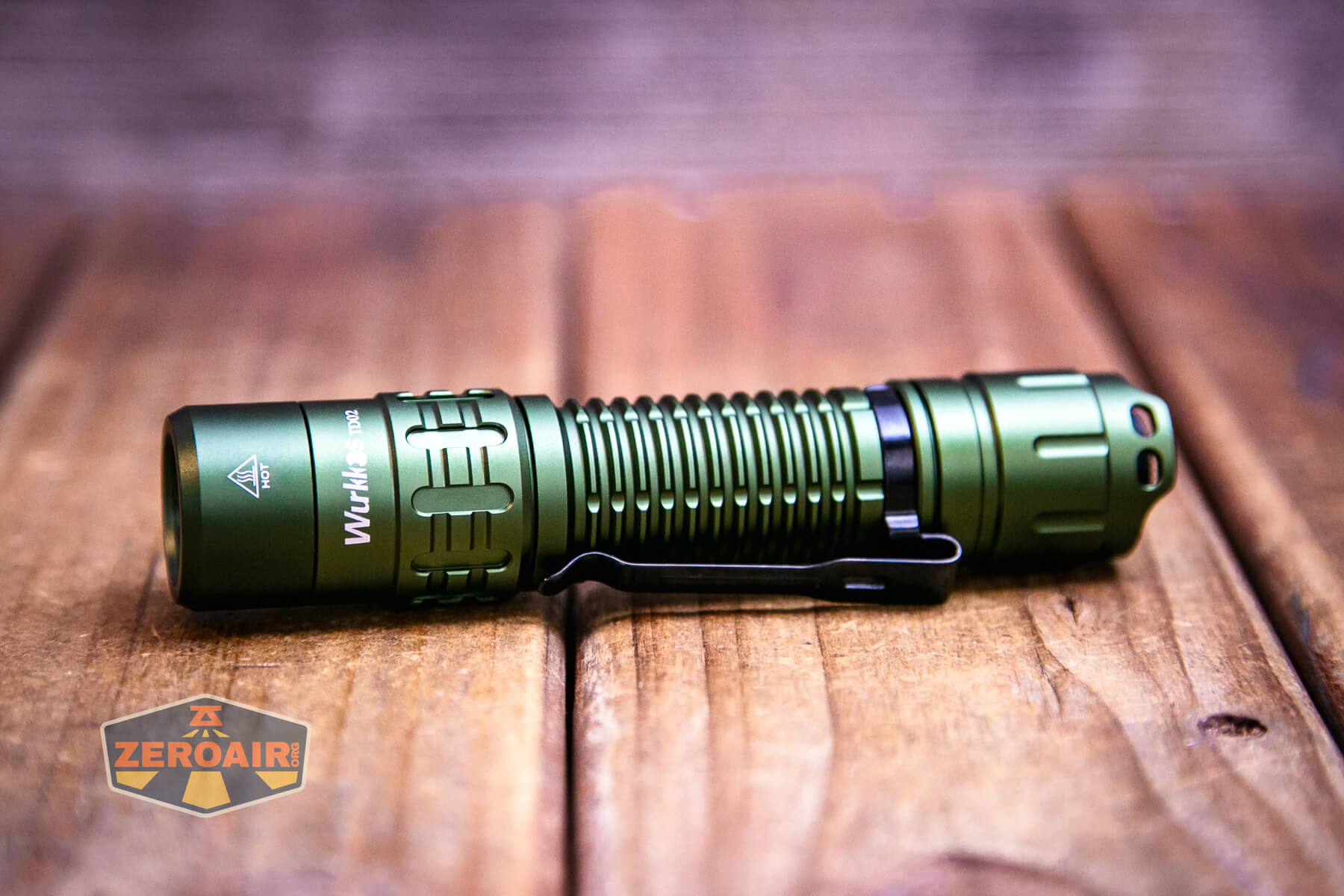


As the Wurkkos TD02 is (stated as) a tactical flashlight, it’s nice to see dual springs used. These are beefy springs, too.
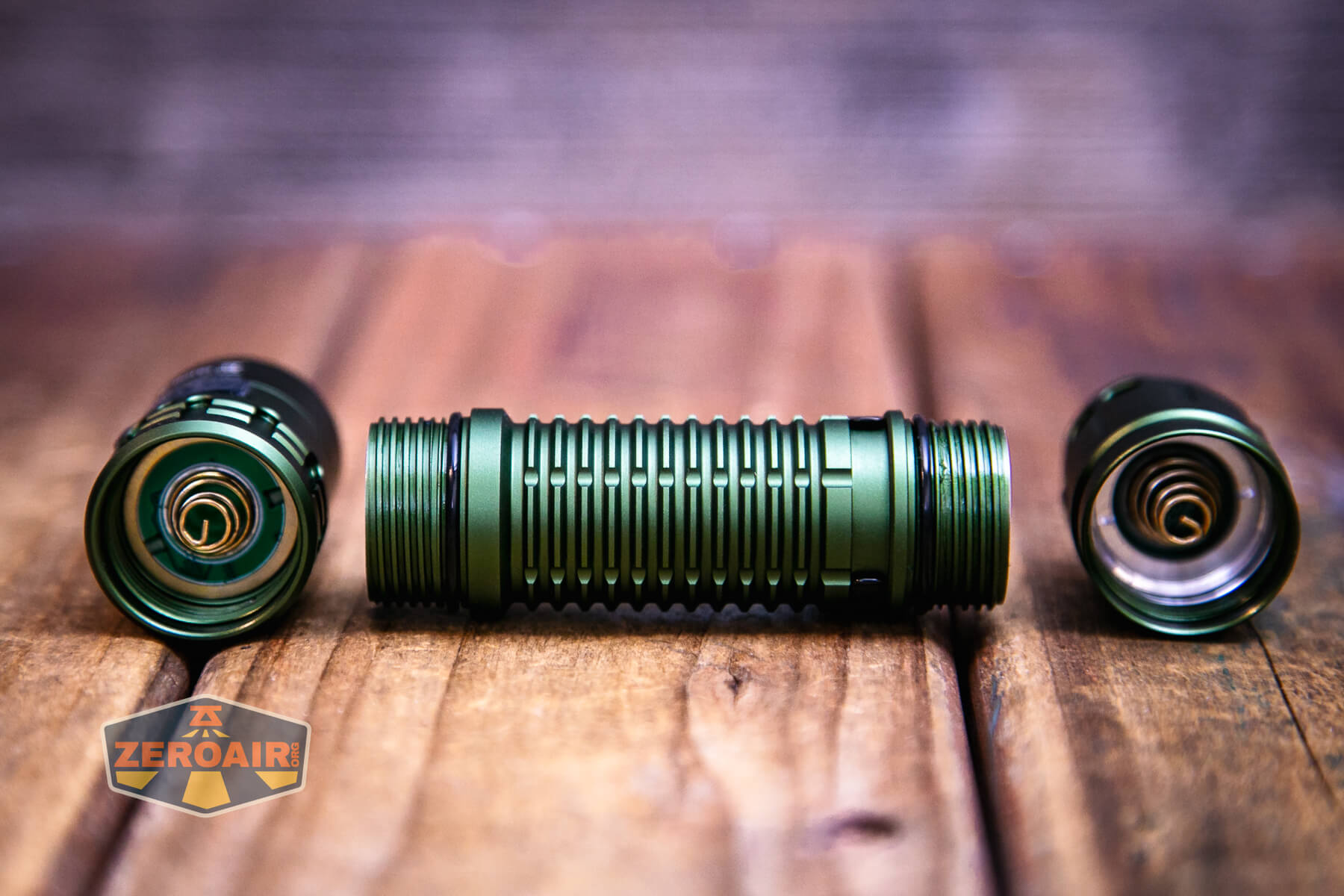
The threads are anodized.

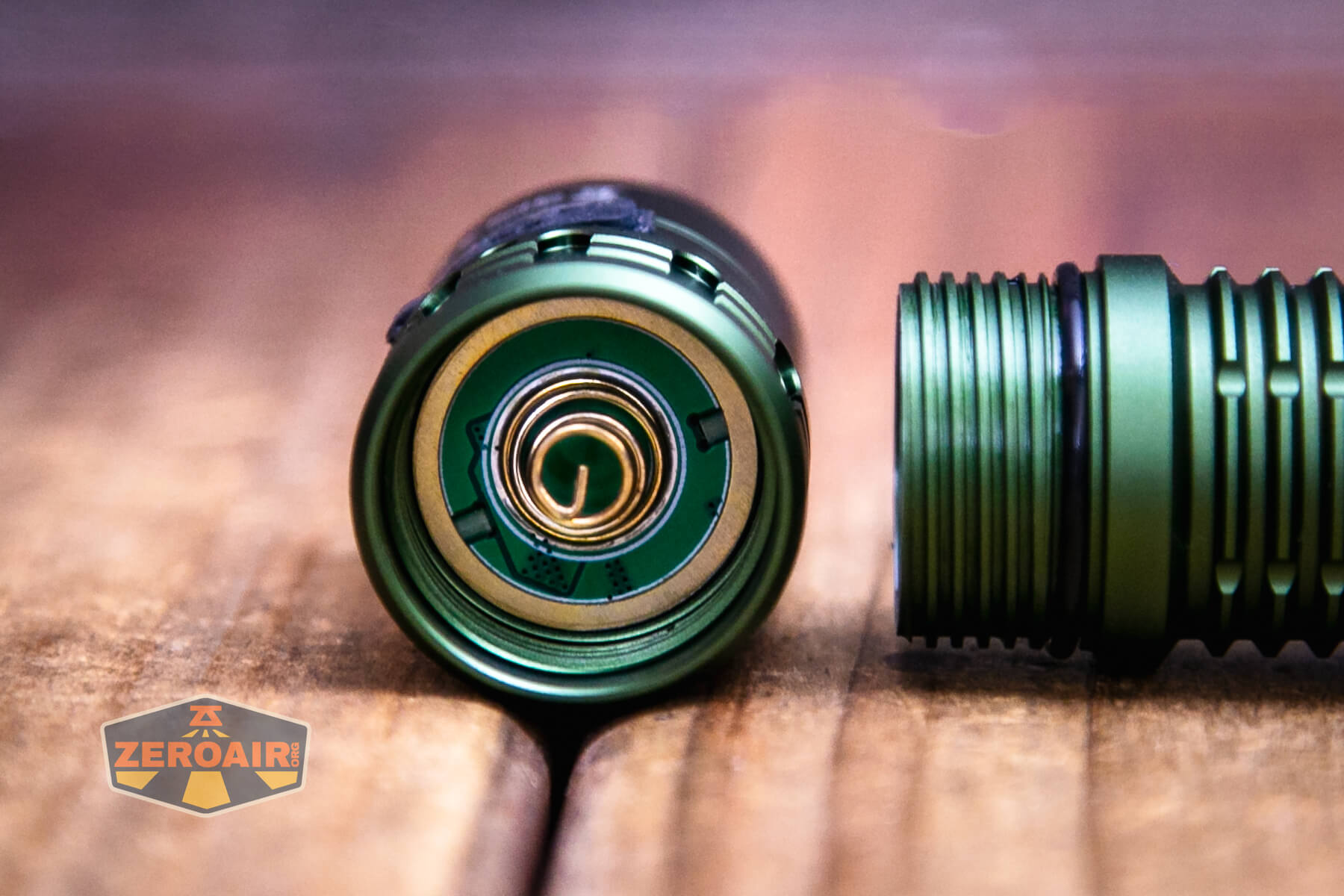
Build quality is fine. And for $19, I’d say the build quality is great!
Size and Comps
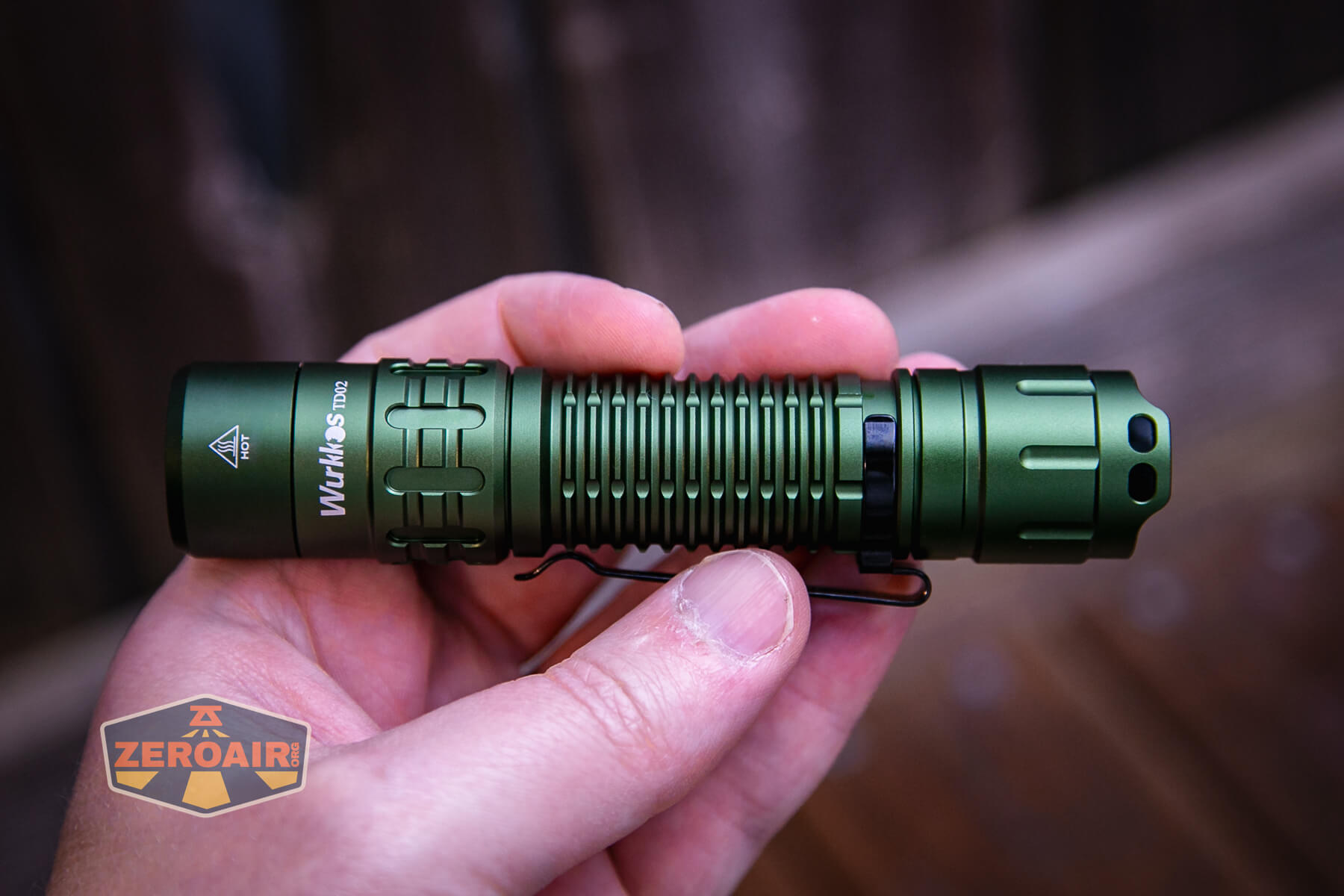
Dimension: 122mm (length) x 24.7mm (head diameter)
Weight: 62 ±1 gram (without battery)


If the flashlight will headstand, I’ll show it here (usually the third photo). If the flashlight will tailstand, I’ll also show that (usually in the fourth photo).
Here’s the test light with the venerable Convoy S2+. The version below is a custom laser-engraved Convoy S2+ host by GadgetConnections.com. I did a full post on an engraved orange host right here! Or go straight to GadgetConnections.com to buy your Convoy S2+ now!
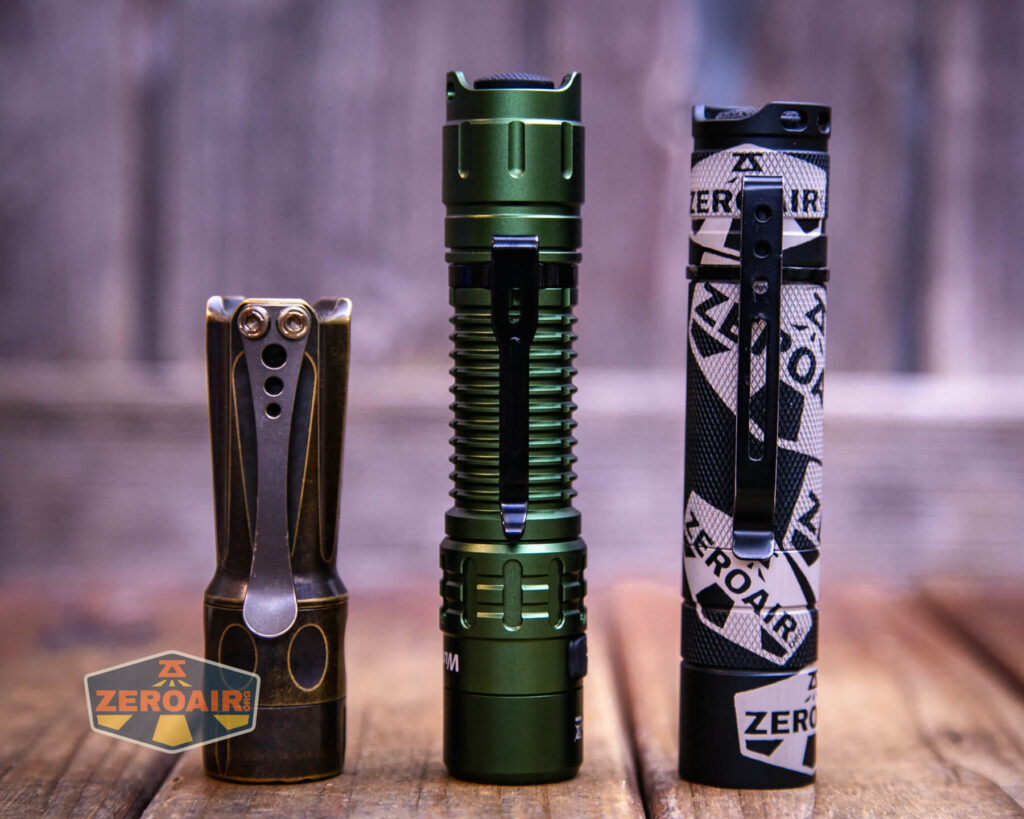
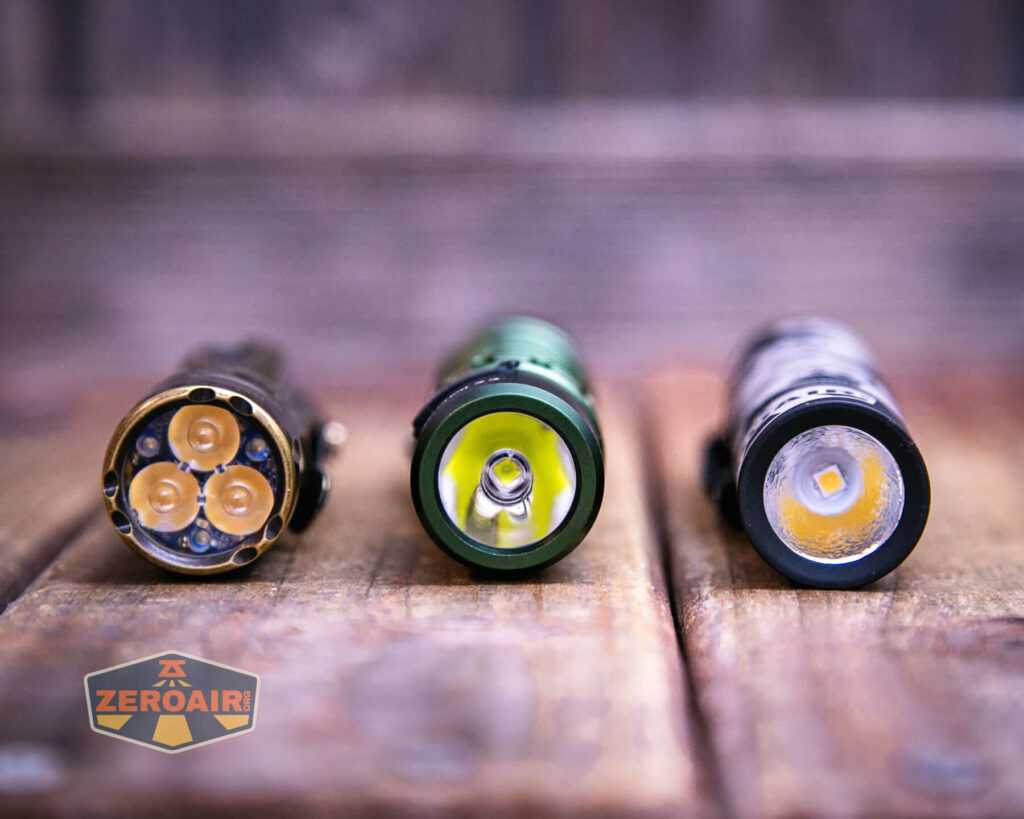
Also above is the light beside a TorchLAB BOSS 35, an 18350 light. I reviewed the aluminum version of that light in both 35 and 70 formats. I also reviewed that specific edition, the “Oveready BOSS FT Collector Vintage Brass” 35. I love it!
Retention and Carry
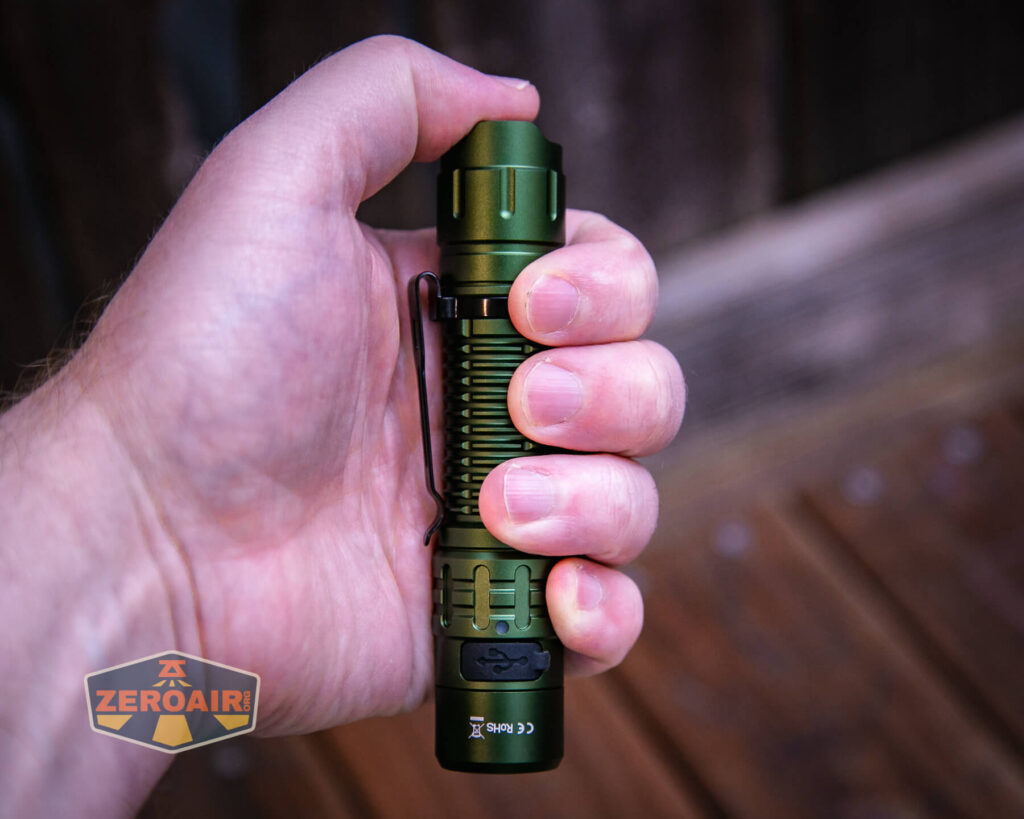
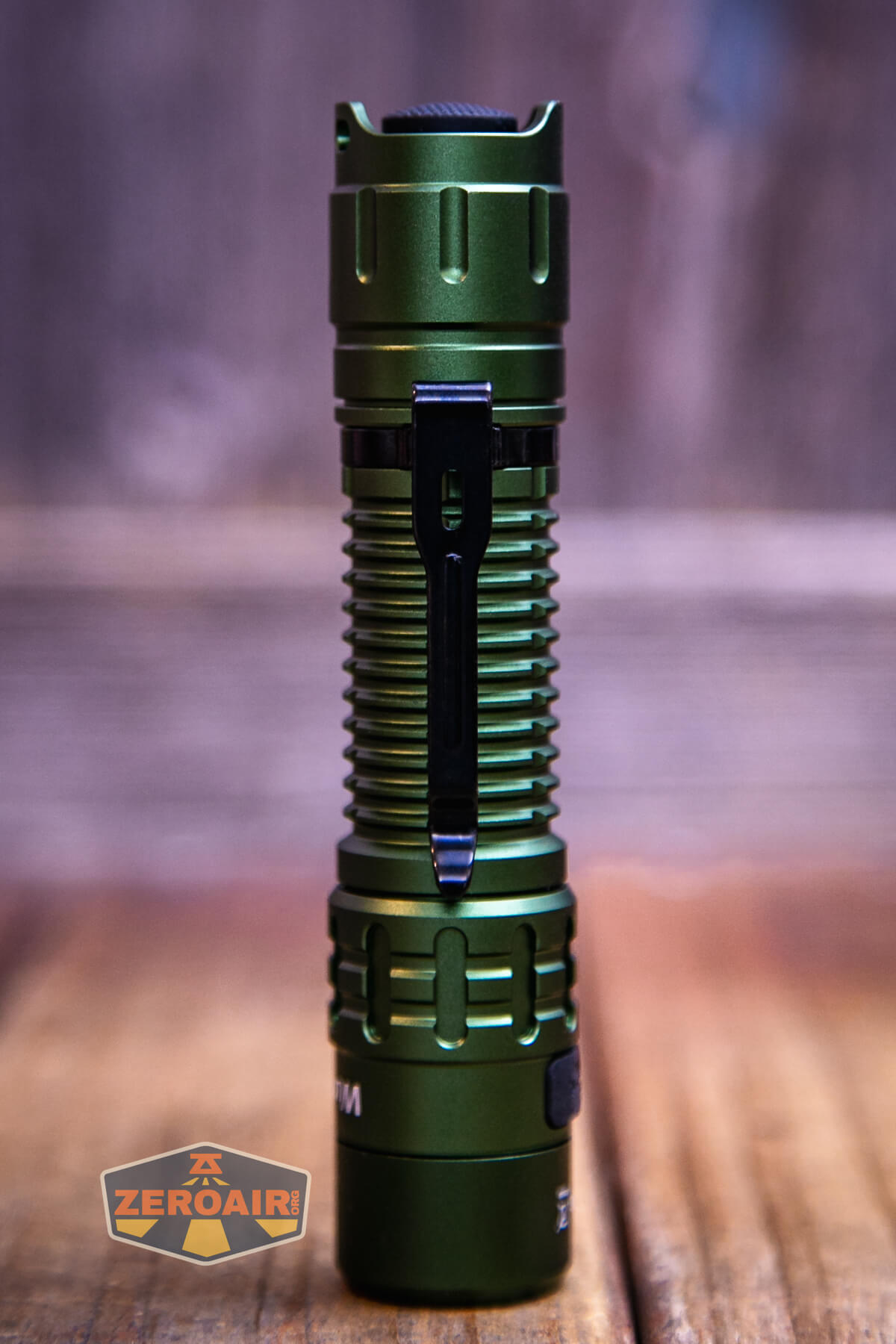
A friction-fit pocket clip is used. This is a very simple clip but has some nice design features, too. It’s not reversible, nor is it a two-way clip. So bezel down carry is the only option here.
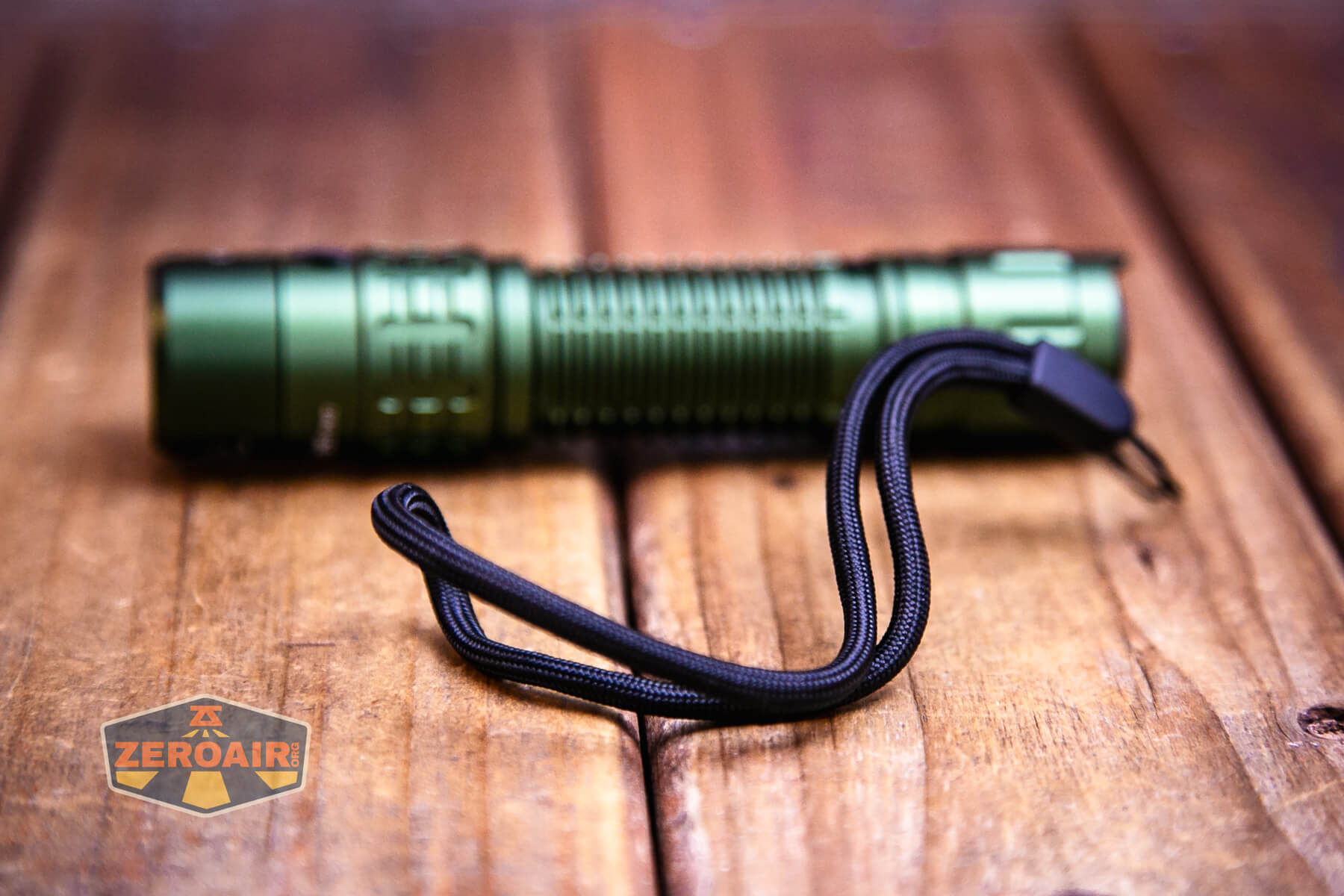
A lanyard is included. While you could connect this through the pocket clip, the tailcap holes are a much more solid choice.
Power and Runtime
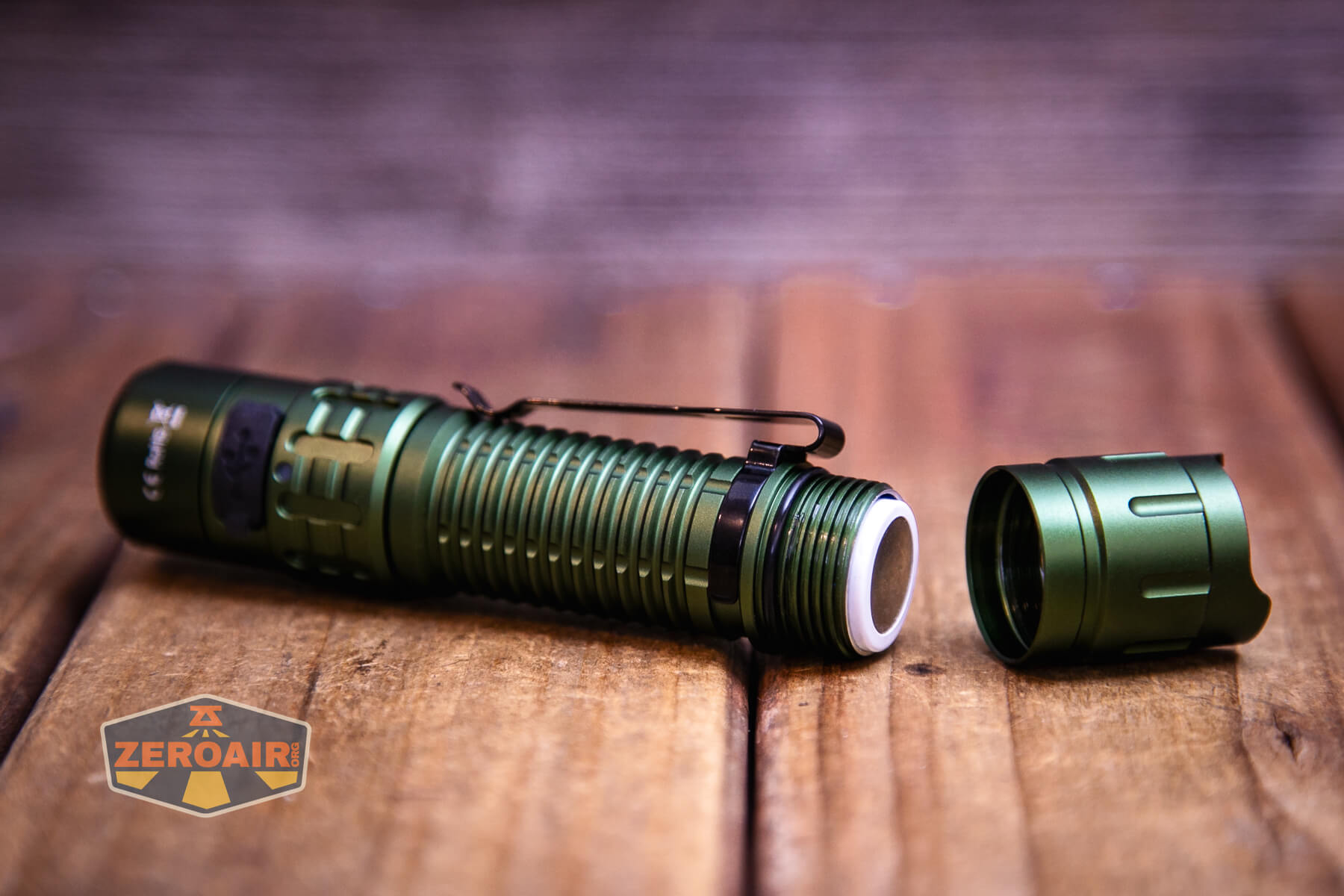
A single lithium-ion cell powers the Wurkkos TD02 Green flashlight. If you buy the package (for $2 more than just the light), you’ll get this 3000mAh 18650 seen below. It’s a button top and is standard.

The cell goes into the light in the usual orientation: positive end toward the head.
Below are a few runtime tests. I did not observe anywhere near 2000 lumens on Turbo, but the stepdown was reasonably long (around 1 minute before the first stepdown.)
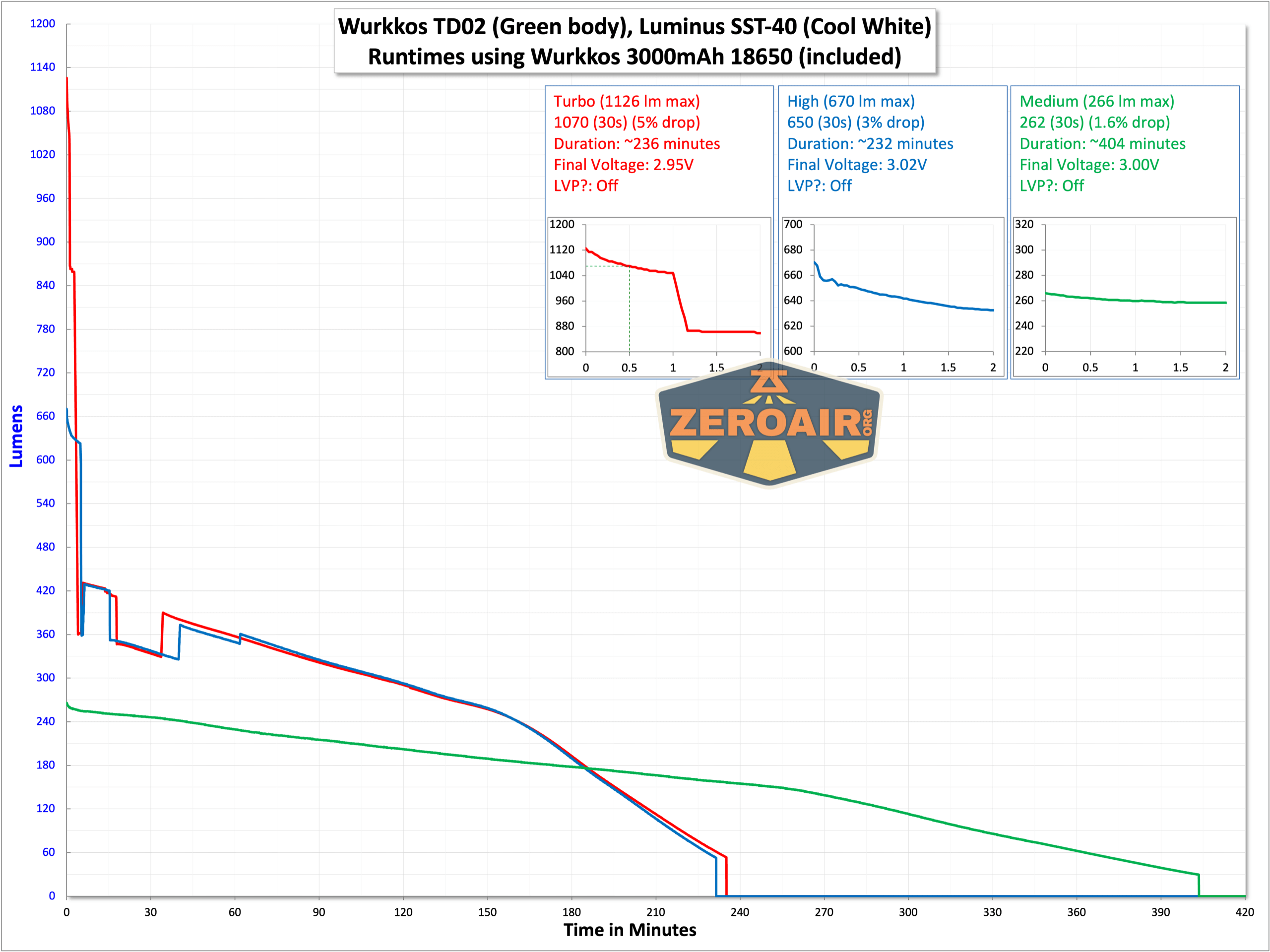
You might notice a tiny change in the three runtime charts below. I added a little label for what throw you could expect for that lumen value. This is just a calculation and it’s based on the cd/lm value that’s been included in The Big Table for a long while now. Please comment below what you think of this data point. It’s a bit of a pain to include and if you were ever interested in it you probably already inferred it from checking the cd/lm and calculating throw. (Ok that’s a bit of a stretch! I do know you all are smart, though!)
For now it’s called ‘Throw per lumen (appx.)” but I’m not settled on that designation, either. So what do you think about this addition? Comment here! I might miss your input on Reddit or wherever else.


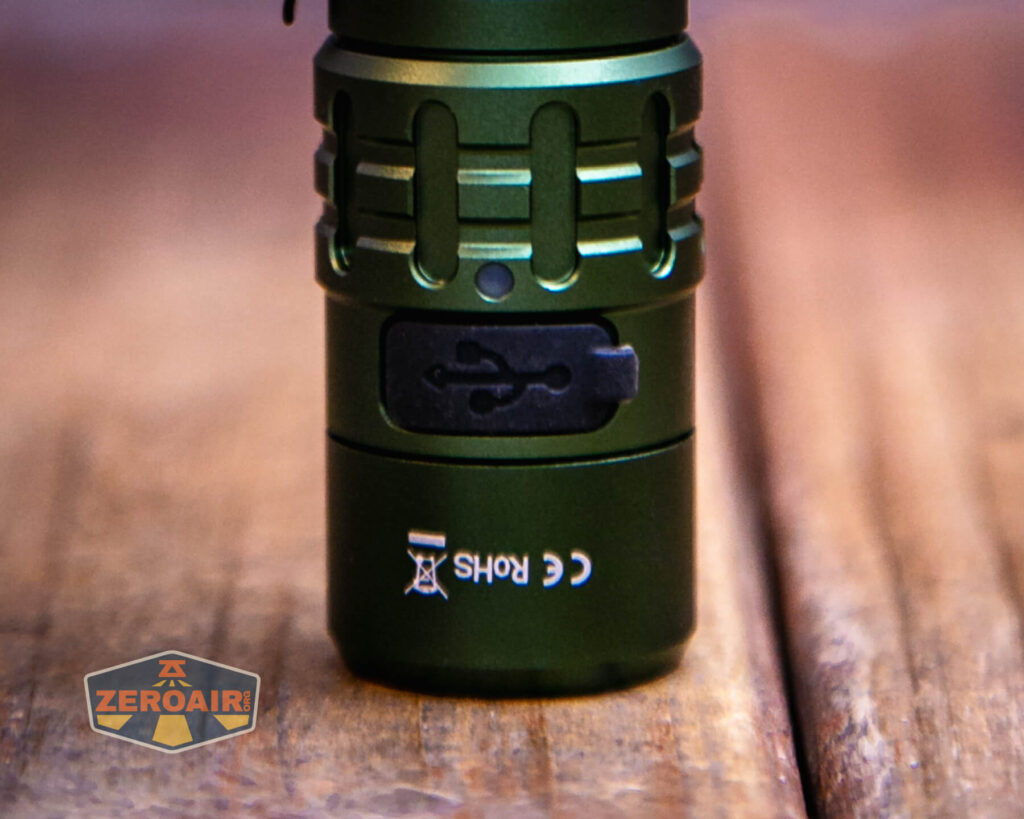
Low voltage protection was observed. The indicator just above the charging port (which you can see in the section below) does indicate cell voltage, too. That’s a nice feature. It’ll indicate for about 5 seconds after the light is turned on, as follows:
Green: ~50-100% power
Red: 20-50% power
Red flashing: <20% power
Charging
The Wurkkos TD02 Green flashlight offers USB-C charging and the charging port is in the head. The press-in cover fits securely.

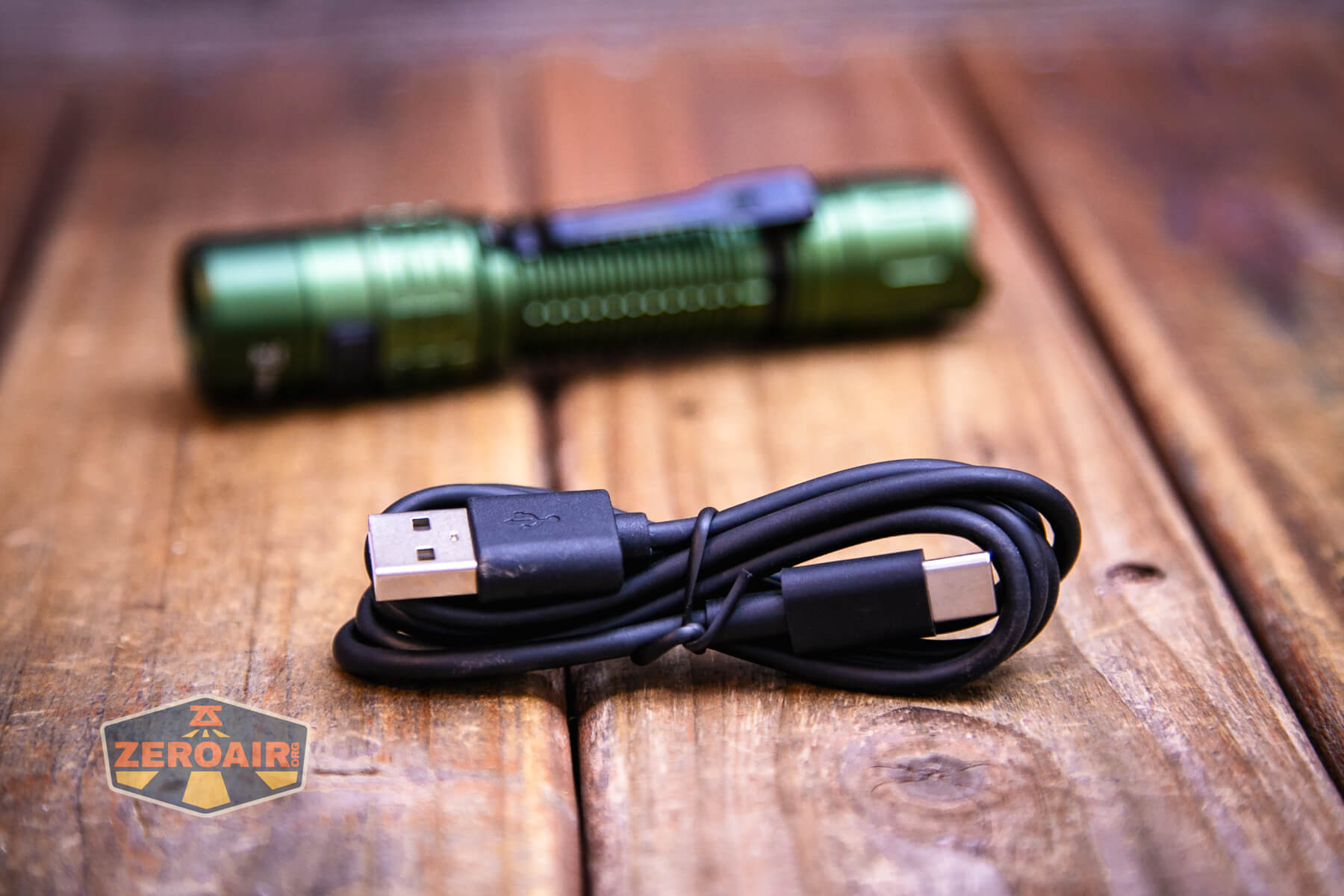
Wurkkos also includes a USB to USB-C cable.
Charging is not particularly quick, at around 4 hours. I think the indicator turns green LONG before 4.25 hours though, and the cell is probably essentially charged as soon as the indicator turns green.
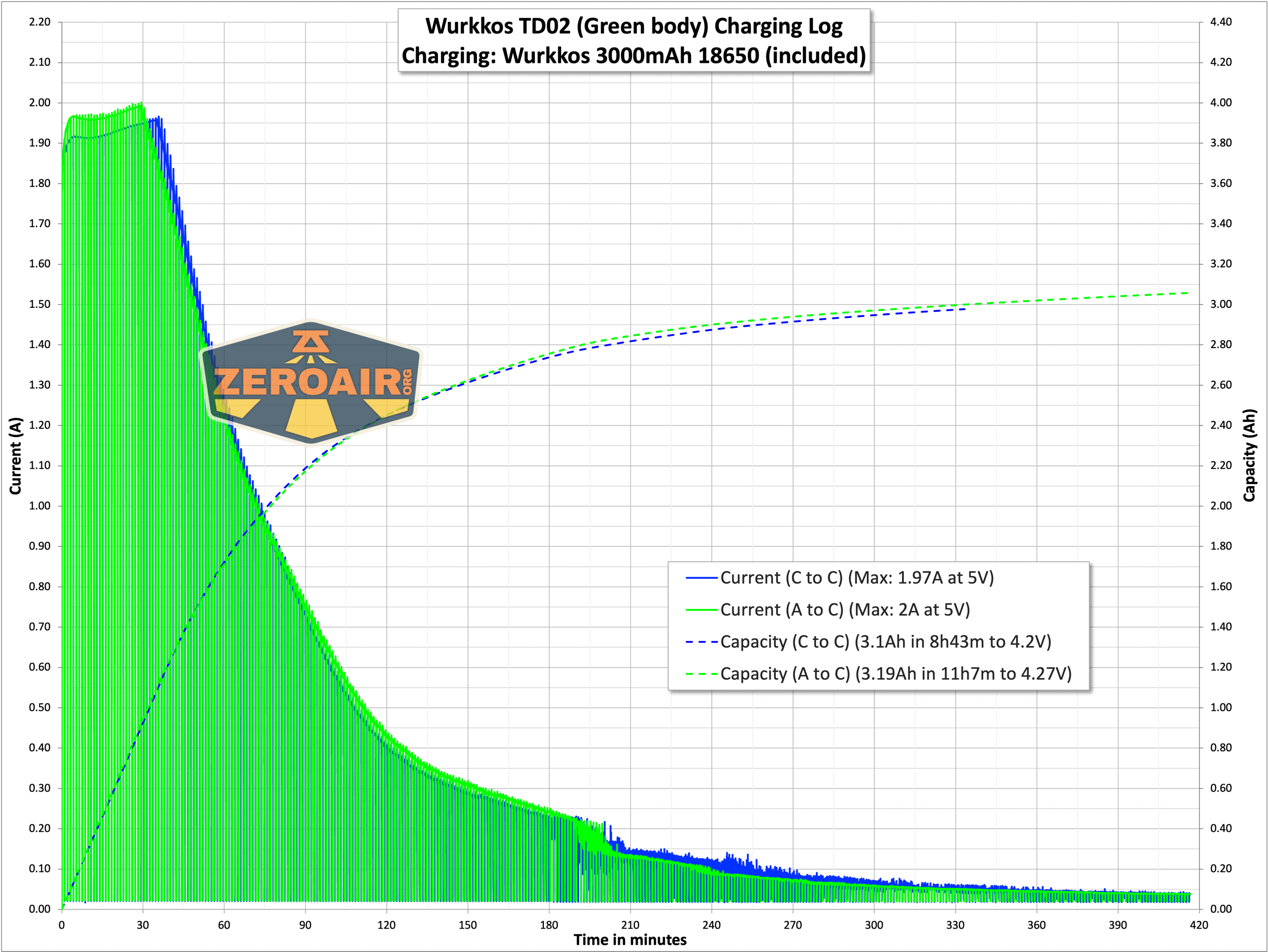
I did not observe this in the manual until testing was complete (and forgot it in the year since I reviewed the previous TD02), but the tail switch has an important role in charging. All my testing was done with the tail switch in the off position. But if you have the switch in the ON position, charging is faster. The manual states it’s 3 hours vs. 2.5 hours. The downside is that the light switches on when charging is complete, in this case. For that reason, if I was testing it again, I would still leave the switch off because I definitely do not want the light to come on when charging is complete.
But. A big but here. It’s very possible to overcharge a cell in the Wurkkos TD02 Green flashlight – my A to C test was still charging at 4.27V!! So if you’re concerned about overcharging (and you may well be), then having the light turn on is possibly a better option!
Modes and Currents
| Mode | Mode Claimed Output (lm) | Claimed Runtime | Measured Lumens | Tailcap Amps |
|---|---|---|---|---|
| Turbo | 2000 | 2h | 1126 (0s) 1070 (30s) |
2.71 |
| High | 1000 | 2.5h | 650 | 1.41 |
| Medium | 400 | 4h | 262 | 0.60 |
| Low | 100 | 18h | 80 | 0.23 |
| Eco | 10 | 150h | 7.9 | 0.01 |
Pulse Width Modulation
PWM can be seen on the scope for every mode. This is fast PWM though, and (even) I can’t notice it in person. Nothing to be alarmed about.

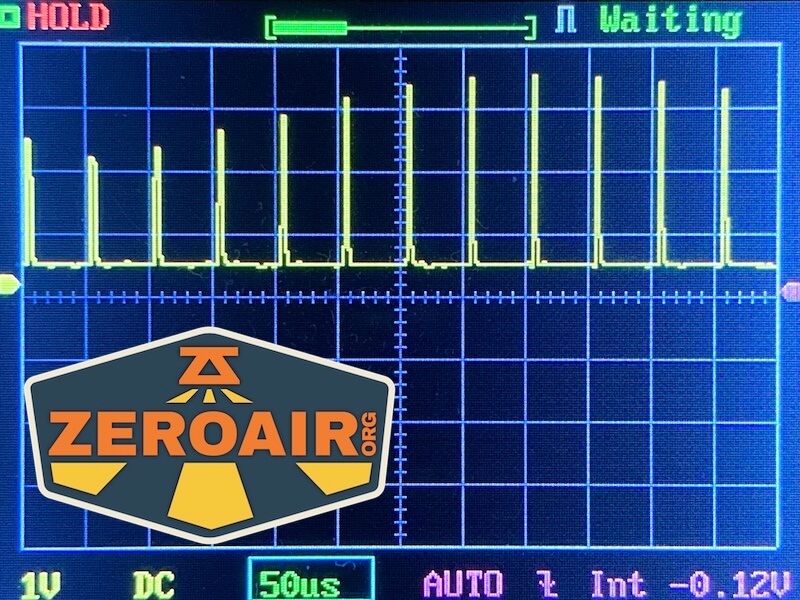


Here you can see a “baseline” – a chart with almost no light hitting the sensor. Then there’s the Ultrafire WF-602C flashlight, which has some of the worst PWM I’ve seen. It’s so bad that I used a post about it to explain PWM! Here are multiple timescales (10ms, 5ms, 2ms, 1ms, 0.5ms, 0.2ms) to make comparing this “worst” PWM light to the test light easier. That post also explains why I didn’t test the WF-602C at the usual 50us scale.


User Interface and Operation
The Wurkkos TD02 Green flashlight uses a single mechanical clicky. The switch is on the tail and has a nice textured surface. It’s a reverse clicky switch. A reverse clicky – that’s why I refer to this as only “advertised as” a tactical light. Tactical lights almost always use forward clicky switches!
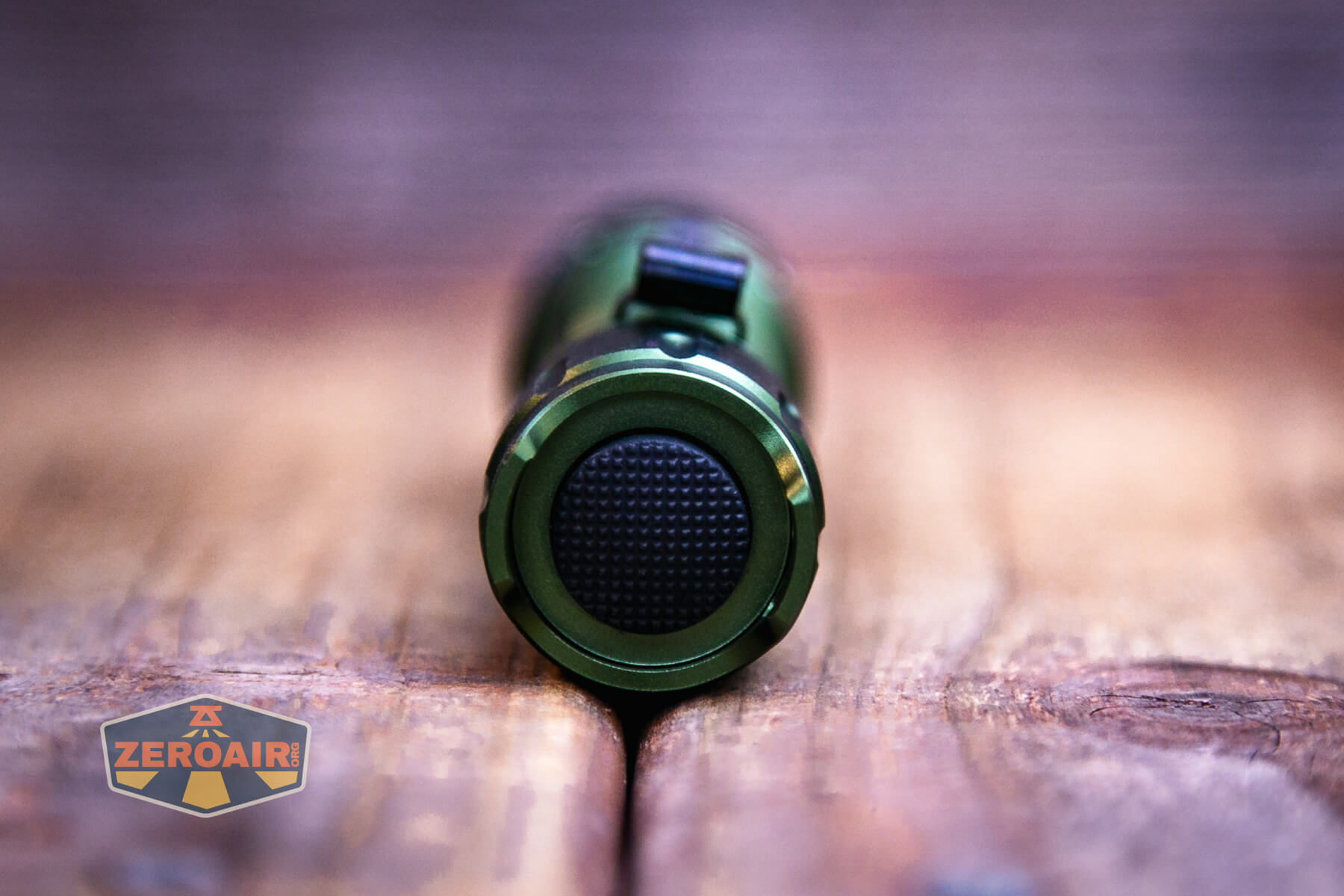

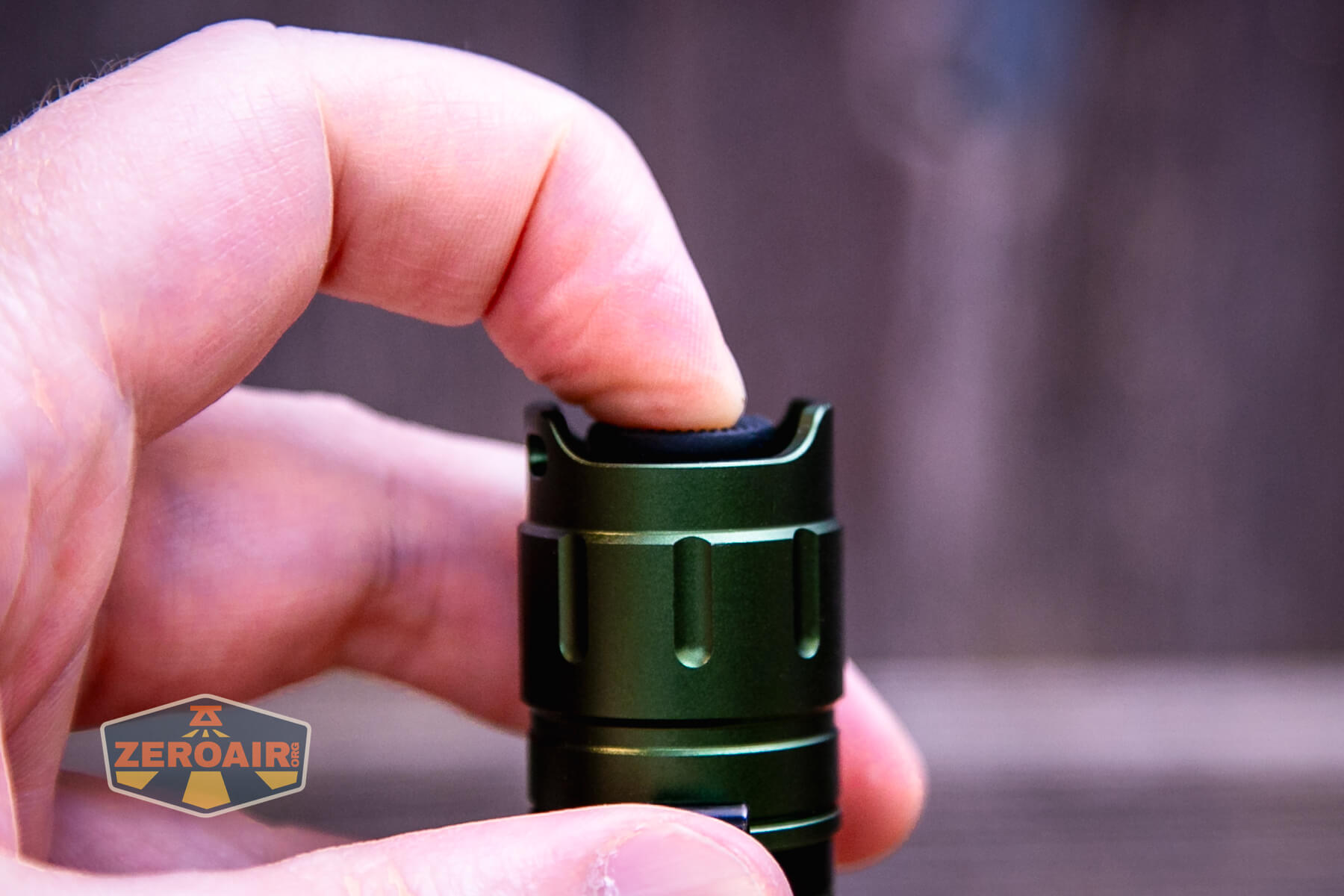
Here’s a user interface table!
| State | Action | Result |
|---|---|---|
| Off | Click | On (Mode Memory) |
| On | Click | Off |
| On | Tap | Mode advance (ascending) |
| On | Double tap | Strobe |
| Strobe | Tap | Previous output level |
LED and Beam
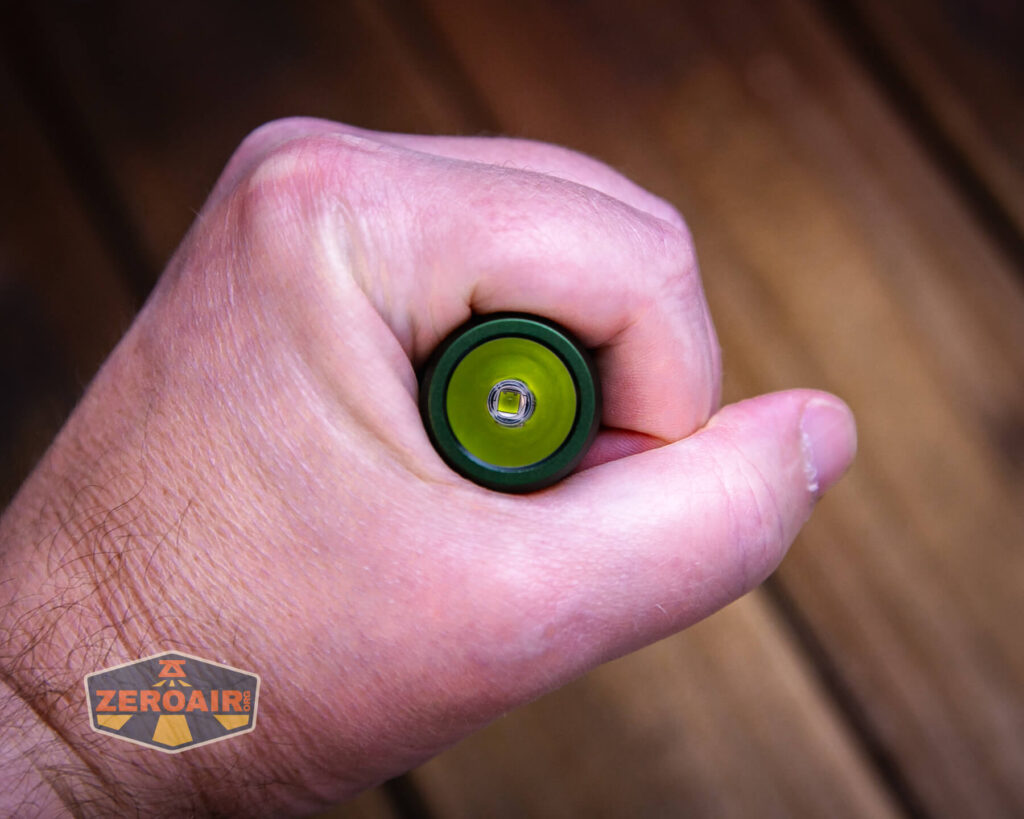
Wurkkos uses a Luminus SST-40 in the TD02. This emitter is coupled with a TIR and provides a nice tight beam.
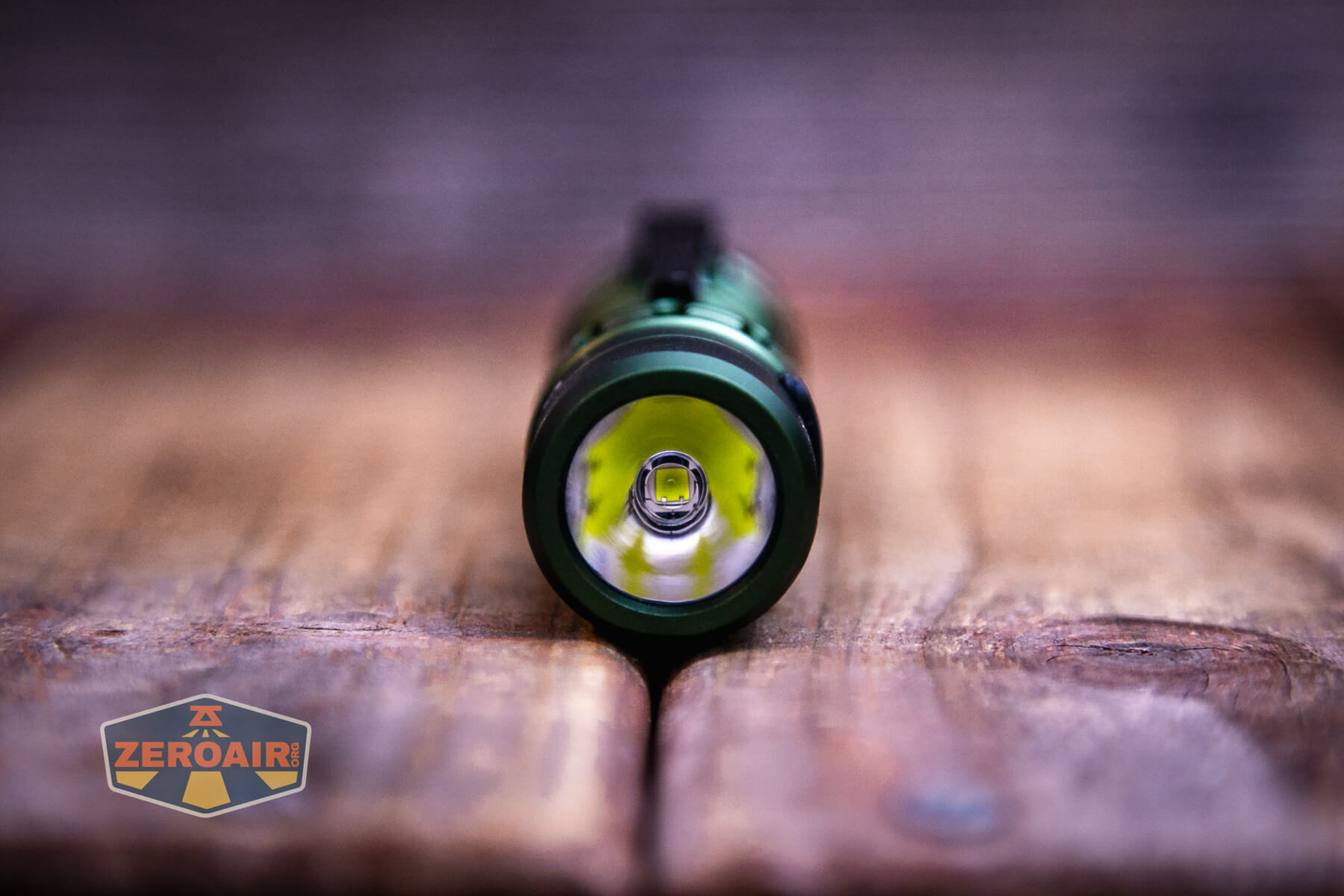
Below you can note the flush front of the light and also see the indicator above the charging port.


LED Color Report (CRI and CCT)
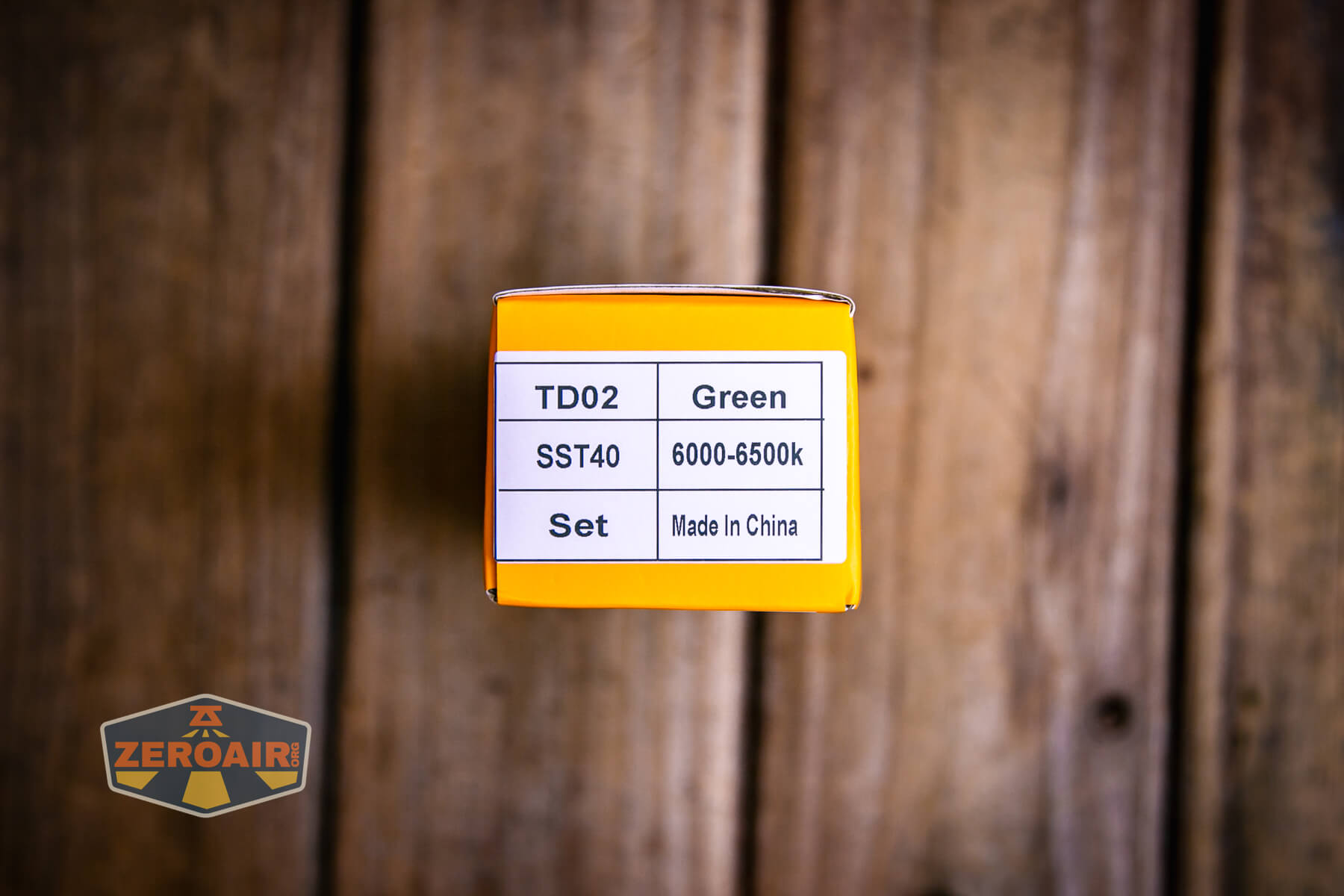
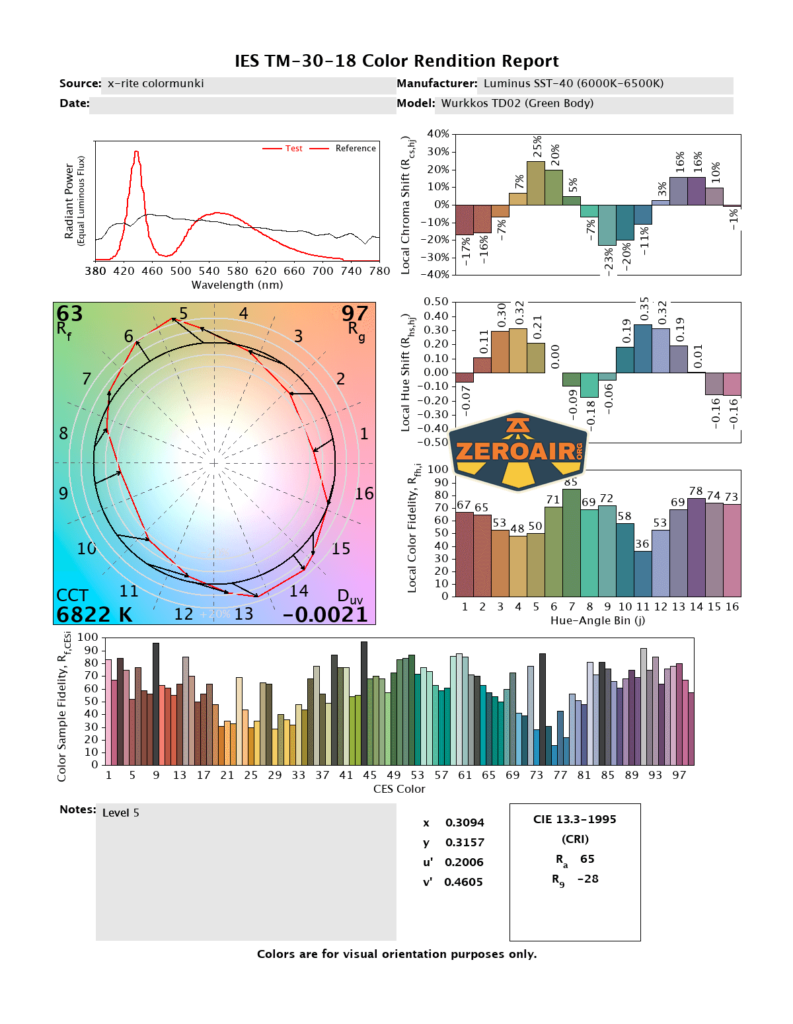
My box claims a CCT of 6000K-6500K and that’s about what I observed. The box or manual doesn’t state CRI, but I measured it to be low, at under 70.


Beamshots
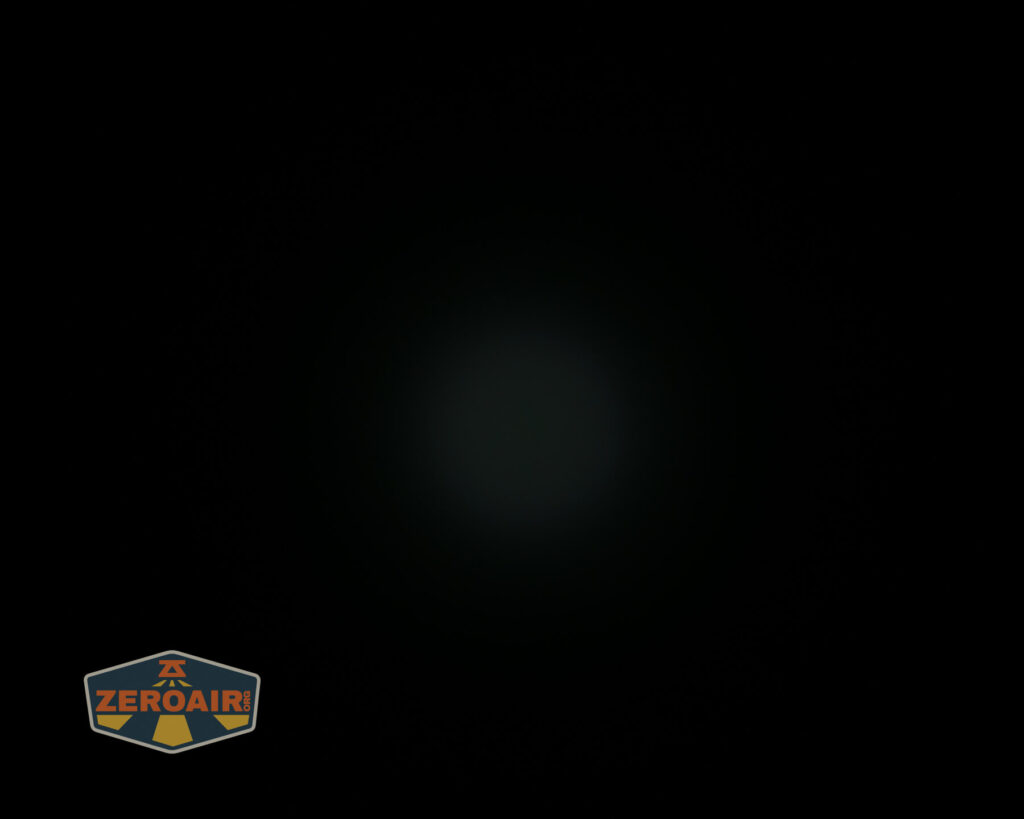
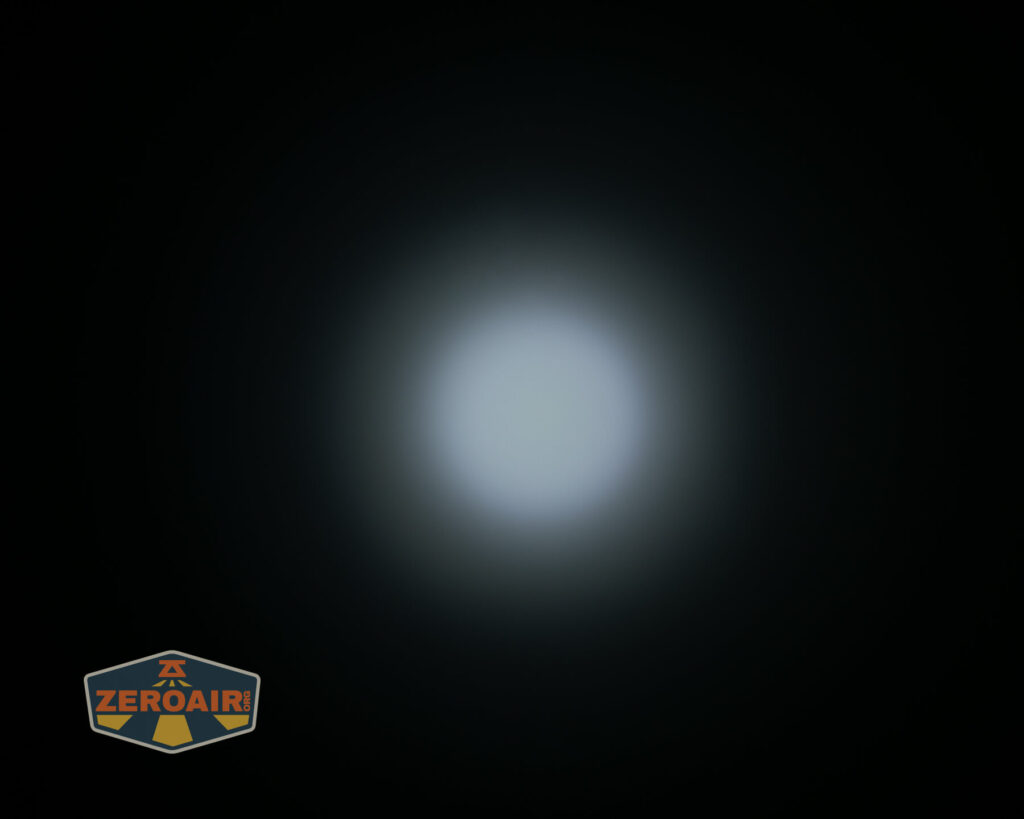
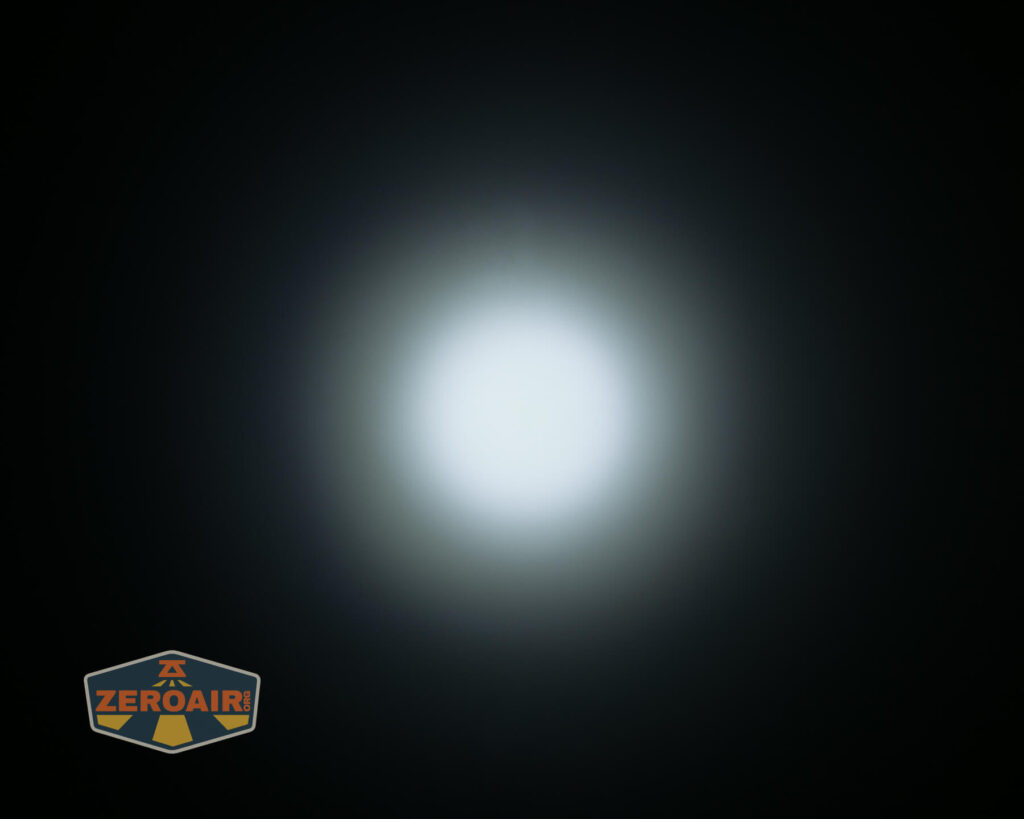
These beamshots always have the following settings: f8, ISO100, 0.3s shutter, and manual 5000K exposure. These photos are taken at floor level, and the beam hits the ceiling around 9 feet away.


Tint vs BLF-348 (KillzoneFlashlights.com 219b version) (affiliate link)
I keep the test flashlight on the left and the BLF-348 reference flashlight on the right. These photos are taken around 18 inches from the door.


I compare everything to the KillzoneFlashlights.com 219b BLF-348 because it’s inexpensive and has the best tint!
Summary and Conclusion
As much as I love flashlighty flashlights, I also love tube lights. The Wurkkos TD02 Green flashlight fits sort of into that Convoy S2+ space, but has more going on in the tube body. There’s USB-C charging (which works ok) as well as a TIR and reverse clicky. I love the package! It’s also inexpensive, which I like. I might opt for an emitter swap to something warmer and I don’t really care about the tactical aspect of the TD02, but I do like the light! It’s worth mentioning here that the TD02 mimics a head design we’ve seen before in the Weltool T2. This does not seem to be a “design sharing” scenario between Weltool and Wurkkos, so pay attention to that if it’s important to you!
The Big Table
| Wurkkos TD02 Green flashlight | |
|---|---|
| Emitter: | Luminus SST-40 |
| Price in USD at publication time: | $18.99 |
| Cell: | 1×18650 |
| Runtime Graphs | |
| LVP? | Yes |
| Switch Type: | Mechanical |
| On-Board Charging? | Yes |
| Charge Port Type: | USB-C |
| Charge Graph | |
| Power off Charge Port | No (no modes in any configuration while connected to USB-C power) |
| Claimed Lumens (lm) | 2000 |
| Measured Lumens (at 30s) | 1070 (53.5% of claim)^ |
| Candela per Lumen | 11.45 |
| Claimed Throw (m) | 254 |
| Candela (Calculated) in cd (at 30s) | 397lux @ 5.841m = 13545cd |
| Throw (Calculated) (m) | 232.8 (91.7% of claim)^ |
| Claimed CCT | 6000-6500 |
| Measured CCT Range (K) | 6300-6800 Kelvin |
| Item provided for review by: | Wurkkos |
| All my Wurkkos reviews! | |
^ Measurement disclaimer: Testing flashlights is my hobby. I use hobbyist-level equipment for testing, including some I made myself. Try not to get buried in the details of manufacturer specifications versus measurements recorded here; A certain amount of difference (say, 10 or 15%) is perfectly reasonable.
What I like
- Very simple user interface
- Low cost
- Great tube design
- Throw is very near to the claimed throw
- Build quality is great
- USB-C Charging
What I don’t like
- Charging is a bit slow (and maybe questionable)
- Output does not come close to claim
- Design features from Weltool T2 appear to be copied without credit
- Green bezel (or “head”) doesn’t match the body in color exactly
Notes
- This content originally appeared at zeroair.org. Please visit there for the best experience!
- Please use my Amazon.com referral link to help support zeroair.org!
- Please support me on Patreon! I deeply appreciate your support!
The “throw per lumen” value is immensely useful for practical use. The maximum throw nowadays is always a 20-30 second affair and effectively only a flash: but if you are actively using the light for night hiking or farm work you’d want to know how much throw you’ll have for the next 1-2 hours. Now, finally, we can directly compare a high-power thrower like the Nitecore MH12 Pro (23cd/lm x 680lm) with a seemingly simple tac light like the MTC2 Pro (45cd/lm x 610lm) and come to the result that the simpler light keeps consistently throwing more. Correct?
Thank you for letting me know! For now I’ve added to my spreadsheet and hope to continue with it on the runtime. That addition is quite intensive for my computer though. Might have to upgrade. 😀