

Skilhunt EC500 Coyote Neutral White Flashlight Review
The Skilhunt EC500 Coyote neutral white flashlight offers great throw, and multiple CCT options are available. The user interface is great and has many modes!
Official Specs and Features
Here’s a link to the Skilhunt EC500 Coyote neutral white flashlight product page.
Versions
The Skilhunt EC500 is available in three body colors – coyote (seen here), grey, and black. Each is available with a Luminus SFT-40 in three emitter CCTs – cool, neutral, and warm white. What I have here is a Coyote in neutral white.
Price
The Skilhunt EC500 Coyote neutral white flashlight is priced at $74.90. The 5000mAh 21700 seen in this post adds $15 to the price (!!!).
What’s Included

- Skilhunt EC500 Coyote neutral white flashlight
- Skilhunt 5000mAh 21700
- Pocket clip
- Lanyard
- Charging cable
- Spare o-rings (2)
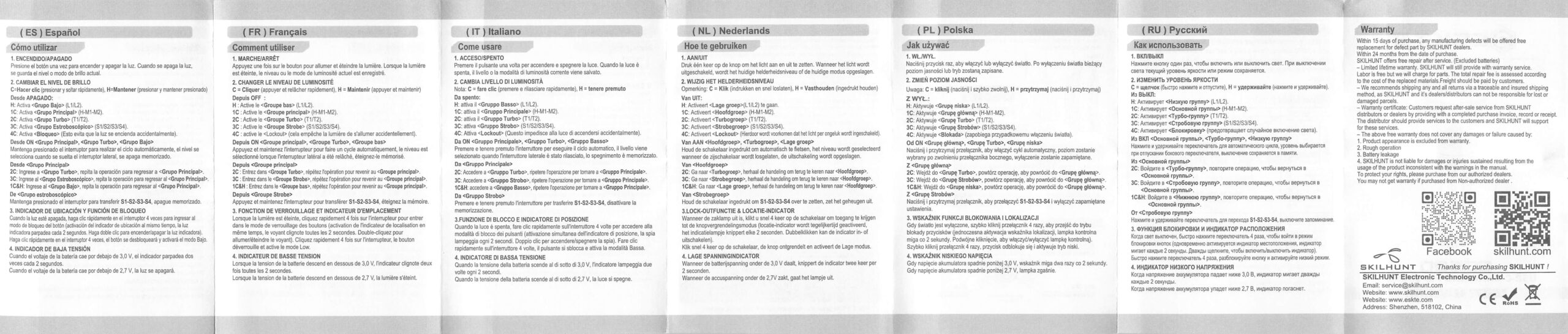
- Manual
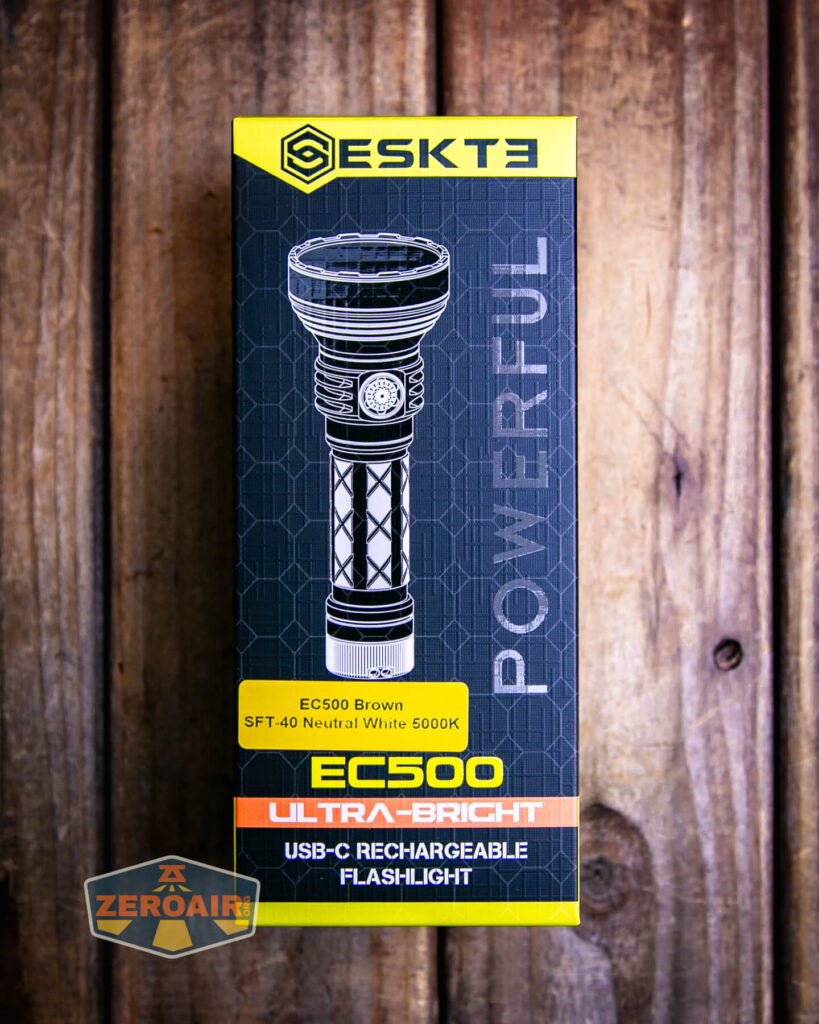
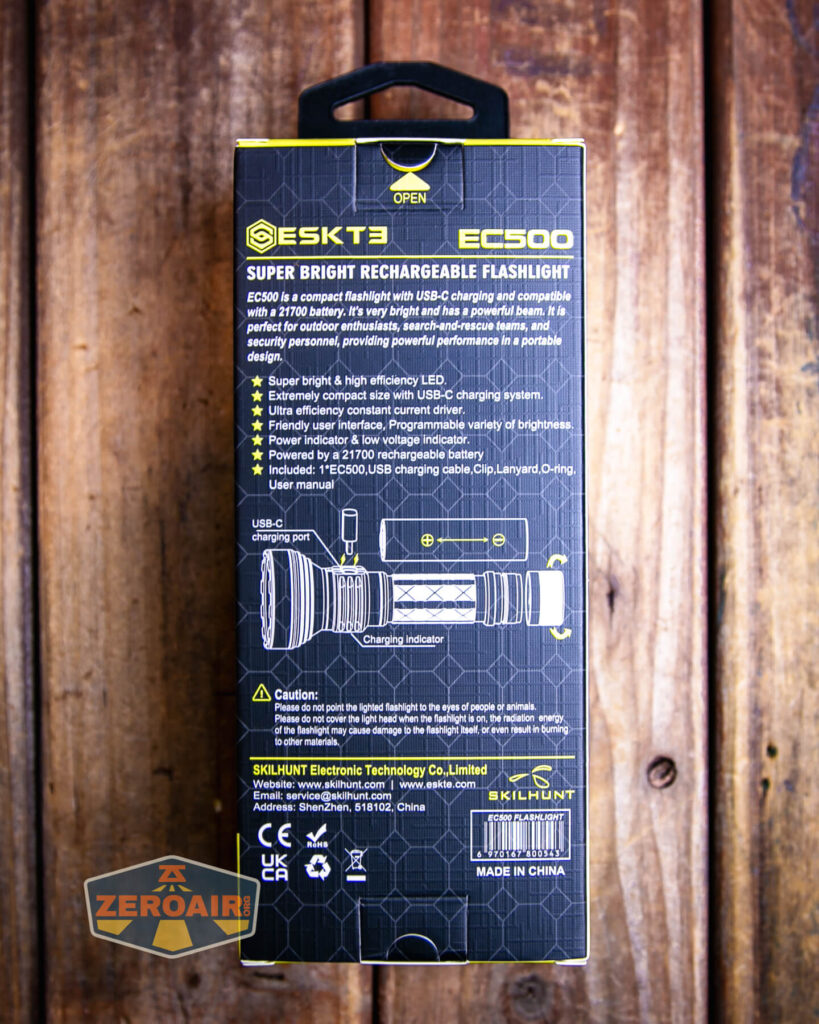
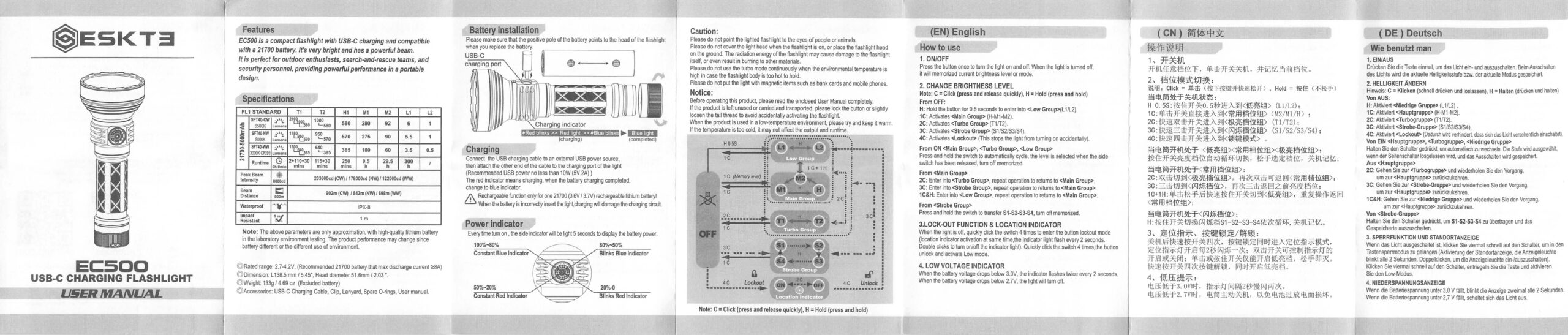
Package and Manual
Build Quality and Disassembly
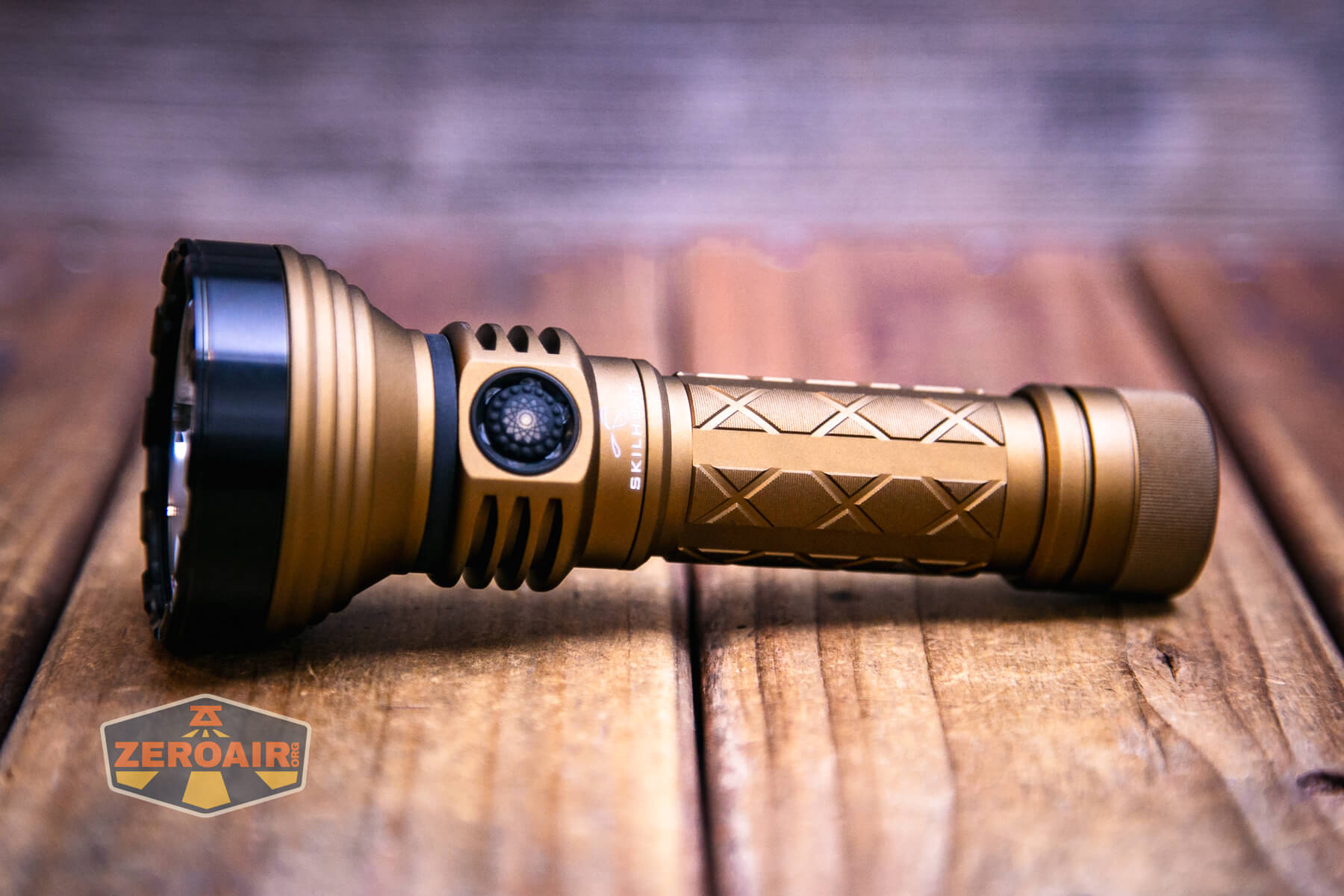
Skilhunt’s build quality for the Skilhunt EC500 Coyote neutral white flashlight is great. That’s no surprise. I will note that the price of most current Skilhunt lights seems to continue to creep upward, but note at the same time that the quality is commensurate with the price. This is reasonably a $70+ light. I will say that I’m very disappointed the 21700 adds $15!
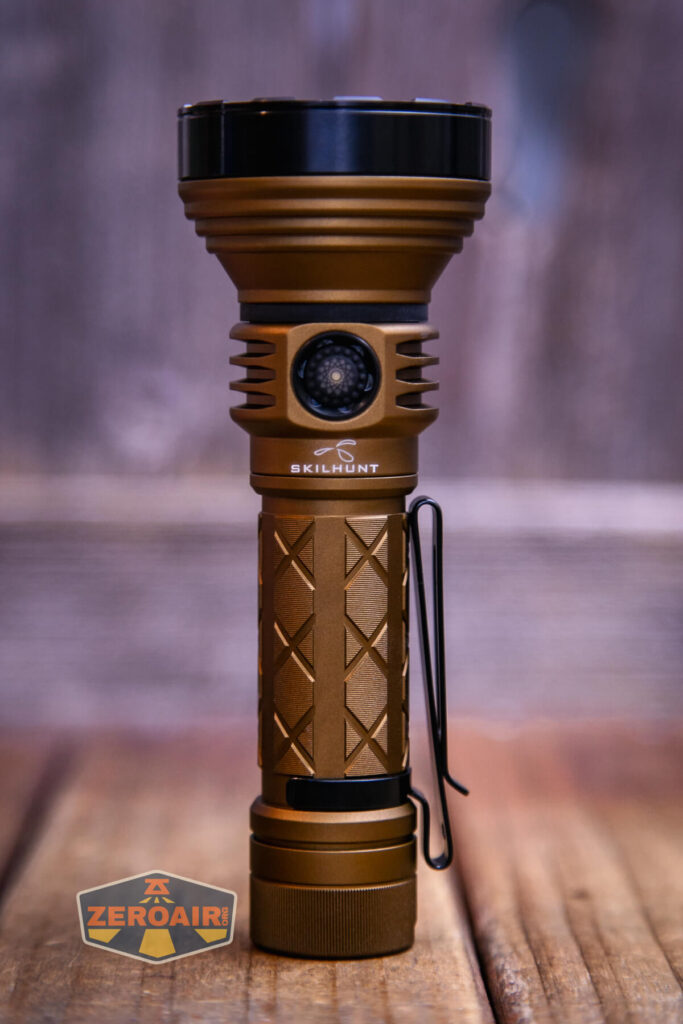
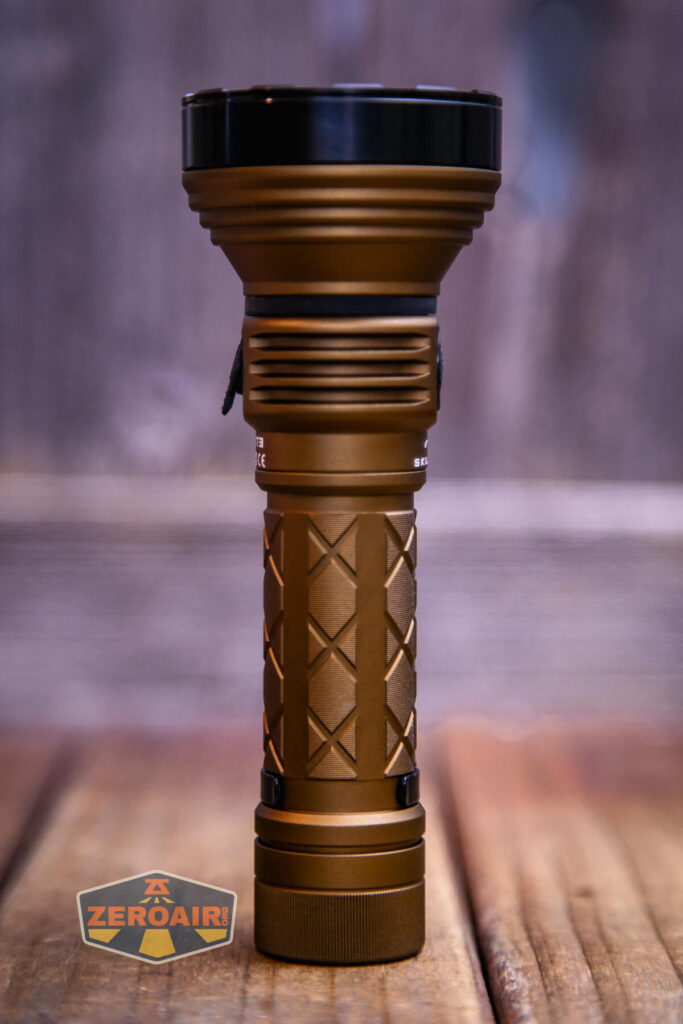
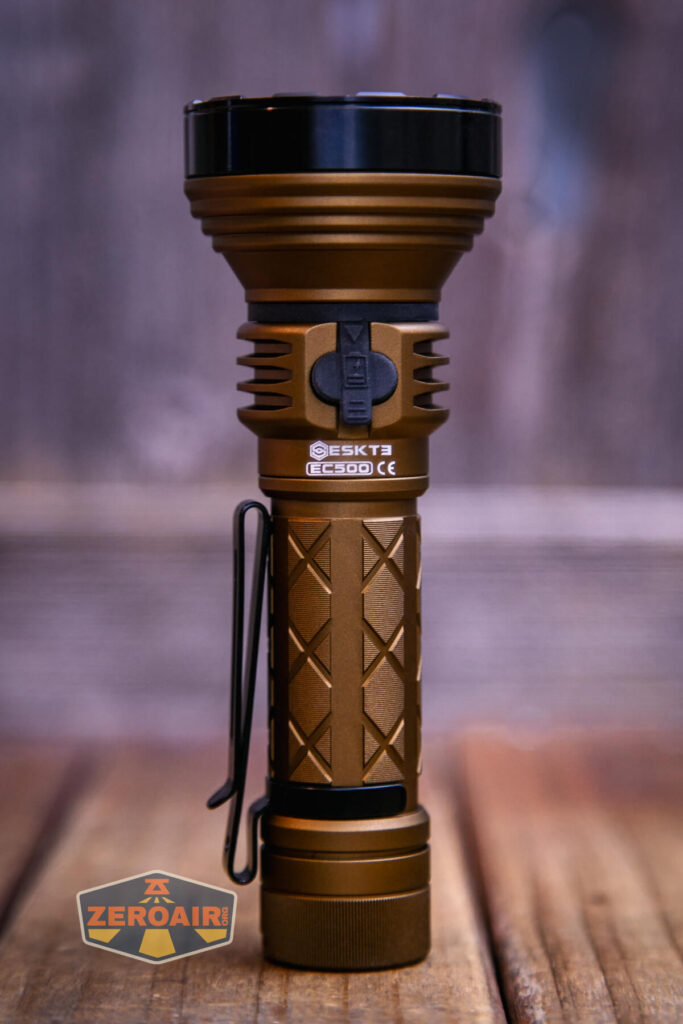
I can’t recall having a Coyote Skilhunt before, and the brown is a nice change of pace! I actually have two of these. This coyote is neutral white and a grey in warm white. I love both of them but weirdly, every time I handle these two I feel like this coyote should be the warm white and the grey should be neutral. Any combination works fine, obviously, but I’m telling you for your ordering purposes. If you buy more than two, I can tell you the coyote would be great in warm white!
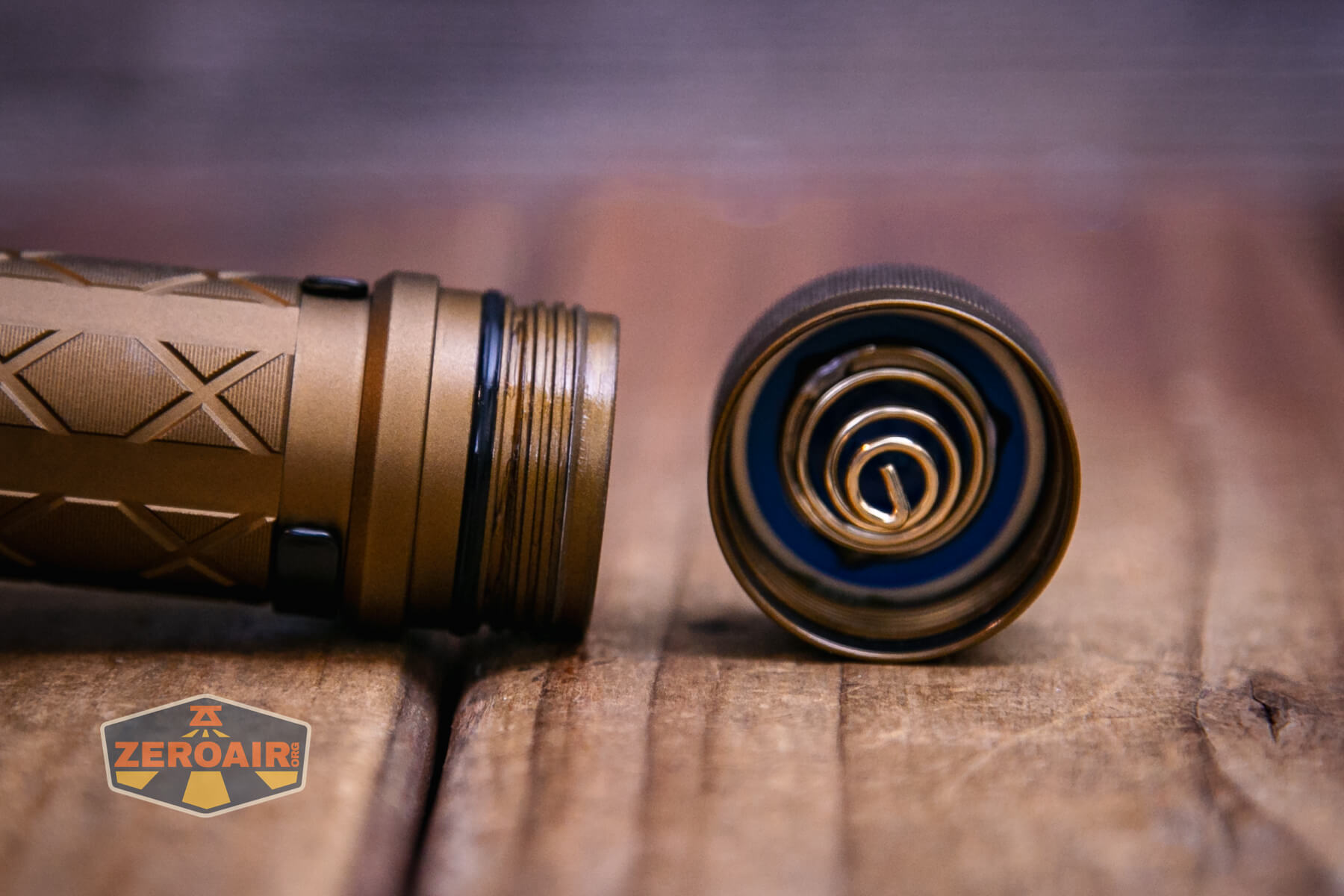
The threads here are very smooth. You can see this big beefy spring in the tailcap.
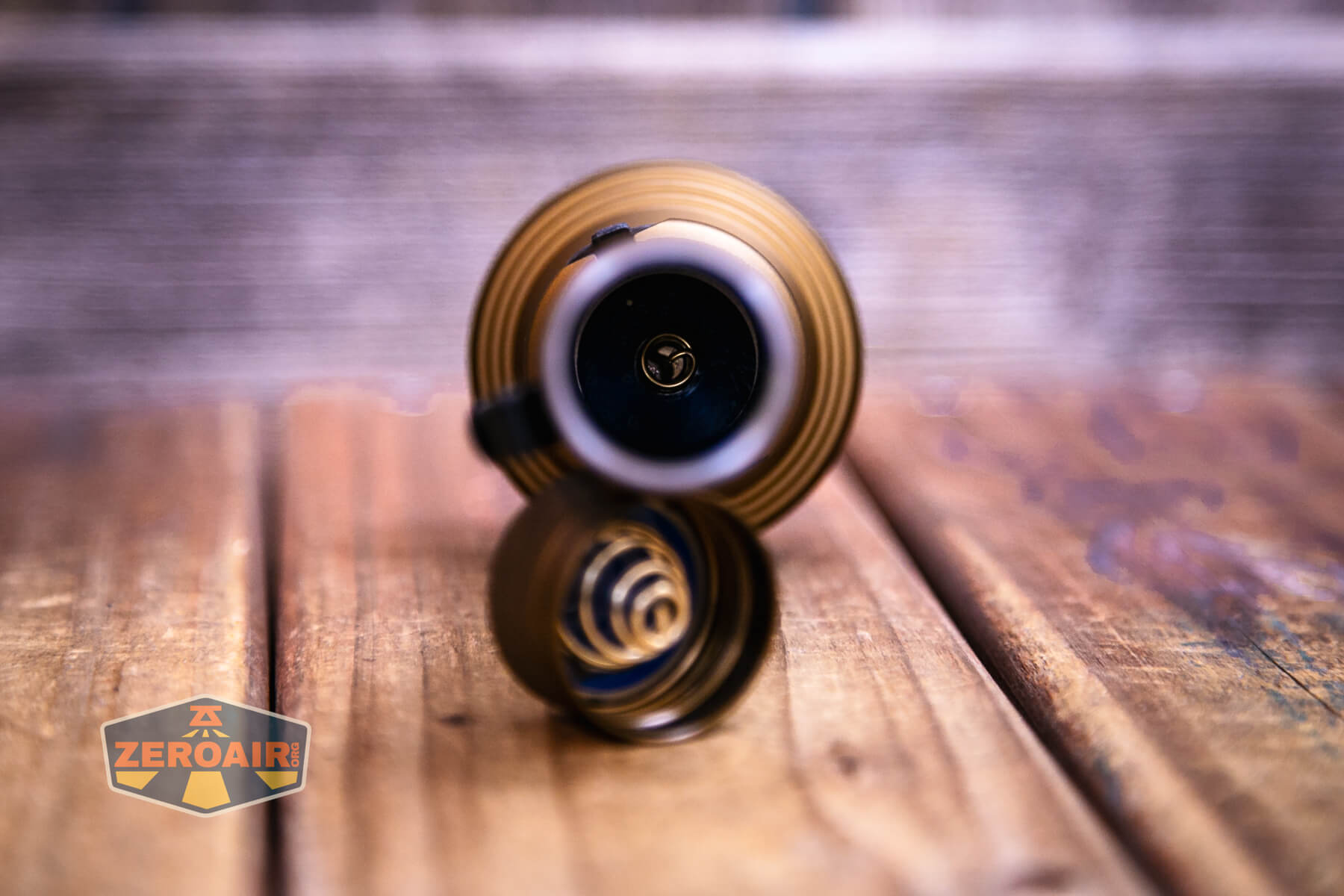
The head also has a small spring.
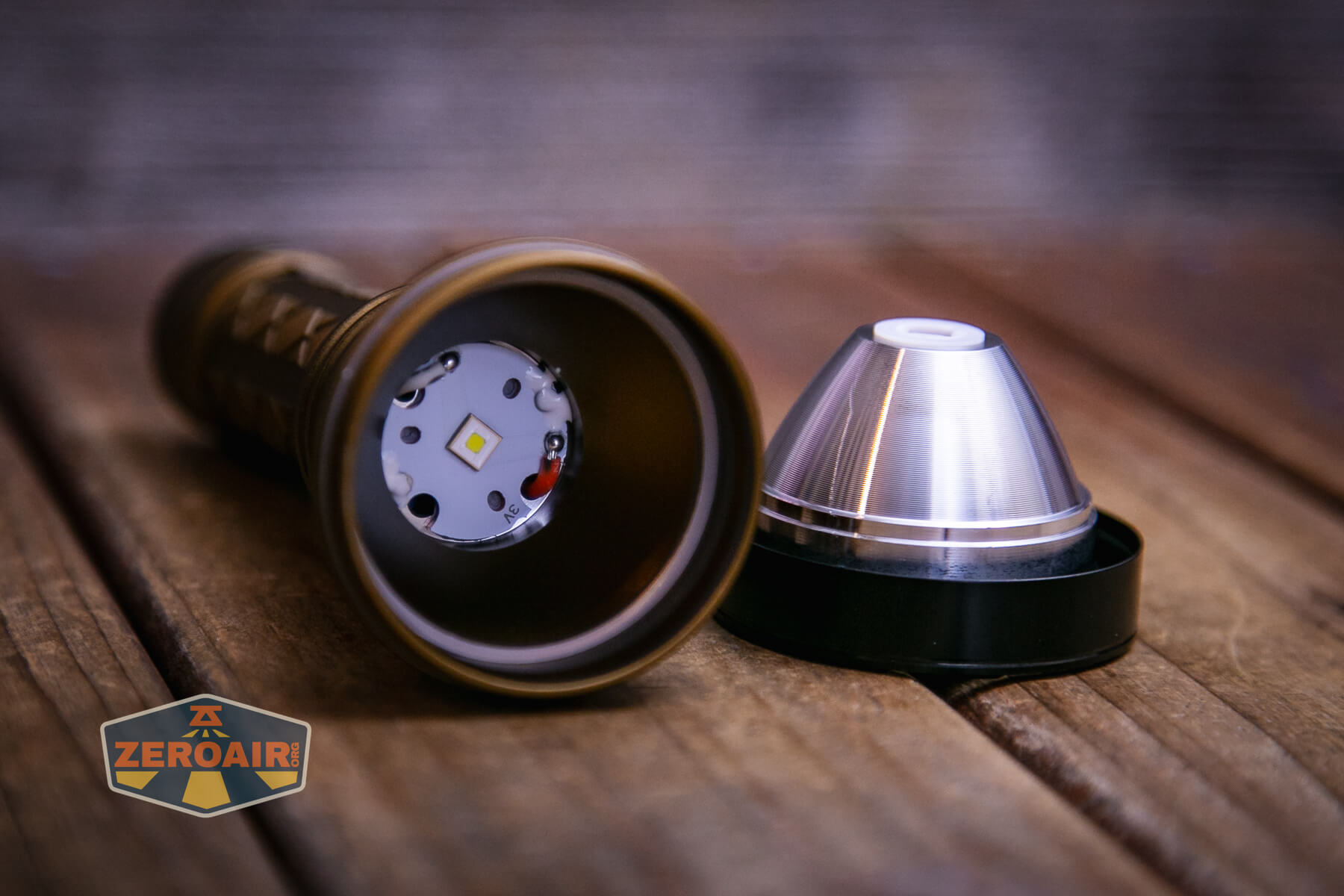
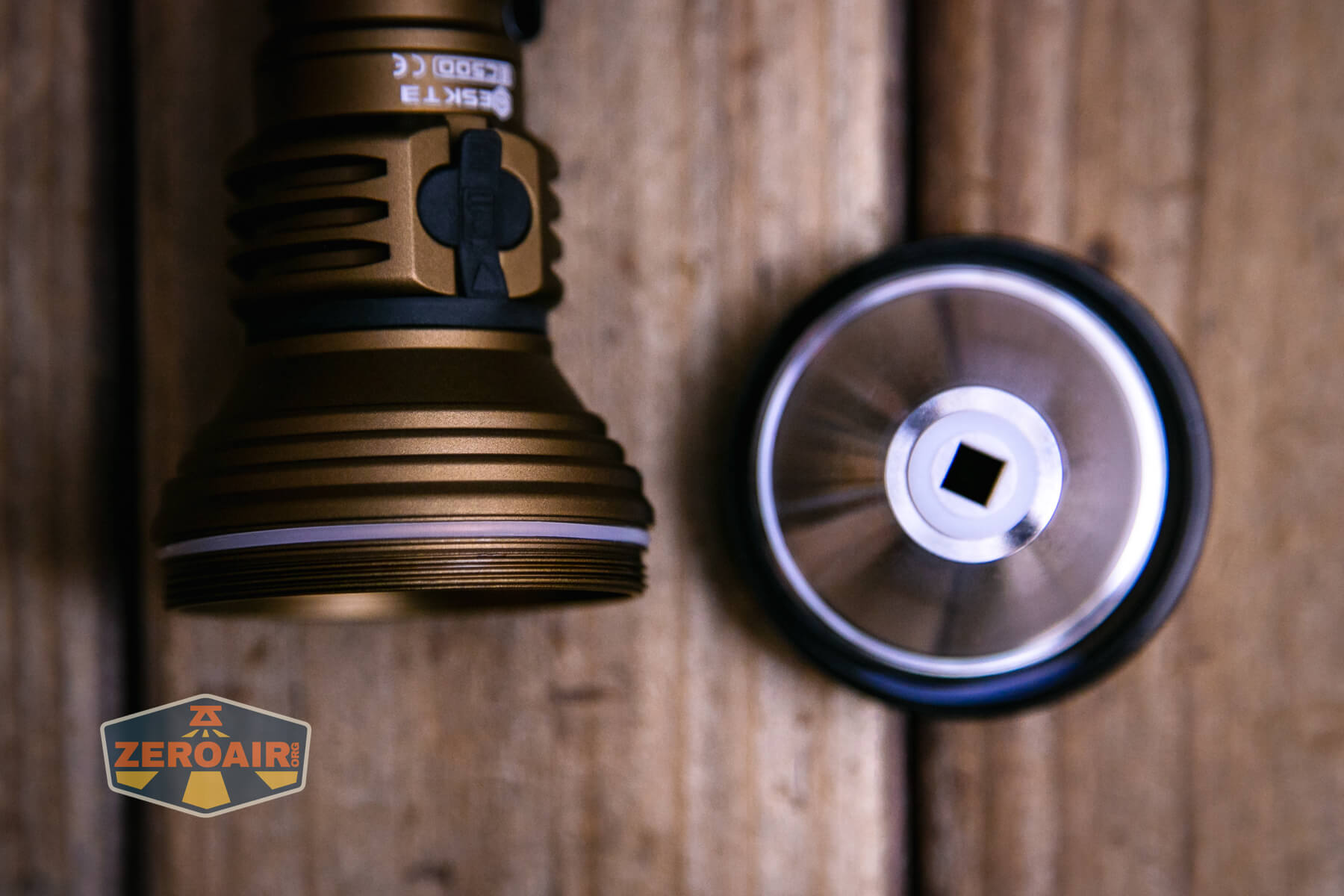
The bezel on this Skilhunt EC500 Coyote neutral white flashlight is not glued and removable, making access to the emitter easy.
Size and Comps
138.5mm x 51.6mm and 133g (without cell).
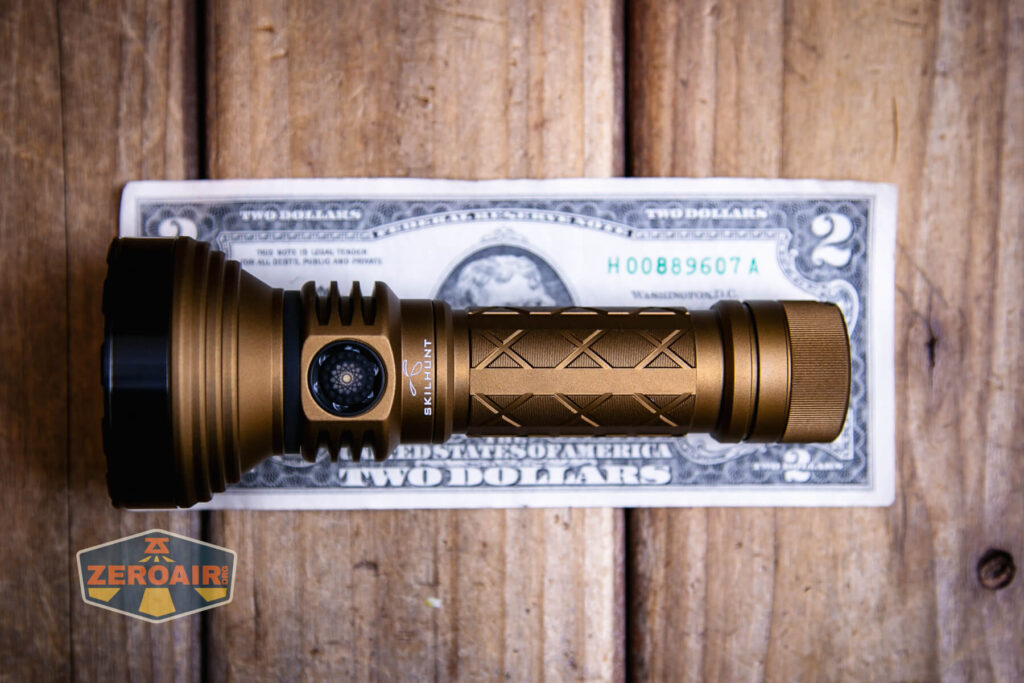

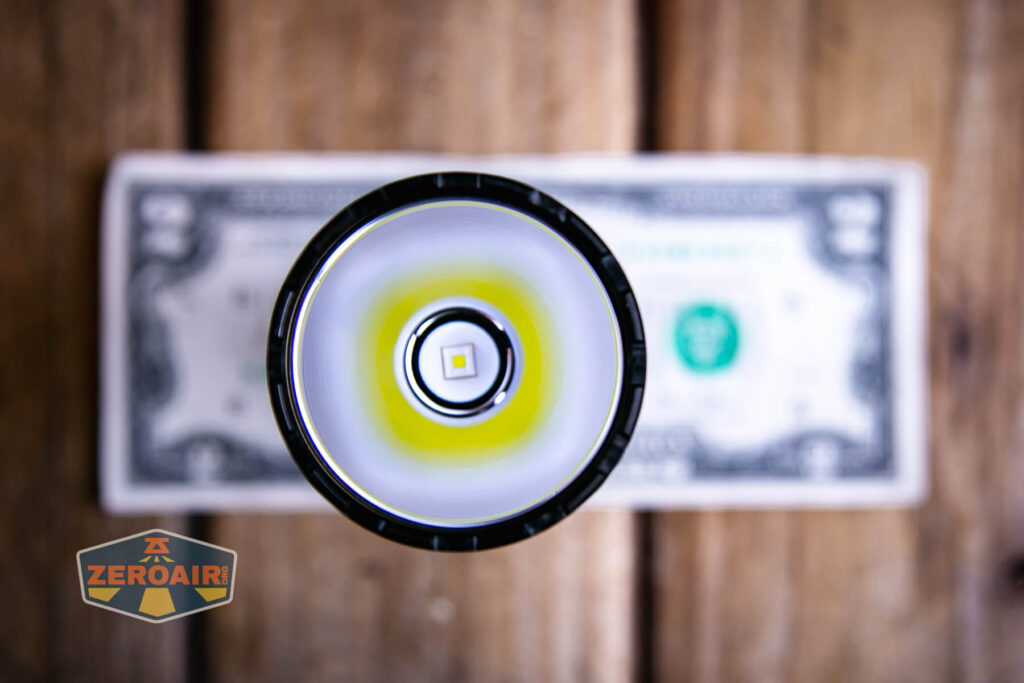
If the flashlight will headstand, I’ll show it here (usually the third photo). If the flashlight will tailstand, I’ll also show that (usually in the fourth photo).
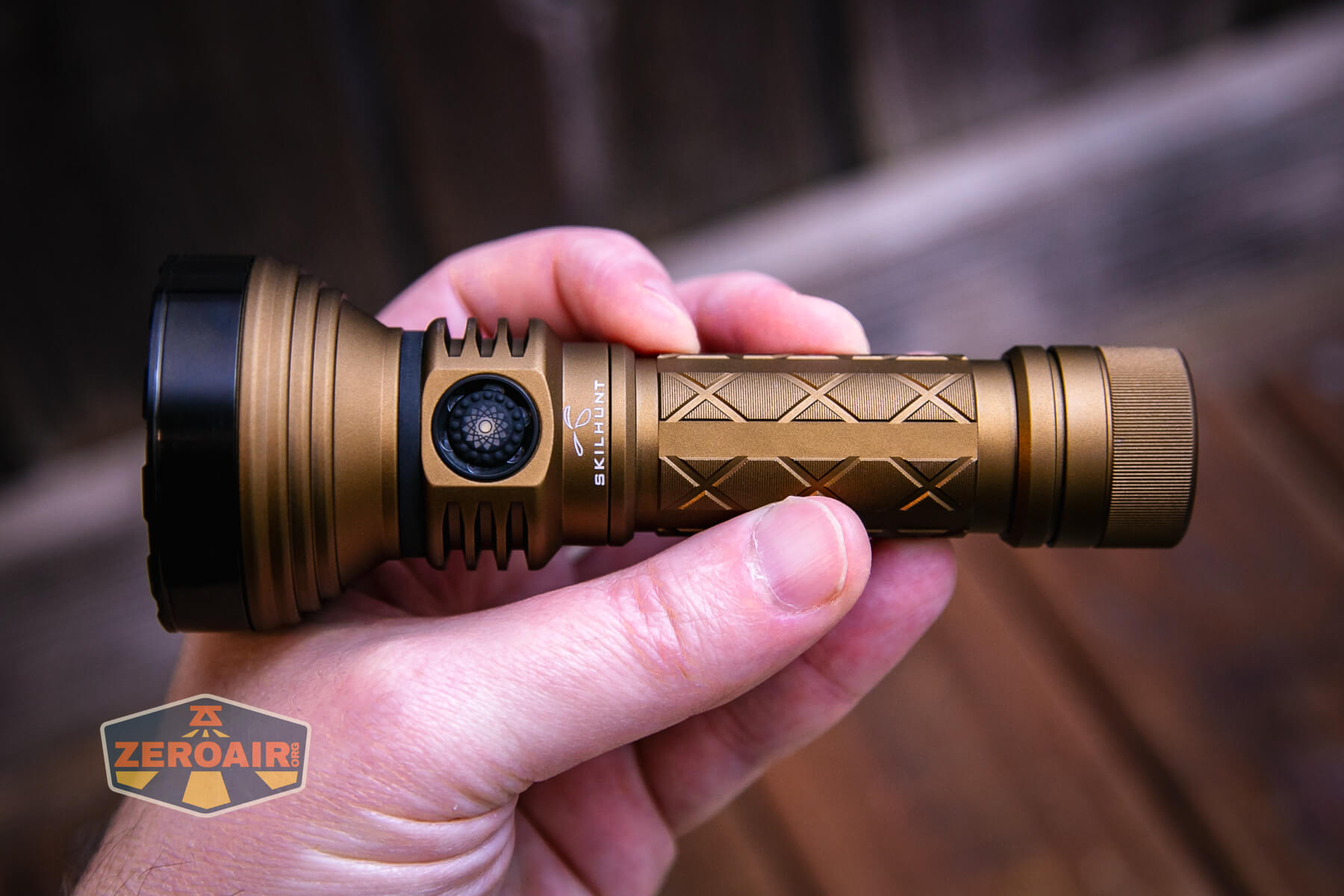
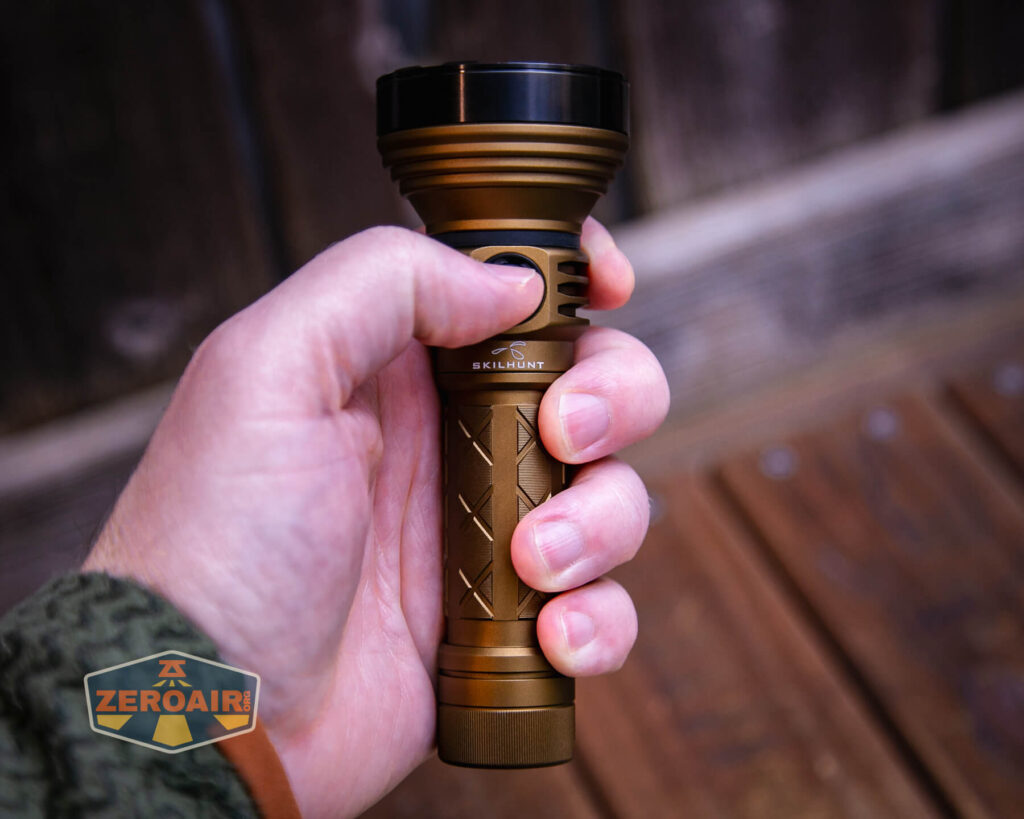
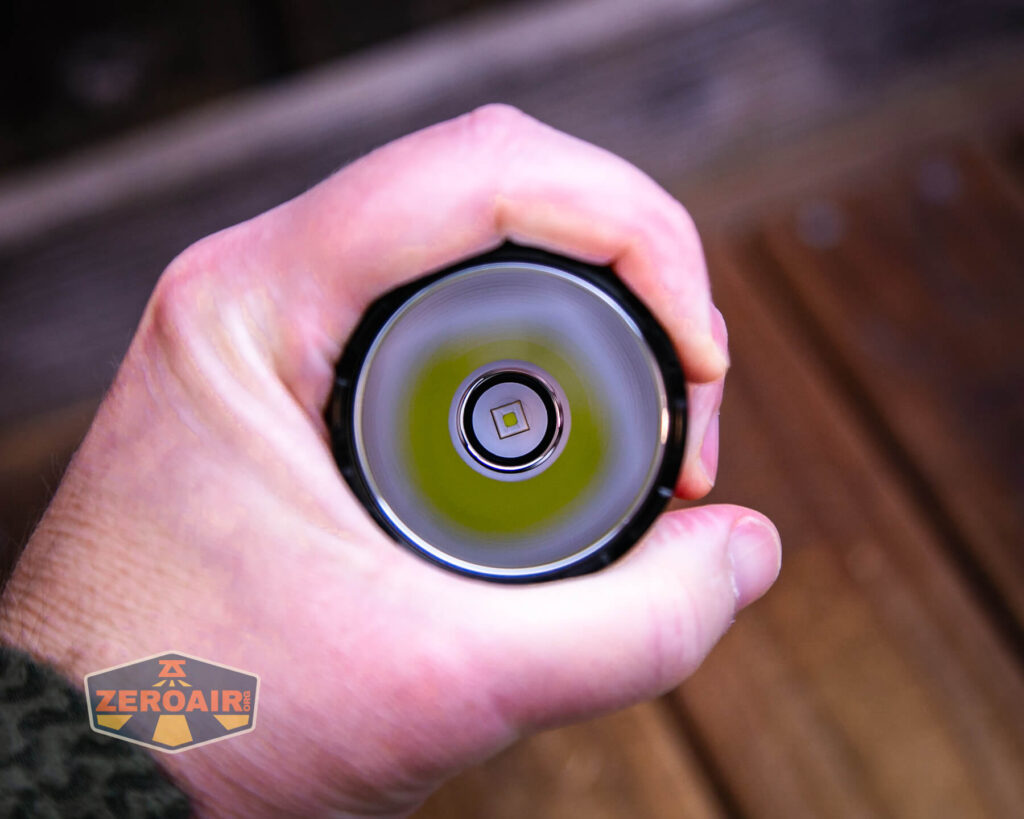
Here’s the test light with the venerable Convoy S2+. The version below is a custom laser-engraved Convoy S2+ host by GadgetConnections.com. I did a full post on an engraved orange host right here! Or go straight to GadgetConnections.com to buy your Convoy S2+ now!
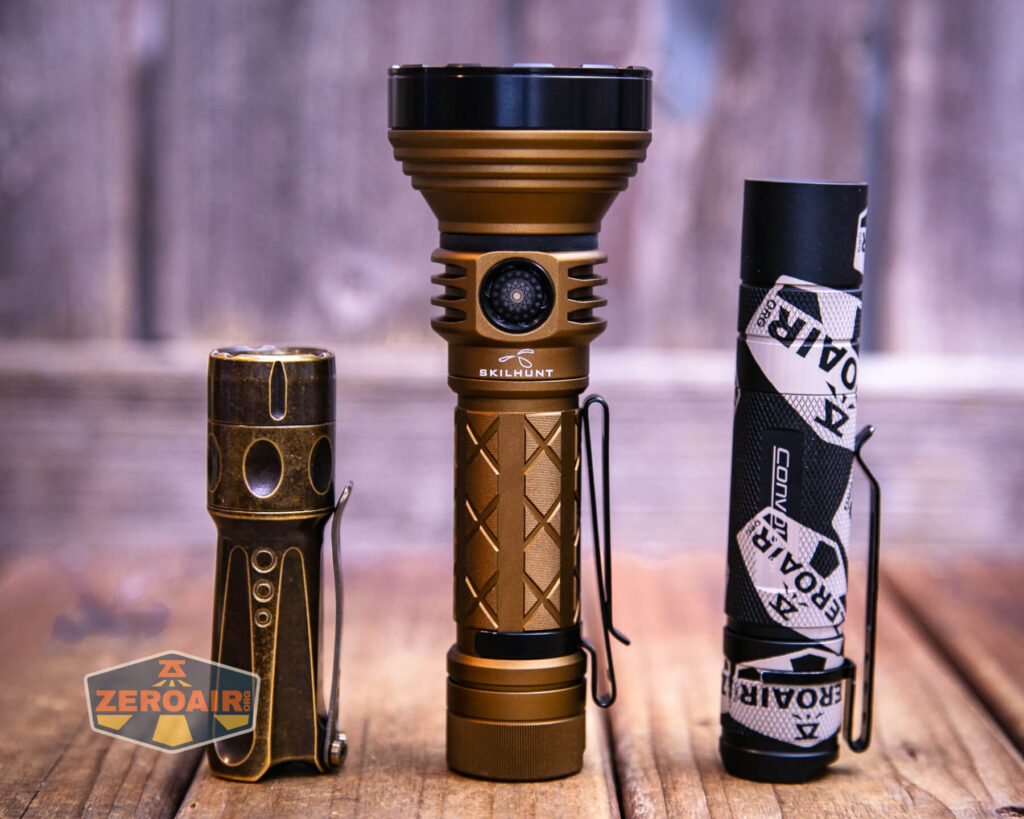
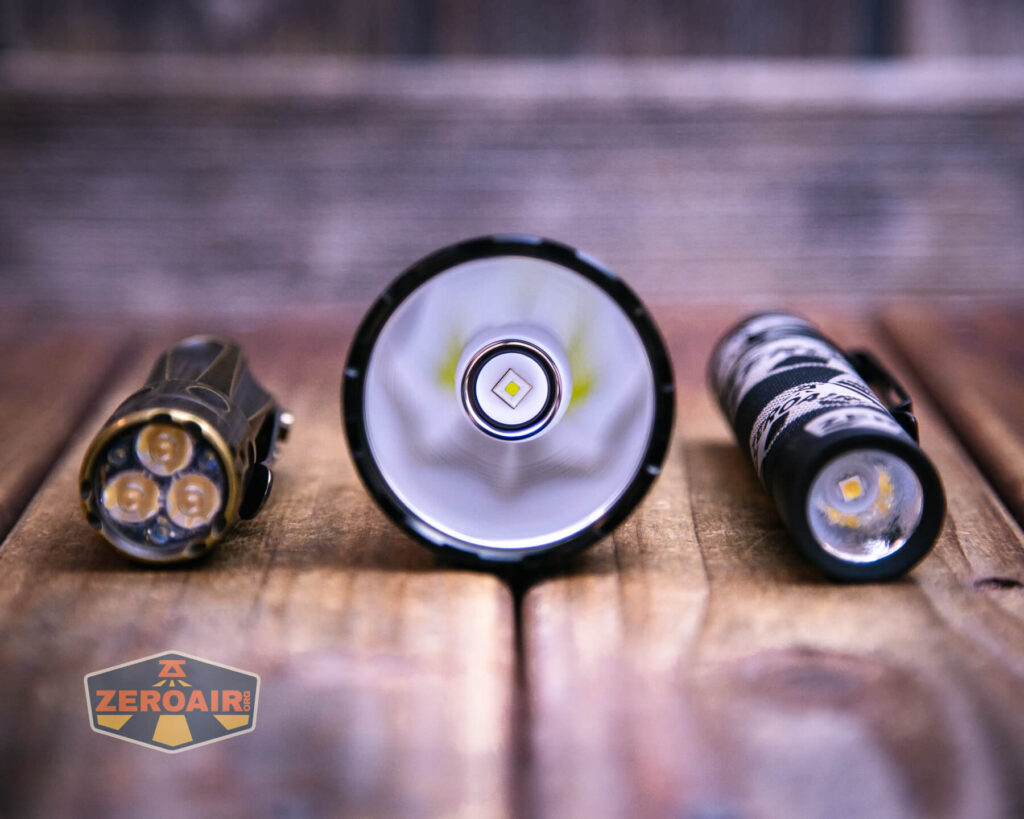
Also above is the light beside a TorchLAB BOSS 35, an 18350 light. I reviewed the aluminum version of that light in both 35 and 70 formats. I also reviewed that specific edition, the “Oveready BOSS FT Collector Vintage Brass” 35. I love it!
Retention and Carry
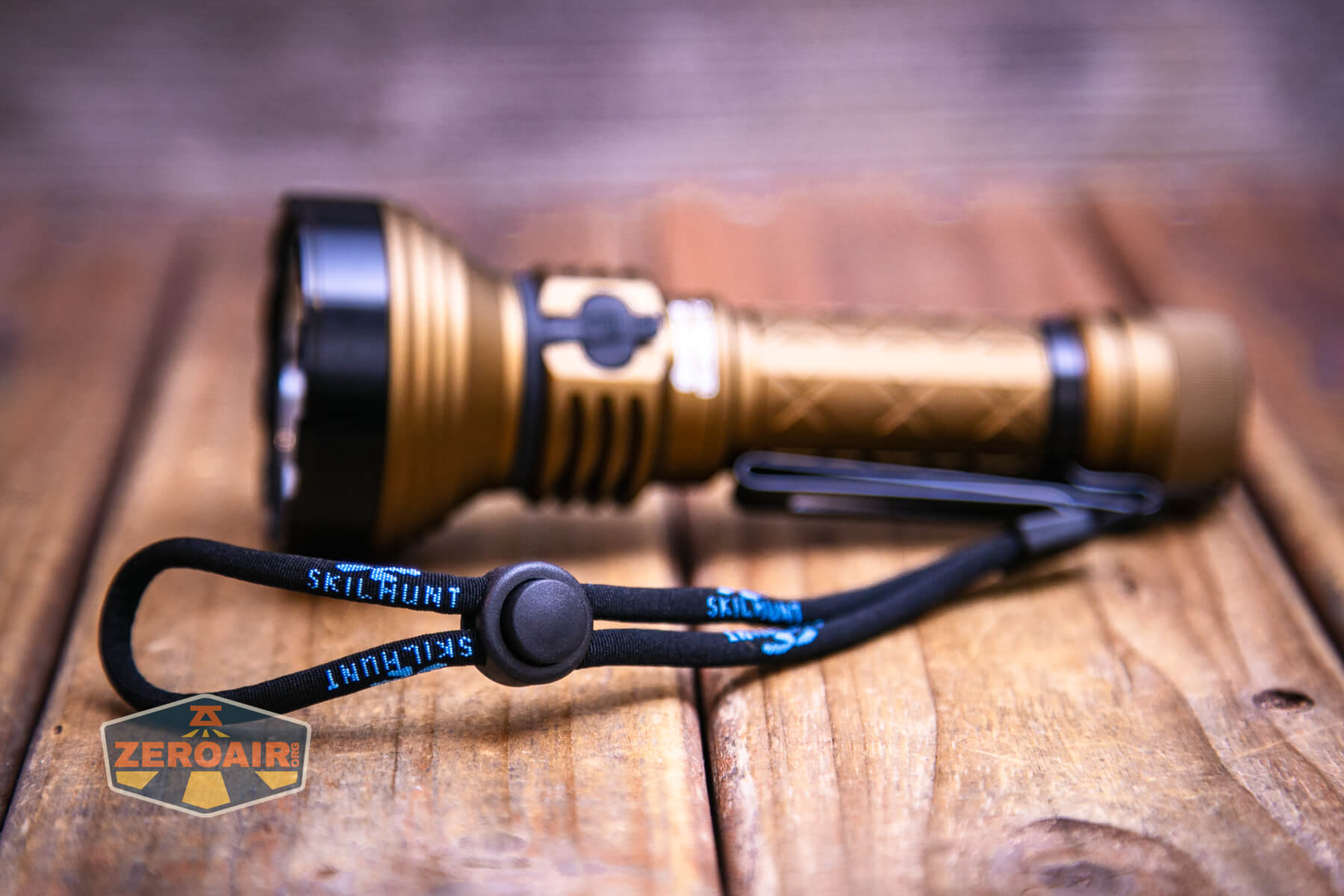
A pocket clip is included with the Skilhunt EC500 Coyote neutral white flashlight. It ships unattached and is a friction-fit clip.

The clip can attach only on the tail end.
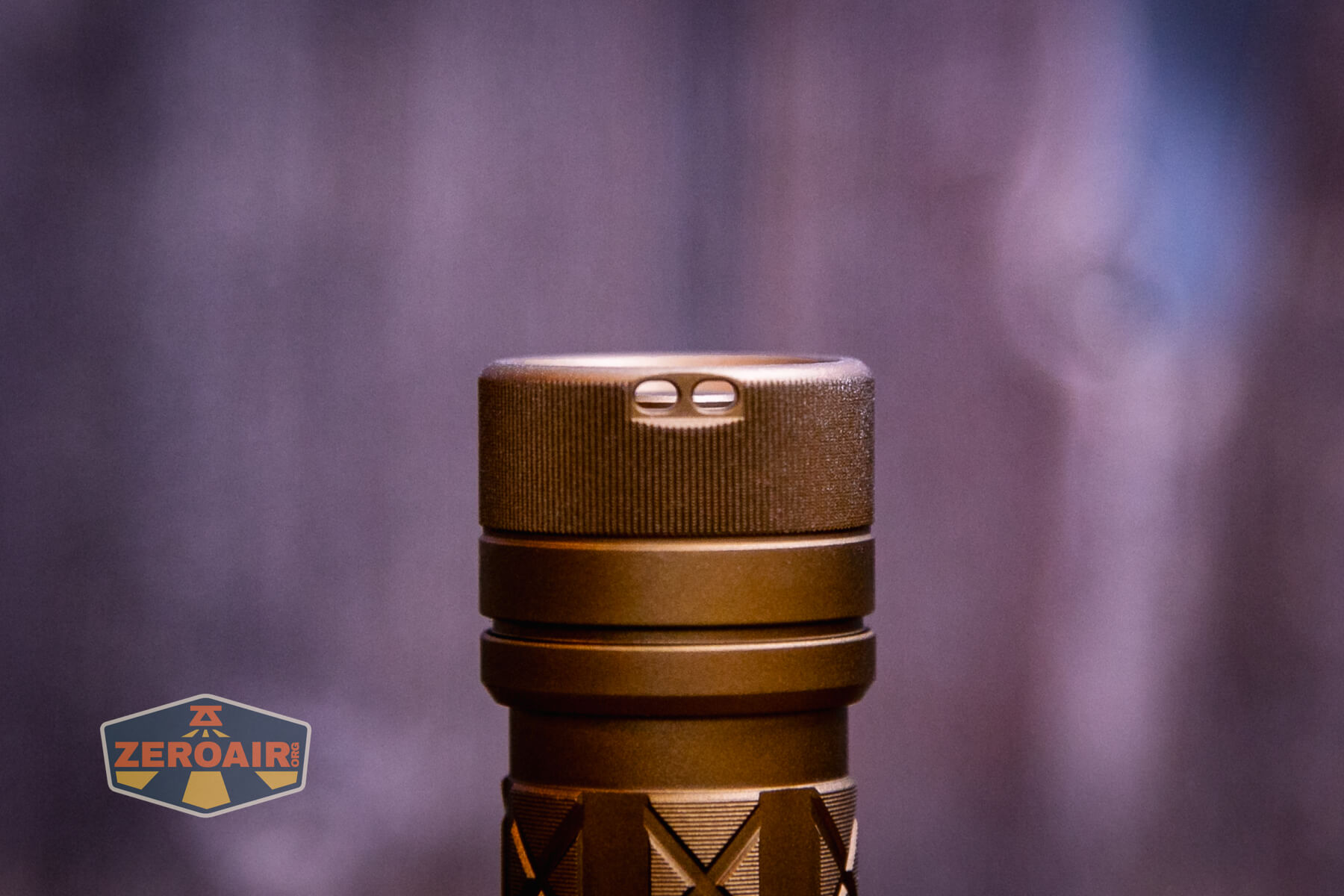
On the tailcap there are two holes where the included lanyard can be attached. This setup is great because tailstanding is still possible even with the lanyard installed.
Power and Runtime
The Skilhunt EC500 Coyote neutral white flashlight runs on a single lithium-ion cell. It’s sized for an 21700 and an appropriate 5000mAh cell is available with the purchase.
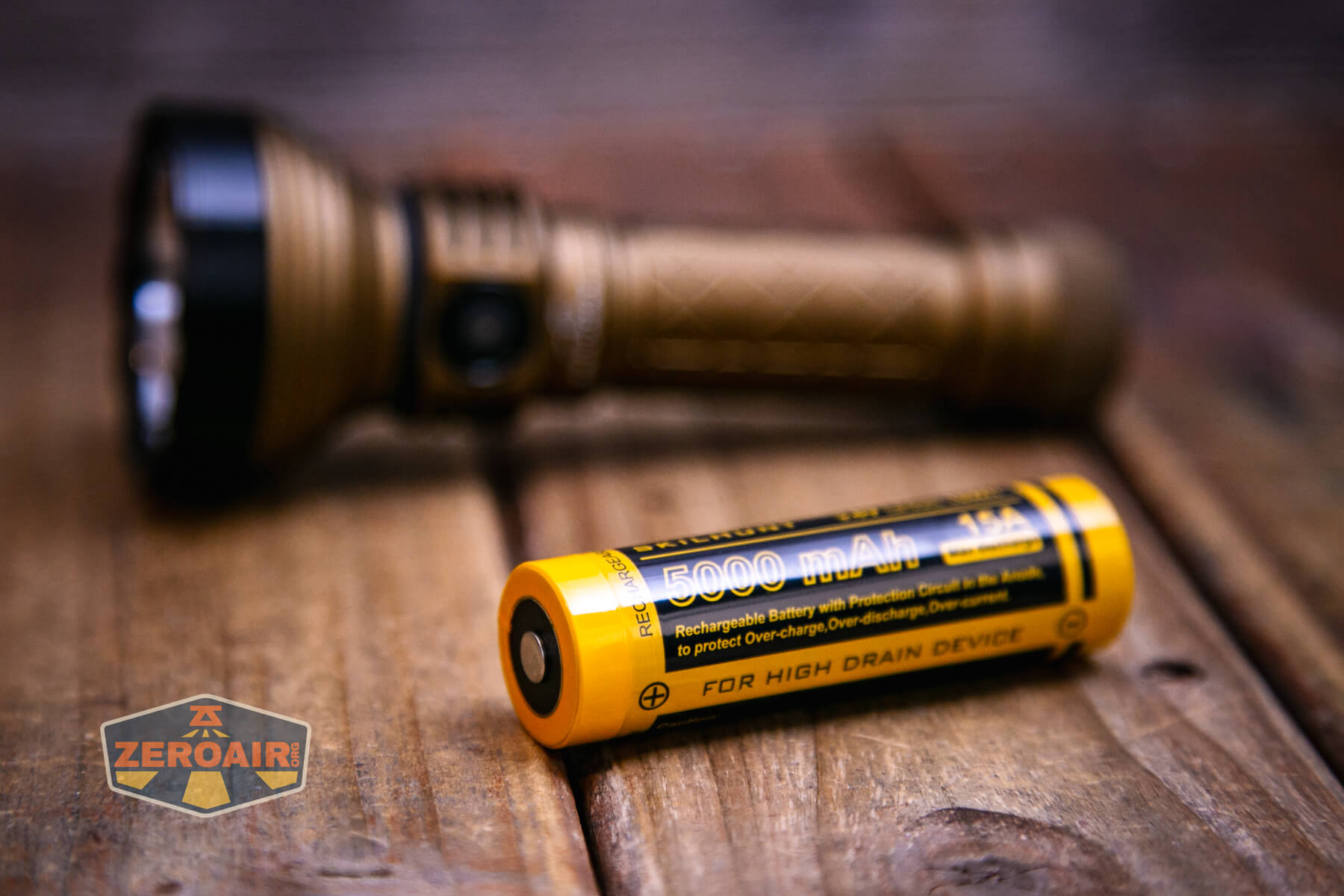
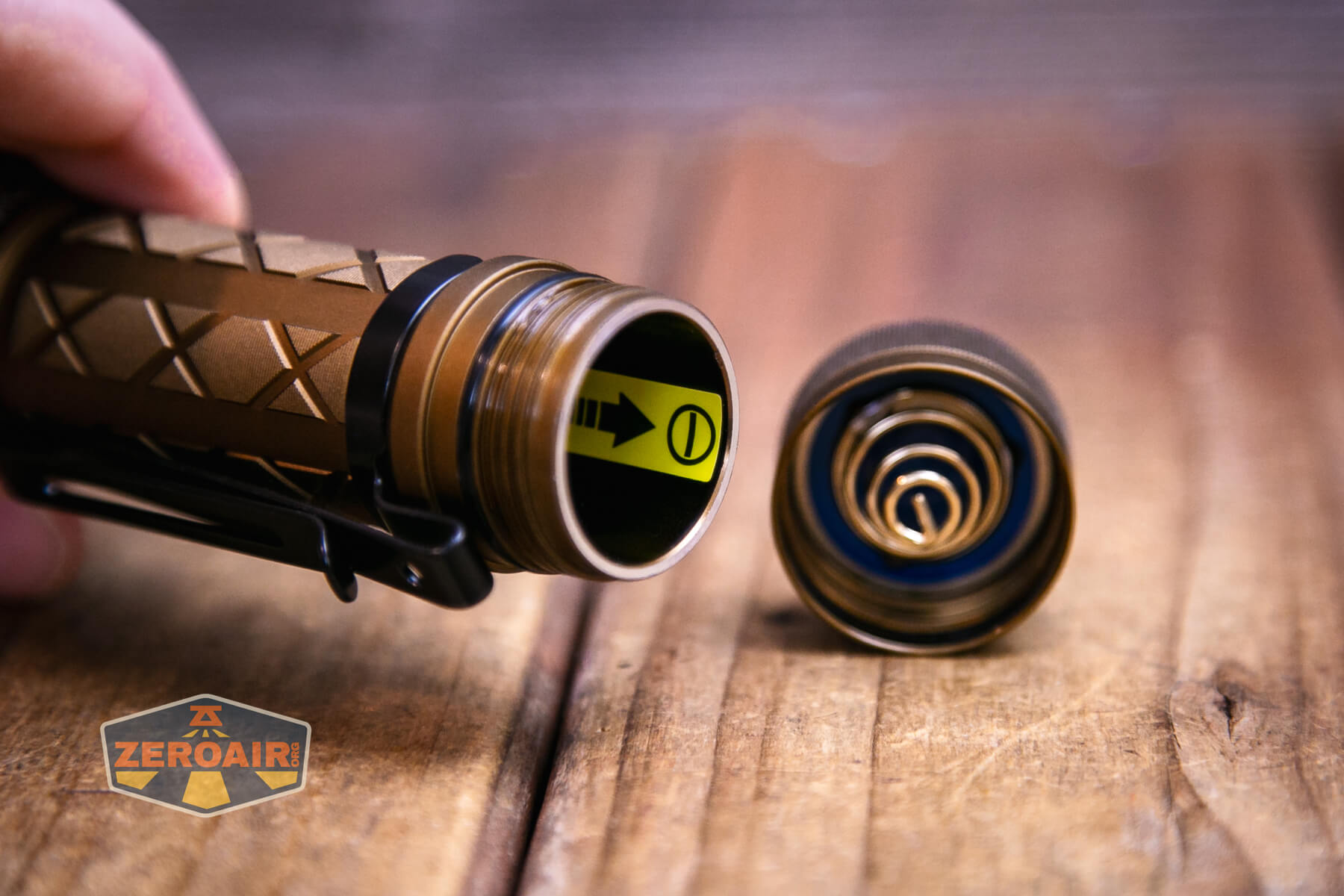
The 21700 fits into the EC500 with the positive terminal toward the head, as seen below. 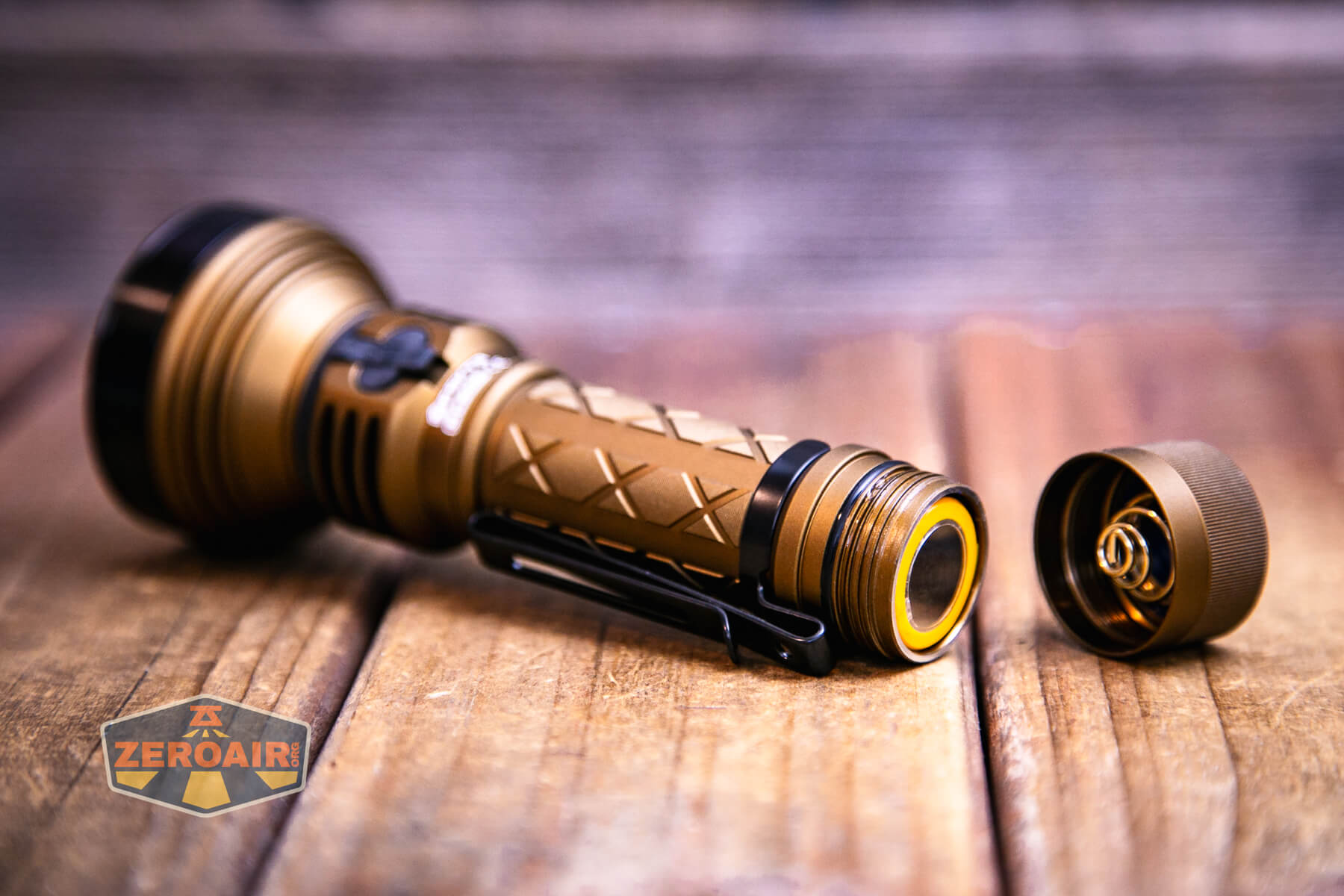
In case you forget which way to install the cell, there’s a cell orientation sticker just inside the cell tube.
Here are a few runtime tests. I wouldn’t say there’s anything super surprising here. Output is very stable once a stepdown has happened, and low voltage protection is observed. There’s also a low voltage warning from the indicating e-switch.
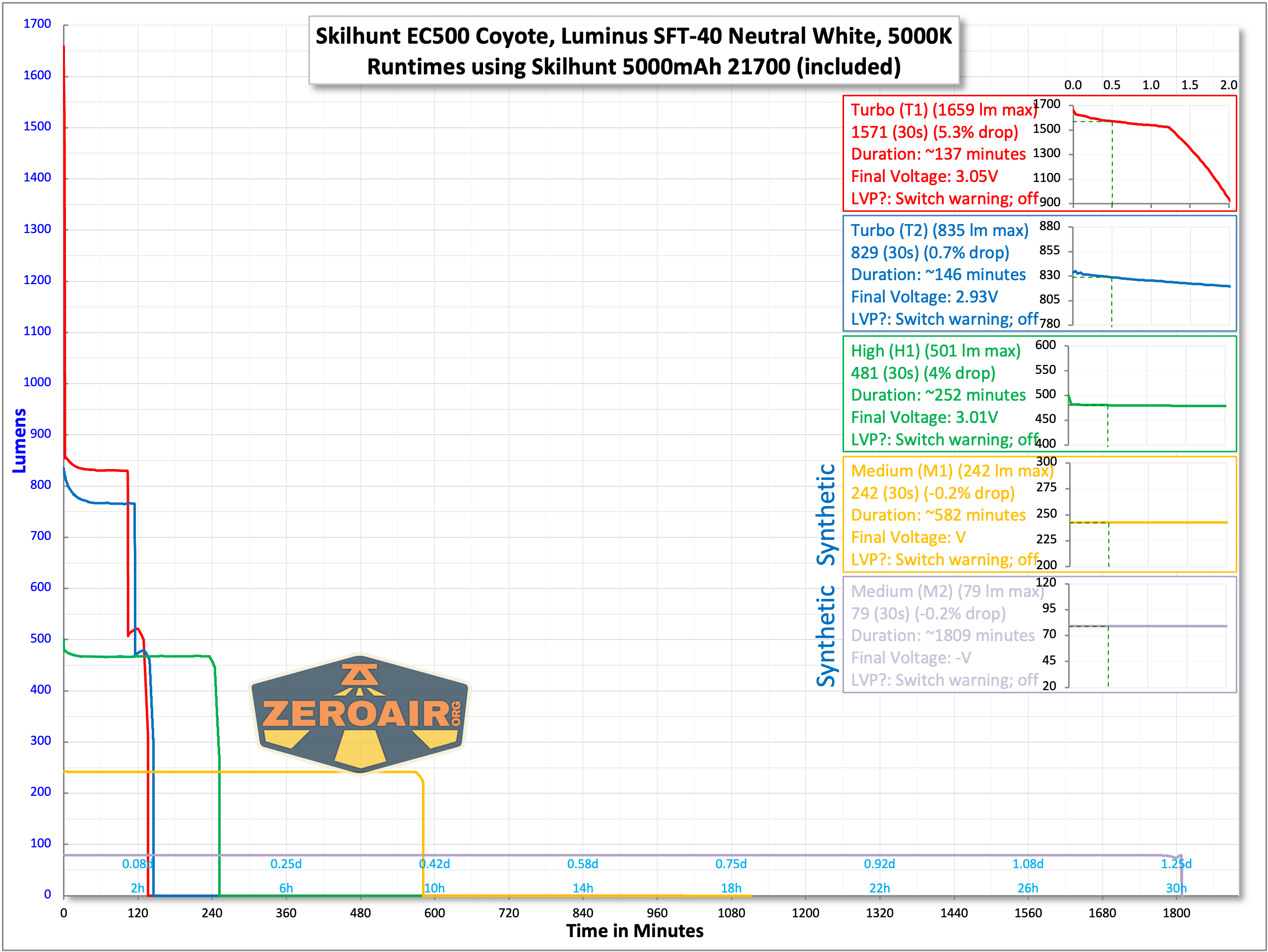
Those last two runtimes in the graph above are synthetic runtime tests. If that term doesn’t make any sense to you, hit that link! I explained it in detail there. For the SRTs, I did use a synthetic cell of the same capacity as Skilhunt’s 21700.

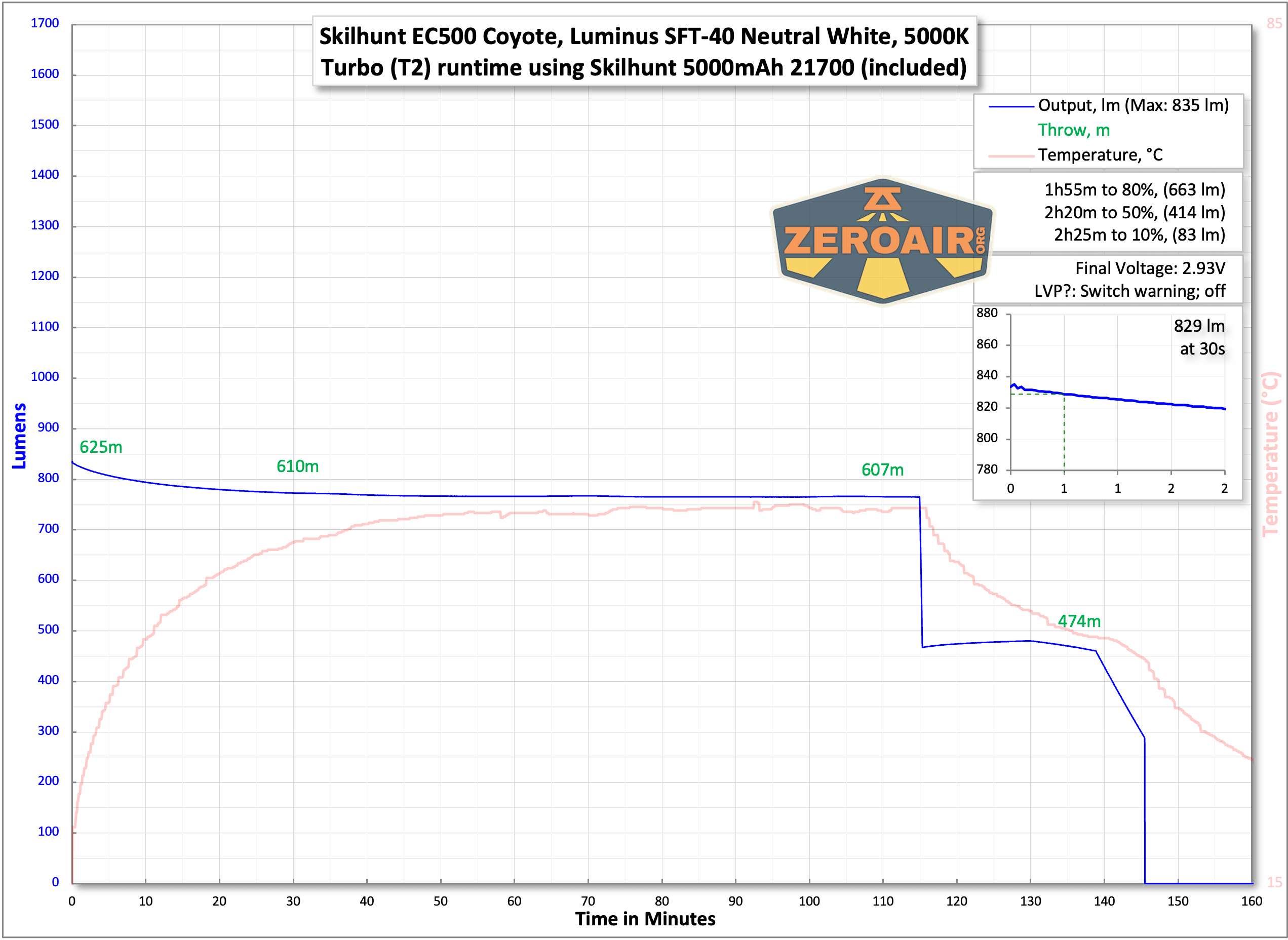
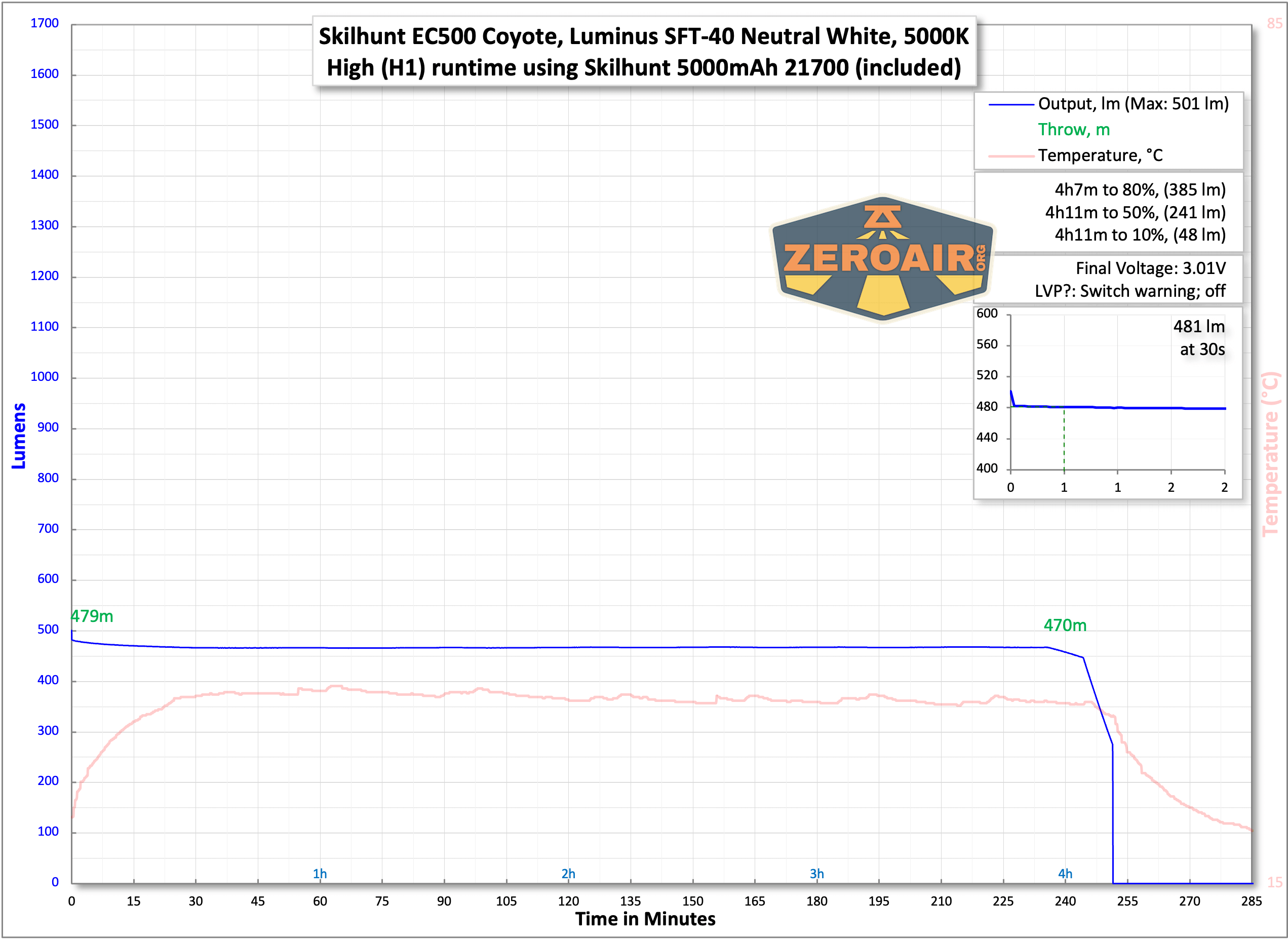
Below are the two synthetic tests. Temperature is not logged on those (of course – I don’t have a way to do that; I’m not even sure it’s possible.)
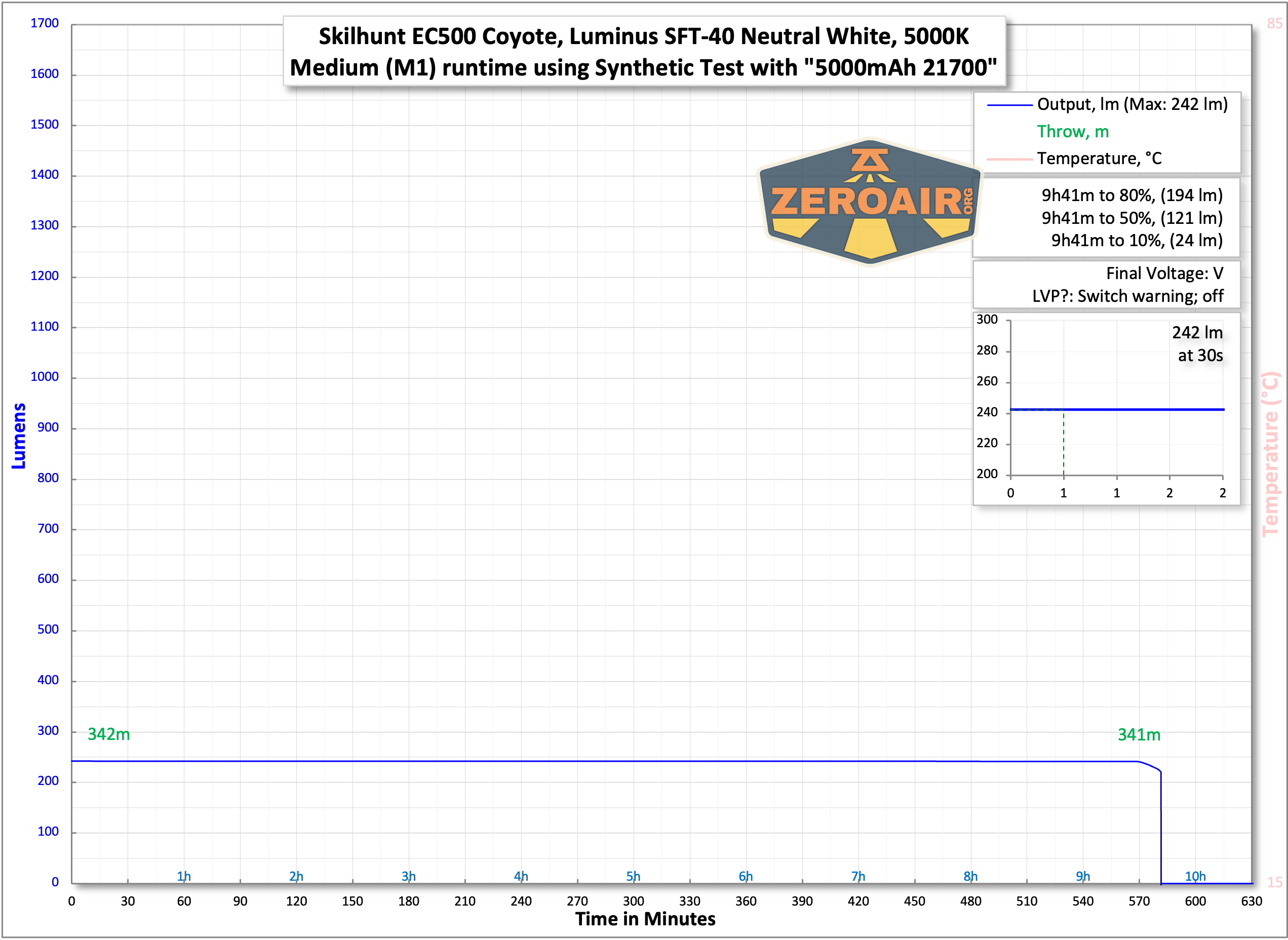
I hope you’re enjoying the minutes and hours on the time axis here!
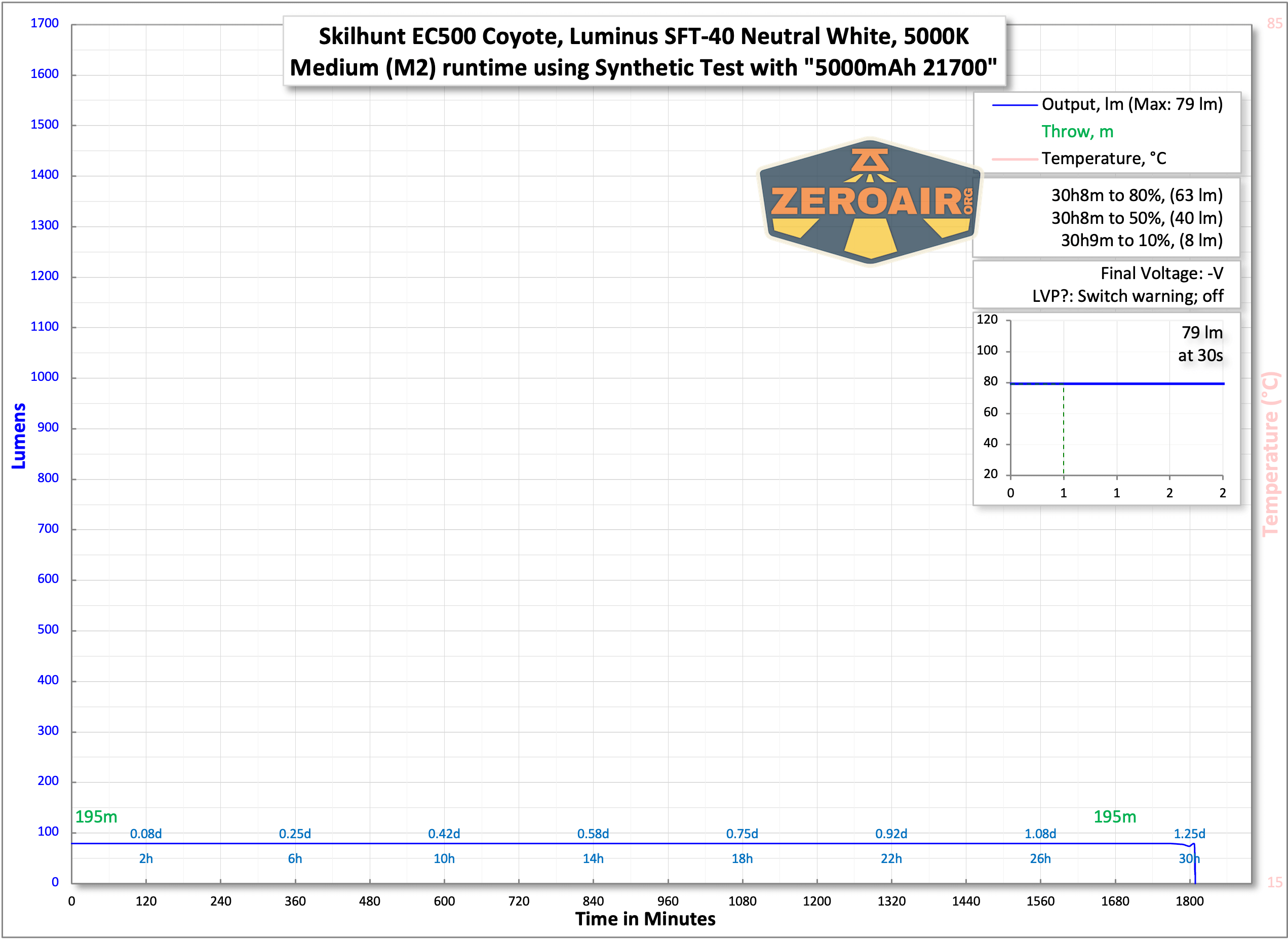
Charging
I’m happy to report that the Skilhunt EC500 Coyote neutral white flashlight has USB-C charging, like the EC200S EDC flashlight! I liked their old proprietary magnetic charging just fine but now that I see USB-C on here, I like this so much better! It’s fantastic. Of course, they’ve had this before (and for a while!) on a bigger light like the EC300 (which I also really like!) (So I’m not saying it’s “new” to Skilhunt. I’m just glad they are still using it!)
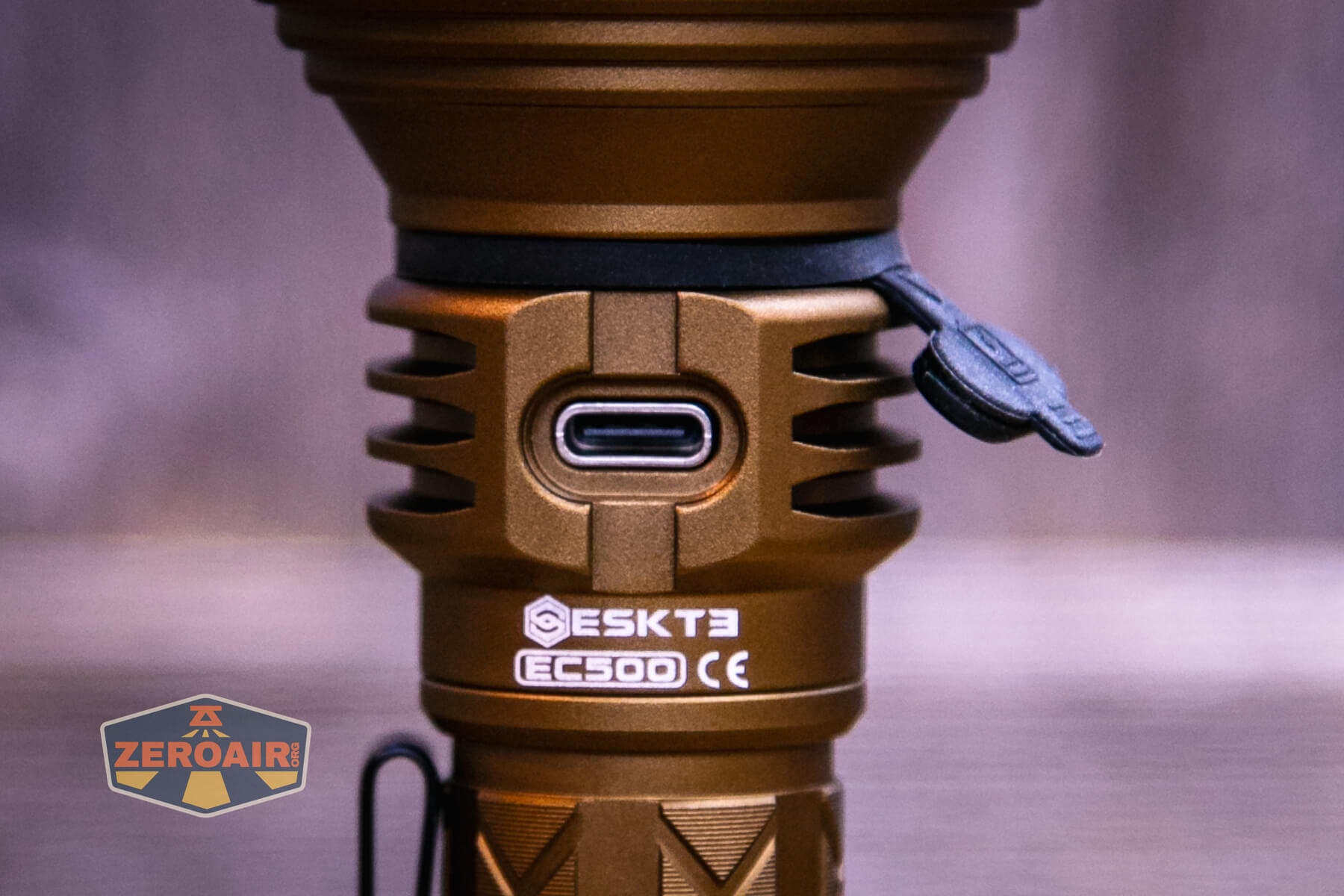
The charge port cover is a press-in silicone bit and seems very sturdy when in place. It’s also fairly sleek when closed so that it doesn’t open needlessly. The cover is on a band, too, so you can twist that whole thing out of the way if you wish.
Skilhunt includes a USB-A to USB-C cable for charging.
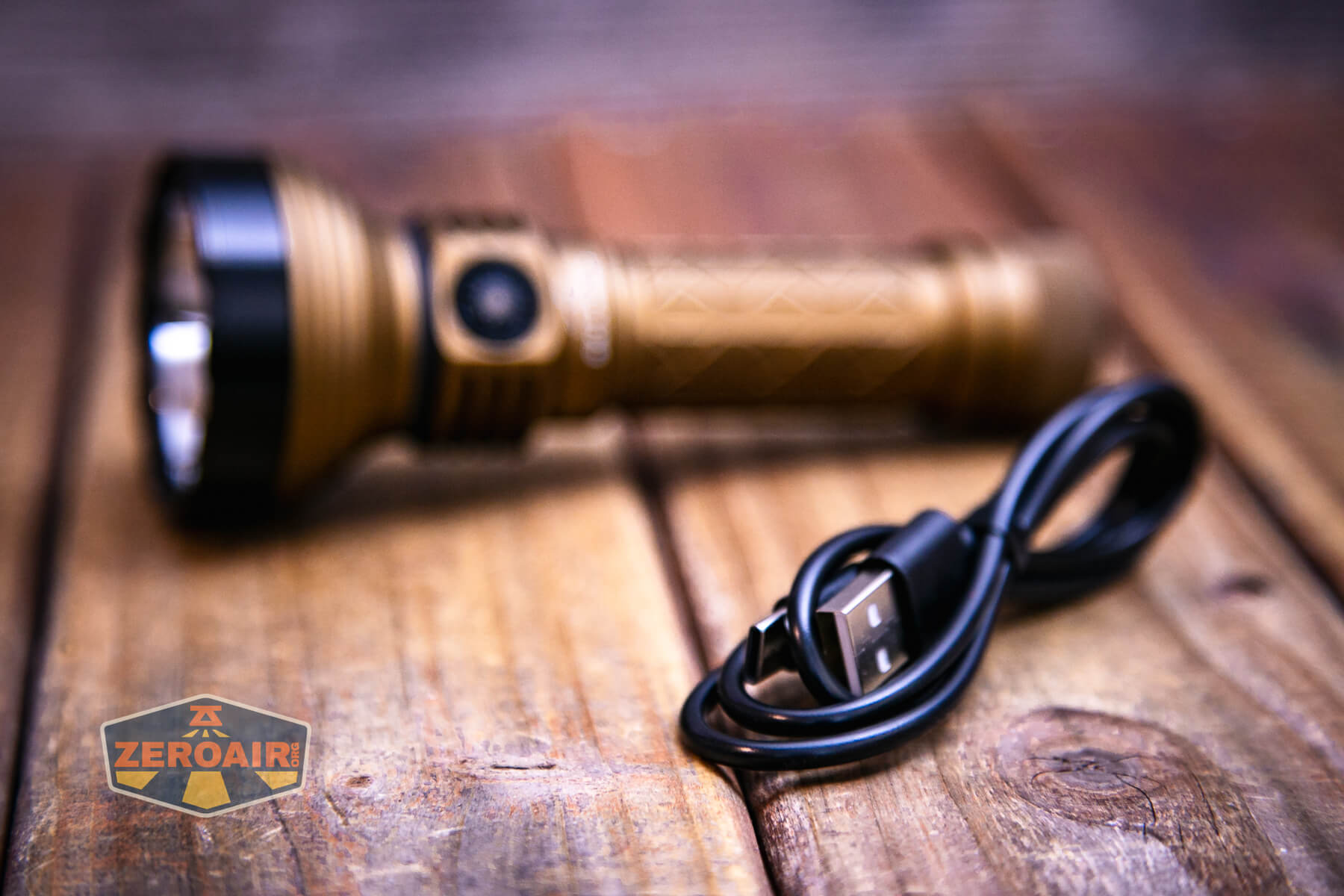
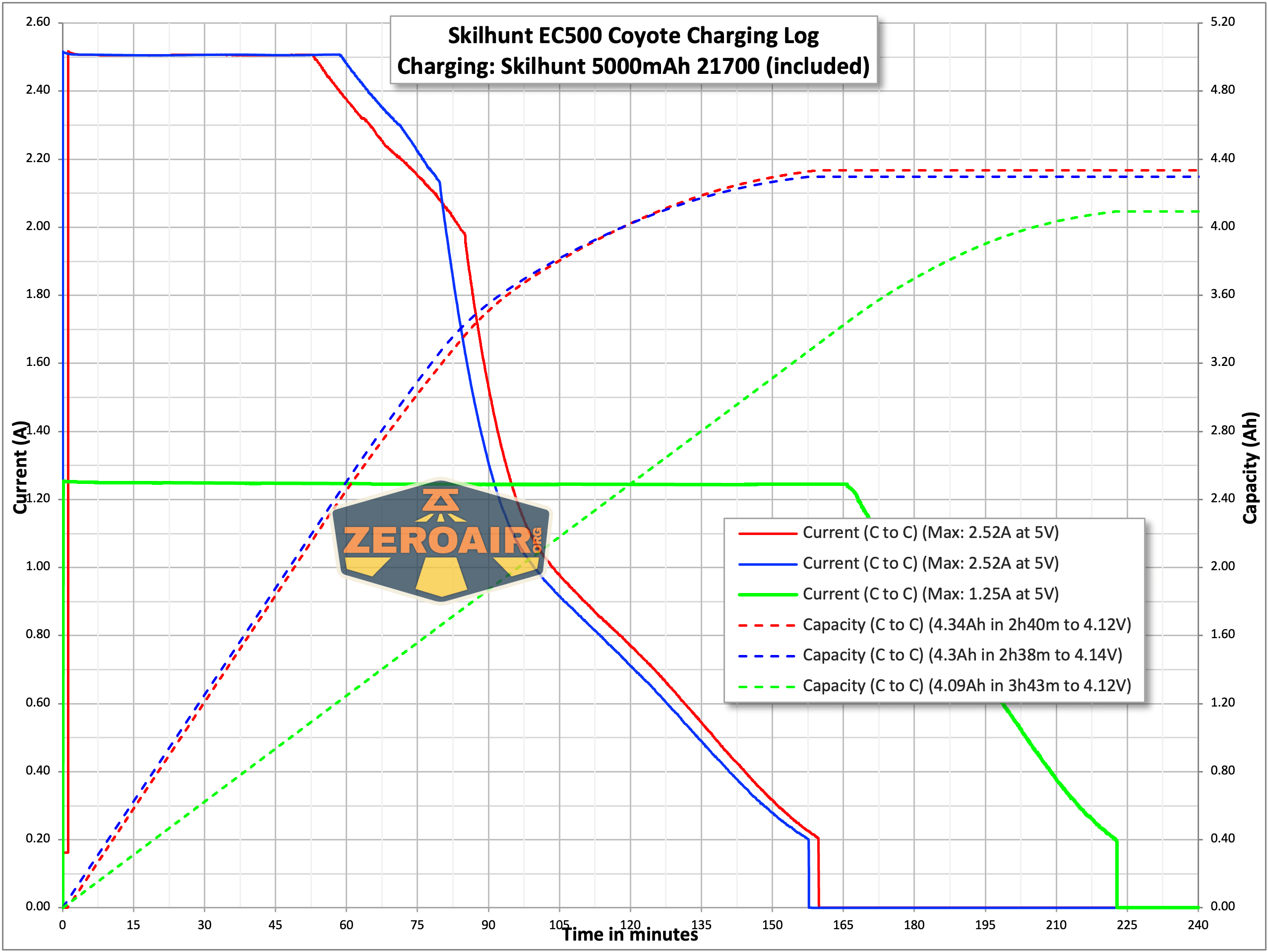
Below are tests for C to C and A to C charging. Both work just fine. I’m not sure why A to C went at around 1.25A. Still, it’s plenty quick either way.
While charging, the switch fades blue in and out (I think the manual has this wrong – it says “red” while charging). When charging is complete, the switch is steady blue. If something is wrong with charging, the switch blinks red.
Powerbank
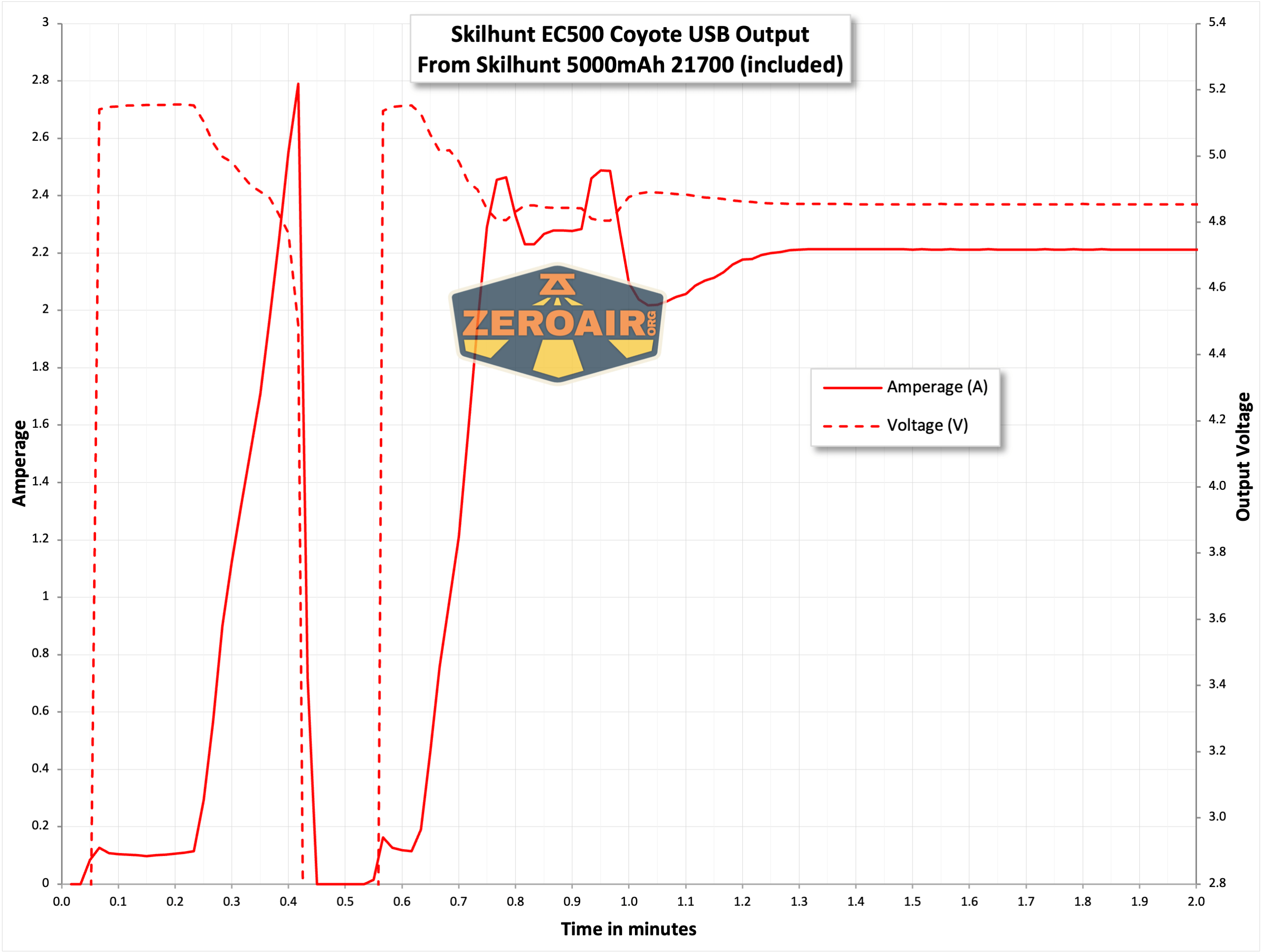
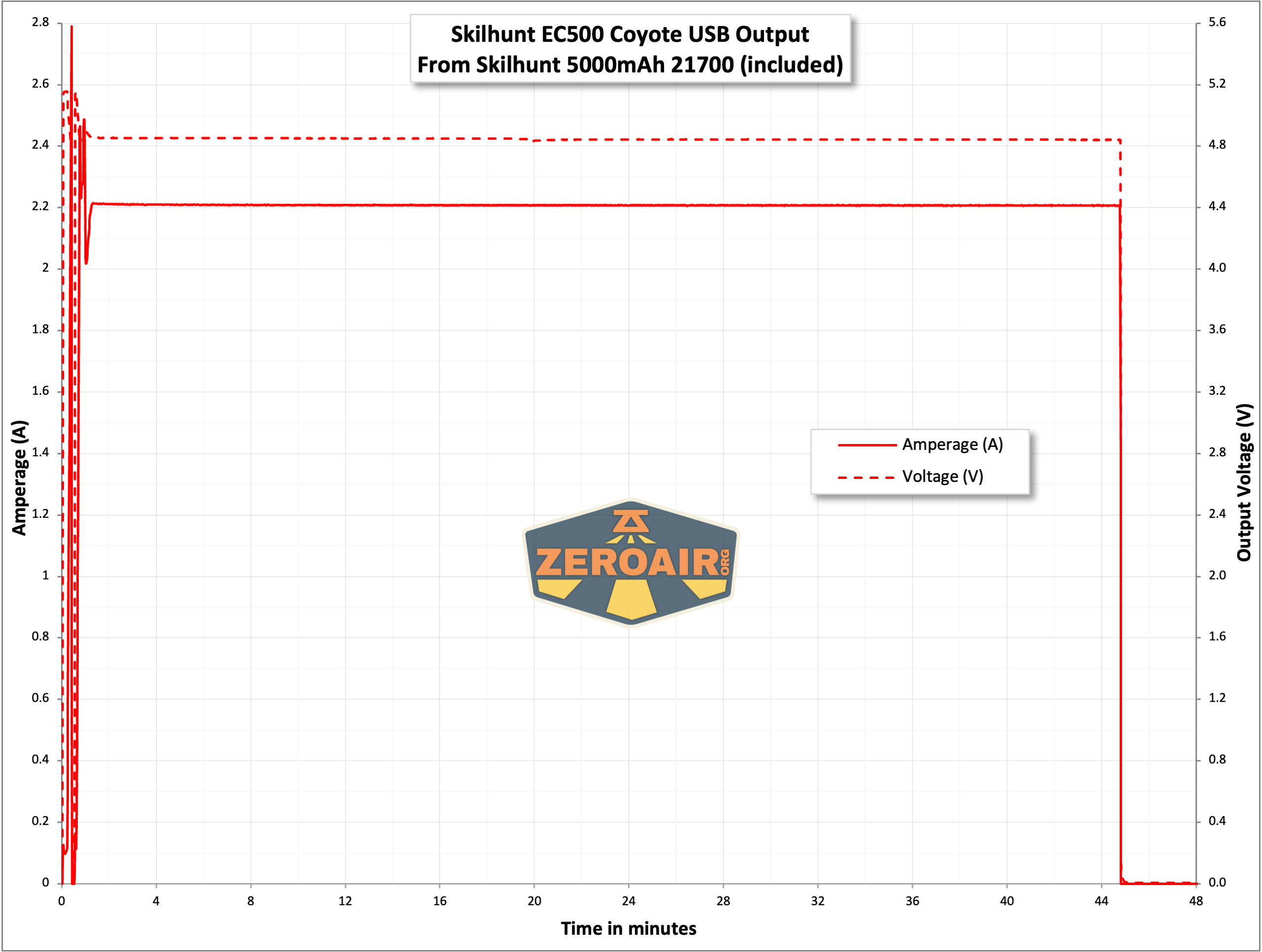
The Skilhunt EC500 warm white flashlight does function as a powerbank, too! With the 5000mAh 21700, you should be able to get at least an emergency-level charge to phones. Below is the test from one cycle.
Modes and Currents
| Mode | Mode Claimed Output (lm) | Claimed Runtime | Measured Lumens | Tailcap Amps |
|---|---|---|---|---|
| T1 | 1780-950-570 | 2m+110m+30m | 1659(0s) 1571 (30s) |
5.61 |
| T2 | 950-570 | 115m+30m | 835 (0s) 829 (30s) |
1.80 |
| H1 | 570 | 250m | 481 | 0.90 |
| M1 | 275 | 9.5h | 242 | 0.38 |
| M2 | 90 | 29.5h | 79 | 0.11 |
| L1 | 5.5 | 300h | 4.6 | [low] |
| L1 | 1 | – | 0.2 | [low] |
Pulse Width Modulation
None of the modes use PWM! Yay!

Here you can see a “baseline” – a chart with almost no light hitting the sensor.

Then there’s the Ultrafire WF-602C flashlight, which has some of the worst PWM I’ve seen. It’s so bad that I used a post about it to explain PWM! Here are multiple timescales (10ms, 5ms, 2ms, 1ms, 0.5ms, 0.2ms) to make comparing this “worst” PWM light to the test light easier. That post also explains why I didn’t test the WF-602C at the usual 50us scale.


User Interface and Operation
The switch on this Skilhunt EC500 Coyote neutral white flashlight should be very familiar. It’s very much like what Skilhunt has used for a long while (at least back to 2022 on the EC300, for example. A single e-switch controls the light. This switch has a backlight function and can light in red or blue. While the switch has a transparent center, it has an interesting design pattern printed (?) in the center. It’s not a functional improvement, but a nice touch.
Here’s the switch lighting in red.
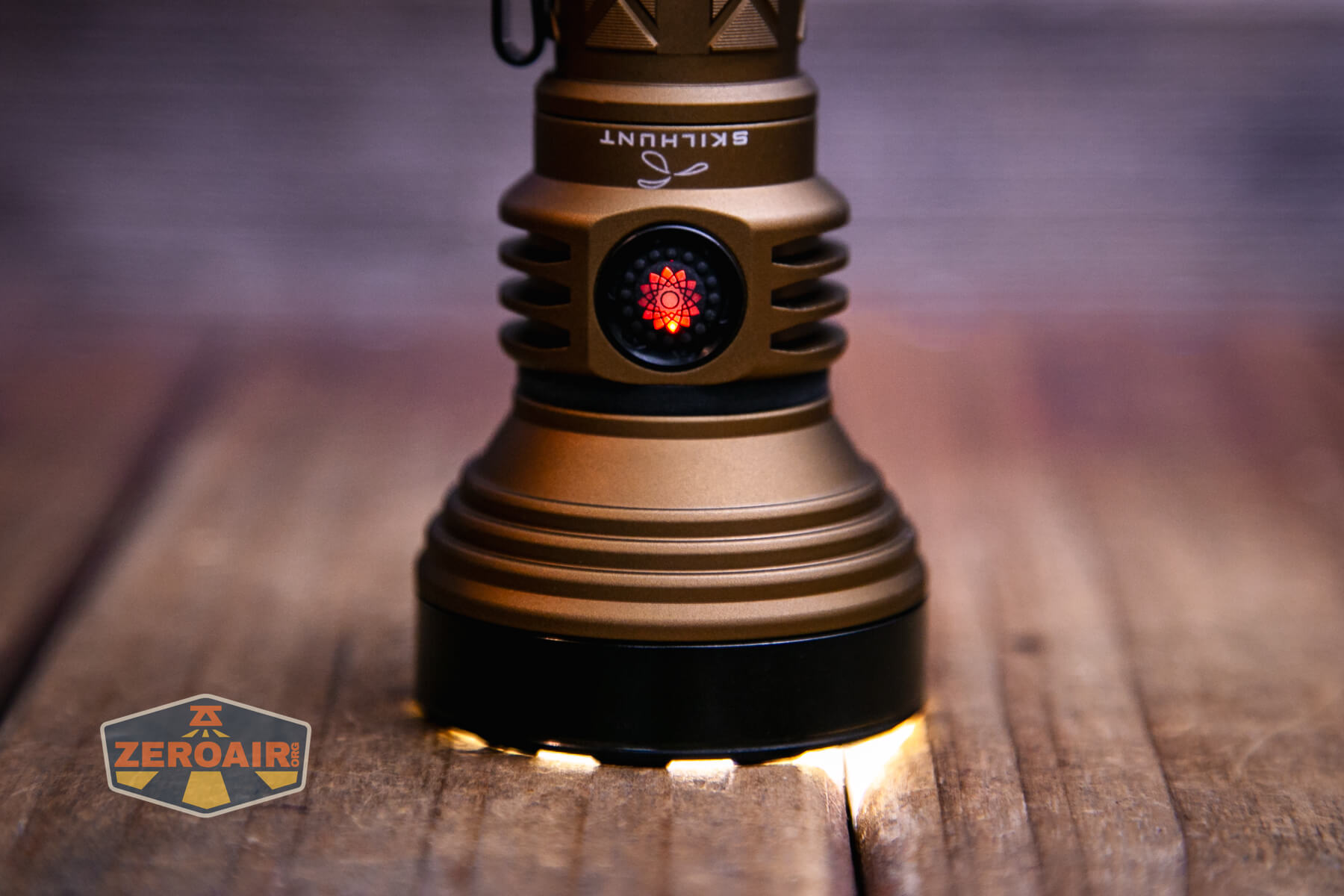
The switch is just barely proud and the action is very good.
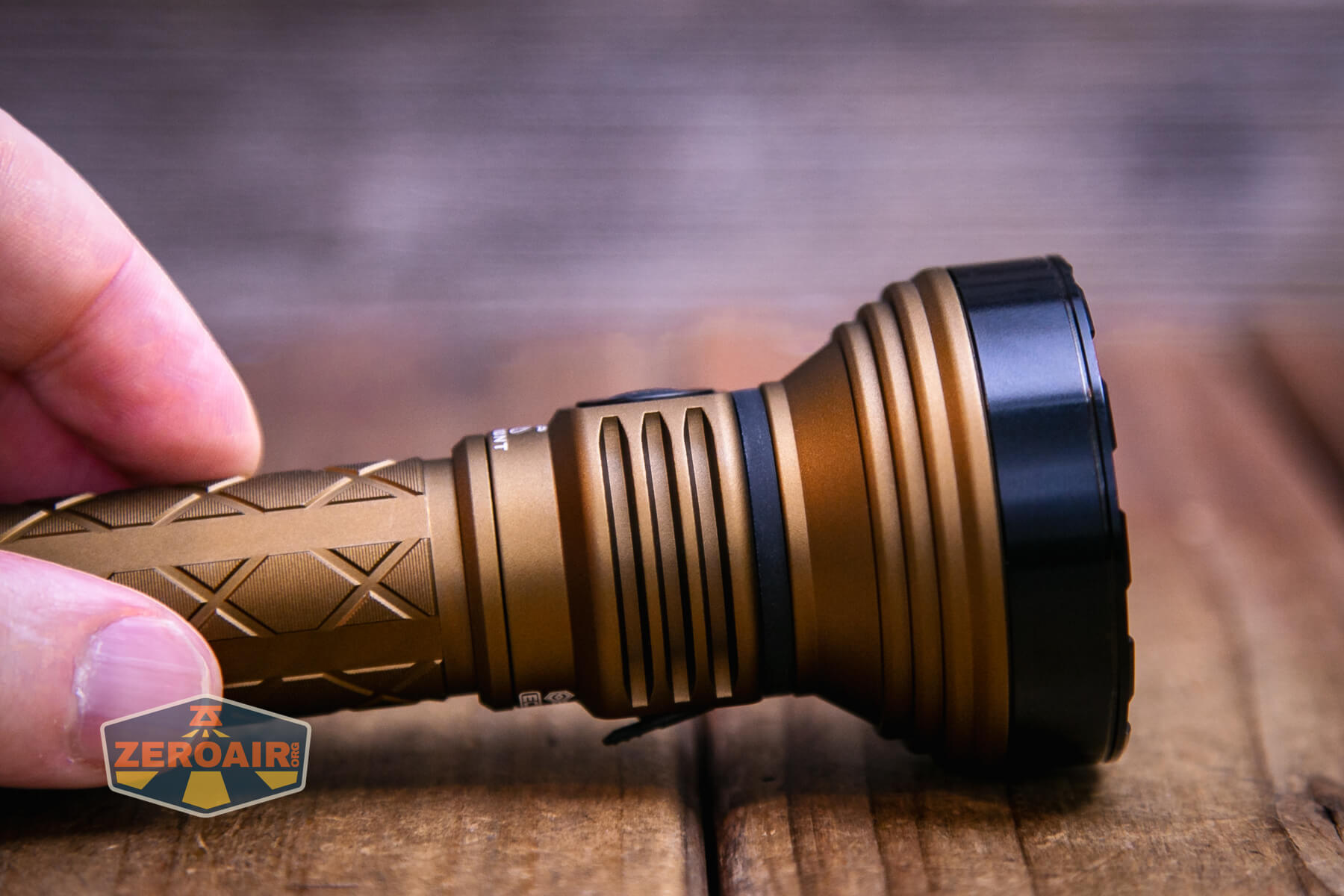
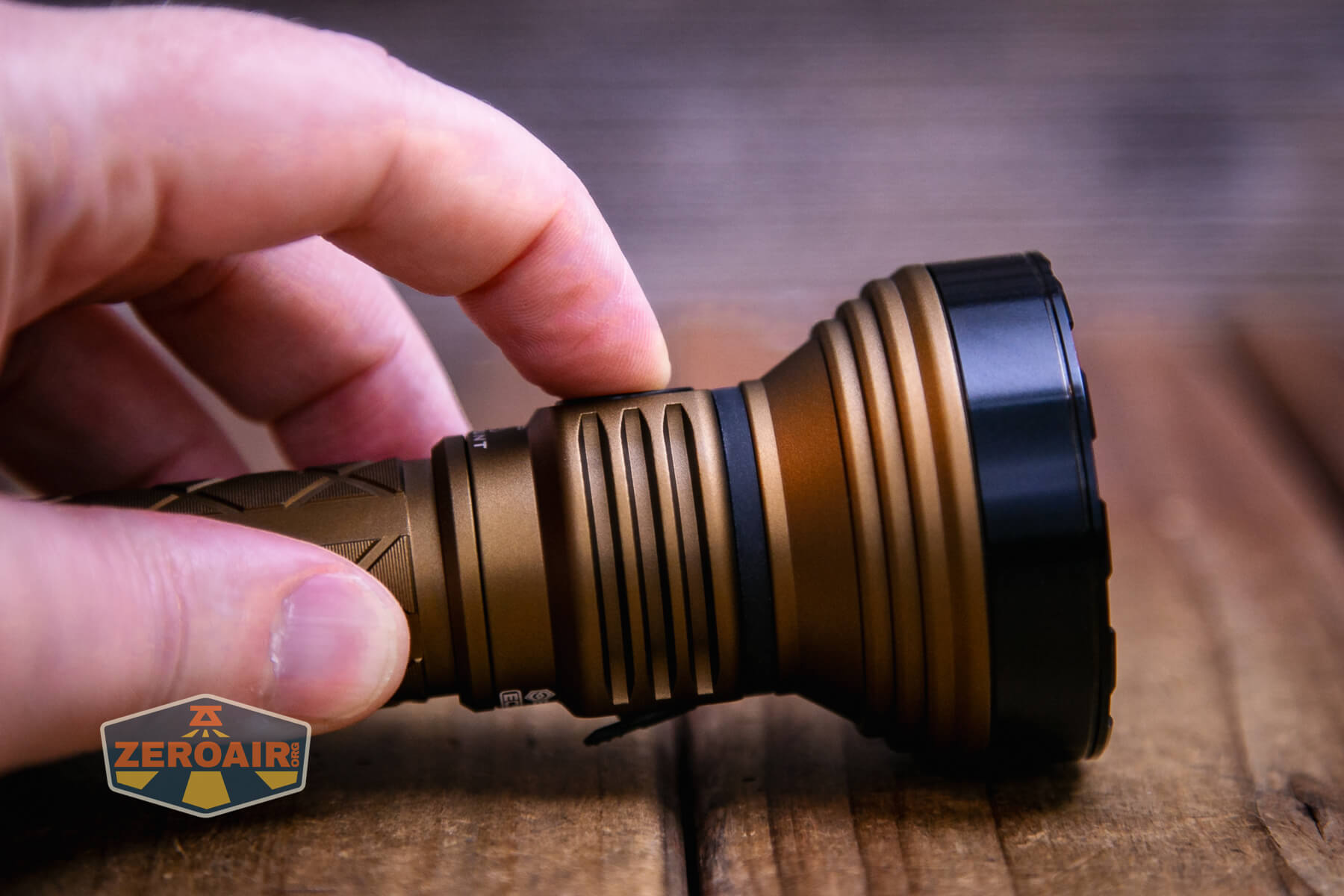
Here’s a user interface table!
| State | Action | Result |
|---|---|---|
| Off | Hold | Low (Memory between L1 and L2) |
| L1 or L2 | Hold | Iterate between L1 and L2 |
| Off | Click 4x | Lockout (Three blinks of the emitter to confirm) |
| Lockout | Click 4x | Unlock to Low group (memory, can be L1/L2) |
| Lockout | Click 2x | Iterate lockout indicator^ |
| Lockout | Hold | Momentary Low group (memory, can be L1/L2) |
| L1/L2 | Click | Off |
| Off | Click | On in “Main Group” (Mode memory M2/M1/H) |
| Main Group | Hold | Mode advance (M2 > M1 > H) |
| Main Group | Click | Off |
| Main Group, Off, or Low group | Click 2x | Turbo Group (T1/T2) |
| T1/T2 | Hold | Iterate between T1 (higher) and T2 (lower) output |
| T1/T2 | Click | Off |
| T1/T2 | Click 2x | Main Group (memory output) |
| Main Group, Off, or Low group | Click 3x | Strobe Group (with memory) |
| Strobe Group | Click 3x | Previous Group (T1/T2 or M2/M1/H, depending on how you accessed Strobe Group)^^ |
| Strobe Group | Hold | Strobe Advance (S1 (Disorenting strobe) > S2 (Steady blink) > S3 (SOS) > S4 (Beacon)) |
| Strobe Group | Click | Off |
^ The lockout indicator blinks a red switch every 2-3 seconds.
^^ Aside from just general mode memory (which you know I don’t like) this seems to me to be the only place where you may need to immediately remember what mode you were in so you have the experience you expect. However, the difference is getting the two highest white outputs or the three main white outputs – it won’t be that dramatic even if you don’t remember. Also note that if you accessed the strobe group from off, triple-clicking will not return to off. For continuity, it should! In fact, if you access strobe from an off state, a triple-click sends the light to the Main group!
It’s not really covered in the user interface table, but the switch does indicate the power level. It does this for around 5 seconds after you turn the light on. The indicators are as follows:
Blue steady: 100-80%
Blue blinking: 80-50%
Red steady: 50-20%
Red blinking: 20-0%
LED and Beam
This version of the Skilhunt EC500 Coyote neutral white flashlight uses a 5000K Luminus SFT-40 emitter. That emitter is coupled with a smooth and big reflector, giving a very tight beam.
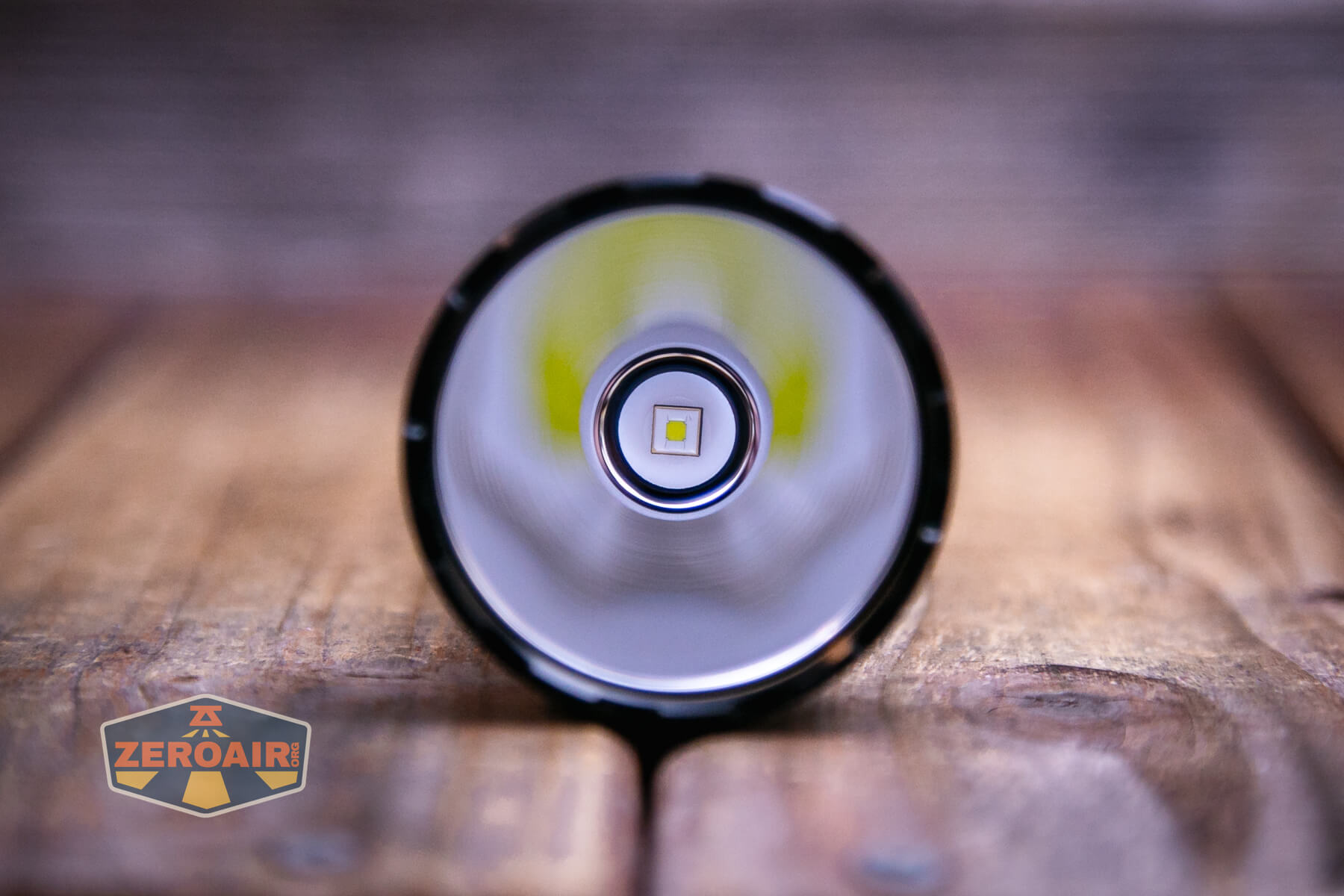
As you can see above (way above), the bezel comes right off by unscrewing, so emitter-swapping this light shouldn’t be a huge challenge.
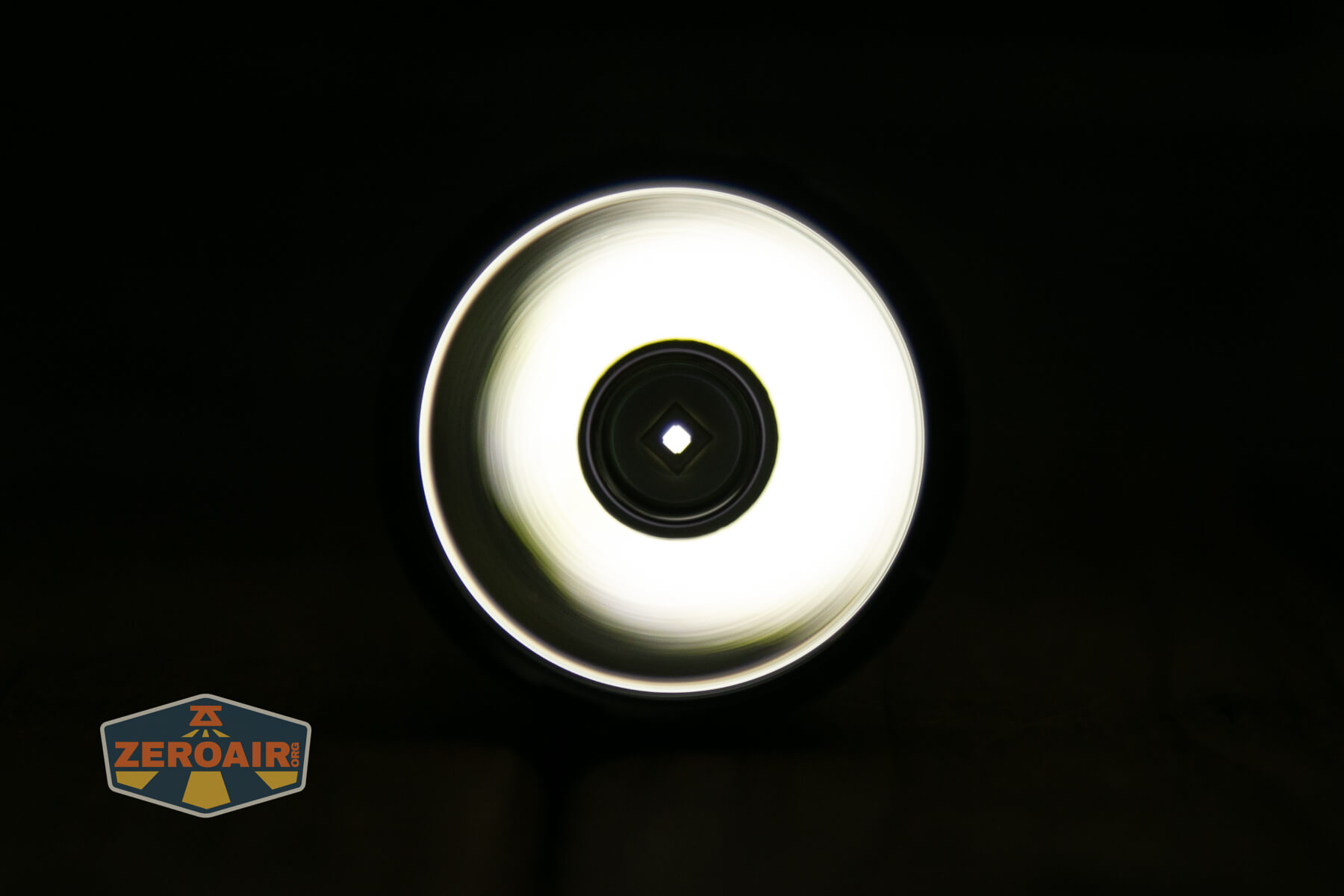
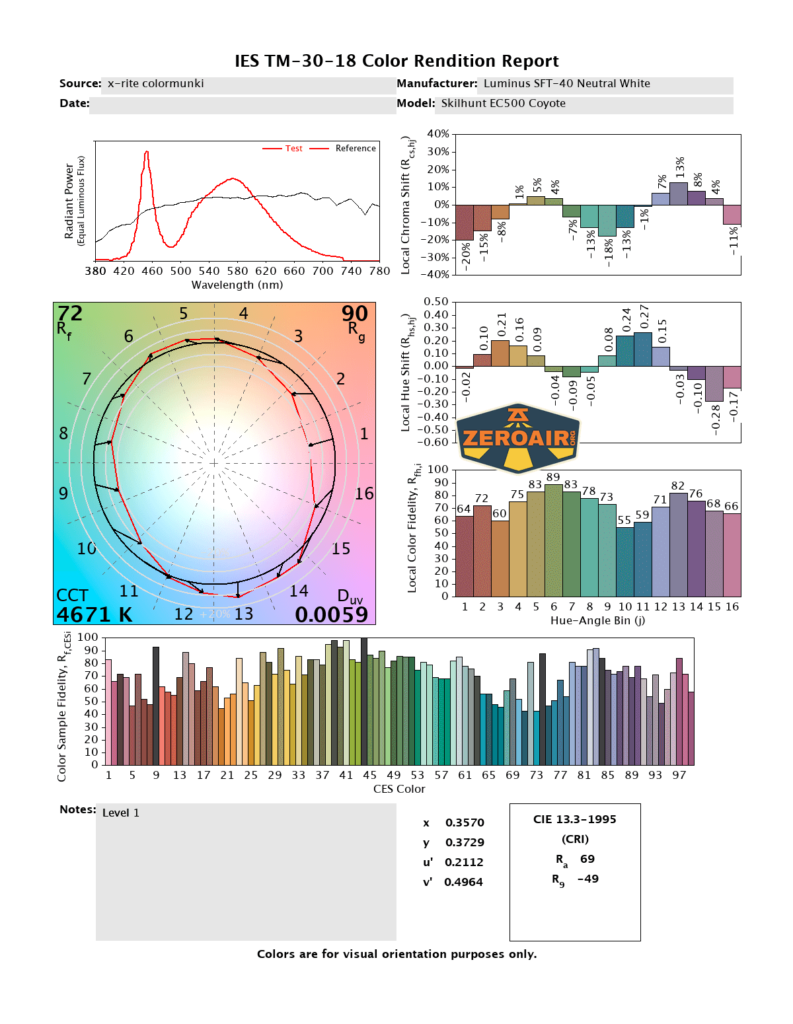
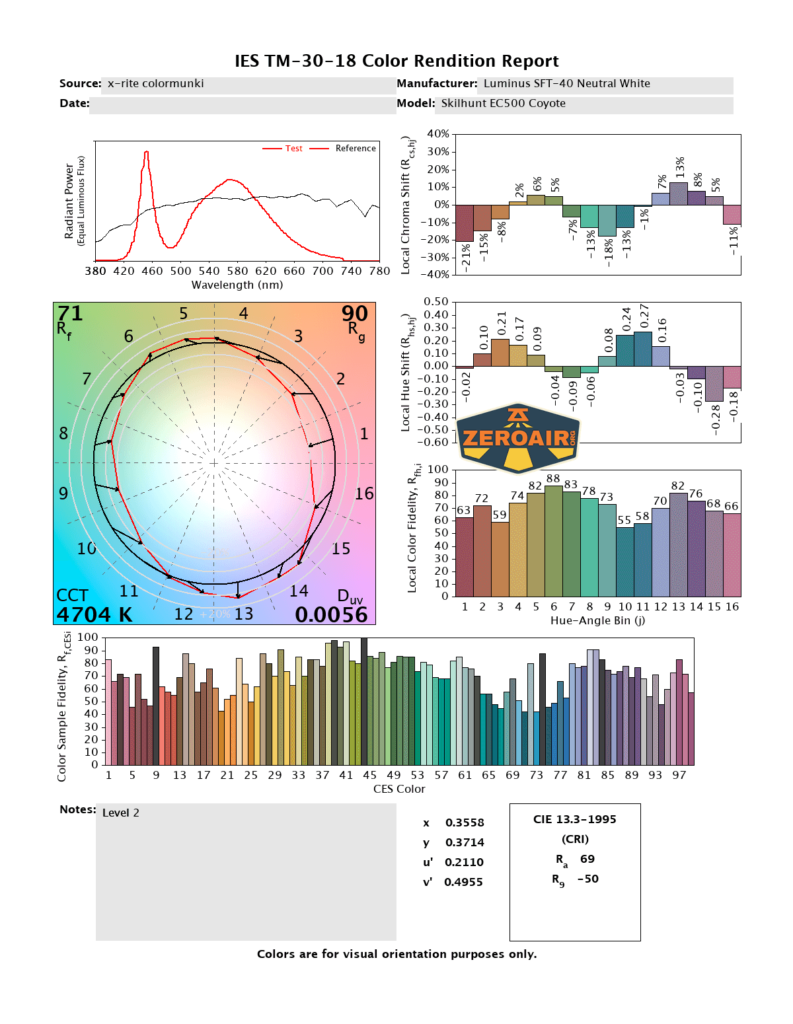
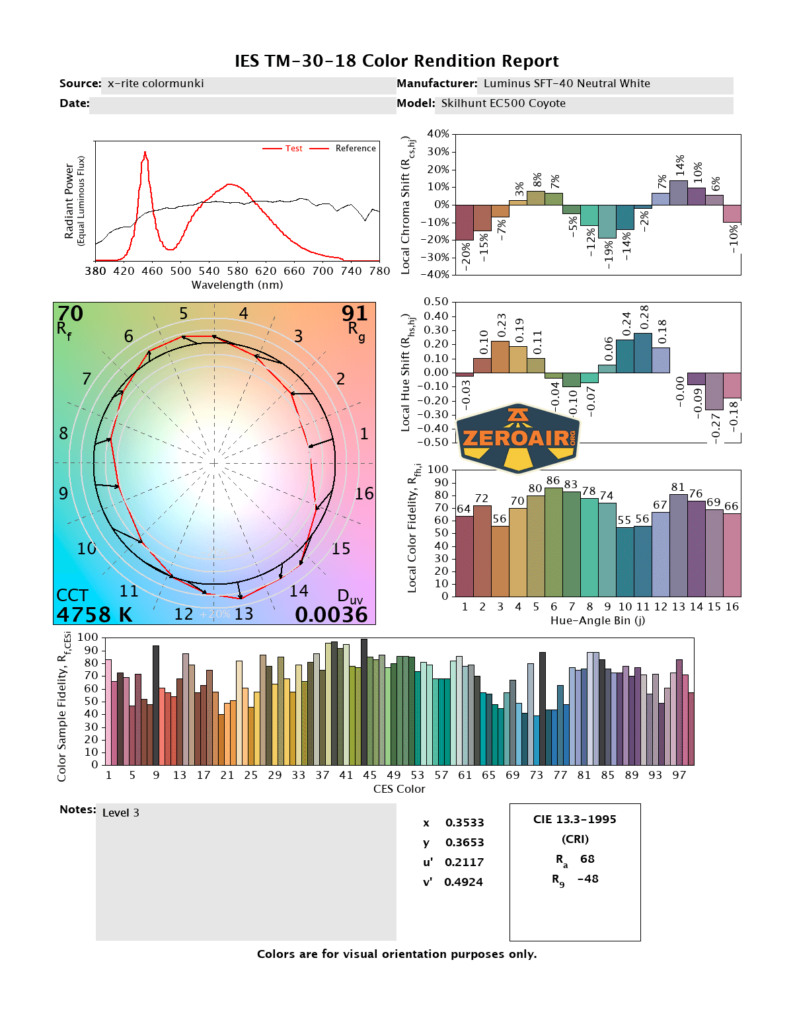
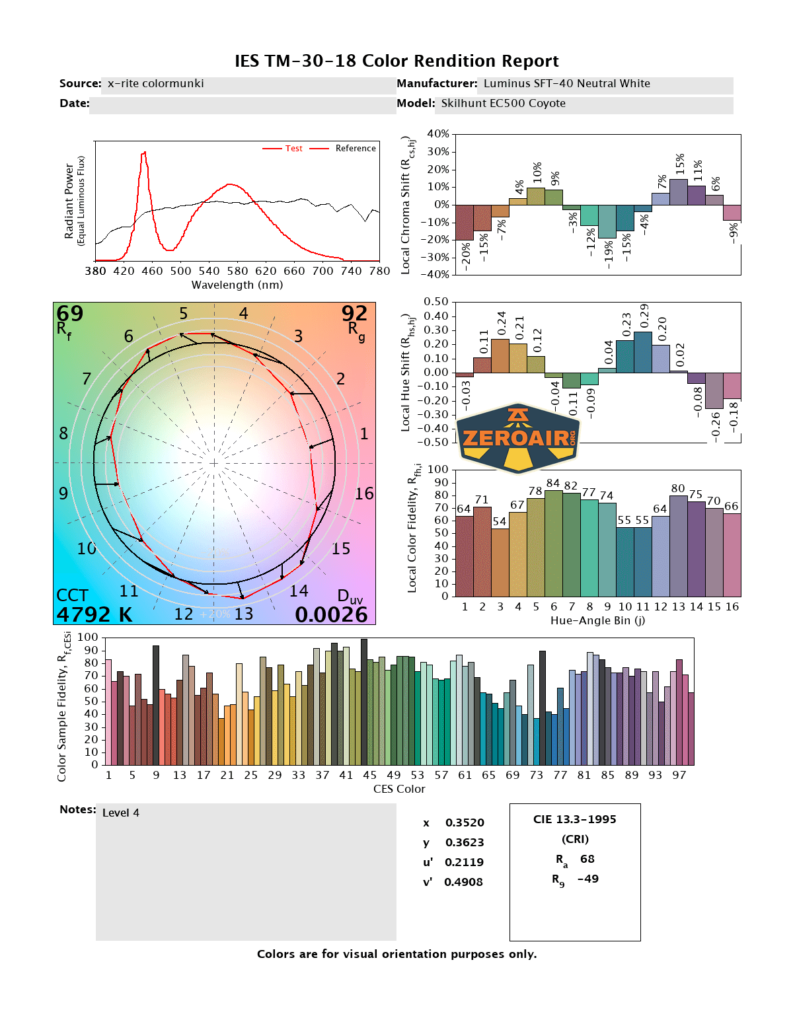
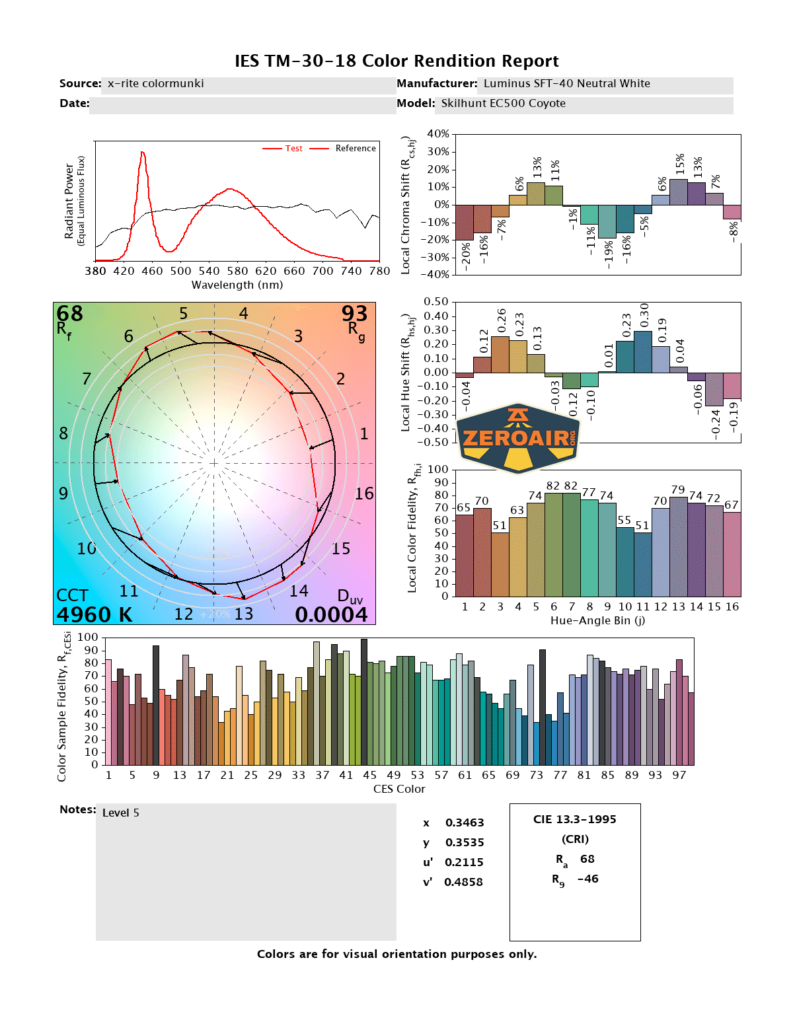
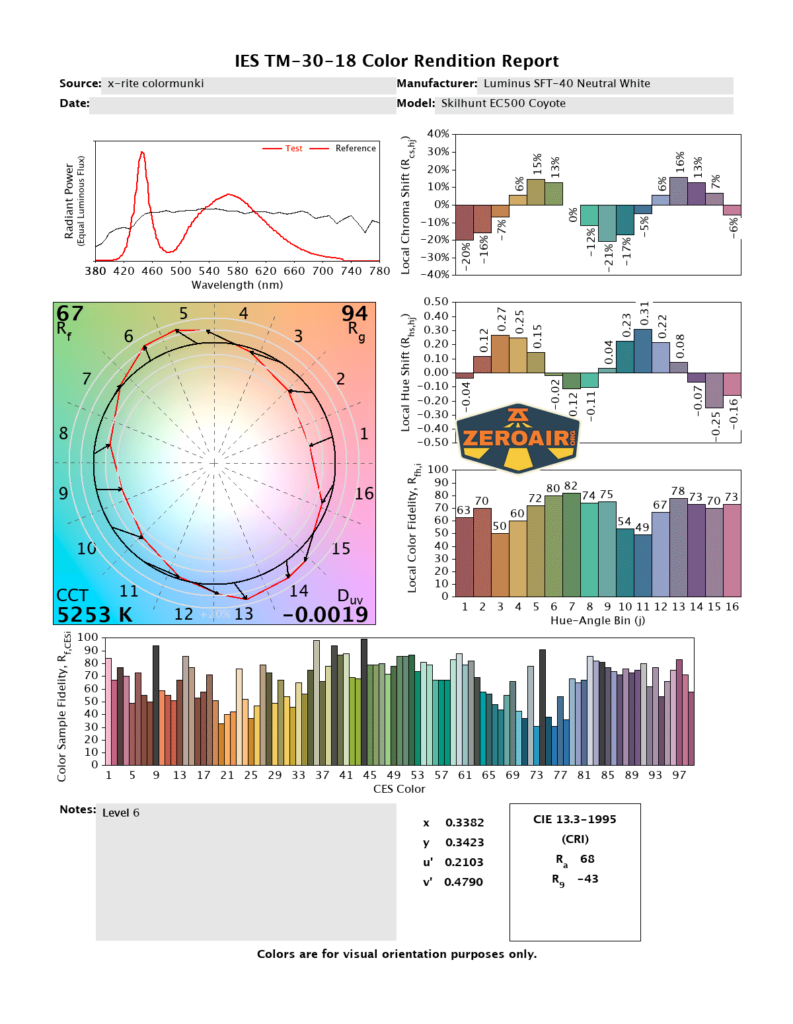
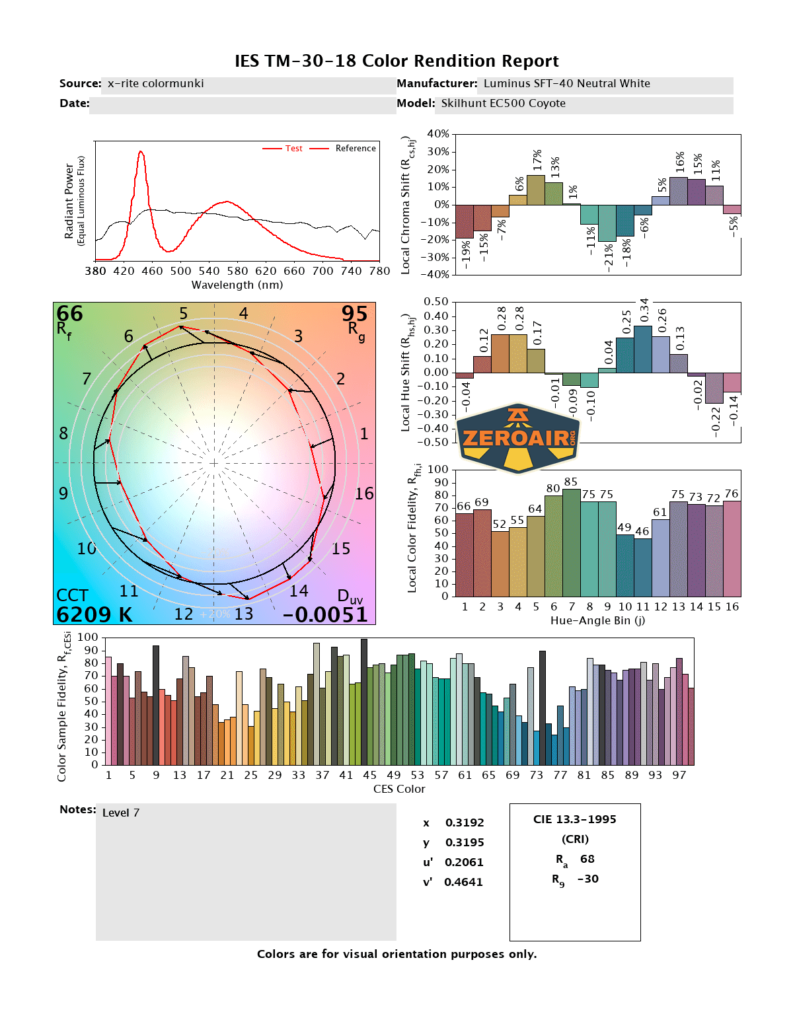
LED Color Report (CRI and CCT)
The CCT ranges from below 5000K (which is fine) to fairly high above 5000K (at around 6200K), which is less great. CRI is low, at around 70.
Beamshots
These beamshots always have the following settings: f8, ISO100, 0.3s shutter, and manual 5000K exposure. These photos are taken at floor level, and the beam hits the ceiling around 9 feet away.

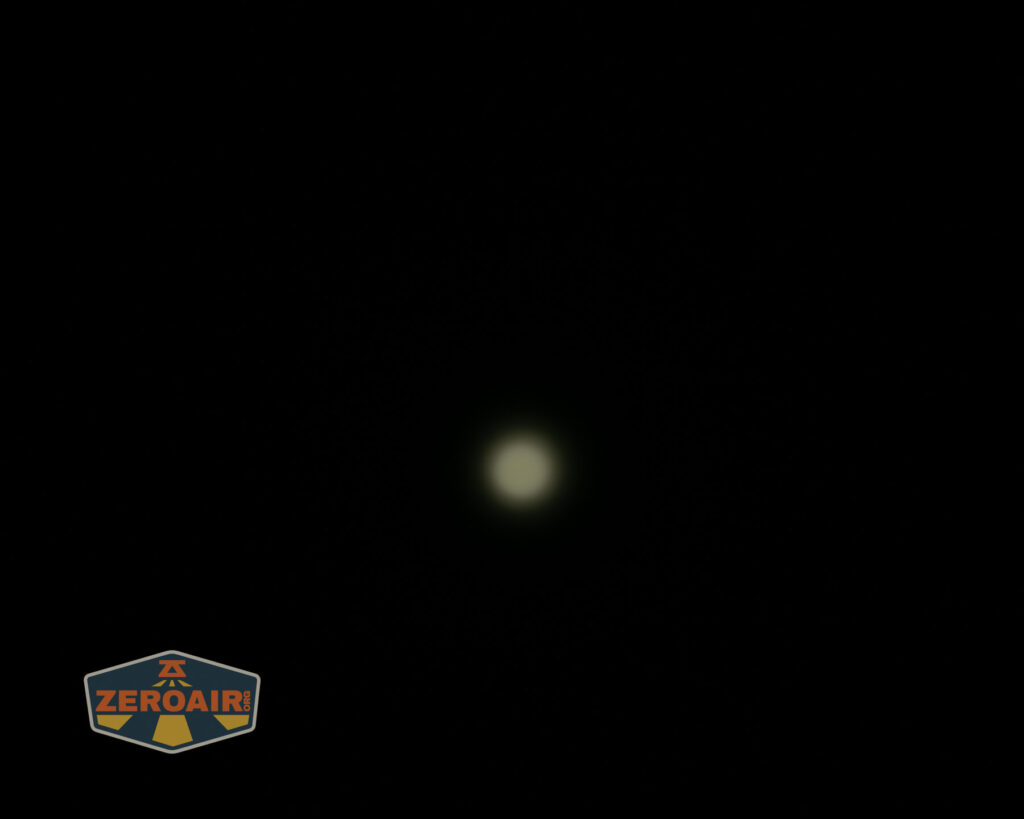
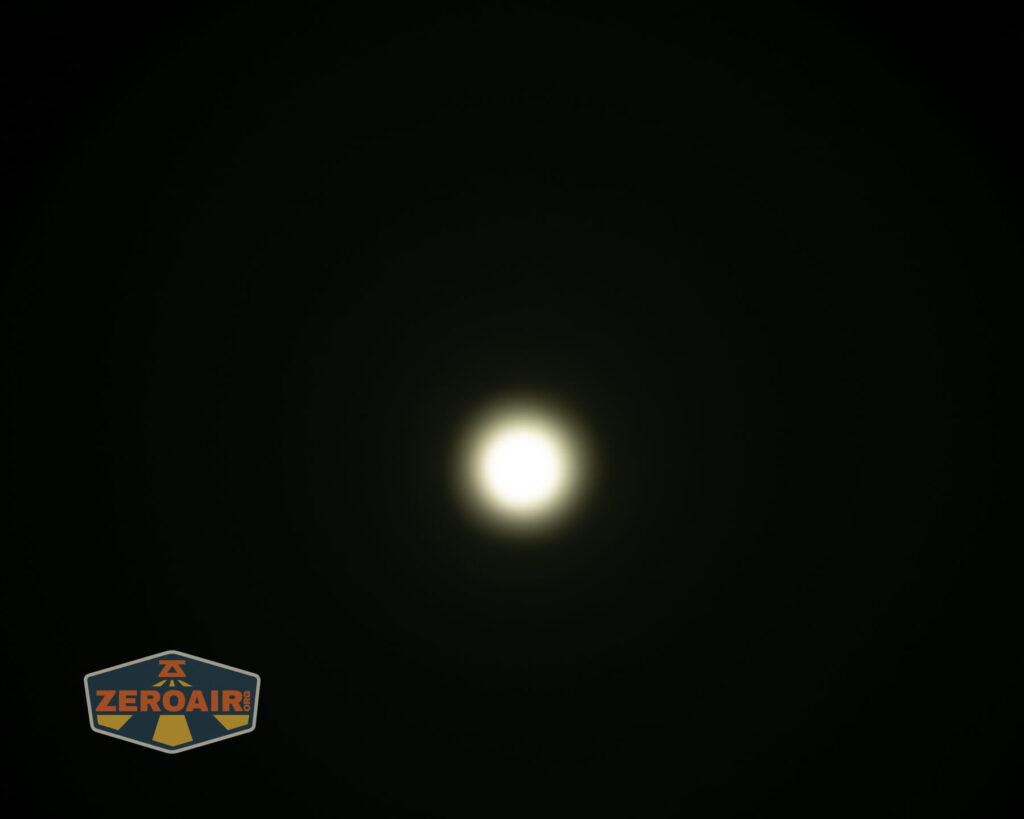
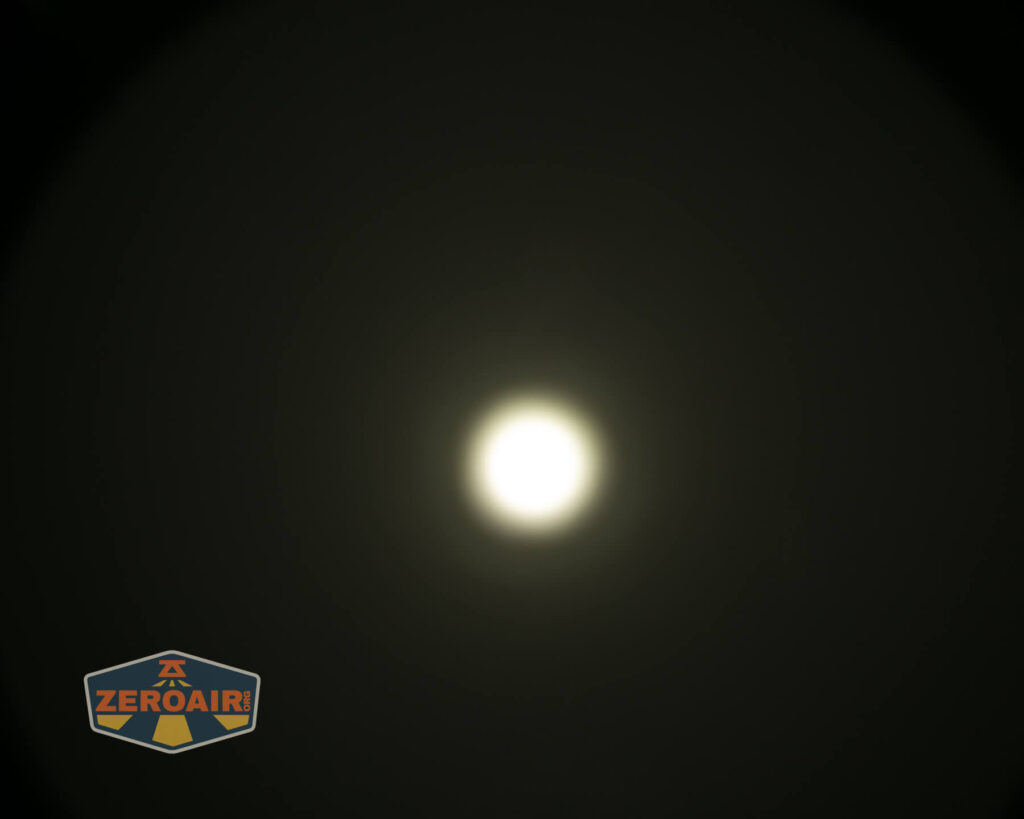
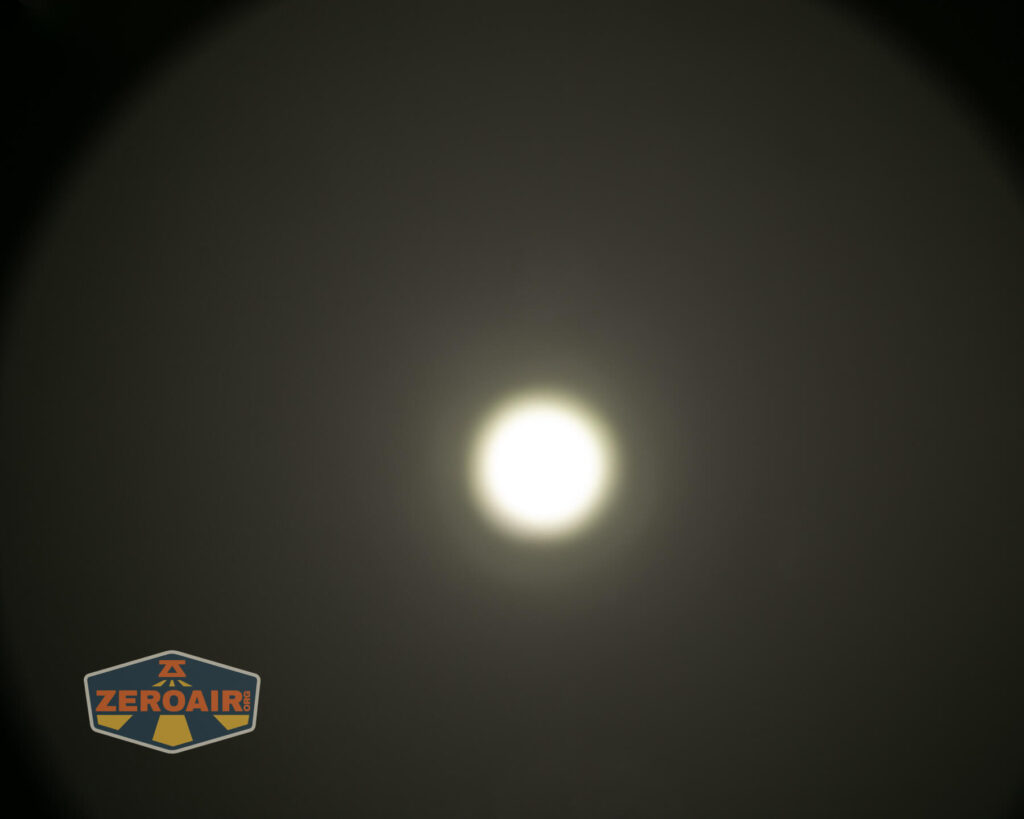
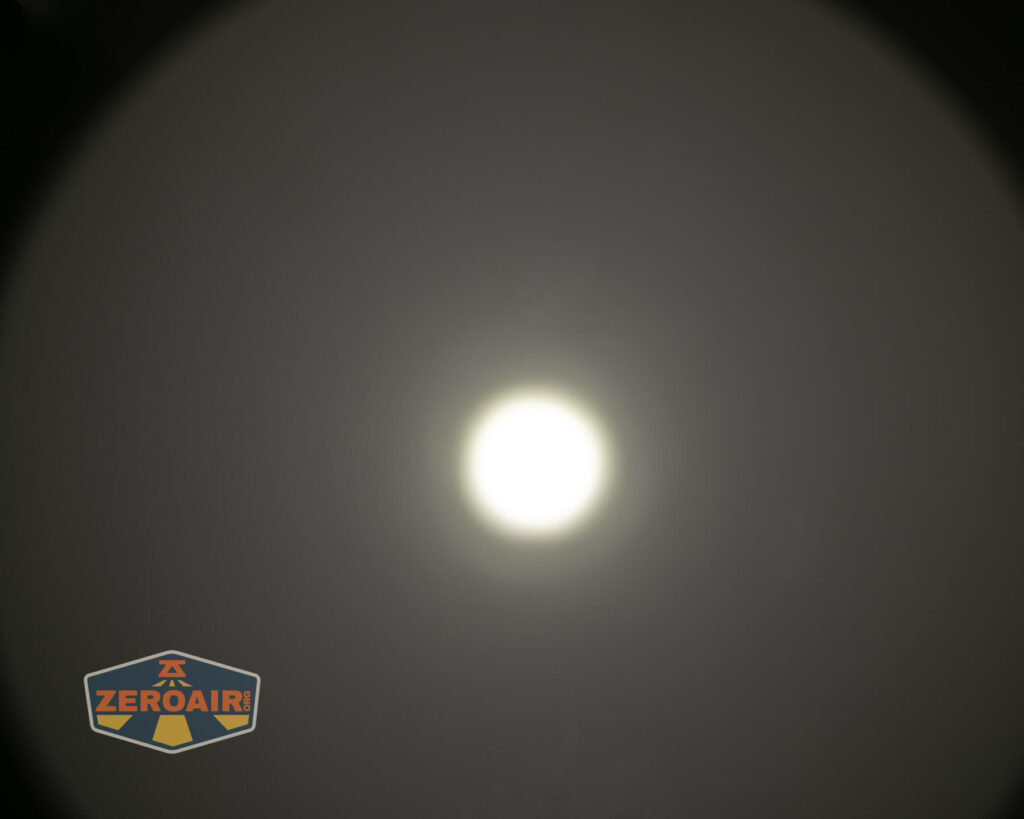
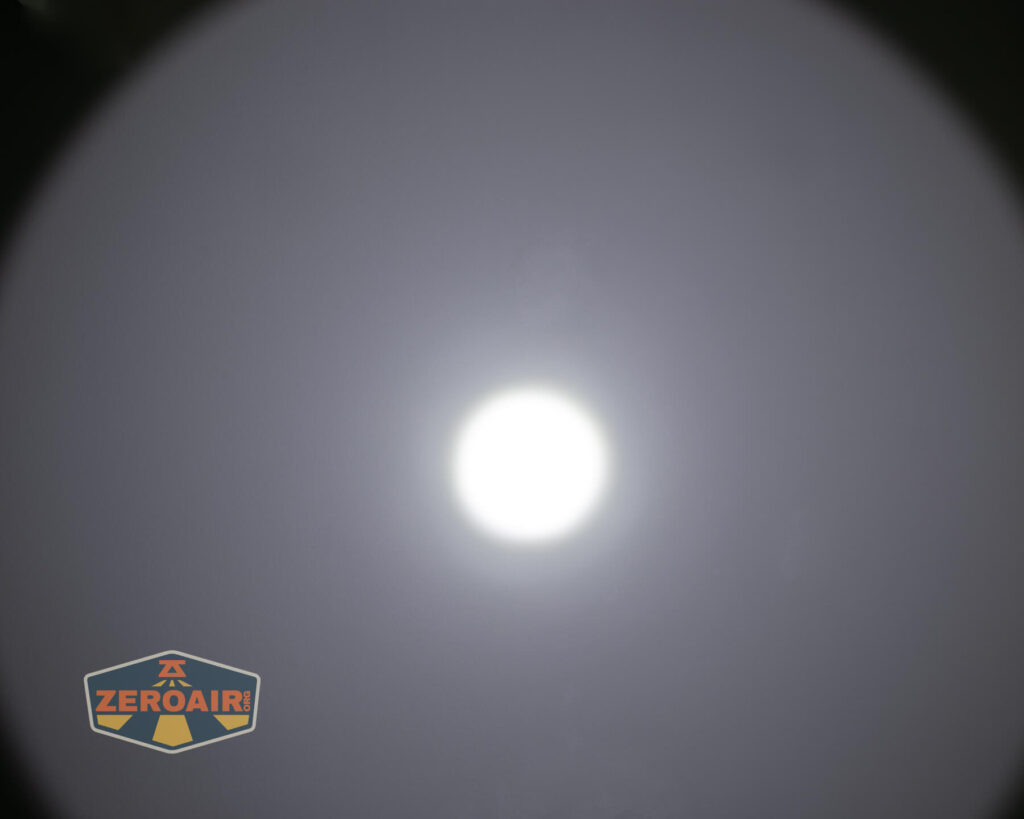
Tint vs BLF-348 (KillzoneFlashlights.com 219b version) (affiliate link)
I keep the test flashlight on the left and the BLF-348 reference flashlight on the right. These photos are taken around 18 inches from the door.


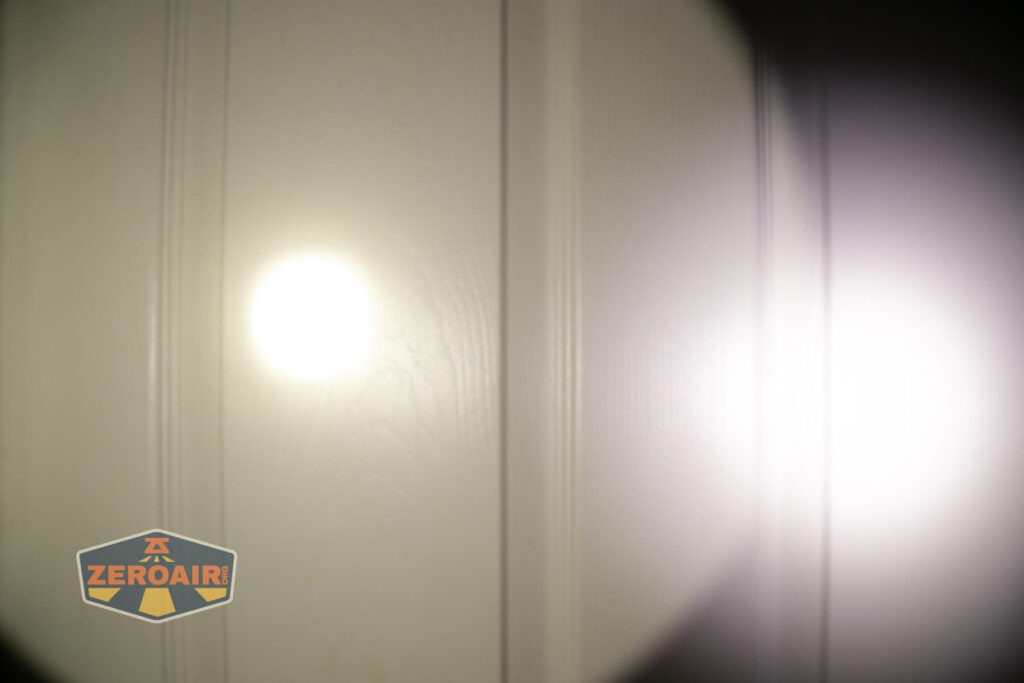
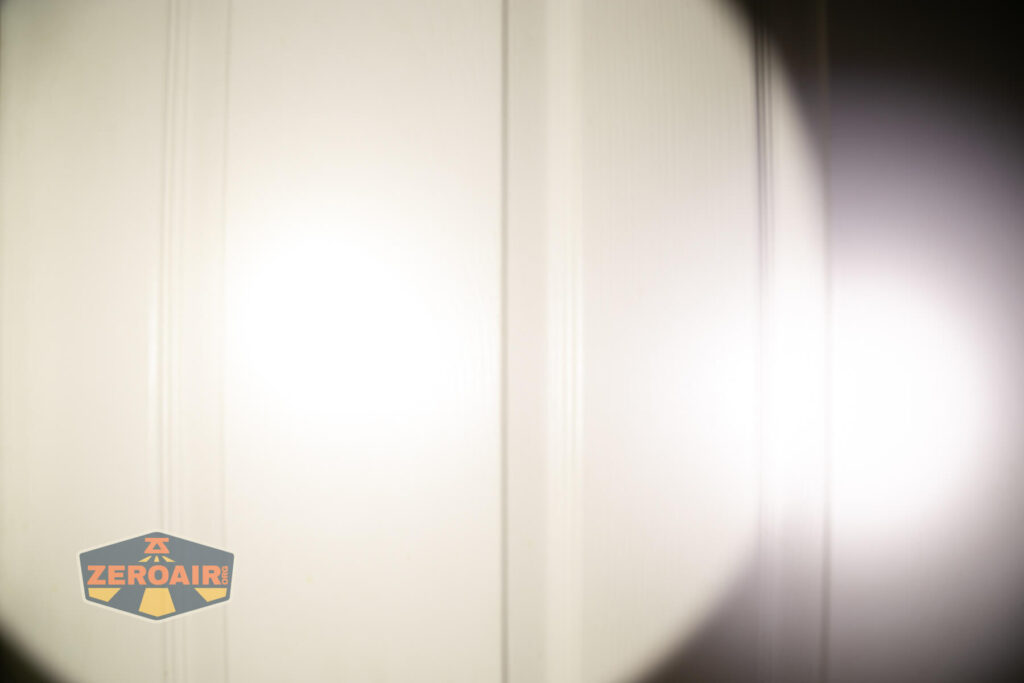



I compare everything to the KillzoneFlashlights.com 219b BLF-348 because it’s inexpensive and has the best tint!
Summary and Conclusion
I’m a huge fan of the Skilhunt EC500 Coyote neutral white flashlight. And not just the neutral white version but also the warm white version (data coming soon!). I appreciate the user interface improvements Skilhunt has made here (for example, cycling strobe modes). The light is a great thrower! Coyote looks great, build quality is great. It’s a great light!
The Big Table
| Skilhunt EC500 Coyote Neutral White Flashlight | |
|---|---|
| Emitter: | Luminus SFT-40 (Neutral White) |
| Price in USD at publication time: | $74.90 |
| Cell: | 1×21700 |
| Runtime Graphs | |
| LVP? | Yes |
| Switch Type: | E-Switch |
| Quiescent Current (mA): | ? |
| On-Board Charging? | Yes |
| Charge Port Type: | USB-C |
| Charge Graph | |
| Power off Charge Port | with cell: lowest 6 modes without cell and/or tailcap: lowest 5 modes |
| Claimed Lumens (lm) | 1780 |
| Measured Lumens (at 30s) | 1571 (88.3% of claim)^ |
| Candela per Lumen | 120.41 |
| Claimed Throw (m) | 843 |
| Candela (Calculated) in cd (at 30s) | 4940lux @ 6.092m = 183336cd |
| Throw (Calculated) (m) | 856.4 (101.6% of claim)^ |
| Claimed CCT | 5000 |
| Measured CCT Range (K) | 4700-6200 Kelvin |
| Item provided for review by: | Skilhunt |
| All my Skilhunt reviews! | |
^ Measurement disclaimer: Testing flashlights is my hobby. I use hobbyist-level equipment for testing, including some I made myself. Try not to get buried in the details of manufacturer specifications versus measurements recorded here; A certain amount of difference (say, 10 or 15%) is perfectly reasonable.
What I like
- Great build quality
- Excellent throw
- Multiple CCT options
- Same great user interface but with improvements
What I don’t like
- Cell adds $15 to the cost
- Low CRI
Notes
- This content originally appeared at zeroair.org. Please visit there for the best experience!
- Please use my Amazon.com referral link to help support zeroair.org!
- Please support me on Patreon! I deeply appreciate your support!
Hey, thank you for this review, I was just wondering…where did you get the info that this light acts as a powerbank? I couldn’t find any mention of that in other reviews or on the manufacurer site. I hope you can shed light on that. Cheers!
That’s a great question and I don’t know the answer. I saw it on a forum, possibly. But I did test it just now and I added a couple of graphs demonstrating the powerbank capability.