
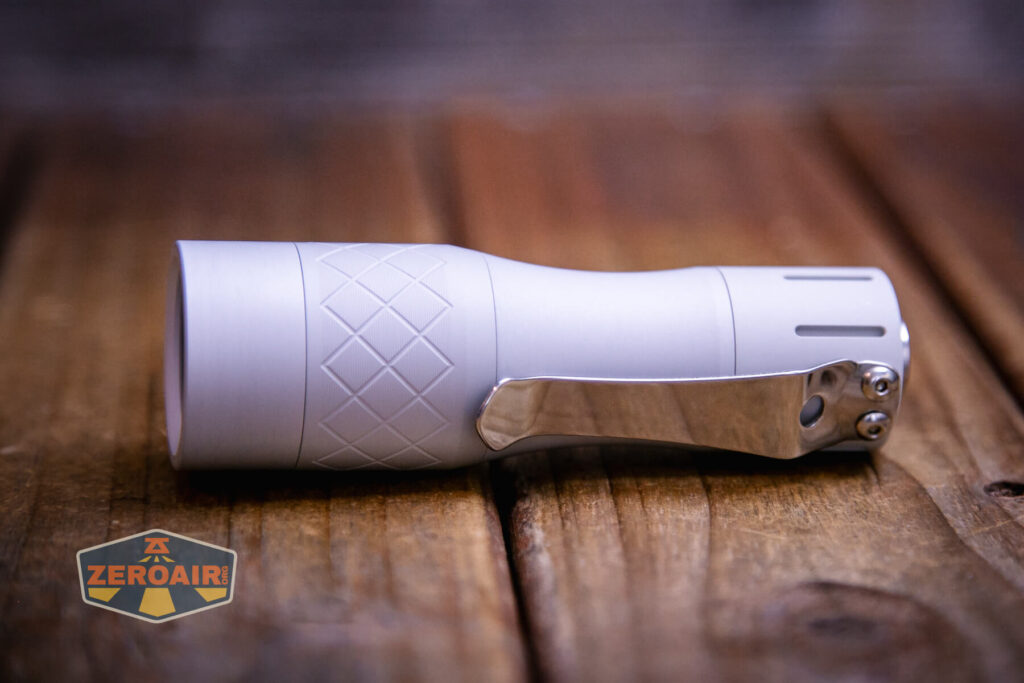
NLightD L3 LEP Flashlight Review
The NLightD L3 LEP flashlight features two steady modes and can run 18350 (included) or 18650. Throw is incredible and the user interface is simple! Read on!
Official Specs and Features
Here’s a referral link to the NLightD L3 LEP flashlight product page.
Versions
There’s just one version of the NLightD L3 LEP flashlight but it’s available in flavors – you can get black, green, or white (seen here). Each has two cell tubes too – 18650, and 18350 (tested here).
Price
The price ranges from $230 to $240, with this MAO white being the more costly option. All the packages come with one 18350 cell and include both cell tubes, too.
What’s Included
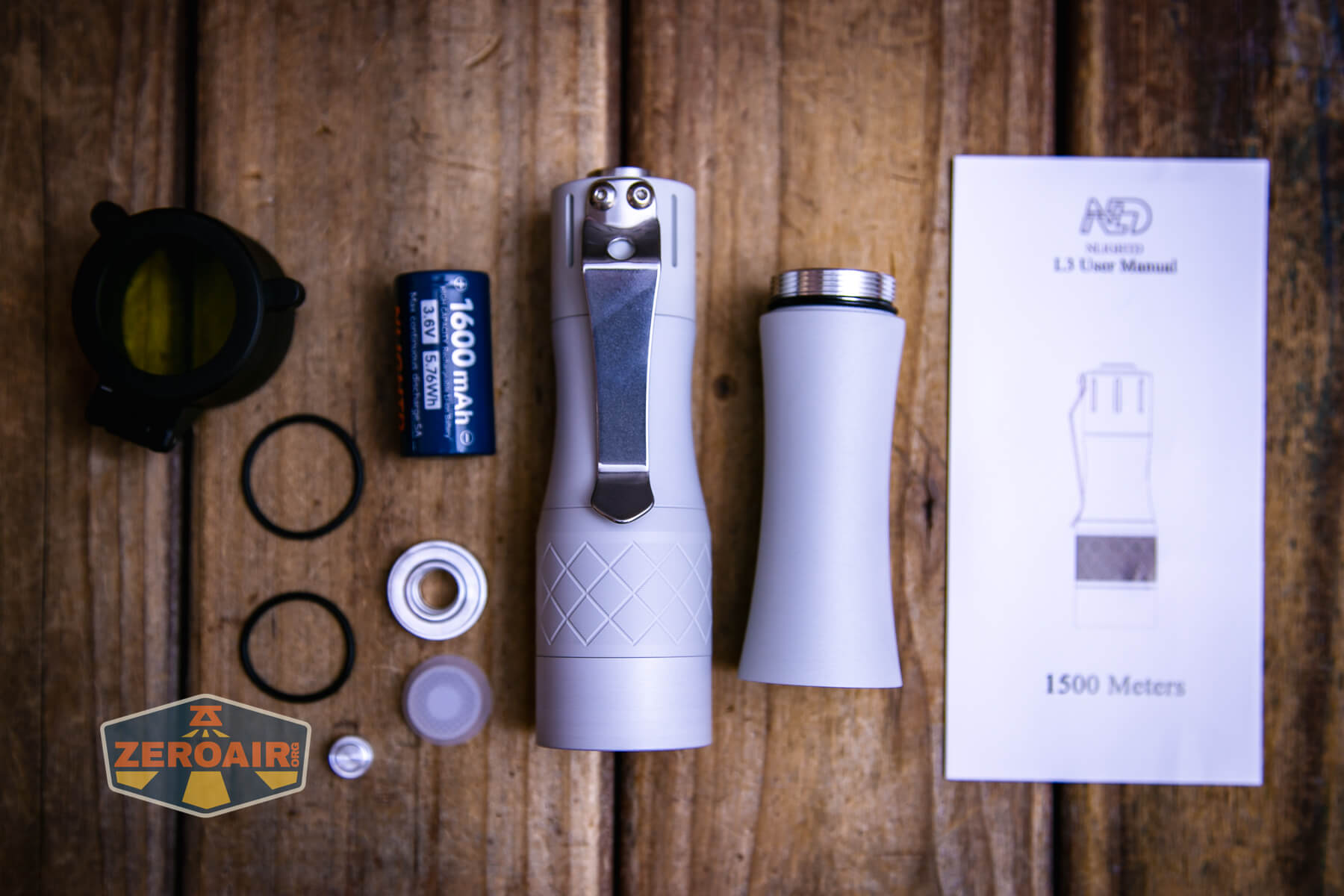
- NLightD L3 LEP flashlight
- Both 18650 and 18350 (installed) cell tubes
- 1600mAh NLightD 18350
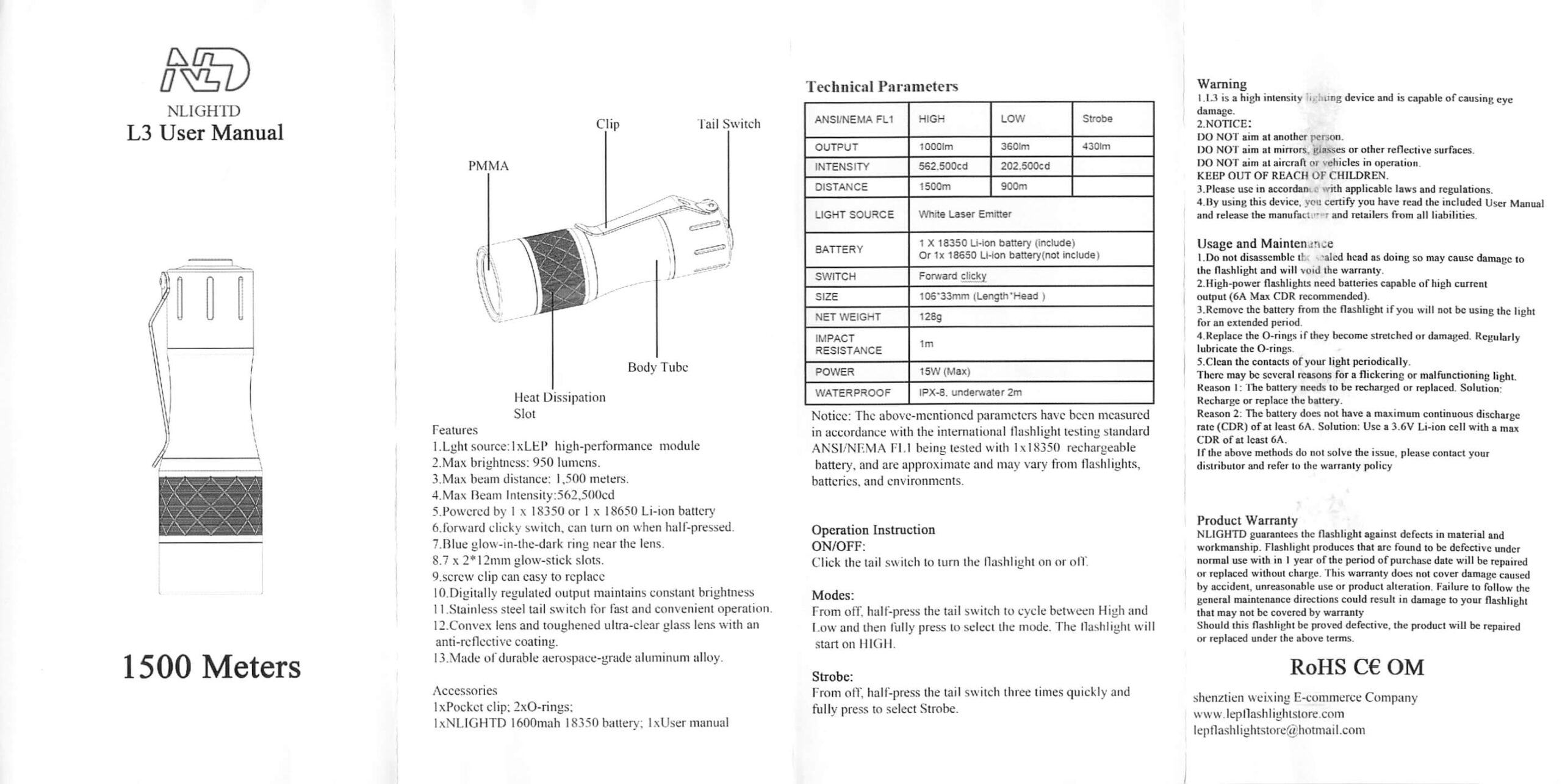
- Manual
- Attachment with yellow filter
- Spare o-rings (2)
- Replacement parts to switch from metal to rubber switch
Package and Manual
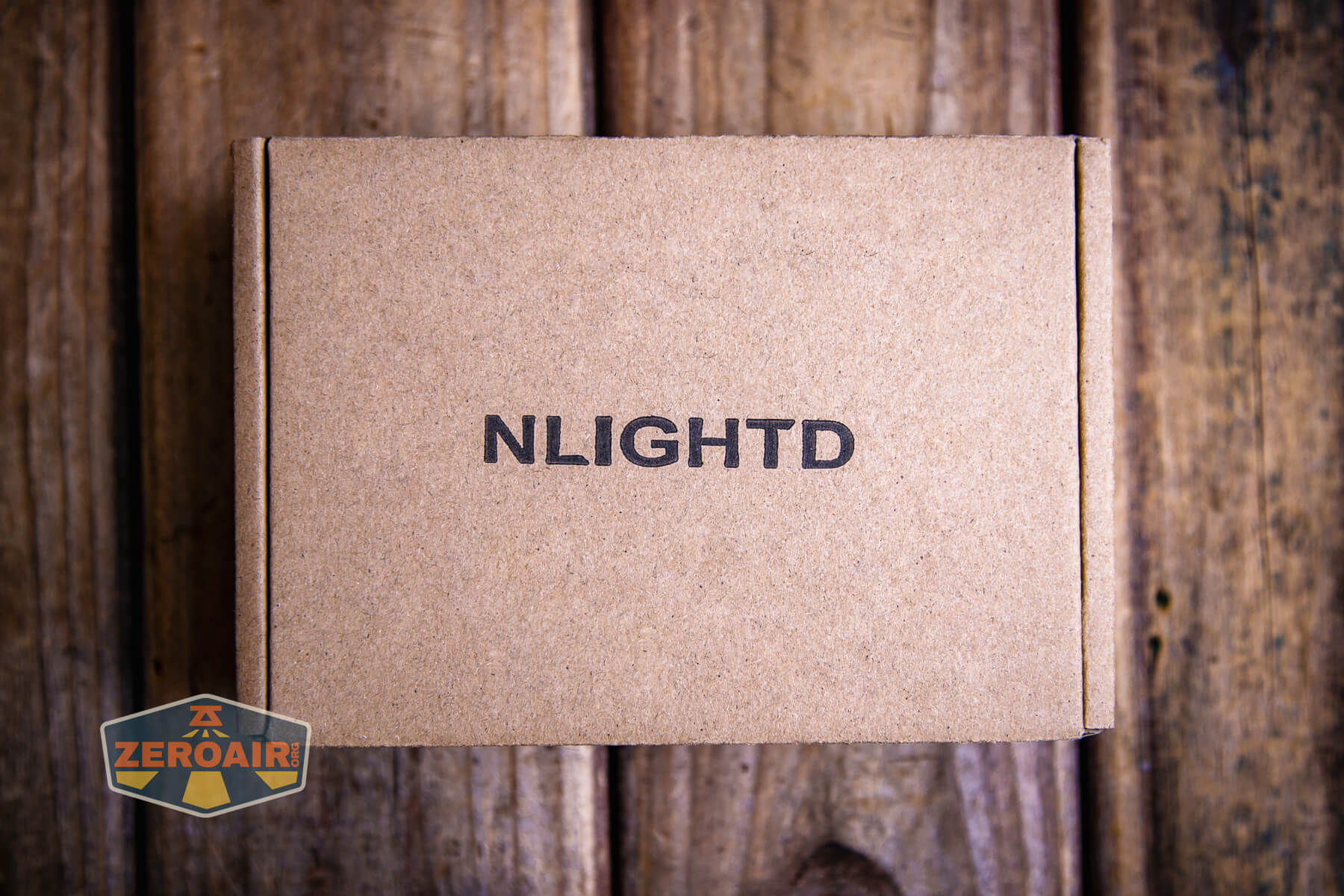
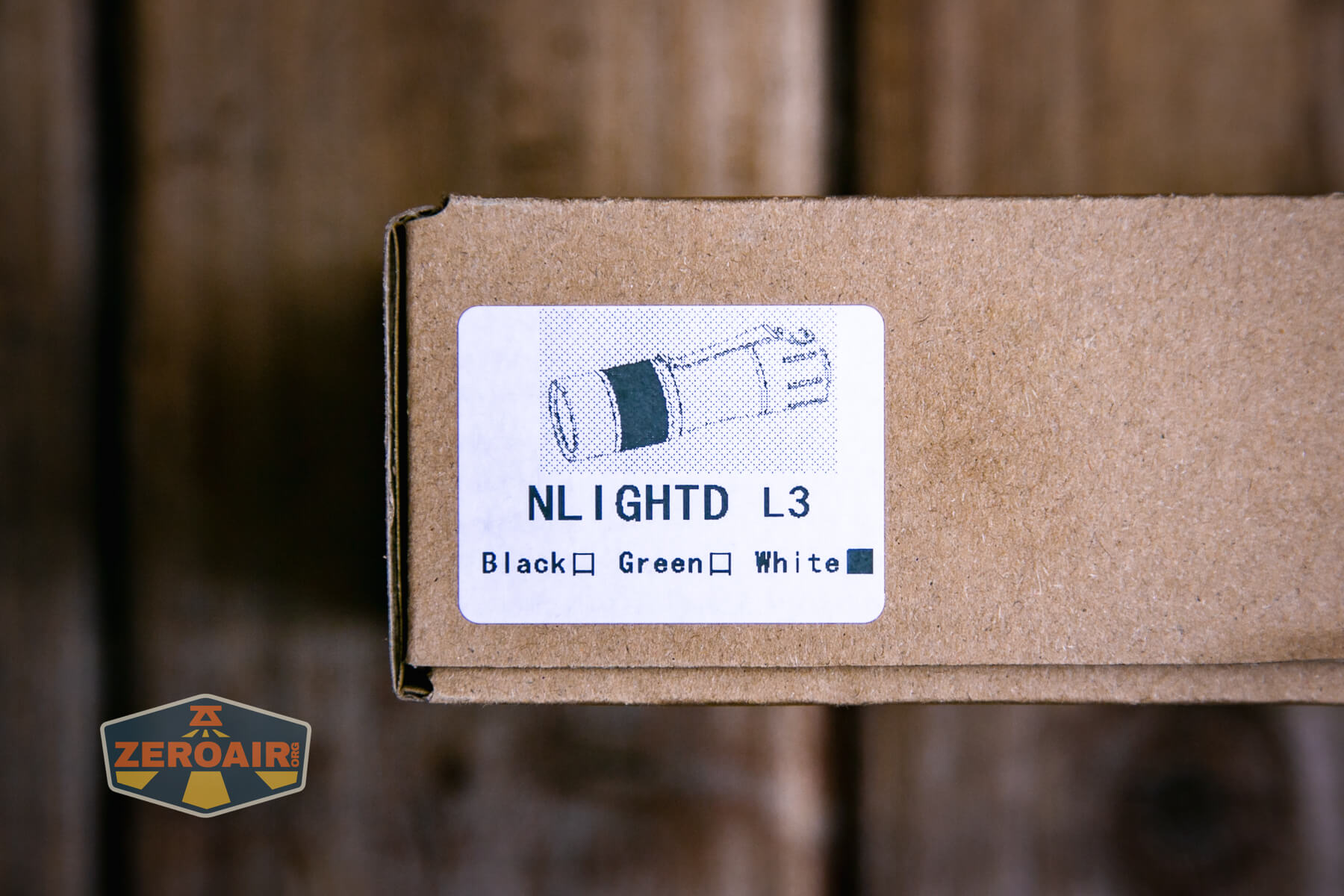
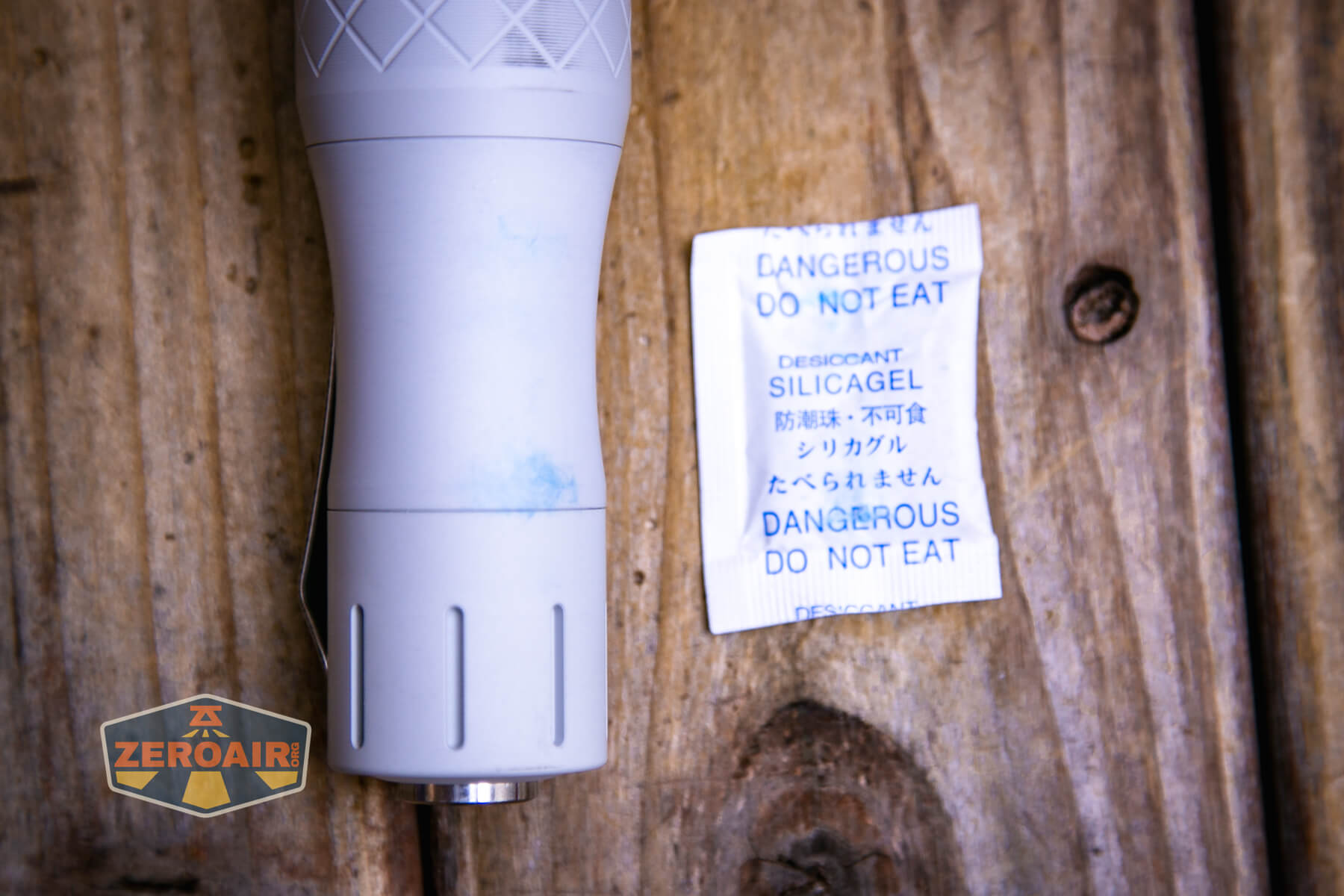
I’ll probably mention this again because it really irks me, but the DANGEROUS DO NOT EAT SILICA GEL desiccant that’s included is placed on the light (or maybe I just got unlucky…) On the other two body colors, it will probably not matter, but on this sensitive MAO white, the blue lettering rubs off onto the body and seems quite permanent. If this is important to you (as it is to me), ask Neal in a message before ordering to check. Alternatively, just buy black (it’s cheaper anyway.)
Build Quality and Disassembly
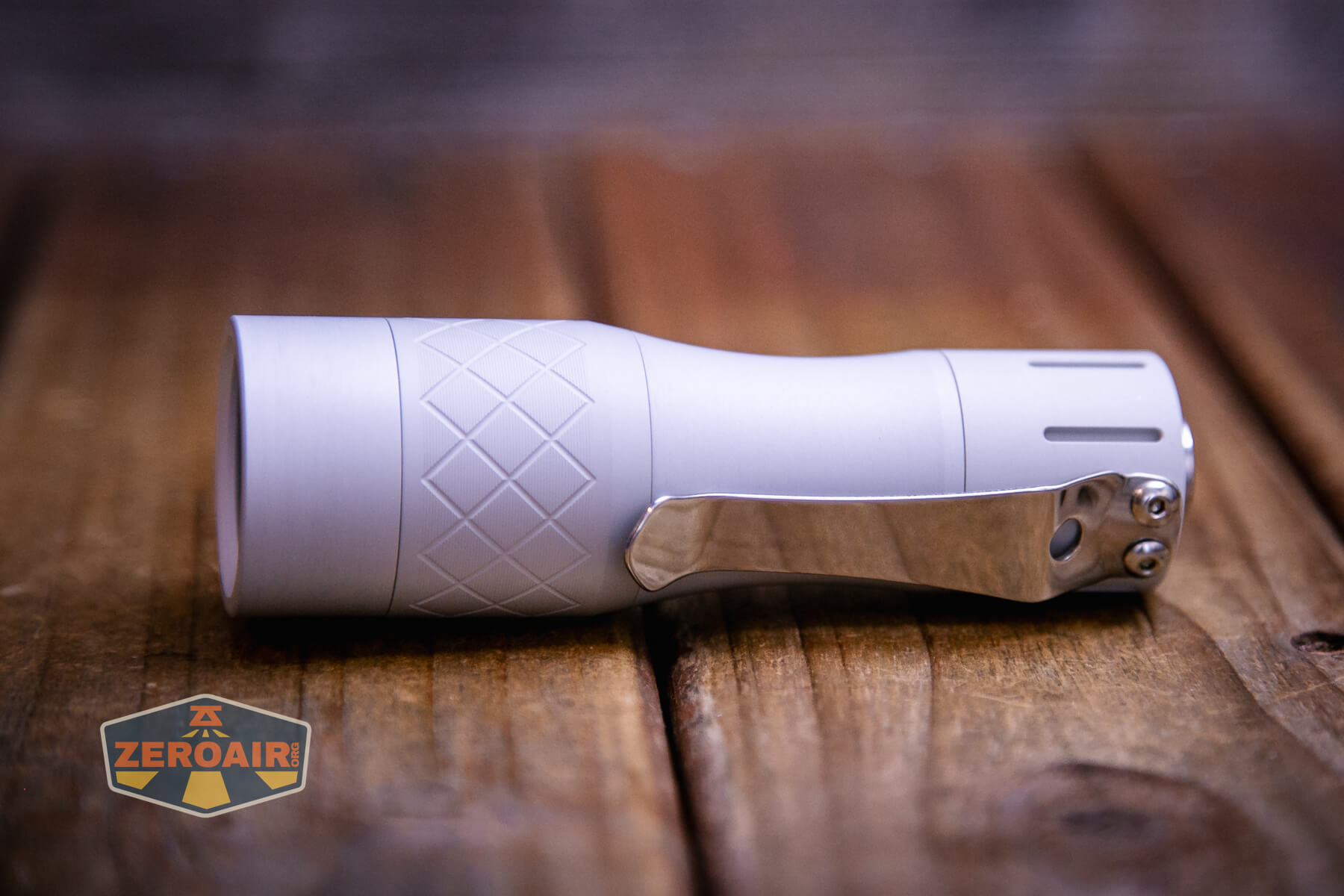
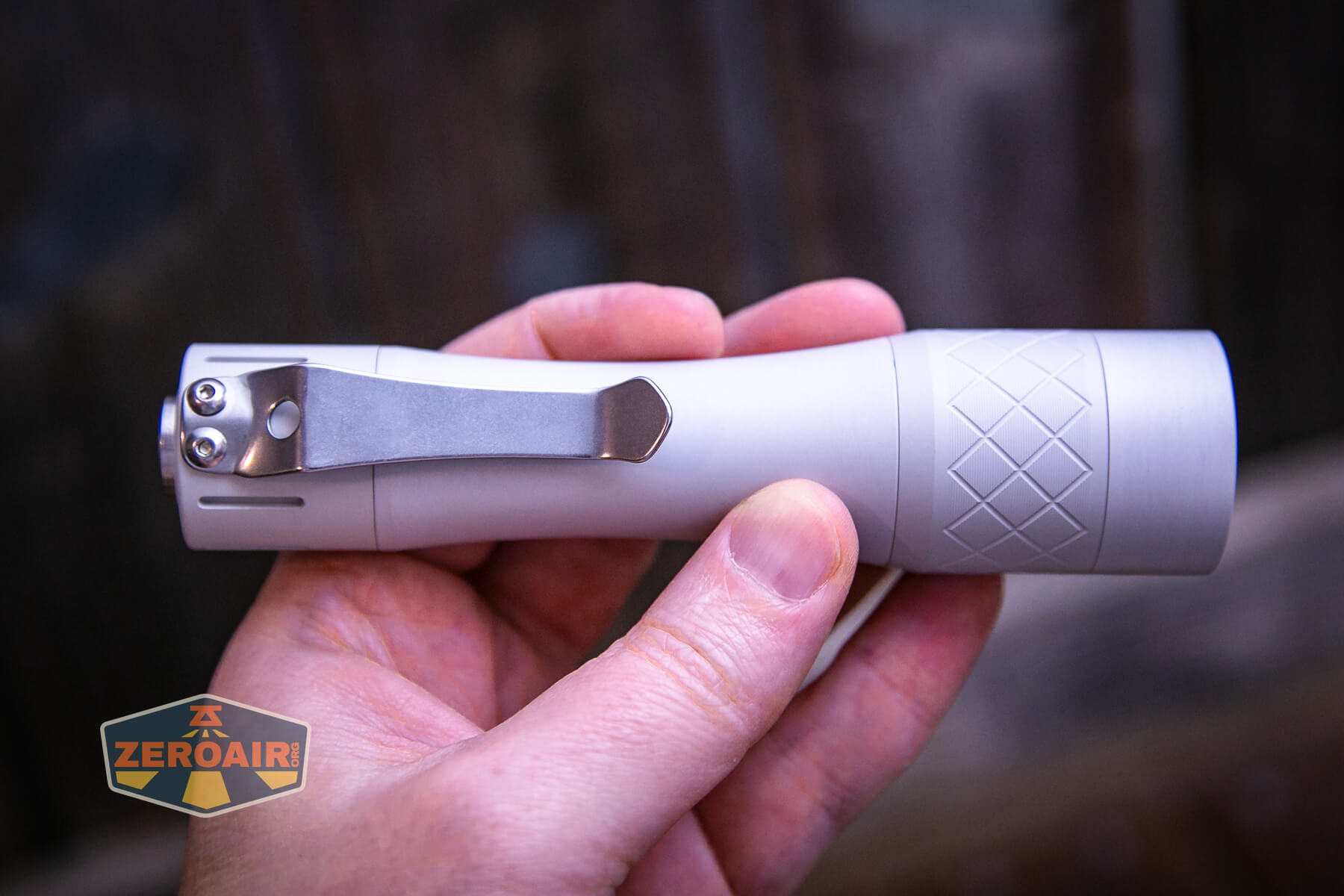
The NLightD L3 LEP flashlight offers a design I love – it’s flashlighty. With the wider head tapering to a thinner body and smaller tail, this is just about right for a flashlight.
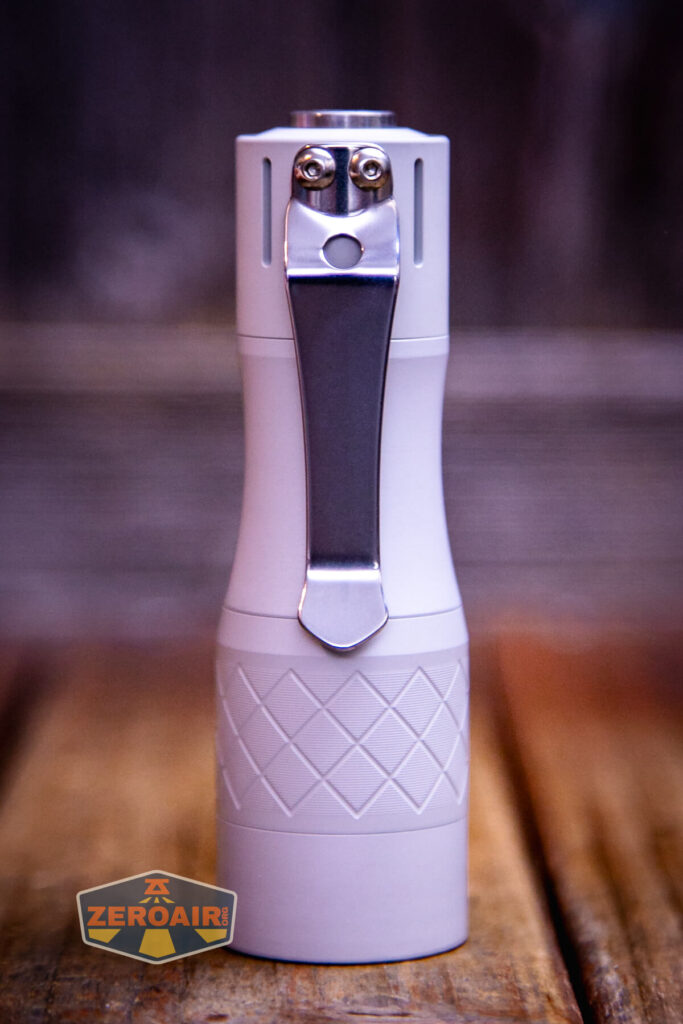
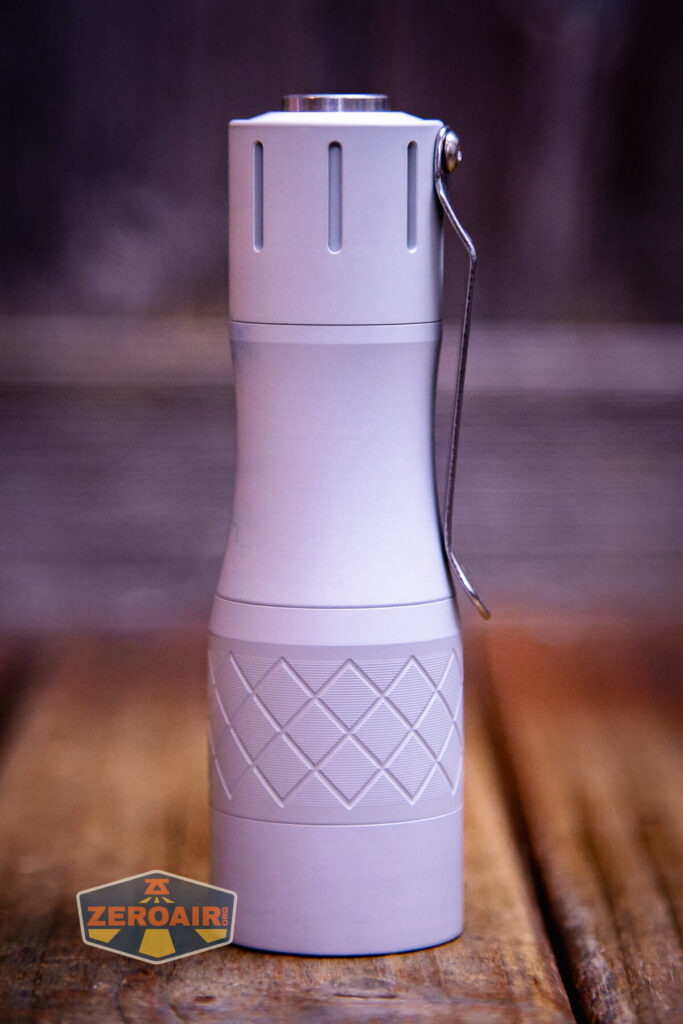
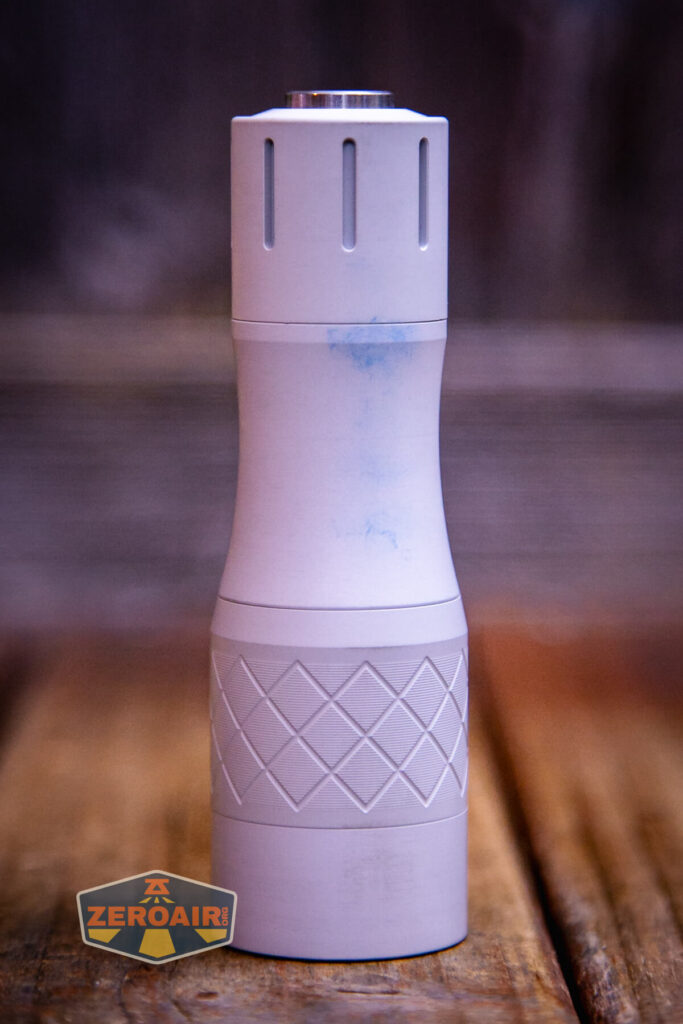
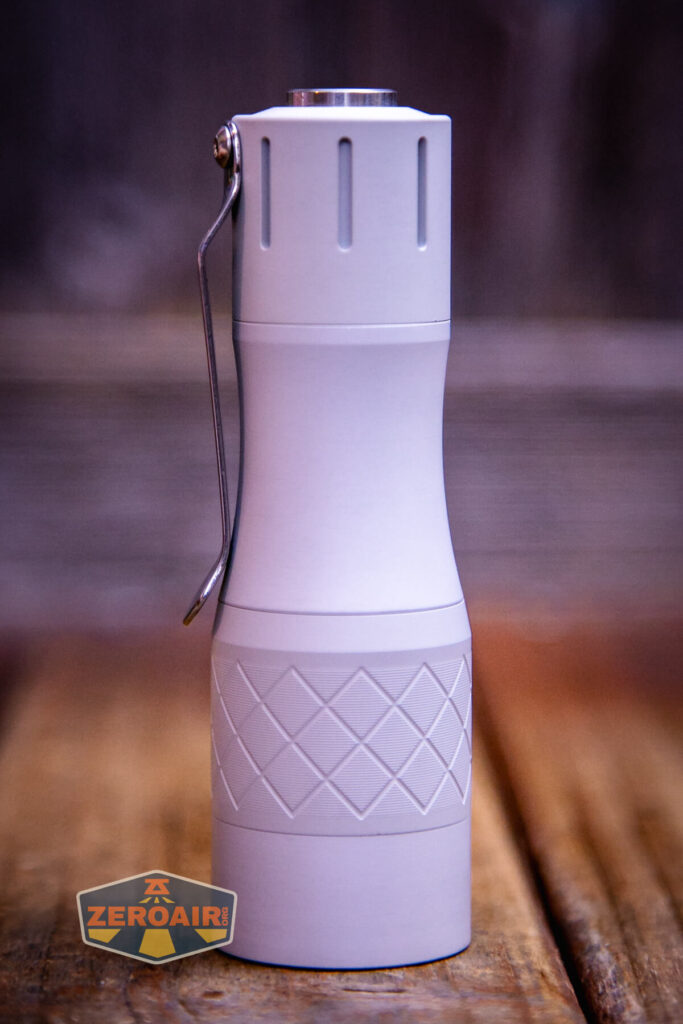
Aside from design, the build quality is good, too. The head is nice and heavy – there’s a lot of material to soak up the heat generated by this LEP module when on High (and Low too, according to the runtime test.)
Both the head and tail have nice-looking brass parts. Only the tail has a spring, though.
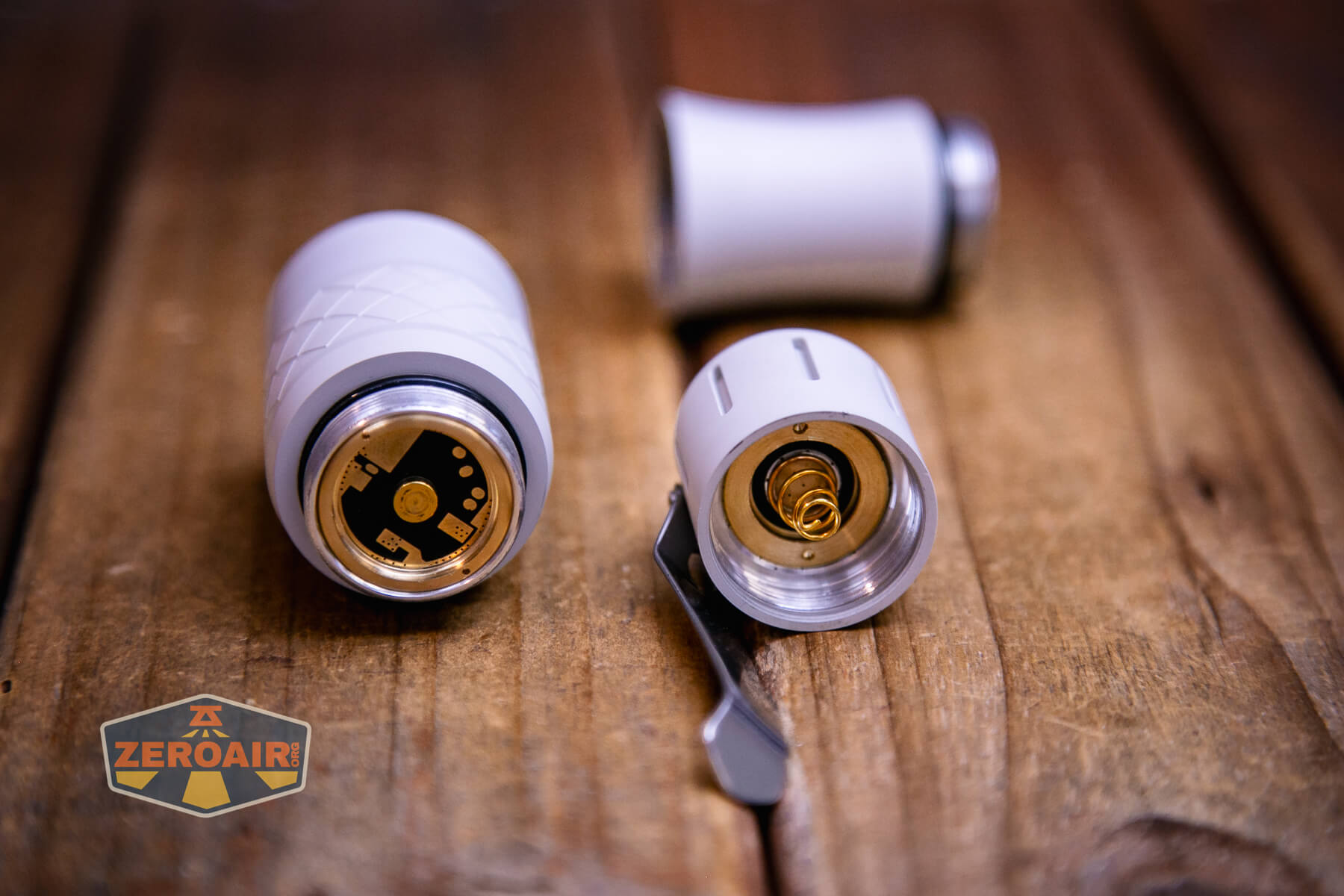
The cell tubes are cell-specific. There’s one for the 18350 and one for the 18650.
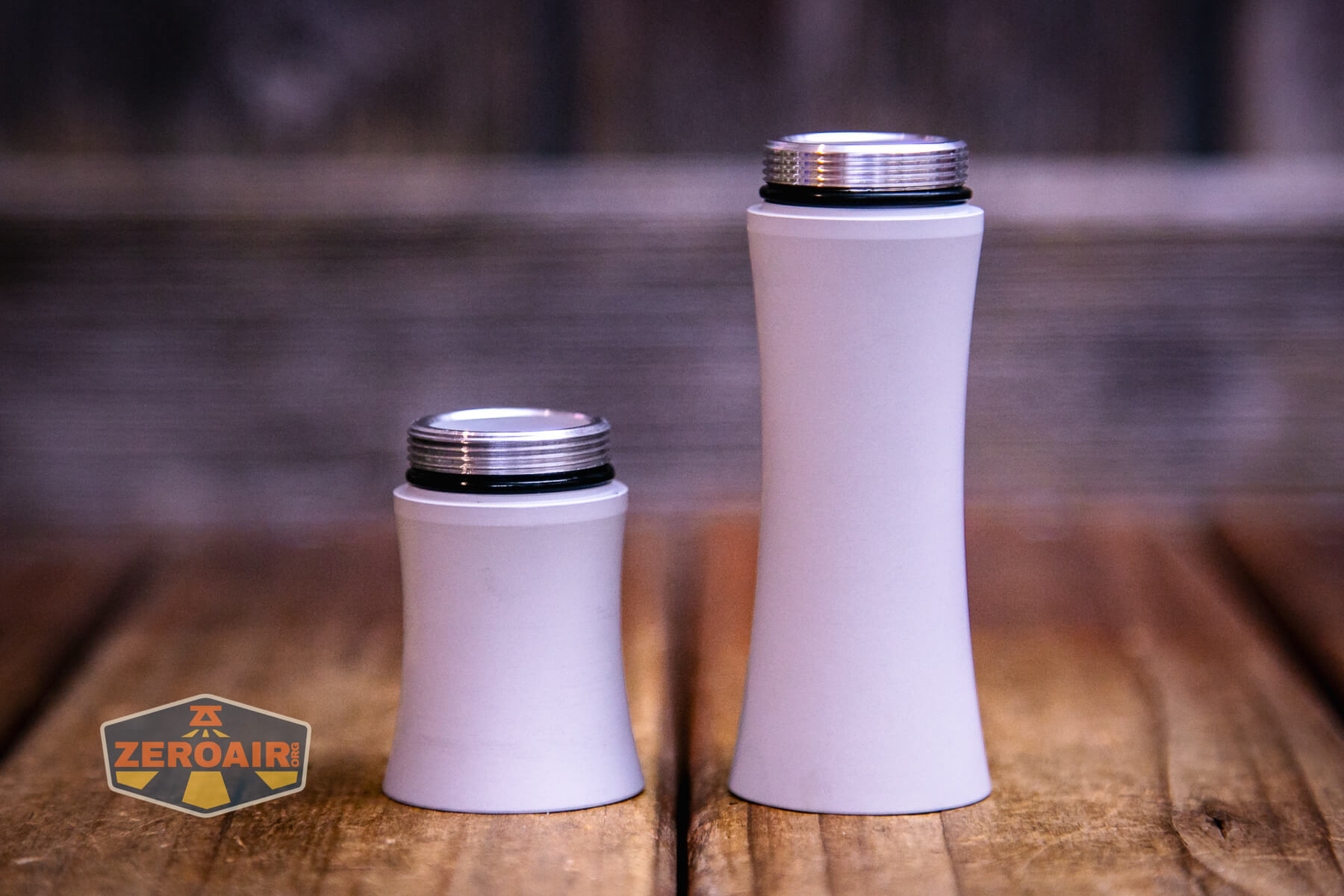
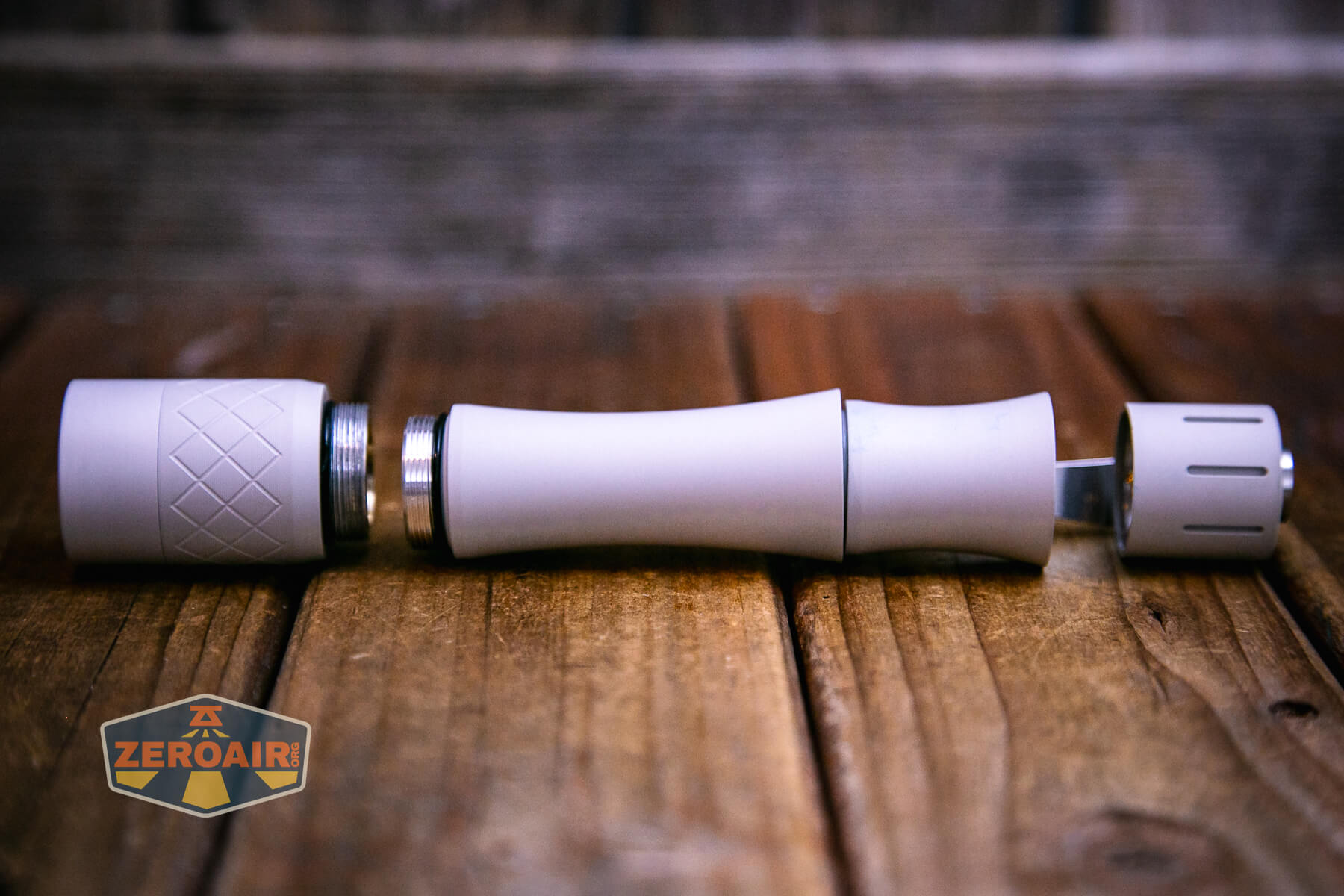
There’s no way to use them as extensions, so no running your favorite 181000 (35+65…) cell (jk there’s no such thing). Obviously the tapers don’t line up whatsoever to have both bodies on at one time.
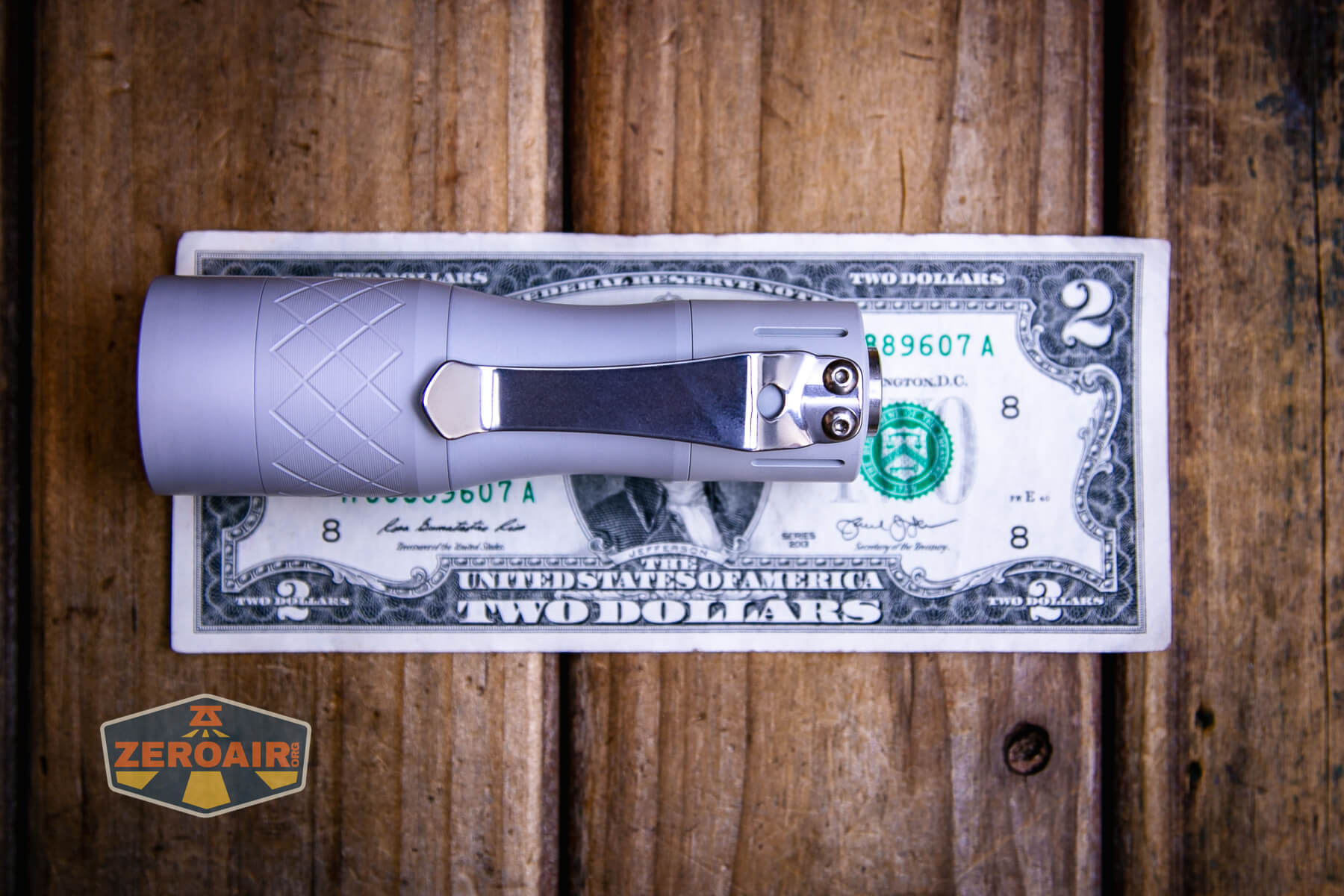
Size and Comps
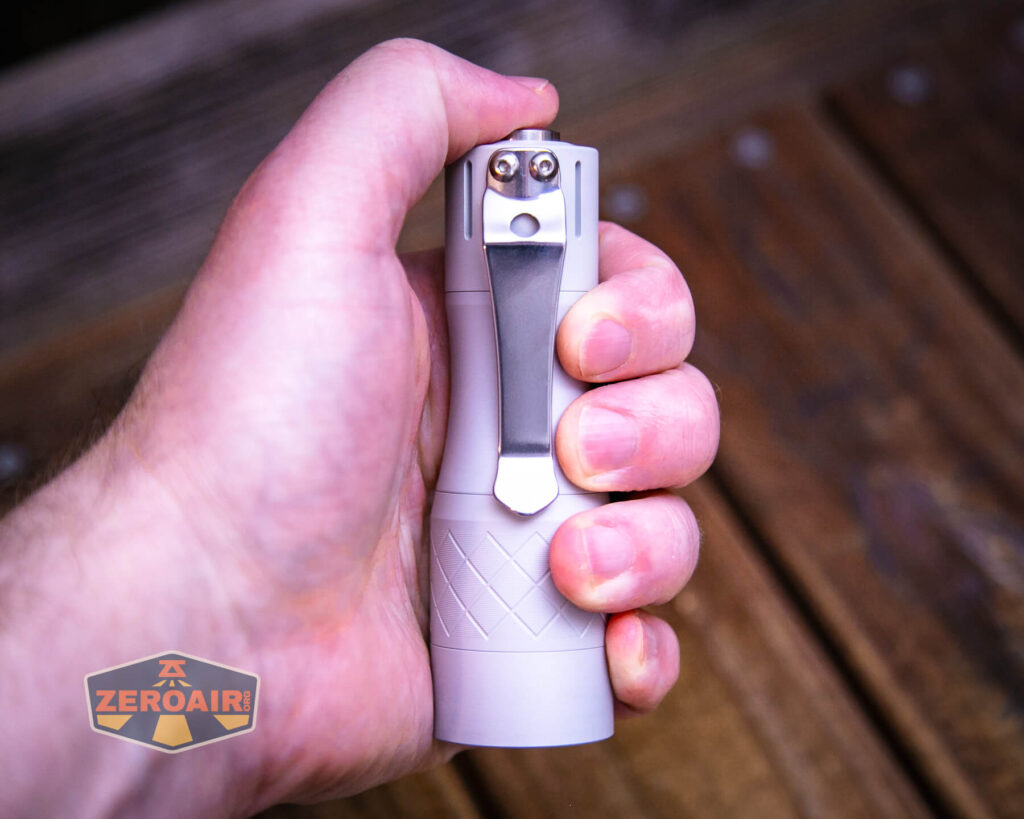
SIZE 106 x 33mm (Length x Head )
NET WEIGHT 128g
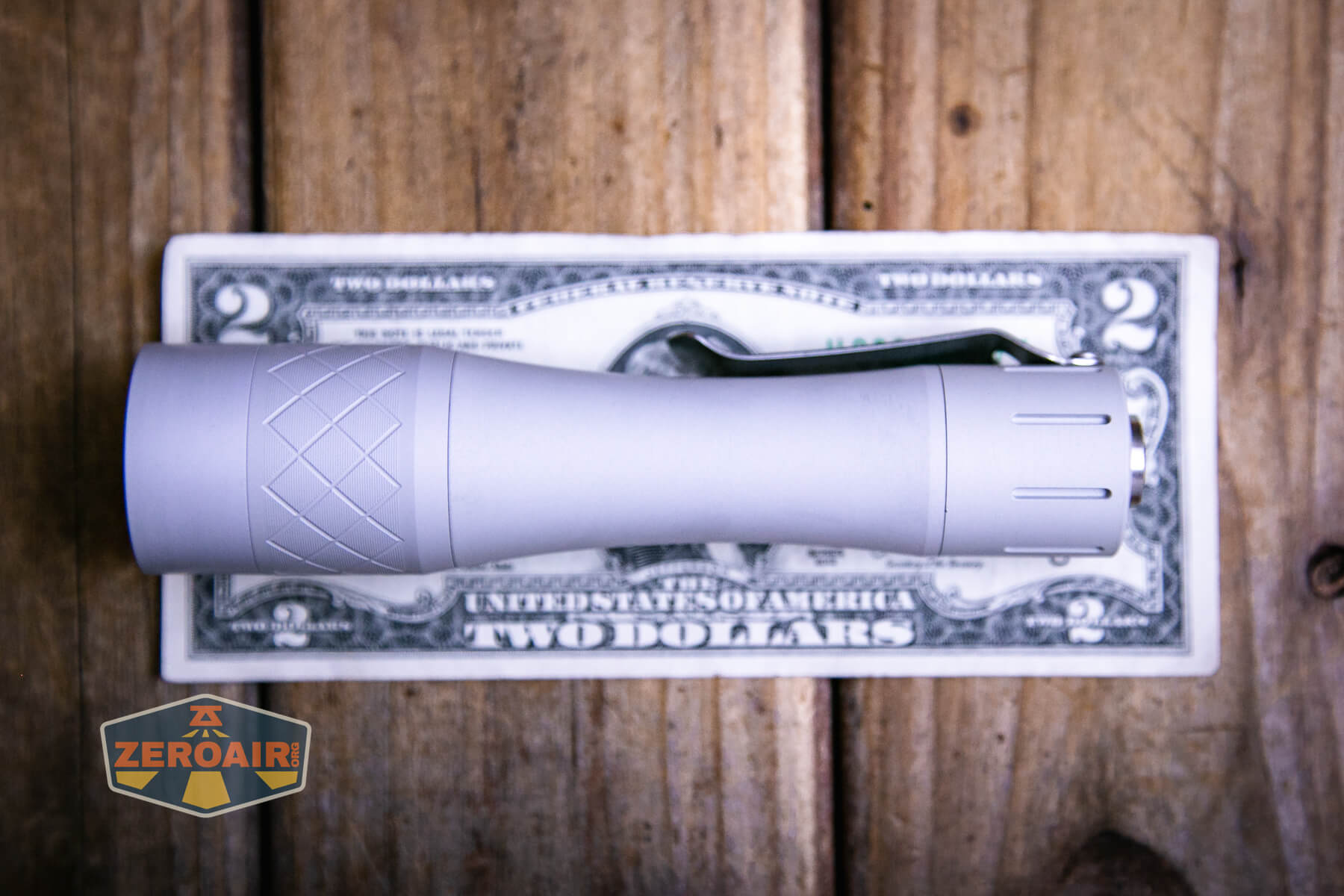
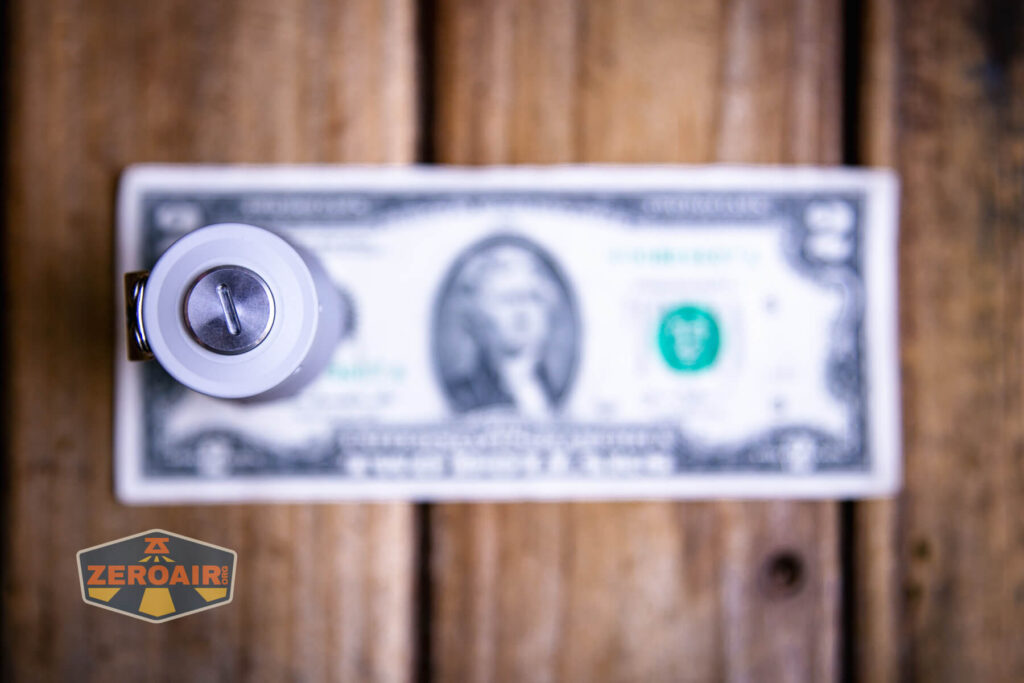
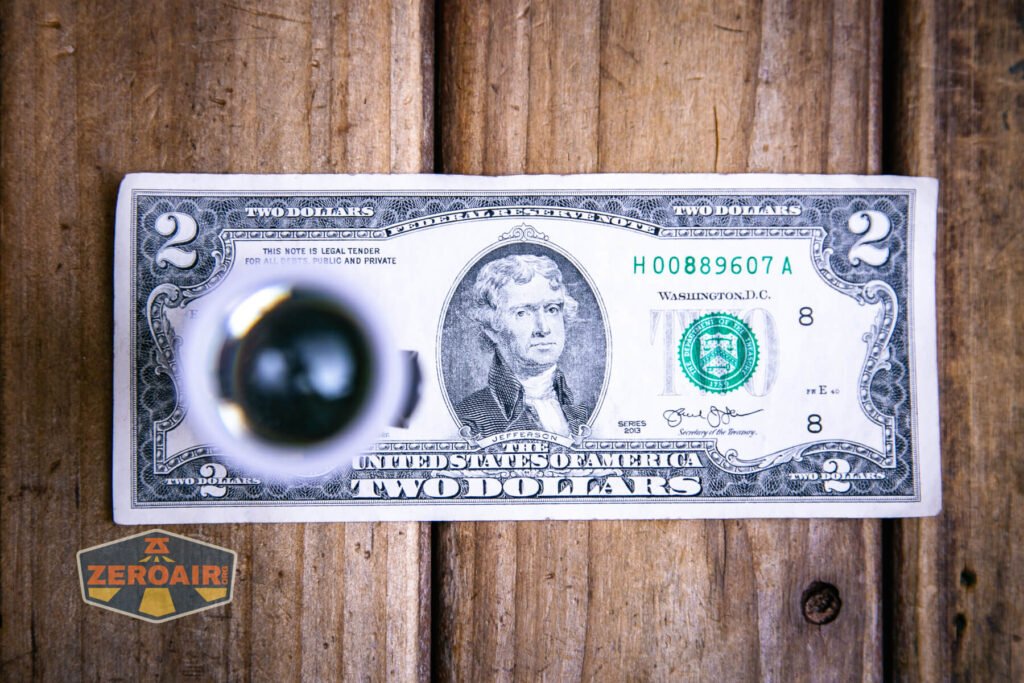
If the flashlight will headstand, I’ll show it here. If the flashlight will tailstand, I’ll also show that here too!
Here’s the test light with the venerable Convoy S2+. The version below is a custom laser-engraved Convoy S2+ host by GadgetConnections.com. I did a full post on an engraved orange host right here! Or go straight to GadgetConnections.com to buy your Convoy S2+ now!
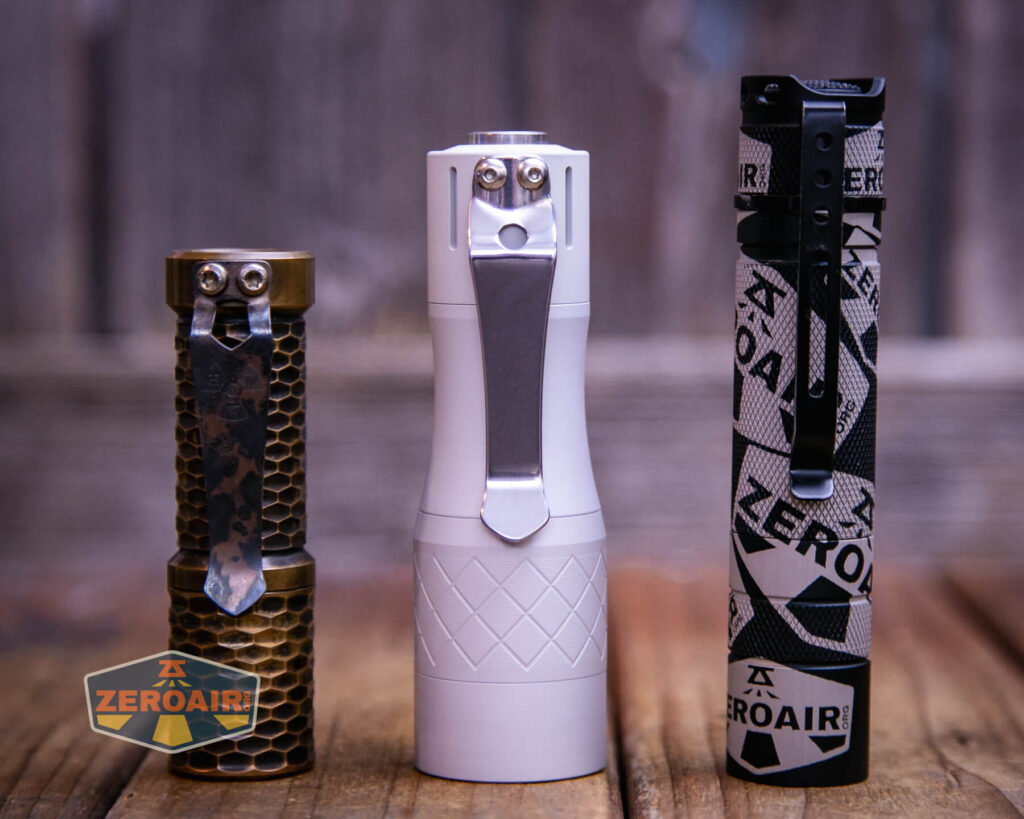
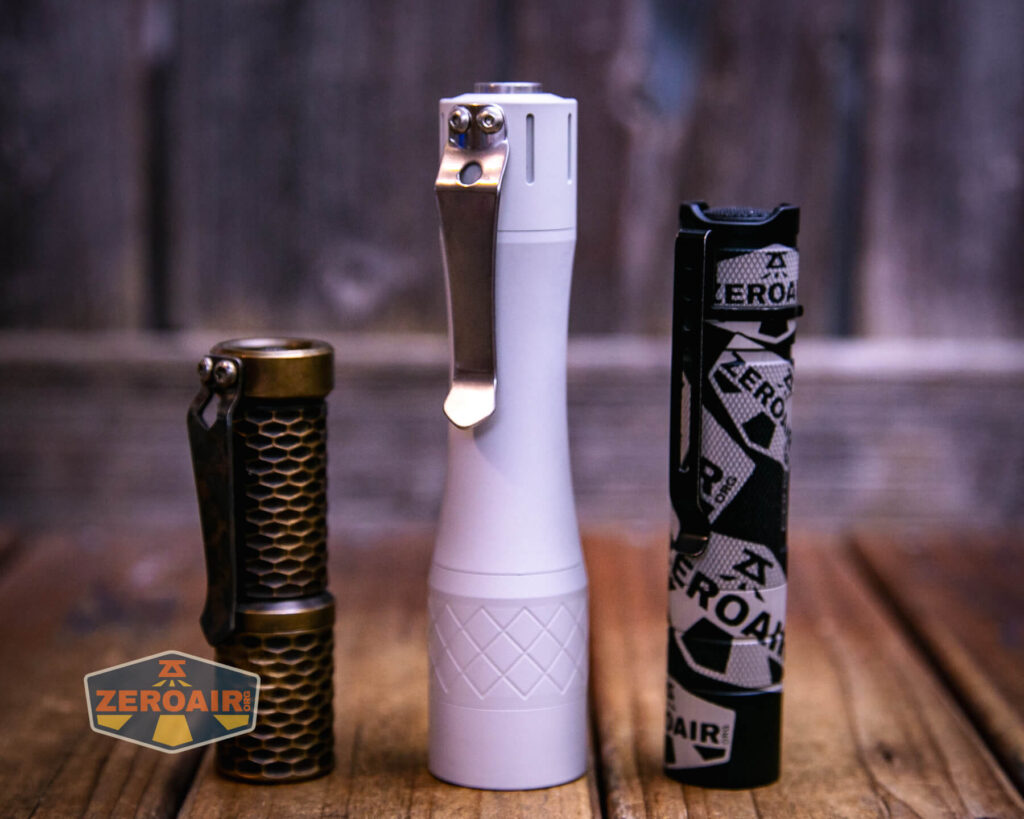
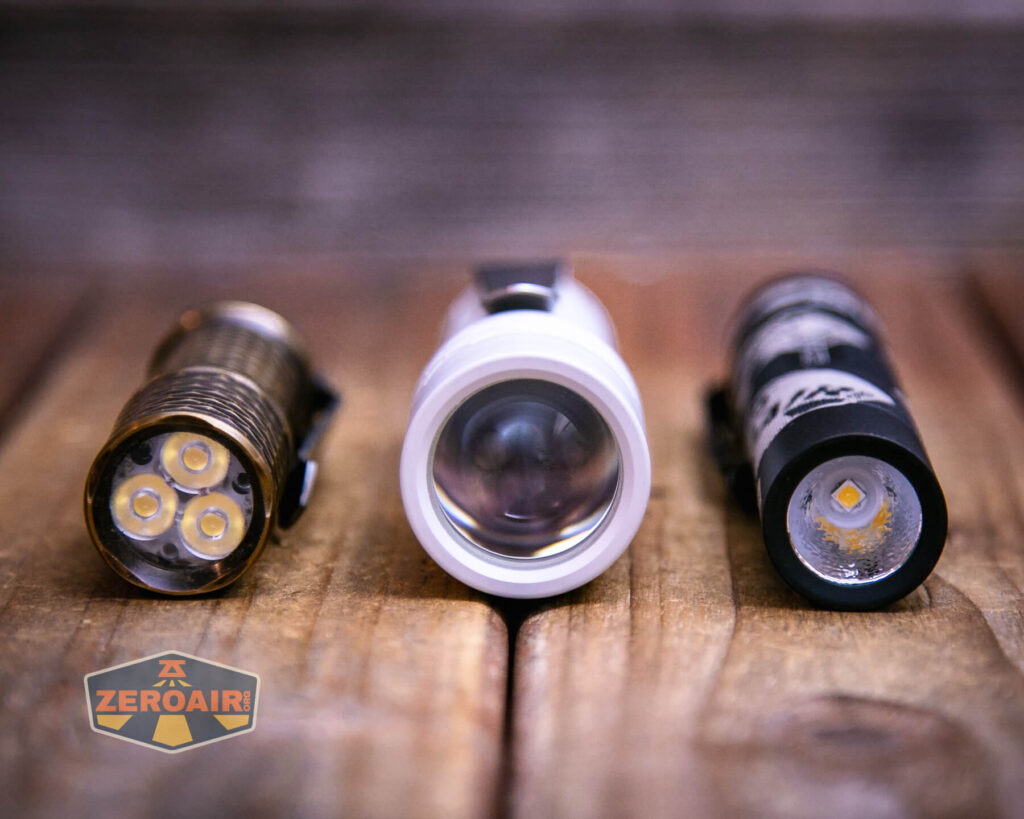
In the photo above, you may note that the SRM (standard reference material) flashlight for comparison has changed! I used a TorchLAB BOSS 35 for ages. Now, what you can see as the 18350 SRM is the Hanko Machine Works Trident. While I have not reviewed or tested the Gunner Grip version seen here, I have tested a Hanko Machine Works Trident Total Tesseract in brass. I love the Trident, and it’s a striking contrast next to the inexpensive Convoy S2+, which also makes a great standard reference material.
Retention and Carry
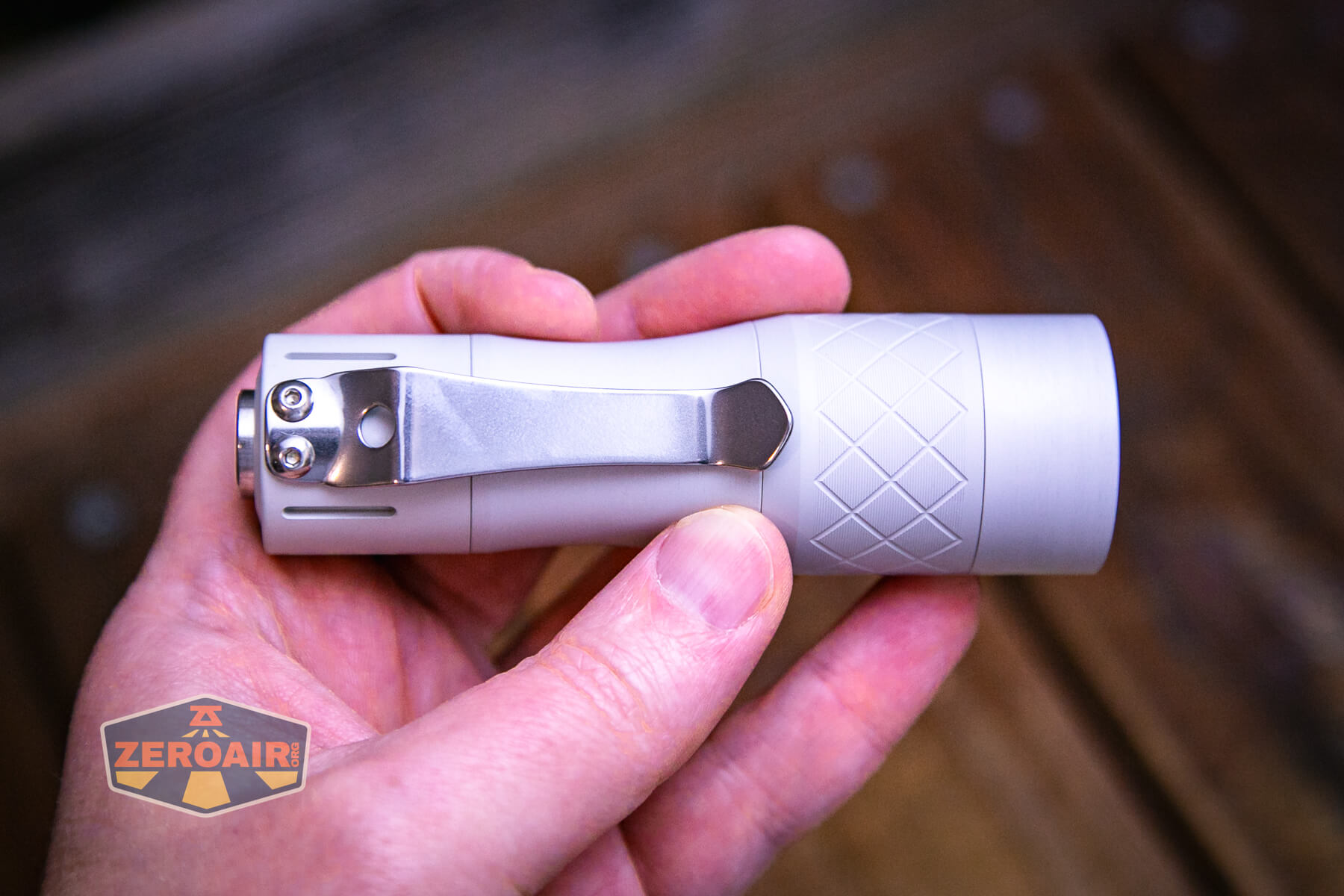
The NLightD L3 LEP flashlight features a two-screw pocket clip. It’s a nice clip, especially on the 18350 body. In fact, I would say it’s made for the 18350 body.
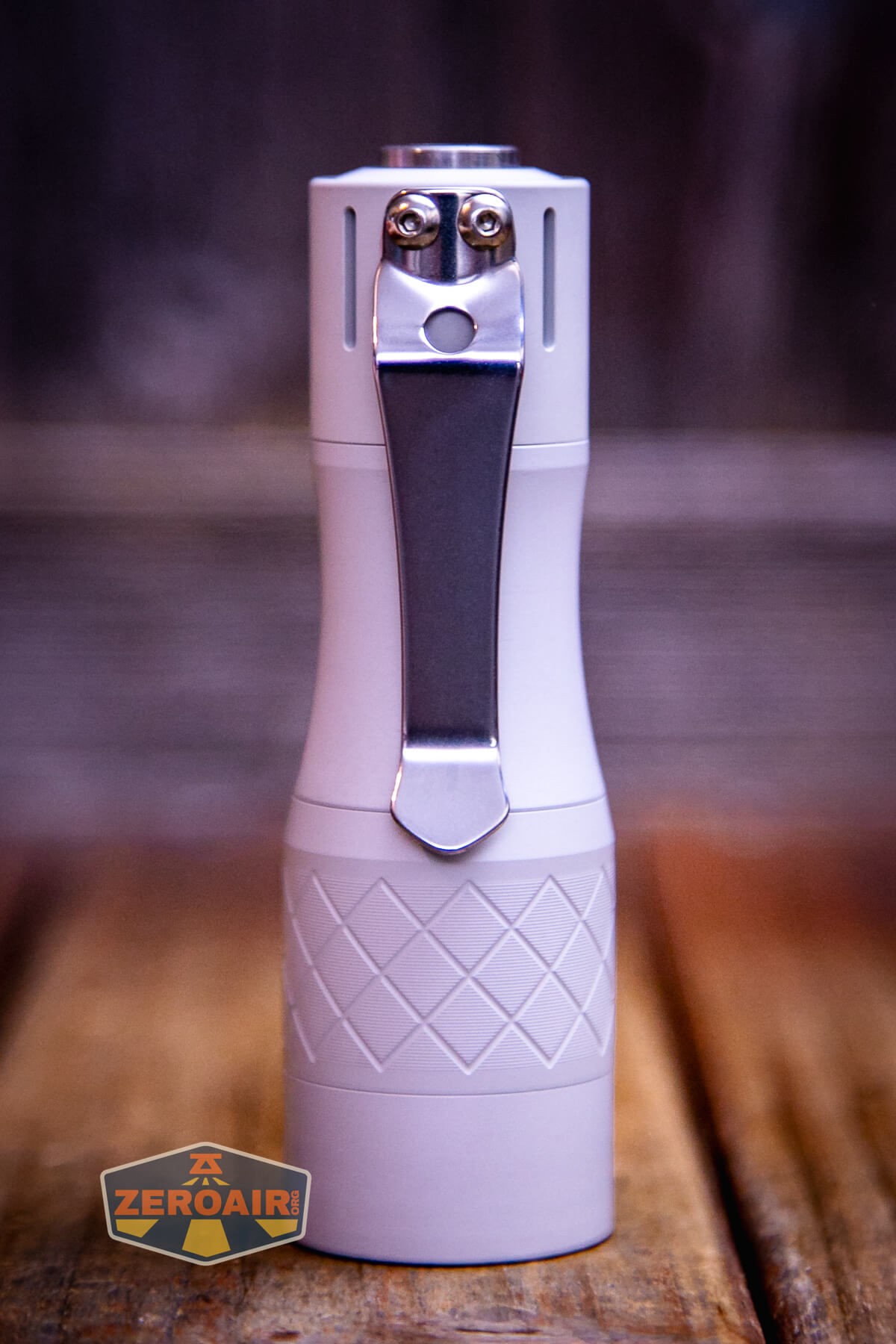

I say it’s made for the 18350 body mostly because when used with the 18650 body, there’s a massive gap. You could easily bend the clip so that there’s no gap, but then it’ll likely be much too tight against the 18350 body. If you never plan to change bodies that’s no problem at all. One positive is that this gap means you don’t have to worry about marking up the body when screwing the tailcap on (onto the 18650 body, that is).
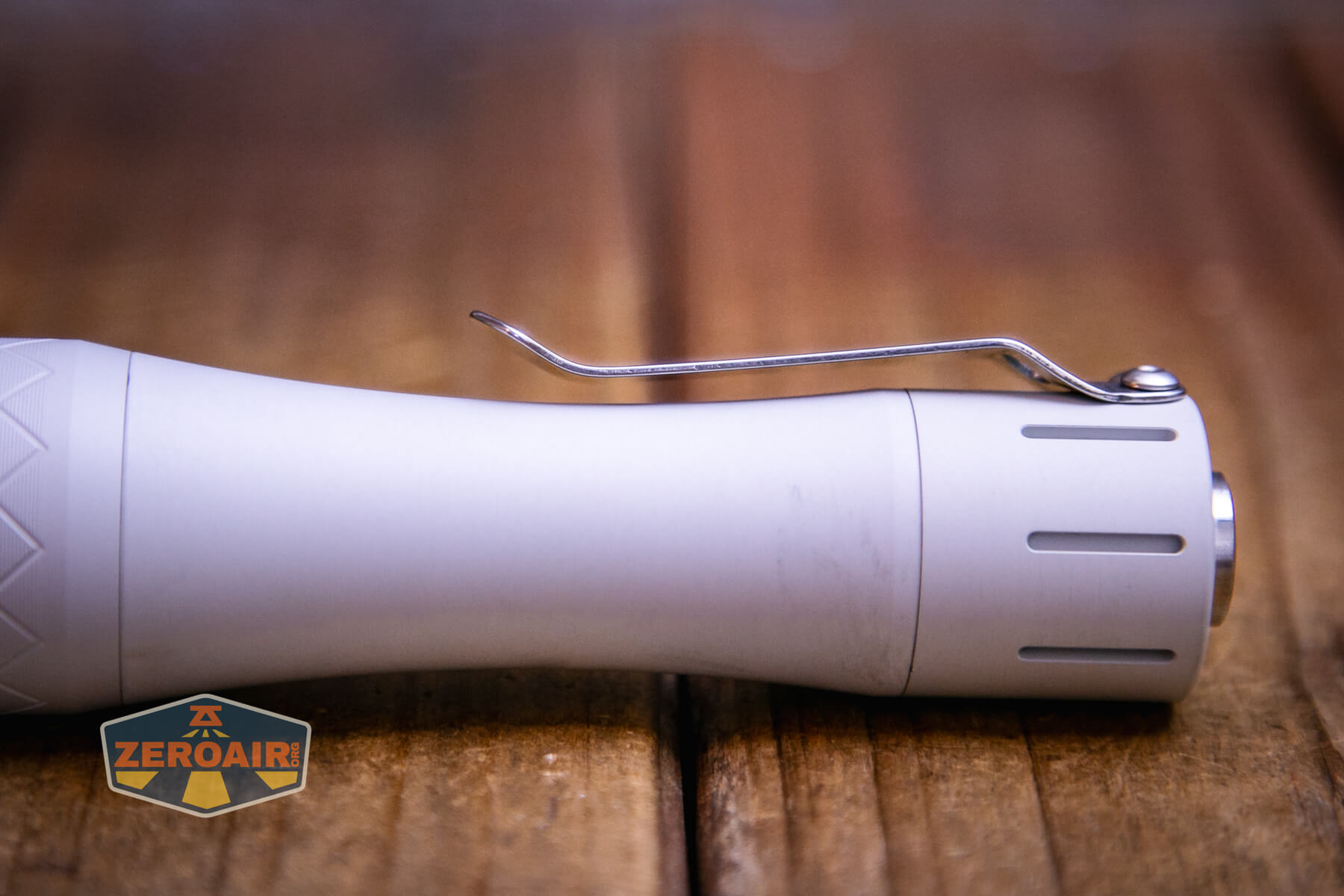
There’s no pouch or magnet or anything else for carrying the NLightD L3 LEP flashlight. I will add that the screw spacing on this clip seems like standard spacing. So if you want to throw on your Steel Flame or whatever else – it’ll probably fit. In fact, you could convince me easily that this stock clip is patterned after a standard Hanko Machine Works Steel Flame pocket clip…
Power and Runtime
The NLightD L3 LEP flashlight runs one lithium-ion cell of 18mm diameter. Depending on which body you have installed, that might be an 18350 or 18650. NealsGadgets.com includes this NLightD 1600mAh 18350, so that’s what I tested with.
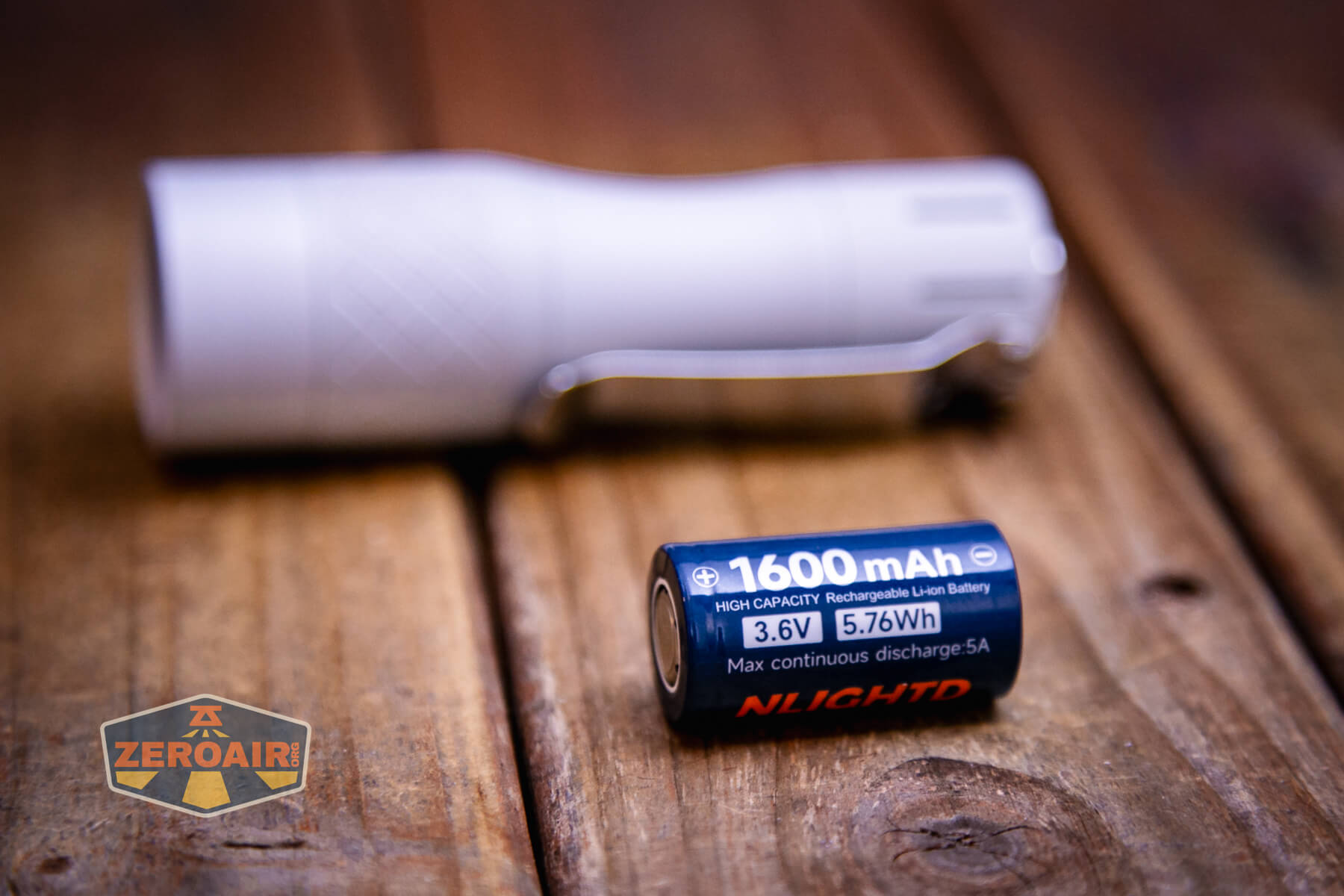
Whichever body or cell you use, it goes into the light with the positive end toward the head.
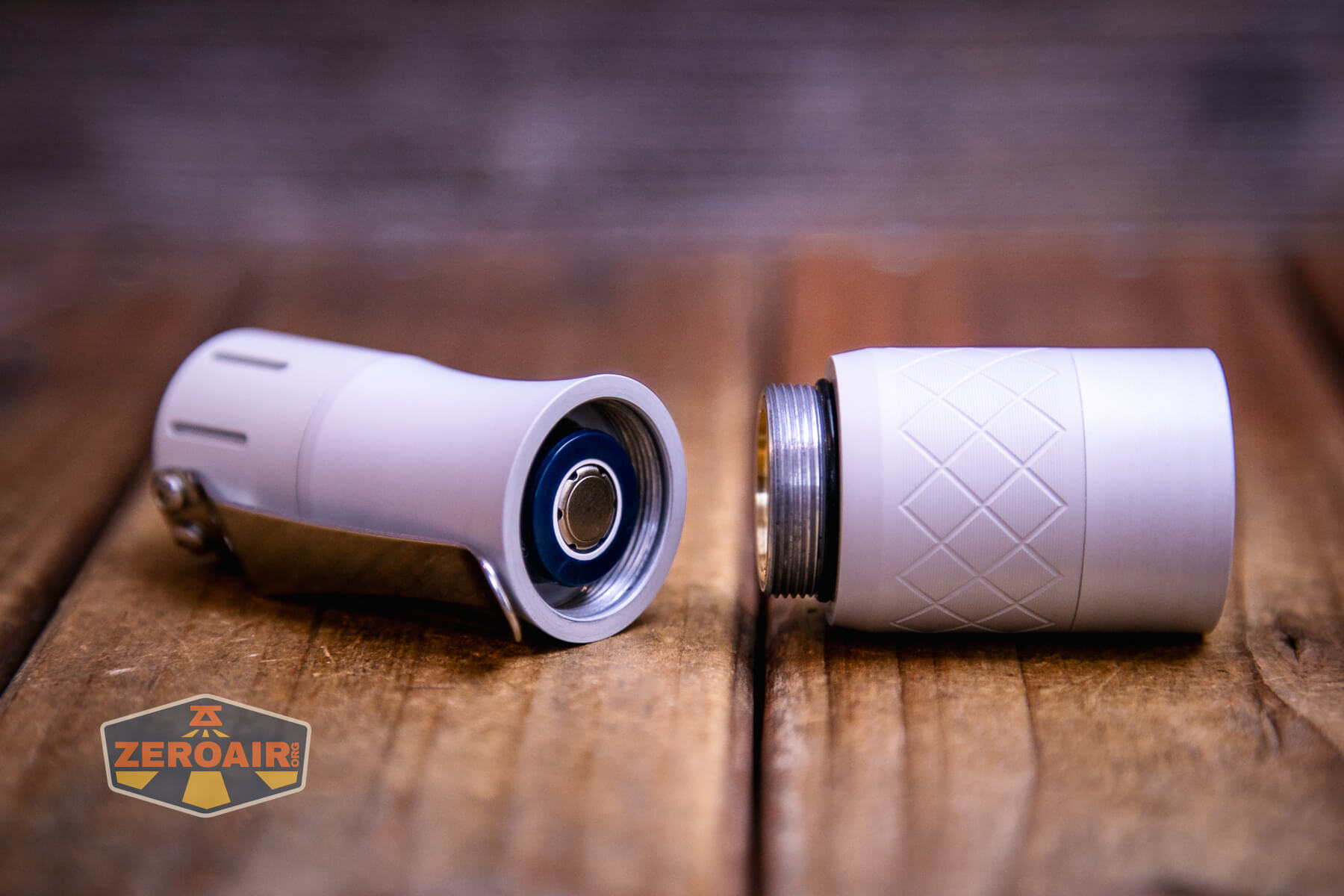
Both the head and tail are removable, but I’d strongly recommend swapping cells through the head end. That way you don’t need to worry with the pocket clip getting in the way.

I’ll add (maybe unnecessarily, as I did say it above) that the NLightD L3 LEP flashlight runs one lithium-ion cell. So don’t throw two 18350 cells into that 18650 body!
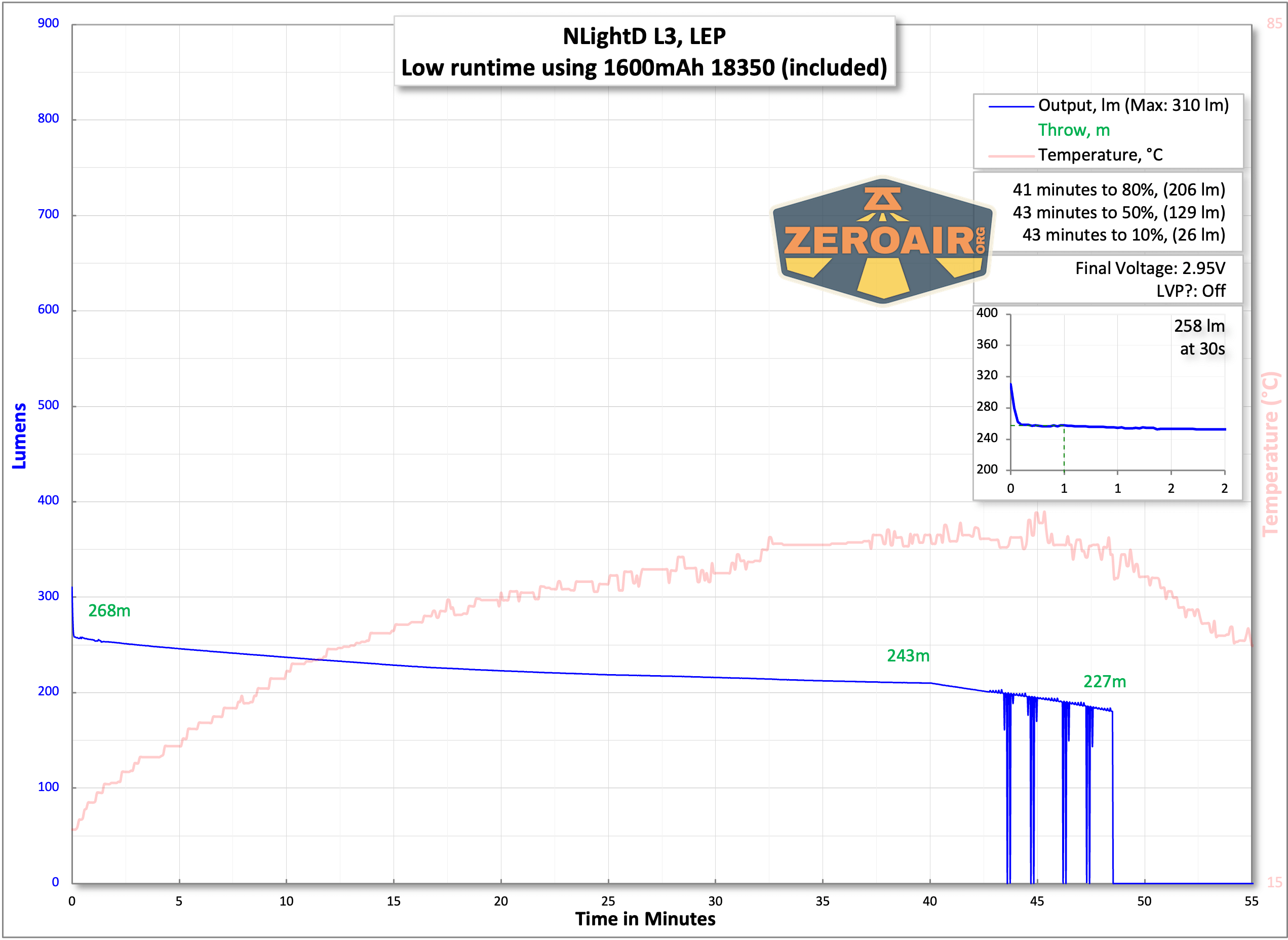
Here are runtimes on all of the modes (2) with the included 18350 cell. Performance is really quite good – over 800 lumens on my setup that isn’t really calibrated for an extremely throwy light such as the NLightD L3 LEP flashlight. So we’ll call that a win/wash – but more importantly note down below that the light does hit the throw specification!!
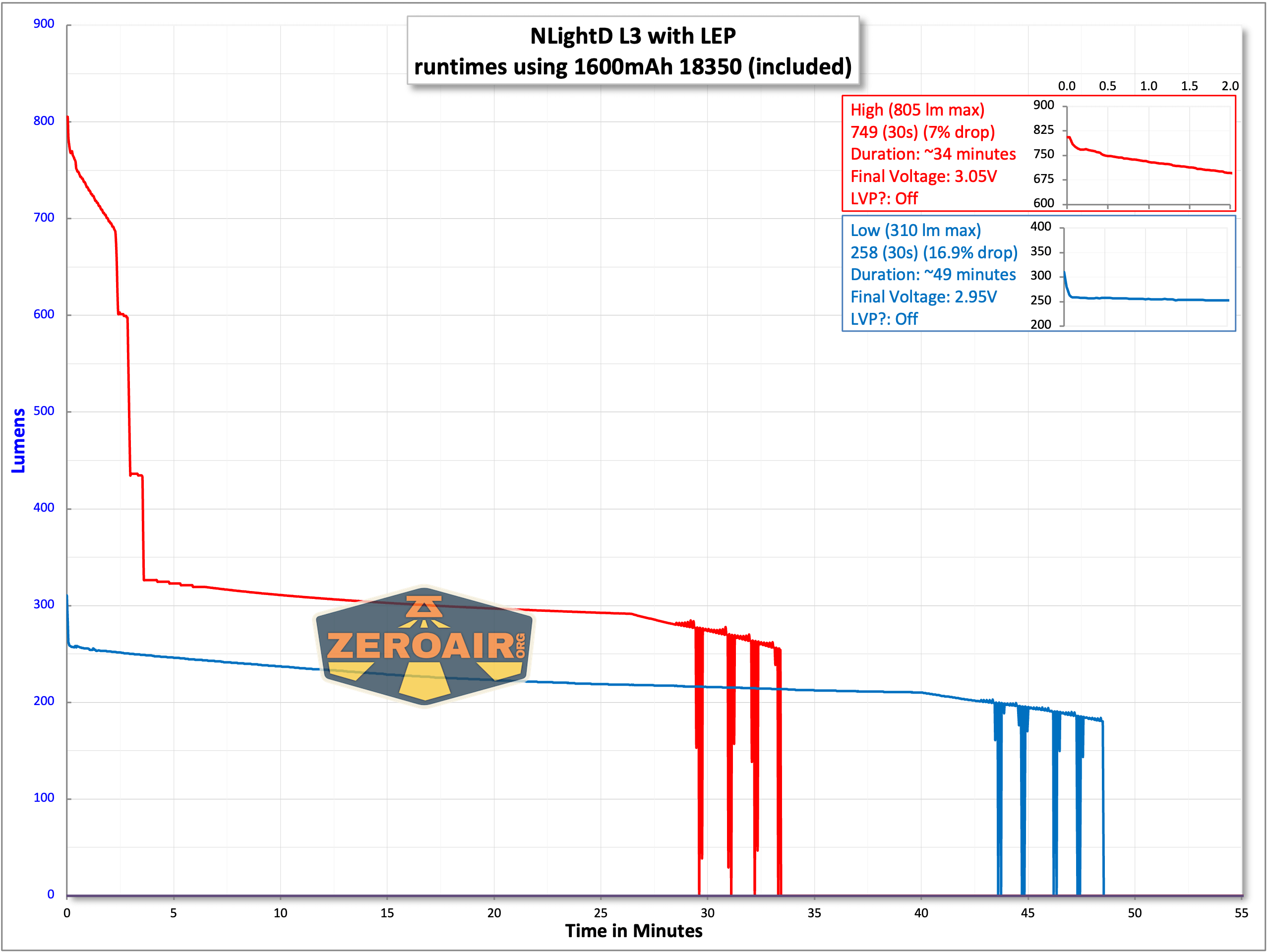
You can see in both of these tests that when the cell voltage gets low (around 3V), the light blinks to warn a user. After that, it shuts off with plenty of life in the cell for good cell protection.
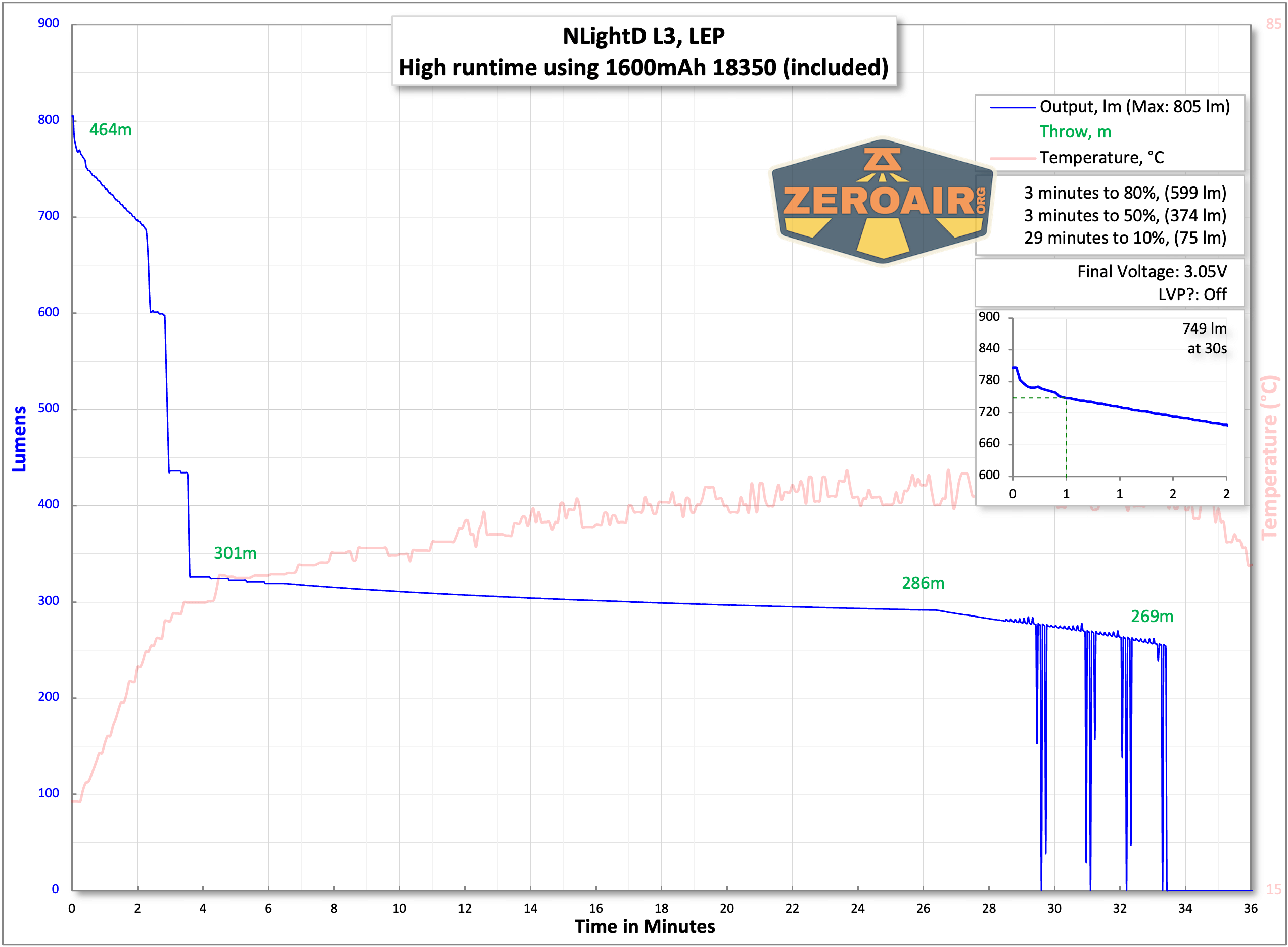
These runtimes are brief, but if you want longer output, you do have the 18650 option. Since High pulls only around 5.5A, I wouldn’t expect output to be higher, but runtime duration would be extended with an 18650.
Modes and Currents
| Mode | Mode Claimed Output (lm) | Claimed Runtime | Measured Lumens | Tailcap Amps |
|---|---|---|---|---|
| High | 1000 | – | 805 (0s) 749 (30s) |
5.56 |
| Low | 360 | – | 310 (0s) 258 (30s) |
1.58 |
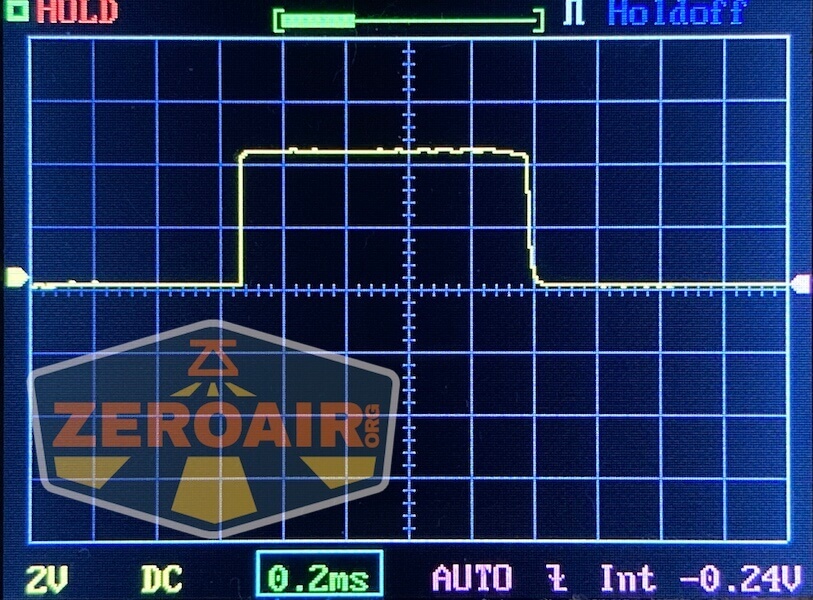
Pulse Width Modulation
Neither mode uses PWM.
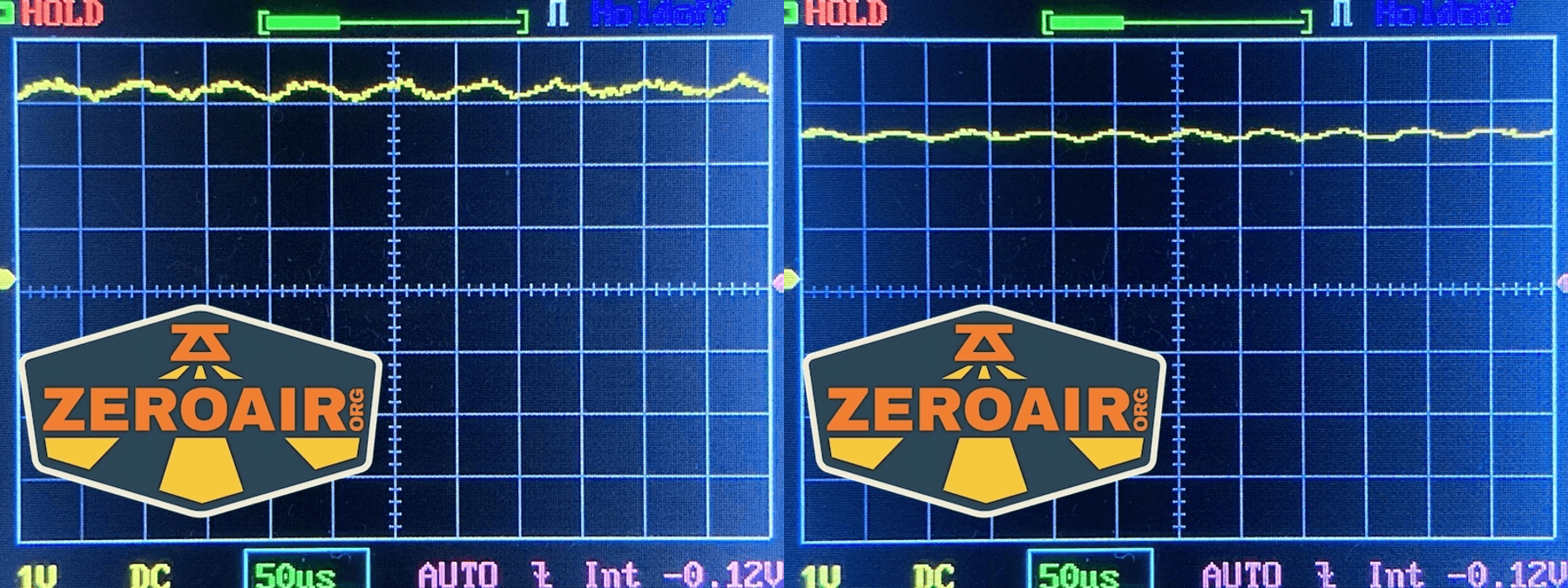
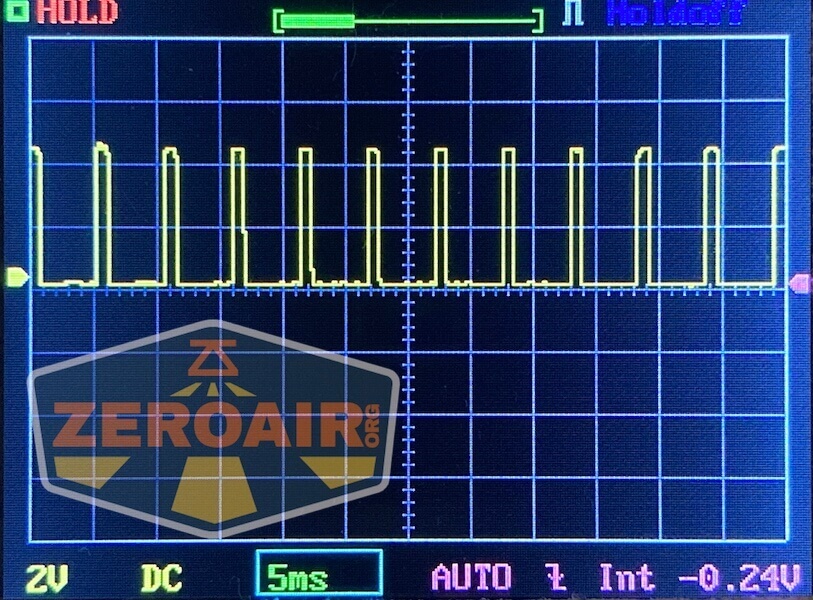
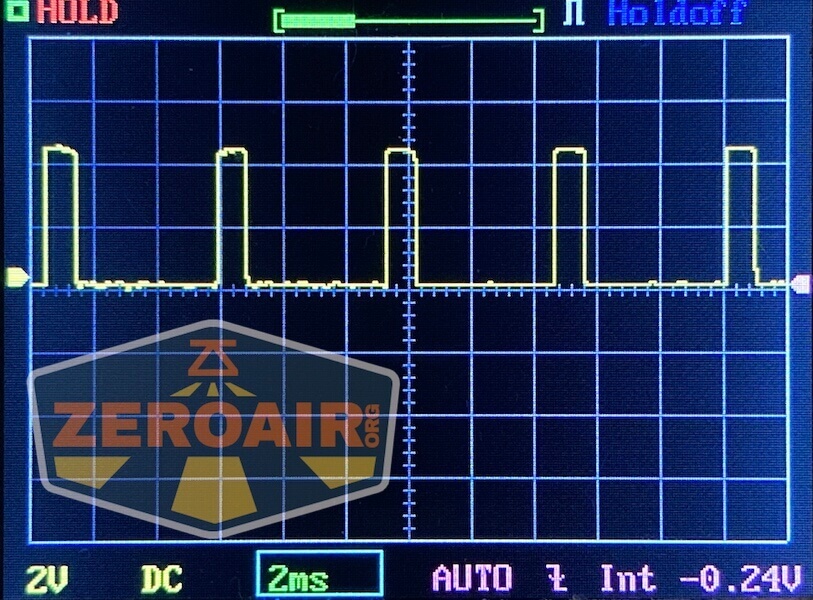
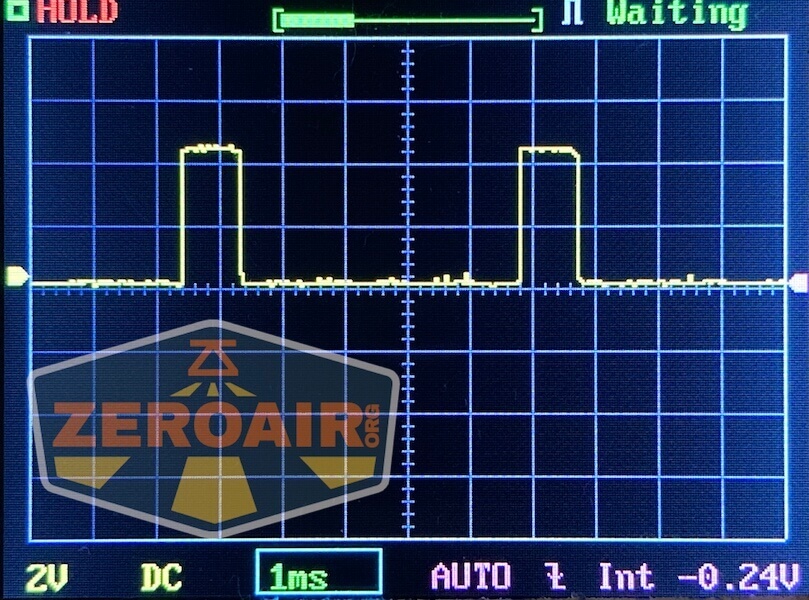
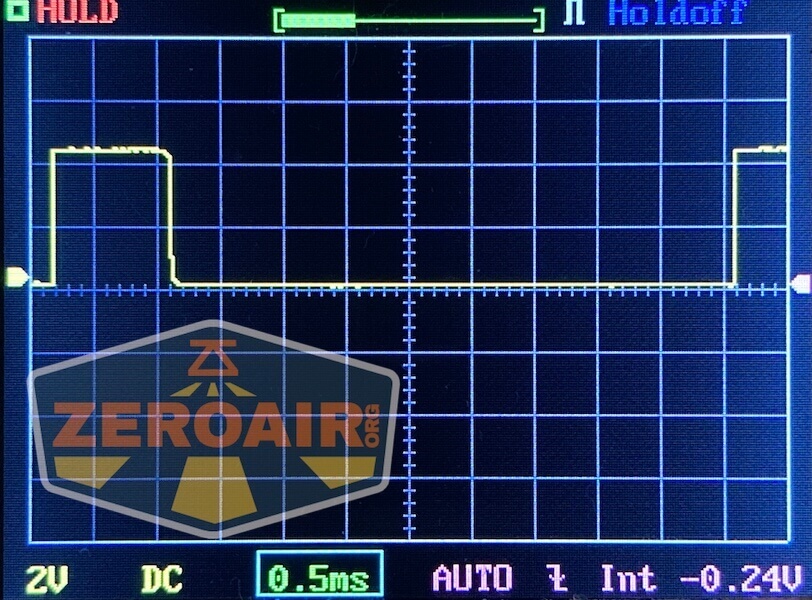
Here you can see a “baseline” – a chart with almost no light hitting the sensor.
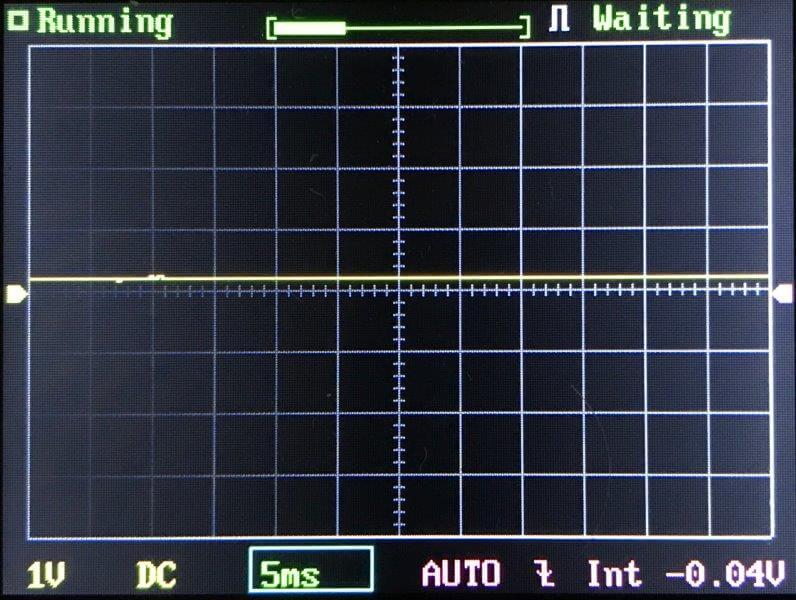
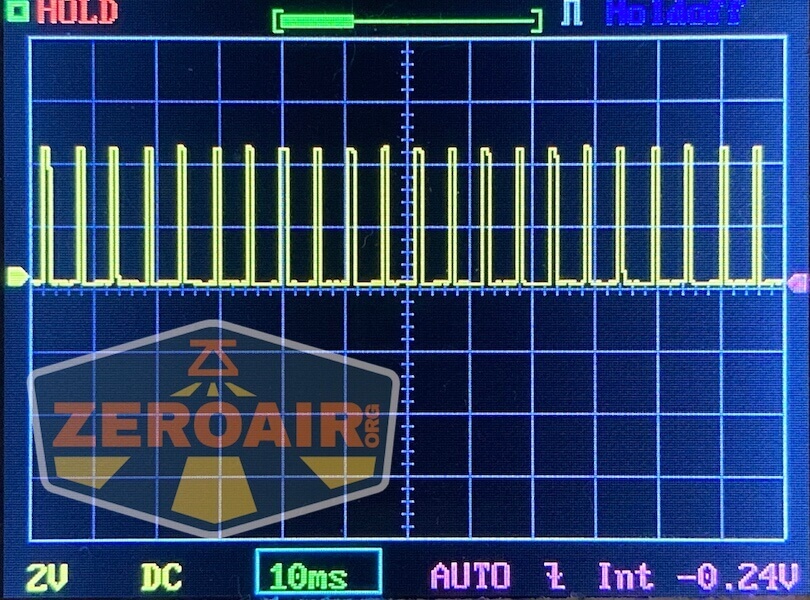
Then there’s the Ultrafire WF-602C flashlight, which has some of the worst PWM I’ve seen. It’s so bad that I used a post about it to explain PWM! Here are multiple timescales (10ms, 5ms, 2ms, 1ms, 0.5ms, 0.2ms) to make comparing this “worst” PWM light to the test light easier. That post also explains why I didn’t test the WF-602C at the usual 50us scale.
User Interface and Operation
The NLightD L3 LEP flashlight features a metal switch cover (by default) over a forward mechanical clicky. As mentioned above (first photo), there’s a replacement switch cover. It still has metal bits, but the pressy bit is silicone.
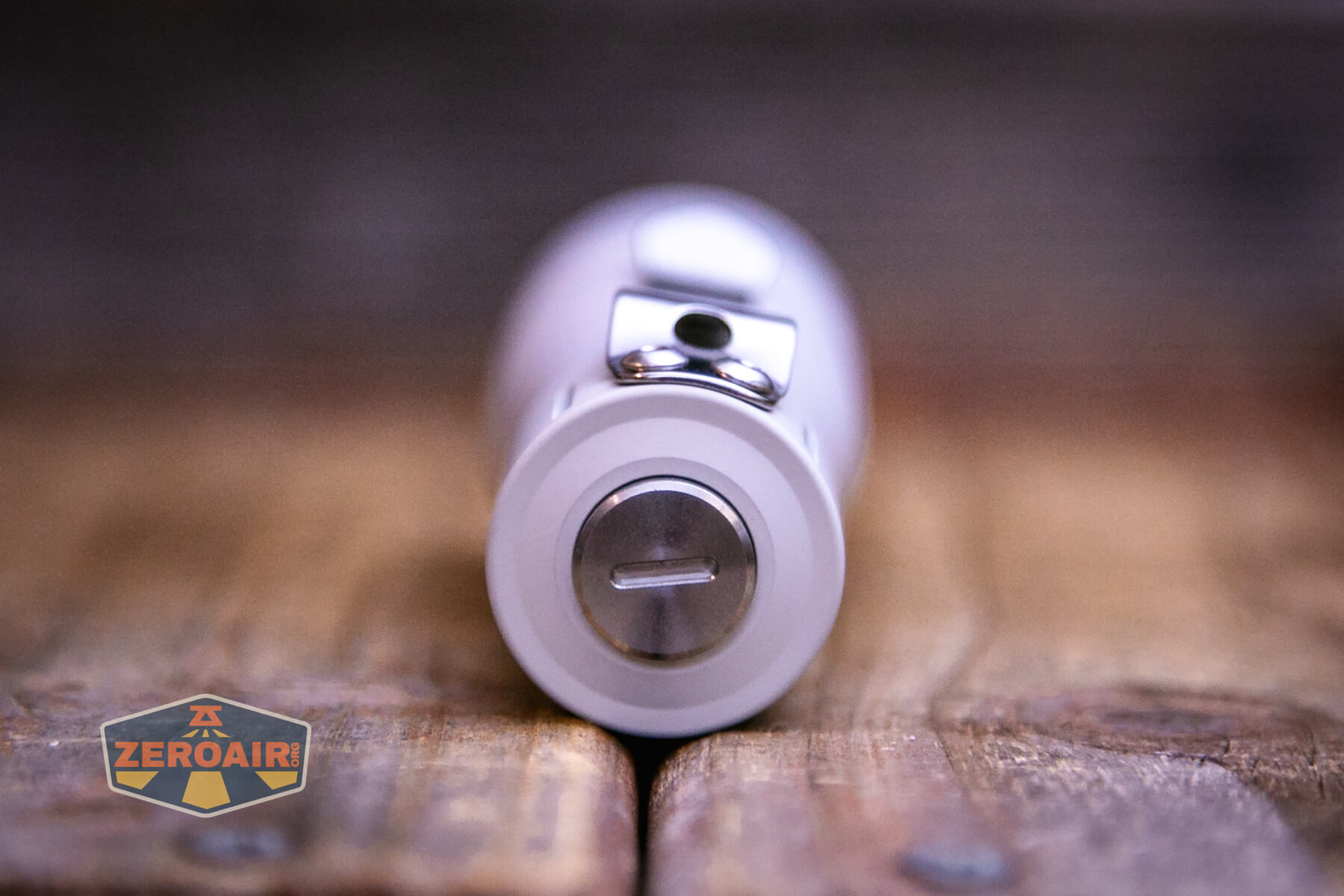
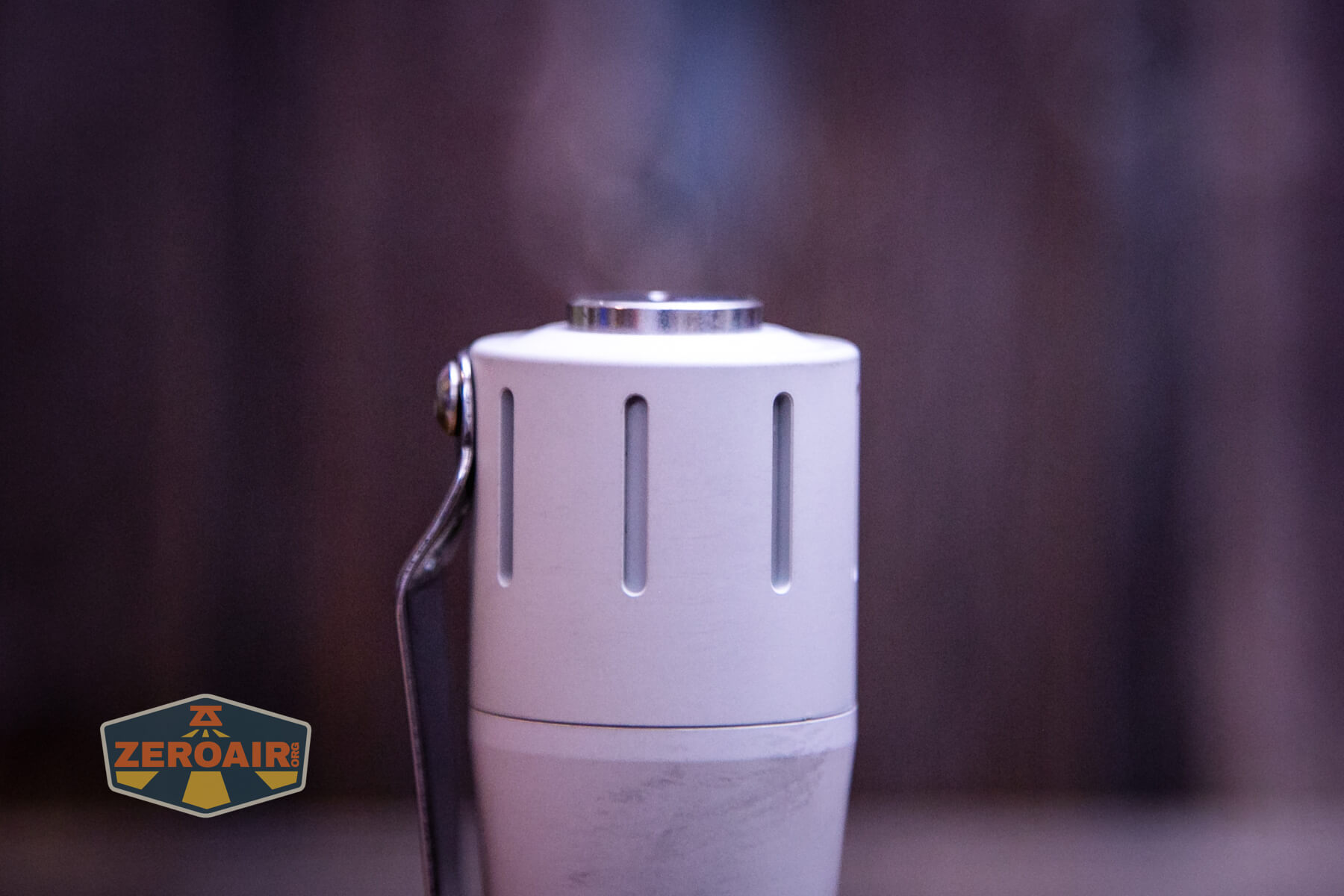
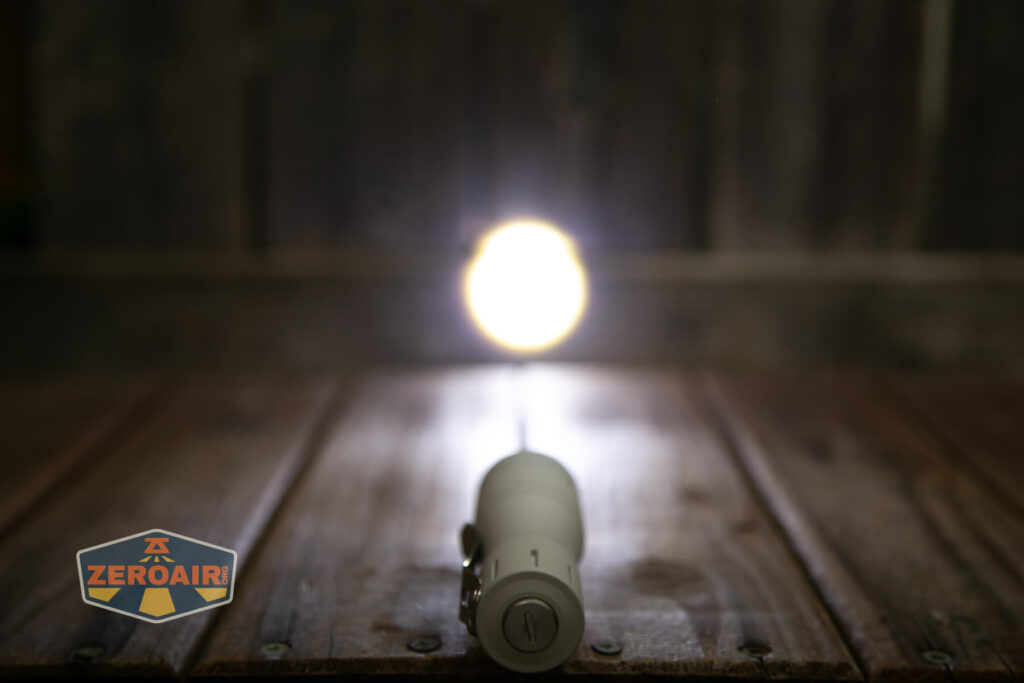
Either way, the switch is very proud. This metal switch cover is very flat (and also has a tritium slot) and does allow tailstanding (even if that’s something you’d never need – what are you doing, signaling Mars here?). Speaking of tritium slots, the tailcap itself has a whole bunch (7) of long tritium slots
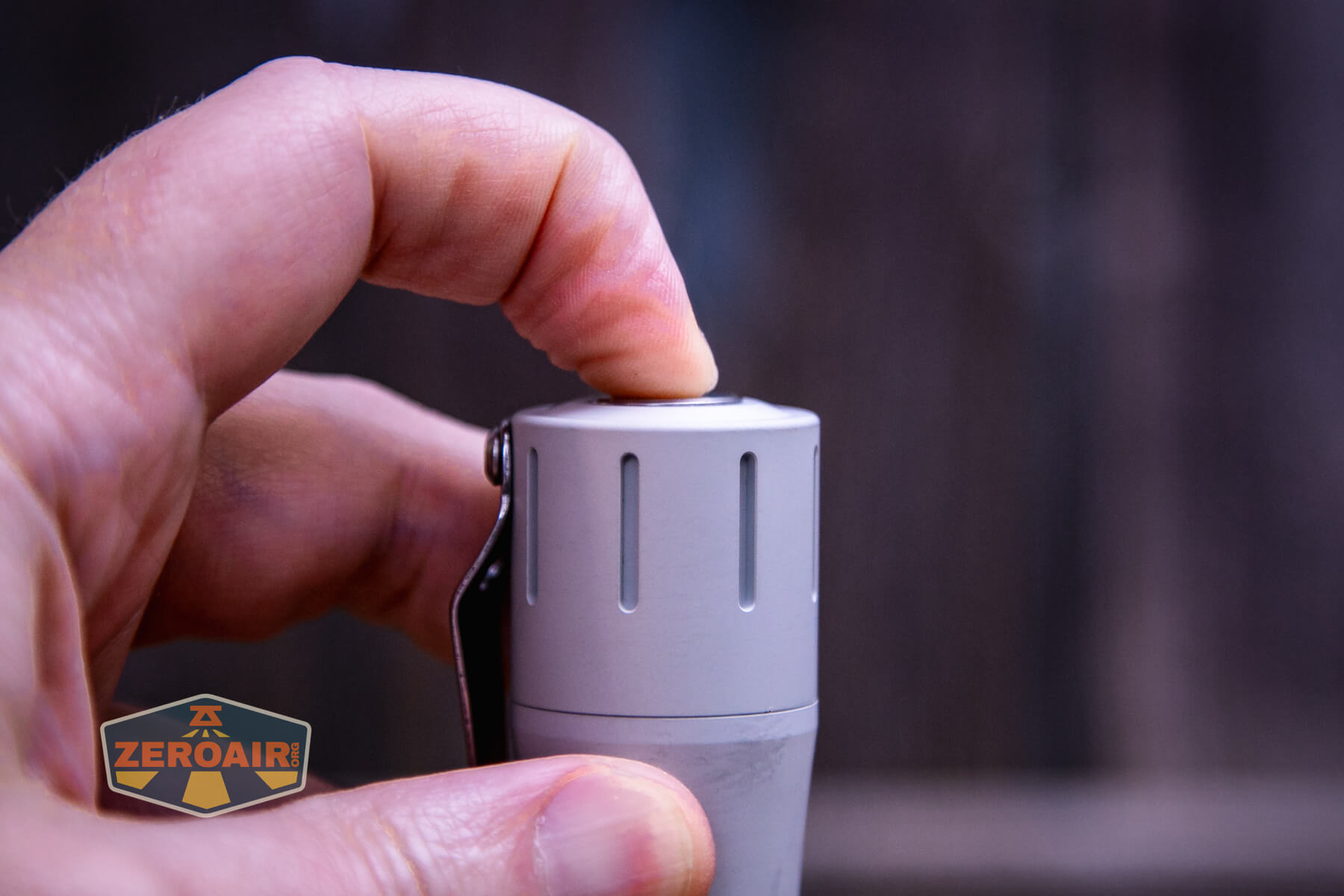
The switch action is good. You’ll want to press right in the center of the switch for best results.
Here’s a user interface table!
| State | Action | Result |
|---|---|---|
| Off | Click | High |
| On | Click | Off |
| On | Tap | No change |
| Off | Repeated taps | Mode advance (H>L) |
| Off | Tap 3x | Strobe |
LED and Beam
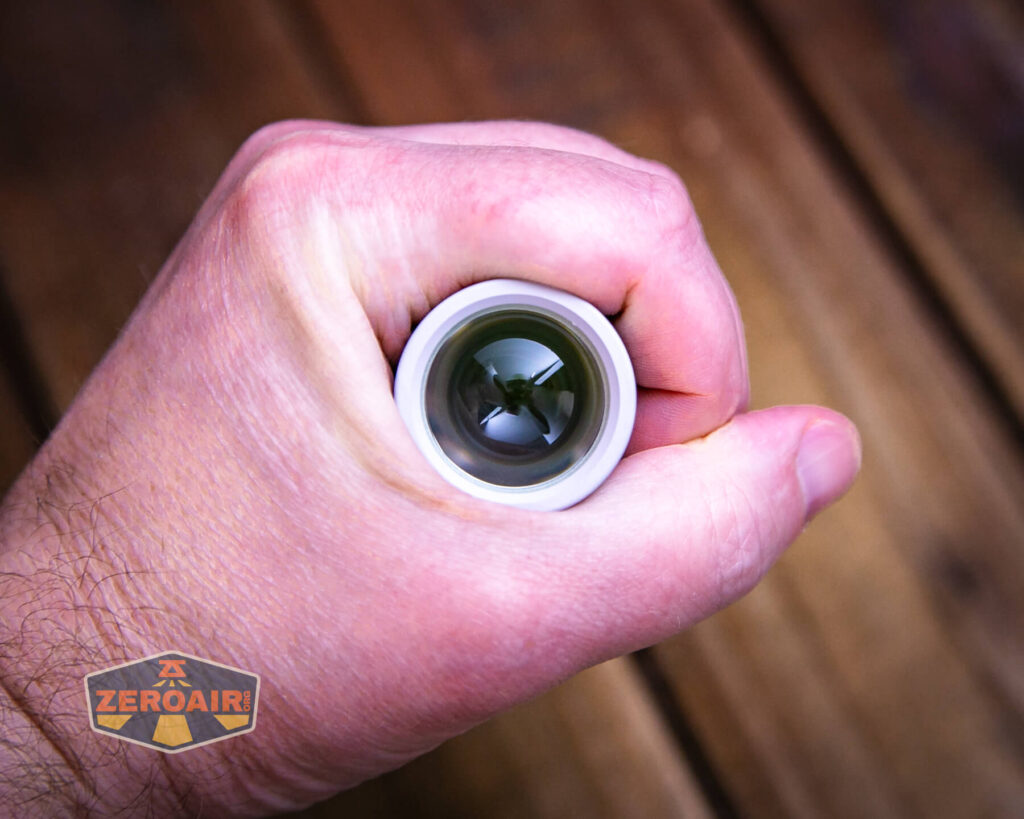
This is a LEP module and frankly, I don’t know enough about LEP modules to say this one is whatever brand. Maybe there’s just one brand. Anyway over the LEP module is a lens. And over that is a flat (typical flashlight) lens, too.
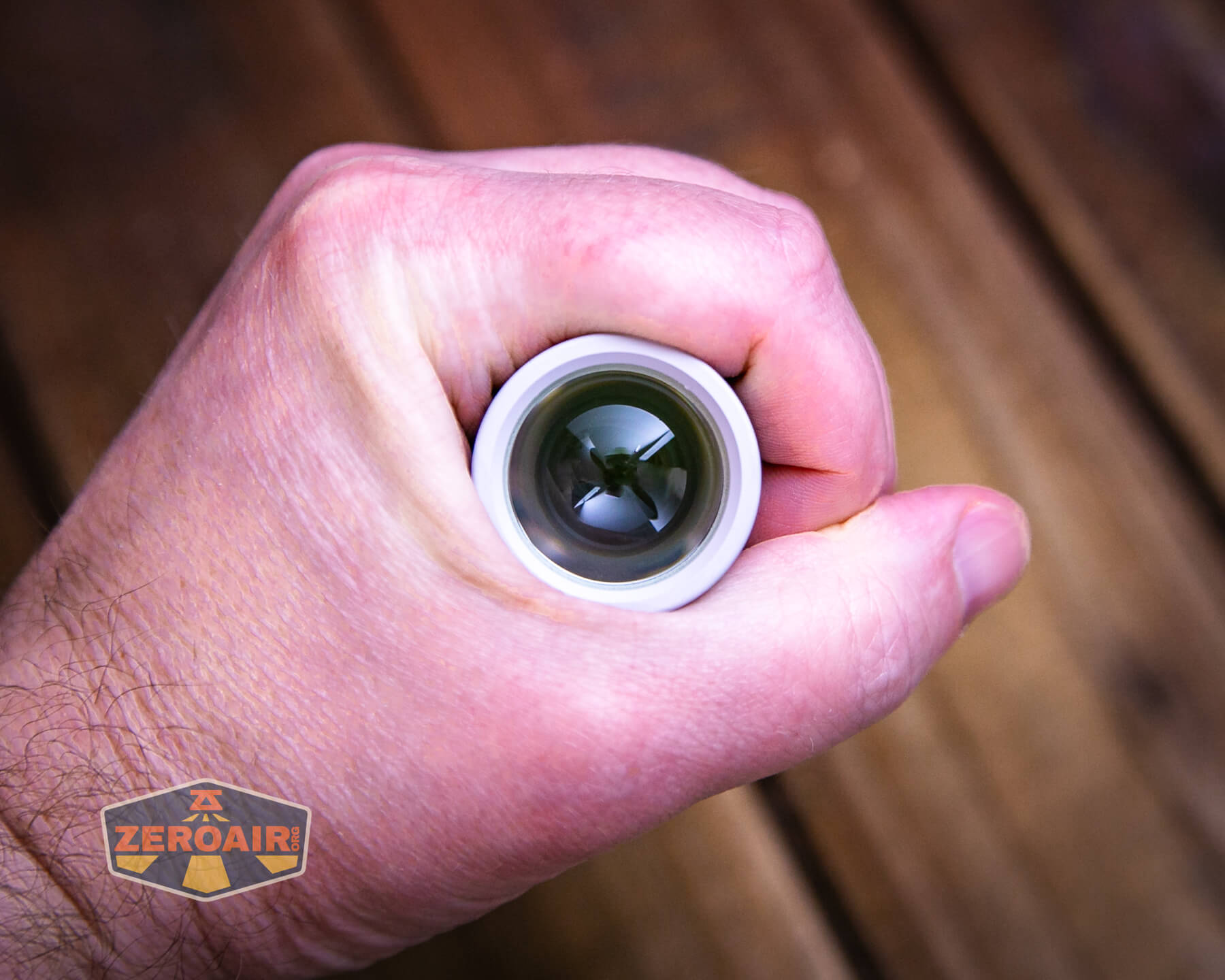
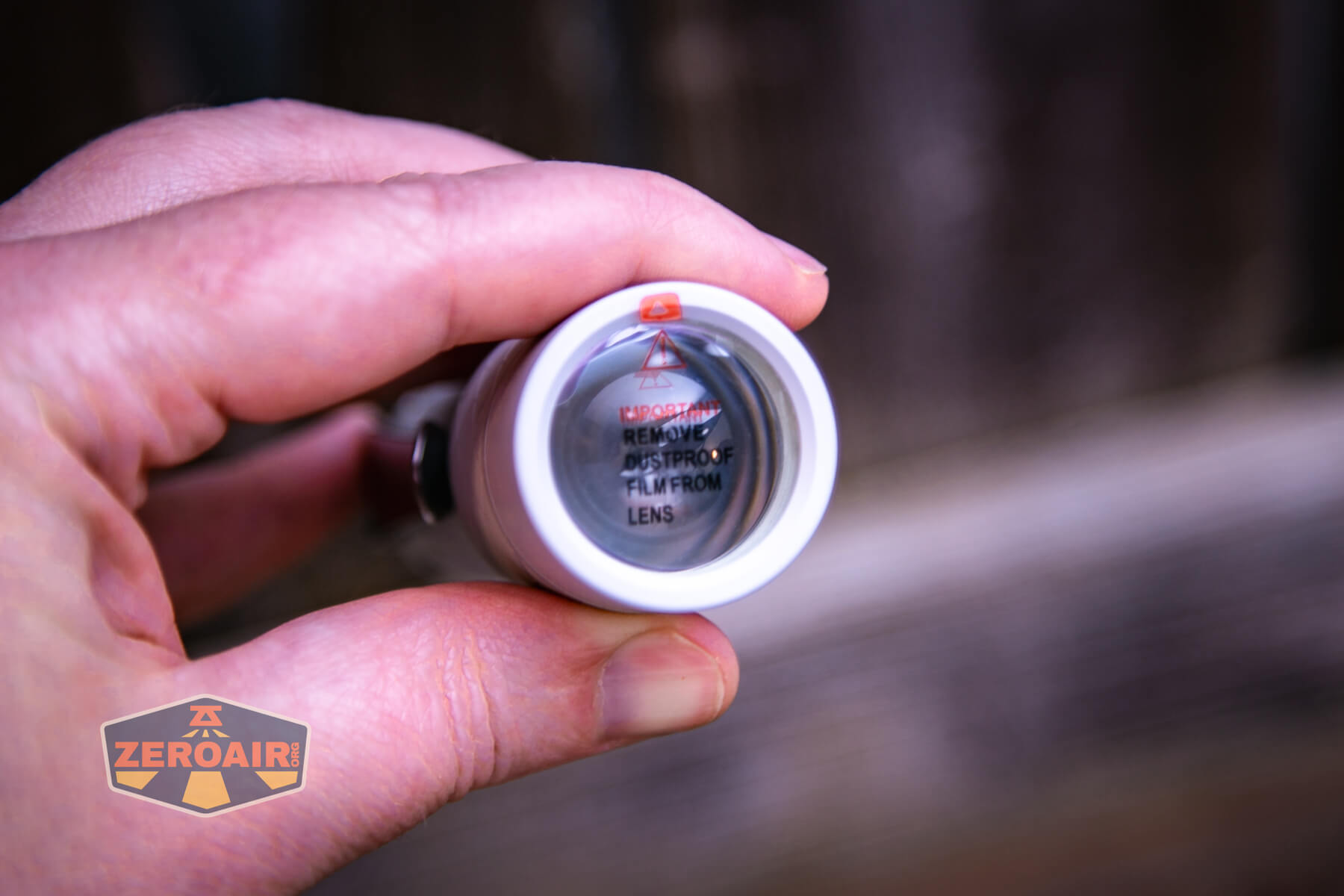
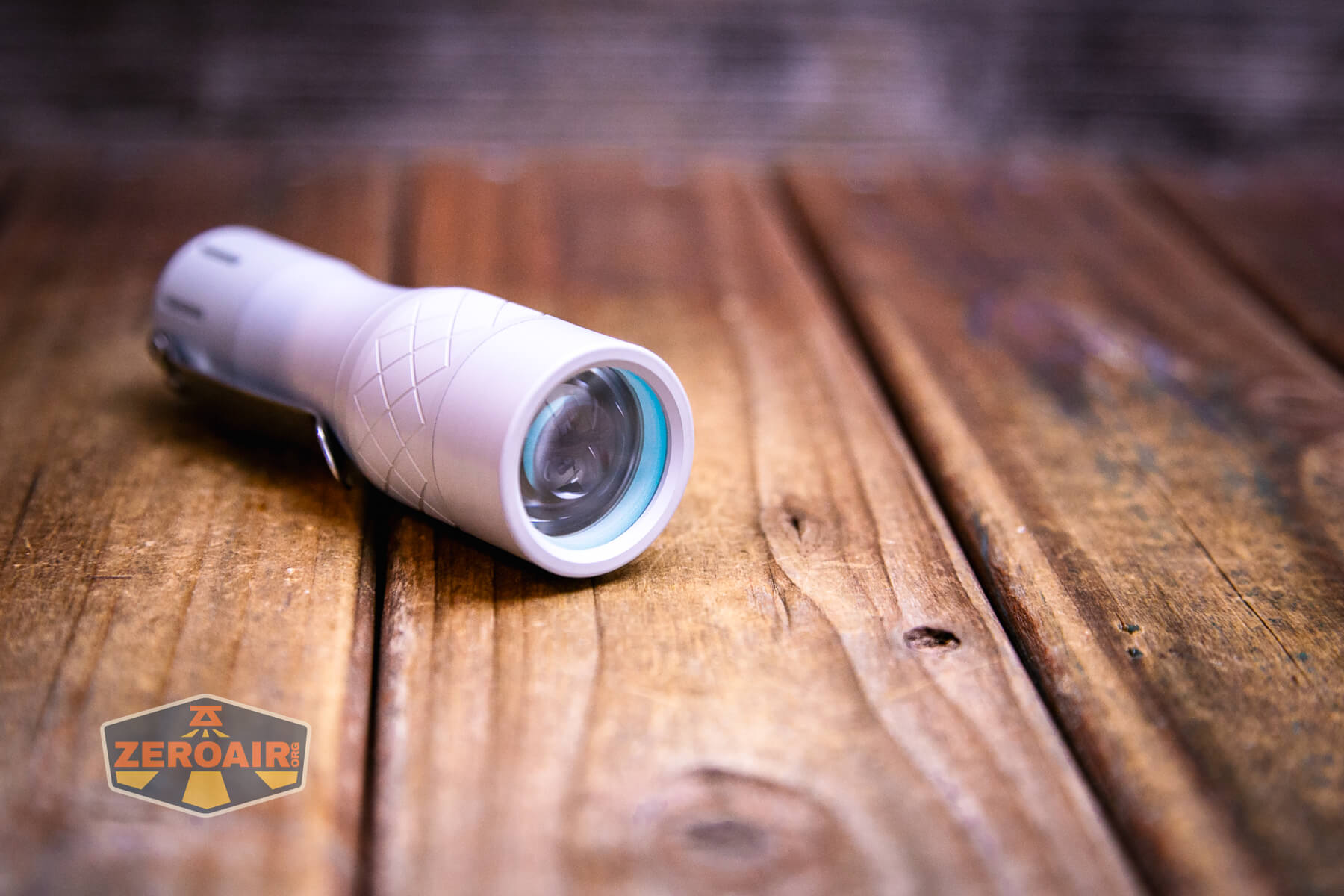
Either the washer or as a separate part of (maybe) glow tape, there’s a glow area just under the lens. It’s a great glow – sort of aqua colored.
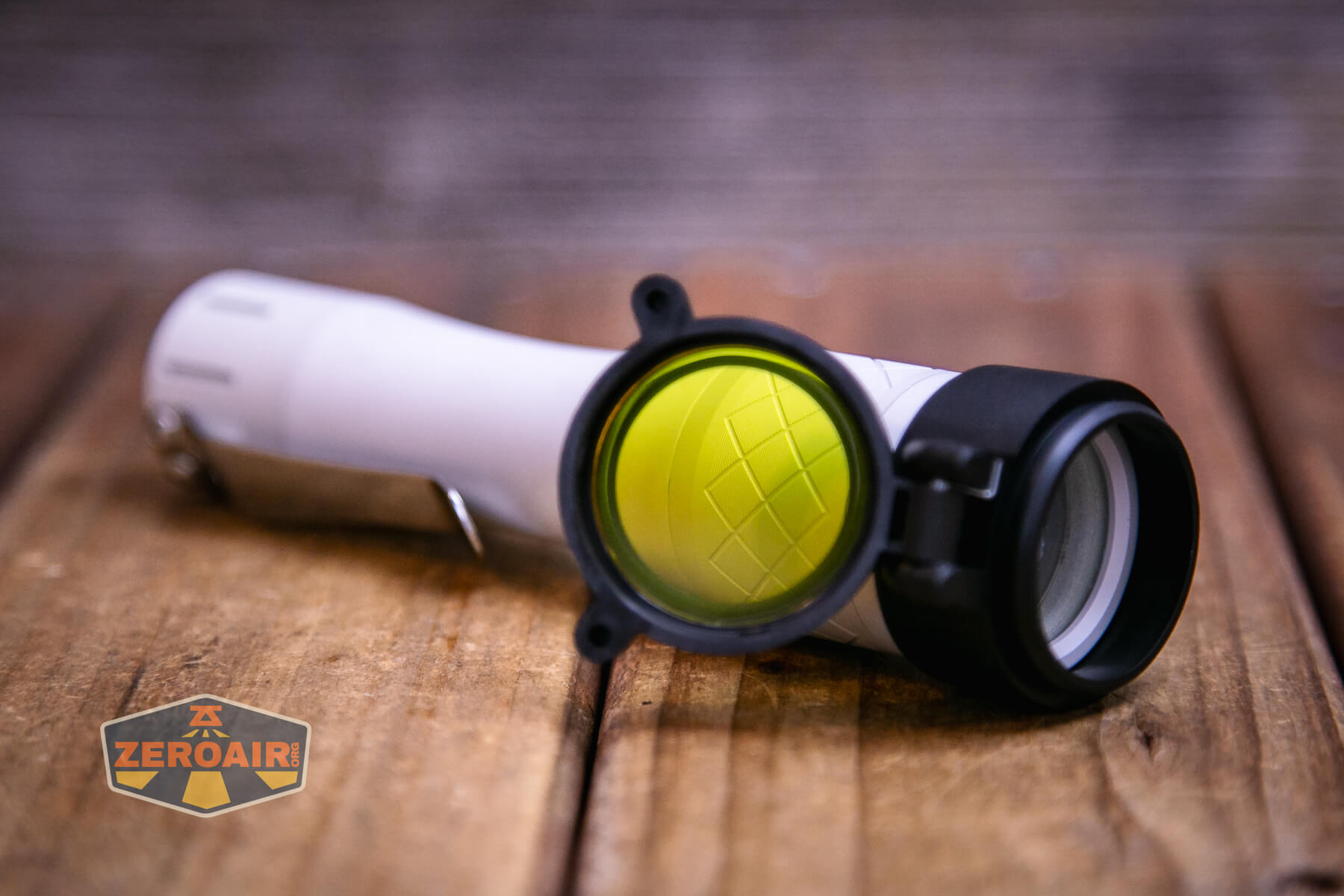
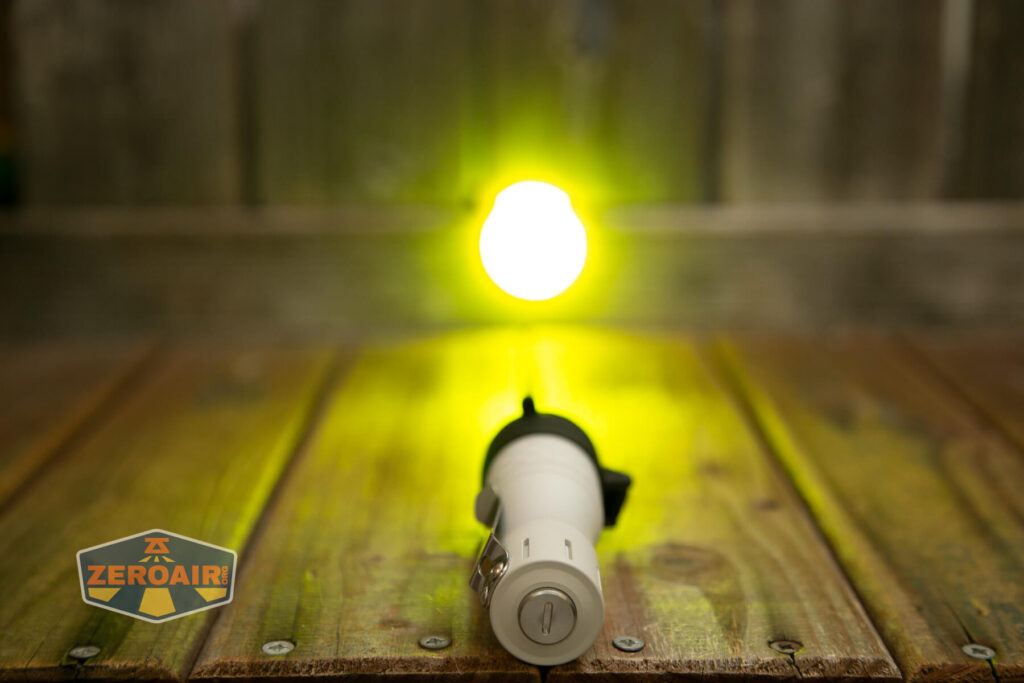
Below you can see an optional accessory – this yellow filter. It slips over the end of the NLightD L3 LEP flashlight and has a flip-cap-style filter. Maybe the best of both filter-type worlds, since it’s very easy to don and doff the filter. It’s a rubber/silicone style filter, too, so it doesn’t mar the light.
Beamshots
These beamshots always have the following settings: f8, ISO100, 0.3s shutter, and manual 5000K exposure. These photos are taken at floor level, and the beam hits the ceiling around 9 feet away.
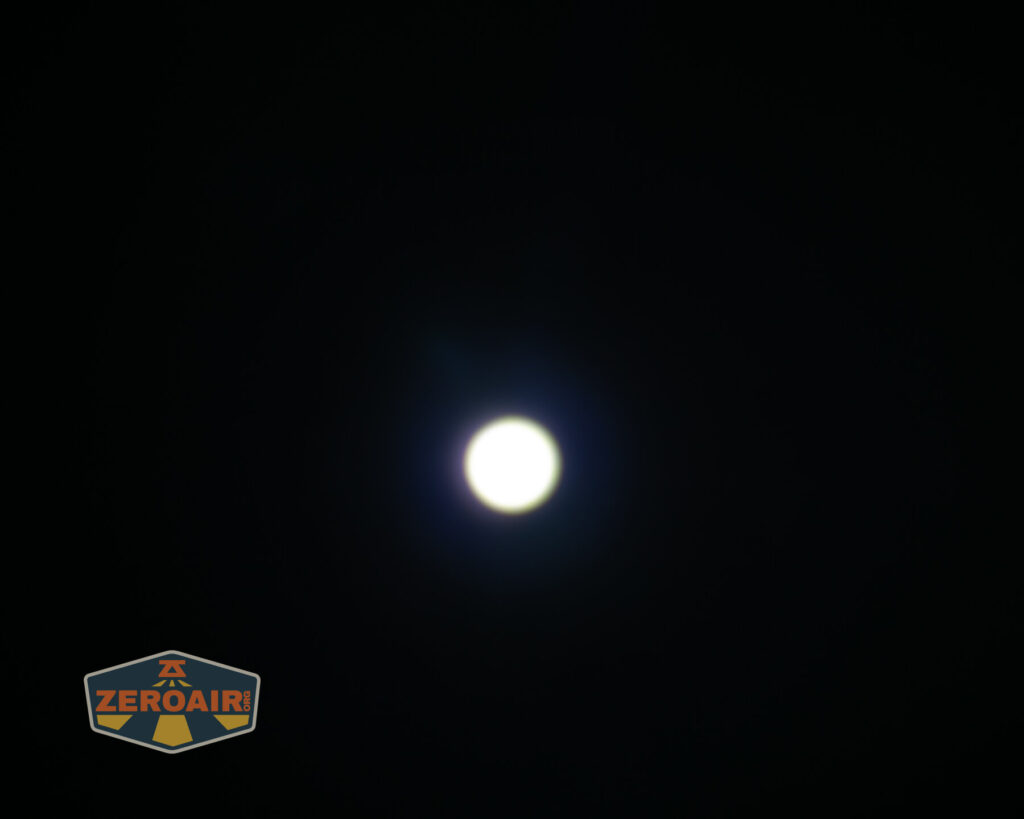
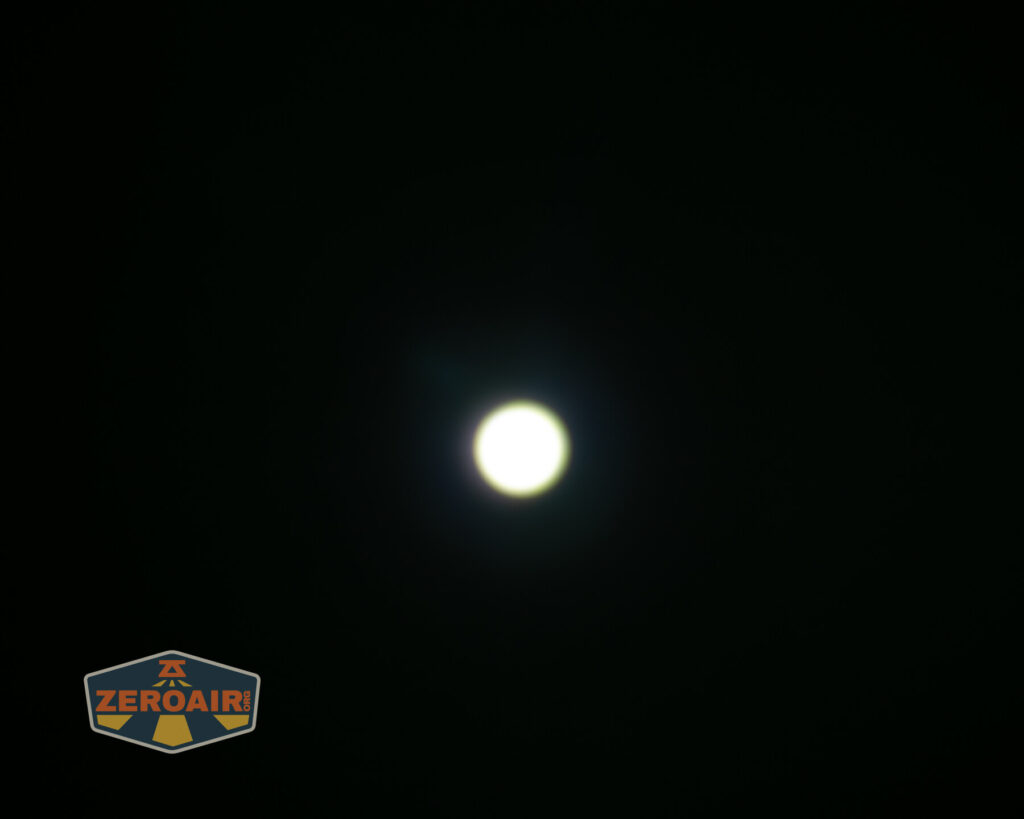
Tint vs BLF-348 (KillzoneFlashlights.com 219b version) (affiliate link)
I keep the test flashlight on the left and the BLF-348 reference flashlight on the right. These photos are taken around 18 inches from the door.
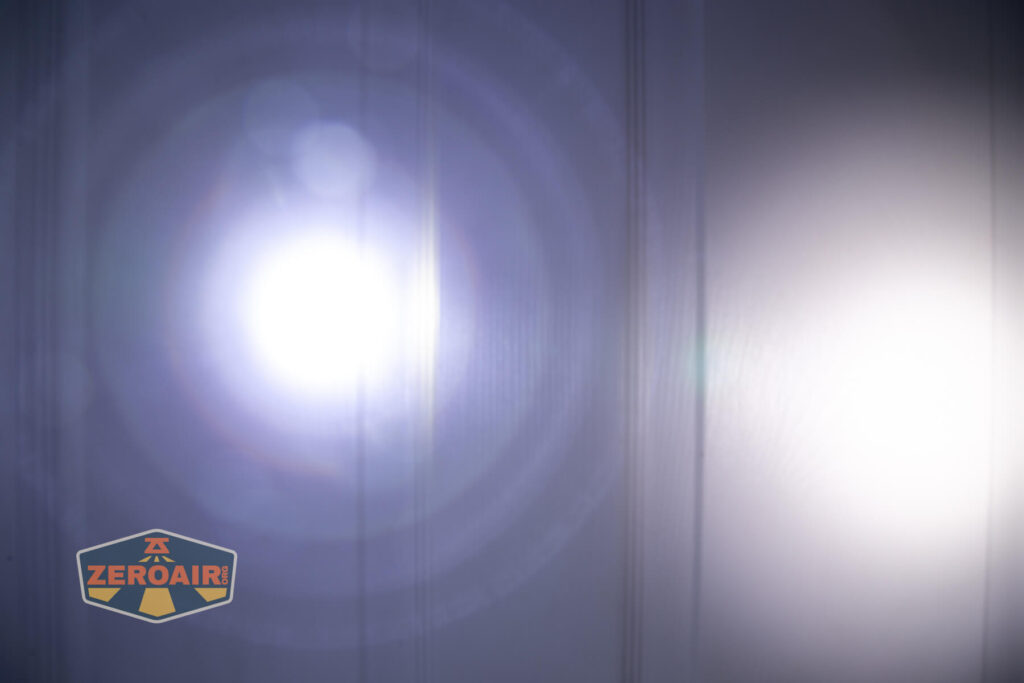
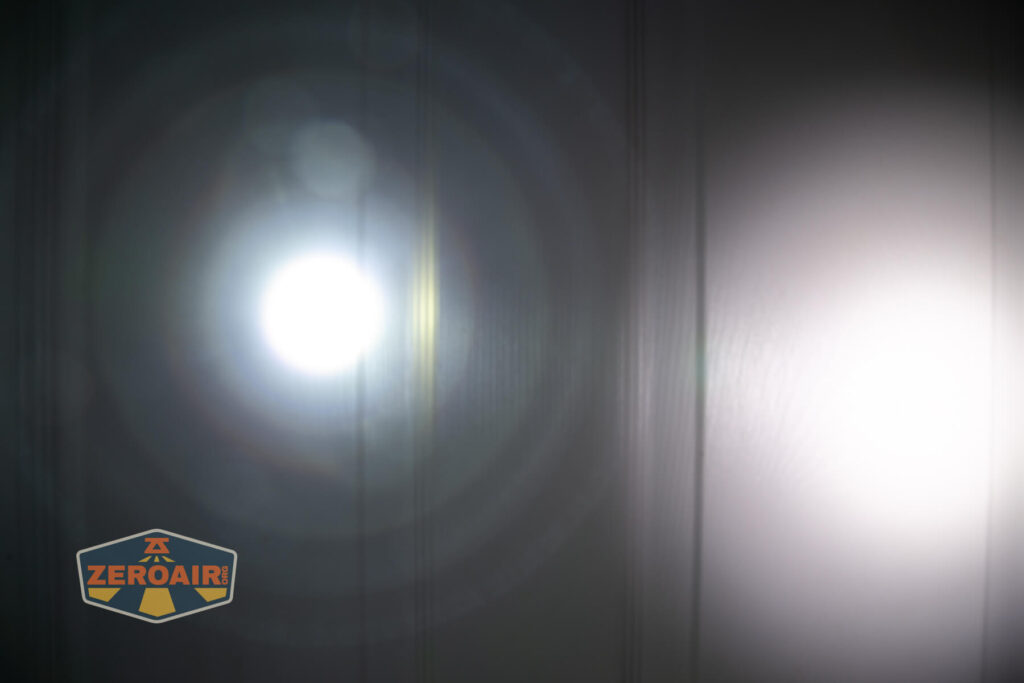
I compare everything to the KillzoneFlashlights.com 219b BLF-348 because it’s inexpensive and has the best tint!
Summary and Conclusion
I’m very pleased with the NLightD L3 LEP flashlight both in the way it looks and the way it performs. I like all the accessories and appreciate that a cell is included. If the discoloration from this Silica Gel desiccant is important to you, grab one of the other body colors (though I can say, after carrying the light just a bit, the blue markings have nearly faded away completely). Having strobe on a light like this does not seem entirely necessary, and another (maybe very low) mode could be a nice addition. The cost does seem a bit high, but it still in the right range.
The Big Table
| NLightD L3 LEP flashlight | |
|---|---|
| Emitter: | LEP |
| Price in USD at publication time: | $239.95 at nealsgadgets.com (referral link) |
| Cell: | 1×18350 |
| Runtime Graphs | |
| LVP? | |
| Switch Type: | Mechanical |
| On-Board Charging? | Yes |
| Charge Port Type: | |
| Charge Graph | |
| Power off Charge Port | – |
| Claimed Lumens (lm) | 1000 |
| Measured Lumens (at 30s) | 749 (74.9% of claim)^ |
| Candela per Lumen | 70.61 |
| Claimed Throw (m) | 1500 |
| Candela (Calculated) in cd (at 30s) | 9860lux @ 7.376m = 536437cd |
| Throw (Calculated) (m) | 1464.8 (97.7% of claim)^ |
| Item provided for review by: | NealsGadgets |
| All my NLightD reviews! | |
^ Measurement disclaimer: Testing flashlights is my hobby. I use hobbyist-level equipment for testing, including some I made myself. Try not to get buried in the details of manufacturer specifications versus measurements recorded here; A certain amount of difference (say, 10 or 15%) is perfectly reasonable.
What I like
- Flashlighty design
- The MAO is nice (if temperamental)
- Performance is good
- I like the forward clicky!
- Includes both bodies
- Fantastic throw
- Not complicated by any charging features
What I don’t like
- Just 2 (steady) modes
- Strobe (is strobe unnecessary on this light?)
- Starts on High
- 18650 body not well suited for use with the pocket clip (that’s always part of the light)
- No charging considerations (yes I’m listing that in pros AND cons…)
Notes
- This content originally appeared at zeroair.org. Please visit there for the best experience!
- Please use my Amazon.com referral link to help support zeroair.org!
- Please support me on Patreon! I deeply appreciate your support!
Discover more from ZeroAir Reviews
Subscribe to get the latest posts sent to your email.
How hot did it get after running for 40 minutes?
My nearest estimate is available in the runtime charts. Thanks.