

Lumintop GT Nano V5.0 Flashlight Review
The Lumintop GT Nano V5.0 flashlight offers a bunch of emitters including RGB and UV and runs two 10280 cells. It meets the 1400-lumen output claim! Read on!
Official Specs and Features
Here’s a link to the Lumintop GT Nano V5.0 flashlight product page.
Versions
There’s just one version of the Lumintop GT Nano V5.0 flashlight but it can be bought with a green or black (seen here) body.
Of course, this is “V5.0” of the GT Nano, so there are many previous versions. Those are quite different, as they mostly used AAA-sized cells or 10180.
Price
The Lumintop GT Nano V5.0 flashlight is on sale (or “street price”) for $34.95 and is available now from lumintoponline.com.
What’s Included
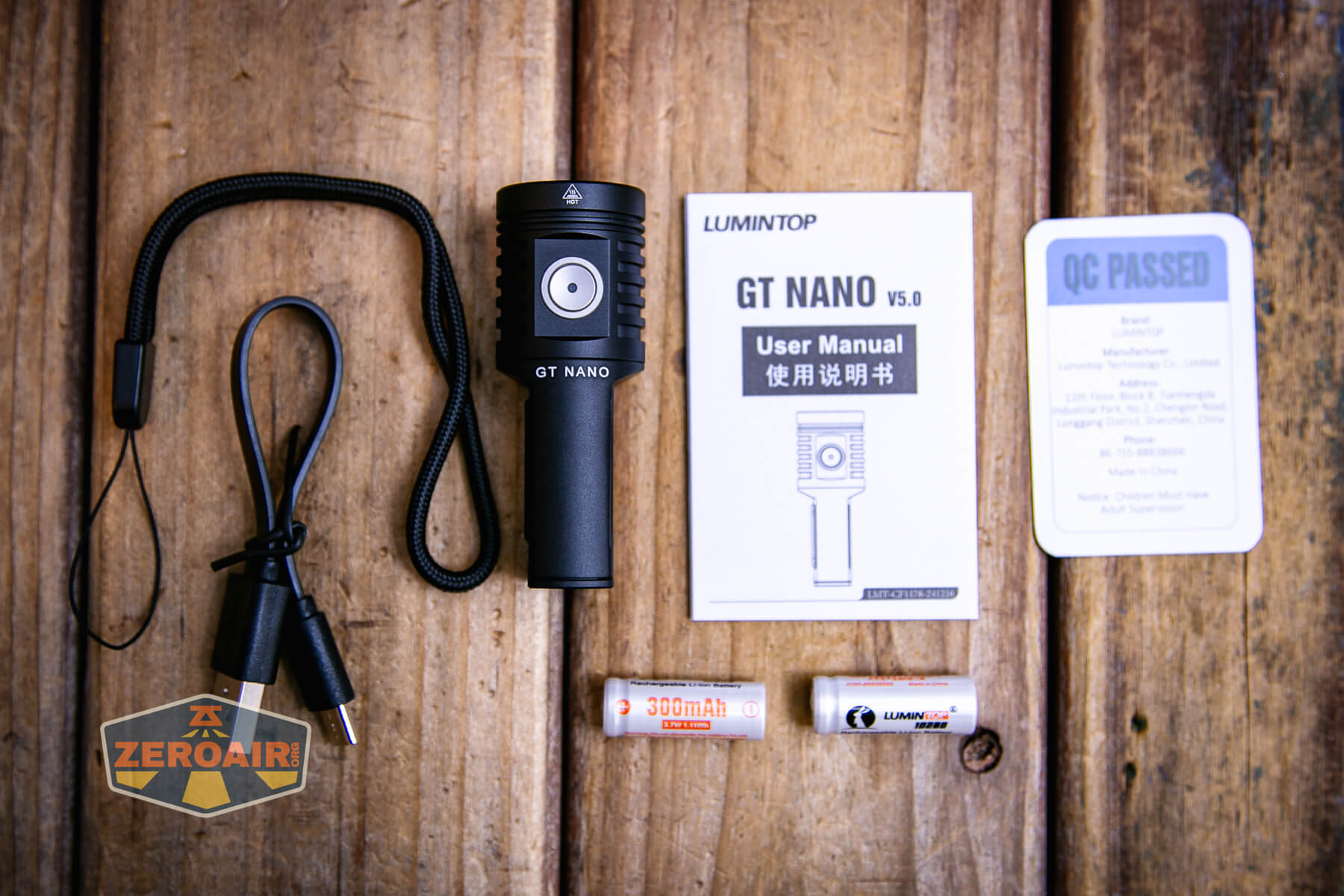
- Lumintop GT Nano V5.0 flashlight
- Lumintop 300mAh 10280×2
- Charging cable
- Lanyard
- Manual etc
Package and Manual


Build Quality and Disassembly

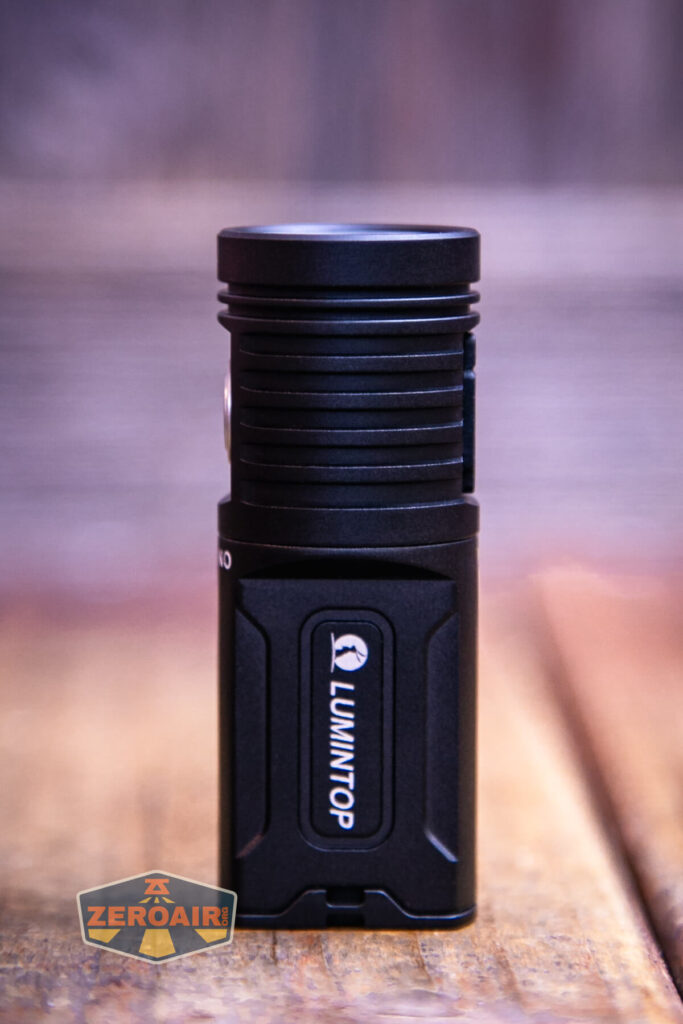
As far as GT Nanos go, the Lumintop GT Nano V5.0 flashlight is quite a change! This version uses two side-by-side cells.
Build quality here is good, too. Nothing exceptional, but nothing bad, too.
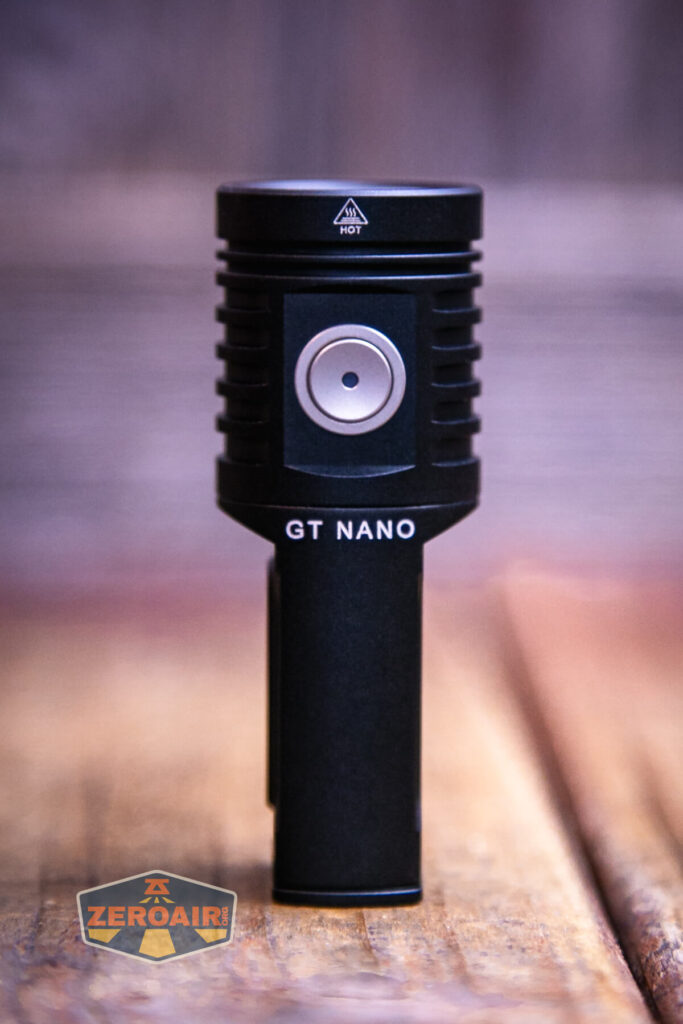
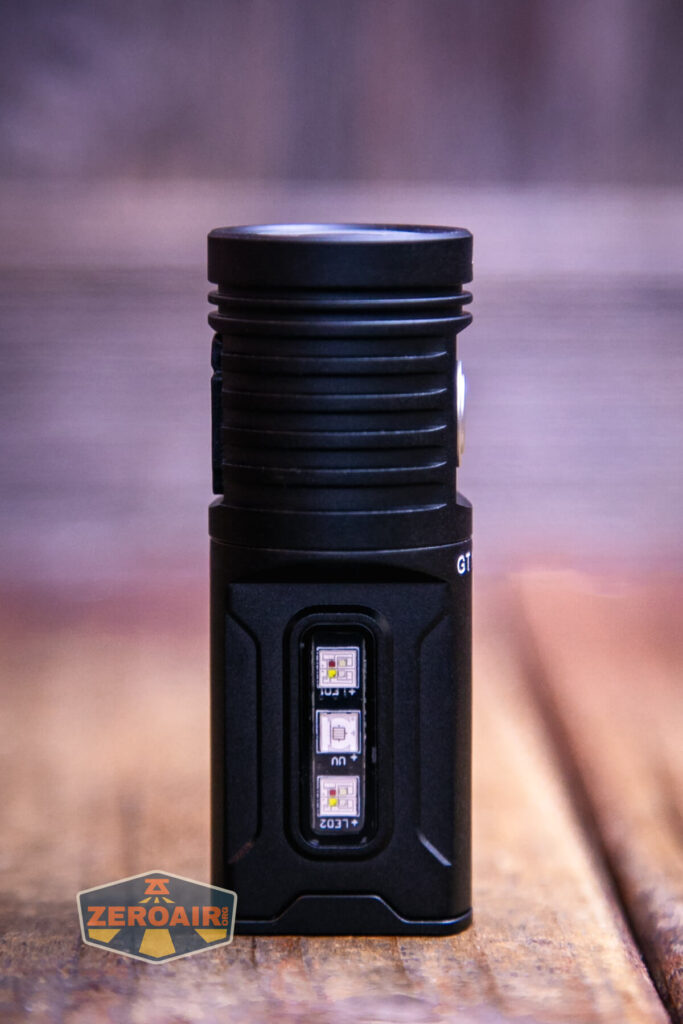
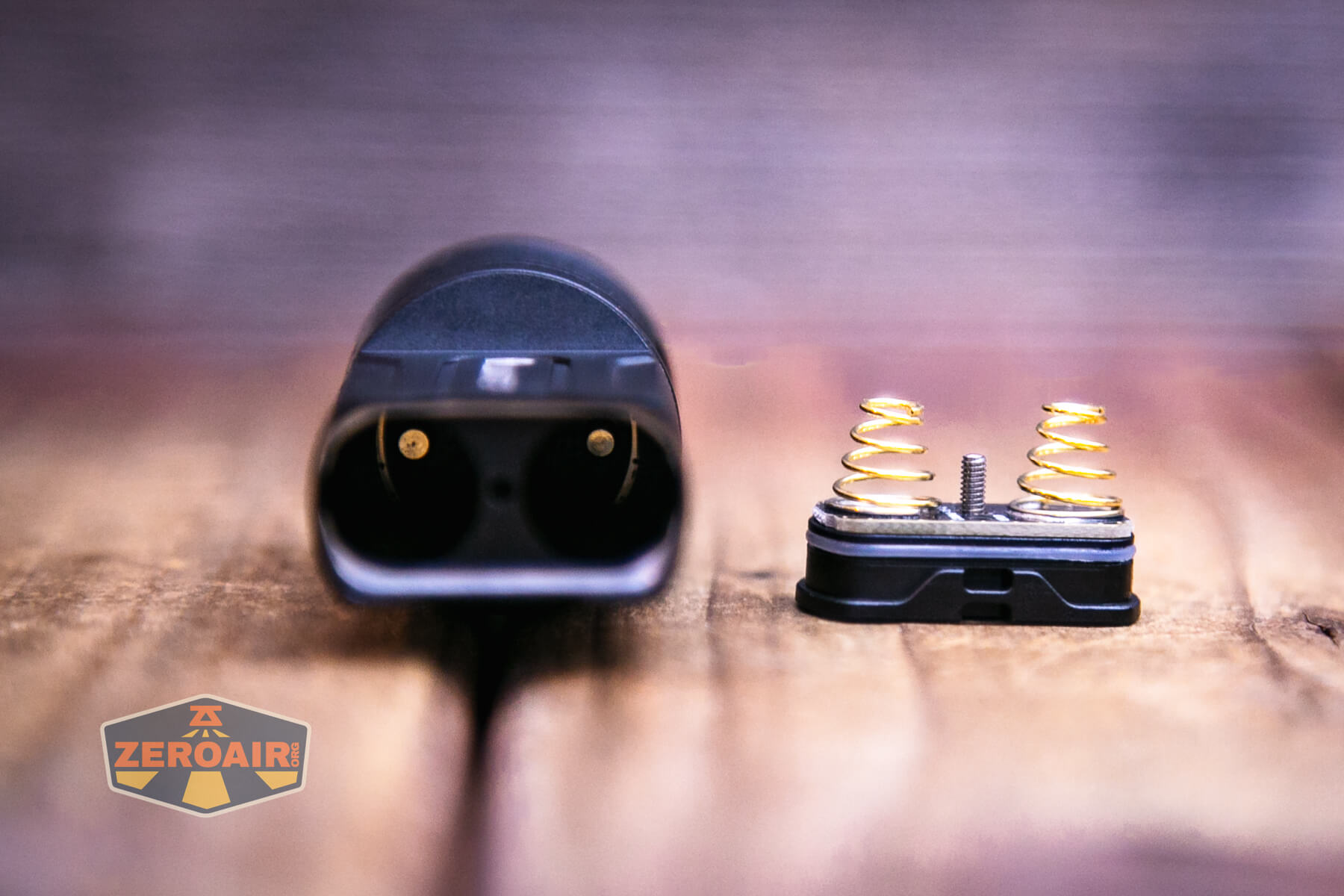
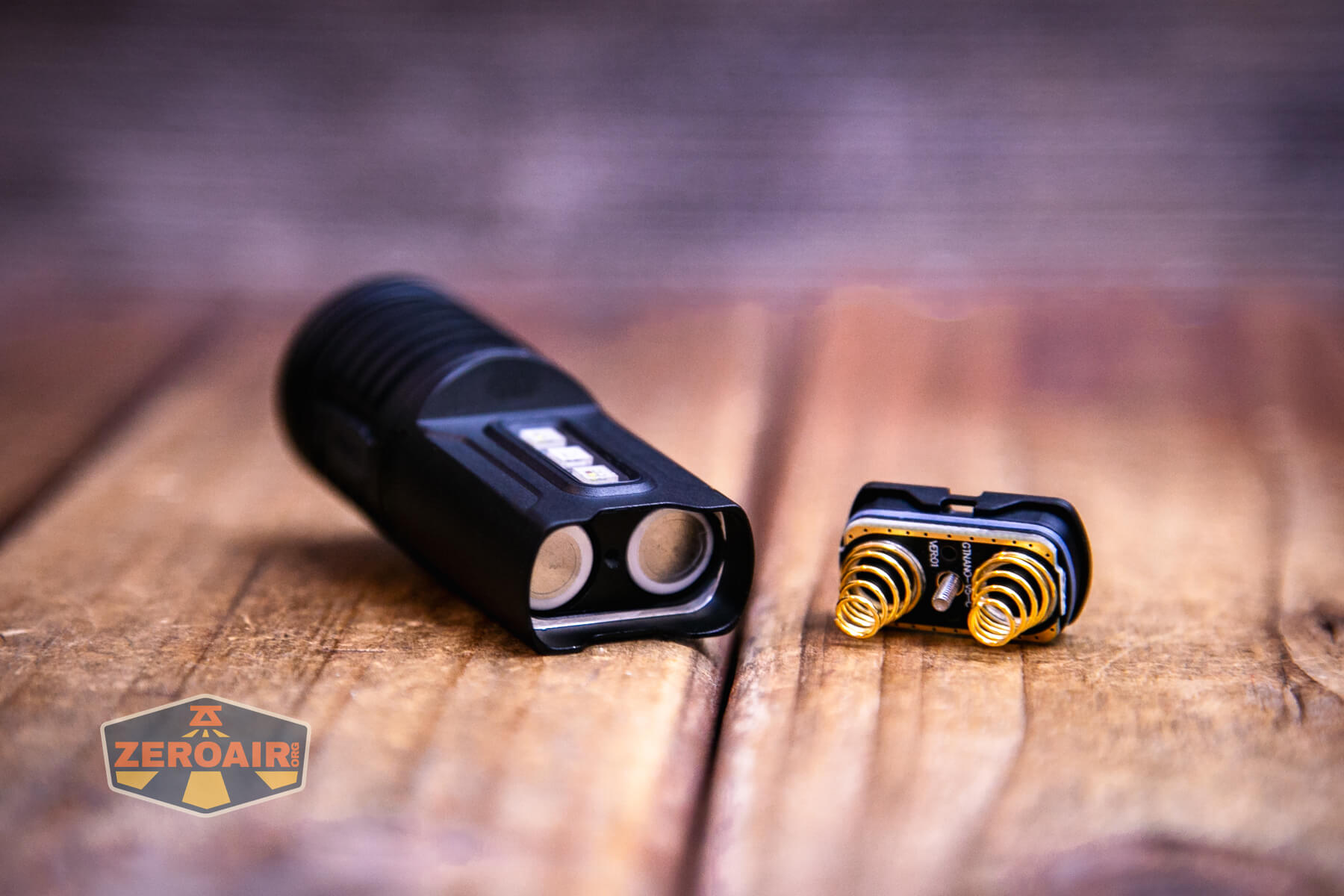
I really appreciate that the tailcap is removable. There’s a single screw right in the middle. On this tailcap, there are two large springs. Inside the cell body is the positive contact – just two brass buttons.
Size and Comps
Size 66 X 25.6mm
Net Weight About 57g (battery included)
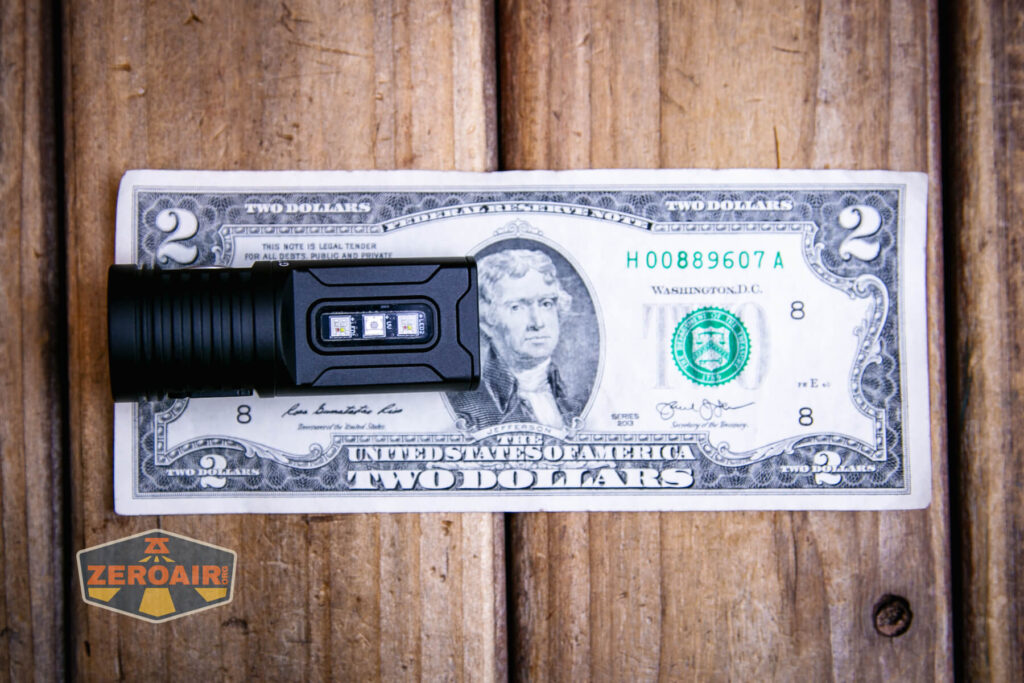
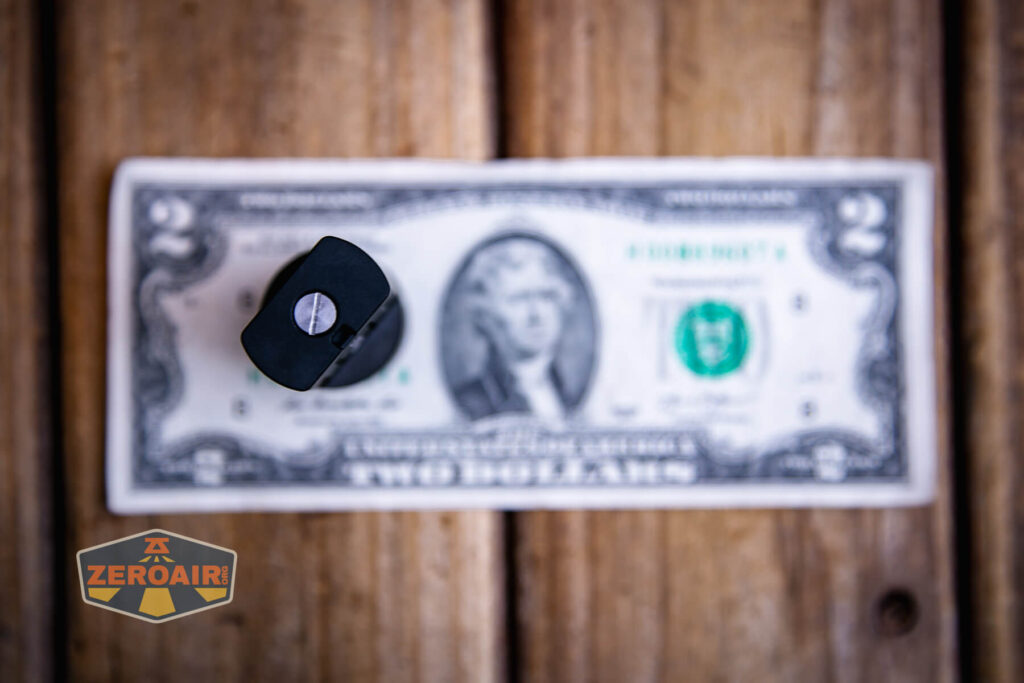
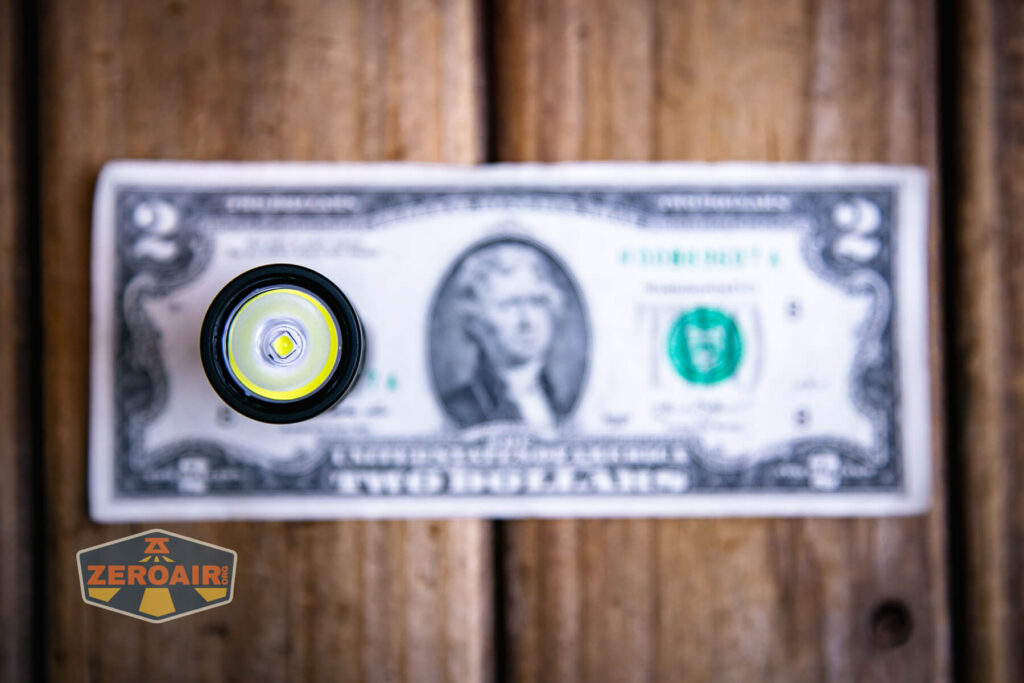
If the flashlight will headstand, I’ll show it here. If the flashlight will tailstand, I’ll also show that here too!

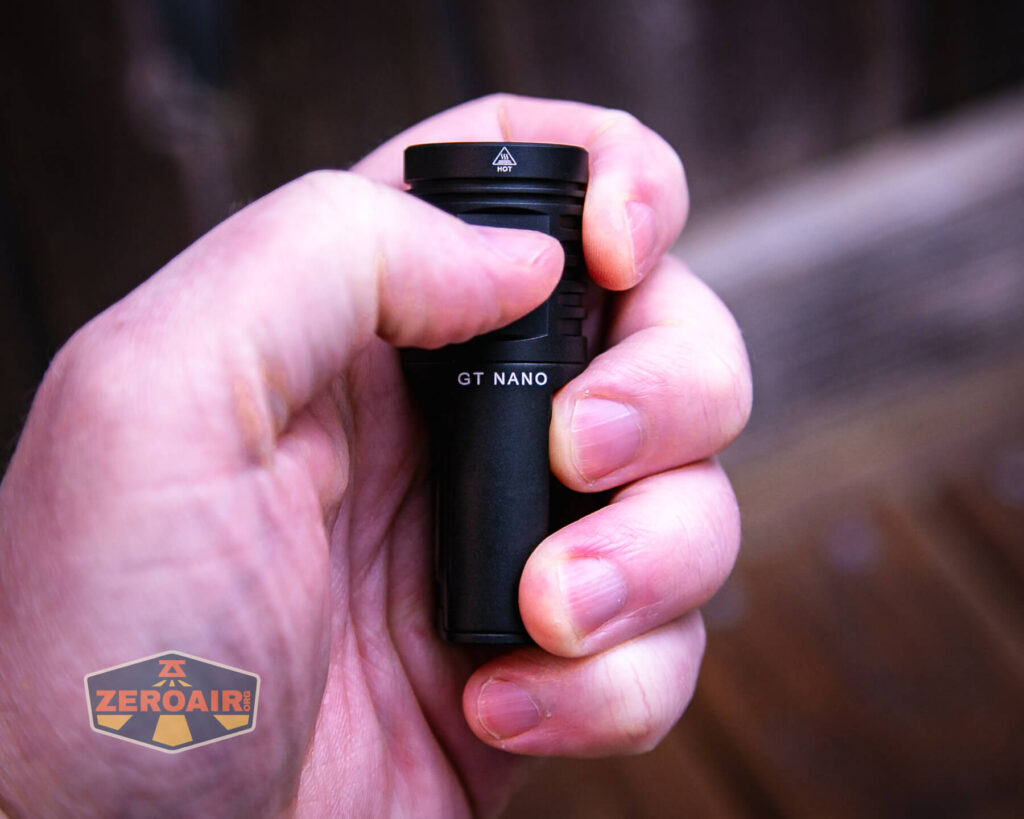
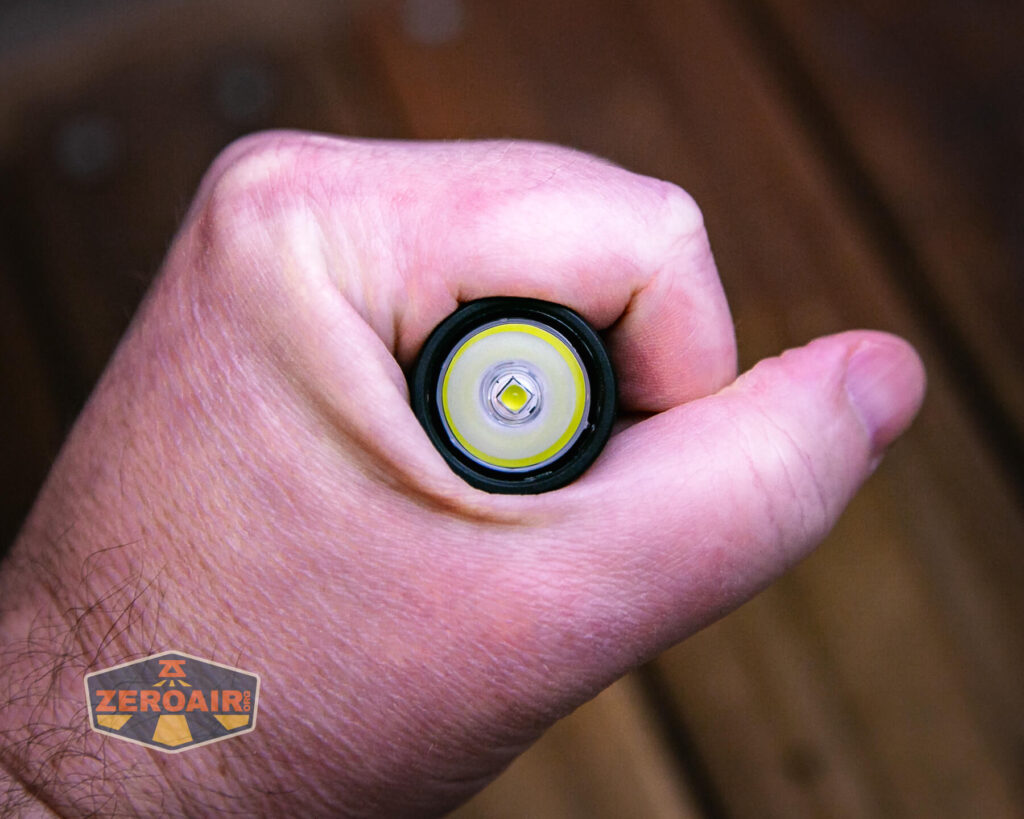
Here’s the test light with the venerable Convoy S2+. The version below is a custom laser-engraved Convoy S2+ host by GadgetConnections.com. I did a full post on an engraved orange host right here! Or go straight to GadgetConnections.com to buy your Convoy S2+ now!
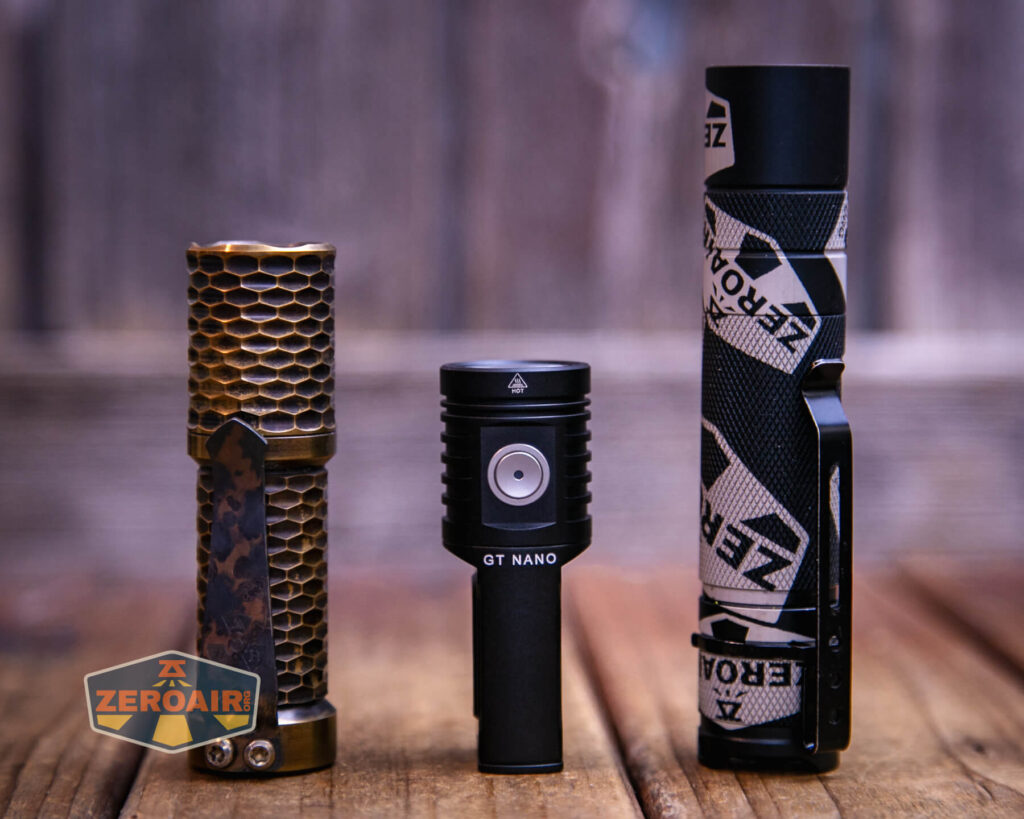
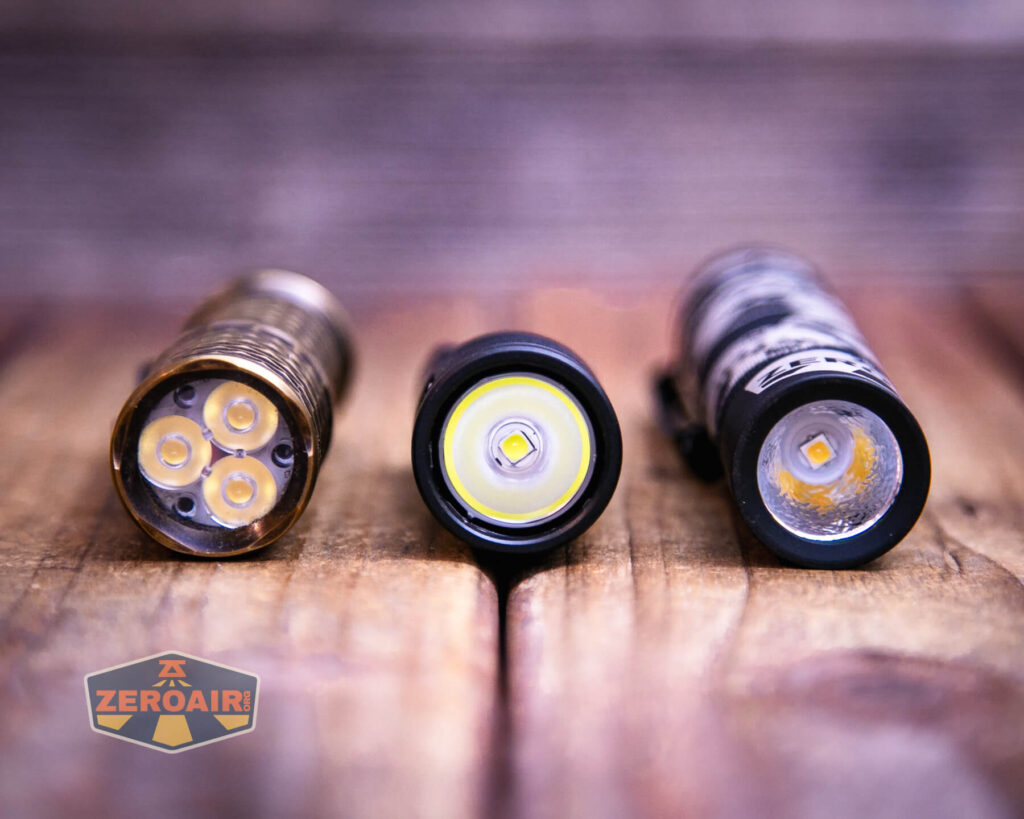
In the photo above, you may note that the SRM (standard reference material) flashlight for comparison has changed! I used a TorchLAB BOSS 35 for ages. Now, what you can see as the 18350 SRM is the Hanko Machine Works Trident. While I have not reviewed or tested the Gunner Grip version seen here, I have tested a Hanko Machine Works Trident Total Tesseract in brass. I love the Trident, and it’s a striking contrast next to the inexpensive Convoy S2+, which also makes a great standard reference material.
Retention and Carry
The Lumintop GT Nano V5.0 flashlight includes a lanyard. The tailcap has a little loop for attaching the lanyard.
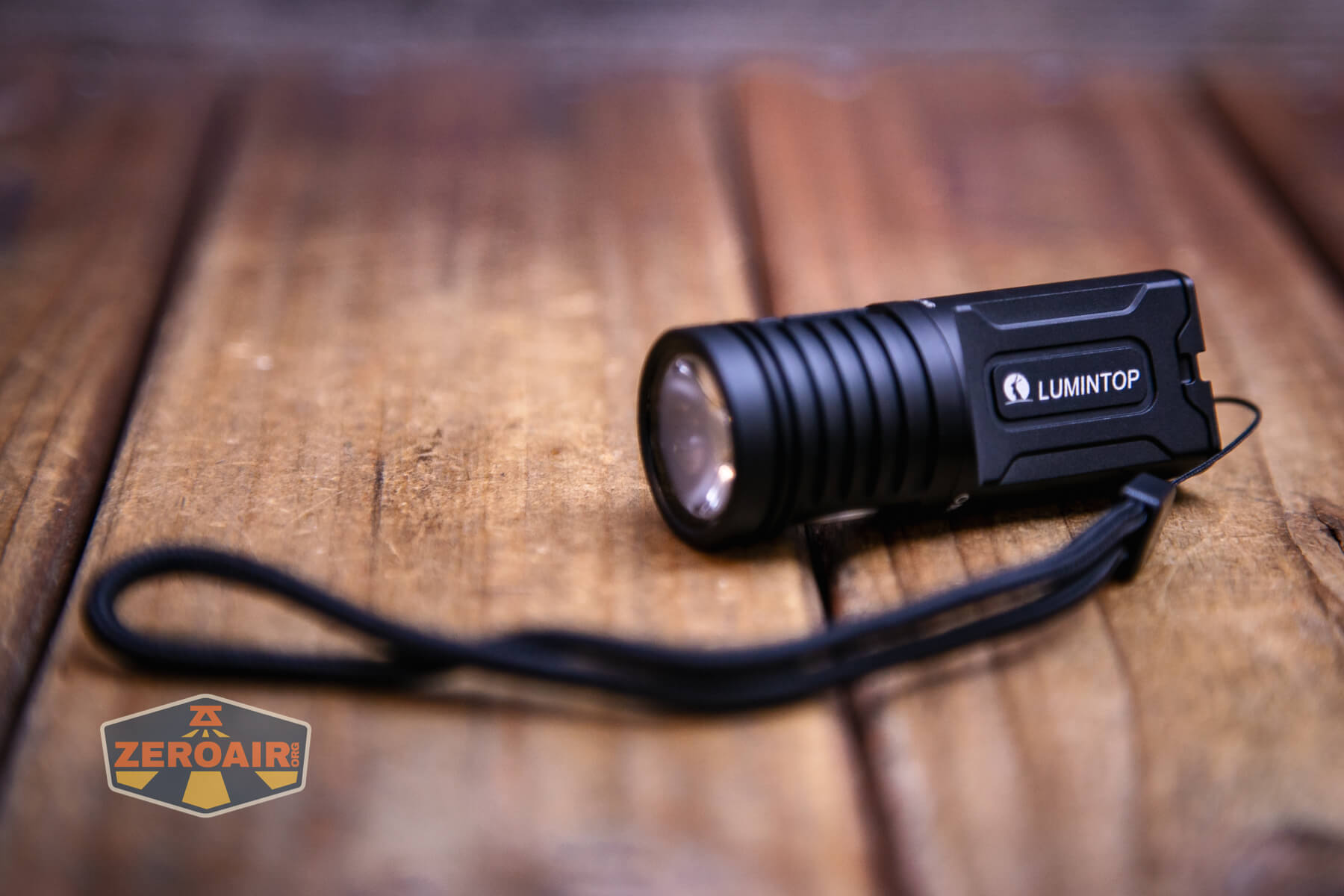
Also in the tailcap has a magnet, which is perfectly sufficient for holding the Lumintop GT Nano V5.0 flashlight.
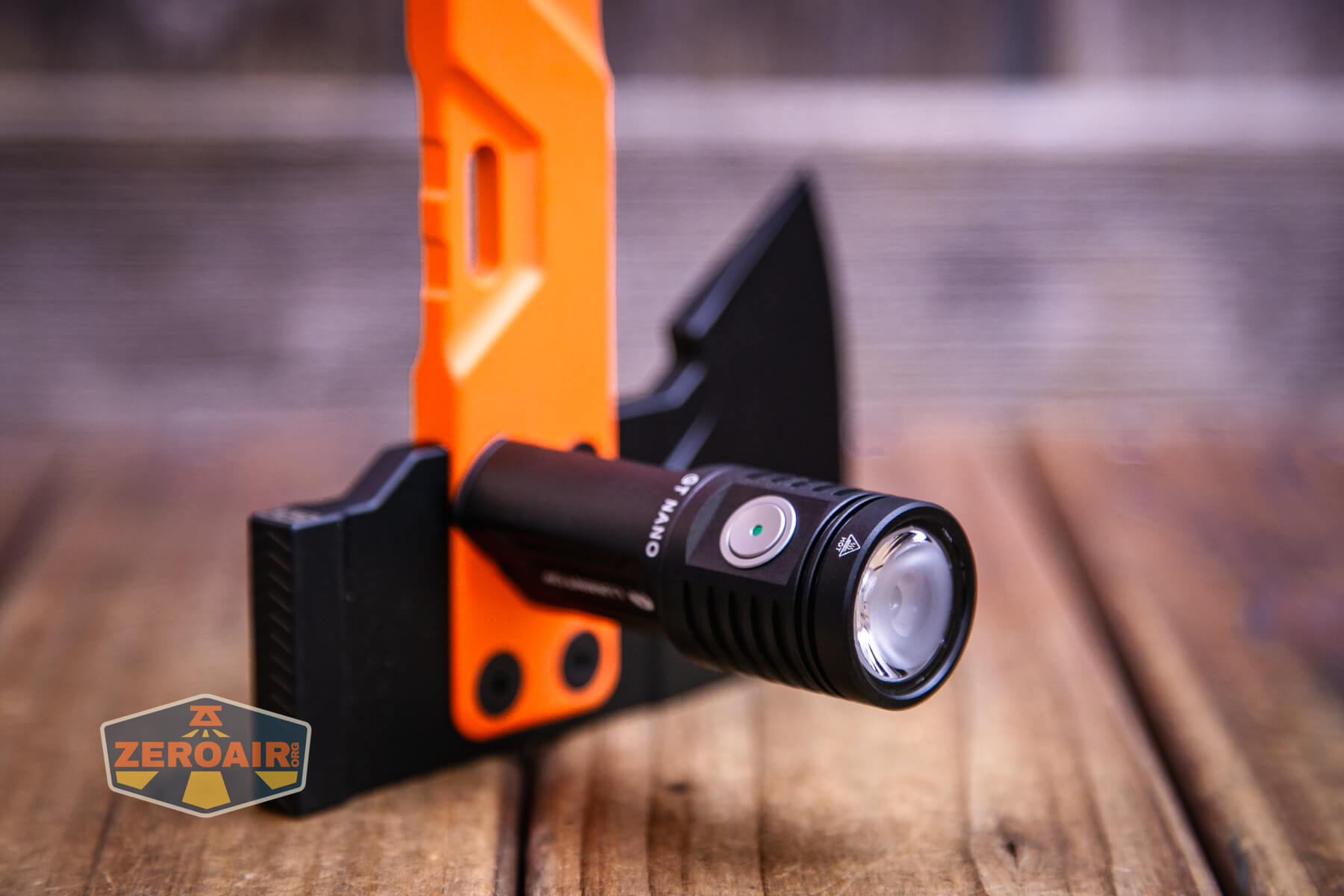
Above, you may note a new holder for my magnetic-tailcap items. That’s the Exceed Designs Hyzer Titanium Mini Hatchet D2 axe. The handle (as the name suggests), is titanium. But the blade is D2 steel and perfect for retaining magnetic tailcap flashlights! The Hyzer is available in a bunch of cerakote body colors as well as different thickness D2 heads.
Power and Runtime
The Lumintop GT Nano V5.0 flashlight runs on two unusual cells – 10280 lithium-ion cells.
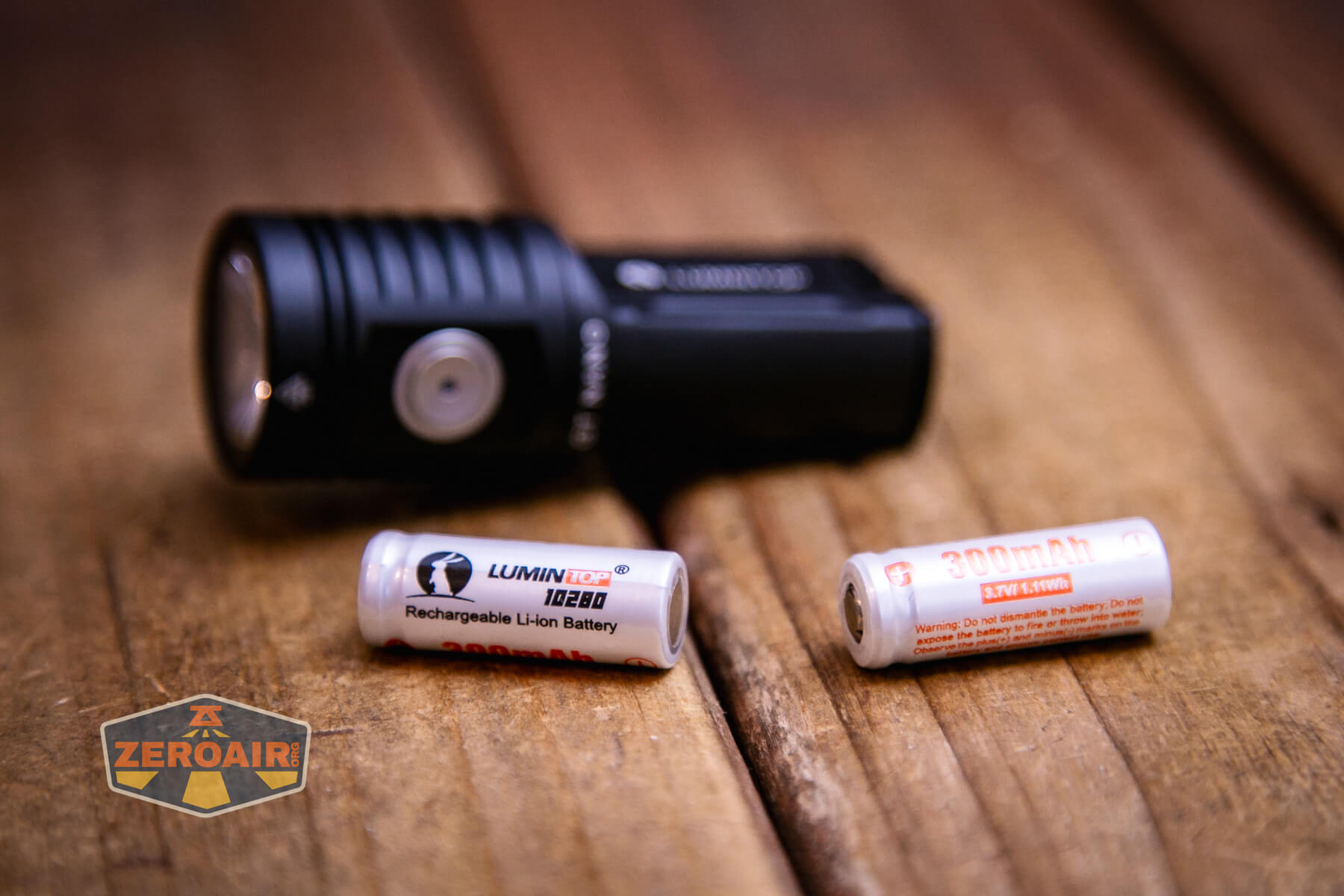
Both these cells go into the Lumintop GT Nano V5.0 flashlight with the button toward the head, which suggests they’re in parallel. The light will run with just one cell, too, which means the setup is 2p (parallel) and not 2s (8.4V).
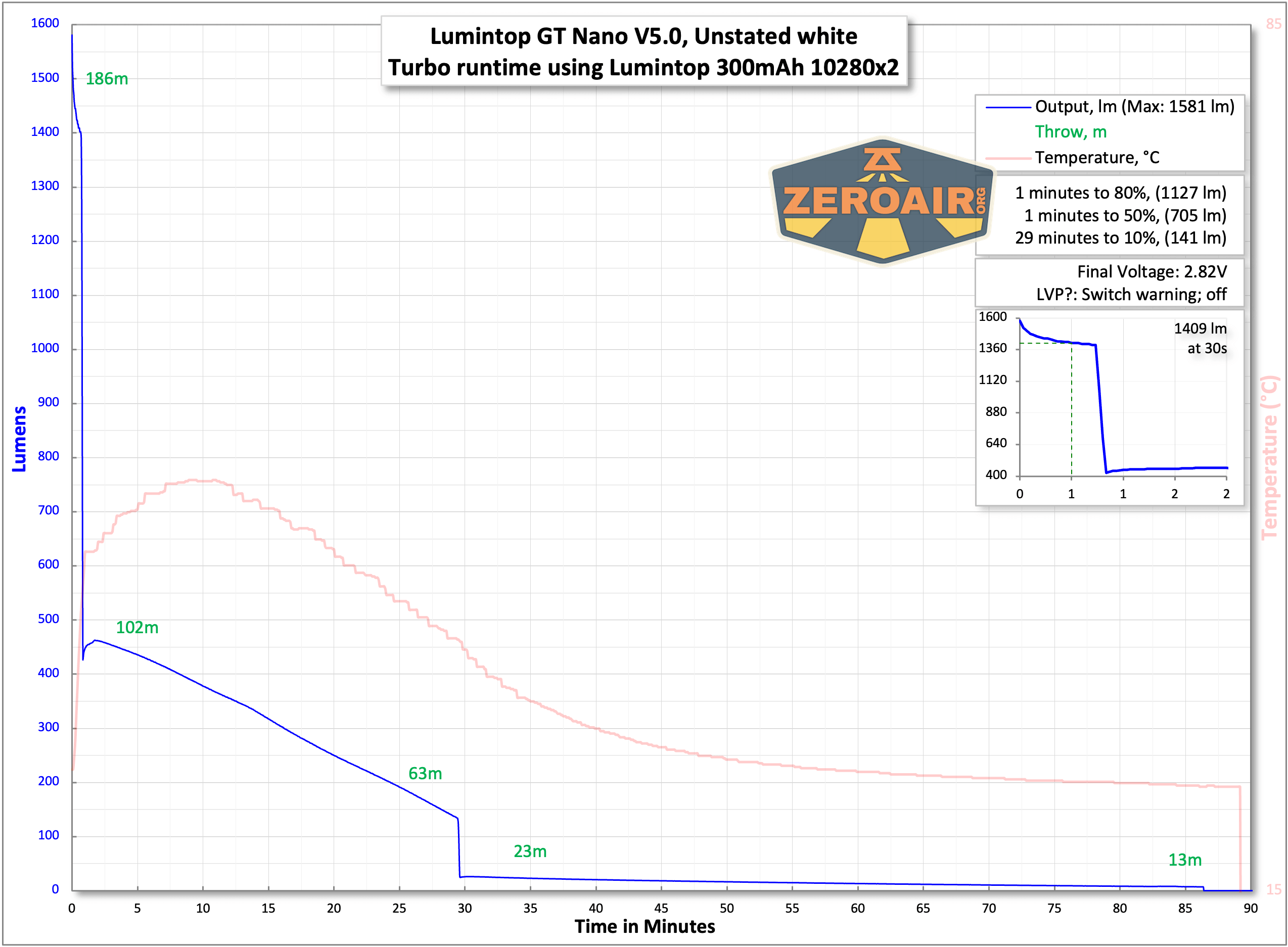
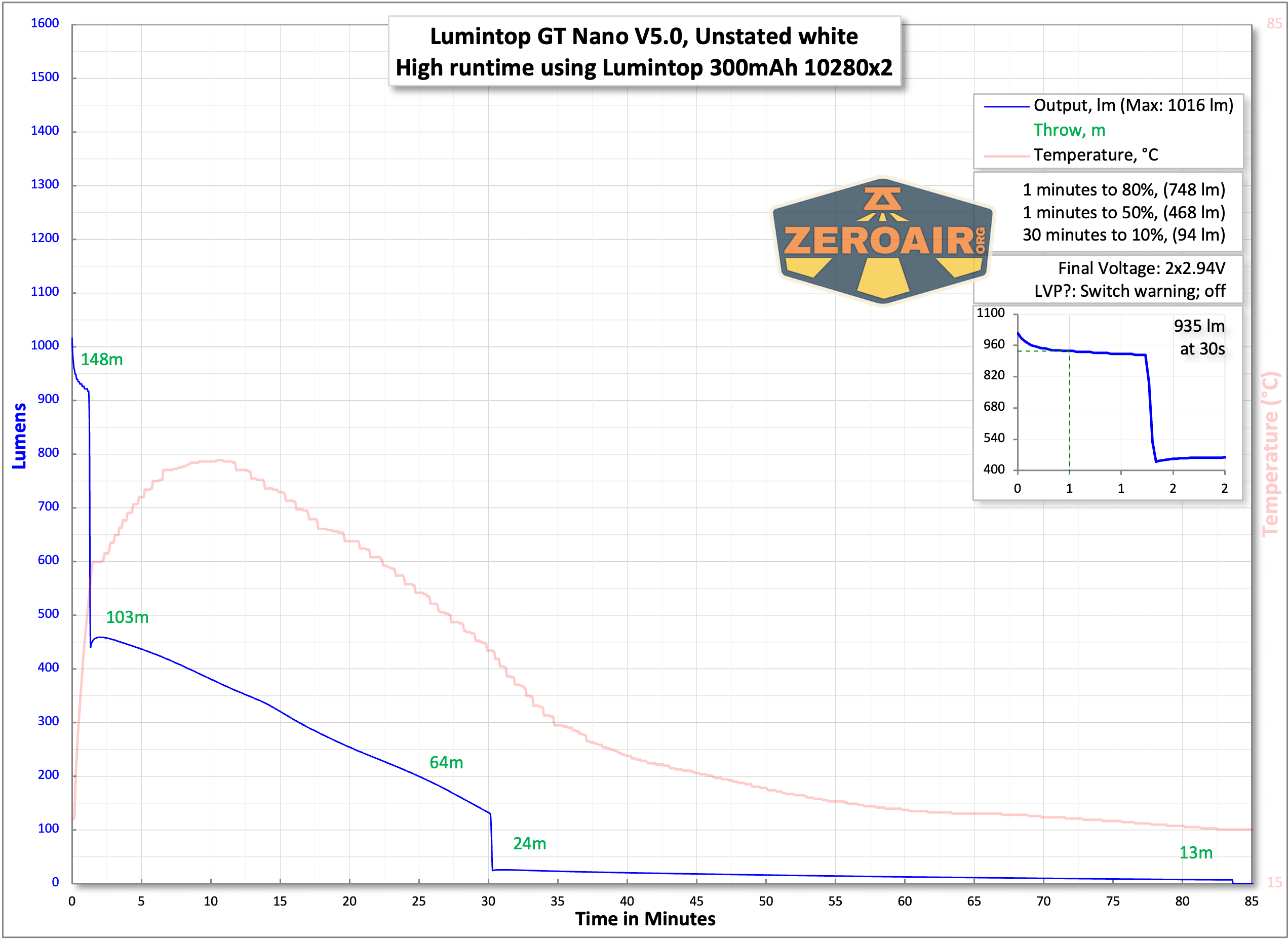
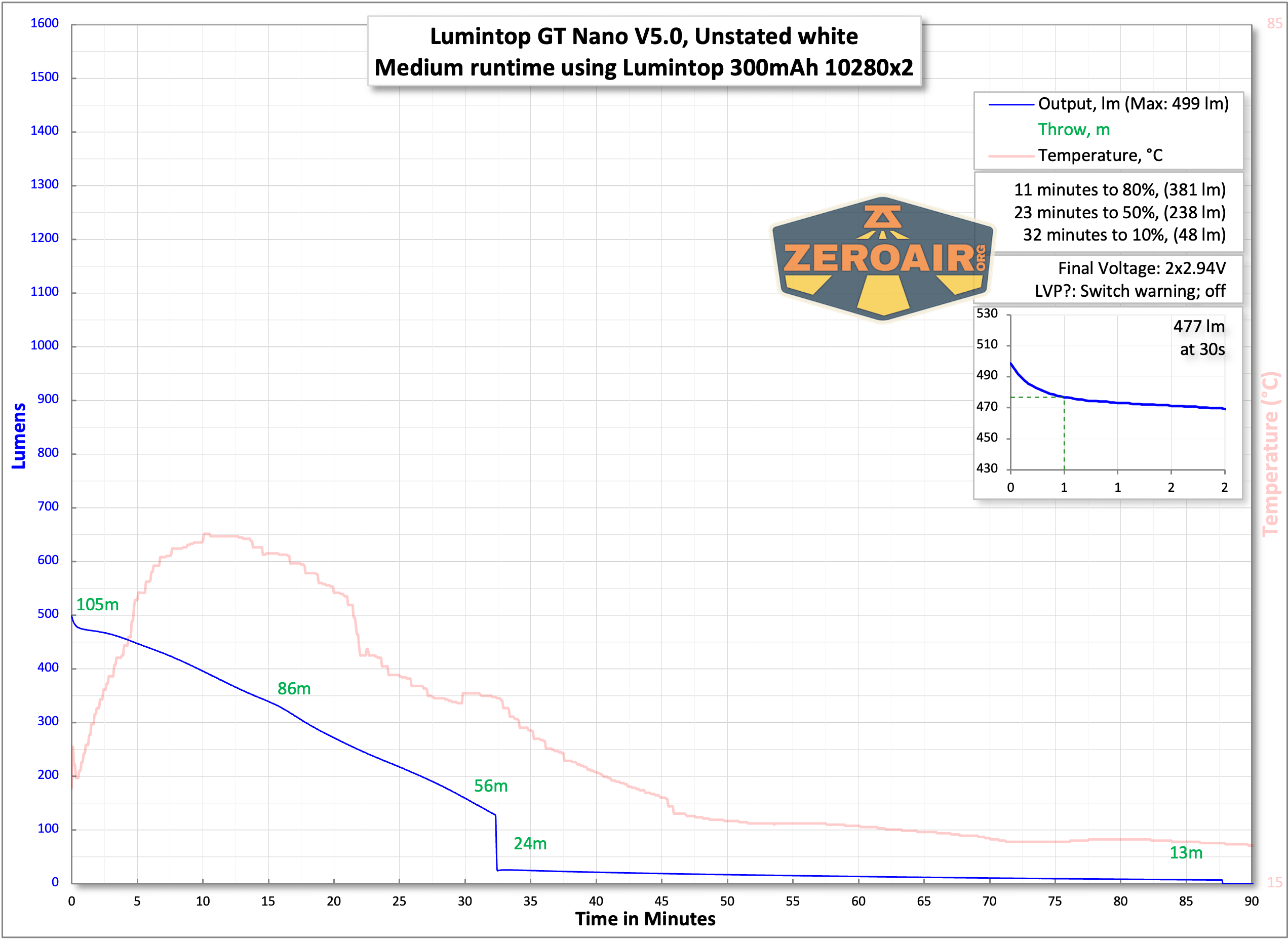
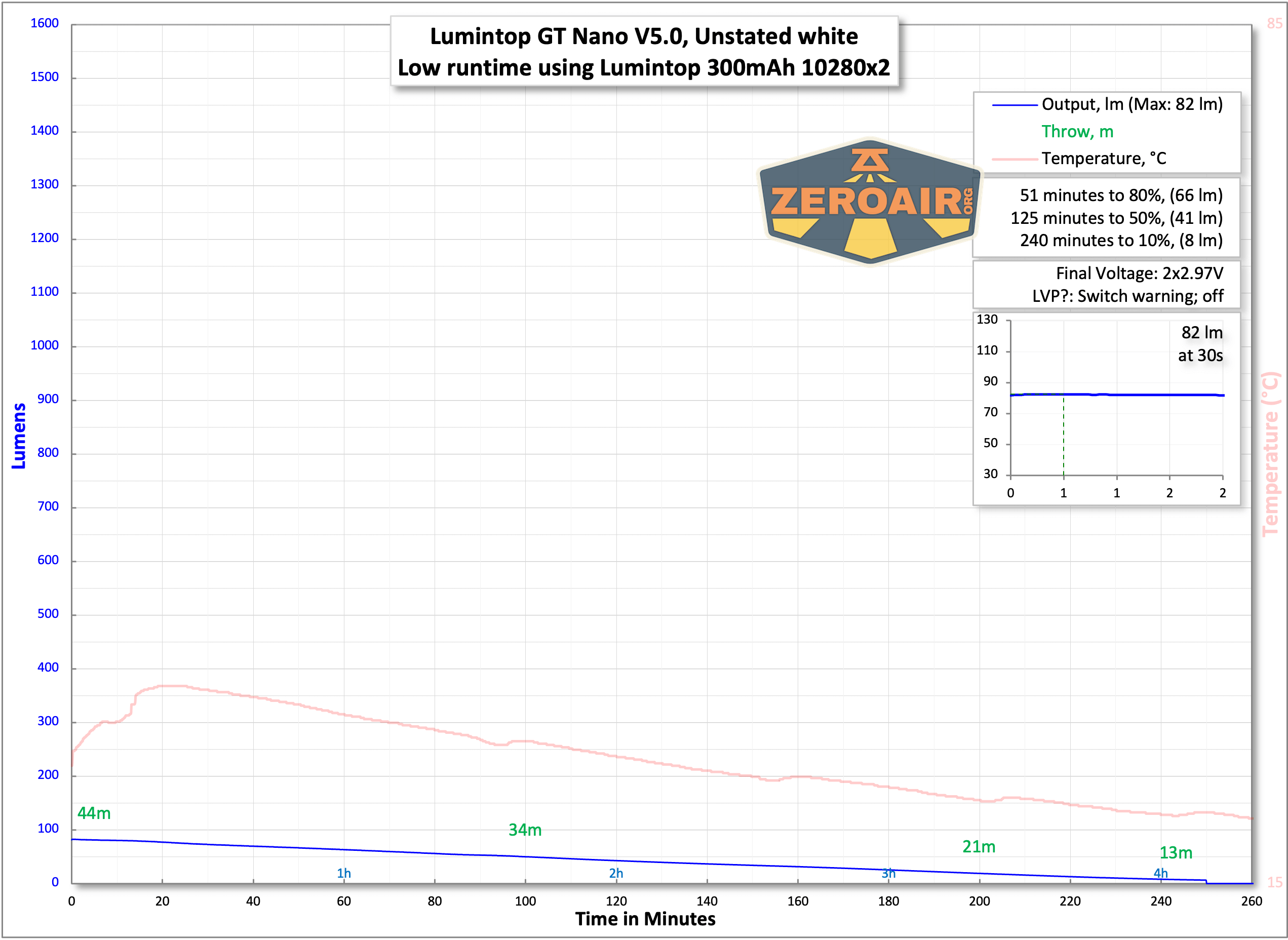
Below are a number of runtime tests – all of the main modes, and high with the side mode. Output is honestly fantastic for such a small light… I’m impressed! The output does stepdown on the highest two modes but it’s not even a quick stepdown – more than 30 seconds.
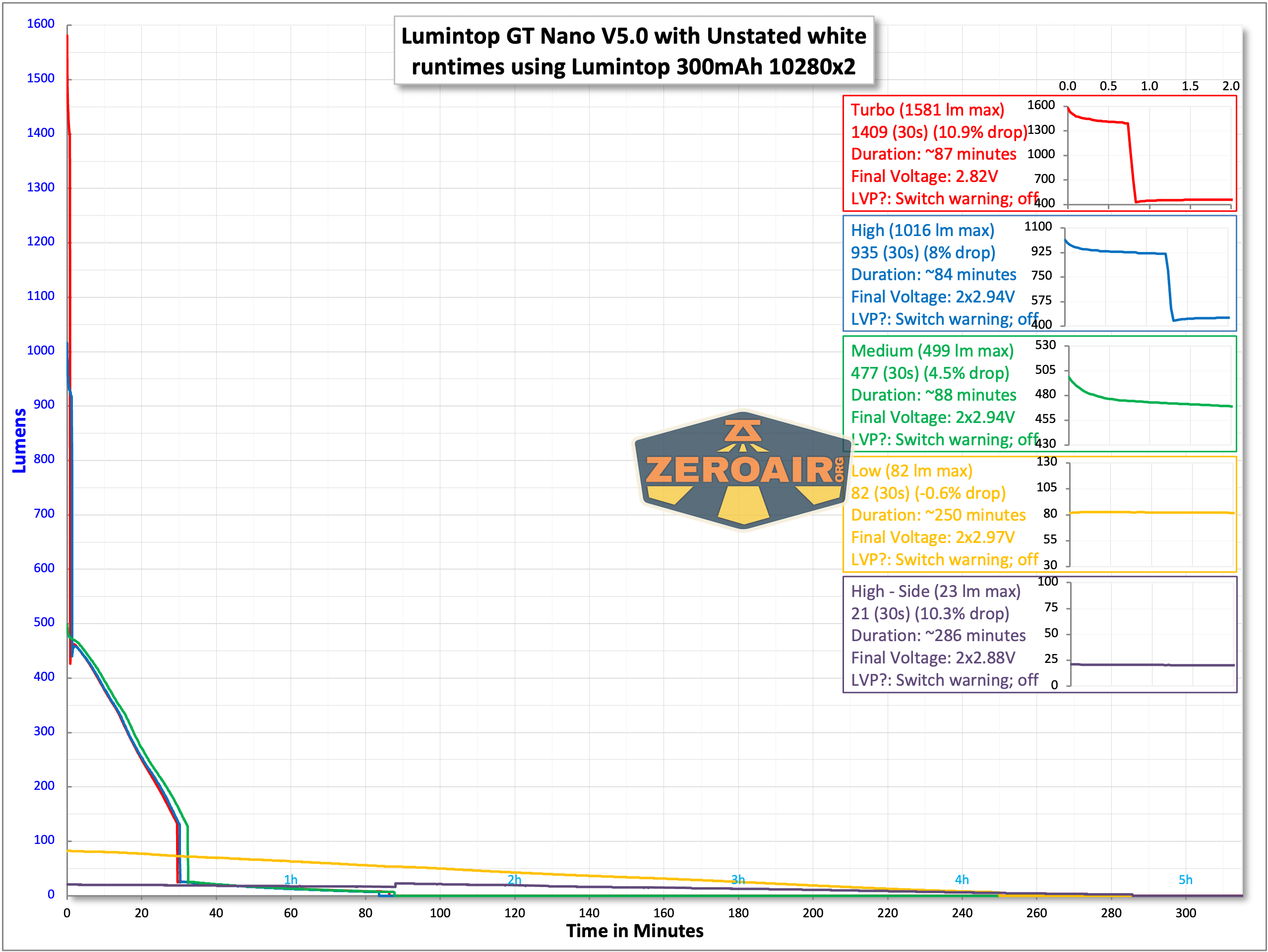
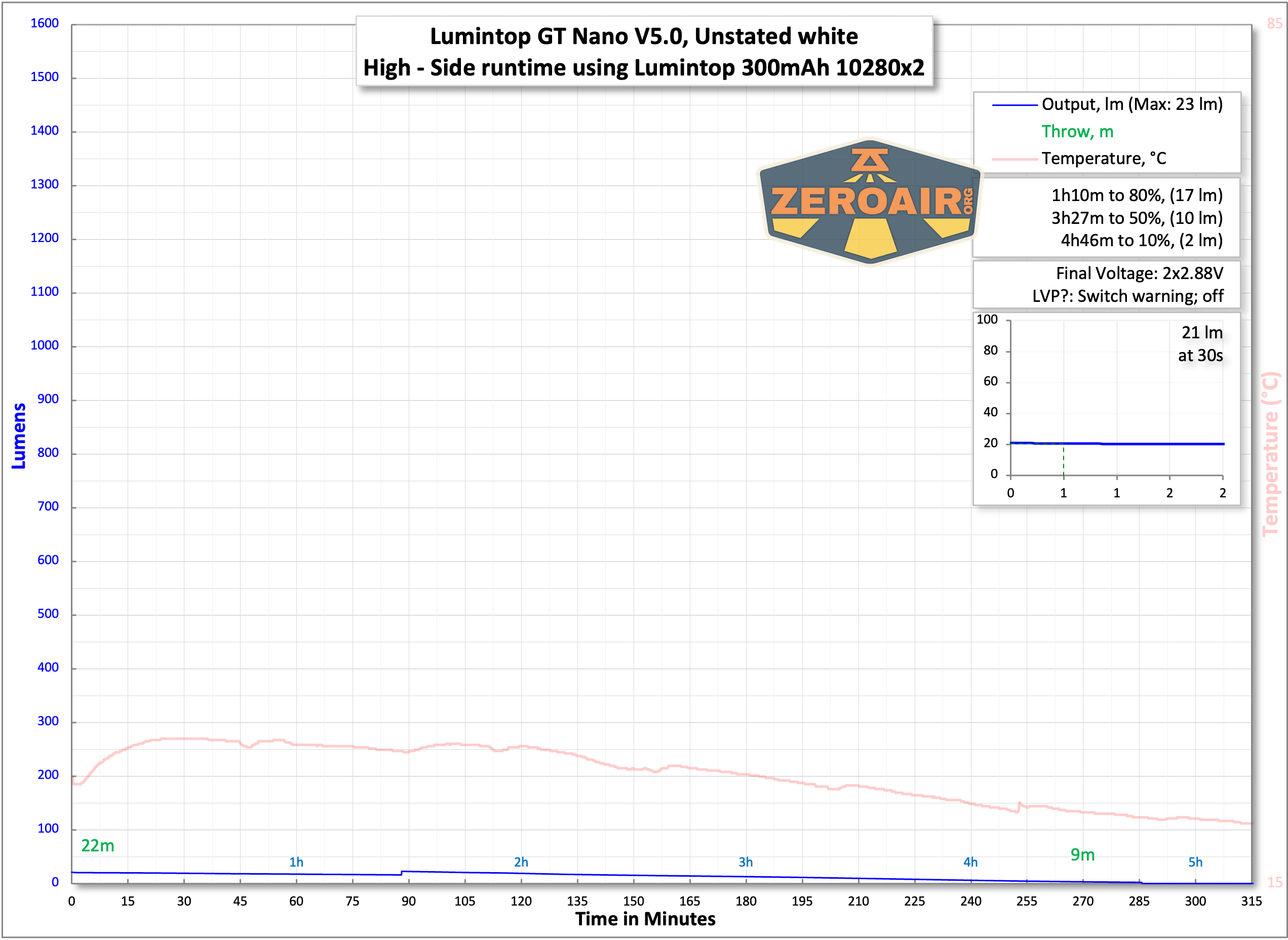
High on the side white mode is fairly low but lasts a few hours, at least. This is very floody output, too.
Charging
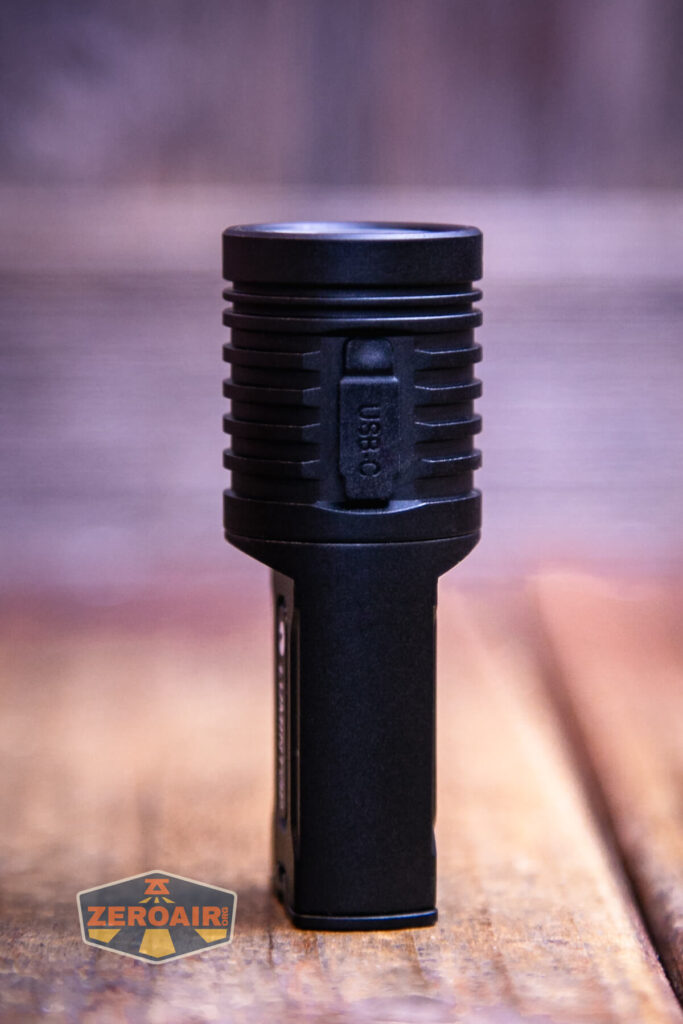
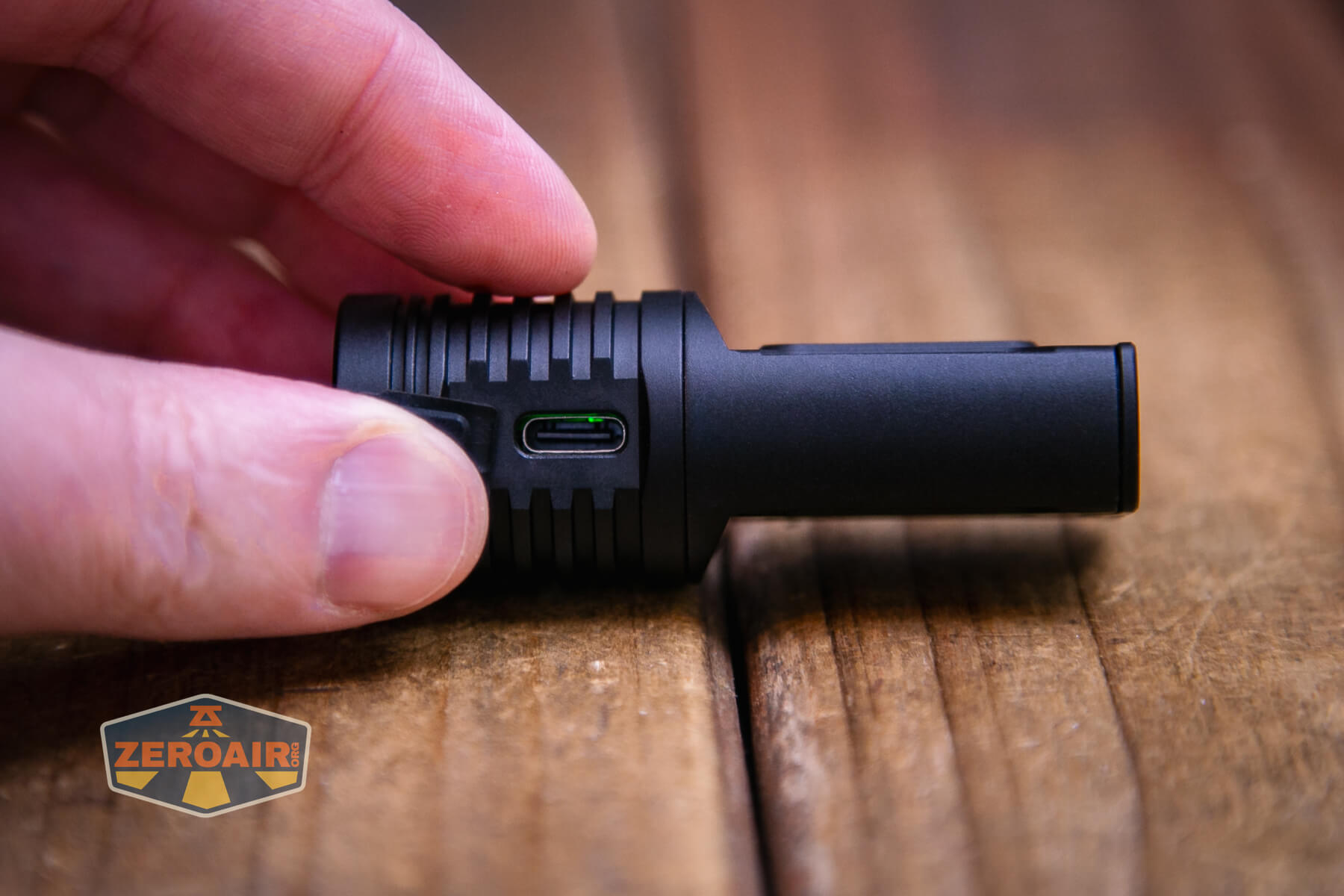
The Lumintop GT Nano V5.0 flashlight offers USB-C charging by way of a port on the side of the head.
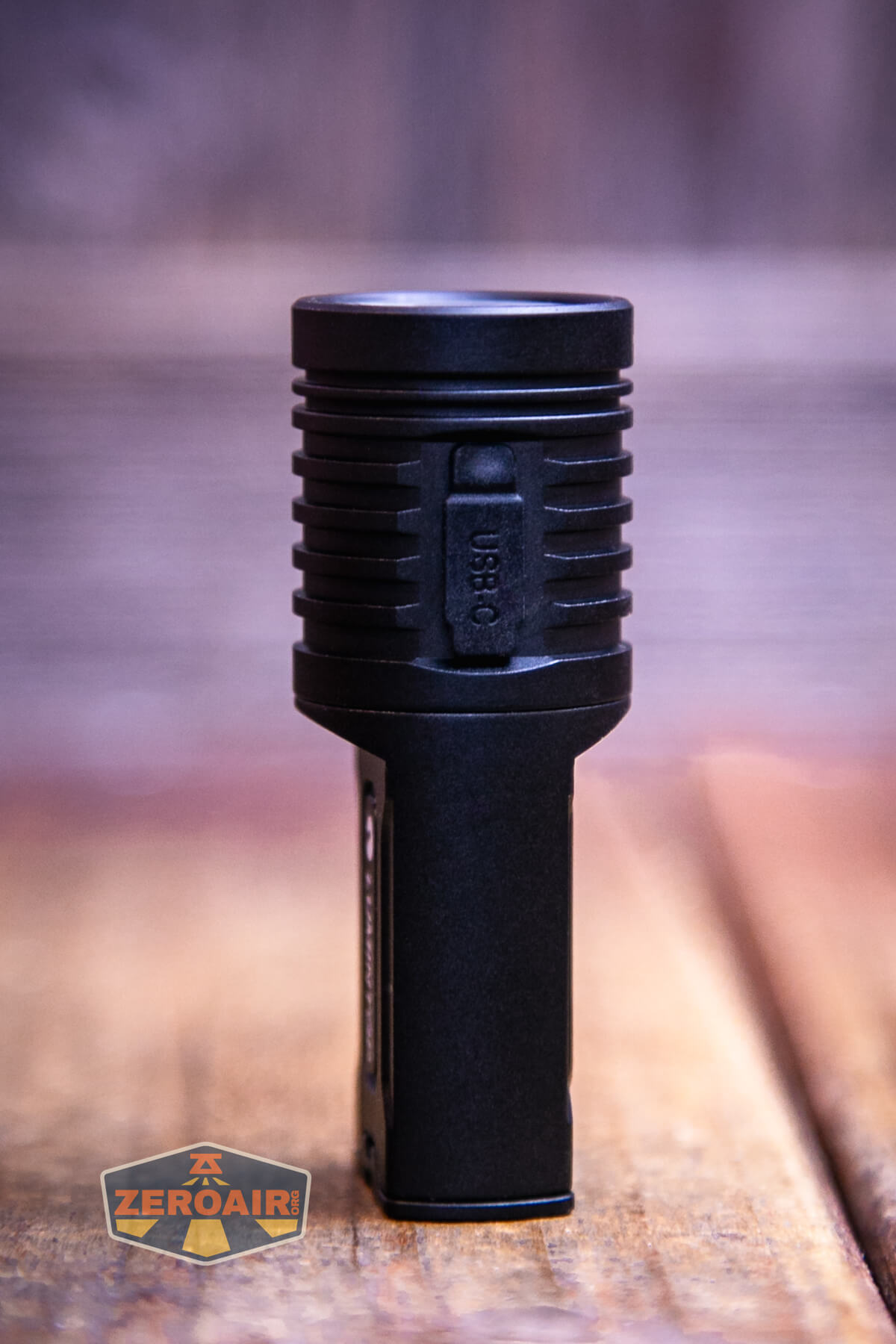
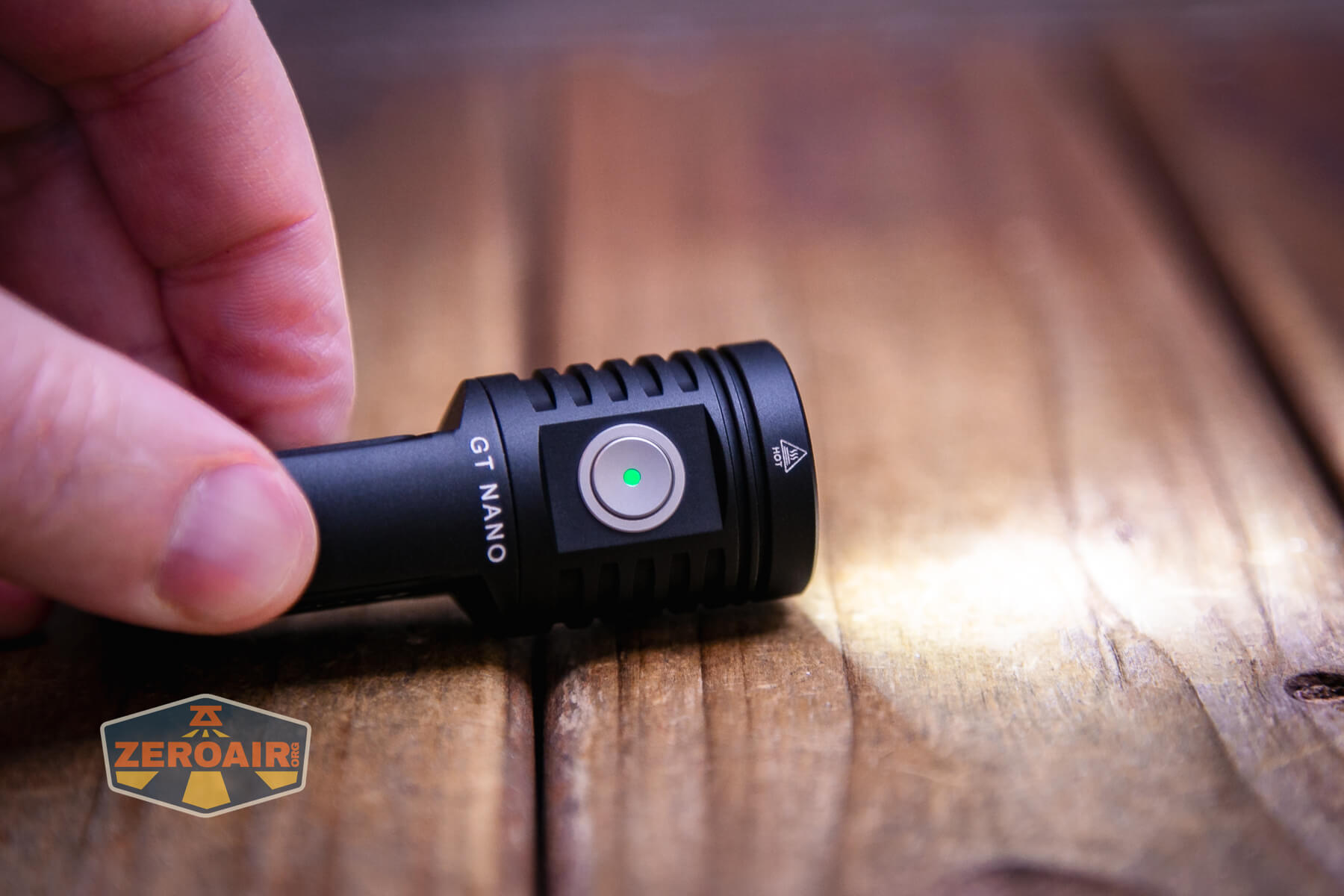
There’s a press-in cover. That green light you see there is from the switch, and not an indicator from within the charge port itself.
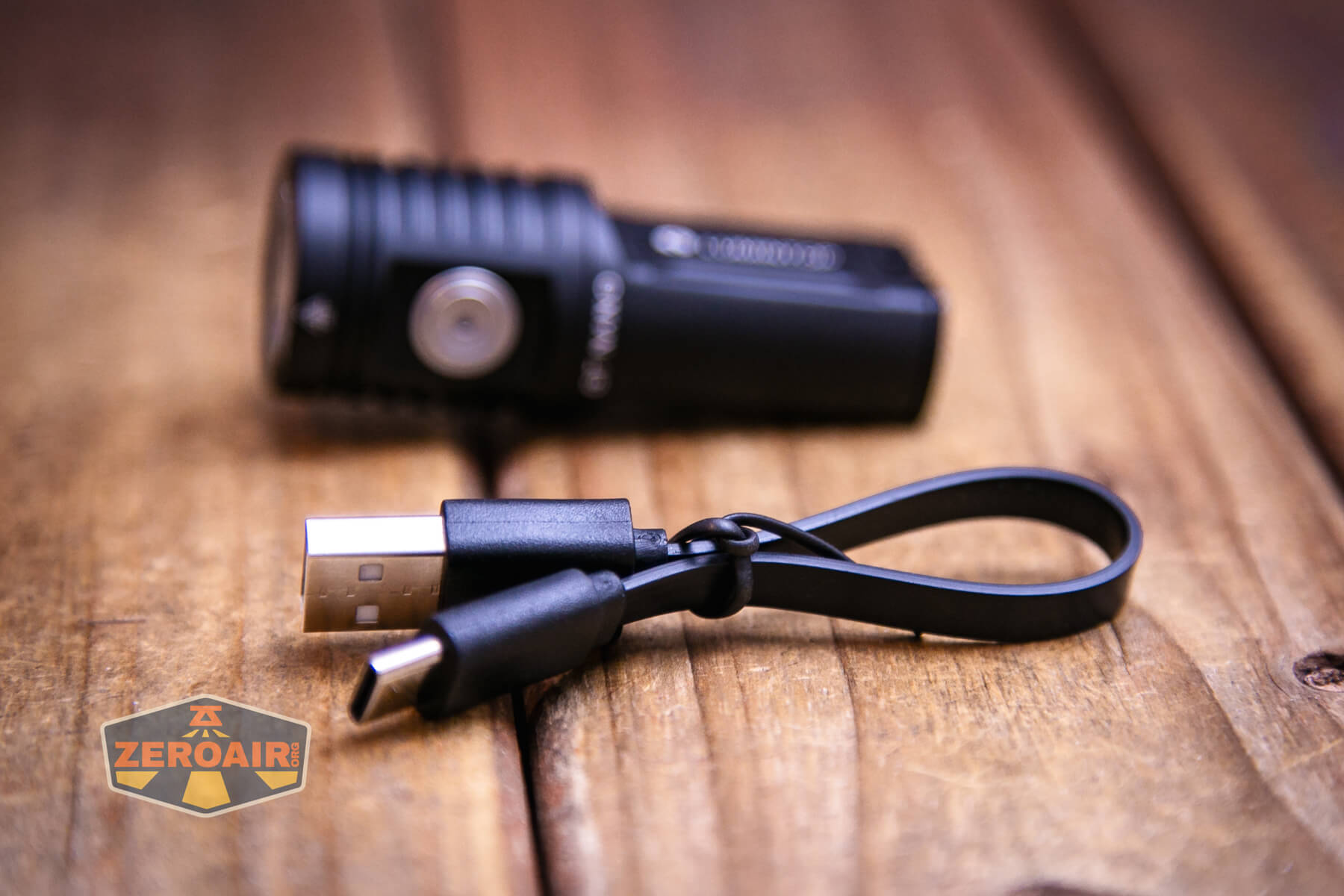
A USB to USB-C charging cable is included.
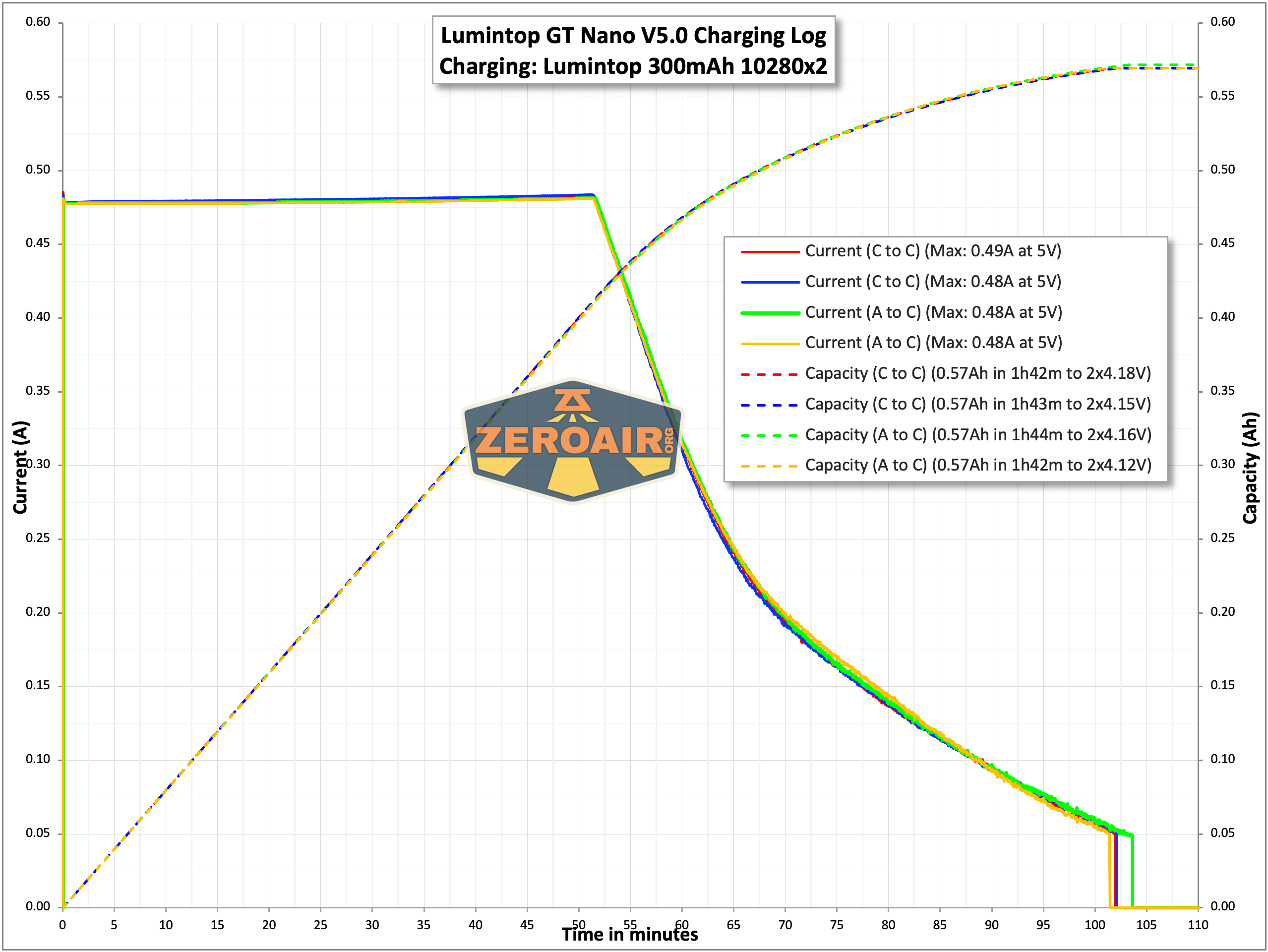
Charging by both A to C and C to C works just fine and charges at around 0.5A. When divided between the two 300mAh cells, that’s under 1C, which is reasonable and safe.
Modes and Currents
| Mode | Mode Claimed Output (lm) | Claimed Runtime | Measured Lumens | Tailcap Amps @4.2V |
|---|---|---|---|---|
| Turbo | 1400-350 | 50s+42m | 1581 (0s) 1409 (30s) |
6.47 |
| High | 800-350 | 75s+45m | 1016 (0s) 935 (30s) |
2.30 |
| Med | 350 | 50m | 499 (0s) 477 (30s) |
0.75 |
| Low | 60 | 4h | 8 | 0.20 |
| Side High | 22 | 7h | 21 | 0.14 |
| Side Low | 8 | 18h | 6.7 | 0.05 |
| Side Red | – | 6h | – | 0.17 |
| Side Green | – | 12h | – | 0.14 |
| Side Blue | – | 4h | – | 0.14 |
Pulse Width Modulation
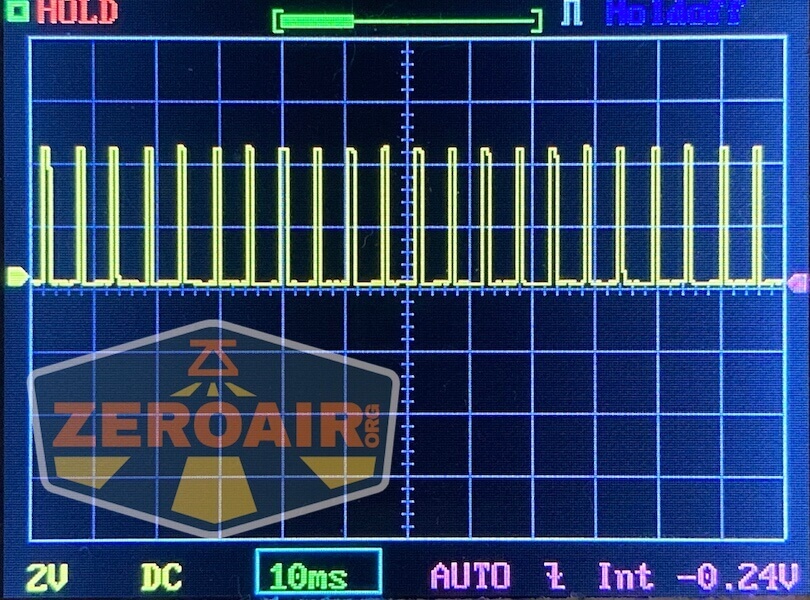
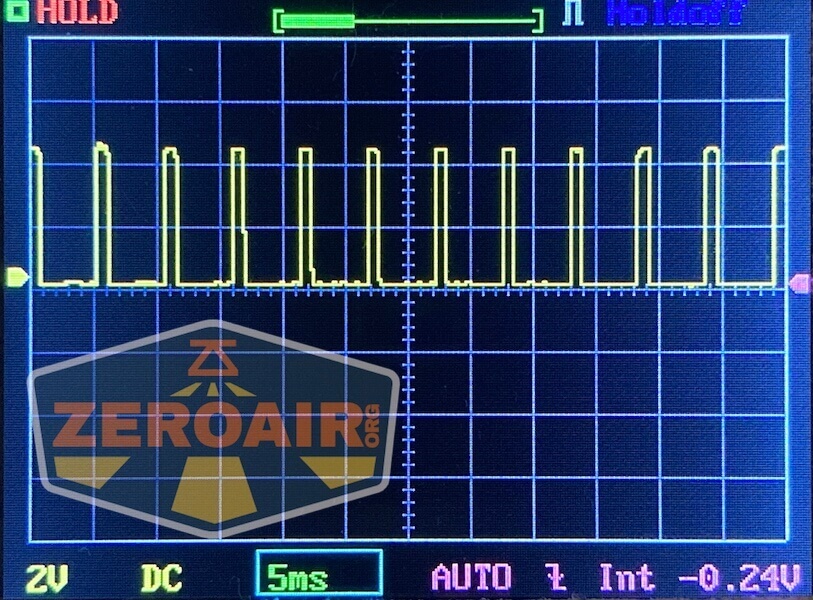
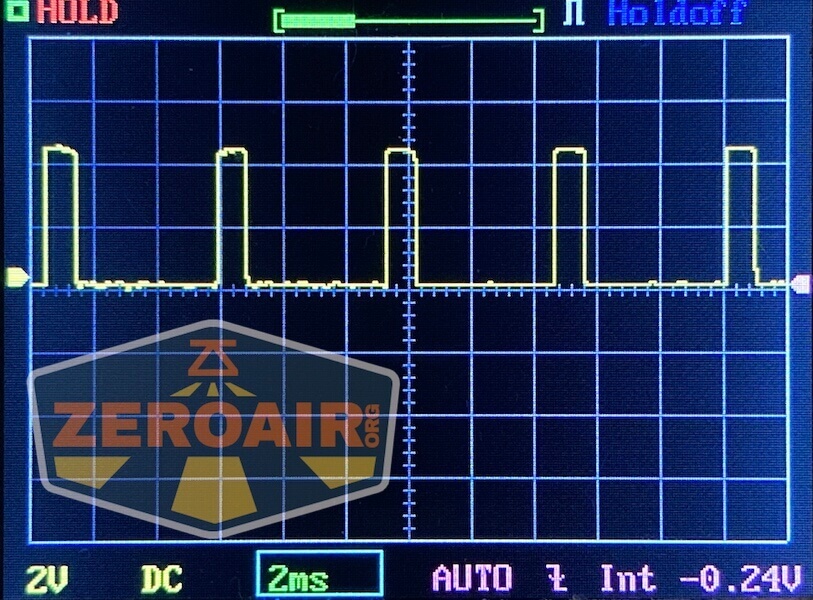
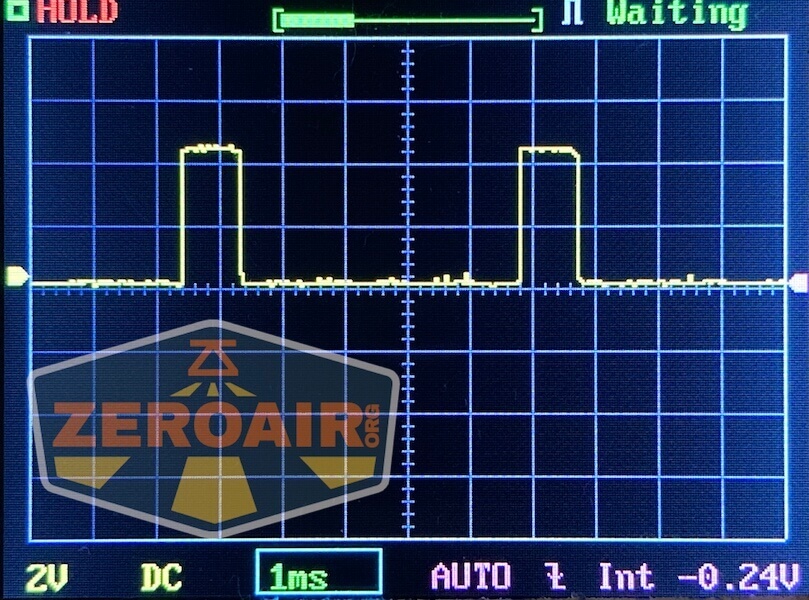
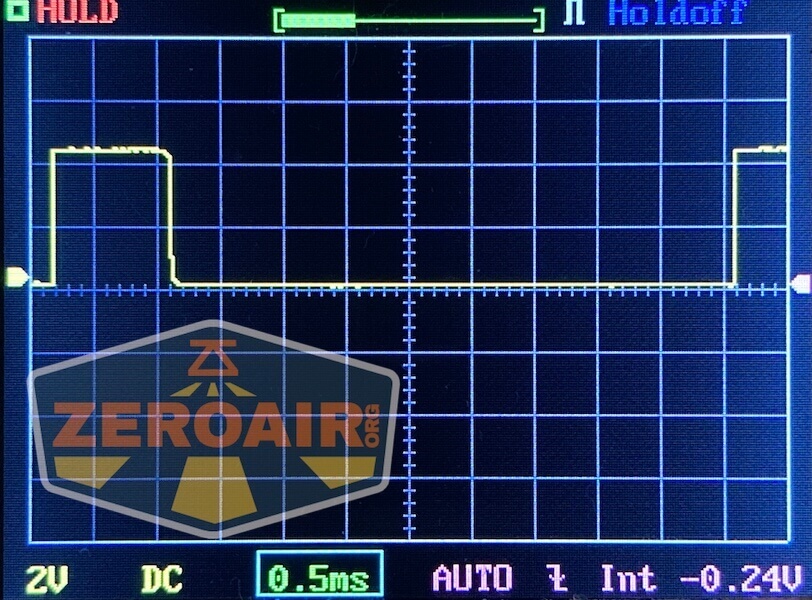
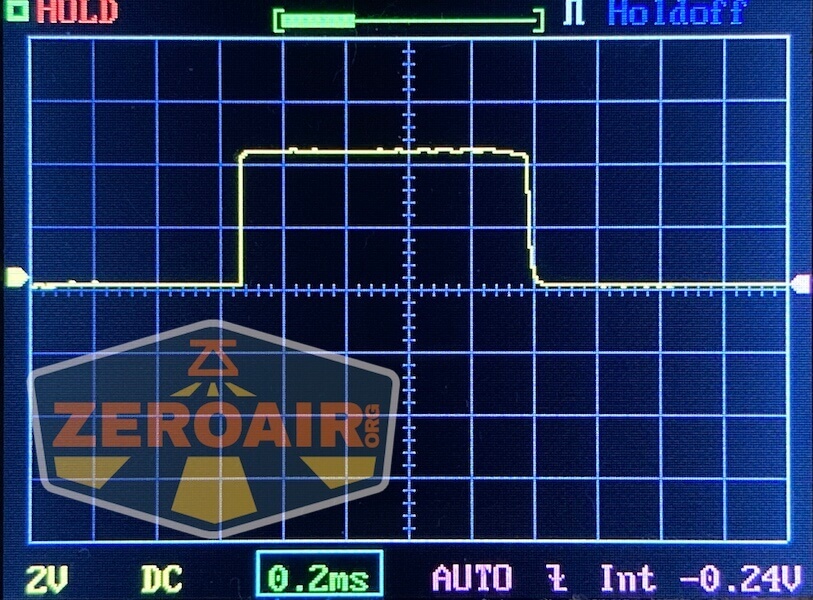
Every mode uses PWM. But in every mode, the PWM is quick and shouldn’t be a problem for most users. The order below is front white (LMHT), then side High, side Low, Red, Green, Blue.

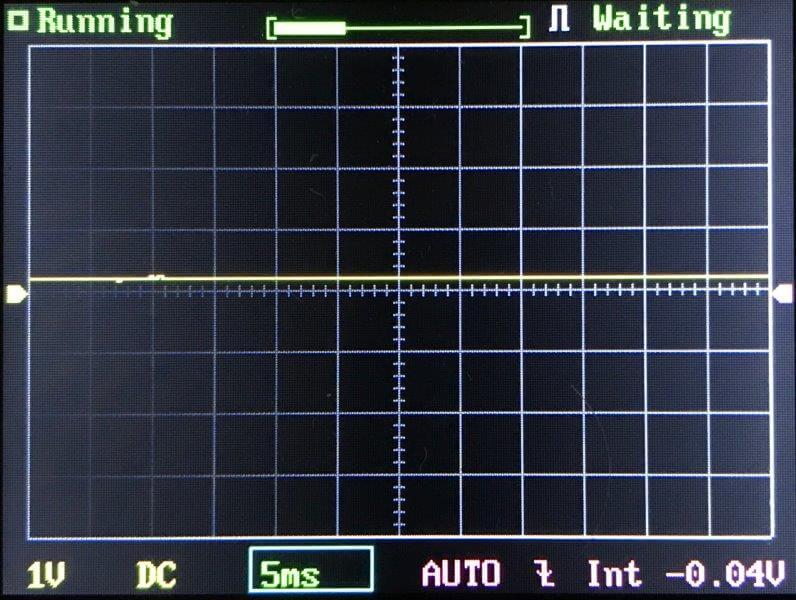
Here you can see a “baseline” – a chart with almost no light hitting the sensor.
Then there’s the Ultrafire WF-602C flashlight, which has some of the worst PWM I’ve seen. It’s so bad that I used a post about it to explain PWM! Here are multiple timescales (10ms, 5ms, 2ms, 1ms, 0.5ms, 0.2ms) to make comparing this “worst” PWM light to the test light easier. That post also explains why I didn’t test the WF-602C at the usual 50us scale.
User Interface and Operation
The Lumintop GT Nano V5.0 flashlight is controlled by one e-switch. This switch is on the head opposite the charging port. The switch has a hard cover (maybe metal) and an indicating feature right in the middle.

The switch can indicate in red or green.
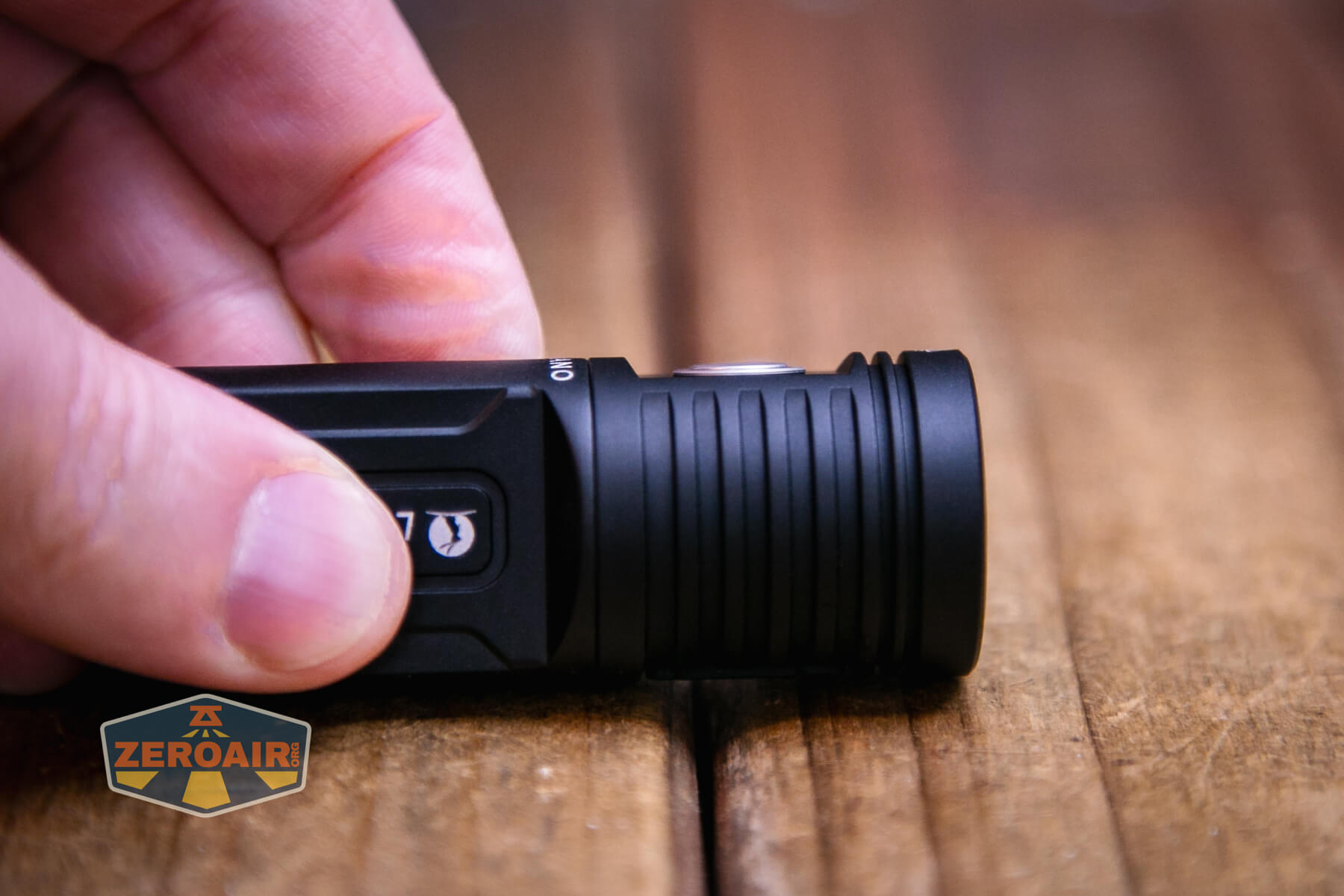
Switch action is very standard.
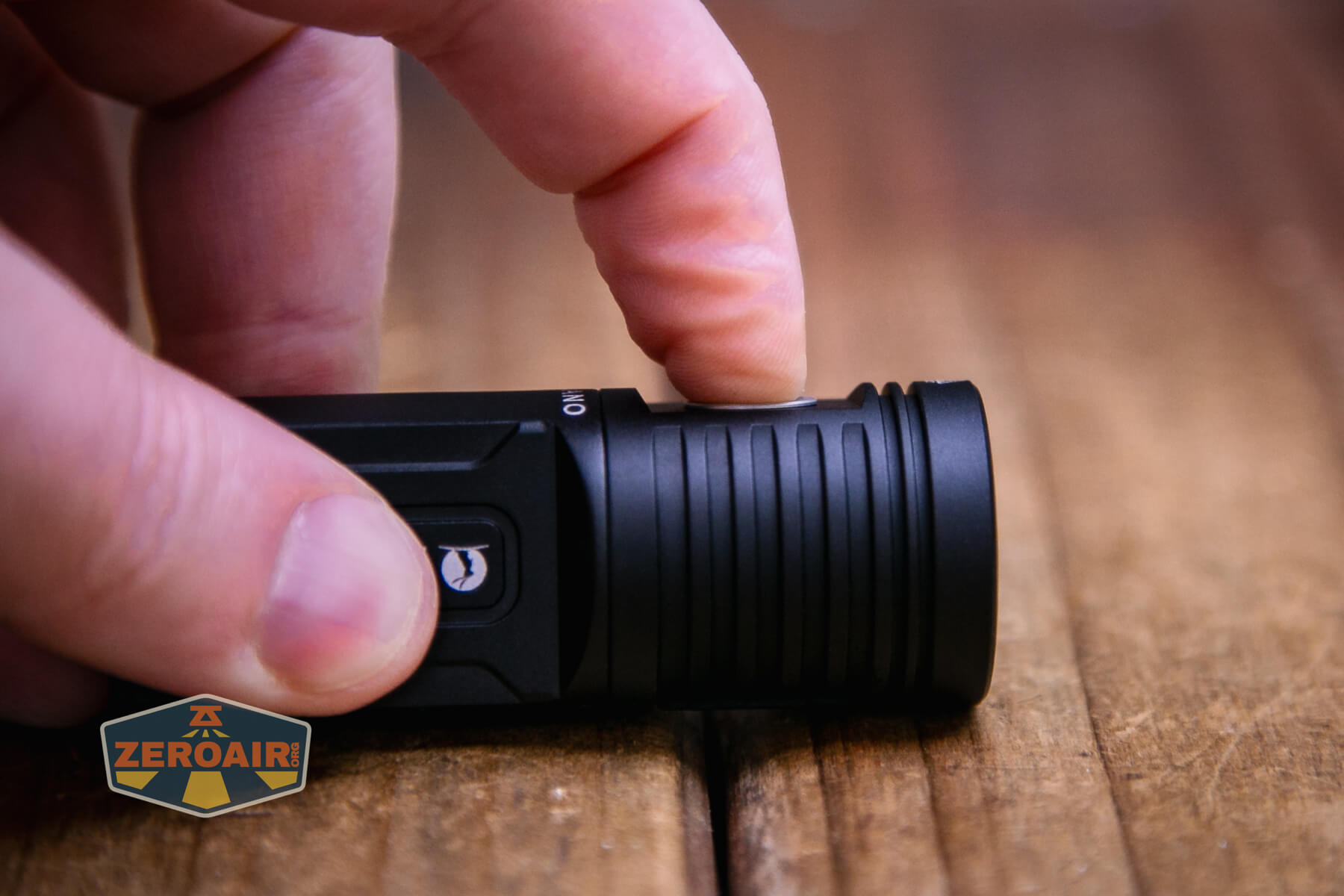
Here’s a user interface table!
| State | Action | Result |
|---|---|---|
| Off | Click | On (Mode memory, Low, Medium, High only) |
| Off | Hold | UV |
| Off | Double click | Side white high |
| Front on | Hold | Mode advance (LMH) |
| Front on | Double click | Turbo |
| Side on | Double click | Side off |
| Front on | Click | Off |
| Side on | Click | Mode advance (White high, White Low, Police, Red, Red Flash, Green, Green Flash, Blue, Blue flash) |
| Off (or front on) | Click 3x | Strobe |
| Strobe group | Click 3x | Strobe advance (SOS, Beacon, Strobe) |
| UV | Hold | Off |
| Off | Click 4x | Iterate lockout |
| Lockout | Hold | Momentary front low |
| Off | Click 7x | Iterate switch backlight |
LED and Beam
Lumintop does not say what emitter is in the GT Nano V5.0 flashlight. Unlike previous GT Nanos, this version uses an optic (not a reflector.)
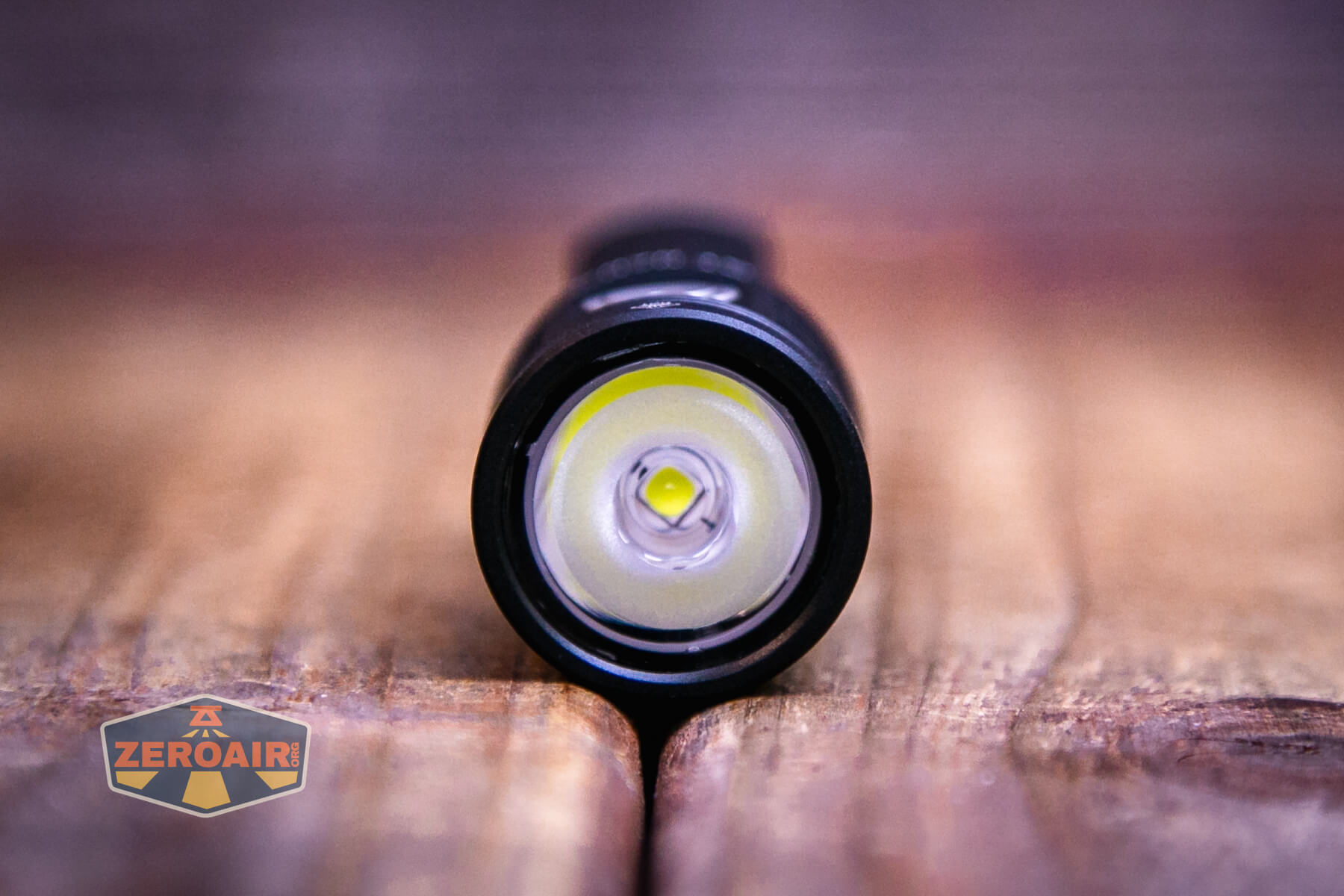
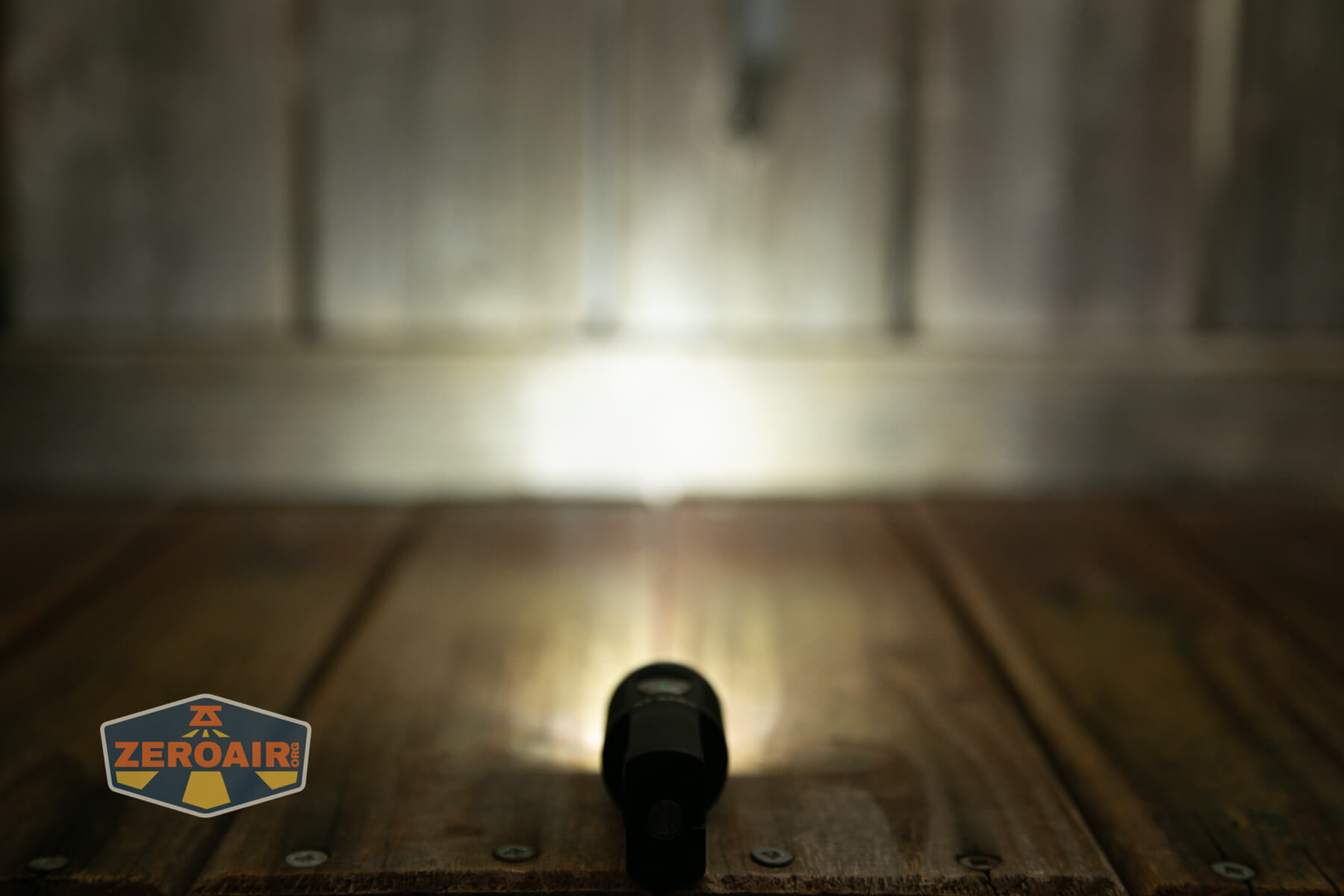
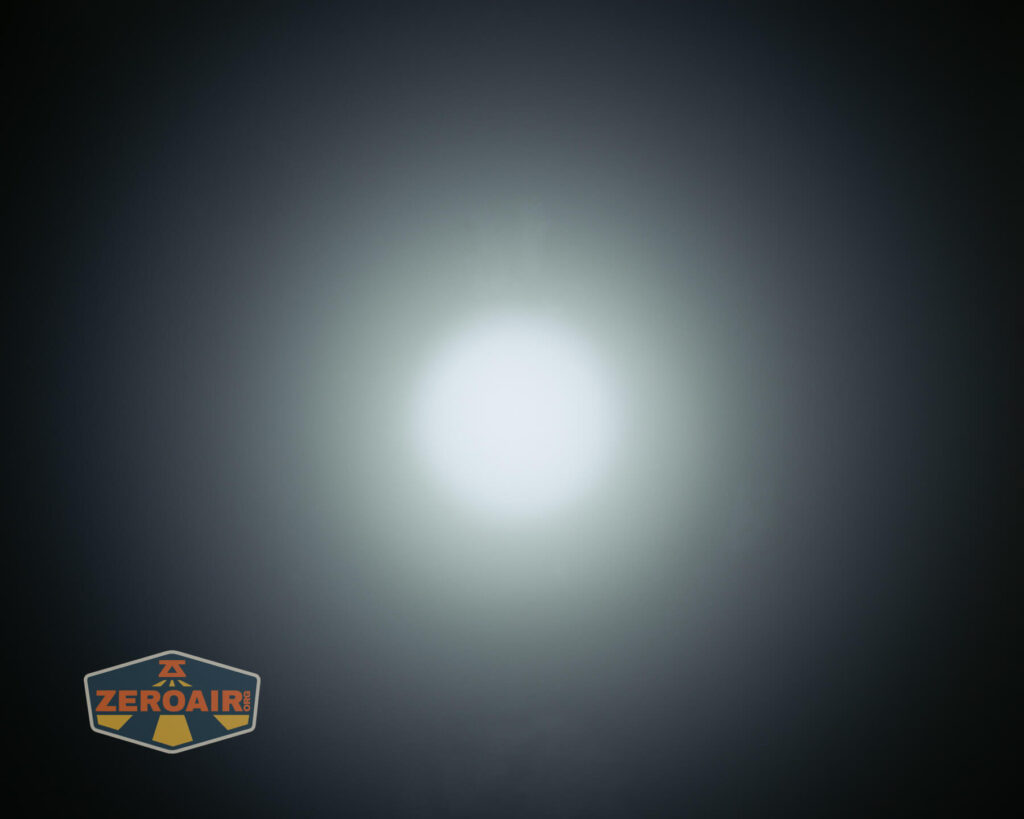
I quite like the beam shape – there’s more of a circle in the center than the photo below shows.
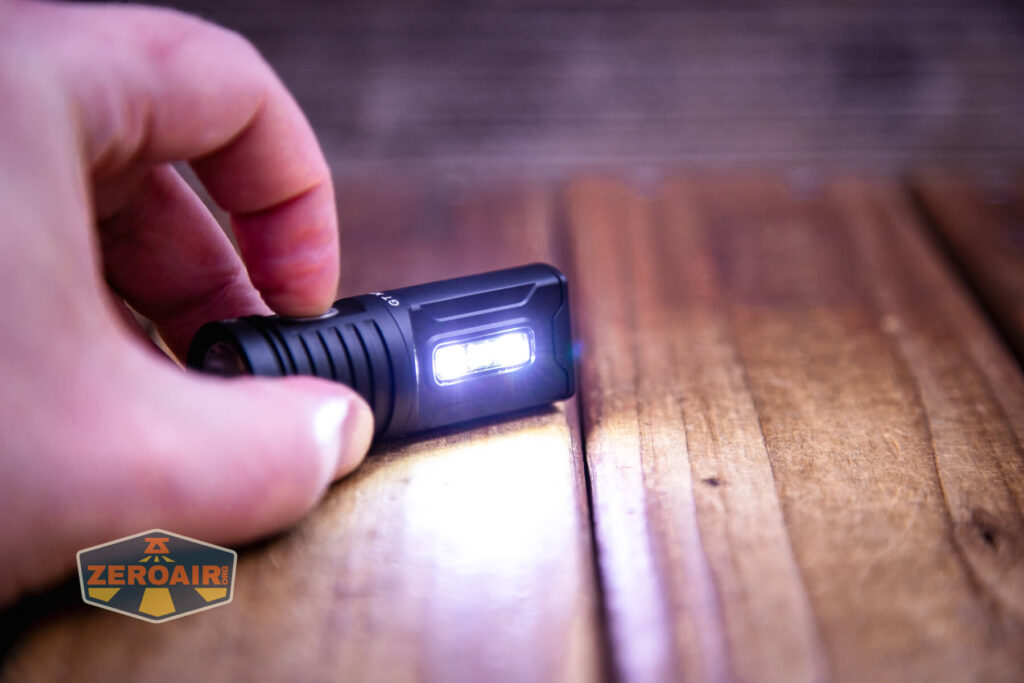
Here’s an idea of how the side emitters look, too. They’re all very floody.
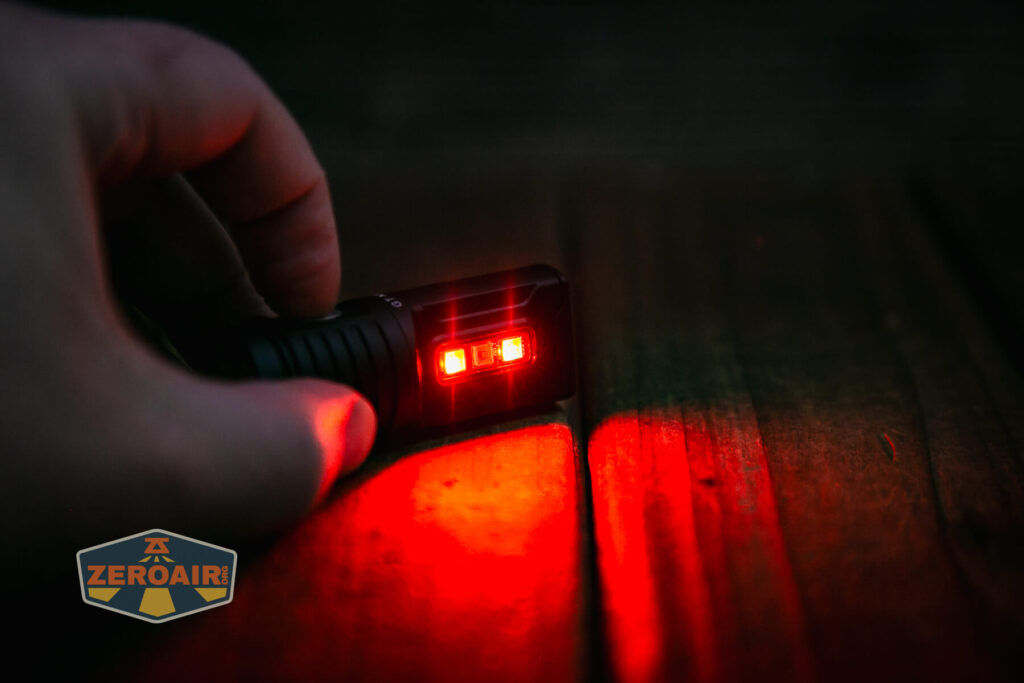
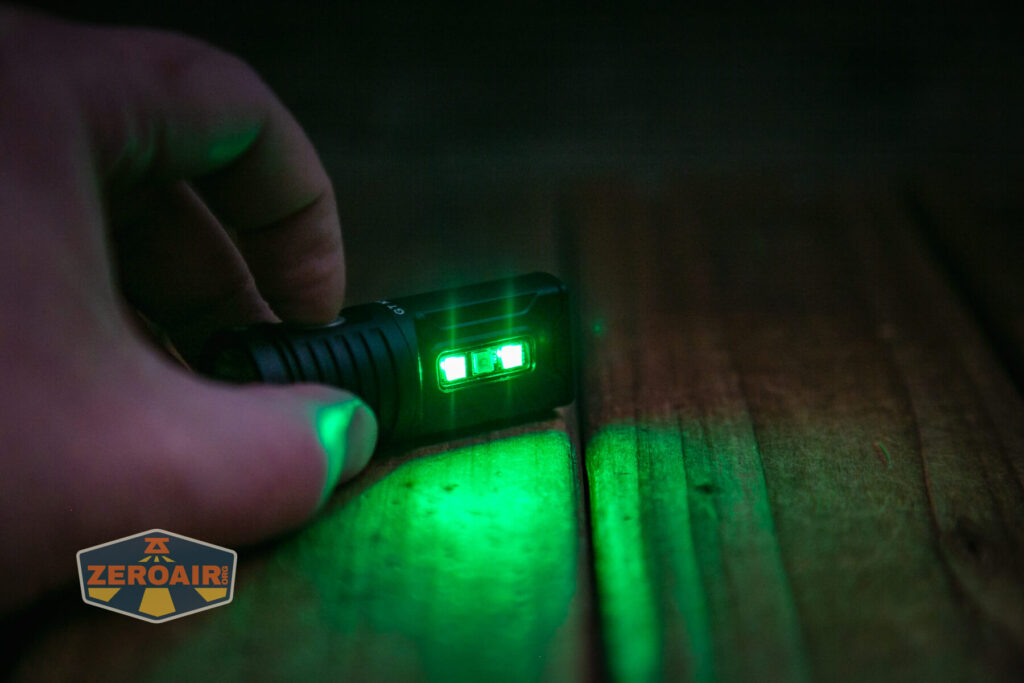
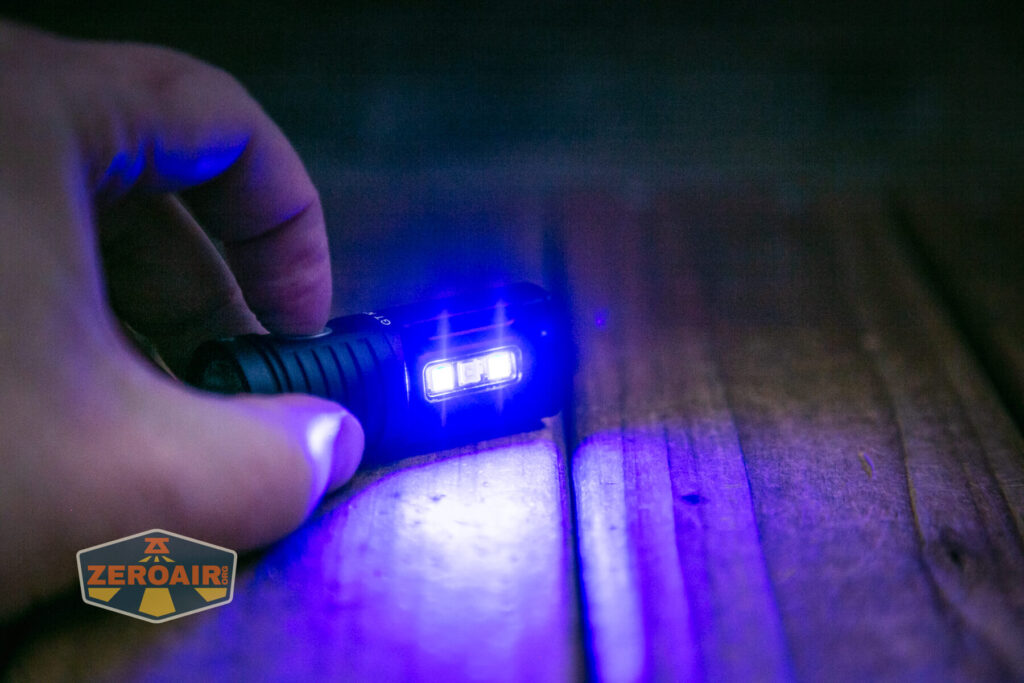
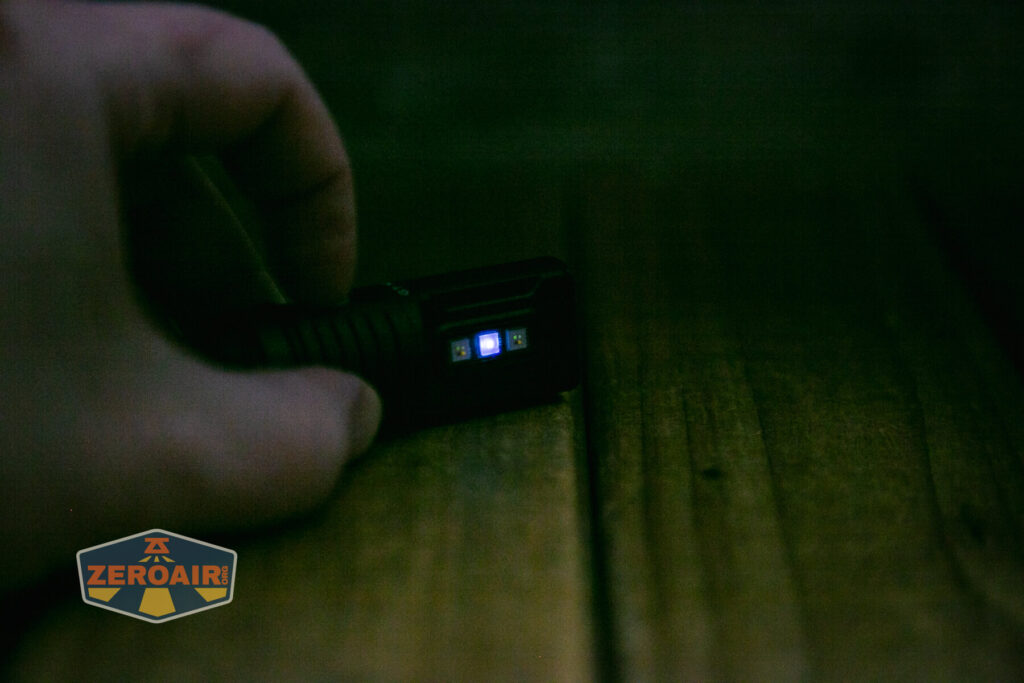
LED Color Report (CRI and CCT)
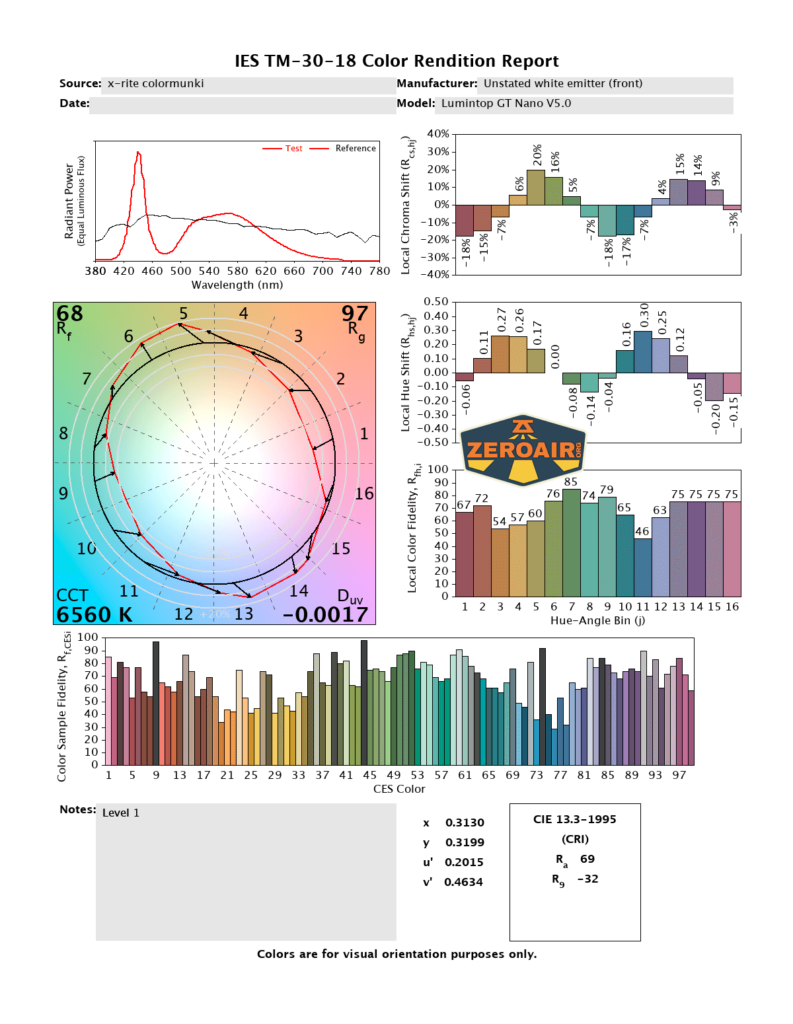
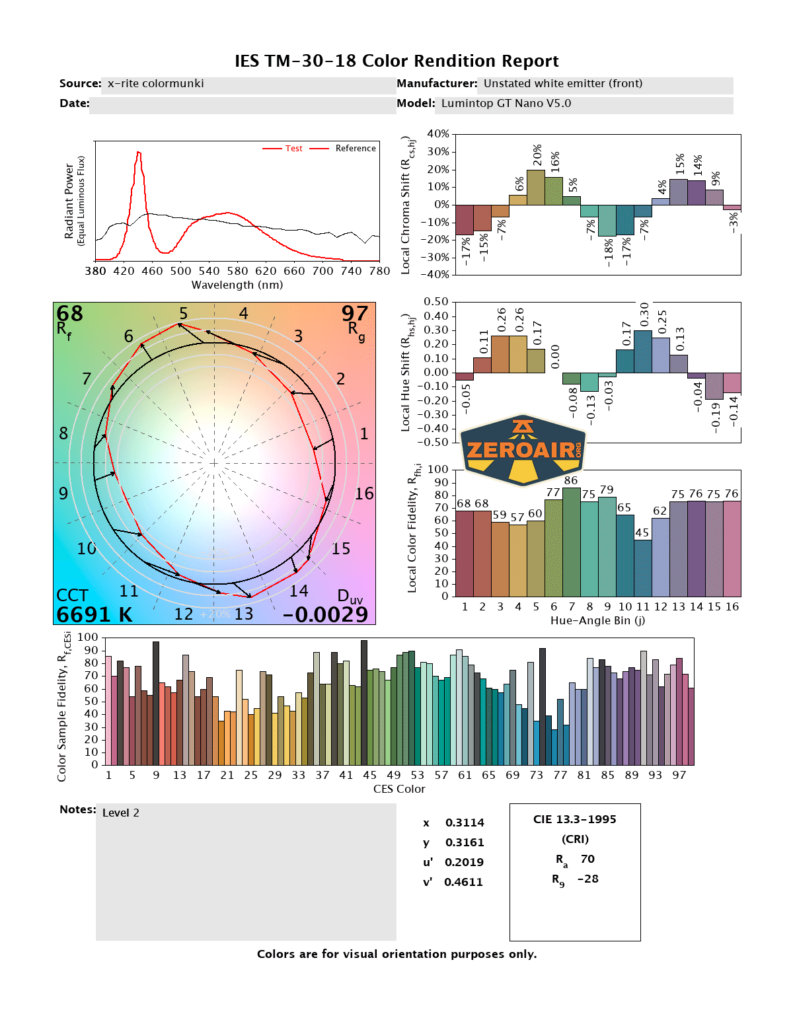
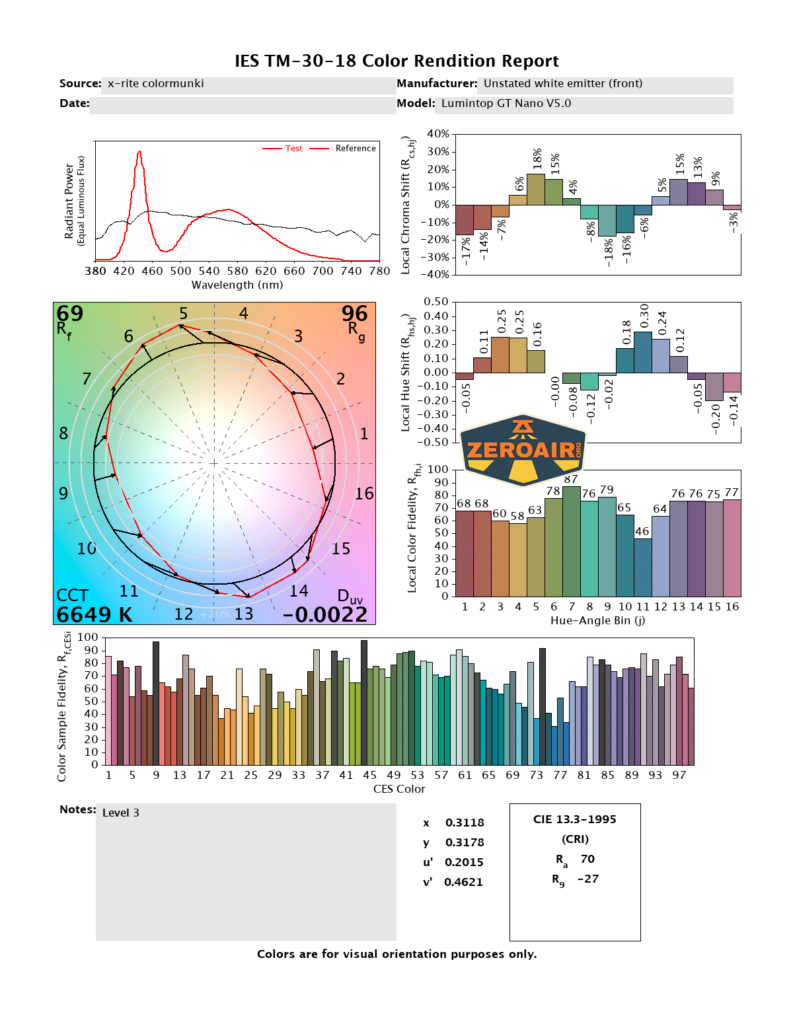
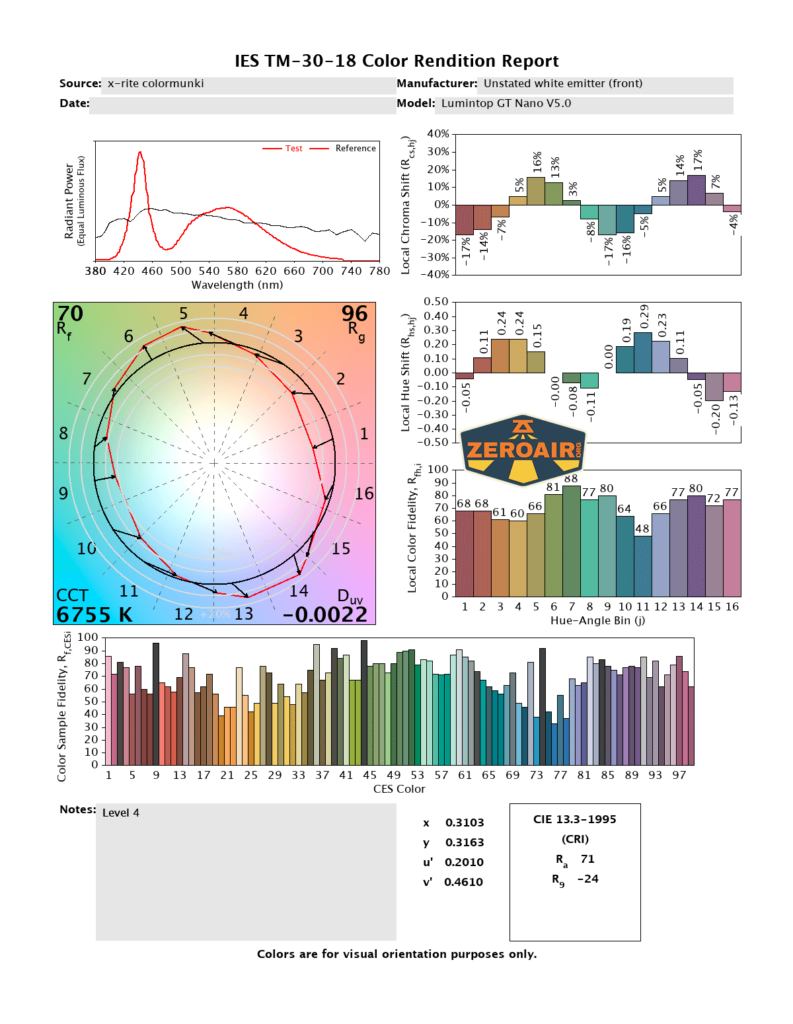
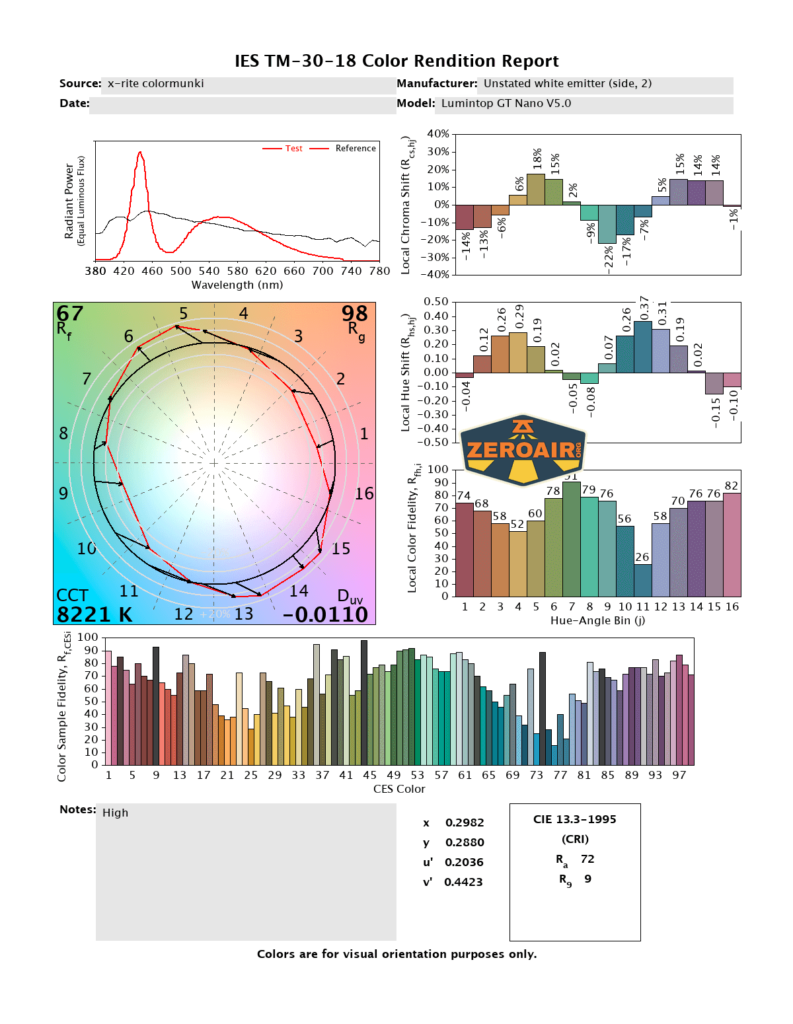
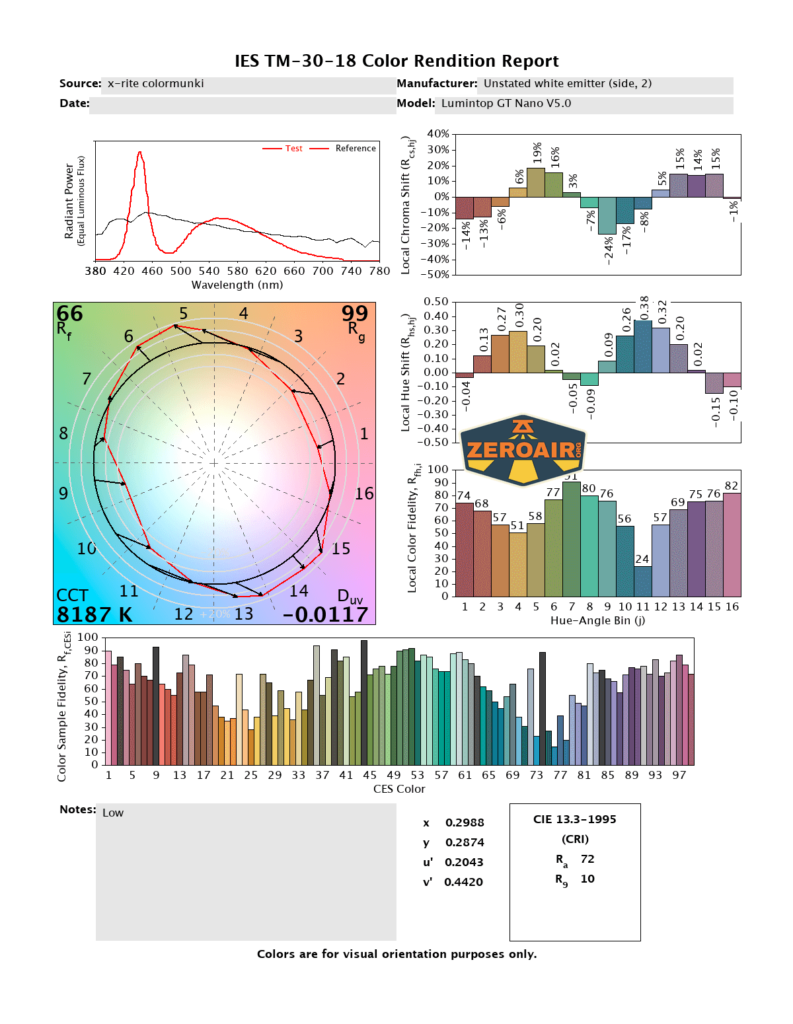
The front emitter has a cool white CCT of 6500K and above with a low CRI. The side emitter (last two images below) are very cool white – above 8100K!
Beamshots
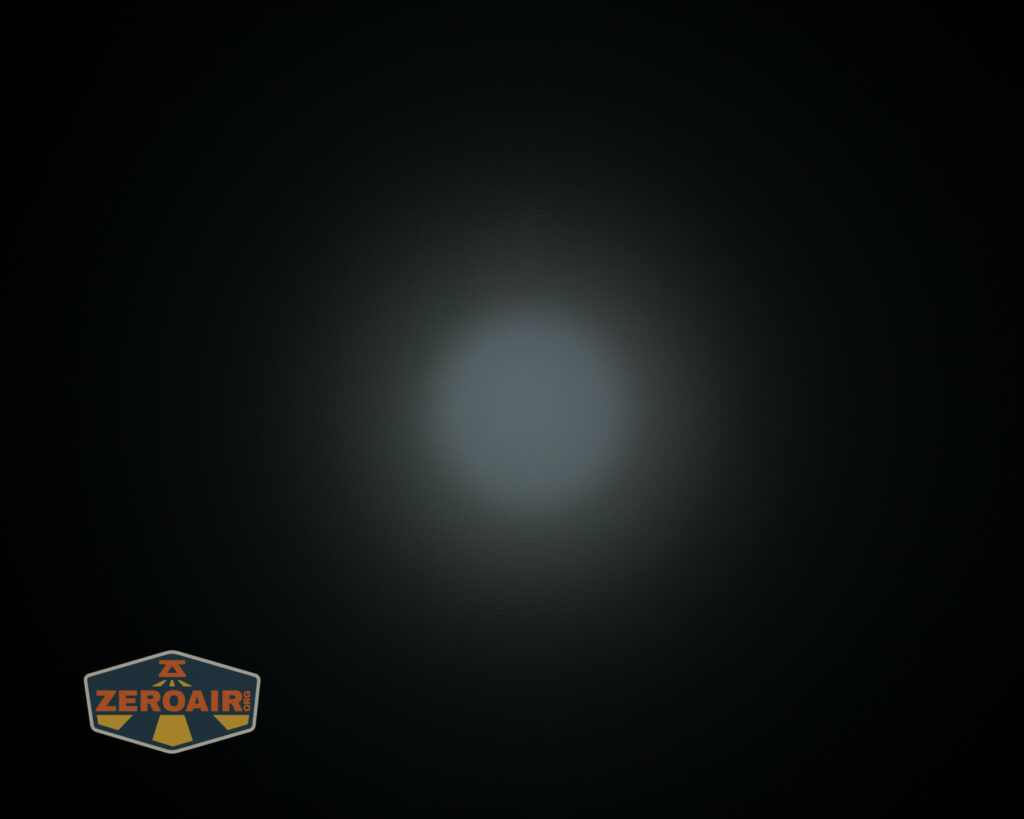
These beamshots always have the following settings: f8, ISO100, 0.3s shutter, and manual 5000K exposure. These photos are taken at floor level, and the beam hits the ceiling around 9 feet away.








Tint vs BLF-348 (KillzoneFlashlights.com 219b version) (affiliate link)
I keep the test flashlight on the left and the BLF-348 reference flashlight on the right. These photos are taken around 18 inches from the door.






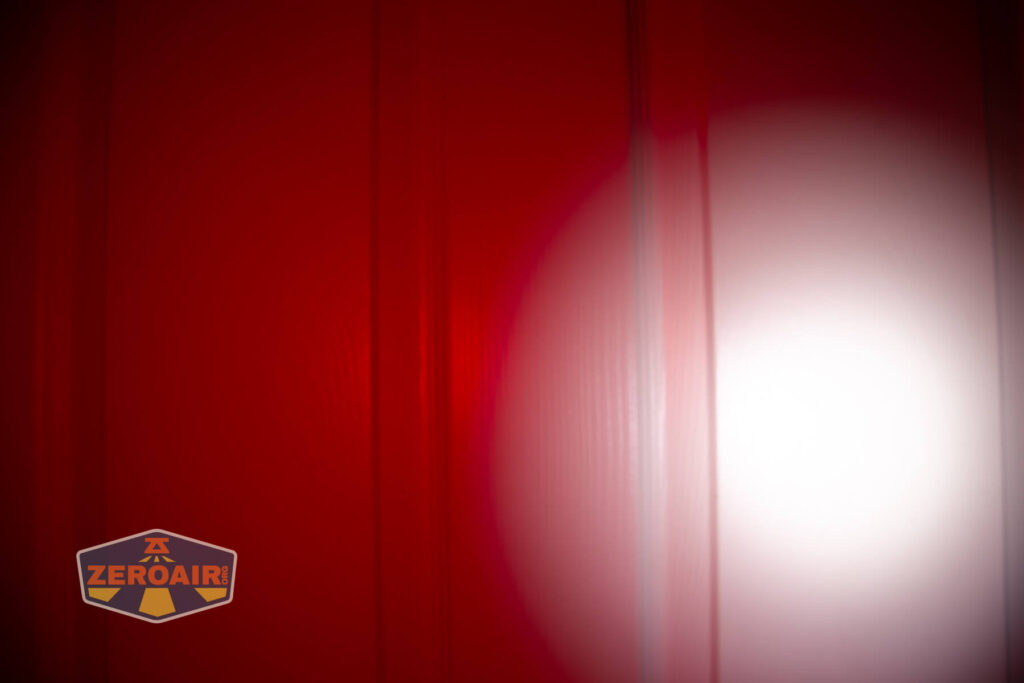

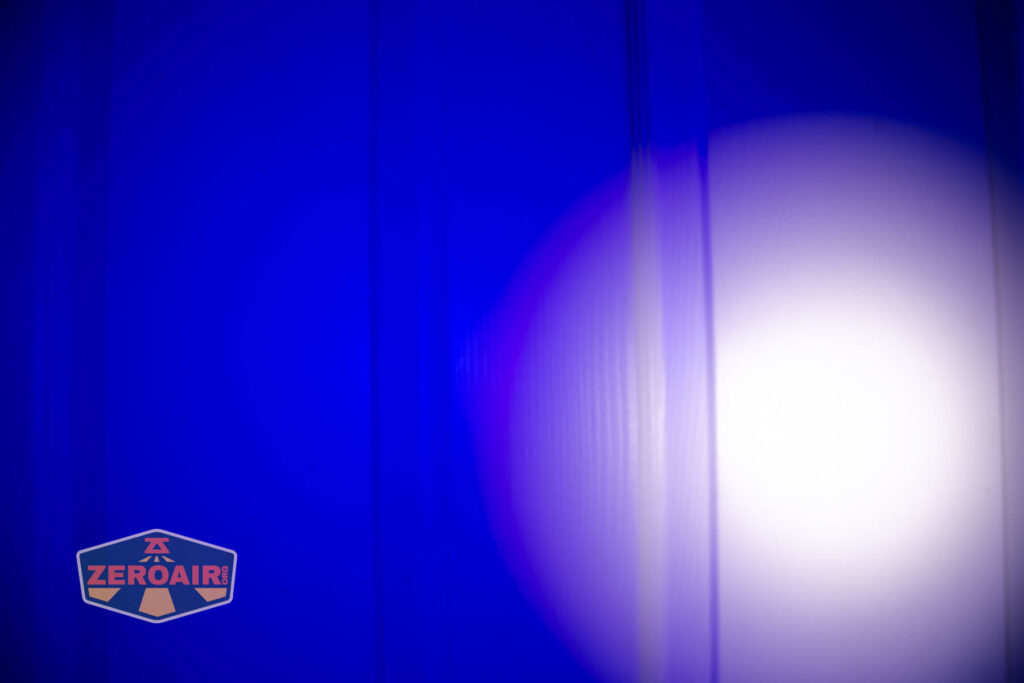
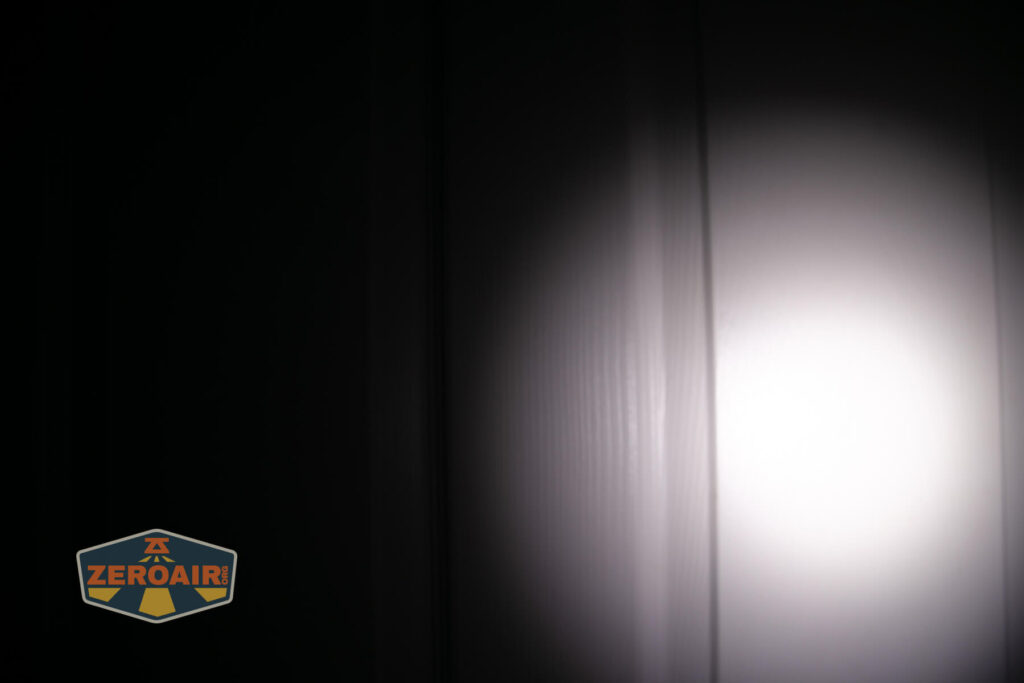
I compare everything to the KillzoneFlashlights.com 219b BLF-348 because it’s inexpensive and has the best tint!
Summary and Conclusion
I’m very impressed by the Lumintop GT Nano V5.0 flashlight output – I truly didn’t expect this tiny light to even come close to the claimed output of 1400 lumens but it did, and for more than just a few seconds. It holds that output for over 30 seconds. I don’t love the CCT of the front emitter and I wold rather have a lower low (on the front emitter) or (really “and”) have a high CRI warm white side emitter. The user interface is a bit unusual but it’s easy to get.
The Big Table
| Lumintop GT Nano V5.0 flashlight | |
|---|---|
| Emitter: | Unstated white emitter (with side emitters) |
| Price in USD at publication time: | $34.95 |
| Cell: | 2×10280 |
| Runtime Graphs | |
| LVP? | Yes |
| Switch Type: | E-Switch |
| Quiescent Current (mA): | ? |
| On-Board Charging? | Yes |
| Charge Port Type: | USB-C |
| Charge Graph | |
| Power off Charge Port | Lowest white, all side levels |
| Claimed Lumens (lm) | 1400 |
| Measured Lumens (at 30s) | 1409 (100.6% of claim)^ |
| Candela per Lumen | 5.91 |
| Claimed Throw (m) | 180 |
| Candela (Calculated) in cd (at 30s) | 309lux @ 5.315m = 8729cd |
| Throw (Calculated) (m) | 186.9 (103.8% of claim)^ |
| Claimed CCT | – |
| Measured CCT Range (K) | 6600-6800 Kelvin |
| Item provided for review by: | Lumintop |
| All my Lumintop reviews! | |
^ Measurement disclaimer: Testing flashlights is my hobby. I use hobbyist-level equipment for testing, including some I made myself. Try not to get buried in the details of manufacturer specifications versus measurements recorded here; A certain amount of difference (say, 10 or 15%) is perfectly reasonable.
What I like
- Hits lumen output specs!
- Also hits throw specs!
- The beam profile
- Charging works well
- Cells are accessible
What I don’t like
- Unusual user interface (but understandable because of all the emitter options)
- Cool white front emitter
- Very cool white side emitters.
- Unusual cell (10280)
Notes
- This content originally appeared at zeroair.org. Please visit there for the best experience!
- Please use my Amazon.com referral link to help support zeroair.org!
- Please support me on Patreon! I deeply appreciate your support!
Discover more from ZeroAir Reviews
Subscribe to get the latest posts sent to your email.