
BLF GT Mini Flashlight Review
The BLF GT Mini flashlight is an 18350 or 18650 flashlight that uses the Andúril user interface. It’s available in neutral white, too! Read on!
Official Specs and Features
Here’s a link to the BLF GT Mini Flashlight product page. Also worth mentioning is the BLF development thread for this light.
Versions
What I have here is a NW version, and I believe there is a CW version as well. Also the light ships as an 18650 light, but there’s a 18350 shorty tube available as well. I have both, which can be seen in this review.
Price
I only see this available from one non-official Amazonseller, and the 18650 is going for $50.
Edit: Buy this for $35 at banggood!!
Short Review
It’s probably pretty well known that I’m a fan of most Lumintop lights. I really love the GT, and it’s impossible to not like this little mini version. Yes, there could have been some awesome improvements (with a different driver) but overall I’m still very pleased with this light.
Long Review
The Big Table
| Lumintop BLF GT Mini | |
|---|---|
| Emitter: | Cree XP-L HI (NW) |
| Price in USD at publication time: | $35.00 |
| Cell: | 1×18650 |
| Turbo Runtime | High Runtime |
| LVP? | Yes |
| Switch Type: | E-Switch |
| Quiescent Current (A): | 0.00005 |
| On-Board Charging? | No |
| Claimed Lumens (lm) | >1200 |
| Measured Lumens (at 30s) | 1300 |
| Claimed Throw (m) | 750 |
| Candela (Calculated) in cd (at 30s) | 3700lux @ 5.77m = 123184cd |
| Throw (Calculated) (m) | 702.0 (93.6% of claim)^ |
| All my Lumintop reviews! | |
| Lumintop BLF GT Mini | |
|---|---|
| Emitter: | Cree XP-L HI (NW) |
| Price in USD at publication time: | $35.00 |
| Cell: | 1×18350 |
| Turbo Runtime | High Runtime |
| LVP? | Yes |
| Switch Type: | E-Switch |
| Quiescent Current (A): | 0.00005 |
| On-Board Charging? | No |
| Claimed Lumens (lm) | >1200 |
| Measured Lumens (at 30s) | 1200 |
| Claimed Throw (m) | 750 |
| Candela (Calculated) in cd (at 30s) | 2911lux @ 5.873m = 100407cd |
| Throw (Calculated) (m) | 633.7 (84.5% of claim)^ |
| All my Lumintop reviews! | |
^ Measurement disclaimer: Testing flashlights is my hobby. I use hobbyist-level equipment for testing, including some I made myself. Try not to get buried in the details of manufacturer specifications versus measurements recorded here; A certain amount of difference (say, 10 or 15%) is perfectly reasonable.
What’s Included
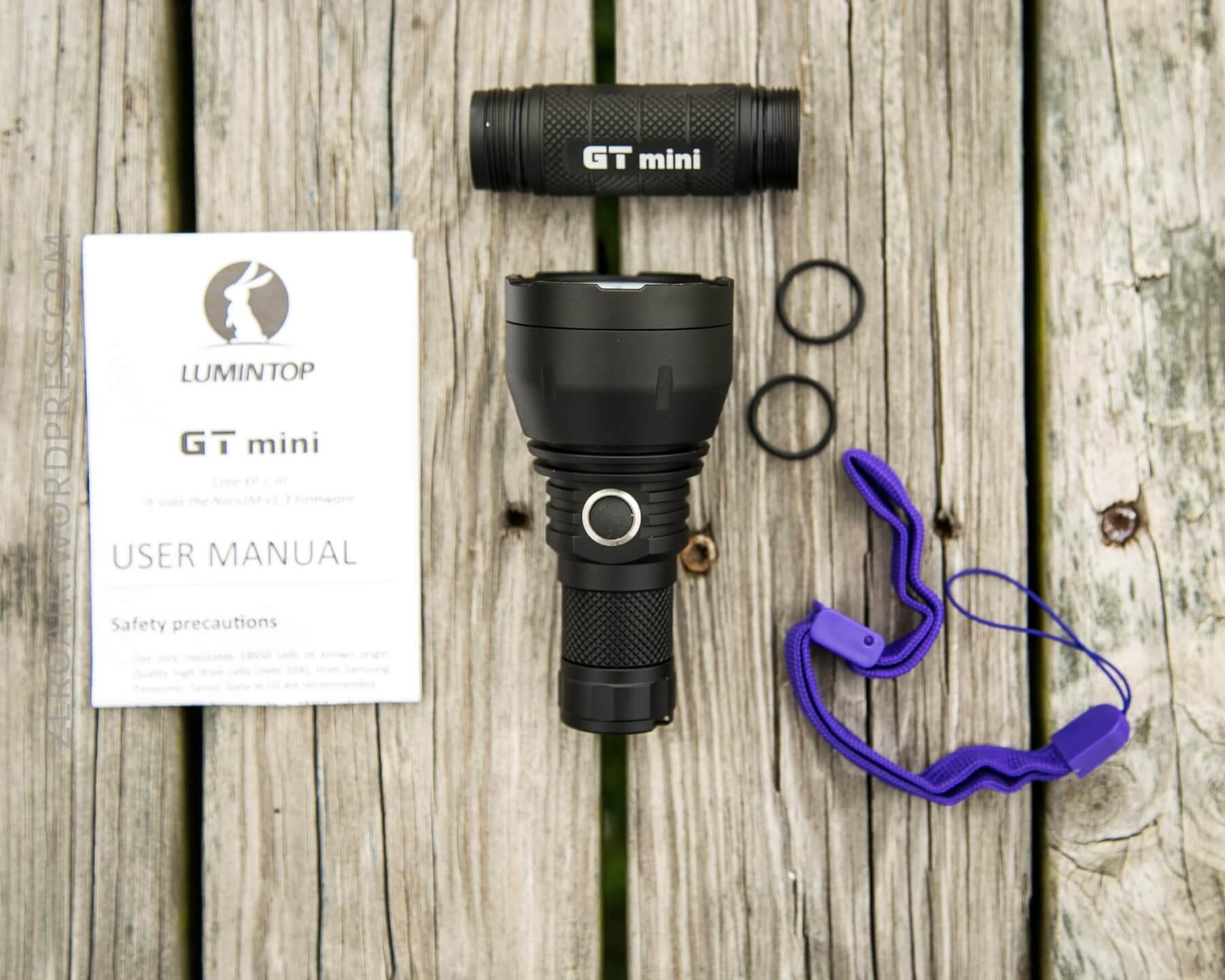
- Lumintop GT Mini Flashlight (18650 tube)
- Lanyard
- Spare o-rings (2)
- Manual
- (Optional) 18350 tube
Package and Manual
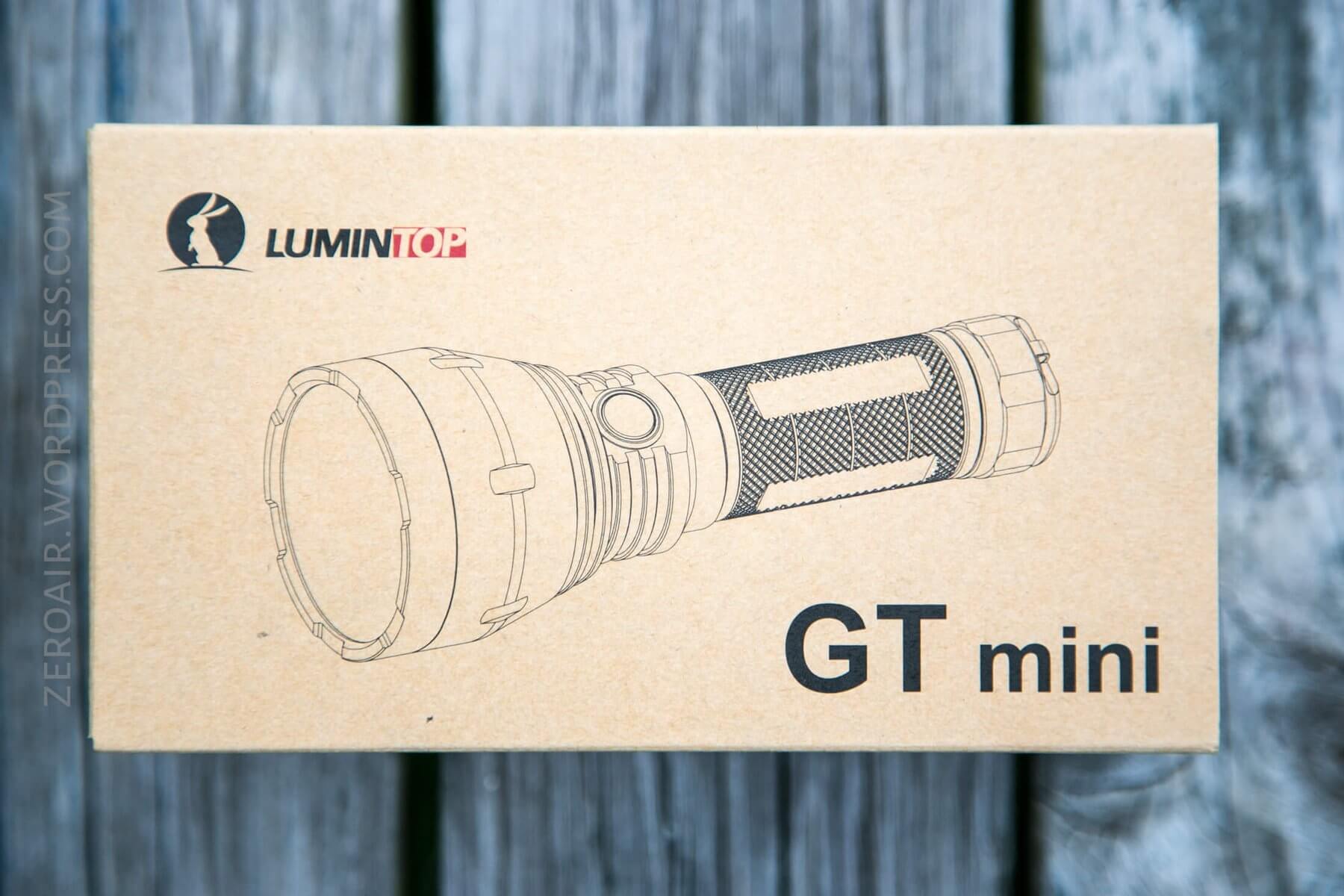
The GT Mini ships in a cardboard box with a printed sleeve. The package and packaging is very nice, and also very secure.
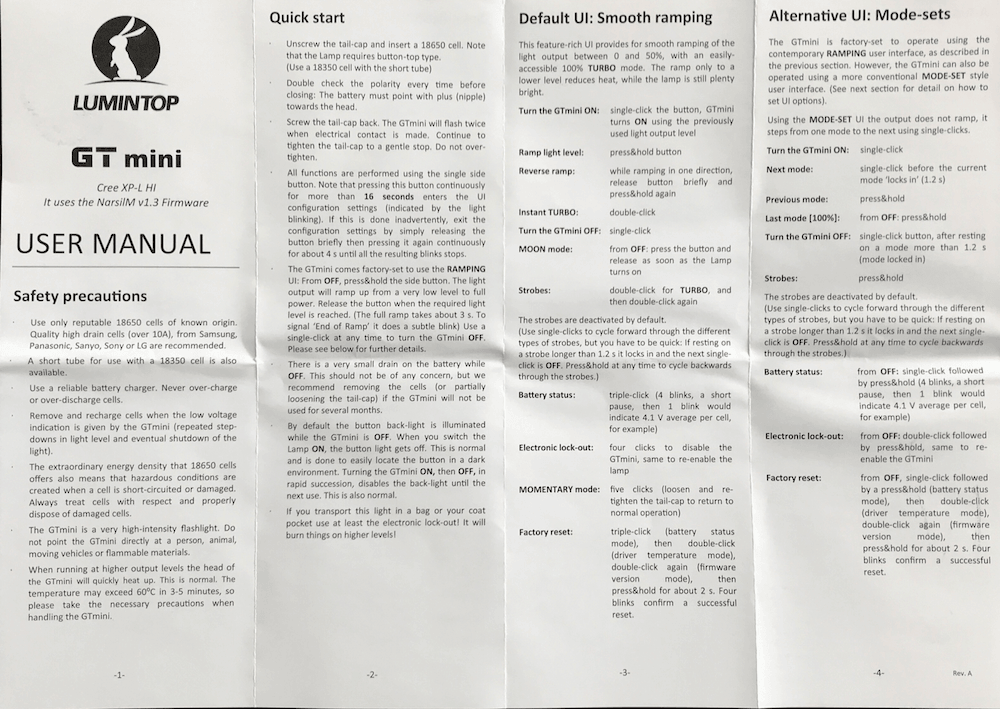
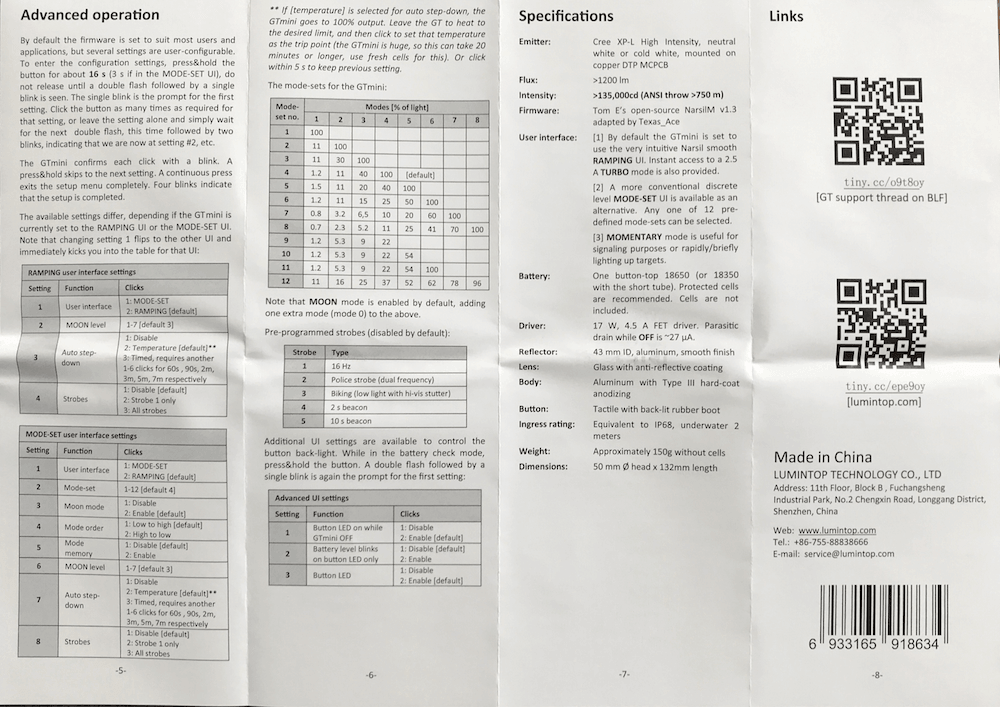
The manual is all English, and two sided. Quite big, and very thorough. Notably since the light has two mode groups (ramping, and discrete.)
Build Quality and Disassembly
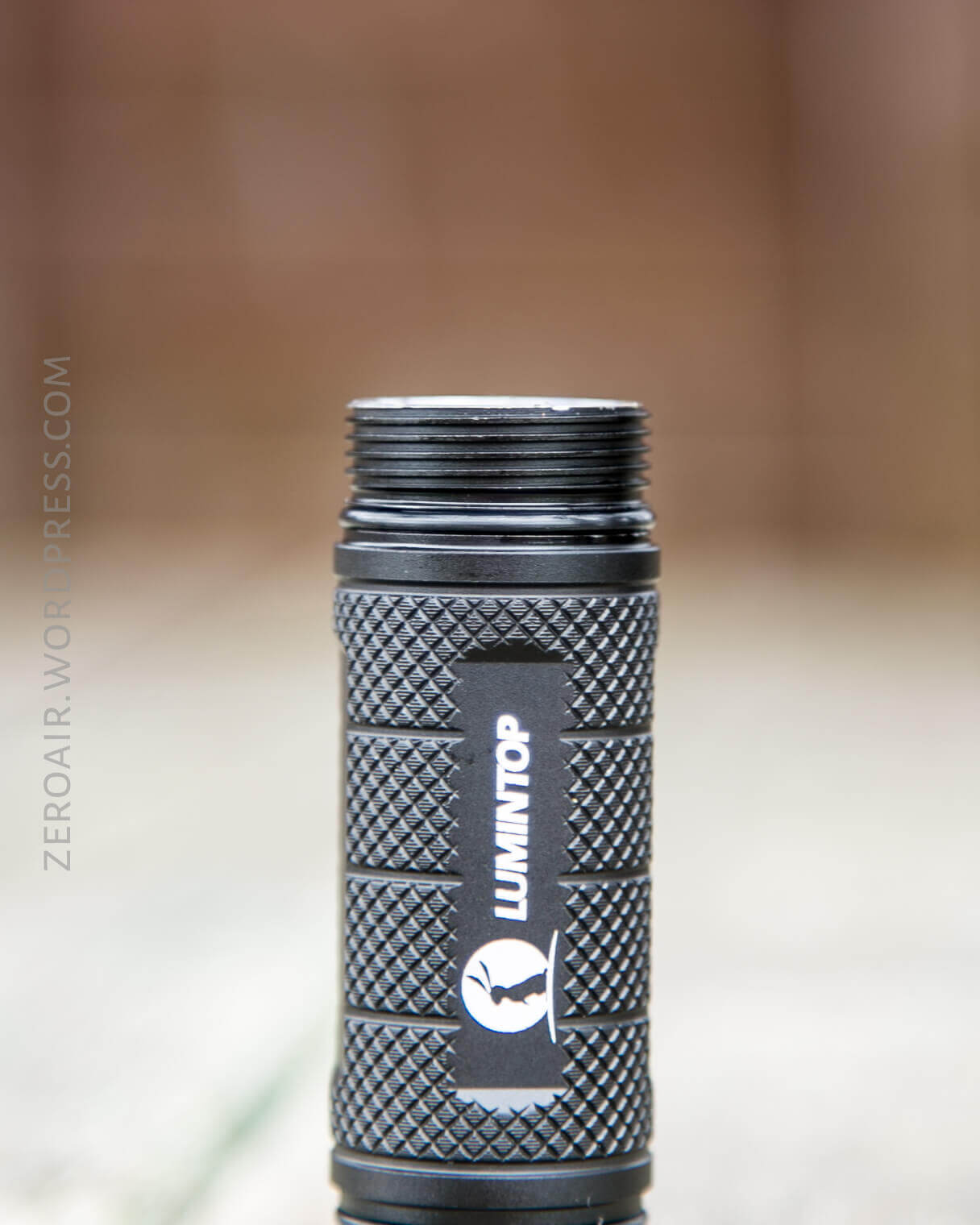
The build quality of the GT Mini is like that of the GT itself: great. I’ll lead by saying that I love the anodizing of this light (because it’s a stark contrast to the main competitor).
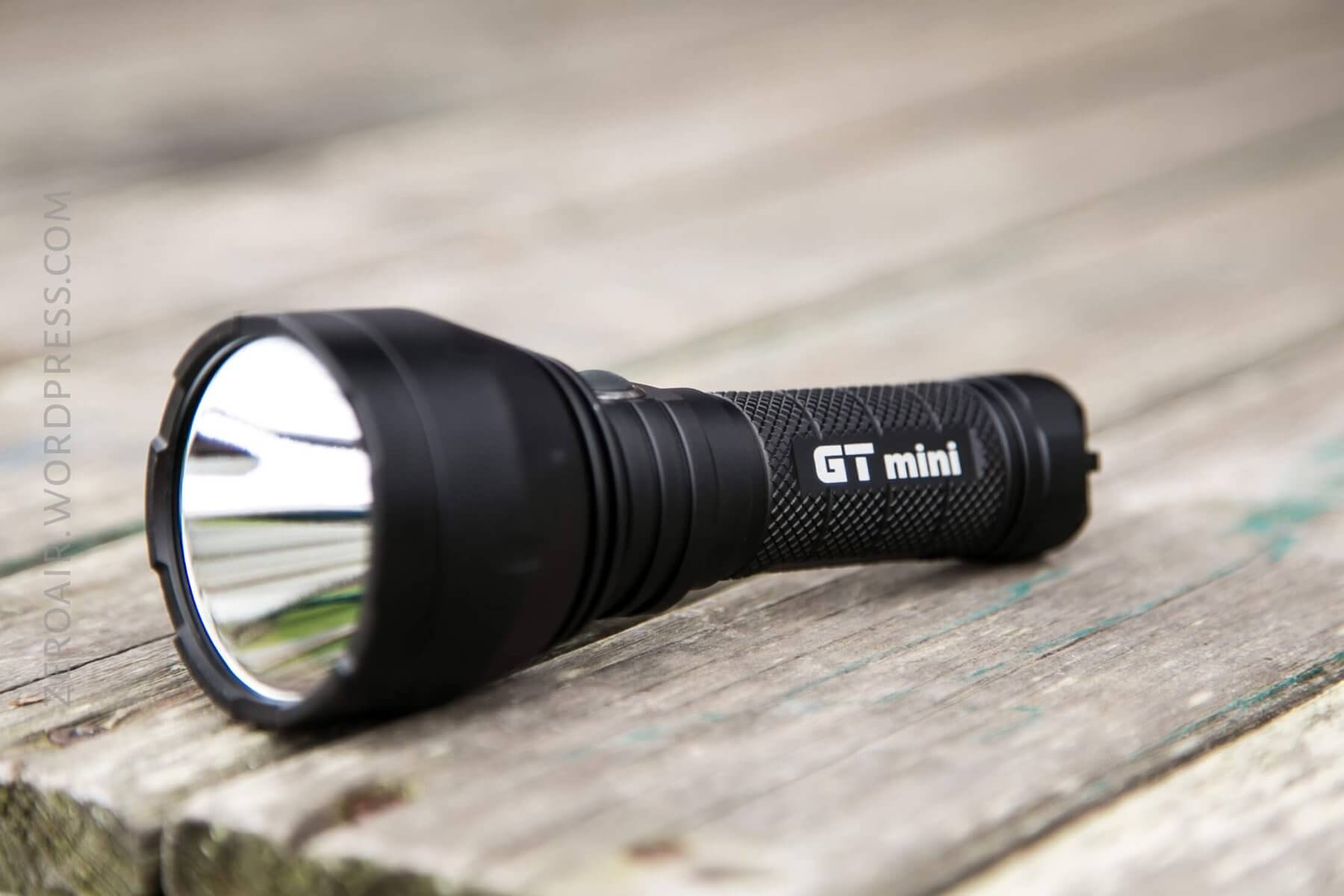
The knurling is great – provides a little bit of grip without being aggressive.
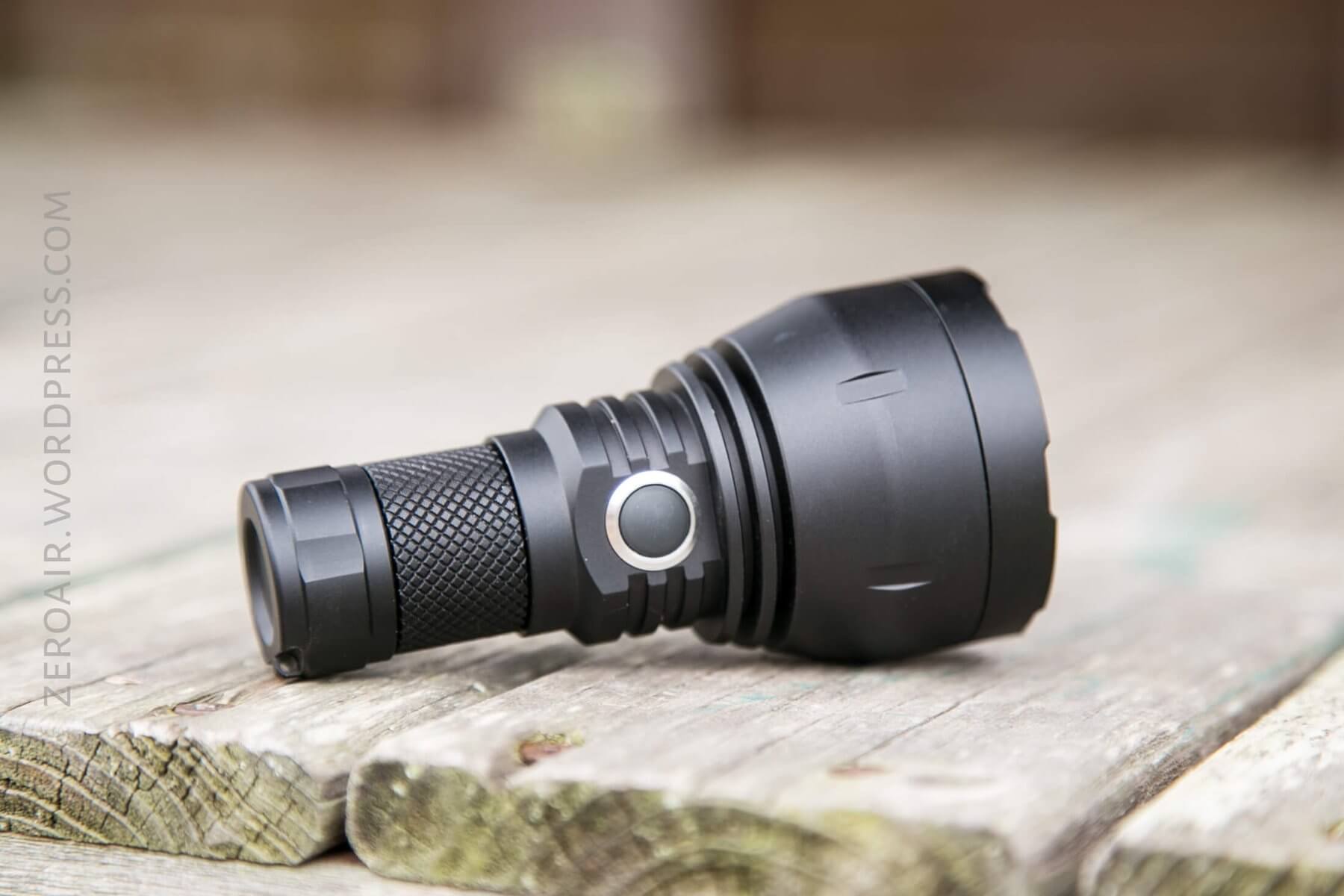
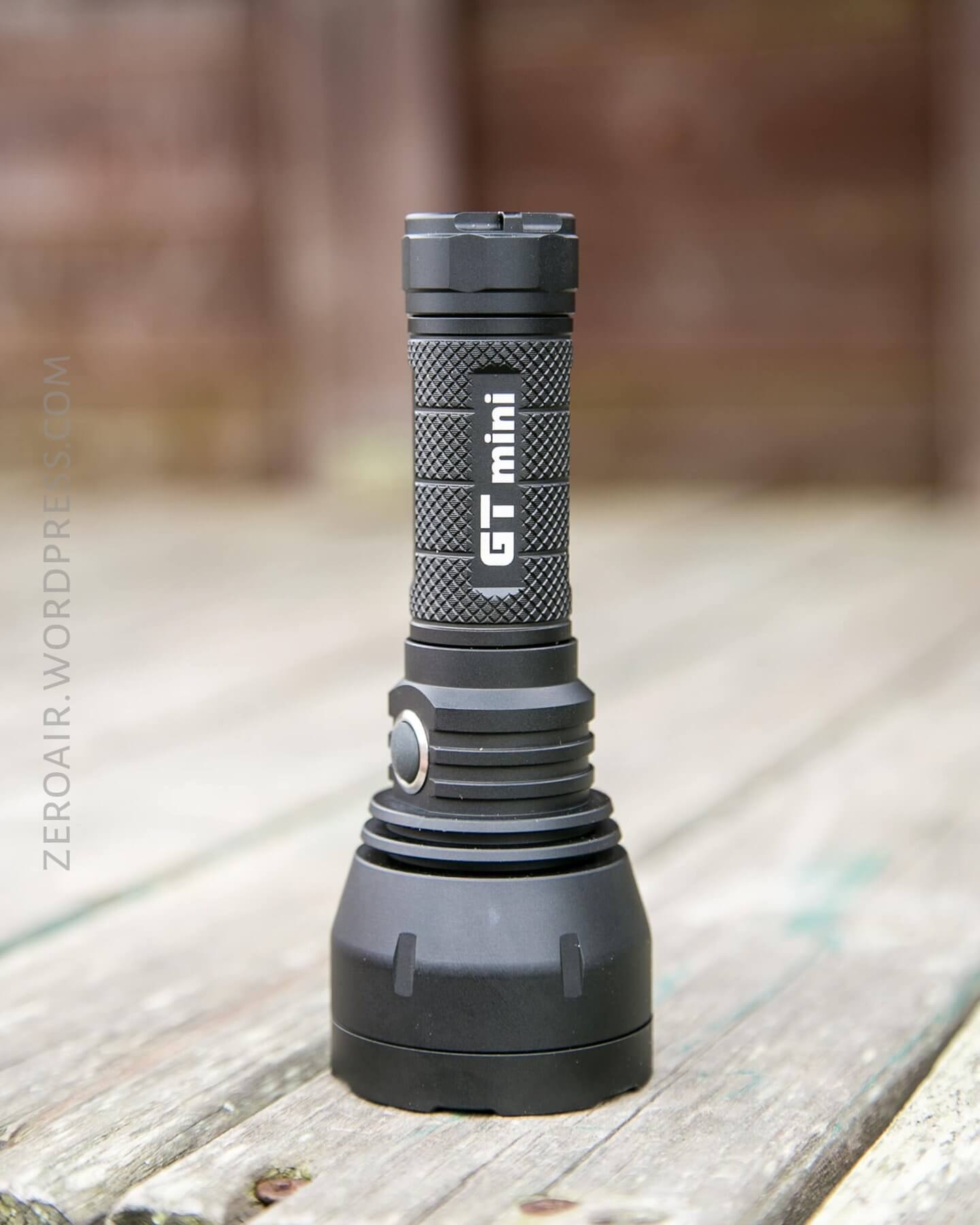
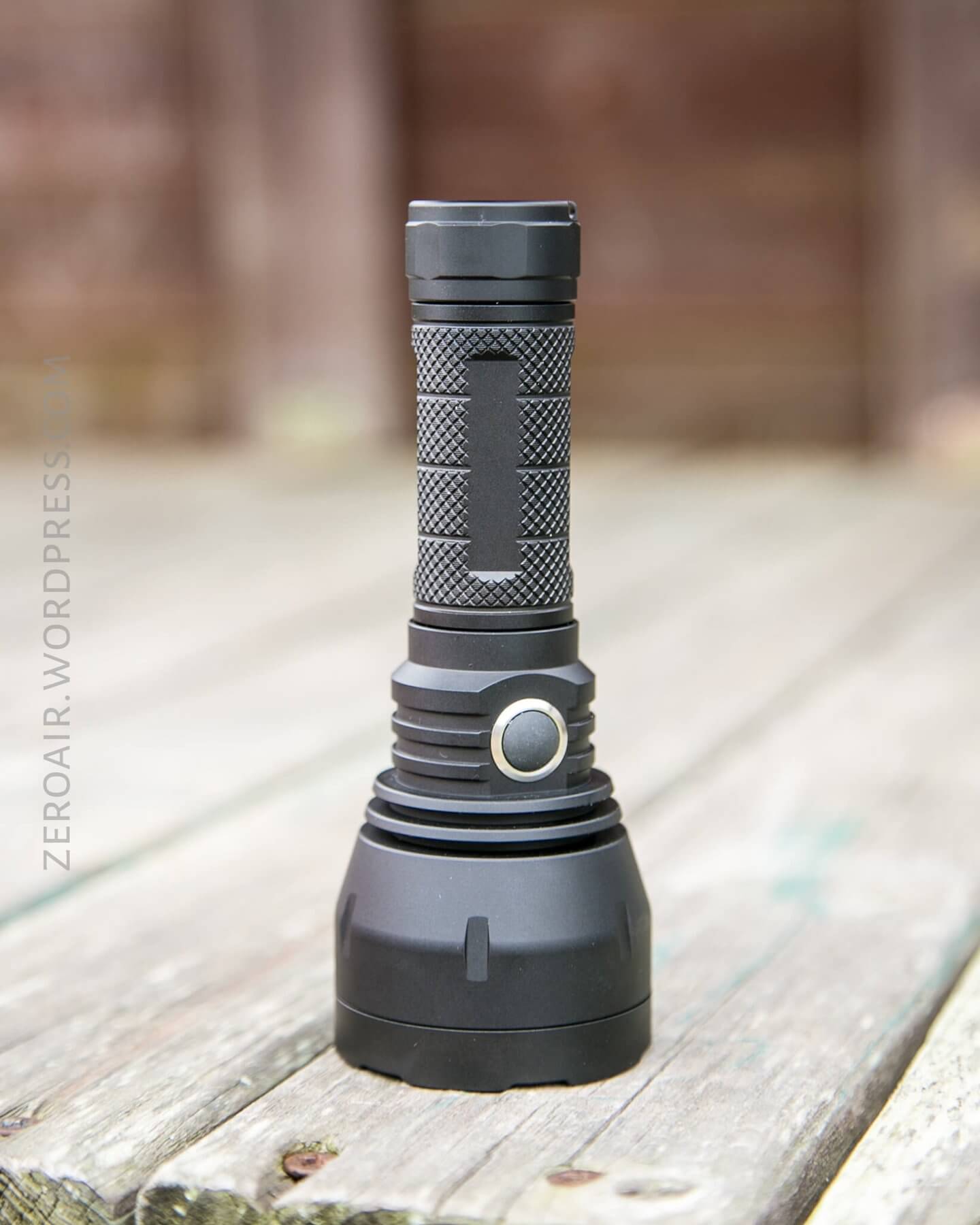
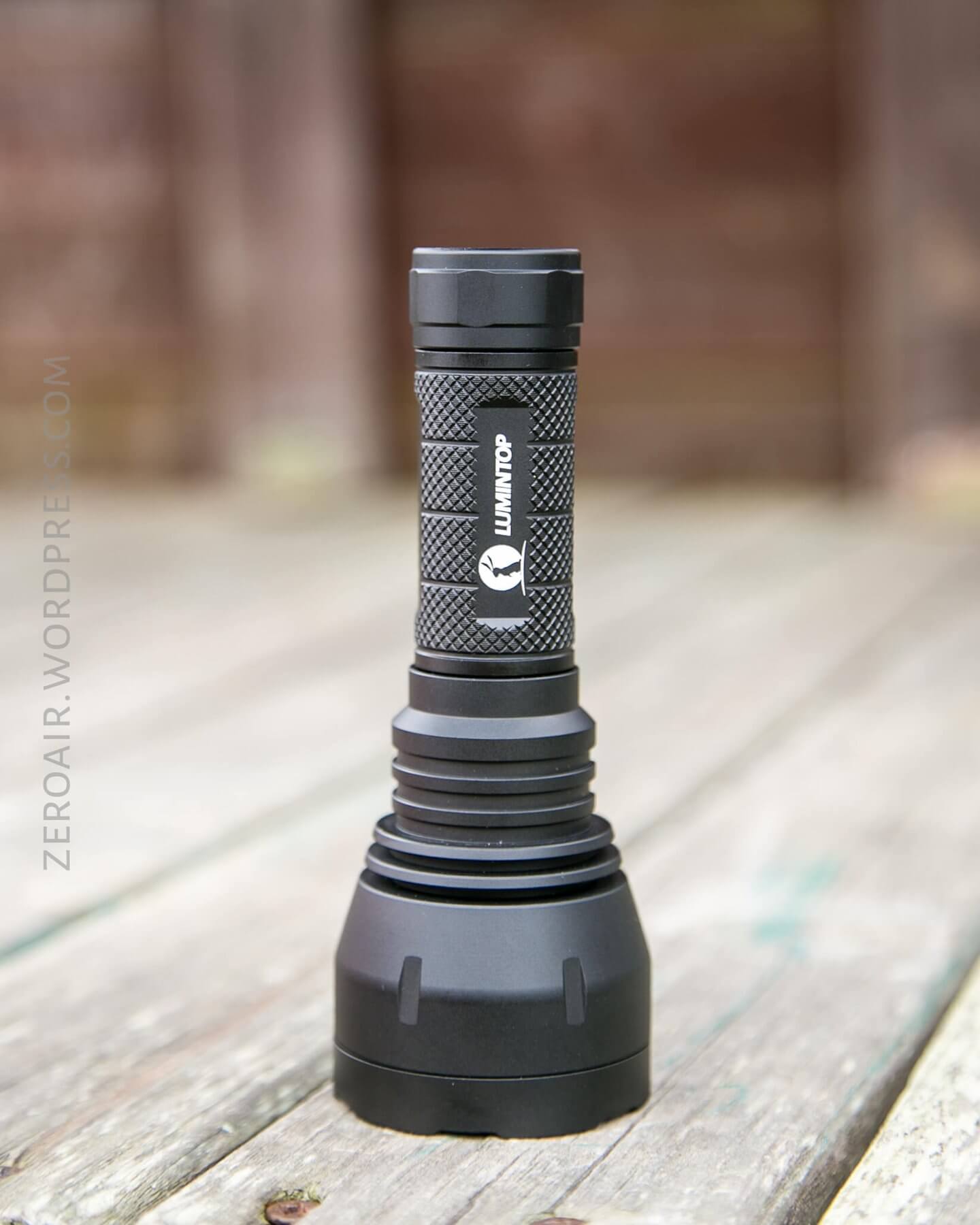
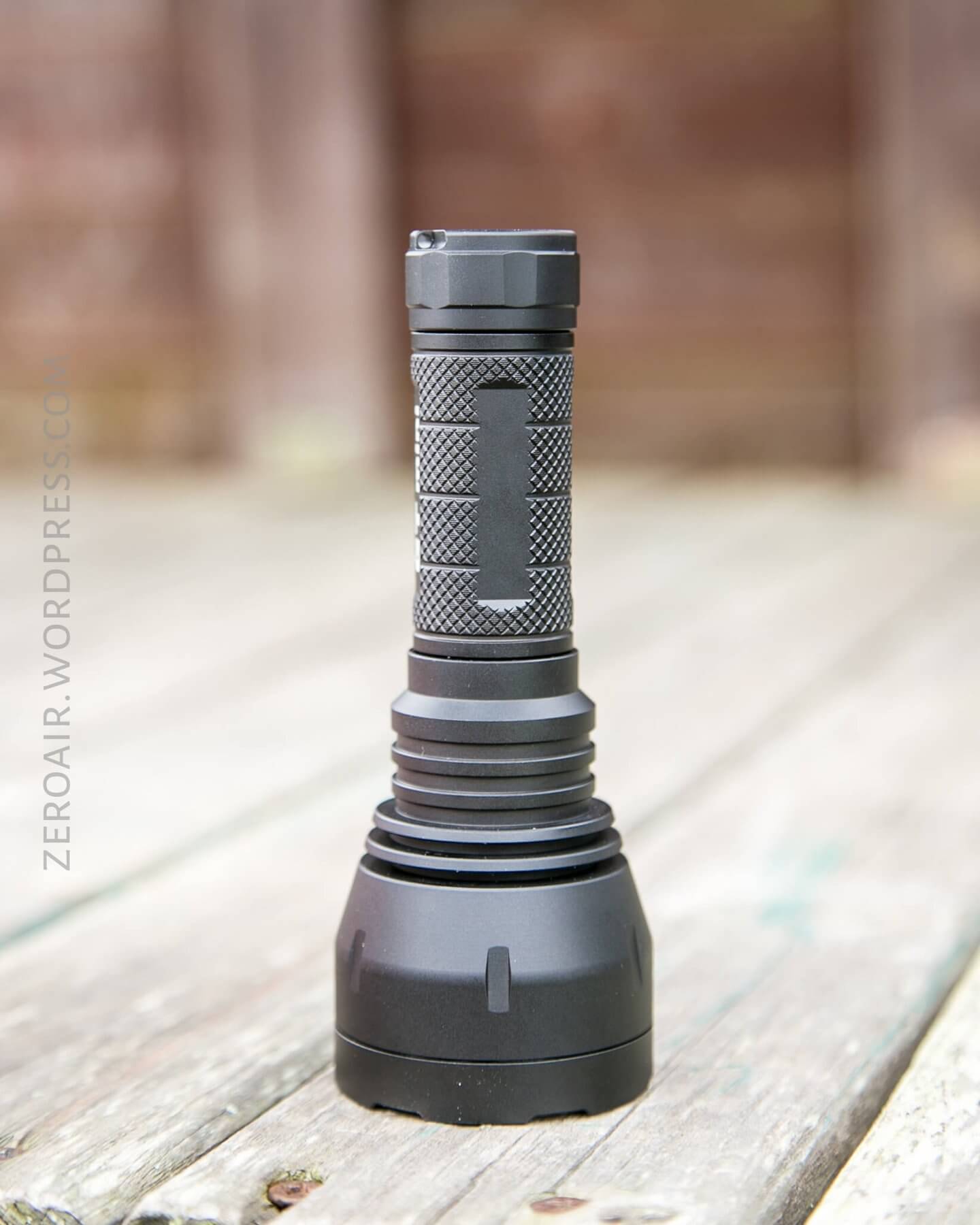
The head has some thick fins for dealing with heat but is generally uncomplicated.
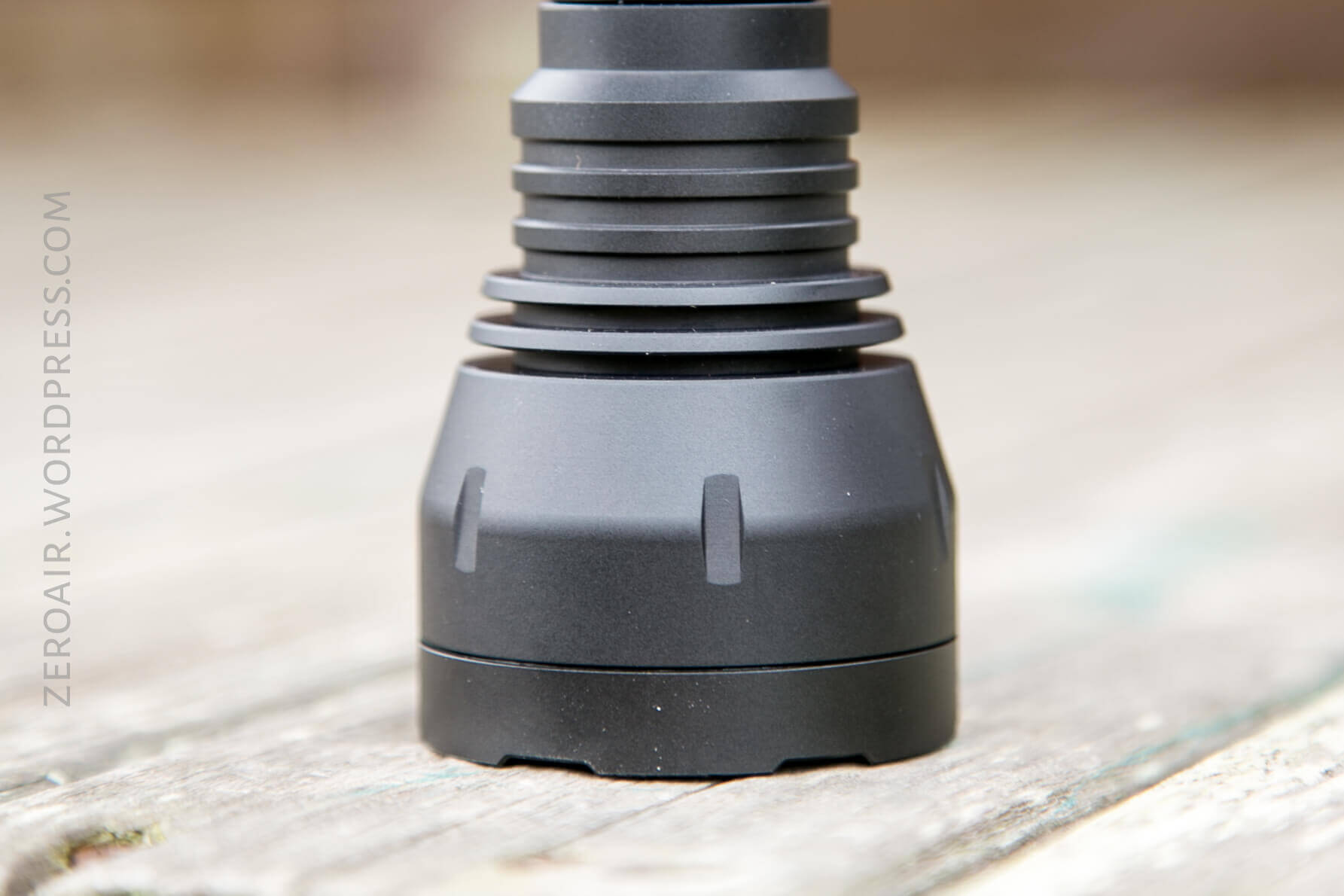
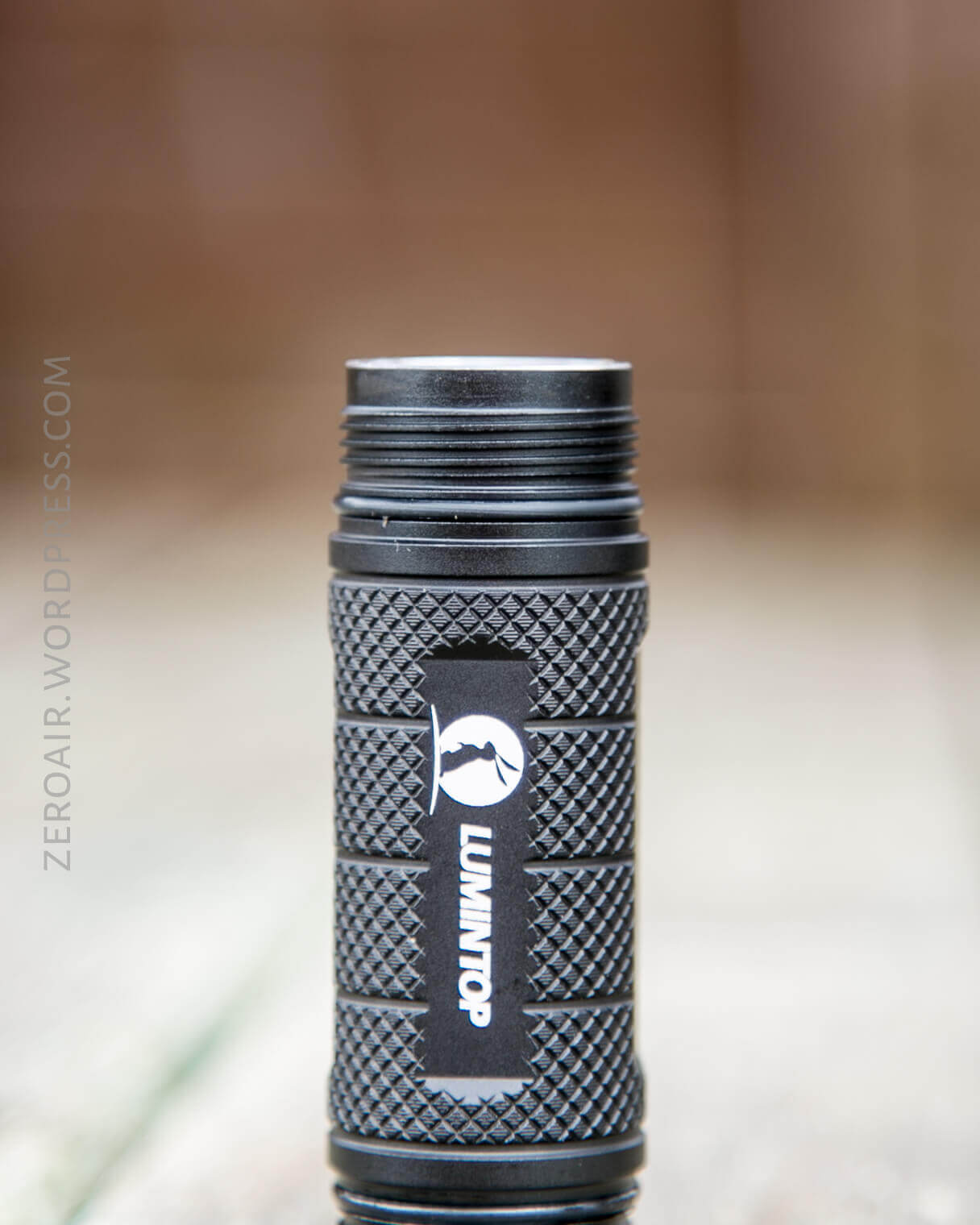
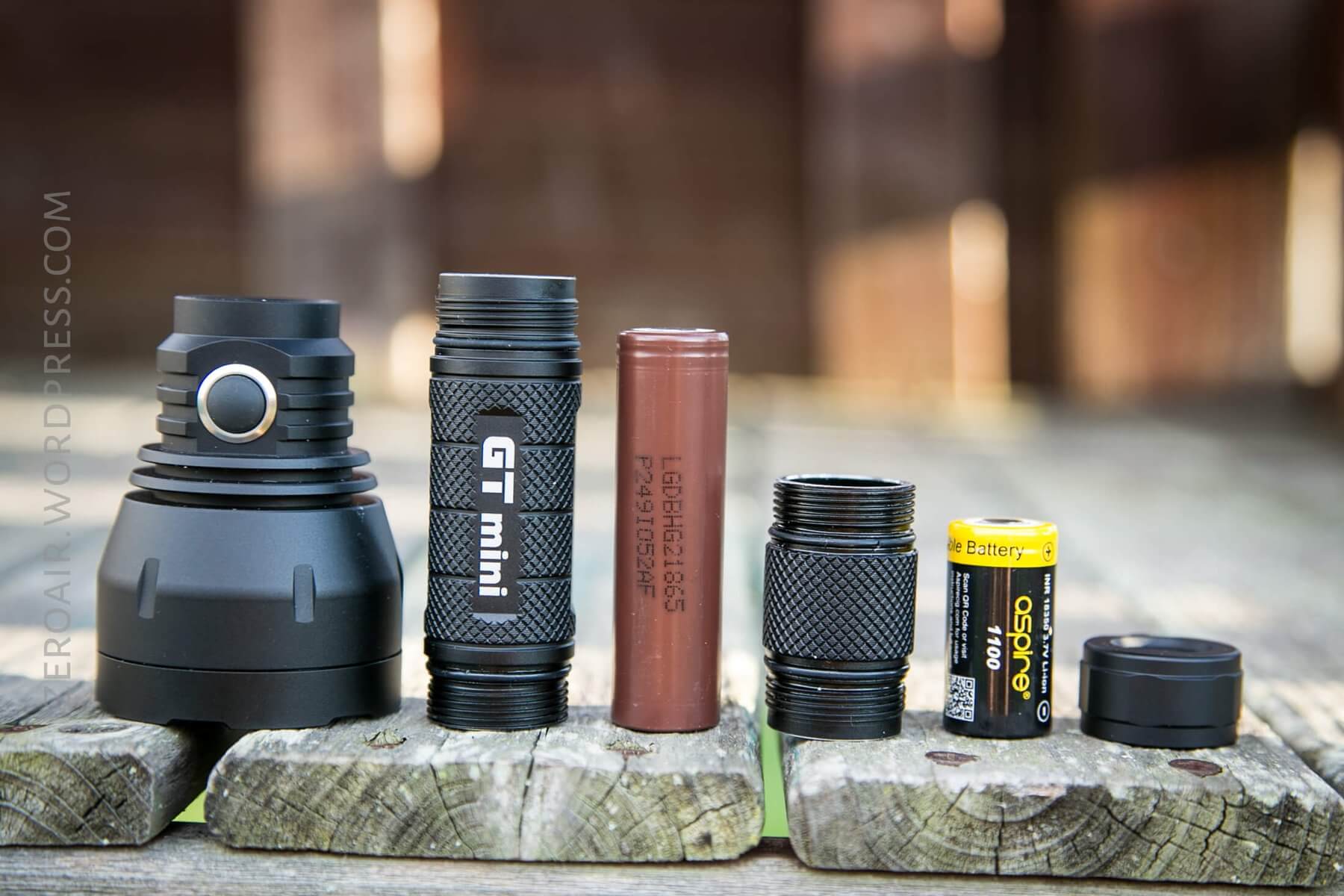
I was unable to remove the bezel from the head, so this is as broken down as I had the light. The threads on both ends are anodized and come essentially unlubed. I think I prefer that to overly lubed, and the threads are very smooth anyway. They’re thick and square-cut. Very good threads. That they’re anodized also means it’s possible to mechanically lockout the light with a short twist. Note also that the cell tubes are directional. One end has a bit of a neck (unthreaded area) – this neck goes toward the head.
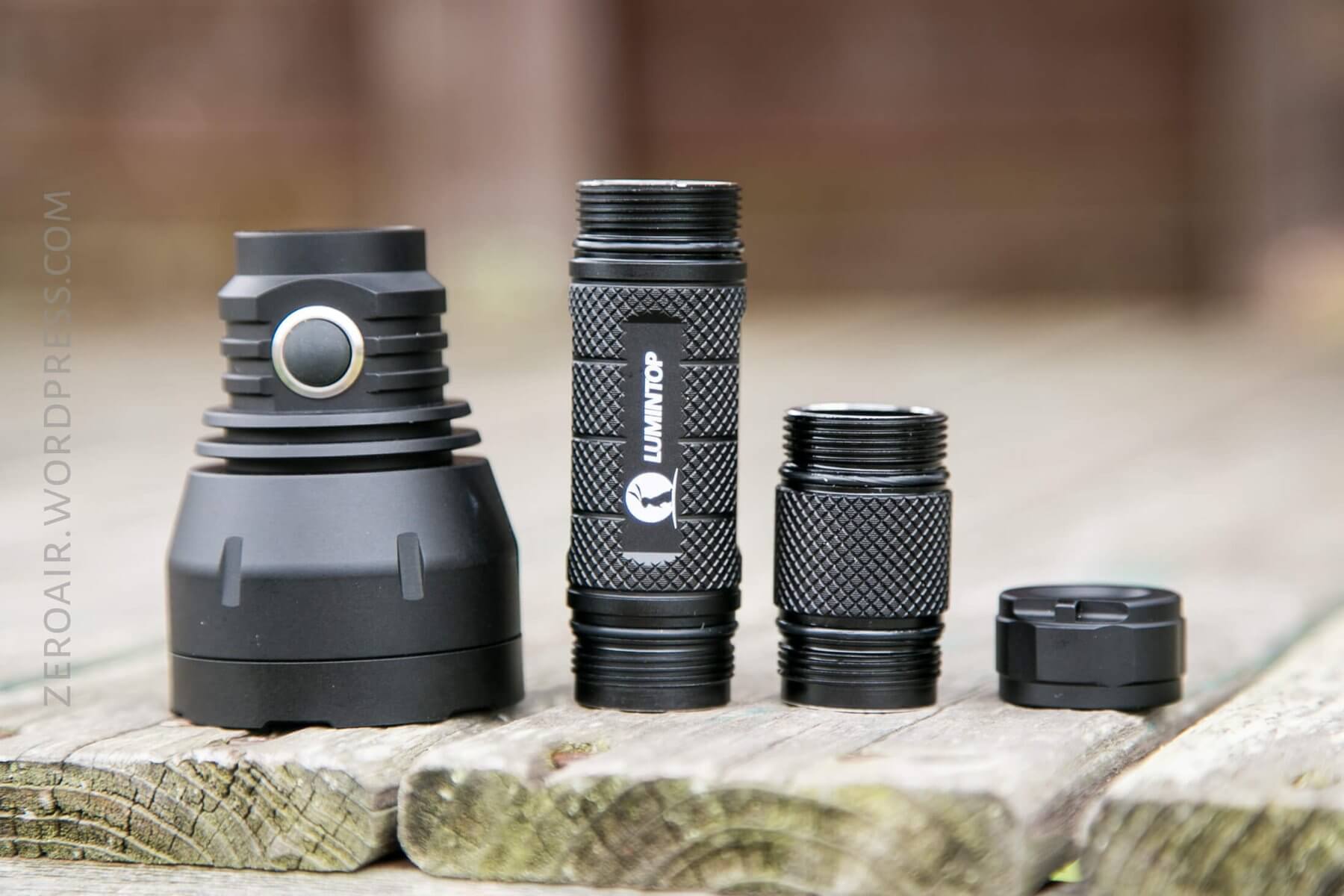
The driver seems pressed in, or possibly put in through the bigger opening. Hard to say, but it doesn’t seem to screw in.
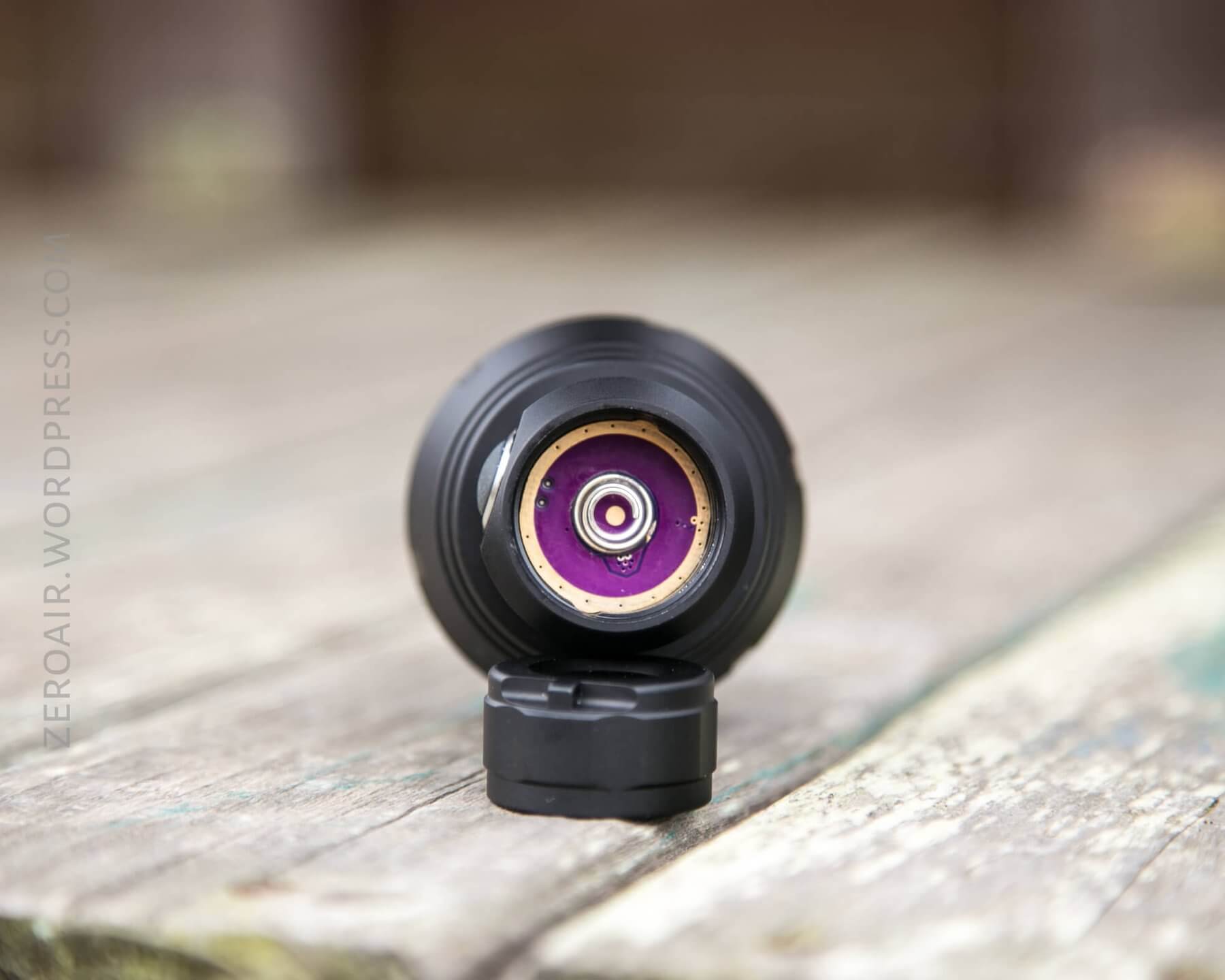
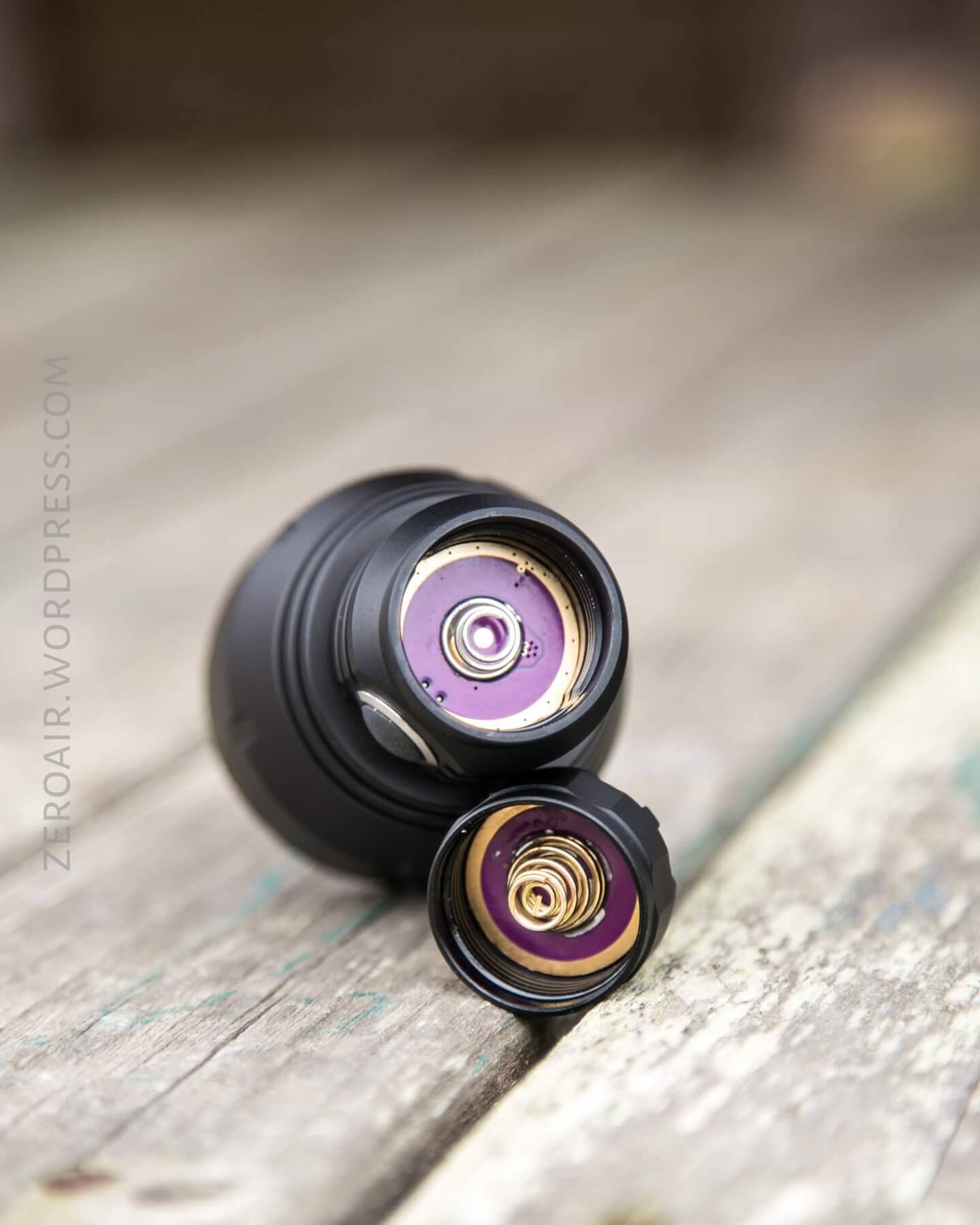
The cell tubes are nice and thick.
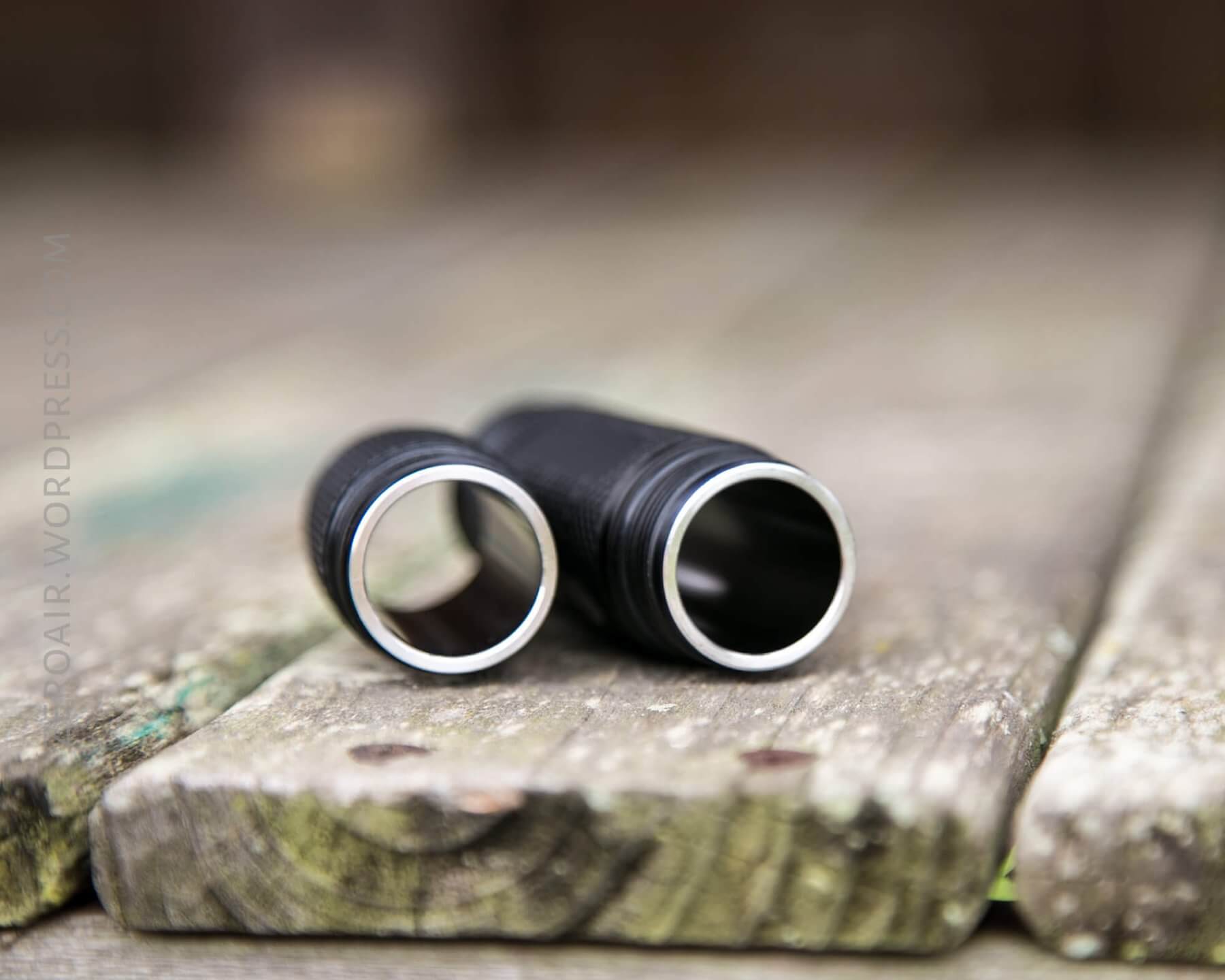
Here’s a detail of the neck (right).
Size
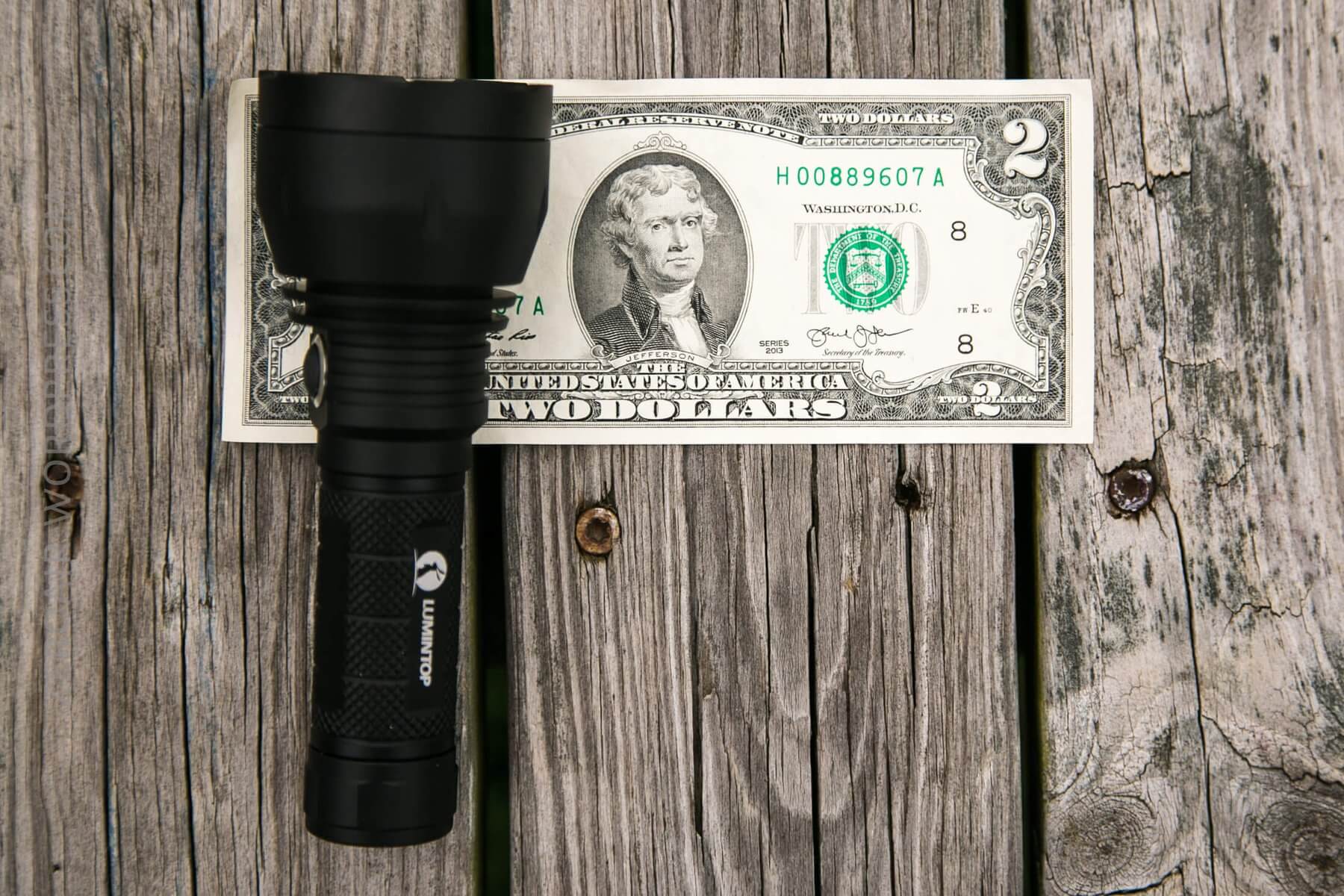
Officially the GT Mini is 132mm x 50mm, and weight 150g, for the 18650 variation. Below, it’s in both the 18350 and 18650 configuration.
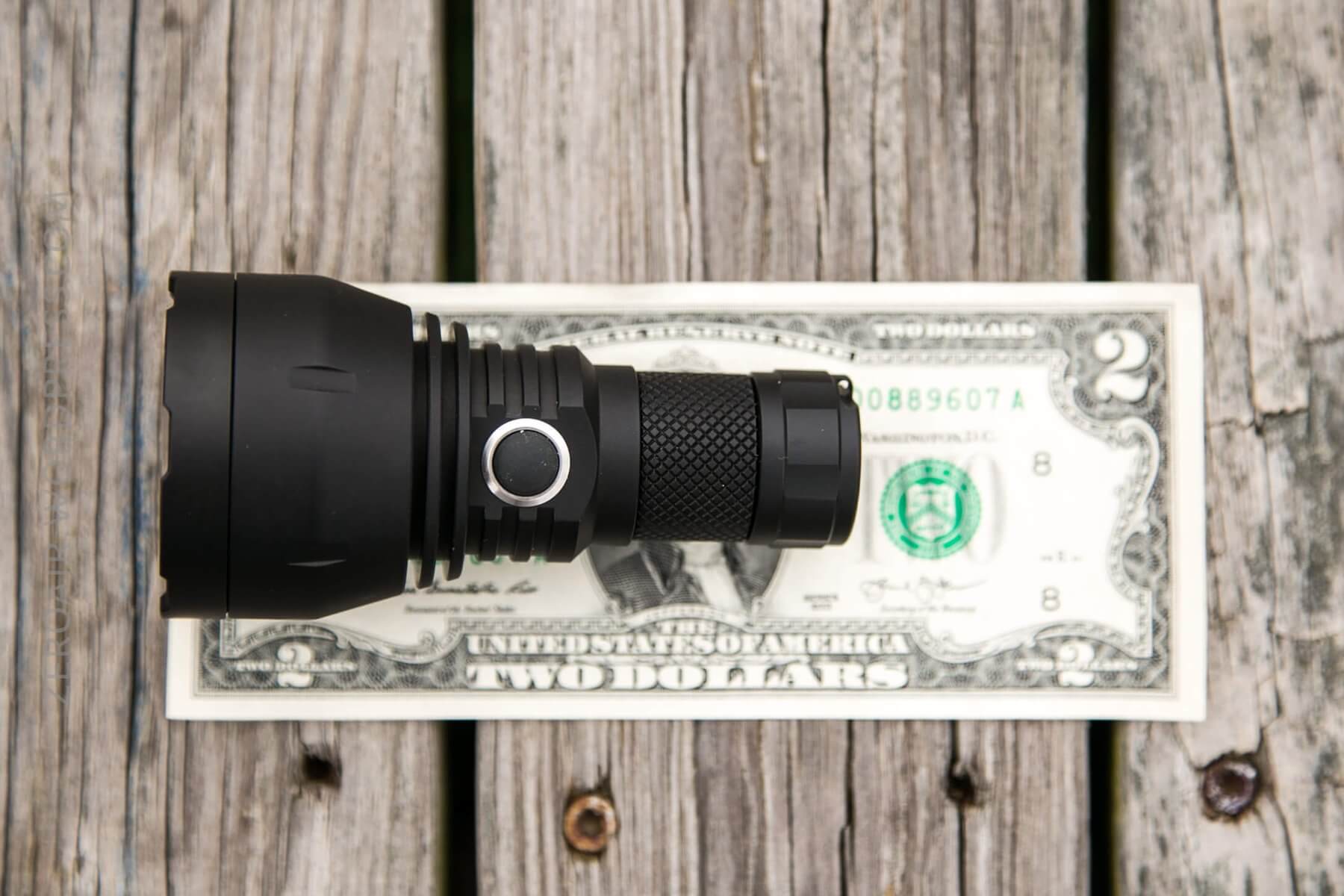
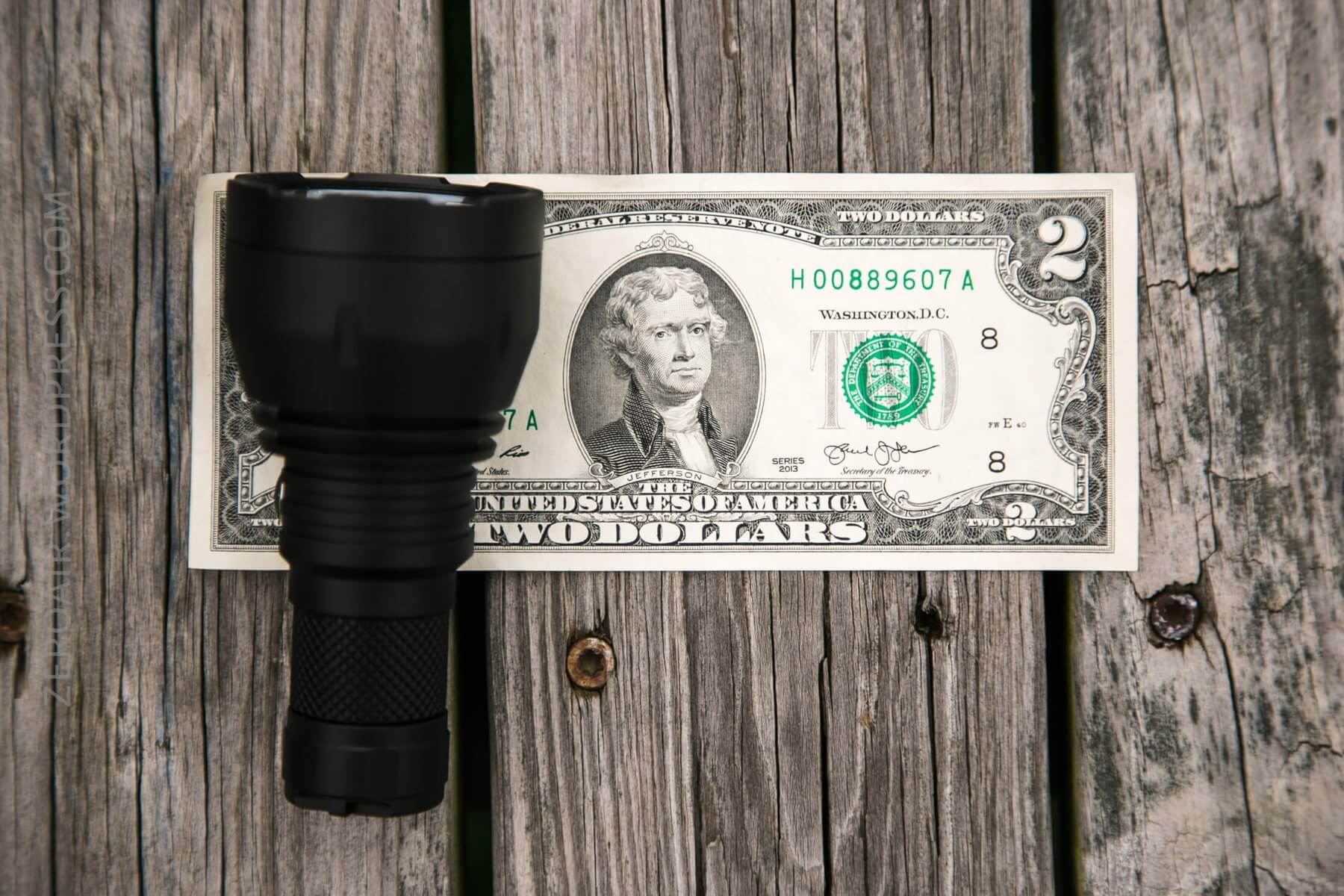
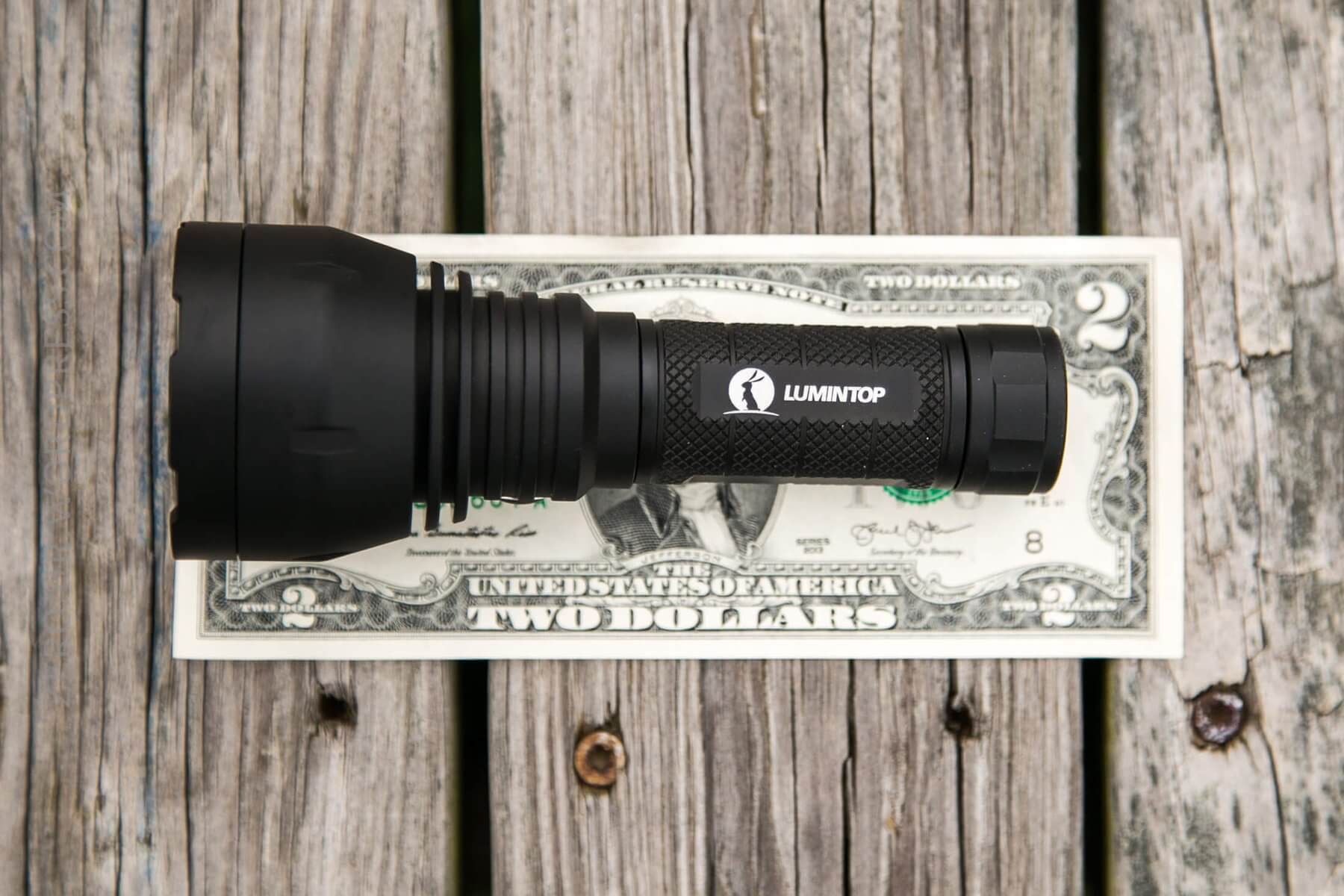
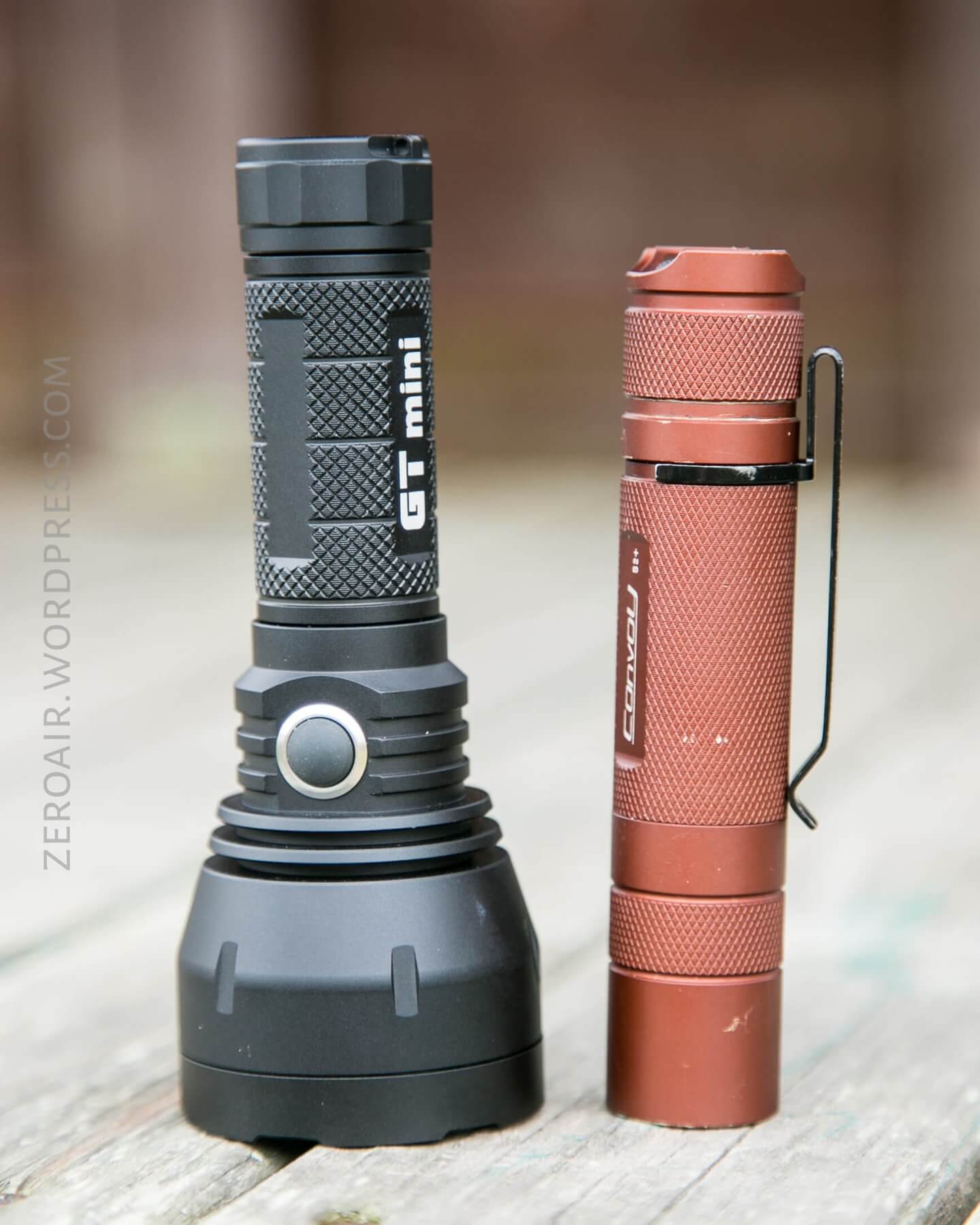
Depending on the setup, it’s either fairly longer or fairly shorter than the Convoy S2+.
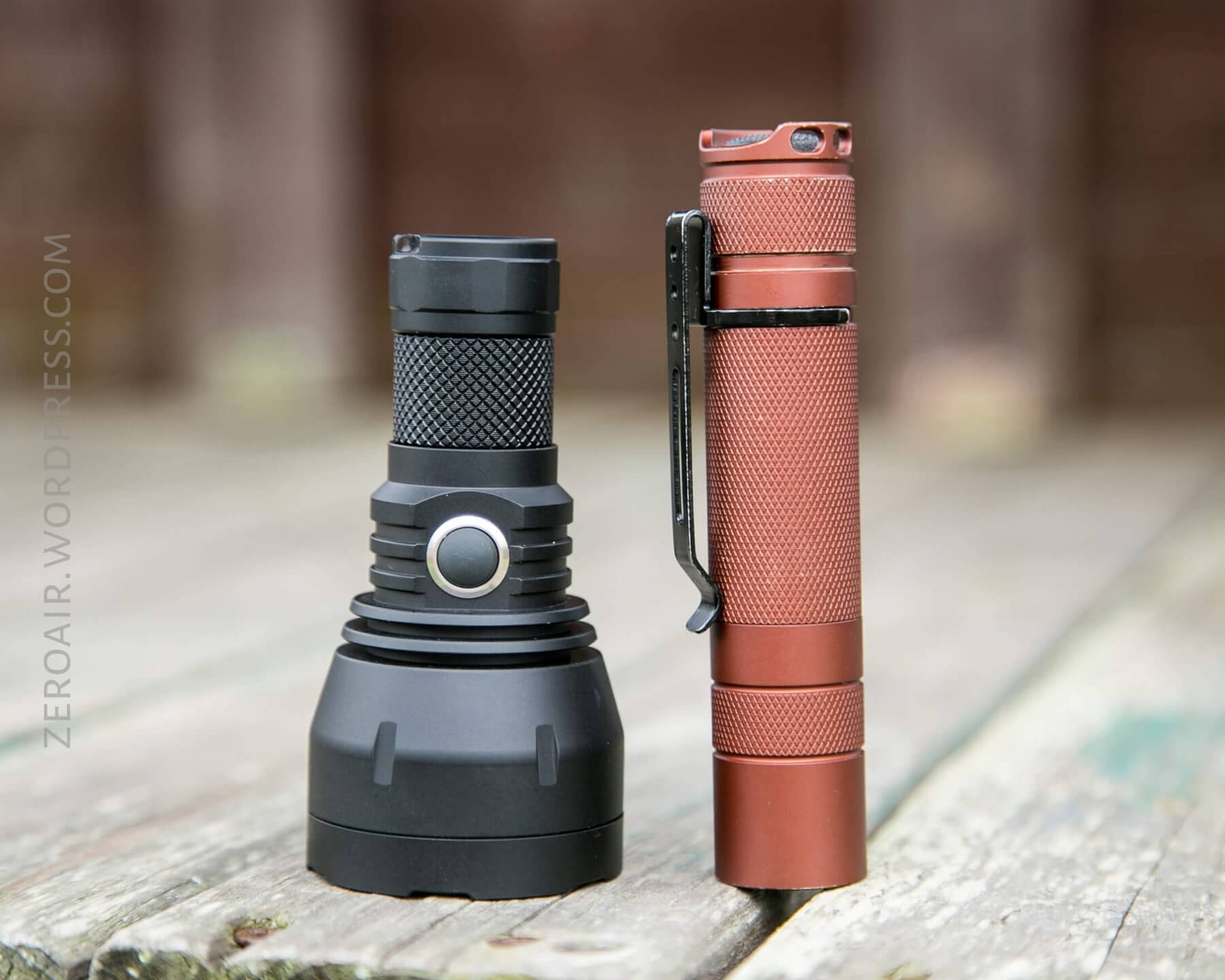
Also slightly longer than the Emisar D1S, but otherwise very similar.
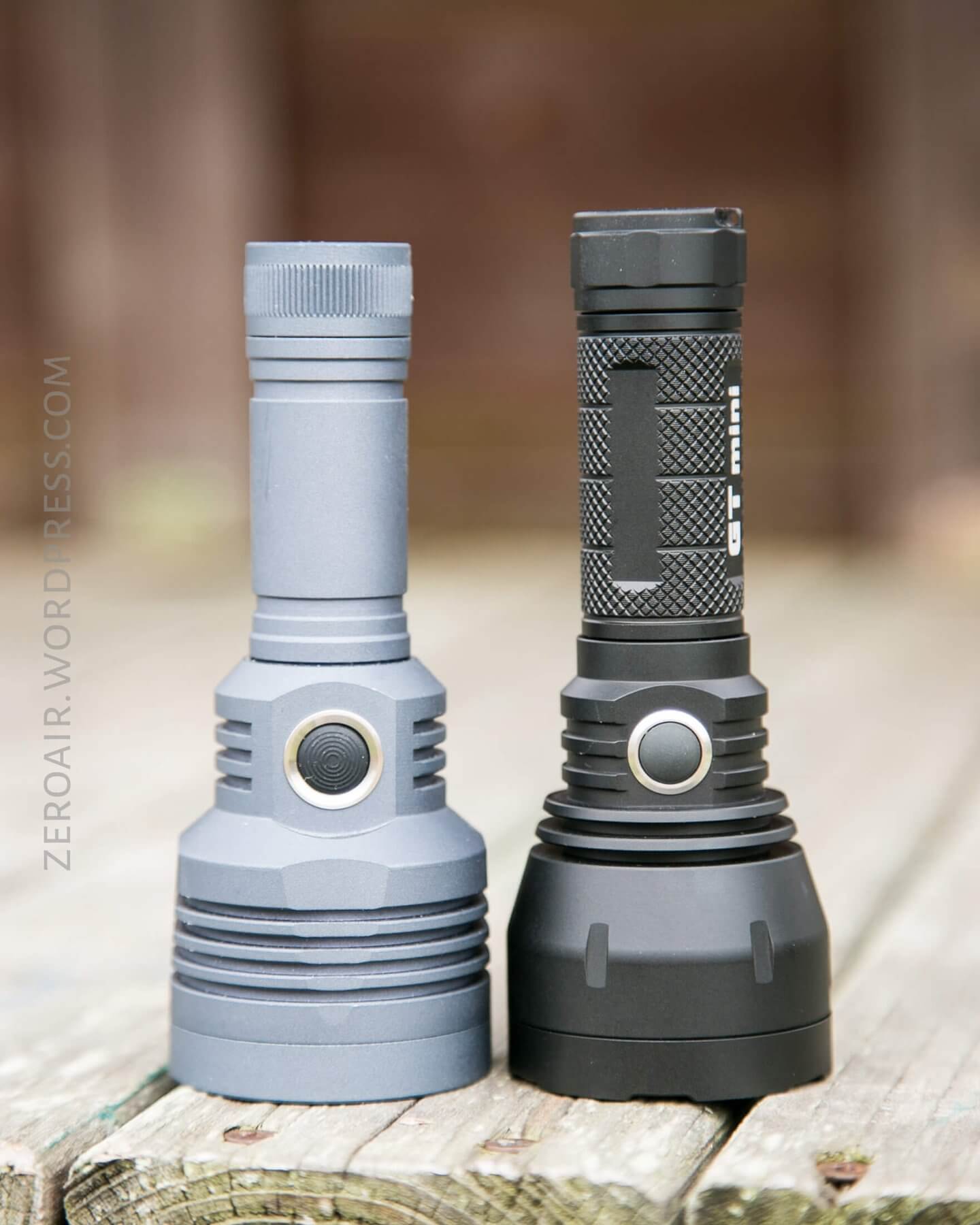
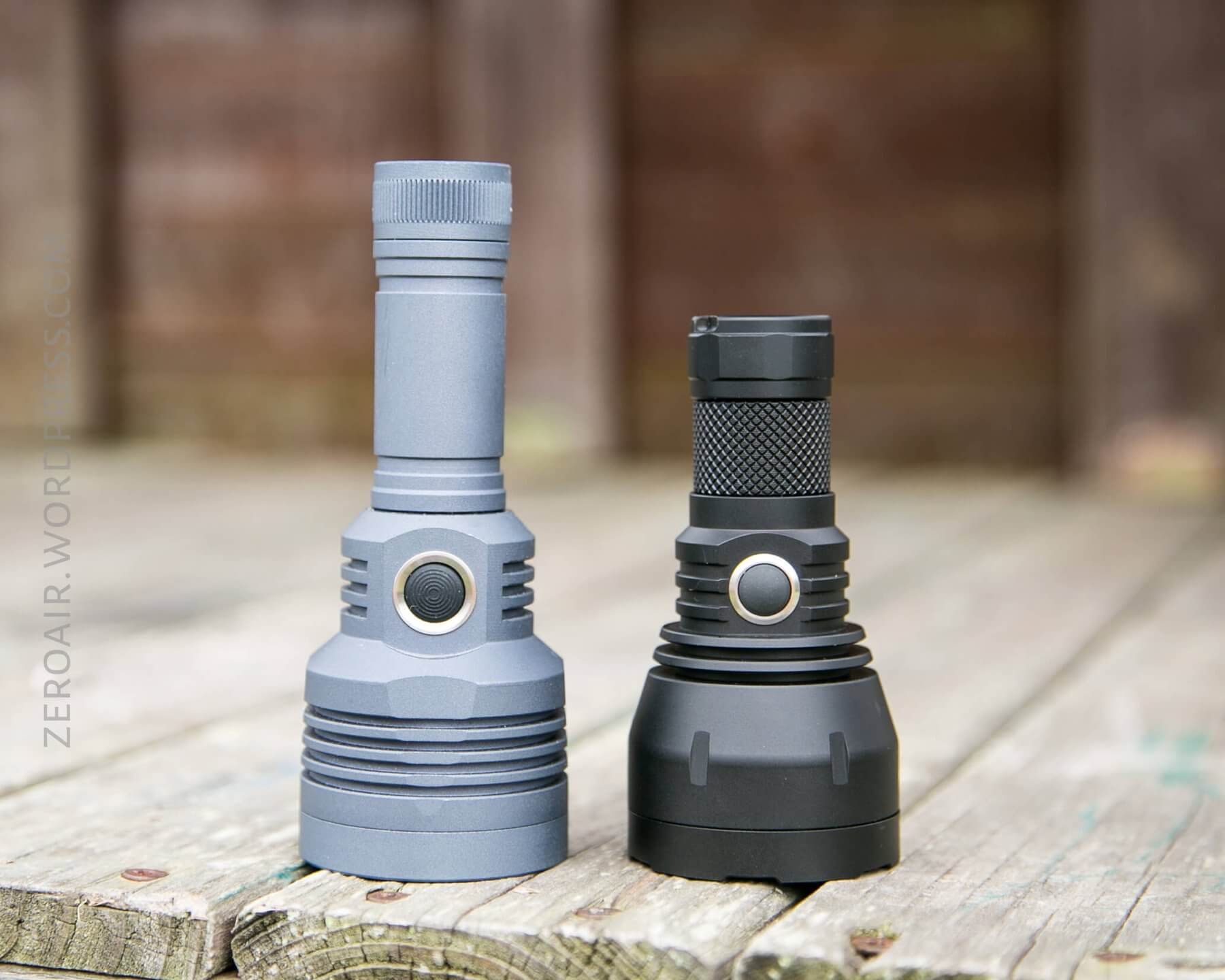
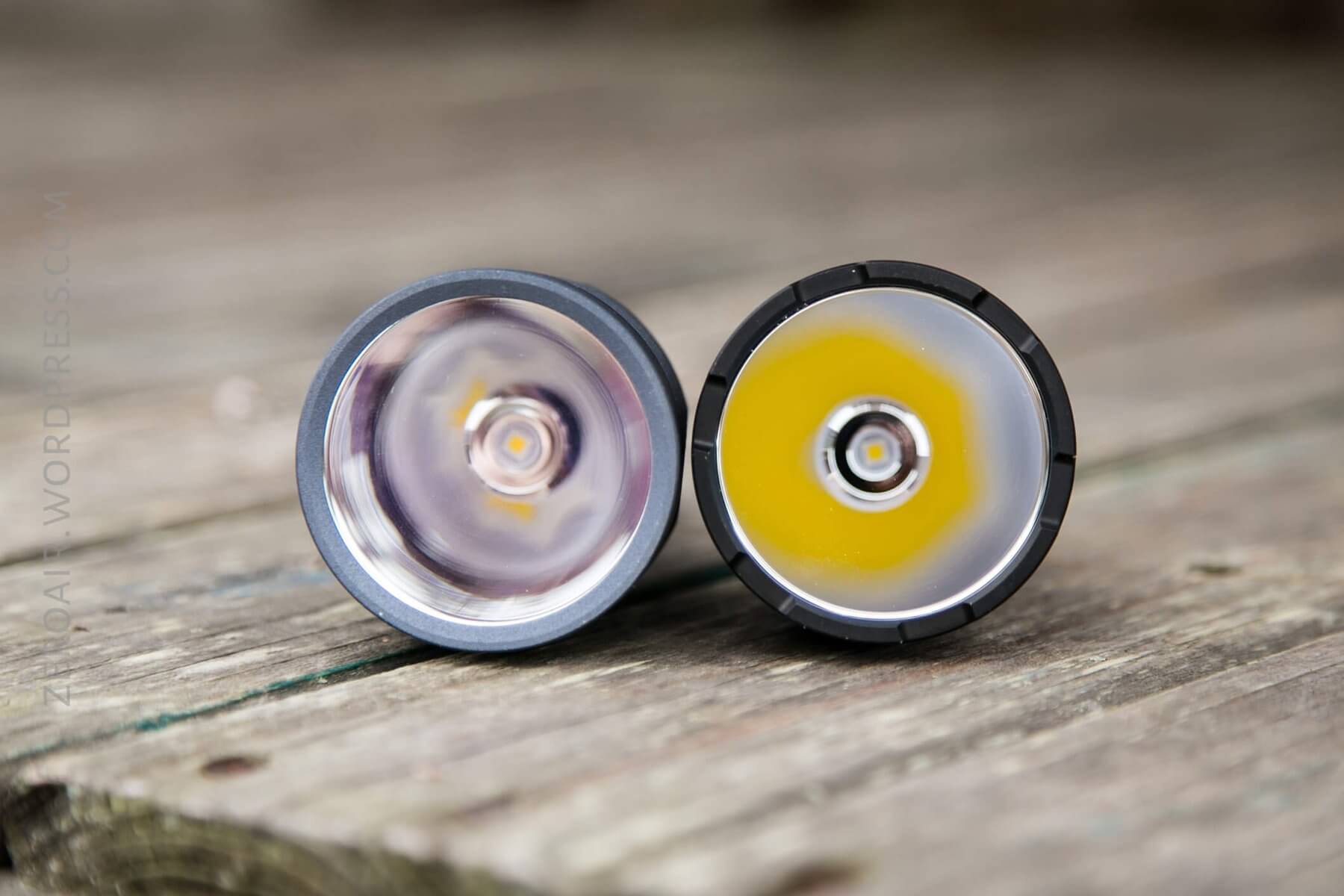
The bezel and reflectors are essentially the same size.
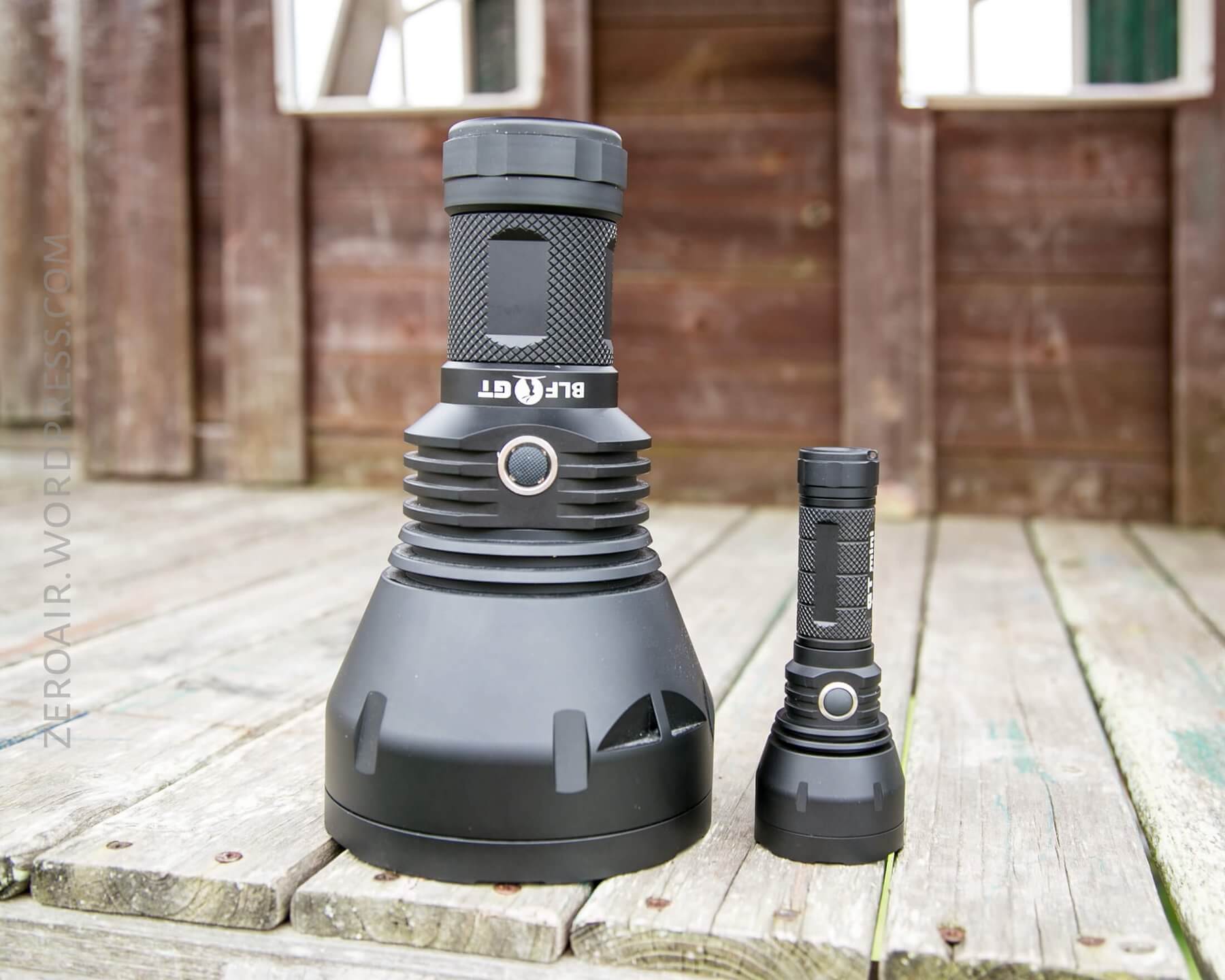
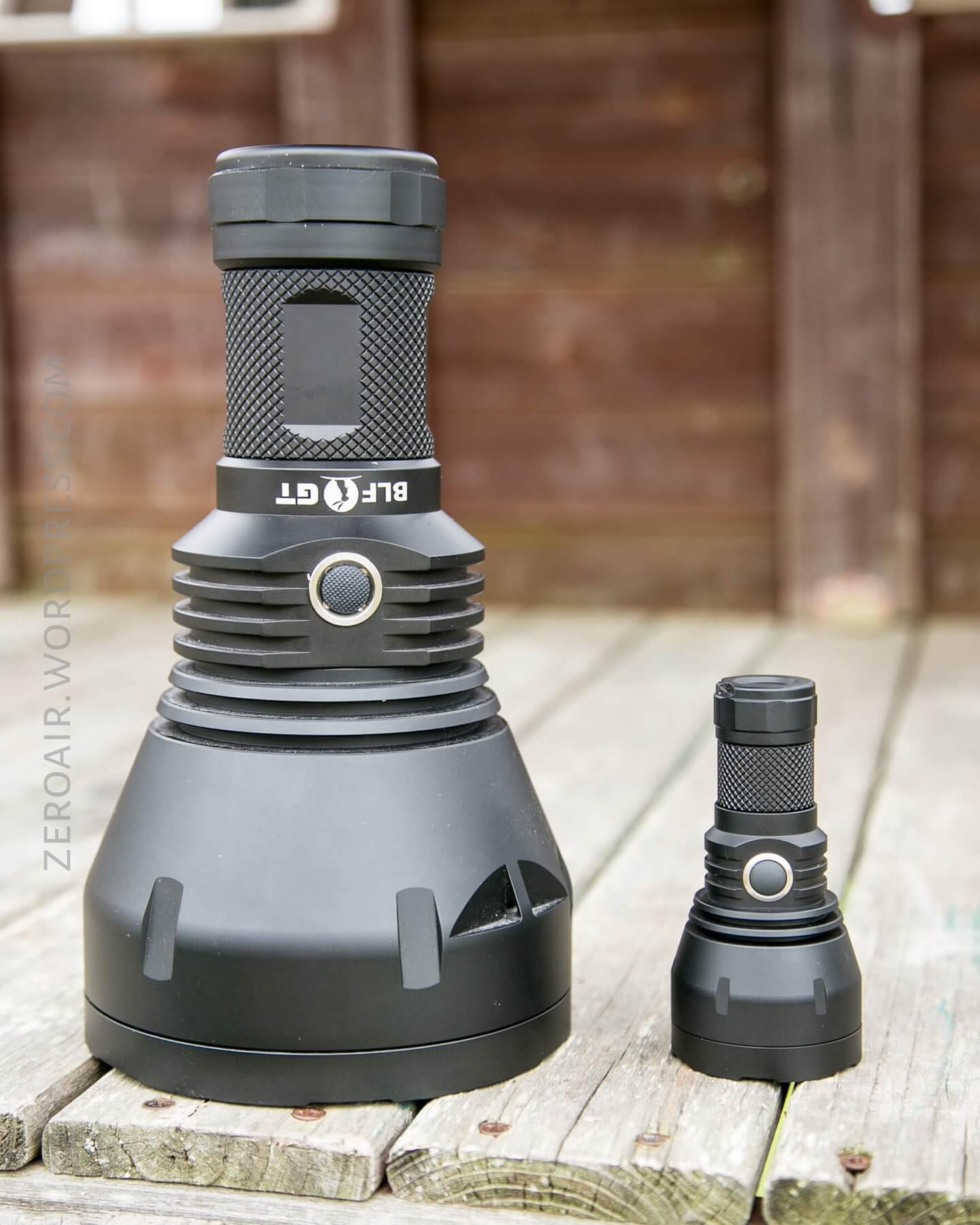
And how does the GT Mini shorty stack up to the GT shorty? Here you go. Perfectly complimentary.
Retention
A provided lanyard connects on the tailcap. Unlike the big GT, there’s no attachment point on the head.
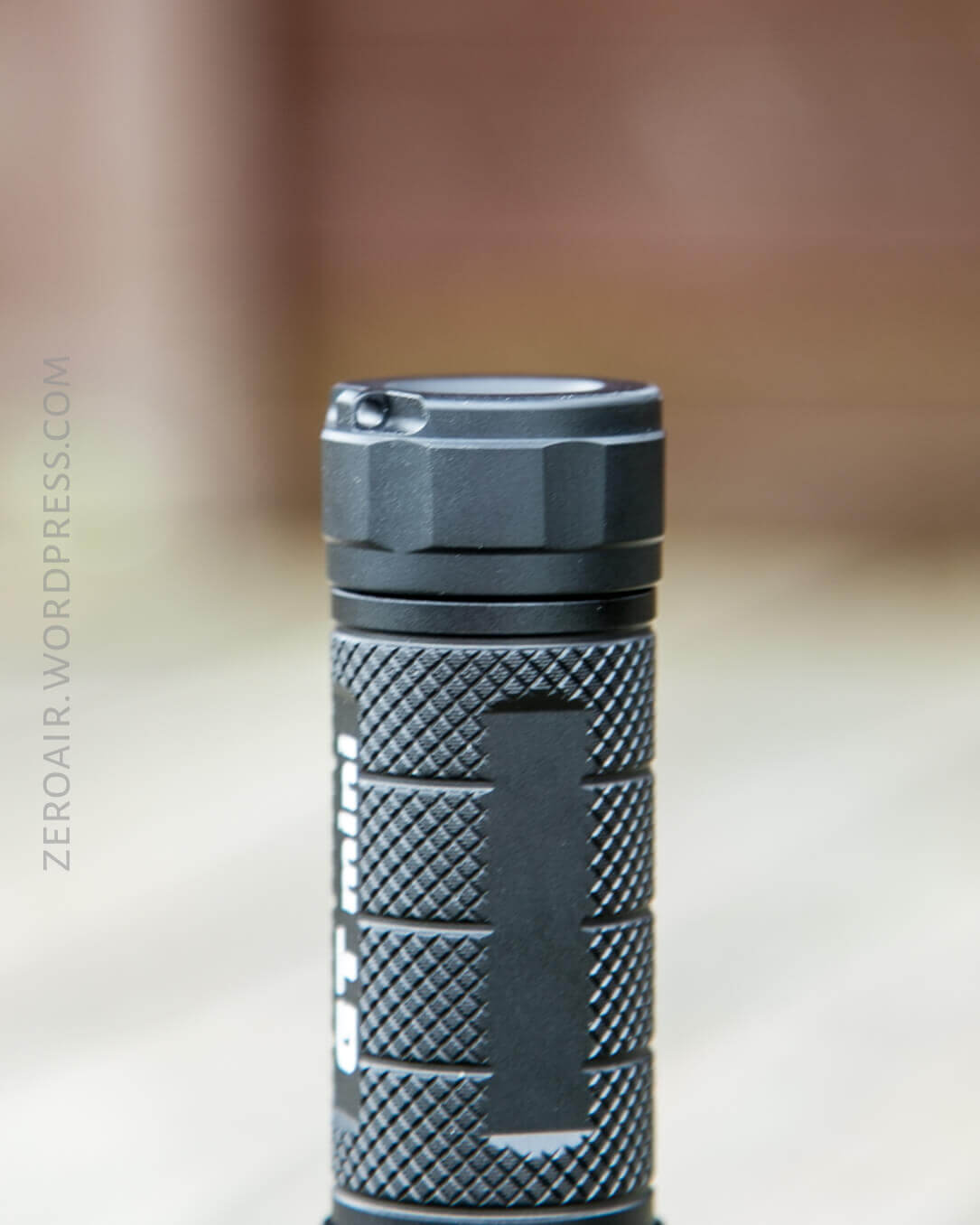
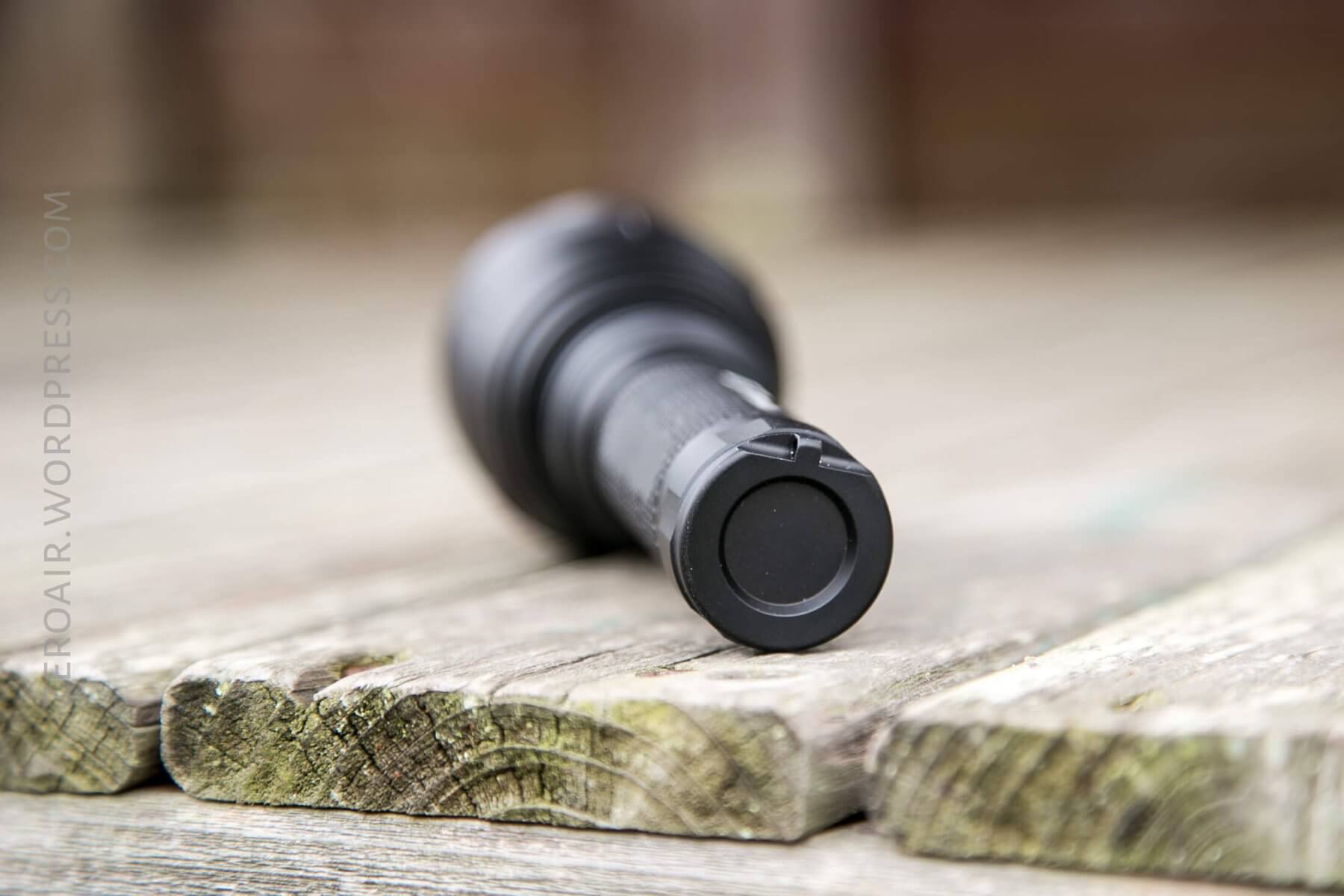
And that’s it. There’s no pouch or cover or magnet or clip or anything else for the GT Mini. The cell tube doesn’t even have a proper place for a pocket clip.
Power
Power is provided to the GT Mini by either 18650 or 18350 Li-ion cells. Both the head and tail have springs, so the light should have no trouble using any type of either cell. And the power drawn on turbo isn’t so great that most cells can’t handle. (Around 4.5A claimed, and measured.)
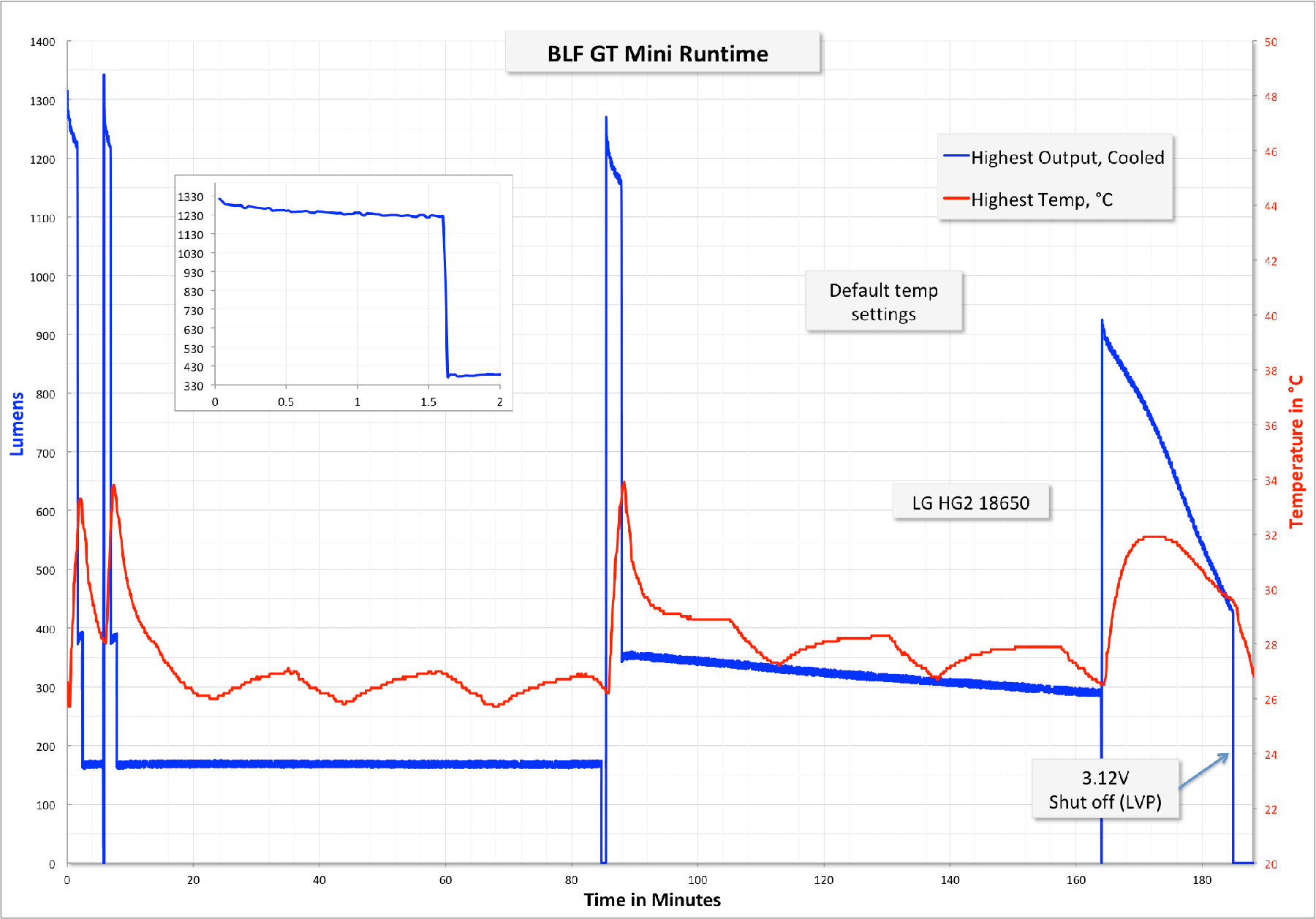
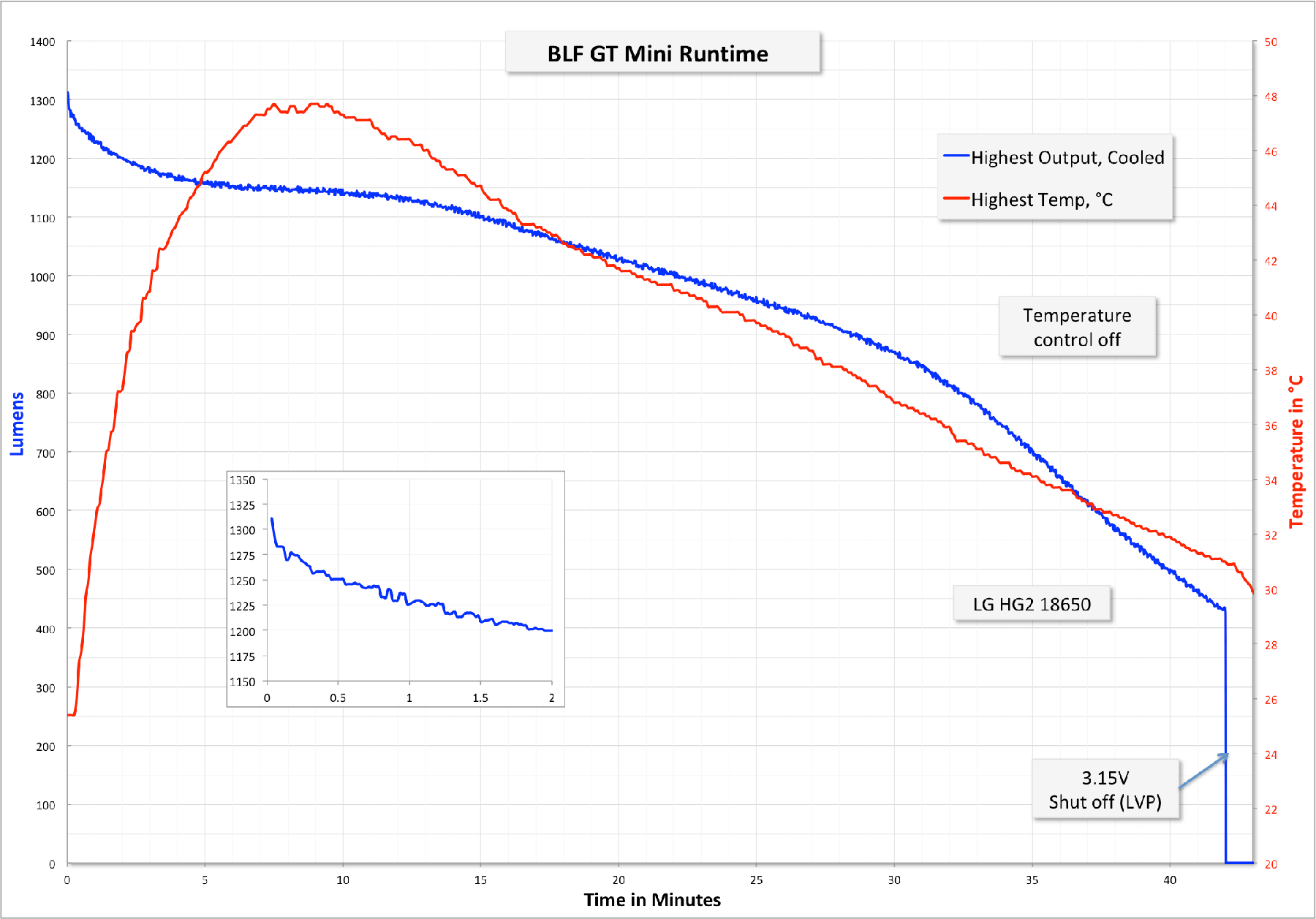
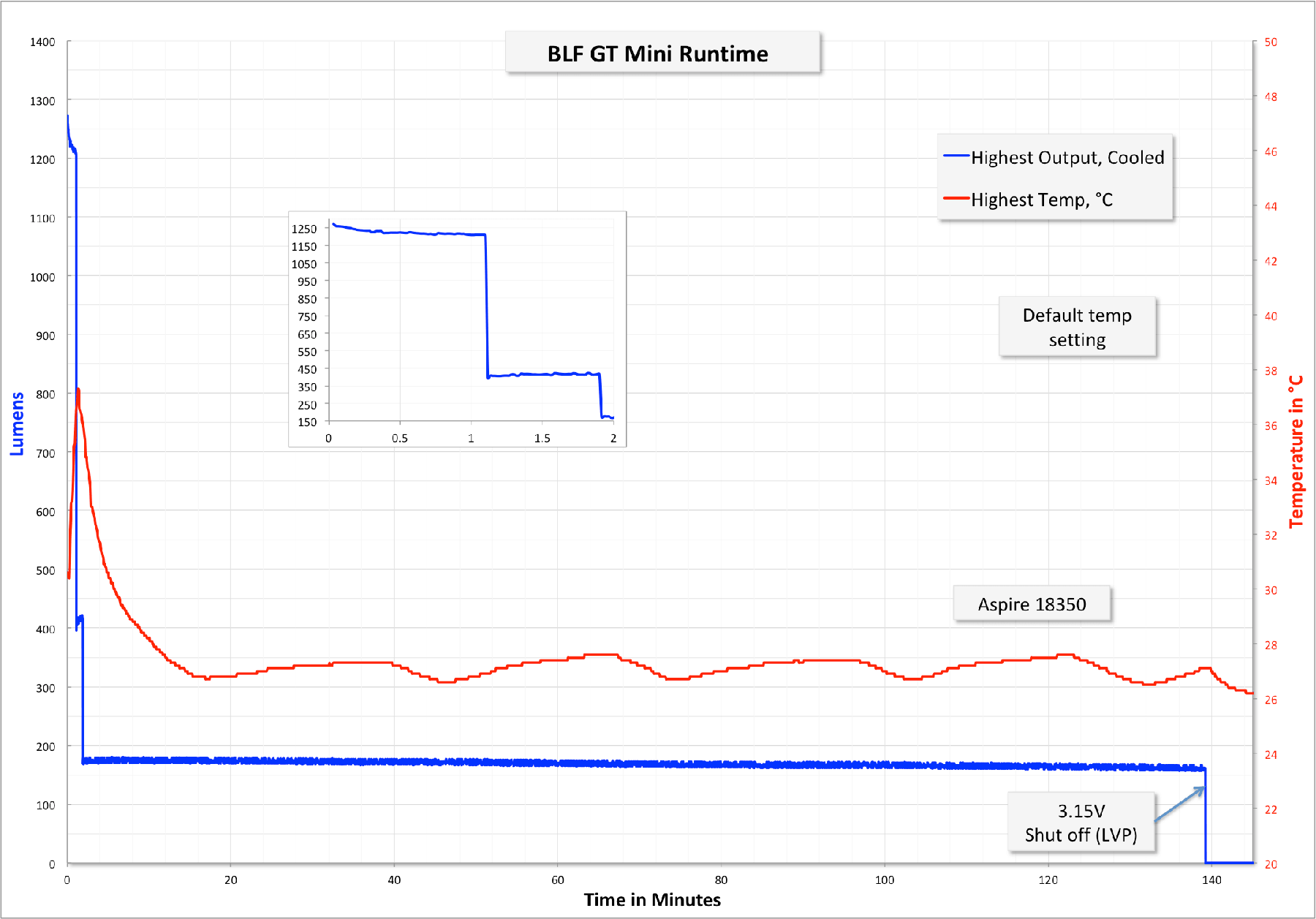
Here’s a runtime on Turbo. This test is with the default temperature setting. I reset the light a few times to turbo. Early in the tests, the light still resets to near max output and steps down as planned, but on the last reset, since the light never reaches the critical point, the light just drifts off turbo slowly to it’s Low Voltage point. The light is highly configurable, but in all of my tests has LVP.
Here’s a similar test but with the thermal setting completely off. The light holds near max output for a considerable time, but then drifts as the cell voltage drops.
Another default setting test, but with an 18350 cell. Very similar outcome, but with no turbo resets through the run.
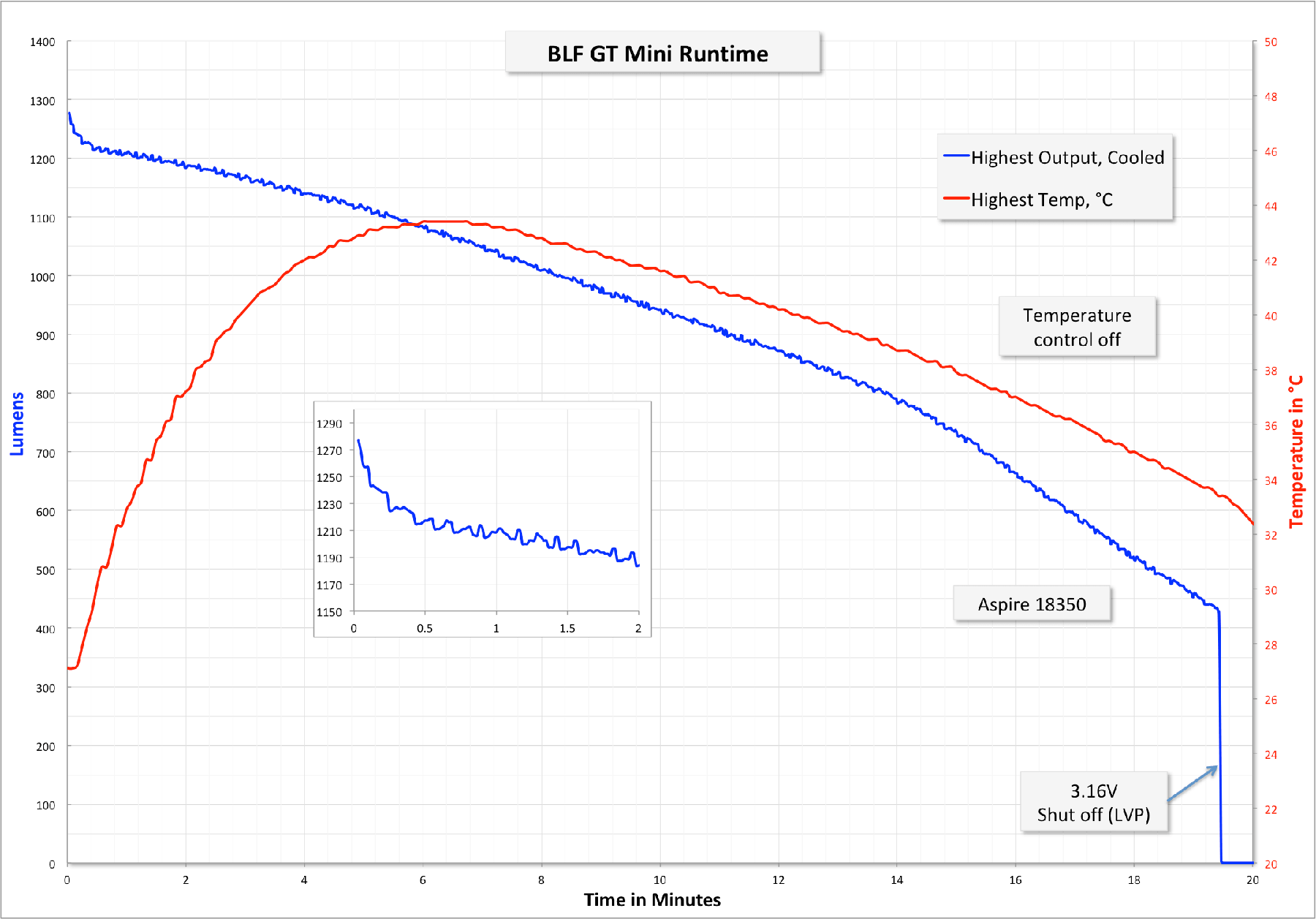
And another 18350 test, but with the temperature setting configured to “off”. There are many other possible settings, but I chose to test the two extremes.
User Interface and Operation
There’s a single switch on the GT Mini. It’s a side, e-switch, and has an indicating emitter under. The indicator is green, and on my light only lighted half the switch. I’m not sure if this is intentional, or if half my switch isn’t working as it should. Either way, it told me the information I needed.
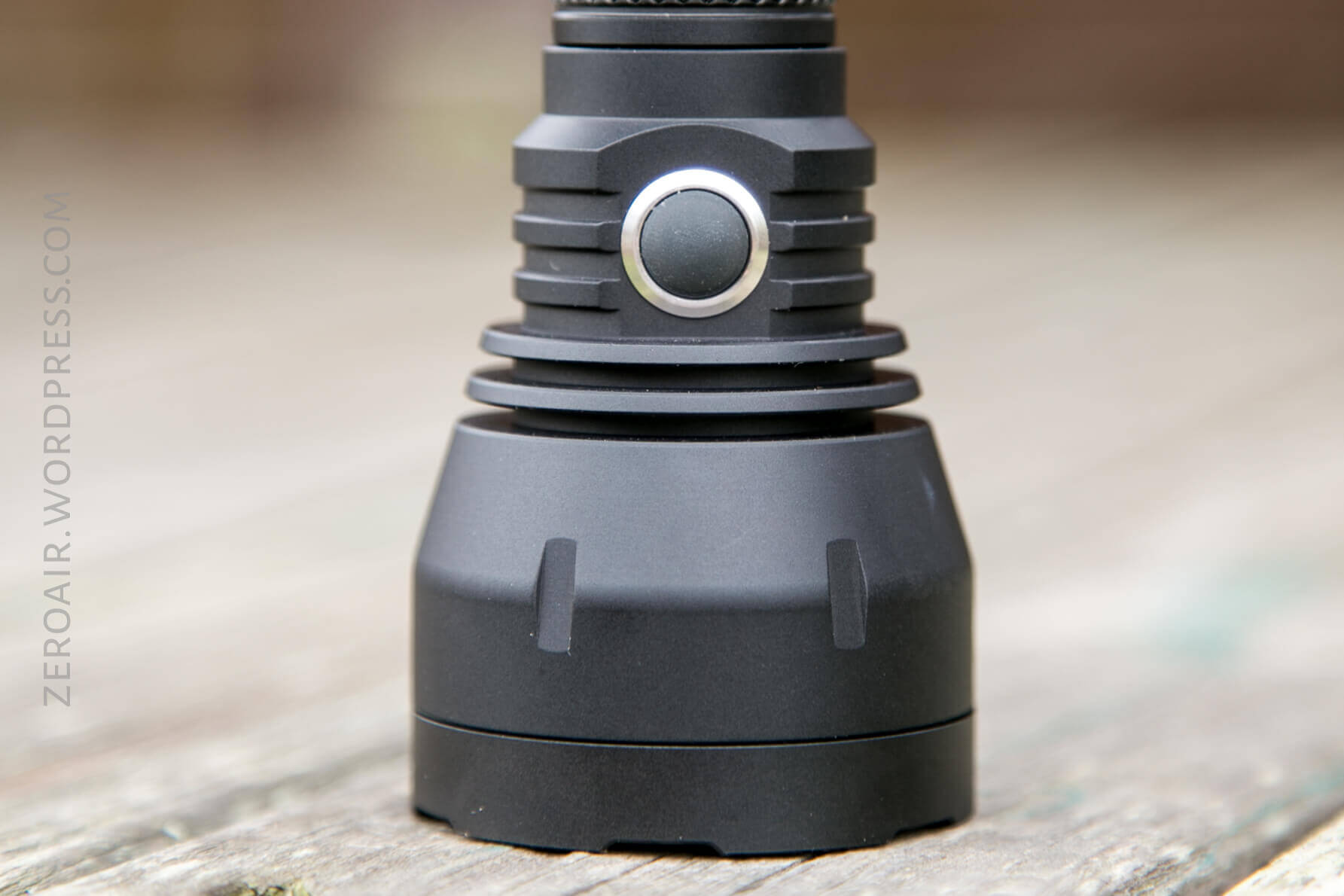
The switch is a little too domed for my tastes and ends up feeling squishy. I really prefer flat rubber, or even metal switches (Thrunite does good indicating metal switches). Since this one is only half-lit, it either looks like it’s not working right or is cheap. And neither of those is good.
The user interface itself is a version of Narsil, by Tom E. The version my light shows is Narsil 1.3. (Check this by clicking 3x, then 2x, then 2x, and the version will be blinked. 1 blink, pause 3 blinks.)
The user interface is much too complex for my usual table, and I’m not going to undertake that here. This Cheat Sheet is not my work! but is very useful, and thorough.
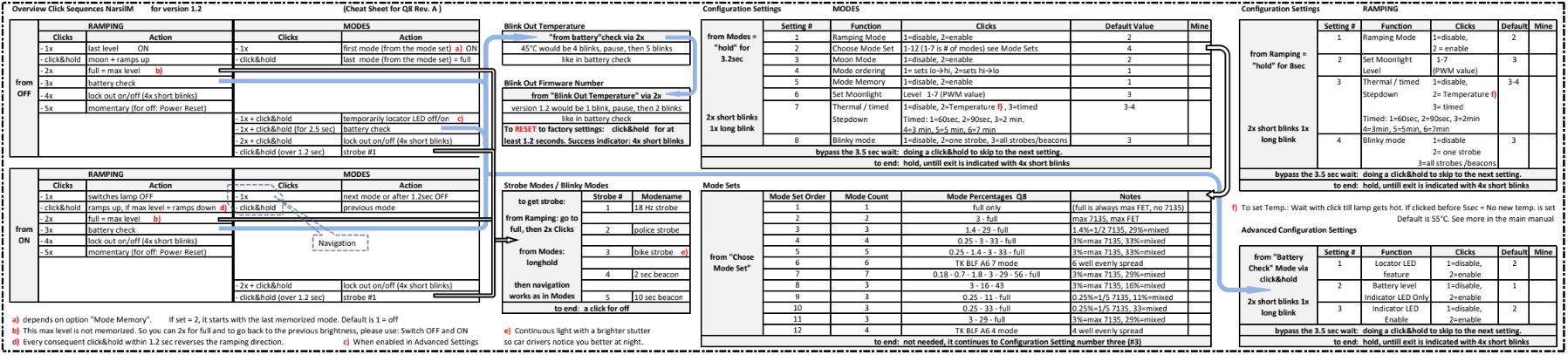
There are two groups. One group has ramping, one group has discrete modes. It’s possible to switch between ramping and discrete easily. The default is ramping, and to switch to modes, firs turn the light on, then hold the switch for 3.2s. It’ll blink twice, pause, and blink once. At that point, click once. This disables ramping. Once this is done, put the light down so you don’t change other settings (which is very easy to do.) There are other things you could do to expedite termination of programming, but just skip it, and wait.
Narsil is wonderful firmware. It’s extremely versatile, and possible to change many (most? all?) of the settings about the light. I’ll try to put together a video showing programming, because that’s the easiest way to grasp how to do it.
LED and Beam
The emitter in this light is a Cree XP-L HI, and it’s neutral white. There’s a white centering ring, and the reflector is very smooth and fairly deep.
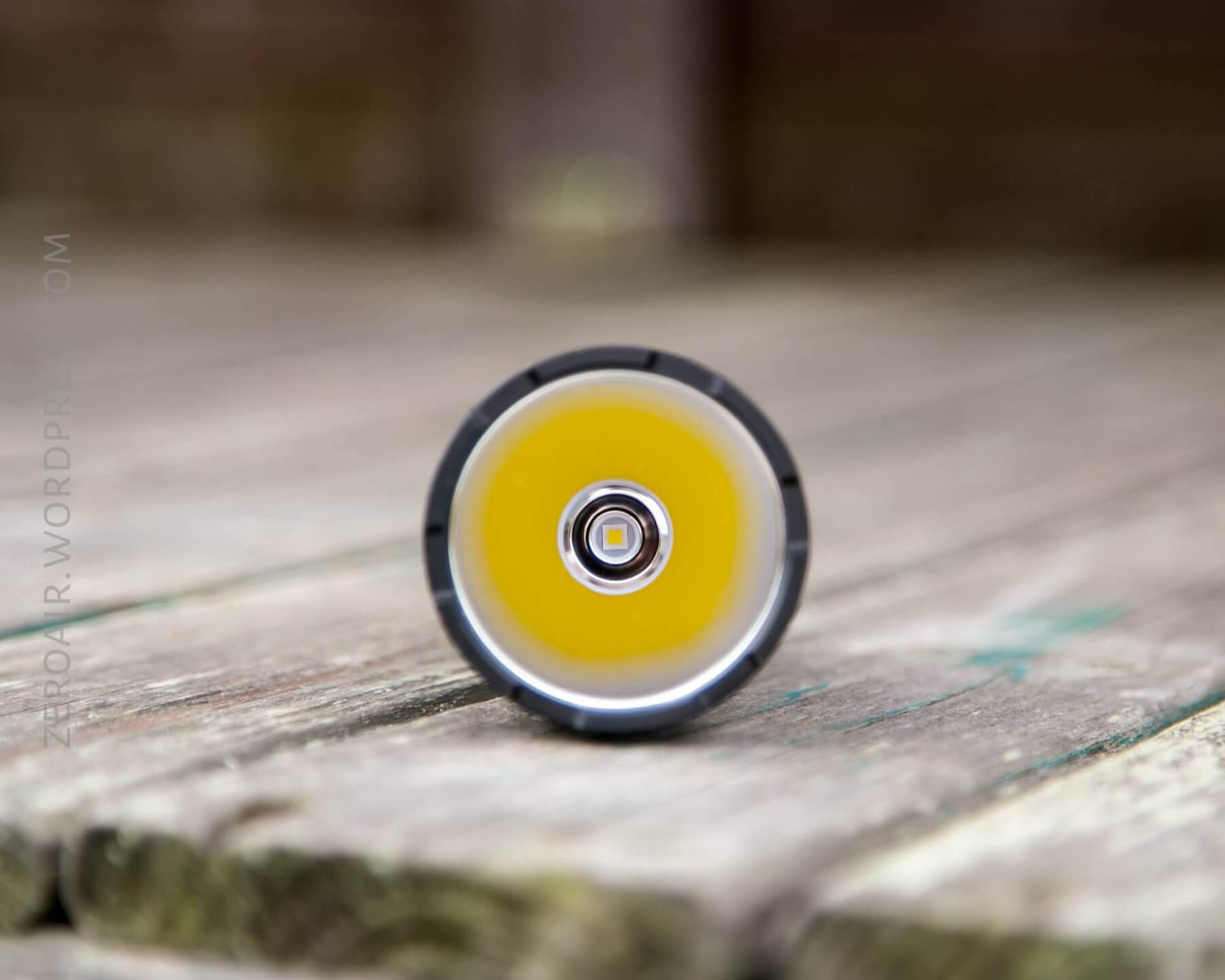
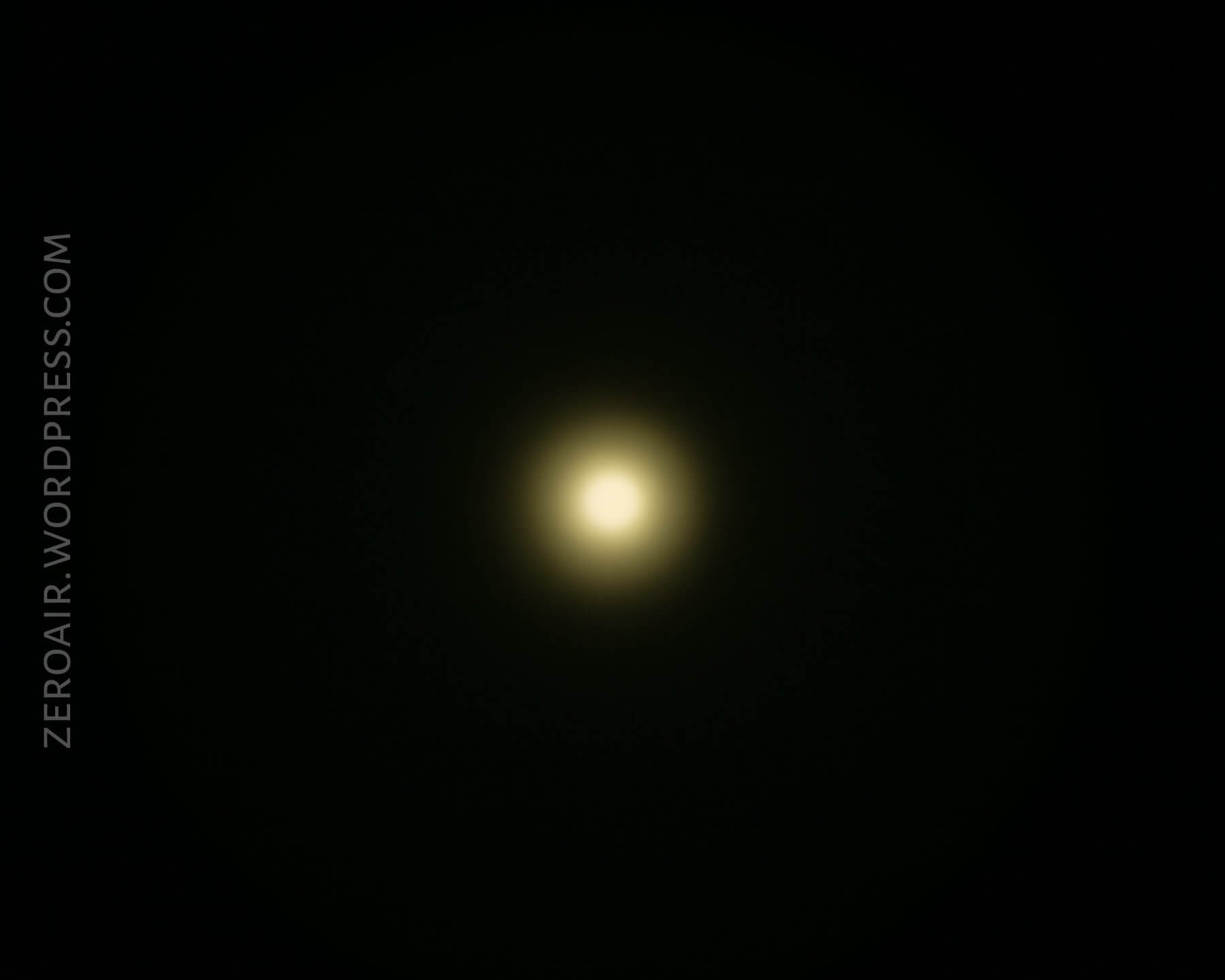
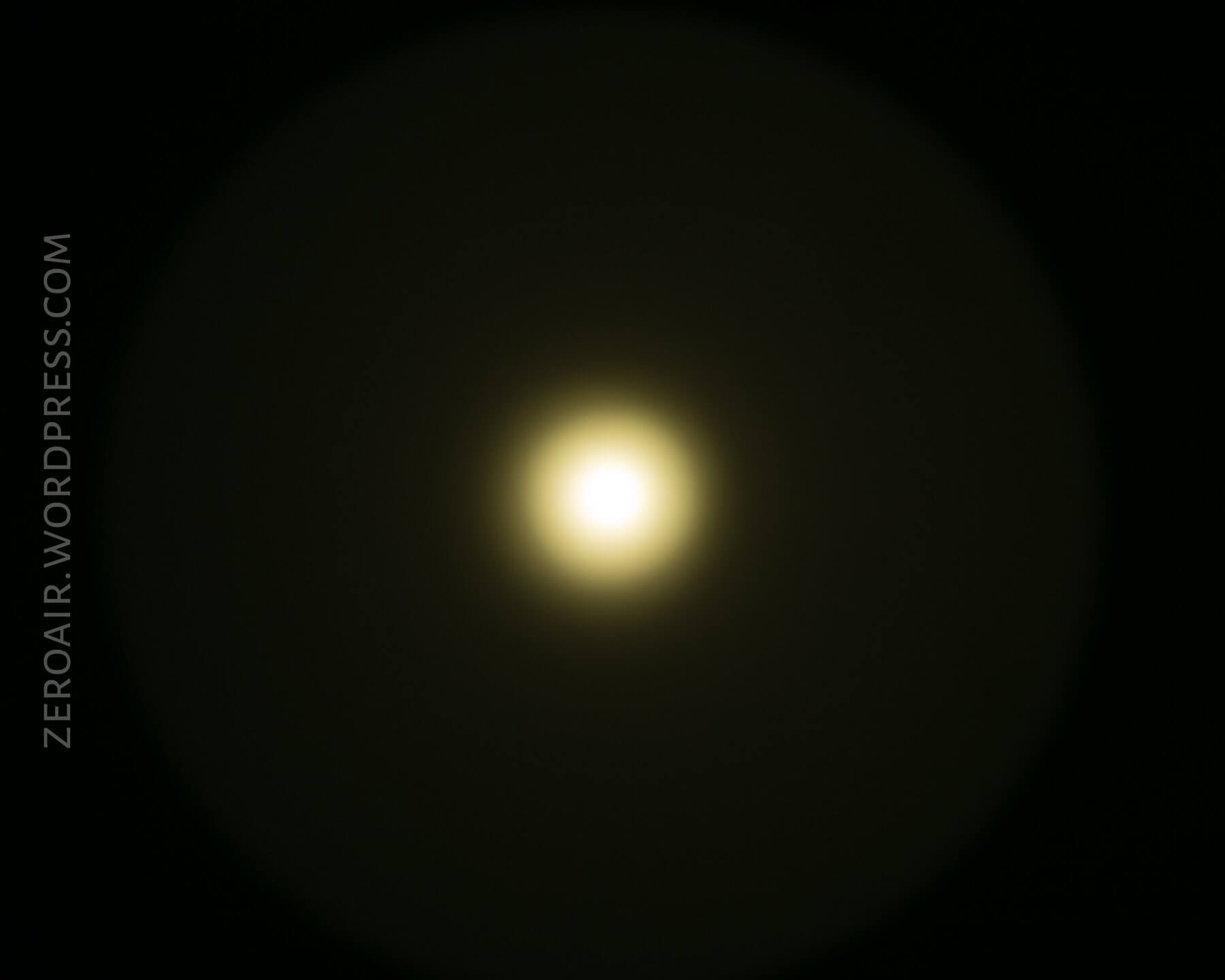
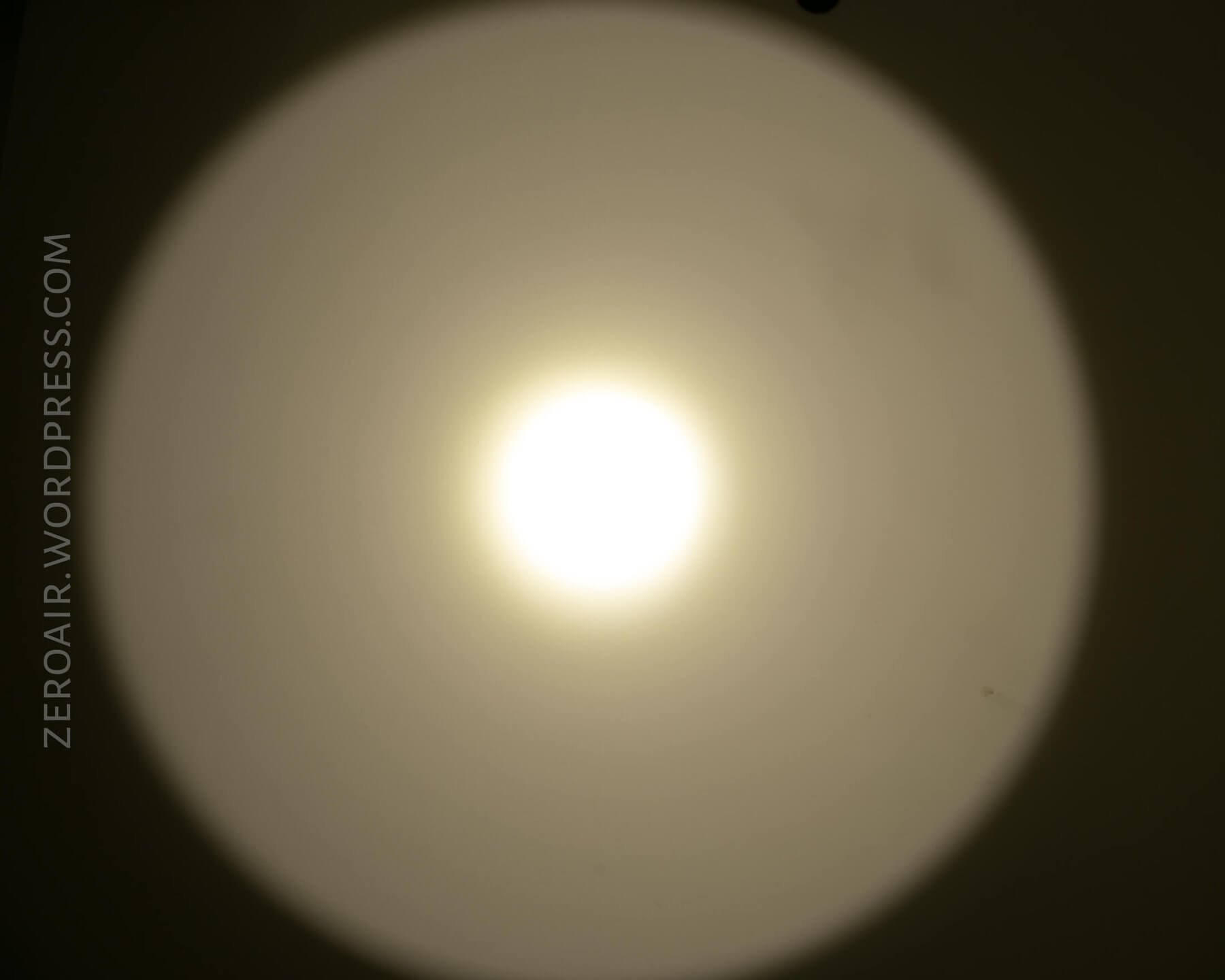
This provides a beam with very little spill, and a tight spot.
Beamshots
These beamshots always have the following settings: f8, ISO100, 0.3s shutter, and manual 5000K exposure. These photos are taken at floor level, and the beam hits the ceiling around 9 feet away.
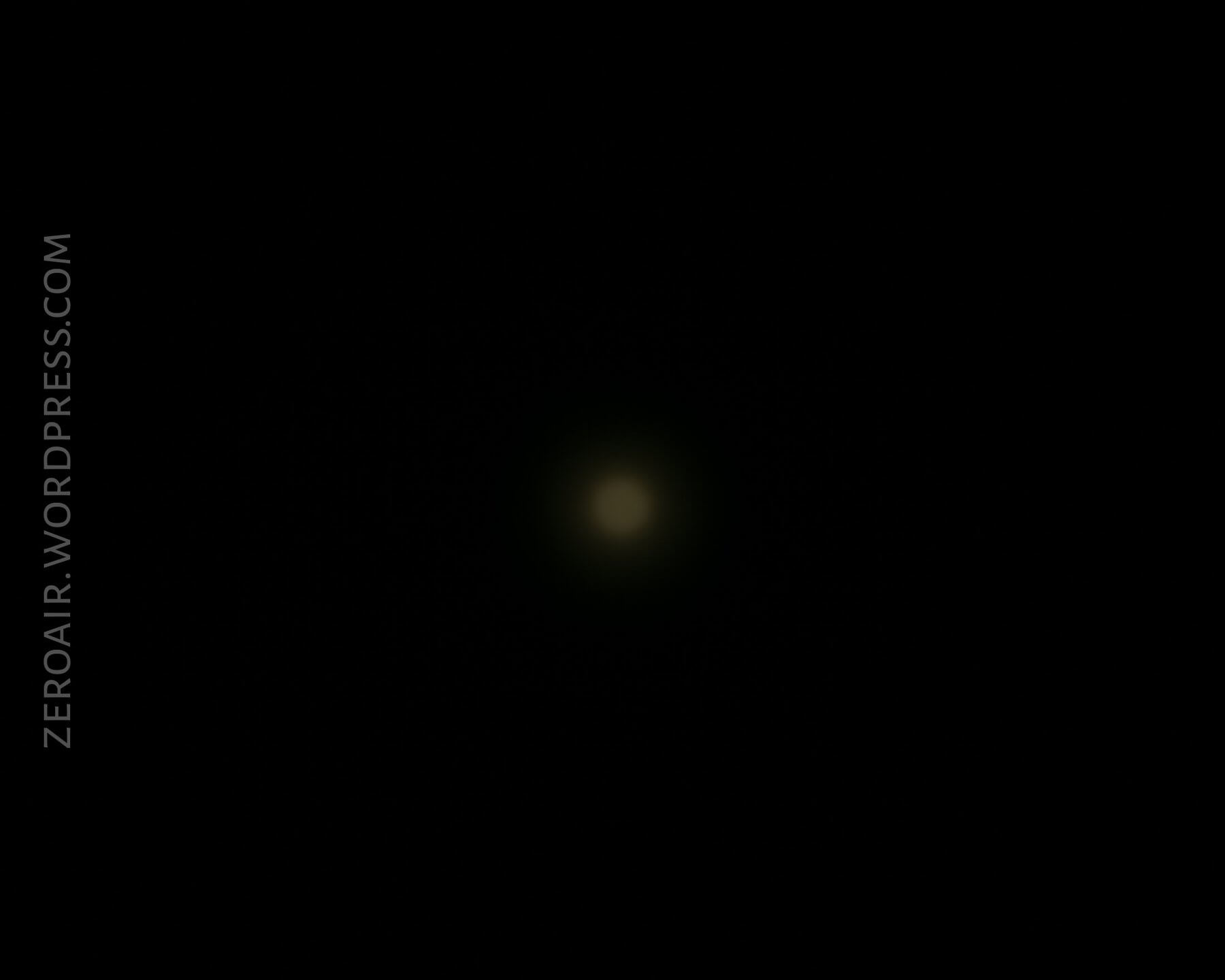
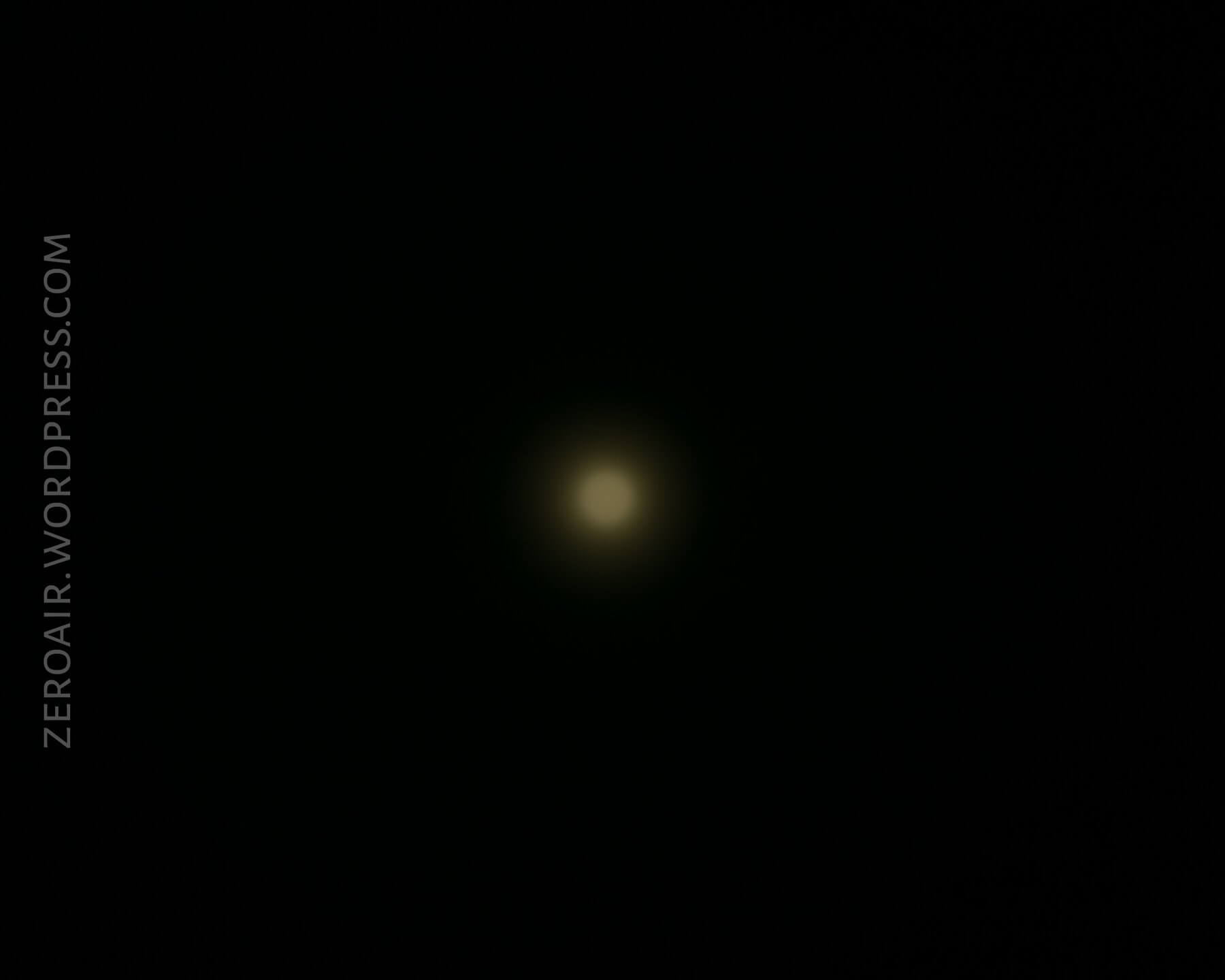
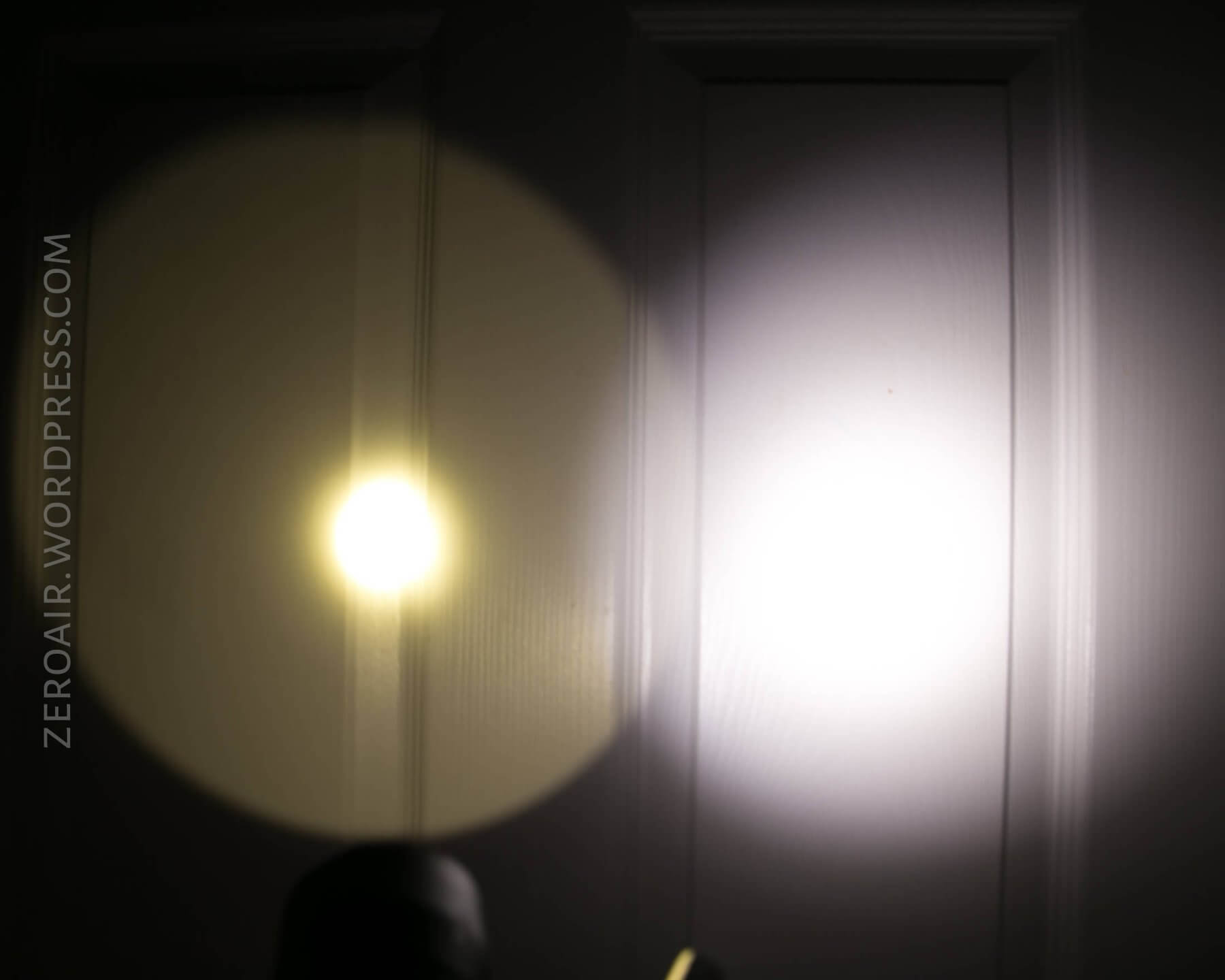
Tint vs BLF-348 (KillzoneFlashlights.com 219b version) (affiliate link)
I keep the test flashlight on the left and the BLF-348 reference flashlight on the right.
Random Comparisons and Competitive Options
Here’s a relevantly filtered page on parametrek.com. There are a few lights in this category, but the one everyone will compare is the (practically same) Emisar D1S. It’s a perfectly reasonable comparison, since the BLF GT Mini didn’t end up with the proposed driver, and comes in the same setup as the Emisar. For me, it’s no comparison. I hate the way the anodizing of the Emisar light feels in my hand, and the Lumintop is great comparatively. Everything else is similar enough to be a wash (though the throw is a little lacking on the GT Mini.)
Conclusion
What I like
- Build quality is great
- Very programmable
- 18350 and 18650 versions
- It really is a Mini GT
What I don’t like
- Programming the light is a bit difficult
- Didn’t hit the throw specification
- Half lit switch
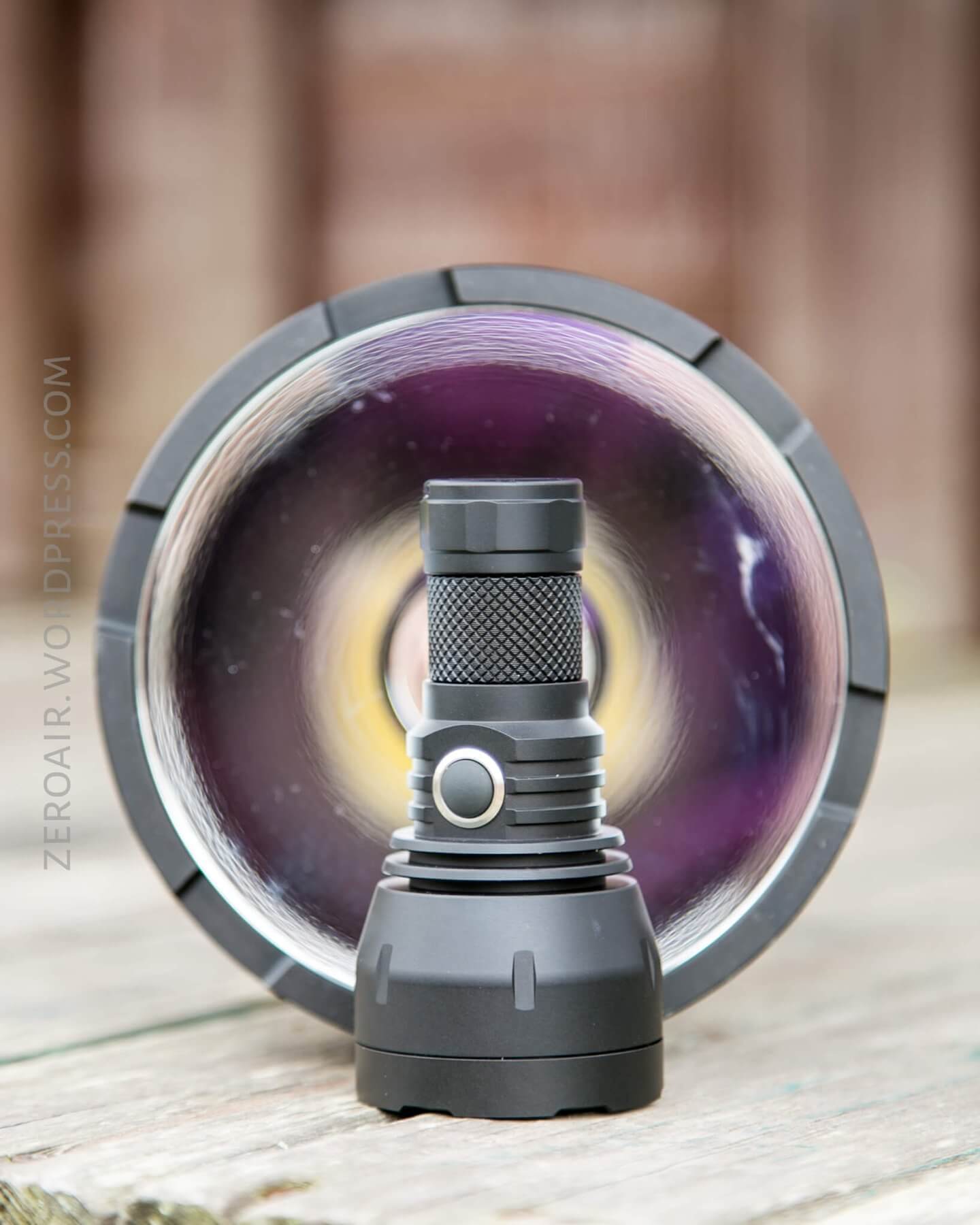
Parting Shot
Notes
- This light was provided by no one for review. I bought this light myself! I was not paid to write this review.
- This content originally appeared at zeroair.org. Please visit there for the best experience!
- Use my amazon.com referral link if you’re willing to help support making more reviews like this one!
- Please support me on Patreon! I deeply appreciate your support!
Discover more from ZeroAir Reviews
Subscribe to get the latest posts sent to your email.
Pingback: BLF GT Mini 18350 review | Linternas.NET
Pingback: Lumintop GT Micro Flashlight Review – ZeroAir Reviews
Pingback: Lumintop GT Mini NM1 Flashlight Review - ZeroAir Reviews