
MechForce Tactical Suppressor Turbo Flashlight Review
Mechforce has released the MechForce Tactical Suppressor Turbo flashlight. It’s a 21700 cell light with a unique design and a forward clicky switch!
Official Specs and Features
Here’s a link to the MechForce Tactical Suppressor Turbo Flashlight product page.
Versions
You can get this light in any color you want, so long as it’s black. Aside from body colors, the Tactical Suppressor is available in two formats (just like the MechTorch), which differ only in the driver. The Tactical Suppressor Turbo (seen here), which has an h17f driver, and the Tactical Suppressor Lite, which has a fixed mode driver.
Price
The Turbo is $119.95, and the Lite is $99.95.
Tactical Suppressor Turbo
Tactical Suppressor Lite
I’ll say this upfront: If you don’t plan to change the driver on the Turbo (and why would you; h17f is fantastic) then it’s very much worth the $20 difference for the light to come with it from the factory.
Short Review
It’s what it claims to be. I love Mechforce’s second effort, and I’m glad they completed their goal of making a 21700 light for a more tactical crowd. For that role, I think it’s great. I even think it works as an EDC if you’re willing to reprogram the h17f. The temperature and tint of the chosen emitters are great, and overall, it’s a great package.
Long Review
The Big Table
| mechforce-USA Tactical Suppressor Light, Turbo | |
|---|---|
| Emitter: | Nichia 219c (Neutral White) |
| Price in USD at publication time: | $119.95 |
| Cell: | 1×21700 |
| Turbo Runtime | High Runtime |
| LVP? | Yes, 2.7V |
| Switch Type: | Mechanical |
| On-Board Charging? | No |
| Claimed Lumens (lm) | |
| Measured Lumens (at 30s) | 1539^ |
| Claimed Throw (m) | |
| Candela (Calculated) in cd (at 30s) | 385lux @ 4.804m = 8885cd |
| Throw (Calculated) (m) | 188.5^ |
| All my mechforce-USA reviews! | |
^ Measurement disclaimer: Testing flashlights is my hobby. I use hobbyist-level equipment for testing, including some I made myself. Try not to get buried in the details of manufacturer specifications versus measurements recorded here; A certain amount of difference (say, 10 or 15%) is perfectly reasonable.
What’s Included
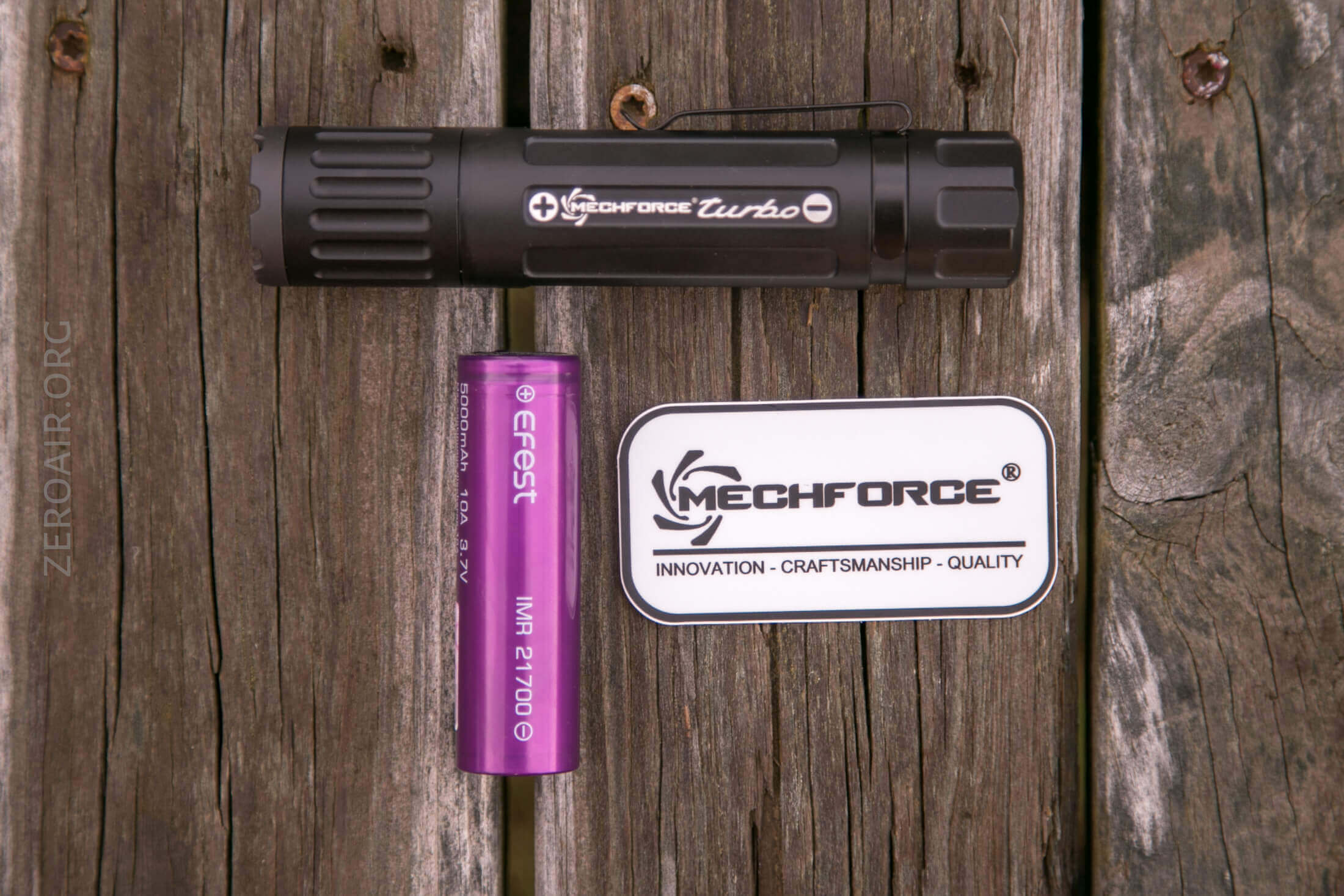
- Mechforce Tactical Suppressor Turbo
- Efest 5000mAh 21700 (unprotected)
- Mechforce tactical sticker
Package and Manual
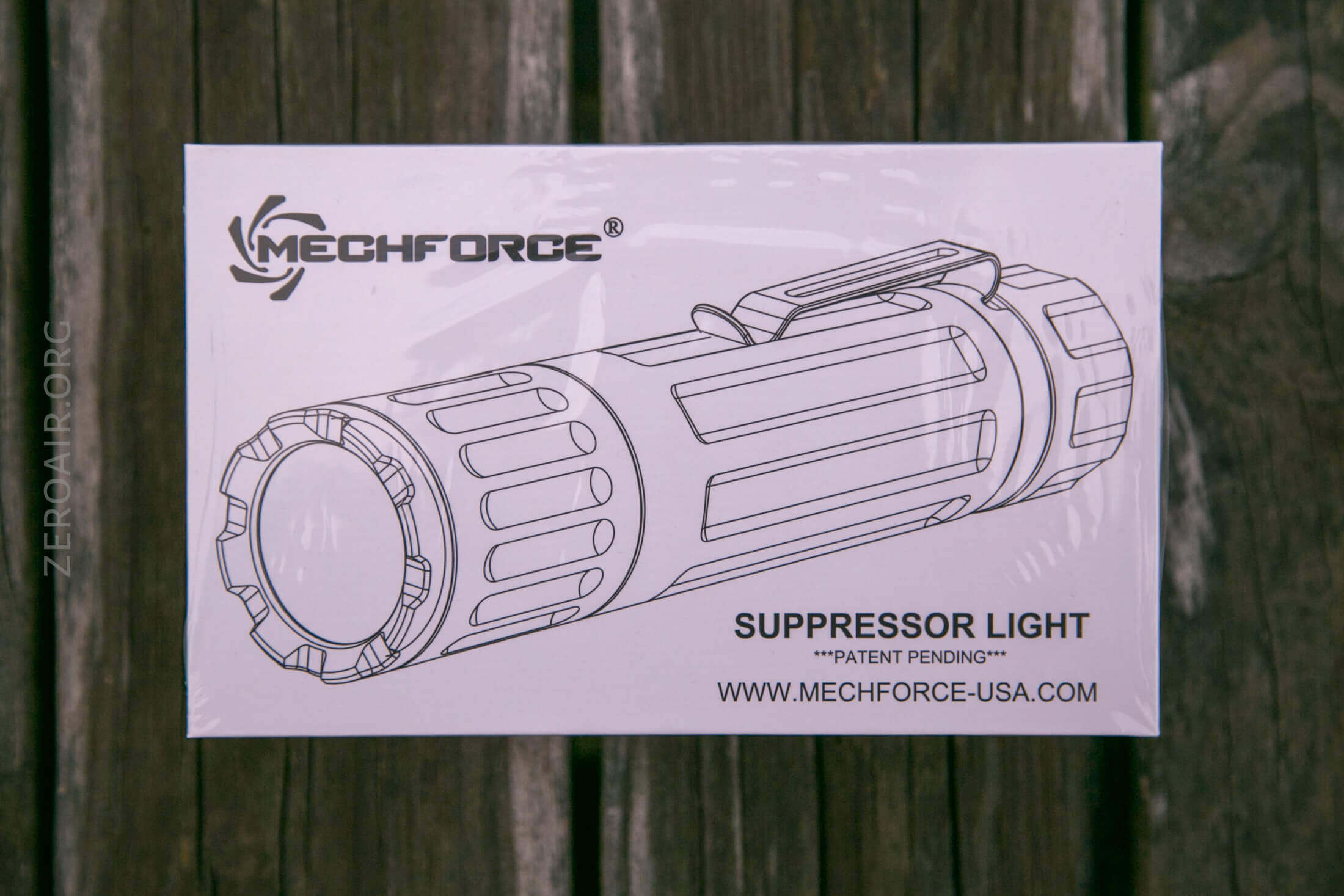
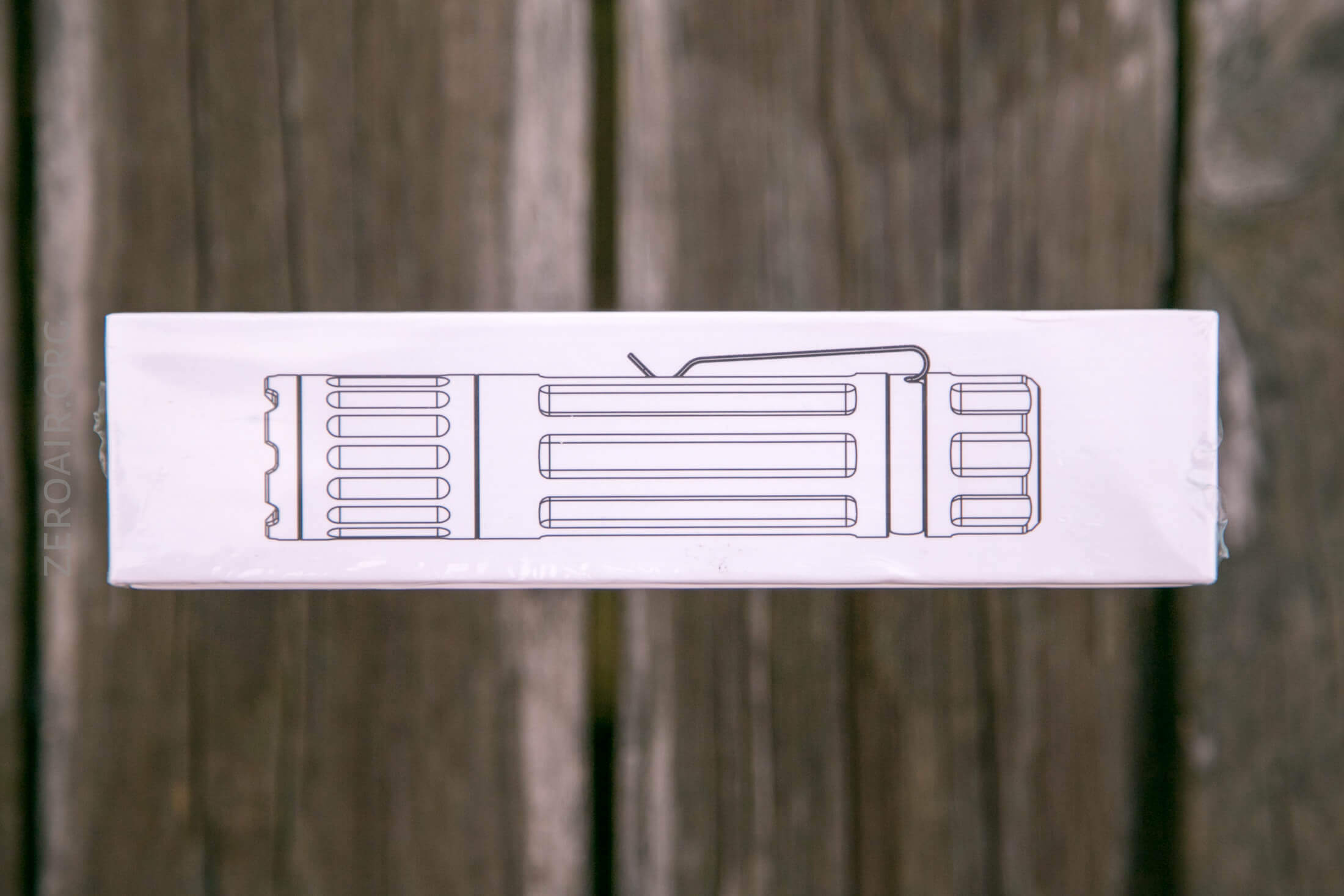
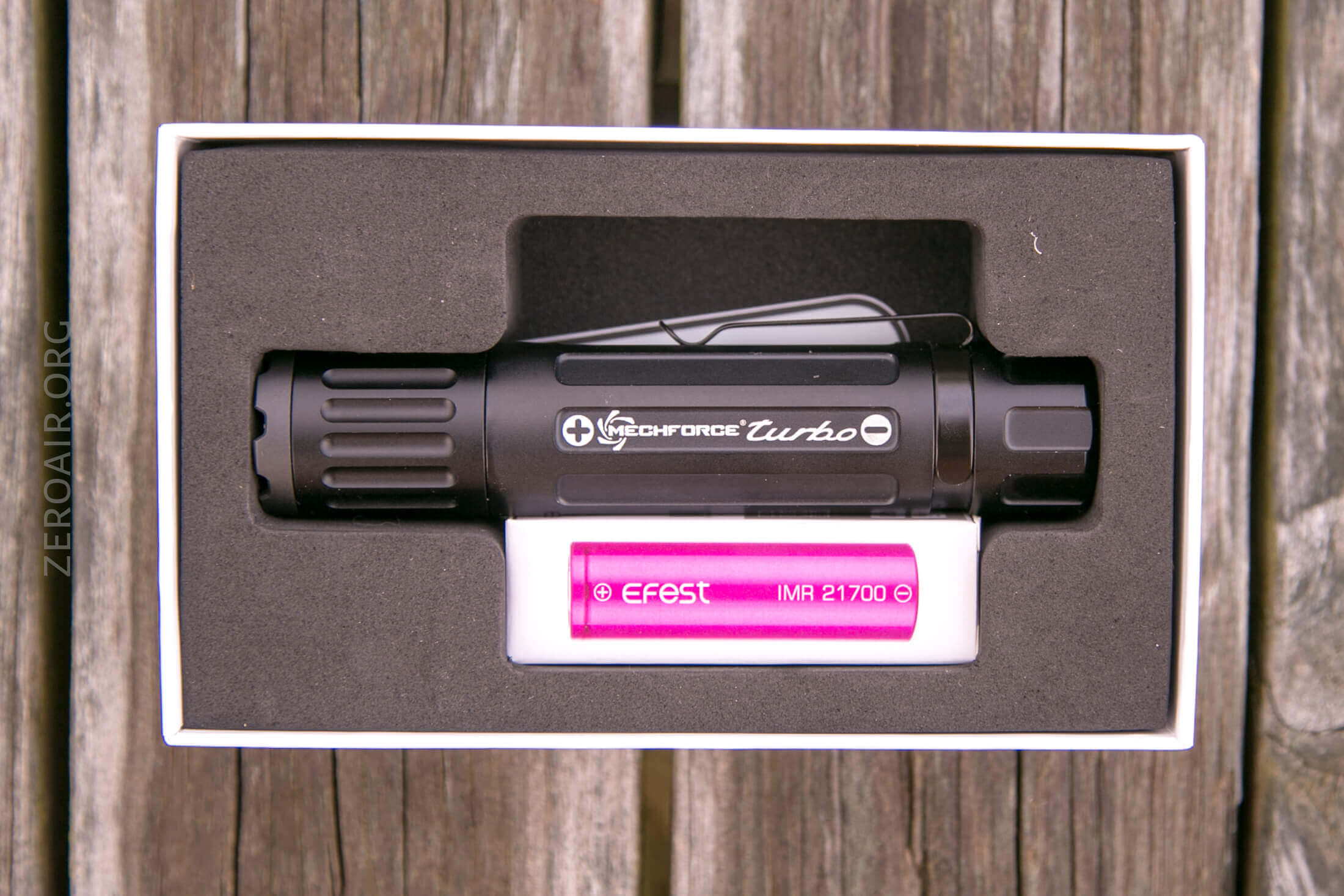
This foam really secures the light well.
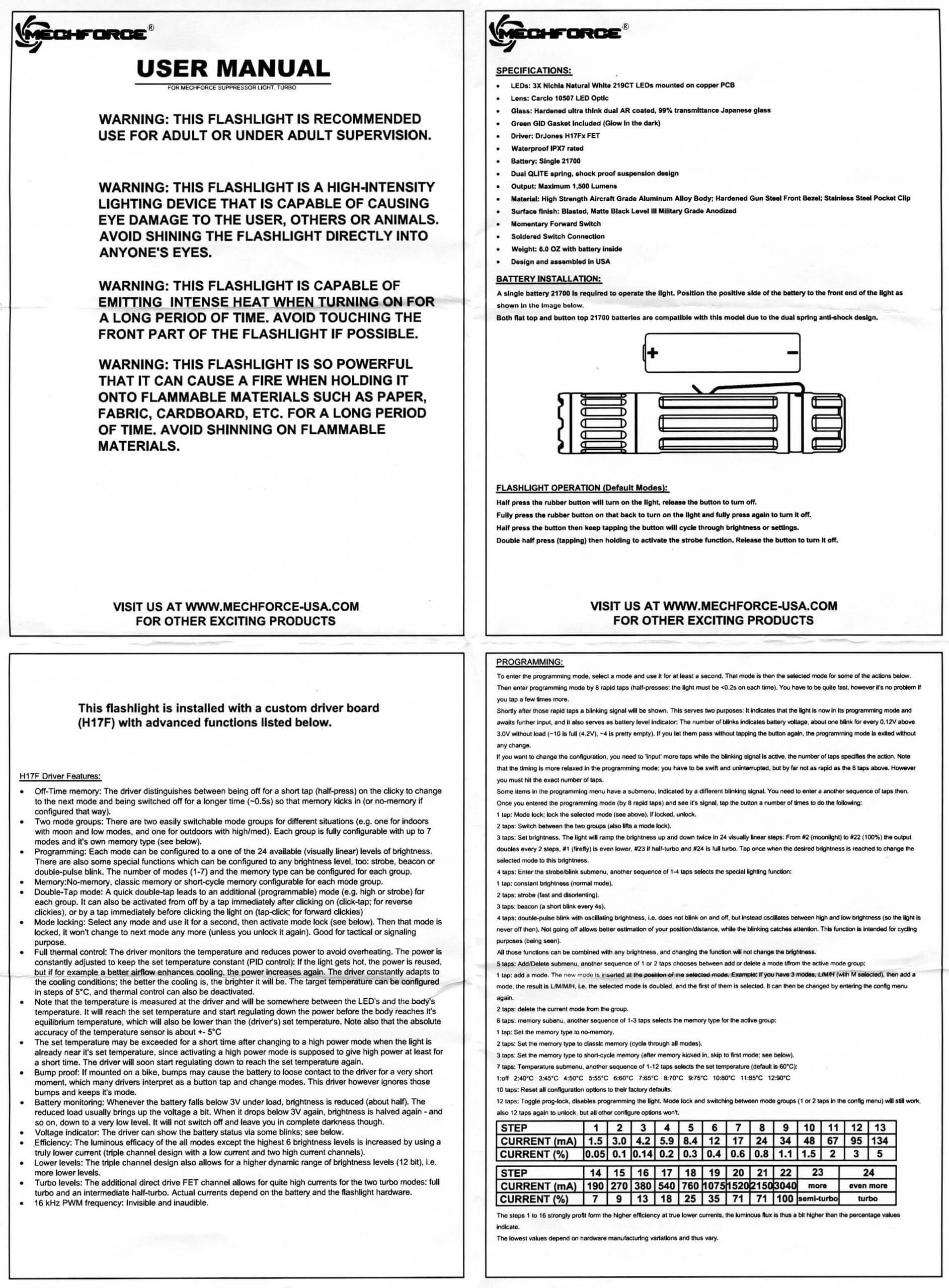
Below is the manual. It covers the light pretty well, including programming, which is no small feat. More on programming later.
Build Quality and Disassembly
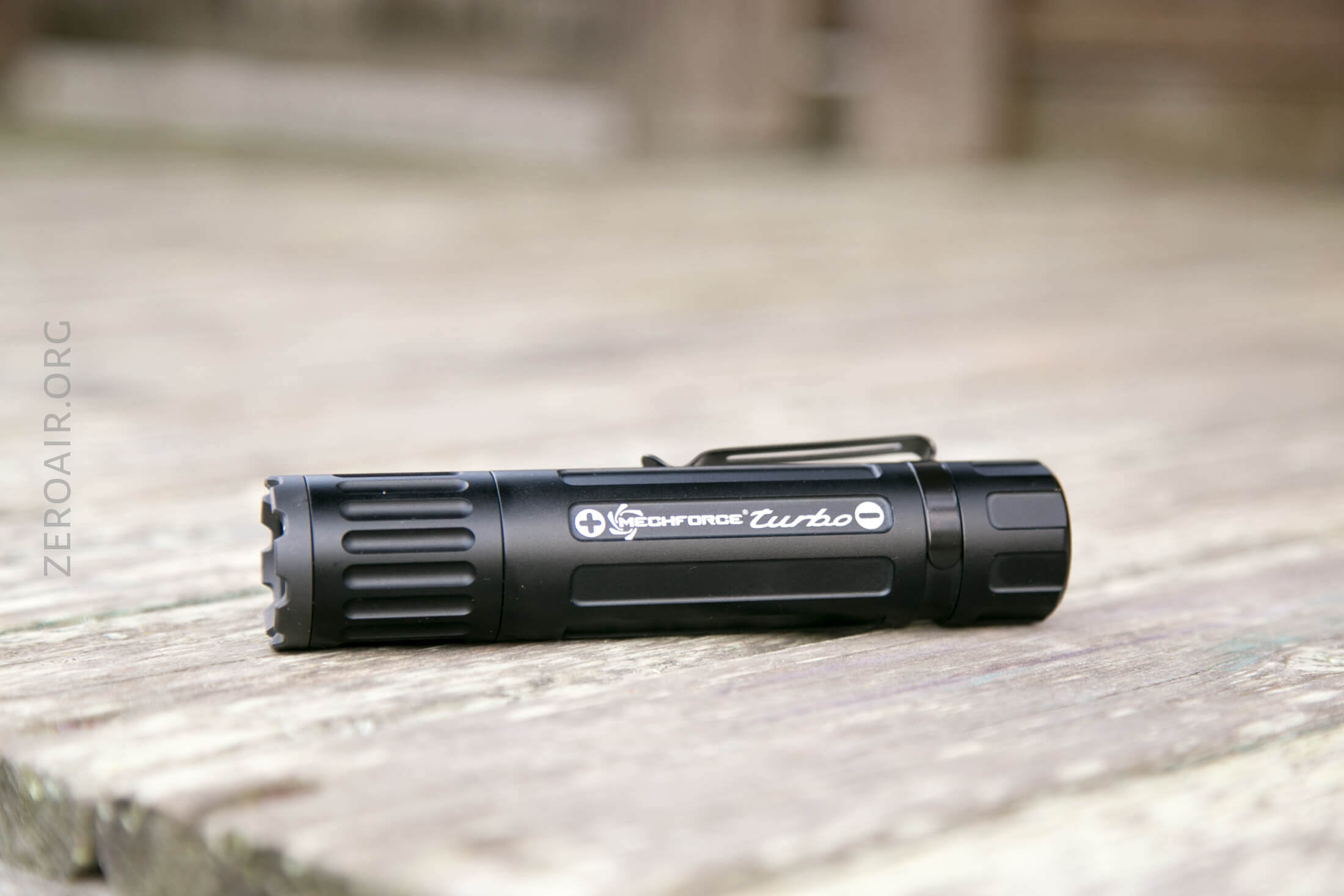
The Mechforce Turbo is well built. The anodizing feels great in the hand.
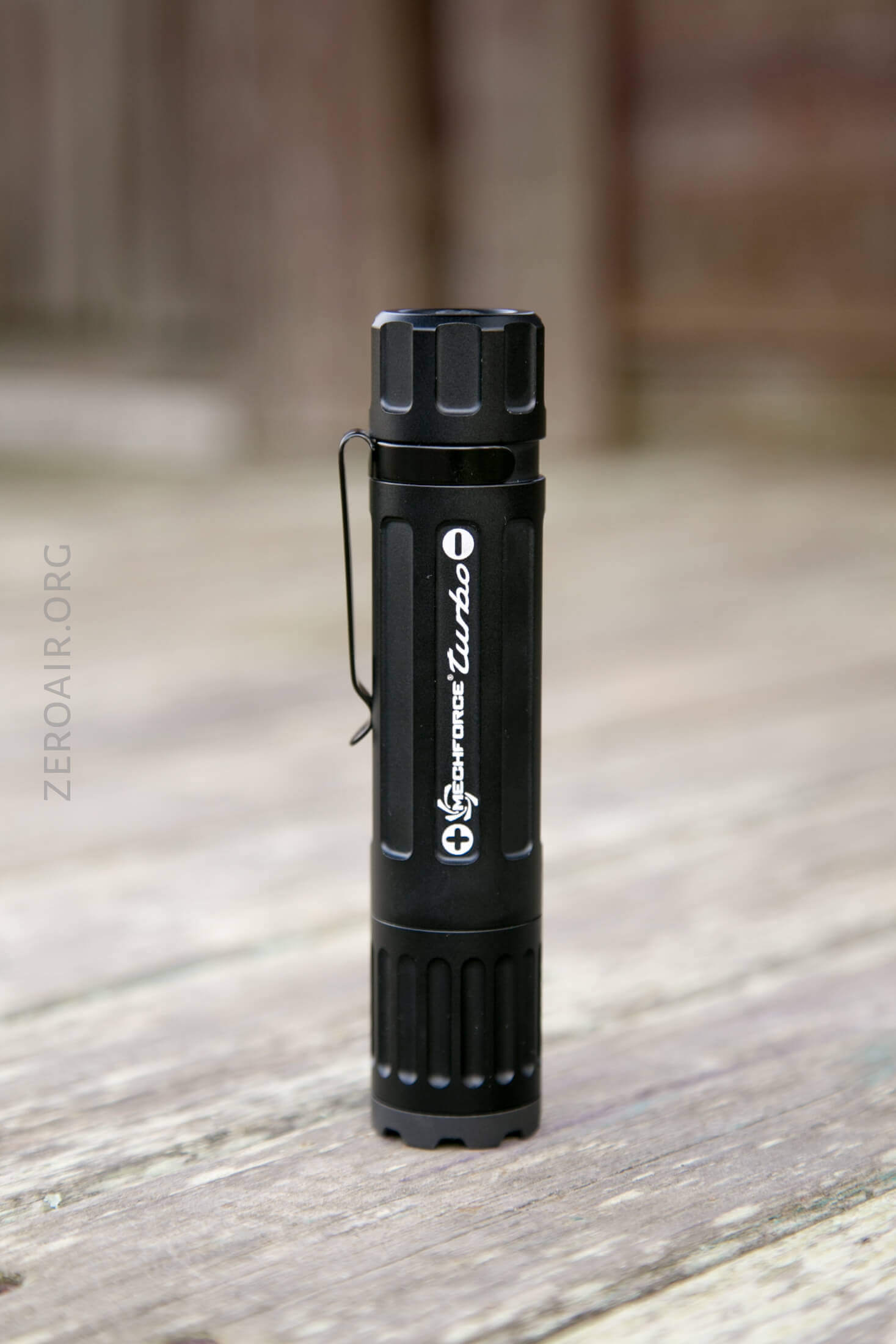
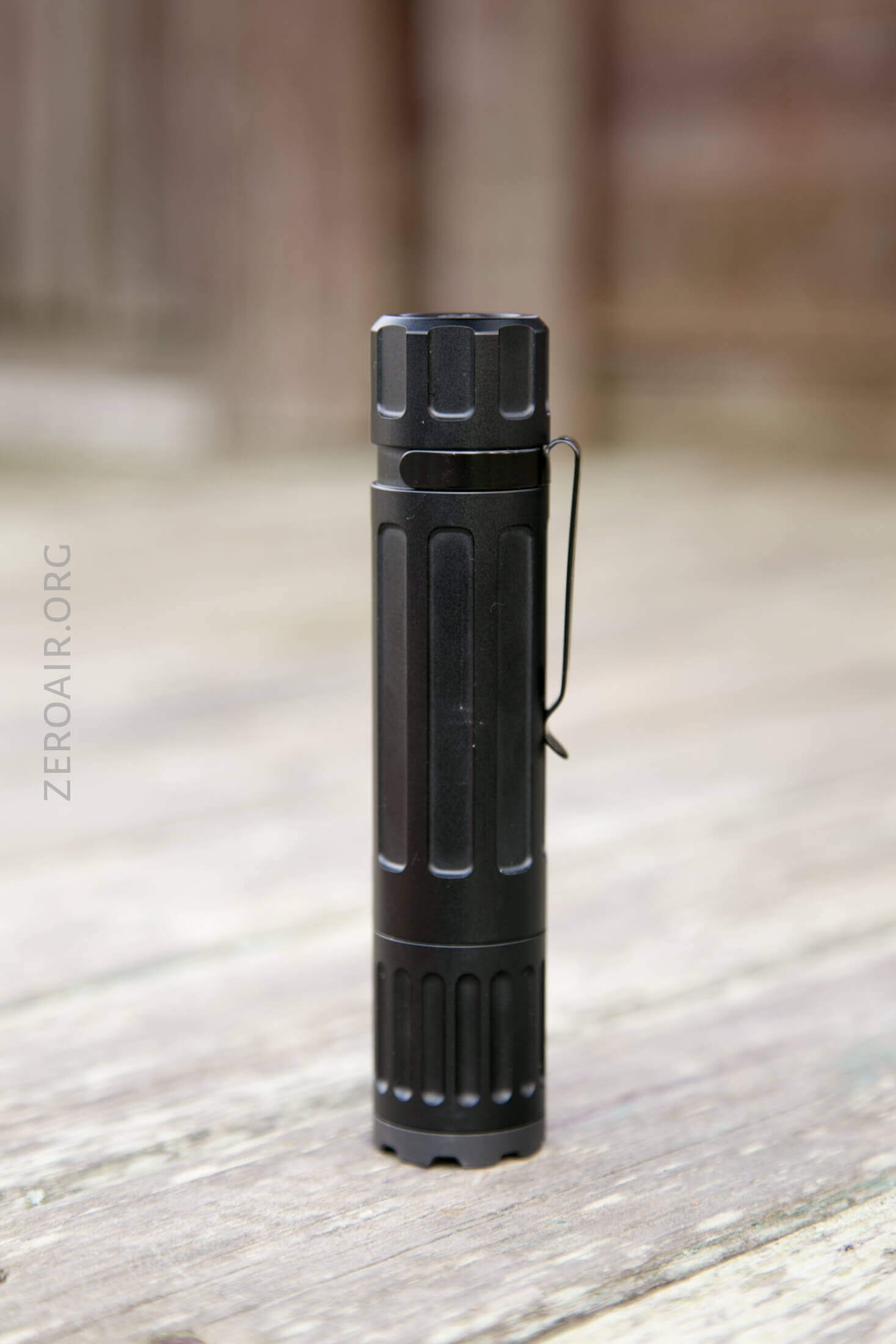
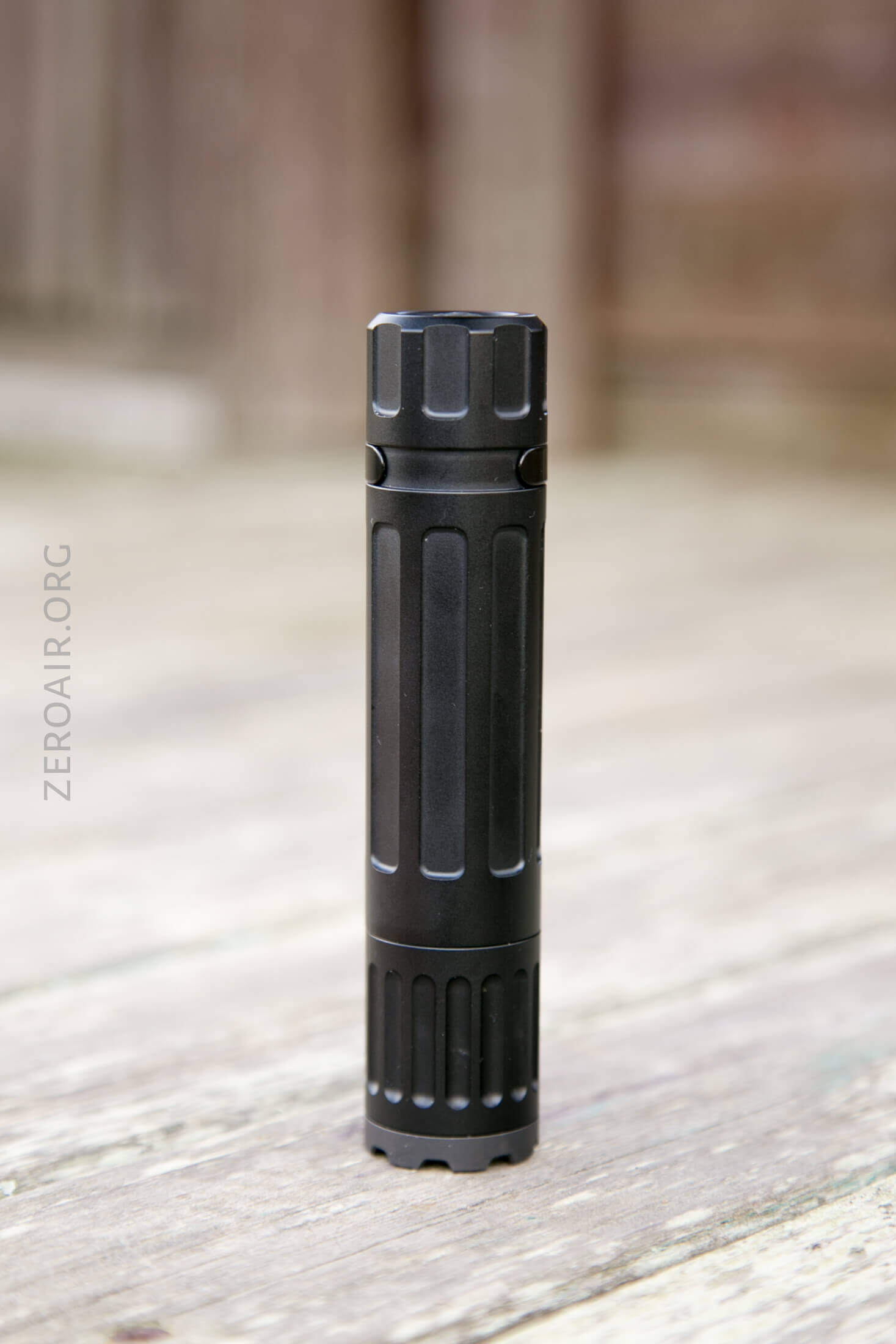
I have little experience where “little experience” = “none whatsoever” – with suppressors, but all my experience playing GoldenEye, etc., tells me that suppressors were a design goal for this light. That’s neat, but be aware that when using the light as a tactical suppressor, it’s single-use.
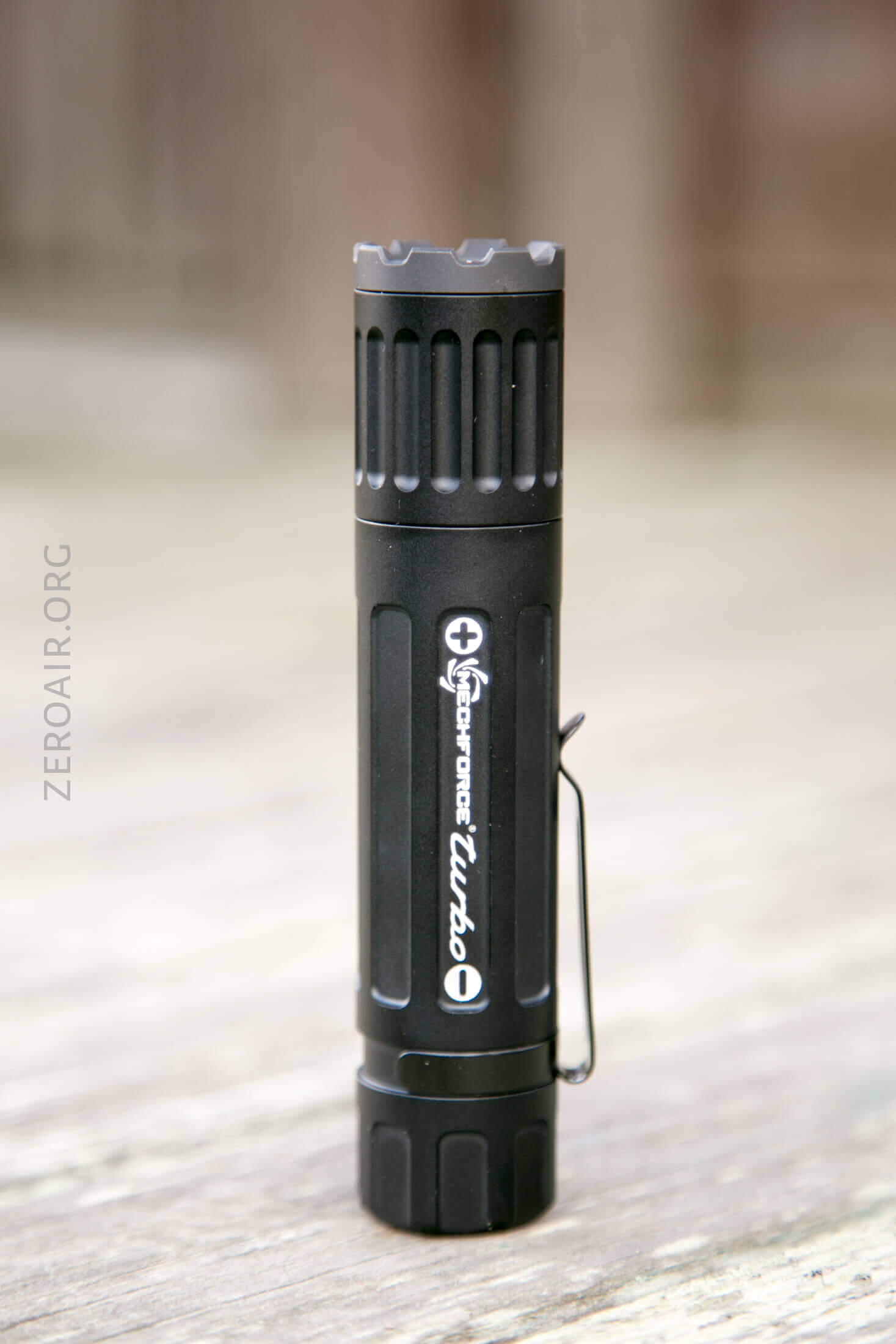
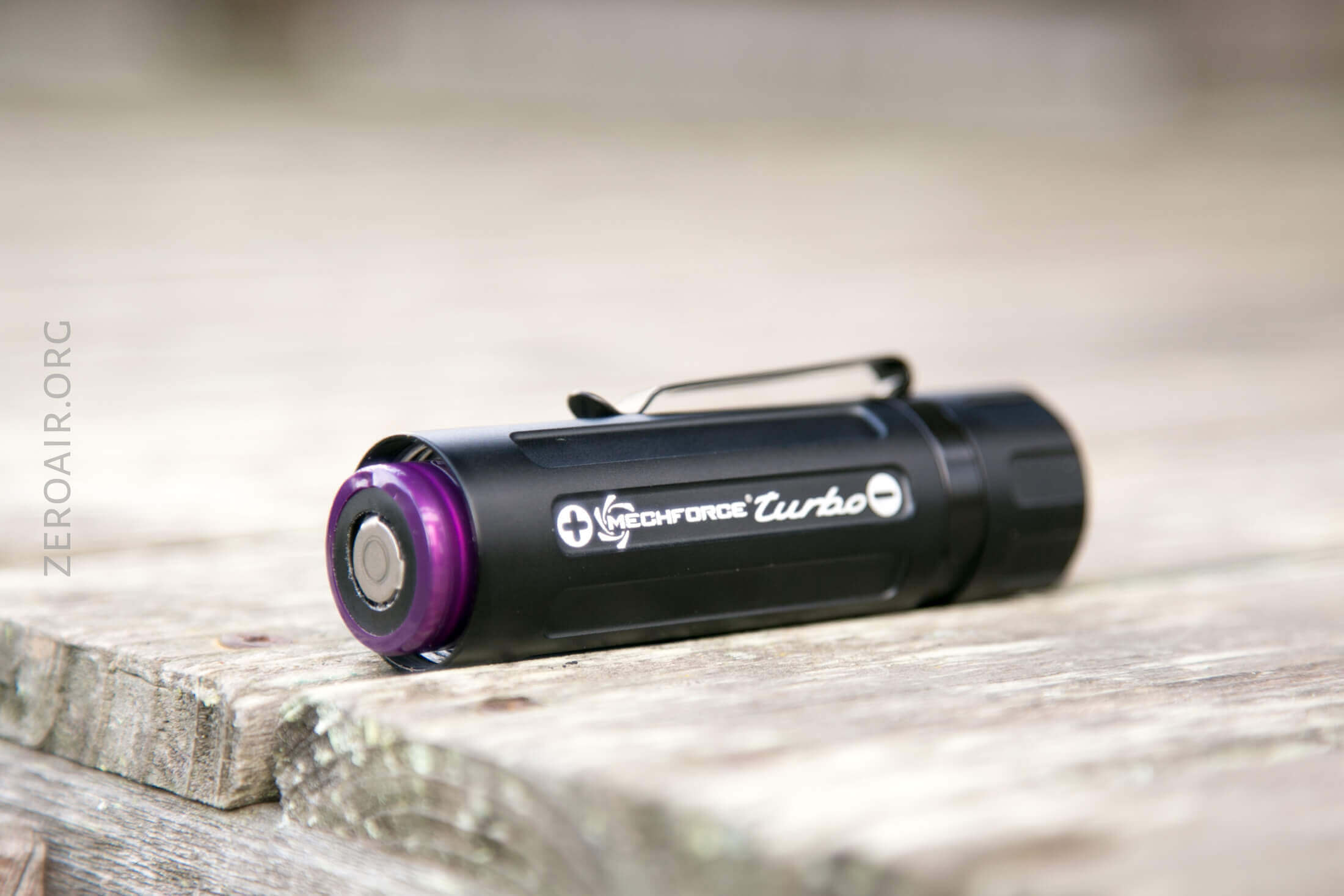
You might recognize that logo…

It’s the Porsche Turbo logo.
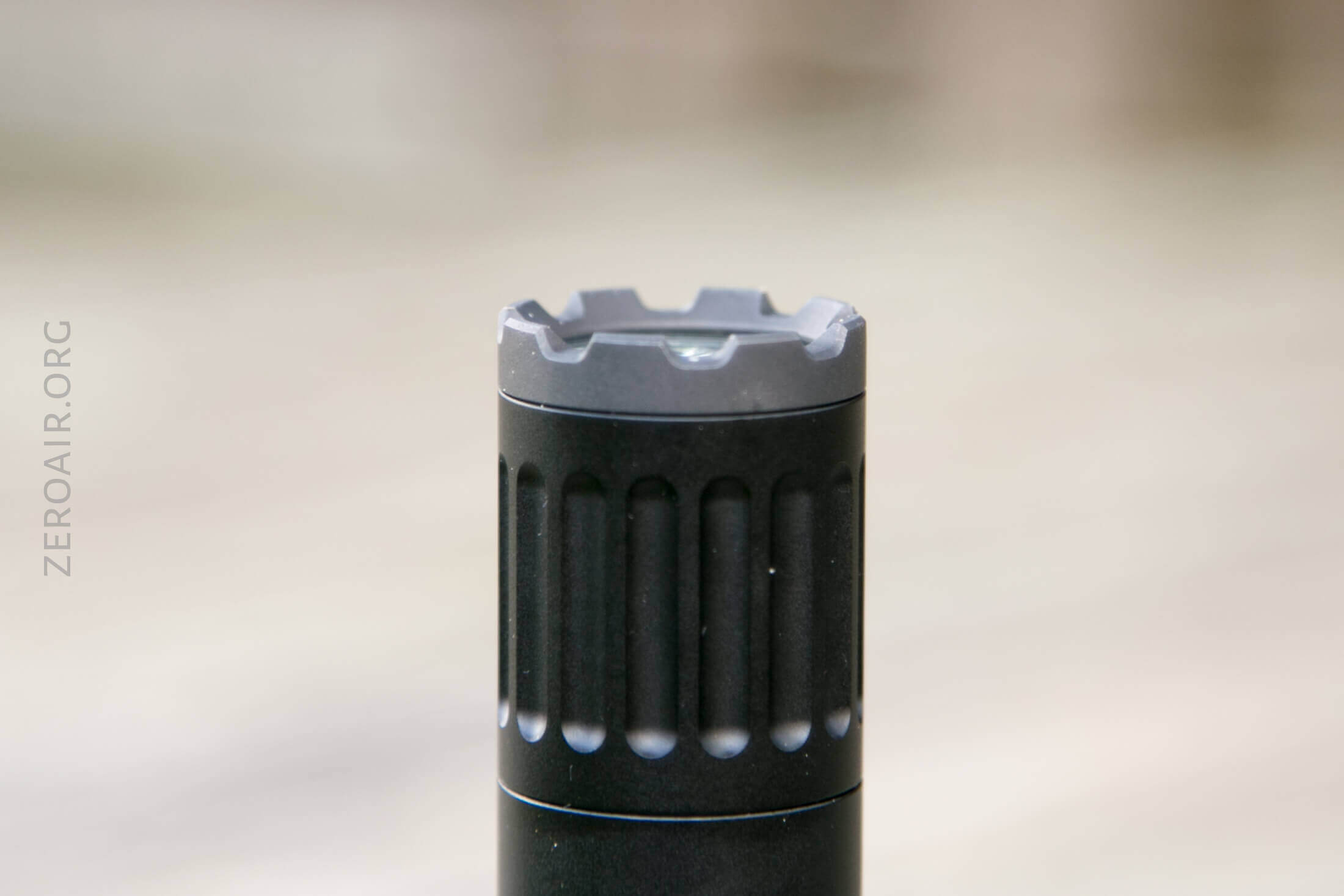
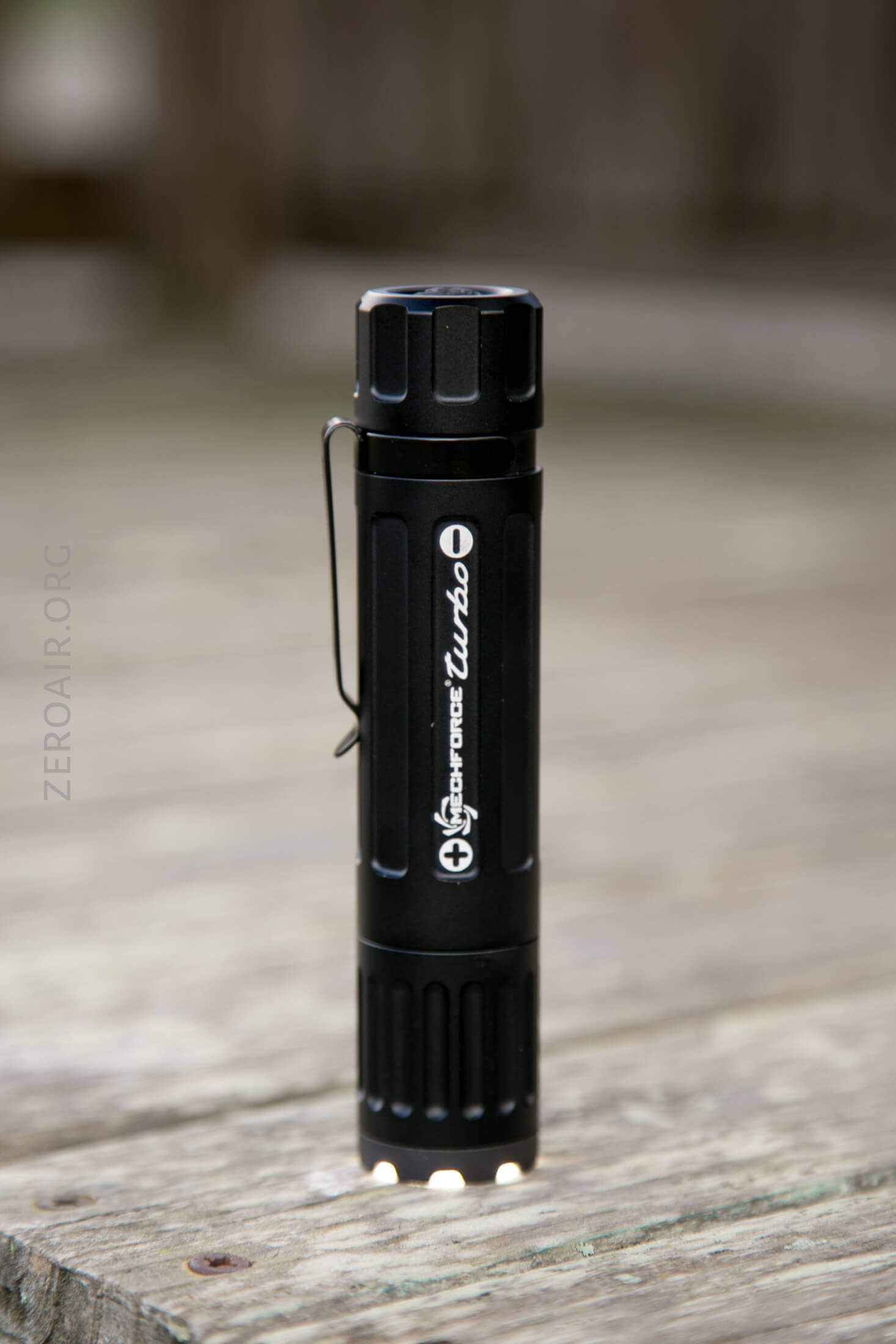
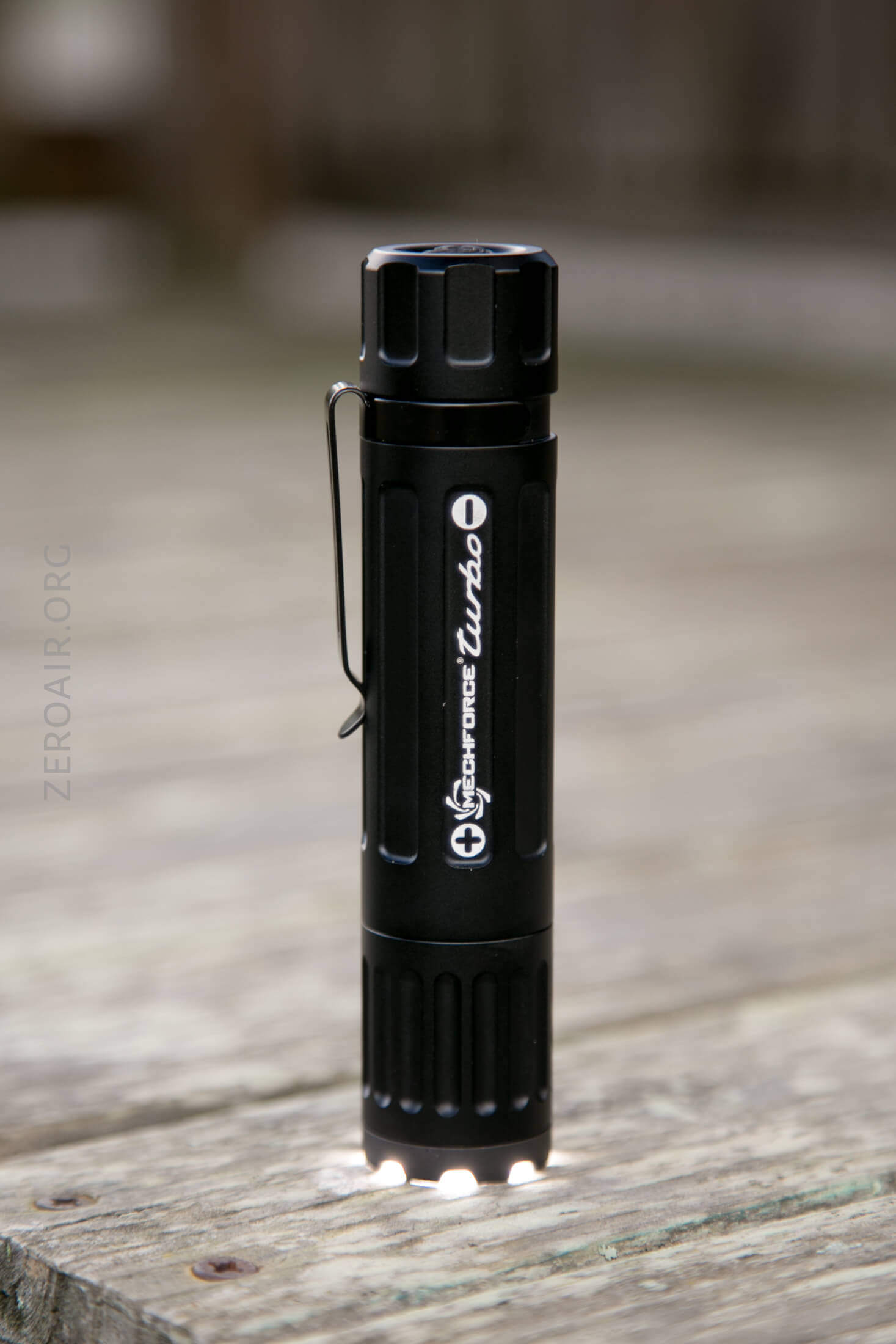
The bezel is a different color – you probably noticed that already. It’s not mentioned as a strike bezel, but it’s surely one. I think it’s steel and seems very tough. This bezel answers one of my complaints about the light (which was echoed by others) – the MechTorch didn’t let any light escape when headstanding. This bezel will, and it’ll do it well. Though on Turbo, you’ll set your table on fire. Ask me how I know (spoiler: I almost set my table on fire.)
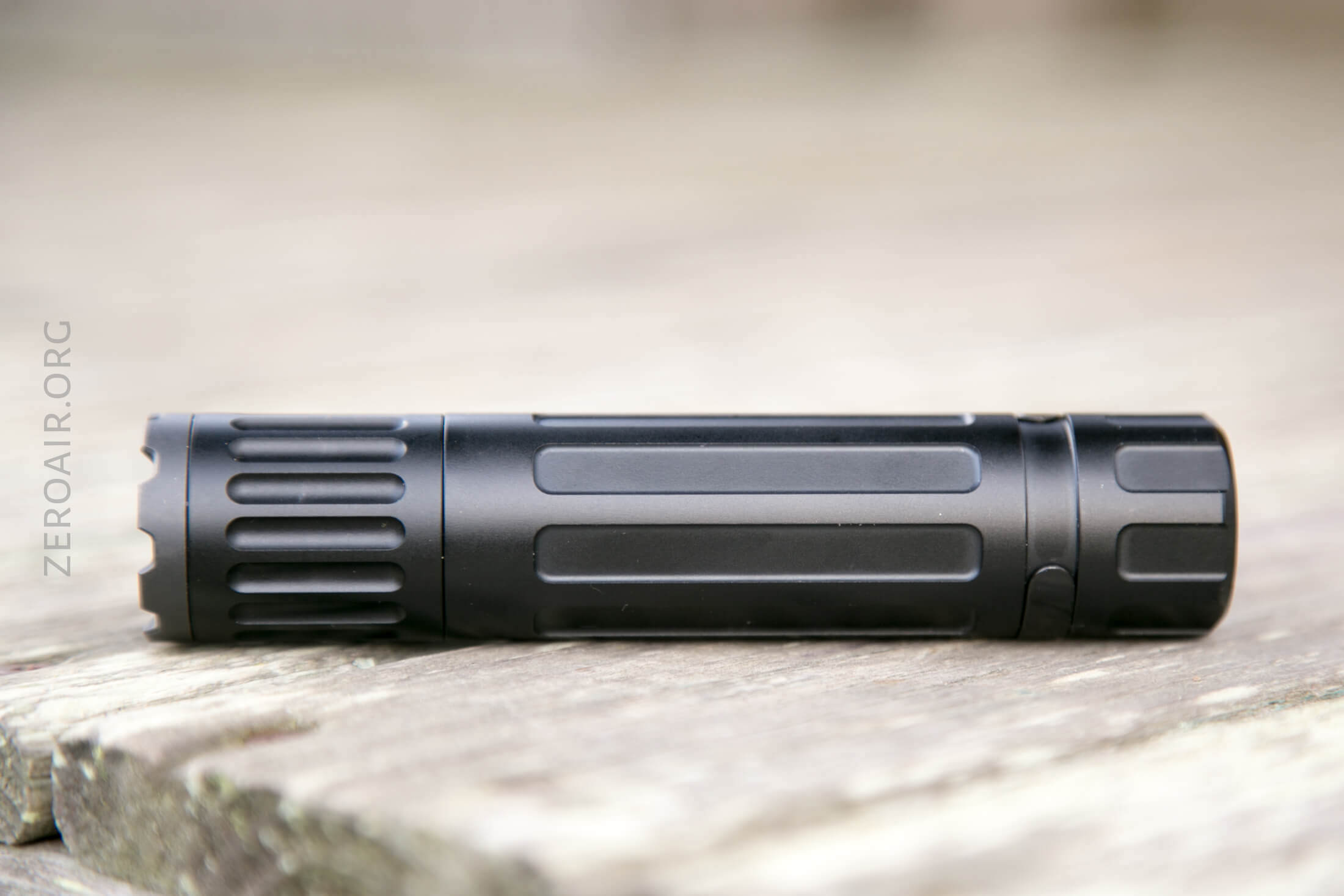
And the tail end answers another comment I had about the Mechtorch – it wouldn’t tailstand (just barely!), but the Tactical Suppressor will. The button is well recessed. I’m not sure that matches with a tactical ideal, though. The angle of attack must be fairly direct to get the switch activated – especially to click the switch.
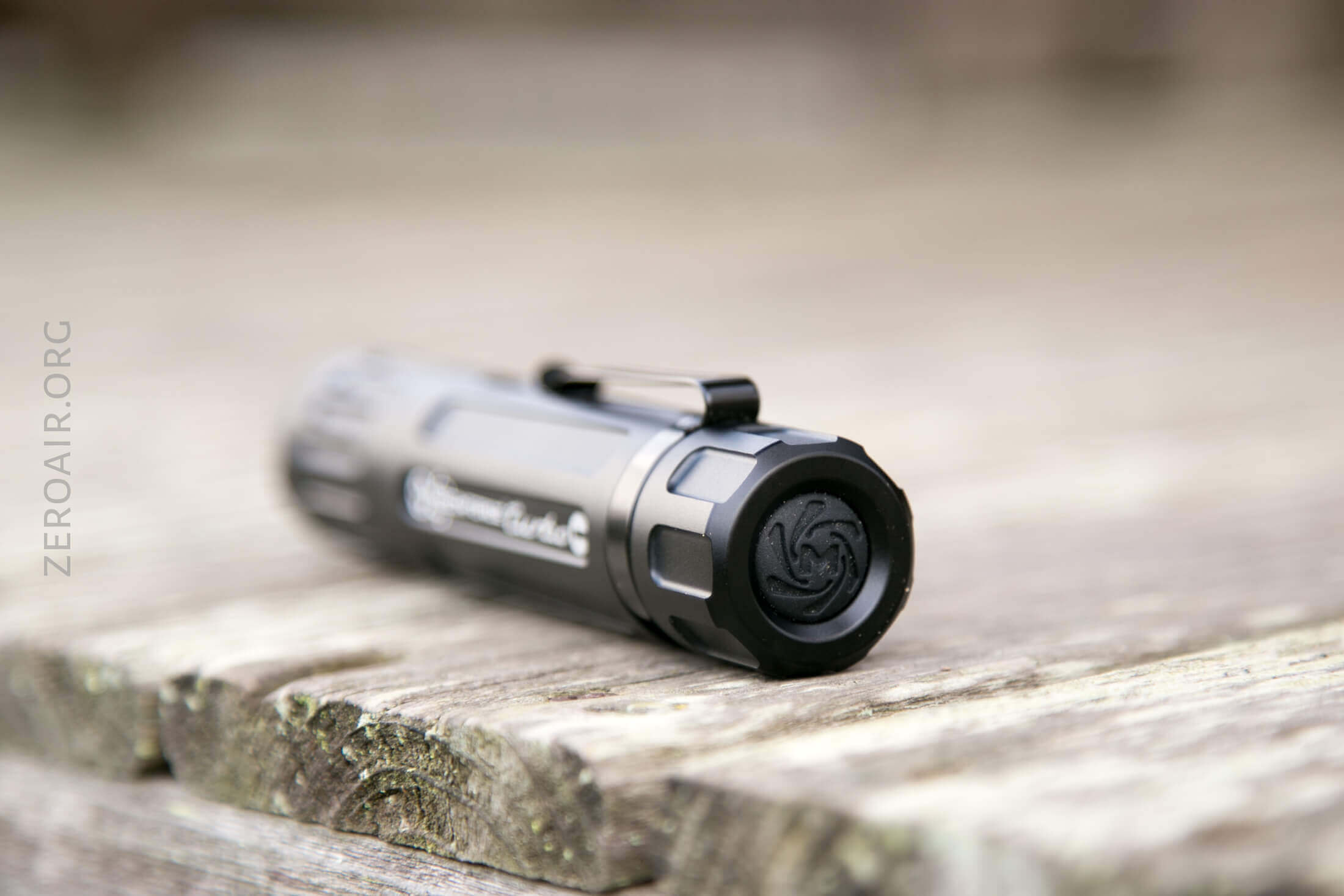
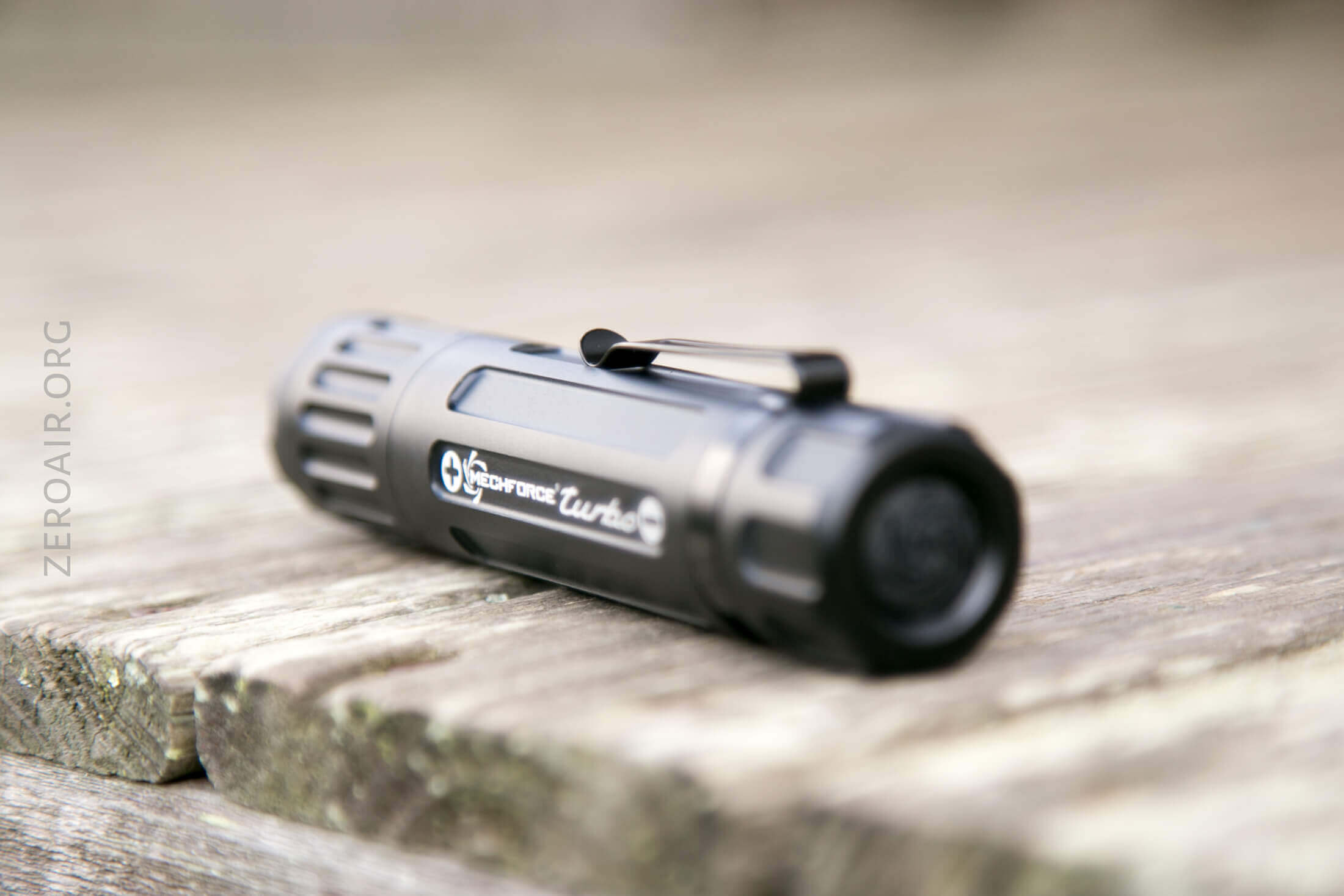
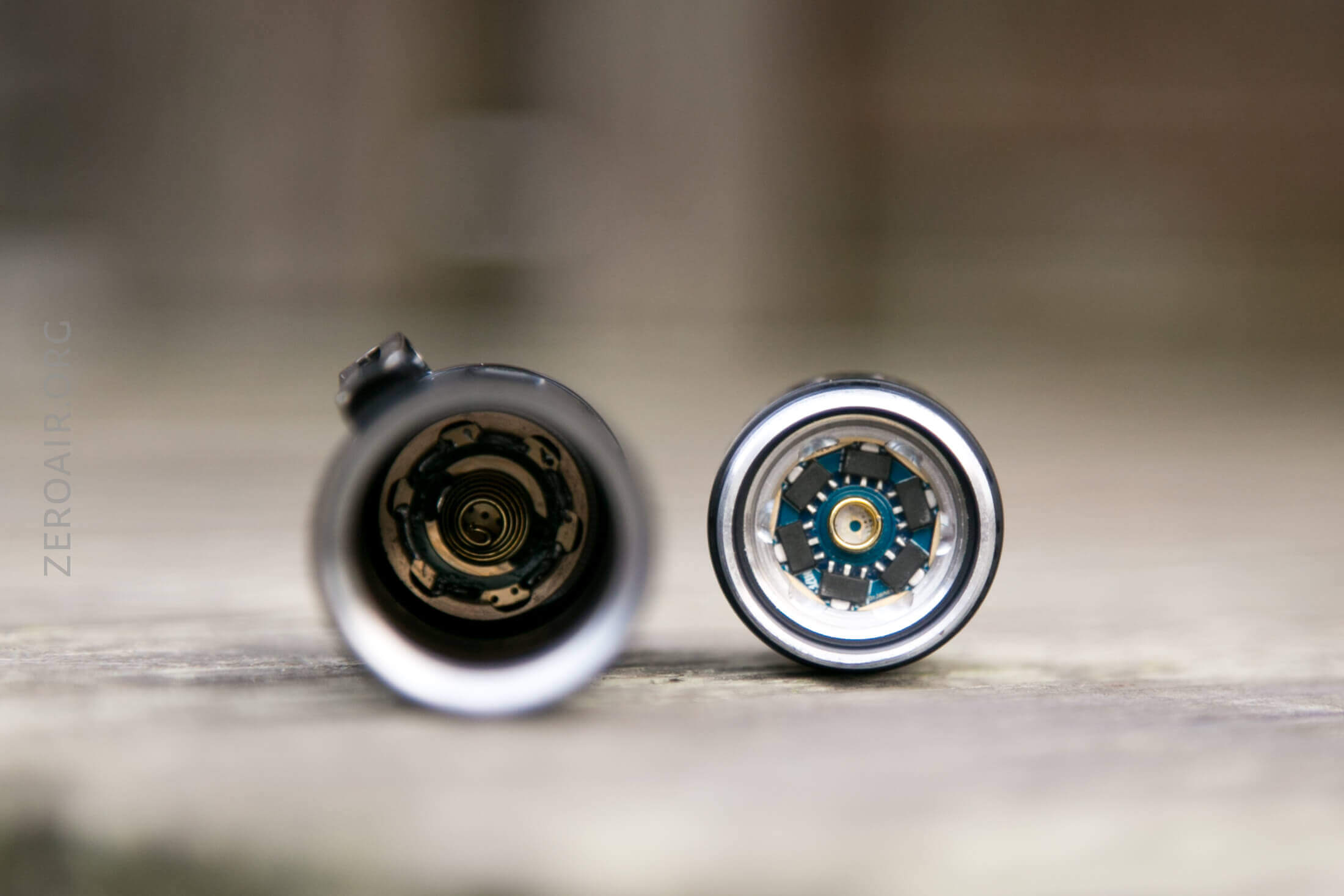
This is as far as I got the light disassembled. As far as I can see, the cell holder is a one-piece body. That surprised me. If you need or want to change out the switch or switch cover, you’ll need the special tool Mechforce sells for removing their retaining rings.
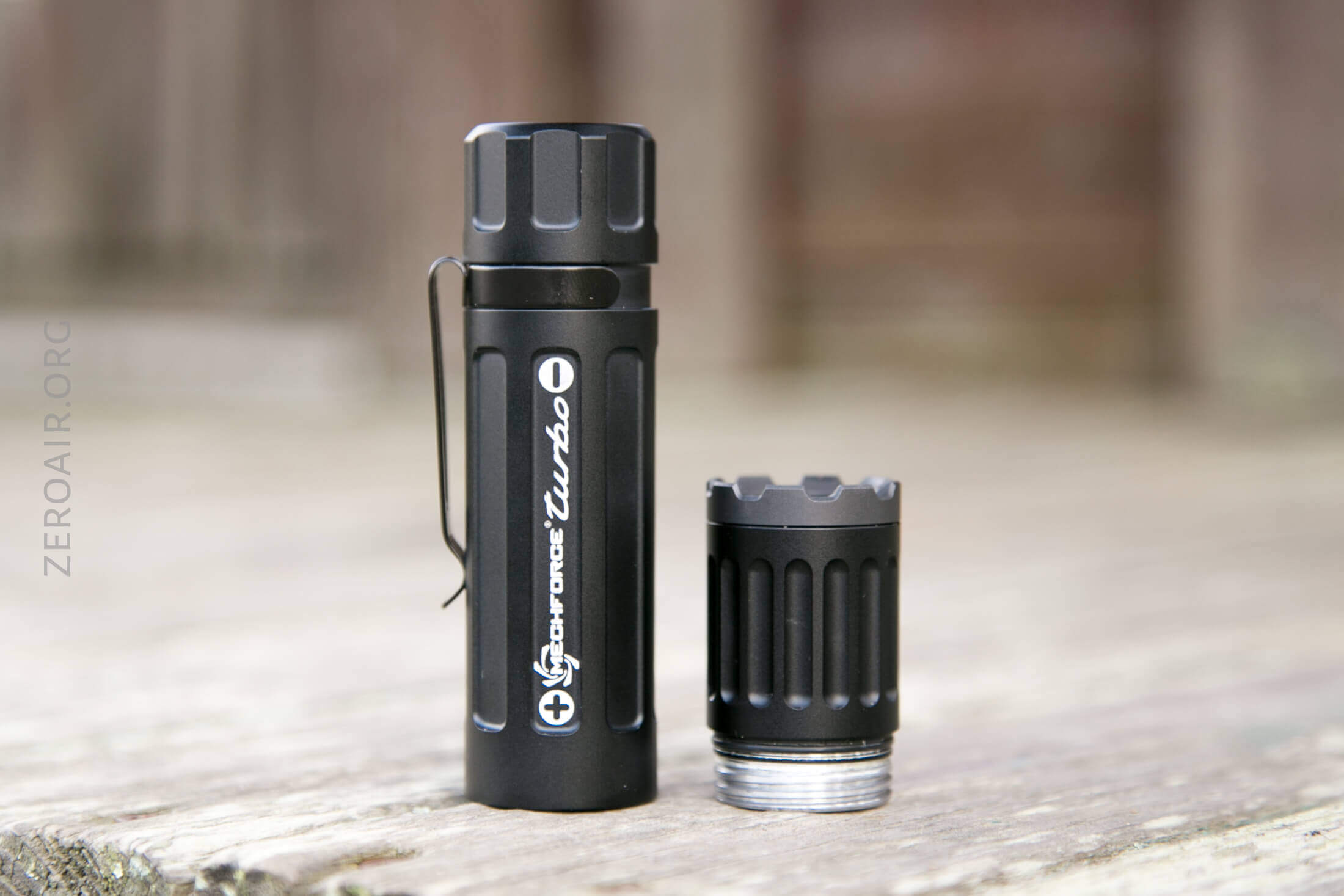
Here are the guts. See the retaining rings – Mechforce sells a tool to fit that. Note the beefy spring on the tail, and the Q-Lite spring on the head.
The cell tube and head meet on unanodized threads. Mechanical lockout isn’t really possible (nor is it needed since this light has a mechanical switch.)
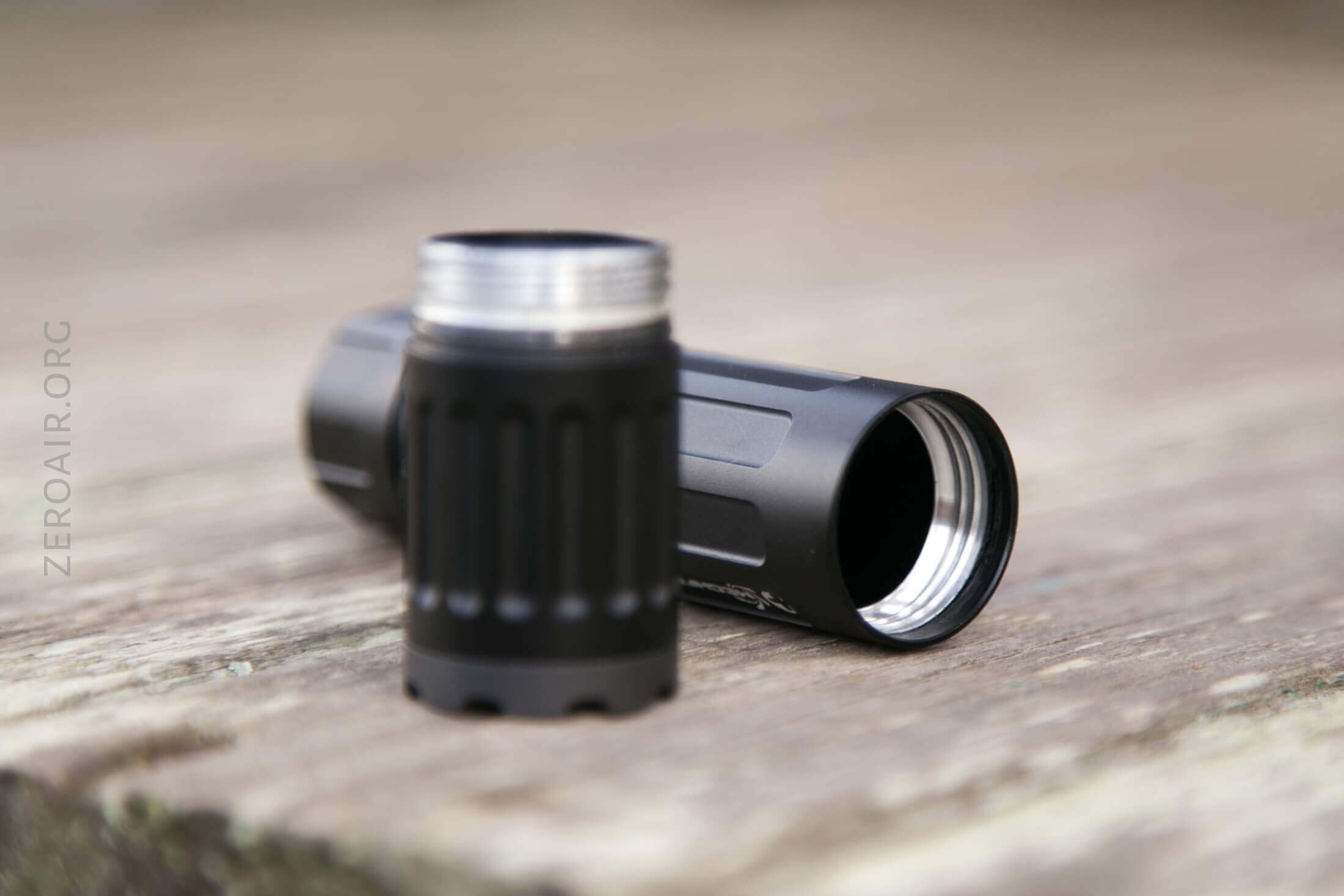
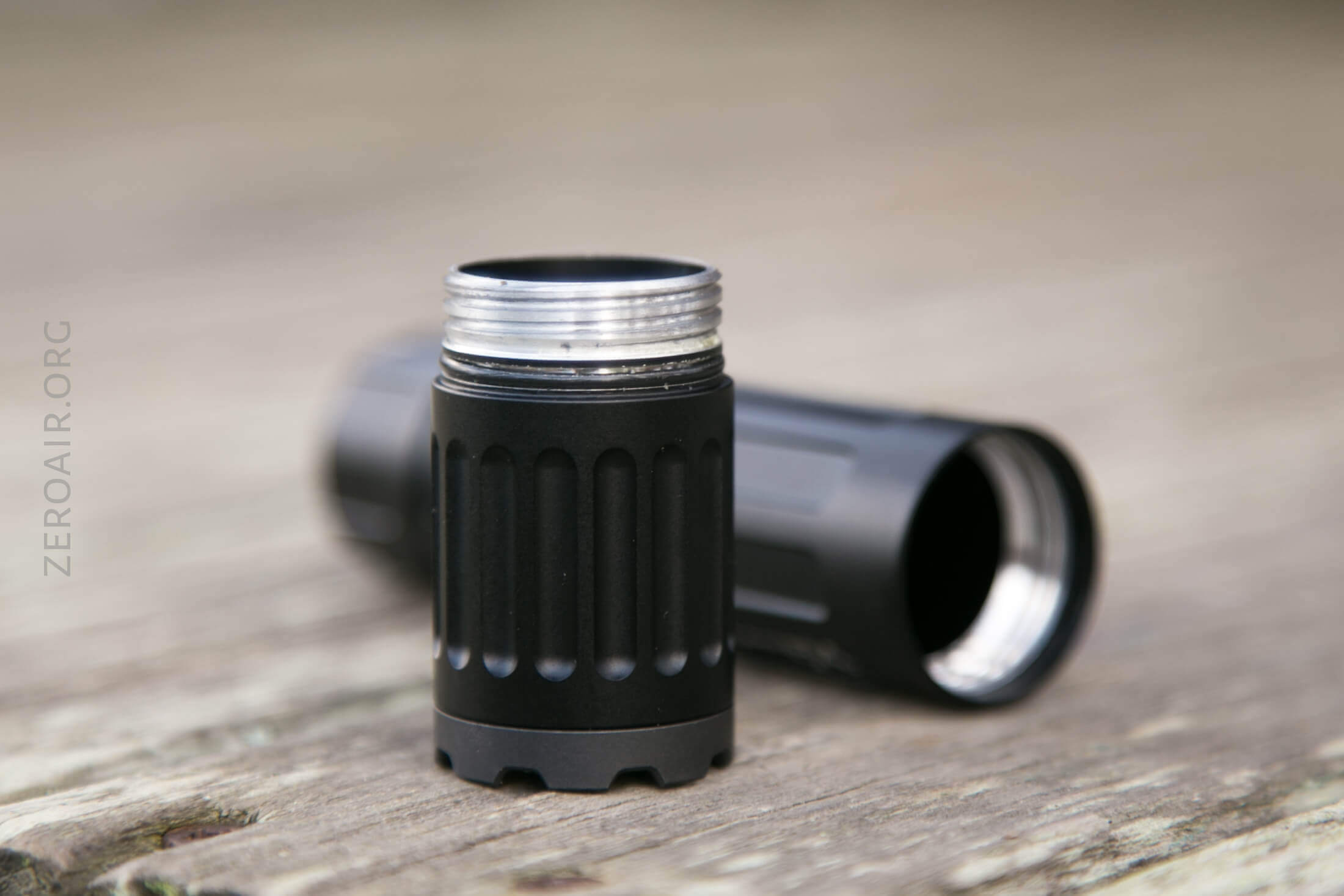
Note how massively beefy those threads are, too. I don’t love unanodized threads, but these are reasonably smooth and well-lubed.
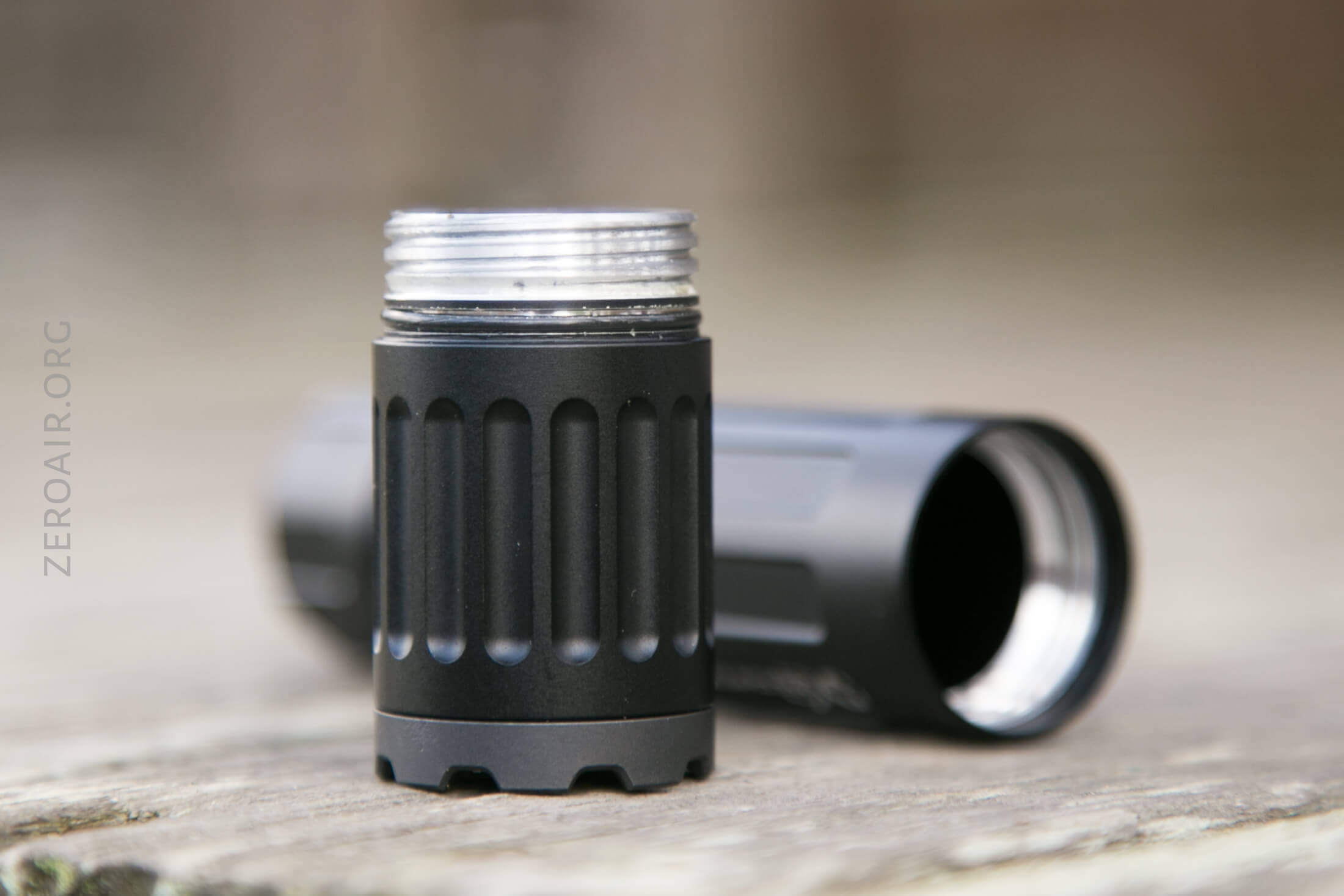
Unanodized makes for a more robust connection, which is something you want in a tactical light anyway.
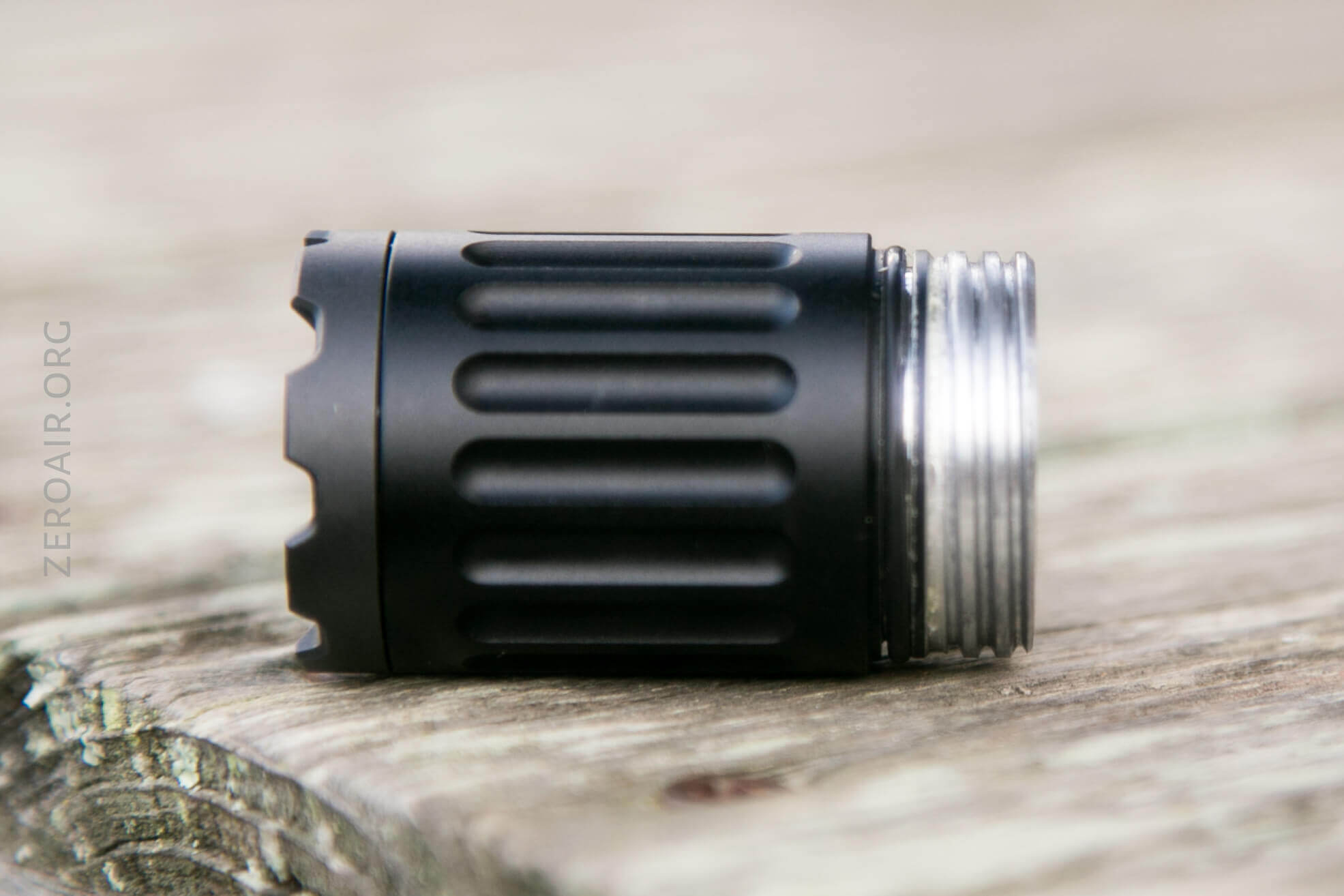
Here you can see my go-to means for unscrewing the bezel. It didn’t budge, even with this amount of effort. Can it be removed? Well certainly. Bring your strap wrench, though.
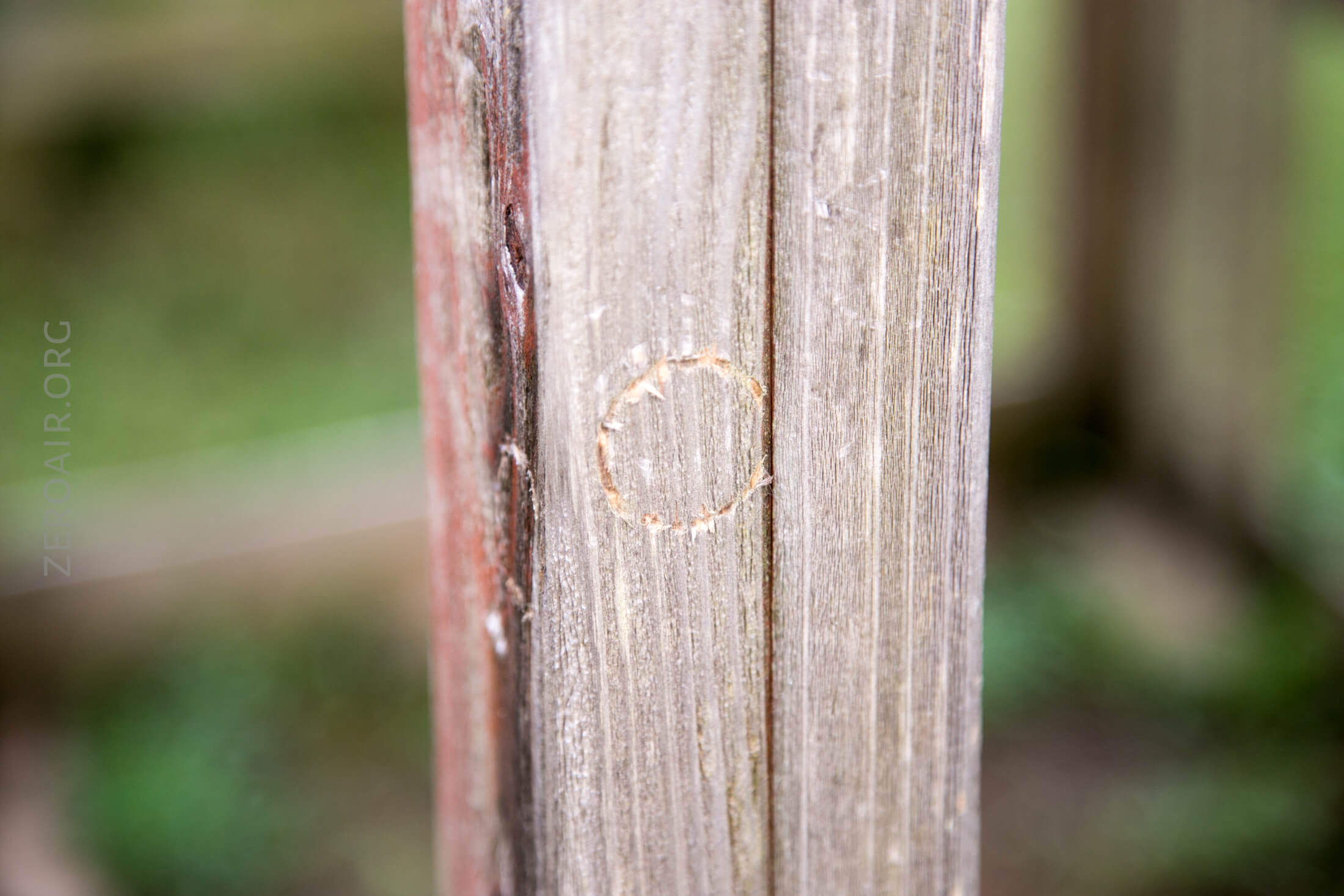
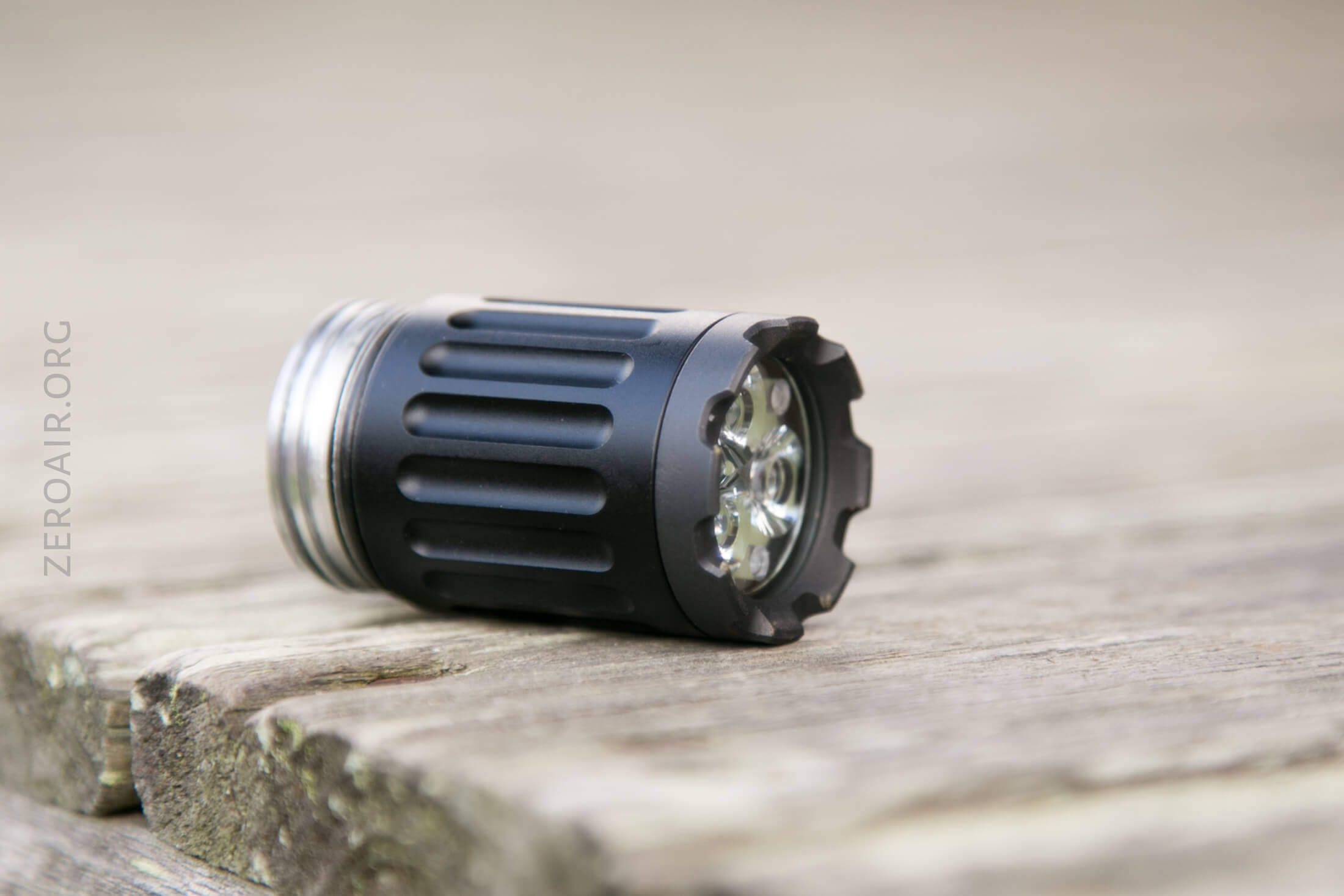
I don’t know why I thought they might but I’ll answer for you since I wondered; no parts of the MechTorch screw into the Tactical Suppressor.
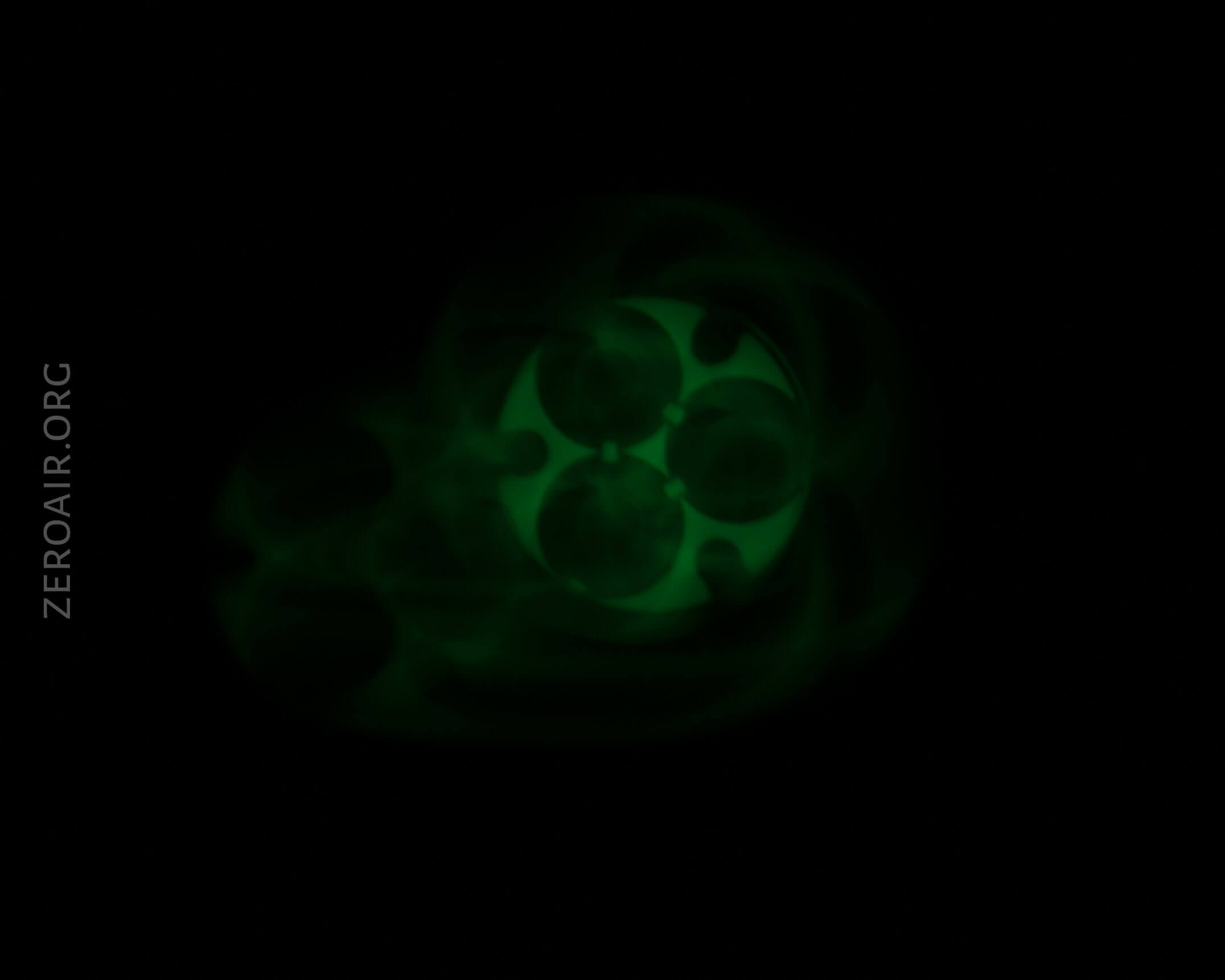
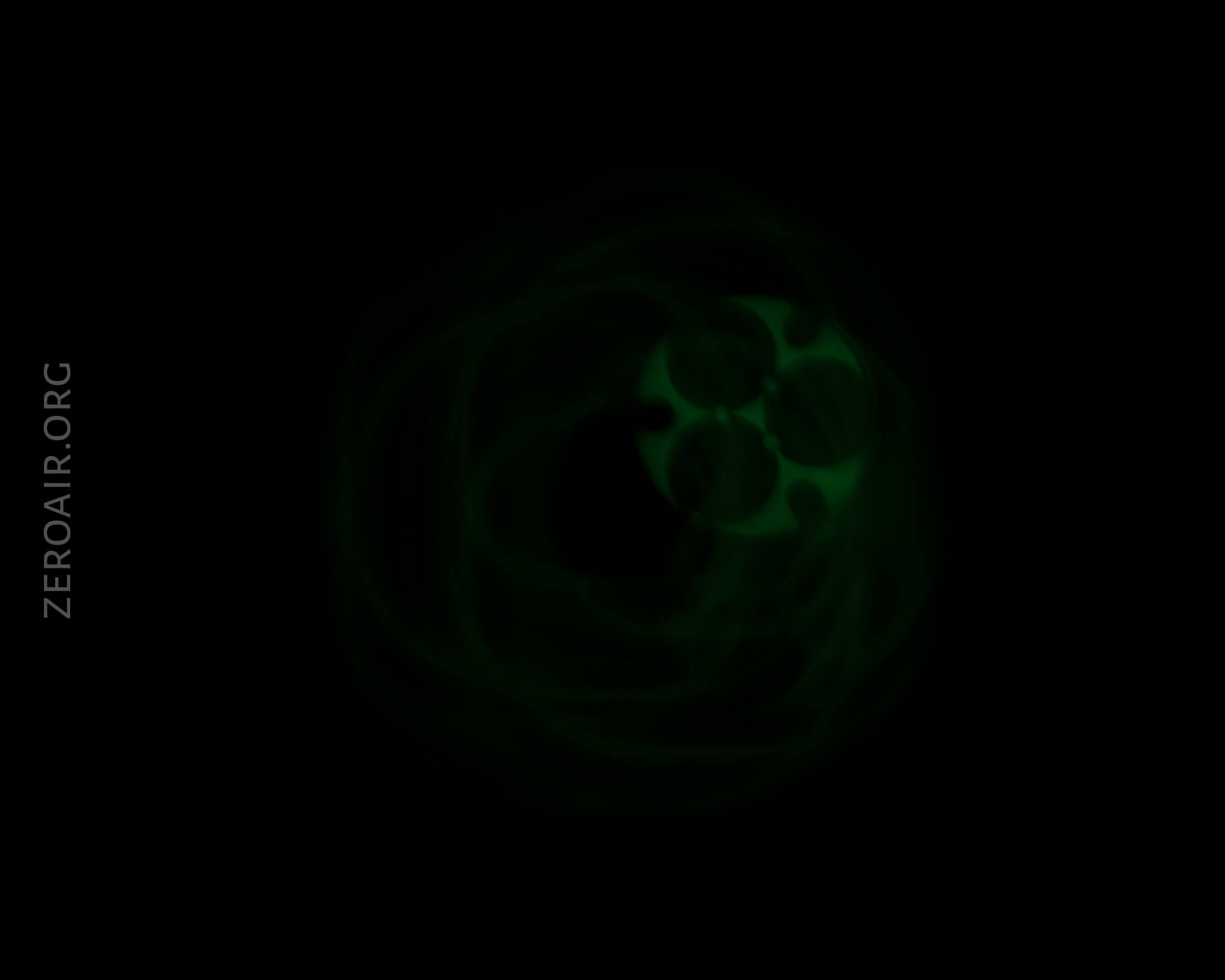
One final thing to mention about these Mechforce lights build quality. They use fantastic glow material. It’s so glowy.
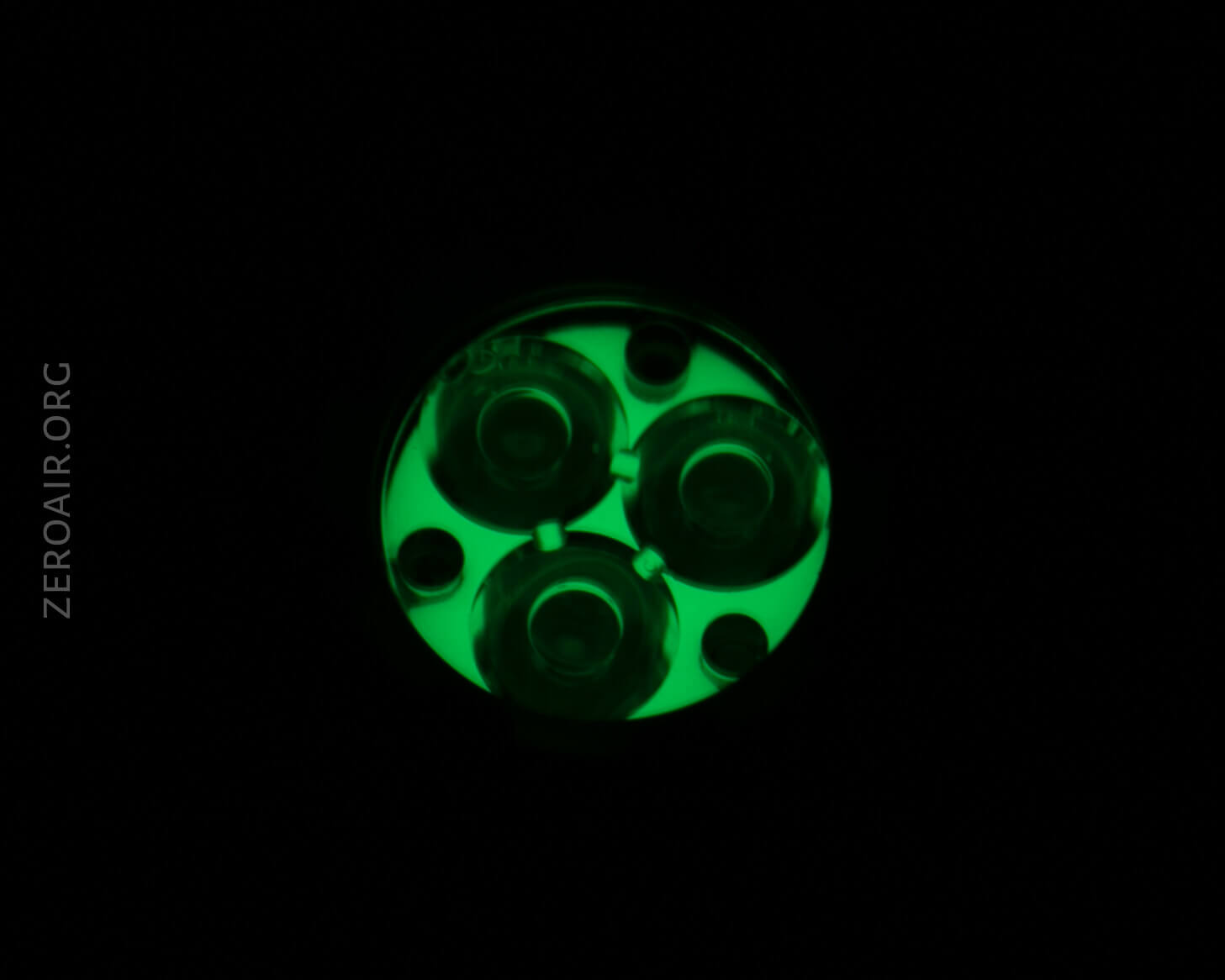
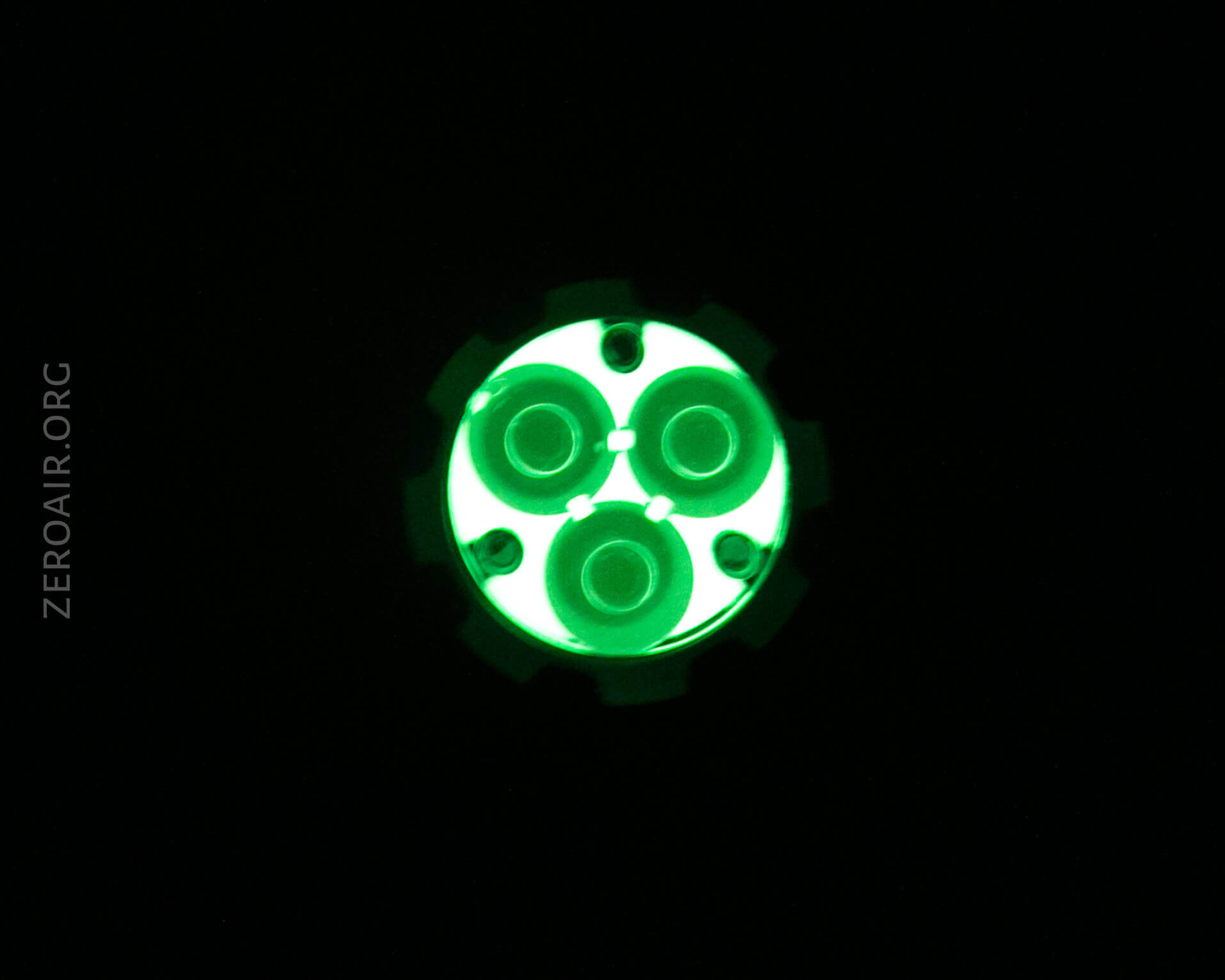
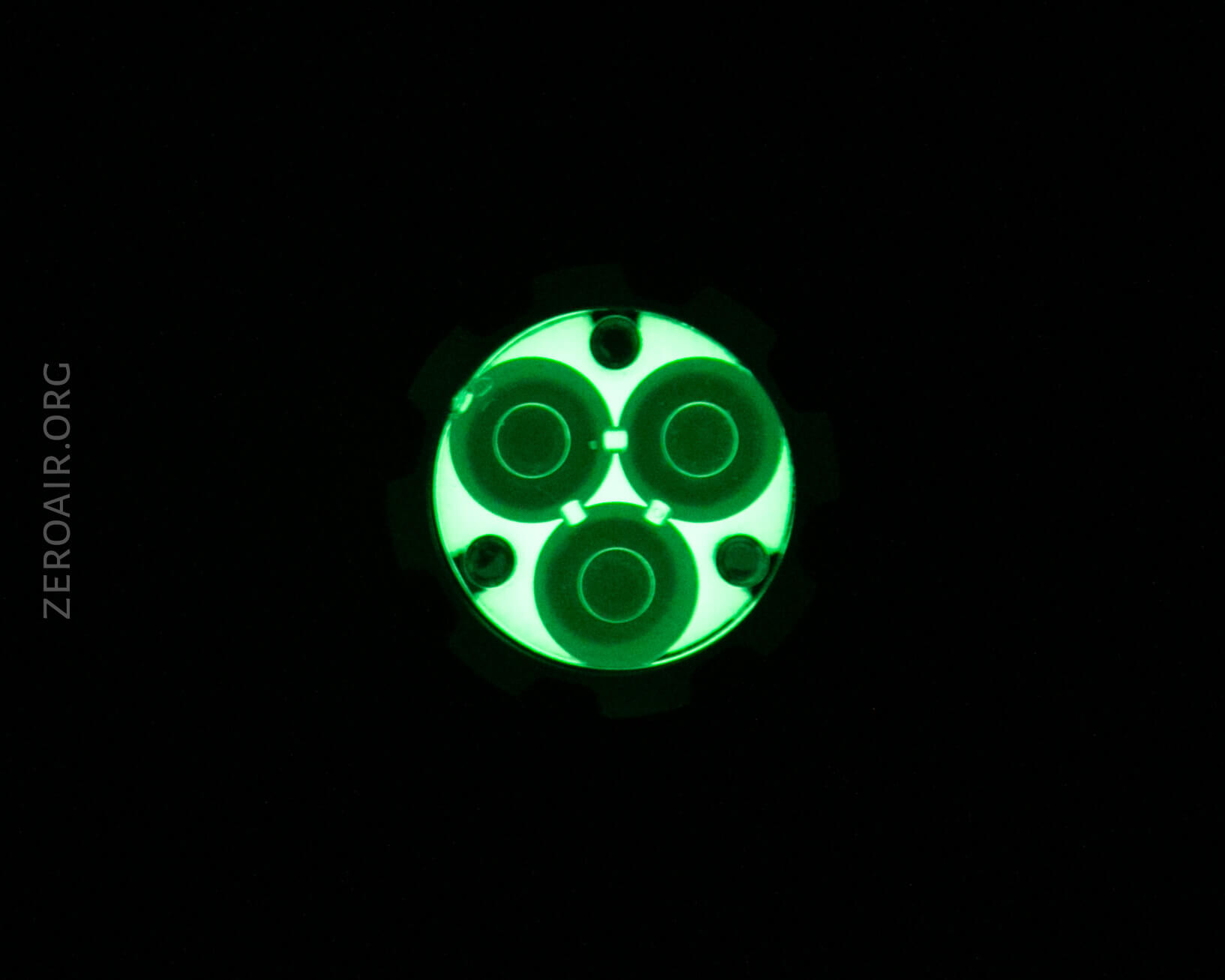
I had a bit of fun.

Size and Comps
Metric: W 31mm x L 127mm x H 27mm
Note that 31mm is the diameter with the clip measured. Otherwise (the body of the light) is just 27mm and some change. Length also is accurate, at 127mm and some change.
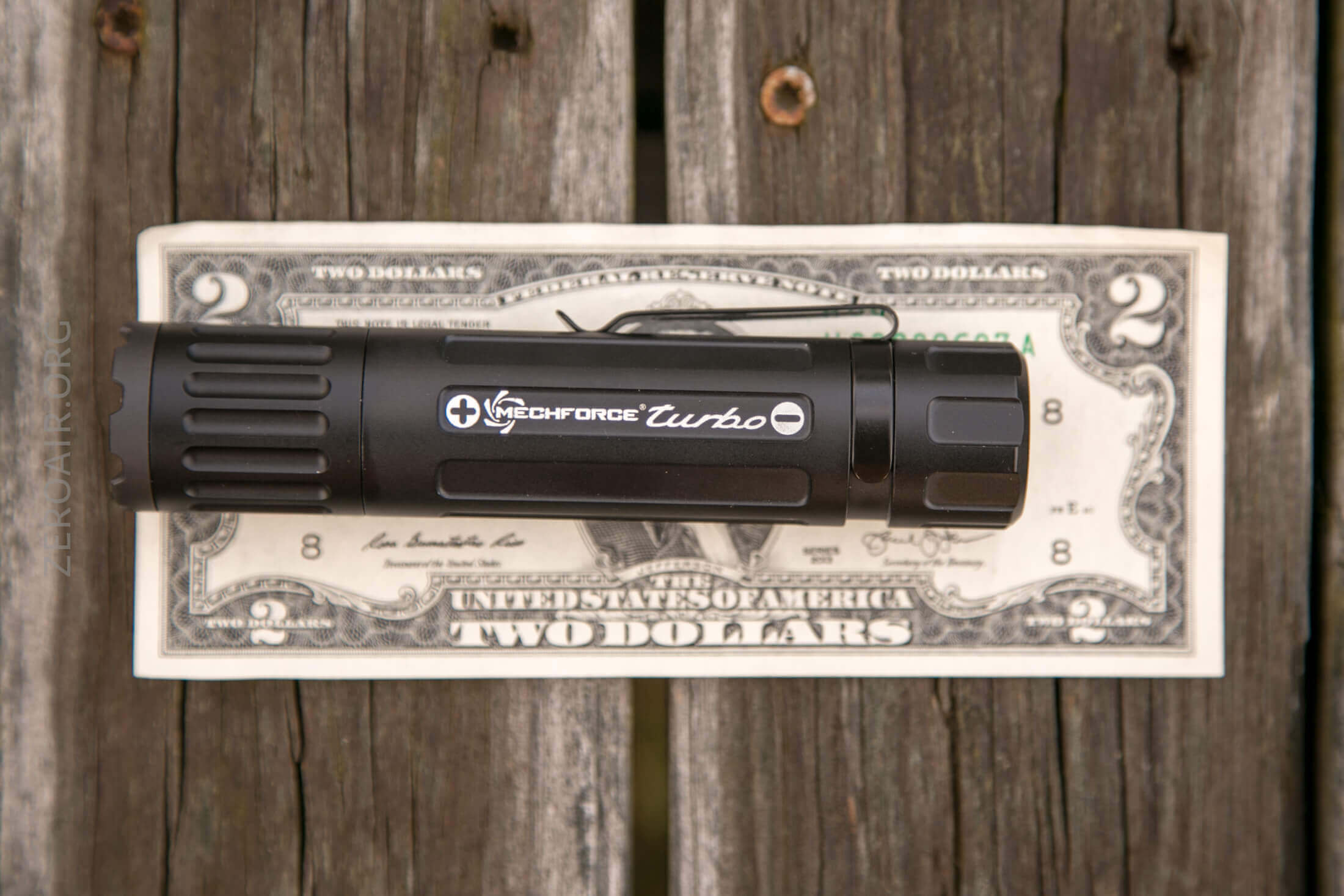
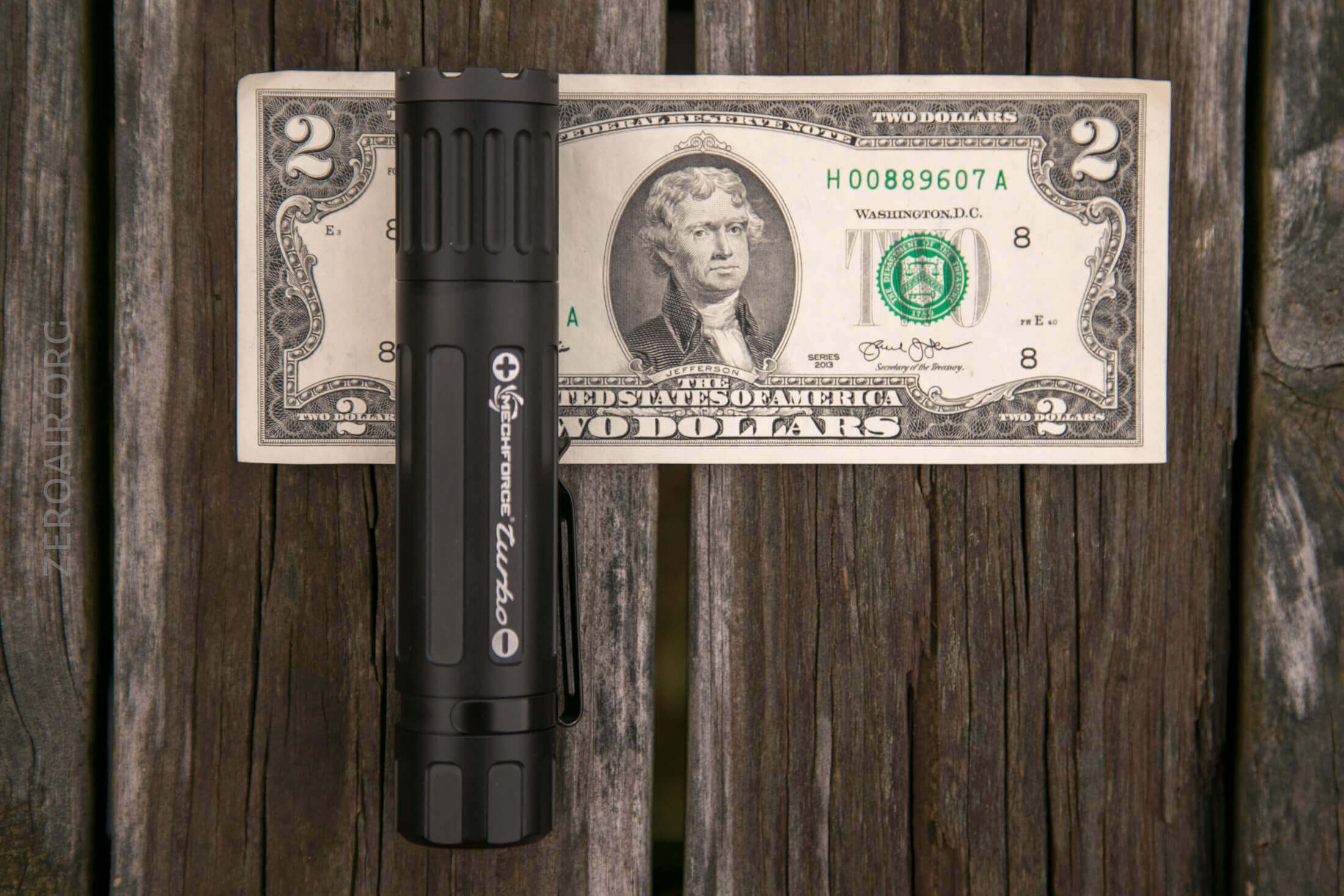
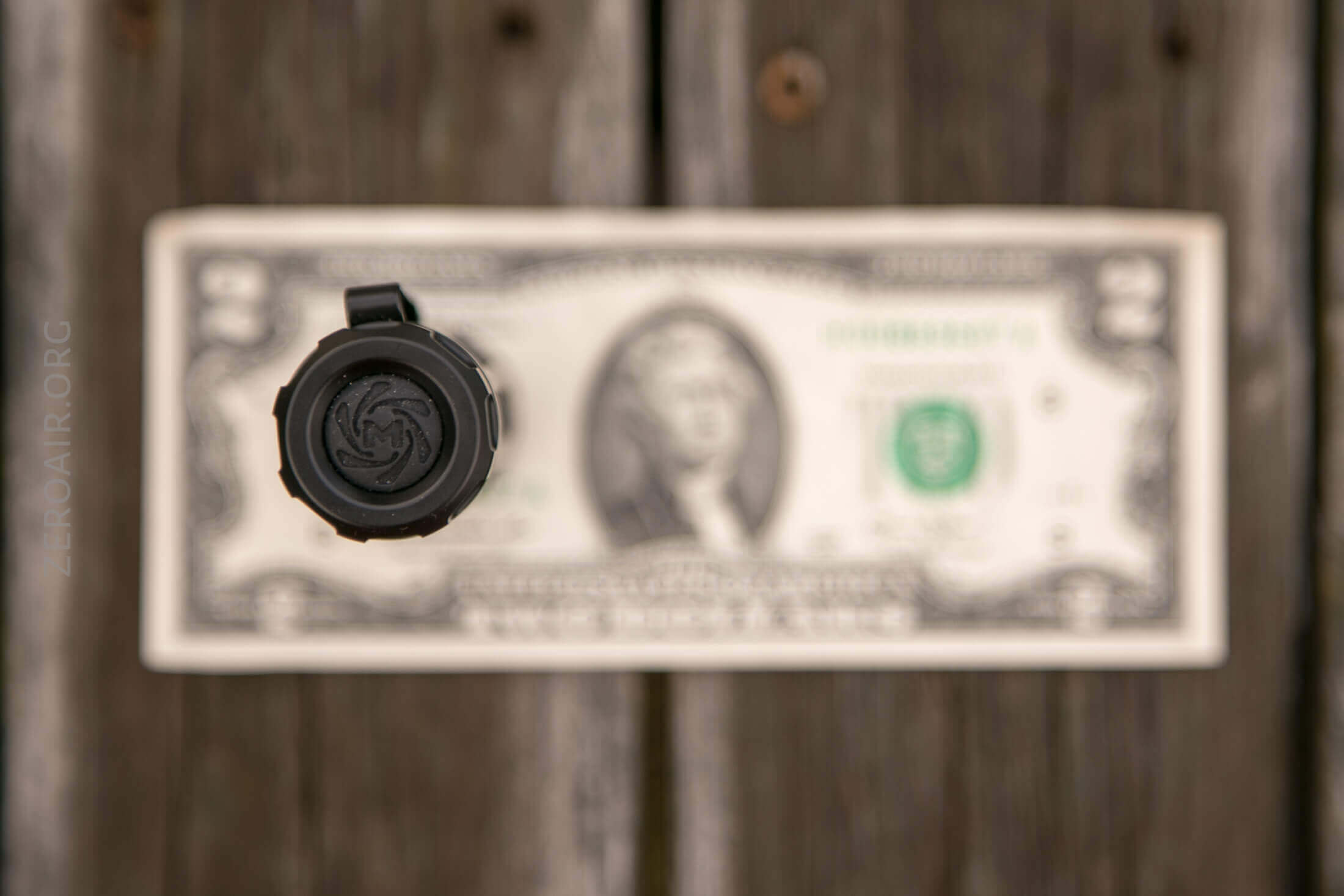
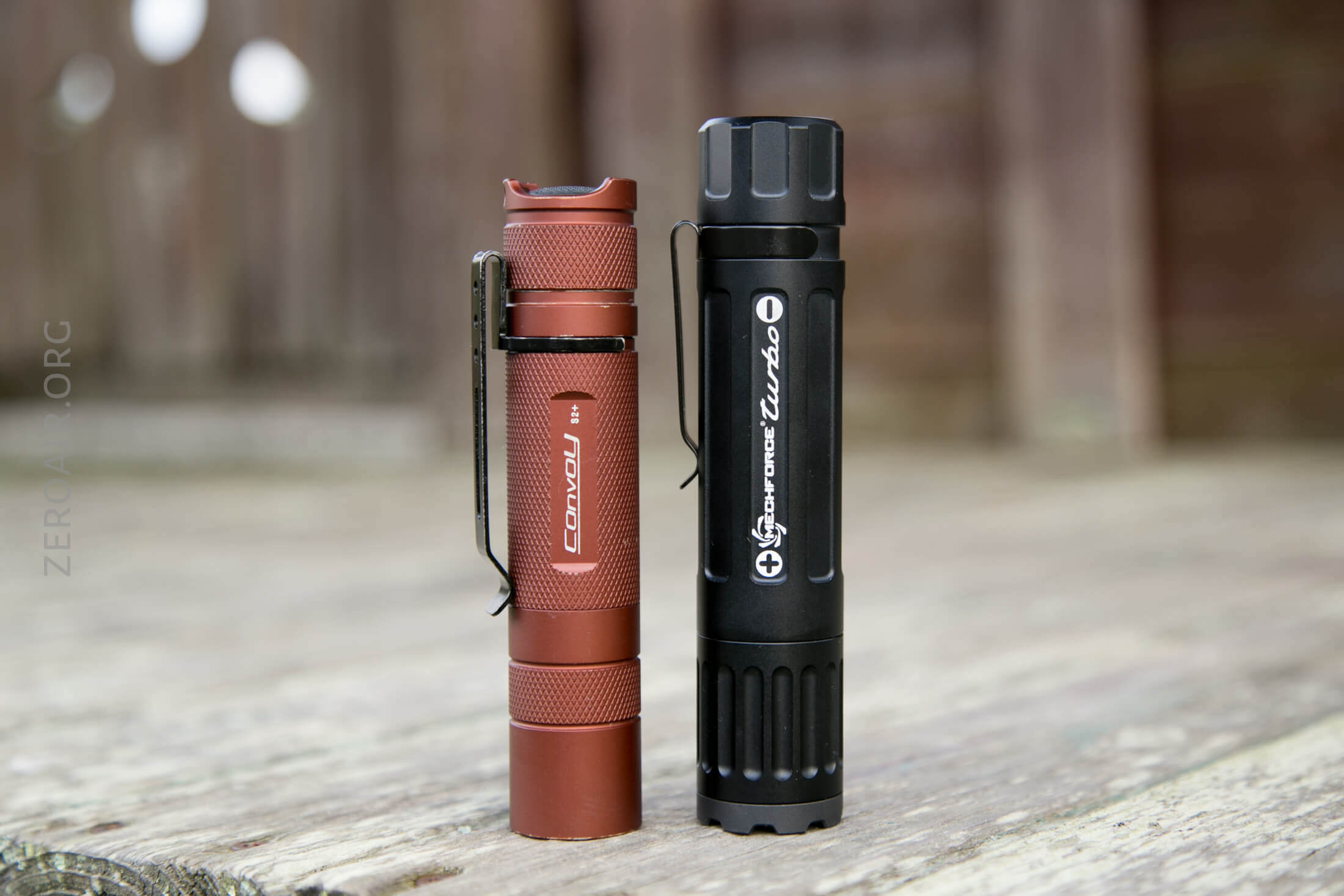
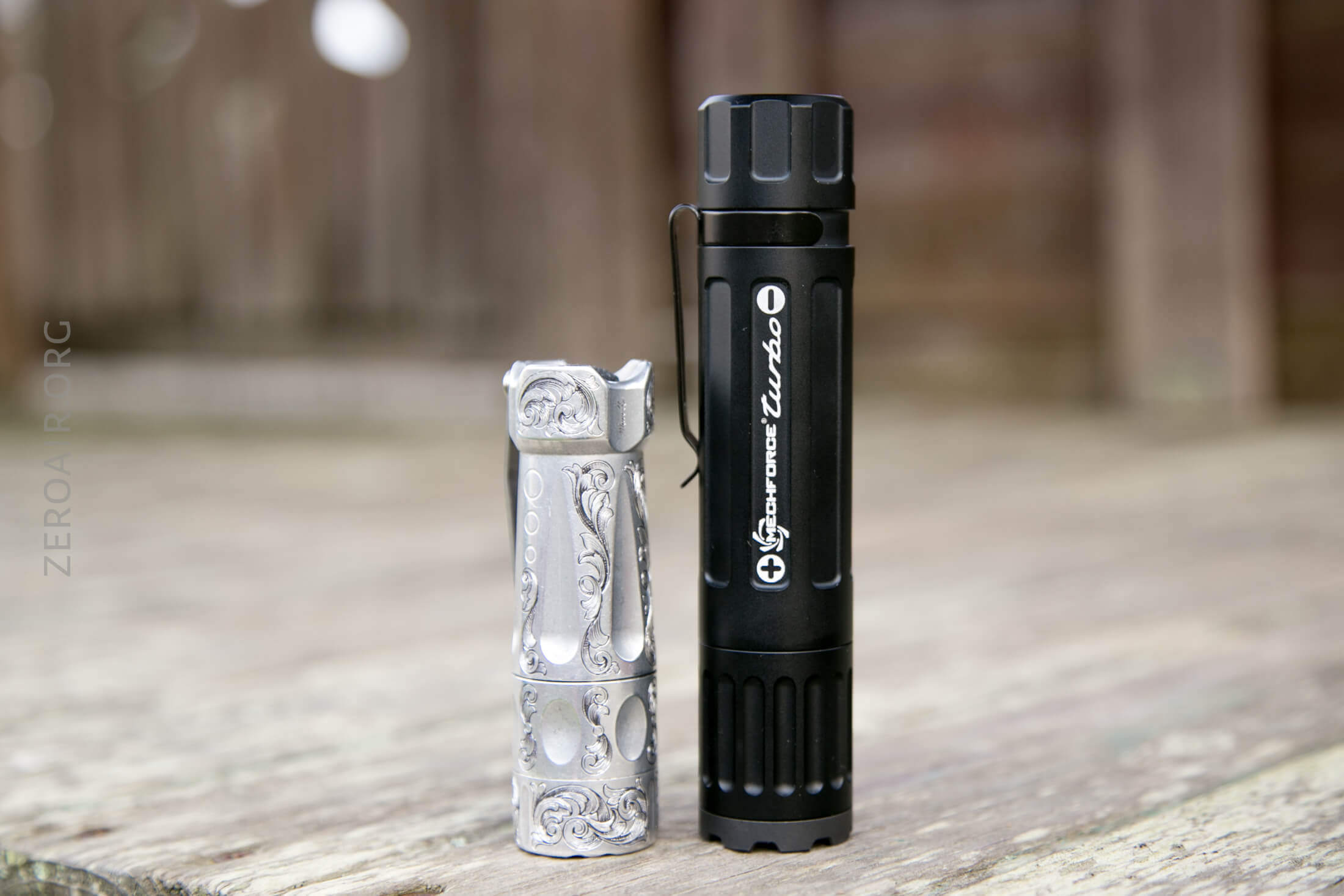
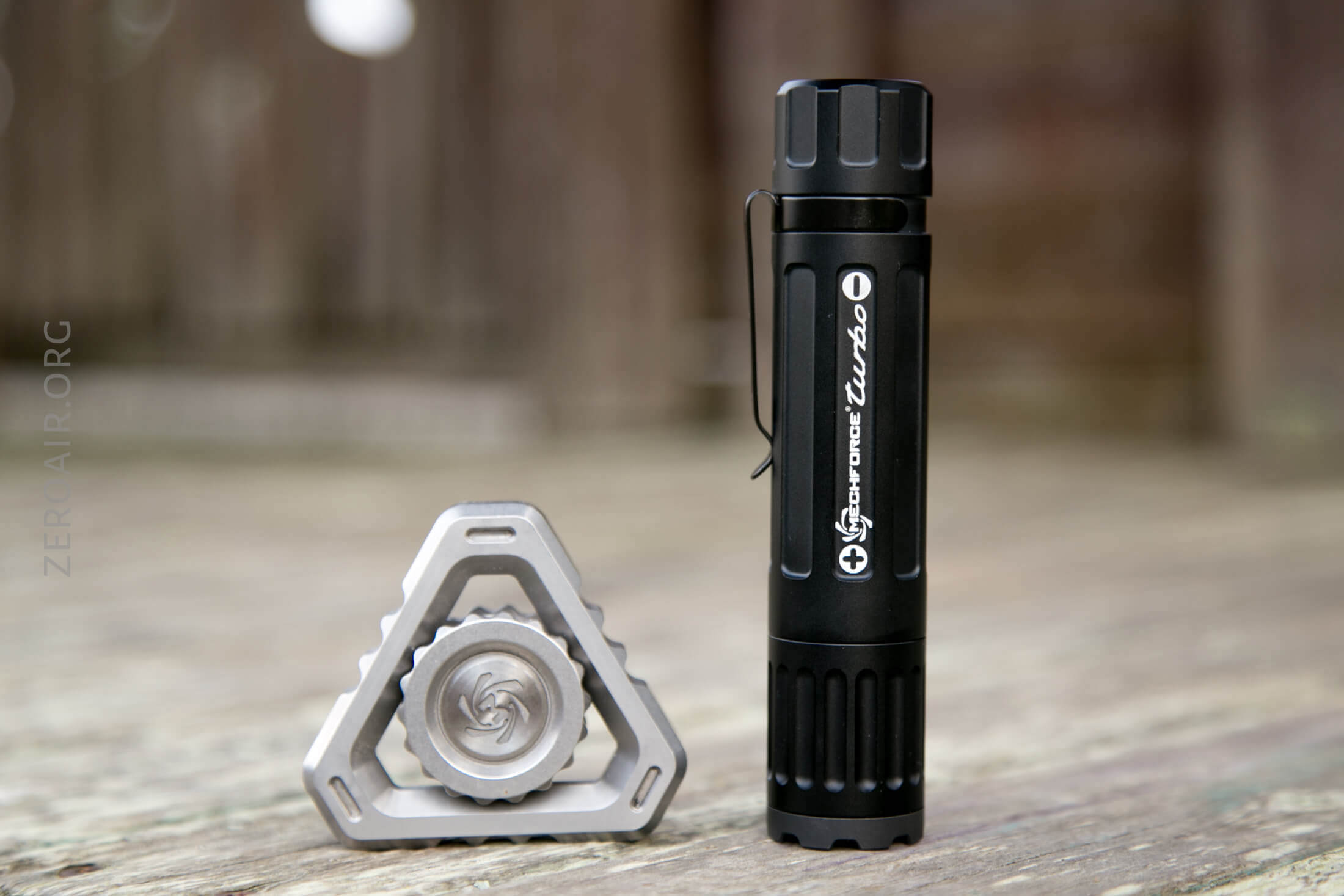
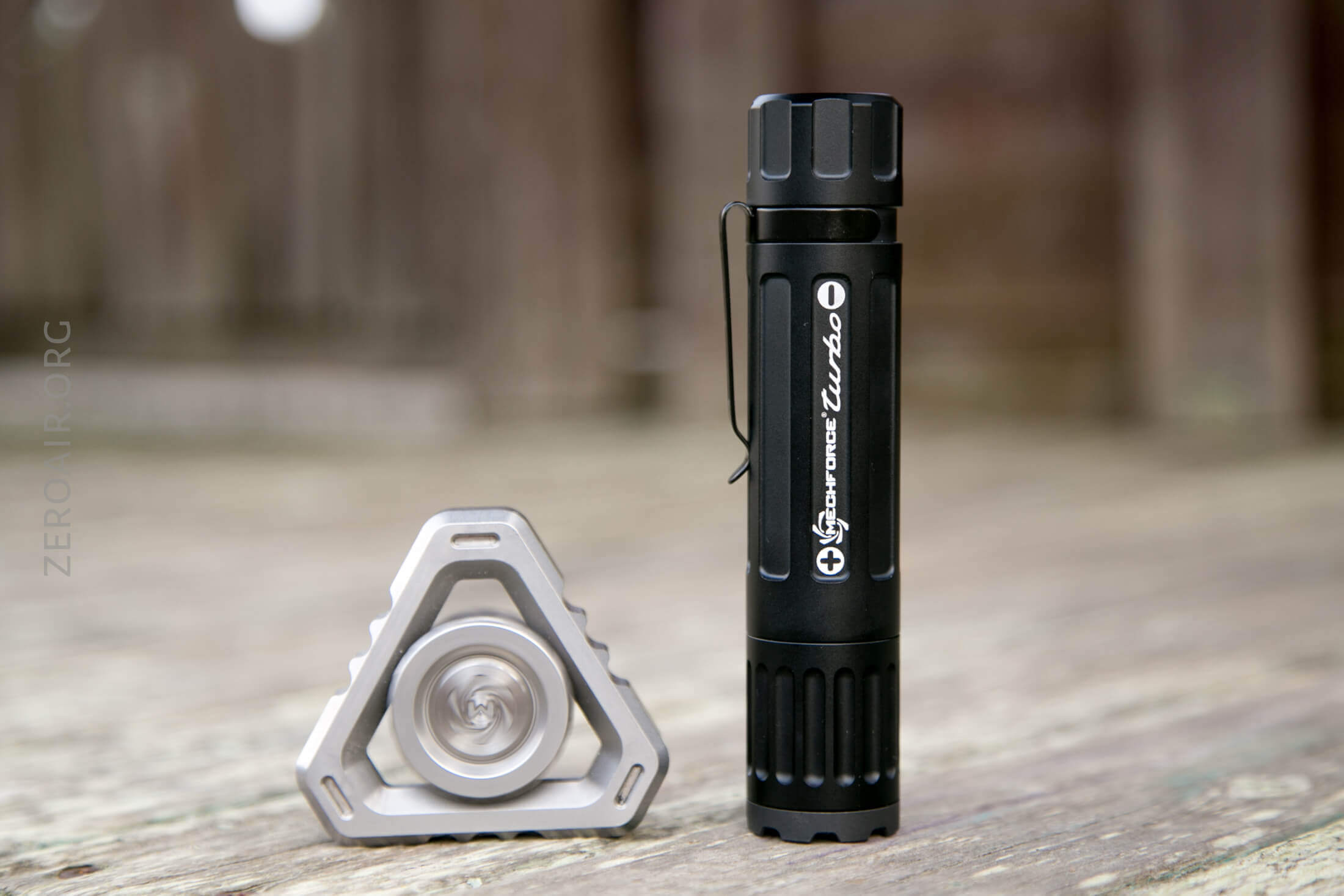
This isn’t a small light! But it’s 21700, with those good, good mAh’s.
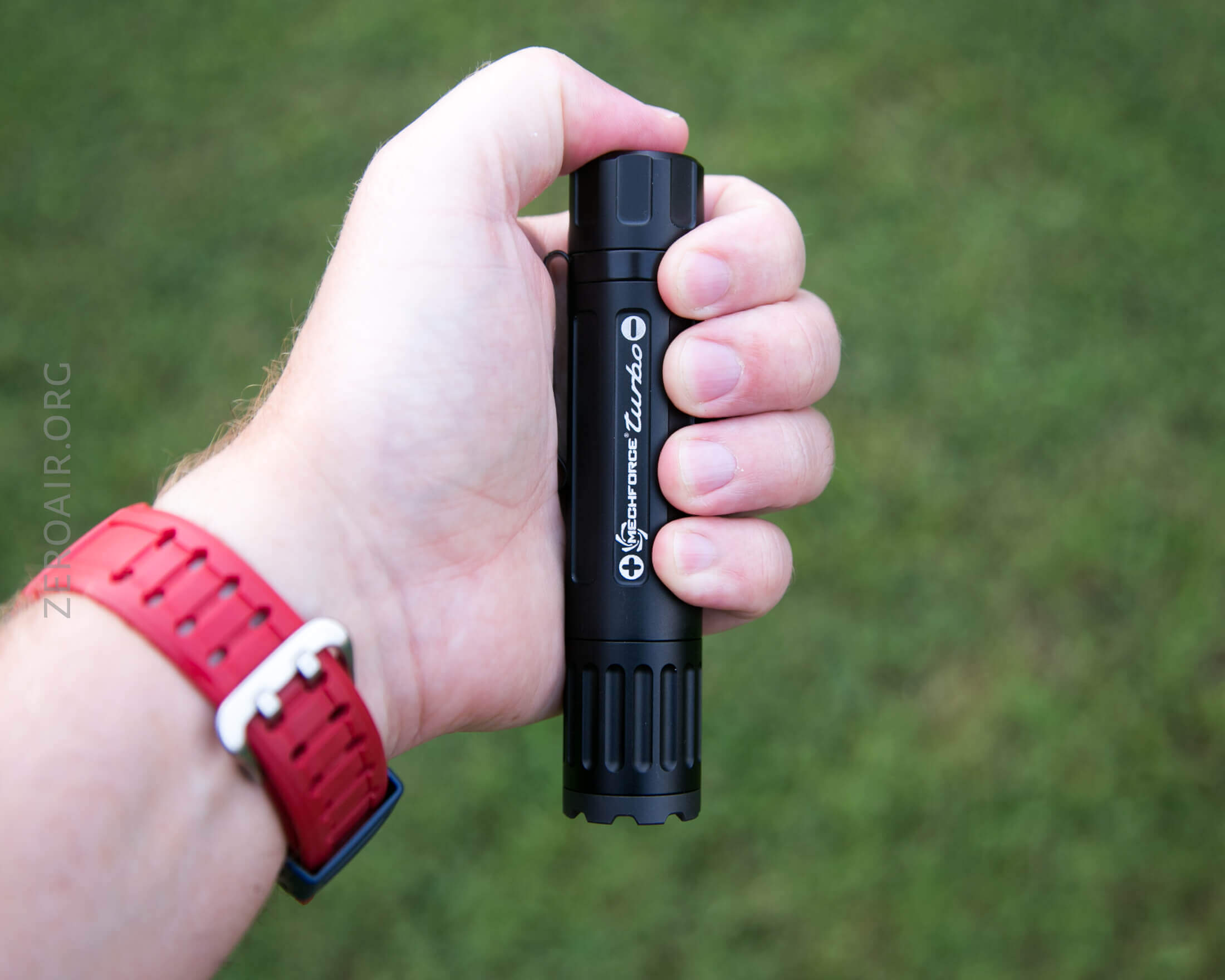
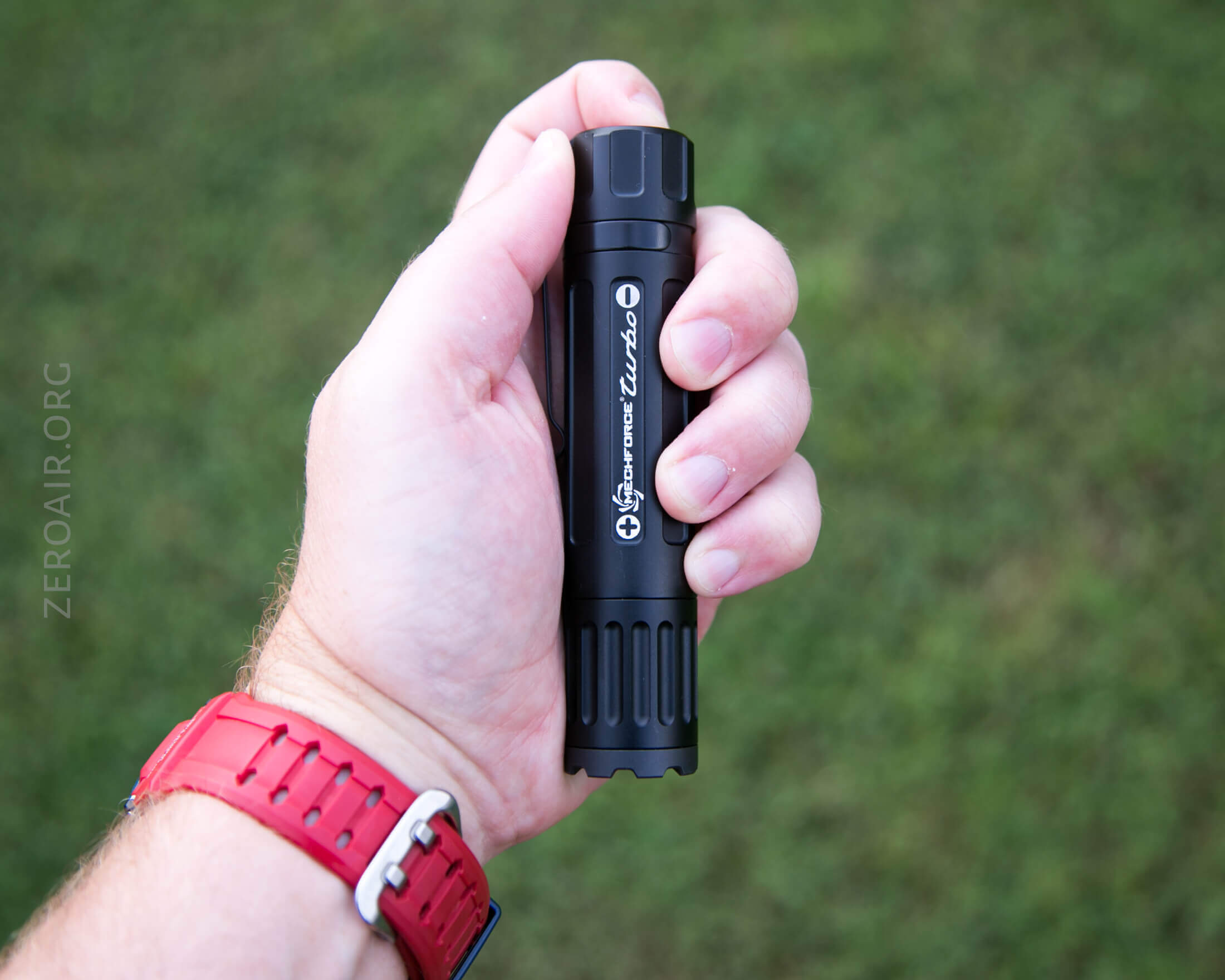
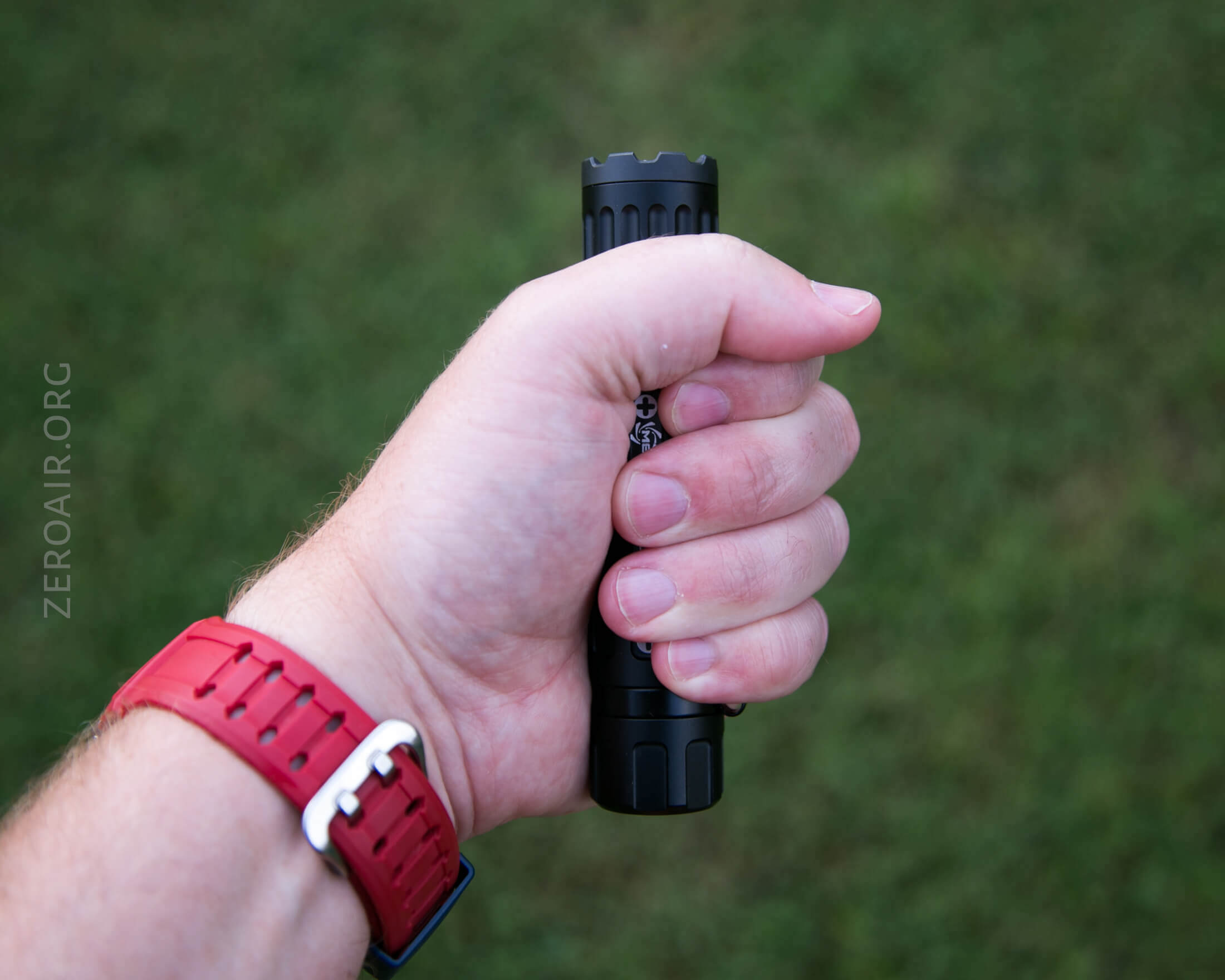
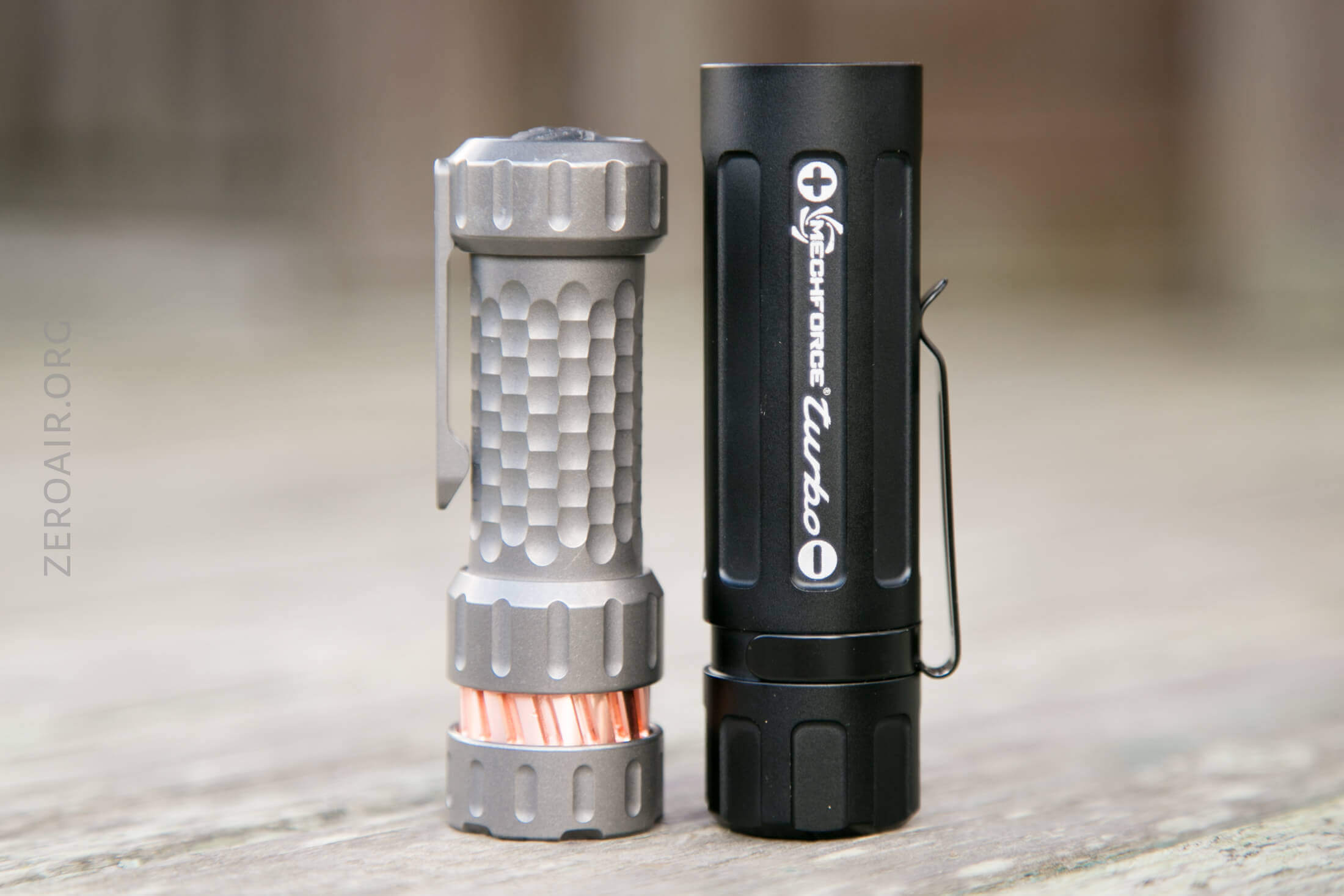
A size comparison you had to be wondering about:
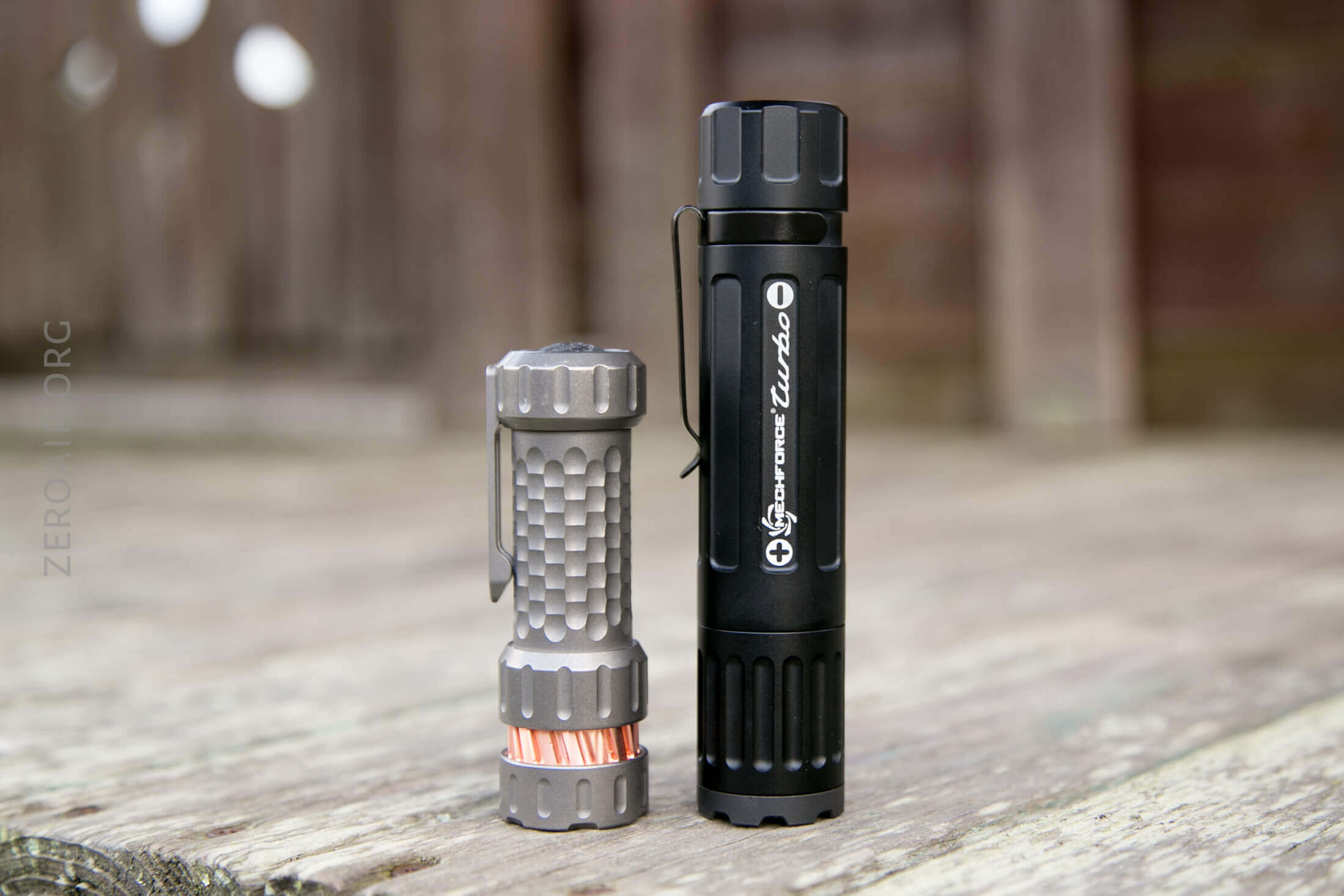
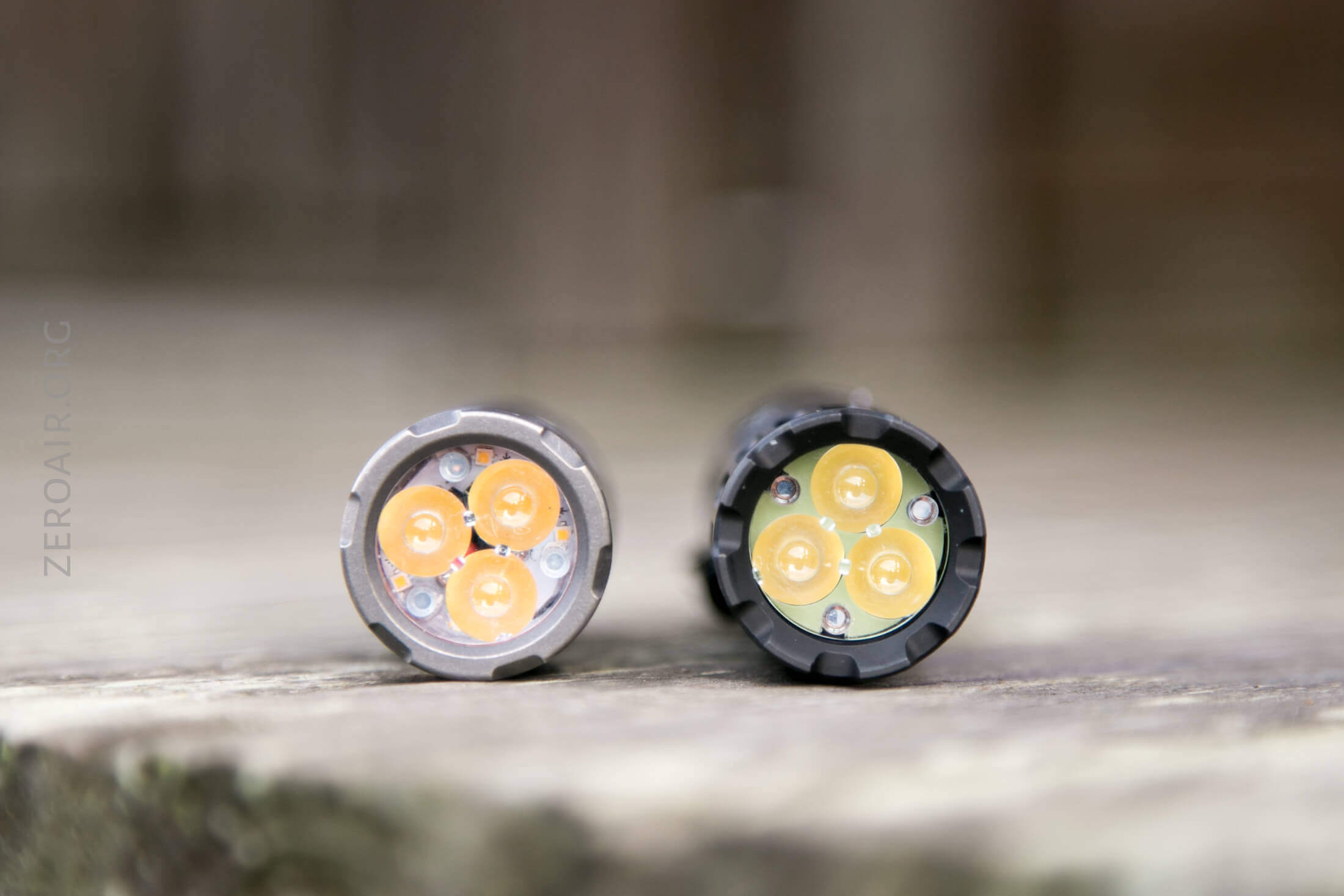
My Mechtorch left, below, has a dragon driver. That’s why it looks different (and has no glow).
Here’s the test light with the venerable Convoy S2+. Mine’s a custom “baked” edition Nichia 219b triple. A very nice 18650 light.
And here’s the light beside my custom-engraved TorchLAB BOSS 35, an 18350 light. I reviewed the aluminum version of that light in both 35 and 70 formats.
Retention and Carry
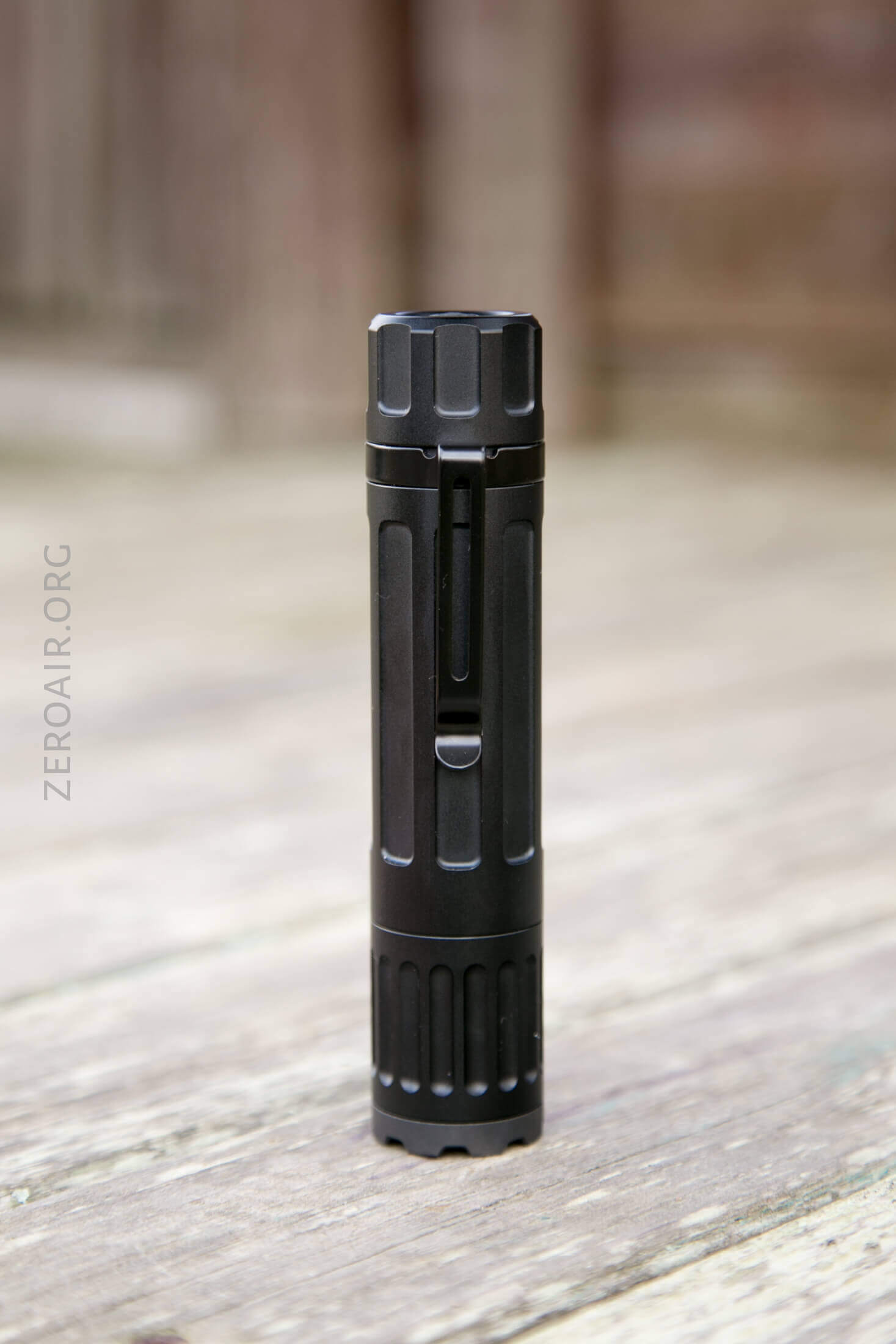
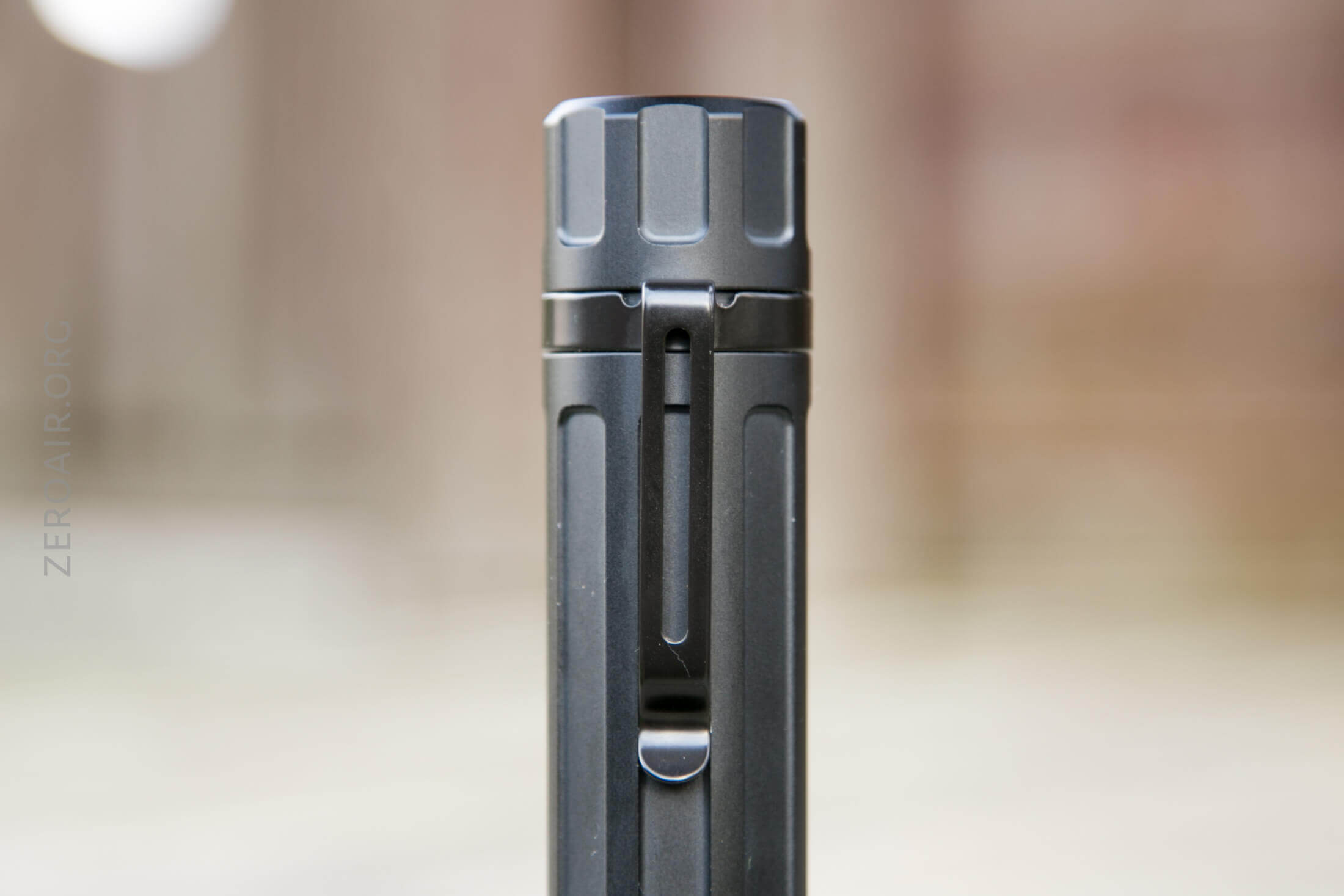
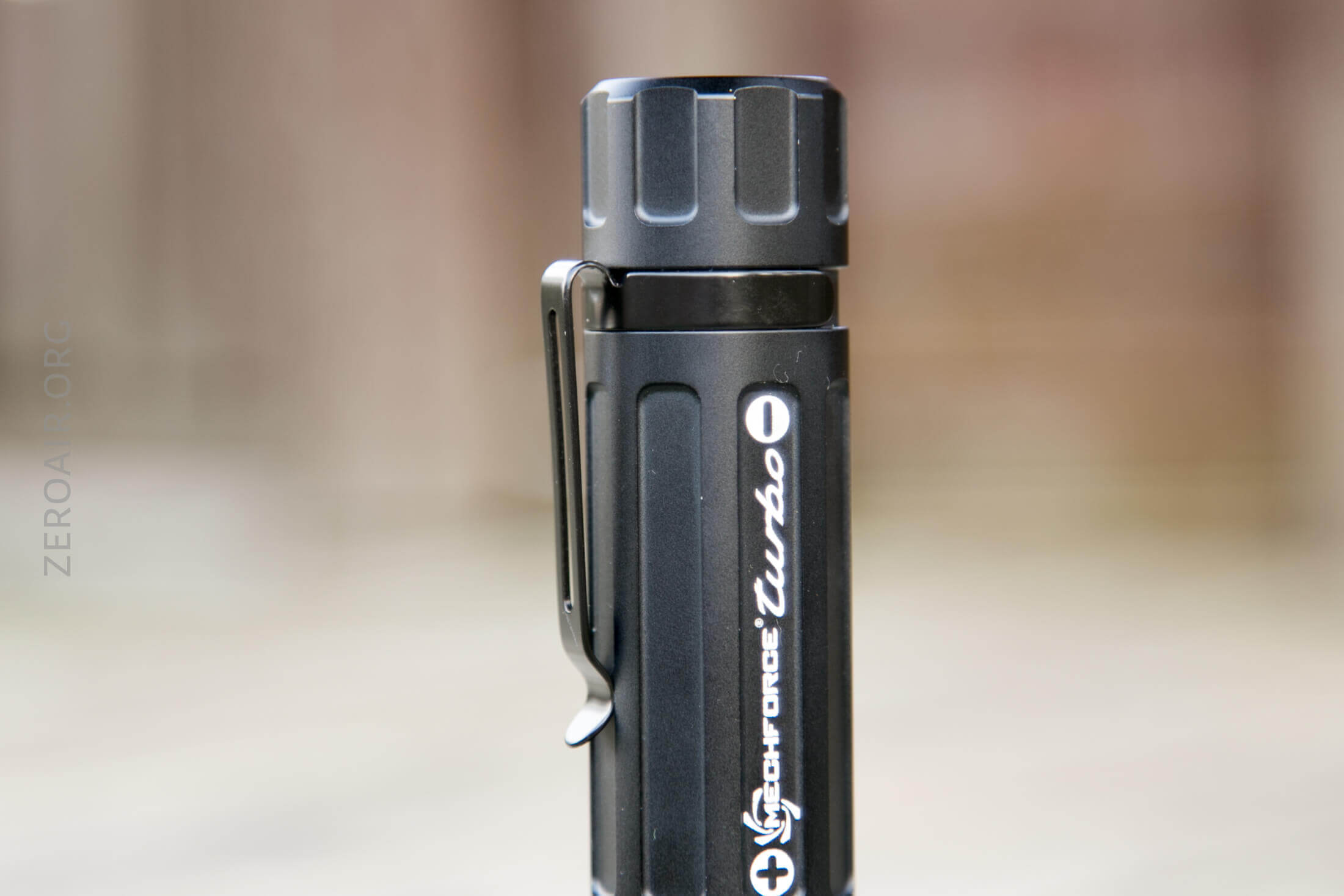
The intended way to carry this light is a friction-fit pocket clip. The light is big enough that the 20mm that sticks over the clip doesn’t unbalance the light. I can carry it fairly comfortably in my back pocket, though the bezel doesn’t help in this regard.
Power and Runtime
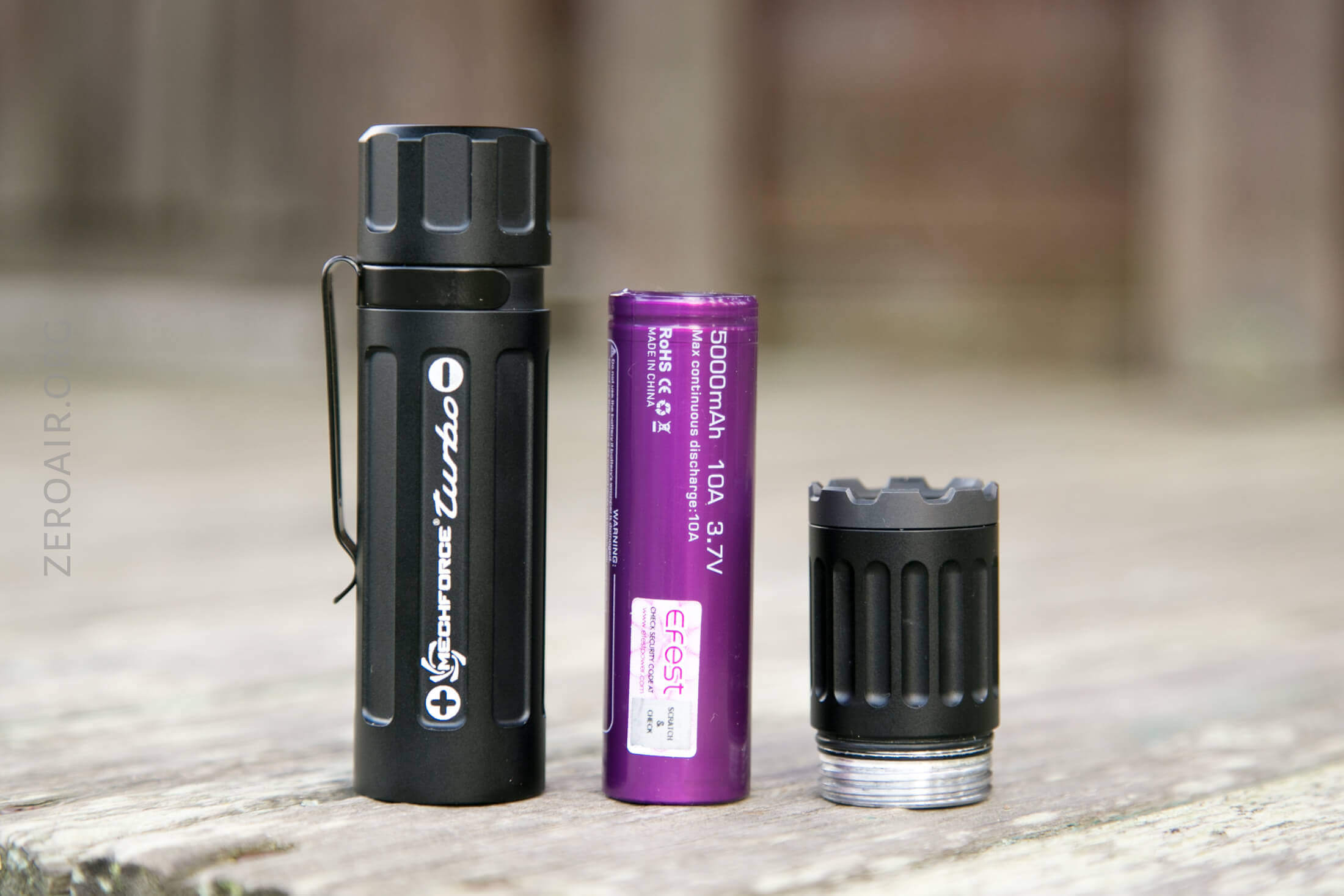
Mechforce includes the right cell for this light – a 5000mAh 21700. It’s an Efest, and while I haven’t had the best luck with Efest, all the ones I’ve gotten from Mechforce have been great.
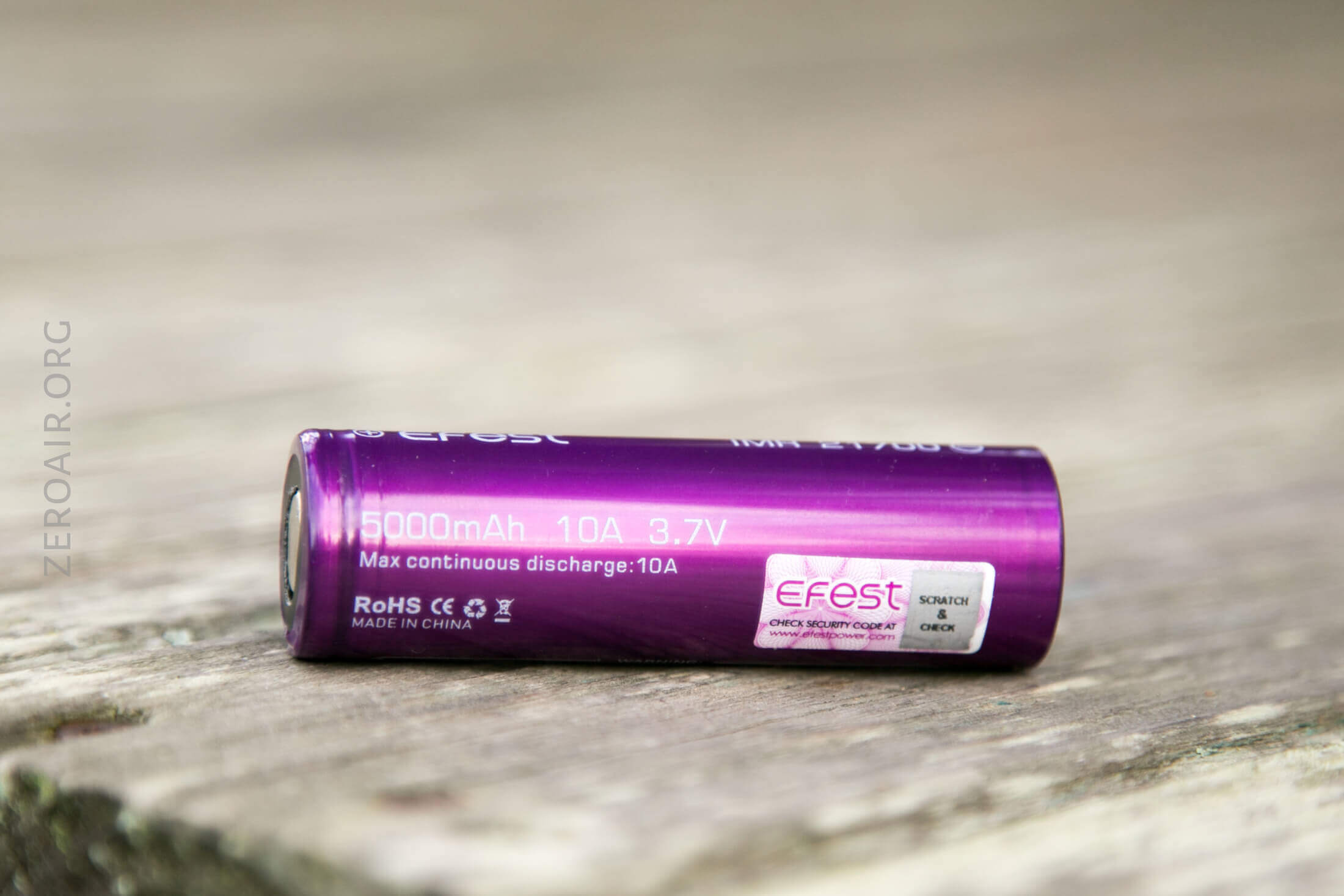
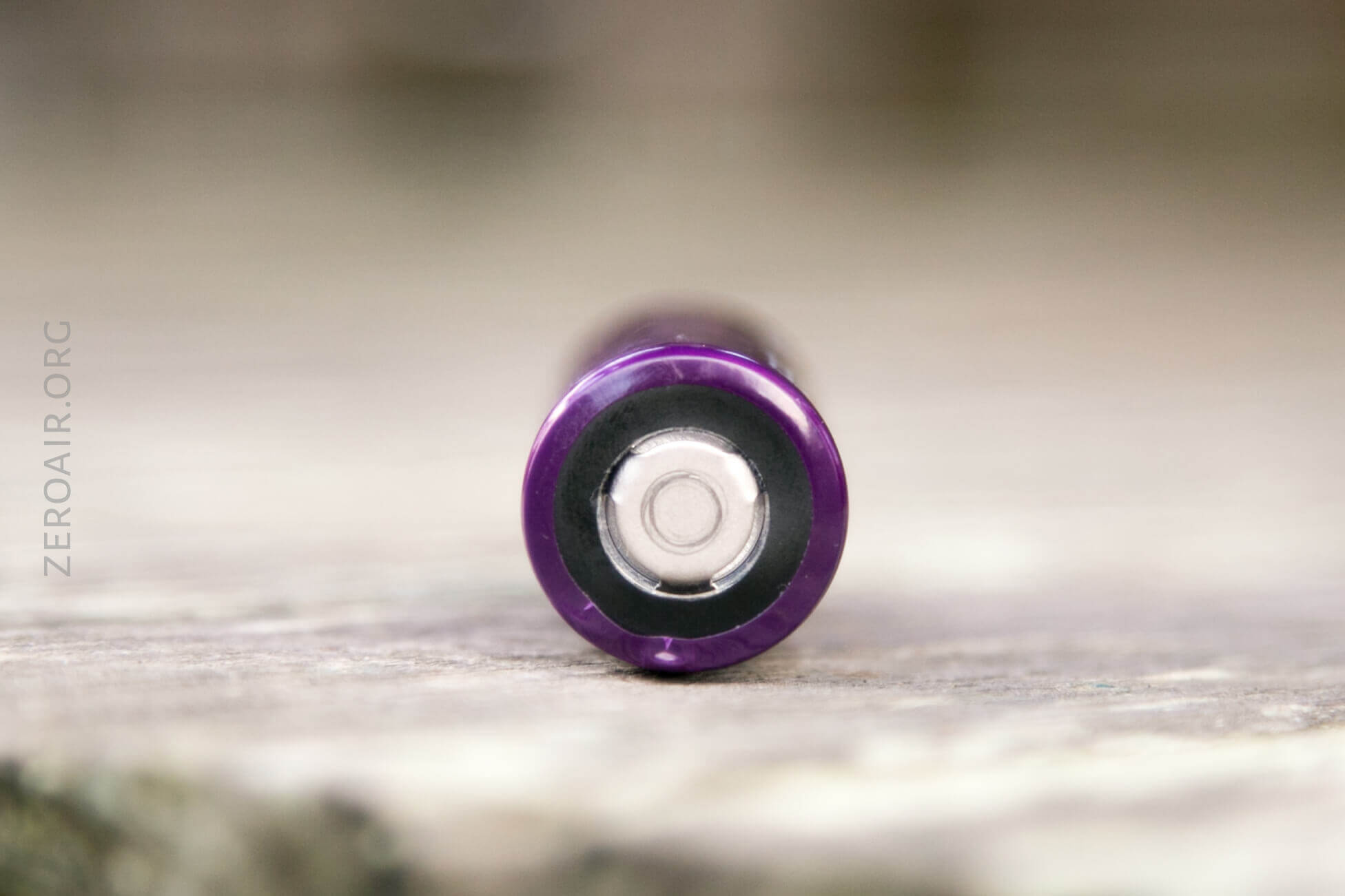
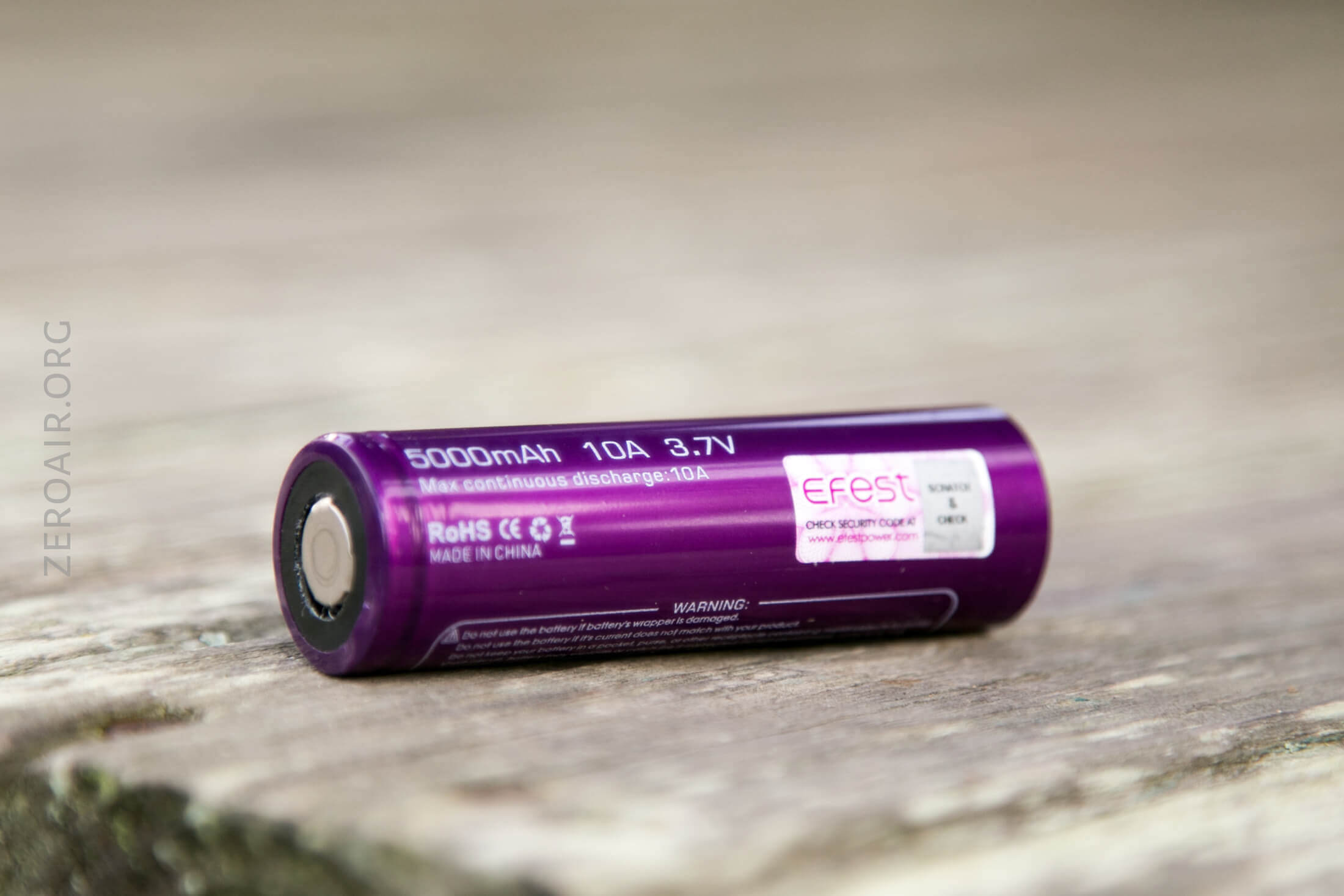
It’s a flat-top unprotected cell.
The body of the light has a cell orientation, but the cell goes into this light in the common way, positive toward the head. Note below that this light is different in that the head screws into the body. That was also a feature of the Mechtorch, though if memory serves, this is a bit different still.
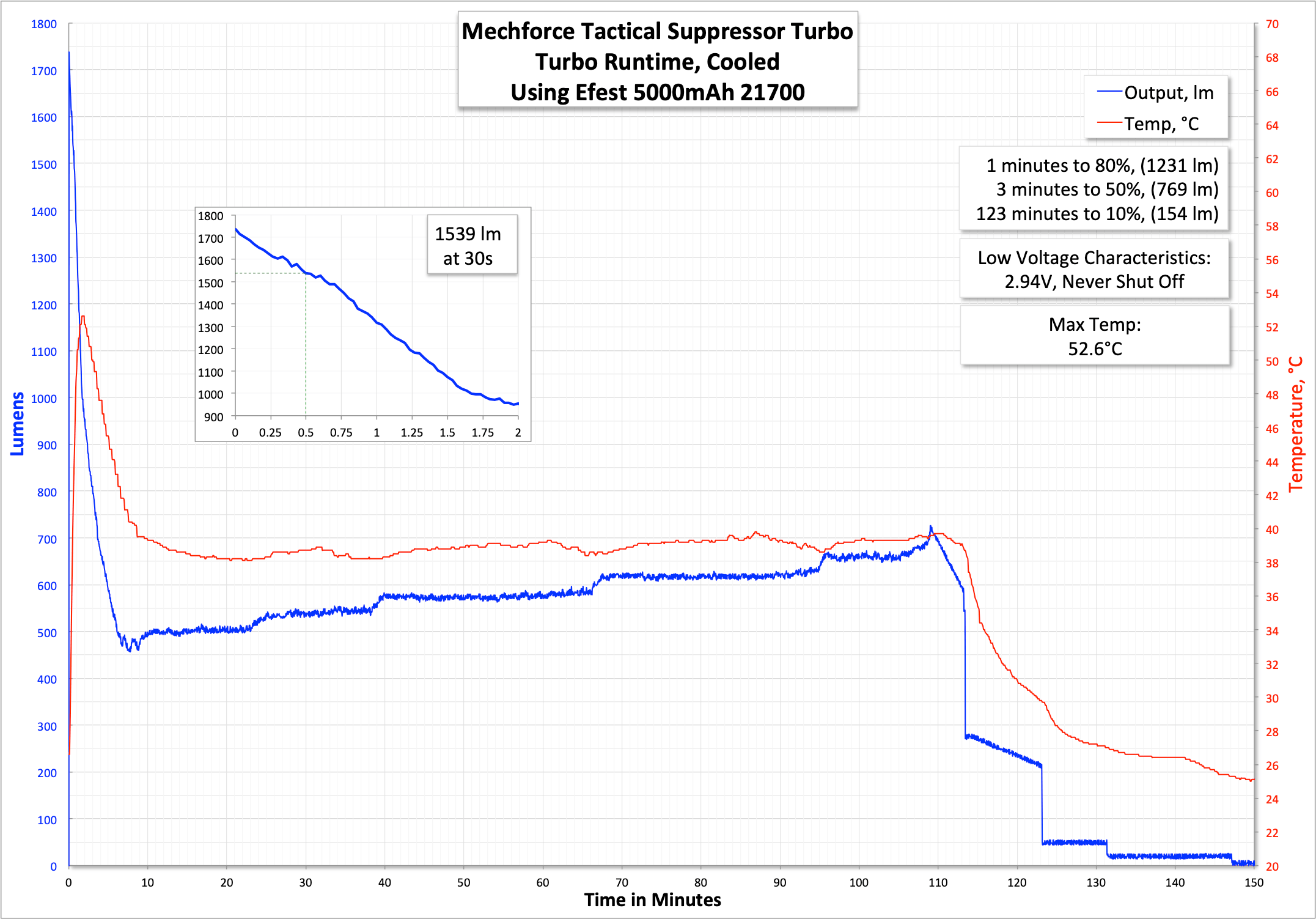
Here’s a runtime on Turbo. H17f is a FET driver, so it’ll take all the current a cell can provide. (On bench power, it gladly took 10A without blinking.) But turbo output drops off quickly, too. In fact, it’s basically a steady decline until settling at around 600 lumens. Then, when the voltage gets low, the output steps down. There is LVP, which hits at about 2.7V.
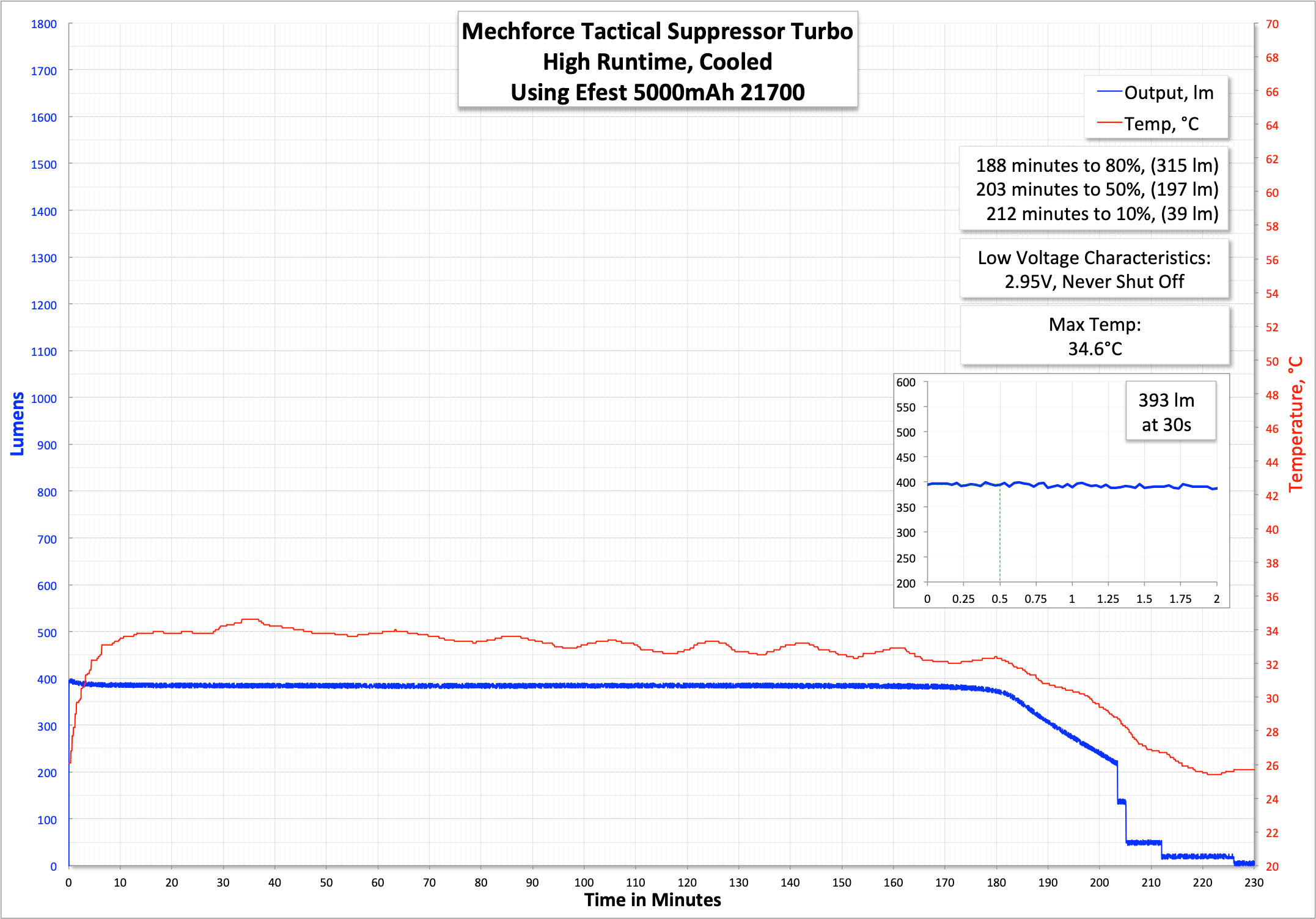
High output (which by default is the only other steady output) is around 400 lumens. The output here is fantastically stable for nearly the whole runtime.
Modes and Currents
| Mode | Mode Claimed Output (lm) | Claimed Runtime | Measured Lumens | Tailcap Amps |
|---|---|---|---|---|
| Turbo | – | – | 1539 | >10 [FET] |
| High | – | – | 393 | 1.47 |
Pulse Width Modulation
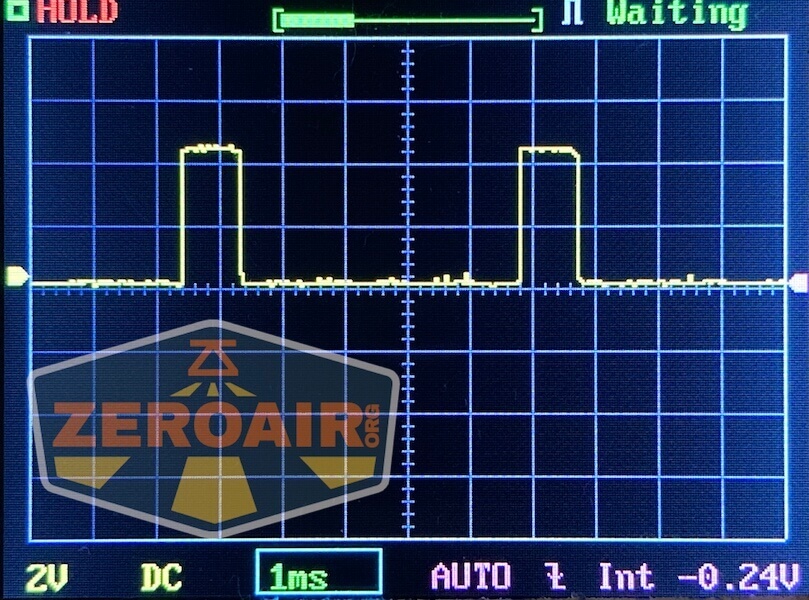
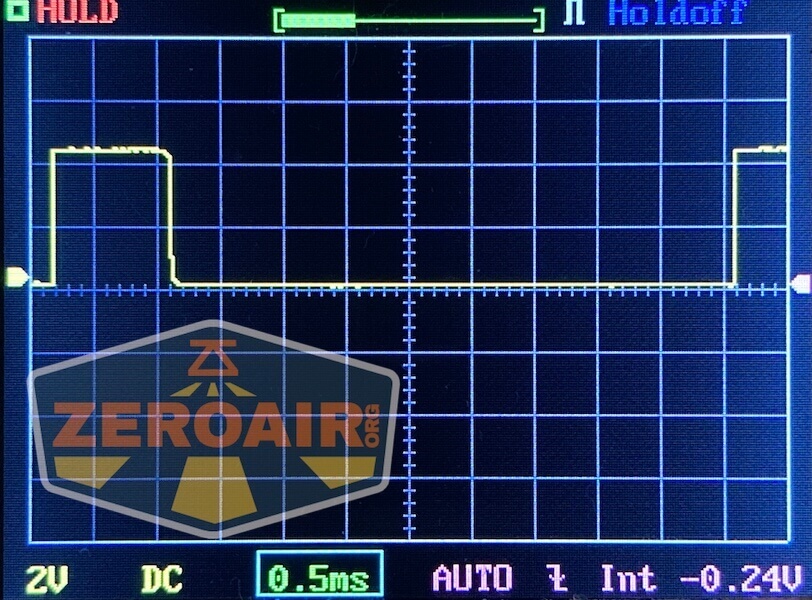
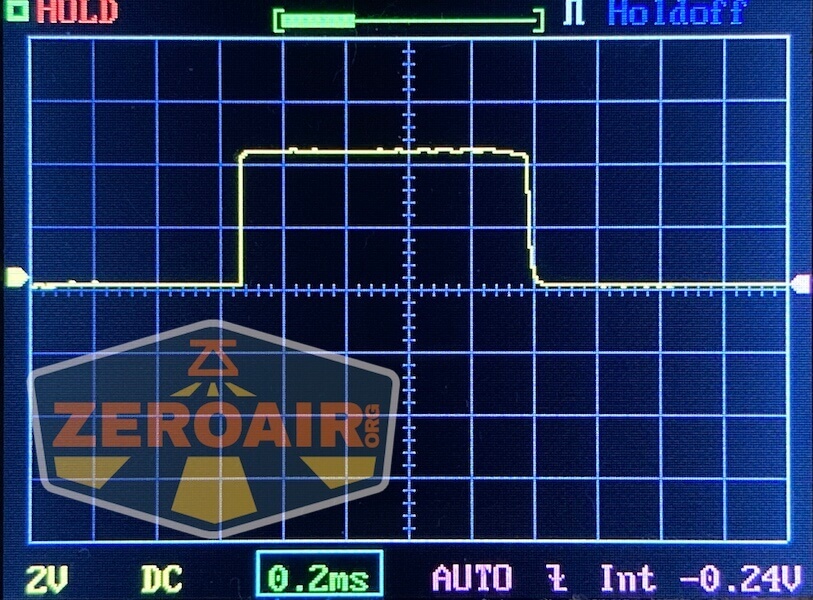
This is an h17f, so we already know it uses PWM. I don’t notice it while using the light though, so you probably won’t either.
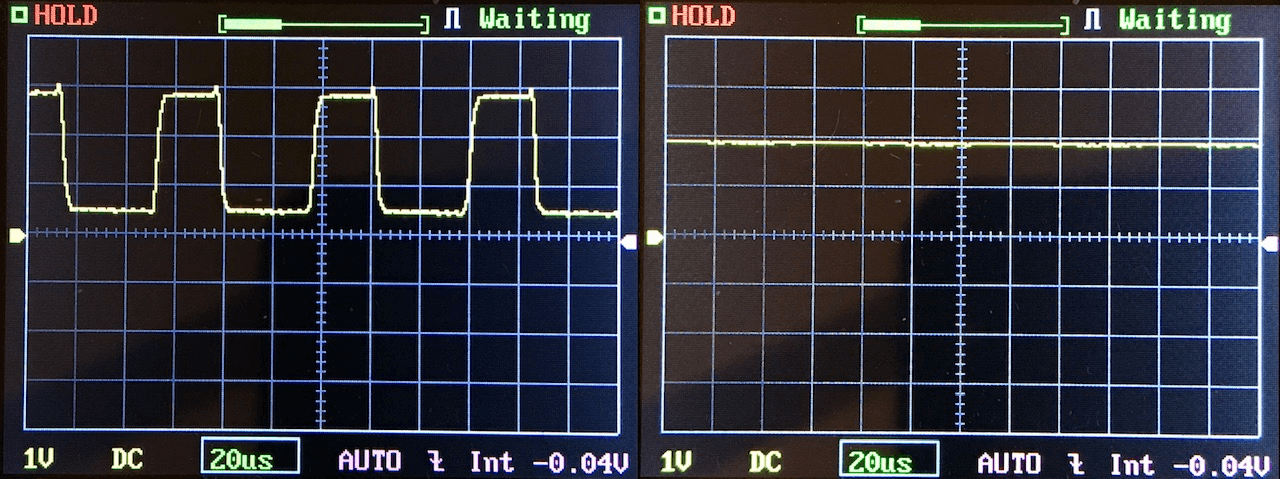
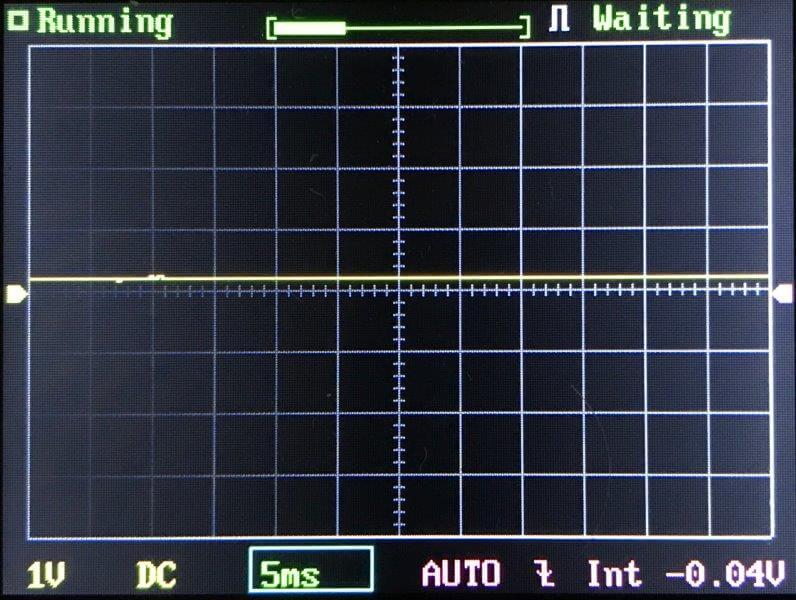
Here you can see a “baseline” – a chart with almost no light hitting the sensor.
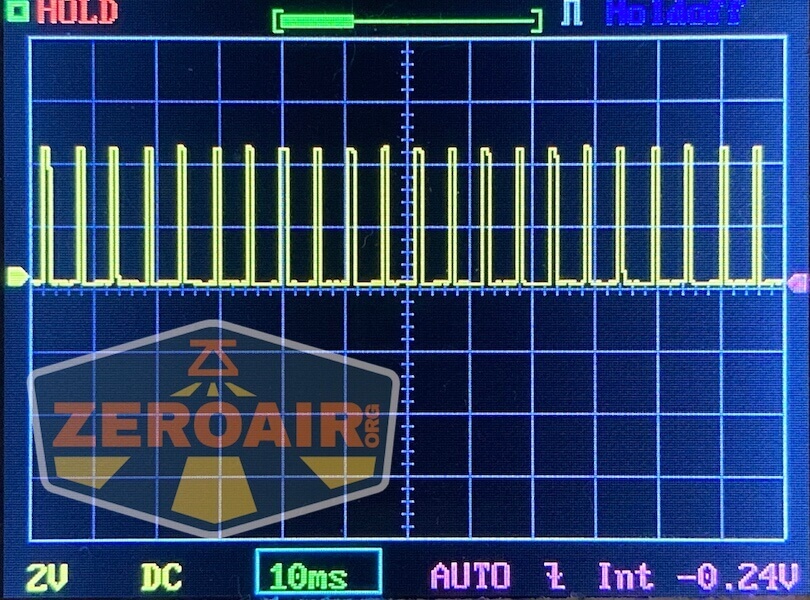
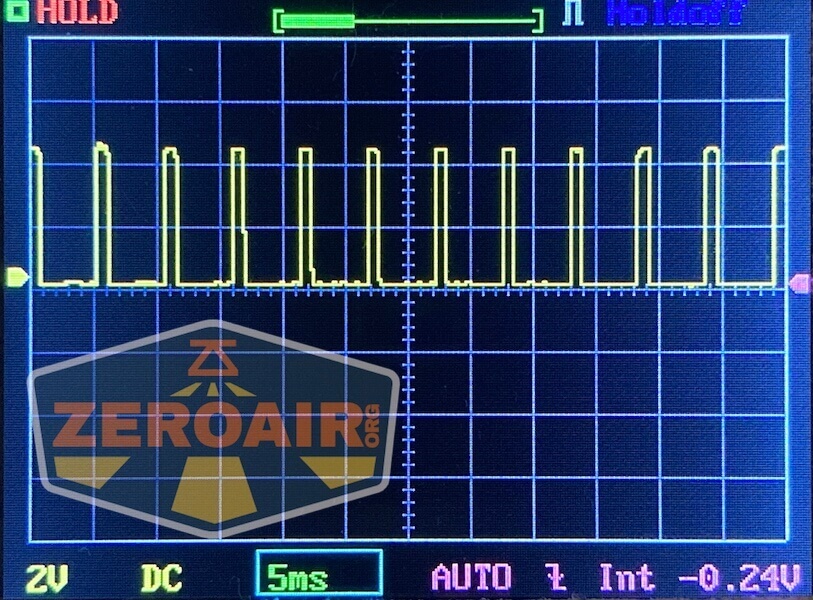
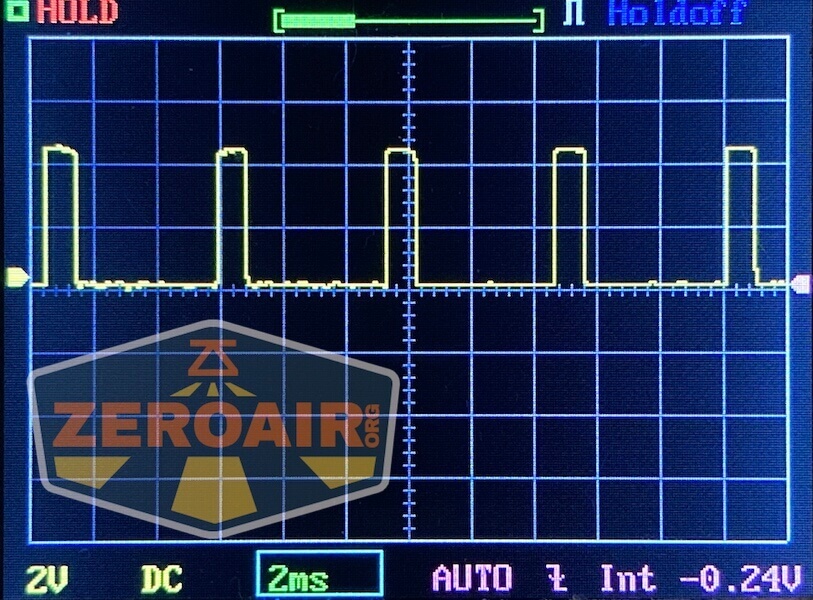
Then there’s the Ultrafire WF-602C flashlight, which has some of the worst PWM I’ve seen. It’s so bad that I used a post about it to explain PWM! Here are multiple timescales (10ms, 5ms, 2ms, 1ms, 0.5ms, 0.2ms) to make comparing this “worst” PWM light to the test light easier. That post also explains why I didn’t test the WF-602C at the usual 50us scale.
User Interface and Operation
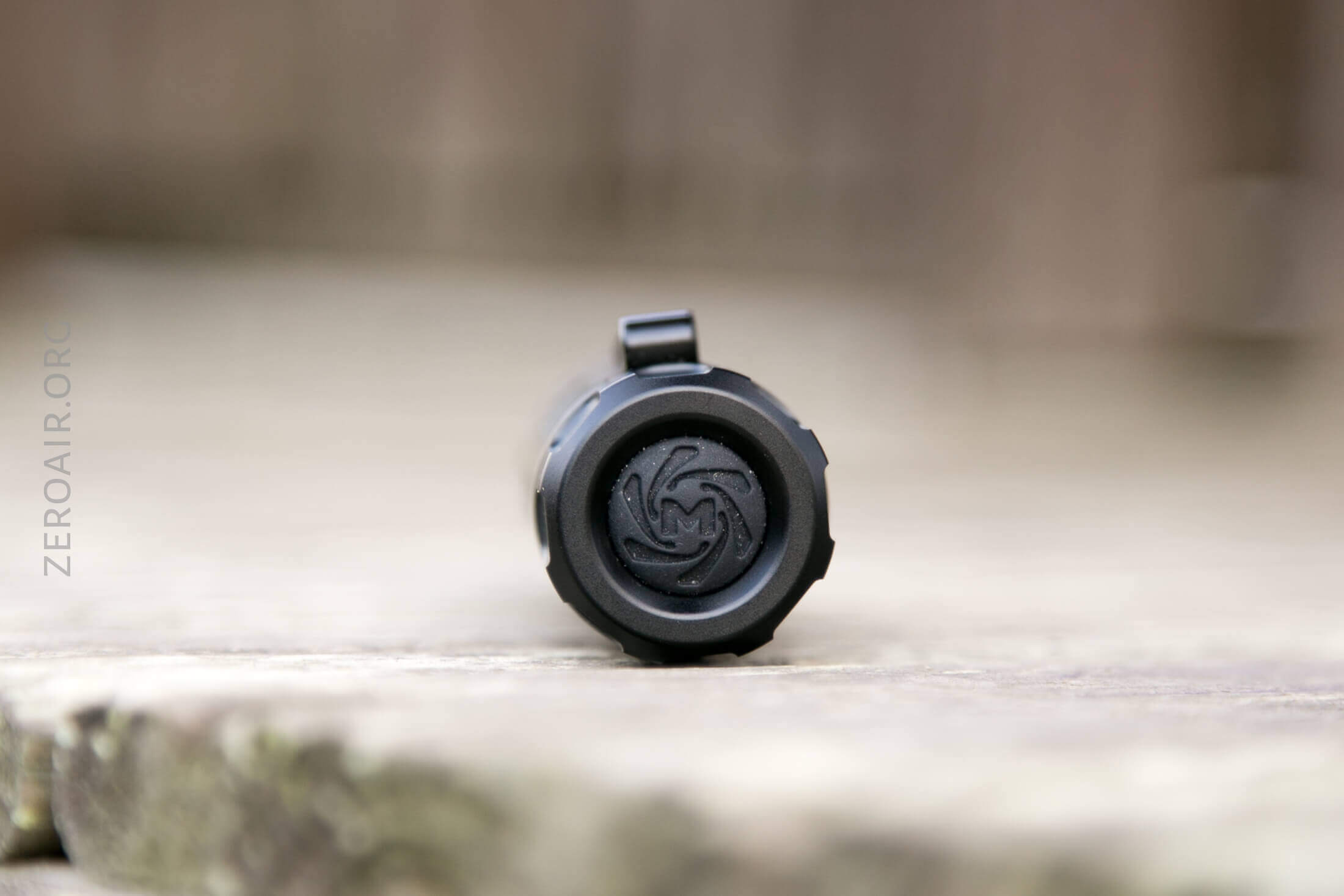
The Tactical Suppressor has a mechanical switch. In this case, it’s a forward clicky (as it should be) and it’s covered with a silicone boot with the Mechforce logo (which I love, for whatever reason – very well done).
Here’s a user interface table!
| State | Action | Result |
|---|---|---|
| Off | Click | High |
| Off | Press | Momentary High |
| Off | Press Click^ | High then Turbo |
| Off | Double Press^ | Strobe |
| On | Click | Off |
| On | Press | Nothing |
| Off | Press Press | High then Momentary Turbo |
^ The timing difference between Press Press and Double click is so subtle. It will absolutely take some practice to avoid Strobe.
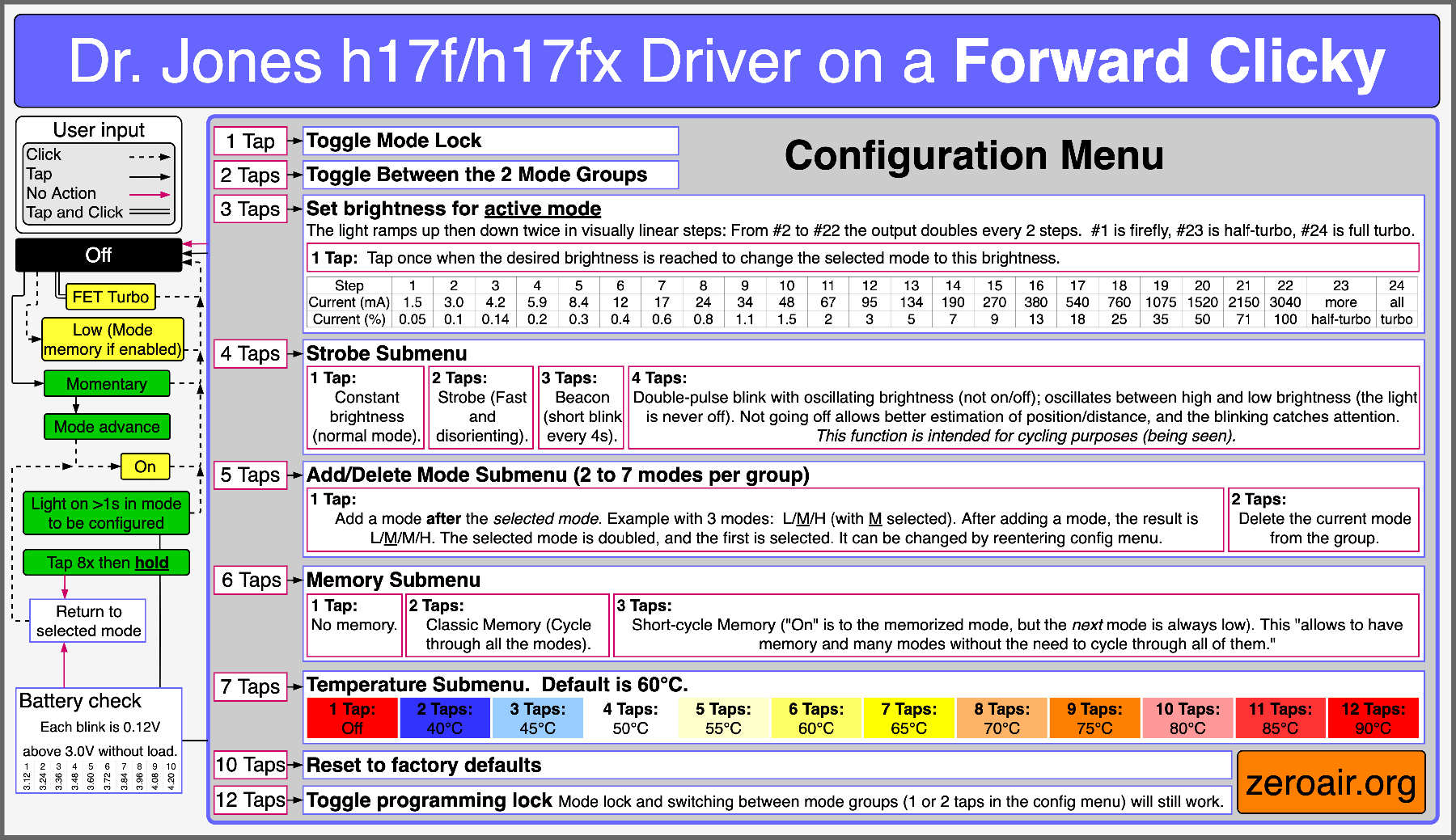
Here’s a flow chart I made for programming the H17f in the forward clicky format.
LED and Beam
The emitters in this triple are Nichia Natural White 219CT 5700K LEDs mounted on a copper PCB. The optic is a Carclo 10507 LED Optic.
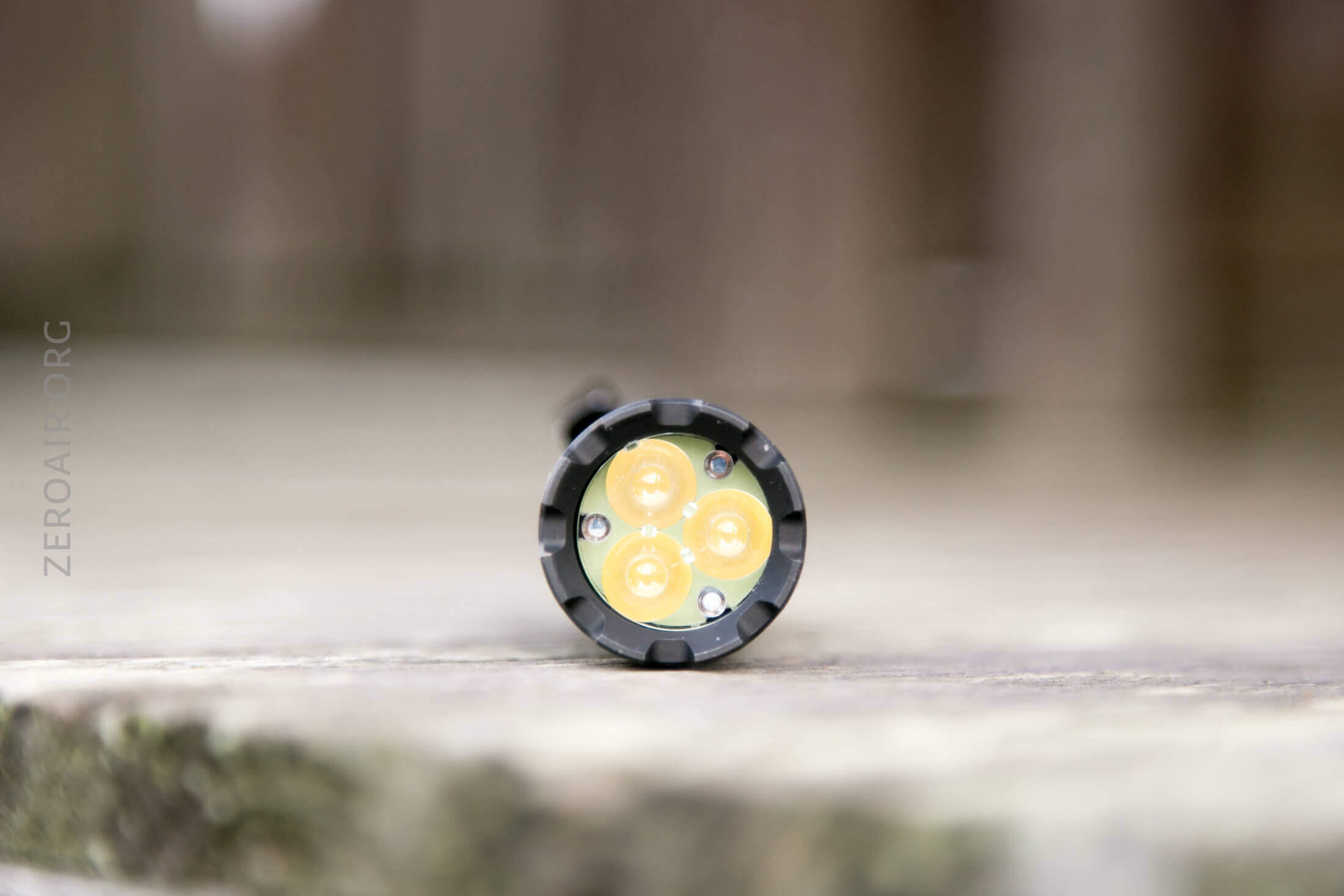
These beamshots always have the following settings: f8, ISO100, 0.3s shutter, and manual 5000K exposure. These photos are taken at floor level, and the beam hits the ceiling around 9 feet away.
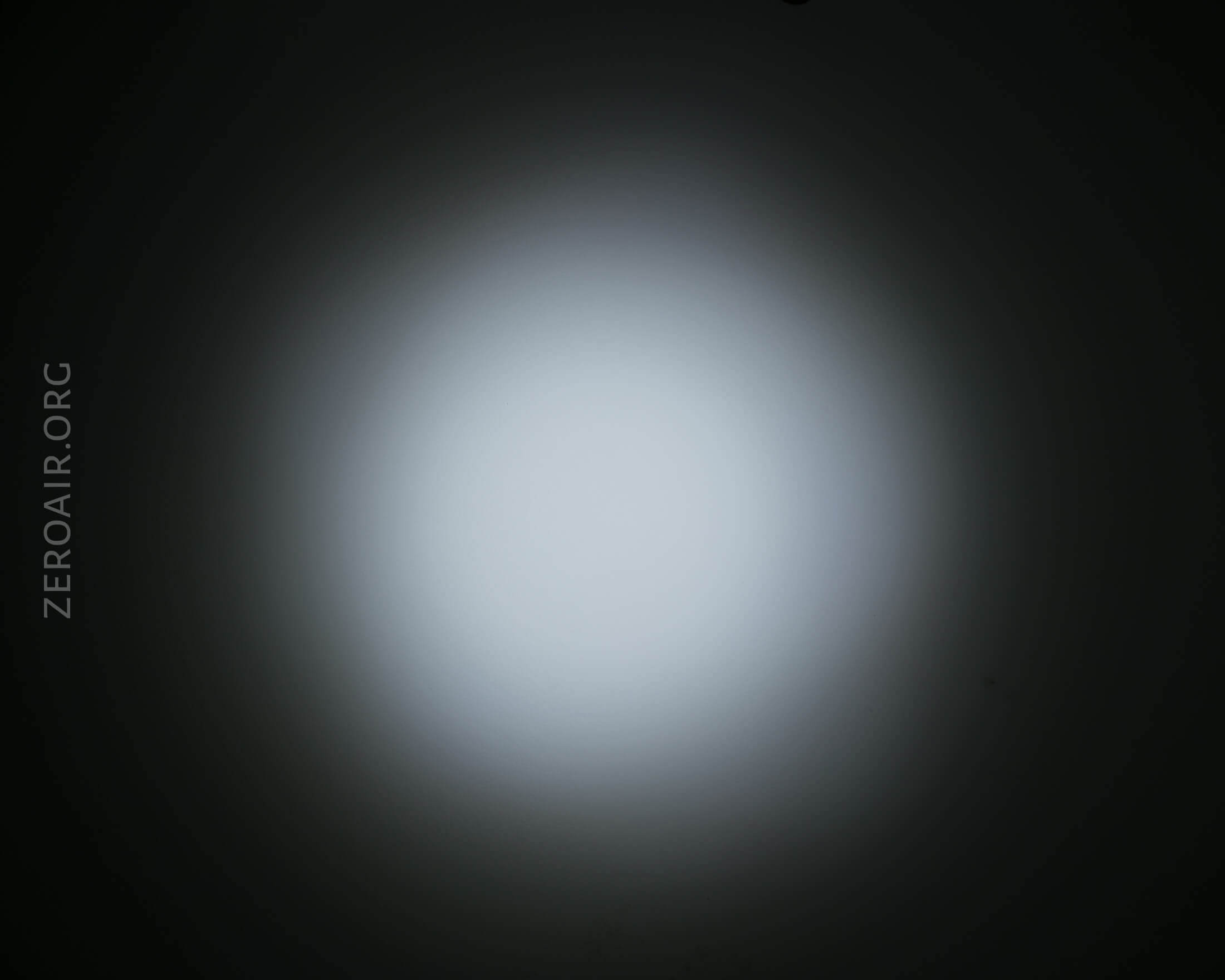
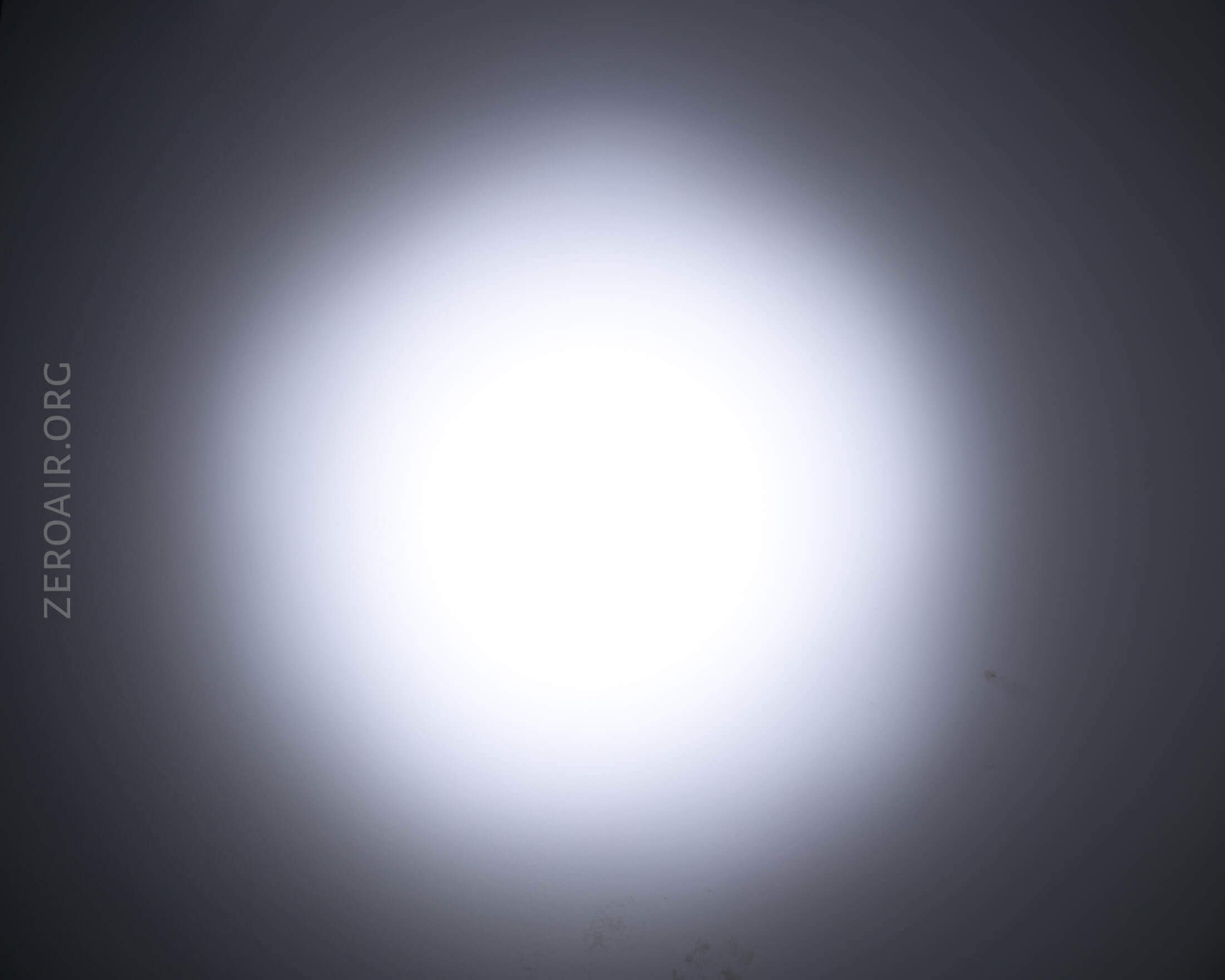
Tint vs BLF-348 (KillzoneFlashlights.com 219b version) (affiliate link)
The beam is nice and white – I consider the 219c to be the most “stark white” emitter I see very often.
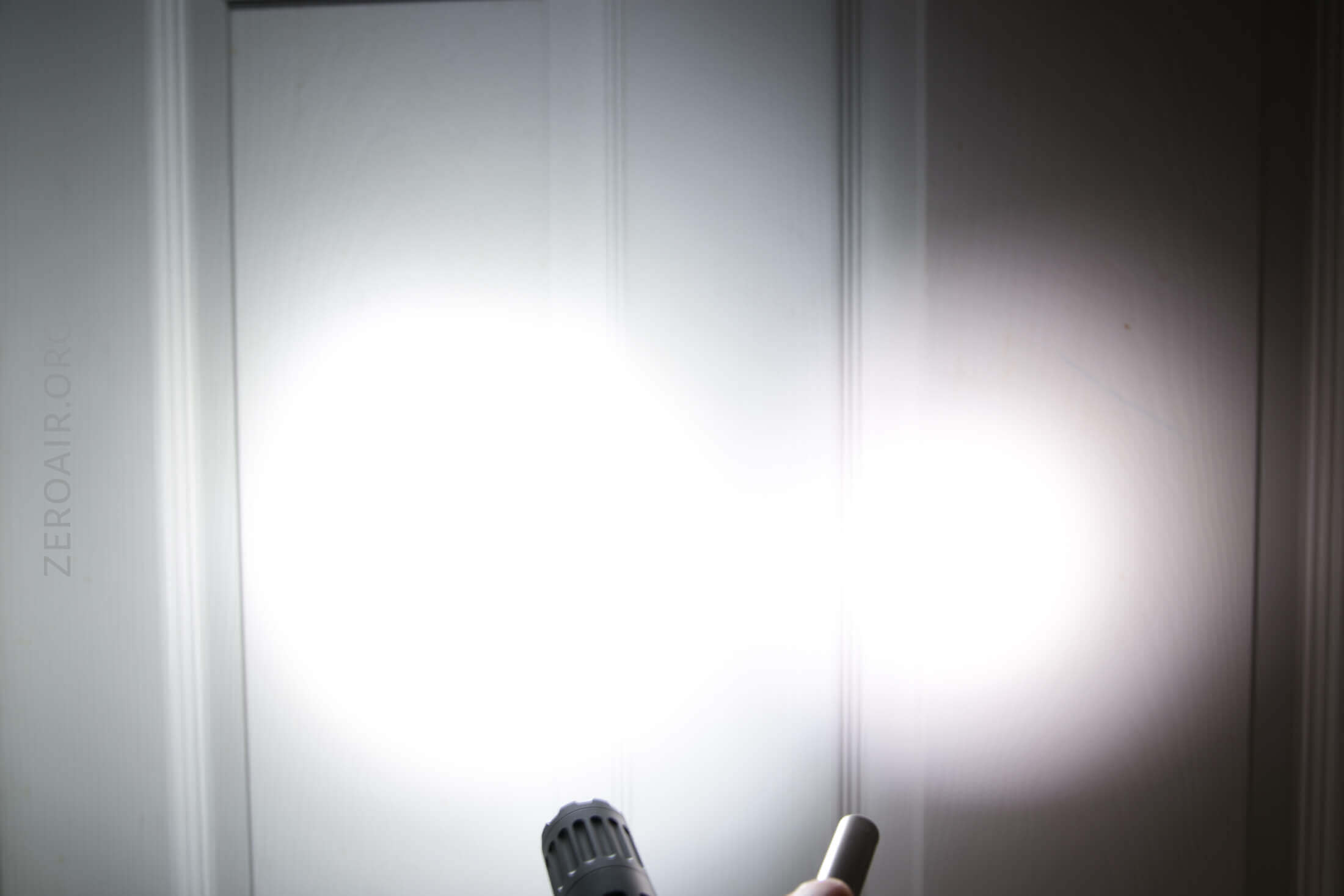
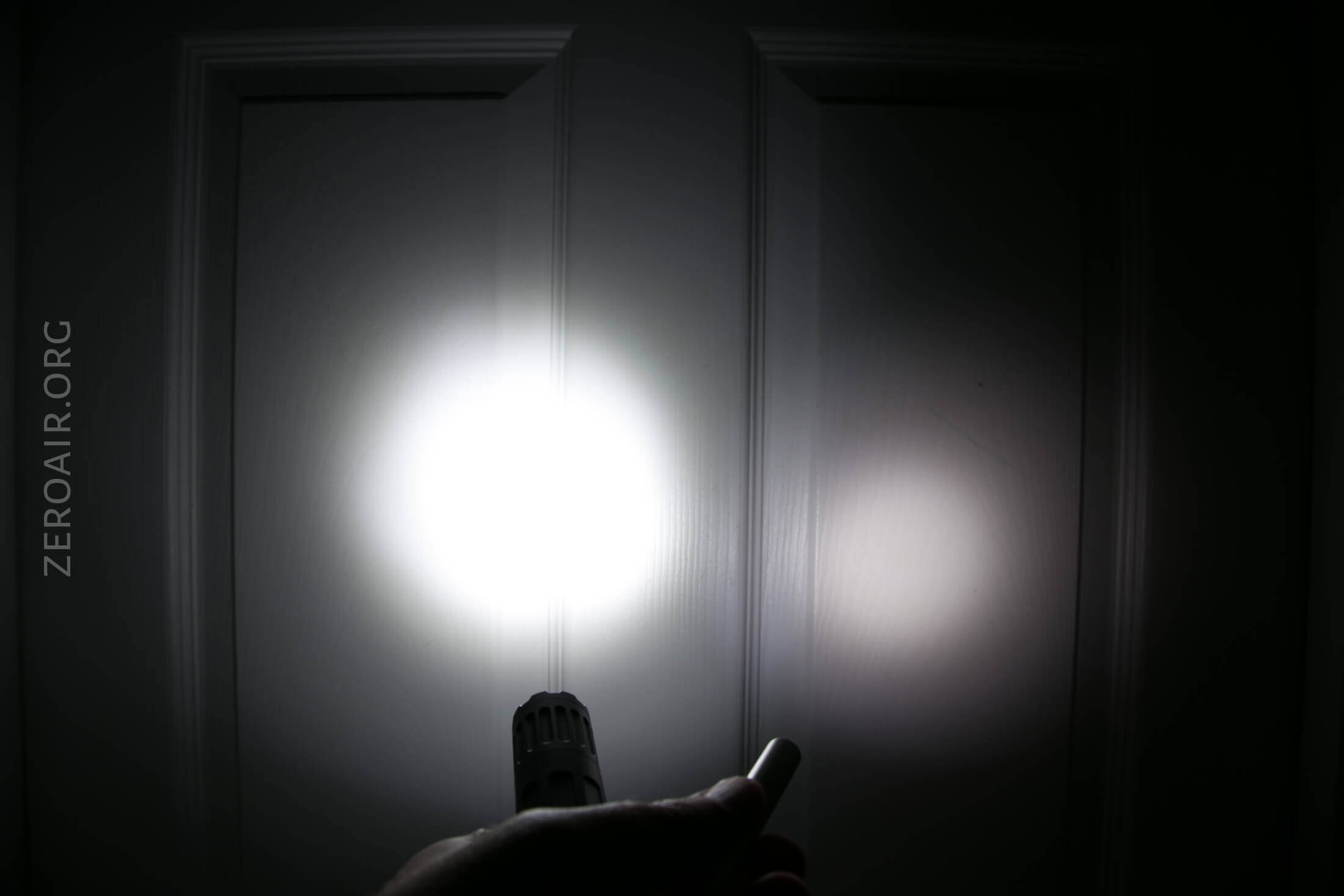
I compare everything to the Killzone 219b BLF-348 because it’s inexpensive and has the best tint!
Conclusion
What I like
- Well built
- Nice package that includes a cell
- Relatively low cost of entry for an H17F, and being made by this manufacturer
- Tail stands easily
- Light escapes when head standing.
What I don’t like
- Not possible to remove the crenelated bezel
- Clicky is a bit recessed for easy access with gloves, for example
- Stock programming on the Turbo is very specific – plan to reprogram
- Stock programming modes aren’t mentioned in the docs specifically, and I don’t know of a way to reflash to stock
Notes
- This light was provided by MechForce for review. I was not paid to write this review.
- This content originally appeared at zeroair.org. Please visit there for the best experience!
- Use my amazon.com referral link if you’re willing to help support making more reviews like this one!
- Please support me on Patreon! I deeply appreciate your support!
Discover more from ZeroAir Reviews
Subscribe to get the latest posts sent to your email.
Could you please write which temperature has the torch after 20 minutes of turbo, 20 minutes of high and 20 minutes of mid if the torch is not cooled ?
Only the Turbo version has the temperature control with ful termal control or also the Lite version has it ?
Thanks
oh my god thanks for the review,got everything i want to know,thanks
Great! Thanks for reading!
This is a rough copy of the Inforce 6V and 6VX in different material, led combos.
I can certainly see the similarities in the body!