
Thrunite Joe Robinet H01 Headlamp Review
Not too long ago, Thrunite dropped the Thrunite Joe Robinet H01 headlamp – aka JR H01. This is a 16340 headlamp with an indicating e-switch. And most importantly, it’s orange!
Official Specs and Features
Here’s a link to the Thrunite Joe Robinet H01 headlamp product page.
Versions
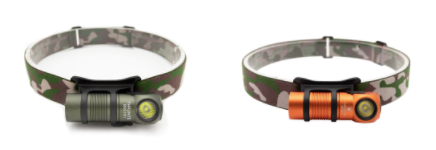
There are two versions of the Thrunite H01 headlamp. “BSS H01 Green” and “JR H01 Orange” (seen here). They seem to differ only in body color.
Price
Both versions are available now for $29.99.
Short Review
This is a pretty neat little headlamp, with a lot that’s right. Orange body is right. User interface is right. The cell is right. Unfortunately there are negatives too – Cree XP-G3 is wrong. There’s PWM on all middle modes. But at $30, it’s still a reasonable value.
Long Review
The Big Table
| Thrunite Joe Robinet H01 Headlamp | |
|---|---|
| Emitter: | Cree XP-G3 (CW) |
| Price in USD at publication time: | $29.99 |
| Cell: | 1×16340 |
| Turbo Runtime Graph | High Runtime Graph |
| LVP? | Switch and emitter warning |
| Switch Type: | E-Switch |
| Quiescent Current (mA): | |
| On-Board Charging? | Yes |
| Charge Port Type: | micro-USB |
| Charge Graph | |
| Power off Charge Port | One mode (with or without cell) |
| Claimed Lumens (lm) | 687 |
| Measured Lumens (at 30s) | 601 (87.5% of claim)^ |
| Candela per Lumen | 4 |
| Claimed Throw (m) | 91 |
| Candela (Calculated) in cd (at 30s) | 288lux @ 3.081m = 2734cd |
| Throw (Calculated) (m) | 104.6 (114.9% of claim)^ |
| All my Thrunite reviews! | |
^ Measurement disclaimer: Testing flashlights is my hobby. I use hobbyist-level equipment for testing, including some I made myself. Try not to get buried in the details of manufacturer specifications versus measurements recorded here; A certain amount of difference (say, 10 or 15%) is perfectly reasonable.
What’s Included
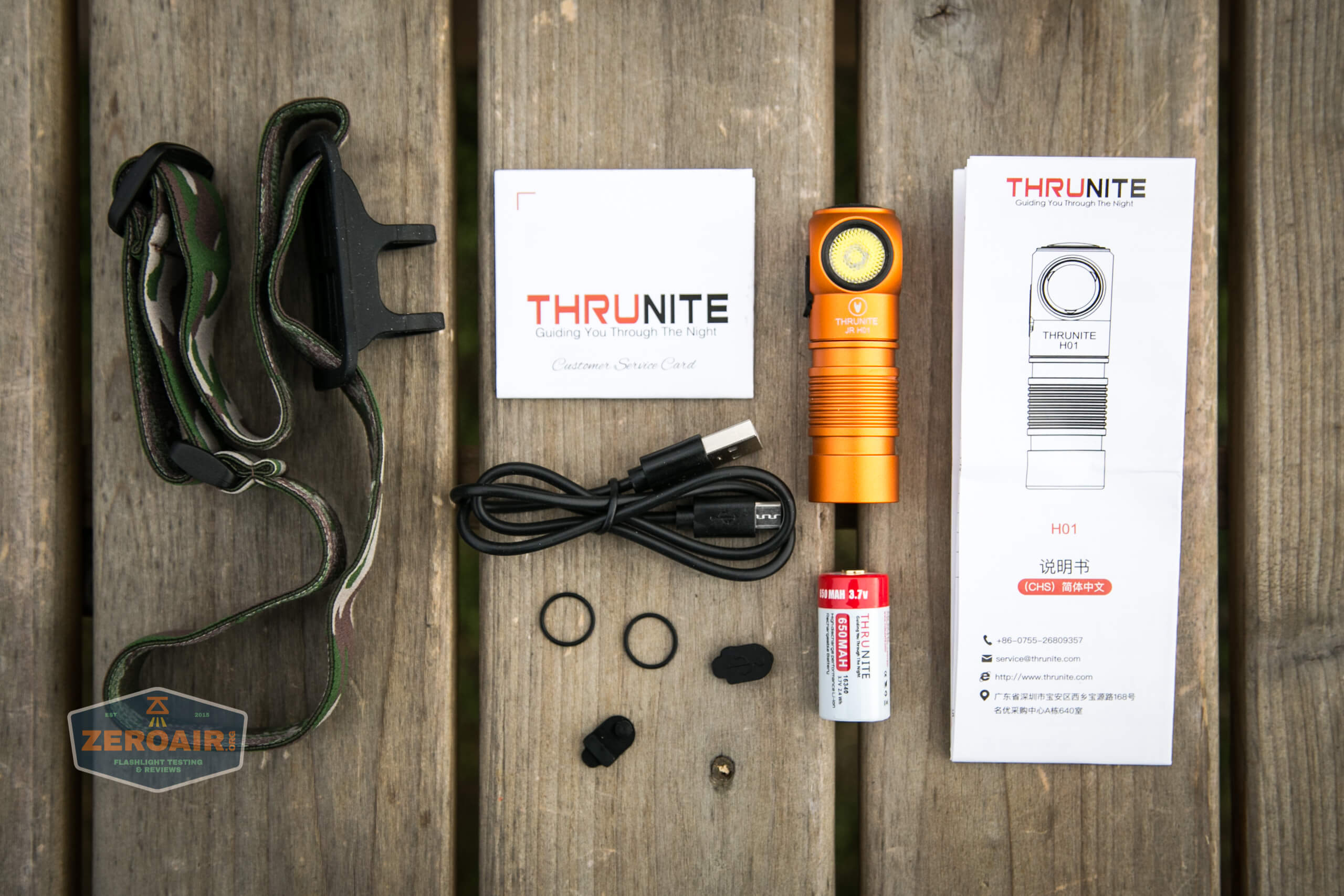
- Thrunite Joe Robinet H01 Headlamp
- Thrunite 650mAh 16340
- Charge cable (USB to micro-USB)
- Spare o-rings (2)
- Spare charge port cover (2)
- Headband
- Manual and papers
Package and Manual
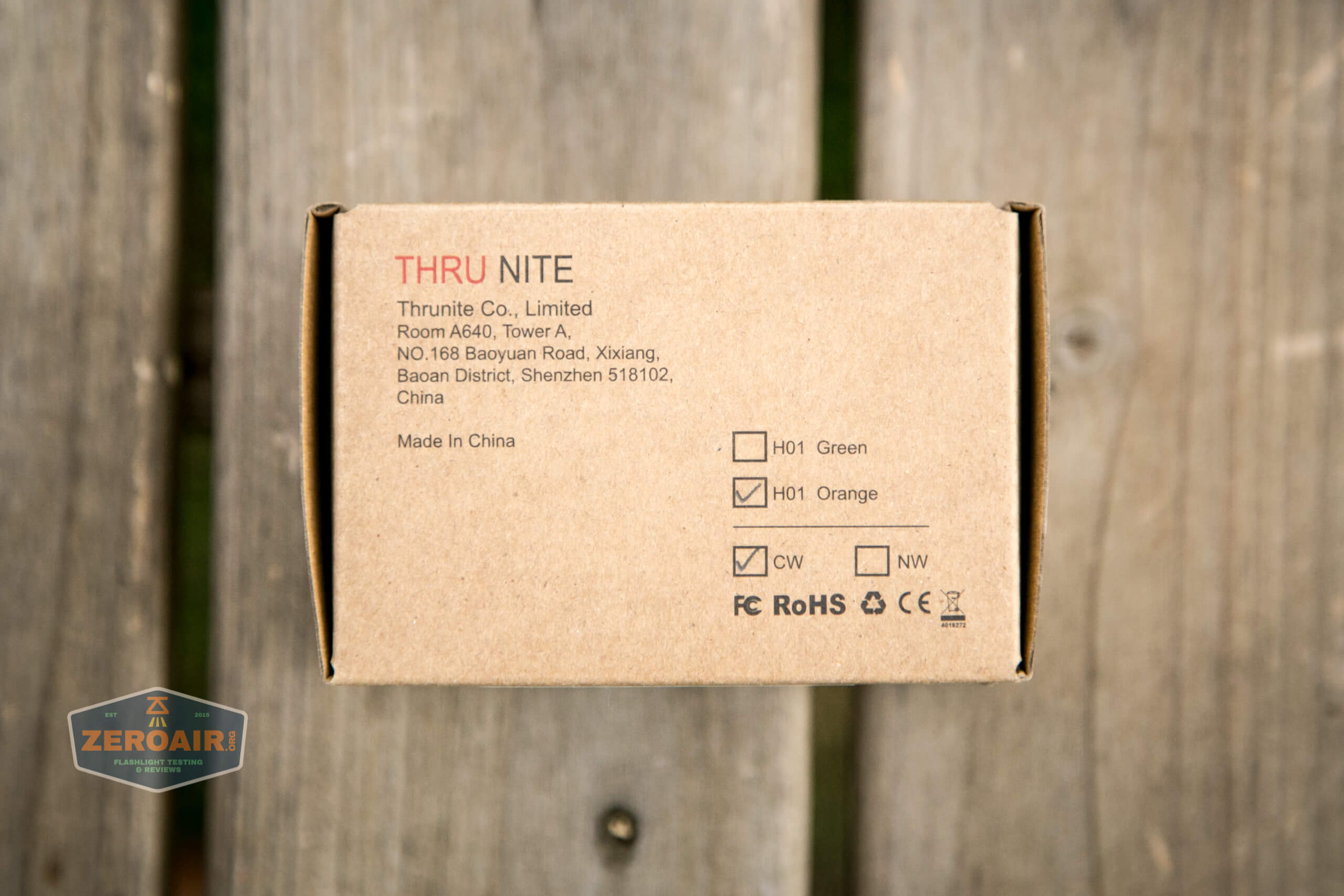
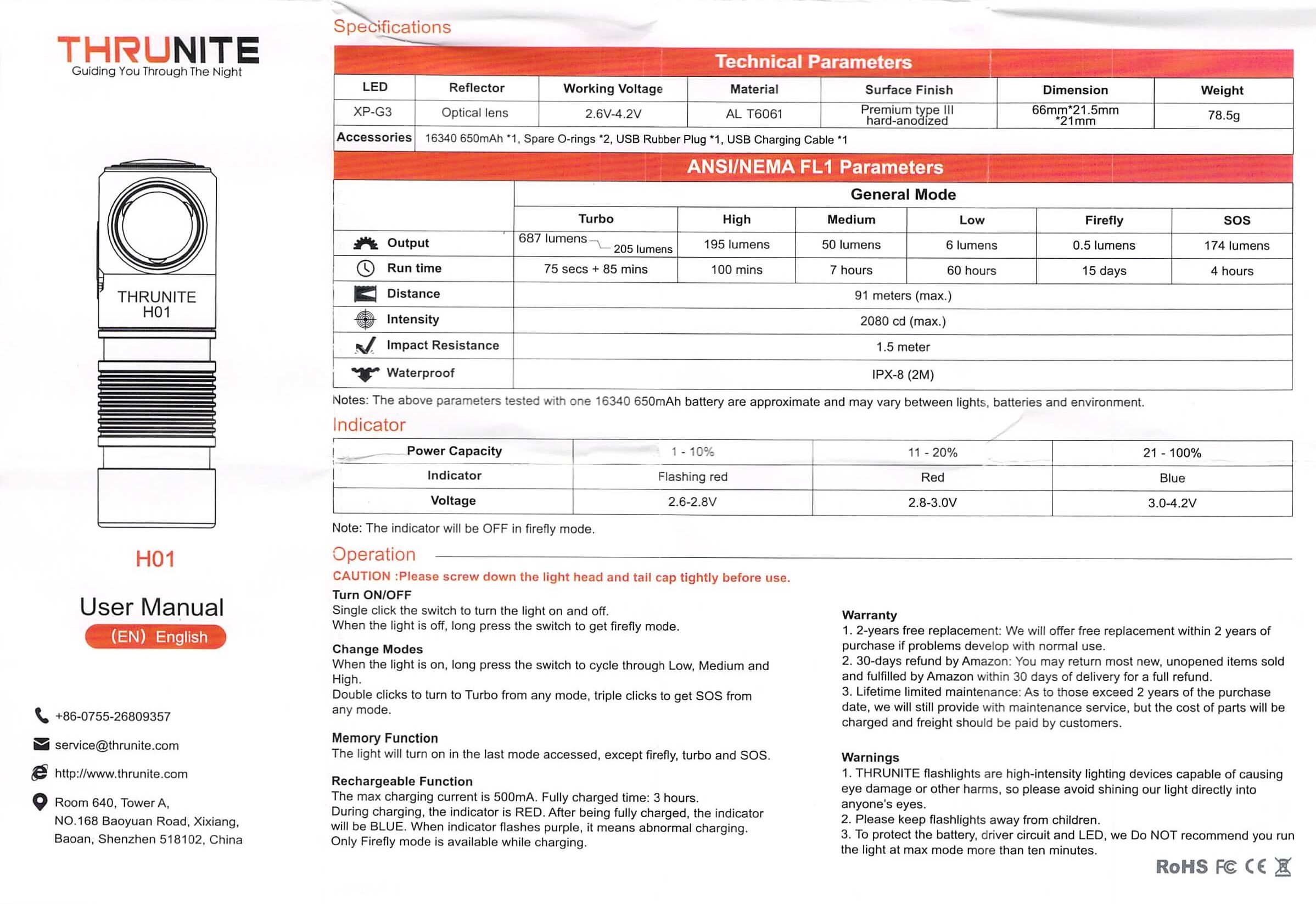
Build Quality and Disassembly
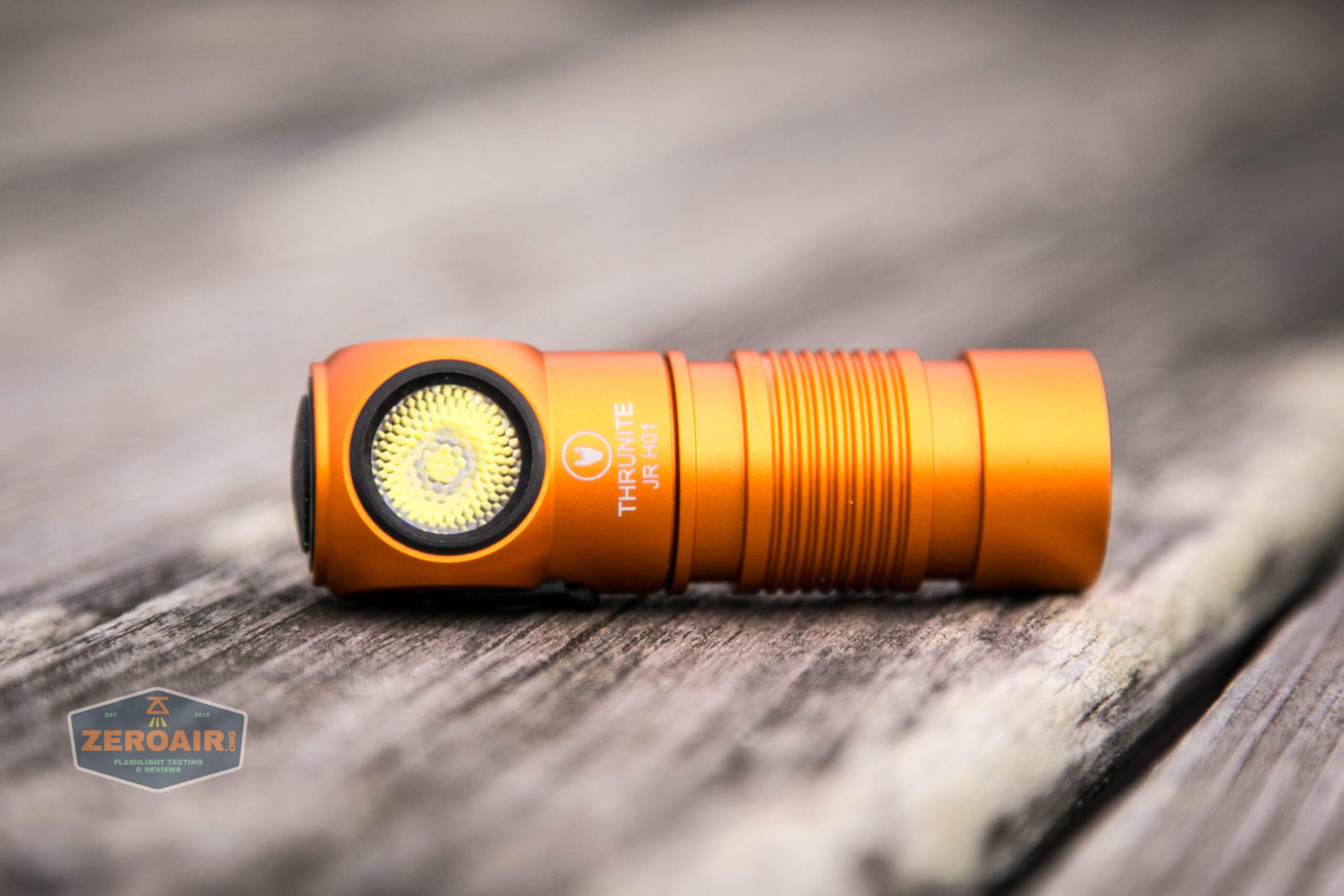
First of all, this light is orange, so massive positive there. Yes, I like orange, and yeah because it’s orange I’ll overlook a lot of things…
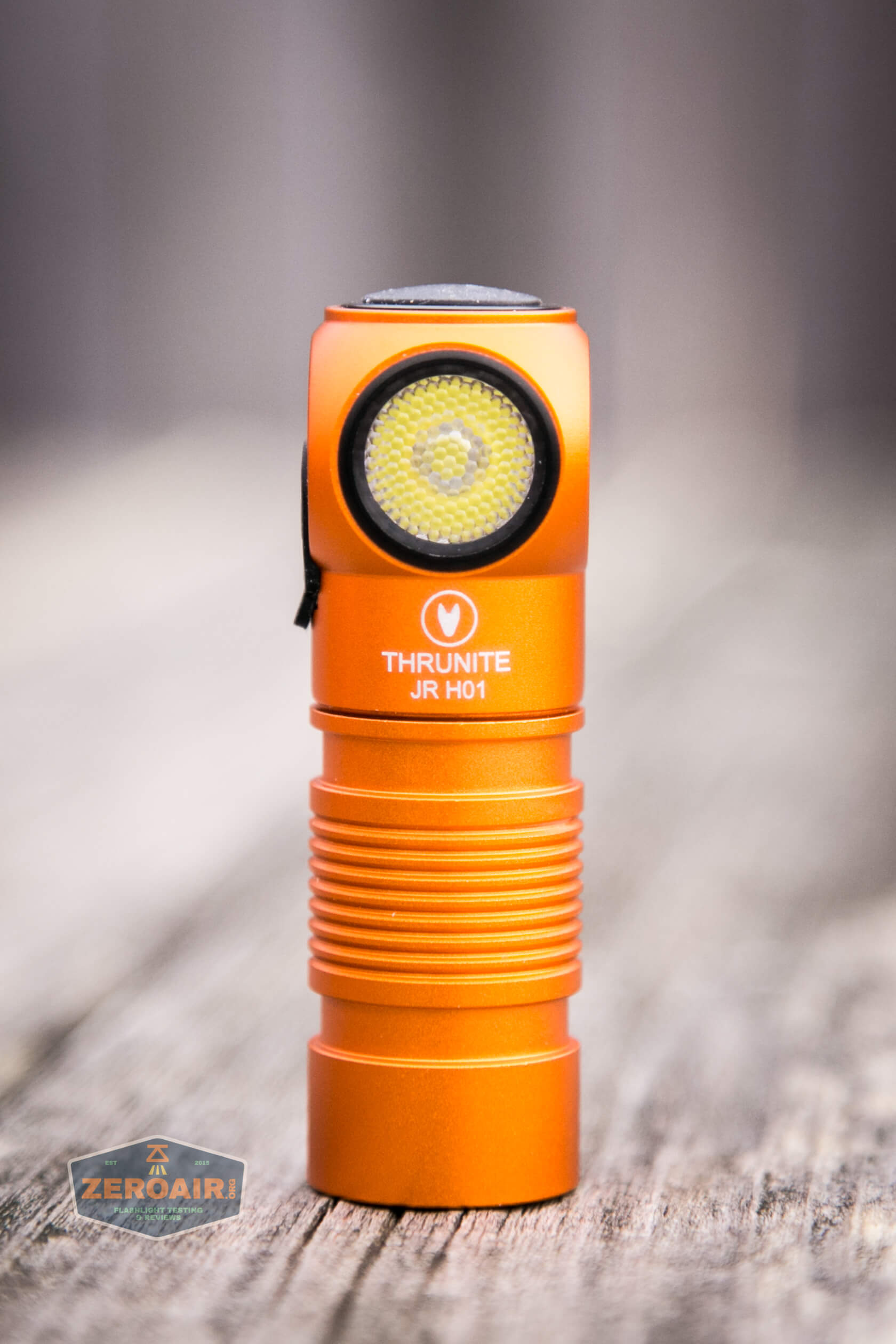
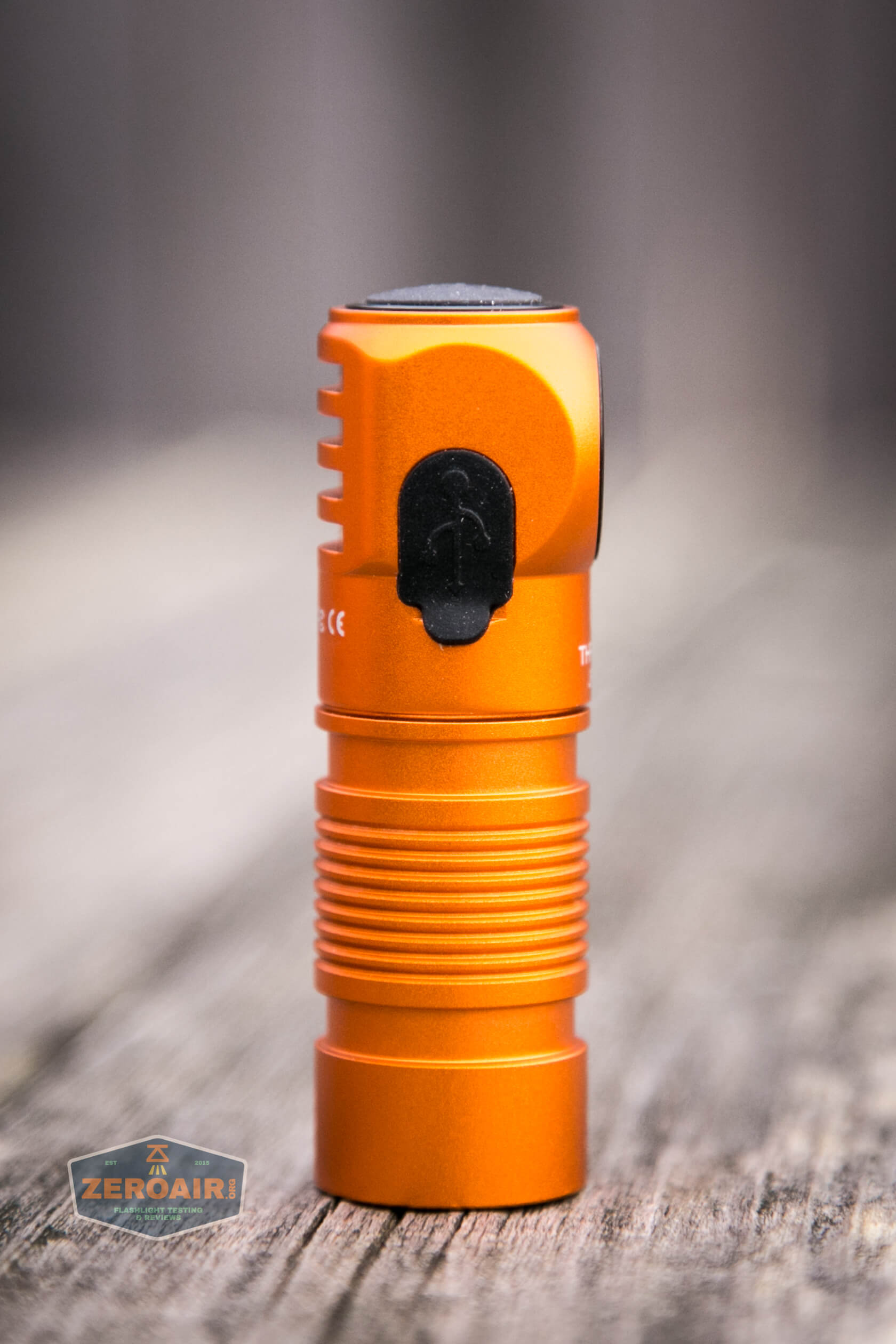
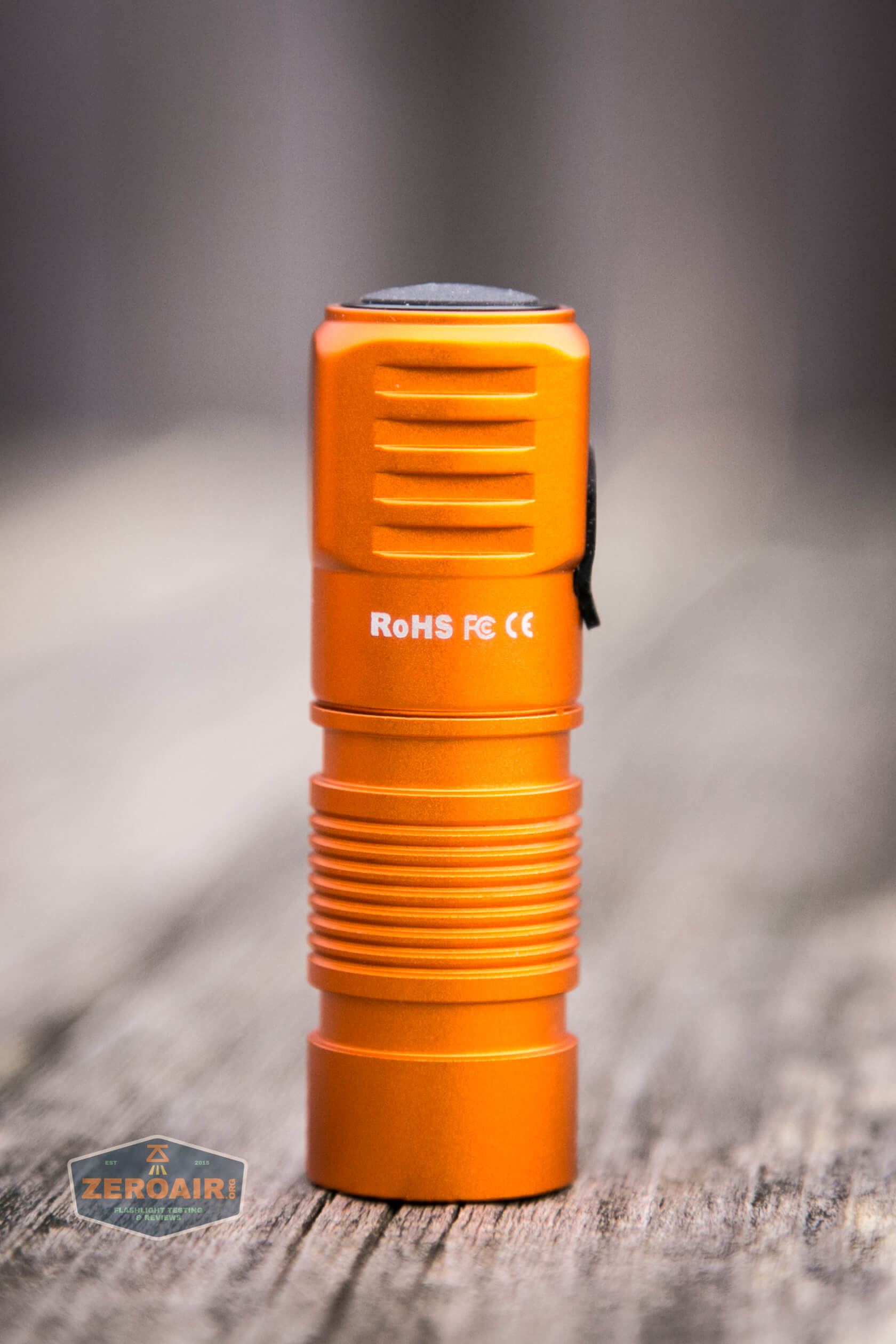
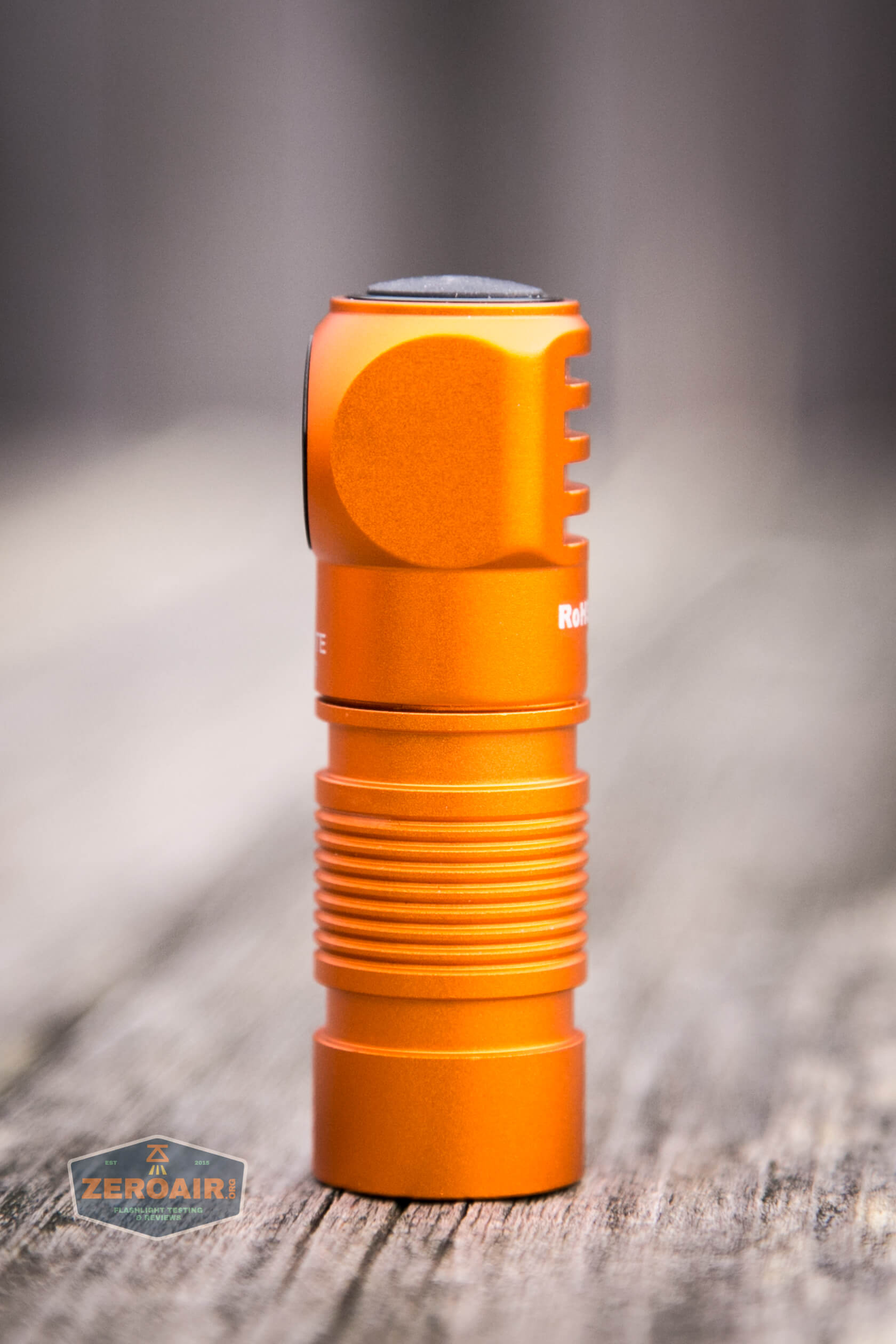
It’s nearly the “right orange” and it’s close enough… There are a few things you might notice less here, but more later – this light isn’t the smallest 16340 headlamp on the market. That’s a bit of a negative.
Another thing is that the optic doesn’t have a large opening. This won’t matter as long as the beam profile suits you (photos of that later). Also note that the bezel around this optic is pressed in, so changing the emitter from this Cree XP-G3 is going to be difficult.
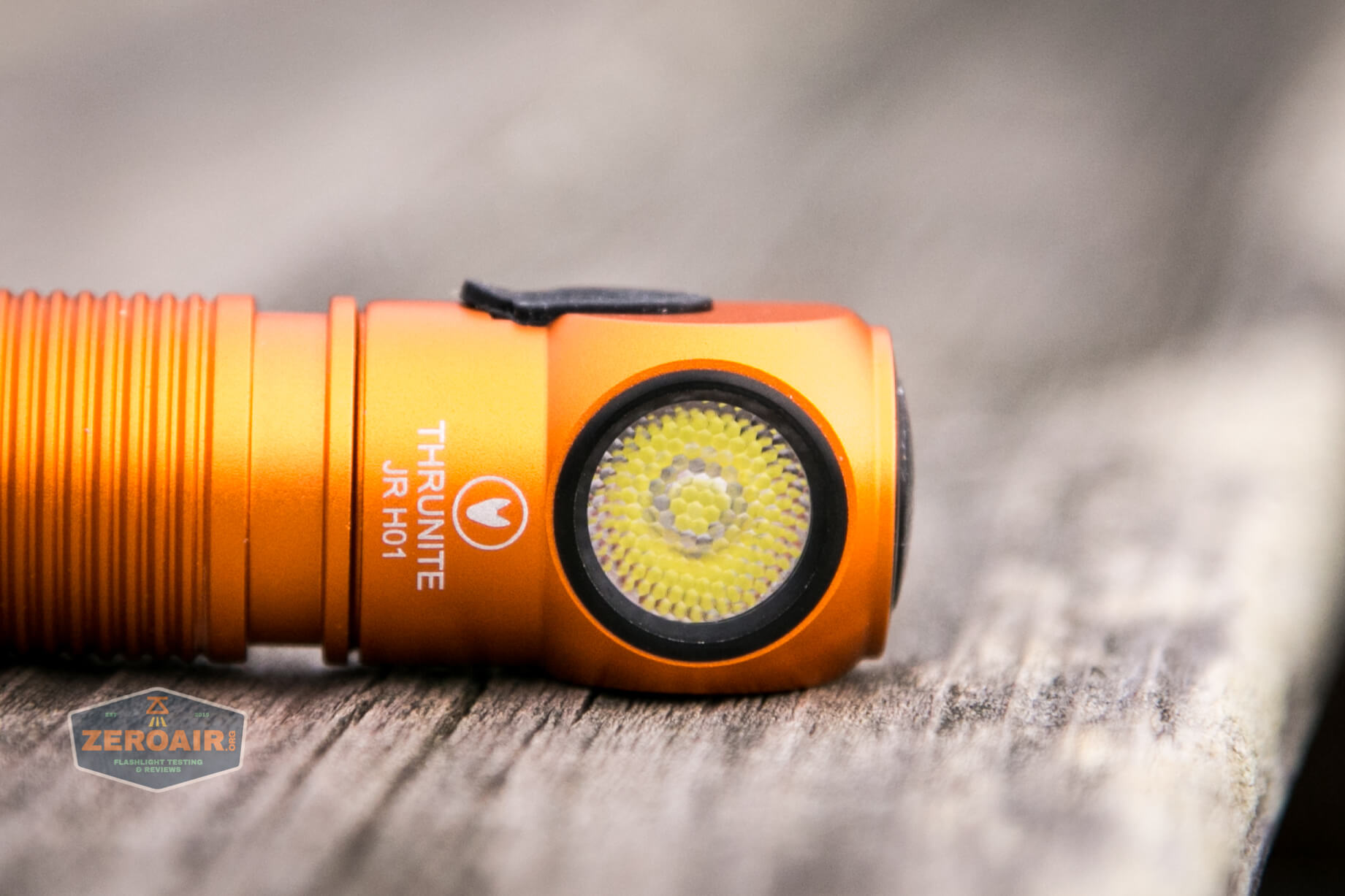
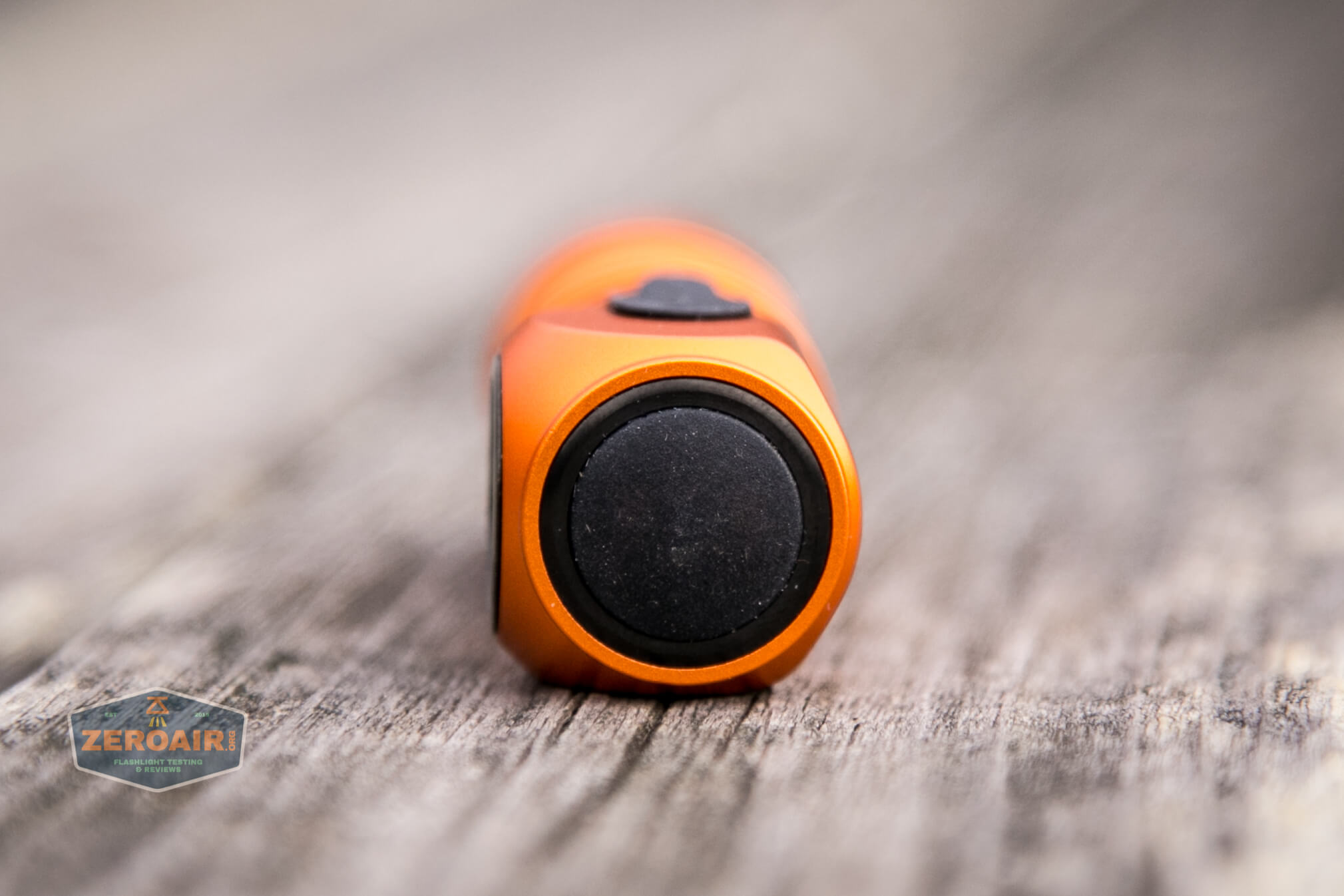
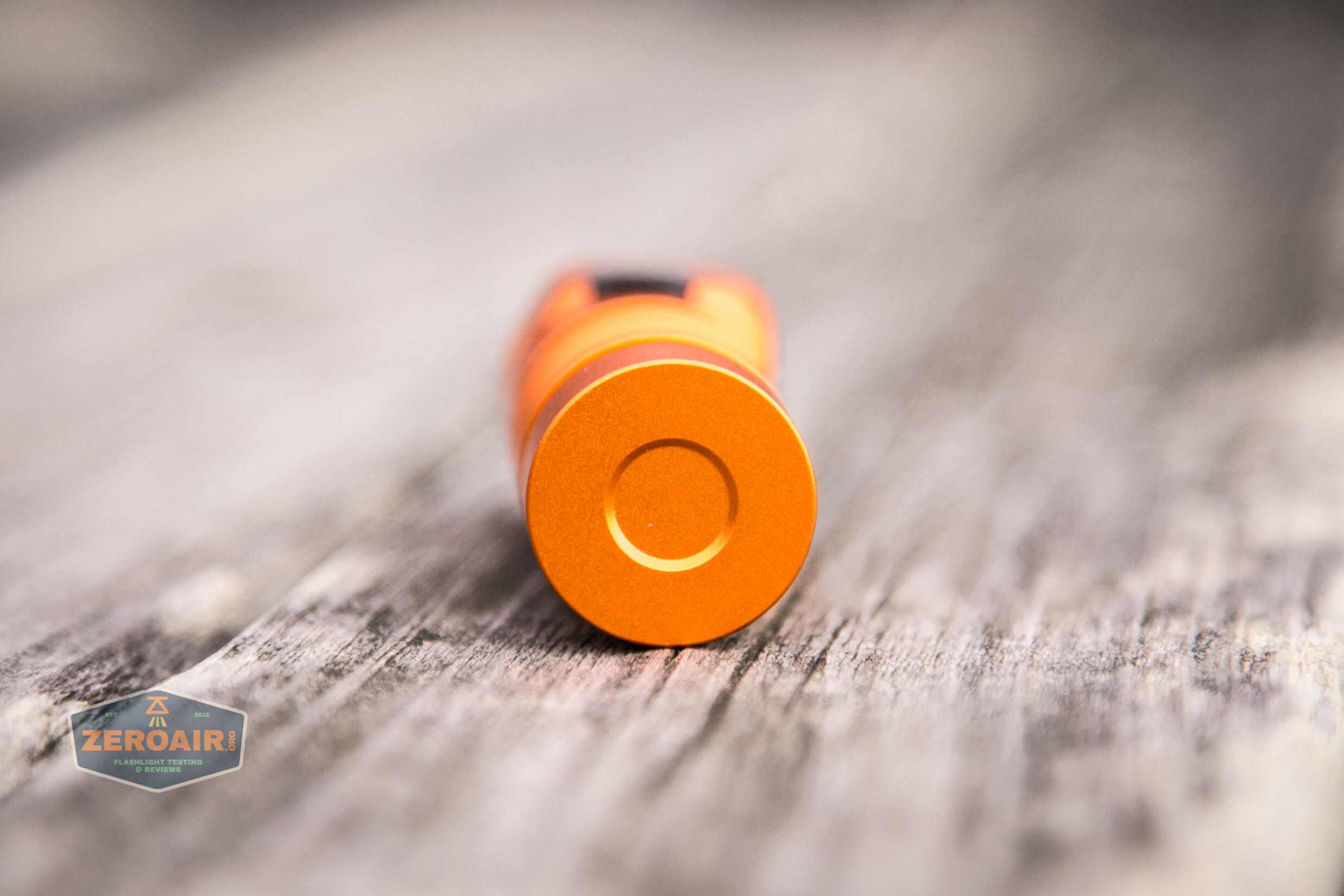
There are some cooling fins on the back of the head.
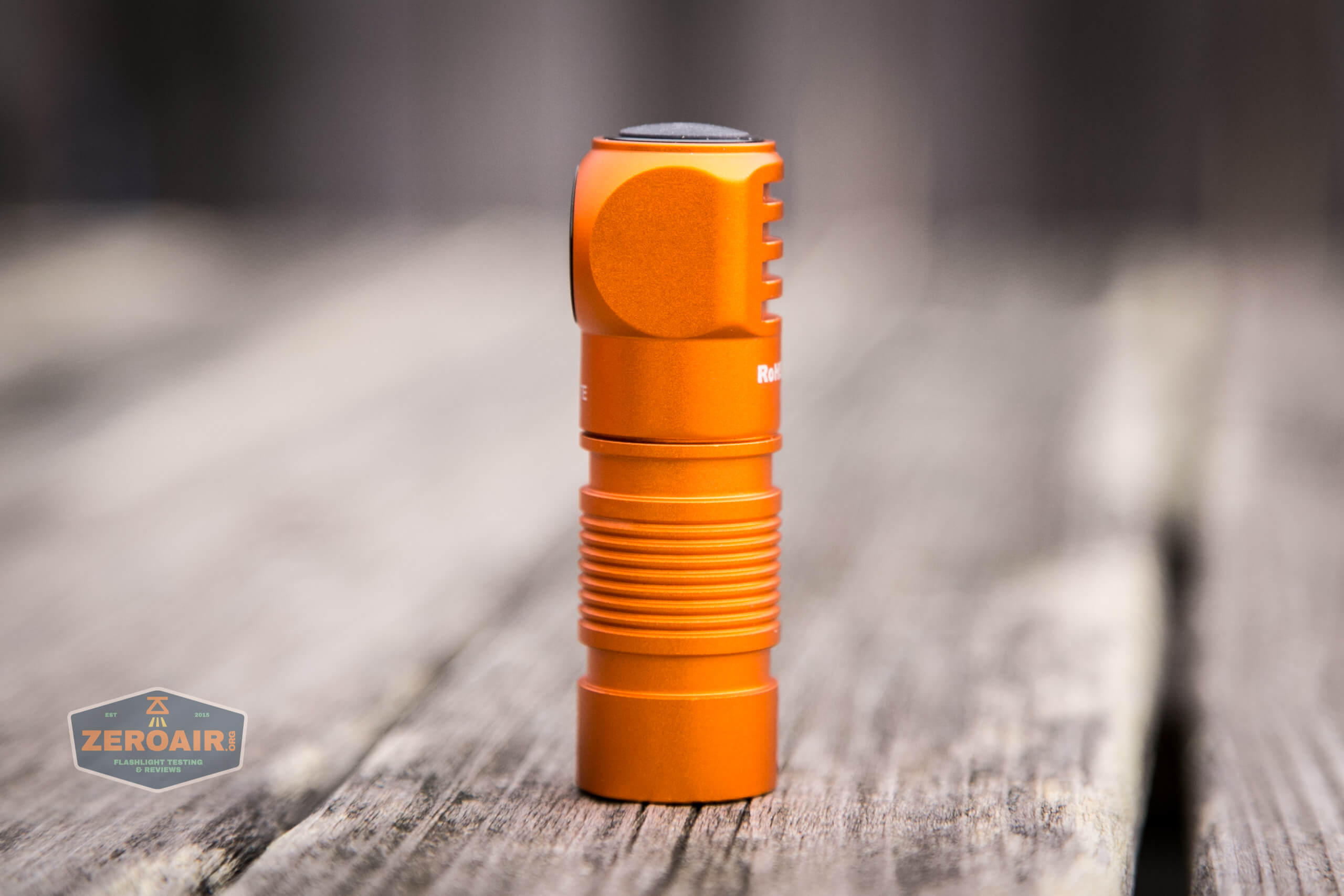
Only the head comes off the H01. This reveals anodized threads, which are square-cut. The threads are nice and smooth.
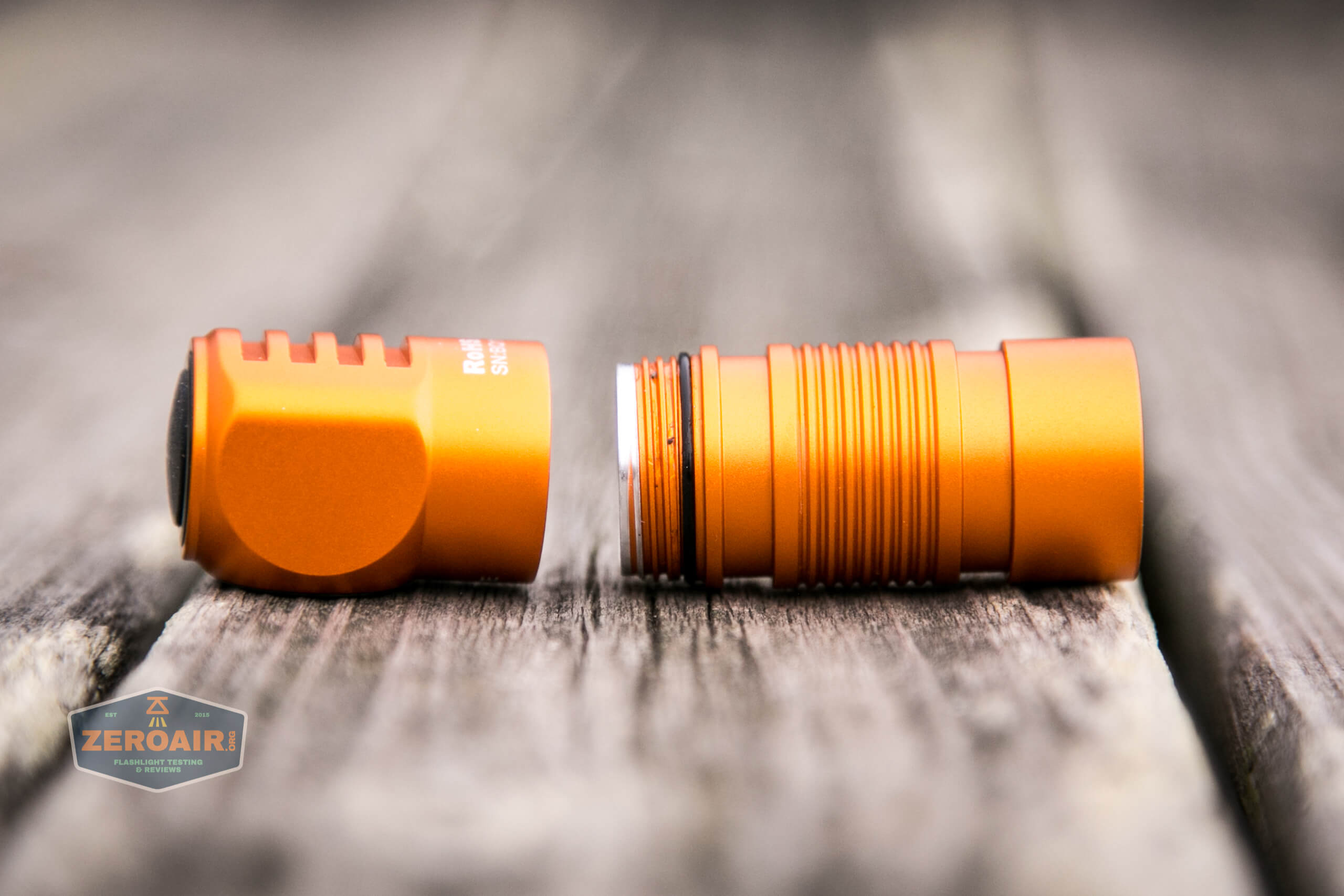
Inside you can see a spring, which looks to be removable – probably allowing removal of the tailcap magnet.
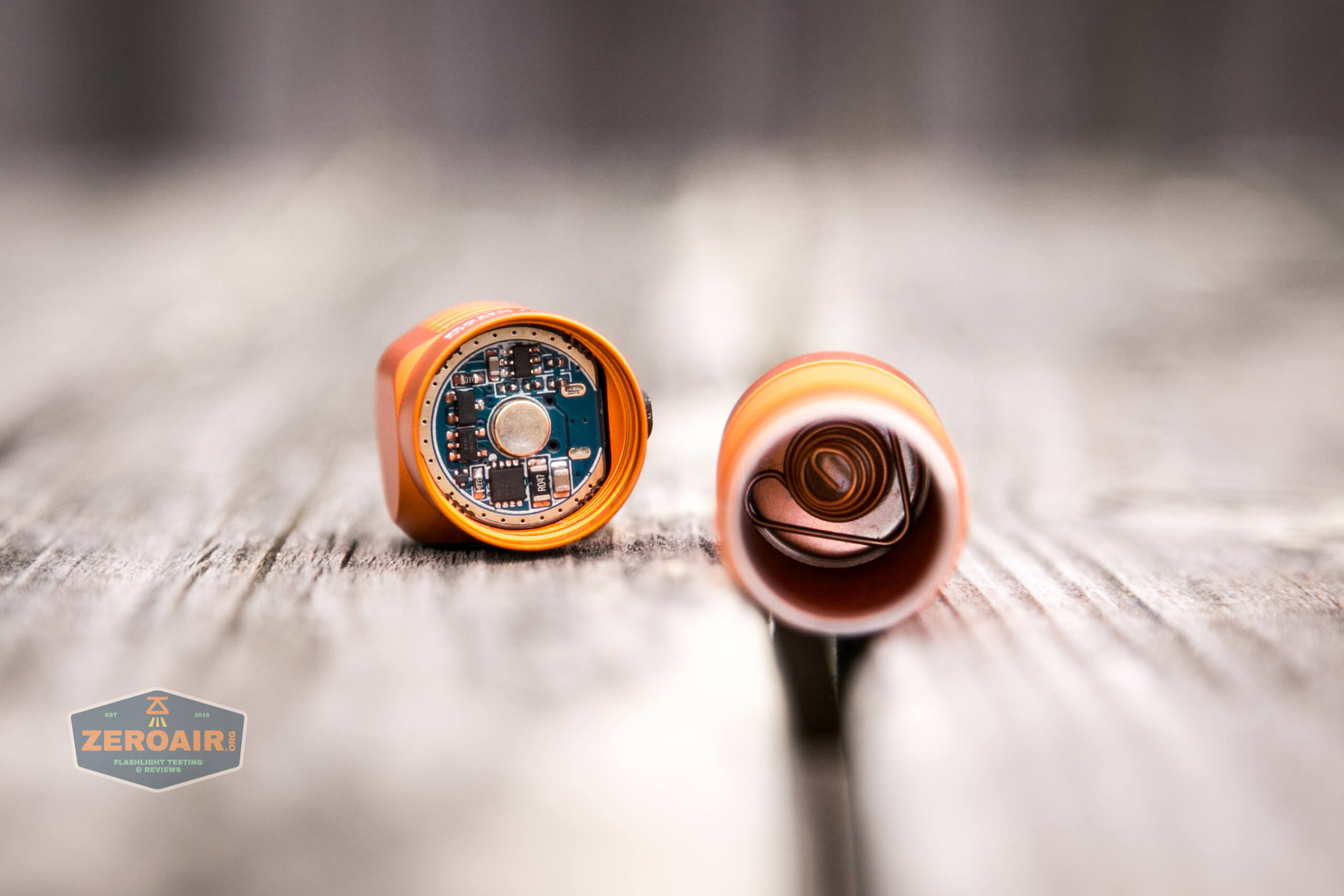
And the head has only a brass button, and no spring.
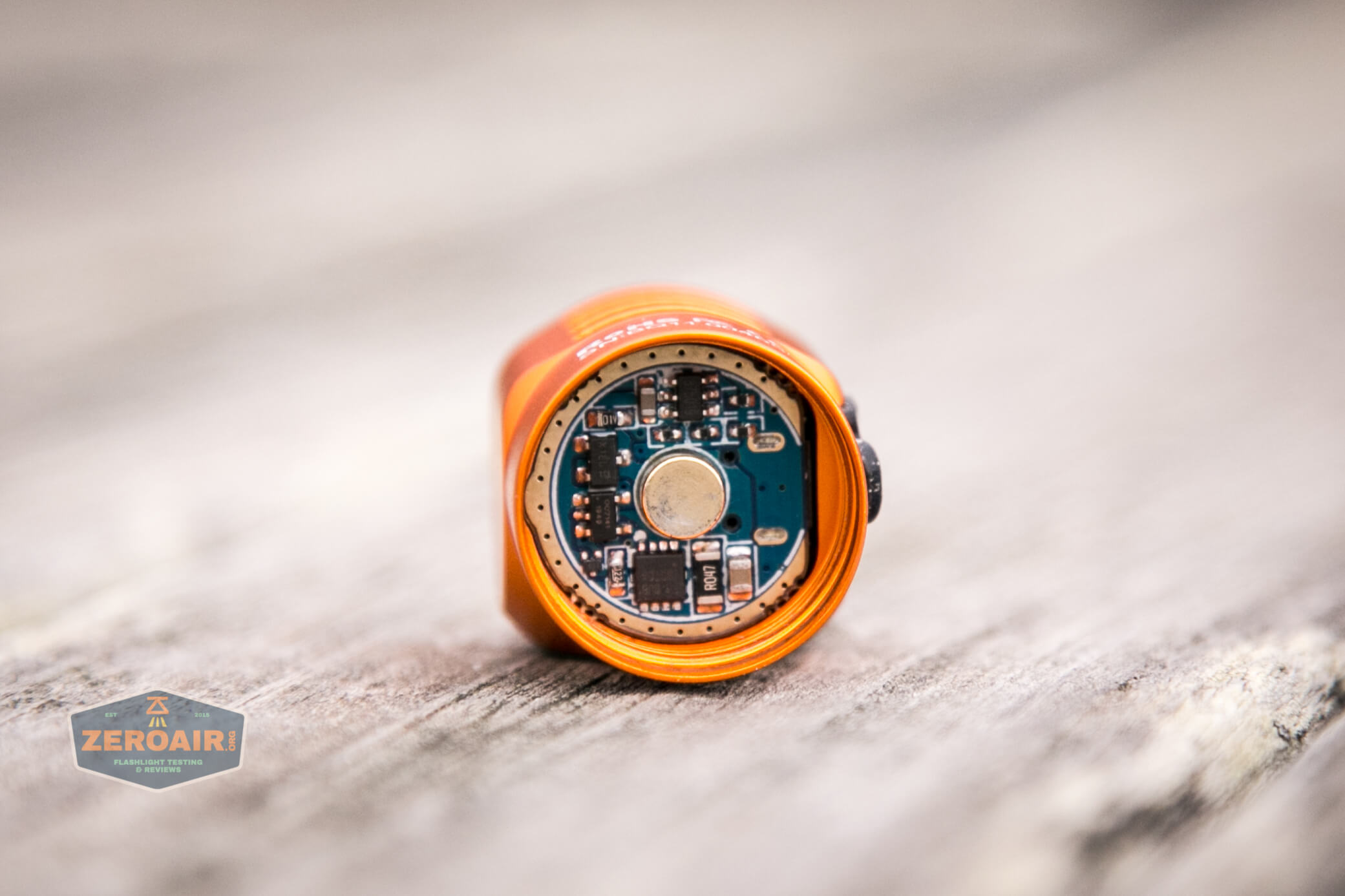
Look at ‘er standing there all regal like.
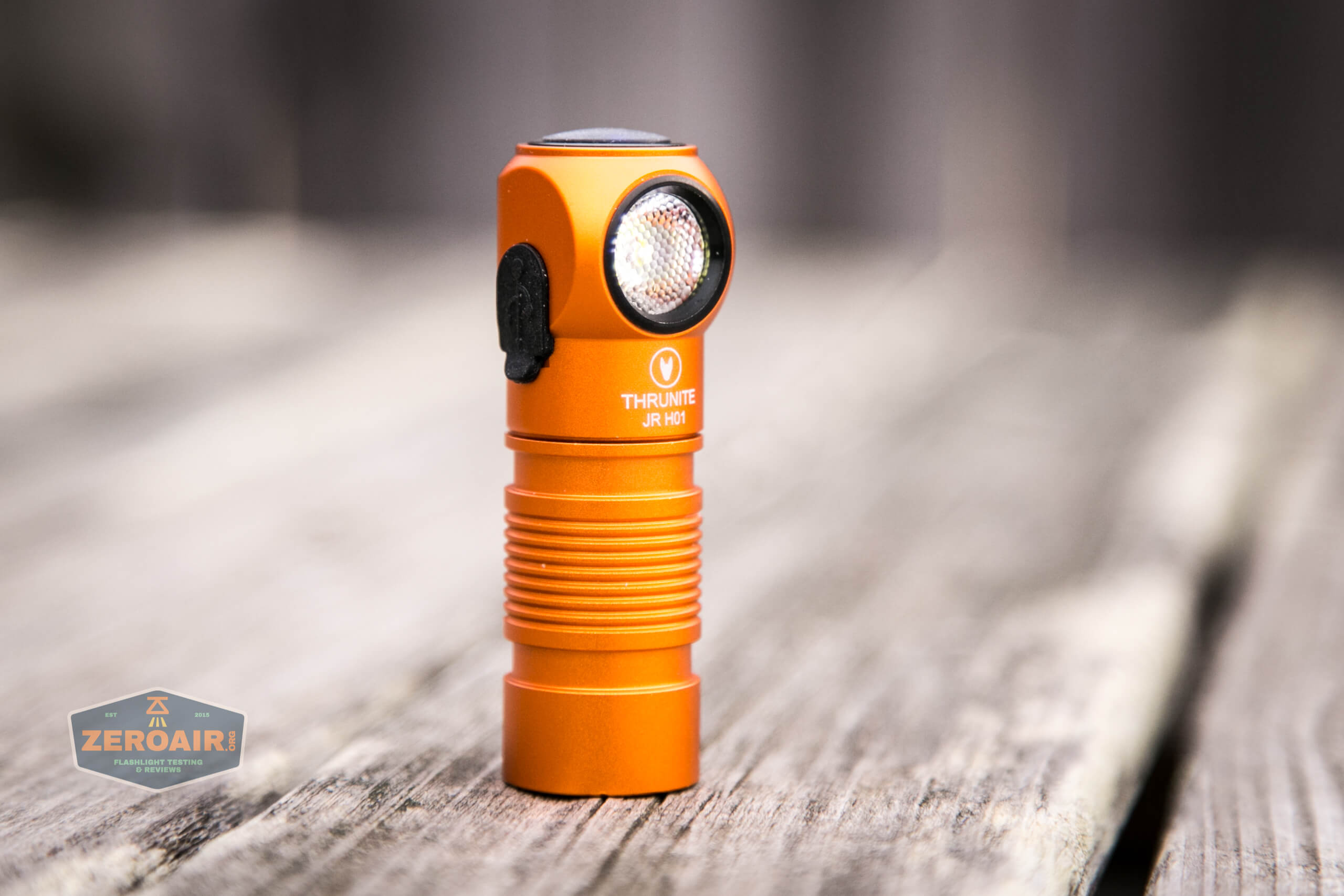
Size and Comps
Officially: 66mm x 21.5mm x 21mm, and 78.5g.
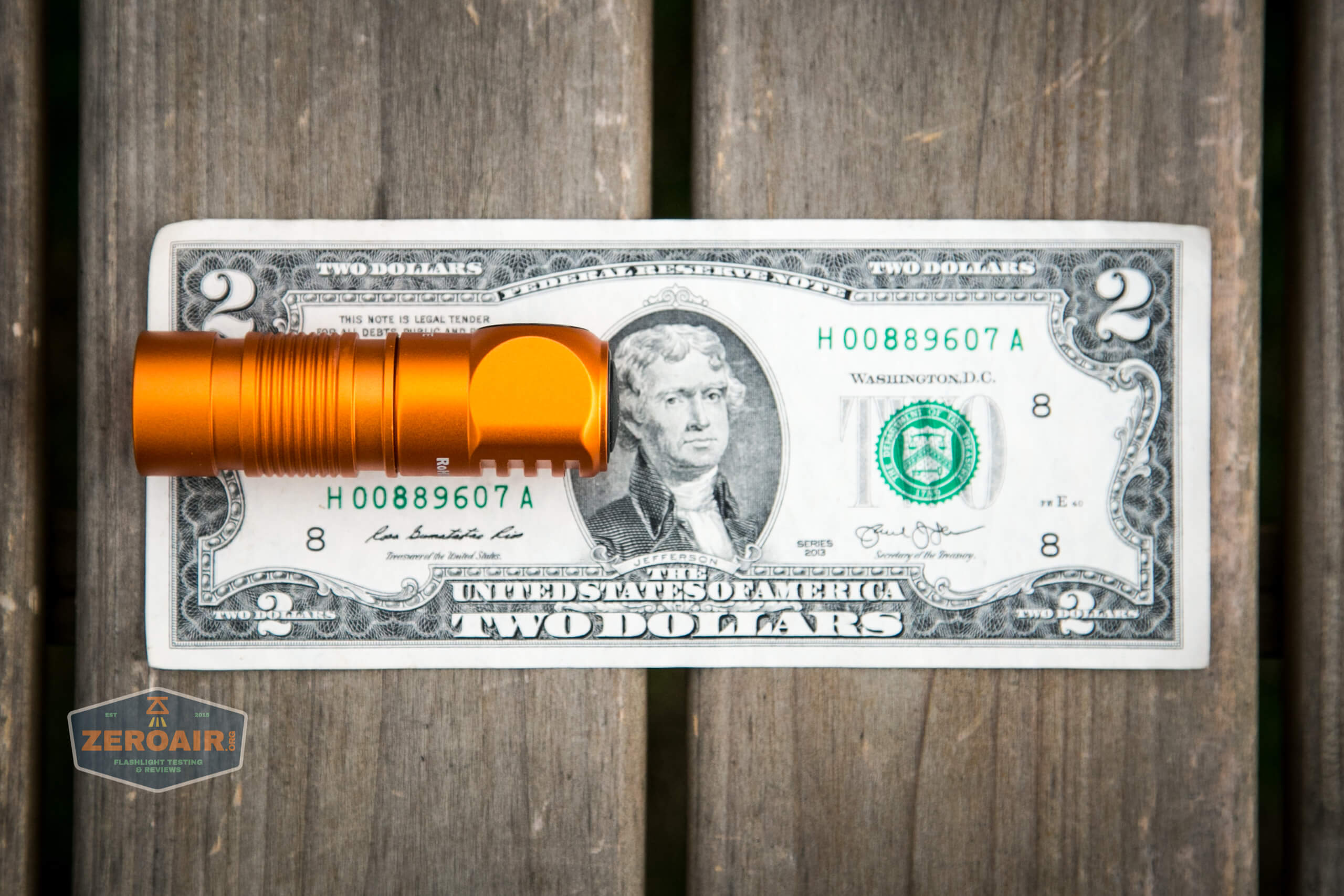
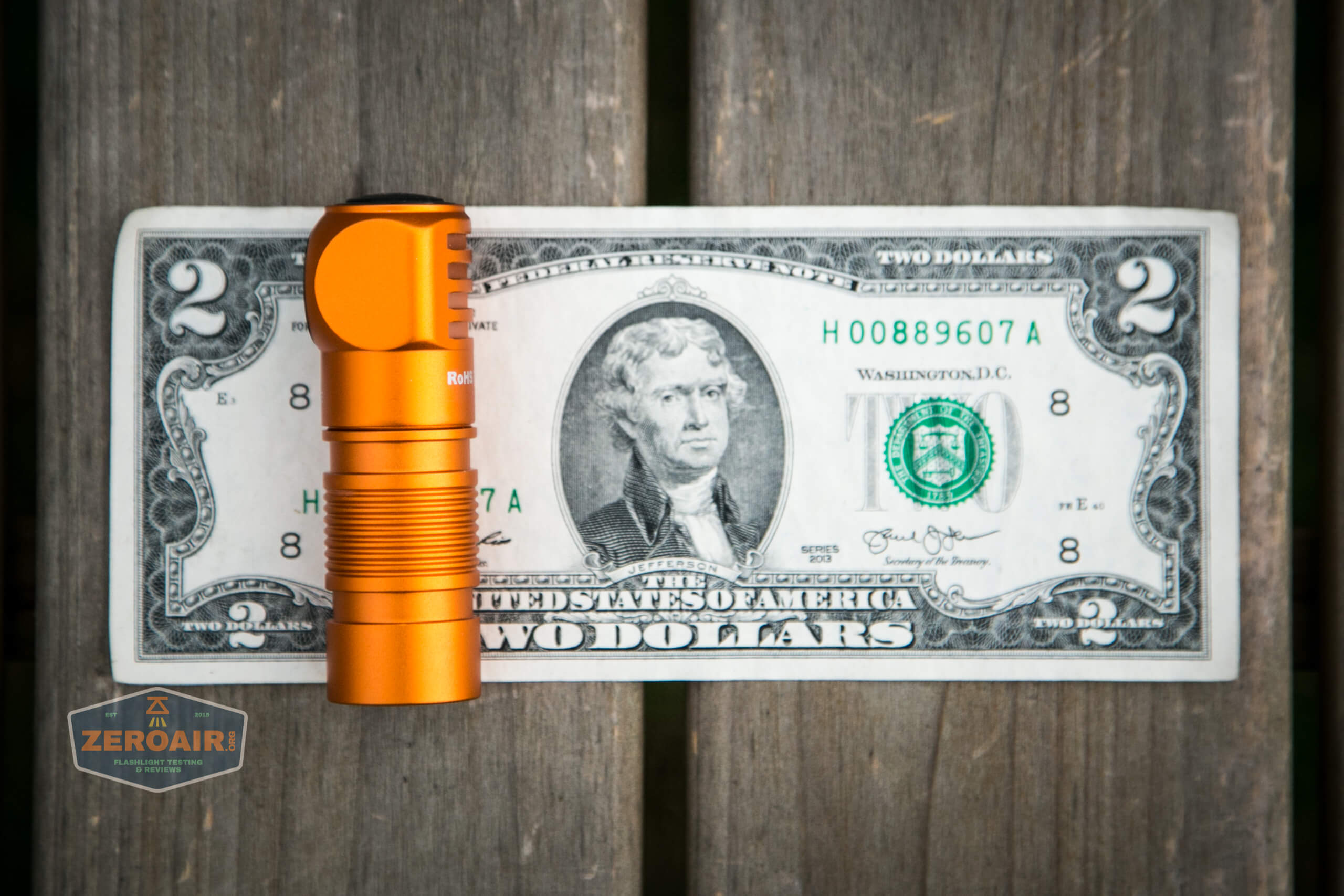
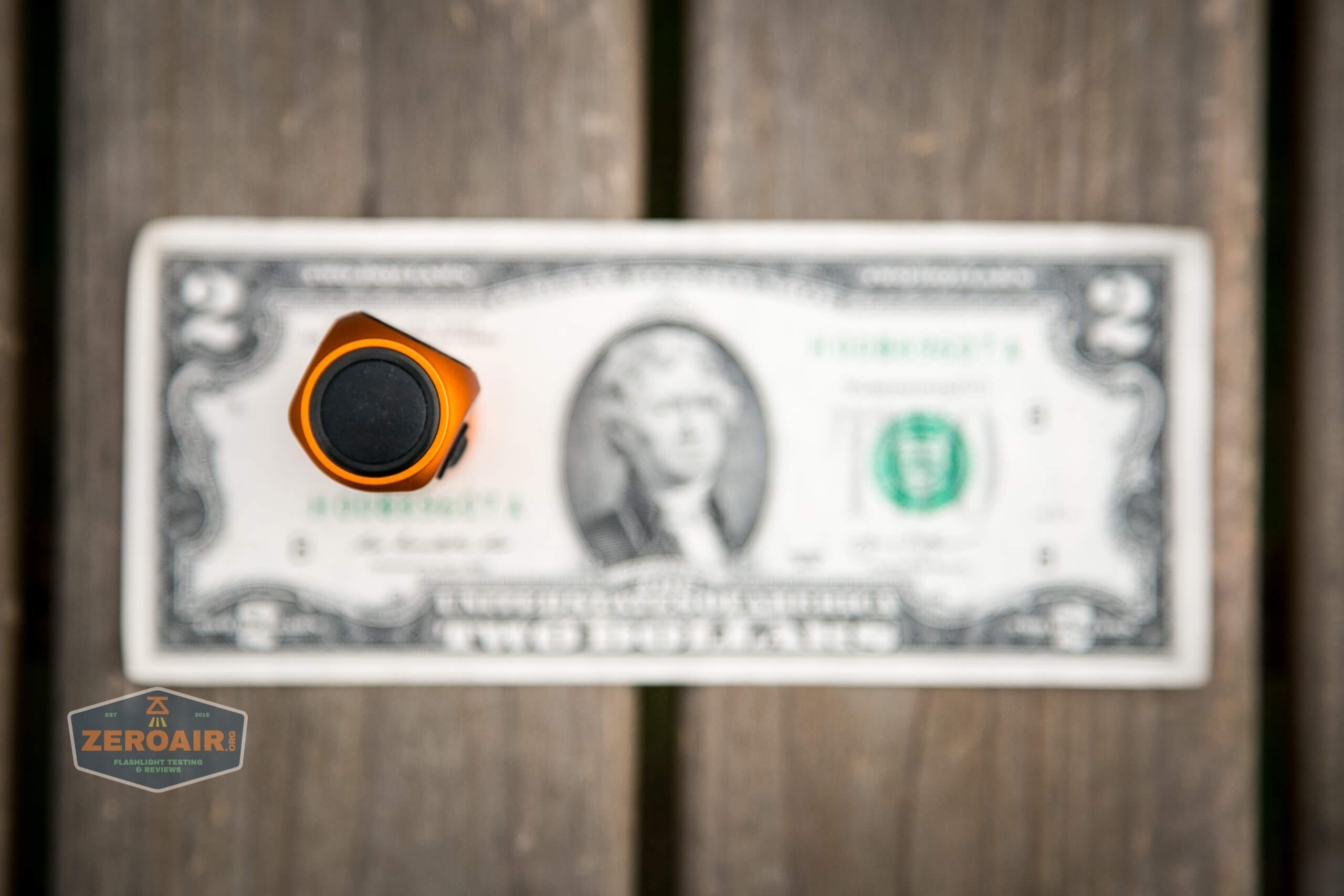
If the flashlight will headstand, I’ll try to show it here. If the flashlight will tailstand, I usually show that here, too.
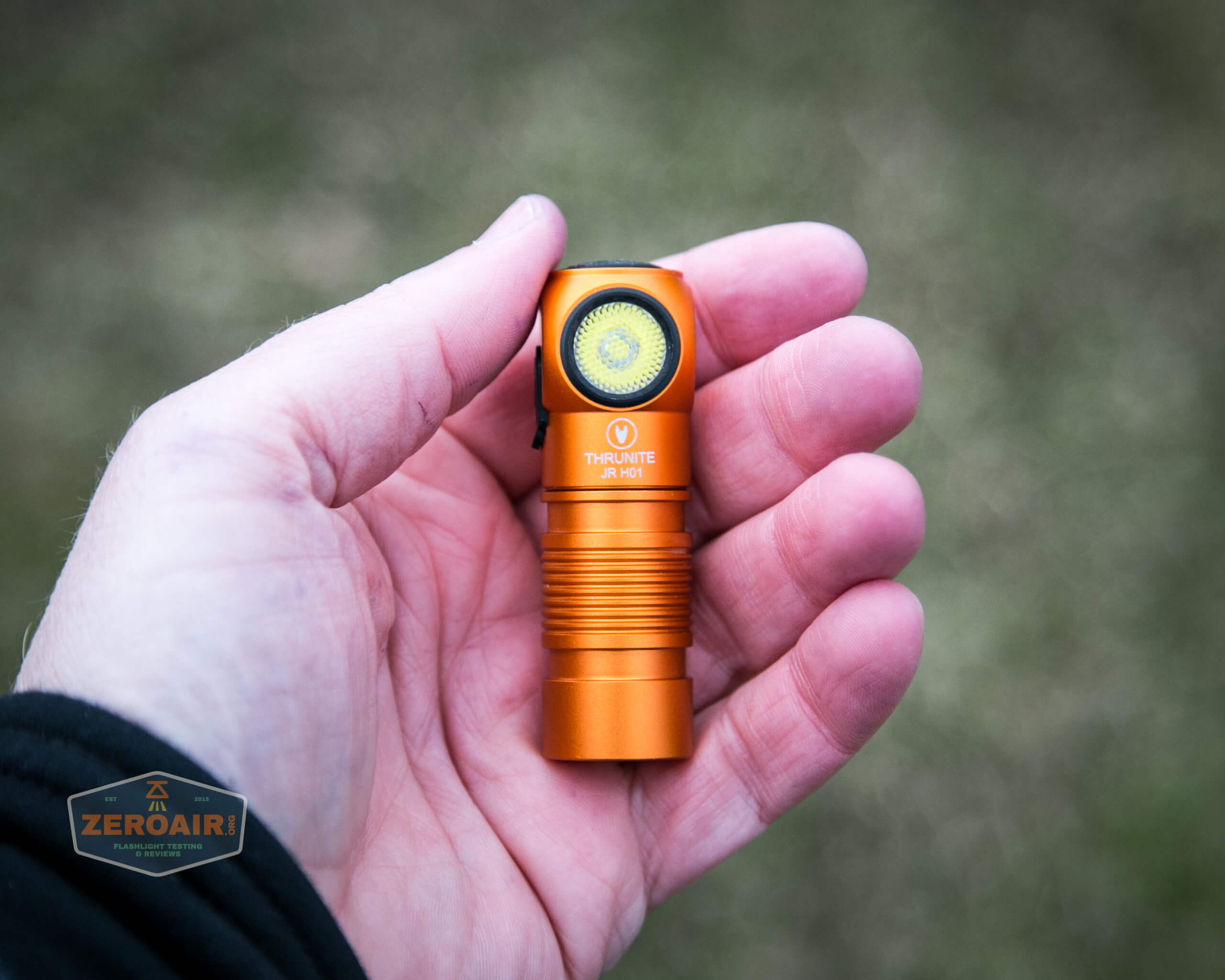
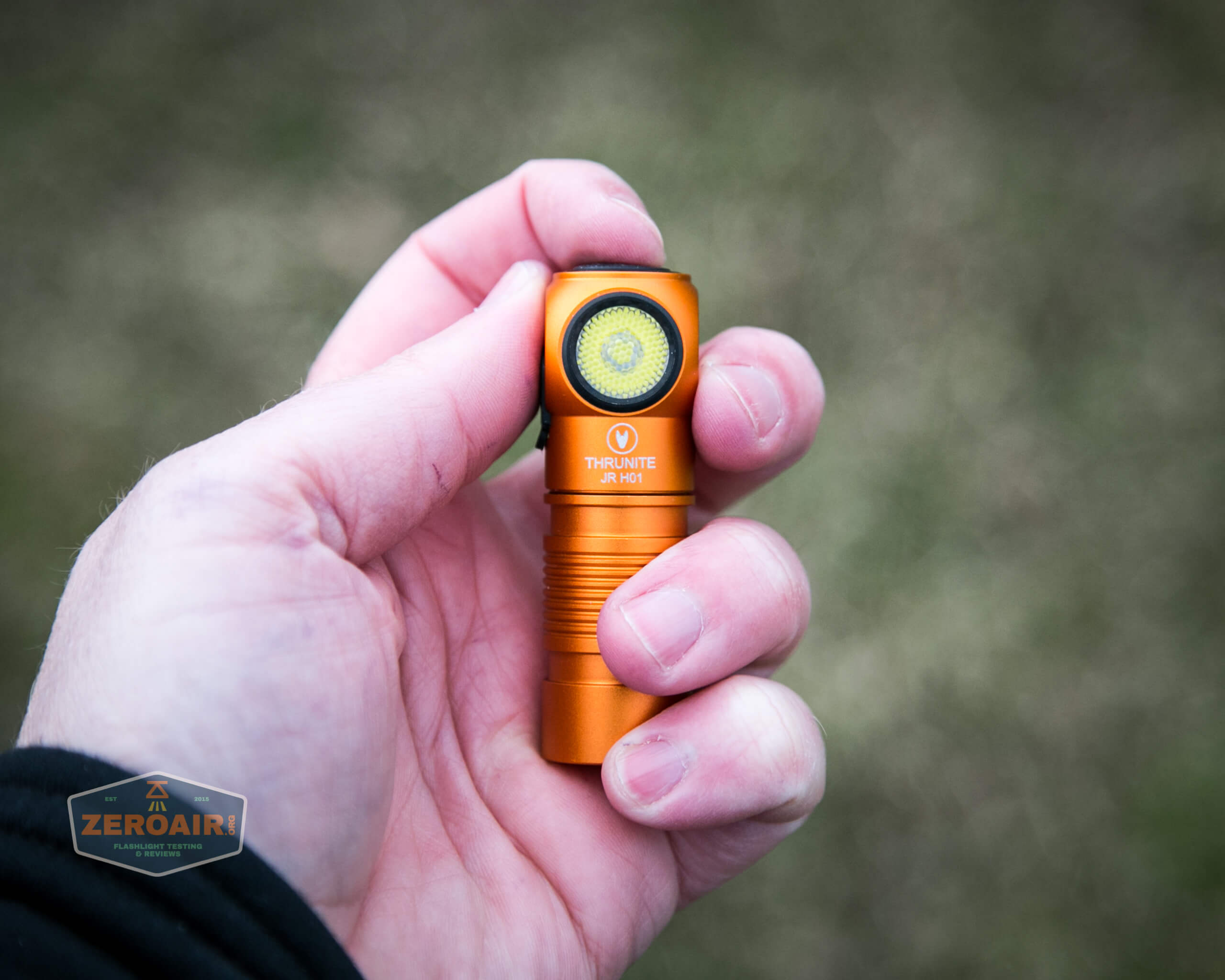
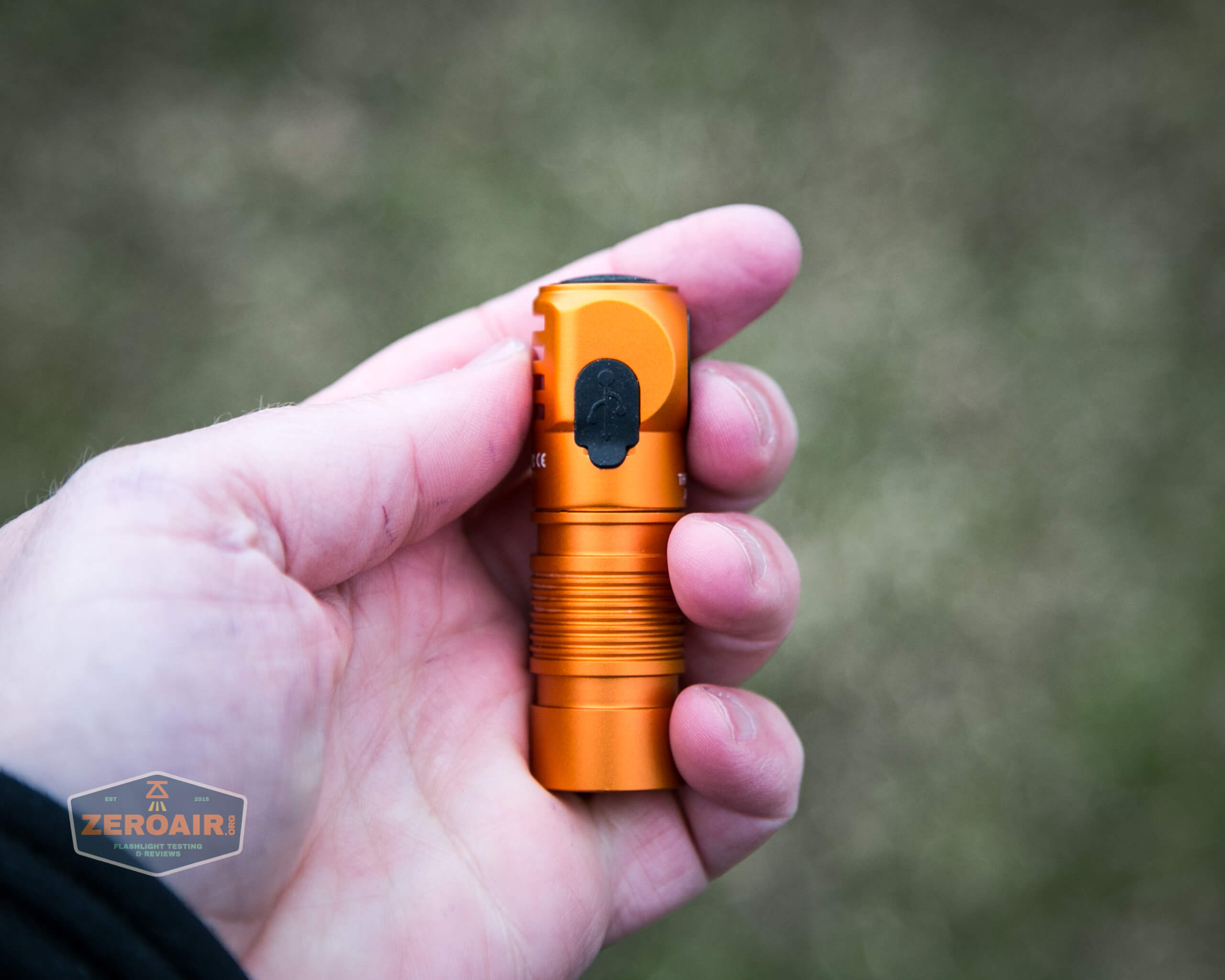
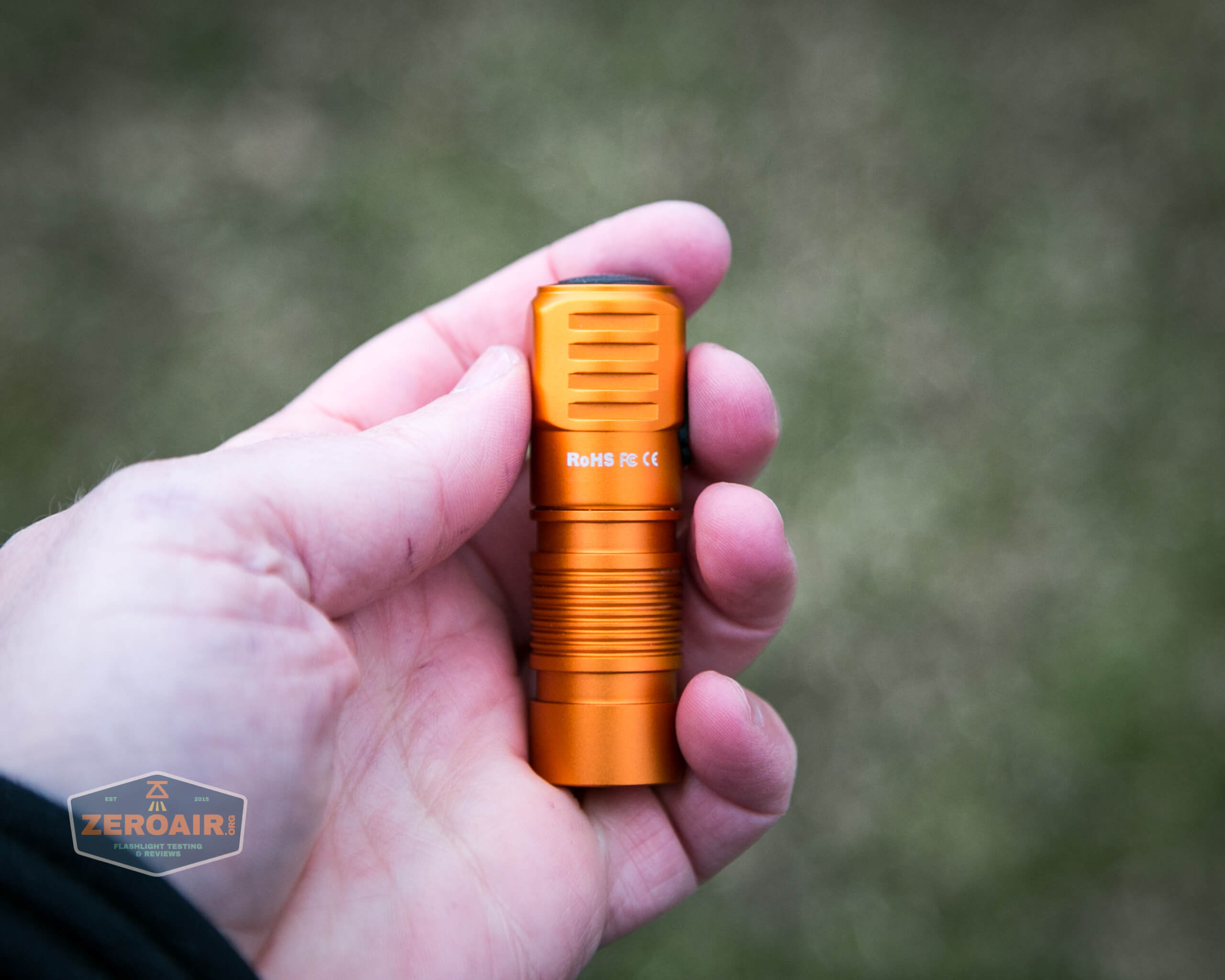
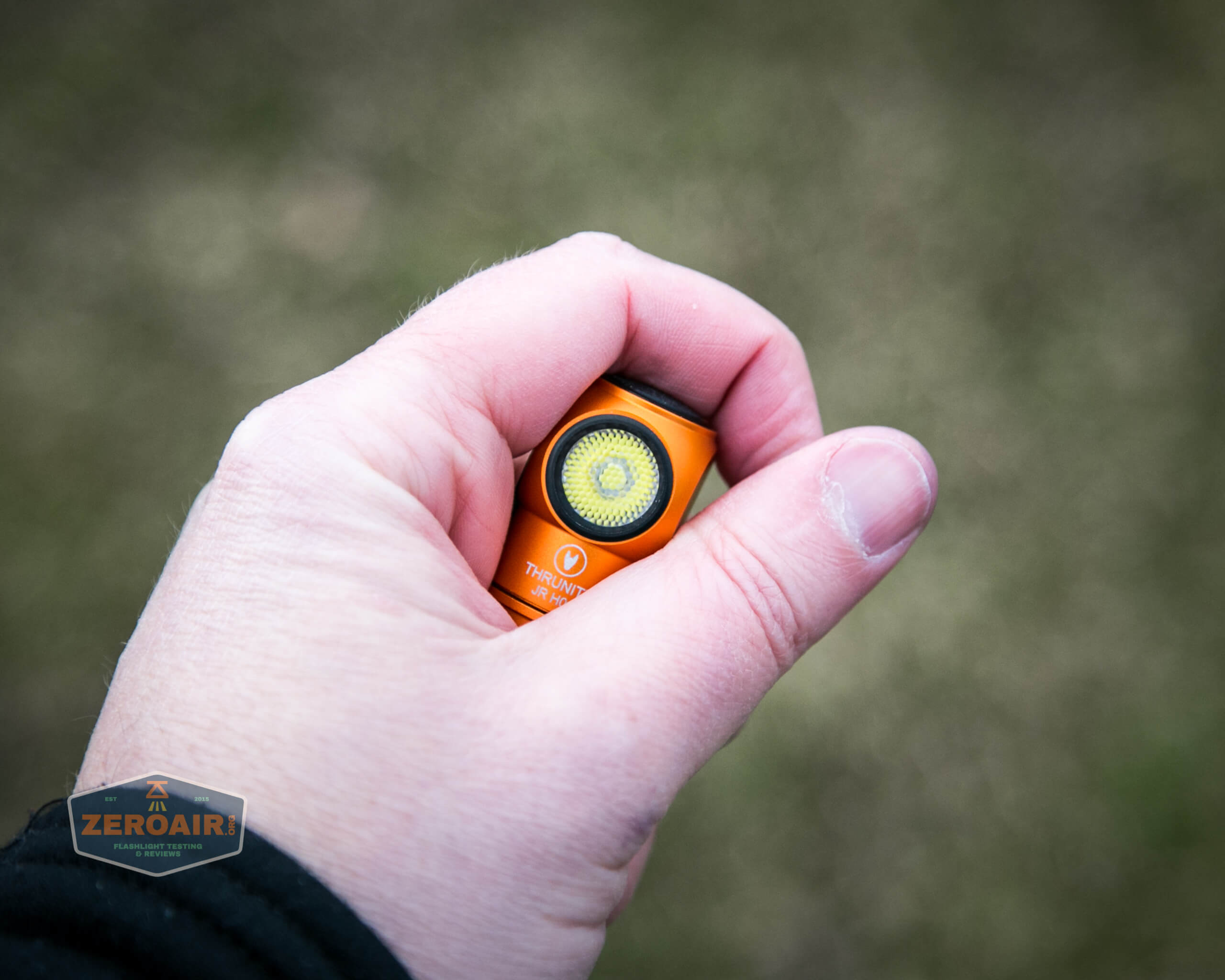
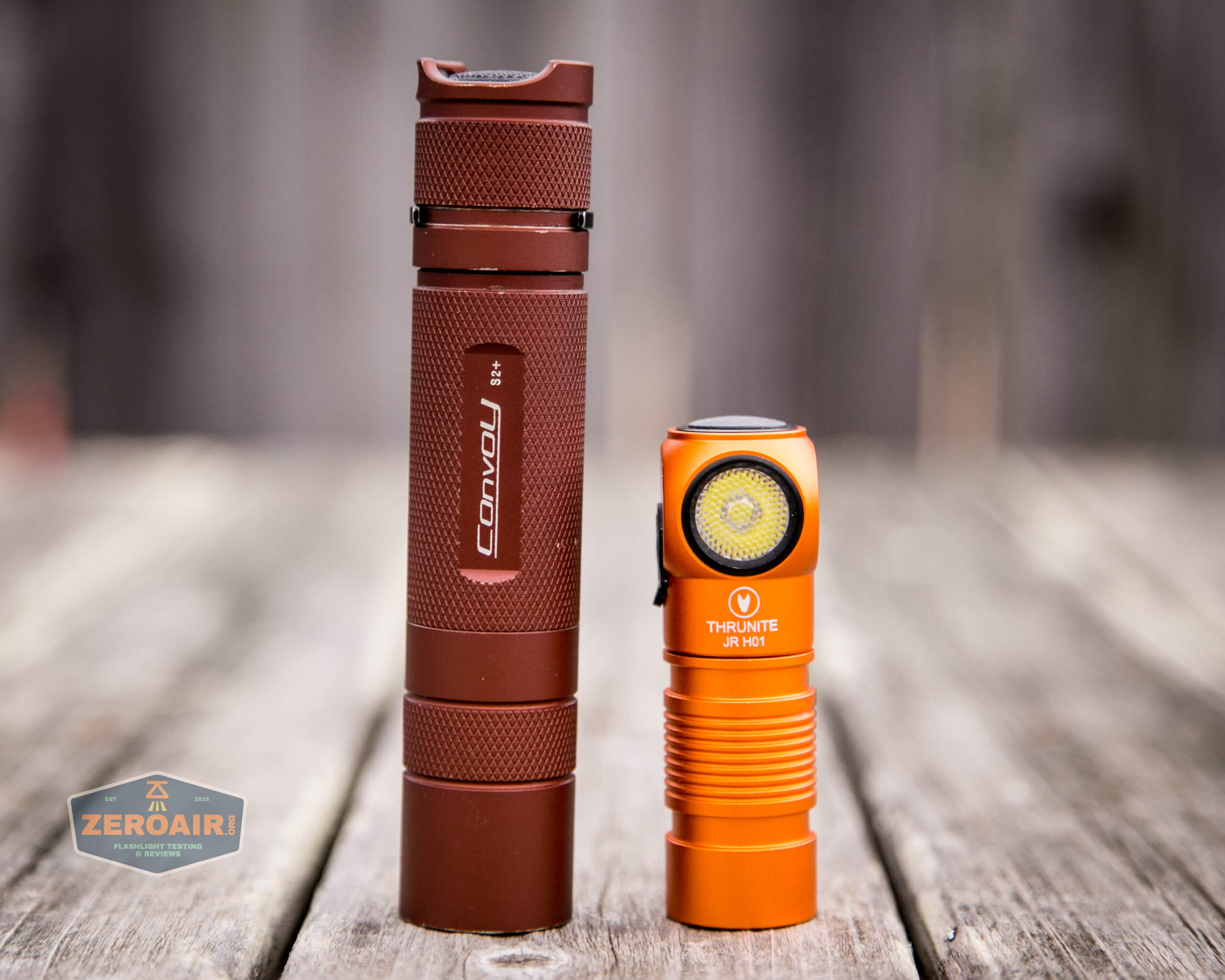
Here’s the test light with the venerable Convoy S2+. Mine is a custom “baked” edition Nichia 219b triple. A very nice 18650 light!
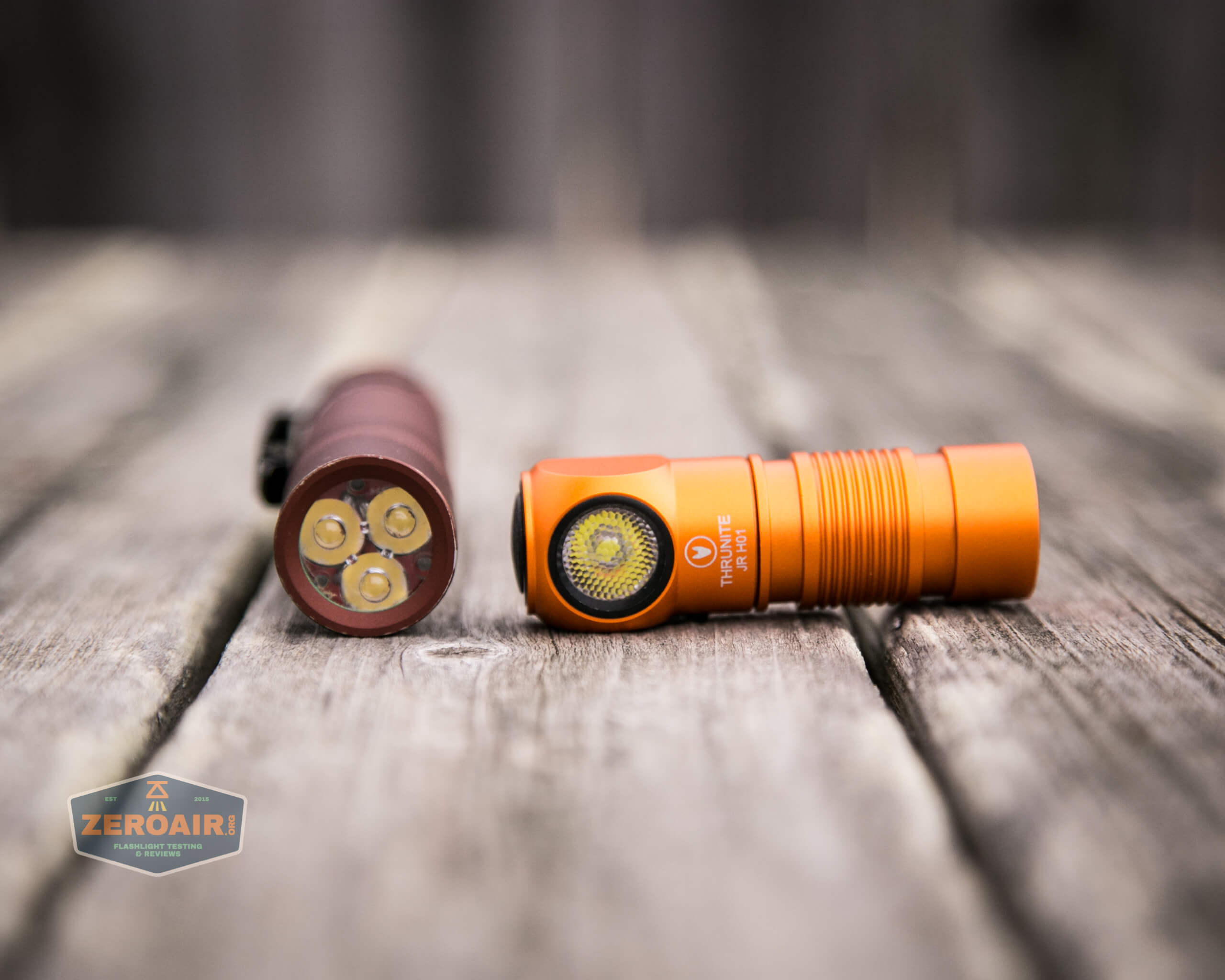
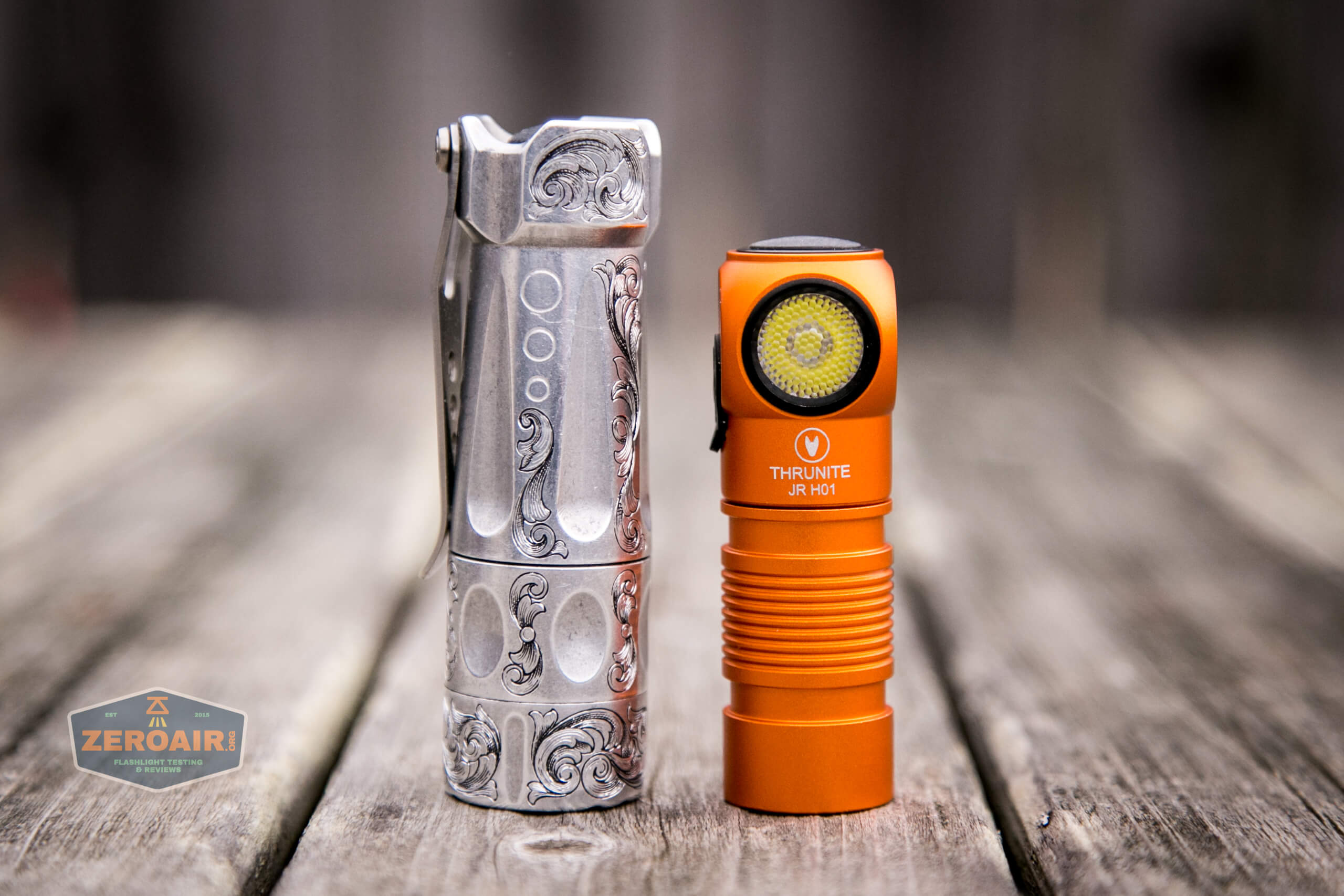
And here’s the light beside my custom-engraved TorchLAB BOSS 35, an 18350 light. I reviewed the aluminum version of that light in both 35 and 70 formats.
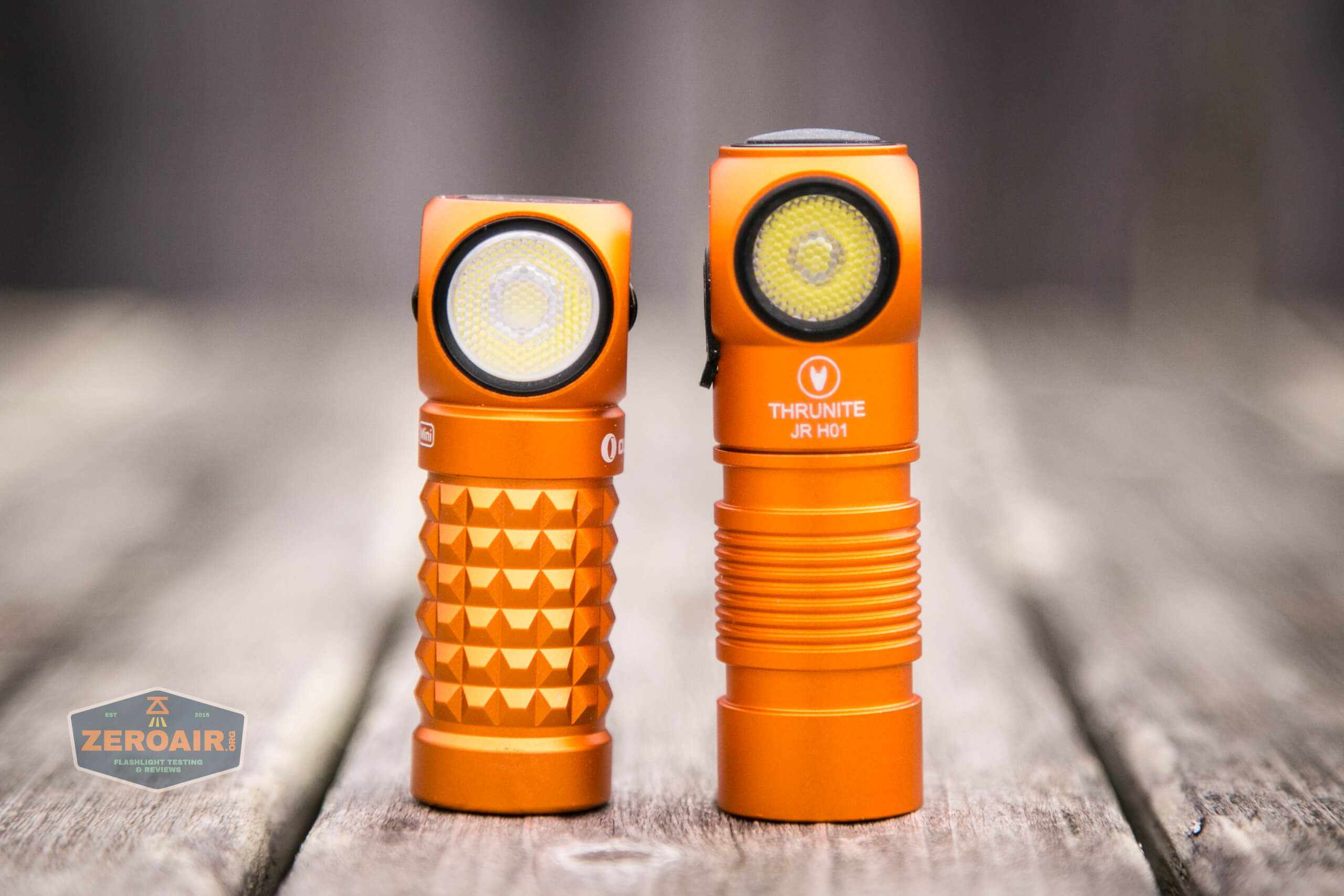
Here’s the main competition for the Thrunite Joe Robinet H01 headlamp – the Olight Perun Mini. In Orange. I reviewed it here. There are things I like from each of these lights, and things I don’t about both.
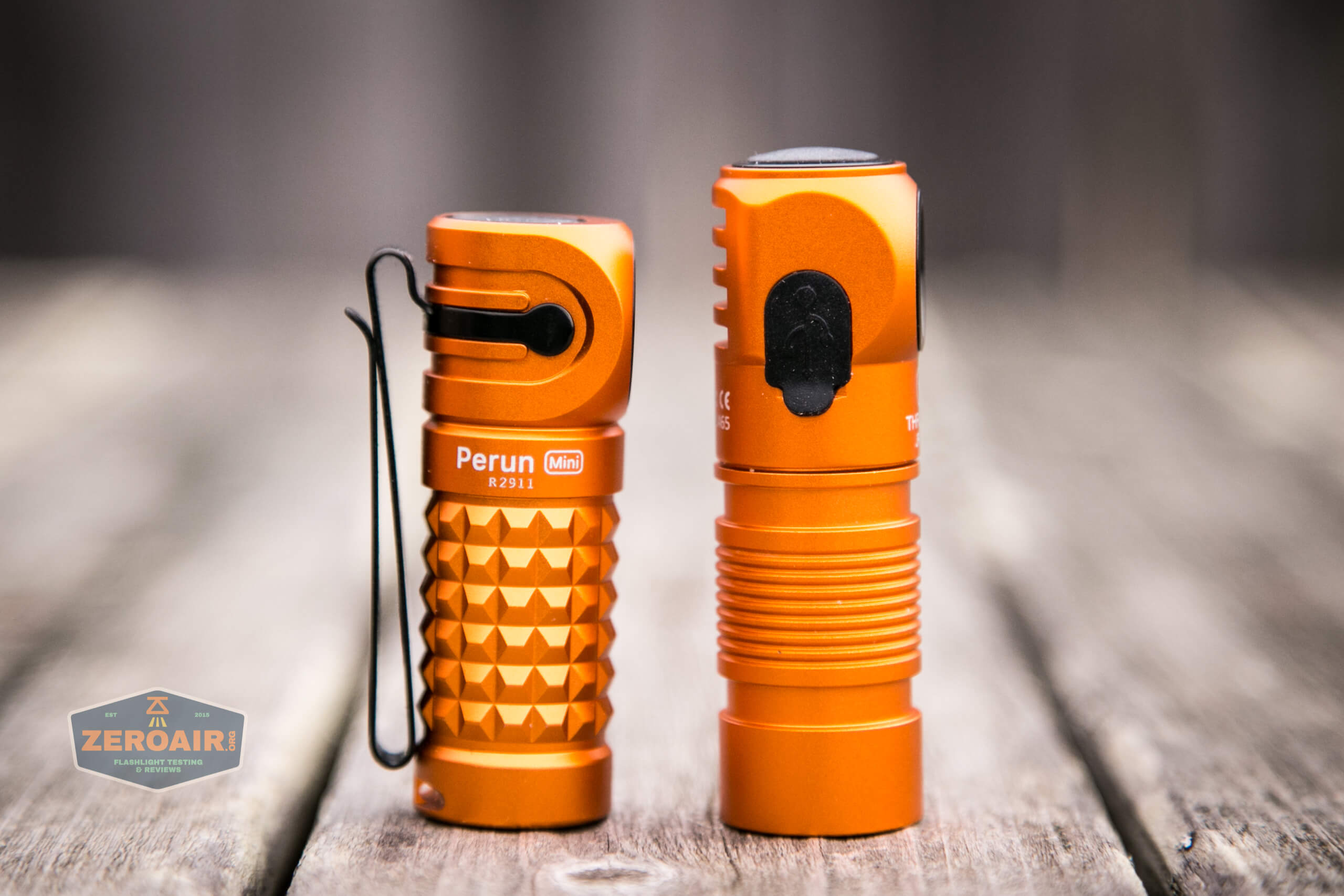
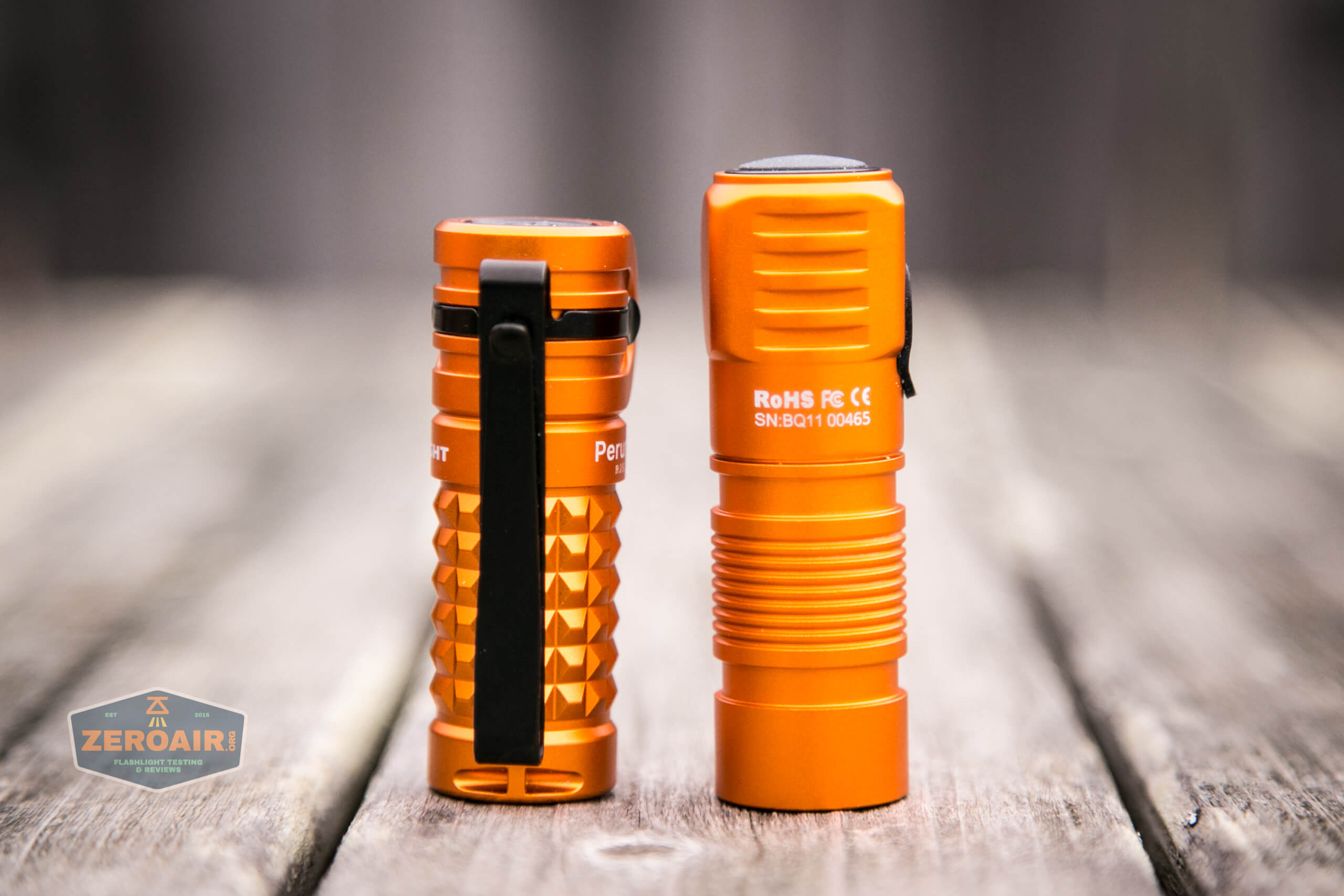
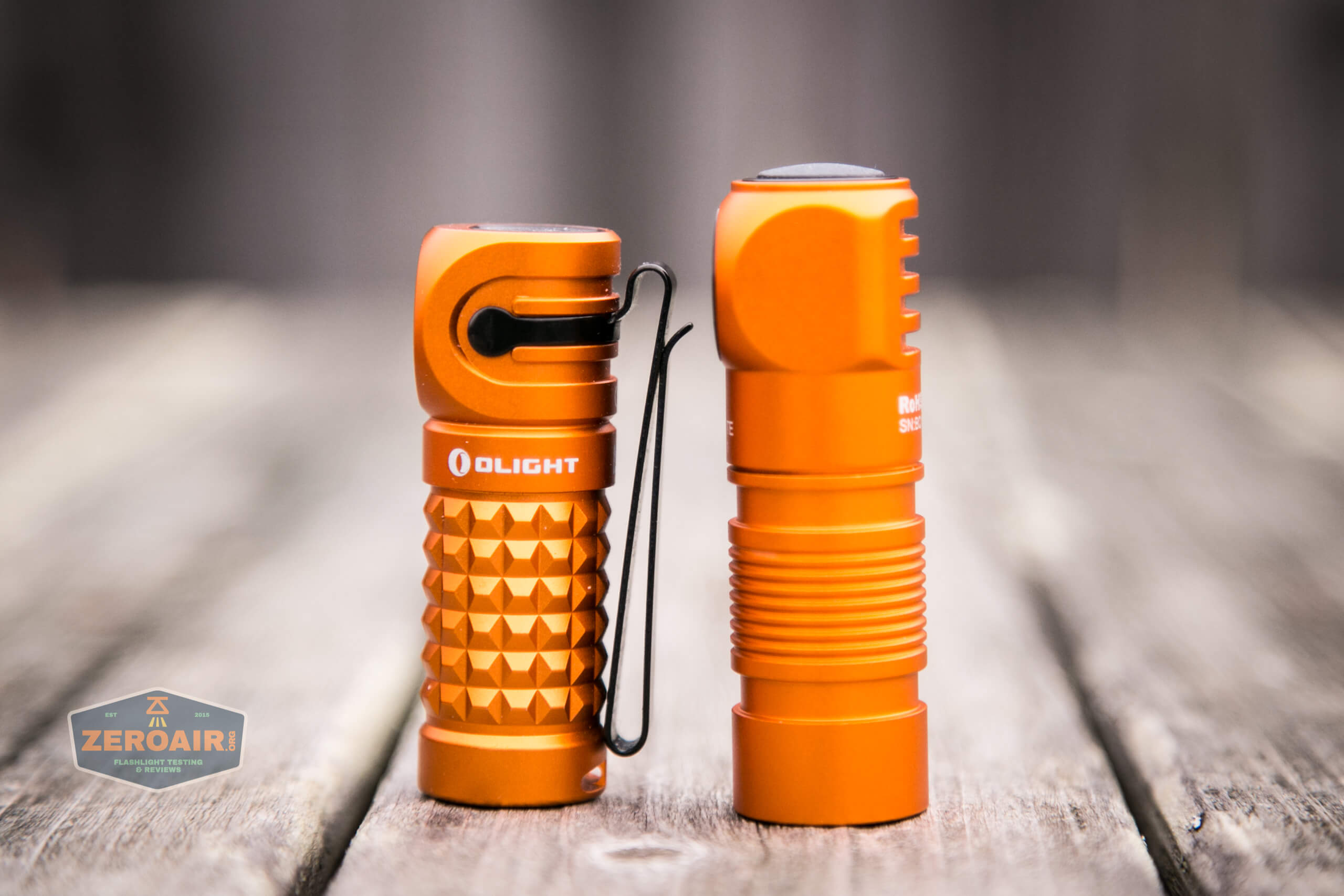
Retention and Carry
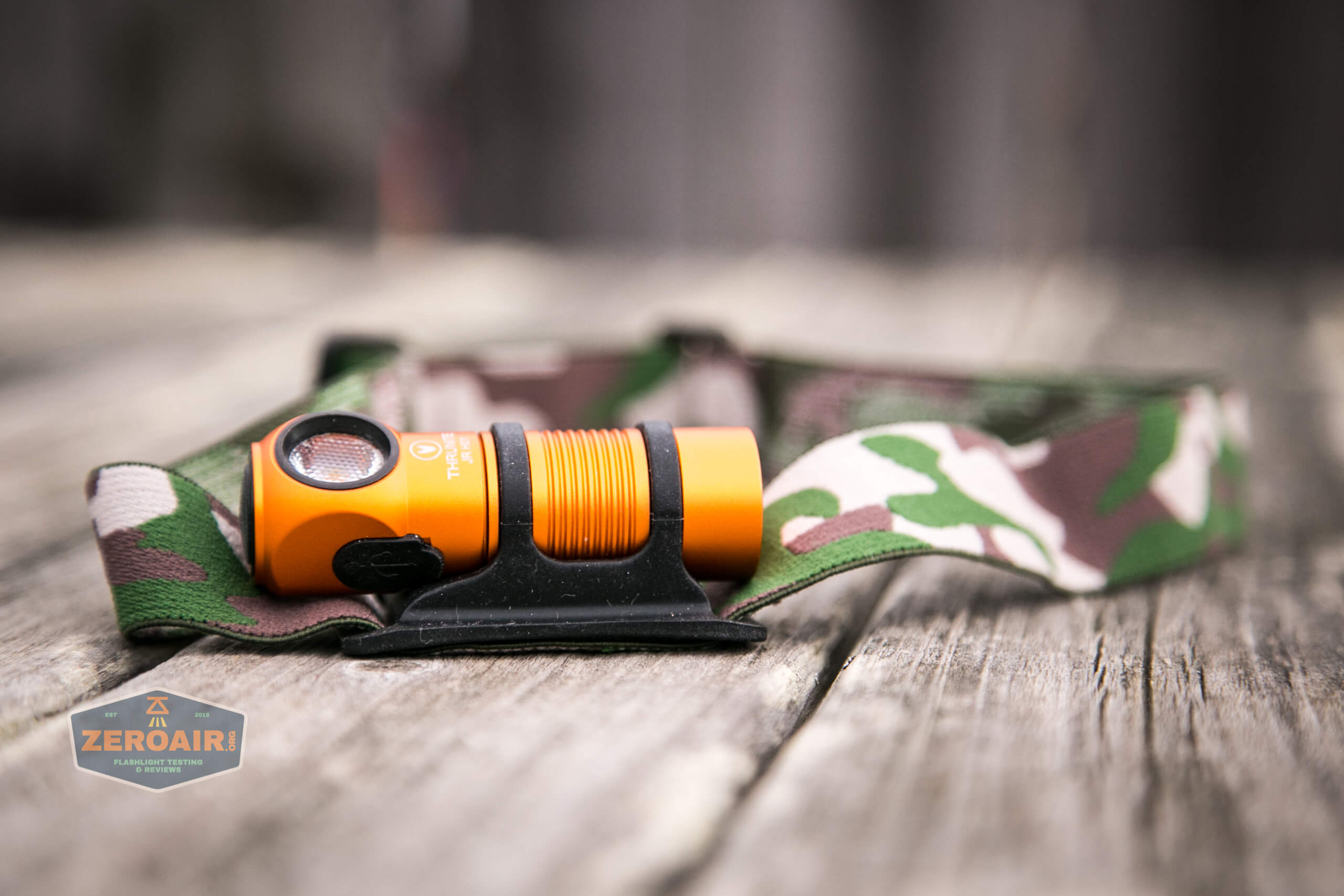
This is primarily a headlamp. As such, there’s a headband included.
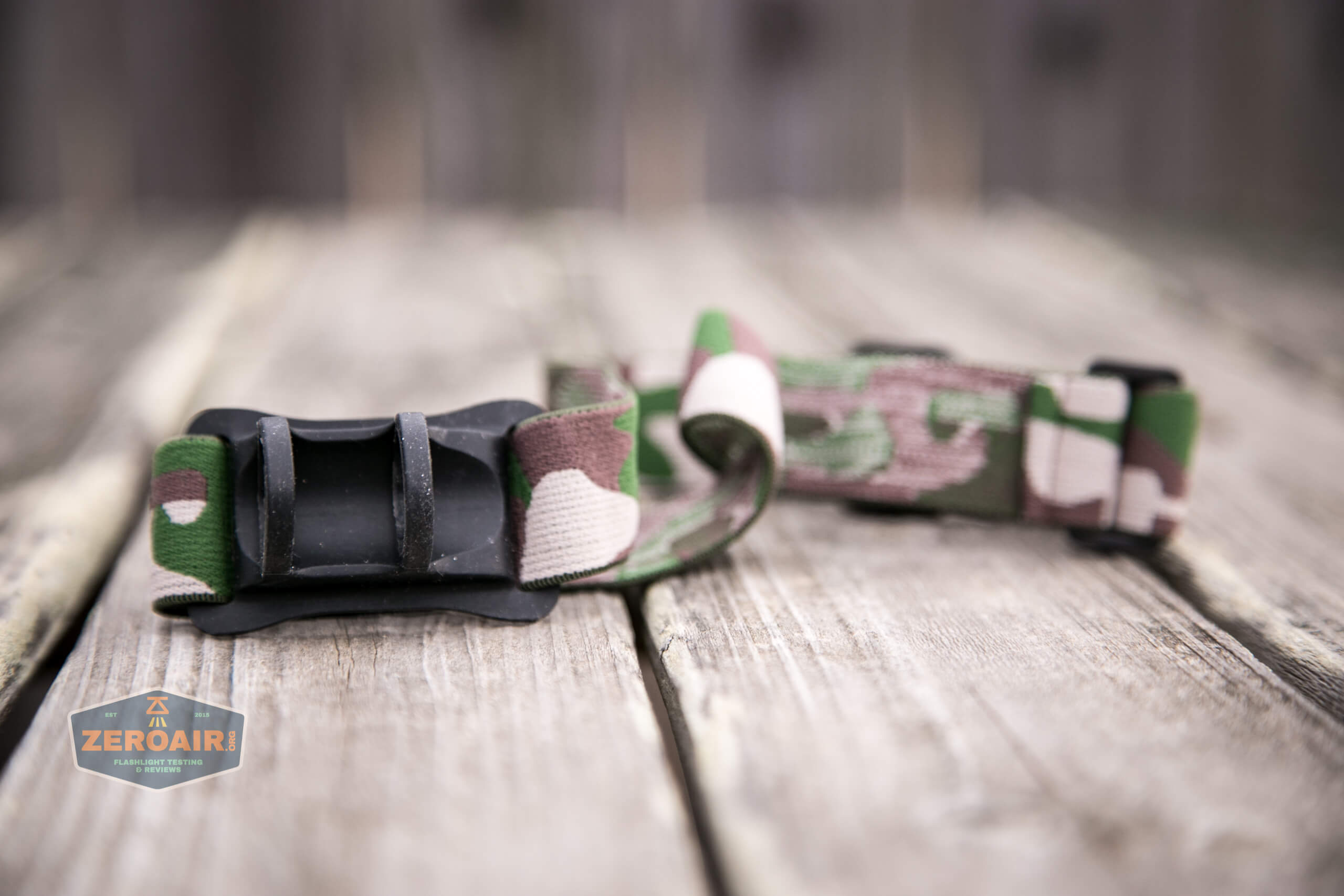
This is only an around-the-head band and doesn’t include an over-the-head strap. For a 16340 light, I consider that a good thing.
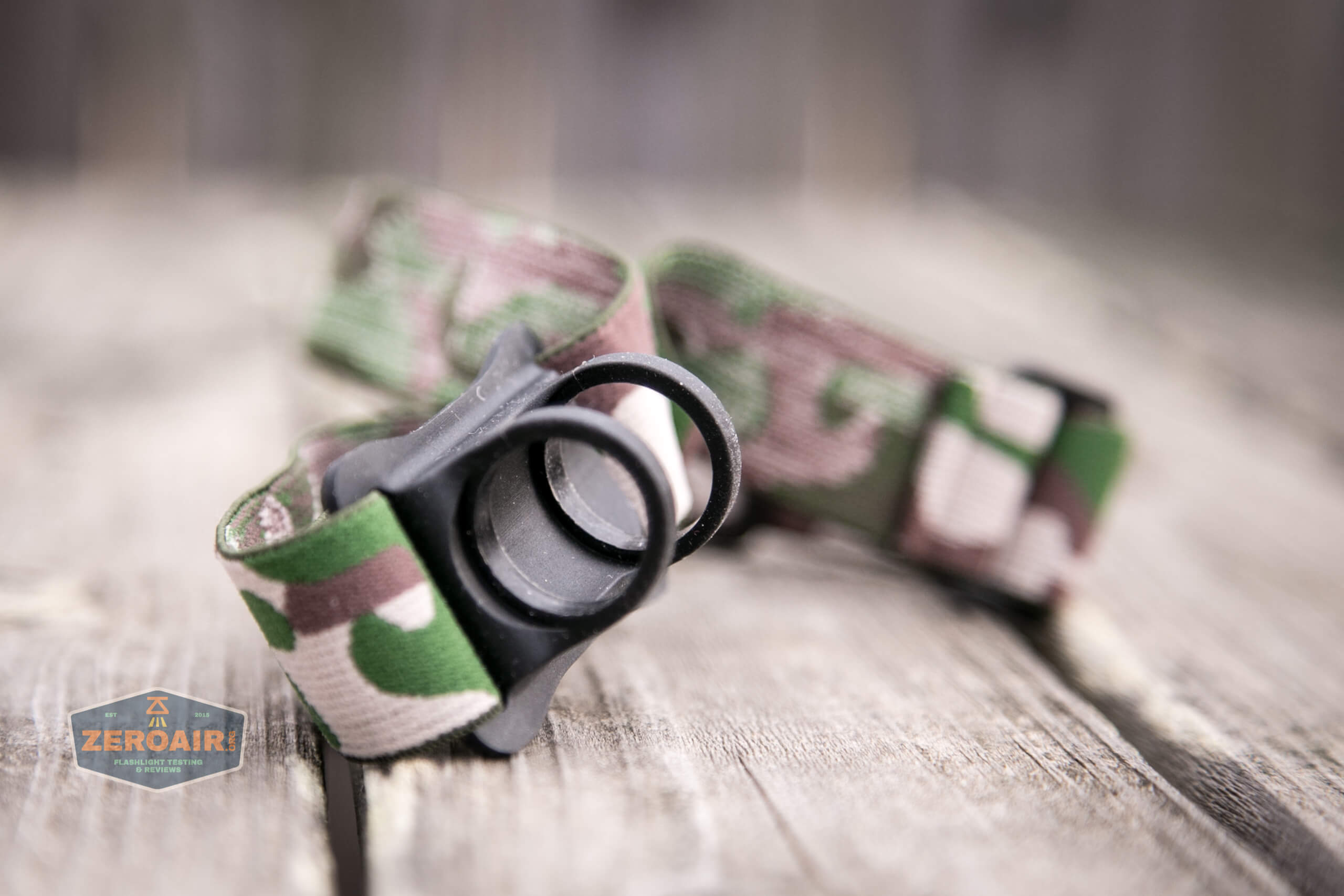
I’d also call the headband comfortable, as the material is soft and not excessively grippy. But also, it’s not excessively grippy, so you might have to cinch it tight for heavily active things like running.
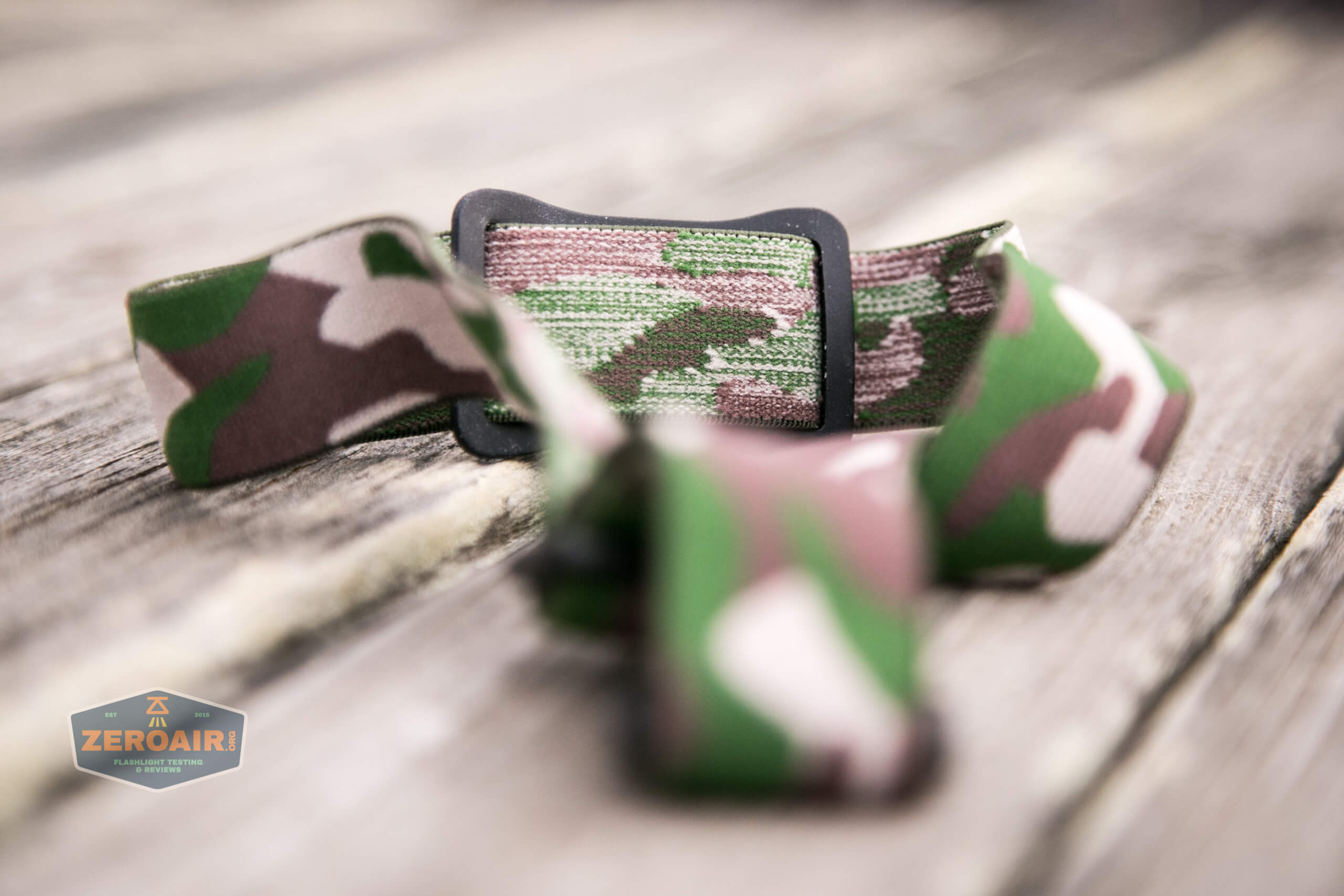
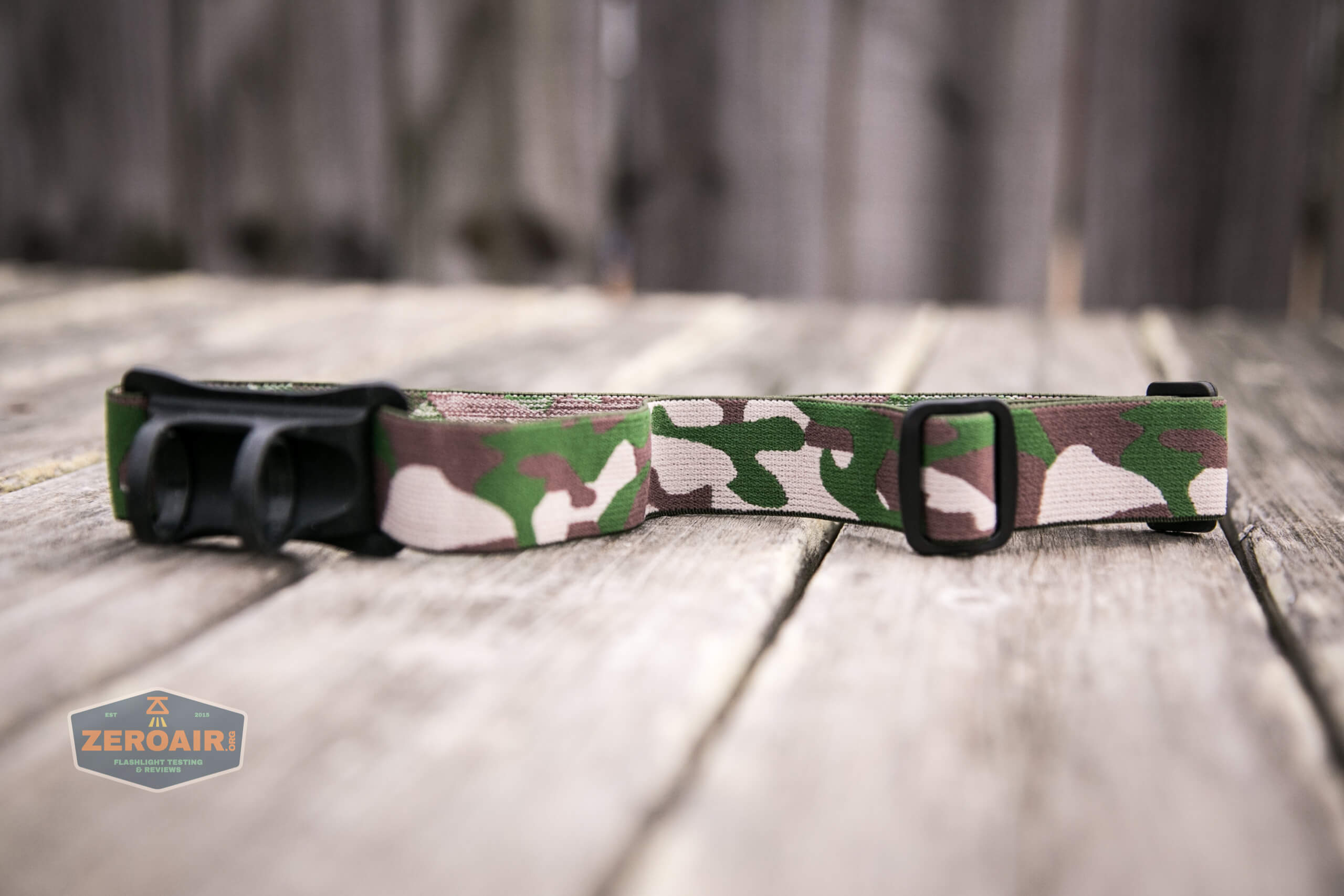
Those two grooves you thought were for the pocket clip? No, they’re for the headband. The light will fit either way (“right” or “left”) and since the switch is on the end, the user experience will not change much.
There’s also the magnet in the tailcap, which is strong enough to hold the light horizontally, as seen below.
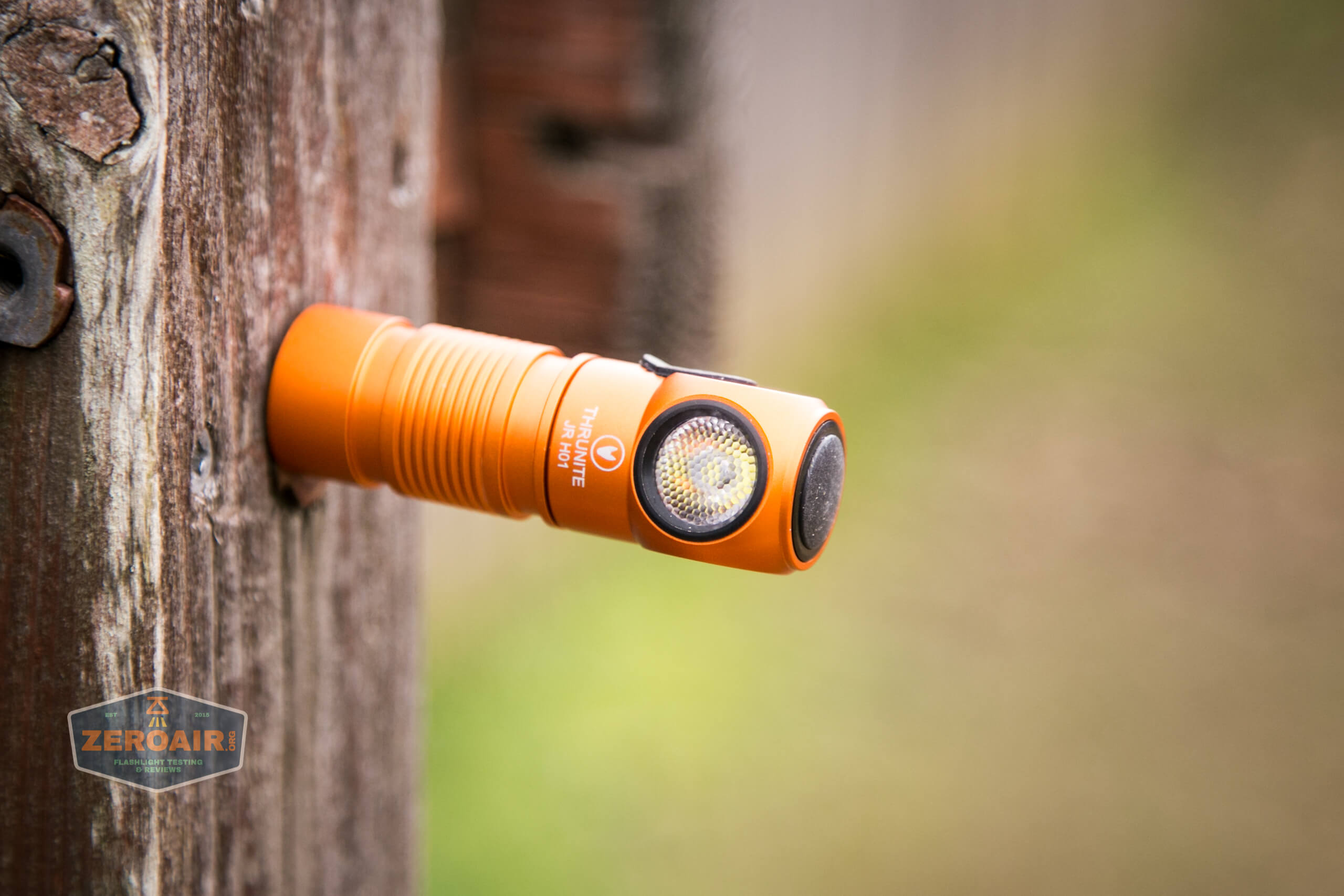
Now, let’s talk about those pocket clip headband grooves again. There is no pocket clip included! So this is really only a headlight.
And in that case, why bother including a magnet? Just take out that length, make the light that much shorter, and make it a completely dedicated headlamp. Then you at least compete with the Perun Mini on size.
Power and Runtime
The Thrunite Joe Robinet H01 headlamp is powered by a single lithium-ion cell. In this case, it’s a 16340, which is also included with the package from Thrunite.
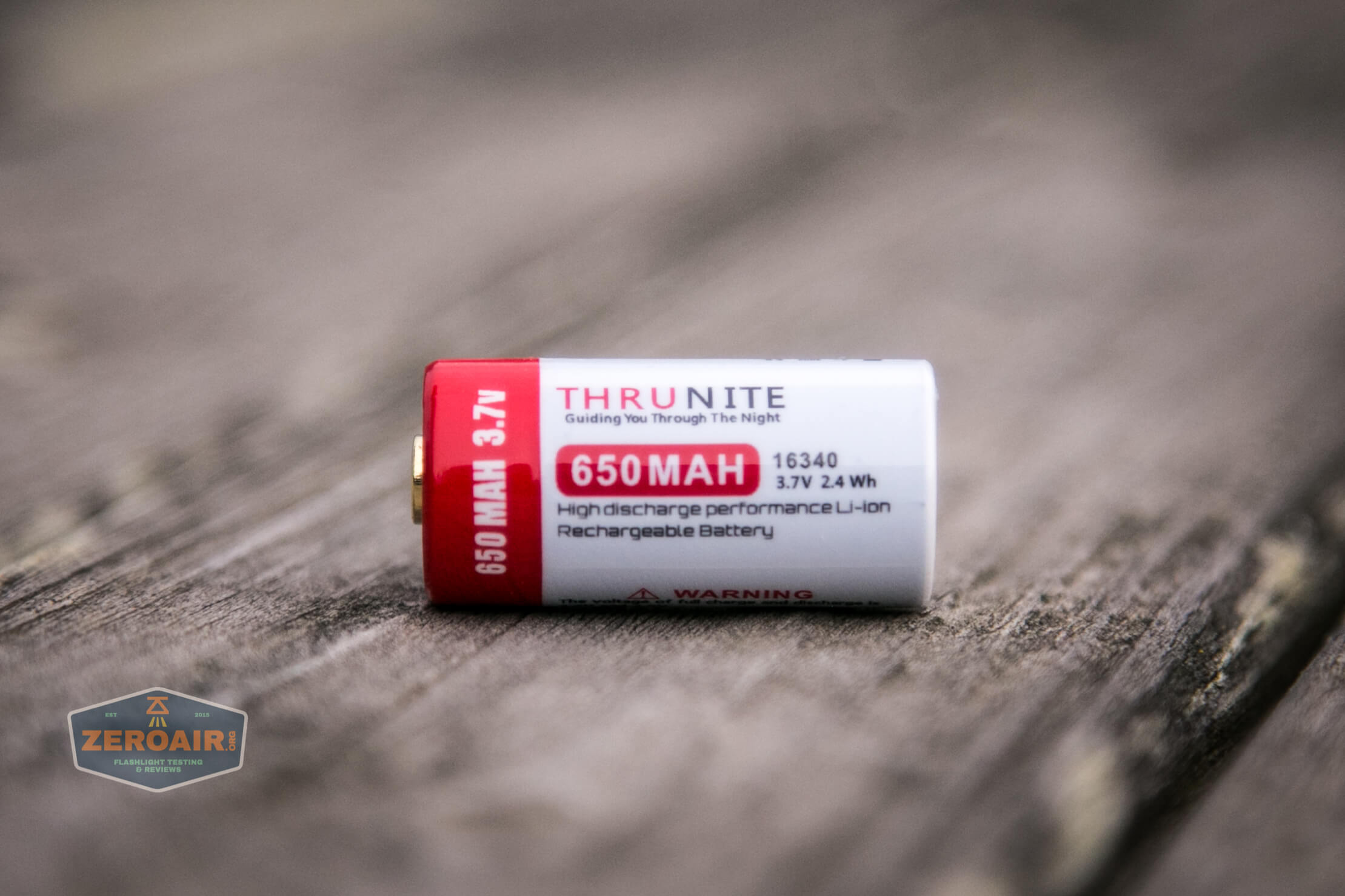
This is a standard 16340 cell in every way. It’s also a button top.
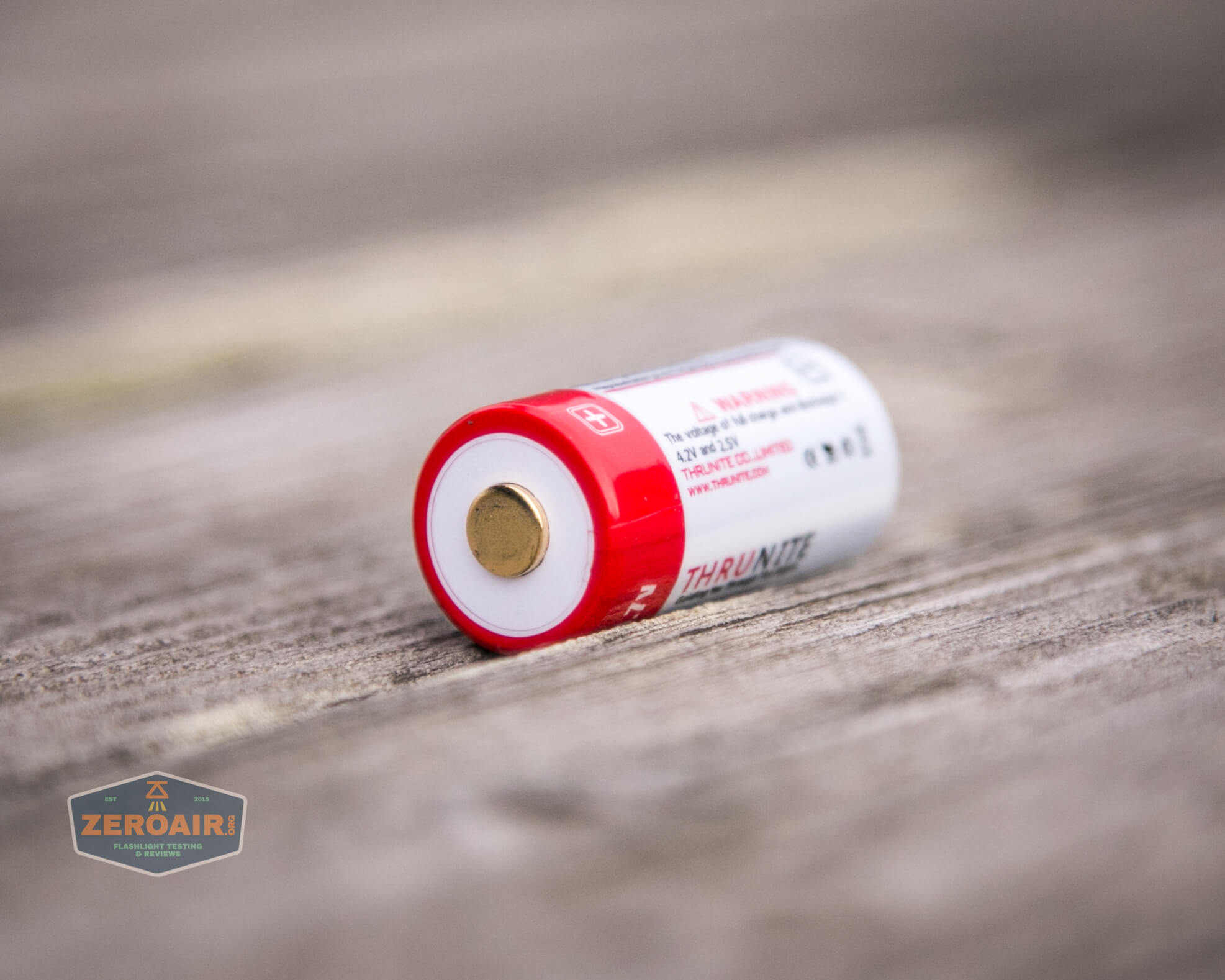
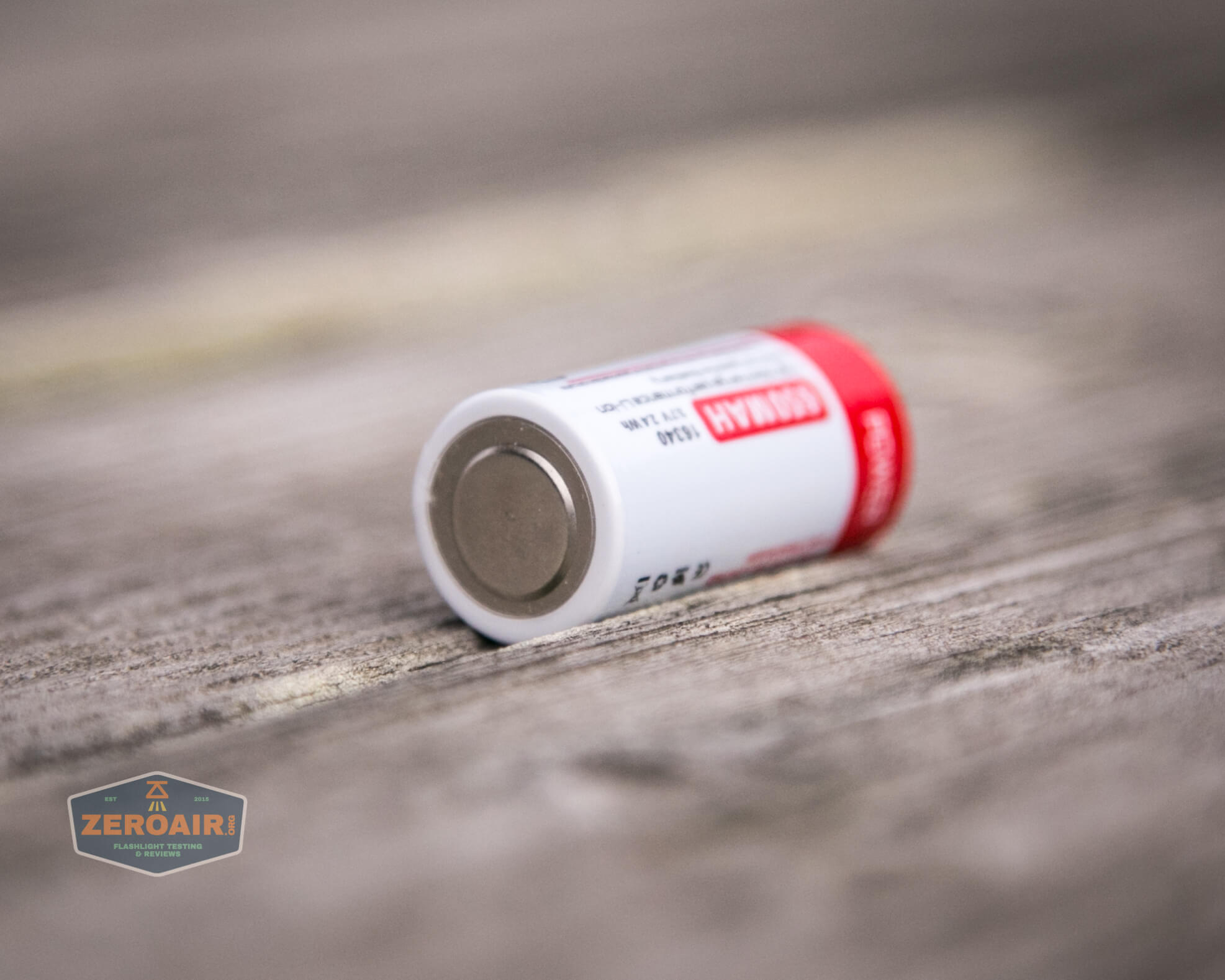
The cell fits into the body in the usual way: positive terminal toward the head.
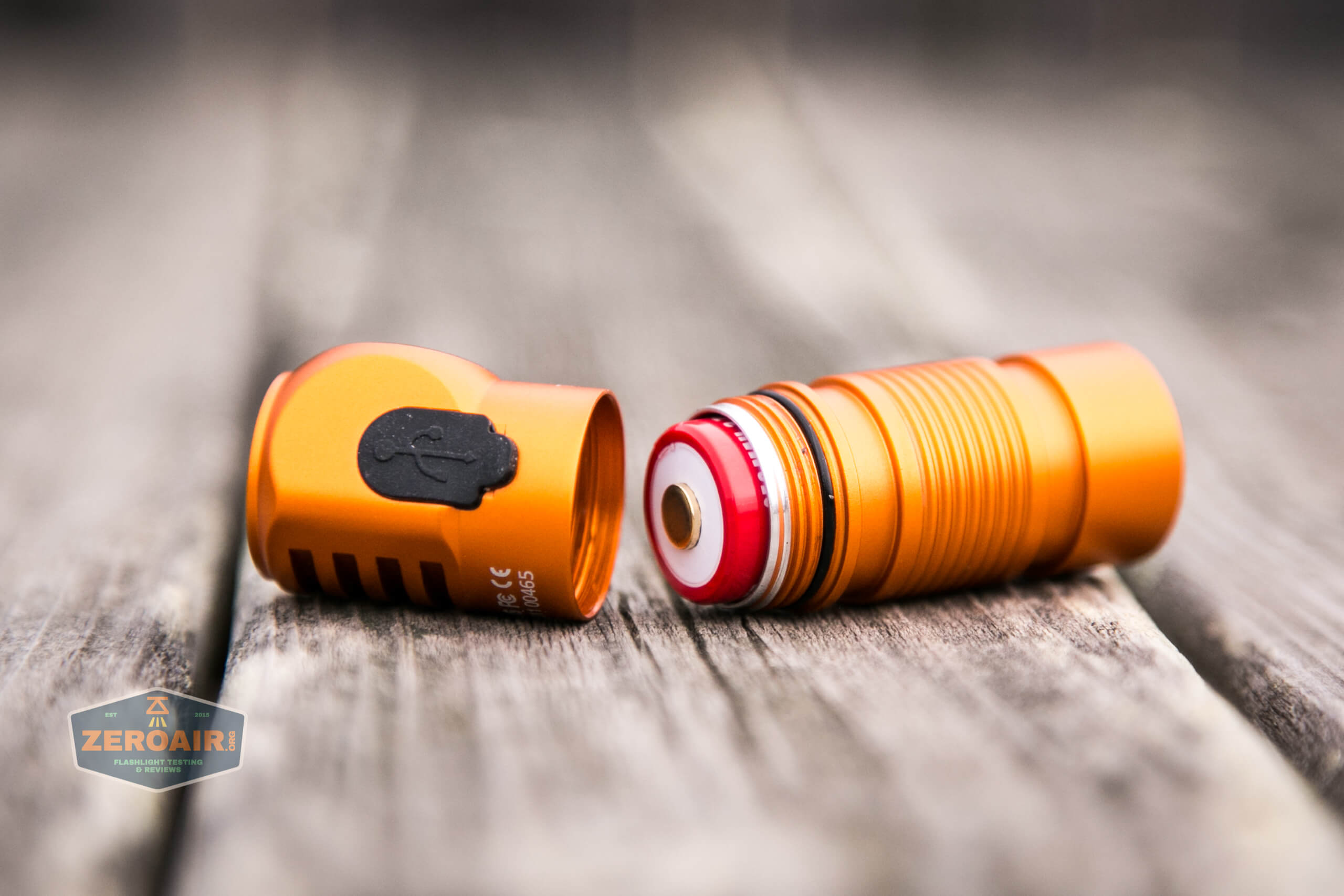
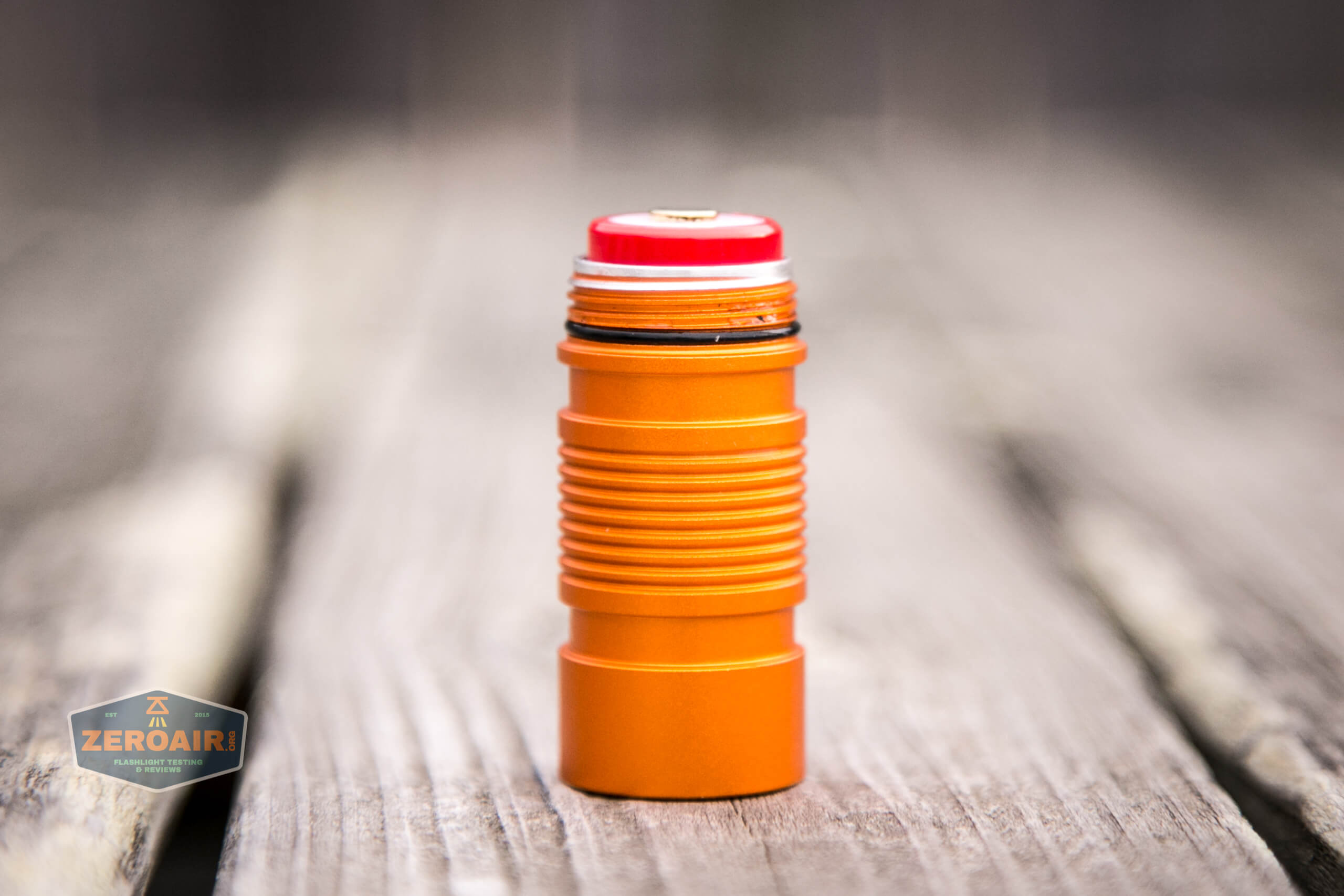
When installed, the cell sticks out of the cell tube just a little.
Below you can see a few runtimes. Output is respectable, and near what is claimed, at around 600 lumens. But notably, Thrunite isn’t just gaming the FL1 here – the light holds 600 lumens for a full minute before stepping down to high.
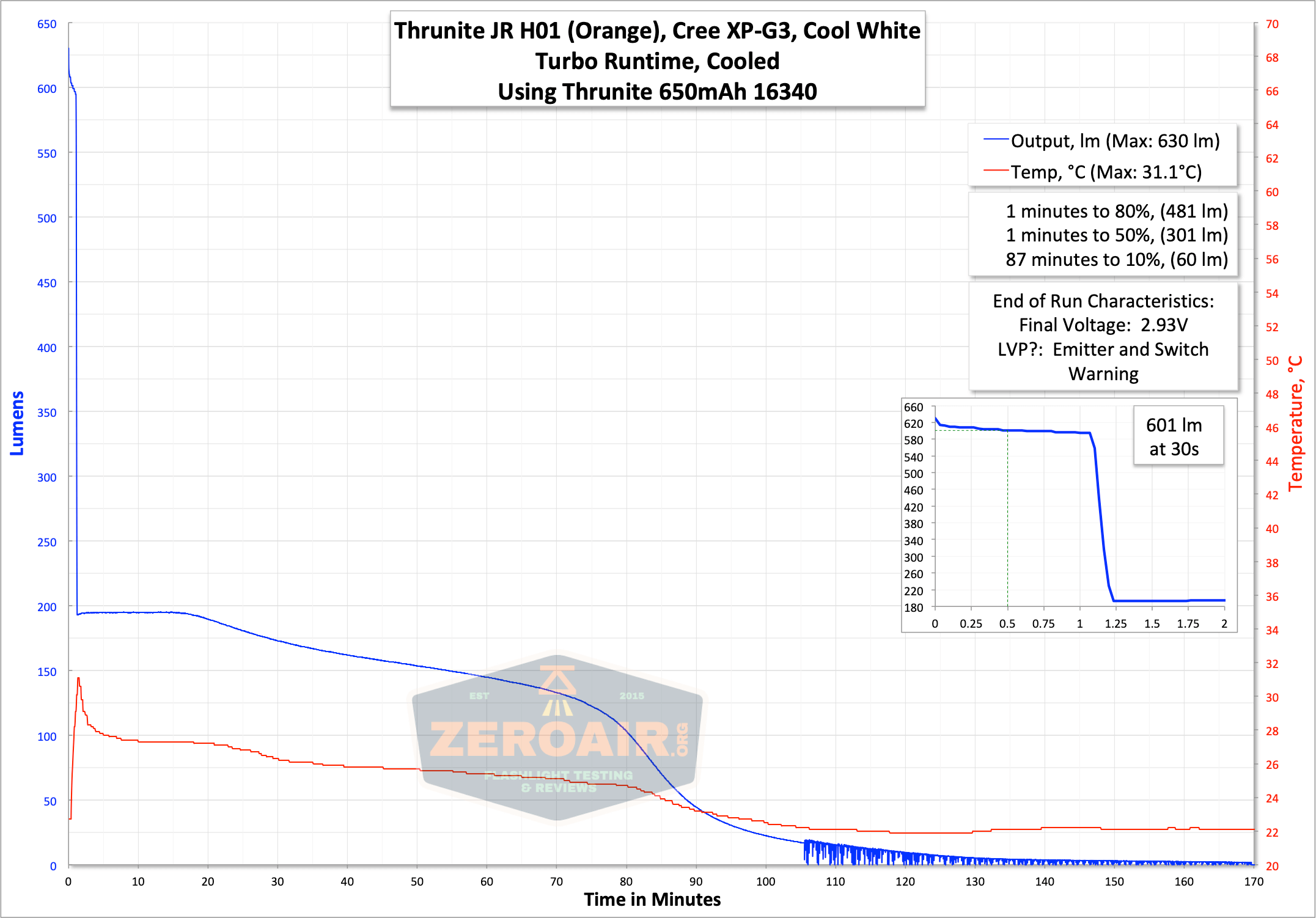
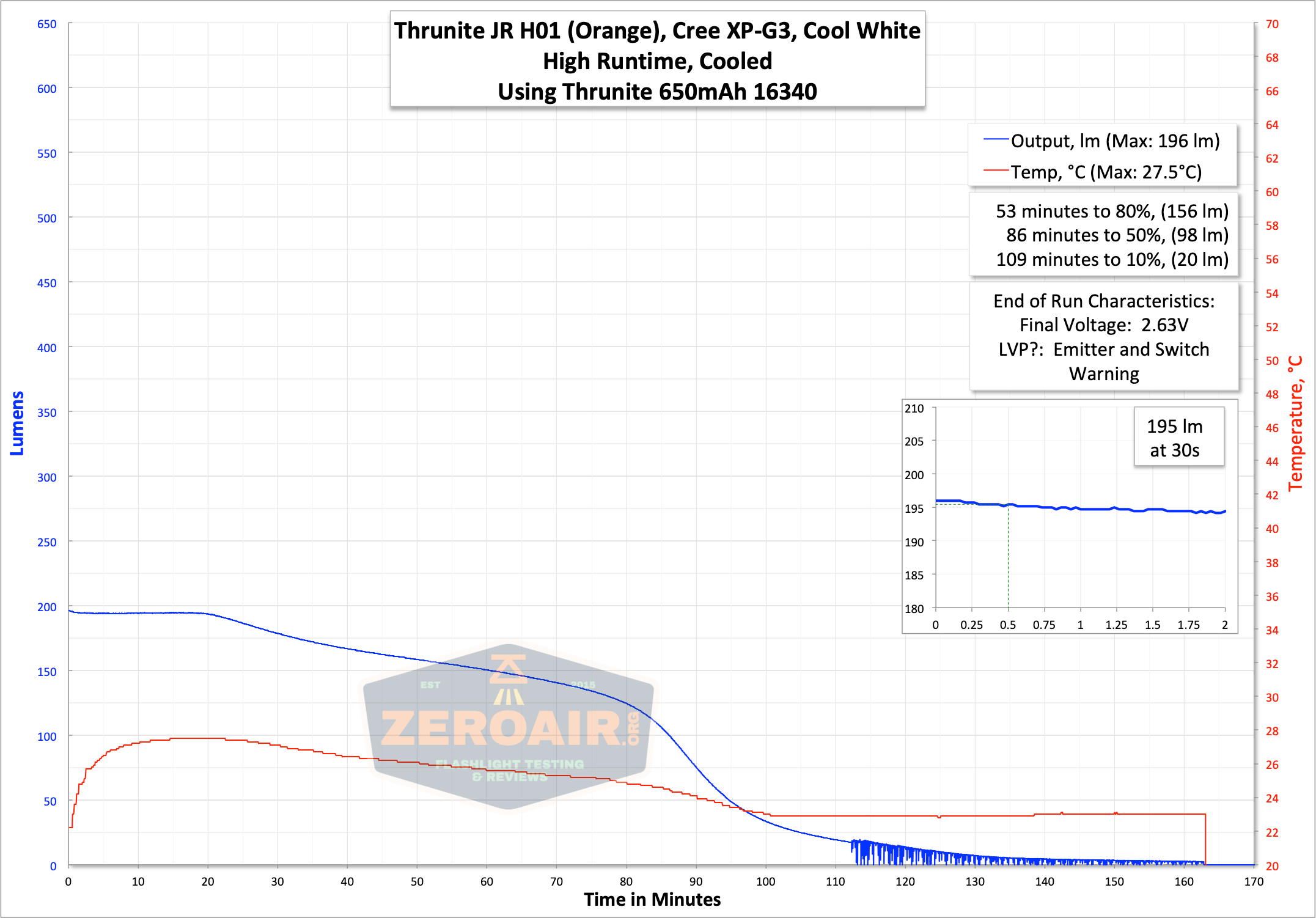
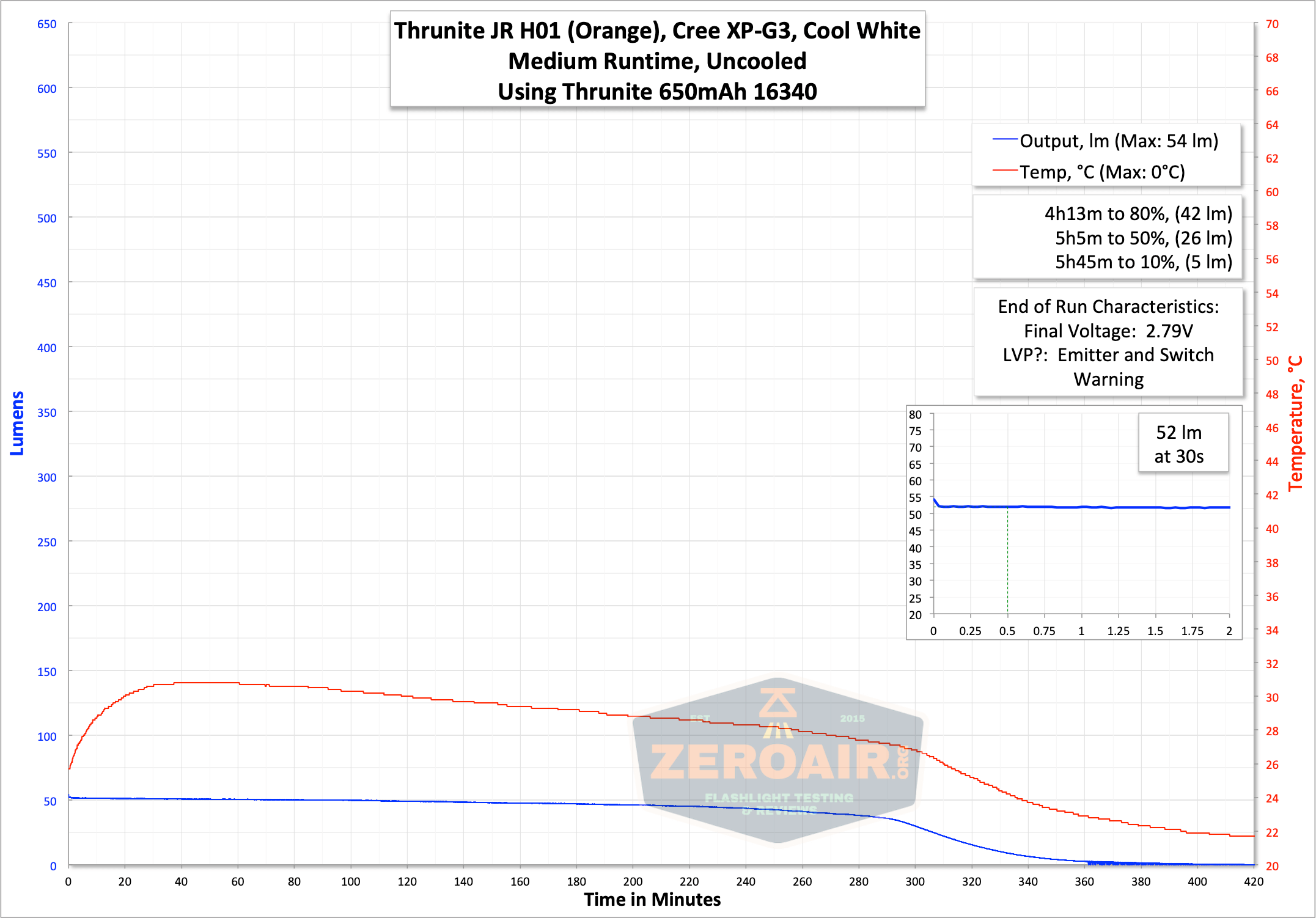
At the end of each of those three tests, you can see some weirdness in the line. That’s actually the main emitter blinking to alert of low voltage. The switch blinks at the same time as the main emitter, too, in red, so you’ll certainly note that the cell is low. However, on bench power, I did not observe the light shutting off due to low voltage.
Charging
The Thrunite Joe Robinet H01 headlamp has built-in charging. There’s a micro-USB port in the head, which charges the 16340.
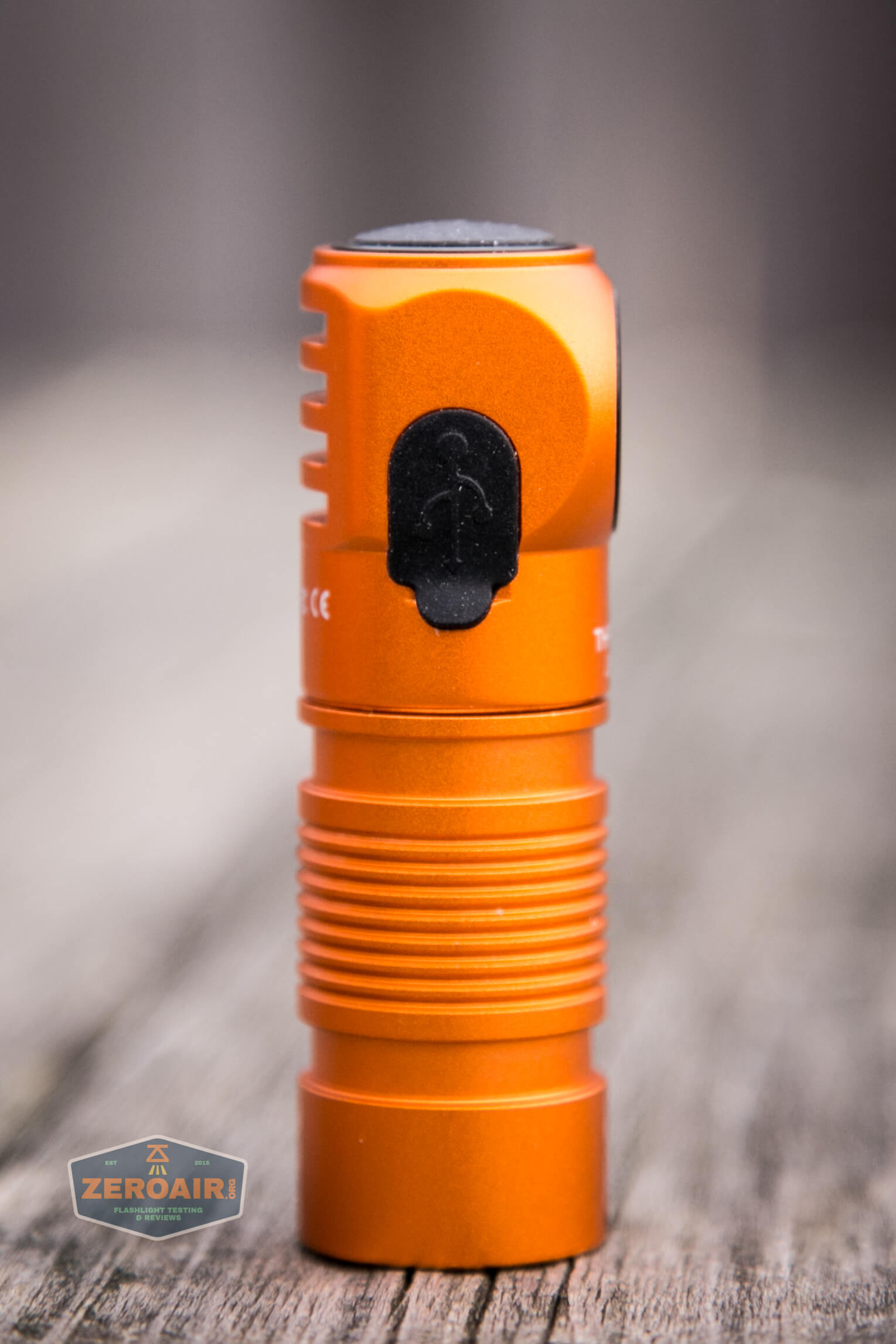
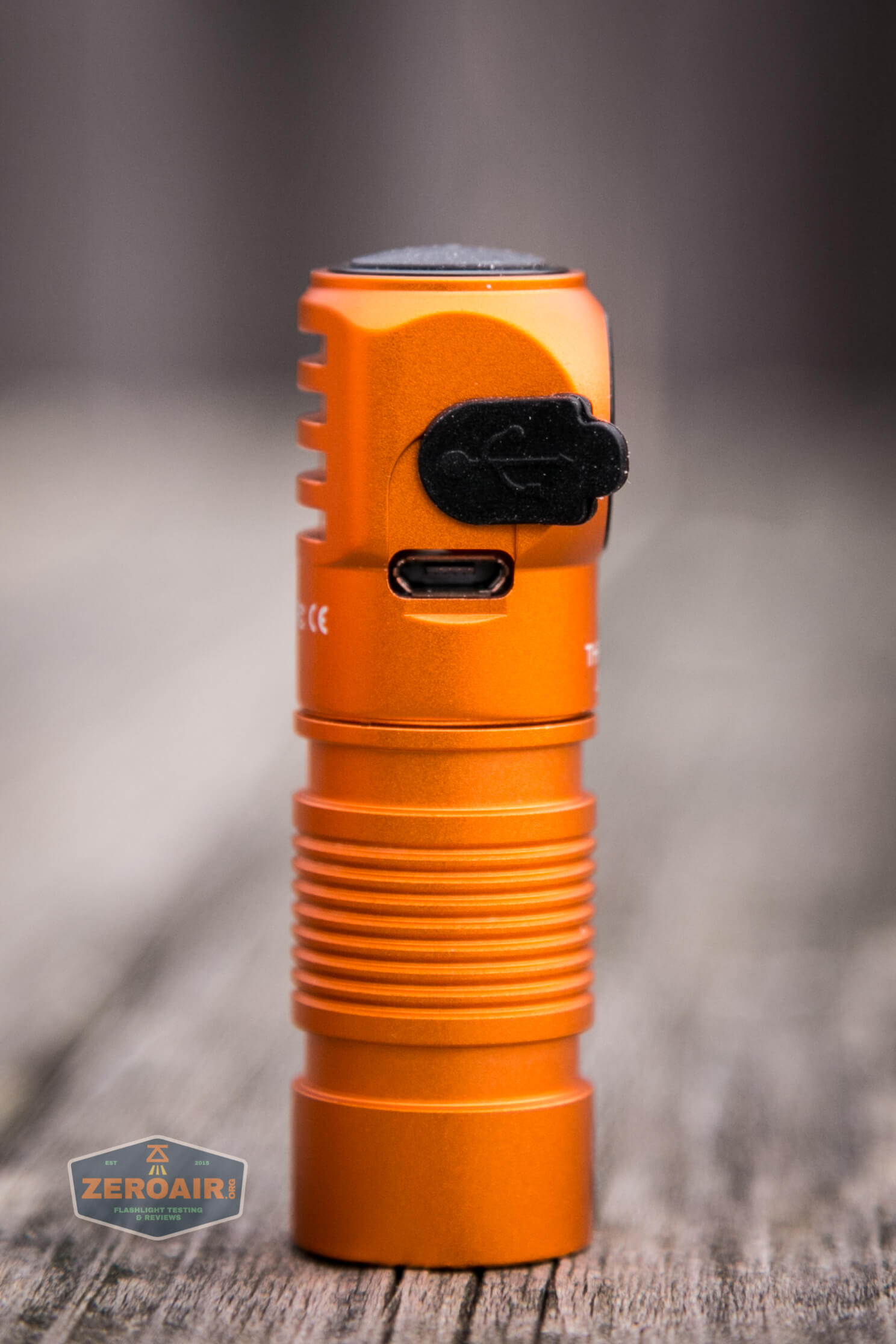
Again, this isn’t a customized 16340, so any cell that works in the light will also charge in the light.
Thrunite includes a charging cable: USB to micro-USB.
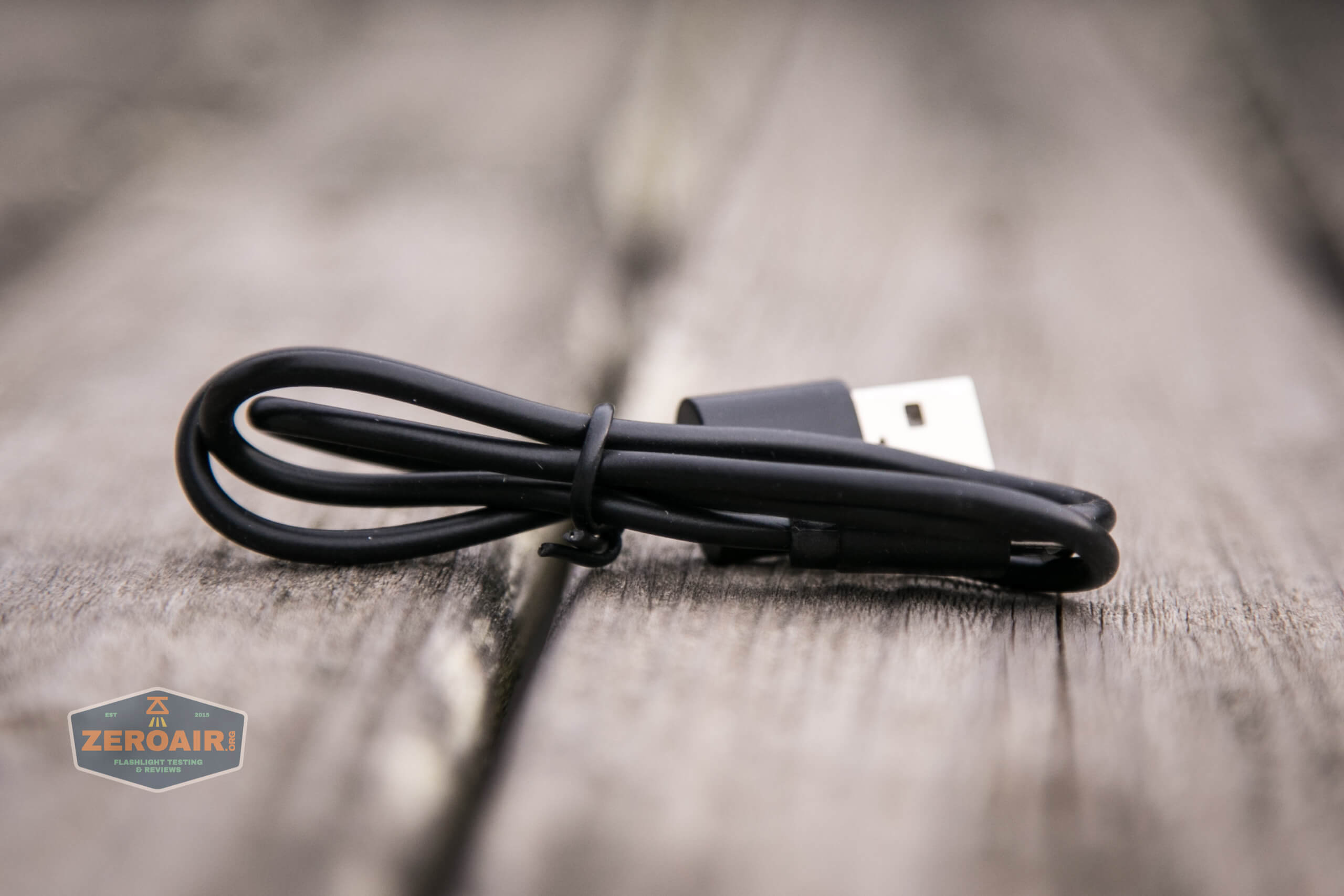
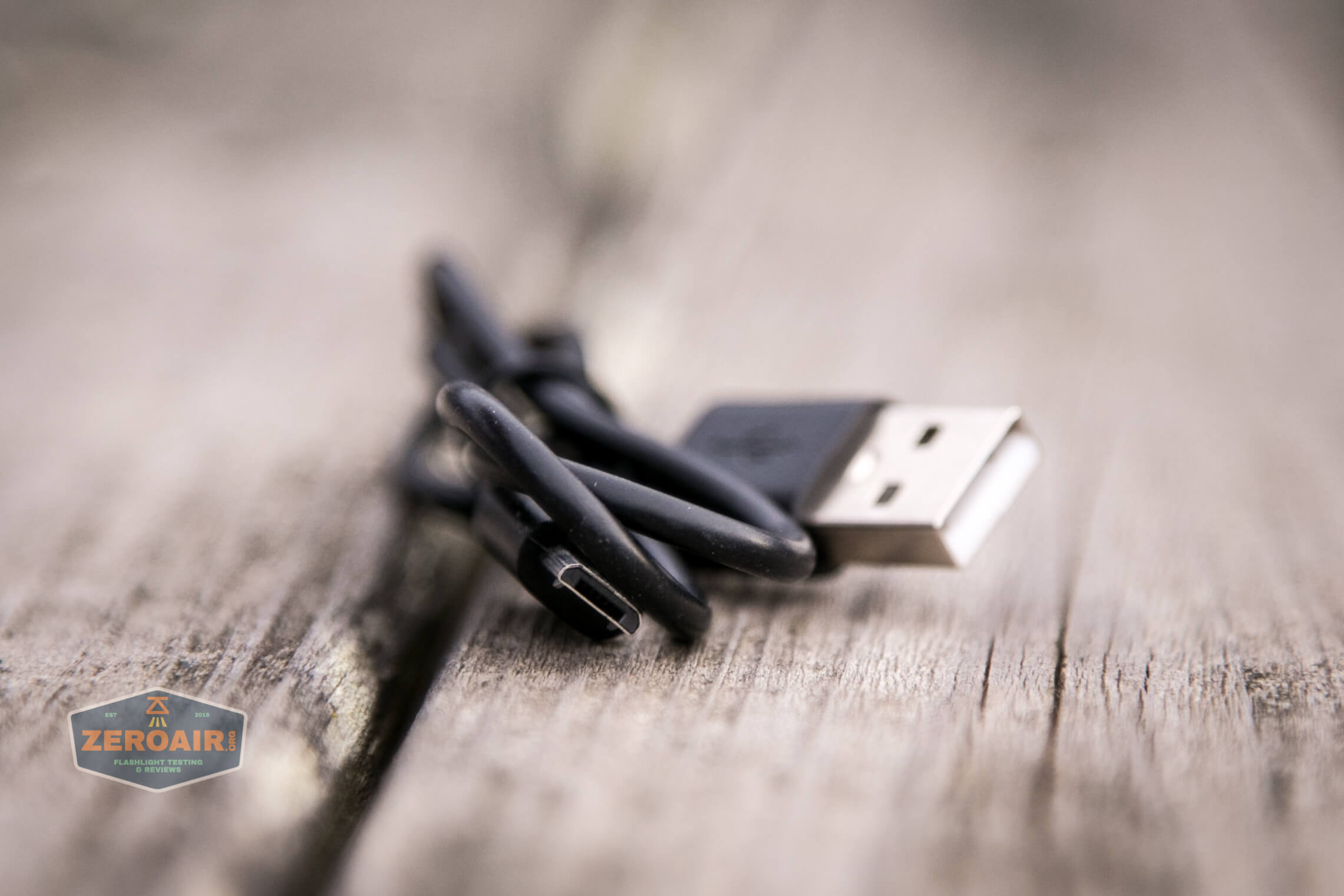
Charging looks very good and stable at around 0.6A, and requires under 2 hours to complete.
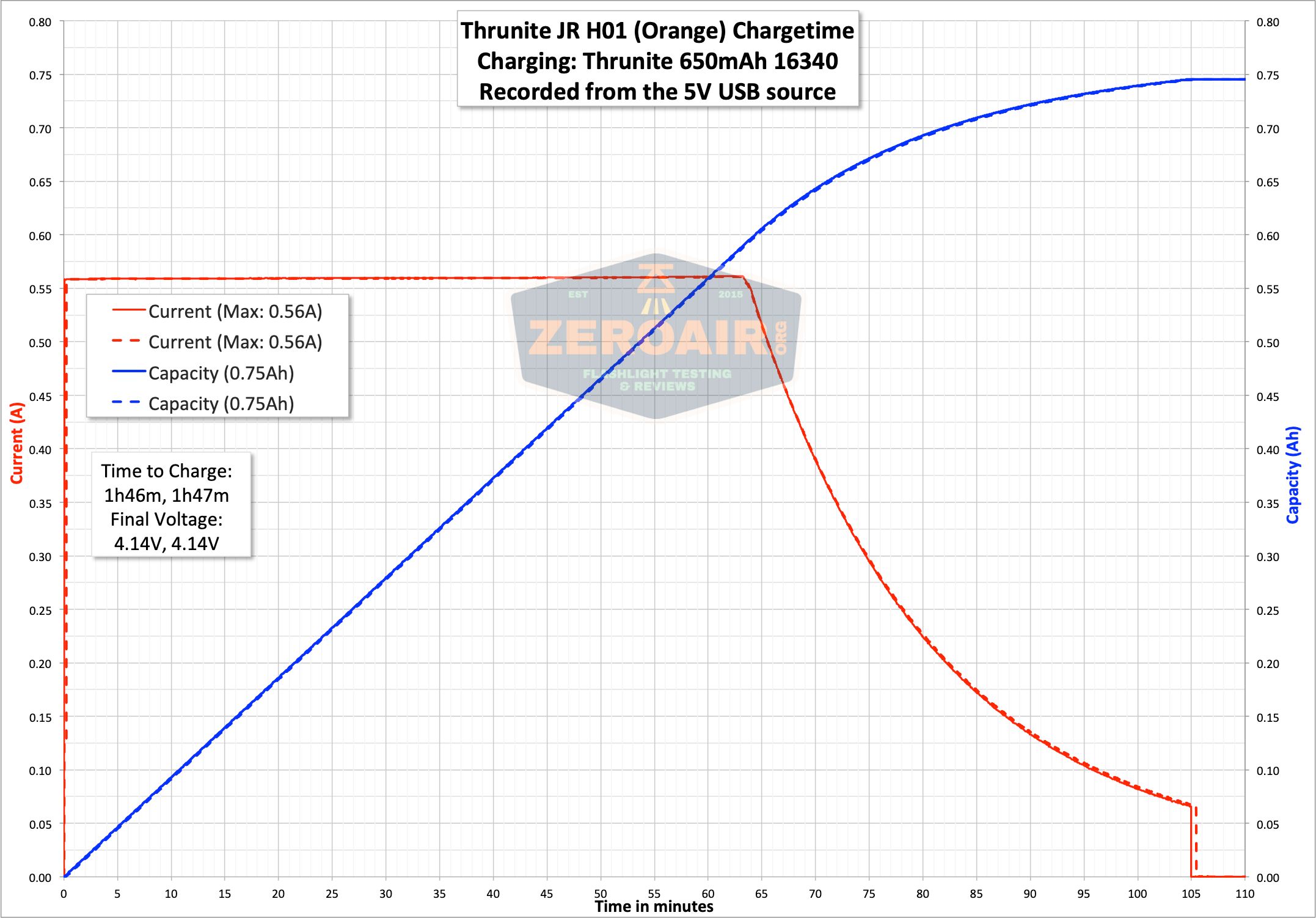
During charge, the indicating switch blinks red. When charging is complete, the switch turns blue.
Modes and Currents
| Mode | Mode Claimed Output (lm) | Claimed Runtime | Measured Lumens | Tailcap Amps |
|---|---|---|---|---|
| Turbo | 687/205 | 75s/85m | 601 | 1.96 |
| High | 195 | 100m | 195 | 0.62 |
| Medium | 50 | 7h | – | 0.14 |
| Low | 6 | 60h | – | 0.01 |
| Firefly | 0.5 | 15d | – | 0.00 |
Pulse Width Modulation
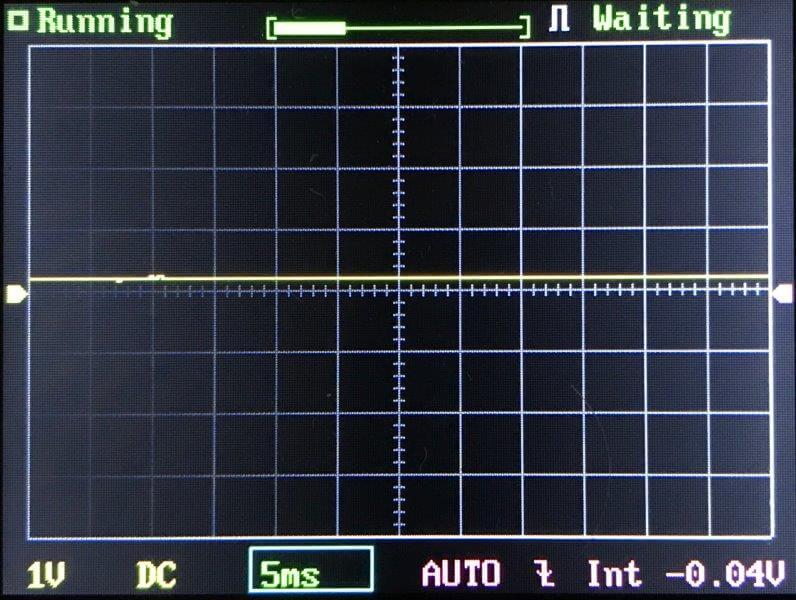
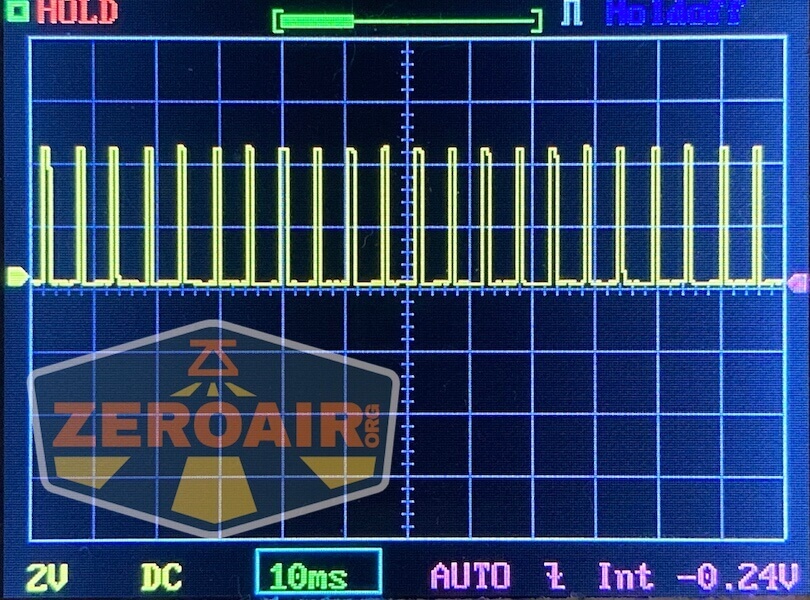
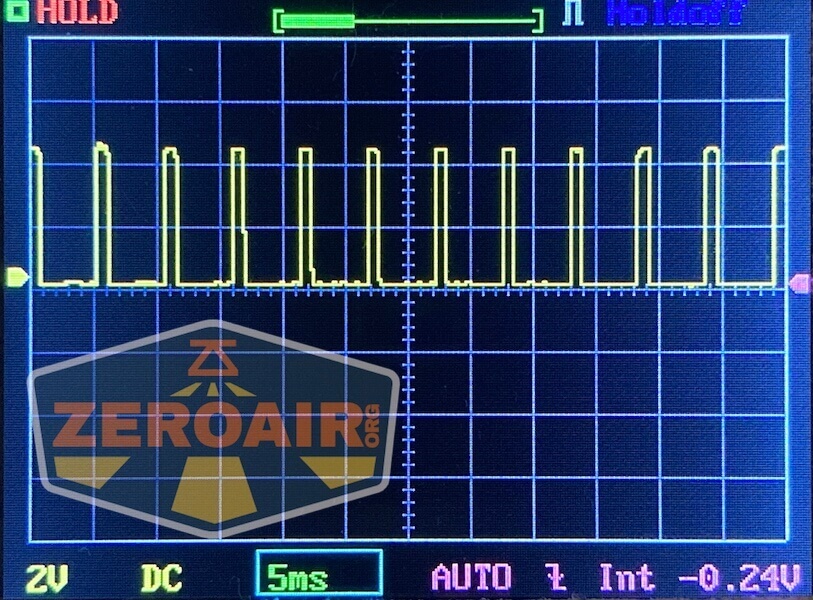
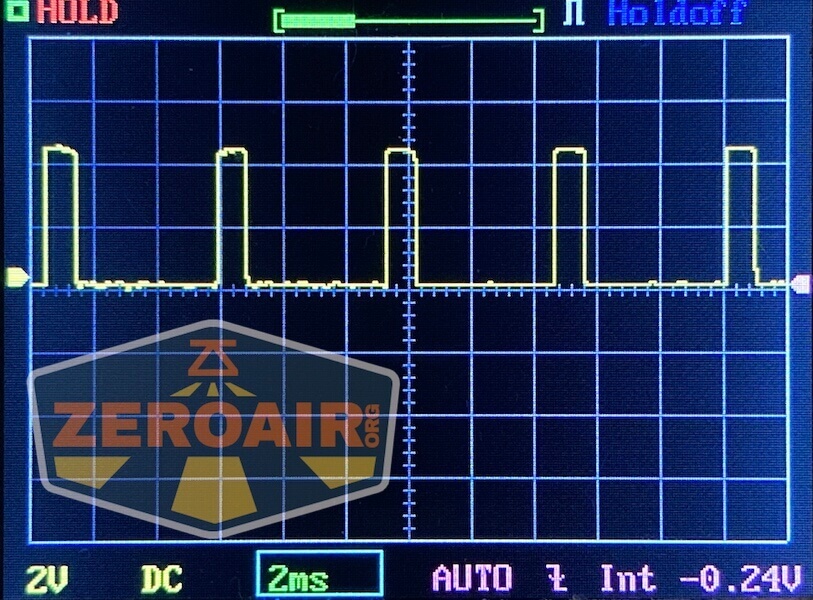
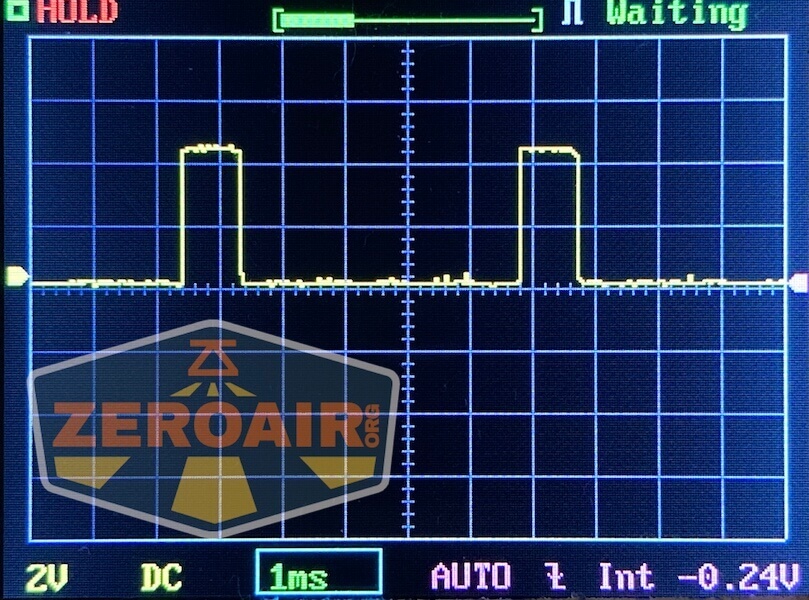
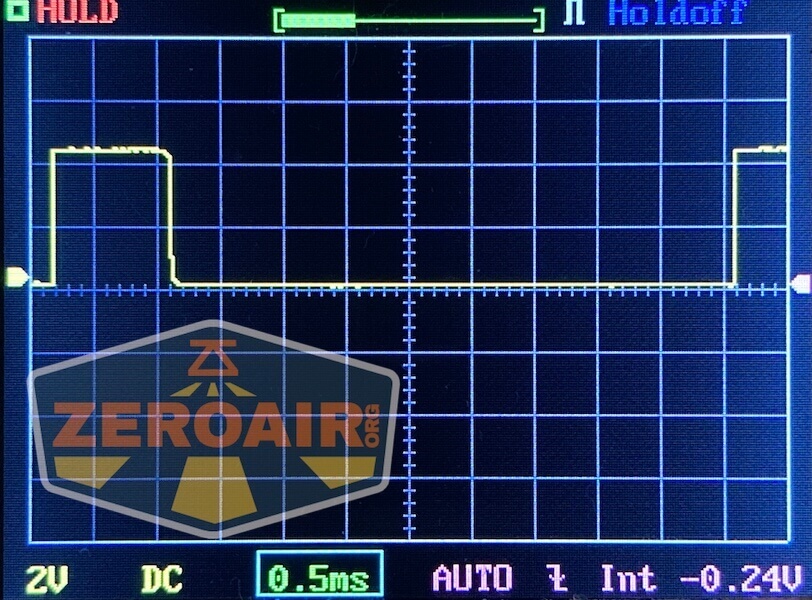
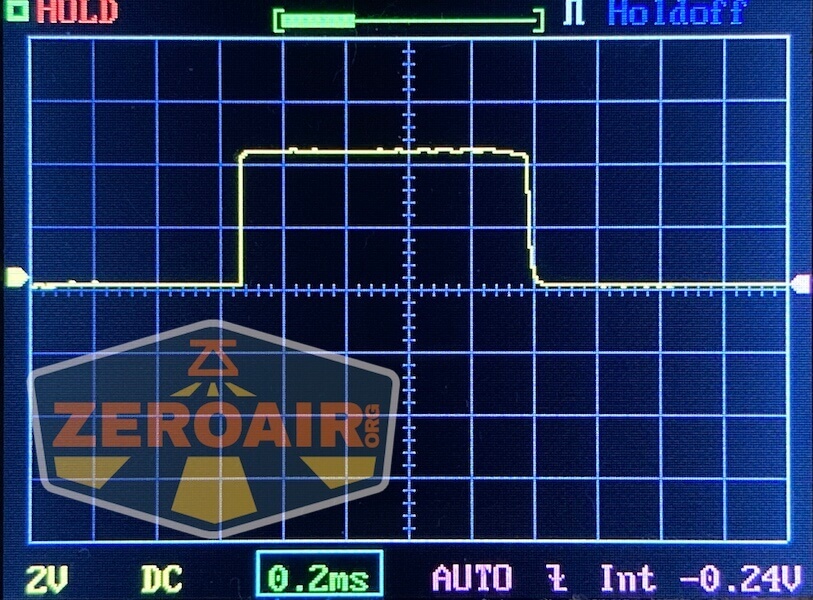
Each of the three middle modes has PWM. It’s fast enough that I don’t notice it, though.

Here you can see a “baseline” – a chart with almost no light hitting the sensor.
Then there’s the Ultrafire WF-602C flashlight, which has some of the worst PWM I’ve seen. It’s so bad that I used a post about it to explain PWM! Here are multiple timescales (10ms, 5ms, 2ms, 1ms, 0.5ms, 0.2ms) to make comparing this “worst” PWM light to the test light easier. That post also explains why I didn’t test the WF-602C at the usual 50us scale.
User Interface and Operation
The H01 has a single switch. It’s an indicating e-switch on the head, and just slightly proud (domed). The cover is fairly soft.
The action is low.
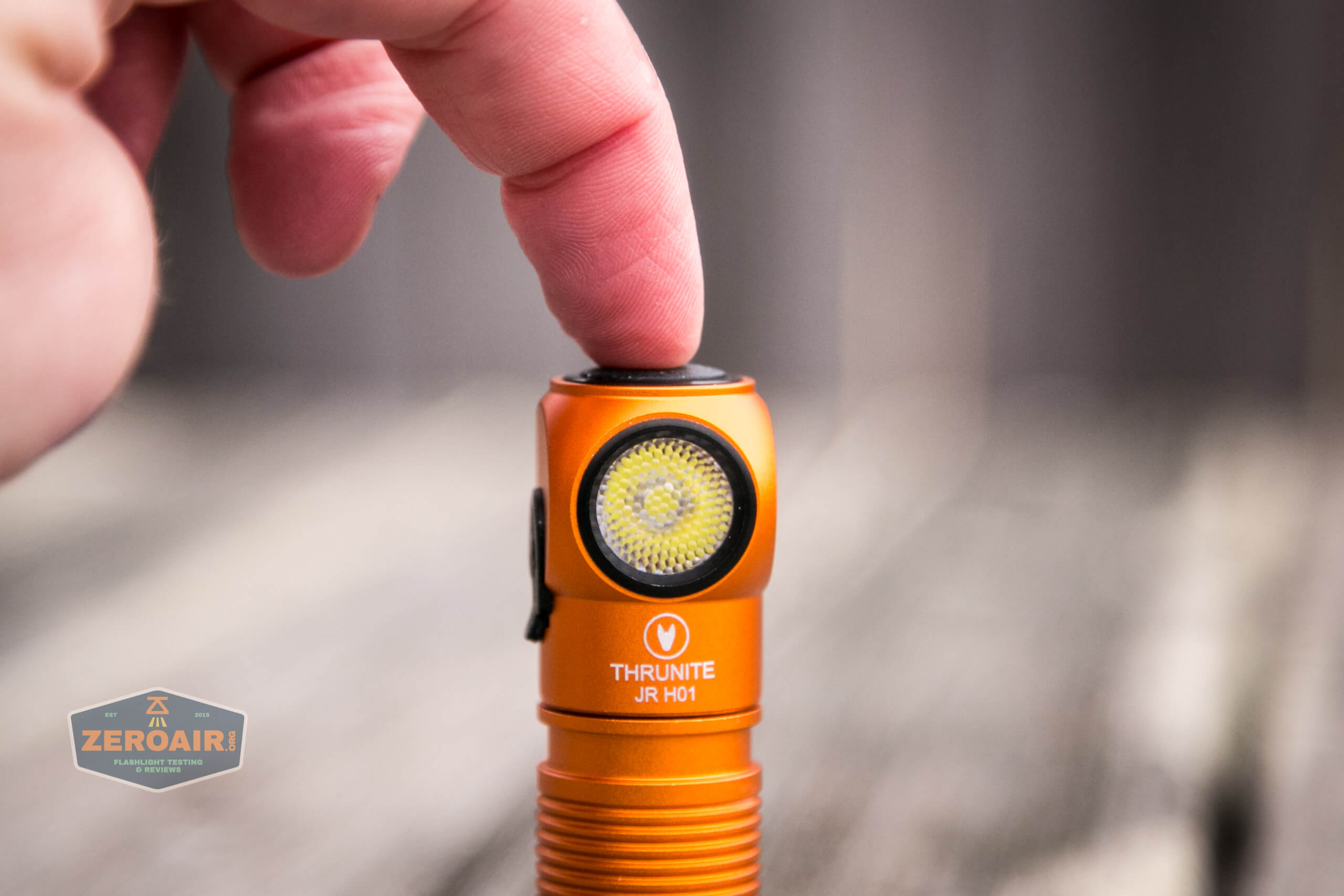
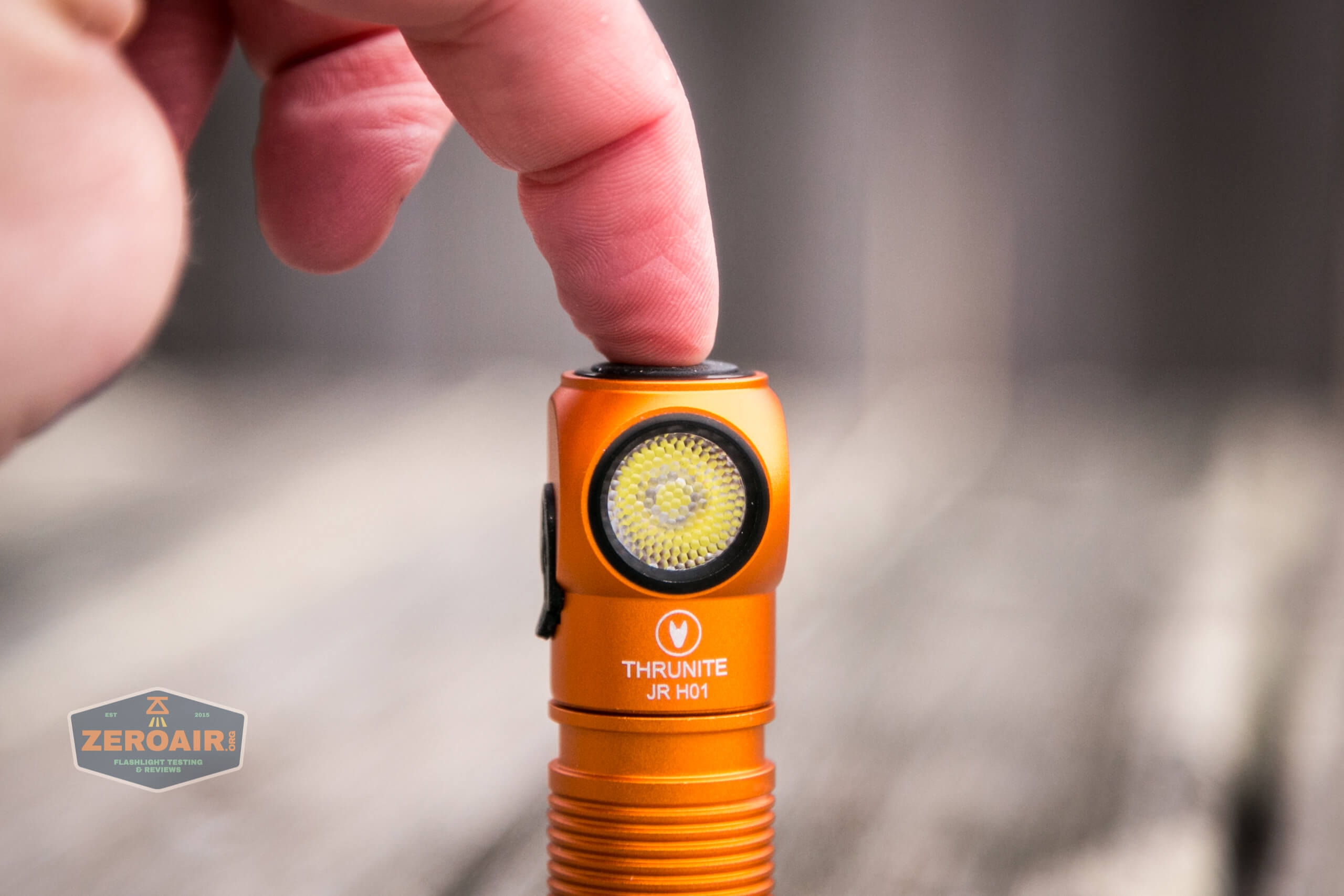
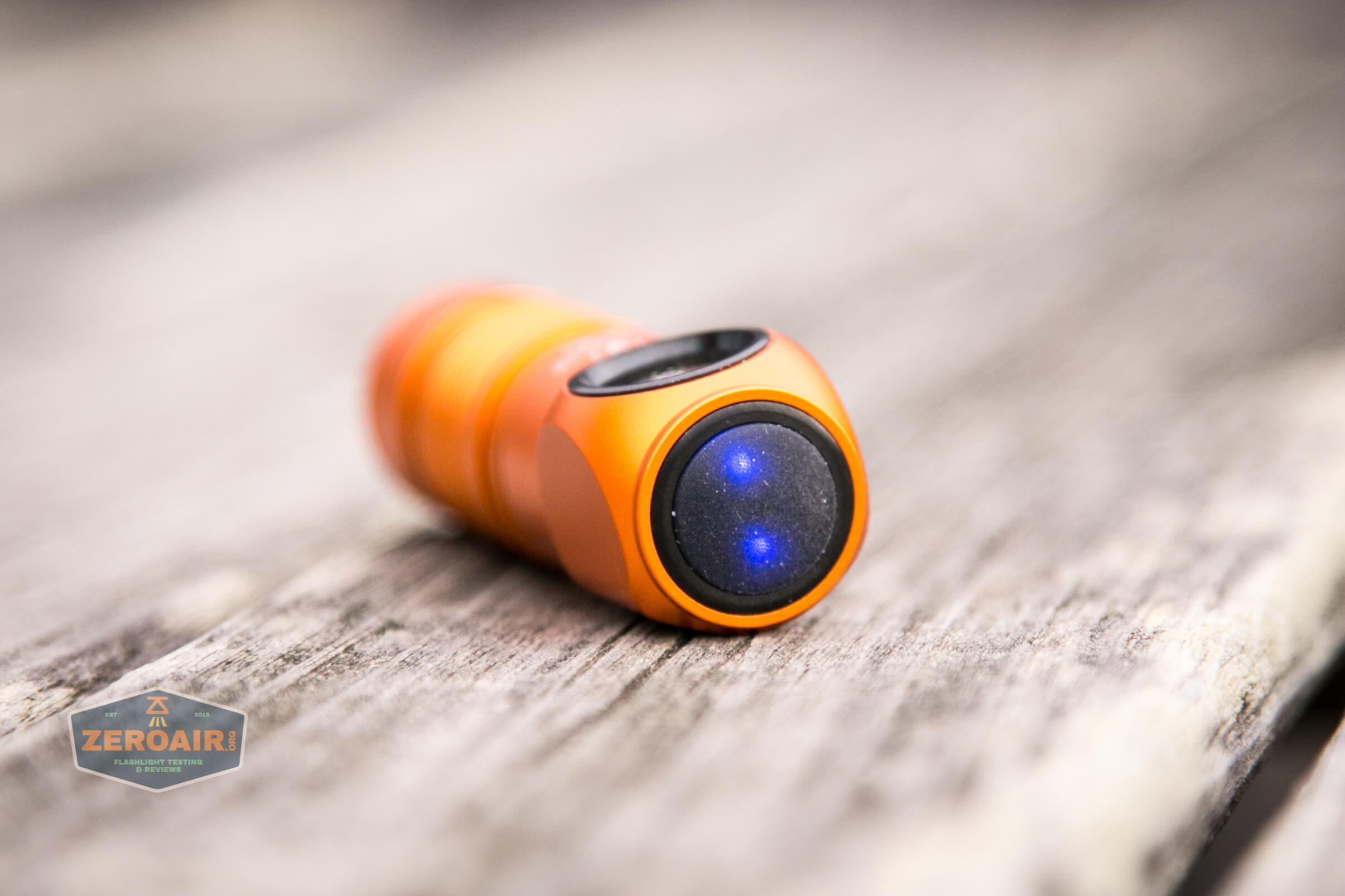
And despite looking solid black, it’s actually translucent. There are indicators under the cover – red and blue (blue seen below.)
Here’s a user interface table!
| State | Action | Result |
|---|---|---|
| Off | Click | On (Mode Memory except for Firefly, Turbo, Strobe) |
| Off | Hold 1s | Firefly |
| On | Click | Off |
| On | Hold | Mode advance (LMH only) |
| Any | Double Click | Turbo |
| Any | Triple Click | SOS |
LED and Beam
The emitter chosen for this H01 is a Cree XP-G3.
That XP-G3 is behind a dimpled TIR, which gives a beam with a hotspot rolling off into a fairly even spill.
Beamshots
These beamshots always have the following settings: f8, ISO100, 0.3s shutter, and manual 5000K exposure. These photos are taken at floor level, and the beam hits the ceiling around 9 feet away.


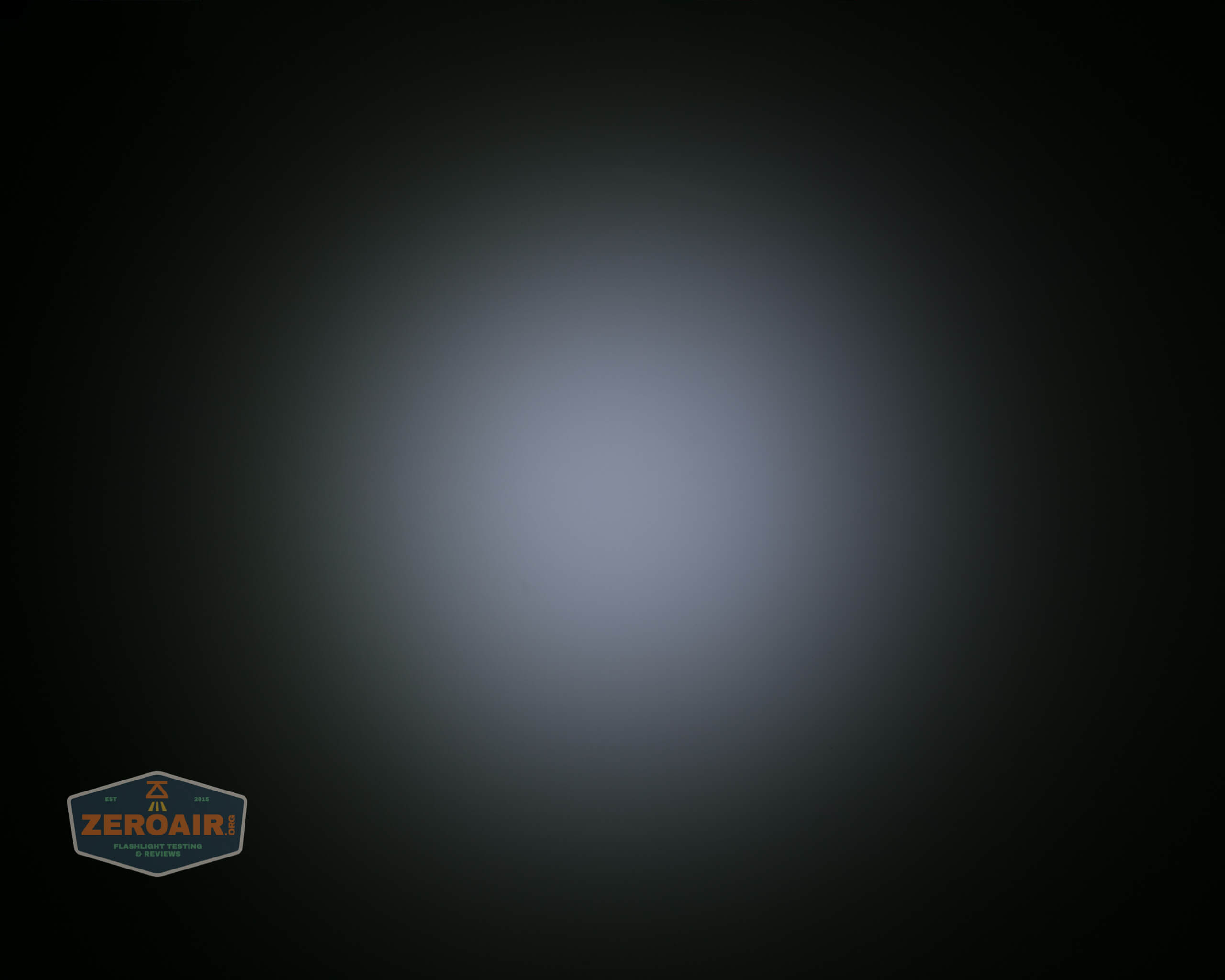

Tint vs BLF-348 (KillzoneFlashlights.com 219b version) (affiliate link)
I keep the test flashlight on the left and the BLF-348 reference flashlight on the right.
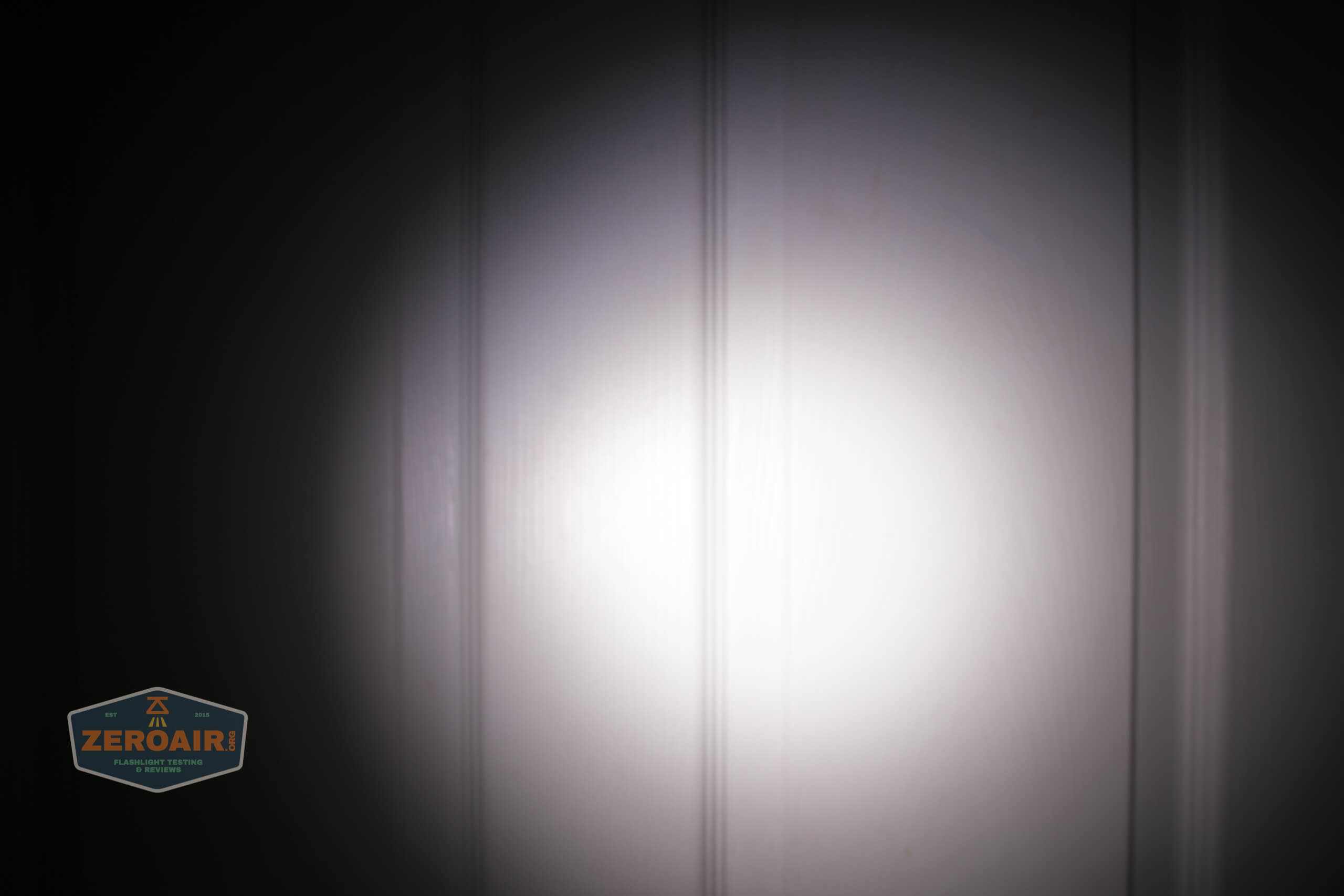
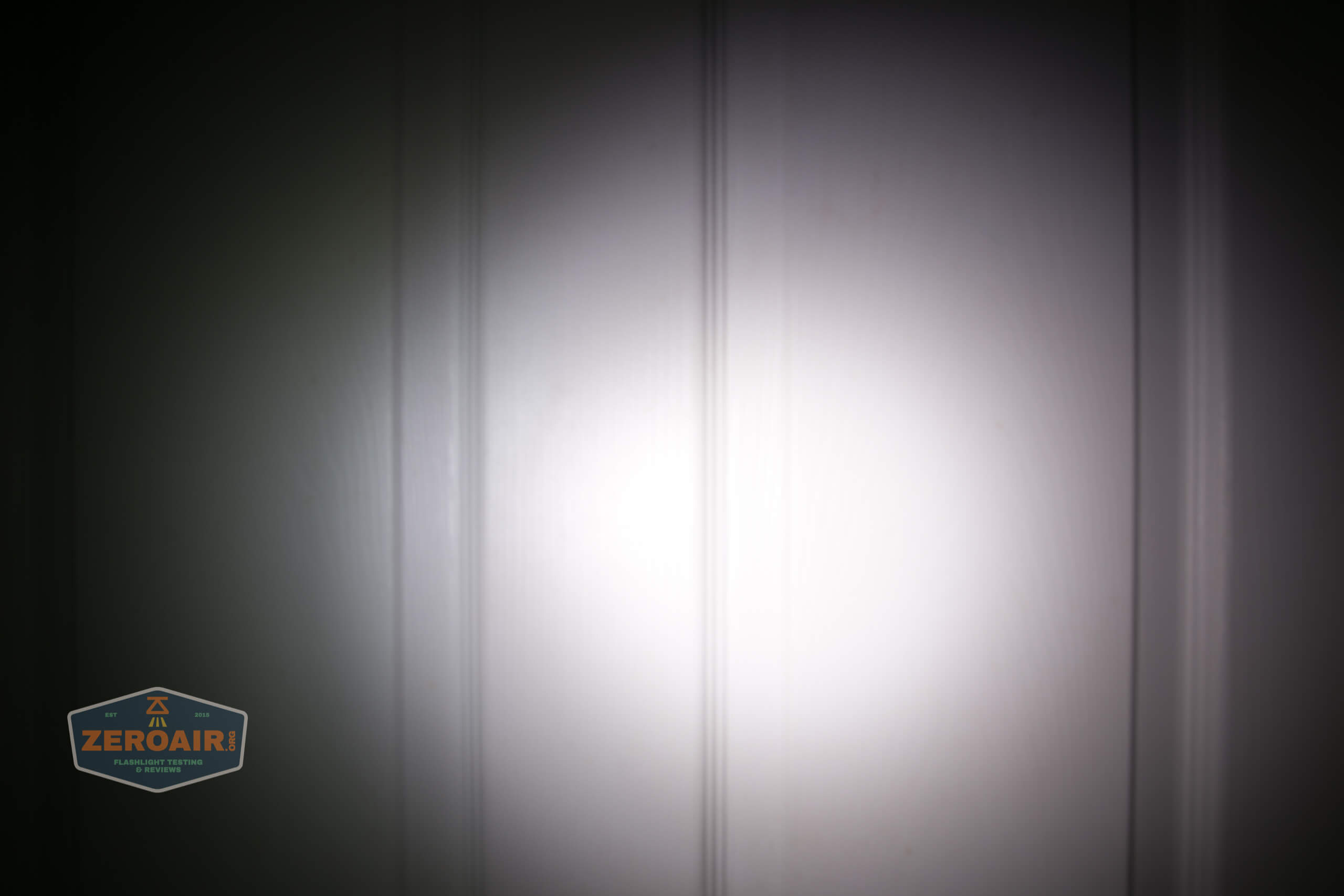
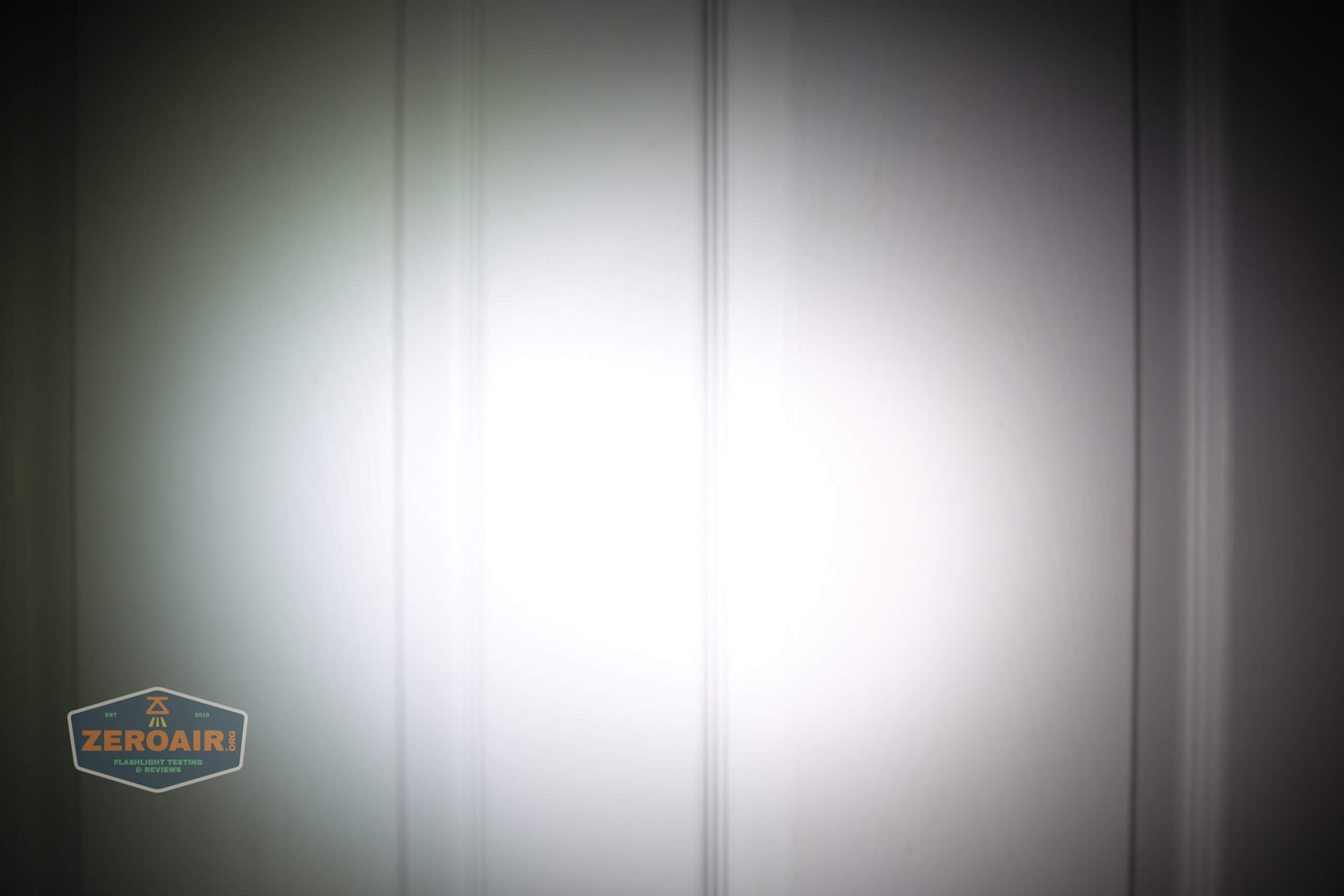
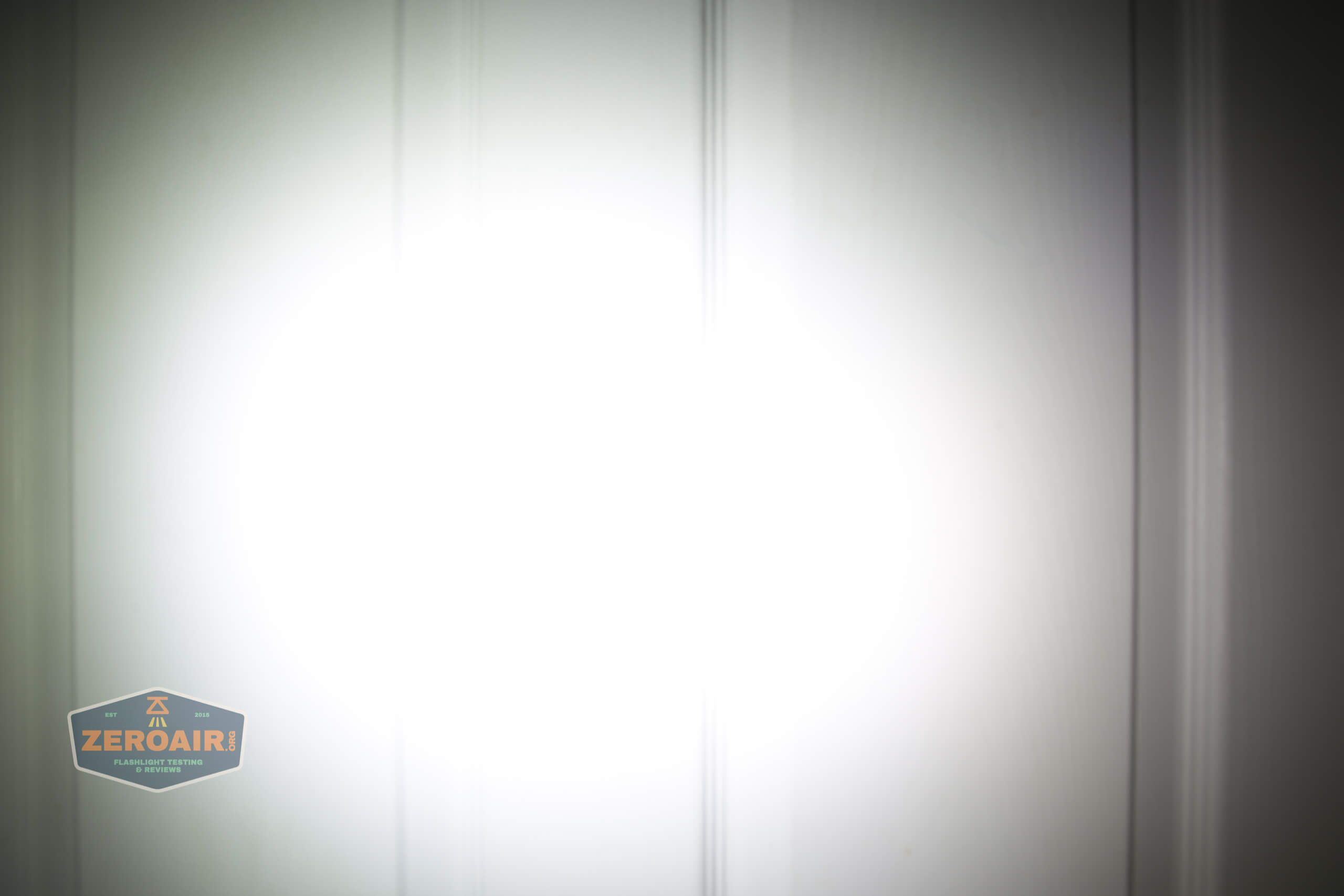
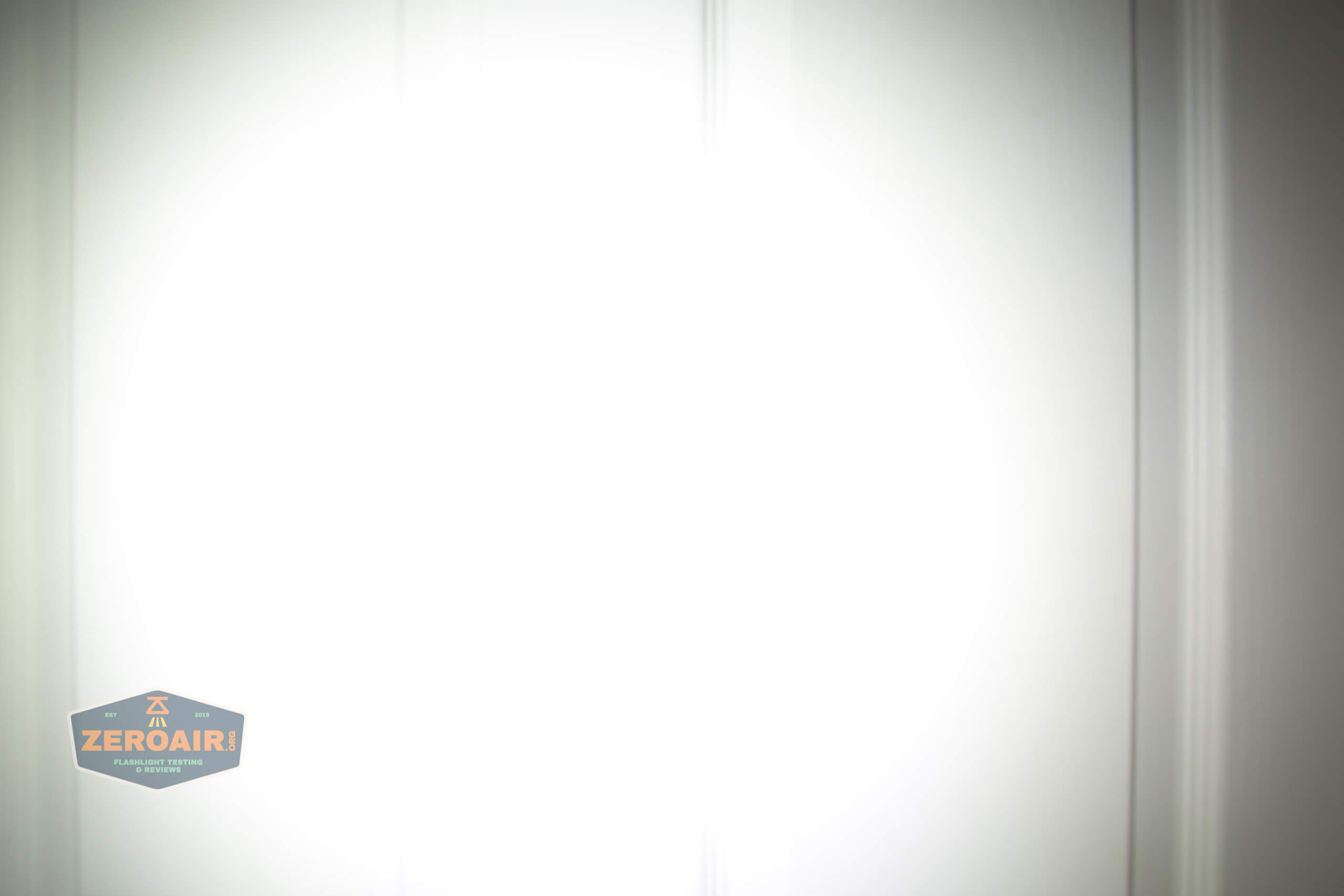
I compare everything to the KillzoneFlashlights.com 219b BLF-348 because it’s inexpensive and has the best tint!
Conclusion
What I like
- Nice build quality
- Simple and good user interface
- It’s orange!
- Doesn’t have an over-the-headband
- Charging is very consistent
What I don’t like
- PWM on middle modes
- No pocket clip
- Cool white
- Doesn’t offer electronic lockout
- Does not have low voltage protection
Notes
- This light is on loan by a “friend from Ala-freaking-Bama” for review. I was not paid to write this review.
- This content originally appeared at zeroair.org. Please visit there for the best experience!
- Please use my Amazon.com referral link to help support zeroair.org!
Discover more from ZeroAir Reviews
Subscribe to get the latest posts sent to your email.
Hi,
Very nice review (well, all your reviews are good!)
One thing I’m not clear on for this lamp, however, is whether the output is regulated – i.e. constant brightness over time, or with forewarned step-down.
The lumen levels look ideal for me, and 6-7 hours on the medium (50 lumen) setting would be nigh perfect. But I don’t want it fading to 30 lumens after three hours, if you know what I mean!
By the way, I take it this Thrunite model is more or less interchangeable with the Wowtac H01…? (other than the orange, of course!)
Kind regards
Dowlass
Hi, great review. Important for me — after many bad experiences with TIR optics — how wide ist the spill / beam? E. g. Armytec or Zebralight will advertise their light with a 120 degree spill. But Trustfire / Fenix have 16340 headlamps with am advertised 170 (!) degree spill (MC12 e.g.). This ist nor only a waste of energy (since the human viewing angle is much lower) but also leads to very annoying reflections in the face… Thanks for a hint.