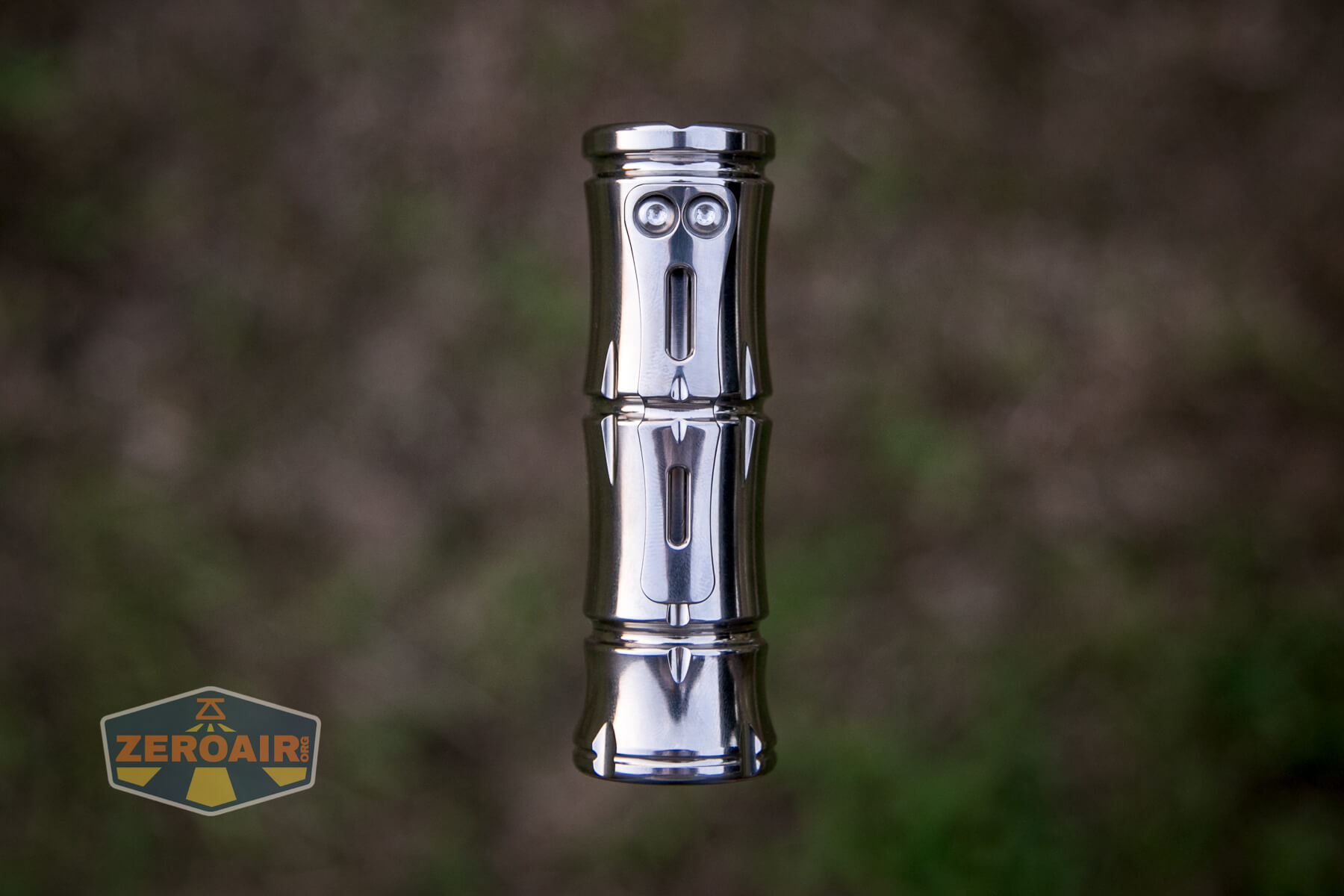

WWLZ Bamboo Small 18350 Flashlight Review
The WWLZ Bamboo Small flashlight runs 18350 and landed out of nowhere – it scratches the EDC itch, and it offers secondary emitters! Read on!
WWLZ Bamboo Small 18350 Flashlight Official Specs and Features
Here’s a referral link to the product page at NealsGadgets, the only place I know it to be listed.
Versions
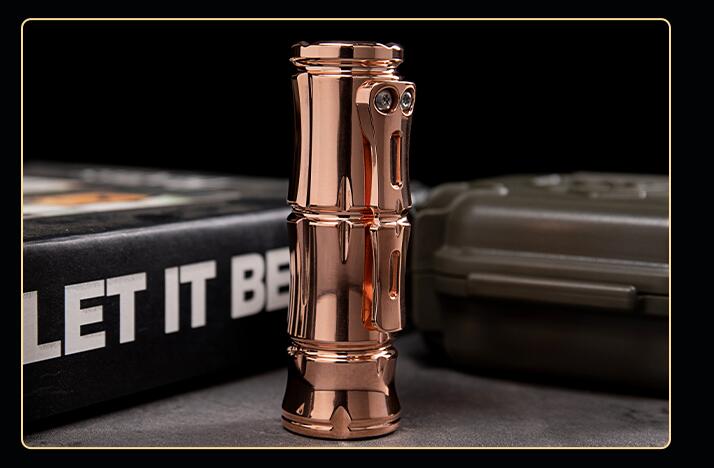
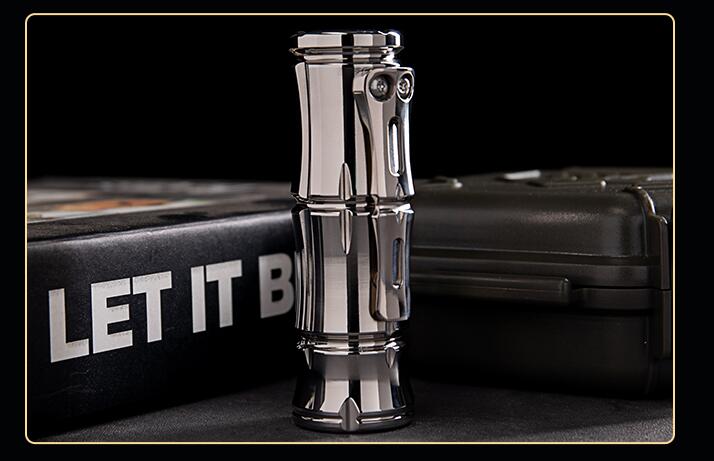
There are two versions. They differ in body material. Titanium is seen here, but copper is also available.
Price of the WWLZ Bamboo Small 18350 Flashlight
These two body materials also differ in price. Copper costs $169.95, while titanium rings in at $199.95. Both of these WWLZ Bamboo Small 18350 flashlights are available at (and only at) NealsGadgets.com.
Short Review
There’s a whole lot to love about the WWLZ Bamboo Small 18350 flashlight. First of all, the build quality is excellent. Secondly, it’s very unusual, which is saying something in a sea of 18350 triple emitter flashlights. There are a few things I don’t love, though; read on to see what those (2?) things are.
WWLZ Bamboo Small 18350 Flashlight Long Review
The Big Table
| WWLZ Bamboo Small Flashlight | |
|---|---|
| Emitter: | Cree XP-L HD (6500K) (triple) |
| Price in USD at publication time: | $199.95 |
| Cell: | 1×18350 |
| Turbo Runtime Graph | High Runtime Graph |
| LVP? | Warning (a double blink of the main emitter) |
| Switch Type: | Mechanical (Reverse clicky) |
| On-Board Charging? | No |
| Claimed Lumens (lm) | 2500 |
| Measured Lumens (at 30s) | 1424 (57% of claim)^ |
| Candela per Lumen | 2.6 |
| Claimed Throw (m) | – |
| Candela (Calculated) in cd (at 30s) | 233lux @ 4.529m = 4779cd |
| Throw (Calculated) (m) | 138.3 |
| All my WWLZ reviews! | |
^ Measurement disclaimer: Testing flashlights is my hobby. I use hobbyist-level equipment for testing, including some I made myself. Try not to get buried in the details of manufacturer specifications versus measurements recorded here; A certain amount of difference (say, 10 or 15%) is perfectly reasonable.
What’s Included
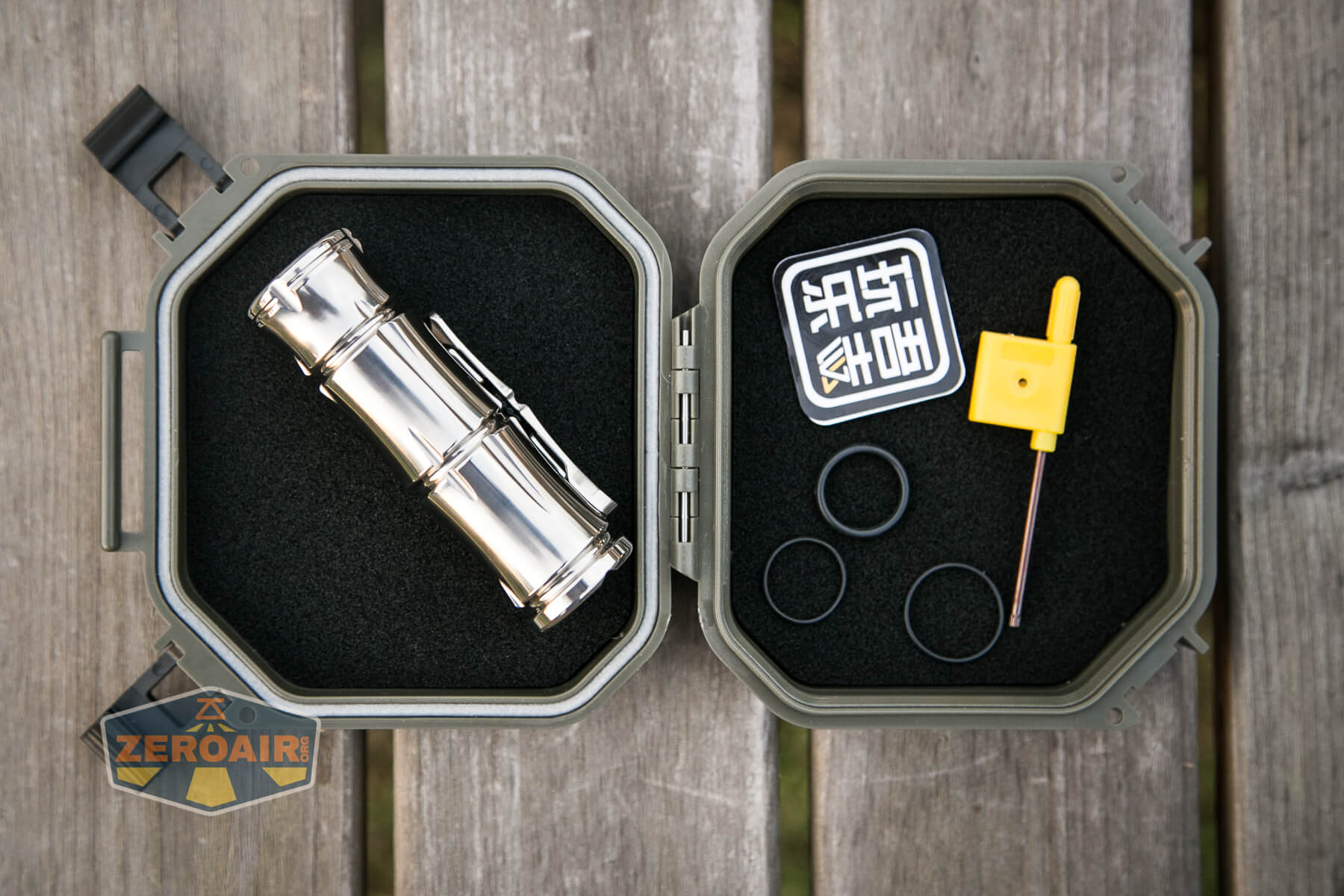
- WWLZ Bamboo Small 18350 Flashlight
- Spare o-rings (3, 2 sizes)
- Torx wrench (for pocket clip adjustment)
- Stickers (2)
- Hard case, with padding
Package and Manual
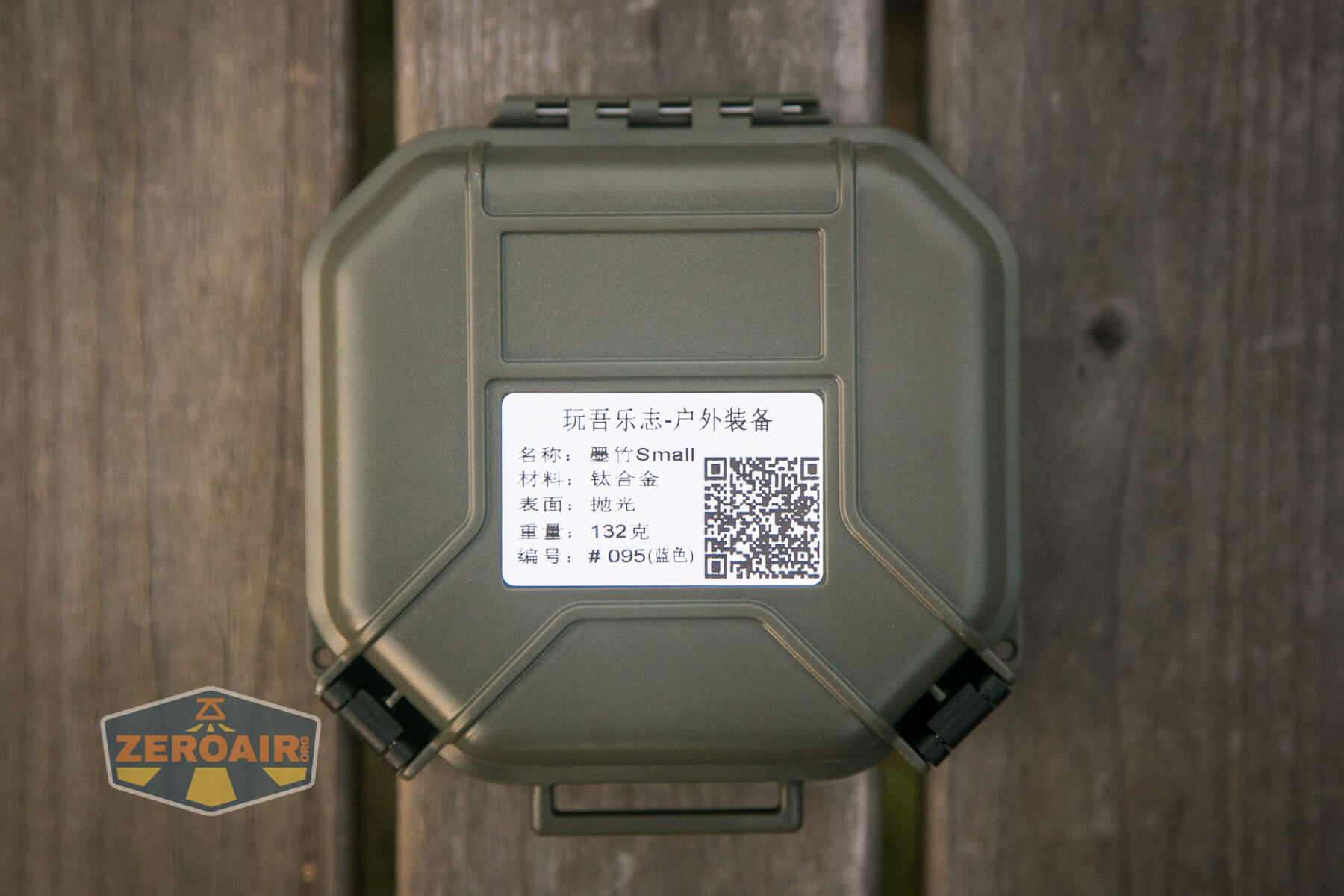
This hard case is not nothing – it’s not the very cheap and throw-away type that you see on some lights. It’s a substantial case, and the latches are actually hinged (not “plastic hinged”). Would I carry the light in it? Probably not, but… It’s a nice case.
There is no manual (!!). Since this light has a user interface that you’ve never seen before, you’ll probably want to view the User Interface section here as a manual.
Build Quality and Disassembly
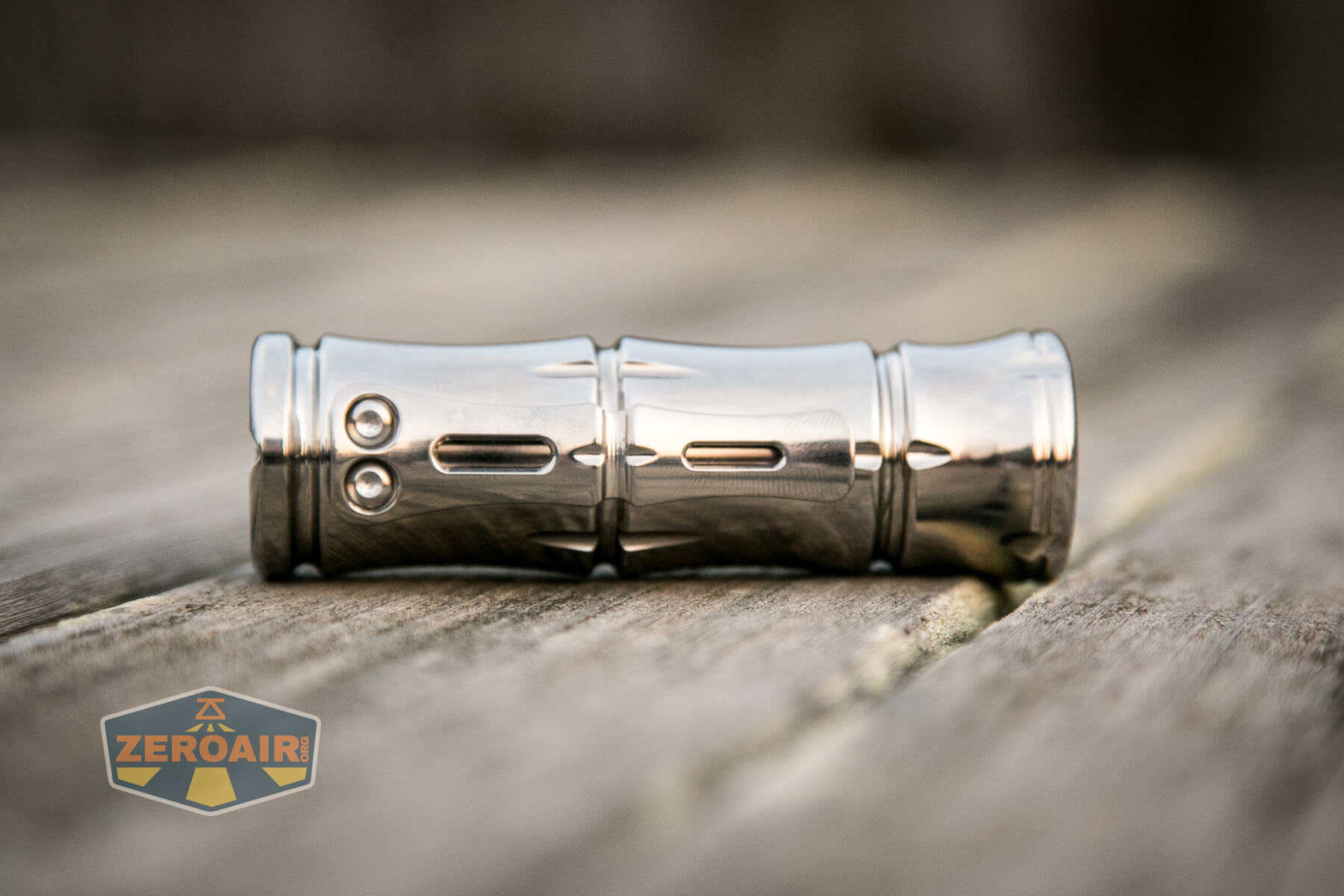
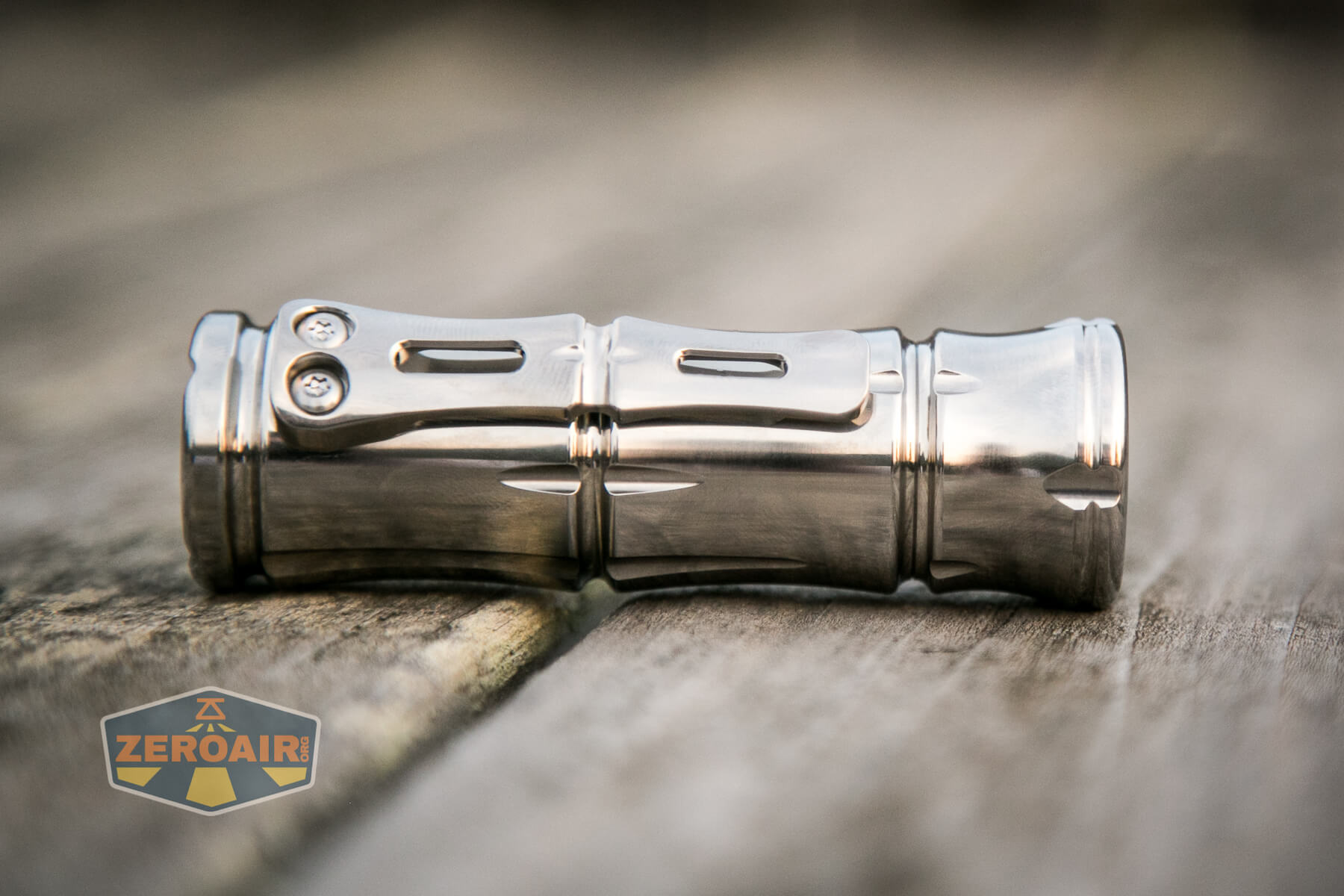
There’s a major point here that I want to say up front. Let me preamble, though. This light is called the “Bamboo Small” (or just “Bamboo” and “small” is just a descriptor, but I’m going with the longer version.) This Bamboo Small has the look of a bamboo stalk with a few nodes (ok, four nodes and three internodes). These nodes have what I take to be sulcus grooves, which is just fairly incredible attention to detail.
But that’s not the point of this ramble. The point is that the head has a little indentation (whatever it’s called) and the body has an indentation, and they line up perfectly.
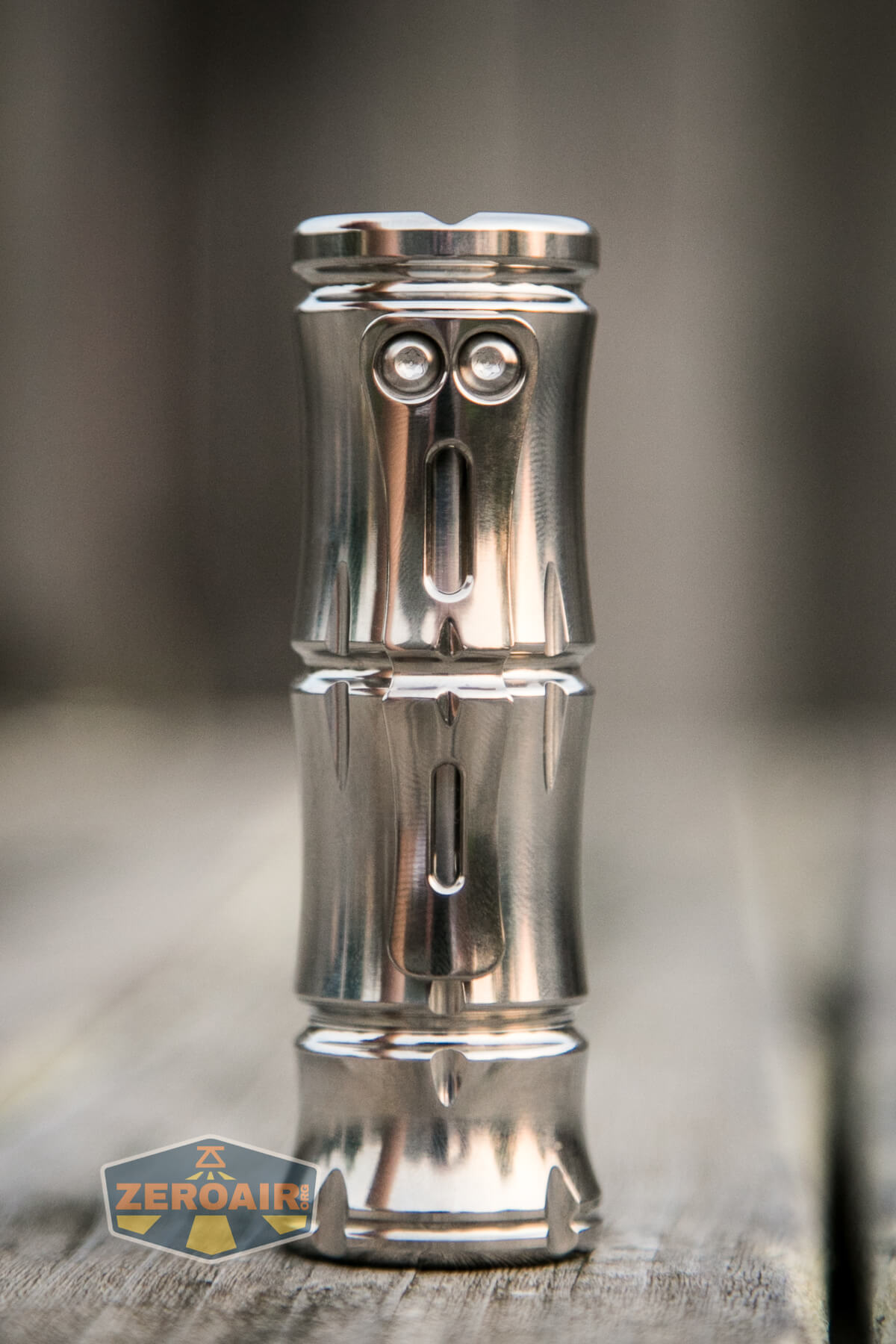
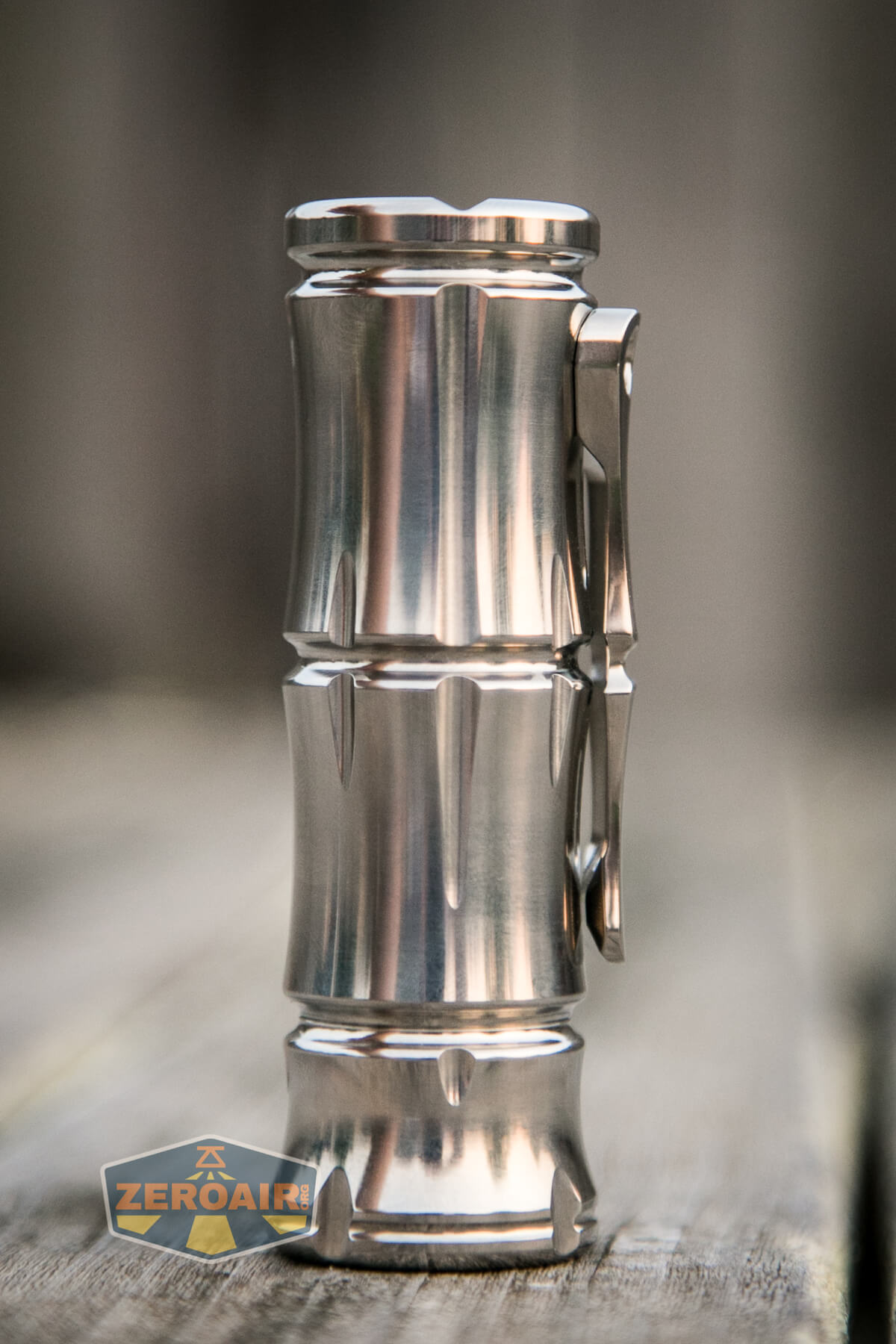
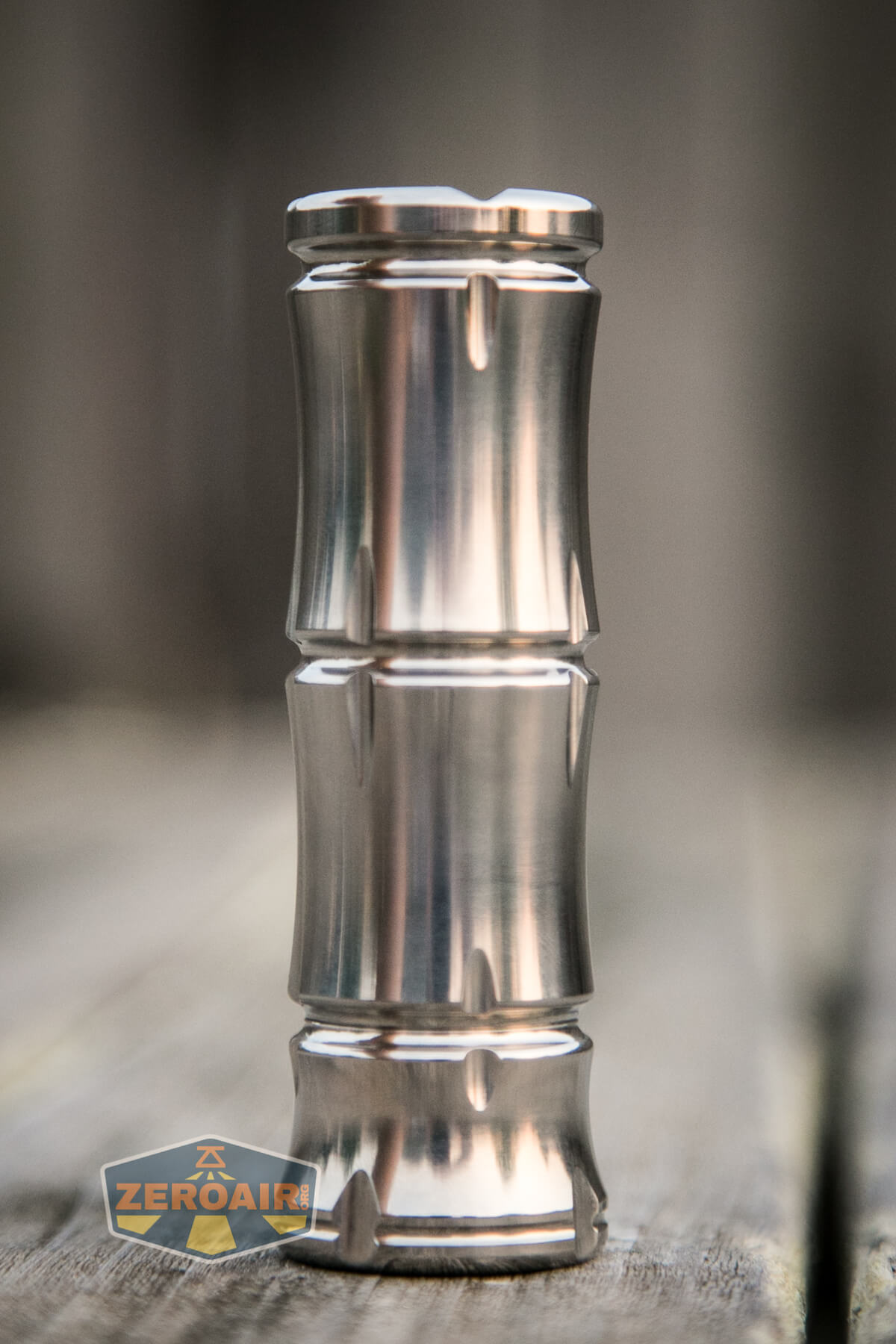
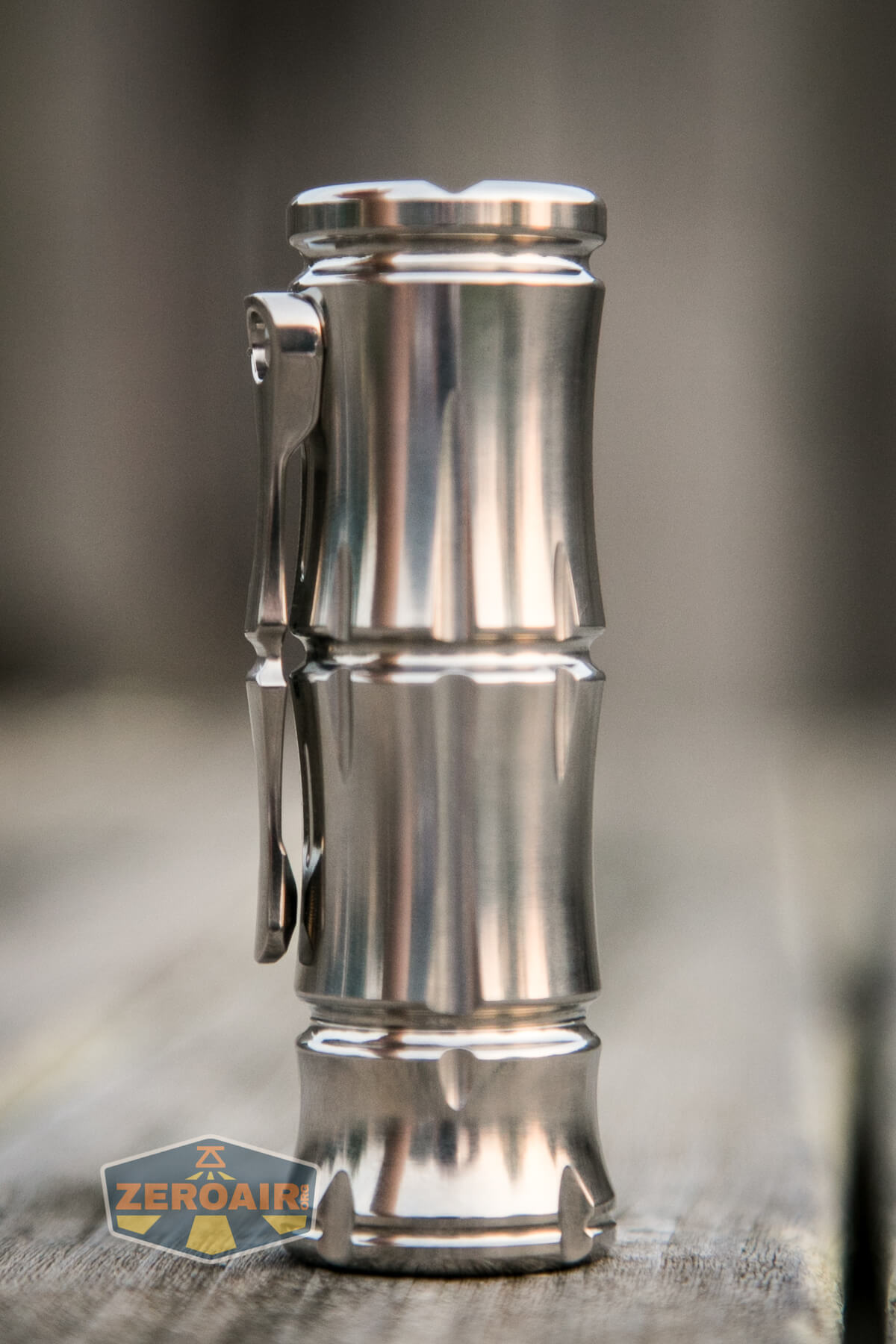
Not “they line up perfectly if you back the head off just a touch.” I mean, at full tightness, these two notches are perfectly in line.
Aside from all that, the build quality here is stellar. As I said elsewhere, this is a completely unusual flashlight. It doesn’t seem that design queues were taken from any of the many similar flashlights. You’ll see more about that later.
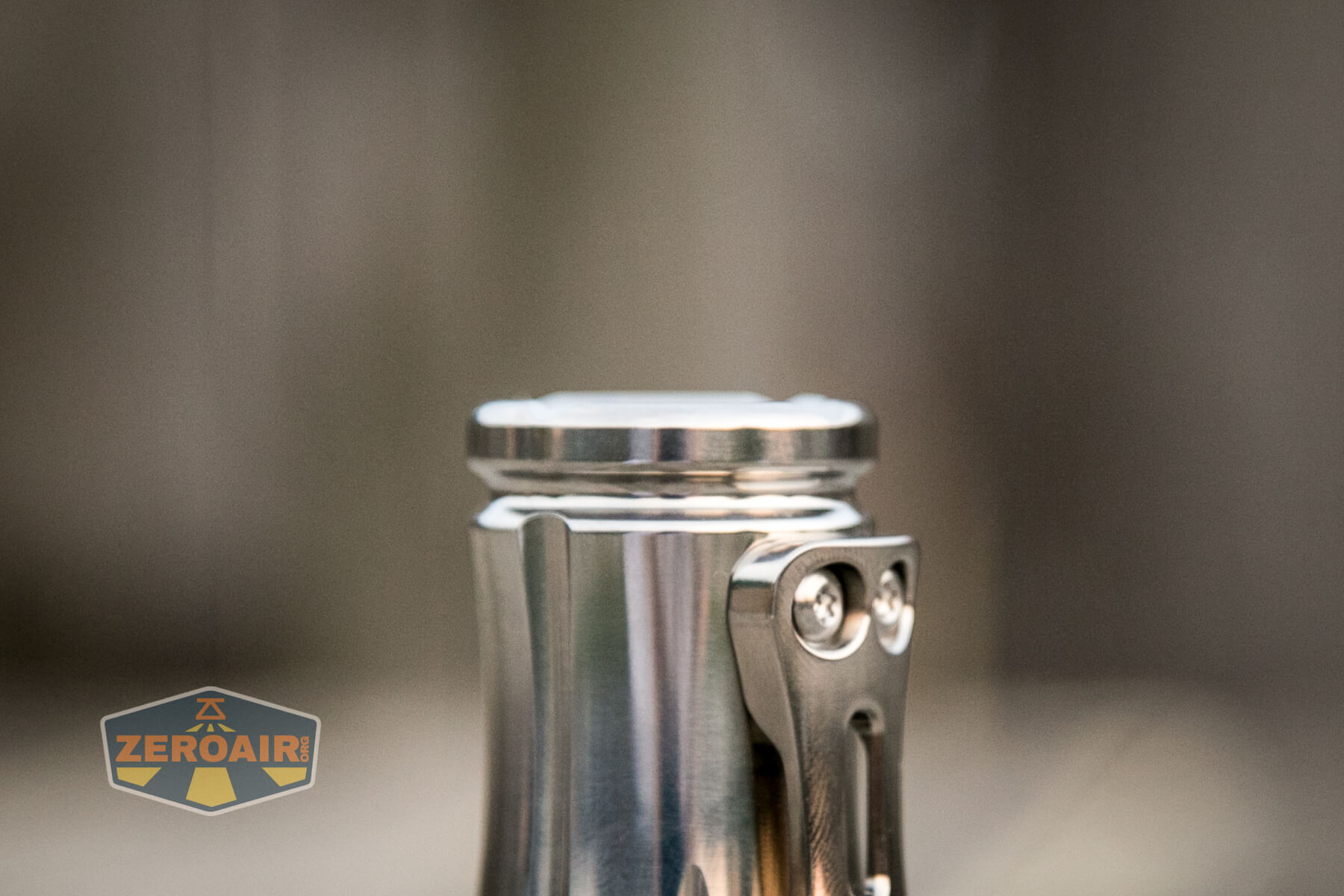
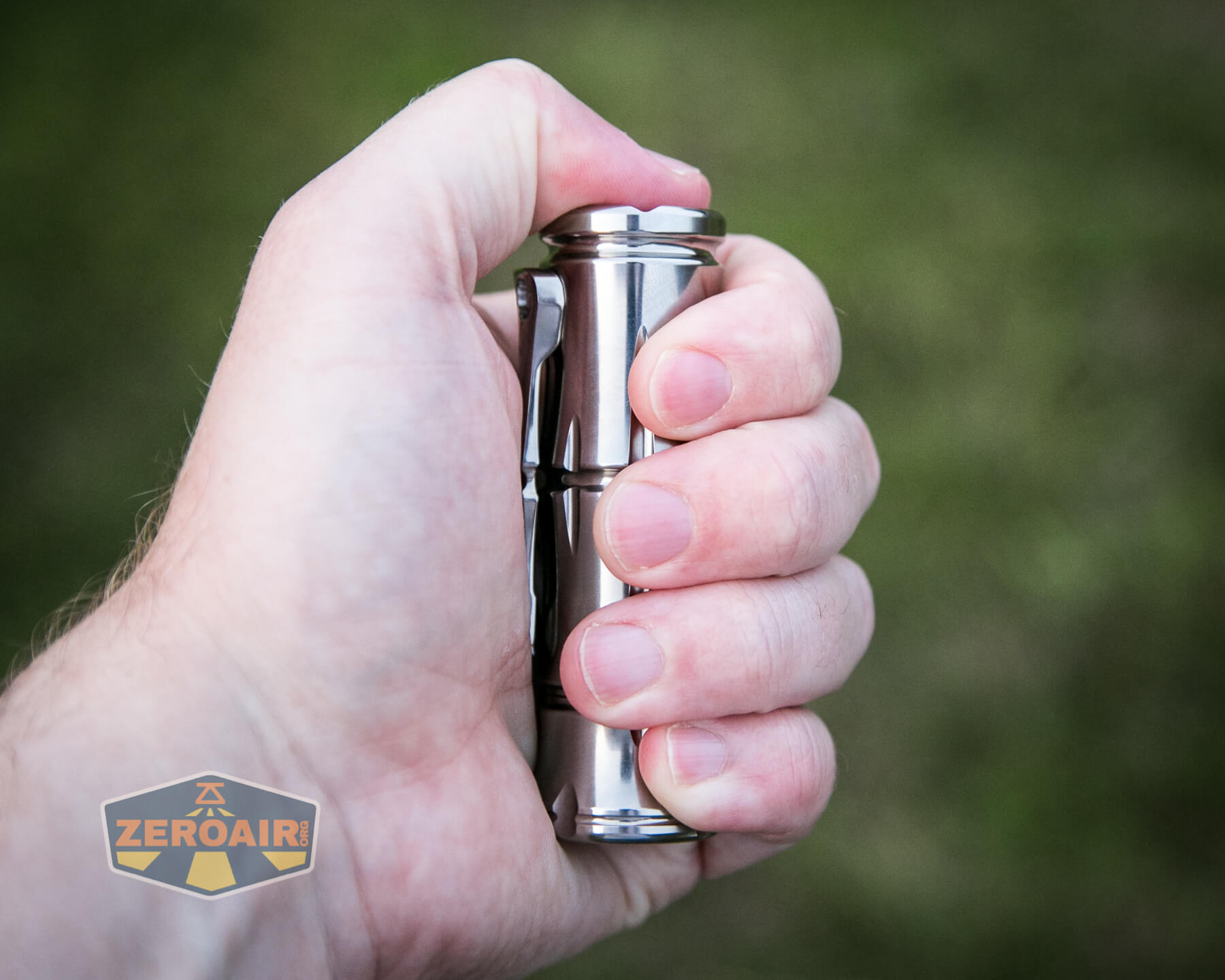
One thing to note about the WWLZ Bamboo Small 18350 flashlight is the stark lack of knurling. There seems to be only polished (titanium or copper) available, and I can say that it’s quite slick. If you need knurling, then you should move on. But if you’re “grip apathetic,” then this is a good choice.
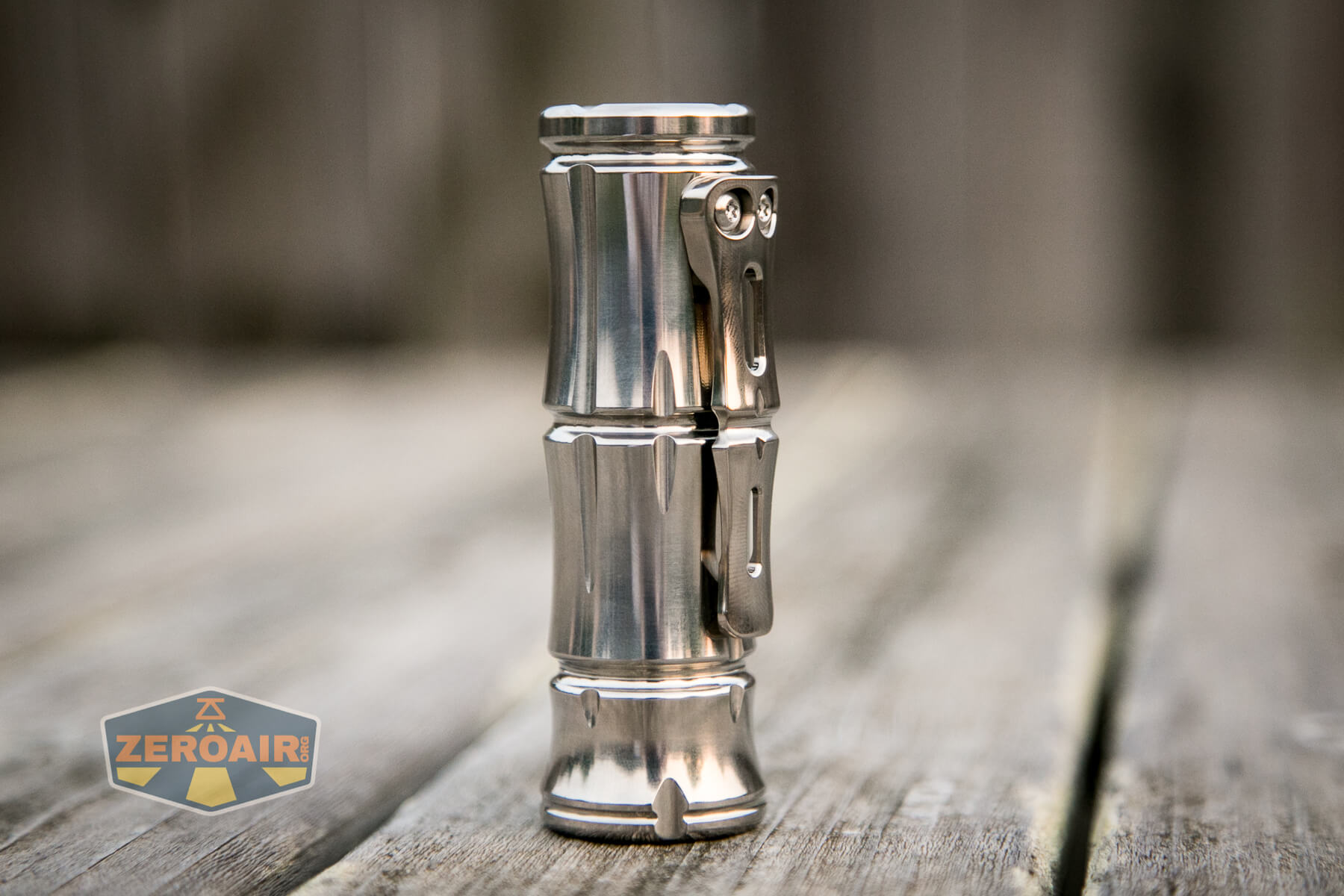
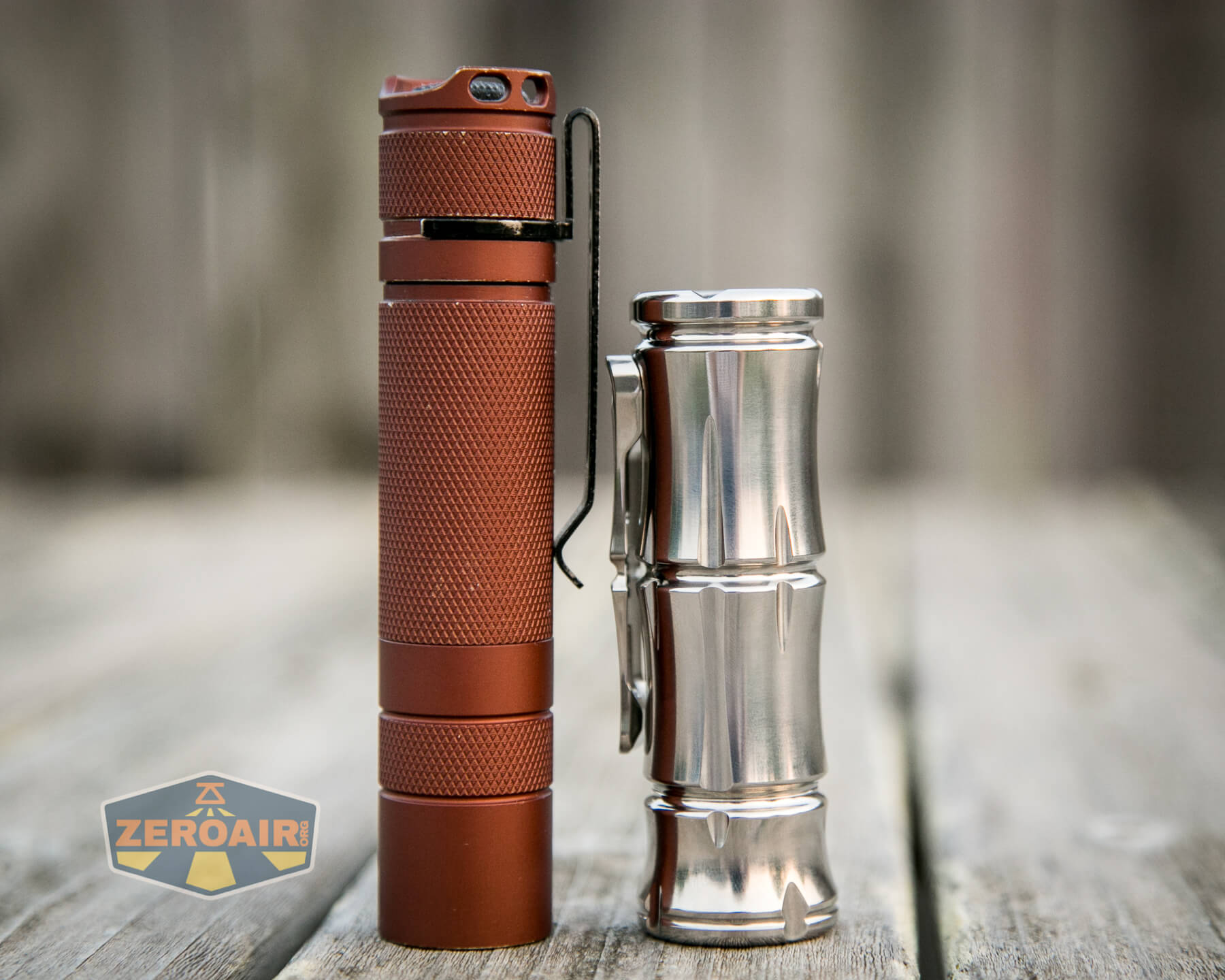
One more point of how this light is so different – the clip (which again, we’ll talk more about later). That’s not your usual waterjet cut or stamped/bent clip. This is a CNC-machined clip, which follows the body lines perfectly.
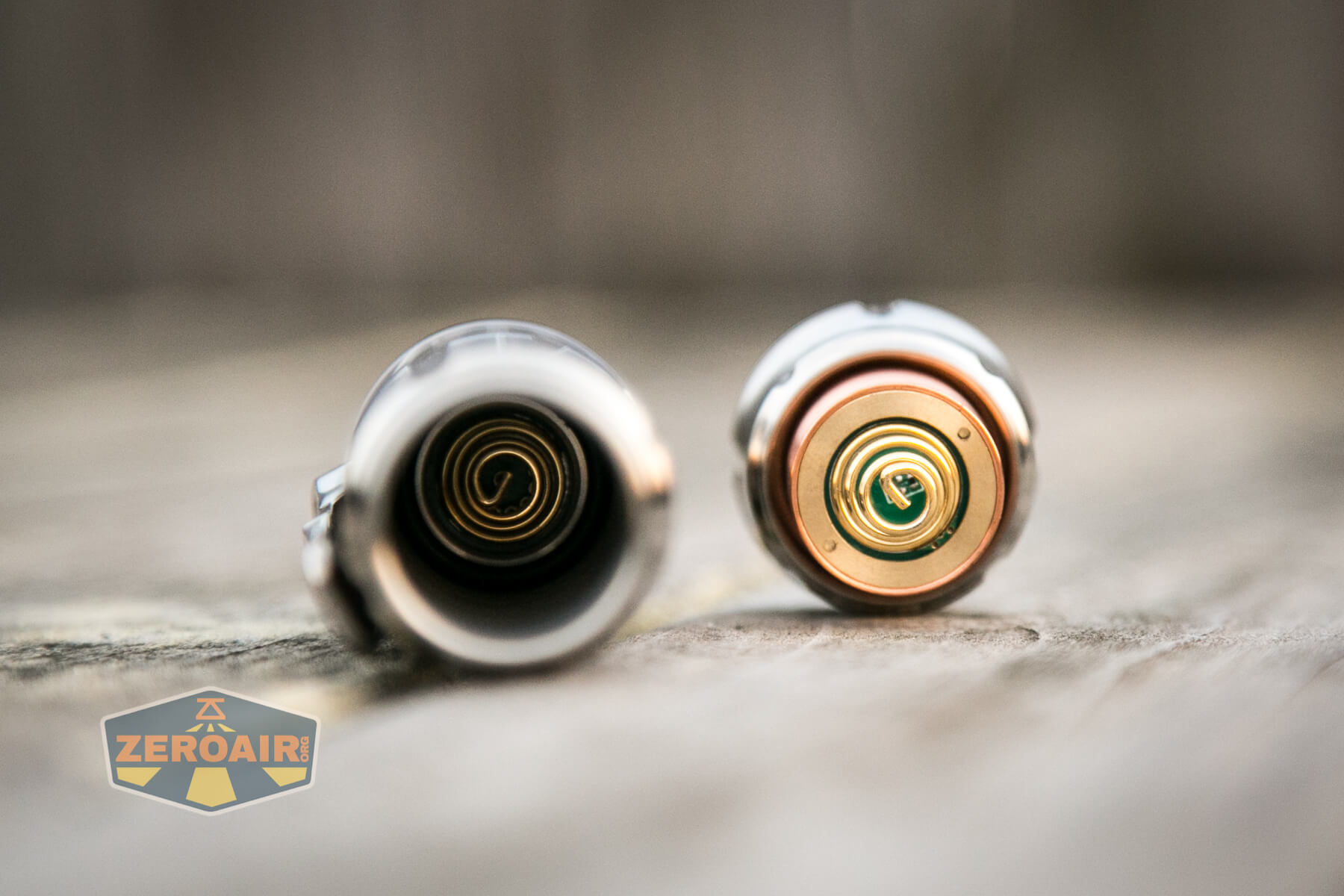
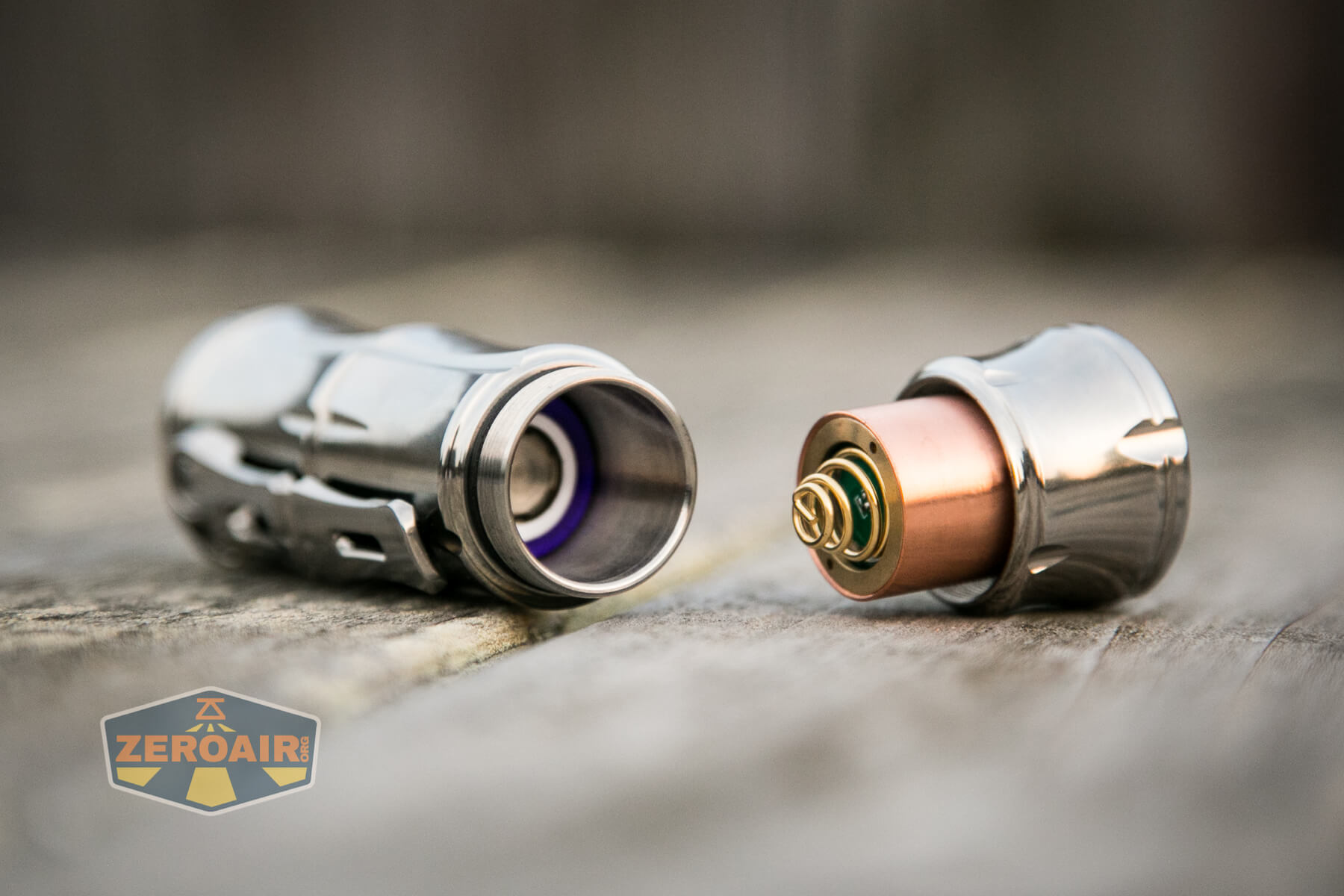
Now have a look at the parts with the head removed. If you’ve ever taken apart just about any flashlight, you’ll immediately note the difference. That engine (the copper part) is not usually exposed this way. Nothing wrong with this, just making note that it’s different (i.e., it’s not copied from elsewhere).

Both head and tail have nice, big springs. I didn’t access the clicky parts, but they must be accessed from the outside. To wit: the tailcap doesn’t come off. There are just two parts: the head and the cell tube.
You can see in the photo above that the head parts have a little brass retaining ring within the copper engine. That unscrews easily (usual threading), and the driver is accessible (and not staked or glued or anything).
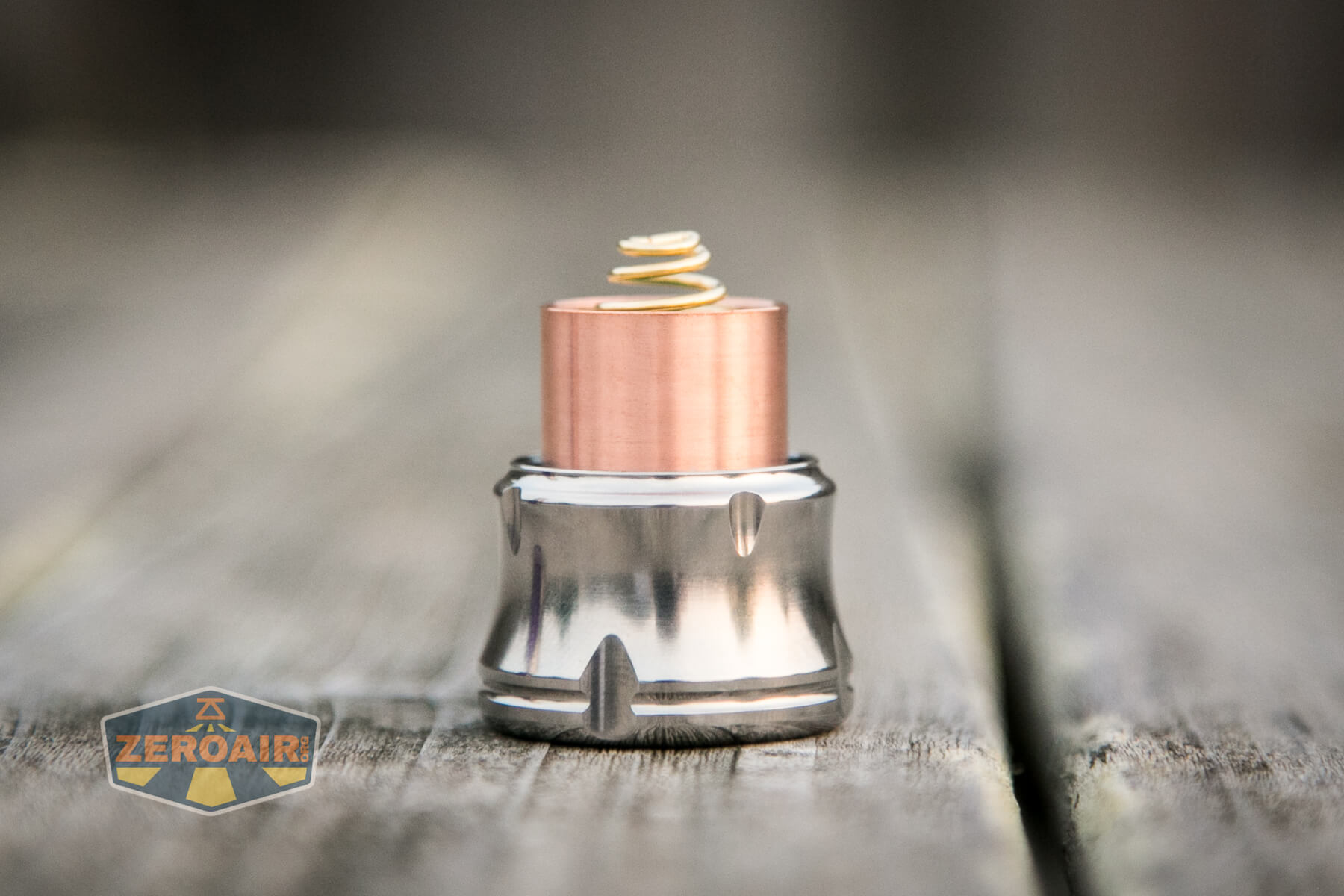
And yes, you might wish to swap the driver here, but note that with the second channel, you’re basically locked into either this driver or the CWF Dragon.
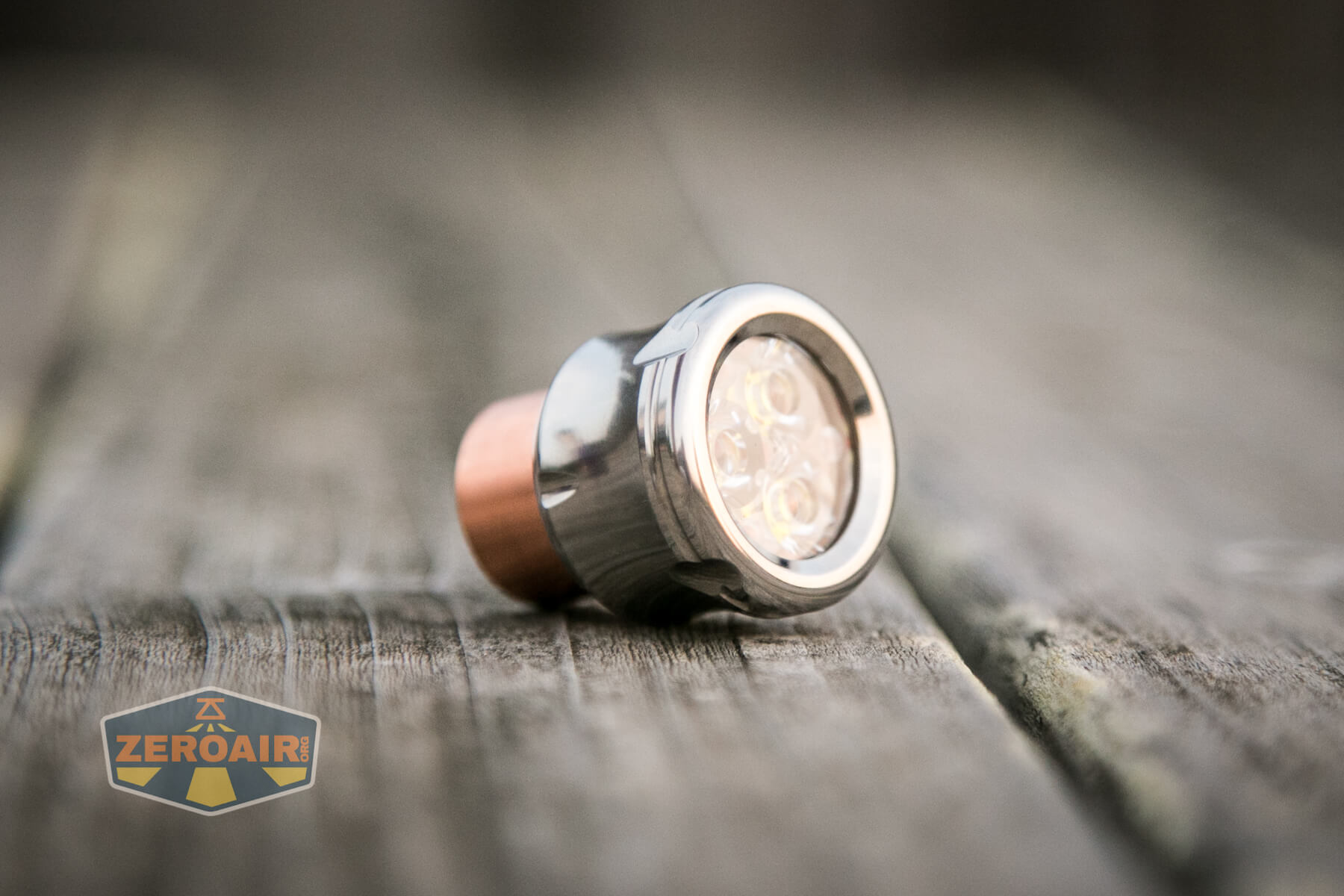
I did disassemble the head parts because I know you’ll want to know. I believe these are standard dimension parts.
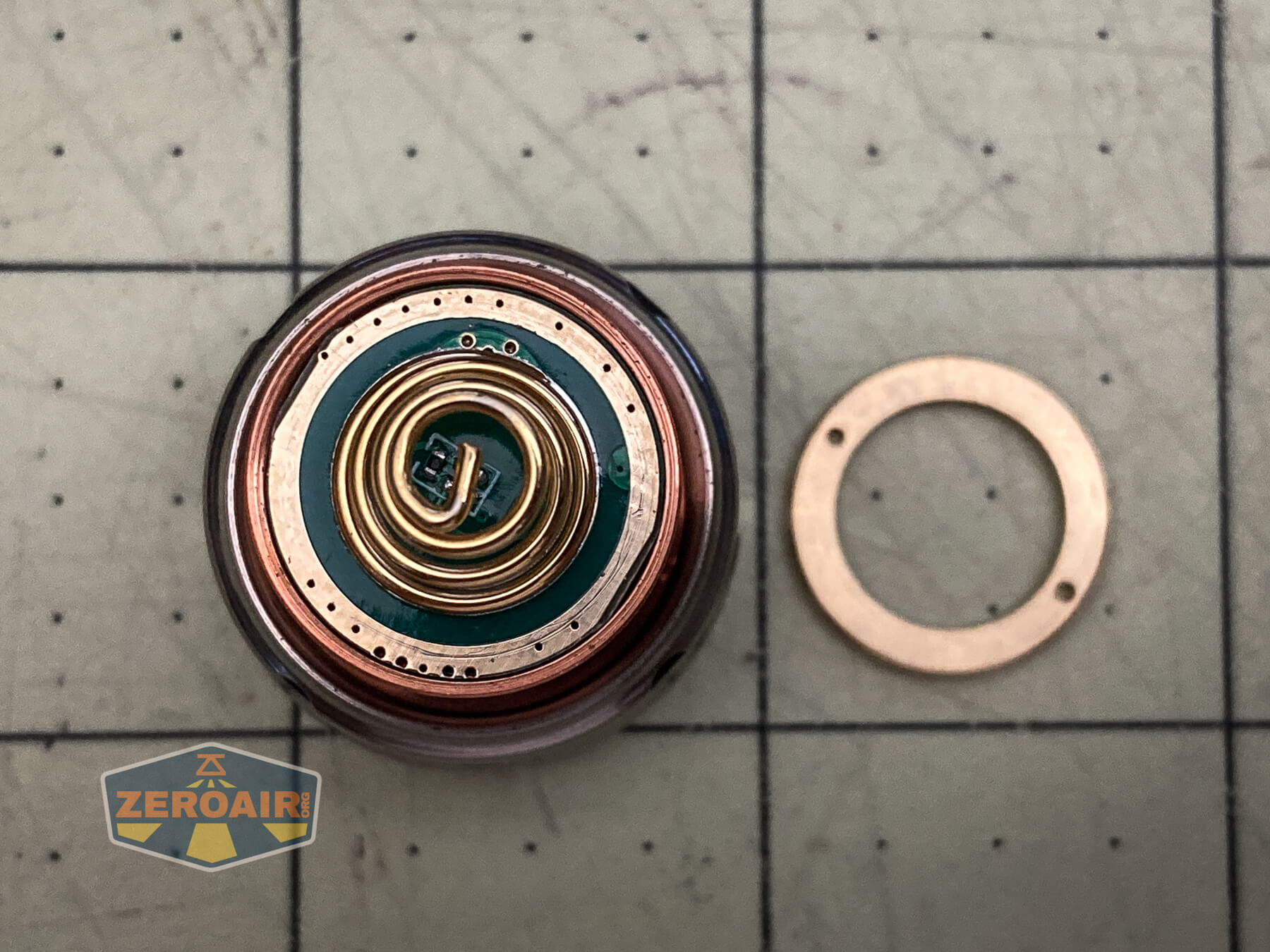
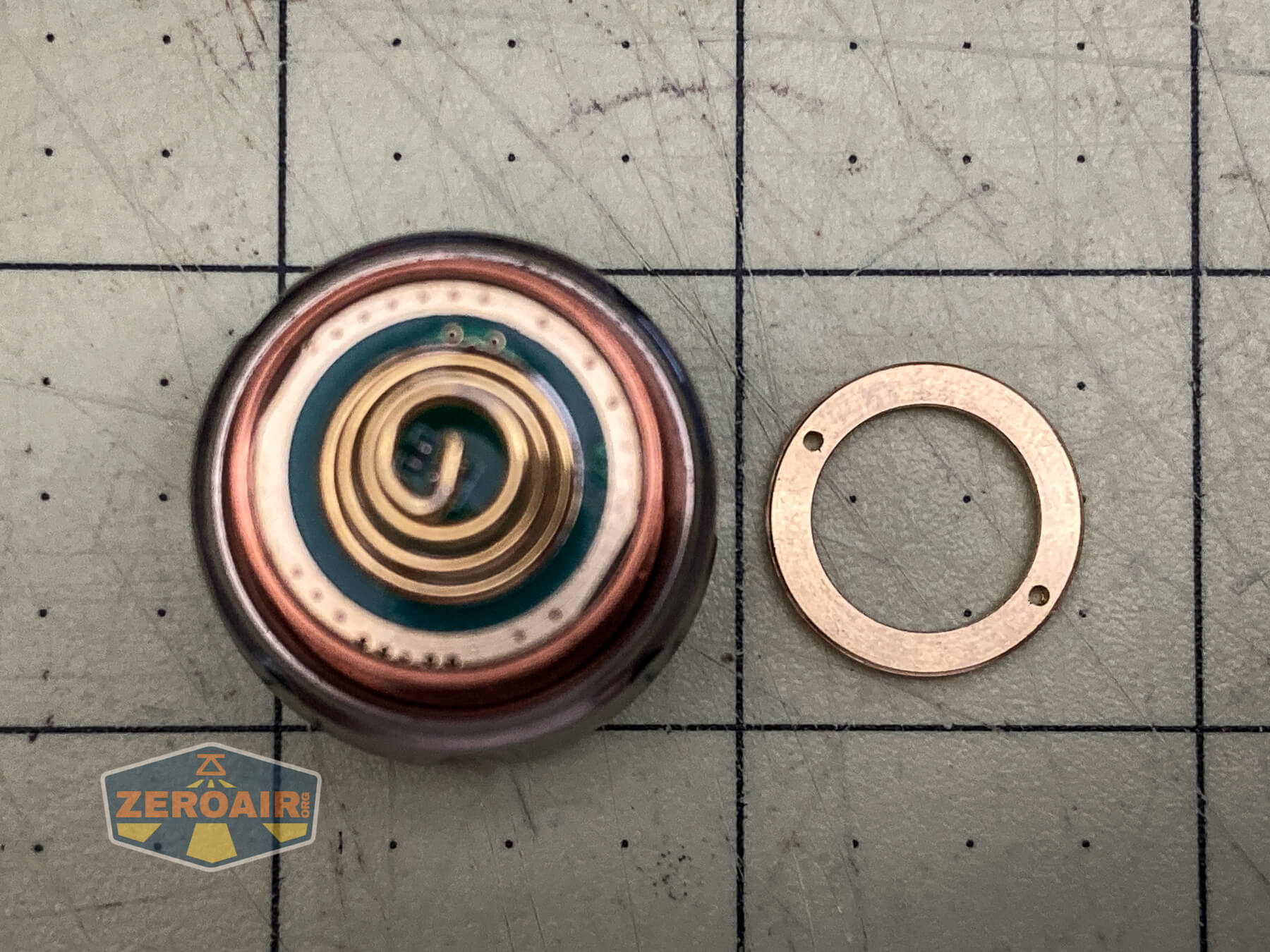


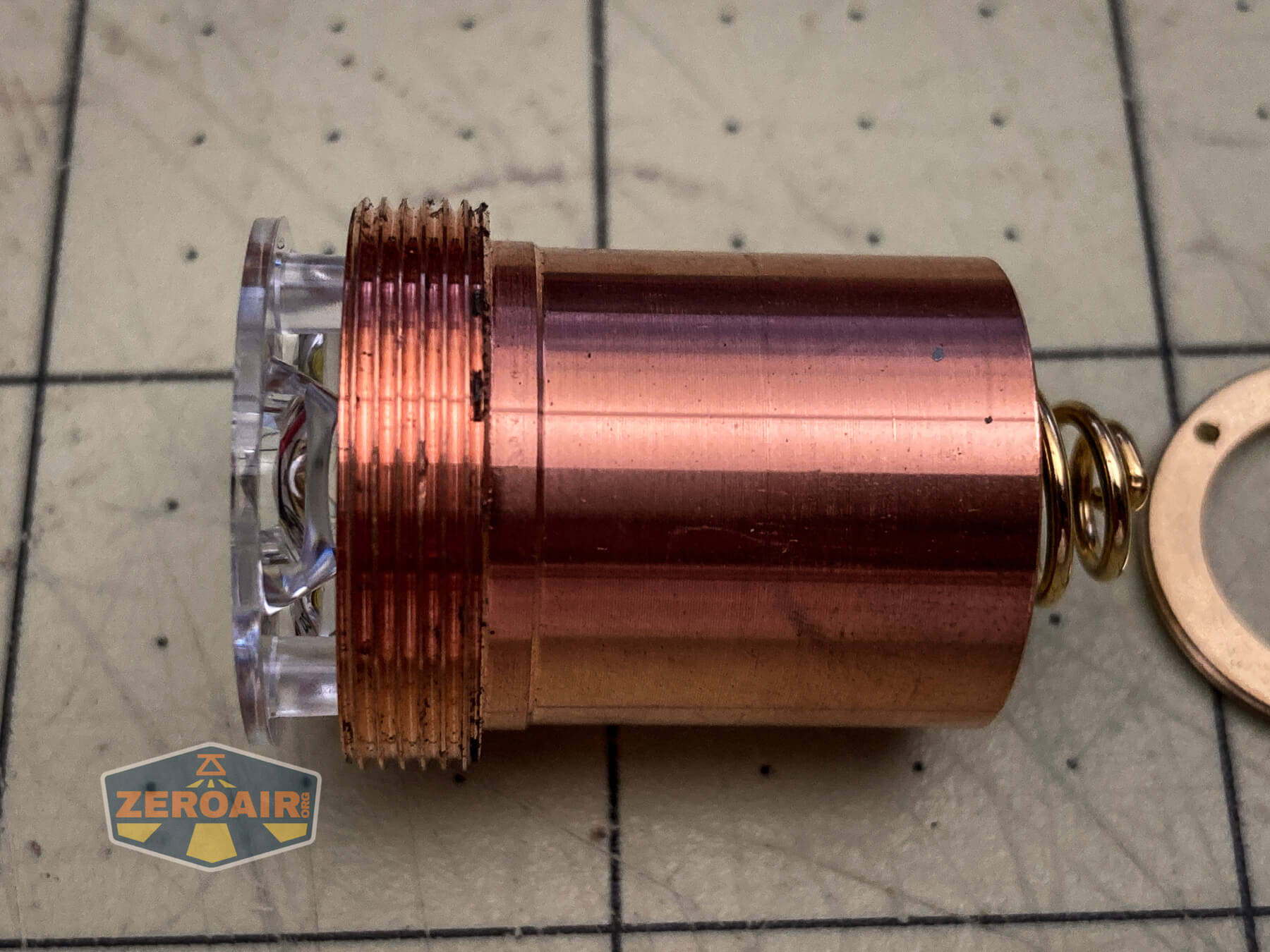
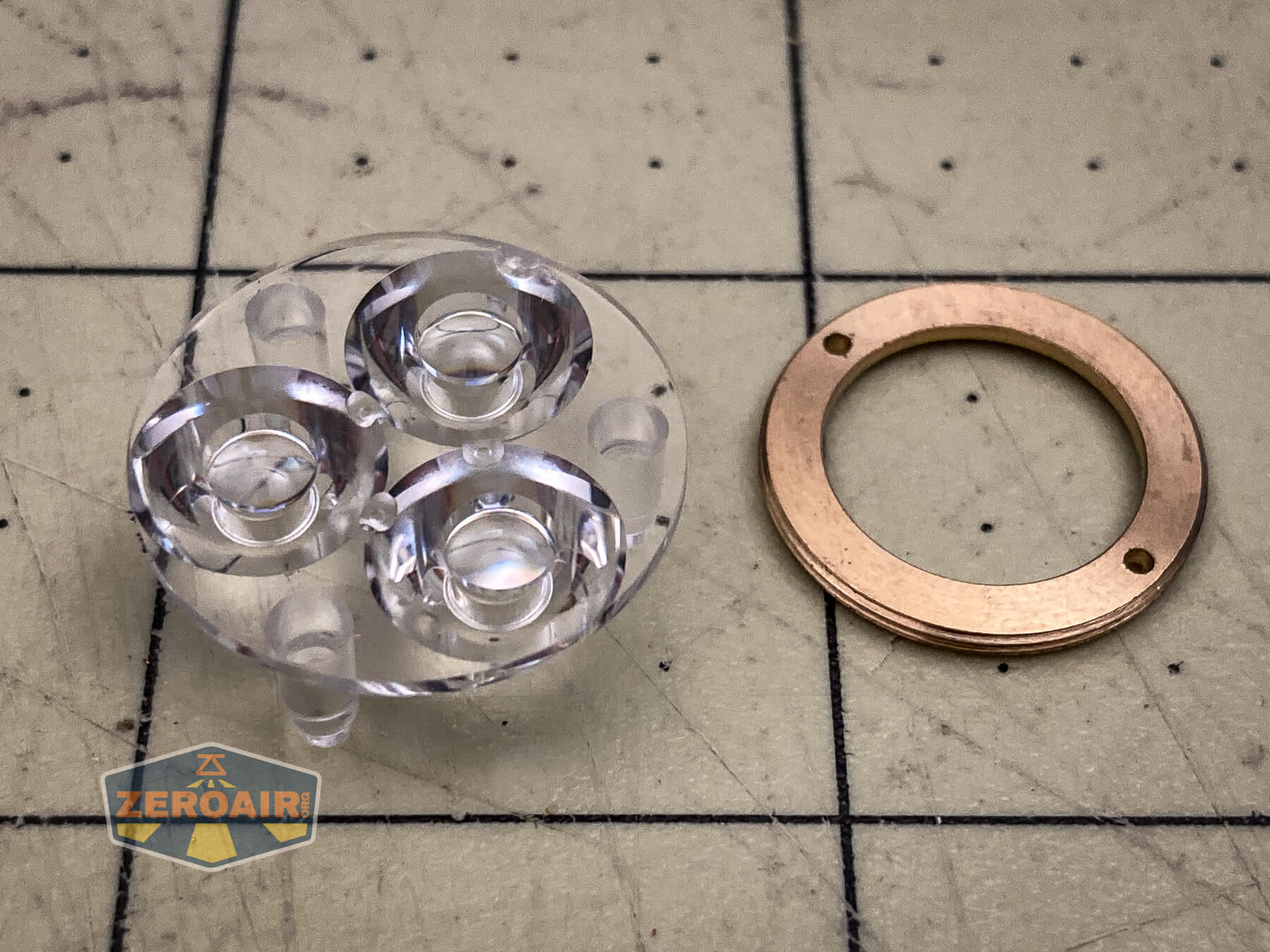
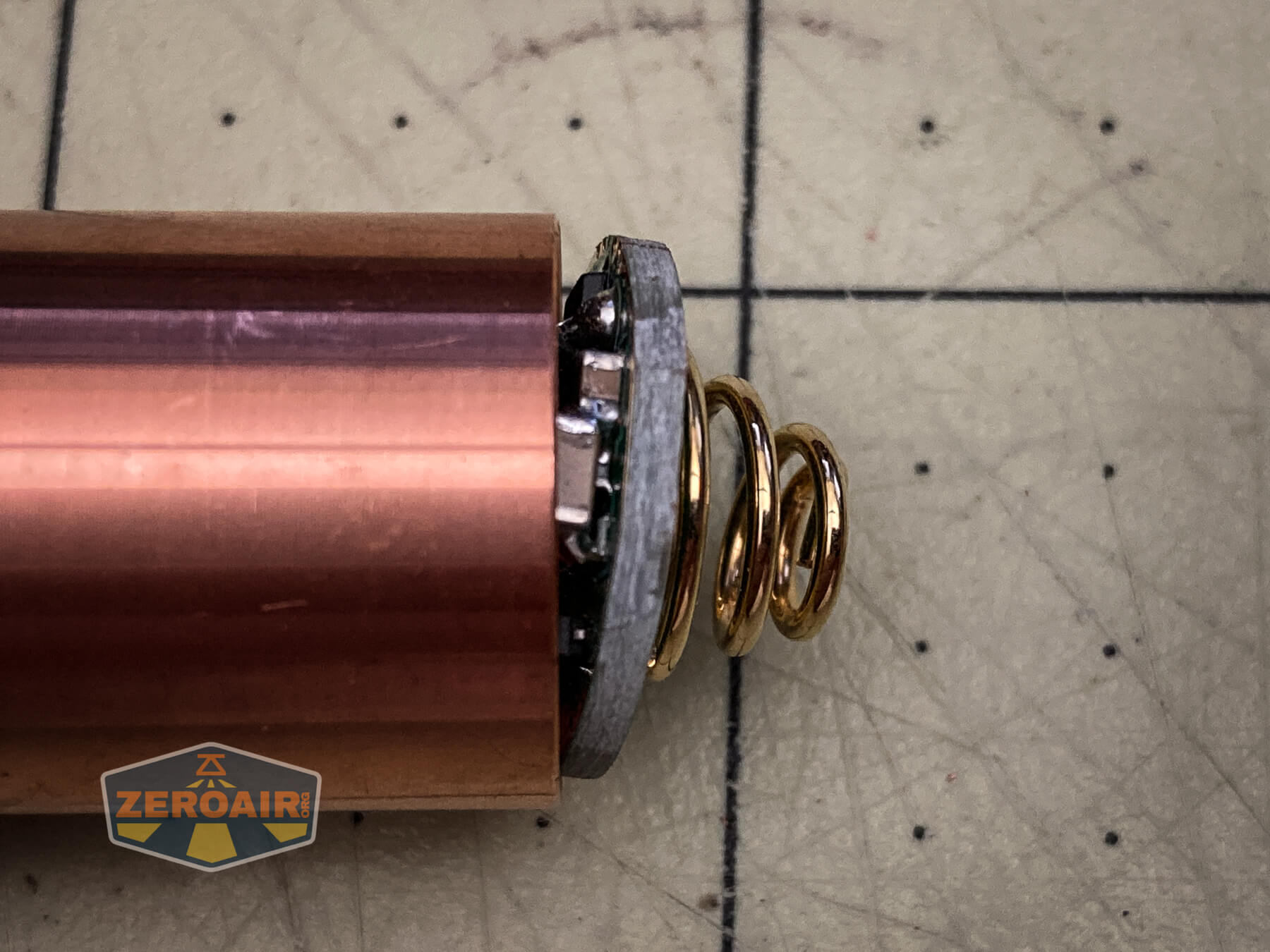

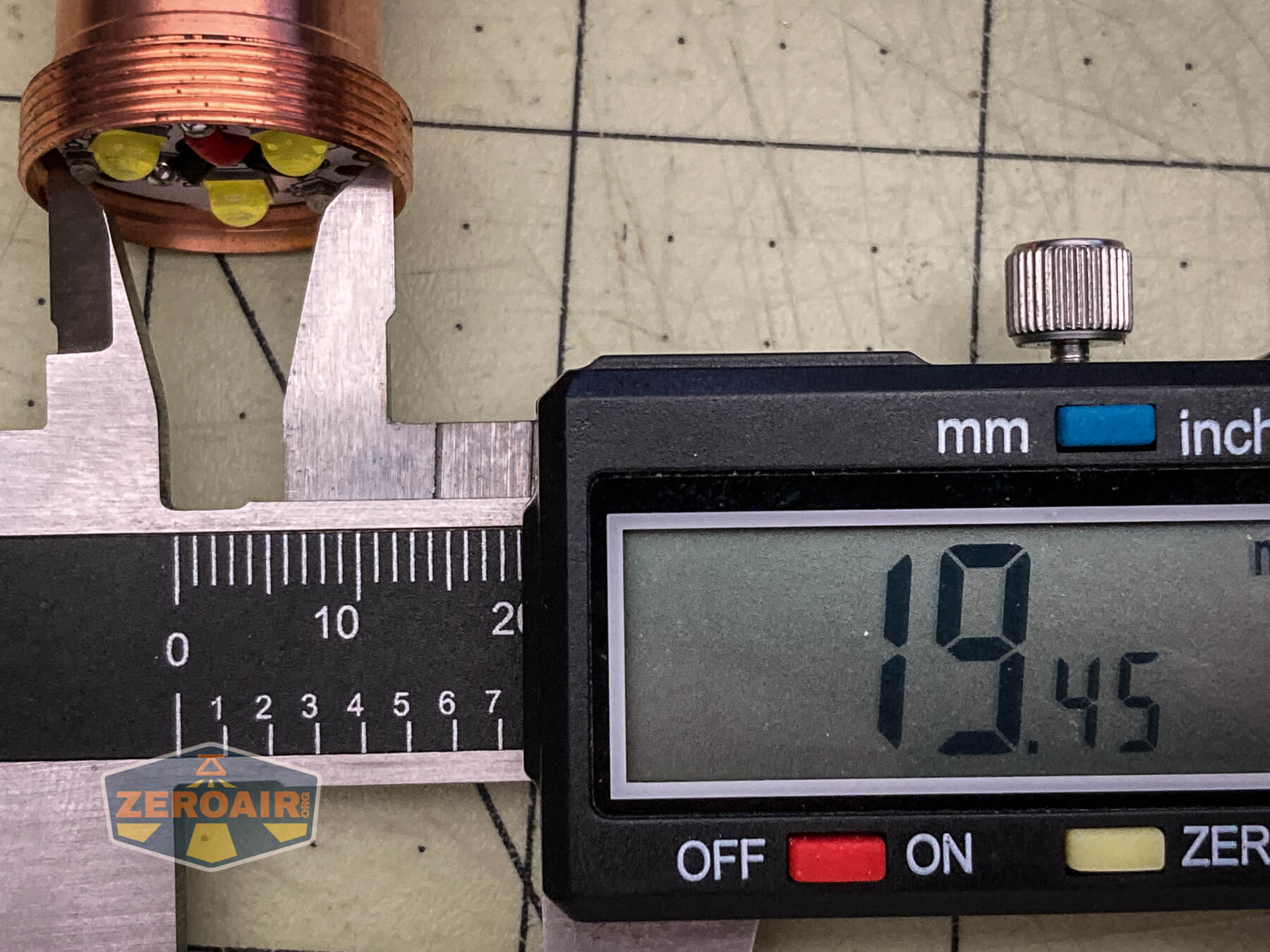
This whole setup means the engine pill and body threads must match. (And they do). The threads are a bit fine, which is a very minor gripe. You’ll want to be deliberate when getting the parts started.
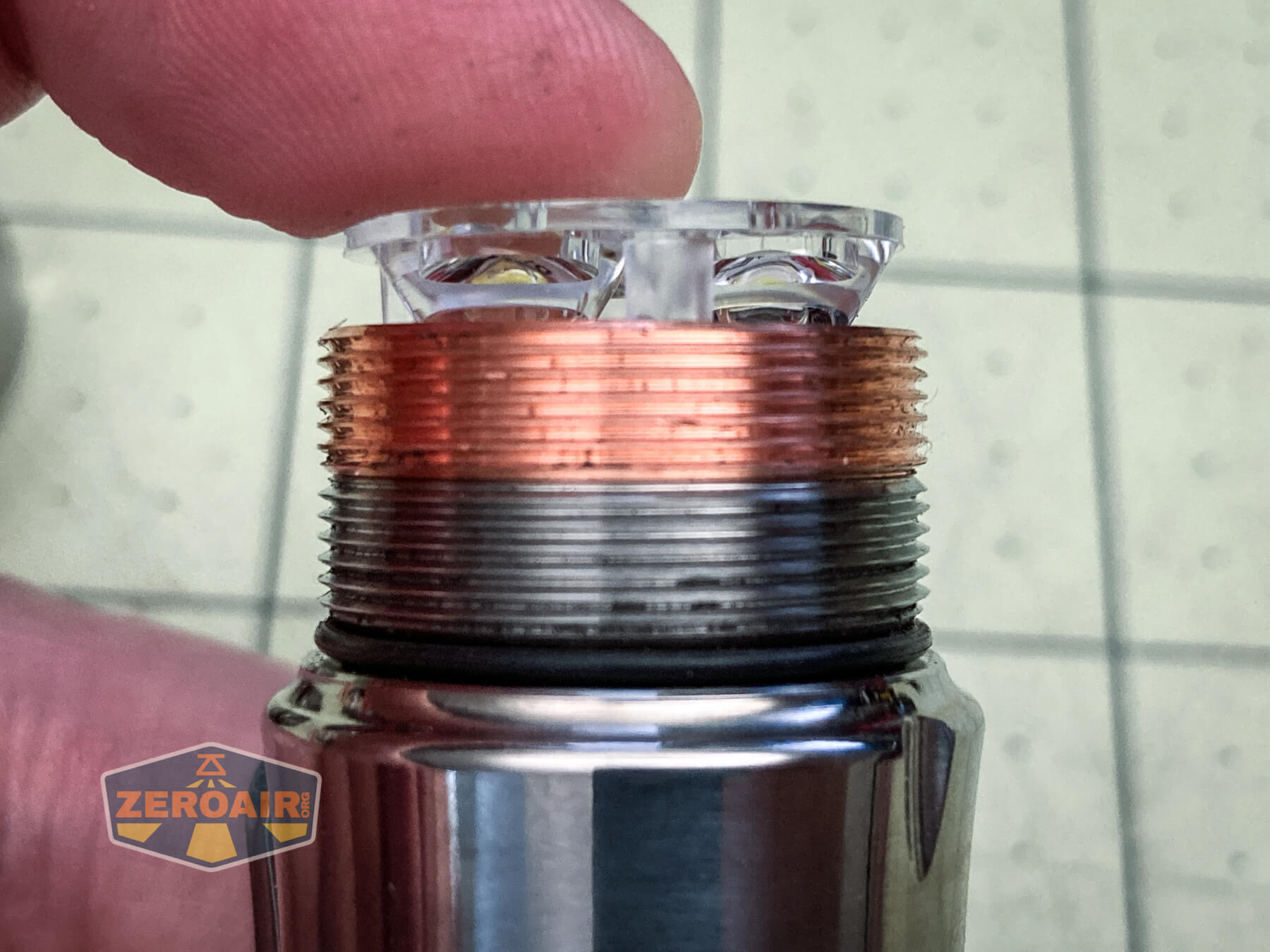
That o-ring will want to wiggle out when you screw these parts back together, but it’s fairly easy to fix. The design seems to want to keep it seated, too, so it’s not nearly the worst I’ve experienced in this regard.
What a looker this light is!
Size and Comps
Weight: Approximately 65 g without cells
Size: 24 mm Ø head x 88 mm length.
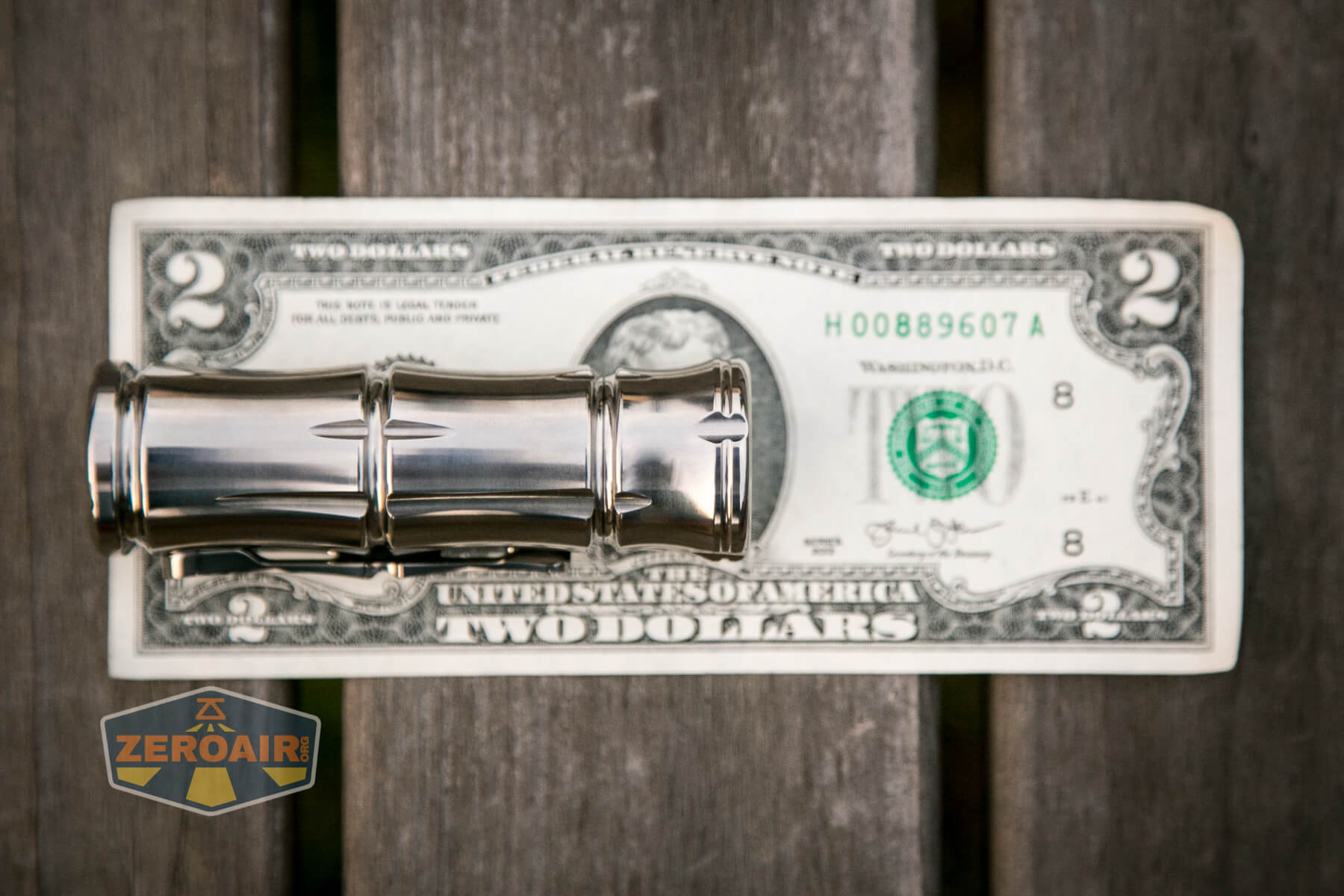
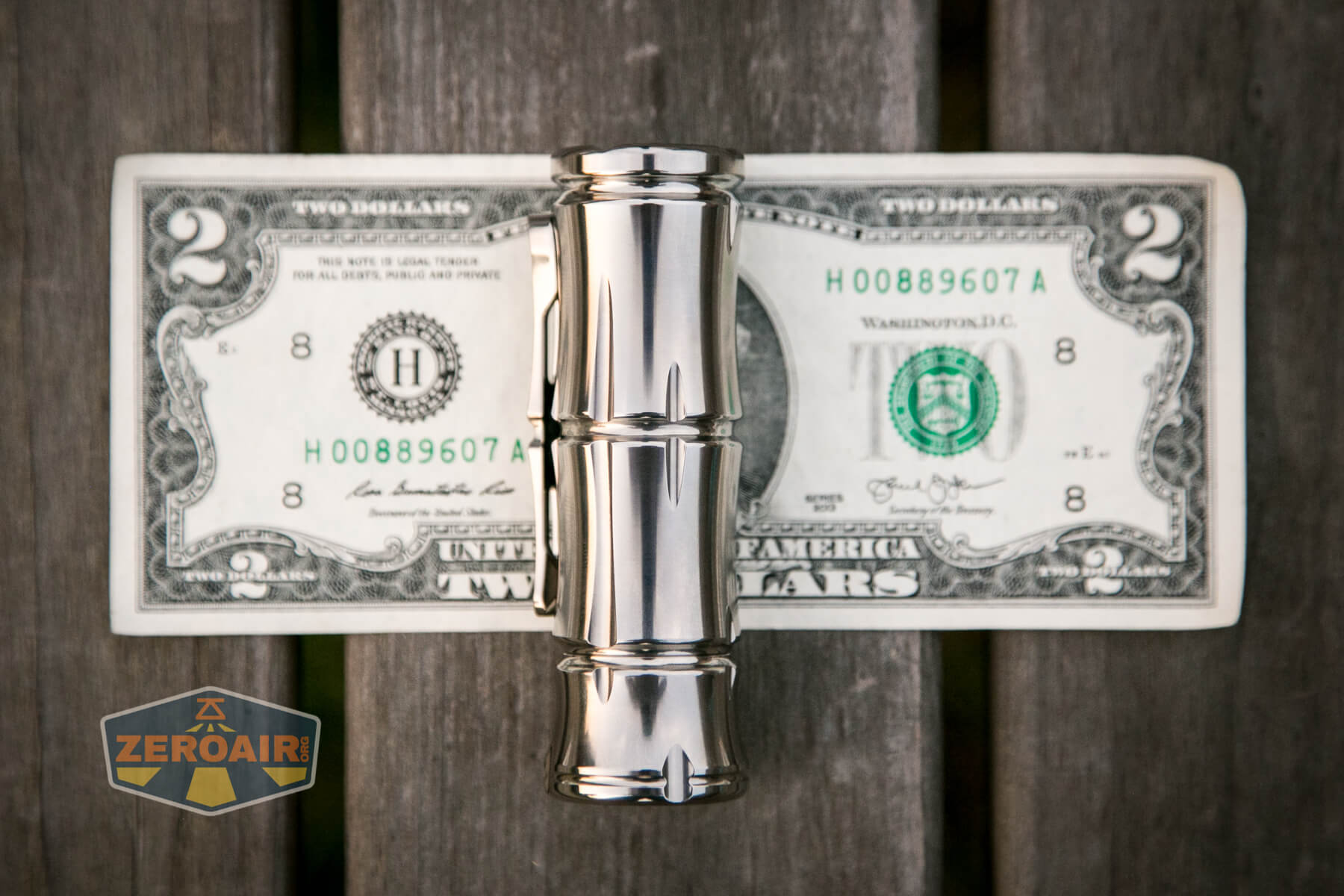
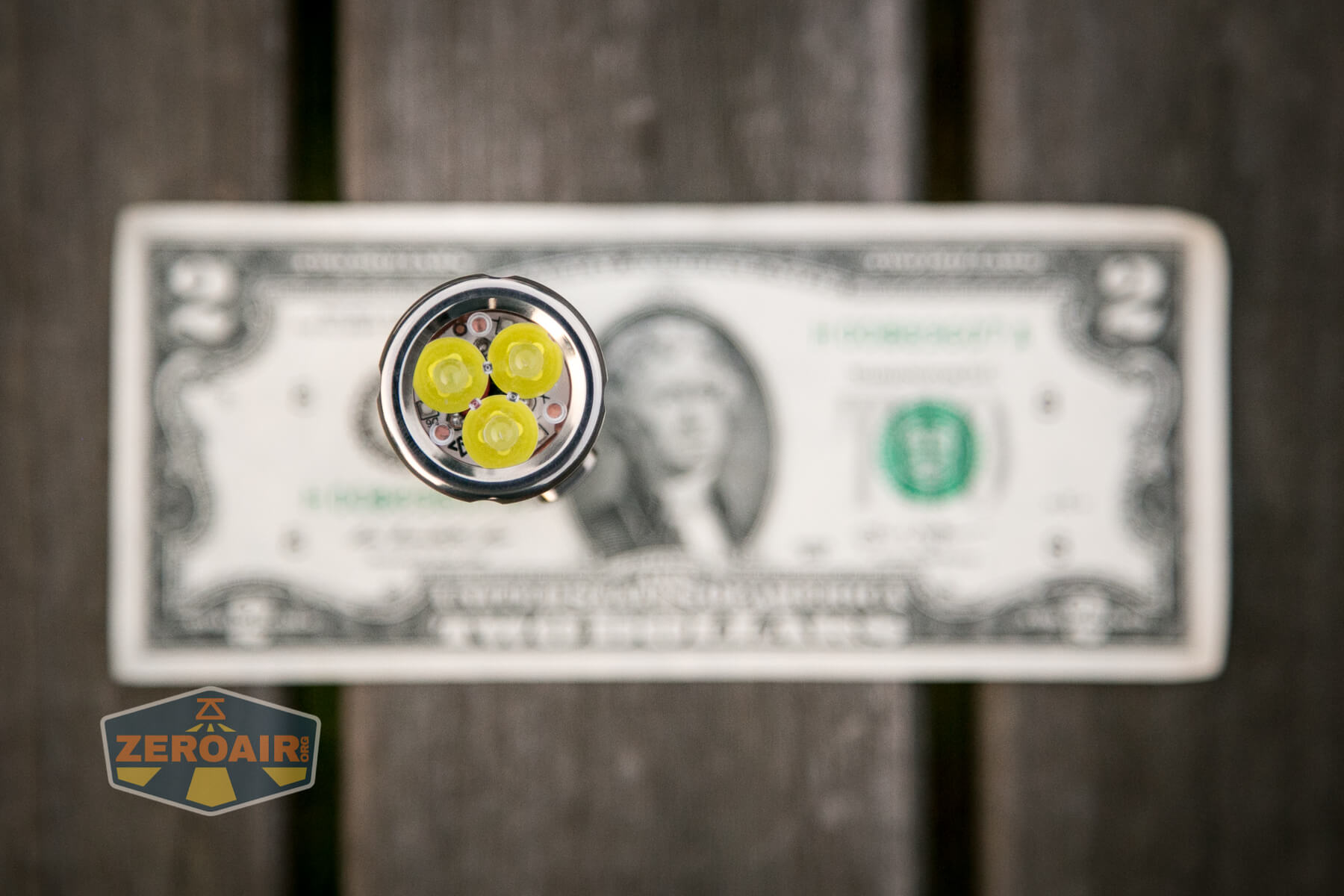
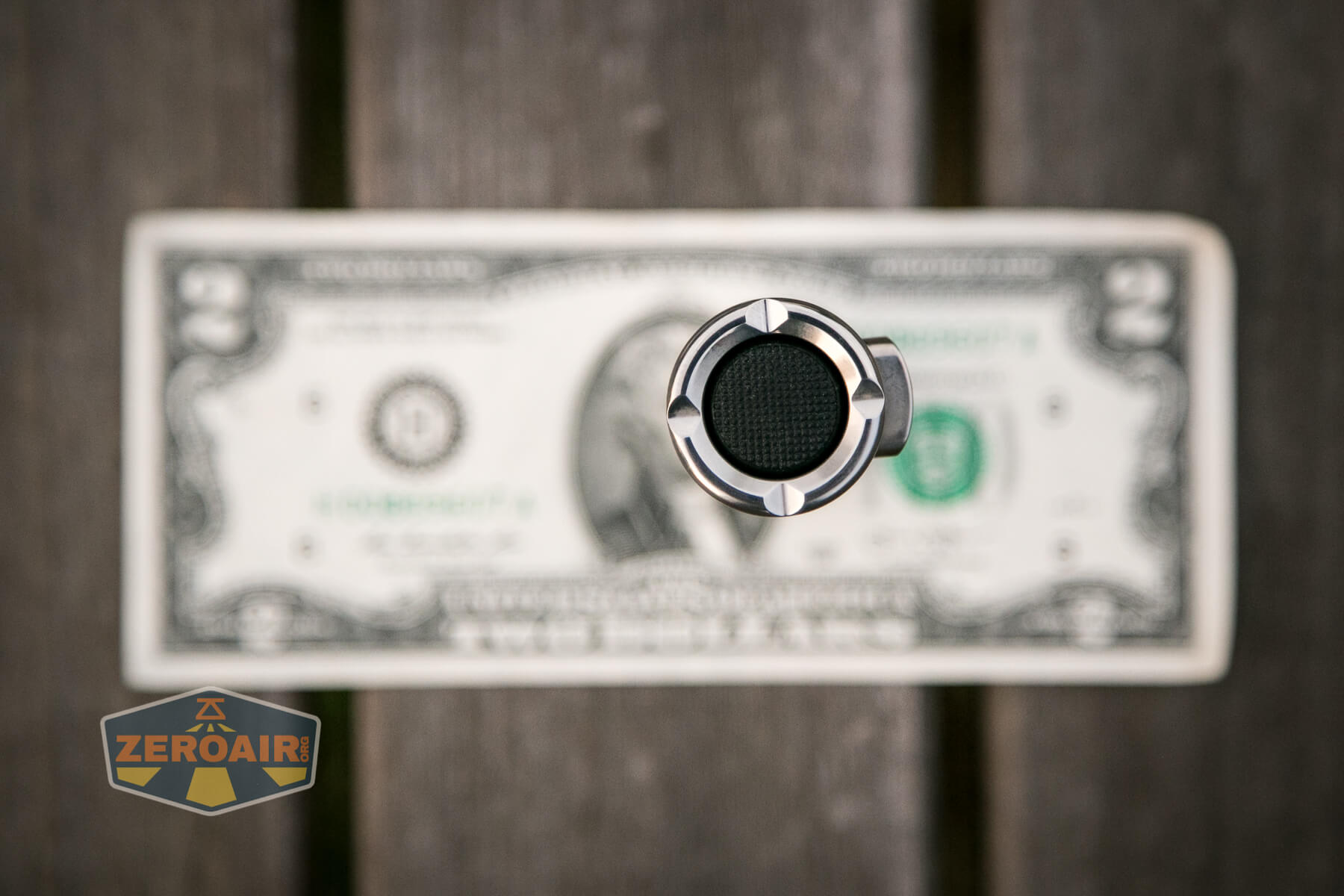
If the flashlight will headstand, I’ll show it here (usually the third photo). If the flashlight will tailstand, I’ll show that here, too (usually the fourth photo).
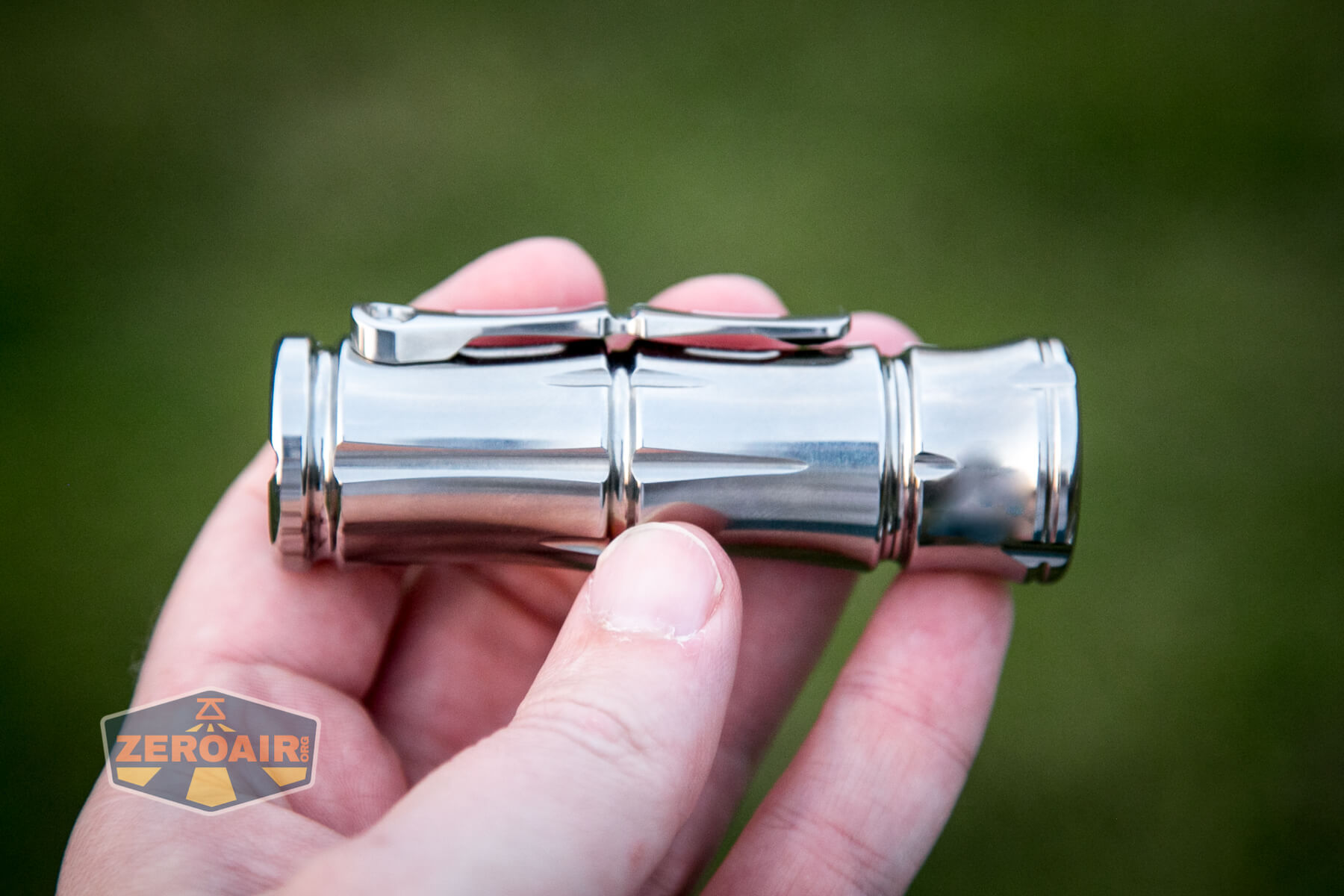
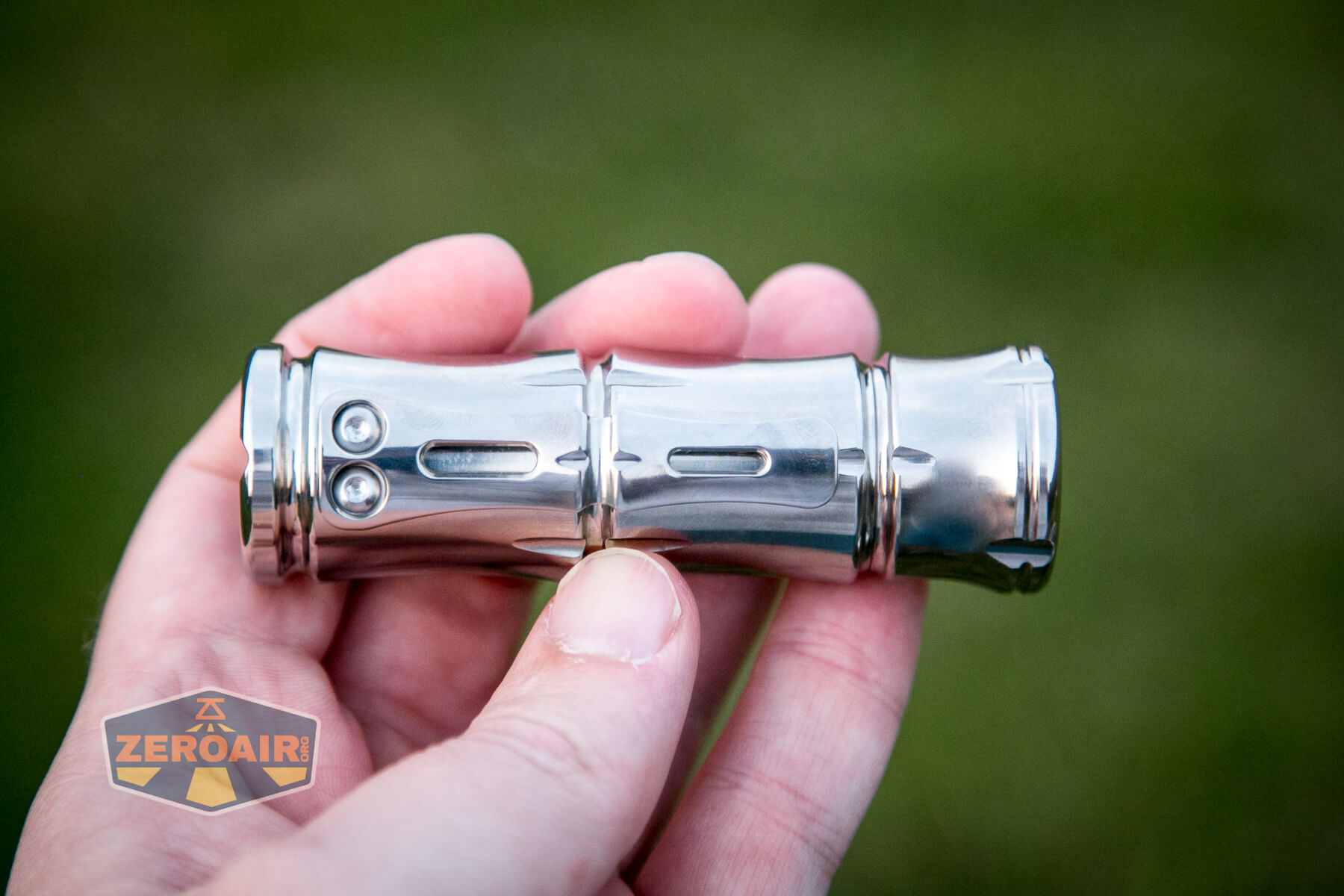
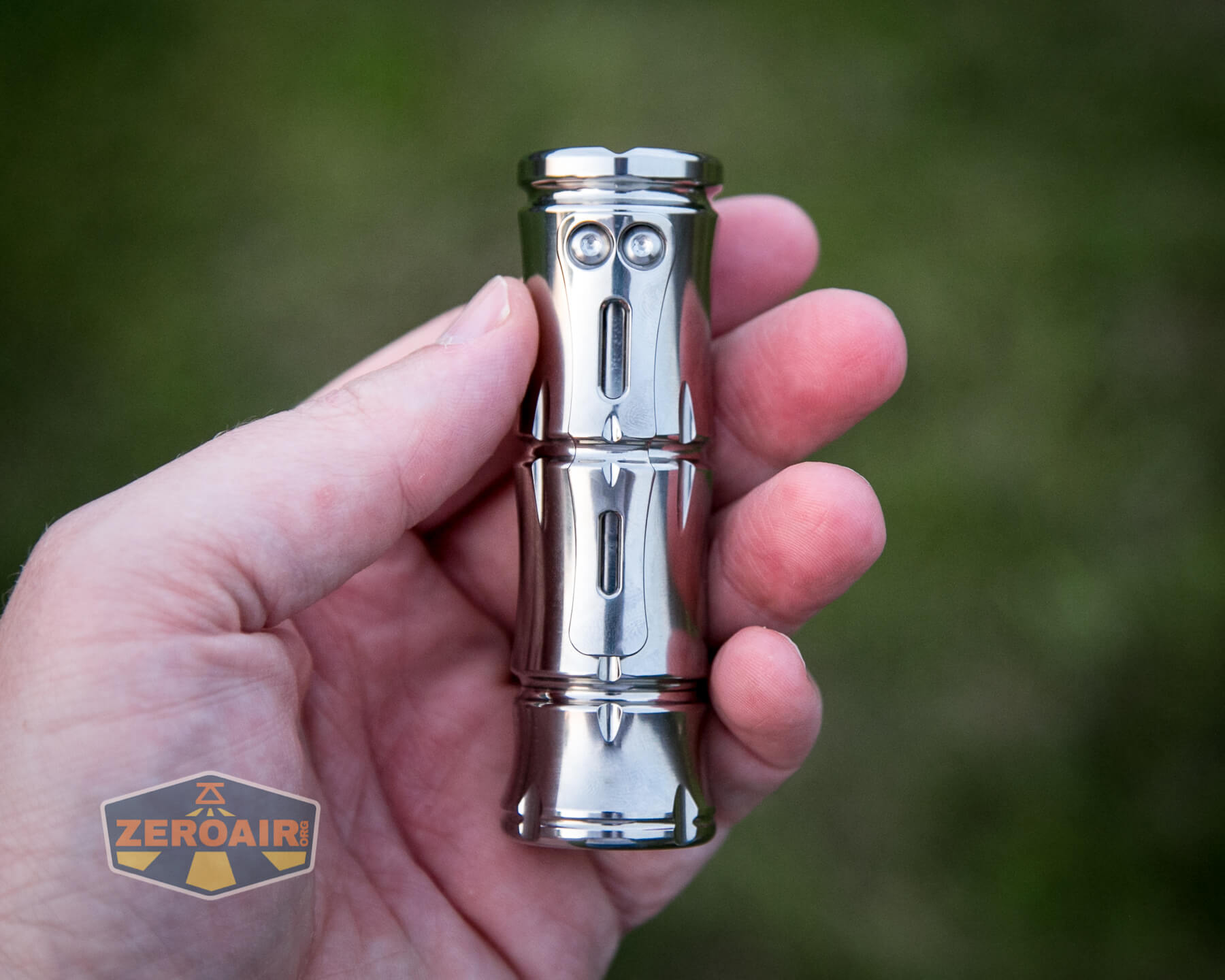
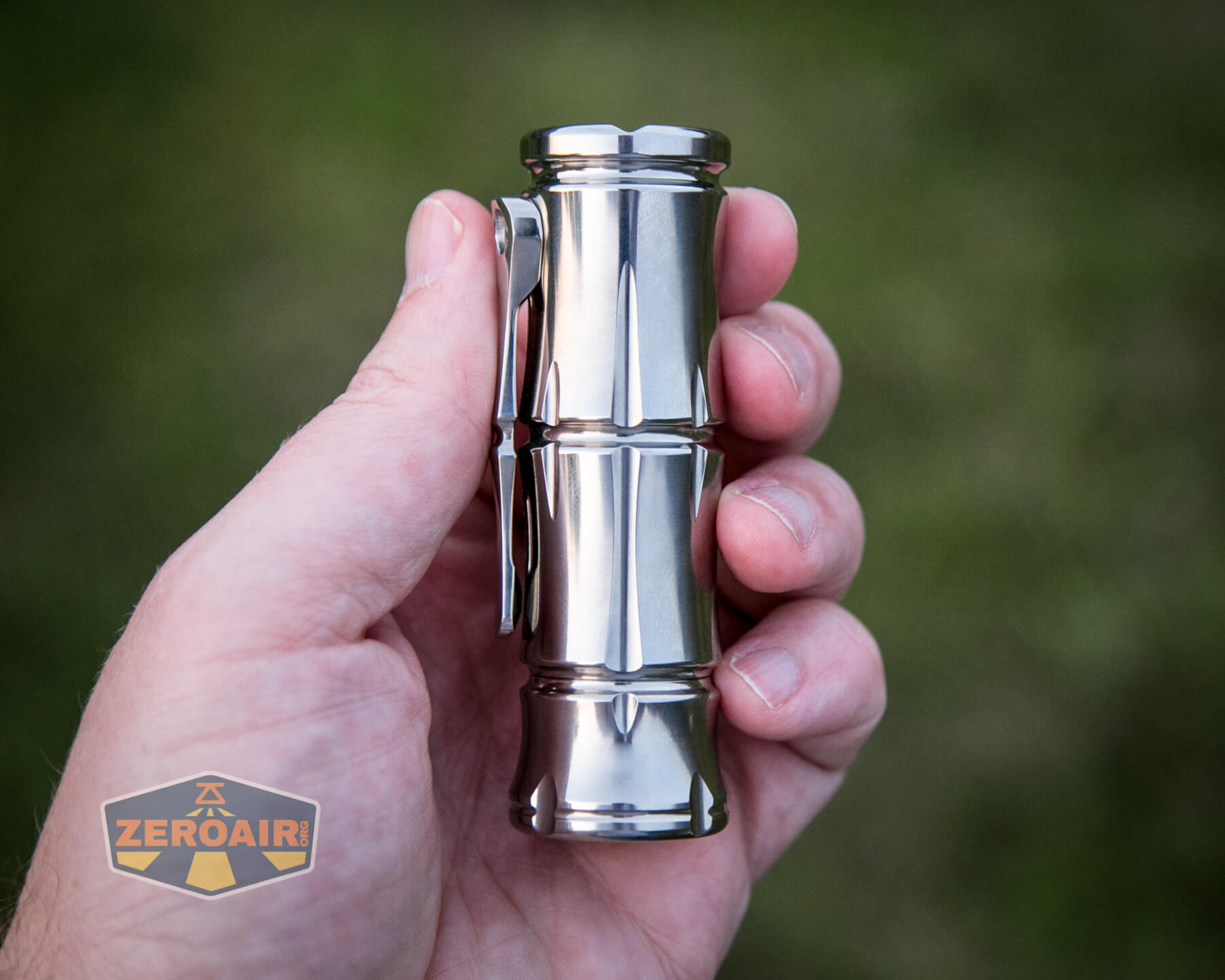
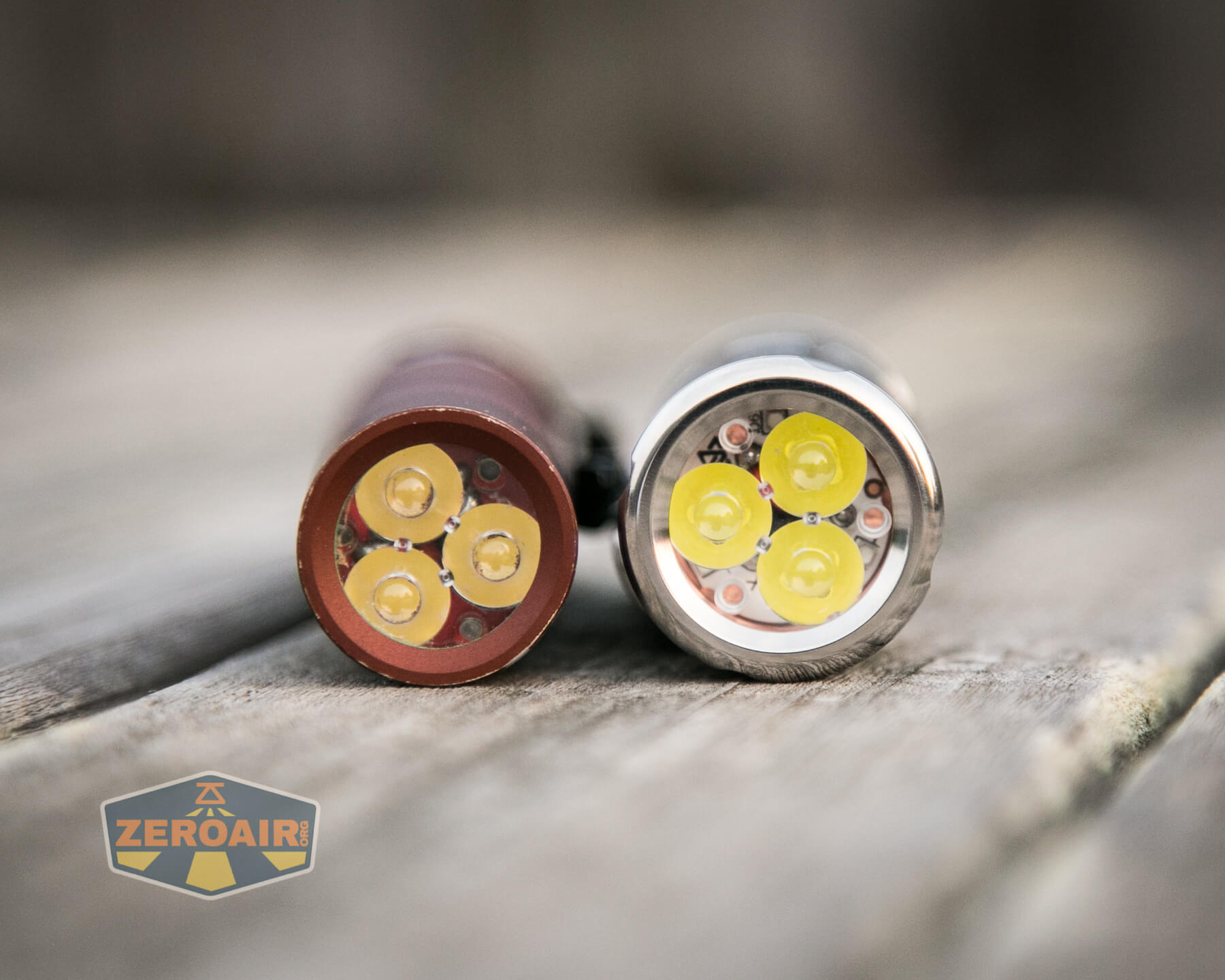
Here’s the test light with the venerable Convoy S2+. Mine’s a custom “baked” edition Nichia 219b triple. A very nice 18650 light.
And here’s the light beside my custom-engraved TorchLAB BOSS 35, an 18350 light. I reviewed the aluminum version of that light in both 35 and 70 formats.
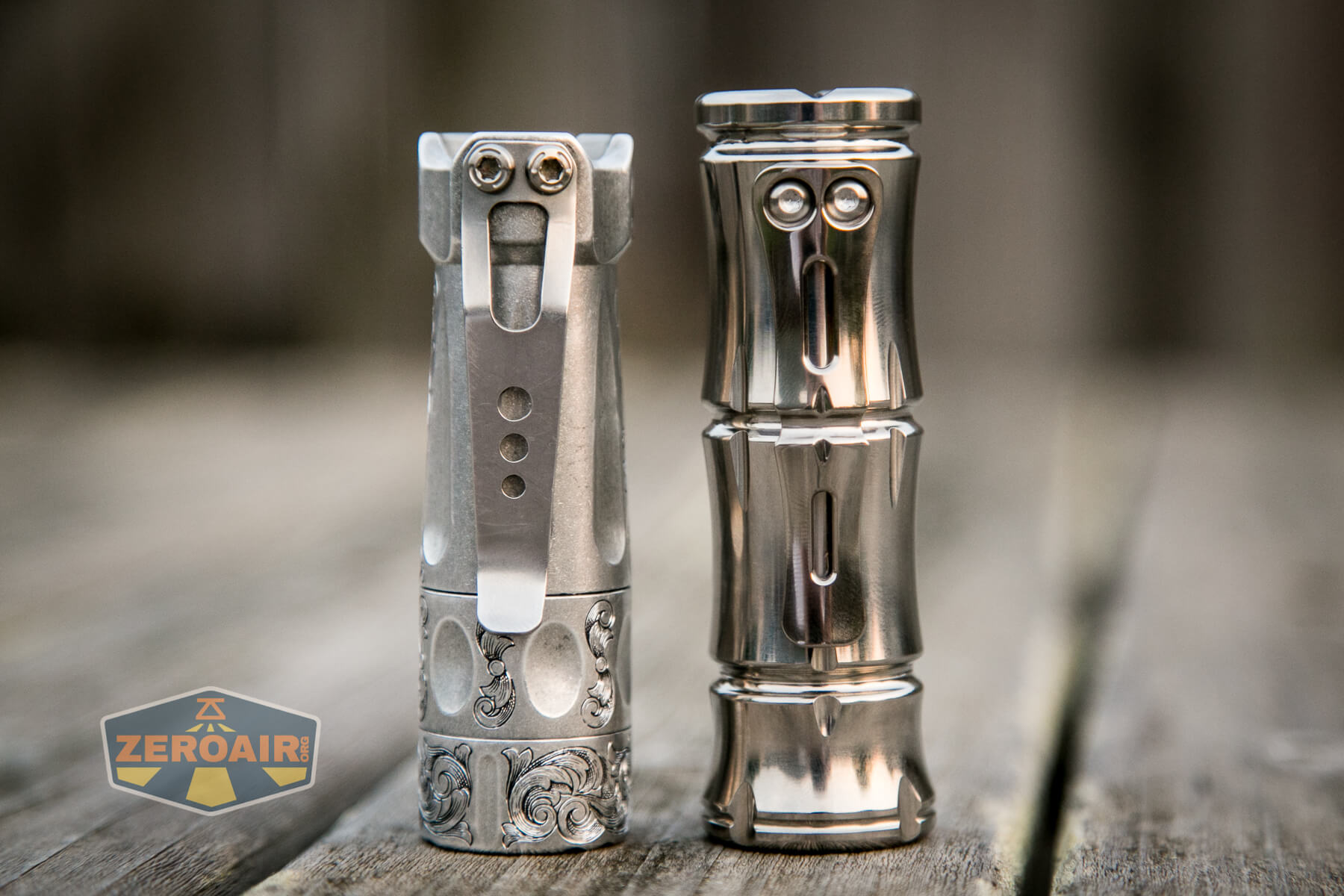
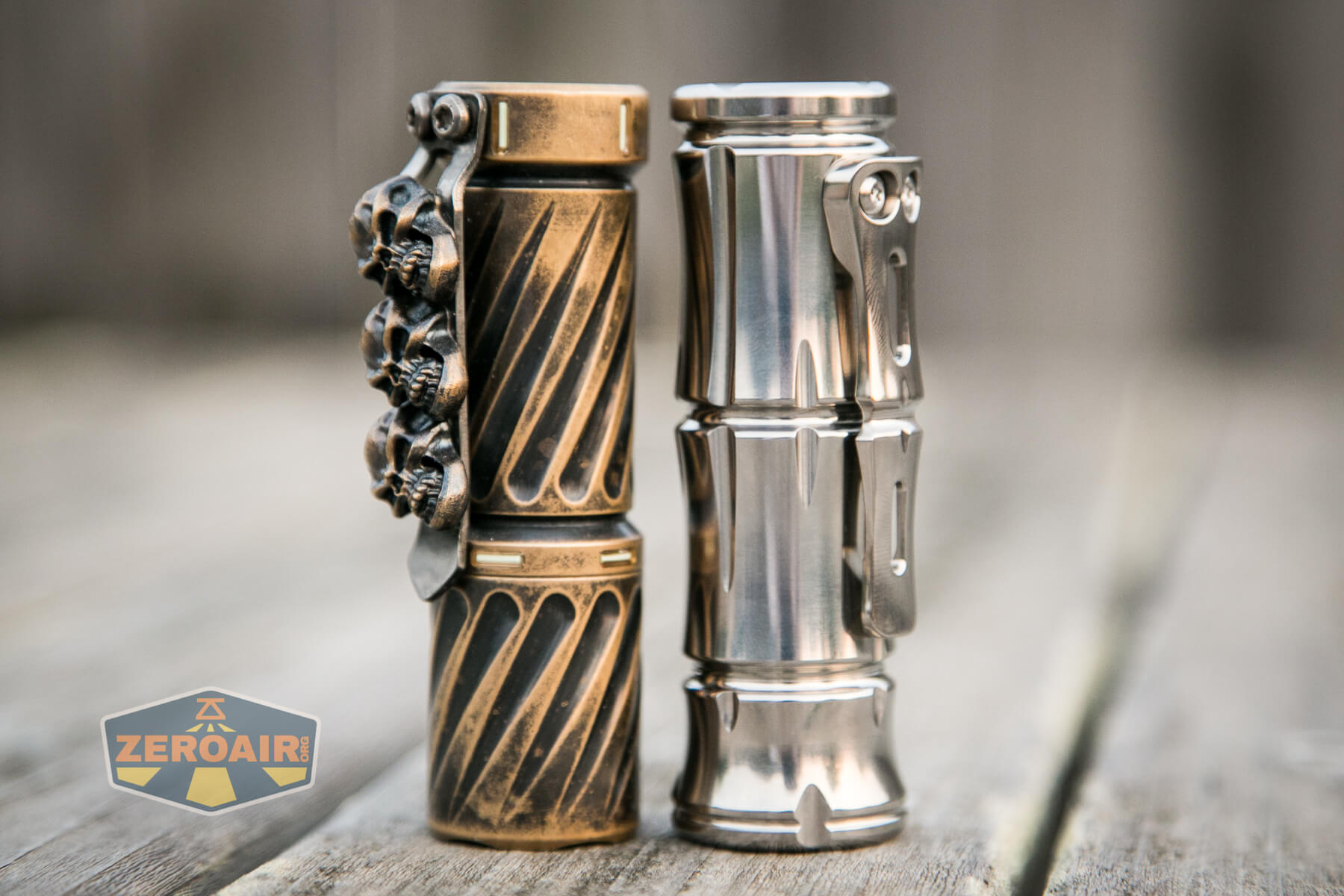
Above is my standard “hashtag custom” flashlight comparison. But it felt fitting to compare a couple of others, too. First (below) is the Hanko Machine Works Trident Full Twist (brass). These lights are approximately the same size.
Next is the Okluma DC1 (aluminum). The WWLZ Bamboo Small 18350 flashlight is ever so slightly shorter than the DC1.
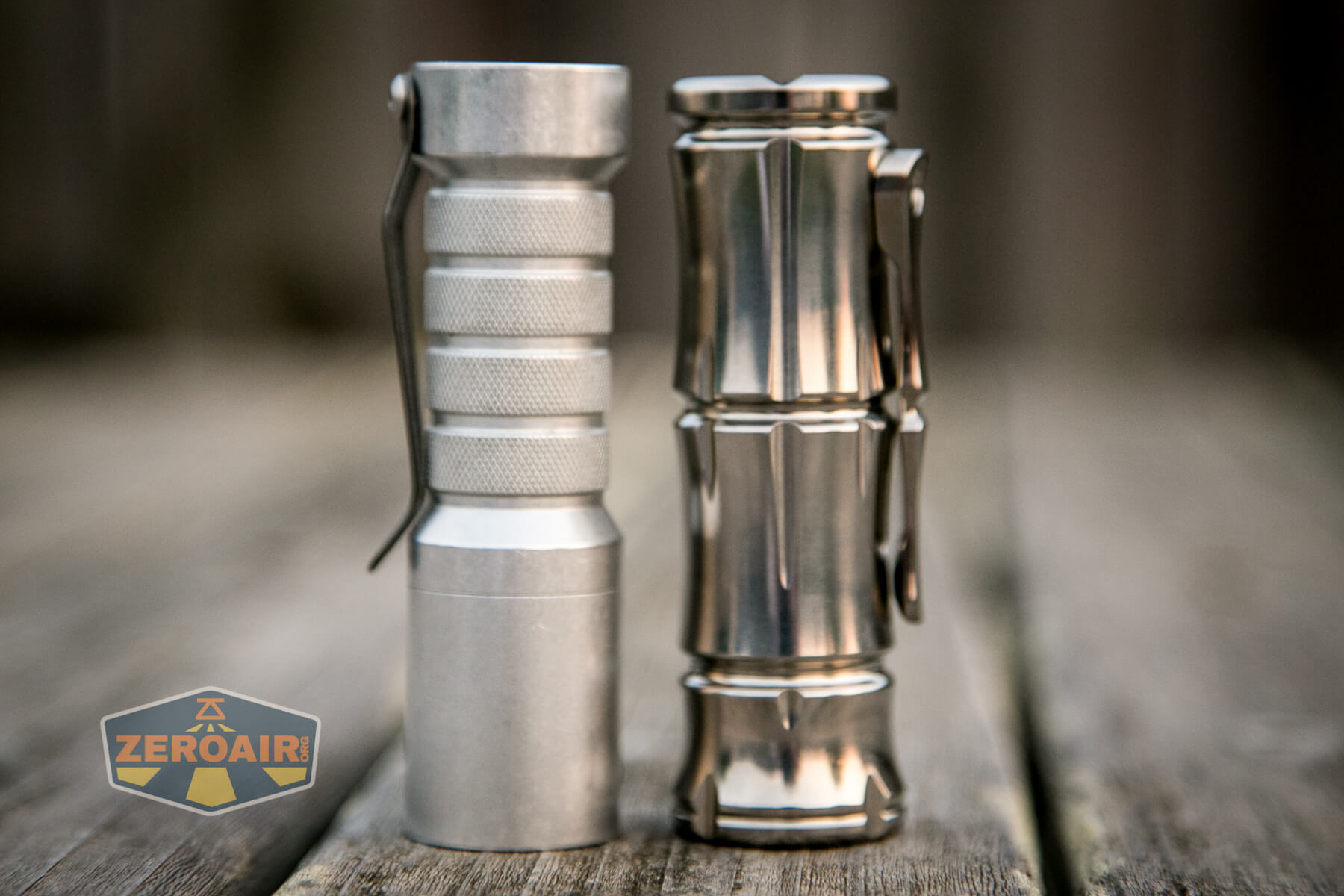
As I said, this light really hits the mark on size, and hits the mark with a unique design, too.
Retention and Carry
Now let’s talk about this interesting pocket clip! It’s a screw-in clip, which appears to have the standard hole spacing.
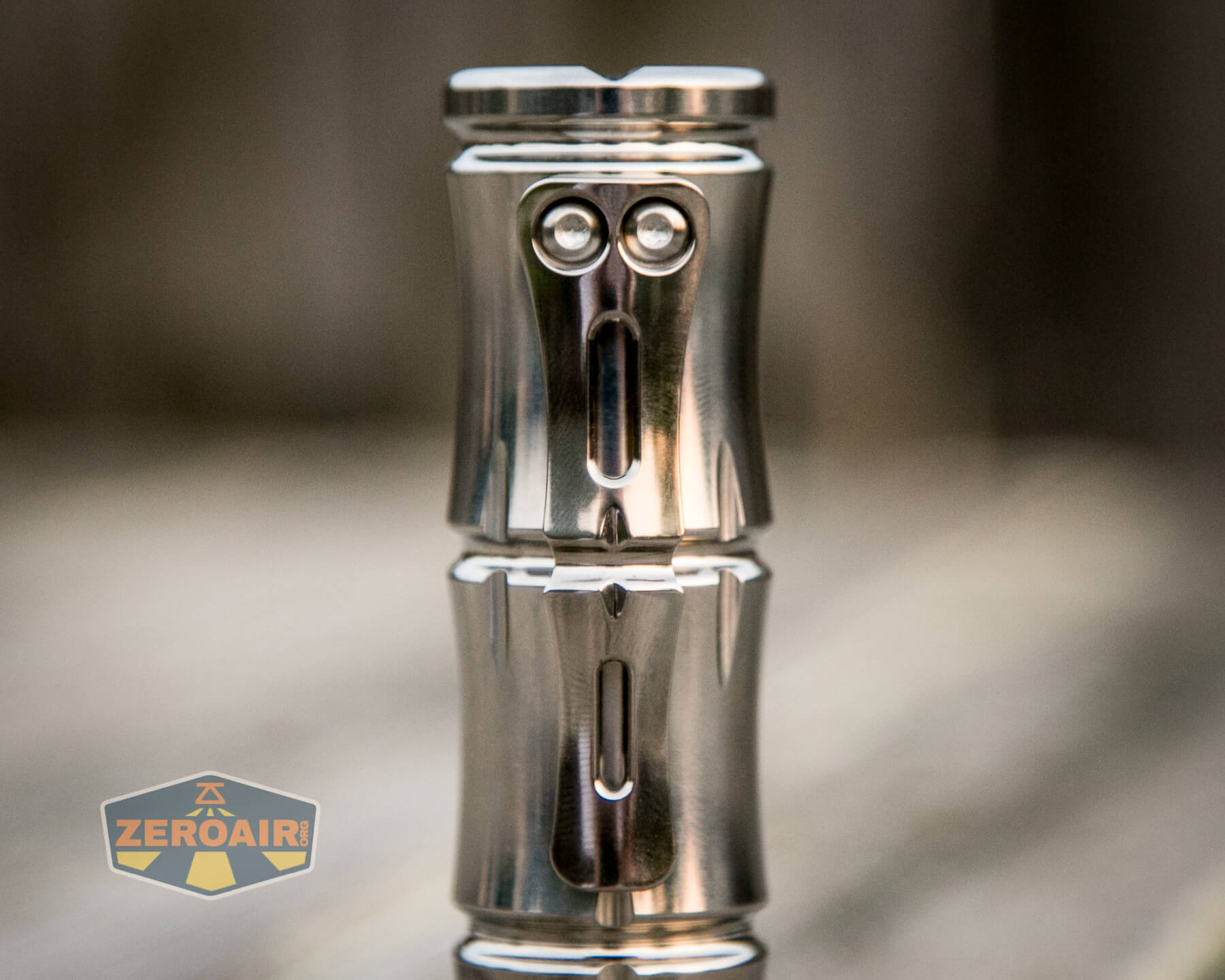
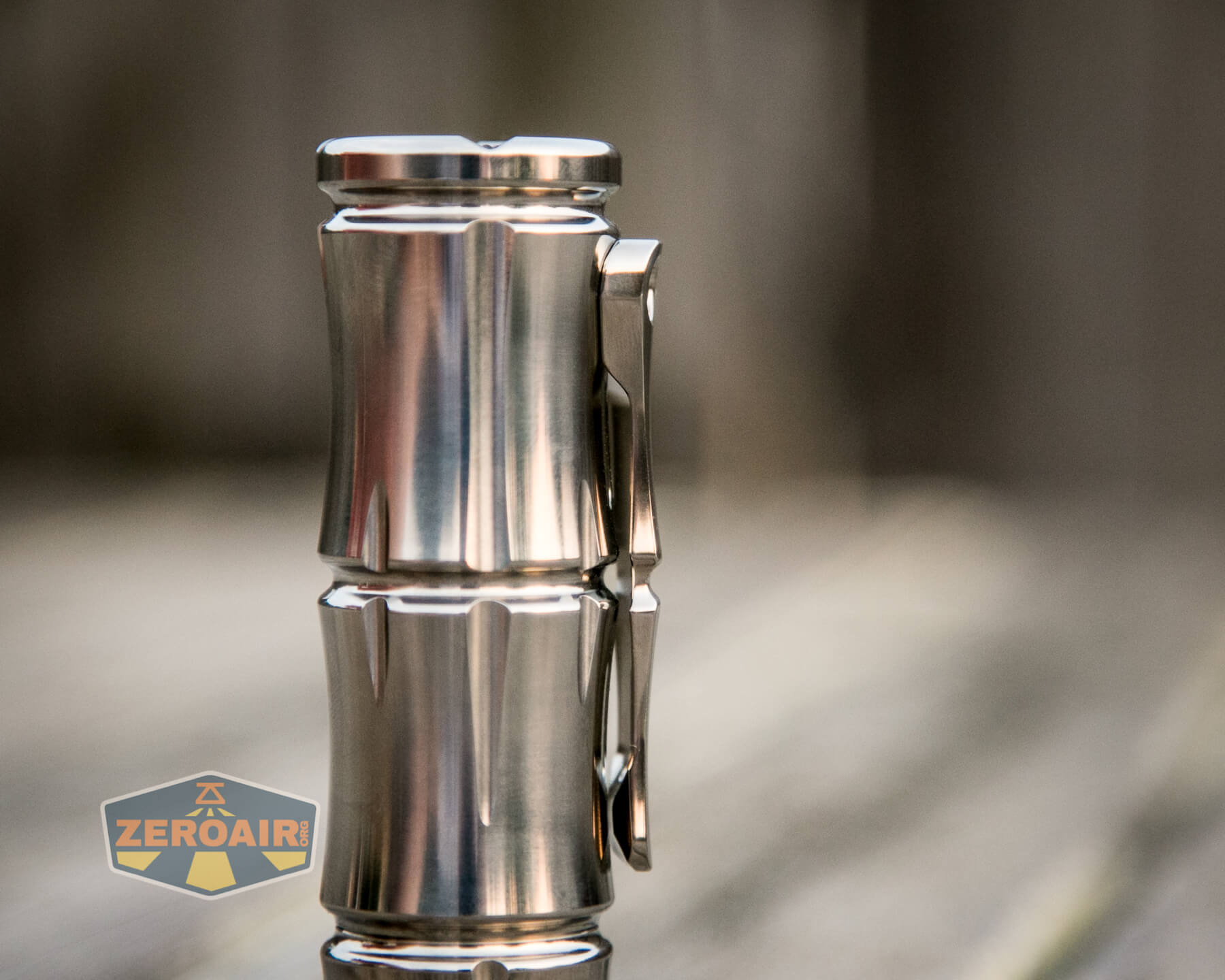
However, unlike many triples, I think these screws enter the body differently, maybe even “unusually.” The screws are parallel. Other clips (like clips by Steel Flame for example) expect the screws to be installed in an orientation where they are pointing directly at the center of the flashlight body.
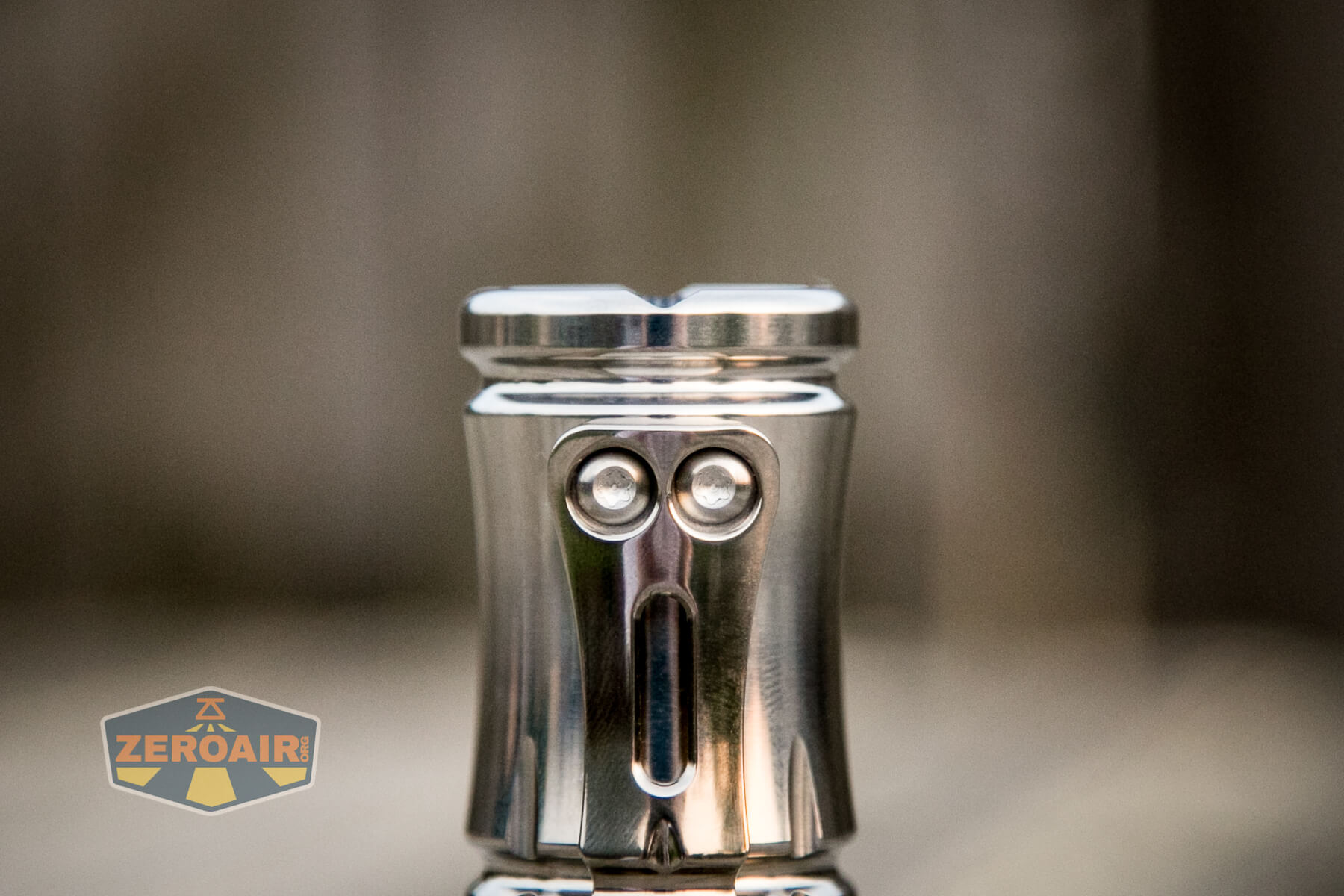
This means I’m unsure if you’d be able to install your favorite skull clip on the WWLZ Bamboo Small 18350 flashlight. (But really, with such a perfectly matching stock clip, why would you?)
The case can also be used for carrying this light, but there are no other options included.
Power and Runtime
The WWLZ Bamboo Small 18350 flashlight is powered by a single lithium-ion cell. The body as shown here is for a single 18350, and with this one being called “Small,” maybe we can hope for an 18650 version, too!
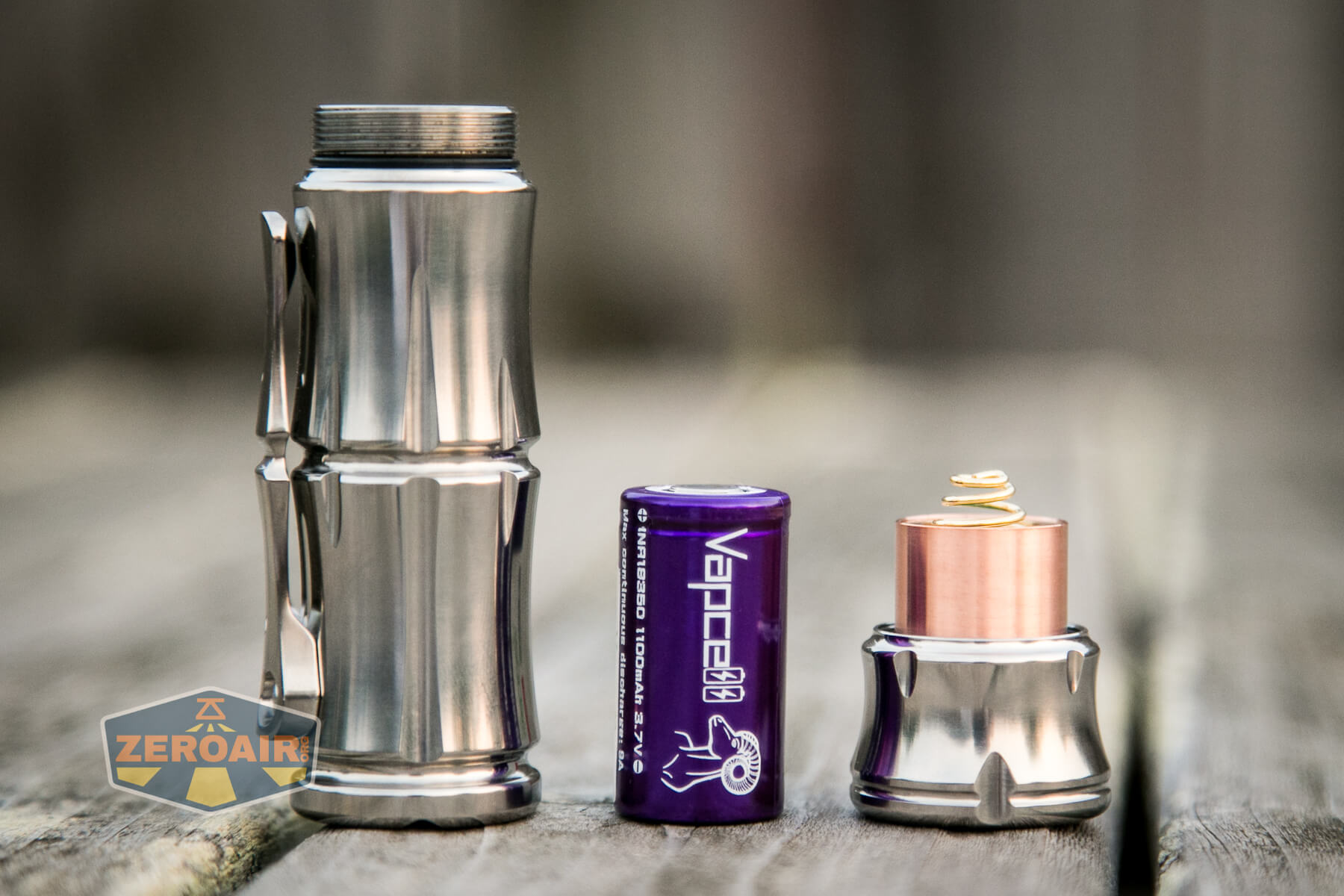
The cell is installed in the usual orientation: positive terminal toward the head. Because of the setup here, the cell sort of disappears into the body.
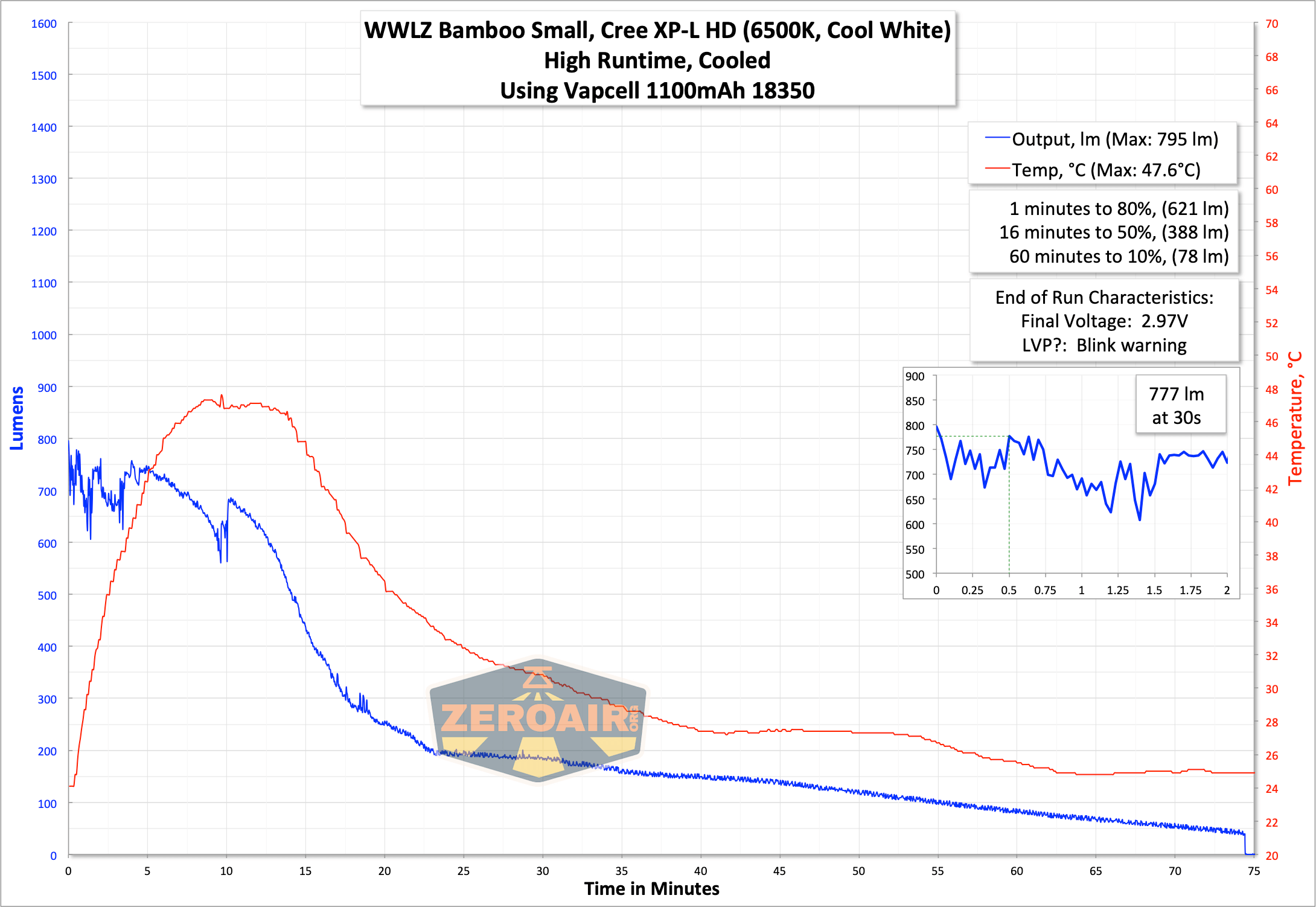
Here are a few runtimes on the higher modes. There are some interesting things to note. First, the driver is temperature-controlled! And not just that. Just that is fairly common. What’s a bit less common is that once the temperature reaches an acceptable level, the light will step back up to the Turbo output! This level does fade along with the cell voltage, but still, this is an interesting thing.
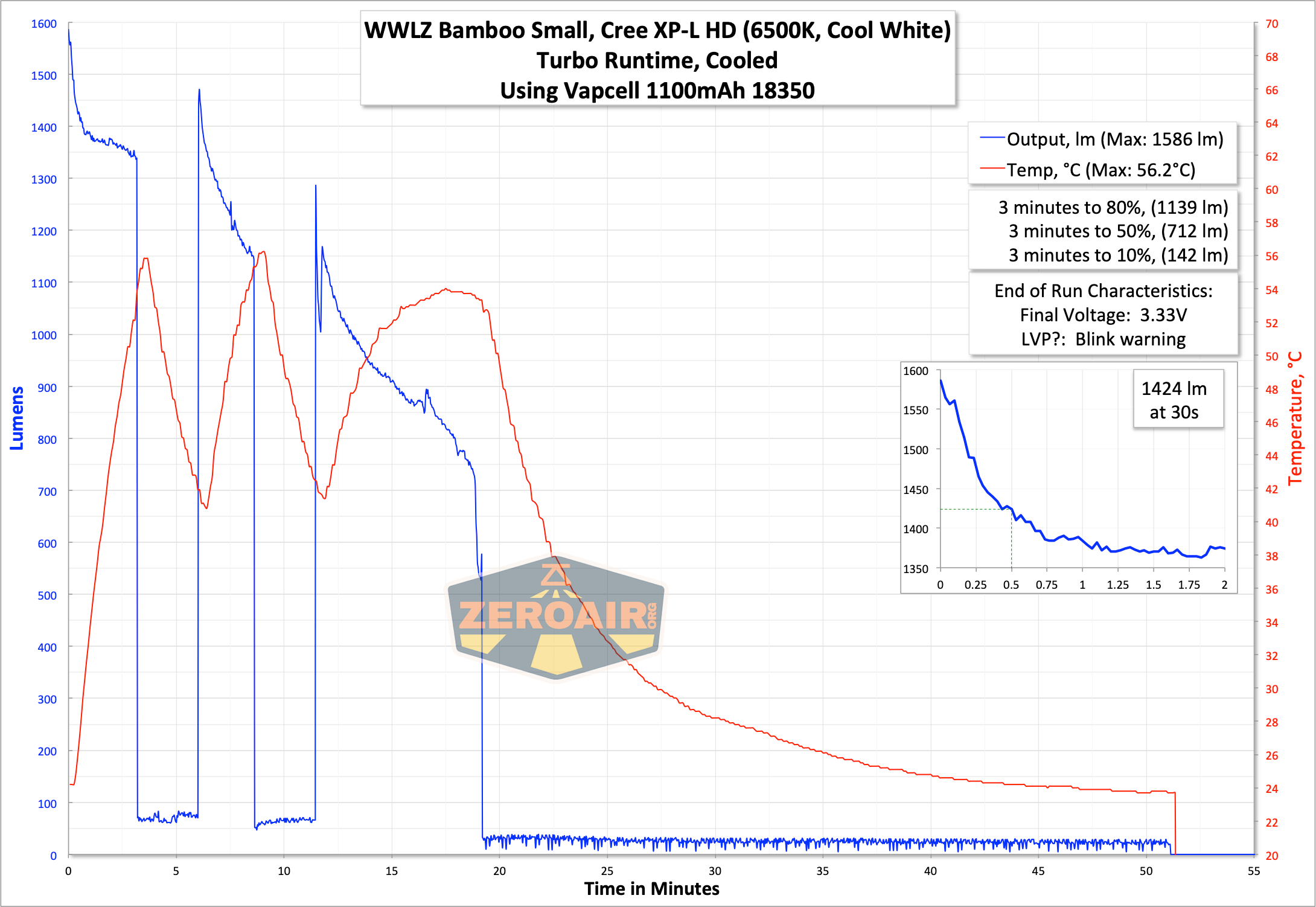
We can note a couple of things based on these two runtime graphs below. The higher output (“High”) is cooled and never reaches even 50°C. As such, there’s never any output modulation.
The next lower level (“Medium”), though, was tested uncooled and did get quite warm! Still not quite to the stepdown point, though. But cooling makes a difference here.
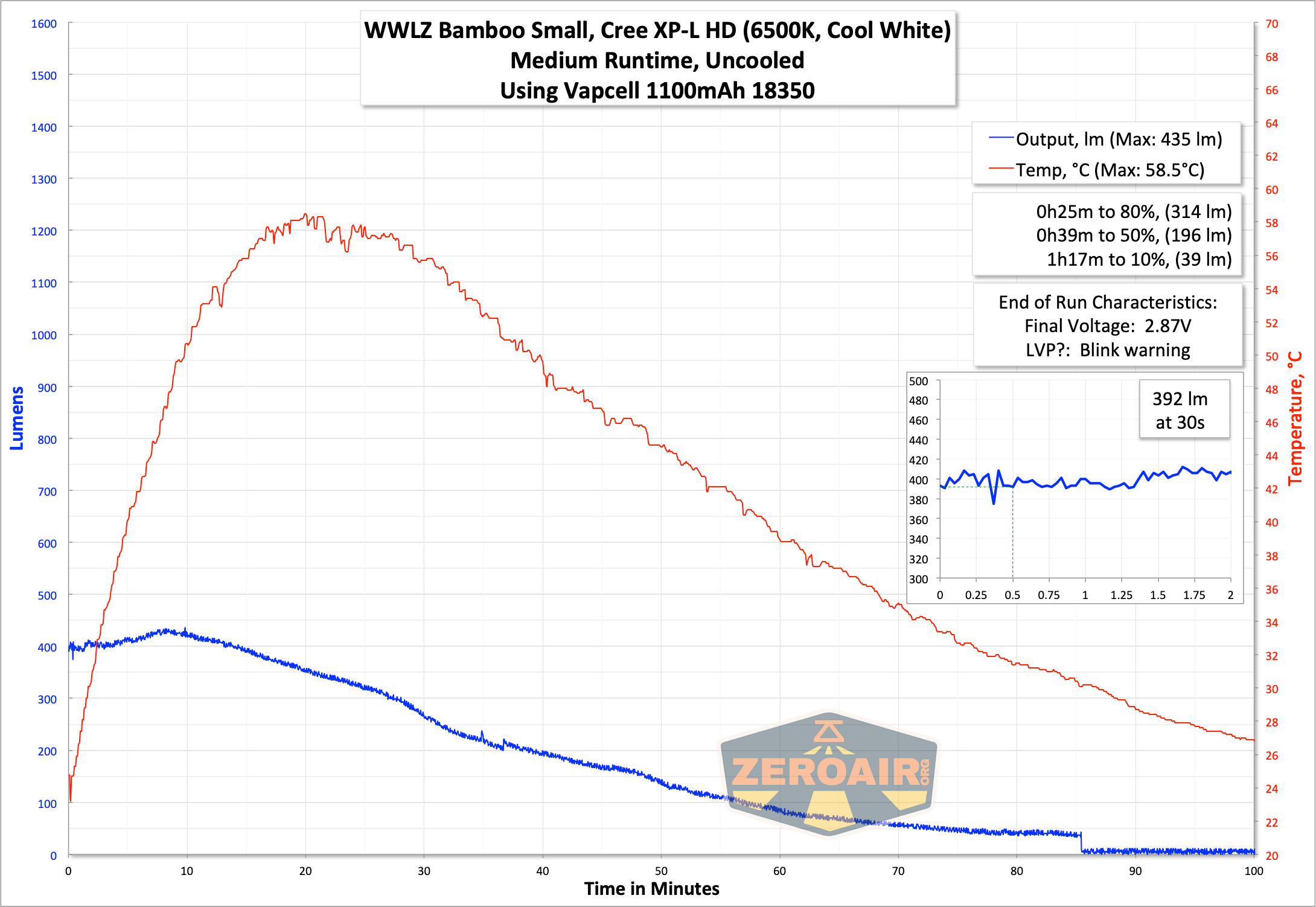
Especially in the last graph above, you can see a stepdown due to cell voltage. But broadly speaking, I didn’t see any low voltage cutoff. When the cell is low, however, the main emitters blink twice every few seconds. You won’t miss that the cell is low (but the light might not shut off).
Modes and Currents
| Mode | Mode Claimed Output (lm) | Claimed Runtime | Measured Lumens | Tailcap Amps |
|---|---|---|---|---|
| Turbo | 2500 | – | 1424 | 8.30 |
| High | – | – | 777 | 4.12 |
| Med | – | – | 392 | 1.87 |
| Low | – | – | 79 | 0.26 |
| Moon | – | – | 4 | ~ |
| Blue High | – | – | – | 1.09 |
| Blue Low | – | – | – | 0.33 |
Pulse Width Modulation
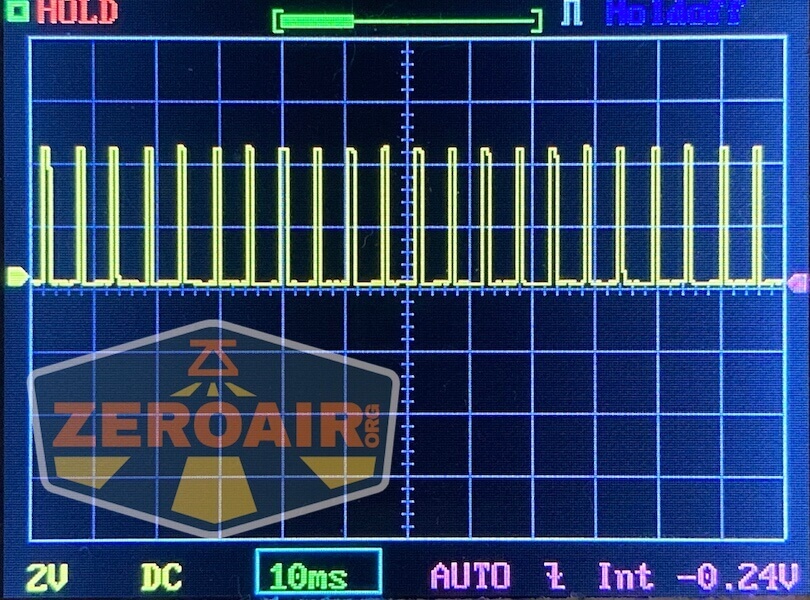
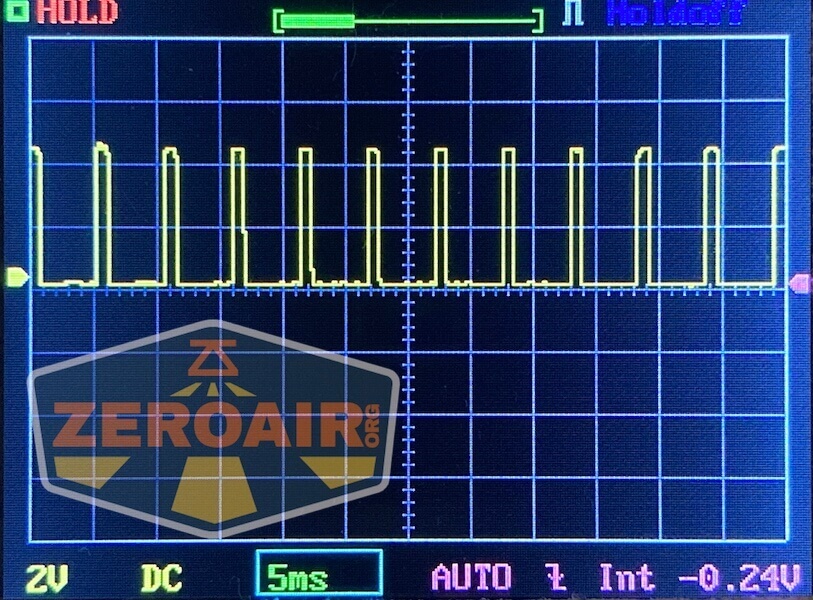
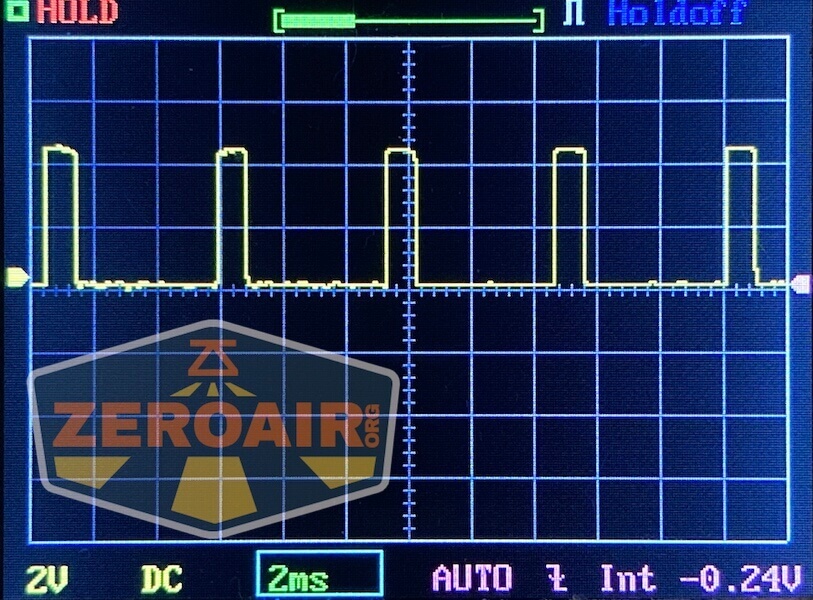
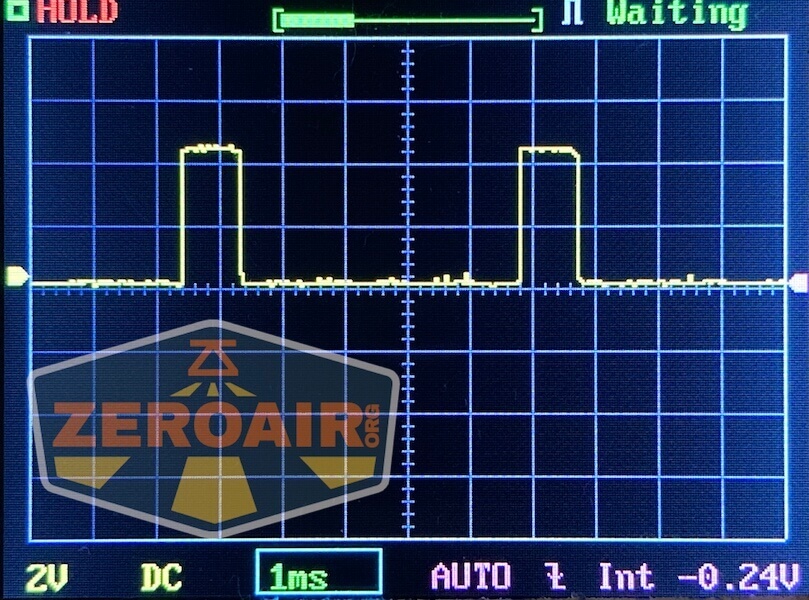
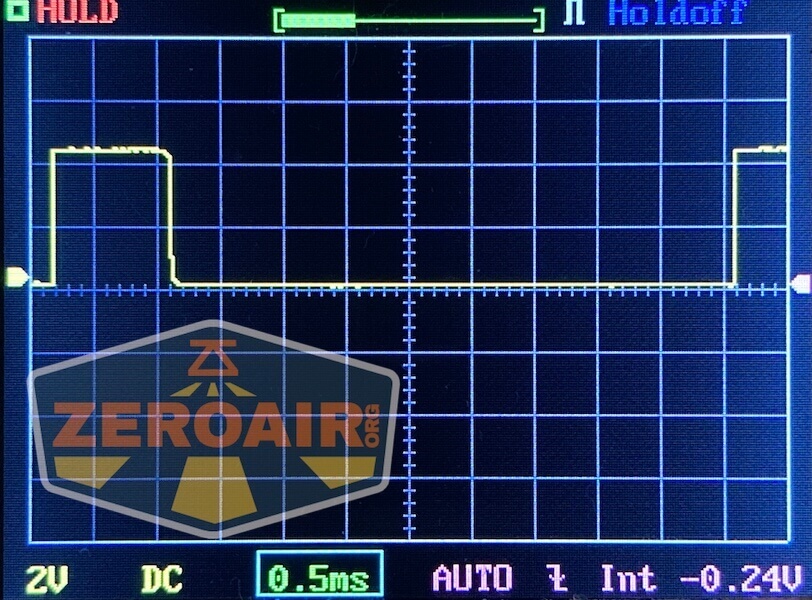
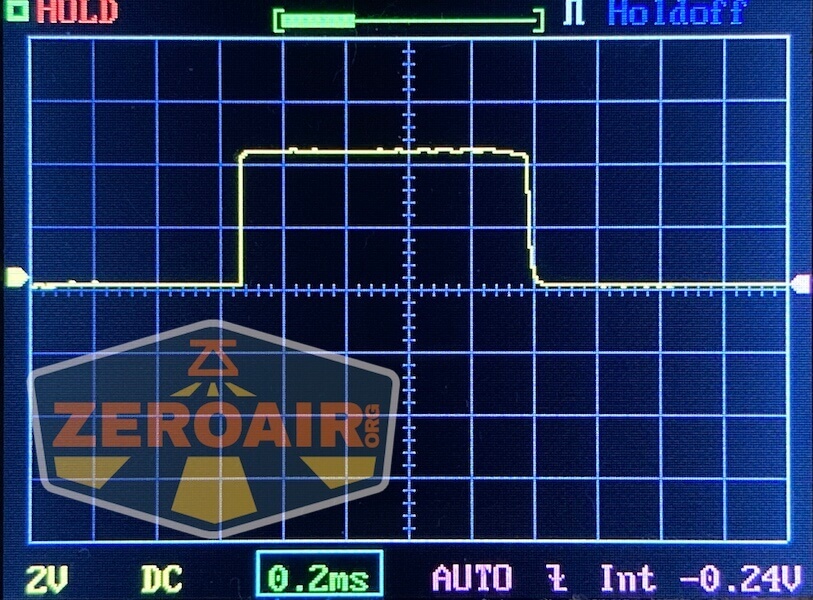
I’ve hinted along the way that there are things I don’t like about this light. Here is the first. The PWM on the WWLZ Bamboo Small 18350 flashlight is oh so bad. Most people aren’t nearly as sensitive to PWM as I am, and I believe that most people would be able to easily notice the PWM on this light. That’s not to say you’d be put off by it, though – it might not bother you at all.
I’m displaying graphs for only the white emitters. I’ll add blue later (I didn’t think my sensor was sensitive to blue, but upon glancing at it to test, it actually is. So data on that later.)
The PWM here is so … slow (by “slow” I mean “bad”) that I had to change my timescale to capture it. But first, there it is in the usual timescale.
 Now here are the 5 white modes with a longer window of time, which will allow me to capture a full cycle of the PWM (and in this case, I captured much more than a full cycle).
 The PWM here is disappointing and slow, and if not for the aux emitters, I’d swap in an H17f without another thought. Here are the PWM readings for blue, which are in the same timescales as above.
 But the secondary channel confounds that, relegating us to only the CWF Dragon driver (which also uses PWM, but still “less bad” PWM). I’m more likely to just swap in whole new electronics for something warmer than 6500K and no secondary!
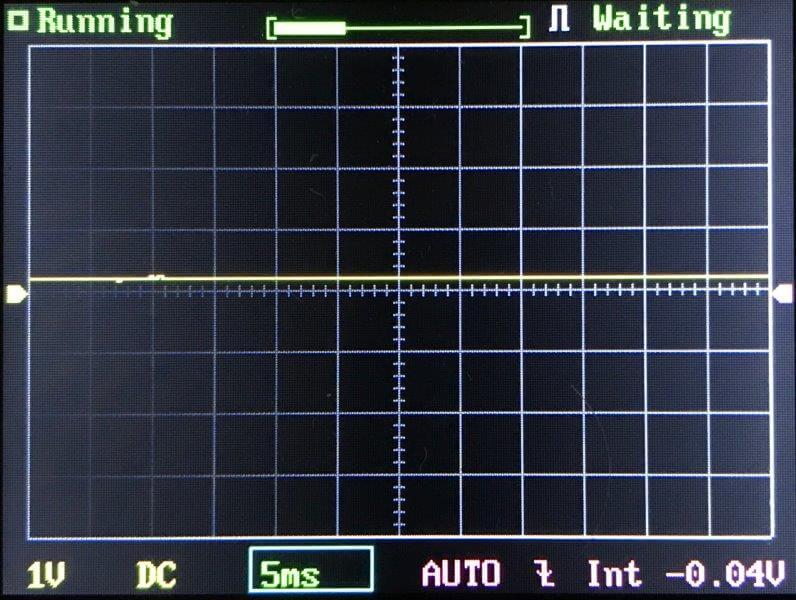
Here you can see a “baseline” – a chart with almost no light hitting the sensor.
Then there’s the Ultrafire WF-602C flashlight, which has some of the worst PWM I’ve seen. It’s so bad that I used a post about it to explain PWM! Here are multiple timescales (10ms, 5ms, 2ms, 1ms, 0.5ms, 0.2ms) to make comparing this “worst” PWM light to the test light easier. That post also explains why I didn’t test the WF-602C at the usual 50us scale.
User Interface and Operation
As I’ve said above, this is a mechanical clicky. It’s a reverse clicky, so while the light is on it’s possible to change modes.
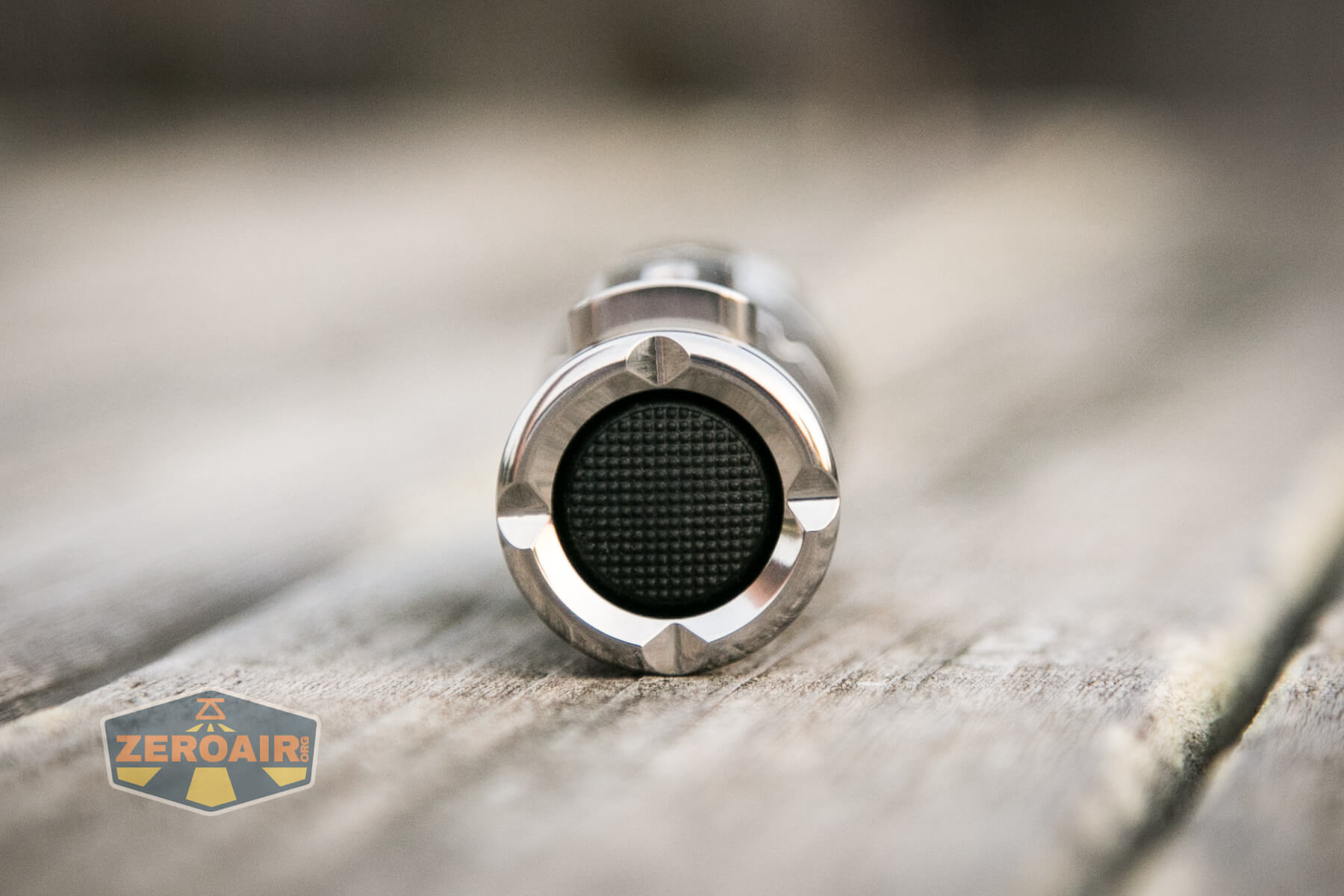
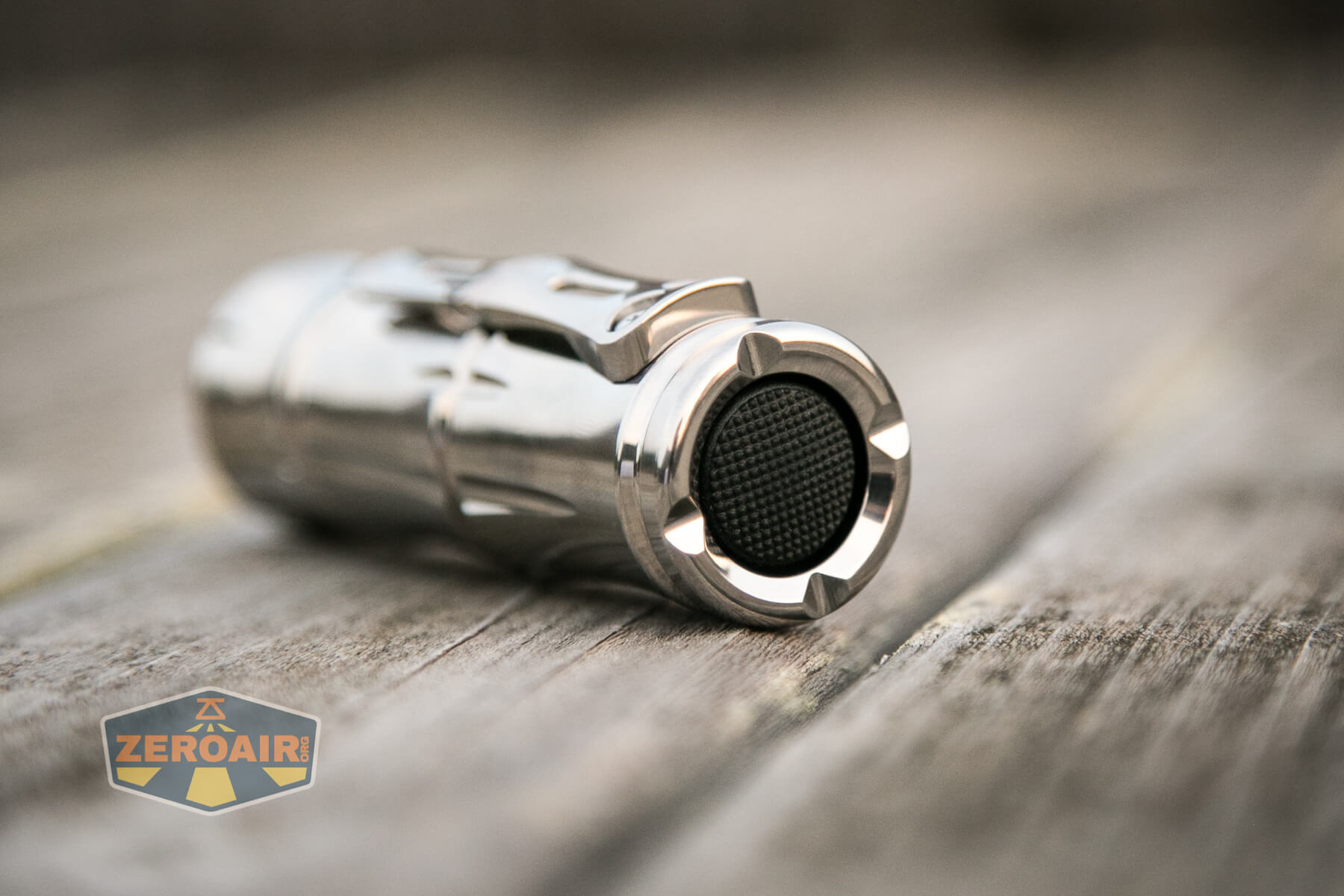
The switch cover is nice and big, and fairly flat.
Being fairly flat means that the switch or switch cover does not protrude past the tailcap. This means flawless tailstanding.
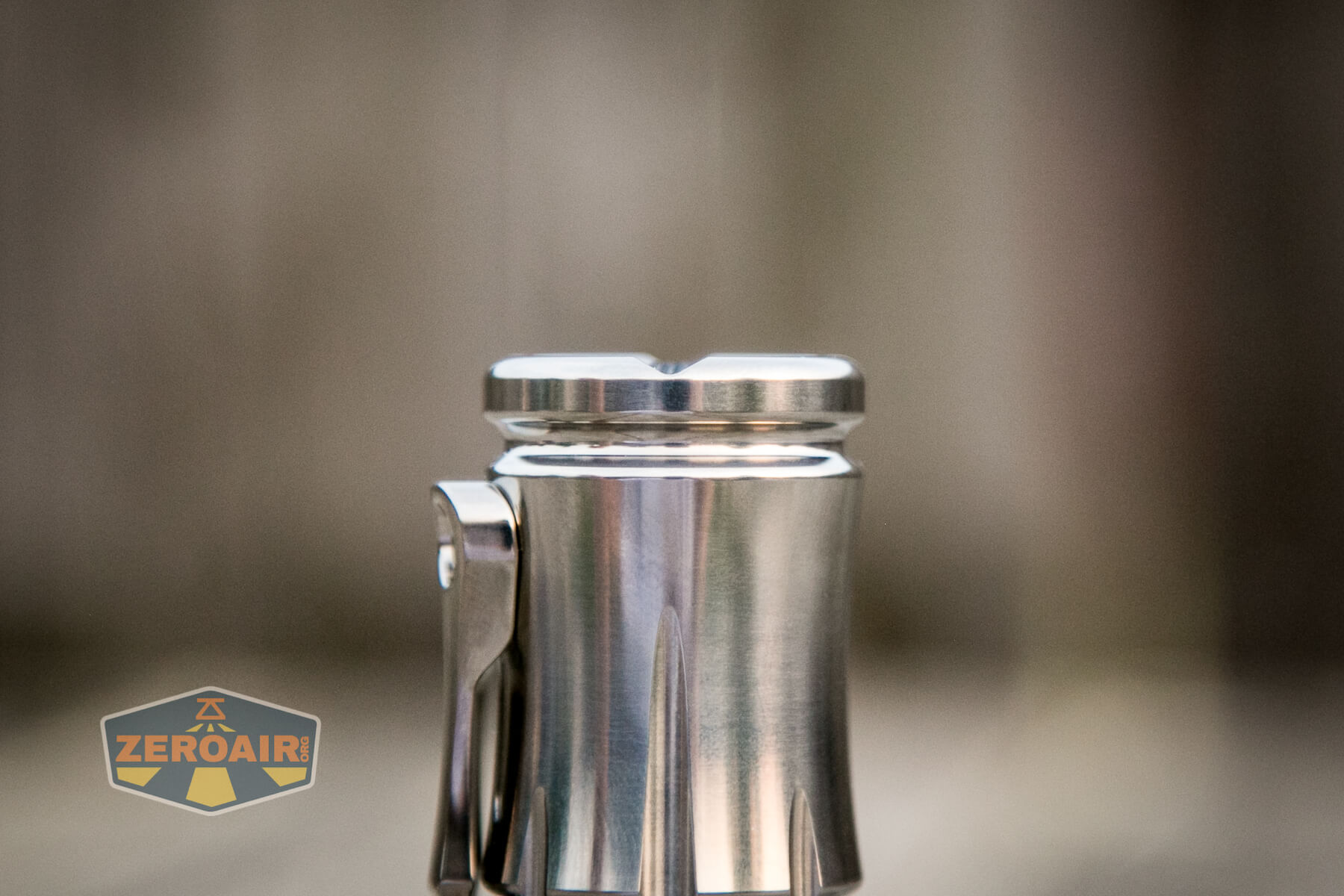
The action is very common, with a loud positive click on the down and upstroke both.
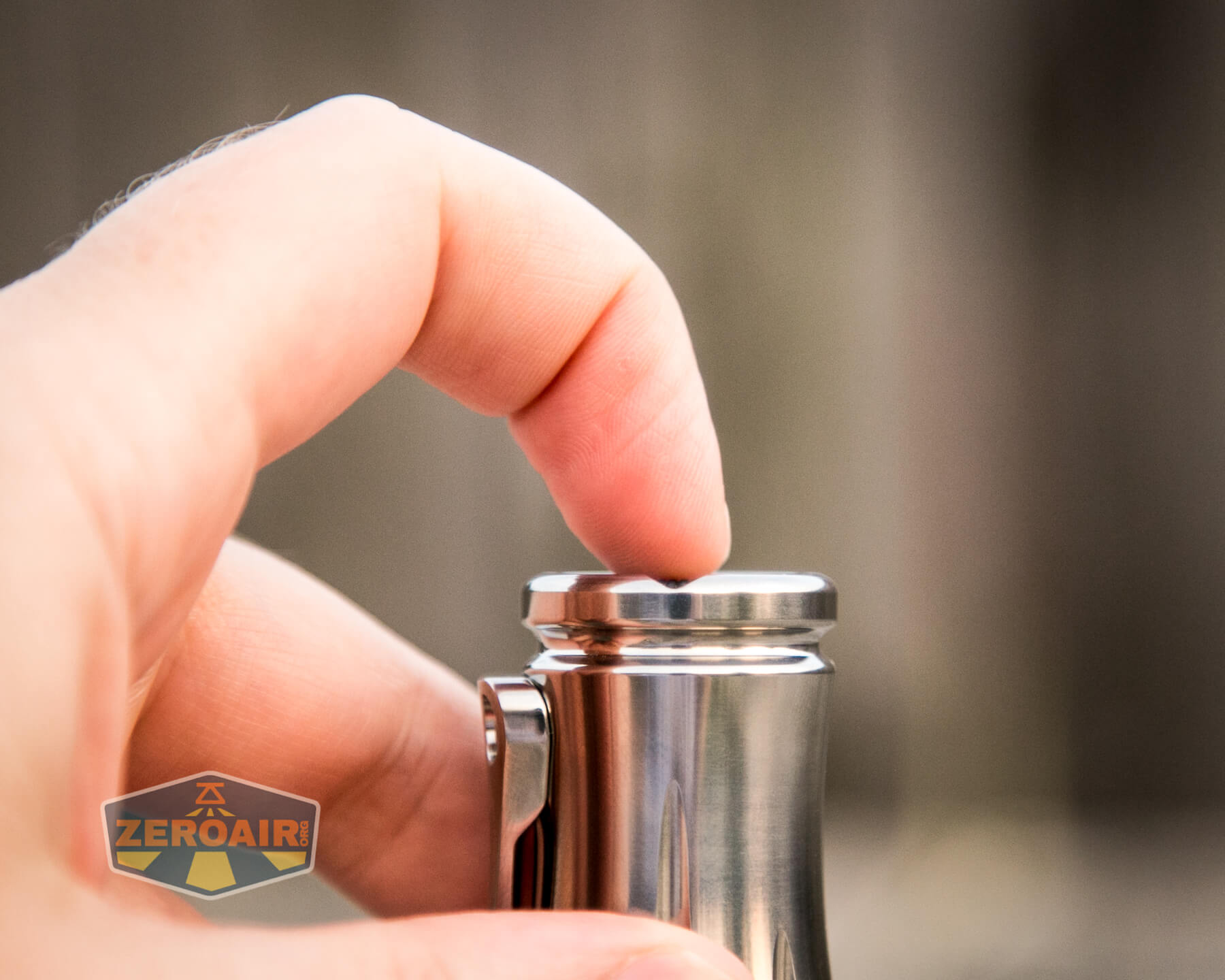
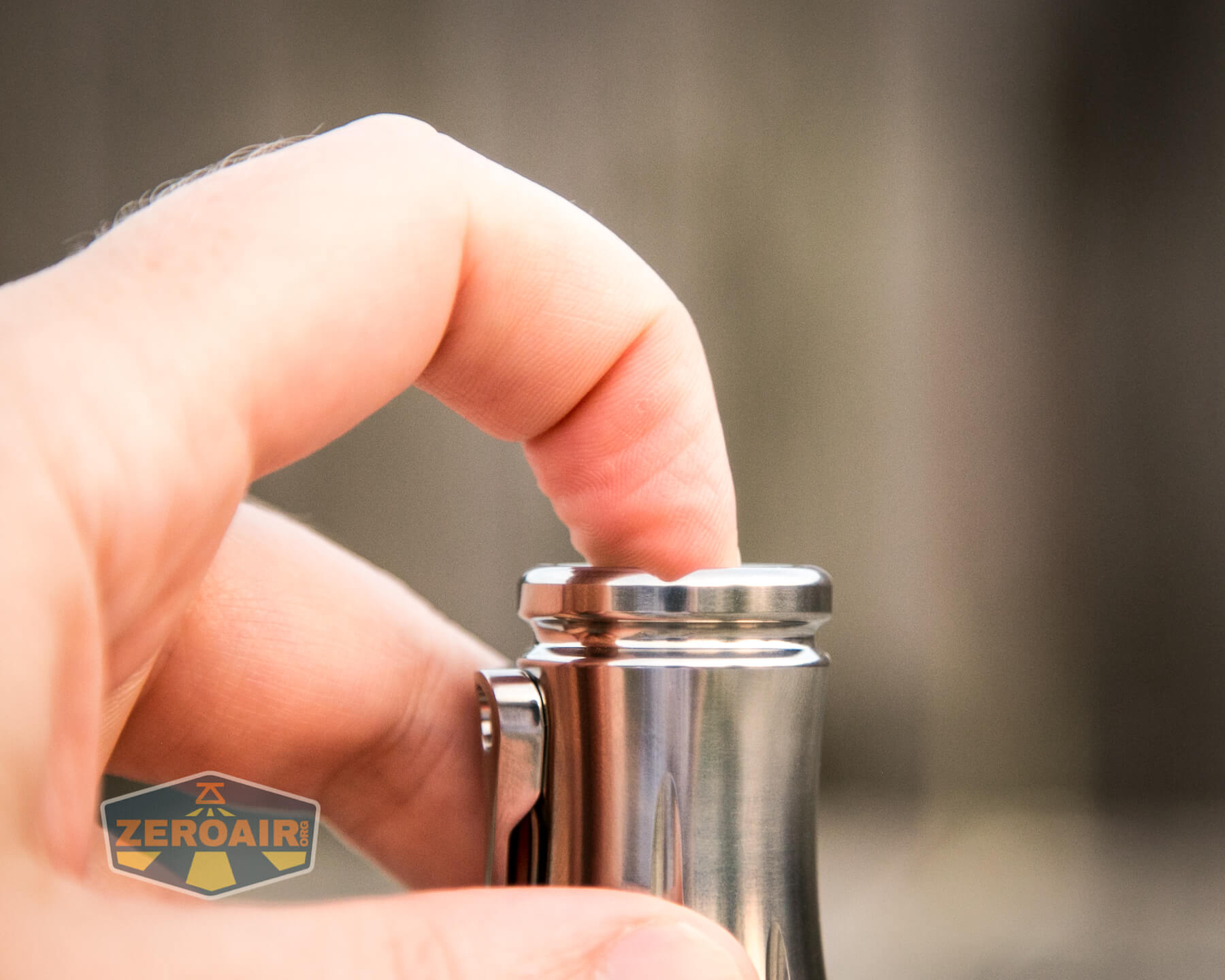
There are three groups on the WWLZ Bamboo Small 18350 flashlight. Pasting from Neal’s:
Group 1: Moon-Low-Med-High-Turbo
Group 2: 1) aux led 30%
2) aux led 100%
3) aux led on, main led strobe
4) main led on, aux led strobe
5) main led and aux led strobe
Group 3: Rambling (see below)
Since there’s no manual, I had to figure out how to get between those groups on my own. Fortunately, it’s not hard!
Here’s a user interface table for group 1, with extras.
| State | Action | Result |
|---|---|---|
| Off | Click | Low |
| On | Tap | Mode advance (lower to higher direction) |
| On | Click | Off |
| On | Double tap | Switch to Group 2 (Aux access) |
| On | Triple tap | Switch to Group 3 |
| Group 2 or Group 3 | Hold | Switch to Group 1 |
| Group 3 (During “rambling” (aka “ramping”) | Tap | Output level selected |
| Group 3 (after output level has been selected) | Triple tap | Reenter the ramping for output level selection, from the currently selected ramp level. |
Group 1 is completely common of course – you’ll get that one immediately. Also note, no mode memory!
Group 2 is interesting because while it offers two modes of blue, it also offers three modes of main and secondary channel mix. I can’t say how or when those would be useful, but they’re neat and fun!
Group 3 is quite interesting, though. This is called “rambling,” but you’ll have to interpret that. What is meant is that this is a ramping option. Don’t sleep on the fact that this is a mechanical clicky light with ramping. There are others, probably, but all I can think of offering ramping on a mechanical clicky is Crescendo (which I’ve used, and really didn’t love).
- Group 3 can even be seen not as a separate “group” but as an “always available ramping access,” since triple click from anywhere will always put you into the ramp. So that makes it even better.
- When switching from Group 1 or Group 2, ramping always starts on the lowest output level.
- When reentering ramping from Group 3, ramping starts from the currently selected level.
- There is no ramp for the secondary channel.
Ramping is another reason to not swap the driver on this unique light!
Note (and this is a big one). When advancing modes (any mode, Group 1 or 2), there is a long pause before the mode advances. A “not to be underestimated” pause. Here’s a video of the user interface which mostly covers all the modes. More importantly, you can see the pause after tapping the button.
LED and Beam
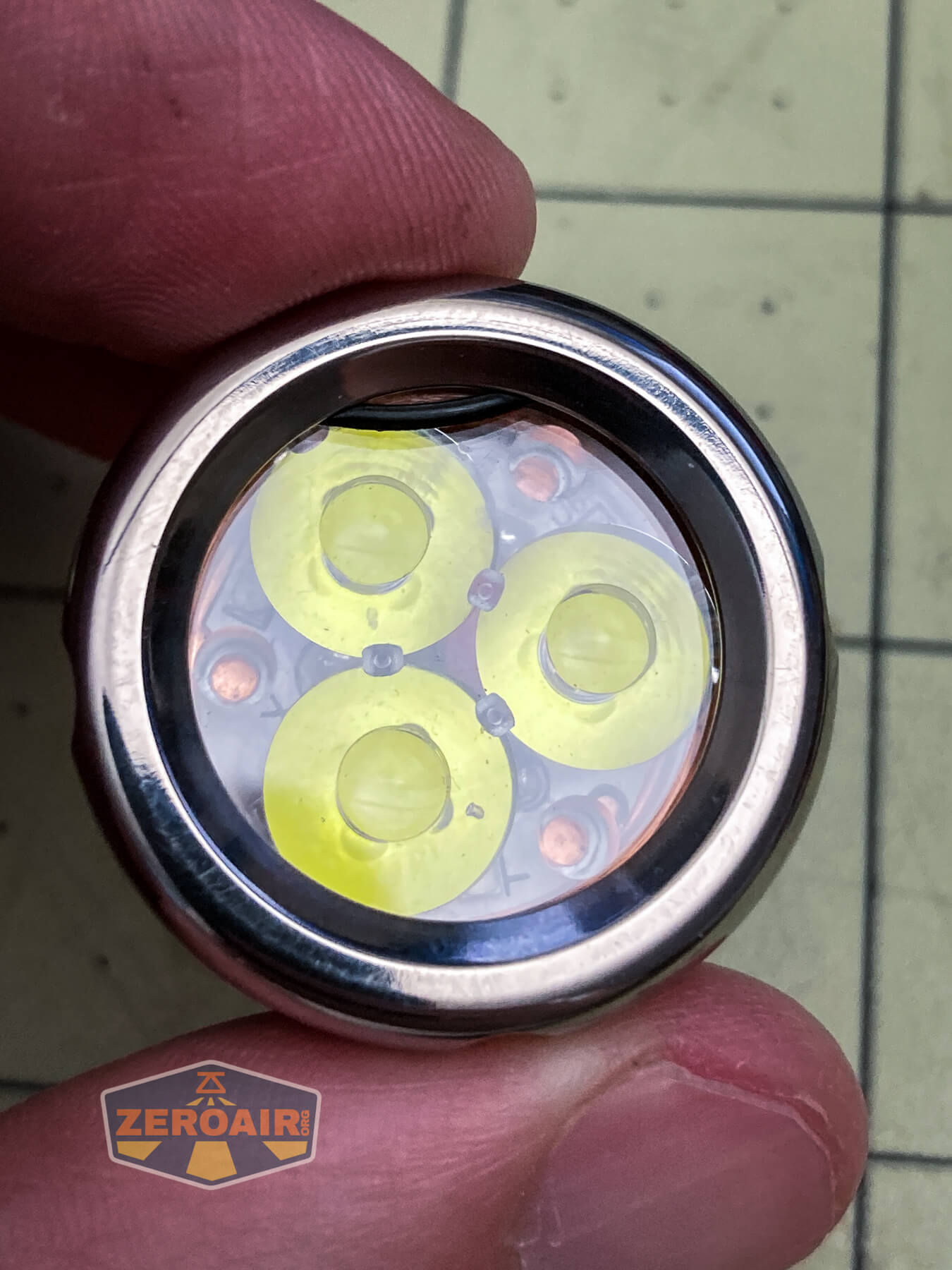
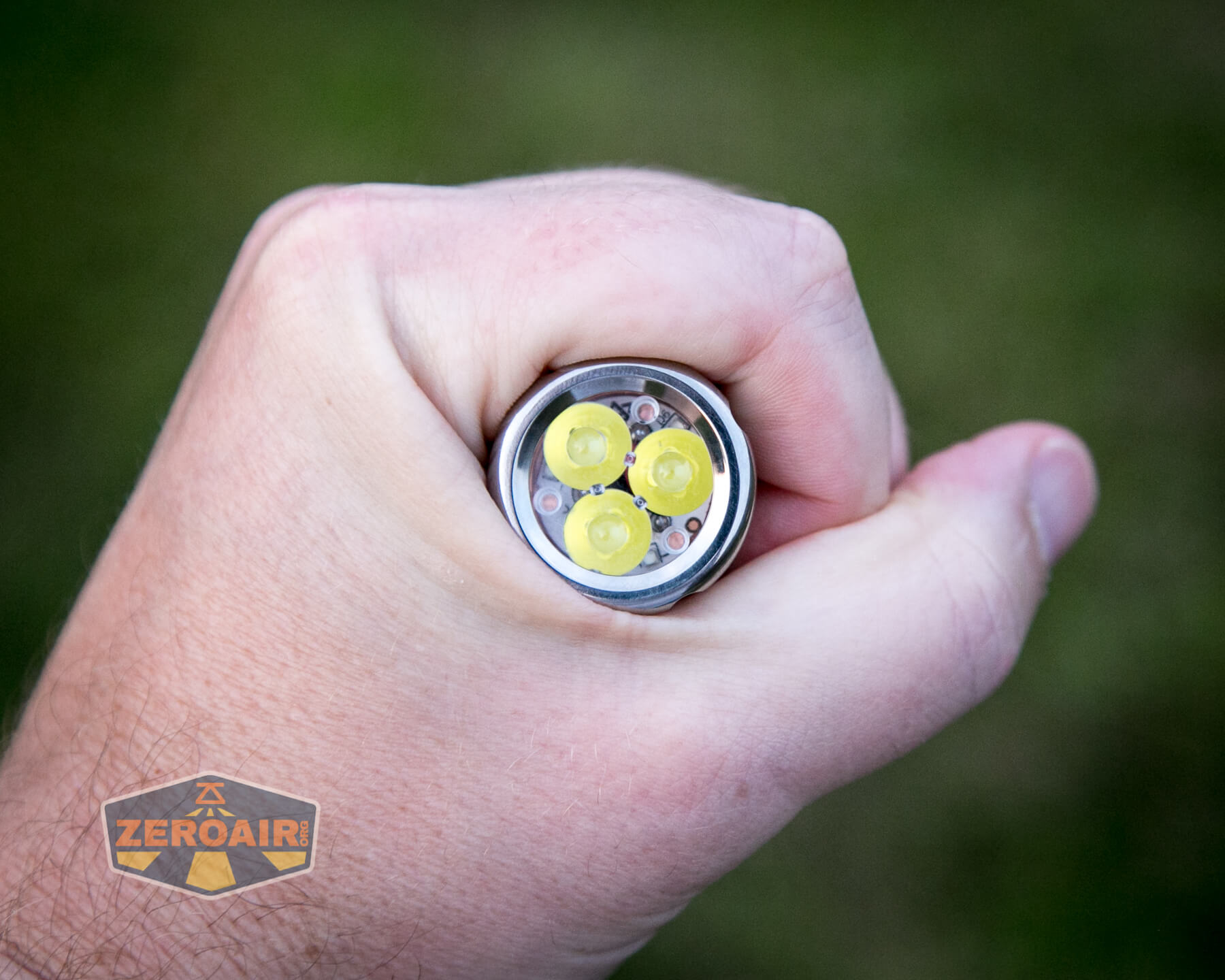
WWLZ offers only one main emitter choice – that’s Cree XP-L HD, in 6500K. This is a triple, so there are three of those. The optic here seems to be a standard Carclo optic and a clear/narrow variety.
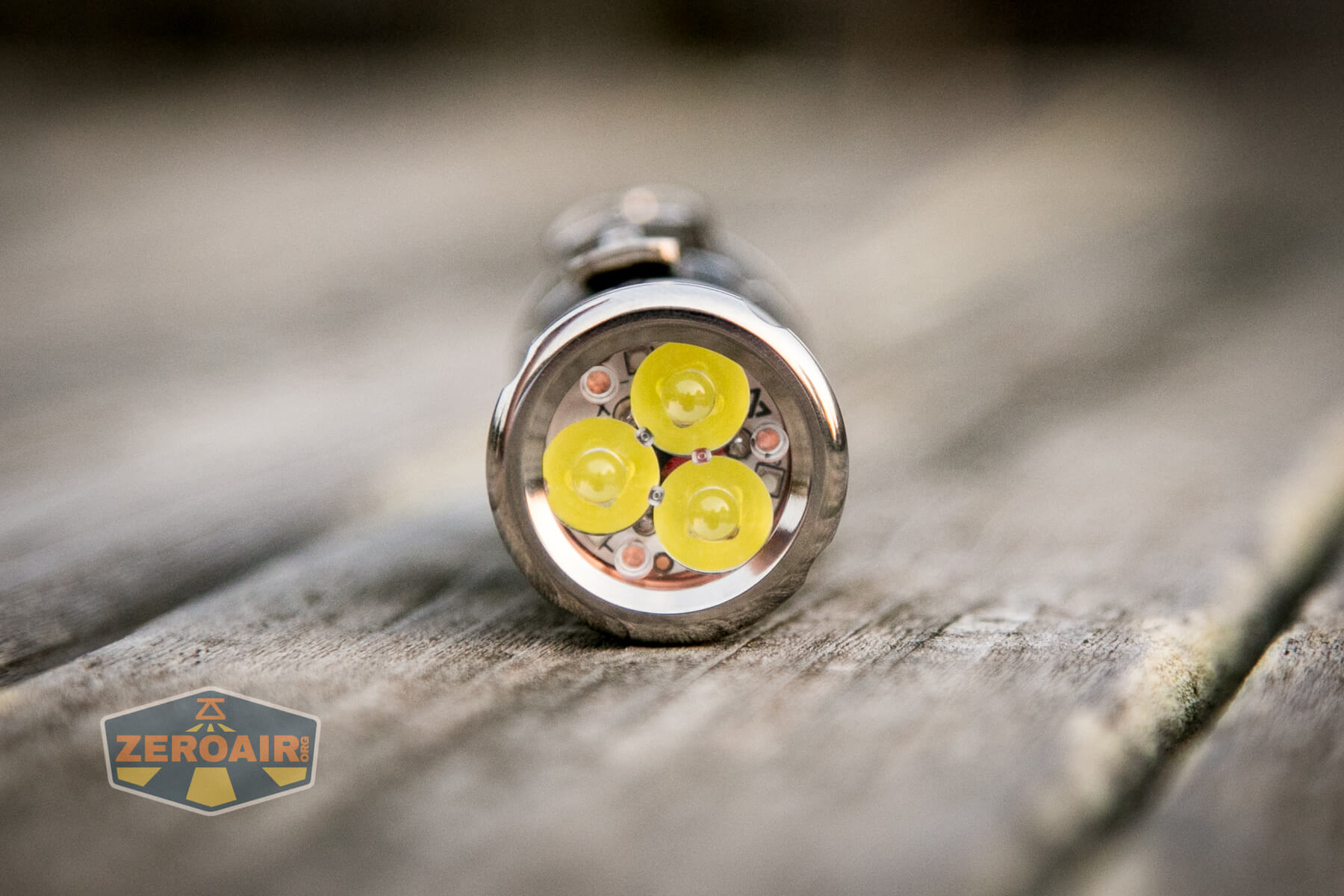
The secondary channel can be had in blue (seen here), red, or green.

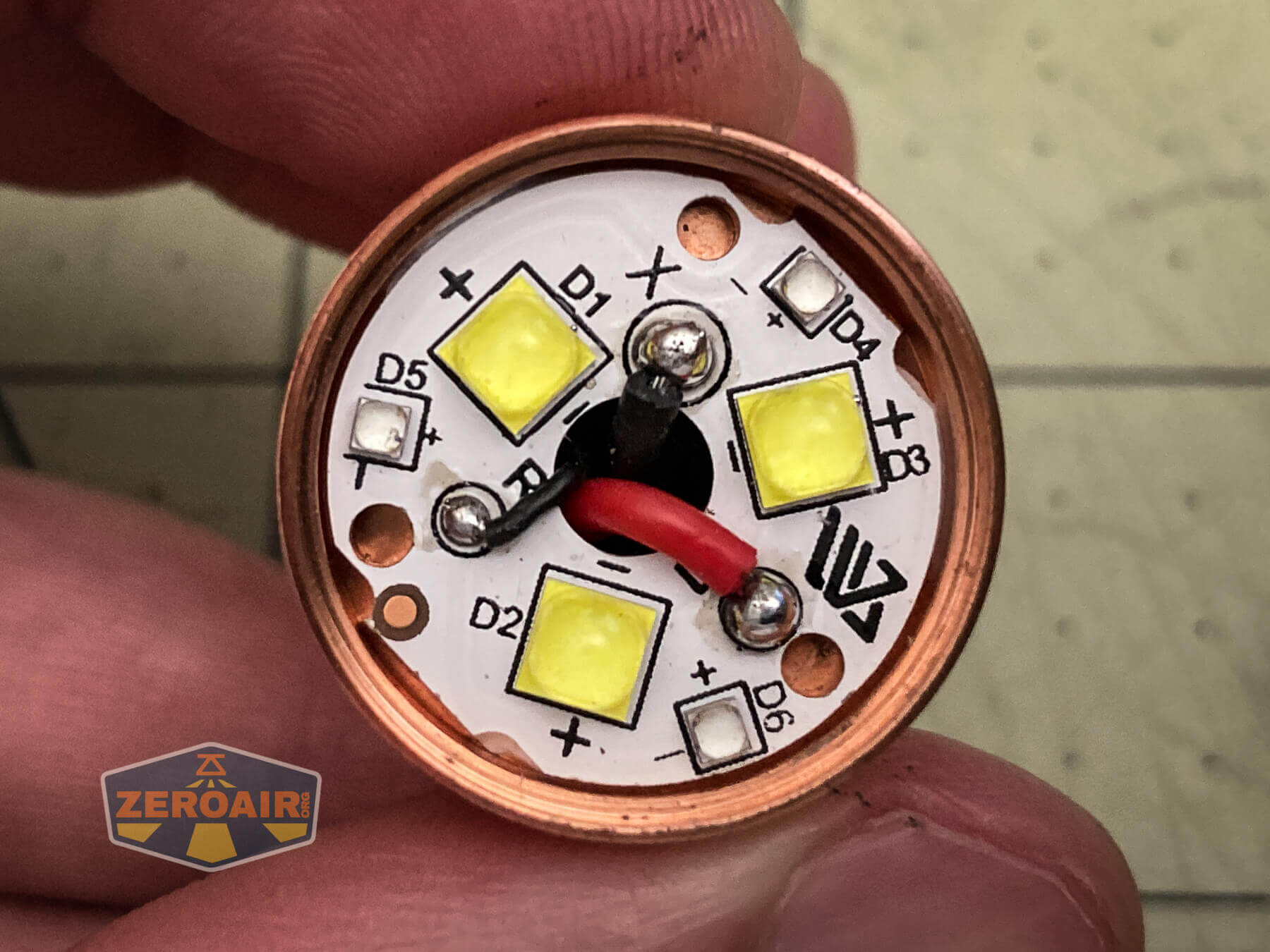
Here’s a look at the board with the optic out of the way.
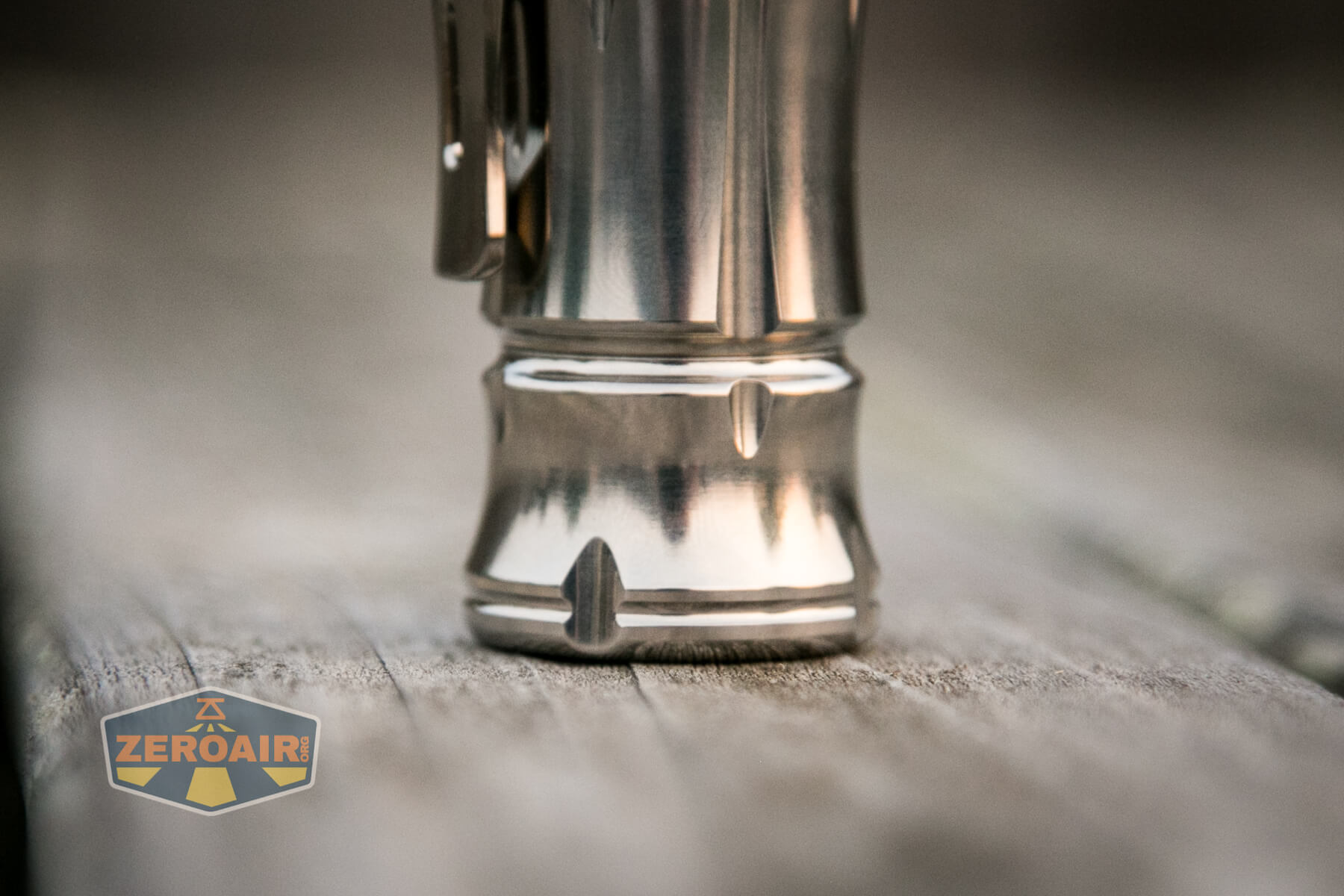
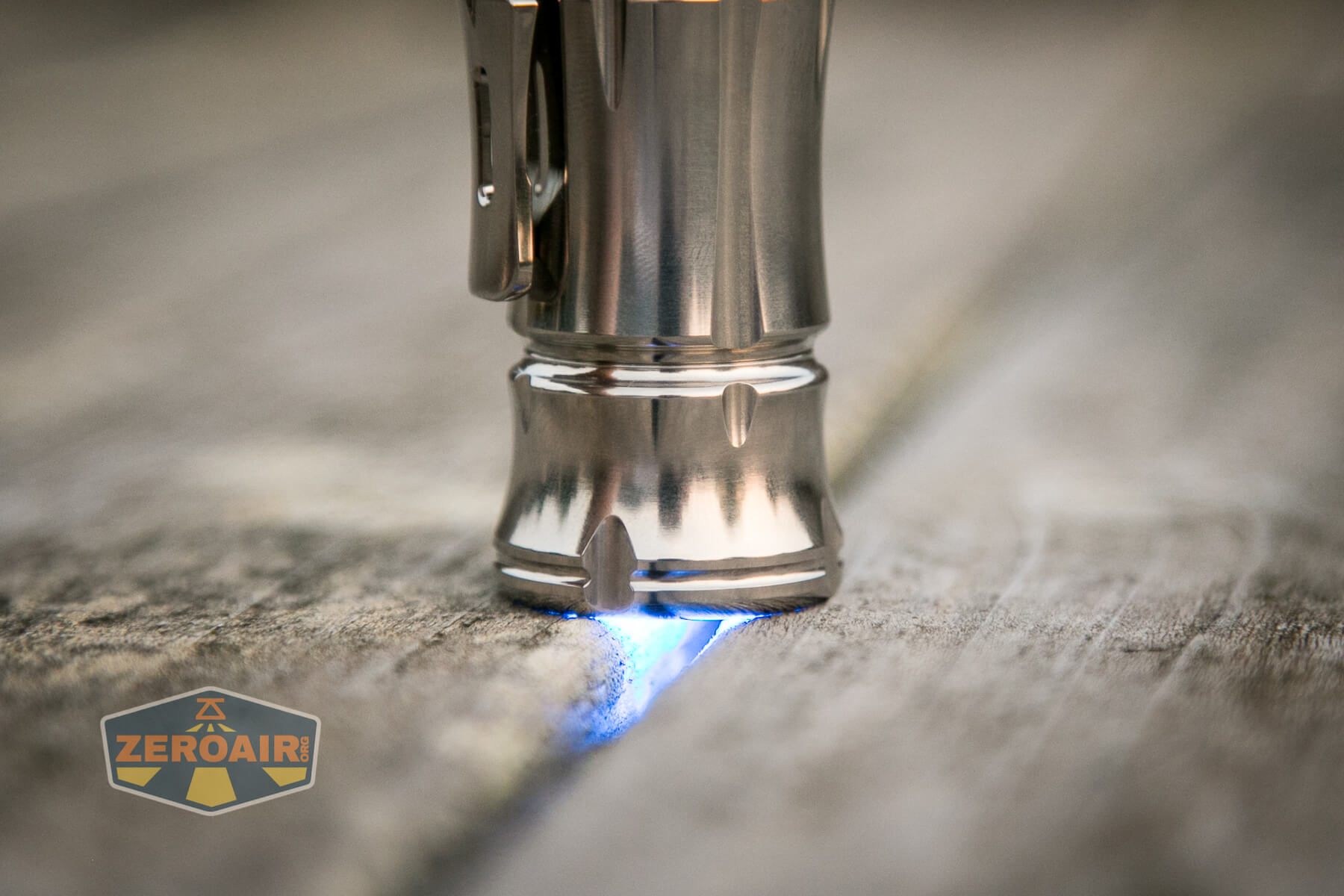
Surprisingly, the tail notch features aren’t carried over to the head. Great if they were! Then we’d be able to see light escaping when headstanding (something I prefer).
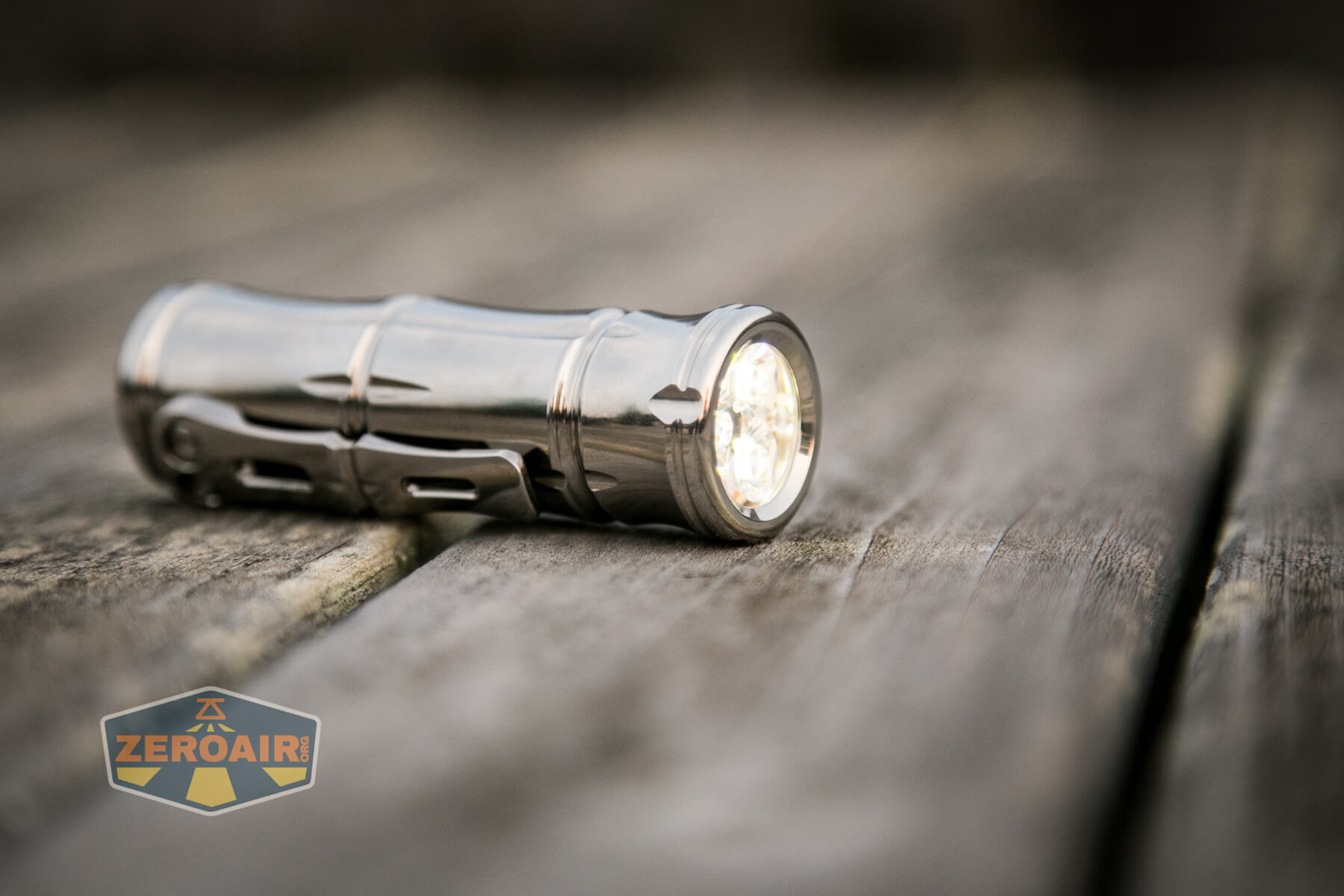
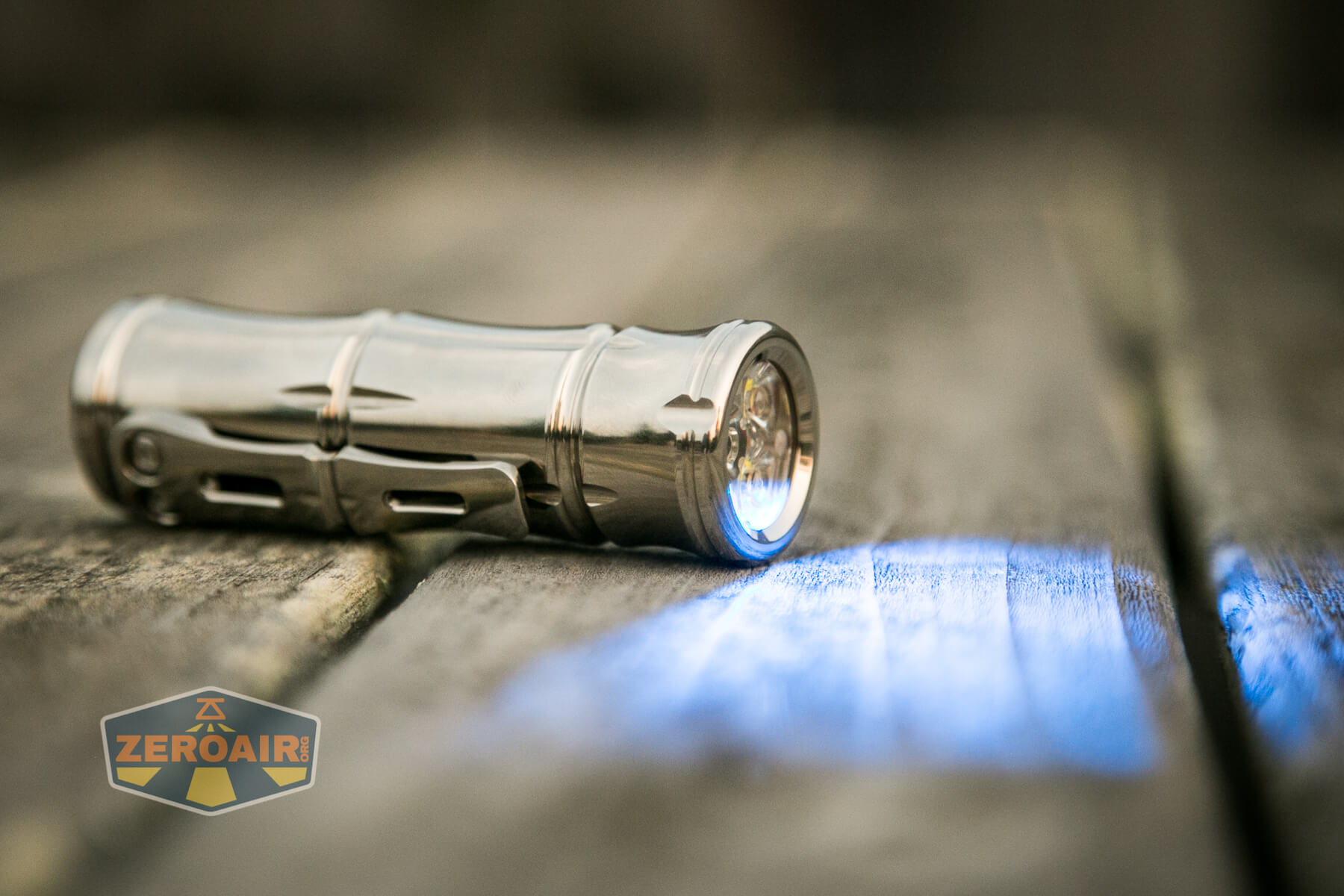
I didn’t intend for this to be so, but you can see the PWM on blue mode below. There are three blue emitters, and the PWM wave makes it look like there is only one, at the bottom of the MCPCB (in this photo).

Beamshots
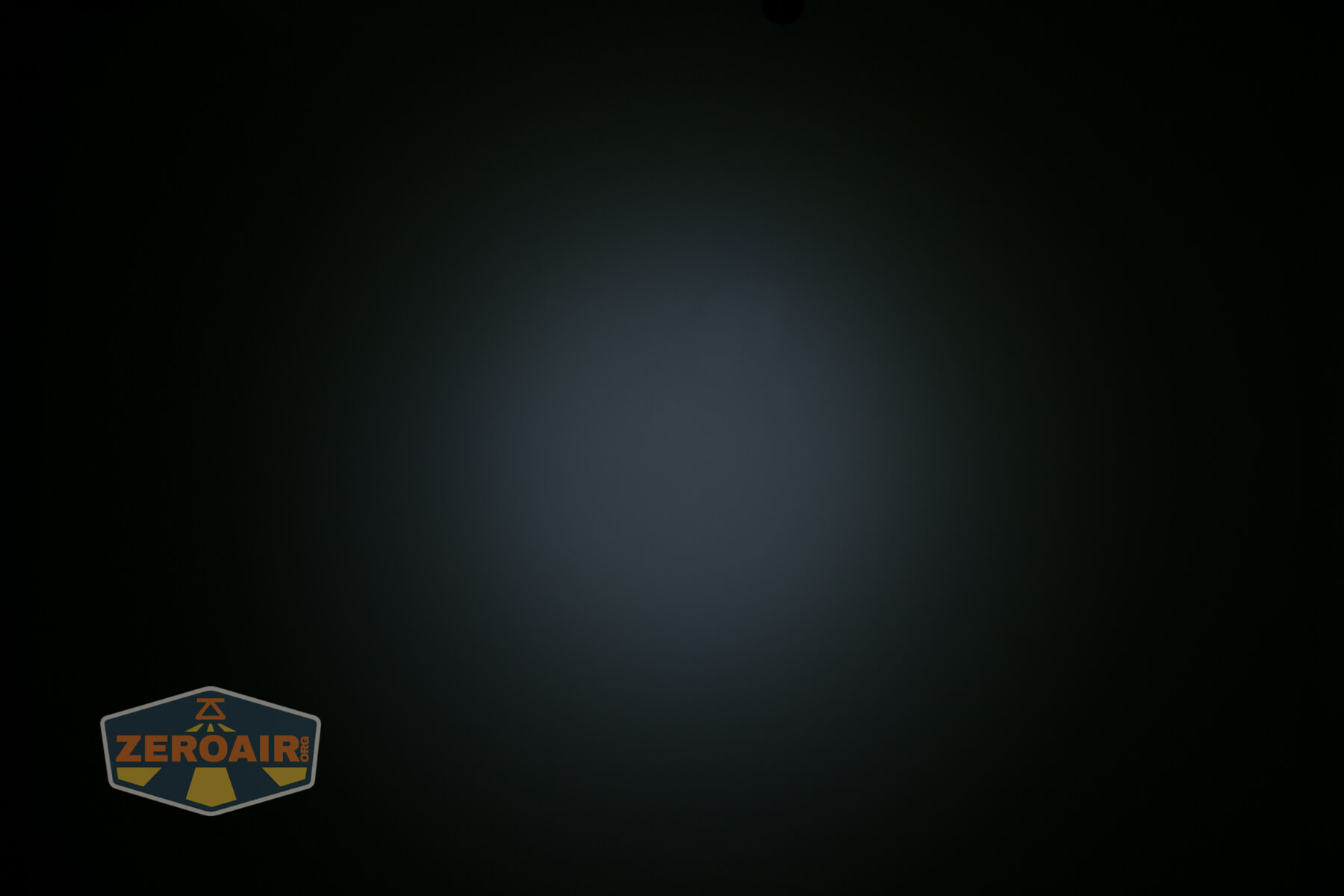
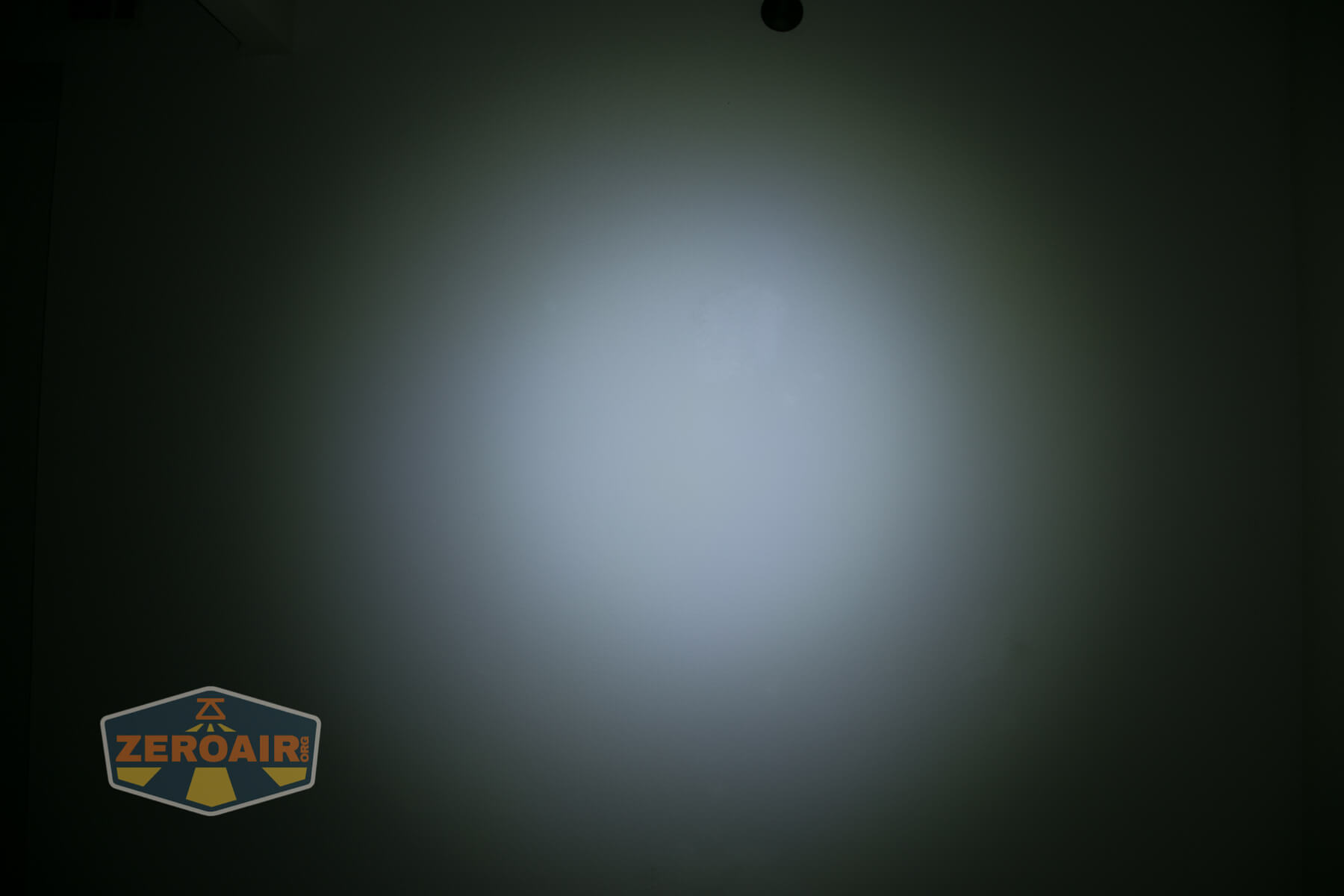
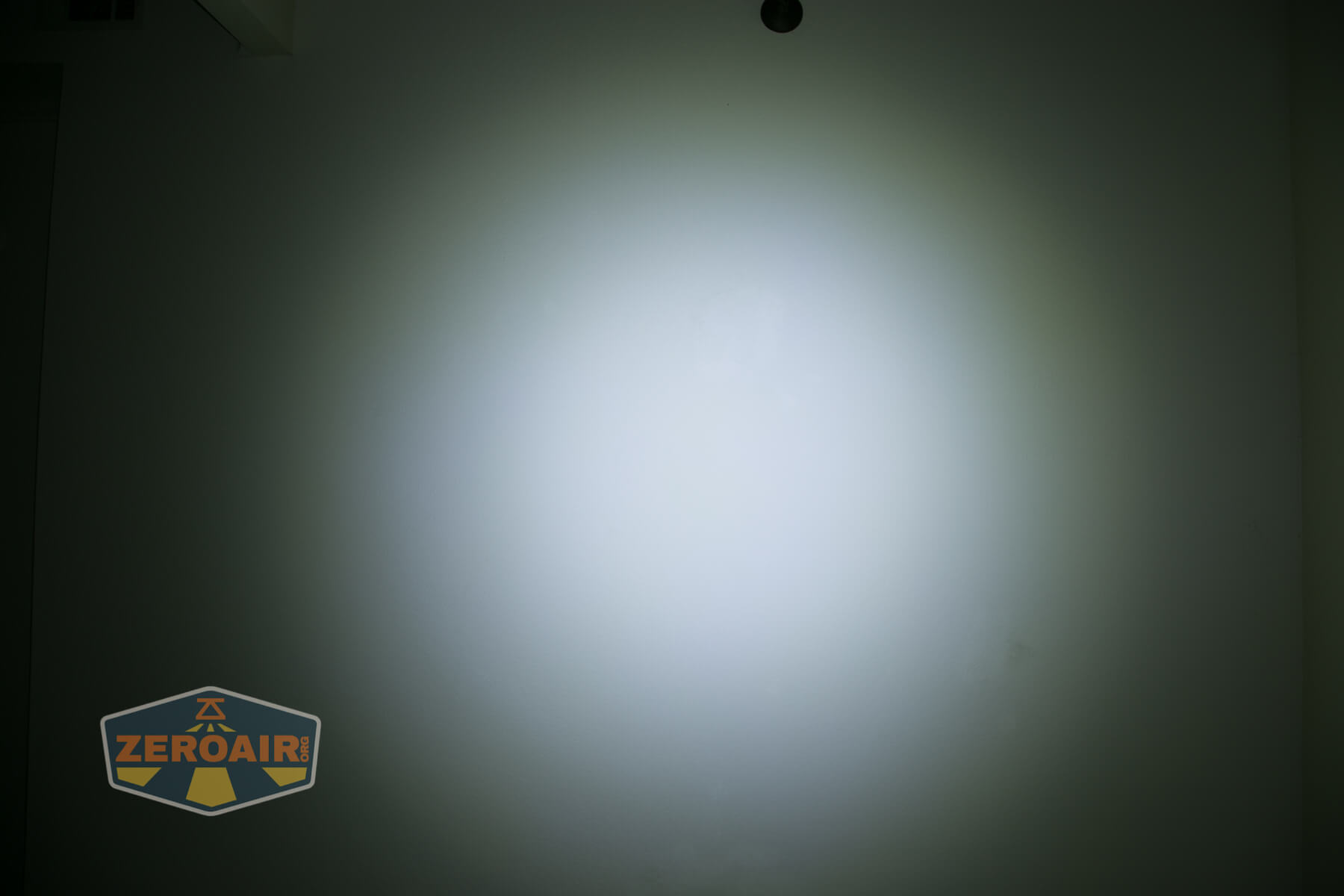
These beamshots always have the following settings: f8, ISO100, 0.3s shutter, and manual 5000K exposure. These photos are taken at floor level, and the beam hits the ceiling around 9 feet away.

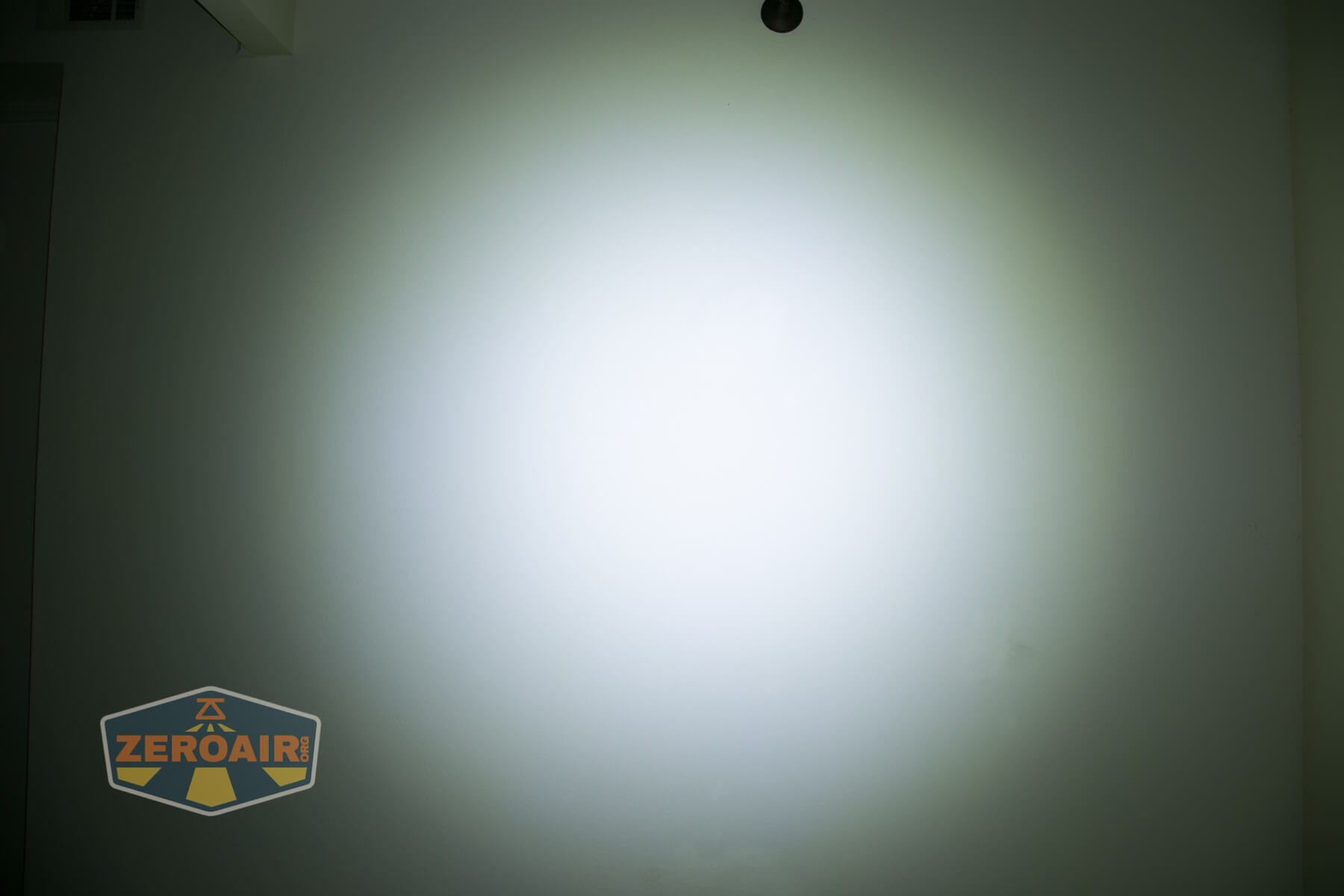


Tint vs BLF-348 (KillzoneFlashlights.com 219b version) (affiliate link)
I keep the test flashlight on the left and the BLF-348 reference flashlight on the right.
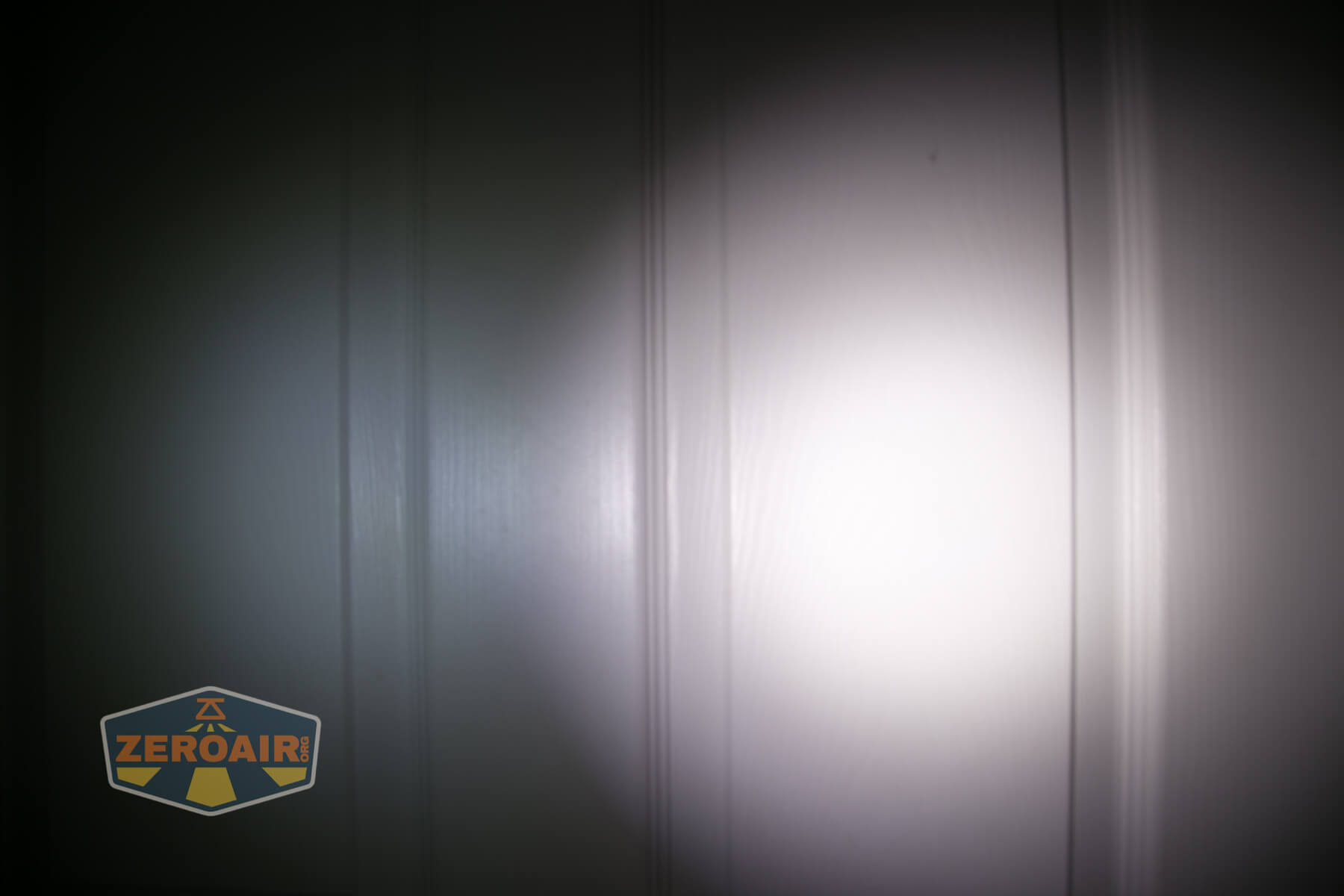
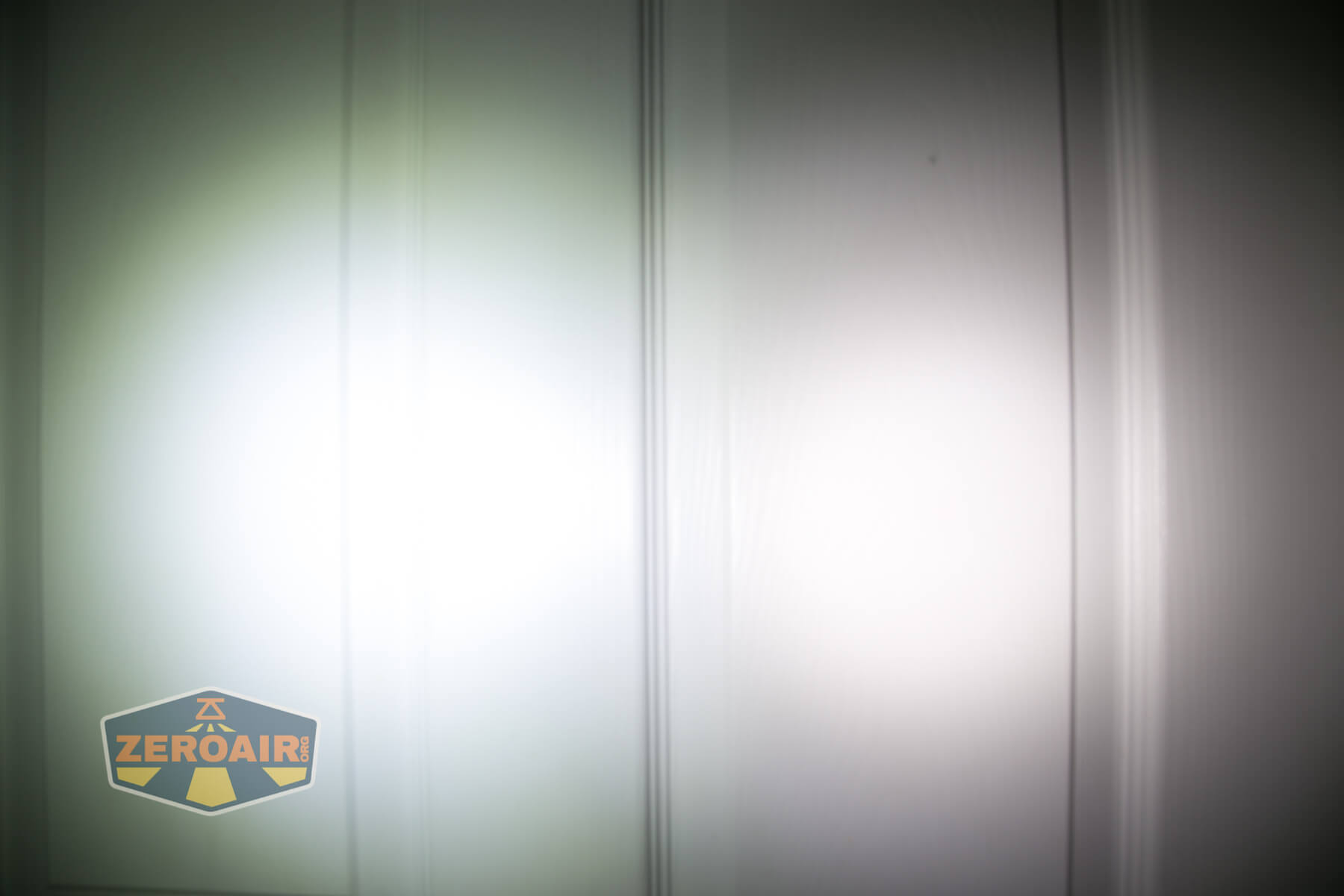
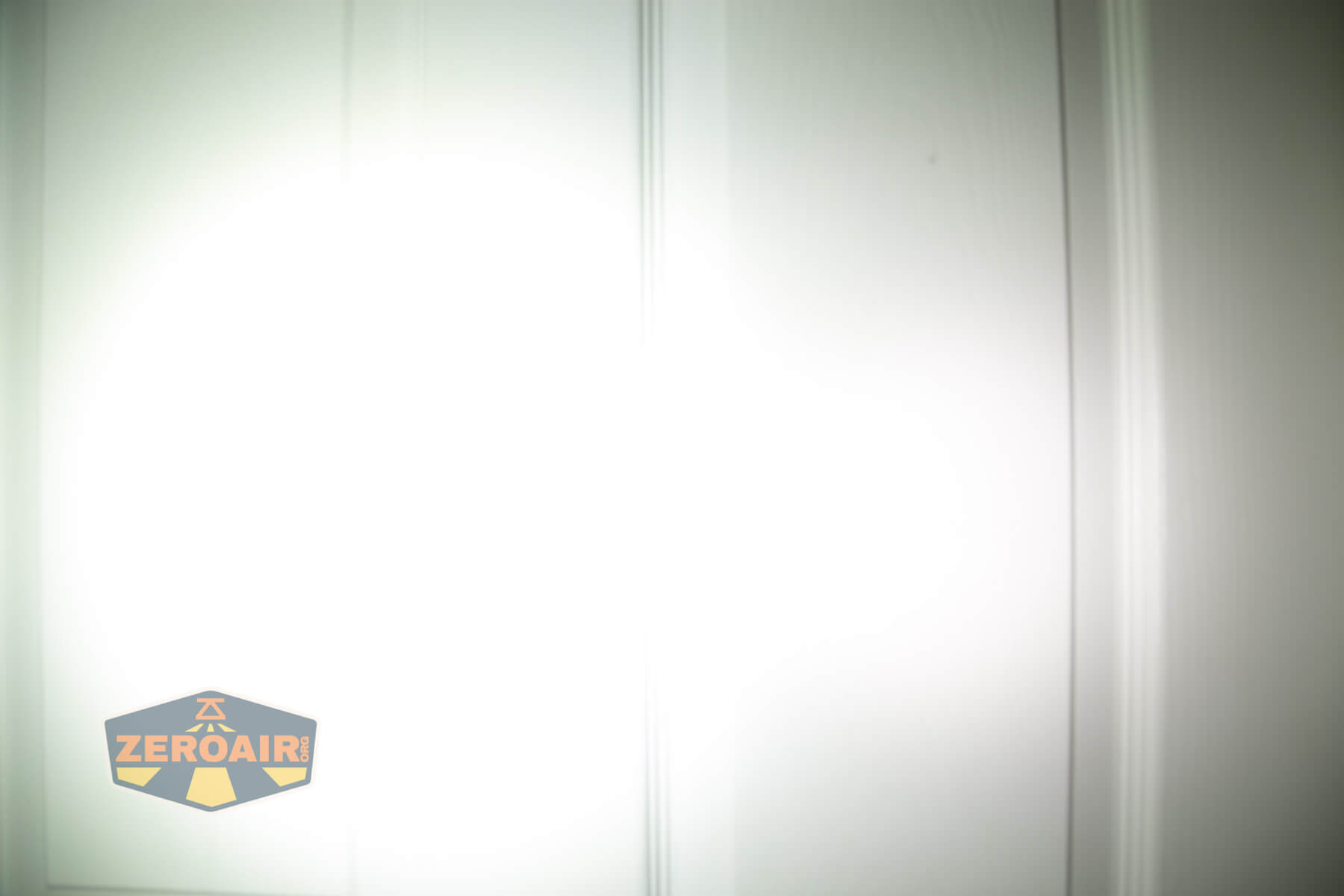
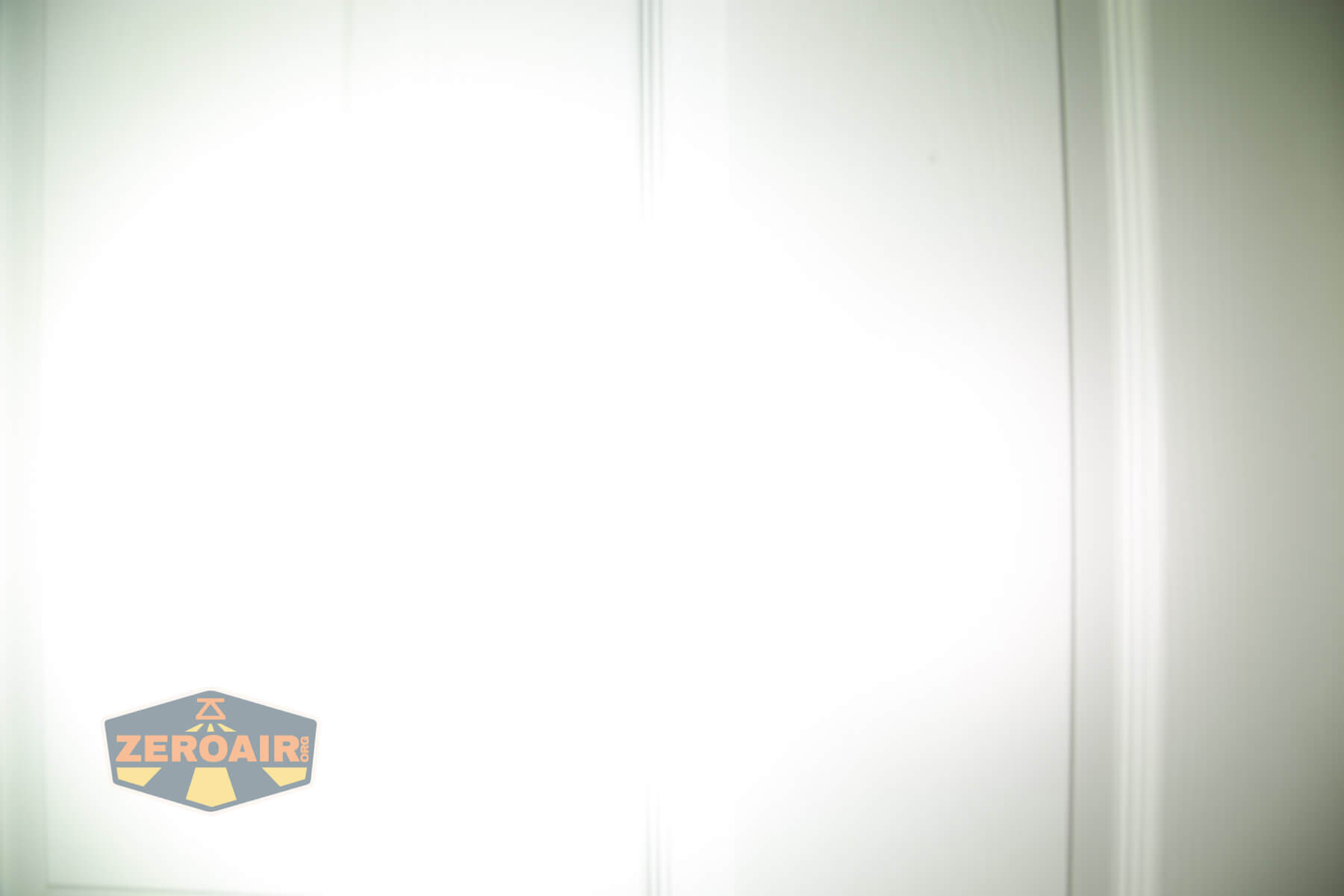
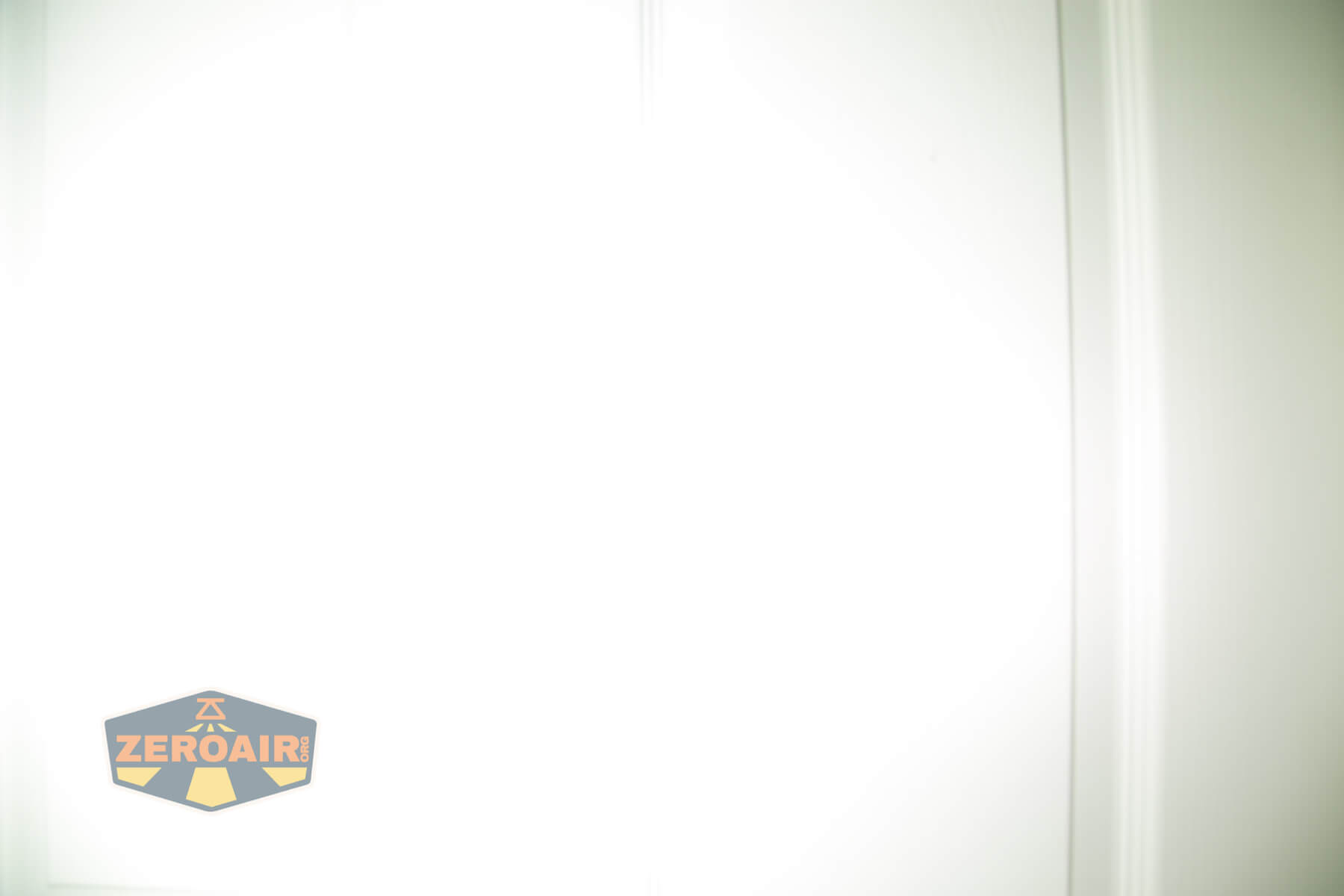
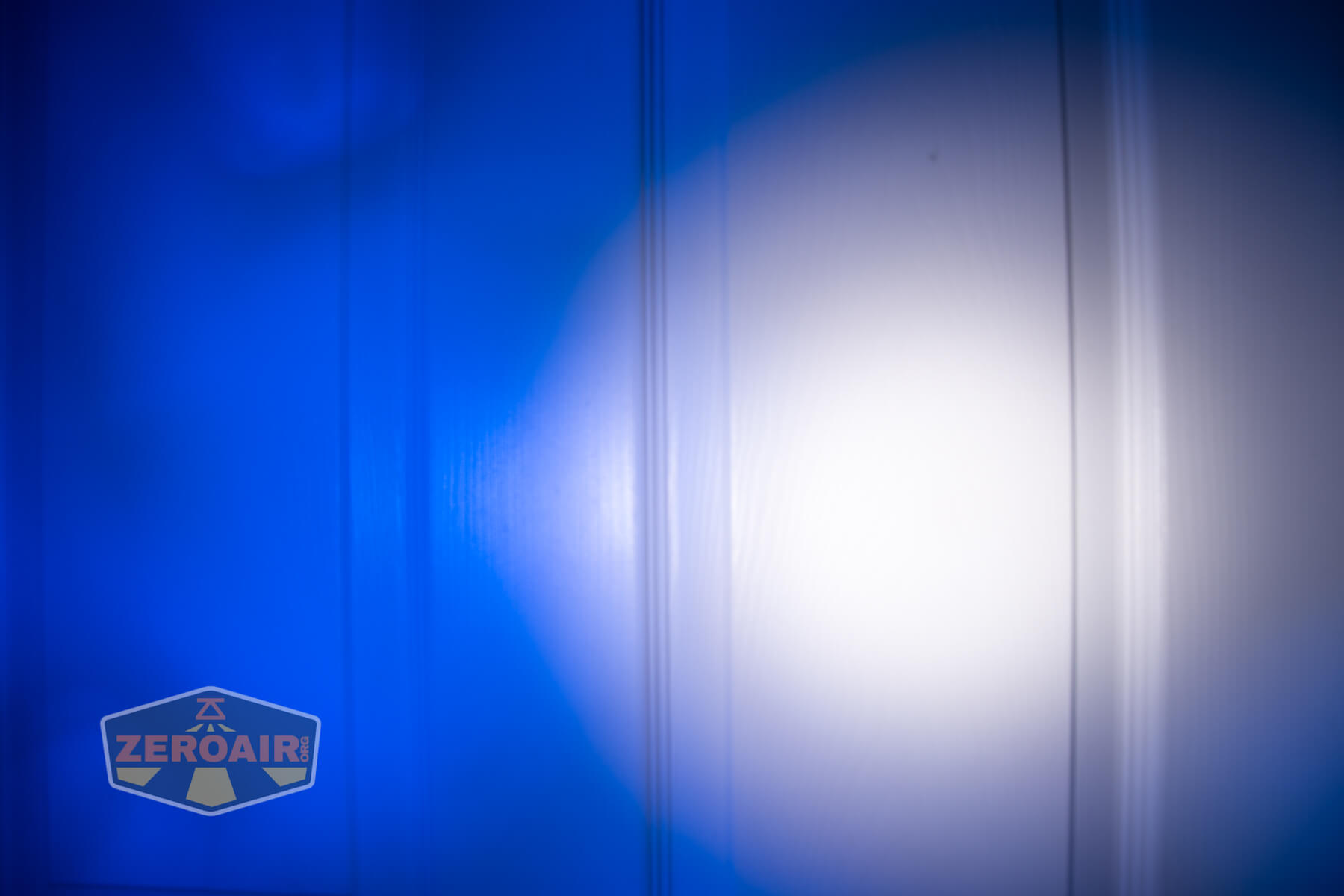
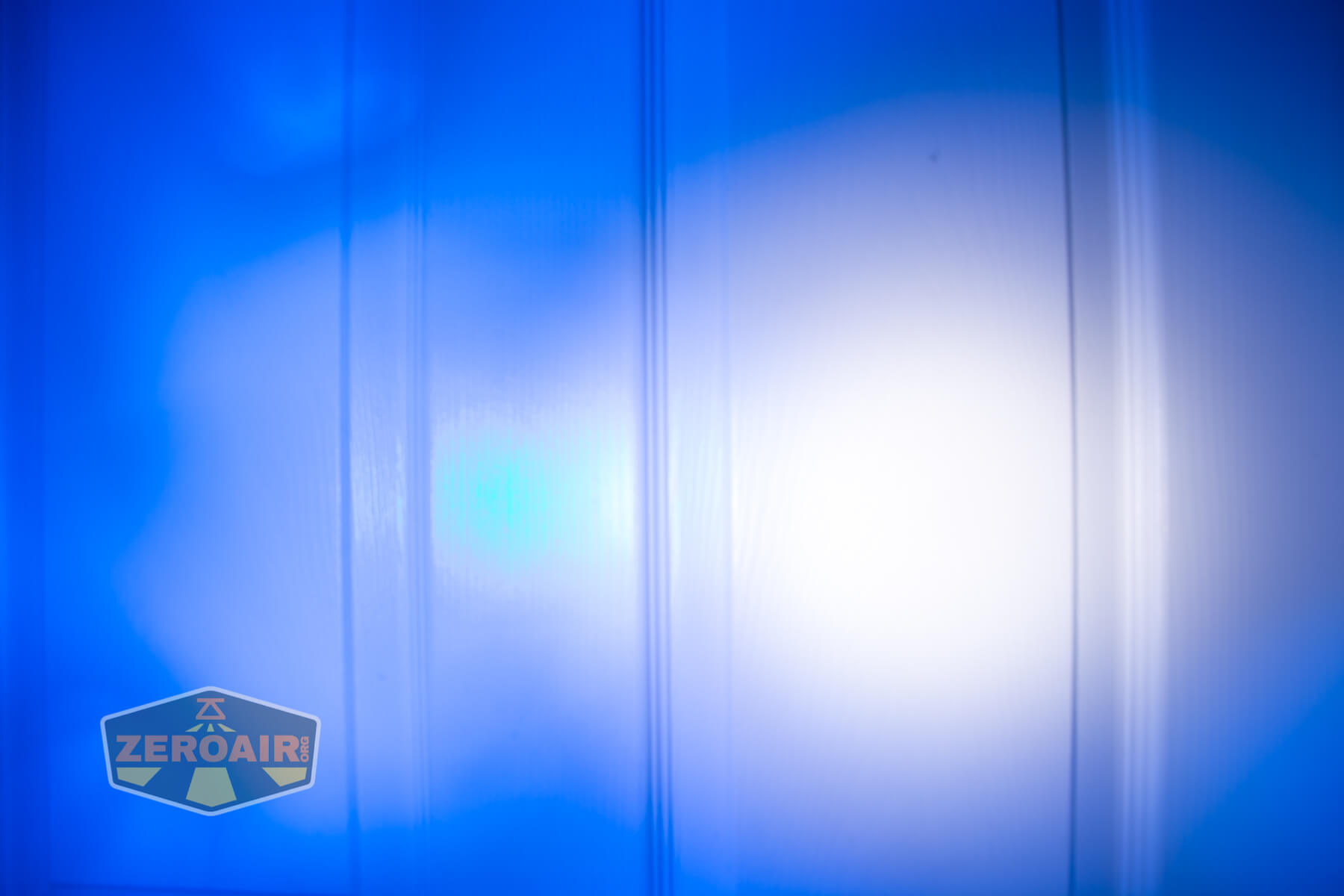
I compare everything to the KillzoneFlashlights.com 219b BLF-348 because it’s inexpensive and has the best tint!
Conclusion
What I like
- Very unique design
- I mean… I love bamboo, it’s delicious! This light is delicious!
- Good body material choices (Copper and Titanium) (need to get on that brass life though)
- Unique (but not complicated) user interface
- No Mode memory
- Ramping (“rambling”) mode group is great for those ramp lovers! And on a mechanical clicky!
- Very nice pocket clip design
What I don’t like
- Pause after tapping for mode advance
- Very slow PWM
- Very slick, and can be hard to grip
- Only available in 6500K Cree XP-L HD
- Doesn’t hit the claim of 2500 lumens
Notes
- This light was provided by NealsGadgets.com for review. I was not paid to write this review.
- This content originally appeared at zeroair.org. Please visit there for the best experience!
- Please use my Amazon.com referral link to help support zeroair.org!
- Please support me on Patreon! I deeply appreciate your support!
Discover more from ZeroAir Reviews
Subscribe to get the latest posts sent to your email.
Pingback: Sofirn SC21 Flashlight Review - ZeroAir Reviews
I really like the aesthetics of this light, and the secondary blue LED. Thanks for the Review!
Pingback: Flashlight News: Phreaky Briefing Issue 42 – PhotonPhreaks