

Soonfire MX75 Flashlight Review
The Soonfire MX75 Flashlight is a 21700-cell light using a single Luminus SST-40 emitter. It has a dual switch interface, with USB-C charging, too!
This is a sponsored review.
Official Specs and Features
Here’s a link to the Soonfire MX75 flashlight product page.
Versions
It looks like there’s only one version of the Soonfire MX75 flashlight specifically, but there are previous iterations or at least other versions of the MX series lights by Soonfire.
Price
MSRP is listed at $75 but the going (or “discounted?”) price for this light is $45.99, and you can buy it right here on Amazon.com through my referral link. That includes the 21700 cell seen in this test.
Soonfire even sent a 10% discount code! Here is the code:
VIPWUR77
Short Review
Don’t get all bent out of shape because of the name “Soonfire.” The Soonfire MX75 flashlight has a nice build quality. In fact, it competes very adequately in the $45 range as far as build quality goes. Even the other features put it reasonably in that price category, so don’t let the name put you off! The dual-switch interface is good I appreciate having 5 modes and an indicating switch. The modes are not spaced exactly as I’d like them, and the output doesn’t meet the claim.
Long Review
The Big Table
| Soonfire MX75 Flashlight | |
|---|---|
| Emitter: | Luminus SST-40 |
| Price in USD at publication time: | $45.99 |
| Cell: | 1×21700 |
| Runtime Graphs | |
| LVP? | Yes, with warning |
| Switch Type: | Both |
| Quiescent Current (mA): | – |
| On-Board Charging? | Yes |
| Charge Port Type: | USB-C |
| Charge Graph | |
| Power off Charge Port | Low only (any configuration) |
| Claimed Lumens (lm) | 2530 |
| Measured Lumens (at 30s) | 1214 (48% of claim)^ |
| Candela per Lumen | 21.2 |
| Claimed Throw (m) | 362 |
| Candela (Calculated) in cd (at 30s) | 742lux @ 5.967m = 26419cd |
| Throw (Calculated) (m) | 325.1 (89.8% of claim)^ |
| Claimed CCT | – |
| Measured CCT Range (K) | 6000-6800 Kelvin |
| Item provided for review by: | Soonfire |
| All my Soonfire reviews! | |
^ Measurement disclaimer: Testing flashlights is my hobby. I use hobbyist-level equipment for testing, including some I made myself. Try not to get buried in the details of manufacturer specifications versus measurements recorded here; A certain amount of difference (say, 10 or 15%) is perfectly reasonable.
What’s Included

- Soonfire MX75 flashlight
- Soonfire 5000mAh 21700
- 21700 to 18650 plastic adapter
- Nylon MOLLE pouch
- Charging cable (USB to USB-C)
- Spare o-rings (2 types)
- Lanyard
- Spare charge port cover
- Manual etc
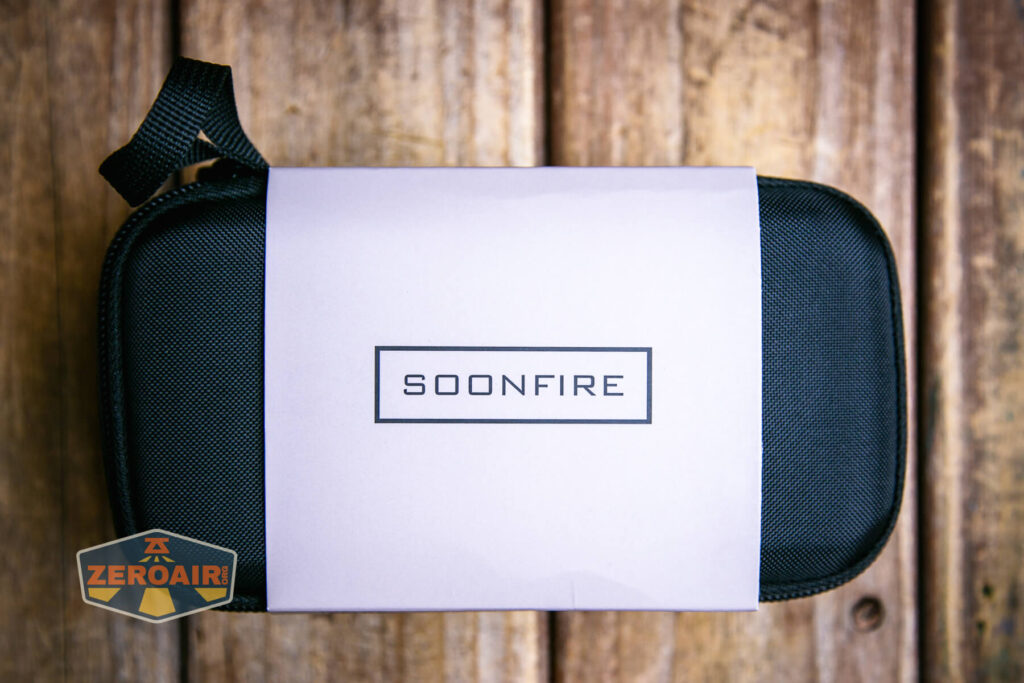
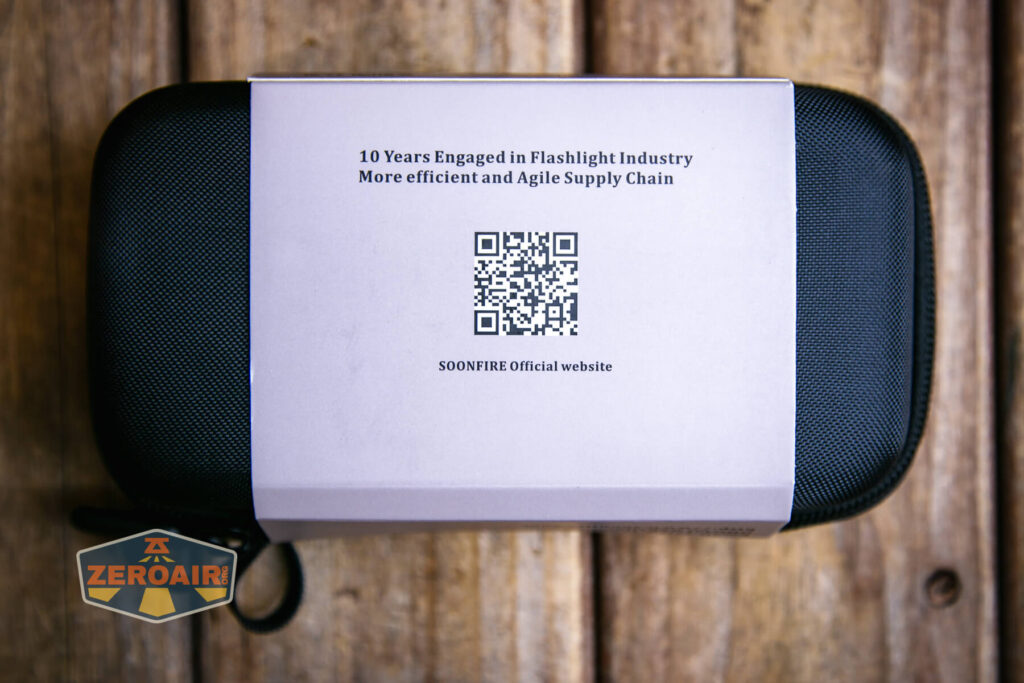
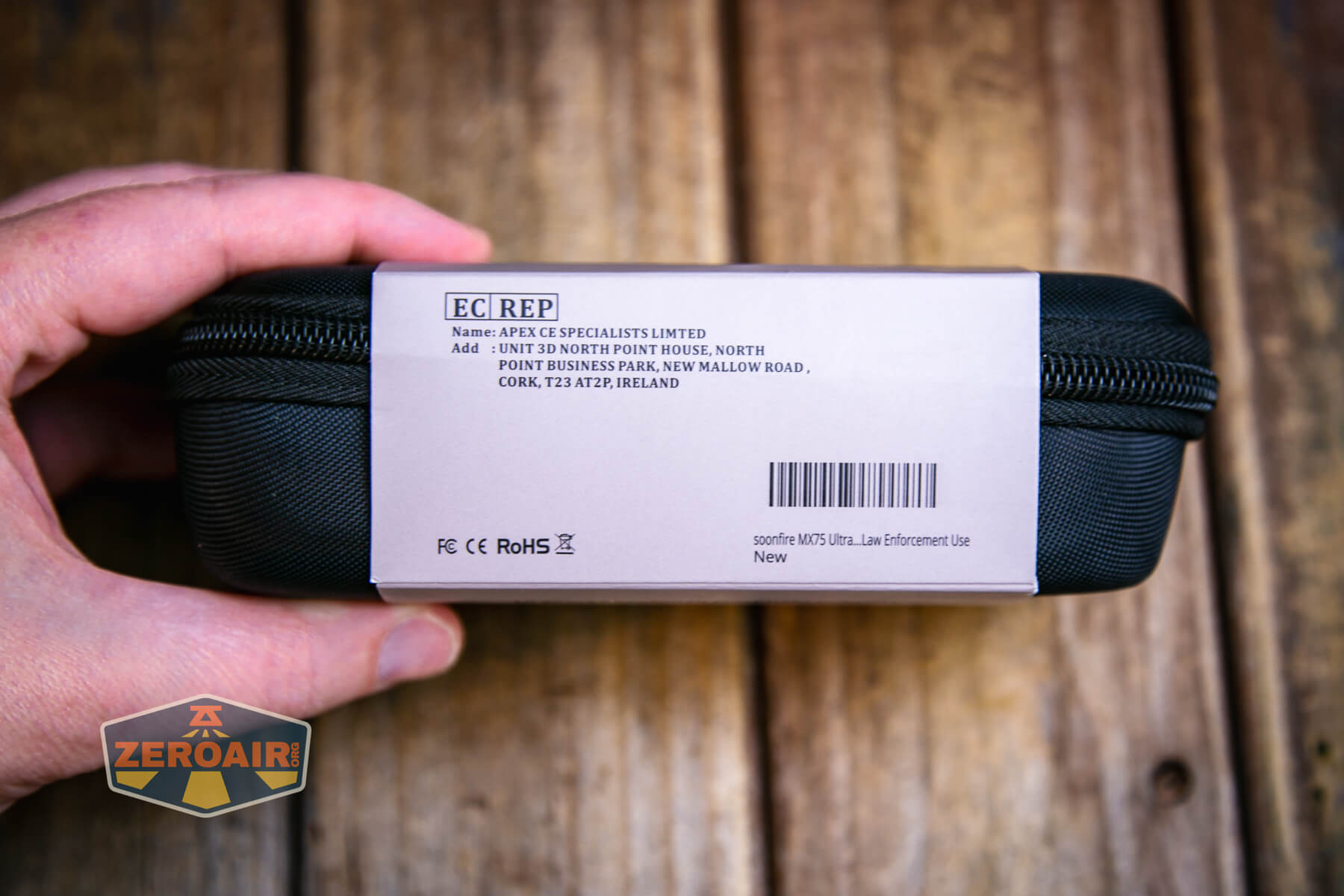
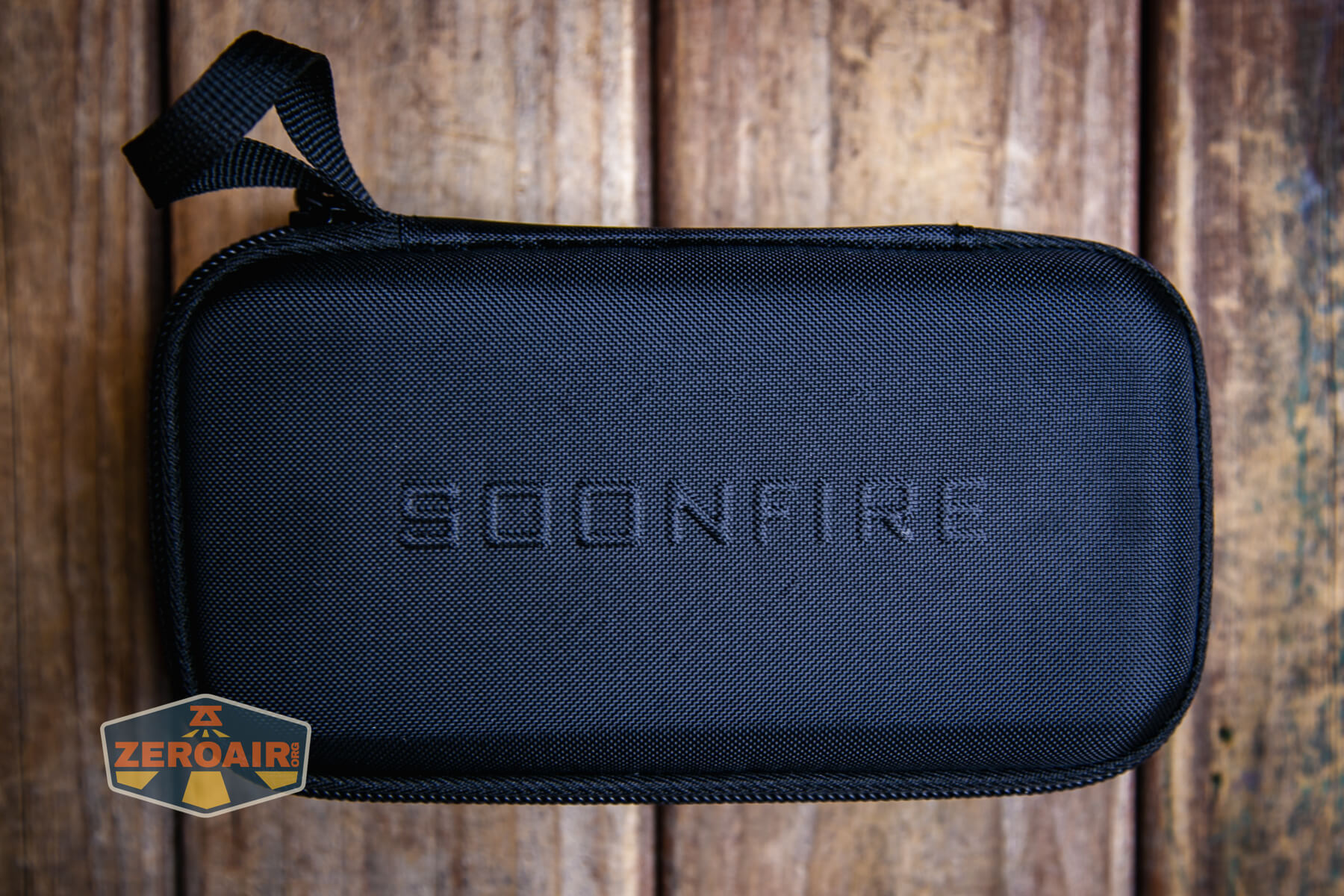
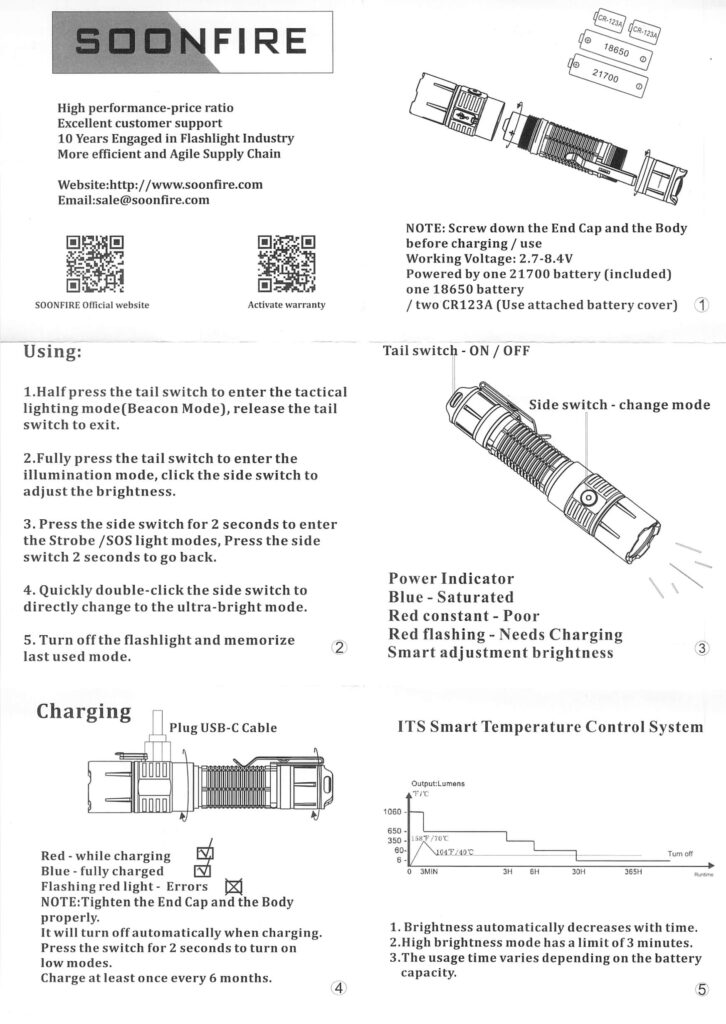
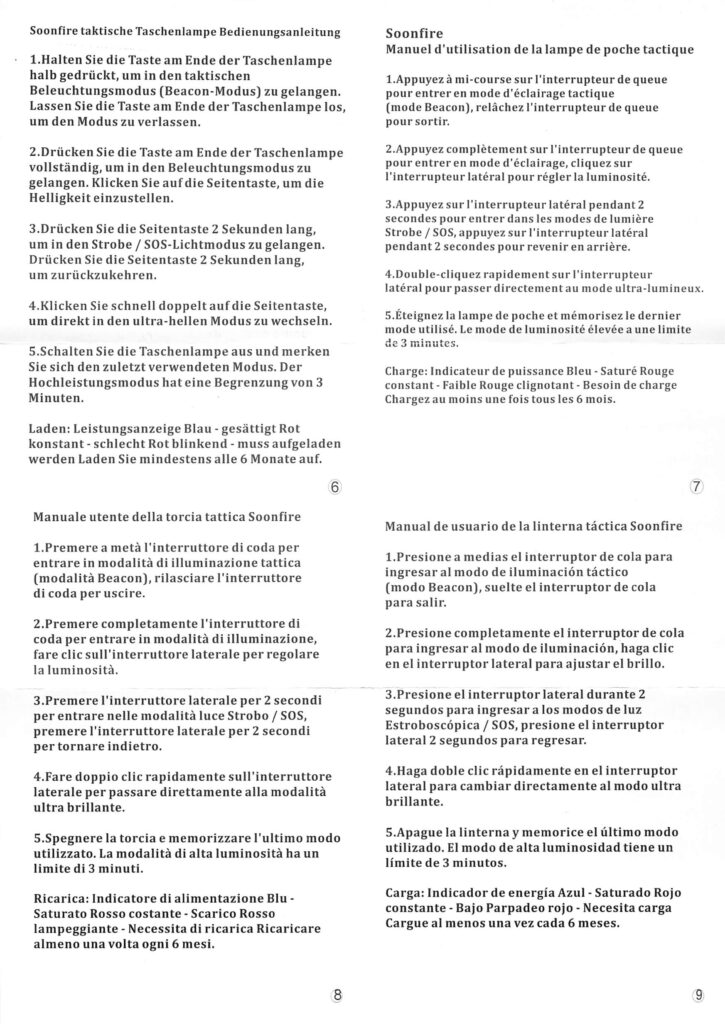
Package and Manual

Build Quality and Disassembly

As I said above, the build quality of this light is commensurate with the street price of $45. The build quality is good. The Soonfire MX75 flashlight is also not bad in ways you might expect of other “new” lights or brands (I say “new” because I’m not sure how new Soonfire is – I’ve never handled one before, though.)
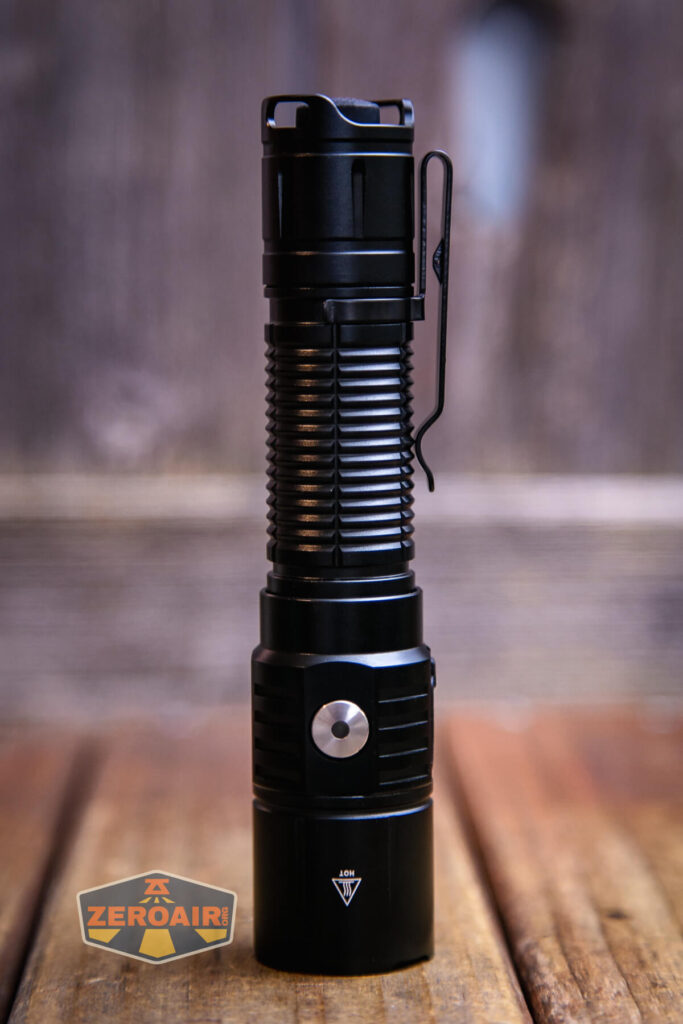
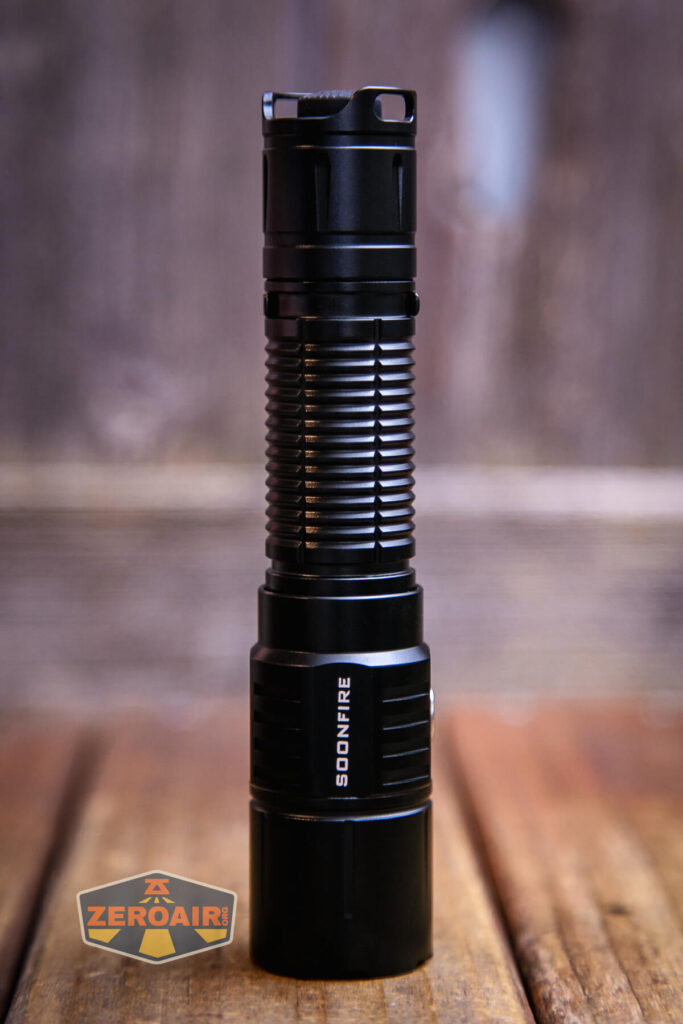
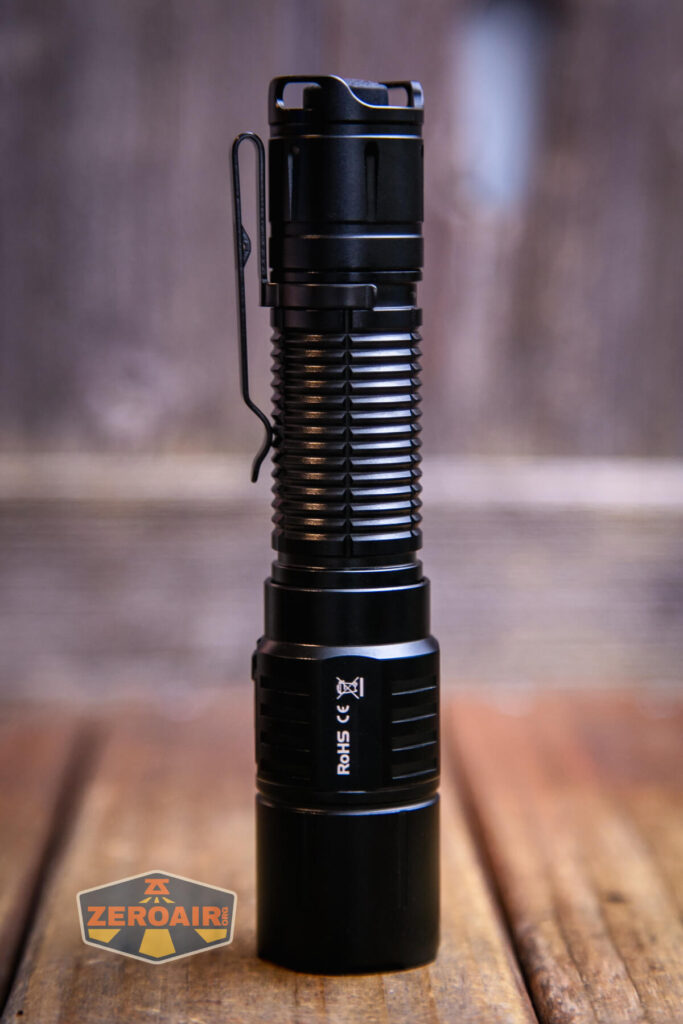
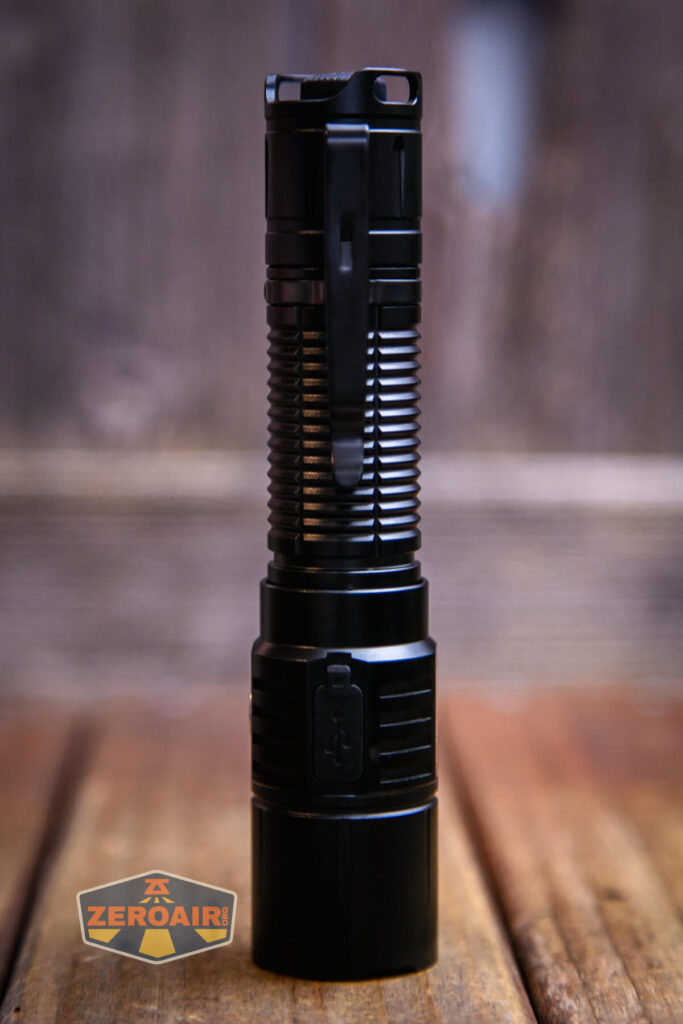
One place that Soonfire could beef up the light is in this spring on the head – it’s a bit simple. The threads here are very nice though, and appropriately lubed. I did find that removing the head was the way to go for cell swaps since the pocket clip gets in the way when removing the tailcap.
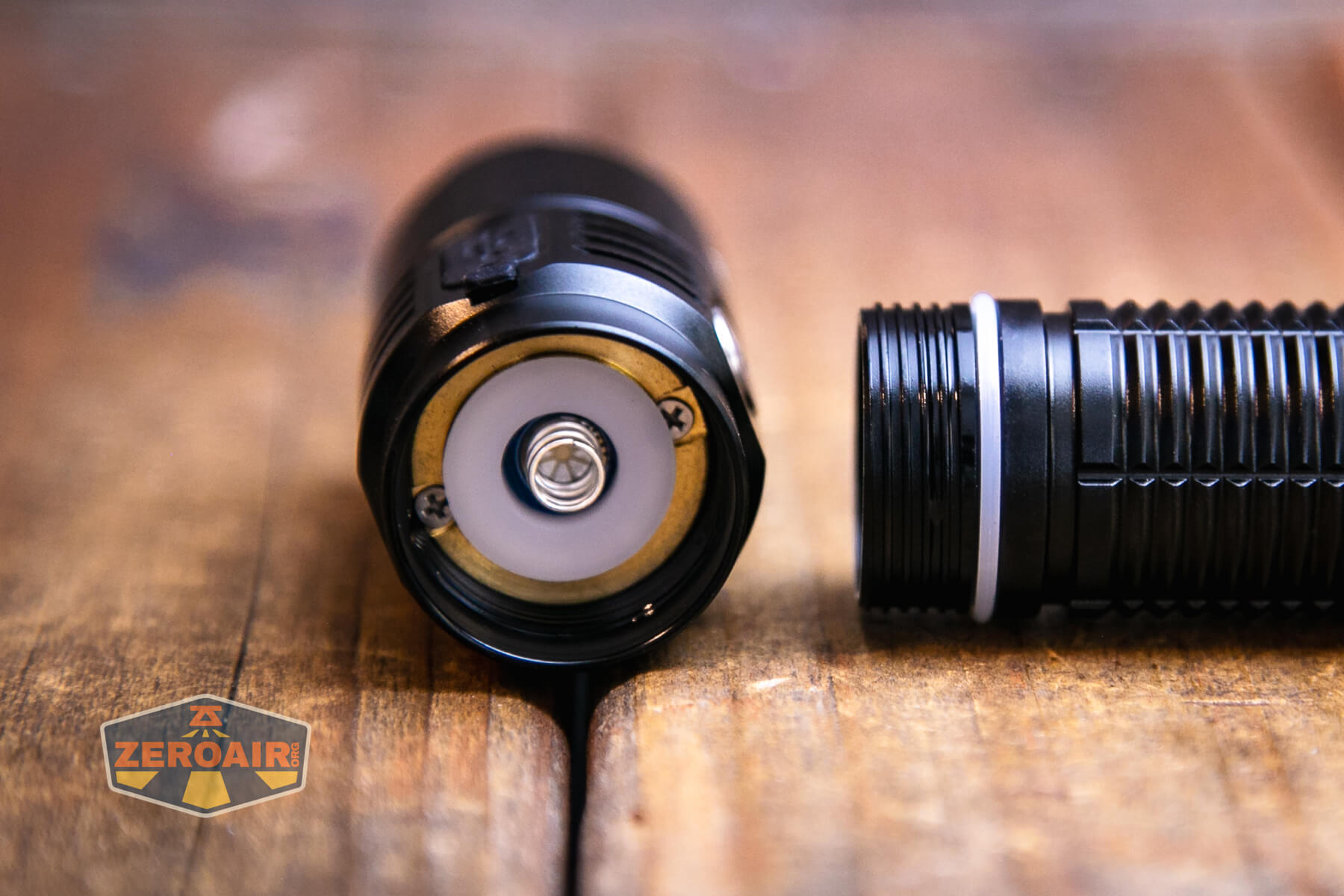
The spring here in the tailcap is very nice. Beefy and springy. Threads on the tail end are nice and smooth, too.

Size and Comps
According to Soonfire, the MX75 is 5.6″ long, 1.1″ in diameter (head) and 1″ in diameter (tail), and weighs 6.3oz (with battery).
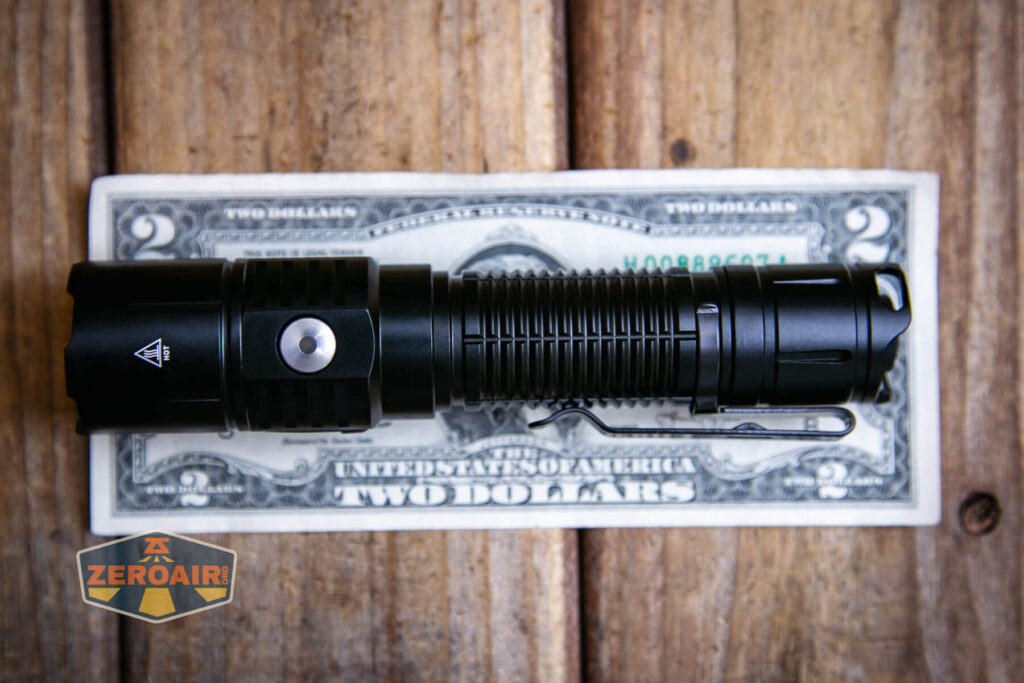
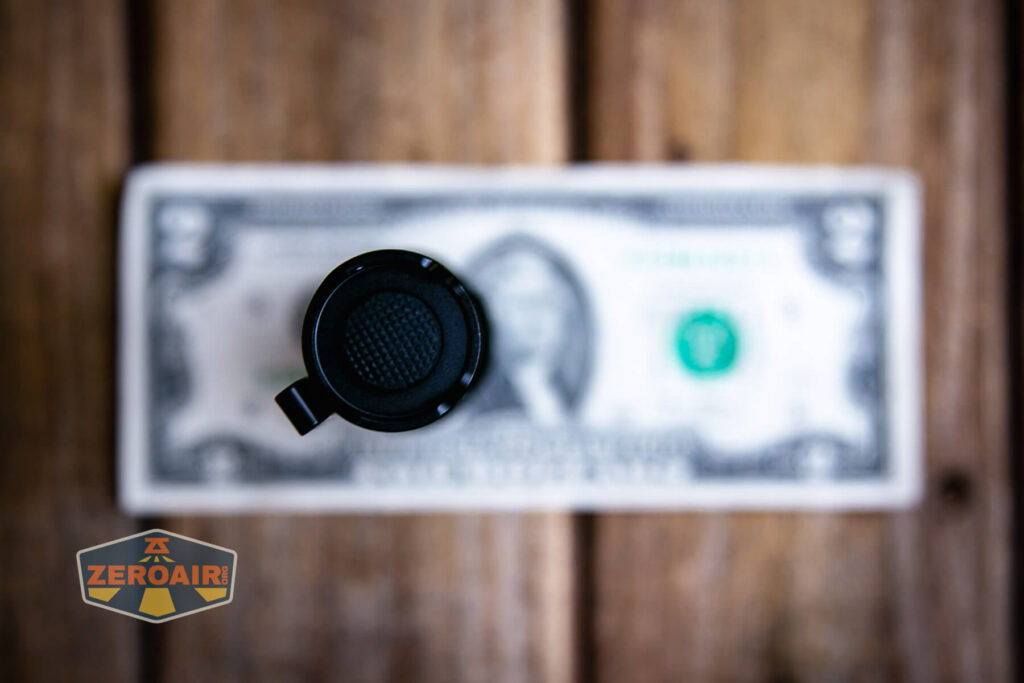

If the flashlight can headstand, I’ll show it here. If it can tailstand, I’ll also show that here!

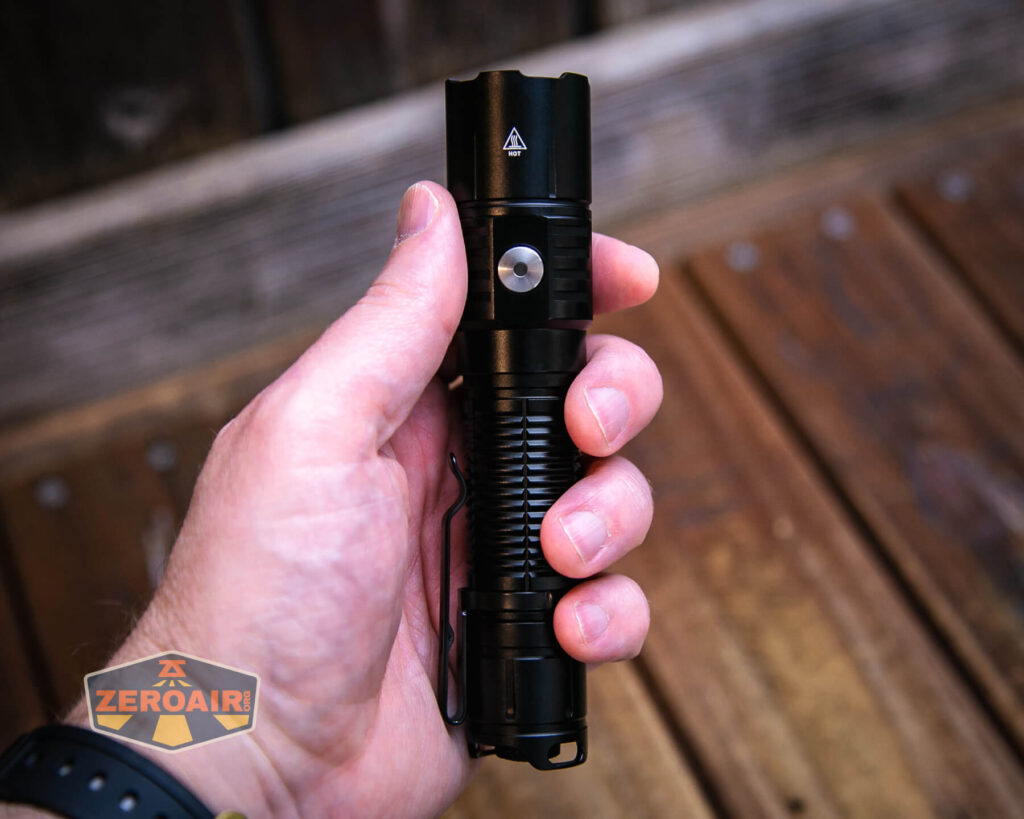
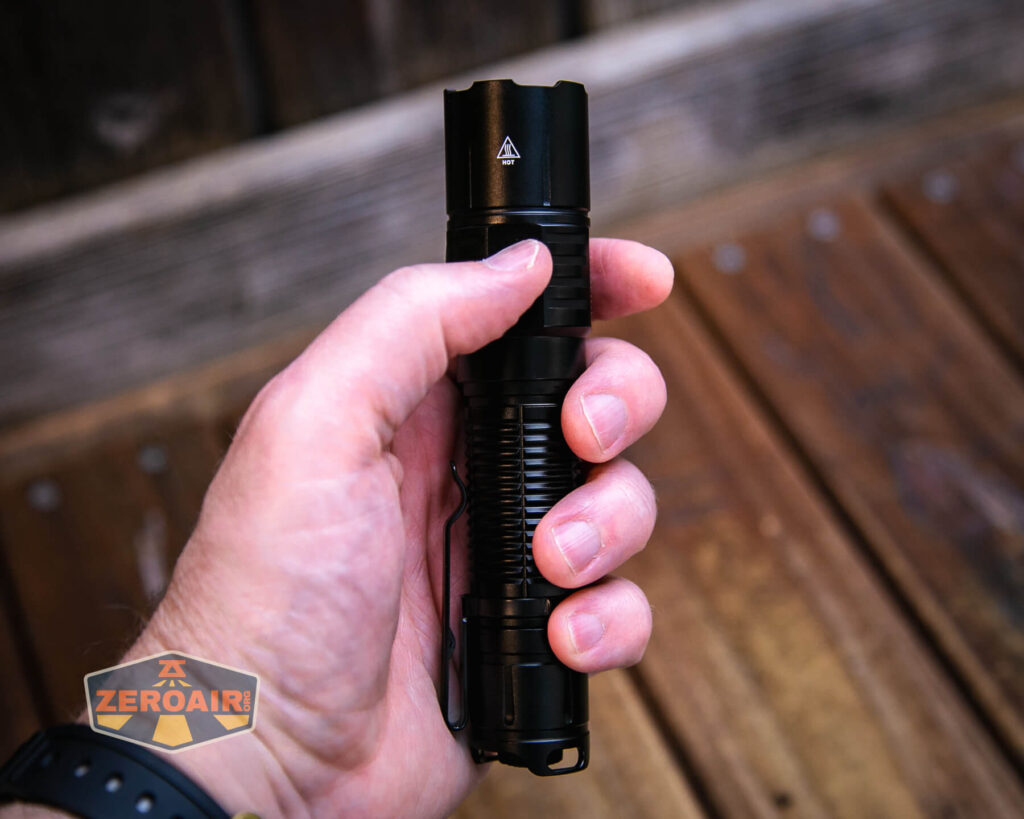
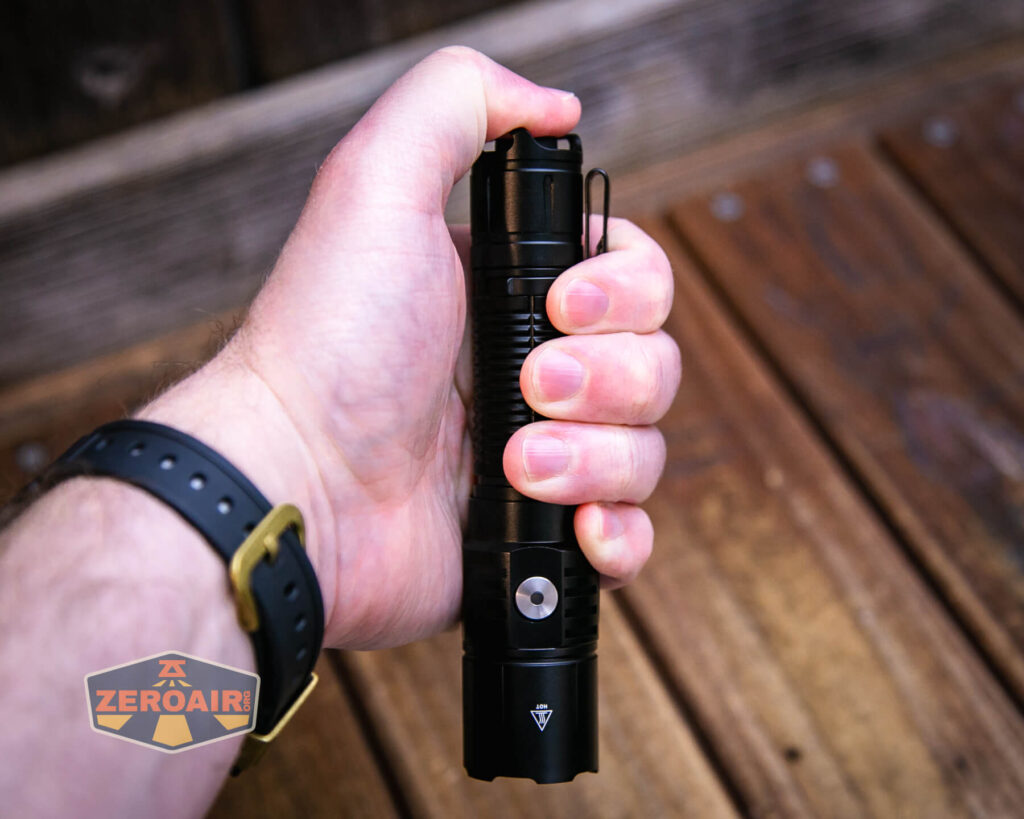
Here’s the test light with the venerable Convoy S2+. Mine is a custom “baked” edition Nichia 219b triple. A very nice 18650 light!
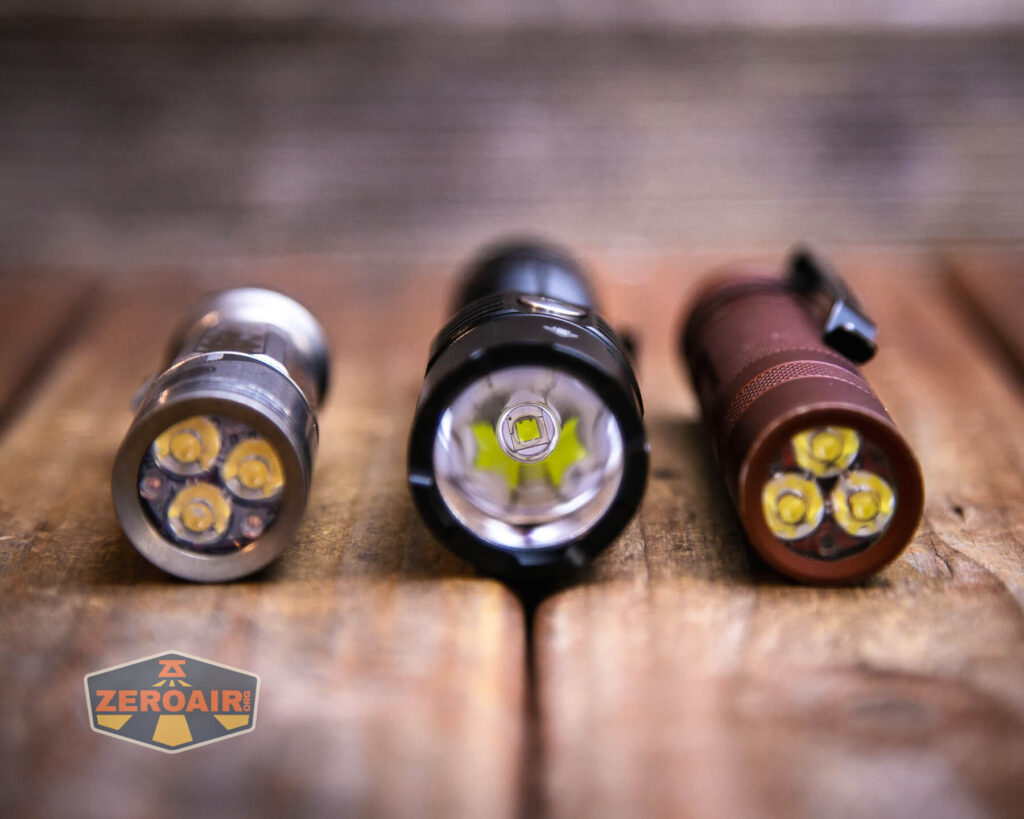
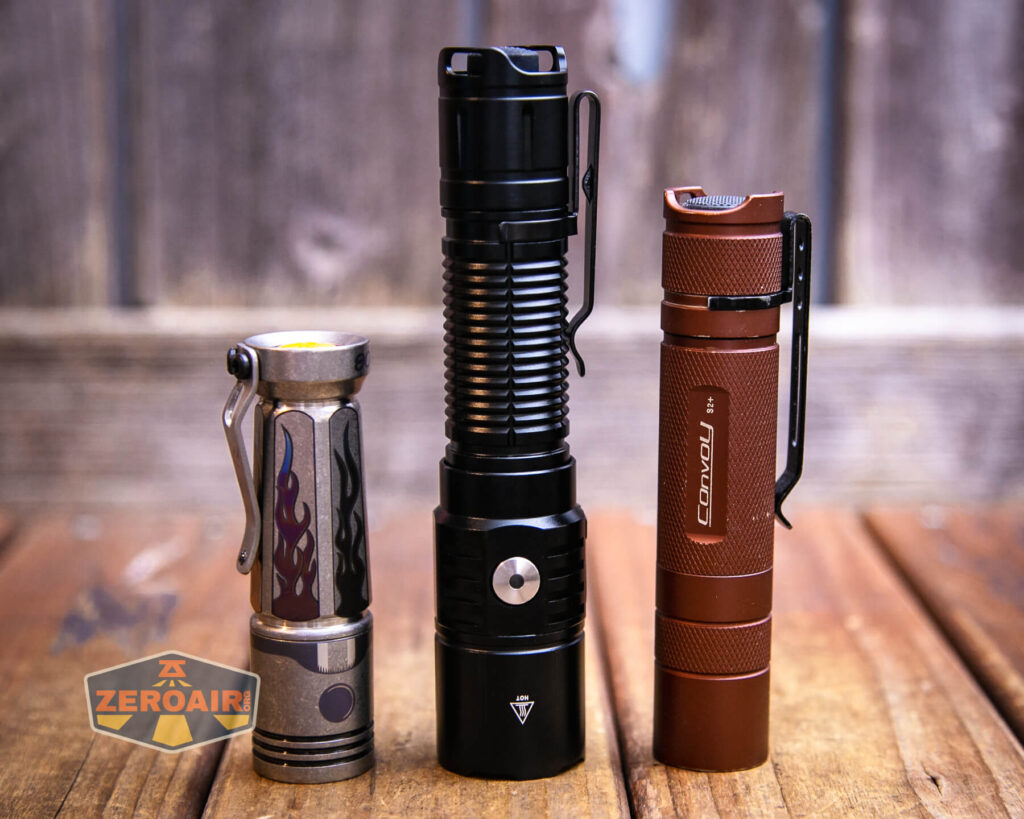
Also above on the left is a new feature light!! Laulima Metal Craft sent this titanium Todai for some size comparison photos like the ones above. Laulima has a bunch of incredible items. I’ve tested one (the Laulima Metal Craft Hoku) (the official site for Hoku is here) that was a Friend Fund Friday review. I was impressed enough by that Hoku that I bought a Laulima Metal Craft Diamond Slim (also in tumbled aluminum) (review is upcoming!) These lights by Laulima have impeccable build quality and not only that, they’re quite configurable. There are some (great, actually) default configurations, but Joshua Dawson (of Laulima Metal Craft) is open to ideas and emitter options and the like. I haven’t reviewed this Todai, but I have to say, it feels absolutely fantastic and I love it thus far. (Notably, I love how warm and eggy those emitters look through the TIR.)
Retention and Carry
There are numerous ways to carry the Soonfire MX75 flashlight. First, I’ll mention the pocket clip, which attaches to the tail end of the MX75.

The cell tube gives the impression of being reversible, but it’s not. So the pocket clip can live only on the tail end – and that’s fine. Carrying the light in the other orientation would make you a monster!
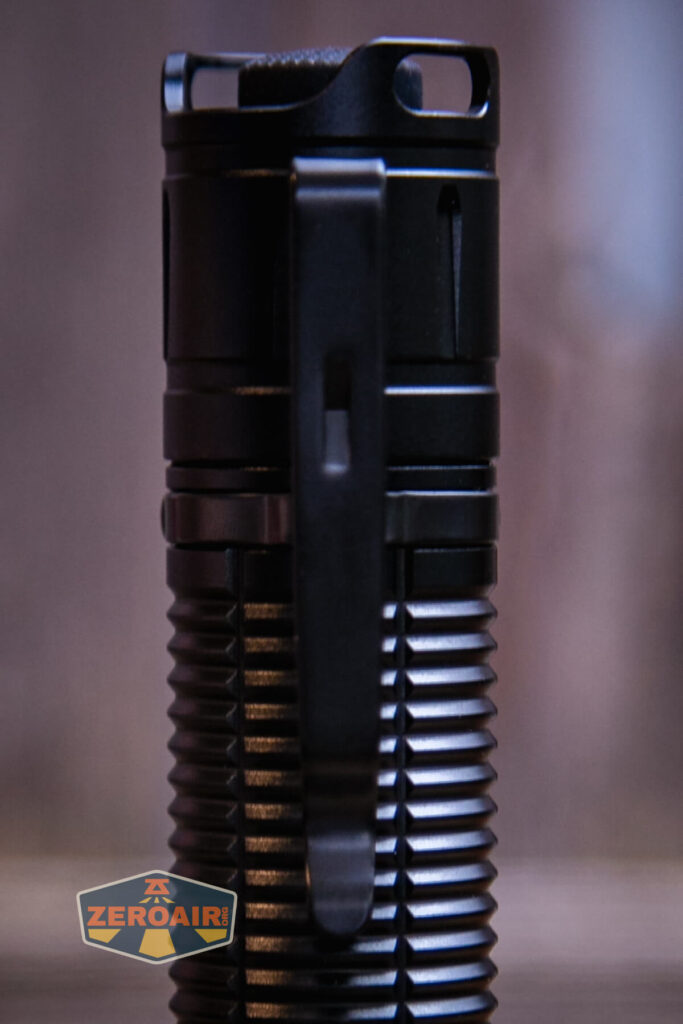
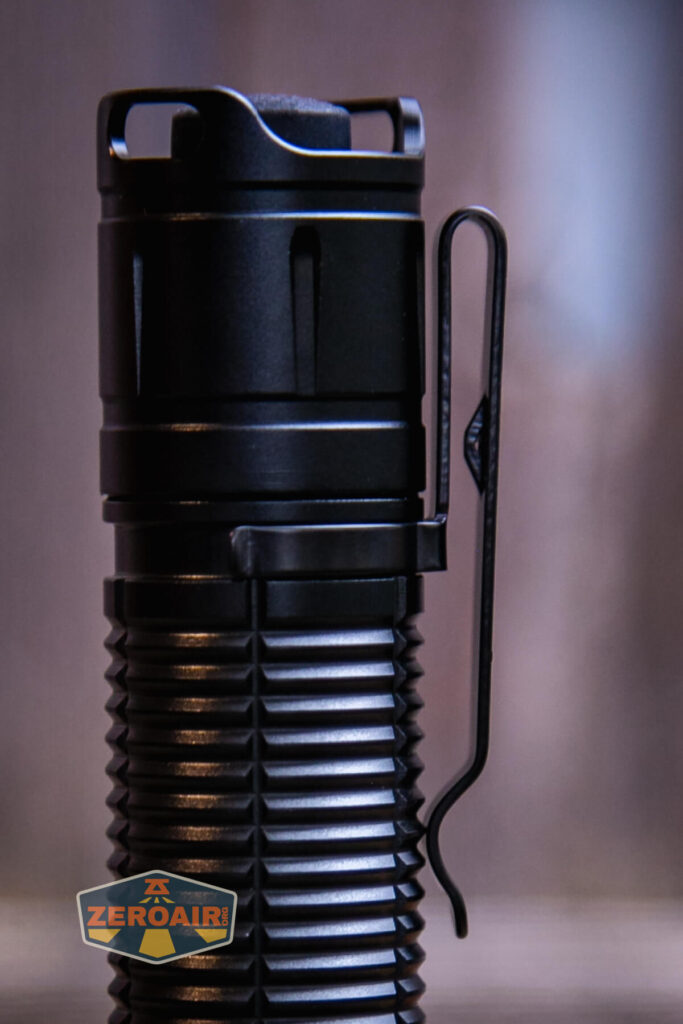
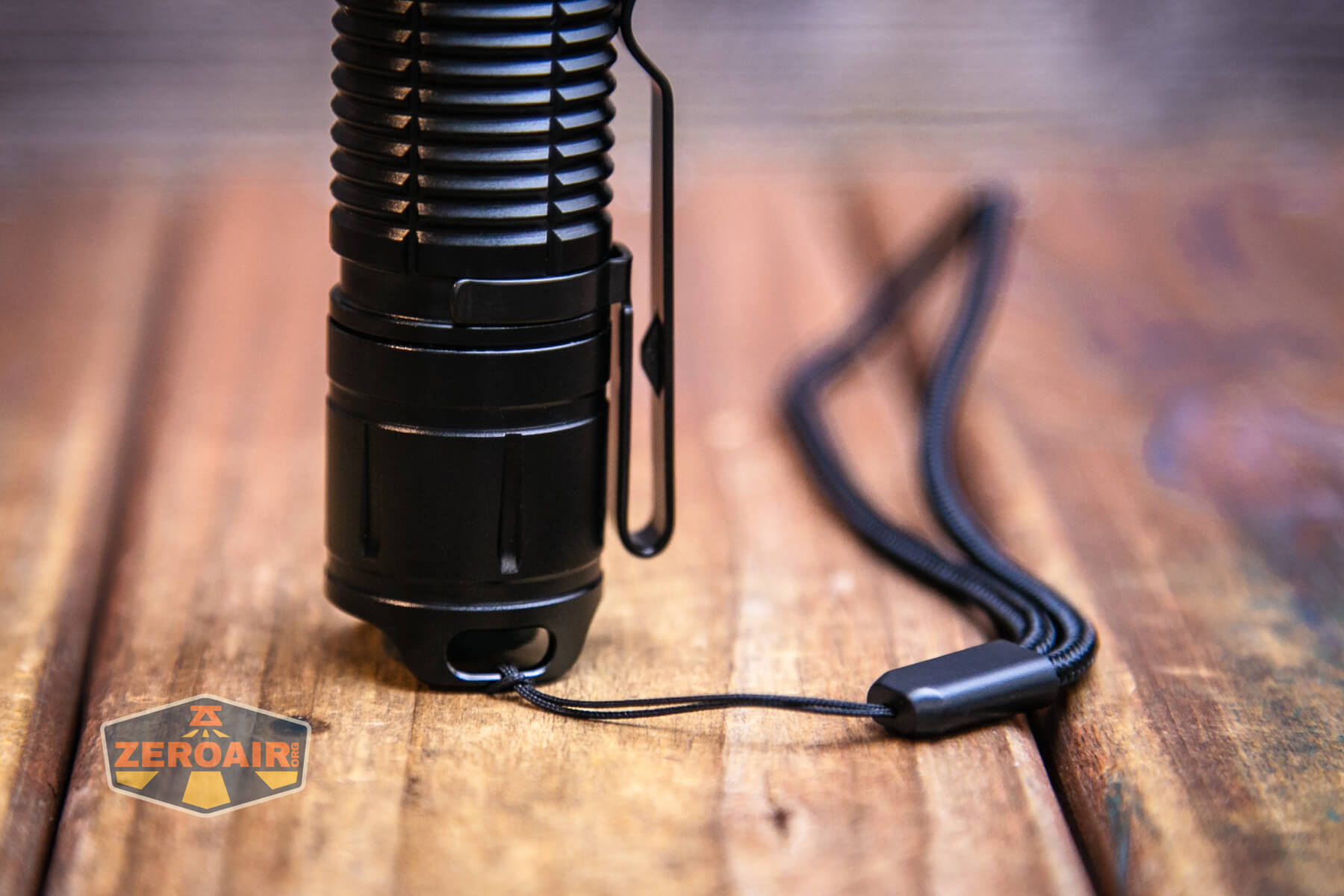
Next up is the lanyard, which attaches through either of these loops in the tailcap. These loops look a bit special to me – normally we don’t see loops that are so… attended to. Instead of cutting out a hole just big enough for a lanyard to slip through, a cutout was made as big as it could be. I like this. In fact, I prefer it.
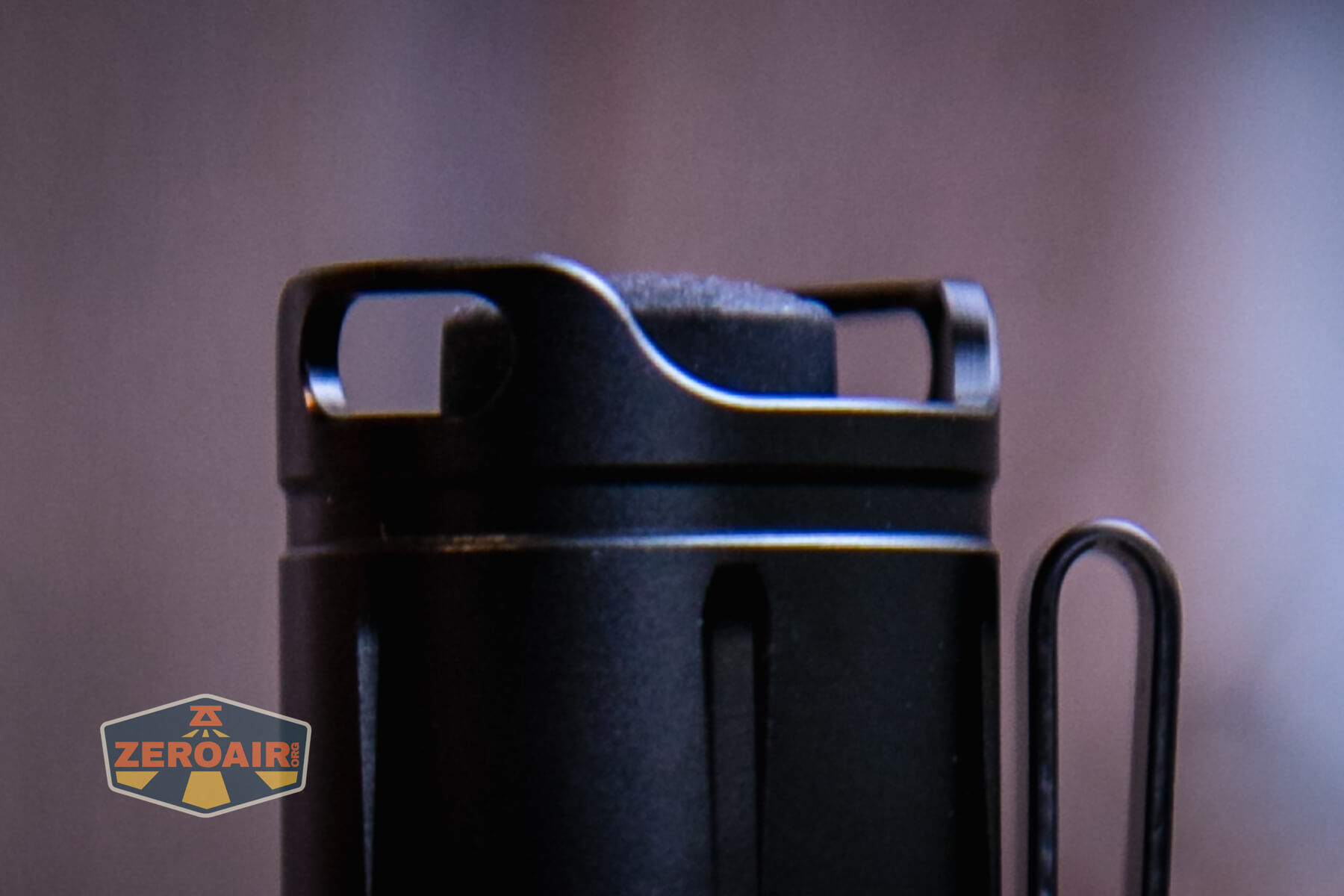
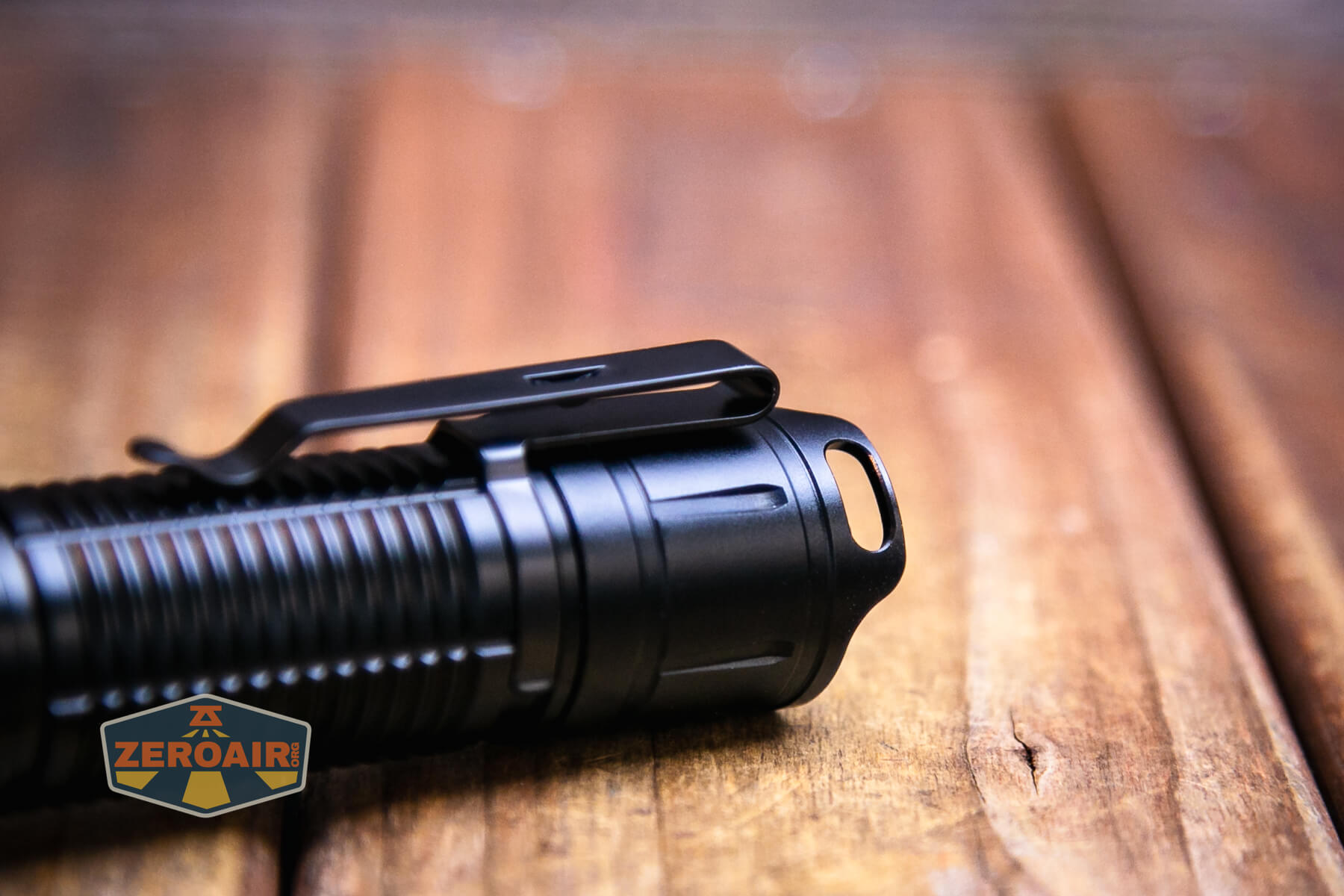
The flip side of that is that this type of lanyard hole (as opposed to a two-up hole or whatever) makes the lanyard sort of get in the way of tailstanding. This isn’t a big problem.
Finally, and my favorite, is this nylon holster. I’ve never seen a holster like this before, with what I’d call MOLLE attachment points all over. Would you use them for MOLLE attachment? Probably not, but they add a neat dimension to the product. This nylon holster is also essentially a tube holster, so perfect for other 18650 or 21700 tube lights.

Power and Runtime
The Soonfire MX75 flashlight runs on a single 21700 cell. A 5000mAh 21700 cell is included and has Soonfire branding.

Soonfire also includes an adapter that will allow the use of a single 18650 cell.

The cell goes into the cell tube in the normal orientation – positive end toward the head.

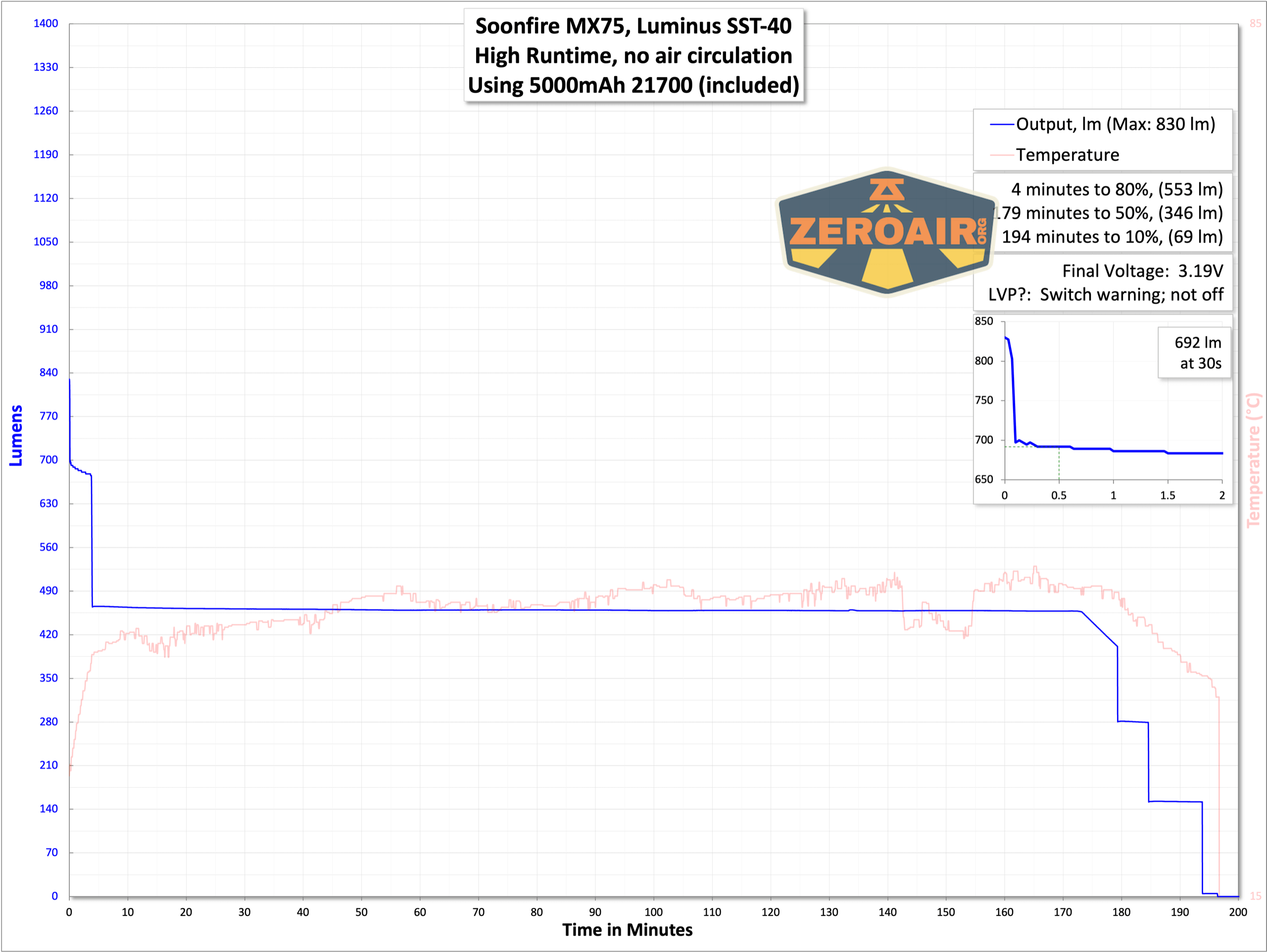
Runtimes look fairly good, with the exception of the light not coming close to the output claim. The claim is 2530 lumens, which is probably optimistic from a single emitter anyway. I read it as around 1300 lumens initially, with a stepdown after a couple of minutes. Actually the stepdown is fairly respectable since it doesn’t seem that Soonfire is attempting to game FL1 standards here. So minus points for the high lumen claim, but bonus points for fairly steady output for a couple of minutes. It ends up being a wash.
It looks like the Soonfire MX75 flashlight could support two cells, too – I will test if 8.4V increases the output significantly. There’s a (small) chance that the rated output of 2530 lumens is only with two cells. I don’t know of 21350 cells, but with the adapter, two 18350 cells can be used.

I will say that the manual linked on the product page shows a runtime graph that’s fairly accurate, but peaks (initially) at around 1050 lumens. So according to the manual, the output I have here is reasonable, and sort of “within specification” but only the marketing is incorrect (at “2530 lumens”). That’s also not ideal, but seeing runtime graphs in the manual is great!
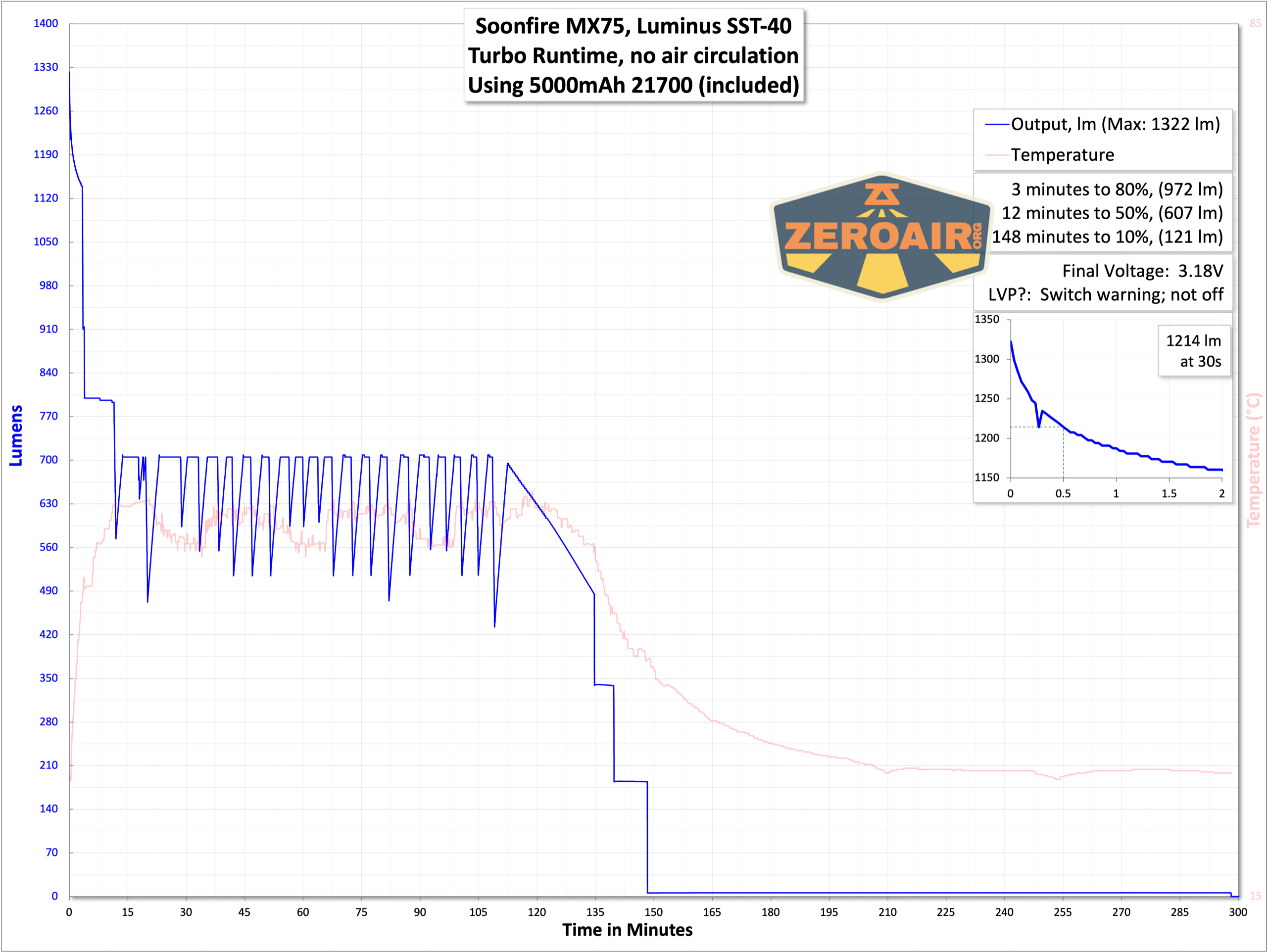
Above you can see temperature control working fairly well. It’s a bit “active,” and you might be able to see this dip and increase in output. But it’s fairly small, and might not even be noticeable. Either way, the ITS Smart Temperature Control System seems to be effective at managing the temperature.
The switch indicates when the cell voltage is dropping. It also indicates cell power level when the light is turned on. During use, blue means “enough power,” red means “low power,” and flashing red means it’s time to charge.
Charging
The Soonfire MX75 flashlight has onboard charging by way of a USB-C charging port on the head. There’s a press-in cover that seems secure enough.
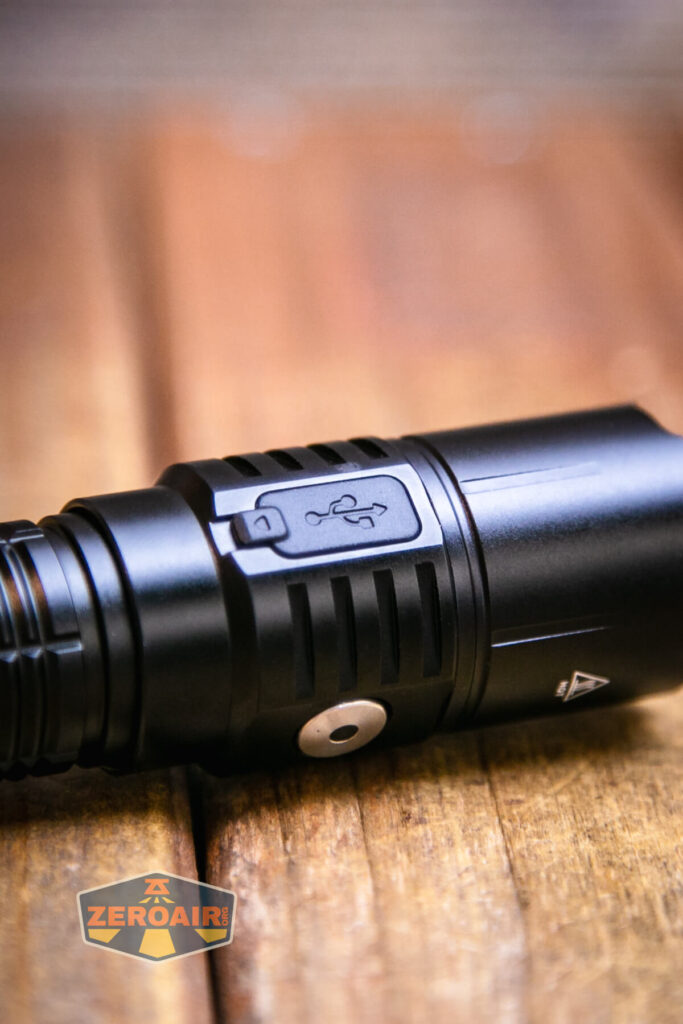
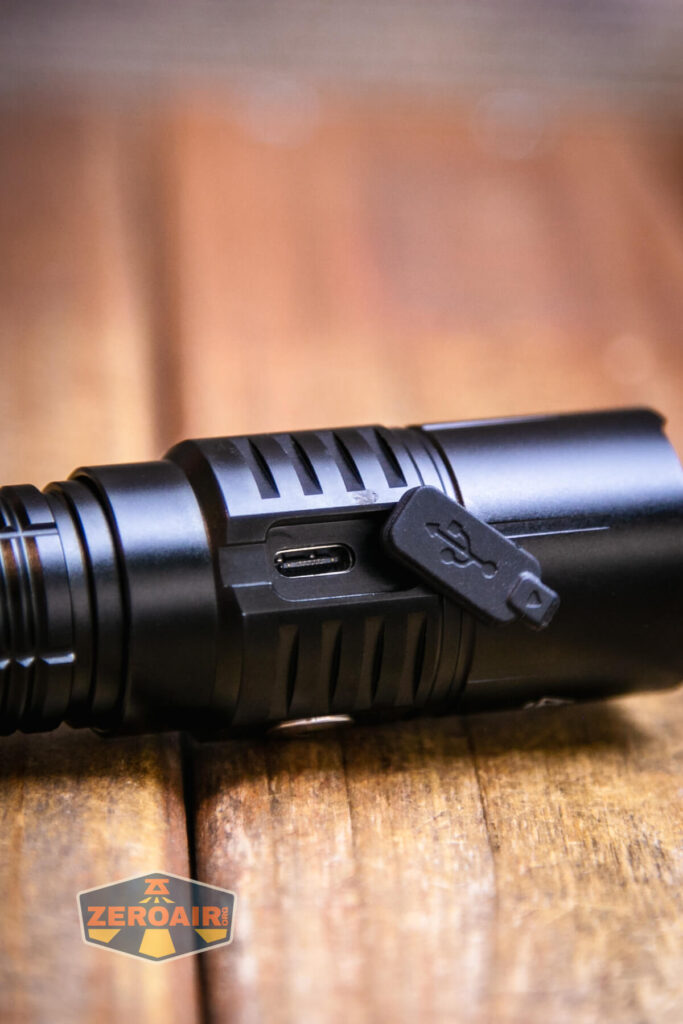
A charging cable is included – USB to USB-C.
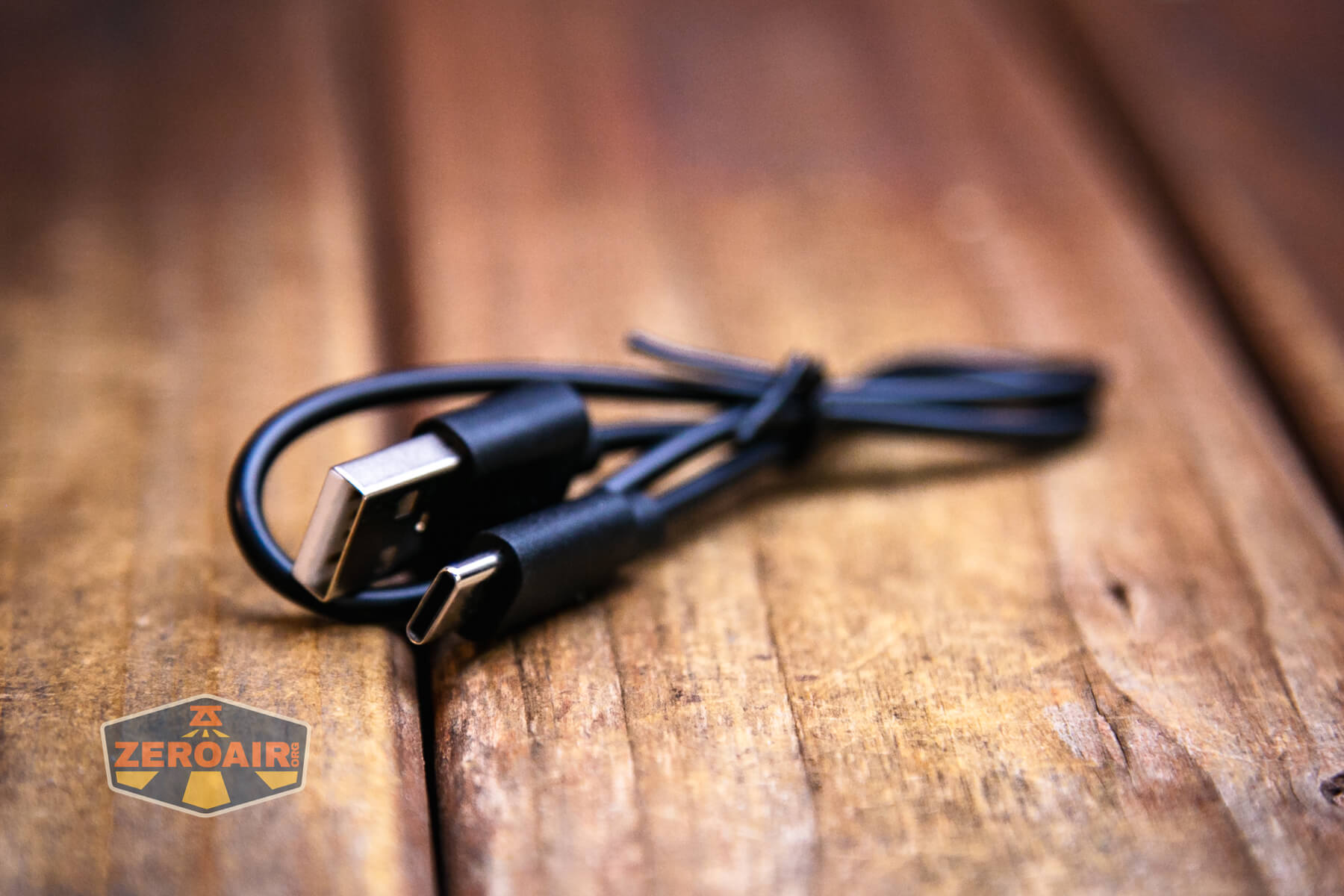
USB-C to USB-C works, as does USB to USB-C. Charging isn’t “great” as there’s a bit of bouncing around during both the CC and CV phase. That’s not ideal but I also don’t know that it’s necessarily bad. The current range throughout the charge cycle isn’t too high, so I’d say it’s not a problem. It doesn’t make a nice clean line graph, though.
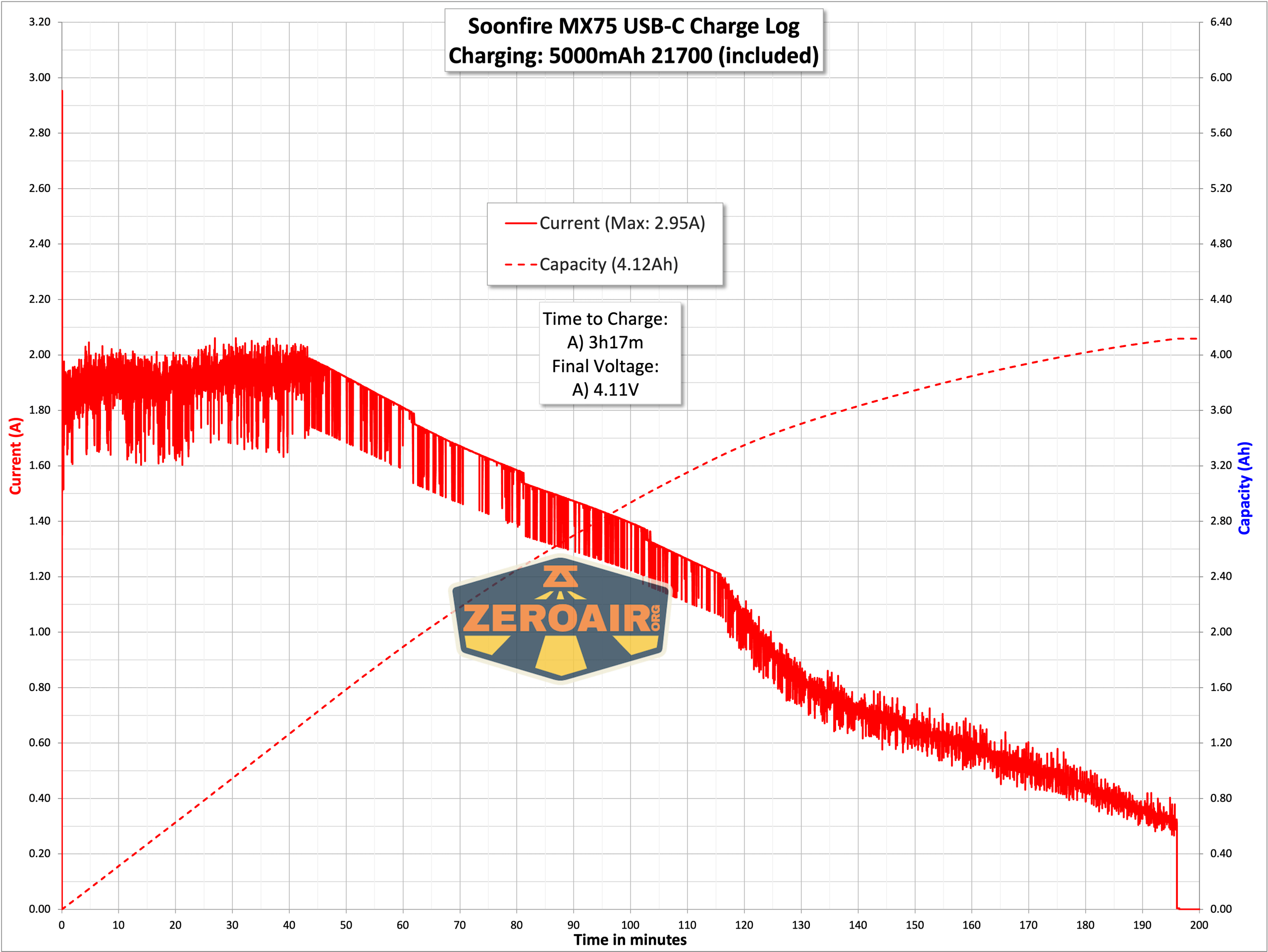
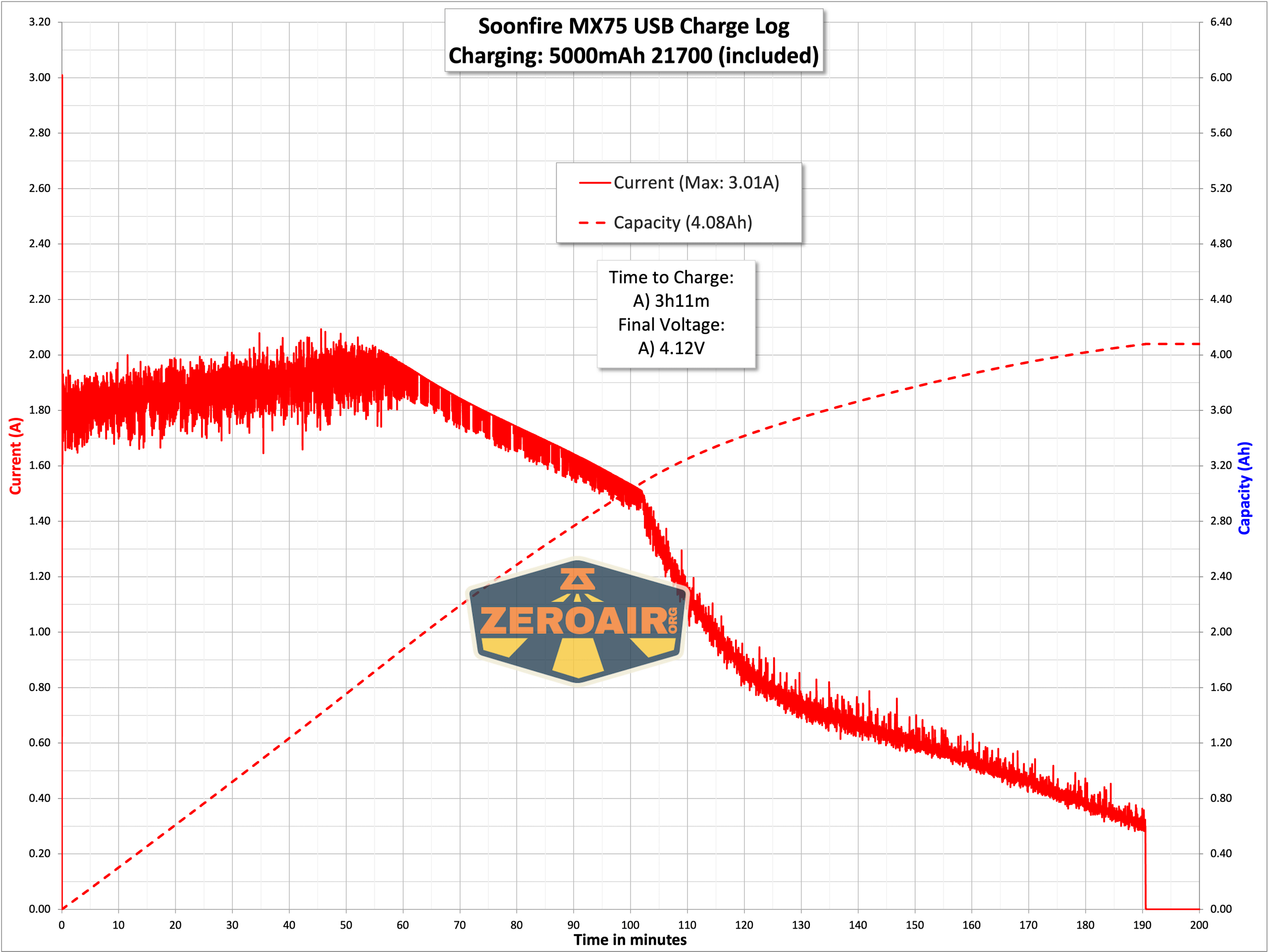
During charging, the switch is red. When charged, the switch is blue. If there are errors, the switch will blink red. When charging is complete, the switch indicator will turn off.
A note about voltage – since the light can run up to 8.4V and you might use two of whatever cell in here (for example two 18350 cells) do not charge two-up cells in this (or any) light! Charging is not made for that scenario and things will go wrong (maybe not this time, but certainly sometime!)
Modes and Currents
| Mode | Mode Claimed Output (lm) | Claimed Runtime | Measured Lumens | Tailcap Amps |
|---|---|---|---|---|
| Turbo | 2530 | 2.5h | 1322 (0s) 1214 (30s) |
4.38 |
| High | 1000 | 6h | 830 (0s) 692 (30s) |
2.06 |
| Medium | 650 | 30h | 346 | 0.67 |
| Low | 300 | 60h | 194 | 0.33 |
| Firefly | 8 | 850h | 6 | [low] |
Pulse Width Modulation
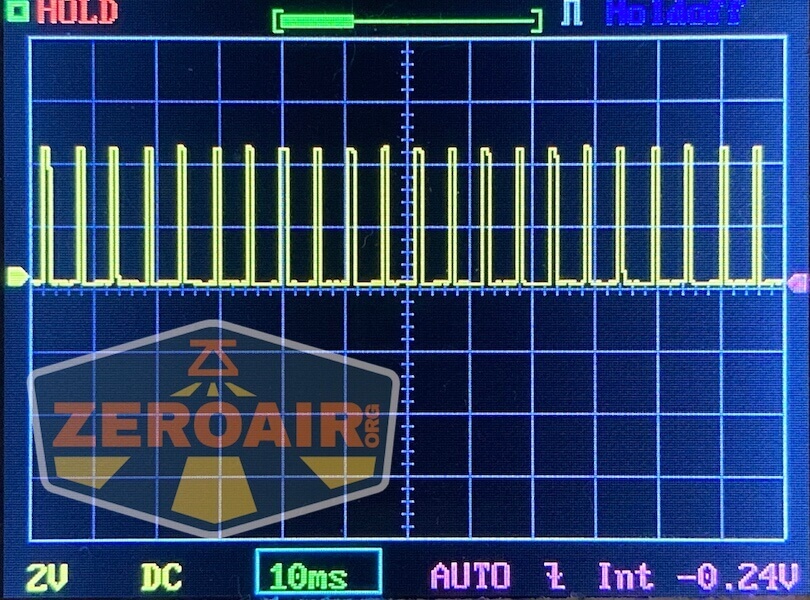
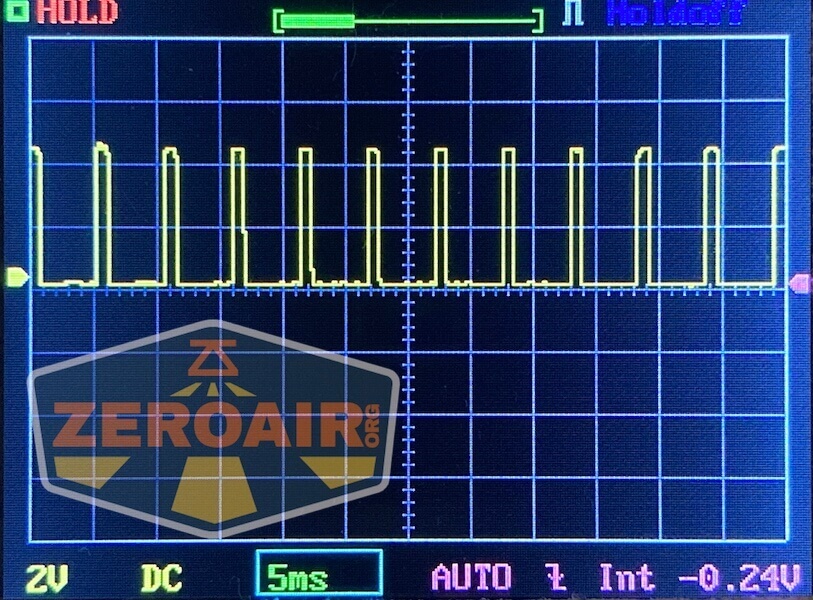
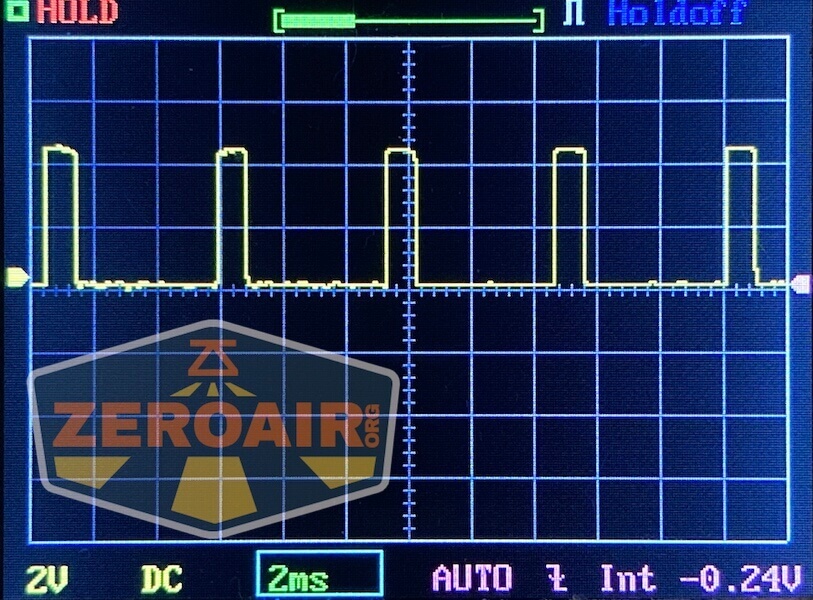
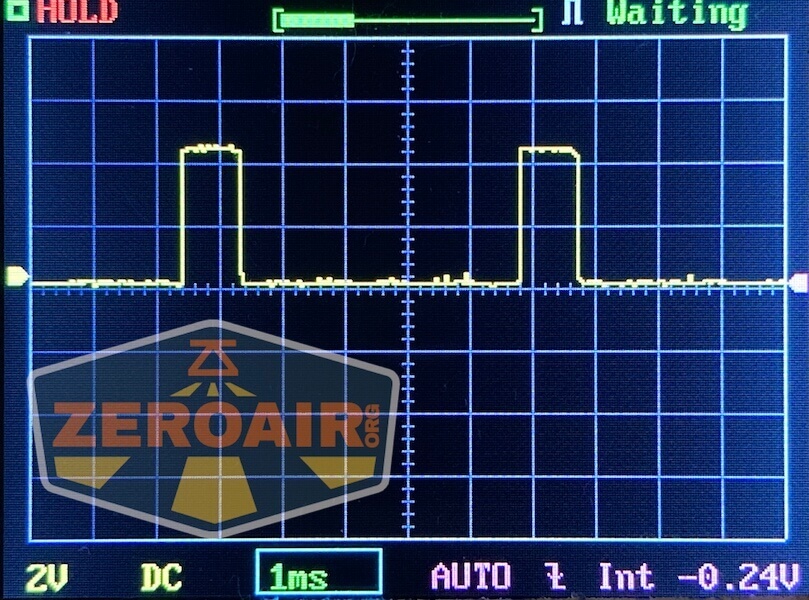
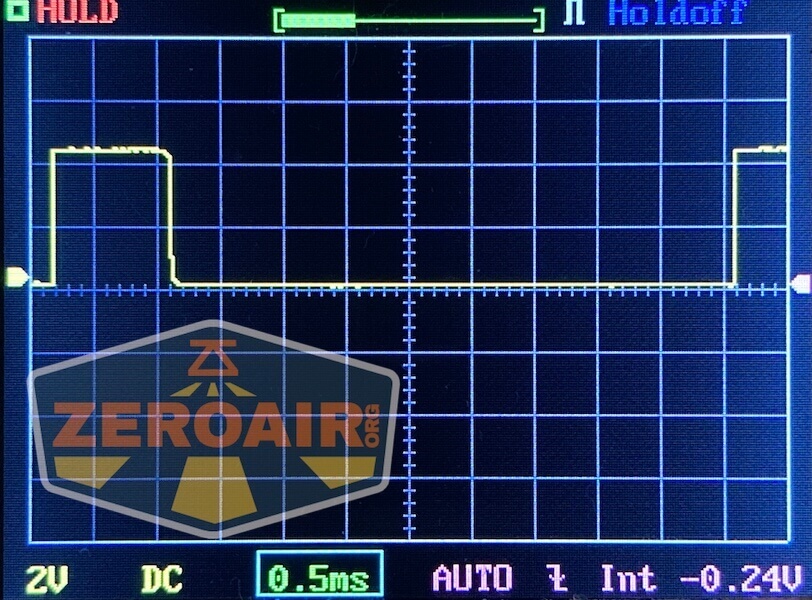
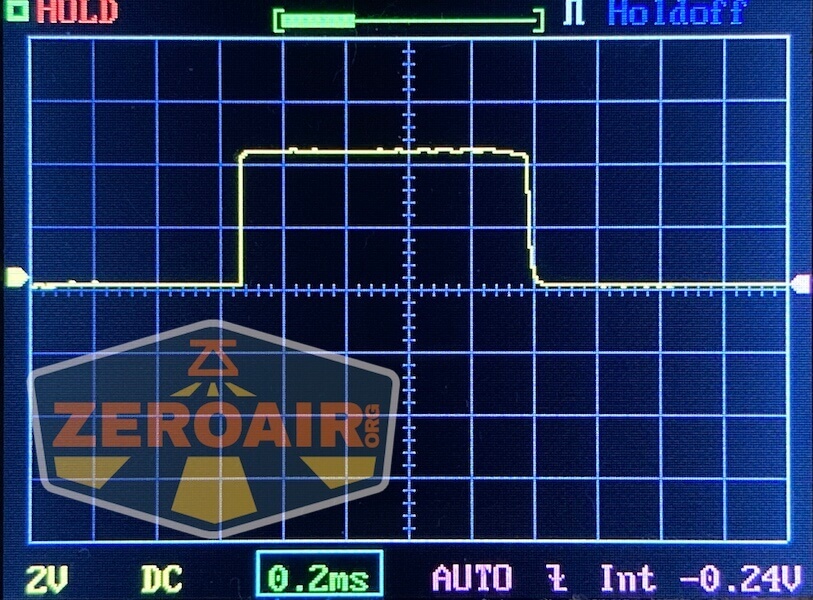
None of the modes really use PWM. Low (leftmost, below) has a sawtooth, but it’s not noticeable during use.
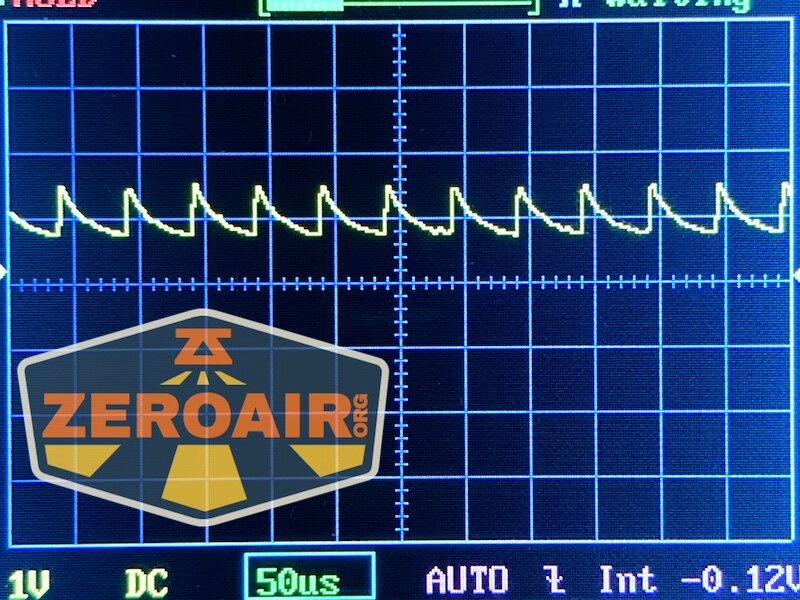
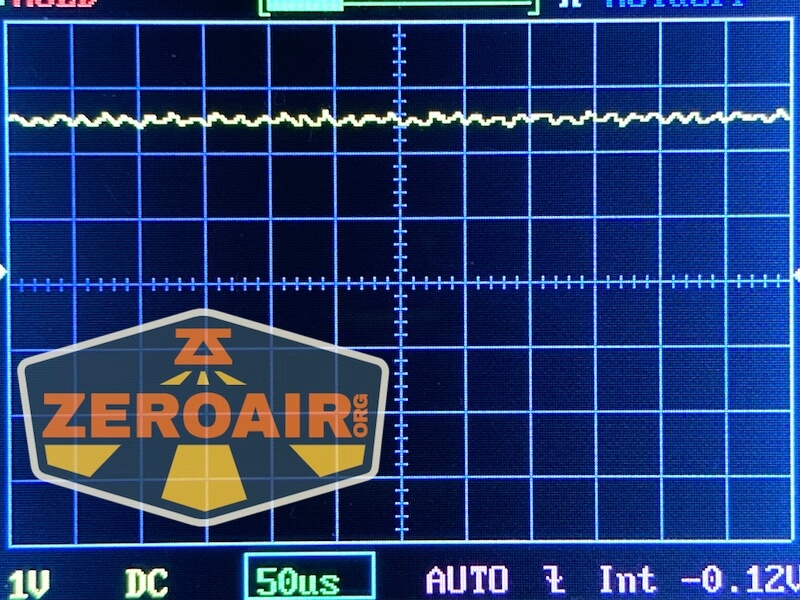
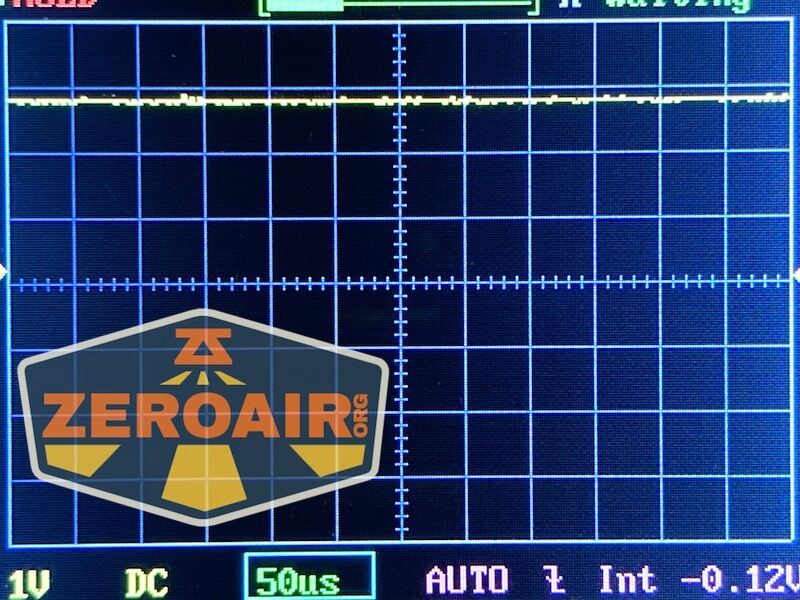
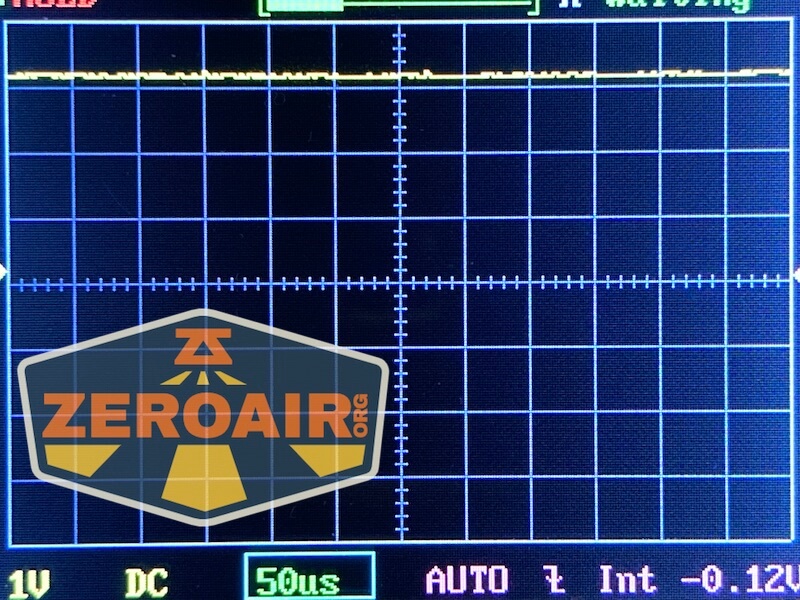
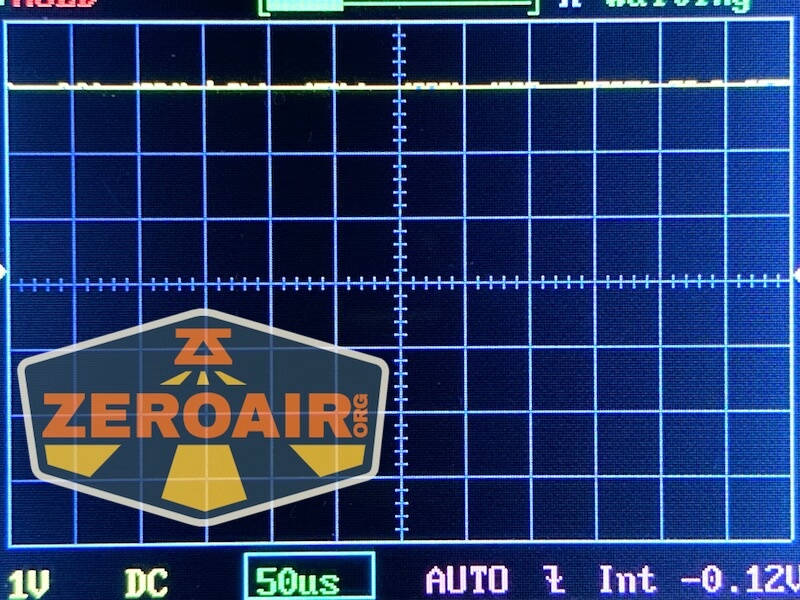
Here you can see a “baseline” – a chart with almost no light hitting the sensor.
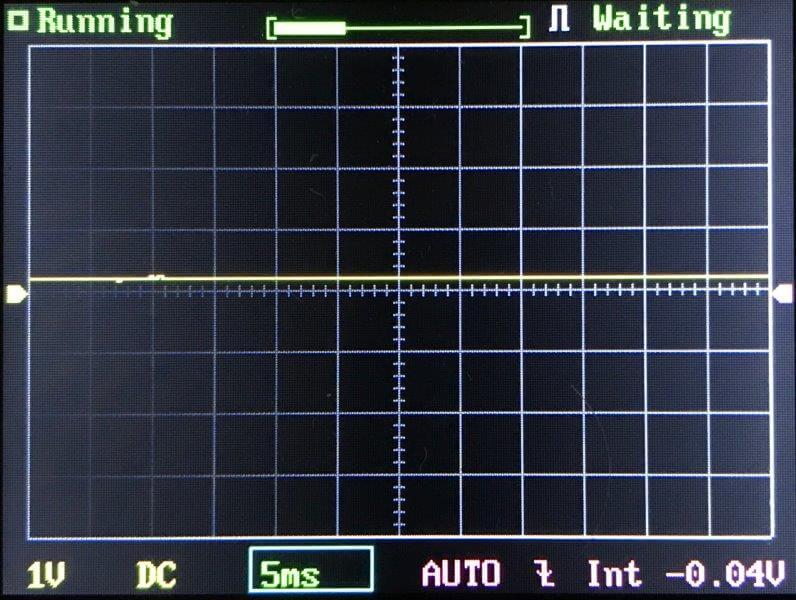
Then there’s the Ultrafire WF-602C flashlight, which has some of the worst PWM I’ve seen. It’s so bad that I used a post about it to explain PWM! Here are multiple timescales (10ms, 5ms, 2ms, 1ms, 0.5ms, 0.2ms) to make comparing this “worst” PWM light to the test light easier. That post also explains why I didn’t test the WF-602C at the usual 50us scale.
User Interface and Operation
Two switches are used to control the Soonfire MX75 flashlight. First is a mechanical tail switch.
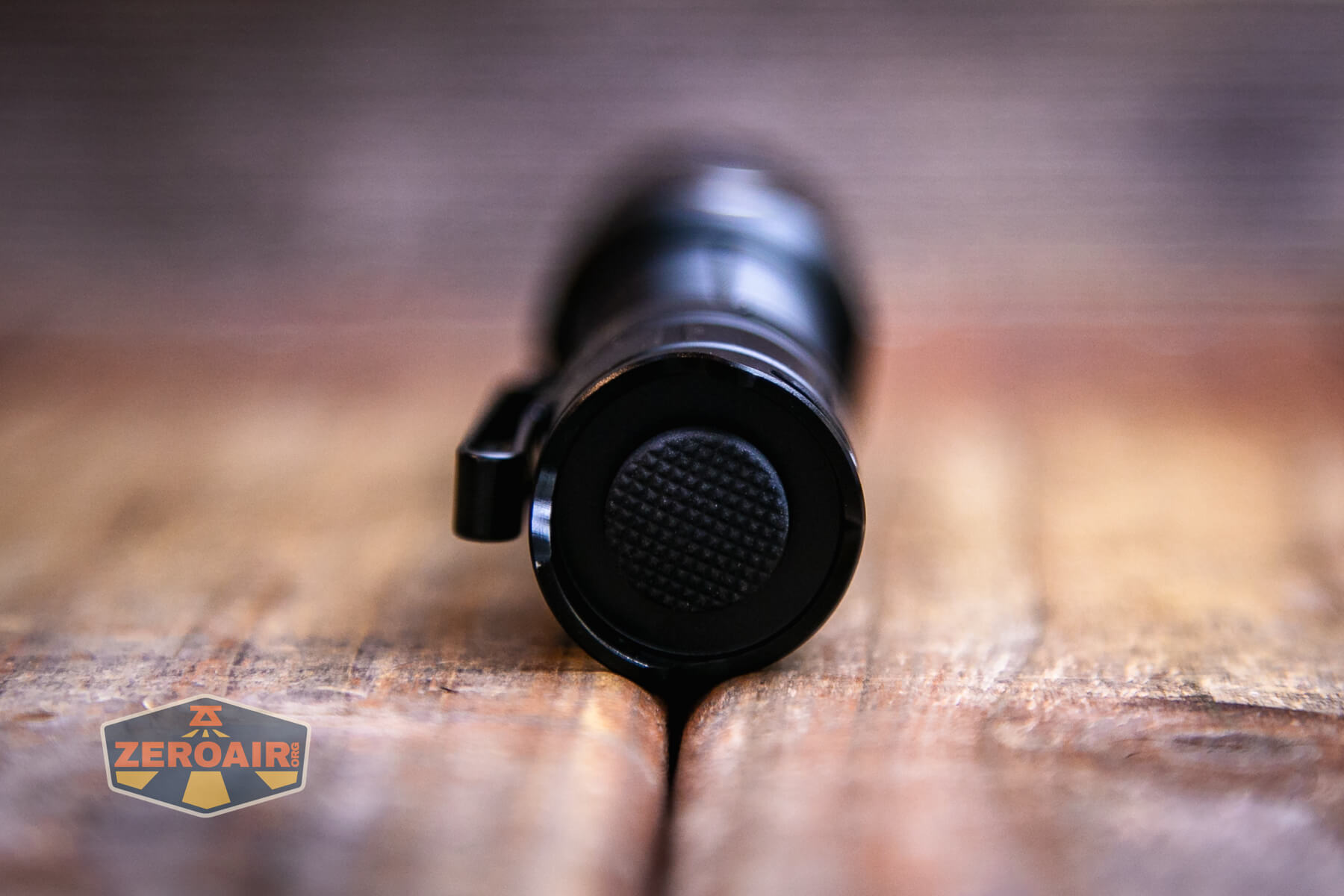
The switch is accessible from the sides and around the tailcap lanyard loop parts. Action on this switch is deep.
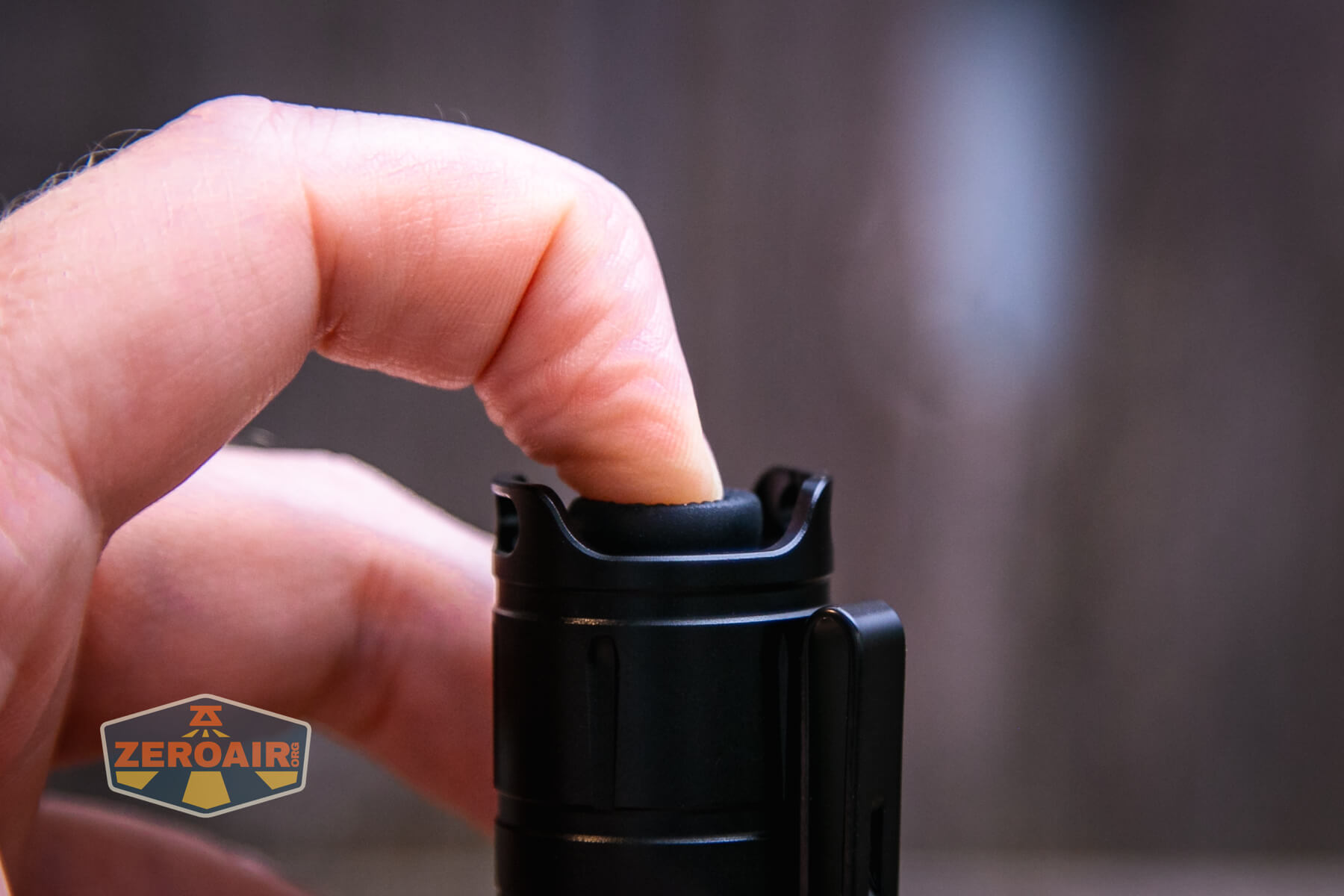
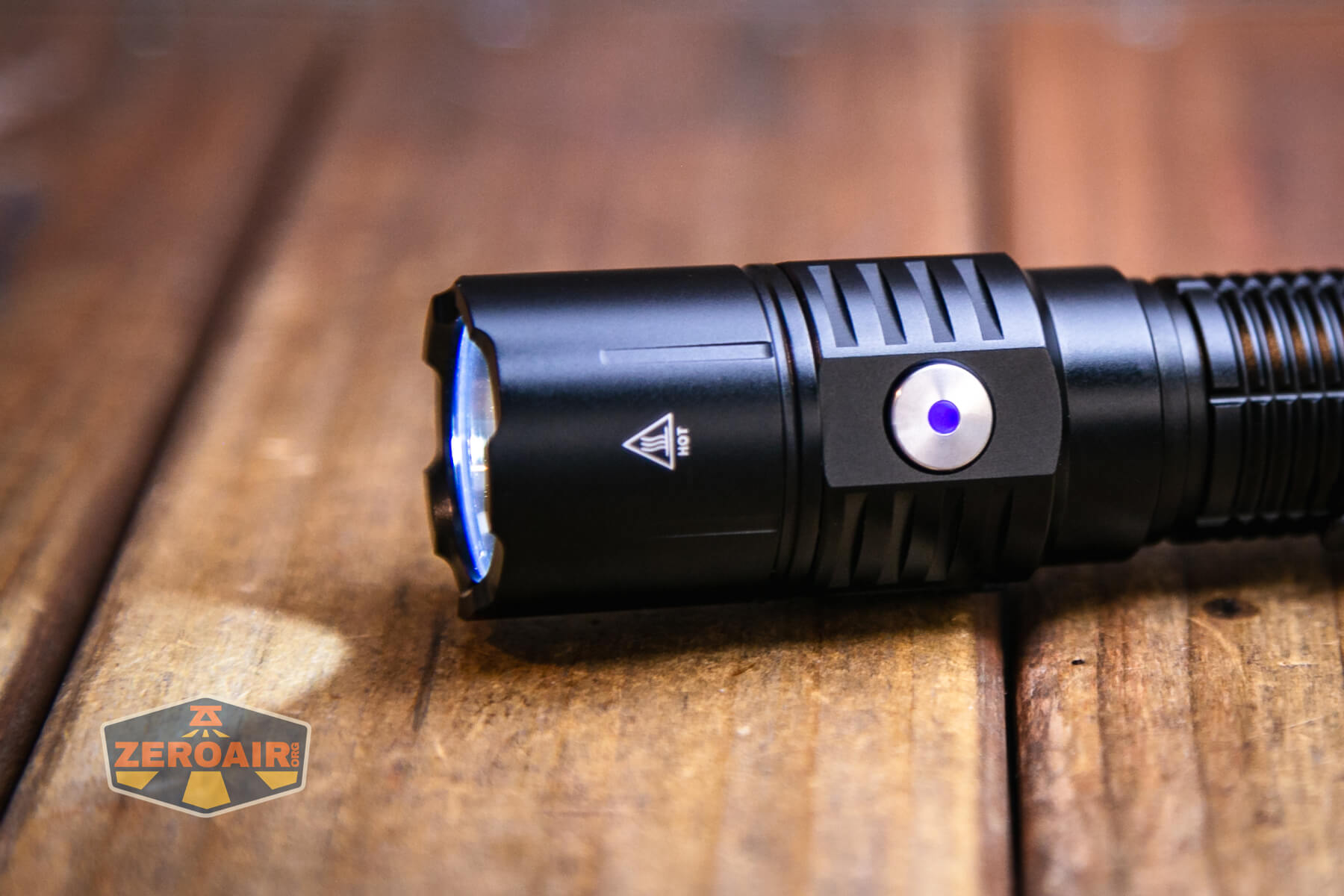
Next is an e-switch on the head. This switch has an indicating function, too.
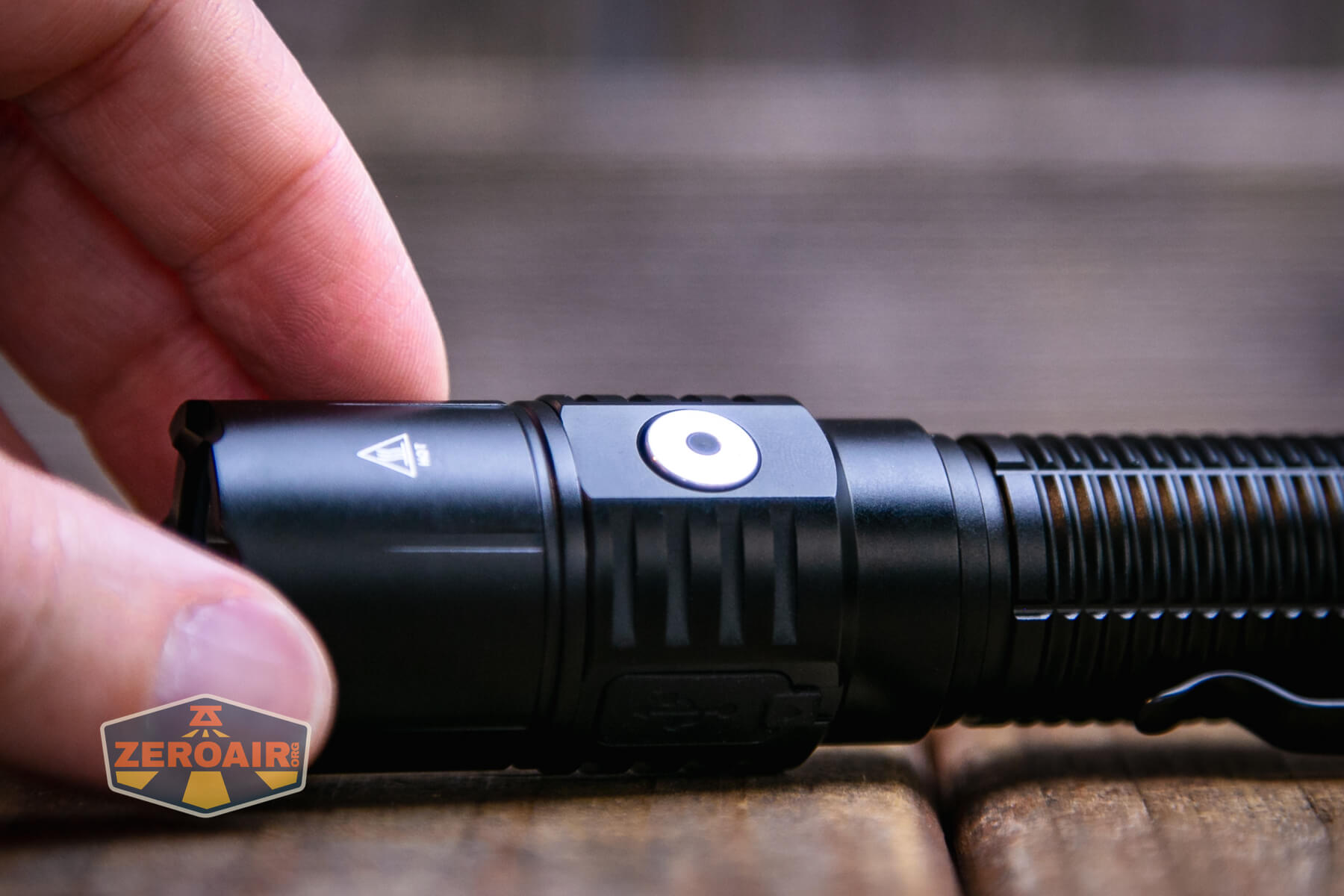
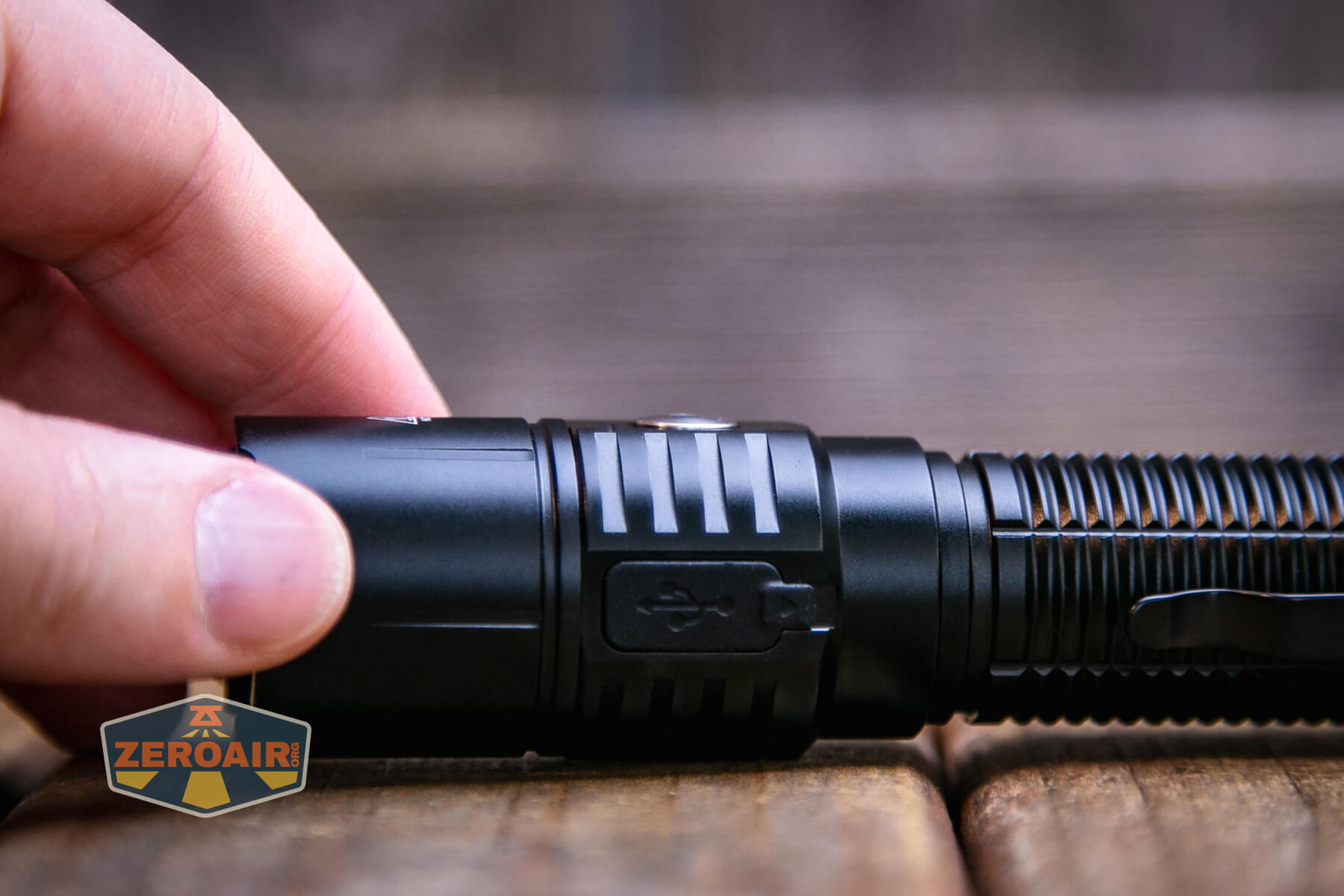
Action on this switch is very low.
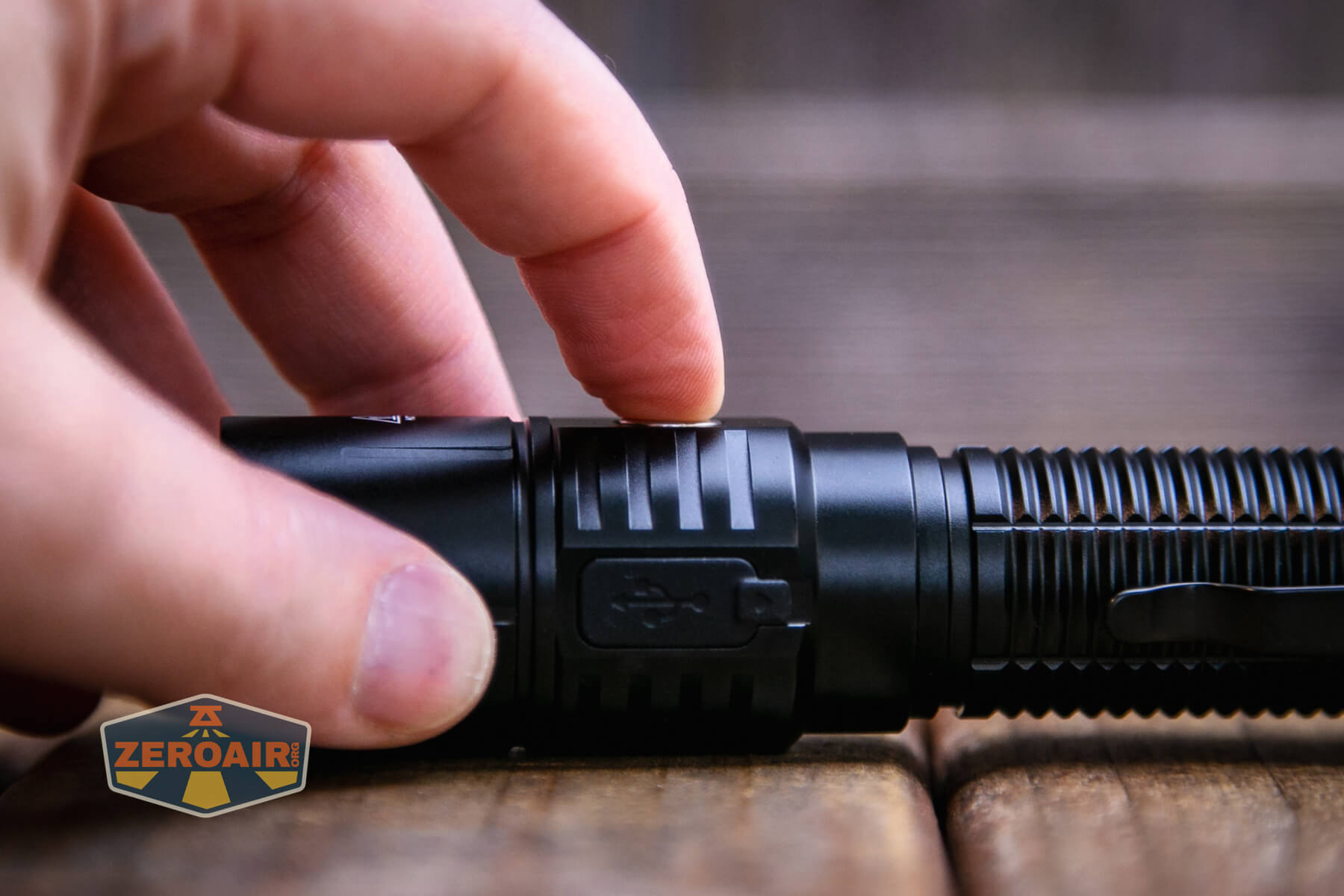
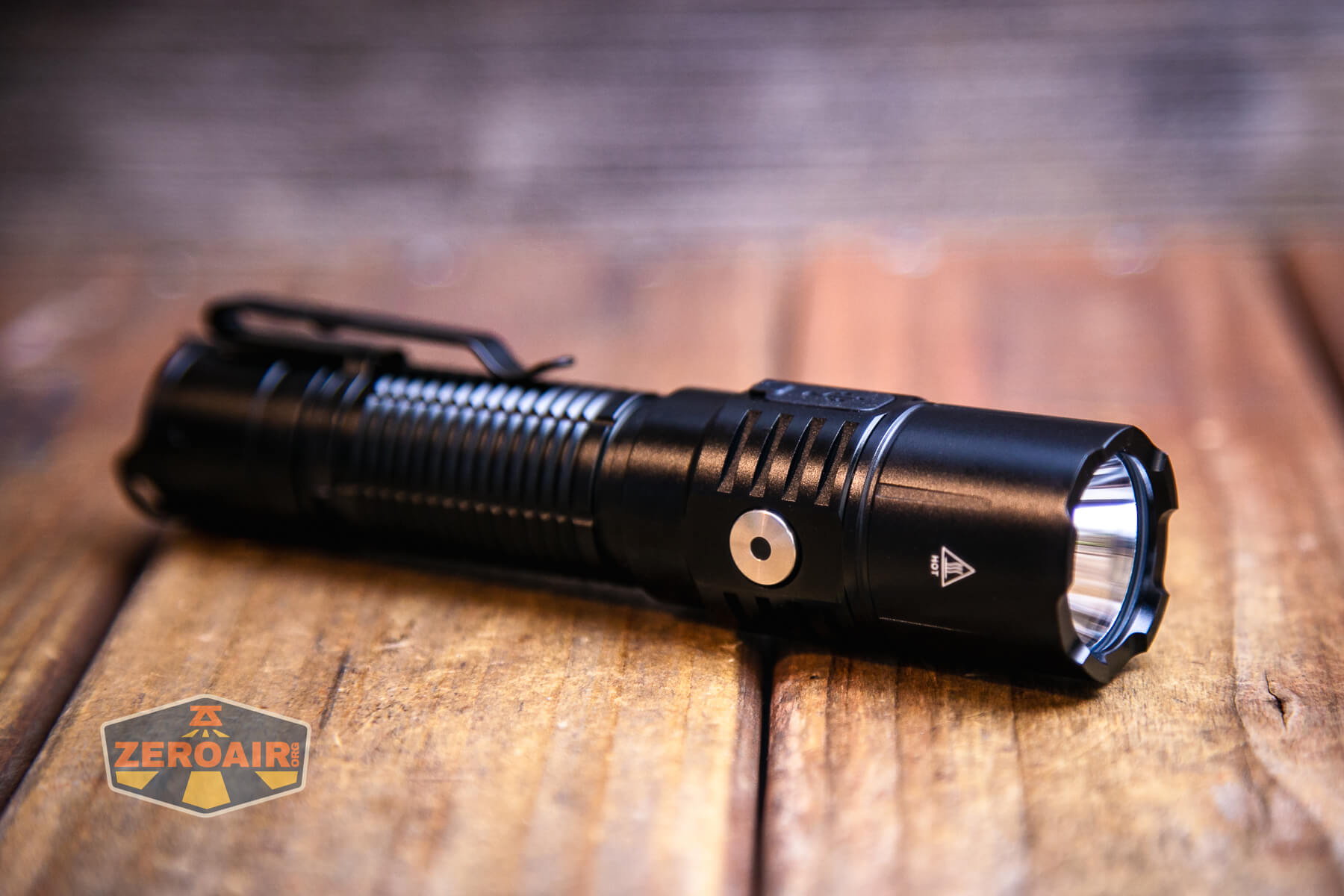
Here you can see the switch indicating in blue. It can also indicate red.
Here’s a user interface table!
| State | Action | Result |
|---|---|---|
| Off | Half press tail switch | Momentary mode memory |
| Off | Click tail switch | On in mode memory |
| On | Click tail switch | Off |
| On | Click side switch | Mode advance (Firefly>L>M>H) |
| On | Double click side switch | Turbo |
| On | Hold side switch >2s | Enter strobe group |
| Strobe group | Click side switch | Strobe group advance (Strobe > SOS > Beacon) |
| Strobe group | Hold side switch >2s | Exit strobe group to previous steady state |
LED and Beam
I can’t see where or if Soonfire states what emitter is used in the MX75, but to me it appears to be a Luminus SST-40 emitter. While I’d love it if they stated what’s used, I’m still glad it’s a well-known emitter.
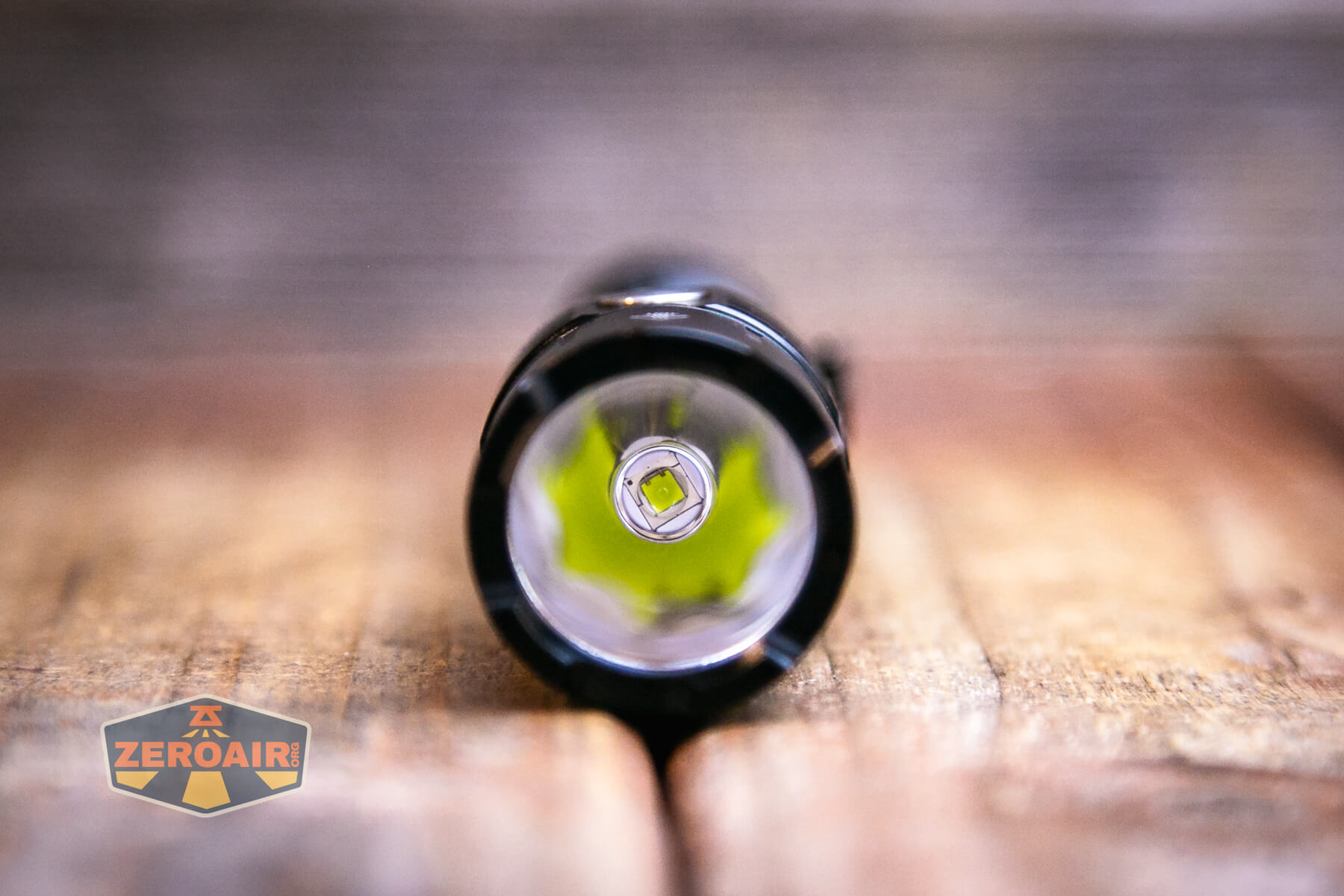
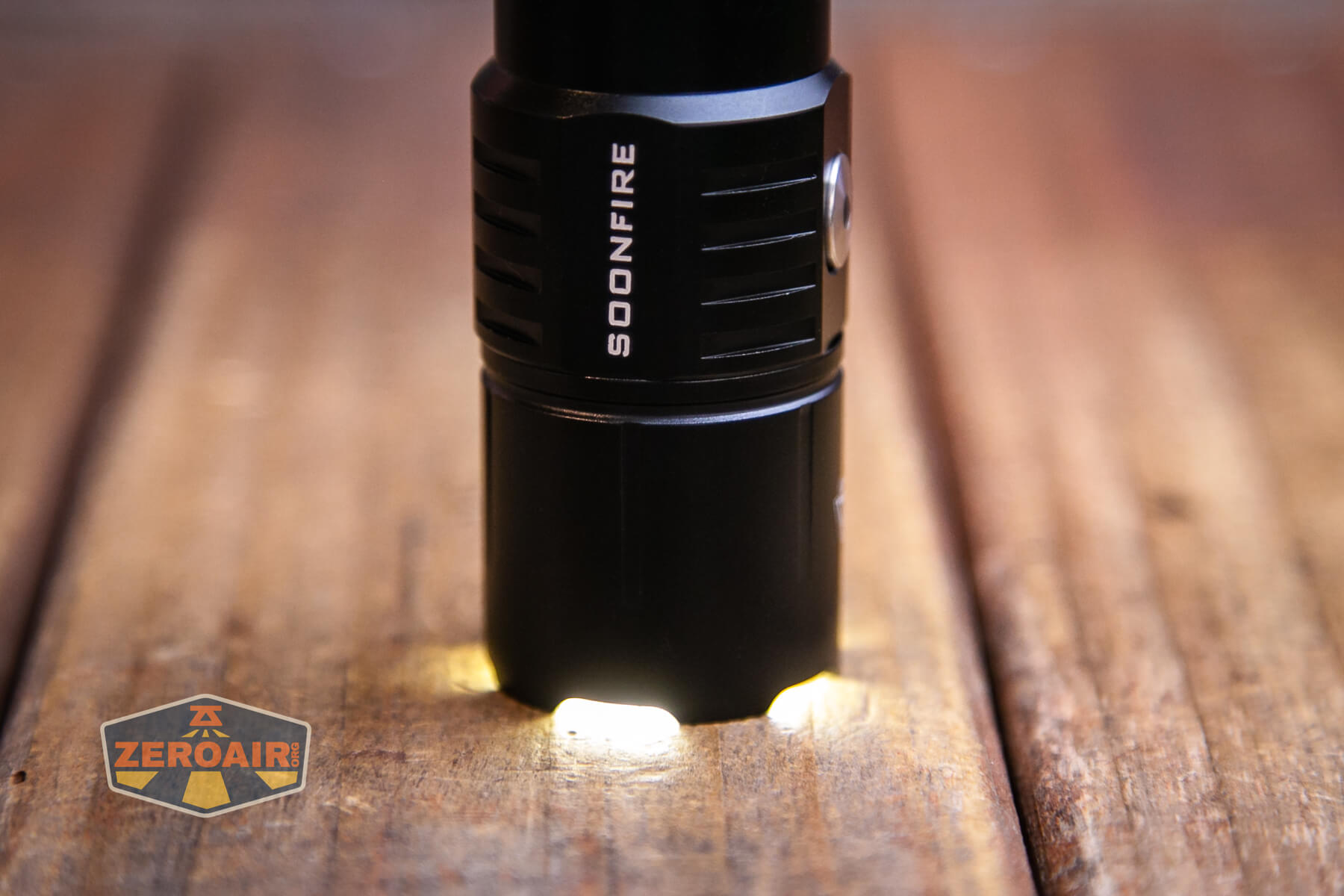
I like the bezel – I like when a bezel allows a bit of light to escape while a light headstands. Not that I’d ever leave a light on face-down unattended. Nope.
LED Color Report (CRI and CCT)
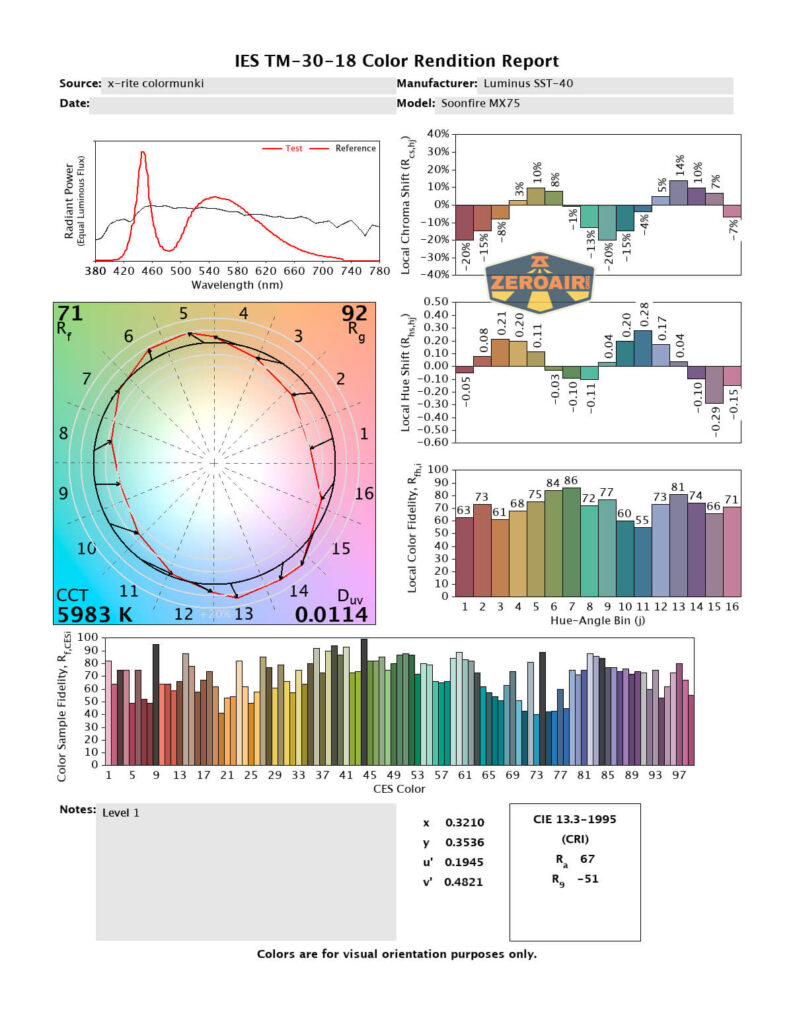
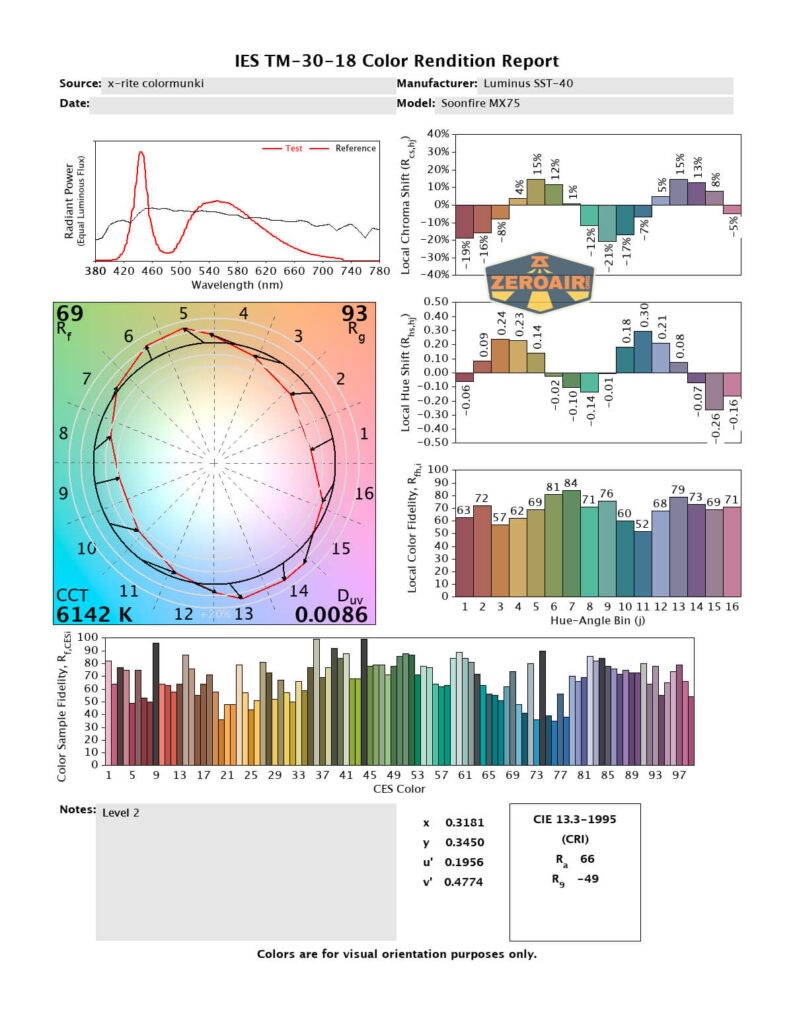
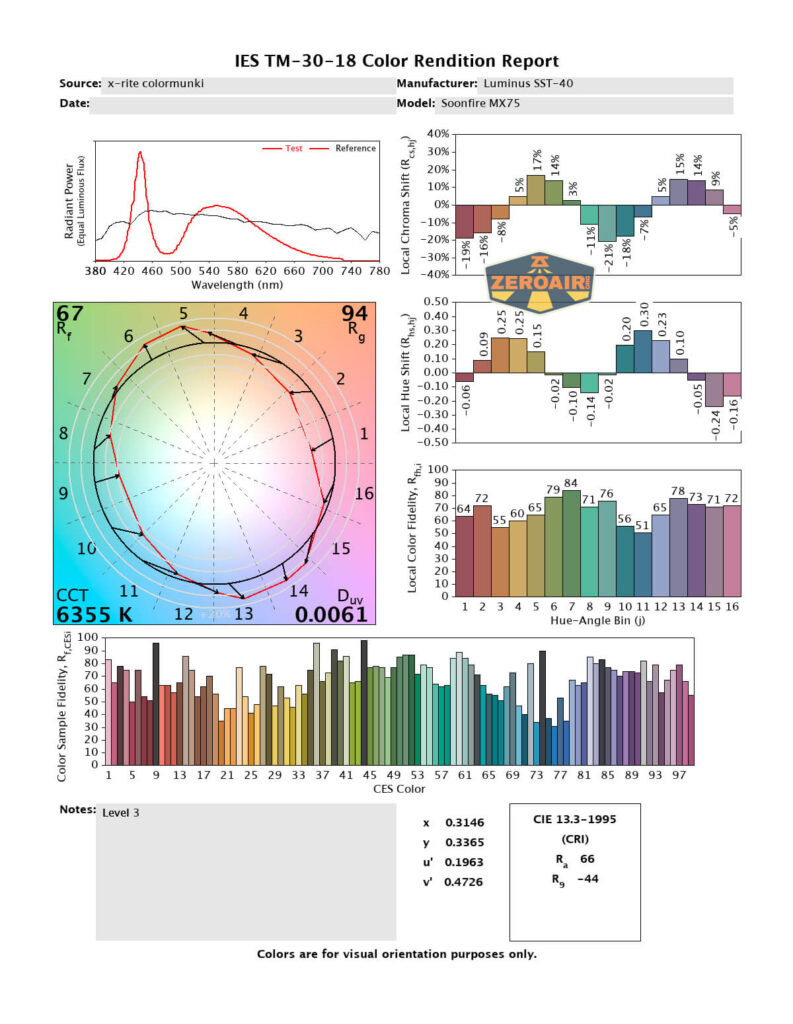
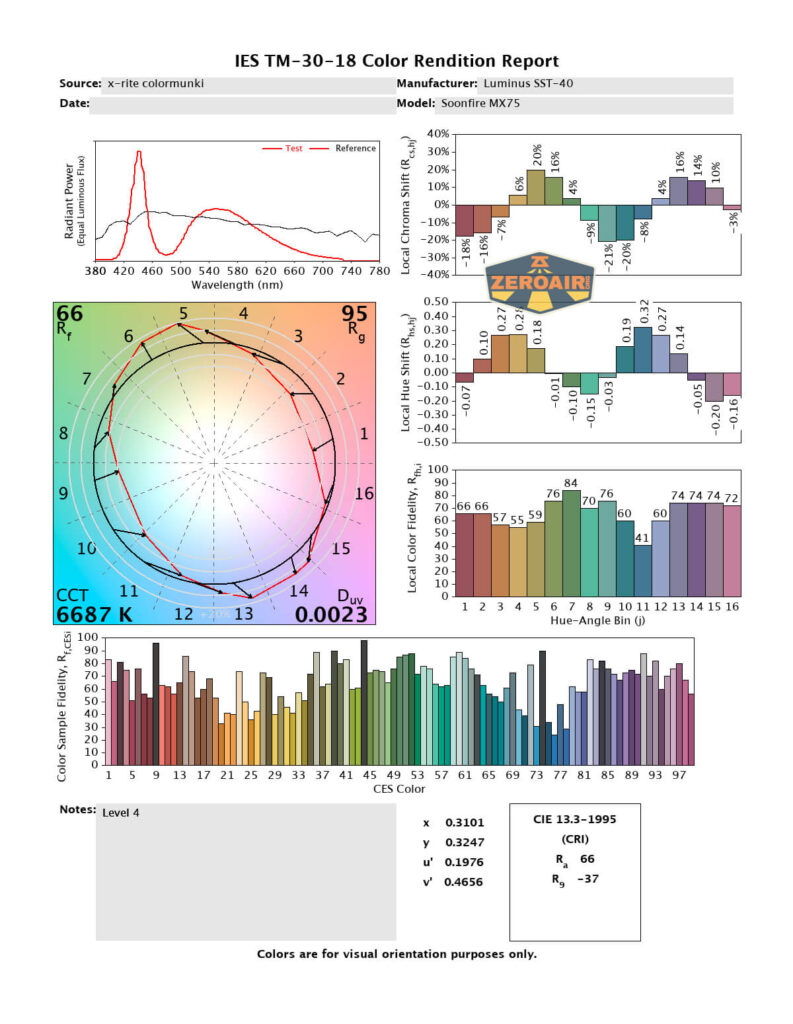
As expected in a tactical light like this, the CCT is cool, from around 6000K to around 6800K. CRI is also low (again, as expected) at under 70.
Soonfire did mention via email that customizations are possible. So if you need a lower CCT or want to target some other CRI or whatever, Soonfire seems willing to work with you on that!

Beamshots
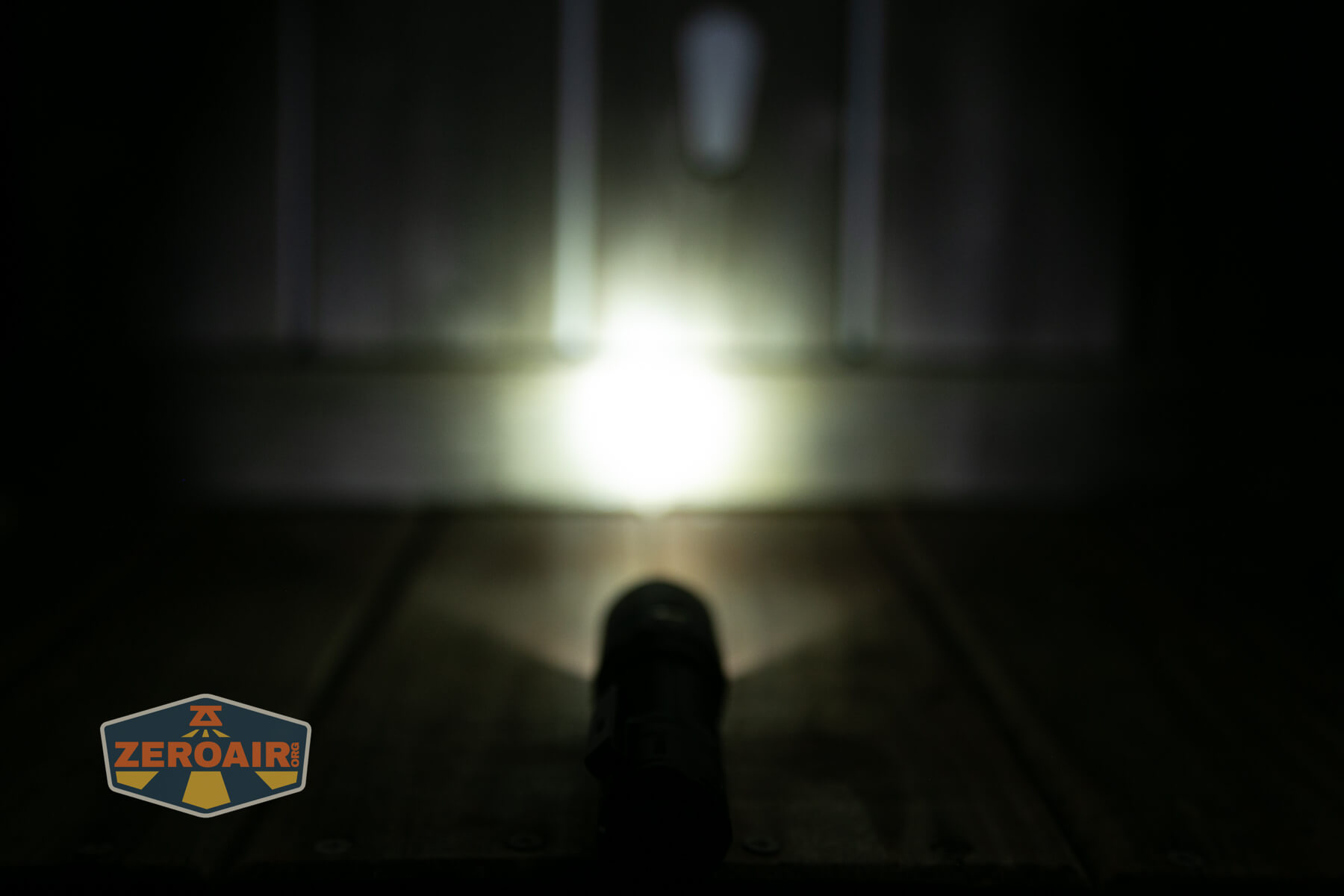
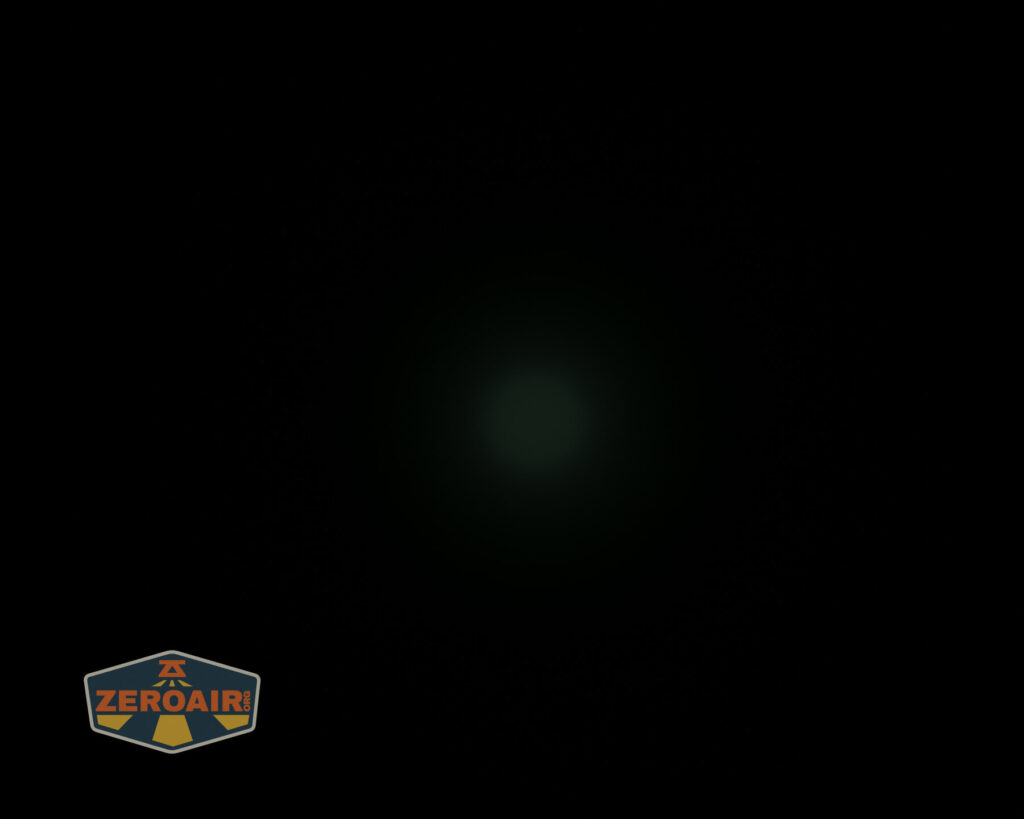
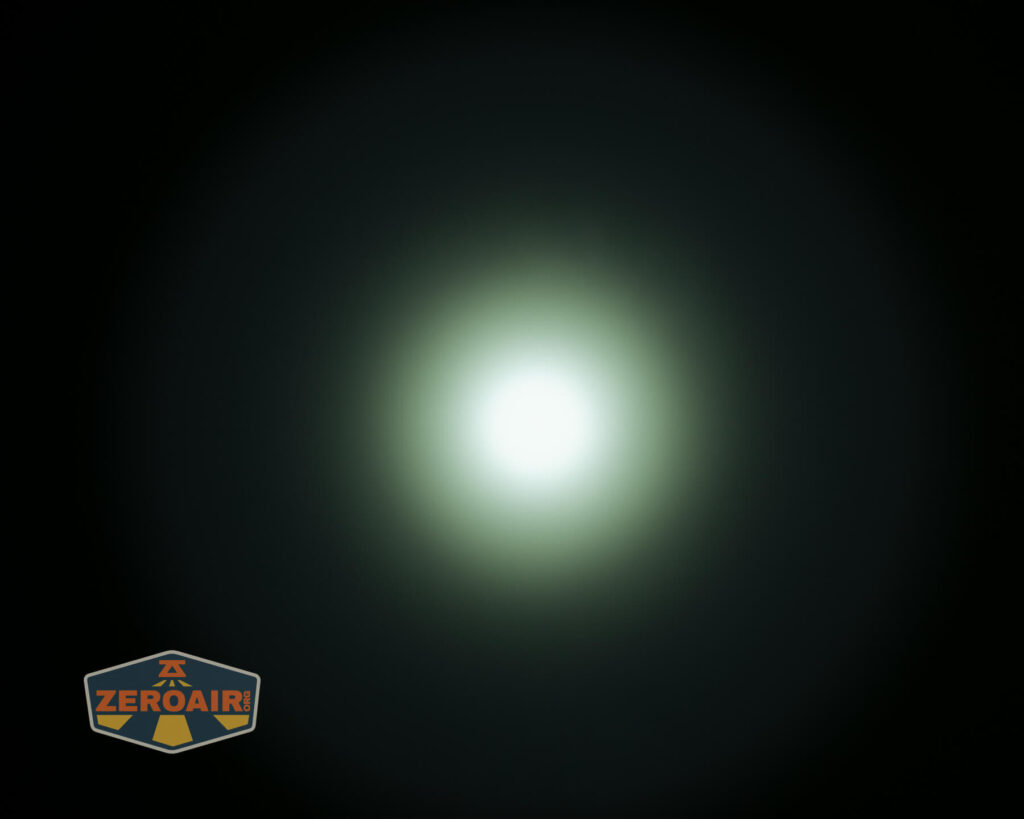
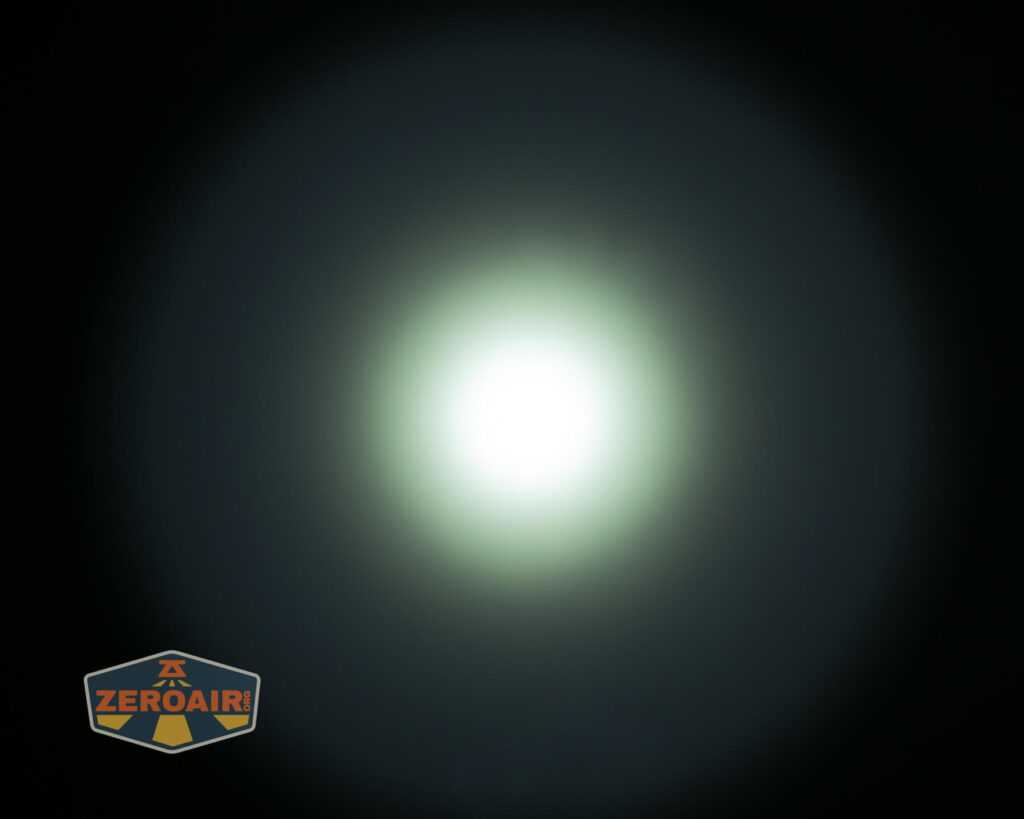
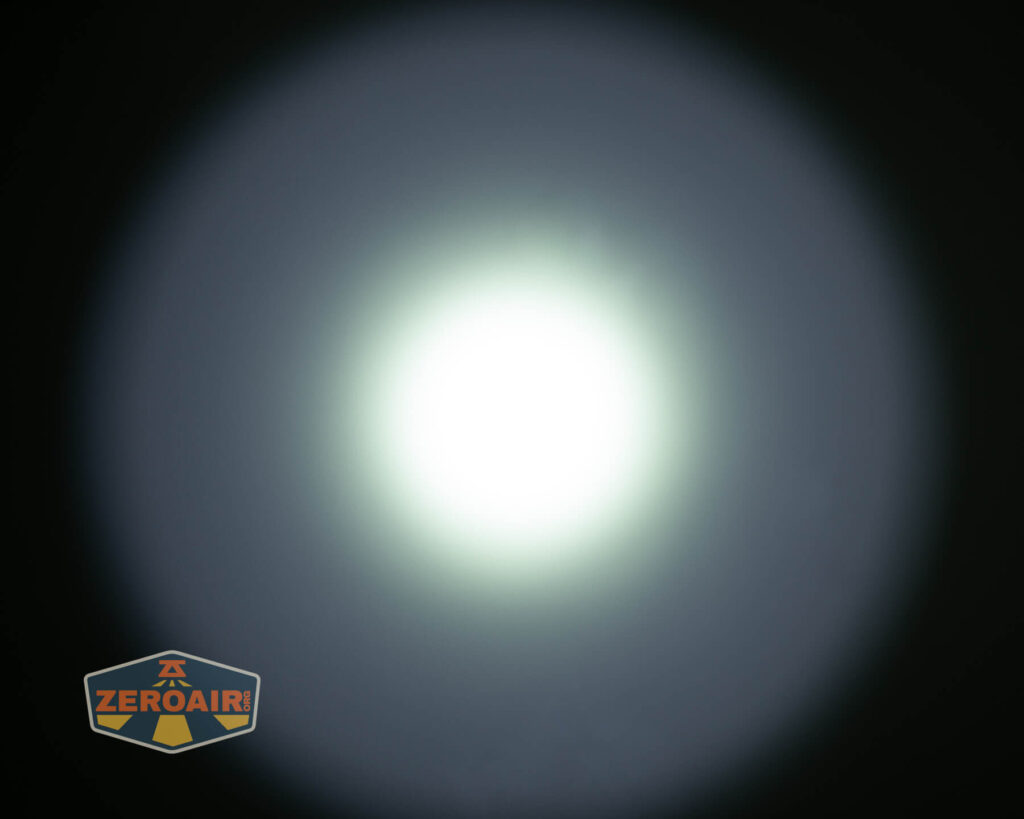
These beamshots always have the following settings: f8, ISO100, 0.3s shutter, and manual 5000K exposure. These photos are taken at floor level, and the beam hits the ceiling around 9 feet away.
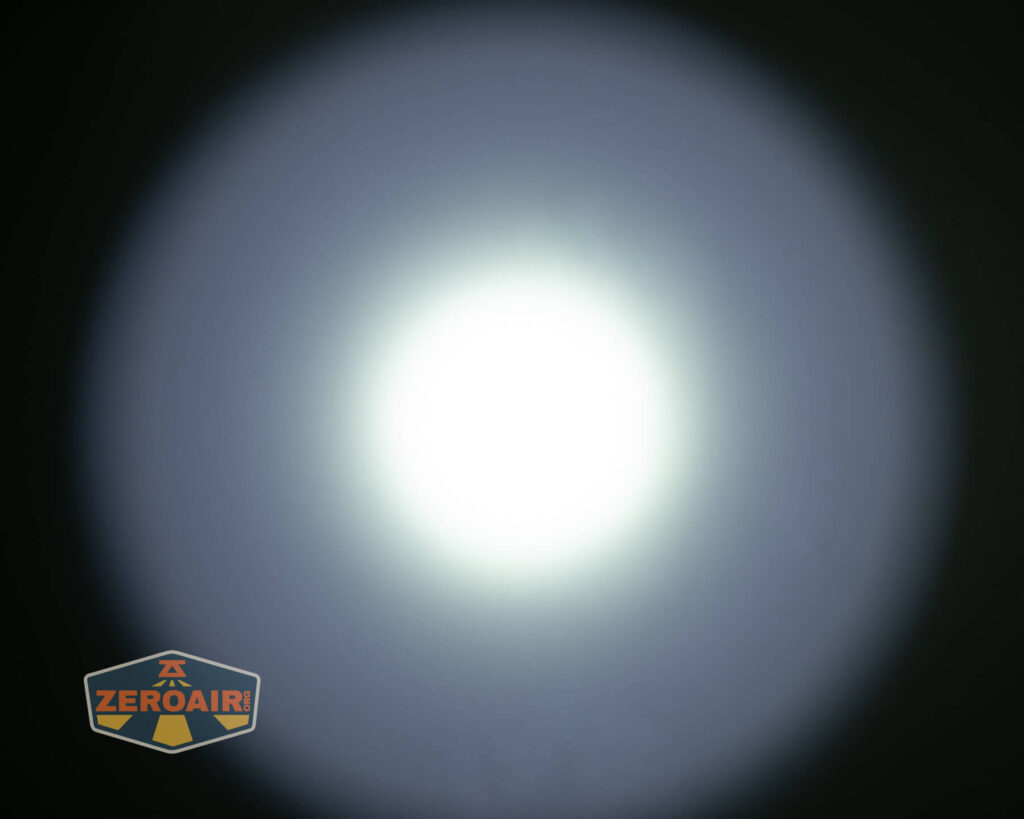
Tint vs BLF-348 (KillzoneFlashlights.com 219b version) (affiliate link)
I keep the test flashlight on the left and the BLF-348 reference flashlight on the right.
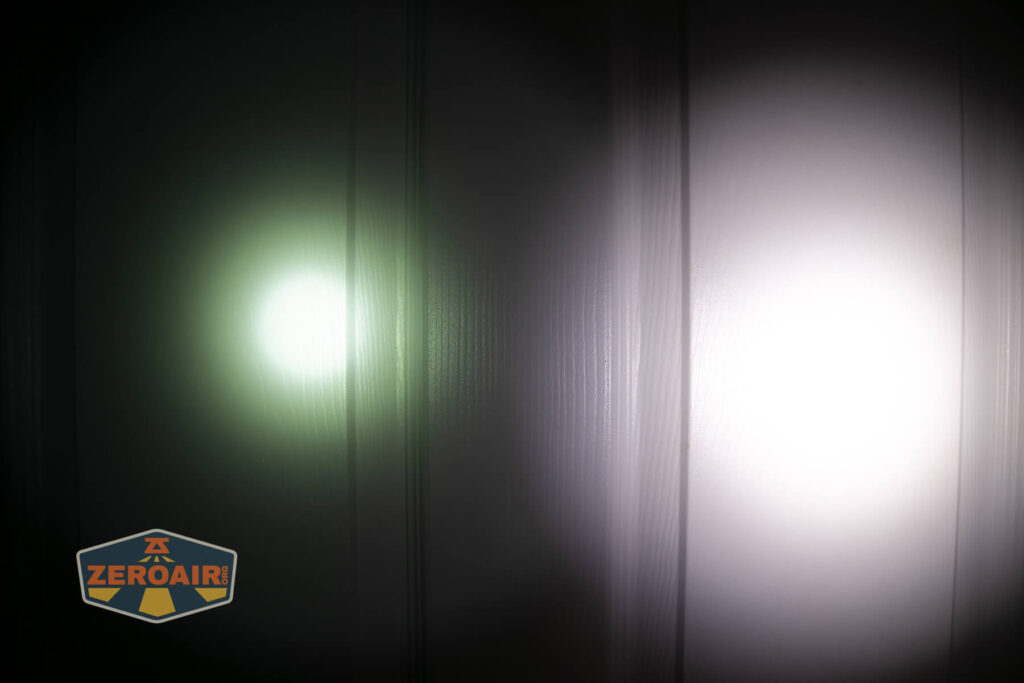
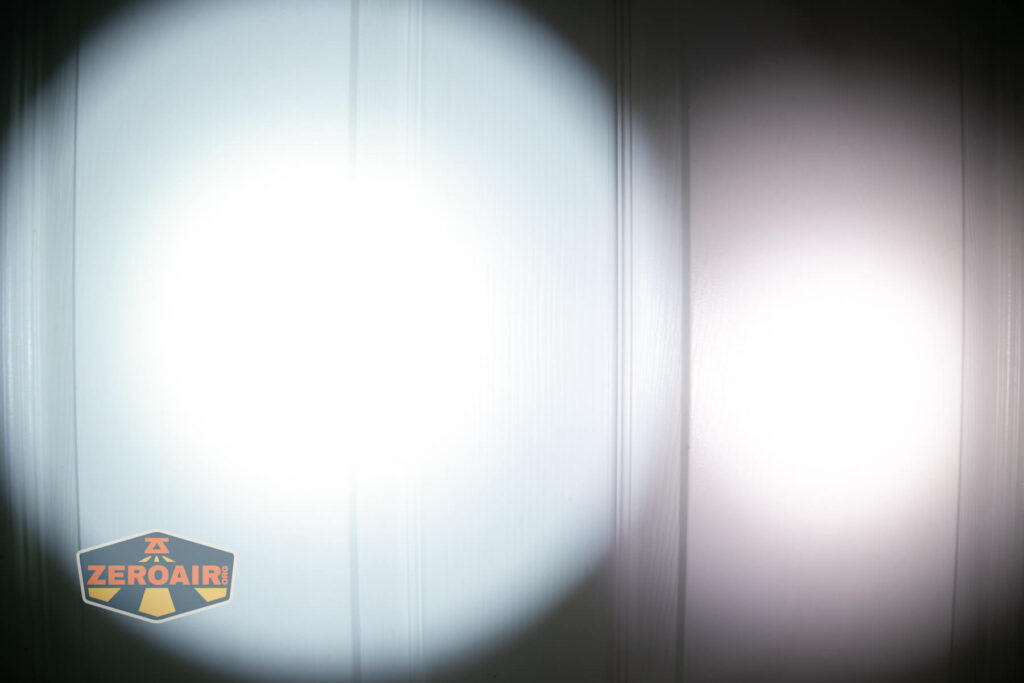
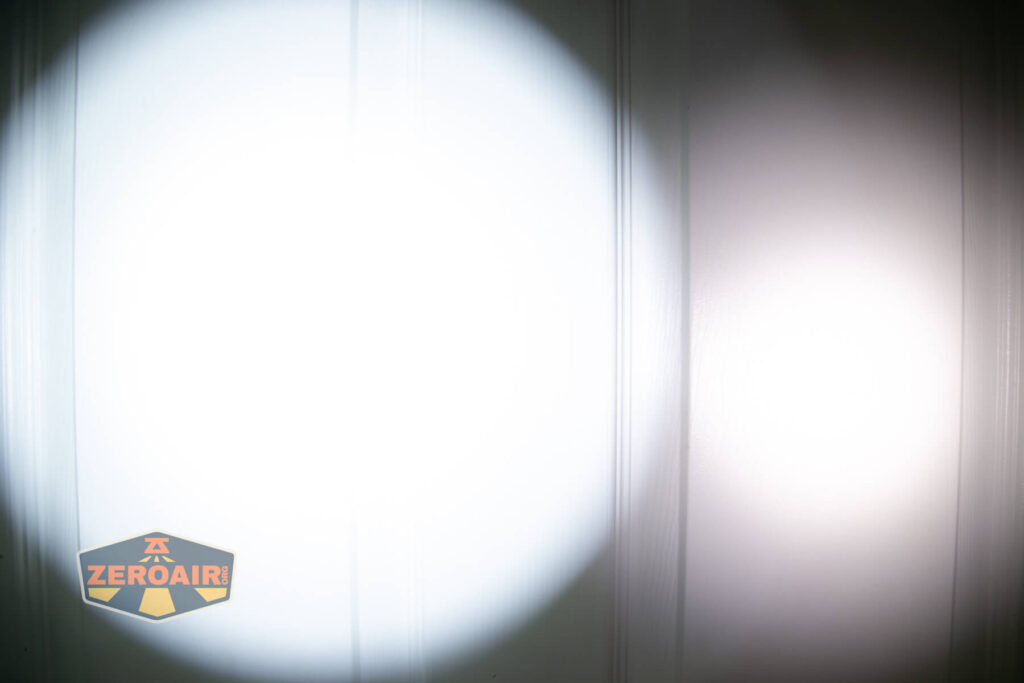


I compare everything to the KillzoneFlashlights.com 219b BLF-348 because it’s inexpensive and has the best tint!
Conclusion
What I like
- Good user interface
- Package includes a useful cell
- On-board charging works sufficiently
- Fairly low-cost for the package contents
- This nylon pouch!!
What I don’t like
- Lumen claim of 2530 seems in error
- CRI and CCT
Notes
- This content originally appeared at zeroair.org. Please visit there for the best experience!
- Please use my Amazon.com referral link to help support zeroair.org!
- Please support me on Patreon! I deeply appreciate your support!
Discover more from ZeroAir Reviews
Subscribe to get the latest posts sent to your email.