
DQG Tiny 4th Flashlight Review
The DQG Tiny 4th flashlight was the smallest 18650 flashlight available for a long while, and still is a remarkable light! Read on for more!
Official Specs
The DQG Tiny 4th is the latest edition to their tiny series of portable EDCs. This LED light still weighs only 36 grams, measures about 86mm long, and therefore is perfect for use as an EDC light. Featuring Cree XM-L2 LED, Tiny 4th produces 850 Lumens with 4 output modes. The TIR lens distributes the bright beam more consistently, giving you a better overall lighting experience. The beauty of the Tiny 4.0 is that you don’t have to sacrifice power for portability.
Upgraded Features:
● Upgraded side switch: Located below the surface to prevent improper operation
● Better heat dissipation allows heat to filter away from the body so that it can stay cool in high brightness level
● Optimized operation: Press to select high, mid, low three outputs, double press for Turbo mode plus instant Turbo mode
Universal Features:
● Cree XM-L2 LED is able to emit a bright 850 Lumens light with a lifespan of 50000 hours
● 4 modes: Turbo – high – mid – low
● IPX8 waterproof rating, meaning that it is ready for all weather conditions and can even withstand being dropped in bodies of water
● Low voltage warning reminds users of low power
● PMMA lens provides a better overall lighting experience
● Reverse polarity protection prevents improper battery installation
● Over 2000000 hours (about 200 years) standby time
● Impact resistance/tail stand capacity / super low 1.5uA standby current
Versions
There are two body color versions (Black and Gray) and two tint options (CW and NW) for this light. Mine is the NW Gray.
Short Review
This is a special little 18650 light. One I’d definitely recommend owning, even if the quality could be improved. I like it!
Long Review
The Big Table
| DQG Tiny | |
|---|---|
| Emitter: | Cree XM-L2 (NW) |
| Cell: | 1×18650 |
| Turbo Runtime | |
| LVP? | Warning |
| Switch Type: | E-Switch |
| Quiescent Current (A): | ? |
| On-Board Charging? | No |
| Claimed Lumens (lm) | 850 |
| Claimed Throw (m) | 200 |
| Candela (Calculated) in cd (at 30s) | 322lux @ 4.39m = 6206cd |
| Throw (Calculated) (m) | 157.6 (78.8% of claim)^ |
| All my DQG reviews! | |

^ Measurement disclaimer: Testing flashlights is my hobby. I use hobbyist-level equipment for testing, including some I made myself. Try not to get buried in the details of manufacturer specifications versus measurements recorded here; A certain amount of difference (say, 10 or 15%) is perfectly reasonable.
What’s Included
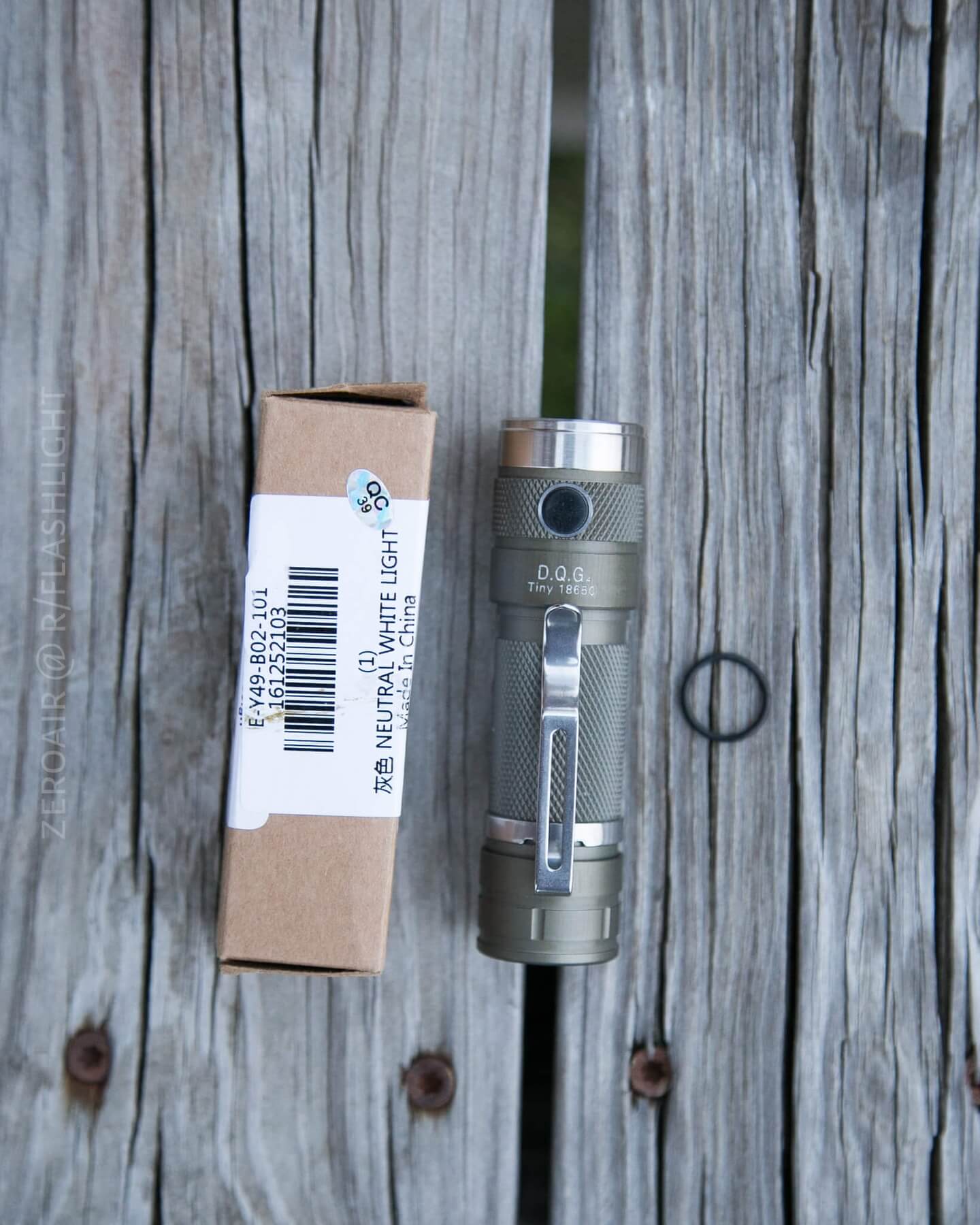
- DQG Tiny 18650 4th
- Spare O-ring
Package and Manual
DQG doesn’t spend its R&D budget on the packaging. As with most of (all?) their other lights, this one arrives in a very simple cardboard box, with a universal sticker of all DQG models and options, with the light-specific choices indicated.
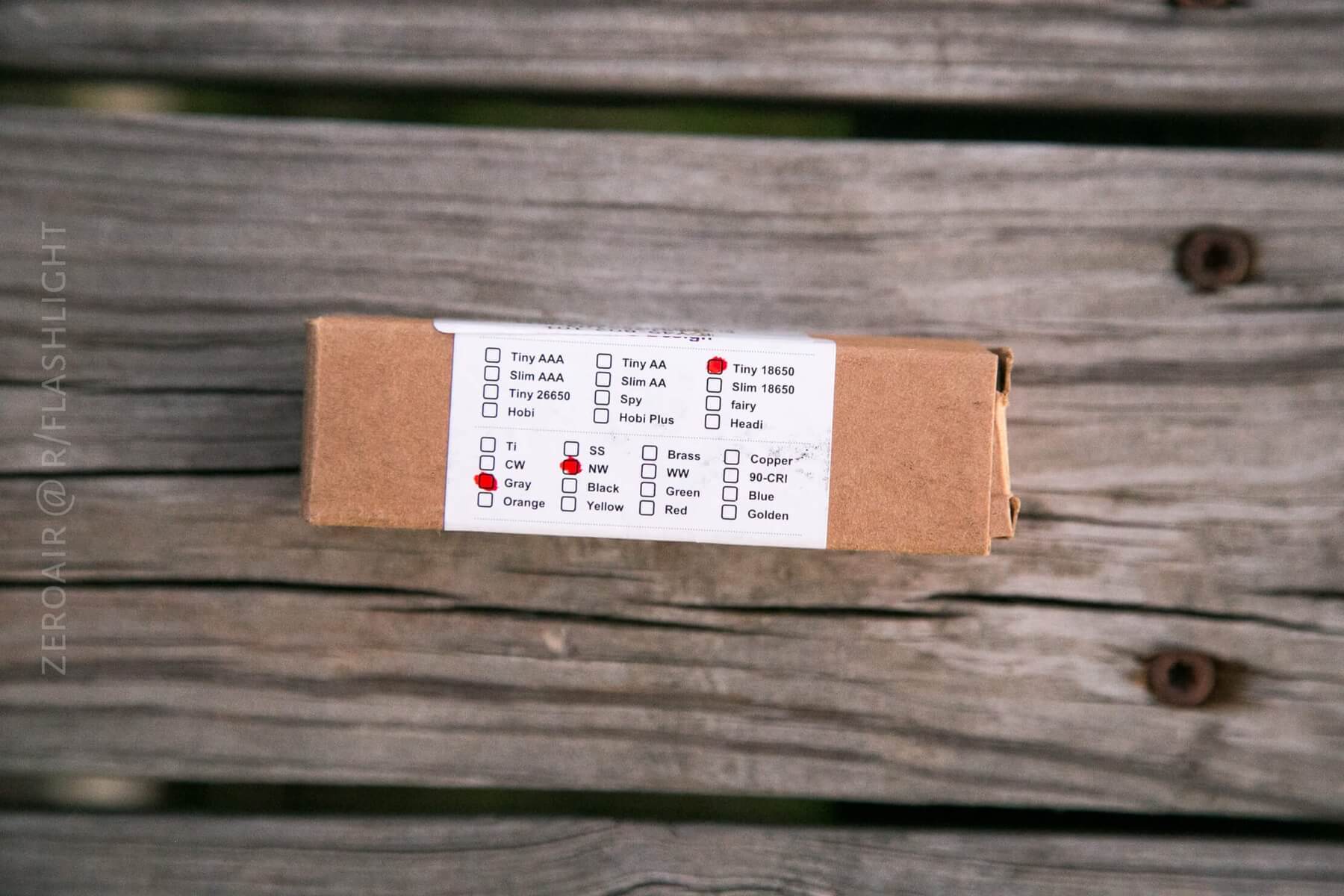
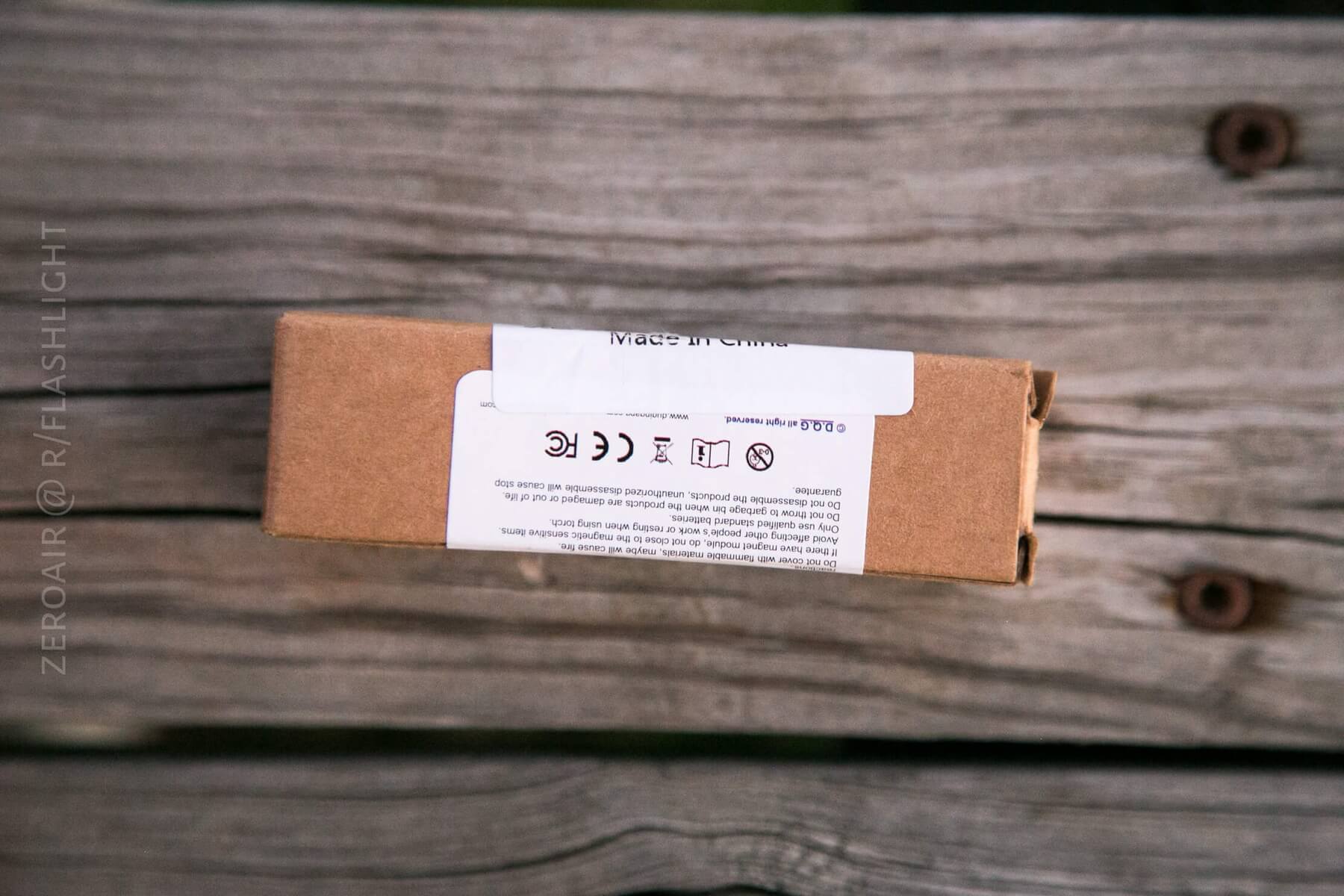
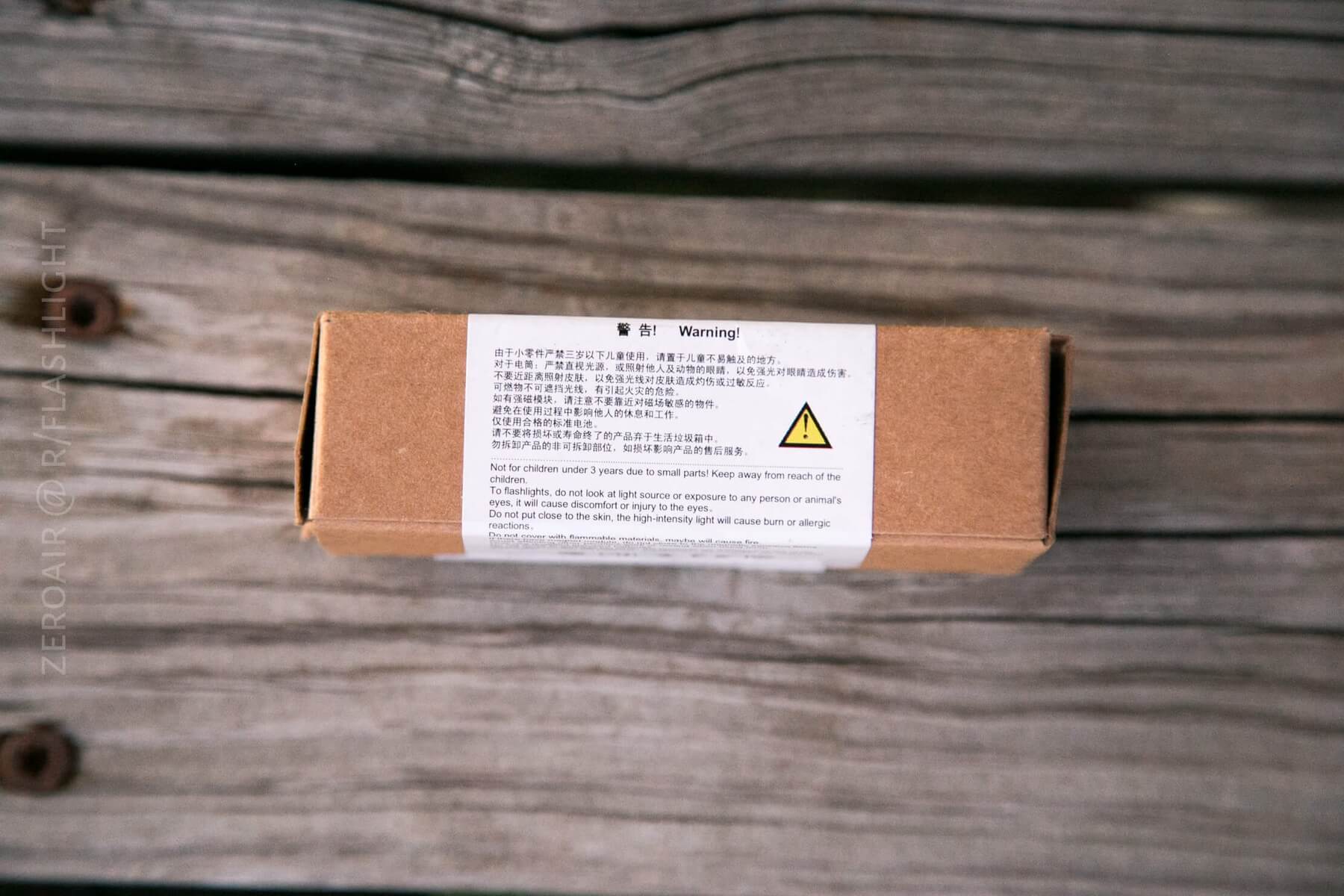

There is actually no manual. Other DQG models do include a manual, so I’m not sure if one was accidentally excluded from this box or if none of these models have a manual. The user interface is simple enough, but some other specs might be nice to have.
Build Quality, Disassembly, and Durability
The one issue with DQG lights in the past was the build quality. While this light does work and it seems “good enough,” the build quality is just that: good enough. If things were cleaned up with this light, it’d be a real huge winner!
A particular issue is the side switch and how it connects to the board. This is a tenuous connection and one that can break. In fact, I had one sample of this light where the switch broke off the board in the usual way.
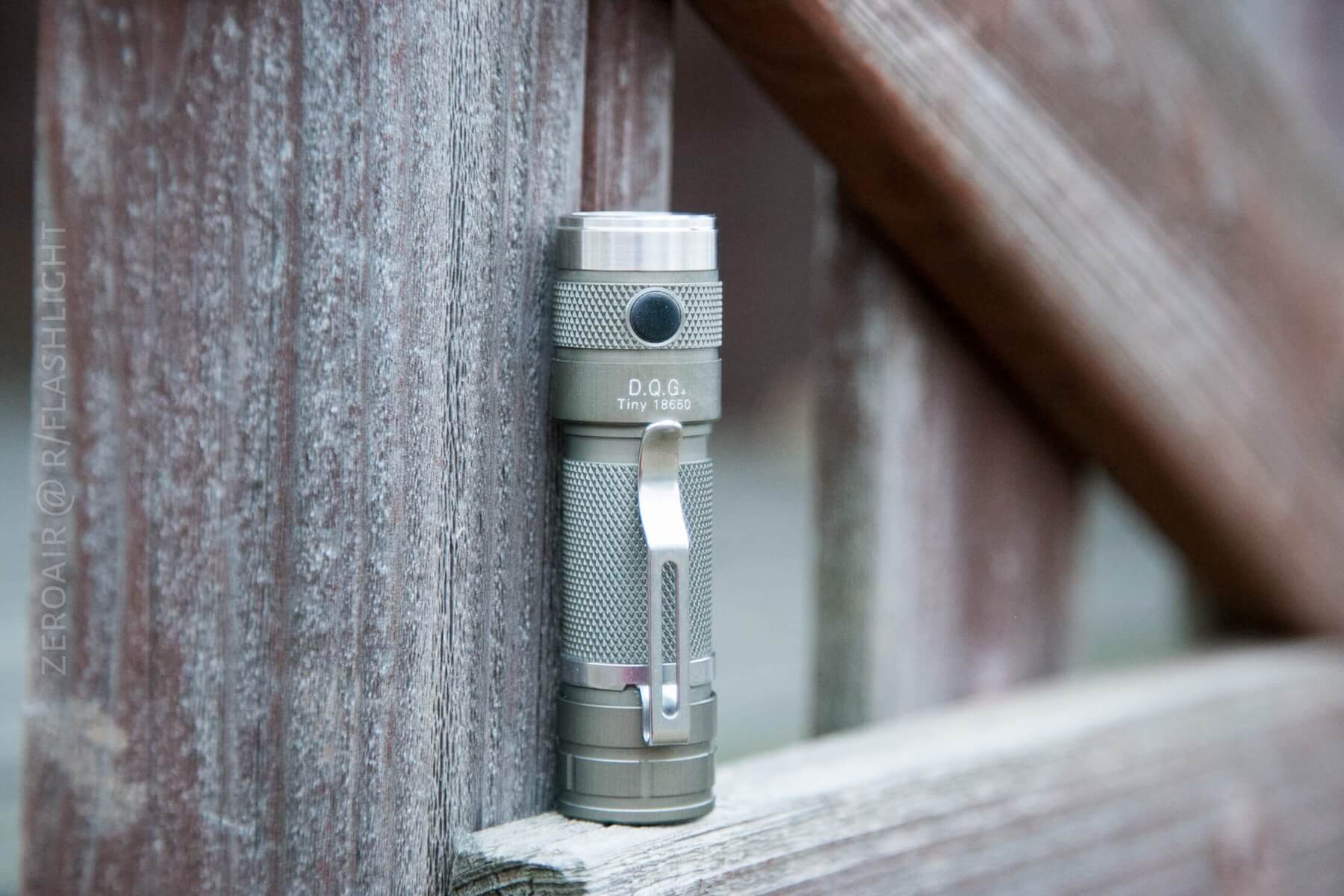
The anodizing feels a little thin, and as you can see below is not all that even. The knurling is very grippy.
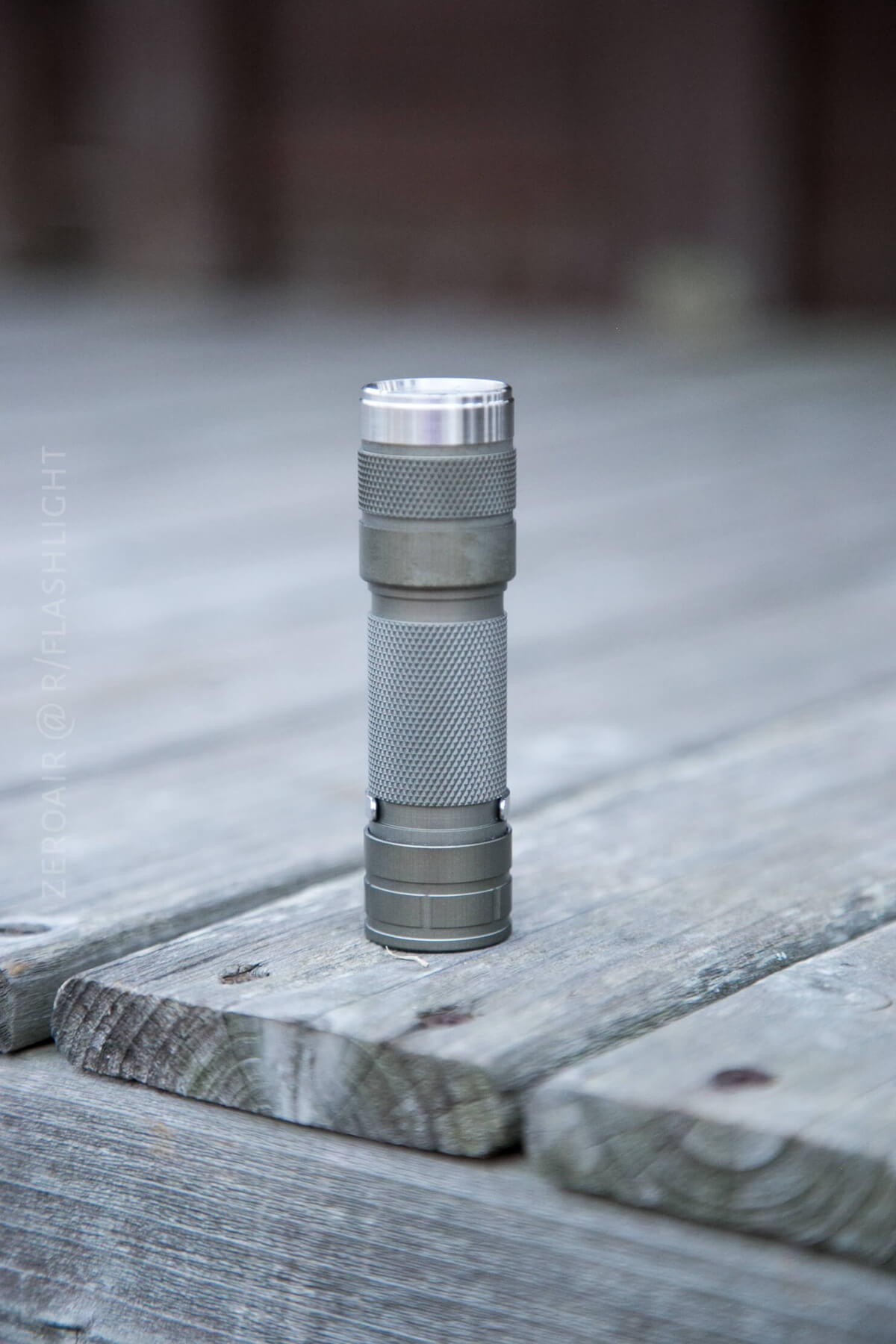
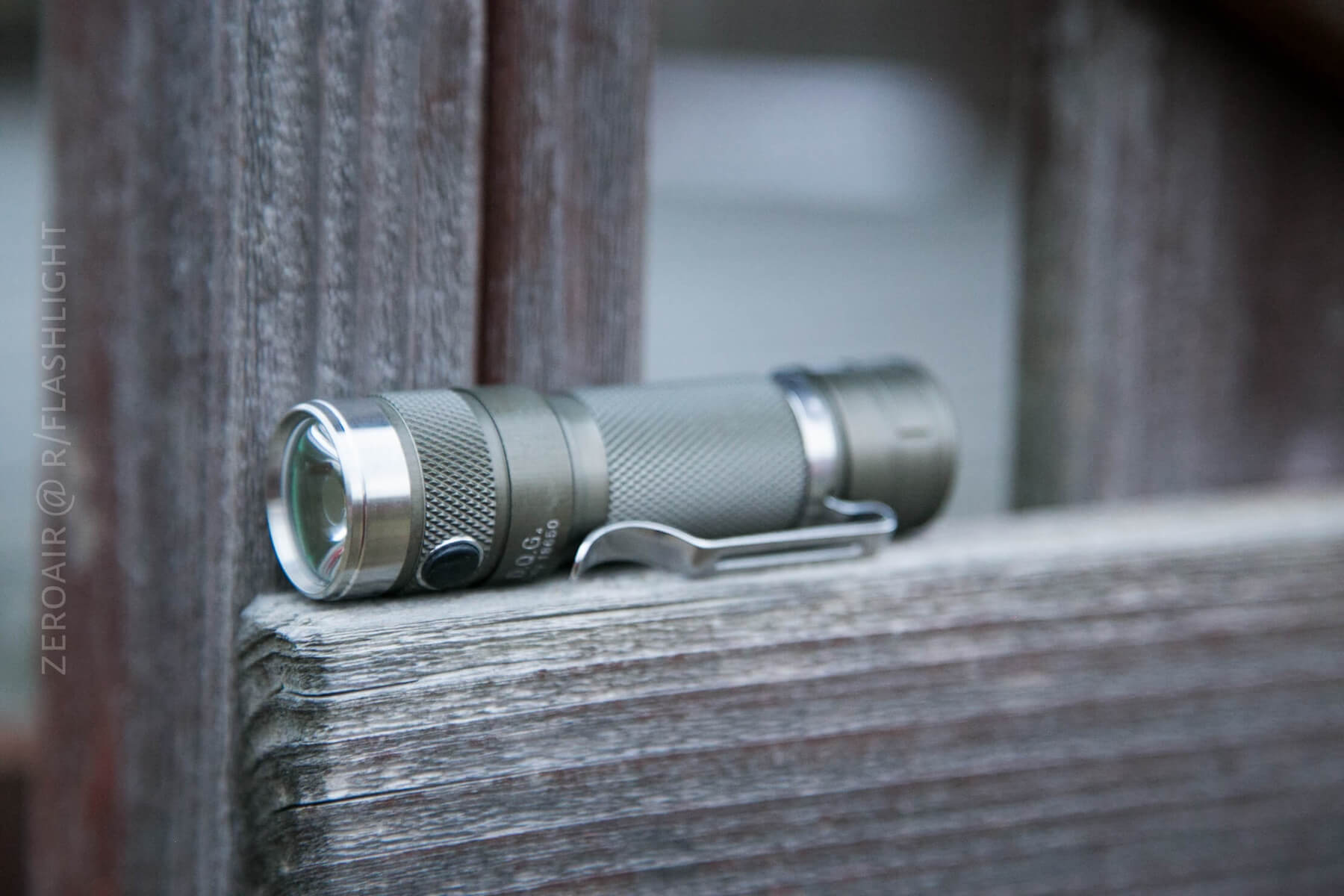
It’s possible to disassemble this light very thoroughly. The tailcap comes off – note the many (“long”) threads. It takes a lot of twisting to get this tailcap fully seated. Contact is made early in the threads, though, so long protected cells may be used. Note also the tailcap – there is no spring, but there is a soft donut.
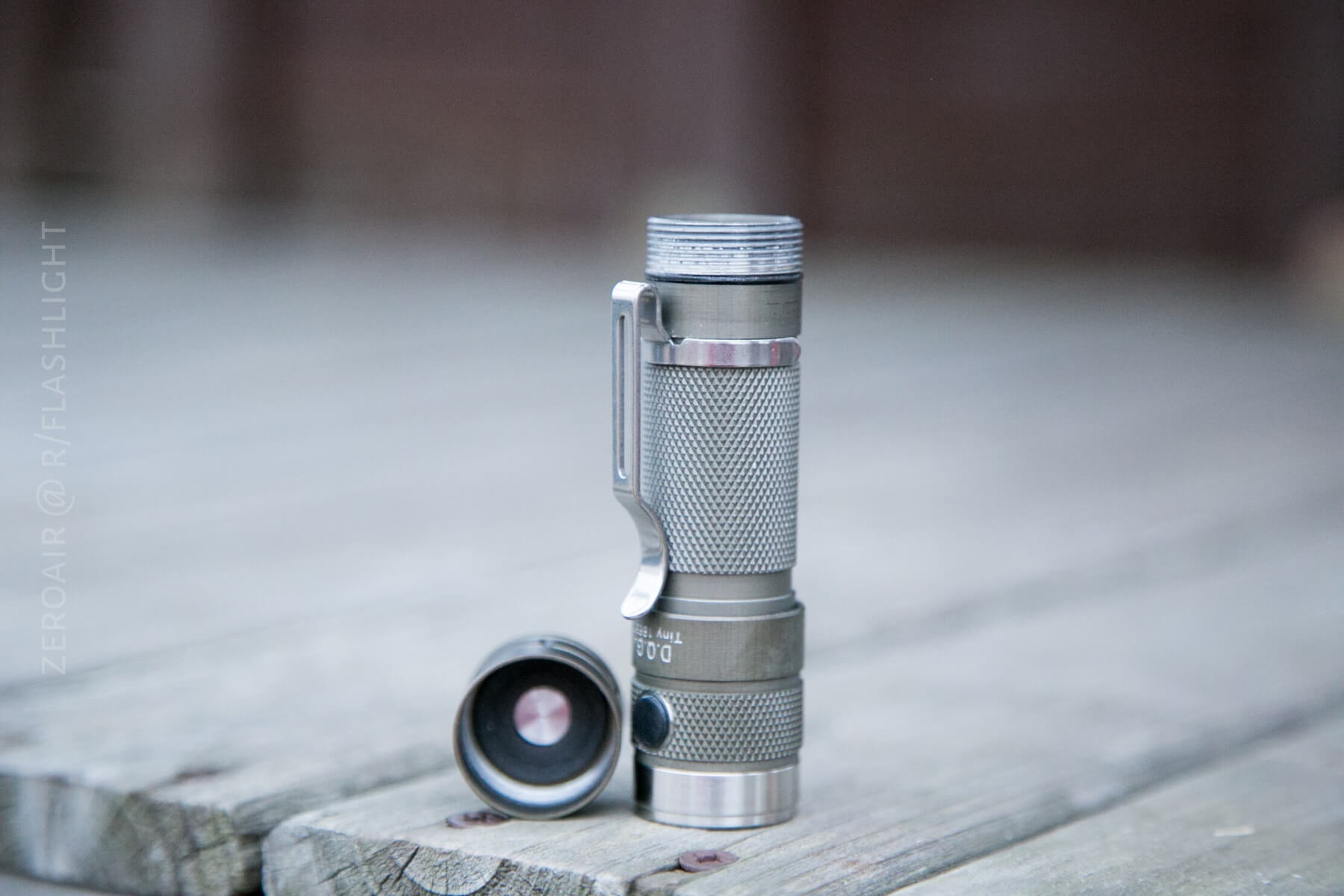
The head and tail come completely off the cell body. On the head end, there’s a brass ring.
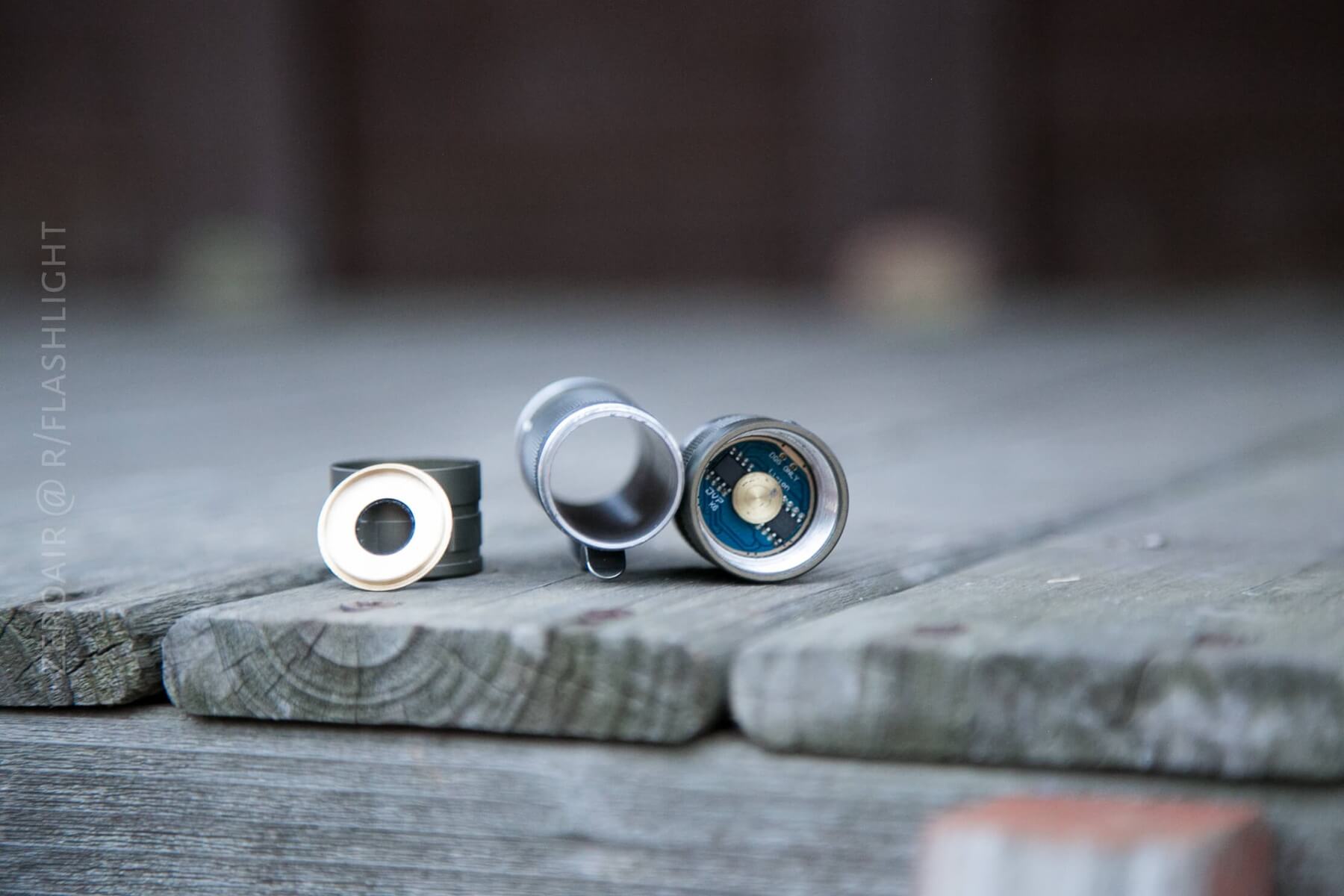
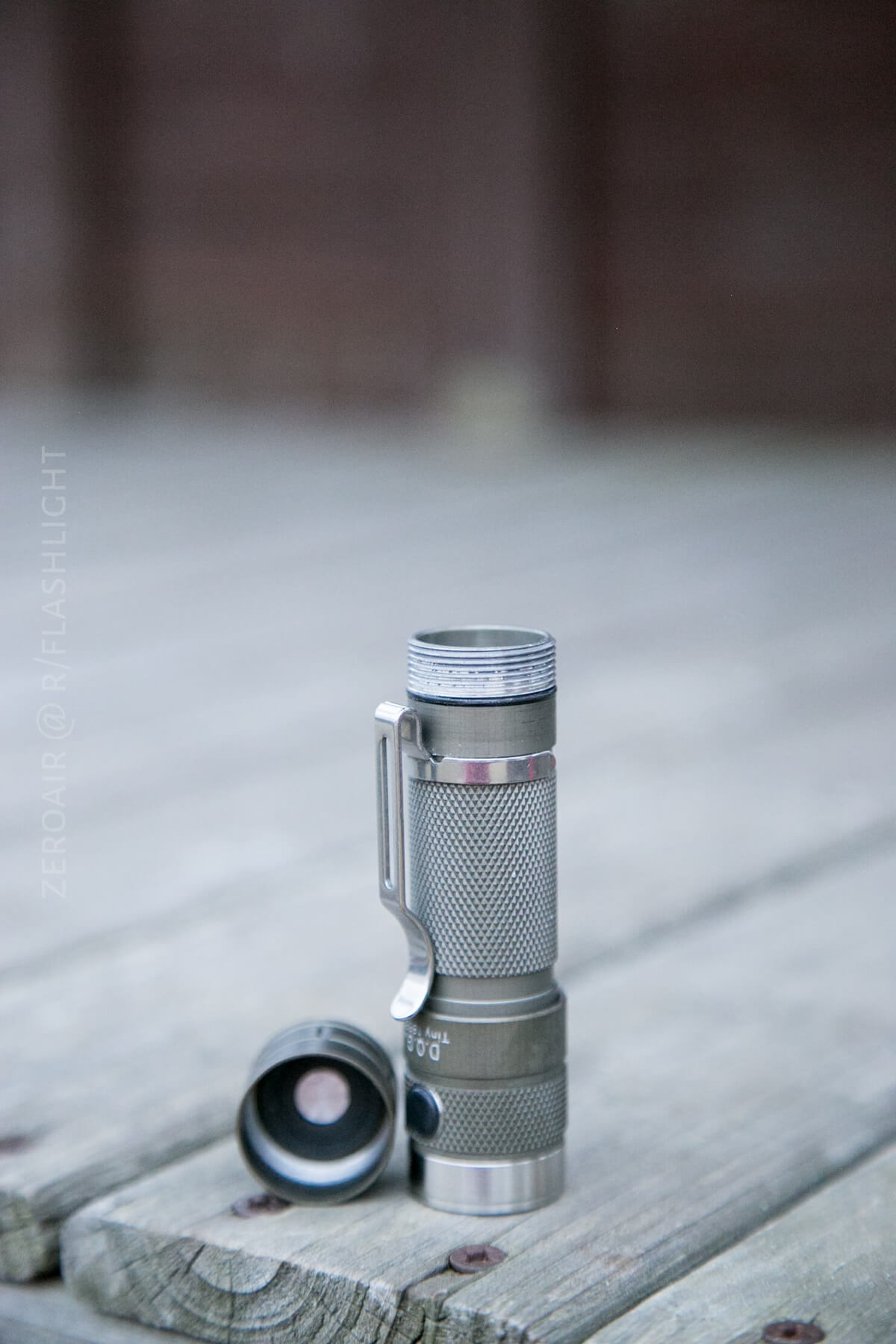
That brass ring that goes on the head end is actually for polarity protection.
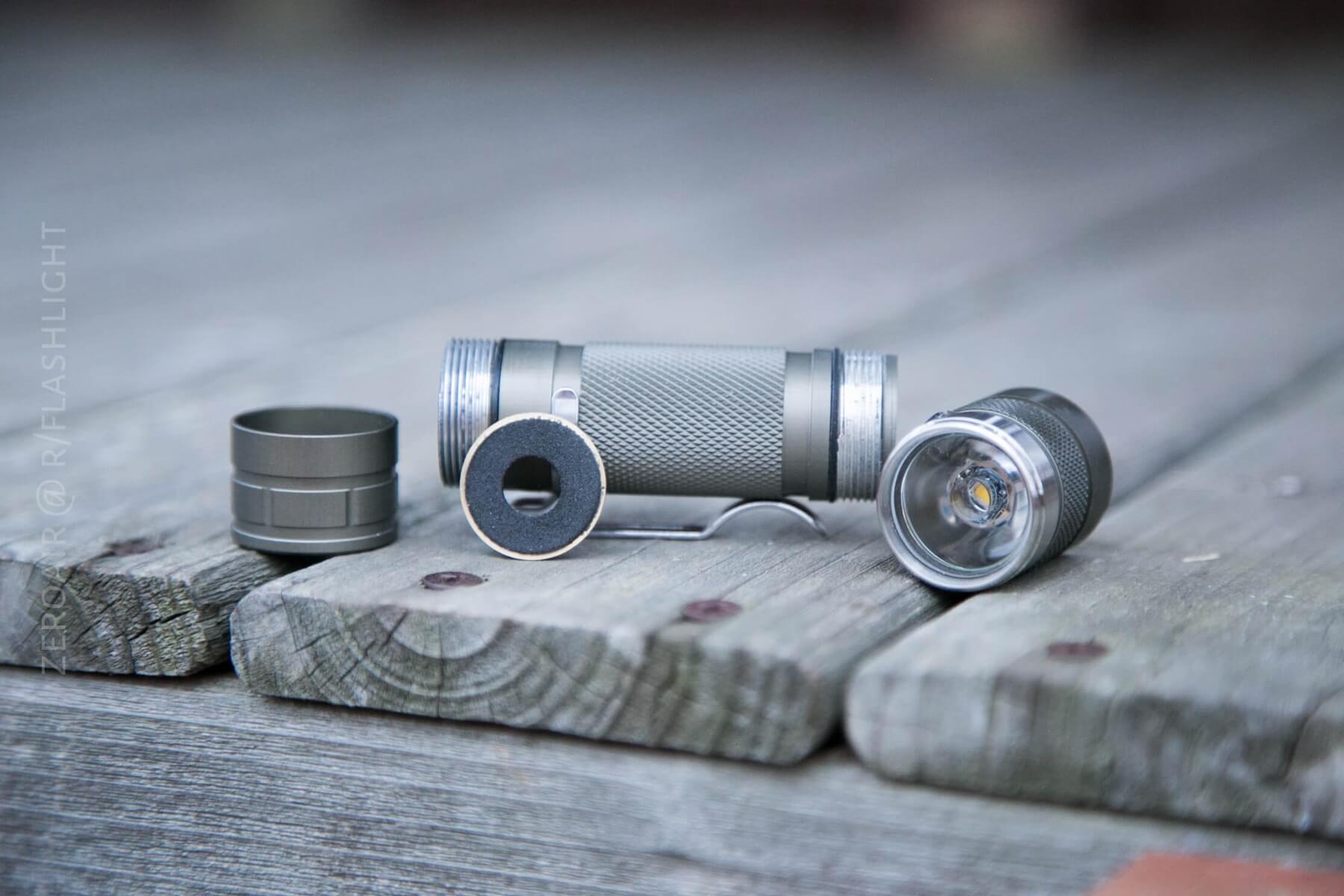
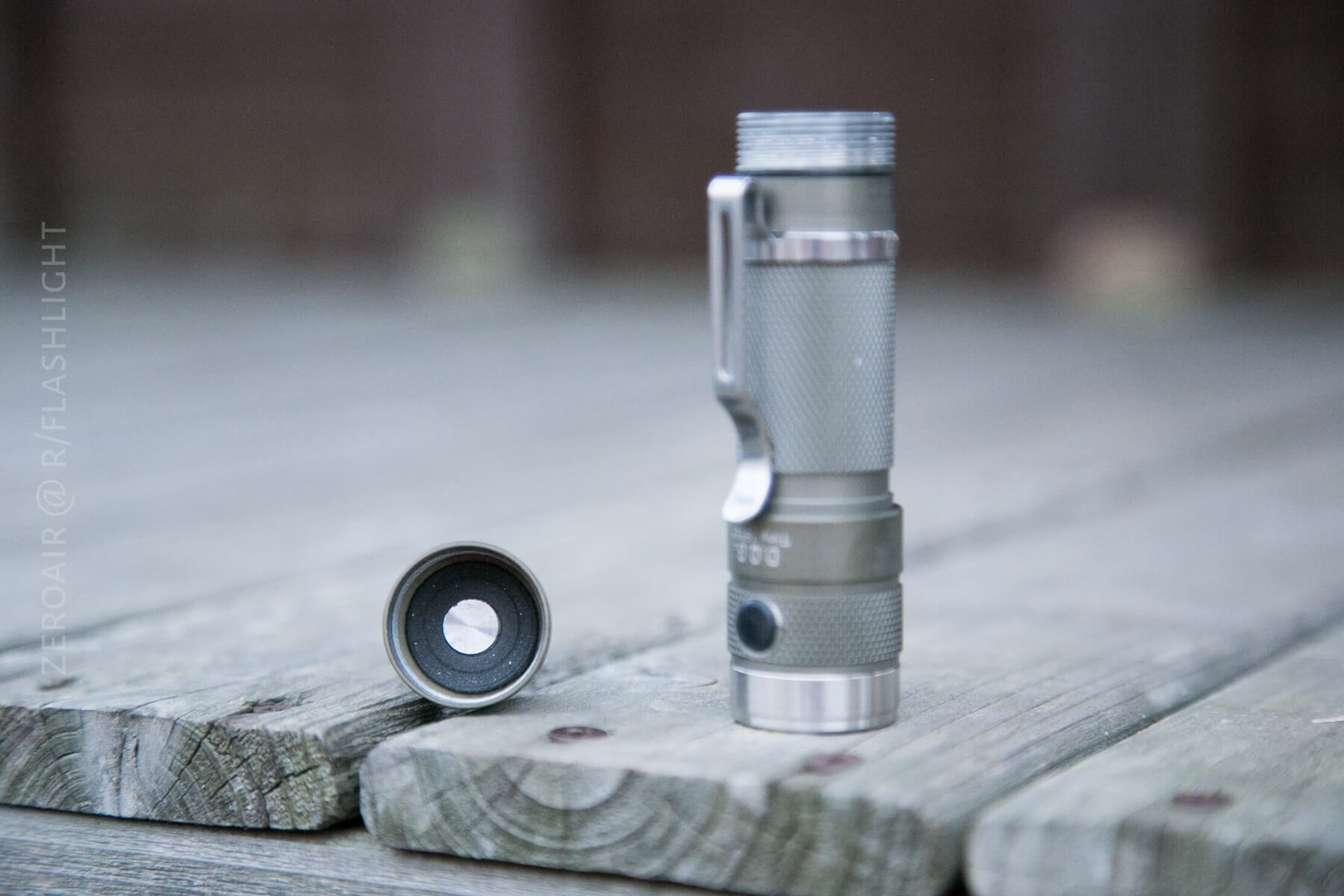
The MCPCB is removable, too. Remove the bezel and TIR, and it’s possible to push (with a little effort) the MCPCB out of the light (in the direction of the tube). These MCPCBs are held in place with some thermal glue (or the like).
Size
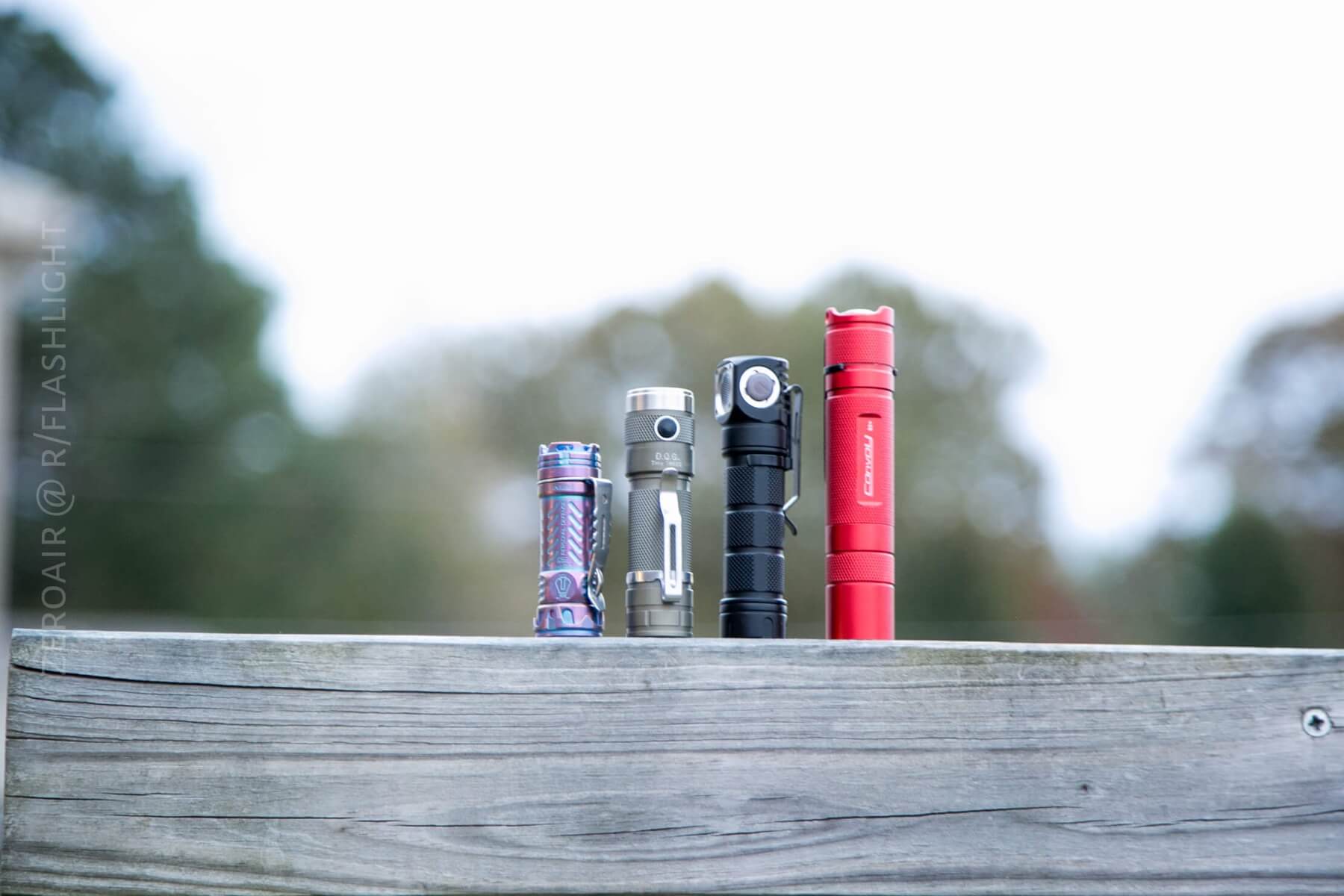
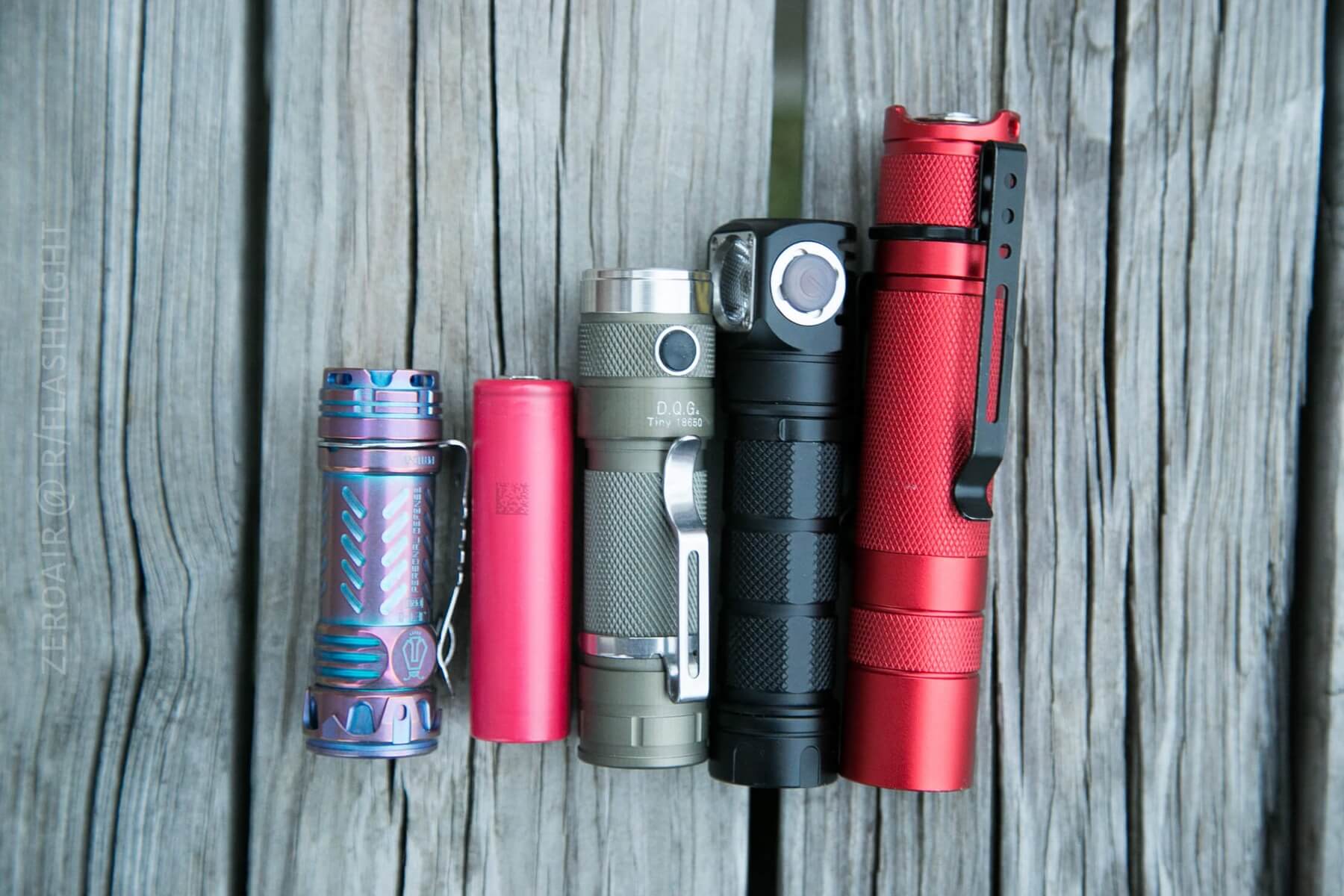
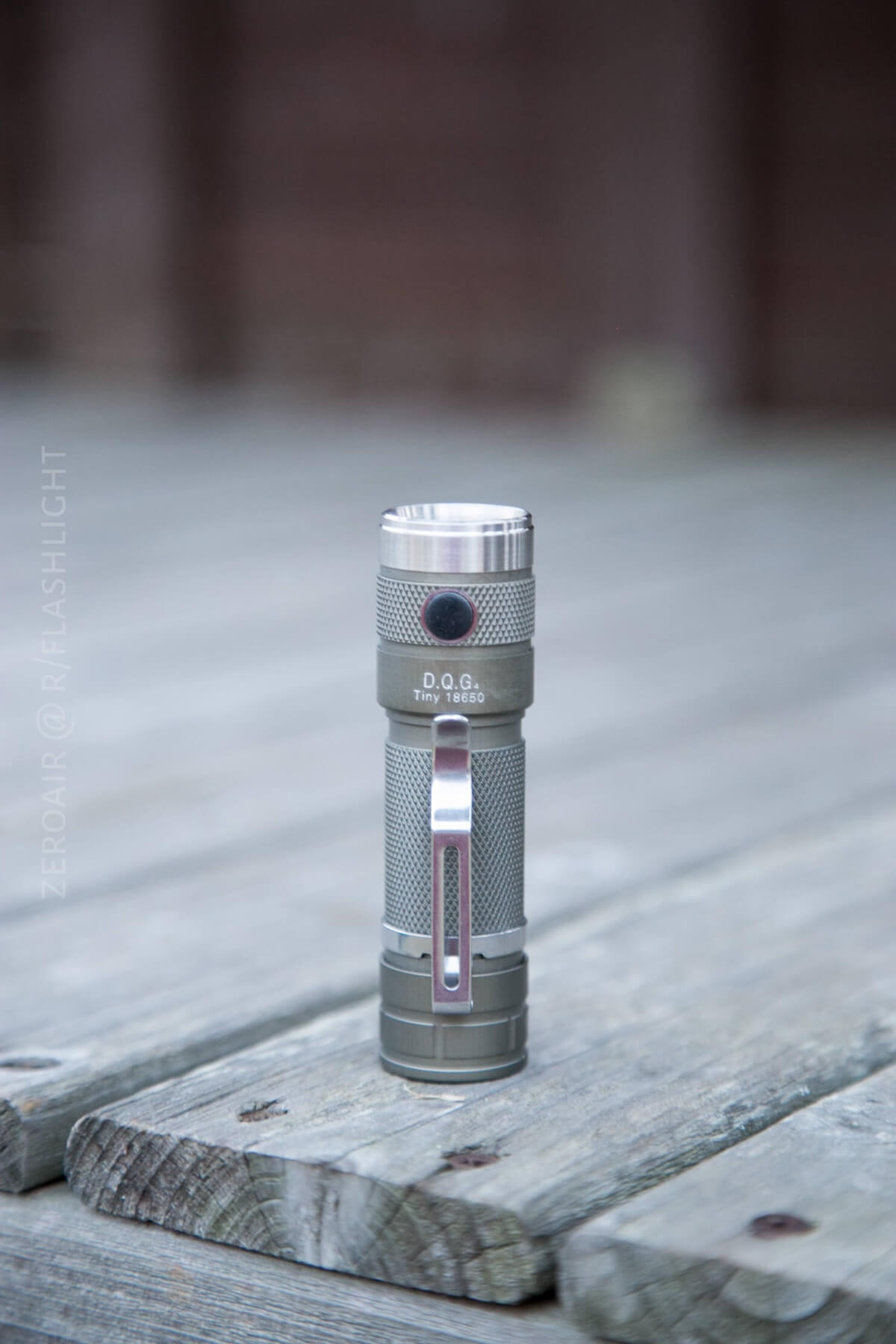
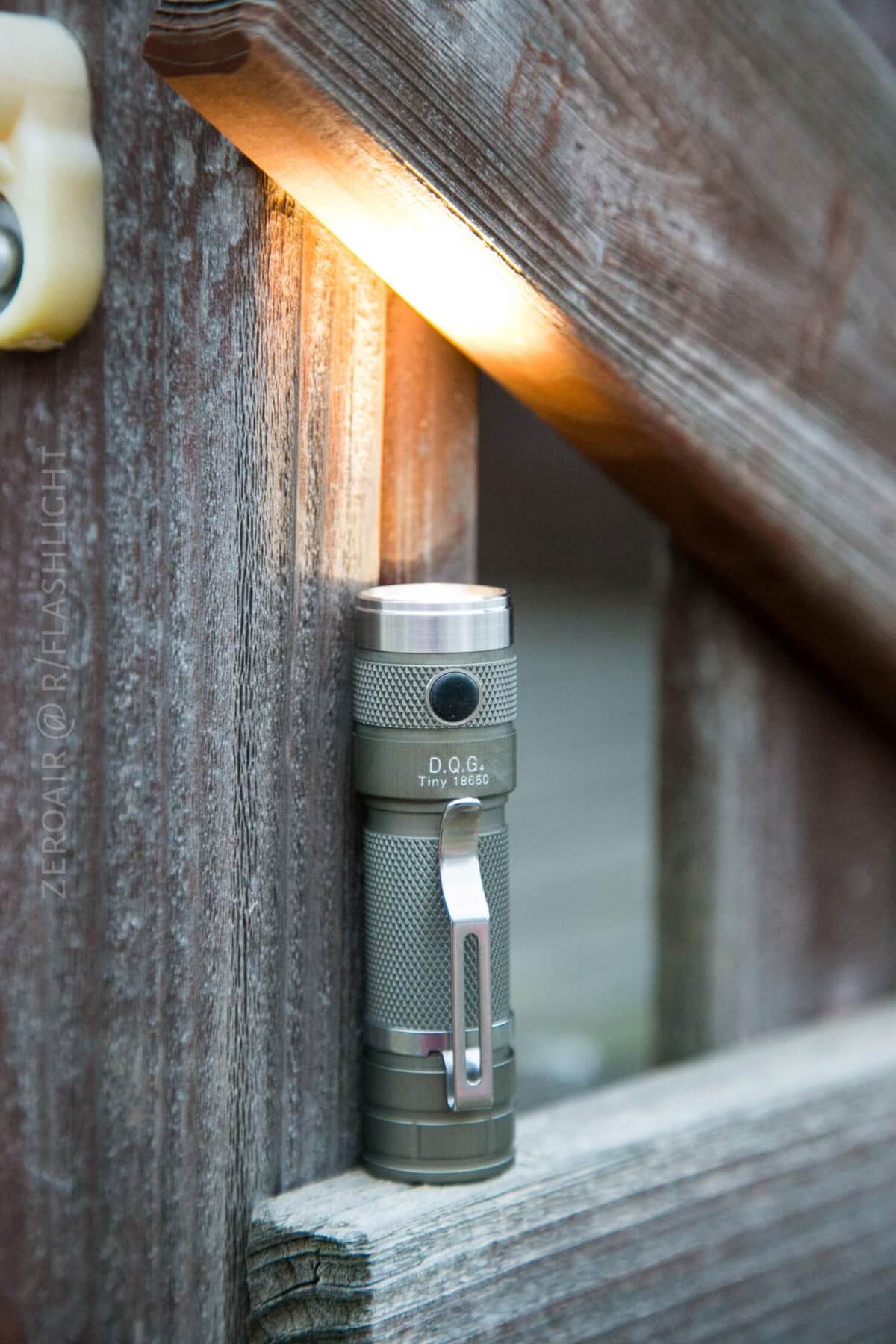
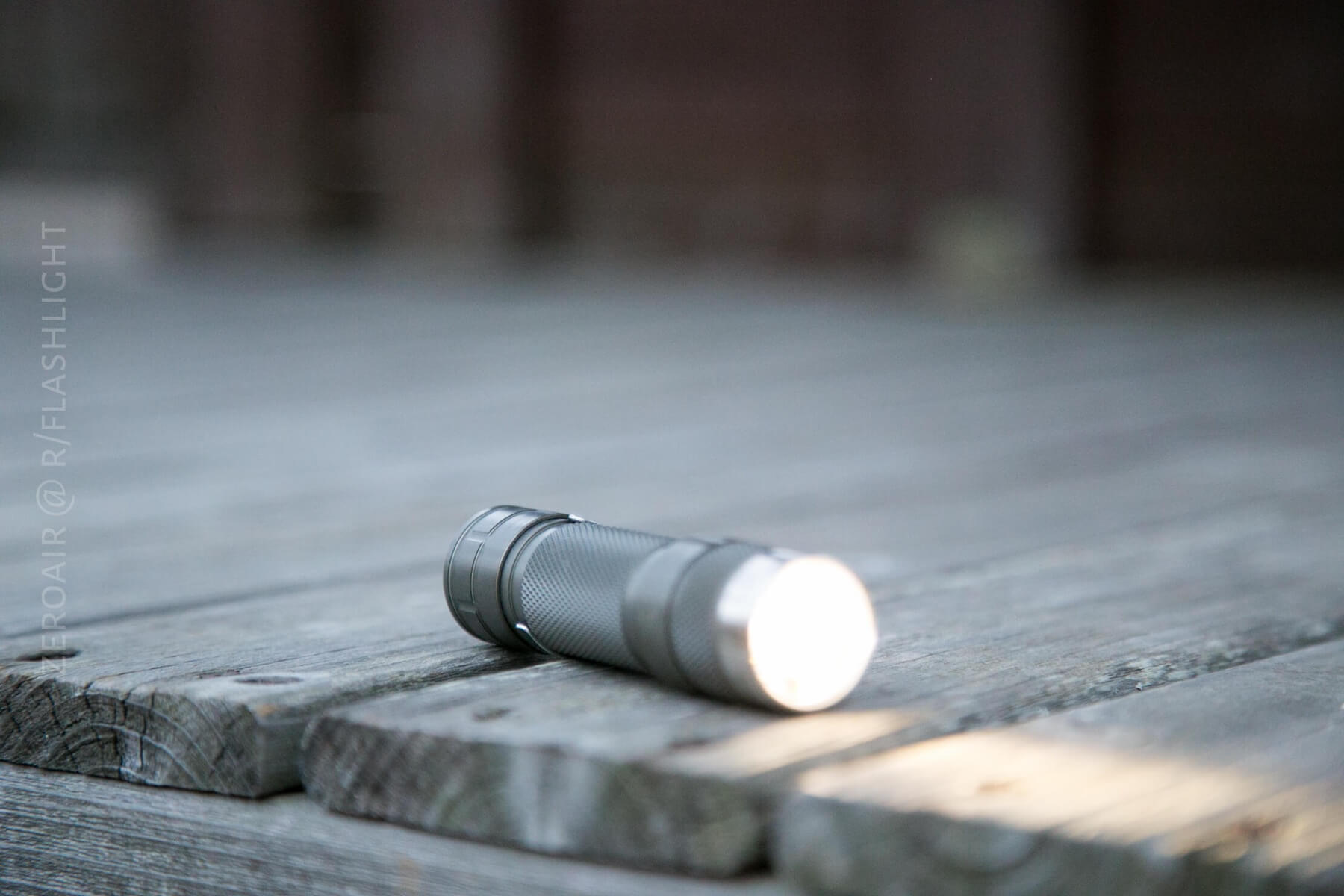
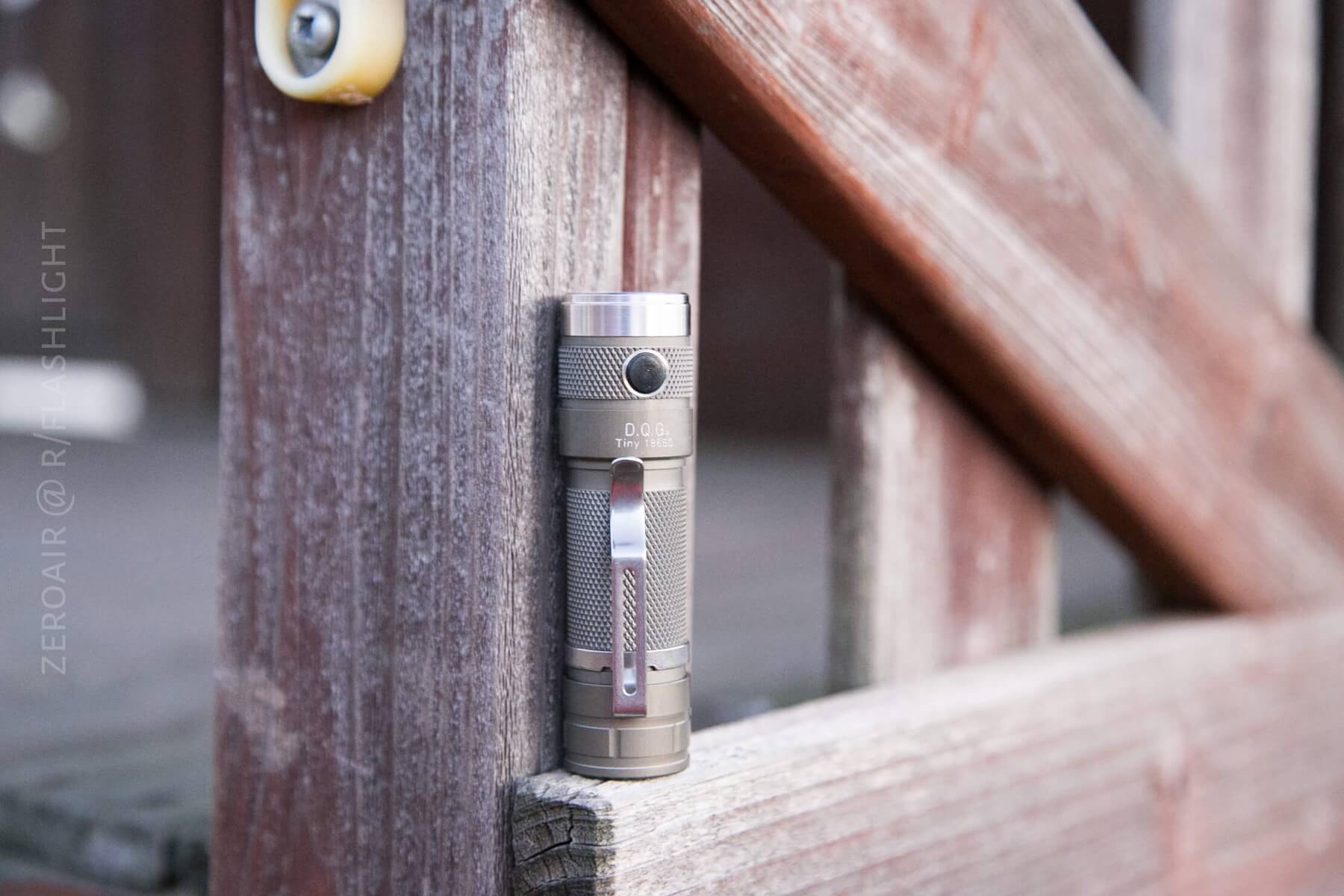
Now we get to the reason this light is special. It’s tiny, for an 18650 light anyway.
Officially, the light is 87mm x 25mm. Due to the thin metal parts, it’s also quite light.
Retention
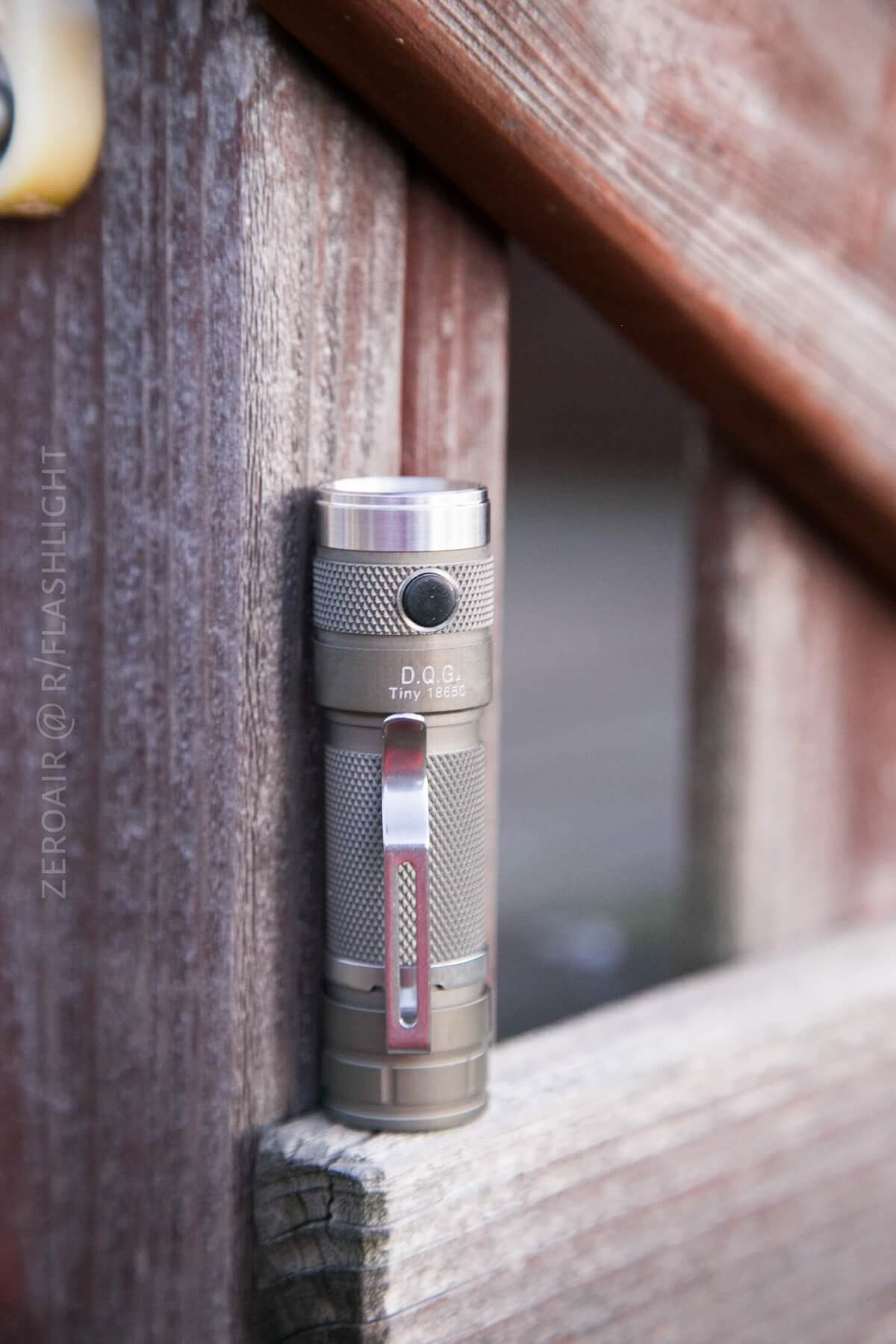
The light comes with a clip installed. There’s no lanyard, and no real means to connect one except on the pocket clip, where there is a hole down the center.
Power
The light is powered by a single 18650. It’ll work with any kind of 18650 (flat/button, protected/unprotected). In the absence of a manual, I didn’t test my luck with 2×18350 cells.
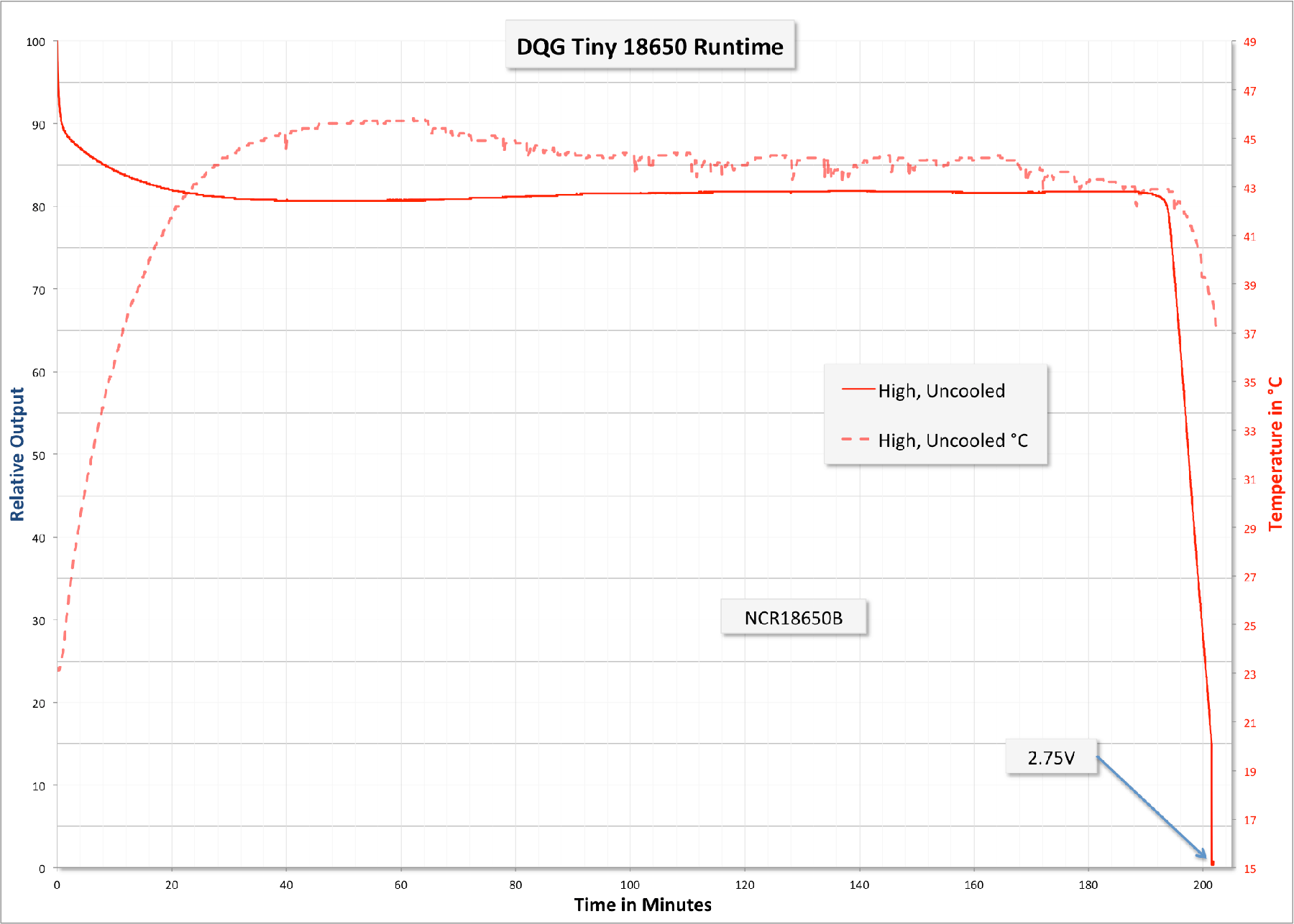
Output on high is fairly stable, after the steady drop to ~80% output. Low voltage protection shuts the light off at around 2.75V, which is good.
User Interface and Operation
There’s a single side clicky for the operation of this light. It’s a simple UI. There are 4 modes, one of which is a “hidden” turbo (i.e., not in the normal rotation). From off, click for low. Hold the switch for the mode cycle, and release it on the desired mode. From off, hold for turbo (and click to go back to the previous mode, or low, depending on how you got to turbo). From on, double click for turbo. From off double click for medium. There are no strobe modes (yay!).
The switch itself is quite small but rubbery and easy to find. It’s a little hard to press; one must really get the tip of a finger in there. But it’s clicky and responsive.
Modes
| Mode | Mode Claimed Output (lm) | Mode Measured Lux | Tailcap Current [Series Measure] |
|---|---|---|---|
| Turbo | 850 | 8170 | 2.150A |
| High | 300 | 5080 | 0.491A |
| Mid | 80 | 1642 | 0.183A |
| Low | 3.5 | 74 | 0.011A |
Those higher modes are rated at a higher amperage, but remember I’m using a series meter, which is likely measuring low.
LED and Beam
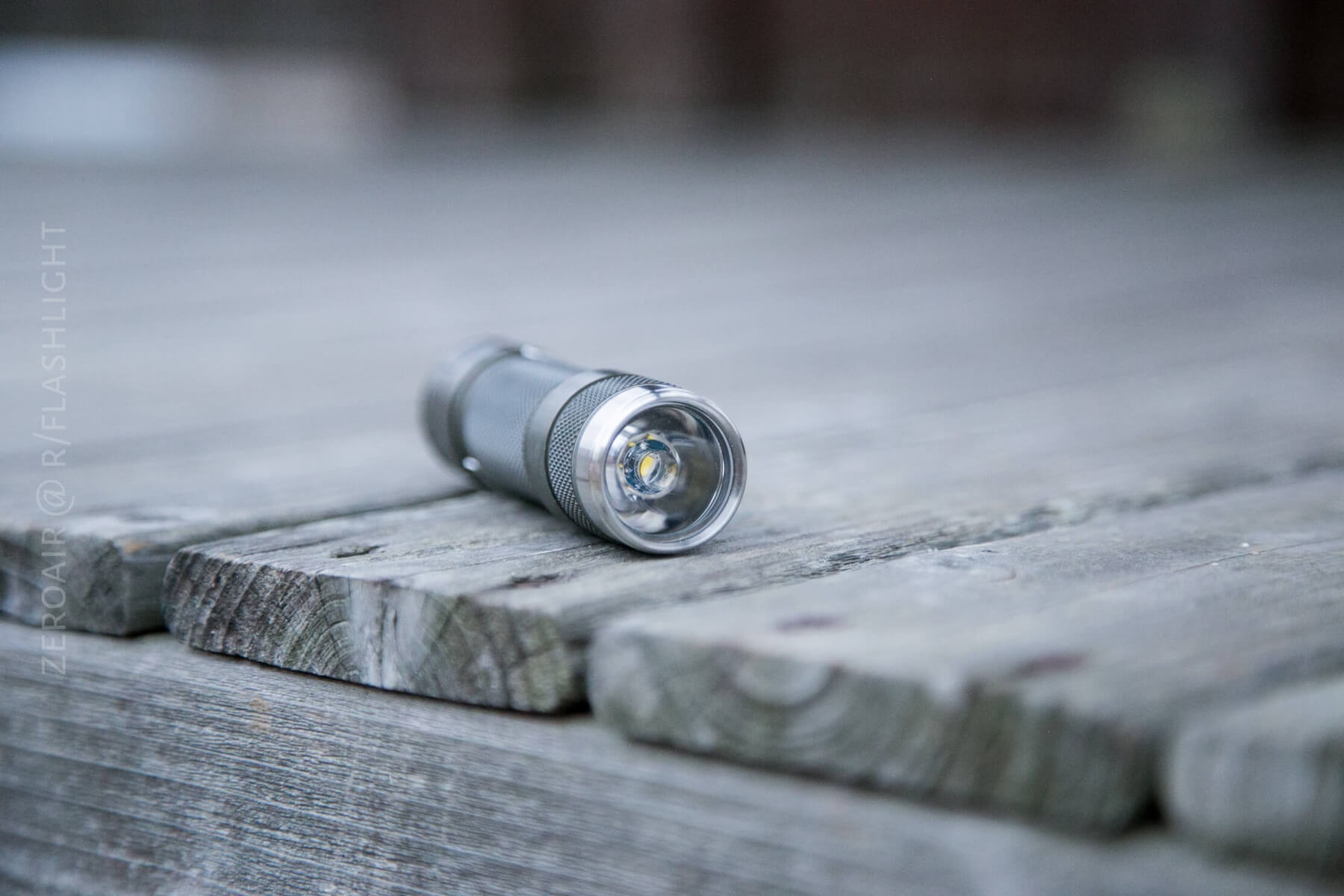
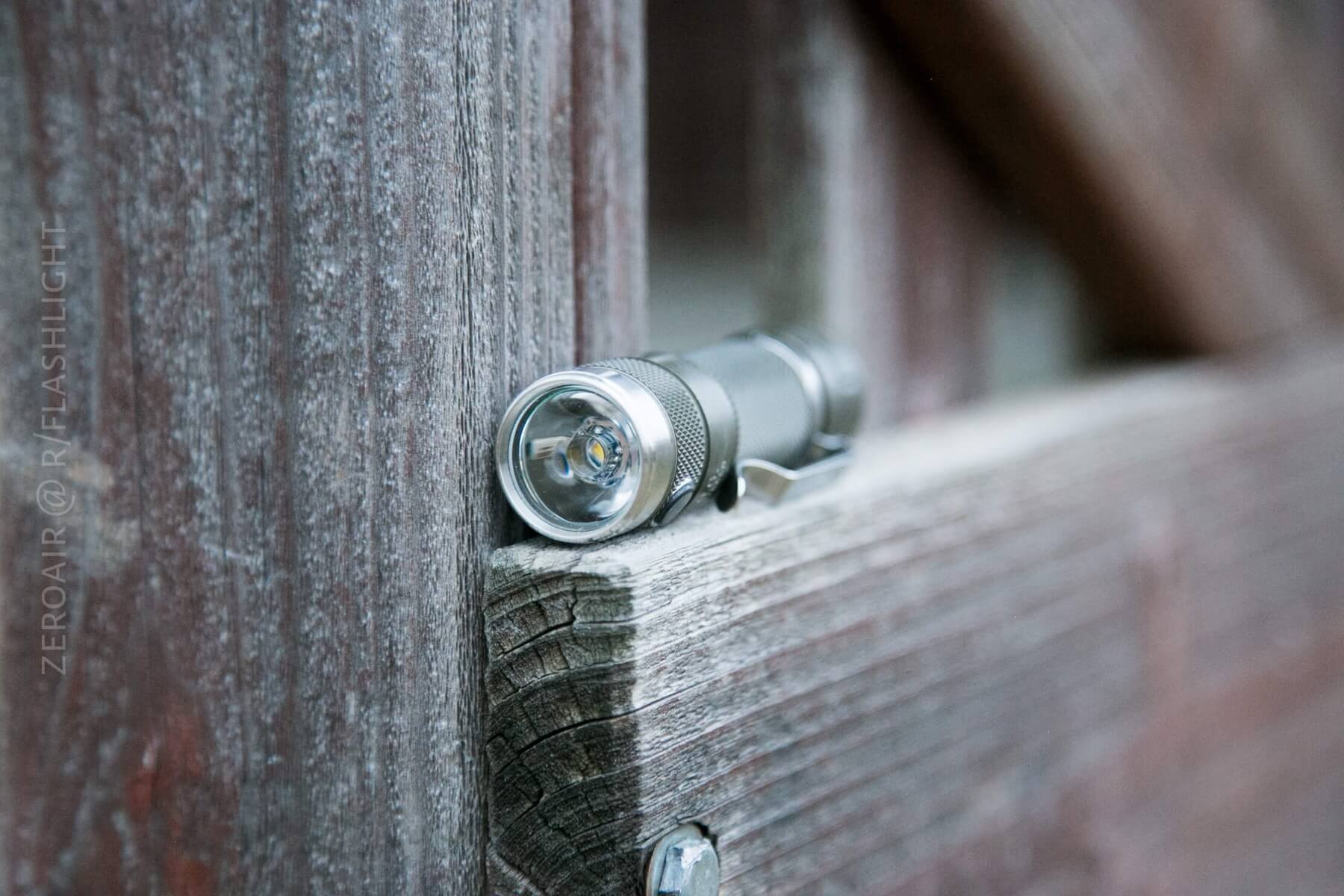
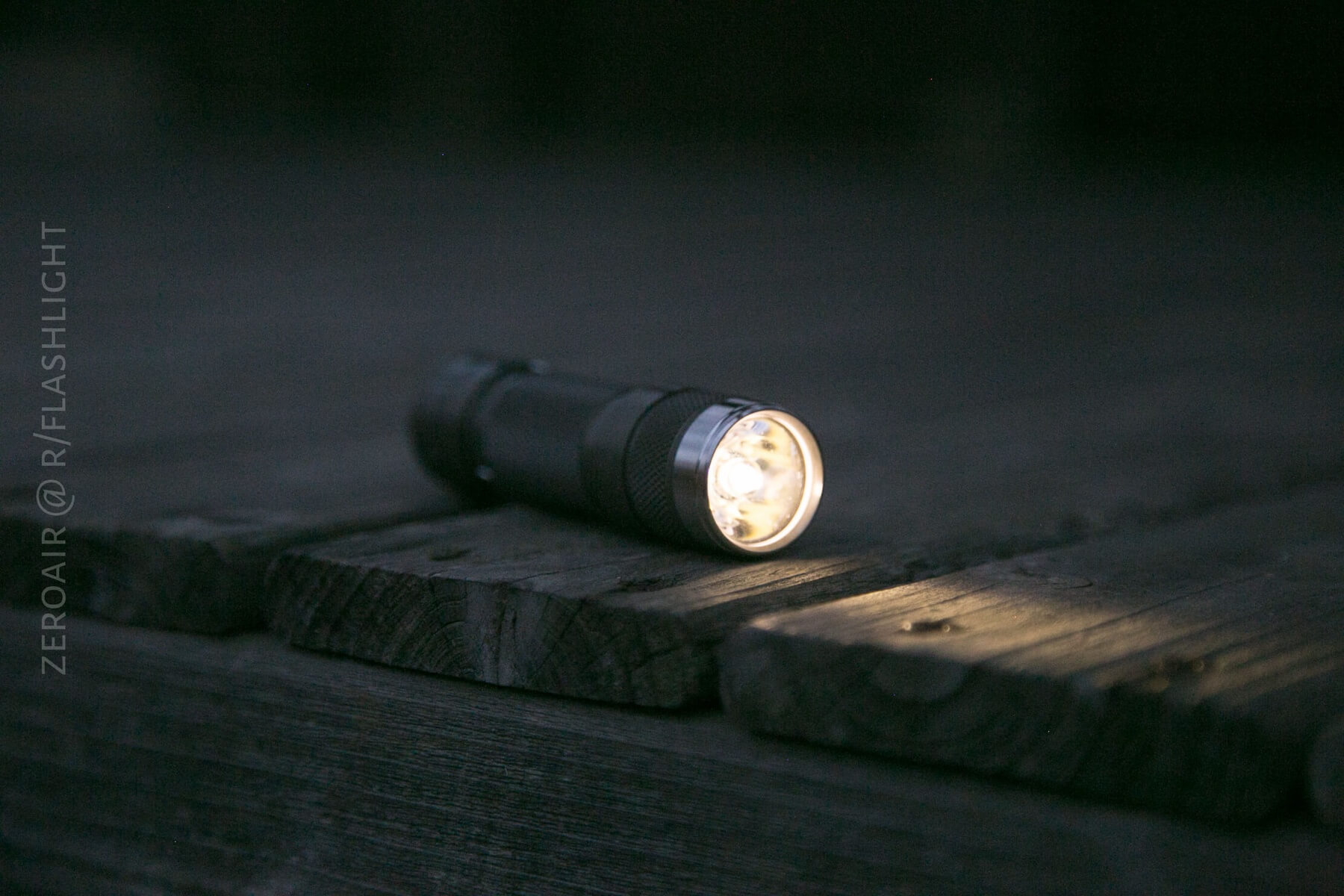
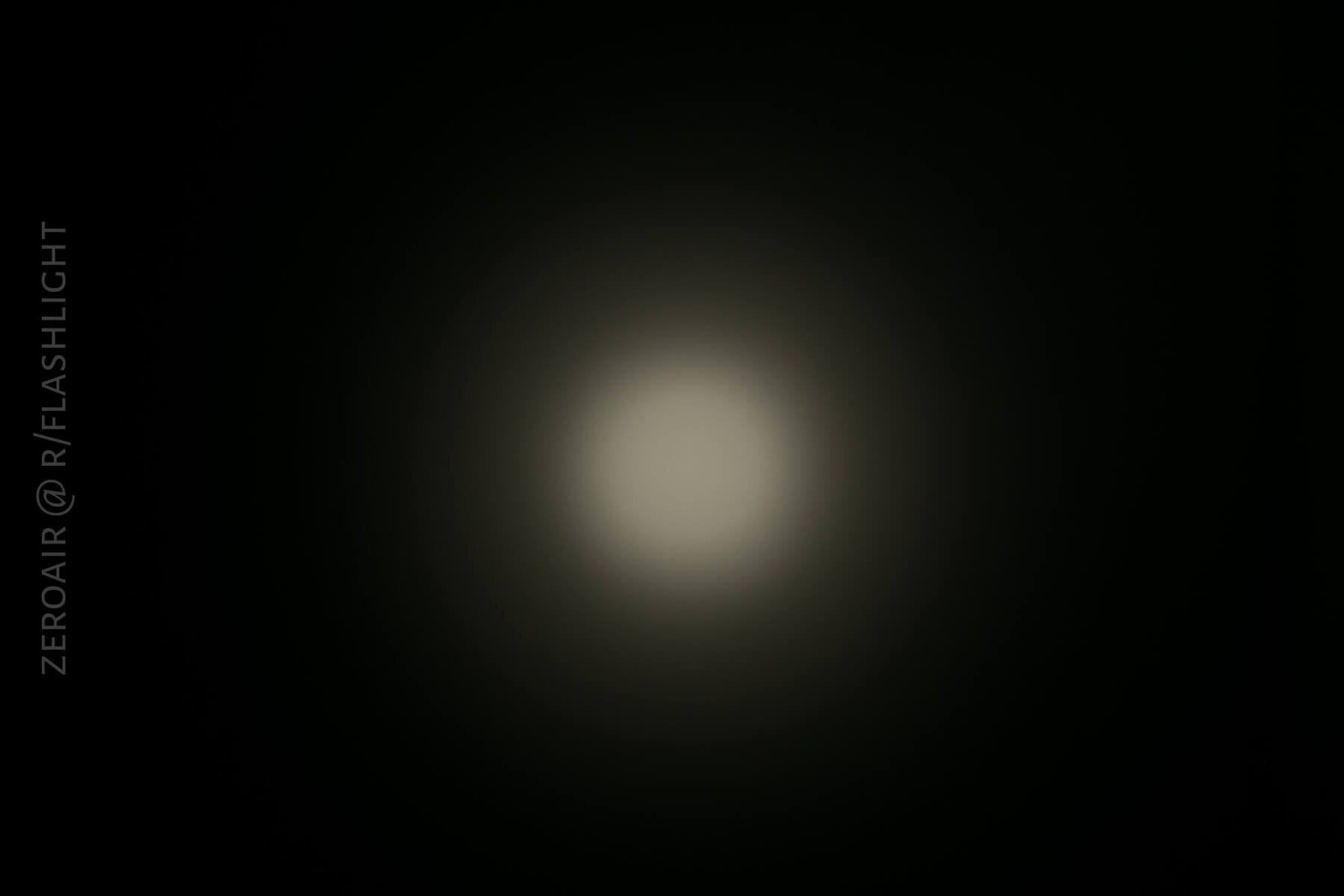
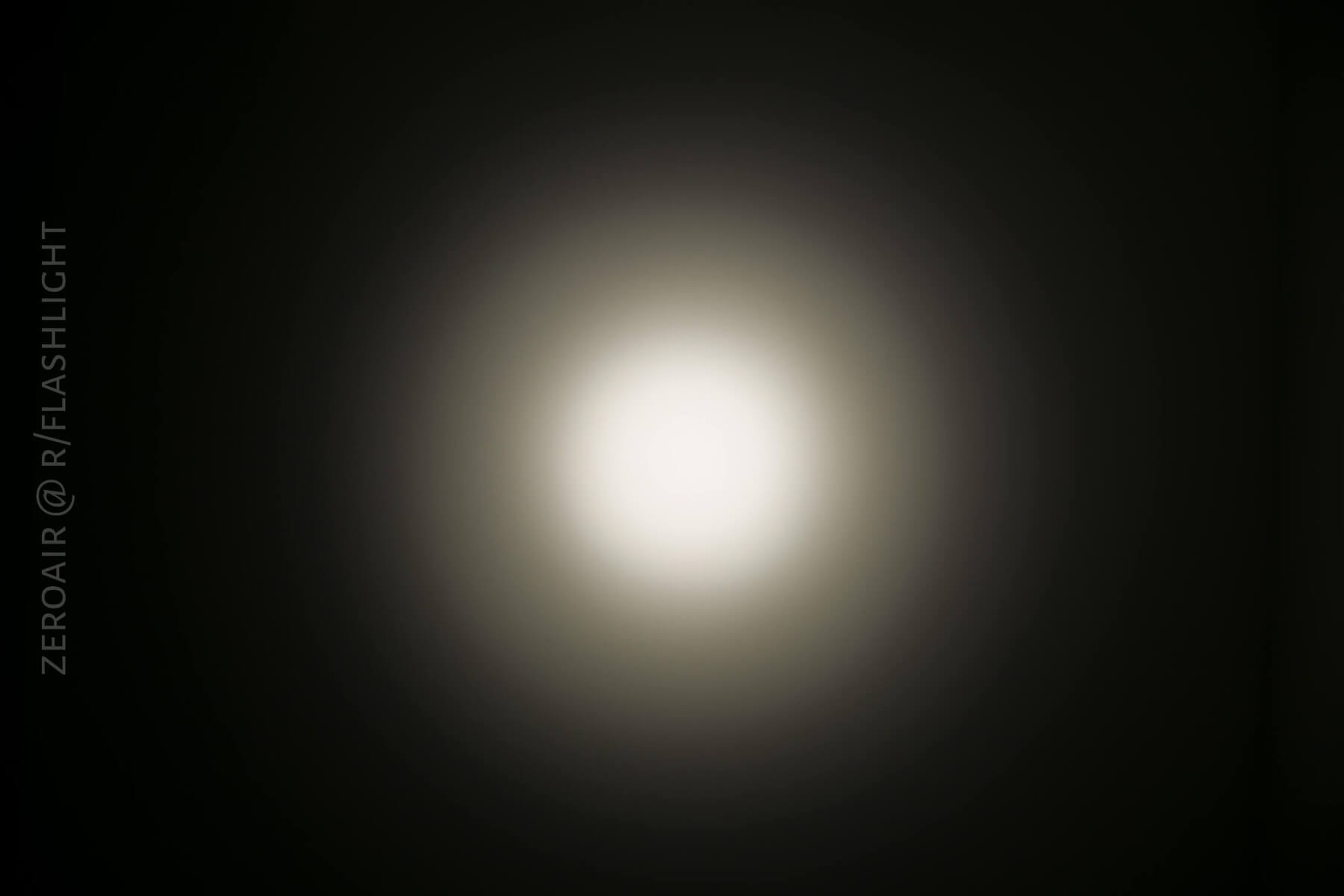
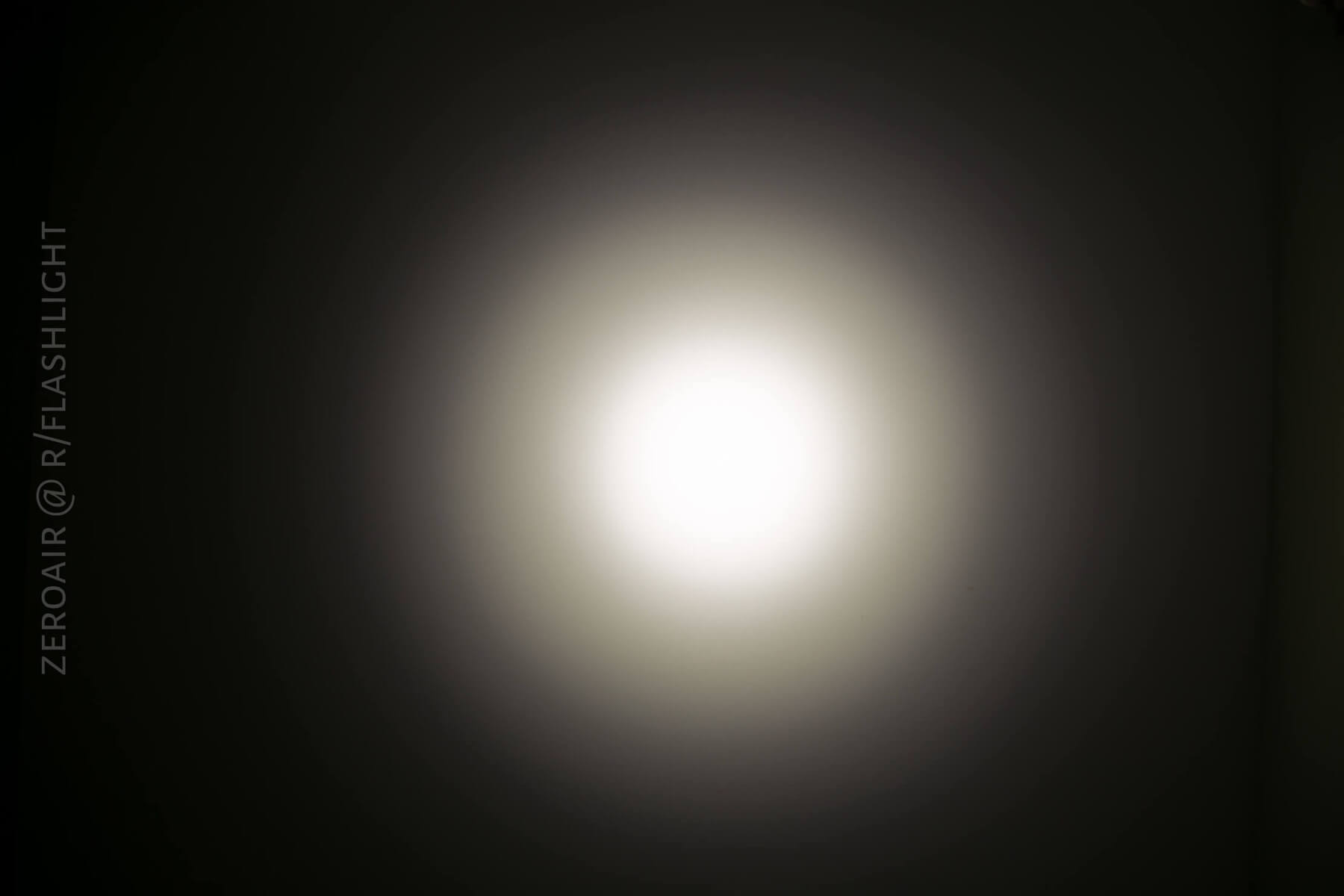
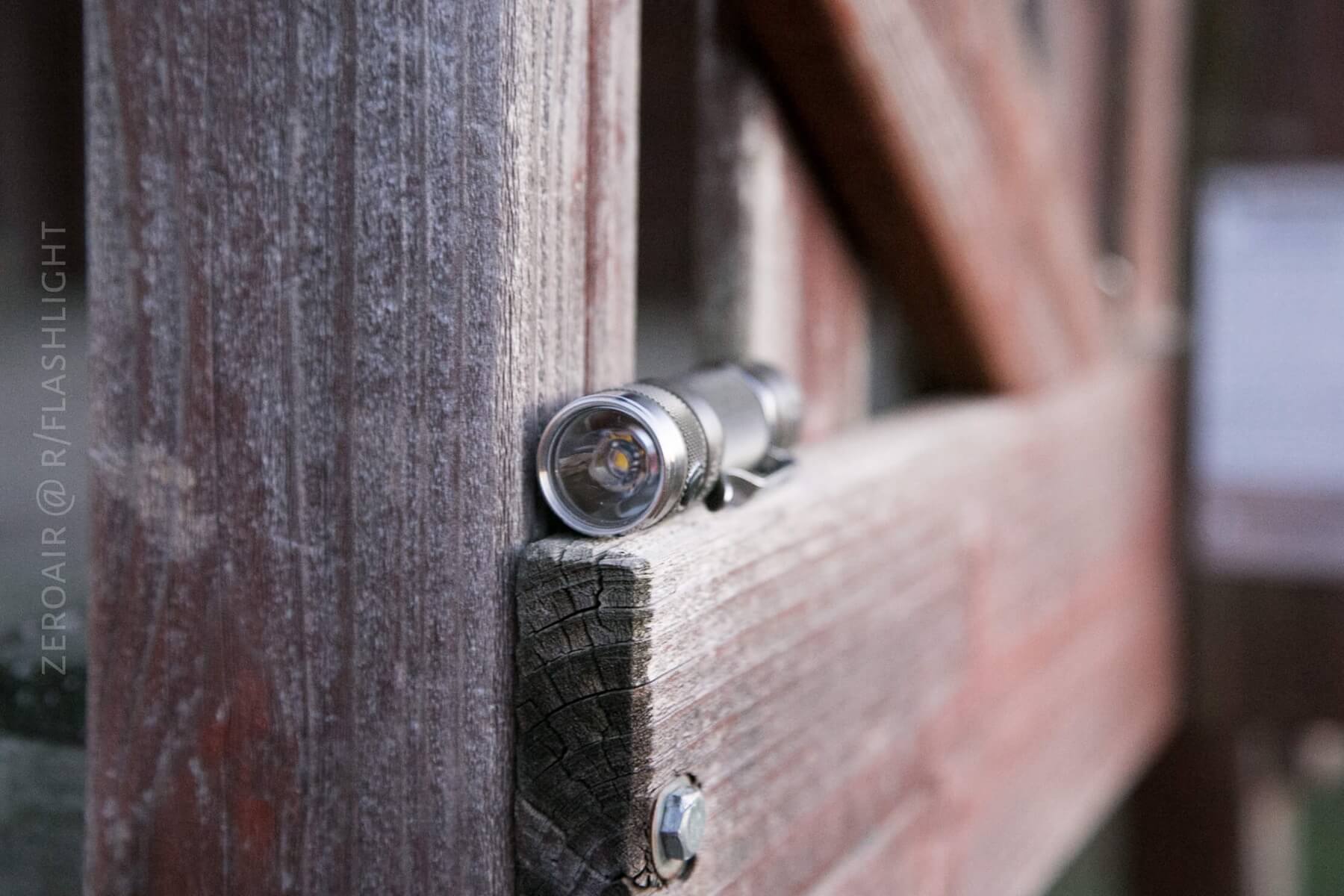
DQG has put a Cree XM-L2, with the option of CW and NW. That emitter is behind a clear TIR optic. The beam is very spotty – very TIR. Probably my favorite beam profile, really. Very broad, even spot, with little spill.
Beamshots
These beamshots always have the following settings: f8, ISO100, 0.3s shutter, and manual 5000K exposure. These photos are taken at floor level, and the beam hits the ceiling around 9 feet away.
Conclusion
What I like
- Size
- Tint
- TIR makes a great beam profile
- User interface is simple and doesn’t have a bunch of modes junking it up
- Glow tape in the TIR!
What I don’t like
- Build quality needs to improve
Parting Shot
Notes
- This light was provided by GearBest for review. I was not paid to write this review.
- This content originally appeared at zeroair.org. Please visit there for the best experience!
- Use my amazon.com referral link if you’re willing to help support making more reviews like this one!
- Please support me on Patreon! I deeply appreciate your support!
Discover more from ZeroAir Reviews
Subscribe to get the latest posts sent to your email.
(2/06/2026)
Very late comment, to be sure.
I have this light in CW and NW.
I have countless more modern flashlights (especially Hanklights and Fireflies).
I have recently come to appreciate just how special these DQG’s are. Put a 4000 Ah 18650 in this baby and you’ve got an incredible amount of light (brightness and duration) in the smallest possible package. Also, great throw.
I wish George still made these.
Yes! I really miss DQG also!
I fully agree. I own lots of flashlights, but i will never sell my last D.Q.G. each. They had the smallest in each Category. Spy, Tiny, Hobi, all great.