
Nitecore HC65 Headlamp Review
The Nitecore HC65 headlamp is a multi-emitter headlamp that runs on a single 18650 and has a single e-switch for operation. Read on for testing!
Official Specs and Features
Here’s a link to the Nitecore HC65 Headlamp product page.
Versions
Really just one version, but NitecoreStore sells a few accessory options with the HC65.
Price
The price of this one is $74.95. This is available on Amazon! (referral link)
Short Review
While this isn’t my favorite format (emitter in the center of the body on an 18650 headlamp) I have to admit I like this one a bit. The NW is good, and a red is a nice bonus.
Long Review
The Big Table
| Nitecore HC65 | |
|---|---|
| Emitter: | Cree XM-L2 |
| Price in USD at publication time: | $74.95, and available on Amazon. |
| Cell: | 1×18650 |
| Turbo Runtime | |
| LVP? | No |
| Switch Type: | E-Switch |
| Quiescent Current (A): | 0.00003 |
| On-Board Charging? | Yes |
| Chargetime | |
| Power off Charge Port with no Cell? | ? |
| Claimed Lumens (lm) | 1000 |
| Claimed Throw (m) | 110 |
| Candela (Calculated) in cd (at 30s) | 344lux @ 3.382m = 3935cd |
| Throw (Calculated) (m) | 125.5 (114.1% of claim)^ |
| All my Nitecore reviews! | |
^ Measurement disclaimer: Testing flashlights is my hobby. I use hobbyist-level equipment for testing, including some I made myself. Try not to get buried in the details of manufacturer specifications versus measurements recorded here; A certain amount of difference (say, 10 or 15%) is perfectly reasonable.
What’s Included

- Nitecore HC65 Headlamp
- Nitecore HL1834 3400mAh 18650
- Headstrap
- Charge cable
- Spare o-rings (4, 3 types)
- Manual and paperwork
Package and Manual
The package is the usual black and yellow Nitecore package. Usual specs and features on the box. A bit of a large box for such a small light, but there’s a lot of stuff in there.

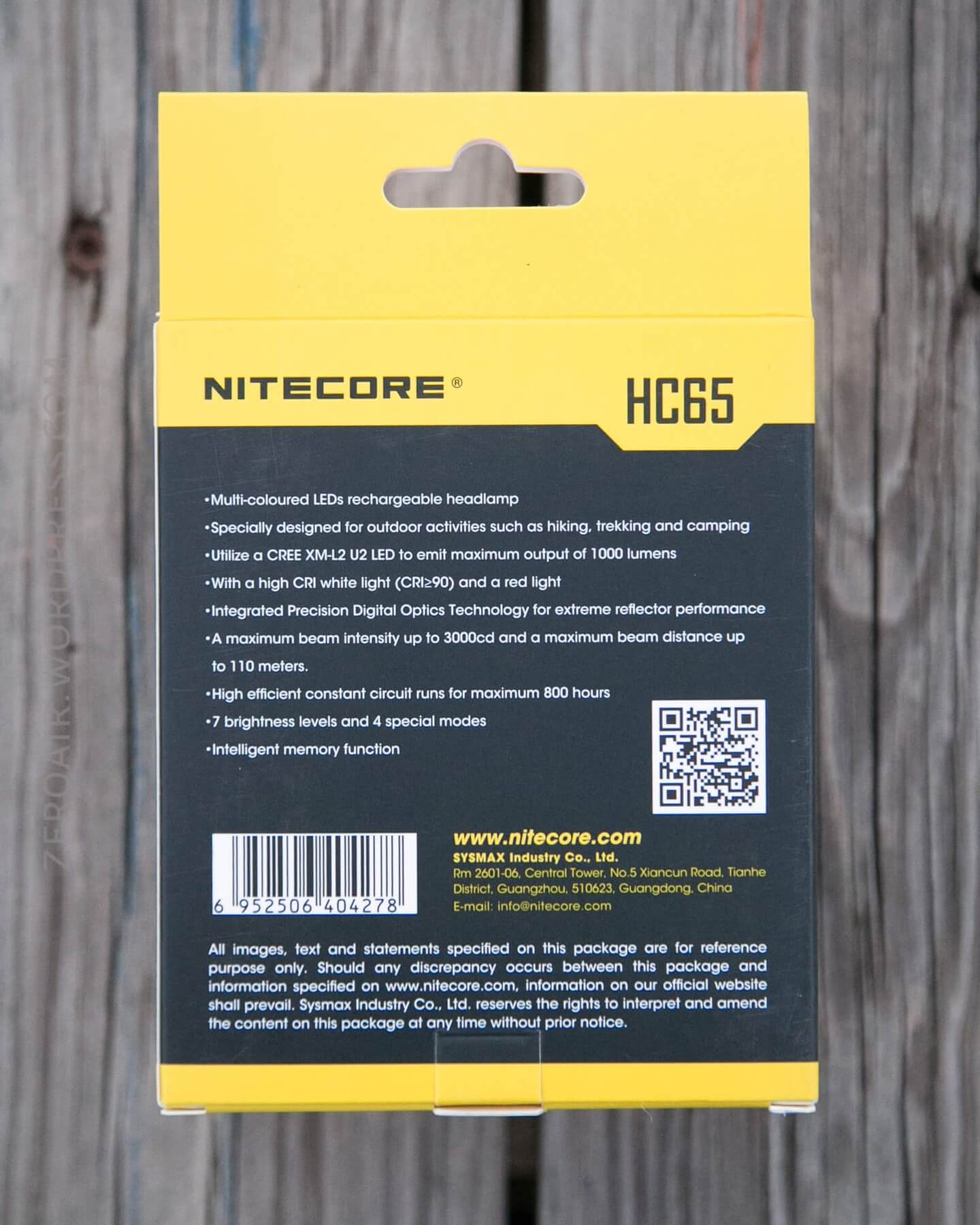
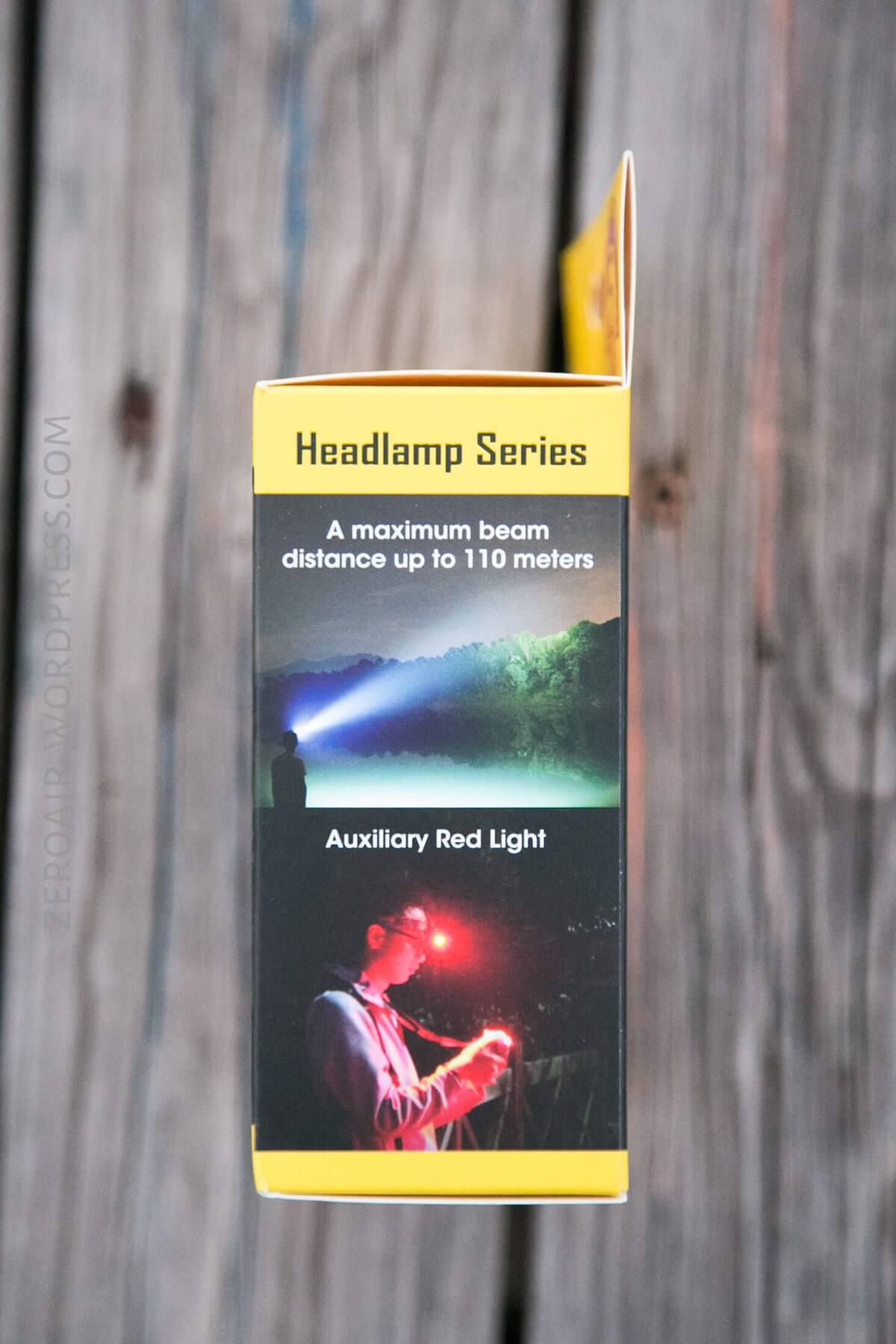

Nitecore is consistent with its manuals, and this is no exception. It’s a nice manual with a good description of the user interface, specs, features, modes, and runtimes.
Build Quality and Disassembly
Nitecore has another high-quality build on its roster now. I’m satisfied with the moving parts, and the emitter parts don’t give me any concerns either.
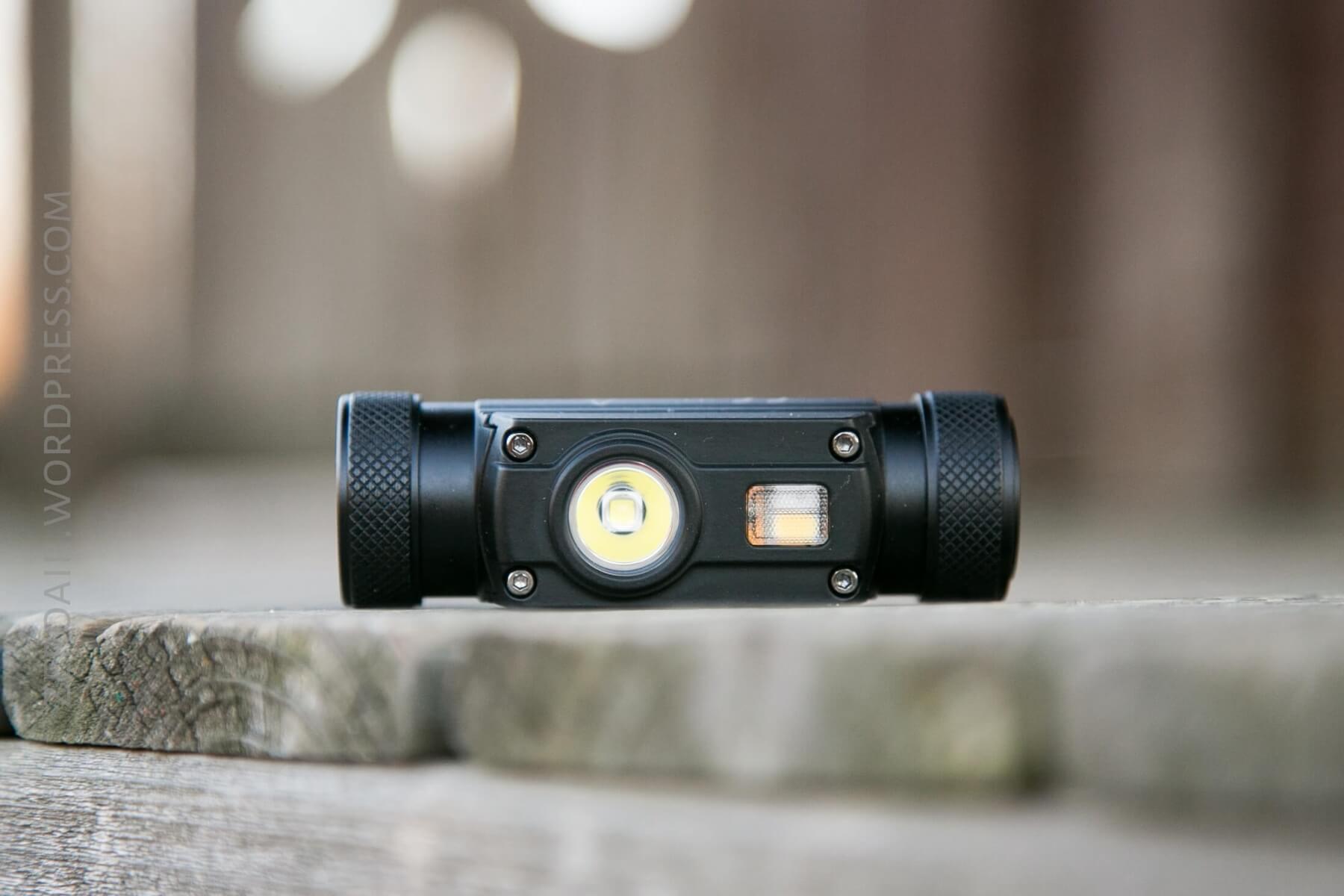

The emitters (4) are housed in a plate of sorts, held onto the cell tube by four hex screws. Unfortunately, my set is missing the one hex that’s the right size for this, so I wasn’t able to take it apart. However, it is just regular hex screws, so accessing the internals of this plate should be fairly straightforward.
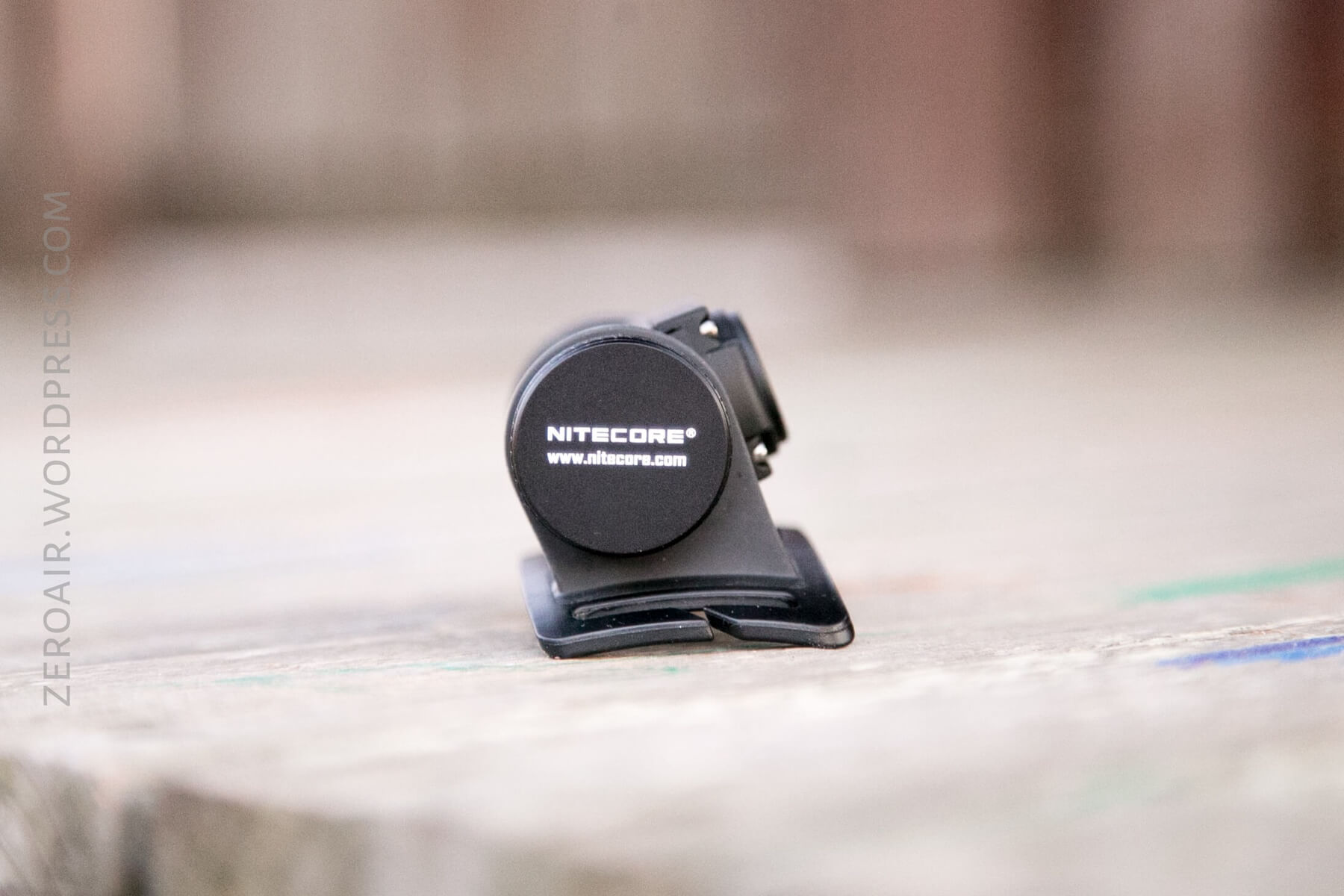
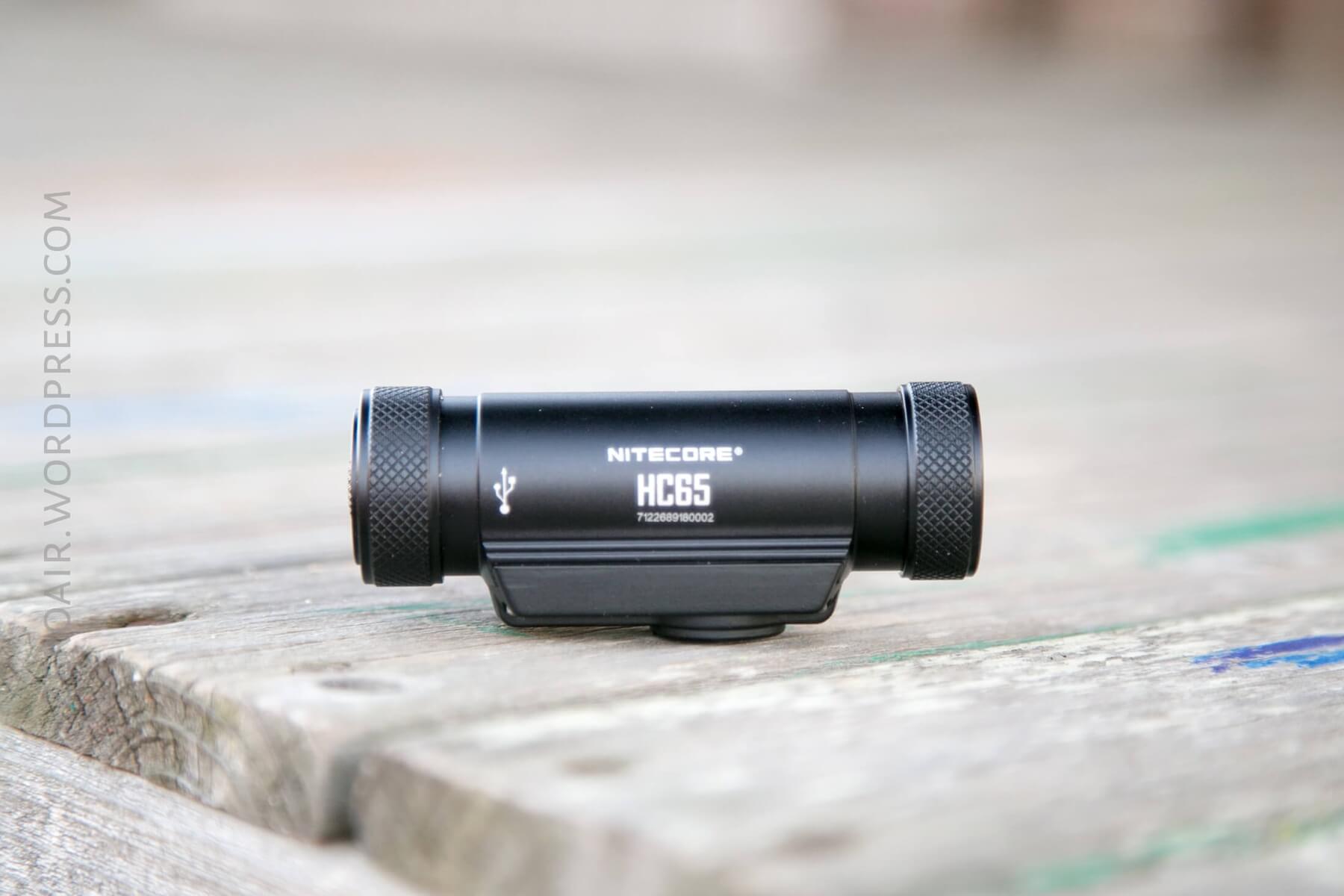

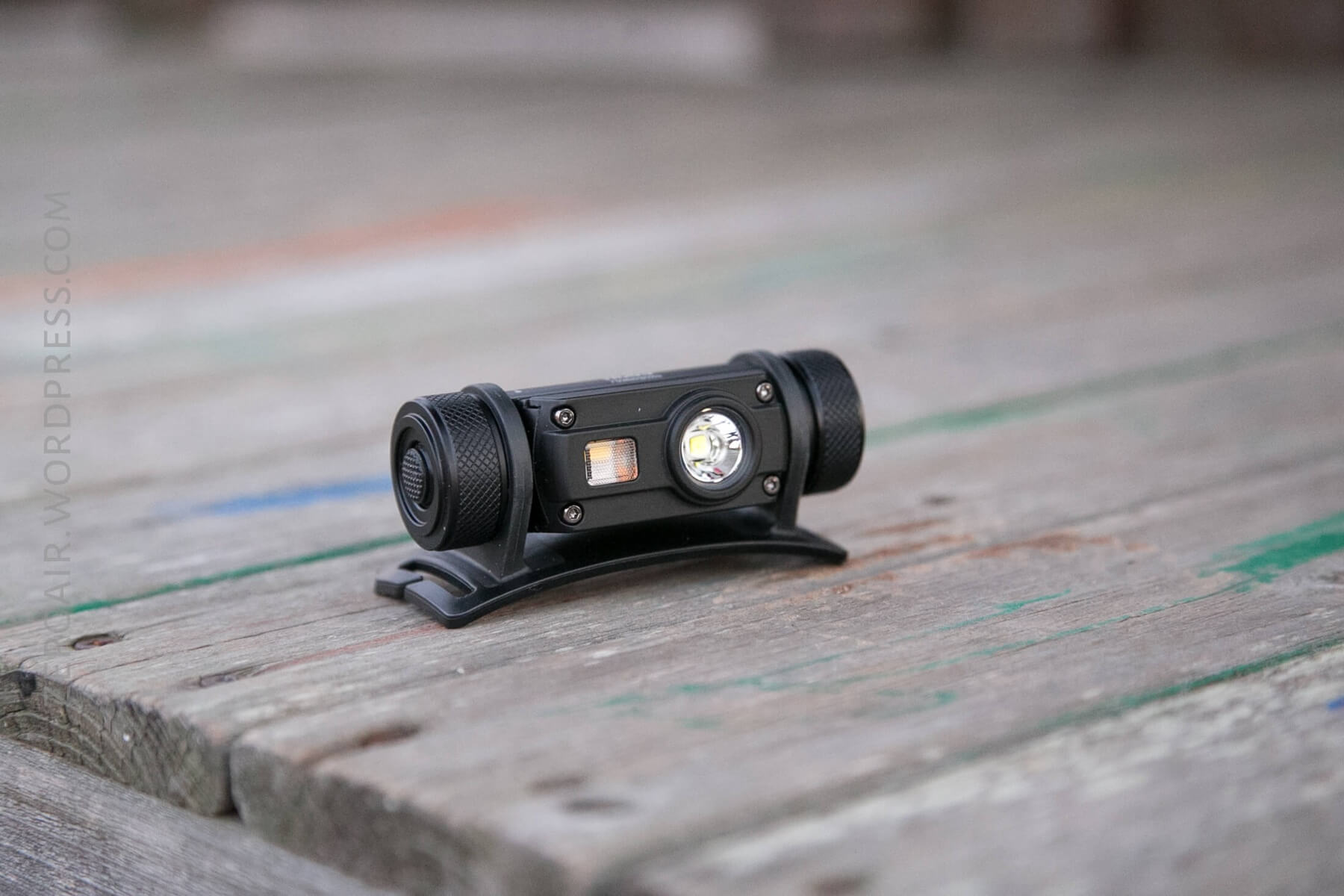
More on the switch later, but for now, note that the tailcap is threaded onto the body (head and tail in fact) with small triangular threads, which are well-lubed. The threading is the same, but the parts are different. (So the caps are reversible, but the light won’t be functional or water-resistant that way.)


The tail end of the light is the end without the switch. The positive terminal of the cell goes toward the “head” of the light, which is the end with the switch. Internally, these are different, too. The head end has a brass button, and the tail end has a gold-plated spring. The head/switch end’s cap does come off, but unscrewing, but the light isn’t “open” then, only the micro-USB port is exposed (and the switch may be maintained).

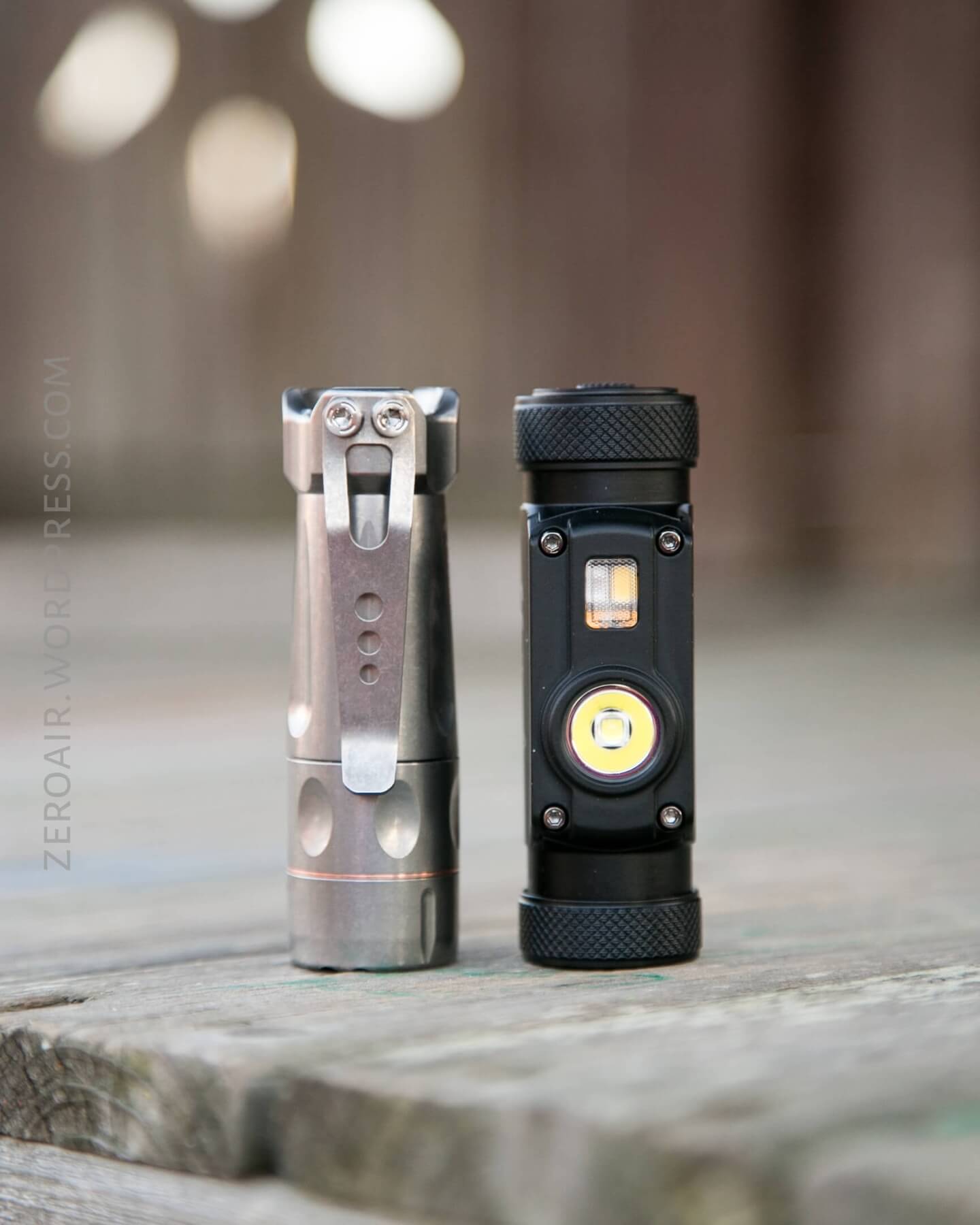
Size
Officially 82.7mm x 33.3mm x 26.7mm

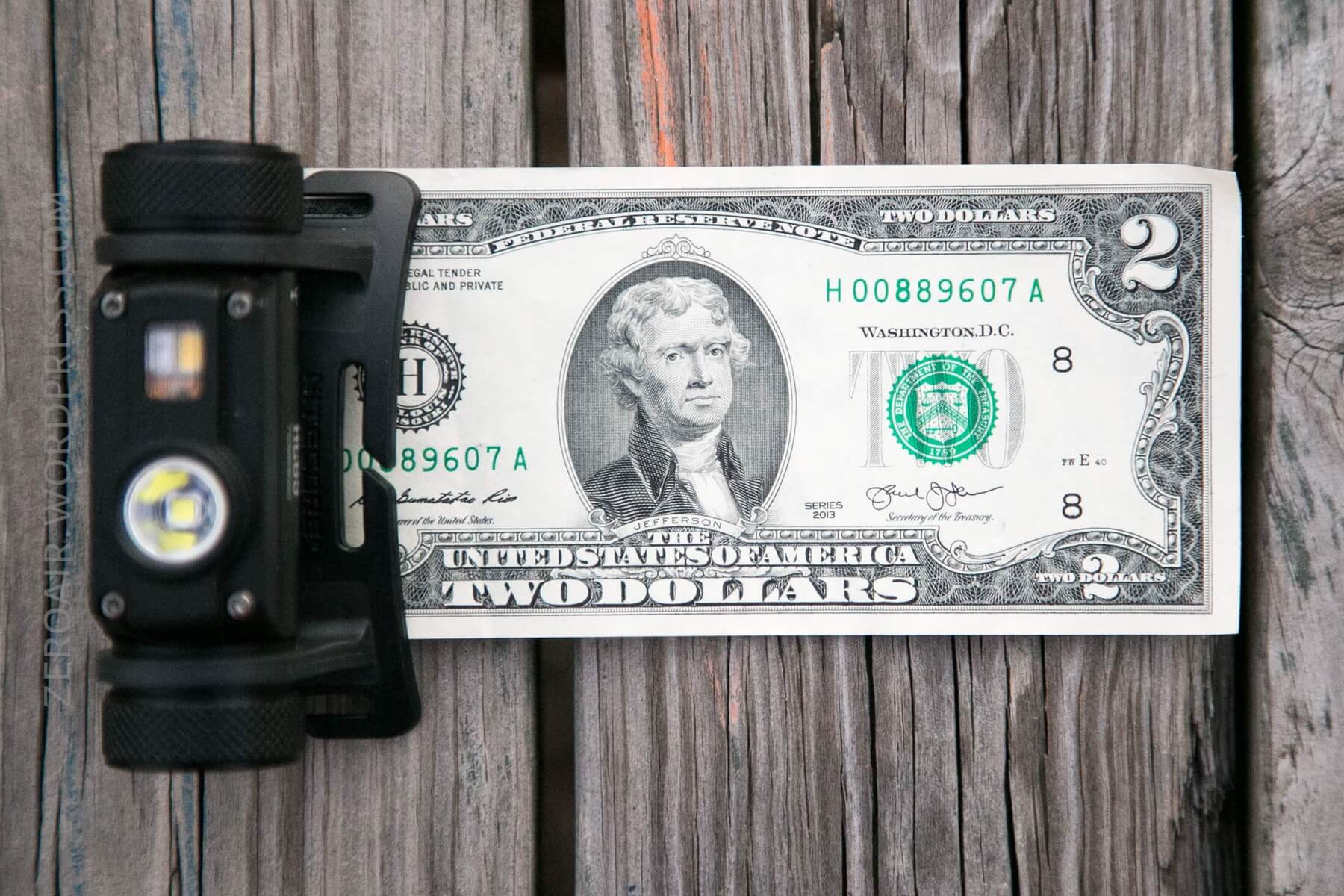
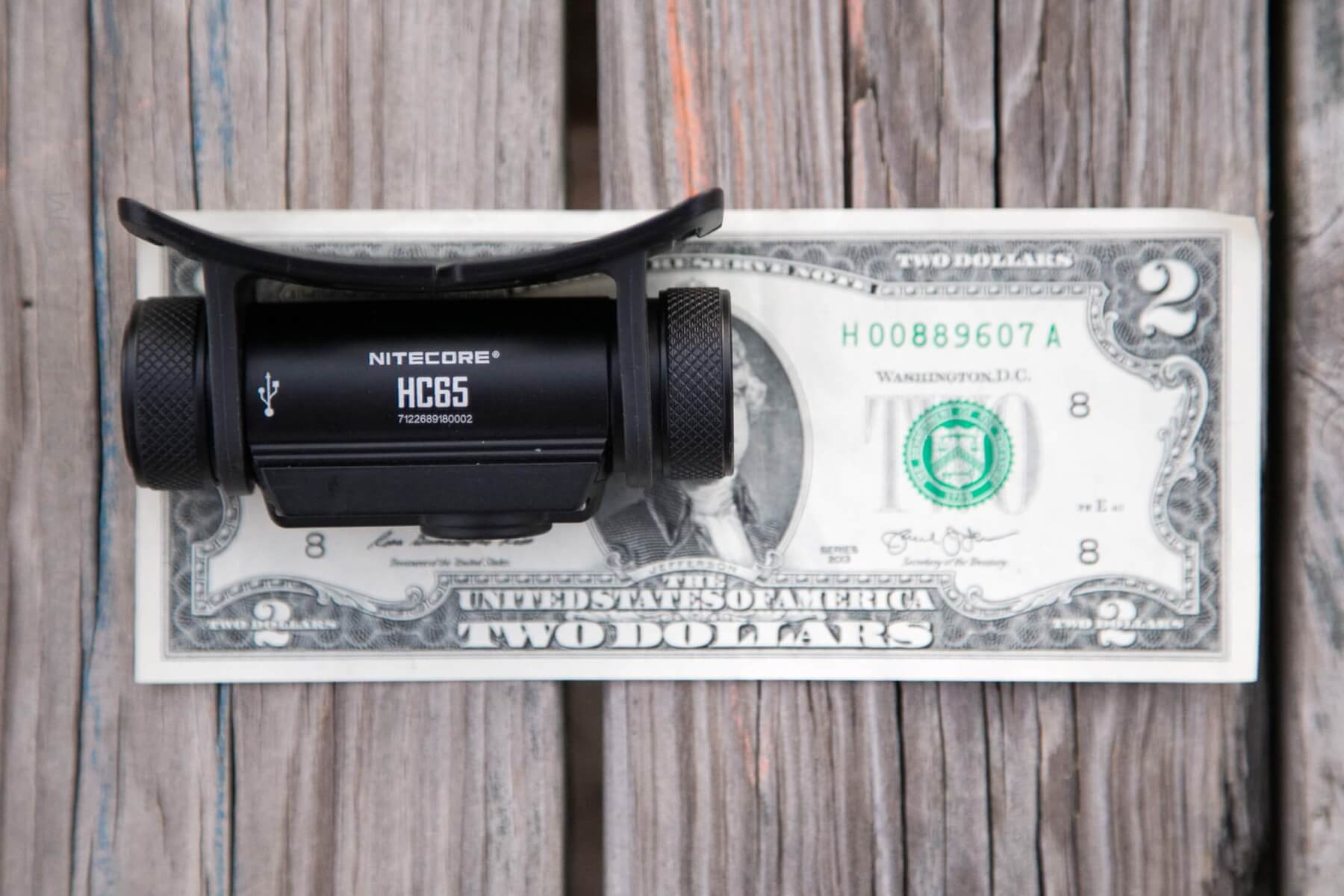
One of the things I normally don’t care for about these style lights (emitters on the tube) is that they always feel bigger than they should be. This one really doesn’t.
Retention
Of course, this is a headlamp, and so the primary means of carrying this light will be the headstrap. This is a stretchy cloth band, which has an easily removable center (overhead) band. These bands just slip into their connection place. It’s a comfortable headband, but I’m not sure it’s quite tight enough for running and the like. However, for camping or just general use, it’ll be great. The plastic piece that holds the light to the band is nicely contoured for the forehead.


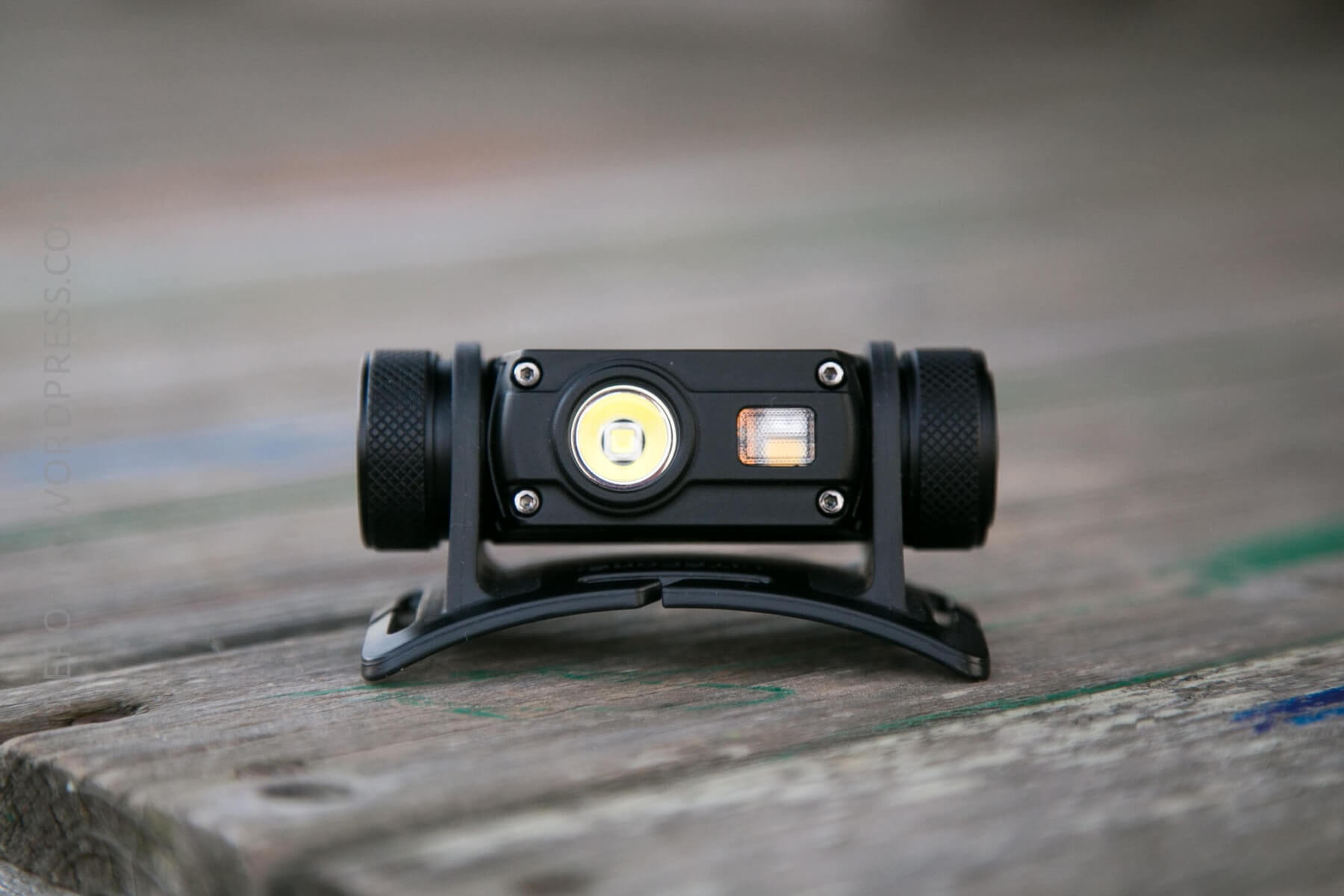
The light slips in and out of the plastic piece easily, with just two silicone loops on each end of the light. This is primarily how I use the light, even though it’s not ideal as a pocket light.
There’s nothing else: No pocket clip, no magnet, no pouch.
Power
The HC65 is powered by a single 18650. It’s also possible to use the light with 2-up cells: Cr123 and RCR123a. I tested the light with this option, and the output wasn’t actually different (no greater output than with a single 18650).
A cell is included – it’s the Nitecore NL1834, which is a 3400mAh 18650. It seems like a high-quality cell. It’s a protected button top. The HC65 should work with any type of 18650, though.

Here’s a runtime on Turbo. The runtime estimate on Turbo is 1h, and the HC65 does output light for that long. Turbo maintains >90% output for around 10 minutes, which is not too shabby.

Charging
The light also has onboard charging, facilitated by a micro-USB port in the head. The headcap must be fully removed in order to use this port. When closed, there’s an o-ring that should seal the port nicely. Actually, two, because there’s one on the switch, too.

The charging isn’t the fastest charging, but it’s solid, at around 0.5A. And it’s a good lithium-ion charge curve, too. The cell tests to around 3200mAh. This chargetime is approximately in line with the specification Nitecore states (7h).

There’s also a built-in battery check option. When a cell is inserted and the parts are snugged down, the blue emitter will blink for the Ones and Tenths of voltage. So 4 blinks, pause 1 blink, is 4.1V. It will indicate the series voltage when 2-up cells are used, too.
User Interface and Operation
There’s just one switch on the HC65. I don’t think it’s all that different from many reverse clicky switches, but Nitecore describes it as a “camera shutter” style switch. It has a rubber cover and some nice knurling.
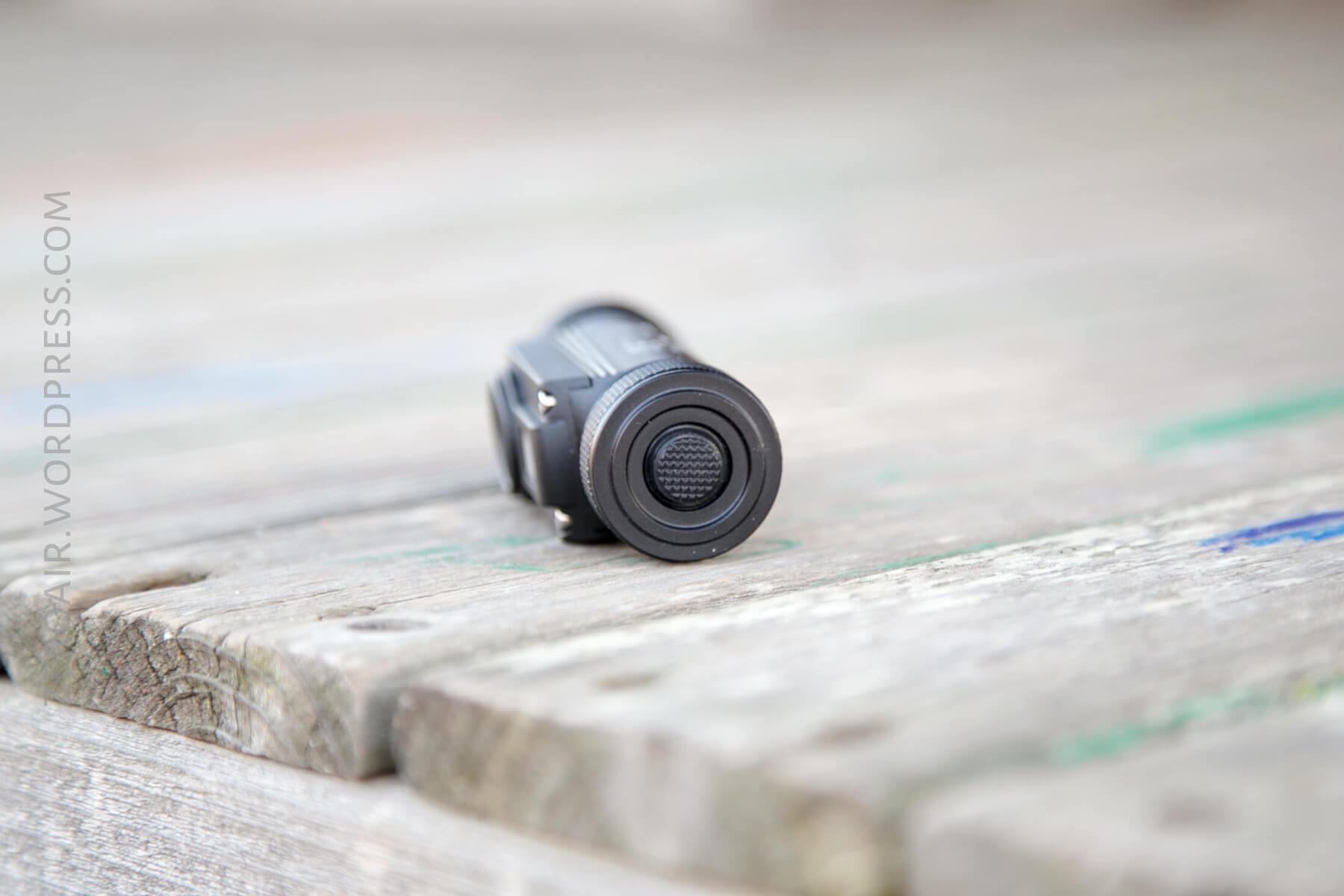

To be sure, this user interface is basically one you’ll just have to memorize (or flub your way through).
Here’s a user interface table!
| State | Action | Result |
|---|---|---|
| Off | Half Click | Turn on/off blue beacon |
| Off | Half hold | NW emitter on/off |
| Off | Full click | Main emitter on (memory) |
| Off | Full hold | Red emitter on |
| Red | Half click | Red mode cycle (Caution>Solid) |
| Red | Full click | Off |
| On | Full click | Off |
| Off | Full double click | Turbo |
| On | Half hold >0.6s | Turbo |
| Any | Full hold | Strobe |
This might be construed as a difficult UI, but that’s one price you pay for having so many emitters and options in a light.
Modes
| Mode | Mode Claimed Output (lm) | Claimed Runtime | Mode Measured Lux | Tailcap Amps |
|---|---|---|---|---|
| Turbo | 1000 | 1h | 21400 | 2.80 |
| High | 550 | 2h 45m | 13740 | 1.06 |
| Mid | 280 | 4h45m | 6440 | 0.52 |
| Low | 80 | 16h | 1760 | 0.12 |
| Ultralow | 1 | 800h | 28 | – |
| Auxiliary White | 26 | 25h | – | 0.08 |
| Red | 11 | 32h | – | 0.09 |
LED and Beam
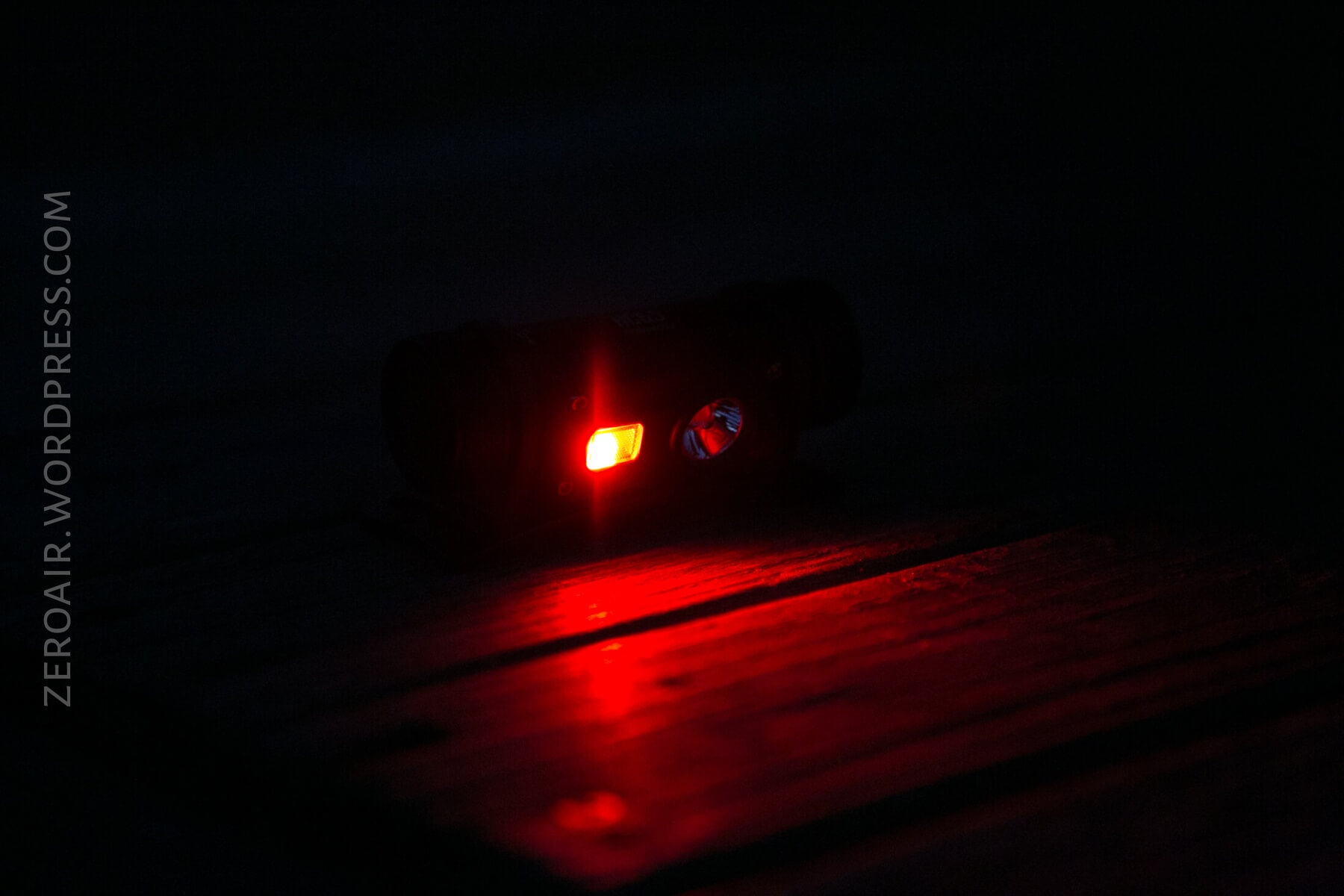
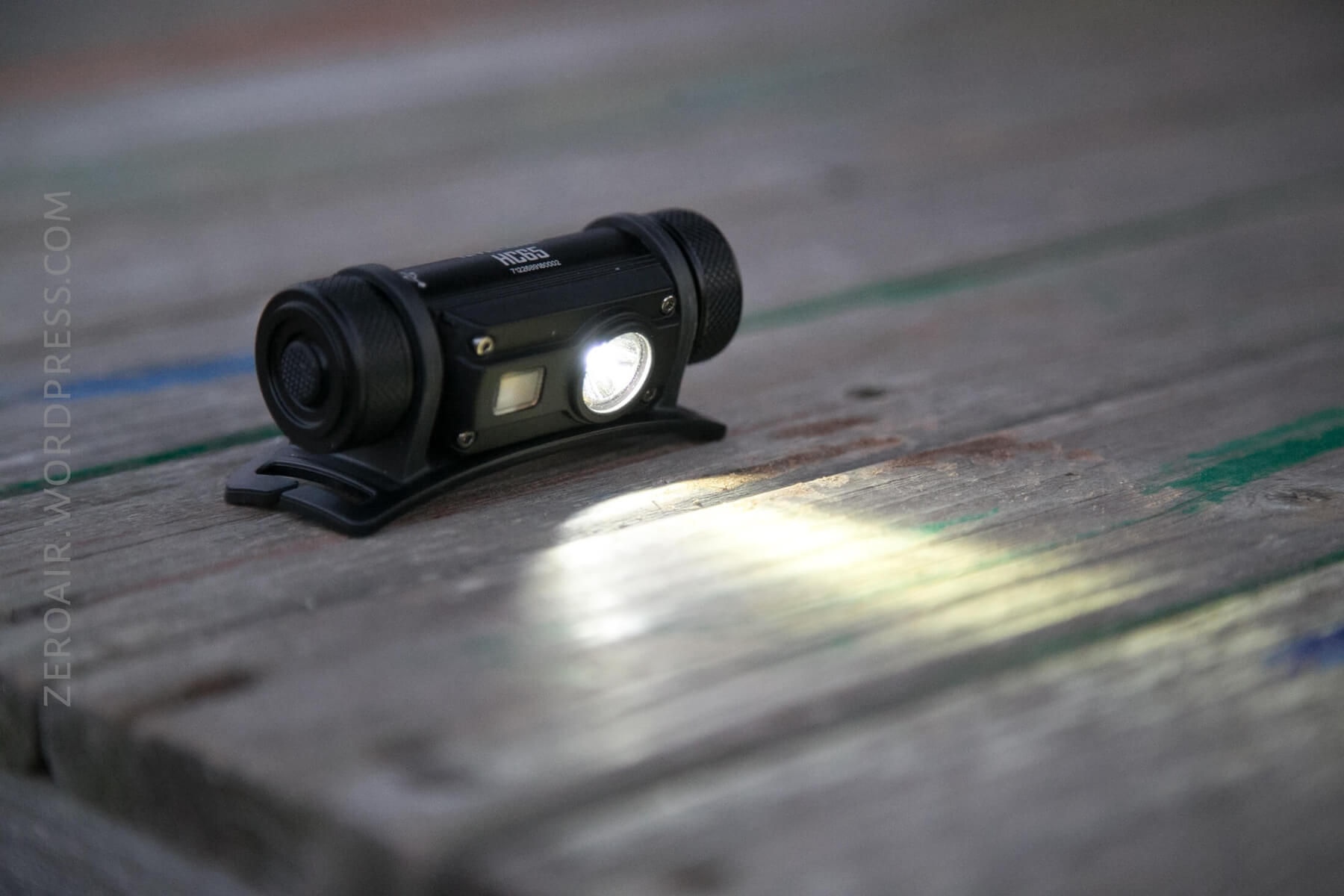
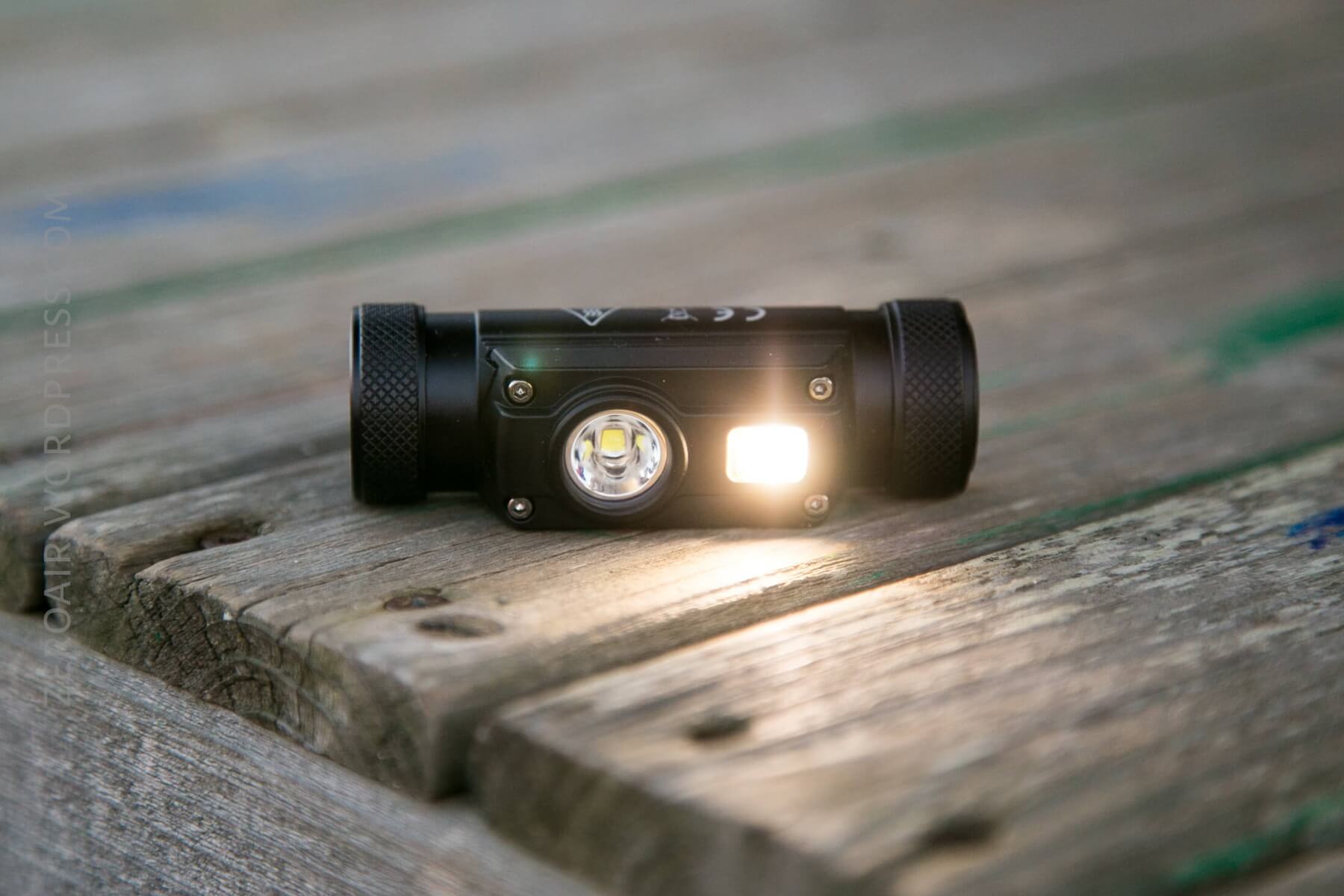
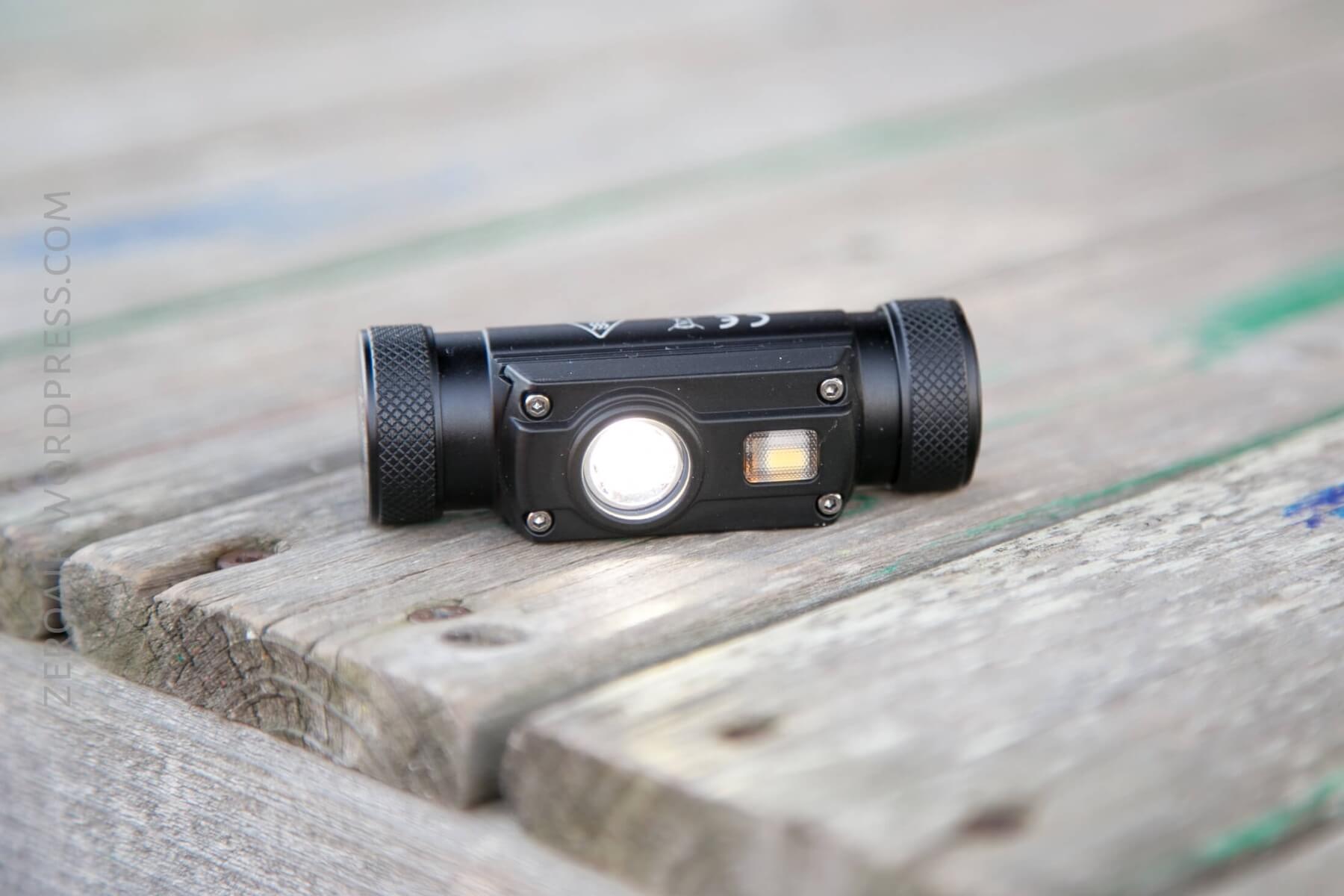
The main emitter here is a Cree XM-L2 and is coolish. The secondary emitter is a high CRI (≥90) NW emitter, and there’s a red emitter also. The 4th emitter I mentioned above is the blue, which is used as a beacon and for cell voltage indication.
The main emitter is at the base of a very short, very broad smooth reflector. The beam afforded by this setup is a quickly broadening beam, with a fair amount of spill.
The other two emitters are behind a dimpled lens and are fully flood.


Beamshots
These beamshots always have the following settings: f8, ISO100, 0.3s shutter, and manual 5000K exposure. These photos are taken at floor level, and the beam hits the ceiling around 9 feet away.

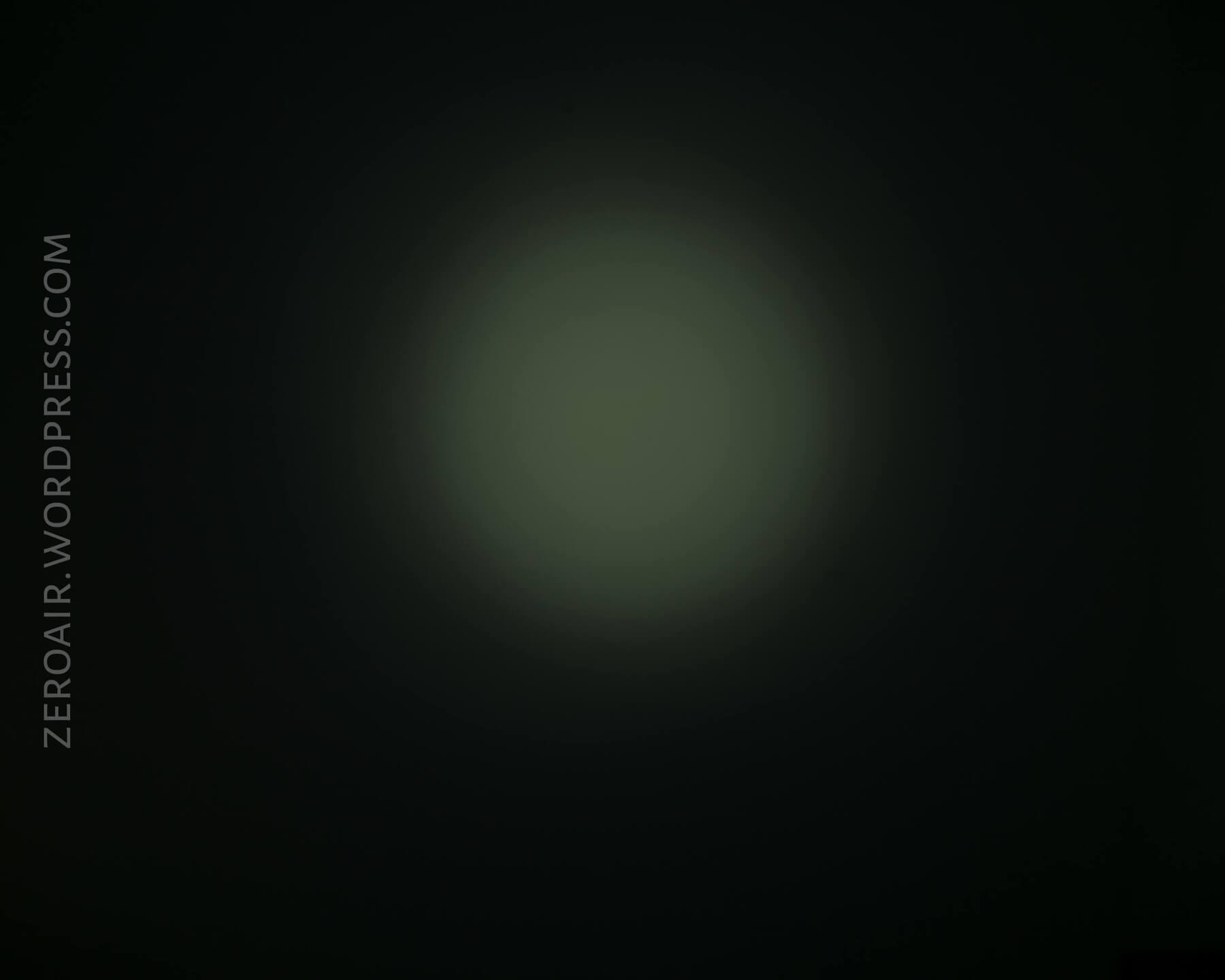
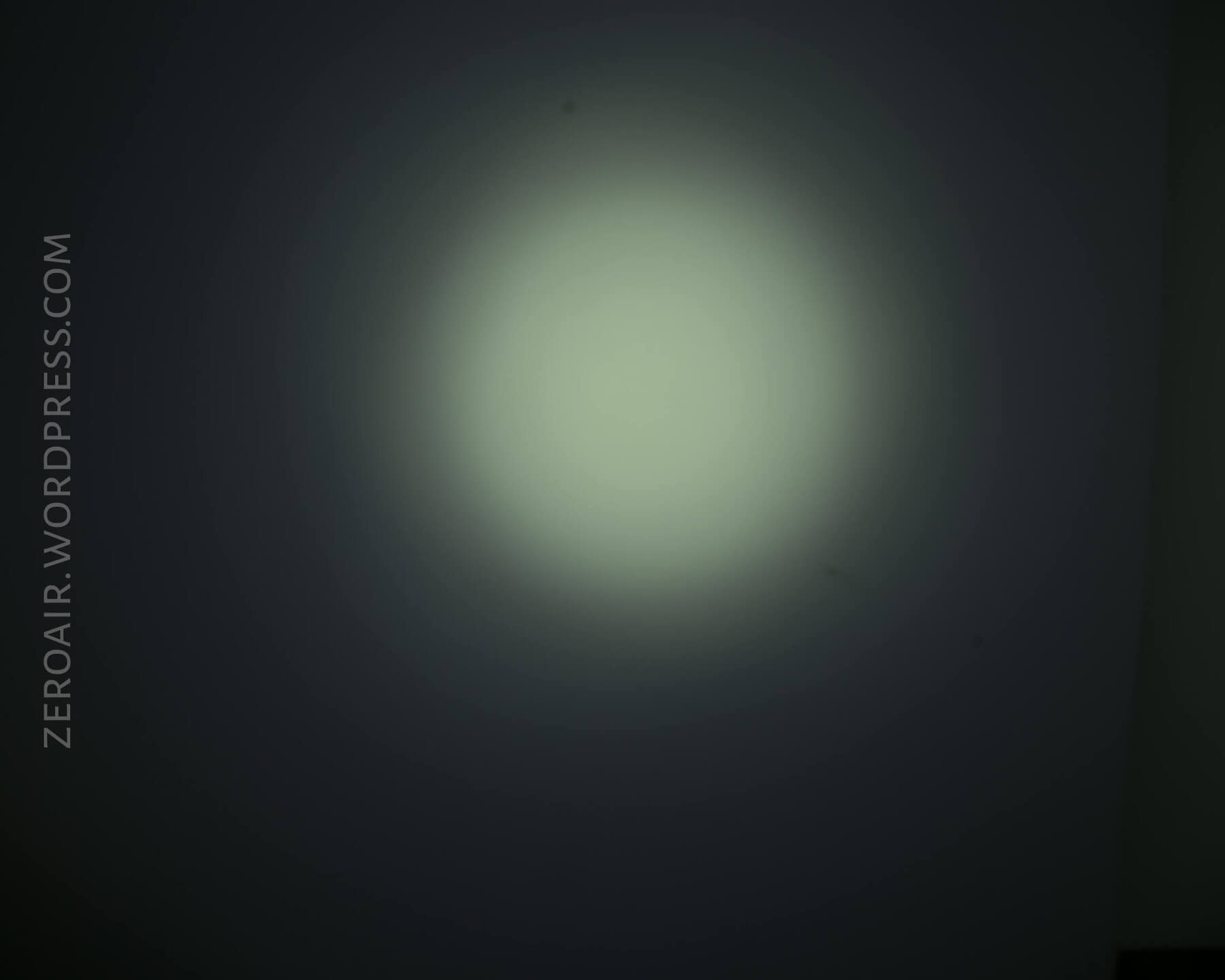
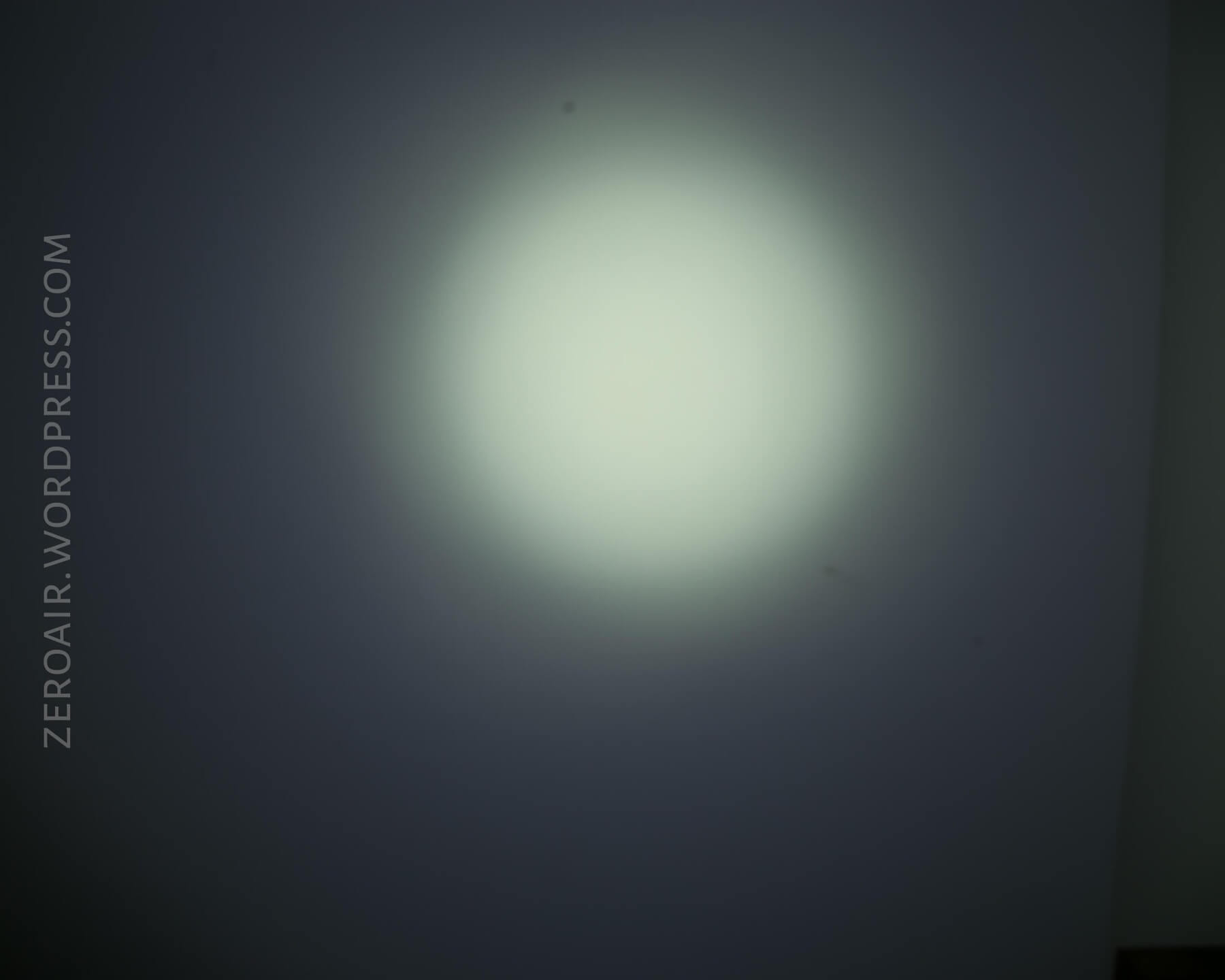


Tint vs BLF-348 (KillzoneFlashlights.com 219b version) (affiliate link)
I keep the test flashlight on the left and the BLF-348 reference flashlight on the right.
First the main emitter:

Then the NW emitter (left):

Random Comparisons and Competitive Options
Here’s a relevantly filtered page on parametrek.com. Nitecore makes some of its own competition for this light. But as this is the most current option, there’s not much point in mentioning those. Thrunite makes a few lights like this, as does Fenix.
The HC65 is quite compelling, as it has multiple emitters and reliable onboard charging.
Conclusion
What I like
- Three emitters
- On-board charging is good
- The forehead piece is comfortable
What I don’t like
- The main emitter could be warmer, even if not as warm as the high CRI emitter.
- I’d like the blue emitter to be utilized more (or make it green and put it in the main mode group switch options?)
- User interface is a little complex, but not necessarily complicated.
Notes
- This light was provided by NitecoreStore for review. I was not paid to write this review.
- This content originally appeared at zeroair.org. Please visit there for the best experience!
- Use my amazon.com referral link if you’re willing to help support making more reviews like this one!
- Please support me on Patreon! I deeply appreciate your support!
You do a very nice job on your reviews
Thank you!